EP3464601B1 - Transgene pflanzen mit erhöhter photosyntheseeffizienz und gesteigertem wachstum - Google Patents
Transgene pflanzen mit erhöhter photosyntheseeffizienz und gesteigertem wachstum Download PDFInfo
- Publication number
- EP3464601B1 EP3464601B1 EP17729973.2A EP17729973A EP3464601B1 EP 3464601 B1 EP3464601 B1 EP 3464601B1 EP 17729973 A EP17729973 A EP 17729973A EP 3464601 B1 EP3464601 B1 EP 3464601B1
- Authority
- EP
- European Patent Office
- Prior art keywords
- plant
- zep
- psbs
- vde
- fold
- Prior art date
- Legal status (The legal status is an assumption and is not a legal conclusion. Google has not performed a legal analysis and makes no representation as to the accuracy of the status listed.)
- Active
Links
Images















Classifications
-
- C—CHEMISTRY; METALLURGY
- C12—BIOCHEMISTRY; BEER; SPIRITS; WINE; VINEGAR; MICROBIOLOGY; ENZYMOLOGY; MUTATION OR GENETIC ENGINEERING
- C12N—MICROORGANISMS OR ENZYMES; COMPOSITIONS THEREOF; PROPAGATING, PRESERVING, OR MAINTAINING MICROORGANISMS; MUTATION OR GENETIC ENGINEERING; CULTURE MEDIA
- C12N15/00—Mutation or genetic engineering; DNA or RNA concerning genetic engineering, vectors, e.g. plasmids, or their isolation, preparation or purification; Use of hosts therefor
- C12N15/09—Recombinant DNA-technology
- C12N15/63—Introduction of foreign genetic material using vectors; Vectors; Use of hosts therefor; Regulation of expression
- C12N15/79—Vectors or expression systems specially adapted for eukaryotic hosts
- C12N15/82—Vectors or expression systems specially adapted for eukaryotic hosts for plant cells, e.g. plant artificial chromosomes (PACs)
- C12N15/8241—Phenotypically and genetically modified plants via recombinant DNA technology
- C12N15/8261—Phenotypically and genetically modified plants via recombinant DNA technology with agronomic (input) traits, e.g. crop yield
- C12N15/8262—Phenotypically and genetically modified plants via recombinant DNA technology with agronomic (input) traits, e.g. crop yield involving plant development
- C12N15/8269—Photosynthesis
-
- A—HUMAN NECESSITIES
- A01—AGRICULTURE; FORESTRY; ANIMAL HUSBANDRY; HUNTING; TRAPPING; FISHING
- A01H—NEW PLANTS OR NON-TRANSGENIC PROCESSES FOR OBTAINING THEM; PLANT REPRODUCTION BY TISSUE CULTURE TECHNIQUES
- A01H6/00—Angiosperms, i.e. flowering plants, characterised by their botanic taxonomy
-
- C—CHEMISTRY; METALLURGY
- C07—ORGANIC CHEMISTRY
- C07K—PEPTIDES
- C07K14/00—Peptides having more than 20 amino acids; Gastrins; Somatostatins; Melanotropins; Derivatives thereof
- C07K14/415—Peptides having more than 20 amino acids; Gastrins; Somatostatins; Melanotropins; Derivatives thereof from plants
-
- C—CHEMISTRY; METALLURGY
- C12—BIOCHEMISTRY; BEER; SPIRITS; WINE; VINEGAR; MICROBIOLOGY; ENZYMOLOGY; MUTATION OR GENETIC ENGINEERING
- C12N—MICROORGANISMS OR ENZYMES; COMPOSITIONS THEREOF; PROPAGATING, PRESERVING, OR MAINTAINING MICROORGANISMS; MUTATION OR GENETIC ENGINEERING; CULTURE MEDIA
- C12N15/00—Mutation or genetic engineering; DNA or RNA concerning genetic engineering, vectors, e.g. plasmids, or their isolation, preparation or purification; Use of hosts therefor
- C12N15/09—Recombinant DNA-technology
- C12N15/63—Introduction of foreign genetic material using vectors; Vectors; Use of hosts therefor; Regulation of expression
- C12N15/79—Vectors or expression systems specially adapted for eukaryotic hosts
- C12N15/82—Vectors or expression systems specially adapted for eukaryotic hosts for plant cells, e.g. plant artificial chromosomes (PACs)
- C12N15/8201—Methods for introducing genetic material into plant cells, e.g. DNA, RNA, stable or transient incorporation, tissue culture methods adapted for transformation
- C12N15/8202—Methods for introducing genetic material into plant cells, e.g. DNA, RNA, stable or transient incorporation, tissue culture methods adapted for transformation by biological means, e.g. cell mediated or natural vector
- C12N15/8205—Agrobacterium mediated transformation
-
- C—CHEMISTRY; METALLURGY
- C12—BIOCHEMISTRY; BEER; SPIRITS; WINE; VINEGAR; MICROBIOLOGY; ENZYMOLOGY; MUTATION OR GENETIC ENGINEERING
- C12N—MICROORGANISMS OR ENZYMES; COMPOSITIONS THEREOF; PROPAGATING, PRESERVING, OR MAINTAINING MICROORGANISMS; MUTATION OR GENETIC ENGINEERING; CULTURE MEDIA
- C12N15/00—Mutation or genetic engineering; DNA or RNA concerning genetic engineering, vectors, e.g. plasmids, or their isolation, preparation or purification; Use of hosts therefor
- C12N15/09—Recombinant DNA-technology
- C12N15/63—Introduction of foreign genetic material using vectors; Vectors; Use of hosts therefor; Regulation of expression
- C12N15/79—Vectors or expression systems specially adapted for eukaryotic hosts
- C12N15/82—Vectors or expression systems specially adapted for eukaryotic hosts for plant cells, e.g. plant artificial chromosomes (PACs)
- C12N15/8241—Phenotypically and genetically modified plants via recombinant DNA technology
- C12N15/8242—Phenotypically and genetically modified plants via recombinant DNA technology with non-agronomic quality (output) traits, e.g. for industrial processing; Value added, non-agronomic traits
- C12N15/8243—Phenotypically and genetically modified plants via recombinant DNA technology with non-agronomic quality (output) traits, e.g. for industrial processing; Value added, non-agronomic traits involving biosynthetic or metabolic pathways, i.e. metabolic engineering, e.g. nicotine, caffeine
- C12N15/8245—Phenotypically and genetically modified plants via recombinant DNA technology with non-agronomic quality (output) traits, e.g. for industrial processing; Value added, non-agronomic traits involving biosynthetic or metabolic pathways, i.e. metabolic engineering, e.g. nicotine, caffeine involving modified carbohydrate or sugar alcohol metabolism, e.g. starch biosynthesis
-
- C—CHEMISTRY; METALLURGY
- C12—BIOCHEMISTRY; BEER; SPIRITS; WINE; VINEGAR; MICROBIOLOGY; ENZYMOLOGY; MUTATION OR GENETIC ENGINEERING
- C12N—MICROORGANISMS OR ENZYMES; COMPOSITIONS THEREOF; PROPAGATING, PRESERVING, OR MAINTAINING MICROORGANISMS; MUTATION OR GENETIC ENGINEERING; CULTURE MEDIA
- C12N15/00—Mutation or genetic engineering; DNA or RNA concerning genetic engineering, vectors, e.g. plasmids, or their isolation, preparation or purification; Use of hosts therefor
- C12N15/09—Recombinant DNA-technology
- C12N15/63—Introduction of foreign genetic material using vectors; Vectors; Use of hosts therefor; Regulation of expression
- C12N15/79—Vectors or expression systems specially adapted for eukaryotic hosts
- C12N15/82—Vectors or expression systems specially adapted for eukaryotic hosts for plant cells, e.g. plant artificial chromosomes (PACs)
- C12N15/8241—Phenotypically and genetically modified plants via recombinant DNA technology
- C12N15/8242—Phenotypically and genetically modified plants via recombinant DNA technology with non-agronomic quality (output) traits, e.g. for industrial processing; Value added, non-agronomic traits
- C12N15/8243—Phenotypically and genetically modified plants via recombinant DNA technology with non-agronomic quality (output) traits, e.g. for industrial processing; Value added, non-agronomic traits involving biosynthetic or metabolic pathways, i.e. metabolic engineering, e.g. nicotine, caffeine
- C12N15/8247—Phenotypically and genetically modified plants via recombinant DNA technology with non-agronomic quality (output) traits, e.g. for industrial processing; Value added, non-agronomic traits involving biosynthetic or metabolic pathways, i.e. metabolic engineering, e.g. nicotine, caffeine involving modified lipid metabolism, e.g. seed oil composition
-
- C—CHEMISTRY; METALLURGY
- C12—BIOCHEMISTRY; BEER; SPIRITS; WINE; VINEGAR; MICROBIOLOGY; ENZYMOLOGY; MUTATION OR GENETIC ENGINEERING
- C12N—MICROORGANISMS OR ENZYMES; COMPOSITIONS THEREOF; PROPAGATING, PRESERVING, OR MAINTAINING MICROORGANISMS; MUTATION OR GENETIC ENGINEERING; CULTURE MEDIA
- C12N15/00—Mutation or genetic engineering; DNA or RNA concerning genetic engineering, vectors, e.g. plasmids, or their isolation, preparation or purification; Use of hosts therefor
- C12N15/09—Recombinant DNA-technology
- C12N15/63—Introduction of foreign genetic material using vectors; Vectors; Use of hosts therefor; Regulation of expression
- C12N15/79—Vectors or expression systems specially adapted for eukaryotic hosts
- C12N15/82—Vectors or expression systems specially adapted for eukaryotic hosts for plant cells, e.g. plant artificial chromosomes (PACs)
- C12N15/8241—Phenotypically and genetically modified plants via recombinant DNA technology
- C12N15/8261—Phenotypically and genetically modified plants via recombinant DNA technology with agronomic (input) traits, e.g. crop yield
- C12N15/8271—Phenotypically and genetically modified plants via recombinant DNA technology with agronomic (input) traits, e.g. crop yield for stress resistance, e.g. heavy metal resistance
- C12N15/8274—Phenotypically and genetically modified plants via recombinant DNA technology with agronomic (input) traits, e.g. crop yield for stress resistance, e.g. heavy metal resistance for herbicide resistance
-
- C—CHEMISTRY; METALLURGY
- C12—BIOCHEMISTRY; BEER; SPIRITS; WINE; VINEGAR; MICROBIOLOGY; ENZYMOLOGY; MUTATION OR GENETIC ENGINEERING
- C12N—MICROORGANISMS OR ENZYMES; COMPOSITIONS THEREOF; PROPAGATING, PRESERVING, OR MAINTAINING MICROORGANISMS; MUTATION OR GENETIC ENGINEERING; CULTURE MEDIA
- C12N15/00—Mutation or genetic engineering; DNA or RNA concerning genetic engineering, vectors, e.g. plasmids, or their isolation, preparation or purification; Use of hosts therefor
- C12N15/09—Recombinant DNA-technology
- C12N15/63—Introduction of foreign genetic material using vectors; Vectors; Use of hosts therefor; Regulation of expression
- C12N15/79—Vectors or expression systems specially adapted for eukaryotic hosts
- C12N15/82—Vectors or expression systems specially adapted for eukaryotic hosts for plant cells, e.g. plant artificial chromosomes (PACs)
- C12N15/8241—Phenotypically and genetically modified plants via recombinant DNA technology
- C12N15/8261—Phenotypically and genetically modified plants via recombinant DNA technology with agronomic (input) traits, e.g. crop yield
- C12N15/8271—Phenotypically and genetically modified plants via recombinant DNA technology with agronomic (input) traits, e.g. crop yield for stress resistance, e.g. heavy metal resistance
- C12N15/8279—Phenotypically and genetically modified plants via recombinant DNA technology with agronomic (input) traits, e.g. crop yield for stress resistance, e.g. heavy metal resistance for biotic stress resistance, pathogen resistance, disease resistance
-
- C—CHEMISTRY; METALLURGY
- C12—BIOCHEMISTRY; BEER; SPIRITS; WINE; VINEGAR; MICROBIOLOGY; ENZYMOLOGY; MUTATION OR GENETIC ENGINEERING
- C12N—MICROORGANISMS OR ENZYMES; COMPOSITIONS THEREOF; PROPAGATING, PRESERVING, OR MAINTAINING MICROORGANISMS; MUTATION OR GENETIC ENGINEERING; CULTURE MEDIA
- C12N15/00—Mutation or genetic engineering; DNA or RNA concerning genetic engineering, vectors, e.g. plasmids, or their isolation, preparation or purification; Use of hosts therefor
- C12N15/09—Recombinant DNA-technology
- C12N15/63—Introduction of foreign genetic material using vectors; Vectors; Use of hosts therefor; Regulation of expression
- C12N15/79—Vectors or expression systems specially adapted for eukaryotic hosts
- C12N15/82—Vectors or expression systems specially adapted for eukaryotic hosts for plant cells, e.g. plant artificial chromosomes (PACs)
- C12N15/8241—Phenotypically and genetically modified plants via recombinant DNA technology
- C12N15/8261—Phenotypically and genetically modified plants via recombinant DNA technology with agronomic (input) traits, e.g. crop yield
- C12N15/8271—Phenotypically and genetically modified plants via recombinant DNA technology with agronomic (input) traits, e.g. crop yield for stress resistance, e.g. heavy metal resistance
- C12N15/8279—Phenotypically and genetically modified plants via recombinant DNA technology with agronomic (input) traits, e.g. crop yield for stress resistance, e.g. heavy metal resistance for biotic stress resistance, pathogen resistance, disease resistance
- C12N15/8286—Phenotypically and genetically modified plants via recombinant DNA technology with agronomic (input) traits, e.g. crop yield for stress resistance, e.g. heavy metal resistance for biotic stress resistance, pathogen resistance, disease resistance for insect resistance
-
- C—CHEMISTRY; METALLURGY
- C12—BIOCHEMISTRY; BEER; SPIRITS; WINE; VINEGAR; MICROBIOLOGY; ENZYMOLOGY; MUTATION OR GENETIC ENGINEERING
- C12N—MICROORGANISMS OR ENZYMES; COMPOSITIONS THEREOF; PROPAGATING, PRESERVING, OR MAINTAINING MICROORGANISMS; MUTATION OR GENETIC ENGINEERING; CULTURE MEDIA
- C12N9/00—Enzymes; Proenzymes; Compositions thereof; Processes for preparing, activating, inhibiting, separating or purifying enzymes
- C12N9/0004—Oxidoreductases (1.)
- C12N9/0055—Oxidoreductases (1.) acting on diphenols and related substances as donors (1.10)
-
- C—CHEMISTRY; METALLURGY
- C12—BIOCHEMISTRY; BEER; SPIRITS; WINE; VINEGAR; MICROBIOLOGY; ENZYMOLOGY; MUTATION OR GENETIC ENGINEERING
- C12N—MICROORGANISMS OR ENZYMES; COMPOSITIONS THEREOF; PROPAGATING, PRESERVING, OR MAINTAINING MICROORGANISMS; MUTATION OR GENETIC ENGINEERING; CULTURE MEDIA
- C12N9/00—Enzymes; Proenzymes; Compositions thereof; Processes for preparing, activating, inhibiting, separating or purifying enzymes
- C12N9/0004—Oxidoreductases (1.)
- C12N9/0071—Oxidoreductases (1.) acting on paired donors with incorporation of molecular oxygen (1.14)
- C12N9/0073—Oxidoreductases (1.) acting on paired donors with incorporation of molecular oxygen (1.14) with NADH or NADPH as one donor, and incorporation of one atom of oxygen 1.14.13
-
- C—CHEMISTRY; METALLURGY
- C12—BIOCHEMISTRY; BEER; SPIRITS; WINE; VINEGAR; MICROBIOLOGY; ENZYMOLOGY; MUTATION OR GENETIC ENGINEERING
- C12Q—MEASURING OR TESTING PROCESSES INVOLVING ENZYMES, NUCLEIC ACIDS OR MICROORGANISMS; COMPOSITIONS OR TEST PAPERS THEREFOR; PROCESSES OF PREPARING SUCH COMPOSITIONS; CONDITION-RESPONSIVE CONTROL IN MICROBIOLOGICAL OR ENZYMOLOGICAL PROCESSES
- C12Q1/00—Measuring or testing processes involving enzymes, nucleic acids or microorganisms; Compositions therefor; Processes of preparing such compositions
- C12Q1/68—Measuring or testing processes involving enzymes, nucleic acids or microorganisms; Compositions therefor; Processes of preparing such compositions involving nucleic acids
- C12Q1/6876—Nucleic acid products used in the analysis of nucleic acids, e.g. primers or probes
- C12Q1/6888—Nucleic acid products used in the analysis of nucleic acids, e.g. primers or probes for detection or identification of organisms
- C12Q1/6895—Nucleic acid products used in the analysis of nucleic acids, e.g. primers or probes for detection or identification of organisms for plants, fungi or algae
-
- C—CHEMISTRY; METALLURGY
- C12—BIOCHEMISTRY; BEER; SPIRITS; WINE; VINEGAR; MICROBIOLOGY; ENZYMOLOGY; MUTATION OR GENETIC ENGINEERING
- C12Y—ENZYMES
- C12Y110/00—Oxidoreductases acting on diphenols and related substances as donors (1.10)
- C12Y110/99—Oxidoreductases acting on diphenols and related substances as donors (1.10) with other acceptors (1.10.99)
- C12Y110/99003—Violaxanthin de-epoxidase (1.10.99.3)
-
- C—CHEMISTRY; METALLURGY
- C12—BIOCHEMISTRY; BEER; SPIRITS; WINE; VINEGAR; MICROBIOLOGY; ENZYMOLOGY; MUTATION OR GENETIC ENGINEERING
- C12Y—ENZYMES
- C12Y114/00—Oxidoreductases acting on paired donors, with incorporation or reduction of molecular oxygen (1.14)
- C12Y114/13—Oxidoreductases acting on paired donors, with incorporation or reduction of molecular oxygen (1.14) with NADH or NADPH as one donor, and incorporation of one atom of oxygen (1.14.13)
- C12Y114/1309—Zeaxanthin epoxidase (1.14.13.90)
-
- C—CHEMISTRY; METALLURGY
- C12—BIOCHEMISTRY; BEER; SPIRITS; WINE; VINEGAR; MICROBIOLOGY; ENZYMOLOGY; MUTATION OR GENETIC ENGINEERING
- C12Q—MEASURING OR TESTING PROCESSES INVOLVING ENZYMES, NUCLEIC ACIDS OR MICROORGANISMS; COMPOSITIONS OR TEST PAPERS THEREFOR; PROCESSES OF PREPARING SUCH COMPOSITIONS; CONDITION-RESPONSIVE CONTROL IN MICROBIOLOGICAL OR ENZYMOLOGICAL PROCESSES
- C12Q2600/00—Oligonucleotides characterized by their use
- C12Q2600/13—Plant traits
-
- C—CHEMISTRY; METALLURGY
- C12—BIOCHEMISTRY; BEER; SPIRITS; WINE; VINEGAR; MICROBIOLOGY; ENZYMOLOGY; MUTATION OR GENETIC ENGINEERING
- C12Q—MEASURING OR TESTING PROCESSES INVOLVING ENZYMES, NUCLEIC ACIDS OR MICROORGANISMS; COMPOSITIONS OR TEST PAPERS THEREFOR; PROCESSES OF PREPARING SUCH COMPOSITIONS; CONDITION-RESPONSIVE CONTROL IN MICROBIOLOGICAL OR ENZYMOLOGICAL PROCESSES
- C12Q2600/00—Oligonucleotides characterized by their use
- C12Q2600/156—Polymorphic or mutational markers
-
- Y—GENERAL TAGGING OF NEW TECHNOLOGICAL DEVELOPMENTS; GENERAL TAGGING OF CROSS-SECTIONAL TECHNOLOGIES SPANNING OVER SEVERAL SECTIONS OF THE IPC; TECHNICAL SUBJECTS COVERED BY FORMER USPC CROSS-REFERENCE ART COLLECTIONS [XRACs] AND DIGESTS
- Y02—TECHNOLOGIES OR APPLICATIONS FOR MITIGATION OR ADAPTATION AGAINST CLIMATE CHANGE
- Y02A—TECHNOLOGIES FOR ADAPTATION TO CLIMATE CHANGE
- Y02A40/00—Adaptation technologies in agriculture, forestry, livestock or agroalimentary production
- Y02A40/10—Adaptation technologies in agriculture, forestry, livestock or agroalimentary production in agriculture
- Y02A40/146—Genetically Modified [GMO] plants, e.g. transgenic plants
-
- Y—GENERAL TAGGING OF NEW TECHNOLOGICAL DEVELOPMENTS; GENERAL TAGGING OF CROSS-SECTIONAL TECHNOLOGIES SPANNING OVER SEVERAL SECTIONS OF THE IPC; TECHNICAL SUBJECTS COVERED BY FORMER USPC CROSS-REFERENCE ART COLLECTIONS [XRACs] AND DIGESTS
- Y02—TECHNOLOGIES OR APPLICATIONS FOR MITIGATION OR ADAPTATION AGAINST CLIMATE CHANGE
- Y02P—CLIMATE CHANGE MITIGATION TECHNOLOGIES IN THE PRODUCTION OR PROCESSING OF GOODS
- Y02P60/00—Technologies relating to agriculture, livestock or agroalimentary industries
- Y02P60/20—Reduction of greenhouse gas [GHG] emissions in agriculture, e.g. CO2
Definitions
- the present invention relates to a method of increasing plant photosynthetic efficiency and growth.
- PsbS strongly affects the amplitude of qE formation, and results in an increased rate of induction and relaxation of qE, but can compete with photosynthetic quantum yield under less stressful conditions.
- the enhancement of qE via PsbS overexpression may offer increased photoprotection under high light or rapidly fluctuating conditions, the positive effects of PsbS overexpression alone on CO 2 fixation and plant growth, will depend greatly on the prevailing light environment.
- An alternative route of NPQ manipulation is to modify the reversible xanthophyll pigment cycle.
- a schematic representation of the pathway for the biosynthesis of carotenoids (carotenes and xanthophylls) from lycopene is shown in FIG. 17 .
- Zeaxanthin accumulation is associated with several NPQ components (qE, qZ, and qI).
- the conversion of violaxanthin to zeaxanthin in excess light is catalyzed by the enzyme violaxanthin de-epoxidase (VDE).
- VDE violaxanthin de-epoxidase
- ZEP zeaxanthin epoxidase
- Arabidopsis mutants with increased xanthophyll pigment pool size were shown to have slower rates of NPQ formation and relaxation while the amplitude of NPQ was unaffected.
- One aspect of the present disclosure relates to a transgenic plant having one or more heterologous nucleotide sequences encoding PsbS, ZEP and VDE, operably linked to at least one expression control sequence, wherein the transcript levels of VDE, PsbS and ZEP are increased when compared to a control plant that is a genetically unaltered or a non-transgenic plant of the parental line used to generate said transgenic plant.
- the nucleotide sequences are derived from a dicot plant.
- the nucleotide sequences are derived from Arabidopsis thaliana.
- PsbS is encoded by the nucleotide sequence of SEQ ID NO: 1.
- ZEP is encoded by the nucleotide sequence of SEQ ID NO: 2.
- VDE is e encoded by the nucleotide sequence of SEQ ID NO: 3.
- PsbS is encoded by a nucleotide sequence having at least 90% of sequence identity to SEQ ID NO: 1
- ZEP is encoded by a nucleotide sequence having at least 90% of sequence identity to SEQ ID NO: 2
- VDE is encoded by a nucleotide sequence having at least 90% of sequence identity to SEQ ID NO: 3.
- PsbS is encoded by a nucleotide sequence having at least 70% of sequence identity to SEQ ID NO: 1
- ZEP is encoded by a nucleotide sequence having at least 70% of sequence identity to SEQ ID NO: 2
- VDE is encoded by a nucleotide sequence having at least 70% of sequence identity to SEQ ID NO: 3.
- PsbS has the amino acid sequence of SEQ ID NO: 4
- ZEP has the amino acid sequence of SEQ ID NO:5
- VDE has the amino acid sequence of SEQ ID NO: 6.
- PsbS has an amino acid sequence having at least 90% of sequence identity to SEQ ID NO: 4
- ZEP has an amino acid sequence having at least 90% of sequence identity to SEQ ID NO: 5
- VDE has an amino acid sequence having at least 90% of sequence identity to SEQ ID NO: 6.
- PsbS has an amino acid sequence having at least 70% of sequence identity to SEQ ID NO: 4
- ZEP has an amino acid sequence having at least 70% of sequence identity to SEQ ID NO: 5
- VDE has an amino acid sequence having at least 70% of sequence identity to SEQ ID NO: 6.
- the plant is switchgrass, Miscanthus, Medicago, sweet sorghum, grain sorghum, sugarcane, energy cane, elephant grass, maize, cassava, cowpea, wheat, barley, oats, rice, soybean, oil palm, safflower, sesame, tobacco, flax, cotton, sunflower, Camelina, Brassica napus, Brassica carinata, Brassica juncea, pearl millet, foxtail millet, other grain, rice, oilseed, a vegetable crop, a forage crop, an industrial crop, a woody crop or a biomass crop.
- the plant is Nicotiana tabacum.
- the plant is Zea mays.
- the plant is Oryza sativa. In some embodiments, the plant is Sorghum bicolor. In some embodiments, the plant is Glycine max. In some embodiments, the plant is Vigna unguiculata. In some embodiments, the plant is Populus spp. In some embodiments, the plant is Eucalyptus spp. In some embodiments, the plant is Manihot esculenta. In some embodiments, the plant is Hordeum vulgare. In some embodiments, the plant is Solanum tuberosum. In some embodiments, the plant is Saccharum spp. In some embodiments, the plant is Medicago sativa.
- Another aspect of the present disclosure relates to a method of screening for a nucleotide sequence polymorphism associated with improved growth characteristics under fluctuating light conditions, including the steps of providing a population of plants; obtaining the nucleotide sequences regulating and/or encoding any of PsbS, ZEP and VDE in the population of plants; obtaining one or more polymorphisms in the nucleotide sequences regulating and/or encoding any of PsbS, ZEP and VDE in the population of plants by treating the plants to induce mutations; detecting the rate of non-photochemical quenching (NPQ) relaxation upon transition from high light intensity to low light intensity in the population of plants; performing statistical analysis to determine association of the polymorphism with the rate of NPQ relaxation in the population of plants; and selecting the polymorphism having statistically significant association with the rate of NPQ relaxation; thereby selecting a polymorphism associated with improved growth characteristics under fluctuating light conditions.
- NPQ non-photochemical quenching
- the plant is a crop plant, a model plant, a monocotyledonous plant, a dicotyledonous plant, a plant with Crassulacean acid metabolism (CAM) photosynthesis, a plant with C3 photosynthesis, a plant with C4 photosynthesis, an annual plant, a greenhouse plant, a horticultural flowering plant, a perennial plant, a switchgrass plant, a maize plant, a biomass plant, or a sugarcane plant.
- CAM Crassulacean acid metabolism
- the plant is switchgrass, Miscanthus, Medicago, sweet sorghum, grain sorghum, sugarcane, energy cane, elephant grass, maize, wheat, barley, oats, rice, soybean, oil palm, safflower, sesame, tobacco, flax, cotton, sunflower, Camelina, Brassica napus, Brassica carinata, Brassica juncea, pearl millet, foxtail millet, other grain, rice, oilseed, a vegetable crop, a forage crop, an industrial crop, a woody crop or a biomass crops.
- transformed and transfected encompass the introduction of a nucleic acid (e.g., a vector) into a cell by a number of techniques known in the art.
- a control plant may be a plant of the same line or variety as the transgenic or genetically modified plant being tested, or it may be another line or variety, such as a plant known to have a specific phenotype, characteristic, or known genotype.
- a suitable control plant would include a genetically unaltered or non-transgenic plant of the parental line used to generate a transgenic plant herein.
- crop plant means in particular monocotyledons such as cereals (wheat, millet, sorghum, rye, triticale, oats, barley, teff, spelt, buckwheat, fonio and quinoa), rice, maize (corn), and/or sugar cane; or dicotyledon crops such as beet (such as sugar beet or fodder beet); fruits (such as pomes, stone fruits or soft fruits, for example apples, pears, plums, peaches, almonds, cherries, strawberries, raspberries or blackberries); leguminous plants (such as beans, lentils, peas or soybeans); oil plants (such as rape, mustard, poppy, olives, sunflowers, coconut, castor oil plants, cocoa beans or groundnuts); cucumber plants (such as marrows, cucumbers or melons); fiber plants (such as cotton, flax, hemp or jute); citrus fruit (such as oranges, lemons, lemons
- quantum yield it is meant the moles of CO 2 fixed per mole of quanta (photons) absorbed, or else the efficiency with which light is converted into fixed carbon.
- the quantum yield of photosynthesis is derived from measurements of light intensity and rate of photosynthesis. As such, the quantum yield is a measure of the efficiency with which absorbed light produces a particular effect.
- the amount of photosynthesis performed in a plant cell or plant can be indirectly detected by measuring the amount of starch produced by the transgenic plant or plant cell.
- Non-photochemical quenching is one of those mechanisms, which allows excessive absorbed irradiance to be dissipated as heat.
- NPQ Non-photochemical quenching
- the quantum yield of photosynthesis is temporarily reduced, due to the fact that NPQ inhibits CO 2 fixation.
- NPQ turns on (induces) rapidly at high light intensity, but turns off (relaxes) more slowly upon a return to limiting irradiance.
- the photosynthetic efficiency and growth of plants under fluctuating light a common occurrence under natural field conditions, are compromised.
- enzymes having similar activity to PsbS, ZEP and VDE or those having conserved domains could alternatively be used, including, but not limited to, homologues in switchgrass, Miscanthus, Medicago, sweet sorghum, grain sorghum, sugarcane, energy cane, elephant grass, maize, wheat, barley, oats, rice, soybean, oil palm, safflower, sesame, tobacco, flax, cotton, sunflower, Camelina, Brassica napus, Brassica carinata, Brassica juncea, pearl millet, foxtail millet, other grain, rice, oilseed, vegetable, forage, industrial, woody and biomass crops.
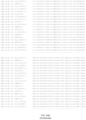
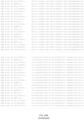
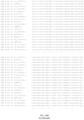
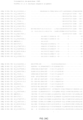
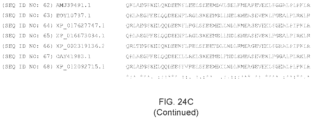
- PsbS has a conserved Chloroa_b -binding domain (SEQ ID NO: 7), ZEP comprises a NADB_Rossman and FHA superfamily domain (SEQ ID NO:8), and VDE has a Lipocalin domain (SEQ ID NO:9).
- ZEP comprises a NADB_Rossman and FHA superfamily domain (SEQ ID NO:8)
- VDE has a Lipocalin domain (SEQ ID NO:9).
- an expression vector comprising at least one expression control sequence operably linked to at least one nucleotide sequence encoding PsbS, ZEP and VDE.
- the vector comprises at least one expression control sequence comprising a promoter capable of driving expression of the nucleotide sequence encoding PsbS, ZEP and VDE, in a plant.
- the promoter is selected from Rbcs1A, GAPA-1 and FBA2.
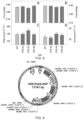
- the vector comprises an RbcsIA promoter drives expression of ZEP, a GAPA-1 promoter drives expression of PsbS, and an FBA2 promoter drives expression of VDE.
- the vector is a T-DNA or, the vector comprises a vector as shown in Figure 9 .
- the vector can express the nucleotide sequence encoding the PsbS, ZEP and VDE polypeptides in a crop plant, a model plant, a monocotyledonous plant, a dicotyledonous plant, a plant with Crassulacean acid metabolism (CAM) photosynthesis, a plant with C3 photosynthesis, a plant with C4 photosynthesis, an annual plant, a greenhouse plant, a horticultural flowering plant, a perennial plant, a switchgrass plant, a maize plant, a biomass plant, or a sugarcane plant.
- CAM Crassulacean acid metabolism
- the plant is selected from switchgrass, Miscanthus, Medicago, sweet sorghum, grain sorghum, sugarcane, energy cane, elephant grass, maize, wheat, barley, oats, rice, soybean, oil palm, safflower, sesame, tobacco, flax, cotton, sunflower, Camelina, Brassica napus, Brassica carinata, Brassica juncea, pearl millet, foxtail millet, other grain, rice, oilseed, vegetable, forage, industrial, woody and biomass crops.
- a transgenic plant comprises a recombinant vector as described herein.
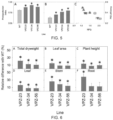
- methods of increasing biomass production and/or carbon fixationin a portion of a plant, or a plant material, or a plant seed, or a plant cell comprising introducing into the genome of the plant, plant tissue, plant seed, or plant cell one or more nucleotide sequences encoding polypeptides selected from PsbS, ZEP and VDE operably linked to one or more expression control sequences. It was found that incorporation of polypeptides encoded by the nucleotides SEQ ID NO: 1, SEQ ID NO: 2, and SEQ ID NO: 3 increased quantum yield, CO 2 fixation under fluctuating light conditions, and improved plant growth.
- the method comprises a recombinant vector as described herein.
- transgenic plant having one or more heterologous nucleotide sequences encoding polypeptides PsbS, ZEP and VDE.
- PsbS polypeptides
- ZEP polypeptides
- VDE a transgenic plant having one or more heterologous nucleotide sequences encoding polypeptides PsbS, ZEP and VDE.
- transgenic plant having one or more heterologous nucleotide sequences encoding PsbS and ZEP,one or more heterologous nucleotide sequences encoding PsbS and VDE or one or more heterologous nucleotide sequences encoding ZEP and VDE.
- the transgenic plant has one or more heterologous nucleotide sequences encoding PsbS, ZEP and VDE.
- the one or more heterologous nucleotide sequences are derived from a dicot. In some embodiments, the one or more heterologous nucleotide sequences are derived from a monocot. In some embodiments, the one or more heterologous nucleotide sequences are derived from Arabidopsis thaliana. In some embodiments, the one or more heterologous nucleotide sequences are derived from Zea mays. In some embodiments, the one or more heterologous nucleotide sequences are derived from Oryza sativa. In some embodiments, the one or more heterologous nucleotide sequences are derived from Sorghum bicolor.
- the one or more heterologous nucleotide sequences are derived from Glycine max. In some embodiments, the one or more heterologous nucleotide sequences are derived from Vigna unguiculata. In some embodiments, the one or more heterologous nucleotide sequences are derived from Populus spp. In some embodiments, the one or more heterologous nucleotide sequences are derived from Eucalyptus spp. In some embodiments, the one or more heterologous nucleotide sequences are derived from Manihot esculenta. In some embodiments, the one or more heterologous nucleotide sequences are derived from Hordeum vulgare.
- the one or more heterologous nucleotide sequences are derived from Solanum tuberosum. In some embodiments, the one or more heterologous nucleotide sequences are derived from Saccharum spp. In some embodiments, the one or more heterologous nucleotide sequences are derived from Medicago sativa.
- the one or more heterologous nucleotide sequences are derived from switchgrass, Miscanthus, Medicago, sweet sorghum, grain sorghum, sugarcane, energy cane, elephant grass, maize, cassava, cowpea, wheat, barley, oats, rice, soybean, oil palm, safflower, sesame, tobacco, flax, cotton, sunflower, Camelina, Brassica napus, Brassica carinata, Brassica juncea, pearl millet, foxtail millet, other grain, rice, oilseed, a vegetable crop, a forage crop, an industrial crop, a woody crop or a biomass crop.
- the transcript level of any of VDE, PsbS or ZEP is increased at least about 1-fold, at least about 2-fold, at least about 3-fold, at least about 4-fold, at least about 5-fold, at least about 6-fold, at least about at least about 7-fold, at least about 8-fold, at least about 9-fold, at least about 10-fold, at least about 15-fold, at least about 20-fold, or at least about 30-fold, as compared to a control plant, or, the protein level of any of VDE, PsbS or ZEP is increased at least about 1-fold, at least about 2-fold, at least about 3-fold, at least about 4-fold, at least about 5-fold, at least about 6-fold, at least about at least about 7-fold, at least about 8-fold, at least about 9-fold, at least about 10-fold, at least about 20-fold, at least about 30-fold, at least about 40-fold, at least about 50-fold, at least about 60-fold, at least about 70-fold,
- Photoprotection mechanism has a high degree of conservation among higher plants.
- the degree of conservation, or homology can be analyzed through comparing sequences of nucleotides or amino acids of genes of interest.
- sequence identity refers to the percentage of residues that are identical in the same positions in the sequences being analyzed.
- Methods of alignment of sequences for comparison are well known to one of skill in the art, including, but not limited to, manual alignment and computer assisted sequence alignment and analysis. This latter approach is a preferred approach in the present disclosure, due to the increased throughput afforded by computer assisted methods.
- the determination of percent sequence identity between any two sequences can be accomplished using a mathematical algorithm.
- Computer implementations of these mathematical algorithms can be utilized for comparison of sequences to determine sequence identity and/or similarity.
- Such implementations include, for example: CLUSTAL in the PC/Gene program (available from Intelligenetics, Mountain View, Calif.); the AlignX program, version10.3.0 (Invitrogen, Carlsbad, CA) and GAP, BESTFIT, BLAST, FASTA, and TFASTA in the Wisconsin Genetics Software Package, Version 8 (available from Genetics Computer Group (GCG), 575 Science Drive, Madison, Wis., USA). Alignments using these programs can be performed using the default parameters.
- the CLUSTAL program is well described by Higgins et al. Gene 73:237-244 (1988 ); Higgins et al.
- PsbS is encoded by a nucleotide sequence having at least about 70%, at least about 75%, at least about 80%, at least about 85%, at least about 90%, at least about 91%, at least about 92%, at least about 93%, at least about 94%, at least about 95%, at least about 96%, at least about 97%, at least about 98%, at least about 99%, at least about 99%, or 100% identity to SEQ ID NO: 1.
- VDE is encoded by a nucleotide sequence having at least about 70%, at least about 75%, at least about 80%, at least about 85%, at least about 90%, at least about 91%, at least about 92%, at least about 93%, at least about 94%, at least about 95%, at least about 96%, at least about 97%, at least about 98%, at least about 99%, at least about 99%, or 100% identity to SEQ ID NO: 3.
- PsbS has an amino acid sequence at least about 70%, at least about 75%, at least about 80%, at least about 85%, at least about 90%, at least about 91%, at least about 92%, at least about 93%, at least about 94%, at least about 95%, at least about 96%, at least about 97%, at least about 98%, at least about 99%, at least about 99%, or 100% identical to SEQ ID NO: 4.
- VDE has an amino acid sequence at least about 70%, at least about 75%, at least about 80%, at least about 85%, at least about 90%, at least about 91%, at least about 92%, at least about 93%, at least about 94%, at least about 95%, at least about 96%, at least about 97%, at least about 98%, at least about 99%, at least about 99%, or 100% identical to SEQ ID NO: 6.
- PsbS further includes a conserved domain of SEQ ID NO: 7.
- ZEP further includes a conserved domain of SEQ ID NO:8.
- VDE further includes a conserved domain of SEQ ID NO: 9.
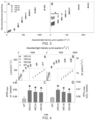
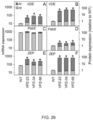
- the transcript level of VDE in the plant is increased 4-fold as compared to a control plant, the transcript level of PsbS in the plant is increased 1.2-fold as compared to a control plant andthe transcript level of ZEP in the plant is increased 7-fold as compared to a control plant.
- the protein level of VDE in the plant is increased 16-fold as compared to a control plant, the protein level of PsbS in the plant is increased 2-fold as compared to a control plant andthe protein level of ZEP in the plant is increased 80-fold as compared to a control plant.
- the protein level of VDE in the plant is increased 30-fold as compared to a control plant
- the protein level of PsbS in the plant is increased 4-fold as compared to a control plant and, the protein level of ZEP in the plant is increased 74-fold as compared to a control plant.
- the protein level of VDE in the plant is increased 47-fold as compared to a control plant
- the protein level of PsbS in the plant is increased 3-fold as compared to a control plant
- the protein level of ZEP in the plant is increased 75-fold as compared to a control plant.
- the increase of protein level of VDE in the plant as compared to a control plant is in the range of 16-fold to 47-fold
- the increase of protein level of PsbS in the plant as compared to a control plant is from about 2-fold to about 4-fold
- the increase of protein level of ZEP in the plant as compared to a control plant is from about 74-fold to about 80-fold.
- the present disclosure relates to an expression vector having one or more nucleotide sequences encoding PsbS, ZEP, and VDE.
- the expression vector has one or more nucleotide sequences encoding PsbS, ZEP and VDE.
- ZEP is encoded by a nucleotide sequence having at least about 70%, at least about 75%, at least about 80%, at least about 85%, at least about 90%, at least about 91%, at least about 92%, at least about 93%, at least about 94%, at least about 95%, at least about 96%, at least about 97%, at least about 98%, at least about 99%, at least about 99%, or 100% identity to SEQ ID NO: 2.
- ZEP has an amino acid sequence at least about 70%, at least about 75%, at least about 80%, at least about 85%, at least about 90%, at least about 91%, at least about 92%, at least about 93%, at least about 94%, at least about 95%, at least about 96%, at least about 97%, at least about 98%, at least about 99%, at least about 99%, or 100% identical to SEQ ID NO: 5.
- VDE has an amino acid sequence at least about 70%, at least about 75%, at least about 80%, at least about 85%, at least about 90%, at least about 91%, at least about 92%, at least about 93%, at least about 94%, at least about 95%, at least about 96%, at least about 97%, at least about 98%, at least about 99%, at least about 99%, or 100% identical to SEQ ID NO: 6.
- PsbS further includes a conserved domain of SEQ ID NO: 7.
- ZEP further includes a conserved domain of SEQ ID NO:8.
- VDE further includes a conserved domain of SEQ ID NO: 9.
- the vector includes one or more expression control sequences having a promoter capable of driving expression of the nucleotide sequence of PsbS, ZEP, or VDE, in a plant.
- a promoter capable of driving expression of the nucleotide sequence of PsbS, ZEP, or VDE, in a plant.
- an inducible promoter a constitutive promoter, a weak promoter, a tissue-specific promoter, a seed- and/or embryo-specific promoter, a leaf-specific promoter,a temporal-specific promoter, an anther- and/or pollen-specific promoter, a floral-specific promoter or, a combination of promoters is used in the expression vector.
- the promoter is Rbcs1A, GAPA-1, or FBA2.
- the Rbcs1A promoter drives expression of ZEP
- a GAPA-1 promoter drives expression of PsbS
- an FBA2 promoter drives expression of VDE.
- the vector is a T-DNA.
- the expression vector further includes a nucleotide sequence encoding polypeptide that provides antibiotic resistance.
- the expression vector further includes a left border (LB) and right border (RB) domain flanking the expression control sequences and the nucleotide sequence encoding the PsbS, ZEP and VDE polypeptides.
- the expression vector is in a bacterial cell.
- the expression vector is in an Agrobacterium cell.
- the increased expression is achieved by optimizing codon usage of any of PsbS, ZEP and VDE in a target plant, by altering epigenetics in a plant by altering DNA methylation in a plant, by altering histone modification in a plant, by altering small RNAs (sRNA) in a plant or by increasing the translation efficiency of any of PsbS, ZEP and VDE.
- genome-editing techniques including, but not limited to, ZFN, TALEN and CRISPR are used to modify the nucleotide sequences regulating the expression of any of PsbS, ZEP and VDE.
- the transcript level of VDE in the plant is increased 4-fold as compared to a control plant, the transcript level of PsbS in the plant is increased 1.2-fold as compared to a control plant and, the transcript level of ZEP in the plant is increased 7-fold as compared to a control plant.
- the protein level of VDE in the plant is increased 16-fold as compared to a control plant, the protein level of PsbS in the plant is increased 2-fold as compared to a control plant and, the protein level of ZEP in the plant is increased 80-fold as compared to a control plant.
- the increase of transcript level in the plant as compared to a control plant between VDE, PsbS and ZEP has a ratio of 3:3:8, 10:3:6, or 4: 1.2:7. In some embodiments, the increase of protein level in the plant as compared to a control plant between VDE, PsbS and ZEP has a ratio of 16:2:80, 30:4:74, or 47:3:75.
- the increase of transcript level of VDE in the plant as compared to a control plant is in the range of 3-fold to 10-fold
- the increase of transcript level of PsbS in the plant as compared to a control plant is from about 1.2-fold to about 3-fold
- the increase of transcript level of ZEP in the plant as compared to a control plant is from about 6-fold to about 8-fold.
- the increase of protein level of VDE in the plant as compared to a control plant is in the range of 16-fold to 47-fold
- the increase of protein level of PsbS in the plant as compared to a control plant is from about 2-fold to about 4-fold
- the increase of protein level of ZEP in the plant as compared to a control plant is from about 74-fold to about 80-fold.
- a method for increasing growth in a plant under fluctuating light conditions including increasing expression in the plant of PsbS, ZEP, and VDE, thereby producing a plant with increased expression of the polypeptides as compared to a control plant.
- the increased expression is in the form of increased transcript level.
- the transcript level of any of VDE, PsbS or ZEP is increased at least about 1-fold, at least about 2-fold, at least about 3-fold, at least about 4-fold, at least about 5-fold, at least about 6-fold, at least about at least about 7-fold, at least about 8-fold, at least about 9-fold, at least about 10-fold, at least about 15-fold, at least about 20-fold, or at least about 30-fold, as compared to a control plant.
- the increased expression is in the form of increased protein level.
- the protein level of any of VDE, PsbS or ZEP is increased at least about 1-fold, at least about 2-fold, at least about 3-fold, at least about 4-fold, at least about 5-fold, at least about 6-fold, at least about at least about 7-fold, at least about 8-fold, at least about 9-fold, at least about 10-fold, at least about 20-fold, at least about 30-fold, at least about 40-fold, at least about 50-fold, at least about 60-fold, at least about 70-fold, at least about 80-fold, at least about 90-fold, or at least about 100-fold, as compared to a control plant.
- the method includes increasing expression of PsbS.
- the method includes increasing expression of ZEP.
- the method includes increasing expression of VDE.
- the method includes increasing expression of PsbS and ZEP, the method includes increasing expression of PsbS and VDE, or the method includes increasing expression of ZEP and VDE. In some embodiments, the method includes increasing expression of PsbS, ZEP and VDE.
- VDE has an amino acid sequence at least about 70%, 75%, 80%, 85%, 90%, 91%, 92%, 93%, 94%, 95%, 96%, 97%, 98%, 99%, 99%, or 100% identical to SEQ ID NO: 6.
- PsbS further includes a conserved domain of SEQ ID NO: 7.
- ZEP further includes a conserved domain of SEQ ID NO:8.
- VDE further includes a conserved domain of SEQ ID NO: 9.
- VDE has an amino acid sequence at least about 70%, 75%, 80%, 85%, 90%, 91%, 92%, 93%, 94%, 95%, 96%, 97%, 98%, 99%, 99%, or 100% identical to SEQ ID NO: 6.
- PsbS further includes a conserved domain of SEQ ID NO: 7.
- ZEP further includes a conserved domain of SEQ ID NO:8.
- VDE further includes a conserved domain of SEQ ID NO: 9.
- the plant is Zea mays. In some embodiments, the plant is Oryza sativa. In some embodiments, the plant is Sorghum bicolor. In some embodiments, the plant is Glycine max. In some embodiments, the plant is Vigna unguiculata. In some embodiments, the plant is Populus spp. In some embodiments, the plant is Eucalyptus spp. In some embodiments, the plant is Manihot esculenta. In some embodiments, the plant is Hordeum vulgare. In some embodiments, the plant is Solanum tuberosum. In some embodiments, the plant is Saccharum spp. In some embodiments, the plant is Medicago sativa.
- a method for increasing quantum yield and CO 2 fixation in a plant under fluctuating light conditions including increasing expression in the plant of PsbS, ZEP, and VDE, thereby producing a plant with increased expression of the one or more polypeptides as compared to a control plant.
- the increased expression is in the form of increased transcript level.
- the protein level of any of VDE, PsbS or ZEP is increased at least about 1-fold, at least about 2-fold, at least about 3-fold, at least about 4-fold, at least about 5-fold, at least about 6-fold, at least about at least about 7-fold, at least about 8-fold, at least about 9-fold, at least about 10-fold, at least about 20-fold, at least about 30-fold, at least about 40-fold, at least about 50-fold, at least about 60-fold, at least about 70-fold, at least about 80-fold, at least about 90-fold, or at least about 100-fold, as compared to a control plant.
- PsbS is encoded by a nucleotide sequence having at least about 70%, 75%, 80%, 85%, 90%, 91%, 92%, 93%, 94%, 95%, 96%, 97%, 98%, 99%, 99%, or 100% identity to SEQ ID NO: 1.
- ZEP is encoded by a nucleotide sequence having at least about 70%, 75%, 80%, 85%, 90%, 91%, 92%, 93%, 94%, 95%, 96%, 97%, 98%, 99%, 99%, or 100% identity to SEQ ID NO: 2.
- PsbS has an amino acid sequence at least about 70%, 75%, 80%, 85%, 90%, 91%, 92%, 93%, 94%, 95%, 96%, 97%, 98%, 99%, 99%, or 100% identical to SEQ ID NO: 4.
- ZEP has an amino acid sequence at least about 70%, 75%, 80%, 85%, 90%, 91%, 92%, 93%, 94%, 95%, 96%, 97%, 98%, 99%, 99%, or 100% identical to SEQ ID NO: 5.
- VDE has an amino acid sequence at least about 70%, 75%, 80%, 85%, 90%, 91%, 92%, 93%, 94%, 95%, 96%, 97%, 98%, 99%, 99%, or 100% identical to SEQ ID NO: 6.
- PsbS further includes a conserved domain of SEQ ID NO: 7.
- ZEP further includes a conserved domain of SEQ ID NO:8.
- VDE further includes a conserved domain of SEQ ID NO: 9.
- the plant is Zea mays. In some embodiments, the plant is Oryza sativa. In some embodiments, the plant is Sorghum bicolor. In some embodiments, the plant is Glycine max. In some embodiments, the plant is Vigna unguiculata. In some embodiments, the plant is Populus spp. In some embodiments, the plant is Eucalyptus spp. In some embodiments, the plant is Manihot esculenta. In some embodiments, the plant is Hordeum vulgare. In some embodiments, the plant is Solanum tuberosum. In some embodiments, the plant is Saccharum spp. In some embodiments, the plant is Medicago sativa.
- the plant is switchgrass, Miscanthus, Medicago, sweet sorghum, grain sorghum, sugarcane, energy cane, elephant grass, maize, cassava, cowpea, wheat, barley, oats, rice, soybean, oil palm, safflower, sesame, tobacco, flax, cotton, sunflower, Camelina, Brassica napus, Brassica carinata, Brassica juncea, pearl millet, foxtail millet, other grain, rice, oilseed, a vegetable crop, a forage crop, an industrial crop, a woody crop or a biomass crop.
- NPQ non-photochemical quenching
- a method for increasing the rate of relaxation of non-photochemical quenching (NPQ) in a plant including increasing expression in the plant of PsbS, ZEP, and VDE, thereby producing a plant with increased expression of the one or more polypeptides as compared to a control plant.
- the increased expression is in the form of increased transcript level.
- the transcript level of any of VDE, PsbS or ZEP is increased at least about 1-fold, at least about 2-fold, at least about 3-fold, at least about 4-fold, at least about 5-fold, at least about 6-fold, at least about at least about 7-fold, at least about 8-fold, at least about 9-fold, at least about 10-fold, at least about 15-fold, at least about 20-fold, or at least about 30-fold, as compared to a control plant.
- the increased expression is in the form of increased protein level.
- the protein level of any of VDE, PsbS or ZEP is increased at least about 1-fold, at least about 2-fold, at least about 3-fold, at least about 4-fold, at least about 5-fold, at least about 6-fold, at least about at least about 7-fold, at least about 8-fold, at least about 9-fold, at least about 10-fold, at least about 20-fold, at least about 30-fold, at least about 40-fold, at least about 50-fold, at least about 60-fold, at least about 70-fold, at least about 80-fold, at least about 90-fold, or at least about 100-fold, as compared to a control plant.
- the method includes increasing expression of PsbS, ZEP and VDE.
- PsbS is encoded by a nucleotide sequence having at least about 70%, 75%, 80%, 85%, 90%, 91%, 92%, 93%, 94%, 95%, 96%, 97%, 98%, 99%, 99%, or 100% identity to SEQ ID NO: 1.
- ZEP is encoded by a nucleotide sequence having at least about 70%, 75%, 80%, 85%, 90%, 91%, 92%, 93%, 94%, 95%, 96%, 97%, 98%, 99%, 99%, or 100% identity to SEQ ID NO: 2.
- VDE is encoded by a nucleotide sequence having at least about 70%, 75%, 80%, 85%, 90%, 91%, 92%, 93%, 94%, 95%, 96%, 97%, 98%, 99%, 99%, or 100% identity to SEQ ID NO: 3.
- PsbS has an amino acid sequence at least about 70%, 75%, 80%, 85%, 90%, 91%, 92%, 93%, 94%, 95%, 96%, 97%, 98%, 99%, 99%, or 100% identical to SEQ ID NO: 4.
- ZEP has an amino acid sequence at least about 70%, 75%, 80%, 85%, 90%, 91%, 92%, 93%, 94%, 95%, 96%, 97%, 98%, 99%, 99%, or 100% identical to SEQ ID NO: 5.
- VDE has an amino acid sequence at least about 70%, 75%, 80%, 85%, 90%, 91%, 92%, 93%, 94%, 95%, 96%, 97%, 98%, 99%, 99%, or 100% identical to SEQ ID NO: 6.
- PsbS further includes a conserved domain of SEQ ID NO: 7.
- ZEP further includes a conserved domain of SEQ ID NO:8.
- VDE further includes a conserved domain of SEQ ID NO: 9.
- the plant is Zea mays. In some embodiments, the plant is Oryza sativa. In some embodiments, the plant is Sorghum bicolor. In some embodiments, the plant is Glycine max. In some embodiments, the plant is Vigna unguiculata. In some embodiments, the plant is Populus spp. In some embodiments, the plant is Eucalyptus spp. In some embodiments, the plant is Manihot esculenta. In some embodiments, the plant is Hordeum vulgare. In some embodiments, the plant is Solanum tuberosum. In some embodiments, the plant is Saccharum spp. In some embodiments, the plant is Medicago sativa.
- the plant is switchgrass, Miscanthus, Medicago, sweet sorghum, grain sorghum, sugarcane, energy cane, elephant grass, maize, cassava, cowpea, wheat, barley, oats, rice, soybean, oil palm, safflower, sesame, tobacco, flax, cotton, sunflower, Camelina, Brassica napus, Brassica carinata, Brassica juncea, pearl millet, foxtail millet, other grain, rice, oilseed, a vegetable crop, a forage crop, an industrial crop, a woody crop or a biomass crop.
- NPQ non-photochemical quenching
- control level of NPQ is the lowest level of NPQ in the population
- control level of NPQ is the median level of NPQ in the population
- control level of NPQ is the mean level of NPQ in the population orthe control level of NPQ is the level of NPQ in a control plant.
- the population includes plants expressing heterologous sequences of PsbS, ZEP and VDE.
- the genome has been edited in order to increase expression of PsbS, ZEP, and VDE.
- the genome editing technique is ZFN or
- the genome editing technique is TALENorthe genome editing technique is CRISPR.
- the promoter of PsbS is modified.
- the promoter of ZEP is modified. In some embodiments, the promoter of VDE is modified. In some embodiments, the population includes plants that have been treated to induce mutations in PsbS, ZEP and/ or VDE. In some embodiments, the mutagen is EMS.
- PsbS is encoded by a nucleotide sequence having at least about 70%, 75%, 80%, 85%, 90%, 91%, 92%, 93%, 94%, 95%, 96%, 97%, 98%, 99%, 99%, or 100% identity to SEQ ID NO: 1.
- ZEP is encoded by a nucleotide sequence having at least about 70%, 75%, 80%, 85%, 90%, 91%, 92%, 93%, 94%, 95%, 96%, 97%, 98%, 99%, 99%, or 100% identity to SEQ ID NO: 2.
- VDE is encoded by a nucleotide sequence having at least about 70%, 75%, 80%, 85%, 90%, 91%, 92%, 93%, 94%, 95%, 96%, 97%, 98%, 99%, 99%, or 100% identity to SEQ ID NO: 3.
- PsbS has an amino acid sequence at least about 70%, 75%, 80%, 85%, 90%, 91%, 92%, 93%, 94%, 95%, 96%, 97%, 98%, 99%, 99%, or 100% identical to SEQ ID NO: 4.
- ZEP has an amino acid sequence at least about 70%, 75%, 80%, 85%, 90%, 91%, 92%, 93%, 94%, 95%, 96%, 97%, 98%, 99%, 99%, or 100% identical to SEQ ID NO: 5.
- VDE has an amino acid sequence at least about 70%, 75%, 80%, 85%, 90%, 91%, 92%, 93%, 94%, 95%, 96%, 97%, 98%, 99%, 99%, or 100% identical to SEQ ID NO: 6.
- PsbS further includes a conserved domain of SEQ ID NO: 7.
- ZEP further includes a conserved domain of SEQ ID NO:8.
- VDE further includes a conserved domain of SEQ ID NO: 9.
- the plant is Zea mays. In some embodiments, the plant is Oryza sativa. In some embodiments, the plant is Sorghum bicolor. In some embodiments, the plant is Glycine max. In some embodiments, the plant is Vigna unguiculata. In some embodiments, the plant is Populus spp. In some embodiments, the plant is Eucalyptus spp. In some embodiments, the plant is Manihot esculenta. In some embodiments, the plant is Hordeum vulgare. In some embodiments, the plant is Solanum tuberosum. In some embodiments, the plant is Saccharum spp. In some embodiments, the plant is Medicago sativa.
- the plant is switchgrass, Miscanthus, Medicago, sweet sorghum, grain sorghum, sugarcane, energy cane, elephant grass, maize, cassava, cowpea, wheat, barley, oats, rice, soybean, oil palm, safflower, sesame, tobacco, flax, cotton, sunflower, Camelina, Brassica napus, Brassica carinata, Brassica juncea, pearl millet, foxtail millet, other grain, rice, oilseed, a vegetable crop, a forage crop, an industrial crop, a woody crop or a biomass crop.
- methods of screening for a nucleotide sequence polymorphism associated with improved growth characteristics under fluctuating light conditions including the steps of providing a population of plants; obtaining the nucleotide sequences regulating and/or encoding any of PsbS, ZEP and VDE in the population of plants; obtaining one or more polymorphisms in the nucleotide sequences regulating and/or encoding any of PsbS, ZEP and VDE in the population of plants; detecting the rate of non-photochemical quenching (NPQ) relaxation upon transition from high light intensity to low light intensity in the population of plants; performing statistical analysis to determine association of the polymorphism with the rate of NPQ relaxation in the population of plants; and selecting the polymorphism having statistically significant association with the rate of NPQ relaxation.
- NPQ non-photochemical quenching
- the population is a collection of germplasm.
- the population includes plants expressing heterologous sequences of PsbS, ZEP and/ or VDE or in which the genome has been edited in order to increase expression of PsbS, ZEP, and/or VDE.
- the population includes plants that have not been treated to induce mutations.
- the population includes plants that have been treated to induce mutations in PsbS, ZEP and/ or VDE.
- the polymorphism is a single nucleotide polymorphism (SNP).
- the polymorphism is an insertion/deletion (InDel).
- the polymorphism is a simple sequence repeat (SSR). In some embodiments, the polymorphism is a presence/absence variation (PAV). In some embodiments, the polymorphism is a copy number variation (CNV). In some embodiments, the polymorphism is located in the promoter of PsbS. In some embodiments, the polymorphism is located in the promoter of ZEP. In some embodiments, the polymorphism is located in the promoter of VDE. In some embodiments, the polymorphism is detected by Sanger sequencing. In some embodiments, the polymorphism is detected by next-generation-sequencing. In some embodiments, the polymorphism is detected by agarose gel electrophoresis.
- SSR simple sequence repeat
- PAV presence/absence variation
- CNV copy number variation
- the polymorphism is located in the promoter of PsbS. In some embodiments, the polymorphism is located in the promoter of ZEP. In some embodiments, the polymorphism is located in
- the polymorphism is detected by polyacrylamide gel electrophoresis. Not encompassed by the current wording of the claims is that the polymorphism is further used to screen a population different from the one from which the polymorphism is identified, or, the polymorphism is further used as a target for genome editing in order to improve growth characteristics of a plant.
- the improved growth characteristic is improved growth and, the improved growth characteristic is increased rate of relaxation of non-photochemical quenching (NPQ).
- NPQ is detected using chlorophyll fluorescence imaging.
- VDE is encoded by a nucleotide sequence having at least about 70%, 75%, 80%, 85%, 90%, 91%, 92%, 93%, 94%, 95%, 96%, 97%, 98%, 99%, 99%, or 100% identity to SEQ ID NO: 3.
- PsbS has an amino acid sequence at least about 70%, 75%, 80%, 85%, 90%, 91%, 92%, 93%, 94%, 95%, 96%, 97%, 98%, 99%, 99%, or 100% identical to SEQ ID NO: 4.
- ZEP has an amino acid sequence at least about 70%, 75%, 80%, 85%, 90%, 91%, 92%, 93%, 94%, 95%, 96%, 97%, 98%, 99%, 99%, or 100% identical to SEQ ID NO: 5.
- VDE has an amino acid sequence at least about 70%, 75%, 80%, 85%, 90%, 91%, 92%, 93%, 94%, 95%, 96%, 97%, 98%, 99%, 99%, or 100% identical to SEQ ID NO: 6.
- PsbS further includes a conserved domain of SEQ ID NO: 7.
- ZEP further includes a conserved domain of SEQ ID NO:8.
- VDE further includes a conserved domain of SEQ ID NO: 9.
- the RbcsIA promoter drives expression of ZEP
- a GAPA-1 promoter drives expression of PsbS
- an FBA2 promoter drives expression of VDE.
- the vector is a T-DNA.
- the vector is as shown in Figure 9 . Particular promoters and vectors that work in one plant type may not work in another, as known by one of skill in the art. Methods of making transgenic plants are well known in the art, as described herein.
- T-DNA Integration of the T-DNA into the plant genome generally begins at the RB and continues to the end of the T-DNA, at the LB. However, endonucleases sometimes do not nick equally at both borders. When this happens, the T-DNA that is inserted into the plant genome often contains some or all of the plasmid vector DNA. This phenomenon is referred to as "read-through.” A desired approach is often that only the transgene(s) located between the right and left border regions (the T-DNA) is transferred into the plant genome without any of the adjacent plasmid vector DNA (the vector backbone).
- Vector backbone DNA contains various plasmid maintenance elements, including, for example, origin of replications, bacterial selectable marker genes, and other DNA fragments that are not required to express the desired trait(s) in plants.
- Engineered minichromosomes can also be used to express one or more genes in plant cells.
- Cloned telomeric repeats introduced into cells may truncate the distal portion of a chromosome by the formation of a new telomere at the integration site.
- a vector for gene transfer can be prepared by trimming off the arms of a natural plant chromosome and adding an insertion site for large inserts ( Yu et al., 2006, Proc. Natl. Acad. Sci. USA 103: 17331-17336 ; Yu et al., 2007, Proc. Natl. Acad. Sci. USA 104: 8924-8929 ).
- promoters include ribulose-1,5-bisphosphate carboxylase (RbcS) promoters, such as the RbcS promoter from Eastern larch ( Larix laricina ), the pine cab6 promoter ( Yamamoto et al., Plant Cell Physiol. 35:773-778, 1994 ), the Cab-1 gene promoter from wheat ( Fejes et al., Plant Mol. Biol. 15:921-932, 1990 ), the CAB-1 promoter from spinach ( Lubberstedt et al., Plant Physiol.
- RbcS ribulose-1,5-bisphosphate carboxylase
- Chemical-inducible promoters are known in the art and include, but are not limited to, the maize ln2-2 promoter, which is activated by benzenesulfonamide herbicide safeners, the maize GST promoter, which is activated by hydrophobic electrophlic compounds that are used as pre-emergent herbicides, and the tobacco PR-1 promoter which is activated by salicylic acid.
- Other chemical-regulated promoters include steroid-responsive promoters [see, for example, the glucocorticoid-inducible promoter ( Schena et al, 1991, Proc. Natl. Acad. Sci.
- Leml Somleva & Blechl, 2005, Cereal Res. Comm. 33: 665-671 ; Skadsen et al, 2002, Plant Mol. Biol. 45: 545-555 ), Lem2 ( Abebe et al., 2005, Plant Biotechnol. J. 4: 35-44 ), AGL6 and AGL13 ( Schauer et al., 2009, Plant J. 59: 987-1000 ).
- Transgenic DNA constructs used for transforming plant cells will comprise the heterologous nucleotides which one desires to introduced into and a promoter to express the heterologous nucleotides in the host maize cells.
- such constructs can further include elements such as regulatory elements, 3 ' untranslated regions (such as polyadenylation sites), transit or signal peptides and marker genes elements as desired. 1.
- Regulatory Elements A number of promoters that are active in plant cells have been described in the literature both constitutive and tissue specific promoters and inducible promoters. See the background section of U.S. Patent 6,437,217 for a description of a wide variety of promoters that are functional in plants.
- RT-qPCR was used to quantify expression levels of the transgenes AtZEP, AtPsbS and AtVDE, and the native genes NtZEP, NtPsbS and NtVDE relative to NtActin and NtTubulin (primer sequences provided supplemental materials) .
- protein quantification assay ref740967.50, Macherey-Nagel After quantification of total protein concentration (protein quantification assay ref740967.50, Macherey-Nagel), 4 ⁇ g protein was separated by SDS-PAGE electrophoresis, blotted to membrane (Immobilon-P, IPVH00010, Millipore, USA) using semi-dry blotting (Trans-Blot SD, Bio-Rad) and immuno-labelled with primary antibodies raised against AtPsbS (AS09533, Agrisera, Vännäs, Sweden), AtZEP (AS08289, Agrisera) and AtVDE (AS153091, Agrisera) followed by incubation with secondary antibodies (Promega W401B).
- Chemiluminescence was detected using a scanner (ImageQuant LAS-4010, Fuji,) and densitometry was performed using Imaged (version 1.47v, National Institute of Health, USA) to estimate protein concentrations Wild-type protein concentrations were used for normalization.
- NPQ was computed according to Eq. 1, normalized against the highest value within each set after which all six sets were compiled as a function of time to generate time-series of normalized NPQ with a resolution of 5 seconds. Time constants in a double exponential function for induction or relaxation of NPQ were fitted to the compiled time-series after each change in light intensity. For the final recovery in darkness, time constants were also fitted for PSII operating efficiency (estimated using equation 3).
- the first experiment consisted of slowly increasing the light intensity from 0 to 50, 80, 110, 140, 170, 200, 400, 600, 800, 1000, 1200, 1500 and 2000 ⁇ mol m -2 s -1 , trying to keep induction of NPQ at each light intensity to an absolute minimum.
- gas exchange parameters were logged and baseline fluorescence (F') and light-adapted maximal fluorescence (Fm') were measured to estimate NPQ (Eq.1) and PSII operating efficiency (Eq.3).
- leaves were allowed to reach steady state gas exchange at 2000 ⁇ mol m -2 s -1 .
- Vcmax maximal carboxylation rate
- J electron transport rate at 2000 ⁇ mol m -2 s -1
- TPU triose phosphate utilization rate
- Rd mitochondrial respiration rate not associated with photorespiration
- Leaves were clamped in the leaf cuvette of an open gas exchange system and dark-adapted as described above. Subsequently, CO 2 and H 2 O exchange were either allowed to reach steady state at 0, 400 and 2000 ⁇ mol m -2 s -1 or subjected to a series of changes in light intensity (three cycles of 3 min 2000/3 min 200 ⁇ mol m -2 s -1 ), immediately after which leaf discs (0.58 cm2) were sampled from the enclosed leaf spot, snap-frozen in liquid nitrogen and stored at -80 °C until extraction. Pigment analysis took place at the Horn Point Laboratory (University of Maryland Center for Environmental Science, Cambridge, MD, USA).
- Plants were watered and plant positions were changed randomly every two days. Light intensity at leaf level was logged with a quantum sensor (LI-190R, LI-COR, USA) at the center of the greenhouse table, which was mounted on a tripod and adjusted daily to maintain a position of 10 cm above the youngest leaves. Air temperature, relative humidity and [CO 2 ] were measured approximately 1 m above the plant canopy, using a combined temperature and humidity sensor (HMP60-L,Vaisala Oyj, Helsinki, Finland) and an infrared gas analyzer (SBA-5, PPsystems, Amesbury, MA, USA). All climate data was logged every 30 min using a datalogger (CR1000, Campbell Scientific Inc, Logan, UT, USA).
- the transgenic cells are cultured into transgenic plants producing progeny transgenic seed.
- the population of transgenic plants is screened for observable phenotypes. Seed is collected from transgenic plants which are selected as having an unexpected enhanced phenotype.
- the method comprises repeating a cycle of germinating transgenic seed, growing subsequent generation plants from said transgenic seed, observing phenotypes of said subsequent generation plants and collecting seeds from subsequent generation plants having an enhanced phenotype.
- the method a large population is screened by employing at least one heterologous nucleotide sequences encoding polypeptides selected from PsbS, ZEP and VDE.
- the explants (5 per plate) are cultured adaxial side down on the co-cultivation plates, that are overlaid with filter paper, for 3 days at 24 °C, under an 18/6 hour light regime with an approximate light intensity of 80 ⁇ mol s-1 m-2(F17T8/750 cool white bulbs, Litetronics).
- the co-cultivation plates are wrapped with Parafilm.
- the SE medium is amended with either 1.7 or 2.0 mg l-1 glufosinate.
- the explants are sub-cultured biweekly to fresh SI medium until shoots reached a length greater than 3 cm.
- the elongated shoots are rooted on Murashige and Skoog salts with B5 vitamins, 1% sucrose, 0.5 mg l-1 NAA without further selection in either Magenta boxes or Sundae cups (Industrial Soap Company, St. Louis MO).
- This invention can also provide for a rice line with improved photosynthesis and growth as compared to a phenotype in parental units of said rice line.
- the rice line can be created by generating a population of transgenic plants comprising heterologous nucleotide sequences encoding polypeptides selected from PsbS, ZEP and VDE as described herein.
- Each transgenic event comprises introducing into the genome of a parent plant at least one nucleotide construct comprising a promoter operably linked to heterologous nucleotide as described herein.
- the nucleotide construct is introduced into the parental genome in sufficient quantity to produce transgenic cells which can be cultured into plants of transgenic rice having said enhanced phenotype.
- the transgenic cells are cultured into transgenic plants producing progeny transgenic seed.
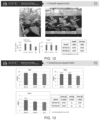
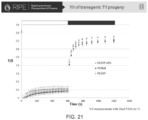
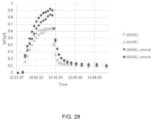
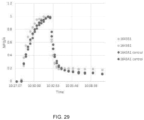
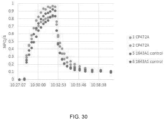
- the qZ phase of NPQ relaxation ( ⁇ 2) was slower in the transformant line 1643B1 as compared to the control, likely caused by the limitation that the measurements were taken on T 0 transgenic plants.
- transgenic plants from T 1 or T 2 generations are usually preferred over T 0 for phenotypic measurements.
- stress from the transformation and tissue culture processes can interfere with normal plant physiology and affect phenotypic measurements.
- molecular characterization of a transgene cannot be complete until in the T 1 or T 2 generation and transgenic characteristics such as copy number and insertion location in the genome can have significant effects on the transgene expression. As shown in FIG. 27 , FIG. 28 and FIG.
- This invention can also provide for a cassava line with improved photosynthesis and growth as compared to a phenotype in parental units of said cassava line.
- the cassava line can be created by generating a population of transgenic plants comprising heterologous nucleotide sequences encoding polypeptides selected from PsbS, ZEP and VDE as described herein.
- Each transgenic event comprises introducing into the genome of a parent plant at least one nucleotide construct comprising a promoter operably linked to heterologous nucleotide as described herein.
- the nucleotide construct is introduced into the parental genome in sufficient quantity to produce transgenic cells which can be cultured into plants of transgenic cassava having said enhanced phenotype.
- This invention can also provide for a poplar line with improved photosynthesis and growthas compared to a phenotype in parental units of said poplar line.
- the poplar line can be created by generating a population of transgenic plants comprising heterologous nucleotide sequences encoding polypeptides selected from PsbS, ZEP and VDE as described herein.
- Each transgenic event comprises introducing into the genome of a parent plant at least one nucleotide construct comprising a promoter operably linked to heterologous nucleotide as described herein.
- the nucleotide construct is introduced into the parental genome in sufficient quantity to produce transgenic cells which can be cultured into plants of transgenic poplar having said enhanced phenotype.
- the nucleotide construct is introduced into the parental genome in sufficient quantity to produce transgenic cells which can be cultured into plants of transgenic eucalyptus having said enhanced phenotype.
- the transgenic cells are cultured into transgenic plants producing progeny transgenic seed.
- the population of transgenic plants is screened for observable phenotypes. Seed is collected from transgenic plants which are selected as having an unexpected enhanced phenotype.
- the method comprises repeating a cycle of germinating transgenic seed, growing subsequent generation plants from said transgenic seed, observing phenotypes of said subsequent generation plants and collecting seeds from subsequent generation plants having an enhanced phenotype.
- a large population is screened by employing at least one heterologous nucleotide sequences encoding polypeptides selected from PsbS, ZEP and VDE.
- Other preferred aspects of the method employ nucleotide constructs where the heterologous DNA is operably linked to a selected promoter, e.g. the 5' end of a promoter region.
- the DNA construct may be introduced into a random location in the genome or into a preselected site in the genome.
Landscapes
- Health & Medical Sciences (AREA)
- Life Sciences & Earth Sciences (AREA)
- Genetics & Genomics (AREA)
- Chemical & Material Sciences (AREA)
- Engineering & Computer Science (AREA)
- Organic Chemistry (AREA)
- Wood Science & Technology (AREA)
- Zoology (AREA)
- Bioinformatics & Cheminformatics (AREA)
- General Engineering & Computer Science (AREA)
- Biotechnology (AREA)
- Molecular Biology (AREA)
- Biomedical Technology (AREA)
- General Health & Medical Sciences (AREA)
- Biochemistry (AREA)
- Microbiology (AREA)
- Biophysics (AREA)
- Physics & Mathematics (AREA)
- Plant Pathology (AREA)
- Cell Biology (AREA)
- Medicinal Chemistry (AREA)
- Physiology (AREA)
- Proteomics, Peptides & Aminoacids (AREA)
- Botany (AREA)
- Analytical Chemistry (AREA)
- Nutrition Science (AREA)
- Environmental Sciences (AREA)
- Gastroenterology & Hepatology (AREA)
- Developmental Biology & Embryology (AREA)
- Oil, Petroleum & Natural Gas (AREA)
- Pest Control & Pesticides (AREA)
- Insects & Arthropods (AREA)
- Mycology (AREA)
- Immunology (AREA)
- Breeding Of Plants And Reproduction By Means Of Culturing (AREA)
- Micro-Organisms Or Cultivation Processes Thereof (AREA)
- Agricultural Chemicals And Associated Chemicals (AREA)
- Measuring Or Testing Involving Enzymes Or Micro-Organisms (AREA)
- Peptides Or Proteins (AREA)
- Investigating, Analyzing Materials By Fluorescence Or Luminescence (AREA)
Claims (15)
- Transgene Pflanze, die heterologe Nukleotidsequenzen umfasst, die
Photosystem 11-Untereinheit S (PsbS), Zeaxanthinepoxidase (ZEP) und Violaxanthindeepoxidase (VDE) codieren, funktionell verknüpft mit zumindest einer Expressionskontrollsequenz, wobei die Transkriptniveaus von VDE, PsbS und ZEP verglichen mit einer Kontrollpflanze erhöht sind, die eine genetisch unveränderte oder eine nicht-transgene Pflanze der Elternlinie ist, die verwendet wird, um die transgene Pflanze zu erzeugen. - Transgene Pflanze nach Anspruch 1, wobei:i) PsbS durch die Nukleotidsequenz von SEQ ID NO: 1 codiert wird, ZEP durch die Nukleotidsequenz von SEQ ID NO:2 codiert wird und VDE durch die Nukleotidsequenz von SEQ ID NO: 3 codiert wird;ii) PsbS durch eine Nukleotidsequenz mit zumindest 90 % Identität mit SEQ ID NO: 1 codiert wird, ZEP durch eine Nukleotidsequenz mit zumindest 90 % Identität mit SEQ ID NO: 2 codiert wird, und VDE durch eine Nukleotidsequenz mit zumindest 90 % Identität mit SEQ ID NO: 3 codiert wird;iii) PsbS durch eine Nukleotidsequenz mit zumindest 70 % Identität mit SEQ ID NO: 1 codiert wird, ZEP durch die Nukleotidsequenz mit zumindest 70 % Identität mit SEQ ID NO: 2 codiert wird, und VDE durch die Nukleotidsequenz mit zumindest 70 % Identität mit SEQ ID NO: 3 codiert wird;iv) PsbS die Aminosäuresequenz von SEQ ID NO: 4 aufweist, ZEP die Aminosäuresequenz von SEQ ID NO: 5 aufweist und VDE die Aminosäuresequenz von SEQ ID NO: 6 aufweist;v) PsbS die Aminosäuresequenz aufweist, die zu zumindest 90 % identisch mit SEQ ID NO: 4 ist, ZEP eine Aminosäuresequenz aufweist, die zu zumindest 90 % identisch mit SEQ ID NO: 5 ist, und VDE eine Aminosäuresequenz aufweist, die zu zumindest 90 % identisch mit SEQ ID NO: 6 ist;vi) PsbS eine Aminosäuresequenz aufweist, die zu zumindest 70 % identisch mit SEQ ID NO: 4 ist, ZEP eine Aminosäuresequenz aufweist, die zu zumindest 70 % identisch mit SEQ ID NO: 5 ist, und VDE eine Aminosäuresequenz aufweist, die zu zumindest 70 % identisch mit SEQ ID NO: 6 ist; odervii) PsbS eine konservierte Domäne von SEQ ID NO: 7 umfasst, ZEP eine konservierte Domäne von SEQ ID NO: 8 umfasst und VDE eine konservierte Domäne von SEQ ID NO: 9 umfasst.
- Transgene Pflanze nach Anspruch 1 oder 2, wobei die Pflanze ausgewählt ist aus der Gruppe bestehend aus Rutenhirse, Miscanthus, Zuckerhirse, Körnerhirse, Energierohr, Elefantengras, Kukuruz, Weizen, Hafer, Ölpalme, Saflor, Sesam, Flachs, Baumwolle, Sonnenblume, Leindotter, Brassica napus, Brassica carinata, Brassica juncea, Perlhirse, Kolbenhirse, anderem Getreide, Reis, Ölsaat, einer Gemüsepflanze, einer Futterpflanze, einer Industriepflanze, einer Holzpflanze, einer Biomassepflanze, Tabak (Nicotiana tabacum), Mais (Zea mays), Reis (Oryza sativa), Sorghum (Sorghum bicolor), Sojabohne (Glycine max), Augenbohne (Vigna unguiculata), Pappel (Populus spp.), Eukalyptus (Eucalyptus spp.), Maniok (Manihot esculenta), Gerste (Hordeum vulgare), Kartoffel (Solanum tuberosum), Zuckerrohr (Saccharum spp.) und Luzerne (Medicago sativa).
- Transgene Pflanze nach einem der Ansprüche 1 bis 3, wobei die Pflanze Folgendes aufweist:i) erhöhtes Wachstum unter schwankenden Lichtbedingungen verglichen mit der Kontrollpflanze, die unter schwankenden Lichtbedingungen gewachsen ist;ii) erhöhte photosynthetische Effizienz unter schwankenden Lichtbedingungen verglichen mit der Kontrollpflanze, die unter schwankenden Lichtbedingungen gewachsen ist;iii) verbesserte Lichtschutzeffizienz unter schwankenden Lichtbedingungen verglichen mit der Kontrollpflanze, die unter schwankenden Lichtbedingungen gewachsen ist;iv) verbesserte Wachstumseigenschaft durch erhöhte Relaxationsrate der nichtphotochemischen Löschung (NPQ); oderv) verbesserte Quantenausbeute und CO2-Fixierung unter schwankenden Lichtbedingungen verglichen mit der Kontrollpflanze, die unter schwankenden Lichtbedingungen gewachsen ist,wobei die Kontrollpflanze eine genetisch unveränderte oder nicht-transgene Pflanze der Elternlinie ist, die verwendet wird, um die transgene Pflanze zu erzeugen.
- Expressionsvektor, der Nukleotidsequenzen umfasst, die
PsbS, ZEP und VDE codieren, die funktionell mit zumindest einer Expressionskontrollsequenz verknüpft sind, wobei die Transkriptniveaus von VDE, PsbS und ZEP erhöht sind, wenn sie in eine Pflanze transfiziert wird, verglichen mit einer Kontrollpflanze, die eine genetisch unveränderte oder nicht-transgene Pflanze der Elternlinie ist, die verwendet wird, um die transgene Pflanze zu erzeugen. - Expressionsvektor nach Anspruch 5, wobei die zumindest eine Expressionskontrollsequenz einen Promotor umfasst, der aus der Gruppe ausgewählt ist, die aus Rbcs1A-Promotor, GAPA-1-Promotor und FBA2-Promotor besteht, oder
wobei ein Rbcs1A-Promoter Expression von ZEP steuert, ein GAPA-1-Promoter Expression von PsbS steuert und ein FBA2-Promoter Expression von VDE steuert. - Expressionsvektor nach Anspruch 5 oder 6, wobeii) PsbS durch die Nukleotidsequenz von SEQ ID NO: 1 codiert wird, ZEP durch die Nukleotidsequenz von SEQ ID NO: 2 codiert wird und VDE durch die Nukleotidsequenz von SEQ ID NO: 3 codiert wird;ii) PsbS durch eine Nukleotidsequenz mit zumindest 90 % Identität mit SEQ ID NO: 1 codiert wird, ZEP durch eine Nukleotidsequenz mit zumindest 90 % Identität mit SEQ ID NO: 2 codiert wird, und VDE durch eine Nukleotidsequenz mit zumindest 90 % Identität mit SEQ ID NO: 3 codiert wird;iii) PsbS durch eine Nukleotidsequenz mit zumindest 70 % Identität mit SEQ ID NO: 1 codiert wird, ZEP durch eine Nukleotidsequenz mit zumindest 70 % Identität mit SEQ ID NO: 2 codiert wird, und VDE durch eine Nukleotidsequenz mit zumindest 70 % Identität mit SEQ ID NO: 3 codiert wird;iv) PsbS die Aminosäuresequenz von SEQ ID NO: 4 aufweist, ZEP die Aminosäuresequenz von SEQ ID NO: 5 aufweist und VDE die Aminosäuresequenz von SEQ ID NO: 6 aufweist;v) PsbS eine Aminosäuresequenz aufweist, die zu zumindest 90 % identisch mit SEQ ID NO: 4 ist, ZEP eine Aminosäuresequenz aufweist, die zu zumindest 90 % identisch mit SEQ ID NO: 5 ist, und VDE eine Aminosäuresequenz aufweist, die zu zumindest 90 % identisch mit SEQ ID NO: 6 ist;vi) PsbS eine Aminosäuresequenz aufweist, die zu zumindest 70 % identisch mit SEQ ID NO: 4 ist, ZEP eine Aminosäuresequenz aufweist, die zu zumindest 70 % identisch mit SEQ ID NO: 5 ist, und VDE eine Aminosäuresequenz aufweist, die zu zumindest 70 % identisch mit SEQ ID NO: 6 ist; odervii) PsbS eine konservierte Domäne von SEQ ID NO: 7 umfasst, ZEP eine konservierte Domäne von SEQ ID NO: 8 umfasst und VDE eine konservierte Domäne von SEQ ID NO: 9 umfasst.
- Bakterienzelle, die den Expressionsvektor nach einem der Ansprüche 5 bis 7 umfasst.
- Transgene Pflanze, die den Expressionsvektor nach einem der Ansprüche 5 bis 7 umfasst.
- Samen, der den Expressionsvektor nach einem der Ansprüche 5 bis 7 umfasst.
- Verfahren zum Erhöhen des Wachstums, Erhöhen der photosynthetischen Effizienz, Verbessern von Photoschutzeffizienz und/oder Verbessern der Quantenausbeute und CO2-Fixierung in einer Pflanze unter schwankenden Lichtbedingungen, wobei das Verfahren Folgendes umfasst:i) Erhöhen von Expression in der Pflanze von PsbS-, ZEP- und VDE-Polypeptiden durch Exprimieren von heterologen Nukleotidsequenzen, die PsbS-, ZEP- und VDE-Polypeptide codieren; oderii) Erhöhen von Expression von PsbS-, ZEP- und VDE-Polypeptiden durch Modifizieren eines Promotors einer Nukleotidsequenz, die das PsbS-Polypeptid codiert, eines Promotors einer Nukleotidsequenz, die das ZEP-Polypeptid codiert, und eines Promotors einer Nukleotidsequenz, die das VDE-Polypeptid codiert.
- Verfahren zum Erhöhen der Relaxationsrate von nicht-photochemischer Löschung (NPQ) in einer Pflanze, wobei:i) Expression von PsbS-, ZEP- und VDE-Polypeptiden durch Exprimieren von heterologen Nukleotidsequenzen, die PsbS-, ZEP- und VDE-Polypeptide codieren, erhöht wird; oderii) Expression von PsbS-, ZEP- und VDE-Polypeptiden durch Modifizieren eines Promotors einer Nukleotidsequenz, die das PsbS-Polypeptid codiert, eines Promotors einer Nukleotidsequenz, die das ZEP-Polypeptid codiert, und eines Promotors einer Nukleotidsequenz, die das VDE-Polypeptid codiert, erhöht wird.
- Verfahren zum Auswählen einer Pflanze mit verbesserten Wachstumseigenschaften unter schwankenden Lichtbedingungen, umfassend:(a) Bereitstellen einer Population an Pflanzen,(b) Modifizieren der Pflanzen, um die Expression von PsbS-, ZEP- und VDE-Polypeptiden zu erhöhen, wobei Expression von PsbS-, ZEP- und VDE-Polypeptiden durch Exprimieren von heterologen Nukleotidsequenzen, die PsbS-, ZEP- und VDE-Polypeptide codieren, oder
durch Modifizieren eines Promotors einer Nukleotidsequenz, die das PsbS-Polypeptid codiert, eines Promotors einer Nukleotidsequenz, die das ZEP-Polypeptid codiert, und eines Promotors einer Nukleotidsequenz, die das VDE-Polypeptid codiert, erhöht wird;(c) Erfassen des Niveaus von nicht-photochemischer Löschung (NPQ) unter schwankenden Lichtbedingungen in den Pflanzen;(d) Vergleichen des Niveaus von NPQ unter schwankenden Lichtbedingungen in den Pflanzen mit einem Kontrollniveau von NPQ unter schwankenden Lichtbedingungen; und(e) Auswählen einer Pflanze mit erhöhter Rate an NPQ-Relaxation, wenn die Pflanze von hoher Lichtintensität zu niedriger Lichtintensität übergeht; dadurch Auswählen einer Pflanze mit verbesserten Wachstumseigenschaften unter schwankenden Lichtbedingungen,wobei das Kontrollniveau von NPQ aus der Gruppe ausgewählt ist, die aus dem niedrigsten Niveau von NPQ in der Population, dem medianen Niveau von NPQ in der Population, dem mittleren Niveau von NPQ in der Population und dem Niveau von NPQ in einer Kontrollpflanze besteht, wobei die Kontrollpflanze eine genetisch unveränderte oder nicht-transgene Pflanze der Elternlinie ist, die verwendet wird, um die genetisch veränderte Pflanze zu erzeugen. - Verfahren zum Screening auf einen Polymorphismus, der mit verbesserten Wachstumseigenschaften unter schwankenden Lichtbedingungen verbunden ist, umfassend:(a) Bereitstellen einer Population an Pflanzen;(b) Erhalten der Nukleotidsequenzen, die beliebiges von PsbS, ZEP und VDE in den Pflanzen regulieren und/oder codieren;(c) Erhalten von einem oder mehreren Polymorphismen in den Nukleotidsequenzen, die beliebige von PsbS-, ZEP- und VDE-Polypeptiden in den Pflanzen regulieren und/oder codieren, durch Behandeln der Pflanzen, um Mutationen zu induzieren;(d) Erfassen der Rate von nicht-photochemischer Löschungs(NPQ-)Relaxation bei Übergang von hoher Lichtintensität zu niedriger Lichtintensität in den Pflanzen;(e) Durchführen von statistischer Analyse, um die Verbindung des Polymorphismus mit der Rate an NPQ-Relaxation in der Population von Pflanzen zu bestimmen; und(f) Auswählen des Polymorphismus, der eine statistisch signifikante Verbindung mit der Rate an NPQ-Relaxation aufweist; dadurch Auswählen eines Polymorphismus, der mit verbesserten Wachstumseigenschaften unter schwankenden Lichtbedingungen verbunden ist.
- Transgene Pflanze nach einem der Ansprüche 1 bis 4, wobei:i) das Transkriptniveau von VDE um das 3-Fache verglichen mit der Kontrollpflanze erhöht ist, wobei das Transkriptniveau von PsbS um das 3-Fache verglichen mit der Kontrollpflanze erhöht ist und wobei das Transkriptniveau von ZEP um das 8-Fache verglichen mit der Kontrollpflanze erhöht ist;ii) das Transkriptniveau von VDE um das 10-Fache verglichen mit der Kontrollpflanze erhöht ist, wobei das Transkriptniveau von PsbS um das 3-Fache verglichen mit der Kontrollpflanze erhöht ist und wobei das Transkriptniveau von ZEP um das 6-Fache verglichen mit der Kontrollpflanze erhöht ist;iii) das Transkriptniveau von VDE um das 4-Fache verglichen mit der Kontrollpflanze erhöht ist, wobei das Transkriptniveau von PsbS um das 1,2-Fache verglichen mit der Kontrollpflanze erhöht ist und wobei das Transkriptniveau von ZEP um das 7-Fache verglichen mit der Kontrollpflanze erhöht ist;iv) wobei das Proteinniveau von VDE um das 16-Fache verglichen mit der Kontrollpflanze erhöht ist, wobei das Proteinniveau von PsbS um das 2-Fache verglichen mit der Kontrollpflanze erhöht ist und wobei das Proteinniveau von ZEP um das 80-Fache verglichen mit der Kontrollpflanze erhöht ist;v) das Proteinniveau von VDE um das 30-Fache verglichen mit der Kontrollpflanze erhöht ist, wobei das Proteinniveau von PsbS um das 4-Fache verglichen mit der Kontrollpflanze erhöht ist und wobei das Proteinniveau von ZEP um das 74-Fache verglichen mit der Kontrollpflanze erhöht ist;vi) das Proteinniveau von VDE um das 47-Fache verglichen mit der Kontrollpflanze erhöht ist, wobei das Proteinniveau von PsbS um das 3-Fache verglichen mit der Kontrollpflanze erhöht ist und wobei das Proteinniveau von ZEP um das 75-Fache verglichen mit der Kontrollpflanze erhöht ist;vii) die Erhöhung des Transkriptniveaus verglichen mit der Kontrollpflanze zwischen VDE, PsbS und ZEP ein Verhältnis aufweist, das aus der Gruppe ausgewählt ist, die aus 3:3:8, 10:3:6 und 4:1,2:7 besteht;viii) die Erhöhung des Proteinniveaus verglichen mit der Kontrollpflanze zwischen VDE, PsbS und ZEP ein Verhältnis aufweist, das aus der Gruppe ausgewählt ist, die aus 16:2:80, 30:4:74 und 47:3:75 besteht;ix) die Erhöhung des Transkriptniveaus von VDE verglichen mit der Kontrollpflanze etwa das 3-Fache bis etwa das 10-Fache ist, wobei die Erhöhung des Transkriptniveaus von PsbS verglichen mit der Kontrollpflanze etwa das 1,2-Fache bis etwa das 3-Fache ist und wobei die Erhöhung des Transkriptniveaus von ZEP verglichen mit der Kontrollpflanze etwa das 6-Fache bis etwa das 8-Fache ist; oderx) die Erhöhung des Proteinniveaus von VDE verglichen mit der Kontrollpflanze etwa das 16-Fache bis etwa das 47-Fache ist, wobei die Erhöhung des Proteinniveaus von PsbS verglichen mit der Kontrollpflanze etwa das 2-Fache bis etwa das 4-Fache ist und wobei die Erhöhung des Proteinniveaus von ZEP verglichen mit der Kontrollpflanze etwa das 74-Fache bis etwa das 80-Fache ist,wobei die Kontrollpflanze eine genetisch unveränderte oder nicht-transgene Pflanze der Elternlinie ist, die verwendet wird, um die transgene Pflanze zu erzeugen.
Priority Applications (1)
| Application Number | Priority Date | Filing Date | Title |
|---|---|---|---|
| EP24184579.1A EP4421178A3 (de) | 2016-05-27 | 2017-05-26 | Transgene pflanzen mit erhöhter photosyntheseeffizienz und erhöhtem wachstum |
Applications Claiming Priority (2)
| Application Number | Priority Date | Filing Date | Title |
|---|---|---|---|
| US201662342248P | 2016-05-27 | 2016-05-27 | |
| PCT/US2017/034840 WO2017205834A1 (en) | 2016-05-27 | 2017-05-26 | Transgenic plants with increased photosynthesis efficiency and growth |
Related Child Applications (1)
| Application Number | Title | Priority Date | Filing Date |
|---|---|---|---|
| EP24184579.1A Division EP4421178A3 (de) | 2016-05-27 | 2017-05-26 | Transgene pflanzen mit erhöhter photosyntheseeffizienz und erhöhtem wachstum |
Publications (2)
| Publication Number | Publication Date |
|---|---|
| EP3464601A1 EP3464601A1 (de) | 2019-04-10 |
| EP3464601B1 true EP3464601B1 (de) | 2024-07-03 |
Family
ID=59055287
Family Applications (2)
| Application Number | Title | Priority Date | Filing Date |
|---|---|---|---|
| EP17729973.2A Active EP3464601B1 (de) | 2016-05-27 | 2017-05-26 | Transgene pflanzen mit erhöhter photosyntheseeffizienz und gesteigertem wachstum |
| EP24184579.1A Pending EP4421178A3 (de) | 2016-05-27 | 2017-05-26 | Transgene pflanzen mit erhöhter photosyntheseeffizienz und erhöhtem wachstum |
Family Applications After (1)
| Application Number | Title | Priority Date | Filing Date |
|---|---|---|---|
| EP24184579.1A Pending EP4421178A3 (de) | 2016-05-27 | 2017-05-26 | Transgene pflanzen mit erhöhter photosyntheseeffizienz und erhöhtem wachstum |
Country Status (8)
| Country | Link |
|---|---|
| US (3) | US11572569B2 (de) |
| EP (2) | EP3464601B1 (de) |
| JP (2) | JP7078207B2 (de) |
| KR (3) | KR20250057139A (de) |
| CN (3) | CN118995786A (de) |
| AU (1) | AU2017270579B2 (de) |
| WO (1) | WO2017205834A1 (de) |
| ZA (1) | ZA201807592B (de) |
Families Citing this family (18)
| Publication number | Priority date | Publication date | Assignee | Title |
|---|---|---|---|---|
| EP3464601B1 (de) | 2016-05-27 | 2024-07-03 | The Board of Trustees of the University of Illinois | Transgene pflanzen mit erhöhter photosyntheseeffizienz und gesteigertem wachstum |
| CN108866093B (zh) * | 2018-07-04 | 2021-07-09 | 广东三杰牧草生物科技有限公司 | 一种利用CRISPR/Cas9系统对紫花苜蓿基因定点突变的方法 |
| CN109207508A (zh) * | 2018-08-03 | 2019-01-15 | 浙江大学 | 一种提高农作物产量的方法 |
| CN111171120B (zh) * | 2018-11-12 | 2021-06-22 | 中国农业大学 | 来源于黄瓜的CsVDL基因及其在调控植物耐逆性中的应用 |
| US12054727B2 (en) | 2019-03-05 | 2024-08-06 | The Regents Of The University Of California | Plants with increased water use efficiency |
| CN110527689A (zh) * | 2019-09-20 | 2019-12-03 | 武汉大学 | 一种水稻光调控基因psb27的应用 |
| CN110453008B (zh) * | 2019-09-23 | 2022-11-04 | 中国农业科学院油料作物研究所 | 一个与芝麻叶片长和宽主效基因位点紧密连锁的分子标记zmm6206及其应用 |
| CN112795693B (zh) * | 2021-03-24 | 2022-02-18 | 湖南农业大学 | 与玉米叶片叶绿素含量相关的分子标记及其应用 |
| CN113502346A (zh) * | 2021-07-09 | 2021-10-15 | 中国农业科学院作物科学研究所 | 一种控制大豆叶色相关基因紧密连锁标记与应用 |
| CN113584073A (zh) * | 2021-09-14 | 2021-11-02 | 西南大学 | 一种埃塞俄比亚芥高效遗传转化系统建立的方法 |
| CN116376957B (zh) * | 2022-09-08 | 2025-12-23 | 国际竹藤中心 | PeVDE基因在作为基因编辑筛选标签在竹子基因编辑中的应用 |
| CN116162604B (zh) * | 2022-09-08 | 2024-11-29 | 西南大学 | 番茄干旱响应基因fmo1及其编码蛋白与应用 |
| WO2024233373A1 (en) * | 2023-05-05 | 2024-11-14 | The Board Of Trustees Of The University Of Illinois | Modified upstream open reading frames for modulating npq relaxation |
| KR20250095493A (ko) | 2023-12-18 | 2025-06-26 | 대한민국(농촌진흥청장) | 광합성 효율이 증진된 형질전환 식물체 및 이의 제조 방법 |
| US20250236879A1 (en) * | 2024-01-22 | 2025-07-24 | The Board Of Trustees Of The University Of Illinois | Plant regulatory elements and uses thereof |
| WO2026006779A1 (en) | 2024-06-27 | 2026-01-02 | The Regents Of The University Of California | Transgenic plants expressing fern rapid non-photochemical quenching (npq) proteins |
| CN118497264B (zh) * | 2024-07-16 | 2024-12-10 | 河南大学三亚研究院 | Ft基因在负调控植物波动光适应性中的应用 |
| CN121249937A (zh) * | 2025-09-04 | 2026-01-02 | 中国科学院华南植物园 | 一种评估或预测甘蔗叶绿素含量的方法 |
Family Cites Families (50)
| Publication number | Priority date | Publication date | Assignee | Title |
|---|---|---|---|---|
| US164A (en) | 1837-04-17 | Machine fob cramping leather for | ||
| US5519A (en) | 1848-04-18 | Grain-drier | ||
| US5569597A (en) | 1985-05-13 | 1996-10-29 | Ciba Geigy Corp. | Methods of inserting viral DNA into plant material |
| US5268463A (en) | 1986-11-11 | 1993-12-07 | Jefferson Richard A | Plant promoter α-glucuronidase gene construct |
| US5608142A (en) | 1986-12-03 | 1997-03-04 | Agracetus, Inc. | Insecticidal cotton plants |
| US5641876A (en) | 1990-01-05 | 1997-06-24 | Cornell Research Foundation, Inc. | Rice actin gene and promoter |
| US5519164A (en) | 1990-02-01 | 1996-05-21 | Hoechst Aktiengesellschaft | Expression of a multigene RNA having self-splicing activity |
| ES2187497T3 (es) | 1990-04-12 | 2003-06-16 | Syngenta Participations Ag | Promotores preferentemente en tejidos. |
| US5498830A (en) | 1990-06-18 | 1996-03-12 | Monsanto Company | Decreased oil content in plant seeds |
| US5639949A (en) | 1990-08-20 | 1997-06-17 | Ciba-Geigy Corporation | Genes for the synthesis of antipathogenic substances |
| US5399680A (en) | 1991-05-22 | 1995-03-21 | The Salk Institute For Biological Studies | Rice chitinase promoter |
| JPH06510187A (ja) | 1991-08-27 | 1994-11-17 | ノバルティス アクチエンゲゼルシャフト | 同翅類昆虫に対する殺虫性質を有したタンパク質及び植物保護におけるそれらの用法 |
| US5814618A (en) | 1993-06-14 | 1998-09-29 | Basf Aktiengesellschaft | Methods for regulating gene expression |
| US5789156A (en) | 1993-06-14 | 1998-08-04 | Basf Ag | Tetracycline-regulated transcriptional inhibitors |
| US5723765A (en) | 1994-08-01 | 1998-03-03 | Delta And Pine Land Co. | Control of plant gene expression |
| US5608144A (en) | 1994-08-12 | 1997-03-04 | Dna Plant Technology Corp. | Plant group 2 promoters and uses thereof |
| US5659026A (en) | 1995-03-24 | 1997-08-19 | Pioneer Hi-Bred International | ALS3 promoter |
| CA2236267A1 (en) | 1995-11-07 | 1997-05-15 | Calgene, Inc. | Plant vde genes and methods related thereto |
| US6077697A (en) | 1996-04-10 | 2000-06-20 | Chromos Molecular Systems, Inc. | Artificial chromosomes, uses thereof and methods for preparing artificial chromosomes |
| US6072050A (en) | 1996-06-11 | 2000-06-06 | Pioneer Hi-Bred International, Inc. | Synthetic promoters |
| AU754376B2 (en) | 1998-02-26 | 2002-11-14 | Pioneer Hi-Bred International, Inc. | Family of maize PR-1 genes and promoters |
| ES2270227T3 (es) | 1998-02-26 | 2007-04-01 | Pioneer Hi-Bred International, Inc. | Promotor met-1 del maiz. |
| AU2225000A (en) | 1999-01-08 | 2000-07-24 | Ceres, Inc. | Sequence-determined dna fragments and corresponding polypeptides encoded thereby |
| CA2300692A1 (en) | 1999-02-25 | 2000-08-25 | Ceres, Incorporated | Sequence-determined dna fragments and corresponding polypeptides encoded thereby |
| EP1033405A3 (de) * | 1999-02-25 | 2001-08-01 | Ceres Incorporated | DNS-fragmente mit bestimmter Sequenz und die dadurch kodierte Polypeptide |
| CA2302828A1 (en) | 1999-04-06 | 2000-10-06 | Ceres, Incorporated | Sequence-determined dna fragments and corresponding polypeptides encoded thereby |
| US6194636B1 (en) | 1999-05-14 | 2001-02-27 | Dekalb Genetics Corp. | Maize RS324 promoter and methods for use thereof |
| US6232526B1 (en) | 1999-05-14 | 2001-05-15 | Dekalb Genetics Corp. | Maize A3 promoter and methods for use thereof |
| US6207879B1 (en) | 1999-05-14 | 2001-03-27 | Dekalb Genetics Corporation | Maize RS81 promoter and methods for use thereof |
| EP1059354A2 (de) | 1999-06-10 | 2000-12-13 | Ceres Incorporated | DNS-fragmente mit bestimmter Sequenz und die dadurch kodierte Polypeptide |
| JP4489424B2 (ja) | 2001-05-30 | 2010-06-23 | グラクソ グループ リミテッド | 染色体に基くプラットホーム |
| IL158885A0 (en) | 2001-05-30 | 2004-05-12 | Chromos Molecular Systems Inc | Plant artificial chromosomes, uses thereof and methods of preparing plant artificial chromosomes |
| US7884261B2 (en) | 2004-06-30 | 2011-02-08 | CERES,Inc. | Nucleotide sequences and corresponding polypeptides conferring modulated plant growth rate and biomass in plants |
| US20060150283A1 (en) | 2004-02-13 | 2006-07-06 | Nickolai Alexandrov | Sequence-determined DNA fragments and corresponding polypeptides encoded thereby |
| KR20080051337A (ko) | 2006-12-05 | 2008-06-11 | 부산대학교 산학협력단 | 스트레스-유도적 프로모터 및 제아잔틴 에폭시데이즈유전자가 도입되어 있는 스트레스 저항성 식물체 |
| EA201071114A1 (ru) | 2008-03-21 | 2011-04-29 | Таргетед Гроут, Инк. | Способ трансформации camelina, основанный на погружении цветков |
| AU2010221135A1 (en) | 2009-03-05 | 2011-09-29 | Metabolix, Inc. | Propagation of transgenic plants |
| US8841434B2 (en) | 2009-09-30 | 2014-09-23 | The United States Of America, As Represented By The Secretary Of Agriculture | Isolated rice LP2 promoters and uses thereof |
| US20120060413A1 (en) | 2010-09-15 | 2012-03-15 | Metabolix, Inc. | Increasing carbon flow for polyhydroxybutyrate production in biomass crops |
| CA2932439A1 (en) | 2013-12-12 | 2015-06-18 | The Broad Institute, Inc. | Crispr-cas systems and methods for altering expression of gene products, structural information and inducible modular cas enzymes |
| CA2958039A1 (en) | 2014-08-27 | 2016-03-03 | Evogene Ltd. | Constructs and methods for increasing plant yield or agricultural characteristics or both |
| EP3464601B1 (de) | 2016-05-27 | 2024-07-03 | The Board of Trustees of the University of Illinois | Transgene pflanzen mit erhöhter photosyntheseeffizienz und gesteigertem wachstum |
| US20200199604A1 (en) | 2017-05-17 | 2020-06-25 | Cold Spring Harbor Laboratory | Compositions and methods for generating weak alleles in plants |
| WO2019076355A1 (en) | 2017-10-19 | 2019-04-25 | Institute Of Genetics And Developmental Biology, Chinese Academy Of Sciences | METHOD OF CONTROLLING GENE EXPRESSION |
| US11220694B1 (en) | 2018-01-29 | 2022-01-11 | Inari Agriculture, Inc. | Rice cells and rice plants |
| CN109207508A (zh) | 2018-08-03 | 2019-01-15 | 浙江大学 | 一种提高农作物产量的方法 |
| US12054727B2 (en) | 2019-03-05 | 2024-08-06 | The Regents Of The University Of California | Plants with increased water use efficiency |
| US20250066806A1 (en) | 2021-10-21 | 2025-02-27 | Benson Hill, Inc. | Compositions and methods comprising plants with modified sugar content |
| CA3246205A1 (en) | 2022-04-11 | 2023-10-19 | The Regents Of The University Of California | PLANT GAIN SCREENING METHODS FOR FUNCTIONAL MUTATIONS AND ASSOCIATED COMPOSITIONS |
| WO2024233373A1 (en) | 2023-05-05 | 2024-11-14 | The Board Of Trustees Of The University Of Illinois | Modified upstream open reading frames for modulating npq relaxation |
-
2017
- 2017-05-26 EP EP17729973.2A patent/EP3464601B1/de active Active
- 2017-05-26 KR KR1020257012935A patent/KR20250057139A/ko active Pending
- 2017-05-26 CN CN202410884124.4A patent/CN118995786A/zh active Pending
- 2017-05-26 KR KR1020237018505A patent/KR102799804B1/ko active Active
- 2017-05-26 CN CN202410884382.2A patent/CN119101698A/zh active Pending
- 2017-05-26 AU AU2017270579A patent/AU2017270579B2/en active Active
- 2017-05-26 US US16/304,633 patent/US11572569B2/en active Active
- 2017-05-26 JP JP2018561589A patent/JP7078207B2/ja active Active
- 2017-05-26 KR KR1020187037434A patent/KR102540389B1/ko active Active
- 2017-05-26 EP EP24184579.1A patent/EP4421178A3/de active Pending
- 2017-05-26 CN CN201780045867.0A patent/CN109477118A/zh active Pending
- 2017-05-26 WO PCT/US2017/034840 patent/WO2017205834A1/en not_active Ceased
-
2018
- 2018-11-12 ZA ZA2018/07592A patent/ZA201807592B/en unknown
-
2022
- 2022-05-09 JP JP2022077000A patent/JP7515123B2/ja active Active
- 2022-11-18 US US18/057,190 patent/US12529064B2/en active Active
-
2025
- 2025-07-23 US US19/278,658 patent/US20260201402A1/en active Pending
Also Published As
| Publication number | Publication date |
|---|---|
| BR112018074094A2 (pt) | 2019-03-06 |
| KR20250057139A (ko) | 2025-04-28 |
| US12529064B2 (en) | 2026-01-20 |
| JP7078207B2 (ja) | 2022-05-31 |
| CN119101698A (zh) | 2024-12-10 |
| JP2019527034A (ja) | 2019-09-26 |
| KR20190010647A (ko) | 2019-01-30 |
| US11572569B2 (en) | 2023-02-07 |
| EP4421178A2 (de) | 2024-08-28 |
| US20190161765A1 (en) | 2019-05-30 |
| JP7515123B2 (ja) | 2024-07-12 |
| AU2017270579A1 (en) | 2018-11-22 |
| KR102799804B1 (ko) | 2025-04-23 |
| KR20230080515A (ko) | 2023-06-07 |
| US20260201402A1 (en) | 2026-07-16 |
| CN109477118A (zh) | 2019-03-15 |
| JP2022110043A (ja) | 2022-07-28 |
| US20230183731A1 (en) | 2023-06-15 |
| ZA201807592B (en) | 2024-04-24 |
| WO2017205834A1 (en) | 2017-11-30 |
| CN118995786A (zh) | 2024-11-22 |
| EP3464601A1 (de) | 2019-04-10 |
| AU2017270579B2 (en) | 2023-10-12 |
| EP4421178A3 (de) | 2024-11-27 |
| KR102540389B1 (ko) | 2023-06-02 |
Similar Documents
| Publication | Publication Date | Title |
|---|---|---|
| US12529064B2 (en) | Transgenic plants with increased photosynthesis efficiency and growth | |
| Park et al. | ASR enhances environmental stress tolerance and improves grain yield by modulating stomatal closure in rice | |
| Azzeme et al. | Oil palm drought inducible DREB1 induced expression of DRE/CRT-and non-DRE/CRT-containing genes in lowland transgenic tomato under cold and PEG treatments | |
| US9546377B2 (en) | Methods for the identification of genes involved in abiotic stress tolerance in plants | |
| JP7252898B2 (ja) | 光呼吸効率が増加した植物 | |
| CA2903700A1 (en) | Enhanced adaptation of corn | |
| DE112009001860T5 (de) | Pflanzen mit modifizierten Wachstumseigenschaften und Verfahren zu ihrer Herstellung | |
| CA2713208A1 (en) | Drought and heat tolerance in plants | |
| JPH08508412A (ja) | エチレンに対する修正された応答をもつ植物 | |
| US20160032309A1 (en) | Nucleic acid imparting high-yielding property to plant, method for producing transgenic plant with increased yield, and method for increasing plant yield | |
| CA2655350C (en) | Plants comprising aba4 with increased tolerance to water deficit | |
| WO2007148970A1 (en) | Use of plant chromatin remodeling genes for modulating plant architecture and growth | |
| US20140068811A1 (en) | Drought tolerant plants and related constructs and methods involving genes encoding zinc-finger (c3hc4-type ring finger) family polypeptides | |
| MX2014007711A (es) | Metodos para mejorar rendimiento de cultivos. | |
| WO2015102999A1 (en) | Drought tolerant plants and related constructs and methods involving genes encoding dtp4 polypeptides | |
| BR122024010129A2 (pt) | Vetor de expressão, célula bacteriana contendo o mesmo, e usos de plantas, parte, célula ou semente de uma planta | |
| BR112018074094B1 (pt) | Método para aumentar o crescimento, a eficiência fotossintética, a eficiência de fotoproteção, o rendimento quântico e a fixação de co2 ou a taxa de relaxamento da extinção não fotoquímica (npq) em uma planta | |
| Hungsaprug | Evaluation of photosynthesis process under drought-stress condition of chromosome segment substitution line populations with ‘khao dawk mali 105’rice genetic background for drought-responsive gene identification and characterization | |
| Do | Genetic engineering of sorghum and switchgrass for improved biofuel production |
Legal Events
| Date | Code | Title | Description |
|---|---|---|---|
| STAA | Information on the status of an ep patent application or granted ep patent |
Free format text: STATUS: UNKNOWN |
|
| STAA | Information on the status of an ep patent application or granted ep patent |
Free format text: STATUS: THE INTERNATIONAL PUBLICATION HAS BEEN MADE |
|
| PUAI | Public reference made under article 153(3) epc to a published international application that has entered the european phase |
Free format text: ORIGINAL CODE: 0009012 |
|
| STAA | Information on the status of an ep patent application or granted ep patent |
Free format text: STATUS: REQUEST FOR EXAMINATION WAS MADE |
|
| 17P | Request for examination filed |
Effective date: 20181217 |
|
| AK | Designated contracting states |
Kind code of ref document: A1 Designated state(s): AL AT BE BG CH CY CZ DE DK EE ES FI FR GB GR HR HU IE IS IT LI LT LU LV MC MK MT NL NO PL PT RO RS SE SI SK SM TR |
|
| AX | Request for extension of the european patent |
Extension state: BA ME |
|
| DAV | Request for validation of the european patent (deleted) | ||
| DAX | Request for extension of the european patent (deleted) | ||
| STAA | Information on the status of an ep patent application or granted ep patent |
Free format text: STATUS: EXAMINATION IS IN PROGRESS |
|
| RIN1 | Information on inventor provided before grant (corrected) |
Inventor name: GABILLY, STEPHANE, T. Inventor name: LONG, STEPHEN, P. Inventor name: GLOWACKA, KATARZYNA Inventor name: NIYOGI, KRISHNA, K. Inventor name: LEONELLI, LAURIE Inventor name: KROMDIJK, JOHANNES |
|
| 17Q | First examination report despatched |
Effective date: 20200115 |
|
| P01 | Opt-out of the competence of the unified patent court (upc) registered |
Effective date: 20230512 |
|
| GRAP | Despatch of communication of intention to grant a patent |
Free format text: ORIGINAL CODE: EPIDOSNIGR1 |
|
| STAA | Information on the status of an ep patent application or granted ep patent |
Free format text: STATUS: GRANT OF PATENT IS INTENDED |
|
| INTG | Intention to grant announced |
Effective date: 20240118 |
|
| RAP3 | Party data changed (applicant data changed or rights of an application transferred) |
Owner name: THE REGENTS OF THE UNIVERSITY OF CALIFORNIA Owner name: THE BOARD OF TRUSTEES OF THE UNIVERSITY OF ILLINOIS |
|
| GRAS | Grant fee paid |
Free format text: ORIGINAL CODE: EPIDOSNIGR3 |
|
| GRAA | (expected) grant |
Free format text: ORIGINAL CODE: 0009210 |
|
| STAA | Information on the status of an ep patent application or granted ep patent |
Free format text: STATUS: THE PATENT HAS BEEN GRANTED |
|
| AK | Designated contracting states |
Kind code of ref document: B1 Designated state(s): AL AT BE BG CH CY CZ DE DK EE ES FI FR GB GR HR HU IE IS IT LI LT LU LV MC MK MT NL NO PL PT RO RS SE SI SK SM TR |
|
| REG | Reference to a national code |
Ref country code: CH Ref legal event code: EP |
|
| REG | Reference to a national code |
Ref country code: DE Ref legal event code: R096 Ref document number: 602017082969 Country of ref document: DE |
|
| REG | Reference to a national code |
Ref country code: NL Ref legal event code: FP |
|
| REG | Reference to a national code |
Ref country code: LT Ref legal event code: MG9D |
|
| PG25 | Lapsed in a contracting state [announced via postgrant information from national office to epo] |
Ref country code: PT Free format text: LAPSE BECAUSE OF FAILURE TO SUBMIT A TRANSLATION OF THE DESCRIPTION OR TO PAY THE FEE WITHIN THE PRESCRIBED TIME-LIMIT Effective date: 20241104 |
|
| REG | Reference to a national code |
Ref country code: AT Ref legal event code: MK05 Ref document number: 1699842 Country of ref document: AT Kind code of ref document: T Effective date: 20240703 |
|
| PG25 | Lapsed in a contracting state [announced via postgrant information from national office to epo] |
Ref country code: PT Free format text: LAPSE BECAUSE OF FAILURE TO SUBMIT A TRANSLATION OF THE DESCRIPTION OR TO PAY THE FEE WITHIN THE PRESCRIBED TIME-LIMIT Effective date: 20241104 |
|
| PG25 | Lapsed in a contracting state [announced via postgrant information from national office to epo] |
Ref country code: NO Free format text: LAPSE BECAUSE OF FAILURE TO SUBMIT A TRANSLATION OF THE DESCRIPTION OR TO PAY THE FEE WITHIN THE PRESCRIBED TIME-LIMIT Effective date: 20241003 |
|
| PG25 | Lapsed in a contracting state [announced via postgrant information from national office to epo] |
Ref country code: GR Free format text: LAPSE BECAUSE OF FAILURE TO SUBMIT A TRANSLATION OF THE DESCRIPTION OR TO PAY THE FEE WITHIN THE PRESCRIBED TIME-LIMIT Effective date: 20241004 Ref country code: FI Free format text: LAPSE BECAUSE OF FAILURE TO SUBMIT A TRANSLATION OF THE DESCRIPTION OR TO PAY THE FEE WITHIN THE PRESCRIBED TIME-LIMIT Effective date: 20240703 Ref country code: PL Free format text: LAPSE BECAUSE OF FAILURE TO SUBMIT A TRANSLATION OF THE DESCRIPTION OR TO PAY THE FEE WITHIN THE PRESCRIBED TIME-LIMIT Effective date: 20240703 |
|
| PG25 | Lapsed in a contracting state [announced via postgrant information from national office to epo] |
Ref country code: BG Free format text: LAPSE BECAUSE OF FAILURE TO SUBMIT A TRANSLATION OF THE DESCRIPTION OR TO PAY THE FEE WITHIN THE PRESCRIBED TIME-LIMIT Effective date: 20240703 |
|
| PG25 | Lapsed in a contracting state [announced via postgrant information from national office to epo] |
Ref country code: LV Free format text: LAPSE BECAUSE OF FAILURE TO SUBMIT A TRANSLATION OF THE DESCRIPTION OR TO PAY THE FEE WITHIN THE PRESCRIBED TIME-LIMIT Effective date: 20240703 |
|
| PG25 | Lapsed in a contracting state [announced via postgrant information from national office to epo] |
Ref country code: IS Free format text: LAPSE BECAUSE OF FAILURE TO SUBMIT A TRANSLATION OF THE DESCRIPTION OR TO PAY THE FEE WITHIN THE PRESCRIBED TIME-LIMIT Effective date: 20241103 Ref country code: AT Free format text: LAPSE BECAUSE OF FAILURE TO SUBMIT A TRANSLATION OF THE DESCRIPTION OR TO PAY THE FEE WITHIN THE PRESCRIBED TIME-LIMIT Effective date: 20240703 |
|
| PG25 | Lapsed in a contracting state [announced via postgrant information from national office to epo] |
Ref country code: HR Free format text: LAPSE BECAUSE OF FAILURE TO SUBMIT A TRANSLATION OF THE DESCRIPTION OR TO PAY THE FEE WITHIN THE PRESCRIBED TIME-LIMIT Effective date: 20240703 Ref country code: CZ Free format text: LAPSE BECAUSE OF FAILURE TO SUBMIT A TRANSLATION OF THE DESCRIPTION OR TO PAY THE FEE WITHIN THE PRESCRIBED TIME-LIMIT Effective date: 20240703 |
|
| PG25 | Lapsed in a contracting state [announced via postgrant information from national office to epo] |
Ref country code: ES Free format text: LAPSE BECAUSE OF FAILURE TO SUBMIT A TRANSLATION OF THE DESCRIPTION OR TO PAY THE FEE WITHIN THE PRESCRIBED TIME-LIMIT Effective date: 20240703 Ref country code: RS Free format text: LAPSE BECAUSE OF FAILURE TO SUBMIT A TRANSLATION OF THE DESCRIPTION OR TO PAY THE FEE WITHIN THE PRESCRIBED TIME-LIMIT Effective date: 20241003 |
|
| PG25 | Lapsed in a contracting state [announced via postgrant information from national office to epo] |
Ref country code: RS Free format text: LAPSE BECAUSE OF FAILURE TO SUBMIT A TRANSLATION OF THE DESCRIPTION OR TO PAY THE FEE WITHIN THE PRESCRIBED TIME-LIMIT Effective date: 20241003 Ref country code: PL Free format text: LAPSE BECAUSE OF FAILURE TO SUBMIT A TRANSLATION OF THE DESCRIPTION OR TO PAY THE FEE WITHIN THE PRESCRIBED TIME-LIMIT Effective date: 20240703 Ref country code: NO Free format text: LAPSE BECAUSE OF FAILURE TO SUBMIT A TRANSLATION OF THE DESCRIPTION OR TO PAY THE FEE WITHIN THE PRESCRIBED TIME-LIMIT Effective date: 20241003 Ref country code: LV Free format text: LAPSE BECAUSE OF FAILURE TO SUBMIT A TRANSLATION OF THE DESCRIPTION OR TO PAY THE FEE WITHIN THE PRESCRIBED TIME-LIMIT Effective date: 20240703 Ref country code: IS Free format text: LAPSE BECAUSE OF FAILURE TO SUBMIT A TRANSLATION OF THE DESCRIPTION OR TO PAY THE FEE WITHIN THE PRESCRIBED TIME-LIMIT Effective date: 20241103 Ref country code: HR Free format text: LAPSE BECAUSE OF FAILURE TO SUBMIT A TRANSLATION OF THE DESCRIPTION OR TO PAY THE FEE WITHIN THE PRESCRIBED TIME-LIMIT Effective date: 20240703 Ref country code: GR Free format text: LAPSE BECAUSE OF FAILURE TO SUBMIT A TRANSLATION OF THE DESCRIPTION OR TO PAY THE FEE WITHIN THE PRESCRIBED TIME-LIMIT Effective date: 20241004 Ref country code: FI Free format text: LAPSE BECAUSE OF FAILURE TO SUBMIT A TRANSLATION OF THE DESCRIPTION OR TO PAY THE FEE WITHIN THE PRESCRIBED TIME-LIMIT Effective date: 20240703 Ref country code: ES Free format text: LAPSE BECAUSE OF FAILURE TO SUBMIT A TRANSLATION OF THE DESCRIPTION OR TO PAY THE FEE WITHIN THE PRESCRIBED TIME-LIMIT Effective date: 20240703 Ref country code: CZ Free format text: LAPSE BECAUSE OF FAILURE TO SUBMIT A TRANSLATION OF THE DESCRIPTION OR TO PAY THE FEE WITHIN THE PRESCRIBED TIME-LIMIT Effective date: 20240703 Ref country code: BG Free format text: LAPSE BECAUSE OF FAILURE TO SUBMIT A TRANSLATION OF THE DESCRIPTION OR TO PAY THE FEE WITHIN THE PRESCRIBED TIME-LIMIT Effective date: 20240703 Ref country code: AT Free format text: LAPSE BECAUSE OF FAILURE TO SUBMIT A TRANSLATION OF THE DESCRIPTION OR TO PAY THE FEE WITHIN THE PRESCRIBED TIME-LIMIT Effective date: 20240703 |
|
| REG | Reference to a national code |
Ref country code: DE Ref legal event code: R097 Ref document number: 602017082969 Country of ref document: DE |
|
| PG25 | Lapsed in a contracting state [announced via postgrant information from national office to epo] |
Ref country code: DK Free format text: LAPSE BECAUSE OF FAILURE TO SUBMIT A TRANSLATION OF THE DESCRIPTION OR TO PAY THE FEE WITHIN THE PRESCRIBED TIME-LIMIT Effective date: 20240703 Ref country code: RO Free format text: LAPSE BECAUSE OF FAILURE TO SUBMIT A TRANSLATION OF THE DESCRIPTION OR TO PAY THE FEE WITHIN THE PRESCRIBED TIME-LIMIT Effective date: 20240703 Ref country code: SM Free format text: LAPSE BECAUSE OF FAILURE TO SUBMIT A TRANSLATION OF THE DESCRIPTION OR TO PAY THE FEE WITHIN THE PRESCRIBED TIME-LIMIT Effective date: 20240703 |
|
| PG25 | Lapsed in a contracting state [announced via postgrant information from national office to epo] |
Ref country code: EE Free format text: LAPSE BECAUSE OF FAILURE TO SUBMIT A TRANSLATION OF THE DESCRIPTION OR TO PAY THE FEE WITHIN THE PRESCRIBED TIME-LIMIT Effective date: 20240703 |
|
| PG25 | Lapsed in a contracting state [announced via postgrant information from national office to epo] |
Ref country code: IT Free format text: LAPSE BECAUSE OF FAILURE TO SUBMIT A TRANSLATION OF THE DESCRIPTION OR TO PAY THE FEE WITHIN THE PRESCRIBED TIME-LIMIT Effective date: 20240703 Ref country code: SK Free format text: LAPSE BECAUSE OF FAILURE TO SUBMIT A TRANSLATION OF THE DESCRIPTION OR TO PAY THE FEE WITHIN THE PRESCRIBED TIME-LIMIT Effective date: 20240703 |
|
| PLBE | No opposition filed within time limit |
Free format text: ORIGINAL CODE: 0009261 |
|
| STAA | Information on the status of an ep patent application or granted ep patent |
Free format text: STATUS: NO OPPOSITION FILED WITHIN TIME LIMIT |
|
| 26N | No opposition filed |
Effective date: 20250404 |
|
| PG25 | Lapsed in a contracting state [announced via postgrant information from national office to epo] |
Ref country code: SE Free format text: LAPSE BECAUSE OF FAILURE TO SUBMIT A TRANSLATION OF THE DESCRIPTION OR TO PAY THE FEE WITHIN THE PRESCRIBED TIME-LIMIT Effective date: 20240703 |
|
| REG | Reference to a national code |
Ref country code: CH Ref legal event code: H13 Free format text: ST27 STATUS EVENT CODE: U-0-0-H10-H13 (AS PROVIDED BY THE NATIONAL OFFICE) Effective date: 20251223 |
|
| PG25 | Lapsed in a contracting state [announced via postgrant information from national office to epo] |
Ref country code: LU Free format text: LAPSE BECAUSE OF NON-PAYMENT OF DUE FEES Effective date: 20250526 |
|
| PG25 | Lapsed in a contracting state [announced via postgrant information from national office to epo] |
Ref country code: CH Free format text: LAPSE BECAUSE OF NON-PAYMENT OF DUE FEES Effective date: 20250531 |
|
| PG25 | Lapsed in a contracting state [announced via postgrant information from national office to epo] |
Ref country code: MC Free format text: LAPSE BECAUSE OF FAILURE TO SUBMIT A TRANSLATION OF THE DESCRIPTION OR TO PAY THE FEE WITHIN THE PRESCRIBED TIME-LIMIT Effective date: 20240703 |
|
| PG25 | Lapsed in a contracting state [announced via postgrant information from national office to epo] |
Ref country code: IE Free format text: LAPSE BECAUSE OF NON-PAYMENT OF DUE FEES Effective date: 20250526 |
|
| PG25 | Lapsed in a contracting state [announced via postgrant information from national office to epo] |
Ref country code: FR Free format text: LAPSE BECAUSE OF NON-PAYMENT OF DUE FEES Effective date: 20250531 |
|
| PGFP | Annual fee paid to national office [announced via postgrant information from national office to epo] |
Ref country code: NL Payment date: 20260526 Year of fee payment: 10 |
|
| PG25 | Lapsed in a contracting state [announced via postgrant information from national office to epo] |
Ref country code: LT Free format text: LAPSE BECAUSE OF FAILURE TO SUBMIT A TRANSLATION OF THE DESCRIPTION OR TO PAY THE FEE WITHIN THE PRESCRIBED TIME-LIMIT Effective date: 20240703 |
|
| PGFP | Annual fee paid to national office [announced via postgrant information from national office to epo] |
Ref country code: GB Payment date: 20260527 Year of fee payment: 10 |
|
| PGFP | Annual fee paid to national office [announced via postgrant information from national office to epo] |
Ref country code: DE Payment date: 20260528 Year of fee payment: 10 |
|
| PGFP | Annual fee paid to national office [announced via postgrant information from national office to epo] |
Ref country code: BE Payment date: 20260527 Year of fee payment: 10 |
|
| PG25 | Lapsed in a contracting state [announced via postgrant information from national office to epo] |
Ref country code: CY Free format text: LAPSE BECAUSE OF FAILURE TO SUBMIT A TRANSLATION OF THE DESCRIPTION OR TO PAY THE FEE WITHIN THE PRESCRIBED TIME-LIMIT Effective date: 20240703 |