EP3452614B1 - Accurate molecular barcoding - Google Patents
Accurate molecular barcoding Download PDFInfo
- Publication number
- EP3452614B1 EP3452614B1 EP17735675.5A EP17735675A EP3452614B1 EP 3452614 B1 EP3452614 B1 EP 3452614B1 EP 17735675 A EP17735675 A EP 17735675A EP 3452614 B1 EP3452614 B1 EP 3452614B1
- Authority
- EP
- European Patent Office
- Prior art keywords
- oligonucleotide species
- barcode
- unique oligonucleotide
- molecule
- unique
- Prior art date
- Legal status (The legal status is an assumption and is not a legal conclusion. Google has not performed a legal analysis and makes no representation as to the accuracy of the status listed.)
- Active
Links
Images







Classifications
-
- C—CHEMISTRY; METALLURGY
- C12—BIOCHEMISTRY; BEER; SPIRITS; WINE; VINEGAR; MICROBIOLOGY; ENZYMOLOGY; MUTATION OR GENETIC ENGINEERING
- C12Q—MEASURING OR TESTING PROCESSES INVOLVING ENZYMES, NUCLEIC ACIDS OR MICROORGANISMS; COMPOSITIONS OR TEST PAPERS THEREFOR; PROCESSES OF PREPARING SUCH COMPOSITIONS; CONDITION-RESPONSIVE CONTROL IN MICROBIOLOGICAL OR ENZYMOLOGICAL PROCESSES
- C12Q1/00—Measuring or testing processes involving enzymes, nucleic acids or microorganisms; Compositions therefor; Processes of preparing such compositions
- C12Q1/68—Measuring or testing processes involving enzymes, nucleic acids or microorganisms; Compositions therefor; Processes of preparing such compositions involving nucleic acids
- C12Q1/6869—Methods for sequencing
-
- C—CHEMISTRY; METALLURGY
- C12—BIOCHEMISTRY; BEER; SPIRITS; WINE; VINEGAR; MICROBIOLOGY; ENZYMOLOGY; MUTATION OR GENETIC ENGINEERING
- C12Q—MEASURING OR TESTING PROCESSES INVOLVING ENZYMES, NUCLEIC ACIDS OR MICROORGANISMS; COMPOSITIONS OR TEST PAPERS THEREFOR; PROCESSES OF PREPARING SUCH COMPOSITIONS; CONDITION-RESPONSIVE CONTROL IN MICROBIOLOGICAL OR ENZYMOLOGICAL PROCESSES
- C12Q1/00—Measuring or testing processes involving enzymes, nucleic acids or microorganisms; Compositions therefor; Processes of preparing such compositions
- C12Q1/68—Measuring or testing processes involving enzymes, nucleic acids or microorganisms; Compositions therefor; Processes of preparing such compositions involving nucleic acids
- C12Q1/6813—Hybridisation assays
- C12Q1/6834—Enzymatic or biochemical coupling of nucleic acids to a solid phase
- C12Q1/6837—Enzymatic or biochemical coupling of nucleic acids to a solid phase using probe arrays or probe chips
-
- C—CHEMISTRY; METALLURGY
- C12—BIOCHEMISTRY; BEER; SPIRITS; WINE; VINEGAR; MICROBIOLOGY; ENZYMOLOGY; MUTATION OR GENETIC ENGINEERING
- C12Q—MEASURING OR TESTING PROCESSES INVOLVING ENZYMES, NUCLEIC ACIDS OR MICROORGANISMS; COMPOSITIONS OR TEST PAPERS THEREFOR; PROCESSES OF PREPARING SUCH COMPOSITIONS; CONDITION-RESPONSIVE CONTROL IN MICROBIOLOGICAL OR ENZYMOLOGICAL PROCESSES
- C12Q1/00—Measuring or testing processes involving enzymes, nucleic acids or microorganisms; Compositions therefor; Processes of preparing such compositions
- C12Q1/68—Measuring or testing processes involving enzymes, nucleic acids or microorganisms; Compositions therefor; Processes of preparing such compositions involving nucleic acids
- C12Q1/6806—Preparing nucleic acids for analysis, e.g. for polymerase chain reaction [PCR] assay
-
- C—CHEMISTRY; METALLURGY
- C12—BIOCHEMISTRY; BEER; SPIRITS; WINE; VINEGAR; MICROBIOLOGY; ENZYMOLOGY; MUTATION OR GENETIC ENGINEERING
- C12Q—MEASURING OR TESTING PROCESSES INVOLVING ENZYMES, NUCLEIC ACIDS OR MICROORGANISMS; COMPOSITIONS OR TEST PAPERS THEREFOR; PROCESSES OF PREPARING SUCH COMPOSITIONS; CONDITION-RESPONSIVE CONTROL IN MICROBIOLOGICAL OR ENZYMOLOGICAL PROCESSES
- C12Q1/00—Measuring or testing processes involving enzymes, nucleic acids or microorganisms; Compositions therefor; Processes of preparing such compositions
- C12Q1/68—Measuring or testing processes involving enzymes, nucleic acids or microorganisms; Compositions therefor; Processes of preparing such compositions involving nucleic acids
- C12Q1/6869—Methods for sequencing
- C12Q1/6874—Methods for sequencing involving nucleic acid arrays, e.g. sequencing by hybridisation
Definitions
- Embodiments herein relate generally to compositions and methods for accurate barcoding of molecules, for example nucleic acid molecules.
- WO02059355 describes a family of minimally cross-hybridizing nucleotide sequences, and methods of use. In particular, a specific family of 1168 24mers is described.
- WO2015031691 describes methods, compositions, and kits for multiplex nucleic acid analysis of single cells. The methods, compositions and systems may be used for massively parallel single cell sequencing.
- US2010159533 describes methods and kits for selective preparing cDNA relatively free of sequences found in rRNA and subcellular RNAs. The methods and kits utilize approximately 200 hexamer sequences which target messenger RNA.
- BUSCHMANN T et al. BMC BIOINFORMATICS, 2014, vol.
- WO2016138500 describes methods and compositions for labeling a nucleic acid in a sample with a stochastic barcode using an extendable oligonucleotide with a universal priming site and a target specific region. Some embodiments relate to methods and compositions for characterizing a sample by identifying the TCR alpha chain or beta chain of a T cell.
- WO2015134787 describes methods for correction of amplification bias and quantitation of adaptive immune cells in a sample using synthetic templates that include random oligonucleotide sequences.
- the invention provides a composition comprising at least 1000 unique oligonucleotide species each unique oligonucleotide species comprising a barcode region and a uniform region, the barcode region comprising a molecule barcode comprising at least 7 nucleotides, wherein the uniform region is 3' of the barcode region, the uniform region comprising a target-specific region 3' of the barcode region, the target-specific region comprising at least 10 nucleotides complementary to a target nucleic acid, in which the unique oligonucleotide species comprise different nucleic acid sequences in their barcode regions, and in which : (a) the composition consists essentially of unique oligonucleotide species wherein each moleculae barcode has a G content of less than 50%; and/or (b) the molecule barcodes of all of the unique oligonucleotide species in the composition collectively have a G content of no more than 12.5%, wherein the barcode region further comprises a sample barcode
- the composition consists essentially of unique oligonucleotide species wherein each molecular barcode has a G content of less than 50%.
- the molecule barcodes of all of the unique oligonucleotide species in the composition collectively have a G content of no more than 12.5%.
- the unique oligonucleotide species are disposed in at least two spatially isolated pools, each pool comprising at least 100 unique oligonucleotides of the unique oligonucleotide species, wherein unique oligonucleotides in the same pool comprise the same sample barcode sequence, and wherein different unique oligonucleotides of the same pool comprise a different molecule barcode sequences.
- the sample barcode of each unique oligonucleotide species has a G content of 50% or less. In some embodiments, the barcode region of each unique oligonucleotide species has a G content of 50% or less. In some embodiments, the molecule barcodes of the unique oligonucleotide species collectively have a G content of less than 12.5%. In some embodiments, the barcode regions of the unique oligonucleotide species collectively have a G content of no more than 12.5%. In some embodiments, for at least 95% of the unique oligonucleotide species, any G in the molecule barcode is not adjacent to another G.
- the composition consists essentially of unique oligonucleotide species for which any G in the molecule barcode is not adjacent to another G.
- at least 95% of the molecule barcodes of the unique oligonucleotide species comprise a sequence totaling at least 6 alternating H's and N's, wherein each "H” is any one of A, C, or T, and wherein each "N" is any one of A, G, C, or T.
- each molecule barcode of the unique oligonucleotide species comprises the sequence HNHNHNHN, wherein each "H” is any one of A, C, or T, and wherein each "N” is any one of A, G, C, or T.
- each molecule barcode of the unique oligonucleotide species comprises the sequence HNHNHNHN, wherein each "H” is any one of A, C, or T, and wherein each "N” is any one of A, G, C, or T.
- each molecule barcode of the unique oligonucleotide species comprises the sequence HHHHHHHH, wherein each "H” is any one of A, C, or T.
- each of the unique oligonucleotide species comprises a spacer 3' of the barcode region and 5' of the target specific region, said spacer comprising the sequence HNHNHNHN, wherein each "H” is any one of A, C, or T, and wherein each "N” is any one of A, G, C, or T.
- each of the unique oligonucleotide species comprises a spacer 3' of the barcode region and 5' of the target specific region, said spacer comprising the sequence HHHHHHHH, wherein each "H” is any one of A, C, or T.
- the target specific region comprises an oligo dT sequence.
- the molecule barcode is 3' of the sample barcode. In some embodiments, for each unique oligonucleotide species, the sample barcode is 3' of the molecule barcode. In some embodiments, each oligonucleotide species has a length of at least 24 nucleotides. In some embodiments, each oligonucleotide species has a length of 24-140 nucleotides. In some embodiments, the composition comprises at least 6,500 unique oligonucleotide species. In some embodiments, the composition comprises at least 65,000 unique oligonucleotide species.
- the composition comprises at least two oligonucleotides of the same unique oligonucleotide species. In some embodiments, no two oligonucleotides of the composition are of the same unique oligonucleotide species. In some embodiments, the composition comprises at least 48 pools. In some embodiments, the unique oligonucleotide species of each pool are immobilized on a substrate, so that the sample barcodes but not the molecule barcodes are the same for the oligonucleotide species immobilized on each substrate. In some embodiments, the substrate comprises a discrete region of a surface, so that the surface can comprise two or more substrates. In some embodiments, the substrate comprises a bead.
- each of the unique oligonucleotide species further comprises an adapter configured to immobilize the unique oligonucleotide on the substrate, wherein said barcode region is 3' of the adapter.
- the uniform region comprises a target-specific region comprising a sequence flanking an immune cell receptor or immunoglobulin variable region coding sequence.
- the immune cell receptor variable region coding sequence is a T cell receptor variable region coding sequence, a B cell receptor variable region coding sequence, or a combination thereof.
- the invention provides a kit comprising the composition of the invention, wherein the target-specific region comprises a sequence flanking an immune cell receptor or immunoglobulin variable region coding sequence, and a primer configured to hybridize on an opposite side of the variable region as the target-specific region and to hybridize to a complementary strand to a strand hybridized by the target-specific region, so that the primer is configured to amplify the variable region in conjunction with the target-specific region.
- the primer and target-specific region are configured to amplify a nucleic acid of at least 1 kb and comprising the variable region.
- the primer of the kit is part of the composition comprising the unique oligonucleotide species.
- the primer of the kit is part of an other composition that is separate from the composition comprising the unique oligonucleotide species.
- the invention also provides a method of specifically barcoding a plurality of nucleic acids from two or more samples, each sample comprising nucleic acids, comprising contacting each sample with a pool comprising at least 100 unique oligonucleotide species, in which each sample is contacted in spatial isolation from the other samples, each unique oligonucleotide species comprising a barcode region comprising: a molecule barcode comprising at least 7 nucleotides; a sample barcode comprising at least 3 nucleotides; and a uniform region 3' of the barcode region, the uniform region comprising a target-specific region 3' of the barcode region, the target-specific region comprising at least 10 nucleotides complementary to a target nucleic acid; wherein the unique polynucleotide species of each pool comprise the same sample barcode, and comprise different molecule barcodes, and wherein: (a) the unique oligonucleotide species contacted with the sample consist essentially of unique oligonucleotide
- the unique oligonucleotide species contacted with the sample consist essentially of unique oligonucleotide species wherein each molecular barcode has a G content of less than 50%. In some embodiments, the molecule barcodes of all of the unique oligonucleotide species collectively have a G content of no more than 12.5%. In some embodiments, the method further comprises ascertaining nucleic acid sequences of the strands comprising the oligonucleotides of the unique oligonucleotide species and the sequence complementary to the target.
- the at least 100 unique oligonucleotide species of each pool are immobilized on a substrate, so that the unique oligonucleotide species immobilized on a given substrate comprise the same sample barcode, and different unique oligonucleotide species immobilized on the substrate comprise different molecule barcodes.
- each sample barcode has a G content of 50% or less.
- the molecule barcodes of the unique oligonucleotide species collectively have a G content of less than 12.5%.
- the barcode regions of the unique oligonucleotide species collectively have a G content of no more than 12.5%.
- any G in the molecule barcode is not adjacent to another G.
- each pool consists essentially of unique oligonucleotide species for which any G in the molecule barcode is not adjacent to another G.
- at least 95% of the molecule barcodes of the unique oligonucleotide species comprise a sequence totaling at least 6 alternating H's and N's, wherein each "H” is any one of A, C, or T, and wherein each "N" is any one of A, G, C, or T.
- each molecule barcode of the unique oligonucleotide species comprises the sequence HNHNHNHN, wherein each "H” is any one of A, C, or T, and wherein each "N” is any one of A, G, C, or T.
- each molecule barcode of the unique oligonucleotide species comprises the sequence HNHNHNHN, wherein each "H” is any one of A, C, or T, and wherein each "N” is any one of A, G, C, or T.
- each molecule barcode of the unique oligonucleotides comprises the sequence HHHHHHHH, wherein each "H” is any one of A, C, or T.
- each unique oligonucleotide comprises a spacer 3' of the barcode region and 5' of the target specific region, said spacer comprising the sequence HNHNHNHN, wherein each "H” is any one of A, C, or T, and wherein each "N” is any one of A, G, C, or T.
- each unique oligonucleotide comprises a spacer 3' of the barcode region and 5' of the target specific region, said spacer comprising the sequence HHHHHHHH, wherein each "H” is any one of A, C, or T.
- at least one pool comprises least two oligonucleotides of the same unique oligonucleotide species.
- no pool comprises two oligonucleotides of the same unique oligonucleotide species.
- the target specific region comprises an oligo dT sequence.
- the molecule barcode is 3' of the sample barcode.
- the sample barcode is 3' of the molecule barcode.
- each unique oligonucleotide species has a length of at least 24 nucleotides. In some embodiments, each unique oligonucleotide species has a length of 24-140 nucleotides.
- each pool comprises at least 6,500 unique oligonucleotide species. In some embodiments, each pool comprises at least 65,000 unique oligonucleotide species. In some embodiments, at least 48 unique samples are each contacted with a unique pool. In some embodiments, at least 99% of the samples comprise no more than one cell each. In some embodiments, the unique oligonucleotide species of each pool are immobilized on a substrate, so that the sample barcodes but not the molecule barcodes are the same for the unique oligonucleotide species immobilized on each substrate of the plurality.
- the substrate comprises a spatially-isolated region of a surface, so that the substrates of different pools comprise the different spatially-isolated regions of the surface.
- the substrate comprises a bead.
- each of the unique oligonucleotide species further comprises an adapter configured to immobilize the unique oligonucleotide on the substrate, wherein said barcode region is 3' of the adapter.
- the uniform region comprises a target-specific region comprising a sequence flanking a sequence encoding the variable region of an immune cell receptor or immunoglobulin.
- the variable region is of a T cell receptor or B cell receptor, or a combination thereof.
- the method further comprises contacting the extended strands comprising an oligonucleotide of the unique oligonucleotide species and a sequence complementary to the target with primer configured to hybridize on an opposite side of the variable region as the target-specific region, and to hybridize to a complementary strand to a strand hybridized by the target-specific region.
- the method can comprise amplifying sequences encoding variable regions of a T cell receptor, B cell receptor, or immunoglobulin.
- the method amplifies a sequence of at least 1 kb, which comprises the variable region coding sequence.
- the invention also provides a method of making a composition comprising unique oligonucleotides comprising: providing a plurality of different sample barcodes comprising at least 3 nucleotides each, providing a plurality of different molecule barcodes comprising at least 7 nucleotides each; synthesizing a plurality of unique oligonucleotide species, each unique oligonucleotide species comprising a barcode region comprising a sample barcode and a molecule barcode; and a uniform region 3' of the barcode region, the uniform region comprising a target-specific region 3' of the barcode region, the target-specific region comprising at least 10 nucleotides complementary to a target nucleic acid; and disposing the unique oligonucleotide species in spatially-isolated pools, in which each pool comprises multiple unique oligonucleotide species, so that the unique oligonucleotide species of the same pool comprise the same sample barcode sequence, and wherein different unique
- the plurality of unique oligonucleotide species consists essentially of unique oligonucleotide species wherein each molecular barcode has a G content of less than 50%.
- the molecule barcodes of all of the unique oligonucleotide species in the plurality collectively have a G content of no more than 12.5%.
- each molecule barcode has a G content of 50% or less.
- each sample barcode has a G content of 50% or less.
- the sample barcodes of the unique oligonucleotide species collectively have a G content of no more than 12.5%.
- the molecule barcodes of the unique oligonucleotide species collectively have a G content of less than 12.5%. In some embodiments, the barcode regions of the unique oligonucleotide species collectively have a G content of no more than 12.5%. In some embodiments, for at least 95% of the unique oligonucleotide species, any G in the molecule barcode is not adjacent to another G. In some embodiments, the plurality of the unique oligonucleotide species consists essentially of unique oligonucleotide species for which any G in the molecule barcode is not adjacent to another G.
- At least 95% of the molecule barcodes of the unique oligonucleotide species comprise a sequence totaling at least 6 alternating H's and N's, wherein each "H” is any one of A, C, or T, and wherein each "N” is any one of A, G, C, or T.
- at least 95% of the molecule barcodes of the unique oligonucleotides comprise the sequence HNHNHNHN, wherein each "H” is any one of A, C, or T, and wherein each "N” is any one of A, G, C, or T.
- each molecule barcode of the unique oligonucleotides comprises the sequence HNHNHNHN, wherein each "H” is any one of A, C, or T, and wherein each "N” is any one of A, G, C, or T.
- each molecule barcode of the unique oligonucleotides comprises the sequence HHHHHHHH, wherein each "H” is any one of A, C, or T.
- each unique oligonucleotide species comprises a spacer 3' of the barcode region and 5' of the target specific region, said spacer comprising the sequence HNHNHNHN, wherein each "H” is any one of A, C, or T, and wherein each "N” is any one of A, G, C, or T.
- each unique oligonucleotide species comprises a spacer 3' of the barcode region and 5' of the target specific region, said spacer comprising the sequence HHHHHHHH, wherein each "H” is any one of A, C, or T.
- the target specific region comprises an oligo dT sequence.
- the molecule barcode is 3' of the sample barcode. In some embodiments, each unique oligonucleotide species, the sample barcode is 3' of the molecule barcode. In some embodiments, each unique oligonucleotide species has a length of at least 24 nucleotides. In some embodiments, each unique oligonucleotide species has a length of 24-140 nucleotides. In some embodiments, each pool comprises at least 6,500 unique oligonucleotide species. In some embodiments, each pool comprises at least 65,000 unique oligonucleotide species. In some embodiments, at least 48 pools are made.
- the method further comprises immobililzing the unique oligonucleotide species of each pool onto a substrate, so that the sample barcodes but not the molecule barcodes are the same for the oligonucleotide species immobilized on each substrate of the plurality.
- the substrates comprise discrete regions of a surface.
- the substrates comprise beads.
- the unique oligonucleotide species are disposed in spatially-isolated pools concurrent with said synthesis.
- the unique oligonucleotide species are disposed in spatially-isolated pools after said synthesis.
- the uniform region comprises a target-specific region comprising a sequence flanking a variable region coding sequence of an immune cell receptor or immunoglobulin.
- the immune cell receptor variable region coding sequence is a T cell receptor variable region coding sequence, a B cell receptor variable region coding sequence, or a combination thereof.
- the kit further comprising a primer configured to hybridize on an opposite side of the variable region coding sequence as the target-specific region, and to hybridize to a complementary strand to a strand hybridized by the target-specific region, and is thus configured, in conjunction with the target-specific region, to amplify the variable region coding sequence.
- individual nucleic acids of a sample can be associated with a unique barcode (e.g. a "molecule barcode"), so that upon amplification and sequence analysis, individual nucleic acids of a sample can be quantified.
- a unique barcode e.g. a "molecule barcode”
- bias favoring or disfavoring the representation, amplification, or properties of certain kinds of barcode sequences can interference with quantification and analysis of the individual nucleic acids of a sample (possible sources of bias in some amplification events are schematically illustrated in FIG. 8 ).
- Described in accordance with some embodiments herein are configurations and characteristics of unique oligonucleotide species comprising barcodes, in which the unique oligonucleotide species are configured to minimize barcode-related bias, and yield accurate analysis of nucleic acids.
- barcode regions comprising features such as a guanosine (G) content below 50%, and/or no two consecutive "G's" in the barcode region can minimize bias that could otherwise confound quantification and/or analysis of nucleic acids of a sample.
- the individual nucleic acid molecules of a given sample can also be associated with a "sample barcode", so that barcode-associated nucleic acids can be subsequently pooled for an efficient batch analysis of nucleic acids from two or more samples, for example by next-generation sequencing.
- oligonucleotide species, samples, and/or targets can comprise nucleic acids.
- nucleic acid refers to a polynucleotide sequence, or fragment thereof.
- a nucleic acid can comprise nucleotides.
- a nucleic acid can be exogenous or endogenous to a cell.
- a nucleic acid can exist in a cell-free environment.
- a nucleic acid can comprise, consist of, or consist essentially of a gene or fragment thereof.
- a nucleic acid can comprise, consist of, or consist essentially of DNA.
- a nucleic acid can comprise, consist of, or consist essentially of RNA.
- a nucleic acid can comprise one or more analogs (e.g. altered backgone, sugar, or nucleobase).
- analogs include: 5-bromouracil, peptide nucleic acid, xeno nucleic acid, morpholinos, locked nucleic acids, glycol nucleic acids, threose nucleic acids, dideoxynucleotides, cordycepin, 7-deaza-GTP, florophores (e.g.
- nucleic acid can be used interchangeably.
- upstream refers to a position that is relatively 5' on a nucleic acid (e.g., 5' in comparison to reference position).
- downstream refers to a position that is relatively 3' on a nucleic acid (e.g., 3' in comparison to reference position).
- sample barcode is 3' of the “molecule barcode” and is understood to be downstream of the molecule “barcode.”
- sample barcode is 5' of the “molecule barcode” and is understood to be upstream of the molecule "barcode.”
- a nucleic acid can comprise one or more modifications (e.g., a base modification, a backbone modification), to provide the nucleic acid with a new or enhanced feature (e.g., improved stability).
- a nucleic acid can comprise a nucleic acid affinity tag.
- a nucleoside can comprise, consist of, or consist essentially of a base-sugar combination. The base portion of the nucleoside can be a heterocyclic base. The two most common classes of such heterocyclic bases are the purines and the pyrimidines.
- Nucleotides can comprise, consist of, or consist essentially of nucleosides that further include a phosphate group covalently linked to the sugar portion of the nucleoside.
- the phosphate group can be linked to the 2', the 3', or the 5' hydroxyl moiety of the sugar.
- the phosphate groups can covalently link adjacent nucleosides to one another to form a linear polymeric compound.
- the respective ends of this linear polymeric compound can be further joined to form a circular compound; however, linear compounds are generally suitable.
- linear compounds may have internal nucleotide base complementarity and may therefore fold in a manner as to produce a fully or partially double-stranded compound.
- the phosphate groups can commonly be referred to as forming the internucleoside backbone of the nucleic acid.
- the linkage or backbone of the nucleic acid can be a 3' to 5' phosphodiester linkage.
- a nucleic acid can comprise a modified backbone and/or modified internucleoside linkages.
- Modified backbones can include those that retain a phosphorus atom in the backbone and those that do not have a phosphorus atom in the backbone.
- Suitable modified nucleic acid backbones containing a phosphorus atom therein can include, for example, phosphorothioates, chiral phosphorothioates, phosphorodithioates, phosphotriesters, aminoalkylphosphotriesters, methyl and other alkyl phosphonates such as 3'-alkylene phosphonates, 5'-alkylene phosphonates, chiral phosphonates, phosphinates, phosphoramidates including 3'-amino phosphoramidate and aminoalkylphosphoramidates, phosphorodiamidates, thionophosphoramidates, thionoalkylphosphonates, thionoalkylphosphotriesters, selen
- a nucleic acid can comprise polynucleotide backbones that are formed by short chain alkyl or cycloalkyl internucleoside linkages, mixed heteroatom and alkyl or cycloalkyl internucleoside linkages, or one or more short chain heteroatomic or heterocyclic internucleoside linkages.
- These can include those having morpholino linkages (formed in part from the sugar portion of a nucleoside); siloxane backbones; sulfide, sulfoxide and sulfone backbones; formacetyl and thioformacetyl backbones; methylene formacetyl and thioformacetyl backbones; riboacetyl backbones; alkene containing backbones; sulfamate backbones; methyleneimino and methylenehydrazino backbones; sulfonate and sulfonamide backbones; amide backbones; and others having mixed N, O, S and CH 2 component parts.
- siloxane backbones siloxane backbones
- sulfide, sulfoxide and sulfone backbones formacetyl and thioformacetyl backbones
- a nucleic acid can comprise a nucleic acid mimetic.
- mimetic includes, for example, polynucleotides wherein only the furanose ring or both the furanose ring and the internucleotide linkage are replaced with non-furanose groups, replacement of only the furanose ring can also be referred as being a sugar surrogate.
- the heterocyclic base moiety or a modified heterocyclic base moiety can be maintained for hybridization with an appropriate target nucleic acid.
- One such nucleic acid can be a peptide nucleic acid (PNA).
- the sugar-backbone of a polynucleotide can be replaced with an amide containing backbone, in particular an aminoethylglycine backbone.
- the nucleotides can be retained and are bound directly or indirectly to aza nitrogen atoms of the amide portion of the backbone.
- the backbone in PNA compounds can comprise two or more linked aminoethylglycine units which gives PNA an amide containing backbone.
- the heterocyclic base moieties can be bound directly or indirectly to aza nitrogen atoms of the amide portion of the backbone.
- a nucleic acid can comprise a morpholino backbone structure.
- a nucleic acid can comprise a 6-membered morpholino ring in place of a ribose ring.
- a phosphorodiamidate or other non-phosphodiester internucleoside linkage can replace a phosphodiester linkage.
- a nucleic acid can comprise linked morpholino units (i.e. morpholino nucleic acid) having heterocyclic bases attached to the morpholino ring.
- Linking groups can link the morpholino monomeric units in a morpholino nucleic acid.
- Non-ionic morpholino-based oligomeric compounds can have less undesired interactions with cellular proteins.
- Morpholino-based polynucleotides can be nonionic mimics of nucleic acids.
- a variety of compounds within the morpholino class can be joined using different linking groups.
- a further class of polynucleotide mimetic can be referred to as cyclohexenyl nucleic acids (CeNA).
- the furanose ring normally present in a nucleic acid molecule can be replaced with a cyclohexenyl ring.
- CeNA DMT protected phosphoramidite monomers can be prepared and used for oligomeric compound synthesis using phosphoramidite chemistry.
- the incorporation of CeNA monomers into a nucleic acid chain can increase the stability of a DNA/RNA hybrid.
- CeNA oligoadenylates can form complexes with nucleic acid complements with similar stability to the native complexes.
- a further modification can include Locked Nucleic Acids (LNAs) in which the 2'-hydroxyl group is linked to the 4' carbon atom of the sugar ring thereby forming a 2'-C,4'-C-oxymethylene linkage thereby forming a bicyclic sugar moiety.
- the linkage can comprise, consist of, or consist essentially of a methylene (-CH2-), group bridging the 2' oxygen atom and the 4' carbon atom wherein n is 1 or 2.
- a nucleic acid can also, in some embodiments, include nucleobase (often referred to simply as “base”) modifications or substitutions.
- nucleobase often referred to simply as “base” modifications or substitutions.
- “unmodified” or “natural” nucleobases can include the purine bases, (e.g. adenine (A) and guanine (G)), and the pyrimidine bases, (e.g. thymine (T), cytosine (C) and uracil (U)).
- Modified nucleobases can include tricyclic pyrimidines such as phenoxazine cytidine(1H-pyrimido(5,4-b)(1,4)benzoxazin-2(3H)-one), phenothiazine cytidine (1H-pyrimido(5,4-b)(1,4)benzothiazin-2(3H)-one), G-clamps such as a substituted phenoxazine cytidine (e.g.
- sample refers to a composition comprising targets.
- suitable samples for analysis by the disclosed methods, devices, and systems include, but are not limited to, cells, single cells, tissues, organs, or organisms.
- a sample comprises raw or unprocessed samples, for example a whole cell, whole population of cells, or whole tissue.
- a sample comprises an isolated cell or cell extract, or a nucleic-acid-containing fraction thereof, for example isolated nucleic acids, or a composition comprising enriched or isolated nucleic acids.
- a sample comprises a fixed tissue, cell, or nucleic-acid-containing fraction thereof.
- a sample comprises a frozen tissue, cell, or nucleic-acid-containing fraction thereof. In some embodiments, a sample comprises a solution comprising nucleic acids. In some embodiments, a sample comprises a solution comprising nucleic acids. In some embodiments, a sample comprises nucleic acids in a solid format, for example lyophilized nucleic acids and the like.
- a "unique oligonucleotide species” refers to an oligonucleotide, for example DNA or RNA, having a sequence that differs by at least one base from another unique oligonucleotide species.
- the unique oligonucleotide species of a composition in accordance with some embodiments herein can share certain structural features or formats, but can have different nucleic acid sequences from each other.
- the unique oligonucleotide species can be single-stranded or double-standed.
- a composition can comprise a diversity of 100, 1000, 6500, or 65,000 unique oligonucleotide species.
- the composition comprising unique oligonucleotide species can also comprise two or more oligonucleotides of the same unique oligonucleotide species.
- a composition can comprise two unique oligonucleotide species: ACTT-X and TCTT-X, in which "X" is a sequence that is the same for both unique oligonucleotide species. It would be possible for the composition to comprise two copies of an oligonucleotide having the sequence ACTT-X, and one copy of an oligonucleotide having the sequence TCTT-X.
- the oligonucleotide species of the compositions, methods, and oligonucleotides comprise a barcode region and a uniform region as described herein.
- the barcode regions can differ between unique oligonucleotide species, so as to provide diversity in a population of unique oligonucleotide species, while the uniform regions remain the same.
- the barcode region can comprise a molecule index as described herein.
- the molecule index can be configured to minimize bias, for example by minimizing G content so that no unique oligonucleotide species in a population of unique oligonucleotide species has a molecule index with a G content greater than 50%, and/or so that the sequence "GG" does not appear in the molecule index (e.g.
- the barcode region comprises a sample index.
- the sample index can be configured so that the unique oligonucleotides of a given pool can have the same sample index, but different molecule indices. As such, if multiple samples are analyzed, the sample index can indicate which sample each oligonucleotide corresponds to. As such, after unique oligonucleotide species bind to target, the unique oligonucleotide species can be pooled, and sequences can be analyzed.
- the sample index is 5' of the molecule index.
- the molecule index is 5' of the sample index.
- the unique oligonucleotide species comprises an adapter. The adapter can be positioned 5' of the barcode region. In some embodiments, the adapter is configured to immobilize the unique oligonucleotide species on a substrate.
- oligonucleotides species configured in accordance with some embodiments herein can yield accurate analysis and sequencing results with reduced, minimal, or no bias, for example by minimizing G content in the molecule barcode or barcode region, and/or minimizing G content near the uniform region.
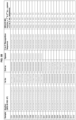
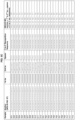
- a reduction in bias can be ascertained by a reduction in noise and/or an increase in sensitivity for detecting the number of different molecules of a target nucleic acid in a sample ( see, e.g. FIGs. 6-7 ).
- the reduction in bias can be ascertained as a decrease in noise ( see FIG. 6 ), for example a smaller standard error in the number of target nucleic acid molecules detected in the sample.
- the reduction in bias can be ascertained as an increase in sensitivity (see FIG. 7 ), for example detecting a larger number of the different molecules of a target nucleic acid in a sample (e.g. fewer target nucleic acid molecules are "missed”.
- compositions and methods yield quantification of target nucleic acid molecules in a sample with low noise, for example a relative standard error less than 30%, for example, less than 30%, 25%, 20%, 15%, 10%, 5%, 4%, 3%, 2%, 1%, or .01%, including ranges beween any two of the listed values.
- compositions and methods yield quantification of target nucleic acid molecules in a sample with high sensitivity, for example a sensitivity (measured as a percent of the actual number of different target nucleic acids in a sample that are detected), for example, a sensitivity of at least 70%, 75%, 80%, 85%, 90%, 85%, 96%, 97%, 98%, 99%, or 99.9%, including ranges between any two of the listed values.
- the methods or compositions described herein reduce bias by increasing sensitivity, decreasing relative standard error, or increasing sensitivity and reducing standard error relative to compositions or methods comprising unique oligonucleotide species in line with FIG. 3A .
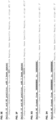
- FIG 3A illustrates a conventional oligonucleotide design.
- the molecule index sequence NNNNNNNN in which each N is A, G, C, or T, and in which any two of the N's can be the same or different from each other
- a subset of the population of unique oligonucleotide species in line with FIG. 3A can be G-rich.
- FIG. 3B-3H Another example of “baseline” molecule index that can be subject to bias is the sequence 'BBBBBBV' (in which B is C, G, or T, and in which V is A, C, or G).
- FIGs 3B-3H Examples of configurations for unique oligonucleotide species in accordance with some embodiments herein are illustrated in FIGs 3B-3H .
- addition of either TTT or TTTTT after the molecule index in accordance with some embodiments herein can reduce G-richness along the region (the length of non-G spacers can be variable, and can comprise any non-G nucleotide or nucleotides).
- the sample index and molecule positions are switched (so that the molecule index is 5' of the sample index), so that possible high G-rich MIs in at least a subset of unique oligonucleotide species would not be adjacent to potentially G-rich gene specific target regions.
- addition of either TTT or TTTTT to the configuration illustrated in FIG. 3D can further minimize potential G-rich regions.
- sample barcodes frequently can have low G contents (e.g. so as to be "non-G-rich").
- the length of non-G spacers can be variable and can be any non-G nucleotide).
- molecule barcodes comprise 'HHHHHHHH' or 'HNHNHNHN,' (in which H is A, C, or T, and in which any two H's can be the same or different from each other, and in which any two N's can be the same or different from each other).
- each of a plurality of unique oligonucleotide species in a composition or method has a length of at least 24 nucleotides, for example at least 24, 25, 26, 27, 28, 29, 30, 31, 32, 33, 34, 35, 36, 37, 38, 39, 40, 41, 42, 43, 44, 45, 46, 47, 48, 49, 50, 55, 60, 65, 60, 65, 70, 75, 80, 85, 90, 95, 100, 105, 110, 115, 120, 125, 130, 135, or 140 nucleotides in length, including ranges between any two of the listed values, for example 24-140, 24-135, 24-130, 24-125, 24-120, 24-115, 24-110, 24-105, 24-100, 24-95, 24-90, 24-85, 24-80, 24-75, 24-70, 24-65, 24-60, 24-55, 24-50, 24-45, 24-40, 25-140, 25-135, 25-130, 25-125, 25-125, 25-125, 25
- different unique oligonucleotide species in a composition or method have different lengths form each other.
- all of the unique oligonucleotide species in a composition or method have the same length as each other.
- some unique oligonucleotide species in a composition or method are the same length as each other, while some unique oligonucleotide species are different lengths from each other.
- the uniform region comprises, consists of, or consists essentially of a 5' to 3' amplification sequence for a target nucleic acid, or class of target nucleic acids (this amplification sequence may also be referred to as a "target-specific" region).
- this amplification sequence may also be referred to as a "target-specific" region.
- the uniform region can comprise oligo dT.
- the uniform region can comprise sequences flanking variable regions of a T cell receptor mRNA.
- the uniform region comprises at least 10 nucleotides that are complementary to the target nucleic acid, for example at least 10, 11, 12, 13, 14, 15, 16, 17, 18, 19, 20, 21, 22, 23, 24, 25, 26, 27, 28, 29, or 30 nucleotides complementary to the target, including ranges between any two of the listed values, for example 10-30, 10-29, 10-28, 10-27, 10-26, 10-25, 10-24, 10-23, 10-22, 10-21, 10-20, 11-30, 11-29, 11-28, 11-27, 11-26, 11-25, 11-24, 11-23, 11-22, 11-21, 11-20, 12-30, 12-29, 12-28, 12-27, 12-26, 12-25, 12-24, 12-23, 12-22, 12-21, 12-20, 15-30, 15-29, 15-28, 15-27, 15-26, 15-25, 15-24, 15-23, 15-22, 15-21, 15-20, 20-30, 20-29, 20-28, 20-27, 20-26, 20-25, 20-24, 20-23, 20-22, or 20-21 nucle
- the uniform region comprises a target-specific region that hybridizes to a sequence flanking a sequence encoding a variable region of an immune cell receptor, for example a variable region of a T cell receptor, a B cell receptor, or immunoglobulin, for example an antibody.
- a target-specific region that hybridizes to a sequence flanking a sequence encoding a variable region of an immune cell receptor, for example a variable region of a T cell receptor, a B cell receptor, or immunoglobulin, for example an antibody.
- B cell receptors comprise membrane-bound immunoglobulin
- target-specific regions specific for immunoglobulin variable region coding sequences are typically suitable for amplifying B cell receptors as well as secreted immunoglobulins (e.g. antibodies). Both options are noted herein to clarify that amplification of membrane-bound immunoglobulins (B cell receptors) and also secreted immunoglobulins (antibodies) is contemplated.
- primers or uniform regions comprise target-specific regions that comprise "flanking sequences" (and variations of this root term, such as "sequences flanking") of immune cell receptor and/or immunoglobulin variable regions
- the target-specific regions will be understood to comprise at least one of (i) sequences that hybridize downstream (3') of the sequence encoding the variable region and in particular hybridize to strand of the coding sequence, and thus are configured to produce a strand comprising the variable region coding sequence upon extension in the 5' to 3' direction; or (ii) sequences that hybridize upstream (5') of the sequence encoding the variable region and in particular hybridize to the strand complementary to that of the coding sequence, and thus are configured to produce a strand comprising the reverse complement of the variable region coding sequence upon extension in the 5' to 3' direction.
- flanking sequence can be configured for amplification of the variable region coding sequences in conjunction with a suitable priming partner (e.g. a flanking sequence on the other side of the variable region).
- a flanking sequences does not necessarily need to stop or start exactly where the coding sequence starts or stops, and thus, it is permissible for there to be intervening sequences between a hybridization site of a flanking sequence and the variable region coding sequence itself.
- variable region "flanking sequence” further comprises some sequence of the variable region itself, for example if a subset of possible variable regions is of interest.
- a "flanking sequence" as used herein does not require a single sequence to flank both sides of the variable region. Rather, it will be understood that when flanking sequences are mentioned in conjunction with compositions, methods, and oligonucleotides of some embodiments herein, 5' and 3' sequences comprising suitable primer pairs to amplify the variable region coding sequence are also expressly contemplated.
- a unique oligonucleotide species comprises a barcode region as described herein and also comprises a uniform region comprising a target-specific region comprising a sequence flanking an immune cell receptor and/or immunoglobulin variable region coding sequence.
- a second oligonucleotide primer can also be provided for the other side of the variable region coding sequence, so as to amplify the variable region sequence in conjunction with the target-specific region of the uniform region.
- the uniform region comprises a target-specific region, positioned 3' of the barcode region, and comprising a sequence flanking an immunoglobulin variable region (and thus flanking a B cell receptor variable region as well as a corresponding antibody variable region), for example flanking the variable region of an immunoglobulin heavy chain locus, flanking the variable region of an immunoglobulin (light chain) kappa locus, or flanking the variable region of an immunoglobulin (light chain) lambda locus.
- the uniform region comprises a target-specific region, positioned 3' of the barcode region, and comprising a sequence flanking at least one of a variable region of a T cell receptor alpha chain, a variable region of a T cell receptor beta chain, a variable region of a T cell receptor gamma chain, or a T cell receptor delta chain.
- a kit comprises a composition comprising unique oligonucleotide species as described herein, in which the unique oligonucleotide species each comprise a uniform sequence flanking an immune cell receptor or immunoglobulin variable region coding sequence as described herein.
- the kit further comprises an oligonucleotide primer configured to hybridize to the opposite strand and on the other side of the variable region coding sequence compared to the uniform region, and is thus configured to amplify the variable region sequence in conjunction with the target-specific region of the uniform region.
- the amplified sequence is at least 1kb and comprises the variable coding sequence, for example at least 1kb, 2kb, 3kb, 4kb, or 5kb, including ranges between any two of the listed values.
- nucleic acids encoding variable regions of some immune cell receptors or immunoglobulins can be more than 1kb long.
- T cell receptor variable region sequences can comprise a CDR3 coding sequence that ends more than 1kb away from where the CDR1 coding sequence begins.
- some conventional and next-generation sequencing approaches for example sequencing by synthesis, are limited to short reads that are typically considerably less than 1 kb. Accordingly, it is contemplated that methods and compositions and kits in accordance with some embodiments herein can be useful for barcoding and analyzing nucleic acids encoding immune cell receptor and/or immunoglobulin variable regions, which otherwise would not be amenable to single-read sequencing of less than 1 kb.
- the unique oligonucleotide species comprises a sequence flanking an immune cell receptor or immunoglobulin variable region coding sequence, is configured to amplify a sequence of at least 1kb and comprising the variable region coding sequence, for example at least 1kb, 2kb, 3kb, 4kb, or 5kb, including ranges between any two of the listed values.
- a barcode region comprises a nucleic acid sequence that is useful in identifying a nucleic acid, for example a target nucleic acid from a sample, or an amplicon or reverse-transcript derived from a single target nucleic acid of a sample.
- a nucleic acid for example a target nucleic acid from a sample
- an amplicon or reverse-transcript derived from a single target nucleic acid of a sample For example, two mRNA transcripts from a sample can be reverse-transcribed and barcoded so that nucleic acids corresponding to the first mRNA comprise a first barcode, and nucleic acids corresponding to the second mRNA comprise a second barcode.
- sequencing or other analysis
- information about the individual mRNAs in the sample for example copy number can be ascertained even after amplification.
- each unique oligonucleotide species in a population can comprise a unique barcode region.
- methods or compositions comprising unique oligonucleotide species comprising molecule barcodes as described herein reduce bias by increasing sensitivity, decreasing relative standard error, or increasing sensitivity and reducing standard error.
- a "molecule barcode” can also be referred to as a “molecular barcode,” “Molecular Index (MI)", or Unique Molecular Identifier (UMI).
- MI Molecular Index
- UMI Unique Molecular Identifier
- a “sample barcode” can also be referred to as a “Sample Index (SI).”
- a barcode region can comprise a molecule barcode.
- the molecule barcode can comprise a unique sequence, so that when multiple sample nucleic acids (which can be the same and/or different from each other) are associated one-to-one with molecule barcodes, different sample nucleic acids can differentiated from each other by the molecule barcodes. As such, even if a sample comprises two nucleic acids having the same sequence, each of these two nucleic acids can be labeled with a different molecule barcode, so that nucleic acids in the population can be quantified, even after amplification.
- the molecule barcode can comprise a nucleic acid sequence of at least 5 nucleotides, for example at least 5, 6, 7, 8, 9, 10, 11, 12, 13, 14, 15, 16, 17, 18, 19, 20, 21, 22, 23, 24, 25, 26, 27, 28, 29, 30, 31, 32, 33, 34, 35, 36, 37, 38, 39, 40, 41, 42, 43, 44, 45, 46, 47, 48, 49, or 50 nucleotides, including ranges between any two of the listed values, for example 5-50, 5-45, 5-40, 5-35, 5-30, 5-25, 5-20, 5-15, 5-14, 5-13, 5-12, 5-11, 5-10, 5-9, 5-8, 5-7, 5-6, 6-50, 6-45, 6-40, 6-35, 6-30, 6-25, 6-20, 6-15, 6-14, 6-13, 6-12, 6-11, 6-10, 6-9, 6-8, 6-7, 7-50, 7-45, 7-40, 7-35, 7-30, 7-25, 7-20, 7-15, 7-14, 7-13, 7-12, 7-11, 7-10, 7-9
- the nucleic acid sequence of the molecule barcode comprises a unique sequence, for example, so that each unique oligonucleotide species in a composition comprises a different molecule barcode.
- two or more unique oligonucleotide species can comprise the same molecule barcode, but still differ from each other.
- the unique oligonucleotide species include sample barcodes
- each unique oligonucleotide species with a particular sample barcode can comprise a different molecule barcode.
- the claimed composition comprising unique oligonucleotide species comprises a molecule barcode diversity of at least 1000 different molecule barcodes, and thus at least 1000 unique oligonucleotide species.
- a composition comprising unique oligonucleotide species comprises a molecule barcode diversity of at least 6,500 different molecule barcodes, and thus at least 6,500 unique oligonucleotide species. In some embodiments, a composition comprising unique oligonucleotide species comprises a molecule barcode diversity of at least 65,000 different molecule barcodes, and thus at least 65,000 unique oligonucleotide species.
- a molecule barcode comprising a low G content (e.g., 50% G or less, for example, less than 50% G, 45% G, 40% G, 35% G, 30% G, 25% G, 20% G, 15% G, 12.5% G, 10% G, 7.5% G, 5% G, or 2.5% G) can minimize bias for a composition or pool of unique oligonucleotide species being used to barcode a population of nucleic acids (e.g. minimize bias that would preferentially amplify barcodes comprising a higher G content). It is noted that conventional barcoding approaches typically exhibit a bias in favor of higher G content. For example FIGs.
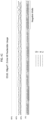
- FIG. 4A , 4B , and 4C illustrate samples of nucleotide usage in conventional molecule barcodes of compositions comprising numerous unique molecule barcodes for ES32, TRAC ( FIG. 4A ), ES32 TRBC ( FIG. 4B ), and ES32 OligodT ( FIG. 4C ). That is, if anything, conventional molecule barcodes and barcode regions, designed without respect to certain guidance provided herein, can comprise a higher G-content that would be expected by random chance. In some embodiments, methods or compositions comprising unique oligonucleotide species comprising molecule barcodes as described herein reduce bias by increasing sensitivity, decreasing relative standard error, or increasing sensitivity and reducing standard error.
- all of the molecule barcodes of a composition or composition used in the methods described herein comprise unique oligonucleotide species collectively have a G content of less than 12.5% G, 10% G, 7.5% G, 5% G, or 2.5% G, or 0% G, including ranges between any two of the listed values, for example 2.5-10% G, 2.5-7.5% G, 2.5-5% G, 5-10% G, 5-7.5% G, 7.5-10% G, 10 - 12.5% G,.
- all of the molecule barcodes of a composition of unique oligonucleotide species collectively have a G content of...
- all of the molecule barcodes in a composition comprising at least 1000 unique oligonucleotide species collectively have a G content of less than 12.5% G, 10% G, 7.5% G, 5% G, or 2.5% G, or 0% G, including ranges between any two of the listed values.
- all of the molecule barcodes in a composition comprising at least 6500 unique oligonucleotide species collectively have a G content of less than 12.5% G, 10% G, 7.5% G, 5% G, or 2.5% G, or 0% G, including ranges between any two of the listed values.
- all of the molecule barcodes in a composition comprising at least 65,000 unique oligonucleotide species collectively have a G content of less than 12.5% G, 10% G, 7.5% G, 5% G, or 2.5% G, or 0% G, including ranges between any two of the listed values.
- the composition consists of or consists essentially of unique oligonucleotide species that each comprise a molecule barcode G content of 50% G or less, for example, less than 50% G, 45% G, 40% G, 35% G, 30% G, 25% G, 20% G, 15% G, 12.5% G, 10% G, 7.5% G, 5% G, or 2.5% G, or 0% G, including ranges between any two of the listed values, for example 2.5-50% G, 2.5-45% G, 2.5-40% G, 2.5-35% G, 2.5-30% G, 2.5-25% G, 2.5-20% G, 2.5-15% G, 2.5-10% G, 2.5-7.5% G, 2.5-5% G, 5-50% G, 5-45% G, 5-40% G, 5-35% G, 5-30% G, 5-25% G, 5-20% G, 5-15% G, 5-10% G, 5-7.5% G, 7.5-50% G, 7.5-
- the composition consists of or consists essentially of unique oligonucleotide species that each have a molecule barcodes G content less than.
- each or essentially each of the unique oligonucleotide species in a composition, population, or pool have a molecule barcode G content below the indicated value, or outside the indicated range. That is, for a composition, population, or pool "consisting essentially of" unique oligonucleotide species that each have the indicated G content, it would be possible for an analytically insignificant portion of the unique oligonucleotides in the composition to have molecule barcodes with a G content above the indicated value or outside the recited range.
- the analytically insignificant portion of the unique oligonucleotides can be, or can be no more than, 5%, 4%, 3%, 2%, 1%, 0.5%, 0.4%, 0.3%, 0.2%, 0.1%, or less of the unique oligonucleotide in a composition.
- less than 1% of the unique oligonucleotide species in a composition comprising at least 1000 unique oligonucleotides comprise a molecule barcode having a G content of greater than 50%, for example less than 1%, 0.9%, 0.8%, 0.7%, 0.6%, 0.5%, 0.4%, 0.3%, 0.2%, 0.1%, 0.05%, 0.01%, 0.001%, or 0.0001% of the unique oligonucleotide species have the a G content of greater than 50%.
- less than 1% of the unique oligonucleotide species in a composition comprising at least 6500 unique oligonucleotides comprise a molecule barcode having a G content of greater than 50%, for example less than 1%, 0.9%, 0.8%, 0.7%, 0.6%, 0.5%, 0.4%, 0.3%, 0.2%, 0.1%, 0.05%, 0.01%, 0.001%, or 0.0001% of the unique oligonucleotide species have a G content of greater than 50%.
- less than 1% of the unique oligonucleotide species in a composition comprising at least 65,000 unique oligonucleotides comprise a molecule barcode having a G content of greater than 50%, for example less than 1%, 0.9%, 0.8%, 0.7%, 0.6%, 0.5%, 0.4%, 0.3%, 0.2%, 0.1%, 0.05%, 0.01%, 0.001%, or 0.0001% of the unique oligonucleotide species have a G content of greater than 50%.
- less than 1% of the unique oligonucleotide species in a composition comprising at least 1000 unique oligonucleotides comprise a molecule barcode having a G content of greater than 25%, for example less than 1%, 0.9%, 0.8%, 0.7%, 0.6%, 0.5%, 0.4%, 0.3%, 0.2%, 0.1%, 0.05%, 0.01%, 0.001%, or 0.0001% of the unique oligonucleotide species have a G content of greater than 25%.
- less than 1% of the unique oligonucleotide species in a composition of at least 6500 unique oligonucleotides comprise a molecule barcode having a G content of greater than 25%, for example less than 1%, 0.9%, 0.8%, 0.7%, 0.6%, 0.5%, 0.4%, 0.3%, 0.2%, 0.1%, 0.05%, 0.01%, 0.001%, or 0.0001% of the unique oligonucleotide species have a G content of greater than 25%.
- less than 1% of the unique oligonucleotide species in a composition, population, or pool of at least 65,000 unique oligonucleotides comprise a molecule barcode having a G content of greater than 25%, for example less than 1%, 0.9%, 0.8%, 0.7%, 0.6%, 0.5%, 0.4%, 0.3%, 0.2%, 0.1%, 0.05%, 0.01%, 0.001%, or 0.0001% of the unique oligonucleotide species have a G content of greater than 25%.
- none of the molecule barcodes of the unique oligonucleotide species of the composition collectively have a G content of greater than 50% G, for example, all of the molecule barcodes of the unique oligonucleotide species have a G content less than 50% G, 45% G, 40% G, 35% G, 30% G, 25% G, 20% G, 15% G, 12.5% G, 10% G, 7.5% G, 5% G, or 2.5% G, or 0% G, including ranges between any two of the listed values.
- the composition as described herein (or such a composition as used in a method) consists of or consists essentially of unique oligonucleotide species that each comprise a barcode region G content of less than 50% as described herein.
- the composition for a composition comprising unique oligonucleotide species, the composition consists of or consists essentially of unique oligonucleotide species that each comprise a barcode region G content of 50% G or less, for example, less than 50% G, 45% G, 40% G, 35% G, 30% G, 25% G, 20% G, 15% G, 12.5% G, 10% G, 7.5% G, 5% G, or 2.5% G, or 0% G, including ranges between any two of the listed values, for example 2.5-50% G, 2.5-45% G, 2.5-40% G, 2.5-35% G, 2.5-30% G, 2.5-25% G, 2.5-20% G, 2.5-15% G, 2.5-10% G, 2.5-7.5% G, 2.5-5% G, 5-50% G, 5-45% G,
- the composition consists of or consists essentially of unique oligonucleotide species that each have a barcode regions G content less than...
- each or essentially each of the unique oligonucleotide species in a composition, population, or pool have a barcode region G content below the indicated value, or outside the indicated range. That is, for a composition, population, or pool "consisting essentially of' unique oligonucleotide species that each have the indicated G content, it would be possible for an analytically insignificant portion of the unique oligonucleotides in the composition to have barcode regions with a G content above the indicated value or outside the recited range.
- less than 1% of the unique oligonucleotide species in a composition comprising at least 1000 unique oligonucleotides comprise a barcode region having a G content of greater than 50%, for example less than 1%, 0.9%, 0.8%, 0.7%, 0.6%, 0.5%, 0.4%, 0.3%, 0.2%, 0.1%, 0.05%, 0.01%, 0.001%, or 0.0001% of the unique oligonucleotide species have a G content greater than 50%, including ranges between any two of the listed values.
- less than 1% of the unique oligonucleotide species in a composition comprising at least 6500 unique oligonucleotides comprise a barcode region having a G content of greater than 50%, for example less than 1%, 0.9%, 0.8%, 0.7%, 0.6%, 0.5%, 0.4%, 0.3%, 0.2%, 0.1%, 0.05%, 0.01%, 0.001%, or 0.0001% of the unique oligonucleotide species have a G content greater than 50%, including ranges between any two of the listed values.
- less than 1% of the unique oligonucleotide species in a composition comprising at least 65,000 unique oligonucleotides comprise a barcode region having a G content of greater than 50%, for example less than 1%, 0.9%, 0.8%, 0.7%, 0.6%, 0.5%, 0.4%, 0.3%, 0.2%, 0.1%, 0.05%, 0.01%, 0.001%, or 0.0001% of the unique oligonucleotide species have a G content greater than 50%, including ranges between any two of the listed values.
- less than 1% of the unique oligonucleotide species in a composition comprising at least 1000 unique oligonucleotides comprise a barcode region having a G content of greater than 25%, for example less than 1%, 0.9%, 0.8%, 0.7%, 0.6%, 0.5%, 0.4%, 0.3%, 0.2%, 0.1%, 0.05%, 0.01%, 0.001%, or 0.0001% of the unique oligonucleotide species have a G content greater than 25%, including ranges between any two of the listed values.
- less than 1% of the unique oligonucleotide species in a composition of at least 6500 unique oligonucleotides comprise a barcode region having a G content of greater than 25%, for example less than 1%, 0.9%, 0.8%, 0.7%, 0.6%, 0.5%, 0.4%, 0.3%, 0.2%, 0.1%, 0.05%, 0.01%, 0.001%, or 0.0001% of the unique oligonucleotide species have a G content greater than 50%, including ranges between any two of the listed values.
- less than 1% of the unique oligonucleotide species in a composition, population, or pool of at least 65,000 unique oligonucleotides comprise a barcode region having a G content of greater than 25%, for example less than 1%, 0.9%, 0.8%, 0.7%, 0.6%, 0.5%, 0.4%, 0.3%, 0.2%, 0.1%, 0.05%, 0.01%, 0.001%, or 0.0001% of the unique oligonucleotide species have a G content greater than 25%, including ranges between any two of the listed values.
- none of the barcode regions of the unique oligonucleotide species of the composition collectively have a G content of greater than 50% G, for example, all of the barcode regions of the unique oligonucleotide species have a G content less than 50% G, 45% G, 40% G, 35% G, 30% G, 25% G, 20% G, 15% G, 12.5% G, 10% G, 7.5% G, 5% G, or 2.5% G, or 0% G, including ranges between any two of the listed values.
- the composition (or such a composition as used in a method) consist of or consists essentially of unique oligonucleotide species that each have a molecule barcode comprising the sequence of at least three repeats of the doublet "HN" (in which each "H” is any of A, C, or T, and in which "N” is any of A, G, C, or T), for example at least 3, 4, 5, 6, 7, 8, 9, 10, 11, 12, 13, 14, 15, 16, 17, 18, 19, or 20 repeats, including ranges between any two of the listed values.
- Examples of multiple repeats of the doublet "HN” include HN, HNHN, HNHNHN, and HNHNHNHN.
- HN describes constraints on the base content
- the molecule barcodes of unique oligonucleotide species in a composition comprised HNHNHN one molecule barcode can comprise the sequence ACTGCA, while another molecule barcode can comprise the sequence TAACTA, while another molecule barcode could comprise the sequence AGACAC.
- any number of repeats of the doublet "HN” would have a G content of no more than 50%.
- At least 95% of the unique oligonucleotide species of a composition comprising at least 1000 unique oligonucleotide species comprise molecule barcodes comprising at least three repeats of the doublet "HN," for example at least 3, 4, 5, 6, 7, 8, 9, 10, 11, 12, 13, 14, 15, 16, 17, 18, 19, or 20 repeats, including ranges between any two of the listed values.
- At least 99% of the unique oligonucleotide species of a composition comprising at least 1000 unique oligonucleotide species comprise molecule barcodes comprising at least three repeats of the doublet "HN," for example at least 3, 4, 5, 6, 7, 8, 9, 10, 11, 12, 13, 14, 15, 16, 17, 18, 19, or 20 repeats, including ranges between any two of the listed values.
- At least 99.9% of the unique oligonucleotide species of a composition comprising at least 1000 unique oligonucleotide species comprise molecule barcodes comprising at least three repeats of the doublet "HN," for example at least 3, 4, 5, 6, 7, 8, 9, 10, 11, 12, 13, 14, 15, 16, 17, 18, 19, or 20 repeats, including ranges between any two of the listed values.
- At least 95% of the unique oligonucleotide species of a composition comprising at least 6500 unique oligonucleotide species comprise molecule barcodes comprising at least three repeats of the doublet "HN," for example at least 3, 4, 5, 6, 7, 8, 9, 10, 11, 12, 13, 14, 15, 16, 17, 18, 19, or 20 repeats, including ranges between any two of the listed values.
- At least 99% of the unique oligonucleotide species of a composition comprising at least 6500 unique oligonucleotide species comprise molecule barcodes comprising at least three repeats of the doublet "HN," for example at least 3, 4, 5, 6, 7, 8, 9, 10, 11, 12, 13, 14, 15, 16, 17, 18, 19, or 20 repeats, including ranges between any two of the listed values.
- At least 99.9% of the unique oligonucleotide species of a composition comprising at least 6500 unique oligonucleotide species comprise molecule barcodes comprising at least three repeats of the doublet "HN," for example at least 3, 4, 5, 6, 7, 8, 9, 10, 11, 12, 13, 14, 15, 16, 17, 18, 19, or 20 repeats, including ranges between any two of the listed values.
- At least 95% of the unique oligonucleotide species of a composition comprising at least 65,000 unique oligonucleotide species comprise molecule barcodes comprising at least three repeats of the doublet "HN," for example at least 3, 4, 5, 6, 7, 8, 9, 10, 11, 12, 13, 14, 15, 16, 17, 18, 19, or 20 repeats, including ranges between any two of the listed values.
- At least 99% of the unique oligonucleotide species of a of composition comprising at least 65,000 unique oligonucleotide species comprise molecule barcodes comprising at least three repeats of the doublet "HN," for example at least 3, 4, 5, 6, 7, 8, 9, 10, 11, 12, 13, 14, 15, 16, 17, 18, 19, or 20 repeats, including ranges between any two of the listed values.
- the unique oligonucleotide species of a composition comprising at least 65,000 unique oligonucleotide species comprise molecule barcodes comprising at least three repeats of the doublet "HN," for example at least 3, 4, 5, 6, 7, 8, 9, 10, 11, 12, 13, 14, 15, 16, 17, 18, 19, or 20 repeats, including ranges between any two of the listed values.
- the composition consists of or consists essentially of at least 1000, 6500, or 65,000 unique oligonucleotide species that each have a molecule barcode comprising the sequence HNHNHN.
- the composition consists of or consists essentially of of at least 1000, 6500, or 65,000 unique oligonucleotide species that each has a molecule barcode comprising the sequence HNHNHNHN. In some embodiments, at least 95%, 99%, or 99.9% of the barcode regions of the composition as described herein comprise at least three repeats of the doublet "HN" as described herein.
- molecule barcodes can be helpful when barcoding a population of target nucleic acids from a sample, for example to increase the diversity of barcodes within a given sequence length along with the probability that each target nucleic acid will be uniquely labeled, while minimizing oligonucleotide species size. It is noted that limiting the G content of molecule barcodes and/or barcode regions can limit the diversity of these barcodes and barcode regions by decreasing the number of available nucleotides from which barcodes can be constructed (and the number of available different sequences per length of nucleic acid).
- methods or compositions comprising unique oligonucleotide species comprising molecule barcodes comprising repeated "HN" doublets as described herein reduce bias by increasing sensitivity, decreasing relative standard error, or increasing sensitivity and reducing standard error.
- the composition (or such a composition as used in a method) comprises, consists of, or consists essentially of unique oligonucleotide species that each comprise a molecule barcode comprising at least six consecutive "H's" (in which each "H” is any of A, C, or T), for example at least 6, 7, 8, 9, 10, 11, 12, 13, 14, 15, 16, 17, 18, 19, or 20 consecutive H's, including ranges between any two of the listed values. It is noted that while the formula "H” describes constraints on the base content, not every H has to be the same (or different).
- one molecule barcode of a unique oligonucleotide species in a population each comprised the sequence HHHH
- one molecule barcode of a unique oligonucleotide species could comprise ACTA
- one molecule barcode of another unique oligonucleotide species could comprise TTAC
- one molecule barcode of another unique oligonucleotide species could comprise ACAT.
- a composition comprises, consists of, or consists essentially of at least 1000 unique oligonucleotide species, of which at least 95% comprise a molecule barcode that comprises at least six consecutive H's, for example at least 6, 7, 8, 9, 10, 11, 12, 13, 14, 15, 16, 17, 18, 19, or 20 consecutive H's, including ranges between any two of the listed values.
- a composition comprises, consists of, or consists essentially of at least 1000 unique oligonucleotide species, of which at least 99% comprise a molecule barcode that comprises at least six consecutive H's, for example at least 6, 7, 8, 9, 10, 11, 12, 13, 14, 15, 16, 17, 18, 19, or 20 consecutive H's, including ranges between any two of the listed values.
- a composition comprises, consists of, or consists essentially of at least 1000 unique oligonucleotide species, of which at least 99.9% comprise a molecule barcode that comprises at least six consecutive H's, for example at least 6, 7, 8, 9, 10, 11, 12, 13, 14, 15, 16, 17, 18, 19, or 20 consecutive H's, including ranges between any two of the listed values.
- a composition comprises, consists of, or consists essentially of at least 6500 unique oligonucleotide species, of which at least 95% comprise a molecule barcode that comprises at least six consecutive H's, for example at least 6, 7, 8, 9, 10, 11, 12, 13, 14, 15, 16, 17, 18, 19, or 20 consecutive H's, including ranges between any two of the listed values.
- a composition comprises, consists of, or consists essentially of at least 6500 unique oligonucleotide species, of which at least 99% comprise a molecule barcode that comprises at least six consecutive H's, for example at least 6, 7, 8, 9, 10, 11, 12, 13, 14, 15, 16, 17, 18, 19, or 20 consecutive H's, including ranges between any two of the listed values.
- a composition comprises, consists of, or consists essentially of at least 6500 unique oligonucleotide species, of which at least 99.9% comprise a molecule barcode that comprises at least six consecutive H's, for example at least 6, 7, 8, 9, 10, 11, 12, 13, 14, 15, 16, 17, 18, 19, or 20 consecutive H's, including ranges between any two of the listed values.
- a composition comprises, consists of, or consists essentially of at least 65,000 unique oligonucleotide species, of which at least 95% comprise a molecule barcode that comprises at least six consecutive H's, for example at least 6, 7, 8, 9, 10, 11, 12, 13, 14, 15, 16, 17, 18, 19, or 20 consecutive H's, including ranges between any two of the listed values.
- a composition comprises, consists of, or consists essentially of at least 65,000 unique oligonucleotide species, of which at least 99% comprise a molecule barcode that comprises at least six consecutive H's, for example at least 6, 7, 8, 9, 10, 11, 12, 13, 14, 15, 16, 17, 18, 19, or 20 consecutive H's, including ranges between any two of the listed values.
- a composition comprises, consists of, or consists essentially of at least 65,000 unique oligonucleotide species, of which at least 99.9% comprise a molecule barcode that comprises at least six consecutive H's, for example at least 6, 7, 8, 9, 10, 11, 12, 13, 14, 15, 16, 17, 18, 19, or 20 consecutive H's, including ranges between any two of the listed values.
- at least 95% of the molecule barcodes of the unique oligonucleotide species comprise a sequence totaling at least 6 alternating H's and N's, for example at least 6, 7, 8, 9, 10, 11, 12, 13, 14, 15, 16, 17, 18, 19, or 20 alternating H's and N's, including ranges between any two of the listed values.
- each molecule barcode of the unique oligonucleotide species comprises the sequence HNHNHNHN, wherein each "H” is any one of A, C, or T, and wherein each "N” is any one of A, G, C, or T.
- each molecule barcode of the unique oligonucleotide species comprises the sequence HNHNHNHN, wherein each "H” is any one of A, C, or T, and wherein each "N” is any one of A, G, C, or T.
- each molecule barcode of the unique oligonucleotide species comprises the sequence HHHHHHHH, wherein each "H” is any one of A, C, or T.
- At least 95% (e.g., 95%, 96%, 97%, 98%, 99% or more) of the unique oligonucleotide species of the composition as described herein (or such a composition as used in a method) comprise barcode regions comprising at least 6 consecutive H's, for example at least 6, 7, 8, 9, 10, 11, 12, 13, 14, 15, 16, 17, 18, 19, or 20 consecutive H's, including ranges between any two of the listed values as described herein.
- At least 99% of the unique oligonucleotide species of the composition as described herein comprise barcode regions comprising at least 6 consecutive H's, for example at least 6, 7, 8, 9, 10, 11, 12, 13, 14, 15, 16, 17, 18, 19, or 20 consecutive H's, including ranges between any two of the listed values as described herein.
- at least 99.9% of the unique oligonucleotide species of the composition as described herein comprise barcode regions comprising at least 6 consecutive H's, for example at least 6, 7, 8, 9, 10, 11, 12, 13, 14, 15, 16, 17, 18, 19, or 20 consecutive H's, including ranges between any two of the listed values as described herein.
- the sample barcode of each unique oligonucleotide species has a G content of 50% or less, for example 50% or less, 40% or less, 25% or less, 20% or less, 12.5% or less, 10% or less, or 5% or less, including ranges between any two of the listed values.
- the barcode region of each unique oligonucleotide species has a G content of 50% or less, for example 50% or less, 40% or less, 25% or less, 20% or less, 12.5% or less, 10% or less, or 5% or less, including ranges between any two of the listed values.
- the molecule barcodes of the unique oligonucleotide species collectively have a G content of less than 12.5%, for example less than 12.5%, less than 10%, less than 7.5%, less than 5%, less than 2.5%, or less than 1%, including ranges between any two of the listed values.
- the barcode regions of the unique oligonucleotide species collectively have a G content of less than 12.5%, for example less than 12.5%, less than 10%, less than 7.5%, less than 5%, less than 2.5%, or less than 1%, including ranges between any two of the listed values.
- any G in the molecule barcode is not adjacent to another G. In some embodiments, for at least 99% of the unique oligonucleotide species, any G in the molecule barcode is not adjacent to another G. In some embodiments, for all or substantially all of the unique oligonucleotide species, any G in the molecule barcode is not adjacent to another G.
- Each barcode region comprise a sample barcode.
- each unique oligonucleotide species in a pool can comprise the same sample barcode, but there can be two or more pools that are each associated with different sample barcodes.
- all or essentially all of the unique oligonucleotide species in pool #1 can comprise sample barcode #1
- all or essentially all of the unique oligonucleotide species in pool #2 can comprise sample barcode #2.
- Nucleic acids from a first sample can be associated with the unique oligonucleotide species in pool #1, and nucleic acids from a second sample can associated with unique oligonucleotide species in pool # 2, for example by hybridization and amplification.
- all or essentially all of the amplified nucleic acids corresponding to the first sample will comprise sample barcode #1 (but can comprise different molecule barcodes), and all of the amplified nucleic acids corresponding to the second sample will comprise sample barcode #2.
- the sample barcode can comprise a nucleic acid sequence of at least 3 nucleotides, for example at least 3, 4, 5, 6, 7, 8, 9, 10, 11, 12, 13, 14, 15, 16, 17, 18, 19, 20, 21, 22, 23, 24, 25, 26, 27, 28, 29, 30, 31, 32, 33, 34, 35, 36, 37, 38, 39, 40, 41, 42, 43, 44, 45, 46, 47, 48, 49, 50 nucleotides, including ranges between any two of the listed values, for example 3-50, 3-45, 3-40, 3-35, 3-30, 3-25, 3-20, 3-15, 3-14, 3-13, 3-12, 3-11, 3-10, 3-9, 3-8, 3-7, 3-6, 3-5, 3-4, 4-50, 4-45, 4-40, 4-35, 4-30, 4-25, 4-20, 4-15, 4-14, 4-13, 4-12, 4-11, 4-10, 4-9, 4-8, 4-7, 4-6, 4-5, 5-50, 5-45, 5-40, 5-35, 5-30, 5-25, 5-20, 5-15, 5-14, 5-13, 5
- a sample barcode comprising a low G content can be positioned 3' of a sample barcode that comprises a relatively higher G content and 5' of a uniform region (e.g. a target-specific sequence or oligo dT sequence), so as to minimize bias by separating the relatively G-rich sample barcode from the uniform region.
- a uniform region e.g. a target-specific sequence or oligo dT sequence
- the barcode region comprises a sample barcode comprising 50% G content or less, for example, less than 50% G, 45% G, 40% G, 35% G, 30% G, 25% G, 20% G, 15% G, 12.5% G, 10% G, 7.5% G, 5% G, or 2.5% G, or 0% G, including ranges between any two of the listed values, for example 2.5-50% G, 2.5-45% G, 2.5-40% G, 2.5-35% G, 2.5-30% G, 2.5-25% G, 2.5-20% G, 2.5-15% G, 2.5-10% G, 2.5-7.5% G, 2.5-5% G, 5-50% G, 5-45% G, 5-40% G, 5-35% G, 5-30% G, 5-25% G, 5-20% G, 5-15% G, 5-10% G, 5-7.5% G, 7.5-50% G, 7.5-45% G, 7.5-40% G, 7.5-35% G, 7.5-30% G, 7.5-25% G, 7.5-20% G, 7.5-15% G, 7.5-10% G, 10-50% G,
- At least 95% of the sample barcodes of the unique oligonucleotides of the composition each have less than 50% G content, for example, less than 45% G, 40% G, 35% G, 30% G, 25% G, 20% G, 15% G, 12.5% G, 10% G, 7.5% G, 5% G, or 2.5% G, or 0% G, including ranges between any two of the listed values, for example 2.5-50% G, 2.5-45% G, 2.5-40% G, 2.5-35% G, 2.5-30% G, 2.5-25% G, 2.5-20% G, 2.5-15% G, 2.5-10% G, 2.5-7.5% G, 2.5-5% G, 5-50% G, 5-45% G, 5-40% G, 5-35% G, 5-30% G, 5-25% G, 5-20% G, 5-15% G, 5-10% G, 5-7.5% G, 7.5-50% G, 7.5-45% G, 7.5-40% G
- At least 99% of the sample barcodes of the unique oligonucleotides of the composition each have 50% G content or less, for example, less than 50% G, 45% G, 40% G, 35% G, 30% G, 25% G, 20% G, 15% G, 12.5% G, 10% G, 7.5% G, 5% G, or 2.5% G, or 0% G, including ranges between any two of the listed values, for example 2.5-50% G, 2.5-45% G, 2.5-40% G, 2.5-35% G, 2.5-30% G, 2.5-25% G, 2.5-20% G, 2.5-15% G, 2.5-10% G, 2.5-7.5% G, 2.5-5% G, 5-50% G, 5-45% G, 5-40% G, 5-35% G, 5-30% G, 5-25% G, 5-20% G, 5-15% G, 5-10% G, 5-7.5% G, 7.5-50% G, 7.5-45% G, 7.5
- the unique oligonucleotide species of the composition consist of or consists essentially of unique oligonucleotide species that each have sample barcodes having less than 50% G content, as described herein.
- a barcode region is positioned 5' of the uniform region without any intervening sequences between the barcode region and the uniform region.
- the barcode region is positioned 5' of a spacer, which is positioned 5' of the the uniform region, so that a spacer is between the barcode region and the uniform region.
- the spacer has a low G content (e.g., 50% G or less, for example, less than 50% G, 45% G, 40% G, 35% G, 30% G, 25% G, 20% G, 15% G, 12.5% G, 10% G, 7.5% G, 5% G, or 2.5% G).
- the spacer can have a length of at least 1 nucleotide, for example 1, 2, 3, 4, 5, 6, 7, 8, 9, 10, 11, 12, 13, 14, 15, 16, 17, 18, 19, 20, 25, 30, 35, 40, 45, or 50 nucleotides, including ranges between any two of the listed values, for example 1-50, 1-45, 1-35, 1-30, 1-25, 1-20, 1-15, 1-10, 1-9, 1-8, 1-7, 1-6, 1-5, 1-4, 1-3, 1-2, 2-50, 2-45, 2-35, 2-30, 2-25, 2-20, 2-15, 2-10, 2-9, 2-8, 2-7, 2-6, 2-5, 2-4, 2-3, 3-50, 3-45, 3-35, 3-30, 3-25, 3-20, 3-15, 3-10, 3-9, 3-8, 3-7, 3-6, 3-5, 3-4, 4-50, 4-45, 4-35, 4-30, 4-25, 4-20, 4-15, 4-10, 4-9, 4-8, 4-7, 4-6, 4-5, 5-50, 5-45, 5-35, 5-30, 5
- the spacer can comprise at least two consecutive non-G nucleotides (denoted as "H", in which "H” is A, C, or T), for example at least 2, 3, 4, 5, 6, 7, 8, 9, 10, 11, 12, 13, 14, 15, 16, 17, 18, 19, or 20 consecutive H's, including ranges between any two of the listed values, for example 2-20, 2-15, 2-10, 2-9, 2-8, 2-7, 2-6, 2-5, 2-4, 2-3, 3-20, 3-15, 3-10, 3-9, 3-8, 3-7, 3-6, 3-5, 3-4, 4-20, 4-15, 4-10, 4-9, 4-8, 4-7, 4-6, 4-5, 5-20, 5-15, 5-10, 5-9, 5-8, 5-7, 5-6, 6-20, 6-15, 6-10, 6-9, 6-8, or 6-7.
- H non-G nucleotides
- the nucleotides of the spacers are Ts.
- the space can comprise a poly-T sequence, such as TT, TTT, TTTT, TTTTT, TTTTTT, TTTTTTTT, or TTTTTTTT.
- the spacers do not necessarily provide diversity, and as such, in a composition comprising unique oligonucleotide species as described herein, some or all of the unique oligonucleotide species can have the same spacer sequences.
- all of the unique oligonucleotide species of the composition comprise the same spacer sequence.
- compositions comprising unique oligonucleotide species as described in accordance with compositions and methods of some embodiments herein can be disposed in spatially isolated pools, for example so that multiple sample can be analyzed, with one sample per pool.
- the unique oligonucleotide species are disposed in spatially isolated pools, each pool comprising a plurality of unique oligonucleotides of the unique oligonucleotide species, so that unique oligonucleotides in the same pool comprise the same sample barcode sequence, and so that different unique oligonucleotides of the same pool comprise a different molecule barcode sequences.
- spatial isolation means that target nucleic acids of a sample can hybridize to the unique oligonucleotide species of the pool without substantially cross-reacting with other pools, and without the unique oligonucleotide species of the pool substantially hybridizing to target nucleic acids of other samples.
- the sample barcode can identify which pool a given unique oligonucleotide species came from.
- the sample barcode can identify which pool a barcoded target nucleic acid sequence (or reverse transcript or amplicon thereof) came from.
- a substrate organizes the pools so that they are spatially isolated from each other.
- a multi-well plate can organize spatially isolated pools, so that each pool is in a separate well.
- each pool can be immobilized on a different bead.
- each well of a multi-well plate can contain a single bead on which the pool of unique oligonucleotide species is immobilized, so that a different pool of unique oligonucleotide species is positioned in each well of the multi-well plate.
- the unique oligonucleotide species are disposed in at least 2 pools, for example, at least 2, 3, 4, 4, 5, 6, 7, 8, 9, 10, 11, 12, 13, 14 15, 16, 17, 18, 19, 20, 21 22, 23, 24, 25, 26, 27, 28, 29, 30, 31, 32, 33, 34, 35, 36, 37, 38, 39, 40, 41, 42, 43, 44, 45, 46, 47, 48, 49, 50, 60, 70, 72, 96, 99, 100, 110, 120, 144, 168, or 192, pools, including ranges between any two of the listed values.
- the unique oligonucleotide species are disposed in at least 2 pools, and there are at least 100 unique oligonucleotides per pool for example at least 100, 200, 300, 400, 500, 1000, 2000, 3000, 4000, 5000, 6000, 6500, 10,000, or 65,000 unique oligonucleotide species per pool.
- the unique oligonucleotide species are disposed in at least 24 pools, and there are at least 100 unique oligonucleotides per pool for example at least 100, 200, 300, 400, 500, 1000, 2000, 3000, 4000, 5000, 6000, 6500, 10,000, or 65,000 unique oligonucleotide species per pool.
- the unique oligonucleotide species are disposed in at least 48 pools, and there are at least 100 unique oligonucleotides per pool for example at least 100, 200, 300, 400, 500, 1000, 2000, 3000, 4000, 5000, 6000, 6500, 10,000, or 65,000 unique oligonucleotide species per pool.
- the unique oligonucleotide species are disposed in at least 96 pools, and there are at least 100 unique oligonucleotides per pool for example at least 100, 200, 300, 400, 500, 1000, 2000, 3000, 4000, 5000, 6000, 6500, 10,000, or 65,000 unique oligonucleotide species per pool.
- Unique oligonucleotide species in accordance with compositions and methods of some embodiments herein can be immobilized on substrates, for example beads, wells of multi-well plates, or arrays.
- substrates for example beads, wells of multi-well plates, or arrays.
- unique oligonucleotide species having the same sample barcode, but different molecule barcodes can all be immobilized on a substrate, such as on a single bead, or in a single well of a multi-well plate.
- the immobilized unique oligonucleotide species of a particular substrate are contacted with a particular sample, such as a single cell, the immobilized unique oligonucleotide species immobilized on that substrate will be associated with target nucleic acids of the same sample.
- the sample associated with each target nucleic acid can be readily identified (e.g. all of the unique oligonucleotide species on substrate #1 have sample barcode #1, all of the unique oligonucleotide species on substrate #2 have sample barcode #2).
- such configurations in which unique oligonucleotide species are immobilized on a substrate can be helpful in facilitating efficiency and throughput.
- single cells can be added to wells of a multi-well plate, so that no more than one single cell is in each well. If the unique oligonucleotide species immobilized within a given well (for example, on the well or on a bead) comprise a unique sample barcode, barcoded target nucleic acids and reverse-transcripts and amplicons thereof corresponding to the single cell can be identified and quantified, even if barcoded reverse transcripts or amplicons from multiple samples are pooled.
- a substrate can comprise a type of solid support.
- a substrate can refer to a continuous solid or semi-solid surface on which the methods of the disclosure may be performed.
- a substrate can refer to an array, a cartridge, a chip, a device, and a slide, for example.
- solid support and “substrate” can be used interchangeably.
- a substrate or solid support in accordance with some embodiments herein can encompass any type of solid, porous, or hollow sphere, ball, bearing, cylinder, or other similar configuration composed of plastic, ceramic, metal, or polymeric material (e.g., hydrogel) onto which a nucleic acid may be immobilized (e.g., covalently or non-covalently).
- a substrate or solid support can comprise a discrete particle that may be spherical (e.g., microspheres) or have a non-spherical or irregular shape, such as cubic, cuboid, pyramidal, cylindrical, conical, oblong, or disc-shaped, and the like.
- a plurality of solid supports spaced in an array may not comprise a substrate.
- a solid support may be used interchangeably with the term "bead.”
- a plurality of substrates is provided, and the diversity of sample barcodes can be represented in the plurality of substrates, so that unique substrates can comprise unique sample barcodes.
- each sample can comprise nucleic acids.
- the method can comprise contacting each sample with a pool comprising a plurality of unique oligonucleotide species, as described herein. Each sample can be contacted in spatial isolation from the other samples.
- the unique polynucleotide species of each pool can comprise the same sample barcode and comprise different molecule barcodes.
- the method can include hybridizing target specific regions of at least some oligonucleotides of the unique oligonucleotide species to at least some of the nucleic acids of the sample.
- the method can include extending the hybridized oligonucleotides so as to produce strands comprising an oligonucleotide of the unique oligonucleotide species and a sequence complementary to the target region.
- the produced strands can comprise the same sample barcode and different molecule barcodes.
- the sample barcodes can be different.
- the unique oligonucleotide species contacted with the sample consist of or consist essentially of unique oligonucleotide species wherein each molecule barcode has a G content of less than 50%.
- the molecule barcodes of all of the unique oligonucleotide species collectively have a G content of no more than 12.5%.
- each pool comprises at least 100 unique oligonucleotide species, for example at least 100, 500, 100, 500, 1000, 2000, 6500, or 65,000 unique oligonucleotide species.
- Such methods in accordance with some embodiments herein can barcode nucleic acids of two or more different samples, such as single-cell sample, so as to permit analysis and quantification of the nucleic acids of a single cell.
- each sample is contacted with a single pool of unique oligonucleotide species in spatial isolation from the other pools and samples.
- the pools are spatially isolated by being in unique contained spaces, for example different wells of a multi-well plate, different test tubes, different microfluidic channels, or the like.
- the pools are spatially isolated by being on different regions of a surface, for example reaction dots on an array.
- the oligonucleotides can be contacted with target nucleic acids of the sample under standard hybridization conditions (e.g., in standard buffers, and at a temperature lower than the Tm of a portion of the uniform region that is complementary to the target nucleic acid).
- target nucleic acids comprise RNAs
- the target nucleic acids of the sample are reverse-transcribed after hybridization to the unique oligonucleotide species, so as to generate DNAs (e.g. cDNAs).
- the products of the hybridization or reverse transcription reaction are amplified, so as to generate a library of DNAs.
- the amplification can be via PCR under standard conditions, or via other suitable methods, for example isothermal amplification, rolling circle amplification, and the like.
- the amplification can comprise amplifying reverse-transcripts or hybridized nucleic acids with a polymerase having 5' to 3' activity.
- the products of the amplification can be further analyzed, for example by sequence.
- reverse transcripts or amplicons from different pools can be pooled for sequencing, as different sample barcodes will indicate the corresponding pool (and sample) of each individual barcoded nucleic acid.
- methods in accordance with some embodiments herein can minimize or eliminate such bias.
- methods comprising unique oligonucleotide species as described herein reduce bias by increasing sensitivity, decreasing relative standard error, or increasing sensitivity and reducing standard error.
- the method can further comprise ascertaining nucleic acid sequences of the strands comprising the oligonucleotides of the unique oligonucleotide species and the sequence complementary to the target.
- reverse transcripts, amplicons, and/or cDNA libraries generated from the hybridization and extension of the unique oligonucleotide probes can be sequenced.
- Any suitable sequencing method known in the art can be used, preferably high-throughput approaches.
- cyclic array sequencing using platforms such as Roche 454, Illumina Solexa, ABI-SOLiD, ION Torrent, Complete Genomics, Pacific Bioscience, Helicos, or the Polonator platform, may also be utilized.
- Sequencing may comprise MiSeq sequencing.
- Sequencing may comprise HiSeq sequencing.
- the unique oligonucleotide species can comprise adapters to mediate high-throughput sequencing, for example universal priming sites.
- barcoded nucleic acids corresponding to two or more different samples e.g. from two or more different pools
- all of the pools are combined or pooled for sequencing.
- sample barcodes can identify the corresponding sample (or pool) of the combined barcoded nucleic acids, that combining or pooling the nucleic acids can facilitate throughput and/or resource utilization for sequencing, and that accurate barcoding in accordance with some embodiments herein can minimize or eliminate bias, even when a large number of different nucleic acids are analyzed.
- the barcode region of each pool comprises a sample barcode comprising at least 3 nucleotides as described herein, for example at least 3, 4, 5, 6, 7, 8, 9, 10, 11, 12, 13, 14, 15, 16, 17, 18, 19, 20, 21, 22, 23, 24, 25, 26, 27, 28, 29, 30, 31, 32, 33, 34, 35, 36, 37, 38, 39, 40, 41, 42, 43, 44, 45, 46, 47, 48, 49, or 50 nucleotides, including ranges between any two of the listed values.
- the sample barcode is positioned 3' of the molecule barcode.
- the molecule barcode is positioned 3' of the sample barcode.
- the unique oligonucleotide species comprise the same sample barcode, which can be a different sample barcode from the unique oligonucleotide species of other pools.
- the sample barcode has a low G content as described herein, for example less than 50% G, for example, less than 45% G, 40% G, 35% G, 30% G, 25% G, 20% G, 15% G, 12.5% G, 10% G, 7.5% G, 5% G, or 2.5% G.
- at least 95%, 99%, or 99.9% of the sample barcodes have a low G content as described herein.
- each unique oligonucleotide comprises a spacer 3' of the molecule barcode and 5' of the uniform region as described herein.
- the unique oligonucleotide species contacted with the sample consist essentially of unique oligonucleotide species in which each molecule barcode has a G content of less than 50% as described herein, for example, less than 45% G, 40% G, 35% G, 30% G, 25% G, 20% G, 15% G, 12.5% G, 10% G, 7.5% G, 5% G, or 2.5% G content, or 0% G content.
- all of the molecule barcodes of the unique oligonucleotide species contacted with the sample comprise molecule barcodes having a G content of less than 50% as described herein, for example, less than 45% G, 40% G, 35% G, 30% G, 25% G, 20% G, 15% G, 12.5% G, 10% G, 7.5% G, 5% G, or 2.5% G content, or 0% G content.
- the molecule barcodes of all of the unique oligonucleotide species collectively have a G content of less than 12.5% G, 10% G, 7.5% G, 5% G, or 2.5% G, or 0% G, including ranges between any two of the listed values.
- each unique oligonucleotide species further comprises a uniform region 3' of the barcode region.
- the uniform region comprises at least 10 nucleotides complementary to a target nucleic acid sequence (e.g., at least 10, 11, 12, 13, 14, 15, 16, 17, 18, 19, 20, 21, 22, 23, 24, 25, 26, 27, 28, 29, or 30 nucleotides complementary to the target, including ranges between any two of the listed values), and configured for 5' to 3' amplification of the target nucleic acid sequence.
- the uniform region comprises an oligo dT sequence.
- the unique oligonucleotide species of each pool are immobilized on a substrate as described herein, so that the unique oligonucleotide species immobilized on a given substrate comprise the same sample barcode, and different unique oligonucleotide species immobilized on the substrate comprise different molecule barcodes.
- substrates can include wells in multi-well plates (e.g. 24-, 48, and 96-well plates), spots on an array, beads, and the like. In some embodiments, at least 100 unique oligonucleotides are immobilized on each substrate.
- each sample barcode has a G content of 50% or less, for example 50% or less, 40% or less, 25% or less, 20% or less, 12.5% or less, 10% or less, or 5% or less.
- the molecule barcodes of the unique oligonucleotide species collectively have a G content of less than 12.5%, for example less than 12.5%, less than 10%, less than 7.5%, less than 5%, less than 2.5%, or less than 1%.
- the barcode regions of the unique oligonucleotide species collectively have a G content of no more than 12.5%, for example no more than 12.5%, no more than 10%, no more than 7.5%, no more than 5%, no more than 2.5%, or no more than 1%.
- any G in the molecule barcode is not adjacent to another G.
- any G in the molecule barcode can be not-adjacent to another G.
- each pool consists of, or consists essentially of unique oligonucleotide species for which any G in the molecule barcode is not adjacent to another G.
- At least 95% of the molecule barcodes of the unique oligonucleotide species comprise a sequence totaling at least 6 alternating H's and N's, for example at least 6, 7, 8, 9, 10, 11, 12, 13, 14, 15, 16, 17, 18, 19, or 20 alternating H's and N's, including ranges between any two of the listed values.
- 6 alternating H's and N's can be depicted as HNHNHN. It is noted that each H can be the same as, or different from any other H, and that each N can be the same as, or different from any other N.
- At least 95% of the molecule barcodes of the unique oligonucleotide species comprise the sequence HNHNHNHN, in which each "H” is any one of A, C, or T, and wherein each "N” is any one of A, G, C, or T.
- at least 95%, 96%, 97,%, 98%, 99%, 99.5%, 99.9%, or 99.99% of the molecule barcodes of the unique oligonucleotide species can comprise the sequence HNHNHNHN.
- each H can be the same as, or different from any other H
- each N can be the same as, or different from any other N.
- each molecule barcode of the unique oligonucleotide species comprises the sequence HNHNHNHN.
- At least 99% of the molecule barcodes of the unique oligonucleotide species comprise the sequence HHHHHHHH, in which each "H" is any one of A, C, or T.
- each "H" is any one of A, C, or T.
- at least 95%, 96%, 97,%, 98%, 99%, 99.5%, 99.9%, or 99.99% of the molecule barcodes of the unique oligonucleotide species can comprise the sequence HHHHHHHH. It is noted that each H can be the same as, or different from any other H.
- each molecule barcode of the unique oligonucleotide species comprises the sequence HHHHHHHH.
- each unique oligonucleotide comprises a spacer 3' of the barcode region and 5' of the target specific region.
- the spacer can comprise the sequence HNH, in which each "H” is any one of A, C, or T, and in which each "N" is any one of A, G, C, or T.
- the spacer can comprise the sequence HHH.
- the spacer can comprise the sequence HNHNHNHN.
- the spacer can comprise the sequence HHHHHHHH. It is noted that each H can be the same as, or different from any other H, and that each N can be the same as, or different from any other N.
- each unique oligonucleotide comprises a spacer 3' of the barcode region and 5' of the target specific region, said spacer comprising the sequence HNHNHNHN, in which each "H” is any one of A, C, or T, and in which each "N” is any one of A, G, C, or T.
- unique oligonucleotide comprises a spacer 3' of the barcode region and 5' of the target specific region, said spacer comprising the sequence HHHHHHHH, in which each "H” is any one of A, C, or T.
- At least one pool comprises at least two oligonucleotides of the same unique oligonucleotide species. In some embodiments, no pool comprises two oligonucleotides of the same unique oligonucleotide species.
- the target specific region can comprise a sequence for 5' to 3' amplification of a target nucleic acid. In some embodiments, the target specific region comprises an oligo dT sequence. In some embodiments, the target specific region comprises a sequence flanking a sequence encoding a variable region of an immune cell receptor or immunoglobulin.
- the molecule barcode is 3' of the sample barcode. In some embodiments, for each unique oligonucleotide species, the sample barcode is 3' of the molecule barcode.
- each unique oligonucleotide species has a length of at least 24 nucleotides. In some embodiments, each unique oligonucleotide species has a length of 24-140 nucleotides.
- each pool comprises at least 1000 unique oligonucleotide species. In some embodiments, each pool comprises at least 6,500 unique oligonucleotide species. In some embodiments, each pool comprises at least 65,000 unique oligonucleotide species.
- At least 48 unique samples are each contacted with a different pool of unique oligonucleotide species.
- at least 48, 72, 96, 120, 144, 168, or 192 samples can each be contacted with a different pool.
- each sample can be contacted with a different pool of unique oligonucleotide species in a well of a multi-well plate.
- At least 99% of the samples comprise no more than one cell each.
- at least 99%, 99.5%, 99.9%, or 99.99% of the samples can comprise no more than one cell.
- a solution comprising multiple cells can be diluted to an appropriate concentration so that there is a suitably high probability that each sample comprises no more than one cell.
- the unique oligonucleotide species of each pool are immobilized on a substrate, so that the sample barcodes but not the molecule barcodes are the same for the unique oligonucleotide species immobilized on each substrate.
- each pool can be identified by a particular sample barcode.
- different substrates and as such, different pools
- the substrate comprises a spatially isolated region of a surface, so that the substrates of different pools comprise the different spatially isolated regions of the surface.
- the substrate comprises a well in a multi-well plate.
- the substrate comprises a bead.
- the unique oligonucleotide species further comprises an adapter configured to immobilize the unique oligonucleotide on the substrate, wherein said barcode region is 3' of the adapter.
- each adapter can comprise a universal priming site, for example for use in sequencing.
- compositions comprising unique oligonucleotide species
- methods of making a composition comprising unique oligonucleotides are described.
- the method can comprise providing a plurality of different sample barcodes as described herein.
- the method can comprise providing a plurality of different molecule barcodes as described herein.
- the method can comprise synthesizing a plurality of unique oligonucleotide species as described herein, in which each unique oligonucleotide species comprises a barcode region comprising a sample barcode and a molecule barcode as described herein.
- the method can comprise disposing the plurality of unique oligonucleotide species in spatially-isolated pools.
- Each pool can comprises multiple unique oligonucleotide species, so that the unique oligonucleotide species of the same pool comprise the same sample barcode sequence, and so that different unique oligonucleotide species of the same pool comprise different molecule barcode sequences.
- the unique oligonucleotide species are disposed in the spatially-isolated pools concurrent with synthesis.
- the unique oligonucleotide species are disposed in the spatially-isolated pools after synthesis.
- the composition consists essentially of unique oligonucleotide species in which each molecular barcode has a G content of less than 50%.
- each spatially-isolated pool comprises at least 100 unique oligonucleotide species, for example, at least 100, 200, 300, 400, 500, 1000, 2000, 3000, 5000, 6500, or 65,000 unique oligonucleotide species. In some embodiments, each spatially-isolated pool comprises at least 1000 unique oligonucleotide species.
- the unique oligonucleotides can be synthesized using any of a number of suitable methods.
- the sample barcode sequences and molecule barcode sequences are generated in silico, and unique oligonucleotide species comprising the sample barcode sequences and molecule barcode sequences together are synthesized, for example using chemical oligonucleotide synthesis.
- a plurality of oligonucleotides comprising the same sample barcode sequence are pooled in spatial isolation, and joined with a plurality of oligonucleotides comprising molecule barcodes, for example via hybridization and extension, or via ligation.
- Such an approach can be performed in multiple spatially isolated environments in parallel, or sequentially, to achieve multiple unique oligonucleotide species.
- each unique oligonucleotide species further comprises a uniform region 3' of the barcode region as described herein.
- the uniform region comprises a target-specific region.
- the target-specific region comprises at least 10 nucleotides complementary to a target nucleic acid (e.g., at least 10, 11, 12, 13, 14, 15, 16, 17, 18, 19, 20, 21, 22, 23, 24, 25, 26, 27, 28, 29, or 30 nucleotides complementary to the target, including ranges between any two of the listed values), and configured for 5' to 3' amplification of the target nucleic acid sequence.
- the uniform region comprises an oligo dT sequence.
- the plurality of molecule barcodes (and as such, the plurality of unique oligonucleotide species) consists essentially of unique oligonucleotide species in which each molecular barcode has a G content of no more than 50% as described herein, for example, less than 50% G, 45% G, 40% G, 35% G, 30% G, 25% G, 20% G, 15% G, 12.5% G, 10% G, 7.5% G, 5% G, or 2.5% G content, or 0% G content.
- all of the molecule barcodes of the unique oligonucleotide species have molecule barcodes having a G content of no more than 50% as described herein, for example, less than 50% G, 45% G, 40% G, 35% G, 30% G, 25% G, 20% G, 15% G, 12.5% G, 10% G, 7.5% G, 5% G, or 2.5% G content, or 0% G content.
- each molecule barcode of each unique oligonucleotide species has a G content of no more than 50%, for example, less than 50% G, 45% G, 40% G, 35% G, 30% G, 25% G, 20% G, 15% G, 12.5% G, 10% G, 7.5% G, 5% G, or 2.5% G content, or 0% G content.
- the molecule barcodes of all of the unique oligonucleotide species in the plurality of unique oligonucleotide species collectively have a G content of less than 12.5% G, 10% G, 7.5% G, 5% G, or 2.5% G, or 0% G, including ranges between any two of the listed values.
- each sample barcode has a G content of 50% or less as described herein, for example, less than 50%, 45% G, 40% G, 35% G, 30% G, 25% G, 20% G, 15% G, 12.5% G, 10% G, 7.5% G, 5% G, or 2.5% G content, or 0% G content.
- the sample barcodes of all of the unique oligonucleotide species in the plurality of unique oligonucleotide species collectively have a G content of no more than 50% G, for example, less than 50%, 45% G, 40% G, 35% G, 30% G, 25% G, 20% G, 15% G, 12.5% G, 10% G, 7.5% G, 5% G, or 2.5% G, or 0% G, including ranges between any two of the listed values.
- the sample barcodes of all of the unique oligonucleotide species in the plurality of unique oligonucleotide species collectively have a G content of no more than 12.5%.
- any G in the molecule barcode is not adjacent to another G.
- the plurality of unique oligonucleotide species consists essentially of unique oligonucleotide species for which any G in the molecule barcode is not adjacent to another G.
- At least 95% of the molecule barcodes of the unique oligonucleotide species comprise the sequence HNHNHNHN, in which each "H” is any one of A, C, or T, and in which each "N” is any one of A, G, C, or T.
- at least 95%, 96%, 97,%, 98%, 99%, 99.5%, 99.9%, or 99.99% of the molecule barcodes of the unique oligonucleotide species can comprise the sequence HNHNHNHN.
- each H can be the same as, or different from any other H
- each N can be the same as, or different from any other N.
- each molecule barcode of the unique oligonucleotide species comprises the sequence HNHNHNHN.
- At least 99% of the molecule barcodes of the unique oligonucleotide species comprise molecule barcodes comprising the sequence HHHHHHHH, in which each "H" is any one of A, C, or T.
- each "H" is any one of A, C, or T.
- at least 95%, 96%, 97,%, 98%, 99%, 99.5%, 99.9%, or 99.99% of the molecule barcodes of the unique oligonucleotide species can comprise the sequence HHHHHHHH. It is noted that each H can be the same as, or different from any other H.
- each molecule barcode of the unique oligonucleotide species comprises the sequence HHHHHHHH.
- each unique oligonucleotide species comprises a spacer 3' of the barcode region and 5' of the target specific region.
- the spacer can comprise the sequence HNH, in which each "H” is any one of A, C, or T, and in which each "N" is any one of A, G, C, or T.
- the spacer can comprise the sequence HHH.
- the spacer can comprise the sequence HNHNHNHN.
- the spacer can comprise the sequence HHHHHHHH. It is noted that each H can be the same as, or different from any other H, and that each N can be the same as, or different from any other N.
- each unique oligonucleotide species comprises a spacer 3' of the barcode region and 5' of the target specific region, said spacer comprising the sequence HNHNHNHN, in which each "H” is any one of A, C, or T, and in which each "N” is any one of A, G, C, or T.
- unique oligonucleotide comprises a spacer 3' of the barcode region and 5' of the target specific region, the spacer comprising the sequence HHHHHHHH, in which each "H” is any one of A, C, or T.
- At least one pool comprises least two oligonucleotides of the same unique oligonucleotide species. In some embodiments, no pool comprises two oligonucleotides of the same unique oligonucleotide species.
- the target-specific region can comprise a sequence for 5' to 3' amplification of a target nucleic acid.
- the target specific region comprises an oligo dT sequence.
- the target specific region comprises a sequence flanking a sequence encoding a variable region of an immune cell receptor or immunoglobulin.
- the molecule barcode is 3' of the sample barcode. In some embodiments, for each unique oligonucleotide species, the sample barcode is 3' of the molecule barcode.
- each unique oligonucleotide species has a length of at least 24 nucleotides. In some embodiments, each unique oligonucleotide species has a length of 24-140 nucleotides.
- each pool comprises at least 6,500 unique oligonucleotide species. In some embodiments, each pool comprises at least 65,000 unique oligonucleotide species.
- the method further comprises immobilizing the unique oligonucleotide species of each spatially-distinct pool on a substrate, so that the sample barcodes but not the molecule barcodes are the same for the unique oligonucleotide species immobilized on each substrate.
- each pool can be identified by a particular sample barcode.
- different substrates and as such, different pools
- the substrate comprises a discrete region of a surface, so that the substrates of different pools comprise the different discrete regions of the surface.
- the substrate comprises a well in a multi-well plate.
- the substrate comprises a bead.
- the unique oligonucleotide species are immobilized on the substrate by a covalent bond. In some embodiments, the unique oligonucleotide species are immobilized on the substrate by a magnetic or electromagnetic force. In some embodiments, the unique oligonucleotide species are imbedded in the substrate, so as to immobilize them on the substrate.
- At least 48 spatially-distinct pools are made, for example at least 48, 72, 96, 120, 144, 168, or 192 spatially-distinct pools.
- the unique oligonucleotide species are disposed in spatially-isolated pools concurrent with said synthesis. In some embodiments, the unique oligonucleotide species are disposed in spatially-isolated pools after said synthesis.
- an oligonucleotide comprising a barcode region 3' of the adapter region.
- the barcode region can comprise a molecule barcode as described herein, in which the molecule barcode has a G content of no more than 50%.
- the molecule barcode can comprise at least 7 nucleotides.
- the oligonucleotide further comprises a sample barcode as described herein.
- the sample barcode can comprise at least 3 nucleotides.
- the oligonucleotide further comprises a uniform region 3' of the barcode region.
- the uniform region comprises a target-specific region comprising at least 10 nucleotides complementary to a target nucleic acid as described herein.
- the uniform region comprises an oligo dT sequence.
- the oligonucleotide further comprises an adapter region 5' of the barcode region.
- the oligonucleotide further comprises a spacer 3' of the barcode region and 5' of the uniform region as described herein.
- primer designs are composed of nucleic acid sequences (DNA, RNA, or LNA) that can target specific nucleic acid (DNA/RNA) transcripts via a gene-specific approach, or target a large set of nucleic acid transcripts (e.g. via poly-A tail of messenger RNAs or other consensus sequences) ( FIGs. 1A-C ).
- these primers include two categories of nucleic acid barcodes: 1) molecule barcodes, also called “molecular barcodes," Molecular Index (MI) or Unique Molecular Identifier (UMI) and 2) sample barcodes, also called Sample Index (SI) ( FIGs. 1A-C ).
- the MI and SI barcodes are used to uniquely label for identification of its original target transcript via the MI, and its sample origin (SI) after library preparation for next generation sequencing or other sequence readout and barcode readout methods.
- SI sample origin
- Some embodiments detail different arrangements of MI and SIs within the primer that ensure unbiased and random labelling of barcodes to target transcripts for accurate gene expression profiling (see, e.g. FIGs. 3A-3H ) (see Fu et al. 2011 PNAS 108: 9026-9032 ).
- designs unique primer designs that can reduce ⁇ barcode bias,' which is a phenomenon that is observed in the prior art designs, whereby with barcodes with high G-nucleotide content is more oftenly used compared to other barcode compositions ( FIG. 4 ).
- MIs with high % G content and multiple G's are preferably observed ( FIG. 4 ).
- SIs associated with no target genes observes small amounts of PCR errors due to these primers cross reacting during a sample multiplex PCR ( FIGs. 4- 5 ).
- FIGs. 3A-3H show the design of prior art barcode layout ( FIG. 3A ) and novel designs to minimize bias as described ( FIGs. 3B-H ).
- the conventional design allows for either the MI composition of 'BBBBBBV' or 'NNNNNNNN' (B is C,G, or T; V is A,C, or G; N is A,T,G, or C).
- a subset of the prior design MI barcode would be G-rich.
- addition of either TTT or TTTTT after the MI to reduce G-richness along the region (length of non-G spacers can be variable, and can be any non-G nucleotide).
- FIGs. 3D SI and MI positions are switched, so that high G-rich MIs would not be adjacent to potentially G-rich gene specific target regions.
- FIGs. 3E-F addition of either TTT or TTTTT to FIG. 3D design to further reduce G-rich regions (note that SIs are not G-rich, and the length of non-G spacers can be variable and can be any non-G nucleotide).
- FIGs. 3G- H designs MIs are designed to not be G-rich by using 'HHHHHHHH' or 'HNHNHNHN,' where H is A, C, or T.
- Some embodiments include the use of the new primer designs in gene-specific target panels, such as T cell receptors (TCR), where primers are used to target TCR-specific sequences.
- TCR T cell receptors
- Designs in accordance with some embodiments herein can alleviate SI barcode crossover, thereby reducing the 'noise' of a TCR molecular barcoding assay.
- Example 1 Accurate analysis of sample target nucleic acids using unique oligonucleotide species
- Unique oligonucleotide species formats B01-B12 comprised a spacer of the sequence TTT 3' of the molecule barcode ("2nd be") and 5' of the uniform region ("5 to 3' recognition sequence”).
- Unique oligonucleotide species formats C01-C12 comprised a spacer of the sequence TTTTT 3' of the molecule barcode ("2nd be") and 5' of the uniform region ("5 to 3' recognition sequence”).
- Unique oligonucleotide species formats D01-D12 (SEQ ID NOs: 37-48) comprised a molecule barcode ("1st be") 5' of the sample barcode ("2nd bc").
- Unique oligonucleotide species formats E01-E12 comprised a molecule barcode ("1st be”) 5' of the sample barcode (“2nd be”) and a spacer of the sequence TTT 3' of the barcode region and 4' of the uniform region.
- Unique oligonucleotide species formats F01-F12 comprised a molecule barcode ("1st be”) 5' of the sample barcode (“2nd be”) and a spacer of the sequence TTTTT 3' of the barcode region and 4' of the uniform region.
- Unique oligonucleotide species formats G01-G12 comprised molecule barcodes ("2nd be") each comprising the sequence HHHHHHHH (in which each "H” is an A, C, or T, and in which any two "H” nucleotides can be the same of different).
- Unique oligonucleotide species formats H01-H12 comprised molecule barcodes ("2nd be") each comprising the sequence HNHNHNHN (in which each "H” is an A, C, or T, and in which any two "H” nucleotides can be the same of different, and in which each "N” can be A, G, C, or, T, and in which any two "N” nucleotides can be the same or different).
- Amplification and analysis of target T cell receptor nucleic acid sequences was performed as follows: the Precise TM TCR Encoding Plate (BD Cellular Research Inc.) was thawed at room temperature and spun briefly to collect the 5 ⁇ L reagents in each well. The plate was placed on ice in a 96 well rack and very carefully remove the seal, while avoiding disturbing reagents in the wells. Cells were sorted or added directly into the 96 well encoding plate (1 cell per well). The plate was sealed and vortexed briefly (5-10s) to mix the reagents, and then spun briefly ( ⁇ 1000 rpm x 10 s). The sorted sample plates can optionally be stored at -80°C until ready to start the Precise TM protocol.
- the reaction master mix was as follows: Table 1 Reagent Per well 1 Plate MM Nuclease Free Water 2.7 324.0 5X Precise Reverse Transcription Buffer 2.0 240 Precise RNase Inhibitor 0.1 12.0 Precise Reverse Transcriptase 0.2 24
- cDNA purification was performed using the following protocol: Spin the plate (1000 rpm x 10 s). Combine all reactions into a single 2 mL tube. Add 8uL of Precise DBP Mix into the pooled cDNA tube. Vortex gently to get buffer into solution. Add an equivalent volume of AMPure XP beads to the single tube containing the pooled RT reaction product (1X volume of pooled PCR product). Pipette up and down to mix the sample and beads. Incubate bead mix at room temperature for 5 minutes. Open the cap to make sure the beads aren't disturbed. Place tube on magnet and wait until the liquid and beads separate. The liquid should be entirely clear before it is removed. This may take up to 5 min.
- PCR N1 amplification was performed using the following protocol: Prepare PCR mix (200uL) in pre-amplification area according to Table 2: Table 2 Reagent Per sample RT Product 68 2X OneTaq HotStart 100 Precise TCR N1 Primer Pool 12 10uM N1R Primer 20 Total 200
- PCR N1 amplification was performed using the following protocol: Prepare PCR mix (50uL) according to Table 3: Table 3 Reagent Per sample Water 7.75 2X OneTaq HotStart 25 Precise Indexing Primer Set (D70x) 1.25 Precise TCR N2 Primer Pool 6 PCRN1 Product 10
- FIG. 6 shows error correction for the average of sequence results (by individual TCRa CDR3).
- the Y axis plots the number of different molecule barcodes detected for TCRa.
- Results are shown for reactions with 50 pg of target RNA (denoted as “50” in FIG. 6 , e.g., A50, B50, C50, D50, E50, F50, G50) and negative controls that received 0 pg of target RNA (denoted as "0" in FIG. 6 , e.g., A0, B0, C0, D0, E0, F0, G0).
- 0 pg serves as a negative control and detector of assay noise that is leaked from 50 pg sample.
- B01-B12 B01-B12
- C01-C12 C01-C12
- D01-D12 D50
- E01-E12 E50
- F01-F12 F50
- G01-G12 G50
- H01-H12 H50
- format "H” had the highest sensitivity with low noise and performed better than the original barcoded primers (A).
- compositions comprising unique oligonucleotide species comprising barcode regions, and molecule barcodes having a relatively low G content, and/or unique olignonucleotides comprising a spacer 3' of the molecule barcode and 5' of the uniform region as described herein yielded amplification with a lower error rate, and thus higher accuracy than compositions comprising general polynucleotide species that did not comprise such features.
- a range includes each individual member.
- a group having 1-3 cells refers to groups having 1, 2, or 3 cells.
- a group having 1-5 cells refers to groups having 1, 2, 3, 4, or 5 cells, and so forth.
Landscapes
- Chemical & Material Sciences (AREA)
- Life Sciences & Earth Sciences (AREA)
- Organic Chemistry (AREA)
- Proteomics, Peptides & Aminoacids (AREA)
- Health & Medical Sciences (AREA)
- Zoology (AREA)
- Engineering & Computer Science (AREA)
- Wood Science & Technology (AREA)
- Analytical Chemistry (AREA)
- Molecular Biology (AREA)
- Biochemistry (AREA)
- Microbiology (AREA)
- Immunology (AREA)
- Biotechnology (AREA)
- Bioinformatics & Cheminformatics (AREA)
- General Engineering & Computer Science (AREA)
- General Health & Medical Sciences (AREA)
- Genetics & Genomics (AREA)
- Biophysics (AREA)
- Physics & Mathematics (AREA)
- Chemical Kinetics & Catalysis (AREA)
- Measuring Or Testing Involving Enzymes Or Micro-Organisms (AREA)
Priority Applications (1)
| Application Number | Priority Date | Filing Date | Title |
|---|---|---|---|
| EP23181147.2A EP4269616A3 (en) | 2016-05-02 | 2017-04-28 | Accurate molecular barcoding |
Applications Claiming Priority (2)
| Application Number | Priority Date | Filing Date | Title |
|---|---|---|---|
| US201662330500P | 2016-05-02 | 2016-05-02 | |
| PCT/US2017/030097 WO2017192387A1 (en) | 2016-05-02 | 2017-04-28 | Accurate molecular barcoding |
Related Child Applications (1)
| Application Number | Title | Priority Date | Filing Date |
|---|---|---|---|
| EP23181147.2A Division EP4269616A3 (en) | 2016-05-02 | 2017-04-28 | Accurate molecular barcoding |
Publications (2)
| Publication Number | Publication Date |
|---|---|
| EP3452614A1 EP3452614A1 (en) | 2019-03-13 |
| EP3452614B1 true EP3452614B1 (en) | 2023-06-28 |
Family
ID=59285319
Family Applications (2)
| Application Number | Title | Priority Date | Filing Date |
|---|---|---|---|
| EP17735675.5A Active EP3452614B1 (en) | 2016-05-02 | 2017-04-28 | Accurate molecular barcoding |
| EP23181147.2A Pending EP4269616A3 (en) | 2016-05-02 | 2017-04-28 | Accurate molecular barcoding |
Family Applications After (1)
| Application Number | Title | Priority Date | Filing Date |
|---|---|---|---|
| EP23181147.2A Pending EP4269616A3 (en) | 2016-05-02 | 2017-04-28 | Accurate molecular barcoding |
Country Status (8)
| Country | Link |
|---|---|
| US (2) | US10822643B2 (https=) |
| EP (2) | EP3452614B1 (https=) |
| JP (2) | JP7129343B2 (https=) |
| CN (1) | CN109072288A (https=) |
| AU (2) | AU2017261189B2 (https=) |
| CA (1) | CA3019589A1 (https=) |
| ES (1) | ES2956757T3 (https=) |
| WO (1) | WO2017192387A1 (https=) |
Families Citing this family (45)
| Publication number | Priority date | Publication date | Assignee | Title |
|---|---|---|---|---|
| US8835358B2 (en) | 2009-12-15 | 2014-09-16 | Cellular Research, Inc. | Digital counting of individual molecules by stochastic attachment of diverse labels |
| CA2865575C (en) | 2012-02-27 | 2024-01-16 | Cellular Research, Inc. | Compositions and kits for molecular counting |
| KR102758333B1 (ko) | 2013-08-28 | 2025-01-23 | 벡톤 디킨슨 앤드 컴퍼니 | 대량의 동시 단일 세포 분석 |
| US9582877B2 (en) | 2013-10-07 | 2017-02-28 | Cellular Research, Inc. | Methods and systems for digitally counting features on arrays |
| EP3259371B1 (en) | 2015-02-19 | 2020-09-02 | Becton, Dickinson and Company | High-throughput single-cell analysis combining proteomic and genomic information |
| WO2016138496A1 (en) | 2015-02-27 | 2016-09-01 | Cellular Research, Inc. | Spatially addressable molecular barcoding |
| WO2016160844A2 (en) | 2015-03-30 | 2016-10-06 | Cellular Research, Inc. | Methods and compositions for combinatorial barcoding |
| EP4582556A3 (en) | 2015-04-23 | 2025-10-08 | Becton, Dickinson and Company | Methods and compositions for whole transcriptome amplification |
| WO2016196229A1 (en) | 2015-06-01 | 2016-12-08 | Cellular Research, Inc. | Methods for rna quantification |
| JP6940484B2 (ja) | 2015-09-11 | 2021-09-29 | セルラー リサーチ, インコーポレイテッド | ライブラリー正規化のための方法および組成物 |
| JP7129343B2 (ja) | 2016-05-02 | 2022-09-01 | ベクトン・ディキンソン・アンド・カンパニー | 正確な分子バーコーディング |
| US10301677B2 (en) | 2016-05-25 | 2019-05-28 | Cellular Research, Inc. | Normalization of nucleic acid libraries |
| ES2979395T3 (es) | 2016-05-26 | 2024-09-25 | Becton Dickinson Co | Métodos de ajuste del recuento de etiquetas moleculares |
| US10202641B2 (en) | 2016-05-31 | 2019-02-12 | Cellular Research, Inc. | Error correction in amplification of samples |
| US10640763B2 (en) | 2016-05-31 | 2020-05-05 | Cellular Research, Inc. | Molecular indexing of internal sequences |
| CN109791157B (zh) | 2016-09-26 | 2022-06-07 | 贝克顿迪金森公司 | 使用具有条形码化的寡核苷酸序列的试剂测量蛋白质表达 |
| ES2961580T3 (es) | 2017-01-13 | 2024-03-12 | Cellular Res Inc | Revestimiento hidrófilo de canales de fluidos |
| CN110382708A (zh) | 2017-02-01 | 2019-10-25 | 赛卢拉研究公司 | 使用阻断性寡核苷酸进行选择性扩增 |
| CN110719959B (zh) | 2017-06-05 | 2021-08-06 | 贝克顿迪金森公司 | 针对单细胞的样品索引 |
| EP3728636B1 (en) | 2017-12-19 | 2024-09-11 | Becton, Dickinson and Company | Particles associated with oligonucleotides |
| JP7358388B2 (ja) | 2018-05-03 | 2023-10-10 | ベクトン・ディキンソン・アンド・カンパニー | 反対側の転写物末端における分子バーコーディング |
| CN112272710A (zh) | 2018-05-03 | 2021-01-26 | 贝克顿迪金森公司 | 高通量多组学样品分析 |
| ES2992135T3 (es) | 2018-10-01 | 2024-12-09 | Becton Dickinson Co | Determinar secuencias de transcripción 5 |
| US11932849B2 (en) | 2018-11-08 | 2024-03-19 | Becton, Dickinson And Company | Whole transcriptome analysis of single cells using random priming |
| US11492660B2 (en) | 2018-12-13 | 2022-11-08 | Becton, Dickinson And Company | Selective extension in single cell whole transcriptome analysis |
| US11371076B2 (en) | 2019-01-16 | 2022-06-28 | Becton, Dickinson And Company | Polymerase chain reaction normalization through primer titration |
| ES2945227T3 (es) | 2019-01-23 | 2023-06-29 | Becton Dickinson Co | Oligonucleótidos asociados con anticuerpos |
| WO2020167920A1 (en) | 2019-02-14 | 2020-08-20 | Cellular Research, Inc. | Hybrid targeted and whole transcriptome amplification |
| US11965208B2 (en) | 2019-04-19 | 2024-04-23 | Becton, Dickinson And Company | Methods of associating phenotypical data and single cell sequencing data |
| CN114423873B (zh) * | 2019-07-10 | 2025-06-13 | 阿尔缇玛基因组学公司 | Rna测序方法 |
| CN120099137A (zh) | 2019-07-22 | 2025-06-06 | 贝克顿迪金森公司 | 单细胞染色质免疫沉淀测序测定 |
| US10927409B1 (en) | 2019-10-14 | 2021-02-23 | Pioneer Hi-Bred International, Inc. | Detection of sequences uniquely associated with a dna target region |
| JP7522189B2 (ja) | 2019-11-08 | 2024-07-24 | ベクトン・ディキンソン・アンド・カンパニー | 免疫レパートリーシーケンシングのための完全長v(d)j情報を得るためのランダムプライミングの使用 |
| US11649497B2 (en) | 2020-01-13 | 2023-05-16 | Becton, Dickinson And Company | Methods and compositions for quantitation of proteins and RNA |
| WO2021146219A1 (en) | 2020-01-13 | 2021-07-22 | Becton, Dickinson And Company | Cell capture using du-containing oligonucleotides |
| WO2021155057A1 (en) | 2020-01-29 | 2021-08-05 | Becton, Dickinson And Company | Barcoded wells for spatial mapping of single cells through sequencing |
| WO2021173719A1 (en) | 2020-02-25 | 2021-09-02 | Becton, Dickinson And Company | Bi-specific probes to enable the use of single-cell samples as single color compensation control |
| KR102482668B1 (ko) * | 2020-03-10 | 2022-12-29 | 사회복지법인 삼성생명공익재단 | 고유 분자 식별자의 표지 정확도를 증진하는 방법 |
| WO2021195277A1 (en) * | 2020-03-24 | 2021-09-30 | President And Fellows Of Harvard College | Multiplexed methods for detecting target rnas |
| US11661625B2 (en) | 2020-05-14 | 2023-05-30 | Becton, Dickinson And Company | Primers for immune repertoire profiling |
| US12157913B2 (en) | 2020-06-02 | 2024-12-03 | Becton, Dickinson And Company | Oligonucleotides and beads for 5 prime gene expression assay |
| US11932901B2 (en) | 2020-07-13 | 2024-03-19 | Becton, Dickinson And Company | Target enrichment using nucleic acid probes for scRNAseq |
| US12391940B2 (en) | 2020-07-31 | 2025-08-19 | Becton, Dickinson And Company | Single cell assay for transposase-accessible chromatin |
| EP4247967A1 (en) | 2020-11-20 | 2023-09-27 | Becton, Dickinson and Company | Profiling of highly expressed and lowly expressed proteins |
| CN116685850A (zh) | 2020-12-15 | 2023-09-01 | 贝克顿迪金森公司 | 单细胞分泌组分析 |
Family Cites Families (324)
| Publication number | Priority date | Publication date | Assignee | Title |
|---|---|---|---|---|
| US4510244A (en) | 1980-04-17 | 1985-04-09 | The Board Of Trustees Of The Leland Stanford Jr. University | Cell labeling with antigen-coupled microspheres |
| US4725536A (en) | 1985-09-19 | 1988-02-16 | Genetics Institute, Inc. | Reagent polynucleotide complex with multiple target binding regions, and kit and methods |
| US6150517A (en) | 1986-11-24 | 2000-11-21 | Gen-Probe | Methods for making oligonucleotide probes for the detection and/or quantitation of non-viral organisms |
| WO1989001050A1 (en) | 1987-07-31 | 1989-02-09 | The Board Of Trustees Of The Leland Stanford Junior University | Selective amplification of target polynucleotide sequences |
| US5149625A (en) | 1987-08-11 | 1992-09-22 | President And Fellows Of Harvard College | Multiplex analysis of DNA |
| US5124246A (en) | 1987-10-15 | 1992-06-23 | Chiron Corporation | Nucleic acid multimers and amplified nucleic acid hybridization assays using same |
| US5656731A (en) | 1987-10-15 | 1997-08-12 | Chiron Corporation | Nucleic acid-amplified immunoassay probes |
| EP0426756A4 (en) | 1988-07-26 | 1991-11-21 | Genelabs Incorporated | Rna and dna amplification techniques |
| US5800992A (en) | 1989-06-07 | 1998-09-01 | Fodor; Stephen P.A. | Method of detecting nucleic acids |
| US5871928A (en) | 1989-06-07 | 1999-02-16 | Fodor; Stephen P. A. | Methods for nucleic acid analysis |
| US5424186A (en) | 1989-06-07 | 1995-06-13 | Affymax Technologies N.V. | Very large scale immobilized polymer synthesis |
| US5925525A (en) | 1989-06-07 | 1999-07-20 | Affymetrix, Inc. | Method of identifying nucleotide differences |
| US5143854A (en) | 1989-06-07 | 1992-09-01 | Affymax Technologies N.V. | Large scale photolithographic solid phase synthesis of polypeptides and receptor binding screening thereof |
| US5744101A (en) | 1989-06-07 | 1998-04-28 | Affymax Technologies N.V. | Photolabile nucleoside protecting groups |
| US6040138A (en) | 1995-09-15 | 2000-03-21 | Affymetrix, Inc. | Expression monitoring by hybridization to high density oligonucleotide arrays |
| US6309822B1 (en) | 1989-06-07 | 2001-10-30 | Affymetrix, Inc. | Method for comparing copy number of nucleic acid sequences |
| US6551784B2 (en) | 1989-06-07 | 2003-04-22 | Affymetrix Inc | Method of comparing nucleic acid sequences |
| US5200314A (en) | 1990-03-23 | 1993-04-06 | Chiron Corporation | Polynucleotide capture assay employing in vitro amplification |
| EP0834575B1 (en) | 1990-12-06 | 2001-11-28 | Affymetrix, Inc. (a Delaware Corporation) | Identification of nucleic acids in samples |
| US5981179A (en) | 1991-11-14 | 1999-11-09 | Digene Diagnostics, Inc. | Continuous amplification reaction |
| US5424413A (en) | 1992-01-22 | 1995-06-13 | Gen-Probe Incorporated | Branched nucleic acid probes |
| US5573905A (en) | 1992-03-30 | 1996-11-12 | The Scripps Research Institute | Encoded combinatorial chemical libraries |
| US5981176A (en) | 1992-06-17 | 1999-11-09 | City Of Hope | Method of detecting and discriminating between nucleic acid sequences |
| DE69431719T2 (de) | 1993-06-25 | 2003-09-18 | Affymetrix, Inc. (N.D.Ges.D.Staates Delaware) | Hybridisierung und sequenzierung von nukleinsäuren |
| US6087186A (en) | 1993-07-16 | 2000-07-11 | Irori | Methods and apparatus for synthesizing labeled combinatorial chemistry libraries |
| US5500356A (en) | 1993-08-10 | 1996-03-19 | Life Technologies, Inc. | Method of nucleic acid sequence selection |
| US6309823B1 (en) | 1993-10-26 | 2001-10-30 | Affymetrix, Inc. | Arrays of nucleic acid probes for analyzing biotransformation genes and methods of using the same |
| US5681697A (en) | 1993-12-08 | 1997-10-28 | Chiron Corporation | Solution phase nucleic acid sandwich assays having reduced background noise and kits therefor |
| US5714330A (en) | 1994-04-04 | 1998-02-03 | Lynx Therapeutics, Inc. | DNA sequencing by stepwise ligation and cleavage |
| US5604097A (en) | 1994-10-13 | 1997-02-18 | Spectragen, Inc. | Methods for sorting polynucleotides using oligonucleotide tags |
| US6013445A (en) | 1996-06-06 | 2000-01-11 | Lynx Therapeutics, Inc. | Massively parallel signature sequencing by ligation of encoded adaptors |
| US5695934A (en) | 1994-10-13 | 1997-12-09 | Lynx Therapeutics, Inc. | Massively parallel sequencing of sorted polynucleotides |
| US5846719A (en) | 1994-10-13 | 1998-12-08 | Lynx Therapeutics, Inc. | Oligonucleotide tags for sorting and identification |
| US6600996B2 (en) | 1994-10-21 | 2003-07-29 | Affymetrix, Inc. | Computer-aided techniques for analyzing biological sequences |
| DE69535240T2 (de) | 1994-10-28 | 2007-06-06 | Gen-Probe Inc., San Diego | Zusammensetzungen und Verfahren für die gleichzeitige Detektion und Quantifizierung von einer Mehrheit spezifischer Nuklein Säure Sequenzen |
| CA2216645A1 (en) | 1995-04-25 | 1996-11-21 | Irori | Remotely programmable matrices with memories and uses thereof |
| US5648245A (en) | 1995-05-09 | 1997-07-15 | Carnegie Institution Of Washington | Method for constructing an oligonucleotide concatamer library by rolling circle replication |
| US5968740A (en) | 1995-07-24 | 1999-10-19 | Affymetrix, Inc. | Method of Identifying a Base in a Nucleic Acid |
| US5763175A (en) | 1995-11-17 | 1998-06-09 | Lynx Therapeutics, Inc. | Simultaneous sequencing of tagged polynucleotides |
| US5854033A (en) | 1995-11-21 | 1998-12-29 | Yale University | Rolling circle replication reporter systems |
| US6613544B1 (en) | 1995-12-22 | 2003-09-02 | Amgen Inc. | Osteoprotegerin |
| US5962271A (en) | 1996-01-03 | 1999-10-05 | Cloutech Laboratories, Inc. | Methods and compositions for generating full-length cDNA having arbitrary nucleotide sequence at the 3'-end |
| US6458530B1 (en) | 1996-04-04 | 2002-10-01 | Affymetrix Inc. | Selecting tag nucleic acids |
| EP2369007B1 (en) | 1996-05-29 | 2015-07-29 | Cornell Research Foundation, Inc. | Detection of nucleic acid sequence differences using coupled ligase detection and polymerase chain reactions |
| JPH1021373A (ja) | 1996-07-05 | 1998-01-23 | Fuji Photo Film Co Ltd | 画像解析装置 |
| US5935793A (en) | 1996-09-27 | 1999-08-10 | The Chinese University Of Hong Kong | Parallel polynucleotide sequencing method using tagged primers |
| US6124092A (en) | 1996-10-04 | 2000-09-26 | The Perkin-Elmer Corporation | Multiplex polynucleotide capture methods and compositions |
| US6117631A (en) | 1996-10-29 | 2000-09-12 | Polyprobe, Inc. | Detection of antigens via oligonucleotide antibody conjugates |
| US6046005A (en) | 1997-01-15 | 2000-04-04 | Incyte Pharmaceuticals, Inc. | Nucleic acid sequencing with solid phase capturable terminators comprising a cleavable linking group |
| JP4294740B2 (ja) | 1997-05-23 | 2009-07-15 | ソレクサ・インコーポレイテッド | 分析物の系列的プロセシングのためのシステムおよび装置 |
| US6399334B1 (en) | 1997-09-24 | 2002-06-04 | Invitrogen Corporation | Normalized nucleic acid libraries and methods of production thereof |
| AU1603199A (en) | 1997-12-03 | 1999-06-16 | Curagen Corporation | Methods and devices for measuring differential gene expression |
| US6265163B1 (en) | 1998-01-09 | 2001-07-24 | Lynx Therapeutics, Inc. | Solid phase selection of differentially expressed genes |
| US6787308B2 (en) | 1998-07-30 | 2004-09-07 | Solexa Ltd. | Arrayed biomolecules and their use in sequencing |
| WO2000014282A1 (en) | 1998-09-04 | 2000-03-16 | Lynx Therapeutics, Inc. | Method of screening for genetic polymorphism |
| US6480791B1 (en) | 1998-10-28 | 2002-11-12 | Michael P. Strathmann | Parallel methods for genomic analysis |
| US6197554B1 (en) | 1998-11-20 | 2001-03-06 | Shi-Lung Lin | Method for generating full-length cDNA library from single cells |
| US6436675B1 (en) | 1999-09-28 | 2002-08-20 | Maxygen, Inc. | Use of codon-varied oligonucleotide synthesis for synthetic shuffling |
| PT1033364E (pt) * | 1999-03-01 | 2005-07-29 | Pfizer Prod Inc | Ciano com acidos oxamicos e derivados como ligandos de receptores de tiroide |
| US6629040B1 (en) | 1999-03-19 | 2003-09-30 | University Of Washington | Isotope distribution encoded tags for protein identification |
| JP2002539849A (ja) | 1999-03-26 | 2002-11-26 | ホワイトヘッド インスチチュート フォアー バイオメディカル リサーチ | ユニバーサルアレイ |
| US6355431B1 (en) | 1999-04-20 | 2002-03-12 | Illumina, Inc. | Detection of nucleic acid amplification reactions using bead arrays |
| EP1046717B1 (en) | 1999-04-20 | 2010-10-06 | National Institute of Advanced Industrial Science and Technology | Method and probes for determining a concentration of target nucleic acid molecules and method for analyzing data obtained by the method |
| US6372813B1 (en) | 1999-06-25 | 2002-04-16 | Motorola | Methods and compositions for attachment of biomolecules to solid supports, hydrogels, and hydrogel arrays |
| US6326148B1 (en) | 1999-07-12 | 2001-12-04 | The Regents Of The University Of California | Detection of copy number changes in colon cancer |
| US6440706B1 (en) | 1999-08-02 | 2002-08-27 | Johns Hopkins University | Digital amplification |
| SE9903988D0 (sv) | 1999-11-03 | 1999-11-03 | Amersham Pharm Biotech Ab | Method of analysis |
| US6489114B2 (en) | 1999-12-17 | 2002-12-03 | Bio Merieux | Process for labeling a ribonucleic acid, and labeled RNA fragments which are obtained thereby |
| US6235483B1 (en) | 2000-01-31 | 2001-05-22 | Agilent Technologies, Inc. | Methods and kits for indirect labeling of nucleic acids |
| DK1259643T3 (da) | 2000-02-07 | 2009-02-23 | Illumina Inc | Fremgangsmåde til detektion af nukleinsyre ved anvendelse af universel priming |
| GB2364054B (en) | 2000-03-24 | 2002-05-29 | Smithkline Beecham Corp | Method of amplifying quinolone-resistance-determining-regions and identifying polymorphic variants thereof |
| EP2278030B1 (en) | 2000-04-10 | 2017-05-24 | Taxon Biosciences, Inc. | Methods for the survey and genetic analysis of populations |
| US20030207300A1 (en) | 2000-04-28 | 2003-11-06 | Matray Tracy J. | Multiplex analytical platform using molecular tags |
| US7630063B2 (en) | 2000-08-02 | 2009-12-08 | Honeywell International Inc. | Miniaturized cytometer for detecting multiple species in a sample |
| ATE377093T1 (de) | 2000-07-07 | 2007-11-15 | Visigen Biotechnologies Inc | Sequenzbestimmung in echtzeit |
| DE60131903T2 (de) | 2000-10-24 | 2008-11-27 | The Board of Trustees of the Leland S. Stanford Junior University, Palo Alto | Direkte multiplex charakterisierung von genomischer dna |
| US20020142345A1 (en) | 2000-12-22 | 2002-10-03 | Nelsen Anita J. | Methods for encoding and decoding complex mixtures in arrayed assays |
| US20030049616A1 (en) | 2001-01-08 | 2003-03-13 | Sydney Brenner | Enzymatic synthesis of oligonucleotide tags |
| WO2002070684A2 (en) | 2001-01-11 | 2002-09-12 | Lion Bioscience Ag | Gene library for screening methods |
| ES2382542T3 (es) * | 2001-01-25 | 2012-06-11 | Luminex Molecular Diagnostics, Inc. | Polinucleótidos para su utilización como etiquetas y complementos de etiqueta, fabricación y utilización de los mismos |
| US20030165865A1 (en) | 2001-01-29 | 2003-09-04 | Hinkel Christopher A. | Methods of analysis of nucleic acids |
| JP2005233974A (ja) | 2001-03-21 | 2005-09-02 | Olympus Corp | 生化学的検査方法 |
| US7027932B2 (en) | 2001-03-21 | 2006-04-11 | Olympus Optical Co., Ltd. | Biochemical examination method |
| AUPR480901A0 (en) | 2001-05-04 | 2001-05-31 | Genomics Research Partners Pty Ltd | Diagnostic method for assessing a condition of a performance animal |
| US6849404B2 (en) | 2001-05-07 | 2005-02-01 | Bioneer Corporation | Polymerase chain reaction of DNA of which base sequence is completely unidentified |
| US6905827B2 (en) | 2001-06-08 | 2005-06-14 | Expression Diagnostics, Inc. | Methods and compositions for diagnosing or monitoring auto immune and chronic inflammatory diseases |
| JP4244534B2 (ja) | 2001-06-12 | 2009-03-25 | 横河電機株式会社 | バイオチップ |
| US7297494B2 (en) | 2001-06-25 | 2007-11-20 | Georgia Tech Research Corporation | Activatable probes and methods for in vivo gene detection |
| US7473767B2 (en) | 2001-07-03 | 2009-01-06 | The Institute For Systems Biology | Methods for detection and quantification of analytes in complex mixtures |
| US6830931B2 (en) | 2001-07-12 | 2004-12-14 | Automated Cell, Inc. | Method and apparatus for monitoring of proteins and cells |
| WO2003033741A1 (en) | 2001-10-16 | 2003-04-24 | Aclara Biosciences, Inc. | Universal e-tag primer and probe compositions and methods |
| JP2005515792A (ja) | 2002-01-29 | 2005-06-02 | グローバル ジェノミクス アクティエボラーグ | 核酸を操作するための方法および手段 |
| US20030186251A1 (en) | 2002-04-01 | 2003-10-02 | Brookhaven Science Associates, Llc | Genome sequence tags |
| US20070178478A1 (en) | 2002-05-08 | 2007-08-02 | Dhallan Ravinder S | Methods for detection of genetic disorders |
| US20040096368A1 (en) | 2002-06-28 | 2004-05-20 | Igen International, Inc. | Assay systems and components |
| US20050019776A1 (en) | 2002-06-28 | 2005-01-27 | Callow Matthew James | Universal selective genome amplification and universal genotyping system |
| US7192700B2 (en) | 2002-12-20 | 2007-03-20 | Orchid Cellmark Inc. | Methods and compositions for conducting primer extension and polymorphism detection reactions |
| EP2315027A1 (en) | 2002-08-16 | 2011-04-27 | Decision Biomarkers Incorporated | Substrates for isolating, reacting and microscopically analyzing materials |
| US7361821B2 (en) | 2002-09-20 | 2008-04-22 | Intel Corporation | Controlled alignment of nanobarcodes encoding specific information for scanning probe microscopy (SPM) reading |
| DE60229890D1 (de) | 2002-09-30 | 2008-12-24 | Hoffmann La Roche | Oligonukleotide zur genotypisierung des thymidylat-synthase gens |
| WO2004040001A2 (en) | 2002-10-02 | 2004-05-13 | California Institute Of Technology | Microfluidic nucleic acid analysis |
| EP2418287B1 (en) | 2002-10-11 | 2013-09-18 | Erasmus Universiteit Rotterdam | Nucleic acid amplification primers for PCR-based clonality studies of the TCR-beta gene |
| US7822555B2 (en) | 2002-11-11 | 2010-10-26 | Affymetrix, Inc. | Methods for identifying DNA copy number changes |
| EP1578994A2 (en) | 2002-11-11 | 2005-09-28 | Affymetrix, Inc. | Methods for identifying dna copy number changes |
| US7704687B2 (en) | 2002-11-15 | 2010-04-27 | The Johns Hopkins University | Digital karyotyping |
| US7575865B2 (en) | 2003-01-29 | 2009-08-18 | 454 Life Sciences Corporation | Methods of amplifying and sequencing nucleic acids |
| ATE331044T1 (de) | 2003-03-04 | 2006-07-15 | Pamgene Bv | Verfahren zur integrierten integritätsbewertung und analyse von nukleinsäuren |
| US8067205B2 (en) | 2003-03-28 | 2011-11-29 | Japan As Represented By Director General Of National Rehabilitation Center For Persons With Disabilities | Method of synthesizing cDNA |
| WO2006102264A1 (en) | 2005-03-18 | 2006-09-28 | Fluidigm Corporation | Thermal reaction device and method for using the same |
| US7269518B2 (en) | 2003-04-30 | 2007-09-11 | Agilent Technologies, Inc. | Chemical array reading |
| US7202036B2 (en) | 2003-06-12 | 2007-04-10 | Los Alamos National Security, Llc | Quenching methods for background reduction in luminescence-based probe-target binding assays |
| US20040259118A1 (en) | 2003-06-23 | 2004-12-23 | Macevicz Stephen C. | Methods and compositions for nucleic acid sequence analysis |
| US8048627B2 (en) | 2003-07-05 | 2011-11-01 | The Johns Hopkins University | Method and compositions for detection and enumeration of genetic variations |
| GB0319332D0 (en) | 2003-08-16 | 2003-09-17 | Astrazeneca Ab | Amplification |
| US20050048498A1 (en) | 2003-08-29 | 2005-03-03 | Applera Corporation | Compositions, methods, and kits for assembling probes |
| US7354706B2 (en) | 2003-09-09 | 2008-04-08 | The Regents Of The University Of Colorado, A Body Corporate | Use of photopolymerization for amplification and detection of a molecular recognition event |
| AU2004286201B2 (en) | 2003-09-10 | 2010-09-09 | Altheadx, Inc. | Expression profiling using microarrays |
| US20060024690A1 (en) | 2003-09-19 | 2006-02-02 | Kao H P | Normalization of data using controls |
| WO2005047521A2 (en) | 2003-11-10 | 2005-05-26 | Investigen, Inc. | Methods of preparing nucleic acid for detection |
| WO2005071110A2 (en) | 2004-01-23 | 2005-08-04 | Lingvitae As | Improving polynucleotide ligation reactions |
| WO2005080604A2 (en) | 2004-02-12 | 2005-09-01 | Compass Genetics, Llc | Genetic analysis by sequence-specific sorting |
| US20100216153A1 (en) | 2004-02-27 | 2010-08-26 | Helicos Biosciences Corporation | Methods for detecting fetal nucleic acids and diagnosing fetal abnormalities |
| WO2005111242A2 (en) | 2004-05-10 | 2005-11-24 | Parallele Bioscience, Inc. | Digital profiling of polynucleotide populations |
| AU2005252242A1 (en) | 2004-06-07 | 2005-12-22 | Irm Llc | Dispensing systems, software, and related methods |
| US20060035258A1 (en) | 2004-08-06 | 2006-02-16 | Affymetrix, Inc. | Methods for identifying DNA copy number changes |
| US20060041385A1 (en) | 2004-08-18 | 2006-02-23 | Bauer Kenneth D | Method of quantitating proteins and genes in cells using a combination of immunohistochemistry and in situ hybridization |
| US7713697B2 (en) | 2004-08-27 | 2010-05-11 | Gen-Probe Incorporated | Methods and kits for amplifying DNA |
| US20060073506A1 (en) | 2004-09-17 | 2006-04-06 | Affymetrix, Inc. | Methods for identifying biological samples |
| WO2006071770A2 (en) | 2004-12-23 | 2006-07-06 | I-Stat Corporation | Molecular diagnostics system and methods |
| EP1836302B1 (en) | 2004-12-23 | 2010-04-14 | Amersham Biosciences Corp. | Ligation-based rna amplification |
| US7393665B2 (en) | 2005-02-10 | 2008-07-01 | Population Genetics Technologies Ltd | Methods and compositions for tagging and identifying polynucleotides |
| WO2006085616A1 (ja) | 2005-02-10 | 2006-08-17 | Riken | 核酸配列増幅方法 |
| US20060223122A1 (en) | 2005-03-08 | 2006-10-05 | Agnes Fogo | Classifying and predicting glomerulosclerosis using a proteomics approach |
| WO2006099604A2 (en) | 2005-03-16 | 2006-09-21 | Compass Genetics, Llc | Methods and compositions for assay readouts on multiple analytical platforms |
| GB2424946A (en) | 2005-04-05 | 2006-10-11 | Stratec Biomedical Systems Ag | A detection system for substance binding using up-converting fluorescent probes |
| WO2006116127A2 (en) | 2005-04-21 | 2006-11-02 | Isis Pharmaceuticals, Inc. | Compositions for use in identification of bacteria |
| US20060263789A1 (en) | 2005-05-19 | 2006-11-23 | Robert Kincaid | Unique identifiers for indicating properties associated with entities to which they are attached, and methods for using |
| US7695886B2 (en) | 2005-05-19 | 2010-04-13 | Fuji Xerox Co., Ltd. | Process for producing resin particle liquid dispersion for electrostatic image developing toner, electrostatic image developing toner and production process thereof |
| US8407013B2 (en) | 2005-06-07 | 2013-03-26 | Peter K. Rogan | AB initio generation of single copy genomic probes |
| US7796815B2 (en) | 2005-06-10 | 2010-09-14 | The Cleveland Clinic Foundation | Image analysis of biological objects |
| US20070020640A1 (en) | 2005-07-21 | 2007-01-25 | Mccloskey Megan L | Molecular encoding of nucleic acid templates for PCR and other forms of sequence analysis |
| JP2009508495A (ja) | 2005-09-16 | 2009-03-05 | 454 ライフ サイエンシーズ コーポレイション | cDNAライブラリー調製 |
| US8313711B2 (en) | 2005-11-01 | 2012-11-20 | Freeslate, Inc. | Liquid dispensing for high-throughput experimentation |
| US7375211B2 (en) | 2005-11-18 | 2008-05-20 | Kou Zhong C | Method for detection and quantification of T-cell receptor Vβ repertoire |
| US20080070303A1 (en) | 2005-11-21 | 2008-03-20 | West Michael D | Methods to accelerate the isolation of novel cell strains from pluripotent stem cells and cells obtained thereby |
| US7636465B2 (en) | 2005-12-09 | 2009-12-22 | Cytyc Corporation | Cross-frame object reconstruction for image-based cytology applications |
| WO2007087310A2 (en) | 2006-01-23 | 2007-08-02 | Population Genetics Technologies Ltd. | Nucleic acid analysis using sequence tokens |
| WO2007087312A2 (en) | 2006-01-23 | 2007-08-02 | Population Genetics Technologies Ltd. | Molecular counting |
| US20080038727A1 (en) | 2006-03-10 | 2008-02-14 | Applera Corporation | MicroRNA and Messenger RNA Detection on Arrays |
| US7880142B2 (en) | 2006-04-04 | 2011-02-01 | Sidec Technologies Ab | Extended electron tomography |
| US20080194414A1 (en) | 2006-04-24 | 2008-08-14 | Albert Thomas J | Enrichment and sequence analysis of genomic regions |
| WO2007136874A2 (en) | 2006-05-18 | 2007-11-29 | President And Fellows Of Harvard College | Genomic library construction |
| WO2007147079A2 (en) | 2006-06-14 | 2007-12-21 | Living Microsystems, Inc. | Rare cell analysis using sample splitting and dna tags |
| AU2007284651B2 (en) | 2006-08-09 | 2014-03-20 | Institute For Systems Biology | Organ-specific proteins and methods of their use |
| WO2008147428A1 (en) | 2006-10-05 | 2008-12-04 | Nanopoint, Inc. | Systems and methods for active microfluidic cell handling |
| CA2669728C (en) | 2006-11-15 | 2017-04-11 | Biospherex Llc | Multitag sequencing and ecogenomics analysis |
| US8050476B2 (en) | 2006-11-22 | 2011-11-01 | General Electric Company | Heart rate demodulation of periodic movement in ultrasound data for object identification |
| GB2457851B (en) | 2006-12-14 | 2011-01-05 | Ion Torrent Systems Inc | Methods and apparatus for measuring analytes using large scale fet arrays |
| WO2008087869A1 (ja) | 2007-01-16 | 2008-07-24 | Olympus Corporation | 蛍光信号解析装置および蛍光信号解析方法 |
| US9063133B2 (en) | 2007-01-30 | 2015-06-23 | The Regents Of The University Of California | Methods and devices for biomolecular arrays |
| US20080269068A1 (en) | 2007-02-06 | 2008-10-30 | President And Fellows Of Harvard College | Multiplex decoding of sequence tags in barcodes |
| WO2008096318A2 (en) | 2007-02-09 | 2008-08-14 | Koninklijke Philips Electronics N.V. | Identification system |
| KR100882711B1 (ko) | 2007-03-12 | 2009-02-06 | 성균관대학교산학협력단 | 사이크로박터 스피시스 hj147 균주 유래의 우라실-dna글리코실라제 및 이의 용도 |
| JP2008256428A (ja) | 2007-04-03 | 2008-10-23 | Intec Systems Institute Inc | マイクロアレイ画像のブロック位置検出方法 |
| US20080274458A1 (en) | 2007-05-01 | 2008-11-06 | Latham Gary J | Nucleic acid quantitation methods |
| US20090061513A1 (en) | 2007-05-15 | 2009-03-05 | Picovitro Ab | Cell sorting and cell cultivation methods |
| JP2010528608A (ja) | 2007-06-01 | 2010-08-26 | 454 ライフ サイエンシーズ コーポレイション | 複合的な混合物から個々の試料を特定するためのシステムおよび方法 |
| EP2171097A2 (en) | 2007-06-29 | 2010-04-07 | Population Genetics Technologies LTD. | Methods and compositions for isolating nucleic acid sequence variants |
| WO2009105670A2 (en) | 2008-02-21 | 2009-08-27 | Gentel Biosciences, Inc. | Substrates for multiplexed assays and uses thereof |
| US8687189B2 (en) | 2008-03-03 | 2014-04-01 | Ajjer, Llc | Analysis of arrays by laser induced breakdown spectroscopy |
| JP5528333B2 (ja) | 2008-05-08 | 2014-06-25 | 天野エンザイム株式会社 | β−アミラーゼ、それをコードする遺伝子及びその製造法 |
| DE102008025656B4 (de) | 2008-05-28 | 2016-07-28 | Genxpro Gmbh | Verfahren zur quantitativen Analyse von Nukleinsäuren, Marker dafür und deren Verwendung |
| US20090298709A1 (en) | 2008-05-28 | 2009-12-03 | Affymetrix, Inc. | Assays for determining telomere length and repeated sequence copy number |
| WO2009148560A2 (en) | 2008-05-30 | 2009-12-10 | Board Of Regents, The Universtiy Of Texas System | Methods and compositions for nucleic acid sequencing |
| US20100069250A1 (en) | 2008-08-16 | 2010-03-18 | The Board Of Trustees Of The Leland Stanford Junior University | Digital PCR Calibration for High Throughput Sequencing |
| US9896720B2 (en) | 2008-09-10 | 2018-02-20 | Rutgers, The State University Of New Jersey | Imaging individual mRNA molecules using multiple singly labeled probes |
| US8476013B2 (en) | 2008-09-16 | 2013-07-02 | Sequenom, Inc. | Processes and compositions for methylation-based acid enrichment of fetal nucleic acid from a maternal sample useful for non-invasive prenatal diagnoses |
| US20100159533A1 (en) * | 2008-11-24 | 2010-06-24 | Helicos Biosciences Corporation | Simplified sample preparation for rna analysis |
| US8492096B2 (en) | 2008-12-24 | 2013-07-23 | Boris Pasche | TGFBR1 expression modifies risk for colorectal cancer |
| AU2010206843B2 (en) | 2009-01-20 | 2015-01-29 | The Board Of Trustees Of The Leland Stanford Junior University | Single cell gene expression for diagnosis, prognosis and identification of drug targets |
| US20100323348A1 (en) | 2009-01-31 | 2010-12-23 | The Regents Of The University Of Colorado, A Body Corporate | Methods and Compositions for Using Error-Detecting and/or Error-Correcting Barcodes in Nucleic Acid Amplification Process |
| CA2754446A1 (en) | 2009-03-05 | 2010-09-10 | Daiichi Sankyo Company, Limited | Pyridine derivative |
| EP2230312A1 (en) | 2009-03-19 | 2010-09-22 | Helmholtz-Zentrum für Infektionsforschung GmbH | Probe compound for detecting and isolating enzymes and means and methods using the same |
| EP2414548B1 (en) | 2009-03-30 | 2015-10-21 | Illumina, Inc. | Gene expression analysis in single cells |
| SG174617A1 (en) | 2009-04-02 | 2011-10-28 | Fluidigm Corp | Multi-primer amplification method for barcoding of target nucleic acids |
| US9085798B2 (en) | 2009-04-30 | 2015-07-21 | Prognosys Biosciences, Inc. | Nucleic acid constructs and methods of use |
| FR2945545B1 (fr) | 2009-05-14 | 2011-08-05 | Univ Aix Marseille Ii | Methode de detection d'adn procaryote extrait d'un echantillon de selles |
| US8673627B2 (en) | 2009-05-29 | 2014-03-18 | Life Technologies Corporation | Apparatus and methods for performing electrochemical reactions |
| GB0909923D0 (en) | 2009-06-09 | 2009-07-22 | Oxford Gene Tech Ip Ltd | Picowell capture devices for analysing single cells or other particles |
| US9587270B2 (en) | 2009-06-29 | 2017-03-07 | Luminex Corporation | Chimeric primers with hairpin conformations and methods of using same |
| US8330957B2 (en) | 2009-06-29 | 2012-12-11 | Hager Enviromental and Atmospheric Technologies, LLC | Device and method for quantification of gases in plumes by remote sensing |
| EP3029141A1 (en) | 2009-08-20 | 2016-06-08 | Population Genetics Technologies Ltd. | Compositions and methods for intramolecular nucleic acid rearrangement |
| WO2011027268A2 (en) | 2009-09-01 | 2011-03-10 | Koninklijke Philips Electronics N.V. | Devices and methods for microarray selection |
| WO2011028818A2 (en) | 2009-09-01 | 2011-03-10 | Trustees Of Boston University | High throughput multichannel reader and uses thereof |
| US9625454B2 (en) | 2009-09-04 | 2017-04-18 | The Research Foundation For The State University Of New York | Rapid and continuous analyte processing in droplet microfluidic devices |
| WO2011041308A1 (en) | 2009-09-30 | 2011-04-07 | Quest Diagnostics Investments Incorporated | Bcr-abl truncation mutations |
| US8835358B2 (en) | 2009-12-15 | 2014-09-16 | Cellular Research, Inc. | Digital counting of individual molecules by stochastic attachment of diverse labels |
| US9315857B2 (en) | 2009-12-15 | 2016-04-19 | Cellular Research, Inc. | Digital counting of individual molecules by stochastic attachment of diverse label-tags |
| EP2370599B1 (en) | 2010-01-19 | 2015-01-21 | Verinata Health, Inc | Method for determining copy number variations |
| EP2513341B1 (en) | 2010-01-19 | 2017-04-12 | Verinata Health, Inc | Identification of polymorphic sequences in mixtures of genomic dna by whole genome sequencing |
| CN102725424B (zh) | 2010-01-25 | 2014-07-09 | Rd生物科技公司 | 靶核酸的自折叠扩增 |
| EP2531608B1 (en) | 2010-02-05 | 2020-08-19 | Siemens Healthcare Diagnostics Inc. | Methods for increasing multiplex level by externalization of passive reference in polymerase chain reactions |
| US9494520B2 (en) | 2010-02-12 | 2016-11-15 | Raindance Technologies, Inc. | Digital analyte analysis |
| EP4484577A3 (en) | 2010-02-12 | 2025-03-26 | Bio-Rad Laboratories, Inc. | Digital analyte analysis |
| JP5901046B2 (ja) | 2010-02-19 | 2016-04-06 | 国立大学法人 千葉大学 | OATP1B3mRNAの新規な選択的スプライシングバリアント |
| ES2623859T3 (es) | 2010-03-04 | 2017-07-12 | Miacom Diagnostics Gmbh | FISH múltiple mejorada |
| US8951940B2 (en) | 2010-04-01 | 2015-02-10 | Illumina, Inc. | Solid-phase clonal amplification and related methods |
| WO2011143659A2 (en) | 2010-05-14 | 2011-11-17 | Fluidigm Corporation | Nucleic acid isolation methods |
| US8828688B2 (en) | 2010-05-27 | 2014-09-09 | Affymetrix, Inc. | Multiplex amplification methods |
| US9080210B2 (en) | 2010-06-09 | 2015-07-14 | Keygene N.V. | High throughput screening using combinatorial sequence barcodes |
| EP2407242A1 (en) | 2010-07-13 | 2012-01-18 | Dublin City University | Direct clone analysis and selection technology |
| US20120040843A1 (en) | 2010-08-12 | 2012-02-16 | Dublin City University | Centrifugal capture system |
| ES2523140T3 (es) | 2010-09-21 | 2014-11-21 | Population Genetics Technologies Ltd. | Aumento de la confianza en las identificaciones de alelos con el recuento molecular |
| WO2012042374A2 (en) | 2010-10-01 | 2012-04-05 | Anssi Jussi Nikolai Taipale | Method of determining number or concentration of molecules |
| US20120088691A1 (en) | 2010-10-08 | 2012-04-12 | Gao Chen | Highly multiplexed real-time pcr using encoded microbeads |
| GB2497912B (en) | 2010-10-08 | 2014-06-04 | Harvard College | High-throughput single cell barcoding |
| CA3210003A1 (en) * | 2010-10-22 | 2012-04-26 | Cold Spring Harbor Laboratory | Varietal counting of nucleic acids for obtaining genomic copy number information |
| US20130225623A1 (en) | 2010-10-27 | 2013-08-29 | Mount Sinai School Of Medicine | Methods of Treating Psychiatric or Neurological Disorders with MGLUR Antagonists |
| WO2012075028A1 (en) | 2010-11-29 | 2012-06-07 | Dako Denmark A/S | Methods and systems for analyzing images of specimens processed by a programmable quantitative assay |
| US9394511B2 (en) | 2010-12-05 | 2016-07-19 | Wenbin Jiang | Rapid single cell based parallel biological cell sorter |
| CN107159328B (zh) | 2010-12-09 | 2020-04-14 | 阿科尼生物系统公司 | 样本分析系统 |
| WO2012083225A2 (en) | 2010-12-16 | 2012-06-21 | Gigagen, Inc. | System and methods for massively parallel analysis of nycleic acids in single cells |
| US10241075B2 (en) | 2010-12-30 | 2019-03-26 | Life Technologies Corporation | Methods, systems, and computer readable media for nucleic acid sequencing |
| US20120190020A1 (en) | 2011-01-25 | 2012-07-26 | Aria Diagnostics, Inc. | Detection of genetic abnormalities |
| JP6247934B2 (ja) | 2011-02-04 | 2017-12-13 | ザ トラスティーズ オブ ザ ユニバーシティ オブ ペンシルバニア | 単一細胞において染色体構造および遺伝子発現を同時に検出するための方法 |
| US9365897B2 (en) | 2011-02-08 | 2016-06-14 | Illumina, Inc. | Selective enrichment of nucleic acids |
| WO2012112804A1 (en) | 2011-02-18 | 2012-08-23 | Raindance Technoligies, Inc. | Compositions and methods for molecular labeling |
| WO2012129363A2 (en) | 2011-03-24 | 2012-09-27 | President And Fellows Of Harvard College | Single cell nucleic acid detection and analysis |
| KR20120110431A (ko) | 2011-03-29 | 2012-10-10 | 에스케이하이닉스 주식회사 | 반도체 메모리 장치 |
| GB201106254D0 (en) | 2011-04-13 | 2011-05-25 | Frisen Jonas | Method and product |
| ES2986436T3 (es) | 2011-04-15 | 2024-11-11 | Univ Johns Hopkins | Sistema de secuenciación segura |
| EP3395957B1 (en) | 2011-04-25 | 2020-08-12 | Bio-Rad Laboratories, Inc. | Methods and compositions for nucleic acid analysis |
| SG10201605049QA (en) | 2011-05-20 | 2016-07-28 | Fluidigm Corp | Nucleic acid encoding reactions |
| WO2012162161A1 (en) | 2011-05-20 | 2012-11-29 | Phthisis Diagnostics | Microsporidia detection system and method |
| PL3892295T3 (pl) | 2011-05-24 | 2023-07-24 | BioNTech SE | Zindywidualizowane szczepionki przeciwnowotworowe |
| WO2012162621A1 (en) | 2011-05-26 | 2012-11-29 | Brandeis University | Methods for suppression pcr |
| US8841071B2 (en) | 2011-06-02 | 2014-09-23 | Raindance Technologies, Inc. | Sample multiplexing |
| US9752176B2 (en) | 2011-06-15 | 2017-09-05 | Ginkgo Bioworks, Inc. | Methods for preparative in vitro cloning |
| EP2724160A2 (en) | 2011-06-27 | 2014-04-30 | Life Technologies Corporation | Acoustic cytometry methods and protocols |
| KR101454886B1 (ko) | 2011-08-01 | 2014-11-03 | 주식회사 셀레믹스 | 핵산분자의 제조방법 |
| US10364464B2 (en) | 2011-08-08 | 2019-07-30 | The Broad Institute, Inc. | Compositions and methods for co-amplifying subsequences of a nucleic acid fragment sequence |
| JP5816486B2 (ja) | 2011-08-18 | 2015-11-18 | オリンパス株式会社 | 蛍光観察装置および蛍光観察システム並びに蛍光観察装置の蛍光画像処理方法 |
| KR101337094B1 (ko) | 2011-11-30 | 2013-12-05 | 삼성에스디에스 주식회사 | 염기 서열 정렬 장치 및 그 방법 |
| WO2013117595A2 (en) | 2012-02-07 | 2013-08-15 | Illumina Cambridge Limited | Targeted enrichment and amplification of nucleic acids on a support |
| WO2013120089A1 (en) | 2012-02-10 | 2013-08-15 | Raindance Technologies, Inc. | Molecular diagnostic screening assay |
| EP3309262B1 (en) | 2012-02-24 | 2019-09-25 | Bio-Rad Laboratories, Inc. | Labeling and sample preparation for sequencing |
| CA2865575C (en) | 2012-02-27 | 2024-01-16 | Cellular Research, Inc. | Compositions and kits for molecular counting |
| EP2820174B1 (en) | 2012-02-27 | 2019-12-25 | The University of North Carolina at Chapel Hill | Methods and uses for molecular tags |
| US9803239B2 (en) | 2012-03-29 | 2017-10-31 | Complete Genomics, Inc. | Flow cells for high density array chips |
| HUE029357T2 (en) * | 2012-05-08 | 2017-02-28 | Adaptive Biotechnologies Corp | Preparations and devices for measuring and calibrating amplification distortion in multiplex PCR reactions |
| PT2850211T (pt) | 2012-05-14 | 2021-11-29 | Irepertoire Inc | Método para aumentar a precisão na deteção quantitativa de polinucleótidos |
| WO2013177206A2 (en) | 2012-05-21 | 2013-11-28 | Fluidigm Corporation | Single-particle analysis of particle populations |
| JP6200948B2 (ja) | 2012-05-25 | 2017-09-20 | ザ・ユニヴァーシティ・オヴ・ノース・キャロライナ・アト・チャペル・ヒル | マイクロ流体デバイス |
| SG11201408128WA (en) | 2012-06-15 | 2015-01-29 | Adaptive Biotechnologies Corp | Uniquely tagged rearranged adaptive immune receptor genes in a complex gene set |
| EP2861760B1 (en) | 2012-06-15 | 2020-01-01 | The Board of Regents of The University of Texas System | High throughput sequencing of multiple transcripts of a single cell |
| CA2877094A1 (en) | 2012-06-18 | 2013-12-27 | Nugen Technologies, Inc. | Compositions and methods for negative selection of non-desired nucleic acid sequences |
| CA2876505A1 (en) | 2012-07-17 | 2014-01-23 | Counsyl, Inc. | System and methods for detecting genetic variation |
| WO2014015098A1 (en) | 2012-07-18 | 2014-01-23 | Siemens Healthcare Diagnostics Inc. | A method of normalizing biological samples |
| EP2877604A1 (en) | 2012-07-24 | 2015-06-03 | Sequenta, Inc. | Single cell analysis using sequence tags |
| EP2882868B1 (en) | 2012-08-08 | 2019-07-31 | H. Hoffnabb-La Roche Ag | Increasing dynamic range for identifying multiple epitopes in cells |
| US20140378345A1 (en) | 2012-08-14 | 2014-12-25 | 10X Technologies, Inc. | Compositions and methods for sample processing |
| US20140378322A1 (en) | 2012-08-14 | 2014-12-25 | 10X Technologies, Inc. | Compositions and methods for sample processing |
| US20140378349A1 (en) | 2012-08-14 | 2014-12-25 | 10X Technologies, Inc. | Compositions and methods for sample processing |
| US10221442B2 (en) | 2012-08-14 | 2019-03-05 | 10X Genomics, Inc. | Compositions and methods for sample processing |
| US20150005200A1 (en) | 2012-08-14 | 2015-01-01 | 10X Technologies, Inc. | Compositions and methods for sample processing |
| AU2013302756C1 (en) | 2012-08-14 | 2018-05-17 | 10X Genomics, Inc. | Microcapsule compositions and methods |
| US20150005199A1 (en) | 2012-08-14 | 2015-01-01 | 10X Technologies, Inc. | Compositions and methods for sample processing |
| US9951386B2 (en) | 2014-06-26 | 2018-04-24 | 10X Genomics, Inc. | Methods and systems for processing polynucleotides |
| WO2014071361A1 (en) | 2012-11-05 | 2014-05-08 | Rubicon Genomics | Barcoding nucleic acids |
| CA2894694C (en) | 2012-12-14 | 2023-04-25 | 10X Genomics, Inc. | Methods and systems for processing polynucleotides |
| US9683230B2 (en) | 2013-01-09 | 2017-06-20 | Illumina Cambridge Limited | Sample preparation on a solid support |
| WO2014108850A2 (en) | 2013-01-09 | 2014-07-17 | Yeda Research And Development Co. Ltd. | High throughput transcriptome analysis |
| US9562269B2 (en) | 2013-01-22 | 2017-02-07 | The Board Of Trustees Of The Leland Stanford Junior University | Haplotying of HLA loci with ultra-deep shotgun sequencing |
| CN104955576A (zh) | 2013-01-24 | 2015-09-30 | 沙特基础全球技术有限公司 | 由聚酯-聚碳酸酯制成的微孔板 |
| US10190963B2 (en) | 2013-02-01 | 2019-01-29 | Becton, Dickinson And Company | Methods and systems for assessing sample behavior in a flow cytometer |
| KR20200140929A (ko) | 2013-02-08 | 2020-12-16 | 10엑스 제노믹스, 인크. | 폴리뉴클레오티드 바코드 생성 |
| WO2014126937A1 (en) | 2013-02-14 | 2014-08-21 | The Board Of Trustees Of The Leland Stanford Junior University | Suspension arrays and multiplexed assays based thereon |
| US20140274811A1 (en) | 2013-03-14 | 2014-09-18 | Lyle J. Arnold | Methods for Amplifying a Complete Genome or Transcriptome |
| GB2525568B (en) | 2013-03-15 | 2020-10-14 | Abvitro Llc | Single cell barcoding for antibody discovery |
| KR20150132479A (ko) * | 2013-03-15 | 2015-11-25 | 어댑티브 바이오테크놀로지스 코포레이션 | 복합 유전자 세트에서의 독특하게 태그되고 재배열된 적응 면역 수용체 유전자 |
| US20140303005A1 (en) | 2013-04-05 | 2014-10-09 | Raindance Technologies, Inc. | Rare cell analysis after negative selection |
| EP2805769A1 (en) | 2013-05-24 | 2014-11-26 | European Molecular Biology Laboratory | Methods for nano-scale single cell analysis |
| WO2014201273A1 (en) | 2013-06-12 | 2014-12-18 | The Broad Institute, Inc. | High-throughput rna-seq |
| AU2014302277A1 (en) | 2013-06-27 | 2015-12-24 | 10X Genomics, Inc. | Compositions and methods for sample processing |
| US9708657B2 (en) | 2013-07-01 | 2017-07-18 | Adaptive Biotechnologies Corp. | Method for generating clonotype profiles using sequence tags |
| KR102758333B1 (ko) | 2013-08-28 | 2025-01-23 | 벡톤 디킨슨 앤드 컴퍼니 | 대량의 동시 단일 세포 분석 |
| US10395758B2 (en) | 2013-08-30 | 2019-08-27 | 10X Genomics, Inc. | Sequencing methods |
| EP3041957A4 (en) | 2013-09-04 | 2017-03-29 | Fluidigm Corporation | Proximity assays for detecting nucleic acids and proteins in a single cell |
| GB201317301D0 (en) | 2013-09-30 | 2013-11-13 | Linnarsson Sten | Method for capturing and encoding nucleic acid from a plurality of single cells |
| CN105745334B (zh) | 2013-09-30 | 2019-12-10 | 吴迪 | 通过使用邻近条形编码分析分子复合物的概况的方法 |
| US9582877B2 (en) | 2013-10-07 | 2017-02-28 | Cellular Research, Inc. | Methods and systems for digitally counting features on arrays |
| DK3089822T3 (da) | 2013-12-30 | 2022-05-02 | Atreca Inc | Analyse af nukleinsyrer associeret med enkelte celler under anvendelse af nukleinsyrestregkoder |
| WO2015134787A2 (en) | 2014-03-05 | 2015-09-11 | Adaptive Biotechnologies Corporation | Methods using randomer-containing synthetic molecules |
| US20150298091A1 (en) | 2014-04-21 | 2015-10-22 | President And Fellows Of Harvard College | Systems and methods for barcoding nucleic acids |
| CA2953469A1 (en) | 2014-06-26 | 2015-12-30 | 10X Genomics, Inc. | Analysis of nucleic acid sequences |
| WO2015200893A2 (en) | 2014-06-26 | 2015-12-30 | 10X Genomics, Inc. | Methods of analyzing nucleic acids from individual cells or cell populations |
| EP3248018B1 (en) | 2015-01-22 | 2020-01-08 | Becton, Dickinson and Company | Devices and systems for molecular barcoding of nucleic acid targets in single cells |
| US10760120B2 (en) | 2015-01-23 | 2020-09-01 | Qiagen Sciences, Llc | High multiplex PCR with molecular barcoding |
| EP3259371B1 (en) | 2015-02-19 | 2020-09-02 | Becton, Dickinson and Company | High-throughput single-cell analysis combining proteomic and genomic information |
| WO2016138500A1 (en) * | 2015-02-27 | 2016-09-01 | Cellular Research, Inc. | Methods and compositions for barcoding nucleic acids for sequencing |
| WO2016138496A1 (en) | 2015-02-27 | 2016-09-01 | Cellular Research, Inc. | Spatially addressable molecular barcoding |
| WO2016160844A2 (en) | 2015-03-30 | 2016-10-06 | Cellular Research, Inc. | Methods and compositions for combinatorial barcoding |
| EP4582556A3 (en) | 2015-04-23 | 2025-10-08 | Becton, Dickinson and Company | Methods and compositions for whole transcriptome amplification |
| US9618871B2 (en) | 2015-04-28 | 2017-04-11 | Kyocera Document Solutions Inc. | Image forming apparatus |
| WO2016196229A1 (en) | 2015-06-01 | 2016-12-08 | Cellular Research, Inc. | Methods for rna quantification |
| JP6940484B2 (ja) | 2015-09-11 | 2021-09-29 | セルラー リサーチ, インコーポレイテッド | ライブラリー正規化のための方法および組成物 |
| JP7129343B2 (ja) | 2016-05-02 | 2022-09-01 | ベクトン・ディキンソン・アンド・カンパニー | 正確な分子バーコーディング |
| ES2979395T3 (es) | 2016-05-26 | 2024-09-25 | Becton Dickinson Co | Métodos de ajuste del recuento de etiquetas moleculares |
| TWI600309B (zh) | 2016-05-28 | 2017-09-21 | Hon Hai Prec Ind Co Ltd | 角度調整機構 |
| US10202641B2 (en) | 2016-05-31 | 2019-02-12 | Cellular Research, Inc. | Error correction in amplification of samples |
| US10640763B2 (en) | 2016-05-31 | 2020-05-05 | Cellular Research, Inc. | Molecular indexing of internal sequences |
| US20180037942A1 (en) | 2016-08-03 | 2018-02-08 | Cellular Research, Inc. | Enzyme-independent molecular indexing |
| CN109791157B (zh) | 2016-09-26 | 2022-06-07 | 贝克顿迪金森公司 | 使用具有条形码化的寡核苷酸序列的试剂测量蛋白质表达 |
| JP7228510B2 (ja) | 2016-11-08 | 2023-02-24 | ベクトン・ディキンソン・アンド・カンパニー | 細胞標識分類の方法 |
| IL266681B2 (en) * | 2016-11-18 | 2025-01-01 | Twist Bioscience Corp | Polynucleotide libraries with controlled stoichiometry and their synthesis |
| US20190177800A1 (en) | 2017-12-08 | 2019-06-13 | 10X Genomics, Inc. | Methods and compositions for labeling cells |
| CN110234772B (zh) | 2017-01-31 | 2024-01-19 | 路德维格癌症研究所有限公司 | 增强的免疫细胞受体测序方法 |
| CN117887804A (zh) | 2017-02-02 | 2024-04-16 | 纽约基因组研究中心公司 | 用于识别或量化在生物样品中的靶标的方法和组合物 |
| CN110719959B (zh) | 2017-06-05 | 2021-08-06 | 贝克顿迪金森公司 | 针对单细胞的样品索引 |
| WO2019084046A1 (en) | 2017-10-23 | 2019-05-02 | The Broad Institute, Inc. | ENRICHING SINGLE CELL CELLULAR CONSTITUENT OF BARCODE SEQUENCING LIBRARY |
| WO2019084055A1 (en) | 2017-10-23 | 2019-05-02 | Massachusetts Institute Of Technology | CLASSIFICATION OF GENETIC VARIATION FROM UNICELLULAR TRANSCRIPTOMS |
| US20220062394A1 (en) | 2018-12-17 | 2022-03-03 | The Broad Institute, Inc. | Methods for identifying neoantigens |
| US11371076B2 (en) | 2019-01-16 | 2022-06-28 | Becton, Dickinson And Company | Polymerase chain reaction normalization through primer titration |
| US20200255888A1 (en) | 2019-02-12 | 2020-08-13 | Becton, Dickinson And Company | Determining expressions of transcript variants and polyadenylation sites |
-
2017
- 2017-04-28 JP JP2018557413A patent/JP7129343B2/ja active Active
- 2017-04-28 WO PCT/US2017/030097 patent/WO2017192387A1/en not_active Ceased
- 2017-04-28 US US15/581,914 patent/US10822643B2/en not_active Ceased
- 2017-04-28 EP EP17735675.5A patent/EP3452614B1/en active Active
- 2017-04-28 CA CA3019589A patent/CA3019589A1/en active Pending
- 2017-04-28 EP EP23181147.2A patent/EP4269616A3/en active Pending
- 2017-04-28 ES ES17735675T patent/ES2956757T3/es active Active
- 2017-04-28 AU AU2017261189A patent/AU2017261189B2/en active Active
- 2017-04-28 CN CN201780026011.9A patent/CN109072288A/zh active Pending
-
2022
- 2022-06-30 JP JP2022106377A patent/JP7607614B2/ja active Active
- 2022-10-27 US US18/050,449 patent/USRE50636E1/en active Active
-
2023
- 2023-05-03 AU AU2023202747A patent/AU2023202747B2/en active Active
Also Published As
| Publication number | Publication date |
|---|---|
| AU2023202747A1 (en) | 2023-05-25 |
| JP2022153390A (ja) | 2022-10-12 |
| USRE50636E1 (en) | 2025-10-14 |
| JP7607614B2 (ja) | 2024-12-27 |
| JP2019520046A (ja) | 2019-07-18 |
| US20170314067A1 (en) | 2017-11-02 |
| EP4269616A3 (en) | 2024-02-14 |
| AU2023202747B2 (en) | 2025-09-04 |
| ES2956757T3 (es) | 2023-12-27 |
| WO2017192387A1 (en) | 2017-11-09 |
| US10822643B2 (en) | 2020-11-03 |
| AU2017261189A1 (en) | 2018-10-11 |
| CN109072288A (zh) | 2018-12-21 |
| AU2017261189B2 (en) | 2023-02-09 |
| EP4269616A2 (en) | 2023-11-01 |
| EP3452614A1 (en) | 2019-03-13 |
| JP7129343B2 (ja) | 2022-09-01 |
| CA3019589A1 (en) | 2017-11-09 |
Similar Documents
| Publication | Publication Date | Title |
|---|---|---|
| USRE50636E1 (en) | Accurate molecular barcoding | |
| EP3861134B1 (en) | Determining 5' transcript sequences | |
| JP7584420B2 (ja) | 相補的dnaを調製するための方法およびキット | |
| EP4407041A2 (en) | Using random priming to obtain full-length v(d)j information for immune repertoire sequencing | |
| EP4150118A1 (en) | Primers for immune repertoire profiling | |
| EP2374900A1 (en) | Polynucleotides for the amplification and analysis of whole genome and whole transcriptome libraries generated by a dna polymerization process | |
| US20250257350A1 (en) | Integrative DNA and RNA Library Preparations and Uses Thereof | |
| US12545950B2 (en) | Methods for preparing CDNA samples for RNA sequencing, and CDNA samples and uses thereof | |
| EP4256077A1 (en) | Whole transcriptome analysis in single cells | |
| US9708603B2 (en) | Method for amplifying cDNA derived from trace amount of sample | |
| EP4392577B1 (en) | Optimised set of oligonucleotides for bulk rna barcoding and sequencing | |
| EP4536854A1 (en) | Optimised set of oligonucleotides for bulk rna barcoding and sequencing | |
| HK40117221A (zh) | 用於高通量标记细胞核酸分子的方法和试剂盒 |
Legal Events
| Date | Code | Title | Description |
|---|---|---|---|
| STAA | Information on the status of an ep patent application or granted ep patent |
Free format text: STATUS: UNKNOWN |
|
| STAA | Information on the status of an ep patent application or granted ep patent |
Free format text: STATUS: THE INTERNATIONAL PUBLICATION HAS BEEN MADE |
|
| PUAI | Public reference made under article 153(3) epc to a published international application that has entered the european phase |
Free format text: ORIGINAL CODE: 0009012 |
|
| STAA | Information on the status of an ep patent application or granted ep patent |
Free format text: STATUS: REQUEST FOR EXAMINATION WAS MADE |
|
| 17P | Request for examination filed |
Effective date: 20181106 |
|
| AK | Designated contracting states |
Kind code of ref document: A1 Designated state(s): AL AT BE BG CH CY CZ DE DK EE ES FI FR GB GR HR HU IE IS IT LI LT LU LV MC MK MT NL NO PL PT RO RS SE SI SK SM TR |
|
| AX | Request for extension of the european patent |
Extension state: BA ME |
|
| DAV | Request for validation of the european patent (deleted) | ||
| DAX | Request for extension of the european patent (deleted) | ||
| STAA | Information on the status of an ep patent application or granted ep patent |
Free format text: STATUS: EXAMINATION IS IN PROGRESS |
|
| 17Q | First examination report despatched |
Effective date: 20201026 |
|
| RAP1 | Party data changed (applicant data changed or rights of an application transferred) |
Owner name: BECTON, DICKINSON AND COMPANY |
|
| REG | Reference to a national code |
Ref country code: DE Ref legal event code: R079 Ref document number: 602017070650 Country of ref document: DE Free format text: PREVIOUS MAIN CLASS: C12Q0001680000 Ipc: C12Q0001686900 |
|
| RIC1 | Information provided on ipc code assigned before grant |
Ipc: C12Q 1/6869 20180101AFI20221110BHEP |
|
| GRAP | Despatch of communication of intention to grant a patent |
Free format text: ORIGINAL CODE: EPIDOSNIGR1 |
|
| STAA | Information on the status of an ep patent application or granted ep patent |
Free format text: STATUS: GRANT OF PATENT IS INTENDED |
|
| INTG | Intention to grant announced |
Effective date: 20230104 |
|
| GRAS | Grant fee paid |
Free format text: ORIGINAL CODE: EPIDOSNIGR3 |
|
| GRAA | (expected) grant |
Free format text: ORIGINAL CODE: 0009210 |
|
| STAA | Information on the status of an ep patent application or granted ep patent |
Free format text: STATUS: THE PATENT HAS BEEN GRANTED |
|
| AK | Designated contracting states |
Kind code of ref document: B1 Designated state(s): AL AT BE BG CH CY CZ DE DK EE ES FI FR GB GR HR HU IE IS IT LI LT LU LV MC MK MT NL NO PL PT RO RS SE SI SK SM TR |
|
| REG | Reference to a national code |
Ref country code: CH Ref legal event code: EP |
|
| P01 | Opt-out of the competence of the unified patent court (upc) registered |
Effective date: 20230530 |
|
| REG | Reference to a national code |
Ref country code: AT Ref legal event code: REF Ref document number: 1582753 Country of ref document: AT Kind code of ref document: T Effective date: 20230715 |
|
| REG | Reference to a national code |
Ref country code: IE Ref legal event code: FG4D |
|
| REG | Reference to a national code |
Ref country code: DE Ref legal event code: R096 Ref document number: 602017070650 Country of ref document: DE |
|
| REG | Reference to a national code |
Ref country code: LT Ref legal event code: MG9D |
|
| PG25 | Lapsed in a contracting state [announced via postgrant information from national office to epo] |
Ref country code: SE Free format text: LAPSE BECAUSE OF FAILURE TO SUBMIT A TRANSLATION OF THE DESCRIPTION OR TO PAY THE FEE WITHIN THE PRESCRIBED TIME-LIMIT Effective date: 20230628 Ref country code: NO Free format text: LAPSE BECAUSE OF FAILURE TO SUBMIT A TRANSLATION OF THE DESCRIPTION OR TO PAY THE FEE WITHIN THE PRESCRIBED TIME-LIMIT Effective date: 20230928 |
|
| REG | Reference to a national code |
Ref country code: NL Ref legal event code: MP Effective date: 20230628 |
|
| REG | Reference to a national code |
Ref country code: AT Ref legal event code: MK05 Ref document number: 1582753 Country of ref document: AT Kind code of ref document: T Effective date: 20230628 |
|
| PG25 | Lapsed in a contracting state [announced via postgrant information from national office to epo] |
Ref country code: RS Free format text: LAPSE BECAUSE OF FAILURE TO SUBMIT A TRANSLATION OF THE DESCRIPTION OR TO PAY THE FEE WITHIN THE PRESCRIBED TIME-LIMIT Effective date: 20230628 Ref country code: NL Free format text: LAPSE BECAUSE OF FAILURE TO SUBMIT A TRANSLATION OF THE DESCRIPTION OR TO PAY THE FEE WITHIN THE PRESCRIBED TIME-LIMIT Effective date: 20230628 Ref country code: LV Free format text: LAPSE BECAUSE OF FAILURE TO SUBMIT A TRANSLATION OF THE DESCRIPTION OR TO PAY THE FEE WITHIN THE PRESCRIBED TIME-LIMIT Effective date: 20230628 Ref country code: LT Free format text: LAPSE BECAUSE OF FAILURE TO SUBMIT A TRANSLATION OF THE DESCRIPTION OR TO PAY THE FEE WITHIN THE PRESCRIBED TIME-LIMIT Effective date: 20230628 Ref country code: HR Free format text: LAPSE BECAUSE OF FAILURE TO SUBMIT A TRANSLATION OF THE DESCRIPTION OR TO PAY THE FEE WITHIN THE PRESCRIBED TIME-LIMIT Effective date: 20230628 Ref country code: GR Free format text: LAPSE BECAUSE OF FAILURE TO SUBMIT A TRANSLATION OF THE DESCRIPTION OR TO PAY THE FEE WITHIN THE PRESCRIBED TIME-LIMIT Effective date: 20230929 |
|
| REG | Reference to a national code |
Ref country code: ES Ref legal event code: FG2A Ref document number: 2956757 Country of ref document: ES Kind code of ref document: T3 Effective date: 20231227 |
|
| PG25 | Lapsed in a contracting state [announced via postgrant information from national office to epo] |
Ref country code: FI Free format text: LAPSE BECAUSE OF FAILURE TO SUBMIT A TRANSLATION OF THE DESCRIPTION OR TO PAY THE FEE WITHIN THE PRESCRIBED TIME-LIMIT Effective date: 20230628 |
|
| PG25 | Lapsed in a contracting state [announced via postgrant information from national office to epo] |
Ref country code: SK Free format text: LAPSE BECAUSE OF FAILURE TO SUBMIT A TRANSLATION OF THE DESCRIPTION OR TO PAY THE FEE WITHIN THE PRESCRIBED TIME-LIMIT Effective date: 20230628 |
|
| PG25 | Lapsed in a contracting state [announced via postgrant information from national office to epo] |
Ref country code: IS Free format text: LAPSE BECAUSE OF FAILURE TO SUBMIT A TRANSLATION OF THE DESCRIPTION OR TO PAY THE FEE WITHIN THE PRESCRIBED TIME-LIMIT Effective date: 20231028 |
|
| PG25 | Lapsed in a contracting state [announced via postgrant information from national office to epo] |
Ref country code: SM Free format text: LAPSE BECAUSE OF FAILURE TO SUBMIT A TRANSLATION OF THE DESCRIPTION OR TO PAY THE FEE WITHIN THE PRESCRIBED TIME-LIMIT Effective date: 20230628 Ref country code: SK Free format text: LAPSE BECAUSE OF FAILURE TO SUBMIT A TRANSLATION OF THE DESCRIPTION OR TO PAY THE FEE WITHIN THE PRESCRIBED TIME-LIMIT Effective date: 20230628 Ref country code: RO Free format text: LAPSE BECAUSE OF FAILURE TO SUBMIT A TRANSLATION OF THE DESCRIPTION OR TO PAY THE FEE WITHIN THE PRESCRIBED TIME-LIMIT Effective date: 20230628 Ref country code: PT Free format text: LAPSE BECAUSE OF FAILURE TO SUBMIT A TRANSLATION OF THE DESCRIPTION OR TO PAY THE FEE WITHIN THE PRESCRIBED TIME-LIMIT Effective date: 20231030 Ref country code: IS Free format text: LAPSE BECAUSE OF FAILURE TO SUBMIT A TRANSLATION OF THE DESCRIPTION OR TO PAY THE FEE WITHIN THE PRESCRIBED TIME-LIMIT Effective date: 20231028 Ref country code: EE Free format text: LAPSE BECAUSE OF FAILURE TO SUBMIT A TRANSLATION OF THE DESCRIPTION OR TO PAY THE FEE WITHIN THE PRESCRIBED TIME-LIMIT Effective date: 20230628 Ref country code: CZ Free format text: LAPSE BECAUSE OF FAILURE TO SUBMIT A TRANSLATION OF THE DESCRIPTION OR TO PAY THE FEE WITHIN THE PRESCRIBED TIME-LIMIT Effective date: 20230628 Ref country code: AT Free format text: LAPSE BECAUSE OF FAILURE TO SUBMIT A TRANSLATION OF THE DESCRIPTION OR TO PAY THE FEE WITHIN THE PRESCRIBED TIME-LIMIT Effective date: 20230628 |
|
| PG25 | Lapsed in a contracting state [announced via postgrant information from national office to epo] |
Ref country code: PL Free format text: LAPSE BECAUSE OF FAILURE TO SUBMIT A TRANSLATION OF THE DESCRIPTION OR TO PAY THE FEE WITHIN THE PRESCRIBED TIME-LIMIT Effective date: 20230628 |
|
| REG | Reference to a national code |
Ref country code: DE Ref legal event code: R097 Ref document number: 602017070650 Country of ref document: DE |
|
| PG25 | Lapsed in a contracting state [announced via postgrant information from national office to epo] |
Ref country code: DK Free format text: LAPSE BECAUSE OF FAILURE TO SUBMIT A TRANSLATION OF THE DESCRIPTION OR TO PAY THE FEE WITHIN THE PRESCRIBED TIME-LIMIT Effective date: 20230628 |
|
| PLBE | No opposition filed within time limit |
Free format text: ORIGINAL CODE: 0009261 |
|
| STAA | Information on the status of an ep patent application or granted ep patent |
Free format text: STATUS: NO OPPOSITION FILED WITHIN TIME LIMIT |
|
| 26N | No opposition filed |
Effective date: 20240402 |
|
| PG25 | Lapsed in a contracting state [announced via postgrant information from national office to epo] |
Ref country code: SI Free format text: LAPSE BECAUSE OF FAILURE TO SUBMIT A TRANSLATION OF THE DESCRIPTION OR TO PAY THE FEE WITHIN THE PRESCRIBED TIME-LIMIT Effective date: 20230628 |
|
| PG25 | Lapsed in a contracting state [announced via postgrant information from national office to epo] |
Ref country code: BG Free format text: LAPSE BECAUSE OF FAILURE TO SUBMIT A TRANSLATION OF THE DESCRIPTION OR TO PAY THE FEE WITHIN THE PRESCRIBED TIME-LIMIT Effective date: 20230628 |
|
| PG25 | Lapsed in a contracting state [announced via postgrant information from national office to epo] |
Ref country code: MC Free format text: LAPSE BECAUSE OF FAILURE TO SUBMIT A TRANSLATION OF THE DESCRIPTION OR TO PAY THE FEE WITHIN THE PRESCRIBED TIME-LIMIT Effective date: 20230628 |
|
| PG25 | Lapsed in a contracting state [announced via postgrant information from national office to epo] |
Ref country code: MC Free format text: LAPSE BECAUSE OF FAILURE TO SUBMIT A TRANSLATION OF THE DESCRIPTION OR TO PAY THE FEE WITHIN THE PRESCRIBED TIME-LIMIT Effective date: 20230628 Ref country code: BG Free format text: LAPSE BECAUSE OF FAILURE TO SUBMIT A TRANSLATION OF THE DESCRIPTION OR TO PAY THE FEE WITHIN THE PRESCRIBED TIME-LIMIT Effective date: 20230628 |
|
| REG | Reference to a national code |
Ref country code: CH Ref legal event code: PL |
|
| PG25 | Lapsed in a contracting state [announced via postgrant information from national office to epo] |
Ref country code: LU Free format text: LAPSE BECAUSE OF NON-PAYMENT OF DUE FEES Effective date: 20240428 |
|
| REG | Reference to a national code |
Ref country code: BE Ref legal event code: MM Effective date: 20240430 |
|
| PG25 | Lapsed in a contracting state [announced via postgrant information from national office to epo] |
Ref country code: LU Free format text: LAPSE BECAUSE OF NON-PAYMENT OF DUE FEES Effective date: 20240428 |
|
| PG25 | Lapsed in a contracting state [announced via postgrant information from national office to epo] |
Ref country code: BE Free format text: LAPSE BECAUSE OF NON-PAYMENT OF DUE FEES Effective date: 20240430 |
|
| PG25 | Lapsed in a contracting state [announced via postgrant information from national office to epo] |
Ref country code: BE Free format text: LAPSE BECAUSE OF NON-PAYMENT OF DUE FEES Effective date: 20240430 Ref country code: CH Free format text: LAPSE BECAUSE OF NON-PAYMENT OF DUE FEES Effective date: 20240430 |
|
| PG25 | Lapsed in a contracting state [announced via postgrant information from national office to epo] |
Ref country code: IE Free format text: LAPSE BECAUSE OF NON-PAYMENT OF DUE FEES Effective date: 20240428 |
|
| PGFP | Annual fee paid to national office [announced via postgrant information from national office to epo] |
Ref country code: DE Payment date: 20250319 Year of fee payment: 9 |
|
| PGFP | Annual fee paid to national office [announced via postgrant information from national office to epo] |
Ref country code: ES Payment date: 20250502 Year of fee payment: 9 |
|
| PG25 | Lapsed in a contracting state [announced via postgrant information from national office to epo] |
Ref country code: CY Free format text: LAPSE BECAUSE OF FAILURE TO SUBMIT A TRANSLATION OF THE DESCRIPTION OR TO PAY THE FEE WITHIN THE PRESCRIBED TIME-LIMIT; INVALID AB INITIO Effective date: 20170428 |
|
| PG25 | Lapsed in a contracting state [announced via postgrant information from national office to epo] |
Ref country code: HU Free format text: LAPSE BECAUSE OF FAILURE TO SUBMIT A TRANSLATION OF THE DESCRIPTION OR TO PAY THE FEE WITHIN THE PRESCRIBED TIME-LIMIT; INVALID AB INITIO Effective date: 20170428 |
|
| PGFP | Annual fee paid to national office [announced via postgrant information from national office to epo] |
Ref country code: GB Payment date: 20260319 Year of fee payment: 10 |
|
| PGFP | Annual fee paid to national office [announced via postgrant information from national office to epo] |
Ref country code: IT Payment date: 20260319 Year of fee payment: 10 |
|
| PGFP | Annual fee paid to national office [announced via postgrant information from national office to epo] |
Ref country code: FR Payment date: 20260319 Year of fee payment: 10 |