EP3450484B1 - Verfahren zur herstellung einer innenverkleidung - Google Patents
Verfahren zur herstellung einer innenverkleidung Download PDFInfo
- Publication number
- EP3450484B1 EP3450484B1 EP17881192.3A EP17881192A EP3450484B1 EP 3450484 B1 EP3450484 B1 EP 3450484B1 EP 17881192 A EP17881192 A EP 17881192A EP 3450484 B1 EP3450484 B1 EP 3450484B1
- Authority
- EP
- European Patent Office
- Prior art keywords
- wood powder
- interior part
- resin
- plant fiber
- alkaline substances
- Prior art date
- Legal status (The legal status is an assumption and is not a legal conclusion. Google has not performed a legal analysis and makes no representation as to the accuracy of the status listed.)
- Active
Links
Images



Classifications
-
- B—PERFORMING OPERATIONS; TRANSPORTING
- B29—WORKING OF PLASTICS; WORKING OF SUBSTANCES IN A PLASTIC STATE IN GENERAL
- B29B—PREPARATION OR PRETREATMENT OF THE MATERIAL TO BE SHAPED; MAKING GRANULES OR PREFORMS; RECOVERY OF PLASTICS OR OTHER CONSTITUENTS OF WASTE MATERIAL CONTAINING PLASTICS
- B29B7/00—Mixing; Kneading
- B29B7/30—Mixing; Kneading continuous, with mechanical mixing or kneading devices
- B29B7/34—Mixing; Kneading continuous, with mechanical mixing or kneading devices with movable mixing or kneading devices
- B29B7/38—Mixing; Kneading continuous, with mechanical mixing or kneading devices with movable mixing or kneading devices rotary
- B29B7/40—Mixing; Kneading continuous, with mechanical mixing or kneading devices with movable mixing or kneading devices rotary with single shaft
- B29B7/42—Mixing; Kneading continuous, with mechanical mixing or kneading devices with movable mixing or kneading devices rotary with single shaft with screw or helix
-
- C—CHEMISTRY; METALLURGY
- C08—ORGANIC MACROMOLECULAR COMPOUNDS; THEIR PREPARATION OR CHEMICAL WORKING-UP; COMPOSITIONS BASED THEREON
- C08J—WORKING-UP; GENERAL PROCESSES OF COMPOUNDING; AFTER-TREATMENT NOT COVERED BY SUBCLASSES C08B, C08C, C08F, C08G or C08H
- C08J5/00—Manufacture of articles or shaped materials containing macromolecular substances
- C08J5/04—Reinforcing macromolecular compounds with loose or coherent fibrous material
- C08J5/045—Reinforcing macromolecular compounds with loose or coherent fibrous material with vegetable or animal fibrous material
-
- B—PERFORMING OPERATIONS; TRANSPORTING
- B29—WORKING OF PLASTICS; WORKING OF SUBSTANCES IN A PLASTIC STATE IN GENERAL
- B29B—PREPARATION OR PRETREATMENT OF THE MATERIAL TO BE SHAPED; MAKING GRANULES OR PREFORMS; RECOVERY OF PLASTICS OR OTHER CONSTITUENTS OF WASTE MATERIAL CONTAINING PLASTICS
- B29B7/00—Mixing; Kneading
- B29B7/02—Mixing; Kneading non-continuous, with mechanical mixing or kneading devices, i.e. batch type
- B29B7/06—Mixing; Kneading non-continuous, with mechanical mixing or kneading devices, i.e. batch type with movable mixing or kneading devices
- B29B7/10—Mixing; Kneading non-continuous, with mechanical mixing or kneading devices, i.e. batch type with movable mixing or kneading devices rotary
- B29B7/12—Mixing; Kneading non-continuous, with mechanical mixing or kneading devices, i.e. batch type with movable mixing or kneading devices rotary with single shaft
- B29B7/16—Mixing; Kneading non-continuous, with mechanical mixing or kneading devices, i.e. batch type with movable mixing or kneading devices rotary with single shaft with paddles or arms
-
- B—PERFORMING OPERATIONS; TRANSPORTING
- B29—WORKING OF PLASTICS; WORKING OF SUBSTANCES IN A PLASTIC STATE IN GENERAL
- B29B—PREPARATION OR PRETREATMENT OF THE MATERIAL TO BE SHAPED; MAKING GRANULES OR PREFORMS; RECOVERY OF PLASTICS OR OTHER CONSTITUENTS OF WASTE MATERIAL CONTAINING PLASTICS
- B29B7/00—Mixing; Kneading
- B29B7/74—Mixing; Kneading using other mixers or combinations of mixers, e.g. of dissimilar mixers ; Plant
- B29B7/7461—Combinations of dissimilar mixers
-
- B—PERFORMING OPERATIONS; TRANSPORTING
- B29—WORKING OF PLASTICS; WORKING OF SUBSTANCES IN A PLASTIC STATE IN GENERAL
- B29B—PREPARATION OR PRETREATMENT OF THE MATERIAL TO BE SHAPED; MAKING GRANULES OR PREFORMS; RECOVERY OF PLASTICS OR OTHER CONSTITUENTS OF WASTE MATERIAL CONTAINING PLASTICS
- B29B7/00—Mixing; Kneading
- B29B7/80—Component parts, details or accessories; Auxiliary operations
- B29B7/82—Heating or cooling
- B29B7/826—Apparatus therefor
-
- B—PERFORMING OPERATIONS; TRANSPORTING
- B29—WORKING OF PLASTICS; WORKING OF SUBSTANCES IN A PLASTIC STATE IN GENERAL
- B29B—PREPARATION OR PRETREATMENT OF THE MATERIAL TO BE SHAPED; MAKING GRANULES OR PREFORMS; RECOVERY OF PLASTICS OR OTHER CONSTITUENTS OF WASTE MATERIAL CONTAINING PLASTICS
- B29B7/00—Mixing; Kneading
- B29B7/80—Component parts, details or accessories; Auxiliary operations
- B29B7/84—Venting or degassing ; Removing liquids, e.g. by evaporating components
- B29B7/845—Venting, degassing or removing evaporated components in devices with rotary stirrers
-
- B—PERFORMING OPERATIONS; TRANSPORTING
- B29—WORKING OF PLASTICS; WORKING OF SUBSTANCES IN A PLASTIC STATE IN GENERAL
- B29B—PREPARATION OR PRETREATMENT OF THE MATERIAL TO BE SHAPED; MAKING GRANULES OR PREFORMS; RECOVERY OF PLASTICS OR OTHER CONSTITUENTS OF WASTE MATERIAL CONTAINING PLASTICS
- B29B7/00—Mixing; Kneading
- B29B7/80—Component parts, details or accessories; Auxiliary operations
- B29B7/88—Adding charges, i.e. additives
- B29B7/90—Fillers or reinforcements, e.g. fibres
- B29B7/92—Wood chips or wood fibres
-
- B—PERFORMING OPERATIONS; TRANSPORTING
- B29—WORKING OF PLASTICS; WORKING OF SUBSTANCES IN A PLASTIC STATE IN GENERAL
- B29B—PREPARATION OR PRETREATMENT OF THE MATERIAL TO BE SHAPED; MAKING GRANULES OR PREFORMS; RECOVERY OF PLASTICS OR OTHER CONSTITUENTS OF WASTE MATERIAL CONTAINING PLASTICS
- B29B9/00—Making granules
- B29B9/02—Making granules by dividing preformed material
- B29B9/06—Making granules by dividing preformed material in the form of filamentary material, e.g. combined with extrusion
-
- B—PERFORMING OPERATIONS; TRANSPORTING
- B29—WORKING OF PLASTICS; WORKING OF SUBSTANCES IN A PLASTIC STATE IN GENERAL
- B29B—PREPARATION OR PRETREATMENT OF THE MATERIAL TO BE SHAPED; MAKING GRANULES OR PREFORMS; RECOVERY OF PLASTICS OR OTHER CONSTITUENTS OF WASTE MATERIAL CONTAINING PLASTICS
- B29B9/00—Making granules
- B29B9/12—Making granules characterised by structure or composition
- B29B9/14—Making granules characterised by structure or composition fibre-reinforced
-
- B—PERFORMING OPERATIONS; TRANSPORTING
- B29—WORKING OF PLASTICS; WORKING OF SUBSTANCES IN A PLASTIC STATE IN GENERAL
- B29B—PREPARATION OR PRETREATMENT OF THE MATERIAL TO BE SHAPED; MAKING GRANULES OR PREFORMS; RECOVERY OF PLASTICS OR OTHER CONSTITUENTS OF WASTE MATERIAL CONTAINING PLASTICS
- B29B9/00—Making granules
- B29B9/16—Auxiliary treatment of granules
-
- B—PERFORMING OPERATIONS; TRANSPORTING
- B29—WORKING OF PLASTICS; WORKING OF SUBSTANCES IN A PLASTIC STATE IN GENERAL
- B29C—SHAPING OR JOINING OF PLASTICS; SHAPING OF MATERIAL IN A PLASTIC STATE, NOT OTHERWISE PROVIDED FOR; AFTER-TREATMENT OF THE SHAPED PRODUCTS, e.g. REPAIRING
- B29C45/00—Injection moulding, i.e. forcing the required volume of moulding material through a nozzle into a closed mould; Apparatus therefor
-
- C—CHEMISTRY; METALLURGY
- C08—ORGANIC MACROMOLECULAR COMPOUNDS; THEIR PREPARATION OR CHEMICAL WORKING-UP; COMPOSITIONS BASED THEREON
- C08J—WORKING-UP; GENERAL PROCESSES OF COMPOUNDING; AFTER-TREATMENT NOT COVERED BY SUBCLASSES C08B, C08C, C08F, C08G or C08H
- C08J3/00—Processes of treating or compounding macromolecular substances
- C08J3/20—Compounding polymers with additives, e.g. colouring
-
- C—CHEMISTRY; METALLURGY
- C08—ORGANIC MACROMOLECULAR COMPOUNDS; THEIR PREPARATION OR CHEMICAL WORKING-UP; COMPOSITIONS BASED THEREON
- C08J—WORKING-UP; GENERAL PROCESSES OF COMPOUNDING; AFTER-TREATMENT NOT COVERED BY SUBCLASSES C08B, C08C, C08F, C08G or C08H
- C08J5/00—Manufacture of articles or shaped materials containing macromolecular substances
- C08J5/04—Reinforcing macromolecular compounds with loose or coherent fibrous material
-
- C—CHEMISTRY; METALLURGY
- C08—ORGANIC MACROMOLECULAR COMPOUNDS; THEIR PREPARATION OR CHEMICAL WORKING-UP; COMPOSITIONS BASED THEREON
- C08K—Use of inorganic or non-macromolecular organic substances as compounding ingredients
- C08K3/00—Use of inorganic substances as compounding ingredients
- C08K3/18—Oxygen-containing compounds, e.g. metal carbonyls
- C08K3/20—Oxides; Hydroxides
- C08K3/22—Oxides; Hydroxides of metals
-
- C—CHEMISTRY; METALLURGY
- C08—ORGANIC MACROMOLECULAR COMPOUNDS; THEIR PREPARATION OR CHEMICAL WORKING-UP; COMPOSITIONS BASED THEREON
- C08L—COMPOSITIONS OF MACROMOLECULAR COMPOUNDS
- C08L23/00—Compositions of homopolymers or copolymers of unsaturated aliphatic hydrocarbons having only one carbon-to-carbon double bond; Compositions of derivatives of such polymers
- C08L23/02—Compositions of homopolymers or copolymers of unsaturated aliphatic hydrocarbons having only one carbon-to-carbon double bond; Compositions of derivatives of such polymers not modified by chemical after-treatment
- C08L23/10—Homopolymers or copolymers of propene
- C08L23/12—Polypropene
-
- C—CHEMISTRY; METALLURGY
- C08—ORGANIC MACROMOLECULAR COMPOUNDS; THEIR PREPARATION OR CHEMICAL WORKING-UP; COMPOSITIONS BASED THEREON
- C08L—COMPOSITIONS OF MACROMOLECULAR COMPOUNDS
- C08L97/00—Compositions of lignin-containing materials
- C08L97/02—Lignocellulosic material, e.g. wood, straw or bagasse
-
- B—PERFORMING OPERATIONS; TRANSPORTING
- B29—WORKING OF PLASTICS; WORKING OF SUBSTANCES IN A PLASTIC STATE IN GENERAL
- B29B—PREPARATION OR PRETREATMENT OF THE MATERIAL TO BE SHAPED; MAKING GRANULES OR PREFORMS; RECOVERY OF PLASTICS OR OTHER CONSTITUENTS OF WASTE MATERIAL CONTAINING PLASTICS
- B29B7/00—Mixing; Kneading
- B29B7/30—Mixing; Kneading continuous, with mechanical mixing or kneading devices
- B29B7/58—Component parts, details or accessories; Auxiliary operations
- B29B7/72—Measuring, controlling or regulating
- B29B7/726—Measuring properties of mixture, e.g. temperature or density
-
- B—PERFORMING OPERATIONS; TRANSPORTING
- B29—WORKING OF PLASTICS; WORKING OF SUBSTANCES IN A PLASTIC STATE IN GENERAL
- B29K—INDEXING SCHEME ASSOCIATED WITH SUBCLASSES B29B, B29C OR B29D, RELATING TO MOULDING MATERIALS OR TO MATERIALS FOR MOULDS, REINFORCEMENTS, FILLERS OR PREFORMED PARTS, e.g. INSERTS
- B29K2023/00—Use of polyalkenes or derivatives thereof as moulding material
- B29K2023/10—Polymers of propylene
- B29K2023/12—PP, i.e. polypropylene
-
- B—PERFORMING OPERATIONS; TRANSPORTING
- B29—WORKING OF PLASTICS; WORKING OF SUBSTANCES IN A PLASTIC STATE IN GENERAL
- B29K—INDEXING SCHEME ASSOCIATED WITH SUBCLASSES B29B, B29C OR B29D, RELATING TO MOULDING MATERIALS OR TO MATERIALS FOR MOULDS, REINFORCEMENTS, FILLERS OR PREFORMED PARTS, e.g. INSERTS
- B29K2311/00—Use of natural products or their composites, not provided for in groups B29K2201/00 - B29K2309/00, as reinforcement
- B29K2311/14—Wood, e.g. woodboard or fibreboard
-
- B—PERFORMING OPERATIONS; TRANSPORTING
- B29—WORKING OF PLASTICS; WORKING OF SUBSTANCES IN A PLASTIC STATE IN GENERAL
- B29L—INDEXING SCHEME ASSOCIATED WITH SUBCLASS B29C, RELATING TO PARTICULAR ARTICLES
- B29L2031/00—Other particular articles
- B29L2031/30—Vehicles, e.g. ships or aircraft, or body parts thereof
- B29L2031/3005—Body finishings
-
- B—PERFORMING OPERATIONS; TRANSPORTING
- B60—VEHICLES IN GENERAL
- B60R—VEHICLES, VEHICLE FITTINGS, OR VEHICLE PARTS, NOT OTHERWISE PROVIDED FOR
- B60R13/00—Elements for body-finishing, identifying, or decorating; Arrangements or adaptations for advertising purposes
- B60R13/02—Internal Trim mouldings ; Internal Ledges; Wall liners for passenger compartments; Roof liners
-
- C—CHEMISTRY; METALLURGY
- C08—ORGANIC MACROMOLECULAR COMPOUNDS; THEIR PREPARATION OR CHEMICAL WORKING-UP; COMPOSITIONS BASED THEREON
- C08J—WORKING-UP; GENERAL PROCESSES OF COMPOUNDING; AFTER-TREATMENT NOT COVERED BY SUBCLASSES C08B, C08C, C08F, C08G or C08H
- C08J2323/00—Characterised by the use of homopolymers or copolymers of unsaturated aliphatic hydrocarbons having only one carbon-to-carbon double bond; Derivatives of such polymers
- C08J2323/02—Characterised by the use of homopolymers or copolymers of unsaturated aliphatic hydrocarbons having only one carbon-to-carbon double bond; Derivatives of such polymers not modified by chemical after treatment
- C08J2323/10—Homopolymers or copolymers of propene
- C08J2323/12—Polypropene
-
- C—CHEMISTRY; METALLURGY
- C08—ORGANIC MACROMOLECULAR COMPOUNDS; THEIR PREPARATION OR CHEMICAL WORKING-UP; COMPOSITIONS BASED THEREON
- C08J—WORKING-UP; GENERAL PROCESSES OF COMPOUNDING; AFTER-TREATMENT NOT COVERED BY SUBCLASSES C08B, C08C, C08F, C08G or C08H
- C08J2397/00—Characterised by the use of lignin-containing materials
- C08J2397/02—Lignocellulosic material, e.g. wood, straw or bagasse
-
- C—CHEMISTRY; METALLURGY
- C08—ORGANIC MACROMOLECULAR COMPOUNDS; THEIR PREPARATION OR CHEMICAL WORKING-UP; COMPOSITIONS BASED THEREON
- C08J—WORKING-UP; GENERAL PROCESSES OF COMPOUNDING; AFTER-TREATMENT NOT COVERED BY SUBCLASSES C08B, C08C, C08F, C08G or C08H
- C08J2423/00—Characterised by the use of homopolymers or copolymers of unsaturated aliphatic hydrocarbons having only one carbon-to-carbon double bond; Derivatives of such polymers
- C08J2423/02—Characterised by the use of homopolymers or copolymers of unsaturated aliphatic hydrocarbons having only one carbon-to-carbon double bond; Derivatives of such polymers not modified by chemical after treatment
- C08J2423/10—Homopolymers or copolymers of propene
- C08J2423/12—Polypropene
-
- C—CHEMISTRY; METALLURGY
- C08—ORGANIC MACROMOLECULAR COMPOUNDS; THEIR PREPARATION OR CHEMICAL WORKING-UP; COMPOSITIONS BASED THEREON
- C08J—WORKING-UP; GENERAL PROCESSES OF COMPOUNDING; AFTER-TREATMENT NOT COVERED BY SUBCLASSES C08B, C08C, C08F, C08G or C08H
- C08J2497/00—Characterised by the use of lignin-containing materials
- C08J2497/02—Lignocellulosic material, e.g. wood, straw or bagasse
-
- C—CHEMISTRY; METALLURGY
- C08—ORGANIC MACROMOLECULAR COMPOUNDS; THEIR PREPARATION OR CHEMICAL WORKING-UP; COMPOSITIONS BASED THEREON
- C08L—COMPOSITIONS OF MACROMOLECULAR COMPOUNDS
- C08L2205/00—Polymer mixtures characterised by other features
- C08L2205/14—Polymer mixtures characterised by other features containing polymeric additives characterised by shape
- C08L2205/16—Fibres; Fibrils
Definitions
- the present disclosure relates to an interior part manufacturing method in which a plant fiber-reinforced resin is used as a material.
- an interior part e.g., an instrument panel or a seat
- the volatiles may be cooled by contacting glass windows cooled by ambient air, so as to adhere to interior surfaces of the glass windows.
- the adhered volatiles may cause the glass windows to be misted (a fogging phenomenon).
- Japanese Laid-Open Patent Publication No. 2011-213956 teaches that in order to reduce the fogging phenomenon, leather materials used as outer materials of the interior part, e.g., the instrument panel, are treated by contacting an alkaline aqueous solution. Due to the treatment, volatile acidic substances contained in the leather materials may be neutralized and stabilized, so that the fogging phenomenon may be controlled.
- the interior part is a resin molded article, e.g., the instrument panel
- the resin molded article cannot be impregnated with the aqueous solution. Therefore, when the volatile acidic substances are contained in the resin molded article, a neutralization reaction between the volatile acidic substances contained in the resin molded article and the alkaline aqueous solution cannot be substantially induced. As a result, it is difficult to prevent the fogging phenomenon caused by the resin molded article (the interior part), e.g., the instrument panel.
- H Kallakas ET AL "Effect of chemical modification of wood flour on the mechanical properties of wood-plastic composites", Agronomy Research, 1 January 2015, 4 November 2019, pages 639-653, XP055638767 .
- a method may include a mixing step for mixing only a wood powder as a plant fiber with a powder of alkaline substances, so as to form a mixture only of wood powder and powder of alkaline substances, wherein the method comprises a kneading step after the mixing step is completed, wherein the mixture and a resin are fed into a kneading machine and kneaded together to a condition in which the resin is thermally melted, so as to form a plant fiber-reinforced resin, and wherein the method further comprises a molding step for forming an interior part using the plant fiber-reinforced resin obtained in the kneading step.
- the wood powder in the mixing step, may be mixed with the alkaline substances, so that the neutralization reaction between the volatile substances or aliphatic acids contained in the wood powder and the alkaline substances may be induced. Therefore, aliphatic acids contained in the wood powder may be changed to metal soap, so that the volatile substances contained in the wood powder may be reduced. As a result, the volatile substances contained in the plant fiber-reinforced resin obtained in the kneading step may be reduced, so that the volatile substances contained in the interior part formed in the molding step may be reduced. Thus a result, a fogging phenomenon caused by the interior part formed using the plant fiber-reinforced resin may be effectively prevented.
- a compound of a metal having atomic weight greater than sodium is used as the alkaline substances. Therefore, the metal soap produced by the neutralization reaction between aliphatic acids contained in the wood powder and the alkaline substances may be increased in weight. As a result, aliphatic acids may be effectively prevented from being volatilized due to the neutralization reaction.
- alkaline substances of which a saturated aqueous solution has a pH value of 9.5 or more are used as the alkaline substances. Therefore, the neutralization reaction between aliphatic acids contained in the wood powder and alkaline substances may be induced quickly.
- a heating step is provided between the kneading step and the molding step, and in the heating step, the plant fiber-reinforced resin is heated at a temperature not less than a temperature at which volatile substances contained in the wood powder is volatilized and less than a temperature at which the resin is melted. Therefore, even when aliphatic acids contained in the wood powder remain unneutralized without neutralized by the alkaline substances, such aliphatic acids may be volatilized in the heating step so as to be removed from the plant fiber-reinforced resin. As a result, the fogging phenomenon caused by the interior part may be further prevented. Further, odor components may be volatilized in the heating step. This may contribute to reduction of a smell of burning as an additional effect.
- a ratio of the alkaline substances to the wood powder by weight is set to 5 percent or more. Therefore, aliphatic acids contained in the wood powder may be effectively neutralized.
- the interior part according to an embodiment of the present disclosure is intended to be disposed in a cabin of an automobile and is made of a plant fiber-reinforced resin.
- the automotive interior part W may be manufactured through a mixing step, a kneading step, a heating step and a molding step.
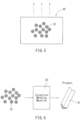
- the mixing step is a step in which a wood powder 14 used as one of constituents of the plant fiber-reinforced resin 18 ( FIG. 3 ) is mixed with alkaline substances 13 (calcium hydroxide), so as to neutralize volatile aliphatic acids contained in the wood powder 14.
- the kneading step is a step in which a wood powder mixture 15 (the wood powder 14 + the alkaline substances 13) obtained in the mixing step and a resin (e.g.
- the heating step may be a step in which pellets of the plant fiber-reinforced resin 18 obtained in the kneading step are heated at a predetermined temperature in order to volatilize and remove volatile substances, e.g., aliphatic acids remaining unneutralized.
- the molding step may be a step in which an injection molding machine 50 forms the interior part W using the pellets of the plant fiber-reinforced resin 18 treated in the heating step.
- the wood powder mixture 15 may be referred to as a mixture in the present disclosure.
- a mixing machine 20 may be used.
- the mixing machine 20 may have a mixing vessel 22, a stirring blade 24 that is configured to horizontally rotate in the mixing vessel 22, and feeding ports 25 and 26 that are respectively configured to feed the wood powder 14 and the alkaline substances 13 into the mixing vessel 22 therethrough.
- powder of cedar timber from forest thinning having 80 mesh in particle size may be used as the wood powder 14.
- a powder of caustic lime, i.e., calcium hydroxide (Ca(OH) 2 ) may be used as the alkaline substances 13.
- a saturated aqueous solution of calcium hydroxide may have a pH value of 12.4.
- a mixing ratio of the wood powder 14 and calcium hydroxide may be 20:1 by weight. That is, a ratio of calcium hydroxide to the wood powder 14 by weight may be 5 percent.
- rotation number and rotation time of the stirring blade 24 may be set such that calcium hydroxide may be homogeneously mixed with the wood powder 14.
- volatile aliphatic acids contained in the wood powder 14 may be neutralized by calcium hydroxide. That is, due to a neutralization reaction, aliphatic acids contained in the wood powder 14 may be changed to metal soap and water, so as to be less likely to volatilize.
- the kneading machine 30 may be used. As shown in FIG. 3 , the kneading machine 30 may be a machine that functions to knead the wood powder mixture 15 (the wood powder 14 + the alkaline substances 13 (calcium hydroxide)) obtained in the mixing step with the polypropylene (PP) resin 12, so as to produce the plant fiber-reinforced resin 18. Further, as shown by Example 1 of the table of constituents shown in FIG. 7 , a mixing ratio of the polypropylene (PP) resin 12 (which will be hereinafter referred to as a resin 12) and the wood powder mixture 15 may be 80:20 by weight. Further, even in the kneading step, the neutralization reaction between aliphatic acids contained in the wood powder 14 and calcium hydroxide may be continuously induced.
- a mixing ratio of the polypropylene (PP) resin 12 which will be hereinafter referred to as a resin 12
- the wood powder mixture 15 may be 80:20 by weight.
- the kneading machine 30 may be an extrusion-type kneading machine that knead the resin 12 with the wood powder mixture 15 (the wood powder 14 + the alkaline substances 13 (calcium hydroxide)) in a condition in which the resin 12 is thermally melted, so as to produce the plant fiber-reinforced resin 18.
- the kneading machine 30 may have a kneading machine main unit 300, a cooling tank in which a soft rod-shaped product 18j of the plant fiber-reinforced resin 18 extruded from the kneading machine main unit 300 is cooled, and a cutter 35 to cut the cooled soft rod-shaped product 18j into pellets of a predetermined size.
- the kneading machine main unit 300 may have a cylinder 301 having an inlet portion 301e formed in one end (left) portion thereof and an outlet portion 301p formed in the other end (right) portion thereof, and a helical screw 303 that is coaxially received in the cylinder 301. Further, the kneading machine main unit 300 may have a heater 302 that is circumferentially attached to the cylinder 301 in order to heat an interior space of the cylinder 301. Also, the kneading machine main unit 300 may have a cooling device 304 that is positioned under and along the cylinder 301. Thus, the kneading machine main unit 300 may be controlled such that the interior space of the cylinder 301 may be maintained at a temperature of about 200 °C.
- the kneading machine main unit 300 may include a drive mechanism 305 positioned adjacent to the inlet portion 301e of the cylinder 301 and having a motor or other such devices.
- the drive mechanism 305 may include a reducer 305w of which an output shaft (not shown) is coaxially connected to the screw 303. Therefore, when the drive mechanism 305 is activated, the screw 303 may rotate about its axis within the cylinder 301, so that a kneading operation may be performed.
- the kneading machine main unit 300 may include a hopper 307 for feeding pellets of the resin 12 and the wood powder mixture 15 (the wood powder 14 + the alkaline substances 13 (calcium hydroxide)) to the inlet portion 301e of the cylinder 301.
- the heating step may be the step in which the pellets of the plant fiber-reinforced resin 18 obtained in the kneading step are heated at the predetermined temperature in order to volatilize and remove the volatile substances, e.g., aliphatic acids remaining unneutralized.
- a heating chamber 40 may be used.
- the heating chamber 40 may be configured to heat the pellets of the plant fiber-reinforced resin 18 at a temperature of about 140 °C for 1 to 5 hours.
- the volatile substances, e.g., aliphatic acids remaining unneutralized in the plant fiber-reinforced resin 18, may be volatilized and removed in the heating chamber 40.
- the pellets of the plant fiber-reinforced resin 18 may be prevented from being melted in the heating chamber 40.
- the pellets of the plant fiber-reinforced resin 18 treated in the heating step may be molded by the injection molding machine 50, so that the interior part W is formed.
- Control 1 shows fogging test results in a case in which no fogging preventive measures is taken.
- the mixing step does not exist.
- the interior part W is formed using the plant fiber-reinforced resin 18 that is obtained by mixing the wood powder 14 and the resin 12 at a ratio of 20:80 by weight and kneading them.
- the fogging test is conducted under the ambient temperature of 90 °C.
- the glass plate has the reflectivity (glossiness) of 96 %.
- the fogging test of the interior part W is conducted under the ambient temperature of 100 °C (the heating step is omitted).
- the glass plate has the reflectivity (glossiness) of 79 %. Further, when the heating step is included, the reflectivity (glossiness) of the glass plate may be slightly improved to 80 %. Thus, in Control 1 (no fogging preventive measures), because the volatile substances or aliphatic acids contained in the wood powder 14 are poorly removed, the fogging test results are inferior as compared with Example 1 described above.
- the mixing step is omitted.
- the wood powder 14 and calcium hydroxide (the same amount as Example 1) are fed into the kneading machine 30 with the resin 12, so as to produce the plant fiber-reinforced resin 18. Further, the mixing ratio of the wood powder 14 and the resin 12 is 20:80 by weight.
- the fogging test is conducted under the ambient temperature of 100 °C. In the fogging test, the glass plate has the reflectivity (glossiness) of 86 %.
- the fogging test results are inferior as compared with Example 1. The results are considered to be due to the fact that the wood powder 14 and calcium hydroxide cannot be sufficiently mixed with each other, and the neutralization reaction cannot be effectively induced.
- the wood powder 14 is mixed with neutral sodium chloride (NaCl (salt)) instead of calcium hydroxide, so as to produce the wood powder mixture 15. Further, in the wood powder mixture 15, the ratio of the wood powder 14 and sodium chloride may be 20:5 by weight.
- the interior part W may be formed using the plant fiber-reinforced resin 18 that is obtained by mixing the wood powder mixture 15 and the resin 12 at a ratio of 20:80 by weight and kneading them.
- the fogging test is conducted under the ambient temperature of 100 °C. In the fogging test, the glass plate has the reflectivity (glossiness) of 80 %, which is identical to Control 1 (no fogging preventive measures) described above. This means that sodium chloride has no effect to remove aliphatic acids contained in the wood powder 14.
- the wood powder 14 is mixed with the alkaline substances 13 (calcium hydroxide) in the mixing step, so that the neutralization reaction between the volatile substances or aliphatic acids contained in the wood powder 14 and the alkaline substances 13 may be induced. Therefore, aliphatic acids contained in the wood powder 14 may be changed to the metal soap, so that the volatile substances contained in the wood powder 14 may be reduced. As a result, the volatile substances contained in the pellets of the plant fiber-reinforced resin 18 obtained in the kneading step may be reduced, so that the volatile substances contained in the interior part W formed in the molding step may be reduced. Thus, the fogging phenomenon caused by the interior part W formed using the plant fiber-reinforced resin 18 may be effectively prevented.
- the alkaline substances 13 calcium hydroxide
- a compound of a metal (calcium (Ca: atomic number 20)) having atomic weight greater than sodium (Na: atomic number 11) may be used as the alkaline substances 13. Therefore, the metal soap produced by the neutralization reaction between aliphatic acids contained in the wood powder 14 and the alkaline substances 13 may be increased in weight. As a result, aliphatic acids may be effectively prevented from being volatilized due to the neutralization reaction. Further, because the saturated aqueous solution of calcium hydroxide used as the alkaline substances 13 may have a pH value of 12.5, the neutralization reaction between aliphatic acids contained in the wood powder 14 and calcium hydroxide may be induced quickly. Further, the heating step is provided between the kneading step and the molding step.
- aliphatic acids contained in the wood powder 14 may be volatilized in the heating step so as to be removed from the pellets of the plant fiber-reinforced resin 18. Further, odor components may be volatilized in the heating step. This may contribute to reduction of a smell of burning as an additional effect.
- the ratio of calcium hydroxide to the wood powder 14 by weight may be set to 5 percent or more. Therefore, aliphatic acids contained in the wood powder 14 may be effectively neutralized.
- the mixing ratio of the wood powder 14 and calcium hydroxide in the mixing step is set to 20:1 by weight.
- the ratio of calcium hydroxide to the wood powder 14 may be increased as compared with Example 1.
- the mixing ratio of the wood powder 14 and calcium hydroxide may be set to 20:3. Further, similar to Example 1, the mixing ratio of the wood powder mixture 15 and the resin 12 is set to 20:80.
- the fogging test is conducted under the ambient temperature of 90 °C. In the fogging test, the glass plate has the reflectivity (glossiness) of 99 %. Further, the fogging test of the interior part W is conducted under the ambient temperature of 100 °C (the heating step is omitted). In the fogging test, the glass plate has the reflectivity (glossiness) of 91 %. Further, when the heating step is included, the reflectivity (glossiness) of the glass plate is improved to 95 %.
- Example 3 the mixing ratio of the wood powder 14 and calcium hydroxide is set to 20:5. Further, similar to Example 1, the mixing ratio of the wood powder mixture 15 and the resin 12 is set to 20:80.
- the fogging test is conducted under the ambient temperature of 90 °C. In the fogging test, the glass plate has the reflectivity (glossiness) of 99 %. Further, the fogging test of the interior part W is conducted under the ambient temperature of 100 °C (the heating step is omitted). In the fogging test, the glass plate has the reflectivity (glossiness) of 91 %. Further, when the heating step is included, the glass plate has the reflectivity (glossiness) of 92 %.
- Example 4 the mixing ratio of the wood powder 14 and calcium hydroxide is set to 20: 10. Further, similar to Example 1, the mixing ratio of the wood powder mixture 15 and the resin 12 is set to 20:80. With regard to the interior part W of Example 4, the fogging test is conducted under the ambient temperature of 100 °C (the heating step is omitted). In the fogging test, the glass plate has the reflectivity (glossiness) of 92 %. Further, when the heating step is included, the reflectivity (glossiness) of the glass plate is considerably improved to 98 %.
- the wood powder 14 is mixed with calcium hydroxide as the alkaline substances 13.
- wollastonite may be used as the alkaline substances 13.
- Wollastonite is a term used to refer to a mineral powder containing primarily of silicon dioxide (SiO 2 ) and calcium oxide (CaO).
- a saturated aqueous solution of wollastonite may have a pH value of 9.5 to 10.5.
- Example 5 the mixing ratio of the wood powder 14 and wollastonite is set to 20:3. Further, similar to Example 1, the mixing ratio of the wood powder mixture 15 and the resin 12 is set to 20:80. With regard to the interior part W of Example 5, the fogging test is conducted under the ambient temperature of 100 °C (the heating step is omitted). In the fogging test, the glass plate has the reflectivity (glossiness) of 89 %. Further, when the heating step is included, the reflectivity (glossiness) of the glass plate is improved to 96 %.
- Example 6 the mixing ratio of the wood powder 14 and wollastonite is set to 20:5. Further, similar to Example 1, the mixing ratio of the wood powder mixture 15 and the resin 12 is set to 20:80. With regard to the interior part W of Example 6, the fogging test is conducted under the ambient temperature of 100 °C (the heating step is omitted). In the fogging test, the glass plate has the reflectivity (glossiness) of 87 %.
- barium hydroxide (Ba(OH) 2 ) of which a saturated aqueous solution has a pH value of 12.3 may be used as the alkaline substances 13.
- the mixing ratio of the wood powder 14 and barium hydroxide is set to 20:1.
- the mixing ratio of the wood powder mixture 15 and the resin 12 is set to 20:80.
- the fogging test is conducted under the ambient temperature of 100 °C (the heating step is omitted). In the fogging test, the glass plate has the reflectivity (glossiness) of 97 %.
- barium (Ba) may be a heavy metal having an atomic number of 56. Therefore, it is considered that when the metal soap is produced by a reaction of the barium hydroxide with aliphatic acids contained in the wood powder 14, the produced metal soap may be increased in mass, so that aliphatic acids may be further prevented from being volatilized.
- the mixing ratio of the wood powder mixture 15 and the resin 12 is set to 20:80.
- the mixing ratio may be changed.
- polypropylene (PP) is used as the resin 12.
- various thermoplastic resins may be used provided that the thermoplastic resins are capable of being injection-molded at a temperature under about 210 °C or less that the wood powder (plant fiber) is prevented from being thermally decomposed.
- the thermoplastic resins are polystyrene (PS), ABS resins, methacrylate resins (PMMA), polyethylene (PE), polyvinyl chloride (PVC), AS resins (SAN), polyacetal (POM).
Landscapes
- Engineering & Computer Science (AREA)
- Mechanical Engineering (AREA)
- Chemical & Material Sciences (AREA)
- Polymers & Plastics (AREA)
- Chemical Kinetics & Catalysis (AREA)
- Medicinal Chemistry (AREA)
- Organic Chemistry (AREA)
- Health & Medical Sciences (AREA)
- Materials Engineering (AREA)
- Wood Science & Technology (AREA)
- Life Sciences & Earth Sciences (AREA)
- Manufacturing & Machinery (AREA)
- Dry Formation Of Fiberboard And The Like (AREA)
- Reinforced Plastic Materials (AREA)
- Processing And Handling Of Plastics And Other Materials For Molding In General (AREA)
- Injection Moulding Of Plastics Or The Like (AREA)
- Vehicle Interior And Exterior Ornaments, Soundproofing, And Insulation (AREA)
- Processes Of Treating Macromolecular Substances (AREA)
- Compositions Of Macromolecular Compounds (AREA)
Claims (5)
- Innenteilherstellungsverfahren, wobei das Verfahren umfasst:einen Mischschritt, in dem nur ein Holzpulver als eine Pflanzenfaser mit einem Pulver aus alkalischen Substanzen gemischt wird, um eine Mischung nur aus Holzpulver und alkalischen Substanzen zu bilden,wobei das Verfahren nach Abschluss des Mischschritts einen Knetschritt umfasst, in dem die Mischung und ein Harz einer Knetvorrichtung zugeführt werden und bis zu einem Zustand, in dem das Harz thermisch schmilzt, geknetet werden, um ein pflanzenfaserverstärktes Harz zu bilden, undwobei das Verfahren des Weiteren einen Formungsschritt umfasst, um unter Verwendung des pflanzenfaserverstärkten Harzes, das im Knetschritt erhalten wurde, ein Innenteil zu bilden.
- Innenteilherstellungsverfahren nach Anspruch 1, wobei eine Verbindung aus einem Metall mit einem größeren Atomgewicht als Natrium als die alkalischen Substanzen verwendet wird.
- Innenteilherstellungsverfahren nach Anspruch 1, wobei alkalische Substanzen, von welchen eine gesättigte wässrige Lösung einen pH-Wert von 9,5 oder mehr aufweist, als die alkalischen Substanzen verwendet werden.
- Innenteilherstellungsverfahren nach einem der Ansprüche 1 bis 3, wobei zwischen dem Knetschritt und dem Formungsschritt ein Heizschritt vorgesehen ist, und wobei im Heizschritt das pflanzenfaserverstärkte Harz auf eine Temperatur erhitzt wird, die nicht unter einer Temperatur liegt, bei der sich im Holzpulver enthaltene flüchtige Substanzen verflüchtigen, und unter einer Temperatur liegt, bei der das Harz schmilzt.
- Innenteilherstellungsverfahren nach einem der Ansprüche 1 bis 4, wobei ein Gewichtsverhältnis der alkalischen Substanzen bezüglich des Holzpulvers auf 5 Prozent oder mehr festgelegt ist.
Applications Claiming Priority (2)
| Application Number | Priority Date | Filing Date | Title |
|---|---|---|---|
| JP2016240120A JP6658488B2 (ja) | 2016-12-12 | 2016-12-12 | 内装品の製造方法 |
| PCT/JP2017/025843 WO2018109972A1 (ja) | 2016-12-12 | 2017-07-18 | 内装品の製造方法 |
Publications (3)
| Publication Number | Publication Date |
|---|---|
| EP3450484A1 EP3450484A1 (de) | 2019-03-06 |
| EP3450484A4 EP3450484A4 (de) | 2019-12-11 |
| EP3450484B1 true EP3450484B1 (de) | 2023-03-15 |
Family
ID=62558229
Family Applications (1)
| Application Number | Title | Priority Date | Filing Date |
|---|---|---|---|
| EP17881192.3A Active EP3450484B1 (de) | 2016-12-12 | 2017-07-18 | Verfahren zur herstellung einer innenverkleidung |
Country Status (4)
| Country | Link |
|---|---|
| US (1) | US20200172685A1 (de) |
| EP (1) | EP3450484B1 (de) |
| JP (1) | JP6658488B2 (de) |
| WO (1) | WO2018109972A1 (de) |
Families Citing this family (3)
| Publication number | Priority date | Publication date | Assignee | Title |
|---|---|---|---|---|
| JP2020019850A (ja) * | 2018-07-30 | 2020-02-06 | Ykk Ap株式会社 | 木粉含有樹脂組成物及び木粉含有樹脂成形体 |
| CN113508163B (zh) | 2019-05-16 | 2022-11-11 | 星光Pmc株式会社 | 成形材料用树脂组合物、成形体以及成形材料用树脂组合物的制造方法 |
| CN112497551B (zh) * | 2020-12-01 | 2022-03-22 | 抚州市鹤达实业有限公司 | 一种变性淀粉加工用颗粒挤出装置 |
Citations (2)
| Publication number | Priority date | Publication date | Assignee | Title |
|---|---|---|---|---|
| US8784503B2 (en) * | 2007-07-02 | 2014-07-22 | Flasin Faser Gmbh | High-strength fibrous material consisting of natural fibres, method for the production thereof, and use of same for producing composite materials |
| WO2015000363A1 (zh) * | 2013-07-05 | 2015-01-08 | 中盈长江国际新能源投资有限公司 | 热塑性木塑复合材料及其生产方法 |
Family Cites Families (21)
| Publication number | Priority date | Publication date | Assignee | Title |
|---|---|---|---|---|
| JPS5492613A (en) * | 1977-12-29 | 1979-07-23 | Kishimoto Sangyo Co | Smokeless molded match stick |
| JPS63202661A (ja) * | 1987-02-19 | 1988-08-22 | Tokuyama Soda Co Ltd | 複合樹脂組成物 |
| RO105789B1 (ro) * | 1991-12-18 | 1993-09-30 | Andrei Hodoti | Inlocuitor de lemn, procedeu de obtinere si utilizare a acesteia |
| US5288772A (en) * | 1992-06-23 | 1994-02-22 | Clemson University | Pre-treated cellulosic materials for producing molded composite articles therefrom and process |
| JPH07103242B2 (ja) * | 1992-06-24 | 1995-11-08 | ミサワホーム株式会社 | セルロース系微粉粒、木質様成形品および木質様製品 |
| JPH0680888A (ja) * | 1992-09-01 | 1994-03-22 | Tokuyama Soda Co Ltd | ハンガー用基材 |
| JP3265223B2 (ja) * | 1997-04-16 | 2002-03-11 | ミサワホーム株式会社 | 木質様部材の製法 |
| JP3265222B2 (ja) * | 1997-04-16 | 2002-03-11 | ミサワホーム株式会社 | 木質様部材の製法 |
| JPH10305470A (ja) * | 1997-05-02 | 1998-11-17 | Misawa Homes Co Ltd | 木質様製品およびその製造方法 |
| JP4267139B2 (ja) * | 1999-09-17 | 2009-05-27 | 三菱レイヨン株式会社 | 樹脂成形品の製法 |
| JP4815716B2 (ja) * | 2000-08-22 | 2011-11-16 | 味の素株式会社 | 木質熱可塑性樹脂組成物 |
| JP4278943B2 (ja) * | 2002-09-24 | 2009-06-17 | Ykk Ap株式会社 | セルロース系粉体含有押出形材及びその製造方法 |
| JP2007197600A (ja) * | 2006-01-27 | 2007-08-09 | Yamada Kensetsu Kk | 熱可塑性樹脂組成物、およびその製造方法 |
| JP5624534B2 (ja) * | 2011-12-20 | 2014-11-12 | Wpcコーポレーション株式会社 | 木質合成粉 |
| CN103194075A (zh) * | 2013-04-19 | 2013-07-10 | 瑞丽市千紫木业发展有限责任公司 | 一种无机纳米阻燃木塑复合材料及其制备方法 |
| KR101467255B1 (ko) * | 2013-07-11 | 2014-12-01 | 연세대학교 산학협력단 | 가로수 전정지를 이용한 바이오 플라스틱 성형방법 및 그 성형방법에 의해 제조된 바이오 플라스틱 제품 |
| KR101459951B1 (ko) * | 2013-09-27 | 2014-11-07 | 현대자동차주식회사 | 촉감 및 내스크래치성이 우수한 폴리프로필렌 복합 수지 조성물 |
| US20160215143A1 (en) * | 2013-09-30 | 2016-07-28 | Hitachi Chemical Company, Ltd. | Resin composition, molded body, and production method |
| WO2016063914A1 (ja) * | 2014-10-21 | 2016-04-28 | 古河電気工業株式会社 | ポリオレフィン樹脂組成物、成形品および車両用外板 |
| CN105566934A (zh) * | 2016-01-29 | 2016-05-11 | 安徽以诺木塑板材科技有限公司 | 一种强化木塑板 |
| CN106243542B (zh) * | 2016-09-13 | 2018-11-13 | 北华大学 | 一种木塑浮雕制品的生产方法 |
-
2016
- 2016-12-12 JP JP2016240120A patent/JP6658488B2/ja active Active
-
2017
- 2017-07-18 WO PCT/JP2017/025843 patent/WO2018109972A1/ja not_active Ceased
- 2017-07-18 EP EP17881192.3A patent/EP3450484B1/de active Active
- 2017-07-18 US US16/313,833 patent/US20200172685A1/en not_active Abandoned
Patent Citations (2)
| Publication number | Priority date | Publication date | Assignee | Title |
|---|---|---|---|---|
| US8784503B2 (en) * | 2007-07-02 | 2014-07-22 | Flasin Faser Gmbh | High-strength fibrous material consisting of natural fibres, method for the production thereof, and use of same for producing composite materials |
| WO2015000363A1 (zh) * | 2013-07-05 | 2015-01-08 | 中盈长江国际新能源投资有限公司 | 热塑性木塑复合材料及其生产方法 |
Non-Patent Citations (1)
| Title |
|---|
| ASHORI ET AL: "Wood-plastic composites as promising green-composites for automotive industries!", BIORESOURCE TECHNOLOGY, ELSEVIER, AMSTERDAM, NL, vol. 99, no. 11, 1 July 2008 (2008-07-01), pages 4661 - 4667, XP022606269, ISSN: 0960-8524, [retrieved on 20071218], DOI: 10.1016/J.BIORTECH.2007.09.043 * |
Also Published As
| Publication number | Publication date |
|---|---|
| US20200172685A1 (en) | 2020-06-04 |
| EP3450484A4 (de) | 2019-12-11 |
| WO2018109972A1 (ja) | 2018-06-21 |
| EP3450484A1 (de) | 2019-03-06 |
| JP6658488B2 (ja) | 2020-03-04 |
| JP2018095708A (ja) | 2018-06-21 |
Similar Documents
| Publication | Publication Date | Title |
|---|---|---|
| EP3450484A1 (de) | Verfahren zur herstellung einer innenverkleidung | |
| US20070054106A1 (en) | Method of recycling mixed streams of ewaste (weee) | |
| JP5635262B2 (ja) | 木材複合材料を製造する方法及び装置 | |
| JP2013545628A (ja) | 超臨界流体を含む高分子化合物のペレットとその製造および使用の方法 | |
| KR102063170B1 (ko) | 패류 껍질 및 재생수지를 이용한 친환경 필름의 제조방법 및 이로부터 제조된 친환경 필름 | |
| US20160214278A1 (en) | Method for Producing a Semi-Finished Product to be Made into a CFRP Component, from Carbon-Fiber Scrap | |
| CN102869484A (zh) | 挤出成型用复合颗粒的制造方法和用所述方法制造的挤出成型用复合颗粒 | |
| WO2006108256A1 (en) | Material to be injection molded, process thereof, and use therefore | |
| CN102336971A (zh) | 微波硫化三元乙丙海绵护套及加工方法 | |
| JP2013502470A (ja) | 皮革ペレットと化合物粒剤の製造方法とその使用 | |
| US20160340475A1 (en) | Fine-dispersion compounding apparatus and fine-dispersion compounding method | |
| KR20040041572A (ko) | 고무 혼합물을 연속 제조하기 위한 방법 및 장치 | |
| JP2010125651A (ja) | 圧縮押出成形装置 | |
| KR20170064845A (ko) | 3d 프린터 입체 제작물 초음파 저온 표면 처리기 | |
| EP4079791A1 (de) | Verfahren und vorrichtung zur aufbereitung von kunststoffmaterial | |
| KR20070044103A (ko) | 톱밥 플라스틱 보드, 그 제조방법, 및 그 제조장치 | |
| JPS62297112A (ja) | 廃棄樹脂フイルム利用の木粉ペレツト製造法 | |
| Patel et al. | Review of potential processing techniques for the encapsulation of wastes in thermoplastic polymers | |
| JP2018159009A (ja) | 樹脂添加剤、樹脂部品、及びその製造方法 | |
| DE10138587A1 (de) | Verfahren zur Herstellung geschäumter Formteile und Treibmittel | |
| CN216941388U (zh) | 一种塑料造粒的共混熔融挤出装置 | |
| JP7558896B2 (ja) | 樹脂複合材料の製造方法および製造装置 | |
| US20250326159A1 (en) | Waste mixing device and waste mixing processing equipment | |
| DE102005027374A1 (de) | Spritzgießverfahren und -anlage | |
| KR20240040883A (ko) | 폐전선 피복물 재활용 시스템 |
Legal Events
| Date | Code | Title | Description |
|---|---|---|---|
| STAA | Information on the status of an ep patent application or granted ep patent |
Free format text: STATUS: THE INTERNATIONAL PUBLICATION HAS BEEN MADE |
|
| PUAI | Public reference made under article 153(3) epc to a published international application that has entered the european phase |
Free format text: ORIGINAL CODE: 0009012 |
|
| STAA | Information on the status of an ep patent application or granted ep patent |
Free format text: STATUS: REQUEST FOR EXAMINATION WAS MADE |
|
| 17P | Request for examination filed |
Effective date: 20181130 |
|
| AK | Designated contracting states |
Kind code of ref document: A1 Designated state(s): AL AT BE BG CH CY CZ DE DK EE ES FI FR GB GR HR HU IE IS IT LI LT LU LV MC MK MT NL NO PL PT RO RS SE SI SK SM TR |
|
| AX | Request for extension of the european patent |
Extension state: BA ME |
|
| REG | Reference to a national code |
Ref country code: DE Ref legal event code: R079 Ref document number: 602017066914 Country of ref document: DE Free format text: PREVIOUS MAIN CLASS: C08J0003200000 Ipc: B29B0007920000 |
|
| A4 | Supplementary search report drawn up and despatched |
Effective date: 20191112 |
|
| RIC1 | Information provided on ipc code assigned before grant |
Ipc: B29B 7/48 20060101ALI20191106BHEP Ipc: C08J 5/04 20060101ALI20191106BHEP Ipc: C08J 3/20 20060101ALI20191106BHEP Ipc: B29B 7/42 20060101ALI20191106BHEP Ipc: C08K 3/22 20060101ALI20191106BHEP Ipc: B29B 7/92 20060101AFI20191106BHEP Ipc: C08K 9/02 20060101ALI20191106BHEP Ipc: B29C 45/00 20060101ALI20191106BHEP Ipc: B60R 13/02 20060101ALI20191106BHEP |
|
| DAV | Request for validation of the european patent (deleted) | ||
| DAX | Request for extension of the european patent (deleted) | ||
| STAA | Information on the status of an ep patent application or granted ep patent |
Free format text: STATUS: EXAMINATION IS IN PROGRESS |
|
| 17Q | First examination report despatched |
Effective date: 20201126 |
|
| GRAP | Despatch of communication of intention to grant a patent |
Free format text: ORIGINAL CODE: EPIDOSNIGR1 |
|
| STAA | Information on the status of an ep patent application or granted ep patent |
Free format text: STATUS: GRANT OF PATENT IS INTENDED |
|
| INTG | Intention to grant announced |
Effective date: 20221006 |
|
| GRAS | Grant fee paid |
Free format text: ORIGINAL CODE: EPIDOSNIGR3 |
|
| GRAA | (expected) grant |
Free format text: ORIGINAL CODE: 0009210 |
|
| STAA | Information on the status of an ep patent application or granted ep patent |
Free format text: STATUS: THE PATENT HAS BEEN GRANTED |
|
| AK | Designated contracting states |
Kind code of ref document: B1 Designated state(s): AL AT BE BG CH CY CZ DE DK EE ES FI FR GB GR HR HU IE IS IT LI LT LU LV MC MK MT NL NO PL PT RO RS SE SI SK SM TR |
|
| REG | Reference to a national code |
Ref country code: CH Ref legal event code: EP Ref country code: GB Ref legal event code: FG4D |
|
| REG | Reference to a national code |
Ref country code: DE Ref legal event code: R096 Ref document number: 602017066914 Country of ref document: DE |
|
| REG | Reference to a national code |
Ref country code: IE Ref legal event code: FG4D |
|
| REG | Reference to a national code |
Ref country code: AT Ref legal event code: REF Ref document number: 1553725 Country of ref document: AT Kind code of ref document: T Effective date: 20230415 |
|
| REG | Reference to a national code |
Ref country code: LT Ref legal event code: MG9D |
|
| REG | Reference to a national code |
Ref country code: NL Ref legal event code: MP Effective date: 20230315 |
|
| PG25 | Lapsed in a contracting state [announced via postgrant information from national office to epo] |
Ref country code: RS Free format text: LAPSE BECAUSE OF FAILURE TO SUBMIT A TRANSLATION OF THE DESCRIPTION OR TO PAY THE FEE WITHIN THE PRESCRIBED TIME-LIMIT Effective date: 20230315 Ref country code: NO Free format text: LAPSE BECAUSE OF FAILURE TO SUBMIT A TRANSLATION OF THE DESCRIPTION OR TO PAY THE FEE WITHIN THE PRESCRIBED TIME-LIMIT Effective date: 20230615 Ref country code: LV Free format text: LAPSE BECAUSE OF FAILURE TO SUBMIT A TRANSLATION OF THE DESCRIPTION OR TO PAY THE FEE WITHIN THE PRESCRIBED TIME-LIMIT Effective date: 20230315 Ref country code: LT Free format text: LAPSE BECAUSE OF FAILURE TO SUBMIT A TRANSLATION OF THE DESCRIPTION OR TO PAY THE FEE WITHIN THE PRESCRIBED TIME-LIMIT Effective date: 20230315 Ref country code: HR Free format text: LAPSE BECAUSE OF FAILURE TO SUBMIT A TRANSLATION OF THE DESCRIPTION OR TO PAY THE FEE WITHIN THE PRESCRIBED TIME-LIMIT Effective date: 20230315 |
|
| REG | Reference to a national code |
Ref country code: AT Ref legal event code: MK05 Ref document number: 1553725 Country of ref document: AT Kind code of ref document: T Effective date: 20230315 |
|
| PG25 | Lapsed in a contracting state [announced via postgrant information from national office to epo] |
Ref country code: SE Free format text: LAPSE BECAUSE OF FAILURE TO SUBMIT A TRANSLATION OF THE DESCRIPTION OR TO PAY THE FEE WITHIN THE PRESCRIBED TIME-LIMIT Effective date: 20230315 Ref country code: NL Free format text: LAPSE BECAUSE OF FAILURE TO SUBMIT A TRANSLATION OF THE DESCRIPTION OR TO PAY THE FEE WITHIN THE PRESCRIBED TIME-LIMIT Effective date: 20230315 Ref country code: GR Free format text: LAPSE BECAUSE OF FAILURE TO SUBMIT A TRANSLATION OF THE DESCRIPTION OR TO PAY THE FEE WITHIN THE PRESCRIBED TIME-LIMIT Effective date: 20230616 Ref country code: FI Free format text: LAPSE BECAUSE OF FAILURE TO SUBMIT A TRANSLATION OF THE DESCRIPTION OR TO PAY THE FEE WITHIN THE PRESCRIBED TIME-LIMIT Effective date: 20230315 |
|
| PG25 | Lapsed in a contracting state [announced via postgrant information from national office to epo] |
Ref country code: SM Free format text: LAPSE BECAUSE OF FAILURE TO SUBMIT A TRANSLATION OF THE DESCRIPTION OR TO PAY THE FEE WITHIN THE PRESCRIBED TIME-LIMIT Effective date: 20230315 Ref country code: RO Free format text: LAPSE BECAUSE OF FAILURE TO SUBMIT A TRANSLATION OF THE DESCRIPTION OR TO PAY THE FEE WITHIN THE PRESCRIBED TIME-LIMIT Effective date: 20230315 Ref country code: PT Free format text: LAPSE BECAUSE OF FAILURE TO SUBMIT A TRANSLATION OF THE DESCRIPTION OR TO PAY THE FEE WITHIN THE PRESCRIBED TIME-LIMIT Effective date: 20230717 Ref country code: ES Free format text: LAPSE BECAUSE OF FAILURE TO SUBMIT A TRANSLATION OF THE DESCRIPTION OR TO PAY THE FEE WITHIN THE PRESCRIBED TIME-LIMIT Effective date: 20230315 Ref country code: EE Free format text: LAPSE BECAUSE OF FAILURE TO SUBMIT A TRANSLATION OF THE DESCRIPTION OR TO PAY THE FEE WITHIN THE PRESCRIBED TIME-LIMIT Effective date: 20230315 Ref country code: CZ Free format text: LAPSE BECAUSE OF FAILURE TO SUBMIT A TRANSLATION OF THE DESCRIPTION OR TO PAY THE FEE WITHIN THE PRESCRIBED TIME-LIMIT Effective date: 20230315 Ref country code: AT Free format text: LAPSE BECAUSE OF FAILURE TO SUBMIT A TRANSLATION OF THE DESCRIPTION OR TO PAY THE FEE WITHIN THE PRESCRIBED TIME-LIMIT Effective date: 20230315 |
|
| PG25 | Lapsed in a contracting state [announced via postgrant information from national office to epo] |
Ref country code: SK Free format text: LAPSE BECAUSE OF FAILURE TO SUBMIT A TRANSLATION OF THE DESCRIPTION OR TO PAY THE FEE WITHIN THE PRESCRIBED TIME-LIMIT Effective date: 20230315 Ref country code: PL Free format text: LAPSE BECAUSE OF FAILURE TO SUBMIT A TRANSLATION OF THE DESCRIPTION OR TO PAY THE FEE WITHIN THE PRESCRIBED TIME-LIMIT Effective date: 20230315 Ref country code: IS Free format text: LAPSE BECAUSE OF FAILURE TO SUBMIT A TRANSLATION OF THE DESCRIPTION OR TO PAY THE FEE WITHIN THE PRESCRIBED TIME-LIMIT Effective date: 20230715 |
|
| REG | Reference to a national code |
Ref country code: DE Ref legal event code: R097 Ref document number: 602017066914 Country of ref document: DE |
|
| PLBE | No opposition filed within time limit |
Free format text: ORIGINAL CODE: 0009261 |
|
| STAA | Information on the status of an ep patent application or granted ep patent |
Free format text: STATUS: NO OPPOSITION FILED WITHIN TIME LIMIT |
|
| PG25 | Lapsed in a contracting state [announced via postgrant information from national office to epo] |
Ref country code: SI Free format text: LAPSE BECAUSE OF FAILURE TO SUBMIT A TRANSLATION OF THE DESCRIPTION OR TO PAY THE FEE WITHIN THE PRESCRIBED TIME-LIMIT Effective date: 20230315 Ref country code: DK Free format text: LAPSE BECAUSE OF FAILURE TO SUBMIT A TRANSLATION OF THE DESCRIPTION OR TO PAY THE FEE WITHIN THE PRESCRIBED TIME-LIMIT Effective date: 20230315 |
|
| 26N | No opposition filed |
Effective date: 20231218 |
|
| PG25 | Lapsed in a contracting state [announced via postgrant information from national office to epo] |
Ref country code: MC Free format text: LAPSE BECAUSE OF FAILURE TO SUBMIT A TRANSLATION OF THE DESCRIPTION OR TO PAY THE FEE WITHIN THE PRESCRIBED TIME-LIMIT Effective date: 20230315 |
|
| PG25 | Lapsed in a contracting state [announced via postgrant information from national office to epo] |
Ref country code: MC Free format text: LAPSE BECAUSE OF FAILURE TO SUBMIT A TRANSLATION OF THE DESCRIPTION OR TO PAY THE FEE WITHIN THE PRESCRIBED TIME-LIMIT Effective date: 20230315 |
|
| REG | Reference to a national code |
Ref country code: CH Ref legal event code: PL |
|
| REG | Reference to a national code |
Ref country code: BE Ref legal event code: MM Effective date: 20230731 |
|
| PG25 | Lapsed in a contracting state [announced via postgrant information from national office to epo] |
Ref country code: LU Free format text: LAPSE BECAUSE OF NON-PAYMENT OF DUE FEES Effective date: 20230718 |
|
| GBPC | Gb: european patent ceased through non-payment of renewal fee |
Effective date: 20230718 |
|
| PG25 | Lapsed in a contracting state [announced via postgrant information from national office to epo] |
Ref country code: LU Free format text: LAPSE BECAUSE OF NON-PAYMENT OF DUE FEES Effective date: 20230718 |
|
| REG | Reference to a national code |
Ref country code: IE Ref legal event code: MM4A |
|
| PG25 | Lapsed in a contracting state [announced via postgrant information from national office to epo] |
Ref country code: GB Free format text: LAPSE BECAUSE OF NON-PAYMENT OF DUE FEES Effective date: 20230718 Ref country code: CH Free format text: LAPSE BECAUSE OF NON-PAYMENT OF DUE FEES Effective date: 20230731 |
|
| PG25 | Lapsed in a contracting state [announced via postgrant information from national office to epo] |
Ref country code: IT Free format text: LAPSE BECAUSE OF FAILURE TO SUBMIT A TRANSLATION OF THE DESCRIPTION OR TO PAY THE FEE WITHIN THE PRESCRIBED TIME-LIMIT Effective date: 20230315 Ref country code: FR Free format text: LAPSE BECAUSE OF NON-PAYMENT OF DUE FEES Effective date: 20230731 Ref country code: BE Free format text: LAPSE BECAUSE OF NON-PAYMENT OF DUE FEES Effective date: 20230731 |
|
| PG25 | Lapsed in a contracting state [announced via postgrant information from national office to epo] |
Ref country code: IE Free format text: LAPSE BECAUSE OF NON-PAYMENT OF DUE FEES Effective date: 20230718 |
|
| PG25 | Lapsed in a contracting state [announced via postgrant information from national office to epo] |
Ref country code: IE Free format text: LAPSE BECAUSE OF NON-PAYMENT OF DUE FEES Effective date: 20230718 |
|
| PG25 | Lapsed in a contracting state [announced via postgrant information from national office to epo] |
Ref country code: BG Free format text: LAPSE BECAUSE OF FAILURE TO SUBMIT A TRANSLATION OF THE DESCRIPTION OR TO PAY THE FEE WITHIN THE PRESCRIBED TIME-LIMIT Effective date: 20230315 |
|
| PG25 | Lapsed in a contracting state [announced via postgrant information from national office to epo] |
Ref country code: BG Free format text: LAPSE BECAUSE OF FAILURE TO SUBMIT A TRANSLATION OF THE DESCRIPTION OR TO PAY THE FEE WITHIN THE PRESCRIBED TIME-LIMIT Effective date: 20230315 |
|
| PG25 | Lapsed in a contracting state [announced via postgrant information from national office to epo] |
Ref country code: CY Free format text: LAPSE BECAUSE OF FAILURE TO SUBMIT A TRANSLATION OF THE DESCRIPTION OR TO PAY THE FEE WITHIN THE PRESCRIBED TIME-LIMIT; INVALID AB INITIO Effective date: 20170718 |
|
| PG25 | Lapsed in a contracting state [announced via postgrant information from national office to epo] |
Ref country code: HU Free format text: LAPSE BECAUSE OF FAILURE TO SUBMIT A TRANSLATION OF THE DESCRIPTION OR TO PAY THE FEE WITHIN THE PRESCRIBED TIME-LIMIT; INVALID AB INITIO Effective date: 20170718 |
|
| PGFP | Annual fee paid to national office [announced via postgrant information from national office to epo] |
Ref country code: DE Payment date: 20250528 Year of fee payment: 9 |
|
| PG25 | Lapsed in a contracting state [announced via postgrant information from national office to epo] |
Ref country code: TR Free format text: LAPSE BECAUSE OF FAILURE TO SUBMIT A TRANSLATION OF THE DESCRIPTION OR TO PAY THE FEE WITHIN THE PRESCRIBED TIME-LIMIT Effective date: 20230315 |