EP3419991B1 - Engineered ribosomal promoters for protein production in microorganisms - Google Patents
Engineered ribosomal promoters for protein production in microorganisms Download PDFInfo
- Publication number
- EP3419991B1 EP3419991B1 EP17713100.0A EP17713100A EP3419991B1 EP 3419991 B1 EP3419991 B1 EP 3419991B1 EP 17713100 A EP17713100 A EP 17713100A EP 3419991 B1 EP3419991 B1 EP 3419991B1
- Authority
- EP
- European Patent Office
- Prior art keywords
- seq
- promoter
- nucleic acid
- sequence
- dna
- Prior art date
- Legal status (The legal status is an assumption and is not a legal conclusion. Google has not performed a legal analysis and makes no representation as to the accuracy of the status listed.)
- Active
Links
Images



Classifications
-
- C—CHEMISTRY; METALLURGY
- C12—BIOCHEMISTRY; BEER; SPIRITS; WINE; VINEGAR; MICROBIOLOGY; ENZYMOLOGY; MUTATION OR GENETIC ENGINEERING
- C12N—MICROORGANISMS OR ENZYMES; COMPOSITIONS THEREOF; PROPAGATING, PRESERVING, OR MAINTAINING MICROORGANISMS; MUTATION OR GENETIC ENGINEERING; CULTURE MEDIA
- C12N15/00—Mutation or genetic engineering; DNA or RNA concerning genetic engineering, vectors, e.g. plasmids, or their isolation, preparation or purification; Use of hosts therefor
- C12N15/09—Recombinant DNA-technology
- C12N15/63—Introduction of foreign genetic material using vectors; Vectors; Use of hosts therefor; Regulation of expression
- C12N15/74—Vectors or expression systems specially adapted for prokaryotic hosts other than E. coli, e.g. Lactobacillus, Micromonospora
- C12N15/75—Vectors or expression systems specially adapted for prokaryotic hosts other than E. coli, e.g. Lactobacillus, Micromonospora for Bacillus
-
- C—CHEMISTRY; METALLURGY
- C07—ORGANIC CHEMISTRY
- C07K—PEPTIDES
- C07K14/00—Peptides having more than 20 amino acids; Gastrins; Somatostatins; Melanotropins; Derivatives thereof
- C07K14/195—Peptides having more than 20 amino acids; Gastrins; Somatostatins; Melanotropins; Derivatives thereof from bacteria
- C07K14/32—Peptides having more than 20 amino acids; Gastrins; Somatostatins; Melanotropins; Derivatives thereof from bacteria from Bacillus (G)
-
- C—CHEMISTRY; METALLURGY
- C12—BIOCHEMISTRY; BEER; SPIRITS; WINE; VINEGAR; MICROBIOLOGY; ENZYMOLOGY; MUTATION OR GENETIC ENGINEERING
- C12N—MICROORGANISMS OR ENZYMES; COMPOSITIONS THEREOF; PROPAGATING, PRESERVING, OR MAINTAINING MICROORGANISMS; MUTATION OR GENETIC ENGINEERING; CULTURE MEDIA
- C12N9/00—Enzymes; Proenzymes; Compositions thereof; Processes for preparing, activating, inhibiting, separating or purifying enzymes
- C12N9/14—Hydrolases (3)
- C12N9/24—Hydrolases (3) acting on glycosyl compounds (3.2)
- C12N9/2402—Hydrolases (3) acting on glycosyl compounds (3.2) hydrolysing O- and S- glycosyl compounds (3.2.1)
- C12N9/2405—Glucanases
- C12N9/2408—Glucanases acting on alpha -1,4-glucosidic bonds
- C12N9/2411—Amylases
- C12N9/2414—Alpha-amylase (3.2.1.1.)
- C12N9/2417—Alpha-amylase (3.2.1.1.) from microbiological source
-
- C—CHEMISTRY; METALLURGY
- C12—BIOCHEMISTRY; BEER; SPIRITS; WINE; VINEGAR; MICROBIOLOGY; ENZYMOLOGY; MUTATION OR GENETIC ENGINEERING
- C12N—MICROORGANISMS OR ENZYMES; COMPOSITIONS THEREOF; PROPAGATING, PRESERVING, OR MAINTAINING MICROORGANISMS; MUTATION OR GENETIC ENGINEERING; CULTURE MEDIA
- C12N9/00—Enzymes; Proenzymes; Compositions thereof; Processes for preparing, activating, inhibiting, separating or purifying enzymes
- C12N9/14—Hydrolases (3)
- C12N9/48—Hydrolases (3) acting on peptide bonds (3.4)
- C12N9/50—Proteinases, e.g. Endopeptidases (3.4.21-3.4.25)
- C12N9/52—Proteinases, e.g. Endopeptidases (3.4.21-3.4.25) derived from bacteria or Archaea
- C12N9/54—Proteinases, e.g. Endopeptidases (3.4.21-3.4.25) derived from bacteria or Archaea bacteria being Bacillus
-
- C—CHEMISTRY; METALLURGY
- C12—BIOCHEMISTRY; BEER; SPIRITS; WINE; VINEGAR; MICROBIOLOGY; ENZYMOLOGY; MUTATION OR GENETIC ENGINEERING
- C12Y—ENZYMES
- C12Y302/00—Hydrolases acting on glycosyl compounds, i.e. glycosylases (3.2)
- C12Y302/01—Glycosidases, i.e. enzymes hydrolysing O- and S-glycosyl compounds (3.2.1)
- C12Y302/01001—Alpha-amylase (3.2.1.1)
-
- C—CHEMISTRY; METALLURGY
- C12—BIOCHEMISTRY; BEER; SPIRITS; WINE; VINEGAR; MICROBIOLOGY; ENZYMOLOGY; MUTATION OR GENETIC ENGINEERING
- C12Y—ENZYMES
- C12Y304/00—Hydrolases acting on peptide bonds, i.e. peptidases (3.4)
- C12Y304/21—Serine endopeptidases (3.4.21)
- C12Y304/21062—Subtilisin (3.4.21.62)
Definitions
- the present invention is generally related to the fields of molecular biology and genetic engineering.
- the present invention is directed to the use of engineered promoters, and more particularly, engineered hybrid ribosomal promoters for the expression and production of one or more proteins of interest in a host microorganism.
- Bacillus species produce and secrete a large number of useful proteins and metabolites.
- the most common Bacillus species used in industry are B. licheniformis, B. amyloliquefaciens, and B. subtilis.
- GRAS generally recognized as safe
- strains of Bacillus species are natural candidates for the production of proteins utilized in the food and pharmaceutical industries.
- important production enzymes include ⁇ -amylases, neutral proteases, alkaline (or serine) proteases, and the like.
- Recombinant production of a protein of interest (POI) encoded by a gene (or ORF) of interest is typically accomplished by constructing expression vectors suitable for use in a desired host cell, wherein the nucleic acid encoding the desired POI is placed under the expression control of a promoter.
- the expression vector is introduced into a host cell by various techniques (e.g., via transformation), and production of the desired protein product is achieved by culturing the transformed host cell under conditions suitable for the expression and production of the protein product.
- Bacillus promoters (and associated elements thereof) for the homologous and/or heterologous expression of functional polypeptides have been described in the art (e.g., see, PCT International Publication No. WO2013086219 ; U.S Patent Nos. 4,559,300; Kim et al., 2008 , etc.).
- the present invention is directed to the use of engineered promoters, and more particularly, engineered hybrid ribosomal promoters for the expression and production of one or more proteins of interest in a host microorganism.
- the present disclosure describes an isolated nucleic acid comprising an engineered hybrid promoter operably linked to a nucleic acid encoding a protein of interest (POI), wherein the hybrid promoter comprises the nucleotide sequence of any one of SEQ ID NO: 65, SEQ ID NO: 66, SEQ ID NO: 67, SEQ ID NO: 68, SEQ ID NO: 69, SEQ ID NO: 70, SEQ ID NO: 71 SEQ ID NO: 72, SEQ ID NO: 73, SEQ ID NO: 74, SEQ ID NO: 75, SEQ ID NO: 77, SEQ ID NO: 78, SEQ ID NO: 79, SEQ ID NO: 80, SEQ ID NO: 90, SEQ ID NO: 91, SEQ ID NO: 92, SEQ ID NO: 93, SEQ ID NO: 94, SEQ ID NO: 95, SEQ ID NO: 96 and SEQ ID NO: 97.
- POI protein of interest
- a nucleic acid of the invention comprises a subsequence of SEQ ID NOs: 65-80 and 90-97 that retains promoter activity.
- a nucleic acid sequence of the invention is a nucleic acid that is at least 60% homologous to any one of SEQ ID NOs: 65-80 and 90-97, or a nucleic acid that hybridizes under medium stringency conditions with any one of SEQ ID NOs: 65-80 and 90-97 (or a subsequence thereof that retains promoter activity).
- the hybrid promoter comprises the nucleotide sequence of SEQ ID NO: 65 or SEQ ID NO: 71.
- the protein of interest (POI) encoded by the isolated nucleic acid is an enzyme.
- the enzyme is selected from the group consisting of acetyl esterases, aryl esterases, aminopeptidases, amylases, arabinases, arabinofuranosidases, carboxypeptidases, catalases, cellulases, chitinases, chymosin, cutinase, deoxyribonucleases, epimerases, esterases, ⁇ -galactosidases, ⁇ galactosidases, ⁇ -glucanases, glucan lysases, endo- ⁇ -glucanases, glucoamylases, glucose oxidases, ⁇ -glucosidases, ⁇ -glucosidases, glucuronidases, hemicellulases, hexose oxidases, hydrolases, invertases, isomerases, laccases, lipases, lyases, mannosidases,
- the present invention is directed to an isolated nucleic acid comprising an engineered complete promoter operably linked to a nucleic acid encoding a protein of interest, the isolated nucleic acid comprising the formula selected from:
- the UTR comprises the nucleotide sequence of SEQ ID NO: 155.
- the UP element comprises the nucleotide sequence of SEQ ID NO: 51, SEQ ID NO: 52, SEQ ID NO: 53, SEQ ID NO: 54, SEQ ID NO: 57 or SEQ ID NO: 58.
- the IstPro comprises a nucleotide sequence of SEQ ID NO: 3, SEQ ID NO: 4, SEQ ID NO: 5, SEQ ID NO: 6, SEQ ID NO: 7, SEQ ID NO: 8, SEQ ID NO: 9, SEQ ID NO: 10, SEQ ID NO: 11, SEQ ID NO: 12, SEQ ID NO: 14, SEQ ID NO: 15, SEQ ID NO: 16, SEQ ID NO: 17, SEQ ID NO: 18, SEQ ID NO: 19, SEQ ID NO: 26, SEQ ID NO: 85, SEQ ID NO: 89, SEQ ID NO: 101, SEQ ID NO: 102, SEQ ID NO: 103, SEQ ID NO: 104 or SEQ ID NO: 105.
- the 2ndPro comprises a nucleotide sequence of SEQ ID NO: 3, SEQ ID NO: 4, SEQ ID NO: 5, SEQ ID NO: 6, SEQ ID NO: 7, SEQ ID NO: 8, SEQ ID NO: 9, SEQ ID NO: 10, SEQ ID NO: 11, SEQ ID NO: 12, SEQ ID NO: 14, SEQ ID NO: 15, SEQ ID NO: 16, SEQ ID NO: 17, SEQ ID NO: 18, SEQ ID NO: 19, SEQ ID NO: 26, SEQ ID NO: 85, SEQ ID NO: 89, SEQ ID NO: 101, SEQ ID NO: 102, SEQ ID NO: 103, SEQ ID NO: 104 or SEQ ID NO: 105.
- the 3rdPro comprises a nucleotide sequence of SEQ ID NO: 3, SEQ ID NO: 4, SEQ ID NO: 5, SEQ ID NO: 6, SEQ ID NO: 7, SEQ ID NO: 8, SEQ ID NO: 9, SEQ ID NO: 10, SEQ ID NO: 11, SEQ ID NO: 12, SEQ ID NO: 14, SEQ ID NO: 15, SEQ ID NO: 16, SEQ ID NO: 17, SEQ ID NO: 18, SEQ ID NO: 19, SEQ ID NO: 26, SEQ ID NO: 85, SEQ ID NO: 89, SEQ ID NO: 101, SEQ ID NO: 102, SEQ ID NO: 103, SEQ ID NO: 104 or SEQ ID NO: 105.
- the POI encoded by the ORF is an enzyme.
- the enzyme is selected from the group consisting of acetyl esterases, aryl esterases, aminopeptidases, amylases, arabinases, arabinofuranosidases, carboxypeptidases, catalases, cellulases, chitinases, chymosin, cutinase, deoxyribonucleases, epimerases, esterases, ⁇ -galactosidases, ⁇ -galactosidases, ⁇ -glucanases, glucan lysases, endo- ⁇ -glucanases, glucoamylases, glucose oxidases, ⁇ -glucosidases, ⁇ -glucosidases, glucuronidases, hemicellulases, hexose oxidases, hydrolases, invertases, isomerases,
- the invention is directed to an expression vector comprising a nucleic acid of the present disclosure.
- the invention is directed to a bacterial host cell comprising an expression comprising a nucleic acid of the present disclosure.
- a bacterial host cell of the present disclosure is a member of the genus Bacillus.
- the Bacillus host cell is selected from the group consisting of B. subtilis, B. licheniformis, B. lentus, B. brevis, B. alkalophilus, B. amyloliquefaciens, B. coagulans, B. circulans, B. lautus, B. megatherium, B. thuringiensis and Geobacillus stearothermophilus.
- the Bacillus host cell is B. subtilis or B. licheniformis.
- the invention is directed to a Bacillus host cell comprising at least one copy of a nucleic acid of the present disclosure, wherein the at least one copy of the nucleic acid is comprised within an integration vector. In certain embodiments, the at least one copy of the nucleic acid is integrated into the chromosome or genome of the host cell.
- an integration vector comprising a nucleic acid of the instant disclosure is flanked at both the 5' and 3' ends with nucleic acid sequence homologous to a chromosomal loci of a host cell.
- the host cell is a Bacillus cell and the 5' and 3' nucleic acid sequences are homologous to a B. subtilis aprE chromosomal loci yhfO comprising a nucleic acid of SEQ ID NO: 87 and B. subtilis aprE chromosomal loci yhfN comprising a nucleic acid of SEQ ID NO: 88.
- a Bacillus host cell comprising at least one copy of the nucleic acid of the present disclosure is integrated into the chromosome or episome of the Bacillus host cell.
- a protein of interest produced by a host cell of the disclosure is isolated from the host cell.
- the isolated POI is purified.
- a POI of the disclosure is an enzyme.
- the enzyme is selected from the group consisting of acetyl esterases, aryl esterases, aminopeptidases, amylases, arabinases, arabinofuranosidases, carboxypeptidases, catalases, cellulases, chitinases, chymosin, cutinase, deoxyribonucleases, epimerases, esterases, ⁇ -galactosidases, ⁇ -galactosidases, ⁇ -glucanases, glucan lysases, endo- ⁇ -glucanases, glucoamylases, glucose oxidases, ⁇ -glucosidases, ⁇ -glucosidases, glucuronidases, hemicellulases, hexose oxidases, hydrolases, invertases, isomerases, laccases, aminopeptidases, am
- the disclosure is directed to a method for screening transformed (modified) host cells for increased expression of a POI comprising: (i) transforming a host cell with an isolated nucleic acid comprising a heterologous engineered hybrid promoter operably linked to a nucleic acid encoding a protein of interest (POI), wherein the hybrid promoter comprises the nucleotide sequence of any one of SEQ ID NO: 65, SEQ ID NO: 66, SEQ ID NO: 67, SEQ ID NO: 68, SEQ ID NO: 69, SEQ ID NO: 70, SEQ ID NO: 71 SEQ ID NO: 72, SEQ ID NO: 73, SEQ ID NO: 74, SEQ ID NO: 75, SEQ ID NO: 77, SEQ ID NO: 78, SEQ ID NO: 79, SEQ ID NO: 80, SEQ ID NO: 90, SEQ ID NO: 91, SEQ ID NO: 92, SEQ ID NO: 93, SEQ ID NO: 94, SEQ ID NO:
- the disclosure is directed to a method for screening transformed (modified) host cells for increased expression of a POI comprising: (i) transforming a 1 st host cell with an isolated nucleic acid of the disclosure , (ii) transforming a 2 nd host cell with an isolated nucleic acid comprising its native (wild-type) promoter operably linked to a nucleic acid encoding the same POI as step (i), wherein the host cells transformed in steps (i) and (ii) are host cells of the same Genus species and genetic background, and (iii) culturing the modified cells under conditions such that the POI is expressed, wherein an increase in the expression of the POI coding sequence in step (i), relative to the expression of the same POI coding sequence in step (ii), indicates increased expression of the POI.
- the disclosure is directed to a method for increasing the expression of a POI in a host cell comprising: (i) modifying a host cell by introducing into the host cell a nucleic acid comprising an engineered hybrid promoter operably linked to a nucleic acid encoding a protein of interest (POI), wherein the hybrid promoter comprises the nucleotide sequence of any one of SEQ ID NO: 65, SEQ ID NO: 66, SEQ ID NO: 67, SEQ ID NO: 68, SEQ ID NO: 69, SEQ ID NO: 70, SEQ ID NO: 71 SEQ ID NO: 72, SEQ ID NO: 73, SEQ ID NO: 74, SEQ ID NO: 75, SEQ ID NO: 77, SEQ ID NO: 78, SEQ ID NO: 79, SEQ ID NO: 80, SEQ ID NO: 90, SEQ ID NO: 91, SEQ ID NO: 92, SEQ ID NO: 93, SEQ ID NO: 94, SEQ ID NO: 65
- the invention is directed to a method for increasing the expression of a POI in a host cell comprising: (i) modifying a host cell by introducing into the host cell a nucleic acid of the present disclosure, and (ii) culturing the modified host cell under conditions such that the POI is expressed.
- the host cell is selected from the group consisting of B. subtilis, B. licheniformis, B. lentus, B. brevis, B. alkalophilus, B. amyloliquefaciens, B. coagulans, B. circulans, B. lautus, B. megatherium, B. thuringiensis and Geobacillus stearothermophilus.
- compositions (and methods thereof) for the expression and production of one or more proteins of interest in a microbial host cell.
- the compositions (and methods thereof) comprise and are directed to engineered (modified) promoters.
- the engineered (modified) promoters of the present invention are derived from one or more Bacillus species ribosomal RNA promoter precursors and/or one or more Bacillus species ribosomal protein promoter precursors, collectively referred to herein as Bacillus species "ribosomal promoters”.
- an engineered ribosomal promoter of the present disclosure may further comprise promoter nucleic acid sequence fragments derived from a Bacillus species promoter which is not a ribosomal RNA promoter or a ribosomal protein promoter.
- the engineered ribosomal promoters of the present disclosure include, but are not limited to, engineered (hybrid) ribosomal RNA promoters, engineered (hybrid) ribosomal protein promoters and engineered (hybrid) combinations thereof.
- engineered (hybrid) ribosomal RNA promoters engineered (hybrid) ribosomal protein promoters and engineered (hybrid) combinations thereof.
- novel production microorganism host cells and methods for producing one or more proteins of interest using one or more engineered (hybrid) ribosomal promoters are disclosed.
- nucleic acids are written left to right in 5' to 3' orientation; amino acid sequences are written left to right in amino to carboxy orientation, respectively.
- nucleic acid and “nucleic acid sequence” refer to a nucleotide or polynucleotide sequence, and fragments or portions thereof, as well as to DNA, cDNA, and RNA of genomic or synthetic origin, which may be double-stranded or single-stranded, whether representing the sense or antisense strand. It will be understood that as a result of the degeneracy of the genetic code, a multitude of nucleotide sequences may encode a given protein.
- polypeptide As used herein, “polypeptide”, “peptide” and “protein” are used interchangeably and include reference to a polymer of amino acid residues. The terms apply to amino acid polymers in which one or more amino acid residues are an artificial chemical analog of a corresponding naturally occurring amino acid, as well as to naturally occurring amino acid polymers. The terms also apply to polymers containing conservative amino acid substitutions such that the polypeptide remains functional.
- the phrase a "gene of interest” may be abbreviated “GOI”, wherein the two terms are interchangeable.
- the phrase a "protein of interest” may be abbreviated “POI”, wherein the two terms are interchangeable.
- POI protein of interest
- ORF open reading frame
- the term "host cell” refers to a cell that has the capacity to act as a host and expression vehicle for an incoming sequence (i.e., a sequence introduced into the cell), as described herein.
- the host cell is a microorganism.
- the microorganism (host cell) is a Gram positive bacterial cell which is a Bacillaceae family member.
- the microorganism (host cell) is a Gram positive bacterial cell which is a Bacillus genus member.
- the Bacillus host cell is selected from B. subtilis, B. licheniformis, B. lentus, B. brevis, Geobacillus stearothermophilus, B.
- alkalophilus B. amyloliquefaciens, B. clausii, B. sonorensis, B. halodurans, B. pumilus, B. lautus, B. pabuli, B. cereus, B. agaradhaerens, B akibai, B. clarkii, B. pseudofirmus, B. lehensis, B. megaterium, B. coagulans, B. circulans, B. gibsonii and B. thuringiensis.
- DNA construct refers to a nucleic acid sequence, which comprises at least two DNA (polynucleotide) fragments.
- a DNA or expression construct can be used to introduce nucleic acid sequences into a host cell.
- the DNA may be generated in vitro (e.g., by PCR) or any other suitable techniques.
- the DNA construct comprises a nucleic acid sequence of interest (e.g., a GOI or ORF) encoding a protein of interest.
- a DNA construct comprising a GOI or ORF is operably linked to an engineered promoter of the instant disclosure.
- the DNA construct further comprises at least one selectable marker.
- the DNA construct comprises sequences homologous to the host cell chromosome.
- the DNA construct includes non-homologous sequences.
- nucleic acid encoding a protein of interest or “coding sequence of interest” are used interchangeably and mean a nucleic acid sequence that encodes a protein of interest when translated into the protein.
- the coding region is present in a cDNA form or ORF, while in other embodiments, it is present in genomic DNA or RNA form.
- the oligonucleotide may be single-stranded (i.e., the sense strand) or double-stranded.
- control elements e.g., enhancers, promoters, splice junctions, polyadenylation signals, etc.
- suitable control elements are placed in close proximity to the coding region of the gene if needed to permit proper initiation of transcription and/or correct processing of the primary RNA transcript.
- the coding region utilized in the expression vectors of the present invention contain endogenous enhancers, splice junctions, intervening sequences, polyadenylation signals, or a combination of both endogenous and exogenous control elements.
- an "endogenous gene” refers to a gene in its natural location in the genome of an organism.
- a “heterologous” gene, a “non-endogenous” gene, an “exogenous” gene, or a “foreign” gene refer to a gene (or open reading frame (ORF)) not normally found in the host organism, but rather is introduced into the host organism by gene transfer.
- Foreign (heterologous) genes comprise native genes (or ORFs) inserted into a non-native organism and/or chimeric genes inserted into a native or non-native organism.
- heterologous in general refers to a polynucleotide or polypeptide that does not naturally occur in a host cell (i.e., exogenous to the host cell), or refers to a polynucleotide or polypeptide that is derived from the same genetic source or species as the host cell, but is in a location that is not native to the heterologous sequence.
- a heterologous sequence is a non-host cell sequence, while in other embodiments, a heterologous sequence is a modified sequence, a sequence from a different host cell strain, or a homologous sequence from a different chromosomal location of the host cell.
- promoter refers to a DNA sequence which is capable of controlling the transcription of an oligonucleotide/polynucleotide sequence into mRNA when the promoter is placed at the 5' end of (i.e., precedes) an oligonucleotide/polynucleotide (coding) sequence.
- a promoter is typically located 5' (i.e., upstream) of an oligonucleotide sequence whose transcription into mRNA it controls, and provides a site for specific binding by RNA polymerase and for initiation of transcription.
- operably linked refers to juxtaposition, wherein elements are in an arrangement allowing them to be functionally related.
- a promoter is operably linked to a coding sequence of interest if it controls the transcription of the sequence.
- promoter refers to the minimal portion of the promoter nucleic acid sequence required to initiate transcription (i.e., comprising RNA polymerase binding sites).
- a promoter of the instant disclosure comprises a -10 (consensus sequence) element and a -35 (consensus sequence) element, which are upstream (5') and relative to the +1 transcription start site of the gene or ORF to be transcribed.
- the core promoter -10 and -35 elements are generally referred to in the art as the “TATAAT” (Pribnow box) consensus region and the “TTGACA” consensus region, respectively.
- the spacing of the core promoter -10 and -35 sequence regions are generally separated (or spaced) by 15-20 intervening base pairs (nucleotides).
- a "promoter" sequence of the disclosure may additionally comprise nucleotides which are 5' (i.e., upstream) and natively associated with the promoter as found in nature (e.g., a natively associated UP element sequence which is 5' to the promoter sequence.
- a natively associated UP element sequence which is 5' to the promoter sequence.
- certain promoters set forth below in Tables 3-10 comprise (in addition to the -10/-35 minimal promoter region) natively associated UP element sequence.
- a “promoter” of the instant disclosure may comprise one or more nucleotides of a UP element sequence which are 5' to the promoter sequence as found in nature.
- an "upstream element”, a “promoter upstream element”, a “UP element” and a “UP sequence” are used interchangeably, and refer to an "A+T" rich nucleic acid sequence region located upstream (5') of the -35 core promoter region.
- the UP element may be further defined as a nucleic acid sequence region located upstream (5') of the -35 core promoter element which interacts directly with the C-terminal domain of the ⁇ -subunit of RNA polymerase.
- Table 2 are UP element sequences which are combined with one or more heterologous promoter sequences (set forth in Tables 3-10) to form one or more engineered hybrid "complete" promoters of the present invention, as defined in the claims.
- ribosomal promoter includes, for example, a ribosomal RNA promoter or a ribosomal protein promoter.
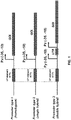
- a “complete promoter” or “hybrid promoter” refer to engineered promoters comprising at least a "UP element” and a “promoter”, wherein the UP element is located upstream (5') of the promoter and wherein the promoter is located downstream (3') of the UP element and upstream (5') of the +1 transcription start site.
- the hybrid (complete) promoters of the instant disclosure are generally derived from Bacillus subtilis or Bacillus licheniformis ribosomal promoter sequences, wherein the UP element sequence and promoter sequence of the hybrid (complete) promoter are operably linked.
- a hybrid (complete) promoter of the disclosure is engineered by combining a UP element sequence with consensus sequence SEQ ID NO: 59, with one or more heterologous promoter elements set forth in Tables 3-10.
- these one or more heterologous promoter elements include one or more nucleotides of a natively associated UP element sequence upstream (5') of the minimal promoter (-10/-35) element.
- a hybrid (complete) promoter of the disclosure is engineered by combining a UP element sequence with consensus sequence SEQ ID NO: 59, with one or more heterologous promoter elements set forth in Tables 3-10 (wherein the one or more heterologous promoter elements optionally comprise one or more nucleotides of natively associated and operably linked UP element sequence.
- hybrid (complete) promoter is an engineered promoter (i.e., comprising both a UP element sequence and a promoter element sequence), wherein the UP element and the promoter element of the hybrid promoter are constructed or derived from different nucleic sequences which are not found in nature operably linked or associated with each other.
- a non-hybrid "complete promoter” is derived or constructed from a native (wild-type) Bacillus ribosomal promoter (e.g., a P1 -rrnI (promoter element)) and a native (wild-type) UP element (e.g., a UP -rrnI element), wherein the promoter element (P1- rrnI) and the UP element (UP -rrnI ) are operably linked as found in nature (i.e., the promoter element and the UP element are operably linked as isolated or identified from the genomic DNA source).
- a native (wild-rrnI promoter element
- UP element UP -rrnI element
- the engineered "hybrid (complete) promoters" of the instant disclosure are not found operably linked or associated with each other as found in nature (i.e., the promoter element and the UP element are not operably linked or associated as isolated or identified from the genomic DNA source).
- an engineered “hybrid (complete) promoter” of the disclosure is derived or constructed from a native (wild-type) Bacillus ribosomal promoter (e.g., a P1 -rrnI (promoter element)) and a native (wild-type) UP element (e.g., a UP -rrnO element), wherein the promoter element (P1 -rrnI ) and the UP element (UP- rrnO ) are not operably linked as found in nature (i.e., the promoter element and the UP element are not operably linked as isolated or identified from the genomic DNA source).
- promoter activity when made in reference to a nucleic acid sequence refers to the ability of the nucleic acid sequence to initiate transcription of an oligonucleotide sequence into mRNA.
- vector is defined herein as a polynucleotide designed to carry nucleic acid sequences to be introduced into one or more cell types.
- Vectors include cloning vectors, expression vectors, shuttle vectors, plasmids, phage or virus particles, DNA constructs, cassettes and the like.
- Typical expression vectors, which also include plasmids, include regulatory sequences such as promoters, signal sequences, a gene of interest and transcription terminators.
- isolated refers to a compound, protein, cell, nucleic acid sequence, or amino acid that is separated from at least one other compound, protein, cell, nucleic acid sequence, amino acid, or other biological substance with which it is ordinarily associated in its natural source.
- coding region is defined herein as a nucleic acid sequence that is transcribed into mRNA which is translated into a polypeptide when placed under the control of appropriate control sequences including a promoter.
- a coding sequence may include cDNA, genomic DNA, synthetic DNA and recombinant DNA.
- a 5' untranslated region refers to a nucleic acid sequence which is 5' to (i.e., precedes) the coding sequence on a strand of mRNA.
- a 3' untranslated region refers to a nucleic acid sequence which is 3' to (i.e., follows) the coding sequence on a strand of mRNA.
- untranslated regions (UTRs) of the transcribed mRNA are non-protein coding nucleic acid sequence.
- wild-type gene, gene product, or cell refers to a gene, gene product, or cell which has the characteristics of that gene, gene product, or cell when found in a naturally occurring source.
- a wild-type gene, gene product, or cell is that which is most frequently observed in a population and is thus designated the “native” or “wild-type” form.
- mutant refers to a gene, gene product, or cell which displays modifications in sequence and/or functional properties (i.e., altered characteristics) when compared to the wild-type form. Sequence modifications can occur by, for example, substitutions, insertions, deletions, or any other modification that results in an altered sequence or characteristic. It is noted that naturallyoccurring mutants can be isolated; these are identified by the fact that they have altered characteristics when compared to the wild-type gene or gene product.
- the terms "modified sequence” and “modified genes” are used interchangeably and refer to a substitution, insertion, deletion, interruption, or any other modification of naturally occurring nucleic acid sequence.
- the expression product of the modified sequence is a truncated protein (e.g., if the modification is a deletion or interruption of the sequence).
- the truncated protein retains biological activity.
- the expression product of the modified sequence is an elongated protein (e.g., if the modification is an insertion into the nucleic acid sequence).
- an insertion results in the production of a truncated protein as the expression product (e.g., if the insertion results in the formation of a stop codon).
- an "incoming sequence” means a DNA sequence that is introduced into the host cell chromosome or genome.
- the sequence may encode one or more proteins of interest.
- the incoming sequence may comprise a promoter operably linked to a sequence encoding a protein of interest.
- incoming sequences comprise sequence that is already present in the genome of the cell to be transformed, while in other embodiments, it is not already present in the genome of the cell to be transformed (i.e., in some embodiments, it is homologous, while in other embodiments, it is heterologous sequence).
- the incoming sequence encodes at least one homologous or heterologous protein, including, but not limited to a hormone, enzyme, growth factor, or cytokine.
- the incoming sequence encodes at least one enzyme including, but not limited to a acetyl esterases, aryl esterases, aminopeptidases, amylases, arabinases, arabinofuranosidases, carboxypeptidases, catalases, cellulases, chitinases, chymosin, cutinase, deoxyribonucleases, epimerases, esterases, ⁇ -galactosidases, ⁇ -galactosidases, ⁇ -glucanases, glucan lysases, endo- ⁇ -glucanases, glucoamylases, glucose oxidases, ⁇ -glucosidases, ⁇ -glucosidases, glucuronidases,
- the incoming sequence encodes a functional wild-type gene or operon, a functional mutant gene or operon, or a non-functional gene or operon.
- reporter gene refers to a nucleotide sequence, which is capable of expression in cells and where expression of the reporter confers to cells containing the expressed gene, the ability to be easily detected and measured.
- flanking sequence refers to any sequence that is either upstream or downstream of the sequence being discussed (e.g., for sequences A B C, sequence B is flanked by the A and C sequences). In some embodiments, the incoming sequence is flanked by a homology box on each side.
- homology box refers to sequences that are homologous to another nucleic acid sequence.
- a homology box can be homologous to a nucleic acid sequence in genomic DNA.
- the homology box is useful for directing where in a new construct is integrated into the genomic DNA.
- homologous recombination refers to the exchange of DNA fragments between two DNA molecules or paired chromosomes (i.e., during crossing over) at the site of identical nucleotide sequences.
- chromosomal integration is accomplished via homologous recombination.
- transfection and “transformation” as used herein both refer to methods for introducing DNA into cells.
- the terms “complementary” or “complementarity” are used in reference to “polynucleotides” and “oligonucleotides” (which are interchangeable terms that refer to a sequence of nucleotides) related by the base-pairing rules.
- sequence “5'-CAGT-3"' is complementary to the sequence "5'-ACTG-3"'.
- Complementarity can be “partial” or “total”.
- Partial complementarity is where one or more nucleic acid bases is not matched according to the base pairing rules.
- “Total” or “complete” complementarity between nucleic acids is where each and every nucleic acid base is matched with another base under the base pairing rules.
- chromosomal integration refers to the process whereby the incoming sequence is introduced into the chromosome (i.e., genome) of a host cell.
- selectable marker refers to the use of any “marker” (i.e., indicator), which indicates the presence or absence of a protein or gene of interest.
- the term encompasses genes which encode an enzymatic activity that confers the ability to grow in medium lacking what would otherwise be essential.
- a selectable marker confers resistance to an antibiotic or drug upon the cell in which the selectable marker is expressed.
- signal sequence or “signal peptide” refers to a sequence of amino acids at the N-terminal portion of a protein, which facilitates the secretion of the mature form of the protein outside the cell.
- the "mature form” of the extracellular protein lacks the signal sequence which is cleaved off during the secretion process.
- Amplification is generally defined herein as the production of additional copies of a nucleic acid sequence. Amplification of a nucleic acid can be performed by, for example, polymerase chain reaction or other technologies that are well known in the art. As used herein, the term “polymerase chain reaction” (“PCR”) refers to the methods of U.S. Patent Nos. 4,683,195 , 4,683,202 , and 4,965,188 , which describe a method for increasing the concentration of a segment of a target sequence in a DNA sample (e.g., genomic DNA) without cloning or purification.
- PCR polymerase chain reaction
- a nucleic acid (polynucleotide) sequence of the disclosure is amplified in vivo.
- a nucleic acid (polynucleotide) sequence comprising (i) a gene (or ORF) encoding a protein of interest and (ii) an antibiotic resistance marker are amplified in vivo.
- PCR it is possible to amplify a single copy of a specific target sequence in genomic DNA to a level detectable by several different methodologies (e.g., hybridization with a labeled probe; incorporation of biotinylated primers followed by avidin-enzyme conjugate detection; or incorporation of 32 P-labeled deoxynucleotide triphosphates, such as dCTP or dATP, into the amplified segment).
- any oligonucleotide sequence can be amplified with the appropriate set of primer molecules.
- the amplified segments created by the PCR process itself are, themselves, efficient templates for subsequent PCR amplifications.
- primer refers to an oligonucleotide, whether occurring naturally as in a purified restriction digest or produced synthetically, which is capable of acting as a point of initiation of synthesis when placed under conditions in which synthesis of a primer extension product which is complementary to a nucleic acid strand is induced.
- the primer is preferably single stranded for maximum efficiency in amplification, but may alternatively be double stranded.
- probe refers to an oligonucleotide, whether occurring naturally as in a purified restriction digest or produced synthetically, which is capable of hybridizing to another oligonucleotide of interest.
- a probe may be single-stranded or double-stranded. Probes are useful in the detection, identification and isolation of particular gene sequences. It is contemplated that any probe used in the present invention will be labeled with any "reporter molecule", so that it is detectable in any detection system, including, but not limited to enzyme (e.g., ELISA, as well as enzyme-based histochemical assays), fluorescent, radioactive, and luminescent systems. It is not intended that the present invention be limited to any particular detection system or label.
- restriction endonucleases and “restriction enzymes” refer to bacterial enzymes, each of which cut double- or single-stranded DNA at or near a specific nucleotide sequence.
- AmyL amylase As used herein, the phrase an "AmyL amylase” may be used interchangeably with “LAT amylase”.
- Ribosomal RNA (rRNA) synthesis is the rate-limiting step in ribosome synthesis in Escherichia coli and Bacillus subtilis.
- the regulation of ribosomal RNA transcription from ribosomal RNA promoters has been studied previously (Samarrai et al., 2011; Natori et al., 2009; Turnbough, 2008; Krasny et al., 2008; Krasny and Gourse, 2004).
- Ribosomal RNA promoters are tightly regulated with nutritional conditions so that ribosomal RNA and ribosomes are not overproduced in times when translational requirements are lower.
- rRNA operons there are seven rRNA ( rrn ) operons, each of which comprises two promoters designated PI and P2.
- the core -10/-35 promoter region in the E. coli rrn PI promoters are preceded by promoter upstream (UP) elements that increase promoter activity by up to 20-50 fold by binding RNA polymerase.
- Bacillus subtilis contains 10 rRNA (rrn) operons (Krasny and Gourse, 2004), which are also preceded by promoter upstream (UP) elements that increase promoter activity.
- ribosomal proteins The regulation of the genes that encode ribosomal proteins has been studied previously in Escherichia coli and Bacillus subtilis (Grundy and Henkin, 1991). In many cases, the ribosomal proteins have been found to act as an autogenous repressor, controlling the expression of the operon in which they are encoded.
- ribosomal RNA promoters The regulation of ribosomal RNA promoters has been studied for the production of native ribosomal RNAs, and more recently, the expression levels of nucleic acid sequences coding for heterologous proteins of interest when using ribosomal RNA (rRNA) promoters has been described (see, PCT Publication No. WO2013/086219 ).
- novel engineered ribosomal promoters comprising a hybrid combination of Bacillus species promoter elements and UP elements, are unexpectedly effective at producing heterologous proteins of interest when expressed in a host microorganism.
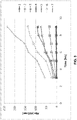
- subtilisin protease BPN' (Y217L) from native (heterologous) promoters (e.g., PaprE, PssrA, Pscr, P spoVG )
- native (heterologous) ribosomal promoters e.g., PrrnI-2
- engineered (heterologous) ribosomal promoters e.g., hybrid promoter 1 and hybrid promoter 7
- hybrid promoter 1 SEQ ID NO: 65
- hybrid promoter 7 SEQ ID NO: 71
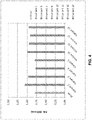
- a Cytophaga sp amylase variant (SEQ ID NO:63) from the native (heterologous) promoter P rrnI-2 (SEQ ID NO: 15) and engineered (heterologous) variant P rrnI-2 promoters thereof (i.e., Variant 2 (hybrid promoter 1); Variant 3 (hybrid promoter 23); Variant 4 (hybrid promoter 24); Variant 6 (hybrid promoter 20); Variant 10 (hybrid promoter 22); Variant 11 (hybrid promoter 19); Variant 12 (hybrid promoter 18) and Variant 13 (hybrid promoter 17)) were tested in a B.
- the amylase expression/productivity from the engineered (variant) PrnI-2 promoters (i.e., FIG. 4 ; Variant 2, Variant 3, Variant 10, Variant 11, Variant 12 and Variant 13), resulted in increased production of the amylase protein when compared to the native (heterologous) P rrnI-2 promoter.
- Example 4 a series of native (wild-type) promoters from B. subtilis and B. licheniformis were evaluated for the expression of 3 different bacterial amylases in a B. licheniformis host.
- the following promoters for driving the expression of the amylase proteins were evaluated: PamyL promoter of the amyL Bacillus licheniformis native amylase gene (SEQ ID NO: 116); P rrnI-2 promoter of the Bacillus subtilis ribosomal RNA rrnI (SEQ ID NO: 15); Bacillus licheniformis Prrn1 promoter (SEQ ID NO: 101); Bacillus licheniformis Prrn2 promoter (SEQ ID NO: 102); Bacillus licheniformis Prrn4 promoter (SEQ ID NO: 103); Bacillus licheniformis Prrn5 promoter (SEQ ID NO: 104) and Bacillus licheniformis Prrn6 promoter (SEQ ID NO:
- the native (wild-type) ribosomal promoter nucleic acid sequences set forth in SEQ ID NOS: 15, 101, 102, 103, 104 and 105 each comprise the native (-35/-10) ribosomal promoter and the native promoter upstream (UP) element nucleic acid sequences operably linked, as found or isolated in nature.
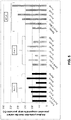
- the expression/productivity of polynucleotides encoding the 3 bacterial amylases i.e., B.
- lichenifomis ⁇ -amylase L (SEQ ID NO: 43; Amyl); Geobacillus stearothermophilus ⁇ -amylase variant (SEQ ID NO: 64; Amy3) and Cytophaga sp amylase variant (SEQ ID NO:63; Amy4)), were operably linked (3') to the above-referenced promoters (i.e., promoters of SEQ ID NOs: 15 and 101-105). As presented in FIG.
- the relative expression of the 3 bacterial amylases i.e., Amy 1, Amy 3 and Amy 4 driven by the various native (wild-type) promoters (i.e., PamyL, P rrnI-2, P rrn 1 , P rrn 2 , P rrn 4 , P rrn 5 and Prrn6) demonstrates that the use of these heterologous ribosomal promoters, instead of the endogenous native B. licheniformis amylase promoter (PamyL), provide increased protein expression/productivity in most instances.
- the various native (wild-type) promoters i.e., PamyL, P rrnI-2, P rrn 1 , P rrn 2 , P rrn 4 , P rrn 5 and Prrn6
- the present disclosure is directed to engineered (modified) heterologous promoters for use in expressing a nucleic acid sequence (or ORF) encoding a protein of interest (POI).
- the engineered promoters comprise at least a promoter upstream (UP) element nucleic acid sequence operably linked to a promoter nucleic acid sequence, wherein the operably linked combination of the UP element and promoter element are referred to herein as a heterologous "complete promoters" or heterologous hybrid "complete promoters”.
- a heterologous hybrid "complete promoter” is an engineered promoter (i.e., comprising both a UP element sequence and a promoter element sequence), wherein the UP element and the promoter element of the heterologous hybrid "complete promoter” are constructed or derived from different nucleic sequences which are not found in nature (e.g., genomic/chromosomal DNA) operably linked or associated with each other.
- a heterologous hybrid complete promoter of the present disclosure comprises a nucleic acid sequence set forth below in Table 1 as SEQ ID NOS: 65-97.
- SEQ ID NOS: 65-97 TABLE 1 Heterologous Hybrid (Complete) Promoters SEQ ID Hybrid No. Hybrid Promoter Nucleic Acid Sequence 65 1 66 2 67 3 68 4 69 5 70 6 71 7 72 8 73 9 74 10 75 11 76 12 77 13 78 14 79 15 80 16 90 17 91 18 92 19 93 20 94 21 95 22 96 23 97 24
- the present disclosure is directed to engineered (modified) heterologous hybrid complete promoters for use in expressing a nucleic acid sequence (or ORF) encoding a protein of interest (POI), wherein the heterologous hybrid complete promoters are constructed or derived by combining and operably linking a promoter UP element comprising the consensus sequence of SEQ ID NO: 59 with: (1) a B. subtilis ribosomal RNA promoter element comprising a nucleic acid sequence set forth in Table 3, (2) a B. subtilis ribosomal protein promoter comprising a nucleic acid sequence set forth in Table 4, (3) a B.
- subtilis transfer message RNA (tmRNA) promoter comprising a nucleic acid sequence set forth in Table 5
- scRNA small cytoplasmic RNA
- scRNA B. subtilis small cytoplasmic RNA
- scRNA B. subtilis small cytoplasmic RNA
- scRNA B. subtilis small cytoplasmic RNA
- scRNA B. subtilis small cytoplasmic RNA
- scRNA small cytoplasmic RNA
- scRNA small cytoplasmic RNA
- scRNA B. subtilis protein promoter comprising a nucleic acid sequence set forth in Table 7
- a B. licheniformis ribosomal RNA promoter element comprising a nucleic acid sequence set forth in Table 8
- SEQ ID NO: 59 is the consensus nucleic acid sequence derived from the top three short B. subtilis ⁇ R-dependent promoter sequences and SEQ ID NO: 60 is the consensus nucleic acid sequence derived from the top three long B. subtilis ⁇ R-dependent promoter sequences. TABLE 3 B.
- subtilis Ribosomal RNA Promoters SEQ ID Promoter Promoter Nucleic Acid Sequence ⁇ 1 ⁇ A TTGACANNNNNNNNNNNNNNNTATAAT ⁇ 2 ⁇ H RNAGGAWWWNNNNNNNNNNRNGAAT 3 P1 rrnA extended ATATTATGTATTGACTTAGACAACTGAAGGTGTTATTCTAATATAC 4 P2 rrnA extended TAAAAAGTTGTTGACAGTAGCGGCGGTAAATGTTATGATAATAAA 5 P1 rrnB 6 P2 rrnB extended AAAAAAGTTGTTGACAAAAAAGAAGCTGAATGTTATATTAGTA 7 P1 rrnD extended AAAAAGGTGTTGACTCTGATTCTTGACCGTGTTATATTATTAAAC 8 P2 rrnD extended AAAAAAACATTTGACAAAAGAAAGTCAAAATGTTATATTAATAAA 9 P1 rrnE 10 P2 rrnE 11 P3 rrnE 12 P1 rrn
- subtilis Ribosomal Protein Promoters SEQ ID Promoter Promoter Nucleic Acid Sequence 21 P1+P2 rpsU 22 P1+P2 rpsO 23 P rpsD 24 P1+P2 rpsJ TABLE 5
- subtilis Transfer Message RNA (tmRNA) Promoters SEQ ID Promoter Promoter Nucleic Acid Sequence 25 PssrA ⁇ 33 PssrA Consensus ATTGAAANNNNNNNNNNNNNNNNNNTATAAT TABLE 6 B.
- subtilis Small Cytoplasmic RNA (scRNA) Promoters SEQ ID Promoter Promoter Nucleic Acid Sequence 26 Pscr ⁇ 37 Pscr Consensus GTTGCAANNNNNNNNNNNNNNNTATACT TABLE 7 B.
- the disclosure provides engineered heterologous hybrid complete promoters for use in expressing a nucleic acid sequence encoding a protein of interest (POI), wherein the hybrid promoter comprises at least one UP element (SEQ ID NO: 59) operably linked to at least one promoter element (Tables 3-10).
- an engineered heterologous hybrid complete promoter comprises the following generic formula: 5'-UP-1 st Pro-ORF-3'; wherein UP is a nucleic acid comprising a promoter upstream element, 1 st Pro is nucleic acid comprising at least a -35/-10 core promoter sequence and ORF is a nucleic acid sequence encoding a POI.
- the disclosure is directed to engineered heterologous hybrid complete promoters for use in expressing a nucleic acid sequence (or ORF) encoding a protein of interest (POI), wherein the hybrid promoter comprises at least one UP element (SEQ ID NO: 59) operably linked to at least two promoter elements (Tables 3-10).
- an engineered heterologous hybrid complete promoter comprises the following generic formula: 5'-UP-1 st Pro-2 nd Pro-ORF-3'; wherein UP is a nucleic acid comprising a promoter upstream element, 1 st Pro, and 2 nd Pro are the same or different nucleic acids comprising at least a -35/-10 core promoter sequence and ORF is a nucleic acid encoding a POI.
- an engineered heterologous hybrid complete promoter for use in expressing a nucleic acid sequence (or ORF) encoding a protein of interest (POI), wherein the hybrid promoter comprises at least one UP element (SEQ ID NO: 59) operably linked to at least one or two promoter elements (Tables 3-10).
- an engineered heterologous hybrid complete promoter comprises the following generic formulae:
- the unexpectedly high protein productivity levels obtained via the expression of nucleic acid sequences encoding heterologous POIs when using the engineered promoters of the instant disclosure have several benefits. For example, expressing a coding sequence of interest (e.g., an ORF of interest encoding a POI) with an engineered heterologous hybrid complete promoter of the disclosure provides increased expression of the ORF coding sequence and/or increased POI produced, when compared to expression or protein productivity of the same ORF being expressed from its native promoter.
- the engineered promoters of the instant disclosure provide for increased levels of mRNA expression, which is particularly useful for unstable transcripts.
- expressing a coding sequence of interest with an engineered promoter allows for increased level of expression of a coding sequence of interest, without amplification of an expression construct comprising the engineered promoter.
- amplification of the expression construct is often required.
- the expression levels achieved with the engineered promoters described herein, however, are high enough that amplification of the expression construct is generally not necessary. Instead, high expression levels may be achieved with a single integrant of the expression construct comprising the engineered promoter, which provides several benefits.
- host cells are typically more stable because they do not undergo the loss of the amplified expression construct. Also, if an expression construct does not need to be amplified, host cell construction is more efficient, thus saving time, money and materials.
- the nucleotide located at the +1 transcriptional start site of an engineered promoter described herein is modified from a guanine to adenine.
- the modification of the +1 transcriptional start site e.g., an A to G substitution at +1
- results in better overall productivity from the promoter see, e.g., PCT International Publication No. WO2013/086219 ).
- an engineered heterologous hybrid complete promoter of the present disclosure comprises a nucleic acid sequence set forth in SEQ ID NOS: 65-97, or a subsequence thereof.
- the subsequence will retain promoter activity and comprise at least about 10 nucleotides, at least about 20 nucleotides; at least about 30 nucleotides; at least about 40 nucleotides; at least about 50 nucleotides; at least about 60 nucleotides; at least about 70 nucleotides; at least about 80 nucleotides; at least about 90 nucleotides or at least about 100 nucleotides.
- the subsequence of any one of SEQ ID NOs: 65-97 should minimally comprise the -35 and -10 consensus regions (i.e., the core promoter element) and the UP element.
- an engineered heterologous hybrid complete promoter of the present disclosure is constructed or derived from at least one UP element set forth in Table 2, as defined in the claims, which is combined and operably linked with a promoter element set forth in any one of Tables 3-10, or subsequences thereof.
- the subsequence will retain promoter activity and comprise at least about 10 nucleotides, at least about 20 nucleotides; at least about 30 nucleotides; at least about 40 nucleotides; at least about 50 nucleotides; at least about 60 nucleotides; at least about 70 nucleotides; at least about 80 nucleotides; at least about 90 nucleotides or at least about 100 nucleotides.
- the subsequence of any one of the promoter element nucleic acid sequences set forth Tables 3-10 in should minimally comprise the -35 and -10 consensus regions (i.e., the core promoter element).
- the engineered promoters of the present disclosure comprise nucleic acid sequences (or subsequences thereof) which hybridize with any one of the nucleic acid sequences set forth in Tables 1-10, which will have at least about 20%, at least about 30%, at least about 40%, least about 50%, at least about 60%, at least about 80%, and at least about 100% of the promoter activity of its corresponding parent promoter nucleic acid sequence.
- the promoter activity will be greater, for example more than about 100%, more than about 150%, more than about 200% and more than about 250%.
- the promoter will include a nucleic acid sequence that hybridizes under medium, high or very high stringency conditions.
- hybridization is used to analyze whether a given nucleic acid fragment corresponds to a promoter nucleic acid sequence described herein and thus falls within the scope of the present invention (see, Sambrook et al., 1989, which describes general hybridization methods).
- Hybridization conditions refer to the degree of “stringency” of the conditions under which hybridization is measured. Hybridization conditions can be based on the melting temperature (T m ) of the nucleic acid binding complex, as taught in Berger and Kimmel (1987). Hybridization conditions can also be based on the washing conditions employed after hybridization as known in the art. Merely for purposes of illustration, “Low-stringency” conditions can refer to washing with a solution of 0.2x SSC/0.1% SDS at 20°C for 15 minutes. “Medium-stringency” conditions can refer to washing with a solution of 0.2x SSC/0.1% SDS at 37°C for 30 minutes.
- High-stringency conditions can refer to washing with a solution of 0.2x SSC/0.1% SDS at 37°C for 45 minutes.
- Very high-stringency conditions can refer to washing with a solution of 0.2x SSC/0.1% SDS at 37°C for 60 minutes.
- the stringency associated with the particular solution ingredients, temperature, and wash time can vary depending on the particular nucleic acids and other conditions involved. The skilled person would be able to determine the hybridization conditions associated with a desired degree of stringency.
- Another aspect of the invention is use of hybridization conditions based on the melting temperature (Tm) of the nucleic acid binding complex, as taught in Berger and Kimmel (1987).
- Tm melting temperature
- very high stringency typically occurs at about T m -5°C (5°C below the T m of the probe);
- high stringency typically occurs at about 5°C to 10°C below T m ;
- medium stringency at about 10°C to 20°C below T m ;
- low stringency at about 20°C to 25°C below Tm.
- identity in the context of two nucleic acid sequences or two polypeptides refers to nucleotides or amino acid residues in the two sequences that are the same when aligned for maximum correspondence, as measured using one of the following "sequence comparison algorithms".
- Optimal alignment of sequences for comparison can be conducted, e.g., by the local homology algorithm of Smith & Waterman, 1981; by the homology alignment algorithm of Needleman & Wunsch, 1970; by the search for similarity method of Pearson & Lipman, 1988; by computerized implementations of these algorithms (GAP, BESTFIT, FASTA, and TFASTA in the Wisconsin Genetics Software Package, Genetics Computer Group, 575 Science Dr., Madison, Wisconsin) or by visual inspection.
- sequences of Bacillus subtilis promoters PrrnO_P1 (SEQ ID NO: 85), PrrnO_P2 (SEQ ID NO: 89) PrrnA_P1 (SEQ ID NO: 142), PrrnA P2 (SEQ ID NO: 143), PrrnJ_P1 (SEQ ID NO: 144), PrrnJ_P2 (SEQ ID NO: 145), PrrnI_P1 (SEQ ID NO: 146), PrrnE P2 (SEQ ID NO: 147), PrrnE_P3 (SEQ ID NO: 148), PrrnD_P1 (SEQ ID NO: 149), PrrnD_P2 (SEQ ID NO: 150), PrrnG_P1 (SEQ ID NO: 151) and PrrnW_P1 (SEQ ID NO: 152) were aligned with default parameters using the Geneious software (Biomatters Ltd.) as shown in FIG.
- SEQ ID NO: 153 a consensus sequence for the B. subtilis rrn promoters was generated (SEQ ID NO: 153) and is shown at the top of FIG. 6 .
- the promoter sequence and upstream element sequences of the Bacillus licheniformis ribosomal promoters rm1-P1 (SEQ ID NO: 106), rrn2-P1 (SEQ ID NO: 107), rrn2-P2 (SEQ ID NO: 108), rrn3-P1 (SEQ ID NO: 109), rrn4-P1 (SEQ ID NO: 110), rrn4-P2 (SEQ ID NO: 111), rrn5-P1 (SEQ ID NO: 112), rrn5-P2 (SEQ ID NO: 113), rrn6-P1 (SEQ ID NO: 114), and rrn6-P2 (SEQ ID NO: 115) were aligned with default parameters using the Geneious software, as depicted in FIG 7 .
- SEQ ID NO: 154 a consensus sequence was generated (SEQ ID NO: 154) using a threshold of 75% to generate the consensus (bases matching at least 75% of all sequences).
- one or more engineered promoters may further comprises other promoters with activity in a host cell, and includes mutant promoters, truncated promoters and the like which may or may not be native to the host cell.
- other promoters which may be useful in a hybrid promoter of the invention, include fungal and bacterial promoters.
- Some specific non-limiting examples include; the aprE promoter or a mutant aprE promoter ( PCT International Publication No. WO 2001/51643 ); the aph promoter of the Streptomyces fradiae aminoglycoside 3'-phosphotransferase gene; an Aspergillus niger glucoamylase (glaA) promoter; the glucose isomerase (GI) promoter of Actinoplanes missouriensis and the derivative GI (GIT) promoter ( U.S.
- the glucose isomerase (GI) promoter from Streptomyces lividans, the short wild-type GI promoter, the 1.5 GI promoter, the 1.20 GI promoter, or any of the variant GI promoters as disclosed in WO 20303/089621 ; the cbhl, cbh2, eg11 and eg12 promoters from filamentous fungi and specifically the Trichoderma reesei cellobiohydrolase promoter (GenBank Accession No.
- the engineered promoters of the present disclosure are operably linked to a nucleic acid (e.g., a polynucleotide or ORF) encoding a protein of interest (POI).
- a nucleic acid e.g., a polynucleotide or ORF
- the POI is an enzyme, a hormone, a growth factor, a cytokine, an antibody or a fragment thereof, a receptor or a portion thereof, a reporter gene (e.g., green fluorescent protein) or other secondary metabolites.
- the enzyme is a acetyl esterases, aryl esterases, aminopeptidases, amylases, arabinases, arabinofuranosidases, carboxypeptidases, catalases, cellulases, chitinases, chymosin, cutinase, deoxyribonucleases, epimerases, esterases, ⁇ -galactosidases, ⁇ -galactosidases, ⁇ -glucanases, glucan lysases, endo- ⁇ -glucanases, glucoamylases, glucose oxidases, ⁇ -glucosidases, ⁇ -glucosidases, glucuronidases, hemicellulases, hexose oxidases, hydrolases, invertases, isomerases, laccases, lipases, lyases, mannosidases, oxidases, oxida
- the enzyme is a protease, such as a serine protease, metalloprotease, thiol or acid protease.
- the protease will be a serine protease (e.g., a subtilisin).
- Serine proteases are described in Markland et al., 1983; Drenth et al., 1972; U.S. Patent Nos. 4,760,025 ( RE 34,606 ), 5,182,204 and 6,312,936 and EP No. EP 323,299 ).
- Proteases contemplated for use are also described in U.S. Patent Publication No.
- the protease to be expressed by an engineered promoter of the invention is a mature BPN' (Y217L variant) protease comprising an amino acid sequence of SEQ ID NO: 40 or a precursor (full-length) BPN' (Y217L variant) protease comprising an amino acid sequence of SEQ ID NO: 41.
- the enzyme is an amylase, such as an amylase derived from Trichoderma (such as T. reesei), a Trichoderma glucoamylase, an amylase derived from Bacillus (such as B. subtilis), or an amylase derived from Geobacillus (such as G. stearothermophilus).
- an amylase such as an amylase derived from Trichoderma (such as T. reesei), a Trichoderma glucoamylase, an amylase derived from Bacillus (such as B. subtilis), or an amylase derived from Geobacillus (such as G. stearothermophilus).
- Bacterial and fungal amylases are described in, for example, U.S. Patent No. 8,058,033 , U.S. Patent Publication No. 2010/0015686 , U.S. Patent Publication No. 2009/0314286 , UK application No. 1011513.7 , PCT International Application No.
- the amylase to be expressed by an engineered promoter of the invention is a B. subtilis AmyE amylase comprising an amino acid sequence of SEQ ID NO: 42, a B. licheniformis AmyL amylase comprising an amino acid sequence of SEQ ID NO: 43, a Geobacillus. stearothermophilus AmyS amylase comprising an amino acid sequence of SEQ ID NO: 64 or a Cytophaga sp. amylase comprising an amino acid sequence of SEQ ID NO: 63.
- the enzyme is a xylanase.
- the xylanase is derived from Trichoderma (such as T. reesei).
- Bacterial and fungal xylanases are generally described in U.S. Patent No. 7,718,411 and PCT International Publication NOs: WO2001/027252 WO2001/66711 , WO2004/97001 , WO2010/72225 , WO2013/127069 , WO2013/37933 , WO2015/114108 and the like.
- the enzyme is a phytase.
- the phytase is derived from Citrobacter (such as C.freundii) or E. coli.
- the phytase may be a Buttiauxella phytase such as a Buttiauxella agrestis phytase.
- Phytases are described in, for example, PCT International Publication Nos.
- WO 006/043178 WO2006/038062 , WO2008/097619 , WO2009/129489 , WO2006/038128 , WO2008/092901 , WO2009/129489 , WO2010/122532 , WO2003/38035 , WO2004/15084 , WO2003/38111 and the like.
- the enzyme is a cellulase.
- Cellulases are (cellulolytic) enzymes that hydrolyze the ⁇ -D-glucosidic linkages in cellulose.
- Cellulolytic enzymes have been traditionally divided into three major classes: endoglucanases, exoglucanases (or cellobiohydrolases) and ⁇ -glucosidases (Knowles et al., 1987).
- a cellulase to be expressed by an engineered promoter of the invention is a cellulase disclosed in U.S. Patent Nos. 6,2,87,839 and 6,562,612 .
- the cellulase to be expressed is a cellulase comprising an amino acid sequence of SEQ ID NO: 1 of U.S. Patent No. 6,562,612 , or a fragment or a derivative thereof having cellulolytic activity and greater than 70% sequence identity to an active portion of SEQ ID NO: 1 of U.S. Patent No. 6,562,612 .
- Cellulases are generally disclosed in PCT International Publication NOs: WO2004/97001 , WO2005/93050 , WO2004/99370 , WO2004/99369 , WO2009/149202 , WO2008/45214 , WO2006/71598 , WO2009/35537 , WO2013/37933 , WO2010/141779 , WO2008/153903 , WO2000/37614 and U.S. Patent Publication No. US2010/0048417 .
- the enzyme is a mannanase ( ⁇ -mannosidase).
- Mannanase enzymes hydrolyze the terminal, non-reducing ⁇ -D-mannose residues in ⁇ -D-mannosides (e.g., see, PCT International Publication NOs: WO200198462 , WO2012149325 , WO2012149333 , Canadian Patent Application No. CA2891519 and the like).
- the enzyme is a pullulanase.
- Pullulanase enzymes are a specific kind of glucanase enzymes (i.e., an amylolytic exoenzyme) that degrade pullulan (e.g., see, PCT International Publication NOs: WO2008024372 , WO200151620 , WO9419468 and the like).
- a pullulanase is produced as an extracellular, cell surface-anchored lipoprotein by Gram-negative bacteria (e.g., Klebsiella).
- a pullulanase is a "type Ipullulanase", which specifically attacks ⁇ -1,6 linkages.
- a pullulanase is a "type II pullulanase" which in addition to cleaving ⁇ -1,6 linkages, is further able to hydrolyze (cleave) ⁇ -1,4 linkages.
- a nucleic acid encoding a POI of the disclosure may be either a native (endogenous) POI or a heterologous (exogenous) POI relative to the host cell in which the POI is expressed.
- a nucleic acid encoding a POI may encode a full-length protein, or a truncated form of a full-length protein.
- a nucleic acid encoding a POI encodes a full-length "mature" form of a POI (i.e., the mature form of the POI, lacking a signal or leader peptide sequence).
- a nucleic acid encoding a POI encodes a full-length pre-protein comprising a nucleic acid encoding an N-terminal leader or signal sequence 5' and operably linked to a nucleic acid encoding the mature form of the POI (e.g., see, Section D below).
- the invention is not limited to a particular coding sequence but encompasses numerous coding sequences, which are operably linked to a promoter of the invention.
- a modified host cell produces an increased level of a POI, wherein various methods of screening can be applied to determine increased levels of POI produced.
- a POI may be encoded as a polypeptide fusion and serve as a detectable label, or alternatively, the target protein itself may serve as the selectable or screenable marker.
- the labeled protein can also be detected using Western blotting, dot blotting (detailed descriptions of such methods are available at the website of the Cold Spring Harbor Protocols), ELISA, or, if the label is a GFP, whole cell fluorescence or FACS.
- a 6-histidine tag can be included to make a fusion to the target protein, and Western blots can be used to detect such a tag.
- SDS-PAGE combined with Coomassie/silver staining may be performed to adequately detect increases in mutant expression over wild type; and in such a case, no labeling of any molecules would be necessary.
- the expression of the POI in a modified (host) cell versus an unmodified (parental) cell is correlated with mRNA transcript levels.
- certain embodiments are related to the molecular characterization of a gene or ORF encoding a POI, which usually includes a thorough analysis of the temporal and spatial distribution of RNA expression.
- a modified host cell of the disclosure produces at least about 5%, at least about 6%, at least about 7%, at least about 8%, at least about 9%, or at least about 10% or more of a POI, as compared to its unmodified (parental) cell.
- a signal sequence may be linked to the N-terminal portion of the coding sequence.
- the signal may be used to facilitate the extracellular secretion of a POI of the disclosure.
- the signal sequence may be endogenous to the host organism in which the POI is expressed or exogenous (heterologous) to the host organism in which the POI is expressed.
- a gene (or ORF) encoding a POI of the disclosure further comprises (and is operably linked to) an N-terminal signal sequence derived from the B. subtilis subtilisin aprE gene signal sequence or a variant signal sequence thereof.
- the signal sequence is derived from a B. subtilis (amyE) ⁇ -amylase gene signal sequence or a B. subtilis BglC (i.e., Aryl-phospho-beta-D-glucosidase (EC: 3.2.1.86)) signal sequence or variants thereof.
- a gene (or ORF) encoding a POI of the disclosure comprises an N-terminal signal sequence derived from the B. licheniformis (amyL) ⁇ -amylase gene signal sequence or a variant signal sequence thereof.
- the signal sequence may be altered or modified as described in PCT International Patent Publication NOs: WO2011/014278 and WO2010/123754 .
- the signal sequence comprises a signal sequence from a Streptomyces cellulase gene.
- a preferred signal sequence is a S. lividans cellulase, celA (Bently et al., 2002).
- POI polypeptide
- nucleic acid constructs of the invention comprising an engineered promoter operably linked to a nucleic acid encoding a POI may be prepared synthetically by established standard methods in the art (e.g., the phosphoramidite method described by Beaucage and Caruthers, 1981, or the method described by Matthes et al., 1984).
- the nucleic acid construct may be of mixed synthetic and genomic origin and may be prepared by ligating fragments of synthetic or genomic DNA.
- the nucleic acid construct may also be prepared by polymerase chain reaction using specific primers, for instance as described in U.S. Patent No. 4,683,202 or as described in Saiki et al., 1988 .
- a DNA construct of the invention may be inserted into a vector, such as an expression vector.
- a vector such as an expression vector.
- vectors suitable for the cloning, transformation and expression of polypeptides in fungus, yeast and bacteria are known by those of skill in the art.
- the vector or cassette will comprise an engineered promoter of the invention, optionally a signal sequence, a coding region of interest and a terminator sequence.
- suitable vectors may further comprise a nucleic acid sequence enabling the vector to replicate in the host cell.
- enabling sequences include the origins of replication of plasmids pUC19, pACYC177, pUB110, pE194, pAMB1, pIJ702, and the like.
- a vector may also comprise a selectable marker (e.g., a gene the product of which complements a defect in the isolated host cell), such as the dal genes from B. subtilis or B. licheniformis ; or a gene that confers antibiotic resistance such as (e.g., ampicillin resistance, spectinomycin resistance, kanamycin resistance, chloramphenicol resistance, tetracycline resistance and the like).
- a selectable marker e.g., a gene the product of which complements a defect in the isolated host cell
- antibiotic resistance e.g., ampicillin resistance, spectinomycin resistance, kanamycin resistance, chloramphenicol resistance, tetracycline resistance and the like.
- an expression vector includes components of a cloning vector, such as, for example, an element that permits autonomous replication of the vector in the selected host organism and one or more phenotypically detectable markers for selection purposes.
- Expression vectors typically also comprise control nucleotide sequences such as, for example, promoter, operator, ribosome binding site, translation initiation signal and optionally, a repressor gene, one or more activator genes sequences, or the like.
- Protocols such as described herein, used to ligate the DNA construct encoding a protein of interest, promoters, terminators and/or other elements, and to insert them into suitable vectors containing the information necessary for replication, are well known to persons skilled in the art (see, e.g., Sambrook et al., 1989, and Sambrook et al., 1989 3 rd edition 2001).
- An isolated cell is advantageously used as a host cell in the recombinant production of a POI.
- the cell may be transformed with the DNA construct encoding the POI, conveniently by integrating the construct (in one or more copies) into the host chromosome. Integration is generally deemed an advantage, as the DNA sequence thus introduced is more likely to be stably maintained in the cell. Integration of the DNA constructs into the host chromosome may be performed applying conventional methods, for example, by homologous or heterologous recombination. Alternatively, the cell may be transformed with an expression vector as described above in connection with the different types of host cells.
- genes from expression hosts where the gene deficiency can be cured by an expression vector.
- Known methods may be used to obtain a host cell having one or more inactivated genes. Gene inactivation may be accomplished by complete or partial deletion, by insertional inactivation or by any other means that renders a gene nonfunctional for its intended purpose, such that the gene is prevented from expression of a functional protein.
- a vector of the invention will be transformed into a host cell.
- General transformation techniques are known in the art (Ausubel et al., 1994; Campbell et al., 1989). Some of these general techniques include, but are not limited to the use of a particle or gene gun (biolistics), permeabilization of filamentous fungi cells walls prior to the transformation process (e.g., by use of high concentrations of alkali, e.g., 0.05 M to 0.4 M CaCl 2 or lithium acetate), protoplast fusion, electroporation, or agrobacterium mediated transformation ( U.S. Patent No. 6,255,115 ) and the treatment of protoplasts or spheroplasts with polyethylene glycol and CaCl 2 , as described in Campbell et al., 1989 and Penttila et al., 1988.
- Transformation and expression methods for bacteria are disclosed in Brigidi et al., 1990.
- a preferred general transformation and expression protocol for protease deleted Bacillus strains is provided in Ferrari et al., U.S. Patent No. 5,264,366 .
- a representative vector which can be modified with routine skill to comprise and express a nucleic acid encoding a POI is vector p2JM103BBI (Vogtentanz, 2007).
- DNA-mediated transformation of Bacillus competent cells is known in the art.
- most of information on this process of genetic exchange originated from physicochemical studies, which resulted in the establishment of the following sequence of events leading to a transformed cell: (1) binding of the transforming DNA to competent cells, resulting in double-stranded fragmentation of the donor DNA, (2) entry of one strand of the bound DNA, accompanied by simultaneous degradation of the complementary strand, (3) integration of pieces of the single-stranded DNA into the recipient DNA and (4) expression of the newly acquired information (see, e.g., Dubnau, 1976; Venema, 1979).
- Bacillus transformation methods are further disclosed in PCT International Publication NO: WO200214490 .
- Host cells that may be used according to the invention include both bacterial and fungal cells.
- Preferred fungal host cells include filamentous fungal cells such as Aspergillus and Trichoderma cells.
- Preferred bacterial host cells include both gram positive and gram negative cells, including Bacillus, Mycobacterium, Actinomyces and Streptomyces host cells.
- Host cells also include, without limitation, E. coli, Pseudomonas spp. (e.g., P. aeruginoa and P. alcaligenes), Streptomyces spp., (e.g., Streptomyces lividans), Bacillus subtilis, B. licheniformis, B. lentus, B.
- Host cells and transformed cells of the disclosure are generally cultured in conventional nutrient media.
- the culture media for transformed host cells may be modified as appropriate for activating promoters and for selecting transformants.
- the specific culture conditions such as temperature, pH and the like, may be those that are used for the host cell selected for expression, and will be apparent to those skilled in the art.
- Stable transformants of fungal host cells such as Trichoderma cells can generally be distinguished from unstable transformants by their faster growth rate or the formation of circular colonies with a smooth, rather than ragged outline on solid culture medium.
- a polypeptide of interest produced by a transformed host cell of the disclosure may be recovered from the culture medium by conventional procedures known to one of skill in the art, including separating the host cells from the medium by centrifugation or filtration, or if necessary, disrupting the cells and removing the supernatant from the cellular fraction and debris.
- the proteinaceous components of the supernatant, or filtrate are precipitated by means of a salt precipitation (e.g., ammonium sulphate).
- the precipitated proteins are then solubilized and may be purified by a variety of chromatographic procedures, e.g., ion exchange chromatography, gel filtration chromatography, affinity chromatography, and other art-recognized procedures.
- a POI expressed from an engineered promoter of the present disclosure is an isolated POI, a recovered POI and/or a purified POI.
- the present invention involves assembling (constructing) a nucleic acid construct in vitro, followed by direct cloning of such construct into competent host cells (e.g., Bacillus host cells) such that the construct becomes integrated into the host genome.
- competent host cells e.g., Bacillus host cells
- PCR fusion, Gibson assembly and/or ligation are employed to assemble a DNA construct in vitro.
- the DNA (nucleic acid) construct is a non-plasmid DNA construct.
- the DNA construct comprises a DNA into which a mutation has been introduced. This construct is then used to transform host cells.
- highly competent mutants of a host cell e.g., Bacillus
- Bacillus carrying the comK gene under the control of a xylose-inducible promoter Pxyl-comK
- Pxyl-comK xylose-inducible promoter
- the DNA construct may be inserted into a vector (i.e., a plasmid), prior to transformation.
- a circular plasmid is cut using an appropriate restriction enzyme (i.e., one that does not disrupt the DNA construct).
- an appropriate restriction enzyme i.e., one that does not disrupt the DNA construct.
- circular plasmids find use with the present invention.
- linear plasmids are used.
- the DNA construct i.e., the PCR product
- nucleic acids with a single hybrid promoter of SEQ ID NO: 65 (Hybrid Promoter 1) or a double hybrid promoter of SEQ ID NO: 71 (Double Hybrid Promoter 7) were synthesized and ligated to a gene of interest which encodes the B. amyloliquefaciens BPN' (Y217L) subtilisin (SEQ ID NO: 41).
- the resulting DNA constructs have nucleotide sequences of SEQ ID NOS: 81 (Hybrid Promoter 1 + BPN' (Y217L)) and 82 (Hybrid Promoter 7 + BPN' (Y217L)), respectively.
- SEQ ID NO: 63 Cytophaga sp mature amy
- DNA fragments encompassing the desired promoter sequences were synthetically generated as gBlocks (IDT, Integrated DNA Technologies) and ligated to a gene of interest, such as BPN' Y217L, by methods known in the art.
- gBlocks Integrated DNA Technologies
- BPN' Y217L a gene of interest
- Suitable B. subtilis host cells were transformed with the resulting DNA cassettes using the protocol of Spizizen (Anagnostopoulos & Spizizen, 1961). For example, a DNA cassette used for transformation of B.
- subtilis contains a spectinomycin resistance marker (spcR, SEQ ID NO: 86) and two aprE homologous regions (SEQ ID NO: 87 and 88) for integration at the aprE locus of B. subtilis chromosome, and the wild-type aprE UTR (SEQ ID NO: 62).
- Hybrid promoters with the sequence of SEQ ID NOs: 65 (Hybrid Promoter 1), 66 (Hybrid Promoter 2), 71 (Hybrid Promoter 7), 75 (Hybrid Promoter 11), 76 (Hybrid Promoter 12), 77 (Hybrid Promoter 13), 78 (Hybrid Promoter 14), 79 (Hybrid Promoter 15), 80 (Hybrid Promoter 16), 90 (Hybrid Promoter 17), 91 (Hybrid Promoter 18), 92 (Hybrid Promoter 19), 93 (Hybrid Promoter 20), 94 (Hybrid Promoter 21), 95 (Hybrid Promoter 22), 96 (Hybrid Promoter 23), or 97 (Hybrid Promoter 24) were synthesized and ligated to a gene of interest which encodes (1) an AprE signal sequence of SEQ ID NO: 156 operably linked to a B.
- subtilis amylase E variant of SEQ ID NO: 42
- a B. licheniformis AmyL signal sequence operably linked to a B.
- AmyL signal sequence and the AmyL mature sequence are operably linked as set forth in SEQ ID NO: 44, (4) an AprE signal sequence of SEQ ID NO: 156 operably linked to a Geobacillus stearothermophilus amylase (AmyS) variant of SEQ ID NO:64, and (5) an AprE signal sequence of SEQ ID NO: 156 operably linked to a Cytophaga sp amylase variant of SEQ ID NO:63.
- AmyS Geobacillus stearothermophilus amylase
- an AprE signal sequence of SEQ ID NO: 156 operably linked to a Cytophaga sp amylase variant of SEQ ID NO:63.
- the expression of AmyE and AmyL in B. subtilis utilized the AprE signal sequence of SEQ ID NO: 156, instead of the native AmyE and AmyL signal sequences.
- nucleic acid constructs with other hybrid promoters which comprise an UP element sequence selected from SEQ ID NOS: 45-61 (see, Table 1) and one, two, or three promoter sequences selected from SEQ ID NOS: 1-8, 15-18, 37, 105-115 and 118-140 were also synthesized and ligated to a gene of interest described above or to other genes of interest.
- the promoter sequences of SEQ ID NOs: 1-8, 15-18, 37, 105-115 and 118-140 are presented above in Tables 3-10.
- nucleic acid constructs are made in DNA cassettes or expression vectors, amplified, or used directly for transformation of various Bacillus species. Some of these nucleic acid constructs, cassettes, or amplification products contain the spcR marker, a chloramphenicol resistance marker, or other selectable markers. Some contain an alanine racemase gene.
- the nucleic acid constructs are non-integration constructs or cassettes.
- the nucleic acid constructs are chromosomally integrated by means of specific homologous regions for integration at various sites of chromosomes of various Bacillus species.
- nucleic acid constructs are integrated into a plasmid by means of specific homologous regions for integration into naturally occurring plasmids of various Bacillus species.
- nucleic acid constructs of additional hybrid promoters of sequence of SEQ ID NOS: 67 (Hybrid Promoter 3), 68 (Hybrid Promoter 4), 69 (Hybrid Promoter 5), 70 (Hybrid Promoter 6), 72 (Hybrid Promoter 8), 73 (Hybrid Promoter 9), and 74 (Hybrid Promoter 10) are synthesized and ligated to a gene of interest which encodes BPN' Y217L subtilisin (comprising SEQ ID NO: 40 or 41), B. subtilis amylase E (AmyE, comprising SEQ ID NO: 42), a B.
- nucleic acid constructs are made in DNA cassettes or expression vectors, amplified, or used directly for transformation of various Bacillus species.
- the nucleic acid constructs, cassettes, or amplification products contain a spcR marker, a chloramphenicol resistance marker, or other selectable markers.
- the nucleic acid constructs, cassettes, or amplification products comprise an alanine racemase gene.
- the nucleic acid constructs, cassettes, or amplification products are non-integration nucleic acid constructs, cassettes, or amplification products thereof.
- the nucleic acid constructs, cassettes, or amplification products are chromosomally integrated by means of specific homologous regions for integration at various sites of chromosomes of various Bacillus species.
- the nucleic acid constructs, cassettes, or amplification products are integrated into a plasmid by means of specific homologous regions for integration into naturally occurring plasmids of various Bacillus species.
- the promoter sequences of SEQ ID NOs: 15, 65, 71, 96, 97, and 101-105 have the aprE wild-type UTR of SEQ ID NO: 62 operably linked at the 3'end of the promoter sequence, while promoter sequences of SEQ ID NOs: 90, 91, 92, 93, 94 and 95 have the LAT wild-type UTR (SEQ ID NO: 155) operably linked at the 3'end of the promoter sequence.
- nucleic acid constructs with heterologous or homologous Bacillus promoters were generated for transcribing genes encoding proteins of interest in a Bacillus expression host. These promoters each have at least one native (wild-type) "complete promoter” comprising a UP element 5' and operably linked to a promoter, wherein the UP element and the promoter of the native (wild-type) "complete promoter” are natively associated and operably linked together or derived from the same native "complete promoter".
- nucleic acids of homologous promoters with a complete promoter sequence of B. subtilis rrnI (SEQ ID NO: 15), ssrA (SEQ ID NO: 25), scr (SEQ ID NO: 26), spoVG (SEQ ID NO: 27), aprE (SEQ ID NO: 28), vpr (SEQ ID NO: 29), mpr (SEQ ID NO: 30), bpr (SEQ ID NO: 31), or ispA (SEQ ID NO: 32) were synthesized and ligated to a gene of interest which encodes BPN' Y217L subtilisin (SEQ ID NO: 41). The resulting nucleic acid constructs were inserted into a DNA cassette for transformation of suitable B.
- subtilis strains The complete promoter sequence of the B. subtilis rrnI of SEQ ID NO: 15 (described above) is set forth above in Table 3.
- the "complete" promoter sequences of SEQ ID NOs: 25-32 (described above) are presented in Tables 5, 6, and 7.
- nucleic acids of heterologous or homologous promoters with a "complete promoter" sequence of B. subtilis rrnI (SEQ ID NO: 15), B. licheniformis PamyL (SEQ ID NO: 116), or B. licheniformis ribosomal promoters Prrn1(SEQ ID NO: 101), Prrn2 (SEQ ID NO: 102), Prrn4 (SEQ ID NO: 103), Prrn5 (SEQ ID NO: 104), or Prrn6 (SEQ ID NO: 105) were synthesized and ligated to a gene of interest which encodes B. licheniformis AmyL (SEQ ID NO: 43 or 44) or a G.
- B. subtilis rrnI of SEQ ID NO: 15 (described above) is set forth in Table 3.
- Nucleic acids of heterologous promoters with one, two, or three "complete" promoter sequences from SEQ ID NOs: 5, 9-15, 18-32, 100-117, and 141 are synthesized and ligated to a gene of interest which encodes BPN' Y217L subtilisin (comprising SEQ ID NO: 40), B. subtilis amylase E (AmyE, comprising SEQ ID NO: 42), B. licheniformis amylase L (AmyL, comprising SEQ ID NO: 43), Geobacillus stearothermophilus amylase (AmyS, comprising SEQ ID NO: 64) S variant or other amylase or protease variants.
- BPN' Y217L subtilisin comprising SEQ ID NO: 40
- B. subtilis amylase E AmyE, comprising SEQ ID NO: 42
- B. licheniformis amylase L AmyL, comprising SEQ ID NO: 43
- heterologous "complete" promoter sequences of SEQ ID NO: 5, SEQ ID NO: 15, SEQ ID NO: 18 and SEQ ID NOs: 105-115 are presented above in Tables 3-10.
- the heterologous complete promoters of SEQ ID NOs: 9-14, 19-32, 100-104, 116, 117 and 141 are presented above in Tables 3-10.
- nucleic acid constructs with other complete native heterologous promoters which comprise a sequence selected from SEQ ID NOs: 1-4, 6-8, 16-17, 33-39, 118-140 are also synthesized and ligated to a gene of interest described above or other genes of interest.
- the promoter sequences of SEQ ID NOs: 1-4, 6-8, 16-17, 33-39and 118-140 are presented above in Tables 3-10. Additional sequences present in the constructs included the AmyL signal sequence (SEQ ID NO: 83) and the AmyL terminator sequence (SEQ ID NO: 84).
- nucleic acid constructs are made in DNA cassettes or expression vectors, amplified, or used directly for transformation of various Bacillus species.
- the nucleic acid constructs, cassettes, or amplification products contain a spcR marker, a chloramphenicol resistance marker, or other selectable markers.
- the nucleic acid constructs, cassettes, or amplification products contain an alanine racemase gene as a non-antibiotic-resistance marker.
- the nucleic acid constructs, cassettes, or amplification products are nonchromosomal integration constructs or cassettes.
- the nucleic acid constructs, cassettes, or amplification products are chromosomally integrated by means of specific homologous regions for integration at various sites of chromosomes of various Bacillus species.
- a nucleic acid construct or a vector thereof of the disclosure i.e., a nucleic acid comprising an engineered promoter operably linked to a nucleic acid encoding a POI
- a nucleic acid construct of the disclosure is incorporated into the B. subtilis aprE loci yhfO and yhfN.
- a nucleic acid construct (or vector thereof) to be integrated into a host cell genome is flanked by 5' and 3' nucleic acid sequence comprising a B. subtilis aprE locus yhfO comprising a nucleic acid sequence of SEQ ID NO: 87 and a B. subtilis aprE yhfN locus comprising a nucleic acid sequence of SEQ ID NO: 88.
- the nucleic acid constructs, cassettes, or amplification products are integrated into a plasmid by means of specific homologous regions for integration into naturally occurring plasmids of various Bacillus species.
- FIG. 1 of the instant disclosure shows a schematic representation of the composition of various types of promoter configurations: promoter type 1 (homologous promoter), promoter type 2 (single hybrid promoter), promoter type 3 (double hybrid promoter), which were designed and tested in these studies.
- Promoter type1 is any homologous promoter where the UP element and promoter regions originate from the same original (complete) promoter (designated "Px”).
- Promoter type 2 is any hybrid promoter where the UP element is from one promoter (designated "Px"), and the promoter is from any other promoter (designated "Py”).
- Promoter type 3 is any (double) hybrid promoter where the UP element is from one promoter (designated “Px"), and two promoter regions from two different promoters designated “Py” and “Pz”), wherein the "Py” and “Pz” promoters are operably linked with an intervening UTR (i.e., the UTR is placed between the "Py” and “Px” promoters or vice versa) and optionally an additional UTR at the 3' end.
- the 3 configurations of the "Px", “Py” and “Pz” promoter sequences can be selected from among the promoters in SEQ ID NOs: 3-20, SEQ ID NO:26, SEQ ID NO:37, and/or from the promoters in SEQ ID NOs: 101-105.
- An upstream (UP) element can be chosen from among the upstream element sequences in SEQ ID NO: 45-61.
- Upstream (UP) elements and promoter sequences can be combined using methods known in the art to create constitutive artificial promoters such as the hybrid promoters corresponding to nucleic acid sequences of SEQ ID NO 65, SEQ ID NO 67 and SEQ ID NO 71.
- subtilisin BPN' Y217L Native and synthetic promoters driving the expression of subtilisin BPN' Y217L were tested in a shake flasks cultures.
- the promoter sequences tested were as follows: (1) PaprE (SEQ ID NO 28), (2) PssrA (SEQ ID NO 25), (3) Pscr (SEQ ID NO 26), (4) P spoVG (SEQ ID NO 27), (5) P rrnI-2 (SEQ ID NO 15), (6) hybrid single promoter 1 (P1;SEQ ID NO 65), and (7) hybrid double promoter 7 (P7;SEQ ID NO 71).
- B. subtilis cells transformed with each of the above mentioned constructs were grown overnight in 5 mL of Luria broth.
- This substrate is routinely used to monitor the activity of subtilisin proteases such as BPN' Y217L. Briefly, culture broth was collected during the cultivation period, diluted 40 fold in the assay buffer (100 mM Tris, 0.005% Tween 80, pH 8.6) and 10 ⁇ L of the diluted samples were arrayed in microtiter plates. The AAPF substrate stock was diluted and the assay buffer (100 X dilution of 100 mg/ml AAPF stock in DMSO) and 190 ⁇ L of this solution were added to the microtiter plates. The increasing absorbance of the solution was measured at 405 nm in 20s time increments up to 5 minutes at 25°C degrees using a SpectraMax spectrophotometer.
- the absorbance at 405 nm was plotted as a function of time and the results are shown in FIG. 3 .
- the results indicate that the promoters in SEQ ID NO: 25 (2; PssrA), SEQ ID NO: 26 (3; Pscr), SEQ ID NO: 15 (5; P rrnI-2 ), SEQ ID NO: 65 (6; hybrid single promoter 1) and SEQ ID NO: 71 (7; hybrid double promoter) deliver higher productivity than the promoters in SEQ ID NO: 28 (1; PaprE) and SEQ ID NO 27 (4; P spoVG ).
- hybrid promoter 1 (6; SEQ ID NO: 65) and hybrid promoter 7 (7; SEQ ID NO: 71) demonstrate the highest levels of subtilisin BPN' Y217L production under the conditions tested.
- heterologous promoter P rrnI-2 (SEQ ID NO: 15) and engineered variant promoters thereof, i.e., Variant 2 (hybrid promoter 1, SEQ ID NO: 65); Variant 3 (hybrid promoter 23, SEQ ID NO: 96); Variant 10 (hybrid promoter 22, SEQ ID NO: 95); Variant 11 (hybrid promoter 19, SEQ ID NO: 92); Variant 12 (hybrid promoter 18, SEQ ID NO: 91) and Variant 13 (hybrid promoter 17, SEQ ID NO: 90), were used to drive the expression of a Cytophaga sp amylase variant (SEQ ID NO:63) in B. licheniformis. Following B.
- the Ceralpha substrate is a mixture of the defined oligosaccharide nonreducing-end blocked p-nitrophenyl maltoheptaoside (BPNPG7) and excess levels of glucoamylase and ⁇ -glucosidase (which have no action on the native substrate due to the presence of the blocking group).
- Variant 2 (hybrid promoter 1; SEQ ID NO: 65); Variant 3 (hybrid promoter 23; SEQ ID NO: 96); Variant 10 (hybrid promoter 22; SEQ ID NO: 95); Variant 11 (hybrid promoter 19; SEQ ID NO: 92); Variant 12 (hybrid promoter 18; SEQ ID NO: 91)and Variant 13 (hybrid promoter 17; SEQ ID NO: 90)), resulted in increased production of the amylase protein when compared to the heterologous, non-engineered rrnI-2 promoter (SEQ ID NO: 15).
- a series of native (wild-type) promoters from B. subtilis and B. licheniformis were evaluated for the expression of several bacterial amylases in a B. licheniformis host.
- the promoters evaluated were: PamyL (SEQ ID NO: 116) promoter of the amyL Bacillus licheniformis native amylase gene; P rrnI-2 Bsu (SEQ ID NO: 15) second promoter of the Bacillus subtilis ribosomal RNA rrnI; Bacillus licheniformis Prrn1 (SEQ ID NO: 101); Bacillus licheniformis Prrn2 (SEQ ID NO: 102); Bacillus licheniformis Prrn4 (SEQ ID NO: 103); Bacillus licheniformis Prrn5 (SEQ ID NO: 104) and Bacillus licheniformis Prrn6 (SEQ ID NO: 105).
- the ribosomal sequences of SEQ ID NOs: 15, 101, 102, 103,104 and 105 contain the promoter and the native upstream (UP) element sequences.
- licheniformis cells transformed with these various constructs using methods known in the art. Subsequently, bacterial cultures were grown in a MOPS base medium pH 6.8, supplemented with soytone and CaCl 2 . Cultures were incubated for 64 hours in an Infors incubator at 37°C with vigorous agitation. The amylase activity in the cultures was then measured using the Ceralpha ⁇ -amylase assay kit (Megazyme, Wicklow, Ireland) following the manufacturer's instructions, essentially as described above in Example 3.
- the relative expression of the 3 bacterial amylases (i.e., Amy 1, Amy 2 and Amy 3) driven by the various native (wild-type) promoters (i.e., PamyL (SEQ ID NO: 116); P rrnI-2 Bsu (SEQ ID NO: 15); Prrn1(SEQ ID NO: 101); Prrn2 (SEQ ID NO: 102); Prrn4 (SEQ ID NO: 103); Prrn5 (SEQ ID NO: 104) and Prrn6 (SEQ ID NO: 105) was determined.
- the relative amylase production was reported as a percent of the total observed when using promoter "PAmyL" as a reference.
- the use of ribosomal promoters instead of the endogenous Bacillus licheniformis amylase promoter (PamyL), resulted in increased protein expression in most instances.
- the options to display Consensus sequence and Sequence Logo were selected.
- the Sequence Logo is a display of the relative frequency of a nucleotide at each position, and it is represented by the size of the single letter code above each position, shown above the multiple sequence alignment in FIG. 7 .
- a consensus sequence for the B. subtilis rrn promoters was generated (SEQ ID NO: 153) and is shown at the top of FIG. 2 .
- the promoter and upstream element sequences of the Bacillus licheniformis ribosomal promoters rrn1-P1 (SEQ ID NO: 106), rrn2-P1 (SEQ ID NO: 107), rrn2-P2 (SEQ ID NO: 108), rrn3-P1 (SEQ ID NO: 109), rrn4-P1 (SEQ ID NO: 110), rrn4-P2 (SEQ ID NO: 111), rrn5-P1 (SEQ ID NO: 112), rrn5-P2 (SEQ ID NO: 113), rrn6-P1 (SEQ ID NO: 114), and rrn6-P2 (SEQ ID NO: 115) were aligned with default parameters using the Geneious software. The options to display Consensus sequence and Sequence logo were selected. The relative frequency of a nucleotide is represented by the size of the single letter code above each position, as seen in FIG 7
Landscapes
- Health & Medical Sciences (AREA)
- Chemical & Material Sciences (AREA)
- Life Sciences & Earth Sciences (AREA)
- Organic Chemistry (AREA)
- Genetics & Genomics (AREA)
- Engineering & Computer Science (AREA)
- Zoology (AREA)
- Bioinformatics & Cheminformatics (AREA)
- Wood Science & Technology (AREA)
- General Engineering & Computer Science (AREA)
- Biochemistry (AREA)
- General Health & Medical Sciences (AREA)
- Biomedical Technology (AREA)
- Biotechnology (AREA)
- Molecular Biology (AREA)
- Microbiology (AREA)
- Medicinal Chemistry (AREA)
- Biophysics (AREA)
- Physics & Mathematics (AREA)
- Plant Pathology (AREA)
- Proteomics, Peptides & Aminoacids (AREA)
- Gastroenterology & Hepatology (AREA)
- Micro-Organisms Or Cultivation Processes Thereof (AREA)
- Preparation Of Compounds By Using Micro-Organisms (AREA)
- Peptides Or Proteins (AREA)
- Enzymes And Modification Thereof (AREA)
- Measuring Or Testing Involving Enzymes Or Micro-Organisms (AREA)
Priority Applications (1)
| Application Number | Priority Date | Filing Date | Title |
|---|---|---|---|
| EP22174866.8A EP4095152A3 (en) | 2016-03-04 | 2017-03-06 | Engineered ribosomal promoters for protein production in microorganisms |
Applications Claiming Priority (2)
| Application Number | Priority Date | Filing Date | Title |
|---|---|---|---|
| US201662304061P | 2016-03-04 | 2016-03-04 | |
| PCT/US2017/020913 WO2017152169A1 (en) | 2016-03-04 | 2017-03-06 | Engineered ribosomal promoters for protein production in microorganisms |
Related Child Applications (2)
| Application Number | Title | Priority Date | Filing Date |
|---|---|---|---|
| EP22174866.8A Division EP4095152A3 (en) | 2016-03-04 | 2017-03-06 | Engineered ribosomal promoters for protein production in microorganisms |
| EP22174866.8A Division-Into EP4095152A3 (en) | 2016-03-04 | 2017-03-06 | Engineered ribosomal promoters for protein production in microorganisms |
Publications (2)
| Publication Number | Publication Date |
|---|---|
| EP3419991A1 EP3419991A1 (en) | 2019-01-02 |
| EP3419991B1 true EP3419991B1 (en) | 2022-10-26 |
Family
ID=58402134
Family Applications (2)
| Application Number | Title | Priority Date | Filing Date |
|---|---|---|---|
| EP17713100.0A Active EP3419991B1 (en) | 2016-03-04 | 2017-03-06 | Engineered ribosomal promoters for protein production in microorganisms |
| EP22174866.8A Withdrawn EP4095152A3 (en) | 2016-03-04 | 2017-03-06 | Engineered ribosomal promoters for protein production in microorganisms |
Family Applications After (1)
| Application Number | Title | Priority Date | Filing Date |
|---|---|---|---|
| EP22174866.8A Withdrawn EP4095152A3 (en) | 2016-03-04 | 2017-03-06 | Engineered ribosomal promoters for protein production in microorganisms |
Country Status (8)
| Country | Link |
|---|---|
| US (2) | US11447782B2 (enExample) |
| EP (2) | EP3419991B1 (enExample) |
| JP (2) | JP7103948B2 (enExample) |
| KR (1) | KR20180117166A (enExample) |
| CN (1) | CN109071615A (enExample) |
| DK (1) | DK3419991T3 (enExample) |
| FI (1) | FI3419991T3 (enExample) |
| WO (1) | WO2017152169A1 (enExample) |
Families Citing this family (8)
| Publication number | Priority date | Publication date | Assignee | Title |
|---|---|---|---|---|
| JP7218985B2 (ja) * | 2017-09-13 | 2023-02-07 | ダニスコ・ユーエス・インク | バチルス属(Bacillus)におけるタンパク質産生の増加のための改変5’-非翻訳領域(UTR)配列 |
| CN108441489B (zh) * | 2018-04-09 | 2023-04-14 | 潍坊康地恩生物科技有限公司 | 一种蛋白生产方法及高产碱性蛋白酶的枯草芽孢杆菌 |
| US20240279627A1 (en) | 2018-08-30 | 2024-08-22 | Danisco Us Inc | Compositions comprising a lipolytic enzyme variant and methods of use thereof |
| JP2022509215A (ja) * | 2018-11-28 | 2022-01-20 | ダニスコ・ユーエス・インク | バチルス属(bacillus)細胞におけるタンパク質産生増強のための新規なプロモーター配列及びその方法 |
| US20220282234A1 (en) | 2019-08-14 | 2022-09-08 | Danisco Us Inc. | Compositions and methods for increased protein production in bacillus lichenformis |
| WO2021146255A1 (en) | 2020-01-13 | 2021-07-22 | Danisco Us Inc | Compositions comprising a lipolytic enzyme variant and methods of use thereof |
| AU2023272468A1 (en) | 2022-05-14 | 2024-11-14 | Novonesis Plant Biosolutions A/S | Compositions and methods for preventing, treating, supressing and/or eliminating phytopathogenic infestations and infections |
| CN120129752A (zh) | 2022-09-02 | 2025-06-10 | 丹尼斯科美国公司 | 增强革兰氏阳性细胞中的蛋白质生产的新型启动子和5′-非翻译区突变 |
Citations (1)
| Publication number | Priority date | Publication date | Assignee | Title |
|---|---|---|---|---|
| WO2013086219A1 (en) * | 2011-12-09 | 2013-06-13 | Danisco Us Inc. | Ribosomal promotors from b. subtilis for protein production in microorganisms |
Family Cites Families (73)
| Publication number | Priority date | Publication date | Assignee | Title |
|---|---|---|---|---|
| US4559300A (en) | 1983-01-18 | 1985-12-17 | Eli Lilly And Company | Method for using an homologous bacillus promoter and associated natural or modified ribosome binding site-containing DNA sequence in streptomyces |
| US4760025A (en) | 1984-05-29 | 1988-07-26 | Genencor, Inc. | Modified enzymes and methods for making same |
| US5264366A (en) | 1984-05-29 | 1993-11-23 | Genencor, Inc. | Protease deficient bacillus |
| US5182204A (en) | 1984-05-29 | 1993-01-26 | Genencor International, Inc. | Non-human carbonyl hydrolase mutants, vectors encoding same and hosts transformed with said vectors |
| US4683202A (en) | 1985-03-28 | 1987-07-28 | Cetus Corporation | Process for amplifying nucleic acid sequences |
| US4965188A (en) | 1986-08-22 | 1990-10-23 | Cetus Corporation | Process for amplifying, detecting, and/or cloning nucleic acid sequences using a thermostable enzyme |
| US4683195A (en) | 1986-01-30 | 1987-07-28 | Cetus Corporation | Process for amplifying, detecting, and/or-cloning nucleic acid sequences |
| US5364770A (en) | 1985-08-29 | 1994-11-15 | Genencor International Inc. | Heterologous polypeptides expressed in aspergillus |
| FR2625295B1 (fr) | 1987-12-24 | 1990-04-13 | Gaz De France | Procede et appareil destines a assurer la combustion etagee d'un melange combustible-comburant diminuant la production d'oxydes d'azote |
| EP0351029B1 (en) | 1988-07-15 | 2002-03-06 | Genencor International, Inc. | Novel glucose isomerase enzymes and their use |
| DK1225227T3 (da) | 1990-12-10 | 2009-06-22 | Genencor Int | Forbedret forsukring af cellulose ved kloning og amplifikation af beta-glucosidase genet af trichoderma |
| US6509183B1 (en) | 1993-02-25 | 2003-01-21 | Kao Corporation | DNA fragment containing gene for alkaline pullulanase |
| JP3167729B2 (ja) | 1994-06-30 | 2001-05-21 | ノボ ノルディスク バイオテック,インコーポレイティド | 無毒、非毒素原性、非病原性の発現系、並びにその中で利用するためのプロモーター及びターミネーター |
| ES2216284T3 (es) | 1997-04-07 | 2004-10-16 | Unilever N.V. | Transformacion de mohos mediada por agrobacterium, en particular de aquellos que pertenecen al genero aspergillus. |
| AR016969A1 (es) | 1997-10-23 | 2001-08-01 | Procter & Gamble | VARIANTE DE PROTEASA, ADN, VECTOR DE EXPRESIoN, MICROORGANISMO HUESPED, COMPOSICIoN DE LIMPIEZA, ALIMENTO PARA ANIMALES Y COMPOSICIoN PARA TRATAR UN TEXTIL |
| US6562612B2 (en) | 1997-11-19 | 2003-05-13 | Genencor International, Inc. | Cellulase producing actinomycetes, cellulase produced therefrom and method of producing same |
| US6287839B1 (en) | 1997-11-19 | 2001-09-11 | Genencor International, Inc. | Cellulase producing actinomycetes, cellulase produced therefrom and method of producing same |
| US6268328B1 (en) | 1998-12-18 | 2001-07-31 | Genencor International, Inc. | Variant EGIII-like cellulase compositions |
| FI108728B (fi) | 1999-10-12 | 2002-03-15 | Carbozyme Oy | Menetelmä perheen G/11 ksylanaasien stabiilisuuden parantamiseksi ja optimaalisen pH-alueen muuttamiseksi |
| US7718411B1 (en) | 2004-08-05 | 2010-05-18 | Danisco Us Inc. | Trichoderma reesei G/11 xylanases with improved stability |
| US6509185B1 (en) | 2000-01-07 | 2003-01-21 | Genencor International, Inc. | Mutant aprE promotor |
| EP1250423B1 (en) | 2000-01-12 | 2008-09-03 | Novozymes A/S | Pullulanase variants and methods for preparing such variants with predetermined properties |
| PT1263941E (pt) | 2000-03-08 | 2011-01-20 | Danisco | Variantes de xilanase tendo sensibilidade alterada a inibidores de xilanase |
| KR100390565B1 (ko) | 2000-06-20 | 2003-07-07 | 주식회사 씨티씨바이오 | 만난아제를 생산하는 신규한 바실러스 속 wl-1 균주 |
| WO2002014490A2 (en) | 2000-08-11 | 2002-02-21 | Genencor International, Inc. | Bacillus transformation, transformants and mutant libraries |
| WO2003038111A2 (en) | 2001-10-26 | 2003-05-08 | Genencor International, Inc. | Phytase enzymes, nucleic acid sequences encoding phytase enzymes and vectors and host cells incorporating same |
| US7510831B2 (en) | 2001-10-26 | 2009-03-31 | Genencor International, Inc. | Trichoderma reesei phytase enzymes, nucleic acids encoding such phytase enzymes, vectors and host cells incorporating same and methods of making and using same |
| AU2003210551A1 (en) | 2002-01-16 | 2003-09-02 | Genencor International, Inc. | Multiply-substituted protease variants |
| US8192959B2 (en) | 2002-04-22 | 2012-06-05 | Genencor International Inc | Promoter and plasmid system for genetic engineering |
| ATE490309T1 (de) | 2002-08-12 | 2010-12-15 | Danisco Us Inc | Mutante e. coli-appa-phytaseenzyme und natürliche varianten davon, solche phytaseenzyme codierende nukleinsäuren, diese enthaltende vektoren und wirtszellen und verfahren zur herstellung und verwendung davon |
| CN101410520B (zh) | 2003-04-29 | 2012-05-30 | 金克克国际有限公司 | 新颖的杆菌029cel纤维素酶 |
| JP4757191B2 (ja) | 2003-04-30 | 2011-08-24 | ジェネンコー・インターナショナル・インク | 新規なバチルスmHKcelセルラーゼ |
| CA2523722A1 (en) | 2003-04-30 | 2004-11-18 | Genencor International, Inc. | Novel bacillus bagcel cellulase |
| JP5114194B2 (ja) | 2004-03-25 | 2013-01-09 | ジェネンコー・インターナショナル・インク | セルラーゼ融合タンパク質及びこれをコードする異種セルラーゼ融合構築体 |
| GB0422052D0 (en) | 2004-10-04 | 2004-11-03 | Dansico As | Enzymes |
| WO2006038128A2 (en) | 2004-10-04 | 2006-04-13 | Danisco A/S | Citrobacter freundii phytase and homologues |
| GB0423139D0 (en) | 2004-10-18 | 2004-11-17 | Danisco | Enzymes |
| DE602005025397D1 (de) | 2004-12-23 | 2011-01-27 | Genencor Int | Neutraler cellulasekatalysatorkern und herstellungsverfahren dafür |
| JP2009543577A (ja) | 2006-07-18 | 2009-12-10 | ダニスコ・ユーエス・インク、ジェネンコー・ディビジョン | 幅広い温度におけるプロテアーゼ変異体の活性 |
| US7968691B2 (en) | 2006-08-23 | 2011-06-28 | Danisco Us Inc. | Pullulanase variants with increased productivity |
| EP2069494B1 (en) | 2006-10-06 | 2015-11-18 | Danisco US Inc. | Cellulase-free enzyme compositions and host cells for producing the same |
| WO2008092901A2 (en) | 2007-01-30 | 2008-08-07 | Novozymes A/S | Polypeptides having phytase activty and polynucleotides encoding same |
| ES2550477T3 (es) | 2007-02-07 | 2015-11-10 | Danisco Us Inc. | Hidrólisis de almidón utilizando fitasa con una alfa amilasa |
| MX2009009378A (es) | 2007-03-09 | 2009-09-22 | Danisco Us Inc Genencor Div | Variantes de alfa-amilasa de especies de bacillus alcalifilico, composiciones que comprenden las variantes de alfa-amilasa, y metodos de uso. |
| CA2681621A1 (en) | 2007-03-23 | 2008-10-02 | Danisco Us Inc. | Enhanced amylase production by n-terminal addition to mature amylase protein |
| RU2009149405A (ru) | 2007-05-30 | 2011-07-10 | ДАНИСКО ЮЭс, ИНК., ДЖЕНЕНКОР ДИВИЖН (US) | Улучшенные варианты альфа-амилазы bacillus licheniformis |
| RU2009149406A (ru) | 2007-05-30 | 2011-07-10 | ДАНИСКО ЮЭс, ИНК., ДЖЕНЕНКОР ДИВИЖН (US) | Варианты альфа-амилазы с повышенными уровнями продукции в процессах ферментации |
| EA201300048A1 (ru) | 2007-06-08 | 2013-09-30 | ДАНИСКО ЮЭс, ИНК., ДЖЕНЕНКОР ДИВИЖН | Система экспрессии гетерологичных и гомологичных целлюлаз |
| BRPI0816389B1 (pt) | 2007-09-07 | 2020-11-17 | Danisco Us Inc. | métodos de diminuição da quantidade de uma preparação de celulase total requerida para hidrolisar um material celulósico e de hidrólise de um material celulósico |
| BRPI0820483B1 (pt) | 2007-11-20 | 2022-04-12 | Danisco Us Inc | Variantes de glicoamilase com propriedades alteradas e composição compreendendo as mesmas |
| EP3118309B1 (en) | 2008-04-18 | 2020-09-16 | Danisco US Inc. | Buttiauxella sp. phytase variants |
| JP5690721B2 (ja) | 2008-06-06 | 2015-03-25 | ダニスコ・ユーエス・インク | 非セルロース素材への親和性の低減されたセルラーゼ変異体を含む組成物および方法 |
| BRPI0913367A2 (pt) | 2008-06-06 | 2015-08-04 | Danisco Us Inc | Alfa-amilases variantes de bacillus subtilis e métodos de uso das mesmas |
| CA2726265A1 (en) | 2008-06-06 | 2009-12-10 | Danisco Us Inc. | Geobacillus stearothermophilus alpha-amylase (amys) variants with improved properties |
| WO2010056640A2 (en) | 2008-11-11 | 2010-05-20 | Danisco Us Inc. | Compositions and methods comprising serine protease variants |
| JP5508431B2 (ja) | 2008-11-11 | 2014-05-28 | ダニスコ・ユーエス・インク | スブチリシン変異体を含む組成物及び方法 |
| MX2011006640A (es) | 2008-12-23 | 2011-07-29 | Danisco | Polipeptidos con actividad xilanasa. |
| GB0922467D0 (en) | 2009-04-24 | 2010-02-03 | Danisco | Feed supplement |
| AR076312A1 (es) | 2009-04-24 | 2011-06-01 | Danisco Us Inc | Proteasas con regiones pro modificadas |
| CN102428176B (zh) | 2009-05-19 | 2016-11-16 | 杜邦营养生物科学有限公司 | 淀粉酶多肽 |
| CN104862293A (zh) | 2009-06-03 | 2015-08-26 | 丹尼斯科美国公司 | 具有改善的表达、活性和/或稳定性的纤维素酶变体,及其用途 |
| AR076941A1 (es) | 2009-06-11 | 2011-07-20 | Danisco Us Inc | Cepa de bacillus para una mayor produccion de proteina |
| CN102575242B (zh) | 2009-07-31 | 2015-03-25 | 丹尼斯科美国公司 | 具有经修饰的前原区域的蛋白酶 |
| KR20110046205A (ko) | 2009-10-28 | 2011-05-04 | 김도위 | 알레르겐 진단을 위한 바늘 구비형 피부 진단용 시험기 |
| US8728790B2 (en) | 2009-12-09 | 2014-05-20 | Danisco Us Inc. | Compositions and methods comprising protease variants |
| BR112013026675A2 (pt) | 2011-04-29 | 2016-11-29 | Danisco Us Inc | composições detergentes contendo mananase de bacillus sp., e métodos de uso das mesmas |
| BR112013027209A2 (pt) | 2011-04-29 | 2016-11-29 | Danisco Us Inc | "polipeptídeo recombinante, composição detergente contendo mananase de geobacillus tepidamans, método para limpeza de produto têxtil, vetor de expressão e célula hospedeira" |
| PL2756078T3 (pl) | 2011-09-14 | 2017-12-29 | Dupont Nutrition Biosciences Aps | Kompozycje zawierające enzymy o aktywności endo-1,4-beta-ksylanazy i enzymy o aktywności endo-1, 3(4)-beta glukanazy |
| WO2013127069A1 (en) | 2012-02-29 | 2013-09-06 | Danisco Us Inc. | Thermostable xylanase from thermobifida fusca and methods of use thereof |
| US9685619B2 (en) | 2012-07-09 | 2017-06-20 | Yeda Research And Development Co. Ltd. | Logic circuits with plug and play solid-state molecular chips |
| WO2014088935A2 (en) | 2012-12-07 | 2014-06-12 | Danisco Us Inc. | Compositions and methods of use |
| WO2014099525A1 (en) | 2012-12-21 | 2014-06-26 | Danisco Us Inc. | Paenibacillus curdlanolyticus amylase, and methods of use, thereof |
| GB201401680D0 (en) | 2014-01-31 | 2014-03-19 | Dupont Nutrition Biosci Aps | Compositions and methods comprising a xylanase enzyme variant |
-
2017
- 2017-03-06 EP EP17713100.0A patent/EP3419991B1/en active Active
- 2017-03-06 FI FIEP17713100.0T patent/FI3419991T3/fi active
- 2017-03-06 US US16/081,082 patent/US11447782B2/en active Active
- 2017-03-06 EP EP22174866.8A patent/EP4095152A3/en not_active Withdrawn
- 2017-03-06 DK DK17713100.0T patent/DK3419991T3/da active
- 2017-03-06 KR KR1020187027921A patent/KR20180117166A/ko not_active Withdrawn
- 2017-03-06 CN CN201780025872.5A patent/CN109071615A/zh active Pending
- 2017-03-06 WO PCT/US2017/020913 patent/WO2017152169A1/en not_active Ceased
- 2017-03-06 JP JP2018546634A patent/JP7103948B2/ja active Active
-
2022
- 2022-05-17 JP JP2022081023A patent/JP2022116087A/ja active Pending
- 2022-08-08 US US17/818,258 patent/US12077762B1/en active Active
Patent Citations (1)
| Publication number | Priority date | Publication date | Assignee | Title |
|---|---|---|---|---|
| WO2013086219A1 (en) * | 2011-12-09 | 2013-06-13 | Danisco Us Inc. | Ribosomal promotors from b. subtilis for protein production in microorganisms |
Non-Patent Citations (2)
| Title |
|---|
| DATABASE Geneseq [online] 1 August 2013 (2013-08-01), "Bacillus subtilis 168 rrnI gene promoter P2, SEQ ID 3.", XP002796259, retrieved from EBI accession no. GSN:BAP68119 Database accession no. BAP68119 * |
| DATABASE Geneseq [online] 1 August 2013 (2013-08-01), "Bacillus subtilis 168 rrnJ gene promoter P2.", XP002796260, retrieved from EBI accession no. GSN:BAP68154 Database accession no. BAP68154 * |
Also Published As
| Publication number | Publication date |
|---|---|
| EP4095152A3 (en) | 2022-12-28 |
| EP4095152A2 (en) | 2022-11-30 |
| CN109071615A (zh) | 2018-12-21 |
| FI3419991T3 (fi) | 2023-01-31 |
| JP2022116087A (ja) | 2022-08-09 |
| US12077762B1 (en) | 2024-09-03 |
| WO2017152169A1 (en) | 2017-09-08 |
| JP7103948B2 (ja) | 2022-07-20 |
| JP2019511218A (ja) | 2019-04-25 |
| US20190085341A1 (en) | 2019-03-21 |
| KR20180117166A (ko) | 2018-10-26 |
| EP3419991A1 (en) | 2019-01-02 |
| US11447782B2 (en) | 2022-09-20 |
| DK3419991T3 (da) | 2023-01-16 |
Similar Documents
| Publication | Publication Date | Title |
|---|---|---|
| US12077762B1 (en) | Engineered ribosomal promoters for protein production in microorganisms | |
| US12448626B2 (en) | Compositions and methods for increased protein production in Bacillus licheniformis | |
| EP2788491B1 (en) | Ribosomal promotors from b. subtilis for protein production in microorganisms | |
| US12534716B2 (en) | Compositions and methods for enhanced protein production in bacillus licheniformis | |
| EP3259358B1 (en) | Enhanced protein expression | |
| EP3735478B1 (en) | Mutant and genetically modified bacillus cells and methods thereof for increased protein production | |
| CN107250371A (zh) | 增强的蛋白质表达 | |
| JP7656603B2 (ja) | バチルス属(bacillus)細胞における強化されたタンパク質産生のための組成物及び方法 |
Legal Events
| Date | Code | Title | Description |
|---|---|---|---|
| STAA | Information on the status of an ep patent application or granted ep patent |
Free format text: STATUS: UNKNOWN |
|
| STAA | Information on the status of an ep patent application or granted ep patent |
Free format text: STATUS: THE INTERNATIONAL PUBLICATION HAS BEEN MADE |
|
| PUAI | Public reference made under article 153(3) epc to a published international application that has entered the european phase |
Free format text: ORIGINAL CODE: 0009012 |
|
| STAA | Information on the status of an ep patent application or granted ep patent |
Free format text: STATUS: REQUEST FOR EXAMINATION WAS MADE |
|
| 17P | Request for examination filed |
Effective date: 20180831 |
|
| AK | Designated contracting states |
Kind code of ref document: A1 Designated state(s): AL AT BE BG CH CY CZ DE DK EE ES FI FR GB GR HR HU IE IS IT LI LT LU LV MC MK MT NL NO PL PT RO RS SE SI SK SM TR |
|
| AX | Request for extension of the european patent |
Extension state: BA ME |
|
| DAV | Request for validation of the european patent (deleted) | ||
| DAX | Request for extension of the european patent (deleted) | ||
| STAA | Information on the status of an ep patent application or granted ep patent |
Free format text: STATUS: EXAMINATION IS IN PROGRESS |
|
| PUAG | Search results despatched under rule 164(2) epc together with communication from examining division |
Free format text: ORIGINAL CODE: 0009017 |
|
| 17Q | First examination report despatched |
Effective date: 20200102 |
|
| RIC1 | Information provided on ipc code assigned before grant |
Ipc: C07K 14/32 20060101AFI20191218BHEP Ipc: C12N 15/75 20060101ALI20191218BHEP Ipc: C12N 9/28 20060101ALI20191218BHEP Ipc: C12N 9/54 20060101ALI20191218BHEP |
|
| 17Q | First examination report despatched |
Effective date: 20200114 |
|
| B565 | Issuance of search results under rule 164(2) epc |
Effective date: 20200114 |
|
| GRAP | Despatch of communication of intention to grant a patent |
Free format text: ORIGINAL CODE: EPIDOSNIGR1 |
|
| STAA | Information on the status of an ep patent application or granted ep patent |
Free format text: STATUS: GRANT OF PATENT IS INTENDED |
|
| INTG | Intention to grant announced |
Effective date: 20220126 |
|
| GRAJ | Information related to disapproval of communication of intention to grant by the applicant or resumption of examination proceedings by the epo deleted |
Free format text: ORIGINAL CODE: EPIDOSDIGR1 |
|
| STAA | Information on the status of an ep patent application or granted ep patent |
Free format text: STATUS: EXAMINATION IS IN PROGRESS |
|
| INTC | Intention to grant announced (deleted) | ||
| GRAP | Despatch of communication of intention to grant a patent |
Free format text: ORIGINAL CODE: EPIDOSNIGR1 |
|
| STAA | Information on the status of an ep patent application or granted ep patent |
Free format text: STATUS: GRANT OF PATENT IS INTENDED |
|
| INTG | Intention to grant announced |
Effective date: 20220808 |
|
| GRAS | Grant fee paid |
Free format text: ORIGINAL CODE: EPIDOSNIGR3 |
|
| GRAA | (expected) grant |
Free format text: ORIGINAL CODE: 0009210 |
|
| STAA | Information on the status of an ep patent application or granted ep patent |
Free format text: STATUS: THE PATENT HAS BEEN GRANTED |
|
| AK | Designated contracting states |
Kind code of ref document: B1 Designated state(s): AL AT BE BG CH CY CZ DE DK EE ES FI FR GB GR HR HU IE IS IT LI LT LU LV MC MK MT NL NO PL PT RO RS SE SI SK SM TR |
|
| REG | Reference to a national code |
Ref country code: GB Ref legal event code: FG4D |
|
| REG | Reference to a national code |
Ref country code: CH Ref legal event code: EP |
|
| REG | Reference to a national code |
Ref country code: AT Ref legal event code: REF Ref document number: 1526989 Country of ref document: AT Kind code of ref document: T Effective date: 20221115 |
|
| REG | Reference to a national code |
Ref country code: DE Ref legal event code: R096 Ref document number: 602017062983 Country of ref document: DE |
|
| REG | Reference to a national code |
Ref country code: IE Ref legal event code: FG4D |
|
| REG | Reference to a national code |
Ref country code: DK Ref legal event code: T3 Effective date: 20230113 |
|
| REG | Reference to a national code |
Ref country code: NL Ref legal event code: FP |
|
| REG | Reference to a national code |
Ref country code: FI Ref legal event code: FGE |
|
| REG | Reference to a national code |
Ref country code: LT Ref legal event code: MG9D |
|
| REG | Reference to a national code |
Ref country code: AT Ref legal event code: MK05 Ref document number: 1526989 Country of ref document: AT Kind code of ref document: T Effective date: 20221026 |
|
| PG25 | Lapsed in a contracting state [announced via postgrant information from national office to epo] |
Ref country code: SE Free format text: LAPSE BECAUSE OF FAILURE TO SUBMIT A TRANSLATION OF THE DESCRIPTION OR TO PAY THE FEE WITHIN THE PRESCRIBED TIME-LIMIT Effective date: 20221026 Ref country code: PT Free format text: LAPSE BECAUSE OF FAILURE TO SUBMIT A TRANSLATION OF THE DESCRIPTION OR TO PAY THE FEE WITHIN THE PRESCRIBED TIME-LIMIT Effective date: 20230227 Ref country code: NO Free format text: LAPSE BECAUSE OF FAILURE TO SUBMIT A TRANSLATION OF THE DESCRIPTION OR TO PAY THE FEE WITHIN THE PRESCRIBED TIME-LIMIT Effective date: 20230126 Ref country code: LT Free format text: LAPSE BECAUSE OF FAILURE TO SUBMIT A TRANSLATION OF THE DESCRIPTION OR TO PAY THE FEE WITHIN THE PRESCRIBED TIME-LIMIT Effective date: 20221026 Ref country code: ES Free format text: LAPSE BECAUSE OF FAILURE TO SUBMIT A TRANSLATION OF THE DESCRIPTION OR TO PAY THE FEE WITHIN THE PRESCRIBED TIME-LIMIT Effective date: 20221026 Ref country code: AT Free format text: LAPSE BECAUSE OF FAILURE TO SUBMIT A TRANSLATION OF THE DESCRIPTION OR TO PAY THE FEE WITHIN THE PRESCRIBED TIME-LIMIT Effective date: 20221026 |
|
| PG25 | Lapsed in a contracting state [announced via postgrant information from national office to epo] |
Ref country code: RS Free format text: LAPSE BECAUSE OF FAILURE TO SUBMIT A TRANSLATION OF THE DESCRIPTION OR TO PAY THE FEE WITHIN THE PRESCRIBED TIME-LIMIT Effective date: 20221026 Ref country code: PL Free format text: LAPSE BECAUSE OF FAILURE TO SUBMIT A TRANSLATION OF THE DESCRIPTION OR TO PAY THE FEE WITHIN THE PRESCRIBED TIME-LIMIT Effective date: 20221026 Ref country code: LV Free format text: LAPSE BECAUSE OF FAILURE TO SUBMIT A TRANSLATION OF THE DESCRIPTION OR TO PAY THE FEE WITHIN THE PRESCRIBED TIME-LIMIT Effective date: 20221026 Ref country code: IS Free format text: LAPSE BECAUSE OF FAILURE TO SUBMIT A TRANSLATION OF THE DESCRIPTION OR TO PAY THE FEE WITHIN THE PRESCRIBED TIME-LIMIT Effective date: 20230226 Ref country code: HR Free format text: LAPSE BECAUSE OF FAILURE TO SUBMIT A TRANSLATION OF THE DESCRIPTION OR TO PAY THE FEE WITHIN THE PRESCRIBED TIME-LIMIT Effective date: 20221026 Ref country code: GR Free format text: LAPSE BECAUSE OF FAILURE TO SUBMIT A TRANSLATION OF THE DESCRIPTION OR TO PAY THE FEE WITHIN THE PRESCRIBED TIME-LIMIT Effective date: 20230127 |
|
| P01 | Opt-out of the competence of the unified patent court (upc) registered |
Effective date: 20230530 |
|
| REG | Reference to a national code |
Ref country code: DE Ref legal event code: R097 Ref document number: 602017062983 Country of ref document: DE |
|
| PG25 | Lapsed in a contracting state [announced via postgrant information from national office to epo] |
Ref country code: SM Free format text: LAPSE BECAUSE OF FAILURE TO SUBMIT A TRANSLATION OF THE DESCRIPTION OR TO PAY THE FEE WITHIN THE PRESCRIBED TIME-LIMIT Effective date: 20221026 Ref country code: RO Free format text: LAPSE BECAUSE OF FAILURE TO SUBMIT A TRANSLATION OF THE DESCRIPTION OR TO PAY THE FEE WITHIN THE PRESCRIBED TIME-LIMIT Effective date: 20221026 Ref country code: EE Free format text: LAPSE BECAUSE OF FAILURE TO SUBMIT A TRANSLATION OF THE DESCRIPTION OR TO PAY THE FEE WITHIN THE PRESCRIBED TIME-LIMIT Effective date: 20221026 Ref country code: CZ Free format text: LAPSE BECAUSE OF FAILURE TO SUBMIT A TRANSLATION OF THE DESCRIPTION OR TO PAY THE FEE WITHIN THE PRESCRIBED TIME-LIMIT Effective date: 20221026 |
|
| PG25 | Lapsed in a contracting state [announced via postgrant information from national office to epo] |
Ref country code: SK Free format text: LAPSE BECAUSE OF FAILURE TO SUBMIT A TRANSLATION OF THE DESCRIPTION OR TO PAY THE FEE WITHIN THE PRESCRIBED TIME-LIMIT Effective date: 20221026 Ref country code: AL Free format text: LAPSE BECAUSE OF FAILURE TO SUBMIT A TRANSLATION OF THE DESCRIPTION OR TO PAY THE FEE WITHIN THE PRESCRIBED TIME-LIMIT Effective date: 20221026 |
|
| PLBE | No opposition filed within time limit |
Free format text: ORIGINAL CODE: 0009261 |
|
| STAA | Information on the status of an ep patent application or granted ep patent |
Free format text: STATUS: NO OPPOSITION FILED WITHIN TIME LIMIT |
|
| 26N | No opposition filed |
Effective date: 20230727 |
|
| PG25 | Lapsed in a contracting state [announced via postgrant information from national office to epo] |
Ref country code: MC Free format text: LAPSE BECAUSE OF FAILURE TO SUBMIT A TRANSLATION OF THE DESCRIPTION OR TO PAY THE FEE WITHIN THE PRESCRIBED TIME-LIMIT Effective date: 20221026 |
|
| REG | Reference to a national code |
Ref country code: CH Ref legal event code: PL |
|
| GBPC | Gb: european patent ceased through non-payment of renewal fee |
Effective date: 20230306 |
|
| PG25 | Lapsed in a contracting state [announced via postgrant information from national office to epo] |
Ref country code: SI Free format text: LAPSE BECAUSE OF FAILURE TO SUBMIT A TRANSLATION OF THE DESCRIPTION OR TO PAY THE FEE WITHIN THE PRESCRIBED TIME-LIMIT Effective date: 20221026 |
|
| PG25 | Lapsed in a contracting state [announced via postgrant information from national office to epo] |
Ref country code: LU Free format text: LAPSE BECAUSE OF NON-PAYMENT OF DUE FEES Effective date: 20230306 |
|
| REG | Reference to a national code |
Ref country code: IE Ref legal event code: MM4A |
|
| PG25 | Lapsed in a contracting state [announced via postgrant information from national office to epo] |
Ref country code: GB Free format text: LAPSE BECAUSE OF NON-PAYMENT OF DUE FEES Effective date: 20230306 |
|
| PG25 | Lapsed in a contracting state [announced via postgrant information from national office to epo] |
Ref country code: LI Free format text: LAPSE BECAUSE OF NON-PAYMENT OF DUE FEES Effective date: 20230331 Ref country code: IE Free format text: LAPSE BECAUSE OF NON-PAYMENT OF DUE FEES Effective date: 20230306 Ref country code: GB Free format text: LAPSE BECAUSE OF NON-PAYMENT OF DUE FEES Effective date: 20230306 Ref country code: FR Free format text: LAPSE BECAUSE OF NON-PAYMENT OF DUE FEES Effective date: 20230331 Ref country code: CH Free format text: LAPSE BECAUSE OF NON-PAYMENT OF DUE FEES Effective date: 20230331 |
|
| PG25 | Lapsed in a contracting state [announced via postgrant information from national office to epo] |
Ref country code: IT Free format text: LAPSE BECAUSE OF FAILURE TO SUBMIT A TRANSLATION OF THE DESCRIPTION OR TO PAY THE FEE WITHIN THE PRESCRIBED TIME-LIMIT Effective date: 20221026 |
|
| PG25 | Lapsed in a contracting state [announced via postgrant information from national office to epo] |
Ref country code: BG Free format text: LAPSE BECAUSE OF FAILURE TO SUBMIT A TRANSLATION OF THE DESCRIPTION OR TO PAY THE FEE WITHIN THE PRESCRIBED TIME-LIMIT Effective date: 20221026 |
|
| PG25 | Lapsed in a contracting state [announced via postgrant information from national office to epo] |
Ref country code: BG Free format text: LAPSE BECAUSE OF FAILURE TO SUBMIT A TRANSLATION OF THE DESCRIPTION OR TO PAY THE FEE WITHIN THE PRESCRIBED TIME-LIMIT Effective date: 20221026 |
|
| PGFP | Annual fee paid to national office [announced via postgrant information from national office to epo] |
Ref country code: NL Payment date: 20250218 Year of fee payment: 9 |
|
| PGFP | Annual fee paid to national office [announced via postgrant information from national office to epo] |
Ref country code: DE Payment date: 20250204 Year of fee payment: 9 |
|
| PGFP | Annual fee paid to national office [announced via postgrant information from national office to epo] |
Ref country code: DK Payment date: 20250317 Year of fee payment: 9 Ref country code: FI Payment date: 20250314 Year of fee payment: 9 |
|
| PGFP | Annual fee paid to national office [announced via postgrant information from national office to epo] |
Ref country code: BE Payment date: 20250214 Year of fee payment: 9 |
|
| PG25 | Lapsed in a contracting state [announced via postgrant information from national office to epo] |
Ref country code: CY Free format text: LAPSE BECAUSE OF FAILURE TO SUBMIT A TRANSLATION OF THE DESCRIPTION OR TO PAY THE FEE WITHIN THE PRESCRIBED TIME-LIMIT; INVALID AB INITIO Effective date: 20170306 |
|
| PG25 | Lapsed in a contracting state [announced via postgrant information from national office to epo] |
Ref country code: HU Free format text: LAPSE BECAUSE OF FAILURE TO SUBMIT A TRANSLATION OF THE DESCRIPTION OR TO PAY THE FEE WITHIN THE PRESCRIBED TIME-LIMIT; INVALID AB INITIO Effective date: 20170306 |
|
| PG25 | Lapsed in a contracting state [announced via postgrant information from national office to epo] |
Ref country code: TR Free format text: LAPSE BECAUSE OF FAILURE TO SUBMIT A TRANSLATION OF THE DESCRIPTION OR TO PAY THE FEE WITHIN THE PRESCRIBED TIME-LIMIT Effective date: 20221026 |