EP3190163B2 - Klebeband, insbesondere wickelband zur ummantelung von kabeln in automobilen - Google Patents
Klebeband, insbesondere wickelband zur ummantelung von kabeln in automobilen Download PDFInfo
- Publication number
- EP3190163B2 EP3190163B2 EP16204321.0A EP16204321A EP3190163B2 EP 3190163 B2 EP3190163 B2 EP 3190163B2 EP 16204321 A EP16204321 A EP 16204321A EP 3190163 B2 EP3190163 B2 EP 3190163B2
- Authority
- EP
- European Patent Office
- Prior art keywords
- fibres
- weft
- dtex
- threads
- use according
- Prior art date
- Legal status (The legal status is an assumption and is not a legal conclusion. Google has not performed a legal analysis and makes no representation as to the accuracy of the status listed.)
- Active
Links
Images
Classifications
-
- C—CHEMISTRY; METALLURGY
- C09—DYES; PAINTS; POLISHES; NATURAL RESINS; ADHESIVES; COMPOSITIONS NOT OTHERWISE PROVIDED FOR; APPLICATIONS OF MATERIALS NOT OTHERWISE PROVIDED FOR
- C09J—ADHESIVES; NON-MECHANICAL ASPECTS OF ADHESIVE PROCESSES IN GENERAL; ADHESIVE PROCESSES NOT PROVIDED FOR ELSEWHERE; USE OF MATERIALS AS ADHESIVES
- C09J201/00—Adhesives based on unspecified macromolecular compounds
-
- C—CHEMISTRY; METALLURGY
- C09—DYES; PAINTS; POLISHES; NATURAL RESINS; ADHESIVES; COMPOSITIONS NOT OTHERWISE PROVIDED FOR; APPLICATIONS OF MATERIALS NOT OTHERWISE PROVIDED FOR
- C09J—ADHESIVES; NON-MECHANICAL ASPECTS OF ADHESIVE PROCESSES IN GENERAL; ADHESIVE PROCESSES NOT PROVIDED FOR ELSEWHERE; USE OF MATERIALS AS ADHESIVES
- C09J7/00—Adhesives in the form of films or foils
- C09J7/20—Adhesives in the form of films or foils characterised by their carriers
- C09J7/21—Paper; Textile fabrics
-
- C—CHEMISTRY; METALLURGY
- C09—DYES; PAINTS; POLISHES; NATURAL RESINS; ADHESIVES; COMPOSITIONS NOT OTHERWISE PROVIDED FOR; APPLICATIONS OF MATERIALS NOT OTHERWISE PROVIDED FOR
- C09J—ADHESIVES; NON-MECHANICAL ASPECTS OF ADHESIVE PROCESSES IN GENERAL; ADHESIVE PROCESSES NOT PROVIDED FOR ELSEWHERE; USE OF MATERIALS AS ADHESIVES
- C09J7/00—Adhesives in the form of films or foils
- C09J7/20—Adhesives in the form of films or foils characterised by their carriers
- C09J7/22—Plastics; Metallised plastics
- C09J7/25—Plastics; Metallised plastics based on macromolecular compounds obtained otherwise than by reactions involving only carbon-to-carbon unsaturated bonds
- C09J7/255—Polyesters
-
- D—TEXTILES; PAPER
- D02—YARNS; MECHANICAL FINISHING OF YARNS OR ROPES; WARPING OR BEAMING
- D02G—CRIMPING OR CURLING FIBRES, FILAMENTS, THREADS, OR YARNS; YARNS OR THREADS
- D02G3/00—Yarns or threads, e.g. fancy yarns; Processes or apparatus for the production thereof, not otherwise provided for
- D02G3/22—Yarns or threads characterised by constructional features, e.g. blending, filament/fibre
- D02G3/26—Yarns or threads characterised by constructional features, e.g. blending, filament/fibre with characteristics dependent on the amount or direction of twist
-
- D—TEXTILES; PAPER
- D03—WEAVING
- D03D—WOVEN FABRICS; METHODS OF WEAVING; LOOMS
- D03D1/00—Woven fabrics designed to make specified articles
-
- D—TEXTILES; PAPER
- D03—WEAVING
- D03D—WOVEN FABRICS; METHODS OF WEAVING; LOOMS
- D03D1/00—Woven fabrics designed to make specified articles
- D03D1/0035—Protective fabrics
- D03D1/0043—Protective fabrics for elongated members, i.e. sleeves
-
- D—TEXTILES; PAPER
- D03—WEAVING
- D03D—WOVEN FABRICS; METHODS OF WEAVING; LOOMS
- D03D15/00—Woven fabrics characterised by the material, structure or properties of the fibres, filaments, yarns, threads or other warp or weft elements used
- D03D15/40—Woven fabrics characterised by the material, structure or properties of the fibres, filaments, yarns, threads or other warp or weft elements used characterised by the structure of the yarns or threads
- D03D15/43—Woven fabrics characterised by the material, structure or properties of the fibres, filaments, yarns, threads or other warp or weft elements used characterised by the structure of the yarns or threads with differing diameters
-
- D—TEXTILES; PAPER
- D03—WEAVING
- D03D—WOVEN FABRICS; METHODS OF WEAVING; LOOMS
- D03D15/00—Woven fabrics characterised by the material, structure or properties of the fibres, filaments, yarns, threads or other warp or weft elements used
- D03D15/40—Woven fabrics characterised by the material, structure or properties of the fibres, filaments, yarns, threads or other warp or weft elements used characterised by the structure of the yarns or threads
- D03D15/49—Woven fabrics characterised by the material, structure or properties of the fibres, filaments, yarns, threads or other warp or weft elements used characterised by the structure of the yarns or threads textured; curled; crimped
-
- D—TEXTILES; PAPER
- D03—WEAVING
- D03D—WOVEN FABRICS; METHODS OF WEAVING; LOOMS
- D03D3/00—Woven fabrics characterised by their shape
- D03D3/005—Tapes or ribbons not otherwise provided for
-
- D—TEXTILES; PAPER
- D06—TREATMENT OF TEXTILES OR THE LIKE; LAUNDERING; FLEXIBLE MATERIALS NOT OTHERWISE PROVIDED FOR
- D06N—WALL, FLOOR, OR LIKE COVERING MATERIALS, e.g. LINOLEUM, OILCLOTH, ARTIFICIAL LEATHER, ROOFING FELT, CONSISTING OF A FIBROUS WEB COATED WITH A LAYER OF MACROMOLECULAR MATERIAL; FLEXIBLE SHEET MATERIAL NOT OTHERWISE PROVIDED FOR
- D06N3/00—Artificial leather, oilcloth or other material obtained by covering fibrous webs with macromolecular material, e.g. resins, rubber or derivatives thereof
- D06N3/0002—Artificial leather, oilcloth or other material obtained by covering fibrous webs with macromolecular material, e.g. resins, rubber or derivatives thereof characterised by the substrate
- D06N3/0006—Artificial leather, oilcloth or other material obtained by covering fibrous webs with macromolecular material, e.g. resins, rubber or derivatives thereof characterised by the substrate using woven fabrics
-
- D—TEXTILES; PAPER
- D06—TREATMENT OF TEXTILES OR THE LIKE; LAUNDERING; FLEXIBLE MATERIALS NOT OTHERWISE PROVIDED FOR
- D06N—WALL, FLOOR, OR LIKE COVERING MATERIALS, e.g. LINOLEUM, OILCLOTH, ARTIFICIAL LEATHER, ROOFING FELT, CONSISTING OF A FIBROUS WEB COATED WITH A LAYER OF MACROMOLECULAR MATERIAL; FLEXIBLE SHEET MATERIAL NOT OTHERWISE PROVIDED FOR
- D06N3/00—Artificial leather, oilcloth or other material obtained by covering fibrous webs with macromolecular material, e.g. resins, rubber or derivatives thereof
- D06N3/04—Artificial leather, oilcloth or other material obtained by covering fibrous webs with macromolecular material, e.g. resins, rubber or derivatives thereof with macromolecular compounds obtained by reactions only involving carbon-to-carbon unsaturated bonds
- D06N3/042—Acrylic polymers
-
- C—CHEMISTRY; METALLURGY
- C09—DYES; PAINTS; POLISHES; NATURAL RESINS; ADHESIVES; COMPOSITIONS NOT OTHERWISE PROVIDED FOR; APPLICATIONS OF MATERIALS NOT OTHERWISE PROVIDED FOR
- C09J—ADHESIVES; NON-MECHANICAL ASPECTS OF ADHESIVE PROCESSES IN GENERAL; ADHESIVE PROCESSES NOT PROVIDED FOR ELSEWHERE; USE OF MATERIALS AS ADHESIVES
- C09J2203/00—Applications of adhesives in processes or use of adhesives in the form of films or foils
- C09J2203/302—Applications of adhesives in processes or use of adhesives in the form of films or foils for bundling cables
-
- C—CHEMISTRY; METALLURGY
- C09—DYES; PAINTS; POLISHES; NATURAL RESINS; ADHESIVES; COMPOSITIONS NOT OTHERWISE PROVIDED FOR; APPLICATIONS OF MATERIALS NOT OTHERWISE PROVIDED FOR
- C09J—ADHESIVES; NON-MECHANICAL ASPECTS OF ADHESIVE PROCESSES IN GENERAL; ADHESIVE PROCESSES NOT PROVIDED FOR ELSEWHERE; USE OF MATERIALS AS ADHESIVES
- C09J2400/00—Presence of inorganic and organic materials
- C09J2400/20—Presence of organic materials
- C09J2400/26—Presence of textile or fabric
- C09J2400/263—Presence of textile or fabric in the substrate
-
- C—CHEMISTRY; METALLURGY
- C09—DYES; PAINTS; POLISHES; NATURAL RESINS; ADHESIVES; COMPOSITIONS NOT OTHERWISE PROVIDED FOR; APPLICATIONS OF MATERIALS NOT OTHERWISE PROVIDED FOR
- C09J—ADHESIVES; NON-MECHANICAL ASPECTS OF ADHESIVE PROCESSES IN GENERAL; ADHESIVE PROCESSES NOT PROVIDED FOR ELSEWHERE; USE OF MATERIALS AS ADHESIVES
- C09J2467/00—Presence of polyester
- C09J2467/006—Presence of polyester in the substrate
-
- D—TEXTILES; PAPER
- D05—SEWING; EMBROIDERING; TUFTING
- D05D—INDEXING SCHEME ASSOCIATED WITH SUBCLASSES D05B AND D05C, RELATING TO SEWING, EMBROIDERING AND TUFTING
- D05D2303/00—Applied objects or articles
- D05D2303/02—Tape
-
- D—TEXTILES; PAPER
- D06—TREATMENT OF TEXTILES OR THE LIKE; LAUNDERING; FLEXIBLE MATERIALS NOT OTHERWISE PROVIDED FOR
- D06N—WALL, FLOOR, OR LIKE COVERING MATERIALS, e.g. LINOLEUM, OILCLOTH, ARTIFICIAL LEATHER, ROOFING FELT, CONSISTING OF A FIBROUS WEB COATED WITH A LAYER OF MACROMOLECULAR MATERIAL; FLEXIBLE SHEET MATERIAL NOT OTHERWISE PROVIDED FOR
- D06N2201/00—Chemical constitution of the fibres, threads or yarns
- D06N2201/02—Synthetic macromolecular fibres
-
- D—TEXTILES; PAPER
- D06—TREATMENT OF TEXTILES OR THE LIKE; LAUNDERING; FLEXIBLE MATERIALS NOT OTHERWISE PROVIDED FOR
- D06N—WALL, FLOOR, OR LIKE COVERING MATERIALS, e.g. LINOLEUM, OILCLOTH, ARTIFICIAL LEATHER, ROOFING FELT, CONSISTING OF A FIBROUS WEB COATED WITH A LAYER OF MACROMOLECULAR MATERIAL; FLEXIBLE SHEET MATERIAL NOT OTHERWISE PROVIDED FOR
- D06N2203/00—Macromolecular materials of the coating layers
- D06N2203/04—Macromolecular compounds obtained by reactions only involving carbon-to-carbon unsaturated bonds
- D06N2203/041—Polyacrylic
-
- D—TEXTILES; PAPER
- D10—INDEXING SCHEME ASSOCIATED WITH SUBLASSES OF SECTION D, RELATING TO TEXTILES
- D10B—INDEXING SCHEME ASSOCIATED WITH SUBLASSES OF SECTION D, RELATING TO TEXTILES
- D10B2331/00—Fibres made from polymers obtained otherwise than by reactions only involving carbon-to-carbon unsaturated bonds, e.g. polycondensation products
- D10B2331/04—Fibres made from polymers obtained otherwise than by reactions only involving carbon-to-carbon unsaturated bonds, e.g. polycondensation products polyesters, e.g. polyethylene terephthalate [PET]
-
- H—ELECTRICITY
- H02—GENERATION; CONVERSION OR DISTRIBUTION OF ELECTRIC POWER
- H02G—INSTALLATION OF ELECTRIC CABLES OR LINES, OR OF COMBINED OPTICAL AND ELECTRIC CABLES OR LINES
- H02G3/00—Installations of electric cables or lines or protective tubing therefor in or on buildings, equivalent structures or vehicles
- H02G3/02—Details
- H02G3/04—Protective tubing or conduits, e.g. cable ladders or cable troughs
- H02G3/0462—Tubings, i.e. having a closed section
- H02G3/0481—Tubings, i.e. having a closed section with a circular cross-section
Definitions
- the invention relates to the use of twisted weft threads for increasing the abrasion resistance of a winding tape which can be torn by hand in the transverse direction for sheathing cables in automobiles, with a band-shaped fabric carrier made of warp threads and weft threads of the same material, and with an adhesive coating on at least one side, wherein the thread thickness of the respective weft threads is greater than or equal to the thread thickness of the respective warp threads, and wherein the thread thickness of the warp threads related to the width is less than or equal to the thread thickness of the weft threads related to the length.
- Fabric adhesive tapes and in particular winding tapes for sheathing cables in automobiles, must meet a variety of requirements, some of which are contradictory.
- the adhesive tape or fabric adhesive tape in question must be mechanically durable and resistant to gasoline, oil, and heat.
- such adhesive tapes must be designed to be hand-tearable to facilitate their processing when sheathing cables and in the manufacture of cable harnesses.
- a certain abrasion resistance of the tape-shaped fabric carrier is also required in this context, for example, to prevent the sheathing from fraying during operation or inside the vehicle.
- the length-related thread thickness of the weft threads or the thread thickness of the weft threads is at least approximately four times the width-related thread thickness of the warp threads or the thread thickness of the warp threads. This should achieve sufficient bond strength of the known fabric carrier even without additional fixation of the threads to one another by the adhesive coating at their intersection points.
- the significantly higher thread thickness of the weft threads compared to the warp threads is said to enable abrasion resistance corresponding to Class C or even higher according to LV312.
- the number of weft threads is 20 per centimeter of length, and their thickness is 470 dtex in one variant.
- Another variant uses weft threads with a thickness of 570 dtex, with the weft threads consisting of three individual threads. The individual threads have a thickness of 235 dtex for one individual thread and 167 dtex for the other two individual threads.
- the well-known fabric after the EP 2 322 385 B1 It has a relatively complex structure and is therefore expensive to manufacture.
- the warp threads are made of polyester, while the weft threads are made of polyamide. This results in a non-uniform fabric backing, or one made of warp and weft threads of different materials. This creates additional problems for potential recycling and leads to increased raw material costs due to the use of polyamide.
- the fabric consists of a yarn, which is again made of polyamide material.
- the yarn is made of individual filaments twisted together around a central longitudinal axis of the yarn. This essentially increases the tensile strength of the yarn and is also intended to increase its abrasion resistance.
- the invention is based on the technical problem of further developing such an adhesive tape and in particular fabric adhesive tape in such a way that a cost-effective solution is provided and at the same time abrasion resistance, hand tearability and easy recyclability are realized.
- the weft threads are each composed of several individual threads twisted together around a longitudinal axis, with each weft thread being formed from two or more individual threads.
- the two or more individual threads are then twisted together with more than 400 turns per meter of weft thread.
- the individual threads can again be composed of filament threads, which may or may not be twisted together.
- the invention therefore initially relies on a polyester fabric carrier, which is made from pure or identical warp and weft threads, making it easily recyclable. Because the warp and weft threads are polyester threads, this simplifies recycling and allows the adhesive tape according to the invention to be produced particularly cost-effectively. At the same time, a polyester fabric or the polyester threads themselves meet many of the requirements placed on winding tapes for sheathing cables in automobiles.
- Polyester threads not only exhibit high tensile strength but are also resistant to chemicals, gasoline, etc. Furthermore, their long-term stability is excellent, and polyester threads have little or no tendency to absorb moisture.
- the inventive design, according to which the weft threads, in at least one variant, are designed to be significantly "thicker" than the warp threads, also provides the hand-tearability required for processing. This also applies when the warp and weft threads have the same fineness.
- the thread thickness of the warp and weft threads is typically more than 40 dtex. In principle, the thread thickness can also be 80 dtex or more. Thread thicknesses of 100 dtex and more, in particular 167 dtex and more, are preferably observed.
- the adhesive tape according to the invention is characterized by being advantageously designed to be hand-tearable, taking into account a transverse tensile strength of less than 10 N/cm.
- the criterion for hand tearability is the tensile strength in the transverse direction, the transverse tensile strength of less than 10 N/cm.
- the fabric according to the invention or the polyester fabric carrier has sufficient bond strength of the carrier fabric, without the obligatory adhesive coating contributing or having to contribute to this. This ensures the previously described good hand tearability in the direction of the weft threads.
- the sufficient bond strength of the carrier fabric is simultaneously supported and guaranteed by the fact that the weft threads are twisted according to the invention. This means that sufficient bond strength of the carrier fabric in combination with good hand tearability in the direction of the weft threads is also observed in the case where the thread thickness of the warp threads and that of the weft threads are the same or approximately the same.
- the weft threads formed from the two or more individual threads by twisting each other further contribute significantly to the high abrasion resistance of the adhesive tape according to the invention.
- an increase in abrasion resistance of approximately 20% to 50% is observed compared to an adhesive tape with otherwise identical construction, the same thread thickness, and the same thread weight, in which the weft threads are not twisted.
- the adhesive tape according to the invention can meet at least abrasion class B, in particular abrasion class C, on a mandrel with a 5 mm diameter according to test guideline LV 312.
- abrasion class C corresponds to 500 to 999 strokes at this point.
- the respective thread thickness of the weft thread and also of the warp thread is generally more than 100 dtex. In particular, thread thicknesses of 167 dtex and more are observed. Thread thicknesses in this range of 200 dtex are particularly preferred, and 300 dtex and more are particularly preferred. If a variant is used such that the thread thickness of the respective weft threads is greater than that of the respective warp threads, the respective thread thickness of the twisted weft thread is usually more than 400 dtex, in particular more than 450 dtex.
- the invention recommends 550 dtex as the upper limit for the twisted weft thread in this context.
- the thread thickness of the twisted weft thread is particularly preferably approximately 500 dtex.
- the associated weft thread can be composed of two to a maximum of ten individual threads. The weft thread is produced by twisting or twisting the individual threads around their respective longitudinal axes.
- the invention recommends that the respective weft thread be formed from two or more individual threads twisted with more than 450 turns per meter, and in particular more than 500 turns per meter.
- 500 to 600 turns per meter of weft thread are used for twisting the respective weft thread.
- the weft thread can have a thread count of up to 500 dtex.
- the individual threads each have a thread count of 100 dtex to 200 dtex.
- the weft thread according to the invention can be produced from relatively thin and conventional individual threads, while at the same time, the weft threads significantly and positively influence the abrasion resistance of the adhesive tape according to the invention. This is achieved even when the thread thickness of the respective twisted weft thread is less than 550 dtex and preferably only around 500 dtex. This also applies when the thread thickness of the twisted weft thread is approximately 200 dtex.
- twisting increases the tensile strength of the weft thread, while at the same time ensuring that the weft thread remains sufficiently supple for processing.
- the invention ensures this by twisting the filament threads or individual threads together with a maximum of 600 twists per meter of weft thread.
- the twisted weft threads are characterized by increased abrasion resistance, and at least abrasion class C is observed for the adhesive tape according to the invention. This can be attributed largely to the appropriately twisted weft threads.
- the individual threads When twisting the individual threads to produce the weft thread, the individual threads can be twisted consistently with a right-hand or left-hand twist. In both cases, a stable cylindrical cross-section of the twisted weft thread is achieved.
- S right-hand twist
- Z left-hand twist
- weft threads in the fabric backing that, for example, alternate between a right-hand and left-hand twist.
- the weft threads consistently have a right-hand twist or, alternatively, a left-hand twist.
- the thread thickness of the warp threads is between 2000 dtex/cm and 4000 dtex/cm.
- the invention recommends a range of 8000 dtex/cm to 16000 dtex/cm.
- the warp threads and the weft threads, or the individual threads forming the twisted weft thread are generally made up of 20 to 80 filaments or filament threads each.
- the individual threads are textured, i.e. have a crimped structure. This applies in particular to the warp threads as well as to the individual threads used to produce the twisted weft thread and consequently also to the weft thread itself.
- the texturing increases the elasticity of the respective threads and their volume.
- the result is a fabric adhesive tape, and in particular a wrapping tape for covering cables in automobiles, which, firstly, can be produced simply and cost-effectively.
- the use of polyester threads in both the warp and weft also enables single-material recycling.
- the adhesive tape according to the invention impresses with comparable abrasion resistance despite its reduced thread thickness and consequently reduced weight compared to the prior art. Nevertheless, the necessary hand tearability in the transverse direction is still ensured, making processing easy.
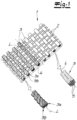
- a fabric adhesive tape is shown, which in the exemplary embodiment is a wrapping tape or cable wrapping tape.
- the adhesive tape or wrapping tape is used to sheathe cables in automobiles.
- the adhesive tape has a band-shaped fabric carrier 1, which is composed of pure and identical warp threads 2 and weft threads 3.
- both the warp threads 2 and the weft threads 3 are each formed as polyester threads 2, 3.
- an adhesive coating 4 is provided on at least one side.
- the adhesive coating 4 is present on the back of the fabric carrier 1.
- the adhesive coating 4 may be one that has been applied to the fabric carrier 1 using an acrylate-based adhesive, for example, by a hot-melt nozzle coating. This is, of course, only an example and not a limitation.
- the thread thickness of the respective weft threads 3 is greater than the thread thickness of the respective warp threads 2.
- the thread thickness of the warp threads 2, related to the width is smaller than the thread thickness of the weft threads 3, related to the length.
- the weft threads 3 and the warp threads 2 can also be of the same thread thickness. This, however, is not illustrated.
- the thread thickness of the warp threads relative to the width corresponds to the thread thickness of the weft threads relative to the length.
- 46 warp threads 2 are used per centimeter of width of the fabric carrier 1.
- the number of weft threads 3 per centimeter of length of the fabric carrier 1 is 27/cm. This is only partially illustrated in the exemplary embodiment.
- the weft threads 3, on the other hand, have a thread thickness or thread count of approximately 500 dtex.
- the weft threads 3 are twisted weft threads 3, which in this case are twisted with more than 400 turns per meter of weft thread 3.
- the individual threads 3a, 3b each have a thread count of 250 dtex in the illustrated embodiment.
- the individual threads each have a thread count of 100 dtex to 300 dtex.
- the weft thread 3 is composed of filament threads 5 twisted together around a longitudinal axis L.
- the weft thread 3 is a single thread.
- the filament threads 5 of this single thread are again twisted together with more than 400 turns per meter of weft thread 3.
- a total of 20 to 80 filament threads 5 per weft thread 3 can be used.
- the thread thickness of the weft thread is approximately 500 dtex or less.
- the design is such that the two individual threads 3a, 3b in the left variant according to the invention are Fig. 1 have a respective identical and consistent thread thickness of 250 dtex in the example case.
- the filament threads 5 as well as the individual threads 3a, 3b are twisted together around the respective longitudinal axis L with more than 400 turns per meter of weft thread 3.
- the twisted weft thread 3 is in the left part of the Fig. 1 made up of the individual threads 3a, 3b, which have been twisted together around the longitudinal axis L with more than 400 turns per meter of the twisted weft thread 3.
- the twisted weft thread 3 is constructed from the filament threads 5, which in turn have been twisted together around the associated longitudinal axis L with more than 400 turns per meter of length of the twisted weft thread 3.
- the thread thickness of the twisted weft thread 3 is in both cases less than 550 dtex and more than 450 dtex, in the exemplary embodiment approximately 500 dtex.
- a maximum of ten individual threads 3a, 3b can be used for production, although this is not shown. Furthermore, 500 to 600 twists of the individual threads 3a, 3b per meter of the twisted weft thread 3 are usually used.
- the weft threads 3 consistently have a right-hand or left-hand twist of the individual threads 3a, 3b, as already described in the introduction.
- the so-called titer quotient can be determined, i.e., the ratio of the length-related thread thickness of the weft threads 3 to the width-related thread thickness of the warp threads 2. In this case, this ratio is approximately 6.1, namely 13,500:2,208.
- the invention operates with titer quotients of 2 to 8. This is because the width-related thread thickness of the warp threads 2 is generally between 2,000 and 4,000 dtex/cm. In contrast, the length-related thread thickness of the weft threads 3 is in the range from 8,000 dtex/cm to 16,000 dtex/cm.
- the individual threads 2, 3, i.e., the warp threads 2 and/or the weft threads 3, can each be textured. This consequently also applies to the individual threads 3a, 3b.
- the illustrated adhesive tape or fabric adhesive tape is designed to be hand-tearable. This means that for tearing in the transverse direction, i.e., in the direction of the weft threads 3, a transverse tearing force of less than 10 N/cm of the width of the fabric carrier 1 is required.
Landscapes
- Engineering & Computer Science (AREA)
- Textile Engineering (AREA)
- Chemical & Material Sciences (AREA)
- Organic Chemistry (AREA)
- Chemical Kinetics & Catalysis (AREA)
- Mechanical Engineering (AREA)
- Woven Fabrics (AREA)
- Adhesive Tapes (AREA)
- Laminated Bodies (AREA)
- Adhesives Or Adhesive Processes (AREA)
Description
- Die Erfindung betrifft die Verwendung von gezwirnten Schussfäden zur Erhöhung der Abriebbeständigkeit bei einem in Querrichtung handeinreißbaren Wickelband zur Ummantelung von Kabeln in Automobilen, mit einem bandförmigen Gewebeträger aus materialgleichen Kettfäden und Schussfäden, und mit einer wenigstens einseitigen Klebebeschichtung, wobei die Fadenstärke der jeweiligen Schussfäden größer oder gleich der Fadenstärke der jeweiligen Kettfäden ist, und wobei die auf die Breite bezogene Fadenstärke der Kettfäden kleiner oder gleich der auf die Länge bezogenen Fadenstärke der Schussfäden ist.
- Gewebeklebebänder und insbesondere Wickelbänder zur Ummantelung von Kabeln in Automobilen müssen eine Vielzahl an Anforderungen erfüllen, die sich zum Teil widersprechen. So kommt es einerseits darauf an, dass das fragliche Klebeband bzw. Gewebeklebeband mechanisch beständig ist und auch gegenüber Benzin, Öl sowie Wärme resistent. Ferner sollen solche Klebebänder handeinreißbar ausgelegt sein, um ihre Verarbeitung beim Ummanteln von Kabeln und bei der Herstellung von Kabelbäumen zu erleichtern. Schließlich wird in diesem Zusammenhang auch eine gewisse Abriebfestigkeit des bandförmigen Gewebeträgers gefordert, um beispielsweise ein Durchscheuern der Ummantelung im Betrieb bzw. im Innern des Kraftfahrzeuges zu verhindern. Um diese verschiedenen Anforderungen zu erfüllen, werden im Stand der Technik unterschiedliche Ansätze verfolgt.
- So ist aus der
EP 1 074 595 B1 ein derartiges Klebeband bekannt, bei welchem die Kettfäden durch die Klebebeschichtung gegenüber den Schussfäden fixiert werden. Auf diese Weise werden Reißfestigkeiten in Querrichtung von weniger als 10 N beobachtet, was vorliegend als handeinreißbar qualifiziert wird. Aufgrund der niedrigen Webdichte bei dem bekannten Gewebeklebeband besteht jedoch die Gefahr, dass die Schussfäden gegeneinander verschoben werden, so dass die beschriebene zusätzliche Fixierung durch die Klebebeschichtung erforderlich ist. Das wiederum hat zur Folge, dass insgesamt die Flexibilität des bekannten Gewebeklebebandes verringert ist, so dass die Verarbeitung leidet. Außerdem werden relativ geringe Abriebbeständigkeiten entsprechend der Abriebklasse A oder B nach der Norm LV312 beobachtet. - Einzelheiten zu dieser im Automobilbereich gängigen Norm zur Bestimmung verschiedener Abriebklassen werden in der
EP 2 322 385 B1 beschrieben, auf die ausdrücklich verwiesen sei. Tatsächlich beschäftigt sich diese Vorveröffentlichung nach derEP 2 322 385 B1 mit einem insgesamt gattungsähnlichen Gewebeklebeband. Um an dieser Stelle die Abriebfestigkeit zu steigern, wird so vorgegangen, dass die längenbezogene Fadenstärke der Schussfäden bzw. die Fadenstärke der Schussfäden jeweils mindestens etwa das Vierfache der breitenbezogenen Fadenstärke der Kettfäden bzw. der Fadenstärke der Kettfäden beträgt. Dadurch soll auch ohne eine zusätzliche Fixierung der Fäden untereinander durch die Klebebeschichtung an ihren Kreuzungsstellen eine ausreichende Verbundfestigkeit des bekannten Gewebeträgers erzielt werden. - Außerdem wird eine gute Handeinreißbarkeit in Richtung der Schussfäden geltend gemacht. Gleichzeitig soll die gegenüber den Kettfäden deutlich erhöhte Fadenstärke der Schussfäden eine Abriebfestigkeit entsprechend der Klasse C oder noch größer gemäß LV312 ermöglichen. Dazu beträgt die Anzahl der Schussfäden 20 pro Zentimeter Länge und liegt ihre Stärke im Rahmen einer ersten Variante bei 470 dtex. Eine andere Variante greift auf Schussfäden der Stärke von 570 dtex zurück, wobei die Schussfäden aus drei Einzelfäden gebildet sind. Die Einzelfäden verfügen über eine Stärke von 235 dtex für einen Einzelfaden und jeweils 167 dtex für die verbleibenden beiden anderen Einzelfäden.
- Das bekannte Gewebe nach der
EP 2 322 385 B1 ist relativ komplex aufgebaut und folglich in seiner Herstellung aufwendig. Denn die Kettfäden sind aus Polyester gefertigt, wohingegen die Schussfäden aus Polyamid bestehen. Dadurch wird ein nicht sortenreiner Gewebeträger bzw. ein solcher aus nicht materialgleichen Kettfäden und Schussfäden realisiert. Dadurch bereitet der Gewebeträger zusätzlich Probleme bei einem eventuellen Recycling und führt durch den Rückgriff auf Polyamid zu erhöhten Rohstoffkosten. - Eine andere Lösung nach der
DE 10 2013 102 602 A1 sieht bei einem Kabelwickelband vor, dass das dortige Gewebe aus einem Garn besteht, welches erneut aus Polyamidwerkstoff gebildet ist. In diesem Fall ist das jeweilige Garn aus einzelnen Filamenten gebildet, die um eine mittlere Längsachse des Garns miteinander verdreht sind. Dadurch wird prinzipiell die Zugfestigkeit des Garns gesteigert und soll auch die Abriebfestigkeit erhöht werden. Dabei wird jedoch erneut auf einen relativ kostspieligen Gewebeträger zurückgegriffen. - Der Erfindung liegt das technische Problem zugrunde, ein derartiges Klebeband und insbesondere Gewebeklebeband so weiterzuentwickeln, dass eine kostengünstige Lösung zur Verfügung gestellt wird und gleichzeitig die Abriebfestigkeit, Handeinreißbarkeit und einfache Recyclingfähigkeit realisiert sind.
- Zur Lösung dieser technischen Problemstellung ist die Verwendung von gezwirnten Schussfäden zur Erhöhung der Abriebbeständigkeit bei einem in Querrichtung handeinreißbaren Wickelband zur Ummantelung von Kabeln in Automobilen nach Anspruch 1 vorgesehen.
- Erfindungsgemäß ist vorgesehen, dass die Schussfäden sich jeweils aus um eine Längsachse miteinander verdrehten mehreren Einzelfäden zusammensetzen, wobei der jeweilige Schussfaden aus zwei oder mehr Einzelfäden gebildet ist. Die zwei oder mehr Einzelfäden sind dann mit mehr als 400 Drehungen pro Meter Schussfaden miteinander verdreht. In letztgenanntem Fall können die Einzelfäden erneut aus Filamentfäden zusammengesetzt sein, die ihrerseits miteinander verdreht sind oder nicht.
- Die Erfindung greift also zunächst einmal auf einen Polyestergewebeträger zurück, welcher aus sortenreinen bzw. materialgleichen Kettfäden und Schussfäden hergestellt wird, sich folglich einfach recyceln lässt. Denn bei den Kettfäden und Schussfäden handelt es sich um Polyesterfäden. Dadurch ist das Recycling vereinfacht und lässt sich das erfindungsgemäße Klebeband besonders kostengünstig herstellen. Zugleich erfüllt ein Polyestergewebe bzw. erfüllen die Polyesterfäden per se einen Großteil der Anforderungen, wie sie an Wickelbänder zur Ummantelung von Kabeln in Automobilen gestellt werden.
- So weisen Polyesterfäden nicht nur eine hohe Zugfestigkeit auf, sondern sind darüber hinaus beständig gegenüber Chemikalien, Benzin etc. Außerdem ist ihre Langzeitstabilität hervorragend und neigen Polyesterfäden nicht oder kaum zur Feuchtigkeitsaufnahme. Durch die erfindungsgemäße Auslegung, wonach die Schussfäden im Rahmen zumindest einer Variante insgesamt deutlich "dicker" als die Kettfäden ausgelegt sind, wird darüber hinaus die zur Verarbeitung notwendige Handeinreißbarkeit zur Verfügung gestellt. Das gilt auch für den Fall, dass die Kett- und Schussfäden über eine gleiche Feinheit verfügen. Denn im Regelfall beträgt die Fadenstärke der Kett- und Schussfäden typischerweise mehr als 40 dtex. Grundsätzlich kann die Fadenstärke auch 80 dtex und mehr betragen. Vorzugsweise werden Fadenstärken von 100 dtex und mehr, insbesondere 167 dtex und mehr beobachtet. In den überwiegenden Fällen zeichnet sich das erfindungsgemäße Klebeband dadurch aus, dass es vorteilhaft handeinreißbar ausgebildet ist, und zwar unter Berücksichtigung einer Querreißkraft von weniger als 10 N/cm.
- Das heißt, als Kriterium für die Handeinreißbarkeit wird die Reißkraft in Querrichtung, die Querreißkraft von weniger als 10 N/cm zugrunde gelegt. Das bedeutet für einen Benutzer, dass er in Richtung der Schussfäden zum Zerreißen der Kettfäden Reißkräfte von weniger als 10 N pro Zentimeter Breite in der Querrichtung benötigt.
- Durch die im Rahmen einer Variante unterschiedliche Fadenstärke der dünneren Kettfäden im Vergleich zu den dickeren Schussfäden und die zusätzliche Tatsache, dass in der Regel 40 bis 60 Kettfäden/cm und 20 bis 30 Schussfäden/cm realisiert sind, verfügt das erfindungsgemäße Gewebe bzw. der Polyestergewebeträger über eine ausreichende Verbundfestigkeit des Trägergewebes, und zwar ohne dass hierzu die obligatorische Klebebeschichtung beiträgt oder beitragen muss. Dadurch wird die zuvor beschriebene gute Handeinreißbarkeit in Richtung der Schussfäden sichergestellt. Die ausreichende Verbundfestigkeit des Trägergewebes wird zugleich noch dadurch unterstützt und gewährleistet, dass erfindungsgemäß die Schussfäden gezwirnt sind. Das heißt, eine ausreichende Verbundfestigkeit des Trägergewebes in Verbindung mit guter Handeinreißbarkeit in Richtung der Schussfäden wird auch für den Fall beobachtet, dass die Fadenstärke der Kettfäden und diejenige der Schussfäden gleich oder in etwa gleich ausgelegt ist.
- Die aus den zwei oder mehr Einzelfäden jeweils durch Zwirnen gebildeten Schussfäden tragen darüber hinaus und wesentlich zu einer hohen Abriebfestigkeit des erfindungsgemäßen Klebebandes bei. Tatsächlich beobachtet man eine Steigerung der Abriebfestigkeit um in etwa 20% bis 50% im Vergleich zu einem Klebeband mit ansonsten gleichem Aufbau, gleicher Fadendicke und gleichem Fadengewicht, bei dem die Schussfäden nicht gezwirnt sind.
- So ist es möglich, dass das erfindungsgemäße Klebeband wenigstens die Abriebklasse B, insbesondere die Abriebklasse C an einem Dorn mit 5 mm Durchmesser gemäß der Prüfungsrichtlinie LV 312 erfüllt. Das heißt, wenn das erfindungsgemäße Klebeband auf dem fraglichen Dorn mit 5 mm Durchmesser aufgeklebt und dann mit einem Schabwerkzeug eines Nadeldurchmessers von 0,45 mm sowie bei einer Gewichtskraft von 7 N die Anzahl der Hübe bestimmt wird, die benötigt werden, um das Klebeband durchzuscheuern, so korrespondiert die Abriebklasse C zu 500 bis 999 Hüben an dieser Stelle.
- Wie bereits zuvor beschrieben, beträgt die jeweilige Fadenstärke des Schussfadens und auch des Kettfadens in der Regel mehr als 100 dtex. Insbesondere werden Fadenstärken von 167 dtex und mehr beobachtet. Ganz besonders bevorzugt sind Fadenstärken in diesem Bereich von 200 dtex, ganz besonders bevorzugt von 300 dtex und mehr. Sofern nach einer Variante so gearbeitet wird, dass die Fadenstärke der jeweiligen Schussfäden größer als diejenige der jeweiligen Kettfäden bemessen ist, beträgt üblicherweise die jeweilige Fadenstärke des gezwirnten Schussfadens mehr als 400 dtex, insbesondere mehr als 450 dtex. Als Obergrenze empfiehlt die Erfindung für den gezwirnten Schussfaden in diesem Zusammenhang 550 dtex. Ganz besonders bevorzugt liegt die Fadenstärke des gezwirnten Schussfadens bei ca. 500 dtex. Dabei kann der zugehörige Schussfaden aus zwei bis maximal zehn Einzelfäden aufgebaut sein. Der Schussfaden wird durch Zwirnen bzw. Verdrehen der der Einzelfäden um die jeweilige Längsachse hergestellt.
- Außerdem empfiehlt die Erfindung, dass der jeweilige Schussfaden aus den zwei oder mehr Einzelfäden gebildet ist, die mit mehr als 450 Drehungen pro Meter und insbesondere mehr als 500 Drehungen pro Meter verdreht sind. Vorzugsweise wird an dieser Stelle für den jeweiligen Schussfaden mit 500 bis 600 Drehungen pro Meter Schussfaden beim Verzwirnen gearbeitet. Der Schussfaden kann eine Fadenstärke von bis zu 500 dtex aufweisen. Die Einzelfäden verfügen alternativ über eine Fadenstärke von jeweils 100 dtex bis 200 dtex.
- Dadurch lässt sich erfindungsgemäß der Schussfaden aus relativ dünnen und herkömmlichen Einzelfäden einerseits herstellen, wird andererseits durch die Schussfäden wesentlich und positiv die Abriebfestigkeit des erfindungsgemäßen Klebebandes beeinflusst. Das gelingt selbst dann, wenn die Fadenstärke des betreffenden und gezwirnten Schussfadens weniger als 550 dtex beträgt und vorzugsweise sogar lediglich bei ca. 500 dtex angesiedelt ist. Ebenso dann, wenn die Fadenstärke des gezwirnten Schussfadens ca. 200 dtex beträgt.
- Das lässt sich darauf zurückführen, dass durch das Zwirnen einerseits die Zugfestigkeit des Schussfadens erhöht wird, andererseits der Schussfaden nach wie vor ausreichend geschmeidig für die Verarbeitung ist. Das stellt die Erfindung dadurch sicher, dass die Filamentfäden bzw. die Einzelfäden mit maximal 600 Drehungen pro Meter Schussfaden miteinander verdreht werden. Zugleich zeichnen sich die gezwirnten Schussfäden durch eine erhöhte Abriebfestigkeit aus und wird zumindest die Abriebklasse C bei dem betreffenden erfindungsgemäßen Klebeband beobachtet. Das lässt sich ganz wesentlich auf die entsprechend gezwirnten Schussfäden zurückführen.
- Beim Zwirnen der Einzelfäden zur Herstellung des Schussfadens kann durchgängig mit einem Rechtsdrall oder einem Linksdrall der Einzelfäden gearbeitet werden. In beiden Fällen stellt sich ein stabiler zylindrischer Querschnitt des jeweiligen verzwirnten Schussfadens ein. Nach DIN 60 900-4 unterscheidet man je nach Drehsinn zwischen S (Rechtsdrall) und Z (Linksdrall), je nachdem ob die Einzelfäden beim senkrechten Hängenlassen parallel dem Schrägstrich eines S oder Z verlaufen. Grundsätzlich kann natürlich auch mit Schussfäden im Gewebeträger gearbeitet werden, die beispielsweise abwechselnd einen Rechtsdrall und Linksdrall aufweisen. Im Regelfall verfügen die Schussfäden jedoch durchgängig über den Rechtsdrall oder alternativ den Linksdrall.
- Es hat sich bewährt, wenn die auf die Breite bezogene Fadenstärke der Kettfäden zwischen 2000 dtex/cm bis 4000 dtex/cm angesiedelt ist. Für die auf die Länge bezogene Fadenstärke der Schussfäden empfiehlt die Erfindung einen Bereich von 8000 dtex/cm bis 16000 dtex/cm. Die Kettfäden und die Schussfäden bzw. die den gezwirnten Schussfaden bildenden Einzelfäden sind im Regelfall aus jeweils 20 bis 80 Filamenten bzw. Filamentfäden gebildet. Außerdem hat es sich in diesem Zusammenhang bewährt, wenn die jeweiligen Einzelfäden jeweils texturiert sind, also eine Kräuselstruktur aufweisen. Das gift namentlich für die Kettfäden ebenso wie für die Einzelfäden zur Herstellung des gezwirnten Schussfadens und folglich auch für den Schussfaden als solchen. Durch die Texturierung wird die Elastizität derjeweiligen Fäden und ihr Volumen vergrößert.
- Im Ergebnis wird ein Gewebeklebeband und insbesondere Wickelband zur Ummantelung von Kabeln in Automobilen zur Verfügung gestellt, welches zunächst einmal einfach und kostengünstig hergestellt werden kann. Durch den Rückgriff auf Polyesterfäden sowohl in der Kette als auch im Schuss ist darüber hinaus ein sortenreines Recycling möglich. Ferner überzeugt das erfindungsgemäße Klebeband bei im Vergleich zum Stand der Technik verringerter Fadenstärke und folglich verringertem Gewicht gleichwohl über vergleichbare Abriebbeständigkeit. Dennoch wird nach wie vor die notwendige Handeinreißbarkeit in Querrichtung gewährleistet, so dass die Verarbeitung einfach gelingt. Hierin sind die wesentlichen Vorteile zu sehen.
- Im Folgenden wird die Erfindung anhand einer lediglich ein Ausführungsbeispiel darstellenden Zeichnung näher erläutert; es zeigen:
- Fig. 1
- das Klebeband in einer perspektivischen Aufsicht und
- Fig. 2
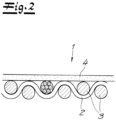
- einen Schnitt durch das Klebeband nach
Fig. 1 . - In der
Fig. 1 ist ein Gewebeklebeband dargestellt, bei dem es sich im Ausführungsbeispiel um ein Wickelband bzw. Kabelwickelband handelt. Das Klebeband bzw. Wickelband wird zur Ummantelung von Kabeln in Automobilen eingesetzt. Zu diesem Zweck verfügt das Klebeband über einen bandförmigen Gewebeträger 1, welcher sich aus sortenreinen sowie materialgleichen Kettfäden 2 und Schussfäden 3 zusammensetzt. Im Ausführungsbeispiel sind sowohl die Kettfäden 2 als auch die Schussfäden 3 als jeweils Polyesterfäden 2, 3 ausgebildet. Außerdem ist eine wenigstens einseitige Klebebeschichtung 4 realisiert. - Anhand der Schnittdarstellung in der
Fig. 2 erkennt man, dass die Klebebeschichtung 4 vorliegend auf einer Rückseite des Gewebeträgers 1 vorhanden ist. Bei der Klebebeschichtung 4 mag es sich um eine solche handeln, die unter Rückgriff auf einen Kleber auf Acrylatbasis auf den Gewebeträger 1 durch beispielsweise eine Düsenbeschichtung als Hotmelt aufgebracht worden ist. Das gilt selbstverständlich nur beispielhaft und nicht einschränkend. - Anhand der
Fig. 1 erkennt man, dass die Fadenstärke der jeweiligen Schussfäden 3 größer ist als die Fadenstärke der jeweiligen Kettfäden 2. Außerdem ist die auf die Breite bezogene Fadenstärke der Kettfäden 2 kleiner als die auf die Länge bezogene Fadenstärke der Schussfäden 3 ausgelegt. Das gilt jedenfalls für das dargestellte Ausführungsbeispiel. Grundsätzlich können die Schussfäden 3 und die Kettfäden 2 von ihrer Fadenstärke her aber auch jeweils gleich ausgebildet sein. Das ist jedoch nicht dargestellt. In diesem Fall entspricht dann auch die auf die Breite bezogene Fadenstärke der Kettfäden der auf die Länge bezogenen Fadenstärke der Schussfäden. In beiden Fällen kommen nach dem Ausführungsbeispiel 46 Kettfäden 2 pro Zentimeter Breite des Gewebeträgers 1 zum Einsatz. Die Anzahl der Schussfäden 3 pro Zentimeter Länge des Gewebeträgers 1 beträgt 27/cm. Das ist im Ausführungsbeispiel nur teilweise bildlich wiedergegeben. - Die Fadenstärke bzw. Fadenfeinheit der jeweiligen Kettfäden 2 beträgt 48 dtex. In Verbindung mit der zuvor angegebenen Fadenzahl von 46/cm ergibt sich hieraus die auf die Breite bezogene Fadenstärke der Kettfäden 2 zu 46 cm . 48 dtex = 2208 dtex/cm.
- Die Schussfäden 3 verfügen demgegenüber über eine Fadenstärke bzw. Fadenfeinheit von ca. 500 dtex. Bei den Schussfäden 3 handelt es sich im Ausführungsbeispiel und erfindungsgemäß um gezwirnte Schussfäden 3, die vorliegend mit mehr als 400 Drehungen pro Meter Schussfaden 3 gezwirnt sind. Tatsächlich werden vorliegend zwei Varianten verfolgt. So zeigt die
Fig. 1 im linken Teil Schussfäden 3, die sich aus jeweils zwei Einzelfäden 3a, 3b zusammensetzen, die jeweils um eine Längsachse L miteinander verdreht sind. Das ist im linken Bereich derFig. 1 dargestellt. Die Einzelfäden 3a, 3b weisen im Ausführungsbeispiel eine Fadenstärke von jeweils 250 dtex auf. Allgemein verfügen die Einzelfäden jeweils über eine Fadenstärke von 100 dtex bis 300 dtex. - Im rechten Teil der
Fig. 1 ist eine nicht erfindungsgemäße Variante dargestellt, bei welcher sich der Schussfaden 3 jeweils aus um eine Längsachse L miteinander verdrehten Filamentfäden 5 zusammensetzt. Bei dem Schussfaden 3 handelt es sich um einen Einzelfaden. Die Filamentfäden 5 dieses Einzelfadens sind erneut mit mehr als 400 Drehungen pro Meter Schussfaden 3 miteinander verdreht. An dieser Stelle können insgesamt 20 bis 80 Filamentfäden 5 pro Schussfaden 3 zum Einsatz kommen. Das ist in derFig. 1 lediglich vereinfacht und schematisch dargestellt. In beiden Varianten derFig. 1 beträgt die Fadenstärke des Schussfadens in etwa 500 dtex oder weniger. - Außerdem ist die Auslegung so getroffen, dass die beiden Einzelfäden 3a, 3b bei der linken erfindungsgemäßen Variante nach der
Fig. 1 eine jeweils gleiche und übereinstimmende Fadenstärke von 250 dtex im Beispielfall aufweisen. Grundsätzlich kann natürlich auch mit Einzelfäden 3a, 3b unterschiedlicher Fadenstärke beim Verzwirnen und der Herstellung des jeweiligen Schussfadens 3 gearbeitet werden. Vergleichbares gilt für den Fall, dass Schussfäden 3 mit einer unterschiedlichen Anzahl an Filamentfäden 5 entsprechend der Variante im rechten Teil derFig. 1 zum Einsatz kommen. Beim Verzwirnen werden die Filamentfäden 5 ebenso wie die Einzelfäden 3a, 3b mit mehr als 400 Drehungen pro Meter Schussfaden 3 miteinander um die jeweilige Längsachse L verdreht. - Das heißt, der jeweils gezwirnte Schussfaden 3 ist im linken Teil der
Fig. 1 aus den Einzelfäden 3a, 3b aufgebaut, die pro Meter Länge des gezwirnten Schussfadens 3 mit mehr als 400 Drehungen miteinander um die Längsachse L verdreht worden sind. Bei der im rechten Teil derFig. 1 dargestellten Variante ist der gezwirnte Schussfaden 3 aus den Filamentfäden 5 aufgebaut, die wiederum pro Meter Länge des gezwirnten Schussfadens 3 mit mehr als 400 Drehungen miteinander um die zugehörige Längsachse L verdreht worden sind. Auf diese Weise beträgt die Fadenstärke des gezwirnten Schussfadens 3 in beiden Fällen weniger als 550 dtex und mehr als 450 dtex, im Ausführungsbeispiel ca. 500 dtex. - Anstelle der zwei Einzelfäden 3a, 3b zur Herstellung des gezwirnten Schussfadens 3 gemäß der Variante im linken Teil des
Fig. 1 können maximal bis zu zehn Einzelfäden 3a, 3b für die Herstellung genutzt werden, was jedoch nicht dargestellt ist. Außerdem wird meistens mit 500 bis 600 Drehungen der Einzelfäden 3a, 3b pro Meter des gezwirnten Schussfadens 3 gearbeitet. Die Schussfäden 3 verfügen durchweg über einen Rechtsdrall oder Linksdrall der Einzelfäden 3a, 3b, wie dies einleitend bereits beschrieben wurde. - Da die Schussfäden 3 vorliegend jeweils eine Fadenfeinheit bzw. Fadenstärke von ca. 500 dtex aufweisen und im Ausführungsbeispiel insgesamt 27 Schussfäden/cm zum Einsatz kommen, beträgt die auf die Länge bezogene Fadenstärke der Schussfäden insgesamt 27 cm · 500 dtex = 13500 dtex/cm.
- Daraus kann der sogenannte Titerquotient ermittelt werden, also das Verhältnis der auf die Länge bezogenen Fadenstärke der Schussfäden 3 zur auf die Breite bezogenen Fadenstärke der Kettfäden 2. Dieses Verhältnis beträgt vorliegend ca. 6,1, nämlich 13500: 2208. Generell arbeitet die Erfindung mit Titerquotienten von 2 bis 8. Denn die auf die Breite bezogene Fadenstärke der Kettfäden 2 ist insgesamt zwischen 2000 bis 4000 dtex/cm angesiedelt. Die auf die Länge bezogene Fadenstärke der Schussfäden 3 liegt demgegenüber im Bereich von 8000 dtex/cm bis 16000 dtex/cm.
- Die einzelnen Fäden 2, 3, das heißt die Kettfäden 2 und/oder die Schussfäden 3 können jeweils texturiert sein. Das gilt folglich auch für die Einzelfäden 3a, 3b. Außerdem ist das dargestellte Klebeband bzw. Gewebeklebeband insgesamt handeinreißbar ausgebildet. Das heißt, zum Einreißen in Querrichtung, das heißt in Richtung der Schussfäden 3, wird eine Querreißkraft von weniger als 10 N/cm Breite des Gewebeträgers 1 benötigt.
Claims (15)
- Verwendung von gezwirnten Schussfäden (3) zur Erhöhung der Abriebbeständigkeit bei einem in Querrichtung handeinreißbaren Wickelband zur Ummantelung von Kabeln in Automobilen, mit einem bandförmigen Polyestergewebeträger (1) aus materialgleichen Kettfäden (2) und Schussfäden (3), wobei sowohl die Kettfäden (2) als auch die Schussfäden (3) als jeweils Polyesterfäden (2, 3) ausgebildet sind, undmit einer wenigstens einseitigen Klebebeschichtung (4), wobeisich die Schussfäden (3) jeweils aus um eine Längsachse (L) miteinander verdrehten Einzelfäden (3a, 3b) zusammensetzen und der jeweilige Schussfaden (3) aus zwei oder mehr Einzelfäden (3a, 3b) gebildet ist, die mit mehr als 400 Drehungen pro Meter Schussfaden (3) miteinander verdreht sind, wobeidie Fadenstärke der jeweiligen Schussfäden (3) größer oder gleich der Fadenstärke der jeweiligen Kettfäden (2) ist, wobei fernerdie auf die Breite bezogene Fadenstärke der Kettfäden (2) kleiner oder gleich der auf die Länge bezogenen Fadenstärke der Schussfäden (3) ist, wobei weiterzumindest die Schussfäden (3) jeweils mit mehr als 180 Drehungen pro Meter Schussfaden (3) gezwirnt sind, und wobeiwenigstens die Abriebklasse C an einem Dorn mit 5 mm Durchmesser gemäß der Prüfungsrichtlinie LV 312 erfüllt wird.
- Verwendung nach Anspruch 1, dadurch gekennzeichnet, dass die jeweilige Fadenstärke des gezwirnten Schussfadens (3) ebenso wie die Fadenstärke des Kettfadens (2) jeweils mehr als 40 dtex, insbesondere 80 dtex und mehr und vorzugsweise mehr als 100 dtex beträgt.
- Verwendung nach Anspruch 2, dadurch gekennzeichnet, dass die jeweilige Fadenstärke des gezwirnten Schussfadens (3) und diejenige des Kettfadens (2) jeweils weniger als 550 dtex beträgt.
- Verwendung nach einem der Ansprüche 1 bis 3, dadurch gekennzeichnet, dass der jeweilige Schussfäden (3) aus zwei bis maximal zehn Einzelfäden (3a, 3b) oder 20 bis 80 Filamentfäden (5) gebildet ist.
- Verwendung nach einem der Ansprüche 1 bis 4, dadurch gekennzeichnet, dass der jeweilige Schussfaden (3) aus zwei oder mehr Einzelfäden (3a, 3b) gebildet ist, die mit mehr als 450 Drehungen pro Meter Schussfaden (3), insbesondere mehr als 500 Drehungen pro Meter und vorzugsweise zwischen 500 und 600 Drehungen pro Meter Schussfaden (3), miteinander verdreht sind.
- Verwendung nach einem der Ansprüche 1 bis 5, dadurch gekennzeichnet, dass die Schussfäden (3) durchgängig einen Rechtsdrall oder Linksdrall der Einzelfäden (3a, 3b) aufweisen.
- Verwendung nach einem der Ansprüche 1 bis 6, dadurch gekennzeichnet, dass die auf die Breite bezogene Fadenstärke der Kettfäden (2) zwischen 2000 dtex/cm bis 4000 dtex/cm angesiedelt ist.
- Verwendung nach einem der Ansprüche 1 bis 7, dadurch gekennzeichnet, dass die auf die Länge bezogene Fadenstärke der Schussfäden (3) im Bereich von 8000 dtex/cm bis 16000 dtex/cm liegt.
- Verwendung nach einem der Ansprüche 1 bis 8, dadurch gekennzeichnet, dass die Kettfäden (2) und die den Schussfaden (3) jeweils bildenden Einzelfäden (3a, 3b) jeweils aus 20 bis 80 Filamenten gebildet sind.
- Verwendung nach einem der Ansprüche 1 bis 9, dadurch gekennzeichnet, dass die Einzelfäden (3a, 3b) des gezwirnten Schussfadens (3) eine Fadenstärke von jeweils 100 dtex bis 300 dtex aufweisen.
- Verwendung nach einem der Ansprüche 1 bis 10, dadurch gekennzeichnet, dass die Schussfäden (3) jeweils aus zwei oder mehr Einzelfäden (3a, 3b) mit jeweils gleicher Fadenstärke gebildet sind.
- Verwendung nach einem der Ansprüche 1 bis 11, dadurch gekennzeichnet, dass die Fäden (2, 3; 3a, 3b) jeweils texturiert sind.
- Verwendung nach einem der Ansprüche 1 bis 12, dadurch gekennzeichnet, dass die Anzahl der Kettfäden (2) zwischen 40 bis 60 pro Zentimeter beträgt.
- Verwendung nach einem der Ansprüche 1 bis 13, dadurch gekennzeichnet, dass die Anzahl der Schussfäden (3) zwischen 20 bis 30 pro Zentimeter angesiedelt ist.
- Verwendung nach einem der Ansprüche 1 bis 14, dadurch gekennzeichnet, dass der Titerquotient, also das Verhältnis der auf die Länge bezogenen Fadenstärke der Schussfäden (3) zur auf die Breite bezogenen Fadenstärke der Kettfäden (2), zwischen 2 und 8 angesiedelt ist.
Priority Applications (1)
| Application Number | Priority Date | Filing Date | Title |
|---|---|---|---|
| PL16204321T PL3190163T3 (pl) | 2016-01-08 | 2016-12-15 | Taśma klejąca, w szczególności taśma do owijania do osłaniania przewodów w samochodach |
Applications Claiming Priority (1)
| Application Number | Priority Date | Filing Date | Title |
|---|---|---|---|
| DE202016100057.2U DE202016100057U1 (de) | 2016-01-08 | 2016-01-08 | Klebeband, insbesondere Wickelband zur Ummantelung von Kabeln in Automobilen |
Publications (3)
| Publication Number | Publication Date |
|---|---|
| EP3190163A1 EP3190163A1 (de) | 2017-07-12 |
| EP3190163B1 EP3190163B1 (de) | 2021-01-27 |
| EP3190163B2 true EP3190163B2 (de) | 2025-04-02 |
Family
ID=55312789
Family Applications (1)
| Application Number | Title | Priority Date | Filing Date |
|---|---|---|---|
| EP16204321.0A Active EP3190163B2 (de) | 2016-01-08 | 2016-12-15 | Klebeband, insbesondere wickelband zur ummantelung von kabeln in automobilen |
Country Status (8)
| Country | Link |
|---|---|
| US (1) | US20170198418A1 (de) |
| EP (1) | EP3190163B2 (de) |
| JP (1) | JP6434543B2 (de) |
| KR (2) | KR20170083496A (de) |
| CN (1) | CN106957619A (de) |
| DE (1) | DE202016100057U1 (de) |
| HU (1) | HUE054681T2 (de) |
| PL (1) | PL3190163T3 (de) |
Families Citing this family (7)
| Publication number | Priority date | Publication date | Assignee | Title |
|---|---|---|---|---|
| DE102016212483A1 (de) * | 2016-07-08 | 2018-01-11 | Tesa Se | Gewebeklebeband |
| KR102166474B1 (ko) | 2017-06-30 | 2020-10-16 | 주식회사 엘지화학 | 기판 |
| DE202017107748U1 (de) * | 2017-12-20 | 2018-01-11 | Certoplast Technische Klebebänder Gmbh | Eindeckung zum Ummanteln von langgestrecktem Gut |
| DE102017223666B4 (de) * | 2017-12-22 | 2023-02-09 | Tesa Se | Verwendung eines Gewebes für ein abriebfestes Gewebeklebeband |
| DE202018100248U1 (de) | 2018-01-17 | 2018-01-23 | Certoplast Technische Klebebänder Gmbh | Abriebfestes Klebeband |
| DE202018103986U1 (de) * | 2018-07-11 | 2018-07-20 | Certoplast Technische Klebebänder Gmbh | Klebeband |
| KR102511687B1 (ko) * | 2022-05-10 | 2023-03-21 | 하재현 | 레피어 직기에서의 다중위사 위입장치 |
Citations (6)
| Publication number | Priority date | Publication date | Assignee | Title |
|---|---|---|---|---|
| EP1074595B1 (de) † | 1999-08-02 | 2006-10-18 | Scapa Tapes France SA | Mit der Hand reissbares Klebeband auf Basis eines Polyestergewebes |
| JP2012017415A (ja) † | 2010-07-08 | 2012-01-26 | Sekisui Chem Co Ltd | 布粘着テープ |
| DE102013102602A1 (de) † | 2013-03-14 | 2014-09-18 | Coroplast Fritz Müller Gmbh & Co. Kg | Kabelwickelband, insbesondere für den Motorenraum eines Automobils |
| EP2821453A1 (de) † | 2013-07-05 | 2015-01-07 | Coroplast Fritz Müller GmbH & Co. KG | Klebeband |
| DE202009018980U1 (de) † | 2009-11-09 | 2015-02-02 | Coroplast Fritz Müller Gmbh & Co. Kg | Quereinreißbares Gewebeklebeband mit hoher Abriebfestigkeit |
| EP2322385B1 (de) † | 2009-11-09 | 2015-02-25 | Coroplast Fritz Müller GmbH & Co. KG | Quereinreißbares Gewebeklebeband mit hoher Abriebfestigkeit |
Family Cites Families (10)
| Publication number | Priority date | Publication date | Assignee | Title |
|---|---|---|---|---|
| JP2532724Y2 (ja) * | 1990-04-12 | 1997-04-16 | 株式会社 スリオンテック | ワイヤーハーネス結束用布粘着テープ |
| JPH04370239A (ja) * | 1991-06-19 | 1992-12-22 | Teijin Ltd | テープ基材 |
| JPH09291432A (ja) * | 1996-04-25 | 1997-11-11 | Unitika Ltd | 接着テープ基布用ポリエステル糸の製造方法 |
| WO2003064744A1 (en) * | 2002-01-29 | 2003-08-07 | Honeywell International Inc. | High-dpf yarns with improved fatigue |
| MY131070A (en) * | 2002-01-28 | 2007-07-31 | Performance Fibers Inc | High-dpf yarns with improved fatigue |
| JP2004308073A (ja) * | 2003-04-09 | 2004-11-04 | Unitica Fibers Ltd | 粘着テープ用基布 |
| JP2009268482A (ja) * | 2008-04-30 | 2009-11-19 | Toyobo Co Ltd | 皮膚貼着用伸縮テープ基材 |
| DE102008058226A1 (de) * | 2008-08-21 | 2010-02-25 | Tesa Se | Hoch abriebfestes Band insbesondere für die Bandagierung von Kabelbäumen in Automobilen |
| JP2012097373A (ja) * | 2010-11-02 | 2012-05-24 | Toray Ind Inc | 粘着テープ用基布 |
| JP5282320B2 (ja) * | 2011-05-27 | 2013-09-04 | 松山毛織株式会社 | 電磁波シールド織物、電磁波シールドシート、電磁波シールド材及び電磁波シールドケーシング |
-
2016
- 2016-01-08 DE DE202016100057.2U patent/DE202016100057U1/de not_active Expired - Lifetime
- 2016-12-15 EP EP16204321.0A patent/EP3190163B2/de active Active
- 2016-12-15 HU HUE16204321A patent/HUE054681T2/hu unknown
- 2016-12-15 PL PL16204321T patent/PL3190163T3/pl unknown
-
2017
- 2017-01-05 US US15/399,117 patent/US20170198418A1/en not_active Abandoned
- 2017-01-05 KR KR1020170001737A patent/KR20170083496A/ko not_active Ceased
- 2017-01-06 CN CN201710008651.9A patent/CN106957619A/zh active Pending
- 2017-01-06 JP JP2017001113A patent/JP6434543B2/ja active Active
-
2019
- 2019-03-19 KR KR1020190031200A patent/KR102170582B1/ko active Active
Patent Citations (6)
| Publication number | Priority date | Publication date | Assignee | Title |
|---|---|---|---|---|
| EP1074595B1 (de) † | 1999-08-02 | 2006-10-18 | Scapa Tapes France SA | Mit der Hand reissbares Klebeband auf Basis eines Polyestergewebes |
| DE202009018980U1 (de) † | 2009-11-09 | 2015-02-02 | Coroplast Fritz Müller Gmbh & Co. Kg | Quereinreißbares Gewebeklebeband mit hoher Abriebfestigkeit |
| EP2322385B1 (de) † | 2009-11-09 | 2015-02-25 | Coroplast Fritz Müller GmbH & Co. KG | Quereinreißbares Gewebeklebeband mit hoher Abriebfestigkeit |
| JP2012017415A (ja) † | 2010-07-08 | 2012-01-26 | Sekisui Chem Co Ltd | 布粘着テープ |
| DE102013102602A1 (de) † | 2013-03-14 | 2014-09-18 | Coroplast Fritz Müller Gmbh & Co. Kg | Kabelwickelband, insbesondere für den Motorenraum eines Automobils |
| EP2821453A1 (de) † | 2013-07-05 | 2015-01-07 | Coroplast Fritz Müller GmbH & Co. KG | Klebeband |
Also Published As
| Publication number | Publication date |
|---|---|
| KR20170083496A (ko) | 2017-07-18 |
| KR102170582B1 (ko) | 2020-10-28 |
| PL3190163T4 (pl) | 2021-11-02 |
| EP3190163B1 (de) | 2021-01-27 |
| US20170198418A1 (en) | 2017-07-13 |
| CN106957619A (zh) | 2017-07-18 |
| HUE054681T2 (hu) | 2021-09-28 |
| KR20190033499A (ko) | 2019-03-29 |
| PL3190163T3 (pl) | 2021-11-02 |
| JP6434543B2 (ja) | 2018-12-05 |
| JP2017122220A (ja) | 2017-07-13 |
| DE202016100057U1 (de) | 2016-01-25 |
| EP3190163A1 (de) | 2017-07-12 |
Similar Documents
| Publication | Publication Date | Title |
|---|---|---|
| EP3190163B1 (de) | Klebeband, insbesondere wickelband zur ummantelung von kabeln in automobilen | |
| DE3851023T2 (de) | Kohlenstoffaserverstärkte Harz-Pultrusionsgegenstände und Verfahren zu ihrer Herstellung. | |
| DE69713659T2 (de) | Aufbau eines endlosen Leistungstreibriemens, Kabel dafür und Methoden zu deren Herstellung | |
| DE69701185T2 (de) | Stichschutzeinlage für Schutztextilien | |
| EP3245265B1 (de) | Klebeband, insbesondere wickelband | |
| DE3317712A1 (de) | Verstaerkungscord zur verstaerkung von elastomeren erzeugnissen | |
| EP3729578B1 (de) | Mit einer eindeckung ummanteltes langgestrecktes gut | |
| DE69524786T2 (de) | Endlosband und herstellungsverfahren | |
| DE102013102602B4 (de) | Kabelwickelband für den Motorenraum eines Automobils | |
| EP3440251B1 (de) | Kabelwickelband | |
| EP3514211B1 (de) | Abriebfestes klebeband | |
| EP3765577B1 (de) | Klebeband insbesondere wickelband | |
| DE102014119521B4 (de) | "Klebeband mit einem Nähvliesträger" | |
| EP2821453B1 (de) | Klebeband | |
| WO2022258344A1 (de) | Abriebfestes kabelwickelband | |
| DE102014107312A1 (de) | Klebeband | |
| EP4041836A1 (de) | Klebeband | |
| DE10024670B4 (de) | Verfahren zur Herstellung eines Garnes | |
| WO2017182271A1 (de) | Kabelwickelband | |
| DE102008060226A1 (de) | Verfahren zur Herstellung eines Trägergewebes und derartiges Trägergewebe | |
| DE102022112756B3 (de) | Klebeband | |
| DE1270487B (de) | Foerderband aus Kautschuk oder einem Kunststoff und mit einer Verstaerkung | |
| DE202022102810U1 (de) | Klebeband | |
| DE2623270A1 (de) | Textilkord als querarmierung fuer foerdergurte | |
| DE202020104449U1 (de) | Presspolster, Verwendung und Laminierpresse |
Legal Events
| Date | Code | Title | Description |
|---|---|---|---|
| PUAI | Public reference made under article 153(3) epc to a published international application that has entered the european phase |
Free format text: ORIGINAL CODE: 0009012 |
|
| STAA | Information on the status of an ep patent application or granted ep patent |
Free format text: STATUS: THE APPLICATION HAS BEEN PUBLISHED |
|
| AK | Designated contracting states |
Kind code of ref document: A1 Designated state(s): AL AT BE BG CH CY CZ DE DK EE ES FI FR GB GR HR HU IE IS IT LI LT LU LV MC MK MT NL NO PL PT RO RS SE SI SK SM TR |
|
| AX | Request for extension of the european patent |
Extension state: BA ME |
|
| STAA | Information on the status of an ep patent application or granted ep patent |
Free format text: STATUS: REQUEST FOR EXAMINATION WAS MADE |
|
| 17P | Request for examination filed |
Effective date: 20171027 |
|
| RBV | Designated contracting states (corrected) |
Designated state(s): AL AT BE BG CH CY CZ DE DK EE ES FI FR GB GR HR HU IE IS IT LI LT LU LV MC MK MT NL NO PL PT RO RS SE SI SK SM TR |
|
| STAA | Information on the status of an ep patent application or granted ep patent |
Free format text: STATUS: EXAMINATION IS IN PROGRESS |
|
| 17Q | First examination report despatched |
Effective date: 20200417 |
|
| REG | Reference to a national code |
Ref country code: DE Ref legal event code: R079 Ref document number: 502016012298 Country of ref document: DE Free format text: PREVIOUS MAIN CLASS: C09J0007040000 Ipc: C09J0007210000 |
|
| GRAP | Despatch of communication of intention to grant a patent |
Free format text: ORIGINAL CODE: EPIDOSNIGR1 |
|
| STAA | Information on the status of an ep patent application or granted ep patent |
Free format text: STATUS: GRANT OF PATENT IS INTENDED |
|
| RIC1 | Information provided on ipc code assigned before grant |
Ipc: C09J 7/25 20180101ALI20200901BHEP Ipc: D03D 3/00 20060101ALI20200901BHEP Ipc: D03D 15/00 20060101ALI20200901BHEP Ipc: H02G 3/04 20060101ALI20200901BHEP Ipc: C09J 7/21 20180101AFI20200901BHEP |
|
| GRAS | Grant fee paid |
Free format text: ORIGINAL CODE: EPIDOSNIGR3 |
|
| INTG | Intention to grant announced |
Effective date: 20200930 |
|
| GRAA | (expected) grant |
Free format text: ORIGINAL CODE: 0009210 |
|
| STAA | Information on the status of an ep patent application or granted ep patent |
Free format text: STATUS: THE PATENT HAS BEEN GRANTED |
|
| AK | Designated contracting states |
Kind code of ref document: B1 Designated state(s): AL AT BE BG CH CY CZ DE DK EE ES FI FR GB GR HR HU IE IS IT LI LT LU LV MC MK MT NL NO PL PT RO RS SE SI SK SM TR |
|
| REG | Reference to a national code |
Ref country code: GB Ref legal event code: FG4D Free format text: NOT ENGLISH |
|
| REG | Reference to a national code |
Ref country code: CH Ref legal event code: EP |
|
| REG | Reference to a national code |
Ref country code: AT Ref legal event code: REF Ref document number: 1358338 Country of ref document: AT Kind code of ref document: T Effective date: 20210215 |
|
| REG | Reference to a national code |
Ref country code: IE Ref legal event code: FG4D Free format text: LANGUAGE OF EP DOCUMENT: GERMAN |
|
| REG | Reference to a national code |
Ref country code: DE Ref legal event code: R096 Ref document number: 502016012298 Country of ref document: DE |
|
| REG | Reference to a national code |
Ref country code: RO Ref legal event code: EPE |
|
| REG | Reference to a national code |
Ref country code: NL Ref legal event code: MP Effective date: 20210127 |
|
| REG | Reference to a national code |
Ref country code: LT Ref legal event code: MG9D |
|
| PG25 | Lapsed in a contracting state [announced via postgrant information from national office to epo] |
Ref country code: NO Free format text: LAPSE BECAUSE OF FAILURE TO SUBMIT A TRANSLATION OF THE DESCRIPTION OR TO PAY THE FEE WITHIN THE PRESCRIBED TIME-LIMIT Effective date: 20210427 Ref country code: PT Free format text: LAPSE BECAUSE OF FAILURE TO SUBMIT A TRANSLATION OF THE DESCRIPTION OR TO PAY THE FEE WITHIN THE PRESCRIBED TIME-LIMIT Effective date: 20210527 Ref country code: HR Free format text: LAPSE BECAUSE OF FAILURE TO SUBMIT A TRANSLATION OF THE DESCRIPTION OR TO PAY THE FEE WITHIN THE PRESCRIBED TIME-LIMIT Effective date: 20210127 Ref country code: FI Free format text: LAPSE BECAUSE OF FAILURE TO SUBMIT A TRANSLATION OF THE DESCRIPTION OR TO PAY THE FEE WITHIN THE PRESCRIBED TIME-LIMIT Effective date: 20210127 Ref country code: GR Free format text: LAPSE BECAUSE OF FAILURE TO SUBMIT A TRANSLATION OF THE DESCRIPTION OR TO PAY THE FEE WITHIN THE PRESCRIBED TIME-LIMIT Effective date: 20210428 Ref country code: BG Free format text: LAPSE BECAUSE OF FAILURE TO SUBMIT A TRANSLATION OF THE DESCRIPTION OR TO PAY THE FEE WITHIN THE PRESCRIBED TIME-LIMIT Effective date: 20210427 Ref country code: NL Free format text: LAPSE BECAUSE OF FAILURE TO SUBMIT A TRANSLATION OF THE DESCRIPTION OR TO PAY THE FEE WITHIN THE PRESCRIBED TIME-LIMIT Effective date: 20210127 Ref country code: LT Free format text: LAPSE BECAUSE OF FAILURE TO SUBMIT A TRANSLATION OF THE DESCRIPTION OR TO PAY THE FEE WITHIN THE PRESCRIBED TIME-LIMIT Effective date: 20210127 |
|
| PG25 | Lapsed in a contracting state [announced via postgrant information from national office to epo] |
Ref country code: RS Free format text: LAPSE BECAUSE OF FAILURE TO SUBMIT A TRANSLATION OF THE DESCRIPTION OR TO PAY THE FEE WITHIN THE PRESCRIBED TIME-LIMIT Effective date: 20210127 Ref country code: LV Free format text: LAPSE BECAUSE OF FAILURE TO SUBMIT A TRANSLATION OF THE DESCRIPTION OR TO PAY THE FEE WITHIN THE PRESCRIBED TIME-LIMIT Effective date: 20210127 Ref country code: SE Free format text: LAPSE BECAUSE OF FAILURE TO SUBMIT A TRANSLATION OF THE DESCRIPTION OR TO PAY THE FEE WITHIN THE PRESCRIBED TIME-LIMIT Effective date: 20210127 |
|
| REG | Reference to a national code |
Ref country code: HU Ref legal event code: AG4A Ref document number: E054681 Country of ref document: HU |
|
| PG25 | Lapsed in a contracting state [announced via postgrant information from national office to epo] |
Ref country code: IS Free format text: LAPSE BECAUSE OF FAILURE TO SUBMIT A TRANSLATION OF THE DESCRIPTION OR TO PAY THE FEE WITHIN THE PRESCRIBED TIME-LIMIT Effective date: 20210527 |
|
| REG | Reference to a national code |
Ref country code: DE Ref legal event code: R026 Ref document number: 502016012298 Country of ref document: DE |
|
| PG25 | Lapsed in a contracting state [announced via postgrant information from national office to epo] |
Ref country code: SM Free format text: LAPSE BECAUSE OF FAILURE TO SUBMIT A TRANSLATION OF THE DESCRIPTION OR TO PAY THE FEE WITHIN THE PRESCRIBED TIME-LIMIT Effective date: 20210127 Ref country code: CZ Free format text: LAPSE BECAUSE OF FAILURE TO SUBMIT A TRANSLATION OF THE DESCRIPTION OR TO PAY THE FEE WITHIN THE PRESCRIBED TIME-LIMIT Effective date: 20210127 Ref country code: EE Free format text: LAPSE BECAUSE OF FAILURE TO SUBMIT A TRANSLATION OF THE DESCRIPTION OR TO PAY THE FEE WITHIN THE PRESCRIBED TIME-LIMIT Effective date: 20210127 |
|
| PLBI | Opposition filed |
Free format text: ORIGINAL CODE: 0009260 |
|
| PLAX | Notice of opposition and request to file observation + time limit sent |
Free format text: ORIGINAL CODE: EPIDOSNOBS2 |
|
| PG25 | Lapsed in a contracting state [announced via postgrant information from national office to epo] |
Ref country code: DK Free format text: LAPSE BECAUSE OF FAILURE TO SUBMIT A TRANSLATION OF THE DESCRIPTION OR TO PAY THE FEE WITHIN THE PRESCRIBED TIME-LIMIT Effective date: 20210127 Ref country code: SK Free format text: LAPSE BECAUSE OF FAILURE TO SUBMIT A TRANSLATION OF THE DESCRIPTION OR TO PAY THE FEE WITHIN THE PRESCRIBED TIME-LIMIT Effective date: 20210127 |
|
| 26 | Opposition filed |
Opponent name: COROPLAST FRITZ MUELLER GMBH & CO. KG Effective date: 20211027 |
|
| PG25 | Lapsed in a contracting state [announced via postgrant information from national office to epo] |
Ref country code: ES Free format text: LAPSE BECAUSE OF FAILURE TO SUBMIT A TRANSLATION OF THE DESCRIPTION OR TO PAY THE FEE WITHIN THE PRESCRIBED TIME-LIMIT Effective date: 20210127 Ref country code: AL Free format text: LAPSE BECAUSE OF FAILURE TO SUBMIT A TRANSLATION OF THE DESCRIPTION OR TO PAY THE FEE WITHIN THE PRESCRIBED TIME-LIMIT Effective date: 20210127 |
|
| PG25 | Lapsed in a contracting state [announced via postgrant information from national office to epo] |
Ref country code: SI Free format text: LAPSE BECAUSE OF FAILURE TO SUBMIT A TRANSLATION OF THE DESCRIPTION OR TO PAY THE FEE WITHIN THE PRESCRIBED TIME-LIMIT Effective date: 20210127 |
|
| PLBB | Reply of patent proprietor to notice(s) of opposition received |
Free format text: ORIGINAL CODE: EPIDOSNOBS3 |
|
| PG25 | Lapsed in a contracting state [announced via postgrant information from national office to epo] |
Ref country code: IS Free format text: LAPSE BECAUSE OF FAILURE TO SUBMIT A TRANSLATION OF THE DESCRIPTION OR TO PAY THE FEE WITHIN THE PRESCRIBED TIME-LIMIT Effective date: 20210527 |
|
| PG25 | Lapsed in a contracting state [announced via postgrant information from national office to epo] |
Ref country code: MC Free format text: LAPSE BECAUSE OF FAILURE TO SUBMIT A TRANSLATION OF THE DESCRIPTION OR TO PAY THE FEE WITHIN THE PRESCRIBED TIME-LIMIT Effective date: 20210127 |
|
| REG | Reference to a national code |
Ref country code: CH Ref legal event code: PL |
|
| GBPC | Gb: european patent ceased through non-payment of renewal fee |
Effective date: 20211215 |
|
| REG | Reference to a national code |
Ref country code: BE Ref legal event code: MM Effective date: 20211231 |
|
| PG25 | Lapsed in a contracting state [announced via postgrant information from national office to epo] |
Ref country code: LU Free format text: LAPSE BECAUSE OF NON-PAYMENT OF DUE FEES Effective date: 20211215 Ref country code: IE Free format text: LAPSE BECAUSE OF NON-PAYMENT OF DUE FEES Effective date: 20211215 Ref country code: GB Free format text: LAPSE BECAUSE OF NON-PAYMENT OF DUE FEES Effective date: 20211215 |
|
| PG25 | Lapsed in a contracting state [announced via postgrant information from national office to epo] |
Ref country code: BE Free format text: LAPSE BECAUSE OF NON-PAYMENT OF DUE FEES Effective date: 20211231 |
|
| PG25 | Lapsed in a contracting state [announced via postgrant information from national office to epo] |
Ref country code: LI Free format text: LAPSE BECAUSE OF NON-PAYMENT OF DUE FEES Effective date: 20211231 Ref country code: CH Free format text: LAPSE BECAUSE OF NON-PAYMENT OF DUE FEES Effective date: 20211231 |
|
| REG | Reference to a national code |
Ref country code: AT Ref legal event code: MM01 Ref document number: 1358338 Country of ref document: AT Kind code of ref document: T Effective date: 20211215 |
|
| PG25 | Lapsed in a contracting state [announced via postgrant information from national office to epo] |
Ref country code: AT Free format text: LAPSE BECAUSE OF NON-PAYMENT OF DUE FEES Effective date: 20211215 |
|
| PG25 | Lapsed in a contracting state [announced via postgrant information from national office to epo] |
Ref country code: CY Free format text: LAPSE BECAUSE OF FAILURE TO SUBMIT A TRANSLATION OF THE DESCRIPTION OR TO PAY THE FEE WITHIN THE PRESCRIBED TIME-LIMIT Effective date: 20210127 |
|
| PGFP | Annual fee paid to national office [announced via postgrant information from national office to epo] |
Ref country code: RO Payment date: 20231212 Year of fee payment: 8 Ref country code: IT Payment date: 20231228 Year of fee payment: 8 Ref country code: HU Payment date: 20231222 Year of fee payment: 8 Ref country code: FR Payment date: 20231221 Year of fee payment: 8 |
|
| PG25 | Lapsed in a contracting state [announced via postgrant information from national office to epo] |
Ref country code: MK Free format text: LAPSE BECAUSE OF FAILURE TO SUBMIT A TRANSLATION OF THE DESCRIPTION OR TO PAY THE FEE WITHIN THE PRESCRIBED TIME-LIMIT Effective date: 20210127 |
|
| PGFP | Annual fee paid to national office [announced via postgrant information from national office to epo] |
Ref country code: PL Payment date: 20231207 Year of fee payment: 8 |
|
| PG25 | Lapsed in a contracting state [announced via postgrant information from national office to epo] |
Ref country code: TR Free format text: LAPSE BECAUSE OF FAILURE TO SUBMIT A TRANSLATION OF THE DESCRIPTION OR TO PAY THE FEE WITHIN THE PRESCRIBED TIME-LIMIT Effective date: 20210127 |
|
| APBP | Date of receipt of notice of appeal recorded |
Free format text: ORIGINAL CODE: EPIDOSNNOA2O |
|
| APAH | Appeal reference modified |
Free format text: ORIGINAL CODE: EPIDOSCREFNO |
|
| APAW | Appeal reference deleted |
Free format text: ORIGINAL CODE: EPIDOSDREFNO |
|
| PG25 | Lapsed in a contracting state [announced via postgrant information from national office to epo] |
Ref country code: MT Free format text: LAPSE BECAUSE OF FAILURE TO SUBMIT A TRANSLATION OF THE DESCRIPTION OR TO PAY THE FEE WITHIN THE PRESCRIBED TIME-LIMIT Effective date: 20210127 |
|
| APBU | Appeal procedure closed |
Free format text: ORIGINAL CODE: EPIDOSNNOA9O |
|
| PUAH | Patent maintained in amended form |
Free format text: ORIGINAL CODE: 0009272 |
|
| STAA | Information on the status of an ep patent application or granted ep patent |
Free format text: STATUS: PATENT MAINTAINED AS AMENDED |
|
| 27A | Patent maintained in amended form |
Effective date: 20250402 |
|
| AK | Designated contracting states |
Kind code of ref document: B2 Designated state(s): AL AT BE BG CH CY CZ DE DK EE ES FI FR GB GR HR HU IE IS IT LI LT LU LV MC MK MT NL NO PL PT RO RS SE SI SK SM TR |
|
| REG | Reference to a national code |
Ref country code: DE Ref legal event code: R102 Ref document number: 502016012298 Country of ref document: DE |
|
| PG25 | Lapsed in a contracting state [announced via postgrant information from national office to epo] |
Ref country code: RO Free format text: LAPSE BECAUSE OF NON-PAYMENT OF DUE FEES Effective date: 20241215 |
|
| PG25 | Lapsed in a contracting state [announced via postgrant information from national office to epo] |
Ref country code: HU Free format text: LAPSE BECAUSE OF NON-PAYMENT OF DUE FEES Effective date: 20241216 |
|
| PG25 | Lapsed in a contracting state [announced via postgrant information from national office to epo] |
Ref country code: IT Free format text: LAPSE BECAUSE OF NON-PAYMENT OF DUE FEES Effective date: 20241215 |
|
| PG25 | Lapsed in a contracting state [announced via postgrant information from national office to epo] |
Ref country code: FR Free format text: LAPSE BECAUSE OF NON-PAYMENT OF DUE FEES Effective date: 20241231 |
|
| PGFP | Annual fee paid to national office [announced via postgrant information from national office to epo] |
Ref country code: DE Payment date: 20251118 Year of fee payment: 10 |