EP3132491B1 - Verfahren zur regenerierung einer wässrigen alkalischen lösung - Google Patents
Verfahren zur regenerierung einer wässrigen alkalischen lösung Download PDFInfo
- Publication number
- EP3132491B1 EP3132491B1 EP15779173.2A EP15779173A EP3132491B1 EP 3132491 B1 EP3132491 B1 EP 3132491B1 EP 15779173 A EP15779173 A EP 15779173A EP 3132491 B1 EP3132491 B1 EP 3132491B1
- Authority
- EP
- European Patent Office
- Prior art keywords
- metal
- solution
- aluminium
- ldh
- solid
- Prior art date
- Legal status (The legal status is an assumption and is not a legal conclusion. Google has not performed a legal analysis and makes no representation as to the accuracy of the status listed.)
- Active
Links
Images



Classifications
-
- H—ELECTRICITY
- H01—ELECTRIC ELEMENTS
- H01M—PROCESSES OR MEANS, e.g. BATTERIES, FOR THE DIRECT CONVERSION OF CHEMICAL ENERGY INTO ELECTRICAL ENERGY
- H01M8/00—Fuel cells; Manufacture thereof
- H01M8/06—Combination of fuel cells with means for production of reactants or for treatment of residues
- H01M8/0693—Treatment of the electrolyte residue, e.g. reconcentrating
-
- B—PERFORMING OPERATIONS; TRANSPORTING
- B60—VEHICLES IN GENERAL
- B60L—PROPULSION OF ELECTRICALLY-PROPELLED VEHICLES; SUPPLYING ELECTRIC POWER FOR AUXILIARY EQUIPMENT OF ELECTRICALLY-PROPELLED VEHICLES; ELECTRODYNAMIC BRAKE SYSTEMS FOR VEHICLES IN GENERAL; MAGNETIC SUSPENSION OR LEVITATION FOR VEHICLES; MONITORING OPERATING VARIABLES OF ELECTRICALLY-PROPELLED VEHICLES; ELECTRIC SAFETY DEVICES FOR ELECTRICALLY-PROPELLED VEHICLES
- B60L3/00—Electric devices on electrically-propelled vehicles for safety purposes; Monitoring operating variables, e.g. speed, deceleration or energy consumption
- B60L3/0023—Detecting, eliminating, remedying or compensating for drive train abnormalities, e.g. failures within the drive train
- B60L3/0046—Detecting, eliminating, remedying or compensating for drive train abnormalities, e.g. failures within the drive train relating to electric energy storage systems, e.g. batteries or capacitors
-
- B—PERFORMING OPERATIONS; TRANSPORTING
- B60—VEHICLES IN GENERAL
- B60L—PROPULSION OF ELECTRICALLY-PROPELLED VEHICLES; SUPPLYING ELECTRIC POWER FOR AUXILIARY EQUIPMENT OF ELECTRICALLY-PROPELLED VEHICLES; ELECTRODYNAMIC BRAKE SYSTEMS FOR VEHICLES IN GENERAL; MAGNETIC SUSPENSION OR LEVITATION FOR VEHICLES; MONITORING OPERATING VARIABLES OF ELECTRICALLY-PROPELLED VEHICLES; ELECTRIC SAFETY DEVICES FOR ELECTRICALLY-PROPELLED VEHICLES
- B60L50/00—Electric propulsion with power supplied within the vehicle
- B60L50/50—Electric propulsion with power supplied within the vehicle using propulsion power supplied by batteries or fuel cells
- B60L50/60—Electric propulsion with power supplied within the vehicle using propulsion power supplied by batteries or fuel cells using power supplied by batteries
- B60L50/64—Constructional details of batteries specially adapted for electric vehicles
-
- B—PERFORMING OPERATIONS; TRANSPORTING
- B60—VEHICLES IN GENERAL
- B60L—PROPULSION OF ELECTRICALLY-PROPELLED VEHICLES; SUPPLYING ELECTRIC POWER FOR AUXILIARY EQUIPMENT OF ELECTRICALLY-PROPELLED VEHICLES; ELECTRODYNAMIC BRAKE SYSTEMS FOR VEHICLES IN GENERAL; MAGNETIC SUSPENSION OR LEVITATION FOR VEHICLES; MONITORING OPERATING VARIABLES OF ELECTRICALLY-PROPELLED VEHICLES; ELECTRIC SAFETY DEVICES FOR ELECTRICALLY-PROPELLED VEHICLES
- B60L58/00—Methods or circuit arrangements for monitoring or controlling batteries or fuel cells, specially adapted for electric vehicles
- B60L58/10—Methods or circuit arrangements for monitoring or controlling batteries or fuel cells, specially adapted for electric vehicles for monitoring or controlling batteries
- B60L58/16—Methods or circuit arrangements for monitoring or controlling batteries or fuel cells, specially adapted for electric vehicles for monitoring or controlling batteries responding to battery ageing, e.g. to the number of charging cycles or the state of health [SoH]
-
- C—CHEMISTRY; METALLURGY
- C01—INORGANIC CHEMISTRY
- C01F—COMPOUNDS OF THE METALS BERYLLIUM, MAGNESIUM, ALUMINIUM, CALCIUM, STRONTIUM, BARIUM, RADIUM, THORIUM, OR OF THE RARE-EARTH METALS
- C01F7/00—Compounds of aluminium
- C01F7/02—Aluminium oxide; Aluminium hydroxide; Aluminates
-
- C—CHEMISTRY; METALLURGY
- C01—INORGANIC CHEMISTRY
- C01F—COMPOUNDS OF THE METALS BERYLLIUM, MAGNESIUM, ALUMINIUM, CALCIUM, STRONTIUM, BARIUM, RADIUM, THORIUM, OR OF THE RARE-EARTH METALS
- C01F7/00—Compounds of aluminium
- C01F7/02—Aluminium oxide; Aluminium hydroxide; Aluminates
- C01F7/04—Preparation of alkali metal aluminates; Aluminium oxide or hydroxide therefrom
-
- C—CHEMISTRY; METALLURGY
- C01—INORGANIC CHEMISTRY
- C01F—COMPOUNDS OF THE METALS BERYLLIUM, MAGNESIUM, ALUMINIUM, CALCIUM, STRONTIUM, BARIUM, RADIUM, THORIUM, OR OF THE RARE-EARTH METALS
- C01F7/00—Compounds of aluminium
- C01F7/02—Aluminium oxide; Aluminium hydroxide; Aluminates
- C01F7/04—Preparation of alkali metal aluminates; Aluminium oxide or hydroxide therefrom
- C01F7/14—Aluminium oxide or hydroxide from alkali metal aluminates
-
- C—CHEMISTRY; METALLURGY
- C01—INORGANIC CHEMISTRY
- C01F—COMPOUNDS OF THE METALS BERYLLIUM, MAGNESIUM, ALUMINIUM, CALCIUM, STRONTIUM, BARIUM, RADIUM, THORIUM, OR OF THE RARE-EARTH METALS
- C01F7/00—Compounds of aluminium
- C01F7/78—Compounds containing aluminium, with or without oxygen or hydrogen, and containing two or more other elements
-
- C—CHEMISTRY; METALLURGY
- C01—INORGANIC CHEMISTRY
- C01F—COMPOUNDS OF THE METALS BERYLLIUM, MAGNESIUM, ALUMINIUM, CALCIUM, STRONTIUM, BARIUM, RADIUM, THORIUM, OR OF THE RARE-EARTH METALS
- C01F7/00—Compounds of aluminium
- C01F7/78—Compounds containing aluminium, with or without oxygen or hydrogen, and containing two or more other elements
- C01F7/784—Layered double hydroxide, e.g. comprising nitrate, sulfate or carbonate ions as intercalating anions
-
- C—CHEMISTRY; METALLURGY
- C01—INORGANIC CHEMISTRY
- C01F—COMPOUNDS OF THE METALS BERYLLIUM, MAGNESIUM, ALUMINIUM, CALCIUM, STRONTIUM, BARIUM, RADIUM, THORIUM, OR OF THE RARE-EARTH METALS
- C01F7/00—Compounds of aluminium
- C01F7/78—Compounds containing aluminium, with or without oxygen or hydrogen, and containing two or more other elements
- C01F7/784—Layered double hydroxide, e.g. comprising nitrate, sulfate or carbonate ions as intercalating anions
- C01F7/785—Hydrotalcite
-
- C—CHEMISTRY; METALLURGY
- C22—METALLURGY; FERROUS OR NON-FERROUS ALLOYS; TREATMENT OF ALLOYS OR NON-FERROUS METALS
- C22B—PRODUCTION AND REFINING OF METALS; PRETREATMENT OF RAW MATERIALS
- C22B21/00—Obtaining aluminium
- C22B21/0015—Obtaining aluminium by wet processes
- C22B21/0023—Obtaining aluminium by wet processes from waste materials
-
- H—ELECTRICITY
- H01—ELECTRIC ELEMENTS
- H01M—PROCESSES OR MEANS, e.g. BATTERIES, FOR THE DIRECT CONVERSION OF CHEMICAL ENERGY INTO ELECTRICAL ENERGY
- H01M10/00—Secondary cells; Manufacture thereof
- H01M10/54—Reclaiming serviceable parts of waste accumulators
-
- H—ELECTRICITY
- H01—ELECTRIC ELEMENTS
- H01M—PROCESSES OR MEANS, e.g. BATTERIES, FOR THE DIRECT CONVERSION OF CHEMICAL ENERGY INTO ELECTRICAL ENERGY
- H01M12/00—Hybrid cells; Manufacture thereof
- H01M12/04—Hybrid cells; Manufacture thereof composed of a half-cell of the fuel-cell type and of a half-cell of the primary-cell type
- H01M12/06—Hybrid cells; Manufacture thereof composed of a half-cell of the fuel-cell type and of a half-cell of the primary-cell type with one metallic and one gaseous electrode
-
- H—ELECTRICITY
- H01—ELECTRIC ELEMENTS
- H01M—PROCESSES OR MEANS, e.g. BATTERIES, FOR THE DIRECT CONVERSION OF CHEMICAL ENERGY INTO ELECTRICAL ENERGY
- H01M12/00—Hybrid cells; Manufacture thereof
- H01M12/08—Hybrid cells; Manufacture thereof composed of a half-cell of a fuel-cell type and a half-cell of the secondary-cell type
-
- H—ELECTRICITY
- H01—ELECTRIC ELEMENTS
- H01M—PROCESSES OR MEANS, e.g. BATTERIES, FOR THE DIRECT CONVERSION OF CHEMICAL ENERGY INTO ELECTRICAL ENERGY
- H01M6/00—Primary cells; Manufacture thereof
- H01M6/52—Reclaiming serviceable parts of waste cells or batteries, e.g. recycling
-
- H—ELECTRICITY
- H01—ELECTRIC ELEMENTS
- H01M—PROCESSES OR MEANS, e.g. BATTERIES, FOR THE DIRECT CONVERSION OF CHEMICAL ENERGY INTO ELECTRICAL ENERGY
- H01M8/00—Fuel cells; Manufacture thereof
- H01M8/08—Fuel cells with aqueous electrolytes
- H01M8/083—Alkaline fuel cells
-
- C—CHEMISTRY; METALLURGY
- C01—INORGANIC CHEMISTRY
- C01P—INDEXING SCHEME RELATING TO STRUCTURAL AND PHYSICAL ASPECTS OF SOLID INORGANIC COMPOUNDS
- C01P2002/00—Crystal-structural characteristics
- C01P2002/20—Two-dimensional structures
- C01P2002/22—Two-dimensional structures layered hydroxide-type, e.g. of the hydrotalcite-type
-
- H—ELECTRICITY
- H01—ELECTRIC ELEMENTS
- H01M—PROCESSES OR MEANS, e.g. BATTERIES, FOR THE DIRECT CONVERSION OF CHEMICAL ENERGY INTO ELECTRICAL ENERGY
- H01M2300/00—Electrolytes
- H01M2300/0002—Aqueous electrolytes
- H01M2300/0014—Alkaline electrolytes
-
- Y—GENERAL TAGGING OF NEW TECHNOLOGICAL DEVELOPMENTS; GENERAL TAGGING OF CROSS-SECTIONAL TECHNOLOGIES SPANNING OVER SEVERAL SECTIONS OF THE IPC; TECHNICAL SUBJECTS COVERED BY FORMER USPC CROSS-REFERENCE ART COLLECTIONS [XRACs] AND DIGESTS
- Y02—TECHNOLOGIES OR APPLICATIONS FOR MITIGATION OR ADAPTATION AGAINST CLIMATE CHANGE
- Y02E—REDUCTION OF GREENHOUSE GAS [GHG] EMISSIONS, RELATED TO ENERGY GENERATION, TRANSMISSION OR DISTRIBUTION
- Y02E60/00—Enabling technologies; Technologies with a potential or indirect contribution to GHG emissions mitigation
- Y02E60/10—Energy storage using batteries
-
- Y—GENERAL TAGGING OF NEW TECHNOLOGICAL DEVELOPMENTS; GENERAL TAGGING OF CROSS-SECTIONAL TECHNOLOGIES SPANNING OVER SEVERAL SECTIONS OF THE IPC; TECHNICAL SUBJECTS COVERED BY FORMER USPC CROSS-REFERENCE ART COLLECTIONS [XRACs] AND DIGESTS
- Y02—TECHNOLOGIES OR APPLICATIONS FOR MITIGATION OR ADAPTATION AGAINST CLIMATE CHANGE
- Y02E—REDUCTION OF GREENHOUSE GAS [GHG] EMISSIONS, RELATED TO ENERGY GENERATION, TRANSMISSION OR DISTRIBUTION
- Y02E60/00—Enabling technologies; Technologies with a potential or indirect contribution to GHG emissions mitigation
- Y02E60/30—Hydrogen technology
- Y02E60/50—Fuel cells
-
- Y—GENERAL TAGGING OF NEW TECHNOLOGICAL DEVELOPMENTS; GENERAL TAGGING OF CROSS-SECTIONAL TECHNOLOGIES SPANNING OVER SEVERAL SECTIONS OF THE IPC; TECHNICAL SUBJECTS COVERED BY FORMER USPC CROSS-REFERENCE ART COLLECTIONS [XRACs] AND DIGESTS
- Y02—TECHNOLOGIES OR APPLICATIONS FOR MITIGATION OR ADAPTATION AGAINST CLIMATE CHANGE
- Y02P—CLIMATE CHANGE MITIGATION TECHNOLOGIES IN THE PRODUCTION OR PROCESSING OF GOODS
- Y02P10/00—Technologies related to metal processing
- Y02P10/20—Recycling
-
- Y—GENERAL TAGGING OF NEW TECHNOLOGICAL DEVELOPMENTS; GENERAL TAGGING OF CROSS-SECTIONAL TECHNOLOGIES SPANNING OVER SEVERAL SECTIONS OF THE IPC; TECHNICAL SUBJECTS COVERED BY FORMER USPC CROSS-REFERENCE ART COLLECTIONS [XRACs] AND DIGESTS
- Y02—TECHNOLOGIES OR APPLICATIONS FOR MITIGATION OR ADAPTATION AGAINST CLIMATE CHANGE
- Y02P—CLIMATE CHANGE MITIGATION TECHNOLOGIES IN THE PRODUCTION OR PROCESSING OF GOODS
- Y02P70/00—Climate change mitigation technologies in the production process for final industrial or consumer products
- Y02P70/50—Manufacturing or production processes characterised by the final manufactured product
-
- Y—GENERAL TAGGING OF NEW TECHNOLOGICAL DEVELOPMENTS; GENERAL TAGGING OF CROSS-SECTIONAL TECHNOLOGIES SPANNING OVER SEVERAL SECTIONS OF THE IPC; TECHNICAL SUBJECTS COVERED BY FORMER USPC CROSS-REFERENCE ART COLLECTIONS [XRACs] AND DIGESTS
- Y02—TECHNOLOGIES OR APPLICATIONS FOR MITIGATION OR ADAPTATION AGAINST CLIMATE CHANGE
- Y02T—CLIMATE CHANGE MITIGATION TECHNOLOGIES RELATED TO TRANSPORTATION
- Y02T10/00—Road transport of goods or passengers
- Y02T10/60—Other road transportation technologies with climate change mitigation effect
- Y02T10/70—Energy storage systems for electromobility, e.g. batteries
-
- Y—GENERAL TAGGING OF NEW TECHNOLOGICAL DEVELOPMENTS; GENERAL TAGGING OF CROSS-SECTIONAL TECHNOLOGIES SPANNING OVER SEVERAL SECTIONS OF THE IPC; TECHNICAL SUBJECTS COVERED BY FORMER USPC CROSS-REFERENCE ART COLLECTIONS [XRACs] AND DIGESTS
- Y02—TECHNOLOGIES OR APPLICATIONS FOR MITIGATION OR ADAPTATION AGAINST CLIMATE CHANGE
- Y02W—CLIMATE CHANGE MITIGATION TECHNOLOGIES RELATED TO WASTEWATER TREATMENT OR WASTE MANAGEMENT
- Y02W30/00—Technologies for solid waste management
- Y02W30/50—Reuse, recycling or recovery technologies
- Y02W30/84—Recycling of batteries or fuel cells
Definitions
- This invention relates to regeneration of solutions comprising metal ions.
- the invention is related to regeneration of alkaline solutions such as spent electrolyte solutions comprising metal ions, such as alkaline electrolyte solutions used in metal/air batteries or in hydrogen generators.
- Metal-air electrochemical power sources particularly Al-air batteries and fuel cells with alkaline electrolyte, are suitable for electric vehicles, unmanned aerial vehicles (UAV), reserve and emergency power supply, and other applications.
- UAV unmanned aerial vehicles
- reserve and emergency power supply and other applications.
- Metal-air system with alkaline electrolyte has a great electrochemical capacity (about 8k Wh/kg).
- products of the dissolution of metal anodes are accumulated in the electrolyte thus lowering the efficiency of the metal-air battery. Accordingly, following a certain operation time, the electrolyte solution needs to be replaced or regenerated.
- LMHs layered metal hydroxides
- Layered metal hydroxides are used in the industry for ion-exchangers, catalysts, anti-acids, magnetic materials, controlled release formulations, pharmaceutical products and polymer reinforcement materials, and transparent electrode and optoelectronic devices.
- LMHs can be classified into three categories according to the structure and metal-ligand coordination type.
- One is layered double hydroxide (LDH), which can be represented by a general formula of [M 2+ 1-x M 3+ x(OH) 2 ] x+ (A n- ) x/n ⁇ mH 2 O (M 2+: divalent metal, M 3+ : trivalent metal, A: interlayer guest anion, 0 ⁇ x ⁇ 1, m and n integers).
- LDH is the naturally occurring mineral hydrotalcite (HTC), which is also referred to as magnesium aluminum hydroxy carbonate hydrate, and is generally represented by the chemical formula: Mg 6 Al 2 (OH) 16 CO 3 •4H 2 O.
- HTC mineral hydrotalcite
- Mg 6 Al 2 (OH) 16 CO 3 •4H 2 O has found industrial usage in the following application areas.
- the negatively charged anions in the interlayer gap act as charge balancing sites to compensate for the positive charge induced by the presence of e.g. Al +3 atoms in a structure originally containing only Mg +2 atoms.
- Carbonate is the anion that occurs in the natural form of the HTC mineral.
- synthetic HTC can be prepared with any negative ion in the interlayer (OH 1- , Cl 1- , NO 3 1- , SO 4 2- , PO 4 3- etc.). It is also possible to replace the primary cations (Mg and Al) with other metal ions of equal +2 or +3 charge such as Ca, Zn, Fe, Ni, La ions etc.
- the interlayer anion can be replaced with an alternative anion via a process known as anion exchange.
- anion exchange allows a target anion such as arsenate (AsO 4 -3 ) or chromate (CrO 4 -2 ) to be incorporated into the HTC structure via exchange or absorption from an aqueous medium.
- This property formed the basis for the Alcoa Industrial Chemicals water treatment absorbent product Sorbplus®. All of the current industrial applications of HTC and LDH family compounds are based on synthetically produced material.
- this invention provides a system for the treatment of aqueous alkaline waste solution comprising dissolved hydroxide ions of metal A, said system comprises:
- this invention provides a system for the treatment of aqueous alkaline waste solution comprising hydroxide ions of metal A, the system comprises:
- this invention provides a method for the treatment of aqueous alkaline waste solution comprising dissolved hydroxide ions of metal A, said method comprising:
- this invention provides a method for the treatment of aqueous alkaline waste solution comprising aluminates, the method comprising:
- this invention provides a method for the treatment of aqueous alkaline waste solution comprising dissolved hydroxide ions of metal A and metal B ions, said method comprising precipitating LDH from said aqueous alkaline waste solution.
- this invention provides a method for the treatment of aqueous alkaline waste solution comprising aluminates and metal B ions, the method comprising precipitating LDH from the aqueous alkaline waste solution.
- this invention provides a system for production of energy, the system comprises an energy production unit and a system for the treatment of aqueous alkaline waste solution comprising hydroxide ions of metal A, wherein the energy production unit comprises a cathode, an anode and an electrolyte solution, wherein the anode comprises a metal or a metal alloy and wherein the alloy comprises metals A and B.
- this invention provides a method and describes a system that allows to completely regenerate alkaline solution after its utilization in an energy production process (spent electrolyte) or in a chemical process, wherein the regenerated electrolyte solution is free of products of utilization (such as aluminates), and wherein the utilization products are separated in the form of valuable pure chemicals (LDH and ATH).
- One aspect of this invention is that according to the proposed method, a complete regeneration of the spent electrolyte is achieved.
- Complete regeneration means that the regenerated electrolyte has free alkali concentration restored to the same level as it was prior to utilization in the battery or hydrogen generator (or in a chemical process), and the utilization products (such as aluminates) are completely removed from the regenerated solution (in contrast to other methods of alkaline solution regeneration, such as, e.g. the regeneration of the liquor of the Bayer process).
- the complete regeneration is possible due to the utilization of an irreversible chemical reaction between the utilization products (such as aluminates) with metal oxide, which results in LDH formation and releases free alkali. This method step appears in the disclosed figures and is described in detail herein below.
- hydrolysis or co-solvent assisted hydrolysis, may be applied prior to LDH formation step. This allows a reduction in the amount of metal oxide needed for LDH formation, and allows obtaining LDH and ATH by-products in the desired ratio between them.
- the present invention provides a process for the production of LDH from an alkaline solution comprising alkali and non-alkali metal ions. In one embodiment, the present invention provides a process for the production of LDH from materials formed in an electrolyte solution of a metal-air battery. In one embodiment, the present invention provides a process of regeneration of electrolyte solution for subsequent use, the process comprising the formation of LDH from used electrolyte and the separation of LDH from the electrolyte. Once the LDH is separated from the electrolyte, the electrolyte can be re-used in a metal-air battery.
- LDH that comprises metal ions originating from the metal in the anode, and separation of it from the electrolyte solution, reduces the amount of metal ions present in the used electrolyte.
- the separation of such metal ions from the electrolyte results in an electrolyte solution that has low concentration of metal ions (that had precipitated) and therefore can be re-used as the electrolyte in the battery.
- Metal ions that had precipitated refers to the non-alkali metal ions previously present in the solution, e.g. Al ions.
- One advantage of processes of the present invention is that the LDH formed can be used for one of the numerous LDH applications as described herein above. Concurrently, the electrolyte can be re-used, since the amount of hydroxide contaminants contained therein is now reduced (separated from it in the form of LDH), and the desired alkaline compound has been reformed. Thus, operation of metal-air batteries according to processes of the invention is more efficient since the electrolyte is reused. Moreover, it produces valued LDH materials.
- this invention provides a method for production of LDH, said method comprising:
- this invention provides a method for production of LDH, said method comprising:
- this invention provides a method for production of layered double hydroxides (LDH) from an electrochemical process, said method comprising:
- this invention provides a method for production of layered double hydroxides (LDH) from an electrochemical process, said method comprising:
- this invention is directed to methods and describes systems for the production of LDH and regeneration of an electrolyte.
- the LDH comprises Al ions.
- the LDH comprises meixnerite, hydrotalcite (HTC), hydrocalumite or a combination thereof.
- the methods of this invention or the system described herein make use of or comprise an electrochemical cell comprising an anode comprising metal A. In one embodiment, the methods of this invention or the system described herein make use of or comprise an alkaline solution comprising metal A. In one embodiment, metal A is Al. In one embodiment, metal A is Mg, Li, Sn, or Zn.
- the methods of this invention and the system described herein make use of or comprise an electrochemical cell comprising an anode comprising an alloy of (at least) metal A and a metal B. In one embodiment, the methods of this invention and the system described herein make use of or comprise an alkaline solution comprising an anode comprising an alloy of metal A and a metal B.
- the alloy is Al/Mg alloy, Al/Ga, or Al/Sn. In one embodiment, the alloy comprises Zn, Mg, Li, Ga, Sn or a combination thereof.
- the methods of this invention and the system described herein make use of or comprise a cathode wherein the cathode is an air cathode.
- the cathode comprises silver.
- the methods of this invention comprise dissolving metal A or a metal alloy wherein the metal alloy comprises at least metal A and metal B, in an alkaline solution; such that metal A forms metal A ions and metals A and B form metal A ions and metal B ions, respectively.
- the dissolving step is performed chemically or electrochemically. In one embodiment chemical dissolution of metal A or of metals A and B or of any additional metals present in the metal alloy, generates hydrogen.
- the methods of this invention and the system described herein include a step or an inlet of/for adding metal B ions to an electrolyte or to an alkaline solution.
- the metal B ion is a metal oxide, metal hydroxide, or a salt.
- the metal B ions which are added include Mg 2+ , Ga 2+ , Sn 2+ , Ca 2+ , Li + , or combination thereof.
- the metal B ion which is added is Mg 2+ .
- a re-digestion step is performed, wherein said re-digestion comprises heating and agitating the solution to re-dissolve aluminum tri-hydroxide precipitate that may have formed in solutions of the invention.
- water is added to said alkaline solution, causing precipitation of aluminum tri-hydroxide (ATH).
- ATH aluminum tri-hydroxide
- the alkaline solution or the electrolyte undergoes a treatment step comprising: removal of residual aluminate from the alkaline/electrolyte solution by precipitation of aluminum tri-hydroxide.
- ATH is precipitated by hydrolysis, electrochemical reaction or by phoresis.
- ATH is removed or partially removed from the solution, and thereby the electrolyte can be reused (i.e. regeneration of the electrolyte).
- the methods of this invention or the system described herein comprise and make use of an electrolyte or other alkaline solution.
- the electrolyte or the alkaline solution includes NaOH.
- the electrolyte or the alkaline solution includes KOH.
- the electrolyte or the alkaline solution includes NH 4 OH.
- the solution concentration of said KOH, NaOH, NH 4 OH, said organic base hydroxides (e.g. choline base) or a combination thereof is 30%.
- the alkaline solution concentration ranges between 10% and 50% weight percent.
- the alkaline solution concentration ranges between 20% and 40% weight percent.
- the alkaline solution concentration ranges between 25% and 35% weight percent.
- the methods of this invention comprise optionally transferring the used electrolyte solution to a regeneration unit.
- the regeneration unit is on-board. In another embodiment, the regeneration unit is off-board.
- the methods of this invention comprise a separation step of the LDH.
- the separation step includes filtration, centrifugation, washing, solvent evaporation, compression, decanting, or a combination thereof.
- this invention provides a process as described in Example 1.
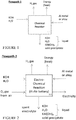
- metallic Al or an Al alloy is contacted with an alkaline aqueous solution (pH > 7), that is substantially free of dissolved carbonate, and allowed to chemically react.
- alkaline aqueous solution pH > 7
- a variety of soluble caustic compounds may be used to provide the alkaline condition of pH > 7 including, but not limited to, NaOH, KOH, NH 4 OH, LiOH, organic base hydroxides (e.g. choline base) or a combination thereof.
- the reaction produces energy (heat) and chemical products consisting of gas (H 2 ), liquids (dissolved aluminate compounds), and solids (metal oxide/hydroxide compounds) suspended in the aqueous phase.
- This aqueous phase contains some residual dissolved caustic compound from the original solution.
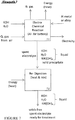
- the Al alloy may contain alloying elements beneficial to the operation of Al-Air batteries such as, but not limited to, Mg, Ga, and Sn. A flow chart showing an embodiment of such process is shown in Figure 1 .
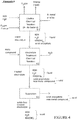
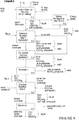
- this invention provides a process as described in Example 2 and in Figure 2 .
- metallic Al or an Al alloy anode is contacted with an alkaline aqueous electrolyte solution (pH > 7), that is substantially free of dissolved carbonate in an electrochemical cell.
- alkaline aqueous electrolyte solution pH > 7
- a variety of soluble caustic compounds may be used to provide the alkaline condition of pH > 7 including, but limited to: NaOH, KOH, NH 4 OH, organic base hydroxides (choline base).
- the electrochemical reaction that occurs produces energy (electricity and heat) and chemical products consisting of gas (H 2 ), liquids (dissolved aluminate compounds), and solids (metal oxide/hydroxide compounds) suspended in the aqueous phase.
- This aqueous phase from the electrochemical cell is also known as spent electrolyte and contains some residual dissolved caustic compound from the original solution.
- the Al alloy may contain alloying elements beneficial to the operation of Al-Air batteries such as, but not limited to, Mg, Ga, and Sn. A flow chart showing an embodiment of such process is shown in Figure 2 .
- this invention provides a method for regeneration of an electrolyte from a metal-air battery, said method comprising:
- this invention provides a method for regeneration of an electrolyte from a metal-air battery, said method comprising:
- this invention provides methods for regeneration of an electrolyte by separating LDH from an electrolyte solution.
- the methods of regeneration of an electrolyte further include a re-digestion step (following the providing step), wherein the re-digestion comprises heating and agitating the electrolyte to re-dissolve aluminum tri-hydroxide precipitate.
- the methods of regeneration of an electrolyte further include adding water to the electrolyte solution (prior to the separating step of the LDH) causing precipitation of aluminum tri-hydroxide (ATH).
- ATH is removed from said solution.
- the methods for regeneration of an electrolyte by separating and collecting LDH from an electrolyte solution undergoes a treatment step comprising removal of residual aluminate from said electrolyte solution by precipitation of aluminum tri-hydroxide which is further separated/collected.
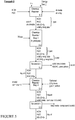
- this invention provides a process for the formation of LDH as described in Example 3.
- an aqueous aluminate solution such as the solution formed in Example 1 is treated to chemically convert aluminate compounds into a mixed metal solid suspended in the aqueous solution (e.g. LDH), and to produce a dissolved caustic compound.
- the mixed metal solid can be separated from the solution.
- the dissolved caustic compound can be re-used.
- the conversion/regeneration is accomplished by addition of metal B ions (oxide, hydroxide, salt of metal B ions) to the aqueous aluminate solution.
- the metal B ions can be added as solid powder, as an aqueous solution of dissolved metal salt or a mixture thereof.
- the reaction between the dissolved aluminate and the added metal B ions produces a caustic compound that remains dissolved in the aqueous solution and a solid precipitate (ATH) suspended in the solution.
- the dissolved caustic compounds are typically the original caustic chemicals used in the reaction with the metallic Al or alloy. These include, but are not limited to, NaOH, KOH, NH 4 OH and organic base hydroxides (choline base). If the starting solution is substantially free of dissolved carbonate (and is kept that way via exclusion of air) the precipitate is a carbonate-free mixed metal hydroxide, one form of which is known as meixnerite [Mg 6 Al 2 (OH) 18 •4H 2 O]. A flow chart showing an embodiment of such process is shown in Figure 3 .
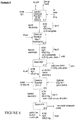
- this invention provides a process for the formation of LDH as described in Example 4.
- aqueous electrolyte solution such as the solution formed in Example 2 is treated to chemically convert (regenerate) the dissolved aluminate compounds producing a dissolved caustic compound and a mixed metal solid (LDH) suspended in the aqueous electrolyte.
- the conversion/regeneration is accomplished by addition of metal B ions (oxide, hydroxide, salt) to the aqueous electrolyte.
- the metal B ions can be added as solid powder, as an aqueous solution of dissolved metal salt or a mixture thereof.
- the reaction between the dissolved aluminate and the added metal B ions produces a solid precipitate (LDH) and produces a caustic compound (e.g. KOH) that remains dissolved in the aqueous electrolyte.
- the dissolved caustic compounds are typically the original caustic chemicals used in the electrolytic reaction with the metallic Al or alloy. These include, but are not limited to, NaOH, KOH, NH 4 OH and organic base hydroxides (choline base). If the starting electrolyte is substantially free of dissolved carbonate (and is kept that way via exclusion of air) the precipitate is a carbonate-free mixed metal hydroxide, one form of which is known as meixnerite [Mg 6 Al 2 (OH) 18 •4H 2 O]. A flow chart showing an embodiment of such process is shown in Figure 4 .
- this invention provides a process for the regeneration of the alkaline solution and formation of LDH and ATH described in Example 5 and in Figure 5 .
- the aqueous aluminate solution described in Example 1 is used in a stepwise treatment process to regenerate the original caustic compound and sequentially produce two different solid precipitates (ATH and LDH).
- ATH and LDH solid precipitates
- water is added to the aluminate solution to cause a hydrolysis reaction that produces a precipitate of aluminum tri-hydroxide [Al(OH) 3 ] also known as ATH.
- Al(OH) 3 aluminum tri-hydroxide
- the hydrolysis reaction also generates a caustic compound that remains dissolved in the aqueous solution along with unreacted aluminate.
- the solid ATH is removed from the solution and the solids-free solution undergoes a second processing step.
- a metal B ion (oxide, hydroxide, salt) is added to the aqueous aluminate solution.
- the metal B ion can be added as solid powder, as an aqueous solution of dissolved metal salt or a mixture thereof.
- the reaction between the dissolved aluminate and the added metal B ion produces a caustic compound that remains dissolved in the aqueous solution and a solid precipitate (LDH) suspended in the solution.
- the dissolved caustic compounds are typically the original caustic chemicals used in the reaction with the metallic Al or alloy.
- the precipitate is a carbonate-free mixed metal hydroxide, one form of which is known as meixnerite [Mg 6 Al 2 (OH) 18 •4H 2 O].
- meixnerite Mg 6 Al 2 (OH) 18 •4H 2 O.
- this invention provides a process for the regeneration of an electrolyte solution and formation of LDH and ATH as described in Example 6.
- a stepwise process is described, using spent electrolyte solution such as the solution described in Example 2.
- the stepwise process comprises regeneration of an original caustic compound and a sequential production of two different solid precipitates (ATH and LDH).
- the first step water is added to the spent electrolyte (aluminate) solution to cause a hydrolysis reaction that produces a precipitate of aluminum tri-hydroxide [Al(OH) 3 ] also known as ATH.
- the hydrolysis reaction also generates a caustic compound that remains dissolved in the treated electrolyte along with unreacted aluminate.
- the solid ATH is removed from the solution and the solids-free treated electrolyte undergoes a second processing step.
- metal B ion oxide, hydroxide, salt
- the metal B ion can be added as solid powder, as an aqueous solution of dissolved metal salt or a mixture thereof.
- the reaction between the dissolved aluminate in the treated electrolyte and the added metal B ion produces a caustic compound that remains dissolved in the aqueous solution and a solid precipitate (LDH) suspended in the treated electrolyte.
- the dissolved caustic compounds are typically the original caustic chemicals used in the reaction with the metallic Al or alloy. These include, but are not limited to, NaOH, KOH, NH 4 OH and organic base hydroxides (choline base). If the starting solution is substantially free of dissolved carbonate (and is kept that way via exclusion of air) the precipitate is a carbonate free mixed metal hydroxide, one form of which is known as meixnerite [Mg 6 Al 2 (OH) 18 •4H 2 O].
- this invention provides a process as described in example 7.
- a spent electrolyte solution (such as the solution described in example 2) undergoes an initial processing step prior to the subsequent treatments.
- This initial step known as re-digestion, consists of heating and agitating the spent electrolyte to re-dissolve any aluminum tri-hydroxide precipitate that may have formed during storage of the spent electrolyte prior to the subsequent treatments.
- the spent electrolyte can be treated using any of the methods described previously in Examples 3, 4, 5 or 6. A flow chart showing an embodiment of such process is shown in Figure 7 .
- this invention provides a process as described in the example shown in Figure 8 .
- metal B ion oxide, hydroxide, salt
- the metal B ion can be added as solid powder, as an aqueous solution of dissolved metal salt or a mixture thereof.
- the reaction between the dissolved aluminate in the spent electrolyte and the added metal B ion produces a caustic compound that remains dissolved in the electrolyte, along with some unreacted aluminate, and a solid precipitate (LDH) suspended in the treated electrolyte.
- the dissolved caustic compounds are typically the original caustic chemicals used in the reaction with the metallic Al or alloy. These include, but are not limited to, NaOH, KOH, NH 4 OH and organic base hydroxides (choline base).
- the precipitate is a carbonate-free mixed metal hydroxide, one form of which is known as meixnerite [Mg 6 Al 2 (OH) 18 •4H 2 O].
- meixnerite Mg 6 Al 2 (OH) 18 •4H 2 O.
- Contact with air or a process gas stream containing CO 2 will result in removal of CO 2 from the gas and incorporation of the CO 2 into the precipitate solid structure as carbonate.
- the contact with CO 2 described above results in fixation of the gaseous CO 2 into a solid form and produces a solid hydroxy-carbonate material, one form of which is known as hydrotalcite [Mg 6 Al 2 (OH) 16 CO 3 •4H 2 O].
- the solid precipitate is removed from the treated electrolyte prior to the second treatment step.
- the residual aluminate in the solids-free treated electrolyte solution is removed by precipitation of aluminum tri-hydroxide.
- the precipitation can be accomplished via a number of methods. Examples of these methods include, but are not limited to, hydrolysis (previously described), electrochemical reaction and phoresis technology.
- hydrolysis previously described
- electrochemical reaction electrochemical reaction
- phoresis technology phoresis technology.
- the original caustic metal compound is regenerated and remains dissolved in the treated electrolyte solution.
- the aluminum tri-hydroxide precipitate is removed from the treated electrolyte solution and the solids-free solution is suitable for reuse as electrolyte in the Al-Air battery.
- a flow chart showing an embodiment of such a process is shown in Figure 8 .
- this invention describes a system for production of energy from aluminum metal wherein the system includes a reagent regeneration system that can be easily used for the production of a valuable material as a by-product.
- this invention describes a system for chemical production of energy from aluminum metal that includes a reagent regeneration system that can be easily used for the production of a valuable material as a by-product.
- systems described herein are reagent regeneration systems.
- this invention provides a process as described for example in Figure 9 .
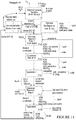
- Figure 9 demonstrates a process comprising the sequence of stepwise treatment pathways described in Examples 5, 6 and 7, with modification of co-solvent application on the step of hydrolysis (process 9.3).
- Said co-solvent is liquid that is added, along with water, to the spent electrolyte at the hydrolysis step, which improves the process efficiency regarding the conversion of aluminate compound into ATH, and allows the reduction of the amount of water added to the electrolyte and the alkali concentration decrease corresponding to that addition.
- co-solvent is recovered from the mixture (e.g. by distillation), and recycled in the process.
- Co-solvent recovery may be performed before the solids separation step (as shown in Figure 9 ), or after that.
- co-solvents are alcohols (such as methanol, ethanol, iso-propanol), ketones, or other organic solvents.
- this invention provides a process as described in the example shown in Figure 10 .
- a process whereby the sequence of stepwise treatment pathways described in Example 9 is described, with the addition of a re-concentration step.
- the process sequence as described in the previous example ( Figure 9 ) produces the solids-free solution with fairly low (or negligible) content of aluminate compound, while almost all the alkali is recovered as free hydroxide. However, this solution is diluted to a certain extent, because of water addition at the hydrolysis step. In order to restore the initial alkali concentration (and, e.g. re-use this solution as an electrolyte for battery operation) excessive water is removed by evaporation (process step 10.8). Water, evaporated from electrolyte at the re-concentration step is re-used in the process for the hydrolysis reaction.
- this invention provides a process as described in the example shown in Figure 11 .
- a process whereby the sequence of stepwise treatment pathways described in example 10 is shown, while the re-concentration process is carried out by forward osmosis in a membrane apparatus (instead of an evaporation process).
- Said apparatus essentially consists of two chambers divided by a semi-permeable membrane.
- Said membrane has a property of selective permeability to alkali, while being much less permeable (or practically impermeable) to the aluminate compound. Examples of such membranes are cellulose films (e.g.
- the process may be implemented in static or continuous flow apparatus, which provides the mass transfer of alkali through semi-permeable membrane from spent electrolyte flow, which enters the treatment process, to the regenerated electrolyte flow, coming out of the treatment sequence.
- the driving force of the process is alkali concentration gradient, which is in favor of alkali transport to the regenerated electrolyte flow.
- water transport may occur as well to a certain extent, while water concentration gradient is in the opposite direction - from the regenerated electrolyte flow (higher water content) to the spent electrolyte (lower water content).
- the result of this process step is more concentrated regenerated electrolyte (which is in favor of its further utilization), and spent electrolyte with less alkali content (which is in favor of further regeneration processes).
- this invention describes a system for electro-chemical production of energy from aluminum metal and oxygen (air) that includes a reagent regeneration system that can be easily used for the production of a valuable material as a by-product.
- this invention describes a system for production of energy, said system comprises an energy production unit and a reagent regeneration unit, wherein said energy production unit comprises a cathode, an anode and an electrolyte solution, wherein said anode comprises a metal or a metal alloy and wherein said alloy comprises metals A and B.
- the system described herein includes an energy production unit and a reagent regeneration unit.
- the energy production unit and the regeneration units comprise inlets and outlets for introduction and transfer of materials to and from said units.
- the energy production unit is a hydrogen generator or an aluminum-air battery.
- the energy production unit utilizes oxygen from said air.
- the reagent regeneration unit or combination thereof comprises an inlet for introduction of metal B ions.
- the metal B ion is selected from a group consisting of Ca, Mg, Ba, Sr and compounds thereof.
- the metal B ion is a metal-oxide, or metal-hydroxide, or water-soluble salt.
- systems described herein produce aluminum tri-hydroxide (ATH). In one embodiment, systems described herein produce aluminum-based layered double hydroxides (LDH). In one embodiment, systems described herein produce ATH and LDH.
- ATH aluminum tri-hydroxide
- LDH aluminum-based layered double hydroxides
- systems described herein produce both ATH and LDH products, while the ratio between ATH and LDH production may be intentionally varied in a wide range by changing the conditions of the regeneration process.
- energy is produced by the energy production unit while solid LDH is produced in the energy production unit, regeneration unit or a combination thereof.
- systems described herein comprise two principal units, which can work either in parallel as a single unit, or can be independently operated as two standalone units.
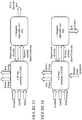
- a scheme showing such system is represented in Figure 13 .
- the system comprises an energy production unit (EU) and a reagent regeneration unit (RU).
- systems described herein refer to the reagent regeneration unit.
- the energy production unit comprises one of the following: an aluminum-air battery or a hydrogen generator (aluminum-alkaline) connected to a hydrogen fuel cell.
- the operation cycle of the EU ends up having the aluminum metal dissolved in the aqueous electrolyte solution that forms the outgoing flow of reaction products, the spent electrolyte (SE).
- the SE comprises essentially aqueous aluminate solution.
- the SE is transferred into the reagent regeneration unit (RU).
- the RU consists essentially of two principal blocks:
- the system consumes aluminum metal, oxygen (air) and water, and produces nearly solid ATH that may be used for technical needs, or transferred to an aluminum plant for aluminum metal production.
- a system described herein comprises two principal units, which can work either in parallel as a single unit, or can be independently operated as two standalone units.
- a scheme showing such a system is represented in Figure 14 .
- the system comprises an energy production unit (EU) and a reagent regeneration unit (RU).
- EU energy production unit
- RU reagent regeneration unit
- this invention provides a reagent regeneration process for electrolyte solution, wherein metal B ions (bivalent metal such as Ca, Mg, Ba, Sr) can be added to the system during system operation.
- metal B ions bivalent metal such as Ca, Mg, Ba, Sr
- the metal B ion is added in different forms: as an alloying metal, as oxide, as hydroxide, or as a water-soluble salt without affecting the energy production operation cycle, and without affecting energy production performance.
- Adding metal B ions into the system includes, but is not limited to, the following forms:
- LDH layered double hydroxide
- LDH examples include meixnerite, hydrotalcite and hydrocalumite.
- LDH is formed from metal B ions and aluminate compound molecule of alkalinity is released.
- the same RU without any substantial change can produce ATH and regenerated alkalinity (at usual operation mode) and can produce LDH compound and regenerated alkalinity if metal B ion is added into the system.
- the two production schemes (ATH and LDH), as shown on Figures 13 and 14 can be done at the same time or independently.
- operation of systems described herein is easily and flexibly switched from ATH-production mode to LDH-production mode, or to combined operation.
- LDH compounds produced by the methods of this invention and systems described herein are used as polymer fillers, fire retardants, catalysts and catalyst supports, drugs, anion-exchange materials, impurities scavengers or quality ceramic precursors.
- metal alloys described herein comprise more than two metals. In one embodiment, the metal alloys comprise metal A, metal B and metal C. In one embodiment, the metal alloys comprise metal A, metal B and other metals. In one embodiment the metal alloys comprise any number of metals.
- this invention describes a system for the treatment of aqueous alkaline waste solution comprising dissolved hydroxide ions of metal A, wherein the system comprises:
- metal A is aluminum and the dissolved hydroxide ions of metal A are aluminate [Al(OH) 4 - ] ions.
- the system further produces metal A-containing solid products.
- the metal A-containing solid products comprise aluminum-containing solid products comprising ATH, LDH or a combination thereof.
- the system further comprises: temperature control means; distillation and reflux means; membrane separation means, or a combination thereof.
- the source of the aqueous alkaline waste solution comprising dissolved hydroxide ions of metal A is a chemical waste solution from a chemical process comprising oxidation of metal A, or wherein the source of the aqueous alkaline waste solution comprising dissolved hydroxide ions of metal A is spent electrolyte from an electrochemical process comprising oxidation of metal A.
- the system is modified to operate in a corrosive solution environment and in the presence of an organic co-solvent to perform the desired operations of the system.
- system is located on-board a vehicle. In another embodiment, the system is off-board a vehicle.
- this invention provides a method for the treatment of aqueous alkaline waste solution comprising dissolved hydroxide ions of metal A, the method comprising:
- the metal A is aluminum and the hydroxide ions of metal A is aluminate [Al(OH) 4 - ] and the solid metal A hydroxides is ATH [Al(OH) 3 ].
- the source of the aqueous alkaline waste solution comprising dissolved hydroxide ions of metal A is a chemical waste solution from a chemical process comprising oxidation of metal A, or wherein the source of the aqueous alkaline waste solution comprising dissolved hydroxide ions of metal A is spent electrolyte from an electrochemical process comprising oxidation of metal A.
- metal A is dissolved in an alkaline solution such that metal A forms dissolved metal A ions in the alkaline solution.
- producing solid metal A hydroxides from the waste solution comprises separating, or precipitating and separating, the solid metal A hydroxides from the solution.
- precipitating solid metal A hydroxides is done using an electrolysis process, a dialysis process, a hydrolysis process, osmosis, phoresis or a combination thereof.
- the hydrolysis process comprises adding water to the waste solution, thus causing precipitation of solid metal A hydroxides.
- producing solid metal A hydroxides involves the removal of dissolved hydroxide ions of metal A from the solution by decomposition of the dissolved hydroxide ions of metal A to solid metal A hydroxides and to free alkali hydroxides.
- producing and separating LDH from the waste solution comprises:
- the waste solution undergoes re-digestion, wherein the re-digestion comprises heating and agitating the waste solution to re-dissolve metal A solid hydroxide precipitate.
- this invention provides a method for the treatment of aqueous alkaline waste solution comprising dissolved hydroxide ions of metal A and metal B ions, the method comprising precipitating LDH from the aqueous alkaline waste solution.
- the precipitation occurs spontaneously.
- the source of the aqueous alkaline waste solution comprising hydroxide ions of metal A, and metal B ions is a metal alloy comprising metal A and metal B.
- the aqueous alkaline waste solution comprising hydroxide ions of metal A, and metal B ions, is formed from the metal alloy comprising metal A and metal B by a chemical or by an electrochemical process.
- metal A and metal B are dissolved in an alkaline solution such that the metal A forms metal A ions and the metal B forms metal B ions in the alkaline solution.
- the metal B ion is selected from a group consisting of Ca, Mg, Ba, Sr and compounds thereof.
- the electrochemical process is the operation of a metal-air battery.
- the metal-air battery comprises a cathode, an anode and an electrolyte solution, wherein the anode comprises the metal alloy comprising metals A and B.
- metal B ions comprise Mg 2+ ions.
- metal A is aluminum.
- the waste solution comprising NaOH, KOH, NH 4 OH, LiOH or organic base hydroxides (e.g. choline base).
- concentration of the KOH or NaOH solution varies between 20 and 45 wt%.
- the method further comprises: filtration; centrifugation; solids cake compression; washing, dewatering and drying; or solvent evaporation, or a combination thereof.
- the LDH comprises Al. In one embodiment, the LDH comprises meixnerite, hydrotalcite (HTC), or a combination thereof.
- the separating step comprises filtration, centrifugation, washing, solvent evaporation, compression, decanting, or a combination thereof.
- this invention describes a system for production of energy, wherein the system comprises an energy production unit and the solution treatment system as described herein above, wherein the energy production unit comprises a cathode, an anode and an electrolyte solution, wherein the anode comprises a metal or a metal alloy and wherein the alloy comprises metals A and B.
- the energy production unit and the solution treatment system comprise inlets and outlets for introduction and transfer of materials to and from the units.
- the energy production unit is a hydrogen generator or an aluminum-air battery. In one embodiment, the energy production unit utilizes oxygen from the air.
- energy is produced by the energy production unit while solid LDH is produced in the energy production unit, in the solution treatment system or a combination thereof.
- the amount of non-alkali metal ions, the amount of aluminates or the amount of other non-alkali metal-hydroxide ions in solutions used in processes of this invention is reduced.
- the amount of such metal ions or hydroxide ions is reduced by processes of this invention by 90%. In one embodiment, it is reduced by 80% from its amount before the process. In one embodiment, the amount of such ions is reduced to below 50%, below 40%, below30%, below 20%, below10%, below 5%, below 1% or below 0.1% of the amount of these ions before processing by systems and methods of this invention. In one embodiment, % is weight percent.
- the amount of these ions is zero in solutions regenerated by systems and methods of this invention. In one embodiment, the amount of these ions is negligible in solutions regenerated by systems and methods of this invention.
- aluminate and “aluminate compound” refer to hydrated aluminate, of the general formula MAl(OH) 4 (where M is a metal other than aluminum), presenting in the aqueous solution, in the dissolved form.
- aluminate ion in the description of this invention refers to tetrahydroxyaluminate ion of formula Al(OH) 4 - .
- this invention provides methods wherein a metal comprising metal A, or a metal alloy comprising metal A and metal B, is dissolved in an alkaline solution wherein the dissolution is performed chemically or electrochemically.
- Chemical dissolution of a metal or a metal alloy means that an oxidation/reduction process between the metal and a reagent in the solution occurs, resulting in the formation of metal A ions/metal B ions from metal A/metal B.
- metal A ions/metal B ions dissolve in the solution or in the liquid that is in contact with the metal/metal alloy. This process is a chemical process.
- Electro-chemical dissolution of a metal or a metal alloy means that an oxidation/reduction process of a metal in one electrode occurs in conjunction with an oxidation/reduction process occurring on another electrode and the two electrodes are electrically-connected (e.g. in a discharge mode of a battery).
- Such an electrochemical process results in the formation of metal A ions/metal B ions from metal A/metal B. Once metal A ions/metal B ions are formed, they dissolve in the solution or in the liquid that is in contact with the metal/metal alloy. This process is an electro-chemical process.
- On-board means that the unit or system referred to is placed or located “on” or “in” or “within” or “on top” of the vehicle in which the battery is installed (e.g. on board the car).
- Off-board means that the unit or system referred to is placed or located at a place outside or at a distance from the vehicle carrying a battery of the invention. Off-board means not “on” or not “in” or not “within” or not “on top” of the vehicle in which the battery is installed (e.g. off-board the car). In one embodiment, an off board location is a gas station, a road-side station, a garage, a parking lot, a home, a warehouse, or an auto-care center etc.
- Metal A and/or metal B and other metals used in methods of this invention and systems described herein as pure metals or in alloys comprise any metal known in the art.
- metal A and/or metal B and other metals used in methods of this invention and systems described herein as pure metals or in alloys comprise Al, Ca, Zn, Fe, Ni, La, Mg, Li, Sn, Zn, Ga or combinations thereof.
- metals used in methods of this invention and systems described herein comprise Cu, Cr, Co, In or combinations thereof.
- Alkaline or alkaline solution is a basic solution.
- Alkaline solution is a solution with a pH value greater than 7.0.
- An alkaline solution is a solution comprising a base.
- An example of an alkaline solution is a solution of KOH or NaOH dissolved in water.
- caustic solutions are highly basic solutions or concentrated alkaline solutions.
- Embodiments of this invention that refer to spent electrolyte may refer to any other alkaline solution that comprises hydroxides and both alkali and non-alkali ions.
- Embodiments of this invention that refer to spent electrolyte may refer to any other alkaline solution that comprises non-alkali metal ions and hydroxides.
- a metal alloy is a mixture comprising two or more metals.
- Aluminates are ions comprising aluminum ions and hydroxide ions.
- Aluminates can be represented by Al(OH) 4 - .
- Embodiments of this invention that refer to aluminates may refer to other metal hydroxide ions as well (i.e. hydroxides wherein the metal is not Al but another metal).
- the system for the treatment of aqueous alkaline waste solution is the reagent regeneration unit.
- spent electrolyte is used electrolyte.
- spent electrolyte is the electrolyte obtained from a battery following operation of the battery.
- free alkali is alkali that is not bound to aluminate.
- Dissolved KOH, NaOH are examples of free alkali.
- Bound alkali, in contrast to free alkali, is alkali that is bound to aluminate or to similar hydroxide ions, e.g. KAl(OH) 4 .
- the term “a” or “one” or “an” refers to at least one.
- the phrase “two or more” may be of any denomination, which will suit a particular purpose.
- "about” or “approximately” may comprise a deviance from the indicated term of + 1 %, or in some embodiments, - 1 %, or in some embodiments, ⁇ 2.5 %, or in some embodiments, ⁇ 5 %, or in some embodiments, ⁇ 7.5 %, or in some embodiments, ⁇ 10 %, or in some embodiments, ⁇ 15 %, or in some embodiments, ⁇ 20 %, or in some embodiments, ⁇ 25 %.
- Al 2.5 Mg metal alloy is contacted with 30 wt% aqueous KOH that is kept substantially free of dissolved carbonate by exclusion of air.
- the resulting chemical reaction produces heat that raises the solution temperature from ambient to > 50 °C.
- the reaction produces hydrogen gas, dissolved potassium aluminate [KAl(OH) 4 ] and a solid precipitate of meixnerite [Mg 6 Al 2 (OH) 18 •4H 2 O] suspended in the aqueous solution.
- the ending solution will typically also contain some residual dissolved caustic compound (KOH in this example).
- Al 2.5 Mg metal alloy is contacted with 30 w% aqueous KOH that is kept substantially free of dissolved carbonate by exclusion of air in an electrochemical cell.
- the resulting electrochemical chemical reaction produces electricity and heat that raises the solution temperature from ambient to > 50 °C.
- the reaction produces hydrogen gas, dissolved potassium aluminate [KAl(OH) 4 ] and a solid precipitate of meixnerite [Mg 6 Al 2 (OH) 18 •4H 2 O] suspended in the aqueous solution.
- the ending solution will typically also contain some residual dissolved caustic compound (KOH in this example).
- Magnesium oxide powder is added to a carbonate free aqueous solution consisting of 4 w% KOH and 56 w% potassium aluminate [KAl(OH) 4 ].
- the resulting chemical reaction produces KOH which remains dissolved in solution and a solid precipitate of meixnerite [Mg 6 Al 2 (OH) 18 •4H 2 O] suspended in the solution.
- the ending treated aqueous solution can also contain unreacted dissolved potassium aluminate.
- Magnesium oxide powder is added to a carbonate-free aqueous spent electrolyte consisting of 4 w% KOH and 56 w% potassium aluminate [KAl(OH) 4 ].
- the resulting chemical reaction produces KOH which remains dissolved in the electrolyte and a solid precipitate of meixnerite [Mg 6 Al 2 (OH) 18 •4H 2 O] suspended in the electrolyte solution.
- the ending solution can also contain unreacted dissolved potassium aluminate.
- a carbonate-free aqueous solution consisting of 4 wt% KOH and 56 wt% potassium aluminate [KAl(OH) 4 ].
- the volume ratio of water added can be anywhere from 0.5 to 3 times the volume of aluminate solution.
- the resulting chemical reaction hydrolysis
- KOH which remains dissolved in solution
- Al(OH) 3 aluminum tri-hydroxide
- the ending treated aqueous solution can also contain unreacted dissolved potassium aluminate.
- the precipitate [Al(OH) 3 ] is removed and the solids free aluminate solution undergoes additional treatment.
- magnesium oxide powder is added to the KOH/potassium aluminate solution.
- the resulting chemical reaction produces additional KOH which remains dissolved in the electrolyte and a solid precipitate of meixnerite [Mg 6 Al 2 (OH) 18 •4H 2 O] suspended in the electrolyte solution.
- the ending solution can also contain residual unreacted dissolved potassium aluminate.
- contact with air or a process gas stream containing CO 2 will result in removal of CO 2 from the gas and incorporation of the CO 2 into the precipitate solid structure as carbonate.
- the contact with CO 2 described above results in fixation of the gaseous CO 2 into a solid form and produces the solid hydroxy-carbonate material known as hydrotalcite [Mg 6 Al 2 (OH) 16 CO 3 •4H 2 O].
- water is added to a carbonate-free aqueous spent electrolyte consisting of 4 w% KOH and 56 w% potassium aluminate [KAl(OH) 4 ].
- the volume ratio of water added can be anywhere from 0.5 to 3 times the volume of spent electrolyte solution.
- the resulting chemical reaction hydrolysis
- KOH which remains dissolved in solution
- Al(OH) 3 aluminum tri-hydroxide
- the ending treated electrolyte solution can also contain unreacted dissolved potassium aluminate.
- the precipitate is removed and the solids-free, treated, electrolyte solution undergoes additional treatment.
- magnesium oxide powder is added to the KOH/potassium aluminate solution.
- the resulting chemical reaction produces additional KOH which remains dissolved in the electrolyte and a solid precipitate of meixnerite [Mg 6 Al 2 (OH) 18 •4H 2 O] suspended in the electrolyte solution.
- the ending solution can also contain residual unreacted dissolved potassium aluminate.
- contact with air or a process gas stream containing CO 2 will result in removal of CO 2 from the gas and incorporation of the CO 2 into the precipitate solid structure as carbonate.
- the contact with CO 2 described above results in fixation of the gaseous CO 2 into a solid form and produces the solid hydroxy-carbonate material known as hydrotalcite [Mg 6 Al 2 (OH) 16 CO 3 •4H 2 O].
- the apparatus can be defined by describing the equipment used to perform each process step.
- metal or metal alloy is contacted with aqueous alkaline electrolyte.
- an apparatus which essentially is a closed vessel made of alkali-resistant material, having an internal setup, allowing the arrangement of metal pieces in such a way that electrolyte may flow around in a contact with the metal pieces surface.
- Hydrogen gas that evolves as a result of reaction of metal with electrolyte, leaves the vessel through the gas exhaust line on the vessel top, and may be further used as a fuel for production of energy.
- the reaction heat is absorbed by the electrolyte mass, and then removed from the electrolyte flow by any means of heat exchange, for further utilization.
- alkaline electrolyte in the vessel accumulates products of metal dissolution.
- the metal is pure aluminum metal and the product of metal dissolution is alkali aluminate compound.
- the metal is aluminum alloy, and the products of metal dissolution are alkali aluminate compound and LDH solid precipitate.
- This apparatus comprising closed vessel, means of contacting metal with electrolyte in the vessel, hydrogen exhaust line, means for electrolyte circulation, and means of heat exchange, is schematically shown in Figure 1 (1.1), Figure 3 (3.1), and Figure 5 (5.1).
- metal appears in the shape of the electrode(s), and the electrode(s) is (are) contacted with alkaline electrolyte in the apparatus, which essentially is a metal-air battery, fed by oxygen or air.
- the apparatus which essentially is a metal-air battery, fed by oxygen or air.
- chemical energy of metal is converted preferably to electric energy and heat.
- a process of metal direct reaction with electrolyte may occur as well, which will result in hydrogen evolution.
- the apparatus facilitating the process comprising metal-air battery, electrolyte tank with hydrogen gas exhaust line, means of electrolyte circulation, and heat exchange, is schematically shown in Figure 2 (2.1), Figure 4 (4.1), Figure 6 (6.1), Figure 7 (7.1), Figure 8 (8.1), Figure 9 (9.1), Figure 10 (10.1), and Figure 11 (11.1).
- Electrolyte utilized in chemical and electrochemical processes mentioned in this section (referred to as spent electrolyte) is subject to further treatment according to methods of this invention.
- spent electrolyte of processes of energy production consists of dissolved metal, e.g. Al, in the form of alkali aluminate, e.g potassium aluminate (KAl(OH)4), and a portion of the starting potassium hydroxide (KOH) electrolyte.
- alkali aluminate e.g potassium aluminate (KAl(OH)4)
- KOH potassium hydroxide
- the equilibrium solubility of the KAl(OH) 4 must be changed. This can be accomplished by lowering the concentrations of KOH and KAl(OH) 4 . Lowering the concentrations can be done by general dilution, adding water or another liquid phase, or by active transport of water and/or KOH to another fluid.
- a temperature controlled agitated reactor vessel is the apparatus of choice.
- the same degree of dilution/agitation can be accomplished in a continuous flowing apparatus by producing turbulent flow inside a piping circuit.
- This apparatus is shown in Figure 3 (3.2), Figure 4 (4.2), Figure 5 (5.2), , Figure 6 (6.2), , Figure 8 (8.3), Figure 9 (9.3), Figure 10 (10.3), and Figure 11 (11.4).
- co-solvent When a co-solvent is used in ATH precipitation, the co-solvent must be removed from the resulting KOH solution before production of LDH can begin.
- the co-solvent can be removed by exploiting the differences in chemical and physical properties between the organic co-solvent and the aqueous KOH solution. These properties include, but are not limited to, vapor pressure, polarity and molecular size. Separation devices based on these properties are:
- the solution after co-solvent recovery is now suitable for use in production of LDH products.
- a suitable solid phase material must be added to the solution and brought into intimate contact with the solid phase material at elevated temperature.
- the choice of solid phase material is based on the type of LDH desired and can be, but is not limited to, MgO, Mg(OH) 2 , MgCO 3 , CaO, Ca(OH) 2 , CaCO 3 , LiO, LiOH, Li 2 CO 3 and other metal oxides, hydroxides, or carbonates.
- a soluble metal salt to the solution to produce the desired LDH such as, but not limited to, metal chlorides, nitrates, or sulfates.
- care must be taken in selecting metal chemicals that do not detrimentally affect the performance of the KOH solution in subsequent Al-air battery reuse applications.
- the devices for LDH production are functionally similar to the devices previously used for ATH production such as the temperature controlled, agitated reactor vessel and/or the turbulent circulating liquid system.
- the major difference being that LDH production requires a higher temperature than ATH production and does not benefit from the use of a co-solvent.
- LDH The act of producing LDH also generates additional free KOH in solution. Both the LDH solids and the dissolved KOH need to be recovered.
- This solids/liquid separation can be accomplished using separation devices modified to handle the corrosive nature of the solution. These devices include, but are not limited to, filter-presses, centrifuges, or functionally similar devices for solids-liquid separation.
- the key feature of the device is that the recovery of both solid LDH and KOH solution must be maximized.
- a schematic representation of these devices is shown in Figure 5 (5.5), Figure 6 (6.5), Figure 8 (8.6), Figure 9 (9.7), Figure 10 (10.7), and Figure 11 (11.8).
- the KOH solution remaining after the ATH and LDH production steps is ultimately intended to be reused in Al-air battery applications. As such it must be supplied at the KOH concentration needed for optimum battery operation. It is likely that the KOH solution present after ATH and LDH production will be less than the desired concentration for optimum battery reuse and will require concentration adjustment. This concentration adjustment can be accomplished in several ways, such as:
- the apparatus for KOH addition can be an agitated mixing vessel with provision for metered addition of solid or liquid KOH.
- the apparatus for water removal is functionally similar to what was previously described for co-solvent removal:
- the devices previously described can be operated in a stepwise fashion in either continuous or batch mode. It is also possible to combine, include or exclude individual apparatus and/or process steps as necessary to achieve desired process outputs.
Landscapes
- Chemical & Material Sciences (AREA)
- Engineering & Computer Science (AREA)
- Organic Chemistry (AREA)
- Life Sciences & Earth Sciences (AREA)
- Manufacturing & Machinery (AREA)
- Sustainable Development (AREA)
- Chemical Kinetics & Catalysis (AREA)
- Electrochemistry (AREA)
- General Chemical & Material Sciences (AREA)
- Inorganic Chemistry (AREA)
- Geology (AREA)
- Sustainable Energy (AREA)
- Mechanical Engineering (AREA)
- Power Engineering (AREA)
- Transportation (AREA)
- Materials Engineering (AREA)
- Metallurgy (AREA)
- Hybrid Cells (AREA)
- Compounds Of Alkaline-Earth Elements, Aluminum Or Rare-Earth Metals (AREA)
- Solid-Sorbent Or Filter-Aiding Compositions (AREA)
- Removal Of Specific Substances (AREA)
Claims (9)
- Verfahren zur Regenerierung eines verbrauchten Elektrolyten aus einem elektrochemischen Prozess, umfassend eine Oxidation von Aluminium, wobei der verbrauchte Elektrolyt eine wässrige alkalische Lösung umfasst, die gelöste Hydroxidionen von Aluminium umfasst, wobei das Verfahren in einem System durchgeführt wird, das Folgendes umfasst:• mindestens einen Sammelbehälter• fest-flüssig-Trennmittel• Konzentrationsmittel;• Rührmittel;• einen Eingang für eine Zusetzung fester und flüssiger Reagenzien;und das Verfahren Folgendes umfasst:Einführen der wässrigen alkalischen Lösung, die gelöste Hydroxidionen von Aluminium umfasst, in das System;Produzieren und Trennen aluminiumhaltiger Festprodukte, die geschichtete Doppelhydroxide (LDH) umfassen und die wahlweise feste Aluminiumhydroxide umfassen, aus der Lösung, und Reduzieren der Menge der gelösten Hydroxidionen von Aluminium in der Lösung, um so eine regenerierte wässrige alkalische Lösung zu produzieren, die eine reduzierte Menge gelöster Hydroxidionen von Aluminium umfasst oder frei von gelösten Hydroxidionen von Aluminium ist,wobei ein Produzieren und Trennen von LDH aus der Lösung Folgendes umfasst:Zusetzen von Metall-B-Ionen zu der Lösung in dem Sammelbehälter, um eine Fällung von LDH herbeizuführen;Trennen von LDH aus der Lösung; undwahlweises Trocknen von LDH.
- Verfahren nach Anspruch 1, wobei die Hydroxidionen von Aluminium Aluminat [Al(OH)4-] und die festen Aluminiumhydroxide ATH [Al(OH)3] sind und das LDH Aluminium umfasst.
- Verfahren nach Anspruch 1, wobei Aluminium während des elektrochemischen Prozesses in einer alkalischen Lösung gelöst wird, derart dass das Aluminium in der alkalischen Lösung gelöste Aluminiumionen bildet.
- Verfahren nach Anspruch 1, wobei das Produzieren von festen Aluminiumhydroxiden aus der Lösung ein Trennen oder Fällen und Trennen der festen Aluminiumhydroxide aus der Lösung umfasst.
- Verfahren nach Anspruch 4, wobei das Fällen der festen Aluminiumhydroxide unter Verwendung eines Elektrolyseprozesses, eines Dialyseprozesses, eine Hydrolyseprozesses, von Osmose, Phorese oder einer Kombination davon erfolgt.
- Verfahren nach Anspruch 5, wobei der Hydrolyseprozess ein Zusetzen von Wasser zu der Lösung umfasst, um damit eine Ausfällung von festen Aluminiumhydroxiden zu verursachen.
- Verfahren nach Anspruch 1, wobei ein Produzieren fester Aluminiumhydroxide die Entfernung von gelösten Hydroxidionen von Aluminium aus der Lösung beinhaltet, und zwar durch Abbau der gelösten Hydroxidione von Aluminium zu festen Aluminiumhydroxiden und zu freien alkalischen Hydroxiden.
- Verfahren nach Anspruch 1, wobei die Lösung vor der Zusetzung von Metall-B-Ionen eine Redigestion durchläuft, wobei die Redigestion ein Erhitzen und Rühren der Lösung umfasst, um einen festen Hydroxidniederschlag von Aluminium wieder aufzulösen.
- Verfahren nach Anspruch 1, wobei das LDH Meixnerit, Hydrotalcit (HTC) oder eine Kombination davon umfasst.
Applications Claiming Priority (2)
| Application Number | Priority Date | Filing Date | Title |
|---|---|---|---|
| US201461978914P | 2014-04-13 | 2014-04-13 | |
| PCT/IL2015/050399 WO2015159288A1 (en) | 2014-04-13 | 2015-04-13 | Systems and methods for regeneration of aqueous alkaline solution |
Publications (3)
| Publication Number | Publication Date |
|---|---|
| EP3132491A1 EP3132491A1 (de) | 2017-02-22 |
| EP3132491A4 EP3132491A4 (de) | 2017-04-05 |
| EP3132491B1 true EP3132491B1 (de) | 2020-12-02 |
Family
ID=54323562
Family Applications (1)
| Application Number | Title | Priority Date | Filing Date |
|---|---|---|---|
| EP15779173.2A Active EP3132491B1 (de) | 2014-04-13 | 2015-04-13 | Verfahren zur regenerierung einer wässrigen alkalischen lösung |
Country Status (8)
| Country | Link |
|---|---|
| US (1) | US10720659B2 (de) |
| EP (1) | EP3132491B1 (de) |
| CN (1) | CN106663830B (de) |
| CA (1) | CA2945590C (de) |
| ES (1) | ES2855501T3 (de) |
| IL (1) | IL248251B (de) |
| SG (1) | SG11201608524TA (de) |
| WO (1) | WO2015159288A1 (de) |
Families Citing this family (14)
| Publication number | Priority date | Publication date | Assignee | Title |
|---|---|---|---|---|
| EP3419935B1 (de) * | 2016-02-23 | 2024-02-21 | L3Harris Open Water Power, Inc. | Abfallbehandlung in elektrochemischen systemen |
| US20220045390A1 (en) * | 2018-12-20 | 2022-02-10 | Phinergy Ltd. | Alkaline electrolyte regeneration |
| EP3880611A4 (de) * | 2019-04-16 | 2022-02-02 | Phinergy Ltd. | Herstellung von aluminiumoxid hoher reinheit und koprodukten aus verbrauchten elektrolyten von metall-luft-batterien |
| CN110540221A (zh) * | 2019-10-18 | 2019-12-06 | 安徽工业大学 | 以铝-空气电池的废电解质浆料制备镁铝水滑石的方法 |
| US20210194027A1 (en) * | 2019-12-18 | 2021-06-24 | The Florida State University Research Foundation, Inc. | Real time hydrogen self-supplied alkaline membrane fuel cell stack |
| JP7423055B2 (ja) * | 2020-03-26 | 2024-01-29 | アルハイテック株式会社 | 水素の製造に用いられるアルカリ性水溶液の回収方法 |
| US12136713B2 (en) | 2020-05-07 | 2024-11-05 | Form Energy, Inc. | Battery recycling |
| JP7535263B2 (ja) * | 2020-05-25 | 2024-08-16 | アルハイテック株式会社 | 水素製造方法及びその残渣物の再利用方法 |
| CN111769342B (zh) * | 2020-07-15 | 2025-08-08 | 郑州佛光发电设备股份有限公司 | 高效回收反应产物的铝空气电池系统 |
| CN112624168A (zh) * | 2020-12-24 | 2021-04-09 | 宁波烯铝新能源有限公司 | 一种铝空电池的废液处理方法 |
| CN113540602B (zh) | 2021-06-22 | 2023-02-14 | 广东邦普循环科技有限公司 | 一种报废正极浆料的处理方法和应用 |
| CN113697833A (zh) * | 2021-08-09 | 2021-11-26 | 云南创能斐源金属燃料电池有限公司 | 制备水滑石的方法及其应用 |
| CN113620326A (zh) * | 2021-08-20 | 2021-11-09 | 云南创能斐源金属燃料电池有限公司 | 铝空气电池电解废液制备镁铝锌水滑石的方法及其用途 |
| CN114044533A (zh) * | 2021-12-14 | 2022-02-15 | 中国科学技术大学 | 一种生产氯化铝的节能工艺 |
Family Cites Families (84)
| Publication number | Priority date | Publication date | Assignee | Title |
|---|---|---|---|---|
| US3539306A (en) | 1966-07-25 | 1970-11-10 | Kyowa Chem Ind Co Ltd | Process for the preparation of hydrotalcite |
| US3511606A (en) * | 1967-05-29 | 1970-05-12 | Albert H Halff | Process for removing aluminate from aqueous alkali metal hydroxide solutions |
| GB1276897A (en) | 1969-07-26 | 1972-06-07 | Rubery Owen And Company Ltd | Improvements in fastening means for the doors of freight containers, transport vehicles and the like |
| US3879523A (en) | 1969-12-12 | 1975-04-22 | Kyowa Chem Ind Co Ltd | Composite metal hydroxides |
| DE2255877C3 (de) | 1972-11-15 | 1979-12-06 | Basf Ag, 6700 Ludwigshafen | Verfahren zur Herstellung von Methan durch Umsetzung von Kohlenoxiden und Wasserstoff enthaltenden Gasen |
| US4904457A (en) | 1974-03-30 | 1990-02-27 | Aluminum Company Of America | Synthetic hydrotalcite |
| GB1573706A (en) | 1976-04-30 | 1980-08-28 | Ici Ltd | Crystalline compounds |
| US4277344A (en) | 1979-02-22 | 1981-07-07 | Filmtec Corporation | Interfacially synthesized reverse osmosis membrane |
| DE3019032C2 (de) | 1980-05-19 | 1983-09-01 | Gödecke AG, 1000 Berlin | Antacider Wirkstoff auf Magnesium-Aluminiumhydroxid-Basis, seine Herstellung und Verwendung |
| JPS5827984A (ja) | 1981-08-10 | 1983-02-18 | Kurisutaru Eng Kk | アルミニウム及びその合金のアルカリエツチング液の再生方法 |
| IT1151559B (it) | 1982-04-30 | 1986-12-24 | Pestalozza Srl | Procedimento elettrolitico per la purificazione e riconcentrazione delle soluzioni alcaline di rigenerazione delle resine anioniche |
| US4458026A (en) | 1982-06-02 | 1984-07-03 | Union Carbide Corporation | Catalysts for aldol condensations |
| US4491624A (en) * | 1982-09-30 | 1985-01-01 | Synectics, Inc. | Metal-air electrochemical cell |
| DE3248153C2 (de) | 1982-12-27 | 1986-10-09 | Accumulatorenwerke Hoppecke Carl Zoellner & Sohn GmbH & Co KG, 5790 Brilon | Verringerung des Aluminiumgehalts von alkalischen Elektrolytlösungen für Batterien mit Aluminiumanoden |
| DE3306822C2 (de) | 1983-02-26 | 1985-01-03 | Giulini Chemie Gmbh, 6700 Ludwigshafen | Kristallines, basisches Aluminium-Magnesium-Carbonat |
| US4454244A (en) | 1983-03-28 | 1984-06-12 | Ashland Oil, Inc. | New compositions |
| JPS62108475A (ja) | 1985-11-07 | 1987-05-19 | Matsushita Electric Ind Co Ltd | 空気電池 |
| CA1309134C (en) | 1987-09-25 | 1992-10-20 | Wilfrid B. O'callaghan | Metal/air battery with recirculating electrolyte |
| US4774212A (en) | 1987-12-22 | 1988-09-27 | Amoco Corporation | Pillared hydrotalcites |
| US5075087A (en) | 1988-07-05 | 1991-12-24 | J. M. Huber Corporation | Method for the preparation of modified synthetic hydrotalcite |
| US4883533A (en) | 1988-07-05 | 1989-11-28 | J. M. Huber Corporation | Modified synthetic hydrotalcite |
| US4970191A (en) | 1989-04-18 | 1990-11-13 | Aristech Chemical Corporation | Basic mixed oxide |
| US4994332A (en) | 1989-07-11 | 1991-02-19 | Eltech Systems Corporation | Metal hydroxide crystallizer and filter |
| US5075089A (en) | 1990-03-20 | 1991-12-24 | Aluminum Company Of America | Method of making pillared hydrotalcites and associated products |
| US5049233A (en) | 1990-07-06 | 1991-09-17 | The Graver Company | Recovery of sodium hydroxide and aluminum hydroxide from etching waste |
| US5114802A (en) * | 1990-09-05 | 1992-05-19 | Alcan International Limited | Caustic-based metal battery with seeded recirculating electrolyte |
| JPH06501128A (ja) | 1990-09-18 | 1994-01-27 | アルカン・インターナショナル・リミテッド | アルミニウムバッテリー |
| US5250279A (en) | 1991-12-20 | 1993-10-05 | J. M. Huber Corporation | Method for the manufacture of hydrotalcite |
| ES2104678T3 (es) | 1992-01-01 | 1997-10-16 | Electric Fuel Ltd | Preparacion y regeneracion de suspensiones para uso en baterias de zinc-aire. |
| JP2735723B2 (ja) | 1992-01-08 | 1998-04-02 | 神鋼パンテツク株式会社 | 高純度酸素及び水素の製造方法 |
| FR2688235B1 (fr) | 1992-03-05 | 1995-06-23 | Sorapec | Procede d'obtention d'hydroxydes metalliques. |
| DE4207117C1 (de) | 1992-03-06 | 1993-04-08 | Fraunhofer-Gesellschaft Zur Foerderung Der Angewandten Forschung Ev, 8000 Muenchen, De | |
| US5362457A (en) | 1992-08-13 | 1994-11-08 | Aluminum Company Of America | Direct synthesis of anion substituted hydrotalcite |
| US5364828A (en) | 1992-10-21 | 1994-11-15 | Minerals Technologies | Spheroidal aggregate of platy synthetic hydrotalcite |
| US5399329A (en) | 1993-07-06 | 1995-03-21 | Aristech Chemical Corporation | Hydrotalcite-like materials having a sheet-like morphology and process for production thereof |
| US5578286A (en) | 1994-04-29 | 1996-11-26 | Aluminum Company Of America | Two powder synthesis of hydrotalcite-like compounds with divalent or polyvalent organic anions |
| US5728363A (en) | 1994-04-29 | 1998-03-17 | Aluminum Company Of America | Two powder synthesis of hydrotalcite and hydrotalcite-like compounds |
| US5514361A (en) | 1994-04-29 | 1996-05-07 | Aluminum Company Of America | Method for making a synthetic meixnerite product |
| US5776424A (en) | 1994-04-29 | 1998-07-07 | Aluminum Company Of America | Two powder synthesis of hydrotalcite and hydrotalcite-like compounds with monovalen inorganic anions |
| US5595504A (en) | 1994-09-26 | 1997-01-21 | Siecor Corporation | Sealed connector |
| US6514473B2 (en) | 1995-02-03 | 2003-02-04 | Sasol Germany Gmbh | Process for producing hydrotalcites and the metal oxides thereof |
| US5882622A (en) | 1995-06-07 | 1999-03-16 | Aluminum Company Of America | Carbon dixide adsorption of synthetic meixnerite |
| US5645810A (en) | 1995-06-07 | 1997-07-08 | Aluminum Company Of America | High surface area meixnerite from hydrotalcites |
| US5955048A (en) | 1995-09-27 | 1999-09-21 | Aluminum Company Of America | Process for making flash activated hydrotalcite |
| US5814291A (en) | 1996-07-19 | 1998-09-29 | Aristech Chemical Corporation | Simplified synthesis of anion intercalated hydrotalcites |
| US5952117A (en) * | 1996-10-24 | 1999-09-14 | Metallic Power, Inc. | Method and apparatus for refueling an electrochemical power source |
| DE69709402T2 (de) | 1996-10-24 | 2002-09-05 | Metallic Power, Inc. | Verfahren und vorrichtung zur brennstoffbefüllen einer elektrochemischen kraftquelle |
| US5750453A (en) | 1996-12-20 | 1998-05-12 | Aluminum Company Of America | High surface area meixnerite from hydrotalcites infiltrated with metal salts |
| US5980771A (en) | 1997-02-05 | 1999-11-09 | Aerochem, Inc. | Method and apparatus for regenerating an etch solution |
| US6028023A (en) | 1997-10-20 | 2000-02-22 | Bulldog Technologies U.S.A., Inc. | Process for making, and use of, anionic clay materials |
| US6376405B1 (en) | 1998-02-11 | 2002-04-23 | Akzo Nobel N.V. | Process for producing anionic clay using two types of alumina compounds |
| JP2994337B1 (ja) | 1998-07-10 | 1999-12-27 | 住友電気工業株式会社 | 全バナジウムレドックスフロー電池電解液の再生方法 |
| AUPP933499A0 (en) * | 1999-03-19 | 1999-04-15 | Worsley Alumina Pty Ltd | Process for the removal of oxalate and/or sulphate from bayer liquors |
| DE60007533T2 (de) | 1999-08-11 | 2004-11-11 | Akzo Nobel N.V. | Polytypisches magnesiumaluminiumhydrotalcit |
| JP2001266961A (ja) | 2000-03-24 | 2001-09-28 | Sekisui Chem Co Ltd | 空気電池 |
| US6887601B2 (en) | 2000-09-28 | 2005-05-03 | Proton Energy Systems, Inc. | Regenerative electrochemical cell system and method for use thereof |
| BR0207075A (pt) | 2001-02-09 | 2004-01-27 | Akzo Nobel Nv | Processo para a preparação de argila aniÈnica |
| GB2372529B (en) | 2001-02-27 | 2004-08-25 | Gencorp Property Inc | Sealing and guiding strips |
| DE50113264D1 (de) * | 2001-03-08 | 2007-12-27 | Enthone | System zur elektrodialytischen Regeneration eines stromlosen Badelektrolyten |
| JP4114848B2 (ja) | 2001-04-18 | 2008-07-09 | 鶴見曹達株式会社 | アルカリ溶液の精製装置及びその方法 |
| DE10119233A1 (de) | 2001-04-19 | 2002-11-07 | Sued Chemie Ag | Verfahren zur Herstellung von Hydrotalcit-Vorläufern bzw. von Hydrotalciten |
| DE10164300B4 (de) | 2001-12-28 | 2007-12-20 | Gartmann, Rolf, Dr. | Verfahren und Vorrichtung zur Regenerierung von Zink-Elektroden für wiederaufladbare Zink-Luft-Batterien |
| JP4025615B2 (ja) | 2002-10-08 | 2007-12-26 | 勇 内田 | 燃料再生可能な燃料電池、発電方法及び燃料の再生方法 |
| TWI342335B (en) | 2004-06-02 | 2011-05-21 | Intercat Inc | Mixed metal oxide additives |
| EP1846329A4 (de) * | 2005-02-11 | 2009-09-16 | Bhp Billiton Aluminium Austral | Gewinnung von aluminiumoxid |
| US8142938B2 (en) | 2006-09-22 | 2012-03-27 | Bar Ilan University | Porous clusters of silver powder promoted by zirconium oxide for use as a catalyst in gas diffusion electrodes, and method for the production thereof |
| MX2007003775A (es) | 2007-03-29 | 2008-10-28 | Mexicano Inst Petrol | Procedimiento de preparacion de arcillas anionicas multimetalicas y producto resultante. |
| EP2009092A1 (de) | 2007-06-25 | 2008-12-31 | BIOeCON International Holding N.V. | Verfahren zur Herstellung einer aquatischen Biomasse |
| BRPI0811708A2 (pt) * | 2007-06-27 | 2015-04-14 | Alcoa Australia | "método eletrolítico para o controle da precipitação de alumina de uma solução do processo bayer" |
| CN101821201A (zh) * | 2007-09-17 | 2010-09-01 | 阿海珐联合服务有限责任公司 | 从含水介质中去除铝氧化物的方法 |
| JP5141167B2 (ja) | 2007-10-02 | 2013-02-13 | ソニー株式会社 | 電解液及び電気化学デバイス |
| JP2009231238A (ja) | 2008-03-25 | 2009-10-08 | Panasonic Corp | 廃棄電解液のリサイクル方法 |
| CN101550555B (zh) | 2008-04-01 | 2011-02-09 | 北京化工大学 | 一种降低碱溶碳分法生产氧化铝电耗的技术方法和电解槽 |
| KR101068728B1 (ko) | 2008-11-03 | 2011-09-28 | 권오령 | 하이드로탈사이트의 제조방법 |
| EA020615B1 (ru) | 2009-03-20 | 2014-12-30 | Коммонвелт Сайентифик Энд Индастриал Рисерч Организейшн | Обработка или восстановление природной воды или сточных вод |
| US8906818B2 (en) * | 2009-10-13 | 2014-12-09 | Recapping, Inc. | High energy density ionic dielectric materials and devices |
| KR101028350B1 (ko) | 2010-04-08 | 2011-04-11 | 신원산업 주식회사 | 층상 구조의 Mg-Ti-Al 복합금속 수산화물 및 이의 제조방법 |
| JP5550073B2 (ja) | 2010-06-11 | 2014-07-16 | 独立行政法人産業技術総合研究所 | 固体電解質膜・空気極用電解液間に陽イオン交換膜を具備するリチウム−空気電池 |
| DE102010033020A1 (de) | 2010-07-31 | 2012-02-02 | Volkswagen Ag | Lithium-Luft-Batterie mit hoher Sauerstoffsättigung |
| US9200375B2 (en) | 2011-05-19 | 2015-12-01 | Calera Corporation | Systems and methods for preparation and separation of products |
| WO2012166997A2 (en) | 2011-05-31 | 2012-12-06 | Clean Chemistry, Llc | Electrochemical reactor and process |
| JP5839202B2 (ja) | 2011-10-19 | 2016-01-06 | 日産自動車株式会社 | 空気電池システム |
| WO2014057483A1 (en) | 2012-10-09 | 2014-04-17 | Oxynergy Ltd. | Electrode assembly and method for its preparation |
| AU2013202654B1 (en) * | 2012-11-07 | 2014-04-03 | Rio Tinto Alcan International Limited | Treatment of alkaline bauxite residue |
-
2015
- 2015-04-13 EP EP15779173.2A patent/EP3132491B1/de active Active
- 2015-04-13 WO PCT/IL2015/050399 patent/WO2015159288A1/en not_active Ceased
- 2015-04-13 SG SG11201608524TA patent/SG11201608524TA/en unknown
- 2015-04-13 IL IL248251A patent/IL248251B/en unknown
- 2015-04-13 US US15/303,085 patent/US10720659B2/en active Active
- 2015-04-13 ES ES15779173T patent/ES2855501T3/es active Active
- 2015-04-13 CA CA2945590A patent/CA2945590C/en active Active
- 2015-04-13 CN CN201580026754.7A patent/CN106663830B/zh active Active
Non-Patent Citations (1)
| Title |
|---|
| None * |
Also Published As
| Publication number | Publication date |
|---|---|
| US10720659B2 (en) | 2020-07-21 |
| IL248251A0 (en) | 2016-11-30 |
| WO2015159288A1 (en) | 2015-10-22 |
| EP3132491A1 (de) | 2017-02-22 |
| ES2855501T3 (es) | 2021-09-23 |
| IL248251B (en) | 2022-07-01 |
| SG11201608524TA (en) | 2016-11-29 |
| CA2945590A1 (en) | 2015-10-22 |
| CN106663830A (zh) | 2017-05-10 |
| CN106663830B (zh) | 2019-07-05 |
| CA2945590C (en) | 2019-06-11 |
| US20170033382A1 (en) | 2017-02-02 |
| EP3132491A4 (de) | 2017-04-05 |
Similar Documents
| Publication | Publication Date | Title |
|---|---|---|
| EP3132491B1 (de) | Verfahren zur regenerierung einer wässrigen alkalischen lösung | |
| US11649170B2 (en) | Preparation of lithium carbonate from lithium chloride containing brines | |
| CN115057569B (zh) | Li回收方法和现场生产用于Li回收方法的化学品 | |
| JP3518112B2 (ja) | 燃料電池の水処理装置 | |
| CN103097586B (zh) | 通过电解从含锂溶液中提取高纯度锂的方法 | |
| KR101126286B1 (ko) | 고순도 탄산리튬의 제조 방법 | |
| CN112299451A (zh) | 一种通过磷酸锂的形式从含锂低镁卤水中制备氢氧化锂的方法 | |
| CN107399747A (zh) | 一种从高镁锂比盐湖卤水中提锂的方法及装置 | |
| CN107720786A (zh) | 一种基于膜分离耦合法的电池级氢氧化锂制备方法 | |
| CN110395749A (zh) | 一种利用四隔室置换反应电渗析制备氯化锂的方法 | |
| KR20240075845A (ko) | 리튬과 1종 이상의 전이금속을 포함하는 재료로부터 리튬을 회수하기 위한 재활용 방법 | |
| WO2020162796A9 (ru) | Способ получения моногидрата гидроксида лития | |
| CN115490247A (zh) | 一种采用耦合膜技术制备的电池级碳酸锂及其方法 | |
| JP7705925B2 (ja) | 水酸化リチウムの製造方法 | |
| US20240182316A1 (en) | Method for producing lithium compound and apparatus for producing lithium compound | |
| CN218778813U (zh) | 生活垃圾连碳捕捉系统 | |
| CN118002042A (zh) | 含锂洗水中提取锂的方法及其系统和应用 | |
| CN120550634A (zh) | 碱金属族离子选择性透过膜、制备方法及锂、铷、铯提取方法及系统 | |
| JP2025530099A (ja) | 水素および固体水酸化リチウムの生産 | |
| JP2025127527A (ja) | 水酸化リチウムの製造方法 | |
| HK40061996A (en) | Li recovery processes and onsite chemical production for li recovery processes | |
| HK1156558A (en) | Recovery of lithium from aqueous solutions |
Legal Events
| Date | Code | Title | Description |
|---|---|---|---|
| STAA | Information on the status of an ep patent application or granted ep patent |
Free format text: STATUS: THE INTERNATIONAL PUBLICATION HAS BEEN MADE |
|
| PUAI | Public reference made under article 153(3) epc to a published international application that has entered the european phase |
Free format text: ORIGINAL CODE: 0009012 |
|
| STAA | Information on the status of an ep patent application or granted ep patent |
Free format text: STATUS: REQUEST FOR EXAMINATION WAS MADE |
|
| 17P | Request for examination filed |
Effective date: 20161108 |
|
| AK | Designated contracting states |
Kind code of ref document: A1 Designated state(s): AL AT BE BG CH CY CZ DE DK EE ES FI FR GB GR HR HU IE IS IT LI LT LU LV MC MK MT NL NO PL PT RO RS SE SI SK SM TR |
|
| AX | Request for extension of the european patent |
Extension state: BA ME |
|
| RAP1 | Party data changed (applicant data changed or rights of an application transferred) |
Owner name: PHINERGY LTD. Owner name: ARCONIC INC. |
|
| STAA | Information on the status of an ep patent application or granted ep patent |
Free format text: STATUS: EXAMINATION IS IN PROGRESS |
|
| A4 | Supplementary search report drawn up and despatched |
Effective date: 20170307 |
|
| RIC1 | Information provided on ipc code assigned before grant |
Ipc: B60L 11/18 20060101ALI20170301BHEP Ipc: H01M 6/52 20060101ALI20170301BHEP Ipc: H01M 12/06 20060101ALI20170301BHEP Ipc: B60L 3/00 20060101ALI20170301BHEP Ipc: H01M 8/083 20160101ALI20170301BHEP Ipc: H01M 8/06 20160101ALI20170301BHEP Ipc: H01M 10/54 20060101ALI20170301BHEP Ipc: C22B 21/00 20060101ALI20170301BHEP Ipc: C01F 7/00 20060101AFI20170301BHEP Ipc: C01F 7/14 20060101ALI20170301BHEP |
|
| 17Q | First examination report despatched |
Effective date: 20170331 |
|
| DAV | Request for validation of the european patent (deleted) | ||
| DAX | Request for extension of the european patent (deleted) | ||
| REG | Reference to a national code |
Ref country code: DE Ref legal event code: R079 Ref document number: 602015062927 Country of ref document: DE Free format text: PREVIOUS MAIN CLASS: H01M0012060000 Ipc: C01F0007000000 |
|
| GRAP | Despatch of communication of intention to grant a patent |
Free format text: ORIGINAL CODE: EPIDOSNIGR1 |
|
| STAA | Information on the status of an ep patent application or granted ep patent |
Free format text: STATUS: GRANT OF PATENT IS INTENDED |
|
| RIC1 | Information provided on ipc code assigned before grant |
Ipc: H01M 12/08 20060101ALI20200128BHEP Ipc: H01M 12/06 20060101ALI20200128BHEP Ipc: C01F 7/02 20060101ALI20200128BHEP Ipc: B60L 58/16 20190101ALI20200128BHEP Ipc: B60L 50/64 20190101ALI20200128BHEP Ipc: H01M 8/083 20160101ALI20200128BHEP Ipc: C01F 7/04 20060101ALI20200128BHEP Ipc: C01F 7/00 20060101AFI20200128BHEP Ipc: H01M 8/06 20160101ALI20200128BHEP Ipc: C01F 7/14 20060101ALI20200128BHEP Ipc: C22B 21/00 20060101ALI20200128BHEP Ipc: H01M 6/52 20060101ALI20200128BHEP Ipc: H01M 10/54 20060101ALI20200128BHEP Ipc: B60L 3/00 20190101ALI20200128BHEP |
|
| INTG | Intention to grant announced |
Effective date: 20200214 |
|
| GRAJ | Information related to disapproval of communication of intention to grant by the applicant or resumption of examination proceedings by the epo deleted |
Free format text: ORIGINAL CODE: EPIDOSDIGR1 |
|
| STAA | Information on the status of an ep patent application or granted ep patent |
Free format text: STATUS: EXAMINATION IS IN PROGRESS |
|
| GRAP | Despatch of communication of intention to grant a patent |
Free format text: ORIGINAL CODE: EPIDOSNIGR1 |
|
| STAA | Information on the status of an ep patent application or granted ep patent |
Free format text: STATUS: GRANT OF PATENT IS INTENDED |
|
| INTC | Intention to grant announced (deleted) | ||
| INTG | Intention to grant announced |
Effective date: 20200703 |
|
| RAP1 | Party data changed (applicant data changed or rights of an application transferred) |
Owner name: PHINERGY LTD. Owner name: ARCONIC TECHNOLOGIES LLC |
|
| RAP1 | Party data changed (applicant data changed or rights of an application transferred) |
Owner name: PHINERGY LTD. |
|
| GRAS | Grant fee paid |
Free format text: ORIGINAL CODE: EPIDOSNIGR3 |
|
| GRAA | (expected) grant |
Free format text: ORIGINAL CODE: 0009210 |
|
| STAA | Information on the status of an ep patent application or granted ep patent |
Free format text: STATUS: THE PATENT HAS BEEN GRANTED |
|
| AK | Designated contracting states |
Kind code of ref document: B1 Designated state(s): AL AT BE BG CH CY CZ DE DK EE ES FI FR GB GR HR HU IE IS IT LI LT LU LV MC MK MT NL NO PL PT RO RS SE SI SK SM TR |
|
| REG | Reference to a national code |
Ref country code: GB Ref legal event code: FG4D |
|
| REG | Reference to a national code |
Ref country code: AT Ref legal event code: REF Ref document number: 1340732 Country of ref document: AT Kind code of ref document: T Effective date: 20201215 Ref country code: CH Ref legal event code: EP |
|
| REG | Reference to a national code |
Ref country code: IE Ref legal event code: FG4D |
|
| REG | Reference to a national code |
Ref country code: DE Ref legal event code: R096 Ref document number: 602015062927 Country of ref document: DE |
|
| REG | Reference to a national code |
Ref country code: CH Ref legal event code: NV Representative=s name: VALIPAT S.A. C/O BOVARD SA NEUCHATEL, CH |
|
| PG25 | Lapsed in a contracting state [announced via postgrant information from national office to epo] |
Ref country code: RS Free format text: LAPSE BECAUSE OF FAILURE TO SUBMIT A TRANSLATION OF THE DESCRIPTION OR TO PAY THE FEE WITHIN THE PRESCRIBED TIME-LIMIT Effective date: 20201202 Ref country code: FI Free format text: LAPSE BECAUSE OF FAILURE TO SUBMIT A TRANSLATION OF THE DESCRIPTION OR TO PAY THE FEE WITHIN THE PRESCRIBED TIME-LIMIT Effective date: 20201202 Ref country code: GR Free format text: LAPSE BECAUSE OF FAILURE TO SUBMIT A TRANSLATION OF THE DESCRIPTION OR TO PAY THE FEE WITHIN THE PRESCRIBED TIME-LIMIT Effective date: 20210303 |
|
| REG | Reference to a national code |
Ref country code: NO Ref legal event code: T2 Effective date: 20201202 |
|
| REG | Reference to a national code |
Ref country code: NL Ref legal event code: MP Effective date: 20201202 |
|
| REG | Reference to a national code |
Ref country code: AT Ref legal event code: MK05 Ref document number: 1340732 Country of ref document: AT Kind code of ref document: T Effective date: 20201202 |
|
| PG25 | Lapsed in a contracting state [announced via postgrant information from national office to epo] |
Ref country code: SE Free format text: LAPSE BECAUSE OF FAILURE TO SUBMIT A TRANSLATION OF THE DESCRIPTION OR TO PAY THE FEE WITHIN THE PRESCRIBED TIME-LIMIT Effective date: 20201202 Ref country code: LV Free format text: LAPSE BECAUSE OF FAILURE TO SUBMIT A TRANSLATION OF THE DESCRIPTION OR TO PAY THE FEE WITHIN THE PRESCRIBED TIME-LIMIT Effective date: 20201202 Ref country code: PL Free format text: LAPSE BECAUSE OF FAILURE TO SUBMIT A TRANSLATION OF THE DESCRIPTION OR TO PAY THE FEE WITHIN THE PRESCRIBED TIME-LIMIT Effective date: 20201202 Ref country code: BG Free format text: LAPSE BECAUSE OF FAILURE TO SUBMIT A TRANSLATION OF THE DESCRIPTION OR TO PAY THE FEE WITHIN THE PRESCRIBED TIME-LIMIT Effective date: 20210302 |
|
| PG25 | Lapsed in a contracting state [announced via postgrant information from national office to epo] |
Ref country code: NL Free format text: LAPSE BECAUSE OF FAILURE TO SUBMIT A TRANSLATION OF THE DESCRIPTION OR TO PAY THE FEE WITHIN THE PRESCRIBED TIME-LIMIT Effective date: 20201202 Ref country code: HR Free format text: LAPSE BECAUSE OF FAILURE TO SUBMIT A TRANSLATION OF THE DESCRIPTION OR TO PAY THE FEE WITHIN THE PRESCRIBED TIME-LIMIT Effective date: 20201202 |
|
| REG | Reference to a national code |
Ref country code: LT Ref legal event code: MG9D |
|
| PG25 | Lapsed in a contracting state [announced via postgrant information from national office to epo] |
Ref country code: LT Free format text: LAPSE BECAUSE OF FAILURE TO SUBMIT A TRANSLATION OF THE DESCRIPTION OR TO PAY THE FEE WITHIN THE PRESCRIBED TIME-LIMIT Effective date: 20201202 Ref country code: PT Free format text: LAPSE BECAUSE OF FAILURE TO SUBMIT A TRANSLATION OF THE DESCRIPTION OR TO PAY THE FEE WITHIN THE PRESCRIBED TIME-LIMIT Effective date: 20210405 Ref country code: RO Free format text: LAPSE BECAUSE OF FAILURE TO SUBMIT A TRANSLATION OF THE DESCRIPTION OR TO PAY THE FEE WITHIN THE PRESCRIBED TIME-LIMIT Effective date: 20201202 Ref country code: SK Free format text: LAPSE BECAUSE OF FAILURE TO SUBMIT A TRANSLATION OF THE DESCRIPTION OR TO PAY THE FEE WITHIN THE PRESCRIBED TIME-LIMIT Effective date: 20201202 Ref country code: SM Free format text: LAPSE BECAUSE OF FAILURE TO SUBMIT A TRANSLATION OF THE DESCRIPTION OR TO PAY THE FEE WITHIN THE PRESCRIBED TIME-LIMIT Effective date: 20201202 Ref country code: EE Free format text: LAPSE BECAUSE OF FAILURE TO SUBMIT A TRANSLATION OF THE DESCRIPTION OR TO PAY THE FEE WITHIN THE PRESCRIBED TIME-LIMIT Effective date: 20201202 Ref country code: CZ Free format text: LAPSE BECAUSE OF FAILURE TO SUBMIT A TRANSLATION OF THE DESCRIPTION OR TO PAY THE FEE WITHIN THE PRESCRIBED TIME-LIMIT Effective date: 20201202 |
|
| PG25 | Lapsed in a contracting state [announced via postgrant information from national office to epo] |
Ref country code: AT Free format text: LAPSE BECAUSE OF FAILURE TO SUBMIT A TRANSLATION OF THE DESCRIPTION OR TO PAY THE FEE WITHIN THE PRESCRIBED TIME-LIMIT Effective date: 20201202 |
|
| REG | Reference to a national code |
Ref country code: DE Ref legal event code: R097 Ref document number: 602015062927 Country of ref document: DE |
|
| REG | Reference to a national code |
Ref country code: ES Ref legal event code: FG2A Ref document number: 2855501 Country of ref document: ES Kind code of ref document: T3 Effective date: 20210923 |
|
| PG25 | Lapsed in a contracting state [announced via postgrant information from national office to epo] |
Ref country code: IS Free format text: LAPSE BECAUSE OF FAILURE TO SUBMIT A TRANSLATION OF THE DESCRIPTION OR TO PAY THE FEE WITHIN THE PRESCRIBED TIME-LIMIT Effective date: 20210402 |
|
| PLBE | No opposition filed within time limit |
Free format text: ORIGINAL CODE: 0009261 |
|
| STAA | Information on the status of an ep patent application or granted ep patent |
Free format text: STATUS: NO OPPOSITION FILED WITHIN TIME LIMIT |
|
| PG25 | Lapsed in a contracting state [announced via postgrant information from national office to epo] |
Ref country code: AL Free format text: LAPSE BECAUSE OF FAILURE TO SUBMIT A TRANSLATION OF THE DESCRIPTION OR TO PAY THE FEE WITHIN THE PRESCRIBED TIME-LIMIT Effective date: 20201202 |
|
| 26N | No opposition filed |
Effective date: 20210903 |
|
| PG25 | Lapsed in a contracting state [announced via postgrant information from national office to epo] |
Ref country code: DK Free format text: LAPSE BECAUSE OF FAILURE TO SUBMIT A TRANSLATION OF THE DESCRIPTION OR TO PAY THE FEE WITHIN THE PRESCRIBED TIME-LIMIT Effective date: 20201202 Ref country code: MC Free format text: LAPSE BECAUSE OF FAILURE TO SUBMIT A TRANSLATION OF THE DESCRIPTION OR TO PAY THE FEE WITHIN THE PRESCRIBED TIME-LIMIT Effective date: 20201202 Ref country code: SI Free format text: LAPSE BECAUSE OF FAILURE TO SUBMIT A TRANSLATION OF THE DESCRIPTION OR TO PAY THE FEE WITHIN THE PRESCRIBED TIME-LIMIT Effective date: 20201202 |
|
| PG25 | Lapsed in a contracting state [announced via postgrant information from national office to epo] |
Ref country code: LU Free format text: LAPSE BECAUSE OF NON-PAYMENT OF DUE FEES Effective date: 20210413 |
|
| REG | Reference to a national code |
Ref country code: BE Ref legal event code: MM Effective date: 20210430 |
|
| PG25 | Lapsed in a contracting state [announced via postgrant information from national office to epo] |
Ref country code: IS Free format text: LAPSE BECAUSE OF FAILURE TO SUBMIT A TRANSLATION OF THE DESCRIPTION OR TO PAY THE FEE WITHIN THE PRESCRIBED TIME-LIMIT Effective date: 20210402 |
|
| PG25 | Lapsed in a contracting state [announced via postgrant information from national office to epo] |
Ref country code: BE Free format text: LAPSE BECAUSE OF NON-PAYMENT OF DUE FEES Effective date: 20210430 |
|
| PG25 | Lapsed in a contracting state [announced via postgrant information from national office to epo] |
Ref country code: HU Free format text: LAPSE BECAUSE OF FAILURE TO SUBMIT A TRANSLATION OF THE DESCRIPTION OR TO PAY THE FEE WITHIN THE PRESCRIBED TIME-LIMIT; INVALID AB INITIO Effective date: 20150413 |
|
| PG25 | Lapsed in a contracting state [announced via postgrant information from national office to epo] |
Ref country code: CY Free format text: LAPSE BECAUSE OF FAILURE TO SUBMIT A TRANSLATION OF THE DESCRIPTION OR TO PAY THE FEE WITHIN THE PRESCRIBED TIME-LIMIT Effective date: 20201202 |
|
| PGFP | Annual fee paid to national office [announced via postgrant information from national office to epo] |
Ref country code: DE Payment date: 20230214 Year of fee payment: 9 |
|
| PGFP | Annual fee paid to national office [announced via postgrant information from national office to epo] |
Ref country code: IE Payment date: 20240209 Year of fee payment: 10 |
|
| PG25 | Lapsed in a contracting state [announced via postgrant information from national office to epo] |
Ref country code: MK Free format text: LAPSE BECAUSE OF FAILURE TO SUBMIT A TRANSLATION OF THE DESCRIPTION OR TO PAY THE FEE WITHIN THE PRESCRIBED TIME-LIMIT Effective date: 20201202 |
|
| PGFP | Annual fee paid to national office [announced via postgrant information from national office to epo] |
Ref country code: GB Payment date: 20240222 Year of fee payment: 10 |
|
| PGFP | Annual fee paid to national office [announced via postgrant information from national office to epo] |
Ref country code: IT Payment date: 20240313 Year of fee payment: 10 Ref country code: FR Payment date: 20240213 Year of fee payment: 10 |
|
| PGFP | Annual fee paid to national office [announced via postgrant information from national office to epo] |
Ref country code: CH Payment date: 20240501 Year of fee payment: 10 |
|
| PGFP | Annual fee paid to national office [announced via postgrant information from national office to epo] |
Ref country code: ES Payment date: 20240509 Year of fee payment: 10 |
|
| PG25 | Lapsed in a contracting state [announced via postgrant information from national office to epo] |
Ref country code: MT Free format text: LAPSE BECAUSE OF FAILURE TO SUBMIT A TRANSLATION OF THE DESCRIPTION OR TO PAY THE FEE WITHIN THE PRESCRIBED TIME-LIMIT Effective date: 20201202 |
|
| PGFP | Annual fee paid to national office [announced via postgrant information from national office to epo] |
Ref country code: NO Payment date: 20250409 Year of fee payment: 11 |
|
| REG | Reference to a national code |
Ref country code: DE Ref legal event code: R119 Ref document number: 602015062927 Country of ref document: DE |
|
| REG | Reference to a national code |
Ref country code: CH Ref legal event code: H13 Free format text: ST27 STATUS EVENT CODE: U-0-0-H10-H13 (AS PROVIDED BY THE NATIONAL OFFICE) Effective date: 20251125 |
|
| PG25 | Lapsed in a contracting state [announced via postgrant information from national office to epo] |
Ref country code: TR Free format text: LAPSE BECAUSE OF FAILURE TO SUBMIT A TRANSLATION OF THE DESCRIPTION OR TO PAY THE FEE WITHIN THE PRESCRIBED TIME-LIMIT Effective date: 20201202 |
|
| GBPC | Gb: european patent ceased through non-payment of renewal fee |
Effective date: 20250413 |
|
| PG25 | Lapsed in a contracting state [announced via postgrant information from national office to epo] |
Ref country code: DE Free format text: LAPSE BECAUSE OF NON-PAYMENT OF DUE FEES Effective date: 20251104 |
|
| PG25 | Lapsed in a contracting state [announced via postgrant information from national office to epo] |
Ref country code: GB Free format text: LAPSE BECAUSE OF NON-PAYMENT OF DUE FEES Effective date: 20250413 |
|
| PG25 | Lapsed in a contracting state [announced via postgrant information from national office to epo] |
Ref country code: FR Free format text: LAPSE BECAUSE OF NON-PAYMENT OF DUE FEES Effective date: 20250430 |
|
| PG25 | Lapsed in a contracting state [announced via postgrant information from national office to epo] |
Ref country code: CH Free format text: LAPSE BECAUSE OF NON-PAYMENT OF DUE FEES Effective date: 20250430 |