EP3114530B1 - Partikelentfernung von elektrochromen filmen unter verwendung nichtwässriger flüssigkeiten - Google Patents
Partikelentfernung von elektrochromen filmen unter verwendung nichtwässriger flüssigkeiten Download PDFInfo
- Publication number
- EP3114530B1 EP3114530B1 EP15757780.0A EP15757780A EP3114530B1 EP 3114530 B1 EP3114530 B1 EP 3114530B1 EP 15757780 A EP15757780 A EP 15757780A EP 3114530 B1 EP3114530 B1 EP 3114530B1
- Authority
- EP
- European Patent Office
- Prior art keywords
- aqueous liquid
- substrate
- liquid
- aqueous
- brand
- Prior art date
- Legal status (The legal status is an assumption and is not a legal conclusion. Google has not performed a legal analysis and makes no representation as to the accuracy of the status listed.)
- Not-in-force
Links
- 239000002245 particle Substances 0.000 title claims description 12
- 239000012530 fluid Substances 0.000 title description 36
- 239000007788 liquid Substances 0.000 claims description 95
- 239000000758 substrate Substances 0.000 claims description 44
- 238000000034 method Methods 0.000 claims description 32
- 239000011236 particulate material Substances 0.000 claims description 23
- 238000000059 patterning Methods 0.000 claims description 12
- 238000004519 manufacturing process Methods 0.000 claims description 9
- 239000004094 surface-active agent Substances 0.000 claims description 9
- KRHYYFGTRYWZRS-UHFFFAOYSA-M Fluoride anion Chemical compound [F-] KRHYYFGTRYWZRS-UHFFFAOYSA-M 0.000 claims description 8
- NBVXSUQYWXRMNV-UHFFFAOYSA-N fluoromethane Chemical compound FC NBVXSUQYWXRMNV-UHFFFAOYSA-N 0.000 claims description 6
- 239000000356 contaminant Substances 0.000 claims description 5
- 125000004432 carbon atom Chemical group C* 0.000 claims description 4
- 239000010416 ion conductor Substances 0.000 claims description 4
- WHXSMMKQMYFTQS-UHFFFAOYSA-N Lithium Chemical compound [Li] WHXSMMKQMYFTQS-UHFFFAOYSA-N 0.000 claims description 3
- 229910052744 lithium Inorganic materials 0.000 claims description 3
- 229920000642 polymer Polymers 0.000 claims description 2
- 238000013019 agitation Methods 0.000 claims 2
- 229910010272 inorganic material Inorganic materials 0.000 claims 2
- 239000011147 inorganic material Substances 0.000 claims 2
- 239000011368 organic material Substances 0.000 claims 2
- 239000005368 silicate glass Substances 0.000 claims 2
- 229920000106 Liquid crystal polymer Polymers 0.000 claims 1
- 239000004977 Liquid-crystal polymers (LCPs) Substances 0.000 claims 1
- 239000002131 composite material Substances 0.000 claims 1
- 229920001577 copolymer Polymers 0.000 claims 1
- 239000013078 crystal Substances 0.000 claims 1
- 238000010438 heat treatment Methods 0.000 claims 1
- 125000005010 perfluoroalkyl group Chemical group 0.000 claims 1
- 239000004065 semiconductor Substances 0.000 claims 1
- XLYOFNOQVPJJNP-UHFFFAOYSA-N water Substances O XLYOFNOQVPJJNP-UHFFFAOYSA-N 0.000 description 40
- 230000007547 defect Effects 0.000 description 27
- 239000000463 material Substances 0.000 description 23
- 239000010408 film Substances 0.000 description 22
- 239000013618 particulate matter Substances 0.000 description 14
- 238000004140 cleaning Methods 0.000 description 12
- 238000012360 testing method Methods 0.000 description 12
- 239000000203 mixture Substances 0.000 description 11
- 238000000151 deposition Methods 0.000 description 9
- 230000008901 benefit Effects 0.000 description 8
- 238000004891 communication Methods 0.000 description 7
- 230000000694 effects Effects 0.000 description 7
- 239000011521 glass Substances 0.000 description 7
- 125000002768 hydroxyalkyl group Chemical group 0.000 description 6
- 230000003287 optical effect Effects 0.000 description 6
- 125000000217 alkyl group Chemical group 0.000 description 5
- 125000004103 aminoalkyl group Chemical group 0.000 description 5
- 230000008569 process Effects 0.000 description 5
- KFZMGEQAYNKOFK-UHFFFAOYSA-N Isopropanol Chemical compound CC(C)O KFZMGEQAYNKOFK-UHFFFAOYSA-N 0.000 description 4
- 238000004061 bleaching Methods 0.000 description 4
- 239000011248 coating agent Substances 0.000 description 4
- 238000000576 coating method Methods 0.000 description 4
- 239000004020 conductor Substances 0.000 description 4
- 230000008021 deposition Effects 0.000 description 4
- 239000000243 solution Substances 0.000 description 4
- 239000007864 aqueous solution Substances 0.000 description 3
- 150000001768 cations Chemical class 0.000 description 3
- 238000004040 coloring Methods 0.000 description 3
- 238000011010 flushing procedure Methods 0.000 description 3
- 230000003993 interaction Effects 0.000 description 3
- VLKZOEOYAKHREP-UHFFFAOYSA-N n-Hexane Chemical compound CCCCCC VLKZOEOYAKHREP-UHFFFAOYSA-N 0.000 description 3
- 238000012545 processing Methods 0.000 description 3
- 239000002904 solvent Substances 0.000 description 3
- NOPJRYAFUXTDLX-UHFFFAOYSA-N 1,1,1,2,2,3,3-heptafluoro-3-methoxypropane Chemical compound COC(F)(F)C(F)(F)C(F)(F)F NOPJRYAFUXTDLX-UHFFFAOYSA-N 0.000 description 2
- DFUYAWQUODQGFF-UHFFFAOYSA-N 1-ethoxy-1,1,2,2,3,3,4,4,4-nonafluorobutane Chemical compound CCOC(F)(F)C(F)(F)C(F)(F)C(F)(F)F DFUYAWQUODQGFF-UHFFFAOYSA-N 0.000 description 2
- QGZKDVFQNNGYKY-UHFFFAOYSA-N Ammonia Chemical group N QGZKDVFQNNGYKY-UHFFFAOYSA-N 0.000 description 2
- OKTJSMMVPCPJKN-UHFFFAOYSA-N Carbon Chemical compound [C] OKTJSMMVPCPJKN-UHFFFAOYSA-N 0.000 description 2
- LFQSCWFLJHTTHZ-UHFFFAOYSA-N Ethanol Chemical compound CCO LFQSCWFLJHTTHZ-UHFFFAOYSA-N 0.000 description 2
- PXHVJJICTQNCMI-UHFFFAOYSA-N Nickel Chemical compound [Ni] PXHVJJICTQNCMI-UHFFFAOYSA-N 0.000 description 2
- OFBQJSOFQDEBGM-UHFFFAOYSA-N Pentane Chemical compound CCCCC OFBQJSOFQDEBGM-UHFFFAOYSA-N 0.000 description 2
- VYPSYNLAJGMNEJ-UHFFFAOYSA-N Silicium dioxide Chemical compound O=[Si]=O VYPSYNLAJGMNEJ-UHFFFAOYSA-N 0.000 description 2
- 150000003973 alkyl amines Chemical class 0.000 description 2
- 125000005599 alkyl carboxylate group Chemical group 0.000 description 2
- 125000003118 aryl group Chemical group 0.000 description 2
- 125000004429 atom Chemical group 0.000 description 2
- QVGXLLKOCUKJST-UHFFFAOYSA-N atomic oxygen Chemical compound [O] QVGXLLKOCUKJST-UHFFFAOYSA-N 0.000 description 2
- 230000008859 change Effects 0.000 description 2
- 238000011109 contamination Methods 0.000 description 2
- 239000008367 deionised water Substances 0.000 description 2
- 229910021641 deionized water Inorganic materials 0.000 description 2
- -1 for example Substances 0.000 description 2
- 239000004973 liquid crystal related substance Substances 0.000 description 2
- QJGQUHMNIGDVPM-UHFFFAOYSA-N nitrogen group Chemical group [N] QJGQUHMNIGDVPM-UHFFFAOYSA-N 0.000 description 2
- 239000012454 non-polar solvent Substances 0.000 description 2
- 231100000252 nontoxic Toxicity 0.000 description 2
- 230000003000 nontoxic effect Effects 0.000 description 2
- 239000003921 oil Substances 0.000 description 2
- 239000001301 oxygen Substances 0.000 description 2
- 229910052760 oxygen Inorganic materials 0.000 description 2
- 239000002798 polar solvent Substances 0.000 description 2
- 230000008439 repair process Effects 0.000 description 2
- 238000006467 substitution reaction Methods 0.000 description 2
- 239000010409 thin film Substances 0.000 description 2
- 230000007704 transition Effects 0.000 description 2
- 230000000007 visual effect Effects 0.000 description 2
- HHBBIOLEJRWIGU-UHFFFAOYSA-N 4-ethoxy-1,1,1,2,2,3,3,4,5,6,6,6-dodecafluoro-5-(trifluoromethyl)hexane Chemical compound CCOC(F)(C(F)(C(F)(F)F)C(F)(F)F)C(F)(F)C(F)(F)C(F)(F)F HHBBIOLEJRWIGU-UHFFFAOYSA-N 0.000 description 1
- 229910001369 Brass Inorganic materials 0.000 description 1
- XMWRBQBLMFGWIX-UHFFFAOYSA-N C60 fullerene Chemical compound C12=C3C(C4=C56)=C7C8=C5C5=C9C%10=C6C6=C4C1=C1C4=C6C6=C%10C%10=C9C9=C%11C5=C8C5=C8C7=C3C3=C7C2=C1C1=C2C4=C6C4=C%10C6=C9C9=C%11C5=C5C8=C3C3=C7C1=C1C2=C4C6=C2C9=C5C3=C12 XMWRBQBLMFGWIX-UHFFFAOYSA-N 0.000 description 1
- 239000004215 Carbon black (E152) Substances 0.000 description 1
- RYGMFSIKBFXOCR-UHFFFAOYSA-N Copper Chemical compound [Cu] RYGMFSIKBFXOCR-UHFFFAOYSA-N 0.000 description 1
- CBENFWSGALASAD-UHFFFAOYSA-N Ozone Chemical compound [O-][O+]=O CBENFWSGALASAD-UHFFFAOYSA-N 0.000 description 1
- 229920001774 Perfluoroether Polymers 0.000 description 1
- BQCADISMDOOEFD-UHFFFAOYSA-N Silver Chemical compound [Ag] BQCADISMDOOEFD-UHFFFAOYSA-N 0.000 description 1
- ATJFFYVFTNAWJD-UHFFFAOYSA-N Tin Chemical compound [Sn] ATJFFYVFTNAWJD-UHFFFAOYSA-N 0.000 description 1
- RTAQQCXQSZGOHL-UHFFFAOYSA-N Titanium Chemical compound [Ti] RTAQQCXQSZGOHL-UHFFFAOYSA-N 0.000 description 1
- 238000005411 Van der Waals force Methods 0.000 description 1
- 239000000654 additive Substances 0.000 description 1
- 230000000996 additive effect Effects 0.000 description 1
- 230000002411 adverse Effects 0.000 description 1
- 150000001335 aliphatic alkanes Chemical class 0.000 description 1
- 150000001336 alkenes Chemical class 0.000 description 1
- 125000002947 alkylene group Chemical group 0.000 description 1
- 229910052782 aluminium Inorganic materials 0.000 description 1
- XAGFODPZIPBFFR-UHFFFAOYSA-N aluminium Chemical compound [Al] XAGFODPZIPBFFR-UHFFFAOYSA-N 0.000 description 1
- 239000003945 anionic surfactant Substances 0.000 description 1
- 239000003125 aqueous solvent Substances 0.000 description 1
- 230000005540 biological transmission Effects 0.000 description 1
- 239000007844 bleaching agent Substances 0.000 description 1
- 239000010951 brass Substances 0.000 description 1
- 239000003795 chemical substances by application Substances 0.000 description 1
- 229910052681 coesite Inorganic materials 0.000 description 1
- 238000009833 condensation Methods 0.000 description 1
- 230000005494 condensation Effects 0.000 description 1
- 239000004035 construction material Substances 0.000 description 1
- 239000013256 coordination polymer Substances 0.000 description 1
- 229910052802 copper Inorganic materials 0.000 description 1
- 239000010949 copper Substances 0.000 description 1
- 229910052906 cristobalite Inorganic materials 0.000 description 1
- 230000000593 degrading effect Effects 0.000 description 1
- 239000013527 degreasing agent Substances 0.000 description 1
- 238000005237 degreasing agent Methods 0.000 description 1
- 238000010586 diagram Methods 0.000 description 1
- JAONJTDQXUSBGG-UHFFFAOYSA-N dialuminum;dizinc;oxygen(2-) Chemical compound [O-2].[O-2].[O-2].[O-2].[O-2].[Al+3].[Al+3].[Zn+2].[Zn+2] JAONJTDQXUSBGG-UHFFFAOYSA-N 0.000 description 1
- 238000004821 distillation Methods 0.000 description 1
- 239000012153 distilled water Substances 0.000 description 1
- 238000011143 downstream manufacturing Methods 0.000 description 1
- 238000002474 experimental method Methods 0.000 description 1
- 238000001914 filtration Methods 0.000 description 1
- 239000005357 flat glass Substances 0.000 description 1
- 229910003472 fullerene Inorganic materials 0.000 description 1
- PCHJSUWPFVWCPO-UHFFFAOYSA-N gold Chemical compound [Au] PCHJSUWPFVWCPO-UHFFFAOYSA-N 0.000 description 1
- 229910052737 gold Inorganic materials 0.000 description 1
- 239000010931 gold Substances 0.000 description 1
- 229910021389 graphene Inorganic materials 0.000 description 1
- 229910002804 graphite Inorganic materials 0.000 description 1
- 239000010439 graphite Substances 0.000 description 1
- 150000008282 halocarbons Chemical class 0.000 description 1
- 229930195733 hydrocarbon Natural products 0.000 description 1
- 150000002430 hydrocarbons Chemical class 0.000 description 1
- 239000001257 hydrogen Substances 0.000 description 1
- 229910052739 hydrogen Inorganic materials 0.000 description 1
- 125000002887 hydroxy group Chemical group [H]O* 0.000 description 1
- 229910052738 indium Inorganic materials 0.000 description 1
- APFVFJFRJDLVQX-UHFFFAOYSA-N indium atom Chemical compound [In] APFVFJFRJDLVQX-UHFFFAOYSA-N 0.000 description 1
- AMGQUBHHOARCQH-UHFFFAOYSA-N indium;oxotin Chemical compound [In].[Sn]=O AMGQUBHHOARCQH-UHFFFAOYSA-N 0.000 description 1
- 238000009434 installation Methods 0.000 description 1
- 230000010354 integration Effects 0.000 description 1
- 230000007774 longterm Effects 0.000 description 1
- 231100000053 low toxicity Toxicity 0.000 description 1
- 229910052751 metal Inorganic materials 0.000 description 1
- 239000002184 metal Substances 0.000 description 1
- 229910001092 metal group alloy Inorganic materials 0.000 description 1
- 238000001471 micro-filtration Methods 0.000 description 1
- 238000004377 microelectronic Methods 0.000 description 1
- 239000002071 nanotube Substances 0.000 description 1
- 229910052759 nickel Inorganic materials 0.000 description 1
- 229910052758 niobium Inorganic materials 0.000 description 1
- 239000010955 niobium Substances 0.000 description 1
- GUCVJGMIXFAOAE-UHFFFAOYSA-N niobium atom Chemical compound [Nb] GUCVJGMIXFAOAE-UHFFFAOYSA-N 0.000 description 1
- 231100001223 noncarcinogenic Toxicity 0.000 description 1
- 230000009972 noncorrosive effect Effects 0.000 description 1
- 239000002736 nonionic surfactant Substances 0.000 description 1
- JRZJOMJEPLMPRA-UHFFFAOYSA-N olefin Natural products CCCCCCCC=C JRZJOMJEPLMPRA-UHFFFAOYSA-N 0.000 description 1
- 230000010399 physical interaction Effects 0.000 description 1
- 239000003880 polar aprotic solvent Substances 0.000 description 1
- 239000003586 protic polar solvent Substances 0.000 description 1
- 230000004044 response Effects 0.000 description 1
- 230000035945 sensitivity Effects 0.000 description 1
- 230000035939 shock Effects 0.000 description 1
- 239000000377 silicon dioxide Substances 0.000 description 1
- 229910052709 silver Inorganic materials 0.000 description 1
- 239000004332 silver Substances 0.000 description 1
- 239000004984 smart glass Substances 0.000 description 1
- 238000001179 sorption measurement Methods 0.000 description 1
- 239000010935 stainless steel Substances 0.000 description 1
- 229910001220 stainless steel Inorganic materials 0.000 description 1
- 229910052682 stishovite Inorganic materials 0.000 description 1
- 239000000126 substance Substances 0.000 description 1
- 239000000725 suspension Substances 0.000 description 1
- 239000011135 tin Substances 0.000 description 1
- 229910052718 tin Inorganic materials 0.000 description 1
- XOLBLPGZBRYERU-UHFFFAOYSA-N tin dioxide Chemical compound O=[Sn]=O XOLBLPGZBRYERU-UHFFFAOYSA-N 0.000 description 1
- 229910001887 tin oxide Inorganic materials 0.000 description 1
- 239000010936 titanium Substances 0.000 description 1
- 229910052719 titanium Inorganic materials 0.000 description 1
- 238000012546 transfer Methods 0.000 description 1
- 229910052905 tridymite Inorganic materials 0.000 description 1
- 238000011144 upstream manufacturing Methods 0.000 description 1
Images

Classifications
-
- C—CHEMISTRY; METALLURGY
- C11—ANIMAL OR VEGETABLE OILS, FATS, FATTY SUBSTANCES OR WAXES; FATTY ACIDS THEREFROM; DETERGENTS; CANDLES
- C11D—DETERGENT COMPOSITIONS; USE OF SINGLE SUBSTANCES AS DETERGENTS; SOAP OR SOAP-MAKING; RESIN SOAPS; RECOVERY OF GLYCEROL
- C11D1/00—Detergent compositions based essentially on surface-active compounds; Use of these compounds as a detergent
- C11D1/004—Surface-active compounds containing F
- C11D1/006—Surface-active compounds containing fluorine and phosphorus
-
- C—CHEMISTRY; METALLURGY
- C11—ANIMAL OR VEGETABLE OILS, FATS, FATTY SUBSTANCES OR WAXES; FATTY ACIDS THEREFROM; DETERGENTS; CANDLES
- C11D—DETERGENT COMPOSITIONS; USE OF SINGLE SUBSTANCES AS DETERGENTS; SOAP OR SOAP-MAKING; RESIN SOAPS; RECOVERY OF GLYCEROL
- C11D1/00—Detergent compositions based essentially on surface-active compounds; Use of these compounds as a detergent
- C11D1/02—Anionic compounds
- C11D1/12—Sulfonic acids or sulfuric acid esters; Salts thereof
-
- C—CHEMISTRY; METALLURGY
- C11—ANIMAL OR VEGETABLE OILS, FATS, FATTY SUBSTANCES OR WAXES; FATTY ACIDS THEREFROM; DETERGENTS; CANDLES
- C11D—DETERGENT COMPOSITIONS; USE OF SINGLE SUBSTANCES AS DETERGENTS; SOAP OR SOAP-MAKING; RESIN SOAPS; RECOVERY OF GLYCEROL
- C11D1/00—Detergent compositions based essentially on surface-active compounds; Use of these compounds as a detergent
- C11D1/02—Anionic compounds
- C11D1/12—Sulfonic acids or sulfuric acid esters; Salts thereof
- C11D1/14—Sulfonic acids or sulfuric acid esters; Salts thereof derived from aliphatic hydrocarbons or mono-alcohols
-
- C—CHEMISTRY; METALLURGY
- C11—ANIMAL OR VEGETABLE OILS, FATS, FATTY SUBSTANCES OR WAXES; FATTY ACIDS THEREFROM; DETERGENTS; CANDLES
- C11D—DETERGENT COMPOSITIONS; USE OF SINGLE SUBSTANCES AS DETERGENTS; SOAP OR SOAP-MAKING; RESIN SOAPS; RECOVERY OF GLYCEROL
- C11D1/00—Detergent compositions based essentially on surface-active compounds; Use of these compounds as a detergent
- C11D1/02—Anionic compounds
- C11D1/12—Sulfonic acids or sulfuric acid esters; Salts thereof
- C11D1/29—Sulfates of polyoxyalkylene ethers
-
- G—PHYSICS
- G02—OPTICS
- G02F—OPTICAL DEVICES OR ARRANGEMENTS FOR THE CONTROL OF LIGHT BY MODIFICATION OF THE OPTICAL PROPERTIES OF THE MEDIA OF THE ELEMENTS INVOLVED THEREIN; NON-LINEAR OPTICS; FREQUENCY-CHANGING OF LIGHT; OPTICAL LOGIC ELEMENTS; OPTICAL ANALOGUE/DIGITAL CONVERTERS
- G02F1/00—Devices or arrangements for the control of the intensity, colour, phase, polarisation or direction of light arriving from an independent light source, e.g. switching, gating or modulating; Non-linear optics
- G02F1/01—Devices or arrangements for the control of the intensity, colour, phase, polarisation or direction of light arriving from an independent light source, e.g. switching, gating or modulating; Non-linear optics for the control of the intensity, phase, polarisation or colour
- G02F1/15—Devices or arrangements for the control of the intensity, colour, phase, polarisation or direction of light arriving from an independent light source, e.g. switching, gating or modulating; Non-linear optics for the control of the intensity, phase, polarisation or colour based on an electrochromic effect
-
- H—ELECTRICITY
- H10—SEMICONDUCTOR DEVICES; ELECTRIC SOLID-STATE DEVICES NOT OTHERWISE PROVIDED FOR
- H10K—ORGANIC ELECTRIC SOLID-STATE DEVICES
- H10K71/00—Manufacture or treatment specially adapted for the organic devices covered by this subclass
- H10K71/60—Forming conductive regions or layers, e.g. electrodes
-
- H—ELECTRICITY
- H10—SEMICONDUCTOR DEVICES; ELECTRIC SOLID-STATE DEVICES NOT OTHERWISE PROVIDED FOR
- H10K—ORGANIC ELECTRIC SOLID-STATE DEVICES
- H10K77/00—Constructional details of devices covered by this subclass and not covered by groups H10K10/80, H10K30/80, H10K50/80 or H10K59/80
- H10K77/10—Substrates, e.g. flexible substrates
-
- C—CHEMISTRY; METALLURGY
- C11—ANIMAL OR VEGETABLE OILS, FATS, FATTY SUBSTANCES OR WAXES; FATTY ACIDS THEREFROM; DETERGENTS; CANDLES
- C11D—DETERGENT COMPOSITIONS; USE OF SINGLE SUBSTANCES AS DETERGENTS; SOAP OR SOAP-MAKING; RESIN SOAPS; RECOVERY OF GLYCEROL
- C11D2111/00—Cleaning compositions characterised by the objects to be cleaned; Cleaning compositions characterised by non-standard cleaning or washing processes
- C11D2111/10—Objects to be cleaned
- C11D2111/14—Hard surfaces
- C11D2111/18—Glass; Plastics
-
- C—CHEMISTRY; METALLURGY
- C11—ANIMAL OR VEGETABLE OILS, FATS, FATTY SUBSTANCES OR WAXES; FATTY ACIDS THEREFROM; DETERGENTS; CANDLES
- C11D—DETERGENT COMPOSITIONS; USE OF SINGLE SUBSTANCES AS DETERGENTS; SOAP OR SOAP-MAKING; RESIN SOAPS; RECOVERY OF GLYCEROL
- C11D2111/00—Cleaning compositions characterised by the objects to be cleaned; Cleaning compositions characterised by non-standard cleaning or washing processes
- C11D2111/10—Objects to be cleaned
- C11D2111/14—Hard surfaces
- C11D2111/22—Electronic devices, e.g. PCBs or semiconductors
-
- Y—GENERAL TAGGING OF NEW TECHNOLOGICAL DEVELOPMENTS; GENERAL TAGGING OF CROSS-SECTIONAL TECHNOLOGIES SPANNING OVER SEVERAL SECTIONS OF THE IPC; TECHNICAL SUBJECTS COVERED BY FORMER USPC CROSS-REFERENCE ART COLLECTIONS [XRACs] AND DIGESTS
- Y02—TECHNOLOGIES OR APPLICATIONS FOR MITIGATION OR ADAPTATION AGAINST CLIMATE CHANGE
- Y02E—REDUCTION OF GREENHOUSE GAS [GHG] EMISSIONS, RELATED TO ENERGY GENERATION, TRANSMISSION OR DISTRIBUTION
- Y02E10/00—Energy generation through renewable energy sources
- Y02E10/50—Photovoltaic [PV] energy
- Y02E10/549—Organic PV cells
-
- Y—GENERAL TAGGING OF NEW TECHNOLOGICAL DEVELOPMENTS; GENERAL TAGGING OF CROSS-SECTIONAL TECHNOLOGIES SPANNING OVER SEVERAL SECTIONS OF THE IPC; TECHNICAL SUBJECTS COVERED BY FORMER USPC CROSS-REFERENCE ART COLLECTIONS [XRACs] AND DIGESTS
- Y02—TECHNOLOGIES OR APPLICATIONS FOR MITIGATION OR ADAPTATION AGAINST CLIMATE CHANGE
- Y02P—CLIMATE CHANGE MITIGATION TECHNOLOGIES IN THE PRODUCTION OR PROCESSING OF GOODS
- Y02P70/00—Climate change mitigation technologies in the production process for final industrial or consumer products
- Y02P70/50—Manufacturing or production processes characterised by the final manufactured product
Definitions
- Electronic energy control, display or lighting products that are permanently mounted in structures, such as buildings, ships, aircraft, trains, buses, or cars, may include electronic or electro-optical devices (collectively “electronic energy control devices”), such as electrochromic, organic light emitting diode, electroluminescent, electro-reflective, liquid crystal, and other monolithic display or lighting devices, in which an electronically and optically active media is contained between closely spaced electrodes.
- electrochromic organic light emitting diode
- electroluminescent electroluminescent
- electro-reflective liquid crystal
- LCD liquid crystal
- other monolithic display or lighting devices in which an electronically and optically active media is contained between closely spaced electrodes.
- the appearance of the lighting or a display created by such electronic energy control devices may be adversely affected by the presence of defects in the active or inactive media that locally modify the potential between the electrodes.
- Electronic energy control devices by also be used to modify light transmission over small areas, for example, displays, illuminators, vision systems, sensors, and similar devices.
- the undesirable effect of a defect is even greater when the size of the device becomes similar to, or even smaller, that the area affected by the defect.
- electrochromic devices include electrochromic materials that are known to change their optical properties, in response to application of an electrical potential, so as to make the device, for example, more or less transparent or reflective, or have a desired coloration.
- the manufacture of an electrochromic device typically includes forming an electrochromic (EC) film stack including a plurality of layers of conductive and electrochromic material on a substrate, such as glass. See, for example, U.S. Pat. Nos. 5,321,544 , 6,856,444 , 7,372,610 and 7,593,154 .
- defects sometimes may be formed in one or more of the layers of the EC film that can cause the electrochromic device to have a different optical behavior than desired, or lack a desired optical behavior, at or near the location of the defect when the device is operated by applying an electrical potential thereto.
- the defect may be an electrical short between conductive layers of the EC film stack caused, for example, by foreign contaminants, or a material non-uniformity or scratch in one or more of layers of the EC film stack, that causes the EC device, when operated, to have at the location of the defect optical properties different than those desired and present at locations adjacent to the defect.
- the defect hence, may cause the EC device to have an undesirable aesthetic appearance when operated.
- an electrochromic device included in a final, manufactured electrochromic device product such as an insulated glass unit (IGU) may include defects visible only when the electrochromic device transitions between an energized and non-energized state, and defects not visible in visible or near infrared light. Oftentimes, such defects are noticed or appear only after installation of the electrochromic device product, for example, as an exterior window in a high rise building. It is always more desirable to eliminate the cause of a defect than to try to repair a defect after it has occurred.
- particulate material or other contaminants may be introduced.
- the vacuum process for the deposition of the film stack in electrochromic devices may be interrupted at some point in between the deposition of the upper and lower electrical conductors for the purpose of patterning the lower conductor into the proper electrical circuit. After patterning the lower conductor (so that the appropriate electrical connections can be made and voltage applied), EC device processing continues by deposition of the remainder of the film stack.
- Particles may be generated by the removal, patterning, and other steps between the two deposition steps can have visible defects in the completed EC device, including, as noted above, those defects which may become visible to the operator.
- Conventional application of water to remove particulate contaminants may, in some instances, leave water spots, stains, or water flow patterns.
- the substrate may bleach, discolor, or become less electrically efficient. In a worst case scenario, water could lead to uniformity differences in coloration of EC devices.
- Such water-induced defects may only appear during dynamic switching of an electrochromic device, making them difficult to detect, yet sill unappealing to users of the device.
- WO 2009/148861 A2 is concerned with the use of laser patterning/scribing in electrochromic device manufacture, anywhere during the manufacturing process as deemed appropriate and necessary for electrochromic device manufacturability, yield and functionality, while integrating the laser scribing so as to ensure the active layers of the device are protected to ensure long term reliability.
- WO 2009/025647 A1 is concerned with azeotropic or azeotrope-like compositions comprising a fluorinated olefin and at least one alcohol, halocarbon, hydrofluorocarbon, fluoroether, or alkanes and combinations thereof, said composition useful in cleaning applications as a degreasing agent or defluxing agent for removing oils and/or other residues from a surface.
- WO 2007/033008 A2 is concerned with a cleaning composition for cleaning particulate contamination from small dimensions on microelectronic device substrates.
- the cleaning composition contains dense CO 2 (preferably supercritical CO 2 (SCCO 2 )), alcohol, fluoride source, anionic surfactant source, non-ionic surfactant source, and optionally, hydroxyl additive.
- the cleaning composition enables damage-free, residue-free cleaning of substrates having particulate contamination on Si/SiO 2 substrates..
- the method according to the present invention is defined in the claims.
- the method can include preparing a substrate for the receipt of a film or coating material to be deposited in communication with the substrate.
- the method can include preparing a substrate for the receipt of a film or coating material to be deposited in communication with the substrate, where the substrate is at least partially contaminated with particulate matter.
- the method of preparing a surface of a substrate can include directing a stream of non-aqueous liquid or otherwise exposing the substrate to a non-aqueous liquid, the surface including particulate material; and removing at least a portion of the non-aqueous liquid and at least about 80% of the particulate material from the surface. In a particular embodiment, at least about 90% of the particulate material is removed from the surface.
- the method of preparing an electrochromic device can include: depositing a first conductive layer on a substrate; patterning the first conductive layer; removing particulate material ejected from the pattering from a surface of the first conductive layer, the material removed by directing a stream of non-aqueous fluid towards the surface; depositing one of an electrochromic layer or a counter electrode layer on the first conductive layer to provide a first deposited electrode; depositing an ion-conductor layer on the first deposited electrode; depositing the other of the electrochromic layer or the counter electrode layer on the ion-conductor layer to provide a second deposited electrode; and depositing a second conductive layer on the second deposited electrode.
- the non-aqueous liquid includes no greater than about 10% water. In another particular embodiment, the non-aqueous liquid includes no greater than about 5% water. In a further particular embodiment, the non-aqueous liquid includes no greater than about 1% water. In other embodiments, the non-aqueous liquid includes no greater about 0.1% water. In still another embodiment, the non-aqueous liquid includes no greater than about 0.01% water.
- the non-aqueous liquid is non-polar.
- the non-aqueous liquid is polar.
- the non-aqueous liquid can have a specified range of values of polar moment.
- a polar solvent may have a molecular dipole moment of about 1.4 Debye to about 5.0 Debye, with water being about 1.85 Debye.
- a non-polar solvent may have molecular dipole moments from about 0.0 Debye to about 1.1 Debye.
- Very strongly non-polar solvents, such as pentane and hexane have moments very close to 0.0 Debye. Semi-polar solvents occur at all values of dipole strength in between these extremes, and specific values may be desirable in certain instances.
- the non-aqueous liquid includes a fluorocarbon, hydrofluorocarbon, or a non-aqueous surfactant.
- the particulate material has a size no greater than 1000 microns mm, no greater than about 500 microns, or no greater than about 250 microns, and in a particular embodiment, the particulate matter has a size of at least 1 micron.
- the particulate material has a size in a range of 0.1 micron to 1000 microns. In a further embodiment, the particulate material has a size in a range of about 1 micron to about 500 ⁇ m. In yet another embodiment, the particulate material has a size in a range of about 1 micron to about 250 ⁇ m.
- an energy is applied to the non-aqueous liquid to assist in removing the particulate material.
- the electrochromic device has less than about 1 defect per 1 square meter.
- the substrate is a laminate.
- the electrochromic device is part of an insulated glass unit.
- the insulated glass unit further includes a photovoltaic device.
- the electrochromic device is heat treated. Lithium is inserted into at least one of the first or second electrodes or the ion conductor layer.
- the method of preparing a surface of a substrate can include directing a stream of non-aqueous liquid or exposing the surface being prepared to a non-aqueous liquid, the surface including particulate material having a size in a range of about 1 micron and 1 mm; and removing at least about 98% of the non-aqueous liquid and at least about 90% of the particular material from the surface.
- the surface is a conductive layer of an electrochromic device.
- the conductive surface can consist of a metal, for example, gold, silver, copper, aluminum, nickel, titanium, niobium, tin, indium; or a metal alloy, for example brass or stainless steel.
- the conductive surface can consist of a non-metallic conductor, for example indium tin oxide, aluminum zinc oxide, fluorine-doped tin oxide, and similar materials.
- the conductive surface can consist of a form of graphite, such as graphene sheets, nanotubes, fullerene spheres, coated or bonded to a substrate, or forming the substrate itself.
- the non-aqueous liquid includes less than about 10% water. In a particular embodiment, the non-aqueous liquid includes less than about 5% water. In another embodiment, the non-aqueous liquid includes less than about 1% water. In still another embodiment, the non-aqueous liquid includes less than about 0.1% water. In yet another embodiment, the non-aqueous liquid includes less than about 0.01% water.
- the non-aqueous liquid is non-polar. In another embodiment, the non-aqueous liquid is polar. In a further embodiment, the non-aqueous liquid has a specified range of values of polar moment. A liquid with a molecular dipole moment greater than about 1.4 Debye is considered polar, while one with a molecular dipole moment for less than about 1.1 Debye is considered non-polar. Semi-polar liquids exist with molecular dipole moments between these values.
- the non-aqueous liquid includes a fluorocarbon, hydrofluorocarbon, or a non-aqueous surfactant.
- the particulate material has a size in a range of about 1 micron to 1 mm. In another embodiment, the energy is applied to the non-aqueous liquid to assist in removing the particulate material.
- the method of the present invention is defined in the claims and can include preparing a substrate or the surface of a substrate for the receipt of a film or coating material to be deposited in communication with the substrate.
- the method can include preparing a substrate for the receipt of a film or coating material to be deposited in communication with the substrate, where the substrate is at least partially contaminated with particulate matter.
- the particulate material includes material removed from the surface of the substrate in a prior process step (e.g., particulate defects).
- at least about 90% of a particulate material having a size greater than 2 microns is removed from the surface of the substrate.
- the method can include removing particles from a substrate surface, or a surface of a film stack deposited therein, without affecting the appearance of a device including the substrate or film stack.
- the device is an electrochromic device.
- the method removes particulate defects with a non-aqueous solution, provided that the non-aqueous solution used does not substantially interact with the substrate or the films deposited on the substrate.
- their manufacture device can include forming an electrochromic (EC) film stack including a plurality of layers of conductive and electrochromic material on a substrate, such as glass. See, for example, U.S. Pat. Nos. 5,321,544 , 6,856,444 , 7,372,610 and 7,593,154 .
- the method includes exposing the surface to be cleaned to a non-aqueous fluid, particularly with the addition of some source of energy to enable such fluid to dislodge particles from the surface.
- the surface may include any substrate, including those including glass, a polymer, an organic or inorganic thin film (including any film that makes up the various layers of an electrochromic device).
- a stream of non-aqueous fluid may be directed at a specific angle incident to the surface of the substrate and at a pressure, force, or energy to best effect removal of particular matter. Any stream angle or pressure, force, or energy may be used, provided it does not cause damage to the surface of the substrate or any underlying layers, if any, that are present.
- Another form of energy may be introduced into the liquid to dislodge particulates, for example ultrasonic vibration, bubble jet impact, laser-induced thermal shock, vapor condensation, and motion of a brush.
- the particulate matter is made of a material that is the same as a material of the underlying substrate. Without wishing to be bound by any particular theory, it is believed that any particulate matter left behind could create visible defects in any completed device (e.g., electrochromic device) or could create a short circuit in a device (e.g., a battery or smart window).
- the particles to be removed have a size no greater than 1000 microns mm, no greater than about 500 microns, or no greater than about 250 microns, and the size is at least 0.1 micron or at least 1 micron.
- the particulate material may have a size in a range of 0.1 micron to 1000 microns. In a further embodiment, the particulate material has a size in a range of about 1 micron to about 500 ⁇ m. In yet another embodiment, the particulate material has a size in a range of about 1 micron to about 250 ⁇ m. In a particular embodiment, about 70% to about 95% of particles having a size in a range of about 2 microns to about 200 microns can be removed.
- a conductive layer is deposited on a glass substrate, and material is removed from the conductive layer in a process to pattern a shape into the conductive layer.
- the material ejected from by patterning process (which is of itself included largely of the material constituting the conductive oxide layer itself) could be left behind on the surface of the conductive layer and is desirable to be removed.
- the non-aqueous fluid stream is directed toward the surface to be prepared through a bubble jet.
- a bubble jet uses a high energy jet of liquid from a special nozzle to force particles away from the surface in such a manner that the particles may be flushed away and removed or collected. The bubble jet does this in a manner that does not damage the surface being prepared or any of the underlying layers or film sticks beneath the surface being prepared.
- the non-aqueous fluid is applied to a surface and then brushes or air streams are used to flush and remove or loosen particulate matter.
- the non-aqueous fluid may also be applied and energy supplied from ultrasonic transducers to affect mechanical energy transfer to the particulate matter and ultimately flushing or loosening of the material from the substrate or surface to be prepared.
- Fluids having low surface energies for example, 3M Novec 7300TM-brand fluid, are used to advantage because this property assists in keeping particles removed from a surface in suspension.
- Proper surfactants added to a higher surface energy non-interacting non-aqueous fluid may be used to advantage for the same purpose.
- the non-aqueous fluid is a fluid that does not interact with the substrate or surface being prepared or any layer in communication with the surface being prepared.
- the non-aqueous liquid is a non-polar organic liquid.
- the non-aqueous liquid is a polar organic liquid.
- the non-aqueous liquid is an organic liquid having a polar moment with a specified range.
- the non-aqueous liquid is a polar protic solvent.
- the non-aqueous liquid is a polar aprotic solvent.
- the non-aqueous fluid may include a small amount of water.
- the non-aqueous liquid can include less than about 10% water.
- the non-aqueous liquid includes less than about 5% water.
- the non-aqueous liquid includes less than about 1% water. Water content less than 1% water may be particularly advantageous to reduce the likelihood of significantly affecting the device being manufactured.
- the non-aqueous liquid includes less than about 0.1% water.
- the non-aqueous solution is a mixture of the non-aqueous organic liquid and water, where the solution may contain up to .01% water, provide that the non-aqueous organic liquid and water are miscible. If the non-aqueous liquid contains water, the water is preferred to be deionized water or distilled water.
- the non-aqueous liquid can be non-flammable.
- the non-aqueous liquid can be relatively non-toxic.
- the non-aqueous liquid can be recyclable (e.g., where the particulate matter could be removed from the liquid, and the liquid reused in subsequent processing).
- the non-aqueous liquid is an oil with a high flash point, such as those commonly used to store lithium.
- the non-aqueous liquid may be selected based on the material of the particulate matter, such that chemical or physical interactions may exist between the particulate matter and the liquid to assist in the removal of the particulate matter from the surface being prepared. For example, van der Waals forces or hydrogen bonds may temporarily exist between the liquid and the particulate matter aiding in the flushing or loosening of the matter from the surface being prepared (and, in some examples, this would allow lowering of the mechanical energy supplied to the surface or liquid stream).
- One skilled in the art will be able to select an appropriate liquid and mechanical energy supplied to best flush or loosen a material from the substrate or surface and to prevent damage to the surface or layer in communication with the surface.
- the non-aqueous liquid is a hydrofluorocarbon liquid. In a further embodiment, the non-aqueous liquid includes a fluorocarbon. In a particular embodiment, the non-aqueous liquid is a polymeric fluorinated solvent. In yet a further embodiment, the non-aqueous liquid includes a surfactant. In yet another embodiment, the non-aqueous liquid includes a non-interacting fluid with the addition of a different surfactant.
- a non-aqueous liquid may have at least one of the following properties: (1) only minimally interacts with the surface being prepared; (2) leave minimal stains or deposits; (3) is readily removable; (4) is relatively non-toxic or non-carcinogenic; (5) has low interaction with the environment (e.g., ozone depletion, greenhouse effect); (6) is non-flammable or has low flammability; (7) is relatively non-corrosive; (8) is cost effective; and (9) provides little interaction with upstream or downstream processes (e.g., common washer construction materials).
- a family of suitable hydrofluorocarbon liquids is available from 3M under the trade name NovecTM.
- 3M NovecTM-brand liquids include 7300, 7200, 7100, and 71IPA.
- the inventors have found that 71IPA was found to increase film marks similar to those marks left behind from water. However, the inventors have observed that no marks were left from the other liquids in this group.
- the inventors have found these liquids to have a suitable low toxicity and are non-flammable, or weakly flammable, making integration into the industrial environment safer than many hydrocarbon based liquids.
- the fluorocarbon based liquids mark less, cause less bleaching to the surface material to which it is applied, or alter the color or optical density of the surface or dynamic switching rate of any film layers in communication thereof.
- the non-aqueous liquid includes 3M NovecTM-brand 4200, 3M FC-4434, 3M NovecTM-brand 4300, 3M FC-4432, 3M NovecTM-brand fluid HFE-7000, 3M NovecTM-brand fluid HFE-7100, 3M NovecTM-brand fluid HFE-7200, 3M NovecTM-brand fluid HFE-7500,3M NovecTM-brand fluid HFE-71IPA, 3M FluorinertTM-brand FC-72, 3M FluorinertTM-brand FC-84, 3M FluorinertTM-brand FC-77, 3M FluorinertTM-brand FC-3255, 3M FluorinertTM-brand FC-3283, 3M FluorinertTM-brand FC-40, 3M FluorinertTM-brand FC-43, 3M FluorinertTM-brand FC-70, 3M FC-4430, or any mixture thereof.
- the non-aqueous liquid includes 3M NovecTM-brand 4200, 3M FC-4434, 3M NovecTM-brand 4300, 3M FC-4432, 3M NovecTM-brand fluid HFE-7000, 3M NovecTM-brand fluid HFE-7100, 3M NovecTM-brand fluid HFE-7200, 3M NovecTM-brand fluid HFE-7500, , 3M FluorinertTM-brand FC-72, 3M FluorinertTM-brand FC-84, 3M FluorinertTM-brand FC-77, 3M FluorinertTM-brand FC-3255, 3M FluorinertTM-brand FC-3283, 3M FluorinertTM-brand FC-40, 3M FluorinertTM-brand FC-43, 3M FluorinertTM-brand FC-70, 3M FC-4430, or any mixture thereof.
- the liquid can have a fluoride concentration, by weight, based on active content, no greater than about 50,000 ppm or no greater than about 5000 ppm, and in another embodiment, a fluoride concentration, by weight, based on active content, or at least 1 ppm or at least 100 ppm. In a particular embodiment, such liquid has a fluoride concentration, by weight, based on active content, in a range of about 1 ppm to about 50,000 ppm or about 100 ppm to about 5000 ppm.
- Another non-aqueous liquid can include a fluoride surfactant that may be or contain a composition according to the formula: Rf-SO 3 - M + , where the Rf is a C1 to C12 perfluoroalkyl group, and M + is a cation, a H + atom or an ammonia group.
- the fluoride surfactant may be or contain a composition according to the formula: Rf-SO 2 N - -R 1 M + , where the Rf is a C1 to C12 perfluoroalkyl group; R 1 is H, an alkyl group, a hydroxyalkyl group, an alkylamine oxide group, an alkylcarboxylate group or aminoalkyl group; and M + is a cation, a H + atom or an ammonia group.
- the alkyl, hydroxylalkyl, alkylamine oxide, alkylcarboxylate or aminoalkyl groups of R 1 groups may have from 1 to 6 carbon atoms.
- the hydroxylalkyl group may have the formula - (CH 2 )x-OH, where x is an integer from 1 to 6.
- Another non-aqueous liquid can include a fluoride surfactant may be or contain a composition according to the formula: Rf-Q-R 1 SO 3 - M + , where the Rf is a C1 to C12 perfluoroalkyl group; R 1 is alkylene of the formula - C n H 2n (CHOH) x C m H 2m -, the n and m are independently 1 to 6 and x is 0 to 1, and is optionally substituted by a catenary oxygen or nitrogen group; M + is a cation; Q is -O- or -SO 2 NR 2 -; and the R 2 - is an H-, alkyl, aryl, hydroxyalkyl, aminoalkyl, or sulfonatoalkyl group, optionally containing one or more catenary oxygen or nitrogen heteroatoms.
- Rf is a C1 to C12 perfluoroalkyl group
- R 1 is alkylene of the formula - C
- the alkyl, aryl, hydroxyalkyl, aminoalkyl, or sulfonatoalkyl group may have from 1 to 6 carbon atoms.
- the hydroxyalkyl group may be of the formula -C P H 2p -OH, where the p is an integer from 1 to 6.
- the aminoalkyl group may be of the formula -C p H 2p -NR 3 R 4 , where the p is an integer of 1 to 6 and R 3 and R 4 are independently H or alkyl groups of 1 to 6 carbon atoms.
- the R 1 group is -C n H 2n CH(OH)C m H 2m -, and the n and m are independently 1 to 6.
- the non-aqueous liquid is recovered or recycled.
- the solvent may be filtered to remove particles above a certain size by methods such as vacuum or atmospheric distillation, sub-micro filtration, or sorption filtration.
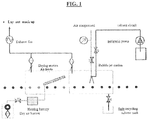
- a flat glass washer using bubble jet energy and 3M Novec 7300 has been designed and constructed to demonstrate the effectiveness of this method of particle removal, without damage the electrochromic films.
- a drawing of this system is found in FIG. 1 .
- Process flow diagram showing alternate locations for patterning and non-aqueous cleaning of particulate debris.
- the cleaning step can be inserted wherever particulate removal helps yield and quality.
- the cleaning step is helpful when if follows a patterning step, and particularly, at the patterning/cleaning sequence B as illustrated in FIG. 2 .
- Tests were performed to determine how fluids performed when exposed to a surface of an electrochromic (EC) layer.
- Test 1 one test (Test 1) of non-aqueous liquid exposure, a device substrate was paused on a horizontal conveyor after an EC layer had been deposited.
- Several non-aqueous liquids were applied to the surface of the EC layer, in quantities of approximately 1 cm 3 , and allowed to pool on the surface for about 10 seconds. These liquids were applied in locations that were carefully measured and recorded, to allow subsequent observation of the exact locations treated.
- an air jet was used to blow the pool of liquid across the device. At this point, no marks associated with the liquids were visible on the surface.
- This substrate was then further processed. After processing, this device (an electrochromic device) was colored and bleached according to standard test protocols, and the measured locations at which the test liquids had been applied were carefully monitored.
- test deionized water (control); 3M NovecTM-brand 7300 fluid; 3M NovecTM-brand 7200 fluid; 3M NovecTM-brand 7100 fluid; and 3M NovecTM-brand 71IPA fluid.
- water was tested as a control to ensure that this particular film stack did exhibit its characteristic sensitivity to water, and so assured us that were dealing with a film stack that behaved in the expected manner.
- Test 2 was a repeat of Test 1, except that water was not used as the control. In Test 2, a larger area of the device to be exposed to each of the four 3M Novec non-aqueous solvents, as the water was not tested during Test 2.
- NovecTM-brand 7100 fluid, NovecTM-brand 7200 fluid, and NovecTM-brand 7300 fluid showed no visible marking of the electrochromic devices at all, while bleaching, coloring, or in transition.
- the lack of a transitional defect is important, since slower switching speed can be the first indication of an interaction between a cleaning fluid and an electrochromic device.
Landscapes
- Chemical & Material Sciences (AREA)
- Physics & Mathematics (AREA)
- Engineering & Computer Science (AREA)
- Nonlinear Science (AREA)
- Oil, Petroleum & Natural Gas (AREA)
- Life Sciences & Earth Sciences (AREA)
- Chemical Kinetics & Catalysis (AREA)
- Wood Science & Technology (AREA)
- Organic Chemistry (AREA)
- Optics & Photonics (AREA)
- General Physics & Mathematics (AREA)
- Manufacturing & Machinery (AREA)
- Electrochromic Elements, Electrophoresis, Or Variable Reflection Or Absorption Elements (AREA)
- Cleaning By Liquid Or Steam (AREA)
- Electroluminescent Light Sources (AREA)
- Liquid Crystal (AREA)
Claims (10)
- Verfahren zum Entfernen von teilchenförmigem Material oder anderen Verunreinigungen, die während des Herstellungsprozesses erzeugt werden, von einer Oberfläche eines Substrats, wobei das Verfahren das Aussetzen der Oberfläche einer nichtwässrigen Flüssigkeit umfasst, wobei die Oberfläche eine erste Elektrode, eine zweite Elektrode und/oder eine lonenleiterschicht einer elektrochromen Vorrichtung ist und Lithium in sie eingesetzt ist, wobei die nichtwässrige Flüssigkeit ein Fluorkohlenstoff, Fluorkohlenwasserstoff oder ein nichtwässriges Tensid ist, und wobei das teilchenförmige Material eine Größe in einem Bereich von 0,1 µm bis 1000 µm aufweist.
- Verfahren nach Anspruch 1, ferner umfassend das Pattern einer Schicht des Substrats, wobei das teilchenförmige Material während des Patterns erzeugt wird, und das Freilegen der Oberfläche nach dem Pattern der Schicht durchgeführt wird.
- Verfahren nach Anspruch 1, wobei die nichtwässrige Flüssigkeit einen Fluorkohlenwasserstoff mit einer Perfluoralkylgruppe mit 1 bis 12 Kohlenstoffatomen beinhaltet.
- Verfahren nach Anspruch 1, wobei die nichtwässrige Flüssigkeit eine Fluoridkonzentration, bezogen auf den aktiven Gehalt, in einem Bereich von 1 ppm bis 50.000 ppm aufweist.
- Verfahren nach einem der vorstehenden Ansprüche, wobei die Oberfläche ein Silikatglas, ein Nicht-Silikatglas, einen Kristall, einen amorphen Halbleiter, ein Polymer, ein Copolymer, ein Flüssigkristallpolymer, einen anorganischen Materialfilm, einen organischen Materialfilm oder einen Verbund aus organischem Material und anorganischem Material umfasst.
- Verfahren nach einem der vorhergehenden Ansprüche, wobei die nichtwässrige Flüssigkeit in Form eines Stroms oder Strahls mit ausreichender Geschwindigkeit an die Oberfläche abgegeben wird, um Partikel von der Oberfläche zu entfernen, auf die sie trifft.
- Verfahren nach einem der vorhergehenden Ansprüche, wobei die nichtwässrige Flüssigkeit eine Polarität in einem Bereich von 0,0 Debye bis 1,1 Debye aufweist.
- Verfahren nach einem der Ansprüche 1 bis 6, wobei die nichtwässrige Flüssigkeit eine Polarität in einem Bereich von 1,4 Debye bis 5,0 Debye aufweist.
- Verfahren nach einem der vorstehenden Ansprüche, wobei das teilchenförmige Material eine Größe in einem Bereich von 1 µm bis 500 µm oder 2 µm bis 250 µm aufweist.
- Verfahren nach einem der vorstehenden Ansprüche, wobei eine Energie aufgebracht wird, wobei die Energie eine Ultraschallbewegung der Flüssigkeit, eine Blasenstrahlbewegung, eine thermische Erwärmung der Flüssigkeit oder eine Kombination davon ist.
Priority Applications (1)
| Application Number | Priority Date | Filing Date | Title |
|---|---|---|---|
| EP18207009.4A EP3462509A1 (de) | 2014-03-06 | 2015-03-05 | Partikelentfernung aus elektrochromen filmen unter verwendung nichtwässriger fluide |
Applications Claiming Priority (2)
| Application Number | Priority Date | Filing Date | Title |
|---|---|---|---|
| US14/198,824 US10767143B2 (en) | 2014-03-06 | 2014-03-06 | Particle removal from electrochromic films using non-aqueous fluids |
| PCT/US2015/018980 WO2015134756A1 (en) | 2014-03-06 | 2015-03-05 | Particle removal from electrochromic films using non-aqueous fluids |
Related Child Applications (1)
| Application Number | Title | Priority Date | Filing Date |
|---|---|---|---|
| EP18207009.4A Division EP3462509A1 (de) | 2014-03-06 | 2015-03-05 | Partikelentfernung aus elektrochromen filmen unter verwendung nichtwässriger fluide |
Publications (3)
| Publication Number | Publication Date |
|---|---|
| EP3114530A1 EP3114530A1 (de) | 2017-01-11 |
| EP3114530A4 EP3114530A4 (de) | 2017-11-08 |
| EP3114530B1 true EP3114530B1 (de) | 2018-11-28 |
Family
ID=54017224
Family Applications (2)
| Application Number | Title | Priority Date | Filing Date |
|---|---|---|---|
| EP18207009.4A Ceased EP3462509A1 (de) | 2014-03-06 | 2015-03-05 | Partikelentfernung aus elektrochromen filmen unter verwendung nichtwässriger fluide |
| EP15757780.0A Not-in-force EP3114530B1 (de) | 2014-03-06 | 2015-03-05 | Partikelentfernung von elektrochromen filmen unter verwendung nichtwässriger flüssigkeiten |
Family Applications Before (1)
| Application Number | Title | Priority Date | Filing Date |
|---|---|---|---|
| EP18207009.4A Ceased EP3462509A1 (de) | 2014-03-06 | 2015-03-05 | Partikelentfernung aus elektrochromen filmen unter verwendung nichtwässriger fluide |
Country Status (5)
| Country | Link |
|---|---|
| US (2) | US10767143B2 (de) |
| EP (2) | EP3462509A1 (de) |
| JP (2) | JP6424232B2 (de) |
| CN (2) | CN106062621A (de) |
| WO (1) | WO2015134756A1 (de) |
Families Citing this family (12)
| Publication number | Priority date | Publication date | Assignee | Title |
|---|---|---|---|---|
| US9007674B2 (en) | 2011-09-30 | 2015-04-14 | View, Inc. | Defect-mitigation layers in electrochromic devices |
| US20170038658A1 (en) | 2011-09-30 | 2017-02-09 | View, Inc. | Particle removal during fabrication of electrochromic devices |
| US11599003B2 (en) | 2011-09-30 | 2023-03-07 | View, Inc. | Fabrication of electrochromic devices |
| US12496809B2 (en) | 2010-11-08 | 2025-12-16 | View Operating Corporation | Electrochromic window fabrication methods |
| US12061402B2 (en) | 2011-12-12 | 2024-08-13 | View, Inc. | Narrow pre-deposition laser deletion |
| US10802371B2 (en) | 2011-12-12 | 2020-10-13 | View, Inc. | Thin-film devices and fabrication |
| US12403676B2 (en) | 2011-12-12 | 2025-09-02 | View Operating Corporation | Thin-film devices and fabrication |
| US11865632B2 (en) | 2011-12-12 | 2024-01-09 | View, Inc. | Thin-film devices and fabrication |
| US12235560B2 (en) | 2014-11-25 | 2025-02-25 | View, Inc. | Faster switching electrochromic devices |
| US11054711B2 (en) | 2014-11-25 | 2021-07-06 | View, Inc. | Electromagnetic-shielding electrochromic windows |
| EP3271782B1 (de) | 2015-03-20 | 2024-11-20 | View, Inc. | Defektarme elektrochrome fenster mit schnellerer umschaltung |
| JP2017152330A (ja) * | 2016-02-26 | 2017-08-31 | 株式会社ジャパンディスプレイ | 表示装置の製造方法、表示装置及び表示装置の製造装置 |
Family Cites Families (49)
| Publication number | Priority date | Publication date | Assignee | Title |
|---|---|---|---|---|
| GB2114795B (en) | 1981-12-21 | 1985-08-14 | Omron Tateisi Electronics Co | Verifying system |
| EP0112946B1 (de) * | 1982-12-30 | 1987-05-06 | International Business Machines Corporation | Hermetisch verschlossene elektro-optische Anzeigevorrichtung |
| US4902108A (en) * | 1986-03-31 | 1990-02-20 | Gentex Corporation | Single-compartment, self-erasing, solution-phase electrochromic devices, solutions for use therein, and uses thereof |
| JPH0386201A (ja) * | 1989-08-29 | 1991-04-11 | Central Glass Co Ltd | 脱水用溶剤組成物 |
| US5321544A (en) | 1991-09-04 | 1994-06-14 | Sun Active Glass Electrochromics, Inc. | Electrochromic structures and methods |
| MX9206771A (es) * | 1991-12-02 | 1993-06-01 | Allied Signal Inc | Mejoras en sistema de limpieza por solventes multiples |
| FR2691550B1 (fr) | 1992-05-21 | 1995-04-21 | Saint Gobain Vitrage Int | Vitrage électrochrome architectural. |
| US5456759A (en) * | 1992-08-10 | 1995-10-10 | Hughes Aircraft Company | Method using megasonic energy in liquefied gases |
| US6548471B2 (en) * | 1995-01-20 | 2003-04-15 | 3M Innovative Properties Company | Alkoxy-substituted perfluorocompounds |
| KR100474764B1 (ko) | 1995-12-15 | 2005-08-05 | 미네소타 마이닝 앤드 매뉴팩춰링 캄파니 | 세정방법및세정조성물 |
| US6795226B2 (en) | 2000-05-04 | 2004-09-21 | Schott Corporation | Chromogenic glazing |
| JP2004006819A (ja) * | 2002-04-26 | 2004-01-08 | Nec Electronics Corp | 半導体装置の製造方法 |
| US6856444B2 (en) | 2002-05-10 | 2005-02-15 | Sage Electrochromics, Inc. | Inferential temperature measurement of an electrochromic device |
| US20060019850A1 (en) | 2002-10-31 | 2006-01-26 | Korzenski Michael B | Removal of particle contamination on a patterned silicon/silicon dioxide using dense fluid/chemical formulations |
| US7696141B2 (en) | 2003-06-27 | 2010-04-13 | Lam Research Corporation | Cleaning compound and method and system for using the cleaning compound |
| JP2005026338A (ja) | 2003-06-30 | 2005-01-27 | Kobe Steel Ltd | 微細構造体用洗浄液 |
| US20050029492A1 (en) * | 2003-08-05 | 2005-02-10 | Hoshang Subawalla | Processing of semiconductor substrates with dense fluids comprising acetylenic diols and/or alcohols |
| US7862662B2 (en) | 2005-12-30 | 2011-01-04 | Lam Research Corporation | Method and material for cleaning a substrate |
| US7294610B2 (en) * | 2004-03-03 | 2007-11-13 | 3M Innovative Properties Company | Fluorinated sulfonamide surfactants for aqueous cleaning solutions |
| JP4393268B2 (ja) | 2004-05-20 | 2010-01-06 | 株式会社神戸製鋼所 | 微細構造体の乾燥方法 |
| US7133181B2 (en) | 2004-07-23 | 2006-11-07 | Sage Electrochromics, Inc. | Control system for electrochromic devices |
| US7372610B2 (en) | 2005-02-23 | 2008-05-13 | Sage Electrochromics, Inc. | Electrochromic devices and methods |
| US7593154B2 (en) | 2005-10-11 | 2009-09-22 | Sage Electrochromics, Inc. | Electrochromic devices having improved ion conducting layers |
| JP4765547B2 (ja) | 2005-10-25 | 2011-09-07 | ソニー株式会社 | エレクトロクロミック装置 |
| SG154438A1 (en) | 2005-12-30 | 2009-08-28 | Lam Res Corp | Cleaning compound and method and system for using the cleaning compound |
| JP4693642B2 (ja) * | 2006-01-30 | 2011-06-01 | 株式会社東芝 | 半導体装置の製造方法および洗浄装置 |
| TW200734448A (en) | 2006-02-03 | 2007-09-16 | Advanced Tech Materials | Low pH post-CMP residue removal composition and method of use |
| US20080299487A1 (en) * | 2007-05-31 | 2008-12-04 | Taiwan Semiconductor Manufacturing Company, Ltd. | Lithography material and lithography process |
| WO2008018599A1 (en) | 2006-08-11 | 2008-02-14 | Asahi Glass Company, Limited | Polymerizable fluorine compounds and treated base materials having hydrophilic regions and water-repellent reginos |
| US8327861B2 (en) * | 2006-12-19 | 2012-12-11 | Lam Research Corporation | Megasonic precision cleaning of semiconductor process equipment components and parts |
| US20090029274A1 (en) | 2007-07-25 | 2009-01-29 | 3M Innovative Properties Company | Method for removing contamination with fluorinated compositions |
| JP2009048141A (ja) | 2007-08-23 | 2009-03-05 | Sony Corp | エレクトロクロミック化合物、中間体化合物、及び、それらの製造方法、並びに、エレクトロクロミック化合物を用いた光学装置 |
| JP2010536985A (ja) | 2007-08-23 | 2010-12-02 | イー・アイ・デュポン・ドウ・ヌムール・アンド・カンパニー | 洗浄用途のためのフッ素化オレフィンを含む共沸組成物 |
| JP2009147293A (ja) * | 2007-11-22 | 2009-07-02 | Renesas Technology Corp | 半導体装置の製造方法 |
| US8416486B2 (en) * | 2008-03-17 | 2013-04-09 | Saint-Gobain Performance Plastics Chaineux | Light weight electrochromic mirror stack |
| US8168265B2 (en) | 2008-06-06 | 2012-05-01 | Applied Materials, Inc. | Method for manufacturing electrochromic devices |
| US9664974B2 (en) * | 2009-03-31 | 2017-05-30 | View, Inc. | Fabrication of low defectivity electrochromic devices |
| US9007674B2 (en) | 2011-09-30 | 2015-04-14 | View, Inc. | Defect-mitigation layers in electrochromic devices |
| US20120083629A1 (en) | 2009-06-15 | 2012-04-05 | Daikin Industries, Ltd. | Method for producing fluorine-containing ether with high purity |
| DE102009026148A1 (de) | 2009-07-10 | 2011-01-13 | Saint-Gobain Sekurit Deutschland Gmbh & Co. Kg | Elektrochrome Schichtstruktur und Verfahren zu dessen Herstellung |
| JP5575133B2 (ja) * | 2009-08-27 | 2014-08-20 | 株式会社カネカ | 集積化有機発光装置、有機発光装置の製造方法および有機発光装置 |
| WO2011142848A2 (en) * | 2010-01-27 | 2011-11-17 | The University Of North Carolina At Chapel Hill | Nanoparticle electrodes and methods of preparation |
| JP2011191588A (ja) | 2010-03-16 | 2011-09-29 | Ricoh Co Ltd | エレクトロクロミック表示装置及びその製造方法 |
| US20120045202A1 (en) | 2010-08-17 | 2012-02-23 | Xu Jiang | High Speed Bi-Directional Transceiver, Circuits and Devices Therefor, and Method(s) of Using the Same |
| KR101243635B1 (ko) | 2011-07-19 | 2013-03-15 | 포항공과대학교 산학협력단 | 기판의 제조방법 및 이를 이용한 전자소자의 제조방법 |
| CN107300819B (zh) | 2011-07-21 | 2021-03-12 | Sage电致变色显示有限公司 | 同时掺杂有锂和金属掺杂物的电致变色的镍氧化物 |
| WO2014025913A1 (en) * | 2012-08-08 | 2014-02-13 | Kinestral Technologies, Inc. | Electrochromic multi-layer devices with composite current modulating structure |
| US9507233B2 (en) * | 2012-08-08 | 2016-11-29 | Kinestral Technologies, Inc. | Electrochromic multi-layer devices with current modulating structure |
| CN103353700B (zh) | 2013-06-25 | 2016-01-27 | 中国南玻集团股份有限公司 | 电致变色玻璃、中空玻璃及其制备方法 |
-
2014
- 2014-03-06 US US14/198,824 patent/US10767143B2/en not_active Expired - Fee Related
-
2015
- 2015-03-05 EP EP18207009.4A patent/EP3462509A1/de not_active Ceased
- 2015-03-05 EP EP15757780.0A patent/EP3114530B1/de not_active Not-in-force
- 2015-03-05 JP JP2016555466A patent/JP6424232B2/ja not_active Expired - Fee Related
- 2015-03-05 CN CN201580011662.1A patent/CN106062621A/zh active Pending
- 2015-03-05 WO PCT/US2015/018980 patent/WO2015134756A1/en not_active Ceased
- 2015-03-05 CN CN202211609473.2A patent/CN116027601A/zh not_active Withdrawn
-
2018
- 2018-10-22 JP JP2018198668A patent/JP2019053306A/ja not_active Ceased
-
2020
- 2020-08-07 US US16/988,056 patent/US20200362274A1/en not_active Abandoned
Non-Patent Citations (1)
| Title |
|---|
| None * |
Also Published As
| Publication number | Publication date |
|---|---|
| JP2017515648A (ja) | 2017-06-15 |
| CN106062621A (zh) | 2016-10-26 |
| EP3462509A1 (de) | 2019-04-03 |
| EP3114530A1 (de) | 2017-01-11 |
| CN116027601A (zh) | 2023-04-28 |
| US10767143B2 (en) | 2020-09-08 |
| EP3114530A4 (de) | 2017-11-08 |
| US20200362274A1 (en) | 2020-11-19 |
| JP6424232B2 (ja) | 2018-11-14 |
| US20150253642A1 (en) | 2015-09-10 |
| WO2015134756A1 (en) | 2015-09-11 |
| JP2019053306A (ja) | 2019-04-04 |
Similar Documents
| Publication | Publication Date | Title |
|---|---|---|
| EP3114530B1 (de) | Partikelentfernung von elektrochromen filmen unter verwendung nichtwässriger flüssigkeiten | |
| CN103567202B (zh) | 彩色滤色用玻璃片的制造方法、彩色滤色面板的制造方法以及显示器用玻璃基板 | |
| CN105228788A (zh) | 用于激光钻孔基材的牺牲覆盖层及其方法 | |
| TWI719076B (zh) | 玻璃基板及玻璃板捆包體 | |
| DE112011103629T5 (de) | Integriertes Substratreinigungssystem und Verfahren | |
| CN109415249A (zh) | 用于电致变色器件制造的牺牲层 | |
| JP2015188818A (ja) | ガラス基板の製造方法 | |
| KR101809791B1 (ko) | 유리 기판의 제조 방법 및 유리 기판의 제조 장치 | |
| JP2012076948A (ja) | シートガラスの製造方法 | |
| CN105384354A (zh) | 玻璃基板的制造方法及玻璃基板的制造装置 | |
| KR100968390B1 (ko) | 보호막 부착 유리판 | |
| JP2016033100A (ja) | ガラス基板の製造方法、及び、ガラス基板の製造装置 | |
| CN106687538B (zh) | 用于漂白偏振膜的墨组合物以及用于制备包含在其上形成的漂白图案的偏振膜的方法 | |
| KR20140042639A (ko) | 글래스 기판 및 글래스 기판의 제조 방법 | |
| JP2005527858A (ja) | 電気光学システムのレーザー構造化 | |
| JP6727551B2 (ja) | ガラス積層体の製造方法及び電子デバイスの製造方法 | |
| JP2017120332A (ja) | 液晶用ガラス基板の洗浄液、及び、液晶用ガラス基板の洗浄方法 | |
| JP2024156459A (ja) | ガラスコーティング床材のメンテナンス方法、及び剥離剤 | |
| JP2000211947A (ja) | ガラス製品及びその製造方法 | |
| JP2019098549A (ja) | 版洗浄方法、および版洗浄装置 | |
| Yu et al. | Selective Removal of Thin Film on Glass Using Femtosecond Laser | |
| Pa | Nano Fabrication Technology of Selective Removal and Optical Assistance | |
| DE202009012978U1 (de) | Hydrophile Beschichtung von Glaselementen und Glasduschabtrennungen sowie Glastüren | |
| JP2013049753A (ja) | 洗浄剤組成物及びそれを用いた液晶表示装置用アレイ基板の製造方法 |
Legal Events
| Date | Code | Title | Description |
|---|---|---|---|
| STAA | Information on the status of an ep patent application or granted ep patent |
Free format text: STATUS: THE INTERNATIONAL PUBLICATION HAS BEEN MADE |
|
| PUAI | Public reference made under article 153(3) epc to a published international application that has entered the european phase |
Free format text: ORIGINAL CODE: 0009012 |
|
| STAA | Information on the status of an ep patent application or granted ep patent |
Free format text: STATUS: REQUEST FOR EXAMINATION WAS MADE |
|
| 17P | Request for examination filed |
Effective date: 20160923 |
|
| AK | Designated contracting states |
Kind code of ref document: A1 Designated state(s): AL AT BE BG CH CY CZ DE DK EE ES FI FR GB GR HR HU IE IS IT LI LT LU LV MC MK MT NL NO PL PT RO RS SE SI SK SM TR |
|
| AX | Request for extension of the european patent |
Extension state: BA ME |
|
| DAV | Request for validation of the european patent (deleted) | ||
| DAX | Request for extension of the european patent (deleted) | ||
| REG | Reference to a national code |
Ref country code: DE Ref legal event code: R079 Ref document number: 602015020483 Country of ref document: DE Free format text: PREVIOUS MAIN CLASS: G02F0001150000 Ipc: H01L0051000000 |
|
| A4 | Supplementary search report drawn up and despatched |
Effective date: 20171006 |
|
| RIC1 | Information provided on ipc code assigned before grant |
Ipc: H01L 21/02 20060101ALI20170929BHEP Ipc: H01L 51/00 20060101AFI20170929BHEP |
|
| GRAP | Despatch of communication of intention to grant a patent |
Free format text: ORIGINAL CODE: EPIDOSNIGR1 |
|
| STAA | Information on the status of an ep patent application or granted ep patent |
Free format text: STATUS: GRANT OF PATENT IS INTENDED |
|
| INTG | Intention to grant announced |
Effective date: 20180607 |
|
| GRAS | Grant fee paid |
Free format text: ORIGINAL CODE: EPIDOSNIGR3 |
|
| GRAA | (expected) grant |
Free format text: ORIGINAL CODE: 0009210 |
|
| STAA | Information on the status of an ep patent application or granted ep patent |
Free format text: STATUS: THE PATENT HAS BEEN GRANTED |
|
| AK | Designated contracting states |
Kind code of ref document: B1 Designated state(s): AL AT BE BG CH CY CZ DE DK EE ES FI FR GB GR HR HU IE IS IT LI LT LU LV MC MK MT NL NO PL PT RO RS SE SI SK SM TR |
|
| REG | Reference to a national code |
Ref country code: CH Ref legal event code: EP Ref country code: CH Ref legal event code: NV Representative=s name: RENTSCH PARTNER AG, CH |
|
| REG | Reference to a national code |
Ref country code: AT Ref legal event code: REF Ref document number: 1071257 Country of ref document: AT Kind code of ref document: T Effective date: 20181215 |
|
| REG | Reference to a national code |
Ref country code: DE Ref legal event code: R096 Ref document number: 602015020483 Country of ref document: DE |
|
| REG | Reference to a national code |
Ref country code: IE Ref legal event code: FG4D |
|
| REG | Reference to a national code |
Ref country code: NL Ref legal event code: FP |
|
| REG | Reference to a national code |
Ref country code: LT Ref legal event code: MG4D |
|
| REG | Reference to a national code |
Ref country code: AT Ref legal event code: MK05 Ref document number: 1071257 Country of ref document: AT Kind code of ref document: T Effective date: 20181128 |
|
| PG25 | Lapsed in a contracting state [announced via postgrant information from national office to epo] |
Ref country code: IS Free format text: LAPSE BECAUSE OF FAILURE TO SUBMIT A TRANSLATION OF THE DESCRIPTION OR TO PAY THE FEE WITHIN THE PRESCRIBED TIME-LIMIT Effective date: 20190328 Ref country code: ES Free format text: LAPSE BECAUSE OF FAILURE TO SUBMIT A TRANSLATION OF THE DESCRIPTION OR TO PAY THE FEE WITHIN THE PRESCRIBED TIME-LIMIT Effective date: 20181128 Ref country code: BG Free format text: LAPSE BECAUSE OF FAILURE TO SUBMIT A TRANSLATION OF THE DESCRIPTION OR TO PAY THE FEE WITHIN THE PRESCRIBED TIME-LIMIT Effective date: 20190228 Ref country code: LT Free format text: LAPSE BECAUSE OF FAILURE TO SUBMIT A TRANSLATION OF THE DESCRIPTION OR TO PAY THE FEE WITHIN THE PRESCRIBED TIME-LIMIT Effective date: 20181128 Ref country code: HR Free format text: LAPSE BECAUSE OF FAILURE TO SUBMIT A TRANSLATION OF THE DESCRIPTION OR TO PAY THE FEE WITHIN THE PRESCRIBED TIME-LIMIT Effective date: 20181128 Ref country code: NO Free format text: LAPSE BECAUSE OF FAILURE TO SUBMIT A TRANSLATION OF THE DESCRIPTION OR TO PAY THE FEE WITHIN THE PRESCRIBED TIME-LIMIT Effective date: 20190228 Ref country code: LV Free format text: LAPSE BECAUSE OF FAILURE TO SUBMIT A TRANSLATION OF THE DESCRIPTION OR TO PAY THE FEE WITHIN THE PRESCRIBED TIME-LIMIT Effective date: 20181128 Ref country code: FI Free format text: LAPSE BECAUSE OF FAILURE TO SUBMIT A TRANSLATION OF THE DESCRIPTION OR TO PAY THE FEE WITHIN THE PRESCRIBED TIME-LIMIT Effective date: 20181128 Ref country code: AT Free format text: LAPSE BECAUSE OF FAILURE TO SUBMIT A TRANSLATION OF THE DESCRIPTION OR TO PAY THE FEE WITHIN THE PRESCRIBED TIME-LIMIT Effective date: 20181128 |
|
| PG25 | Lapsed in a contracting state [announced via postgrant information from national office to epo] |
Ref country code: AL Free format text: LAPSE BECAUSE OF FAILURE TO SUBMIT A TRANSLATION OF THE DESCRIPTION OR TO PAY THE FEE WITHIN THE PRESCRIBED TIME-LIMIT Effective date: 20181128 Ref country code: SE Free format text: LAPSE BECAUSE OF FAILURE TO SUBMIT A TRANSLATION OF THE DESCRIPTION OR TO PAY THE FEE WITHIN THE PRESCRIBED TIME-LIMIT Effective date: 20181128 Ref country code: GR Free format text: LAPSE BECAUSE OF FAILURE TO SUBMIT A TRANSLATION OF THE DESCRIPTION OR TO PAY THE FEE WITHIN THE PRESCRIBED TIME-LIMIT Effective date: 20190301 Ref country code: RS Free format text: LAPSE BECAUSE OF FAILURE TO SUBMIT A TRANSLATION OF THE DESCRIPTION OR TO PAY THE FEE WITHIN THE PRESCRIBED TIME-LIMIT Effective date: 20181128 Ref country code: PT Free format text: LAPSE BECAUSE OF FAILURE TO SUBMIT A TRANSLATION OF THE DESCRIPTION OR TO PAY THE FEE WITHIN THE PRESCRIBED TIME-LIMIT Effective date: 20190328 |
|
| PG25 | Lapsed in a contracting state [announced via postgrant information from national office to epo] |
Ref country code: CZ Free format text: LAPSE BECAUSE OF FAILURE TO SUBMIT A TRANSLATION OF THE DESCRIPTION OR TO PAY THE FEE WITHIN THE PRESCRIBED TIME-LIMIT Effective date: 20181128 Ref country code: IT Free format text: LAPSE BECAUSE OF FAILURE TO SUBMIT A TRANSLATION OF THE DESCRIPTION OR TO PAY THE FEE WITHIN THE PRESCRIBED TIME-LIMIT Effective date: 20181128 Ref country code: DK Free format text: LAPSE BECAUSE OF FAILURE TO SUBMIT A TRANSLATION OF THE DESCRIPTION OR TO PAY THE FEE WITHIN THE PRESCRIBED TIME-LIMIT Effective date: 20181128 Ref country code: PL Free format text: LAPSE BECAUSE OF FAILURE TO SUBMIT A TRANSLATION OF THE DESCRIPTION OR TO PAY THE FEE WITHIN THE PRESCRIBED TIME-LIMIT Effective date: 20181128 |
|
| REG | Reference to a national code |
Ref country code: DE Ref legal event code: R097 Ref document number: 602015020483 Country of ref document: DE |
|
| PG25 | Lapsed in a contracting state [announced via postgrant information from national office to epo] |
Ref country code: SK Free format text: LAPSE BECAUSE OF FAILURE TO SUBMIT A TRANSLATION OF THE DESCRIPTION OR TO PAY THE FEE WITHIN THE PRESCRIBED TIME-LIMIT Effective date: 20181128 Ref country code: RO Free format text: LAPSE BECAUSE OF FAILURE TO SUBMIT A TRANSLATION OF THE DESCRIPTION OR TO PAY THE FEE WITHIN THE PRESCRIBED TIME-LIMIT Effective date: 20181128 Ref country code: EE Free format text: LAPSE BECAUSE OF FAILURE TO SUBMIT A TRANSLATION OF THE DESCRIPTION OR TO PAY THE FEE WITHIN THE PRESCRIBED TIME-LIMIT Effective date: 20181128 Ref country code: SM Free format text: LAPSE BECAUSE OF FAILURE TO SUBMIT A TRANSLATION OF THE DESCRIPTION OR TO PAY THE FEE WITHIN THE PRESCRIBED TIME-LIMIT Effective date: 20181128 |
|
| PLBE | No opposition filed within time limit |
Free format text: ORIGINAL CODE: 0009261 |
|
| STAA | Information on the status of an ep patent application or granted ep patent |
Free format text: STATUS: NO OPPOSITION FILED WITHIN TIME LIMIT |
|
| PG25 | Lapsed in a contracting state [announced via postgrant information from national office to epo] |
Ref country code: SI Free format text: LAPSE BECAUSE OF FAILURE TO SUBMIT A TRANSLATION OF THE DESCRIPTION OR TO PAY THE FEE WITHIN THE PRESCRIBED TIME-LIMIT Effective date: 20181128 Ref country code: MC Free format text: LAPSE BECAUSE OF FAILURE TO SUBMIT A TRANSLATION OF THE DESCRIPTION OR TO PAY THE FEE WITHIN THE PRESCRIBED TIME-LIMIT Effective date: 20181128 |
|
| 26N | No opposition filed |
Effective date: 20190829 |
|
| PG25 | Lapsed in a contracting state [announced via postgrant information from national office to epo] |
Ref country code: LU Free format text: LAPSE BECAUSE OF NON-PAYMENT OF DUE FEES Effective date: 20190305 |
|
| PG25 | Lapsed in a contracting state [announced via postgrant information from national office to epo] |
Ref country code: IE Free format text: LAPSE BECAUSE OF NON-PAYMENT OF DUE FEES Effective date: 20190305 |
|
| PG25 | Lapsed in a contracting state [announced via postgrant information from national office to epo] |
Ref country code: TR Free format text: LAPSE BECAUSE OF FAILURE TO SUBMIT A TRANSLATION OF THE DESCRIPTION OR TO PAY THE FEE WITHIN THE PRESCRIBED TIME-LIMIT Effective date: 20181128 |
|
| PGFP | Annual fee paid to national office [announced via postgrant information from national office to epo] |
Ref country code: NL Payment date: 20200302 Year of fee payment: 6 |
|
| PGFP | Annual fee paid to national office [announced via postgrant information from national office to epo] |
Ref country code: BE Payment date: 20200228 Year of fee payment: 6 Ref country code: CH Payment date: 20200221 Year of fee payment: 6 |
|
| PG25 | Lapsed in a contracting state [announced via postgrant information from national office to epo] |
Ref country code: MT Free format text: LAPSE BECAUSE OF NON-PAYMENT OF DUE FEES Effective date: 20190305 |
|
| PG25 | Lapsed in a contracting state [announced via postgrant information from national office to epo] |
Ref country code: CY Free format text: LAPSE BECAUSE OF FAILURE TO SUBMIT A TRANSLATION OF THE DESCRIPTION OR TO PAY THE FEE WITHIN THE PRESCRIBED TIME-LIMIT Effective date: 20181128 |
|
| PG25 | Lapsed in a contracting state [announced via postgrant information from national office to epo] |
Ref country code: HU Free format text: LAPSE BECAUSE OF FAILURE TO SUBMIT A TRANSLATION OF THE DESCRIPTION OR TO PAY THE FEE WITHIN THE PRESCRIBED TIME-LIMIT; INVALID AB INITIO Effective date: 20150305 |
|
| REG | Reference to a national code |
Ref country code: CH Ref legal event code: PL |
|
| REG | Reference to a national code |
Ref country code: NL Ref legal event code: MM Effective date: 20210401 |
|
| REG | Reference to a national code |
Ref country code: BE Ref legal event code: MM Effective date: 20210331 |
|
| PG25 | Lapsed in a contracting state [announced via postgrant information from national office to epo] |
Ref country code: NL Free format text: LAPSE BECAUSE OF NON-PAYMENT OF DUE FEES Effective date: 20210401 Ref country code: CH Free format text: LAPSE BECAUSE OF NON-PAYMENT OF DUE FEES Effective date: 20210331 Ref country code: LI Free format text: LAPSE BECAUSE OF NON-PAYMENT OF DUE FEES Effective date: 20210331 |
|
| PG25 | Lapsed in a contracting state [announced via postgrant information from national office to epo] |
Ref country code: MK Free format text: LAPSE BECAUSE OF FAILURE TO SUBMIT A TRANSLATION OF THE DESCRIPTION OR TO PAY THE FEE WITHIN THE PRESCRIBED TIME-LIMIT Effective date: 20181128 |
|
| PG25 | Lapsed in a contracting state [announced via postgrant information from national office to epo] |
Ref country code: BE Free format text: LAPSE BECAUSE OF NON-PAYMENT OF DUE FEES Effective date: 20210331 |
|
| REG | Reference to a national code |
Ref country code: DE Ref legal event code: R079 Ref document number: 602015020483 Country of ref document: DE Free format text: PREVIOUS MAIN CLASS: H01L0051000000 Ipc: H10K0099000000 |
|
| PGFP | Annual fee paid to national office [announced via postgrant information from national office to epo] |
Ref country code: FR Payment date: 20230222 Year of fee payment: 9 |
|
| PGFP | Annual fee paid to national office [announced via postgrant information from national office to epo] |
Ref country code: GB Payment date: 20230221 Year of fee payment: 9 Ref country code: DE Payment date: 20230221 Year of fee payment: 9 |
|
| P01 | Opt-out of the competence of the unified patent court (upc) registered |
Effective date: 20230530 |
|
| REG | Reference to a national code |
Ref country code: DE Ref legal event code: R119 Ref document number: 602015020483 Country of ref document: DE |
|
| GBPC | Gb: european patent ceased through non-payment of renewal fee |
Effective date: 20240305 |
|
| PG25 | Lapsed in a contracting state [announced via postgrant information from national office to epo] |
Ref country code: DE Free format text: LAPSE BECAUSE OF NON-PAYMENT OF DUE FEES Effective date: 20241001 |
|
| PG25 | Lapsed in a contracting state [announced via postgrant information from national office to epo] |
Ref country code: GB Free format text: LAPSE BECAUSE OF NON-PAYMENT OF DUE FEES Effective date: 20240305 |
|
| PG25 | Lapsed in a contracting state [announced via postgrant information from national office to epo] |
Ref country code: FR Free format text: LAPSE BECAUSE OF NON-PAYMENT OF DUE FEES Effective date: 20240331 |
|
| PG25 | Lapsed in a contracting state [announced via postgrant information from national office to epo] |
Ref country code: GB Free format text: LAPSE BECAUSE OF NON-PAYMENT OF DUE FEES Effective date: 20240305 Ref country code: FR Free format text: LAPSE BECAUSE OF NON-PAYMENT OF DUE FEES Effective date: 20240331 Ref country code: DE Free format text: LAPSE BECAUSE OF NON-PAYMENT OF DUE FEES Effective date: 20241001 |