EP3019615B1 - Cystobactamides - Google Patents
Cystobactamides Download PDFInfo
- Publication number
- EP3019615B1 EP3019615B1 EP14747296.3A EP14747296A EP3019615B1 EP 3019615 B1 EP3019615 B1 EP 3019615B1 EP 14747296 A EP14747296 A EP 14747296A EP 3019615 B1 EP3019615 B1 EP 3019615B1
- Authority
- EP
- European Patent Office
- Prior art keywords
- group
- cystobactamide
- alkyl
- formula
- mmol
- Prior art date
- Legal status (The legal status is an assumption and is not a legal conclusion. Google has not performed a legal analysis and makes no representation as to the accuracy of the status listed.)
- Active
Links
- 0 CC=C(C)C(Nc1ccc(C(NC(C(*)OC)C(C)=O)=O)cc1)=O Chemical compound CC=C(C)C(Nc1ccc(C(NC(C(*)OC)C(C)=O)=O)cc1)=O 0.000 description 3
- XLDLRRGZWIEEHT-UHFFFAOYSA-N [O-][N+](c(ccc(C(O)=O)c1)c1O)=O Chemical compound [O-][N+](c(ccc(C(O)=O)c1)c1O)=O XLDLRRGZWIEEHT-UHFFFAOYSA-N 0.000 description 2
- NPMAYIZQSOBKIG-UHFFFAOYSA-N CC(C)OC(c(cc1OC(C)C)ccc1N)=O Chemical compound CC(C)OC(c(cc1OC(C)C)ccc1N)=O NPMAYIZQSOBKIG-UHFFFAOYSA-N 0.000 description 1
- BIEIZKABWONOMK-UHFFFAOYSA-N CC(C)OC(c(cc1OC(C)C)ccc1[N+]([O-])=O)=O Chemical compound CC(C)OC(c(cc1OC(C)C)ccc1[N+]([O-])=O)=O BIEIZKABWONOMK-UHFFFAOYSA-N 0.000 description 1
- UAUAXPNQUUKMEP-UHFFFAOYSA-N CC(C)Oc(c(O)c(C=O)cc1)c1[N+]([O-])=O Chemical compound CC(C)Oc(c(O)c(C=O)cc1)c1[N+]([O-])=O UAUAXPNQUUKMEP-UHFFFAOYSA-N 0.000 description 1
- OCWOVYIQNAJNKL-UHFFFAOYSA-N CC(C)Oc(c(OCc1ccccc1)c(cc1)C(OC)=O)c1[N+]([O-])=O Chemical compound CC(C)Oc(c(OCc1ccccc1)c(cc1)C(OC)=O)c1[N+]([O-])=O OCWOVYIQNAJNKL-UHFFFAOYSA-N 0.000 description 1
- SYTPDTSSCRKIMF-UHFFFAOYSA-N CC(C)c(c(O)ccc1)c1O Chemical compound CC(C)c(c(O)ccc1)c1O SYTPDTSSCRKIMF-UHFFFAOYSA-N 0.000 description 1
- PVVFEPFLFHDHHK-UHFFFAOYSA-N COC(c(cc1)cc(OC)c1[N+]([O-])=O)=O Chemical compound COC(c(cc1)cc(OC)c1[N+]([O-])=O)=O PVVFEPFLFHDHHK-UHFFFAOYSA-N 0.000 description 1
- DJLFOMMCQBAMAA-UHFFFAOYSA-N COC(c(cc1OC)ccc1N)=O Chemical compound COC(c(cc1OC)ccc1N)=O DJLFOMMCQBAMAA-UHFFFAOYSA-N 0.000 description 1
- PCSTWUHSLBALGP-UHFFFAOYSA-N Oc(c(O)c1C=O)ccc1Br Chemical compound Oc(c(O)c1C=O)ccc1Br PCSTWUHSLBALGP-UHFFFAOYSA-N 0.000 description 1
- NJLQPAFIERANQX-UHFFFAOYSA-N [O-][N+](c(cc1)ccc1C(Nc(cc1)ccc1C(O)=O)=O)=O Chemical compound [O-][N+](c(cc1)ccc1C(Nc(cc1)ccc1C(O)=O)=O)=O NJLQPAFIERANQX-UHFFFAOYSA-N 0.000 description 1
Images






Classifications
-
- A—HUMAN NECESSITIES
- A61—MEDICAL OR VETERINARY SCIENCE; HYGIENE
- A61P—SPECIFIC THERAPEUTIC ACTIVITY OF CHEMICAL COMPOUNDS OR MEDICINAL PREPARATIONS
- A61P31/00—Antiinfectives, i.e. antibiotics, antiseptics, chemotherapeutics
- A61P31/04—Antibacterial agents
-
- C—CHEMISTRY; METALLURGY
- C07—ORGANIC CHEMISTRY
- C07K—PEPTIDES
- C07K7/00—Peptides having 5 to 20 amino acids in a fully defined sequence; Derivatives thereof
- C07K7/04—Linear peptides containing only normal peptide links
- C07K7/06—Linear peptides containing only normal peptide links having 5 to 11 amino acids
-
- C—CHEMISTRY; METALLURGY
- C07—ORGANIC CHEMISTRY
- C07C—ACYCLIC OR CARBOCYCLIC COMPOUNDS
- C07C237/00—Carboxylic acid amides, the carbon skeleton of the acid part being further substituted by amino groups
- C07C237/28—Carboxylic acid amides, the carbon skeleton of the acid part being further substituted by amino groups having the carbon atom of at least one of the carboxamide groups bound to a carbon atom of a non-condensed six-membered aromatic ring of the carbon skeleton
- C07C237/42—Carboxylic acid amides, the carbon skeleton of the acid part being further substituted by amino groups having the carbon atom of at least one of the carboxamide groups bound to a carbon atom of a non-condensed six-membered aromatic ring of the carbon skeleton having nitrogen atoms of amino groups bound to the carbon skeleton of the acid part, further acylated
-
- C—CHEMISTRY; METALLURGY
- C07—ORGANIC CHEMISTRY
- C07C—ACYCLIC OR CARBOCYCLIC COMPOUNDS
- C07C237/00—Carboxylic acid amides, the carbon skeleton of the acid part being further substituted by amino groups
- C07C237/28—Carboxylic acid amides, the carbon skeleton of the acid part being further substituted by amino groups having the carbon atom of at least one of the carboxamide groups bound to a carbon atom of a non-condensed six-membered aromatic ring of the carbon skeleton
- C07C237/44—Carboxylic acid amides, the carbon skeleton of the acid part being further substituted by amino groups having the carbon atom of at least one of the carboxamide groups bound to a carbon atom of a non-condensed six-membered aromatic ring of the carbon skeleton having carbon atoms of carboxamide groups, amino groups and singly-bound oxygen atoms bound to carbon atoms of the same non-condensed six-membered aromatic ring
-
- C—CHEMISTRY; METALLURGY
- C07—ORGANIC CHEMISTRY
- C07K—PEPTIDES
- C07K5/00—Peptides containing up to four amino acids in a fully defined sequence; Derivatives thereof
- C07K5/04—Peptides containing up to four amino acids in a fully defined sequence; Derivatives thereof containing only normal peptide links
- C07K5/06—Dipeptides
- C07K5/06008—Dipeptides with the first amino acid being neutral
- C07K5/06078—Dipeptides with the first amino acid being neutral and aromatic or cycloaliphatic
-
- C—CHEMISTRY; METALLURGY
- C12—BIOCHEMISTRY; BEER; SPIRITS; WINE; VINEGAR; MICROBIOLOGY; ENZYMOLOGY; MUTATION OR GENETIC ENGINEERING
- C12N—MICROORGANISMS OR ENZYMES; COMPOSITIONS THEREOF; PROPAGATING, PRESERVING, OR MAINTAINING MICROORGANISMS; MUTATION OR GENETIC ENGINEERING; CULTURE MEDIA
- C12N15/00—Mutation or genetic engineering; DNA or RNA concerning genetic engineering, vectors, e.g. plasmids, or their isolation, preparation or purification; Use of hosts therefor
- C12N15/09—Recombinant DNA-technology
- C12N15/11—DNA or RNA fragments; Modified forms thereof; Non-coding nucleic acids having a biological activity
- C12N15/52—Genes encoding for enzymes or proenzymes
-
- C—CHEMISTRY; METALLURGY
- C12—BIOCHEMISTRY; BEER; SPIRITS; WINE; VINEGAR; MICROBIOLOGY; ENZYMOLOGY; MUTATION OR GENETIC ENGINEERING
- C12P—FERMENTATION OR ENZYME-USING PROCESSES TO SYNTHESISE A DESIRED CHEMICAL COMPOUND OR COMPOSITION OR TO SEPARATE OPTICAL ISOMERS FROM A RACEMIC MIXTURE
- C12P13/00—Preparation of nitrogen-containing organic compounds
- C12P13/02—Amides, e.g. chloramphenicol or polyamides; Imides or polyimides; Urethanes, i.e. compounds comprising N-C=O structural element or polyurethanes
-
- A—HUMAN NECESSITIES
- A61—MEDICAL OR VETERINARY SCIENCE; HYGIENE
- A61K—PREPARATIONS FOR MEDICAL, DENTAL OR TOILETRY PURPOSES
- A61K38/00—Medicinal preparations containing peptides
-
- Y—GENERAL TAGGING OF NEW TECHNOLOGICAL DEVELOPMENTS; GENERAL TAGGING OF CROSS-SECTIONAL TECHNOLOGIES SPANNING OVER SEVERAL SECTIONS OF THE IPC; TECHNICAL SUBJECTS COVERED BY FORMER USPC CROSS-REFERENCE ART COLLECTIONS [XRACs] AND DIGESTS
- Y02—TECHNOLOGIES OR APPLICATIONS FOR MITIGATION OR ADAPTATION AGAINST CLIMATE CHANGE
- Y02A—TECHNOLOGIES FOR ADAPTATION TO CLIMATE CHANGE
- Y02A50/00—TECHNOLOGIES FOR ADAPTATION TO CLIMATE CHANGE in human health protection, e.g. against extreme weather
- Y02A50/30—Against vector-borne diseases, e.g. mosquito-borne, fly-borne, tick-borne or waterborne diseases whose impact is exacerbated by climate change
Definitions
- Cystobactamides are novel natural products that have been isolated from myxobacterium Cystobacter velatus (MCy8071; internal name: Cystobacter ferrugineus). Cystobactamides exhibit a good antibiotic activity, especially against selected Gram-negative bacteria, such as E. coli, P. aeruginosa, and A. baumannii, as well as a broad spectrum activity against Gram-positive bacteria.
- the present invention provides compounds of formula (I) R 1 -Ar 1 -L 1 -Ar 2 -L 2 -Ar 3 -L 3 -Ar 4 -L 4 -Ar 5 -R 2 (I) wherein
- alkyl refers to a saturated, straight-chain or branched hydrocarbon group that contains from 1 to 20 carbon atoms, preferably from 1 to 15 carbon atoms, especially from 1 to 10 (e.g. 1, 2, 3 or 4) carbon atoms, for example a methyl, ethyl, propyl, iso-propyl, n-butyl, iso-butyl, sec-butyl, tert-butyl, n-pentyl, iso-pentyl, n-hexyl, 2,2-dimethylbutyl or n-octyl group.
- alkenyl and alkynyl refer to at least partially unsaturated, straight-chain or branched hydrocarbon groups that contain from 2 to 20 carbon atoms, preferably from 2 to 15 carbon atoms, especially from 2 to 10 (e.g. 2, 3 or 4) carbon atoms, for example an ethenyl (vinyl), propenyl (allyl), iso-propenyl, butenyl, ethinyl, propinyl, butinyl, acetylenyl, propargyl, isoprenyl or hex-2-enyl group.
- alkenyl groups have one or two (especially preferably one) double bond(s)
- alkynyl groups have one or two (especially preferably one) triple bond(s).
- alkyl, alkenyl and alkynyl refer to groups in which one or more hydrogen atoms have been replaced by a halogen atom (preferably F or Cl) such as, for example, a 2,2,2-trichloroethyl or a trifluoromethyl group.
- a halogen atom preferably F or Cl
- heteroalkyl refers to an alkyl, alkenyl or alkynyl group in which one or more (preferably 1 to 8; especially preferably 1, 2, 3 or 4) carbon atoms have been replaced by an oxygen, nitrogen, phosphorus, boron, selenium, silicon or sulfur atom (preferably by an oxygen, sulfur or nitrogen atom) or by a SO or a SO 2 group.
- the expression heteroalkyl furthermore refers to a carboxylic acid or to a group derived from a carboxylic acid, such as, for example, acyl, acylalkyl, alkoxycarbonyl, acyloxy, acyloxyalkyl, carboxyalkylamide or alkoxycarbonyloxy.
- a heteroalkyl group contains from 1 to 12 carbon atoms and from 1 to 8 heteroatoms selected from oxygen, nitrogen and sulphur (especially oxygen and nitrogen).
- a heteroalkyl group contains from 1 to 6 (e.g. 1, 2, 3 or 4) carbon atoms and 1, 2, 3 or 4 (especially 1, 2 or 3) heteroatoms selected from oxygen, nitrogen and sulphur (especially oxygen and nitrogen).
- the term C 1 -C 6 heteroalkyl refers to a heteroalkyl group containing from 1 to 6 carbon atoms and 1, 2 or 3 heteroatoms selected from O, S and/or N (especially O and/or N).
- C 1 -C 4 heteroalkyl refers to a heteroalkyl group containing from 1 to 4 carbon atoms and 1, 2 or 3 heteroatoms selected from O, S and/or N (especially O and/or N).
- heteroalkyl refers to groups in which one or more hydrogen atoms have been replaced by a halogen atom (preferably F or CI).
- heteroalkyl refers to an alkyl group as defined above (straight-chain or branched) in which one or more (preferably 1 to 6; especially preferably 1, 2, 3 or 4) carbon atoms have been replaced by an oxygen, sulfur or nitrogen atom; this group preferably contains from 1 to 6 (e.g.
- heteroalkylene group refers to a divalent heteroalkyl group.
- heteroalkyl groups are groups of formulae: R a -O-Y a -, R a -S-Y a -, R a -SO-Y a -, R a -SO 2 -Y a -, R a -N(R b )-Y a -, R a -CO-Y a -, R a -O-CO-Y a -, R a -CO-O-Y a -, R a -CO-N(R b )-Y a -, R a -N(R b )-CO-Y a -, R a -O-CO-N(R b )-Y a -, R a -N(R b )-CO-O-Y a -, R a -N(R b )-CO-O-Y a -, R a -N(R b )-CO-O
- heteroalkyl groups are methoxy, trifluoromethoxy, ethoxy, n-propyloxy, isopropyloxy, butoxy, tert -butyloxy, methoxymethyl, ethoxymethyl, -CH 2 CH 2 OH, -CH 2 OH, -SO 2 Me, methoxyethyl, 1-methoxyethyl, 1-ethoxyethyl, 2-methoxyethyl or 2-ethoxyethyl, methylamino, ethylamino, propylamino, isopropylamino, dimethylamino, diethylamino, isopropylethylamino, methylamino methyl, ethylamino methyl, diisopropylamino ethyl, methylthio, ethylthio, isopropylthio, enol ether, dimethylamino methyl, dimethylamino methyl
- cycloalkyl refers to a saturated or partially unsaturated (for example, a cycloalkenyl group) cyclic group that contains one or more rings (preferably 1 or 2), and contains from 3 to 14 ring carbon atoms, preferably from 3 to 10 (especially 3, 4, 5, 6 or 7) ring carbon atoms.
- cycloalkyl groups are a cyclopropyl, cyclobutyl, cyclopentyl, spiro[4,5]decanyl, norbornyl, cyclohexyl, cyclopentenyl, cyclohexadienyl, decalinyl, bicyclo[4.3.0]nonyl, tetraline, cyclopentylcyclohexyl, fluorocyclohexyl or cyclohex-2-enyl group.
- heterocycloalkyl refers to a cycloalkyl group as defined above in which one or more (preferably 1, 2 or 3) ring carbon atoms have been replaced by an oxygen, nitrogen, silicon, selenium, phosphorus or sulfur atom (preferably by an oxygen, sulfur or nitrogen atom) or a SO group or a SO 2 group.
- a heterocycloalkyl group has preferably 1 or 2 ring(s) containing from 3 to 10 (especially 3, 4, 5, 6 or 7) ring atoms (preferably secected from C, O, N and S).
- examples are a piperidyl, prolinyl, imidazolidinyl, piperazinyl, morpholinyl, urotropinyl, pyrrolidinyl, tetrahydrothiophenyl, tetrahydropyranyl, tetrahydrofuryl or 2-pyrazolinyl group and also lactames, lactones, cyclic imides and cyclic anhydrides.
- alkylcycloalkyl refers to groups that contain both cycloalkyl and also alkyl, alkenyl or alkynyl groups in accordance with the above definitions, for example alkylcycloalkyl, cycloalkylalkyl, alkylcycloalkenyl, alkenylcycloalkyl and alkynylcyclo-alkyl groups.
- An alkylcycloalkyl group preferably contains a cycloalkyl group that contains one or two rings having from 3 to 10 (especially 3, 4, 5, 6 or 7) ring carbon atoms, and one or two alkyl, alkenyl or alkynyl groups (especially alkyl groups) having 1 or 2 to 6 carbon atoms.
- heteroalkylcycloalkyl refers to alkylcycloalkyl groups as defined above in which one or more (preferably 1, 2 or 3) carbon atoms have been replaced by an oxygen, nitrogen, silicon, selenium, phosphorus or sulfur atom (preferably by an oxygen, sulfur or nitrogen atom) or a SO group or a SO 2 group.
- a heteroalkylcycloalkyl group preferably contains 1 or 2 rings having from 3 to 10 (especially 3, 4, 5, 6 or 7) ring atoms, and one or two alkyl, alkenyl, alkynyl or heteroalkyl groups (especially alkyl or heteroalkyl groups) having from 1 or 2 to 6 carbon atoms.
- Examples of such groups are alkylheterocycloalkyl, alkylheterocycloalkenyl, alkenyl-heterocycloalkyl, alkynylheterocycloalkyl, heteroalkylcycloalkyl, heteroalkylhetero-cycloalkyl and heteroalkylheterocycloalkenyl, the cyclic groups being saturated or mono-, di- or tri-unsaturated.
- aryl refers to an aromatic group that contains one or more rings containing from 6 to 14 ring carbon atoms, preferably from 6 to 10 (especially 6) ring carbon atoms.
- the expression aryl refers furthermore to groups that are substituted by fluorine, chlorine, bromine or iodine atoms or by OH, SH, NH 2 , N 3 or NO 2 groups. Examples are the phenyl, naphthyl, biphenyl, 2-fluorophenyl, anilinyl, 3-nitrophenyl or 4-hydroxyphenyl group.
- heteroaryl refers to an aromatic group that contains one or more rings containing from 5 to 14 ring atoms, preferably from 5 to 10 (especially 5 or 6 or 9 or 10) ring atoms, and contains one or more (preferably 1, 2, 3 or 4) oxygen, nitrogen, phosphorus or sulfur ring atoms (preferably O, S or N).
- heteroaryl refers furthermore to groups that are substituted by fluorine, chlorine, bromine or iodine atoms or by OH, SH, N 3 , NH 2 or NO 2 groups. Examples are pyridyl (e.g. 4-pyridyl), imidazolyl (e.g. 2-imidazolyl), phenylpyrrolyl (e.g.
- aralkyl refers to groups containing both aryl and also alkyl, alkenyl, alkynyl and/or cycloalkyl groups in accordance with the above definitions, such as, for example, arylalkyl, arylalkenyl, arylalkynyl, arylcycloalkyl, arylcycloalkenyl, alkylarylcycloalkyl and alkylarylcycloalkenyl groups.
- aralkyls are toluene, xylene, mesitylene, styrene, benzyl chloride, o-fluorotoluene, 1H-indene, tetraline, dihydronaphthalene, indanone, phenylcyclopentyl, cumene, cyclohexylphenyl, fluorene and indane.
- An aralkyl group preferably contains one or two aromatic ring systems (especially 1 or 2 rings), each containing from 6 to 10 carbon atoms and one or two alkyl, alkenyl and/or alkynyl groups containing from 1 or 2 to 6 carbon atoms and/or a cycloalkyl group containing 5 or 6 ring carbon atoms.
- heteroaralkyl refers to groups containing both aryl or heteroaryl, respectively, and also alkyl, alkenyl, alkynyl and/or heteroalkyl and/or cycloalkyl and/or heterocycloalkyl groups in accordance with the above definitions.
- a heteroaralkyl group preferably contains one or two aromatic ring systems (especially 1 or 2 rings), each containing from 5 or 6 to 9 or 10 ring carbon atoms and one or two alkyl, alkenyl and/or alkynyl groups containing 1 or 2 to 6 carbon atoms and/or one or two heteroalkyl groups containing 1 to 6 carbon atoms and 1, 2 or 3 heteroatoms selected from O, S and N and/or one or two cycloalkyl groups each containing 5 or 6 ring carbon atoms and/or one or two heterocycloalkyl groups, each containing 5 or 6 ring atoms comprising 1, 2, 3 or 4 oxygen, sulfur or nitrogen atoms.
- aromatic ring systems especially 1 or 2 rings
- Examples are arylheteroalkyl, arylheterocycloalkyl, arylheterocycloalkenyl, arylalkyl-heterocycloalkyl, arylalkenylheterocycloalkyl, arylalkynylheterocycloalkyl, arylalkyl-heterocycloalkenyl, heteroarylalkyl, heteroarylalkenyl, heteroarylalkynyl, heteroaryl-heteroalkyl, heteroarylcycloalkyl, heteroarylcycloalkenyl, heteroarylheterocycloalkyl, heteroarylheterocycloalkenyl, heteroarylalkylcycloalkyl, heteroarylalkylheterocycloalkenyl, heteroarylalkylcycloalkyl, heteroarylalkylheterocyclo alkenyl, heteroarylheteroalkylcycloalkyl, hetero
- This expression refers furthermore to groups that may be substituted by one, two, three or more unsubstituted C 1 -C 10 alkyl, C 2 -C 10 alkenyl, C 2 -C 10 alkynyl, C 1 -C 10 heteroalkyl, C 3 -C 18 cycloalkyl, C 2 -C 17 heterocycloalkyl, C 4 -C 20 alkylcycloalkyl, C 2 -C 19 heteroalkylcycloalkyl, C 6 -C 18 aryl, C 1 -C 17 heteroaryl, C 7 -C 20 aralkyl or C 2 -C 19 heteroaralkyl groups.
- This expression refers furthermore especially to groups that may be substituted by one, two, three or more unsubstituted C 1 -C 6 alkyl, C 2 -C 6 alkenyl, C 2 -C 6 alkynyl, C 1 -C 6 heteroalkyl, C 3 -C 10 cycloalkyl, C 2 -C 9 heterocycloalkyl, C 7 -C 12 alkylcycloalkyl, C 2 -C 11 heteroalkylcycloalkyl, C 6 -C 10 aryl, C 1 -C 9 heteroaryl, C 7 -C 12 aralkyl or C 2 -C 11 heteroaralkyl groups.
- the expression “optionally substituted” refers to groups that are optionally substituted by one, two or three groups independently selected from halogen atoms, hydroxy groups, groups of formula -O-alkyl (e.g.
- -O-C 1 - 6 alkyl such as -OMe, -OEt, -O-nPr, -O-iPr, -O-nBu, -O-iBu or -O-tBu), -NH 2 , -NR 5a R 6a (wherein R 5a and R 6a independently from each other are a hydrogen atom or an alkyl group such as a C 1-6 alkyl group), -SO 2 NH 2 , -CONH 2 , -CN, -alkyl (e.g. -C 1-6 alkyl, -CF 3 ), -SH, -S-alkyl (e.g. -S-C 1-6 alkyl).
- the expression “optionally substituted” refers to groups that are optionally substituted by one, two or three groups independently selected from F, Cl, hydroxy groups, groups of formula -O-C 1-6 alkyl (especially -O-C 1-4 alkyl such as -OMe, -OEt, -O-nPr, -O-iPr, -O-nBu, -O-iBu or - O-tBu), and -C 1-6 alkyl (e.g. -C 1-4 alkyl such as -CH 3 or-CF 3 ).
- the expression “optionally substituted” refers to groups that are optionally substituted by one, two or three groups independently selected from halogen atoms, hydroxy groups, groups of formula -O-alkyl (e.g.
- -O-C 1-6 alkyl such as -OMe, -OEt, -O-nPr, -O-iPr, -O-nBu, -O-iBu or -O-tBu), -NH 2 , -NR 5a R 6a (wherein R 5a and R 6a independently from each other are a hydrogen atom or an alkyl group such as a C 1-6 alkyl group), -SO 2 NH 2 , -CONH 2 , -CN, -alkyl (e.g. -C 1-6 alkyl, - CF 3 ), -SH, -S-alkyl (e.g. -S-C 1-6 alkyl) and NO 2 .
- the expression "optionally substituted” refers to groups that are optionally substituted by one, two or three groups independently selected from F, Cl, hydroxy groups, -NH 2 , -NO 2 , groups of formula -O-C 1-6 alkyl (especially - O-C 1-4 alkyl such as -OMe, -OEt, -O-nPr, -O-iPr, -O-nBu, -O-iBu or -O-tBu), and -C 1-6 alkyl (e.g. -C 1-4 alkyl such as -CH 3 or-CF 3 ).
- halogen refers to F, Cl, Br or I.
- all alkyl, alkenyl, alkynyl, heteroalkyl, aryl, heteroaryl, cycloalkyl, heterocycloalkyl, alkylcycloalkyl, heteroalkylcycloalkyl, aralkyl and heteroaralkyl groups described herein may independently of each other optionally be substituted.
- aryl, heteroaryl, cycloalkyl, alkylcycloalkyl, heteroalkylcycloalkyl, heterocycloalkyl, aralkyl or heteroaralkyl group contains more than one ring, these rings may be bonded to each other via a single or double bond or these rings may be annulated.
- compounds of formula (I) may contain one or more centers of chirality.
- the present invention therefore includes both all pure enantiomers and all pure diastereoisomers and also mixtures thereof in any mixing ratio.
- the present invention moreover also includes all cis/trans-isomers of the compounds of the general formula (I) and also mixtures thereof.
- the present invention moreover includes all tautomeric forms of the compounds of formula (I).
- R 5 is a group of formula -O-C 1 - 4 alkyl and R 7 is a group of formula -O-C 1-4 alkyl.
- Cystobactamide F (6) Cystobactamide G (7)
- Cystobactamide H (8) Moreover especially preferred are the following compounds: Cystobactamide F (6), Cystobactamide G (7); and Cystobactamide H (8).
- the present invention further provides pharmaceutical compositions comprising one or more compounds described herein or a pharmaceutically acceptable salt, solvate or hydrate thereof, optionally in combination with one or more carrier substances and/or one or more adjuvants.
- the present invention furthermore provides compounds or pharmaceutical compositions as described herein for use in the treatment and/or prophylaxis of bacterial infections, especially caused by E . coli, P. aeruginosa, A. baumannii, other Gram-negative bacteria, and Gram-positive bacteria.
- the present invention provides compounds for use in the treatment and/or prophylaxis of bacterial infections, especially caused by Pseudomonas aeruginosa and other Gram-negative bacteria.
- Examples of pharmacologically acceptable salts of sufficiently basic compounds are salts of physiologically acceptable mineral acids like hydrochloric, hydrobromic, sulfuric and phosphoric acid; or salts of organic acids like methanesulfonic, p-toluenesulfonic, lactic, acetic, trifluoroacetic, citric, succinic, fumaric, maleic and salicylic acid.
- a sufficiently acidic compound may form alkali or earth alkali metal salts, for example sodium, potassium, lithium, calcium or magnesium salts; ammonium salts; or organic base salts, for example methylamine, dimethylamine, trimethylamine, triethylamine, ethylenediamine, ethanolamine, choline hydroxide, meglumin, piperidine, morpholine, tris-(2-hydroxyethyl)amine, lysine or arginine salts; all of which are also further examples of salts of the compounds described herein.
- the compounds described herein may be solvated, especially hydrated. The hydratization/hydration may occur during the process of production or as a consequence of the hygroscopic nature of the initially water free compounds.
- the solvates and/or hydrates may e.g. be present in solid or liquid form.
- compositions according to the present invention comprise at least one compound described herein and, optionally, one or more carrier substances and/or adjuvants.
- the compounds described herein will be administered by using the known and acceptable modes known in the art, either alone or in combination with any other therapeutic agent.
- such therapeutically useful agents can be administered by one of the following routes: oral, e.g. as tablets, dragees, coated tablets, pills, semisolids, soft or hard capsules, for example soft and hard gelatine capsules, aqueous or oily solutions, emulsions, suspensions or syrups, parenteral including intravenous, intramuscular and subcutaneous injection, e.g. as an injectable solution or suspension, rectal as suppositories, by inhalation or insufflation, e.g. as a powder formulation, as microcrystals or as a spray (e.g.
- liquid aerosol transdermal
- TDS transdermal delivery system
- the therapeutically useful product may be mixed with pharmaceutically inert, inorganic or organic excipients as are e.g. lactose, sucrose, glucose, gelatine, malt, silica gel, starch or derivatives thereof, talc, stearinic acid or their salts, dried skim milk, and the like.
- pharmaceutically inert, inorganic or organic excipients as are e.g. lactose, sucrose, glucose, gelatine, malt, silica gel, starch or derivatives thereof, talc, stearinic acid or their salts, dried skim milk, and the like.
- excipients as are e.g.
- excipients e.g. water, alcohols, aqueous saline, aqueous dextrose, polyols, glycerin, lipids, phospholipids, cyclodextrins, vegetable, petroleum, animal or synthetic oils.
- lipids and more preferred are phospholipids (preferred of natural origin; especially preferred with a particle size between 300 to 350 nm) preferred in phosphate buffered saline (pH 7 to 8, preferred 7.4).
- excipients as are e.g.
- the pharmaceutically useful agents may also contain additives for conservation, stabilization, e.g. UV stabilizers, emulsifiers, sweetener, aromatizers, salts to change the osmotic pressure, buffers, coating additives and antioxidants.
- stabilization e.g. UV stabilizers, emulsifiers, sweetener, aromatizers, salts to change the osmotic pressure, buffers, coating additives and antioxidants.
- the daily dosage can be administered as a single dose or in divided doses, or for parenteral administration, it may be given as continuous infusion or subcutaneous injection.
- the compounds of the present invention can be prepared by fermentation (e.g. by fermentation of strain MCy8071 DSM27004) or by chemical synthesis applying procedures known to a person skilled in the art.
- the compounds of the present invention can be prepared according to the following procedures: Starting from the respective optionally substituted building blocks (e.g. Ar 1 , Ar 2 , Ar 3 , Ar 4 and Ar 5 ), these building blocks can be linked to each other using acid chlorides or coupling reagents which are known to a person skilled in the art, e.g. according to the following reaction scheme: R 1 -Ar 1 -NH 2 + HOOC-Ar 2 -L 2 -Ar 3 -L 3 -Ar 4 -L 4 -Ar 5 -R 2 Identification of the cystobactamide biosynthesis gene cluster:
- the genome of the cystobactamid producer has been sequenced by shotgun-sequencing.
- PABA p-aminobenzoic acid
- NP_415614 p-aminobenzoic acid synthase
- a p-aminobenzoic acid synthase homologue could be identified (CysD, figure 12 and table A), which is forming an operon with non-ribosomal peptide synthases (CysG, H and K) in the context of an in silico predicted ⁇ 48kb large NRPS cluster ( figure 12 , assignment: table A).
- the genes in this NRPS cluster have been analysed by pfam, NCBI BLAST and phyre2.
- DAHP synthase is a key enzyme for the production of shikimate and chorismate.
- D-erythrose 4-phosphate and phosphoenolpyruvate are converted via shikimate to chorismate.
- Cysl and CysD allow the direct biosynthesis of PABA from chorismate.
- the cluster contains a p-aminobenzoic acid N-oxygenase homologue (CysR).
- Figure 12 shows the cystobactamide biosynthetic cluster of the invention.
- a recombinant biosynthesis cluster capable of synthesizing a cystobactamide selected from the group consisting of cystobactamide A, B, C, D, E, F, G and H, wherein the cluster comprises all of the polypeptides, according to SEQ ID NOs. 40 to 73.
- identity refers to a property of sequences that measures their similarity or relationship. Identity is measured by dividing the number of identical residues by the total number of residues and multiplying the product by 100.
- protein protein
- polypeptide peptide
- peptide as used herein define an organic compound made of two or more amino acid residues arranged in a linear chain, wherein the individual amino acids in the organic compound are linked by peptide bonds, i.e. an amide bond formed between adjacent amino acid residues.
- N amino-terminal
- C carboxyl-terminal
- trade names are used herein, it is intended to independently include the trade name product formulation, the generic drug, and the active pharmaceutical ingredient(s) of the trade name product.
- the cystobactamide biosynthesis cluster of the invention preferably includes the elements of Table A.
- Table A Cystobactamide gene cluster of the invention. Gene and NRPS domain annotation with the gene cluster sequence corresponding to SEQ ID NO. 1. location within the gene cluster sequence (bp) NRPS Domains location within the gene cluster sequence (bp) location within the protein sequence (aa) Name Min. Max. direction Length aa length Min. Max. length Min. Max.
- the invention relates to an isolated, synthetic or recombinant nucleic acid comprising:
- nucleic acid or “nucleic acid sequence” as used herein refer to an oligonucleotide, nucleotide, polynucleotide, or to a fragment of any of these, to DNA of genomic or synthetic origin which may be single-stranded or double-stranded and may represent a sense or antisense strand, natural or synthetic in origin.
- Oligonucleotide includes either a single stranded polydeoxynucleotide or two complementary polydeoxynucleotide strands that may be chemically synthesized.
- a synthetic oligonucleotide has no 5' phosphate and thus will not ligate to another oligonucleotide without adding a phosphate with an ATP in the presence of a kinase.
- a synthetic oligonucleotide can ligate to a fragment that has not been dephosphorylated.
- a "coding sequence" of or a "nucleotide sequence encoding" a particular polypeptide or protein is a nucleic acid sequence which is transcribed and translated into a polypeptide or protein when placed under the control of appropriate regulatory sequences.
- the nucleic acids used to practice this invention may be isolated from a variety of sources, genetically engineered, amplified, and/or expressed/ generated recombinantly.
- nucleic acids such as, e.g., subcloning, labeling probes (e.g., random-primer labeling using Klenow polymerase, nick translation, amplification), sequencing, hybridization and the like are well described in the scientific and patent literature, see, e.g., Sambrook, ed., MOLECULAR CLONING: A LABORATORY MANUAL (2ND ED.), Vols. 1-3, Cold Spring Harbor Laboratory, (1989 ); CURRENT PROTOCOLS IN MOLECULAR BIOLOGY, Ausubel, ed.
- a nucleic acid encoding a polypeptide of the invention is assembled in appropriate phase with a leader sequence capable of directing secretion of the translated polypeptide or fragment thereof.
- isolated means that the material, e.g., a nucleic acid, a polypeptide, a vector, a cell, is removed from its original environment, e.g., the natural environment if it is naturally occurring.
- a naturally-occurring polynucleotide or polypeptide present in a living animal is not isolated, but the same polynucleotide or polypeptide, separated from some or all of the coexisting materials in the natural system, is isolated.
- Such polynucleotides could be part of a vector and/or such polynucleotides or polypeptides could be part of a composition and still be isolated in that such vector or composition is not part of its natural environment.
- nucleic acid e.g. a nucleic acid
- synthetic means that the material, e.g. a nucleic acid, has been synthesized in vitro by well-known chemical synthesis techniques, as described in, e.g., Adams (1983) J. Am. Chem. Soc. 105:661 ; Belousov (1997) Nucleic Acids Res. 25:3440-3444 ; Frenkel (1995) Free Radic. Biol. Med. 19:373-380 ; Blommers (1994) Biochemistry 33:7886-7896 ; Narang (1979) Meth. Enzymol. 68:90 ; Brown (1979) Meth. Enzymol. 68:109 ; Beaucage (1981) Tetra. Lett. 22: 1859 .
- nucleic acid is adjacent to a "backbone” nucleic acid to which it is not adjacent in its natural environment.
- Backbone molecules according to the invention include nucleic acids such as cloning and expression vectors, self-replicating nucleic acids, viruses, integrating nucleic acids and other vectors or nucleic acids used to maintain or manipulate a nucleic acid insert of interest.
- Recombinant polypeptides of the invention, generated from these nucleic acids can be individually isolated or cloned and tested for a desired activity. Any recombinant expression system can be used, including bacterial, mammalian, yeast, insect or plant cell expression systems.
- the vector may be a cloning vector, an expression vector or an artificial chromosome.
- vector refers to a nucleic acid molecule capable of transporting another nucleic acid to which it has been linked.
- Vectors including cloning and expression vectors, comprise a nucleic acid of the invention or a functional equivalent thereof.
- Nucleoc acids of the invention can be incorporated into a recombinant replicable vector, for example a cloning or expression vector.
- the vector may be used to replicate the nucleic acid in a compatible host cell.
- the invention also provides a method of making polynucleotides of the invention by introducing a polynucleotide of the invention into a replicable vector, introducing the vector into a compatible host cell, and growing the host cell under conditions which bring about replication of the vector.
- the vector may be recovered from the host cell. Suitable host cells are described below.
- the vector into which the expression cassette or nucleic acid of the invention is inserted may be any vector which may conveniently be subjected to recombinant DNA procedures, and the choice of the vector will often depend on the host cell into which it is to be introduced.
- a variety of cloning and expression vectors for use with prokaryotic and eukaryotic hosts are described by Sambrook, et al, Molecular Cloning: A Laboratory Manual, 2nd Ed., Cold Spring Harbor, N. Y., (1989 ).
- a vector according to the invention may be an autonomously replicating vector, i.e. a vector which exists as an extra-chromosomal entity, the replication of which is independent of chromosomal replication, e. g. a plasmid.
- the vector may be one which, when introduced into a host cell, is integrated into the host cell genome and replicated together with the chromosome(s) into which it has been integrated.
- vector refers to a circular double stranded DNA loop into which additional DNA segments can be ligated.
- viral vector Another type of vector is a viral vector, wherein additional DNA segments can be ligated into the viral genome.
- Certain vectors are capable of autonomous replication in a host cell into which they are introduced (e.g., bacterial vectors having a bacterial origin of replication, and episomal mammalian vectors). Other vectors (e.g., non-episomal mammalian vectors) are integrated into the genome of a host cell upon introduction into the host cell, and thereby are replicated along with the host genome.
- certain vectors are capable of directing the expression of genes to which they are operatively linked.
- expression vectors are referred to herein as "expression vectors".
- expression vectors of utility in recombinant DNA techniques are often in the form of plasmids.
- the terms "plasmid” and “vector” can be used interchangeably herein as the plasmid is the most commonly used form of vector.
- the invention is intended to include such other forms of expression vectors, such as cosmid, viral vectors (e.g., replication defective retroviruses, adenoviruses and adeno-associated viruses) and phage vectors which serve equivalent functions.
- Vectors according to the invention may be used in vitro, for example for the production of RNA or used to transfect or transform a host cell.
- a vector of the invention may comprise two or more, for example three, four or five, nucleic acids of the invention, for example for overexpression.
- the recombinant expression vectors of the invention comprise a nucleic acid of the invention in a form suitable for expression of the nucleic acid in a host cell, which means that the recombinant expression vector includes one or more regulatory sequences, selected on the basis of the host cells to be used for expression, which is operationally linked to the nucleic acid sequence to be expressed.
- operably linked is intended to mean that the nucleotide sequence of interest is linked to the regulatory sequence(s) in a manner which allows for expression of the nucleotide sequence (e.g., in an in vitro transcription/translation system or in a host cell when the vector is introduced into the host cell), i.e. the term “operationally linked” refers to a juxtaposition wherein the components described are in a relationship permitting them to function in their intended manner.
- a regulatory sequence such as a promoter, enhancer or other expression regulation signal "operationally linked" to a coding sequence is positioned in such a way that expression of the coding sequence is achieved under condition compatible with the control sequences or the sequences are arranged so that they function in concert for their intended purpose, for example transcription initiates at a promoter and proceeds through the DNA sequence encoding the polypeptide.
- regulatory sequence or "control sequence” is intended to include promoters, operators, enhancers, attenuators and other expression control elements (e.g., polyadenylation signal).
- promoters operators, enhancers, attenuators and other expression control elements (e.g., polyadenylation signal).
- regulatory or control sequences includes those sequences which direct constitutive expression of a nucleotide sequence in many types of host cells and those which direct expression of the nucleotide sequence only in a certain host cell (e.g. tissue-specific regulatory sequences).
- a vector or expression construct for a given host cell may thus comprise the following elements operationally linked to each other in a consecutive order from the 5'-end to 3'-end relative to the coding strand of the sequence encoding the polypeptide of the invention: (i) a promoter sequence capable of directing transcription of the nucleotide sequence encoding the polypeptide in the given host cell; (ii) optionally, a signal sequence capable of directing secretion of the polypeptide from the given host cell into a culture medium; (iii) optionally, a sequence encoding for a C-terminal, N-terminal or internal epitope tag sequence or a combination of the aforementioned allowing purification, detection or labeling of the polypeptide; (iv) a nucleic acid sequence of the invention encoding a polypeptide of the invention; and preferably also (v) a transcription termination region (terminator) capable of terminating transcription downstream of the nucleotide sequence encoding the polypeptide.
- bacterial promoters include lad, lacZ, T3, T7, SP6, K1F, tac, tet, gpt, lambda P R , P L and trp.
- Eukaryotic promoters include CMV immediate early, HSV thymidine kinase, early and late SV40, LTRs from retrovirus and mouse metallothionein-I. Selection of the appropriate vector and promoter is well within the level of ordinary skill in the art.
- Downstream of the nucleotide sequence according to the invention there may be a 3' untranslated region containing one or more transcription termination sites (e. g. a terminator). The origin of the terminator is less critical.
- the terminator can, for example, be native to the DNA sequence encoding the polypeptide.
- the terminator is endogenous to the host cell (in which the nucleotide sequence encoding the polypeptide is to be expressed).
- a ribosome binding site for translation may be present in the transcribed region.
- the coding portion of the mature transcripts expressed by the constructs will include a translation initiating AUG (or TUG or GUG in prokaryotes) at the beginning and a termination codon appropriately positioned at the end of the polypeptide to be translated.
- Enhanced expression of a polynucleotide of the invention may also be achieved by the selection of heterologous regulatory regions, e.g. promoter, secretion leader and/or terminator regions, which may serve to increase expression and, if desired, secretion levels of the protein of interest from the expression host and/or to provide for the inducible control of the expression of a polypeptide of the invention.
- heterologous regulatory regions e.g. promoter, secretion leader and/or terminator regions
- the design of the expression vector can depend on such factors as the choice of the host cell to be transformed, the level of expression of protein desired, etc.
- the vectors, such as expression vectors, of the invention can be introduced into host cells to thereby produce proteins or peptides, encoded by nucleic acids as described herein.
- the vectors, such as recombinant expression vectors, of the invention can be designed for expression of a portion or all of a NRPS of the invention in prokaryotic or eukaryotic cells.
- a portion or all of a NRPS of the invention can be expressed in bacterial cells such as E. coli, Bacillus strains, insect cells (using baculovirus expression vectors), filamentous fungi, yeast cells or mammalian cells.
- Suitable host cells are discussed further in Goeddel, Gene Expression Technology: Methods in Enzymology 185, Academic Press, San Diego, CA (1990 ). Representative examples of appropriate hosts are described hereafter. Appropriate culture media and conditions for the above-described host cells are known in the art.
- control sequences or "regulatory sequences” is defined herein to include at least any component which may be necessary and/or advantageous for the expression of a polypeptide.
- Any control sequence may be native or foreign to the nucleic acid sequence of the invention encoding a polypeptide.
- control sequences may include, but are not limited to, a promoter, a leader, optimal translation initiation sequences (as described in Kozak, 1991 , J. Biol. Chem. 266:19867- 19870 ), a secretion signal sequence, a pro-peptide sequence, a polyadenylation sequence, a transcription terminator.
- the control sequences typically include a promoter, and transcriptional and translational stop signals.
- a stably transformed microorganism is one that has had one or more DNA fragments introduced such that the introduced molecules are maintained, replicated and segregated in a growing culture.
- Stable transformation may be due to multiple or single chromosomal integration(s) or by (an) extrachromosomal element(s) such as (a) plasmid vector(s).
- a plasmid vector is capable of directing the expression of polypeptides encoded by particular DNA fragments. Expression may be constitutive or regulated by inducible (or repressible) promoters that enable high levels of transcription of functionally associated DNA fragments encoding specific polypeptides.
- Expression vectors of the invention may also include a selectable marker gene to allow for the selection of bacterial strains that have been transformed, e.g., genes which render the bacteria resistant to drugs such as chloramphenicol, erythromycin, kanamycin, neomycin, tetracycline, as well as ampicillin and other penicillin derivatives like carbenicillin.
- selectable markers can also include biosynthetic genes, such as those in the histidine, tryptophan and leucine biosynthetic pathways.
- the appropriate polynucleotide sequence may be inserted into the vector by a variety of procedures.
- the polynucleotide sequence is ligated to the desired position in the vector following digestion of the insert and the vector with appropriate restriction endonucleases.
- blunt ends in both the insert and the vector may be ligated.
- a variety of cloning techniques are disclosed in Ausubel et al. Current Protocols in Molecular Biology, John Wiley 503 Sons, Inc. 1997 and Sambrook et al, Molecular Cloning: A Laboratory Manual 2nd Ed., Cold Spring Harbor Laboratory Press (1989 ).
- the polynucleotide sequence may also be cloned using homologous recombination techniques including in vitro as well as in vivo recombination. Such procedures and others are deemed to be within the scope of those skilled in the art.
- the vector may be, for example, in the form of a plasmid, a viral particle, or a phage.
- vectors include chromosomal, nonchromosomal and synthetic polynucleotide sequences, derivatives of SV40; bacterial plasmids, phage DNA, baculovirus, yeast plasmids, vectors derived from combinations of plasmids and bacteriophage DNA, viral DNA such as vaccinia, adenovirus, fowl pox virus and pseudorabies.
- the invention also provides an engineered or recombinant host cell, i.e. a transformed cell comprising a nucleic acid sequence of the invention as a heterologous or non-native polynucleotide, e.g. a sequence encoding the cystobactamide biosynthesis cluster or a NRPS of the invention, or a vector of the invention.
- the host cell may be any of the host cells familiar to those skilled in the art, including prokaryotic cells, eukaryotic cells, such as bacterial cells, fungal cells, yeast cells, mammalian cells, insect cells, or plant cells.
- Preferred mammalian cells include e.g. Chinese hamster ovary (CHO) cells, COS cells, 293 cells, PerC6 cells, hybridomas, Bowes melanoma or any mouse or any human cell line.
- Exemplary insect cells include any species of Spodoptera or Drosophila, including Drosophila S2 and Spodoptera Sf-9.
- Exemplary fungal cells include any species of Aspergillus.
- Preferred yeast cell include, e. g. a cell from a Candida, Hansenula, Kluyveromyces, Pichia, Saccharomyces, Schizosaccharomyces, or Yarrowia strain. More preferably from Kluyveromyces lactis, S.
- the host cell may be a prokaryotic cell.
- the prokaryotic host cell is a bacterial cell.
- the term "bacterial cell” includes both Gram-negative and Gram-positive as well as archaeal microorganisms. Suitable bacteria may be selected from e.g.
- the bacterial cell is selected from the group consisting of B. subtilis, B. amyloliquefaciens, B. licheniformis, B. puntis, B. megaterium, B. halodurans, B. pumilus, G.
- the vector can be introduced into the host cells using any of a variety of techniques, including transformation, transfection, transduction, viral infection, gene guns, or Ti-mediated gene transfer. Particular methods include calcium phosphate transfection, DEAE-Dextran mediated transfection, lipofection, or electroporation ( Davis, L., Dibner, M., Battey, I., Basic Methods in Molecular Biology, (1986 )).
- the nucleic acids or vectors of the invention may be introduced into the cells for screening, thus, the nucleic acids enter the cells in a manner suitable for subsequent expression of the nucleic acid. The method of introduction is largely dictated by the targeted cell type.
- Exemplary methods include CaPO 4 precipitation, liposome fusion, lipofection (e.g., LIPOFECTINTM), electroporation, viral infection, etc.
- the candidate nucleic acids may stably integrate into the genome of the host cell (for example, with retroviral introduction) or may exist either transiently or stably in the cytoplasm (i.e. through the use of traditional plasmids, utilizing standard regulatory sequences, selection markers, etc.).
- retroviral vectors capable of transfecting such targets can be used.
- the engineered host cells can be cultured in conventional nutrient media modified as appropriate for activating promoters, selecting transformants or amplifying the nucleic acids of the invention.
- the selected promoter may be induced by appropriate means (e.g., temperature shift or chemical induction) and the cells may be cultured for an additional period to allow them to produce the desired polypeptide or fragment thereof.
- Cells can be harvested by centrifugation, disrupted by physical or chemical means, and the resulting crude extract is retained for further purification.
- Microbial cells employed for expression of proteins can be disrupted by any convenient method, including freeze-thaw cycling, sonication, mechanical disruption, or use of cell lysing agents.
- the expressed polypeptide or fragment thereof can be recovered and purified from recombinant cell cultures by methods including ammonium sulfate or ethanol precipitation, acid extraction, anion or cation exchange chromatography, phosphocellulose chromatography, hydrophobic interaction chromatography, affinity chromatography, hydroxylapatite chromatography and lectin chromatography. Protein refolding steps can be used, as necessary, in completing configuration of the polypeptide. If desired, high performance liquid chromatography (HPLC) can be employed for final purification steps.
- HPLC high performance liquid chromatography
- the constructs in host cells can be used in a conventional manner to produce the gene product encoded by the recombinant sequence.
- the polypeptides produced by host cells containing the vector may be glycosylated or may be non-glycosylated. Polypeptides of the invention may or may not also include an initial methionine amino acid residue.
- Cell-free translation systems can also be employed to produce a polypeptide of the invention. Cell-free translation systems can use mRNAs transcribed from a DNA construct comprising a promoter operationally linked to a nucleic acid encoding the polypeptide or fragment thereof. In some aspects, the DNA construct may be linearized prior to conducting an in vitro transcription reaction. The transcribed mRNA is then incubated with an appropriate cell-free translation extract, such as a rabbit reticulocyte extract, to produce the desired polypeptide or fragment thereof.
- an appropriate cell-free translation extract such as a rabbit reticulocyte extract
- Host cells containing the polynucleotides of interest can be cultured in conventional nutrient media modified as appropriate for activating promoters, selecting transformants or amplifying genes.
- the culture conditions such as temperature, pH and the like, are those previously used with the host cell selected for expression and will be apparent to the ordinarily skilled artisan.
- the clones which are identified as having the specified enzyme activity may then be sequenced to identify the polynucleotide sequence encoding a portion or all of a NRPS of the invention.
- Recombinant DNA can be introduced into the host cell by any means, including, but not limited to, plasmids, cosmids, phages, yeast artificial chromosomes or other vectors that mediate transfer of genetic elements into a host cell.
- vectors can include an origin of replication, along with cis-acting control elements that control replication of the vector and the genetic elements carried by the vector.
- Selectable markers can be present on the vector to aid in the identification of host cells into which genetic elements have been introduced.
- Means for introducing genetic elements into a host cell e.g. cloning
- Other cloning methods include, but are not limited to, direct integration of the genetic material into the chromosome.
- the cystobactamide biosynthesis cluster or a NRPS of the invention may be favorably expressed in any of the above host cells.
- the present invention provides a wide variety of host cells comprising one or more of the isolated, synthetic or recombinant nucleic acids and/or NRPSs of the present invention.
- the host cell when cultured under suitable conditions, is capable of producing a cystobactamide selected from the group consisting of cystobactamide A, B, C, D, E, F, G and H that it otherwise does not produce, or produces at a lower level, in the absence of a nucleic acid of the invention.
- the invention also relates to an isolated, synthetic or recombinant polypeptide having an amino acid sequence or an amino acid sequence encoded by a nucleic acid as defined by the claims.
- the present invention further provides a method for the preparation of a cystobactamide selected from the group consisting of cystobactamide A, B, C, D, E, F, G and H, said method generally comprising: providing a host cell of the present invention, and culturing said host cell in a suitable culture medium under suitable conditions such that at least one cystobactamide selected from the group consisting of cystobactamide A, B, C, D, E, F, G and His produced.
- the method further comprises a step of isolating a cystobactamide selected from the group consisting of cystobactamide A, B, C, D, E, F, G and H, i.e. separating and retaining the compound from the culture broth.
- the isolation step may be carried out using affinity chromatography, anion exchange chromatography, or reversed phase chromatography.
- the strain Cystobacter velatus MCy8071 belongs to the order Myxococcales (Myxobacteria), suborder Cystobacterineae, family Cystobacteraceae, genus Cystobacter.
- Myxobacteria Myxobacteria
- suborder Cystobacterineae family Cystobacteraceae
- genus Cystobacter genus Cystobacter.
- MCy8071 was isolated at the Helmholtz Centre for Infection Research (HZI, formerly GBF) from a Chinese soil sample collected in 1982. The strain was deposited at the German Collection of Microorganisms in Braunschweig (DSM) in March 2013 under the designation DSM 27004.
- the strain MCy8071 grows well on yeast-agar (VY/2: 0.5 % Saccharomyces cerevisiae, 0.14 % CaCl2 x 2 H 2 O, 0.5 ⁇ g vitamine B 12 /l, 1.5 % agar, pH 7.4), CY-agar (casitone 0.3 %, yeast extract 0.1 %, CaCl2 x 2 H 2 O 0.1%, agar 1.5 %, pH 7.2) and P-agar (peptone Marcor 0.2 %, starch 0.8 %, single cell protein probione 0.4 %, yeast extract 0.2 %, CaCl2 x 2 H 2 O 0.1 %, MgSO 4 0.1 %, Fe-EDTA 8mg/l, 1.5 % agar, pH 7.5).
- yeast-agar VY/2: 0.5 % Saccharomyces cerevisiae, 0.14 % CaCl2 x 2 H 2 O, 0.5 ⁇ g vitamine B 12 /l
- the working culture was nurtured in liquid medium CY/H (50 % CY-medium + 50 mM Hepes, 50 % H-medium: soy flour 0.2 %, glucose 0.8 %, starch 0.2 %, yeast extract 0.2 %, CaCl 2 x 2 H 2 O 0.1 %, MgSO 4 0.1 %, Fe-EDTA 8mg/l, Hepes 50 mM pH 7.4).
- Liquid cultures were shaken at 180 rpm at 30 °C. For conservation aliquots à 2 ml of a three days old culture were stored at -80 °C.
- the rod-shaped cells of strain MCy8071 After two days in liquid medium CY/H the rod-shaped cells of strain MCy8071 have a length of 9.0 - 14.5 ⁇ m and width of 0.8 - 1.0 ⁇ m.
- agar-plates On the above mentioned agar-plates swarming is circular. On VY/2-agar the swarm is thin and transparent. Yeast degradation is visible on VY/2-agar. On CY-agar the culture looks transparent-orange. On P-agar cell mass production is distinctive and swarming behaviour is reduced. The colony colour is orange-brown. Starch in P-agar is degraded.
- MCy8071 is resistant against the following antibiotics: ampicillin, gentamycin, hygromycin, polymycin, bacitracin, spectinomycin, neomycin, and fusidinic acid. Weak growth is possible with cephalosporin and kasugamycin and no growth is possible with thiostrepton, trimethoprin, kanamycin, and oxytetracycline (final concentration of all antibiotics was adjusted to 50 ⁇ g ml -1 ).
- the strain produces in complex media. He prefers nitrogen containing nutrients like single cell protein (Probion) and products of protein decomposition like peptone, tryptone, yeast extract, soy flour and meat extract. Here the production is better with several of the mentioned proteinmixtures compared to a single one.
- Cystobactamides are produced within the logarithmical to the stationary phase of growth. After two days in 100 liter fermentation (medium E) the amount of products did not increase anymore.
- Cystobactamides are delivered to the medium and bind to XAD-adsorber resin.
- XAD is sieved by a metal sieve and eluted in acetone.
- Different production temperatures were tested (21 °C, 30 °C, 37 °C and 42 °C) whereby at 42 °C no production was possible.
- the optimal temperature was at 30 °C with maximal aeration.
- Fermentation of MCy8071 was conducted in a 150 liter fermenter with 100 liter medium E (skimmed milk 0.4 %, soy flour 0.4 %, yeast extract 0.2 %, starch 1.0 %, MgSO 4 0.1 %, Fe-EDTA 8mg/l, glycerine 0.5 %; pH 7.4) and in a 100 liter fermenter with 70 liter medium M (soy-peptone 1.0 %, maltose 1.0 %, CaCl2 x 2 H 2 O 0.1 %, MgSO 4 0.1 %, Fe-EDTA 8mg/l; pH 7.2) for four days at 30 °C.
- E sumed milk 0.4 %, soy flour 0.4 %, yeast extract 0.2 %, starch 1.0 %, MgSO 4 0.1 %, Fe-EDTA 8mg/l, glycerine 0.5 %; pH 7.4
- M methy-peptone 1.0 %, mal
- the pH was regulated with potassium hydroxide (2.5 %) and sulfuric acid between 7.2 and 7.4.
- the stirrer speed was 100 - 400 rpm, aerated with 0,05 vvm compressed air.
- the dissolved oxygen content within the fermentation broth was regulated by the stirrer speed to pO 2 40 %.
- To bind cystobactamides 1 % adsorber resin was added to the fermentation broth.
- the fermenter was inoculated with 5 liter of a three days old preculture (E or M-medium, respectively). The production during the fermentation process was checked by HPLC-MS-analyses and serial dilution test of the methanol extract against Escherichia coli.
- the strain produces Cystobactamides A, B, C, D, E, F, G and H.
- a knock-out (KO) experiment was carried out, where CysK (NRPS) and CysL (benzoyl-CoA ligase) was knocked out, respectively.
- CysK NRPS
- CysL benzoyl-CoA ligase
- the PCR products were gel purified using the Nucleospin® Gel and PCR Clean-up kit from Macherey-Nagel and cloned into a pCR2.1-TOPO vector.
- the construct was integrated via heat shock into chemically competent E . coli HS996 and the selection was done on kanamycin-supplemented LB agar plates. Single colonies were screened for correct constructs via alkaline lysis plasmid preparation and restriction digest by EcoRI. The constructs were then sequenced to ensure the sequence homology.
- a correct construct for each KO was transformed into non-methylating chemically competent E . coli SCS110. Plasmids were prepared using the GeneJET Plasmid Miniprep kit from Thermo scientific and integrated into MCy8071 via electroporation. Selection of transformed clones was done on kanamycin-supplemented CTT agar plates. KO mutants and wild type cultures were grown in parallel in the presence of an adsorber resin (XAD-16) and samples of crude extracts of the cultures were analysed.
- XAD-16 adsorber resin
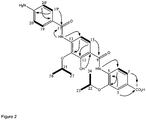
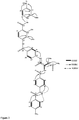
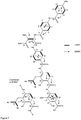
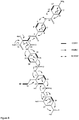
- H-1 The downfield characteristic of H-1 ( ⁇ c 79.4) suggested substitution by an oxygen, which was confirmed from a HMBC correlation from H-1 to 1-OMe ( ⁇ H 3.53, ⁇ c 59.6). Also observed were HMBC correlations from H-1 and H-2 to an ester/amide carbonyl ( ⁇ c 169.6) leading to the construction of subunit A ( Figure 1 ).
- the isolated spin system for the 1,2,3,4 tetrasubstituted benzene ring showed HMBC correlations from i) H-25 ( ⁇ H 7.82, d, 8.7) to an ester/amide carbonyl C-23 ( ⁇ c 163.7), C-27 ( ⁇ c 136.2) and a quaternary oxy carbon C-29 ( ⁇ c 150.8); ii) H-26 ( ⁇ H 7.42) to C-24 ( ⁇ c 117.3) and C-28 ( ⁇ c 139.5) along with the phenolic hydroxyl ( ⁇ H 11.25) showing correlations to C-24 and C-28)
- the tri and tetra-substituted benzene rings were attached para to each other by HMBC correlations from the amide NH ( ⁇ H 10.98) to C-20 ( ⁇ c 119.8) C-18 ( ⁇ c 146.7) and C-23 ( ⁇ c 163.7) ( Figure 1 ).
- the remaining MF was adjusted to generate a carboxylic acid residue (C-15) on the 1,2,3-substituted aromatic ring in subunit B generating the 4-amino-3-isopropoxybenzoic acid moiety leading to the construction of the planar structure of cystobactamide A.
- cystobactamide C (3) bearing resemblance to the eastern part of cystobactamide A and B, consisting of 3-isopropoxybenzoic acid, 2-hydroxy-3-isopropoxybenzamide and a para-aminobenzamide unit.
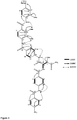
- Table 1 The 1D and 2D NMR data (Table 3, Figure 2 ) identified cystobactamide C (3) bearing resemblance to the eastern part of cystobactamide A and B, consisting of 3-isopropoxybenzoic acid, 2-hydroxy-3-isopropoxybenzamide and a para-aminobenzamide unit. Table 1.
- Consideration of the 1-D and 2-D NMR data revealed an additional 1,3,4-trisubstituted and a 1,2,3,4-tetrasubstituted benzene ring.
- HMBC correlations were observed from the aromatic protons H-27 ( ⁇ H 7.55) and H-29 ( ⁇ H 7.60) to the carbonyl C-31 ( ⁇ c 167.8) and the quaternary carbon C-25 ( ⁇ c 133.0), while H-30 ( ⁇ H 8.47, d, 7.0 ) and a methoxy signal ( ⁇ H 3.96) were coupled to an oxygen bearing carbon C-26 ( ⁇ c 149.1), hence revealing a 4-amino-3-methoxybenzoic acid moiety, which was later confirmed by esterification.
- HMBC correlations were observed from the exchangeable proton (NH) ( ⁇ H 7.46) to the oxygen bearing carbons C-1 ( ⁇ c 80.8), C-18 ( ⁇ c 141.0) and the aromatic carbon C-22 ( ⁇ c 116.2), while H-22 ( ⁇ H 7.48, d, 8.8) and the methoxy showed couplings to C-18 and H-21 ( ⁇ H 7.77, d, 8.8) coupled to an amide carbonyl C-23 ( ⁇ c 164.8).
- NH exchangeable proton
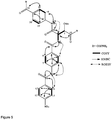
- cystobactamide H was established by HMBC correlations of the exchangeable protons H-9 (d H 10.93) to C-10 (d C 163.9) and C-7/7' (d C 119.6), H-33 (d H 10.85) to C-32 (d C 168.7) and C-35/35' (d C 118.8), H-16 (d H 8.91) to C-38 (d C 163.1), C-18 (d C 139.5) and C-22 (d C 100.4) and H-24 (d H 14.71) to C-20 (d C 116.1), C-25 (d C 131.0), C-26 (d C 147.4) and C-30 (d C 118.5) and H-2 (d H 4.85) to C-4 (d C 165.5) as well as HR-MS2 fragmentation-data which also enabled the localisation of the nitro-group and the establishment of the free amide group in the linker moiety.
- cystobactamides were evaluated against several microorganisms and cell lines. All derivatives demonstrated a potent inhibitory effect on various E . coli strains, including a nalidixic acid resistant (NAL R ) isolate. Overall potency (average MIC values) of the tested derivatives increased in the following order: CysA1, CysC ⁇ CysB ⁇ CysA, CysG ⁇ CysF. Importantly, the pathogenic Gram-negative strains A. baumannii and P.
- aeruginosa were also inhibited by the most active derivatives, CysA, CysB, CysG, and CysF, in the low ⁇ g/ml range, which is in terms of MIC values only by one order of magnitude higher than for the reference drug ciprofloxacin.
- cystobactamides do not inhibit the growth of yeast and mammalian cells, respectively. Thus, the cystobactamides did not cause apparent cytotoxicity.
- Quinolones are a widely used class of antibiotics that target the type II topoisomerases, DNA gyrase and topoisomerase IV. Resistance to quinolones is thereby often mediated by mutations in chromosomal genes that lead to alterations in the drug targets.
- the quinolone-resistance determining region In GyrA the quinolone-resistance determining region (QRDR) is located between amino acids 67 and 106, whereas amino acids 83 (Ser) and 87 (Asp) are most often involved.
- QRDR quinolone-resistance determining region
- Cystobactamides were screened using a panel of E . coli strains with typical mutations in gyrA and parC genes (Table 11). With ciprofloxacin the MIC values increase approximately by factor 30 for the single-step gyrA mutations (strain MI and WT-3.2). However, a combination of both gyrA mutations (strain WT-3) results already in nearly clinical resistance (1 mg/L). A parC mutation (strain WT-4 M2.1) leads to a two-fold increase of the MIC of ciprofloxacin. However, MIC values for cystobactamides did not or only marginally increase for gyrA and parC mutant E . coli strains, which suggests that cystobactamides might interfere with amino acids 87 and 83 of GyrA and amino acid 80 of ParC to a lower extent than observed for ciprofloxacin.
- E . coli strain WT III was less susceptible to ciprofloxacin treatment by a factor of ca. 4 (cp. E . coli WT).
- MIC values of cystobactamides B, F, and G were still in the ⁇ g/ml range.
- the MIC of CysF on strain E . coli WT III only increased by factor 2 compared to wildtype E. coli DSM-1116, whereas the MIC of ciprofloxacin increased by ca. factor 10.
- Human HCT-116 colon carcinoma cells (CCL-247) were obtained from the American Type Culture Collection (ATCC) and Chinese hamster ovary CHO-K1 cells (ACC-110) were obtained from the German Collection of Microorganisms and Cell Cultures (DSMZ). Both cell lines were cultured under the conditions recommended by the respective depositor.
- HUVEC human umbilical vein endothelial cells; single donor
- PromoCell Heidelberg, Germany
- Endothelial Cell Growth Medium PromoCell
- ECGS Endothelial Cell Growth Medium
- 0.1 ng/ml EGF 1 ng/ml bFGF
- 90 ⁇ g/ml heparin 1 ⁇ g/ml hydrocortisone.
- Bacterial strains Bacterial wildtype strains used in susceptibility assays were either part of our strain collection or purchased from the German Collection of Microorgansims and Cell Cultures (DSMZ) or from the American Type Culture Collection (ATCC). E. coli strain WT [6] and E . coli mutants were kindly provided by Prof. Dr. P. Heisig, Pharmaceutical Biology and Microbiology, University of Hamburg .
- Cytotoxicity assay Cells were seeded at 6 ⁇ 10 3 cells per well of 96-well plates (Corning CellBind®) in complete medium (180 ⁇ l) and directly treated with cystobactamides dissolved in methanol in a serial dilution. Compound were tested in duplicate for 5 d, as well as the internal solvent control. After 5 d incubation, 5 mg/ml MTT in PBS (20 ⁇ L) was added per well and it was further incubated for 2 h at 37 °C.
- MIC values were determined in microdilution assays. Overnight cultures were diluted in the appropriate growth medium to achieve an inoculum of 10 4 -10 6 cfu/mL.
- Yeasts were grown in Myc medium (1% phytone peptone, 1% glucose, 50 mM HEPES, pH 7.0), S . pneumonia and E . faecalis in tryptic soy broth (TSB: 1.7% peptone casein, 0.3% peptone soymeal, 0.25% glucose, 0.5% NaCl, 0.25% K 2 HPO 4 ; pH 7.3); M.
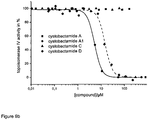
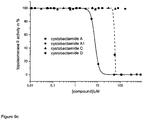
- Cystobactamide A inhibited the E. coli gyrase (20,5 nM eq. 1 unit) showing an apparent IC 50 of 6 ⁇ M.
- Cystobactamide A1 inhibited the E. coli gyrase (20,5 nM eq. 1 unit) showing an apparent IC 50 of 2.5 ⁇ M.
- Cystobactamide D inhibited the E. coli gyrase (20,5 nM eq. 1 unit) showing an apparent IC 50 of 1 ⁇ M.
- Cystobactamide C inhibited the E . coli gyrase (20,5 nM eq. 1 unit) showing an apparent IC 50 of 7,7 ⁇ M. Cystobactamides thus are novel inhibitors of bacterial DNA gyrase.
- IC 50 values of cystobactamide A-D in the Gyrase inhibition assay Compound IC 50 / ⁇ M cystobactamide A 6 +/-1.4 cystobactamide A1 2.5 +/- 0,8 cystobactamide C 7.2 +/-0.74 cystobactamide D 0.7 +/- 0.4
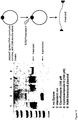
- Figure 9a show the results of the Gyrase inhibition assay.
- the gyrase reactions were titrated with varying concentrations of cystobactamide A, A1, C and D and resolved by agarose gel electrophoresis.
- IC 50 determination the band intensity of the supercoiled plasmid was determined using Adobe Photoshop, plotted vs. [cystobactamide] and fitted using Hill's equation.
- Prokaryotic DNA gyrase and topoisomerase IV share a high degree of homology and gyrase inhibitors typically show a topoisomerase IV inhibitory activity. 8
- a commercial E . coli topoisomerase IV kit (Inspiralis) was used.
- Cystobactamide A inhibited the activity of E . coli topo IV only at the highest tested concentration of 815 ⁇ M. Cystobactamide A1 inhibited E . coli topo IV showing an IC 50 value of 6.4 +/- 1.8 ⁇ M. Cystobactamide C inhibited the activity of E . coli topo IV only at the highest tested concentration of 300 ⁇ M. Cystobactamide D inhibited E . coli topo IV showing an IC 50 value of 10 +/- 3 ⁇ M.
- IC 50 values for cystobactamide A-D in the E . coli Topoisomerase IV inhibition assay Compound IC 50 / ⁇ M cystobactamide A >160 cystobactamide A1 6.4+/- 1.8 cystobactamide C >60 cystobactamide D 10 +/- 3
- Figure 9b shows the result of the Topoisomerase IV inhibition assay.
- the topo IV reactions were titrated with varying concentrations of A-D and resolved by agarose gel electrophoresis.
- For IC 50 determination the band intensity of the supercoiled plasmid was determined using Adobe Photoshop, plotted vs. [cystobactamide] and fitted using Hill's equation.
- Prokaryotic DNA topoisomerase IV and eukaryotic topoisomerase II share a high degree of homology (type IIa topoisomerases) and inhibitors of the prokaryotic enzyme often also inhibits the eukaryotic counterpart. 8
- a commercial H. sapiens topoisomerase II kit (Inspiralis) was used.
- Cystobactamide A inhibited the activity of human topo II only at the highest tested concentration of 815 ⁇ M. Cystobactamide A1 inhibited human topo II showing an IC 50 value of 9 +/- 0.03 ⁇ M. Cystobactamide C inhibited the activity of human topo II only at the highest tested concentration of 300 ⁇ M. Cystobactamide D inhibited human topo II showing an IC 50 value of 41.2 +/- 3 ⁇ M
- IC 50 values for cystobactamide A-D in the H. sapiens Topoisomerase II inhibition assay Compound IC 50 / ⁇ M cystobactamide A >160 cystobactamide A1 9 +/- 0.03 cystobactamide C >60 cystobactamide D 41.2 +/- 3
- Figure 9c shows the result of the Topoisomerase II inhibition assay.
- the topo II reactions were titrated with varying concentrations of A-D and resolved by agarose gel electrophoresis.
- For IC 50 determination the band intensity of the supercoiled plasmid was determined using Adobe Photoshop, plotted vs. [cystobactamide] and fitted using Hill's equation.
- IC 50 values for cystobactamide A-D in the H. sapiens Topoisomerase I inhibition assay Compound IC 50 / ⁇ M cystobactamide A ⁇ 10 cystobactamide A1 ⁇ 0.7 cystobactamide C ⁇ 6 cystobactamide D ⁇ 33.6
- Figure 9d shows the result of the Topoisomerase I inhibition assay.
- the topo I reactions were titrated with varying concentrations of A-D and resolved by agarose gel electrophoresis.
- For IC 50 determination the band intensity of the supercoiled plasmid was determined using Adobe Photoshop, plotted vs. [cystobactamide] and fitted using Hill's equation.
- Cystobactamides A and C show a strong preference for gyrase as molecular target (40-100 fold stronger preference for gyrase).
- A1 and D both target gyrase and topoisomerase IV almost equally well (2.6-10 fold stronger preference for gyrase).
- DNA/gyrase complex linearization assays A and ATP competition assays (B) were performed using cystobactamide D.
- A Here, the complex of DNA and gyrase is trapped using SDS and the gyrase is digested using proteinase K. If the gyrase/DNA complex is trapped by a gyrase inhibitor of type 1 this will lead to the formation of linearized plasmid (as the religation is inhibited). Type 2 inhibitor-bound or compound-free samples will not show the formation of linearized plasmids. The results of the assay are shown in Figure 10a .
- Ciprofloxacin (a known gyrase/DNA stabilizer) and cystobactamide D show the formation of linearized plasmid after proteinase K treatment. This effect is not seen for the untreated control. Therefore, it appears likely that cystobactamides stabilize the covalent GyrA-DNA complex in a fashion comparable to the fluoroquionolones.
- B standard gyrase reactions were inhibited using a constant amount of cystobactamide D and titrated with increasing amounts of ATP. If ATP and cystobactamide D would compete for binding at the ATP binding pocket on the gyrase GyrB subunit, increasing amounts of ATP would lead to the formation of supercoiled plasmid in the assay.
- Figure 10b shows the assay results. Even at the highest ATP concentration of 10 mM (2000 fold cystobactamide concentration) the gyrase activity is not regained, indicating that the ATP binding pocket is not the binding site of the cystobactamides. This result is in line with the linearization assay results.
- Figure 11 shows the results of the DNA/gyrase complex linearization assay.
- Ciprofloxacin stock solutions and Dilutions were prepared in 10 mM HCI and 50 % DMSO and used 1:10 in the final assay.
- Control reactions were: no enzyme and a standard reaction in presence of 5% (v/v) DMSO.
- cystobactamides stabilize the covalent complex between DNA gyrase and the nicked DNA substrate
- proteinase K linearization assay were performed (see a). Standard gyrase supercoiling assays were run in the presence of cystobactamide D (18 ⁇ M; 1.8 ⁇ M). Control reactions contained no gyrase, no inhibitor or the known gyrase/DNA complex stabilizer ciprofloxacin (1 ⁇ M). The reactions were quenched by the addition of 1/10 volume of 10% SDS. To linearize the nicked DNA-gyrase complexes, 50 ⁇ g/ml proteinase K were added to the reactions and incubated for 30 minutes at 37°C.
- Control reactions were: no enzyme and a standard reaction in presence of 5% (v/v) DMSO. All reaction samples were equilibrated for 10 minutes at room-temperature in the absence of DNA. Then the relaxed plasmid was added to start the reaction.
- Control reactions were: no enzyme and a standard reaction in presence of 5% (v/v) DMSO. All reaction samples were equilibrated for 10 minutes at room-temperature in the absence of DNA. Then the relaxed plasmid was added to start the reaction.
- Control reactions were: no enzyme and a standard reaction in presence of 5% (v/v) DMSO. All reaction samples were equilibrated for 10 minutes at room-temperature in the absence of DNA. Then the relaxed plasmid was added to start the reaction
- IC50 values the formation of supercoiled (gyrase) or relaxed (topoisomerase I, II IV) plasmid was quantified using Adobe Photoshop (Histogram mode). Plotting of these values versus the compound concentration yielded sigmoidal shaped curves, which were fitted using Hill's equation (Origin Pro 8.5). All determined IC50 values are the averages of three independent experiments.
- cystobactamide C is described which can further be elaborated to the other cystobactamides.
- step e) in Scheme 1 can be modified by using another alcohol (R'OH) instead of i PrOH.
- R'OH another alcohol
- building blocks of cystobactamide H can be prepared.
- i PrOH can be exchanged by any other alcohol (R'OH).
- MeOH building blocks of cystobactamides C, G and H can be prepared.
- cystobactamide F p-amino-benzoic acid derivatives such as p-aminobenzoic acid or corresponding N-protected aminobenzoic acid derivatives and p-nitrobenzoic acids are employed instead of building block B.
- cystobactamides consist of the bisamide that represents cystobactamide C, a bisarylamide (fragment C) and a chiral linker element.
- fragment C and the chiral linker element are reported first which is followed by the assembling of all three elements to provide cystobactamide A.
- Mass spectra were obtained at 70 eV with a type VG Autospec spectrometer (Micromass), with a type LCT (ESI) (Micromass) or with a type Q-TOF (Micromass) spectrometer in combination with a Waters Aquity Ultraperformance LC system.
- Analytical thin-layer chromatography was performed using precoated silica gel 60 F 254 plates (Merck, Darmstadt), and the spots were visualized with UV light at 254 nm or alternatively by staining with potassium permanganate, phosphomolybdic acid, 2,4-dinitrophenol or p-anisaldehyde solutions.
- Tetrahydrofuran (THF) was distilled under nitrogen from sodium/benzophenone.
- Dichloromethane (CH 2 Cl 2 ) was dried using a Solvent Purification System (SPS).
- SPS Solvent Purification System
- Commercially available reagents were used as supplied.
- Flash column chromatography was performed on Merck silica gel 60 (230-400 mesh). Eluents used for flash chromatography were distilled prior to use. Melting points were measured using a SRS OptiMelt apparatus. Optical rotations [ ⁇ ] were measured on a Polarimeter 341 (Perkin Elmer) at a wavelength of 589 nm and are given in 10 -1 deg cm 2 g -1 .
- 1 H-NMR 400 MHz, CD 3 OD: ⁇ 8.19-8.13 (m, 2H), 7.53-7.48 (m, 2H), 3.93 (s, 3H) ppm.
- Methyl-4-(4-(4-( tert -butoxycarbonyl)amino)benzamido)-2-hydroxy-3-isopropxybenzamido)-3-isopropoxybenzoate (40.0 mg, 0.064 mmol) was dissolved in a mixture 10/1 dichloromethane/trifluoroacetic acid (1 mL) and stirred 17 hours at room temperature. The solvent was removed under reduced pressure and the residual acid was removed under high vacuum to give the titled compound (33.4 mg, 0.064 mmol, quantitative) as yellow oil.
- Methyl-4-[4-(4-aminobenzamido)-2-hydroxy-3-isopropxybenzamido]-3-isopropoxybenzoate (30.0 mg, 0.058 mmol) was dissolved in a mixture 1/1 of THF/H 2 O (0.3/0.3 mL). Then, solid LiOH (13.9 mg, 0.58 mmol) was added and the reaction mixture was stirred at room temperature for 17 hours. The aqueous layer was acidified with 1M HCl until pH ⁇ 1 and extracted with ethyl acetate (3x). The organic extracts were combined, dried over anhydrous MgSO 4 and filtered.
- AD mix ⁇ (20.0 g) was dissolved in a mixture of t BuOH/H 2 O (1:1; 142 mL) at 25 °C. Afterwards, CH 3 SO 2 NH 2 (1.36 g, 14.3 mmol, 1.0 eq.) was added and the reaction mixture cooled to 0 °C. Then, methylcinnamate (2.31 g, 14.3 mmol, 1.0 eq.) was added and the resulting mixture was vigorously stirred for 16 h at 0 °C. Stirring was continued for additional 6 h at 25 °C.
- the reaction mixture was hydrolyzed by addition of an aqueous Na 2 SO 3 solution (21.4 g, 170 mmol, 12.0 eq.) and stirring was continued for additional 2.5 h.
- the reaction mixture was diluted with ethyl acetate and the layers were separated.
- the aqueous layer was extracted with EtOAc (3x).
- the combined organic layers were washed with H 2 O (1x) and dried over Na 2 SO 4 , filtered and concentrated under reduced pressure.
- the spectroscopic data are in accordance with those reported in the literature.
- the crude material (0.5 g, 1.0 eq) was dissolved in 17 ml methyl iodide. Then, CaSO 4 (2.6 g, 8.0 eq) and Ag 2 O (1.7 g, 3.0 eq) were added and stirring of the suspension was carried out in the dark at room temperature for 22 h. Then, the crude mixture was filtered and concentrated in vacuum to give the title compound (70% yield) which can be directly used in the next step without further purification.
- Methyl-4-[4-(4-aminobenzamido)-2-hydroxy-3-isopropxybenzamido]-3-isopropoxybenzoate (15.3 mg, 0.029 mmol) and (2 S ,3 R )-2,4-dimethoxy-3-[4-(4-nitrobenzamido)benzamido]succinate (14.2 mg, 0.032 mmol) were dissolved in CH 2 Cl 2 (3.4 mL) and cooled to 0 °C. Then, HOAt (5.9 mg, 0.044 mmol), DIPEA (7.7 ⁇ L, 0.044 mmol), and EDC ⁇ HCl (6.9 mg, 0.036 mmol) were added.
- Methyl-4-4-[4-((2 S ,3 S )-2,4-dimethoxy-3-(4-(4-nitrobenzamido)benzamido)-4-oxobutanamido]benzamido ⁇ -2-hydroxy-3-isopropxybenzamido)-3-isopropoxybenzoate (15.2 mg, 0.016 mmol) was dissolved in a mixture 1/1 of THF/H 2 O (0.2/0.2 mL). Then, solid LiOH (3.8 mg, 0.16 mmol) was added and the reaction mixture was stirred at room temperature for 17 hours. The aqueous layer was acidified with 1M HCl until pH ⁇ 1 and extracted with ethyl acetate (3x).
- the system consists of LC pump, autosampler, PDA detector, and single-quadrupole MS detector, as well as the standard software Xcalibur for operation.
- A water with 0.1% TFA
- B MeCN with 0.1% TFA
- MS (ESI) analysis was carried out at a spray voltage of 3800 V, a capillary temperature of 350 °C and a source CID of 10 V. Spectra were acquired in positive mode from 100 to 1000 m/z and at 254 nm for UV tracing.
Landscapes
- Chemical & Material Sciences (AREA)
- Organic Chemistry (AREA)
- Health & Medical Sciences (AREA)
- Life Sciences & Earth Sciences (AREA)
- Genetics & Genomics (AREA)
- Engineering & Computer Science (AREA)
- Wood Science & Technology (AREA)
- Zoology (AREA)
- General Health & Medical Sciences (AREA)
- Biochemistry (AREA)
- Molecular Biology (AREA)
- Biomedical Technology (AREA)
- Bioinformatics & Cheminformatics (AREA)
- Biotechnology (AREA)
- General Engineering & Computer Science (AREA)
- Biophysics (AREA)
- Microbiology (AREA)
- Medicinal Chemistry (AREA)
- Chemical Kinetics & Catalysis (AREA)
- General Chemical & Material Sciences (AREA)
- Proteomics, Peptides & Aminoacids (AREA)
- Plant Pathology (AREA)
- Physics & Mathematics (AREA)
- Animal Behavior & Ethology (AREA)
- Oncology (AREA)
- Nuclear Medicine, Radiotherapy & Molecular Imaging (AREA)
- Pharmacology & Pharmacy (AREA)
- Communicable Diseases (AREA)
- Public Health (AREA)
- Veterinary Medicine (AREA)
- Pharmaceuticals Containing Other Organic And Inorganic Compounds (AREA)
- Acyclic And Carbocyclic Compounds In Medicinal Compositions (AREA)
- Peptides Or Proteins (AREA)
- Preparation Of Compounds By Using Micro-Organisms (AREA)
- Pyridine Compounds (AREA)
- Medicines Containing Material From Animals Or Micro-Organisms (AREA)
- Micro-Organisms Or Cultivation Processes Thereof (AREA)
- Pyrrole Compounds (AREA)
- Organic Low-Molecular-Weight Compounds And Preparation Thereof (AREA)
Priority Applications (1)
| Application Number | Priority Date | Filing Date | Title |
|---|---|---|---|
| EP14747296.3A EP3019615B1 (en) | 2013-07-12 | 2014-07-14 | Cystobactamides |
Applications Claiming Priority (3)
| Application Number | Priority Date | Filing Date | Title |
|---|---|---|---|
| EP13003539 | 2013-07-12 | ||
| EP14747296.3A EP3019615B1 (en) | 2013-07-12 | 2014-07-14 | Cystobactamides |
| PCT/EP2014/001925 WO2015003816A2 (en) | 2013-07-12 | 2014-07-14 | Cystobactamides |
Publications (2)
| Publication Number | Publication Date |
|---|---|
| EP3019615A2 EP3019615A2 (en) | 2016-05-18 |
| EP3019615B1 true EP3019615B1 (en) | 2021-04-07 |
Family
ID=48792948
Family Applications (1)
| Application Number | Title | Priority Date | Filing Date |
|---|---|---|---|
| EP14747296.3A Active EP3019615B1 (en) | 2013-07-12 | 2014-07-14 | Cystobactamides |
Country Status (7)
| Country | Link |
|---|---|
| US (3) | US20160145304A1 (enExample) |
| EP (1) | EP3019615B1 (enExample) |
| JP (1) | JP6730183B2 (enExample) |
| CN (1) | CN105793424B (enExample) |
| AU (1) | AU2014289663B2 (enExample) |
| CA (1) | CA2917767C (enExample) |
| WO (1) | WO2015003816A2 (enExample) |
Families Citing this family (26)
| Publication number | Priority date | Publication date | Assignee | Title |
|---|---|---|---|---|
| CA2917767C (en) | 2013-07-12 | 2022-05-03 | Helmholtz-Zentrum Fur Infektionsforschung Gmbh | Cystobactamides |
| GB201402277D0 (en) | 2014-02-10 | 2014-03-26 | Sentinel Oncology Ltd | Pharmaceutical compounds |
| US20170204052A1 (en) * | 2014-05-15 | 2017-07-20 | Korea Research Institute Of Bioscience And Biotechnology | Novel antimicrobial compound and use thereof |
| CA2968270C (en) * | 2014-11-26 | 2022-11-01 | Helmholtz-Zentrum Fur Infektionsforschung Gmbh | Further natural cystobactamides, synthetic derivatives thereof, and use thereof in treating bacterial infections |
| CN105712894A (zh) * | 2016-03-23 | 2016-06-29 | 叶芳 | 一种3-甲氧基-4-氨基苯甲酸及其制备方法 |
| WO2018062422A1 (ja) * | 2016-09-28 | 2018-04-05 | 日産化学工業株式会社 | ジアミンおよびその利用 |
| BR102018007822A2 (pt) | 2017-04-20 | 2018-11-06 | Gilead Sciences, Inc. | composto, métodos para inibir pd-1, pd-l1 e/ou interação de pd-1/pd-l1 e para tratamento de câncer, composição farmacêutica, e, kit para tratamento de ou prevenção de câncer ou uma doença ou condição |
| AU2018300150A1 (en) | 2017-07-11 | 2020-01-30 | Vertex Pharmaceuticals Incorporated | Carboxamides as modulators of sodium channels |
| EP3655394B1 (en) * | 2017-07-18 | 2023-11-22 | Technische Universität Berlin | Novel albicidin derivatives, their use and synthesis |
| US11034648B2 (en) * | 2017-08-23 | 2021-06-15 | Helmholtz-Zentrum Für | Cystobactamide derivatives |
| AU2018346597B2 (en) | 2017-10-06 | 2023-07-13 | Forma Therapeutics, Inc. | Inhibiting Ubiquitin Specific Peptidase 30 |
| IL316472A (en) | 2018-01-10 | 2024-12-01 | Recurium Ip Holdings Llc | Benzamide compounds |
| WO2019160882A1 (en) | 2018-02-13 | 2019-08-22 | Gilead Sciences, Inc. | Pd-1/pd-l1 inhibitors |
| KR102591947B1 (ko) | 2018-04-19 | 2023-10-25 | 길리애드 사이언시즈, 인코포레이티드 | Pd-1/pd-l1 억제제 |
| IL278291B2 (en) | 2018-05-17 | 2023-10-01 | Forma Therapeutics Inc | Condensed bicyclic compounds are useful as ubiquitin-specific peptidase 30 inhibitors |
| PE20210642A1 (es) | 2018-07-13 | 2021-03-23 | Gilead Sciences Inc | Inhibidores de pd-1/pd-l1 |
| EP4218934B1 (en) | 2018-10-05 | 2025-06-18 | Forma Therapeutics, Inc. | Inhibiting ubiquitin-specific protease 30 (usp30) |
| US11236085B2 (en) | 2018-10-24 | 2022-02-01 | Gilead Sciences, Inc. | PD-1/PD-L1 inhibitors |
| WO2020146682A1 (en) | 2019-01-10 | 2020-07-16 | Vertex Pharmaceuticals Incorporated | Carboxamides as modulators of sodium channels |
| WO2020146612A1 (en) | 2019-01-10 | 2020-07-16 | Vertex Pharmaceuticals Incorporated | Esters and carbamates as modulators of sodium channels |
| AU2020300619A1 (en) | 2019-07-03 | 2022-01-27 | Sumitomo Pharma Oncology, Inc. | Tyrosine kinase non-receptor 1 (TNK1) inhibitors and uses thereof |
| PH12022551379A1 (en) | 2019-12-06 | 2023-05-03 | Vertex Pharma | Substituted tetrahydrofurans as modulators of sodium channels |
| EP4313173A4 (en) * | 2021-03-31 | 2025-04-16 | MediBeacon Inc. | Purification of substituted diaminopyrazine dicarboxylic acids |
| SI4347031T1 (sl) | 2021-06-04 | 2026-01-30 | Vertex Pharmaceuticals Incorporated | N-(hidroksialkil (hetero)aril) tetrahidrofuran karboksamidi kot modulatorji natrijevih kanalčkov |
| CN113563220B (zh) * | 2021-06-25 | 2023-08-29 | 华中农业大学 | 一种抗菌化合物及其应用 |
| CN121712741A (zh) | 2023-06-26 | 2026-03-20 | 亥姆霍兹感染研究中心有限公司 | 新型囊菌酰胺衍生物 |
Family Cites Families (16)
| Publication number | Priority date | Publication date | Assignee | Title |
|---|---|---|---|---|
| US4525354A (en) * | 1983-09-14 | 1985-06-25 | University Of Hawaii | Antibiotic and process for the production thereof |
| US7020622B1 (en) * | 1997-06-10 | 2006-03-28 | Linkshare Corporation | Transaction tracking, managing, assessment, and auditing data processing system and network |
| FR2772025B1 (fr) | 1997-12-10 | 2000-03-03 | Guerbet Sa | Chelates metalliques de macrocycles polyaminocarboxyliques et leur application a l'imagerie par resonance magnetique |
| WO2001083800A2 (en) * | 2000-04-28 | 2001-11-08 | Kosan Biosciences, Inc. | Heterologous production of polyketides |
| CA2413702A1 (en) * | 2000-06-28 | 2002-01-03 | Teva Pharmaceuticals Industries Ltd. | Carvedilol |
| US7510852B2 (en) * | 2002-10-18 | 2009-03-31 | Centre De Cooperation Internationale En Recherche Agronomique Pour Le Developpement (Cirad) | Biosynthetic genes and host cells for the synthesis of polyketide antibiotics and method of use |
| WO2006109846A1 (ja) | 2005-04-06 | 2006-10-19 | Takeda Pharmaceutical Company Limited | トリアゾール誘導体およびその用途 |
| US7758972B2 (en) * | 2006-09-26 | 2010-07-20 | Semiconductor Energy Laboratory Co., Ltd. | Stilbene derivative, light emitting element, light emitting device, and electronic appliance |
| JP5379965B2 (ja) * | 2006-09-26 | 2013-12-25 | 株式会社半導体エネルギー研究所 | スチルベン誘導体、発光素子および発光装置 |
| US7816324B2 (en) * | 2007-03-13 | 2010-10-19 | Board Of Regents, The University Of Texas System | Composition and method for the treatment of diseases affected by a peptide receptor |
| US8236983B2 (en) * | 2008-03-13 | 2012-08-07 | Board Of Regents, The University Of Texas System | Composition and method for the treatment of diseases affected by apoptosis |
| US8754124B2 (en) * | 2011-11-23 | 2014-06-17 | Board Of Regents, The University Of Texas System | Oligo-benzamide compounds and their use in treating cancers |
| EP2956437B1 (en) * | 2013-02-15 | 2023-05-10 | Technische Universität Berlin | Albicidin derivatives for the treatment of bacterial infections |
| CA2917767C (en) | 2013-07-12 | 2022-05-03 | Helmholtz-Zentrum Fur Infektionsforschung Gmbh | Cystobactamides |
| US20170204052A1 (en) | 2014-05-15 | 2017-07-20 | Korea Research Institute Of Bioscience And Biotechnology | Novel antimicrobial compound and use thereof |
| CA2968270C (en) * | 2014-11-26 | 2022-11-01 | Helmholtz-Zentrum Fur Infektionsforschung Gmbh | Further natural cystobactamides, synthetic derivatives thereof, and use thereof in treating bacterial infections |
-
2014
- 2014-07-14 CA CA2917767A patent/CA2917767C/en active Active
- 2014-07-14 CN CN201480050439.3A patent/CN105793424B/zh active Active
- 2014-07-14 US US14/904,654 patent/US20160145304A1/en not_active Abandoned
- 2014-07-14 AU AU2014289663A patent/AU2014289663B2/en active Active
- 2014-07-14 JP JP2016524705A patent/JP6730183B2/ja active Active
- 2014-07-14 WO PCT/EP2014/001925 patent/WO2015003816A2/en not_active Ceased
- 2014-07-14 EP EP14747296.3A patent/EP3019615B1/en active Active
-
2018
- 2018-07-23 US US16/042,753 patent/US10793600B2/en active Active
-
2020
- 2020-06-10 US US16/897,497 patent/US11225503B2/en active Active
Non-Patent Citations (1)
| Title |
|---|
| None * |
Also Published As
| Publication number | Publication date |
|---|---|
| CA2917767A1 (en) | 2015-01-15 |
| US20160145304A1 (en) | 2016-05-26 |
| CN105793424A (zh) | 2016-07-20 |
| WO2015003816A2 (en) | 2015-01-15 |
| US20190185514A1 (en) | 2019-06-20 |
| CN105793424B (zh) | 2021-02-19 |
| US11225503B2 (en) | 2022-01-18 |
| US10793600B2 (en) | 2020-10-06 |
| JP6730183B2 (ja) | 2020-07-29 |
| CA2917767C (en) | 2022-05-03 |
| US20200331964A1 (en) | 2020-10-22 |
| EP3019615A2 (en) | 2016-05-18 |
| AU2014289663B2 (en) | 2019-03-07 |
| AU2014289663A1 (en) | 2016-02-04 |
| JP2016527215A (ja) | 2016-09-08 |
| WO2015003816A3 (en) | 2015-03-12 |
Similar Documents
| Publication | Publication Date | Title |
|---|---|---|
| US11225503B2 (en) | Crystobactamides | |
| US20090263886A1 (en) | Farnesyl dibenzodiazepinone and processes for its production | |
| KR100420238B1 (ko) | 스트렙토그라민 및 돌연변이합성에 의한 이의 제조 방법 | |
| EP1770165B1 (en) | Dna coding for polypeptide participating in biosynthesis of pladienolide | |
| CN107001241B (zh) | 新型孢囊菌酰胺 | |
| JP2010535481A (ja) | チオペプチド前駆体タンパク質、それをコードする遺伝子およびそれらの使用 | |
| WO2012029811A1 (ja) | リベロマイシンaまたはその合成中間体の製造法、スピロケタール環含有化合物の製造方法、並びに新規抗癌剤、抗真菌剤および骨疾患治療剤 | |
| EP3309253B1 (en) | Genes for biosynthesis of tetracycline compounds and uses thereof | |
| HK1229840B (en) | Cystobactamides | |
| JP2013508341A (ja) | 新規なアシルピペラジノン、及び医薬としてのそれらの使用 | |
| CN105755076B (zh) | 利用突变合成获得sansanmycin结构类似物的方法 | |
| CN117642417A (zh) | 新型达罗巴汀衍生物 | |
| JP5058496B2 (ja) | 新規ラクタム開環酵素およびその用途 | |
| JP5401526B2 (ja) | 新規ラクタム開環酵素およびその用途 | |
| CA2538147A1 (en) | Farnesyl dibenzodiazepinone, processes for its production and its use as a pharmaceutical | |
| KR19990074514A (ko) | 아미노글라이코사이드계 항생제에 대해 다제내성을지정하는유전자 |
Legal Events
| Date | Code | Title | Description |
|---|---|---|---|
| PUAI | Public reference made under article 153(3) epc to a published international application that has entered the european phase |
Free format text: ORIGINAL CODE: 0009012 |
|
| 17P | Request for examination filed |
Effective date: 20160202 |
|
| AK | Designated contracting states |
Kind code of ref document: A2 Designated state(s): AL AT BE BG CH CY CZ DE DK EE ES FI FR GB GR HR HU IE IS IT LI LT LU LV MC MK MT NL NO PL PT RO RS SE SI SK SM TR |
|
| AX | Request for extension of the european patent |
Extension state: BA ME |
|
| DAX | Request for extension of the european patent (deleted) | ||
| RIN1 | Information on inventor provided before grant (corrected) |
Inventor name: KIRSCHNING, ANDREAS Inventor name: MORENO, MARIA Inventor name: HAMED, MOSTAFA Inventor name: RAJU, RITESH Inventor name: STEINMETZ, HEINRICH Inventor name: GILLE, FRANZISKA Inventor name: MUELLER, ROLF Inventor name: WANG, LIANG LIANG Inventor name: HARTMANN, ROLF Inventor name: GERTH, KLAUS Inventor name: HERRMANN, JENNIFER Inventor name: ELHAHER, WALID A. M. Inventor name: MOHR, KATHRIN Inventor name: BAUMANN, SASCHA |
|
| RAP1 | Party data changed (applicant data changed or rights of an application transferred) |
Owner name: HELMHOLTZ-ZENTRUM FUER INFEKTIONSFORSCHUNG GMBH |
|
| STAA | Information on the status of an ep patent application or granted ep patent |
Free format text: STATUS: EXAMINATION IS IN PROGRESS |
|
| 17Q | First examination report despatched |
Effective date: 20170830 |
|
| REG | Reference to a national code |
Ref country code: HK Ref legal event code: DE Ref document number: 1229840 Country of ref document: HK |
|
| RIN1 | Information on inventor provided before grant (corrected) |
Inventor name: GERTH, KLAUS Inventor name: WANG, LIANG LIANG Inventor name: GILLE, FRANZISKA Inventor name: HUETTEL, STEPHAN Inventor name: HARTMANN, ROLF Inventor name: BAUMANN, SASCHA Inventor name: KIRSCHNING, ANDREAS Inventor name: MORENO, MARIA Inventor name: RAJU, RITESH Inventor name: STEINMETZ, HEINRICH Inventor name: MUELLER, ROLF Inventor name: HAMED, MOSTAFA Inventor name: MOHR, KATHRIN Inventor name: HERRMANN, JENNIFER Inventor name: ELHAHER, WALID A. M. |
|
| GRAP | Despatch of communication of intention to grant a patent |
Free format text: ORIGINAL CODE: EPIDOSNIGR1 |
|
| STAA | Information on the status of an ep patent application or granted ep patent |
Free format text: STATUS: GRANT OF PATENT IS INTENDED |
|
| RIC1 | Information provided on ipc code assigned before grant |
Ipc: C12P 13/02 20060101ALI20200807BHEP Ipc: C12N 15/52 20060101AFI20200807BHEP Ipc: A61P 31/04 20060101ALI20200807BHEP Ipc: C07C 237/44 20060101ALI20200807BHEP Ipc: C07C 237/42 20060101ALI20200807BHEP Ipc: A61K 38/00 20060101ALI20200807BHEP |
|
| INTG | Intention to grant announced |
Effective date: 20200903 |
|
| GRAS | Grant fee paid |
Free format text: ORIGINAL CODE: EPIDOSNIGR3 |
|
| GRAJ | Information related to disapproval of communication of intention to grant by the applicant or resumption of examination proceedings by the epo deleted |
Free format text: ORIGINAL CODE: EPIDOSDIGR1 |
|
| GRAL | Information related to payment of fee for publishing/printing deleted |
Free format text: ORIGINAL CODE: EPIDOSDIGR3 |
|
| STAA | Information on the status of an ep patent application or granted ep patent |
Free format text: STATUS: EXAMINATION IS IN PROGRESS |
|
| GRAP | Despatch of communication of intention to grant a patent |
Free format text: ORIGINAL CODE: EPIDOSNIGR1 |
|
| STAA | Information on the status of an ep patent application or granted ep patent |
Free format text: STATUS: GRANT OF PATENT IS INTENDED |
|
| INTC | Intention to grant announced (deleted) | ||
| GRAA | (expected) grant |
Free format text: ORIGINAL CODE: 0009210 |
|
| STAA | Information on the status of an ep patent application or granted ep patent |
Free format text: STATUS: THE PATENT HAS BEEN GRANTED |
|
| INTG | Intention to grant announced |
Effective date: 20210218 |
|
| AK | Designated contracting states |
Kind code of ref document: B1 Designated state(s): AL AT BE BG CH CY CZ DE DK EE ES FI FR GB GR HR HU IE IS IT LI LT LU LV MC MK MT NL NO PL PT RO RS SE SI SK SM TR |
|
| REG | Reference to a national code |
Ref country code: GB Ref legal event code: FG4D |
|
| REG | Reference to a national code |
Ref country code: AT Ref legal event code: REF Ref document number: 1379733 Country of ref document: AT Kind code of ref document: T Effective date: 20210415 Ref country code: CH Ref legal event code: NV Representative=s name: E. BLUM AND CO. AG PATENT- UND MARKENANWAELTE V, CH Ref country code: CH Ref legal event code: EP |
|
| REG | Reference to a national code |
Ref country code: DE Ref legal event code: R096 Ref document number: 602014076372 Country of ref document: DE |
|
| REG | Reference to a national code |
Ref country code: IE Ref legal event code: FG4D |
|
| REG | Reference to a national code |
Ref country code: LT Ref legal event code: MG9D |
|
| REG | Reference to a national code |
Ref country code: NL Ref legal event code: MP Effective date: 20210407 Ref country code: AT Ref legal event code: MK05 Ref document number: 1379733 Country of ref document: AT Kind code of ref document: T Effective date: 20210407 |
|
| PG25 | Lapsed in a contracting state [announced via postgrant information from national office to epo] |
Ref country code: FI Free format text: LAPSE BECAUSE OF FAILURE TO SUBMIT A TRANSLATION OF THE DESCRIPTION OR TO PAY THE FEE WITHIN THE PRESCRIBED TIME-LIMIT Effective date: 20210407 Ref country code: NL Free format text: LAPSE BECAUSE OF FAILURE TO SUBMIT A TRANSLATION OF THE DESCRIPTION OR TO PAY THE FEE WITHIN THE PRESCRIBED TIME-LIMIT Effective date: 20210407 Ref country code: LT Free format text: LAPSE BECAUSE OF FAILURE TO SUBMIT A TRANSLATION OF THE DESCRIPTION OR TO PAY THE FEE WITHIN THE PRESCRIBED TIME-LIMIT Effective date: 20210407 Ref country code: BG Free format text: LAPSE BECAUSE OF FAILURE TO SUBMIT A TRANSLATION OF THE DESCRIPTION OR TO PAY THE FEE WITHIN THE PRESCRIBED TIME-LIMIT Effective date: 20210707 Ref country code: AT Free format text: LAPSE BECAUSE OF FAILURE TO SUBMIT A TRANSLATION OF THE DESCRIPTION OR TO PAY THE FEE WITHIN THE PRESCRIBED TIME-LIMIT Effective date: 20210407 Ref country code: HR Free format text: LAPSE BECAUSE OF FAILURE TO SUBMIT A TRANSLATION OF THE DESCRIPTION OR TO PAY THE FEE WITHIN THE PRESCRIBED TIME-LIMIT Effective date: 20210407 |
|
| PG25 | Lapsed in a contracting state [announced via postgrant information from national office to epo] |
Ref country code: GR Free format text: LAPSE BECAUSE OF FAILURE TO SUBMIT A TRANSLATION OF THE DESCRIPTION OR TO PAY THE FEE WITHIN THE PRESCRIBED TIME-LIMIT Effective date: 20210708 Ref country code: LV Free format text: LAPSE BECAUSE OF FAILURE TO SUBMIT A TRANSLATION OF THE DESCRIPTION OR TO PAY THE FEE WITHIN THE PRESCRIBED TIME-LIMIT Effective date: 20210407 Ref country code: IS Free format text: LAPSE BECAUSE OF FAILURE TO SUBMIT A TRANSLATION OF THE DESCRIPTION OR TO PAY THE FEE WITHIN THE PRESCRIBED TIME-LIMIT Effective date: 20210807 Ref country code: PL Free format text: LAPSE BECAUSE OF FAILURE TO SUBMIT A TRANSLATION OF THE DESCRIPTION OR TO PAY THE FEE WITHIN THE PRESCRIBED TIME-LIMIT Effective date: 20210407 Ref country code: PT Free format text: LAPSE BECAUSE OF FAILURE TO SUBMIT A TRANSLATION OF THE DESCRIPTION OR TO PAY THE FEE WITHIN THE PRESCRIBED TIME-LIMIT Effective date: 20210809 Ref country code: NO Free format text: LAPSE BECAUSE OF FAILURE TO SUBMIT A TRANSLATION OF THE DESCRIPTION OR TO PAY THE FEE WITHIN THE PRESCRIBED TIME-LIMIT Effective date: 20210707 Ref country code: ES Free format text: LAPSE BECAUSE OF FAILURE TO SUBMIT A TRANSLATION OF THE DESCRIPTION OR TO PAY THE FEE WITHIN THE PRESCRIBED TIME-LIMIT Effective date: 20210407 Ref country code: SE Free format text: LAPSE BECAUSE OF FAILURE TO SUBMIT A TRANSLATION OF THE DESCRIPTION OR TO PAY THE FEE WITHIN THE PRESCRIBED TIME-LIMIT Effective date: 20210407 Ref country code: RS Free format text: LAPSE BECAUSE OF FAILURE TO SUBMIT A TRANSLATION OF THE DESCRIPTION OR TO PAY THE FEE WITHIN THE PRESCRIBED TIME-LIMIT Effective date: 20210407 |
|
| REG | Reference to a national code |
Ref country code: DE Ref legal event code: R097 Ref document number: 602014076372 Country of ref document: DE |
|
| PG25 | Lapsed in a contracting state [announced via postgrant information from national office to epo] |
Ref country code: DK Free format text: LAPSE BECAUSE OF FAILURE TO SUBMIT A TRANSLATION OF THE DESCRIPTION OR TO PAY THE FEE WITHIN THE PRESCRIBED TIME-LIMIT Effective date: 20210407 Ref country code: EE Free format text: LAPSE BECAUSE OF FAILURE TO SUBMIT A TRANSLATION OF THE DESCRIPTION OR TO PAY THE FEE WITHIN THE PRESCRIBED TIME-LIMIT Effective date: 20210407 Ref country code: CZ Free format text: LAPSE BECAUSE OF FAILURE TO SUBMIT A TRANSLATION OF THE DESCRIPTION OR TO PAY THE FEE WITHIN THE PRESCRIBED TIME-LIMIT Effective date: 20210407 Ref country code: SK Free format text: LAPSE BECAUSE OF FAILURE TO SUBMIT A TRANSLATION OF THE DESCRIPTION OR TO PAY THE FEE WITHIN THE PRESCRIBED TIME-LIMIT Effective date: 20210407 Ref country code: SM Free format text: LAPSE BECAUSE OF FAILURE TO SUBMIT A TRANSLATION OF THE DESCRIPTION OR TO PAY THE FEE WITHIN THE PRESCRIBED TIME-LIMIT Effective date: 20210407 Ref country code: RO Free format text: LAPSE BECAUSE OF FAILURE TO SUBMIT A TRANSLATION OF THE DESCRIPTION OR TO PAY THE FEE WITHIN THE PRESCRIBED TIME-LIMIT Effective date: 20210407 |
|
| PLBE | No opposition filed within time limit |
Free format text: ORIGINAL CODE: 0009261 |
|
| STAA | Information on the status of an ep patent application or granted ep patent |
Free format text: STATUS: NO OPPOSITION FILED WITHIN TIME LIMIT |
|
| 26N | No opposition filed |
Effective date: 20220110 |
|
| PG25 | Lapsed in a contracting state [announced via postgrant information from national office to epo] |
Ref country code: MC Free format text: LAPSE BECAUSE OF FAILURE TO SUBMIT A TRANSLATION OF THE DESCRIPTION OR TO PAY THE FEE WITHIN THE PRESCRIBED TIME-LIMIT Effective date: 20210407 |
|
| REG | Reference to a national code |
Ref country code: BE Ref legal event code: MM Effective date: 20210731 |
|
| PG25 | Lapsed in a contracting state [announced via postgrant information from national office to epo] |
Ref country code: IS Free format text: LAPSE BECAUSE OF FAILURE TO SUBMIT A TRANSLATION OF THE DESCRIPTION OR TO PAY THE FEE WITHIN THE PRESCRIBED TIME-LIMIT Effective date: 20210807 Ref country code: LU Free format text: LAPSE BECAUSE OF NON-PAYMENT OF DUE FEES Effective date: 20210714 Ref country code: AL Free format text: LAPSE BECAUSE OF FAILURE TO SUBMIT A TRANSLATION OF THE DESCRIPTION OR TO PAY THE FEE WITHIN THE PRESCRIBED TIME-LIMIT Effective date: 20210407 |
|
| PG25 | Lapsed in a contracting state [announced via postgrant information from national office to epo] |
Ref country code: IT Free format text: LAPSE BECAUSE OF FAILURE TO SUBMIT A TRANSLATION OF THE DESCRIPTION OR TO PAY THE FEE WITHIN THE PRESCRIBED TIME-LIMIT Effective date: 20210407 Ref country code: IE Free format text: LAPSE BECAUSE OF NON-PAYMENT OF DUE FEES Effective date: 20210714 Ref country code: BE Free format text: LAPSE BECAUSE OF NON-PAYMENT OF DUE FEES Effective date: 20210731 |
|
| PG25 | Lapsed in a contracting state [announced via postgrant information from national office to epo] |
Ref country code: HU Free format text: LAPSE BECAUSE OF FAILURE TO SUBMIT A TRANSLATION OF THE DESCRIPTION OR TO PAY THE FEE WITHIN THE PRESCRIBED TIME-LIMIT; INVALID AB INITIO Effective date: 20140714 |
|
| P01 | Opt-out of the competence of the unified patent court (upc) registered |
Effective date: 20230524 |
|
| PG25 | Lapsed in a contracting state [announced via postgrant information from national office to epo] |
Ref country code: CY Free format text: LAPSE BECAUSE OF FAILURE TO SUBMIT A TRANSLATION OF THE DESCRIPTION OR TO PAY THE FEE WITHIN THE PRESCRIBED TIME-LIMIT Effective date: 20210407 |
|
| PG25 | Lapsed in a contracting state [announced via postgrant information from national office to epo] |
Ref country code: MK Free format text: LAPSE BECAUSE OF FAILURE TO SUBMIT A TRANSLATION OF THE DESCRIPTION OR TO PAY THE FEE WITHIN THE PRESCRIBED TIME-LIMIT Effective date: 20210407 |
|
| PG25 | Lapsed in a contracting state [announced via postgrant information from national office to epo] |
Ref country code: TR Free format text: LAPSE BECAUSE OF FAILURE TO SUBMIT A TRANSLATION OF THE DESCRIPTION OR TO PAY THE FEE WITHIN THE PRESCRIBED TIME-LIMIT Effective date: 20210407 |
|
| PG25 | Lapsed in a contracting state [announced via postgrant information from national office to epo] |
Ref country code: MT Free format text: LAPSE BECAUSE OF FAILURE TO SUBMIT A TRANSLATION OF THE DESCRIPTION OR TO PAY THE FEE WITHIN THE PRESCRIBED TIME-LIMIT Effective date: 20210407 |
|
| PGFP | Annual fee paid to national office [announced via postgrant information from national office to epo] |
Ref country code: DE Payment date: 20250722 Year of fee payment: 12 |
|
| PGFP | Annual fee paid to national office [announced via postgrant information from national office to epo] |
Ref country code: GB Payment date: 20250724 Year of fee payment: 12 |
|
| PGFP | Annual fee paid to national office [announced via postgrant information from national office to epo] |
Ref country code: FR Payment date: 20250723 Year of fee payment: 12 |
|
| PGFP | Annual fee paid to national office [announced via postgrant information from national office to epo] |
Ref country code: CH Payment date: 20250801 Year of fee payment: 12 |
|
| REG | Reference to a national code |
Ref country code: CH Ref legal event code: U11 Free format text: ST27 STATUS EVENT CODE: U-0-0-U10-U11 (AS PROVIDED BY THE NATIONAL OFFICE) Effective date: 20260801 |