EP3012268B1 - Chimeric antigen receptors with an optimized hinge region - Google Patents
Chimeric antigen receptors with an optimized hinge region Download PDFInfo
- Publication number
- EP3012268B1 EP3012268B1 EP15199344.1A EP15199344A EP3012268B1 EP 3012268 B1 EP3012268 B1 EP 3012268B1 EP 15199344 A EP15199344 A EP 15199344A EP 3012268 B1 EP3012268 B1 EP 3012268B1
- Authority
- EP
- European Patent Office
- Prior art keywords
- amino acid
- cells
- domain
- protein
- target
- Prior art date
- Legal status (The legal status is an assumption and is not a legal conclusion. Google has not performed a legal analysis and makes no representation as to the accuracy of the status listed.)
- Active
Links
Images



Classifications
-
- C—CHEMISTRY; METALLURGY
- C07—ORGANIC CHEMISTRY
- C07K—PEPTIDES
- C07K16/00—Immunoglobulins [IGs], e.g. monoclonal or polyclonal antibodies
- C07K16/46—Hybrid immunoglobulins
-
- C—CHEMISTRY; METALLURGY
- C07—ORGANIC CHEMISTRY
- C07K—PEPTIDES
- C07K14/00—Peptides having more than 20 amino acids; Gastrins; Somatostatins; Melanotropins; Derivatives thereof
- C07K14/435—Peptides having more than 20 amino acids; Gastrins; Somatostatins; Melanotropins; Derivatives thereof from animals; from humans
- C07K14/705—Receptors; Cell surface antigens; Cell surface determinants
- C07K14/70503—Immunoglobulin superfamily
- C07K14/7051—T-cell receptor (TcR)-CD3 complex
-
- C—CHEMISTRY; METALLURGY
- C07—ORGANIC CHEMISTRY
- C07K—PEPTIDES
- C07K14/00—Peptides having more than 20 amino acids; Gastrins; Somatostatins; Melanotropins; Derivatives thereof
- C07K14/435—Peptides having more than 20 amino acids; Gastrins; Somatostatins; Melanotropins; Derivatives thereof from animals; from humans
- C07K14/705—Receptors; Cell surface antigens; Cell surface determinants
- C07K14/70503—Immunoglobulin superfamily
- C07K14/70517—CD8
-
- C—CHEMISTRY; METALLURGY
- C07—ORGANIC CHEMISTRY
- C07K—PEPTIDES
- C07K14/00—Peptides having more than 20 amino acids; Gastrins; Somatostatins; Melanotropins; Derivatives thereof
- C07K14/435—Peptides having more than 20 amino acids; Gastrins; Somatostatins; Melanotropins; Derivatives thereof from animals; from humans
- C07K14/705—Receptors; Cell surface antigens; Cell surface determinants
- C07K14/70503—Immunoglobulin superfamily
- C07K14/70521—CD28, CD152
-
- C—CHEMISTRY; METALLURGY
- C07—ORGANIC CHEMISTRY
- C07K—PEPTIDES
- C07K16/00—Immunoglobulins [IGs], e.g. monoclonal or polyclonal antibodies
- C07K16/18—Immunoglobulins [IGs], e.g. monoclonal or polyclonal antibodies against material from animals or humans
- C07K16/32—Immunoglobulins [IGs], e.g. monoclonal or polyclonal antibodies against material from animals or humans against translation products of oncogenes
-
- C—CHEMISTRY; METALLURGY
- C07—ORGANIC CHEMISTRY
- C07K—PEPTIDES
- C07K2317/00—Immunoglobulins specific features
- C07K2317/50—Immunoglobulins specific features characterized by immunoglobulin fragments
- C07K2317/55—Fab or Fab'
-
- C—CHEMISTRY; METALLURGY
- C07—ORGANIC CHEMISTRY
- C07K—PEPTIDES
- C07K2317/00—Immunoglobulins specific features
- C07K2317/50—Immunoglobulins specific features characterized by immunoglobulin fragments
- C07K2317/56—Immunoglobulins specific features characterized by immunoglobulin fragments variable (Fv) region, i.e. VH and/or VL
-
- C—CHEMISTRY; METALLURGY
- C07—ORGANIC CHEMISTRY
- C07K—PEPTIDES
- C07K2317/00—Immunoglobulins specific features
- C07K2317/60—Immunoglobulins specific features characterized by non-natural combinations of immunoglobulin fragments
- C07K2317/62—Immunoglobulins specific features characterized by non-natural combinations of immunoglobulin fragments comprising only variable region components
- C07K2317/622—Single chain antibody (scFv)
-
- C—CHEMISTRY; METALLURGY
- C07—ORGANIC CHEMISTRY
- C07K—PEPTIDES
- C07K2317/00—Immunoglobulins specific features
- C07K2317/60—Immunoglobulins specific features characterized by non-natural combinations of immunoglobulin fragments
- C07K2317/62—Immunoglobulins specific features characterized by non-natural combinations of immunoglobulin fragments comprising only variable region components
- C07K2317/626—Diabody or triabody
-
- C—CHEMISTRY; METALLURGY
- C07—ORGANIC CHEMISTRY
- C07K—PEPTIDES
- C07K2319/00—Fusion polypeptide
Definitions
- the present invention relates to multi-functional proteins which comprise (i) a signal peptide, (ii) a target specific recognition domain, (iii) a linker region, connecting domain (ii) and domain (iv) which comprises a specific modified hinge region of the human CD8 alpha-chain, and (iv) an effector domain.
- the present invention furthermore relates to nucleic acids encoding the proteins, expression constructs for expressing the protein in a host cell and host cells.
- the proteins of the invention are chimeric antigen receptors with an optimized linker or hinge region that are suitable for generating target-specific effector cells, for use as a medicament, in particular in the treatment of cancer and in adoptive, target-cell specific immunotherapy.
- T lymphocytes recognize specific antigens through interaction of the T cell receptor (TCR) with short peptides presented by major histocompatibility complex (MHC) class I or II molecules.
- TCR T cell receptor
- MHC major histocompatibility complex
- APCs professional antigen-presenting cells
- TCR activation in the absence of co-stimulation can result in unresponsiveness and clonal anergy.
- APCs professional antigen-presenting cells
- Chimeric antigen receptors have been constructed that consist of binding domains derived from natural ligands or antibodies specific for cell-surface antigens, genetically fused to effector molecules such as the TCR alpha and beta chains, or components of the TCR-associated CD3 complex. Upon antigen binding, such chimeric antigen receptors link to endogenous signaling pathways in the effector cell and generate activating signals similar to those initiated by the TCR complex. Since the first reports on chimeric antigen receptors, this concept has steadily been refined and the molecular design of chimeric receptors has been optimized (for a review see Uherek et al., 2001).
- chimeric antigen receptors targeted to a wide variety of antigens on the surface of cancer cells and of cells infected by human immunodeficiency virus (HIV) have been generated (for a review see Uherek et al., 2001).
- US 2007/0031438 A1 describes a CAR comprising a binding domain of an antibody against prostate specific membrane antigen (PSMA), a modified CD8 hinge in which at least one of the cysteine residues has been mutated and a zeta signaling domain of the T cell receptor.
- PSMA prostate specific membrane antigen
- US 2007/0031438 A1 uses a human CD8 hinge region with amino acid positions 135 to 180 (according to the amino acid numbering of Swissprot P01732), wherein the cysteine in position 164 is substituted with alanine.
- Fitzer-Attas et al. (1998) describe a CAR comprising a non modified CD8 hinge region with amino acid positions 116 to 208 (according to the amino acid numbering of Swissprot P01732), which comprises three cysteine residues at positions 164, 181 and 206.
- the chimeric receptor furthermore uses kinase domains as effector domain.
- WO 2008/045437 A2 describes CARs comprising as an extracellular binding portion, a single chain antibody portion that binds to EGFRvIII, a transmembrane portion derived from human CD8 alpha or CD28, and an intracellular signaling portion derived from human CD3 zeta.
- WO 2008/045437 A2 describes chimeric T cell receptor proteins with a non modified CD8 hinge region with amino acid positions 135 to 205, 135 to 203 or 135 to 182 (according to the amino acid numbering of Swissprot P01732), each comprising cysteine residues in positions 164 and 181.
- WO 95/30014 A1 describes a CAR comprising an antigen binding domain derivable from a monoclonal antibody directed against a suitable antigen on a tumor cell (such as scFv(FRP5)), a hinge region comprising from 40 to 200 amino acids and a functional zeta chain derivable from the T cell antigen receptor.
- a tumor cell such as scFv(FRP5)
- a hinge region comprising from 40 to 200 amino acids
- a functional zeta chain derivable from the T cell antigen receptor such as scFv(FRP5)
- the CAR of WO 95/30014 A1 uses the non modified murine CD8 hinge region with amino acid positions 132 to 191 (according to the amino acid numbering of Swissprot P01731), comprising a cysteine residue in position 178.
- US 2008/0260738 A1 describes antibody fusion proteins comprising at least two Fc monomers and at least one linker, wherein a modified CD8 hinge region is used for linking the two Fc monomers.
- US 2008/0260738 A1 uses modified CD8 hinge regions with amino acid positions 131 to 170 or 136 to 169 (according to the amino acid numbering of Swissprot P01732), wherein the cysteine in position 164 is substituted with serine
- Ren-Heidenreich et al. (2002) describe a CAR comprising a CD8 hinge region and the transmembrane and intracellular domains of CD3 zeta.
- Nolan et al. (1999) describe chimeric immunoglobulin-T cell receptors (IgTCR) with a specificity for carcinoembryonic antigen (CEA) that were created to assess IgTCR structures suitable for cancer therapy.
- CEA carcinoembryonic antigen
- the authors combined antigen-binding domains of a humanized antibody combined with TCR signaling chains to yield four different chimeric IgTCR.
- the present invention aims to provide optimized chimeric antigen receptors which allow more efficient surface expression and high functionality in lymphocytes. It is a further objective of the present invention to provide means and methods for generating antigen-specific effector cells as well as means and methods for the use in adoptive, target-cell specific immunotherapy and for treatment of cancer.
- this object is furthermore solved by a nucleic acid encoding the multi-functional protein.
- this object is furthermore solved by an expression construct for expressing the multi-functional protein.
- this object is furthermore solved by a host cell expressing the multi-functional protein or comprising the nucleic acid or the expression construct which is selected from effector cells of the immune system, and wherein the effector cells of the immune system are natural killer (NK) cells, natural killer T (NKT) cells, or a lymphocyte preparation containing NK cells and NKT cells.
- NK natural killer
- NKT natural killer T
- this object is furthermore solved by using the multi-functional protein, nucleic acid, or expression construct for generating antigen-specific effector cells.
- this object is furthermore solved by the multi-functional protein, nucleic acid, expression construct or host cell for use as a medicament.
- this object is furthermore solved by the multi-functional protein, nucleic acid, expression construct or host cell for use in the treatment of cancer.
- this object is furthermore solved by the multi-functional protein, nucleic acid, expression construct or host cell for use in adoptive, target-cell specific immunotherapy.
- the present invention provides multi-functional proteins comprising several domains, namely
- the proteins of the invention are preferably cell surface receptor proteins and, thus, comprise an extracellular portion (domains (i) and (ii) and (iii)), a transmembrane portion (contributed by/comprised in domain (iv)) and a cytoplasmic portion (contributed by/comprised in domain (iv)), and can thus be inserted into the plasma membrane of the host cell.
- the functionality of the proteins of the invention within a host cell is detectable in an assay suitable for demonstrating the signaling potential of said protein upon binding of a particular ligand. Such assays are available to the skilled artisan.
- chimeric antigen receptors Upon binding to the target, such chimeric antigen receptors link to endogenous signaling pathways in a cell (an effector cell) and generate certain activating signals (depending on the effector domain).
- CAR chimeric antigen receptors
- CARs are composed of a target specific recognition domain or cell recognition domain (domain (ii), such as a scFv antibody fragment) for recognition of a target (such as a tumor-cell surface antigen) fused via a flexible linker region to an effector domain (comprising a transmembrane region and one or more intracellular signaling domains like the zeta-chain of the CD3 complex of the T-cell receptor).
- a target such as a tumor-cell surface antigen
- effector domain comprising a transmembrane region and one or more intracellular signaling domains like the zeta-chain of the CD3 complex of the T-cell receptor.
- CAR expression retargets the cytotoxic activity of the effector cells (lymphocytes) to targets (tumor cells) and triggers their cytolysis by the CAR expressing immune effector cells.
- binding of the target specific recognition domain of the CAR to its cognate target on the surface of target cells/viruses transmits a signal into the CAR expressing immune effector cells via the intracellular signaling domain(s) of the CAR which activates the endogenous cytotoxic activity of such imune effector cells.
- a “signal peptide” refers to a peptide sequence that directs the transport and localization of the protein within a cell, e.g. to a certain cell organelle (such as the endoplasmic reticulum) and/or the cell surface.
- the signal peptide (i) is a signal peptide of any secreted or transmembrane human protein of type 1 (extracellular N-terminus), which allows the transport of the multi-functional protein of the invention to the cell membrane and cell surface and allows correct localization of the multi-functional protein of the invention, in particular the extracellular portion (domains (i) and (ii) and (iii)) on the cell surface; the transmembrane portion (contributed by/comprised in domain (iv)) inserted into the plasma membrane and the cytoplasmic portion (contributed by/comprised in domain (iv)) in the host cell.
- the signal peptide is cleaved after passage of the endoplasmic reticulum (ER), i.e. is a cleavable signal peptide.
- ER endoplasmic reticulum
- the signal peptide (i) comprises or is immunoglobulin heavy chain signal peptide.
- the target specific recognition domain (ii) binds an antigen, receptor, peptide ligand or protein ligand of the target.
- the target specific recognition domain (ii) preferably comprises
- the target is a cell or a virus.
- the target specific recognition domain serves for the targeting of the multi-functional protein or a respective cell expressing/carrying the multi-functional protein on its surface to a specific target. Binding of the target specific recognition domain of the multi-functional protein (CAR) to its cognate target on the surface of target cells/viruses furthermore transmits a signal into the multi-functional protein (CAR) -expressing immune effector cells via the intracellular signaling domain(s) of the multi-functional protein which activates the endogenous cytotoxic activity of such imune effector cells.
- CAR multi-functional protein
- the antigen of the target is N-(2-aminoethyl)-2-aminoethyl-N-(2-aminoethyl)-2-aminoethyl-N-(2-aminoethyl)-2-aminoethyl-N-(2-aminoethyl)-2-aminoethyl-N-(2-aminoethyl)-2-aminoethyl
- domain (ii) is derived from an antigen binding domain
- the antigen binding domain is preferably derived from an antibody or an antibody fragment, such as a single chain Fv (scFv) fragment, a Fab fragment, a diabody, a variable domain of the antibody heavy chain or antibody light chain.
- scFv single chain Fv
- the antigen of the target is the tumor-associated surface antigen ErbB2 and the antigen binding domain of domain (ii) is from an ErbB2-specific scFv.
- the lanker regions (iii) connects the target specific recognition domain (ii) and the effector domain (iv).
- the linker region serves as a flexible spacer between the target specific recognition domain (ii) and the effector domain (iv). It ensures the necessary accessibility and flexibility of the target specific recognition domain (ii).
- the linker region is understood to be essential for the functionality of the multi-functional proteins of the invention.
- CAR constructs contain a linker region derived from the alpha-chain of the murine or human CD8 molecule which provides a flexible connection between cell-targeting and signaling/effector domains (Uherek et al., 2002; Müller et al., 2008).
- unpaired cysteine(s) present in the linker region of the CD8 alpha-chain can result in unwanted covalent intra- or intermolecular bonds of CAR molecules which negatively affects surface expression of CAR as well as CAR functionality.
- Object matter of the invention is the generation of optimized CAR constructs which do not form such non-productive covalent linkages via the unpaired cysteine residue of the human CD8 alpha-chain and facilitate efficient surface expression and high functionality in lymphocytes.
- This is achieved, according to the invention, by employing a specific fragment of the hinge region derived from the human CD8 alpha-chain ranging from amino acid positions 117 to 178 (numbering according to the sequence of human T-cell surface glycoprotein CD8 alpha chain; Swiss-Prot accession number P01732), and by modifying the amino acid sequence of the hinge region derived from the human CD8 alpha-chain, in particular by replacing/converting the unpaired cysteine(s) to (a) serine residues or by deleting the unpaired cysteine(s).
- the resulting optimized CAR construct is expressed at higher levels at the cell surface and mediates more potent antigen-specific killing.
- cells carrying the optimized CAR construct contain a lower level of unpaired endogenous effector domain (such as CD3 zeta-chain) but higher levels of functional receptor complexes and productive dimers between CAR and endogenous effector domain (such as CD3 zeta-chain).
- the linker region (iii) comprises a modified hinge region of the human CD8 alpha-chain.
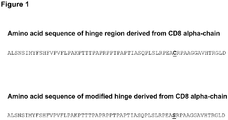
- the sequence of human T-cell surface glycoprotein CD8 alpha chain (Swiss-Prot accession number P01732 (CD8A_HUMAN)) wherein the flexible hinge region are amino acid residues 117 to 178 [SEQ ID NO. 1]: ALSNSIMYFSHFVPVFLPAKPTTTPAPRPPTPAPTIASQPLSLRPEA C RPAAGGAVHTRGLD
- the modification of the human CD8 alpha-chain hinge region according to the invention is the replacement of the cysteine residue(s) with (a) serine residue(s).
- the linker region (iii) consists of the amino acid sequence of SEQ ID NO. 2: ALSNSIMYFSHFVPVFLPAKPTTTPAPRPPTPAPTIASQPLSLRPEA S RPAAGGAVHTRGLD or an amino acid sequence that has at least 95 % sequence identity or 99 % sequence identity to the amino acid sequence of SEQ ID NO. 2, under the proviso that amino acid residue no. 48 of SEQ ID NO. 2 is not a cysteine and is a serine and under the proviso that the amino acid sequence does not contain any cysteine residue(s), or an amino acid sequence that differs in one, two or three amino acid residues from the amino acid sequence of SEQ ID NO. 2, under the proviso that amino acid residue no.
- SEQ ID NO. 2 48 of SEQ ID NO. 2 is not a cysteine and is a serine and under the proviso that the amino acid sequence does not contain any cysteine residue(s), wherein “differ” refers to replacement/substitution, addition or deletion, such as conservative substitution(s) of amino acid residues.
- linker region (iii) does not contain any cysteine residue(s).
- linker region (iii) is selected from any of the following:
- the length of 62 amino acid residues of the specific modified hinge region of the invention that is used as the linker region (iii) in the multi-functional proteins according to the invention ensures optimal spatial distance of the N-terminally attached target specific recognition domain (ii) from the C-terminally attached transmembrane and intracellular effector domain (iv), providing high flexibility and efficiency of target cell recognition.
- prior art describes CARs employing as linker regions unmodified fragments of the hinge region from the human CD8 alpha-chain (see, for example, Fitzer-Attas et al.
- CARs employing as linker regions modified fragments of the hinge region from the human CD8 alpha-chain that encompass significantly shorter amino acid sequences (such as only about 30 to about 40 amino acid residues, see, for example, US 2007/0031438 ), which reduces spatial distance of the target specific recognition domain from the effector domain and can negatively affect flexibility and efficiency of target cell recognition.
- the effector domain (iv) comprises a transmembrane region and one or more intracellular signaling domains.
- the effector domain serves the coupling of the target/antigen recognition to the intracellular signaling machinery.
- the effector domain (iv) comprises or consists of (is) the transmembrane domain and the intracellular domain of the zeta-chain of the human CD3 complex of the T-cell receptor with the amino acid sequence encoded by the nucleotide sequence of SEQ ID NO.9.
- the term "functional equivalent” defines a protein or nucleotide sequence, having a different amino acid or base sequence, compared to the sequences disclosed herein, but exhibiting the same function in vitro and in vivo.
- An example of a functional equivalent is a modified or synthetic gene, encoding the expression of a protein identical or highly homologous to that encoded by the wildtype gene or a sequence disclosed herein.
- the sequence of human T-cell surface glycoprotein CD3 zeta chain (Swiss-Prot accession number P20963 (CD3Z_HUMAN); Isoform 3) Also described herein is an effector domain which comprises or consists of (is) an amino acid sequence with SEQ ID NO. 3 or fragment(s) thereof (preferably the transmembrane and intracellular domain of human CD3 zeta-chain, more preferably amino acid residues 29 to 163 of amino acid sequence with SEQ ID NO.
- a "functional equivalent” has less sequence identity (such as at least 80 % sequence identity, preferably at least 90 % sequence identity, more preferably at least 95 % sequence identity or 99 % sequence identity) but is a functional zeta-chain of the CD3 complex of the T-cell receptor.
- the zeta chain is of human origin.
- the CD3 zeta chain exists as a disulfide homodimer.
- a "functional CD3 zeta chain” or "a functional zeta-chain of the CD3 complex of the T-cell receptor” is a protein which upon expression in T cell hybridomas deficient in endogenous zeta expression is capable of restoring in said hybridomas a functionally active TCR.
- an effector domain which is a fusion of a fragment of the costimulatory CD28 receptor fused to a fragment of the zeta-chain of the CD3 complex of the T-cell receptor which contains:
- the effector domain (iv) comprises or consists of (is) an amino acid sequence with the amino acid sequence of SEQ ID NO. 5 or a functional equivalent thereof, wherein a "functional equivalent” has less sequence identity (such as at least 80 % sequence identity, preferably at least 90 % sequence identity, more preferably at least 95 % sequence identity or 99 % sequence identity) but is a functional fusion of the costimulatory CD28 receptor fused to a fragment of the zeta-chain of the CD3 complex of the T-cell receptor.
- the multi-functional protein according to the invention comprises or consists of the amino acid sequence of a (cleavable) signal peptide (i), an scFv (ii), the modified hinge region (iii) (as defined herein, preferably of SEQ ID NO. 2) and the CD3 zeta chain as defined herein (iv) (wherein the signal peptide is at the N-terminus and the zeta chain/fusion is at the C-terminus).
- the protein comprises or consists of the amino acid sequence of SEQ ID NO. 6; or an amino acid sequence that has at least 95 % sequence identity or 99 % sequence identity to the amino acid sequence of SEQ ID NO. 6 (under the proviso that amino acid residue no. 308 (i.e. amino acid residue no. 48 of the modified hinge region (SEQ ID NO. 2)) is not a cysteine and is a serine and under the proviso that the amino acid sequence of the modified hinge region (i.e. amino acid residues no. 261 to 322) does not contain any cysteine residue(s).
- amino acid residue no. 308 i.e. amino acid residue no. 48 of the modified hinge region (SEQ ID NO. 2)
- amino acid sequence of the modified hinge region i.e. amino acid residues no. 261 to 322
- amino acid sequence of SEQ ID NO. 6 refers to the amino acid sequence of the multi-functional protein with the domains:
- amino acid sequence of SEQ ID NO. 7 refers to the amino acid sequence of the multi-functional protein with the domains:
- the present invention provides nucleic acids/nucleic acid molecules/isolated nucleic acid molecules encoding the proteins of the invention.
- the nucleic acids according to this invention comprise DNA (such as dsDNA, ssDNA, cDNA), RNA (such as dsRNA, ssRNA, mRNA), combinations thereof or derivatives (such as PNA) thereof.
- a nucleic acid of the invention comprises
- a nucleic acid of the invention furthermore comprises
- a nucleic acid of the invention comprises or consists of
- the nucleic acid sequences of the present invention are codon-optimized for expression in mammalian cells, preferably for expression in human cells.
- Codon-optimization refers to the exchange in a sequence of interest of codons that are generally rare in highly expressed genes of a given species by codons that are generally frequent in highly expressed genes of such species, such codons encoding the same amino acids as the codons that are being exchanged.
- nucleotide sequences obtained due to the degeneration of the genetic code of the above nucleotide sequences are also the nucleotide sequences obtained due to the degeneration of the genetic code of the above nucleotide sequences.
- the present invention provides expression constructs for expressing the protein of the invention in a cell.
- the expression constructs further comprise promoter and terminator sequences.
- an "expression or gene construct” refers to a nucleic acid construct, usually an expression vector or plasmid, that is used to introduce a specific gene sequence into a target cell. Once the expression or gene construct is inside the cell, the protein that is encoded by the gene is produced by the cellular transcription and translation machinery.
- the expression or gene construct is designed to contain respective regulatory sequences that act as enhancer and promoter regions and lead to efficient transcription of the gene carried on the construct, including promoter and terminator sequences.
- the goal of a well-designed expression or gene construct is the production of large amounts of stable mRNA, and therefore proteins.
- nucleic acids and/or in particular expression constructs of the invention are capable of directing the synthesis/expression of the multi-functional protein of the invention in a suitable host cell.
- nucleic acids and/or expression constructs of the invention are dsDNA, ssDNA, RNA or mRNA or combinations thereof.
- the present invention provides host cells which express a protein of the invention or which comprise a nucleic acid or an expression construct of the invention.
- the host cell is selected from effector cells of the immune system, and wherein the effector cells of the immune system are natural killer (NK) cells, natural killer T (NKT) cells, mast cells, dendritic cells, killer dendritic cells, B cells, or a lymphocyte preparation containing NK cells and NKT cells.
- NK natural killer
- NKT natural killer T
- NK cells natural killer T cells
- mast cells dendritic cells, killer dendritic cells, B cells, or a lymphocyte preparation containing NK cells and NKT cells.
- the invention provides the use of the multi-functional protein, nucleic acid, or expression construct for generating antigen-specific effector cells.
- Antigen-specific effector cells or “target-specific effector cells” refer to effector cells of the immune system or immune effector cells genetically modified to express the multi-functional protein of the invention by transfer of an expression construct or nucleic acid encoding said multi-functional protein.
- Such antigen-specific or target-specific effector cells are versatile means, in particular in the treatment of diseases (as described below for ACT and cancer treatment).
- the invention provides the multi-functional protein, nucleic acid, expression construct or host cell for use as a medicament.
- the invention provides the multi-functional protein, nucleic acid, expression construct or host cell for use in the treatment of cancer.
- the invention provides the multi-functional protein, nucleic acid, expression construct or host cell for use in adoptive, target-cell specific immunotherapy.
- adoptive, target-cell specific immunotherapy refers to a form of therapy in which immune cells are transferred to tumor-bearing hosts.
- the immune cells have antitumor reactivity and can mediate direct or indirect antitumor effects.
- ACT adoptive cell therapy
- immune effector cells such as lymphocytes with anti-tumour activity
- lymphocytes with anti-tumour activity expanded in vitro and infused into the patient with cancer.
- ACT using autologous tumour-infiltrating lymphocytes has emerged as the most effective treatment for patients with metastatic melanoma and can mediate objective cancer regression in approximately 50% of patients.
- the use of donor lymphocytes for ACT is an effective treatment for immunosuppressed patients who develop post-transplant lymphomas (reviewed in Rosenberg et al., 2008).
- the invention discloses methods for generating antigen-specific effector cells.
- the present invention also discloses methods for the treatment of diseases, in particular cancer, and methods of immunotherapy, preferably including adoptive, target-cell specific immunotherapy.
- the method for the treatment of diseases, in particular cancer can comprise administering to a subject in a therapeutically effective amount
- the method of immunotherapy preferably including or utilizing adoptive, target-cell specific immunotherapy, can comprise administering to a subject in a therapeutically effective amount
- a “therapeutically effective amount” of multi-functional protein, a nucleic acid, an expression construct or a host cell (in particular an antigen-specific effector cell) of this invention refers to the amount that is sufficient to treat the respective disease or achieve the respective outcome of the adoptive, target-cell specific immunotherapy.
- a cDNA fragment encoding the hinge region derived from the human CD8 alpha-chain was mutated by site-directed mutagenesis to replace the codon encoding the unpaired cysteine of the hinge region to a codon encoding a serine residue ( Figure 1 ).
- Sequences encoding an immunoglobulin heavy chain signal peptide, a scFv antibody fragment specific for the tumor-associated surface antigen ErbB2 the modified hinge region derived from human CD8 alpha-chain, and transmembrane and intracellular domains of human CD3 zeta-chain were assembled into a single open reading frame resulting in an ErbB2-specific CAR encoding cDNA.
- the CAR encoding sequence was inserted into the lentiviral transfer vector SIEW for expression in lymphocytes under the control of the Spleen Focus Forming Virus promoter ( Figure 2 ).
- a lentiviral transfer vector was produced encoding a similar CAR containing the unmodified hinge region derived from the human CD8 alpha-chain.
- VSV-G pseudotyped lentiviral vector particles were produced by transient triple transfection of 293T cells with the transfer vector together with the packaging constructs pMD-VSVG and 8.91.
- Lentiviral vector was used for transduction ofNK cells, and transduced NK cells were enriched by two rounds of FACS sorting based on expression of enhanced green fluorescent protein (EGFP) as a marker gene encoded by the SIEW vector.
- EGFP enhanced green fluorescent protein
- CAR surface expression of CAR.
- Expression of CAR on the surface of transduced and FACS-sorted NK cells was investigated by FACS analysis with an ErbB2-Fc fusion protein (R&D Systems) followed by APC-conjugated anti-human Fc F(ab) 2 fragment.
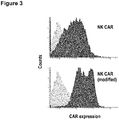
- NK cells transduced with CAR containing the modified CD8 alpha-chain hinge region displayed a higher overall surface expression of CAR when compared to NK cells expressing a similar CAR containing the unmodified CD8 alpha-chain hinge region ( Figure 3 ).
- Cytotoxic activity of CAR-expressing NK cells The cytotoxic activity of CAR-expressing NK cells was measured in FACS-based cytotoxicity assays.
- NK cells expressing ErbB2-specific CAR either containing the modified or unmodified CD8 alpha-chain hinge region displayed similar cytotoxic activity towards NK-sensitive but ErbB2-negative K562 erythroleukemic control cells, but were both unable to lyse NK-resistant and ErbB2-negative MDA-MB468 breast carcinoma cells.
- NK cells expressing the ErbB2-specific CAR with the modified CD8 alpha-chain hinge region showed markedly enhanced ErbB2-specific cell killing when compared to NK cells expressing the ErbB2-specific CAR with unmodified CD8 alpha-chain hinge region ( Figure 5 ).
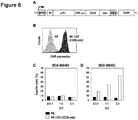
- CAR containing CD28 and CD3 zeta-chain signaling domains Construction of CAR containing CD28 and CD3 zeta-chain signaling domains. Sequences encoding an immunoglobulin heavy chain signal peptide, a scFv antibody fragment specific for the tumor-associated surface antigen ErbB2, the modified hinge region derived from human CD8 alpha-chain as described in Example 1, transmembrane and intracellular domains of human CD28, and the intracellular domain of human CD3 zeta-chain were assembled into a single open reading frame resulting in an ErbB2-specific CAR encoding cDNA containing CD28 and CD3 zeta-chain signaling domains. The CAR encoding sequence was inserted into the lentiviral transfer vector SIEW for expression in lymphocytes under the control of the Spleen Focus Forming Virus promoter ( Figure 6A ).
- VSV-G pseudotyped lentiviral vector particles were produced by transient triple transfection of 293T cells with the transfer vector together with the packaging constructs pMD-VSVG and 8.91.
- Lentiviral vector was used for transduction ofNK cells, and transduced NK cells were enriched by two rounds of FACS sorting based on expression of enhanced green fluorescent protein (EGFP) as a marker gene encoded by the SIEW vector.
- EGFP enhanced green fluorescent protein
- CAR containing CD28 and CD3 zeta-chain signaling domains Surface expression of CAR containing CD28 and CD3 zeta-chain signaling domains. Expression of CAR containing CD28 and CD3 zeta-chain signaling domains on the surface of transduced and FACS-sorted NK cells was investigated by FACS analysis with an ErbB2-Fc fusion protein (R&D Systems) followed by APC-conjugated anti-human Fc F(ab) 2 fragment. NK cells transduced with CAR containing the modified CD8 alpha-chain hinge region and CD28 and CD3 zeta-chain signaling domains displayed high surface expression of CAR ( Figure 6B ).
- Cytotoxic activity of NK cells expressing a CAR that contains CD28 and CD3 zeta-chain signaling domains The cytotoxic activity of NK cells expressing a CAR that contains the modified CD8 alpha-chain hinge region and CD28 and CD3 zeta-chain signaling domains was measured in FACS-based cytotoxicity assays. NK cells expressing this ErbB2-specific CAR and control NK cells not expressing a CAR were both unable to lyse NK-resistant and ErbB2-negative MDA-MB468 breast carcinoma cells ( Figure 6C ).
- NK cells expressing the ErbB2-specific CAR with the modified CD8 alpha-chain hinge region and CD28 and CD3 zeta-chain signaling domains showed high ErbB2-specific cell killing whereas control NK cells not expressing a CAR were unable to lyse the target cells to a significant degree ( Figure 6D ).
- Human NK cells were maintained in X-VIVO10 medium supplemented with 5% human plasma and 100 IU/mL IL-2.
- VSV-G pseudotyped vectors Production of VSV-G pseudotyped vectors in 293T cells.
- Vector particles were generated by transient transfection of 4x10 6 HEK-293T cells with a three plasmid system consisting of the packaging plasmid coding for the VSV-G envelope protein (pMD-VSVG), the glycoprotein expression plasmid encoding gag and pol (8.91), and the transfer plasmid carrying the gene of interest.
- Cells were transfected by calcium phosphate transfection using a total of 20 ⁇ g plasmid DNA consisting of 6.5 ⁇ g gag pol, 3.5 ⁇ g VSV-G, and 10 ⁇ g of transfer plasmids.
- DNA-calcium phosphate-precipitates were added dropwise to cell monolayers, and 10 mM chloroquine were added.
- Cell culture supernatants containing pseudotyped lentiviral vector particles were harvested 48 h later. Supernatants were sterile filtered (0.45 ⁇ m filter) and directly used for transduction of NK cells.
- Lentiviral transduction For transduction, 5 x 10 5 NK cells were seeded into a single well of a 6 well plate. Vector particles were added to the cells in the presence of 8 ⁇ g/mL polybrene and centrifuged for 60 min at 1800 rpm at 32°C. 48 h after transduction the cells were analyzed by FACS for EGFP and CAR expression.
- NK cells were incubated with 1 ⁇ g ErbB2-Fc fusion protein (R&D Systems) for 1 h at 4°C. Then cells were washed and stained with a secondary APC-coupled anti-human Fc F(ab) 2 antibody fragment for 20 min at 4°C. Samples were washed in FACS buffer (DPBS, 3% FCS) and resuspended in 250 ⁇ l for FACS analysis using a FACSCanto flow cytometer (BD Biosciences). Non-transduced NK cells or NK cells transduced with empty SIEW lentiviral vector served as control.
- FACS buffer DPBS, 3% FCS
- NK cells were harvested and pelleted. After washing twice with DPBS, 500 ⁇ L lysis buffer (20 mM Tris, pH 7.3, 137 mM NaCl, 10% glycerol, 1% Triton X-100, 2 mM EDTA, protease inhibitors) were added to the cell pellet and incubated for 20 min on ice. Cell debris was removed by centrifugation at 14,000 rpm for 10 min at 4°C. Lämmli buffer without addition of reducing reagents was added to the cleared supernatants, and the samples were subjected to SDS-PAGE and immunoblot analysis with anti-CD3 zeta-chain antibody following standard procedures.
- 500 ⁇ L lysis buffer (20 mM Tris, pH 7.3, 137 mM NaCl, 10% glycerol, 1% Triton X-100, 2 mM EDTA, protease inhibitors
- FACS-based cytotoxicity assays To investigate cytotoxic activity of parental and genetically modified NK cells (effector cells, E) towards different tumor cell lines (target cells, T), a FACS-based cytotoxicity assay was used. Target cells were labeled with calcein violet AM (Molecular Probes, Invitrogen). Cells were harvested, counted and washed in calcein wash buffer (RPMI1640). The cell number was adjusted to 4x10 6 cells/mL, and 1.5 ⁇ L calcein violet AM dissolved in 42 ⁇ L DMSO were added to the cells. Staining of cells was performed for 30 min on ice. Then cells were washed three times with calcein wash buffer, and the cell number was adjusted to 5x10 5 cells/mL.
- calcein violet AM Molecular Probes, Invitrogen
- effector and labeled target cells were co-cultured at various effector to target (E/T) ratios.
- E/T effector to target
- target cells were pelleted, counted and the cell number was adjusted to 5x10 6 cells/mL. Appropriate dilutions were prepared.
- target cells were resuspended in X-VIVO medium containing 5% human plasma and 100 IU/mL of IL-2. 100 ⁇ L target cells were co-cultured with 100 ⁇ L effector cells at various E/T ratios for 2 h at 37°C. Then samples were washed once in FACS buffer. Spontaneous target-cell lysis was determined in samples only containing labeled target cells.
Landscapes
- Health & Medical Sciences (AREA)
- Chemical & Material Sciences (AREA)
- Life Sciences & Earth Sciences (AREA)
- Immunology (AREA)
- Organic Chemistry (AREA)
- General Health & Medical Sciences (AREA)
- Medicinal Chemistry (AREA)
- Proteomics, Peptides & Aminoacids (AREA)
- Biochemistry (AREA)
- Biophysics (AREA)
- Molecular Biology (AREA)
- Genetics & Genomics (AREA)
- Gastroenterology & Hepatology (AREA)
- Toxicology (AREA)
- Zoology (AREA)
- Cell Biology (AREA)
- Oncology (AREA)
- Micro-Organisms Or Cultivation Processes Thereof (AREA)
- Peptides Or Proteins (AREA)
- Medicines Containing Material From Animals Or Micro-Organisms (AREA)
Priority Applications (2)
| Application Number | Priority Date | Filing Date | Title |
|---|---|---|---|
| EP15199344.1A EP3012268B1 (en) | 2010-09-08 | 2011-09-06 | Chimeric antigen receptors with an optimized hinge region |
| NO15199344A NO3012268T3 (cg-RX-API-DMAC7.html) | 2010-09-08 | 2011-09-06 |
Applications Claiming Priority (3)
| Application Number | Priority Date | Filing Date | Title |
|---|---|---|---|
| EP10009345 | 2010-09-08 | ||
| EP15199344.1A EP3012268B1 (en) | 2010-09-08 | 2011-09-06 | Chimeric antigen receptors with an optimized hinge region |
| EP11755014.5A EP2614077B1 (en) | 2010-09-08 | 2011-09-06 | Chimeric antigen receptors with an optimized hinge region |
Related Parent Applications (2)
| Application Number | Title | Priority Date | Filing Date |
|---|---|---|---|
| EP11755014.5A Division EP2614077B1 (en) | 2010-09-08 | 2011-09-06 | Chimeric antigen receptors with an optimized hinge region |
| EP11755014.5A Division-Into EP2614077B1 (en) | 2010-09-08 | 2011-09-06 | Chimeric antigen receptors with an optimized hinge region |
Publications (2)
| Publication Number | Publication Date |
|---|---|
| EP3012268A1 EP3012268A1 (en) | 2016-04-27 |
| EP3012268B1 true EP3012268B1 (en) | 2017-11-15 |
Family
ID=42942233
Family Applications (3)
| Application Number | Title | Priority Date | Filing Date |
|---|---|---|---|
| EP15199344.1A Active EP3012268B1 (en) | 2010-09-08 | 2011-09-06 | Chimeric antigen receptors with an optimized hinge region |
| EP16182059.2A Active EP3115373B1 (en) | 2010-09-08 | 2011-09-06 | Chimeric antigen receptors with an optimized hinge region |
| EP11755014.5A Active EP2614077B1 (en) | 2010-09-08 | 2011-09-06 | Chimeric antigen receptors with an optimized hinge region |
Family Applications After (2)
| Application Number | Title | Priority Date | Filing Date |
|---|---|---|---|
| EP16182059.2A Active EP3115373B1 (en) | 2010-09-08 | 2011-09-06 | Chimeric antigen receptors with an optimized hinge region |
| EP11755014.5A Active EP2614077B1 (en) | 2010-09-08 | 2011-09-06 | Chimeric antigen receptors with an optimized hinge region |
Country Status (7)
| Country | Link |
|---|---|
| US (3) | US9212229B2 (cg-RX-API-DMAC7.html) |
| EP (3) | EP3012268B1 (cg-RX-API-DMAC7.html) |
| DK (2) | DK2614077T3 (cg-RX-API-DMAC7.html) |
| ES (3) | ES2602743T3 (cg-RX-API-DMAC7.html) |
| NO (1) | NO3012268T3 (cg-RX-API-DMAC7.html) |
| PT (2) | PT3012268T (cg-RX-API-DMAC7.html) |
| WO (1) | WO2012031744A1 (cg-RX-API-DMAC7.html) |
Families Citing this family (130)
| Publication number | Priority date | Publication date | Assignee | Title |
|---|---|---|---|---|
| NZ700362A (en) * | 2012-04-11 | 2016-09-30 | Us Health | Chimeric antigen receptors targeting b-cell maturation antigen |
| WO2014100615A1 (en) | 2012-12-20 | 2014-06-26 | Purdue Research Foundation | Chimeric antigen receptor-expressing t cells as anti-cancer therapeutics |
| EP2948544A4 (en) | 2013-01-28 | 2016-08-03 | St Jude Childrens Res Hospital | CHIMERIC RECEPTOR WITH NKG2D SPECIFICITY FOR CELL THERAPY AGAINST CANCER AND INFECTION DISEASES |
| CN103965361B (zh) * | 2013-02-06 | 2018-10-30 | 上海细胞治疗工程技术研究中心集团有限公司 | 一种t细胞信号的嵌合分子转换器及其用途 |
| US9657105B2 (en) | 2013-03-15 | 2017-05-23 | City Of Hope | CD123-specific chimeric antigen receptor redirected T cells and methods of their use |
| ES2769574T3 (es) | 2013-03-15 | 2020-06-26 | Michael C Milone | Reconocimiento de células citotóxicas con receptores quiméricos para inmunoterapia adoptiva |
| CN104072616A (zh) * | 2013-03-29 | 2014-10-01 | 上海中信国健药业股份有限公司 | 一种嵌合受体及其制备方法和用途 |
| KR102098985B1 (ko) * | 2013-05-03 | 2020-04-09 | 오하이오 스테이트 이노베이션 파운데이션 | Cs1-특이적 키메라 항원 수용체 가공된 면역 작동체 세포 |
| AU2014262469B2 (en) | 2013-05-10 | 2019-11-14 | Whitehead Institute For Biomedical Research | Protein modification of living cells using sortase |
| KR102271498B1 (ko) | 2013-08-30 | 2021-07-05 | 보드 오브 리전츠, 더 유니버시티 오브 텍사스 시스템 | 종양 치료를 위한 키누레닌 고갈 효소의 투여 |
| CN105829349B (zh) * | 2013-10-15 | 2023-02-03 | 斯克利普斯研究所 | 肽嵌合抗原受体t细胞开关和其用途 |
| US10144770B2 (en) | 2013-10-17 | 2018-12-04 | National University Of Singapore | Chimeric receptors and uses thereof in immune therapy |
| MX377283B (es) * | 2013-11-21 | 2025-03-07 | Ucl Business Ltd | Célula t o nk que coexpresa un receptor antigénico quimérico (car). |
| EP4420663A3 (en) | 2013-12-20 | 2024-10-30 | Novartis AG | Regulatable chimeric antigen receptor |
| AU2014376328A1 (en) * | 2014-01-13 | 2016-07-21 | Christine E. BROWN | Chimeric antigen receptors (CARs) having mutations in the Fc spacer region and methods for their use |
| GB201405845D0 (en) | 2014-04-01 | 2014-05-14 | Ucl Business Plc | Signalling system |
| CA2942459C (en) * | 2014-04-01 | 2023-03-07 | Biontech Cell & Gene Therapies Gmbh | Claudin-6-specific immunoreceptors and t cell epitopes |
| KR102508166B1 (ko) | 2014-04-10 | 2023-03-13 | 시애틀 칠드런즈 호스피탈 디/비/에이 시애틀 칠드런즈 리서치 인스티튜트 | 세포 면역요법을 위한 방법 및 조성물 |
| AU2015259877B2 (en) | 2014-05-15 | 2021-02-25 | National University Of Singapore | Modified natural killer cells and uses thereof |
| JP2017525385A (ja) | 2014-06-18 | 2017-09-07 | ケモテラペウティシェス フォルシュングインスティトゥート ゲオルグ−シュパイヤー−ハウス | 細胞治療物質としてのcar発現nk−92細胞 |
| KR102612313B1 (ko) | 2014-07-21 | 2023-12-12 | 노파르티스 아게 | 인간화 항-bcma 키메라 항원 수용체를 사용한 암의 치료 |
| KR102818922B1 (ko) | 2014-08-28 | 2025-06-11 | 바이오아트라, 인코퍼레이티드 | 변형된 t 세포에 대한 조건부 활성 키메라 항원 수용체 |
| US11111288B2 (en) | 2014-08-28 | 2021-09-07 | Bioatla, Inc. | Conditionally active chimeric antigen receptors for modified t-cells |
| ES2987380T3 (es) | 2014-08-29 | 2024-11-14 | Univ Texas | Administración de enzimas de depleción de la quinurenina para la terapia tumoral |
| BR112017005390A2 (pt) | 2014-09-17 | 2017-12-12 | Novartis Ag | células citotóxicas alvo com receptores quiméricos para imunoterapia adotiva |
| CA2964317C (en) | 2014-10-14 | 2021-10-05 | Halozyme, Inc. | Compositions of adenosine deaminase-2 (ada2), variants thereof and methods of using same |
| US10570186B2 (en) | 2014-11-05 | 2020-02-25 | Board Of Regents, The University Of Texas System | Chimeric antigen receptors (CAR) to selectively target protein complexes |
| US20180148480A1 (en) * | 2015-01-16 | 2018-05-31 | The Johns Hopkins University | Synthetic enhancement of the t-cell armamentarium as an anti-cancer therapy |
| US20180002427A1 (en) | 2015-01-26 | 2018-01-04 | Cellectis | Cll1-specific multi-chain chimeric antigen receptor |
| GB201501936D0 (en) * | 2015-02-05 | 2015-03-25 | Ucl Business Plc | Signalling system |
| EP3256490A1 (en) | 2015-02-09 | 2017-12-20 | Research Development Foundation | Engineered immunoglobulin fc polypeptides displaying improved complement activation |
| US20170151281A1 (en) * | 2015-02-19 | 2017-06-01 | Batu Biologics, Inc. | Chimeric antigen receptor dendritic cell (car-dc) for treatment of cancer |
| CN107530424A (zh) | 2015-02-20 | 2018-01-02 | 俄亥俄州国家创新基金会 | 针对nkg2d和肿瘤相关抗原的二价抗体 |
| WO2016135291A1 (en) * | 2015-02-26 | 2016-09-01 | Var2 Pharmaceuticals Aps | Immunotherapeutic targeting of placental-like chondroitin sulfate using chimeric antigen receptors (cars) and immunotherapeutic targeting of cancer using cars with split-protein binding systems |
| US10800828B2 (en) | 2015-03-26 | 2020-10-13 | The Scripps Research Institute | Switchable non-scFv chimeric receptors, switches, and methods of use thereof to treat cancer |
| JP6879932B2 (ja) | 2015-04-06 | 2021-06-02 | サイトイミューン セラピューティクス, インコーポレイテッドCytoimmune Therapeutics, Llc | 神経膠芽腫のためのegfr指向car療法 |
| EP3283113A4 (en) | 2015-04-15 | 2018-12-05 | The California Institute for Biomedical Research | Optimized pne-based chimeric receptor t cell switches and uses thereof |
| PT3286223T (pt) | 2015-04-23 | 2024-03-22 | HaemaLogiX Ltd | Recetores de antigénio quimérico do antigénio do mieloma kappa e suas utilizações |
| CN107709552B (zh) | 2015-06-10 | 2022-05-13 | 南克维斯特公司 | 用于治疗癌症的修饰的nk-92细胞 |
| US10166255B2 (en) * | 2015-07-31 | 2019-01-01 | Regents Of The University Of Minnesota | Intracellular genomic transplant and methods of therapy |
| CN108350062B (zh) * | 2015-08-06 | 2022-10-14 | 达纳-法伯癌症研究所股份有限公司 | 靶向蛋白降解以减弱过继性t细胞疗法相关的不良炎症反应 |
| US11458167B2 (en) | 2015-08-07 | 2022-10-04 | Seattle Children's Hospital | Bispecific CAR T-cells for solid tumor targeting |
| US10526408B2 (en) | 2015-08-28 | 2020-01-07 | Research Development Foundation | Engineered antibody FC variants |
| MA44907A (fr) * | 2015-09-11 | 2018-07-18 | Agenus Inc | Cellules hôtes génétiquement modifiées et leurs procédés d'utilisation |
| GB201518136D0 (en) * | 2015-10-14 | 2015-11-25 | Glaxosmithkline Ip Dev Ltd | Novel chimeric antigen receptors |
| MY189819A (en) | 2015-11-27 | 2022-03-10 | Cartherics Pty Ltd | Genetically modified cells and uses thereof |
| WO2017151860A1 (en) | 2016-03-02 | 2017-09-08 | Broard Of Regents, The University Of Texas System | Human kynureninase enzyme variants having improved pharmacological properties |
| UA128781C2 (uk) | 2016-04-01 | 2024-10-23 | Кайт Фарма, Інк. | Т-клітина, спосіб її отримання та застосування |
| KR102522622B1 (ko) | 2016-04-01 | 2023-04-18 | 카이트 파마 인코포레이티드 | Bcma 결합 분자 및 그의 사용 방법 |
| CU20180121A7 (es) | 2016-04-01 | 2019-05-03 | Kite Pharma Inc | Receptores de antígenos quiméricos y células t |
| EP3439675A4 (en) | 2016-04-08 | 2019-12-18 | Purdue Research Foundation | METHOD AND COMPOSITIONS FOR CAR-T CELL THERAPY |
| EP3443096B1 (en) * | 2016-04-15 | 2023-03-01 | Novartis AG | Compositions and methods for selective expression of chimeric antigen receptors |
| WO2017197234A1 (en) | 2016-05-13 | 2017-11-16 | Bioatla, Llc | Anti-ror2 antibodies, antibody fragments, their immunoconjugates and uses thereof |
| CN110035768A (zh) | 2016-07-26 | 2019-07-19 | 泰莎治疗私人有限公司 | 嵌合抗原受体 |
| EP3519562A4 (en) | 2016-09-29 | 2020-03-25 | Nantkwest, Inc. | NK-92 HLA CLASS I DEFICIENT CELLS WITH REDUCED IMMUNOGENICITY |
| MX2019004181A (es) | 2016-10-13 | 2019-10-30 | Juno Therapeutics Inc | Métodos y composiciones de inmunoterapia que implican moduladores de la ruta metabólica de triptófano. |
| CA3040343A1 (en) | 2016-10-19 | 2018-04-26 | California Institute For Biomedical Research | Chimeric antigen receptor effector cell switches with humanized targeting moieties and/or optimized chimeric antigen receptor interacting domains and uses thereof |
| KR102630036B1 (ko) | 2016-12-23 | 2024-01-29 | 마크로제닉스, 인크. | Adam9-결합 분자, 및 이것의 사용 방법 |
| WO2018129346A1 (en) | 2017-01-06 | 2018-07-12 | Nantkwest, Inc. | Genetically modified nk-92 cells with decreased cd96/tigit expression |
| EP3579870A4 (en) | 2017-02-07 | 2020-12-30 | Seattle Children's Hospital (DBA Seattle Children's Research Institute) | PHOSPHOLIPID ETHER (PLE) T CAR-LYMPHOCYTE TUMOR (CTCT) TARGETING AGENTS |
| AU2018219289A1 (en) | 2017-02-08 | 2019-09-05 | Dana-Farber Cancer Institute, Inc. | Regulating chimeric antigen receptors |
| CN110582288B (zh) | 2017-02-28 | 2024-09-20 | 恩多塞特公司 | 用于car t细胞疗法的组合物和方法 |
| CN117384929A (zh) | 2017-03-27 | 2024-01-12 | 新加坡国立大学 | 一种编码由细胞表达的嵌合受体的多核苷酸 |
| RU2019128544A (ru) | 2017-03-27 | 2021-04-28 | Нэшнл Юниверсити Оф Сингапур | Линии стимулирующих клеток для ex vivo размножения и активации клеток-натуральных киллеров |
| KR20240059648A (ko) | 2017-04-19 | 2024-05-07 | 더 보드 오브 리젠츠 오브 더 유니버시티 오브 텍사스 시스템 | 조작된 항원 수용체를 발현하는 면역 세포 |
| WO2018232372A1 (en) * | 2017-06-16 | 2018-12-20 | Protelica, Inc. | Fibronectin binding domain chimeric antigen receptors and methods of use thereof |
| EP3645036A1 (en) | 2017-06-30 | 2020-05-06 | Cellectis | Cellular immunotherapy for repetitive administration |
| JP2021500882A (ja) * | 2017-10-18 | 2021-01-14 | プレシゲン,インコーポレイテッド | スペーサーを含むポリペプチド組成物 |
| WO2019084284A1 (en) | 2017-10-27 | 2019-05-02 | Coneksis, Inc. | NK CELLS FOR USE IN THE TREATMENT OF CANCER IN DOGS |
| US11760806B2 (en) | 2017-11-03 | 2023-09-19 | Sorrento Therapeutics, Inc. | CD-38 directed chimeric antigen receptor constructs |
| US11390655B2 (en) | 2017-11-16 | 2022-07-19 | Kite Pharma, Inc. | Modified chimeric antigen receptors and methods of use |
| CN112055595B (zh) | 2018-01-22 | 2024-12-17 | 恩多塞特公司 | Car t细胞的使用方法 |
| WO2019144707A1 (zh) * | 2018-01-26 | 2019-08-01 | 重庆精准生物技术有限公司 | 一种改良的铰链区及其在构建car骨架中的应用 |
| US20210040451A1 (en) | 2018-01-31 | 2021-02-11 | Nantkwest, Inc. | Use of 5% human albumin in wash and harvest media |
| CA3090089A1 (en) | 2018-02-06 | 2019-08-15 | Seattle Children's Hospital (dba Seattle Children's Research Institute) | Fluorescein-specific cars exhibiting optimal t cell function against fl-ple labelled tumors |
| AU2019219454A1 (en) | 2018-02-09 | 2020-08-27 | National University Of Singapore | Activating chimeric receptors and uses thereof in natural killer cell immunotherapy |
| CN111918661A (zh) | 2018-02-21 | 2020-11-10 | 得克萨斯大学体系董事会 | 用于活化和扩增自然杀伤细胞的方法及其用途 |
| JP7568224B2 (ja) | 2018-02-23 | 2024-10-16 | エンドサイト・インコーポレイテッド | Car t細胞療法のための配列決定法 |
| MX2020009272A (es) | 2018-03-06 | 2021-01-08 | Univ Pennsylvania | Receptores de antígeno quimérico del antígeno de membrana específico de próstata y métodos de uso de los mismos. |
| CN112004829A (zh) | 2018-03-12 | 2020-11-27 | 南克维斯特公司 | Cd33car修饰的高亲和力nk细胞(t-hank)用于降低髓系衍生的抑制细胞的抑制活性(或降低对nk细胞活性的负面影响)的用途 |
| JP7334985B2 (ja) | 2018-04-02 | 2023-08-29 | ナショナル ユニヴァーシティー オブ シンガポール | 免疫細胞で発現される膜結合抗サイトカイン非シグナル伝達バインダーによるヒトサイトカインの中和 |
| TWI827593B (zh) | 2018-04-16 | 2024-01-01 | 美國德州系統大學評議委員會 | 人類犬尿胺酸酶及其用途 |
| US20210238255A1 (en) | 2018-04-23 | 2021-08-05 | Baylor College Of Medicine | Chimeric hla accessory receptor |
| SG11202010451QA (en) * | 2018-05-21 | 2020-11-27 | Biosceptre Uk Ltd | Chimeric antigen receptors with modified linker domains and uses thereof |
| IL321548A (en) | 2018-05-22 | 2025-08-01 | Immunitybio Inc | Recombinant NK cells expressing a chimeric antigen receptor (CAR) for epsilon-FC and uses thereof |
| JP7208262B2 (ja) | 2018-05-22 | 2023-01-18 | イミュニティーバイオ インコーポレイテッド | ポロキサマーを用いてnk-92細胞増殖を最適化する方法 |
| KR20210011977A (ko) | 2018-05-22 | 2021-02-02 | 난트케이웨스트, 인크. | Nk-92 세포를 성장시키기 위한 기초 배지 |
| EP3806962A1 (en) | 2018-06-13 | 2021-04-21 | Novartis AG | Bcma chimeric antigen receptors and uses thereof |
| KR102721222B1 (ko) | 2018-07-10 | 2024-10-24 | 이뮤너티바이오, 인크. | 제대혈로부터 cik nkt 세포의 생성 |
| US20210267190A1 (en) | 2018-07-10 | 2021-09-02 | Nantkwest, Inc. | Cryopreservation |
| WO2020028654A1 (en) | 2018-08-01 | 2020-02-06 | Nantkwest, Inc. | Combined invasion and cytotoxicity assay using chemokine secreting target cells |
| CN113164519B (zh) | 2018-08-01 | 2025-01-10 | 南克维斯特公司 | 用于免疫疗法的基因修饰的包含归巢受体或细胞因子和嵌合抗原受体的四顺反子系统 |
| EP3830113A1 (en) | 2018-08-01 | 2021-06-09 | Nantkwest, Inc. | Chemokine responsive activated natural killer cells with secondary homing activation for verified targets |
| EP3844186A4 (en) | 2018-08-29 | 2022-08-17 | National University of Singapore | METHOD OF SPECIFIC STIMULATION OF SURVIVAL AND EXPANSION OF GENETICALLY MODIFIED IMMUNE CELLS |
| US12109238B2 (en) | 2018-11-06 | 2024-10-08 | Immunitybio, Inc. | Chimeric antigen receptor-modified NK-92 cells |
| IL316887A (en) | 2018-11-06 | 2025-01-01 | Immunitybio Inc | NK-92 cells with chimeric antigen receptor modification |
| CA3117936A1 (en) | 2018-11-26 | 2020-06-04 | Immunitybio, Inc. | Il-2 dependent nk-92 cells with stable fc receptor expression |
| EP3773918A4 (en) | 2019-03-05 | 2022-01-05 | Nkarta, Inc. | ANTI-CD19 CHEMERIC ANTIGEN RECEPTORS AND THEIR USE IN IMMUNOTHERAPY |
| US20220184128A1 (en) * | 2019-03-28 | 2022-06-16 | Korea Research Institute Of Bioscience And Biotechnology | Method for producing car gene-introduced nk cells and use thereof |
| TW202110873A (zh) | 2019-04-30 | 2021-03-16 | 美商聖堤生物科技股份有限公司 | 嵌合受體及其使用方法 |
| TWI872076B (zh) | 2019-05-27 | 2025-02-11 | 美商英麥提克斯股份有限公司 | 病毒載體及其在授受性細胞療法之應用 |
| WO2021021213A1 (en) | 2019-08-01 | 2021-02-04 | Nantkwest, Inc. | Anti-b7-h4 chimeric antigen receptor-modified nk-92 cells |
| KR102287180B1 (ko) * | 2019-10-01 | 2021-08-09 | 충북대학교 산학협력단 | Cd138에 특이적으로 결합하는 키메릭 항원 수용체, 이를 발현하는 면역세포 및 이의 항암 용도 |
| US20220372125A1 (en) * | 2019-10-02 | 2022-11-24 | Aslan Pharmaceuticals Pte. Ltd. | Antigen Specific Binding Domains and Antibody Molecules |
| EP4491235A3 (en) * | 2019-11-26 | 2025-03-26 | ImmunityBio, Inc. | Primary nk car constructs and methods |
| US10980836B1 (en) | 2019-12-11 | 2021-04-20 | Myeloid Therapeutics, Inc. | Therapeutic cell compositions and methods of manufacturing and use thereof |
| KR20220130158A (ko) | 2020-01-23 | 2022-09-26 | 더 칠드런스 메디칼 센터 코포레이션 | 인간 만능 줄기 세포로부터의 무-간질 t 세포 분화 |
| US11230699B2 (en) | 2020-01-28 | 2022-01-25 | Immunitybio, Inc. | Chimeric antigen receptor-modified NK-92 cells targeting EGFR super-family receptors |
| KR102626782B1 (ko) * | 2020-02-14 | 2024-01-19 | 주식회사 셀젠텍 | B세포 성숙화 항원을 표적으로 하는 키메라 항원 수용체 및 이의 용도 |
| US20240261404A1 (en) * | 2020-04-17 | 2024-08-08 | 2Seventy Bio, Inc. | Modified ccr polypeptides and uses thereof |
| WO2021217113A1 (en) * | 2020-04-25 | 2021-10-28 | East Carolina University | Compositions and methods of treating a coronavirus infection by use of an interferon fusion protein |
| WO2021221927A1 (en) | 2020-04-27 | 2021-11-04 | Parsons Corporation | Narrowband iq signal obfuscation |
| CA3180613A1 (en) | 2020-06-05 | 2021-12-09 | Aung MYO | Treatment of cd30-positive cancer |
| KR102297396B1 (ko) | 2020-07-29 | 2021-09-06 | (주)티카로스 | 면역시냅스를 안정화시키는 키메라 항원 수용체(car) t 세포 |
| WO2022098756A1 (en) * | 2020-11-03 | 2022-05-12 | WUGEN, Inc. | Chimeric antigen receptor cell therapy |
| WO2022098905A2 (en) | 2020-11-04 | 2022-05-12 | Myeloid Therapeutics, Inc. | Engineered chimeric fusion protein compositions and methods of use thereof |
| EP4247850A1 (en) | 2020-11-20 | 2023-09-27 | Simcere Innovation, Inc. | Armed dual car-t compositions and methods for cancer immunotherapy |
| CN116782937A (zh) | 2020-12-10 | 2023-09-19 | 优特力克斯有限公司 | 抗pd-1抗体及其用途 |
| CN114716548B (zh) | 2021-01-05 | 2024-11-05 | (株)爱恩德生物 | 抗-fgfr3抗体及其用途 |
| US12144827B2 (en) | 2021-02-25 | 2024-11-19 | Lyell Immunopharma, Inc. | ROR1 targeting chimeric antigen receptor |
| MX2023010916A (es) | 2021-03-17 | 2023-12-14 | Myeloid Therapeutics Inc | Composiciones de proteinas de fusion quimericas modificadas por ingenieria y metodos de uso de las mismas. |
| WO2022232015A1 (en) * | 2021-04-26 | 2022-11-03 | East Carolina University | Compositions and methods of treating pathogenic infections by using fusion proteins |
| JP2024515803A (ja) | 2021-04-27 | 2024-04-10 | ベイラー カレッジ オブ メディスン | キメラ抗原受容体を発現するウイルス特異的免疫細胞 |
| WO2022241029A1 (en) | 2021-05-11 | 2022-11-17 | Myeloid Therapeutics, Inc. | Methods and compositions for genomic integration |
| TW202321443A (zh) | 2021-10-26 | 2023-06-01 | 新加坡商泰莎治療有限公司 | 用於生產編碼car之反轉錄病毒載體的細胞株 |
| WO2023104910A1 (en) | 2021-12-08 | 2023-06-15 | Tessa Therapeutics Ltd. | Treatment of lymphoma |
| JP2025513890A (ja) | 2022-04-13 | 2025-04-30 | ティクヴァ アロセル プライベート リミテッド | 治療用t細胞製品 |
| CN119546338A (zh) | 2022-06-10 | 2025-02-28 | 研究发展基金会 | 经改造FcRIIB选择性IgG1 Fc变体及其用途 |
| WO2024025343A1 (ko) | 2022-07-26 | 2024-02-01 | (주)에임드바이오 | 항-ror1 항체 및 이의 용도 |
| CN117736299B (zh) * | 2023-12-20 | 2025-12-19 | 杭州斯达特生物科技有限公司 | 重组人源CD8α蛋白及其制备方法与应用 |
Family Cites Families (5)
| Publication number | Priority date | Publication date | Assignee | Title |
|---|---|---|---|---|
| WO1995030014A1 (en) | 1994-05-02 | 1995-11-09 | Ciba-Geigy Ag | Bifunctional protein, preparation and use |
| US20070031438A1 (en) | 2001-12-10 | 2007-02-08 | Junghans Richard P | Antibodies as chimeric effector cell receptors against tumor antigens |
| US7446190B2 (en) * | 2002-05-28 | 2008-11-04 | Sloan-Kettering Institute For Cancer Research | Nucleic acids encoding chimeric T cell receptors |
| US20100105136A1 (en) | 2006-10-09 | 2010-04-29 | The General Hospital Corporation | Chimeric t-cell receptors and t-cells targeting egfrviii on tumors |
| EP2144930A1 (en) | 2007-04-18 | 2010-01-20 | ZymoGenetics, Inc. | Single chain fc, methods of making and methods of treatment |
-
2011
- 2011-09-06 NO NO15199344A patent/NO3012268T3/no unknown
- 2011-09-06 US US13/821,491 patent/US9212229B2/en active Active
- 2011-09-06 DK DK11755014.5T patent/DK2614077T3/en active
- 2011-09-06 ES ES11755014.5T patent/ES2602743T3/es active Active
- 2011-09-06 ES ES16182059T patent/ES2754394T3/es active Active
- 2011-09-06 EP EP15199344.1A patent/EP3012268B1/en active Active
- 2011-09-06 EP EP16182059.2A patent/EP3115373B1/en active Active
- 2011-09-06 EP EP11755014.5A patent/EP2614077B1/en active Active
- 2011-09-06 PT PT151993441T patent/PT3012268T/pt unknown
- 2011-09-06 DK DK15199344.1T patent/DK3012268T3/en active
- 2011-09-06 ES ES15199344.1T patent/ES2656414T3/es active Active
- 2011-09-06 PT PT117550145T patent/PT2614077T/pt unknown
- 2011-09-06 WO PCT/EP2011/004490 patent/WO2012031744A1/en not_active Ceased
-
2015
- 2015-10-30 US US14/928,794 patent/US9815908B2/en active Active
-
2017
- 2017-10-06 US US15/726,943 patent/US10556969B2/en active Active
Non-Patent Citations (1)
| Title |
|---|
| REN-HEIDENREICH LIFEN ET AL: "Comparison of the TCR zeta-chain with the FcR gamma-chain in chimeric TCR constructs for T cell activation and apoptosis", CANCER IMMUNOLOGY, IMMUNOTHERAPY, SPRINGER, BERLIN/HEIDELBERG, vol. 51, no. 8, 1 October 2002 (2002-10-01), pages 417 - 423, XP002597441, ISSN: 0340-7004, [retrieved on 20020723], DOI: 10.1007/S00262-002-0301-7 * |
Also Published As
| Publication number | Publication date |
|---|---|
| NO3012268T3 (cg-RX-API-DMAC7.html) | 2018-04-14 |
| ES2602743T3 (es) | 2017-02-22 |
| WO2012031744A1 (en) | 2012-03-15 |
| US9815908B2 (en) | 2017-11-14 |
| PT2614077T (pt) | 2016-11-21 |
| US20160046729A1 (en) | 2016-02-18 |
| DK3012268T3 (en) | 2018-02-19 |
| US20130280285A1 (en) | 2013-10-24 |
| EP3115373A1 (en) | 2017-01-11 |
| EP3012268A1 (en) | 2016-04-27 |
| ES2656414T3 (es) | 2018-02-27 |
| US10556969B2 (en) | 2020-02-11 |
| EP2614077A1 (en) | 2013-07-17 |
| DK2614077T3 (en) | 2016-11-21 |
| US20180022828A1 (en) | 2018-01-25 |
| ES2754394T3 (es) | 2020-04-17 |
| US9212229B2 (en) | 2015-12-15 |
| EP3115373B1 (en) | 2019-08-28 |
| EP2614077B1 (en) | 2016-08-17 |
| PT3012268T (pt) | 2018-01-31 |
Similar Documents
| Publication | Publication Date | Title |
|---|---|---|
| EP3012268B1 (en) | Chimeric antigen receptors with an optimized hinge region | |
| JP7462777B2 (ja) | 新規キメラ抗原受容体とその使用 | |
| CN110818802B (zh) | 一种嵌合t细胞受体star及其应用 | |
| EP2614151B1 (en) | Interleukin 15 as selectable marker for gene transfer in lymphocytes | |
| EP2709671B1 (en) | Method | |
| WO2021129559A1 (zh) | T细胞受体融合蛋白及其用途 | |
| CN118546959A (zh) | Cd19定向性嵌合抗原受体及其在免疫疗法中的用途 | |
| CN104126009A (zh) | 嵌合抗原受体 | |
| US20230028399A1 (en) | Bcma-directed cellular immunotherapy compositions and methods | |
| CN110616191B (zh) | 共刺激配体联合的car t疗法 | |
| Uherek et al. | Chimeric antigen receptors for the retargeting of cytotoxic effector cells | |
| CA3078637A1 (en) | T cell-antigen coupler with y182t mutation and methods and uses thereof | |
| KR20230137923A (ko) | 신규한 키메라 항원 수용체 및 이의 용도 | |
| JP2025161810A (ja) | Il-1スーパーファミリーのサイトカインの空間時間的に制限された活性が武装化された免疫応答性細胞 | |
| WO2023202280A1 (zh) | 抗B7H6的scFv抗体、其编码基因及其应用 | |
| CA3150884C (en) | Immune synapse-stabilizing chimeric antigen receptor (car) t cell | |
| US20210317229A1 (en) | Epcam antibody and car-t cells | |
| US20210079111A1 (en) | Cd19-cd20 bispecific and dual passway car-t and methods for use thereof | |
| CN117881695A (zh) | 功能强化的新型嵌合抗原受体 | |
| JP2023509590A (ja) | 工学的修飾t細胞、その調製および応用 | |
| Bridgeman et al. | T-Bodies: Antibody-Based Engineered T-Cell Receptors | |
| JP2022001021A (ja) | Cd26特異的キメラ抗原受容体 |
Legal Events
| Date | Code | Title | Description |
|---|---|---|---|
| PUAI | Public reference made under article 153(3) epc to a published international application that has entered the european phase |
Free format text: ORIGINAL CODE: 0009012 |
|
| AC | Divisional application: reference to earlier application |
Ref document number: 2614077 Country of ref document: EP Kind code of ref document: P |
|
| AK | Designated contracting states |
Kind code of ref document: A1 Designated state(s): AL AT BE BG CH CY CZ DE DK EE ES FI FR GB GR HR HU IE IS IT LI LT LU LV MC MK MT NL NO PL PT RO RS SE SI SK SM TR |
|
| 17P | Request for examination filed |
Effective date: 20161027 |
|
| RBV | Designated contracting states (corrected) |
Designated state(s): AL AT BE BG CH CY CZ DE DK EE ES FI FR GB GR HR HU IE IS IT LI LT LU LV MC MK MT NL NO PL PT RO RS SE SI SK SM TR |
|
| RIN1 | Information on inventor provided before grant (corrected) |
Inventor name: WELS, WINFRIED Inventor name: SCHOENFELD, CHRISTIANE Inventor name: SCHOENFELD, KURT |
|
| GRAP | Despatch of communication of intention to grant a patent |
Free format text: ORIGINAL CODE: EPIDOSNIGR1 |
|
| INTG | Intention to grant announced |
Effective date: 20170703 |
|
| GRAS | Grant fee paid |
Free format text: ORIGINAL CODE: EPIDOSNIGR3 |
|
| GRAA | (expected) grant |
Free format text: ORIGINAL CODE: 0009210 |
|
| AC | Divisional application: reference to earlier application |
Ref document number: 2614077 Country of ref document: EP Kind code of ref document: P |
|
| AK | Designated contracting states |
Kind code of ref document: B1 Designated state(s): AL AT BE BG CH CY CZ DE DK EE ES FI FR GB GR HR HU IE IS IT LI LT LU LV MC MK MT NL NO PL PT RO RS SE SI SK SM TR |
|
| REG | Reference to a national code |
Ref country code: CH Ref legal event code: EP Ref country code: GB Ref legal event code: FG4D Ref country code: CH Ref legal event code: NV Representative=s name: E. BLUM AND CO. AG PATENT- UND MARKENANWAELTE , CH Ref country code: AT Ref legal event code: REF Ref document number: 946191 Country of ref document: AT Kind code of ref document: T Effective date: 20171115 |
|
| REG | Reference to a national code |
Ref country code: IE Ref legal event code: FG4D |
|
| REG | Reference to a national code |
Ref country code: DE Ref legal event code: R096 Ref document number: 602011043505 Country of ref document: DE |
|
| REG | Reference to a national code |
Ref country code: PT Ref legal event code: SC4A Ref document number: 3012268 Country of ref document: PT Date of ref document: 20180131 Kind code of ref document: T Free format text: AVAILABILITY OF NATIONAL TRANSLATION Effective date: 20180116 |
|
| REG | Reference to a national code |
Ref country code: SE Ref legal event code: TRGR |
|
| REG | Reference to a national code |
Ref country code: DK Ref legal event code: T3 Effective date: 20180213 |
|
| REG | Reference to a national code |
Ref country code: NL Ref legal event code: FP |
|
| REG | Reference to a national code |
Ref country code: ES Ref legal event code: FG2A Ref document number: 2656414 Country of ref document: ES Kind code of ref document: T3 Effective date: 20180227 |
|
| REG | Reference to a national code |
Ref country code: LT Ref legal event code: MG4D |
|
| REG | Reference to a national code |
Ref country code: NO Ref legal event code: T2 Effective date: 20171115 |
|
| PG25 | Lapsed in a contracting state [announced via postgrant information from national office to epo] |
Ref country code: LT Free format text: LAPSE BECAUSE OF FAILURE TO SUBMIT A TRANSLATION OF THE DESCRIPTION OR TO PAY THE FEE WITHIN THE PRESCRIBED TIME-LIMIT Effective date: 20171115 Ref country code: FI Free format text: LAPSE BECAUSE OF FAILURE TO SUBMIT A TRANSLATION OF THE DESCRIPTION OR TO PAY THE FEE WITHIN THE PRESCRIBED TIME-LIMIT Effective date: 20171115 |
|
| PG25 | Lapsed in a contracting state [announced via postgrant information from national office to epo] |
Ref country code: LV Free format text: LAPSE BECAUSE OF FAILURE TO SUBMIT A TRANSLATION OF THE DESCRIPTION OR TO PAY THE FEE WITHIN THE PRESCRIBED TIME-LIMIT Effective date: 20171115 Ref country code: BG Free format text: LAPSE BECAUSE OF FAILURE TO SUBMIT A TRANSLATION OF THE DESCRIPTION OR TO PAY THE FEE WITHIN THE PRESCRIBED TIME-LIMIT Effective date: 20180215 Ref country code: RS Free format text: LAPSE BECAUSE OF FAILURE TO SUBMIT A TRANSLATION OF THE DESCRIPTION OR TO PAY THE FEE WITHIN THE PRESCRIBED TIME-LIMIT Effective date: 20171115 Ref country code: GR Free format text: LAPSE BECAUSE OF FAILURE TO SUBMIT A TRANSLATION OF THE DESCRIPTION OR TO PAY THE FEE WITHIN THE PRESCRIBED TIME-LIMIT Effective date: 20180216 Ref country code: HR Free format text: LAPSE BECAUSE OF FAILURE TO SUBMIT A TRANSLATION OF THE DESCRIPTION OR TO PAY THE FEE WITHIN THE PRESCRIBED TIME-LIMIT Effective date: 20171115 |
|
| PG25 | Lapsed in a contracting state [announced via postgrant information from national office to epo] |
Ref country code: CY Free format text: LAPSE BECAUSE OF FAILURE TO SUBMIT A TRANSLATION OF THE DESCRIPTION OR TO PAY THE FEE WITHIN THE PRESCRIBED TIME-LIMIT Effective date: 20171115 Ref country code: EE Free format text: LAPSE BECAUSE OF FAILURE TO SUBMIT A TRANSLATION OF THE DESCRIPTION OR TO PAY THE FEE WITHIN THE PRESCRIBED TIME-LIMIT Effective date: 20171115 Ref country code: CZ Free format text: LAPSE BECAUSE OF FAILURE TO SUBMIT A TRANSLATION OF THE DESCRIPTION OR TO PAY THE FEE WITHIN THE PRESCRIBED TIME-LIMIT Effective date: 20171115 Ref country code: SK Free format text: LAPSE BECAUSE OF FAILURE TO SUBMIT A TRANSLATION OF THE DESCRIPTION OR TO PAY THE FEE WITHIN THE PRESCRIBED TIME-LIMIT Effective date: 20171115 |
|
| REG | Reference to a national code |
Ref country code: DE Ref legal event code: R097 Ref document number: 602011043505 Country of ref document: DE |
|
| PG25 | Lapsed in a contracting state [announced via postgrant information from national office to epo] |
Ref country code: RO Free format text: LAPSE BECAUSE OF FAILURE TO SUBMIT A TRANSLATION OF THE DESCRIPTION OR TO PAY THE FEE WITHIN THE PRESCRIBED TIME-LIMIT Effective date: 20171115 Ref country code: SM Free format text: LAPSE BECAUSE OF FAILURE TO SUBMIT A TRANSLATION OF THE DESCRIPTION OR TO PAY THE FEE WITHIN THE PRESCRIBED TIME-LIMIT Effective date: 20171115 Ref country code: PL Free format text: LAPSE BECAUSE OF FAILURE TO SUBMIT A TRANSLATION OF THE DESCRIPTION OR TO PAY THE FEE WITHIN THE PRESCRIBED TIME-LIMIT Effective date: 20171115 |
|
| PLBE | No opposition filed within time limit |
Free format text: ORIGINAL CODE: 0009261 |
|
| STAA | Information on the status of an ep patent application or granted ep patent |
Free format text: STATUS: NO OPPOSITION FILED WITHIN TIME LIMIT |
|
| REG | Reference to a national code |
Ref country code: FR Ref legal event code: PLFP Year of fee payment: 8 |
|
| 26N | No opposition filed |
Effective date: 20180817 |
|
| PGFP | Annual fee paid to national office [announced via postgrant information from national office to epo] |
Ref country code: LU Payment date: 20180919 Year of fee payment: 8 |
|
| PG25 | Lapsed in a contracting state [announced via postgrant information from national office to epo] |
Ref country code: SI Free format text: LAPSE BECAUSE OF FAILURE TO SUBMIT A TRANSLATION OF THE DESCRIPTION OR TO PAY THE FEE WITHIN THE PRESCRIBED TIME-LIMIT Effective date: 20171115 |
|
| PGFP | Annual fee paid to national office [announced via postgrant information from national office to epo] |
Ref country code: AT Payment date: 20180920 Year of fee payment: 8 Ref country code: DK Payment date: 20180921 Year of fee payment: 8 |
|
| PGFP | Annual fee paid to national office [announced via postgrant information from national office to epo] |
Ref country code: PT Payment date: 20180903 Year of fee payment: 8 |
|
| PG25 | Lapsed in a contracting state [announced via postgrant information from national office to epo] |
Ref country code: MC Free format text: LAPSE BECAUSE OF FAILURE TO SUBMIT A TRANSLATION OF THE DESCRIPTION OR TO PAY THE FEE WITHIN THE PRESCRIBED TIME-LIMIT Effective date: 20171115 |
|
| PG25 | Lapsed in a contracting state [announced via postgrant information from national office to epo] |
Ref country code: MT Free format text: LAPSE BECAUSE OF NON-PAYMENT OF DUE FEES Effective date: 20180906 |
|
| PG25 | Lapsed in a contracting state [announced via postgrant information from national office to epo] |
Ref country code: TR Free format text: LAPSE BECAUSE OF FAILURE TO SUBMIT A TRANSLATION OF THE DESCRIPTION OR TO PAY THE FEE WITHIN THE PRESCRIBED TIME-LIMIT Effective date: 20171115 |
|
| REG | Reference to a national code |
Ref country code: DK Ref legal event code: EBP Effective date: 20190930 Ref country code: NO Ref legal event code: MMEP |
|
| PG25 | Lapsed in a contracting state [announced via postgrant information from national office to epo] |
Ref country code: PT Free format text: LAPSE BECAUSE OF NON-PAYMENT OF DUE FEES Effective date: 20200306 Ref country code: SE Free format text: LAPSE BECAUSE OF NON-PAYMENT OF DUE FEES Effective date: 20190907 |
|
| REG | Reference to a national code |
Ref country code: SE Ref legal event code: EUG |
|
| PG25 | Lapsed in a contracting state [announced via postgrant information from national office to epo] |
Ref country code: HU Free format text: LAPSE BECAUSE OF FAILURE TO SUBMIT A TRANSLATION OF THE DESCRIPTION OR TO PAY THE FEE WITHIN THE PRESCRIBED TIME-LIMIT; INVALID AB INITIO Effective date: 20110906 Ref country code: MK Free format text: LAPSE BECAUSE OF NON-PAYMENT OF DUE FEES Effective date: 20171115 |
|
| PG25 | Lapsed in a contracting state [announced via postgrant information from national office to epo] |
Ref country code: LU Free format text: LAPSE BECAUSE OF NON-PAYMENT OF DUE FEES Effective date: 20190906 Ref country code: IE Free format text: LAPSE BECAUSE OF NON-PAYMENT OF DUE FEES Effective date: 20190906 Ref country code: NO Free format text: LAPSE BECAUSE OF NON-PAYMENT OF DUE FEES Effective date: 20190930 Ref country code: AL Free format text: LAPSE BECAUSE OF FAILURE TO SUBMIT A TRANSLATION OF THE DESCRIPTION OR TO PAY THE FEE WITHIN THE PRESCRIBED TIME-LIMIT Effective date: 20171115 Ref country code: IS Free format text: LAPSE BECAUSE OF FAILURE TO SUBMIT A TRANSLATION OF THE DESCRIPTION OR TO PAY THE FEE WITHIN THE PRESCRIBED TIME-LIMIT Effective date: 20180315 |
|
| REG | Reference to a national code |
Ref country code: BE Ref legal event code: MM Effective date: 20190930 |
|
| REG | Reference to a national code |
Ref country code: AT Ref legal event code: MM01 Ref document number: 946191 Country of ref document: AT Kind code of ref document: T Effective date: 20190906 |
|
| PG25 | Lapsed in a contracting state [announced via postgrant information from national office to epo] |
Ref country code: BE Free format text: LAPSE BECAUSE OF NON-PAYMENT OF DUE FEES Effective date: 20190930 |
|
| PG25 | Lapsed in a contracting state [announced via postgrant information from national office to epo] |
Ref country code: DK Free format text: LAPSE BECAUSE OF NON-PAYMENT OF DUE FEES Effective date: 20190930 |
|
| PG25 | Lapsed in a contracting state [announced via postgrant information from national office to epo] |
Ref country code: AT Free format text: LAPSE BECAUSE OF NON-PAYMENT OF DUE FEES Effective date: 20190906 |
|
| P01 | Opt-out of the competence of the unified patent court (upc) registered |
Effective date: 20230412 |
|
| PGFP | Annual fee paid to national office [announced via postgrant information from national office to epo] |
Ref country code: ES Payment date: 20241021 Year of fee payment: 14 |
|
| PGFP | Annual fee paid to national office [announced via postgrant information from national office to epo] |
Ref country code: CH Payment date: 20241001 Year of fee payment: 14 |
|
| REG | Reference to a national code |
Ref country code: AT Ref legal event code: UEP Ref document number: 946191 Country of ref document: AT Kind code of ref document: T Effective date: 20171115 |
|
| REG | Reference to a national code |
Ref country code: CH Ref legal event code: U11 Free format text: ST27 STATUS EVENT CODE: U-0-0-U10-U11 (AS PROVIDED BY THE NATIONAL OFFICE) Effective date: 20251001 |
|
| PGFP | Annual fee paid to national office [announced via postgrant information from national office to epo] |
Ref country code: DE Payment date: 20250926 Year of fee payment: 15 |
|
| PGFP | Annual fee paid to national office [announced via postgrant information from national office to epo] |
Ref country code: NL Payment date: 20250925 Year of fee payment: 15 Ref country code: IT Payment date: 20250922 Year of fee payment: 15 |
|
| PGFP | Annual fee paid to national office [announced via postgrant information from national office to epo] |
Ref country code: GB Payment date: 20250923 Year of fee payment: 15 |
|
| PGFP | Annual fee paid to national office [announced via postgrant information from national office to epo] |
Ref country code: FR Payment date: 20250925 Year of fee payment: 15 |