EP2898005B1 - Phenolschaum - Google Patents
Phenolschaum Download PDFInfo
- Publication number
- EP2898005B1 EP2898005B1 EP13762869.9A EP13762869A EP2898005B1 EP 2898005 B1 EP2898005 B1 EP 2898005B1 EP 13762869 A EP13762869 A EP 13762869A EP 2898005 B1 EP2898005 B1 EP 2898005B1
- Authority
- EP
- European Patent Office
- Prior art keywords
- foam
- phenolic
- weight
- alkali metal
- metal silicate
- Prior art date
- Legal status (The legal status is an assumption and is not a legal conclusion. Google has not performed a legal analysis and makes no representation as to the accuracy of the status listed.)
- Active
Links
Images

Classifications
-
- C—CHEMISTRY; METALLURGY
- C08—ORGANIC MACROMOLECULAR COMPOUNDS; THEIR PREPARATION OR CHEMICAL WORKING-UP; COMPOSITIONS BASED THEREON
- C08J—WORKING-UP; GENERAL PROCESSES OF COMPOUNDING; AFTER-TREATMENT NOT COVERED BY SUBCLASSES C08B, C08C, C08F, C08G or C08H
- C08J9/00—Working-up of macromolecular substances to porous or cellular articles or materials; After-treatment thereof
- C08J9/04—Working-up of macromolecular substances to porous or cellular articles or materials; After-treatment thereof using blowing gases generated by a previously added blowing agent
-
- C—CHEMISTRY; METALLURGY
- C08—ORGANIC MACROMOLECULAR COMPOUNDS; THEIR PREPARATION OR CHEMICAL WORKING-UP; COMPOSITIONS BASED THEREON
- C08J—WORKING-UP; GENERAL PROCESSES OF COMPOUNDING; AFTER-TREATMENT NOT COVERED BY SUBCLASSES C08B, C08C, C08F, C08G or C08H
- C08J9/00—Working-up of macromolecular substances to porous or cellular articles or materials; After-treatment thereof
- C08J9/04—Working-up of macromolecular substances to porous or cellular articles or materials; After-treatment thereof using blowing gases generated by a previously added blowing agent
- C08J9/12—Working-up of macromolecular substances to porous or cellular articles or materials; After-treatment thereof using blowing gases generated by a previously added blowing agent by a physical blowing agent
- C08J9/14—Working-up of macromolecular substances to porous or cellular articles or materials; After-treatment thereof using blowing gases generated by a previously added blowing agent by a physical blowing agent organic
- C08J9/143—Halogen containing compounds
- C08J9/147—Halogen containing compounds containing carbon and halogen atoms only
- C08J9/148—Halogen containing compounds containing carbon and halogen atoms only perfluorinated
-
- C—CHEMISTRY; METALLURGY
- C08—ORGANIC MACROMOLECULAR COMPOUNDS; THEIR PREPARATION OR CHEMICAL WORKING-UP; COMPOSITIONS BASED THEREON
- C08J—WORKING-UP; GENERAL PROCESSES OF COMPOUNDING; AFTER-TREATMENT NOT COVERED BY SUBCLASSES C08B, C08C, C08F, C08G or C08H
- C08J9/00—Working-up of macromolecular substances to porous or cellular articles or materials; After-treatment thereof
- C08J9/0066—Use of inorganic compounding ingredients
-
- C—CHEMISTRY; METALLURGY
- C08—ORGANIC MACROMOLECULAR COMPOUNDS; THEIR PREPARATION OR CHEMICAL WORKING-UP; COMPOSITIONS BASED THEREON
- C08J—WORKING-UP; GENERAL PROCESSES OF COMPOUNDING; AFTER-TREATMENT NOT COVERED BY SUBCLASSES C08B, C08C, C08F, C08G or C08H
- C08J9/00—Working-up of macromolecular substances to porous or cellular articles or materials; After-treatment thereof
- C08J9/04—Working-up of macromolecular substances to porous or cellular articles or materials; After-treatment thereof using blowing gases generated by a previously added blowing agent
- C08J9/12—Working-up of macromolecular substances to porous or cellular articles or materials; After-treatment thereof using blowing gases generated by a previously added blowing agent by a physical blowing agent
- C08J9/14—Working-up of macromolecular substances to porous or cellular articles or materials; After-treatment thereof using blowing gases generated by a previously added blowing agent by a physical blowing agent organic
- C08J9/141—Hydrocarbons
-
- C—CHEMISTRY; METALLURGY
- C08—ORGANIC MACROMOLECULAR COMPOUNDS; THEIR PREPARATION OR CHEMICAL WORKING-UP; COMPOSITIONS BASED THEREON
- C08J—WORKING-UP; GENERAL PROCESSES OF COMPOUNDING; AFTER-TREATMENT NOT COVERED BY SUBCLASSES C08B, C08C, C08F, C08G or C08H
- C08J9/00—Working-up of macromolecular substances to porous or cellular articles or materials; After-treatment thereof
- C08J9/04—Working-up of macromolecular substances to porous or cellular articles or materials; After-treatment thereof using blowing gases generated by a previously added blowing agent
- C08J9/12—Working-up of macromolecular substances to porous or cellular articles or materials; After-treatment thereof using blowing gases generated by a previously added blowing agent by a physical blowing agent
- C08J9/14—Working-up of macromolecular substances to porous or cellular articles or materials; After-treatment thereof using blowing gases generated by a previously added blowing agent by a physical blowing agent organic
- C08J9/149—Mixtures of blowing agents covered by more than one of the groups C08J9/141 - C08J9/143
-
- C—CHEMISTRY; METALLURGY
- C08—ORGANIC MACROMOLECULAR COMPOUNDS; THEIR PREPARATION OR CHEMICAL WORKING-UP; COMPOSITIONS BASED THEREON
- C08J—WORKING-UP; GENERAL PROCESSES OF COMPOUNDING; AFTER-TREATMENT NOT COVERED BY SUBCLASSES C08B, C08C, C08F, C08G or C08H
- C08J2201/00—Foams characterised by the foaming process
- C08J2201/02—Foams characterised by the foaming process characterised by mechanical pre- or post-treatments
- C08J2201/022—Foams characterised by the foaming process characterised by mechanical pre- or post-treatments premixing or pre-blending a part of the components of a foamable composition, e.g. premixing the polyol with the blowing agent, surfactant and catalyst and only adding the isocyanate at the time of foaming
-
- C—CHEMISTRY; METALLURGY
- C08—ORGANIC MACROMOLECULAR COMPOUNDS; THEIR PREPARATION OR CHEMICAL WORKING-UP; COMPOSITIONS BASED THEREON
- C08J—WORKING-UP; GENERAL PROCESSES OF COMPOUNDING; AFTER-TREATMENT NOT COVERED BY SUBCLASSES C08B, C08C, C08F, C08G or C08H
- C08J2201/00—Foams characterised by the foaming process
- C08J2201/02—Foams characterised by the foaming process characterised by mechanical pre- or post-treatments
- C08J2201/026—Crosslinking before of after foaming
-
- C—CHEMISTRY; METALLURGY
- C08—ORGANIC MACROMOLECULAR COMPOUNDS; THEIR PREPARATION OR CHEMICAL WORKING-UP; COMPOSITIONS BASED THEREON
- C08J—WORKING-UP; GENERAL PROCESSES OF COMPOUNDING; AFTER-TREATMENT NOT COVERED BY SUBCLASSES C08B, C08C, C08F, C08G or C08H
- C08J2203/00—Foams characterized by the expanding agent
- C08J2203/14—Saturated hydrocarbons, e.g. butane; Unspecified hydrocarbons
-
- C—CHEMISTRY; METALLURGY
- C08—ORGANIC MACROMOLECULAR COMPOUNDS; THEIR PREPARATION OR CHEMICAL WORKING-UP; COMPOSITIONS BASED THEREON
- C08J—WORKING-UP; GENERAL PROCESSES OF COMPOUNDING; AFTER-TREATMENT NOT COVERED BY SUBCLASSES C08B, C08C, C08F, C08G or C08H
- C08J2203/00—Foams characterized by the expanding agent
- C08J2203/14—Saturated hydrocarbons, e.g. butane; Unspecified hydrocarbons
- C08J2203/142—Halogenated saturated hydrocarbons, e.g. H3C-CF3
-
- C—CHEMISTRY; METALLURGY
- C08—ORGANIC MACROMOLECULAR COMPOUNDS; THEIR PREPARATION OR CHEMICAL WORKING-UP; COMPOSITIONS BASED THEREON
- C08J—WORKING-UP; GENERAL PROCESSES OF COMPOUNDING; AFTER-TREATMENT NOT COVERED BY SUBCLASSES C08B, C08C, C08F, C08G or C08H
- C08J2203/00—Foams characterized by the expanding agent
- C08J2203/14—Saturated hydrocarbons, e.g. butane; Unspecified hydrocarbons
- C08J2203/142—Halogenated saturated hydrocarbons, e.g. H3C-CF3
- C08J2203/144—Perhalogenated saturated hydrocarbons, e.g. F3C-CF3
-
- C—CHEMISTRY; METALLURGY
- C08—ORGANIC MACROMOLECULAR COMPOUNDS; THEIR PREPARATION OR CHEMICAL WORKING-UP; COMPOSITIONS BASED THEREON
- C08J—WORKING-UP; GENERAL PROCESSES OF COMPOUNDING; AFTER-TREATMENT NOT COVERED BY SUBCLASSES C08B, C08C, C08F, C08G or C08H
- C08J2203/00—Foams characterized by the expanding agent
- C08J2203/18—Binary blends of expanding agents
- C08J2203/182—Binary blends of expanding agents of physical blowing agents, e.g. acetone and butane
-
- C—CHEMISTRY; METALLURGY
- C08—ORGANIC MACROMOLECULAR COMPOUNDS; THEIR PREPARATION OR CHEMICAL WORKING-UP; COMPOSITIONS BASED THEREON
- C08J—WORKING-UP; GENERAL PROCESSES OF COMPOUNDING; AFTER-TREATMENT NOT COVERED BY SUBCLASSES C08B, C08C, C08F, C08G or C08H
- C08J2203/00—Foams characterized by the expanding agent
- C08J2203/20—Ternary blends of expanding agents
- C08J2203/202—Ternary blends of expanding agents of physical blowing agents
-
- C—CHEMISTRY; METALLURGY
- C08—ORGANIC MACROMOLECULAR COMPOUNDS; THEIR PREPARATION OR CHEMICAL WORKING-UP; COMPOSITIONS BASED THEREON
- C08J—WORKING-UP; GENERAL PROCESSES OF COMPOUNDING; AFTER-TREATMENT NOT COVERED BY SUBCLASSES C08B, C08C, C08F, C08G or C08H
- C08J2205/00—Foams characterised by their properties
- C08J2205/04—Foams characterised by their properties characterised by the foam pores
- C08J2205/052—Closed cells, i.e. more than 50% of the pores are closed
-
- C—CHEMISTRY; METALLURGY
- C08—ORGANIC MACROMOLECULAR COMPOUNDS; THEIR PREPARATION OR CHEMICAL WORKING-UP; COMPOSITIONS BASED THEREON
- C08J—WORKING-UP; GENERAL PROCESSES OF COMPOUNDING; AFTER-TREATMENT NOT COVERED BY SUBCLASSES C08B, C08C, C08F, C08G or C08H
- C08J2361/00—Characterised by the use of condensation polymers of aldehydes or ketones; Derivatives of such polymers
- C08J2361/04—Condensation polymers of aldehydes or ketones with phenols only
- C08J2361/06—Condensation polymers of aldehydes or ketones with phenols only of aldehydes with phenols
- C08J2361/08—Condensation polymers of aldehydes or ketones with phenols only of aldehydes with phenols with monohydric phenols
- C08J2361/10—Phenol-formaldehyde condensates
-
- C—CHEMISTRY; METALLURGY
- C08—ORGANIC MACROMOLECULAR COMPOUNDS; THEIR PREPARATION OR CHEMICAL WORKING-UP; COMPOSITIONS BASED THEREON
- C08J—WORKING-UP; GENERAL PROCESSES OF COMPOUNDING; AFTER-TREATMENT NOT COVERED BY SUBCLASSES C08B, C08C, C08F, C08G or C08H
- C08J2373/00—Characterised by the use of macromolecular compounds obtained by reactions forming a linkage containing oxygen or oxygen and carbon in the main chain, not provided for in groups C08J2359/00 - C08J2371/00; Derivatives of such polymers
Definitions
- the invention relates to phenolic foam.
- phenolic resins have been the preferred thermosetting resin material when low smoke emission and self-extinguishing ability are of paramount importance in a fire situation.
- Applications are in building, heating, ventilation, and pipe insulation where phenolic foams provide both thermal insulation and fire resistance.
- a phenolic resin such as a resole resin is commonly catalysed by either a strong organic or inorganic acid.
- EP 0 170 357A describes a process for the production of an acid cured phenolic resin foam.
- the selection of acid type is dependent on the desired curing time and temperature.
- Cellular insulation foam is produced when the blowing agent that has been blended into the resin starts to boil. Hydrocarbons or mixtures thereof are commonly used blowing agents. Expansion typically occurs in the temperature range 15°C to 70°C. Care needs to be taken in the manufacture of phenolic foam to ensure that an excessive resin exotherm does not develop.
- the total % water content in the formulated resin system is too low, the occurrence of an uncontrolled exothermic chemical reaction is more likely for example when a strong acid is used as catalyst. When exothermic reactions develop, further amounts of water or steam are created by the phenolic resin condensation polymerisation reaction. This adversely affects the ability to form closed cell foam. Similarly, if the selected phenolic resin has too high a water content, closed cell foam will not be produced. Closed cell foam structure is highly desirable to maximise insulation performance. By controlling the % water content of the uncured phenolic resin system, prior to activating curing and the blowing agent, and curing at elevated temperatures it is possible to produce phenolic foam that has a closed cell structure. It is also necessary to select the type and amount of each of the phenolic resin; acid catalyst; surfactant and blowing agent, for mixing and curing at elevated temperature to achieve the desired closed cell foam.
- Electron microscopy can be used to demonstrate whether foam cells have defects such as holes or cracks. It is desirable to have low density, defect free, closed cell foam for low cost, stable thermal insulation. Defects in cells can lead to a loss of chemical blowing agent from the cells and air diffusing into the cells raising thermal conductivity. This is undesirable for an insulation material.
- Phenolic foam can be prepared in blocks, laminated boards or as moulded sections of a particular shape.
- laminated phenolic foam insulation boards are manufactured with typical thickness 20mm to 150mm and a dry density of 25 to 60 kg/m 3 .
- phenolic resin, acid, and blowing agent are mixed using a conventional high shear or high pressure mixer head.
- the catalysed liquid resin is then introduced into a foam laminating machine and progressed between aluminium foil, steel plates, paper or glass mat facings. Foaming and curing then commences and the resin cures to form a foam product.
- foam products that include for example insulation boards, are typically produced at 50 to 80°C in about 2 to 15 minutes.
- the foam products then often require further cure, typically at elevated temperatures such as by what is often referred to as an oven “post cure”, for example at 50 to 90°C, for 1 to 72 hours, to develop sufficient handling strength.
- post cure typically at 50 to 90°C, for 1 to 72 hours, to develop sufficient handling strength.
- the resin system typically comprises the following chemical ingredients listed with typical weight proportions parts by weight (pbw):
- thermal conductivity ( ⁇ value) at 23°C is typically 0.017-0.024 W/m.K depending on the blowing agent selected. Such low thermal conductivity values are typical of a closed cellular structure which retains the blowing agent, and thus are indicative of substantially fewer cellular defects. Cell size is typically 30 - 200 ⁇ m.
- foam products, including laminated foam products such as boards are required to have low thermal conductivity stability ( ⁇ value) for a long time.
- samples of foam products such as boards can be thermally aged, for example at 70°C or 110°C for an extended time period following the procedures in European Standard EN 13166:2008 (or EN 14314:2009). If the ⁇ value is low and stable after such accelerated thermal ageing, it is then reasonable to assume that the foam products such as the insulation boards, that show such low and stable values will provide long-term low thermal conductivity in service.
- initial ⁇ values can be as high as 0.030 to 0.040 W/m.K for 25 to 60 kg/m 3 density foam; indicating loss of closed cell integrity and ingress of air into the cells.
- the type and amount of catalyst used in phenolic foam manufacture has a profound effect on the long-term stability of the foam cells. Increased acid catalyst levels tend to result in foam with high initial ⁇ values, and/or foam in which the ⁇ value increases unacceptably with time.
- UK Patent No. GB1351476 deals with a number of problems. It is firstly concerned with the physical properties of the uncured resin and in particular producing resin compositions that are flowable so that they can be easily pumped into cavities between walls and cured in-situ. Fillers are said to impede the flow of the foam into the hollow spaces. To address this issue the composition is formulated as an aqueous foamable phenolic resin that comprises a phenol-aldehyde condensate, a particulate mineral filler, "waterglass" and an expanding agent.
- This patent is concerned with providing resins that show good flowability so that the resin can be introduced into the space between cavity walls and also providing resins with non-flammable properties. Accordingly its teaching is about having a formulation that on the one hand does not have too much filler so that flowable properties are satisfactory, and on the other hand compensating for any reduction in filler, as reducing the amount of filler deleteriously affects the flammability properties of the material formed from the compositions.
- Waterglass is defined in the patent as being sodium and/or potassium silicate.
- the "EXAMPLE” and the “COMPARATIVE TEST” appears to show that the waterglass content has the “surprising effect” of increasing flame resistance.
- the waterglass is thus used as a water-based inert filler that is substituted for particulate filler within the composition in order to strike the balance between the flowability of the resin and the resultant flammability properties of the cured foam.
- the present invention is concerned with a different problem, that is, achieving low thermal conductivity and in particular achieving low long term aged thermal conductivity (as defined in EN 13166:2008 or EN 14314:2009).
- French Patent Publication FR 2,157,674 describes adding sodium silicate to phenol.
- the sodium silicate de-protonates the phenol in an acid base reaction with consumption of the sodium silicate.
- US 2003/0216847 describes a closed-cell foam made from a novel cross-linked novolac-epoxy resin to which, in common with GB1351476 discussed above, sodium silicate is added as a flame retardant material.
- a phenolic foam comprising a phenolic resin, such as a phenolic resole resin, a catalyst such as an acid catalyst, a blowing agent such as hydrocarbon, and including alkali metal silicate in an amount of at least 1% by weight of the foam the foam having an aged thermal conductivity as determined by the procedures of EN13166:2008 of less than 0.025 W/m.K.
- the % weight of silicate in the resin mixture as compared to the amount in the foam does not vary to any substantial extent. Any difference is due largely to loss of some water in the foam drying process.
- a suitable surfactant can be employed to ensure good closed cell formation and integrity.
- Suitable surfactants include those selected from the group: alkyl phenol ethoxylates, triglyceride ethoxylates, and certain silicones and combinations thereof.
- the surfactant is desirably present in an amount of 2 to 7 % by weight of the foam
- the foam product formed does not lose its expanded form to any substantial extent after it is formed.
- the foam product will be free standing after it has been formed. It has been found that with compositions such as those from GB1351476 will not have a desirable closed cell structure such as that achievable with the foam of the present invention.
- foam products of the present invention have sufficient structural integrity to allow them to be handled after initial cure and before any secondary curing, (secondary curing may be for example by heating). They are typically non-flowable having the consistency of a solid. In contrast it has been found that the product formed from GB1351476 does not have sufficient handling strength to allow it to be handled in any way for further processing.
- the foam products of the present invention must be sufficiently rigid to allow them to be produced in a desired shape.
- they may be produced as a board, panel, curved sections for example c-shape sections for pipe insulation etc.
- the foam is formed from a phenolic resin mixture having a water content of from 12 to 24% such as 13 to 24% for example 15 to 24% suitably 15 to 21% by weight of the resin mixture.
- Water in the amounts mentioned may employed in phenolic resin, such as a resole resin, to reduce the viscosity for ease of liquid handling and to facilitate mixing during the foam processing reaction.
- phenolic resin such as a resole resin
- the present invention provides foam products which show very desirable aged thermal conductivity despite the fact that such water content would usually impact deleteriously on the aged thermal conductivity.
- GB1351476 describes an example of high % water content phenolic resin system used to make phenolic foam.
- Page 2 Lines 88 to 110 describes using phenolic resin with 27% to 30% water content.
- the acid catalyst used is a 50% aqueous solution of toluene sulphonic acid which adds to the overall water content in the resin system.
- GB 1351476 also describes the addition of 45 to 50% aqueous sodium silicate solution, (sodium waterglass) as an aid to improving fire properties.
- the only component that is ignored for the purposes of the calculation is any filler that is present. Fillers are optional, but even if present, they are excluded from the % water calculation. For comparative purposes, for example for comparison with GB 1351476 , the calculation is done on the same basis, that is by excluding the filler.
- the alkali metal silicate is used in an amount sufficient to impart the desired aged thermal conductivity.
- the alkali metal silicate may be present in an amount of from 1% to 10% by weight of the phenolic foam.
- the alkali metal silicate is present in an amount of from 2.5% to 5% by weight of the phenolic foam.
- the alkali metal silicate may be hydrated and have the formula A 2 SiO 3 ⁇ nH 2 O in which A is an alkali metal from Group 1 of the Periodic Table and n is an integer from 1 to 9.
- the alkali metal silicate is selected from one or more of the group comprising sodium silicate, potassium silicate and lithium silicate.
- the silicate is sodium silicate pentahydrate. In another case the silicate is potassium silicate. In a further case the silicate is lithium silicate.
- the hydrocarbon may comprise a mixture of hydrocarbons.
- the hydrocarbon blowing agent comprises at least one pentane.
- the hydrocarbon may comprise a mixture of cyclopentane and isopentane.
- the hydrocarbon comprises a mixture of isopropyl chloride and isopentane.
- the hydrocarbon comprises perfluoroalkane.
- the foam is formed from an acid catalysed phenolic resole resin mixture including surfactant and blowing agent and having a water content of from 15% to 24% by weight such as greater than 15% by weight but less than 24% by weight and the alkali metal silicate is present in the mixture (excluding optional fillers) so that the foam produced from said mixture comprises an amount of at least 1% by weight of the alkali metal silicate.
- the alkali metal silicate is present in the acid catalysed phenolic resole mixture so that the foam subsequently produced contains an amount of from 1% to 10% by weight.
- the alkali metal silicate is present in the acid catalysed phenolic resole resin mixture so that the foam subsequently produced contains (excluding fillers) the alkali metal silicate in an amount of from 2.5% to 5% by weight.
- the foam is prepared using a formulated phenolic resin system, (which includes phenolic resole resin, surfactant, acid catalyst, alkali metal silicate, blowing agent and optional fillers.
- This formulated phenolic resin system has a water content between 15% and 24%.
- the alkali metal silicate particularly sodium silicate, potassium silicate or lithium silicate, is added to the phenolic resin in proportions typically of 1.0 to 5.0 parts per 100 parts by weight of phenolic resole resin.
- Such foams without the presence of alkali metal silicate modification have an aged thermal conductivity of >0.025 W/m.K and are typically >0.03W/m.K.
- the invention provides a method for modifying a formulated phenolic resole resin including surfactant, blowing agent, acid catalyst and alkali metal silicate but excluding optional fillers with a water content between 15% and 24% by weight to produce closed cell foams with substantially no open holes in the cell walls enabling facile production of foam with low long term thermal conductivity using suitable blowing agents.
- the viscosity of the resin is typically in the range of from 1 to 12 Pa.s (1000 to 12000 cPs), preferably 2 to 9 Pa.s (2000 to 9000 cPs) at 25°C.
- the invention provides a method for making a foam product as set out in the claims.
- the invention provides a method for making a foam product with superior (low) thermal conductivity the method comprising forming the foam from a composition comprising:
- Such a method allows for closed cells within the cell walls of the foam thus enabling facile production of foam with low long-term thermal conductivity using suitable blowing agents. It has been found that the foam product so formed is formed with substantially fewer defects such as holes in the cells and thus has significantly better (lower) thermal conductivity as compared to foam products made from similar compositions.
- the invention also relates to a method of making a foam product as set out in the claims, the method comprising providing a composition comprising:
- the invention also relates to the use of an alkali metal silicate as an additive to a phenolic foam resin composition to produce a closed cell foam product the closed cell foam product having an aged thermal conductivity as determined by the procedures of EN13166:2008 of less than 0.025W/m.K.
- a resin mixture for forming phenolic foam including alkali metal silicate, particularly sodium, potassium or lithium silicate or combinations thereof.
- a resin mixture for forming a phenolic foam the resin mixture comprising a phenolic (resole) resin system that includes surfactant, (acid) catalyst, blowing agent and alkali silicate but excludes optional fillers with a water content in between 15% and 24% by weight.
- the invention also relates to the use of an alkaline metal silicate as a film-forming additive in the production of a closed cell foam to form a film within closed cells of the foam.
- the invention further relates to a method of making a closed cell foam product as set out in the claims, the method comprising providing a composition comprising:
- Resin A Preparation On a weight basis, Resin A was prepared by mixing under reflux 57.8 parts of phenol, 3.05 parts of water and 1.07 parts of 50% potassium hydroxide at 20°C. The temperature was raised to 74 to 76°C and 30.4 parts of 91% paraformaldehyde was added over 2 hours. The temperature was then raised to 80 to 82°C and held until viscosity reached was 6500cP. Cooling was commenced whilst adding 3.3 parts of water, 4.1 parts of diethylene glycol and 3.6 parts of ethoxylated castor oil (surfactant). The final resin contained 17% water and 4% by weight of diethylene glycol as a plasticizer. The resin contained 8% free phenol, and less than 2% free formaldehyde. Viscosity was 2500 to 3500cP at 25°C.
- Resin B was prepared by mixing under reflux 57.8 parts of phenol, 3.05 parts of water and 1.07 parts of 50% potassium hydroxide at 20°C. Temperature was raised to 74 to 76°C and 30.4 parts of 91% paraformaldehyde was added over 2 hours. The temperature was raised to 80 to 82°C and held until viscosity was 6500cP. Cooling to 60°C was commenced whilst adding 4.1 parts of diethylene glycol. 3.3 parts of water were vacuum distilled, cooling was continued to 40°C and 3.6 parts of ethoxylated castor oil (surfactant) were then added. The final resin contained 11.5% water and 4.2% by weight of diethylene glycol as a plasticizer. The resin contained 7.3% free phenol, and 1.1% free formaldehyde. Viscosity was 7950 to 9000cP at 25°C.
- Examples 1 to 9 are all formulations which include alkali metal silicate. Comparative Example 1 is the same as Example 1 except that Comparative Example 1 does not include the silicate. Comparative Example 9 is the same as Example 9 except that Comparative Example 9 does not include the silicate.
- Table 1 show that stable low thermal conductivity foams that exhibit desirable aged thermal conductivity values after thermal ageing are produced when the total water content of the formulated phenolic resin mixture including, surfactant, acid and blowing agent but excluding optional fillers; is greater than 15% but less than 24% provided an alkali silicate is also present at an appropriate concentration of between 1 and 10% by weight in the foam produced from the resin mixture.
- Example 1 "Ex1" is the same formulation as in Table 1. Comparative Examples 2 - 4 (“Comparative Ex2 - Comparative Ex4") show the effect of increasing the overall water content of the resin mixture before it is activated to form the foam product.
- Comparative 4 resulted in a foam which collapsed and so is not suitable for use as a foam insulation product. Comparative Example 4 foam collapses because of high water content. Comparative Example 5 (“Comparative Ex5") reproduces the experimental work of GB135476 and shows that that foam has exceedingly high thermal conductivity and is unsuitable as a modern insulation material.
- acid catalyst C is 65% by weight aqueous phenol sulphonic acid / phosphoric acid blended in a weight ratio of 4:1.
- Blowing Agent E is 95% of 85 / 15 cyclopentane / isopentane and 5% perfluoroalkane blend by weight.
- Blowing Agent F is a 60 / 40 isopropyl chloride / isopentane blend by weight.
- Example 1 to 9 and Comparative Examples 2 to 4. Foam Manufactured with the Addition of Alkali Metal Silicate to phenolic Resin A or Resin B with either Blowing Agent E or F Catalysed by Acid C
- Solid or aqueous alkali metal silicate at the appropriate concentration was added to 100 parts by weight of either Resin A or Resin B phenolic resin before the acid addition. 20 parts by weight of Acid C were mixed with the phenolic resin / silicate blend that had been pre-emulsified with the stated parts by weight of Blowing Agent E or F.
- a flat foam sample 300 x 300 x 50 mm was produced for thermal conductivity determination.
- Foam density was recorded using the procedures given in EN 1602.
- Acid C 20 parts by weight of Acid C were mixed with 100 parts by weight of Resin A phenolic resin that had been pre-emulsified with the stated parts by weight of Blowing Agent E or F.
- a flat foam sample 300 x 300 x 50 mm was produced for thermal conductivity determination as above. Foam density was recorded following the procedures given in EN 1602.
- Table 2 reproduces the Example of GB 1351 476 , in Comparative Example 5 where the alkali metal silicate content is 4.69% based on the weight of phenolic resole, acid, and blowing agent but excludes vermiculite filler.
- the % water content is 37.28% which is very detrimental to foam having low thermal conductivity. Therefore the foam system of GB 1351 476 whilst having a similar amount of sodium silicate does not produce stable low thermal conductivity foams.
- the uncured composition is slurry-like and even upon being foamed and cured does not form a phenolic foam of a type that is suitable for forming a foam product which has a desirable closed cell structure and is sufficiently rigid, for example for a foam board, panel or c-section. So immediately its physical properties rule it out as a viable material. Even if it did have desirable physical properties then it fails to have a desirable thermal conductivity.
- Comparative Examples 2, 3, and 4 contain similar alkali metal silicate content as used in GB 1351476 but have the benefit of lower % water content than GB 1351476 . However Comparative Examples 2, 3, and 4 still fail to achieve stable low thermal conductivity when aged. (It is an objective of the invention to achieve and aged thermal conductivity of ⁇ 0.025 W/m.K.).
- the filler was included in the Comparative Ex 5 example formulation to make a direct comparison with GB 1351476 .
- the presence of the filler was excluded from the calculated values for % Total Water Content and % Solid Alkali Silicate Content. In this case the foam had very high thermal conductivity.
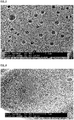
- a 20mm x 10mm piece of phenolic foam was cut from the sample. From this piece, the surfaces were trimmed with a razor blade to approximately 8mm square. The foam was then snapped by hand to expose a clean surface in the rising foam direction. The majority of this sample was removed to leave a thin 1mm slice of the foam in the rise direction.
- This slice of foam was fixed on to an aluminium sample stub using a double-sided conducting sticky tab.
- the reason for coating the samples is (a) to add a conducting surface to carry electron charge away and (b) to increase the density to give a more intense image. At the magnifications involved in this study the effect of the coating is negligible.
- the samples were imaged using an FEI XL30 ESEM FEG Scanning Electron Microscope under the following conditions. 10kV accelerating voltage, working distance approximately 10mm. Images were examined at x1200 to x20000 magnification. The differing magnifications allow cell size distribution and defects present on the foam cells.
- SEM 4 ( Fig. 4 ) shows Example 3 with 4.4 parts sodium silicate pentahydrate.
- the pinholes in the cell walls are largely covered with a film which may be due to silica gel formation.
Landscapes
- Chemical & Material Sciences (AREA)
- Engineering & Computer Science (AREA)
- Materials Engineering (AREA)
- Health & Medical Sciences (AREA)
- Chemical Kinetics & Catalysis (AREA)
- Medicinal Chemistry (AREA)
- Polymers & Plastics (AREA)
- Organic Chemistry (AREA)
- Inorganic Chemistry (AREA)
- Manufacture Of Porous Articles, And Recovery And Treatment Of Waste Products (AREA)
Claims (15)
- Phenolschaum, der ein Phenolharz, ein Kohlenwasserstofftreibmittel und ein Alkalimetallsilikat aufweist, das in einer Menge von zumindest 1 Gewichts-% des Schaums vorhanden ist, wobei der Schaum eine thermische Leitfähigkeit nach Alterung, wie durch die Verfahren von EN13166:2008 oder EN14314:2009 bestimmt, von weniger als 0,025 W/m.K hat, wobei der Schaum aus einer Phenolharzmischung mit einem Wassergehalt von 12 Gewichts-% bis 24 Gewichts-% der Harzmischung geformt ist.
- Schaum nach Anspruch 1, wobei der Schaum aus einer Phenolharzmischung mit einem Wassergehalt von 15 Gewichts-% bis 24 Gewichts-% der Harzmischung geformt ist.
- Schaum nach Anspruch 1 oder 2, wobei das Alkalimetallsilikat in einer Menge von 1 Gewichts-% bis 10 Gewichts-% des Phenolschaums vorhanden ist.
- Schaum nach Anspruch 3, wobei das Alkalimetallsilikat in einer Menge von 2,5 Gewichts-% bis 5 Gewichts-% des Phenolschaums vorhanden ist.
- Schaum nach einem der Ansprüche 1 bis 4, wobei das Alkalimetallsilikat hydriert ist und die Formel A2SiO3•nH2O hat, wobei A ein Alkalimetall aus der Gruppe 1 des Periodensystems ist, und wobei n eine ganze Zahl von 1 bis 9 ist.
- Schaum nach einem der Ansprüche 1 bis 5, wobei das Alkalimetallsilikat aus einem oder mehreren Bestandteilen der Gruppe ausgewählt ist, die Natriumsilikat, Kaliumsilikat und Lithiumsilikat aufweist.
- Schaum nach Anspruch 6, wobei das Alkalimetallsilikat Natriumsilikatpentahydrat ist.
- Schaum nach einem der Ansprüche 1 bis 7, wobei der Kohlenwasserstoff zumindest ein Pentan aufweist.
- Schaum nach Anspruch 8, wobei der Kohlenwasserstoff eine Mischung aus Cyclopentan und Isopentan aufweist, oder wobei der Kohlenwasserstoff eine Mischung aus Isopropylchlorid und Isopentan aufweist.
- Schaum nach einem der Ansprüche 1 bis 9, wobei das Treibmittel Perfluoralkan aufweist.
- Schaum nach einem der Ansprüche 1 bis 10, wobei der Schaum aus einer Phenolresolharzmischung mit einem Wassergehalt von mehr als 15 Gewichts-% aber weniger als 24 Gewichts-% geformt ist, und wobei das Alkalimetallsilikat in einer Menge von mindestens 1 Gewichts-% des Schaums vorhanden ist.
- Schaum nach einem der Ansprüche 1 bis 10, wobei das Alkalimetallsilikat in der Phenolresolharzmischung, ausgenommen Füllstoffe, in einer Menge von 1 Gewichts-% bis 10 Gewichts-% des Schaums vorhanden ist; wobei beispielsweise das Alkalimetallsilikat in der Resolharzmischung, ausgenommen Füllstoffe, in einer Menge von 2,5 Gewichts-% bis 5 Gewichts-% vorhanden ist.
- Verfahren zur Herstellung eines Phenolschaumproduktes, wobei das Verfahren aufweist, den Phenolschaum aus einer Zusammensetzung zu formen, die Folgendes aufweist:ein Phenolharz, welches ein Benetzungsmittel, ein Katalysator, ein Treibmittel und ein Alkalimetallsilikat und optionale Füllstoffe aufweist,wobei die Zusammensetzung, ausgenommen Füllstoffe, einen Wassergehalt von 12 Gewichts-% bis 24 Gewichts-% der Zusammensetzung hat,um ein Schaumprodukt mit geschlossenen Zellen zu erzeugen,welches eine thermische Leitfähigkeit nach Alterung, wie durch die Verfahren von EN13166:2008 oder EN14314:2009 bestimmt, von weniger als 0,025W/m.K hat.
- Verwendung eines Alkalimetallsilikates als ein Additiv zu einer Phenolschaumharzzusammensetzung zur Erzeugung eines Phenolschaumproduktes mit geschlossenen Zellen, wobei das Phenolschaumprodukt mit geschlossenen Zellen eine thermische Leitfähigkeit nach Alterung, wie durch die Verfahren von EN13166:2008 oder EN14314:2009 bestimmt, von weniger al 0,025W/m.K hat.
- Verwendung eines Alkalimetallsilikates als ein filmbildendes Additiv bei der Herstellung eins Schaums mit geschlossenen Zellen, um einen Film innerhalb der geschlossenen Zellen des Schaums zu formen.
Priority Applications (1)
| Application Number | Priority Date | Filing Date | Title |
|---|---|---|---|
| EP13762869.9A EP2898005B1 (de) | 2012-09-18 | 2013-09-18 | Phenolschaum |
Applications Claiming Priority (5)
| Application Number | Priority Date | Filing Date | Title |
|---|---|---|---|
| IE20120408 | 2012-09-18 | ||
| EP12184818 | 2012-09-18 | ||
| GB1223270.8A GB2505974B (en) | 2012-09-18 | 2012-12-21 | Phenolic foam |
| EP13762869.9A EP2898005B1 (de) | 2012-09-18 | 2013-09-18 | Phenolschaum |
| PCT/EP2013/069391 WO2014044715A1 (en) | 2012-09-18 | 2013-09-18 | Phenolic foam |
Publications (2)
| Publication Number | Publication Date |
|---|---|
| EP2898005A1 EP2898005A1 (de) | 2015-07-29 |
| EP2898005B1 true EP2898005B1 (de) | 2017-11-01 |
Family
ID=47682487
Family Applications (1)
| Application Number | Title | Priority Date | Filing Date |
|---|---|---|---|
| EP13762869.9A Active EP2898005B1 (de) | 2012-09-18 | 2013-09-18 | Phenolschaum |
Country Status (11)
| Country | Link |
|---|---|
| US (1) | US9896559B2 (de) |
| EP (1) | EP2898005B1 (de) |
| JP (1) | JP6300041B2 (de) |
| CN (1) | CN104822745B (de) |
| AU (1) | AU2013320300B2 (de) |
| CA (1) | CA2885123C (de) |
| DK (1) | DK2898005T3 (de) |
| GB (1) | GB2505974B (de) |
| NZ (1) | NZ706641A (de) |
| SG (1) | SG11201502041TA (de) |
| WO (1) | WO2014044715A1 (de) |
Cited By (1)
| Publication number | Priority date | Publication date | Assignee | Title |
|---|---|---|---|---|
| WO2021144708A1 (en) * | 2020-01-14 | 2021-07-22 | Alpha Ducts Llc, | A phenolic resole resin based closed cell rigid foam insulation panel |
Families Citing this family (8)
| Publication number | Priority date | Publication date | Assignee | Title |
|---|---|---|---|---|
| CN105778148B (zh) * | 2016-03-24 | 2018-08-14 | 中国工程物理研究院化工材料研究所 | 阻燃聚氨酯多孔复合材料及其制备方法 |
| GB2565331B (en) * | 2017-08-10 | 2019-08-14 | Kingspan Holdings Irl Ltd | Phenolic foam and method of manufacture thereof |
| CN110898688B (zh) * | 2019-09-26 | 2021-10-01 | 上海稀点新材料科技有限公司 | 具有纳米多孔结构的无机平板膜及其制备方法 |
| EP4438664A1 (de) | 2023-03-28 | 2024-10-02 | Evonik Operations GmbH | Dispergiermittel für feststoffhaltige phenolschäume |
| CA3234206A1 (en) | 2023-04-24 | 2025-10-31 | Evonik Operations Gmbh | Foam stabilizers for phenolic foam |
| EP4464738A1 (de) | 2023-05-19 | 2024-11-20 | Evonik Operations GmbH | Schaumstabilisatoren für phenolschaum |
| WO2025016824A1 (de) | 2023-07-20 | 2025-01-23 | Evonik Operations Gmbh | Schaumstabilisatoren für phenolschaum |
| EP4653491A1 (de) | 2024-05-24 | 2025-11-26 | Evonik Operations GmbH | Schaumstabilisatoren für phenolschaum |
Family Cites Families (18)
| Publication number | Priority date | Publication date | Assignee | Title |
|---|---|---|---|---|
| DE2018373B2 (de) * | 1970-04-17 | 1972-05-25 | Deutsche Texaco Ag, 2000 Hamburg | Verwendung von phenolharzhartschaum als flammwidirges isoliermittel |
| FR2157674A1 (en) * | 1971-09-15 | 1973-06-08 | Louis Jacqueline | Phenol-formaldehyde resin prodn - by adding sodium silicate to phenol,mixing and then adding formaldehyde |
| US4067829A (en) * | 1973-03-19 | 1978-01-10 | The Dow Chemical Company | Preparation of a cured resole resin |
| CA1074950A (en) * | 1973-10-15 | 1980-04-01 | John E. Summers | Silicate extended polyurethane foam |
| US4057519A (en) | 1974-09-05 | 1977-11-08 | H. H. Robertson Company | Sodium silicate extended polyurethane foam |
| JPS5835532B2 (ja) * | 1977-12-27 | 1983-08-03 | 旭化成株式会社 | 無機↓−有機結合発泡体及びその製造法 |
| FI80896C (fi) | 1984-05-25 | 1990-08-10 | Bp Chem Int Ltd | Foerfarande foer framstaellning av fenolskum. |
| CA1238149A (en) * | 1984-10-30 | 1988-06-14 | Imperial Oil Limited | Closed cell phenolic foams |
| ZA894589B (en) * | 1989-02-09 | 1991-02-27 | K Sudan Krishan | Semi-flexible or flexible phenolic foam |
| US5489619A (en) * | 1991-08-27 | 1996-02-06 | Bp Chemicals Limited | Process for producing improved phenolic foams from phenolic resole resins |
| JPH0873555A (ja) * | 1994-09-07 | 1996-03-19 | Matsushita Refrig Co Ltd | 発泡断熱材および断熱箱体 |
| US6944532B2 (en) | 1998-06-18 | 2005-09-13 | Cummins, Inc. | System for controlling an internal combustion engine in a fuel efficient manner |
| US6492432B1 (en) * | 1999-11-09 | 2002-12-10 | American Foam Technologies, Inc. | Novolac-epoxy resin foam, foamable composition for making novolac-epoxy resin foam and method of making novolac-epoxy resin foam |
| NZ555747A (en) | 2004-12-23 | 2009-09-25 | Kingspan Holdings Irl Ltd | Toughened phenolic foam |
| JP3932293B2 (ja) * | 2005-09-08 | 2007-06-20 | 旭有機材工業株式会社 | 発泡性レゾール型フェノール樹脂成形材料およびフェノール樹脂発泡体 |
| EP1922356B1 (de) * | 2005-09-08 | 2012-10-03 | Kingspan Holdings (IRL) Limited | Phenolharzschaumstoff |
| JP4947760B2 (ja) * | 2005-09-08 | 2012-06-06 | 旭有機材工業株式会社 | フェノール樹脂発泡体 |
| US20130015389A1 (en) * | 2011-07-13 | 2013-01-17 | Torres-Aranda Jr Francisco Jose | Fire resistant foam insulation compositions |
-
2012
- 2012-12-21 GB GB1223270.8A patent/GB2505974B/en active Active
-
2013
- 2013-09-18 WO PCT/EP2013/069391 patent/WO2014044715A1/en not_active Ceased
- 2013-09-18 JP JP2015531607A patent/JP6300041B2/ja active Active
- 2013-09-18 SG SG11201502041TA patent/SG11201502041TA/en unknown
- 2013-09-18 DK DK13762869.9T patent/DK2898005T3/en active
- 2013-09-18 US US14/429,044 patent/US9896559B2/en active Active
- 2013-09-18 AU AU2013320300A patent/AU2013320300B2/en active Active
- 2013-09-18 CA CA2885123A patent/CA2885123C/en active Active
- 2013-09-18 NZ NZ706641A patent/NZ706641A/en unknown
- 2013-09-18 CN CN201380054900.8A patent/CN104822745B/zh active Active
- 2013-09-18 EP EP13762869.9A patent/EP2898005B1/de active Active
Non-Patent Citations (1)
| Title |
|---|
| None * |
Cited By (1)
| Publication number | Priority date | Publication date | Assignee | Title |
|---|---|---|---|---|
| WO2021144708A1 (en) * | 2020-01-14 | 2021-07-22 | Alpha Ducts Llc, | A phenolic resole resin based closed cell rigid foam insulation panel |
Also Published As
| Publication number | Publication date |
|---|---|
| CN104822745B (zh) | 2018-03-13 |
| CA2885123A1 (en) | 2014-03-27 |
| NZ706641A (en) | 2018-02-23 |
| JP6300041B2 (ja) | 2018-03-28 |
| WO2014044715A1 (en) | 2014-03-27 |
| US9896559B2 (en) | 2018-02-20 |
| CN104822745A (zh) | 2015-08-05 |
| JP2015529269A (ja) | 2015-10-05 |
| DK2898005T3 (en) | 2018-02-05 |
| US20150225528A1 (en) | 2015-08-13 |
| GB2505974A (en) | 2014-03-19 |
| AU2013320300A1 (en) | 2015-04-02 |
| AU2013320300B2 (en) | 2016-11-03 |
| CA2885123C (en) | 2017-02-28 |
| EP2898005A1 (de) | 2015-07-29 |
| GB201223270D0 (en) | 2013-02-06 |
| SG11201502041TA (en) | 2015-04-29 |
| GB2505974B (en) | 2016-11-02 |
Similar Documents
| Publication | Publication Date | Title |
|---|---|---|
| AU2013320300B2 (en) | Phenolic foam | |
| JP5894926B2 (ja) | フェノール樹脂発泡板 | |
| CN107207758A (zh) | 酚醛树脂发泡体及其制造方法 | |
| KR101400718B1 (ko) | 실리카 에어로겔을 포함하는 발포성 내화도료 피막 조성물 | |
| CN114072440A (zh) | 酚醛泡沫制造用树脂组合物以及酚醛泡沫及其制造方法 | |
| JP4462929B2 (ja) | 弾性無機発泡体 | |
| JP2007161810A (ja) | フェノール樹脂発泡体 | |
| JP5400485B2 (ja) | 発泡性レゾール型フェノール樹脂成形材料及びそれを用いてなるフェノール樹脂発泡体 | |
| EP1583794B1 (de) | Phenolharzschaumstoff | |
| WO2001029133A1 (en) | Cellular plastic material based on phenolic resin | |
| JP2007070508A (ja) | フェノール樹脂発泡体およびその製造方法 | |
| KR101565281B1 (ko) | 무기발포제를 이용한 단열재 조성물, 단열재 제조방법 및 이로부터 제조된 단열재 | |
| KR102231779B1 (ko) | 열경화성 발포체 및 이의 제조방법 | |
| WO2023204283A1 (ja) | フェノール樹脂発泡体およびその積層板 | |
| JP6946038B2 (ja) | フェノール樹脂発泡体積層板及びその製造方法 | |
| JP4963919B2 (ja) | 発泡性フェノール樹脂組成物及び金属サイディング | |
| JP7864167B2 (ja) | フェノール樹脂発泡体、この製造方法及びこれを含む断熱材 | |
| KR102369678B1 (ko) | 열경화성 발포체 및 이의 제조방법 | |
| JPS6289740A (ja) | フエノ−ル樹脂組成物及びこの組成物から形成される耐燃性フエノ−ル樹脂発泡体 | |
| JP6461657B2 (ja) | 無機質系発泡体の製造方法 | |
| KR20220063491A (ko) | 페놀 발포체, 이의 제조방법 및 이를 포함하는 단열재 | |
| KR20220063492A (ko) | 페놀 발포체 및 이의 제조방법 | |
| KR20210068982A (ko) | 페놀 발포체 및 이의 제조방법 | |
| CN111410815A (zh) | 一种改性酚醛树脂泡沫材料 | |
| EP1222228A1 (de) | Zellulärer kunststoff auf basis phenolharz |
Legal Events
| Date | Code | Title | Description |
|---|---|---|---|
| PUAI | Public reference made under article 153(3) epc to a published international application that has entered the european phase |
Free format text: ORIGINAL CODE: 0009012 |
|
| 17P | Request for examination filed |
Effective date: 20150402 |
|
| AK | Designated contracting states |
Kind code of ref document: A1 Designated state(s): AL AT BE BG CH CY CZ DE DK EE ES FI FR GB GR HR HU IE IS IT LI LT LU LV MC MK MT NL NO PL PT RO RS SE SI SK SM TR |
|
| AX | Request for extension of the european patent |
Extension state: BA ME |
|
| DAX | Request for extension of the european patent (deleted) | ||
| 17Q | First examination report despatched |
Effective date: 20160517 |
|
| GRAP | Despatch of communication of intention to grant a patent |
Free format text: ORIGINAL CODE: EPIDOSNIGR1 |
|
| INTG | Intention to grant announced |
Effective date: 20170531 |
|
| GRAS | Grant fee paid |
Free format text: ORIGINAL CODE: EPIDOSNIGR3 |
|
| GRAA | (expected) grant |
Free format text: ORIGINAL CODE: 0009210 |
|
| AK | Designated contracting states |
Kind code of ref document: B1 Designated state(s): AL AT BE BG CH CY CZ DE DK EE ES FI FR GB GR HR HU IE IS IT LI LT LU LV MC MK MT NL NO PL PT RO RS SE SI SK SM TR |
|
| REG | Reference to a national code |
Ref country code: GB Ref legal event code: FG4D |
|
| REG | Reference to a national code |
Ref country code: CH Ref legal event code: EP Ref country code: AT Ref legal event code: REF Ref document number: 941966 Country of ref document: AT Kind code of ref document: T Effective date: 20171115 |
|
| REG | Reference to a national code |
Ref country code: IE Ref legal event code: FG4D |
|
| REG | Reference to a national code |
Ref country code: DE Ref legal event code: R096 Ref document number: 602013028776 Country of ref document: DE |
|
| REG | Reference to a national code |
Ref country code: DK Ref legal event code: T3 Effective date: 20180201 |
|
| REG | Reference to a national code |
Ref country code: NL Ref legal event code: FP |
|
| REG | Reference to a national code |
Ref country code: CH Ref legal event code: NV Representative=s name: DR. LUSUARDI AG, CH |
|
| REG | Reference to a national code |
Ref country code: SE Ref legal event code: TRGR |
|
| REG | Reference to a national code |
Ref country code: LT Ref legal event code: MG4D |
|
| PG25 | Lapsed in a contracting state [announced via postgrant information from national office to epo] |
Ref country code: ES Free format text: LAPSE BECAUSE OF FAILURE TO SUBMIT A TRANSLATION OF THE DESCRIPTION OR TO PAY THE FEE WITHIN THE PRESCRIBED TIME-LIMIT Effective date: 20171101 Ref country code: LT Free format text: LAPSE BECAUSE OF FAILURE TO SUBMIT A TRANSLATION OF THE DESCRIPTION OR TO PAY THE FEE WITHIN THE PRESCRIBED TIME-LIMIT Effective date: 20171101 Ref country code: NO Free format text: LAPSE BECAUSE OF FAILURE TO SUBMIT A TRANSLATION OF THE DESCRIPTION OR TO PAY THE FEE WITHIN THE PRESCRIBED TIME-LIMIT Effective date: 20180201 |
|
| REG | Reference to a national code |
Ref country code: FR Ref legal event code: PLFP Year of fee payment: 6 |
|
| PG25 | Lapsed in a contracting state [announced via postgrant information from national office to epo] |
Ref country code: IS Free format text: LAPSE BECAUSE OF FAILURE TO SUBMIT A TRANSLATION OF THE DESCRIPTION OR TO PAY THE FEE WITHIN THE PRESCRIBED TIME-LIMIT Effective date: 20180301 Ref country code: BG Free format text: LAPSE BECAUSE OF FAILURE TO SUBMIT A TRANSLATION OF THE DESCRIPTION OR TO PAY THE FEE WITHIN THE PRESCRIBED TIME-LIMIT Effective date: 20180201 Ref country code: RS Free format text: LAPSE BECAUSE OF FAILURE TO SUBMIT A TRANSLATION OF THE DESCRIPTION OR TO PAY THE FEE WITHIN THE PRESCRIBED TIME-LIMIT Effective date: 20171101 Ref country code: LV Free format text: LAPSE BECAUSE OF FAILURE TO SUBMIT A TRANSLATION OF THE DESCRIPTION OR TO PAY THE FEE WITHIN THE PRESCRIBED TIME-LIMIT Effective date: 20171101 Ref country code: GR Free format text: LAPSE BECAUSE OF FAILURE TO SUBMIT A TRANSLATION OF THE DESCRIPTION OR TO PAY THE FEE WITHIN THE PRESCRIBED TIME-LIMIT Effective date: 20180202 Ref country code: HR Free format text: LAPSE BECAUSE OF FAILURE TO SUBMIT A TRANSLATION OF THE DESCRIPTION OR TO PAY THE FEE WITHIN THE PRESCRIBED TIME-LIMIT Effective date: 20171101 |
|
| PG25 | Lapsed in a contracting state [announced via postgrant information from national office to epo] |
Ref country code: SK Free format text: LAPSE BECAUSE OF FAILURE TO SUBMIT A TRANSLATION OF THE DESCRIPTION OR TO PAY THE FEE WITHIN THE PRESCRIBED TIME-LIMIT Effective date: 20171101 Ref country code: CZ Free format text: LAPSE BECAUSE OF FAILURE TO SUBMIT A TRANSLATION OF THE DESCRIPTION OR TO PAY THE FEE WITHIN THE PRESCRIBED TIME-LIMIT Effective date: 20171101 Ref country code: CY Free format text: LAPSE BECAUSE OF FAILURE TO SUBMIT A TRANSLATION OF THE DESCRIPTION OR TO PAY THE FEE WITHIN THE PRESCRIBED TIME-LIMIT Effective date: 20171101 Ref country code: EE Free format text: LAPSE BECAUSE OF FAILURE TO SUBMIT A TRANSLATION OF THE DESCRIPTION OR TO PAY THE FEE WITHIN THE PRESCRIBED TIME-LIMIT Effective date: 20171101 |
|
| REG | Reference to a national code |
Ref country code: DE Ref legal event code: R097 Ref document number: 602013028776 Country of ref document: DE |
|
| PG25 | Lapsed in a contracting state [announced via postgrant information from national office to epo] |
Ref country code: PL Free format text: LAPSE BECAUSE OF FAILURE TO SUBMIT A TRANSLATION OF THE DESCRIPTION OR TO PAY THE FEE WITHIN THE PRESCRIBED TIME-LIMIT Effective date: 20171101 Ref country code: RO Free format text: LAPSE BECAUSE OF FAILURE TO SUBMIT A TRANSLATION OF THE DESCRIPTION OR TO PAY THE FEE WITHIN THE PRESCRIBED TIME-LIMIT Effective date: 20171101 Ref country code: SM Free format text: LAPSE BECAUSE OF FAILURE TO SUBMIT A TRANSLATION OF THE DESCRIPTION OR TO PAY THE FEE WITHIN THE PRESCRIBED TIME-LIMIT Effective date: 20171101 |
|
| PLBE | No opposition filed within time limit |
Free format text: ORIGINAL CODE: 0009261 |
|
| STAA | Information on the status of an ep patent application or granted ep patent |
Free format text: STATUS: NO OPPOSITION FILED WITHIN TIME LIMIT |
|
| 26N | No opposition filed |
Effective date: 20180802 |
|
| PG25 | Lapsed in a contracting state [announced via postgrant information from national office to epo] |
Ref country code: SI Free format text: LAPSE BECAUSE OF FAILURE TO SUBMIT A TRANSLATION OF THE DESCRIPTION OR TO PAY THE FEE WITHIN THE PRESCRIBED TIME-LIMIT Effective date: 20171101 |
|
| PG25 | Lapsed in a contracting state [announced via postgrant information from national office to epo] |
Ref country code: MC Free format text: LAPSE BECAUSE OF FAILURE TO SUBMIT A TRANSLATION OF THE DESCRIPTION OR TO PAY THE FEE WITHIN THE PRESCRIBED TIME-LIMIT Effective date: 20171101 |
|
| PG25 | Lapsed in a contracting state [announced via postgrant information from national office to epo] |
Ref country code: MT Free format text: LAPSE BECAUSE OF NON-PAYMENT OF DUE FEES Effective date: 20180918 |
|
| PG25 | Lapsed in a contracting state [announced via postgrant information from national office to epo] |
Ref country code: TR Free format text: LAPSE BECAUSE OF FAILURE TO SUBMIT A TRANSLATION OF THE DESCRIPTION OR TO PAY THE FEE WITHIN THE PRESCRIBED TIME-LIMIT Effective date: 20171101 |
|
| PG25 | Lapsed in a contracting state [announced via postgrant information from national office to epo] |
Ref country code: PT Free format text: LAPSE BECAUSE OF FAILURE TO SUBMIT A TRANSLATION OF THE DESCRIPTION OR TO PAY THE FEE WITHIN THE PRESCRIBED TIME-LIMIT Effective date: 20171101 |
|
| REG | Reference to a national code |
Ref country code: AT Ref legal event code: UEP Ref document number: 941966 Country of ref document: AT Kind code of ref document: T Effective date: 20171101 |
|
| PG25 | Lapsed in a contracting state [announced via postgrant information from national office to epo] |
Ref country code: MK Free format text: LAPSE BECAUSE OF NON-PAYMENT OF DUE FEES Effective date: 20171101 Ref country code: HU Free format text: LAPSE BECAUSE OF FAILURE TO SUBMIT A TRANSLATION OF THE DESCRIPTION OR TO PAY THE FEE WITHIN THE PRESCRIBED TIME-LIMIT; INVALID AB INITIO Effective date: 20130918 |
|
| PG25 | Lapsed in a contracting state [announced via postgrant information from national office to epo] |
Ref country code: AL Free format text: LAPSE BECAUSE OF FAILURE TO SUBMIT A TRANSLATION OF THE DESCRIPTION OR TO PAY THE FEE WITHIN THE PRESCRIBED TIME-LIMIT Effective date: 20171101 |
|
| P01 | Opt-out of the competence of the unified patent court (upc) registered |
Effective date: 20230818 |
|
| PGFP | Annual fee paid to national office [announced via postgrant information from national office to epo] |
Ref country code: FR Payment date: 20250617 Year of fee payment: 13 |
|
| PGFP | Annual fee paid to national office [announced via postgrant information from national office to epo] |
Ref country code: IE Payment date: 20250613 Year of fee payment: 13 |
|
| PGFP | Annual fee paid to national office [announced via postgrant information from national office to epo] |
Ref country code: SE Payment date: 20250624 Year of fee payment: 13 |
|
| REG | Reference to a national code |
Ref country code: CH Ref legal event code: U11 Free format text: ST27 STATUS EVENT CODE: U-0-0-U10-U11 (AS PROVIDED BY THE NATIONAL OFFICE) Effective date: 20251001 |
|
| PGFP | Annual fee paid to national office [announced via postgrant information from national office to epo] |
Ref country code: FI Payment date: 20250925 Year of fee payment: 13 |
|
| PGFP | Annual fee paid to national office [announced via postgrant information from national office to epo] |
Ref country code: DK Payment date: 20250704 Year of fee payment: 13 Ref country code: DE Payment date: 20250610 Year of fee payment: 13 |
|
| PGFP | Annual fee paid to national office [announced via postgrant information from national office to epo] |
Ref country code: IT Payment date: 20250922 Year of fee payment: 13 Ref country code: LU Payment date: 20250925 Year of fee payment: 13 Ref country code: NL Payment date: 20250925 Year of fee payment: 13 |
|
| PGFP | Annual fee paid to national office [announced via postgrant information from national office to epo] |
Ref country code: BE Payment date: 20250925 Year of fee payment: 13 Ref country code: GB Payment date: 20250704 Year of fee payment: 13 |
|
| PGFP | Annual fee paid to national office [announced via postgrant information from national office to epo] |
Ref country code: AT Payment date: 20250917 Year of fee payment: 13 |
|
| PGFP | Annual fee paid to national office [announced via postgrant information from national office to epo] |
Ref country code: CH Payment date: 20251001 Year of fee payment: 13 |