EP2826806A1 - Neue aminosäuremodifizierte Siloxane, Verfahren zu ihrer Herstellung und Anwendung - Google Patents
Neue aminosäuremodifizierte Siloxane, Verfahren zu ihrer Herstellung und Anwendung Download PDFInfo
- Publication number
- EP2826806A1 EP2826806A1 EP14172890.7A EP14172890A EP2826806A1 EP 2826806 A1 EP2826806 A1 EP 2826806A1 EP 14172890 A EP14172890 A EP 14172890A EP 2826806 A1 EP2826806 A1 EP 2826806A1
- Authority
- EP
- European Patent Office
- Prior art keywords
- carbon atoms
- inci
- sio
- evonik industries
- hydrocarbon radical
- Prior art date
- Legal status (The legal status is an assumption and is not a legal conclusion. Google has not performed a legal analysis and makes no representation as to the accuracy of the status listed.)
- Withdrawn
Links
- -1 siloxanes Chemical class 0.000 title claims abstract description 137
- 125000002924 primary amino group Chemical group [H]N([H])* 0.000 title claims abstract description 17
- 238000004519 manufacturing process Methods 0.000 title description 2
- 239000000203 mixture Substances 0.000 claims abstract description 70
- 238000009472 formulation Methods 0.000 claims abstract description 61
- 238000002360 preparation method Methods 0.000 claims abstract description 35
- 239000004753 textile Substances 0.000 claims abstract description 20
- 238000000034 method Methods 0.000 claims description 100
- 125000004432 carbon atom Chemical group C* 0.000 claims description 87
- 230000008569 process Effects 0.000 claims description 37
- 150000003839 salts Chemical class 0.000 claims description 35
- KPUWHANPEXNPJT-UHFFFAOYSA-N disiloxane Chemical class [SiH3]O[SiH3] KPUWHANPEXNPJT-UHFFFAOYSA-N 0.000 claims description 28
- KWYUFKZDYYNOTN-UHFFFAOYSA-M Potassium hydroxide Chemical compound [OH-].[K+] KWYUFKZDYYNOTN-UHFFFAOYSA-M 0.000 claims description 27
- 150000002892 organic cations Chemical class 0.000 claims description 26
- IJGRMHOSHXDMSA-UHFFFAOYSA-N nitrogen Substances N#N IJGRMHOSHXDMSA-UHFFFAOYSA-N 0.000 claims description 25
- 150000001875 compounds Chemical class 0.000 claims description 24
- 239000004215 Carbon black (E152) Substances 0.000 claims description 19
- 239000004593 Epoxy Substances 0.000 claims description 19
- 229930195733 hydrocarbon Natural products 0.000 claims description 19
- 229910052757 nitrogen Inorganic materials 0.000 claims description 18
- 150000001413 amino acids Chemical class 0.000 claims description 16
- 125000003700 epoxy group Chemical group 0.000 claims description 16
- 150000007942 carboxylates Chemical class 0.000 claims description 15
- 229920000570 polyether Polymers 0.000 claims description 14
- 125000002496 methyl group Chemical group [H]C([H])([H])* 0.000 claims description 13
- 239000004721 Polyphenylene oxide Substances 0.000 claims description 12
- 229910004298 SiO 2 Inorganic materials 0.000 claims description 12
- HEMHJVSKTPXQMS-UHFFFAOYSA-M Sodium hydroxide Chemical compound [OH-].[Na+] HEMHJVSKTPXQMS-UHFFFAOYSA-M 0.000 claims description 12
- 125000000217 alkyl group Chemical group 0.000 claims description 12
- 125000005587 carbonate group Chemical group 0.000 claims description 12
- 230000003750 conditioning effect Effects 0.000 claims description 12
- KDXKERNSBIXSRK-YFKPBYRVSA-N L-lysine Chemical compound NCCCC[C@H](N)C(O)=O KDXKERNSBIXSRK-YFKPBYRVSA-N 0.000 claims description 11
- KDXKERNSBIXSRK-UHFFFAOYSA-N Lysine Natural products NCCCCC(N)C(O)=O KDXKERNSBIXSRK-UHFFFAOYSA-N 0.000 claims description 11
- 239000004472 Lysine Substances 0.000 claims description 11
- 125000003277 amino group Chemical group 0.000 claims description 9
- 239000004744 fabric Substances 0.000 claims description 9
- 239000004475 Arginine Substances 0.000 claims description 7
- ODKSFYDXXFIFQN-BYPYZUCNSA-P L-argininium(2+) Chemical compound NC(=[NH2+])NCCC[C@H]([NH3+])C(O)=O ODKSFYDXXFIFQN-BYPYZUCNSA-P 0.000 claims description 7
- ODKSFYDXXFIFQN-UHFFFAOYSA-N arginine Natural products OC(=O)C(N)CCCNC(N)=N ODKSFYDXXFIFQN-UHFFFAOYSA-N 0.000 claims description 7
- 239000001301 oxygen Substances 0.000 claims description 7
- 229910052760 oxygen Inorganic materials 0.000 claims description 7
- HNDVDQJCIGZPNO-YFKPBYRVSA-N L-histidine Chemical compound OC(=O)[C@@H](N)CC1=CN=CN1 HNDVDQJCIGZPNO-YFKPBYRVSA-N 0.000 claims description 6
- QGZKDVFQNNGYKY-UHFFFAOYSA-O ammonium group Chemical group [NH4+] QGZKDVFQNNGYKY-UHFFFAOYSA-O 0.000 claims description 6
- 239000002585 base Substances 0.000 claims description 6
- 239000000835 fiber Substances 0.000 claims description 6
- HNDVDQJCIGZPNO-UHFFFAOYSA-N histidine Natural products OC(=O)C(N)CC1=CN=CN1 HNDVDQJCIGZPNO-UHFFFAOYSA-N 0.000 claims description 6
- 239000001257 hydrogen Substances 0.000 claims description 6
- 229910052739 hydrogen Inorganic materials 0.000 claims description 6
- QJGQUHMNIGDVPM-UHFFFAOYSA-N nitrogen group Chemical group [N] QJGQUHMNIGDVPM-UHFFFAOYSA-N 0.000 claims description 6
- 229920006395 saturated elastomer Polymers 0.000 claims description 6
- 125000005842 heteroatom Chemical group 0.000 claims description 5
- 229910019142 PO4 Inorganic materials 0.000 claims description 4
- OAICVXFJPJFONN-UHFFFAOYSA-N Phosphorus Chemical group [P] OAICVXFJPJFONN-UHFFFAOYSA-N 0.000 claims description 4
- 229910004283 SiO 4 Inorganic materials 0.000 claims description 4
- 125000001931 aliphatic group Chemical group 0.000 claims description 4
- 239000003513 alkali Substances 0.000 claims description 4
- 229910052784 alkaline earth metal Inorganic materials 0.000 claims description 4
- 150000001408 amides Chemical class 0.000 claims description 4
- 125000005228 aryl sulfonate group Chemical group 0.000 claims description 4
- QVGXLLKOCUKJST-UHFFFAOYSA-N atomic oxygen Chemical compound [O] QVGXLLKOCUKJST-UHFFFAOYSA-N 0.000 claims description 4
- 125000000913 palmityl group Chemical group [H]C([*])([H])C([H])([H])C([H])([H])C([H])([H])C([H])([H])C([H])([H])C([H])([H])C([H])([H])C([H])([H])C([H])([H])C([H])([H])C([H])([H])C([H])([H])C([H])([H])C([H])([H])C([H])([H])[H] 0.000 claims description 4
- 125000001997 phenyl group Chemical group [H]C1=C([H])C([H])=C(*)C([H])=C1[H] 0.000 claims description 4
- 235000021317 phosphate Nutrition 0.000 claims description 4
- 229910052698 phosphorus Chemical group 0.000 claims description 4
- 238000000746 purification Methods 0.000 claims description 4
- 125000004079 stearyl group Chemical group [H]C([*])([H])C([H])([H])C([H])([H])C([H])([H])C([H])([H])C([H])([H])C([H])([H])C([H])([H])C([H])([H])C([H])([H])C([H])([H])C([H])([H])C([H])([H])C([H])([H])C([H])([H])C([H])([H])C([H])([H])C([H])([H])[H] 0.000 claims description 4
- 150000003467 sulfuric acid derivatives Chemical class 0.000 claims description 4
- 229930195735 unsaturated hydrocarbon Natural products 0.000 claims description 4
- SNRUBQQJIBEYMU-UHFFFAOYSA-N Dodecane Natural products CCCCCCCCCCCC SNRUBQQJIBEYMU-UHFFFAOYSA-N 0.000 claims description 3
- 229910001860 alkaline earth metal hydroxide Inorganic materials 0.000 claims description 3
- 150000001450 anions Chemical class 0.000 claims description 3
- 125000003438 dodecyl group Chemical group [H]C([H])([H])C([H])([H])C([H])([H])C([H])([H])C([H])([H])C([H])([H])C([H])([H])C([H])([H])C([H])([H])C([H])([H])C([H])([H])C([H])([H])* 0.000 claims description 3
- 150000004679 hydroxides Chemical class 0.000 claims description 3
- 239000011574 phosphorus Chemical group 0.000 claims description 3
- QAOWNCQODCNURD-UHFFFAOYSA-N Sulfuric acid Chemical class OS(O)(=O)=O QAOWNCQODCNURD-UHFFFAOYSA-N 0.000 claims description 2
- 229910001854 alkali hydroxide Inorganic materials 0.000 claims description 2
- 150000001342 alkaline earth metals Chemical class 0.000 claims description 2
- 150000004703 alkoxides Chemical class 0.000 claims description 2
- RQPZNWPYLFFXCP-UHFFFAOYSA-L barium dihydroxide Chemical compound [OH-].[OH-].[Ba+2] RQPZNWPYLFFXCP-UHFFFAOYSA-L 0.000 claims description 2
- 229910001863 barium hydroxide Inorganic materials 0.000 claims description 2
- AXCZMVOFGPJBDE-UHFFFAOYSA-L calcium dihydroxide Chemical compound [OH-].[OH-].[Ca+2] AXCZMVOFGPJBDE-UHFFFAOYSA-L 0.000 claims description 2
- 239000000920 calcium hydroxide Substances 0.000 claims description 2
- 229910001861 calcium hydroxide Inorganic materials 0.000 claims description 2
- 125000002704 decyl group Chemical group [H]C([H])([H])C([H])([H])C([H])([H])C([H])([H])C([H])([H])C([H])([H])C([H])([H])C([H])([H])C([H])([H])C([H])([H])* 0.000 claims description 2
- 150000004820 halides Chemical class 0.000 claims description 2
- 125000001421 myristyl group Chemical group [H]C([*])([H])C([H])([H])C([H])([H])C([H])([H])C([H])([H])C([H])([H])C([H])([H])C([H])([H])C([H])([H])C([H])([H])C([H])([H])C([H])([H])C([H])([H])C([H])([H])[H] 0.000 claims description 2
- 150000002823 nitrates Chemical class 0.000 claims description 2
- VLTRZXGMWDSKGL-UHFFFAOYSA-N perchloric acid Chemical class OCl(=O)(=O)=O VLTRZXGMWDSKGL-UHFFFAOYSA-N 0.000 claims description 2
- DJFBJKSMACBYBD-UHFFFAOYSA-N phosphane;hydrate Chemical class O.P DJFBJKSMACBYBD-UHFFFAOYSA-N 0.000 claims description 2
- NBIIXXVUZAFLBC-UHFFFAOYSA-K phosphate Chemical compound [O-]P([O-])([O-])=O NBIIXXVUZAFLBC-UHFFFAOYSA-K 0.000 claims description 2
- 239000010452 phosphate Substances 0.000 claims description 2
- 125000005496 phosphonium group Chemical group 0.000 claims description 2
- 150000003013 phosphoric acid derivatives Chemical class 0.000 claims description 2
- 229930195734 saturated hydrocarbon Natural products 0.000 claims description 2
- 125000001273 sulfonato group Chemical class [O-]S(*)(=O)=O 0.000 claims 2
- 125000004435 hydrogen atom Chemical class [H]* 0.000 claims 1
- OSCJHTSDLYVCQC-UHFFFAOYSA-N 2-ethylhexyl 4-[[4-[4-(tert-butylcarbamoyl)anilino]-6-[4-(2-ethylhexoxycarbonyl)anilino]-1,3,5-triazin-2-yl]amino]benzoate Chemical compound C1=CC(C(=O)OCC(CC)CCCC)=CC=C1NC1=NC(NC=2C=CC(=CC=2)C(=O)NC(C)(C)C)=NC(NC=2C=CC(=CC=2)C(=O)OCC(CC)CCCC)=N1 OSCJHTSDLYVCQC-UHFFFAOYSA-N 0.000 description 230
- 230000015572 biosynthetic process Effects 0.000 description 85
- 238000003786 synthesis reaction Methods 0.000 description 84
- XLYOFNOQVPJJNP-UHFFFAOYSA-N water Substances O XLYOFNOQVPJJNP-UHFFFAOYSA-N 0.000 description 83
- DKGAVHZHDRPRBM-UHFFFAOYSA-N Tert-Butanol Chemical compound CC(C)(C)O DKGAVHZHDRPRBM-UHFFFAOYSA-N 0.000 description 38
- KWIUHFFTVRNATP-UHFFFAOYSA-N glycine betaine Chemical compound C[N+](C)(C)CC([O-])=O KWIUHFFTVRNATP-UHFFFAOYSA-N 0.000 description 38
- 239000002304 perfume Substances 0.000 description 37
- KRKNYBCHXYNGOX-UHFFFAOYSA-N citric acid Chemical compound OC(=O)CC(O)(C(O)=O)CC(O)=O KRKNYBCHXYNGOX-UHFFFAOYSA-N 0.000 description 33
- LFQSCWFLJHTTHZ-UHFFFAOYSA-N Ethanol Chemical compound CCO LFQSCWFLJHTTHZ-UHFFFAOYSA-N 0.000 description 31
- 239000003755 preservative agent Substances 0.000 description 30
- 230000002335 preservative effect Effects 0.000 description 30
- 229940057950 sodium laureth sulfate Drugs 0.000 description 25
- SXHLENDCVBIJFO-UHFFFAOYSA-M sodium;2-[2-(2-dodecoxyethoxy)ethoxy]ethyl sulfate Chemical compound [Na+].CCCCCCCCCCCCOCCOCCOCCOS([O-])(=O)=O SXHLENDCVBIJFO-UHFFFAOYSA-M 0.000 description 25
- 239000002904 solvent Substances 0.000 description 25
- KFZMGEQAYNKOFK-UHFFFAOYSA-N Isopropanol Chemical compound CC(C)O KFZMGEQAYNKOFK-UHFFFAOYSA-N 0.000 description 24
- FAPWRFPIFSIZLT-UHFFFAOYSA-M Sodium chloride Chemical compound [Na+].[Cl-] FAPWRFPIFSIZLT-UHFFFAOYSA-M 0.000 description 22
- MRUAUOIMASANKQ-UHFFFAOYSA-N cocamidopropyl betaine Chemical compound CCCCCCCCCCCC(=O)NCCC[N+](C)(C)CC([O-])=O MRUAUOIMASANKQ-UHFFFAOYSA-N 0.000 description 22
- 229940073507 cocamidopropyl betaine Drugs 0.000 description 22
- DNIAPMSPPWPWGF-UHFFFAOYSA-N Propylene glycol Chemical compound CC(O)CO DNIAPMSPPWPWGF-UHFFFAOYSA-N 0.000 description 21
- RLGQACBPNDBWTB-UHFFFAOYSA-N cetyltrimethylammonium ion Chemical compound CCCCCCCCCCCCCCCC[N+](C)(C)C RLGQACBPNDBWTB-UHFFFAOYSA-N 0.000 description 20
- 238000006243 chemical reaction Methods 0.000 description 20
- 229940024606 amino acid Drugs 0.000 description 19
- 235000001014 amino acid Nutrition 0.000 description 19
- 229960003237 betaine Drugs 0.000 description 19
- 150000003254 radicals Chemical class 0.000 description 16
- 238000012360 testing method Methods 0.000 description 16
- JVTAAEKCZFNVCJ-UHFFFAOYSA-N lactic acid Chemical compound CC(O)C(O)=O JVTAAEKCZFNVCJ-UHFFFAOYSA-N 0.000 description 14
- 239000000047 product Substances 0.000 description 14
- 239000000243 solution Substances 0.000 description 14
- DHMQDGOQFOQNFH-UHFFFAOYSA-N Glycine Chemical compound NCC(O)=O DHMQDGOQFOQNFH-UHFFFAOYSA-N 0.000 description 13
- 229940081733 cetearyl alcohol Drugs 0.000 description 13
- GLDOVTGHNKAZLK-UHFFFAOYSA-N octadecan-1-ol Chemical compound CCCCCCCCCCCCCCCCCCO GLDOVTGHNKAZLK-UHFFFAOYSA-N 0.000 description 13
- YXFVVABEGXRONW-UHFFFAOYSA-N Toluene Chemical compound CC1=CC=CC=C1 YXFVVABEGXRONW-UHFFFAOYSA-N 0.000 description 12
- 239000003795 chemical substances by application Substances 0.000 description 12
- CVSVTCORWBXHQV-UHFFFAOYSA-N creatine Chemical compound NC(=[NH2+])N(C)CC([O-])=O CVSVTCORWBXHQV-UHFFFAOYSA-N 0.000 description 12
- 229960004106 citric acid Drugs 0.000 description 11
- 239000002453 shampoo Substances 0.000 description 11
- 239000011780 sodium chloride Substances 0.000 description 11
- 238000005481 NMR spectroscopy Methods 0.000 description 10
- XSQUKJJJFZCRTK-UHFFFAOYSA-N Urea Chemical compound NC(N)=O XSQUKJJJFZCRTK-UHFFFAOYSA-N 0.000 description 10
- 230000000052 comparative effect Effects 0.000 description 10
- 239000002537 cosmetic Substances 0.000 description 10
- 235000018977 lysine Nutrition 0.000 description 10
- 229960003646 lysine Drugs 0.000 description 10
- 229940029223 peg-200 hydrogenated glyceryl palmate Drugs 0.000 description 10
- 229940086539 peg-7 glyceryl cocoate Drugs 0.000 description 10
- YMWUJEATGCHHMB-UHFFFAOYSA-N Dichloromethane Chemical compound ClCCl YMWUJEATGCHHMB-UHFFFAOYSA-N 0.000 description 9
- RTZKZFJDLAIYFH-UHFFFAOYSA-N Diethyl ether Chemical compound CCOCC RTZKZFJDLAIYFH-UHFFFAOYSA-N 0.000 description 9
- 229920000642 polymer Polymers 0.000 description 9
- RAXXELZNTBOGNW-UHFFFAOYSA-N 1H-imidazole Chemical compound C1=CNC=N1 RAXXELZNTBOGNW-UHFFFAOYSA-N 0.000 description 8
- KCXVZYZYPLLWCC-UHFFFAOYSA-N EDTA Chemical compound OC(=O)CN(CC(O)=O)CCN(CC(O)=O)CC(O)=O KCXVZYZYPLLWCC-UHFFFAOYSA-N 0.000 description 8
- FPVVYTCTZKCSOJ-UHFFFAOYSA-N Ethylene glycol distearate Chemical compound CCCCCCCCCCCCCCCCCC(=O)OCCOC(=O)CCCCCCCCCCCCCCCCC FPVVYTCTZKCSOJ-UHFFFAOYSA-N 0.000 description 8
- 229940071160 cocoate Drugs 0.000 description 8
- GLSRFBDXBWZNLH-UHFFFAOYSA-L disodium;2-chloroacetate;2-(4,5-dihydroimidazol-1-yl)ethanol;hydroxide Chemical compound [OH-].[Na+].[Na+].[O-]C(=O)CCl.OCCN1CCN=C1 GLSRFBDXBWZNLH-UHFFFAOYSA-L 0.000 description 8
- 238000011156 evaluation Methods 0.000 description 8
- 229940100608 glycol distearate Drugs 0.000 description 8
- BXWNKGSJHAJOGX-UHFFFAOYSA-N hexadecan-1-ol Chemical compound CCCCCCCCCCCCCCCCO BXWNKGSJHAJOGX-UHFFFAOYSA-N 0.000 description 8
- 230000001953 sensory effect Effects 0.000 description 8
- 229940096501 sodium cocoamphoacetate Drugs 0.000 description 8
- 239000000126 substance Substances 0.000 description 8
- VBICKXHEKHSIBG-UHFFFAOYSA-N 1-monostearoylglycerol Chemical compound CCCCCCCCCCCCCCCCCC(=O)OCC(O)CO VBICKXHEKHSIBG-UHFFFAOYSA-N 0.000 description 7
- RZRNAYUHWVFMIP-KTKRTIGZSA-N 1-oleoylglycerol Chemical compound CCCCCCCC\C=C/CCCCCCCC(=O)OCC(O)CO RZRNAYUHWVFMIP-KTKRTIGZSA-N 0.000 description 7
- HEDRZPFGACZZDS-UHFFFAOYSA-N Chloroform Chemical compound ClC(Cl)Cl HEDRZPFGACZZDS-UHFFFAOYSA-N 0.000 description 7
- YASYEJJMZJALEJ-UHFFFAOYSA-N Citric acid monohydrate Chemical compound O.OC(=O)CC(O)(C(O)=O)CC(O)=O YASYEJJMZJALEJ-UHFFFAOYSA-N 0.000 description 7
- JUJWROOIHBZHMG-UHFFFAOYSA-N Pyridine Chemical compound C1=CC=NC=C1 JUJWROOIHBZHMG-UHFFFAOYSA-N 0.000 description 7
- PHYFQTYBJUILEZ-UHFFFAOYSA-N Trioleoylglycerol Natural products CCCCCCCCC=CCCCCCCCC(=O)OCC(OC(=O)CCCCCCCC=CCCCCCCCC)COC(=O)CCCCCCCC=CCCCCCCCC PHYFQTYBJUILEZ-UHFFFAOYSA-N 0.000 description 7
- YSJGOMATDFSEED-UHFFFAOYSA-M behentrimonium chloride Chemical compound [Cl-].CCCCCCCCCCCCCCCCCCCCCC[N+](C)(C)C YSJGOMATDFSEED-UHFFFAOYSA-M 0.000 description 7
- WOWHHFRSBJGXCM-UHFFFAOYSA-M cetyltrimethylammonium chloride Chemical compound [Cl-].CCCCCCCCCCCCCCCC[N+](C)(C)C WOWHHFRSBJGXCM-UHFFFAOYSA-M 0.000 description 7
- 229960002303 citric acid monohydrate Drugs 0.000 description 7
- 239000004310 lactic acid Substances 0.000 description 7
- 235000014655 lactic acid Nutrition 0.000 description 7
- KDXKERNSBIXSRK-UHFFFAOYSA-M lysinate Chemical compound NCCCCC(N)C([O-])=O KDXKERNSBIXSRK-UHFFFAOYSA-M 0.000 description 7
- 229920000435 poly(dimethylsiloxane) Polymers 0.000 description 7
- 239000002244 precipitate Substances 0.000 description 7
- 238000003756 stirring Methods 0.000 description 7
- PUAQLLVFLMYYJJ-UHFFFAOYSA-N 2-aminopropiophenone Chemical compound CC(N)C(=O)C1=CC=CC=C1 PUAQLLVFLMYYJJ-UHFFFAOYSA-N 0.000 description 6
- QTBSBXVTEAMEQO-UHFFFAOYSA-N Acetic acid Chemical compound CC(O)=O QTBSBXVTEAMEQO-UHFFFAOYSA-N 0.000 description 6
- CSCPPACGZOOCGX-UHFFFAOYSA-N Acetone Chemical compound CC(C)=O CSCPPACGZOOCGX-UHFFFAOYSA-N 0.000 description 6
- WEVYAHXRMPXWCK-UHFFFAOYSA-N Acetonitrile Chemical compound CC#N WEVYAHXRMPXWCK-UHFFFAOYSA-N 0.000 description 6
- LYCAIKOWRPUZTN-UHFFFAOYSA-N Ethylene glycol Chemical compound OCCO LYCAIKOWRPUZTN-UHFFFAOYSA-N 0.000 description 6
- 239000004471 Glycine Substances 0.000 description 6
- 101000801643 Homo sapiens Retinal-specific phospholipid-transporting ATPase ABCA4 Proteins 0.000 description 6
- UFHFLCQGNIYNRP-UHFFFAOYSA-N Hydrogen Chemical compound [H][H] UFHFLCQGNIYNRP-UHFFFAOYSA-N 0.000 description 6
- OKKJLVBELUTLKV-UHFFFAOYSA-N Methanol Chemical compound OC OKKJLVBELUTLKV-UHFFFAOYSA-N 0.000 description 6
- HSHXDCVZWHOWCS-UHFFFAOYSA-N N'-hexadecylthiophene-2-carbohydrazide Chemical compound CCCCCCCCCCCCCCCCNNC(=O)c1cccs1 HSHXDCVZWHOWCS-UHFFFAOYSA-N 0.000 description 6
- ZMXDDKWLCZADIW-UHFFFAOYSA-N N,N-Dimethylformamide Chemical compound CN(C)C=O ZMXDDKWLCZADIW-UHFFFAOYSA-N 0.000 description 6
- 239000004698 Polyethylene Substances 0.000 description 6
- 102100033617 Retinal-specific phospholipid-transporting ATPase ABCA4 Human genes 0.000 description 6
- 229910020388 SiO1/2 Inorganic materials 0.000 description 6
- 229910020447 SiO2/2 Inorganic materials 0.000 description 6
- 229910020487 SiO3/2 Inorganic materials 0.000 description 6
- 229960003121 arginine Drugs 0.000 description 6
- 235000009697 arginine Nutrition 0.000 description 6
- 229940075506 behentrimonium chloride Drugs 0.000 description 6
- 229960003624 creatine Drugs 0.000 description 6
- 239000006046 creatine Substances 0.000 description 6
- 229940008099 dimethicone Drugs 0.000 description 6
- 239000004205 dimethyl polysiloxane Substances 0.000 description 6
- 235000013870 dimethyl polysiloxane Nutrition 0.000 description 6
- 229960002449 glycine Drugs 0.000 description 6
- 239000001866 hydroxypropyl methyl cellulose Substances 0.000 description 6
- 229920003088 hydroxypropyl methyl cellulose Polymers 0.000 description 6
- 235000010979 hydroxypropyl methyl cellulose Nutrition 0.000 description 6
- 125000004433 nitrogen atom Chemical group N* 0.000 description 6
- 239000011541 reaction mixture Substances 0.000 description 6
- GHMLBKRAJCXXBS-UHFFFAOYSA-N resorcinol Chemical compound OC1=CC=CC(O)=C1 GHMLBKRAJCXXBS-UHFFFAOYSA-N 0.000 description 6
- 238000005160 1H NMR spectroscopy Methods 0.000 description 5
- CYDQOEWLBCCFJZ-UHFFFAOYSA-N 4-(4-fluorophenyl)oxane-4-carboxylic acid Chemical compound C=1C=C(F)C=CC=1C1(C(=O)O)CCOCC1 CYDQOEWLBCCFJZ-UHFFFAOYSA-N 0.000 description 5
- 229920000742 Cotton Polymers 0.000 description 5
- 229930091371 Fructose Natural products 0.000 description 5
- 239000005715 Fructose Substances 0.000 description 5
- RFSUNEUAIZKAJO-ARQDHWQXSA-N Fructose Chemical compound OC[C@H]1O[C@](O)(CO)[C@@H](O)[C@@H]1O RFSUNEUAIZKAJO-ARQDHWQXSA-N 0.000 description 5
- SQUHHTBVTRBESD-UHFFFAOYSA-N Hexa-Ac-myo-Inositol Natural products CC(=O)OC1C(OC(C)=O)C(OC(C)=O)C(OC(C)=O)C(OC(C)=O)C1OC(C)=O SQUHHTBVTRBESD-UHFFFAOYSA-N 0.000 description 5
- WHUUTDBJXJRKMK-VKHMYHEASA-N L-glutamic acid Chemical compound OC(=O)[C@@H](N)CCC(O)=O WHUUTDBJXJRKMK-VKHMYHEASA-N 0.000 description 5
- DFPAKSUCGFBDDF-UHFFFAOYSA-N Nicotinamide Chemical compound NC(=O)C1=CC=CN=C1 DFPAKSUCGFBDDF-UHFFFAOYSA-N 0.000 description 5
- 239000004480 active ingredient Substances 0.000 description 5
- 238000007792 addition Methods 0.000 description 5
- 150000001491 aromatic compounds Chemical class 0.000 description 5
- 239000004202 carbamide Substances 0.000 description 5
- 229960002737 fructose Drugs 0.000 description 5
- 229930195712 glutamate Natural products 0.000 description 5
- 229960002885 histidine Drugs 0.000 description 5
- 235000014304 histidine Nutrition 0.000 description 5
- CDAISMWEOUEBRE-GPIVLXJGSA-N inositol Chemical compound O[C@H]1[C@H](O)[C@@H](O)[C@H](O)[C@H](O)[C@@H]1O CDAISMWEOUEBRE-GPIVLXJGSA-N 0.000 description 5
- 229960000367 inositol Drugs 0.000 description 5
- 239000000463 material Substances 0.000 description 5
- 239000011570 nicotinamide Substances 0.000 description 5
- 229960003966 nicotinamide Drugs 0.000 description 5
- 235000005152 nicotinamide Nutrition 0.000 description 5
- 102000004169 proteins and genes Human genes 0.000 description 5
- 108090000623 proteins and genes Proteins 0.000 description 5
- CDAISMWEOUEBRE-UHFFFAOYSA-N scyllo-inosotol Natural products OC1C(O)C(O)C(O)C(O)C1O CDAISMWEOUEBRE-UHFFFAOYSA-N 0.000 description 5
- WXMKPNITSTVMEF-UHFFFAOYSA-M sodium benzoate Chemical compound [Na+].[O-]C(=O)C1=CC=CC=C1 WXMKPNITSTVMEF-UHFFFAOYSA-M 0.000 description 5
- 235000010234 sodium benzoate Nutrition 0.000 description 5
- 239000004299 sodium benzoate Substances 0.000 description 5
- 239000001540 sodium lactate Substances 0.000 description 5
- 235000011088 sodium lactate Nutrition 0.000 description 5
- 229940005581 sodium lactate Drugs 0.000 description 5
- CRPCXAMJWCDHFM-UHFFFAOYSA-M sodium;5-oxopyrrolidine-2-carboxylate Chemical compound [Na+].[O-]C(=O)C1CCC(=O)N1 CRPCXAMJWCDHFM-UHFFFAOYSA-M 0.000 description 5
- 229940045136 urea Drugs 0.000 description 5
- YBRJTUFWBLSLHY-UHFFFAOYSA-N 2-[2-(2-octadecanoyloxyethoxy)ethoxy]ethyl octadecanoate Chemical compound CCCCCCCCCCCCCCCCCC(=O)OCCOCCOCCOC(=O)CCCCCCCCCCCCCCCCC YBRJTUFWBLSLHY-UHFFFAOYSA-N 0.000 description 4
- XKRFYHLGVUSROY-UHFFFAOYSA-N Argon Chemical compound [Ar] XKRFYHLGVUSROY-UHFFFAOYSA-N 0.000 description 4
- IAZDPXIOMUYVGZ-UHFFFAOYSA-N Dimethylsulphoxide Chemical compound CS(C)=O IAZDPXIOMUYVGZ-UHFFFAOYSA-N 0.000 description 4
- 239000003109 Disodium ethylene diamine tetraacetate Substances 0.000 description 4
- 229920002884 Laureth 4 Polymers 0.000 description 4
- CZPWVGJYEJSRLH-UHFFFAOYSA-N Pyrimidine Chemical compound C1=CN=CN=C1 CZPWVGJYEJSRLH-UHFFFAOYSA-N 0.000 description 4
- KAESVJOAVNADME-UHFFFAOYSA-N Pyrrole Chemical compound C=1C=CNC=1 KAESVJOAVNADME-UHFFFAOYSA-N 0.000 description 4
- RWRDLPDLKQPQOW-UHFFFAOYSA-N Pyrrolidine Chemical compound C1CCNC1 RWRDLPDLKQPQOW-UHFFFAOYSA-N 0.000 description 4
- PMZURENOXWZQFD-UHFFFAOYSA-L Sodium Sulfate Chemical compound [Na+].[Na+].[O-]S([O-])(=O)=O PMZURENOXWZQFD-UHFFFAOYSA-L 0.000 description 4
- 239000006227 byproduct Substances 0.000 description 4
- 229960000541 cetyl alcohol Drugs 0.000 description 4
- 230000003766 combability Effects 0.000 description 4
- 235000019301 disodium ethylene diamine tetraacetate Nutrition 0.000 description 4
- SFNALCNOMXIBKG-UHFFFAOYSA-N ethylene glycol monododecyl ether Chemical compound CCCCCCCCCCCCOCCO SFNALCNOMXIBKG-UHFFFAOYSA-N 0.000 description 4
- 239000002979 fabric softener Substances 0.000 description 4
- 238000001914 filtration Methods 0.000 description 4
- BTCSSZJGUNDROE-UHFFFAOYSA-N gamma-aminobutyric acid Chemical compound NCCCC(O)=O BTCSSZJGUNDROE-UHFFFAOYSA-N 0.000 description 4
- 229940074046 glyceryl laurate Drugs 0.000 description 4
- 150000002431 hydrogen Chemical class 0.000 description 4
- AWJUIBRHMBBTKR-UHFFFAOYSA-N isoquinoline Chemical compound C1=NC=CC2=CC=CC=C21 AWJUIBRHMBBTKR-UHFFFAOYSA-N 0.000 description 4
- 229960000448 lactic acid Drugs 0.000 description 4
- 229940061515 laureth-4 Drugs 0.000 description 4
- 238000005259 measurement Methods 0.000 description 4
- BEGLCMHJXHIJLR-UHFFFAOYSA-N methylisothiazolinone Chemical compound CN1SC=CC1=O BEGLCMHJXHIJLR-UHFFFAOYSA-N 0.000 description 4
- 239000008188 pellet Substances 0.000 description 4
- 229920000728 polyester Polymers 0.000 description 4
- 235000018102 proteins Nutrition 0.000 description 4
- PBMFSQRYOILNGV-UHFFFAOYSA-N pyridazine Chemical compound C1=CC=NN=C1 PBMFSQRYOILNGV-UHFFFAOYSA-N 0.000 description 4
- ARIWANIATODDMH-UHFFFAOYSA-N rac-1-monolauroylglycerol Chemical compound CCCCCCCCCCCC(=O)OCC(O)CO ARIWANIATODDMH-UHFFFAOYSA-N 0.000 description 4
- FSYKKLYZXJSNPZ-UHFFFAOYSA-N sarcosine Chemical compound C[NH2+]CC([O-])=O FSYKKLYZXJSNPZ-UHFFFAOYSA-N 0.000 description 4
- 229960003885 sodium benzoate Drugs 0.000 description 4
- 229910052938 sodium sulfate Inorganic materials 0.000 description 4
- 235000011152 sodium sulphate Nutrition 0.000 description 4
- HXKKHQJGJAFBHI-UHFFFAOYSA-N 1-aminopropan-2-ol Chemical compound CC(O)CN HXKKHQJGJAFBHI-UHFFFAOYSA-N 0.000 description 3
- KZVIUXKOLXVBPC-UHFFFAOYSA-N 16-methylheptadecanamide Chemical compound CC(C)CCCCCCCCCCCCCCC(N)=O KZVIUXKOLXVBPC-UHFFFAOYSA-N 0.000 description 3
- OVSKIKFHRZPJSS-UHFFFAOYSA-N 2,4-D Chemical compound OC(=O)COC1=CC=C(Cl)C=C1Cl OVSKIKFHRZPJSS-UHFFFAOYSA-N 0.000 description 3
- KZTWOUOZKZQDMN-UHFFFAOYSA-N 2,5-diaminotoluene sulfate Chemical compound OS(O)(=O)=O.CC1=CC(N)=CC=C1N KZTWOUOZKZQDMN-UHFFFAOYSA-N 0.000 description 3
- OISVCGZHLKNMSJ-UHFFFAOYSA-N 2,6-dimethylpyridine Chemical compound CC1=CC=CC(C)=N1 OISVCGZHLKNMSJ-UHFFFAOYSA-N 0.000 description 3
- STMDPCBYJCIZOD-UHFFFAOYSA-N 2-(2,4-dinitroanilino)-4-methylpentanoic acid Chemical compound CC(C)CC(C(O)=O)NC1=CC=C([N+]([O-])=O)C=C1[N+]([O-])=O STMDPCBYJCIZOD-UHFFFAOYSA-N 0.000 description 3
- OYINQIKIQCNQOX-UHFFFAOYSA-M 2-hydroxybutyl(trimethyl)azanium;chloride Chemical compound [Cl-].CCC(O)C[N+](C)(C)C OYINQIKIQCNQOX-UHFFFAOYSA-M 0.000 description 3
- SENZJQMAKQVBIP-UHFFFAOYSA-N 3-ethyloctan-3-yl hydrogen carbonate Chemical class CCCCCC(CC)(CC)OC(O)=O SENZJQMAKQVBIP-UHFFFAOYSA-N 0.000 description 3
- 102220525692 5'-AMP-activated protein kinase catalytic subunit alpha-1_K12G_mutation Human genes 0.000 description 3
- NIXOWILDQLNWCW-UHFFFAOYSA-N Acrylic acid Chemical compound OC(=O)C=C NIXOWILDQLNWCW-UHFFFAOYSA-N 0.000 description 3
- NLXLAEXVIDQMFP-UHFFFAOYSA-N Ammonium chloride Substances [NH4+].[Cl-] NLXLAEXVIDQMFP-UHFFFAOYSA-N 0.000 description 3
- VHUUQVKOLVNVRT-UHFFFAOYSA-N Ammonium hydroxide Chemical compound [NH4+].[OH-] VHUUQVKOLVNVRT-UHFFFAOYSA-N 0.000 description 3
- CIWBSHSKHKDKBQ-JLAZNSOCSA-N Ascorbic acid Chemical compound OC[C@H](O)[C@H]1OC(=O)C(O)=C1O CIWBSHSKHKDKBQ-JLAZNSOCSA-N 0.000 description 3
- 244000303965 Cyamopsis psoralioides Species 0.000 description 3
- MYMOFIZGZYHOMD-UHFFFAOYSA-N Dioxygen Chemical compound O=O MYMOFIZGZYHOMD-UHFFFAOYSA-N 0.000 description 3
- SIKJAQJRHWYJAI-UHFFFAOYSA-N Indole Chemical compound C1=CC=C2NC=CC2=C1 SIKJAQJRHWYJAI-UHFFFAOYSA-N 0.000 description 3
- ZDXPYRJPNDTMRX-VKHMYHEASA-N L-glutamine Chemical compound OC(=O)[C@@H](N)CCC(N)=O ZDXPYRJPNDTMRX-VKHMYHEASA-N 0.000 description 3
- 239000004166 Lanolin Substances 0.000 description 3
- YLMWQWMOUHYMAT-ZSCHJXSPSA-M NCCCC[C@H](N)C([O-])=O.CCCCCCCCCCCCCCCCCCCCCC[N+](C)(C)C Chemical compound NCCCC[C@H](N)C([O-])=O.CCCCCCCCCCCCCCCCCCCCCC[N+](C)(C)C YLMWQWMOUHYMAT-ZSCHJXSPSA-M 0.000 description 3
- PCNDJXKNXGMECE-UHFFFAOYSA-N Phenazine Natural products C1=CC=CC2=NC3=CC=CC=C3N=C21 PCNDJXKNXGMECE-UHFFFAOYSA-N 0.000 description 3
- GLUUGHFHXGJENI-UHFFFAOYSA-N Piperazine Chemical compound C1CNCCN1 GLUUGHFHXGJENI-UHFFFAOYSA-N 0.000 description 3
- NQRYJNQNLNOLGT-UHFFFAOYSA-N Piperidine Chemical compound C1CCNCC1 NQRYJNQNLNOLGT-UHFFFAOYSA-N 0.000 description 3
- 239000004793 Polystyrene Substances 0.000 description 3
- KYQCOXFCLRTKLS-UHFFFAOYSA-N Pyrazine Chemical compound C1=CN=CC=N1 KYQCOXFCLRTKLS-UHFFFAOYSA-N 0.000 description 3
- SMWDFEZZVXVKRB-UHFFFAOYSA-N Quinoline Chemical compound N1=CC=CC2=CC=CC=C21 SMWDFEZZVXVKRB-UHFFFAOYSA-N 0.000 description 3
- DBMJMQXJHONAFJ-UHFFFAOYSA-M Sodium laurylsulphate Chemical compound [Na+].CCCCCCCCCCCCOS([O-])(=O)=O DBMJMQXJHONAFJ-UHFFFAOYSA-M 0.000 description 3
- 229920002125 Sokalan® Polymers 0.000 description 3
- 235000021355 Stearic acid Nutrition 0.000 description 3
- 239000002253 acid Substances 0.000 description 3
- 150000001340 alkali metals Chemical class 0.000 description 3
- 150000003862 amino acid derivatives Chemical class 0.000 description 3
- 235000011114 ammonium hydroxide Nutrition 0.000 description 3
- 238000010923 batch production Methods 0.000 description 3
- 230000008901 benefit Effects 0.000 description 3
- 229960001631 carbomer Drugs 0.000 description 3
- 229910052799 carbon Inorganic materials 0.000 description 3
- 239000004359 castor oil Substances 0.000 description 3
- 235000019438 castor oil Nutrition 0.000 description 3
- 229960002788 cetrimonium chloride Drugs 0.000 description 3
- HVYWMOMLDIMFJA-DPAQBDIFSA-N cholesterol Chemical compound C1C=C2C[C@@H](O)CC[C@]2(C)[C@@H]2[C@@H]1[C@@H]1CC[C@H]([C@H](C)CCCC(C)C)[C@@]1(C)CC2 HVYWMOMLDIMFJA-DPAQBDIFSA-N 0.000 description 3
- 238000004140 cleaning Methods 0.000 description 3
- NUCJYHHDSCEKQN-UHFFFAOYSA-M dimethyl-bis(2-octadecanoyloxyethyl)azanium;chloride Chemical compound [Cl-].CCCCCCCCCCCCCCCCCC(=O)OCC[N+](C)(C)CCOC(=O)CCCCCCCCCCCCCCCCC NUCJYHHDSCEKQN-UHFFFAOYSA-M 0.000 description 3
- 238000004821 distillation Methods 0.000 description 3
- 230000000694 effects Effects 0.000 description 3
- 239000000839 emulsion Substances 0.000 description 3
- 239000012530 fluid Substances 0.000 description 3
- ZDXPYRJPNDTMRX-UHFFFAOYSA-N glutamine Natural products OC(=O)C(N)CCC(N)=O ZDXPYRJPNDTMRX-UHFFFAOYSA-N 0.000 description 3
- 235000004554 glutamine Nutrition 0.000 description 3
- 229960002743 glutamine Drugs 0.000 description 3
- ZEMPKEQAKRGZGQ-XOQCFJPHSA-N glycerol triricinoleate Natural products CCCCCC[C@@H](O)CC=CCCCCCCCC(=O)OC[C@@H](COC(=O)CCCCCCCC=CC[C@@H](O)CCCCCC)OC(=O)CCCCCCCC=CC[C@H](O)CCCCCC ZEMPKEQAKRGZGQ-XOQCFJPHSA-N 0.000 description 3
- 229940039717 lanolin Drugs 0.000 description 3
- 235000019388 lanolin Nutrition 0.000 description 3
- 229940049292 n-(3-(dimethylamino)propyl)octadecanamide Drugs 0.000 description 3
- WWVIUVHFPSALDO-UHFFFAOYSA-N n-[3-(dimethylamino)propyl]octadecanamide Chemical compound CCCCCCCCCCCCCCCCCC(=O)NCCCN(C)C WWVIUVHFPSALDO-UHFFFAOYSA-N 0.000 description 3
- QIQXTHQIDYTFRH-UHFFFAOYSA-N octadecanoic acid Chemical compound CCCCCCCCCCCCCCCCCC(O)=O QIQXTHQIDYTFRH-UHFFFAOYSA-N 0.000 description 3
- OQCDKBAXFALNLD-UHFFFAOYSA-N octadecanoic acid Natural products CCCCCCCC(C)CCCCCCCCC(O)=O OQCDKBAXFALNLD-UHFFFAOYSA-N 0.000 description 3
- 239000008194 pharmaceutical composition Substances 0.000 description 3
- 229920001223 polyethylene glycol Polymers 0.000 description 3
- 229920001296 polysiloxane Polymers 0.000 description 3
- 102000004196 processed proteins & peptides Human genes 0.000 description 3
- UMJSCPRVCHMLSP-UHFFFAOYSA-N pyridine Natural products COC1=CC=CN=C1 UMJSCPRVCHMLSP-UHFFFAOYSA-N 0.000 description 3
- 239000002994 raw material Substances 0.000 description 3
- 230000009467 reduction Effects 0.000 description 3
- 229940079842 sodium cumenesulfonate Drugs 0.000 description 3
- 235000019333 sodium laurylsulphate Nutrition 0.000 description 3
- QEKATQBVVAZOAY-UHFFFAOYSA-M sodium;4-propan-2-ylbenzenesulfonate Chemical compound [Na+].CC(C)C1=CC=C(S([O-])(=O)=O)C=C1 QEKATQBVVAZOAY-UHFFFAOYSA-M 0.000 description 3
- 239000008117 stearic acid Substances 0.000 description 3
- 231100000331 toxic Toxicity 0.000 description 3
- 230000002588 toxic effect Effects 0.000 description 3
- OGNSCSPNOLGXSM-UHFFFAOYSA-N (+/-)-DABA Natural products NCCC(N)C(O)=O OGNSCSPNOLGXSM-UHFFFAOYSA-N 0.000 description 2
- MTCFGRXMJLQNBG-REOHCLBHSA-N (2S)-2-Amino-3-hydroxypropansäure Chemical compound OC[C@H](N)C(O)=O MTCFGRXMJLQNBG-REOHCLBHSA-N 0.000 description 2
- FDKWRPBBCBCIGA-REOHCLBHSA-N (2r)-2-azaniumyl-3-$l^{1}-selanylpropanoate Chemical compound [Se]C[C@H](N)C(O)=O FDKWRPBBCBCIGA-REOHCLBHSA-N 0.000 description 2
- MCTWTZJPVLRJOU-UHFFFAOYSA-N 1-methyl-1H-imidazole Chemical compound CN1C=CN=C1 MCTWTZJPVLRJOU-UHFFFAOYSA-N 0.000 description 2
- KJCVRFUGPWSIIH-UHFFFAOYSA-N 1-naphthol Chemical compound C1=CC=C2C(O)=CC=CC2=C1 KJCVRFUGPWSIIH-UHFFFAOYSA-N 0.000 description 2
- HYZJCKYKOHLVJF-UHFFFAOYSA-N 1H-benzimidazole Chemical compound C1=CC=C2NC=NC2=C1 HYZJCKYKOHLVJF-UHFFFAOYSA-N 0.000 description 2
- IMSODMZESSGVBE-UHFFFAOYSA-N 2-Oxazoline Chemical compound C1CN=CO1 IMSODMZESSGVBE-UHFFFAOYSA-N 0.000 description 2
- FPVJYHHGNGJAPC-UHFFFAOYSA-N 2-[3-(decanoylamino)propyl-dimethylazaniumyl]acetate Chemical compound CCCCCCCCCC(=O)NCCC[N+](C)(C)CC([O-])=O FPVJYHHGNGJAPC-UHFFFAOYSA-N 0.000 description 2
- 229940100555 2-methyl-4-isothiazolin-3-one Drugs 0.000 description 2
- BSKHPKMHTQYZBB-UHFFFAOYSA-N 2-methylpyridine Chemical compound CC1=CC=CC=N1 BSKHPKMHTQYZBB-UHFFFAOYSA-N 0.000 description 2
- LEACJMVNYZDSKR-UHFFFAOYSA-N 2-octyldodecan-1-ol Chemical compound CCCCCCCCCCC(CO)CCCCCCCC LEACJMVNYZDSKR-UHFFFAOYSA-N 0.000 description 2
- QCDWFXQBSFUVSP-UHFFFAOYSA-N 2-phenoxyethanol Chemical compound OCCOC1=CC=CC=C1 QCDWFXQBSFUVSP-UHFFFAOYSA-N 0.000 description 2
- IREAODMQYCOAGP-UHFFFAOYSA-N 3-(hexadecanoylamino)propyl-trimethylazanium;chloride Chemical compound [Cl-].CCCCCCCCCCCCCCCC(=O)NCCC[N+](C)(C)C IREAODMQYCOAGP-UHFFFAOYSA-N 0.000 description 2
- RMTFNDVZYPHUEF-XZBKPIIZSA-N 3-O-methyl-D-glucose Chemical compound O=C[C@H](O)[C@@H](OC)[C@H](O)[C@H](O)CO RMTFNDVZYPHUEF-XZBKPIIZSA-N 0.000 description 2
- QGNGOGOOPUYKMC-UHFFFAOYSA-N 4-hydroxy-6-methylaniline Chemical compound CC1=CC(O)=CC=C1N QGNGOGOOPUYKMC-UHFFFAOYSA-N 0.000 description 2
- UJOBWOGCFQCDNV-UHFFFAOYSA-N 9H-carbazole Chemical compound C1=CC=C2C3=CC=CC=C3NC2=C1 UJOBWOGCFQCDNV-UHFFFAOYSA-N 0.000 description 2
- DCXYFEDJOCDNAF-UHFFFAOYSA-N Asparagine Natural products OC(=O)C(N)CC(N)=O DCXYFEDJOCDNAF-UHFFFAOYSA-N 0.000 description 2
- OKTJSMMVPCPJKN-UHFFFAOYSA-N Carbon Chemical compound [C] OKTJSMMVPCPJKN-UHFFFAOYSA-N 0.000 description 2
- 241001440269 Cutina Species 0.000 description 2
- FDKWRPBBCBCIGA-UWTATZPHSA-N D-Selenocysteine Natural products [Se]C[C@@H](N)C(O)=O FDKWRPBBCBCIGA-UWTATZPHSA-N 0.000 description 2
- SNPLKNRPJHDVJA-ZETCQYMHSA-N D-panthenol Chemical compound OCC(C)(C)[C@@H](O)C(=O)NCCCO SNPLKNRPJHDVJA-ZETCQYMHSA-N 0.000 description 2
- XUIIKFGFIJCVMT-GFCCVEGCSA-N D-thyroxine Chemical compound IC1=CC(C[C@@H](N)C(O)=O)=CC(I)=C1OC1=CC(I)=C(O)C(I)=C1 XUIIKFGFIJCVMT-GFCCVEGCSA-N 0.000 description 2
- PEDCQBHIVMGVHV-UHFFFAOYSA-N Glycerine Chemical compound OCC(O)CO PEDCQBHIVMGVHV-UHFFFAOYSA-N 0.000 description 2
- PMMYEEVYMWASQN-DMTCNVIQSA-N Hydroxyproline Chemical compound O[C@H]1CN[C@H](C(O)=O)C1 PMMYEEVYMWASQN-DMTCNVIQSA-N 0.000 description 2
- DGAQECJNVWCQMB-PUAWFVPOSA-M Ilexoside XXIX Chemical compound C[C@@H]1CC[C@@]2(CC[C@@]3(C(=CC[C@H]4[C@]3(CC[C@@H]5[C@@]4(CC[C@@H](C5(C)C)OS(=O)(=O)[O-])C)C)[C@@H]2[C@]1(C)O)C)C(=O)O[C@H]6[C@@H]([C@H]([C@@H]([C@H](O6)CO)O)O)O.[Na+] DGAQECJNVWCQMB-PUAWFVPOSA-M 0.000 description 2
- XUJNEKJLAYXESH-REOHCLBHSA-N L-Cysteine Chemical compound SC[C@H](N)C(O)=O XUJNEKJLAYXESH-REOHCLBHSA-N 0.000 description 2
- ONIBWKKTOPOVIA-BYPYZUCNSA-N L-Proline Chemical compound OC(=O)[C@@H]1CCCN1 ONIBWKKTOPOVIA-BYPYZUCNSA-N 0.000 description 2
- QNAYBMKLOCPYGJ-REOHCLBHSA-N L-alanine Chemical compound C[C@H](N)C(O)=O QNAYBMKLOCPYGJ-REOHCLBHSA-N 0.000 description 2
- DCXYFEDJOCDNAF-REOHCLBHSA-N L-asparagine Chemical compound OC(=O)[C@@H](N)CC(N)=O DCXYFEDJOCDNAF-REOHCLBHSA-N 0.000 description 2
- CKLJMWTZIZZHCS-REOHCLBHSA-N L-aspartic acid Chemical compound OC(=O)[C@@H](N)CC(O)=O CKLJMWTZIZZHCS-REOHCLBHSA-N 0.000 description 2
- AGPKZVBTJJNPAG-WHFBIAKZSA-N L-isoleucine Chemical compound CC[C@H](C)[C@H](N)C(O)=O AGPKZVBTJJNPAG-WHFBIAKZSA-N 0.000 description 2
- ROHFNLRQFUQHCH-YFKPBYRVSA-N L-leucine Chemical compound CC(C)C[C@H](N)C(O)=O ROHFNLRQFUQHCH-YFKPBYRVSA-N 0.000 description 2
- FFEARJCKVFRZRR-BYPYZUCNSA-N L-methionine Chemical compound CSCC[C@H](N)C(O)=O FFEARJCKVFRZRR-BYPYZUCNSA-N 0.000 description 2
- COLNVLDHVKWLRT-QMMMGPOBSA-N L-phenylalanine Chemical compound OC(=O)[C@@H](N)CC1=CC=CC=C1 COLNVLDHVKWLRT-QMMMGPOBSA-N 0.000 description 2
- ZFOMKMMPBOQKMC-KXUCPTDWSA-N L-pyrrolysine Chemical compound C[C@@H]1CC=N[C@H]1C(=O)NCCCC[C@H]([NH3+])C([O-])=O ZFOMKMMPBOQKMC-KXUCPTDWSA-N 0.000 description 2
- AYFVYJQAPQTCCC-GBXIJSLDSA-N L-threonine Chemical compound C[C@@H](O)[C@H](N)C(O)=O AYFVYJQAPQTCCC-GBXIJSLDSA-N 0.000 description 2
- QIVBCDIJIAJPQS-VIFPVBQESA-N L-tryptophane Chemical compound C1=CC=C2C(C[C@H](N)C(O)=O)=CNC2=C1 QIVBCDIJIAJPQS-VIFPVBQESA-N 0.000 description 2
- OUYCCCASQSFEME-QMMMGPOBSA-N L-tyrosine Chemical compound OC(=O)[C@@H](N)CC1=CC=C(O)C=C1 OUYCCCASQSFEME-QMMMGPOBSA-N 0.000 description 2
- KZSNJWFQEVHDMF-BYPYZUCNSA-N L-valine Chemical compound CC(C)[C@H](N)C(O)=O KZSNJWFQEVHDMF-BYPYZUCNSA-N 0.000 description 2
- ROHFNLRQFUQHCH-UHFFFAOYSA-N Leucine Natural products CC(C)CC(N)C(O)=O ROHFNLRQFUQHCH-UHFFFAOYSA-N 0.000 description 2
- FXHOOIRPVKKKFG-UHFFFAOYSA-N N,N-Dimethylacetamide Chemical compound CN(C)C(C)=O FXHOOIRPVKKKFG-UHFFFAOYSA-N 0.000 description 2
- BBAFBDLICMHBNU-MFZOPHKMSA-N N-(2-hydroxyoctadecanoyl)-4-hydroxysphinganine Chemical compound CCCCCCCCCCCCCCCCC(O)C(=O)N[C@@H](CO)[C@H](O)[C@H](O)CCCCCCCCCCCCCC BBAFBDLICMHBNU-MFZOPHKMSA-N 0.000 description 2
- ZCQWOFVYLHDMMC-UHFFFAOYSA-N Oxazole Chemical compound C1=COC=N1 ZCQWOFVYLHDMMC-UHFFFAOYSA-N 0.000 description 2
- 244000025272 Persea americana Species 0.000 description 2
- 235000011236 Persea americana var americana Nutrition 0.000 description 2
- ONIBWKKTOPOVIA-UHFFFAOYSA-N Proline Natural products OC(=O)C1CCCN1 ONIBWKKTOPOVIA-UHFFFAOYSA-N 0.000 description 2
- WTKZEGDFNFYCGP-UHFFFAOYSA-N Pyrazole Chemical compound C=1C=NNC=1 WTKZEGDFNFYCGP-UHFFFAOYSA-N 0.000 description 2
- 108010077895 Sarcosine Proteins 0.000 description 2
- MTCFGRXMJLQNBG-UHFFFAOYSA-N Serine Natural products OCC(N)C(O)=O MTCFGRXMJLQNBG-UHFFFAOYSA-N 0.000 description 2
- 229910020485 SiO4/2 Inorganic materials 0.000 description 2
- 229930006000 Sucrose Natural products 0.000 description 2
- CZMRCDWAGMRECN-UGDNZRGBSA-N Sucrose Chemical compound O[C@H]1[C@H](O)[C@@H](CO)O[C@@]1(CO)O[C@@H]1[C@H](O)[C@@H](O)[C@H](O)[C@@H](CO)O1 CZMRCDWAGMRECN-UGDNZRGBSA-N 0.000 description 2
- 239000004809 Teflon Substances 0.000 description 2
- 229920006362 Teflon® Polymers 0.000 description 2
- FZWLAAWBMGSTSO-UHFFFAOYSA-N Thiazole Chemical compound C1=CSC=N1 FZWLAAWBMGSTSO-UHFFFAOYSA-N 0.000 description 2
- AYFVYJQAPQTCCC-UHFFFAOYSA-N Threonine Natural products CC(O)C(N)C(O)=O AYFVYJQAPQTCCC-UHFFFAOYSA-N 0.000 description 2
- 239000004473 Threonine Substances 0.000 description 2
- GWEVSGVZZGPLCZ-UHFFFAOYSA-N Titan oxide Chemical compound O=[Ti]=O GWEVSGVZZGPLCZ-UHFFFAOYSA-N 0.000 description 2
- QIVBCDIJIAJPQS-UHFFFAOYSA-N Tryptophan Natural products C1=CC=C2C(CC(N)C(O)=O)=CNC2=C1 QIVBCDIJIAJPQS-UHFFFAOYSA-N 0.000 description 2
- KZSNJWFQEVHDMF-UHFFFAOYSA-N Valine Natural products CC(C)C(N)C(O)=O KZSNJWFQEVHDMF-UHFFFAOYSA-N 0.000 description 2
- 150000007513 acids Chemical class 0.000 description 2
- 239000013543 active substance Substances 0.000 description 2
- 239000000654 additive Substances 0.000 description 2
- 229960003767 alanine Drugs 0.000 description 2
- 235000004279 alanine Nutrition 0.000 description 2
- 229910001508 alkali metal halide Inorganic materials 0.000 description 2
- 229910001615 alkaline earth metal halide Inorganic materials 0.000 description 2
- 125000000539 amino acid group Chemical group 0.000 description 2
- BTFJIXJJCSYFAL-UHFFFAOYSA-N arachidyl alcohol Natural products CCCCCCCCCCCCCCCCCCCCO BTFJIXJJCSYFAL-UHFFFAOYSA-N 0.000 description 2
- 229910052786 argon Inorganic materials 0.000 description 2
- 229960001230 asparagine Drugs 0.000 description 2
- 235000009582 asparagine Nutrition 0.000 description 2
- 229940009098 aspartate Drugs 0.000 description 2
- 239000012298 atmosphere Substances 0.000 description 2
- 235000021302 avocado oil Nutrition 0.000 description 2
- 239000008163 avocado oil Substances 0.000 description 2
- 229940073742 capramidopropyl betaine Drugs 0.000 description 2
- 229920002678 cellulose Polymers 0.000 description 2
- 239000001913 cellulose Substances 0.000 description 2
- 239000000919 ceramic Substances 0.000 description 2
- 229920001577 copolymer Polymers 0.000 description 2
- 238000004132 cross linking Methods 0.000 description 2
- 150000001923 cyclic compounds Chemical class 0.000 description 2
- 229960002433 cysteine Drugs 0.000 description 2
- 235000018417 cysteine Nutrition 0.000 description 2
- XUJNEKJLAYXESH-UHFFFAOYSA-N cysteine Natural products SCC(N)C(O)=O XUJNEKJLAYXESH-UHFFFAOYSA-N 0.000 description 2
- LEVWYRKDKASIDU-IMJSIDKUSA-N cystine group Chemical group C([C@@H](C(=O)O)N)SSC[C@@H](C(=O)O)N LEVWYRKDKASIDU-IMJSIDKUSA-N 0.000 description 2
- SBZXBUIDTXKZTM-UHFFFAOYSA-N diglyme Chemical compound COCCOCCOC SBZXBUIDTXKZTM-UHFFFAOYSA-N 0.000 description 2
- PMMYEEVYMWASQN-UHFFFAOYSA-N dl-hydroxyproline Natural products OC1C[NH2+]C(C([O-])=O)C1 PMMYEEVYMWASQN-UHFFFAOYSA-N 0.000 description 2
- 238000001035 drying Methods 0.000 description 2
- YSMODUONRAFBET-UHNVWZDZSA-N erythro-5-hydroxy-L-lysine Chemical class NC[C@H](O)CC[C@H](N)C(O)=O YSMODUONRAFBET-UHNVWZDZSA-N 0.000 description 2
- UXYBXUYUKHUNOM-UHFFFAOYSA-M ethyl(trimethyl)azanium;chloride Chemical compound [Cl-].CC[N+](C)(C)C UXYBXUYUKHUNOM-UHFFFAOYSA-M 0.000 description 2
- 239000000706 filtrate Substances 0.000 description 2
- 229960003692 gamma aminobutyric acid Drugs 0.000 description 2
- 125000000623 heterocyclic group Chemical group 0.000 description 2
- 230000002209 hydrophobic effect Effects 0.000 description 2
- 229960002591 hydroxyproline Drugs 0.000 description 2
- MTNDZQHUAFNZQY-UHFFFAOYSA-N imidazoline Chemical compound C1CN=CN1 MTNDZQHUAFNZQY-UHFFFAOYSA-N 0.000 description 2
- 239000011261 inert gas Substances 0.000 description 2
- 150000007529 inorganic bases Chemical class 0.000 description 2
- 150000002500 ions Chemical class 0.000 description 2
- 229960000310 isoleucine Drugs 0.000 description 2
- AGPKZVBTJJNPAG-UHFFFAOYSA-N isoleucine Natural products CCC(C)C(N)C(O)=O AGPKZVBTJJNPAG-UHFFFAOYSA-N 0.000 description 2
- ZLTPDFXIESTBQG-UHFFFAOYSA-N isothiazole Chemical compound C=1C=NSC=1 ZLTPDFXIESTBQG-UHFFFAOYSA-N 0.000 description 2
- 229960003136 leucine Drugs 0.000 description 2
- 229930182817 methionine Natural products 0.000 description 2
- 229960004452 methionine Drugs 0.000 description 2
- 238000002156 mixing Methods 0.000 description 2
- 229910017464 nitrogen compound Inorganic materials 0.000 description 2
- 150000002830 nitrogen compounds Chemical class 0.000 description 2
- 229910052756 noble gas Inorganic materials 0.000 description 2
- 150000002835 noble gases Chemical class 0.000 description 2
- 238000000655 nuclear magnetic resonance spectrum Methods 0.000 description 2
- WWZKQHOCKIZLMA-UHFFFAOYSA-N octanoic acid Chemical compound CCCCCCCC(O)=O WWZKQHOCKIZLMA-UHFFFAOYSA-N 0.000 description 2
- 239000003921 oil Substances 0.000 description 2
- 235000019198 oils Nutrition 0.000 description 2
- 238000005580 one pot reaction Methods 0.000 description 2
- 150000007530 organic bases Chemical class 0.000 description 2
- AHLPHDHHMVZTML-BYPYZUCNSA-N ornithyl group Chemical class N[C@@H](CCCN)C(=O)O AHLPHDHHMVZTML-BYPYZUCNSA-N 0.000 description 2
- 229940037624 palmitamidopropyltrimonium chloride Drugs 0.000 description 2
- 229960005323 phenoxyethanol Drugs 0.000 description 2
- COLNVLDHVKWLRT-UHFFFAOYSA-N phenylalanine Natural products OC(=O)C(N)CC1=CC=CC=C1 COLNVLDHVKWLRT-UHFFFAOYSA-N 0.000 description 2
- 229960005190 phenylalanine Drugs 0.000 description 2
- LFSXCDWNBUNEEM-UHFFFAOYSA-N phthalazine Chemical compound C1=NN=CC2=CC=CC=C21 LFSXCDWNBUNEEM-UHFFFAOYSA-N 0.000 description 2
- 229940068196 placebo Drugs 0.000 description 2
- 239000000902 placebo Substances 0.000 description 2
- 239000004033 plastic Substances 0.000 description 2
- 229920003023 plastic Polymers 0.000 description 2
- BASFCYQUMIYNBI-UHFFFAOYSA-N platinum Chemical compound [Pt] BASFCYQUMIYNBI-UHFFFAOYSA-N 0.000 description 2
- 229920000573 polyethylene Polymers 0.000 description 2
- 108090000765 processed proteins & peptides Proteins 0.000 description 2
- 238000012545 processing Methods 0.000 description 2
- 229960002429 proline Drugs 0.000 description 2
- 239000003586 protic polar solvent Substances 0.000 description 2
- JWVCLYRUEFBMGU-UHFFFAOYSA-N quinazoline Chemical compound N1=CN=CC2=CC=CC=C21 JWVCLYRUEFBMGU-UHFFFAOYSA-N 0.000 description 2
- 230000035484 reaction time Effects 0.000 description 2
- 230000000630 rising effect Effects 0.000 description 2
- 229940043230 sarcosine Drugs 0.000 description 2
- 235000016491 selenocysteine Nutrition 0.000 description 2
- ZKZBPNGNEQAJSX-UHFFFAOYSA-N selenocysteine Natural products [SeH]CC(N)C(O)=O ZKZBPNGNEQAJSX-UHFFFAOYSA-N 0.000 description 2
- 229940055619 selenocysteine Drugs 0.000 description 2
- 229960001153 serine Drugs 0.000 description 2
- 235000004400 serine Nutrition 0.000 description 2
- 239000011734 sodium Substances 0.000 description 2
- 229940083542 sodium Drugs 0.000 description 2
- 229910052708 sodium Inorganic materials 0.000 description 2
- 239000007787 solid Substances 0.000 description 2
- PRAKJMSDJKAYCZ-UHFFFAOYSA-N squalane Chemical compound CC(C)CCCC(C)CCCC(C)CCCCC(C)CCCC(C)CCCC(C)C PRAKJMSDJKAYCZ-UHFFFAOYSA-N 0.000 description 2
- 238000006467 substitution reaction Methods 0.000 description 2
- 239000005720 sucrose Substances 0.000 description 2
- 150000003871 sulfonates Chemical class 0.000 description 2
- 238000010998 test method Methods 0.000 description 2
- 229960002898 threonine Drugs 0.000 description 2
- 235000008521 threonine Nutrition 0.000 description 2
- 229940034208 thyroxine Drugs 0.000 description 2
- XUIIKFGFIJCVMT-UHFFFAOYSA-N thyroxine-binding globulin Natural products IC1=CC(CC([NH3+])C([O-])=O)=CC(I)=C1OC1=CC(I)=C(O)C(I)=C1 XUIIKFGFIJCVMT-UHFFFAOYSA-N 0.000 description 2
- FGMPLJWBKKVCDB-UHFFFAOYSA-N trans-L-hydroxy-proline Natural products ON1CCCC1C(O)=O FGMPLJWBKKVCDB-UHFFFAOYSA-N 0.000 description 2
- 229960004799 tryptophan Drugs 0.000 description 2
- 229960004441 tyrosine Drugs 0.000 description 2
- OUYCCCASQSFEME-UHFFFAOYSA-N tyrosine Natural products OC(=O)C(N)CC1=CC=C(O)C=C1 OUYCCCASQSFEME-UHFFFAOYSA-N 0.000 description 2
- 229960004295 valine Drugs 0.000 description 2
- 239000004474 valine Substances 0.000 description 2
- 238000009736 wetting Methods 0.000 description 2
- PICXIOQBANWBIZ-UHFFFAOYSA-N zinc;1-oxidopyridine-2-thione Chemical compound [Zn+2].[O-]N1C=CC=CC1=S.[O-]N1C=CC=CC1=S PICXIOQBANWBIZ-UHFFFAOYSA-N 0.000 description 2
- HSSUZPIVHUSHHO-JEDNCBNOSA-M (2S)-2,6-diaminohexanoate tetramethylazanium Chemical compound N[C@@H](CCCCN)C(=O)[O-].C[N+](C)(C)C HSSUZPIVHUSHHO-JEDNCBNOSA-M 0.000 description 1
- JNYAEWCLZODPBN-JGWLITMVSA-N (2r,3r,4s)-2-[(1r)-1,2-dihydroxyethyl]oxolane-3,4-diol Chemical compound OC[C@@H](O)[C@H]1OC[C@H](O)[C@H]1O JNYAEWCLZODPBN-JGWLITMVSA-N 0.000 description 1
- 125000006569 (C5-C6) heterocyclic group Chemical group 0.000 description 1
- OQWWMUWGSBRNMA-UHFFFAOYSA-N 1-(2,4-diaminophenoxy)ethanol Chemical compound CC(O)OC1=CC=C(N)C=C1N OQWWMUWGSBRNMA-UHFFFAOYSA-N 0.000 description 1
- KEQTWHPMSVAFDA-UHFFFAOYSA-N 2,3-dihydro-1h-pyrazole Chemical compound C1NNC=C1 KEQTWHPMSVAFDA-UHFFFAOYSA-N 0.000 description 1
- VEPOHXYIFQMVHW-XOZOLZJESA-N 2,3-dihydroxybutanedioic acid (2S,3S)-3,4-dimethyl-2-phenylmorpholine Chemical compound OC(C(O)C(O)=O)C(O)=O.C[C@H]1[C@@H](OCCN1C)c1ccccc1 VEPOHXYIFQMVHW-XOZOLZJESA-N 0.000 description 1
- 229940113489 2,4-diaminophenoxyethanol Drugs 0.000 description 1
- LCZUOKDVTBMCMX-UHFFFAOYSA-N 2,5-Dimethylpyrazine Chemical compound CC1=CN=C(C)C=N1 LCZUOKDVTBMCMX-UHFFFAOYSA-N 0.000 description 1
- HJFZAYHYIWGLNL-UHFFFAOYSA-N 2,6-Dimethylpyrazine Chemical compound CC1=CN=CC(C)=N1 HJFZAYHYIWGLNL-UHFFFAOYSA-N 0.000 description 1
- WGEUSFXLHJRECP-UHFFFAOYSA-N 2-(2,4-dichlorophenoxy)-1-(3,5-dimethylpyrazol-1-yl)ethanone Chemical compound N1=C(C)C=C(C)N1C(=O)COC1=CC=C(Cl)C=C1Cl WGEUSFXLHJRECP-UHFFFAOYSA-N 0.000 description 1
- HZAXFHJVJLSVMW-UHFFFAOYSA-N 2-Aminoethan-1-ol Chemical compound NCCO HZAXFHJVJLSVMW-UHFFFAOYSA-N 0.000 description 1
- UIJMHOVIUFGSNF-UHFFFAOYSA-N 2-[dimethyl-[3-(undec-10-enoylamino)propyl]azaniumyl]acetate Chemical compound [O-]C(=O)C[N+](C)(C)CCCNC(=O)CCCCCCCCC=C UIJMHOVIUFGSNF-UHFFFAOYSA-N 0.000 description 1
- DSKBEWZFGDZRED-UHFFFAOYSA-N 2-hydroxypentadecane-1,2,3-tricarboxylic acid;2-sulfobutanedioic acid Chemical compound OC(=O)CC(C(O)=O)S(O)(=O)=O.CCCCCCCCCCCCC(C(O)=O)C(O)(C(O)=O)CC(O)=O DSKBEWZFGDZRED-UHFFFAOYSA-N 0.000 description 1
- RSEBUVRVKCANEP-UHFFFAOYSA-N 2-pyrroline Chemical compound C1CC=CN1 RSEBUVRVKCANEP-UHFFFAOYSA-N 0.000 description 1
- SDXAWLJRERMRKF-UHFFFAOYSA-N 3,5-dimethyl-1h-pyrazole Chemical compound CC=1C=C(C)NN=1 SDXAWLJRERMRKF-UHFFFAOYSA-N 0.000 description 1
- ITADNSURISDPLT-UHFFFAOYSA-N 3-[[[dimethyl(trimethylsilyloxy)silyl]oxy-[3-[2-(2-methoxypropoxy)ethoxy]propyl]-methylsilyl]oxy-methyl-trimethylsilyloxysilyl]propan-1-amine Chemical compound COC(C)COCCOCCC[Si](C)(O[Si](C)(C)O[Si](C)(C)C)O[Si](C)(CCCN)O[Si](C)(C)C ITADNSURISDPLT-UHFFFAOYSA-N 0.000 description 1
- WXMVWUBWIHZLMQ-UHFFFAOYSA-N 3-methyl-1-octylimidazolium Chemical compound CCCCCCCCN1C=C[N+](C)=C1 WXMVWUBWIHZLMQ-UHFFFAOYSA-N 0.000 description 1
- WBSLDFLHQJUDOZ-UHFFFAOYSA-N 3-methylpyrazine Chemical compound CC1=CN=C=C[N]1 WBSLDFLHQJUDOZ-UHFFFAOYSA-N 0.000 description 1
- WUMMIJWEUDHZCL-UHFFFAOYSA-N 3-prop-2-enyloxolane-2,5-dione Chemical compound C=CCC1CC(=O)OC1=O WUMMIJWEUDHZCL-UHFFFAOYSA-N 0.000 description 1
- XXBAQTDVRLRXEV-UHFFFAOYSA-N 3-tetradecoxypropan-1-ol Chemical compound CCCCCCCCCCCCCCOCCCO XXBAQTDVRLRXEV-UHFFFAOYSA-N 0.000 description 1
- YGRFRBUGAPOJDU-UHFFFAOYSA-N 5-(2-hydroxyethylamino)-2-methylphenol Chemical compound CC1=CC=C(NCCO)C=C1O YGRFRBUGAPOJDU-UHFFFAOYSA-N 0.000 description 1
- DBFYESDCPWWCHN-UHFFFAOYSA-N 5-amino-2-methylphenol Chemical compound CC1=CC=C(N)C=C1O DBFYESDCPWWCHN-UHFFFAOYSA-N 0.000 description 1
- FFISWZPYNKWIRR-UHFFFAOYSA-N 5-oxidophenazin-5-ium Chemical compound C1=CC=C2[N+]([O-])=C(C=CC=C3)C3=NC2=C1 FFISWZPYNKWIRR-UHFFFAOYSA-N 0.000 description 1
- GZSUIHUAFPHZSU-UHFFFAOYSA-N 9-ethyl-2,3-dihydro-1h-carbazol-4-one Chemical compound C12=CC=CC=C2N(CC)C2=C1C(=O)CCC2 GZSUIHUAFPHZSU-UHFFFAOYSA-N 0.000 description 1
- RZVAJINKPMORJF-UHFFFAOYSA-N Acetaminophen Chemical compound CC(=O)NC1=CC=C(O)C=C1 RZVAJINKPMORJF-UHFFFAOYSA-N 0.000 description 1
- VEXZGXHMUGYJMC-UHFFFAOYSA-M Chloride anion Chemical compound [Cl-] VEXZGXHMUGYJMC-UHFFFAOYSA-M 0.000 description 1
- CIWBSHSKHKDKBQ-DUZGATOHSA-N D-araboascorbic acid Natural products OC[C@@H](O)[C@H]1OC(=O)C(O)=C1O CIWBSHSKHKDKBQ-DUZGATOHSA-N 0.000 description 1
- 235000004866 D-panthenol Nutrition 0.000 description 1
- 239000011703 D-panthenol Substances 0.000 description 1
- XMSXQFUHVRWGNA-UHFFFAOYSA-N Decamethylcyclopentasiloxane Chemical compound C[Si]1(C)O[Si](C)(C)O[Si](C)(C)O[Si](C)(C)O[Si](C)(C)O1 XMSXQFUHVRWGNA-UHFFFAOYSA-N 0.000 description 1
- QXNVGIXVLWOKEQ-UHFFFAOYSA-N Disodium Chemical compound [Na][Na] QXNVGIXVLWOKEQ-UHFFFAOYSA-N 0.000 description 1
- 206010019049 Hair texture abnormal Diseases 0.000 description 1
- VEXZGXHMUGYJMC-UHFFFAOYSA-N Hydrochloric acid Chemical compound Cl VEXZGXHMUGYJMC-UHFFFAOYSA-N 0.000 description 1
- 241001072282 Limnanthes Species 0.000 description 1
- 241000144217 Limnanthes alba Species 0.000 description 1
- KVZPYOBLUHDFCU-ZSCHJXSPSA-M NCCCC[C@H](N)C([O-])=O.CCCCCCCCCCCCCC[P+](CCCCCC)(CCCCCC)CCCCCC Chemical compound NCCCC[C@H](N)C([O-])=O.CCCCCCCCCCCCCC[P+](CCCCCC)(CCCCCC)CCCCCC KVZPYOBLUHDFCU-ZSCHJXSPSA-M 0.000 description 1
- SMMVDIOGTNSHNN-ZSCHJXSPSA-M NCCCC[C@H](N)C([O-])=O.CCCCCCCC[n+]1ccn(C)c1 Chemical compound NCCCC[C@H](N)C([O-])=O.CCCCCCCC[n+]1ccn(C)c1 SMMVDIOGTNSHNN-ZSCHJXSPSA-M 0.000 description 1
- CTQNGGLPUBDAKN-UHFFFAOYSA-N O-Xylene Chemical compound CC1=CC=CC=C1C CTQNGGLPUBDAKN-UHFFFAOYSA-N 0.000 description 1
- 108010038807 Oligopeptides Proteins 0.000 description 1
- 102000015636 Oligopeptides Human genes 0.000 description 1
- 108010039918 Polylysine Proteins 0.000 description 1
- VYPSYNLAJGMNEJ-UHFFFAOYSA-N Silicium dioxide Chemical compound O=[Si]=O VYPSYNLAJGMNEJ-UHFFFAOYSA-N 0.000 description 1
- BQCADISMDOOEFD-UHFFFAOYSA-N Silver Chemical compound [Ag] BQCADISMDOOEFD-UHFFFAOYSA-N 0.000 description 1
- BGNXCDMCOKJUMV-UHFFFAOYSA-N Tert-Butylhydroquinone Chemical compound CC(C)(C)C1=CC(O)=CC=C1O BGNXCDMCOKJUMV-UHFFFAOYSA-N 0.000 description 1
- 241000209140 Triticum Species 0.000 description 1
- 235000021307 Triticum Nutrition 0.000 description 1
- 229910021536 Zeolite Inorganic materials 0.000 description 1
- 150000001242 acetic acid derivatives Chemical class 0.000 description 1
- 229920006322 acrylamide copolymer Polymers 0.000 description 1
- 150000001252 acrylic acid derivatives Chemical class 0.000 description 1
- 125000002015 acyclic group Chemical group 0.000 description 1
- 230000000996 additive effect Effects 0.000 description 1
- 150000008044 alkali metal hydroxides Chemical class 0.000 description 1
- 229910000272 alkali metal oxide Inorganic materials 0.000 description 1
- 125000005250 alkyl acrylate group Chemical group 0.000 description 1
- 230000009435 amidation Effects 0.000 description 1
- 238000007112 amidation reaction Methods 0.000 description 1
- 150000008064 anhydrides Chemical group 0.000 description 1
- 230000000845 anti-microbial effect Effects 0.000 description 1
- 229940027983 antiseptic and disinfectant quaternary ammonium compound Drugs 0.000 description 1
- 238000013459 approach Methods 0.000 description 1
- 239000013011 aqueous formulation Substances 0.000 description 1
- 239000007864 aqueous solution Substances 0.000 description 1
- 125000003118 aryl group Chemical group 0.000 description 1
- 235000010323 ascorbic acid Nutrition 0.000 description 1
- 229960005070 ascorbic acid Drugs 0.000 description 1
- 239000011668 ascorbic acid Substances 0.000 description 1
- AXLOCHLTNQDFFS-BESJYZOMSA-N azastene Chemical compound C([C@H]1[C@@H]2CC[C@@]([C@]2(CC[C@@H]1[C@@]1(C)C2)C)(O)C)C=C1C(C)(C)C1=C2C=NO1 AXLOCHLTNQDFFS-BESJYZOMSA-N 0.000 description 1
- XSCHRSMBECNVNS-UHFFFAOYSA-N benzopyrazine Natural products N1=CC=NC2=CC=CC=C21 XSCHRSMBECNVNS-UHFFFAOYSA-N 0.000 description 1
- 230000003592 biomimetic effect Effects 0.000 description 1
- 238000004061 bleaching Methods 0.000 description 1
- 125000003178 carboxy group Chemical group [H]OC(*)=O 0.000 description 1
- 229940095137 ceramide 6 ii Drugs 0.000 description 1
- 239000007795 chemical reaction product Substances 0.000 description 1
- WCZVZNOTHYJIEI-UHFFFAOYSA-N cinnoline Chemical compound N1=NC=CC2=CC=CC=C21 WCZVZNOTHYJIEI-UHFFFAOYSA-N 0.000 description 1
- 229940080421 coco glucoside Drugs 0.000 description 1
- ACTIUHUUMQJHFO-UPTCCGCDSA-N coenzyme Q10 Chemical compound COC1=C(OC)C(=O)C(C\C=C(/C)CC\C=C(/C)CC\C=C(/C)CC\C=C(/C)CC\C=C(/C)CC\C=C(/C)CC\C=C(/C)CC\C=C(/C)CC\C=C(/C)CCC=C(C)C)=C(C)C1=O ACTIUHUUMQJHFO-UPTCCGCDSA-N 0.000 description 1
- 239000003086 colorant Substances 0.000 description 1
- 239000013256 coordination polymer Substances 0.000 description 1
- 239000007799 cork Substances 0.000 description 1
- 230000008878 coupling Effects 0.000 description 1
- 238000010168 coupling process Methods 0.000 description 1
- 238000005859 coupling reaction Methods 0.000 description 1
- 229920006037 cross link polymer Polymers 0.000 description 1
- 125000000113 cyclohexyl group Chemical group [H]C1([H])C([H])([H])C([H])([H])C([H])(*)C([H])([H])C1([H])[H] 0.000 description 1
- GHVNFZFCNZKVNT-UHFFFAOYSA-M decanoate Chemical compound CCCCCCCCCC([O-])=O GHVNFZFCNZKVNT-UHFFFAOYSA-M 0.000 description 1
- 229960003949 dexpanthenol Drugs 0.000 description 1
- SHFGJEQAOUMGJM-UHFFFAOYSA-N dialuminum dipotassium disodium dioxosilane iron(3+) oxocalcium oxomagnesium oxygen(2-) Chemical compound [O--].[O--].[O--].[O--].[O--].[O--].[O--].[O--].[Na+].[Na+].[Al+3].[Al+3].[K+].[K+].[Fe+3].[Fe+3].O=[Mg].O=[Ca].O=[Si]=O SHFGJEQAOUMGJM-UHFFFAOYSA-N 0.000 description 1
- 230000004069 differentiation Effects 0.000 description 1
- HPYNZHMRTTWQTB-UHFFFAOYSA-N dimethylpyridine Natural products CC1=CC=CN=C1C HPYNZHMRTTWQTB-UHFFFAOYSA-N 0.000 description 1
- HNPSIPDUKPIQMN-UHFFFAOYSA-N dioxosilane;oxo(oxoalumanyloxy)alumane Chemical compound O=[Si]=O.O=[Al]O[Al]=O HNPSIPDUKPIQMN-UHFFFAOYSA-N 0.000 description 1
- SZXQTJUDPRGNJN-UHFFFAOYSA-N dipropylene glycol Chemical compound OCCCOCCCO SZXQTJUDPRGNJN-UHFFFAOYSA-N 0.000 description 1
- 238000002845 discoloration Methods 0.000 description 1
- PXEDJBXQKAGXNJ-QTNFYWBSSA-L disodium L-glutamate Chemical compound [Na+].[Na+].[O-]C(=O)[C@@H](N)CCC([O-])=O PXEDJBXQKAGXNJ-QTNFYWBSSA-L 0.000 description 1
- 229940047642 disodium cocoamphodiacetate Drugs 0.000 description 1
- 229940079779 disodium cocoyl glutamate Drugs 0.000 description 1
- 229940079868 disodium laureth sulfosuccinate Drugs 0.000 description 1
- 229940079886 disodium lauryl sulfosuccinate Drugs 0.000 description 1
- YGAXLGGEEQLLKV-UHFFFAOYSA-L disodium;4-dodecoxy-4-oxo-2-sulfonatobutanoate Chemical compound [Na+].[Na+].CCCCCCCCCCCCOC(=O)CC(C([O-])=O)S([O-])(=O)=O YGAXLGGEEQLLKV-UHFFFAOYSA-L 0.000 description 1
- KHIQYZGEUSTKSB-UHFFFAOYSA-L disodium;4-dodecoxy-4-oxo-3-sulfobutanoate Chemical compound [Na+].[Na+].CCCCCCCCCCCCOC(=O)C(S(O)(=O)=O)CC([O-])=O.CCCCCCCCCCCCOC(=O)C(S(O)(=O)=O)CC([O-])=O KHIQYZGEUSTKSB-UHFFFAOYSA-L 0.000 description 1
- UCYFZDNMZYZSPN-UHFFFAOYSA-N docosyl(trimethyl)azanium Chemical compound CCCCCCCCCCCCCCCCCCCCCC[N+](C)(C)C UCYFZDNMZYZSPN-UHFFFAOYSA-N 0.000 description 1
- 239000003995 emulsifying agent Substances 0.000 description 1
- 235000010350 erythorbic acid Nutrition 0.000 description 1
- 239000004318 erythorbic acid Substances 0.000 description 1
- 230000032050 esterification Effects 0.000 description 1
- 238000005886 esterification reaction Methods 0.000 description 1
- YOMFVLRTMZWACQ-UHFFFAOYSA-N ethyltrimethylammonium Chemical compound CC[N+](C)(C)C YOMFVLRTMZWACQ-UHFFFAOYSA-N 0.000 description 1
- 235000013305 food Nutrition 0.000 description 1
- 238000004108 freeze drying Methods 0.000 description 1
- 235000011187 glycerol Nutrition 0.000 description 1
- 229940049294 glyceryl stearate se Drugs 0.000 description 1
- 150000004677 hydrates Chemical class 0.000 description 1
- 150000003840 hydrochlorides Chemical class 0.000 description 1
- 238000006459 hydrosilylation reaction Methods 0.000 description 1
- PZOUSPYUWWUPPK-UHFFFAOYSA-N indole Natural products CC1=CC=CC2=C1C=CN2 PZOUSPYUWWUPPK-UHFFFAOYSA-N 0.000 description 1
- RKJUIXBNRJVNHR-UHFFFAOYSA-N indolenine Natural products C1=CC=C2CC=NC2=C1 RKJUIXBNRJVNHR-UHFFFAOYSA-N 0.000 description 1
- 239000004615 ingredient Substances 0.000 description 1
- 239000000543 intermediate Substances 0.000 description 1
- 239000013067 intermediate product Substances 0.000 description 1
- 229940026239 isoascorbic acid Drugs 0.000 description 1
- 239000012948 isocyanate Substances 0.000 description 1
- 150000002513 isocyanates Chemical class 0.000 description 1
- CTAPFRYPJLPFDF-UHFFFAOYSA-N isoxazole Chemical compound C=1C=NOC=1 CTAPFRYPJLPFDF-UHFFFAOYSA-N 0.000 description 1
- PYIDGJJWBIBVIA-UYTYNIKBSA-N lauryl glucoside Chemical compound CCCCCCCCCCCCO[C@@H]1O[C@H](CO)[C@@H](O)[C@H](O)[C@H]1O PYIDGJJWBIBVIA-UYTYNIKBSA-N 0.000 description 1
- 229940048848 lauryl glucoside Drugs 0.000 description 1
- 239000004579 marble Substances 0.000 description 1
- CAWHJQAVHZEVTJ-UHFFFAOYSA-N methylpyrazine Chemical compound CC1=CN=CC=N1 CAWHJQAVHZEVTJ-UHFFFAOYSA-N 0.000 description 1
- 239000010445 mica Substances 0.000 description 1
- 229910052618 mica group Inorganic materials 0.000 description 1
- JXTPJDDICSTXJX-UHFFFAOYSA-N n-Triacontane Natural products CCCCCCCCCCCCCCCCCCCCCCCCCCCCCC JXTPJDDICSTXJX-UHFFFAOYSA-N 0.000 description 1
- 150000002894 organic compounds Chemical class 0.000 description 1
- 239000003973 paint Substances 0.000 description 1
- 229940101267 panthenol Drugs 0.000 description 1
- 235000020957 pantothenol Nutrition 0.000 description 1
- 239000011619 pantothenol Substances 0.000 description 1
- 239000010451 perlite Substances 0.000 description 1
- 235000019362 perlite Nutrition 0.000 description 1
- VYMDGNCVAMGZFE-UHFFFAOYSA-N phenylbutazonum Chemical compound O=C1C(CCCC)C(=O)N(C=2C=CC=CC=2)N1C1=CC=CC=C1 VYMDGNCVAMGZFE-UHFFFAOYSA-N 0.000 description 1
- 125000004437 phosphorous atom Chemical group 0.000 description 1
- BZQFBWGGLXLEPQ-REOHCLBHSA-N phosphoserine Chemical compound OC(=O)[C@@H](N)COP(O)(O)=O BZQFBWGGLXLEPQ-REOHCLBHSA-N 0.000 description 1
- 229910052697 platinum Inorganic materials 0.000 description 1
- 229920001184 polypeptide Polymers 0.000 description 1
- 229920002223 polystyrene Polymers 0.000 description 1
- 229910052573 porcelain Inorganic materials 0.000 description 1
- 229940116987 ppg-3 myristyl ether Drugs 0.000 description 1
- USPWKWBDZOARPV-UHFFFAOYSA-N pyrazolidine Chemical compound C1CNNC1 USPWKWBDZOARPV-UHFFFAOYSA-N 0.000 description 1
- 150000003856 quaternary ammonium compounds Chemical class 0.000 description 1
- 150000004023 quaternary phosphonium compounds Chemical class 0.000 description 1
- 238000007142 ring opening reaction Methods 0.000 description 1
- 238000007086 side reaction Methods 0.000 description 1
- 229920005573 silicon-containing polymer Polymers 0.000 description 1
- 229940024463 silicone emollient and protective product Drugs 0.000 description 1
- 229910052709 silver Inorganic materials 0.000 description 1
- 239000004332 silver Substances 0.000 description 1
- 238000001577 simple distillation Methods 0.000 description 1
- 229940032094 squalane Drugs 0.000 description 1
- 229910001220 stainless steel Inorganic materials 0.000 description 1
- 239000010935 stainless steel Substances 0.000 description 1
- 239000007858 starting material Substances 0.000 description 1
- 239000004575 stone Substances 0.000 description 1
- 229910052572 stoneware Inorganic materials 0.000 description 1
- 238000003860 storage Methods 0.000 description 1
- OBSZRRSYVTXPNB-UHFFFAOYSA-N tetraphosphorus Chemical compound P12P3P1P32 OBSZRRSYVTXPNB-UHFFFAOYSA-N 0.000 description 1
- 238000009988 textile finishing Methods 0.000 description 1
- CBDKQYKMCICBOF-UHFFFAOYSA-N thiazoline Chemical compound C1CN=CS1 CBDKQYKMCICBOF-UHFFFAOYSA-N 0.000 description 1
- 239000002562 thickening agent Substances 0.000 description 1
- 239000004408 titanium dioxide Substances 0.000 description 1
- 238000005809 transesterification reaction Methods 0.000 description 1
- PYVOHVLEZJMINC-UHFFFAOYSA-N trihexyl(tetradecyl)phosphanium Chemical compound CCCCCCCCCCCCCC[P+](CCCCCC)(CCCCCC)CCCCCC PYVOHVLEZJMINC-UHFFFAOYSA-N 0.000 description 1
- 235000015112 vegetable and seed oil Nutrition 0.000 description 1
- 239000003981 vehicle Substances 0.000 description 1
- 238000005406 washing Methods 0.000 description 1
- 239000000230 xanthan gum Substances 0.000 description 1
- 229920001285 xanthan gum Polymers 0.000 description 1
- 229940082509 xanthan gum Drugs 0.000 description 1
- 235000010493 xanthan gum Nutrition 0.000 description 1
- 239000008096 xylene Substances 0.000 description 1
- 239000010457 zeolite Substances 0.000 description 1
- 229940043810 zinc pyrithione Drugs 0.000 description 1
Classifications
-
- C—CHEMISTRY; METALLURGY
- C07—ORGANIC CHEMISTRY
- C07C—ACYCLIC OR CARBOCYCLIC COMPOUNDS
- C07C279/00—Derivatives of guanidine, i.e. compounds containing the group, the singly-bound nitrogen atoms not being part of nitro or nitroso groups
- C07C279/04—Derivatives of guanidine, i.e. compounds containing the group, the singly-bound nitrogen atoms not being part of nitro or nitroso groups having nitrogen atoms of guanidine groups bound to acyclic carbon atoms of a carbon skeleton
- C07C279/14—Derivatives of guanidine, i.e. compounds containing the group, the singly-bound nitrogen atoms not being part of nitro or nitroso groups having nitrogen atoms of guanidine groups bound to acyclic carbon atoms of a carbon skeleton being further substituted by carboxyl groups
-
- C—CHEMISTRY; METALLURGY
- C07—ORGANIC CHEMISTRY
- C07F—ACYCLIC, CARBOCYCLIC OR HETEROCYCLIC COMPOUNDS CONTAINING ELEMENTS OTHER THAN CARBON, HYDROGEN, HALOGEN, OXYGEN, NITROGEN, SULFUR, SELENIUM OR TELLURIUM
- C07F7/00—Compounds containing elements of Groups 4 or 14 of the Periodic Table
- C07F7/02—Silicon compounds
- C07F7/08—Compounds having one or more C—Si linkages
- C07F7/18—Compounds having one or more C—Si linkages as well as one or more C—O—Si linkages
- C07F7/1804—Compounds having Si-O-C linkages
-
- A—HUMAN NECESSITIES
- A61—MEDICAL OR VETERINARY SCIENCE; HYGIENE
- A61K—PREPARATIONS FOR MEDICAL, DENTAL OR TOILETRY PURPOSES
- A61K8/00—Cosmetics or similar toiletry preparations
- A61K8/18—Cosmetics or similar toiletry preparations characterised by the composition
- A61K8/30—Cosmetics or similar toiletry preparations characterised by the composition containing organic compounds
- A61K8/58—Cosmetics or similar toiletry preparations characterised by the composition containing organic compounds containing atoms other than carbon, hydrogen, halogen, oxygen, nitrogen, sulfur or phosphorus
- A61K8/585—Organosilicon compounds
-
- A—HUMAN NECESSITIES
- A61—MEDICAL OR VETERINARY SCIENCE; HYGIENE
- A61K—PREPARATIONS FOR MEDICAL, DENTAL OR TOILETRY PURPOSES
- A61K8/00—Cosmetics or similar toiletry preparations
- A61K8/18—Cosmetics or similar toiletry preparations characterised by the composition
- A61K8/72—Cosmetics or similar toiletry preparations characterised by the composition containing organic macromolecular compounds
- A61K8/84—Cosmetics or similar toiletry preparations characterised by the composition containing organic macromolecular compounds obtained by reactions otherwise than those involving only carbon-carbon unsaturated bonds
- A61K8/89—Polysiloxanes
- A61K8/896—Polysiloxanes containing atoms other than silicon, carbon, oxygen and hydrogen, e.g. dimethicone copolyol phosphate
- A61K8/898—Polysiloxanes containing atoms other than silicon, carbon, oxygen and hydrogen, e.g. dimethicone copolyol phosphate containing nitrogen, e.g. amodimethicone, trimethyl silyl amodimethicone or dimethicone propyl PG-betaine
-
- A—HUMAN NECESSITIES
- A61—MEDICAL OR VETERINARY SCIENCE; HYGIENE
- A61Q—SPECIFIC USE OF COSMETICS OR SIMILAR TOILETRY PREPARATIONS
- A61Q19/00—Preparations for care of the skin
- A61Q19/10—Washing or bathing preparations
-
- A—HUMAN NECESSITIES
- A61—MEDICAL OR VETERINARY SCIENCE; HYGIENE
- A61Q—SPECIFIC USE OF COSMETICS OR SIMILAR TOILETRY PREPARATIONS
- A61Q5/00—Preparations for care of the hair
-
- A—HUMAN NECESSITIES
- A61—MEDICAL OR VETERINARY SCIENCE; HYGIENE
- A61Q—SPECIFIC USE OF COSMETICS OR SIMILAR TOILETRY PREPARATIONS
- A61Q5/00—Preparations for care of the hair
- A61Q5/006—Antidandruff preparations
-
- A—HUMAN NECESSITIES
- A61—MEDICAL OR VETERINARY SCIENCE; HYGIENE
- A61Q—SPECIFIC USE OF COSMETICS OR SIMILAR TOILETRY PREPARATIONS
- A61Q5/00—Preparations for care of the hair
- A61Q5/02—Preparations for cleaning the hair
-
- A—HUMAN NECESSITIES
- A61—MEDICAL OR VETERINARY SCIENCE; HYGIENE
- A61Q—SPECIFIC USE OF COSMETICS OR SIMILAR TOILETRY PREPARATIONS
- A61Q5/00—Preparations for care of the hair
- A61Q5/06—Preparations for styling the hair, e.g. by temporary shaping or colouring
-
- A—HUMAN NECESSITIES
- A61—MEDICAL OR VETERINARY SCIENCE; HYGIENE
- A61Q—SPECIFIC USE OF COSMETICS OR SIMILAR TOILETRY PREPARATIONS
- A61Q5/00—Preparations for care of the hair
- A61Q5/06—Preparations for styling the hair, e.g. by temporary shaping or colouring
- A61Q5/065—Preparations for temporary colouring the hair, e.g. direct dyes
-
- A—HUMAN NECESSITIES
- A61—MEDICAL OR VETERINARY SCIENCE; HYGIENE
- A61Q—SPECIFIC USE OF COSMETICS OR SIMILAR TOILETRY PREPARATIONS
- A61Q5/00—Preparations for care of the hair
- A61Q5/12—Preparations containing hair conditioners
-
- C—CHEMISTRY; METALLURGY
- C07—ORGANIC CHEMISTRY
- C07C—ACYCLIC OR CARBOCYCLIC COMPOUNDS
- C07C211/00—Compounds containing amino groups bound to a carbon skeleton
- C07C211/62—Quaternary ammonium compounds
- C07C211/63—Quaternary ammonium compounds having quaternised nitrogen atoms bound to acyclic carbon atoms
-
- C—CHEMISTRY; METALLURGY
- C07—ORGANIC CHEMISTRY
- C07C—ACYCLIC OR CARBOCYCLIC COMPOUNDS
- C07C229/00—Compounds containing amino and carboxyl groups bound to the same carbon skeleton
- C07C229/02—Compounds containing amino and carboxyl groups bound to the same carbon skeleton having amino and carboxyl groups bound to acyclic carbon atoms of the same carbon skeleton
- C07C229/04—Compounds containing amino and carboxyl groups bound to the same carbon skeleton having amino and carboxyl groups bound to acyclic carbon atoms of the same carbon skeleton the carbon skeleton being acyclic and saturated
- C07C229/24—Compounds containing amino and carboxyl groups bound to the same carbon skeleton having amino and carboxyl groups bound to acyclic carbon atoms of the same carbon skeleton the carbon skeleton being acyclic and saturated having more than one carboxyl group bound to the carbon skeleton, e.g. aspartic acid
-
- C—CHEMISTRY; METALLURGY
- C07—ORGANIC CHEMISTRY
- C07C—ACYCLIC OR CARBOCYCLIC COMPOUNDS
- C07C229/00—Compounds containing amino and carboxyl groups bound to the same carbon skeleton
- C07C229/02—Compounds containing amino and carboxyl groups bound to the same carbon skeleton having amino and carboxyl groups bound to acyclic carbon atoms of the same carbon skeleton
- C07C229/04—Compounds containing amino and carboxyl groups bound to the same carbon skeleton having amino and carboxyl groups bound to acyclic carbon atoms of the same carbon skeleton the carbon skeleton being acyclic and saturated
- C07C229/26—Compounds containing amino and carboxyl groups bound to the same carbon skeleton having amino and carboxyl groups bound to acyclic carbon atoms of the same carbon skeleton the carbon skeleton being acyclic and saturated having more than one amino group bound to the carbon skeleton, e.g. lysine
-
- C—CHEMISTRY; METALLURGY
- C07—ORGANIC CHEMISTRY
- C07F—ACYCLIC, CARBOCYCLIC OR HETEROCYCLIC COMPOUNDS CONTAINING ELEMENTS OTHER THAN CARBON, HYDROGEN, HALOGEN, OXYGEN, NITROGEN, SULFUR, SELENIUM OR TELLURIUM
- C07F9/00—Compounds containing elements of Groups 5 or 15 of the Periodic Table
- C07F9/02—Phosphorus compounds
- C07F9/28—Phosphorus compounds with one or more P—C bonds
- C07F9/54—Quaternary phosphonium compounds
- C07F9/5407—Acyclic saturated phosphonium compounds
-
- C—CHEMISTRY; METALLURGY
- C08—ORGANIC MACROMOLECULAR COMPOUNDS; THEIR PREPARATION OR CHEMICAL WORKING-UP; COMPOSITIONS BASED THEREON
- C08G—MACROMOLECULAR COMPOUNDS OBTAINED OTHERWISE THAN BY REACTIONS ONLY INVOLVING UNSATURATED CARBON-TO-CARBON BONDS
- C08G77/00—Macromolecular compounds obtained by reactions forming a linkage containing silicon with or without sulfur, nitrogen, oxygen or carbon in the main chain of the macromolecule
- C08G77/04—Polysiloxanes
- C08G77/38—Polysiloxanes modified by chemical after-treatment
- C08G77/382—Polysiloxanes modified by chemical after-treatment containing atoms other than carbon, hydrogen, oxygen or silicon
- C08G77/388—Polysiloxanes modified by chemical after-treatment containing atoms other than carbon, hydrogen, oxygen or silicon containing nitrogen
-
- C—CHEMISTRY; METALLURGY
- C11—ANIMAL OR VEGETABLE OILS, FATS, FATTY SUBSTANCES OR WAXES; FATTY ACIDS THEREFROM; DETERGENTS; CANDLES
- C11D—DETERGENT COMPOSITIONS; USE OF SINGLE SUBSTANCES AS DETERGENTS; SOAP OR SOAP-MAKING; RESIN SOAPS; RECOVERY OF GLYCEROL
- C11D3/00—Other compounding ingredients of detergent compositions covered in group C11D1/00
- C11D3/0005—Other compounding ingredients characterised by their effect
- C11D3/001—Softening compositions
-
- A—HUMAN NECESSITIES
- A61—MEDICAL OR VETERINARY SCIENCE; HYGIENE
- A61K—PREPARATIONS FOR MEDICAL, DENTAL OR TOILETRY PURPOSES
- A61K2800/00—Properties of cosmetic compositions or active ingredients thereof or formulation aids used therein and process related aspects
- A61K2800/10—General cosmetic use
Definitions
- the invention relates to novel amino acid-modified siloxanes, their preparation processes and their use in care formulations for the skin, hair and textiles.
- Siloxanes containing nitrogen functionality, in particular amino groups, are becoming increasingly important in the field of textile finishing, but also for important leave-on applications in the cosmetics additive sector, for example hair conditioning.
- Not least in terms of sustainability, but also of biomimetics are here those material systems of interest, which rely on natural educts such as amino acids, proteins and their derivatives.
- the chemical linkage of siloxane and amino acid or protein structures which are characterized by diametric material differences, always presents a synthetic challenge. For example, it is necessary to overcome the difficulties arising from the different solubility behavior of siloxanes and amino acids. There has therefore been no lack of manifold efforts to develop access to these interesting substance classes by using a wide variety of chemical linkage concepts.
- EP 1149855 a possible method for the preparation of arginine-functionalized siloxanes using anhydride-functionalized siloxanes.
- the anhydride functionality is introduced here, for example, by hydrosilylation of allyl succinic anhydride, which is expensive and toxicologically questionable. Subsequently, the siloxane is reacted with an excess of unprotected arginine in ethanol.
- JP 2004-182680 describes a cosmetic product containing a silicone polymer modified by an amino acid derivative. It uses an elaborate 4-stage synthesis with some toxic intermediates, in the last Step is an isocyanate-containing siloxane coupled with a modified amino acid. However, the final products contain no free amino groups.
- the US 5516869 discloses special ⁇ , ⁇ -amino acid-modified siloxanes synthesized by the hydrosilylative linkage of alkenylpyrrolidones with ⁇ , ⁇ -SiH substituted siloxanes. Another access is in the US 5412074 described reaction of ⁇ , ⁇ -epoxide-modified siloxanes with proteins, which results in products whose siloxane units are linked by polypeptide bridges of indefinite length.
- the font describes a similar approach EP 1477512 A1 in which monoepoxysiloxanes are reacted with ⁇ -polylysine. These structures have antimicrobial properties.
- WO 2009084711 A1 describes the preparation of amino acid-modified siloxane emulsions.
- the opposite solubility properties of the epoxy-containing siloxanes and the unprotected amino acids is avoided here by carrying out the reaction in the presence of about 60% water and 5 to 10% emulsifiers.
- the emulsions were tested in cosmetic applications.
- the methods used in the prior art for the coupling of amino acids or peptides to siloxanes include epoxide ring opening reactions, esterification and transesterification, amidation and substitution reactions.
- the disadvantages of the partially multi-step processes described in the prior art are the use of partially toxic and difficult to handle raw materials, the use of expensive amino acid derivatives, the requirement of high temperatures with partly long reaction times, side reactions leading to discoloration and cross-linking, and low yields, e.g. in reactions in emulsions.
- the object of the present invention is to provide a process for the preparation of amino acid-modified siloxanes which can be carried out under mild conditions.
- Another object of the present invention is to provide novel organo-modified silicones for skin, hair and textile care formulations which are toxicologically safe.
- the present invention is a process for the preparation of siloxanes containing amino acid groups by reaction of an organic amino acid salt with siloxanes containing epoxy and / or carbonate groups.
- Advantage of the present method is the avoidance of expensive amino acid derivatives.
- Another advantage of the method according to the invention is the avoidance of toxic solvents.
- Another advantage of the method according to the invention is due to the short reaction time of the process steps. Furthermore, the process according to the invention greatly simplifies the prior art processes, which must be carried out partly at high temperatures, and gives highly colored products.
- the inventive method for the preparation of siloxanes containing amino acid groups is characterized in that first an amino acid is efficiently converted into an amino acid salt, and this is then reacted with an epoxy- and / or carbonate siloxane in the presence of a suitable solvent.
- amino acid-modified siloxane in the context of the present invention is to be understood as meaning a siloxane which contains at least one group which has been formed by the formation of a covalent bond to an amino acid.
- organic cation is understood to mean positively charged organic compounds in their total net charge.
- carbonate group in the context of the present invention means a group of the structure to understand.
- the organic cation K + be compounds having an ammonium group (ammonium cations) or a phosphonium group (phosphonium cations).
- ammonium cations in the context of the present invention are non-aromatic compounds with a localized positive charge on the nitrogen atom, eg compounds with tetravalent nitrogen (quaternary ammonium compounds) or compounds with trivalent nitrogen, where a bond is a double bond, or aromatic Compounds with delocalized positive charge and at least one, preferably one to three nitrogen atoms in the aromatic ring system to understand.
- phosphonium cations in the context of the present invention non-aromatic compounds with localized positive charge on the phosphorus atom, for example compounds with tetra-phosphorus (quaternary phosphonium compounds) or compounds with trivalent phosphorus, wherein a bond is a double bond to understand ,
- carboxylate of an ⁇ -amino carboxylic acid A - can be used all carboxylates in which there is an amino group in the alpha position to the carboxy group.
- Such compounds may include, for example, amino acids, proteins, peptides or oligo-peptides.
- carboxylate of an ⁇ -amino-carboxylic acid A - are in particular carboxylates of ⁇ -amino-carboxylic acids selected from L- ⁇ -amino-carboxylic acids, preferably selected from the 22 proteinogenic amino acids, which may optionally be glycosylated, selected from glycine, alanine, Valine, leucine, isoleucine, proline, methionine, phenylalanine, tyrosine, tryptophan, serine, threonine, asparagine, glutamine, cysteine, lysine, arginine, histidine, aspartate, selenocysteine, pyrrolysine and glutamate, particularly preferably lysine, arginine and histidine.
- Carboxylates of sarcosine, ⁇ -aminobutyric acid, ornithines, creatine, opine, cystines, hydroxyproline, hydroxylysines, thyroxine and O-phosphoramine can also be used as the carboxylate of an ⁇ -amino carboxylic acid A - .
- siloxanes containing at least one epoxy and / or carbonate group in which the one epoxy and / or carbonate group are arranged purely terminal, purely pendant or mixed end-to-end and side-wise in the siloxane. It is also possible to use cyclic siloxanes containing at least one epoxy and / or carbonate group.
- a solvent can be used according to the invention, for example water, acetone, acetonitrile, tert-butanol, chloroform, dichloromethane, acetic acid, bis (2-methoxyethyl) ether, dimethylacetamide, ethanol, ethylene glycol, dipropylene glycol, methanol, isopropanol, Diethyl ether, pyridine, dimethyl sulfoxide, dimethylformamide, polyethers and mixtures thereof.
- protic solvents which may at least partially contain water.
- the pH of the solvent in process step C) is preferably in the range from 1 to 14, preferably from 3 to 9, in particular from 5 to 7, at 25 ° C.
- process step C) it is possible to work with at least two solvents which form a multiphase system.
- Such systems containing at least two multiphase system-forming solvents include, for example, at least one component selected from water, chloroform, diethyl ether, dichloromethane, toluene and xylene.
- Process step C) of the process according to the invention can be carried out in a temperature range from 20 to 200 ° C., preferably from 40 to 120 ° C., particularly preferably from 60 to 100 ° C.
- Process step C) of the process according to the invention can be carried out in a pressure range from 0 to 20 bar, preferably 0 to 2 bar, particularly preferably 0.9 to 1.1 bar.
- Process step C) of the process according to the invention can be carried out both under inerting with noble gases such.
- Particularly preferred is the implementation under inert gas, with nitrogen being particularly preferred.
- the reaction mixture can be obtained by mixing any of the components. It does not matter which component is added in which order.
- Process step C) of the process according to the invention can be carried out both as a one-pot process (batch process) and via zudosage of the raw materials.
- the salt of the general formula K + A - is preferably added, and the siloxane, which has at least one epoxy group, is optionally added in a solvent over a period of 0.5 to 2 hours.
- the starting materials and, if appropriate, solvents are initially mixed.
- a duration of process step C) of less than ten hours is preferred.
- Process step C) of the process according to the invention is preferably carried out in a batch process. Furthermore, the resulting amino acid-containing siloxane can be reacted with another epoxy-containing, organic component in process step D).
- the organic, epoxide compounds may be monomeric or polymeric nature. Preference is given to polyether-containing and aromatic epoxides.
- the reaction in process step D) is similar in its conditions to the reaction in process step C).
- the ⁇ -amino carboxylic acid H + A - to be used in process step A
- the corresponding acid of the "carboxylate of an ⁇ -amino carboxylic acid A - " of process step C) has to be used.
- the ⁇ -amino carboxylic acid H + A - can be used in process step A) in the form of its adducts and / or salts, such as, for example, hydrates, hydrochlorides and acetates. These can also be used in the form of an aqueous solution.
- the " ⁇ -amino carboxylic acid H + A - " to be used as process step A) thus results from the combination of the "carboxylate of an ⁇ -amino carboxylic acid A - " mentioned in process step C) with a proton, with "preferred” above called “ ⁇ -amino-carboxylic acids H + A - " of process step C) "preferably combined with a proton in process step A) as” ⁇ -amino-carboxylic acid H + A - "are used. It is obvious that as the "organic salt of an organic cation K + " to be used in process step A), the corresponding salt of the "organic cation K + " mentioned in process step C) has to be used.
- the "organic salt of an organic cation K + " to be used in process step A) thus results from the combination of the "organic cation K + " mentioned in process step C) with an anion, with the above-cited organic cations K + of the process step C) "preferably combined with an anion in process step A) are used as the" organic salt of an organic cation K + ".
- Preferred counteranions of the organic salt of the organic cation K + in process step A) in this context are selected from the group of halides, hydroxides, bis (perfluoroalkylsulfonyl) amides, alkyl and aryl tosylates, perfluoroalkyl tosylates, nitrates, sulfates, hydrogen sulfates, alkyl and aryl sulfates, Polyether sulfates and sulfonates, perfluoroalkyl sulfates, sulfonates, alkyl and aryl sulfonates, perfluorinated alkyl and aryl sulfonates, alkyl and aryl carboxylates, perfluoroalkylcarboxylates, perchlorates, tetrarchloroaluminates, saccharinates, dicyanamide, tetrafluoroborate, hexafluorophosphate
- organic and inorganic bases can be used in process step A).
- inorganic bases are alkali and alkaline earth metal hydroxides such as sodium hydroxide, potassium hydroxide, calcium hydroxide, barium hydroxide, etc.
- organic bases are alkoxides of alkali or alkaline earth metals, ammonium and phosphonium hydroxides. Preference is given to using alkali metal and alkaline earth metal hydroxides.
- Process step A) of the process according to the invention can be carried out according to the invention in the presence of a solvent.
- a solvent such are, for example, water, acetone, acetonitrile, tert-butanol, chloroform, dichloromethane, acetic acid, bis (2-methoxyethyl) ether, dimethylacetamide, ethanol, ethylene glycol, methanol, isopropanol, diethyl ether, pyridine, dimethyl sulfoxide, dimethylformamide, polyethers and mixtures thereof ,
- protic solvents are preferably used which may at least partially contain water.
- the solvent may be water.
- the pH of the solvent in process step A) is preferably in the range from 1 to 14, preferably from 3 to 14, in particular from 5 to 12, at 25 ° C.
- Process step A) of the process according to the invention can be carried out in a temperature range from 20 to 200 ° C., preferably from 20 to 120 ° C., particularly preferably from 40 to 100 ° C.
- Process step A) of the process according to the invention can be carried out in a pressure range from 0 to 20 bar, preferably 0 to 2 bar, particularly preferably 0.9 to 1.1 bar.
- Process step A) of the process according to the invention can be carried out both under inerting with noble gases such.
- Particularly preferred is the implementation under inert gas, with nitrogen being particularly preferred.
- the reaction mixture can be obtained by mixing any of the components. It does not matter which component is added in which order.
- Process step A) of the process according to the invention can be carried out both as a one-pot process (batch process) and via metered addition of the raw materials.
- a duration of process step B) of the process according to the invention of 2 to 24 hours is preferred.
- by-products are separated from the reaction mixture in process step B) of the process according to the invention.
- Such by-products may be, in particular, those obtained by salification.
- Such by-products are preferably alkali metal and alkaline earth metal halides, which is achieved, for example, by the use of alkali metal hydroxides as base and quaternary ammonium halides as exchange salt.
- the removal of the by-products, in particular the alkali metal and alkaline earth metal halides may, for. B, done by a simple filtration.
- the solid can be removed from the reaction mixture in a known manner.
- the solid is separated from the reaction mixture by filtration.
- the filtration can be both with and be carried out without applying a vacuum.
- filter materials z. B.
- cellulose-containing depth filter can be used.
- plate filters with cellulose, perlite, kieselguhr, zeolite and activated carbon are used as filter material.
- process step B) of the process according to the invention it may be necessary to remove the solvent used in process step B) of the process according to the invention.
- a simple distillation of the solvent In the case of water, alternatively, a freeze-drying in process step B) of the process according to the invention can be carried out.
- the distillation in process step B) of the process according to the invention is preferably carried out at a bottom temperature (temperature of the reaction mixture) of 50 ° C to 200 ° C, preferably 50 ° C to 150 ° C, particularly preferably 80 ° C to 120 ° C and a pressure of 0.1 to 1013 mbar, preferably> 0.1 to 100 mbar, in particular> 0.1 to 20 mbar.
- Another object of the present invention is the intermediate product of the method according to the invention, as described below.
- This further subject of the present invention is thus a salt of the general formula K + A - with K + an organic cation and A - the carboxylate of an ⁇ -amino-carboxylic acid, characterized in that K + represents a compound containing an ammonium group which has at least one organic radical having 8 to 30 carbon atoms, preferably 12 to 26 carbon atoms, particularly preferably 16 to 22 carbon atoms.
- Preferred salts according to the invention are those which are known as the carboxylate of an ⁇ -amino carboxylic acid
- a - Carboxylates of the acids selected from L- ⁇ -amino carboxylic acids preferably selected from the 22 proteinogenic amino acids, which may optionally be glycosylated, selected from glycine, alanine, valine, leucine, isoleucine, proline, methionine, phenylalanine, tyrosine, tryptophan, serine , Threonine, asparagine, glutamine, cysteine, lysine, arginine, histidine, aspartate, selenocysteine, pyrrolysine and glutamate, particularly preferably lysine, arginine and histidine, exhibit.
- salts that as the carboxylate of an ⁇ -amino carboxylic acid A - Carboxylates of the acids selected from sarcosine, ⁇ -aminobutyric acid, ornithines, creatine, opine, cystines, hydroxyproline, hydroxylysines, thyroxine and O-phosphoserine are alternatively preferred.
- Another object is a siloxane obtainable by the process according to the invention.
- the amino group forming the covalent bond does not necessarily have to be the alpha-amino group, as in the case of lysine, for example, the epsilon-amino group can also form the corresponding bond. In principle, therefore, in the presence of two or more amino groups in A - can come to crosslinking reactions.
- Preferred radicals R 20 result from the preferred K + and A - described above for the process according to the invention.
- Preferred parameters and parameter combinations for a1, a2, a3, b1, b2, b3, c1, c2, c3, d 1, R 16 and R 18 are those described above for the inventive process.
- Another object of the present invention is the use of the siloxanes of the invention and / or the siloxanes obtainable by the process according to the invention for the preparation of formulations, in particular of cosmetic or pharmaceutical formulations and care and cleaning formulations for use in domestic and industrial environments.
- preferred cosmetic or pharmaceutical formulations are, in particular, skin and hair treatment formulations, in particular hair conditioning formulations.
- Preferred care and cleaning formulations for use in domestic and industrial environment in this context are textile care products, such as fabric softener, and hard surface care, especially for vehicles, watercraft, aircraft, windows and benches, shower enclosures, floors such as carpets, tiles, Laminates, parquet, cork floors, marble, stone and porcelain stoneware floors, household ceramics such as WCs, washbasins, bidets, shower trays, bathtubs, door handles, fittings, household tools such as washing machines, dryers, dishwashers, ceramic or stainless steel sinks, Furniture such as tables, chairs, shelves, shelves, windows, cookware, crockery and cutlery, tools such as surgical instruments, vacuum cleaners, machinery, piping, tanks and equipment for transportation, processing and storage in food processing, such as rinse aids, rinse aid.
- textile care products such as fabric softener, and hard surface care
- floors such as carpets, tiles, Laminates, parquet, cork floors, marble, stone and porcelain stoneware floors
- household ceramics such as WCs, washbasin
- formulations in particular cosmetic or pharmaceutical formulations and care and cleaning formulations for use in a domestic and industrial environment containing siloxanes are obtainable by the process according to the invention, in particular in an amount of 0.1 to 7 wt .-%, preferably 0.5 to 4 wt .-%, particularly preferably 1 to 3 wt .-% based on the total formulation, in particular aqueous formulations, which preferably have a pH of 3.5 to 5.5, another object of the present invention.
- Preferred formulations according to the invention contain no further siloxanes.
- aqueous in this context means a water content of greater than 50% by weight, preferably greater than 75% by weight, based on the total formulation.
- Another object of the present invention is the use of the siloxanes of the invention and / or the siloxanes obtainable by the process according to the invention or the formulations according to the invention for conditioning a surface, preferably fibers or fabrics, in particular skin, hair or textiles.
- GPC measurements for determination of polydispersity and average molecular weights Mw were carried out under the following measurement conditions: column combination SDV 1000/10000 ⁇ (length 65 cm), temperature 30 ° C., THF as mobile phase, flow rate 1 ml / min, sample concentration 10 g / l, RI detector, the evaluation of the polymers was carried out against polystyrene standard (162-2570000 g / mol).
- the water was distilled off under the application of a vacuum at 60 ° C.
- the resulting product was dissolved in tert- butanol (Sigma Aldrich,> 97.8%) and treated with a little sodium sulfate and the precipitate was filtered off. Finally, the solvent was distilled off under the application of a vacuum at 60 ° C.
- the water was distilled off under the application of a vacuum at 60 ° C.
- the resulting product was dissolved in tert-butanol (Sigma Aldrich,> 97.8%) and treated with a little sodium sulfate and the precipitate formed was filtered off. Finally, the solvent was distilled off under the application of a vacuum at 60 ° C.
- 123.66 g (1.08 mol) of allyl glycidyl ether (Sigma Aldrich) are introduced into 123.66 g of toluene and heated to 80 ° C. 0.17 g Karstedt-Kat (1% solution in cycles, 10 ppm platinum based on the batch) are then added. 50 g (0.83 mol) of methylhydrocyclosiloxane (ABCR, 92%) in 25 g of toluene are slowly added dropwise. Regular volumetric Si-H sales determination to 100% conversion. Subsequently, excess toluene and allyl glycidyl ether is distilled off on a rotary evaporator at 100 ° C and vacuum.
- the resulting amino acid salt is dissolved in tert-butanol (Sigma Aldrich,> 97.8%) and Sodium sulfate was added and the resulting precipitate was filtered off. The pure salt is then obtained by distillation of the tert- butanol.
- a monoepoxypolyether (ipox chemicals, epoxy equivalent: 470-500) is added and stirred at 80 ° C for a further 2 hours. Finally, the solvent is distilled off under the application of a vacuum at 60.degree.
- test method based on DIN 53924 was used to measure the height of rise of water. The measurements are always carried out to a comparative sample and for this reason was dispensed with an air-conditioned environment. It was always compared only within a series of measurements.
- the finished test fabric was cut into five 25 cm long and 1.5 cm wide strips, marked laterally with a water-soluble pen and attached to a support vertically taut but without tension. The holder is then placed in a water basin for five minutes so that 2 cm of the strip dip into the water. The water-soluble marking serves to better ascertain the rise height by the color of the paint when wetted with water.
- the hair was pretreated by a shampoo containing no conditioning agents.
- Test criteria were scored on scores ranging from 1 to 5, with 1 being the worst and 5 being the best scores.
- the individual test criteria each received their own rating.
- the test criteria are: wet combability, wet grip, dry combability, dry grip, appearance / gloss.
- inventive formulations 1a, 2a and 3a with the compounds according to the invention from Synthesis Examples S8, S6 and S5 showed good cosmetic evaluations in the sensory evaluation.
- Control formulation 0a (with CTAC) was significantly improved by the addition of only 0.3% active silicone product.
- the already very good properties of the comparative formulation V4a with respect to wet combability and wet grip were further enhanced by the formulations 2a and 3a according to the invention with the compounds of the invention examples 2 and 3.
- a significantly better rating was also achieved in the gloss by the use of the formulations 1a, 2a and 3a according to the invention.
- formulations 1b, 2b and 3b according to the invention with the compounds according to the invention from Synthesis Examples S8, S6 and S5 showed very good cosmetic evaluations in the sensory evaluation.
- Control formulation 0b (with PQ-10) was significantly improved by the addition of the silicone products.
- inventive formulations 2b and 3b with the compounds of the invention of Examples S6 and S5 showed consistently even much better values than the already good comparative formulation V4b.
- surprising here especially the extremely good values regarding dry combing and dry grip, since a differentiation on dry hair is usually difficult.
- formulation 1 b according to the invention with inventive compound example 1 was significantly better than comparative formulation V4b.
- the gloss also showed the superiority of the formulations 1b, 2b and 3b according to the invention.
- the preparation of the formulation requires the separate preparation or mixture of formulation ingredients beforehand, this is referred to as a multiphase preparation.
- Formulation Example 1 Clear Shampoo TEXAPON NSO ®, BASF, 28% strength (INCI: Sodium Laureth Sulfate) 32.00% Synthesis Examples S8 2.50% Perfume 0.50% Water 55.50% TEGO ® betaine F 50, Evonik Industries, 38% (INCI: cocamidopropyl betaine) 8.00% ANTIL ® 171, Evonik Industries (INCI: PEG-18 Glyceryl Oleate / Cocoate) 1.00% NaCl 0.50% Preservative qs REWOTERIC AM ® C, Evonik Industries, 32% strength (INCI: Sodium Cocoamphoacetate) 15.00% Plantapon ACG 50, BASF (INCI: Disodium Cocoyl Glutamate) 3.80% Synthesis Examples S6 2.0
Landscapes
- Chemical & Material Sciences (AREA)
- Organic Chemistry (AREA)
- Health & Medical Sciences (AREA)
- Life Sciences & Earth Sciences (AREA)
- General Health & Medical Sciences (AREA)
- Animal Behavior & Ethology (AREA)
- Public Health (AREA)
- Veterinary Medicine (AREA)
- Dermatology (AREA)
- Chemical Kinetics & Catalysis (AREA)
- Epidemiology (AREA)
- Birds (AREA)
- General Chemical & Material Sciences (AREA)
- Medicinal Chemistry (AREA)
- Polymers & Plastics (AREA)
- Biochemistry (AREA)
- Molecular Biology (AREA)
- Wood Science & Technology (AREA)
- Oil, Petroleum & Natural Gas (AREA)
- Engineering & Computer Science (AREA)
- Silicon Polymers (AREA)
- Cosmetics (AREA)
- Detergent Compositions (AREA)
Abstract
Description
- Die Erfindung betrifft neue aminosäuremodifizierte Siloxane, ihre Herstellverfahren und ihre Anwendung in Pflegeformulierungen für Haut, Haar und Textilien.
- Stickstoff-Funktionalität enthaltende, insbesondere Aminogruppen tragende Siloxane beanspruchen zunehmende Bedeutung im Bereich der Textilausrüstung, aber auch für wichtige leave-on-Anwendungen im Kosmetikadditivbereich wie z.B. der Haarkonditionierung. Nicht zuletzt unter Aspekten der Nachhaltigkeit, aber auch der Biomimetik sind hierbei diejenigen Stoffsysteme interessant, die auf natürliche Edukte wie Aminosäuren, Proteine und deren Derivate zurückgreifen.
Die chemische Verknüpfung der von diametraler stofflicher Andersartigkeit gekennzeichneten Siloxan- und Aminosäure- bzw. Proteinstrukturen stellt stets eine synthetische Herausforderung dar. So gilt es, die auf dem unterschiedlichen Löslichkeitsverhalten von Siloxanen und Aminosäuren beruhenden Schwierigkeiten zu überwinden. Es hat daher nicht an mannigfachen Anstrengungen gefehlt, unter Nutzung verschiedenartigster chemischer Verknüpfungskonzepte Zugänge in diese interessanten Substanzklassen zu erschließen. - So beschreibt beispielsweise
EP 1149855 eine mögliche Methode zur Herstellung von mit Arginin funktionalisierten Siloxanen unter Verwendung von Anhydrid funktionalisierten Siloxanen. Die Anhydridfunktionalität wird hierbei z.B. durch Hydrosilylierung von Allylsuccinanhydrid, was teuer und toxikologisch bedenklich ist, eingeführt. Anschließend wird das Siloxan mit einem Überschuss an ungeschütztem Arginin in Ethanol umgesetzt.
JP 2004-182680
DieUS 5516869 offenbart spezielle α,ω-aminosäuremodifizierte Siloxane, die durch die hydrosilylierende Verknüpfung von Alkenylpyrrolidonen mit α,ω-SiH substituierten Siloxanen synthetisiert werden.
Einen weiteren Zugang stellt die in derUS 5412074 beschriebene Reaktion von α,ω-epoxidmodifizierten Siloxanen mit Proteinen dar, die Produkte ergibt, deren Siloxaneinheiten über Polypeptidbrücken undefinierter Länge miteinander verbunden sind.
Einen ähnlichen Zugang beschreibt die SchriftEP 1477512 A1 , in der Monoepoxysiloxane mit ε-Polylysin umgesetzt werden. Diese Strukturen weisen antimikrobielle Eigenschaften auf.
WO 2009084711 A1 beschreibt die Herstellung von aminosäuremodifizierten Siloxanemulsionen. Die gegensätzlichen Löslichkeitseigenschaften der epoxyhaltigen Siloxane und der ungeschützten Aminosäuren wird hier umgangen, indem die Umsetzung in Gegenwart von etwa 60 % Wasser und 5 bis 10 % Emulgatoren durchgeführt wird. Die Emulsionen wurden in kosmetischen Anwendungen getestet. - Die im Stand der Technik verwendeten Methoden zur Kupplung von Aminosäuren oder Peptiden an Siloxane bestehen unter anderem in Epoxidringöffnungsreaktionen, Ver- und Umesterungen, Amidierungen und Substitutionsreaktionen. Die Nachteile der im Stand der Technik beschriebenen teils mehrstufigen Verfahren ist der Einsatz von teilweise toxischen und schwierig zu handhabenden Rohstoffen, der Einsatz von teuren Aminosäurederivaten, die Erfordernis von hohen Temperaturen bei teils langen Reaktionszeiten, zur Verfärbung und Quervernetzung führende Nebenreaktionen und niedrige Ausbeuten wie z.B. in Reaktionen in Emulsionen.
- Aufgabe der vorliegenden Erfindung ist es, ein Verfahren zur Herstellung von aminosäuremodifizierten Siloxane bereitzustellen, welches unter milden Bedingungen durchgeführt werden kann.
Eine weitere Aufgabe der vorliegenden Erfindung ist es, neue organomodifizierte Silikone für Pflegeformulierungen für Haut, Haar und Textilien bereitzustellen, die toxikologisch unbedenklich sind. - Gegenstand der vorliegenden Erfindung ist ein Verfahren zur Herstellung von Aminosäuregruppen enthaltenden Siloxanen durch Reaktion eines organischen Aminosäuresalzes mit epoxy- und/oder carbonatgruppenhaltigen Siloxanen.
- Vorteil des vorliegenden Verfahrens ist die Vermeidung teurer Aminosäure-Derivate. Ein weiterer Vorteil des erfindungsgemäßen Verfahrens ist die Vermeidung toxischer Lösungsmittel.
Ein weiterer Vorteil des erfindungsgemäßen Verfahrens ist in der kurzen Reaktionszeit der Verfahrensschritte begründet.
Ferner stellt das erfindungsgemäße Verfahren eine starke Vereinfachung gegenüber den Verfahren im Stand der Technik, die teils bei hohen Temperaturen durchgeführt werden müssen, und wodurch stark gefärbte Produkte erhalten werden. - Das erfindungsgemäße Verfahren zur Herstellung von Aminosäuregruppen enthaltenden Siloxanen zeichnet sich dadurch aus, dass zunächst eine Aminosäure effizient in ein Aminosäuresalz überführt wird, und dieses anschließend mit einem epoxy- und/oder carbonatgruppenhaltigen Siloxan in Gegenwart eines geeigneten Lösungsmittels umgesetzt wird.
- Gegenstand der vorliegenden Erfindung ist ein Verfahren zur Herstellung von aminosäuremodifizierten Siloxanen umfassend die Verfahrensschritte
- C) Umsetzen eines Salzes der allgemeinen Formel K+A- mit mindestens einem mindestens eine Epoxy- und/oder Carbonatgruppe aufweisenden Siloxan, wobei K+ ein organisches Kation und
A- das Carboxylat einer α-Amino-Carbonsäure, gegebenenfalls - D) Umsetzen mit einer weiteren epoxygruppenhaltigen, organischen Komponente und gegebenenfalls
- E) Aufreinigen des aminosäuremodifizierten Siloxans.
- Unter dem Begriff "aminosäuremodifiziertes Siloxan" ist im Zusammenhang mit der vorliegenden Erfindung ein Siloxan zu verstehen, das mindestens eine Gruppe enthält, die durch das Ausbilden einer kovalenten Bindung zu einer Aminosäure entstanden ist. Unter dem Begriff "organisches Kation" sind im Zusammenhang mit der vorliegenden Erfindung in ihrer Gesamtnettoladung positiv geladene organische Verbindungen zu verstehen.
Unter dem Begriff "Carbonatgruppe" ist im Zusammenhang mit der vorliegenden Erfindung eine Gruppe der Struktur
- Es ist erfindungsgemäß bevorzugt, dass es sich bei dem organischen Kation K+ um Verbindungen mit einer Ammonium-Gruppe (Ammonium-Kationen) oder einer Phosphonium-Gruppe (Phosphonium-Kationen) handelt.
- Unter dem Begriff "Ammonium-Kationen" sind im Zusammenhang mit der vorliegenden Erfindung nicht-aromatische Verbindungen mit lokalisierter positiver Ladung am Stickstoffatom, z.B. Verbindungen mit vierbindigem Stickstoff (quaternäre Ammoniumverbindungen) oder Verbindungen mit dreibindigem Stickstoff, wobei eine Bindung eine Doppelbindung ist, oder aromatische Verbindungen mit delokalisierter positiver Ladung und mindestens einem, vorzugsweise ein bis drei Stickstoffatomen im aromatischen Ringsystem, zu verstehen.
Unter dem Begriff "Phosphonium-Kationen" sind im Zusammenhang mit der vorliegenden Erfindung nicht-aromatische Verbindungen mit lokalisierter positiver Ladung am Phophoratom, z.B. Verbindungen mit vierbindigem Phosphor (quaternäre Phosphoniumverbindungen) oder Verbindungen mit dreibindigem Phosphor, wobei eine Bindung eine Doppelbindung ist, zu verstehen. - Geeignete organische Kationen K+ sind beispielsweise solche der allgemeinen Formel I:

- in denen R1, R2, R3, R4
- gleich oder unterschiedlich sind und
- einen linearen oder verzweigten gegebenenfalls Doppelbindungen enthaltenden aliphatischen Kohlenwasserstoffrest mit 1 bis 30 Kohlenstoffatomen,
- einen gegebenenfalls Doppelbindungen enthaltenden cycloaliphatischen Kohlenwasserstoffrest mit 5 bis 40 Kohlenstoffatomen,
- einen aromatischen Kohlenwasserstoffrest mit 6 bis 40 Kohlenstoffatomen, einen Alkylarylrest mit 7 bis 40 Kohlenstoffatomen,
- einen durch ein oder mehrere Heteroatome (Sauerstoff, NH, NR' mit R' gleich einem gegebenenfalls Doppelbindungen enthaltenden C1 bis C30-Alkylrest, insbesondere -CH3) unterbrochenen linearen oder verzweigten gegebenenfalls Doppelbindungen enthaltenden aliphatischen Kohlenwasserstoffrest mit 2 bis 30 Kohlenstoffatomen,
- einen durch eine oder mehrere Funktionalitäten, ausgewählt aus der Gruppe -O-C(O)-, -(O)C-O-, -NH-C(O)-, -(O)C-NH, - (CH3)N-C (O)-, -(O)C-N(CH3)-, -S(O2)-O-, -O-S(O2)-, -S(O2)-NH-, -NH-S(O2)-, -S (O2)-N (CH3)-, -N(CH3)-S(O2)-, unterbrochenen linearen oder verzweigten gegebenenfalls Doppelbindungen enthaltenden aliphatischen Kohlenwasserstoffrest mit 2 bis 30 Kohlenstoffatomen,
- einen endständig OH, OR', NH2, N(H)R', N(R')2 (mit R' gleich einem gegebenenfalls Doppelbindungen enthaltenden C1- bis C30-Alkylrest) funktionalisierten linearen oder verzweigten gegebenenfalls Doppelbindungen enthaltenden aliphatischen oder cycloaliphatischen Kohlenwasserstoffrest mit 1 bis 30 Kohlenstoffatomen oder
- einen blockweise oder statistisch aufgebauten Polyether gemäß -(R5-O)n-R6, wobei R5 ein 2 bis 4 Kohlenstoffatome enthaltender linearer oder verzweigter Kohlenwasserstoffrest, n 1 bis 100, vorzugsweise 2 bis 60, ist und R6 Wasserstoff, einen linearen oder verzweigten gegebenenfalls Doppelbindungen enthaltenden aliphatischen Kohlenwasserstoffrest mit 1 bis 30 Kohlenstoffatomen, einen gegebenenfalls Doppelbindungen enthaltenden cycloaliphatischen Kohlenwasserstoffrest mit 5 bis 40 Kohlenstoffatomen, einen aromatischen Kohlenwasserstoffrest mit 6 bis 40 Kohlenstoffatomen, einen Alkylarylrest mit 7 bis 40 Kohlenstoffatomen, oder ein Rest -C(O)-R7 mit R7 gleich einem linearen oder verzweigten gegebenenfalls Doppelbindungen enthaltenden aliphatischen Kohlenwasserstoffrest mit 1 bis 30 Kohlenstoffatomen, einen gegebenenfalls Doppelbindungen enthaltenden cycloaliphatischen Kohlenwasserstoffrest mit 5 bis 40 Kohlenstoffatomen, einem aromatischen Kohlenwasserstoffrest mit 6 bis 40 Kohlenstoffatomen, einem Alkylarylrest mit 7 bis 40 Kohlenstoffatomen,
- bedeuten, und
- X Stickstoff oder Phosphor, bevorzugt Stickstoff, ist.
- Weitere geeignete organische Kationen K+ leiten sich von gesättigten oder ungesättigten cyclischen Verbindungen sowie von aromatischen Verbindungen mit jeweils mindestens einem 3-bindigen Stickstoffatom in einem 4- bis 10-, vorzugsweise 5-bis 6-gliedrigen heterocyclischen Ring ab, der gegebenenfalls substituiert sein kann. Solche organischen Kationen K+ lassen sich vereinfacht (d. h. ohne Angabe von genauer Lage und Zahl der Doppelbindungen im Molekül) durch die nachstehende allgemeine Formel II beschrieben, wobei die heterocyclischen Ringe gegebenenfalls auch mehrere Hetereoatome enthalten können.

- R8 und R9 gleich oder unterschiedlich wie oben genannte R1, R2, R3, R4, und
- R10 Wasserstoff, linearer oder verzweigter gegebenenfalls Doppelbindungen enthaltender aliphatischer Kohlenwasserstoffrest mit 1 bis 30 Kohlenstoffatomen,
- ein cycloaliphatischer gegebenenfalls Doppelbindungen enthaltenderKohlenwasserstoffrest mit 5 bis 40 Kohlenstoffatomen,
- ein aromatischer Kohlenwasserstoffrest mit 6 bis 40 Kohlenstoffatomen oder
- ein Alkylarylrest mit 7 bis 40 Kohlenstoffatomen.
- in denen R11, R12, R13, R14 R15 gleich oder unterschiedlich sind und
- Wasserstoff,
- einen linearen oder verzweigten gegebenenfalls Doppelbindungen enthaltenden aliphatischen Kohlenwasserstoffrest mit 1 bis 30 Kohlenstoffatomen,
- einen cycloaliphatischen gegebenenfalls Doppelbindungen enthaltenden Kohlenwasserstoffrest mit 5 bis 40 Kohlenstoffatomen,
- einen aromatischen Kohlenwasserstoffrest mit 6 bis 40 Kohlenstoffatomen, einen Alkylarylrest mit 7 bis 40 Kohlenstoffatomen,
- einen durch ein oder mehrere Heteroatome (Sauerstoff, NH, NR' mit R' gleich einem gegebenenfalls Doppelbindungen enthaltenden C1 bis C30-Alkylrest), unterbrochenen linearen oder verzweigten gegebenenfalls Doppelbindungen enthaltenden aliphatischen Kohlenwasserstoffrest mit 1 bis 30 Kohlenstoffatomen,
- einen durch ein oder mehrere Funktionalitäten, ausgewählt aus der Gruppe -O-C(O)-, - (O)C-O-, -NH-C(O)-, -(O)C-NH, -(CH3)N-C(O)-, -(O)C-N(CH3)-, -S(O2)-O-, -O-S(O2)-, -S (O2)-NH-, -NH-S (O2)-, -S (o2)-N(CH3)-, -N(CH3)-S(O2)-, unterbrochenen linearen oder verzweigten gegebenenfalls Doppelbindungen enthaltenden aliphatischen Kohlenwasserstoffrest mit 1 bis 30 Kohlenstoffatomen,
- einen endständig OH, OR', NH2, N(H)R', N(R')2 mit R' gleich einem gegebenenfalls Doppelbindungen enthaltenden C1- bis C30-Alkylrest, funktionalisierten linearen oder verzweigten gegebenenfalls Doppelbindungen enthaltenden aliphatischen oder cycloaliphatischen Kohlenwasserstoffrest mit 1 bis 30 Kohlenstoffatomen oder
- einen blockweise oder statistisch aufgebauten Polyether aufgebaut aus -(R5-O)n-R6 bedeuten, wobei R5 ein 2 bis 4 Kohlenstoffatome enthaltender Kohlenwasserstoffrest, n 1 bis 100 ist und R6 Wasserstoff, einen linearen oder verzweigten gegebenenfalls Doppelbindungen enthaltenden aliphatischen Kohlenwasserstoffrest mit 1 bis 30 Kohlenstoffatomen, einen cycloaliphatischen gegebenenfalls Doppelbindungen enthaltenden Kohlenwasserstoffrest mit 5 bis 40 Kohlenstoffatomen, einen aromatischen Kohlenwasserstoffrest mit 6 bis 40 Kohlenstoffatomen, einen Alkylarylrest mit 7 bis 40 Kohlenstoffatomen bedeutet oder einen Rest -C(O)-R7 mit R7 gleich einem linearen oder verzweigten gegebenenfalls Doppelbindungen enthaltenden aliphatischen Kohlenwasserstoffrest mit 1 bis 30 Kohlenstoffatomen, einen gegebenenfalls Doppelbindungen enthaltenden cycloaliphatischen Kohlenwasserstoffrest mit 5 bis 40 Kohlenstoffatomen, einem aromatischen Kohlenwasserstoffrest mit 6 bis 40 Kohlenstoffatomen, einem Alkylarylrest mit 7 bis 40 Kohlenstoffatomen, darstellen.
- Als das Carboxylat einer α-Amino-Carbonsäure A- können alle Carboxylate eingesetzt werden, bei denen sich in alpha-Stellung zu der Carboxy-Gruppe eine Aminogruppe befindet. Solche Verbindungen können beispielsweise Aminosäuren, Proteine, Peptide oder Oligo-Peptide umfassen.
Als das Carboxylat einer α-Amino-Carbonsäure A- werden insbesondere Carboxylate der α-Amino-Carbonsäuren ausgewählt aus L-α-Amino-Carbonsäuren, bevorzugt ausgewählt aus den 22 proteinogenen Aminosäuren, welche gegebenenfalls glykosyliert sein können, ausgewählt aus Glycin, Alanin, Valin, Leucin, Isoleucin, Prolin, Methionin, Phenylalanin, Tyrosin, Tryptophan, Serin, Threonin, Asparagin, Glutamin, Cystein, Lysin, Arginin, Histidin, Aspartat, Selenocystein, Pyrrolysin und Glutamat, insbesondere bevorzugt Lysin, Arginin und Histidin, eingesetzt.
Als das Carboxylat einer a-Amino-Carbonsäure A- können auch Carboxylate von Sarcosin, γ-Aminobuttersäure, Ornithine, Creatin, Opin, Cystine, Hydroxyprolin, Hydroxylysine, Thyroxin und O-Phophoserin eingesetzt werden. - In dem erfindungsgemäßen Verfahren können mindestens eine Epoxy- und/oder Carbonatgruppe aufweisende Siloxane eingesetzt werden, bei denen die eine Epoxy- und/oder Carbonatgruppe rein endständig, rein seitenständig oder gemischt end- und seitenständig im Siloxan angeordnet sind. Es können auch mindestens eine Epoxy- und/oder Carbonatgruppe aufweisende cyclische Siloxane eingesetzt werden.
- In dem erfindungsgemäßen Verfahren werden bevorzugt mindestens eine Epoxy- und/oder Carbonatgruppe aufweisende Siloxane der allgemeinen Formel IV
Ma1MA a2MB a3Db1DA b2DB b3Tc1TA c2TB c3Qd1 allgemeine Formel IV
mit - M
- = [R16 3SiO1/2]
- MA
- = [R17R16 2SiO1/2]
- MB
- = [R18R16 2SiO1/2]
- D
- = [R16 2SiO2/2]
- DA
- = [R17 1R16 1SiO2/2]
- DB
- = [R1B 1R16 1SiO2/2]
- T
- = [R16SiO3/2]
- TA
- = [R17SiO3/2]
- TB
- = [R1BSiO3/2]
- Q
- = [SiO4/2],
- R16 unabhängig voneinander gleiche oder verschiedene lineare oder verzweigte, gesättigte oder ungesättigte Kohlenwasserstoffreste mit 1 bis 30 Kohlenstoffatomen oder auch aromatische Kohlenwasserstoffreste mit 6 bis 30 Kohlenstoffatomen bevorzugt Methyl oder Phenyl, insbesondere Methyl,
- R17 unabhängig voneinander gleiche oder verschiedene epoxy- und/oder carbonatgruppenhaltige Reste,
- R18 unabhängig voneinander gleiche oder verschiedene lineare oder verzweigte, gesättigte oder olefinisch ungesättigte Kohlenwasserstoffreste mit 8 bis 30 Kohlenstoffatomen, beispielsweise Decyl-, Dodecyl, Tetradecyl-, Hexadecyl-, Octadecyl-, insbesondere Hexadecyl- und Octadecyl-,
- einen aromatischen Kohlenwasserstoffrest mit 6 bis 40 Kohlenstoffatomen, einen Alkylarylrest mit 7 bis 40 Kohlenstoffatomen,
- einen durch ein oder mehrere Heteroatome (Sauerstoff, NH, NR' mit R' gleich einem gegebenenfalls Doppelbindungen enthaltenden C1 bis C30-Alkylrest, insbesondere -CH3) unterbrochenen linearen oder verzweigten gegebenenfalls Doppelbindungen enthaltenden aliphatischen Kohlenwasserstoffrest mit 2 bis 30 Kohlenstoffatomen,
- einen durch eine oder mehrere Funktionalitäten, ausgewählt aus der Gruppe -O-C(O)-, -(O)C-O-, -NH-C(O)-, -(O)C-NH, - (CH3)N-C (O)-, -(O)C-N(CH3)-, -S(O2)-O-, -O-S(O2)-, -S(O2)-NH-, -NH-S(O2)-, -S (O2)-N (CH3)-, -N(CH3)-S(O2)-, unterbrochenen linearen oder verzweigten gegebenenfalls Doppelbindungen enthaltenden aliphatischen Kohlenwasserstoffrest mit 2 bis 30 Kohlenstoffatomen,
- einen endständig OH, OR', NH2, N(H)R', N(R')2 (mit R' gleich einem gegebenenfalls Doppelbindungen enthaltenden C1- bis C30-Alkylrest) funktionalisierten linearen oder verzweigten gegebenenfalls Doppelbindungen enthaltenden aliphatischen oder cycloaliphatischen Kohlenwasserstoffrest mit 1 bis 30 Kohlenstoffatomen oder
- einen blockweise oder statistisch aufgebauten Polyether gemäß -(R5-O)n-R6, wobei R5 ein 2 bis 4 Kohlenstoffatome enthaltender linearer oder verzweigter Kohlenwasserstoffrest, n 1 bis 100, vorzugsweise 2 bis 60, ist und R6 Wasserstoff, einen linearen oder verzweigten gegebenenfalls Doppelbindungen enthaltenden aliphatischen Kohlenwasserstoffrest mit 1 bis 30 Kohlenstoffatomen, einen gegebenenfalls Doppelbindungen enthaltenden cycloaliphatischen Kohlenwasserstoffrest mit 5 bis 40 Kohlenstoffatomen, einen aromatischen Kohlenwasserstoffrest mit 6 bis 40 Kohlenstoffatomen, einen Alkylarylrest mit 7 bis 40 Kohlenstoffatomen,
- oder ein Rest -C(O)-R7 mit R7 gleich einem linearen oder verzweigten gegebenenfalls Doppelbindungen enthaltenden aliphatischen Kohlenwasserstoffrest mit 1 bis 30 Kohlenstoffatomen, einen gegebenenfalls Doppelbindungen enthaltenden cycloaliphatischen Kohlenwasserstoffrest mit 5 bis 40 Kohlenstoffatomen, einem aromatischen Kohlenwasserstoffrest mit 6 bis 40 Kohlenstoffatomen, einem Alkylarylrest mit 7 bis 40 Kohlenstoffatomen,
- a1 = 0 bis 200, bevorzugt 1 bis 60, insbesondere 0,
- a2 = 0 bis 30, bevorzugt 1 bis 20, insbesondere 2 bis 10,
- a3 = 0 bis 30, bevorzugt 1 bis 20, insbesondere 0,
- b1 = 3 bis 5000, bevorzugt 3 bis 1000, insbesondere 10 bis 500,
- b2 = 0 bis 100, bevorzugt 1 bis 30, insbesondere 1 bis 10,
- b3 = 0 bis 100, bevorzugt 0 bis 30, insbesondere 0,
- c1 = 0 bis 30, bevorzugt 1 bis 30, alternativ bevorzugt 0,
- c2 = 0 bis 30, bevorzugt 0 bis 10, insbesondere 0 bis 5,
- c3 = 0 bis 30, bevorzugt 0 bis 5, insbesondere 0,
- d1 = 0 bis 30, bevorzugt 1 bis 5, alternativ bevorzugt 0,
- Erfindungsgemäß bevorzugte im Verfahren eingesetzte mindestens eine Epoxygruppe aufweisende Siloxane sind gekennzeichnet durch die Parameterkennzeichnung ausgewählt aus der Gruppe:
- a1 = 0, a2= 2, a3 = 0, b1 = 5-350, b2 = 0, b3 = 0, c1= 0, c2 = 0, c3 = 0 und d1 = 0,
- a1 = 3-12, a2= 0, a3 = 0, b1 = 15-350, b2 = 0, b3 = 0, c1= 0, c2 = 1-10, c3 = 0 und d1 = 0,
- a1 = 2, a2= 0, a3 = 0, b1 = 10-350, b2 = 1-30, b3 = 0, c1= 0, c2 = 0, c3 = 0 und d1 = 0,
- a1 = 0, a2= 2, a3 = 0, b1 = 10-350, b2 = 1-30, b3 = 0, c1= 0, c2 = 0, c3 = 0 und d1 = 0,
- a1 = 0, a2= 3-12, a3 = 0, b1 = 15-350, b2 = 0, b3 = 0, c1= 1-10, c2 = 0, c3 = 0 und d1 = 0,
- a1 = 0, a2= 4-22, a3 = 0, b1 = 20-350, b2 = 0, b3 = 0, c1= 0, c2 = 0, c3 = 0 und d1 = 1-10,
- a1 = 2-11, a2= 2-11, a3 = 0, b1 = 20-350, b2 = 0, b3 = 0, c1= 0, c2 = 0, c3 = 0 und d1 = 1-10,
- a1 = 2-11, a2= 2-11, a3 = 0, b1 = 20-350, b2 = 1-10, b3 = 0, c1= 0, c2 = 0, c3 = 0 und d1 = 1-10,
- a1 = 0, a2= 3-12, a3 = 0, b1 = 15-350, b2 = 1-10, b3 = 0, c1= 1-10, c2 = 0, c3 = 0 und d1 = 0,
- a1 = 3-12, a2= 0, a3 = 0, b1 = 15-350, b2 = 1-10, b3 = 0, c1= 0, c2 = 1-10, c3 = 0 und d1 = 0,
- a1 = 0, a2= 5-17, a3 = 0, b1 = 30-350, b2 = 0, b3 = 0, c1= 1-5, c2 = 0, c3 = 0 und d1 = 1-5 und
- a1 = 0, a2= 0, a3 = 0, b1 = 0-10, b2 = 1-10, b3 = 0, c1= 0, c2 = 0, c3 = 0 und d1 = 0.
- Es ist erfindungsgemäß bevorzugt, dass in dem Verfahren mindestens eine Epoxy- und/oder Carbonatgruppe aufweisende Siloxane eingesetzt werden, bei denen die epoxygruppenhaltigen Reste R17 der allgemeinen Formel Va und die carbonatgruppenhaltigen Reste R17 der allgemeinen Formel Vb entsprechen
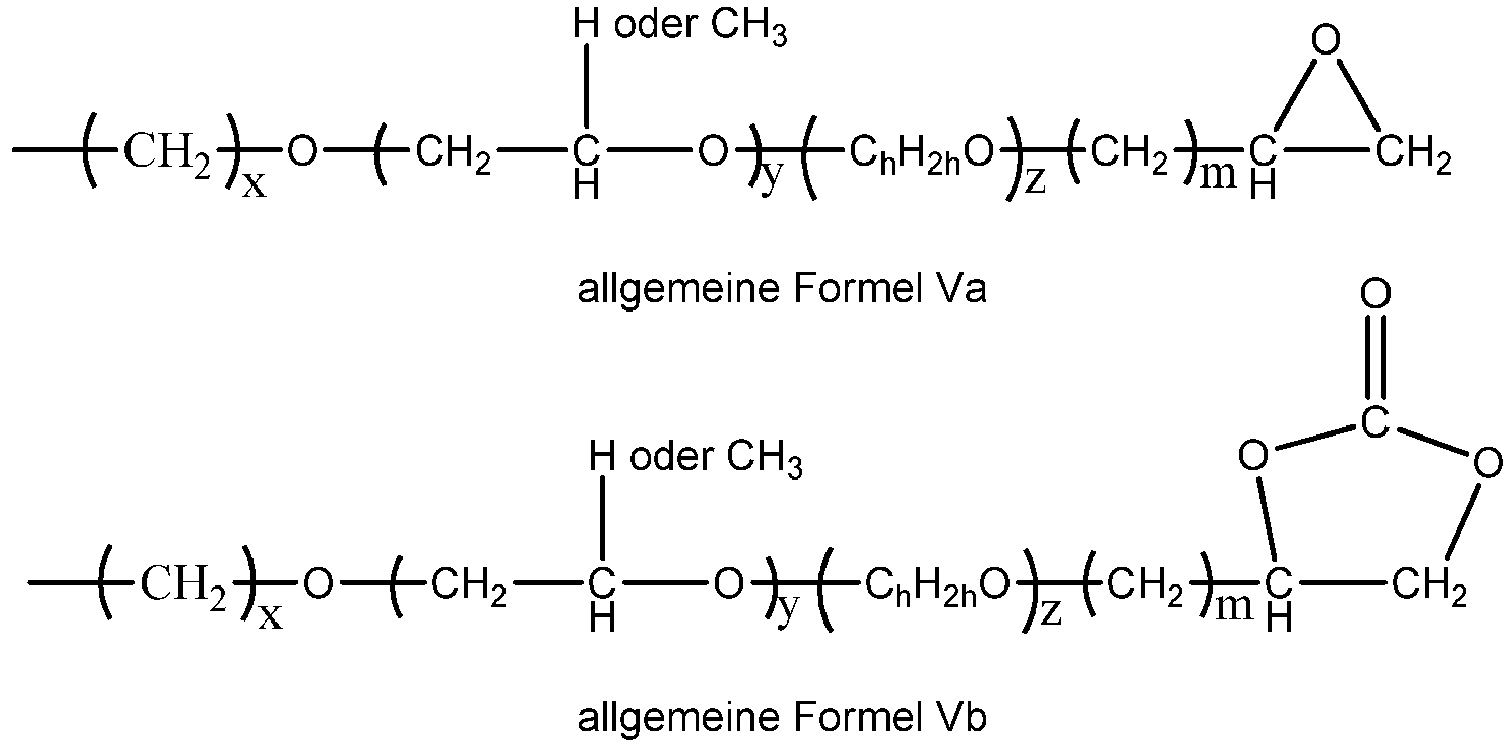
- In Verfahrensschritt C) kann erfindungsgemäß ein Lösungsmittel eingesetzt werden, wie beispielsweise Wasser, Aceton, Acetonitril, tert.-Butanol, Chloroform, Dichlormethan, Essigsäure, Bis(2-methoxyethyl)ether, Dimethylacetamide, Ethanol, Ethylenglycol, Dipropylenglycol, Methanol, Isopropanol, Diethylether, Pyridin, Dimethylsulfoxid, Dimethylformamid, Polyether und deren Mischungen. Insbesondere bevorzugt werden in Verfahrensschritt C) protische Lösungsmittel eingesetzt, die mindestens teilweise Wasser enthalten können.
- Bevorzugt liegt der pH-Wert des Lösungsmittels in Verfahrensschritt C) bei 25 °C in einem Bereich von 1 bis 14, bevorzugt von 3 bis 9, insbesondere von 5 bis 7.
Es kann in einer alternativen aber nicht weniger bevorzugten Ausführungsform in Verfahrensschritt C) mit mindestens zwei Lösungsmitteln gearbeitet werden, die ein mehrphasiges System bilden.
Solche, mindestens zwei, ein mehrphasiges System bildenden Lösungsmitteln enthaltende Systeme beinhalten beispielsweise mindestens eine Komponente ausgewählt aus Wasser, Chloroform, Diethylether, Dichlormethan, Toluol und Xylol. - Verfahrensschritt C) des erfindungsgemäßen Verfahrens kann in einem Temperaturbereich von 20 bis 200 °C durchgeführt werden, vorzugsweise von 40 bis 120 °C, insbesondere bevorzugt von 60 bis 100 °C.
- Verfahrensschritt C) des erfindungsgemäßen Verfahrens kann in einem Druckbereich von 0 bis 20 bar, vorzugsweise 0 bis 2 bar, insbesondere bevorzugt bei 0,9 bis 1,1 bar durchgeführt werden.
- Verfahrensschritt C) des erfindungsgemäßen Verfahrens kann sowohl unter Inertisierung mit Edelgasen wie z. B. Argon oder auch unter Stickstoff oder unter gewöhnlicher Atmosphäre durchgeführt werden. Besonders bevorzugt ist die Durchführung unter Inertgas, wobei Stickstoff besonders bevorzugt ist.
- Die Reaktionsmischung kann durch beliebiges Mischen der Komponenten erhalten werden. Dabei spielt es keine Rolle, welche Komponente in welcher Reihenfolge zugegeben wird.
- Verfahrensschritt C) des erfindungsgemäßen Verfahrens kann sowohl als Eintopfverfahren (Batch-Verfahren) als auch über Zudosage der Rohstoffe durchgeführt werden. Bei Letzterem legt man bevorzugt das Salz der allgemeinen Formel K+A- vor und dosiert das mindestens eine Epoxygruppe aufweisende Siloxan gegebenenfalls in einem Lösungsmittel über einen Zeitraum von 0,5 - 2 Stunden zu. Besonders bevorzugt werden zunächst die Ausgangsstoffe und gegebenenfalls Lösungsmittel vermischt.
- Erfindungsgemäß bevorzugt ist eine Dauer des Verfahrensschrittes C) von weniger als zehn Stunden.
- Verfahrensschritt C) des erfindungsgemäßen Verfahrens wird bevorzugt im Batch-Verfahren durchgeführt.
Weiterhin lässt sich das entstandene aminosäurehaltige Siloxan mit einer weiteren epoxyhaltigen, organischen Komponente in Verfahrensschritt D) umsetzen.
Die organischen, epoxidischen Verbindungen können dabei monomerer oder polymerer Natur sein. Bevorzugt sind dabei polyetherhaltige und aromatische Epoxide. - Die Umsetzung in Verfahrensschritt D) gleicht in ihren Bedingungen der Umsetzung in Verfahrensschritt C).
- Es ist erfindungsgemäß bevorzugt, wenn das Salz der allgemeinen Formel K+A- für Verfahrensschritt C) des erfindungsgemäßen Verfahrens über die zusätzlichen Verfahrensschritte A) und B) wie im Folgenden beschrieben bereit gestellt wird. Somit ist ein bevorzugtes erfindungsgemäßes Verfahren dadurch gekennzeichnet, dass es die zusätzlichen Verfahrensschritte umfasst
- A) Umsetzen einer α-Amino-Carbonsäure H+A- mit einem organischen Salz eines organischen Kations K+ in Anwesenheit einer Base zu einem Salz der allgemeinen Formel K+A-,
und gegebenenfalls - B) Aufreinigen des Salzes der allgemeinen Formel K+A-.
- Es ist offenbar, dass als in Verfahrensschritt A) einzusetzende "α-Amino-Carbonsäure H+A-" die korrespondierende Säure des "Carboxylats einer α-Amino-Carbonsäure A-" des Verfahrensschrittes C) eingesetzt werden muss.
Die α-Amino-Carbonsäure H+A- kann in Verfahrensschritt A) in Form ihrer Addukte und/oder Salze, wie beispielsweise Hydrate, Hydrochloride und Acetate, eingesetzt werden. Diese können auch in Form einer wässrigen Lösung eingesetzt werden.
Die als in Verfahrensschritt A) einzusetzende "α-Amino-Carbonsäure H+A-" ergibt sich somit aus der Kombination des in Verfahrensschritt C) genannten "Carboxylats einer α-Amino-Carbonsäure A-" mit einem Proton, wobei oben als "bevorzugt genannte "α-Amino-Carbonsäuren H+A-" des Verfahrensschrittes C)" bevorzugt mit einem Proton kombiniert in Verfahrensschritt A) als "α-Amino-Carbonsäure H+A-" eingesetzt werden. Es ist offenbar, dass als in Verfahrensschritt A) einzusetzendes "organisches Salz eines organischen Kations K+" das korrespondierende Salz des in Verfahrensschritt C) genannten "organischen Kations K+" eingesetzt werden muss.
Das als in Verfahrensschritt A) einzusetzende "organische Salz eines organischen Kations K+" ergibt sich somit aus der Kombination des in Verfahrensschritt C) genannten "organischen Kations K+" mit einem Anion, wobei oben als "bevorzugt genannte organische Kationen K+ des Verfahrensschrittes C)" bevorzugt mit einem Anion kombiniert in Verfahrensschritt A) als "organisches Salz eines organischen Kations K+" eingesetzt werden.
Bevorzugte Gegenanionen des organischen Salzes des organischen Kations K+ in Verfahrensschritt A) in diesem Zusammenhang sind ausgewählt aus der Gruppe Halogenide, Hydroxide, Bis(perfluoralkylsulfonyl)amide, Alkyl- und Aryltosylate, Perfluoralkyltosylate, Nitrate, Sulfate, Hydrogensulfate, Alkyl- und Arylsulfate, Polyethersulfate und -sulfonate, Perfluoralkylsulfate, Sulfonate, Alkyl- und Arylsulfonate, perfluorierte Alkyl- und Arylsulfonate, Alkyl- und Arylcarboxylate, Perfluoralkylcarboxylate, Perchlorate, Tetrarchloroaluminate, Saccharinate, Dicyanamid, Tetrafluoroborat, Hexafluorophosphat, Polyether-Phosphate und Phosphat, wobei Hydroxide erfindungsgemäß bevorzugt sind. - Als Base können in Verfahrensschritt A) organische und anorganische Basen eingesetzt werden. Beispiele für anorganische Basen sind Alkali- und Erdalkalimetallhydroxide wie Natriumhydroxid, Kaliumhydroxid, Calciumhydroxid, Bariumhydroxid usw.. Beispiele für organische Basen sind Alkoholate der Alkali- oder Erdalkalimetalle, Ammonium- und Phosphoniumhydroxide. Bevorzugt werden Alkali- und Erdalkalihydroxide eingesetzt.
- Verfahrensschritt A) des erfindungsgemäßen Verfahrens kann erfindungsgemäß in Anwesenheit eines Lösungsmittels durchgeführt werden. Solche sind beispielsweise Wasser, Aceton, Acetonitril, tert.-Butanol, Chloroform, Dichlormethan, Essigsäure, Bis(2-methoxyethyl)ether, Dimethylacetamide, Ethanol, Ethylenglycol, Methanol, Isopropanol, Diethylether, Pyridin, Dimethylsulfoxid, Dimethylformamid, Polyether und deren Mischungen.
In Verfahrensschritt A) des erfindungsgemäßen Verfahrens werden bevorzugt protische Lösungsmittel eingesetzt, die mindestens teilweise Wasser enthalten können. Insbesondere kann das Lösungsmittel Wasser sein. - Bevorzugt liegt der pH-Wert des Lösungsmittels in Verfahrensschritt A) bei 25 °C in einem Bereich von 1 bis 14, bevorzugt 3 bis 14, insbesondere 5 bis 12.
- Verfahrensschritt A) des erfindungsgemäßen Verfahrens kann in einem Temperaturbereich von 20 bis 200 °C durchgeführt werden, vorzugsweise von 20 bis 120 °C, insbesondere bevorzugt von 40 bis 100 °C.
- Verfahrensschritt A) des erfindungsgemäßen Verfahrens kann in einem Druckbereich von 0 bis 20 bar, vorzugsweise 0 bis 2 bar, insbesondere bevorzugt bei 0,9 bis 1,1 bar durchgeführt werden.
- Verfahrensschritt A) des erfindungsgemäßen Verfahrens kann sowohl unter Inertisierung mit Edelgasen wie z. B. Argon oder auch unter Stickstoff oder unter gewöhnlicher Atmosphäre durchgeführt werden. Besonders bevorzugt ist die Durchführung unter Inertgas, wobei Stickstoff besonders bevorzugt ist.
- Die Reaktionsmischung kann durch beliebiges Mischen der Komponenten erhalten werden. Dabei spielt es keine Rolle, welche Komponente in welcher Reihenfolge zugegeben wird.
- Verfahrensschritt A) des erfindungsgemäßen Verfahrens kann sowohl als Eintopfverfahren (Batch-Verfahren) als auch über Zudosierung der Rohstoffe durchgeführt werden.
Erfindungsgemäß bevorzugt ist eine Dauer des Verfahrensschritt B) des erfindungsgemäßen Verfahrens von 2 bis 24 Stunden. - Es kann vorteilhaft sein, wenn in Verfahrensschritt B) des erfindungsgemäßen Verfahrens Nebenprodukte aus dem Reaktionsgemisch abgetrennt werden. Solche Nebenprodukte können insbesondere solche sein, die durch Umsalzung erhalten werden. Bevorzugt sind solche Nebenprodukte Alkali- und Erdalkalihalogenide, was z.B. durch den Einsatz von Alkalihydroxiden als Base und quartäre Ammoniumhalogenide als Austauschsalz erreicht wird. Die Entfernung der Nebenprodukte, insbesondere der Alkali- und Erdalkalihalogenide kann z. B, durch eine einfache Filtration erfolgen. Der Feststoff kann auf bekannte Art und Weise aus dem Reaktionsgemisch entfernt werden. Vorzugsweise wird der Feststoff durch Filtration aus dem Reaktionsgemisch getrennt. Die Filtration kann sowohl mit als auch ohne Anlegen eines Vakuums ausgeführt werden. Als Filtermaterialien können z. B. cellulosehaltige Tiefenfilter eingesetzt werden. Vorzugsweise werden Plattenfilter mit Cellulose, Perlit, Kieselgur, Zeolith und Aktivkohle als Filtermaterial verwendet.
- Weiterhin kann es notwendig sein, das eingesetzte Lösungsmittel in Verfahrensschritt B) des erfindungsgemäßen Verfahrens zu entfernen. Dazu bedient man sich einer einfachen Destillation des Lösungsmittels.
Im Falle von Wasser kann alternativ auch eine Gefriertrocknung in Verfahrensschritt B) des erfindungsgemäßen Verfahrens durchgeführt werden.
Die Destillation in Verfahrensschritt B) des erfindungsgemäßen Verfahrens erfolgt vorzugsweise bei einer Sumpftemperatur (Temperatur des Reaktionsgemisches) von 50 °C bis 200 °C, bevorzugt 50 °C bis 150 °C, insbesondere bevorzugt 80 °C bis 120 °C und einem Druck von 0,1 bis 1013 mbar, bevorzugt >0,1 bis 100 mbar, insbesondere >0,1 bis 20 mbar. Ein weiterer Gegenstand der vorliegenden Erfindung ist das Zwischenprodukt des erfindungsgemäßen Verfahrens, wie im Folgenden beschrieben. Dieses ist insbesondere vorteilhaft geeignet, in Verfahrensschritt C) umgesetzt zu werden:
Dieser weitere Gegenstand der vorliegenden Erfindung ist somit
ein Salz der allgemeinen Formel K+A- mit
K+ ein organisches Kation und
A- das Carboxylat einer α-Amino-Carbonsäure, dadurch gekennzeichnet, dass
K+ eine Verbindungen enthaltend eine Ammonium-Gruppe darstellt, die mindestens einen organischen Rest mit 8 bis 30 Kohlenstoffatomen, bevorzugt 12 bis 26 Kohlenstoffatomen, besonders bevorzugt 16 bis 22 Kohlenstoffatomen, aufweist. - Bevorzugte erfindungsgemäße Salze sind solche, die als
organisches Kation K+
Verbindungen der allgemeinen Formel I mit X = Stickstoff, II oder III,
wie oben im Zusammenhang mit dem erfindungsgemäßen Verfahren beschrieben, aufweisen, - Besonders bevorzugte erfindungsgemäße Salze sind dadurch gekennzeichnet, dass das organisches Kation K+ eine Verbindung der allgemeinen Formel I

- mit X = Stickstoff und
- R1, R2, R3, R4 gleich oder unterschiedlich, linearer oder verzweigter aliphatischer Kohlenwasserstoffrest mit 1 bis 30 Kohlenstoffatomen, mit der Maßgabe, dass mindestens einer der Reste R1, R2, R3, R4 4 bis 30 Kohlenstoffatome, bevorzugt 8 bis 26 Kohlenstoffatome, besonders bevorzugt 10 bis 22 Kohlenstoffatome, aufweist, ist.
- Bevorzugte erfindungsgemäße Salze sind solche, die als
das Carboxylat einer α-Amino-Carbonsäure A-
Carboxylate der Säuren ausgewählt aus L-α-Amino-Carbonsäuren, bevorzugt ausgewählt aus den 22 proteinogenen Aminosäuren, welche gegebenenfalls glykosyliert sein können, ausgewählt aus Glycin, Alanin, Valin, Leucin, Isoleucin, Prolin, Methionin, Phenylalanin, Tyrosin, Tryptophan, Serin, Threonin, Asparagin, Glutamin, Cystein, Lysin, Arginin, Histidin, Aspartat, Selenocystein, Pyrrolysin und Glutamat, insbesondere bevorzugt Lysin, Arginin und Histidin,
aufweisen.
Auch Salze, die als
das Carboxylat einer α-Amino-Carbonsäure A-
Carboxylate der Säuren ausgewählt aus Sarcosin, γ-Aminobuttersäure, Ornithine, Creatin, Opin, Cystine, Hydroxyprolin, Hydroxylysine, Thyroxin und O-Phophoserin aufweisen, sind alternativ bevorzugt. - Ein weiterer Gegenstand ist ein Siloxan erhältlich nach dem erfindungsgemäßen Verfahren.
- Alternative erfindungsgemäße Siloxane sind insbesondere gekennzeichnet durch die allgemeine Formel VI
Ma1 MC a2MB a3Db1DC b2DB b3Tc1TC c2TB c3Qd1 allgemeine Formel VI
mit - M
- = [R16 3SiO1/2]
- MC
- = [R19R16 2SiO1/2]
- MB
- = [R18R16 2SiO1/2]
- D
- = [R16 2SiO2/2]
- DC
- = [R19 1R16 1SiO2/2]
- DB
- = [R18,R16 1SiO2/2]
- T
- = [R16SiO3/2]
- TC
- = [R19SiO3/2]
- TB
- = [R18SiO3/2]
- Q
- = [SiO4/2],
- a1, a2, a3, b1, b2, b3, c1, c2, c3, d1, R16 und R18 wie oben definiert,
- R19 unabhängig voneinander gleiche oder verschiedene Reste der allgemeinen Formel VIIa und/oder VIIb


- mit p = 1-2,
- k = 0-1,
- x, y, z, h und m wie für die allgemeinen Formeln Va und Vb definiert,
- R1 wie oben definiert,
-


- Der Vollständigkeit wegen sei erwähnt, dass es sich bei dem die kovalente Bindung ausbildenden Aminogruppe nicht zwangsläufig um die alpha Aminogruppe handeln muss, so kann wie z.B. im Falle von Lysin auch die epsilon-Aminogruppe die entsprechende Bindung ausbilden. Prinzipiell kann es daher auch bei Vorliegen von zwei oder mehr Aminogruppen in A- zu Vernetzungsreaktionen kommen.
- Bevorzugte Reste R20 ergeben sich aus den oben für das erfindungsgemäße Verfahren beschriebenen bevorzugten K+ und A-.
- Bevorzugte Parameter und Parameterkombinationen für a1, a2, a3, b1, b2, b3, c1, c2, c3, d1, R16 und R18 sind solche wie oben für das erfindungsgemäße Verfahren beschriebene.
- Ein weiterer Gegenstand der vorliegenden Erfindung ist die Verwendung der erfindungsgemäßen Siloxane und/oder der Siloxane erhältlich nach dem erfindungsgemäßen Verfahren zur Herstellung von Formulierungen, insbesondere von kosmetischen oder pharmazeutischen Formulierungen und Pflege- und Reinigungsformulierungen für die Anwendung im häuslichen und industriellen Umfeld. In diesem Zusammenhang sind bevorzugte kosmetische oder pharmazeutische Formulierungen insbesondere Haut- und Haarbehandlungsformulierungen, insbesondere Haarkonditionierungsformulierungen. Bevorzugte Pflege- und Reinigungsformulierungen für die Anwendung im häuslichen und industriellen Umfeld sind in diesem Zusammenhang Textilpflegemittel, wie beispielsweise Weichspüler, und Pflegemittel für harte Oberflächen, insbesondere für Fahrzeuge, Wasserfahrzeuge, Flugzeuge, Fensterscheiben und -bänke, Duschabtrennungen, Fußböden wie Teppiche, Fliesen, Laminate, Parkett, Korkfußböden, Marmor-, Stein- und Feinsteinzeugböden, Haushaltskeramiken wie WCs, Waschbecken, Bidets, Duschtassen, Badewannen, Türklinken, Armaturen, Haushaltswerkzeuge wie Waschmaschinen, Trockner, Spülmaschinen, Spülen aus Keramik oder Edelstahl, Möbel wie Tische, Stühle, Regale, Ablageflächen, Fenster, Kochgeschirr, Geschirr und Besteck, Werkzeuge wie chirurgische Instrumente, Staubsauger, Maschinen, Rohrleitungen, Tanks und Geräte für Transport, Verarbeitung und Aufbewahrung in der Lebensmittelverarbeitung, wie beispielsweise rinse aids, Klarspüler.
Somit sind Formulierungen, insbesondere kosmetische oder pharmazeutische Formulierungen und Pflege- und Reinigungsformulierungen für die Anwendung im häuslichen und industriellen Umfeld enthaltend Siloxane erhältlich nach dem erfindungsgemäßen Verfahren, insbesondere in einer Menge von 0,1 bis 7 Gew.-%, bevorzugt 0,5 bis 4 Gew.-%, besonders bevorzugt 1 bis 3 Gew.-% bezogen auf die Gesamtformulierung, insbesondere wässrige Formulierungen, welche vorzugweise einen pH-Wert von 3,5 bis 5,5 aufweisen, ein weiterer Gegenstand der vorliegenden Erfindung.
Bevorzugte erfindungsgemäße Formulierungen enthalten keine weiteren Siloxane. Unter dem Begriff "wässrig" wird in diesem Zusammenhang ein Wassergehalt von größer als 50 Gew.-%, bevorzugt größer 75 Gew.-%, bezogen auf die Gesamtformulierung verstanden. - Ein weiterer Gegenstand der vorliegenden Erfindung ist die Verwendung der erfindungsgemäßen Siloxane und/oder der Siloxane erhältlich nach dem erfindungsgemäßen Verfahren oder der erfindungsgemäßen Formulierungen zur Konditionierung einer Oberfläche, bevorzugt von Fasern oder Geweben, insbesondere von Haut, Haaren oder Textilien.
- In den nachfolgend aufgeführten Beispielen wird die vorliegende Erfindung beispielhaft beschrieben, ohne dass die Erfindung, deren Anwendungsbreite sich aus der gesamten Beschreibung und den Ansprüchen ergibt, auf die in den Beispielen genannten Ausführungsformen beschränkt sein soll.
- Die Aufnahme und Interpretation der NMR-Spektren ist dem Fachmann bekannt. Als Referenz sei hiermit eingeführt das Buch "NMR Spectra of Polymers and Polymer Additives" von A. Brandolini und D. Hills, erschienen im Jahr 2000 beim Verlag Marcel Dekker Inc..
- GPC-Messungen zur Bestimmung der Polydispersität und mittleren Molmassen Mw wurden unter den folgenden Messbedingungen durchgeführt: Säulenkombination SDV 1000/10000 Å (Länge 65 cm), Temperatur 30 °C, THF als mobile Phase, Fließrate 1 ml/min, Probenkonzentration 10 g/l, RI-Detektor, die Auswertung der Polymere erfolgte gegen Polystyrol-Standard (162-2570000 g/mol).
- 74,3 g (0,42 mol) Arginin (Firma SAFC, 98,5%ig) wurden im 1 L-Vierhalskolben mit Innenthermometer, KPG-Rührer und Kugelkühler in Wasser suspendiert. Anschließend wurden 23,5 g (0,42 mol) Kaliumhydroxid (Firma J.T. Baker, 100 %ig) in 23,5 g Wasser gelöst und unter Rühren in den Kolben gegeben und für 30 Minuten bei Raumtemperatur gerührt. Daraufhin wurde die Lösung auf 80°C erwärmt und 422,3 g (0,42 mol) Cetyltrimethylammoniumchlorid (Firma Evonik Industries AG, 30 % in Wasser) hinzugegeben und für weitere zwei Stunden bei 80°C und weiterhin über Nacht bei Raumtemperatur gerührt. Das Wasser wurde unter Anlegen eines Vakuums bei 60°C abdestilliert. Das entstandene Produkt wurde in tert-Butanol (Firma Sigma Aldrich, >97,8 %) gelöst und mit wenig Natriumsulfat versetzt und der Niederschlag abfiltriert. Schließlich wurde das Lösungsmittel unter Anlegen eines Vakuums bei 60°C abdestilliert.
- Das 13C-NMR bestätigte die Herstellung eines 1:1 Salzes aus Arginat und Cetyltrimethylammonium.
- 63,9 g (0,45 mol) Lysin (Firma ABCR, 97 %ig) wurden im 1 L-Vierhalskolben mit Innenthermometer, KPG-Rührer und Kugelkühler in Wasser suspendiert. Anschließend wurden 25,8 g (0,42 mol) Kaliumhydroxid (Firma J.T. Baker, 100 %ig), gelöst in 25,8 g Wasser, unter Rühren in den Kolben gegeben und für für 30 Minuten bei Raumtemperatur gerührt. Daraufhin wurde die Lösung auf 80°C erwärmt und 460,2 g (0,45 mol) Cetyltrimethylammoniumchlorid (Firma Evonik Industries AG, 30 % in Wasser) hinzugegeben und für zwei weitere Stunden bei 80°Cund dann über Nacht bei Raumtemperatur gerührt. Das Wasser wurde unter Anlegen eines Vakuums bei 60°C abdestilliert. Das entstandene Produkt wurde in tert-Butanol (Firma Sigma Aldrich, >97,8 %) gelöst und mit wenig Natriumsulfat versetzt und der sich gebildete Niederschlag abfiltriert. Schließlich wurde das Lösungsmittel unter Anlegen eines Vakuums bei 60°C abdestilliert.
- Das 13C-NMR bestätigte die Herstellung eines 1:1 Salzes aus Lysinat und Cetyltrimethylammonium.
- 48 g (0,32 mol) Lysin (Firma ABCR, 97 %ig) wurden im 0,5L-Vierhalskolben mit Innenthermometer, KPG-Rührer und Kugelkühler in 56 g Ethanol suspendiert. Anschließend wurden 17,9 g (0,32 mol) Kaliumhydroxid (Firma J.T. Baker, 100 %) in 40 g Ethanol gelöst und unter Rühren in den Reaktionskolben gegeben und für 30 Minuten bei Raumtemperatur gerührt. Daraufhin wurde die Lösung auf 80°C erwärmt und 150 g (0,32 mol) Behenyltrimethylammoniumchlorid (Firma Evonik Industries AG, 85% in Isopropanol) gelöst in 150 g Isopropanol, hinzugegeben. Nach zwei Stunden bei 80°C wurde die Lösung über Nacht bei Raumtemperatur gerührt. Der entstandene Niederschlag wurde mittels einer einfachen Filtration abgetrennt, und das Lösungsmittel unter Anlegen eines Vakuums bei 60°C abdestilliert.
- Das 13C-NMR bestätigte die Herstellung eines 1:1 Salzes aus Lysin und Behenyltrimethylammonium.
- 100 g (0,018 mol) α,ω-Epoxysiloxan (N=80, M=5517,2 g/mol, Epoxywert: 0,58%, Firma Evonik Industries AG), 18,5 g (0,036 mol) Behenyltrimethylammoniumlysinat aus Synthesebeispiel S3 und 29,7 g tert-Butanol (Firma Sigma Aldrich, >97,8 %) wurden im 0,25 L-Vierhalskolben mit Innenthermometer, Kugelkühler und KPG-Rührer vorgelegt. Die Mischung wurde für fünf Stunden bei 85°C gerührt. Anschließend wurde das Lösungsmittel unter Anlegen eines Vakuums bei 60°C abdestilliert.
1H-NMR und GPC bestätigten die Herstellung des aminosäuremodifizierten Siloxans. - 100 g (0,018 mol) α,ω-Epoxysiloxan (N=80, M=5517,2 g/mol, Epoxywert: 0,58%, Firma Evonik Industries AG), 15,5 g (0,036 mol) Cetyltrimethylammoniumlysinat aus Synthesebeispiel S2 und 28,9 g tert-Butanol (Firma Sigma Aldrich,>97,8 %) wurden im 0,25 L-Vierhalskolben mit Innenthermometer, Kugelkühler und KPG-Rührer vorgelegt und auf 85°C erwärmt. Diese Mischung wurde für fünf Stunden gerührt, woraufhin das Lösungsmittel unter Anlegen eines Vakuums bei 60°C abdestilliert wurde.
1H-NMR und GPC bestätigten die Herstellung des aminosäuremodifizierten Siloxans. - 100 g (0,018mol) α,ω-Epoxysiloxan (N=80, M=5517,2g/mol, Epoxywert: 0,58%, Firma Evonik Industries AG), 15,9 g (0,036mol) Cetyltrimethylammoniumarginat aus Synthesebeispiel S1 und 29 g tert-Butanol (Firma Sigma Aldrich, >97,8 %) wurden im 0,25 L-Vierhalskolben mit Innenthermometer, Kugelkühler und KPG-Rührer auf 85°C erwärmt und für vier Stunden bei dieser Temperatur gerührt. Anschließend wurde das Lösungsmittel unter Anlegen eines Vakuums bei 60°C abdestilliert.
1H-NMR und GPC bestätigten die Herstellung des aminosäuremodifizierten Siloxans. - 50 g (0,0047 mol) eines Epoxysiloxans (N=150, M=10666 g/mol, Epoxywert: 0,45%, Firma Evonik Industries AG), 6,2 g (0,014 mol) Cetyltrimethylammoniumarginat aus Synthesebeispiel S1 und 28 g tert-Butanol (Firma Sigma Aldrich, >97,8 %) wurden im 0,25 L-Vierhalskolben mit Innenthermometer, Kugelkühler und KPG-Rührer vorgelegt, auf 85°C erwärmt und für vier Stunden gerührt. Schließlich wurde das Lösungsmittel unter Anlegen eines Vakuums 60°C abdestilliert.
1H-NMR und GPC bestätigten die Herstellung des aminosäuremodifizierten Siloxans. - 50 g (0,021mol) eines α,ω-Epoxysiloxans(N=30, M=2335,8 g/mol, Epoxywert: 1,37%, Firma Evonik Industries AG), 18,8 g (0,042 mol) Cetyltrimethylammoniumarginat aus Synthesebeispiel S1 und 17,2 g tert-Butanol (Firma Sigma Aldrich, >97,8 %) wurden im 0,25 L-Vierhalskolben mit Innenthermometer, Kugelkühler und KPG-Rührer vorgelegt. Die Mischung wurde auf 85°C erwärmt und für vier Stunden bei dieser Temperatur gerührt. Anschließend wurde das Lösungsmittel durch Anlegen eines Vakuums bei 60°C abdestilliert.
1H-NMR und GPC bestätigten die Herstellung des aminosäuremodifizierten Siloxans. - 123,66 g (1,08mol) Allylglycidylether (Firma Sigma Aldrich) werden in 123,66 g Toluol vorgelegt und auf 80°C erwärmt. 0,17g Karstedt-Kat (1 %ige Lösung in Cyclen, 10 ppm Platin bezogen auf den Ansatz) werden dann hinzugegeben. 50 g (0,83 mol) Methylhydrocyclosiloxan (ABCR, 92 %) in 25g Toluol werden langsam zugetropft. Regelmäßige volumetrische Si-H Umsatz Bestimmung bis 100% Umsatz. Anschließend wird überschüssiges Toluol und Allylglycidylether am Rotationsverdampfer bei 100 °C und Vakuum abdestilliert.
- 55,2 g (0,121 mol) Cethyltrimethylammoniumarginat aus Synthesebeispiel 1 und 55,2 g tert-Butanol (Firma Sigma Aldrich, >97,8 %) werden in 0,25 L Vierhalskolben mit Kugelkühler und Tropftrichter vorgelegt und auf 82°C erwärmt. 21 g (0,121 mol) des Umsetzungsproduktes aus Allylglycidylether und Methylhydrocyclosiloxan werden in 21 g tert-Butanol langsam zugetropft und für weitere 2 Stunden gerührt. Tert-Butanol wird schließlich bei 80°C am Rotationsverdampfer abdestilliert.
1H-NMR bestätigte die Herstellung des aminosäuremodifizierten Siloxans. - 57,8 g (0,365mol) Histidin (Firma ABCR, 98 %) werden im 1 L-Vierhalskolben mit Innenthermometer, KPG-Rührer und Kugelkühler in Wasser suspendiert. 20,5 g (0,365mol) Kaliumhydroxid (Firma J.T. Baker, 100 %), gelöst in 20 g Wasser, werden unter Rühren in den Kolben gegeben und für 30 Minuten bei Raumtemperatur gerührt. Anschließend wird die Lösung auf 80°C erwärmt und 367,5 g (0,344 mol) Cethyltrimethylammoniumchlorid (Firma Evonik Industries AG, 30%ig in Wasser) hinzugegeben und für weitere zwei Stunden bei 80°C und schließlich über Nacht bei Raumtemperatur gerührt. Unter Anlegen eines Vakuums bei 60°C wird das Wasser abdestilliert. Das entstandene Aminosäuresalz wird in tert-Butanol (Firma Sigma Aldrich, >97,8 %) und Natriumsulfat aufgenommen und der entstehende Niederschlag abfiltriert. Das reine Salz wird dann durch Destillation des tert-Butanol erhalten.
- Das 13C-NMR bestätigte die Herstellung eines 1:1 Salzes aus Histidat und Cetyltrimethylammonium.
- 73,5 g (0,498 mol) Glutamin (Firma Sigma Aldrich, 99 %) werden im 1 L-Vierhalskolben mit Innenthermometer, KPG-Rührer und Kugelkühler in Wasser suspendiert. 27,9 g (0,498mol) Kaliumhydroxid (Firma J.T. Baker, 100%ig), gelöst in 27,9 g Wasser, werden dann unter Rühren in den Kolben gegeben und 30 Minuten gerührt bevor die Lösung auf 80°C erwärmt wird und 500 g (0,468 mol) Cethyltrimethylammoniumchlorid (Firma Evonik Industries AG, 30 % in Wasser) zugegeben werden. Die Lösung wird für weitere zwei Stunden bei 80°C und dann über Nacht bei Raumtemperatur gerührt. Das entstandene Aminosäuresalz wird in tert-Butanol (Firma Sigma Aldrich, >97,8 %) und Natriumsulfat aufgenommen und der entstehende Niederschlag abfiltriert. Das reine Salz wird dann durch Destillation des tert-Butanol erhalten.
- Das 13C-NMR bestätigte die Herstellung eines 1:1 Salzes aus Glutamat und Cetyltrimethylammonium.
- 6,9 g (0,046 mol) Lysin (Firma ABCR, 97 %) werden im 0,25L-Vierhalskolben mit Innenthermometer, KPG-Rührer und Kugelkühler in 20 g Ethanol suspendiert bevor 2,6 g (0,046 mol) Kaliumhydroxid (Firma J.T. Baker, 100 %), gelöst in 10 g Ethanol, unter Rühren zugegeben werden und für 30 Minuten gerührt. Anschließend wird die Lösung auf 80°C erwärmt und 25 g (0,046 mol) Trihexyltetradecylphosphoniumchlorid (Firma Sigma Aldrich, 95 %) gelöst in 40 g Isopropanol, hinzugegeben. Die Lösung wird für weitere zwei Stunden bei 80°C und dann über Nacht bei Raumtemperatur gerührt. Der entstandene Niederschlag wird abfiltriert und das das Lösungsmittel im Filtrat bei 60°C unter Anlegen eines Vakuums abdestilliert.
- Das 13C-NMR bestätigte die Herstellung eines 1:1 Salzes aus Lysinat und Trihexyltetradecylphosphonium.
- 15,8 g (0,105mol) Lysin (Firma ABCR, 97 %) werden im 0,25 L-Vierhalskolben mit Innenthermometer, KPG-Rührer und Kugelkühler in 30 g Ethanol suspendiert bevor 5,8 g (0,105mol) Kaliumhydroxid (Firma J.T. Baker, 100 %), gelöst in 10 g Ethanol, unter Rühren zugegeben werden und für 30 Minuten gerührt. Anschließend wird die Lösung auf 80°C erwärmt und 25 g (0,105 mol) 1-Methyl-3-octylimidazolimchlorid (Firma Sigma Aldrich, 97 %), gelöst in 30 g Isopropanol, hinzugegeben. Die Lösung wird für weitere zwei Stunden bei 80°C und dann über Nacht bei Raumtemperatur gerührt. Der entstandene Niederschlag wird abfiltriert und das das Lösungsmittel im Filtrat bei 60°C unter Anlegen eines Vakuums abdestilliert.
- Das 13C-NMR bestätigte die Herstellung eines 1:1 Salzes aus Lysinat und 1-Methyl-3-octylimidazolium.
- 6,9 g (0,016 mol) Cethyltrimethylammoniumlysinat aus Synthesebeispiel S2 und 14,3 g tert-Butanol (Firma Sigma Aldrich, >97,8 %) wurden im 0,25 L-Vierhalskolben mit Innenthermometer, Kugelkühler und KPG-Rührer vorgelegt, auf 85°C erwärmt und 50 g (0,008 mol) eines α,ω-carbonathaltigem Siloxan mit N= 80 (M=6224 g/mol) hergestellt wie beschrieben in
US5606077 innerhalb von 60 Minuten zugetropft. Die Reaktion wurde für weitere neun Stunden gerührt. Schließlich wurde das Lösungsmittel tert-Butanol bei 60°C am Rotationsverdampfer abdestilliert. - Das 1H-NMR und das 13C-NMR bestätigten die erfolgreiche Umsetzung zum aminosäuretragenden Siloxan.
- 100 g (0,018mol) α,ω-Epoxysiloxan (N=80, M=5517,2g/mol, Epoxywert: 0,58%, Firma Evonik Industries AG), 15,9 g (0,036mol) Cetyltrimethylammoniumarginat aus Synthesebeispiel S1 und 29 g tert-Butanol (Firma Sigma Aldrich, >97,8 %) wurden im 0,25 L-Vierhalskolben mit Innenthermometer, Kugelkühler und KPG-Rührer auf 85°C erwärmt und für vier Stunden bei dieser Temperatur gerührt. Anschließend wird ein monoepoxypolyether (ipox chemicals, epoxy quivalent: 470-500) zugegeben und für weitere 2 Stunden bei 80 °C gerührt. Schließlich wird das Lösungsmittel unter Anlegen eines Vakuums bei 60°C abdestilliert.
- Dem Fachmann ist bekannt, dass die Aufbringung von Textilhilfsmitteln wie zum Beispiel Weichspülern zu einer Oberflächenhydrophobierung führen kann. Diese Oberflächenhydrophobierung zeigt sich in einem schlechteren Rücknetzverhalten des Textils gegenüber Wasser. Die erfindungsgemäßen Copolymere bewirken eine deutliche Hydrophilierung von Textilfasern und vermögen sogar in Kombination mit sich negativ auf das Rücknetzverhalten auswirkenden Textilhilfsmitteln eine deutliche Reduktion der durch diese hervorgerufene Hydrophobierung.
- Zur Überprüfung der bei der Anwendung von erfindungsgemäßen aminosäurehaltigen Siloxanen auf textilen Fasern erreichbaren Hydrophilie, wurden verschiedene Normtextilien ausgerüstet und exemplarisch gegen einen kommerziell erhältlichen Weichspülerwirkstoff (Rewoquat WE18, Evonik Industries) hinsichtlich seines Rücknetzvermögens mittels eines Steighöhentests abgeprüft.
- Baumwollgewebe wfl Code 13A, Polyestergewebe wfk Code 30A, beide erhältlich bei der wfk Testgewebe GmbH, Krefeld.
- Aus einer Stoffbahn wurden 25 x 7,5 cm große Textilprüfkörper herausgetrennt, die eine Masse von 4 g aufwiesen. Es wurden sodann in 1L PE-Kunststoffflaschen Ausrüstungsflotten bestehend aus den jeweiligen Wirkstoffen (0,077 Gew.-%) in Wasser (16° dH) angesetzt. Die so hergestellten Flotten wurden für 2 Stunden gerührt um eine homogene Aufnahme des Wirkstoffes zu gewährleisten. Die einzelnen Textilprüfkörper wurden sodann in einen Teflonbecher mit 13,7 g der zuvor hergestellten Flottenlösung benetzt und mittels eines Polyethylen-Spatels in der Flotte bewegt. Nach exakt 10 Minuten wurden die Prüfkörper aus der Flotte herausgenommen, an einer Leine zur Trocknung befestigt und erst am Folgetag vermessen.
- Aus einer Stoffbahn wurden 25 x 7,5 cm große Textilprüfkörper herausgetrennt, die eine Masse von 3 g aufwiesen. Es wurden sodann in 1L PE-Kunststoffflaschen Ausrüstungsflotten bestehend aus den jeweiligen Wirkstoffen (0,077 Gew.-%) in Wasser (16° dH) angesetzt. Die so hergestellten Flotten wurden für 2 Stunden gerührt um eine homogene Aufnahme des Wirkstoffes zu gewährleisten. Die einzelnen Textilprüfkörper wurden sodann in einen Teflonbecher mit 10,3 g der zuvor hergestellten Flottenlösung benetzt und mittels eines Polyethylen-Spatels in der Flotte bewegt. Nach exakt 10 Minuten wurden die Prüfkörper aus der Flotte herausgenommen, an einer Leine zur Trocknung befestigt und erst am Folgetag vermessen.
- Zur Überprüfung der Hydrophilie wurde eine an DIN 53924 angelehnte Prüfmethode zur Messung der Steighöhe von Wasser verwendet. Die Messungen werden dabei immer zu einer Vergleichsprobe durchgeführt und aus diesem Grund wurd auf eine klimatisierte Umgebung verzichtet. Es wurd immer nur innerhalb einer Messreihe verglichen. Dabei wurd das ausgerüstete Testgewebe in jeweils fünf 25 cm lange und 1,5 cm breite Streifen geschnitten, mit einem wasserlöslichen Stift seitlich markiert und an einer Halterung senkrecht straff aber ohne Spannung befestigt. Die Halterung wird anschließend für fünf Minuten so in ein Wasserbecken gestellt, sodass 2 cm der Streifen ins Wasser eintauchen. Die wasserlösliche Markierung dient der besseren Erkennbarkeit der Steighöhe durch das Verlaufen der Farbe bei Benetzung mit Wasser. Nachdem die Halterung 10 Minuten außerhalb des Wasserbeckens gestanden hat, wird die Steighöhe in cm abgelesen und gegen den Blindwert (Steighöhe der unbehandelten Baumwollstreifen x cm = 100 %) bestimmt und in % vom Blindwert angegeben.
Die Ergebnisse sind in den folgenden beiden Tabellen angegeben.Bestimmung der Steighöhe auf Baumwollwebware. Zusammensetzung Steighöhe in % des Blindwertes Vergleichsbeispiel Rewoquat® WE-18 63,0 Synthesebeispiel S8 86,0 Synthesebeispiel S8 + Rewoquat® WE-18 (20:80) 72,0 Synthesebeispiel S6 - 182 88,0 Synthesebeispiel S6-182 + Rewoquat® WE-18 (20:80) 71,0 Unbehandelt 100,0 - Es zeigt sich bei Applikation auf ein Baumwolltextil eine deutlich gesteigerte Hydrophilie der Faser gegenüber dem Vergleichsbeispiel. Auch bewirken schon geringe Zugaben von nur 20 % an der Gesamtwirkstoffmenge eine deutliche Minderung der Hydrophobierung durch den Weichspülerwirkstoff. Beides ist im Besonderen daher überraschend, da dem Fachmann Siloxane als stark hydrophobierend bekannt sind.
Bestimmung der Steighöhe auf Polyestergewebe. Zusammensetzung Steighöhe in % des Blindwertes Vergleichsbeispiel Rewoquat® WE-18 65,0 Synthesebeispiel S8 97,0 Synthesebeispiel S8 + Rewoquat® WE-18 (20:80) 95,0 Synthesebeispiel S6 90,0 Synthesebeispiel S6 + Rewoquat® WE-18 (20:80) 88,0 Unbehandelt 100,0 - Weiterhin hat sich gezeigt, dass bei Applikation auf Polyestergewebe eine deutlich gesteigerte Hydrophilie der Faser gegenüber dem Vergleichsbeispiel, die fast an den Blindwert hinreicht, resultiert. Auch bewirken schon geringe Zugaben von nur 20 % an der Gesamtwirkstoffmenge eine deutliche Minderung der Hydrophobierung durch den Weichspülerwirkstoff. Beides ist im Besonderen daher überraschend, da dem Fachmann Siloxane als stark hydrophobierend bekannt sind.
- Für die anwendungstechnische Beurteilung der Konditionierung von Haar wurden die erfindungsgemäßen Verbindungen aus den Synthesebeispielen S8, S6 und S5 sowie das kommerziell erhältliche Produkt ABIL® Quat 3272 (INCl: Quaternium-80, Hersteller Evonik Industries) in einer einfachen kosmetischen Haarspülungs-Formulierung eingesetzt.
- Die anwendungstechnischen Eigenschaften beim Einsatz in Haarspülungen wurden in den folgenden Rezepturen überprüft:
Formulierungsbeispiele 0a 1a 2a 3a V4a TEGINACID® C, Evonik Industries (INCI: Ceteareth-25) 0,5% 0,5% 0,5% 0,5% 0,5% TEGO® Alkanol 16, Evonik Industries (INCl: Cetyl Alcohol) 5,0% 5,0% 5,0% 5,0% 5,0% VARISOFT® 300, 30%-ig, Evonik Industries (INCI: Cetrimonium Chloride (=CTAC)) 2,0% 2,0% 2,0% 2,0% 2,0% Neolone PE, The Dow Chemical Company (INCI: Phenoxyethanol; Methylisothiazolinone) 0,45% 0,45% 0,45% 0,45% 0,45% Wasser, demineralisiert ad. 100,0% Zitronensäure ad. pH 4,5 ± 0,3 Synthesebeispiel S8, 80%ig in Isopropanol (erfindungsgemäß) 0,38% Synthesebeispiel S6, 80%ig in Isopropanol (erfindungsgemäß) 0,38% Synthesebeispiel S5, 80%ig in Isopropanol (erfindungsgemäß) 0,38% ABIL® Quat 3272, 50%ig in Propylenglycol (nicht erfindungsgemäß) 0,60% - Für die anwendungstechnische Beurteilung wurden Haartressen, die für sensorische Tests verwendet werden, durch eine Bleichbehandlung standardisiert vorgeschädigt. Dazu wurden friseurübliche Produkte verwendet. Der Testablauf, die verwendeten Basismaterialien sowie die Details der Beurteilungskriterien wurden in
DE 103 27 871 beschrieben. - Die Vorbehandlung der Haare erfolgte durch ein Shampoo, welches keine Konditioniermittel enthält.
- Die, wie oben beschrieben, vorgeschädigten Haartressen wurden wie folgt mit der oben beschriebenen konditionierenden Spülung behandelt:
- Die Haartressen wurden unter fließendem, warmem Wasser benetzt. Das überschüssige Wasser wurde leicht von Hand ausgedrückt, dann wird das Shampoo aufgebracht und sanft im Haar eingearbeitet (1 ml/Haartresse (2 g)). Nach einer Verweilzeit von 1 min wurde das Haar für 1 min gespült. Direkt im Anschluss wurde die Spülung aufgebracht und sanft im Haar eingearbeitet (1 ml/Haartresse (2 g)). Nach einer Verweilzeit von 1 min wurde das Haar für 1 min gespült.
- Die sensorischen Bewertungen erfolgten nach Noten, die auf einer Skala von 1 bis 5 vergeben wurden, wobei 1 die schlechteste und 5 die beste Bewertung ist. Die einzelnen Testkriterien erhielten jeweils eine eigene Bewertung.
Die Testkriterien sind: Nasskämmbarkeit, Nassgriff, Trockenkämmbarkeit, Trockengriff, Aussehen/Glanz. - In der folgenden Tabelle wurden die Ergebnisse der sensorischen Beurteilung der wie oben beschrieben durchgeführten Behandlung der Haarsträhnchen mit den erfindungsgemäßen Formulierungen 1a, 2a und 3a, der Vergleichsformulierung V4a und der Kontrollformulierung 0a (Placebo ohne Testsubstanz) verglichen.
Nasskämmbarkeit Nassgriff Trockenkämmbarkeit Trockengriff Glanz Kontrollformulierung 0a 3,9 4,0 4,1 4,5 3,0 Erfindungsgemäße Formulierung 1a 4,5 4,1 4,3 4,4 4,0 Erfindungsgemäße Formulierung 2a 4,9 4,4 4,5 4,7 4,5 Erfindungsgemäße Formulierung 3a 4,9 4,5 4,8 4,8 4,5 Vergleichsformulierung (nicht erfindungsgemäß) V4a 4,7 4,3 4,6 4,8 3,5 - Die erfindungsgemäßen Formulierungen 1a, 2a und 3a mit den erfindungsgemäßen Verbindungen aus den Synthesebeispielen S8, S6 und S5 zeigten in der sensorischen Beurteilung gute kosmetische Bewertungen. Die Kontrollformulierung 0a (mit CTAC) wurde durch die Zugabe von lediglich 0.3% aktiv Siliconprodukt signifikant verbessert. Dabei wurden die bereits sehr guten Eigenschaften der Vergleichsformulierung V4a bzgl. Nasskämmbarkeit und Nassgriff durch die erfindungsgemäßen Formulierungen 2a und 3a mit den erfindungsgemäßen Verbindungen Bespiel 2 und 3 noch weiter gesteigert. Eine signifikant bessere Bewertung wurde auch beim Glanz durch die Verwendung der erfindungsgemäßen Formulierungen 1a, 2a und 3a erreicht.
- Neben der o.g. Haarspülungsformulierung wurden für die anwendungstechnische Beurteilung der Konditionierung von Haar die erfindungsgemäßen Verbindungen aus den Synthesebeispielen S8, S6 und S5 sowie das kommerziell erhältliche Produkt ABIL® Quat 3272 (INCI: Quaternium-80, Hersteller Evonik Industries) auch in einer einfachen kosmetischen Shampoo-Formulierung eingesetzt.
- Die anwendungstechnischen Eigenschaften beim Einsatz in Shampoos wurden in den folgenden Rezepturen überprüft:
Formulierungsbeispiele 0b 1b 2b 3b V4b Texapon NSO-IS, 28%-ig, BASF (INCI: Sodium Laureth Sulfate) 32,0% 32,0% 32,0% 32,0% 32,0% TEGO® Betain F 50, 38%-ig, Evonik Industries (INCI: Cocamidopropyl Betaine) 8,0% 8,0% 8,0% 8,0% 8,0% Polymer JR 400, Amerchol (INCI: Polyquaternium-10 (=PQ-10)) 0,2% 0,2% 0,2% 0,2% 0,2% ANTIL® 171, Evonik Industries (INCI: PEG-18 Glyceryl Oleate/Cocoate) 2,5% 2,5% 2,5% 2,5% 2,5% NaCl 0,5% 0,5% 0,5% 0,5% 0,5% Neolone PE, The Dow Chemical Company (INCI: Phenoxyethanol; Methylisothiazolinone)) 0,45% 0,45% 0,45% 0,45% 0,45% Wasser, demineralisiert ad. 100,0% Zitronensäure ad. pH 5,5 ± 0,3 Synthesebeispiel S8, 80%ig in Isopropanol (erfindungsgemäß,) 1,25% Synthesebeispiel S6, 80%ig in Isopropanol (erfindungsgemäß) 1,25% Synthesebeispiel S5, 80%ig in Isopropanol (erfindungsgemäß) 1,25% ABIL® Quat 3272, 50%ig in Propylenglycol (nicht erfindungsgemäß) 2,0% Viskosität [mPa·s] 3700 290 420 6000 150 - Überraschenderweise sind selbst die Produktbeispiele 2 und 3 mit einer langen Siliconkette klar in dieser Shampooformulierung löslich.
- Zudem ist überraschend, dass die erfindungsgemäßen Produkte nicht zu einer so starken Erniedrigung der Viskositäten in dieser Shampoformulierung wie das Vergleichsprodukt führen. Besonders überraschend ist, dass die Verbindung aus Synthesebeispiel S5 sogar eine Erhöhung der Viskosität zeigt. Dieser Effekt ist von großer Relevanz für Formulierer, da der Einsatz von Verdickungsmitteln reduziert werden kann.
- Für die anwendungstechnische Beurteilung wurden Haartressen wie oben unter 1.) beschrieben vorgeschädigt. Die Behandlung mit den konditionierenden ShampooFormulierungen erfolgte ebenfalls entsprechend dem oben beschriebenen Verfahren. Statt der Haarspülung wurden aber die Shampooformulierungen angewendet.
- In der folgenden Tabelle wurden die Ergebnisse der sensorischen Beurteilung der wie oben beschrieben durchgeführten Behandlung der Haarsträhnchen mit den erfindungsgemäßen Formulierungen 1b, 2b und 3b, der Vergleichsformulierung V4b und der Kontrollformulierung 0b (Placebo ohne Testsubstanz) verglichen.
Nasskämmbarkeit Nassgriff Trockenkämmbarkeit Trockengriff Glanz Kontrollformulierung 0b 2,9 2,9 3,9 4,1 3,0 Erfindungsgemäße Formulierung 1 b 4,3 4,0 4,0 4,0 4,0 Erfindungsgemäße Formulierung 2b 4,4 4,1 4,7 4,5 4,5 Erfindungsgemäße Formulierung 3b 4,1 4,5 4,8 4,8 4,0 Vergleichsformulierung (nicht erfindungsgemäß) V4b 4,0 3,8 4,1 4,4 3,5 - Die erfindungsgemäßen Formulierungen 1b, 2b und 3b mit den erfindungsgemäßen Verbindungen aus den Synthesebeispielen S8, S6 und S5 zeigten in der sensorischen Beurteilung sehr gute kosmetische Bewertungen. Die Kontrollformulierung 0b (mit PQ-10) wurde durch die Zugabe der Siliconprodukte signifikant verbessert. Speziell die erfindungsgemäßen Formulierungen 2b und 3b mit den erfindungsgemäßen Verbindungen aus den Synthesebeispielen S6 und S5 zeigten durchweg sogar sehr viel bessere Werte als die bereits gute Vergleichsformulierung V4b. Überraschend sind hier speziell die äußerst guten Werte bzgl. Trockenkämmbarkeit und Trockengriff, da eine Differenzierung am trockenen Haar normalerweise schwierig ist. Bei Nasskämmbarkeit und Nassgriff war auch die erfindungsgemäße Formulierung 1 b mit der erfindungsgemäßen Verbindung Bespiel 1 signifikant besser als die Vergleichsformulierung V4b.
Auch beim Glanz zeigte sich die Überlegenheit der erfindungsgemäßen Formulierungen 1b, 2b und 3b. - Die in den nachfolgenden Tabellen angegebenen Formulierungsbeispiele zeigen exemplarische Vertreter einer Vielzahl von möglichen erfindungsgemäßen Zusammensetzungen.
- Falls die Herstellung der Formulierung zuvor die getrennte Zubereitung bzw. Mischung von Formulierungsbestandteilen erfordert, wird dieses als mehrphasige Zubereitung bezeichnet.
- Falls eine zweiphasige Herstellung erforderlich ist, werden die beiden Phasen mit A und B in den angegebenen Tabellen gekennzeichnet. Bei dreiphasigen Prozessen werden die drei Phasen mit A, B und C benannt. Wenn nicht anders angegeben handelt es sich bei den Angaben in den folgenden Tabellen um Angaben in Gew.-%.
Formulierungsbeispiel 1) Clear Shampoo TEXAPON® NSO, BASF, 28%-ig (INCI: Sodium Laureth Sulfate) 32,00% Synthesebeispielen S8 2,50% Perfume 0,50% Water 55,50% TEGO® Betain F 50, Evonik Industries, 38%-ig (INCI: Cocamidopropyl Betaine) 8,00% ANTIL® 171, Evonik Industries (INCI: PEG-18 Glyceryl Oleate/Cocoate) 1,00% NaCl 0,50% Preservative q.s. Formulierungsbeispiel 2) Shampoo, PEG- & sulfate-free REWOTERIC® AM C, Evonik Industries, 32%-ig (INCI: Sodium Cocoamphoacetate) 15,00% Plantapon ACG 50, BASF (INCI: Disodium Cocoyl Glutamate) 3,80% Synthesebeispielen S6 2,00% Perfume 0,30% Water 64,30% TEGO® Betain F 50, Evonik Industries, 38%-ig (INCI: Cocamidopropyl Betaine) 10,00% VARISOFT® PATC, Evonik Industries (INCI: Palmitamidopropyltrimonium Chloride) 2,30% ANTIL® SPA 80, Evonik Industries (INCI: Isostearamide MIPA; Glyceryl Laurate) 2,00% Preservative 0,30% Citric Acid, 30 %-ig q.s. Formulierungsbeispiel 3) Clear Conditioning Shampoo TEXAPON® NSO, BASF, 28%-ig (INCI: Sodium Laureth Sulfate) 32,00% ANTIL® 200, Evonik Industries (INCI: PEG-200 Hydrogenated Glyceryl Palmate; PEG-7 Glyceryl Cocoate) 2,00% Synthesebeispielen S5 2,00% Perfume 0,25% Water 55,25% Polymer JR 400, Amerchol (INCI: Polyquaternium-10) 0,20% TEGO® Betain F 50, Evonik Industries, 38%-ig (INCI: Cocamidopropyl Betaine) 8,00% NaCl 0,30% Preservative q.s. Formulierungsbeispiel 4) Clear Conditioning Shampoo TEXAPON® NSO, BASF, 28%-ig (INCI: Sodium Laureth Sulfate) 32,00% ANTIL® 200, Evonik Industries (INCI: PEG-200 Hydrogenated Glyceryl Palmate; PEG-7 Glyceryl Cocoate) 2,00% ABIL® Quat 3272, Evonik Industries (INCI: Quaternium-80) 0,75% Synthesebeispielen S8 1,50% Perfume 0,25% Water 55,00% Polymer JR 400, Amerchol (INCI: Polyquaternium-10) 0,20% TEGO® Betain F 50, Evonik Industries, 38%-ig (INCI: Cocamidopropyl Betaine) 8,00% NaCl 0,30% Preservative q.s. Formulierungsbeispiel 5) Clear Conditioning Shampoo TEXAPON® NSO, BASF, 28%-ig (INCI: Sodium Laureth Sulfate) 32,00% ANTIL® 200, Evonik Industries (INCI: PEG-200 Hydrogenated Glyceryl Palmate; PEG-7 Glyceryl Cocoate) 2,00% ABIL® B 8832, Evonik Industries (INCI: Bis-PEG/PPG-20/20 Dimethicone) 0,50% Synthesebeispielen S6 3,50% Perfume 0,25% Water 53,25% Polymer JR 400, Amerchol (INCI: Polyquaternium-10) 0,20% TEGO® Betain F 50, Evonik Industries, 38%-ig (INCI: Cocamidopropyl Betaine) 8,00% NaCl 0,30% Preservative q.s. Formulierungsbeispiel 6) Clear Conditioning Shampoo TEXAPON® NSO, BASF, 28%-ig (INCI: Sodium Laureth Sulfate) 32,00% VARISOFT® PATC, Evonik Industries (INCI: Palmitamidopropyltrimonium Chloride) 1,50% REWODERM® LI S 80, Evonik Industries (INCI: PEG-200 Hydrogenated Glyceryl Palmate; PEG-7 Glyceryl Cocoate) 2,00% Synthesebeispielen S8 2,50% Perfume 0,25% Water 52,05% TEGO® Cosmo C 100, Evonik Industries (INCI: Creatine) 1,00% Jaguar C-162, Rhodia (INCI: Hydroxypropyl Guar Hydroxypropyltrimonium Chloride) 0,20% TEGO® Betain F 50, Evonik Industries, 38%-ig (INCI: Cocamidopropyl Betaine) 8,00% NaCl 0,50% Preservative q.s. Formulierungsbeispiel 7) Clear Conditioning Shampoo TEXAPON® NSO, BASF, 28%-ig (INCI: Sodium Laureth Sulfate) 32,00% REWODERM® LI S 80, Evonik Industries (INCI: PEG-200 Hydrogenated Glyceryl Palmate; PEG-7 Glyceryl Cocoate) 2,00% Synthesebeispielen S6 2,50% Perfume 0,25% Water 53,55% TEGO® Cosmo C 100, Evonik Industries (INCI: Creatine) 1,00% Jaguar C-162, Rhodia (INCI: Hydroxypropyl Guar Hydroxypropyltrimonium Chloride) 0,20% TEGO® Betain F 50, Evonik Industries, 38%-ig (INCI: Cocamidopropyl Betaine) 8,00% NaCl 0,50% Preservative q.s. Formulierungsbeispiel 8) Pearlized Shampoo TEXAPON® NSO, BASF, 28%-ig (INCI: Sodium Laureth Sulfate) 32,00% Synthesebeispielen S8 5,50% Perfume 0,25% Water 49,25% TEGO® Betain F 50, Evonik Industries, 38%-ig (INCI: Cocamidopropyl Betaine) 8,00% TEGO® Pearl N 300 Evonik Industries (INCI: Glycol Distearate; Laureth-4; Cocamidopropyl Betaine) 2,00% ANTIL® 171 Evonik Industries (INCI: PEG-18 Glyceryl Oleate/Cocoate) 2,50% NaCl 0,50% Preservative q.s. Formulierungsbeispiel 9) Shampoo, PEG- & sulfate-free A REWOTERIC® AM C, Evonik Industries, 32%-ig (INCI: Sodium Cocoamphoacetate) 20,00% REWOPOL® SB F 12 P, Evonik Goldschmidt, 96%-ig (INCI: Disodium Lauryl Sulfosuccinate) 5,90% Synthesebeispielen S6 2,00% ANTIL® SPA 80, Evonik Industries, (INCI: Isostearamide MIPA; Glyceryl Laurate) 1,70% B Water 63,20% Citric Acid, 30%-ig 3,60% C ANTIL® HS 60, Evonik Industries, (INCI: Cocamidopropyl Betaine; Glyceryl Laurate) 3,00% Preservative 0,60% Formulierungsbeispiel 10) Rinse-Off Conditioner Water 85,50% VARISOFT® BT 85, Evonik Industries (INCI: Behentrimonium Chloride) 3,00% Synthesebeispielen S6 5,50% TEGO® Alkanol 1618, Evonik Industries (INCI: Cetearyl Alcohol) 5,00% Preservative, Perfume q.s. Formulierungsbeispiel 11) Rinse-Off Conditioner Water 90,20% VARISOFT® EQ 65, Evonik Industries (INCI: Distearoylethyl Dimonium Chloride; Cetearyl Alcohol) 2,00% VARISOFT® BT 85, Evonik Industries (INCI: Behentrimonium Chloride) 1,00% Synthesebeispielen S8 1,80% TEGO® Alkanol 1618, Evonik Industries (INCI: Cetearyl Alcohol) 5,00% Preservative, Perfume q.s. Formulierungsbeispiel 12) Rinse-Off Conditioner Water 87,20% VARISOFT® EQ 65, Evonik Industries (INCI: Distearoylethyl Dimonium Chloride; Cetearyl Alcohol) 2,00% VARISOFT® BT 85, Evonik Industries (INCI: Behentrimonium Chloride) 2,00% ABIL® Quat 3272, Evonik Industries (INCI: Quaternium-80) 0,50% Synthesebeispielen S8 3,30% TEGO® Alkanol 1618, Evonik Industries (INCI: Cetearyl Alcohol) 5,00% Preservative, Perfume q.s. Formulierungsbeispiel 13) Rinse-Off Conditioner TEGINACID® C, Evonik Industries (INCI: Ceteareth-25) 0,50% TEGO® Alkanol 16, Evonik Industries (INCI: Cetyl Alcohol) 2,00% TEGO® Amid S 18, Evonik Industries (INCI: Stearamidopropyl Dimethylamine) 1,00% Synthesebeispielen S6 5,50% Propylene Glycol 2,00% Citric Acid Monohydrate 0,30% Water 88,70% Preservative, Perfume q.s. Formulierungsbeispiel 14) Rinse-Off Conditioner TEGINACID® C, Evonik Industries (INCI: Ceteareth-25) 0,50% TEGO® Alkanol 16, Evonik Industries (INCI: Cetyl Alcohol) 5,00% TEGOSOFT® DEC, Evonik Industries (INCI: Diethylhexyl Carbonate) 1,00% Synthesebeispielen S6 3,50% Water 87,20% TEGO® Cosmo C 100 Evonik Industries (INCI: Creatine) 0,50% Propylene Glycol 2,00% Citric Acid Monohydrate 0,30% Preservative, Perfume q.s. Formulierungsbeispiel 15) Leave-In Conditioner Spray Lactic Acid, 80% 0,40% Water 92,30% TEGO® Amid S 18, Evonik Industries (INCI: Stearamidopropyl Dimethylamine) 1,20% TEGIN® G 1100 Pellets, Evonik Industries (INCI: Glycol Distearate) 0,60% TEGO® Care PS, Evonik Industries (INCI: Methyl Glucose Sesquistearate) 1,20% TEGOSOFT® DEC, Evonik Industries (INCI: Diethylhexyl Carbonate) 0,30% Synthesebeispielen S8 4,00% Preservative, Perfume q.s. Formulierungsbeispiel 16) Leave-In Conditioner Spray TAGAT® CH 40, Evonik Industries (INCI: PEG-40 Hydrogenated Castor Oil) 2,00% Ceramide VI, Evonik Industries (INCI: Ceramide 6 II) 0,05% Perfume 0,20% Water 81,95% Synthesebeispielen S6 9,50% LACTIL®, Evonik Industries (INCI: Sodium Lactate; Sodium PCA; Glycine; Fructose; Urea; Niacinamide; Inositol; Sodium benzoate; Lactic Acid) 2,00% TEGO® Betain F 50, Evonik Industries 38% (INCI: Cocamidopropyl Betaine) 2,30% Citric Acid (10% in water) 2,00% Formulierungsbeispiel 17) Leave-In Conditioner Foam Synthesebeispielen S6 3,50% TAGAT® CH 40, Evonik Industries (INCI: PEG-40 Hydrogenated Castor Oil) 0,50% Perfume 0,30% TEGO® Betain 810, Evonik Industries (INCI: Capryl/Capramidopropyl Betaine) 2,00% Water 91,00% TEGO® Cosmo C 100, Evonik Industries (INCI: Creatine) 0,50% TEGOCEL® HPM 50, Evonik Industries (INCI: Hydroxypropyl Methylcellulose) 0,30% VARISOFT® 300, Evonik Industries (INCI: Cetrimonium Chloride) 1,30% LACTIL® Evonik Industries (INCI: Sodium Lactate; Sodium PCA; Glycine; Fructose; Urea; Niacinamide; Inositol; Sodium benzoate; Lactic Acid) 0,50% Citric Acid (30% in water) 0,10% Preservative q.s. Formulierungsbeispiel 18) Strong Hold Styling Gel TEGO® Carbomer 141, Evonik Industries (INCI: Carbomer) 1,20% Water 65,00% NaOH, 25% 2,70% PVP/VA W-735, ISP (INCI: PVP/VA Copolymer) 16,00% Synthesebeispielen S8 2,50% Alcohol Denat. 10,00% TAGAT® O 2 V, Evonik Industries (INCI: PEG-20 Glyceryl Oleate) 2,00% Perfume 0,30% ABIL® B 88183, Evonik Industries (INCI: PEG/PPG-20/6 Dimethicone) 0,30% Preservative q.s. Formulierungsbeispiel 19) Schaumiges Körperpflegemittel TEXAPON® NSO, BASF, 28%-ig (INCI: Sodium Laureth Sulfate) 14,30% Perfume 0,30% Synthesebeispielen S6 1,50% REWOTERIC® AM C, Evonik Industries, 32%-ig (INCI: Sodium Cocoamphoacetate) 8,00% Water 73,90% TEGOCEL® HPM 50, Evonik Industries (INCI: Hydroxypropyl Methylcellulose) 0,50% LACTIL®, Evonik Industries (INCI: Sodium Lactate; Sodium PCA; Glycine; Fructose; Urea; Niacinamide; Inositol; Sodium benzoate; Lactic Acid) 1,00% Citric Acid Monohydrate 0,50% Formulierungsbeispiel 20) Körperpflegemittel TEXAPON® NSO, BASF, 28%-ig (INCI: Sodium Laureth Sulfate) 30,00% TEGOSOFT® PC 31, Evonik Industries (INCI: Polyglyceryl-3 Caprate) 0,50% Synthesebeispielen S8 1,50% Perfume 0,30% Water 52,90% TEGOCEL® HPM 4000, Evonik Industries (INCI: Hydroxypropyl Methylcellulose) 0,30% REWOTERIC® AM C, Evonik Industries, 32%-ig (INCI: Sodium Cocoamphoacetate) 10,00% Citric Acid Monohydrate 0,50% REWODERM® LI S 80, Evonik Industries (INCI: PEG-200 Hydrogenated Glyceryl Palmate; PEG-7 Glyceryl Cocoate) 2,00% TEGO® Pearl N 300, Evonik Industries (INCI: Glycol Distearate; Laureth-4; Cocamidopropyl Betaine) 2,00% Formulierungsbeispiel 21) Schaumiges Körperpflegemittel TEXAPON® NSO, BASF, 28%-ig (INCI: Sodium Laureth Sulfate) 14,30% Perfume 0,30% Synthesebeispielen S6 1,00% REWOTERIC® AM C, Evonik Industries, 32%-ig (INCI: Sodium Cocoamphoacetate) 8,00% Water 75,10% Polyquaternium-7, Nalco, (INCI: Merquat 550) 0,30% LACTIL®, Evonik Industries (INCI: Sodium Lactate; Sodium PCA; Glycine; Fructose; Urea; Niacinamide; Inositol; Sodium benzoate; Lactic Acid) 0,50% Citric Acid Monohydrate 0,50% Formulierungsbeispiel 22) Mild Foam Bath TEXAPON® NSO, BASF, 28%-ig (INCI: Sodium Laureth Sulfate) 27,00% REWOPOL® SB FA 30, Evonik Industries, 40%-ig (INCI: Disodium Laureth Sulfosuccinate) 12,00% TEGOSOFT® LSE 65 K SOFT, Evonik Industries (INCI: Sucrose Cocoate) 2,00% Water 38,00% REWOTERIC® AM C, Evonik Industries, 32%-ig (INCI: Sodium Cocoamphoacetate) 13,00% Synthesebeispielen S8 1,50% Citric Acid (30% in water) 3,00% ANTIL® 171, Evonik Industries (INCI: PEG-18 Glyceryl Oleate/Cocoate) 1,50% TEGO® Pearl N 300 Evonik Industries (INCI: Glycol Distearate; Laureth-4; Cocamidopropyl Betaine) 2,00% Formulierungsbeispiel 23) Rinse-Off Conditioner Water 88,20% VARISOFT® 300, Evonik Industries (INCI: Cetrimonium Chloride) 2,00% VARISOFT® BT 85, Evonik Industries (INCI: Behentrimonium Chloride) 2,00% ABIL® OSW 5, Evonik Industries (INCI: Cyclopentasiloxane; Dimethiconol) 1,00% Synthesebeispielen S6 1,80% TEGO® Alkanol 1618, Evonik Industries (INCI: Cetearyl Alcohol) 5,00% Preservative, Perfume q.s. Formulierungsbeispiel 24) Rinse-Off Conditioner Water 87,20% VARISOFT® EQ 65, Evonik Industries (INCI: Distearoylethyl Dimonium Chloride; Cetearyl Alcohol) 2,00% VARISOFT® BT 85, Evonik Industries (INCI: Behentrimonium Chloride) 2,00% ABIL® Soft AF 100, Evonik Industries (INCI: Methoxy PEG/PPG-7/3 Aminopropyl Dimethicone) 1,00% Synthesebeispielen S8 2,80% TEGO® Alkanol 1618, Evonik Industries (INCI: Cetearyl Alcohol) 5,00% Preservative, Perfume q.s. Formulierungsbeispiel 25) Rinse-Off Conditioner Water 88,20% VARISOFT® BT 85, Evonik Industries (INCI: Behentrimonium Chloride) 3,00% SF 1708, Momentive (INCI: Amodimethicone) 2,00% Synthesebeispielen S6 1,80% TEGO® Alkanol 1618, Evonik Industries (INCI: Cetearyl Alcohol) 5,00% Preservative, Perfume q.s. Formulierungsbeispiel 26, feuchtigkeitsspendendes Hautreinigungsmittel A TEXAPON® NSO, BASF, 28%-ig (INCI: Sodium Laureth Sulfate) 30,00% Synthesebeispielen S8 1,70% Perfume 0,30% B Water 54,60% TEGOCEL® fluid HPM 4000, Evonik Industries (INCI: Hydroxypropyl Methylcellulose) 1,20% TEGO® Betain C 60, Evonik Industries, 46%-ig (INCI: Cocamidopropyl Betaine) 8,10% TEGOSOFT® APM, Evonik Industries (INCI: PPG-3 Myristyl Ether) 1,00% Cutina TS, BASF (INCI: PEG- 3 Distearate) 1,00% REWODERM® LI S 80, Evonik Industries (INCI: PEG-200 Hydrogenated Glyceryl Palmate; PEG-7 Glyceryl Cocoate) 1,50% Preservative 0,60% Citric Acid, 30%-ig q.s. Formulierungsbeispiel 27, Duschgel TEXAPON® NSO, BASF, 28%-ig (INCI: Sodium Laureth Sulfate) 15,00% Synthesebeispielen S6 1,50% Perfume 0,30% PGFAC-S, BASF (INCI: Sodium Cocoyl Hydrolyzed Wheat Protein Glutamate) 1,50% REWOPOL® SB CS 50 B, Evonik Industries, 40%-ig (INCI: Disodium PEG-5 Laurylcitrate Sulfosuccinate; Sodium Laureth Sulfate) 7,50% Water 58,10% TEGO® Betain F 50, Evonik Industries, 38%-ig (INCI: Cocamidopropyl Betaine) 9,00% TEGO® Betain 810, Evonik Industries, 38%-ig (INCI: Capryl/Capramidopropyl Betaine) 4,00% Polyquaternium-7, Nalco, (INCI: Merquat 550) 0,50% ANTIL® 200, Evonik Industries, (INCI: PEG-200 Hydrogenated Glyceryl Palmate; PEG-7 Glyceryl Cocoate) 2,30% Preservative 0,30% Formulierungsbeispiel 28, Körperreinigungsmittel A TEXAPON® NSO BASF 28%-ig (INCI: Sodium Laureth Sulfate) 30,00% Synthesebeispielen S8 1,50% ABIL® B 8832, Evonik Industries (INCI: Bis-PEG/PPG-20/20 Dimethicone) 0,30% Perfume 0,30% B Water 51,00% TEGOCEL® fluid HPM 4000, Evonik Industries (INCI: Hydroxypropyl Methylcellulose) 1,20% Citric Acid Monohydrate 0,50% REWOTERIC® AM C, Evonik Industries, 32%-ig (INCI: Sodium Cocoamphoacetate) 10,00% Cutina TS, BASF (INCI: PEG- 3 Distearate) 2,00% REWODERM® LI S 80, Evonik Industries (INCI: PEG-200 Hydrogenated Glyceryl Palmate; PEG-7 Glyceryl Cocoate) 2,60% Preservative 0,60% Citric Acid, 30%-ig q.s. Formulierungsbeispiel 29, Body Cleansing Foam TEXAPON® NSO, BASF, 28%-ig (INCI: Sodium Laureth Sulfate) 14,00% Perfume 0,30% Synthesebeispielen S6 0,70% REWOTERIC® AM C, Evonik Industries, 32%-ig (INCI: Sodium Cocoamphoacetate) 8,00% Water 74,80% TEGOCEL® HPM 50, Evonik Industries (INCI: Hydroxypropyl Methylcellulose) 0,50% LACTIL®, Evonik Industries (INCI: Sodium Lactate; Sodium PCA; Glycine; Fructose; Urea; Niacinamide; Inositol; Sodium Benzoate; Lactic Acid) 1,00% Panthenol, BASF (INCI: D- Panthenol USP) 0,20% Citric Acid Monohydrate 0,50% Formulierungsbeispiel 30, Turbid Conditioning Shampoo TEXAPON® NSO, BASF, 28%-ig (INCI: Sodium Laureth Sulfate) 32,00% ANTIL® 200, Evonik Industries (INCI: PEG-200 Hydrogenated Glyceryl Palmate; PEG-7 Glyceryl Cocoate) 2,00% Synthesebeispielen S8 1,00% Perfume 0,25% Water 53,25% Polymer JR 400, Amerchol (INCI: Polyquaternium-10) 0,20% TEGO® Betain F 50, Evonik Industries, 38%-ig (INCI: Cocamidopropyl Betaine) 8,00% DC1503 Fluid, Dow Corning (INCI: Dimethicone; Dimethiconol) 1,00% TEGO® Pearl N 300 Evonik Industries (INCI: Glycol Distearate; Laureth-4; Cocamidopropyl Betaine) 2,00% NaCl 0,30% Preservative q.s. Formulierungsbeispiel 31) Mild Hair & Body Wash, PEG- und Sulfate-free Plantacare® 1200 UP, BASF, 50%-ig (INCI: Lauryl Glucoside) 11,40% Plantacare® 818 UP, BASF, 51%-ig (INCI: Coco Glucoside) 5,60% Water 61,60% ANTIL® SOFT SC, Evonik Industries (INCI: Sorbitan Sesquicaprylate) 0,90% Synthesebeispielen S6 1,00% TEGOSOFT® LSE 65 K SOFT, Evonik Industries (INCI: Sucrose Cocoate) 1,50% TEGO® Betain F 50, Evonik Industries, 38%-ig (INCI: Cocamidopropyl Betaine) 18,00% Perfume, preservative q.s. Citric Acid, 30% q.s. Formulierungsbeispiel 32) Sprayable Hairmilk, PEG-free A Water 95,30% Lactic Acid, 80%-ig 0,40% B TEGO® AMID S 18, Evonik Industries (INCI: Stearamidopropyl Dimethylamine) 1,20% TEGIN® G 1100 Pellets, Evonik Industries (INCI: Glycol Distearate) 0,60% TEGO® Care PS, Evonik Industries (INCI: Methyl Glucose Sesquistearate) 1,20% TEGOSOFT® DEC, Evonik Industries (INCI: Diethylhexyl Carbonate) 0,30% Synthesebeispielen S6 1,00% Perfume, preservative q.s. Formulierungsbeispiel 33: Pearlized Shampoo TEXAPON® NSO, Cognis, 28%-ig (INCI: Sodium Laureth Sulfate) 32,00% Synthesebeispielen S8 0,75% Perfume 0,25% Water 56,00% TEGO® Betain F 50, Evonik Industries, 38%-ig (INCI: Cocamidopropyl Betaine) 8,00% TEGIN® D 1102, Evonik Industries (INCI: PEG-3 Distearate) 1,00% ANTIL® 171, Evonik Industries (INCI: PEG-18 Glyceryl Oleate/Cocoate) 1,50% NaCl 0,50% Preservative q.s. Formulierungsbeispiel 34: "Two in One" Shampoo A TEXAPON® NSO, Cognis, 28%-ig (INCI: Sodium Laureth Sulfate) 30,00% Perfume 0,50% Stepanate® SCS, Stepan (INCI: Sodium Cumenesulfonate) 1,00% Water 16,25% TEGO® Betain F 50, Evonik Industries, 38%-ig (INCI: Cocamidopropyl Betaine) 8,00% B TEXAPON® NSO, Cognis, 28%-ig (INCI: Sodium Laureth Sulfate) 15,00% Stepanate® SCS, Stepan (INCI: Sodium Cumenesulfonate) 1,00% Water 5,00% REWOMID® C 212, Evonik Industries (INCI: Cocamide MEA) 1,50% TEGIN® G 1100 Pellets, Evonik Industries, (INCI: Glycol Distearate) 1,50% C TEXAPON® NSO, Cognis, 28%-ig (INCI: Sodium Laureth Sulfate) 15,00% TEGO® Alkanol 16, Evonik Industries (INCI: Cetyl Alcohol) 0,50% Synthesebeispielen S6 1,50% Dimethicone (10000 mPa·s) 1,50% Stepanate® SCS, Stepan (INCI: Sodium Cumenesulfonate) 1,00% Keltrol®, CP Telco (INCI: Xanthan Gum) 0,75% Preservative q.s. Formulierungsbeispiel 35: Conditioning Anti-Schuppen Shampoo A TEGIN® G 1100 Pellets, Evonik Industries (INCI: Glycol Distearate) 3,00% TEXAPON® NSO, Cognis, 28%-ig (INCI: Sodium Laureth Sulfate) 40,00% B Perfume 0,30% Zinc-Pyrion NF, WeylChem, 48%-ig (INCI: Zinc Pyrithione) 2,00% Synthesebeispielen S6 2,00% C Water 35,70% TEGO® Carbomer 341 ER, Evonik Industries (INCI: Acrylates/C10-30 Alkyl Acrylate Crosspolymer) 0,20% Water 0,30% NaOH, 25%-ig 0,30% D REWOTERIC® AM B U 185, Evonik Industries, 30%-ig (INCI: Undecylenamidopropyl Betaine) 12,50% ANTIL® SPA 80, Evonik Industries (INCI: Isostearamide MIPA; Glyceryl Laurate) 3,70% E Preservative q.s. Formulierungsbeispiel 36: Haarfärbemittel Water demineralized 57,40% TEGO® Alkanol 1618, Evonik Industries, (INCI: Cetearyl Alcohol) 12,00% Eutanol® G, BASF (INCI: Octyldodecanol) 3,00% REWOMID® C 212, Evonik Industries (INCI: Cocamide MEA) 1,50% Super Hartolan® B, Crodo (INCI: Lanolin Alcohol) 3,00% Avocadoöl, Henry Lamotte (INCI: Persea Gratissima Oil) 1,50% Pristerene® 4960, Uniquema (INCI: Stearic Acid) 6,00% EDTA BD, BASF (INCI: Disodium EDTA) 0,10% Texapon® K12G, BASF (INCI: Sodium Lauryl Sulfate) 0,50% Propylenglycol 5,00% Timica Silver Sparkle, BASF (INCI: MICA; Titanium Dioxide) 1,00% Ammoniaklösung, 25%ig 6,00% 2,5-Diaminotoluolsulfat, (INCI: Toluene-2,5-Diamine) 1,40% Rodol® RS, Jos. H. Lowenstein & Sons (INCI: Resorcinol) 0,30% HC Blue A42, (INCI: 2,4-Diaminophenoxyethanol di HCl) 0,10% Natriumsulfit 0,50% Perfume 0,20% Synthesebeispielen S8 0,50% Formulierungsbeispiel 37: Haarfärbemittel Water demineralized 64,00% TEGO® Alkanol 1618, Evonik Industries (INCI: Cetearyl Alcohol) 12,00% Super Hartolan® B, Croda (INCI: Lanolin Alcohol) 2,50% Meadowfoam® Seed Oil, Fanning (INCI: Limnanthes Alba) 1,00% Pristerene® 4960, Uniquema (INCI: Stearic Acid) 5,50% EDTA BD, BASF (INCI: Disodium EDTA) 0,10% Glycerin 5,00% Texapon® N 70, BASF (INCI: Sodium Laureth Sulfate) 2,00% Monoethanolamin 4,00% 2,5-Diaminotoluolsulfat, (INCI: Toluene-2,5-Diamine) 0,90% Rodol® RS, Jos. H. Lowenstein & Sons (INCI: Resorcinol) 0,20% Jarocol® 4A3MP, Vivimed Labs (INCI: 4-Amino-M-Cresol) 0,60% Rodol® PAOC, Jos. H. Lowenstein & Sons (INCI: 4-Amino-2-Hydroxytoluene) 0,50% Uantox® EBATE, Universal Preserv-A-Chem (INCI: Erythorbic Acid) 0,50% Perfume 0,20% Synthesebeispielen S6 1,00% Formulierungsbeispiel 38: Haarfärbemittel Water demineralized 67,50% TEGO® Alkanol 1618, Evonik Industries (INCI: Cetearyl Alcohol) 10,00% Eutanol® G, BASF Cognis (INCI: Octyldodecanol) 1,00% REWOMID® C 212, Evonik Industries (INCI: Cocamide MEA) 2,00% TEGIN® VS, Evonik Industries (INCI: Glyceryl Stearate SE) 5,00% Fitoderm®, Hispano Quimica S. A. (INCI: Squalane) 1,00% Coenzyme Q 10 0,10% EDTA BD, BASF (INCI: Disodium EDTA) 0,10% Texapon® K12G, BASF (INCI: Sodium Lauryl Sulfate) 0,10% Propylenglycol 5,00% Ammoniaklösung, 25%ig 3,00% Rodol® ERN, Jos. H. Lowenstein & Sons (INCI: 1-Naphthol) 0,30% Imexine® OAG, Chimex (INCI: 2-Methyl-5-Hydroxyethylaminophenol) 1,00% Colorex® WP5, Teluca (INCI: 1-Hydroxyethyl 4,5-Diamino Pyrazole Sulfate) 2,60% Ascorbinsäure 0,30% Perfume 0,30% Synthesebeispielen S8 0,70% Formulierungsbeispiel 39: Haarfärbemittel Water demineralized 60,70% TEGO® Alkanol 1618, Evonik Industries (INCI: Cetearyl Alcohol) 13,00% REWOMID® C 212, Evonik Industries (INCI: Cocamide MEA) 2,00% Super Hartolan® B, Croda (INCI: Lanolin Alcohol) 2,50% Avocadoöl, Henry Lamotte (INCI: Persea Gratissima Oil) 2,00% Pristerene® 4960, Uniquema (INCI: Stearic Acid) 6,00% EDTA BD, BASF (INCI: Disodium EDTA) 0,10% Texapon® K12G, BASF (INCI: Sodium Lauryl Sulfate) 0,10% Propylenglycol 5,00% Ammoniaklösung, 25%ig 6,00% 2,5-Diaminotoluolsulfat, (INCI: Toluene-2,5-Diamine) 1,30% Rodol® RS, Jos. H. Lowenstein & Sons (INCI: Resorcinol) 0,30% Covastyle® TBQ, LCW Les colorants Wackherr S.A. (INCI: t-Butyl Hydroquinone) 0,30% Perfume 0,20% Synthesebeispielen S6 0,50% Formulierungsbeispiel 40: Shampoo TEXAPON® NSO, Cognis, 28%-ig (INCI: Sodium Laureth Sulfate) 28,00% REWOTERIC® AM 2 C NM, Evonik Industries, 39%-ig (INCI: Disodium Cocoamphodiacetate) 4,00% TEGO® Betain F 50, Evonik Industries, 38%-ig (INCI: Cocamidopropyl Betaine) 7,00% REWOMID® C 212, Evonik Industries (INCI: Cocamide MEA) 0,80% ANTIL® 171, Evonik Industries (INCI: PEG-18 Glyceryl Oleate/Cocoate) 0,50% N-Hance® SP-100, Hercules (INCI: Acrylamidopropyl Trimonium Chloride/Acrylamide Copolymer) Polymer JR 400, Amerchol (INCI: Polyquaternium-10) 0,10% Jaguar C-162, Rhodia (INCI: Hydroxypropyl Guar Hydroxypropyltrimonium Chloride) 0,20% DC 193, Dow Corning (INCI: PEG-12 Dimethicone) 0,40% Synthesebeispielen S8 0,70% Synthesebeispielen S5 0,60% TEGIN® D 1102, Evonik Industries (INCI: PEG-3 Distearate) 0,40% TAGAT® CH 40, Evonik Industries (INCI: PEG-40 Hydrogenated Castor Oil) 0,20% Water 56,00% NaCl 0,70% Citric Acid ad. pH=-5,5 Perfume q.s. Preservative q.s.
Die cyclischen Stickstoffverbindungen der allgemeinen Formel II können unsubstituiert (R10 = H), einfach oder auch mehrfach durch den Rest R10 substituiert sein, wobei bei einer Mehrfachsubstitution durch R10 die einzelnen Reste R10 unterschiedlich sein können.
Als weitere geeignete organische Kationen K+ kommen weiterhin Ionen in Betracht, die sich von gesättigten acyclischen, gesättigten oder ungesättigten cyclischen Verbindungen sowie von aromatischen Verbindungen mit jeweils mehr als einem dreibindigen Stickstoffatom in einem 4-bis 10-, vorzugsweise 5- bis 6-gliedrigen heterocyclischen Ring ableiten. Diese Verbindungen können sowohl an den Kohlenstoffatomen als auch an den Stickstoffatomen substituiert sein. Sie können ferner durch, gegebenenfalls substituierte, Benzolringe und/oder Cyclohexanringe unter Ausbildung mehrkerniger Strukturen anelliert sein. Beispiele für solche Verbindungen sind Pyrazol, 3,5-Dimethylpyrazol, Imidazol, Benzimidazol, N-Methylimidazol, Dihydropyrazol, Pyrazolidin, Pyridazin, Pyrimidin, Pyrazin, Pyridazin, Pyrimidin, 2,3-, 2,5-und 2,6-Dimethylpyrazin, Cinnolin, Phthalazin, Chinazolin, Phenazin und Piperazin. Insbesondere vom Imidazol und seinen Alkyl- und Phenylderivaten abgeleitete organische Kationen der allgemeinen Formel III haben sich als Bestandteil organischer Salze bewährt.
Als organische Kationen K+ kommen ferner Ionen in Betracht, welche zwei Stickstoffatome enthalten und durch die allgemeine Formel III wiedergegeben sind

Claims (14)
- Verfahren zu Herstellung von aminosäuremodifizierten Siloxanen umfassend die VerfahrensschritteC) Umsetzen eines Salzes der allgemeinen Formel K+A- mit mindestens einem mindestens eine Epoxy- und/oder Carbonatgruppe aufweisenden Siloxan, wobei
K+ ein organisches Kation und
A- das Carboxylat einer α-Amino-Carbonsäure, gegebenenfalls D)Umsetzen mit einer weiteren epoxygruppenhaltigen, organischen Komponente und gegebenenfallsE) Aufreinigen des aminosäuremodifizierten Siloxans. - Verfahren gemäß Anspruch 1, dadurch gekennzeichnet, dass als organisches Kation K+ Verbindungen enthaltend eine Ammonium-Gruppe oder eine Phosphonium-Gruppe eingesetzt werden.
- Verfahren gemäß Anspruch 1 oder 2, dadurch gekennzeichnet, dass als organisches Kation K+ eine Verbindung der allgemeinen Formel I
 mit X = Stickstoff oder Phosphor undR1, R2, R3, R4 gleich oder unterschiedlich, linearer oder verzweigter aliphatischer Kohlenwasserstoffrest mit 1 bis 30 Kohlenstoffatomen, mit der Maßgabe, dass mindestens einer der Reste R1, R2, R3, R4 4 bis 30 Kohlenstoffatome aufweist,eingesetzt wird.
 - Verfahren gemäß mindestens einem der vorherigen Ansprüche, dadurch gekennzeichnet, dass als A- das Carboxylat einer der 22 proteinogenen Aminosäuren, welche gegebenenfalls glykosyliert sein können, insbesondere ausgewählt aus Lysin, Arginin und Histidin,
eingesetzt wird. - Verfahren gemäß mindestens einem der vorherigen Ansprüche, dadurch gekennzeichnet, dass ein Siloxan der allgemeinen Formel IV eingesetzt wird
Ma1 MA a2MB a3Db1 DA b2DB b3Tc1TA c2TB c3Qd1 allgemeine Formel IV
mitM = [R16 3SiO1/2]MA = [R17R16 2SiO1/2]MB = [R18R16 2SiO1/2]D = [R16 2SiO2/2]DA = [R17 1R16 1SiO2/2]DB = [R18 1R16 1SiO2/2]T = [R16SiO3/2]TA = [R17SiO3/2]TB = [R1BSiO3/2]Q = [SiO4/2],wobei giltR16 unabhängig voneinander gleiche oder verschiedene lineare oder verzweigte, gesättigte oder ungesättigte Kohlenwasserstoffreste mit 1 bis 30 Kohlenstoffatomen oder auch aromatische Kohlenwasserstoffreste mit 6 bis 30 Kohlenstoffatomen bevorzugt Methyl oder Phenyl, insbesondere Methyl,R17 unabhängig voneinander gleiche oder verschiedene epoxy- und/oder carbonatgruppenhaltige Reste,R18 unabhängig voneinander gleiche oder verschiedene lineare oder verzweigte, gesättigte oder olefinisch ungesättigte Kohlenwasserstoffreste mit 8 bis 30 Kohlenstoffatomen, beispielsweise Decyl-, Dodecyl, Tetradecyl-, Hexadecyl-, Octadecyl-, insbesondere Hexadecyl- und Octadecyl-,einen aromatischen Kohlenwasserstoffrest mit 6 bis 40 Kohlenstoffatomen, einen Alkylarylrest mit 7 bis 40 Kohlenstoffatomen,
einen durch ein oder mehrere Heteroatome (Sauerstoff, NH, NR' mit R' gleich einem gegebenenfalls Doppelbindungen enthaltenden C1 bis C30-Alkylrest, insbesondere -CH3) unterbrochenen linearen oder verzweigten gegebenenfalls Doppelbindungen enthaltenden aliphatischen Kohlenwasserstoffrest mit 2 bis 30 Kohlenstoffatomen,
einen durch eine oder mehrere Funktionalitäten, ausgewählt aus der Gruppe -O-C(O)-, -(O)C-O-, -NH-C(O)-, -(O)C-NH, - (CH3)N-C (O)-, -(O)C-N(CH3)-, - S(O2)-O-, -O-S(O2)-, -S(O2)-NH-, -NH-S(O2)-, -S (O2)-N (CH3)-, -N(CH3)-S(O2)-, unterbrochenen linearen oder verzweigten gegebenenfalls Doppelbindungen enthaltenden aliphatischen Kohlenwasserstoffrest mit 2 bis 30 Kohlenstoffatomen,
einen endständig OH, OR', NH2, N(H)R', N(R')2 (mit R' gleich einem gegebenenfalls Doppelbindungen enthaltenden C1- bis C30-Alkylrest) funktionalisierten linearen oder verzweigten gegebenenfalls Doppelbindungen enthaltenden aliphatischen oder cycloaliphatischen Kohlenwasserstoffrest mit 1 bis 30 Kohlenstoffatomen oder
einen blockweise oder statistisch aufgebauten Polyether gemäß -(R5-O)n-R6, wobei R5 ein 2 bis 4 Kohlenstoffatome enthaltender linearer oder verzweigter Kohlenwasserstoffrest, n 1 bis 100, vorzugsweise 2 bis 60, ist und R6 Wasserstoff, einen linearen oder verzweigten gegebenenfalls Doppelbindungen enthaltenden aliphatischen Kohlenwasserstoffrest mit 1 bis 30 Kohlenstoffatomen, einen gegebenenfalls Doppelbindungen enthaltenden cycloaliphatischen Kohlenwasserstoffrest mit 5 bis 40 Kohlenstoffatomen, einen aromatischen Kohlenwasserstoffrest mit 6 bis 40 Kohlenstoffatomen, einen Alkylarylrest mit 7 bis 40 Kohlenstoffatomen,
oder ein Rest -C(O)-R7 mit R7 gleich einem linearen oder verzweigten gegebenenfalls Doppelbindungen enthaltenden aliphatischen Kohlenwasserstoffrest mit 1 bis 30 Kohlenstoffatomen, einen gegebenenfalls Doppelbindungen enthaltenden cycloaliphatischen Kohlenwasserstoffrest mit 5 bis 40 Kohlenstoffatomen, einem aromatischen Kohlenwasserstoffrest mit 6 bis 40 Kohlenstoffatomen, einem Alkylarylrest mit 7 bis 40 Kohlenstoffatomen,a1 = 0 bis 200, bevorzugt 1 bis 60, insbesondere 0,a2 = 0 bis 30, bevorzugt 1 bis 20, insbesondere 2 bis 10,a3 = 0 bis 30, bevorzugt 1 bis 20, insbesondere 0,b1 = 3 bis 5000, bevorzugt 3 bis 1000, insbesondere 10 bis 500,b2 = 0 bis 100, bevorzugt 1 bis 30, insbesondere 1 bis 10,b3 = 0 bis 100, bevorzugt 0 bis 30, insbesondere 0,c1 = 0 bis 30, bevorzugt 1 bis 30, alternativ bevorzugt 0,c2 = 0 bis 30, bevorzugt 0 bis 10, insbesondere 0 bis 5,c3 = 0 bis 30, bevorzugt 0 bis 5, insbesondere 0,d1 = 0 bis 30, bevorzugt 1 bis 5, alternativ bevorzugt 0,mit der Maßgabe, dass mindestens einer der Indices a2, b2 oder c2 # 0 ist. - Verfahren gemäß mindestens einem der vorherigen Ansprüche, dadurch gekennzeichnet, dass es die zusätzlichen Verfahrensschritte umfasstA) Umsetzen einer α-Amino-Carbonsäure H+A- mit einem organischen Salz des organischen Kations K+ in Anwesenheit einer Base zu einem Salz der allgemeinen Formel K+A-,
und gegebenenfallsB) Aufreinigen des Salzes der allgemeinen Formel K+A-. - Verfahren gemäß Anspruch 6, dadurch gekennzeichnet, dass das Gegenanion des organischen Salzes des organischen Kations K+ ausgewählt ist aus der Gruppe Halogenide, Hydroxide, Bis(perfluoralkylsulfonyl)amide, Alkyl- und Aryltosylate, Perfluoralkyltosylate, Nitrate, Sulfate, Hydrogensulfate, Alkyl- und Arylsulfate, Polyethersulfate und -sulfonate, Perfluoralkylsulfate, Sulfonate, Alkyl- und Arylsulfonate, perfluorierte Alkyl- und Arylsulfonate, Alkyl- und Arylcarboxylate, Perfluoralkylcarboxylate, Perchlorate, Tetrarchloroaluminate, Saccharinate, Dicyanamid, Tetrafluoroborat, Hexafluorophosphat, Polyether-Phosphate und Phosphat.
- Verfahren gemäß Anspruch 6 oder 7 dadurch gekennzeichnet, dass als Base Verbindungen eingesetzt werden ausgewählt aus der Gruppe Alkali- und Erdalkalimetallhydroxide wie Natriumhydroxid, Kaliumhydroxid, Calciumhydroxid, Bariumhydroxid, Alkoholate der Alkali- oder Erdalkalimetalle und Ammonium- und Phosphoniumhydroxide.
- Aminosäuremodifiziertes Siloxan erhältlich nach einem Verfahren gemäß mindestens einem der vorherigen Ansprüche.
- Siloxan der allgemeinen Formel VI
Ma1 MC a2MB a3Db1 DC b2DB b3Tc1TC c2TB c3Qd1 allgemeine Formel VI
mitM = [R16 3SiO1/2]MC = [R19R16 2SiO1/2]MB = [R18R16 2SiO1/2]D = [R16 2SiO2/2]DC = [R19 1R16 1SiO2/2]DB = [R18 1R16 1SiO2/2]T = [R16SiO3/2]TC = [R19SiO3/2]TB = [R18SiO3/2]Q = [SiO4/2],wobei gilta1, a2, a3, b1, b2, b3, c1, c2, c3, d1, R16 und R18 wie in Anspruch 5 definiert,R19 unabhängig voneinander gleiche oder verschiedene Reste der allgemeinen Formel Vlla und/oder VIIb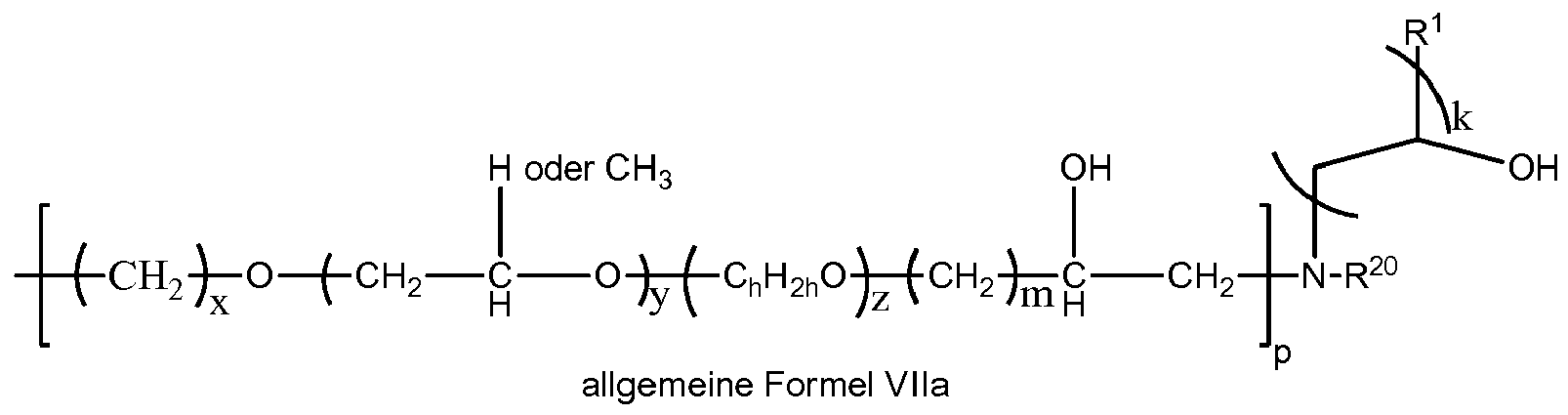
 mit p = 1-2,k = 0-1,m = 1-20, x = 1-20, y = 0-10, z = 0-50 und h = 1-10,R1 wie in Anspruch 3 definiert,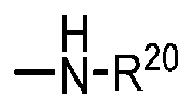


- Salz der allgemeinen Formel K+A- mit
K+ ein organisches Kation und
A- das Carboxylat einer α-Amino-Carbonsäure, dadurch gekennzeichnet, dass
K+ eine Verbindung enthaltend eine Ammonium-Gruppe darstellt, die mindestens einen organischen Rest mit 8 bis 30 Kohlenstoffatomen aufweist. - Salz gemäß Anspruch 11, dadurch gekennzeichnet, dass das organisches Kation K+ eine Verbindungen der allgemeinen Formel I
 mit X = Stickstoff undR1, R2, R3, R4 gleich oder unterschiedlich sind und einen linearen oder verzweigten aliphatischen Kohlenwasserstoffrest mit 1 bis 30 Kohlenstoffatomen bedeuten, mit der Maßgabe, dass mindestens einer der Reste R1, R2, R3, R4 4 bis 30 Kohlenstoffatome, aufweist,
 - Formulierung enthaltend mindestens ein Siloxan gemäß Anspruch 9 oder 10.
- Verwendung mindestens eines Siloxans gemäß Anspruch 9 oder 10 oder einer Formulierung gemäß Anspruch 13 zur Konditionierung einer Oberfläche, bevorzugt von Fasern oder Geweben, insbesondere von Haut, Haaren oder Textilien.
Applications Claiming Priority (1)
| Application Number | Priority Date | Filing Date | Title |
|---|---|---|---|
| DE102013214081.9A DE102013214081A1 (de) | 2013-07-18 | 2013-07-18 | Neue aminosäuremodifizierte Siloxane, Verfahren zu ihrer Herstellung und Anwendung |
Publications (1)
| Publication Number | Publication Date |
|---|---|
| EP2826806A1 true EP2826806A1 (de) | 2015-01-21 |
Family
ID=50942605
Family Applications (1)
| Application Number | Title | Priority Date | Filing Date |
|---|---|---|---|
| EP14172890.7A Withdrawn EP2826806A1 (de) | 2013-07-18 | 2014-06-18 | Neue aminosäuremodifizierte Siloxane, Verfahren zu ihrer Herstellung und Anwendung |
Country Status (4)
| Country | Link |
|---|---|
| US (1) | US9481695B2 (de) |
| EP (1) | EP2826806A1 (de) |
| CN (1) | CN104292467A (de) |
| DE (1) | DE102013214081A1 (de) |
Cited By (5)
| Publication number | Priority date | Publication date | Assignee | Title |
|---|---|---|---|---|
| WO2016193188A1 (de) | 2015-06-02 | 2016-12-08 | Wacker Chemie Ag | Verfahren zur herstellung von aminosäure-gruppierungen aufweisenden organosiliciumverbindungen |
| DE102015210171A1 (de) | 2015-06-02 | 2016-12-08 | Wacker Chemie Ag | Aminosäure-Gruppierungen aufweisende Organosiliciumverbindungen und Verfahren zu ihrer Herstellung |
| WO2018141405A1 (de) * | 2017-02-03 | 2018-08-09 | Wacker Chemie Ag | Aminosäure-funktionelle siloxane enthaltende emulsionen |
| WO2018210406A1 (de) * | 2017-05-16 | 2018-11-22 | Wacker Chemie Ag | Freisetzung von wirkstoffen unter verwendung siliconhaltiger polymere |
| US11498996B2 (en) | 2019-05-28 | 2022-11-15 | Evonik Operations Gmbh | Process for producing polyoxyalkylene polysiloxane block polymers |
Families Citing this family (48)
| Publication number | Priority date | Publication date | Assignee | Title |
|---|---|---|---|---|
| DE102013208328A1 (de) | 2013-05-07 | 2014-11-13 | Evonik Industries Ag | Polyoxyalkylene mit seitenständigen langkettigen Acyloxyresten und Verfahren zu ihrer Herstellung mittels DMC-Katalysatoren |
| DE102013216777A1 (de) | 2013-08-23 | 2015-02-26 | Evonik Industries Ag | Bei Raumtemperatur härtbare Silikonharz-Zusammensetzungen |
| DE102013216781A1 (de) | 2013-08-23 | 2015-02-26 | Evonik Industries Ag | Beschichtungsmassen |
| DE102013223444B4 (de) | 2013-11-18 | 2015-06-03 | Evonik Industries Ag | Verwendung von Guanidinumsetzungsprodukten bei der Herstellung von Polyurethansystemen |
| DE102014213507A1 (de) | 2014-07-11 | 2016-01-14 | Evonik Degussa Gmbh | Platin enthaltende Zusammensetzung |
| DE102014215388A1 (de) | 2014-08-05 | 2016-02-11 | Evonik Degussa Gmbh | Stickstoffhaltige Verbindungen, geeignet zur Verwendung bei der Herstellung von Polyurethanen |
| DE102014215384A1 (de) | 2014-08-05 | 2016-02-11 | Evonik Degussa Gmbh | Stickstoffhaltige Verbindungen, geeignet zur Verwendung bei der Herstellung von Polyurethanen |
| DE102014215382A1 (de) | 2014-08-05 | 2016-02-11 | Evonik Degussa Gmbh | Stickstoffhaltige Verbindungen, geeignet zur Verwendung bei der Herstellung von Polyurethanen |
| EP3020749B1 (de) | 2014-11-12 | 2020-09-30 | Evonik Operations GmbH | Verfahren zur herstellung von platin enthaltenden zusammensetzungen |
| ES2676430T3 (es) | 2015-11-11 | 2018-07-19 | Evonik Degussa Gmbh | Polímeros curables |
| EP3168251B1 (de) | 2015-11-16 | 2019-02-06 | Evonik Degussa GmbH | Vernetzte polyglycerinester |
| EP3272331B1 (de) | 2016-07-22 | 2018-07-04 | Evonik Degussa GmbH | Verfahren zur herstellung von siloxanen enthaltend glycerinsubstituenten |
| CN106336978A (zh) * | 2016-08-08 | 2017-01-18 | 南雄鼎成新材料科技有限公司 | 柔软亲水抗静电多功能洗涤剂 |
| PL3321304T3 (pl) | 2016-11-15 | 2019-11-29 | Evonik Degussa Gmbh | Mieszaniny cyklicznych, rozgałęzionych siloksanów typu D/T i ich dalszych produktów |
| EP3415548B1 (de) | 2017-06-13 | 2020-03-25 | Evonik Operations GmbH | Verfahren zur herstellung sic-verknüpfter polyethersiloxane |
| EP3415547B1 (de) | 2017-06-13 | 2020-03-25 | Evonik Operations GmbH | Verfahren zur herstellung sic-verknüpfter polyethersiloxane |
| EP3438158B1 (de) | 2017-08-01 | 2020-11-25 | Evonik Operations GmbH | Herstellung von sioc-verknüpften polyethersiloxanen |
| PL422483A1 (pl) * | 2017-08-09 | 2019-02-11 | Zachodniopomorski Uniwersytet Technologiczny W Szczecinie | Kationowe związki powierzchniowo czynne w postaci soli amoniowych aminokwasów i sposób wytwarzania kationowych związków powierzchniowo czynnych w postaci soli amoniowych aminokwasów |
| EP3461864B1 (de) | 2017-09-28 | 2025-10-29 | Evonik Operations GmbH | Härtbare zusammensetzung auf basis von polysiloxanen |
| EP3467006B1 (de) | 2017-10-09 | 2022-11-30 | Evonik Operations GmbH | Mischungen zyklischer-verzweigter siloxane vom d/t-typ und deren folgeprodukte |
| EP3470475B1 (de) | 2017-10-13 | 2021-01-27 | Evonik Operations GmbH | Härtbare zusammensetzung für beschichtungen mit anti-adhäsiver eigenschaft |
| EP3492513B1 (de) | 2017-11-29 | 2021-11-03 | Evonik Operations GmbH | Verfahren zur herstellung von im siloxanteil verzweigten sioc-verknüpften polyethersiloxanen |
| EP3524651B1 (de) | 2018-02-08 | 2025-11-26 | Evonik Operations GmbH | Wässrige polyorganosiloxanhybridharz-dispersion |
| KR102681424B1 (ko) | 2018-04-03 | 2024-07-08 | 에보니크 오퍼레이션즈 게엠베하 | 텍스타일을 처리하고 세정 및 관리 제제에 사용하기 위한 실록산 |
| EP3611214A1 (de) | 2018-08-15 | 2020-02-19 | Evonik Operations GmbH | Sioc-verknüpfte, lineare polydimethylsiloxan-polyoxyalkylen-blockcopolymere |
| EP3611215A1 (de) | 2018-08-15 | 2020-02-19 | Evonik Operations GmbH | Verfahren zur herstellung acetoxygruppen-tragender siloxane |
| ES2970332T3 (es) | 2018-12-04 | 2024-05-28 | Evonik Operations Gmbh | Siloxanos reactivos |
| EP3719076A1 (de) | 2019-04-01 | 2020-10-07 | Evonik Operations GmbH | Wässrige polyorganosiloxanhybridharz-dispersion |
| EP3744759B1 (de) | 2019-05-28 | 2024-07-17 | Evonik Operations GmbH | Verfahren zur herstellung von im siloxanteil verzweigten sioc-verknüpften polyethersiloxanen |
| EP3744764A1 (de) | 2019-05-28 | 2020-12-02 | Evonik Operations GmbH | Herstellung von sioc-verknüpften polyethersiloxanen |
| EP3744760A1 (de) | 2019-05-28 | 2020-12-02 | Evonik Operations GmbH | Verfahren zur herstellung von im siloxanteil verzweigten sioc-verknüpften polyethersiloxanen |
| EP3744755B1 (de) | 2019-05-28 | 2024-10-09 | Evonik Operations GmbH | Verfahren zur herstellung acetoxygruppen-tragender siloxane |
| EP3744774B1 (de) | 2019-05-28 | 2021-09-01 | Evonik Operations GmbH | Verfahren zum recycling von silikonen |
| DK3744763T3 (da) | 2019-05-28 | 2024-11-04 | Evonik Operations Gmbh | Skræddersyede sioc baserede polyethersiloxaner |
| PL3744752T3 (pl) | 2019-05-28 | 2025-02-10 | Evonik Operations Gmbh | Sposób wytwarzania niecyklicznych polisiloksanów funkcjonalizowanych alkoksylem |
| PL3744756T3 (pl) | 2019-05-28 | 2024-10-28 | Evonik Operations Gmbh | Układy acetoksylowe |
| ES2913783T3 (es) | 2019-05-28 | 2022-06-06 | Evonik Operations Gmbh | Procedimiento para la purificación de acetoxisiloxanos |
| EP3744754B1 (de) | 2019-05-28 | 2024-10-02 | Evonik Operations GmbH | Verfahren zur herstellung acetoxygruppen-tragender siloxane |
| EP3885096B1 (de) | 2020-03-27 | 2024-02-14 | Evonik Operations GmbH | Stoffliche wiederverwertung silikonisierter flächengebilde |
| US11897834B2 (en) | 2020-07-09 | 2024-02-13 | Advansix Resins & Chemicals Llc | Branched amino acid surfactants |
| EP4179056A2 (de) | 2020-07-13 | 2023-05-17 | AdvanSix Resins & Chemicals LLC | Verzweigte aminosäuretenside für elektronikprodukte |
| CN116113398A (zh) | 2020-07-13 | 2023-05-12 | 艾德凡斯化学公司 | 用于保健品的支链氨基酸表面活性剂 |
| EP4179051A1 (de) | 2020-07-13 | 2023-05-17 | AdvanSix Resins & Chemicals LLC | Verzweigte aminosäuretenside für reinigungsmittel |
| MY209507A (en) | 2020-07-13 | 2025-07-14 | Advansix Resins & Chemicals Llc | Branched amino acid surfactants for oil and gas production |
| MX2023000606A (es) | 2020-07-13 | 2023-02-13 | Advansix Resins & Chemicals Llc | Tensioactivos derivados de aminoacidos ramificados para productos de cuidado personal y cosmeticos. |
| CA3185045C (en) | 2020-07-13 | 2025-05-13 | Advansix Resins & Chemicals Llc | Branched amino acid surfactants for inks, paints and adhesives |
| EP4011992A1 (de) | 2020-12-09 | 2022-06-15 | Evonik Operations GmbH | Härtbare kondensationsverbindungen auf basis von alkoxyfunktionellen polysiloxanen |
| CN112745508B (zh) * | 2020-12-29 | 2022-11-18 | 中国科学院理化技术研究所 | 一种亲水、抗菌和抗蛋白粘附的硅橡胶及其制备方法 |
Citations (8)
| Publication number | Priority date | Publication date | Assignee | Title |
|---|---|---|---|---|
| US5412074A (en) | 1991-11-01 | 1995-05-02 | Croda International Plc. | Silcone modified proteins |
| US5516869A (en) | 1992-08-21 | 1996-05-14 | General Electric Company | Amino acid functionalized silicones and method for preparation |
| US5606077A (en) | 1995-02-21 | 1997-02-25 | Th. Goldschmidt Ag | Method for the synthesis of organopolysiloxanes containing carbonate groups |
| EP1149855A1 (de) | 2000-04-25 | 2001-10-31 | Dow Corning Toray Silicone Co., Ltd. | Verfahren zur Herstellung mit basischen Aminosäuren-modifizierter Organopolysiloxane |
| JP2004182680A (ja) | 2002-12-05 | 2004-07-02 | Nippon Unicar Co Ltd | アミノ酸誘導体変性シリコーンを含有する油性化粧料 |
| EP1477512A1 (de) | 2003-05-15 | 2004-11-17 | Chisso Corporation | Silikon-modifiziertes antimikrobielles Polymer, antimikrobielles Mittel und antimikrobielle Harzzusammensetzung |
| DE10327871A1 (de) | 2003-06-18 | 2005-01-05 | Goldschmidt Ag | Verwendung von Alkylguanidin-Verbindungen zur Behandlung und Nachbehandlung von Haaren |
| WO2009084711A1 (en) | 2007-12-27 | 2009-07-09 | Dow Corning Toray Co., Ltd. | Method of producing amino acid-modified organopolysiloxane emulsions |
Family Cites Families (64)
| Publication number | Priority date | Publication date | Assignee | Title |
|---|---|---|---|---|
| JPS52114699A (en) * | 1976-03-22 | 1977-09-26 | Toshiba Silicone Co Ltd | Preparation of silicones modified with amino acids |
| US4895964A (en) * | 1988-07-01 | 1990-01-23 | Union Carbide Chemicals And Plastics Company Inc. | Quarternary ammonium pendant siloxane copolymers |
| DE4239246C1 (de) | 1992-11-21 | 1993-12-16 | Goldschmidt Ag Th | Verfahren zur Herstellung von SiH-Gruppen aufweisenden Organopolysiloxanen |
| DE4313130C1 (de) | 1993-04-22 | 1994-05-26 | Goldschmidt Ag Th | Verfahren zur Herstellung von Silanen bzw. Organosiliciumhydriden durch Reduktion der entsprechenden Siliciumhalogenide bzw. Organosiliciumhalogenide |
| DE4320920C1 (de) | 1993-06-24 | 1994-06-16 | Goldschmidt Ag Th | Silane mit hydrophilen Gruppen, deren Herstellung und Verwendung als Tenside in wäßrigen Medien |
| DE4330059C1 (de) | 1993-09-06 | 1994-10-20 | Goldschmidt Ag Th | Silane mit hydrophilen Gruppen, deren Herstellung und Verwendung als Tenside in wäßrigen Medien |
| DE4415556C1 (de) | 1994-04-27 | 1995-06-01 | Goldschmidt Ag Th | Organosilyl- bzw. Organosiloxanyl-Derivate von Glycerinethern und deren Verwendung |
| DE10232115A1 (de) | 2002-07-16 | 2004-02-05 | Goldschmidt Ag | Organopolysiloxane zur Entschäumung wässriger Systeme |
| DE10232908A1 (de) | 2002-07-19 | 2004-01-29 | Goldschmidt Ag | Verwendung organfunktionell modifizierter, Phenylderivate enthaltender Polysiloxane als Dispergier- und Netzmittel für Füllstoffe und Pigmente in wässrigen Pigmentpasten und Farb- oder Lackformulierungen |
| ATE258179T1 (de) | 2002-09-26 | 2004-02-15 | Goldschmidt Ag Th | Neue siloxanverbindungen und deren verwendung als homogenisierungsmittel in trennmitteln mit mattierungseffekt zur herstellung von formkörpern aus kunststoffen mit mattierten oberflächen |
| ATE321087T1 (de) | 2002-12-21 | 2006-04-15 | Goldschmidt Gmbh | Verfahren zur aufbereitung von polyethersiloxanen |
| DE10301355A1 (de) | 2003-01-16 | 2004-07-29 | Goldschmidt Ag | Äquilibrierung von Siloxanen |
| EP1520870B1 (de) | 2003-10-04 | 2006-01-25 | Goldschmidt GmbH | Verfahren zur Herstellung von organischen Siliciumverbindungen |
| DE102005001039B4 (de) | 2005-01-07 | 2017-11-09 | Evonik Degussa Gmbh | Verfahren zur Herstellung von Äquilibrierungsprodukten von Organosiloxanen und die so erhältlichen Organopolysiloxane |
| DE102005004704A1 (de) * | 2005-02-02 | 2006-08-10 | Goldschmidt Gmbh | Guanidinogruppen-haltige Siloxane und deren Verwendung für kosmetische Formulierungen |
| DE102005039931A1 (de) | 2005-08-24 | 2007-03-01 | Goldschmidt Gmbh | Verfahren zur Herstellung von SiOC-verknüpften, linearen Polydimethylsiloxan-Polyoxyalkylen-Blockcopolymeren |
| DE102005057857A1 (de) | 2005-12-03 | 2010-02-25 | Evonik Goldschmidt Gmbh | Polyethermodifizierte Polysiloxane mit Blockcharakter und deren Verwendung zur Herstellung von kosmetischen Formulierungen |
| DE102006005100A1 (de) | 2006-02-04 | 2007-08-09 | Goldschmidt Gmbh | Verfahren zur Herstellung organomodifizierter Siloxane |
| WO2007099042A1 (en) * | 2006-02-28 | 2007-09-07 | Ciba Holding Inc. | Antimicrobial compounds |
| DE102006060115A1 (de) | 2006-12-20 | 2008-06-26 | Evonik Goldschmidt Gmbh | Cyclische Siloxane und deren Verwendung |
| DE102006061350A1 (de) | 2006-12-22 | 2008-06-26 | Evonik Goldschmidt Gmbh | Verfahren zur Herstellung von SiOC-verknüpften, linearen Polydimethylsiloxan-Polyoxyalkylen-Blockcopolymeren und ihre Verwendung |
| DE102006061351A1 (de) | 2006-12-22 | 2008-06-26 | Evonik Goldschmidt Gmbh | Verfahren zur Herstellung von SiOC-verknüpften, linearen Polydimethylsiloxan-Polyoxyalkylen-Blockcopolymeren und ihre Verwendung |
| DE102006061353A1 (de) | 2006-12-22 | 2008-06-26 | Evonik Goldschmidt Gmbh | Verfahren zur Umsetzung von Polyorganosiloxanen und deren Verwendung |
| DE102007035646A1 (de) | 2007-07-27 | 2009-01-29 | Evonik Goldschmidt Gmbh | Über SIC- und über Carbonsäureestergruppen verknüpfte lineare Polydimethylsiloxan-Polyoxyalkylen-Blockcopolymere, ein Verfahren zur ihrer Herstellung und ihre Verwendung |
| DE102007041028A1 (de) | 2007-08-29 | 2009-03-05 | Evonik Goldschmidt Gmbh | Verwendung estermodifizierter Organopolysiloxane zur Herstellung kosmetischer oder pharmazeutischer Kompositionen |
| DE102007055484A1 (de) | 2007-11-21 | 2009-05-28 | Evonik Goldschmidt Gmbh | Verfahren zur Herstellung von Polydimethylsiloxanen an sulfonsauren Kationenaustauscherharzen |
| DE102007055485A1 (de) | 2007-11-21 | 2009-06-04 | Evonik Goldschmidt Gmbh | Verfahren zur Herstellung verzweigter SiH-funktioneller Polysiloxane und deren Verwendung zur Herstellung SiC- und SiOC-verknüpfter, verzweigter organomodifizierter Polysiloxane |
| DE102008000903A1 (de) | 2008-04-01 | 2009-10-08 | Evonik Goldschmidt Gmbh | Neue Organosiloxangruppen tragende Polyetheralkohole durch Alkoxylierung epoxidfunktioneller (Poly)Organosiloxane an Doppelmetallcyanid (DMC)-Katalysatoren, sowie Verfahren zu deren Herstellung |
| DE102008001788A1 (de) | 2008-05-15 | 2009-11-26 | Evonik Goldschmidt Gmbh | Verwendung organomodifizierter Siloxanblockcopolymere zur Herstellung kosmetischer oder pharmazeutischer Zusammensetzungen |
| DE102008002713A1 (de) | 2008-06-27 | 2009-12-31 | Evonik Goldschmidt Gmbh | Neue Polyethersiloxane enthaltende Alkoxylierungsprodukte durch direkte Alkoxylierung organomodifizierter alpha, omega-Dihydroxysiloxane an Doppelmetallcyanid (DMC)-Katalysatoren, sowie Verfahren zu deren Herstellung |
| DE102008041601A1 (de) | 2008-08-27 | 2010-03-04 | Evonik Goldschmidt Gmbh | Verfahren zur Herstellung verzweigter SiH-funtioneller Polysiloxane und deren Verwendung zur Herstellung flüssiger, SiC- oder SiOC-verknüpfter, verzweigter organomodifizierter Polysiloxane |
| DE102008042181B4 (de) | 2008-09-18 | 2020-07-23 | Evonik Operations Gmbh | Äquilibrierung von Siloxanen an wasserhaltigen sulfonsauren Kationenaustauscherharzen |
| DE102008042381A1 (de) | 2008-09-26 | 2010-04-01 | Evonik Goldschmidt Gmbh | Emulgator-Systeme für kosmetische und pharmazeutische Öl-in-Wasser-Emulsionen |
| AU2009304193B2 (en) | 2008-10-17 | 2014-08-28 | Evonik Operations Gmbh | Agrochemical oil compositions comprising alkylpolysiloxane adjuvants of high silicone character |
| DE102008043245A1 (de) | 2008-10-29 | 2010-05-06 | Evonik Goldschmidt Gmbh | Siliconpolyether-Copolymersysteme sowie Verfahren zu deren Herstellung durch Alkoxylierungsreaktion |
| DE102008043343A1 (de) | 2008-10-31 | 2010-05-06 | Evonik Goldschmidt Gmbh | Silikonpolyetherblock-Copolymere mit definierter Polydispersität im Polyoxyalkylenteil und deren Verwendung als Stabilisatoren zur Herstellung von Polyurethanschäumen |
| DE102009022628A1 (de) | 2008-12-05 | 2010-06-10 | Evonik Goldschmidt Gmbh | Verfahren zur Modifizierung von Oberflächen |
| EP2352779B1 (de) | 2008-12-05 | 2017-10-18 | Evonik Degussa GmbH | Alkoxysilylgruppen tragende polyethersiloxane sowie verfahren zu deren herstellung |
| DE102009002415A1 (de) | 2009-04-16 | 2010-10-21 | Evonik Goldschmidt Gmbh | Emulgator enthaltend glycerinmodifizierte Organopolysiloxane |
| DE102009003274A1 (de) | 2009-05-20 | 2010-11-25 | Evonik Goldschmidt Gmbh | Zusammensetzungen enthaltend Polyether-Polysiloxan-Copolymere |
| DE102009034607A1 (de) | 2009-07-24 | 2011-01-27 | Evonik Goldschmidt Gmbh | Neuartige Siliconpolyethercopolymere und Verfahren zu deren Herstellung |
| DE102010000993A1 (de) | 2010-01-19 | 2011-07-21 | Evonik Goldschmidt GmbH, 45127 | Neuartige Polysiloxane mit quatären Ammoniumgruppen, Verfahren zu deren Herstellung und deren Verwendung in reinigenden und pflegenden Formulierungen |
| DE102010001350A1 (de) | 2010-01-29 | 2011-08-04 | Evonik Goldschmidt GmbH, 45127 | Neuartige lineare Polydimethylsiloxan-Polyether-Copolymere mit Amino- und/oder quaternären Ammoniumgruppen und deren Verwendung |
| DE102010001531A1 (de) | 2010-02-03 | 2011-08-04 | Evonik Goldschmidt GmbH, 45127 | Neuartige organomodifizierte Siloxane mit primären Aminofunktionen, neuartige organomodifizierte Siloxane mit quaternären Ammoniumfunktionen und das Verfahren zu deren Herstellung |
| DE102010001528A1 (de) | 2010-02-03 | 2011-08-04 | Evonik Goldschmidt GmbH, 45127 | Neue Partikel und Kompositpartikel, deren Verwendungen und ein neues Verfahren zu deren Herstellung aus Alkoxysilylgruppen tragenden Alkoxylierungsprodukten |
| DE102010002178A1 (de) | 2010-02-22 | 2011-08-25 | Evonik Goldschmidt GmbH, 45127 | Verfahren zur Herstellung von Amin-Amid-funktionellen Siloxanen |
| DE102010002180A1 (de) | 2010-02-22 | 2011-08-25 | Evonik Goldschmidt GmbH, 45127 | Stickstoffhaltige silizium-organische Pfropfmischpolymere |
| DE102010029723A1 (de) | 2010-06-07 | 2011-12-08 | Evonik Goldschmidt Gmbh | Verfahren zur Herstellung von organischen Siliciumverbindungen |
| DE102010031087A1 (de) | 2010-07-08 | 2012-01-12 | Evonik Goldschmidt Gmbh | Neuartige polyestermodifizierte Organopolysiloxane |
| EP2609140B1 (de) * | 2010-08-23 | 2014-06-11 | Dow Corning Corporation | Emulsionen mit saccharidsiloxan-copolymer-emulgatoren sowie verfahren zu ihrer herstellung und verwendung |
| DE102010062156A1 (de) | 2010-10-25 | 2012-04-26 | Evonik Goldschmidt Gmbh | Polysiloxane mit stickstoffhaltigen Gruppen |
| DE102010062676A1 (de) | 2010-12-09 | 2012-06-14 | Evonik Goldschmidt Gmbh | Zubereitungen enthaltend Polysiloxane mit stickstoffhaltigen Gruppen |
| DE102011003150A1 (de) | 2011-01-26 | 2012-07-26 | Evonik Goldschmidt Gmbh | Silikonpolyetherblock-Copolymere mit hochmolekularen Polyetherresten und deren Verwendung als Stabilisatoren zur Herstellung von Polyurethanschäumen |
| DE102011003148A1 (de) | 2011-01-26 | 2012-07-26 | Evonik Goldschmidt Gmbh | Verwendung von Silikonpolyetherblock-Copolymere mit hochmolekularen nicht endverkappten Polyetherresten als Stabilisatoren zur Herstellung von Polyuretherschäumen niedriger Dichte |
| DE102011110921A1 (de) | 2011-02-23 | 2012-08-23 | Evonik Goldschmidt Gmbh | Neuartige Polysiloxane mit Betaingruppen, deren Herstellung und Verwendung |
| DE102011078382A1 (de) | 2011-06-30 | 2013-01-03 | Evonik Goldschmidt Gmbh | Mikroemulsion von quaternären Ammoniumgruppen enthaltenden Polysiloxanen, derenHerstellung und Verwendung |
| DE102011109540A1 (de) | 2011-08-03 | 2013-02-07 | Evonik Goldschmidt Gmbh | Alkylcarbonat endverschlossene Polyethersilioxane und Verfahren zu deren Herstellung |
| DE102011110100A1 (de) | 2011-08-12 | 2013-02-14 | Evonik Goldschmidt Gmbh | Verfahren zu Herstellungen von Polysiloxanen mit stickstoffhaltigen Gruppen |
| DE102011088787A1 (de) | 2011-12-16 | 2013-06-20 | Evonik Industries Ag | Siloxannitrone und deren Anwendung |
| DE102011089535A1 (de) | 2011-12-22 | 2013-06-27 | Evonik Industries Ag | Entschäumerzusammensetzungen für Baustoffmischungen |
| DE102012202521A1 (de) | 2012-02-20 | 2013-08-22 | Evonik Goldschmidt Gmbh | Verzweigte Polysiloxane und deren Verwendung |
| DE102012202527A1 (de) | 2012-02-20 | 2013-08-22 | Evonik Goldschmidt Gmbh | Zusammensetzungen enthaltend Polymere und Metallatome oder -ionen und deren Verwendung |
| DE102012202523A1 (de) | 2012-02-20 | 2013-08-22 | Evonik Industries Ag | Verwendung von selbstvernetzten Siloxanen zum Entschäumen von flüssigen Kohlenwasserstoffen |
| DE102012210553A1 (de) | 2012-06-22 | 2013-12-24 | Evonik Industries Ag | Siliconpolyether und Verfahren zu deren Herstellung aus Methylidengruppen tragenden Polyethern |
-
2013
- 2013-07-18 DE DE102013214081.9A patent/DE102013214081A1/de not_active Withdrawn
-
2014
- 2014-06-18 EP EP14172890.7A patent/EP2826806A1/de not_active Withdrawn
- 2014-07-15 US US14/331,831 patent/US9481695B2/en not_active Expired - Fee Related
- 2014-07-17 CN CN201410341201.8A patent/CN104292467A/zh active Pending
Patent Citations (8)
| Publication number | Priority date | Publication date | Assignee | Title |
|---|---|---|---|---|
| US5412074A (en) | 1991-11-01 | 1995-05-02 | Croda International Plc. | Silcone modified proteins |
| US5516869A (en) | 1992-08-21 | 1996-05-14 | General Electric Company | Amino acid functionalized silicones and method for preparation |
| US5606077A (en) | 1995-02-21 | 1997-02-25 | Th. Goldschmidt Ag | Method for the synthesis of organopolysiloxanes containing carbonate groups |
| EP1149855A1 (de) | 2000-04-25 | 2001-10-31 | Dow Corning Toray Silicone Co., Ltd. | Verfahren zur Herstellung mit basischen Aminosäuren-modifizierter Organopolysiloxane |
| JP2004182680A (ja) | 2002-12-05 | 2004-07-02 | Nippon Unicar Co Ltd | アミノ酸誘導体変性シリコーンを含有する油性化粧料 |
| EP1477512A1 (de) | 2003-05-15 | 2004-11-17 | Chisso Corporation | Silikon-modifiziertes antimikrobielles Polymer, antimikrobielles Mittel und antimikrobielle Harzzusammensetzung |
| DE10327871A1 (de) | 2003-06-18 | 2005-01-05 | Goldschmidt Ag | Verwendung von Alkylguanidin-Verbindungen zur Behandlung und Nachbehandlung von Haaren |
| WO2009084711A1 (en) | 2007-12-27 | 2009-07-09 | Dow Corning Toray Co., Ltd. | Method of producing amino acid-modified organopolysiloxane emulsions |
Non-Patent Citations (3)
| Title |
|---|
| RAMESH L. GARDAS ET AL: "Thermophysical Properties of Amino Acid-Based Ionic Liquids", JOURNAL OF CHEMICAL & ENGINEERING DATA, vol. 55, no. 4, 8 April 2010 (2010-04-08), pages 1505 - 1515, XP055136638, ISSN: 0021-9568, DOI: 10.1021/je900660x * |
| RODEHÜSER L ET AL: "Derivatives of glutamic acid as new surfactants", AMINO ACIDS, SPRINGER VERLAG, AU, vol. 18, no. 1, 1 January 2000 (2000-01-01), pages 89 - 100, XP002334167, ISSN: 0939-4451, DOI: 10.1007/S007260050008 * |
| YONGSHENG WANG ET AL: "The self-organization properties of n-dodecylammonium [alpha]-glutamate/n-C5H11OH/water system", COLLOID AND POLYMER SCIENCE ; KOLLOID-ZEITSCHRIFT UND ZEITSCHRIFT FÜR POLYMERE, SPRINGER, BERLIN, DE, vol. 285, no. 13, 13 July 2007 (2007-07-13), pages 1423 - 1431, XP019541445, ISSN: 1435-1536, DOI: 10.1007/S00396-007-1698-5 * |
Cited By (7)
| Publication number | Priority date | Publication date | Assignee | Title |
|---|---|---|---|---|
| WO2016193188A1 (de) | 2015-06-02 | 2016-12-08 | Wacker Chemie Ag | Verfahren zur herstellung von aminosäure-gruppierungen aufweisenden organosiliciumverbindungen |
| DE102015210171A1 (de) | 2015-06-02 | 2016-12-08 | Wacker Chemie Ag | Aminosäure-Gruppierungen aufweisende Organosiliciumverbindungen und Verfahren zu ihrer Herstellung |
| DE102015210173A1 (de) | 2015-06-02 | 2016-12-08 | Wacker Chemie Ag | Verfahren zur Herstellung von Aminosäure-Gruppierungen aufweisenden Organosiliciumverbindungen |
| US10351676B2 (en) | 2015-06-02 | 2019-07-16 | Wacker Chemie Ag | Method for producing organosilicon compounds having amino acid groups |
| WO2018141405A1 (de) * | 2017-02-03 | 2018-08-09 | Wacker Chemie Ag | Aminosäure-funktionelle siloxane enthaltende emulsionen |
| WO2018210406A1 (de) * | 2017-05-16 | 2018-11-22 | Wacker Chemie Ag | Freisetzung von wirkstoffen unter verwendung siliconhaltiger polymere |
| US11498996B2 (en) | 2019-05-28 | 2022-11-15 | Evonik Operations Gmbh | Process for producing polyoxyalkylene polysiloxane block polymers |
Also Published As
| Publication number | Publication date |
|---|---|
| US20150023900A1 (en) | 2015-01-22 |
| CN104292467A (zh) | 2015-01-21 |
| DE102013214081A1 (de) | 2015-01-22 |
| US9481695B2 (en) | 2016-11-01 |
Similar Documents
| Publication | Publication Date | Title |
|---|---|---|
| DE102013214081A1 (de) | Neue aminosäuremodifizierte Siloxane, Verfahren zu ihrer Herstellung und Anwendung | |
| EP3678634B1 (de) | Zusammensetzung enthaltend quaternäre ammoniumverbindung, insbesondere zur herstellung von pflege- und reinigungsformulierungen | |
| EP2744849A1 (de) | Neue aminogruppenhaltige siloxane, verfahren zu deren herstellung und anwendung | |
| EP0017121B1 (de) | Neue quartäre Polysiloxanderivate, deren Verwendung in Haarkosmetika, sowie diese enthaltende Haarwasch- und Haarbehandlungsmittel | |
| EP2678376B1 (de) | Neuartige polysiloxane mit betaingruppen, deren herstellung und verwendung | |
| EP3261611B1 (de) | Zusammensetzung enthaltend rhamnolipid und siloxan | |
| EP2821430A1 (de) | Siloxan-Polymere mit zentralem Polysiloxan-Polymerblock mit organofunktionellen Resten mit jeweils mindestens zwei bivalenten Gruppen ausgewählt aus Harnstoff- und/oder Carbamat-Gruppen und mindestens einem UV/Vis-Chromophor als Rest | |
| DE69024183T2 (de) | Quaternäre alkoxylierte Alkylglykosid-Ether und ihre Verwendung als Körperpflege | |
| EP3122328B1 (de) | Silan enthaltend jeweils mindestens zwei alkoxygruppen sowie eine guanidino- oder harnstoffgruppe | |
| EP1917290B1 (de) | Polyammonium-polysiloxancopolymere | |
| DE102010062676A1 (de) | Zubereitungen enthaltend Polysiloxane mit stickstoffhaltigen Gruppen | |
| EP1309649A1 (de) | Polyammonium-polysiloxan-verbindungen, verfahren zu ihrer herstellung und ihre verwendung | |
| EP1844106B1 (de) | Guanidinogruppen- haltige siloxane und deren verwendung für kosmetische formulierungen | |
| DE102010029606B4 (de) | Quartäre Dialkanolaminester | |
| EP2637637B1 (de) | Zusammensetzung enthaltend mischungen von isostearinsäureamid, glycerinester und wasser | |
| DE102010029610B4 (de) | Quartäre Dialkanolaminester | |
| EP2496552B1 (de) | Bifunktionelle tenside auf aminbasis und ihre vorläufer, zubereitung, zusammensetzungen und verwendung | |
| JP2004537626A (ja) | 四級化ポリアミドアミン類、その製法、対応する組成物、およびその使用 | |
| CN119604270A (zh) | 包含抗微生物促进剂的组合物 | |
| JP2011513444A (ja) | 改良された性質を有するカチオン界面活性剤 | |
| KR102634260B1 (ko) | 알콕시실란 화합물 또는 그의 염, 이의 제조방법 및 이를 포함하는 모발용 조성물 | |
| WO1996023762A1 (de) | Kation- und/oder amphooligomere abgeleitet von mehrwertigen hydroxycarbonsäuren | |
| WO2000049868A1 (en) | Selenium antimicrobial compositions | |
| JPH01258690A (ja) | ホスホベタイン | |
| JPH057394B2 (de) |
Legal Events
| Date | Code | Title | Description |
|---|---|---|---|
| 17P | Request for examination filed |
Effective date: 20140618 |
|
| AK | Designated contracting states |
Kind code of ref document: A1 Designated state(s): AL AT BE BG CH CY CZ DE DK EE ES FI FR GB GR HR HU IE IS IT LI LT LU LV MC MK MT NL NO PL PT RO RS SE SI SK SM TR |
|
| AX | Request for extension of the european patent |
Extension state: BA ME |
|
| PUAI | Public reference made under article 153(3) epc to a published international application that has entered the european phase |
Free format text: ORIGINAL CODE: 0009012 |
|
| RAP1 | Party data changed (applicant data changed or rights of an application transferred) |
Owner name: EVONIK DEGUSSA GMBH |
|
| GRAP | Despatch of communication of intention to grant a patent |
Free format text: ORIGINAL CODE: EPIDOSNIGR1 |
|
| STAA | Information on the status of an ep patent application or granted ep patent |
Free format text: STATUS: GRANT OF PATENT IS INTENDED |
|
| INTG | Intention to grant announced |
Effective date: 20181213 |
|
| STAA | Information on the status of an ep patent application or granted ep patent |
Free format text: STATUS: THE APPLICATION IS DEEMED TO BE WITHDRAWN |
|
| 18D | Application deemed to be withdrawn |
Effective date: 20190424 |