EP2783679B1 - Drug carrier with chelating composite micelle and use thereof - Google Patents
Drug carrier with chelating composite micelle and use thereof Download PDFInfo
- Publication number
- EP2783679B1 EP2783679B1 EP12851387.6A EP12851387A EP2783679B1 EP 2783679 B1 EP2783679 B1 EP 2783679B1 EP 12851387 A EP12851387 A EP 12851387A EP 2783679 B1 EP2783679 B1 EP 2783679B1
- Authority
- EP
- European Patent Office
- Prior art keywords
- poly
- chelating
- amifostine
- drug
- peg
- Prior art date
- Legal status (The legal status is an assumption and is not a legal conclusion. Google has not performed a legal analysis and makes no representation as to the accuracy of the status listed.)
- Active
Links
Images



Classifications
-
- A—HUMAN NECESSITIES
- A61—MEDICAL OR VETERINARY SCIENCE; HYGIENE
- A61K—PREPARATIONS FOR MEDICAL, DENTAL OR TOILETRY PURPOSES
- A61K9/00—Medicinal preparations characterised by special physical form
- A61K9/10—Dispersions; Emulsions
- A61K9/127—Synthetic bilayered vehicles, e.g. liposomes or liposomes with cholesterol as the only non-phosphatidyl surfactant
-
- A—HUMAN NECESSITIES
- A61—MEDICAL OR VETERINARY SCIENCE; HYGIENE
- A61K—PREPARATIONS FOR MEDICAL, DENTAL OR TOILETRY PURPOSES
- A61K33/00—Medicinal preparations containing inorganic active ingredients
- A61K33/24—Heavy metals; Compounds thereof
-
- A—HUMAN NECESSITIES
- A61—MEDICAL OR VETERINARY SCIENCE; HYGIENE
- A61K—PREPARATIONS FOR MEDICAL, DENTAL OR TOILETRY PURPOSES
- A61K47/00—Medicinal preparations characterised by the non-active ingredients used, e.g. carriers or inert additives; Targeting or modifying agents chemically bound to the active ingredient
- A61K47/50—Medicinal preparations characterised by the non-active ingredients used, e.g. carriers or inert additives; Targeting or modifying agents chemically bound to the active ingredient the non-active ingredient being chemically bound to the active ingredient, e.g. polymer-drug conjugates
- A61K47/51—Medicinal preparations characterised by the non-active ingredients used, e.g. carriers or inert additives; Targeting or modifying agents chemically bound to the active ingredient the non-active ingredient being chemically bound to the active ingredient, e.g. polymer-drug conjugates the non-active ingredient being a modifying agent
- A61K47/54—Medicinal preparations characterised by the non-active ingredients used, e.g. carriers or inert additives; Targeting or modifying agents chemically bound to the active ingredient the non-active ingredient being chemically bound to the active ingredient, e.g. polymer-drug conjugates the non-active ingredient being a modifying agent the modifying agent being an organic compound
- A61K47/547—Chelates, e.g. Gd-DOTA or Zinc-amino acid chelates; Chelate-forming compounds, e.g. DOTA or ethylenediamine being covalently linked or complexed to the pharmacologically- or therapeutically-active agent
-
- A—HUMAN NECESSITIES
- A61—MEDICAL OR VETERINARY SCIENCE; HYGIENE
- A61K—PREPARATIONS FOR MEDICAL, DENTAL OR TOILETRY PURPOSES
- A61K47/00—Medicinal preparations characterised by the non-active ingredients used, e.g. carriers or inert additives; Targeting or modifying agents chemically bound to the active ingredient
- A61K47/50—Medicinal preparations characterised by the non-active ingredients used, e.g. carriers or inert additives; Targeting or modifying agents chemically bound to the active ingredient the non-active ingredient being chemically bound to the active ingredient, e.g. polymer-drug conjugates
- A61K47/51—Medicinal preparations characterised by the non-active ingredients used, e.g. carriers or inert additives; Targeting or modifying agents chemically bound to the active ingredient the non-active ingredient being chemically bound to the active ingredient, e.g. polymer-drug conjugates the non-active ingredient being a modifying agent
- A61K47/56—Medicinal preparations characterised by the non-active ingredients used, e.g. carriers or inert additives; Targeting or modifying agents chemically bound to the active ingredient the non-active ingredient being chemically bound to the active ingredient, e.g. polymer-drug conjugates the non-active ingredient being a modifying agent the modifying agent being an organic macromolecular compound, e.g. an oligomeric, polymeric or dendrimeric molecule
- A61K47/59—Medicinal preparations characterised by the non-active ingredients used, e.g. carriers or inert additives; Targeting or modifying agents chemically bound to the active ingredient the non-active ingredient being chemically bound to the active ingredient, e.g. polymer-drug conjugates the non-active ingredient being a modifying agent the modifying agent being an organic macromolecular compound, e.g. an oligomeric, polymeric or dendrimeric molecule obtained otherwise than by reactions only involving carbon-to-carbon unsaturated bonds, e.g. polyureas or polyurethanes
- A61K47/60—Medicinal preparations characterised by the non-active ingredients used, e.g. carriers or inert additives; Targeting or modifying agents chemically bound to the active ingredient the non-active ingredient being chemically bound to the active ingredient, e.g. polymer-drug conjugates the non-active ingredient being a modifying agent the modifying agent being an organic macromolecular compound, e.g. an oligomeric, polymeric or dendrimeric molecule obtained otherwise than by reactions only involving carbon-to-carbon unsaturated bonds, e.g. polyureas or polyurethanes the organic macromolecular compound being a polyoxyalkylene oligomer, polymer or dendrimer, e.g. PEG, PPG, PEO or polyglycerol
-
- A—HUMAN NECESSITIES
- A61—MEDICAL OR VETERINARY SCIENCE; HYGIENE
- A61K—PREPARATIONS FOR MEDICAL, DENTAL OR TOILETRY PURPOSES
- A61K47/00—Medicinal preparations characterised by the non-active ingredients used, e.g. carriers or inert additives; Targeting or modifying agents chemically bound to the active ingredient
- A61K47/50—Medicinal preparations characterised by the non-active ingredients used, e.g. carriers or inert additives; Targeting or modifying agents chemically bound to the active ingredient the non-active ingredient being chemically bound to the active ingredient, e.g. polymer-drug conjugates
- A61K47/51—Medicinal preparations characterised by the non-active ingredients used, e.g. carriers or inert additives; Targeting or modifying agents chemically bound to the active ingredient the non-active ingredient being chemically bound to the active ingredient, e.g. polymer-drug conjugates the non-active ingredient being a modifying agent
- A61K47/62—Medicinal preparations characterised by the non-active ingredients used, e.g. carriers or inert additives; Targeting or modifying agents chemically bound to the active ingredient the non-active ingredient being chemically bound to the active ingredient, e.g. polymer-drug conjugates the non-active ingredient being a modifying agent the modifying agent being a protein, peptide or polyamino acid
- A61K47/64—Drug-peptide, drug-protein or drug-polyamino acid conjugates, i.e. the modifying agent being a peptide, protein or polyamino acid which is covalently bonded or complexed to a therapeutically active agent
- A61K47/645—Polycationic or polyanionic oligopeptides, polypeptides or polyamino acids, e.g. polylysine, polyarginine, polyglutamic acid or peptide TAT
-
- A—HUMAN NECESSITIES
- A61—MEDICAL OR VETERINARY SCIENCE; HYGIENE
- A61K—PREPARATIONS FOR MEDICAL, DENTAL OR TOILETRY PURPOSES
- A61K47/00—Medicinal preparations characterised by the non-active ingredients used, e.g. carriers or inert additives; Targeting or modifying agents chemically bound to the active ingredient
- A61K47/50—Medicinal preparations characterised by the non-active ingredients used, e.g. carriers or inert additives; Targeting or modifying agents chemically bound to the active ingredient the non-active ingredient being chemically bound to the active ingredient, e.g. polymer-drug conjugates
- A61K47/69—Medicinal preparations characterised by the non-active ingredients used, e.g. carriers or inert additives; Targeting or modifying agents chemically bound to the active ingredient the non-active ingredient being chemically bound to the active ingredient, e.g. polymer-drug conjugates the conjugate being characterised by physical or galenical forms, e.g. emulsion, particle, inclusion complex, stent or kit
- A61K47/6905—Medicinal preparations characterised by the non-active ingredients used, e.g. carriers or inert additives; Targeting or modifying agents chemically bound to the active ingredient the non-active ingredient being chemically bound to the active ingredient, e.g. polymer-drug conjugates the conjugate being characterised by physical or galenical forms, e.g. emulsion, particle, inclusion complex, stent or kit the form being a colloid or an emulsion
- A61K47/6907—Medicinal preparations characterised by the non-active ingredients used, e.g. carriers or inert additives; Targeting or modifying agents chemically bound to the active ingredient the non-active ingredient being chemically bound to the active ingredient, e.g. polymer-drug conjugates the conjugate being characterised by physical or galenical forms, e.g. emulsion, particle, inclusion complex, stent or kit the form being a colloid or an emulsion the form being a microemulsion, nanoemulsion or micelle
-
- A—HUMAN NECESSITIES
- A61—MEDICAL OR VETERINARY SCIENCE; HYGIENE
- A61K—PREPARATIONS FOR MEDICAL, DENTAL OR TOILETRY PURPOSES
- A61K49/00—Preparations for testing in vivo
- A61K49/06—Nuclear magnetic resonance [NMR] contrast preparations; Magnetic resonance imaging [MRI] contrast preparations
- A61K49/18—Nuclear magnetic resonance [NMR] contrast preparations; Magnetic resonance imaging [MRI] contrast preparations characterised by a special physical form, e.g. emulsions, microcapsules, liposomes
- A61K49/1806—Suspensions, emulsions, colloids, dispersions
- A61K49/1809—Micelles, e.g. phospholipidic or polymeric micelles
-
- A—HUMAN NECESSITIES
- A61—MEDICAL OR VETERINARY SCIENCE; HYGIENE
- A61K—PREPARATIONS FOR MEDICAL, DENTAL OR TOILETRY PURPOSES
- A61K51/00—Preparations containing radioactive substances for use in therapy or testing in vivo
- A61K51/12—Preparations containing radioactive substances for use in therapy or testing in vivo characterised by a special physical form, e.g. emulsion, microcapsules, liposomes, characterized by a special physical form, e.g. emulsions, dispersions, microcapsules
- A61K51/1217—Dispersions, suspensions, colloids, emulsions, e.g. perfluorinated emulsion, sols
- A61K51/1227—Micelles, e.g. phospholipidic or polymeric micelles
-
- A—HUMAN NECESSITIES
- A61—MEDICAL OR VETERINARY SCIENCE; HYGIENE
- A61K—PREPARATIONS FOR MEDICAL, DENTAL OR TOILETRY PURPOSES
- A61K9/00—Medicinal preparations characterised by special physical form
- A61K9/10—Dispersions; Emulsions
- A61K9/107—Emulsions ; Emulsion preconcentrates; Micelles
-
- A—HUMAN NECESSITIES
- A61—MEDICAL OR VETERINARY SCIENCE; HYGIENE
- A61K—PREPARATIONS FOR MEDICAL, DENTAL OR TOILETRY PURPOSES
- A61K9/00—Medicinal preparations characterised by special physical form
- A61K9/10—Dispersions; Emulsions
- A61K9/107—Emulsions ; Emulsion preconcentrates; Micelles
- A61K9/1075—Microemulsions or submicron emulsions; Preconcentrates or solids thereof; Micelles, e.g. made of phospholipids or block copolymers
-
- A—HUMAN NECESSITIES
- A61—MEDICAL OR VETERINARY SCIENCE; HYGIENE
- A61K—PREPARATIONS FOR MEDICAL, DENTAL OR TOILETRY PURPOSES
- A61K9/00—Medicinal preparations characterised by special physical form
- A61K9/48—Preparations in capsules, e.g. of gelatin, of chocolate
- A61K9/50—Microcapsules having a gas, liquid or semi-solid filling; Solid microparticles or pellets surrounded by a distinct coating layer, e.g. coated microspheres, coated drug crystals
- A61K9/51—Nanocapsules; Nanoparticles
- A61K9/5107—Excipients; Inactive ingredients
- A61K9/5115—Inorganic compounds
-
- A—HUMAN NECESSITIES
- A61—MEDICAL OR VETERINARY SCIENCE; HYGIENE
- A61K—PREPARATIONS FOR MEDICAL, DENTAL OR TOILETRY PURPOSES
- A61K9/00—Medicinal preparations characterised by special physical form
- A61K9/48—Preparations in capsules, e.g. of gelatin, of chocolate
- A61K9/50—Microcapsules having a gas, liquid or semi-solid filling; Solid microparticles or pellets surrounded by a distinct coating layer, e.g. coated microspheres, coated drug crystals
- A61K9/51—Nanocapsules; Nanoparticles
- A61K9/5107—Excipients; Inactive ingredients
- A61K9/513—Organic macromolecular compounds; Dendrimers
- A61K9/5146—Organic macromolecular compounds; Dendrimers obtained otherwise than by reactions only involving carbon-to-carbon unsaturated bonds, e.g. polyethylene glycol, polyamines, polyanhydrides
- A61K9/5153—Polyesters, e.g. poly(lactide-co-glycolide)
-
- A—HUMAN NECESSITIES
- A61—MEDICAL OR VETERINARY SCIENCE; HYGIENE
- A61P—SPECIFIC THERAPEUTIC ACTIVITY OF CHEMICAL COMPOUNDS OR MEDICINAL PREPARATIONS
- A61P35/00—Antineoplastic agents
-
- A—HUMAN NECESSITIES
- A61—MEDICAL OR VETERINARY SCIENCE; HYGIENE
- A61P—SPECIFIC THERAPEUTIC ACTIVITY OF CHEMICAL COMPOUNDS OR MEDICINAL PREPARATIONS
- A61P39/00—General protective or antinoxious agents
-
- A—HUMAN NECESSITIES
- A61—MEDICAL OR VETERINARY SCIENCE; HYGIENE
- A61P—SPECIFIC THERAPEUTIC ACTIVITY OF CHEMICAL COMPOUNDS OR MEDICINAL PREPARATIONS
- A61P39/00—General protective or antinoxious agents
- A61P39/02—Antidotes
Definitions
- the present invention is a drug carrier, in particular, a chelating complex micelle drug carrier, and its formation and formulation, as defined in the claims.
- Adverse effects often limit the therapeutic dosages administered, and hence the therapeutic efficacy; part of the adverse effects can be reduced by changing drug delivery, such as dividing the doses or increasing the administration duration or local administration.
- Examples of the latter include intraperitoneal or intra-arterial chemotherapy, which limits the systemic adverse effects by confining high concentrations of drugs to the lesion sites; or administering antagonists (or antidotes) after the drugs have exerted their therapeutic effects, which may reduce the toxic effects of anticancer drugs on normal cells.
- the above approaches are not selective, and there is only a marginal decrease in the toxicity to normal cells; moreover, the therapeutic efficacy on cancer cells is also compromised.
- the alternative approach is to treat the adverse effects immediately after drug administration to minimize the harmful effects, such as administering white blood cell growth factors and potent antiemetic agents; however, this approach only partially reduces the existing adverse effects, and lacking preventive effects. It is impossible to have a drug exhibiting only therapeutic effect and no adverse effects. Furthermore, once the tumor is formed, relentless replication and growth of cancer cells will metastasize to distant organs via blood and lymphatic vessels, which may ultimately produce drug resistance cancer cells leading to treatment failure. Anticancer and radiation therapy are no longer effective in controlling tumor growth and spread. Accordingly, the focal point to consider in radiotherapy and chemotherapy is to attack cancer cells while concomitantly protect normal cells to reach the goal of radiotherapy and chemotherapy. Since the action mechanism of chemotherapy and radiation therapy is partially due to free radical damage, a rational selective utilization of substances possessing both antioxidant and free radical property can reduce the damage to normal cells under such treatment.
- Amifostine (Ethyol; WR-2721) is a thiophosphate cytoprotective agent against radiation damage. It is a precursor of phosphorylated aminothiol, which is converted to an active free thiol metabolite, WR-1065, by alkaline phosphatase in the cells, body fluids and blood. WR-1065 can protect the cells from radiation and chemical damage, thereby protecting cancer patients from serious adverse effects caused by radiotherapy and chemotherapy.
- the alkaline phosphatase level in cancer cells is much lower than that of normal cell, and the condition of blood flow and the acidic environment surrounding cancer cells are also unfavorable for alkaline phosphatase.
- the tissue protective effect can combine with the active alkylating agents and platinum analogs to form thioether conjugates, which can prevent alkylating agents and platinum analogs from combining with the normal tissue DNA or RNA.
- WR-1065 can partially reverse the preformed endogenous DNA-platinum adduct assisting the removal of DNA-platinum, and allowing normal DNA to function.
- WR-1065 can also provide H + ion for the repair of DNA damage.
- WR-1065 is also a potent ROS (reactive oxygen species) scavenger. It can eliminate the ROS generated by radiation therapy and certain chemotherapeutic drugs to prevent cell damage.
- WR-1065 can effectively eliminate hydroxyl radical (OH)-related spin-trap signal, superoxide anion and doxorubicin-derived superoxide anion.
- OH hydroxyl radical
- doxorubicin-derived superoxide anion The scavenging effect of WR-1065 on ROS can be used to prevent bleomycin induced pulmonary inflammation and fibrosis.
- Amifostine can reduce the toxic effects and protect normal tissue from cancer chemotherapy; it can increase the effective dosage and response rate of chemotherapy and radiation therapy.
- amifostine when combined with other growth factors or cytokines can exert synergistic protection on hematopoietic stem cells.
- amifostine is 10 times that of cancer cells. Amifostine is much less distributed to brain tissue, skeletal muscle and tumor cells. Amifostine exerts selective protective effect on normal cells, but must be administered 15 to 30 minutes prior to chemotherapy or radiation therapy. However, routine treatment requires several hours, therefore, how to extend the half-life of amifostine in the human body becomes the major development target of the drug industry.
- the half-life of usual dosage forms of drugs in the body is usually very short; following administration or injection into the body, these drugs may distribute to various tissues.
- these drugs may distribute to various tissues.
- higher dosages or multiple dosing beyond the effective blood concentration are necessary.
- administration of high dosages is toxic to body tissues and causes unnecessary adverse effects.
- the DDS (drug delivery system) concept has been formulated to increase the efficacy of drugs and reduce the number of dosages.
- a commercially available carrier such as liposomes (or liposome capsule) is a spherical carrier which is formed by a single or multiple layers of phosphatidylcholine (PC).
- PC phosphatidylcholine
- the structure constraints of these liposomes only permit it to carry hydrophilic drugs (in the inner core).
- These carriers are particularly prone to accumulating in the liver, very sensitive to temperature change, difficult to store, and not easy to transport in dry powder form (see C. Chen, D. Han, et al. (2010). "An overview of liposome lyophilization and its future potential.” Journal of Controlled Release 142: 299-311 ).
- Polymeric micelles demonstrate excellent potential as a drug carrier. The advantages include improved drug efficacy, improved protection and stabilization of drugs, reduced cytotoxicity, and better delivery to the intended targets. Furthermore, nano-scaled micelles have extended circulation time; far less effect or degradation from macrophage (mononuclear phagocyte system, MPS) and endoplasmic reticulum (reticular epithelial system, RES) system. Currently, it is the focus of drug delivery system (DDS). Polymeric micelles are commonly composed of amphiphilic block copolymers.
- the polymer chains self-assemble to form the micelles with a core-shell structure, thus providing an excellent reservoir (inside the core) for hydrophobic drugs (such as: indomethacin, doxorubicin, amphotericin B).
- hydrophobic drugs such as: indomethacin, doxorubicin, amphotericin B.
- Using polymeric micelles to deliver drugs may also improve their stability and efficacy.
- Drugs can be loaded by polymeric micelles through physical encapsulation, chemical bonding or electrostatic interactions. The driving force of physical encapsulation is primarily the interactions between the hydrophobic segment of the polymer and the hydrophobic part of the drug.
- the chemical bonding uses covalent bond to link drug molecule to polymer, such as amide bond, which is very stable, less susceptible to enzyme degradation or hydrolysis.
- a spacer that can be broken down under specific condition must be introduced between the drug molecule and the polymer chain to facilitate the release of the drug molecule.
- the physical forces only limit to encapsulate hydrophobic drugs; drugs loaded through chemical bonding requires complicated synthetic steps, thus resulting in lower loading rate.
- polymeric micelles In addition to physical encapsulation and covalent bonding mentioned in the previous section, electrostatic interaction has also been attempted in polymeric micelles.
- the polymers are designed so that one end segment is undissociated while the other end is ionizable.
- the ionizable segments interact with oppositely charged drugs, thus forming polyion complex micelles (PIC micelles) with core-shell structure.
- PIC micelles polyion complex micelles
- electrostatic force to carry drugs also has limitations.
- the drugs with low molecular weight or high water-solubility are easily displaced by the ions in solution.
- Another approach is direct bonding of drugs to the carriers, especially metal-containing drugs such as cisplatin, carboplatin, or oxaliplatin.
- WO-A-2012/058552 discloses polymer micelles for drug delivery. Multiblock copolymers form micelles which are stabilised by iron and which can contain a hydrophobic drug in their core.
- the present invention provides a chelate-type drug carrier with coordination bonds as defined in the claims to address the unmet objectives encountered in the conventional technology.
- the aim of the present invention is to provide a drug carrier containing a metal ion core, which is Fe.
- the carrier comprises a metal (including transition metals) at the center (i.e., metal core), which interacts with the polymer (including block copolymers) possessing chelating ligands to form the coordinate bonds.
- Drugs that can donate a lone pair of electrons can also bind to metal center through coordinate bonds, which then form a complex, or chelating complex micelles (CCM) with the polymer containing chelating ligands.
- the coordinate bond also known as dipolar bond
- coordinate bond requires two conditions: first, the metal ion must have an incomplete octet of electrons; and second, the ligand donates a lone pair of electrons.
- a coordinate bond is formed when a Lewis base donates a pair of electrons to a Lewis acid.
- the atoms carry fractional charges; the more electronegative atom of the two involved in the bond will carry a fractional negative charge.
- chelating complex micelles is much easier than the physical encapsulation and chemical bonding of drugs.
- Physical encapsulation that requires large quantities of organic solvents is limited to encapsulate hydrophobic drugs due to the intrinsic property of block copolymer.
- drugs loaded via chemical bonding exhibit the shortcoming of insufficient loading capacity.
- the only requirement for the drug is to have a functional group that can donate a lone pair of electrons.
- the chelating complex micelles are formed when drugs and polydentate ligands bind to metal center at the same time. These micelles can carry not only hydrophobic but also hydrophilic drugs; thus, can be used extensively in the drug delivery systems.
- the following metal can be used for imaging analysis: gadolinium Gd(III) for MRI (magnetic resonance imaging), technetium 99m Tc for SPECT (single photon emission computed tomography), gallium 68 Ga for PET/CT (positron emission tomography/computed tomography), rhenium 188 Re for internal radiation therapy, and indium 111 In for white blood cells magnetic resonance imaging.
- Gd(III) for MRI (magnetic resonance imaging)
- technetium 99m Tc for SPECT single photon emission computed tomography
- gallium 68 Ga for PET/CT (positron emission tomography/computed tomography
- rhenium 188 Re for internal radiation therapy
- indium 111 In white blood cells magnetic resonance imaging.
- the application of this disclosure provides real-time monitoring techniques for imaging and therapy. Incorporation of targeting moiety, such as folic acid, into CCM will allow the accumulation of drugs in tumor tissues and accomplish the aim of selectively attacking cancer cells.
- An aim of the present invention is to provide a drug carrier loading with a cytoprotective agent.
- the carrier comprises a metal ion, which is Fe, which interacts with a cytoprotective agent, which is selected from amifostine and WR-1065, via coordinate bonds and at least one block copolymer (poly(ethylene glycol)- block -poly(glutamic acid); PEG- b -PGA) to form a chelating complex micelle.
- the carboxylic acid on PGA and phosphonic acid on amifostine provide lone pairs of electrons, thus forming coordinate bonds with metal.
- the PEG segments that without chelating ligands can extend outside the micelles, therefore enhance their dispersity.
- the chelating complex micelles of the present disclosure which contain polydentate ligands and metal ions, can carry both hydrophobic and hydrophilic compounds.
- the advantages of biodegradability, excellent dispersity in aqueous solution, real-time monitoring, and longer half-live of drugs will fulfill a much needed developmental target in the biomedical industry.
- the present disclosure provides chelating complex micelles comprising a metal ion core, which acts like a Lewis acid, and at least one ligand, which interacts with the metal ion through the coordinate bond.
- the metal in the core can be selected from the following list, including any combinations, or combinations of its derivatives thereof: Fe, Cu, Ni, In, Ca, Co, Cr, Gd, Al, Sn, Zn, W, Sc, Ti, Mn, Mg, Be, La, Au, Ag, Cd, Hg, Pd, Re, Tc , Cs, Ra, Ir, Ga, and combinations thereof.
- the metal ion core is Fe.
- the ligand according to the disclosure can be selected from the compound possessing functional groups in following list, including any combinations, or combinations of its derivatives thereof: carboxylic acids, alcohols, ketones, furans, amines, anilines, pyrroles, thiols, esters, amides, imines, pyridines, pyrimidines, imidazoles, pyrazols, sulfonamides, and phosphonic acids.
- the ligand is the block copolymer PEG- b -PGA.
- the chelating complex micelles also contain a drug molecule, which act as Lewis base.
- the drug molecule interacts with the metal in the core through coordinate bonding.
- the drug molecule contains one or more functional groups, which can be selected from the following list including any combinations or combinations of its derivatives thereof: carboxylic acid, alcohols, ketones, furans, amines, anilines, pyrroles, thiols, esters, amides, imines, pyridines, pyrimidines, imidazoles, pyrazols, sulfonamides, phosphonic acids.
- the drug can be selected from the following list, including any combinations or combinations of its derivatives thereof: amifostine, WR-1065, doxorubicin, pemetrexed, gemcitabine, methotrexate, docetaxel, vinblastine, epirubicin, topotecan, irinotecan, ifosfamide, gefitinib, erlotinib, penicillin class, cloxacillin, dicloxacillin, gentamicin, vancomycin, amphotericin, quinolones, piperazine, fluoroquinolone, nalidixic acid, ciprofloxacin, levofloxacin, trovafloxacin, oseltamivir, metformin, trastuzumab, imatinib, rituximab, bevacizumab, celecoxib, etodolac, ibuprofen, cyclosporine, morphine, erythro
- the present disclosure provides a chelating complex micelle drug carrier, which contains at least one polymer, at least one metal, and at least one drug molecule.
- the polymer and drug molecule which act as Lewis base, link to metal Lewis acid via coordinate bonding.
- the selection criteria of metal and drug molecule are the same as the lists in preceding paragraphs.
- the polymers according to the disclosure can be one of the following: unidentate ligands, bidentate ligands, tridentate ligands, hexadentate ligands, and polydentate ligands.
- the molecular weight of the polymer is around 1,000-100,000 Dalton, and is selected from the following list, including any combination or combination of its derivatives thereof: poly(ethylene glycol), poly(aspartic acid), poly(glutamic acid), poly(acrylic acid), chitosan, polyethyleneimine, poly(methacrylic acid), hyaluronic acid, collagen, poly(N-isopropyl acrylamide), amylose, cellulose, poly(hydroxybutyrate), poly(lactic acid), poly(butylenesuccinate), poly(caprolactone), carboxymethylcellulose, dextran, and cyclodextrin.
- the present disclosure provides a pharmaceutical composition composed of chelating complex micelles, which contains at least one block copolymer, at least one drug molecule, and at least one metal.
- the block copolymer which acts as a Lewis base, contains a chelating segment for coordinate bonding and a neutral segment for better dispersion in biological fluids.
- the drug with a functional group that can donate a lone pair of electrons is considered as a Lewis base.
- Metal ions which are invariably complexed with additional ligands, are often sources of coordinatively unsaturated derivatives that form Lewis adducts upon reaction with a Lewis base.
- the metal ion according to the invention is ferrous (Fe 2+ ) or (Fe 2+ ), ferric (Fe 3+ ); and the drug is amifostine or WR-1065; and the block copolymer is poly(ethylene glycol)- b -poly(glutamic acid) (PEG- b -PGA).
- the PGA is designed for chelating segment while PEG is the neutral segment used for enhancing dispersity in aqueous solution.
- the present invention provides a method for preparing the pharmaceutical composition composed of chelating complex micelles.
- the raw materials include amifostine, PEG- b -PGA block copolymer, and ferrous chloride FeCl 2
- amifostine, ferrous ion (Fe 2+ ) and PEG- b- PGA block copolymer self-assembled to form the complex micelles via coordinate bonding.
- the amounts of the reactants used are: amifostine 0.1-10 mg, PEG- b -PGA 0.1-100 mg, and FeCl 2 0.01-50 mg.
- the concentration of amifostine is around 0.01-10 mg/mL, and the buffer can be HEPES [4 - (2-hydroxyethyl)-1-piperazinee-thanesulfonic acid)], with a pH value of 6.5 to 7.5.
- the temperature of the reaction is 4-40 °C.
- the present invention is directed to drug carriers.
- detailed structures, their elements and methods will be provided in the following descriptions. Widely known structures and their elements are omitted herein.
- components in the figures are not necessarily drawn to scale; some scales may be exaggerated relative to others, and irrelevant parts are not completely presented to provide a simpler and clearer figure.
- Preferred aspects of the present disclosure are described in details below.
- the invention is defined by the claims. Any subject-matter falling outside the scope of the claims is provided for information purposes only.
- the present disclosure provides a drug carrier composed of chelating complex micelles; the chelating complex micelles contain a metal ion core and at least one ligand.
- the metal ion is a Lewis acid that interacts with the ligands through coordinate bonds.
- the metal is selected from the following lists, either as single one, its derivative, or any combinations thereof: Fe, Cu, Ni, In, Ca, Co, Cr, Gd, Al, Sn, Zn, W, Sc, Ti, Mn, V, Mg, Be, La, Au, Ag, Cd, Hg, Pd, Re, Tc, Cs, Ra, Ir, and Ga.
- the ligand is selected from the following lists, either as single one, its derivatives or any combination thereof: carboxylic acids, alcohols, ketones, furans, amines, anilines, pyrroles, thiols, esters, amides, imines, pyridines, pyrimidines, imidazoles, pyrazols, sulfonamides, and phosphonic acids.
- the metal ion is Fe
- the ligand is PEG- b -PGA.
- Chelating complex micelles use the metal ion as a core and conjugate molecule, which acts as a Lewis acid, via coordinate bonds.
- the drug Lewis base donates lone pairs of electrons in the coordinate bonding formation, and is selected from the following lists, either as single one, its derivatives or any combination thereof: amifostine, WR-1065, doxorubicin, pemetrexed, gemcitabine, methotrexate, docetaxel, vinblastine, epirubicin, topotecan, irinotecan, ifosfamide, gefitinib, erlotinib, penicillin class, cloxacillin, dicloxacillin, gentamicin, vancomycin, amphotericin, quinolones, piperazine, fluoroquinolone, nalidixic acid, ciprofloxacin, levofloxacin, trovafloxacin, oseltamivir, metformin, trastuzum
- the present disclosure provides a drug carrier composed of chelating complex micelles; the chelating complex micelles contain a metal ion core, at least one polymer, and at least one drug molecule.
- the metal ion is considered as a Lewis acid while polymer chain and drug molecules are referred to as Lewis bases.
- the Lewis bases (polymer chains and drug molecules) provide lone pairs of electrons and conjugate to metal Lewis acid via coordinate bonding.
- the polymer mentioned above can be monodentate (unidentate) ligands, bidentate ligands, the tridentate ligands, hexadentate ligands, and polydentate ligands, with molecular weight in the range of 1,000-50,000 Dalton.
- the polymer is selected from the following lists, either as single one, its derivatives or any combinations thereof: poly (ethylene glycol), polyaspartic acid, polyglutamic acid, polylysine.
- the selection criterion of drug Lewis base that donates lone pairs of electrons for the second aspect is as same as the first aspect.
- the selection criterion of metal Lewis acid is also similarly described in the first aspect.
- the disclosure provides a pharmaceutical composition composed of chelating complex micelles for biomedical applications, such as cell protective agent.
- the chelating complex micelles contain a metal ion core, at least one block copolymer and at least one drug molecule.
- the metal ion is considered as a Lewis acid while block copolymers and drug molecules are referred to as Lewis bases.
- the Lewis bases (block copolymers and drug molecules) provide lone pairs of electrons and conjugate to metal Lewis acid via coordinate bonding.
- the aforementioned metal ion is an Fe (iron) ion
- the aforementioned drug is selected from amifostine or WR-1065
- the aforementioned block copolymer possesses one chelating segment that can form coordinate bonds with metal ions, while the other end is the neutral segment used for enhancing dispersity in aqueous solution, and is poly(ethylene glycol)- b -poly(glutamic acid) (PEG- b -PGA).
- the PGA segment with excellent biocompatibility possesses carboxyl groups (-COO - ) that can form coordinate bonds with metal ions.
- the hydrophilic and neutral characteristics of the PEG segment makes the micelles well dispersed in biological fluids.
- PEG does not provide any functional groups for coordinate bonding. Appropriate modification is necessary to allow it to possess chelating ability.
- the PGA segment which is a biodegradable polypeptide, is also used to link PEG and metal ions.
- the aforementioned drugs include amifostine or WR-1065.
- WR-1065 has three available, one each of -SH,-NH and-NH 2 .
- the production of pharmaceutical composition (designated as 100) encompassing the chelating complex micelles is as follows. Mix continuously 0.1-10 mg cytoprotective agent, amifostine (designated as 110), 0.1-100 mg PEG- b -PGA (designated as 120) and 0.01-50 mg FeCl 2 (designated as 130) in 1-10 mL buffer solution at 4-40°C for up to 48 hours. Based on the aforementioned bonding principle, amifostine (designated as 110), PEG- b -PGA (designated as 120), and ferrous ion (Fe 2+ ) (designated as 130) self-assembled to form chelating complex micelles with diameter around 10-300 nm.
- This chelating complex micelle is designated as cytoprotective agent (designated as 300).
- the buffer solution can be 0.05 M HEPES (4-(2-hydroxyethyl)-1-piperazineethane-sulfonic acid) with a pH 6.5-7.5.
- Figures 2A and 2B show the structures of amifostine and its derivative WR-1065.
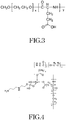
- Figure 3 shows PEG- b -PGA.
- Figure 4 shows the structure of chelating complex micelles loaded with cytoprotective agent amifostine.
- PEG- b -PGA is synthesized using PEG as a macroinitiator.
- the analysis result of GPC gel permeation chromatography) is shown in Figure 5 .
- the M w (weight-average molecular weight), M n (number-average molecular weight), and PdI (polydispersity index) are 5700, 4900, and 1.16, respectively.
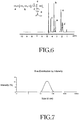
- Figure 6 shows the 1 H-NMR spectrum with corresponding chemical shift of PEG- b -PGA.
- Figure 7 shows the size distribution of chelating complex micelles determined by DLS (dynamic light scattering), which indicates that the Z-average diameter is 31.61 nm.
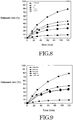
- Figure 8 shows the in vitro released profiles of amifostine and amifostine-loaded CCM.
- Five milligrams of amifostine, 20 mg of PEG- b -PGA (M w 5700 Dalton), and 1.25-10 mg of FeCl 2 (weight ratio from 1:4:0.25 to 1:4:2) are continuously mixing in 5 mL of buffer solution at 25°C for 24 hours.
- the mixture is placed in a dialysis tube (with a molecular weight cut off 3500) and soaked in water to simulate the drug release.
- the results show that with 10 mg of FeCl 2 (weight ratio 1:4:2), most of amifostine are trapped in the chelating complex micelles and cannot diffuse through the dialysis membrane.
- the release ratio is decreased as increasing the amount of FeCl 2 .
- the above buffer solution is 0.05 M HEPES (4-(2-hydroxyethyl)-1-piperazineethane sulfonic acid), pH 7.0.
- Figure 9 shows the in vitro released profiles of amifostine and amifostine-loaded CCM.
- Five milligrams of amifostine, 20 mg of PEG- b -PGA (M w 5700 Dalton), and 10 mg of FeCl 2 (weight ratio 1:4:2) are continuously mixing in 5 mL of buffer solution at 25 °C with various reaction time.
- the mixture is placed in a dialysis tube (with a molecular weight cut off 3500) and soaked in water to simulate the drug release.
- the results show that after 24 hours of reaction, most of amifostine are trapped in the chelating complex micelles and cannot diffuse through the dialysis membrane.
- the release ratio is decreased as increasing the reaction time.
- the above buffer solution is 0.05M of HEPES (4-(2-hydroxyethyl)-1-piperazineethanesulfonic acid), pH 7.0.
- the metal Lewis acid can combine with drugs and polymers to form chelating complex micelles at the same time.
- Such micelles not only possess the structure similar to the chelating agent EDTA, but also prolong the half-life of drugs in the human body, and not causing human toxicity (EDTA will bind the metal elements in the body).
- the coordinate bonding can also overcome the weak interaction provided by ionic bonding.
- metal ions may precipitate under aqueous conditions as interacting with oxidants.
- PEG shows very good dispersion property in the aqueous solution, it has has no functional group to conjugate with other substances.
- PEG must be modified through introducing the PGA segment to chelate metal ions, and prevent the precipitation of metal ions.
- the carrier of the present invention can be applied to either hydrophilic or hydrophobic drugs, thus greatly enhancing its application value.
- the FDA approved API active pharmaceutical ingredient
- the present invention is completely without any changes on the structure of drug and therefore will not raise the problem of re-validation. Consequently, for the processing compatibility, the present invention is exceptionally valuable.
Landscapes
- Health & Medical Sciences (AREA)
- Chemical & Material Sciences (AREA)
- Life Sciences & Earth Sciences (AREA)
- Veterinary Medicine (AREA)
- Public Health (AREA)
- General Health & Medical Sciences (AREA)
- Animal Behavior & Ethology (AREA)
- Medicinal Chemistry (AREA)
- Pharmacology & Pharmacy (AREA)
- Epidemiology (AREA)
- Bioinformatics & Cheminformatics (AREA)
- Engineering & Computer Science (AREA)
- Dispersion Chemistry (AREA)
- Physics & Mathematics (AREA)
- Optics & Photonics (AREA)
- Nanotechnology (AREA)
- Nuclear Medicine, Radiotherapy & Molecular Imaging (AREA)
- Biomedical Technology (AREA)
- Molecular Biology (AREA)
- Proteomics, Peptides & Aminoacids (AREA)
- Inorganic Chemistry (AREA)
- Organic Chemistry (AREA)
- General Chemical & Material Sciences (AREA)
- Chemical Kinetics & Catalysis (AREA)
- Biophysics (AREA)
- Radiology & Medical Imaging (AREA)
- Toxicology (AREA)
- Pharmaceuticals Containing Other Organic And Inorganic Compounds (AREA)
- Medicinal Preparation (AREA)
- Acyclic And Carbocyclic Compounds In Medicinal Compositions (AREA)
Applications Claiming Priority (2)
| Application Number | Priority Date | Filing Date | Title |
|---|---|---|---|
| US201161562663P | 2011-11-22 | 2011-11-22 | |
| PCT/CN2012/001126 WO2013075394A1 (zh) | 2011-11-22 | 2012-08-23 | 具有螯合型复合微胞的药物载体及其应用 |
Publications (3)
| Publication Number | Publication Date |
|---|---|
| EP2783679A1 EP2783679A1 (en) | 2014-10-01 |
| EP2783679A4 EP2783679A4 (en) | 2015-08-26 |
| EP2783679B1 true EP2783679B1 (en) | 2018-07-18 |
Family
ID=48469042
Family Applications (1)
| Application Number | Title | Priority Date | Filing Date |
|---|---|---|---|
| EP12851387.6A Active EP2783679B1 (en) | 2011-11-22 | 2012-08-23 | Drug carrier with chelating composite micelle and use thereof |
Country Status (10)
| Country | Link |
|---|---|
| EP (1) | EP2783679B1 (Direct) |
| JP (3) | JP2015507605A (Direct) |
| KR (2) | KR101885677B1 (Direct) |
| CN (1) | CN103127521B (Direct) |
| AU (1) | AU2012343239B2 (Direct) |
| CA (1) | CA2856501C (Direct) |
| IL (1) | IL232729B (Direct) |
| IN (1) | IN2014MN00936A (Direct) |
| TW (1) | TWI568453B (Direct) |
| WO (1) | WO2013075394A1 (Direct) |
Families Citing this family (14)
| Publication number | Priority date | Publication date | Assignee | Title |
|---|---|---|---|---|
| WO2014079020A1 (en) * | 2012-11-22 | 2014-05-30 | Original Biomedicals Co., Ltd. | Pharmaceutical composition used for reducing damage caused by free radicals |
| JP6251689B2 (ja) * | 2012-08-28 | 2017-12-20 | オリジナル バイオメディカルズ カンパニー,リミテット | キレート化複合ミセルを含有する医薬組成物の放出制御方法 |
| US20160175313A1 (en) * | 2013-08-06 | 2016-06-23 | Dongkook Pharmaceutical Co., Ltd., | Entecavir microspheres and pharmaceutical composition for parenteral administration containing same |
| CN104627958B (zh) * | 2015-01-30 | 2016-03-16 | 四川大学 | 一种稳定性增强的改性纳米粒子及其制备方法 |
| CN104693433B (zh) * | 2015-02-04 | 2017-06-06 | 国家纳米科学中心 | 一种聚乙二醇化氨磷汀、制备方法及其用途 |
| EP3377052B1 (en) | 2015-11-17 | 2025-05-07 | The Burlington HC Research Group, Inc. | Methods for improved protection and delivery of aminothiols and analogs thereof |
| ES2914305T3 (es) | 2017-12-26 | 2022-06-09 | Ind Tech Res Inst | Composición para mejorar la solubilidad de sustancias poco solubles, uso de la misma y formulación compleja que contiene la misma |
| KR102206913B1 (ko) | 2018-12-04 | 2021-01-26 | 한국생산기술연구원 | 기능성 물질 전달용 조성물 및 이의 제조 방법 |
| CN109970987B (zh) * | 2019-04-11 | 2021-09-17 | 中国医学科学院放射医学研究所 | Mof材料、纳米载药材料、药物组合物及其应用 |
| KR102520641B1 (ko) * | 2020-10-14 | 2023-04-11 | 고려대학교 산학협력단 | 마그네슘 이온을 포함하는 자가조립 복합체 |
| TWI886408B (zh) * | 2021-09-09 | 2025-06-11 | 原創生醫股份有限公司 | 用於超音波造影之金屬複合物及其用途 |
| JP7464304B2 (ja) * | 2022-04-13 | 2024-04-09 | コリア ユニバーシティ リサーチ アンド ビジネス ファウンデーション | 鉄イオンを含む自己組み立て複合体 |
| KR20240096203A (ko) * | 2022-12-19 | 2024-06-26 | 고려대학교 산학협력단 | 코발트, 은, 가돌리늄 및 철 중 어느 하나 이상을 포함하는 자가조립 복합체 |
| KR20240127770A (ko) * | 2023-02-16 | 2024-08-23 | 고려대학교 산학협력단 | 치료용 자성 바이오분자-금속이온 자가조립 복합체 |
Citations (1)
| Publication number | Priority date | Publication date | Assignee | Title |
|---|---|---|---|---|
| WO2005094809A1 (en) * | 2004-03-30 | 2005-10-13 | Medical Therapies Limited | A composition containing a complex comprising a metal ion and a carboxylate ligand having anti-inflammatory activity |
Family Cites Families (25)
| Publication number | Priority date | Publication date | Assignee | Title |
|---|---|---|---|---|
| EP0727984B1 (en) * | 1993-11-18 | 2003-06-25 | Sirtex Medical Limited | Controlled release preparation |
| JPH10158195A (ja) * | 1996-11-28 | 1998-06-16 | Res Inst For Prod Dev | 配位結合を利用した薬物−高分子複合体製剤の調製方法 |
| US5994409A (en) * | 1997-12-09 | 1999-11-30 | U.S. Bioscience, Inc. | Methods for treatment of neuro--and nephro--disorders and therapeutic toxicities using aminothiol compounds |
| WO2002026241A1 (en) * | 2000-09-26 | 2002-04-04 | Center For Advanced Science And Technology Incubation, Ltd. | Polymeric micelle containing cisplatin enclosed therein and use thereof |
| US7053072B2 (en) * | 2001-05-11 | 2006-05-30 | Medimmune Oncology, Inc. | Methods for the administration of amifostine and related compounds |
| US7635463B2 (en) * | 2002-02-27 | 2009-12-22 | Pharmain Corporation | Compositions for delivery of therapeutics and other materials |
| RU2335512C2 (ru) * | 2003-12-10 | 2008-10-10 | Тоудаи Тло, Лтд. | Координационный комплекс диаминоциклогексана платины (ii) с блоксополимером, содержащим сегмент поли(карбоновой кислоты), и включающий его противораковый агент |
| AU2004296621A1 (en) * | 2003-12-11 | 2005-06-23 | Schering Aktiengesellschaft | Radiosensitizer conjugate to improve the efficacy of radiolabeled drugs |
| EP1750671B1 (en) * | 2004-06-03 | 2008-10-15 | Bracco Research S.A. | Liposomal assembly for therapeutic and/or diagnostic use |
| WO2005120585A1 (en) * | 2004-06-04 | 2005-12-22 | Case Western Reserve University | Dual function polymer micelles |
| DE102005008309A1 (de) * | 2005-02-17 | 2006-08-24 | Schering Ag | Pharmazeutische Mittel enthaltend fluoralkylhaltige Metallkomplexe und Epothilone |
| JP4390845B2 (ja) * | 2005-04-01 | 2009-12-24 | インテザイン テクノロジーズ, インコーポレイテッド | 薬物送達のためのポリマーミセル |
| US8128959B2 (en) * | 2005-04-18 | 2012-03-06 | Hiroshi Maeda | Polymeric pharmaceutical agent for treatment of cancer and method for production of the same |
| WO2007095178A2 (en) * | 2006-02-14 | 2007-08-23 | Eastern Virginia Medical School | Methoxypolyethylene glycol thioester chelate and uses thereof |
| US8815833B2 (en) * | 2006-11-09 | 2014-08-26 | Seidose, LLC | Stable amifostine liquid concentrate |
| CN101224187B (zh) * | 2008-01-31 | 2010-07-21 | 中国医学科学院生物医学工程研究所 | 双功能聚合物纳米胶束及制备方法及在制备治疗血管再狭窄药物中的应用 |
| JP2008120838A (ja) * | 2008-02-21 | 2008-05-29 | Medgel Corp | 配位結合を利用した薬物−高分子複合体製剤の調製方法 |
| JP2011515405A (ja) * | 2008-03-17 | 2011-05-19 | ユニバーシティ オブ ユタ リサーチ ファンデーション | ジチオカルバメート金属キレートならびにその作製および使用方法 |
| AU2009263529B2 (en) * | 2008-06-24 | 2013-09-26 | Nanocarrier Co., Ltd. | Liquid composition comprising cisplatin-coordinating compound |
| JP5651468B2 (ja) * | 2008-06-26 | 2015-01-14 | 独立行政法人科学技術振興機構 | Mri造影能を有する重合体−金属錯体複合体、並びにそれを用いたmri造影用及び/又は抗腫瘍用組成物 |
| JP5320569B2 (ja) * | 2008-06-28 | 2013-10-23 | 公益財団法人神奈川科学技術アカデミー | 高分子ミセル及びそれを有効成分として含有する固形がんの診断又は治療剤 |
| EP2161020A1 (en) * | 2008-09-09 | 2010-03-10 | Koninklijke Philips Electronics N.V. | Chelating amphiphilic polymers |
| CN104758254B (zh) * | 2009-08-31 | 2018-10-30 | 那野伽利阿株式会社 | 颗粒组合物和含有其的医药组合物 |
| JP2011105792A (ja) * | 2009-11-12 | 2011-06-02 | Japan Science & Technology Agency | ブロックコポリマー、ブロックコポリマー−金属錯体複合体、及びそれを用いた中空構造体キャリア |
| WO2012058552A1 (en) * | 2010-10-29 | 2012-05-03 | Intezyne Technologies, Incorporated | Iron stabilized polymer micelles for drug delivery applications |
-
2012
- 2012-08-10 TW TW101128939A patent/TWI568453B/zh active
- 2012-08-23 KR KR1020177000079A patent/KR101885677B1/ko active Active
- 2012-08-23 EP EP12851387.6A patent/EP2783679B1/en active Active
- 2012-08-23 IN IN936MUN2014 patent/IN2014MN00936A/en unknown
- 2012-08-23 AU AU2012343239A patent/AU2012343239B2/en active Active
- 2012-08-23 CA CA2856501A patent/CA2856501C/en active Active
- 2012-08-23 JP JP2014542682A patent/JP2015507605A/ja active Pending
- 2012-08-23 CN CN201210310385.2A patent/CN103127521B/zh active Active
- 2012-08-23 KR KR1020147013510A patent/KR101815030B1/ko active Active
- 2012-08-23 WO PCT/CN2012/001126 patent/WO2013075394A1/zh not_active Ceased
-
2014
- 2014-05-20 IL IL232729A patent/IL232729B/en active IP Right Grant
-
2016
- 2016-07-04 JP JP2016132358A patent/JP6224776B2/ja active Active
-
2017
- 2017-10-04 JP JP2017194487A patent/JP6445648B2/ja active Active
Patent Citations (1)
| Publication number | Priority date | Publication date | Assignee | Title |
|---|---|---|---|---|
| WO2005094809A1 (en) * | 2004-03-30 | 2005-10-13 | Medical Therapies Limited | A composition containing a complex comprising a metal ion and a carboxylate ligand having anti-inflammatory activity |
Non-Patent Citations (2)
| Title |
|---|
| BAYER HEALTHCARE PHARMACEUTICALS: "Magnevist (brand of gadopentetate dimeglumine) injection and pharmacy bulk package", 8 December 2009 (2009-12-08), pages 1 - 120, XP055322145, Retrieved from the Internet <URL:http://www.fda.gov/downloads/AdvisoryCommittees/CommitteesMeetingMaterials/Drugs/DrugSafetyandRiskManagementAdvisoryCommittee/UCM192006.pdf> [retrieved on 20161123] * |
| CHAN J. M. ET AL.: "Polymeric nanoparticles for drug delivery, Cancer nanotechnology", 2010, pages: 163 - 176 * |
Also Published As
| Publication number | Publication date |
|---|---|
| CN103127521B (zh) | 2016-10-26 |
| KR20170004044A (ko) | 2017-01-10 |
| AU2012343239B2 (en) | 2016-04-28 |
| JP6445648B2 (ja) | 2018-12-26 |
| CA2856501C (en) | 2017-01-03 |
| JP2016188236A (ja) | 2016-11-04 |
| JP2018021070A (ja) | 2018-02-08 |
| IL232729A0 (en) | 2014-07-31 |
| JP6224776B2 (ja) | 2017-11-01 |
| TWI568453B (zh) | 2017-02-01 |
| KR101885677B1 (ko) | 2018-08-06 |
| EP2783679A1 (en) | 2014-10-01 |
| KR101815030B1 (ko) | 2018-01-08 |
| EP2783679A4 (en) | 2015-08-26 |
| AU2012343239A1 (en) | 2014-06-05 |
| JP2015507605A (ja) | 2015-03-12 |
| IN2014MN00936A (Direct) | 2015-04-24 |
| IL232729B (en) | 2019-06-30 |
| TW201321027A (zh) | 2013-06-01 |
| KR20140101741A (ko) | 2014-08-20 |
| WO2013075394A1 (zh) | 2013-05-30 |
| CA2856501A1 (en) | 2013-05-30 |
| CN103127521A (zh) | 2013-06-05 |
Similar Documents
| Publication | Publication Date | Title |
|---|---|---|
| US9226967B2 (en) | Chelating complex micelles drug carrier | |
| EP2783679B1 (en) | Drug carrier with chelating composite micelle and use thereof | |
| Cabral et al. | Optimization of (1, 2-diamino-cyclohexane) platinum (II)-loaded polymeric micelles directed to improved tumor targeting and enhanced antitumor activity | |
| AU2015256667C1 (en) | A micellar nanocomplex | |
| AU2016202303B2 (en) | The controlled release method for a pharmaceutical composition composed of chelating complex micelles | |
| CN108938594B (zh) | 一种药物复合物及其制备方法与应用 | |
| Sun et al. | Polymers in the co-delivery of siRNA and anticancer drugs for the treatment of drug-resistant cancers | |
| EP2167097B1 (en) | Metal complexes incorporated within biodegradable nanoparticles and their use | |
| Paraskar et al. | Rationally designed oxaliplatin-nanoparticle for enhanced antitumor efficacy | |
| WO2008130180A1 (en) | Preparation of drug delivery systems using ph-sensitive block copolymer and their application | |
| Na et al. | Combination antitumor effects of micelle-loaded anticancer drugs in a CT-26 murine colorectal carcinoma model | |
| Khan et al. | Biodegradable nanoparticulate co-delivery of flavonoid and doxorubicin: mechanistic exploration and evaluation of anticancer effect in vitro and in vivo | |
| WO2016000070A1 (en) | Hydrophobically derivatized hyperbranched polyglycerol for intravascular drug delivery | |
| Shaikh et al. | NOVEL DRUG DELIVERY SYSTEM IN HERBAL’S |
Legal Events
| Date | Code | Title | Description |
|---|---|---|---|
| PUAI | Public reference made under article 153(3) epc to a published international application that has entered the european phase |
Free format text: ORIGINAL CODE: 0009012 |
|
| 17P | Request for examination filed |
Effective date: 20140522 |
|
| AK | Designated contracting states |
Kind code of ref document: A1 Designated state(s): AL AT BE BG CH CY CZ DE DK EE ES FI FR GB GR HR HU IE IS IT LI LT LU LV MC MK MT NL NO PL PT RO RS SE SI SK SM TR |
|
| DAX | Request for extension of the european patent (deleted) | ||
| RA4 | Supplementary search report drawn up and despatched (corrected) |
Effective date: 20150727 |
|
| RIC1 | Information provided on ipc code assigned before grant |
Ipc: A61K 49/18 20060101ALI20150720BHEP Ipc: A61K 9/51 20060101ALI20150720BHEP Ipc: A61K 9/107 20060101AFI20150720BHEP Ipc: A61K 51/12 20060101ALI20150720BHEP Ipc: A61K 33/24 20060101ALI20150720BHEP Ipc: A61P 35/00 20060101ALI20150720BHEP Ipc: A61K 31/00 20060101ALI20150720BHEP Ipc: A61K 47/48 20060101ALI20150720BHEP |
|
| STAA | Information on the status of an ep patent application or granted ep patent |
Free format text: STATUS: EXAMINATION IS IN PROGRESS |
|
| 17Q | First examination report despatched |
Effective date: 20161201 |
|
| GRAP | Despatch of communication of intention to grant a patent |
Free format text: ORIGINAL CODE: EPIDOSNIGR1 |
|
| STAA | Information on the status of an ep patent application or granted ep patent |
Free format text: STATUS: GRANT OF PATENT IS INTENDED |
|
| RIC1 | Information provided on ipc code assigned before grant |
Ipc: A61K 49/18 20060101ALI20180123BHEP Ipc: A61P 35/00 20060101ALI20180123BHEP Ipc: A61K 47/54 20170101ALI20180123BHEP Ipc: A61K 33/24 20060101ALI20180123BHEP Ipc: A61K 9/51 20060101ALI20180123BHEP Ipc: A61K 47/69 20170101ALI20180123BHEP Ipc: A61K 47/64 20170101ALI20180123BHEP Ipc: A61K 9/107 20060101AFI20180123BHEP Ipc: A61K 47/60 20170101ALI20180123BHEP Ipc: A61K 51/12 20060101ALI20180123BHEP Ipc: A61K 31/00 20060101ALI20180123BHEP |
|
| INTG | Intention to grant announced |
Effective date: 20180216 |
|
| GRAS | Grant fee paid |
Free format text: ORIGINAL CODE: EPIDOSNIGR3 |
|
| GRAA | (expected) grant |
Free format text: ORIGINAL CODE: 0009210 |
|
| STAA | Information on the status of an ep patent application or granted ep patent |
Free format text: STATUS: THE PATENT HAS BEEN GRANTED |
|
| AK | Designated contracting states |
Kind code of ref document: B1 Designated state(s): AL AT BE BG CH CY CZ DE DK EE ES FI FR GB GR HR HU IE IS IT LI LT LU LV MC MK MT NL NO PL PT RO RS SE SI SK SM TR |
|
| REG | Reference to a national code |
Ref country code: GB Ref legal event code: FG4D |
|
| REG | Reference to a national code |
Ref country code: CH Ref legal event code: EP |
|
| REG | Reference to a national code |
Ref country code: IE Ref legal event code: FG4D |
|
| REG | Reference to a national code |
Ref country code: DE Ref legal event code: R096 Ref document number: 602012048725 Country of ref document: DE |
|
| REG | Reference to a national code |
Ref country code: AT Ref legal event code: REF Ref document number: 1018605 Country of ref document: AT Kind code of ref document: T Effective date: 20180815 |
|
| REG | Reference to a national code |
Ref country code: FR Ref legal event code: PLFP Year of fee payment: 7 |
|
| REG | Reference to a national code |
Ref country code: NL Ref legal event code: MP Effective date: 20180718 |
|
| REG | Reference to a national code |
Ref country code: LT Ref legal event code: MG4D |
|
| REG | Reference to a national code |
Ref country code: AT Ref legal event code: MK05 Ref document number: 1018605 Country of ref document: AT Kind code of ref document: T Effective date: 20180718 |
|
| PG25 | Lapsed in a contracting state [announced via postgrant information from national office to epo] |
Ref country code: NL Free format text: LAPSE BECAUSE OF FAILURE TO SUBMIT A TRANSLATION OF THE DESCRIPTION OR TO PAY THE FEE WITHIN THE PRESCRIBED TIME-LIMIT Effective date: 20180718 |
|
| PG25 | Lapsed in a contracting state [announced via postgrant information from national office to epo] |
Ref country code: FI Free format text: LAPSE BECAUSE OF FAILURE TO SUBMIT A TRANSLATION OF THE DESCRIPTION OR TO PAY THE FEE WITHIN THE PRESCRIBED TIME-LIMIT Effective date: 20180718 Ref country code: LT Free format text: LAPSE BECAUSE OF FAILURE TO SUBMIT A TRANSLATION OF THE DESCRIPTION OR TO PAY THE FEE WITHIN THE PRESCRIBED TIME-LIMIT Effective date: 20180718 Ref country code: PL Free format text: LAPSE BECAUSE OF FAILURE TO SUBMIT A TRANSLATION OF THE DESCRIPTION OR TO PAY THE FEE WITHIN THE PRESCRIBED TIME-LIMIT Effective date: 20180718 Ref country code: SE Free format text: LAPSE BECAUSE OF FAILURE TO SUBMIT A TRANSLATION OF THE DESCRIPTION OR TO PAY THE FEE WITHIN THE PRESCRIBED TIME-LIMIT Effective date: 20180718 Ref country code: NO Free format text: LAPSE BECAUSE OF FAILURE TO SUBMIT A TRANSLATION OF THE DESCRIPTION OR TO PAY THE FEE WITHIN THE PRESCRIBED TIME-LIMIT Effective date: 20181018 Ref country code: BG Free format text: LAPSE BECAUSE OF FAILURE TO SUBMIT A TRANSLATION OF THE DESCRIPTION OR TO PAY THE FEE WITHIN THE PRESCRIBED TIME-LIMIT Effective date: 20181018 Ref country code: GR Free format text: LAPSE BECAUSE OF FAILURE TO SUBMIT A TRANSLATION OF THE DESCRIPTION OR TO PAY THE FEE WITHIN THE PRESCRIBED TIME-LIMIT Effective date: 20181019 Ref country code: IS Free format text: LAPSE BECAUSE OF FAILURE TO SUBMIT A TRANSLATION OF THE DESCRIPTION OR TO PAY THE FEE WITHIN THE PRESCRIBED TIME-LIMIT Effective date: 20181118 Ref country code: RS Free format text: LAPSE BECAUSE OF FAILURE TO SUBMIT A TRANSLATION OF THE DESCRIPTION OR TO PAY THE FEE WITHIN THE PRESCRIBED TIME-LIMIT Effective date: 20180718 Ref country code: AT Free format text: LAPSE BECAUSE OF FAILURE TO SUBMIT A TRANSLATION OF THE DESCRIPTION OR TO PAY THE FEE WITHIN THE PRESCRIBED TIME-LIMIT Effective date: 20180718 |
|
| REG | Reference to a national code |
Ref country code: CH Ref legal event code: PK Free format text: BERICHTIGUNGEN |
|
| RIC2 | Information provided on ipc code assigned after grant |
Ipc: A61P 35/00 20060101ALI20180123BHEP Ipc: A61K 51/12 20060101ALI20180123BHEP Ipc: A61K 9/107 20060101AFI20180123BHEP Ipc: A61K 9/51 20060101ALI20180123BHEP Ipc: A61K 33/24 20190101ALI20180123BHEP Ipc: A61K 47/60 20170101ALI20180123BHEP Ipc: A61K 31/00 20060101ALI20180123BHEP Ipc: A61K 47/64 20170101ALI20180123BHEP Ipc: A61K 49/18 20060101ALI20180123BHEP Ipc: A61K 47/69 20170101ALI20180123BHEP Ipc: A61K 47/54 20170101ALI20180123BHEP |
|
| PG25 | Lapsed in a contracting state [announced via postgrant information from national office to epo] |
Ref country code: HR Free format text: LAPSE BECAUSE OF FAILURE TO SUBMIT A TRANSLATION OF THE DESCRIPTION OR TO PAY THE FEE WITHIN THE PRESCRIBED TIME-LIMIT Effective date: 20180718 Ref country code: AL Free format text: LAPSE BECAUSE OF FAILURE TO SUBMIT A TRANSLATION OF THE DESCRIPTION OR TO PAY THE FEE WITHIN THE PRESCRIBED TIME-LIMIT Effective date: 20180718 Ref country code: LV Free format text: LAPSE BECAUSE OF FAILURE TO SUBMIT A TRANSLATION OF THE DESCRIPTION OR TO PAY THE FEE WITHIN THE PRESCRIBED TIME-LIMIT Effective date: 20180718 |
|
| REG | Reference to a national code |
Ref country code: CH Ref legal event code: PL |
|
| REG | Reference to a national code |
Ref country code: DE Ref legal event code: R097 Ref document number: 602012048725 Country of ref document: DE |
|
| PG25 | Lapsed in a contracting state [announced via postgrant information from national office to epo] |
Ref country code: ES Free format text: LAPSE BECAUSE OF FAILURE TO SUBMIT A TRANSLATION OF THE DESCRIPTION OR TO PAY THE FEE WITHIN THE PRESCRIBED TIME-LIMIT Effective date: 20180718 Ref country code: IT Free format text: LAPSE BECAUSE OF FAILURE TO SUBMIT A TRANSLATION OF THE DESCRIPTION OR TO PAY THE FEE WITHIN THE PRESCRIBED TIME-LIMIT Effective date: 20180718 Ref country code: RO Free format text: LAPSE BECAUSE OF FAILURE TO SUBMIT A TRANSLATION OF THE DESCRIPTION OR TO PAY THE FEE WITHIN THE PRESCRIBED TIME-LIMIT Effective date: 20180718 Ref country code: CZ Free format text: LAPSE BECAUSE OF FAILURE TO SUBMIT A TRANSLATION OF THE DESCRIPTION OR TO PAY THE FEE WITHIN THE PRESCRIBED TIME-LIMIT Effective date: 20180718 Ref country code: EE Free format text: LAPSE BECAUSE OF FAILURE TO SUBMIT A TRANSLATION OF THE DESCRIPTION OR TO PAY THE FEE WITHIN THE PRESCRIBED TIME-LIMIT Effective date: 20180718 Ref country code: LU Free format text: LAPSE BECAUSE OF NON-PAYMENT OF DUE FEES Effective date: 20180823 Ref country code: LI Free format text: LAPSE BECAUSE OF NON-PAYMENT OF DUE FEES Effective date: 20180831 Ref country code: CH Free format text: LAPSE BECAUSE OF NON-PAYMENT OF DUE FEES Effective date: 20180831 Ref country code: MC Free format text: LAPSE BECAUSE OF FAILURE TO SUBMIT A TRANSLATION OF THE DESCRIPTION OR TO PAY THE FEE WITHIN THE PRESCRIBED TIME-LIMIT Effective date: 20180718 |
|
| REG | Reference to a national code |
Ref country code: BE Ref legal event code: MM Effective date: 20180831 |
|
| PLBE | No opposition filed within time limit |
Free format text: ORIGINAL CODE: 0009261 |
|
| STAA | Information on the status of an ep patent application or granted ep patent |
Free format text: STATUS: NO OPPOSITION FILED WITHIN TIME LIMIT |
|
| PG25 | Lapsed in a contracting state [announced via postgrant information from national office to epo] |
Ref country code: DK Free format text: LAPSE BECAUSE OF FAILURE TO SUBMIT A TRANSLATION OF THE DESCRIPTION OR TO PAY THE FEE WITHIN THE PRESCRIBED TIME-LIMIT Effective date: 20180718 Ref country code: SK Free format text: LAPSE BECAUSE OF FAILURE TO SUBMIT A TRANSLATION OF THE DESCRIPTION OR TO PAY THE FEE WITHIN THE PRESCRIBED TIME-LIMIT Effective date: 20180718 Ref country code: SM Free format text: LAPSE BECAUSE OF FAILURE TO SUBMIT A TRANSLATION OF THE DESCRIPTION OR TO PAY THE FEE WITHIN THE PRESCRIBED TIME-LIMIT Effective date: 20180718 |
|
| 26N | No opposition filed |
Effective date: 20190423 |
|
| PG25 | Lapsed in a contracting state [announced via postgrant information from national office to epo] |
Ref country code: BE Free format text: LAPSE BECAUSE OF NON-PAYMENT OF DUE FEES Effective date: 20180831 Ref country code: SI Free format text: LAPSE BECAUSE OF FAILURE TO SUBMIT A TRANSLATION OF THE DESCRIPTION OR TO PAY THE FEE WITHIN THE PRESCRIBED TIME-LIMIT Effective date: 20180718 |
|
| PG25 | Lapsed in a contracting state [announced via postgrant information from national office to epo] |
Ref country code: MT Free format text: LAPSE BECAUSE OF NON-PAYMENT OF DUE FEES Effective date: 20180823 |
|
| PG25 | Lapsed in a contracting state [announced via postgrant information from national office to epo] |
Ref country code: TR Free format text: LAPSE BECAUSE OF FAILURE TO SUBMIT A TRANSLATION OF THE DESCRIPTION OR TO PAY THE FEE WITHIN THE PRESCRIBED TIME-LIMIT Effective date: 20180718 |
|
| PG25 | Lapsed in a contracting state [announced via postgrant information from national office to epo] |
Ref country code: HU Free format text: LAPSE BECAUSE OF FAILURE TO SUBMIT A TRANSLATION OF THE DESCRIPTION OR TO PAY THE FEE WITHIN THE PRESCRIBED TIME-LIMIT; INVALID AB INITIO Effective date: 20120823 Ref country code: PT Free format text: LAPSE BECAUSE OF FAILURE TO SUBMIT A TRANSLATION OF THE DESCRIPTION OR TO PAY THE FEE WITHIN THE PRESCRIBED TIME-LIMIT Effective date: 20180718 |
|
| PG25 | Lapsed in a contracting state [announced via postgrant information from national office to epo] |
Ref country code: MK Free format text: LAPSE BECAUSE OF NON-PAYMENT OF DUE FEES Effective date: 20180718 Ref country code: CY Free format text: LAPSE BECAUSE OF FAILURE TO SUBMIT A TRANSLATION OF THE DESCRIPTION OR TO PAY THE FEE WITHIN THE PRESCRIBED TIME-LIMIT Effective date: 20180718 Ref country code: IE Free format text: LAPSE BECAUSE OF NON-PAYMENT OF DUE FEES Effective date: 20180823 |
|
| REG | Reference to a national code |
Ref country code: DE Ref legal event code: R082 Ref document number: 602012048725 Country of ref document: DE Representative=s name: KANDLBINDER, MARKUS, DIPL.-PHYS., DE |
|
| PGFP | Annual fee paid to national office [announced via postgrant information from national office to epo] |
Ref country code: DE Payment date: 20250827 Year of fee payment: 14 |
|
| PGFP | Annual fee paid to national office [announced via postgrant information from national office to epo] |
Ref country code: GB Payment date: 20250822 Year of fee payment: 14 |
|
| PGFP | Annual fee paid to national office [announced via postgrant information from national office to epo] |
Ref country code: FR Payment date: 20250825 Year of fee payment: 14 |