EP2722112B2 - Vorrichtung und Verfahren zur kontinuierlichen Behandlung eines Metallbandes - Google Patents
Vorrichtung und Verfahren zur kontinuierlichen Behandlung eines Metallbandes Download PDFInfo
- Publication number
- EP2722112B2 EP2722112B2 EP13183368.3A EP13183368A EP2722112B2 EP 2722112 B2 EP2722112 B2 EP 2722112B2 EP 13183368 A EP13183368 A EP 13183368A EP 2722112 B2 EP2722112 B2 EP 2722112B2
- Authority
- EP
- European Patent Office
- Prior art keywords
- strip
- cooling line
- adjustment device
- position adjustment
- line section
- Prior art date
- Legal status (The legal status is an assumption and is not a legal conclusion. Google has not performed a legal analysis and makes no representation as to the accuracy of the status listed.)
- Active
Links
Images
Classifications
-
- C—CHEMISTRY; METALLURGY
- C21—METALLURGY OF IRON
- C21D—MODIFYING THE PHYSICAL STRUCTURE OF FERROUS METALS; GENERAL DEVICES FOR HEAT TREATMENT OF FERROUS OR NON-FERROUS METALS OR ALLOYS; MAKING METAL MALLEABLE, e.g. BY DECARBURISATION OR TEMPERING
- C21D9/00—Heat treatment, e.g. annealing, hardening, quenching or tempering, adapted for particular articles; Furnaces therefor
- C21D9/52—Heat treatment, e.g. annealing, hardening, quenching or tempering, adapted for particular articles; Furnaces therefor for wires; for strips ; for rods of unlimited length
- C21D9/54—Furnaces for treating strips or wire
- C21D9/56—Continuous furnaces for strip or wire
- C21D9/573—Continuous furnaces for strip or wire with cooling
-
- C—CHEMISTRY; METALLURGY
- C21—METALLURGY OF IRON
- C21D—MODIFYING THE PHYSICAL STRUCTURE OF FERROUS METALS; GENERAL DEVICES FOR HEAT TREATMENT OF FERROUS OR NON-FERROUS METALS OR ALLOYS; MAKING METAL MALLEABLE, e.g. BY DECARBURISATION OR TEMPERING
- C21D9/00—Heat treatment, e.g. annealing, hardening, quenching or tempering, adapted for particular articles; Furnaces therefor
- C21D9/52—Heat treatment, e.g. annealing, hardening, quenching or tempering, adapted for particular articles; Furnaces therefor for wires; for strips ; for rods of unlimited length
- C21D9/54—Furnaces for treating strips or wire
-
- C—CHEMISTRY; METALLURGY
- C21—METALLURGY OF IRON
- C21D—MODIFYING THE PHYSICAL STRUCTURE OF FERROUS METALS; GENERAL DEVICES FOR HEAT TREATMENT OF FERROUS OR NON-FERROUS METALS OR ALLOYS; MAKING METAL MALLEABLE, e.g. BY DECARBURISATION OR TEMPERING
- C21D9/00—Heat treatment, e.g. annealing, hardening, quenching or tempering, adapted for particular articles; Furnaces therefor
- C21D9/46—Heat treatment, e.g. annealing, hardening, quenching or tempering, adapted for particular articles; Furnaces therefor for sheet metals
-
- C—CHEMISTRY; METALLURGY
- C21—METALLURGY OF IRON
- C21D—MODIFYING THE PHYSICAL STRUCTURE OF FERROUS METALS; GENERAL DEVICES FOR HEAT TREATMENT OF FERROUS OR NON-FERROUS METALS OR ALLOYS; MAKING METAL MALLEABLE, e.g. BY DECARBURISATION OR TEMPERING
- C21D9/00—Heat treatment, e.g. annealing, hardening, quenching or tempering, adapted for particular articles; Furnaces therefor
- C21D9/52—Heat treatment, e.g. annealing, hardening, quenching or tempering, adapted for particular articles; Furnaces therefor for wires; for strips ; for rods of unlimited length
- C21D9/54—Furnaces for treating strips or wire
- C21D9/56—Continuous furnaces for strip or wire
-
- C—CHEMISTRY; METALLURGY
- C21—METALLURGY OF IRON
- C21D—MODIFYING THE PHYSICAL STRUCTURE OF FERROUS METALS; GENERAL DEVICES FOR HEAT TREATMENT OF FERROUS OR NON-FERROUS METALS OR ALLOYS; MAKING METAL MALLEABLE, e.g. BY DECARBURISATION OR TEMPERING
- C21D9/00—Heat treatment, e.g. annealing, hardening, quenching or tempering, adapted for particular articles; Furnaces therefor
- C21D9/52—Heat treatment, e.g. annealing, hardening, quenching or tempering, adapted for particular articles; Furnaces therefor for wires; for strips ; for rods of unlimited length
- C21D9/54—Furnaces for treating strips or wire
- C21D9/56—Continuous furnaces for strip or wire
- C21D9/562—Details
- C21D9/563—Rolls; Drums; Roll arrangements
-
- C—CHEMISTRY; METALLURGY
- C21—METALLURGY OF IRON
- C21D—MODIFYING THE PHYSICAL STRUCTURE OF FERROUS METALS; GENERAL DEVICES FOR HEAT TREATMENT OF FERROUS OR NON-FERROUS METALS OR ALLOYS; MAKING METAL MALLEABLE, e.g. BY DECARBURISATION OR TEMPERING
- C21D9/00—Heat treatment, e.g. annealing, hardening, quenching or tempering, adapted for particular articles; Furnaces therefor
- C21D9/52—Heat treatment, e.g. annealing, hardening, quenching or tempering, adapted for particular articles; Furnaces therefor for wires; for strips ; for rods of unlimited length
- C21D9/54—Furnaces for treating strips or wire
- C21D9/56—Continuous furnaces for strip or wire
- C21D9/562—Details
- C21D9/564—Tension control
-
- C—CHEMISTRY; METALLURGY
- C21—METALLURGY OF IRON
- C21D—MODIFYING THE PHYSICAL STRUCTURE OF FERROUS METALS; GENERAL DEVICES FOR HEAT TREATMENT OF FERROUS OR NON-FERROUS METALS OR ALLOYS; MAKING METAL MALLEABLE, e.g. BY DECARBURISATION OR TEMPERING
- C21D9/00—Heat treatment, e.g. annealing, hardening, quenching or tempering, adapted for particular articles; Furnaces therefor
- C21D9/52—Heat treatment, e.g. annealing, hardening, quenching or tempering, adapted for particular articles; Furnaces therefor for wires; for strips ; for rods of unlimited length
- C21D9/54—Furnaces for treating strips or wire
- C21D9/56—Continuous furnaces for strip or wire
- C21D9/63—Continuous furnaces for strip or wire the strip being supported by a cushion of gas
-
- C—CHEMISTRY; METALLURGY
- C22—METALLURGY; FERROUS OR NON-FERROUS ALLOYS; TREATMENT OF ALLOYS OR NON-FERROUS METALS
- C22F—CHANGING THE PHYSICAL STRUCTURE OF NON-FERROUS METALS AND NON-FERROUS ALLOYS
- C22F1/00—Changing the physical structure of non-ferrous metals or alloys by heat treatment or by hot or cold working
- C22F1/04—Changing the physical structure of non-ferrous metals or alloys by heat treatment or by hot or cold working of aluminium or alloys based thereon
Definitions
- the invention relates to a device for the continuous treatment of a metal strip, in particular a metal strip made of aluminum (or an aluminum alloy) or of non-ferrous metal (or a non-ferrous metal alloy), with at least one tempering device designed as a strip floatation furnace through which the metal strip is passed in a suspended state, and with a strip travel control device with which the position of the metal strip in the strip travel plane and transversely to the strip travel direction can be controlled or regulated.
- the strip floatation furnace has at least one heating section on the inlet side and one cooling section on the outlet side.
- the metal strip preferably has a thickness of 0.1 mm to 6 mm.
- the DE 103 26 071 discloses a device for the continuous treatment of a metal strip, comprising at least one tempering device through which the metal strip is guided in a suspended manner and comprising a strip position control device with which the position of the metal strip in the strip travel plane and transversely to the strip travel direction can be controlled or regulated, wherein the tempering device has at least one heating section on the inlet side and one cooling section on the outlet side.
- Such a device of the type described above for the continuous treatment of a metal strip with a tempering device or with a strip floatation furnace can, for example, be an annealing line or continuous annealing line in which the metal strip undergoes heat treatment for metallurgical reasons, e.g., to achieve specific strength and deformation properties.
- the device can also be a strip coating system or a strip coating line in which the heat treatment of the metal strip is not carried out in the sense of annealing, but rather to dry a coating on the strip, so that the furnace is then designed as a continuous dryer.
- the metal strip is preferably aluminum or non-ferrous metal strip in a thickness range of 0.1 mm to 6 mm.
- the metal strip Since the metal strip is heated to temperatures close to its melting point, for example, in annealing lines, it is generally necessary to set a relatively low strip tension within the tempering device to avoid strip breakage. To this end, the strip tension is reduced, for example, on the inlet side in a set of tension rollers and, after cooling, is increased again on the outlet side in another set of tension rollers.
- the specific strip tension In the tempering device (strip floatation furnace), the specific strip tension is, for example, 0.5 to 1 MPa. Since the strip can "run off" in the furnace, especially at low strip tension, e.g., due to possible strip sabering, it is necessary to position the strip appropriately using a strip position control device, preferably to the center of the strip.
- Such a strip travel control device typically has at least one control roller and suitable position measuring devices, e.g., strip edge detection.
- the strip tracking control device is located behind the tempering device, i.e., after the cooling section.
- the control roller is usually designed as a so-called PI strip center control, i.e., with a proportional P and an integral I component. The I component feeds back into the furnace section and prevents the strip from wandering excessively in the furnace.
- the control roller is usually mounted on a movable base frame. This rotates the roller around an imaginary pivot point or an imaginary axis of rotation located in the furnace section and perpendicular to the strip travel plane.
- the DE 103 26 071 A1 A system is known in which a deflection device is arranged on the outlet side behind a strip floatation furnace, below which a water cup acts as a fluid seal.
- the deflection device can also simultaneously serve as a strip center control, with the strip position being detected by sensors arranged above and below the strip, and the movement of the strip center control for returning a strip running from the center position is carried out by means of a cylinder.
- the invention is based on the object of creating a device for the continuous treatment of a metal strip of the type described above, which is characterized by improved strip position control and which guarantees perfect strip running, especially in long furnace sections.
- the invention teaches a device having the features of claim 1.
- the cooling section is divided into at least a first cooling section and a subsequent, spaced-apart second cooling section, wherein the strip position control device is arranged between the first cooling section and the second cooling section.
- the strip position control device is therefore no longer arranged on the output side behind the tempering device and consequently no longer after the last cooling zone, but is integrated into the cooling section by dividing the latter into two cooling section sections.
- the strip In a first section, the strip is cooled to such an extent that it can easily pass the strip position control device.
- the strip position control device is therefore located downstream of the first cooling section.
- the strip then passes through the second cooling section and consequently the second part of the cooling zones, so that the strip is subsequently cooled to the desired final temperature.
- the strip then passes through the second cooling section and consequently the second part of the cooling zones, so that the strip is subsequently cooled to the desired final temperature.
- the strip position control device itself can be designed in a conventional manner, thus allowing the use of conventional solutions. According to the invention, the specific positioning of the strip guide device within the furnace section or within the cooling section is important.
- the strip position control device for strip position control can comprise a conventional, adjustable deflection roller, e.g., a 90° deflection roller, or be designed as such.
- a suitable (high-)temperature-resistant coating since the strip temperature between the first cooling section and the second cooling section is preferably 100°C to 200°C, particularly preferably 120°C to 150°C.
- a 90° control roller another known type of strip center control can also be used, e.g., using a multi-roller control device, e.g., a three-roller control device or a control driver (e.g., as a pair of rollers). Suitable coatings are also preferably provided in this case.
- the strip position control or strip center control is implemented in a basically known manner as PI control.
- the control roller or multi-roller arrangement is therefore seated on a movable base frame in a basically known manner. This rotates the roller(s) around an imaginary pivot point, which in turn is located in the furnace section.
- the degree of displacement of the roller from the center axis of the furnace section is the proportional component, and the degree of inclination of the roller is the integral component of the belt center adjustment.
- the strip processing system preferably has a first set of tension rollers on the inlet side, which is arranged upstream of the tempering device to reduce the strip tension. Furthermore, it is expedient to provide another set of tension rollers on the outlet side and consequently downstream of the tempering device, with which the strip tension is increased again, so that further process steps can follow, such as stretch leveling, cleaning, or edge trimming.
- a (further) tensioning roller set is arranged between the first cooling section and the second cooling section downstream of the strip position control device in order to increase the strip tension at this point.
- This has the advantage that the strip can pass through the second part of the cooling zones with a somewhat increased strip tension.
- Dividing the cooling line into two cooling sections results in both sections being (significantly) shorter than a single cooling section. Compared to conventional systems, this allows the entire temperature control system to be extended, meaning both the heating section and the entire cooling section can be extended.
- the invention also relates to a method according to claim 7 for the continuous treatment of a metal strip using a device of the type described, wherein the metal strip is guided in a suspended manner through the heating section and the cooling section for thermal treatment.
- This method is characterized in that the position of the metal strip (within the strip travel plane and transversely to the strip travel direction) is controlled or regulated by a strip position control device arranged within the cooling section.
- such a strip position control device is preferably equipped with suitable measuring devices and a feedback loop, so that true control of the strip position is achieved.
- the invention also encompasses embodiments that operate without measurement and/or feedback, so that the strip position is not regulated but merely controlled.
- the length of the first cooling section is preferably dimensioned such that the metal strip has a temperature of up to 200°C, e.g. 100°C to 200°C, between the first cooling section and the second cooling section and consequently in the region of the strip position control device.
- the temperature is particularly preferably up to 150°C, e.g. 120°C to 150°C.
- the length of the second cooling section can then be dimensioned, for example, such that the strip exits at a temperature of up to 70°, preferably up to 60°C, e.g. 40°C to 60°C, so that further process steps, such as stretch leveling, cleaning or edge trimming, can follow without any problems.
- the system according to the invention can, for example, be designed as an annealing line or be a component of an annealing line.
- the tempering device is then designed as an annealing furnace.
- the system can be designed as a strip coating system or be a component of a strip coating system.
- the tempering device is then designed as a dryer or drying furnace. In both cases, the furnaces/dryers are preferably designed as strip floatation furnaces.
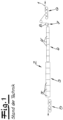
- Fig. 1 shows a known strip treatment device for the continuous treatment of a metal strip, namely a thermal treatment.
- This device has a tempering device 2, which is designed as a strip floatation furnace.
- the metal strip 1 passes through this strip floatation furnace 2 without contact, as the strip is floated between upper and lower nozzles, which are subjected to appropriate air pressure. Details are not shown.
- the strip floatation furnace 2 has a heating section 3 on the inlet side and a cooling section 4 on the outlet side.
- the heating section is generally composed of several heating zones 3', while the cooling section is generally composed of several cooling zones 4', whereby the individual zones can be controlled individually or separately.
- the metal strip is generally heated using air, so that the nozzles, e.g., the lower nozzles, can also perform temperature control in addition to their supporting function.
- cooling is generally also carried out by air or by a combination of air and water.
- the target temperature in the heating zone is, for example, approximately 550 °C to 570 °C.
- the heating zones therefore form heating and holding zones. It can be seen that the system has a set of tension rollers 5 on the inlet side, with which the strip tension is reduced, e.g. to a specific strip tension of, for example, 0.5 to 1 MPa.
- the metal strip 1 is center-controlled using a strip position control device 7, i.e. the position of the metal strip is controlled in the strip travel plane and transversely to the strip travel direction.
- the strip tension is then increased again to the usual line level of, for example, a specific 10 to 20 MPa using a set of tension rollers 6 on the outlet side. Due to the low specific strip tension within the strip floatation furnace, it is necessary to bring the metal strip 1 to the strip center using the strip position control device 7.
- Fig. 1 If one wants to increase the production capacity of such a Fig. 1 increase the system shown, it is generally necessary to extend the belt flotation furnace. With the Fig. 1 In the prior art system shown, there is a risk that, beyond a certain length of the strip floatation furnace, the strip position control device 7, e.g., the control roller 8, will no longer be sufficient, so that the strip path in the furnace may become unstable, i.e., the strip may run sideways or run into the furnace structure. This could lead to undesirable strip damage or strip breakage, so simply extending the strip floatation furnace is not advisable without additional measures.
- the strip position control device 7 e.g., the control roller 8
- the strip position control device 7 is therefore no longer arranged behind the tempering device 2 and consequently no longer behind the cooling section 4, but within the cooling section 4 itself.
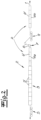
- the Fig. 2 and 3 show again a strip treatment device with a tempering device 2, which has an inlet-side heating section 3 and an outlet-side cooling section 4.
- a tension roller set 5 is provided and on the outlet side, another tension roller set 6 can be provided, which only in Fig. 3 , but not in Fig. 2 is shown.
- the heating section 3 is in turn composed of several heating zones 3', while the cooling section 4 is composed of several cooling zones 4'.
- the cooling section 4 is divided into two cooling section sections, namely a first cooling section section 4a and a subsequent second cooling section section 4b.
- the strip position control device 7 is now arranged according to the invention between the first cooling section section 4a and the second cooling section section 4b.
- the metal strip is heated in the heating section 3 with the heating and holding zones 3' in a basically known manner to the desired temperature, and the temperature can be maintained for a desired time.
- the heating section 3 therefore does not need to be modified compared to the prior art - apart from an extension.
- the heating section 3 is then followed by the first cooling section section 3a, with which the metal strip is cooled down in a first stage, preferably to a temperature of 100 °C to 200 °C, e.g.
- the strip center control is carried out using the strip center control device 7.
- This has a 90° control roller 8.
- Another tension roller set 9 is connected to increase the strip tension.
- the strip then passes through the second cooling section 4b, where it is cooled to the desired final temperature of, for example, 40 °C to 60 °C. In this way, production capacity can be increased without significantly increasing the free strip length, thus preventing an impermissible strip path in the furnace.
- a further strip position control device and/or another tension roller set can be connected to the second cooling section 4b. This is shown in Fig. 2 not shown.
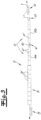
- Fig. 3 shows a modified embodiment of the invention, in which the strip center control device 7 is designed as a three-roller strip center control with three rollers 10. Furthermore, in Fig. 3 It is indicated that a further strip center control device 11 and a further tension roller set 6 can be arranged behind the second cooling section 4b.
- the additional strip center control device 11 behind the second cooling section 4b is useful because, in this embodiment, no tension roller set is arranged between the cooling sections 4a, 4b and therefore the second section 4b also operates with a lower strip tension.
- the furnace zones 3', 4' in the embodiment according to the invention have a total length which is greater than the length in the known embodiment according to Fig. 1
- the free strip length is not increased, since the strip center control 7 is already connected to the first cooling section 4a.
- This allows both the heating section 3 and the cooling section 4 to be significantly extended compared to the prior art.
- cooling section sections 4a and 4b are created, each of which is (significantly) shorter than the heating section 3.
Landscapes
- Chemical & Material Sciences (AREA)
- Engineering & Computer Science (AREA)
- Physics & Mathematics (AREA)
- Thermal Sciences (AREA)
- Crystallography & Structural Chemistry (AREA)
- Mechanical Engineering (AREA)
- Materials Engineering (AREA)
- Metallurgy (AREA)
- Organic Chemistry (AREA)
- Heat Treatment Of Strip Materials And Filament Materials (AREA)
- Tunnel Furnaces (AREA)
- Registering, Tensioning, Guiding Webs, And Rollers Therefor (AREA)
Description
- Die Erfindung betrifft eine Vorrichtung zur kontinuierlichen Behandlung eines Metallbandes, insbesondere eines Metallbandes aus Aluminium (oder einer Aluminiumlegierung) oder aus Buntmetall (oder einer Buntmetalllegierung), mit zumindest einer Temperiervorrichtung, welche als Bandschwebeofen ausgebildet ist, durch den das Metallband schwebend hindurchgeführt wird und mit einer Bandlaufregeleinrichtung, mit der die Lage des Metallbandes in der Bandlaufebene und quer zur Bandlaufrichtung steuerbar oder regelbar ist, wobei der Bandschwebeofen zumindest eine einlaufseitige Heizstrecke und eine auslaufseitige Kühlstrecke aufweist. Das Metallband weist bevorzugt eine Dicke von 0,1 mm bis 6 mm auf.
- Bei der Temperiervorrichtung handelt es sich um einen Bandschwebeofen, der eine Heizstrecke und eine Kühlstrecke aufweist. Die Heizstrecke besteht in der Regel aus mehreren Heizzonen (Aufheiz- bzw. Haltezonen) und die Kühlstrecke besteht in der Regel aus mehreren Kühlzonen. Das Metallband wird in einer solchen Temperiervorrichtung auf eine bestimmt (Soll-)Temperatur erwärmt, ggf. eine bestimmte Zeit bei dieser Temperatur gehalten und danach wieder abgekühlt. Der Durchlauf durch den Ofen erfolgt berührungslos, indem das Band zwischen Düsen (Luftdüsen), die mit entsprechendem Luftdruck beaufschlagt werden, geschwebt wird. Die Kühlung in den Kühlzonen kann durch Luft, Wasser oder eine Kombination von Luft und Wasser erfolgen. Solche Bandschwebeöfen mit Heizstrecke einerseits und Kühlstrecke andererseits sind bekannt (vgl. z. B.
DE 198 04 184 A1 ). - Die
DE 103 26 071 offenbart eine Vorrichtung zur kontinuierlichen Behandlung eines Metallbandes, mit zumindest einer Temperiervorrichtung, durch welche das Metallband schwebend hindurchgeführt wird und mit einer Bandlageregeleinrichtung, mit der die Lage des Metallbandes in der Bandlaufebene und quer zur Bandlaufrichtung steuerbar oder regelbar ist, wobei die Temperiervorrichtung zumindest eine einlaufseitige Heizstrecke und eine auslaufseitige Kühlstrecke aufweist. - Bei einer solchen Vorrichtung der eingangs beschriebenen Art zur kontinuierlichen Behandlung eines Metallbandes mit einer Temperiervorrichtung bzw. mit einem Bandschwebeofen kann es sich z. B. um eine Glühlinie bzw. Kontiglühlinie handeln, in welcher das Metallband eine Wärmebehandlung aus metallurgischen Gründen erfährt, z. B. um bestimmte Festigkeits- und Verformungseigenschaften zu erzielen. Alternativ kann es sich bei der Vorrichtung aber auch um eine Bandbeschichtungsanlage bzw. eine Bandbeschichtungslinie handeln, in welcher die Wärmebehandlung des Metallbandes nicht im Sinne eines Glühens, sondern zur Trocknung einer Beschichtung eines Bandes erfolgt, so dass der Ofen dann als Durchlauftrockner ausgebildet ist.
- Bei dem Metallband handelt es sich bevorzugt um Aluminium- oder Buntmetallband in einem Dickenbereich von 0,1 mm bis 6 mm.
- Da das Metallband z. B. in Glühlinien auf Temperaturen nahe des Schmelzpunktes erhitzt wird, ist es in der Regel erforderlich, innerhalb der Temperiervorrichtung einen verhältnismäßig geringen Bandzug einzustellen, um einen Bandriss zu vermeiden. Dazu wird der Bandzug z. B. einlaufseitig in einem Spannrollensatz abgebaut und auslaufseitig nach dem Abkühlen wieder in einem weiteren Spannrollensatz aufgebaut. In der Temperiervorrichtung (Bandschwebeofen) beträgt der spezifische Bandzug z. B. 0,5 bis 1 MPa. Da das Band insbesondere bei geringem Bandzug im Ofen "verlaufen" kann, z. B. aufgrund von etwaigem Bandsäbel, ist es erforderlich, das Band mithilfe einer Bandlageregeleinrichtung in geeigneter Weise zu positionieren, vorzugsweise auf Bandmitte zu bringen. Die Positionierung erfolgt folglich in der Bandlaufebene quer zur Bandlaufrichtung. Eine solche Bandlaufregeleinrichtung weist in der Regel zumindest eine Steuerrolle sowie geeignete Positionsmesseinrichtungen, z. B. Bandkantenerfassungen auf. Bei den aus der Praxis bekannten Anlagen ist die Bandlaufregeleinrichtung hinter der Temperiervorrichtung, d. h. nach der Kühlstrecke angeordnet. Die Steuerrolle ist in der Praxis üblicherweise als sogenannte PI-Bandmittenregelung ausgeführt, d. h. mit einem proportionalen P- und einem integralen I-Anteil. Der I-Anteil wirkt in die Ofensektion zurück und verhindert ein zu starkes Verlaufen des Bandes im Ofen. In der Regel sitzt die Steuerrolle auf einem beweglichen Grundrahmen. Dieser verdreht die Rolle um einen imaginären Drehpunkt bzw. um eine imaginäre Drehachse, die in der Ofensektion liegt und senkrecht auf die Bandlaufebene steht. Das Maß der Verschiebung der Rolle aus der Mittelachse der Ofensektion ist der proportionale Anteil, das Maß der Schiefstellung der Rolle der integrale Anteil der Bandmittenregelung. Bei einer schiefstehenden Rolle wandert das Band durch den sogenannten Wickeleffekt wieder in Richtung zur Bandmitte. Solche aus der Praxis bekannten Anlagen haben sich grundsätzlich bewährt.
- Eine Anlage der eingangs beschriebenen Art ist z. B. aus der
DE 103 37 502 B4 bekannt. An einen Ofen mit Heizzonen und Kühlzonen schließt sich eine der Bandmittensteuerung dienende Umlenkrolle an. - Im Übrigen ist aus der
DE 103 26 071 A1 eine Anlage bekannt, bei der auslaufseitig hinter einem Bandschwebeofen eine Umlenkvorrichtung angeordnet ist, unterhalb derer sich als Fluidverschluss eine Wassertasse befindet. Die Umlenkung kann gleichzeitig auch zur Bandmittensteuerung dienen, wobei die Bandposition durch oberhalb und unterhalb des Bandes angeordnete Sensoren erfasst wird und die Bewegung der Bandmittensteuerung zur Rückführung eines aus der Mittellage verlaufenden Bandes mittels eines Zylinders erfolgt. - In der Praxis besteht aufgrund der rasch wachsenden Nachfrage nach Karosseriebändern aus Aluminium der Bedarf, immer leistungsfähigere Kontiglühlinien zu errichten. Um höhere Produktionskapazitäten zu erreichen, durchläuft das Band die Behandlungssektion mit höherer Geschwindigkeit. Da jedoch pro Ofenzone nur ein begrenzter Wärmeeintrag ins Band gebracht werden kann, folgt daraus, dass die Temperiervorrichtung für eine höhere Produktionskapazität länger ausgelegt werden müsste. Da das Band wegen des geringen Bandzugs in der Ofensektion leichter verläuft, besteht bei großen Ofenlängen das Risiko, dass die bekannten Bandlageregeleinrichtungen nicht mehr ausreichen, um den Bandlauf im Ofen stabil zu halten, so dass die Gefahr besteht, dass das Band seitlich verläuft bzw. an der Ofenkonstruktion anläuft. Dieses kann zu unerwünschten Bandbeschädigungen oder einem Bandriss führen, so dass sich Anlagen mit erhöhter Produktionskapazität auf diese Weise nicht ohne Weiteres realisieren lassen. - Hier setzt die Erfindung ein.
- Der Erfindung liegt die Aufgabe zugrunde, eine Vorrichtung zur kontinuierlichen Behandlung eines Metallbandes der eingangs beschriebenen Art zu schaffen, welche sich durch eine verbesserte Bandlageregelung auszeichnet und die insbesondere auch in langen Ofenstrecken einen einwandfreien Bandlauf garantiert.
- Zur Lösung dieser Aufgabe lehrt die Erfindung Vorrichtung mit den Merkmalen des Anspruchs 1. Die Kühlstrecke ist in zumindest einen ersten Kühlstreckenabschnitt und einen nachfolgenden beabstandeten zweiten Kühlstreckenabschnitt aufgeteilt, wobei die Bandlageregeleinrichtung zwischen dem ersten Kühlstreckenabschnitt und dem zweiten Kühlstreckenabschnitt angeordnet ist. Erfindungsgemäß ist die Bandlageregeleinrichtung folglich nicht mehr ausgangsseitig hinter der Temperiervorrichtung und folglich nicht mehr nach der letzten Kühlzone angeordnet, sondern sie wird gleichsam in die Kühlstrecke integriert, indem diese in zwei Kühlstreckenabschnitte aufgeteilt wird. In einem ersten Abschnitt wird das Band soweit heruntergekühlt, dass es problemlos die Bandlageregeleinrichtung passieren kann. Im Anschluss an den ersten Kühlstreckenabschnitt befindet sich folglich die Bandlageregeleinrichtung. Anschließend durchläuft das Band den zweiten Kühlstreckenabschnitt und folglich den zweiten Teil der Kühlzonen, so dass das Band anschließend auf die gewünschte Endtemperatur heruntergekühlt wird. Auf diese Weise kann insgesamt mit einer langen Ofenstrecke und folglich mit langen Heizstrecken und Kühlstrecken gearbeitet werden, so dass die Produktionskapazität erhöht wird, ohne dass die freie Bandlänge im Bereich niedrigen Bandzuges nennenswert erhöht werden muss. Auf diese Weise wird ein unzulässiger Bandverlauf im Ofen zuverlässig vermieden.
- Die Bandlageregeleinrichtung selbst kann in herkömmlicher Weise ausgebildet sein, es kann folglich auf herkömmliche Lösungen zurückgegriffen werden. Erfindungsgemäß kommt es auf die besondere Positionierung der Bandlaufregelvorrichtung innerhalb der Ofensektion bzw. der innerhalb der Kühlstrecke an.
- So kann die Bandlageregeleinrichtung für die Bandlageregelung z. B. eine herkömmliche, verstellbare Umlenkrolle, z. B. eine 90°-Umlenkrolle aufweisen bzw. als solche ausgebildet sein. Es empfiehlt sich jedoch, die Umlenkrolle mit einer geeigneten (hoch-)temperaturbeständigen Beschichtung zu versehen, da die Bandtemperatur zwischen der ersten Kühlstrecke und der zweiten Kühlstrecke bevorzugt 100 °C bis 200 °C, besonders bevorzugt 120 °C bis 150 °C beträgt. Alternativ zu einer 90°-Steuerrolle kann auch auf eine andere bekannte Art der Bandmittenregelung, z. B. mithilfe einer Mehrrollensteuereinrichtung, z. B. einer Drei-Rollen-Regeleinrichtung oder eines Steuertreibers (z. B. als Rollenpaar) gearbeitet werden. Auch in diesem Fall werden bevorzugt geeignete Beschichtungen vorgesehen. Vorzugsweise wird die Bandlageregelung bzw. Bandmittenregelung in grundsätzlich bekannter Weise als PI-Regelung ausgeführt. Die Steuerrolle bzw. die Mehrrollenanordnung sitzt folglich in grundsätzlich bekannter Weise auf einen beweglichen Grundrahmen. Dieser verdreht die Rolle bzw. die Rollen um einen imaginären Drehpunkt, der wiederum in der Ofensektion liegt. Das Maß der Verschiebung der Rolle aus der Mittelachse der Ofensektion ist der proportionale Anteil, das Maß der Schiefstellung der Rolle der integrale Anteil der Bandmittenregelung.
- Bevorzugt weist die Bandbehandlungsanlage einlaufseitig einen ersten Spannrollensatz auf, der vor der Temperiervorrichtung angeordnet ist, um den Bandzug herabzusetzen. Ferner ist es zweckmäßig, ausgangsseitig und folglich hinter der Temperiervorrichtung einen weiteren Spannrollensatz vorzusehen, mit dem der Bandzug wieder erhöht wird, so dass sich weitere Prozessschritte anschließen können, wie z. B. das Streckrichten, Reinigen oder Kantenbesäumen.
- Optional liegt es im Rahmen der Erfindung, dass zwischen dem ersten Kühlstreckenabschnitt und dem zweiten Kühlstreckenabschnitt hinter der Bandlageregeleinrichtung ein (weiterer) Spannrollensatz angeordnet ist, um den Bandzug bereits an dieser Stelle zu erhöhen. Dieses hat den Vorteil, dass das Band den zweiten Teil der Kühlzonen mit einem etwas erhöhten Bandzug durchlaufen kann. Auch in diesem Fall ist es zweckmäßig, die Rollen eines solchen Rollensatzes mit entsprechenden temperaturbeständigen Beschichtungen zu versehen. Erfindungsgemäß kommt es darauf an, dass zwischen dem ersten Kühlstreckenabschnitt und dem zweiten Kühlstreckenabschnitt eine Bandlageregelung erfolgt. Optional kann es zweckmäßig sein, hinter dem zweiten Kühlstreckenabschnitt eine weitere Bandlageregelung vorzusehen. Dieses kann insbesondere dann zweckmäßig sein, wenn zwischen dem ersten Kühlstreckenabschnitt und dem zweiten Kühlstreckenabschnitt kein zusätzlicher Spannrollensatz vorgesehen ist und folglich auch im zweiten Kühlstreckenabschnitt mit niedrigerem Bandzug gearbeitet wird. Sofern zwischen den beiden Kühlstreckenabschnitten ein Spannrollensatz vorgesehen ist und folglich der Bandzug bereits an dieser Stelle erhöht wird, kann hinter dem zweiten Kühlstreckenabschnitt eventuell auf eine zweite Bandlageregelung verzichtet werden.
- Die Aufteilung der Kühlstrecke in zwei Kühlstreckenabschnitte hat zur Folge, dass die beiden Kühlstreckenabschnitte (deutlich) kürzer sind als ein entsprechender einheitlicher Kühlstreckenabschnitt. Gegenüber herkömmlichen Anlagen kann auf diese Weise die gesamte Temperiervorrichtung verlängert werden, d. h. sowohl die Heizstrecke kann verlängert werden als auch die gesamte Kühlstrecke.
- Gegenstand der Erfindung ist auch ein Verfahren gemäß Patentanspruch 7 zur kontinuierlichen Behandlung eines Metallbandes mit einer Vorrichtung der beschriebenen Art, wobei das Metallband zur thermischen Behandlung schwebend durch die Heizstrecke und die Kühlstrecke geführt wird. Dieses Verfahren ist dadurch gekennzeichnet, dass die Lage des Metallbandes (innerhalb der Bandlaufebene und quer zur Bandlaufrichtung) mit einer innerhalb der Kühlstrecke angeordneten Bandlageregeleinrichtung gesteuert oder geregelt wird.
- Wie bereits beschrieben ist eine solche Bandlageregeleinrichtung bevorzugt mit geeigneten Messeinrichtungen und einer Rückführung ausgestattet, so dass eine echte Regelung der Bandlage erfolgt. Grundsätzlich sind von der Erfindung aber auch Ausführungsformen erfasst, bei denen ohne Messung und/oder ohne Rückführung gearbeitet wird, so dass keine Regelung der Bandlage, sondern lediglich eine Steuerung erfolgt.
- Bevorzugt wird die Länge des ersten Kühlstreckenabschnittes so bemessen, dass das Metallband zwischen dem ersten Kühlstreckenabschnitt und dem zweiten Kühlstreckenabschnitt und folglich im Bereich der Bandlageregeleinrichtung eine Temperatur von bis zum 200 °C, z. B. 100 °C bis 200 °C aufweist. Besonders bevorzugt beträgt die Temperatur bis zu 150 °C, z. B. 120 °C bis 150 °C. Die Länge des zweiten Kühlstreckenabschnittes kann dann z. B. so bemessen sein, dass das Band mit einer Temperatur von bis zu 70°, vorzugsweise bis zu 60° C z. B. 40 °C bis 60 °C ausläuft, so dass problemlos weitere Prozessschritte, wie z. B. Streckrichten, Reinigen oder Kantenbesäumen folgen können.
- Die erfindungsgemäße Anlage kann z. B. als Glühlinie ausgebildet sein oder Bestandteil einer Glühlinie sein. Die Temperiervorrichtung ist dann als Glühofen ausgebildet. Alternativ kann die Anlage als Bandbeschichtungsanlage ausgebildet sein oder Bestandteil einer Bandbeschichtungsanlage sein. Die Temperiervorrichtung ist dann als Trockner bzw. Trocknerofen ausgebildet. In beiden Fällen sind die Öfen/Trockner bevorzugt als Bandschwebeofen ausgebildet.
- Im Folgenden wird die Erfindung anhand von lediglich Ausführungsbeispielen darstellenden Zeichnungen näher erläutert. Es zeigen
- Fig. 1
- eine bekannte Bandbehandlungsvorrichtung nach dem Stand der Technik in einer vereinfachten schematischen Darstellung,
- Fig. 2
- eine erfindungsgemäße Bandbehandlungsvorrichtung in einer vereinfachten schematischen Darstellung und
- Fig. 3
- eine abgewandelte Ausführungsform des Gegenstandes nach
Fig. 2 . - Um den Erfindungsgedanken zu verdeutlichen, ist es zweckmäßig, zunächst nochmals den Stand der Technik gemäß
Fig. 1 zu betrachten.Fig. 1 zeigt eine bekannte Bandbehandlungsvorrichtung zur kontinuierlichen Behandlung eines Metallbandes, nämlich einer thermischen Behandlung. Diese Vorrichtung weist eine Temperiervorrichtung 2 auf, die als Bandschwebeofen ausgebildet ist. Das Metallband 1 durchläuft diesen Bandschwebeofen 2 berührungslos, indem das Band zwischen oberen Düsen und unteren Düsen, die mit entsprechendem Luftdruck beaufschlagt werden, berührungslos geschwebt wird. Einzelheiten sind nicht dargestellt. Der Bandschwebeofen 2 weist einlaufseitig eine Heizstrecke 3 und auslaufseitig eine Kühlstrecke 4 auf. Die Heizstrecke setzt sich in der Regel aus mehreren Heizzonen 3' zusammen, während sich die Kühlstrecke in der Regel aus mehreren Kühlzonen 4' zusammensetzt, wobei die einzelnen Zonen einzeln bzw. separat steuerbar sind. In den Heizzonen erfolgt das Heizen des Metallbandes in der Regel mithilfe der Luft, so dass die Düsen, z. B. die unteren Düsen neben der Tragfunktion auch die Temperierung übernehmen können. In den Kühlzonen erfolgt die Kühlung in der Regel ebenfalls durch Luft oder durch eine Kombination von Luft und Wasser. Im Falle einer Glühlinie für Aluminiumbänder für Automobil-Karosseriezwecke beträgt die Soll-Temperatur in der Heizzone z. B. ca. 550 °C bis 570 °C. Die Heizzonen bilden folglich Aufheiz- und Haltezonen. Es ist erkennbar, dass die Anlage einlaufseitig einen Spannrollensatz 5 aufweist, mit dem der Bandzug reduziert wird, z. B. auf einen spezifischen Bandzug von z. B. 0,5 bis 1 MPa. Nach dem Bandschwebeofen 2 bzw. nach der letzten Kühlzone wird das Metallband 1 mithilfe einer Bandlageregeleinrichtung 7 mittengeregelt, d. h. die Lage des Metallbandes wird in der Bandlaufebene und quer zur Bandlaufrichtung geregelt. Anschließend wird der Bandzug mit einem auslaufseitigen Spannrollensatz 6 wieder auf das übliche Linienniveau von z. B. spezifisch 10 bis 20 MPa erhöht. Wegen des geringen spezifischen Bandzuges innerhalb des Bandschwebeofens ist es erforderlich, das Metallband 1 mithilfe der Bandlageregelvorrichtung 7 auf Bandmitte zu bringen. - Will man die Produktionskapazität einer solchen in
Fig. 1 dargestellten Anlage erhöhen, ist es grundsätzlich erforderlich, den Bandschwebeofen zu verlängern. Mit der inFig. 1 dargestellten Anlage nach dem Stand der Technik besteht ab einer gewissen Länge des Bandschwebeofens das Risiko, dass die Bandlageregeleinrichtung 7, z. B. die Steuerrolle 8, nicht mehr ausreicht, so dass der Bandlauf im Ofen instabil werden kann, das Band also seitlich verläuft, bzw. an der Ofenkonstruktion anläuft. Dieses könnte zu unerwünschten Bandbeschädigungen oder einem Bandriss führen, so dass eine einfache Verlängerung des Bandschwebeofens nicht ohne weitere Maßnahmen zweckmäßig ist. - Erfindungsgemäß wird daher die Bandlageregeleinrichtung 7 nicht mehr hinter der Temperiervorrichtung 2 und folglich nicht mehr hinter der Kühlstrecke 4 angeordnet, sondern innerhalb der Kühlstrecke 4 selbst. Dieses wird anhand der
Fig. 2 und3 erläutert, welche erfindungsgemäße Ausführungsformen zeigen. DieFig. 2 und3 zeigen wiederum eine Bandbehandlungsvorrichtung mit einer Temperiervorrichtung 2, die eine einlaufseitige Heizstrecke 3 und eine auslaufseitige Kühlstrecke 4 aufweist. Einlaufseitig ist wiederum ein Spannrollensatz 5 vorgesehen und auslaufseitig kann wiederum ein weiterer Spannrollensatz 6 vorgesehen sein, der lediglich inFig. 3 , nicht jedoch inFig. 2 dargestellt ist. Die Heizstrecke 3 setzt sich wiederum aus mehreren Heizzonen 3' zusammen, während sich die Kühlstrecke 4 aus mehreren Kühlzonen 4' zusammensetzt. Erfindungsgemäß ist die Kühlstrecke 4 in zwei Kühlstreckenabschnitte, nämlich einen ersten Kühlstreckenabschnitt 4a und einen nachfolgenden zweiten Kühlstreckenabschnitt 4b aufgeteilt. Die Bandlageregeleinrichtung 7 ist nun erfindungsgemäß zwischen dem ersten Kühlstreckenabschnitt 4a und dem zweiten Kühlstreckenabschnitt 4b angeordnet. Das Metallband wird in der Heizstrecke 3 mit den Aufheiz- und Haltezonen 3' in grundsätzlich bekannter Weise auf die gewünschte Temperatur erwärmt und die Temperatur kann über eine gewünschte Zeit gehalten werden. Die Heizstrecke 3 muss folglich - abgesehen von einer Verlängerung - gegenüber dem Stand der Technik nicht modifiziert werden. An die Heizstrecke 3 schließt sich dann der erste Kühlstreckenabschnitt 3a an, mit dem das Metallband in einer ersten Stufe heruntergekühlt wird, bevorzugt auf eine Temperatur von 100 °C bis 200 °C, z. B 120 °C bis 150 °C. Nach dem Auslaufen aus dem ersten Kühlstreckenabschnitt 4a erfolgt die Bandmittenregelung mithilfe der Bandmittenregeleinrichtung 7. In dem Ausführungsbeispiel nachFig. 2 weist diese eine 90°-Steuerrolle 8 auf. Daran schließt sich im Ausführungsbeispiel nachFig. 2 ein weiterer Spannrollensatz 9 an, um den Bandzug zu erhöhen. Danach durchläuft das Band den zweiten Kühlstreckenabschnitt 4b, so dass es auf die gewünschte Endtemperatur von z. B. 40 °C bis 60 °C heruntergekühlt wird. Auf diese Weise gelingt es die Produktionskapazität zu erhöhen, ohne die freie Bandlänge nennenswert zu verlängern, so dass ein unzulässiger Bandverlauf im Ofen vermieden wird. An den zweiten Kühlstreckenabschnitt 4b können sich eine weitere Bandlageregeleinrichtung und/oder ein weiterer Spannrollensatz anschließen. Dieses ist inFig. 2 nicht dargestellt. -
Fig. 3 zeigt eine abgewandelte Ausführungsform der Erfindung, bei welcher die Bandmittenregeleinrichtung 7 als Drei-Rollen-Bandmittenregelung mit drei Rollen 10 ausgebildet ist. Ferner ist inFig. 3 angedeutet, dass hinter dem zweiten Kühlstreckenabschnitt 4b eine weitere Bandmittenregeleinrichtung 11 sowie ein weiterer Spannrollensatz 6 angeordnet sein können. Die zusätzliche Bandmittenregelung 11 hinter dem zweiten Kühlstreckenabschnitt 4b ist deshalb sinnvoll, weil bei dieser Ausführungsform zwischen den Kühlstrecken 4a, 4b kein Spannrollensatz angeordnet ist und daher auch im zweiten Abschnitt 4b mit niedrigerem Bandzug gearbeitet wird. - Vergleicht man z. B. die
Fig. 1 und2 , so erkennt man, dass die Ofenzonen 3', 4' bei der erfindungsgemäßen Ausführungsform insgesamt eine Länge aufweisen, die größer ist als die Länge bei der bekannten Ausführungsform nachFig. 1 . Dennoch ist die freie Bandlänge nicht größer, da die Bandmittenregelung 7 sich bereits an den ersten Kühlstreckenabschnitt 4a anschließt. Damit lassen sich sowohl die Heizstrecke 3 als auch die Kühlstrecke 4 gegenüber dem Stand der Technik deutlich verlängern. Durch die Aufteilung der Kühlstrecke 4 entstehen jedoch Kühlstreckenabschnitte 4a, 4b, die jeweils (deutlich) kürzer sind als die Heizstrecke 3.
Claims (9)
- Vorrichtung zur kontinuierlichen Behandlung eines Metallbandes (1), insbesondere eines Metallbandes aus Aluminium oder einer Aluminiumlegierung oder aus Buntmetall oder einer Buntmetalllegierung,mit zumindest einer Temperiervorrichtung, welche als Bandschwebeofen (2) ausgebildet ist, durch den das Metallband (1) schwebend hindurchgeführt wirdund mit einer Bandlageregeleinrichtung (7), mit der die Lage des Metallbandes (1) in der Bandlaufebene und quer zur Bandlaufrichtung steuerbar oder regelbar ist,wobei der Bandschwebeofen (2) zumindest eine einlaufseitige Heizstrecke (3) und eine auslaufseitige Kühlstrecke (4) aufweist,dadurch gekennzeichnet,dass die Bandlageregeleinrichtung (7) innerhalb der Kühlstrecke (4) angeordnet ist,wobei die Kühlstrecke (4) in zumindest einen ersten Kühlstreckenabschnitt (4a) und einen nachfolgenden zweiten Kühlstreckenabschnitt (4b) aufgeteilt ist, wobei die Bandlageregeleinrichtung (7) zwischen dem ersten Kühlstreckenabschnitt (4a) und dem zweiten Kühlstreckenabschnitt (4b) angeordnet ist,wobei die Bandlageregeleinrichtung eine verstellbare Umlenkrolle aufweist oder als solche ausgebildet ist oder als Mehrrolleneinrichtung ausgebildet ist.
- Vorrichtung nach Anspruch 1, dadurch gekennzeichnet, dass hinter dem zweiten Kühlstreckenabschnitt eine weitere Bandlageregeleinrichtung (11) angeordnet ist.
- Vorrichtung nach Anspruch 1 oder 2, dadurch gekennzeichnet, dass die Bandlageregeleinrichtung (7, 11) für die Bandlageregelung eine verstellbare Umlenkrolle (8), z. B. eine 90°-Umlenkrolle aufweist bzw. als solche ausgebildet ist.
- Vorrichtung nach Anspruch 1 oder 2, dadurch gekennzeichnet, dass die Bandlageregeleinrichtung (7, 11) als Drei-Rollen-Regeleinrichtung ausgebildet ist.
- Vorrichtung nach einem der Ansprüche 1 bis 4, dadurch gekennzeichnet, dass zwischen dem ersten Kühlstreckenabschnitt (4a) und dem zweiten Kühlstreckenabschnitt (4b) ein der Bandlageregeleinrichtung (7) nachgeordneter Spannrollensatz (11) angeordnet ist.
- Vorrichtung nach einem der Ansprüche 1 bis 5, dadurch gekennzeichnet, dass die Rollen (8, 9) der Bandlageregeleinrichtung (7) und/oder des Spannrollensatzes (11) mit einer temperaturbeständigen Beschichtung versehen sind.
- Verfahren zur kontinuierlichen Behandlung eines Metallbandes mit einer Vorrichtung nach einem der Ansprüche 1 bis 6, wobei das Metallband zur thermischen Behandlung schwebend durch die Heizstrecke und die Kühlstrecke geführt wird, dadurch gekennzeichnet, dass die Lage des Metallbandes mit einer innerhalb der Kühlstrecke angeordneten Bandlageregeleinrichtung gesteuert oder geregelt wird,
wobei die Bandlageregeleinrichtung zwischen einem ersten Kühlstreckenabschnitt und einem zweiten Kühlstreckenabschnitt angeordnet ist. - Verfahren nach Anspruch 7, dadurch gekennzeichnet, dass die Bandlage mit einer Pl-Regelung mit einem proportionalen P-Anteil und einem integralen I-Anteil geregelt wird.
- Verfahren nach Anspruch 7 oder 8, dadurch gekennzeichnet, dass die Bandlageregeleinrichtung in einem Bereich der Kühlstrecke zwischen dem ersten Kühlstreckenabschnitt und dem zweiten Kühlstreckenabschnitt angeordnet ist, in welchem die Temperatur des Metallbandes bis zu 200 °C, z. B. 100 °C bis 200 °C, vorzugsweise bis zu 150 °C, z. B 120 °C bis 150 °C beträgt.
Priority Applications (1)
| Application Number | Priority Date | Filing Date | Title |
|---|---|---|---|
| PL13183368T PL2722112T3 (pl) | 2012-10-19 | 2013-09-06 | Urządzenie i sposób do ciągłej obróbki taśmy metalowej |
Applications Claiming Priority (1)
| Application Number | Priority Date | Filing Date | Title |
|---|---|---|---|
| DE102012110010.1A DE102012110010B4 (de) | 2012-10-19 | 2012-10-19 | Vorrichtung und Verfahren zur kontinuierlichen Behandlung eines Metallbandes |
Publications (3)
| Publication Number | Publication Date |
|---|---|
| EP2722112A1 EP2722112A1 (de) | 2014-04-23 |
| EP2722112B1 EP2722112B1 (de) | 2015-06-24 |
| EP2722112B2 true EP2722112B2 (de) | 2025-03-26 |
Family
ID=49170558
Family Applications (1)
| Application Number | Title | Priority Date | Filing Date |
|---|---|---|---|
| EP13183368.3A Active EP2722112B2 (de) | 2012-10-19 | 2013-09-06 | Vorrichtung und Verfahren zur kontinuierlichen Behandlung eines Metallbandes |
Country Status (10)
| Country | Link |
|---|---|
| US (1) | US10415113B2 (de) |
| EP (1) | EP2722112B2 (de) |
| KR (1) | KR102162942B1 (de) |
| CN (1) | CN103773943B (de) |
| CA (1) | CA2829532C (de) |
| DE (1) | DE102012110010B4 (de) |
| ES (1) | ES2543328T3 (de) |
| HU (1) | HUE025366T2 (de) |
| PL (1) | PL2722112T3 (de) |
| RU (1) | RU2623520C2 (de) |
Families Citing this family (8)
| Publication number | Priority date | Publication date | Assignee | Title |
|---|---|---|---|---|
| DE102012110010B4 (de) * | 2012-10-19 | 2016-09-01 | Bwg Bergwerk- Und Walzwerk-Maschinenbau Gmbh | Vorrichtung und Verfahren zur kontinuierlichen Behandlung eines Metallbandes |
| FR3027920B1 (fr) * | 2014-10-29 | 2019-03-29 | Fives Stein | Procede d'orientation de grains de tole d'acier, dispositif s'y rapportant, et installation mettant en oeuvre ce procede ou ce dispositif |
| DE102014118946B4 (de) * | 2014-12-18 | 2018-12-20 | Bwg Bergwerk- Und Walzwerk-Maschinenbau Gmbh | Vorrichtung und Verfahren zur kontinuierlichen Behandlung eines Metallbandes |
| CN104831053B (zh) * | 2015-05-25 | 2017-08-22 | 马钢(集团)控股有限公司 | 一种电工钢退火加热支撑方法 |
| BR122020021459B1 (pt) | 2015-06-09 | 2022-08-09 | Novelis Inc | Aparelho de condução magnética com corrente aplicada, e, método para conduzir metal |
| WO2017132476A1 (en) * | 2016-01-29 | 2017-08-03 | Corning Incorporated | Thermally treated metallic materials and related methods |
| DE102016102093B3 (de) | 2016-02-05 | 2017-06-14 | Bwg Bergwerk- Und Walzwerk-Maschinenbau Gmbh | Durchlaufkühlvorrichtung und Verfahren zum Abkühlen eines Metallbandes |
| DE102018100842B3 (de) * | 2018-01-16 | 2019-05-09 | Ebner Industrieofenbau Gmbh | Durchlaufofen für Aluminiumbänder |
Citations (4)
| Publication number | Priority date | Publication date | Assignee | Title |
|---|---|---|---|---|
| EP0068272A1 (de) † | 1981-06-15 | 1983-01-05 | Daidotokushuko Kabushiki Kaisha | Vorrichtung für den Transport bahnförmigen Materials |
| DE10303228B3 (de) † | 2003-01-28 | 2004-04-15 | Kramer, Carl, Prof. Dr.-Ing. | Vorrichtung zur Wärmebehandlung metallischer Bänder im Durchlauf |
| DE10326071A1 (de) † | 2003-06-10 | 2005-01-13 | Kramer, Carl, Prof. Dr.-Ing. | Umlenkvorrichtung für bewegte Bänder |
| WO2007138152A1 (en) † | 2006-06-01 | 2007-12-06 | Outokumpu Oyj | Method for controlling a metal strip in a heat treatment furnace |
Family Cites Families (22)
| Publication number | Priority date | Publication date | Assignee | Title |
|---|---|---|---|---|
| US4218002A (en) | 1979-05-31 | 1980-08-19 | Olin Corporation | Strip material center guide assembly |
| JPS5848641A (ja) * | 1981-09-16 | 1983-03-22 | Daido Steel Co Ltd | 連続加熱処理炉 |
| DE3307499C3 (de) | 1983-03-03 | 1995-02-09 | Elmeg | Regeleinrichtung zur kanten- oder mittengenauen Führung von bandförmigen Materialbahnen |
| JPS6270527A (ja) * | 1985-09-25 | 1987-04-01 | Mitsubishi Heavy Ind Ltd | 金属ストリツプの連続焼鈍炉 |
| JPS62235429A (ja) * | 1986-04-04 | 1987-10-15 | Daido Steel Co Ltd | フロ−テイング式熱処理炉における金属帯状材料のセンタリング装置 |
| FR2688802B1 (fr) | 1992-03-19 | 1994-09-30 | Stein Heurtey | Procede de traitement thermique de bandes metalliques. |
| DE4313543C1 (de) | 1993-04-24 | 1994-04-07 | Vits Maschinenbau Gmbh | Verfahren und Vorrichtung zur Wärmebehandlung kontinuierlich durchlaufender Metallbänder |
| JP3489240B2 (ja) * | 1995-01-13 | 2004-01-19 | 大同特殊鋼株式会社 | フローティング炉 |
| US5648539A (en) | 1996-02-29 | 1997-07-15 | Xerox Corporation | Low temperature arylamine processes |
| FR2746112B1 (fr) | 1996-03-13 | 1998-06-05 | Procede de traitement thermique en continu de bandes metalliques dans des atmospheres de nature differente | |
| DE19719994B4 (de) | 1997-05-13 | 2005-01-05 | Bwg Bergwerk- Und Walzwerk-Maschinenbau Gmbh | Verfahren zur Beeinflussung der Spannungsverteilung in Metallbändern oder -tafeln aus insbesondere nichtferromagnetischem Material |
| DE19804184A1 (de) | 1998-02-03 | 1999-08-05 | Kramer Carl | Vorrichtung zur schwebenden Führung von Bändern |
| EP1008661A3 (de) | 1998-12-12 | 2000-06-28 | Sundwig GmbH | Vorrichtung zum Herstellen eines kontinuierlich in einer Hauptförderrichtung geförderten Metallbandes |
| FR2796139B1 (fr) | 1999-07-06 | 2001-11-09 | Stein Heurtey | Procede et dispositif de suppression de la vibration des bandes dans des zones de soufflage de gaz, notamment des zones de refroidissement |
| DE10163070A1 (de) * | 2001-12-20 | 2003-07-03 | Sms Demag Ag | Verfahren und Einrichtung zum kontrollierten Richten und Kühlen von aus einem Warmband-Walzwerk auslaufendem breiten Metallband, insbesondere von Stahlband oder Blech |
| DE10337502B4 (de) | 2003-08-14 | 2006-03-30 | Kramer, Carl, Prof. Dr.-Ing. | Verfahren zum Betrieb einer Durchlauf-Wärmebehandlungsanlage für Warenbahnen und Bänder mit überwiegend konvektiver Wärmeübertragung |
| FR2897620B1 (fr) | 2006-02-21 | 2008-04-04 | Stein Heurtey | Procede et dispositif de refroidissement et de stabilisation de bande dans une ligne continue |
| DE102008010062A1 (de) | 2007-06-22 | 2008-12-24 | Sms Demag Ag | Verfahren zum Warmwalzen und zur Wärmebehandlung eines Bandes aus Stahl |
| JP5479366B2 (ja) * | 2009-04-22 | 2014-04-23 | 新日鉄住金エンジニアリング株式会社 | 冷延鋼板の製造方法及びその製造設備 |
| EP2468905A1 (de) | 2010-12-22 | 2012-06-27 | Siemens VAI Metals Technologies GmbH | Kühlstrecke mit integriertem Vertikalbandspeicher |
| CN202072725U (zh) * | 2011-05-03 | 2011-12-14 | 佛山市高明基业冷轧钢板有限公司 | 一种具有生产退火板和电工钢功能的复合机组 |
| DE102012110010B4 (de) * | 2012-10-19 | 2016-09-01 | Bwg Bergwerk- Und Walzwerk-Maschinenbau Gmbh | Vorrichtung und Verfahren zur kontinuierlichen Behandlung eines Metallbandes |
-
2012
- 2012-10-19 DE DE102012110010.1A patent/DE102012110010B4/de not_active Revoked
-
2013
- 2013-09-06 HU HUE13183368A patent/HUE025366T2/en unknown
- 2013-09-06 EP EP13183368.3A patent/EP2722112B2/de active Active
- 2013-09-06 PL PL13183368T patent/PL2722112T3/pl unknown
- 2013-09-06 ES ES13183368.3T patent/ES2543328T3/es active Active
- 2013-10-08 CA CA2829532A patent/CA2829532C/en active Active
- 2013-10-16 KR KR1020130123296A patent/KR102162942B1/ko active Active
- 2013-10-17 US US14/056,372 patent/US10415113B2/en active Active
- 2013-10-18 RU RU2013146678A patent/RU2623520C2/ru active
- 2013-10-18 CN CN201310489275.1A patent/CN103773943B/zh not_active Expired - Fee Related
Patent Citations (4)
| Publication number | Priority date | Publication date | Assignee | Title |
|---|---|---|---|---|
| EP0068272A1 (de) † | 1981-06-15 | 1983-01-05 | Daidotokushuko Kabushiki Kaisha | Vorrichtung für den Transport bahnförmigen Materials |
| DE10303228B3 (de) † | 2003-01-28 | 2004-04-15 | Kramer, Carl, Prof. Dr.-Ing. | Vorrichtung zur Wärmebehandlung metallischer Bänder im Durchlauf |
| DE10326071A1 (de) † | 2003-06-10 | 2005-01-13 | Kramer, Carl, Prof. Dr.-Ing. | Umlenkvorrichtung für bewegte Bänder |
| WO2007138152A1 (en) † | 2006-06-01 | 2007-12-06 | Outokumpu Oyj | Method for controlling a metal strip in a heat treatment furnace |
Also Published As
| Publication number | Publication date |
|---|---|
| CA2829532A1 (en) | 2014-04-19 |
| PL2722112T3 (pl) | 2015-11-30 |
| CN103773943A (zh) | 2014-05-07 |
| CA2829532C (en) | 2020-03-10 |
| DE102012110010B4 (de) | 2016-09-01 |
| KR102162942B1 (ko) | 2020-10-07 |
| HUE025366T2 (en) | 2016-02-29 |
| KR20140050552A (ko) | 2014-04-29 |
| US10415113B2 (en) | 2019-09-17 |
| US20140110890A1 (en) | 2014-04-24 |
| RU2623520C2 (ru) | 2017-06-27 |
| CN103773943B (zh) | 2018-02-06 |
| ES2543328T3 (es) | 2015-08-18 |
| RU2013146678A (ru) | 2015-04-27 |
| DE102012110010A1 (de) | 2014-04-24 |
| EP2722112B1 (de) | 2015-06-24 |
| EP2722112A1 (de) | 2014-04-23 |
Similar Documents
| Publication | Publication Date | Title |
|---|---|---|
| EP2722112B1 (de) | Vorrichtung und Verfahren zur kontinuierlichen Behandlung eines Metallbandes | |
| EP3234204B1 (de) | Vorrichtung und verfahren zur kontinuierlichen behandlung eines metallbandes | |
| EP1955786B1 (de) | Verfahren zum Planieren von Metallbändern | |
| EP2445659B1 (de) | Verfahren und vorrichtung zum bearbeiten einer bramme | |
| DE102016102093B3 (de) | Durchlaufkühlvorrichtung und Verfahren zum Abkühlen eines Metallbandes | |
| EP3221487B1 (de) | Verfahren und vorrichtung zum beschichten eines metallbandes | |
| EP2310152B1 (de) | Verfahren zum längsführen eines walzgutes, insbesondere eines warmgewalzten stahlbandes und warmwalzwerk zur durchführung des verfahrens | |
| EP2934778B1 (de) | Vorrichtung zum kühlen von walzgut | |
| DE102009012334B4 (de) | Verfahren zur Kühlmittelaufbringung auf einen gegossenen Metallstrang in einer Stranggießanlage und Stranggießanlage dazu | |
| WO2010127820A1 (de) | Spritzbalken, strecke und verfahren zum aufbringen eines mediums auf ein produkt | |
| DE102013214344A1 (de) | Kühlstrecke und Verfahren zum Kühlen von warmgewalztem Metallband | |
| DE102021203170A1 (de) | Verfahren zum Führen und Zentrieren eines metallenen Walzguts in einer Walzstraße | |
| DE2723720A1 (de) | Vorrichtung zum aufrechterhalten einer waehrend eines richtvorganges auf ein metallband ausgeuebten, bestimmten zugspannung | |
| DE2102800B2 (de) | Anlage zur thermischen behandlung von walzerzeugnissen im kuehlmittelstrom | |
| EP2842646A1 (de) | Verfahren und Vorrichtung zum Temperieren von Walzen | |
| DE1521557A1 (de) | Verfahren und Vorrichtung zum UEberziehen von Bandmaterial durch Niederschlagen von Dampf | |
| EP3826781B1 (de) | Verfahren und vorrichtung zur ermittlung der seitlichen bandkontur oder der position der bandkanten eines laufenden metallbandes | |
| DE102017213854A1 (de) | Anlage und Verfahren zur Herstellung eines metallischen Produkts | |
| EP3307448B1 (de) | Verfahren und vorrichtung zum regeln eines parameters eines walzgutes | |
| EP3535071B1 (de) | Verfahren und anlage zur herstellung eines metallischen bandes | |
| DE19953915A1 (de) | Verfahren und Vorrichtung zum Bearbeiten eines Warmbandes auf dem Auslaufrollgang einer Warmbandstraße | |
| DE102010063093B4 (de) | Vorrichtung und Verfahren zum horizontalen Gießen von Metallbändern | |
| DE102008008648B3 (de) | Vorrichtung zur Abkühlung eines Werkstückes | |
| DE102023211833A1 (de) | Vorrichtung und Verfahren zum Kühlen eines Gießstrangs in einer Stranggießanlage | |
| DE69904451T2 (de) | Verfahren und vorrichtung zum einstellen der dicke eines zwischen wandernden kokillen stranggegossenen dünnen metallbandes |
Legal Events
| Date | Code | Title | Description |
|---|---|---|---|
| PUAI | Public reference made under article 153(3) epc to a published international application that has entered the european phase |
Free format text: ORIGINAL CODE: 0009012 |
|
| AK | Designated contracting states |
Kind code of ref document: A1 Designated state(s): AL AT BE BG CH CY CZ DE DK EE ES FI FR GB GR HR HU IE IS IT LI LT LU LV MC MK MT NL NO PL PT RO RS SE SI SK SM TR |
|
| AX | Request for extension of the european patent |
Extension state: BA ME |
|
| 17P | Request for examination filed |
Effective date: 20140326 |
|
| RBV | Designated contracting states (corrected) |
Designated state(s): AL AT BE BG CH CY CZ DE DK EE ES FI FR GB GR HR HU IE IS IT LI LT LU LV MC MK MT NL NO PL PT RO RS SE SI SK SM TR |
|
| REG | Reference to a national code |
Ref country code: DE Ref legal event code: R079 Ref document number: 502013000776 Country of ref document: DE Free format text: PREVIOUS MAIN CLASS: B21B0039000000 Ipc: C21D0009560000 |
|
| GRAP | Despatch of communication of intention to grant a patent |
Free format text: ORIGINAL CODE: EPIDOSNIGR1 |
|
| RIC1 | Information provided on ipc code assigned before grant |
Ipc: C21D 11/00 20060101ALI20150211BHEP Ipc: B21B 39/00 20060101ALI20150211BHEP Ipc: C21D 9/54 20060101ALI20150211BHEP Ipc: C21D 9/63 20060101ALI20150211BHEP Ipc: C21D 9/56 20060101AFI20150211BHEP |
|
| INTG | Intention to grant announced |
Effective date: 20150309 |
|
| GRAS | Grant fee paid |
Free format text: ORIGINAL CODE: EPIDOSNIGR3 |
|
| GRAA | (expected) grant |
Free format text: ORIGINAL CODE: 0009210 |
|
| AK | Designated contracting states |
Kind code of ref document: B1 Designated state(s): AL AT BE BG CH CY CZ DE DK EE ES FI FR GB GR HR HU IE IS IT LI LT LU LV MC MK MT NL NO PL PT RO RS SE SI SK SM TR |
|
| REG | Reference to a national code |
Ref country code: GB Ref legal event code: FG4D Free format text: NOT ENGLISH |
|
| REG | Reference to a national code |
Ref country code: CH Ref legal event code: EP |
|
| REG | Reference to a national code |
Ref country code: AT Ref legal event code: REF Ref document number: 732917 Country of ref document: AT Kind code of ref document: T Effective date: 20150715 |
|
| REG | Reference to a national code |
Ref country code: IE Ref legal event code: FG4D Free format text: LANGUAGE OF EP DOCUMENT: GERMAN |
|
| REG | Reference to a national code |
Ref country code: DE Ref legal event code: R096 Ref document number: 502013000776 Country of ref document: DE |
|
| REG | Reference to a national code |
Ref country code: SE Ref legal event code: TRGR |
|
| REG | Reference to a national code |
Ref country code: ES Ref legal event code: FG2A Ref document number: 2543328 Country of ref document: ES Kind code of ref document: T3 Effective date: 20150818 |
|
| REG | Reference to a national code |
Ref country code: FR Ref legal event code: PLFP Year of fee payment: 3 |
|
| RAP2 | Party data changed (patent owner data changed or rights of a patent transferred) |
Owner name: BWG BERGWERK- UND WALZWERK-MASCHINENBAU GMBH |
|
| REG | Reference to a national code |
Ref country code: NL Ref legal event code: FP |
|
| PG25 | Lapsed in a contracting state [announced via postgrant information from national office to epo] |
Ref country code: LT Free format text: LAPSE BECAUSE OF FAILURE TO SUBMIT A TRANSLATION OF THE DESCRIPTION OR TO PAY THE FEE WITHIN THE PRESCRIBED TIME-LIMIT Effective date: 20150624 Ref country code: HR Free format text: LAPSE BECAUSE OF FAILURE TO SUBMIT A TRANSLATION OF THE DESCRIPTION OR TO PAY THE FEE WITHIN THE PRESCRIBED TIME-LIMIT Effective date: 20150624 Ref country code: NO Free format text: LAPSE BECAUSE OF FAILURE TO SUBMIT A TRANSLATION OF THE DESCRIPTION OR TO PAY THE FEE WITHIN THE PRESCRIBED TIME-LIMIT Effective date: 20150924 |
|
| REG | Reference to a national code |
Ref country code: LT Ref legal event code: MG4D |
|
| PG25 | Lapsed in a contracting state [announced via postgrant information from national office to epo] |
Ref country code: LV Free format text: LAPSE BECAUSE OF FAILURE TO SUBMIT A TRANSLATION OF THE DESCRIPTION OR TO PAY THE FEE WITHIN THE PRESCRIBED TIME-LIMIT Effective date: 20150624 Ref country code: BG Free format text: LAPSE BECAUSE OF FAILURE TO SUBMIT A TRANSLATION OF THE DESCRIPTION OR TO PAY THE FEE WITHIN THE PRESCRIBED TIME-LIMIT Effective date: 20150924 Ref country code: RS Free format text: LAPSE BECAUSE OF FAILURE TO SUBMIT A TRANSLATION OF THE DESCRIPTION OR TO PAY THE FEE WITHIN THE PRESCRIBED TIME-LIMIT Effective date: 20150624 |
|
| REG | Reference to a national code |
Ref country code: PL Ref legal event code: T3 |
|
| REG | Reference to a national code |
Ref country code: GR Ref legal event code: EP Ref document number: 20150401891 Country of ref document: GR Effective date: 20151022 |
|
| PG25 | Lapsed in a contracting state [announced via postgrant information from national office to epo] |
Ref country code: EE Free format text: LAPSE BECAUSE OF FAILURE TO SUBMIT A TRANSLATION OF THE DESCRIPTION OR TO PAY THE FEE WITHIN THE PRESCRIBED TIME-LIMIT Effective date: 20150624 |
|
| PG25 | Lapsed in a contracting state [announced via postgrant information from national office to epo] |
Ref country code: RO Free format text: LAPSE BECAUSE OF NON-PAYMENT OF DUE FEES Effective date: 20150624 Ref country code: IS Free format text: LAPSE BECAUSE OF FAILURE TO SUBMIT A TRANSLATION OF THE DESCRIPTION OR TO PAY THE FEE WITHIN THE PRESCRIBED TIME-LIMIT Effective date: 20151024 Ref country code: CZ Free format text: LAPSE BECAUSE OF FAILURE TO SUBMIT A TRANSLATION OF THE DESCRIPTION OR TO PAY THE FEE WITHIN THE PRESCRIBED TIME-LIMIT Effective date: 20150624 Ref country code: PT Free format text: LAPSE BECAUSE OF FAILURE TO SUBMIT A TRANSLATION OF THE DESCRIPTION OR TO PAY THE FEE WITHIN THE PRESCRIBED TIME-LIMIT Effective date: 20151026 Ref country code: SK Free format text: LAPSE BECAUSE OF FAILURE TO SUBMIT A TRANSLATION OF THE DESCRIPTION OR TO PAY THE FEE WITHIN THE PRESCRIBED TIME-LIMIT Effective date: 20150624 |
|
| REG | Reference to a national code |
Ref country code: HU Ref legal event code: AG4A Ref document number: E025366 Country of ref document: HU |
|
| REG | Reference to a national code |
Ref country code: DE Ref legal event code: R026 Ref document number: 502013000776 Country of ref document: DE |
|
| PLBI | Opposition filed |
Free format text: ORIGINAL CODE: 0009260 |
|
| PLBI | Opposition filed |
Free format text: ORIGINAL CODE: 0009260 |
|
| 26 | Opposition filed |
Opponent name: NOVELIS INC. Effective date: 20160322 |
|
| PG25 | Lapsed in a contracting state [announced via postgrant information from national office to epo] |
Ref country code: MC Free format text: LAPSE BECAUSE OF FAILURE TO SUBMIT A TRANSLATION OF THE DESCRIPTION OR TO PAY THE FEE WITHIN THE PRESCRIBED TIME-LIMIT Effective date: 20150624 Ref country code: LU Free format text: LAPSE BECAUSE OF FAILURE TO SUBMIT A TRANSLATION OF THE DESCRIPTION OR TO PAY THE FEE WITHIN THE PRESCRIBED TIME-LIMIT Effective date: 20150906 Ref country code: DK Free format text: LAPSE BECAUSE OF FAILURE TO SUBMIT A TRANSLATION OF THE DESCRIPTION OR TO PAY THE FEE WITHIN THE PRESCRIBED TIME-LIMIT Effective date: 20150624 |
|
| PLAX | Notice of opposition and request to file observation + time limit sent |
Free format text: ORIGINAL CODE: EPIDOSNOBS2 |
|
| 26 | Opposition filed |
Opponent name: EBNER INDUSTRIEOFENBAU GMBH Effective date: 20160324 |
|
| PLAS | Information related to reply of patent proprietor to notice(s) of opposition deleted |
Free format text: ORIGINAL CODE: EPIDOSDOBS3 |
|
| PLBB | Reply of patent proprietor to notice(s) of opposition received |
Free format text: ORIGINAL CODE: EPIDOSNOBS3 |
|
| REG | Reference to a national code |
Ref country code: IE Ref legal event code: MM4A |
|
| PG25 | Lapsed in a contracting state [announced via postgrant information from national office to epo] |
Ref country code: IE Free format text: LAPSE BECAUSE OF NON-PAYMENT OF DUE FEES Effective date: 20150906 |
|
| PG25 | Lapsed in a contracting state [announced via postgrant information from national office to epo] |
Ref country code: SI Free format text: LAPSE BECAUSE OF FAILURE TO SUBMIT A TRANSLATION OF THE DESCRIPTION OR TO PAY THE FEE WITHIN THE PRESCRIBED TIME-LIMIT Effective date: 20150624 |
|
| PLBB | Reply of patent proprietor to notice(s) of opposition received |
Free format text: ORIGINAL CODE: EPIDOSNOBS3 |
|
| REG | Reference to a national code |
Ref country code: FR Ref legal event code: PLFP Year of fee payment: 4 |
|
| PG25 | Lapsed in a contracting state [announced via postgrant information from national office to epo] |
Ref country code: MT Free format text: LAPSE BECAUSE OF FAILURE TO SUBMIT A TRANSLATION OF THE DESCRIPTION OR TO PAY THE FEE WITHIN THE PRESCRIBED TIME-LIMIT Effective date: 20150624 |
|
| REG | Reference to a national code |
Ref country code: CH Ref legal event code: PL |
|
| PG25 | Lapsed in a contracting state [announced via postgrant information from national office to epo] |
Ref country code: CY Free format text: LAPSE BECAUSE OF FAILURE TO SUBMIT A TRANSLATION OF THE DESCRIPTION OR TO PAY THE FEE WITHIN THE PRESCRIBED TIME-LIMIT Effective date: 20150624 |
|
| PG25 | Lapsed in a contracting state [announced via postgrant information from national office to epo] |
Ref country code: CH Free format text: LAPSE BECAUSE OF NON-PAYMENT OF DUE FEES Effective date: 20160930 Ref country code: LI Free format text: LAPSE BECAUSE OF NON-PAYMENT OF DUE FEES Effective date: 20160930 |
|
| REG | Reference to a national code |
Ref country code: FR Ref legal event code: PLFP Year of fee payment: 5 |
|
| RDAF | Communication despatched that patent is revoked |
Free format text: ORIGINAL CODE: EPIDOSNREV1 |
|
| STAA | Information on the status of an ep patent application or granted ep patent |
Free format text: STATUS: THE PATENT HAS BEEN GRANTED |
|
| APBM | Appeal reference recorded |
Free format text: ORIGINAL CODE: EPIDOSNREFNO |
|
| APBP | Date of receipt of notice of appeal recorded |
Free format text: ORIGINAL CODE: EPIDOSNNOA2O |
|
| APAH | Appeal reference modified |
Free format text: ORIGINAL CODE: EPIDOSCREFNO |
|
| PG25 | Lapsed in a contracting state [announced via postgrant information from national office to epo] |
Ref country code: SM Free format text: LAPSE BECAUSE OF FAILURE TO SUBMIT A TRANSLATION OF THE DESCRIPTION OR TO PAY THE FEE WITHIN THE PRESCRIBED TIME-LIMIT Effective date: 20150624 |
|
| PG25 | Lapsed in a contracting state [announced via postgrant information from national office to epo] |
Ref country code: MK Free format text: LAPSE BECAUSE OF FAILURE TO SUBMIT A TRANSLATION OF THE DESCRIPTION OR TO PAY THE FEE WITHIN THE PRESCRIBED TIME-LIMIT Effective date: 20150624 |
|
| APBQ | Date of receipt of statement of grounds of appeal recorded |
Free format text: ORIGINAL CODE: EPIDOSNNOA3O |
|
| REG | Reference to a national code |
Ref country code: FR Ref legal event code: PLFP Year of fee payment: 6 |
|
| APAH | Appeal reference modified |
Free format text: ORIGINAL CODE: EPIDOSCREFNO |
|
| PG25 | Lapsed in a contracting state [announced via postgrant information from national office to epo] |
Ref country code: AL Free format text: LAPSE BECAUSE OF FAILURE TO SUBMIT A TRANSLATION OF THE DESCRIPTION OR TO PAY THE FEE WITHIN THE PRESCRIBED TIME-LIMIT Effective date: 20150624 |
|
| PGFP | Annual fee paid to national office [announced via postgrant information from national office to epo] |
Ref country code: NO Payment date: 20180724 Year of fee payment: 10 |
|
| 29U | Proceedings interrupted after grant according to rule 142 epc |
Effective date: 20191001 |
|
| 29W | Proceedings resumed after grant [after interruption of proceedings according to rule 142 epc] |
Effective date: 20201201 |
|
| REG | Reference to a national code |
Ref country code: DE Ref legal event code: R082 Ref document number: 502013000776 Country of ref document: DE Representative=s name: ANDREJEWSKI HONKE PATENT- UND RECHTSANWAELTE P, DE Ref country code: DE Ref legal event code: R081 Ref document number: 502013000776 Country of ref document: DE Owner name: REDEX S.A., FR Free format text: FORMER OWNER: BWG BERGWERK- UND WALZWERK-MASCHINENBAU GMBH, 47051 DUISBURG, DE |
|
| REG | Reference to a national code |
Ref country code: GB Ref legal event code: 732E Free format text: REGISTERED BETWEEN 20210603 AND 20210609 |
|
| REG | Reference to a national code |
Ref country code: AT Ref legal event code: PC Ref document number: 732917 Country of ref document: AT Kind code of ref document: T Owner name: REDEX, FR Effective date: 20210618 |
|
| RAP2 | Party data changed (patent owner data changed or rights of a patent transferred) |
Owner name: REDEX S.A. |
|
| APBU | Appeal procedure closed |
Free format text: ORIGINAL CODE: EPIDOSNNOA9O |
|
| PG25 | Lapsed in a contracting state [announced via postgrant information from national office to epo] |
Ref country code: PL Free format text: LAPSE BECAUSE OF NON-PAYMENT OF DUE FEES Effective date: 20190906 |
|
| PLAY | Examination report in opposition despatched + time limit |
Free format text: ORIGINAL CODE: EPIDOSNORE2 |
|
| PLBC | Reply to examination report in opposition received |
Free format text: ORIGINAL CODE: EPIDOSNORE3 |
|
| PLAY | Examination report in opposition despatched + time limit |
Free format text: ORIGINAL CODE: EPIDOSNORE2 |
|
| PLAB | Opposition data, opponent's data or that of the opponent's representative modified |
Free format text: ORIGINAL CODE: 0009299OPPO |
|
| PLBC | Reply to examination report in opposition received |
Free format text: ORIGINAL CODE: EPIDOSNORE3 |
|
| R26 | Opposition filed (corrected) |
Opponent name: NOVELIS INC. Effective date: 20160322 |
|
| PGFP | Annual fee paid to national office [announced via postgrant information from national office to epo] |
Ref country code: TR Payment date: 20230905 Year of fee payment: 11 Ref country code: NL Payment date: 20230920 Year of fee payment: 11 Ref country code: FI Payment date: 20230920 Year of fee payment: 11 Ref country code: AT Payment date: 20230921 Year of fee payment: 11 |
|
| PGFP | Annual fee paid to national office [announced via postgrant information from national office to epo] |
Ref country code: SE Payment date: 20230920 Year of fee payment: 11 Ref country code: HU Payment date: 20230922 Year of fee payment: 11 Ref country code: GR Payment date: 20230921 Year of fee payment: 11 |
|
| PGFP | Annual fee paid to national office [announced via postgrant information from national office to epo] |
Ref country code: ES Payment date: 20231124 Year of fee payment: 11 |
|
| RIC2 | Information provided on ipc code assigned after grant |
Ipc: C21D 9/63 20060101ALI20231220BHEP Ipc: C21D 9/56 20060101ALI20231220BHEP Ipc: C22F 1/04 20060101ALI20231220BHEP Ipc: C21D 9/46 20060101AFI20231220BHEP |
|
| PGFP | Annual fee paid to national office [announced via postgrant information from national office to epo] |
Ref country code: IT Payment date: 20230927 Year of fee payment: 11 |
|
| PUAH | Patent maintained in amended form |
Free format text: ORIGINAL CODE: 0009272 |
|
| STAA | Information on the status of an ep patent application or granted ep patent |
Free format text: STATUS: PATENT MAINTAINED AS AMENDED |
|
| 27A | Patent maintained in amended form |
Effective date: 20250326 |
|
| AK | Designated contracting states |
Kind code of ref document: B2 Designated state(s): AL AT BE BG CH CY CZ DE DK EE ES FI FR GB GR HR HU IE IS IT LI LT LU LV MC MK MT NL NO PL PT RO RS SE SI SK SM TR |
|
| REG | Reference to a national code |
Ref country code: DE Ref legal event code: R102 Ref document number: 502013000776 Country of ref document: DE |
|
| PG25 | Lapsed in a contracting state [announced via postgrant information from national office to epo] |
Ref country code: FI Free format text: LAPSE BECAUSE OF NON-PAYMENT OF DUE FEES Effective date: 20240906 |
|
| REG | Reference to a national code |
Ref country code: SE Ref legal event code: EUG |
|
| REG | Reference to a national code |
Ref country code: NL Ref legal event code: MM Effective date: 20241001 |
|
| REG | Reference to a national code |
Ref country code: AT Ref legal event code: MM01 Ref document number: 732917 Country of ref document: AT Kind code of ref document: T Effective date: 20240906 |
|
| PG25 | Lapsed in a contracting state [announced via postgrant information from national office to epo] |
Ref country code: NL Free format text: LAPSE BECAUSE OF NON-PAYMENT OF DUE FEES Effective date: 20241001 |
|
| PG25 | Lapsed in a contracting state [announced via postgrant information from national office to epo] |
Ref country code: HU Free format text: LAPSE BECAUSE OF NON-PAYMENT OF DUE FEES Effective date: 20240907 |
|
| PG25 | Lapsed in a contracting state [announced via postgrant information from national office to epo] |
Ref country code: IT Free format text: LAPSE BECAUSE OF NON-PAYMENT OF DUE FEES Effective date: 20240906 |
|
| PG25 | Lapsed in a contracting state [announced via postgrant information from national office to epo] |
Ref country code: GR Free format text: LAPSE BECAUSE OF FAILURE TO SUBMIT A TRANSLATION OF THE DESCRIPTION OR TO PAY THE FEE WITHIN THE PRESCRIBED TIME-LIMIT Effective date: 20250627 |
|
| PG25 | Lapsed in a contracting state [announced via postgrant information from national office to epo] |
Ref country code: AT Free format text: LAPSE BECAUSE OF NON-PAYMENT OF DUE FEES Effective date: 20240906 |
|
| PG25 | Lapsed in a contracting state [announced via postgrant information from national office to epo] |
Ref country code: ES Free format text: LAPSE BECAUSE OF FAILURE TO SUBMIT A TRANSLATION OF THE DESCRIPTION OR TO PAY THE FEE WITHIN THE PRESCRIBED TIME-LIMIT Effective date: 20250326 |
|
| PGFP | Annual fee paid to national office [announced via postgrant information from national office to epo] |
Ref country code: DE Payment date: 20250919 Year of fee payment: 13 |
|
| PG25 | Lapsed in a contracting state [announced via postgrant information from national office to epo] |
Ref country code: SE Free format text: LAPSE BECAUSE OF NON-PAYMENT OF DUE FEES Effective date: 20240907 |
|
| PGFP | Annual fee paid to national office [announced via postgrant information from national office to epo] |
Ref country code: BE Payment date: 20250918 Year of fee payment: 13 Ref country code: GB Payment date: 20250918 Year of fee payment: 13 |
|
| PGFP | Annual fee paid to national office [announced via postgrant information from national office to epo] |
Ref country code: FR Payment date: 20250922 Year of fee payment: 13 |
|
| PG25 | Lapsed in a contracting state [announced via postgrant information from national office to epo] |
Ref country code: TR Free format text: LAPSE BECAUSE OF NON-PAYMENT OF DUE FEES Effective date: 20240906 |