EP2716605A1 - Nanocomposite materials based on metal oxides having multi-functional properties - Google Patents
Nanocomposite materials based on metal oxides having multi-functional properties Download PDFInfo
- Publication number
- EP2716605A1 EP2716605A1 EP12737312.4A EP12737312A EP2716605A1 EP 2716605 A1 EP2716605 A1 EP 2716605A1 EP 12737312 A EP12737312 A EP 12737312A EP 2716605 A1 EP2716605 A1 EP 2716605A1
- Authority
- EP
- European Patent Office
- Prior art keywords
- nanoclays
- clay
- group formed
- ceramic
- cerium
- Prior art date
- Legal status (The legal status is an assumption and is not a legal conclusion. Google has not performed a legal analysis and makes no representation as to the accuracy of the status listed.)
- Withdrawn
Links
Images










Classifications
-
- B—PERFORMING OPERATIONS; TRANSPORTING
- B01—PHYSICAL OR CHEMICAL PROCESSES OR APPARATUS IN GENERAL
- B01J—CHEMICAL OR PHYSICAL PROCESSES, e.g. CATALYSIS OR COLLOID CHEMISTRY; THEIR RELEVANT APPARATUS
- B01J31/00—Catalysts comprising hydrides, coordination complexes or organic compounds
- B01J31/26—Catalysts comprising hydrides, coordination complexes or organic compounds containing in addition, inorganic metal compounds not provided for in groups B01J31/02 - B01J31/24
- B01J31/38—Catalysts comprising hydrides, coordination complexes or organic compounds containing in addition, inorganic metal compounds not provided for in groups B01J31/02 - B01J31/24 of titanium, zirconium or hafnium
-
- C—CHEMISTRY; METALLURGY
- C01—INORGANIC CHEMISTRY
- C01B—NON-METALLIC ELEMENTS; COMPOUNDS THEREOF; METALLOIDS OR COMPOUNDS THEREOF NOT COVERED BY SUBCLASS C01C
- C01B33/00—Silicon; Compounds thereof
- C01B33/20—Silicates
- C01B33/36—Silicates having base-exchange properties but not having molecular sieve properties
- C01B33/38—Layered base-exchange silicates, e.g. clays, micas or alkali metal silicates of kenyaite or magadiite type
-
- B—PERFORMING OPERATIONS; TRANSPORTING
- B01—PHYSICAL OR CHEMICAL PROCESSES OR APPARATUS IN GENERAL
- B01J—CHEMICAL OR PHYSICAL PROCESSES, e.g. CATALYSIS OR COLLOID CHEMISTRY; THEIR RELEVANT APPARATUS
- B01J21/00—Catalysts comprising the elements, oxides, or hydroxides of magnesium, boron, aluminium, carbon, silicon, titanium, zirconium, or hafnium
- B01J21/16—Clays or other mineral silicates
-
- B—PERFORMING OPERATIONS; TRANSPORTING
- B01—PHYSICAL OR CHEMICAL PROCESSES OR APPARATUS IN GENERAL
- B01J—CHEMICAL OR PHYSICAL PROCESSES, e.g. CATALYSIS OR COLLOID CHEMISTRY; THEIR RELEVANT APPARATUS
- B01J31/00—Catalysts comprising hydrides, coordination complexes or organic compounds
- B01J31/26—Catalysts comprising hydrides, coordination complexes or organic compounds containing in addition, inorganic metal compounds not provided for in groups B01J31/02 - B01J31/24
-
- B—PERFORMING OPERATIONS; TRANSPORTING
- B82—NANOTECHNOLOGY
- B82Y—SPECIFIC USES OR APPLICATIONS OF NANOSTRUCTURES; MEASUREMENT OR ANALYSIS OF NANOSTRUCTURES; MANUFACTURE OR TREATMENT OF NANOSTRUCTURES
- B82Y30/00—Nanotechnology for materials or surface science, e.g. nanocomposites
-
- C—CHEMISTRY; METALLURGY
- C01—INORGANIC CHEMISTRY
- C01B—NON-METALLIC ELEMENTS; COMPOUNDS THEREOF; METALLOIDS OR COMPOUNDS THEREOF NOT COVERED BY SUBCLASS C01C
- C01B33/00—Silicon; Compounds thereof
- C01B33/20—Silicates
- C01B33/36—Silicates having base-exchange properties but not having molecular sieve properties
- C01B33/38—Layered base-exchange silicates, e.g. clays, micas or alkali metal silicates of kenyaite or magadiite type
- C01B33/40—Clays
-
- C—CHEMISTRY; METALLURGY
- C08—ORGANIC MACROMOLECULAR COMPOUNDS; THEIR PREPARATION OR CHEMICAL WORKING-UP; COMPOSITIONS BASED THEREON
- C08K—Use of inorganic or non-macromolecular organic substances as compounding ingredients
- C08K9/00—Use of pretreated ingredients
- C08K9/02—Ingredients treated with inorganic substances
-
- C—CHEMISTRY; METALLURGY
- C09—DYES; PAINTS; POLISHES; NATURAL RESINS; ADHESIVES; COMPOSITIONS NOT OTHERWISE PROVIDED FOR; APPLICATIONS OF MATERIALS NOT OTHERWISE PROVIDED FOR
- C09C—TREATMENT OF INORGANIC MATERIALS, OTHER THAN FIBROUS FILLERS, TO ENHANCE THEIR PIGMENTING OR FILLING PROPERTIES ; PREPARATION OF CARBON BLACK ; PREPARATION OF INORGANIC MATERIALS WHICH ARE NO SINGLE CHEMICAL COMPOUNDS AND WHICH ARE MAINLY USED AS PIGMENTS OR FILLERS
- C09C1/00—Treatment of specific inorganic materials other than fibrous fillers; Preparation of carbon black
- C09C1/40—Compounds of aluminium
- C09C1/42—Clays
-
- C—CHEMISTRY; METALLURGY
- C09—DYES; PAINTS; POLISHES; NATURAL RESINS; ADHESIVES; COMPOSITIONS NOT OTHERWISE PROVIDED FOR; APPLICATIONS OF MATERIALS NOT OTHERWISE PROVIDED FOR
- C09K—MATERIALS FOR MISCELLANEOUS APPLICATIONS, NOT PROVIDED FOR ELSEWHERE
- C09K15/00—Anti-oxidant compositions; Compositions inhibiting chemical change
- C09K15/02—Anti-oxidant compositions; Compositions inhibiting chemical change containing inorganic compounds
-
- C—CHEMISTRY; METALLURGY
- C09—DYES; PAINTS; POLISHES; NATURAL RESINS; ADHESIVES; COMPOSITIONS NOT OTHERWISE PROVIDED FOR; APPLICATIONS OF MATERIALS NOT OTHERWISE PROVIDED FOR
- C09K—MATERIALS FOR MISCELLANEOUS APPLICATIONS, NOT PROVIDED FOR ELSEWHERE
- C09K15/00—Anti-oxidant compositions; Compositions inhibiting chemical change
- C09K15/04—Anti-oxidant compositions; Compositions inhibiting chemical change containing organic compounds
-
- C—CHEMISTRY; METALLURGY
- C01—INORGANIC CHEMISTRY
- C01P—INDEXING SCHEME RELATING TO STRUCTURAL AND PHYSICAL ASPECTS OF SOLID INORGANIC COMPOUNDS
- C01P2002/00—Crystal-structural characteristics
- C01P2002/01—Crystal-structural characteristics depicted by a TEM-image
-
- C—CHEMISTRY; METALLURGY
- C01—INORGANIC CHEMISTRY
- C01P—INDEXING SCHEME RELATING TO STRUCTURAL AND PHYSICAL ASPECTS OF SOLID INORGANIC COMPOUNDS
- C01P2002/00—Crystal-structural characteristics
- C01P2002/70—Crystal-structural characteristics defined by measured X-ray, neutron or electron diffraction data
- C01P2002/72—Crystal-structural characteristics defined by measured X-ray, neutron or electron diffraction data by d-values or two theta-values, e.g. as X-ray diagram
-
- C—CHEMISTRY; METALLURGY
- C01—INORGANIC CHEMISTRY
- C01P—INDEXING SCHEME RELATING TO STRUCTURAL AND PHYSICAL ASPECTS OF SOLID INORGANIC COMPOUNDS
- C01P2004/00—Particle morphology
- C01P2004/60—Particles characterised by their size
- C01P2004/61—Micrometer sized, i.e. from 1-100 micrometer
-
- C—CHEMISTRY; METALLURGY
- C01—INORGANIC CHEMISTRY
- C01P—INDEXING SCHEME RELATING TO STRUCTURAL AND PHYSICAL ASPECTS OF SOLID INORGANIC COMPOUNDS
- C01P2004/00—Particle morphology
- C01P2004/60—Particles characterised by their size
- C01P2004/62—Submicrometer sized, i.e. from 0.1-1 micrometer
-
- C—CHEMISTRY; METALLURGY
- C08—ORGANIC MACROMOLECULAR COMPOUNDS; THEIR PREPARATION OR CHEMICAL WORKING-UP; COMPOSITIONS BASED THEREON
- C08K—Use of inorganic or non-macromolecular organic substances as compounding ingredients
- C08K2201/00—Specific properties of additives
- C08K2201/011—Nanostructured additives
Definitions
- the present invention relates to nanocomposite materials comprising nanoclays as support of metal oxide particles which give the materials multifunctional properties. Said properties are obtained through the formulation of a specific type of additives based on layers of natural and/or synthetic clays which are intercalated with metal oxides with antimicrobial and/or oxygen sequestrating and/or catalytic and/or self-cleaning and/or anti-abrasive capacity; and which may optionally contain other organic, metal, inorganic compounds or combination thereof which may exercise a role of compatibilization and/or dispersion and/or increase in the functionality of the metal oxides and/or providing new functionalities, both passive of physical strengthening and active such as biocide character, antioxidant and chemical-species absorbers.
- the additives are incorporated in plastic matrices by methods of deposition and evaporation of the solvent (e.g. coatings and lamination), application of the monomeric solution followed by polymerization and curing or crosslinking or vulcanization, operations typically used during the formulation of thermostable materials and elastomers, by melt mixing processes (e.g. extrusion, injection, blowing) and/or methods of polymerization in-situ.
- the nanocomposite materials with plastic matrix can be prepared by different processes typically used in the processing and manufacturing of plastics, such as casting and/or rolling (dissolution and evaporation of the solvent), melt mixing, formulation of thermostable materials and elastomers and in-situ polymerization techniques for their advantageous application in antimicrobial, antioxidant, self-cleaning and oxygen sequestrating plastic objects, in surgical equipment, coatings, containers as well as for applications in other sectors.
- plastics such as casting and/or rolling (dissolution and evaporation of the solvent), melt mixing, formulation of thermostable materials and elastomers and in-situ polymerization techniques for their advantageous application in antimicrobial, antioxidant, self-cleaning and oxygen sequestrating plastic objects, in surgical equipment, coatings, containers as well as for applications in other sectors.
- these additives are incorporated during the powder preparation processes typically used in the manufacturing of ceramic products that involve grinding, atomization, pressing or extrusion, enamelling in the case of enamelled products and firing.
- the present invention relates to the use of said materials for multi-sector applications.
- nanocomposites and their processing techniques are disclosed, for example, in patent US 4739007 ; and more specifically regarding the present invention in WO2007074184A1 .
- This PCT patent application discloses a new manufacturing route for nanocomposites which may or may not be biodegradable, with antimicrobial properties based on natural products and/or with capacity for fixation or controlled release of other active or bioactive substances.
- These nanocomposites based on phyllosilicates and/or synthetic layered double hydroxides are intercalated with different organic modifiers, and once incorporated in thermoplastic and/or thermostable matrices, they are capable of improving the gas and vapour barrier properties.
- the aforementioned documents are some examples of patents and literature on polymer and clay nanocomposites prepared from modified clays. These documents disclose a nanocomposite material such as an exfoliated or intercalated plate, with tactoid structure of nanometric dimensions, comprising intercalated clay dispersed in a polymer matrix, such as an oligomer, a polymer or a mixture thereof.
- a nanocomposite material such as an exfoliated or intercalated plate, with tactoid structure of nanometric dimensions, comprising intercalated clay dispersed in a polymer matrix, such as an oligomer, a polymer or a mixture thereof.
- patent US4739007 discloses the preparation of Nylon-6-clay nanocomposites from montmorillonites treated with alkylammonium salts by the melt mixing method.
- Metal oxides and hydroxides have been used since ancient times for the preparation of pigments and for the extraction of metal elements. At present, they are also used in other more specific uses, derived from their physical properties and their chemical behaviour.
- Titanium dioxide in its anatase crystallized form is known for having photocatalytic properties which contribute to accelerating the degradation reactions of the organic matter due to the effect of ultraviolet light.
- This compound is used in anti-stain applications in coatings in the textile industry and also in the glass materials industry.
- Zinc oxide is known for its antimicrobial properties and is used in the manufacturing of antiseptic pomades and cosmetics products. It, likewise, has excellent properties in ultraviolet, for which reason it is used as a protector pigment against ultraviolet light.
- Crystalline aluminium and zirconium oxides are known for their great hardness, being used in the ceramics industry as refractory elements in polishing applications and anti-abrasion materials.
- Bismuth oxides are used as disinfectants, in the vulcanizing of rubber, in catalysis processes and also as anti-flame and anti-smoke additives in polymeric materials.
- Iron oxides are used as pigments and, thanks to the fact that they have great surface absorption capacity, they are used in water purification and gas absorption processes.
- Patent JP19970160630 discloses a material based on metal oxide particles intercalated in clay after the formation of the former by sol-gel route.
- Patent US7306777 discloses the use of germicide materials based on silver nanoparticles applied on containers and packaging.
- no specific design has been published which describes the manufacturing process of nanocomposites with plastic or ceramic base containing nanoclays with metal oxides for applications to protect against the action of microorganisms and/or with antioxidant, selfcleaning and/or oxygen sequestrating properties.
- Microorganisms and, specifically, bacteria are the main cause of diseases caused by contaminated food. They may survive the thermal treatment required for the packaging or contaminate the food after said treatment due to sutures or leaks from the packaging. In addition to their potential danger for health, the proliferation of microorganisms may cause alterations in good which in turn give rise to changes in the physical, chemical and organoleptic properties thereof. Some of the traditional conservation methods such as thermal treatments, irradiation, packaging in modified atmosphere or addition of salts may not be applied to certain types of food such as vegetables, fruit and fresh meats or ready-made foods. On the other hand, the direct application of antibacterial substances to the food has limited effects since they neutralize and quickly disseminate towards the inside of the food.
- active containers constitute a viable and advantageous form for limiting and controlling bacterial growth in food, since the antimicrobial agents slowly migrate from the material to the product surface. The migration may be as extensive as required, so that the transport and storage time is covered and it even guarantees until consumption.
- the antimicrobial nanoadditives disclosed in the present invention once incorporated in the containers they can control microbial contamination by inactivation of the enzymatic metabolism of the microorganisms. The effect of microorganisms is also undesirable in other sectors. In the field of medicine, it is essential to eliminate the risks of contagion in invasive treatments, of open wounds, as well as in routine treatments.
- Antimicrobial systems may act as antifouling or self-cleaning if they are applied in the form of layers on the vessels' surface, meaning that fuel consumption is optimum, and that the cleaning and maintenance operations are less frequent.
- water containers and tanks when the interior is coated with a film of antimicrobial compounds it significantly reduces the growth of algae and the generation of bad odours, for which reason the water contained is guaranteed for much longer.
- Plastic materials with antimicrobial properties can also be used in manufacturing handles, handlebars, handgrips and armrests of public transport elements, in rails and support points in places widely used, in the manufacturing of sanitary ware for public and mass use, as well as in headphones and microphones of telephones and audio systems in public places; kitchen utensils and food transport, all with the purpose of reducing the risk of propagation of infections and diseases.
- Manufacturing ceramic pieces that inhibit the proliferation of microorganisms on ceramic products is also of emerging interest, for example, the proliferation of fungi and mould on surfaces covered with ceramic floor tiles or their joining points.
- antioxidant character which functions by the sequestration of free radicals and which, therefore, prevent oxidation processes even in the presence of oxygen and the "oxygen sequestrating" capacity, which prevent oxidation due to oxygen scavenging.
- Metal oxides supported on substrates show totally different catalytic properties to those observed for mass metal oxides.
- the catalytic behaviour of these metal oxides is drastically enhanced when they are supported on substrates with high surface areas.
- the catalysis reactions are produced on the surface of the metal oxides, so that a greater available surface achieved from the decrease in size of the oxide particles and/or by a homogeneous and effective dispersion on the support increases the catalytic efficacy of these materials.
- Patent CN20091025061 discloses the manufacturing of a catalytic system for the treatment of biomass by ultraviolet light, based on metal oxides and SiO 2 (clay).
- Patent CN20061089021 discloses a catalyst for the cracking of oil substances based on metals in their maximum state of oxidation supported on alumina or clay.
- Patent US20030382742 discloses a metallocene catalyst based on agglomerated metal oxide and clay.
- Patent JP20000090198 discloses the manufacturing of a catalyst for the decomposition of harmful substances based on an inorganic material (clay), an alumina-type porous material and a layered catalyst resulting from incorporating a metal oxide in a layered material.
- Patent JP19970075108 discloses the obtainment of a photocatalytic absorbing layer composed of a photoreactive semiconductor, a metal oxide, clay as absorber and antimicrobial cellulose.
- JP19950205046 discloses the coating process of a clay with a metal oxide for high-transparency cosmetic applications.
- Patent JP19890146790 discloses the obtainment of a ceramic material with magnetic properties based on chromium dross and a clay with metal oxide.
- the present invention relates to novel nanocomposite materials comprising nanoclays (layered phyllosilicates) which support metal oxides for their incorporation in plastic and/or ceramic matrices, with improved gas and vapour, flame retardant, mechanical and thermal properties with respect to the matrix, with the additional capacity of blocking electromagnetic radiation (UV-Vis) and of allowing the fixation and/or the controlled release of active and/or bioactive substances, e.g. antimicrobial and/or antioxidant and/or oxygen sequestrating and/or self-cleaning and/or catalytic and which, in turn, are sufficiently compatibles and thermally stable to allow plastic manufacturing and processing processes and even of firing in ceramics.
- nanoclays layered phyllosilicates
- the functional or active properties are generically conferred or reinforced by the incorporation in clays of oxides of zinc, zirconium, cerium, titanium, magnesium, manganese, palladium, aluminium, iron, copper, molybdenum, chromium, vanadium, cobalt or other metals of groups III to XII of the periodic table and which may optionally contain other organic, inorganic or metal substances, either natural or synthetic with, for example biocide, antioxidant and oxygen sequestrating capacity in the structure of the nanoclays.
- metal oxides such as titanium dioxide in its anatase crystalline form, have photocatalytic properties for the degradation of the organic matter and, therefore, can be used in applications where one wants to reduce the impact of stains or an organic substance.
- metal oxides such as zinc oxide have antimicrobial activity, and can be used in applications requiring inhibition of microbial growth.
- Some metal oxides such as cerium oxide (IV) have antioxidant properties and, therefore, they can be used in applications wherein it is necessary to protect a product against oxidation due to the action of free radicals and/or oxygen.
- Some metal oxides such as zirconium oxide or alumina have exceptional hardness and, therefore, they can be used in applications where resistance to abrasion is required.
- these functionalized nanoadditives based on clays and metal oxides in plastics is advantageous thanks to the great dispersion achieved by the functionalized and compatibilized nanoclays in the plastic matrices. Furthermore, the nanoadditives give the plastics additional strengthening in the passive properties, i.e. in the physical properties, and with small additions novel à la carte functionalities are achieved with minimum impact on the inherently good properties of the plastic matrix, such as the optical properties and resilience.
- a first aspect of the present invention relates to nanoclays comprising metal oxides intercalated in their structure.
- nanoclays are understood as those layered structures of clay, of micrometric size which are dispersed in nanometric size (under 100 nm) typically only in the dimension of the thickness when they are incorporated in plastic or ceramic matrices.
- the nanoclays of the present invention are selected from the group formed by layered silicates and/or layered double hydroxides. More preferably, the nanoclays are selected from the group formed by: clays of montmorillonite, kaolinite, bentonite, smectite, hectorite, sepiolite, gibbsite, dickite, nacrite, saponite, halloysite, vermiculite, mica type, and/or mixtures thereof or with other phyllosilicates, mainly, with or without previous organic and/or inorganic surface modification.
- Another aspect of the present invention relates to the metals forming the oxides, which are selected from groups III to XII of the periodic table, furthermore and, without limitation, from magnesium, calcium, aluminium and cerium.
- nanoclays comprising metal oxides intercalated in their structure which, in turn, the nanoclays comprise additives (modifiers) that are incorporated in the structure thereof causing a surface modification:
- the additives that are incorporated in the structure of the nanoclays, causing a surface modification are selected from the group formed by:
- the expander-type precursors are selected from the group formed by DMSO, alcohols, acetates, or water or mixture thereof, and metal salts, selected from the group formed by silver, copper, iron, titanium, cerium, zinc, nickel, calcium, manganese or cobalt.
- the metal salts are selected from the group formed by: silver nitrate, silver acetate, nickel chloride, cobalt chloride, copper nitrate, copper sulfate, calcium butyrate or manganese butyrate.
- the acetates are selected from the group formed by: cellulose acetate butyrate, sucrose acetate isobutyrate, manganese acetate, vinyl acetate or potassium acetate.
- the biopolymers may comprise plasticizers, crosslinking agents, emulsifiers and/or surfactants and are selected from the group formed by peptides and proteins, polysaccharides and polypeptides, lipids, nucleic acids and polymers of nucleic acids and biodegradable polyesters and polyhydroxyalkanoates.
- proteins, polysaccharides, polypeptides and polymers of nucleic acids may be natural or synthetic, the latter being synthesized chemically or by genetic modification of microorganisms or plants.
- the natural or synthetic polysaccharides are selected from the group, and without limitation, formed by cellulose and derivatives, carrageenans and derivatives, alginates, chitin, glycogen, dextran, gum arabic and preferably chitosan or any of its derivatives, both natural and synthetic, more preferably the chitosan salts and even more preferably chitosan acetate.
- the proteins are selected, without limitation, from corn proteins (zein), elastin, gluten derivatives, such as gluten or its gliadin and glutenin fractions, gelatine, casein, agar-agar, collagen and soy proteins and derivatives thereof.
- zein corn proteins
- elastin elastin
- gluten derivatives such as gluten or its gliadin and glutenin fractions
- gelatine casein
- agar-agar agar-agar
- collagen and soy proteins and derivatives thereof are selected, without limitation, from corn proteins (zein), elastin, gluten derivatives, such as gluten or its gliadin and glutenin fractions, gelatine, casein, agar-agar, collagen and soy proteins and derivatives thereof.
- the biodegradable polyesters are selected from the group formed by polylactic acid, polyhydroxyalkanoates, polyglycolic acid, polylactic-glycolic, polycaprolactone, adipic acid and derivatives.
- the lipids are selected from the group formed by: elastin, beeswax, carnauba wax, candelilla wax, shellac and fatty acids and monoglycerides and/or mixtures of all the above.
- polyhydroxyalkanoates are of polyhydroxybutyrate and its copolymers with valerate.
- These elements may be fixed and/or later released towards the product in controlled manner (control of the matrix) and exercise their catalytic, active or bioactive role, and/or they can be released from the matrix and that the nanoclays control the kinetics (control of the nanoadditive).
- the proportion of metal compounds (in percentage form of the metal element) in the nanoclay is less than 99.9 %, more preferably less than 70 % and is even more preferably less than 50 %.
- a second aspect of the present invention relates to nanocomposite materials comprising the nanoclays as defined above and a plastic or polymeric-type matrix or a ceramic-type matrix.
- thermoplastic, thermostable and elastomeric matrices are selected from the following list: polyolefins, polyesters, polyamides, polyimides, polyketones, polyisocyanates, polysulfones, styrenic plastics, phenol resins, amide resins, ureic resins, melamine resins, polyester resins, epoxy resins, polycarbonates, polyvinyl pyrrolidones, epoxy resins, polyacrylates, rubbers and gums, polyurethanes, silicones, aramides, polybutadiene, polyisoprenes, polyacrylonitriles, PVDF (polyvinylidene fluoride), PVA (polyvinyl acetate), PVOH (polyvinyl alcohol), EVOH (ethylene vinyl alcohol copolymer), PVC (polyvinyl chloride) or PVDC (polyvinylidene chloride).
- the biopolymers are selected from the group formed by proteins, polysaccharides, lipids and biopolyesters or any combination thereof.
- the plastic matrix is in a weight proportion with respect to the total of the nanocomposite material, of 5 % to 99.99 %, both values inclusive. Preferably, they are in a proportion of 20 % to 99.99 %, both values inclusive, and even more preferably of 90 % to 99.99 %.
- frits are understood as a mixture of inorganic chemical substances obtained by fast cooling of a melt, which is a complex combination of materials, turning the chemical substances thus produced into insoluble vitreous compounds which are in the form of flakes or granules.
- This type of ceramic matrix with these elements is called an enamel-type ceramic matrix.
- the ceramic matrix is in a weight proportion with respect to the total of the material of 5 % to 99.99 %. Preferably, of 20 % to 99.99 %, and even more preferably of 65 % to 99.99 %.
- the nanoclays are characterized in that they are introduced as fillers of layered type with sizes in the range of nanometres in at least the thickness of the particle, in plastic or polymeric matrices and/or in ceramic matrices to form the new materials.
- the nanoclays are in a proportion from 0.01 % to 95 % with respect to the total of the nanocomposite material, preferably from 0.01 % to 80 % and more preferably from 0.01 % to 40 %.
- the nanoclays are in a weight proportion from 0.01 % to 95 % with respect to the total of the nanocomposite material, preferably from 0.01 % to 80 % and more preferably from 0.01 % to 35 %.
- the nanoclays are in a weight proportion from 0.01 % to 50 % with respect to the total of the nanocomposite material, preferably from 0.01 % to 20 % and more preferably from 0.01 % to 15 %.
- Another aspect of the present invention relates to the matrices of the nanocomposite material which further comprise additives with properties of electromagnetic radiation barrier and fire resistance and other substances with passive, active or bioactive properties additional to the nanoclays, selected from the group formed by:
- the metals present as additives are selected from groups III to XII of the periodic table, furthermore and, without limitation, from magnesium, calcium, aluminium and cerium.
- the salts present as additives are selected, without limitation, from the group formed by nitrates, sulfates, phosphates, acetates, chlorides, bromides.
- a third aspect of the present invention relates to a polymeric or ceramic article comprising the material described above.
- a fourth aspect of the present invention relates to the use of the nanoclays for the manufacturing of nanocomposite materials.
- a fifth aspect of the present invention relates to the use of the nanocomposite materials comprising the nanoclays and the polymeric or ceramic matrices for the manufacturing of polymeric or ceramic articles.
- a sixth aspect of the present invention relates to the use of the polymeric or ceramic articles in the pharmaceutical, food, automotive, electronics and construction sectors and in all sectors that require the properties of the materials presented herein, such as containers, plastic coatings, paints, plastic parts and accessories, ceramic surfaces, coatings, enamels, worksurfaces, floor tiles and porcelain sanitary and kitchen ware, among others.
- a seventh aspect of the present invention relates to a synthesis process of the nanoclays comprising intercalated metal oxides comprising the following stages:
- stage b) the following optional stages can be carried out: i) elimination of the organic matter by decanting techniques, collection of supernatant or by chemical reaction with oxidizing substances such as peroxides. ii) finer elimination of the crystalline oxides and hard particles not subject to modification, either by means of centrifugation and/or gravimentric processes in solution or by turbo-dryers, preferably by a wet or dry centrifugation process followed or not by an atomization process with controlled depression or by any other industrial drying process including lyophilization.
- a stage iii) of drying of the expanders can be carried out, after washing or not with water or alcohols.
- Their drying can be performed by evaporation in oven, lyophilisation, centrifugation and/or gravimentric processes in solution or turbo-dryers or by atomization.
- stage iv) is carried out of addition of functionalizing substances with active, bioactive or catalytic character of the activity of the metal oxides in order that they are intercalated and are fixed or controlled manner giving rise to compounds with active, bioactive or catalytic capacity strengthening the active effect.
- the active substances will be ethanol, or ethylene, or of essential-oil type (preferably thymol, carvacrol, linalool and mixtures), or reduced-size antimicrobial peptides (preferably bacteriocins), natural or obtained by genetic modification (preferably nisins, enterocins, lacticins and lysozyme), or natural or synthetic antioxidants (preferably polyphenols, such as, but without limitation, resveratrol or flavonoids, plant extracts such as, but without limitation, eugenol or rosemary extracts and vitamins, preferably tocopherols and tocotrienols or ascorbic acid/vitamin C) or drugs, or enzymes or bioavailable calcium compounds, marine oils, probiotics, symbiotics or prebiotics (non-digestible fibre), or ammonium salts preferably mono- and di-alkyl ammonium chlorides and more preferably di(hydrogenated tallow)dimethylammonium chloride and hexade
- these elements can be fixed and/or later released to the product in controlled manner (control of the matrix) and exercise their active or bioactive role.
- the contents to be contained are added in general less than 80 % by volume of the solution, preferably less than 50 % and more preferably less than 20 %.
- the penetration of these substances will be accelerated, and without limitation, by the use of temperature, a turbulent regime homogenizer, ultrasounds, pressure or a mixture thereof.
- metal salts they can be totally or partially reduced to their metal state using, without limitation, chemical methods (use of reducing agents, without limitation, sodium borohydride, ethanol, sodium sulfite and bisulfite, ascorbic acid), by application of heat or UV-Vis radiation.
- the metal oxide can be partially or totally obtained using the methods mentioned above.
- stages d) or f) or iv) it is possible to perform an optional stage v) of intercalation in aqueous base or with polar solvents, of compatibilizing or intercalating agents selected from metal, inorganic, organic or hybrid substances in the layered structure.
- the compounds to be intercalated are selected, and without limitation, from the group formed by PVOH, EVOH and derivatives of the same family, and/or biopolymers such as peptides and proteins, natural or synthetic, chemically or genetic modification of microorganisms or plants and natural or synthetic polysaccharides chemically or genetic modification of microorganisms or plants and polypeptides, lipids, nucleic acids and polymers of synthetic nucleic acids obtained chemically or by genetic modification of microorganisms or plants, and biodegradable polyesters such as polylactic acid, polylactic-glycolic, polycaprolactone, adipic acid and derivatives and polyhydroxyalkanoates, preferably polyhydroxybutyrate and its copolymers with valerates, biomedical materials such as hydroxyapatites and phosphates of organic salts, and or natural or synthetic antioxidants (preferably polyphenols, such as, but without limitation, resveratrol or flavonoids, plant extracts such as, but without limitation,
- quaternary ammonium salts such as mono- and di-alkyl ammonium chlorides and more preferably di(hydrogenated tallow)dimethylammonium chloride although preferably salts are used that are permitted for food contact (i.e.
- organic matter which is intercalated is EVOH or any material of the family thereof with molar contents of ethylene preferably less than 48 %, and more preferably less than 29 %, they are taken to saturation in aqueous medium or in specific solvents of alcoholic type and mixtures of alcohols and water, more preferably of water and isopropanol in volume proportions of water greater than 50 %.
- the biopolymers with or without plasticizers, with or without crosslinking agents and with or without emulsifiers or surfactants or another type of nanoadditives are of the group formed by synthetic and natural polysaccharides (plant or animal) such as cellulose and derivatives, carrageenans and derivatives, alginates, dextran, gum arabic and preferably chitosan or any of its derivatives, both natural and synthetic, more preferably chitosan salts and even more preferably chitosan acetate, and proteins both derived from plants and animals and corn proteins (zein), gluten derivatives, such as gluten or its gliadin and glutenin fractions and more preferably gelatine, casein and the soy proteins and derivatives thereof, as well as natural or synthetic polypeptides preferably of the elastin-type obtained chemically or by genetic modification of microorganisms or plants, lipids such as beeswax, carnauba wax, candelilla wax, shellac and
- the degree of deacetylation will preferably be over 80 % and more preferably over 87 %.
- the penetration of the precursors will be accelerated by the use of temperature, a turbulent regime homogenizer, ultrasounds, pressure or mixture of the above.
- deflocculating agents are added to facilitate processing, such as, and without limitation, polyphosphates and/or acrylates.
- An eighth aspect of the present invention relates to a process for the manufacturing of the aforementioned nanocomposite materials, comprising the addition of the nanoclays in solid or liquid state comprising oxides intercalated in a plastic or polymeric matrix or in a ceramic matrix.
- active organic and inorganic metal salts preferably of silver, iron, copper, titanium, zinc, manganese, cerium, palladium, magnesium, tin, nickel or cobalt
- active substances may be natural or synthetic antioxidant substances such as those described above.
- antioxidant substances can be processed by any plastic processing method to obtain a concentrate or obtain pellets that can be processed by any plastic processing method to obtain plastic articles.
- nanocomposite material is strengthened with nanoclays containing metal salts such as zinc, silver, titanium, cerium, tin, magnesium, manganese, zirconium, palladium, iron, molybdenum, cobalt or other metals with active or passive properties
- metal salts such as zinc, silver, titanium, cerium, tin, magnesium, manganese, zirconium, palladium, iron, molybdenum, cobalt or other metals with active or passive properties
- these treatments include, without limitation: annealing at high temperatures (100-1200 °C), UV radiation, infrared radiation, microwave radiation and/or chemical treatment with acids, bases, oxidizing agents, reduction followed by total or partial oxidation, reducers or solvents.
- a ninth aspect of the present invention relates to a process for the manufacturing of a polymeric article comprising the addition of the aforementioned nanoclays during any of the processing stages of a polymeric or plastic matrix or of a ceramic matrix.
- Preferably processing of the polymeric or plastic matrix is carried out by any manufacturing method related to the plastics processing industry such as extrusion, application and curing processes typically used to manufacture and form thermostable materials and elastomers, injection, blowing, compression moulding, resin transfer moulding, calendering, thermal shock, internal ultrasonic mixing, coextrusion, co-injection and any combination thereof.
- any manufacturing method related to the plastics processing industry such as extrusion, application and curing processes typically used to manufacture and form thermostable materials and elastomers, injection, blowing, compression moulding, resin transfer moulding, calendering, thermal shock, internal ultrasonic mixing, coextrusion, co-injection and any combination thereof.
- the polymeric or plastic matrix is selected from the group formed by the materials and optionally additives described above that improve the properties of electromagnetic radiation barrier and fire resistance and which are typically added to plastics for improving their processing or their properties.
- the organic and/or inorganic metal salts with active or passive properties can be added together with other catalytic, active or bioactive substances in any of the stages of manufacturing or processing of ceramic materials, although they will preferably be added during modification of the powders before atomization.
- the concentrates of additive in polymeric matrix can be treated as follows:
- Example 1 Synthesis and intercalation of titanium oxide in montmorillonite-type clays modified with 5 % by mass of silver nitrate and its later calcination at 500 °C for 1 h obtaining the anatase phase of TiO 2 .
- the clay already modified with 5 % AgNO 3 was dispersed in isopropanol, in ambient conditions, at a ratio of 10 g of clay per 100 g of solvent, and 70 g of Titanium IV Isopropylate (TPT) were added to the dispersion.
- TPT Titanium IV Isopropylate
- the dispersion was stirred for 5 min; 18 g of H 2 O were added, where the gelation in ambient conditions was observed; subsequently, it was dried at 60 °C for 24h and calcined at 500 °C for 1 h.
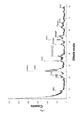
- the clay obtained was characterized by X-ray diffraction ( Figure 1 ) and by X-ray fluorescence (Table 2).
- the diffractograms of Figure 1 demonstrate that the modifying agents (silver and titanium oxide particles) and the thermal treatment have caused a disorganization of the layers of clay indicated by the disappearance of the base peak characteristic of the unmodified clay. Furthermore, it shows the anatase phase of TiO 2 , obtained after calcination. A content of 49.46 % titanium oxide in the clays, as well as a content of 1.40 % silver, was observed by X-ray fluorescence (Table 2).
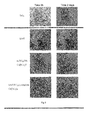
- FIG. 2 shows the images of the control clay in accordance with the UV irradiation time. As well as the clay with the titanium oxide and silver in accordance with the irradiation time. From Figure 2 , it can be observed that the clay with titanium oxide in anatase phase degrades the coffee stain after 7 days. However, the clay without titanium oxide continues to show the coffee stain.
- Table 2 X-ray fluorescence (WAXS) obtained from a sample of montmorillonite-type clay modified with titanium oxide and silver nitrate (temperature-resistant antimicrobial) and its later calcination by the method described in Example 1.
- WAXS X-ray fluorescence
- Example 2 (Reference example) Synthesis and intercalation of titanium oxide in montmorillonite-type and kaolinite-type clays calcined at 500 °C for 1 h obtaining the anatase phase of TiO 2 and subsequently modified with 5 % by mass of silver nitrate.
- the montmorillonite and kaolinite clays (treated with dimethylsulfoxide) are suspended in isopropanol with a ratio of 10 g of clay in 100 ml of solvent.
- 70 g of Titanium IV Isopropylate (TPT) is added to the dispersion.
- the dispersion was stirred for 5 min; 18 g of H 2 O was added, where the gelation in ambient conditions was observed; subsequently, it was dried at 60 °C for 24h and calcined at 500 °C for 1 h. Finally, they were modified with 5 % silver nitrate, in ambient conditions, at a ratio of 1 g of AgNO 3 per 100 ml of H 2 O and 20 g of the calcined clay.
- the dispersion was maintained in reflux for 6 hours at 70 °C. Finally it was filtered by suction vacuum and dried at 70 °C.
- the photocatalytic capacity was determined of this clay containing around 50 % titanium oxide in anatase phase and 5 % silver nitrate and against UV radiation.
- the degradation of the organic matter based on coffee was studied.
- Figure 3 shows the images of the control clay in accordance with the UV irradiation time. As well as the clay with the titanium oxide and silver and in accordance with the irradiation time. From Figure 3 , it can be observed that the clay with titanium oxide in anatase phase degrades the coffee stain after 7 days, the same as with pure titanium oxide. However, the clay without titanium oxide continues to show the coffee stain.
- the antimicrobial efficacy was evaluated of coatings on enamels at a ratio of 0.2 g of clay per square metre following the ISO 22196 method.
- 5x5 cm pieces of enamel coated with a varnish incorporating the clays developed were inoculated with Staphylococcus aureus (CECT 86T, approximately 1*105 colony forming units per piece). These samples were incubated at 37 °C for 24 hours at a relative humidity of 100 %. Then, the final bacterial concentration in each of the test tubes was counted by serial dilutions and plate inoculation.
- Example 3 (Reference Example) Development of nanocomposites based on PVA and LDPE and clays modified with titanium and silver and clays modified with titanium and cerium.
- PVA films were prepared with a thickness of around 100 ⁇ m by the casting method, using water as solvent.
- the weight proportion of clay is 10 % with respect to the polymer.
- the clay was added to the water, it was dispersed with the aid of ultraturrax and the proportional part of PVA was added.
- the solution was stirred at 70 °C for 2 hours. Subsequently, the casting was performed in Petri dish, obtaining the films by evaporation of the solvent (water) after 24 hours.
- the LDPE films were prepared by melt mixing in an internal mixer and later pressing.
- the processing conditions were 150 °C, 100 rpm and 5 min.
- the clays used for this study were prepared following the process of Example 1 and the process of Example 5.
- the dispersion was studied of these clays modified with titanium and silver, observing good morphology and homogeneity in the films of the nanocomposites, as observed in Figure 4 .
- Example 4 (Reference Example) Development of ceramic coatings based on varnishes and clays modified with titanium and silver.
- Varnishes were prepared with the modified clays following the process of Example 1 and Example 2.
- the weight proportion of the clay is around 5 % with respect to the varnish.
- the clay was added to the varnish, magnetic stirring was applied for 5 minutes. Subsequently, the coatings were performed on the ceramic materials.
- the photocatalytic capacity was determined of these ceramic coatings with the clay containing around 50 % titanium oxide in anatase phase and in some cases also 5 % silver nitrate and against UV radiation in a Xenon aging chamber.
- the degradation of the organic matter based on coffee was studied.
- Figure 5 it can be observed that the ceramic coatings with clay with titanium oxide in anatase phase degrade the coffee stain after 4 days.
- the clay without titanium oxide (control) continues to show the coffee stain.
- the clays with greater silver content degrade the stain more efficaciously after 4 days. In the case of the clays with titanium and without silver, degradation of the stain is observed after 8 days.
- Example 5 (Reference Example) Synthesis and intercalation of titanium oxide in montmorillonite-type and kaolinite-type clays calcined at 500 °C for 1 h obtaining the anatase phase of TiO 2 and subsequently modified with 5 % by mass of cerium nitrate (Ce(NO 3 ) 2 ).
- the montmorillonite clays (previously modified with 20 % by weight of CTAB) and kaolinites (treated with dimethylsulfoxide) are suspended in isopropanol with a ratio of 10 g of clay in 100 ml of solvent.
- 70 g of Titanium IV Isopropylate (TPT) is added to the dispersion.
- the dispersion was stirred for 5 min; 18 g of H 2 O was added, where the gelation in ambient conditions was observed; subsequently, it was dried at 60 °C for 24h and calcined at 500 °C for 1 h.
- Table 4 shows the results of the chemical analysis by X-ray fluorescence performed in the montmorillonite-type clay prepared according to the aforementioned process.
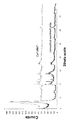
- Figure 6 shows the X-ray diffractogram of the kaolinite-type clays prepared according to the process described above.
- Figure 7 shows the X-ray diffractogram of the montmorillonite-type clays prepared according to the process described above.
- Figures 6 and 7 show the presence of the diffraction peaks characteristic of the anatase phase.
- the photocatalytic capacity was determined of this clay containing around 50 % titanium oxide in anatase phase and 5 % cerium nitrate and against UV radiation. The degradation of the organic matter based on coffee was studied.
- FIG 8 shows the images of the control samples (pure anatase and unmodified montmorillonite clay) in accordance with the UV irradiation time, as well as the clay with the titanium oxide and cerium nitrate. From Figure 9 , it can be observed that the clay with titanium oxide in anatase phase and cerium nitrate degrades the coffee stain after 2 days, whilst the pure titanium oxide only partially degrades it. Therefore, the titanium oxide supported on the clay and doped with cerium is more efficient that the pure anatase.
- Example 6 (Reference Example) Synthesis and intercalation of tin dioxide (SnO 2 ) in cassiterite phase and titanium oxide (TiO 2 ) in anatase phase in montmorillonite-type clays calcined at 300 °C for 4h.
- the montmorillonite clays are suspended in water with a ratio of 20 g of clay in 100 ml of solvent.
- a solution of tin sulfate (SnSO 4 ) in concentrated hydrochloric acid (37 % vol.) is added.
- the concentration of SnSO 4 is 150 g per litre of HCl solution.
- NH 3 28 % vol.
- TPT Titanium IV Isopropylate
- Table 5 shows the result of the chemical analysis by X-ray fluorescence performed in a clay prepared according to the process described above. Table 5.
- Figure 9 shows the X-ray diffractogram of the clay prepared according to the process described above. It is possible to distinguish the peaks corresponding to the anatase phase of TiO 2 and the cassiterite phase of SnO 2 .
- the photocatalytic capacity was determined of this clay containing around 42 % titanium oxide in anatase phase and 16.4 % tin dioxide in cassiterite phase and against UV radiation. The degradation of the organic matter based on coffee was studied.
- Example 7 (Reference Example) Synthesis and intercalation of zirconium dioxide (ZrO 2 ) in kaolinite-type clays calcined at 600 °C for 4h.
- the kaolinite clay is suspended in water with a ratio of 20 g of clay in 100 ml of solvent.
- a solution of zirconium oxynitrate (ZrO(NO 3 ) 2 ) in water (12.7 g of ZrO(NO 3 ) 2 in 200 ml of water) is added.
- NH 3 28 % vol.
- the mixture is maintained in suspension for 1h and during this time the ZrOH precipitates.
- the clay and ZrOH precipitate is filtered, washed and dried at 120 °C for 2h. Subsequently, it is calcined at 600 °C for 4h to obtain ZrO 2 .
- Table 6 shows the result of the chemical analysis by X-ray fluorescence performed in a clay prepared according to the process described above. Table 6.
- Chemical analysis of kaolinite-type clay modified with ZrO 2 . Formula Concentration SiO 2 38.97 % Al 2 O 3 29.20 % ZrO 2 20.80 % K 2 O 2.19 % Fe 2 O 3 1.06 % TiO 2 0.96 % MgO 0.59 % Na 2 O 0.45 % CaO 0.35 % SO 3 0.07 % Cl 0.02 % LOI 3 %
- Example 8 (Reference Example) Synthesis and intercalation of zinc oxide (ZnO) in kaolinite-type clays (pretreated with DMSO).
- a zinc nitrate solution (Zn(NO 3 ) 2 ) is prepared with a ratio of 13.08 g of Zn(NO 3 ) 2 in 400ml of water. Then, 25 g kaolinite clay (pretreated with DMSO) is suspended in the Zn(NO 3 ) 2 solution. After maintaining the suspension mixture under stirring at 60 °C for 18h, a NaOH solution (24 g of NaOH in 400 ml of water) is added little by little. The mixture is maintained in suspension at 60 °C for 2h and during this time the ZnO precipitates. The clay and ZnO precipitate is filtered, washed in methanol and vacuum dried at 120 °C for 2h.
- Figure 11 shows the X-ray diffractogram of the clay prepared according to the process described above.
- LDPE films and their nanocomposite with 5 % of the aforementioned clay were prepared by melt mixing in an internal mixer and latter pressing.
- the processing conditions were 150 °C, 100 rpm and 5 min.
- the antimicrobial efficacy was evaluated of said films using the ISO 22196 method.
- samples of 5x5 cm film were inoculated with Staphylococcus aureus (CECT 86T, approximately 1*105 colony forming units per piece). These samples were incubated at 37 °C for 24 hours at a relative humidity of 100 %. Then, the final bacterial concentration in each of the test tubes was counted by serial dilutions and plate inoculation. The results obtained are shown in Table 7. According to the results obtained, the LDPE films with 5 % clay with ZnO showed a high antimicrobial efficacy established by the standard. However, the samples of LDPE without clay did not show detectable antimicrobial efficacy. Table 7.
- Example 9 Synthesis and intercalation of cerium oxide (IV) (ceria, CeO 2 ) in montmorillonite-type clays, using ammonium hydroxide as oxidizing agent. Preparation of CeO 2 MMT.
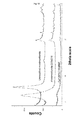
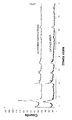
- the diffractograms of Figure 12 demonstrate that there is no displacement of the base peak after the modification (12.5°, 2 ⁇ ), which indicates that there is no intercalation in the clay of the cerium oxide formed.
- the resulting material contains CeO 2 (cerianite), with typical reflections at 28.64°, 47.29° and 56.40° (2 ⁇ ).
- the TEM image of CeO 2 MMT of Figure 13 shows the typical appearance of the montmorillonite layers. It is not possible to distinguish particles of CeO 2 or of other cerium compounds, however, by X-ray diffraction ( Figure 12 ) and EDAX ( Figures 14 ) and in table 8 (EDAX chemical analysis of the surface of the montmorillonite-type clay modified with cerium nitrate, using ammonium hydroxide as oxidizing agent, to obtain cerium oxide/montmorillonite (CeO 2 -MMT)) it has confirmed the presence of CeO 2 in the surface of the layers of the modified clay (15.11 % Ce).
- Table 8 Element % Weight C K 6.65 O K 47.62 Mg K 1.08 Al K 3.67 Si K 25.17 K K 0.69 Ce L 15.11 Total 100.00
- Example 10 synthesis and intercalation of metallic cerium (Ce°) in montmorillonite-type clays, using ascorbic acid as reducing agent. Preparation of Ce°MMT which totally or partially develop a cerium oxide by oxygen scavenging.
- the diffractograms of Figure 15 show displacement of the base peak of 7.03° to 5.67° (2 ⁇ ), which corresponds to an increase of the interlayer distance as a consequence of the modification.
- Example 11 Synthesis and intercalation of cerium oxide (IV) (ceria, CeO 2 ) in montmorillonite-type clays, using ammonium hydroxide and high temperature as oxidizing agents. Preparation of CeO 2 -MMT.
- the clay obtained was characterized using X-ray diffraction and it was compared with the unmodified starting clay (see Figure 18 ).
- the diffractograms of Figure 18 demonstrate that a disorganization has occurred in the crystalline structure as a consequence of the chemical and thermal treatment applied to obtain the cerium oxide (IV) supported on the clay. This disorganization is demonstrated by the widening of the low-angle reflections.
- the chemical analysis of the clay CeO 2 MMT obtained by this method indicates that it contains 16 % Ce.
- Example 12 Synthesis and intercalation of metallic cerium (Ce°) in montmorillonite-type clays, using sodium bisulfite as reducing agent which totally or partially develop a cerium oxide by oxygen scavenging. Preparation of Ce°MMT.
- Example 13 Synthesis and intercalation of metallic cerium (Ce°) in montmorillonite-type clays organomodified with 20 % hexadecyltrimethylammonium bromide (CTAB), using sodium borohydride as reducing agent which totally or partially develop a cerium oxide by oxygen scavenging. Preparation of Ce°-20 %CTAB-MMT.
- the clay was suction filtered and dried in a vacuum oven for 2 h, at 85 °C.
- the clay obtained was characterized using X-ray diffraction and it was compared with the starting clay as well as with the unmodified clay (see Figure 20 ).
- the diffractograms of Figure 20 show that the modification of the natural clay with hexadecyltrimethylammonium bromide (CTAB) entails an opening of the interlayer distance (displacement of the base reflection at lower angles).
- CTAB hexadecyltrimethylammonium bromide
- the later modification with cerium nitrate and later reduction with sodium borohydride of the clay organomodified with CTAB causes disorganization in the layered structure of the clay, which is evident from the low intensity and width of the base peak.
- Example 14 Synthesis and intercalation of metallic cerium (Ce°) in montmorillonite-type clays, using sodium borohydride as reducing agent which totally or partially develop a cerium oxide by oxygen scavenging. Preparation of Ce°MMT.
- a 0.6M solution of Ce(NO 3 ) 3 *6H 2 O was prepared, and the unmodified montmorillonite-type clay was dispersed in this solution, at a ratio of 0.06 g per ml of solution.
- the dispersion was stirred for 24 h at 40 °C, after which the heat source was removed and nitrogen started to be bubbled in the dispersion. Keeping the nitrogen bubbling and constant stirring, a 10 % w/w solution of sodium borohydride was slowly added. The resulting dispersion was stirred for 2h at ambient temperature. Finally, the clay was suction filtered, washed with acetone and dried in a vacuum oven for 2 h, at 85 °C.
- the clay obtained was characterized using X-ray diffraction and it was compared with the unmodified starting clay (see Figure 21 ). To judge by the diffractograms of Figure 23 the treatment of cerium intercalation (III) followed by reduction with sodium borohydride causes total disorganization of the layered structure of the clay.
- Example 15 Synthesis and intercalation of metallic cerium (Ce°) and iron (II) (Fe(II) in montmorillonite-type clays, using ascorbic acid as reducing agent which totally or partially develop a cerium oxide by oxygen scavenging. Preparation of Ce°-Fe(II)MMT.
- a 0.6M solution of Ce(NO 3 ) 3 ⁇ 6H 2 O and a 0.85M solution of FeCl 3 ⁇ 6H 2 O were prepared.
- the metal solutions were mixed and the montmorillonite-type clay was dispersed in this mixture, at a ratio of 0.06 g per ml of solution.
- the dispersion was stirred for 24 h at 40 °C, after which a 30 % w/w solution of ascorbic acid was added.
- the resulting dispersion was stirred for 4h at 70 °C.
- the clay was suction filtered, washed with acetone and dried in a vacuum oven for 2 h, at 85 °C.
- the clay obtained was characterized using X-ray diffraction and it was compared with the unmodified starting clay (see Figure 22 ).
- the diffractograms of Figure 22 show displacement of the base peak of the modified clay, of 7.07° to 6.07° (2 ⁇ ), which corresponds to an opening of the interlayer distance of 0.2 A as a consequence of the intercalation of reaction products.
- the chemical analysis of the clay reveals 8.72 % Ce and 2.74 % Fe.
- Example 16 Synthesis and intercalation of cerium oxide (IV) (ceria, CeO 2 ) and zirconium oxide (ZrO 2 ) in montmorillonite-type clays, using ammonium hydroxide as oxidizing agent. Preparation of CeO 2 /ZrO 2 -MMT.
- the diffractograms of Figure 23 show the change of physical phase due to the effect of heating at 600 °C, a temperature above which the clays suffer dehydroxylation.
- the characteristic reflections of the mixed cerium and zirconium oxide appear between 29 and 35° (2 ⁇ ).
- the chemical analysis of the resulting clay shows 48.15 % Ce and 7.54 % Zr.
- Example 17 Preparation of high density polyethylene composites (HDPE) with 10 % Ce°MMT clays (reduced with ascorbic acid, sodium borohydride and sodium bisulfite which totally or partially develop a cerium oxide by oxygen scavenging.
- HDPE high density polyethylene composites
- Ce°MMT clays reduced with ascorbic acid, sodium borohydride and sodium bisulfite which totally or partially develop a cerium oxide by oxygen scavenging.
- Example 18 Preparation of polyethylene terephthalate (PET) composites with 15 % Ce°MMT (reduced with ascorbic acid), Ce°MMT (reduced with sodium bisulfite) and Ce°-Fe(II)-MMT (reduced with ascorbic acid) which totally or partially develop a cerium oxide by oxygen scavenging.
- PET polyethylene terephthalate
- Example 19 Antioxidant capacity of CeO 2 -MMT (oxidized with NH 4 OH, with and without calcination), Ce°MMT (reduced with ascorbic acid), Ce°MMT (reduced with sodium bisulfite), Ce°MMT (reduced with sodium borohydride), Ce°-Fe(II)-MMT (reduced with ascorbic acid) and CeO 2 /ZrO 2 -MMT.
- Figure 24 shows that in all cases DPPH inhibition is over 50 %, being particularly high (over 90 %) in the Ce°MMT clays (reduced with ascorbic acid) and the double iron and cerium clay Ce°-Fe(II)MMT.
- the CeO 2 /ZrO 2 -MMT clay showed less antioxidant capacity, although not negligible, in the order of 25 %.
- the results show that these clays, to a greater or lesser extent, are capable of trapping free radicals, an activity that can be extended to the oxygen free radicals. These clays therefore have antioxidant capacity.
- Example 20 Oxygen sequestrating capacity of Ce°MMT (reduced with ascorbic acid), Ce°MMT (reduced with sodium bisulfite), Ce°MMT (reduced with sodium borohydride), Ce°-Fe(II)-MMT (reduced with ascorbic acid) and bisulfite/MMT.
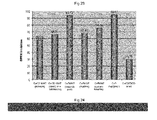
- each clay 1.5 g were weighed in duplicate in 40 ml vials. A cell was placed in each vial with 1 ml of water to ensure 100 % relative humidity inside, and each vial was closed with a semaphore-type cap, with open-closed switch and needle inlet. The caps were left in "closed” position for the test.
- the vials were placed in a space climate controlled at 25 °C, under constant artificial light. The oxygen content was measured between 1 and 60 days, using an oxygen sensor.
- the sequestrating capacity results ( Figure 25 ) indicate the following oxygen absorption capacity per gram of clay: Ce o ⁇ MMT ascorbic acid > Ce o ⁇ MMT sodium bisulfite > > Ce o - Fe II ⁇ MMT , Ce o sodium borohydride
- Example 21 Antioxidant capacity of HDPE and PET composites with cerium clays.
- the antioxidant effect due to contact of the HDPE and PET composites, described in Examples 17 and 18, was determined using the DPPH (2,2- diphenyl-1-picrylhydrazyl) radical scavenging method. To do this, portions of 30mg of each film were weighed in 3 ml vials, in triplicate. 1 mL of a 0.05 g/L stock solution of DPPH in methanol, whose absorbance at 517 nm is 1.2, were added to each tube. In parallel three control samples without film containing 1mL of DPPH were prepared. The samples and the controls were left to incubate in the dark at 24 °C for 24h. Next, the absorbance was measured at 517 nm. The results are expressed in % of DPPH inhibition: % DPPH inhibition Abs control - Abs sample / Abs control
- Figure 26 shows that the composites of PET + 15 % Ce°-Fe(II)MMT and HDPE + 15 % Ce°MMT (ascorbic acid) show greater capacity for scavenging free radicals (DPPH inhibition> 75 %), comparatively with the PET and HDPE composites with Ce°MMT (reduced with NaBH 4 and sodium bisulfite), which show medium free radical scavenging capacity (inhibition between 25 and 47 %).
- These results demonstrate that the composites prepared from PET and HDPE (materials used in food packaging) with clays in Ce° base may have the capacity to scavenge free radicals from oxygen, a condition that may be useful for extending the useful life of food as it delays the oxidation processes.
- Example 22 Oxygen sequestrating capacity of the HDPE and PET composites with cerium clays, described in Examples 17 and 18.
- the graphic of oxygen volume consumed/g clay vs. Time indicates that the PET composite with Ce°MMT (reduced with bisulfite) consumes up to 0.8ml in 60d.
- the HDPE composite with the cerium clay a fourth part of oxygen, which can be translated in an effect of the polymeric matrix.
Landscapes
- Chemical & Material Sciences (AREA)
- Organic Chemistry (AREA)
- Engineering & Computer Science (AREA)
- Inorganic Chemistry (AREA)
- Materials Engineering (AREA)
- Chemical Kinetics & Catalysis (AREA)
- Dispersion Chemistry (AREA)
- Nanotechnology (AREA)
- Medicinal Chemistry (AREA)
- Polymers & Plastics (AREA)
- Health & Medical Sciences (AREA)
- Crystallography & Structural Chemistry (AREA)
- General Physics & Mathematics (AREA)
- Condensed Matter Physics & Semiconductors (AREA)
- Physics & Mathematics (AREA)
- Composite Materials (AREA)
- Compositions Of Macromolecular Compounds (AREA)
- Cosmetics (AREA)
- Compositions Of Oxide Ceramics (AREA)
- Silicates, Zeolites, And Molecular Sieves (AREA)
- Agricultural Chemicals And Associated Chemicals (AREA)
Applications Claiming Priority (2)
| Application Number | Priority Date | Filing Date | Title |
|---|---|---|---|
| ES201130925A ES2395507B1 (es) | 2011-06-03 | 2011-06-03 | Materiales nanocompuestos basados en óxidos de metales con propiedades multifuncionales |
| PCT/ES2012/070391 WO2012164131A1 (es) | 2011-06-03 | 2012-05-28 | Materiales nanocompuestos basados en óxidos de metales con propiedades multifuncionales |
Publications (1)
| Publication Number | Publication Date |
|---|---|
| EP2716605A1 true EP2716605A1 (en) | 2014-04-09 |
Family
ID=46545412
Family Applications (1)
| Application Number | Title | Priority Date | Filing Date |
|---|---|---|---|
| EP12737312.4A Withdrawn EP2716605A1 (en) | 2011-06-03 | 2012-05-28 | Nanocomposite materials based on metal oxides having multi-functional properties |
Country Status (5)
| Country | Link |
|---|---|
| US (1) | US20140187413A1 (https=) |
| EP (1) | EP2716605A1 (https=) |
| JP (1) | JP2014522368A (https=) |
| ES (1) | ES2395507B1 (https=) |
| WO (1) | WO2012164131A1 (https=) |
Cited By (11)
| Publication number | Priority date | Publication date | Assignee | Title |
|---|---|---|---|---|
| CN104569080A (zh) * | 2015-01-30 | 2015-04-29 | 吉林大学 | 基于中空花球状ZnFe2O4纳米材料的丙酮气体传感器及其制备方法 |
| CN104844797A (zh) * | 2015-06-05 | 2015-08-19 | 厦门大学 | 一种剥离型导电聚合物与层状硅酸盐纳米复合材料的制备方法 |
| KR20160054254A (ko) * | 2014-11-06 | 2016-05-16 | 한국생산기술연구원 | 정유/할로이사이트 복합물질을 포함하는 식품 포장 필름 인쇄용 잉크 조성물, 이를 이용한 인쇄방법 및 인쇄물 |
| CN106345529A (zh) * | 2016-07-29 | 2017-01-25 | 绍兴文理学院 | 一种壳聚糖改性蒙脱土负载钯催化材料的制备方法 |
| CN106378192A (zh) * | 2016-08-12 | 2017-02-08 | 绍兴文理学院 | 用于有机偶联反应催化的改性蒙脱土负载钯、铜催化材料 |
| CN107868292A (zh) * | 2016-11-21 | 2018-04-03 | 沈阳赛亚橡胶制品有限公司 | 一种改性高岭土顺丁橡胶复合材料及其制备方法 |
| KR20190005451A (ko) * | 2017-07-06 | 2019-01-16 | 단국대학교 천안캠퍼스 산학협력단 | 치과용 수복재 조성물 |
| CN109897371A (zh) * | 2019-03-15 | 2019-06-18 | 成都新柯力化工科技有限公司 | 一种防析出的环保型阻燃塑料母料及制备方法 |
| EP3915374A1 (de) * | 2020-05-26 | 2021-12-01 | AGXX Intellectual Property Holding GmbH | Bioaktive zusammensetzung zur abtötung von zellen |
| EP3915376A1 (de) * | 2020-05-26 | 2021-12-01 | AGXX Intellectual Property Holding GmbH | Partikuläres antimikrobielles hybridsystem |
| EP3949736A1 (de) * | 2020-08-05 | 2022-02-09 | AGXX Intellectual Property Holding GmbH | Partikuläres antimikrobielles hybridsystem |
Families Citing this family (68)
| Publication number | Priority date | Publication date | Assignee | Title |
|---|---|---|---|---|
| US20060205856A1 (en) * | 2004-12-22 | 2006-09-14 | Williamson David T | Compositions of polyesters and sepiolite-type clays |
| ES2415242B1 (es) * | 2011-12-21 | 2014-09-29 | Nanobiomatters Research & Development, S.L. | Materiales nanocompuestos activos basados en sales generadoras de so2 y edta y el procedimiento para su obtención |
| US10252945B2 (en) | 2012-09-26 | 2019-04-09 | Multiple Energy Technologies Llc | Bioceramic compositions |
| US9334337B2 (en) * | 2014-01-24 | 2016-05-10 | Baker Hughes Incorporated | Enhanced water swellable compositions |
| WO2015171467A1 (en) | 2014-05-05 | 2015-11-12 | Multiple Energy Technologies Llc | Bioceramic compositions and biomodulatory uses thereof |
| US10490521B2 (en) * | 2014-06-26 | 2019-11-26 | Taiwan Semiconductor Manufacturing Company, Ltd. | Advanced structure for info wafer warpage reduction |
| USD766597S1 (en) | 2014-06-27 | 2016-09-20 | Multiple Energies Technologies Llc | Apparel with bioceramic surface ornamentation |
| CN104071799B (zh) * | 2014-07-06 | 2016-05-18 | 浙江大学 | 一种滑石-磁性金属纳米复合材料及其制备方法 |
| GB201505184D0 (en) * | 2015-03-26 | 2015-05-13 | Technion Res And Dev Company Ltd And Carmel Olefins Ltd | Hollow mineral tubes comprising essential oils and uses thereof |
| US20180207912A1 (en) * | 2015-06-18 | 2018-07-26 | Agency For Science, Technology And Research | A plant protein and modified clay composite |
| US9786910B2 (en) | 2015-11-16 | 2017-10-10 | HHeLI, LLC | Synthesized, surface-functionalized, acidified metal oxide materials for energy storage, catalytic, photovoltaic and sensor applications |
| US10553861B2 (en) | 2017-04-10 | 2020-02-04 | HHeLI, LLC | Battery with novel components |
| WO2020252389A1 (en) | 2019-06-12 | 2020-12-17 | HHeLI, LLC | Blended active materials for battery cells |
| WO2018093945A1 (en) | 2016-11-15 | 2018-05-24 | Hheli, Llc. | A surface-functionalized, acidified metal oxide material in an acidified electrolyte system or an acidified electrode system |
| US10363553B2 (en) * | 2017-04-19 | 2019-07-30 | King Abdulaziz University | Nanocomposite hollow sphere as a photocatalyst and methods thereof |
| CA3172066A1 (en) | 2017-05-17 | 2018-11-22 | HHeLI, LLC | Battery with acidified cathode and lithium anode |
| CA3062617C (en) | 2017-05-17 | 2023-09-19 | HHeLI, LLC | A high capacity battery cell with low active material loading |
| US10978731B2 (en) | 2017-06-21 | 2021-04-13 | HHeLI, LLC | Ultra high capacity performance battery cell |
| CN107459046B (zh) * | 2017-06-29 | 2020-01-14 | 枣庄市三兴高新材料有限公司 | 一种甲醇/高岭石层间接枝复合物及其快速制备方法 |
| KR102502966B1 (ko) | 2017-09-22 | 2023-02-23 | 에이치헬리, 엘엘씨 | 초 고용량 성능의 배터리 셀의 구성 |
| CN109575484A (zh) * | 2017-09-29 | 2019-04-05 | 天津城建大学 | 新型埃洛石/聚乙烯醇复合气凝胶及其制备方法和应用 |
| CN108719850A (zh) * | 2018-05-16 | 2018-11-02 | 大连工业大学 | 基于uva诱导海带多酚氧化增强凝胶特性的方法 |
| CN108837842B (zh) * | 2018-07-02 | 2020-09-22 | 淮北师范大学 | 一种氮化碳@氧化石墨烯复合夹心纳米片组装的多孔微球的制备方法 |
| CN109161093A (zh) * | 2018-07-04 | 2019-01-08 | 安徽省金正塑业有限公司 | 一种鸭血盒用聚丙烯材料 |
| CN108996514A (zh) * | 2018-07-20 | 2018-12-14 | 东北大学 | 一种水热条件下制备绿泥石晶体的方法 |
| CN110776672A (zh) * | 2018-07-30 | 2020-02-11 | 北京京兆速七科技开发有限公司 | 一种多功能纳米复合材料 |
| CN109052347A (zh) * | 2018-08-22 | 2018-12-21 | 昆明理工大学 | 一种电场与微波场协同辅助剥离黑磷制备纳米黑磷的方法 |
| US11283267B2 (en) | 2018-09-10 | 2022-03-22 | HHeLI, LLC | Methods of use of ultra high capacity performance battery cell |
| CN109545696B (zh) * | 2018-11-28 | 2023-01-06 | 哈尔滨工业大学 | 一种采用单相纳米银铜合金焊膏制备低温连接高温服役接头的方法 |
| CN109704625B (zh) * | 2018-12-19 | 2021-06-15 | 科之杰新材料集团(贵州)有限公司 | 一种混凝土外加剂用防腐剂及其制备方法 |
| WO2020154368A1 (en) | 2019-01-25 | 2020-07-30 | Allied Bioscience, Inc. | Analysis of antimicrobial coatings using xrf |
| EP3703479B1 (en) * | 2019-02-28 | 2022-11-30 | NanoEMI sp.z o.o. | Composite material for shielding electromagnetic radiation, raw material for additive manufacturing methods and a product comprising the composite material as well as a method of manufacturing the product |
| CN110342901B (zh) * | 2019-05-28 | 2022-03-25 | 德化县诚艺特种纸业有限公司 | 釉下彩日用瓷的制备工艺 |
| US12278342B2 (en) | 2019-06-12 | 2025-04-15 | HHeLI, LLC | Alkaline and acidified metal oxide blended active materials |
| EP4017536A4 (en) * | 2019-08-20 | 2023-05-03 | Turkuaz Saglik Hizmetleri Medikal Temizlik Kimyasal Urunler Sanayi Ve Ticaret A.S. | METHOD OF PREPARING A BIOACTIVE COMPONENT-CONTAINING NANOCOMPOSITE AND A MONTMORILLONITE-BASED BIOACTIVE COMPONENT-CONTAINING NANOCOMPOSITE |
| TW202112669A (zh) * | 2019-08-22 | 2021-04-01 | 多能顧問股份有限公司 | 金屬氧化物/奈米矽片複合物及其製造方法 |
| CN112619635B (zh) * | 2019-09-24 | 2023-04-11 | 中国石油化工股份有限公司 | 一种双金属氧化物催化剂及其制备方法和应用 |
| KR102257531B1 (ko) * | 2019-09-30 | 2021-05-27 | 한국세라믹기술원 | 접촉각 특성 및 방오 특성이 우수한 유약층 형성을 위한 유약 조성물을 이용한 세라믹 타일의 제조방법 |
| CN110746652B (zh) * | 2019-10-25 | 2020-12-08 | 安徽江淮汽车集团股份有限公司 | 聚烯烃voc改进填料的制备方法以及聚烯烃复合材料 |
| JP7506911B2 (ja) * | 2019-10-29 | 2024-06-27 | 国立研究開発法人日本原子力研究開発機構 | 光触媒の製造方法、還元方法、及び光触媒 |
| US11345615B2 (en) | 2019-11-13 | 2022-05-31 | King Fahd University Of Petroleum And Minerals | Activated carbon-iron/cerium oxide nanocomposite suitable for dye removal |
| CN110694474B (zh) * | 2019-11-25 | 2021-05-18 | 泰州清润环保科技有限公司 | 一种绿色、低成本的烟气脱汞方法 |
| CN113019406B (zh) * | 2019-12-25 | 2023-11-07 | 中国石油化工股份有限公司 | 一种制备加氢处理催化剂的方法 |
| CN112516974B (zh) * | 2019-12-31 | 2023-05-23 | 邓明利 | 一种水处理纳米材料复合膜 |
| CN111484223A (zh) * | 2020-03-09 | 2020-08-04 | 杭州埃莫森环保科技有限公司 | 制造防板结生态营养土的污泥处理方法及污泥处理系统 |
| CN111499980A (zh) * | 2020-03-27 | 2020-08-07 | 杭州联通管业有限公司 | 一种高强度高韧性的mpp电力管及其制备方法 |
| US12023710B2 (en) | 2020-06-09 | 2024-07-02 | University Of North Texas | Fluorinated polymers for corrosion protection of metal |
| CN112028131B (zh) * | 2020-06-16 | 2024-03-12 | 暨南大学 | 一种硫化纳米零价铁及其制备方法和用途 |
| CN111607114B (zh) * | 2020-06-16 | 2022-09-27 | 陕西科技大学 | 绿色可降解多功能胶原基纳米复合膜的制备方法 |
| CN111904948B (zh) * | 2020-07-08 | 2022-08-19 | 中国农业科学院农业环境与可持续发展研究所 | 一种肉桂醛纳米微球悬浮剂的制备方法 |
| CN112844329A (zh) * | 2020-12-30 | 2021-05-28 | 王凤霞 | 一种TiO2纳米花负载壳聚糖微球污水处理材料及制法 |
| CN112832035B (zh) * | 2021-01-07 | 2022-08-02 | 深圳市中升薄膜材料有限公司 | 一种LDHs@PLA复合功能薄膜及其制备方法 |
| CN112940147B (zh) * | 2021-02-04 | 2022-03-04 | 扬州工业职业技术学院 | 一种改性剂及其在双氰胺甲醛树脂制备中的应用 |
| JP7027600B1 (ja) | 2021-04-12 | 2022-03-01 | 垰田 宏子 | 光触媒粉体、光触媒成形物、環境浄化剤、光触媒粉体の製造方法 |
| DE102021111495A1 (de) * | 2021-05-04 | 2022-11-10 | Fraunhofer-Gesellschaft zur Förderung der angewandten Forschung eingetragener Verein | Verfahren zur Herstellung von 3D-Druck-Material und von Bauteilen daraus sowie 3D-Druck-Material und mit dem Verfahren hergestelltes Bauteil |
| CN113181922A (zh) * | 2021-05-08 | 2021-07-30 | 南昌航空大学 | 一种Ag量子点修饰的高熵氧化物光催化剂制备方法 |
| CN113321861B (zh) * | 2021-05-20 | 2023-09-08 | 贵州联创管业有限公司 | 一种防污阻燃高密度树脂及其制备方法 |
| CN113497237B (zh) * | 2021-07-06 | 2022-04-26 | 福州大学 | 一种铜多酚-三嗪超分子网络结构纳米复合材料的合成方法及其应用 |
| US20230089270A1 (en) * | 2021-08-17 | 2023-03-23 | Ishika Nag | Dual application nanoparticle coated filtration system for air pollution and virus abatement |
| KR102557720B1 (ko) | 2021-08-19 | 2023-07-24 | 건국대학교 산학협력단 | 천연계와 합성계 점토 복합물질 기반 중금속 흡착제 및 그 제조방법 |
| US11931717B2 (en) | 2021-11-29 | 2024-03-19 | Snigtha MOHANRAJ | Article and method of removing microplastics and oil |
| CN114539625B (zh) * | 2022-02-28 | 2023-12-05 | 广东粤港澳大湾区国家纳米科技创新研究院 | 纳米金抗菌粉、抗菌塑料母粒或材料、制备方法和应用 |
| CN114713219A (zh) * | 2022-04-08 | 2022-07-08 | 贵州大学 | 具有高效光催化性能的蒙脱石负载Bi20O30·TiO2复合材料的制备方法 |
| US20230405371A1 (en) * | 2022-06-09 | 2023-12-21 | Ishika Nag | Dual layered nanoparticle coated masks for efficient and cost-effective filtration of air pollutants and viruses |
| CN116180065B (zh) * | 2022-12-27 | 2024-10-08 | 国科大杭州高等研究院 | 一种表面改性的镍钛合金材料及其制备方法和应用 |
| CN118480229B (zh) * | 2024-04-29 | 2024-10-29 | 山东瑞驰蔓环保科技有限公司 | 一种添加沙子和煅烧贝壳粉的阻燃聚丙烯塑料保鲜箱及其制备工艺 |
| CN120774693B (zh) * | 2025-06-27 | 2026-04-17 | 广东泛洋家居有限公司 | 一种具有凹凸的高防滑仿古砖及其制备工艺 |
| CN120682554B (zh) * | 2025-07-31 | 2026-02-03 | 杭州永通新材料有限公司 | 一种低压电线用无卤低烟阻燃绝缘料及其制备方法 |
Family Cites Families (17)
| Publication number | Priority date | Publication date | Assignee | Title |
|---|---|---|---|---|
| US4176090A (en) * | 1975-11-18 | 1979-11-27 | W. R. Grace & Co. | Pillared interlayered clay materials useful as catalysts and sorbents |
| JPS545884A (en) * | 1977-06-13 | 1979-01-17 | Grace W R & Co | Clay material inserted with middle layer useful as catalyst and adsorbent |
| FR2512043A1 (fr) * | 1981-08-27 | 1983-03-04 | Jacobs Pierre | Procede de preparation d'argiles pontees, argiles preparees par ce procede et applications desdites argiles |
| US4739007A (en) | 1985-09-30 | 1988-04-19 | Kabushiki Kaisha Toyota Chou Kenkyusho | Composite material and process for manufacturing same |
| FR2589143B1 (fr) * | 1985-10-28 | 1990-06-01 | Elf France | Argiles pontees a stabilite thermique amelioree, procede pour leur preparation et leur utilisation comme catalyseurs |
| JPH0624972B2 (ja) * | 1990-03-03 | 1994-04-06 | 工業技術院長 | ピラー量の異なるジルコニウム架橋モンモリロナイトの製造法 |
| JP2000090198A (ja) | 1998-09-09 | 2000-03-31 | Casio Comput Co Ltd | 文字認識候補表示装置、文字認識候補表示方法、及び記録媒体 |
| US7306777B2 (en) | 2003-12-16 | 2007-12-11 | Eastman Kodak Company | Antimicrobial composition |
| US20060052505A1 (en) * | 2004-09-03 | 2006-03-09 | Pagilagan Rolando U | Water soluble polyamide compositions, solutions thereof, films and sheets therefrom and process of making films and sheets therefrom |
| US7501460B1 (en) * | 2005-07-18 | 2009-03-10 | Exxonmobile Chemical Patents Inc. | Split-stream process for making nanocomposites |
| US7605205B2 (en) * | 2005-11-07 | 2009-10-20 | Exxonmobil Chemical Patents, Inc. | Nanocomposite compositions and processes for making the same |
| ES2277563B1 (es) | 2005-12-29 | 2008-06-16 | Nanobiomatters, S.L. | Procedimiento de fabricacion de materiales nanocompuestos para aplicaciones multisectoriales. |
| US20070161737A1 (en) * | 2006-01-09 | 2007-07-12 | Bayer Materialscience Llc | Thermoplastic composition containing polycarbonate-polyester and nanoclay |
| CN100554164C (zh) | 2007-05-08 | 2009-10-28 | 河北理工大学 | 微波加热法制Ag2WO4复合抗菌剂生产方法及在卫生瓷釉中应用 |
| RU2011102696A (ru) * | 2008-06-25 | 2012-07-27 | НЭНОБАЙОМЭТТЕРЗ, Эс.Эл. (ES) | Активные нанокомпозитные материалы и способ их изготовления |
| ES2335847B9 (es) * | 2008-10-01 | 2016-12-30 | Nanobiomatters, S.L. | Materiales nanocompuestos con propiedades de barrera a la radiacion electromagnetica y procedimiento para su obtencion |
| ES2364211B1 (es) * | 2010-02-16 | 2012-08-10 | Nanobiomatters Industries, S.L. | Procedimiento de obtención de partículas de filosilicatos laminares con tamaño controlado y productos obtenidos por dicho proceso. |
-
2011
- 2011-06-03 ES ES201130925A patent/ES2395507B1/es not_active Expired - Fee Related
-
2012
- 2012-05-28 EP EP12737312.4A patent/EP2716605A1/en not_active Withdrawn
- 2012-05-28 JP JP2014513219A patent/JP2014522368A/ja active Pending
- 2012-05-28 US US14/123,446 patent/US20140187413A1/en not_active Abandoned
- 2012-05-28 WO PCT/ES2012/070391 patent/WO2012164131A1/es not_active Ceased
Non-Patent Citations (1)
| Title |
|---|
| See references of WO2012164131A1 * |
Cited By (15)
| Publication number | Priority date | Publication date | Assignee | Title |
|---|---|---|---|---|
| KR20160054254A (ko) * | 2014-11-06 | 2016-05-16 | 한국생산기술연구원 | 정유/할로이사이트 복합물질을 포함하는 식품 포장 필름 인쇄용 잉크 조성물, 이를 이용한 인쇄방법 및 인쇄물 |
| CN104569080A (zh) * | 2015-01-30 | 2015-04-29 | 吉林大学 | 基于中空花球状ZnFe2O4纳米材料的丙酮气体传感器及其制备方法 |
| CN104844797A (zh) * | 2015-06-05 | 2015-08-19 | 厦门大学 | 一种剥离型导电聚合物与层状硅酸盐纳米复合材料的制备方法 |
| CN106345529A (zh) * | 2016-07-29 | 2017-01-25 | 绍兴文理学院 | 一种壳聚糖改性蒙脱土负载钯催化材料的制备方法 |
| CN106378192A (zh) * | 2016-08-12 | 2017-02-08 | 绍兴文理学院 | 用于有机偶联反应催化的改性蒙脱土负载钯、铜催化材料 |
| CN107868292A (zh) * | 2016-11-21 | 2018-04-03 | 沈阳赛亚橡胶制品有限公司 | 一种改性高岭土顺丁橡胶复合材料及其制备方法 |
| KR20190005451A (ko) * | 2017-07-06 | 2019-01-16 | 단국대학교 천안캠퍼스 산학협력단 | 치과용 수복재 조성물 |
| KR101984384B1 (ko) | 2017-07-06 | 2019-05-30 | 단국대학교 천안캠퍼스 산학협력단 | 치과용 수복재 조성물 |
| CN109897371A (zh) * | 2019-03-15 | 2019-06-18 | 成都新柯力化工科技有限公司 | 一种防析出的环保型阻燃塑料母料及制备方法 |
| CN109897371B (zh) * | 2019-03-15 | 2021-05-07 | 佛山市碧坤塑料有限公司 | 一种防析出的环保型阻燃塑料母料及制备方法 |
| EP3915374A1 (de) * | 2020-05-26 | 2021-12-01 | AGXX Intellectual Property Holding GmbH | Bioaktive zusammensetzung zur abtötung von zellen |
| EP3915376A1 (de) * | 2020-05-26 | 2021-12-01 | AGXX Intellectual Property Holding GmbH | Partikuläres antimikrobielles hybridsystem |
| WO2021239845A1 (de) * | 2020-05-26 | 2021-12-02 | Agxx Intellectual Property Holding Gmbh | Partikuläres antimikrobielles hybridsystem |
| EP4279552A3 (de) * | 2020-05-26 | 2024-01-03 | AGXX Intellectual Property Holding GmbH | Partikuläres antimikrobielles hybridsystem |
| EP3949736A1 (de) * | 2020-08-05 | 2022-02-09 | AGXX Intellectual Property Holding GmbH | Partikuläres antimikrobielles hybridsystem |
Also Published As
| Publication number | Publication date |
|---|---|
| WO2012164131A1 (es) | 2012-12-06 |
| ES2395507A1 (es) | 2013-02-13 |
| ES2395507B1 (es) | 2013-12-19 |
| JP2014522368A (ja) | 2014-09-04 |
| US20140187413A1 (en) | 2014-07-03 |
Similar Documents
| Publication | Publication Date | Title |
|---|---|---|
| EP2716605A1 (en) | Nanocomposite materials based on metal oxides having multi-functional properties | |
| US8834907B2 (en) | Active nanocomposite materials and production method thereof | |
| Youssef | Polymer nanocomposites as a new trend for packaging applications | |
| De Silva et al. | ZnO deposited/encapsulated halloysite–poly (lactic acid)(PLA) nanocomposites for high performance packaging films with improved mechanical and antimicrobial properties | |
| Rhim | Potential use of biopolymer-based nanocomposite films in food packaging applications | |
| Espitia et al. | Zinc oxide nanoparticles: synthesis, antimicrobial activity and food packaging applications | |
| Roy et al. | Synthesis, characterization and antibacterial properties of novel nano-silver loaded acid activated montmorillonite | |
| Martynková et al. | Antimicrobial nanocomposites based on natural modified materials: a review of carbons and clays | |
| JP2011526939A5 (https=) | ||
| Manna | Synthesis, characterization, and antimicrobial activity of zinc oxide nanoparticles | |
| Subbiah et al. | Preparation of TiO2 nanopaint using ball milling process and investigation on its antibacterial properties | |
| Meshram et al. | Structural, spectroscopic and anti-microbial inspection of PEG capped ZnO nanoparticles for biomedical applications | |
| Talebian et al. | Structure and antibacterial property of nano-SiO2 supported oxide ceramic | |
| Sievers et al. | In situ synthesis of nanosized TiO2 in polypropylene solution for the production of films with antibacterial activity | |
| Al Attas et al. | Bactericidal efficacy of new types of magnesium hydroxide and calcium carbonate nanoparticles | |
| Ghribi et al. | Antibacterial activity of mixed metal oxide derived from Zn-Al layered double hydroxide precursors, effect of calcination temperature | |
| Shams et al. | Nanocomposite: potential nanofiller for food packaging applications | |
| KR20220161024A (ko) | TiO2와 탄소 양자점을 포함하여 조성된 포장재 | |
| Zawrah et al. | Synthesis of anatase nano wire and its application as a functional top layer for alumina membrane | |
| Gorrasi et al. | Nanohybrid active fillers in food contact bio-based materials | |
| JP4796392B2 (ja) | 抗菌剤 | |
| De Silva et al. | A review on nanocomposite materials for food packaging which comprising antimicrobial activity | |
| Holkar et al. | Recent developments in synthesis of nanomaterials utilized in polymer based composites for food packaging applications | |
| Rhim | Characterization of Biopolymer and Chitosan‐Based Nanocomposites with Antimicrobial Activity | |
| ES2331284B1 (es) | Materiales nanocompuestos con actividad antimicrobiana y el procedimiento para su obtencion. |
Legal Events
| Date | Code | Title | Description |
|---|---|---|---|
| PUAI | Public reference made under article 153(3) epc to a published international application that has entered the european phase |
Free format text: ORIGINAL CODE: 0009012 |
|
| 17P | Request for examination filed |
Effective date: 20131227 |
|
| AK | Designated contracting states |
Kind code of ref document: A1 Designated state(s): AL AT BE BG CH CY CZ DE DK EE ES FI FR GB GR HR HU IE IS IT LI LT LU LV MC MK MT NL NO PL PT RO RS SE SI SK SM TR |
|
| DAX | Request for extension of the european patent (deleted) | ||
| STAA | Information on the status of an ep patent application or granted ep patent |
Free format text: STATUS: REQUEST FOR EXAMINATION WAS MADE |
|
| STAA | Information on the status of an ep patent application or granted ep patent |
Free format text: STATUS: THE APPLICATION IS DEEMED TO BE WITHDRAWN |
|
| 18D | Application deemed to be withdrawn |
Effective date: 20161201 |