EP2700445B1 - Method of preparing a chromatography packing - Google Patents
Method of preparing a chromatography packing Download PDFInfo
- Publication number
- EP2700445B1 EP2700445B1 EP13186481.1A EP13186481A EP2700445B1 EP 2700445 B1 EP2700445 B1 EP 2700445B1 EP 13186481 A EP13186481 A EP 13186481A EP 2700445 B1 EP2700445 B1 EP 2700445B1
- Authority
- EP
- European Patent Office
- Prior art keywords
- carrier
- phosphorylcholine
- groups
- silica gel
- packing
- Prior art date
- Legal status (The legal status is an assumption and is not a legal conclusion. Google has not performed a legal analysis and makes no representation as to the accuracy of the status listed.)
- Expired - Lifetime
Links
- 238000012856 packing Methods 0.000 title claims description 52
- 238000000034 method Methods 0.000 title claims description 38
- 238000004587 chromatography analysis Methods 0.000 title claims description 32
- VYPSYNLAJGMNEJ-UHFFFAOYSA-N Silicium dioxide Chemical compound O=[Si]=O VYPSYNLAJGMNEJ-UHFFFAOYSA-N 0.000 claims description 61
- NJNWCIAPVGRBHO-UHFFFAOYSA-N 2-hydroxyethyl-dimethyl-[(oxo-$l^{5}-phosphanylidyne)methyl]azanium Chemical group OCC[N+](C)(C)C#P=O NJNWCIAPVGRBHO-UHFFFAOYSA-N 0.000 claims description 48
- 229910002027 silica gel Inorganic materials 0.000 claims description 36
- 239000000741 silica gel Substances 0.000 claims description 36
- 125000003277 amino group Chemical group 0.000 claims description 27
- 238000006243 chemical reaction Methods 0.000 claims description 20
- 229920000642 polymer Polymers 0.000 claims description 17
- 125000002485 formyl group Chemical class [H]C(*)=O 0.000 claims description 12
- 238000000576 coating method Methods 0.000 claims description 11
- 239000008777 Glycerylphosphorylcholine Substances 0.000 claims description 10
- SUHOQUVVVLNYQR-MRVPVSSYSA-N choline alfoscerate Chemical compound C[N+](C)(C)CCOP([O-])(=O)OC[C@H](O)CO SUHOQUVVVLNYQR-MRVPVSSYSA-N 0.000 claims description 10
- 239000011248 coating agent Substances 0.000 claims description 10
- 229960004956 glycerylphosphorylcholine Drugs 0.000 claims description 10
- 238000007248 oxidative elimination reaction Methods 0.000 claims description 9
- 238000006268 reductive amination reaction Methods 0.000 claims description 4
- 125000002924 primary amino group Chemical class [H]N([H])* 0.000 claims description 3
- 125000000467 secondary amino group Chemical class [H]N([*:1])[*:2] 0.000 claims 1
- 102000004169 proteins and genes Human genes 0.000 description 38
- 108090000623 proteins and genes Proteins 0.000 description 38
- OKKJLVBELUTLKV-UHFFFAOYSA-N Methanol Chemical compound OC OKKJLVBELUTLKV-UHFFFAOYSA-N 0.000 description 24
- 238000000926 separation method Methods 0.000 description 22
- 239000000843 powder Substances 0.000 description 18
- 102000004196 processed proteins & peptides Human genes 0.000 description 14
- 108090000765 processed proteins & peptides Proteins 0.000 description 14
- 238000004458 analytical method Methods 0.000 description 13
- 229920001184 polypeptide Polymers 0.000 description 13
- 239000000463 material Substances 0.000 description 12
- 238000002360 preparation method Methods 0.000 description 12
- 239000000377 silicon dioxide Substances 0.000 description 12
- 238000001179 sorption measurement Methods 0.000 description 12
- XLYOFNOQVPJJNP-UHFFFAOYSA-N water Substances O XLYOFNOQVPJJNP-UHFFFAOYSA-N 0.000 description 10
- HMUNWXXNJPVALC-UHFFFAOYSA-N 1-[4-[2-(2,3-dihydro-1H-inden-2-ylamino)pyrimidin-5-yl]piperazin-1-yl]-2-(2,4,6,7-tetrahydrotriazolo[4,5-c]pyridin-5-yl)ethanone Chemical compound C1C(CC2=CC=CC=C12)NC1=NC=C(C=N1)N1CCN(CC1)C(CN1CC2=C(CC1)NN=N2)=O HMUNWXXNJPVALC-UHFFFAOYSA-N 0.000 description 9
- KFZMGEQAYNKOFK-UHFFFAOYSA-N Isopropanol Chemical compound CC(C)O KFZMGEQAYNKOFK-UHFFFAOYSA-N 0.000 description 9
- 239000000523 sample Substances 0.000 description 9
- 238000001157 Fourier transform infrared spectrum Methods 0.000 description 8
- -1 aminopropyl group Chemical group 0.000 description 8
- 239000011148 porous material Substances 0.000 description 8
- 102000036675 Myoglobin Human genes 0.000 description 6
- 108010062374 Myoglobin Proteins 0.000 description 6
- FAPWRFPIFSIZLT-UHFFFAOYSA-M Sodium chloride Chemical compound [Na+].[Cl-] FAPWRFPIFSIZLT-UHFFFAOYSA-M 0.000 description 6
- 239000000823 artificial membrane Substances 0.000 description 6
- 150000002009 diols Chemical class 0.000 description 6
- 125000000524 functional group Chemical group 0.000 description 6
- 239000000047 product Substances 0.000 description 6
- 238000003756 stirring Methods 0.000 description 6
- 239000007836 KH2PO4 Substances 0.000 description 5
- 230000029087 digestion Effects 0.000 description 5
- 229910000402 monopotassium phosphate Inorganic materials 0.000 description 5
- 239000008363 phosphate buffer Substances 0.000 description 5
- GNSKLFRGEWLPPA-UHFFFAOYSA-M potassium dihydrogen phosphate Chemical compound [K+].OP(O)([O-])=O GNSKLFRGEWLPPA-UHFFFAOYSA-M 0.000 description 5
- 210000002966 serum Anatomy 0.000 description 5
- 102000009027 Albumins Human genes 0.000 description 4
- 108010088751 Albumins Proteins 0.000 description 4
- 102000004338 Transferrin Human genes 0.000 description 4
- 108090000901 Transferrin Proteins 0.000 description 4
- 239000003638 chemical reducing agent Substances 0.000 description 4
- 239000003446 ligand Substances 0.000 description 4
- 239000012528 membrane Substances 0.000 description 4
- 239000002245 particle Substances 0.000 description 4
- 229950004354 phosphorylcholine Drugs 0.000 description 4
- WGYKZJWCGVVSQN-UHFFFAOYSA-N propylamine Chemical compound CCCN WGYKZJWCGVVSQN-UHFFFAOYSA-N 0.000 description 4
- 239000012581 transferrin Substances 0.000 description 4
- SJECZPVISLOESU-UHFFFAOYSA-N 3-trimethoxysilylpropan-1-amine Chemical compound CO[Si](OC)(OC)CCCN SJECZPVISLOESU-UHFFFAOYSA-N 0.000 description 3
- LFQSCWFLJHTTHZ-UHFFFAOYSA-N Ethanol Chemical compound CCO LFQSCWFLJHTTHZ-UHFFFAOYSA-N 0.000 description 3
- LYCAIKOWRPUZTN-UHFFFAOYSA-N Ethylene glycol Chemical compound OCCO LYCAIKOWRPUZTN-UHFFFAOYSA-N 0.000 description 3
- WSFSSNUMVMOOMR-UHFFFAOYSA-N Formaldehyde Chemical compound O=C WSFSSNUMVMOOMR-UHFFFAOYSA-N 0.000 description 3
- 102000004142 Trypsin Human genes 0.000 description 3
- 108090000631 Trypsin Proteins 0.000 description 3
- 125000000217 alkyl group Chemical group 0.000 description 3
- 230000008901 benefit Effects 0.000 description 3
- 239000000969 carrier Substances 0.000 description 3
- 150000001875 compounds Chemical class 0.000 description 3
- 238000004925 denaturation Methods 0.000 description 3
- 230000036425 denaturation Effects 0.000 description 3
- 238000001514 detection method Methods 0.000 description 3
- 230000009977 dual effect Effects 0.000 description 3
- RAXXELZNTBOGNW-UHFFFAOYSA-N imidazole Natural products C1=CNC=N1 RAXXELZNTBOGNW-UHFFFAOYSA-N 0.000 description 3
- 230000003993 interaction Effects 0.000 description 3
- 238000004811 liquid chromatography Methods 0.000 description 3
- 230000004048 modification Effects 0.000 description 3
- 238000012986 modification Methods 0.000 description 3
- 239000003607 modifier Substances 0.000 description 3
- YHHSONZFOIEMCP-UHFFFAOYSA-O phosphocholine Chemical compound C[N+](C)(C)CCOP(O)(O)=O YHHSONZFOIEMCP-UHFFFAOYSA-O 0.000 description 3
- 239000002504 physiological saline solution Substances 0.000 description 3
- 239000011734 sodium Substances 0.000 description 3
- 239000011780 sodium chloride Substances 0.000 description 3
- 239000000243 solution Substances 0.000 description 3
- 239000002904 solvent Substances 0.000 description 3
- 239000000126 substance Substances 0.000 description 3
- 239000012588 trypsin Substances 0.000 description 3
- VZSRBBMJRBPUNF-UHFFFAOYSA-N 2-(2,3-dihydro-1H-inden-2-ylamino)-N-[3-oxo-3-(2,4,6,7-tetrahydrotriazolo[4,5-c]pyridin-5-yl)propyl]pyrimidine-5-carboxamide Chemical compound C1C(CC2=CC=CC=C12)NC1=NC=C(C=N1)C(=O)NCCC(N1CC2=C(CC1)NN=N2)=O VZSRBBMJRBPUNF-UHFFFAOYSA-N 0.000 description 2
- ZSZRUEAFVQITHH-UHFFFAOYSA-N 2-(2-methylprop-2-enoyloxy)ethyl 2-(trimethylazaniumyl)ethyl phosphate Chemical compound CC(=C)C(=O)OCCOP([O-])(=O)OCC[N+](C)(C)C ZSZRUEAFVQITHH-UHFFFAOYSA-N 0.000 description 2
- IJGRMHOSHXDMSA-UHFFFAOYSA-N Atomic nitrogen Chemical compound N#N IJGRMHOSHXDMSA-UHFFFAOYSA-N 0.000 description 2
- 102000004506 Blood Proteins Human genes 0.000 description 2
- 108010017384 Blood Proteins Proteins 0.000 description 2
- OKTJSMMVPCPJKN-UHFFFAOYSA-N Carbon Chemical compound [C] OKTJSMMVPCPJKN-UHFFFAOYSA-N 0.000 description 2
- RTZKZFJDLAIYFH-UHFFFAOYSA-N Diethyl ether Chemical group CCOCC RTZKZFJDLAIYFH-UHFFFAOYSA-N 0.000 description 2
- SIKJAQJRHWYJAI-UHFFFAOYSA-N Indole Chemical compound C1=CC=C2NC=CC2=C1 SIKJAQJRHWYJAI-UHFFFAOYSA-N 0.000 description 2
- XEEYBQQBJWHFJM-UHFFFAOYSA-N Iron Chemical compound [Fe] XEEYBQQBJWHFJM-UHFFFAOYSA-N 0.000 description 2
- UQSXHKLRYXJYBZ-UHFFFAOYSA-N Iron oxide Chemical compound [Fe]=O UQSXHKLRYXJYBZ-UHFFFAOYSA-N 0.000 description 2
- GWEVSGVZZGPLCZ-UHFFFAOYSA-N Titan oxide Chemical compound O=[Ti]=O GWEVSGVZZGPLCZ-UHFFFAOYSA-N 0.000 description 2
- PNEYBMLMFCGWSK-UHFFFAOYSA-N aluminium oxide Inorganic materials [O-2].[O-2].[O-2].[Al+3].[Al+3] PNEYBMLMFCGWSK-UHFFFAOYSA-N 0.000 description 2
- 150000001408 amides Chemical class 0.000 description 2
- 239000012472 biological sample Substances 0.000 description 2
- 230000015572 biosynthetic process Effects 0.000 description 2
- 125000004432 carbon atom Chemical group C* 0.000 description 2
- HVYWMOMLDIMFJA-DPAQBDIFSA-N cholesterol Chemical compound C1C=C2C[C@@H](O)CC[C@]2(C)[C@@H]2[C@@H]1[C@@H]1CC[C@H]([C@H](C)CCCC(C)C)[C@@]1(C)CC2 HVYWMOMLDIMFJA-DPAQBDIFSA-N 0.000 description 2
- 239000013065 commercial product Substances 0.000 description 2
- 230000000052 comparative effect Effects 0.000 description 2
- 238000001816 cooling Methods 0.000 description 2
- 229920001577 copolymer Polymers 0.000 description 2
- 239000013078 crystal Substances 0.000 description 2
- 229910001873 dinitrogen Inorganic materials 0.000 description 2
- BNIILDVGGAEEIG-UHFFFAOYSA-L disodium hydrogen phosphate Chemical compound [Na+].[Na+].OP([O-])([O-])=O BNIILDVGGAEEIG-UHFFFAOYSA-L 0.000 description 2
- 229910000397 disodium phosphate Inorganic materials 0.000 description 2
- AFLBAXPZSPPPIW-UHFFFAOYSA-N disodium;dioxidoboranylformonitrile Chemical compound [Na+].[Na+].[O-]B([O-])C#N AFLBAXPZSPPPIW-UHFFFAOYSA-N 0.000 description 2
- 230000007717 exclusion Effects 0.000 description 2
- 238000010438 heat treatment Methods 0.000 description 2
- 229920001477 hydrophilic polymer Polymers 0.000 description 2
- 230000002209 hydrophobic effect Effects 0.000 description 2
- 125000001165 hydrophobic group Chemical group 0.000 description 2
- 125000002887 hydroxy group Chemical group [H]O* 0.000 description 2
- 238000002955 isolation Methods 0.000 description 2
- 239000000787 lecithin Substances 0.000 description 2
- 229940067606 lecithin Drugs 0.000 description 2
- 239000007788 liquid Substances 0.000 description 2
- 239000012567 medical material Substances 0.000 description 2
- 230000005012 migration Effects 0.000 description 2
- 238000013508 migration Methods 0.000 description 2
- 239000011259 mixed solution Substances 0.000 description 2
- 239000000203 mixture Substances 0.000 description 2
- 238000002715 modification method Methods 0.000 description 2
- 239000000178 monomer Substances 0.000 description 2
- 238000000655 nuclear magnetic resonance spectrum Methods 0.000 description 2
- 239000003960 organic solvent Substances 0.000 description 2
- KHIWWQKSHDUIBK-UHFFFAOYSA-N periodic acid Chemical compound OI(=O)(=O)=O KHIWWQKSHDUIBK-UHFFFAOYSA-N 0.000 description 2
- 125000002467 phosphate group Chemical group [H]OP(=O)(O[H])O[*] 0.000 description 2
- BBEAQIROQSPTKN-UHFFFAOYSA-N pyrene Chemical compound C1=CC=C2C=CC3=CC=CC4=CC=C1C2=C43 BBEAQIROQSPTKN-UHFFFAOYSA-N 0.000 description 2
- 238000011084 recovery Methods 0.000 description 2
- 230000002829 reductive effect Effects 0.000 description 2
- 150000003335 secondary amines Chemical class 0.000 description 2
- JQWHASGSAFIOCM-UHFFFAOYSA-M sodium periodate Chemical compound [Na+].[O-]I(=O)(=O)=O JQWHASGSAFIOCM-UHFFFAOYSA-M 0.000 description 2
- 125000006850 spacer group Chemical group 0.000 description 2
- 238000003786 synthesis reaction Methods 0.000 description 2
- 229920001059 synthetic polymer Polymers 0.000 description 2
- OGIDPMRJRNCKJF-UHFFFAOYSA-N titanium oxide Inorganic materials [Ti]=O OGIDPMRJRNCKJF-UHFFFAOYSA-N 0.000 description 2
- GETQZCLCWQTVFV-UHFFFAOYSA-N trimethylamine Chemical compound CN(C)C GETQZCLCWQTVFV-UHFFFAOYSA-N 0.000 description 2
- 150000000180 1,2-diols Chemical class 0.000 description 1
- IIZPXYDJLKNOIY-JXPKJXOSSA-N 1-palmitoyl-2-arachidonoyl-sn-glycero-3-phosphocholine Chemical compound CCCCCCCCCCCCCCCC(=O)OC[C@H](COP([O-])(=O)OCC[N+](C)(C)C)OC(=O)CCC\C=C/C\C=C/C\C=C/C\C=C/CCCCC IIZPXYDJLKNOIY-JXPKJXOSSA-N 0.000 description 1
- LDXJRKWFNNFDSA-UHFFFAOYSA-N 2-(2,4,6,7-tetrahydrotriazolo[4,5-c]pyridin-5-yl)-1-[4-[2-[[3-(trifluoromethoxy)phenyl]methylamino]pyrimidin-5-yl]piperazin-1-yl]ethanone Chemical compound C1CN(CC2=NNN=C21)CC(=O)N3CCN(CC3)C4=CN=C(N=C4)NCC5=CC(=CC=C5)OC(F)(F)F LDXJRKWFNNFDSA-UHFFFAOYSA-N 0.000 description 1
- BYIMSFXYUSZVLI-UHFFFAOYSA-N 3-methoxysilylpropan-1-amine Chemical compound CO[SiH2]CCCN BYIMSFXYUSZVLI-UHFFFAOYSA-N 0.000 description 1
- 239000004215 Carbon black (E152) Substances 0.000 description 1
- 102000014914 Carrier Proteins Human genes 0.000 description 1
- 239000005046 Chlorosilane Substances 0.000 description 1
- 102000004190 Enzymes Human genes 0.000 description 1
- 108090000790 Enzymes Proteins 0.000 description 1
- JOYRKODLDBILNP-UHFFFAOYSA-N Ethyl urethane Chemical group CCOC(N)=O JOYRKODLDBILNP-UHFFFAOYSA-N 0.000 description 1
- 238000005033 Fourier transform infrared spectroscopy Methods 0.000 description 1
- CERQOIWHTDAKMF-UHFFFAOYSA-M Methacrylate Chemical compound CC(=C)C([O-])=O CERQOIWHTDAKMF-UHFFFAOYSA-M 0.000 description 1
- 239000002033 PVDF binder Substances 0.000 description 1
- JUJWROOIHBZHMG-UHFFFAOYSA-N Pyridine Chemical group C1=CC=NC=C1 JUJWROOIHBZHMG-UHFFFAOYSA-N 0.000 description 1
- 229920002684 Sepharose Polymers 0.000 description 1
- FZWLAAWBMGSTSO-UHFFFAOYSA-N Thiazole Chemical compound C1=CSC=N1 FZWLAAWBMGSTSO-UHFFFAOYSA-N 0.000 description 1
- 238000004833 X-ray photoelectron spectroscopy Methods 0.000 description 1
- 229910021536 Zeolite Inorganic materials 0.000 description 1
- HCHKCACWOHOZIP-UHFFFAOYSA-N Zinc Chemical compound [Zn] HCHKCACWOHOZIP-UHFFFAOYSA-N 0.000 description 1
- 238000001042 affinity chromatography Methods 0.000 description 1
- XAGFODPZIPBFFR-UHFFFAOYSA-N aluminium Chemical compound [Al] XAGFODPZIPBFFR-UHFFFAOYSA-N 0.000 description 1
- 229910052782 aluminium Inorganic materials 0.000 description 1
- 150000001412 amines Chemical class 0.000 description 1
- QGZKDVFQNNGYKY-UHFFFAOYSA-O ammonium group Chemical group [NH4+] QGZKDVFQNNGYKY-UHFFFAOYSA-O 0.000 description 1
- 239000010425 asbestos Substances 0.000 description 1
- 239000012298 atmosphere Substances 0.000 description 1
- 108091008324 binding proteins Proteins 0.000 description 1
- 239000000560 biocompatible material Substances 0.000 description 1
- 229920000249 biocompatible polymer Polymers 0.000 description 1
- 239000004202 carbamide Chemical group 0.000 description 1
- 150000001720 carbohydrates Chemical class 0.000 description 1
- 150000007942 carboxylates Chemical group 0.000 description 1
- 238000005119 centrifugation Methods 0.000 description 1
- 239000007795 chemical reaction product Substances 0.000 description 1
- 239000007810 chemical reaction solvent Substances 0.000 description 1
- 239000003795 chemical substances by application Substances 0.000 description 1
- KOPOQZFJUQMUML-UHFFFAOYSA-N chlorosilane Chemical compound Cl[SiH3] KOPOQZFJUQMUML-UHFFFAOYSA-N 0.000 description 1
- 235000012000 cholesterol Nutrition 0.000 description 1
- 239000004927 clay Substances 0.000 description 1
- 229910052570 clay Inorganic materials 0.000 description 1
- 239000002734 clay mineral Substances 0.000 description 1
- 239000008406 cosmetic ingredient Substances 0.000 description 1
- 238000013461 design Methods 0.000 description 1
- HNPSIPDUKPIQMN-UHFFFAOYSA-N dioxosilane;oxo(oxoalumanyloxy)alumane Chemical compound O=[Si]=O.O=[Al]O[Al]=O HNPSIPDUKPIQMN-UHFFFAOYSA-N 0.000 description 1
- 239000012153 distilled water Substances 0.000 description 1
- AFOSIXZFDONLBT-UHFFFAOYSA-N divinyl sulfone Chemical compound C=CS(=O)(=O)C=C AFOSIXZFDONLBT-UHFFFAOYSA-N 0.000 description 1
- 239000003814 drug Substances 0.000 description 1
- 229940079593 drug Drugs 0.000 description 1
- 238000000921 elemental analysis Methods 0.000 description 1
- 238000010828 elution Methods 0.000 description 1
- 238000005516 engineering process Methods 0.000 description 1
- 150000002148 esters Chemical group 0.000 description 1
- GVEPBJHOBDJJJI-UHFFFAOYSA-N fluoranthrene Natural products C1=CC(C2=CC=CC=C22)=C3C2=CC=CC3=C1 GVEPBJHOBDJJJI-UHFFFAOYSA-N 0.000 description 1
- 239000007850 fluorescent dye Substances 0.000 description 1
- 108010074605 gamma-Globulins Proteins 0.000 description 1
- 239000011521 glass Substances 0.000 description 1
- 125000005842 heteroatom Chemical group 0.000 description 1
- 238000004128 high performance liquid chromatography Methods 0.000 description 1
- 229920001519 homopolymer Polymers 0.000 description 1
- 229930195733 hydrocarbon Natural products 0.000 description 1
- 150000002430 hydrocarbons Chemical class 0.000 description 1
- 229920013746 hydrophilic polyethylene oxide Polymers 0.000 description 1
- 239000005457 ice water Substances 0.000 description 1
- 150000002466 imines Chemical class 0.000 description 1
- PZOUSPYUWWUPPK-UHFFFAOYSA-N indole Natural products CC1=CC=CC2=C1C=CN2 PZOUSPYUWWUPPK-UHFFFAOYSA-N 0.000 description 1
- RKJUIXBNRJVNHR-UHFFFAOYSA-N indolenine Natural products C1=CC=C2CC=NC2=C1 RKJUIXBNRJVNHR-UHFFFAOYSA-N 0.000 description 1
- 239000004615 ingredient Substances 0.000 description 1
- 229910052742 iron Inorganic materials 0.000 description 1
- 235000010445 lecithin Nutrition 0.000 description 1
- 150000002632 lipids Chemical class 0.000 description 1
- 230000014759 maintenance of location Effects 0.000 description 1
- 238000011140 membrane chromatography Methods 0.000 description 1
- 239000010445 mica Substances 0.000 description 1
- 229910052618 mica group Inorganic materials 0.000 description 1
- 238000001471 micro-filtration Methods 0.000 description 1
- 125000001624 naphthyl group Chemical group 0.000 description 1
- 229910052757 nitrogen Inorganic materials 0.000 description 1
- 125000001117 oleyl group Chemical group [H]C([*])([H])C([H])([H])C([H])([H])C([H])([H])C([H])([H])C([H])([H])C([H])([H])C([H])([H])/C([H])=C([H])\C([H])([H])C([H])([H])C([H])([H])C([H])([H])C([H])([H])C([H])([H])C([H])([H])C([H])([H])[H] 0.000 description 1
- 229920000620 organic polymer Polymers 0.000 description 1
- 238000005192 partition Methods 0.000 description 1
- 125000005010 perfluoroalkyl group Chemical group 0.000 description 1
- 125000001997 phenyl group Chemical group [H]C1=C([H])C([H])=C(*)C([H])=C1[H] 0.000 description 1
- 239000008055 phosphate buffer solution Substances 0.000 description 1
- 238000009832 plasma treatment Methods 0.000 description 1
- 239000002952 polymeric resin Substances 0.000 description 1
- 230000000379 polymerizing effect Effects 0.000 description 1
- 229920001155 polypropylene Polymers 0.000 description 1
- 229920001451 polypropylene glycol Polymers 0.000 description 1
- 229920002981 polyvinylidene fluoride Polymers 0.000 description 1
- 238000001556 precipitation Methods 0.000 description 1
- 150000003141 primary amines Chemical class 0.000 description 1
- 125000001453 quaternary ammonium group Chemical group 0.000 description 1
- 230000009257 reactivity Effects 0.000 description 1
- 229910052895 riebeckite Inorganic materials 0.000 description 1
- 210000000582 semen Anatomy 0.000 description 1
- SCPYDCQAZCOKTP-UHFFFAOYSA-N silanol Chemical compound [SiH3]O SCPYDCQAZCOKTP-UHFFFAOYSA-N 0.000 description 1
- 238000007613 slurry method Methods 0.000 description 1
- BEOOHQFXGBMRKU-UHFFFAOYSA-N sodium cyanoborohydride Chemical compound [Na+].[B-]C#N BEOOHQFXGBMRKU-UHFFFAOYSA-N 0.000 description 1
- 239000002594 sorbent Substances 0.000 description 1
- 229910001220 stainless steel Inorganic materials 0.000 description 1
- 239000010935 stainless steel Substances 0.000 description 1
- 239000007858 starting material Substances 0.000 description 1
- 125000001273 sulfonato group Chemical group [O-]S(*)(=O)=O 0.000 description 1
- 239000006228 supernatant Substances 0.000 description 1
- 238000006557 surface reaction Methods 0.000 description 1
- 230000008961 swelling Effects 0.000 description 1
- 239000000454 talc Substances 0.000 description 1
- 229910052623 talc Inorganic materials 0.000 description 1
- 239000013076 target substance Substances 0.000 description 1
- 239000010457 zeolite Substances 0.000 description 1
- 229910052725 zinc Inorganic materials 0.000 description 1
- 239000011701 zinc Substances 0.000 description 1
Images






Classifications
-
- B—PERFORMING OPERATIONS; TRANSPORTING
- B01—PHYSICAL OR CHEMICAL PROCESSES OR APPARATUS IN GENERAL
- B01J—CHEMICAL OR PHYSICAL PROCESSES, e.g. CATALYSIS OR COLLOID CHEMISTRY; THEIR RELEVANT APPARATUS
- B01J20/00—Solid sorbent compositions or filter aid compositions; Sorbents for chromatography; Processes for preparing, regenerating or reactivating thereof
- B01J20/28—Solid sorbent compositions or filter aid compositions; Sorbents for chromatography; Processes for preparing, regenerating or reactivating thereof characterised by their form or physical properties
- B01J20/28014—Solid sorbent compositions or filter aid compositions; Sorbents for chromatography; Processes for preparing, regenerating or reactivating thereof characterised by their form or physical properties characterised by their form
- B01J20/28016—Particle form
- B01J20/28019—Spherical, ellipsoidal or cylindrical
-
- C—CHEMISTRY; METALLURGY
- C09—DYES; PAINTS; POLISHES; NATURAL RESINS; ADHESIVES; COMPOSITIONS NOT OTHERWISE PROVIDED FOR; APPLICATIONS OF MATERIALS NOT OTHERWISE PROVIDED FOR
- C09K—MATERIALS FOR MISCELLANEOUS APPLICATIONS, NOT PROVIDED FOR ELSEWHERE
- C09K3/00—Materials not provided for elsewhere
-
- B—PERFORMING OPERATIONS; TRANSPORTING
- B01—PHYSICAL OR CHEMICAL PROCESSES OR APPARATUS IN GENERAL
- B01J—CHEMICAL OR PHYSICAL PROCESSES, e.g. CATALYSIS OR COLLOID CHEMISTRY; THEIR RELEVANT APPARATUS
- B01J20/00—Solid sorbent compositions or filter aid compositions; Sorbents for chromatography; Processes for preparing, regenerating or reactivating thereof
- B01J20/02—Solid sorbent compositions or filter aid compositions; Sorbents for chromatography; Processes for preparing, regenerating or reactivating thereof comprising inorganic material
- B01J20/10—Solid sorbent compositions or filter aid compositions; Sorbents for chromatography; Processes for preparing, regenerating or reactivating thereof comprising inorganic material comprising silica or silicate
- B01J20/103—Solid sorbent compositions or filter aid compositions; Sorbents for chromatography; Processes for preparing, regenerating or reactivating thereof comprising inorganic material comprising silica or silicate comprising silica
-
- B—PERFORMING OPERATIONS; TRANSPORTING
- B01—PHYSICAL OR CHEMICAL PROCESSES OR APPARATUS IN GENERAL
- B01J—CHEMICAL OR PHYSICAL PROCESSES, e.g. CATALYSIS OR COLLOID CHEMISTRY; THEIR RELEVANT APPARATUS
- B01J20/00—Solid sorbent compositions or filter aid compositions; Sorbents for chromatography; Processes for preparing, regenerating or reactivating thereof
- B01J20/28—Solid sorbent compositions or filter aid compositions; Sorbents for chromatography; Processes for preparing, regenerating or reactivating thereof characterised by their form or physical properties
- B01J20/28054—Solid sorbent compositions or filter aid compositions; Sorbents for chromatography; Processes for preparing, regenerating or reactivating thereof characterised by their form or physical properties characterised by their surface properties or porosity
- B01J20/28057—Surface area, e.g. B.E.T specific surface area
-
- B—PERFORMING OPERATIONS; TRANSPORTING
- B01—PHYSICAL OR CHEMICAL PROCESSES OR APPARATUS IN GENERAL
- B01J—CHEMICAL OR PHYSICAL PROCESSES, e.g. CATALYSIS OR COLLOID CHEMISTRY; THEIR RELEVANT APPARATUS
- B01J20/00—Solid sorbent compositions or filter aid compositions; Sorbents for chromatography; Processes for preparing, regenerating or reactivating thereof
- B01J20/28—Solid sorbent compositions or filter aid compositions; Sorbents for chromatography; Processes for preparing, regenerating or reactivating thereof characterised by their form or physical properties
- B01J20/28054—Solid sorbent compositions or filter aid compositions; Sorbents for chromatography; Processes for preparing, regenerating or reactivating thereof characterised by their form or physical properties characterised by their surface properties or porosity
- B01J20/28078—Pore diameter
-
- B—PERFORMING OPERATIONS; TRANSPORTING
- B01—PHYSICAL OR CHEMICAL PROCESSES OR APPARATUS IN GENERAL
- B01J—CHEMICAL OR PHYSICAL PROCESSES, e.g. CATALYSIS OR COLLOID CHEMISTRY; THEIR RELEVANT APPARATUS
- B01J20/00—Solid sorbent compositions or filter aid compositions; Sorbents for chromatography; Processes for preparing, regenerating or reactivating thereof
- B01J20/281—Sorbents specially adapted for preparative, analytical or investigative chromatography
- B01J20/286—Phases chemically bonded to a substrate, e.g. to silica or to polymers
-
- B—PERFORMING OPERATIONS; TRANSPORTING
- B01—PHYSICAL OR CHEMICAL PROCESSES OR APPARATUS IN GENERAL
- B01J—CHEMICAL OR PHYSICAL PROCESSES, e.g. CATALYSIS OR COLLOID CHEMISTRY; THEIR RELEVANT APPARATUS
- B01J20/00—Solid sorbent compositions or filter aid compositions; Sorbents for chromatography; Processes for preparing, regenerating or reactivating thereof
- B01J20/30—Processes for preparing, regenerating, or reactivating
- B01J20/32—Impregnating or coating ; Solid sorbent compositions obtained from processes involving impregnating or coating
- B01J20/3202—Impregnating or coating ; Solid sorbent compositions obtained from processes involving impregnating or coating characterised by the carrier, support or substrate used for impregnation or coating
- B01J20/3204—Inorganic carriers, supports or substrates
-
- B—PERFORMING OPERATIONS; TRANSPORTING
- B01—PHYSICAL OR CHEMICAL PROCESSES OR APPARATUS IN GENERAL
- B01J—CHEMICAL OR PHYSICAL PROCESSES, e.g. CATALYSIS OR COLLOID CHEMISTRY; THEIR RELEVANT APPARATUS
- B01J20/00—Solid sorbent compositions or filter aid compositions; Sorbents for chromatography; Processes for preparing, regenerating or reactivating thereof
- B01J20/30—Processes for preparing, regenerating, or reactivating
- B01J20/32—Impregnating or coating ; Solid sorbent compositions obtained from processes involving impregnating or coating
- B01J20/3214—Impregnating or coating ; Solid sorbent compositions obtained from processes involving impregnating or coating characterised by the method for obtaining this coating or impregnating
- B01J20/3217—Resulting in a chemical bond between the coating or impregnating layer and the carrier, support or substrate, e.g. a covalent bond
- B01J20/3219—Resulting in a chemical bond between the coating or impregnating layer and the carrier, support or substrate, e.g. a covalent bond involving a particular spacer or linking group, e.g. for attaching an active group
-
- B—PERFORMING OPERATIONS; TRANSPORTING
- B01—PHYSICAL OR CHEMICAL PROCESSES OR APPARATUS IN GENERAL
- B01J—CHEMICAL OR PHYSICAL PROCESSES, e.g. CATALYSIS OR COLLOID CHEMISTRY; THEIR RELEVANT APPARATUS
- B01J20/00—Solid sorbent compositions or filter aid compositions; Sorbents for chromatography; Processes for preparing, regenerating or reactivating thereof
- B01J20/30—Processes for preparing, regenerating, or reactivating
- B01J20/32—Impregnating or coating ; Solid sorbent compositions obtained from processes involving impregnating or coating
- B01J20/3231—Impregnating or coating ; Solid sorbent compositions obtained from processes involving impregnating or coating characterised by the coating or impregnating layer
- B01J20/3242—Layers with a functional group, e.g. an affinity material, a ligand, a reactant or a complexing group
-
- B—PERFORMING OPERATIONS; TRANSPORTING
- B01—PHYSICAL OR CHEMICAL PROCESSES OR APPARATUS IN GENERAL
- B01J—CHEMICAL OR PHYSICAL PROCESSES, e.g. CATALYSIS OR COLLOID CHEMISTRY; THEIR RELEVANT APPARATUS
- B01J20/00—Solid sorbent compositions or filter aid compositions; Sorbents for chromatography; Processes for preparing, regenerating or reactivating thereof
- B01J20/30—Processes for preparing, regenerating, or reactivating
- B01J20/32—Impregnating or coating ; Solid sorbent compositions obtained from processes involving impregnating or coating
- B01J20/3231—Impregnating or coating ; Solid sorbent compositions obtained from processes involving impregnating or coating characterised by the coating or impregnating layer
- B01J20/3242—Layers with a functional group, e.g. an affinity material, a ligand, a reactant or a complexing group
- B01J20/3244—Non-macromolecular compounds
- B01J20/3246—Non-macromolecular compounds having a well defined chemical structure
- B01J20/3257—Non-macromolecular compounds having a well defined chemical structure the functional group or the linking, spacer or anchoring group as a whole comprising at least one of the heteroatoms nitrogen, oxygen or sulfur together with at least one silicon atom, these atoms not being part of the carrier as such
- B01J20/3259—Non-macromolecular compounds having a well defined chemical structure the functional group or the linking, spacer or anchoring group as a whole comprising at least one of the heteroatoms nitrogen, oxygen or sulfur together with at least one silicon atom, these atoms not being part of the carrier as such comprising at least two different types of heteroatoms selected from nitrogen, oxygen or sulfur with at least one silicon atom
-
- B—PERFORMING OPERATIONS; TRANSPORTING
- B01—PHYSICAL OR CHEMICAL PROCESSES OR APPARATUS IN GENERAL
- B01J—CHEMICAL OR PHYSICAL PROCESSES, e.g. CATALYSIS OR COLLOID CHEMISTRY; THEIR RELEVANT APPARATUS
- B01J20/00—Solid sorbent compositions or filter aid compositions; Sorbents for chromatography; Processes for preparing, regenerating or reactivating thereof
- B01J20/30—Processes for preparing, regenerating, or reactivating
- B01J20/32—Impregnating or coating ; Solid sorbent compositions obtained from processes involving impregnating or coating
- B01J20/3231—Impregnating or coating ; Solid sorbent compositions obtained from processes involving impregnating or coating characterised by the coating or impregnating layer
- B01J20/3242—Layers with a functional group, e.g. an affinity material, a ligand, a reactant or a complexing group
- B01J20/3268—Macromolecular compounds
- B01J20/3272—Polymers obtained by reactions otherwise than involving only carbon to carbon unsaturated bonds
-
- B—PERFORMING OPERATIONS; TRANSPORTING
- B01—PHYSICAL OR CHEMICAL PROCESSES OR APPARATUS IN GENERAL
- B01J—CHEMICAL OR PHYSICAL PROCESSES, e.g. CATALYSIS OR COLLOID CHEMISTRY; THEIR RELEVANT APPARATUS
- B01J20/00—Solid sorbent compositions or filter aid compositions; Sorbents for chromatography; Processes for preparing, regenerating or reactivating thereof
- B01J20/30—Processes for preparing, regenerating, or reactivating
- B01J20/32—Impregnating or coating ; Solid sorbent compositions obtained from processes involving impregnating or coating
- B01J20/3231—Impregnating or coating ; Solid sorbent compositions obtained from processes involving impregnating or coating characterised by the coating or impregnating layer
- B01J20/3242—Layers with a functional group, e.g. an affinity material, a ligand, a reactant or a complexing group
- B01J20/3268—Macromolecular compounds
- B01J20/3276—Copolymers
-
- C—CHEMISTRY; METALLURGY
- C08—ORGANIC MACROMOLECULAR COMPOUNDS; THEIR PREPARATION OR CHEMICAL WORKING-UP; COMPOSITIONS BASED THEREON
- C08F—MACROMOLECULAR COMPOUNDS OBTAINED BY REACTIONS ONLY INVOLVING CARBON-TO-CARBON UNSATURATED BONDS
- C08F220/00—Copolymers of compounds having one or more unsaturated aliphatic radicals, each having only one carbon-to-carbon double bond, and only one being terminated by only one carboxyl radical or a salt, anhydride ester, amide, imide or nitrile thereof
- C08F220/02—Monocarboxylic acids having less than ten carbon atoms; Derivatives thereof
- C08F220/10—Esters
- C08F220/34—Esters containing nitrogen, e.g. N,N-dimethylaminoethyl (meth)acrylate
-
- C—CHEMISTRY; METALLURGY
- C08—ORGANIC MACROMOLECULAR COMPOUNDS; THEIR PREPARATION OR CHEMICAL WORKING-UP; COMPOSITIONS BASED THEREON
- C08J—WORKING-UP; GENERAL PROCESSES OF COMPOUNDING; AFTER-TREATMENT NOT COVERED BY SUBCLASSES C08B, C08C, C08F, C08G or C08H
- C08J7/00—Chemical treatment or coating of shaped articles made of macromolecular substances
- C08J7/12—Chemical modification
-
- B—PERFORMING OPERATIONS; TRANSPORTING
- B01—PHYSICAL OR CHEMICAL PROCESSES OR APPARATUS IN GENERAL
- B01J—CHEMICAL OR PHYSICAL PROCESSES, e.g. CATALYSIS OR COLLOID CHEMISTRY; THEIR RELEVANT APPARATUS
- B01J2220/00—Aspects relating to sorbent materials
- B01J2220/50—Aspects relating to the use of sorbent or filter aid materials
- B01J2220/54—Sorbents specially adapted for analytical or investigative chromatography
-
- B—PERFORMING OPERATIONS; TRANSPORTING
- B01—PHYSICAL OR CHEMICAL PROCESSES OR APPARATUS IN GENERAL
- B01J—CHEMICAL OR PHYSICAL PROCESSES, e.g. CATALYSIS OR COLLOID CHEMISTRY; THEIR RELEVANT APPARATUS
- B01J2220/00—Aspects relating to sorbent materials
- B01J2220/50—Aspects relating to the use of sorbent or filter aid materials
- B01J2220/58—Use in a single column
-
- Y—GENERAL TAGGING OF NEW TECHNOLOGICAL DEVELOPMENTS; GENERAL TAGGING OF CROSS-SECTIONAL TECHNOLOGIES SPANNING OVER SEVERAL SECTIONS OF THE IPC; TECHNICAL SUBJECTS COVERED BY FORMER USPC CROSS-REFERENCE ART COLLECTIONS [XRACs] AND DIGESTS
- Y10—TECHNICAL SUBJECTS COVERED BY FORMER USPC
- Y10T—TECHNICAL SUBJECTS COVERED BY FORMER US CLASSIFICATION
- Y10T428/00—Stock material or miscellaneous articles
- Y10T428/13—Hollow or container type article [e.g., tube, vase, etc.]
- Y10T428/1352—Polymer or resin containing [i.e., natural or synthetic]
- Y10T428/139—Open-ended, self-supporting conduit, cylinder, or tube-type article
-
- Y—GENERAL TAGGING OF NEW TECHNOLOGICAL DEVELOPMENTS; GENERAL TAGGING OF CROSS-SECTIONAL TECHNOLOGIES SPANNING OVER SEVERAL SECTIONS OF THE IPC; TECHNICAL SUBJECTS COVERED BY FORMER USPC CROSS-REFERENCE ART COLLECTIONS [XRACs] AND DIGESTS
- Y10—TECHNICAL SUBJECTS COVERED BY FORMER USPC
- Y10T—TECHNICAL SUBJECTS COVERED BY FORMER US CLASSIFICATION
- Y10T428/00—Stock material or miscellaneous articles
- Y10T428/29—Coated or structually defined flake, particle, cell, strand, strand portion, rod, filament, macroscopic fiber or mass thereof
- Y10T428/2982—Particulate matter [e.g., sphere, flake, etc.]
- Y10T428/2991—Coated
Definitions
- the present invention relates to a method of preparing a chromatography packing. More specifically, it relates to a method of preparing a chromatography packing wherein the phosphorylcholine groups are chemically directly bonded to the carrier surface.
- Biocompatible materials that are various base agents coated with these polymers have been developed.
- Patent Document 3-1 describes medical materials coated with a polymer having phosphorylcholine groups.
- Patent Document 3-2 describes a separation medium coated with a polymer having phosphorylcholine groups.
- the surface of the aforementioned materials are coated with a polymer obtained by polymerizing monomers having the phosphorylcholine structure prepared by reacting an acrylic-type monomer mainly having hydroxyl groups with 2-chloro-1,3,2-dioxaphosphorane-2-oxide and then using trimethylamine to turn the reaction product into a quaternary ammonium (refer to Patent Documents 3-3 and 3-4 for the preparation method).
- Patent Document 3-3 describes the preparation of a copolymer of 2-methacryloyloxyethyl phosphorylcholine and methacrylate
- Patent Document 3-4 describes the preparation of a homopolymer of 2-methacryloyloxyethyl phosphorylcholine.
- packings for GFC which separates biological samples such as proteins and polypeptides that have smaller molecular weight than proteins by means of size exclusion.
- packings for GFC there are packings that use cross-linked hydrophilic polymers as the carrier and packings that use silica gel as the carrier.
- a packing that uses a cross-linked hydrophilic polymer as the carrier has a wide pH range for the migration phase and is highly versatile.
- a packing that uses silica as the carrier compared with a packing that uses silica as the carrier, a packing that uses a polymer as the carrier is: (1) harder to obtain a higher theoretical plate number due to the difficulty of controlling the fine pore size, and (2) often times incapable of obtaining chromatograms with a good reproducibility due to an inferior strength against the high pressure applied when used for high-performance liquid chromatography (HPLC) and the swelling of the particles caused by the migration phase solvent.
- HPLC high-performance liquid chromatography
- a packing that uses silica gel as the carrier has a problem of adsorption of proteins and/or polypeptides onto the surface of the silica gel carrier.
- Shodex PROTEIN KW-803 (product name) is commercially available from Showa Denko KK as a silica gel-type GFC column.
- This silica gel-type column is described in the catalogue as a silica gel-type GFC mode column suitable for analyzing proteins having a molecular weight of several thousands to a million.
- YMC-Pack Diol (product name) is commercially available from YMC Co. Ltd. This is also described as a silica gel-type GFC column prepared by chemically bonding functional groups having the diol structure to a silica gel carrier; it can be used to separate proteins having a molecular weight of ten thousand to several hundred thousand.
- CHARLES PIDGEON ET AL "Preparation of Mixed Ligand Immobilized Artificial Membranes for Predicting Drug Binding to Membranes", ANALYTICAL CHEMISTRY, vol. 66, no.. 17, 1 September 1994 (1994-09-01), pages 2701-2709 ,describes mixed ligand immobilized artificial membranes using spherical silica propylamine (SPA)as carrier.
- SPA spherical silica propylamine
- ONG S ET AL "Membrane partition coefficients chromatographically measured using immobilized artificial membrane surfaces", ANALYTICAL CHEMISTRY, AMERICAN CHEMICAL SOCIETY, US, vol. 67, no. 4, 15 February 1995 (1995-02-15), pages 755-762 describes immobilized artificial membranes and their preparation using silica propylamine (SPA) as carrier.
- SPA silica propylamine
- PIDGEON C ET AL "Immobilized artificial membrane chromatography: Supports composed of membrane lipids", ANALYTICAL BIOCHEMISTRY, ACADEMIC PRESS INC, NEW YORK, vol. 176, no. 1, 1 January 1989 (1989-01-01), pages 36-47 describes mixed ligand immobilized artificial membranes on the basis of Nucleosil-lecithin and its preparation by using Nucleosil-300(7NHz) as spherical silica starting material to chemically bond lecithin to the carrier.
- LIBERDA J ET AL "Immbilization of L-glyceryl phosphorylcholine: isolation of phosphorylcholine-binding proteins from seminal plasma", ELSEVIER SCIENCE BV, AMSTERDAM, vol. 770, no. 1-2, 25 April 2002 (2002-04-25), pages 101-110 describes the preparation of an affinity sorbent containing L-glyceryl phosphorylcholine for affinity chromatography.
- the phosphorylcholine ligand is coupled either after its maleinylation to poly(acrylamide-allyl amine) copolymer or directly to divinyl sulfone-activated Sepharose.
- the object of the present invention is to provide a method of preparing a new packing for chromatography.
- the packing for chromatography of the present invention is used for a GFC column, the adsorption of protein and/or polypeptides is very small and a higher separation ability is demonstrated.
- the present invention provides a method of preparing a chromatography packing in accordance with claim 1, wherein the phosphorylcholine groups, represented by the following formula (3-1), are chemically directly bonded to the carrier surface.
- the present invention provides the aforementioned method of preparing a chromatography packing characteristically obtained by means of directly introducing amino groups to the surface of the carrier and then reacting an aldehyde derivative obtained by the oxidative cleavage reaction of glycerophosphorylcholine with said amino groups.
- the present invention provides the aforementioned method of preparing a chromatography packing wherein said carrier is spherical porous silica gel.
- Having phosphorylcholine groups bonded directly on the carrier surface means that phosphorylcholine groups are introduced to the carrier surface by a chemical bonding; a carrier to which phosphorylcholine groups are introduced by coating with a polymer having phosphorylcholine groups is not included in this definition.
- the chromatography packing of the present invention is prepared by using the following steps.
- Step 1 Amino groups are introduced to any carrier by using a prior art method or a method that will be developed in the future. Amino groups are directly introduced onto the carrier surface. "Directly” means that methods in which a polymer having amino groups is used for coating are not included.
- the amino group can be primary amine or secondary amine.
- Step 2 An aldehyde derivative or hydrate derivative obtained by the oxidative cleavage reaction of glycerophosphorylcholine is used in a reductive amination reaction to directly add phosphorylcholine groups to the surface of the carrier having amino groups.
- Examples of the carrier used in the present invention include inorganic porous substances such as silica, silica gel, activated carbon, zeolite, alumina, and clay minerals, and porous organic polymer resins.
- the carrier is preferably in a powder form.
- Preferable is spherical or crushed porous silica gel.
- the average particle size of the spherical porous silica gel is 1-200 micrometers, preferably 1-10 micrometers, and the average size of the fine pores on the spherical porous silica gel is 10-500 angstroms, preferably 80-300 angstroms; the specific surface area is 50-800 m2/g, preferably 100-600 m2/g.
- step 1 Examples of a prior art method for introducing amino groups to these carriers (step 1) follow: 1. Introduction of amino groups by means of a surface reaction via a plasma treatmentAmino groups are introduced to the carrier surface by means of a low temperature plasma in a nitrogen gas atmosphere. Specifically, the powder that is to be the carrier is put into a plasma reactor vessel and, after a vacuum pump is used to form a vacuum in the reactor vessel, nitrogen gas is introduced. Amino groups can be then introduced to the carrier surface by means of glow discharge. It is also possible to mechanically turn the plasma-treated carrier into powder. References related to the plasma treatment are shown below:
- silica gel powder is treated with 3-aminopropyltrimethoxysilane, which has a primary amino group, to introduce amino groups.
- silica gel is soaked in a mixed solution of water and 2-propanol, and, after adding 3-aminopropyltrimethoxysilane, the temperature is raised to 100°C and the reaction is carried out for six hours. After cooling down to room temperature, the silica gel is rinsed with methanol and dried to obtain a powder that has amino groups directly introduced onto the silica surface.
- examples of the carriers preferably treated with this method include powder composed of glass, alumina, talc, clay, aluminum, iron, mica, asbestos, titanium oxide, zinc flower, and iron oxide.
- step 2 a method for introducing phosphorylcholine groups onto the aminated carrier surface (step 2) is described below.
- the carrier is soaked in methanol, to which phosphatidylglyceroaldehyde is added, and the mixture is left alone for six hours at room temperature.
- Sodium cyanoborate is then added at 0°C, followed by overnight heating and stirring, to add a phosphorylcholine group to an amino group.
- the carrier is rinsed with methanol and dried to obtain a carrier that has phosphorylcholine groups directly on the surface.
- protogenic solvents such as water, ethanol, and 2-propanol can be used in addition to methanol; the introduction rate tends to be higher when methanol is used.
- PC phosphorylcholine groups
- the chromatography packing prepared by the method of the present invention can be easily obtained by the method in which a carrier having amino groups is prepared and then a reductive amination reaction with a hydrate derivative or aldehyde derivative obtained by the oxidative cleavage reaction of glycerophosphorylcholine is used to directly add phosphorylcholine groups to the carrier surface.
- the method for preparing the chromatography packing of the present invention has the following great advantages: the introduction rate of the phosphorylcholine group is high, and the surface of various carriers can be modified.
- the chemical compound containing the aldehyde derivative obtained by the oxidative cleavage reaction of glycerophosphorylcholine is obtained by oxidative cleavage of the prior art glycerophosphorylcholine group by means of a prior art method, which is a very easy step.
- This reaction uses periodic acid or periodate to oxidize 1,2-diol to open the bond and obtain two aldehyde derivatives; in this particular method, a phosphorylcholine aldehyde derivative and formaldehyde are produced.
- the reaction is usually carried out in water or in an organic solvent containing water.
- the reaction temperature is between 0°C to room temperature.
- the aldehyde derivative may go through an equilibrium reaction in water to become a hydrate, but this does not affect the subsequent reaction with the amine.
- a scheme for preparing a monofunctional aldehyde derivative containing a phosphorylcholine group is described below.
- the carrier is preferably silica gel.
- the reductive amination reaction for bonding the aldehyde derivative (or hydrate derivative) obtained by the oxidative cleavage reaction of glycerophosphorylcholine to the amino groups of the carrier can be carried out easily by stirring both of them in a solvent. This reaction is carried out by dissolving or dispersing these two in water or alcohol (a third organic solvent ingredient can be mixed in, too) to form an imine and reducing it with a reducing agent to obtain a secondary amine.
- a mild reducing agent such as sodium cyanoboronate is preferable, but other reducing agents can be used as long as the phosphorylcholine is stable.
- the reaction is usually carried out at 0°C to room temperature, but heating may be done depending on the situation.
- a carrier containing a desired amount of hydrophilic phosphorylcholine groups is easily obtained.
- its hydrophilic portion may include a carboxylate group, hydroxyl group, primary-tertiary amine group, sulfonate group, phosphate group, polyoxyethylene group, ammonium group, amide, carboxybetaine, and saccharide, and the type and content of these in the material can be adjusted to design the packing's functions.
- hydrophobic portion depending on the application, straight chain or branched alkyls having 2-22 carbon atoms, cyclic alkyls such as cholesterol, alkyl groups containing unsaturated bonds such as oleyl, hydrocarbon type aromatics such as benzene rings, naphthalene rings, and pyrene, hetero type aromatics such as pyridine rings, imidazole, thiazole, and indole, and hydrophobic groups such as perfluoroalkyl and polyalkylsiloxane can be contained; the selection can be made based on the application of the powder.
- cyclic alkyls such as cholesterol, alkyl groups containing unsaturated bonds such as oleyl, hydrocarbon type aromatics such as benzene rings, naphthalene rings, and pyrene, hetero type aromatics such as pyridine rings, imidazole, thiazole, and indole
- hydrophobic groups such as perfluoroalkyl and polyalkyl
- the hydrophobic group of the synthetic polymer powder can bond directly to the polymer main chain with the ester, ether, amide, urethane, or urea bond, or indirectly via a spacer.
- the spacer include hydrophilic polyethylene oxide, hydrophobic polypropyleneoxide, and straight chain alkyls having 2-22 carbon atoms.
- a packing that manifests new functions can be designed by modifying some of the amino groups on the carrier surface with phosphorylcholine groups and the rest with other functional groups.
- the quantity of the amino groups introduced into the carrier is determined by means of elemental analysis and the like, and then a desired quantity of the compound containing the aldehyde derivative obtained by the oxidative cleavage reaction of glycerophosphorylcholine is used. After this, any functional groups can be added to the rest of the amino groups.
- the chromatography packing obtained by the method of the present invention is a column packing superior in suppressing adsorption of proteins and polypeptides. Therefore, it can be applied to a mode in which proteins and polypeptides are separated by the difference in the molecular weight (GFC mode).
- the GFC mode can separate and purify proteins and enzymes without deactivating them, a higher separation ability of the column packing of the present invention is expected to be useful in isolation of unknown biological samples and medical applications.
- the chromatography packing obtained by the method of the present invention is superior, for example, in separation of proteins in human serum and separation of polypeptides contained in samples obtained by means of tryptic digestion of proteins when used as a column packing with a high separation ability and very little protein and polypeptide adsorption.
- the present invention is described in detail below by referring to Examples. The present invention is not limited to the following Examples.
- the introduced phosphorylcholine groups can be verified and quantified by the FT-IR and element analysis.
- L- ⁇ -glycerophosphorylcholine (450 mg) is dissolved in 15 ml of distilled water and cooled in an ice water bath. Sodium periodate (750mg) is added and two hours of stirring is carried out. Furthermore, ethylene glycol (150 mg) is added and overnight stirring is carried out. The reaction solution is vacuum-concentrated and vacuum-dried and the target substance is extracted with methanol.
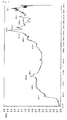
- silica gel having an average size of 5 micrometers and an average pore size of 300 angstroms is dispersed in water (15 ml)/ 2-propanol (15 ml), to which 3-aminopropylmethoxysilane (5 g) is added, and the temperature is raised to 100°C and the reaction is carried out for 6 hours. After cooling down to room temperature, the silica gel is filtered, rinsed, and dried under a reduced pressure to obtain silica gel to which aminopropyl groups have been introduced. A reflection FT-IR spectrum of this silica gel is shown in Fig. 8 .
- This silica gel to which aminopropyl groups have been introduced is dispersed in 100 ml of methanol and mixed with 10 g of the compound obtained in Synthetic example 1, followed by stirring for 6 hours at room temperature.
- This mixed solution is then cooled in an ice bath, 3 g of sodium cyanotrihydroborate is added to it, and stirring is carried out overnight at room temperature; the silica gel is then filtered, rinsed with methanol, and dried under a reduced pressure to obtain 10.3 g of silica gel having the target phosphorylcholine groups directly on the surface.
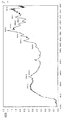
- a reflection FT-IR spectrum of this silica gel is shown in Fig. 9 .
- Fig. 9 shows that a peak due to phosphate groups appears around 1,250 cm -1 , which indicates that the phosphorylcholine group is introduced onto the powder surface.
- Example 3-1 The chromatography packing of Example 3-1 is packed in a 250 mm-long stainless steel column having an inside diameter of 4.6 mm by means of the slurry method. Separation of proteins in a human serum sample (Consera N, product name, is diluted two times with physiological saline) is attempted with the following setup: a 50 mmol/l phosphate buffer (prepared from Na 2 HO 4 and KH 2 PO 4 ) having 500 mmol/l sodium chloride is used for the mobile phase and the flow rate is set at 0.1 ml/min and the column oven temperature at 40°C. The detection was done with the UV at 280 nm. The result is shown in Figure 10 .
- This packing is described as a packing for the size exclusion mode that has chemically bonded functional groups having the diol structure on the surface of porous silica gel. Its average pore size is 300 angstroms and the average particle size is 5 micrometers, which makes it preferable for comparison with the packing described in Example 3-1. It is described as suitable for separation of proteins having a molecular weight of 10,000 to several hundred thousand.
- YMC-Pack Diol uses nondessociative diol as the hydrophilic group and therefore, unlike the packing of the present invention, does not have electrically charged functional groups. Therefore, very little ionic interactions with proteins are expected.
- Example 3-1 separation of proteins in a human serum sample (Consera N, product name, is diluted two times with physiological saline) is attempted with the following setup: a 50 mmol/l phosphate buffer (prepared from Na 2 HO 4 and KH 2 PO 4 ) having 500 mmol/l sodium chloride is used for the mobile phase and the flow rate is set at 0.1 ml/min and the column oven temperature at 40°C. The detection was done with the UV at 280 nm. The result is shown in Figure 10 .
- a substantial characteristic of the chromatogram that uses the chromatography packing obtained by the method of the present invention is that transferrin is separated out in addition to ⁇ - globulin and albumin, which are major proteins in human serum.
- the peak assignment was carried out by using a commercially available sample of each protein.
- the chromatography packing obtained by the method of the present invention is shown not only to have very little protein adsorption but also to be able to separate proteins having similar molecular weights based on the difference in the isoelectric point and hydrophobicity because it has subtle ionic interactions with proteins due to the dual electric charge of the phosphorylcholine group. That is, the chromatography packing obtained by the method of the present invention is shown to be able to separate samples in the GFC mode based not only on the difference in the molecular weight but also on the difference in the isoelectric point and hydrophobicity.
- a silica gel carrier bonded with phosphorylcholine groups is prepared by means of the same treatment as in Example 1. This is used to pack an identical column as in Example 3-1.
- the procedure for the tryptic digestion of myoglobin is shown below. 8.8 mg of myoglobin crystals (commercial product) is dissolved in a 20 mol/l (pH 8.3) phosphate buffer (prepared with Na 2 HPO 4 and KH 2 PO 4 ). Trypsin crystals (commercial product) are dissolved in a 5 mol/l (pH 5.0) phosphate buffer (prepared with Na 2 HPO 4 and KH 2 PO 4 ). 360 microliters of the phosphate buffer solution of myoglobin is heated up to 95°C in a hot water bath for thermal denaturation for 1 hour. The trypsin solution then centrifuged at 3,000 rpm for 15 minutes and the precipitation is separated.
- Fig. 11 The chromatogram using the chromatography packing obtained by the method of the present invention shows that polypeptides produced by tryptic digestion of myoglobin are separated.
- the modification method of the present invention allows stable introduction of phosphorylcholine groups onto the surface of various materials using a simple method. It has a great advantage in that an optimum amount of the phosphorylcholine group can be easily introduced on the material that is used for a specific application for easy modification suitable for the application.
- the material whose surface is modified has high biocompatibility and hydrophilicity and is useful for medical materials, cosmetic ingredients, chromatography packing materials, etc. It is also useful for modification of members of a separation analysis apparatus.
- a simple method can be used to introduce hydrophilic phosphorylcholine groups onto the material in a stable manner.
- a piping for an analysis apparatus or separation apparatus and/or various materials for an analysis apparatus that have phosphorylcholine groups introduced onto the inside surface exposed to sample liquid prevent protein adsorption and allow protein analysis with superior reproducibility. It is also possible to suppress protein denaturation in an analysis apparatus to improve the protein recovery rate.
- the material to be modified can be anything, and, since the polymer coating is cross-linked, durability of the coating is superior.
- the phosphorylcholine group is introduced by means of a polymer reaction after the polymer coating, an optimum amount of phosphorylcholine groups can be easily introduced onto the surface of various liquid-contacting members.
- the modified powder of the chromatography packing obtained by the method of the present invention is a powder having phosphorylcholine groups on the powder surface in a stable manner that has high biocompatibility and moisture retention.
- the preparation method of the present invention has a great advantage in that an optimum amount of the phosphorylcholine group for a specific application can be easily introduced onto the powder surface so that the modified powder can be easily designed.
- a chromatography packing with very little adsorption of proteins and polypeptides, and yet slightly electrically charged, can be provided.
- the characteristic of the chromatography packing obtained by the method of the present invention is its superior ability to separate samples in the GFC mode based not only on the differences in the molecular weight but also on the differences in the isoelectric point and hydrophobicity.
- a simple method can be used to introduce hydrophilic phosphorylcholine groups onto the surface of liquid-contacting members of various materials in a stable manner.
- a piping for an analysis apparatus or separation apparatus and/or various materials for an analysis apparatus that have phosphorylcholine groups introduced onto the inside surface exposed to sample liquid prevent protein adsorption and allow protein analysis with superior reproducibility. It is also possible to suppress protein denaturation in an analysis apparatus to improve the protein recovery rate.
- the liquid-contacting member of the present invention is not selective about its material. Also, since the polymer is cross-linked after coating, the coating has superior durability. Furthermore, since the phosphorylcholine group is introduced by means of a polymer reaction after the polymer coating, an optimum amount of phosphorylcholine groups can be easily introduced onto the surface of various liquid-contacting members.
Landscapes
- Chemical & Material Sciences (AREA)
- Organic Chemistry (AREA)
- Chemical Kinetics & Catalysis (AREA)
- Analytical Chemistry (AREA)
- Inorganic Chemistry (AREA)
- Health & Medical Sciences (AREA)
- Medicinal Chemistry (AREA)
- Polymers & Plastics (AREA)
- General Chemical & Material Sciences (AREA)
- Engineering & Computer Science (AREA)
- Materials Engineering (AREA)
- Solid-Sorbent Or Filter-Aiding Compositions (AREA)
- Addition Polymer Or Copolymer, Post-Treatments, Or Chemical Modifications (AREA)
- Coating Of Shaped Articles Made Of Macromolecular Substances (AREA)
- Materials For Medical Uses (AREA)
Applications Claiming Priority (6)
| Application Number | Priority Date | Filing Date | Title |
|---|---|---|---|
| JP2002340320 | 2002-11-25 | ||
| JP2002340321A JP3647840B2 (ja) | 2002-11-25 | 2002-11-25 | ホスホリルコリン基含有改質粉体及びその製造方法 |
| JP2003052305A JP3655615B2 (ja) | 2003-02-28 | 2003-02-28 | クロマトグラフィー用充填剤 |
| JP2003133418A JP4251913B2 (ja) | 2003-05-12 | 2003-05-12 | ホスホリルコリン基を表面に有する接液部材 |
| JP2003169123A JP3647852B2 (ja) | 2002-11-25 | 2003-06-13 | 素材の表面改質方法 |
| EP03774076.8A EP1577360B1 (en) | 2002-11-25 | 2003-11-20 | Method of modifying surface of material |
Related Parent Applications (2)
| Application Number | Title | Priority Date | Filing Date |
|---|---|---|---|
| EP03774076.8A Division-Into EP1577360B1 (en) | 2002-11-25 | 2003-11-20 | Method of modifying surface of material |
| EP03774076.8A Division EP1577360B1 (en) | 2002-11-25 | 2003-11-20 | Method of modifying surface of material |
Publications (2)
| Publication Number | Publication Date |
|---|---|
| EP2700445A1 EP2700445A1 (en) | 2014-02-26 |
| EP2700445B1 true EP2700445B1 (en) | 2015-07-08 |
Family
ID=32398337
Family Applications (2)
| Application Number | Title | Priority Date | Filing Date |
|---|---|---|---|
| EP13186481.1A Expired - Lifetime EP2700445B1 (en) | 2002-11-25 | 2003-11-20 | Method of preparing a chromatography packing |
| EP03774076.8A Expired - Lifetime EP1577360B1 (en) | 2002-11-25 | 2003-11-20 | Method of modifying surface of material |
Family Applications After (1)
| Application Number | Title | Priority Date | Filing Date |
|---|---|---|---|
| EP03774076.8A Expired - Lifetime EP1577360B1 (en) | 2002-11-25 | 2003-11-20 | Method of modifying surface of material |
Country Status (6)
| Country | Link |
|---|---|
| US (2) | US7560023B2 (enExample) |
| EP (2) | EP2700445B1 (enExample) |
| KR (2) | KR101051674B1 (enExample) |
| CN (1) | CN100480351C (enExample) |
| TW (2) | TW200416223A (enExample) |
| WO (1) | WO2004048492A1 (enExample) |
Families Citing this family (34)
| Publication number | Priority date | Publication date | Assignee | Title |
|---|---|---|---|---|
| US6863825B2 (en) | 2003-01-29 | 2005-03-08 | Union Oil Company Of California | Process for removing arsenic from aqueous streams |
| JP4086305B2 (ja) * | 2003-12-02 | 2008-05-14 | 株式会社資生堂 | ホスホリルコリン基含有化合物及び該化合物からなる表面改質剤 |
| JP3852942B2 (ja) * | 2004-05-24 | 2006-12-06 | 株式会社資生堂 | 水中分散性化粧料用粉体 |
| JP3922648B2 (ja) * | 2004-05-24 | 2007-05-30 | 株式会社資生堂 | アフィニティー粒子及びアフィニティー分離方法 |
| US20100300971A1 (en) * | 2005-05-18 | 2010-12-02 | Sequant Ab | Zwitterionic stationary phase as well as method for using and producing said phase |
| JP5100023B2 (ja) * | 2006-03-29 | 2012-12-19 | 京セラメディカル株式会社 | 生体材料、及びそれを用いた人工関節並びにその製造方法 |
| US8066874B2 (en) | 2006-12-28 | 2011-11-29 | Molycorp Minerals, Llc | Apparatus for treating a flow of an aqueous solution containing arsenic |
| ES2397795T5 (es) * | 2007-05-25 | 2017-09-11 | Merck Patent Gmbh | Copolímeros de injerto para la cromatografía de intercambio catiónico |
| US9192694B2 (en) * | 2007-10-03 | 2015-11-24 | Kyocera Medical Corporation | Biocompatible and low-abrasion member, and artificial joint using the same and method of producing the same |
| JP5280664B2 (ja) * | 2007-10-25 | 2013-09-04 | 株式会社 資生堂 | 表面改質方法及び表面改質材料 |
| US8349764B2 (en) | 2007-10-31 | 2013-01-08 | Molycorp Minerals, Llc | Composition for treating a fluid |
| US8252087B2 (en) | 2007-10-31 | 2012-08-28 | Molycorp Minerals, Llc | Process and apparatus for treating a gas containing a contaminant |
| US20110021756A1 (en) * | 2008-03-19 | 2011-01-27 | Katsuyuki Maeno | Method of manufacturing an affinity particle, affinity particle, and separation method |
| JP5173691B2 (ja) * | 2008-09-17 | 2013-04-03 | 株式会社 資生堂 | 親水性相互作用クロマトグラフィー用充填剤 |
| US20100151114A1 (en) * | 2008-12-17 | 2010-06-17 | Zimmer, Inc. | In-line treatment of yarn prior to creating a fabric |
| CA2767400A1 (en) * | 2009-07-06 | 2011-01-13 | Molycorp Minerals Llc | Ceria for use as an antimicrobial barrier and disinfectant in a wound dressing |
| CN101732766B (zh) * | 2009-11-25 | 2013-09-18 | 西北大学 | 一种仿细胞外层膜结构修饰涂层的制备方法 |
| CN103739621A (zh) * | 2010-09-08 | 2014-04-23 | 上海生物医学工程研究中心 | 一种类磷酰胆碱结构的表面处理剂在材料表面改性中的应用 |
| CN102399237A (zh) * | 2010-09-08 | 2012-04-04 | 上海生物医学工程研究中心 | 一种类磷酰胆碱结构的表面处理剂及其制备与应用 |
| US20120109301A1 (en) | 2010-11-03 | 2012-05-03 | Zimmer, Inc. | Modified Polymeric Materials And Methods Of Modifying Polymeric Materials |
| KR101283446B1 (ko) * | 2010-11-10 | 2013-07-08 | 재단법인대구경북과학기술원 | 포스포콜린에 의해 표면개질된 자성나노입자, 그의 제조 방법, 및 그를 이용한 단백질 분리방법 |
| TWI546122B (zh) * | 2011-02-25 | 2016-08-21 | 東麗股份有限公司 | 血液成分吸附用載體及血液成分吸附管柱 |
| US9233863B2 (en) | 2011-04-13 | 2016-01-12 | Molycorp Minerals, Llc | Rare earth removal of hydrated and hydroxyl species |
| CN102977275B (zh) * | 2011-09-07 | 2014-12-10 | 佛山市博新生物科技有限公司 | 一种经过预处理的含有磷酰胆碱基团的单体改善吸附树脂生物相容性的应用 |
| JP6485349B2 (ja) * | 2013-06-07 | 2019-03-20 | 日産化学株式会社 | 細胞培養器 |
| MX370462B (es) | 2014-03-07 | 2019-12-13 | Secure Natural Resources Llc | Oxido de cerio (iv) con propiedades de remocion de arsenico excepcionales. |
| CN105237790B (zh) * | 2015-11-16 | 2018-02-09 | 西安科技大学 | 一种双仿生涂层的制备方法 |
| CN114158254B (zh) * | 2019-08-27 | 2022-11-18 | 东丽株式会社 | 医疗设备的制造方法 |
| KR102278739B1 (ko) * | 2019-10-07 | 2021-07-20 | 국방과학연구소 | Zif를 이용한 화학작용제 흡착제 및 이의 활용 |
| CN110721746A (zh) * | 2019-10-14 | 2020-01-24 | 长春理工大学 | 一种用酞菁修饰的磁性温敏纳米微球及合成方法 |
| CN116040709B (zh) * | 2022-12-29 | 2025-11-25 | 杭州尚善若水环保科技有限公司 | 一种有机废水生化处理中的营养剂及其制备方法 |
| CN116925575A (zh) * | 2023-07-24 | 2023-10-24 | 河南龙兴钛业科技股份有限公司 | 一种改性纳米二氧化钛的制备方法 |
| CN117563569B (zh) * | 2023-12-22 | 2026-03-10 | 中国工程物理研究院核物理与化学研究所 | 一种复合提铀材料的制备方法、复合提铀材料及其应用 |
| CN118059840B (zh) * | 2024-03-26 | 2024-08-09 | 重庆市鲁渝矿业发展有限公司 | 一种硫酸钡复合多孔吸附材料及其制备方法 |
Family Cites Families (18)
| Publication number | Priority date | Publication date | Assignee | Title |
|---|---|---|---|---|
| JPS59169532A (ja) | 1983-03-17 | 1984-09-25 | Asahi Chem Ind Co Ltd | C反応性蛋白の吸着材 |
| JPH085904B2 (ja) * | 1986-05-02 | 1996-01-24 | オリエンタル酵母工業株式会社 | 新規ホスホリルコリン誘導体の製造法 |
| JPH0833380B2 (ja) * | 1986-12-03 | 1996-03-29 | 東ソー株式会社 | 液体クロマトグラフイ−用充てん剤 |
| US5141806A (en) * | 1989-10-31 | 1992-08-25 | The United States Of America As Represented By The Administrator Of The National Aeronautics And Space Administration | Microporous structure with layered interstitial surface treatment, and method and apparatus for preparation thereof |
| EP0556216B1 (en) * | 1990-11-05 | 1997-06-04 | Biocompatibles Limited | Phosphoric acid esters and their use in the preparation of biocompatible surfaces |
| US5178756A (en) * | 1991-06-25 | 1993-01-12 | Jarrett Iii Harry W | Glucose-silica medium for high-pressure gel filtration chromatography |
| JPH06254392A (ja) * | 1993-03-02 | 1994-09-13 | Eisai Co Ltd | 分離剤 |
| JP3613585B2 (ja) * | 1995-03-01 | 2005-01-26 | 株式会社カネカ | リガンドまたはリガンドが結合している化合物の固定化方法 |
| WO1996034061A1 (en) * | 1995-04-28 | 1996-10-31 | Nof Corporation | Polymeric material, medical material and liquid polymer composition |
| JP2870727B2 (ja) | 1996-07-04 | 1999-03-17 | 科学技術振興事業団 | 2−メタクリロイルオキシエチルホスホリルコリン共重合体 |
| JP3737241B2 (ja) | 1997-04-24 | 2006-01-18 | 日本油脂株式会社 | ホスホリルコリン基含有重合体の製造方法 |
| AU7781498A (en) * | 1997-06-04 | 1998-12-21 | Biocompatibles Limited | Zwitterionic compounds and their use to cross-link collagenous materials |
| JP4712924B2 (ja) | 1999-03-30 | 2011-06-29 | 日油株式会社 | 医療用材料および製造方法 |
| JP4680361B2 (ja) * | 2000-09-22 | 2011-05-11 | 一彦 石原 | 分離・回収方法 |
| US7399409B2 (en) * | 2000-10-13 | 2008-07-15 | Daicel Chemical Industries, Ltd. | Packing material for separation of optical isomer and method of separating optical isomer with the same |
| US6987079B2 (en) * | 2001-08-14 | 2006-01-17 | W.R. Grace & Co.-Conn. | Supported catalyst systems |
| JP3922648B2 (ja) * | 2004-05-24 | 2007-05-30 | 株式会社資生堂 | アフィニティー粒子及びアフィニティー分離方法 |
| JP3809177B2 (ja) * | 2004-05-24 | 2006-08-16 | 株式会社資生堂 | アフィニティー粒子及びアフィニティー分離方法 |
-
2003
- 2003-11-20 EP EP13186481.1A patent/EP2700445B1/en not_active Expired - Lifetime
- 2003-11-20 WO PCT/JP2003/014783 patent/WO2004048492A1/ja not_active Ceased
- 2003-11-20 KR KR1020057006295A patent/KR101051674B1/ko not_active Expired - Fee Related
- 2003-11-20 KR KR1020107028633A patent/KR101095400B1/ko not_active Expired - Fee Related
- 2003-11-20 EP EP03774076.8A patent/EP1577360B1/en not_active Expired - Lifetime
- 2003-11-20 US US10/536,066 patent/US7560023B2/en not_active Expired - Fee Related
- 2003-11-20 CN CNB2003801040665A patent/CN100480351C/zh not_active Expired - Lifetime
- 2003-11-21 TW TW092132699A patent/TW200416223A/zh not_active IP Right Cessation
- 2003-11-21 TW TW098134892A patent/TW201008954A/zh unknown
-
2009
- 2009-06-24 US US12/490,531 patent/US8673151B2/en not_active Expired - Fee Related
Non-Patent Citations (1)
| Title |
|---|
| PIDGEON C ET AL: "Immobilized artificial membrane chromatography: Supports composed of membrane lipids", ANALYTICAL BIOCHEMISTRY, ACADEMIC PRESS INC, NEW YORK, vol. 176, no. 1, 1 January 1989 (1989-01-01), pages 36 - 47, XP024823462, ISSN: 0003-2697, [retrieved on 19890101], DOI: 10.1016/0003-2697(89)90269-8 * |
Also Published As
| Publication number | Publication date |
|---|---|
| KR101051674B1 (ko) | 2011-07-26 |
| KR20050083752A (ko) | 2005-08-26 |
| TWI331627B (enExample) | 2010-10-11 |
| TW200416223A (en) | 2004-09-01 |
| US20060060533A1 (en) | 2006-03-23 |
| KR20110008341A (ko) | 2011-01-26 |
| TW201008954A (en) | 2010-03-01 |
| CN100480351C (zh) | 2009-04-22 |
| EP1577360B1 (en) | 2017-09-06 |
| KR101095400B1 (ko) | 2011-12-16 |
| WO2004048492A1 (ja) | 2004-06-10 |
| CN1717464A (zh) | 2006-01-04 |
| EP1577360A4 (en) | 2011-06-08 |
| EP2700445A1 (en) | 2014-02-26 |
| US8673151B2 (en) | 2014-03-18 |
| US20100285252A1 (en) | 2010-11-11 |
| US7560023B2 (en) | 2009-07-14 |
| EP1577360A1 (en) | 2005-09-21 |
Similar Documents
| Publication | Publication Date | Title |
|---|---|---|
| EP2700445A1 (en) | A chromatography packing | |
| US8426627B2 (en) | Phosphorylcholine group-containing compound and surface modifying agent composed of such compound | |
| Mallik et al. | Affinity monolith chromatography | |
| Petro et al. | Polymers immobilized on silica gels as stationary phases for liquid chromatography | |
| WO2019137251A1 (zh) | 制备多孔框架材料为基质的色谱固定相用于手性分离 | |
| CN109078626A (zh) | 实施体积排阻色谱的设备和方法 | |
| EP0425104B1 (en) | Column packing material | |
| WO2019239329A1 (en) | Size exclusion chromatography of biological molecules | |
| JPS6345558A (ja) | 逆相充▲てん▼材料 | |
| Ivanov et al. | Polymer-coated adsorbents for the separation of biopolymers and particles | |
| WO2009055569A1 (en) | Stabilized silica colloidal crystals | |
| JP3655615B2 (ja) | クロマトグラフィー用充填剤 | |
| EP2830755B1 (en) | Method for reverse phase chromatography of active pharmaceutical ingredients | |
| Sakai-Kato et al. | Integration of biomolecules into analytical systems by means of silica sol-gel technology | |
| EP0501786B1 (en) | Packing material for column and process for production thereof | |
| EP1455920B1 (en) | Separation method | |
| SK288165B6 (sk) | Spôsob prípravy a použitia poly(2-hydroxy propyl metakrylátovej) chromatografickej fázy viazanej na silikagéli | |
| JP2002534258A (ja) | フッ素部分を含む新しい疎水性のポリマー | |
| Weetall | Affinity chromatography on inorganic support materials | |
| Ivanov et al. | Structures of grafted polymer phases and features of protein separation on composite anion-exchangers | |
| TURKOVÁ | respectively). Its advantage is a good chemical |
Legal Events
| Date | Code | Title | Description |
|---|---|---|---|
| PUAI | Public reference made under article 153(3) epc to a published international application that has entered the european phase |
Free format text: ORIGINAL CODE: 0009012 |
|
| AC | Divisional application: reference to earlier application |
Ref document number: 1577360 Country of ref document: EP Kind code of ref document: P |
|
| AK | Designated contracting states |
Kind code of ref document: A1 Designated state(s): DE FR GB IT |
|
| 17P | Request for examination filed |
Effective date: 20140325 |
|
| RBV | Designated contracting states (corrected) |
Designated state(s): DE FR GB IT |
|
| 17Q | First examination report despatched |
Effective date: 20140424 |
|
| REG | Reference to a national code |
Ref country code: DE Ref legal event code: R079 Ref document number: 60347815 Country of ref document: DE Free format text: PREVIOUS MAIN CLASS: B01J0020286000 Ipc: C09K0003000000 |
|
| GRAP | Despatch of communication of intention to grant a patent |
Free format text: ORIGINAL CODE: EPIDOSNIGR1 |
|
| INTG | Intention to grant announced |
Effective date: 20141023 |
|
| RIC1 | Information provided on ipc code assigned before grant |
Ipc: B01J 20/32 20060101ALI20141013BHEP Ipc: B01J 20/10 20060101ALI20141013BHEP Ipc: B01J 20/24 20060101ALI20141013BHEP Ipc: C01B 33/159 20060101ALI20141013BHEP Ipc: C08J 7/12 20060101ALI20141013BHEP Ipc: B01J 20/28 20060101ALI20141013BHEP Ipc: C09K 3/00 20060101AFI20141013BHEP Ipc: B01J 20/286 20060101ALI20141013BHEP Ipc: C09D 183/08 20060101ALI20141013BHEP Ipc: C08J 3/12 20060101ALI20141013BHEP |
|
| GRAP | Despatch of communication of intention to grant a patent |
Free format text: ORIGINAL CODE: EPIDOSNIGR1 |
|
| INTG | Intention to grant announced |
Effective date: 20141218 |
|
| GRAP | Despatch of communication of intention to grant a patent |
Free format text: ORIGINAL CODE: EPIDOSNIGR1 |
|
| INTG | Intention to grant announced |
Effective date: 20150129 |
|
| GRAS | Grant fee paid |
Free format text: ORIGINAL CODE: EPIDOSNIGR3 |
|
| GRAA | (expected) grant |
Free format text: ORIGINAL CODE: 0009210 |
|
| AC | Divisional application: reference to earlier application |
Ref document number: 1577360 Country of ref document: EP Kind code of ref document: P |
|
| AK | Designated contracting states |
Kind code of ref document: B1 Designated state(s): DE FR GB IT |
|
| REG | Reference to a national code |
Ref country code: GB Ref legal event code: FG4D |
|
| REG | Reference to a national code |
Ref country code: DE Ref legal event code: R096 Ref document number: 60347815 Country of ref document: DE |
|
| REG | Reference to a national code |
Ref country code: FR Ref legal event code: PLFP Year of fee payment: 13 |
|
| REG | Reference to a national code |
Ref country code: DE Ref legal event code: R097 Ref document number: 60347815 Country of ref document: DE |
|
| PLBE | No opposition filed within time limit |
Free format text: ORIGINAL CODE: 0009261 |
|
| STAA | Information on the status of an ep patent application or granted ep patent |
Free format text: STATUS: NO OPPOSITION FILED WITHIN TIME LIMIT |
|
| 26N | No opposition filed |
Effective date: 20160411 |
|
| REG | Reference to a national code |
Ref country code: FR Ref legal event code: PLFP Year of fee payment: 14 |
|
| REG | Reference to a national code |
Ref country code: FR Ref legal event code: PLFP Year of fee payment: 15 |
|
| REG | Reference to a national code |
Ref country code: DE Ref legal event code: R082 Ref document number: 60347815 Country of ref document: DE Representative=s name: DENNEMEYER & ASSOCIATES S.A., LU Ref country code: DE Ref legal event code: R081 Ref document number: 60347815 Country of ref document: DE Owner name: SANYO FINE IRICA TECHNOLOGY CO., LTD., JP Free format text: FORMER OWNER: SHISEIDO COMPANY, LTD., TOKYO, JP |
|
| REG | Reference to a national code |
Ref country code: GB Ref legal event code: 732E Free format text: REGISTERED BETWEEN 20180308 AND 20180314 |
|
| REG | Reference to a national code |
Ref country code: FR Ref legal event code: TP Owner name: SANYO FINE IRICA TECHNOLOGY CO., LTD, JP Effective date: 20180604 |
|
| PGFP | Annual fee paid to national office [announced via postgrant information from national office to epo] |
Ref country code: DE Payment date: 20181120 Year of fee payment: 16 |
|
| PGFP | Annual fee paid to national office [announced via postgrant information from national office to epo] |
Ref country code: IT Payment date: 20181126 Year of fee payment: 16 Ref country code: FR Payment date: 20181123 Year of fee payment: 16 Ref country code: GB Payment date: 20181120 Year of fee payment: 16 |
|
| REG | Reference to a national code |
Ref country code: DE Ref legal event code: R119 Ref document number: 60347815 Country of ref document: DE |
|
| GBPC | Gb: european patent ceased through non-payment of renewal fee |
Effective date: 20191120 |
|
| PG25 | Lapsed in a contracting state [announced via postgrant information from national office to epo] |
Ref country code: FR Free format text: LAPSE BECAUSE OF NON-PAYMENT OF DUE FEES Effective date: 20191130 Ref country code: GB Free format text: LAPSE BECAUSE OF NON-PAYMENT OF DUE FEES Effective date: 20191120 Ref country code: DE Free format text: LAPSE BECAUSE OF NON-PAYMENT OF DUE FEES Effective date: 20200603 Ref country code: IT Free format text: LAPSE BECAUSE OF NON-PAYMENT OF DUE FEES Effective date: 20191120 |