EP2645381A2 - Teilchen von R-T-B Seltene-Erden-Magneten, Herstellungsverfahren von Teilchen R-T-B Seltene-Erden-Magneten, und Verbundmagnet - Google Patents
Teilchen von R-T-B Seltene-Erden-Magneten, Herstellungsverfahren von Teilchen R-T-B Seltene-Erden-Magneten, und Verbundmagnet Download PDFInfo
- Publication number
- EP2645381A2 EP2645381A2 EP13161404.2A EP13161404A EP2645381A2 EP 2645381 A2 EP2645381 A2 EP 2645381A2 EP 13161404 A EP13161404 A EP 13161404A EP 2645381 A2 EP2645381 A2 EP 2645381A2
- Authority
- EP
- European Patent Office
- Prior art keywords
- atom
- particles
- rare earth
- magnet particles
- based rare
- Prior art date
- Legal status (The legal status is an assumption and is not a legal conclusion. Google has not performed a legal analysis and makes no representation as to the accuracy of the status listed.)
- Granted
Links
Images
Classifications
-
- H—ELECTRICITY
- H01—ELECTRIC ELEMENTS
- H01F—MAGNETS; INDUCTANCES; TRANSFORMERS; SELECTION OF MATERIALS FOR THEIR MAGNETIC PROPERTIES
- H01F1/00—Magnets or magnetic bodies characterised by the magnetic materials therefor; Selection of materials for their magnetic properties
- H01F1/01—Magnets or magnetic bodies characterised by the magnetic materials therefor; Selection of materials for their magnetic properties of inorganic materials
- H01F1/03—Magnets or magnetic bodies characterised by the magnetic materials therefor; Selection of materials for their magnetic properties of inorganic materials characterised by their coercivity
- H01F1/032—Magnets or magnetic bodies characterised by the magnetic materials therefor; Selection of materials for their magnetic properties of inorganic materials characterised by their coercivity of hard-magnetic materials
- H01F1/04—Magnets or magnetic bodies characterised by the magnetic materials therefor; Selection of materials for their magnetic properties of inorganic materials characterised by their coercivity of hard-magnetic materials metals or alloys
- H01F1/047—Alloys characterised by their composition
- H01F1/053—Alloys characterised by their composition containing rare earth metals
- H01F1/055—Alloys characterised by their composition containing rare earth metals and magnetic transition metals, e.g. SmCo5
- H01F1/057—Alloys characterised by their composition containing rare earth metals and magnetic transition metals, e.g. SmCo5 and IIIa elements, e.g. Nd2Fe14B
- H01F1/0571—Alloys characterised by their composition containing rare earth metals and magnetic transition metals, e.g. SmCo5 and IIIa elements, e.g. Nd2Fe14B in the form of particles, e.g. rapid quenched powders or ribbon flakes
- H01F1/0573—Alloys characterised by their composition containing rare earth metals and magnetic transition metals, e.g. SmCo5 and IIIa elements, e.g. Nd2Fe14B in the form of particles, e.g. rapid quenched powders or ribbon flakes obtained by reduction or by hydrogen decrepitation or embrittlement
-
- B—PERFORMING OPERATIONS; TRANSPORTING
- B22—CASTING; POWDER METALLURGY
- B22F—WORKING METALLIC POWDER; MANUFACTURE OF ARTICLES FROM METALLIC POWDER; MAKING METALLIC POWDER; APPARATUS OR DEVICES SPECIALLY ADAPTED FOR METALLIC POWDER
- B22F1/00—Metallic powder; Treatment of metallic powder, e.g. to facilitate working or to improve properties
- B22F1/14—Treatment of metallic powder
- B22F1/142—Thermal or thermo-mechanical treatment
-
- C—CHEMISTRY; METALLURGY
- C22—METALLURGY; FERROUS OR NON-FERROUS ALLOYS; TREATMENT OF ALLOYS OR NON-FERROUS METALS
- C22C—ALLOYS
- C22C33/00—Making ferrous alloys
- C22C33/02—Making ferrous alloys by powder metallurgy
-
- C—CHEMISTRY; METALLURGY
- C22—METALLURGY; FERROUS OR NON-FERROUS ALLOYS; TREATMENT OF ALLOYS OR NON-FERROUS METALS
- C22C—ALLOYS
- C22C38/00—Ferrous alloys, e.g. steel alloys
- C22C38/002—Ferrous alloys, e.g. steel alloys containing In, Mg, or other elements not provided for in one single group C22C38/001 - C22C38/60
-
- C—CHEMISTRY; METALLURGY
- C22—METALLURGY; FERROUS OR NON-FERROUS ALLOYS; TREATMENT OF ALLOYS OR NON-FERROUS METALS
- C22C—ALLOYS
- C22C38/00—Ferrous alloys, e.g. steel alloys
- C22C38/005—Ferrous alloys, e.g. steel alloys containing rare earths, i.e. Sc, Y, Lanthanides
-
- C—CHEMISTRY; METALLURGY
- C22—METALLURGY; FERROUS OR NON-FERROUS ALLOYS; TREATMENT OF ALLOYS OR NON-FERROUS METALS
- C22C—ALLOYS
- C22C38/00—Ferrous alloys, e.g. steel alloys
- C22C38/06—Ferrous alloys, e.g. steel alloys containing aluminium
-
- C—CHEMISTRY; METALLURGY
- C22—METALLURGY; FERROUS OR NON-FERROUS ALLOYS; TREATMENT OF ALLOYS OR NON-FERROUS METALS
- C22C—ALLOYS
- C22C38/00—Ferrous alloys, e.g. steel alloys
- C22C38/10—Ferrous alloys, e.g. steel alloys containing cobalt
-
- C—CHEMISTRY; METALLURGY
- C22—METALLURGY; FERROUS OR NON-FERROUS ALLOYS; TREATMENT OF ALLOYS OR NON-FERROUS METALS
- C22C—ALLOYS
- C22C38/00—Ferrous alloys, e.g. steel alloys
- C22C38/14—Ferrous alloys, e.g. steel alloys containing titanium or zirconium
-
- H—ELECTRICITY
- H01—ELECTRIC ELEMENTS
- H01F—MAGNETS; INDUCTANCES; TRANSFORMERS; SELECTION OF MATERIALS FOR THEIR MAGNETIC PROPERTIES
- H01F1/00—Magnets or magnetic bodies characterised by the magnetic materials therefor; Selection of materials for their magnetic properties
- H01F1/01—Magnets or magnetic bodies characterised by the magnetic materials therefor; Selection of materials for their magnetic properties of inorganic materials
-
- H—ELECTRICITY
- H01—ELECTRIC ELEMENTS
- H01F—MAGNETS; INDUCTANCES; TRANSFORMERS; SELECTION OF MATERIALS FOR THEIR MAGNETIC PROPERTIES
- H01F1/00—Magnets or magnetic bodies characterised by the magnetic materials therefor; Selection of materials for their magnetic properties
- H01F1/01—Magnets or magnetic bodies characterised by the magnetic materials therefor; Selection of materials for their magnetic properties of inorganic materials
- H01F1/03—Magnets or magnetic bodies characterised by the magnetic materials therefor; Selection of materials for their magnetic properties of inorganic materials characterised by their coercivity
- H01F1/032—Magnets or magnetic bodies characterised by the magnetic materials therefor; Selection of materials for their magnetic properties of inorganic materials characterised by their coercivity of hard-magnetic materials
- H01F1/04—Magnets or magnetic bodies characterised by the magnetic materials therefor; Selection of materials for their magnetic properties of inorganic materials characterised by their coercivity of hard-magnetic materials metals or alloys
- H01F1/047—Alloys characterised by their composition
- H01F1/053—Alloys characterised by their composition containing rare earth metals
- H01F1/055—Alloys characterised by their composition containing rare earth metals and magnetic transition metals, e.g. SmCo5
- H01F1/057—Alloys characterised by their composition containing rare earth metals and magnetic transition metals, e.g. SmCo5 and IIIa elements, e.g. Nd2Fe14B
- H01F1/0571—Alloys characterised by their composition containing rare earth metals and magnetic transition metals, e.g. SmCo5 and IIIa elements, e.g. Nd2Fe14B in the form of particles, e.g. rapid quenched powders or ribbon flakes
- H01F1/0575—Alloys characterised by their composition containing rare earth metals and magnetic transition metals, e.g. SmCo5 and IIIa elements, e.g. Nd2Fe14B in the form of particles, e.g. rapid quenched powders or ribbon flakes pressed, sintered or bonded together
- H01F1/0578—Alloys characterised by their composition containing rare earth metals and magnetic transition metals, e.g. SmCo5 and IIIa elements, e.g. Nd2Fe14B in the form of particles, e.g. rapid quenched powders or ribbon flakes pressed, sintered or bonded together bonded together
-
- H—ELECTRICITY
- H01—ELECTRIC ELEMENTS
- H01F—MAGNETS; INDUCTANCES; TRANSFORMERS; SELECTION OF MATERIALS FOR THEIR MAGNETIC PROPERTIES
- H01F41/00—Apparatus or processes specially adapted for manufacturing or assembling magnets, inductances or transformers; Apparatus or processes specially adapted for manufacturing materials characterised by their magnetic properties
- H01F41/005—Impregnating or encapsulating
-
- H—ELECTRICITY
- H01—ELECTRIC ELEMENTS
- H01F—MAGNETS; INDUCTANCES; TRANSFORMERS; SELECTION OF MATERIALS FOR THEIR MAGNETIC PROPERTIES
- H01F41/00—Apparatus or processes specially adapted for manufacturing or assembling magnets, inductances or transformers; Apparatus or processes specially adapted for manufacturing materials characterised by their magnetic properties
- H01F41/02—Apparatus or processes specially adapted for manufacturing or assembling magnets, inductances or transformers; Apparatus or processes specially adapted for manufacturing materials characterised by their magnetic properties for manufacturing cores, coils, or magnets
- H01F41/0253—Apparatus or processes specially adapted for manufacturing or assembling magnets, inductances or transformers; Apparatus or processes specially adapted for manufacturing materials characterised by their magnetic properties for manufacturing cores, coils, or magnets for manufacturing permanent magnets
-
- H—ELECTRICITY
- H01—ELECTRIC ELEMENTS
- H01F—MAGNETS; INDUCTANCES; TRANSFORMERS; SELECTION OF MATERIALS FOR THEIR MAGNETIC PROPERTIES
- H01F7/00—Magnets
- H01F7/02—Permanent magnets [PM]
-
- B—PERFORMING OPERATIONS; TRANSPORTING
- B22—CASTING; POWDER METALLURGY
- B22F—WORKING METALLIC POWDER; MANUFACTURE OF ARTICLES FROM METALLIC POWDER; MAKING METALLIC POWDER; APPARATUS OR DEVICES SPECIALLY ADAPTED FOR METALLIC POWDER
- B22F2999/00—Aspects linked to processes or compositions used in powder metallurgy
-
- C—CHEMISTRY; METALLURGY
- C22—METALLURGY; FERROUS OR NON-FERROUS ALLOYS; TREATMENT OF ALLOYS OR NON-FERROUS METALS
- C22C—ALLOYS
- C22C2202/00—Physical properties
- C22C2202/02—Magnetic
Definitions
- the present invention relates to R-T-B-based rare earth magnet particles.
- R-T-B-based rare earth magnet particles have excellent magnetic properties and have been extensively used in the industrial applications such as magnets for various motors employed in automobiles, etc.
- the magnet particles produced by a hydrogenation-disproportionation-desorption-recombination process (HDDR treatment) have a non-uniform decomposition structure formed by the hydrogenation/phase decomposition process and therefore exhibit a poor squareness of a demagnetization curve thereof, so that it has been difficult for the magnet particles to satisfy both an excellent residual magnetic flux density and an excellent coercive force.
- the R-T-B-based rare earth magnet particles produced by the conventional methods have a non-uniform decomposition structure formed by the hydrogenation/phase decomposition process and therefore exhibit a poor squareness of a demagnetization curve thereof, so that it has been difficult to satisfy both an excellent residual magnetic flux density and an excellent coercive force.
- the R-T-B-based rare earth magnet particles have such a problem that among the magnet particles, small particles having a large specific surface area which are likely to suffer from non-uniform crystal orientation may exhibit a considerably low residual magnetic flux density.
- An object of the present invention is to provide a process for producing R-T-B-based rare earth magnet particles in which by well controlling treating conditions of an HD step in an HDDR treatment and forming a uniform decomposition structure, it is possible to suppress deterioration in residual magnetic flux density of small particles therein and obtain magnet particles having a high squareness which are capable of satisfying both an excellent residual magnetic flux density and an excellent coercive force.
- R-T-B-based rare earth magnet particles comprising R (wherein R represents at least one rare earth element including Y), T (wherein T represents Fe, or Fe and Co) and B (wherein B represents boron), and having a composition comprising R in an amount of not less than 12.5 atom% and not more than 14.3 atom%, B in an amount of not less than 4.5 atom% and not more than 7.5 atom% and Co in an amount of not more than 10.0 atom%, in which a squareness (H k /H cJ ) of a demagnetization curve of the R-T-B-based rare earth magnet particles is not less than 0.5, and a difference DB r between a residual magnetic flux density (B r106 ) of oversize particles obtained therefrom using a sieve of sieve opening 106 mm and a residual magnetic flux density (B r38 ) of undersize particles obtained therefrom using a sieve of sieve opening 38 mm is not
- a bonded magnet comprising the R-T-B-based rare earth magnet particles as described in the above Invention 3 (Invention 4).
- R-T-B-based rare earth magnet particles The process for producing R-T-B-based rare earth magnet particles according to the present invention is explained in detail below.
- raw material alloy particles are subjected to an HDDR treatment, and the resulting particles are cooled to obtain the R-T-B-based rare earth magnet particles.
- the raw material alloy for the R-T-B-based rare earth magnet particles as used in the present invention comprises R (wherein R represents at least one rare earth element including Y), T (wherein T represents Fe, or Fe and Co) and B (wherein B represents boron).
- the rare earth element R constituting the raw material alloy for the R-T-B-based rare earth magnet particles according to the present invention there may be used at least one element selected from the group consisting of Y, La, Ce, Pr, Nd, Pm, Sm, Eu, Gd, Tb, Dy, Ho, Er, Tm, Yb and Lu.
- Nd is preferably used.
- the content of the element R in the raw material alloy is not less than 12.5 atom% and not more than 14.3 atom%.
- the raw material alloy When the content of the element R in the raw material alloy is more than 14.3 atom%, the raw material alloy tends to comprise a non-magnetic phase in a considerably large amount so that the obtained magnet particles tend to exhibit a low residual magnetic flux density.
- the content of the element R in the raw material alloy is preferably not less than 12.8 atom% and not more than 14.0 atom%.
- the element T constituting the raw material alloy for the R-T-B-based rare earth magnet particles according to the present invention there is mentioned Fe, or Fe and Co.
- the content of the element T in the raw material alloy is the balance of the raw material alloy except for the other elements constituting the raw material alloy.
- Co is added as an element with which Fe is to be substituted, it is possible to raise a Curie temperature of the raw material alloy.
- the addition of Co to the raw material alloy tends to induce deterioration in residual flux density of the resulting magnet particles. Therefore, the content of Co in the raw material alloy is controlled to not more than 10 atom% and preferably not more than 8.0 atom%.
- the content of B in the raw material alloy for the R-T-B-based rare earth magnet particles according to the present invention is not less than 4.5 atom% and not more than 7.5 atom%.
- the content of B in the raw material alloy is preferably not less than 5.0 atom% and not more than 7.0 atom%.
- the raw material alloy for the R-T-B-based rare earth magnet particles according to the present invention preferably further comprises Ga and Zr.
- the content of Ga in the raw material alloy is preferably not less than 0.1 atom% and not more than 1.0 atom%.
- the content of Ga in the raw material alloy is less than 0.1 atom%, the effect of improving a coercive force of the resulting magnet particles tends to be low.
- the content of Ga in the raw material alloy is more than 1.0 atom%, the resulting magnet particles tend to be deteriorated in residual magnetic flux density.
- the content of Zr in the raw material alloy is preferably not less than 0.05 atom% and not more than 0.15 atom%.
- the content of Zr in the raw material alloy is less than 0.05 atom%, the effect of improving a coercive force of the resulting magnet particles tends to be low.
- the content of Zr in the raw material alloy is more than 0.15 atom%, the resulting magnet particles tend to be deteriorated in residual magnetic flux density.
- the raw material alloy for the R-T-B-based rare earth magnet particles according to the present invention may also comprise, in addition to the above-mentioned elements, at least one element selected from the group consisting of Ti, Al, V, Nb, Cu, Si, Cr, Mn, Zn, Mo, Hf, W, Ta and Sn.
- the total content of these elements in the raw material alloy is preferably not more than 4.5 atom%. When the total content of these elements in the raw material alloy is more than 4.5 atom%, the resulting magnet particles tend to be deteriorated in residual magnetic flux density or suffer from precipitation of the other phases.
- the raw material alloy for the R-T-B-based rare earth magnet particles there may be used ingots produced by a book mold casting method or a centrifugal casting method, or strips produced by a strip casting method. These alloys tend to undergo segregation of its composition upon the casting, and therefore may be subjected to homogenization heat treatment for the composition before subjected to the HDDR treatment.
- the homogenization heat treatment may be carried out in a vacuum atmosphere or in an inert gas atmosphere at a temperature of preferably not lower than 950°C and not higher than 1200°C and more preferably not lower than 1000°C and not higher than 1170°C.
- the raw material alloy is subjected to coarse pulverization and fine pulverization to thereby produce raw material alloy particles for the HDDR treatment.
- the coarse pulverization may be carried out using a jaw crusher or the like.
- the resulting particles may be subjected to ordinary hydrogen absorbing pulverization and mechanical pulverization to thereby produce raw material alloy particles for the R-T-B-based rare earth magnet particles.
- the raw material alloy particles preferably have an average particle diameter of 30 to 200 ⁇ m.
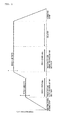
- the HDDR treatment includes an HD step in which an R-T-B-based raw material alloy is subjected to hydrogenation to decompose the alloy into an ⁇ -Fe phase, an RH 2 phase and an Fe 2 B phase, and a desorption-recombination process (DR step) in which hydrogen is discharged under reduced pressure so that a reverse reaction of the above step is caused to produce R 2 T 14 B from the respective phases.
- the HD step includes a first stage HD step and a second stage HD step.
- the raw material alloy is subjected to hydrogenation/phase decomposition process to form a fine initial decomposition structure.
- the second stage HD step the thus formed structure was uniformly grown. As a result, it is possible to obtain a uniform decomposition structure and thereby produce magnet particles having an excellent squareness.
- the first stage HD step is carried out in a hydrogen-containing gas atmosphere after heating the raw material alloy particles in an inert atmosphere or in a vacuum atmosphere.
- the hydrogen-containing gas atmosphere is preferably a mixed gas atmosphere of a hydrogen gas having a hydrogen partial pressure of not less than 20 kPa and not more than 90 kPa, and an inert gas.
- the hydrogen partial pressure in the hydrogen-containing gas atmosphere is more preferably not less than 40 kPa and not more than 80 kPa.
- the raw material alloy particles are heated to a temperature range of not lower than 770°C and not higher than 820°C, preferably not lower than 780°C and not higher than 810°C, in an inert atmosphere or in a vacuum atmosphere, and then the atmosphere is replaced with the hydrogen-containing gas atmosphere in which the raw material alloy particles are held in the same temperature range for not shorter than 30 min and not longer than 150 min, preferably for not shorter than 60 min and not longer than 120 min.
- the introduction temperature is lower than 770°C, although the resulting particles tends to be increased in coercive force owing to formation of a fine decomposition structure, the decomposition phase tends to be insufficient in crystal orientation so that the resulting particles tend to be deteriorated in residual magnetic flux density.
- the second stage HD step is carried out in such a manner that the particles obtained in the previous step are heated again to a temperature range of not lower than 830°C and not higher than 870°C and preferably not lower than 835°C and not higher than 855°C in the hydrogen-containing gas atmosphere and held in such a temperature range for not shorter than 60 min and not longer than 240 min and preferably for not shorter than 70 min and not longer than 200 min.
- the holding temperature is lower than 830°C, growth of the decomposition structure tends to be insufficient.
- the DR step is conducted at a treating temperature of not lower than 800°C and not higher than 900°C and preferably not lower than 810°C and not higher than 870°C.
- the reason why the treating temperature is adjusted to not lower than 800°C is that when the treating temperature is lower than 800°C, dehydrogenation tends to hardly proceed.
- the reason why the treating temperature is adjusted to not higher than 900°C is that when the treating temperature is higher than 900°C, the resulting particles tends to be deteriorated in coercive force owing to growth of crystal grains.
- the vacuum degree is finally adjusted to not more than 1 Pa.
- the treating time is usually not shorter than 15 min and not longer than 300 min.
- the resulting magnet particles are cooled.
- the magnet particles are rapidly cooled in argon (Ar). As a result, the magnet particles can be prevented from suffering from growth of crystal grains.
- the R-T-B-based rare earth magnet particles according to the present invention comprise R (wherein R represents at least one rare earth element including Y), T (wherein T represents Fe, or Fe and Co) and B (wherein B represents boron).
- the rare earth element R constituting the R-T-B-based rare earth magnet particles according to the present invention there may be used at least one element selected from the group consisting of Y, La, Ce, Pr, Nd, Pm, Sm, Eu, Gd, Tb, Dy, Ho, Er, Tm, Yb and Lu.
- Nd is preferably used.
- the content of the element R in the magnet particles is not less than 12.5 atom% and not more than 14.3 atom%. When the content of the element R in the magnet particles is less than 12.5 atom%, the effect of improving a coercive force of the magnet particles tends to be insufficient.
- the magnet particles When the content of the element R in the magnet particles is more than 14.3 atom%, the magnet particles tend to exhibit a low residual magnetic flux density.
- the content of the element R in the magnet particles is preferably not less than 12.8 atom% and not more than 14.0 atom%.
- the element T constituting the R-T-B-based rare earth magnet particles according to the present invention there is mentioned Fe, or Fe and Co.
- the content of the element T in the magnet particles is the balance of the magnet particles except for the other elements constituting the magnet particles.
- Co is added as an element with which Fe is to be substituted, it is possible to raise a Curie temperature of the magnet particles.
- the addition of Co to the magnet particles tends to induce deterioration in residual flux density of the magnet particles. Therefore, the content of Co in the magnet particles is controlled to not more than 10.0 atom% and preferably not more than 8.0 atom%.
- the content of B in the composition of the R-T-B-based rare earth magnet particles according to the present invention is not less than 4.5 atom% and not more than 7.5 atom%.
- the content of B in the magnet particles is preferably not less than 5.0 atom% and not more than 7.0 atom%.
- the R-T-B-based rare earth magnet particles according to the present invention preferably further comprise Ga and Zr.
- the content of Ga in the magnet particles is preferably not less than 0.1 atom% and not more than 1.0 atom%.
- the content of Ga in the magnet particles is less than 0.1 atom%, the effect of improving a coercive force of the resulting magnet particles tends to be low.
- the content of Ga in the magnet particles is more than 1.0 atom%, the resulting magnet particles tend to be deteriorated in residual magnetic flux density.
- the content of Zr in the magnet particles is preferably not less than 0.05 atom% and not more than 0.15 atom%.
- the content of Zr in the magnet particles is less than 0.05 atom%, the effect of improving a coercive force of the resulting magnet particles tends to be low.
- the content of Zr in the magnet particles is more than 0.15 atom%, the resulting magnet particles tend to be deteriorated in residual magnetic flux density.
- the R-T-B-based rare earth magnet particles according to the present invention may also comprise, in addition to the above-mentioned elements, at least one element selected from the group consisting of Ti, Al, V, Nb, Cu, Si, Cr, Mn, Zn, Mo, Hf, W, Ta and Sn.
- the total content of these elements in the magnet particles is preferably not more than 4.5 atom% and preferably not more than 3.0 atom%. When the total content of these elements in the magnet particles is more than 4.5 atom%, the resulting magnet particles tend to be deteriorated in residual magnetic flux density.
- the squareness (H k /H cJ ) of a demagnetization curve of the R-T-B-based rare earth magnet particles according to the present invention is not less than 0.5.
- the obtained R-T-B-based rare earth magnet particles are excellent in residual magnetic flux density and coercive force, and have a squareness (H k /H cJ ) of not less than 0.5.
- the difference ⁇ B r between a residual magnetic flux density (B r106 ) of oversize particles obtained therefrom using a sieve of sieve opening 106 mm and a residual magnetic flux density (B r38 ) of undersize particles obtained therefrom using a sieve of sieve opening 38 mm is not more than 0.02T.
- the treating conditions of the HD step can be well controlled, and deterioration in residual magnetic flux density of small particles can be suppressed by formation of the uniform decomposition structure, so that the ⁇ B r value can be adjusted to not more than 0.02T.
- the ⁇ B r value is preferably not more than 0.015T and more preferably not more than 0.01T.
- the R-T-B-based rare earth magnet particles according to the present invention can be used to produce a bonded magnet therefrom.
- the magnet particles are mixed and kneaded with a thermoplastic resin, a coupling agent and a lubricant, and then the resulting kneaded material is subjected to compression molding, injection molding or the like in a magnetic field, so that it is possible to produce a bonded magnet.
- the magnet particles may be mixed with a thermosetting resin such as an epoxy resin, and the resulting mixture may be subjected to pressure molding or the like and then to heat treatment to thereby produce a bonded magnet.
- a coercive force (H cj ), a maximum energy product ((BH) max ), a residual magnetic flux density (B r ) and a squareness (H k /H cJ ) of the magnet particles were measured using a vibrating sample type magnetic flux meter (VSM: "VSM-5 Model") manufactured by Toei Kogyo K.K.
- the residual magnetic flux density (B r106 ) of oversize particles obtained from the magnet particles using a sieve of sieve opening 106 mm and the residual magnetic flux density (B r38 ) of undersize particles obtained therefrom using a sieve of sieve opening 38 mm were measured as follows. That is, a sample was charged into the respective sieves having the above mesh sizes, and the respective sieves were vibrated at an oscillation frequency of 75 Hz for 15 min using a sieve vibrator to measure a residual magnetic flux density of the oversize particles or undersize particles of the sample with respect to the respective sieves.
- the difference between the residual magnetic flux density (B r106 ) of the oversize particles obtained using the sieve of sieve opening 106 mm and the residual magnetic flux density (B r38 ) of the undersize particles obtained using the sieve of sieve opening 38 mm was expressed by DB r .
- An alloy ingot having a composition shown in Table 1 below was produced.
- the thus produced alloy ingot was subjected to heat treatment in a vacuum atmosphere at 1150°C for 20 hr to obtain a homogenized composition.
- the resulting particles were subjected to coarse pulverization using a jaw crusher, and further to hydrogen absorption and then mechanical pulverization, thereby obtaining raw material alloy particles.
- the raw material alloy particles had a particle diameter of not more than 150 ⁇ m such that an average particle diameter of the particles was 70 ⁇ m.
- Table 1 Nd Fe Co B Ga Al Zr Composition of raw material alloy* 12.9 Bal. 5.8 6.2 0.5 1.5 0.1 Note *Unit: atom%
- HDDR treatment first stage HD step
- the raw material alloy particles Five kilograms of the raw material alloy particles were charged into a furnace to subject the particles to the first stage HD step.
- an inside atmosphere of the furnace was set to an Ar atmosphere, and the raw material alloy particles were heated to 780°C in the Ar atmosphere. Thereafter, the particles were held in a mixed gas of hydrogen and Ar maintained under a total pressure of 100 kPa (atmospheric pressure) having a hydrogen partial pressure of 60 kPa for 80 min.
- HDDR treatment second stage HD step
- the particles obtained in the first stage HD step were heated to 840°C in the same atmosphere as used in the first stage HD step, and thereafter held at the same temperature for 120 min.
- an inside of the furnace was evacuated using a rotary pump while maintaining an inside temperature of the furnace at 840°C.
- the furnace was subjected to vacuum drawing until reaching 3.2 kPa and held under 3.2 kPa for 100 min, and then subjected to vacuum drawing until reaching 1.0 Pa or less and held under the condition for 45 min to remove hydrogen remaining in the particles.
- the resulting particles were cooled to obtain R-T-B-based rare earth magnet particles.
- the thus obtained R-T-B-based rare earth magnet particles still maintained substantially the same particle diameter as that of the raw material alloy particles.
- Example 2 The same HDDR treatment as in Example 1 was conducted except that the holding time of the second stage HD step was changed to 180 min, thereby obtaining R-T-B-based rare earth magnet particles.
- Example 2 The same HDDR treatment as in Example 1 was conducted except that the holding time of the first stage HD step was changed to 120 min, thereby obtaining R-T-B-based rare earth magnet particles.
- Example 2 The same HDDR treatment as in Example 1 was conducted except that the holding temperature of the first stage HD step was changed to 810°C, thereby obtaining R-T-B-based rare earth magnet particles.
- Example 2 The same HDDR treatment as in Example 1 was conducted except that the temperature rising step was carried out in a vacuum atmosphere, thereby obtaining R-T-B-based rare earth magnet particles.
- Example 2 The same HDDR treatment as in Example 1 was conducted except that the holding temperature of the first stage HD step was changed to 760°C, thereby obtaining R-T-B-based rare earth magnet particles.
- Example 2 The same HDDR treatment as in Example 1 was conducted except that the holding temperature of the first stage HD step was changed to 840°C, and the holding temperature of the second stage HD step was successively maintained at 840°C, thereby obtaining R-T-B-based rare earth magnet particles.
- Example 2 The same HDDR treatment as in Example 1 was conducted except that the holding time of the second stage HD step was changed to 30 min, thereby obtaining R-T-B-based rare earth magnet particles.
- Example 2 The same HDDR treatment as in Example 1 was conducted except that the atmosphere upon the temperature rise step was changed from Ar to a mixed gas of hydrogen and Ar maintained under a total pressure of 100 kPa (atmospheric pressure) having a hydrogen partial pressure of 60 kPa, thereby obtaining R-T-B-based rare earth magnet particles.
- atmosphere upon the temperature rise step was changed from Ar to a mixed gas of hydrogen and Ar maintained under a total pressure of 100 kPa (atmospheric pressure) having a hydrogen partial pressure of 60 kPa, thereby obtaining R-T-B-based rare earth magnet particles.
- the magnet particles obtained in Examples 1 to 5 all had a squareness of not less than 0.5. Also, the ⁇ B r value of the magnet particles was not more than 0.02T, and the difference between the residual magnetic flux density values depending upon a particle size thereof was extremely small. In addition, the magnet particles had a coercive force of not less than 1270 A/m. Thus, the magnet particles obtained in Examples 1 to 5 were excellent in both residual magnetic flux density and coercive force. The reason therefor is considered to be that a uniform decomposition structure was formed in the HD step.
- ⁇ B r was as large as 0.11T. The reason therefor was considered to be that when the temperature was raised in the hydrogen-containing gas atmosphere, the hydrogenation/phase decomposition process of the particles was initiated from small particles thereamong, so that a fine decomposition structure was formed therein.
- R-T-B-based rare earth magnet particles by well controlling treating conditions of an HD step in an HDDR treatment, it is possible to obtain R-T-B-based rare earth magnet particles having a high squareness and excellent residual magnetic flux density and coercive force.
Landscapes
- Chemical & Material Sciences (AREA)
- Engineering & Computer Science (AREA)
- Power Engineering (AREA)
- Organic Chemistry (AREA)
- Materials Engineering (AREA)
- Mechanical Engineering (AREA)
- Metallurgy (AREA)
- Crystallography & Structural Chemistry (AREA)
- Inorganic Chemistry (AREA)
- Manufacturing & Machinery (AREA)
- Physics & Mathematics (AREA)
- Thermal Sciences (AREA)
- Electromagnetism (AREA)
- Hard Magnetic Materials (AREA)
- Powder Metallurgy (AREA)
- Manufacturing Cores, Coils, And Magnets (AREA)
Applications Claiming Priority (1)
| Application Number | Priority Date | Filing Date | Title |
|---|---|---|---|
| JP2012078723 | 2012-03-30 |
Publications (3)
| Publication Number | Publication Date |
|---|---|
| EP2645381A2 true EP2645381A2 (de) | 2013-10-02 |
| EP2645381A3 EP2645381A3 (de) | 2016-12-28 |
| EP2645381B1 EP2645381B1 (de) | 2020-03-25 |
Family
ID=48226941
Family Applications (1)
| Application Number | Title | Priority Date | Filing Date |
|---|---|---|---|
| EP13161404.2A Active EP2645381B1 (de) | 2012-03-30 | 2013-03-27 | Herstellungsverfahren für Partikel für R-T-B Seltene-Erden-Magneten |
Country Status (4)
| Country | Link |
|---|---|
| US (1) | US8907755B2 (de) |
| EP (1) | EP2645381B1 (de) |
| JP (1) | JP6179709B2 (de) |
| CN (1) | CN103357882B (de) |
Families Citing this family (3)
| Publication number | Priority date | Publication date | Assignee | Title |
|---|---|---|---|---|
| JPS6180046A (ja) * | 1984-09-28 | 1986-04-23 | Eiken Kizai Kk | ジチオスレイト−ルによる喀痰集細胞法 |
| JP6413302B2 (ja) * | 2014-03-31 | 2018-10-31 | Tdk株式会社 | R−t−b系異方性磁性粉及び異方性ボンド磁石 |
| JP6332006B2 (ja) * | 2014-12-12 | 2018-05-30 | トヨタ自動車株式会社 | 希土類磁石粉末及びその製造方法 |
Citations (2)
| Publication number | Priority date | Publication date | Assignee | Title |
|---|---|---|---|---|
| JPH06128610A (ja) | 1992-09-02 | 1994-05-10 | Sumitomo Special Metals Co Ltd | 永久磁石用異方性希土類合金粉末の製造方法 |
| JP2003301203A (ja) | 2001-12-19 | 2003-10-24 | Sumitomo Special Metals Co Ltd | 希土類−鉄−硼素系合金、ならびに磁気異方性永久磁石粉末およびその製造方法 |
Family Cites Families (15)
| Publication number | Priority date | Publication date | Assignee | Title |
|---|---|---|---|---|
| JP3423965B2 (ja) * | 1992-09-02 | 2003-07-07 | 住友特殊金属株式会社 | 永久磁石用異方性希土類合金粉末の製造方法 |
| JP3667783B2 (ja) * | 1993-10-06 | 2005-07-06 | 株式会社Neomax | 異方性ボンド磁石用原料粉末の製造方法 |
| JPH09165601A (ja) * | 1995-12-12 | 1997-06-24 | Sumitomo Special Metals Co Ltd | 永久磁石用異方性希土類合金粉末及び異方性ボンド磁石の製造方法 |
| JPH1131610A (ja) * | 1997-07-11 | 1999-02-02 | Mitsubishi Materials Corp | 磁気異方性に優れた希土類磁石粉末の製造方法 |
| JP3567720B2 (ja) * | 1997-09-26 | 2004-09-22 | 三菱マテリアル株式会社 | 希土類磁石粉末製造用原料合金およびその製造方法 |
| WO2003020993A1 (en) * | 2001-09-03 | 2003-03-13 | Showa Denko K.K. | Rare earth magnet alloy ingot, manufacturing method for the same, r-t-b type magnet alloy ingot, r-t-b type magnet, r-t-b type bonded magnet, r-t-b type exchange spring magnet alloy ingot, r-t-b type exchange spring magnet, and r-t-b type exchange spring bonded magnet |
| US7014718B2 (en) * | 2001-09-03 | 2006-03-21 | Showa Denko K.K. | Rare earth magnet alloy ingot, manufacturing method for the same, R-T-B type magnet alloy ingot, R-T-B type magnet, R-T-B type bonded magnet, R-T-B type exchange spring magnet alloy ingot, R-T-B type exchange spring magnet, and R-T-B type exchange spring bonded magnet |
| US7371292B2 (en) * | 2002-11-12 | 2008-05-13 | Nissan Motor Co., Ltd. | Nd-Fe-B type anisotropic exchange spring magnet and method of producing the same |
| EP1544870B1 (de) * | 2003-01-16 | 2018-06-27 | Aichi Steel Corporation | Prozess zur herstellung eines anisotropen magnetpulvers |
| EP1738377B1 (de) * | 2004-04-07 | 2012-10-03 | Showa Denko K.K. | Legierungs-klumpen für einen gesinterten magneten des r-t-b-typs, herstellungsverfahren dafür und magnet |
| JP2006028602A (ja) * | 2004-07-16 | 2006-02-02 | Aichi Steel Works Ltd | 希土類異方性磁石粉末 |
| US7846273B2 (en) * | 2005-10-31 | 2010-12-07 | Showa Denko K.K. | R-T-B type alloy, production method of R-T-B type alloy flake, fine powder for R-T-B type rare earth permanent magnet, and R-T-B type rare earth permanent magnet |
| CN101981634B (zh) * | 2008-03-31 | 2013-06-12 | 日立金属株式会社 | R-t-b系烧结磁体及其制造方法 |
| CN102640238B (zh) * | 2009-12-09 | 2015-01-21 | 爱知制钢株式会社 | 稀土类各向异性磁铁及其制造方法 |
| JP2011176014A (ja) * | 2010-02-23 | 2011-09-08 | Tdk Corp | 希土類ボンド磁石の製造方法 |
-
2013
- 2013-03-15 US US13/835,754 patent/US8907755B2/en active Active
- 2013-03-27 EP EP13161404.2A patent/EP2645381B1/de active Active
- 2013-03-29 JP JP2013074581A patent/JP6179709B2/ja active Active
- 2013-03-29 CN CN201310108069.1A patent/CN103357882B/zh active Active
Patent Citations (2)
| Publication number | Priority date | Publication date | Assignee | Title |
|---|---|---|---|---|
| JPH06128610A (ja) | 1992-09-02 | 1994-05-10 | Sumitomo Special Metals Co Ltd | 永久磁石用異方性希土類合金粉末の製造方法 |
| JP2003301203A (ja) | 2001-12-19 | 2003-10-24 | Sumitomo Special Metals Co Ltd | 希土類−鉄−硼素系合金、ならびに磁気異方性永久磁石粉末およびその製造方法 |
Also Published As
| Publication number | Publication date |
|---|---|
| US8907755B2 (en) | 2014-12-09 |
| CN103357882B (zh) | 2016-08-24 |
| US20130265128A1 (en) | 2013-10-10 |
| JP2013229595A (ja) | 2013-11-07 |
| EP2645381B1 (de) | 2020-03-25 |
| CN103357882A (zh) | 2013-10-23 |
| JP6179709B2 (ja) | 2017-08-16 |
| EP2645381A3 (de) | 2016-12-28 |
Similar Documents
| Publication | Publication Date | Title |
|---|---|---|
| US12562297B2 (en) | R-T-B-based rare earth magnet particles, process for producing the R-T-B-based rare earth magnet particles, and bonded magnet | |
| US5538565A (en) | Rare earth cast alloy permanent magnets and methods of preparation | |
| KR20140049480A (ko) | 희토류 소결 자석의 제조 방법 및 희토류 소결 자석 | |
| JP7586881B2 (ja) | 希土類焼結ネオジム-鉄-ボロン磁石、その製造方法、および水素化プラセオジムの使用 | |
| US8907755B2 (en) | R-T-B-based rare earth magnet particles, process for producing the R-T-B- based rare earth magnet particles, and bonded magnet | |
| CN1066146A (zh) | 稀土-铁-硼永磁粉末的制取方法 | |
| JP3594084B2 (ja) | 希土類合金薄帯の製造方法、希土類合金薄帯および希土類磁石 | |
| JPH06128610A (ja) | 永久磁石用異方性希土類合金粉末の製造方法 | |
| JP3634565B2 (ja) | 永久磁石用異方性希土類合金粉末の製造方法 | |
| JP3597615B2 (ja) | R−t−b系異方性ボンド磁石の製造方法 | |
| JPH0776708A (ja) | 永久磁石用異方性希土類合金粉末の製造方法 | |
| JPH10172850A (ja) | 異方性永久磁石の製造方法 | |
| JP3710837B2 (ja) | 永久磁石用希土類合金鋳塊および合金粉末並びにボンド磁石の製造方法 | |
| JP2002025813A (ja) | 異方性希土類磁石粉末 | |
| JP2003133117A (ja) | 2−17系Sm−Co型希土類永久磁石の製造方法 | |
| JPH10189319A (ja) | 異方性永久磁石用原料粉末の製造方法 | |
| WO2025141626A1 (ja) | 希土類磁石粉末の製造方法 | |
| JP3529551B2 (ja) | 希土類焼結磁石の製造方法 | |
| JP2024134583A (ja) | 希土類磁石粉末の製造方法 | |
| JPH11106803A (ja) | 優れた磁気特性を有する希土類磁石粉末の製造方法 | |
| JP2024008327A (ja) | 希土類磁石粉末の製造方法 | |
| EP0289680A2 (de) | Dauermagnet und dessen Herstellungsverfahren | |
| JPH0776754A (ja) | 永久磁石用異方性希土類合金粉末の製造方法 | |
| JPH0613215A (ja) | 磁気異方性を有する希土類系複合磁石 | |
| JP2003243211A (ja) | 磁気異方性に優れた希土類磁石粉末の製造方法 |
Legal Events
| Date | Code | Title | Description |
|---|---|---|---|
| PUAI | Public reference made under article 153(3) epc to a published international application that has entered the european phase |
Free format text: ORIGINAL CODE: 0009012 |
|
| AK | Designated contracting states |
Kind code of ref document: A2 Designated state(s): AL AT BE BG CH CY CZ DE DK EE ES FI FR GB GR HR HU IE IS IT LI LT LU LV MC MK MT NL NO PL PT RO RS SE SI SK SM TR |
|
| AX | Request for extension of the european patent |
Extension state: BA ME |
|
| PUAL | Search report despatched |
Free format text: ORIGINAL CODE: 0009013 |
|
| AK | Designated contracting states |
Kind code of ref document: A3 Designated state(s): AL AT BE BG CH CY CZ DE DK EE ES FI FR GB GR HR HU IE IS IT LI LT LU LV MC MK MT NL NO PL PT RO RS SE SI SK SM TR |
|
| AX | Request for extension of the european patent |
Extension state: BA ME |
|
| RIC1 | Information provided on ipc code assigned before grant |
Ipc: H01F 1/057 20060101AFI20161118BHEP |
|
| STAA | Information on the status of an ep patent application or granted ep patent |
Free format text: STATUS: REQUEST FOR EXAMINATION WAS MADE |
|
| 17P | Request for examination filed |
Effective date: 20170317 |
|
| RBV | Designated contracting states (corrected) |
Designated state(s): AL AT BE BG CH CY CZ DE DK EE ES FI FR GB GR HR HU IE IS IT LI LT LU LV MC MK MT NL NO PL PT RO RS SE SI SK SM TR |
|
| REG | Reference to a national code |
Ref country code: DE Ref legal event code: R079 Ref document number: 602013067088 Country of ref document: DE Free format text: PREVIOUS MAIN CLASS: H01F0001057000 Ipc: H01F0041020000 |
|
| RIC1 | Information provided on ipc code assigned before grant |
Ipc: C22C 33/02 20060101ALI20191010BHEP Ipc: C22C 38/10 20060101ALI20191010BHEP Ipc: H01F 1/057 20060101ALI20191010BHEP Ipc: C22C 38/14 20060101ALI20191010BHEP Ipc: B22F 1/00 20060101ALI20191010BHEP Ipc: C22C 38/00 20060101ALI20191010BHEP Ipc: H01F 41/02 20060101AFI20191010BHEP Ipc: C22C 38/06 20060101ALI20191010BHEP |
|
| GRAP | Despatch of communication of intention to grant a patent |
Free format text: ORIGINAL CODE: EPIDOSNIGR1 |
|
| STAA | Information on the status of an ep patent application or granted ep patent |
Free format text: STATUS: GRANT OF PATENT IS INTENDED |
|
| INTG | Intention to grant announced |
Effective date: 20191220 |
|
| RAP1 | Party data changed (applicant data changed or rights of an application transferred) |
Owner name: TODA KOGYO CORP. |
|
| GRAS | Grant fee paid |
Free format text: ORIGINAL CODE: EPIDOSNIGR3 |
|
| GRAA | (expected) grant |
Free format text: ORIGINAL CODE: 0009210 |
|
| STAA | Information on the status of an ep patent application or granted ep patent |
Free format text: STATUS: THE PATENT HAS BEEN GRANTED |
|
| AK | Designated contracting states |
Kind code of ref document: B1 Designated state(s): AL AT BE BG CH CY CZ DE DK EE ES FI FR GB GR HR HU IE IS IT LI LT LU LV MC MK MT NL NO PL PT RO RS SE SI SK SM TR |
|
| REG | Reference to a national code |
Ref country code: GB Ref legal event code: FG4D |
|
| REG | Reference to a national code |
Ref country code: AT Ref legal event code: REF Ref document number: 1249531 Country of ref document: AT Kind code of ref document: T Effective date: 20200415 Ref country code: IE Ref legal event code: FG4D |
|
| REG | Reference to a national code |
Ref country code: DE Ref legal event code: R096 Ref document number: 602013067088 Country of ref document: DE |
|
| PG25 | Lapsed in a contracting state [announced via postgrant information from national office to epo] |
Ref country code: FI Free format text: LAPSE BECAUSE OF FAILURE TO SUBMIT A TRANSLATION OF THE DESCRIPTION OR TO PAY THE FEE WITHIN THE PRESCRIBED TIME-LIMIT Effective date: 20200325 Ref country code: RS Free format text: LAPSE BECAUSE OF FAILURE TO SUBMIT A TRANSLATION OF THE DESCRIPTION OR TO PAY THE FEE WITHIN THE PRESCRIBED TIME-LIMIT Effective date: 20200325 Ref country code: NO Free format text: LAPSE BECAUSE OF FAILURE TO SUBMIT A TRANSLATION OF THE DESCRIPTION OR TO PAY THE FEE WITHIN THE PRESCRIBED TIME-LIMIT Effective date: 20200625 |
|
| PG25 | Lapsed in a contracting state [announced via postgrant information from national office to epo] |
Ref country code: BG Free format text: LAPSE BECAUSE OF FAILURE TO SUBMIT A TRANSLATION OF THE DESCRIPTION OR TO PAY THE FEE WITHIN THE PRESCRIBED TIME-LIMIT Effective date: 20200625 Ref country code: SE Free format text: LAPSE BECAUSE OF FAILURE TO SUBMIT A TRANSLATION OF THE DESCRIPTION OR TO PAY THE FEE WITHIN THE PRESCRIBED TIME-LIMIT Effective date: 20200325 Ref country code: LV Free format text: LAPSE BECAUSE OF FAILURE TO SUBMIT A TRANSLATION OF THE DESCRIPTION OR TO PAY THE FEE WITHIN THE PRESCRIBED TIME-LIMIT Effective date: 20200325 Ref country code: GR Free format text: LAPSE BECAUSE OF FAILURE TO SUBMIT A TRANSLATION OF THE DESCRIPTION OR TO PAY THE FEE WITHIN THE PRESCRIBED TIME-LIMIT Effective date: 20200626 Ref country code: HR Free format text: LAPSE BECAUSE OF FAILURE TO SUBMIT A TRANSLATION OF THE DESCRIPTION OR TO PAY THE FEE WITHIN THE PRESCRIBED TIME-LIMIT Effective date: 20200325 |
|
| REG | Reference to a national code |
Ref country code: NL Ref legal event code: MP Effective date: 20200325 |
|
| REG | Reference to a national code |
Ref country code: LT Ref legal event code: MG4D |
|
| PG25 | Lapsed in a contracting state [announced via postgrant information from national office to epo] |
Ref country code: NL Free format text: LAPSE BECAUSE OF FAILURE TO SUBMIT A TRANSLATION OF THE DESCRIPTION OR TO PAY THE FEE WITHIN THE PRESCRIBED TIME-LIMIT Effective date: 20200325 |
|
| PG25 | Lapsed in a contracting state [announced via postgrant information from national office to epo] |
Ref country code: PT Free format text: LAPSE BECAUSE OF FAILURE TO SUBMIT A TRANSLATION OF THE DESCRIPTION OR TO PAY THE FEE WITHIN THE PRESCRIBED TIME-LIMIT Effective date: 20200818 Ref country code: IS Free format text: LAPSE BECAUSE OF FAILURE TO SUBMIT A TRANSLATION OF THE DESCRIPTION OR TO PAY THE FEE WITHIN THE PRESCRIBED TIME-LIMIT Effective date: 20200725 Ref country code: SK Free format text: LAPSE BECAUSE OF FAILURE TO SUBMIT A TRANSLATION OF THE DESCRIPTION OR TO PAY THE FEE WITHIN THE PRESCRIBED TIME-LIMIT Effective date: 20200325 Ref country code: SM Free format text: LAPSE BECAUSE OF FAILURE TO SUBMIT A TRANSLATION OF THE DESCRIPTION OR TO PAY THE FEE WITHIN THE PRESCRIBED TIME-LIMIT Effective date: 20200325 Ref country code: EE Free format text: LAPSE BECAUSE OF FAILURE TO SUBMIT A TRANSLATION OF THE DESCRIPTION OR TO PAY THE FEE WITHIN THE PRESCRIBED TIME-LIMIT Effective date: 20200325 Ref country code: LT Free format text: LAPSE BECAUSE OF FAILURE TO SUBMIT A TRANSLATION OF THE DESCRIPTION OR TO PAY THE FEE WITHIN THE PRESCRIBED TIME-LIMIT Effective date: 20200325 Ref country code: RO Free format text: LAPSE BECAUSE OF FAILURE TO SUBMIT A TRANSLATION OF THE DESCRIPTION OR TO PAY THE FEE WITHIN THE PRESCRIBED TIME-LIMIT Effective date: 20200325 Ref country code: CZ Free format text: LAPSE BECAUSE OF FAILURE TO SUBMIT A TRANSLATION OF THE DESCRIPTION OR TO PAY THE FEE WITHIN THE PRESCRIBED TIME-LIMIT Effective date: 20200325 |
|
| REG | Reference to a national code |
Ref country code: CH Ref legal event code: PL |
|
| REG | Reference to a national code |
Ref country code: AT Ref legal event code: MK05 Ref document number: 1249531 Country of ref document: AT Kind code of ref document: T Effective date: 20200325 |
|
| REG | Reference to a national code |
Ref country code: BE Ref legal event code: MM Effective date: 20200331 |
|
| PG25 | Lapsed in a contracting state [announced via postgrant information from national office to epo] |
Ref country code: LU Free format text: LAPSE BECAUSE OF NON-PAYMENT OF DUE FEES Effective date: 20200327 Ref country code: MC Free format text: LAPSE BECAUSE OF FAILURE TO SUBMIT A TRANSLATION OF THE DESCRIPTION OR TO PAY THE FEE WITHIN THE PRESCRIBED TIME-LIMIT Effective date: 20200325 |
|
| REG | Reference to a national code |
Ref country code: DE Ref legal event code: R097 Ref document number: 602013067088 Country of ref document: DE |
|
| PG25 | Lapsed in a contracting state [announced via postgrant information from national office to epo] |
Ref country code: IT Free format text: LAPSE BECAUSE OF FAILURE TO SUBMIT A TRANSLATION OF THE DESCRIPTION OR TO PAY THE FEE WITHIN THE PRESCRIBED TIME-LIMIT Effective date: 20200325 Ref country code: LI Free format text: LAPSE BECAUSE OF NON-PAYMENT OF DUE FEES Effective date: 20200331 Ref country code: DK Free format text: LAPSE BECAUSE OF FAILURE TO SUBMIT A TRANSLATION OF THE DESCRIPTION OR TO PAY THE FEE WITHIN THE PRESCRIBED TIME-LIMIT Effective date: 20200325 Ref country code: AT Free format text: LAPSE BECAUSE OF FAILURE TO SUBMIT A TRANSLATION OF THE DESCRIPTION OR TO PAY THE FEE WITHIN THE PRESCRIBED TIME-LIMIT Effective date: 20200325 Ref country code: CH Free format text: LAPSE BECAUSE OF NON-PAYMENT OF DUE FEES Effective date: 20200331 Ref country code: IE Free format text: LAPSE BECAUSE OF NON-PAYMENT OF DUE FEES Effective date: 20200327 Ref country code: ES Free format text: LAPSE BECAUSE OF FAILURE TO SUBMIT A TRANSLATION OF THE DESCRIPTION OR TO PAY THE FEE WITHIN THE PRESCRIBED TIME-LIMIT Effective date: 20200325 |
|
| PLBE | No opposition filed within time limit |
Free format text: ORIGINAL CODE: 0009261 |
|
| STAA | Information on the status of an ep patent application or granted ep patent |
Free format text: STATUS: NO OPPOSITION FILED WITHIN TIME LIMIT |
|
| PG25 | Lapsed in a contracting state [announced via postgrant information from national office to epo] |
Ref country code: BE Free format text: LAPSE BECAUSE OF NON-PAYMENT OF DUE FEES Effective date: 20200331 Ref country code: PL Free format text: LAPSE BECAUSE OF FAILURE TO SUBMIT A TRANSLATION OF THE DESCRIPTION OR TO PAY THE FEE WITHIN THE PRESCRIBED TIME-LIMIT Effective date: 20200325 |
|
| 26N | No opposition filed |
Effective date: 20210112 |
|
| PG25 | Lapsed in a contracting state [announced via postgrant information from national office to epo] |
Ref country code: SI Free format text: LAPSE BECAUSE OF FAILURE TO SUBMIT A TRANSLATION OF THE DESCRIPTION OR TO PAY THE FEE WITHIN THE PRESCRIBED TIME-LIMIT Effective date: 20200325 |
|
| PG25 | Lapsed in a contracting state [announced via postgrant information from national office to epo] |
Ref country code: TR Free format text: LAPSE BECAUSE OF FAILURE TO SUBMIT A TRANSLATION OF THE DESCRIPTION OR TO PAY THE FEE WITHIN THE PRESCRIBED TIME-LIMIT Effective date: 20200325 Ref country code: MT Free format text: LAPSE BECAUSE OF FAILURE TO SUBMIT A TRANSLATION OF THE DESCRIPTION OR TO PAY THE FEE WITHIN THE PRESCRIBED TIME-LIMIT Effective date: 20200325 Ref country code: CY Free format text: LAPSE BECAUSE OF FAILURE TO SUBMIT A TRANSLATION OF THE DESCRIPTION OR TO PAY THE FEE WITHIN THE PRESCRIBED TIME-LIMIT Effective date: 20200325 |
|
| PG25 | Lapsed in a contracting state [announced via postgrant information from national office to epo] |
Ref country code: MK Free format text: LAPSE BECAUSE OF FAILURE TO SUBMIT A TRANSLATION OF THE DESCRIPTION OR TO PAY THE FEE WITHIN THE PRESCRIBED TIME-LIMIT Effective date: 20200325 Ref country code: AL Free format text: LAPSE BECAUSE OF FAILURE TO SUBMIT A TRANSLATION OF THE DESCRIPTION OR TO PAY THE FEE WITHIN THE PRESCRIBED TIME-LIMIT Effective date: 20200325 |
|
| PGFP | Annual fee paid to national office [announced via postgrant information from national office to epo] |
Ref country code: GB Payment date: 20250321 Year of fee payment: 13 |
|
| PGFP | Annual fee paid to national office [announced via postgrant information from national office to epo] |
Ref country code: DE Payment date: 20260319 Year of fee payment: 14 |
|
| PGFP | Annual fee paid to national office [announced via postgrant information from national office to epo] |
Ref country code: FR Payment date: 20260320 Year of fee payment: 14 |