EP2637758B1 - Aufbereitung eines aminbasierten, durch den eintrag von schwefeloxiden verunreinigten lösungsmittels - Google Patents
Aufbereitung eines aminbasierten, durch den eintrag von schwefeloxiden verunreinigten lösungsmittels Download PDFInfo
- Publication number
- EP2637758B1 EP2637758B1 EP11788395.9A EP11788395A EP2637758B1 EP 2637758 B1 EP2637758 B1 EP 2637758B1 EP 11788395 A EP11788395 A EP 11788395A EP 2637758 B1 EP2637758 B1 EP 2637758B1
- Authority
- EP
- European Patent Office
- Prior art keywords
- solvent
- potassium
- contaminated
- sulfate
- contaminated solvent
- Prior art date
- Legal status (The legal status is an assumption and is not a legal conclusion. Google has not performed a legal analysis and makes no representation as to the accuracy of the status listed.)
- Not-in-force
Links
- 239000002904 solvent Substances 0.000 title claims description 51
- 150000001412 amines Chemical class 0.000 title claims description 18
- XTQHKBHJIVJGKJ-UHFFFAOYSA-N sulfur monoxide Chemical class S=O XTQHKBHJIVJGKJ-UHFFFAOYSA-N 0.000 title claims description 8
- 229910052815 sulfur oxide Inorganic materials 0.000 title claims description 8
- 238000002360 preparation method Methods 0.000 title description 2
- 238000000034 method Methods 0.000 claims description 51
- OTYBMLCTZGSZBG-UHFFFAOYSA-L potassium sulfate Chemical compound [K+].[K+].[O-]S([O-])(=O)=O OTYBMLCTZGSZBG-UHFFFAOYSA-L 0.000 claims description 20
- 229910052939 potassium sulfate Inorganic materials 0.000 claims description 20
- 235000011151 potassium sulphates Nutrition 0.000 claims description 20
- 150000003112 potassium compounds Chemical class 0.000 claims description 15
- QAOWNCQODCNURD-UHFFFAOYSA-L Sulfate Chemical compound [O-]S([O-])(=O)=O QAOWNCQODCNURD-UHFFFAOYSA-L 0.000 claims description 14
- LSNNMFCWUKXFEE-UHFFFAOYSA-N Sulfurous acid Chemical compound OS(O)=O LSNNMFCWUKXFEE-UHFFFAOYSA-N 0.000 claims description 12
- 239000007800 oxidant agent Substances 0.000 claims description 12
- 150000001413 amino acids Chemical class 0.000 claims description 7
- MHAJPDPJQMAIIY-UHFFFAOYSA-N Hydrogen peroxide Chemical compound OO MHAJPDPJQMAIIY-UHFFFAOYSA-N 0.000 claims description 6
- 239000012266 salt solution Substances 0.000 claims description 6
- CBENFWSGALASAD-UHFFFAOYSA-N Ozone Chemical compound [O-][O+]=O CBENFWSGALASAD-UHFFFAOYSA-N 0.000 claims description 3
- 238000001816 cooling Methods 0.000 claims description 3
- 230000015572 biosynthetic process Effects 0.000 claims description 2
- KWYUFKZDYYNOTN-UHFFFAOYSA-M Potassium hydroxide Chemical compound [OH-].[K+] KWYUFKZDYYNOTN-UHFFFAOYSA-M 0.000 claims 6
- OKTJSMMVPCPJKN-UHFFFAOYSA-N Carbon Chemical compound [C] OKTJSMMVPCPJKN-UHFFFAOYSA-N 0.000 claims 2
- 229910052799 carbon Inorganic materials 0.000 claims 2
- BWHMMNNQKKPAPP-UHFFFAOYSA-L potassium carbonate Substances [K+].[K+].[O-]C([O-])=O BWHMMNNQKKPAPP-UHFFFAOYSA-L 0.000 claims 2
- 235000011118 potassium hydroxide Nutrition 0.000 claims 2
- 235000015497 potassium bicarbonate Nutrition 0.000 claims 1
- 239000011736 potassium bicarbonate Substances 0.000 claims 1
- 229910000028 potassium bicarbonate Inorganic materials 0.000 claims 1
- 229910000027 potassium carbonate Inorganic materials 0.000 claims 1
- 235000011181 potassium carbonates Nutrition 0.000 claims 1
- TYJJADVDDVDEDZ-UHFFFAOYSA-M potassium hydrogencarbonate Chemical compound [K+].OC([O-])=O TYJJADVDDVDEDZ-UHFFFAOYSA-M 0.000 claims 1
- 229940086066 potassium hydrogencarbonate Drugs 0.000 claims 1
- CURLTUGMZLYLDI-UHFFFAOYSA-N Carbon dioxide Chemical compound O=C=O CURLTUGMZLYLDI-UHFFFAOYSA-N 0.000 description 27
- 239000000243 solution Substances 0.000 description 18
- 239000003546 flue gas Substances 0.000 description 14
- UGFAIRIUMAVXCW-UHFFFAOYSA-N Carbon monoxide Chemical compound [O+]#[C-] UGFAIRIUMAVXCW-UHFFFAOYSA-N 0.000 description 13
- 229910002092 carbon dioxide Inorganic materials 0.000 description 13
- 239000001569 carbon dioxide Substances 0.000 description 13
- 238000002425 crystallisation Methods 0.000 description 7
- 230000008025 crystallization Effects 0.000 description 7
- 238000000926 separation method Methods 0.000 description 5
- 239000000725 suspension Substances 0.000 description 5
- RAHZWNYVWXNFOC-UHFFFAOYSA-N Sulphur dioxide Chemical compound O=S=O RAHZWNYVWXNFOC-UHFFFAOYSA-N 0.000 description 4
- 238000004140 cleaning Methods 0.000 description 4
- 229940125898 compound 5 Drugs 0.000 description 4
- ZLMJMSJWJFRBEC-UHFFFAOYSA-N Potassium Chemical compound [K] ZLMJMSJWJFRBEC-UHFFFAOYSA-N 0.000 description 3
- 230000002745 absorbent Effects 0.000 description 3
- 239000002250 absorbent Substances 0.000 description 3
- -1 amino acid salts Chemical class 0.000 description 3
- 238000004821 distillation Methods 0.000 description 3
- 238000002156 mixing Methods 0.000 description 3
- 239000011591 potassium Substances 0.000 description 3
- 229910052700 potassium Inorganic materials 0.000 description 3
- 238000000746 purification Methods 0.000 description 3
- HZAXFHJVJLSVMW-UHFFFAOYSA-N 2-Aminoethan-1-ol Chemical compound NCCO HZAXFHJVJLSVMW-UHFFFAOYSA-N 0.000 description 2
- 230000002378 acidificating effect Effects 0.000 description 2
- 239000013543 active substance Substances 0.000 description 2
- 238000002485 combustion reaction Methods 0.000 description 2
- 238000005137 deposition process Methods 0.000 description 2
- 239000003599 detergent Substances 0.000 description 2
- 238000007599 discharging Methods 0.000 description 2
- 238000009826 distribution Methods 0.000 description 2
- 239000012535 impurity Substances 0.000 description 2
- 238000004519 manufacturing process Methods 0.000 description 2
- 238000001556 precipitation Methods 0.000 description 2
- 238000005201 scrubbing Methods 0.000 description 2
- LSNNMFCWUKXFEE-UHFFFAOYSA-L sulfite Chemical compound [O-]S([O-])=O LSNNMFCWUKXFEE-UHFFFAOYSA-L 0.000 description 2
- AKEJUJNQAAGONA-UHFFFAOYSA-N sulfur trioxide Chemical compound O=S(=O)=O AKEJUJNQAAGONA-UHFFFAOYSA-N 0.000 description 2
- 229910021653 sulphate ion Inorganic materials 0.000 description 2
- MGWGWNFMUOTEHG-UHFFFAOYSA-N 4-(3,5-dimethylphenyl)-1,3-thiazol-2-amine Chemical compound CC1=CC(C)=CC(C=2N=C(N)SC=2)=C1 MGWGWNFMUOTEHG-UHFFFAOYSA-N 0.000 description 1
- 239000002253 acid Substances 0.000 description 1
- 238000003915 air pollution Methods 0.000 description 1
- QVGXLLKOCUKJST-UHFFFAOYSA-N atomic oxygen Chemical compound [O] QVGXLLKOCUKJST-UHFFFAOYSA-N 0.000 description 1
- 230000000903 blocking effect Effects 0.000 description 1
- 238000009835 boiling Methods 0.000 description 1
- 239000006227 byproduct Substances 0.000 description 1
- 150000004649 carbonic acid derivatives Chemical class 0.000 description 1
- 238000006243 chemical reaction Methods 0.000 description 1
- 238000009833 condensation Methods 0.000 description 1
- 230000005494 condensation Effects 0.000 description 1
- 239000000470 constituent Substances 0.000 description 1
- 238000003795 desorption Methods 0.000 description 1
- 230000000694 effects Effects 0.000 description 1
- 239000002803 fossil fuel Substances 0.000 description 1
- 239000007789 gas Substances 0.000 description 1
- 150000004679 hydroxides Chemical class 0.000 description 1
- 230000010354 integration Effects 0.000 description 1
- 239000000203 mixture Substances 0.000 description 1
- JCXJVPUVTGWSNB-UHFFFAOYSA-N nitrogen dioxide Inorganic materials O=[N]=O JCXJVPUVTGWSNB-UHFFFAOYSA-N 0.000 description 1
- 230000001590 oxidative effect Effects 0.000 description 1
- 229910052760 oxygen Inorganic materials 0.000 description 1
- 239000001301 oxygen Substances 0.000 description 1
- 238000005498 polishing Methods 0.000 description 1
- 239000002244 precipitate Substances 0.000 description 1
- 238000011084 recovery Methods 0.000 description 1
- 238000010956 selective crystallization Methods 0.000 description 1
- 239000007787 solid Substances 0.000 description 1
- 239000000126 substance Substances 0.000 description 1
- 238000005406 washing Methods 0.000 description 1
- 238000010626 work up procedure Methods 0.000 description 1
Images
Classifications
-
- B—PERFORMING OPERATIONS; TRANSPORTING
- B01—PHYSICAL OR CHEMICAL PROCESSES OR APPARATUS IN GENERAL
- B01D—SEPARATION
- B01D53/00—Separation of gases or vapours; Recovering vapours of volatile solvents from gases; Chemical or biological purification of waste gases, e.g. engine exhaust gases, smoke, fumes, flue gases, aerosols
- B01D53/34—Chemical or biological purification of waste gases
- B01D53/96—Regeneration, reactivation or recycling of reactants
-
- B—PERFORMING OPERATIONS; TRANSPORTING
- B01—PHYSICAL OR CHEMICAL PROCESSES OR APPARATUS IN GENERAL
- B01D—SEPARATION
- B01D9/00—Crystallisation
-
- B—PERFORMING OPERATIONS; TRANSPORTING
- B01—PHYSICAL OR CHEMICAL PROCESSES OR APPARATUS IN GENERAL
- B01D—SEPARATION
- B01D9/00—Crystallisation
- B01D9/0004—Crystallisation cooling by heat exchange
- B01D9/0013—Crystallisation cooling by heat exchange by indirect heat exchange
-
- B—PERFORMING OPERATIONS; TRANSPORTING
- B01—PHYSICAL OR CHEMICAL PROCESSES OR APPARATUS IN GENERAL
- B01D—SEPARATION
- B01D53/00—Separation of gases or vapours; Recovering vapours of volatile solvents from gases; Chemical or biological purification of waste gases, e.g. engine exhaust gases, smoke, fumes, flue gases, aerosols
- B01D53/14—Separation of gases or vapours; Recovering vapours of volatile solvents from gases; Chemical or biological purification of waste gases, e.g. engine exhaust gases, smoke, fumes, flue gases, aerosols by absorption
-
- B—PERFORMING OPERATIONS; TRANSPORTING
- B01—PHYSICAL OR CHEMICAL PROCESSES OR APPARATUS IN GENERAL
- B01D—SEPARATION
- B01D53/00—Separation of gases or vapours; Recovering vapours of volatile solvents from gases; Chemical or biological purification of waste gases, e.g. engine exhaust gases, smoke, fumes, flue gases, aerosols
- B01D53/14—Separation of gases or vapours; Recovering vapours of volatile solvents from gases; Chemical or biological purification of waste gases, e.g. engine exhaust gases, smoke, fumes, flue gases, aerosols by absorption
- B01D53/1425—Regeneration of liquid absorbents
-
- B—PERFORMING OPERATIONS; TRANSPORTING
- B01—PHYSICAL OR CHEMICAL PROCESSES OR APPARATUS IN GENERAL
- B01D—SEPARATION
- B01D53/00—Separation of gases or vapours; Recovering vapours of volatile solvents from gases; Chemical or biological purification of waste gases, e.g. engine exhaust gases, smoke, fumes, flue gases, aerosols
- B01D53/34—Chemical or biological purification of waste gases
- B01D53/46—Removing components of defined structure
- B01D53/48—Sulfur compounds
- B01D53/50—Sulfur oxides
-
- B—PERFORMING OPERATIONS; TRANSPORTING
- B01—PHYSICAL OR CHEMICAL PROCESSES OR APPARATUS IN GENERAL
- B01D—SEPARATION
- B01D9/00—Crystallisation
- B01D9/005—Selection of auxiliary, e.g. for control of crystallisation nuclei, of crystal growth, of adherence to walls; Arrangements for introduction thereof
- B01D9/0054—Use of anti-solvent
-
- C—CHEMISTRY; METALLURGY
- C01—INORGANIC CHEMISTRY
- C01B—NON-METALLIC ELEMENTS; COMPOUNDS THEREOF; METALLOIDS OR COMPOUNDS THEREOF NOT COVERED BY SUBCLASS C01C
- C01B17/00—Sulfur; Compounds thereof
- C01B17/48—Sulfur dioxide; Sulfurous acid
- C01B17/50—Preparation of sulfur dioxide
- C01B17/56—Separation; Purification
-
- B—PERFORMING OPERATIONS; TRANSPORTING
- B01—PHYSICAL OR CHEMICAL PROCESSES OR APPARATUS IN GENERAL
- B01D—SEPARATION
- B01D9/00—Crystallisation
- B01D2009/0086—Processes or apparatus therefor
-
- B—PERFORMING OPERATIONS; TRANSPORTING
- B01—PHYSICAL OR CHEMICAL PROCESSES OR APPARATUS IN GENERAL
- B01D—SEPARATION
- B01D2251/00—Reactants
- B01D2251/10—Oxidants
- B01D2251/104—Ozone
-
- B—PERFORMING OPERATIONS; TRANSPORTING
- B01—PHYSICAL OR CHEMICAL PROCESSES OR APPARATUS IN GENERAL
- B01D—SEPARATION
- B01D2251/00—Reactants
- B01D2251/10—Oxidants
- B01D2251/106—Peroxides
-
- B—PERFORMING OPERATIONS; TRANSPORTING
- B01—PHYSICAL OR CHEMICAL PROCESSES OR APPARATUS IN GENERAL
- B01D—SEPARATION
- B01D2251/00—Reactants
- B01D2251/30—Alkali metal compounds
- B01D2251/306—Alkali metal compounds of potassium
-
- B—PERFORMING OPERATIONS; TRANSPORTING
- B01—PHYSICAL OR CHEMICAL PROCESSES OR APPARATUS IN GENERAL
- B01D—SEPARATION
- B01D2251/00—Reactants
- B01D2251/60—Inorganic bases or salts
- B01D2251/604—Hydroxides
-
- B—PERFORMING OPERATIONS; TRANSPORTING
- B01—PHYSICAL OR CHEMICAL PROCESSES OR APPARATUS IN GENERAL
- B01D—SEPARATION
- B01D2251/00—Reactants
- B01D2251/60—Inorganic bases or salts
- B01D2251/606—Carbonates
-
- B—PERFORMING OPERATIONS; TRANSPORTING
- B01—PHYSICAL OR CHEMICAL PROCESSES OR APPARATUS IN GENERAL
- B01D—SEPARATION
- B01D2252/00—Absorbents, i.e. solvents and liquid materials for gas absorption
- B01D2252/20—Organic absorbents
- B01D2252/204—Amines
- B01D2252/20478—Alkanolamines
- B01D2252/20484—Alkanolamines with one hydroxyl group
-
- B—PERFORMING OPERATIONS; TRANSPORTING
- B01—PHYSICAL OR CHEMICAL PROCESSES OR APPARATUS IN GENERAL
- B01D—SEPARATION
- B01D2252/00—Absorbents, i.e. solvents and liquid materials for gas absorption
- B01D2252/20—Organic absorbents
- B01D2252/204—Amines
- B01D2252/20494—Amino acids, their salts or derivatives
-
- B—PERFORMING OPERATIONS; TRANSPORTING
- B01—PHYSICAL OR CHEMICAL PROCESSES OR APPARATUS IN GENERAL
- B01D—SEPARATION
- B01D2257/00—Components to be removed
- B01D2257/50—Carbon oxides
- B01D2257/504—Carbon dioxide
-
- B—PERFORMING OPERATIONS; TRANSPORTING
- B01—PHYSICAL OR CHEMICAL PROCESSES OR APPARATUS IN GENERAL
- B01D—SEPARATION
- B01D53/00—Separation of gases or vapours; Recovering vapours of volatile solvents from gases; Chemical or biological purification of waste gases, e.g. engine exhaust gases, smoke, fumes, flue gases, aerosols
- B01D53/14—Separation of gases or vapours; Recovering vapours of volatile solvents from gases; Chemical or biological purification of waste gases, e.g. engine exhaust gases, smoke, fumes, flue gases, aerosols by absorption
- B01D53/1456—Removing acid components
- B01D53/1475—Removing carbon dioxide
-
- Y—GENERAL TAGGING OF NEW TECHNOLOGICAL DEVELOPMENTS; GENERAL TAGGING OF CROSS-SECTIONAL TECHNOLOGIES SPANNING OVER SEVERAL SECTIONS OF THE IPC; TECHNICAL SUBJECTS COVERED BY FORMER USPC CROSS-REFERENCE ART COLLECTIONS [XRACs] AND DIGESTS
- Y02—TECHNOLOGIES OR APPLICATIONS FOR MITIGATION OR ADAPTATION AGAINST CLIMATE CHANGE
- Y02C—CAPTURE, STORAGE, SEQUESTRATION OR DISPOSAL OF GREENHOUSE GASES [GHG]
- Y02C20/00—Capture or disposal of greenhouse gases
- Y02C20/40—Capture or disposal of greenhouse gases of CO2
-
- Y—GENERAL TAGGING OF NEW TECHNOLOGICAL DEVELOPMENTS; GENERAL TAGGING OF CROSS-SECTIONAL TECHNOLOGIES SPANNING OVER SEVERAL SECTIONS OF THE IPC; TECHNICAL SUBJECTS COVERED BY FORMER USPC CROSS-REFERENCE ART COLLECTIONS [XRACs] AND DIGESTS
- Y02—TECHNOLOGIES OR APPLICATIONS FOR MITIGATION OR ADAPTATION AGAINST CLIMATE CHANGE
- Y02P—CLIMATE CHANGE MITIGATION TECHNOLOGIES IN THE PRODUCTION OR PROCESSING OF GOODS
- Y02P20/00—Technologies relating to chemical industry
- Y02P20/151—Reduction of greenhouse gas [GHG] emissions, e.g. CO2
Definitions
- amino acid salts are particularly suitable in this regard for a CO 2 -Rauchgasicasche, as amino acid salt solutions show no measurable vapor pressure and therefore can not be discharged with the flue gas.
- amino acid salt solutions show no measurable vapor pressure and therefore can not be discharged with the flue gas.
- no distillative workup is possible for this reason.
- a very elaborate flue gas fine cleaning polishing is necessary to completely remove sulfur oxides SO x from the flue gas.
- the solution according to the invention should make it possible to eliminate sulfite from the solution.
- a potassium compound is first introduced into the contaminated solvent, and the contaminated solvent cooled to a temperature T, so that the solubility of the potassium sulfate is lower than the given concentration of potassium sulfate.
- the potassium sulfate is filtered off to form a treated solvent.
- an oxidizing agent is introduced into the contaminated solvent so that the sulfite is oxidized to sulfate.
- the method is used in particular for the treatment of a solvent contaminated essentially by the introduction of sulfur oxides, which is used for CO 2 flue gas scrubbing in a carbon dioxide deposition process.
- Such deposition processes for carbon dioxide CO 2 are an integral part of a flue gas cleaning in fossil-fired power plants.
- the invention is based in particular on the idea of preparing a solvent contaminated with sulfite and sulfate by selective crystallization.
- the sulfate is precipitated by cooling the solvent and adding a potassium compound as the potassium sulfate by bringing the potassium sulfate concentration above the potassium sulfate solubility.
- the potassium sulfate is filtered off, resulting in a treated solvent.
- the invention makes use of the low solubility of the potassium sulfate in amine-based solvents, which allows a separation of the potassium sulfate by lowering the temperature.
- the contaminated solvent is thereby cooled or adjusted to a temperature T between 5 ° C and 45 ° C.
- the solvent is also loaded with sulfite, which is quite soluble in comparison to sulfate and does not crystallize simply by lowering the temperature in a desired range. Therefore, the inventive method additionally provides that in the contaminated solvent, an oxidizing agent is introduced, so that the sulfite is oxidized to sulfate.
- the oxidizing agent and the potassium compound are mixed together prior to introduction into the contaminated solvent. By mixing before introduction into the solvent, a rapid homogeneous distribution can be achieved.
- the oxidizing agent used is hydrogen peroxide or ozone.
- oxygen can also be used.
- hydrogen peroxide or ozone have the advantage of having sufficient activity or oxidizing potential to oxidize sulfite without harming the solvent.
- a particular embodiment of the method provides that the amount of potassium compound supplied is equimolar to the amount of crystallized potassium sulfate. As a result, potassium is always used for the crystallization process. On the other hand, however, it may also be advantageous to add a superstoichiometric amount of potassium compound to provide a buffer for the crystallization process.
- the treated solvent is heat exchanged with the contaminated solvent, whereby the contaminated solvent is cooled by the treated solvent. This allows for heat recovery.
- the process can be used independently, wherein the contaminated solvent is obtained from tanks and the treated solvent is also provided in tanks.
- the method can also be integrated into a power plant process and connected to a carbon dioxide separation process so that the contaminated solvent is taken directly from the cycle of the carbon dioxide separation process.
- the method is advantageously suitable for the preparation of amino acid salt solutions as well as amine solutions. Since no distillative treatment is possible for amino acid salt solutions, the method provides for the first time a possibility of an effective and energetically acceptable solution.
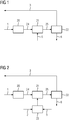
- FIG. 1 shows a method according to the prior art with reference to three consecutive process steps.
- a sulfite and sulfate contaminated potassium amino acid solution 1 is supplied and cooled.
- the solubility of potassium sulfate drops below the given potassium sulfate concentration, so that potassium sulfate crystallizes out, and a first suspension 24 of contaminated solvent 1 and potassium sulfate is formed, which is fed to a second process step 21.
- a potassium compound 5 is introduced into the contaminated solvent 1, which potassium loss caused by the potassium sulfate crystallization of the solvent.
- the suspension 25 formed in the second process step is fed to a third process step 22.
- the suspension 25 is filtered, whereby potassium sulfate 6 is separated, and a treated solvent 3 is formed.
- FIG. 2 shows a first embodiment of the method according to the invention.
- an oxidizing agent 2 is fed to the second process step 21.
- a mixing process 23 is provided, in which the oxidizing agent 2 and the potassium compound 5 are introduced and mixed, and then mixed in the second process step 21 are introduced.
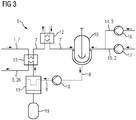
- FIG. 3 shows a device 9 for the treatment of a contaminated solvent 1 for carbon dioxide.
- the device 9 essentially comprises a crystallization reactor 10, a filter 11, a cooler 12, and a heat exchanger 13.
- the crystallization reactor 10 has a supply line 7 for a contaminated solvent 1.
- the heat exchanger 13 and the radiator 12 are connected.
- a supply line 14 for the supply of a potassium compound 5 and a supply line 15 for the supply of an oxidizing agent 2 is also connected.
- a first control pump 16 and in the supply line 15, a second control pump 17 is connected.
- the supply line 15 is optional.
- the crystallization reactor 10 is connected to the filter 11 via a suspension line 8.
- a feed pump 18 is connected in the suspension line 8.
- the filter For discharging a crystalline solid, the filter is followed by a container 19.
- a line is connected to the filter 11 26 connected, which is connected in the heat exchanger 13. Heat can thus be transferred from the contaminated solvent 1 to the treated solvent 3 through the heat exchanger 13.
- the heat exchanger 13 is optional, and in particular in direct integration of the device 9 in a carbon dioxide separation device advantage.
Landscapes
- Chemical & Material Sciences (AREA)
- Chemical Kinetics & Catalysis (AREA)
- Engineering & Computer Science (AREA)
- General Chemical & Material Sciences (AREA)
- Oil, Petroleum & Natural Gas (AREA)
- Analytical Chemistry (AREA)
- Crystallography & Structural Chemistry (AREA)
- Physics & Mathematics (AREA)
- Thermal Sciences (AREA)
- Organic Chemistry (AREA)
- Environmental & Geological Engineering (AREA)
- Biomedical Technology (AREA)
- Health & Medical Sciences (AREA)
- Inorganic Chemistry (AREA)
- Life Sciences & Earth Sciences (AREA)
- Sustainable Development (AREA)
- Treating Waste Gases (AREA)
- Gas Separation By Absorption (AREA)
- Organic Low-Molecular-Weight Compounds And Preparation Thereof (AREA)
Description
- Bei fossilbefeuerten Kraftwerksanlagen zur Erzeugung elektrischer Energie entsteht durch die Verbrennung eines fossilen Brennstoffes ein kohlendioxidhaltiges Rauchgas. Zur Vermeidung bzw. zur Verringerung von Kohlendioxid-Emissionen muss Kohlendioxid aus den Rauchgasen abgetrennt werden. Zur Abtrennung von Kohlendioxid aus einem Gasgemisch sind allgemein verschiedene Methoden bekannt. Insbesondere zum Abtrennen von Kohlendioxid aus einem Rauchgas nach einem Verbrennungsprozess ist die Methode der Absorption-Desorption gebräuchlich. In großtechnischem Maßstab wird Kohlendioxid dabei mit einem Absorptionsmittel aus dem Rauchgas herausgewaschen.
- Gebräuchliche chemische Absorptionsmittel, wie beispielsweise Monoethanolamin (MEA), zeigen eine gute Selektivität und eine hohe Kapazität für Kohlendioxid CO2. Amin-Lösungen als Waschmittel binden jedoch auch irreversibel saure Rauchgasnebenkomponenten wie Stickstoffdioxid NO2 und Schwefeldioxid SO2 oder Schwefeltrioxid SO3 in Form von Sulfit und Sulfat und beeinträchtigen dadurch im Laufe des Prozesses zunehmend die Wirksamkeit des Waschmittels. Die Bildung von Sulfit und Sulfat erfolgt unter den in aminbasierten Lösungsmitteln gegebenen alkalischen Bedingungen gemäß folgender Reaktionsgleichungen:
SO2 + 2 OH- → SO3 2- + H2O
SO3 + 2 OH- → SO4 2- + H2O
- Um dem Problem der Anreicherung von Sulfit und Sulfat zu begegnen, besteht bei Amin-Lösungen die Möglichkeit einer Aufbereitung durch Destillation. Dabei wird die Amin-Lösung erwärmt, sodass die leicht flüchtigen Amine verdampfen und durch Kondensation zurück gewonnen und dadurch von den schwer siedenden Verunreinigungen abgetrennt werden.
- Der merkliche Dampfdruck der gelösten Amine kann zwar einerseits für die destillative Aufreinigung ausgenutzt werden, andererseits führt er während des eigentlichen Reinigungsprozesses durch den Kontakt mit dem heißen Rauchgas dazu, dass Amine in kleinen Mengen mit dem gereinigten Rauchgas in die Umwelt ausgetragen werden, was zu unerwünschten Luftbelastungen führen kann. Destillative Reinigungsverfahren erfordern zudem einen hohen Energieaufwand, und pro Mol abgetrenntem Sulfit bzw. Sulfat verbleiben zwei Mol der aktiven Substanz im Rückstand, welcher weiter aufgearbeitet oder entsorgt werden muss.
- Daher eignen sich z.B. Aminosäuresalze in dieser Hinsicht besonders für eine CO2-Rauchgaswäsche, da Aminosäuresalzlösungen keinen messbaren Dampfdruck zeigen und daher auch nicht mit dem Rauchgas ausgetragen werden können. Allerdings ist bei Aminosäuresalzlösungen aus diesem Grund auch keine destillative Aufarbeitung möglich. Um eine Blockierung der Aminosäuresalze durch die sauren Rauchgasbestandteile zu verhindern ist daher eine sehr aufwendige Rauchgasfeinreinigung (Polishing) notwendig um Schwefeloxide SOx möglichst vollständig aus dem Rauchgas zu entfernen. Diese Verfahren sind sehr kostenintensiv im Hinblick auf Investitions- und Betriebskosten.
- Somit stellt es sich als technisch wünschenswert dar, ein Verfahren zum Aufbereiten eines aminbasierten, durch den Eintrag von Schwefeloxiden verunreinigten Lösungsmittels anzugeben, bei dem einerseits die waschaktiven Substanzen weitgehend vollständig in Lösung bleiben, und das mit im Vergleich zu destillativen Reinigungsverfahren einem wesentlich reduzierten Energiebedarf und minimalen Rückständen ein weitgehend von Sulfit und Sulfat befreites Lösungsmittel liefert.
- Ein Lösungsansatz diesbezüglich wird in den beiden Dokumenten
US 2004/0253159A1 undUS 4,389,393 beschrieben. Dort wird die temperaturunterstützte Ausfällung von Sulfat beschrieben, wobei Sulfat aus einer wässrigen Aminlösung durch die Zugabe von Hydroxiden bzw. Carbonaten bei Temperaturabsenkung erreicht wird. - Nachteilig an einer solchen Vorgehensweise ist jedoch, dass die Ausfällung spezifisch für Sulfat ist. Andere Schwefeloxide werden von diesem Verfahren nicht mit erfasst. Gerade aber bei einer Rauchgaswäsche fallen in einer Aminlösung als Waschlösung zahlreiche andere Schwefeloxide an, die ebenfalls mit entfernt werden sollten. Insbesondere trifft dies auf das weit verbreitete Schwefeldioxid zu, welches in Lösung als Sulfit vorliegt.
- Folglich stellt es sich als Erfindungsaufgabe dar, ein Verfahren zur Aufbereitung eines durch den Eintrag von Schwefeloxiden verunreinigten Lösungsmittels vorzuschlagen, welches diese Nachteile des Standes der Technik vermeidet. Insbesondere soll die erfindungsgemäße Lösung ermöglichen, auch Sulfit aus der Lösung auszuscheiden.
- Gelöst wird die Aufgabe der Erfindung durch die Merkmale des Verfahrenanspruchs 1. Dabei wird zunächst in das verunreinigte Lösungsmittel eine Kaliumverbindung eingebracht, und das verunreinigte Lösungsmittels auf eine Temperatur T abgekühlt, sodass die Löslichkeit des Kaliumsulfats geringer wird, als die gegebene Konzentration des Kaliumsulfats. Das Kaliumsulfat wird abfiltriert, wobei ein aufbereitetes Lösungsmittel gebildet wird. Weiter wird in das verunreinigte Lösungsmittel ein Oxidationsmittel eingebracht, sodass das Sulfit zu Sulfat oxidiert wird.
- Das Verfahren dient insbesondere der Aufbereitung eines im Wesentlichen durch den Eintrag von Schwefeloxiden verunreinigten Lösungsmittels, das zur CO2-Rauchgaswäsche in einem Kohlendioxid-Abscheideprozess zum Einsatz kommt. Derartige Abscheideprozesse für Kohlendioxid CO2 sind dabei integraler Bestandteil einer Rauchgasreinigung bei fossil befeuerten Kraftwerksanlagen.
- Die Erfindung geht dabei insbesondere von der Überlegung aus, ein mit Sulfit und Sulfat verunreinigtes Lösungsmittel durch selektive Kristallisation aufzubereiten.
- In dem erfindungsgemäßen Verfahren wird das Sulfat durch Abkühlung des Lösungsmittels und die Zugabe einer Kaliumverbindung als Kaliumsulfat ausgefällt, indem die Konzentration des Kaliumsulfats auf Werte oberhalb der Kaliumsulfat-Löslichkeit gebracht wird. In einem folgenden oder parallelen Schritt wird das Kaliumsulfat abfiltriert, sodass ein aufbereitetes Lösungsmittel entsteht.
- Die Erfindung macht sich dabei die niedrige Löslichkeit des Kaliumsulfats in aminbasierten Lösungsmitteln zu nutze, die eine Abscheidung des Kaliumsulfats durch eine Temperaturabsenkung ermöglicht. Vorzugsweise wird das verunreinigte Lösungsmittel dabei auf eine Temperatur T zwischen 5°C und 45°C abgekühlt bzw. eingestellt.
- Neben Sulfat ist das Lösungsmittel aber auch mit Sulfit belastet, welches im Vergleich zu Sulfat recht gut löslich ist und nicht einfach durch Absenken der Temperatur in einem gewünschten Bereich auskristallisiert. Daher sieht das erfindungsgemäße Verfahren zusätzlich noch vor, dass in das verunreinigte Lösungsmittel ein Oxidationsmittel eingebracht wird, sodass das Sulfit zu Sulfat oxidiert wird.
- Durch das Einbringen der Kaliumverbindung und des Oxidationsmittels können Verteilungsgradienten und lokale Überkonzentrierungen entstehen, die durch eine zu hohe Konzentration der Kaliumverbindung zu Ausfällungen oder Schädigung des Lösungsmittels durch eine zu hohe Konzentration an Oxidationsmittel führen. In einer vorteilhaften Ausgestaltung werden deshalb das Oxidationsmittel und die Kaliumverbindung vor dem Einbringen in das verunreinigte Lösungsmittel miteinander vermischt. Durch das Vermischen vor dem Einbringen in das Lösungsmittel ist eine schnelle homogene Verteilung zu erreichen.
- Vorteilhafterweise wird als Oxidationsmittel Wasserstoffperoxid oder Ozon verwendet. Grundsätzlich kann auch Sauerstoff verwendet werden. Wasserstoffperoxid oder Ozon besitzen jedoch den Vorteil, dass sie eine ausreichende Aktivität bzw. ein ausreichendes Oxidationspotential haben, um Sulfit zu oxidieren, ohne dass das Lösungsmittel geschädigt wird.
- Eine besondere Ausgestaltung des Verfahrens sieht vor, dass die Menge an zugeführter Kaliumverbindung äquimolar ist zu der Menge an kristallisiertem Kaliumsulfat. Dadurch wird für den Kristallisationsprozess immer ausrechend Kalium zugeführt. Es kann jedoch hingegen auch von Vorteil sein, eine überstöchiometrische Menge an Kaliumverbindung hinzuzugeben, um einen Puffer für den Kristallisationsprozess zu schaffen.
- In einer vorteilhaften Weiterentwicklung des Verfahrens wird das aufbereitete Lösungsmittel mit dem verunreinigten Lösungsmittel im Wärmetausch geführt, wodurch das verunreinigte Lösungsmittel durch das aufbereitete Lösungsmittel gekühlt wird. Dies ermöglicht eine Wärmerückgewinnung.
- Das Verfahren kann eigenständig eingesetzt werden, wobei das verunreinigte Lösungsmittel aus Tanks bezogen wird und das aufbereitete Lösungsmittel ebenfalls in Tanks bereitgestellt wird. Vorteilhafterweise kann das Verfahren aber auch in einen Kraftwerksprozess integriert und an einem Kohlendioxid-Abscheideprozess angeschlossen sein, sodass das verunreinigte Lösungsmittel direkt aus dem Kreislauf des Kohlendioxid-Abscheideprozess entnommen wird.
- Das Verfahren eignet sich vorteilhaft für die Aufbereitung von Aminosäuresalzlösungen sowie auch von Amin-Lösungen. Da für Aminosäuresalzlösungen keine destillative Aufbereitung möglich ist, wird durch das Verfahren erstmals eine Möglichkeit einer effektiven und energetisch vertretbaren Lösung angegeben.
- Neben den energetischen Vorteilen ergeben sich für die Aufbereitung von Amin-Lösungen weitere Vorteile insbesondere bei der Feinreinigung. Durch Destillation ist lediglich ein Teil der Amine aus der Lösung und somit von den Verunreinigungen abtrennbar. Ein erheblicher Teil verbleibt in der Sumpflösung. Durch das erfindungsgemäße Verfahren kann diese Sumpflösung weiter aufbereitet werden, wodurch sich ein Großteil der Amine wiedergewinnen lassen.
- Folgend werden Ausführungsbeispiele der Erfindung anhand von beigefügten schematischen Zeichnungen näher erläutert. Es zeigt:
- FIG 1
- ein Verfahren nach dem Stand der Technik zum Aufbereiten einer verunreinigten alkalischen KaliumAminosäuresalzlösung,
- FIG 2
- eine erfindungsgemäße Weiterentwicklung des in
FIG 1 gezeigten Verfahrens mit einem zusätzlichen Mischprozess, - FIG 3
- eine Vorrichtung zur Aufbereitung eines verunreinigten Absorptionsmittels für Kohlendioxid.
-
FIG 1 zeigt ein Verfahren nach dem Stand der Technik anhand von drei aufeinander folgenden Verfahrensschritten. - In einem ersten Verfahrensschritt 20 wird eine mit Sulfit und Sulfat verunreinigte Kalium-Aminosäuresalzlösung 1 zugeführt und abgekühlt. Durch das Abkühlen sinkt die Löslichkeit von Kaliumsulfat unter die gegebene Kaliumsulfat-Konzentration, sodass Kaliumsulfat auskristallisiert, und eine erste Suspension 24 aus verunreinigtem Lösungsmittel 1 und Kaliumsulfat gebildet wird, die einem zweiten Verfahrensschritt 21 zugeführt wird.
- In dem zweiten Verfahrenschritt 21 wird in das verunreinigte Lösungsmittel 1 eine Kaliumverbindung 5 eingebracht, die den durch die Kaliumsulfat-Kristallisation hervorgerufenen Kaliumverlust des Lösungsmittels ausgleicht. Die im zweiten Verfahrensschritt entstandene Suspension 25 wird einem dritten Verfahrensschritt 22 zugeführt.
- In dem dritten Verfahrenschritt 22 wird die Suspension 25 filtriert, wobei Kaliumsulfat 6 abgetrennt wird, und ein aufbereitetes Lösungsmittel 3 gebildet wird.
-
FIG 2 zeigt eine erste Ausführungsform des erfindungsgemäßen Verfahrens. In Erweiterung zuFIG 1 wird dem zweiten Verfahrenschritt 21 neben der Kaliumverbindung 5 ein Oxidationsmittel 2 zugeführt. Dazu ist ein Mischprozess 23 vorgesehen, in den das Oxidationsmittel 2 und die Kaliumverbindung 5 eingebracht und vermischt werden, und dann vermischt in den zweiten Verfahrenschritt 21 eingebracht werden. -
FIG 3 zeigt eine Vorrichtung 9 zur Aufbereitung eines verunreinigten Lösungsmittels 1 für Kohlendioxid. Die Vorrichtung 9 umfasst im Wesentlichen einen Kristallisationsreaktor 10, einen Filter 11, einen Kühler 12, und einen Wärmetauscher 13. - Der Kristallisationsreaktor 10 weist eine Zuführleitung 7 für ein verunreinigtes Lösungsmittel 1 auf. In die Zuführleitung 7 sind der Wärmetauscher 13 und der Kühler 12 geschaltet. An den Kristallisationsreaktor 10 ist zudem eine Zuführleitung 14 für die Zuführung einer Kaliumverbindung 5 und eine Zuführleitung 15 für die Zuführung eines Oxidationsmittels 2 angeschlossen. In die Zuführleitung 14 ist eine erste Regelpumpe 16 und in die Zuführleitung 15 eine zweite Regelpumpe 17 geschaltet. Die Zuführleitung 15 ist dabei optional.
- Ausleitend ist der Kristallisationsreaktor 10 über eine Suspensionsleitung 8 mit dem Filter 11 verbunden. In die Suspensionsleitung 8 ist eine Förderpumpe 18 geschaltet.
- Zur Ausleitung eines kristallinen Feststoffes, ist dem Filter ein Behälter 19 nachgeschaltet. Zur Ausleitung eines aufbereiteten Lösungsmittels 3 ist an den Filter 11 eine Leitung 26 angeschlossen, die in den Wärmetauscher 13 geschaltet ist. Durch den Wärmetauscher 13 ist somit Wärme von dem verunreinigten Lösungsmittel 1 auf das aufbereitete Lösungsmittel 3 übertragbar.
- Der Wärmetauscher 13 ist optional, und insbesondere bei direkter Integration der Vorrichtung 9 in eine Kohlendioxid-Abscheidevorrichtung von Vorteil.
- Obwohl die Erfindung im Detail durch das bevorzugte Ausführungsbeispiel näher illustriert und beschrieben wurde, ist die Erfindung nicht durch die offenbarten Beispiele eingeschränkt und andere Variationen können vom Fachmann hieraus abgeleitet werden, ohne den Schutzumfang der Erfindung zu verlassen.
Claims (11)
- Verfahren zum Aufbereiten eines aminbasierten, durch den Eintrag von Schwefeloxiden verunreinigten Lösungsmittels (1), bei dem- in das verunreinigte Lösungsmittel (1) eine Kaliumverbindung eingebracht wird, und das verunreinigte Lösungsmittel (1) auf eine Temperatur T abgekühlt wird, sodass die Löslichkeit des Kaliumsulfats geringer wird, als die gegebene Konzentration des Kaliumsulfat, und- das Kaliumsulfat abfiltriert wird, wobei ein aufbereitetes Lösungsmittel (3) gebildet wird,dadurch gekennzeichnet, dass
bei dem in das verunreinigte Lösungsmittel (1) ein Oxidationsmittel (2) eingebracht wird, sodass Sulfit zu Sulfat oxidiert wird. - Verfahren nach Anspruch 1, bei dem als Oxidationsmittel (2) Wasserstoffperoxid oder Ozon verwendet wird.
- Verfahren nach einem der Ansprüche 1 bis 2, bei dem die Menge an zugeführter Kaliumverbindung äquimolar ist zu der Menge an kristallisiertem Kaliumsulfat.
- Verfahren nach einem der Ansprüche 1 bis 3, bei dem die Temperatur T des verunreinigten Lösungsmittels (1) nach Abkühlung zwischen 5°C und 45°C liegt.
- Verfahren nach einem der Ansprüche 1 bis 4, bei dem das aufbereitete Lösungsmittel (3) mit dem verunreinigten Lösungsmittel (1) im Wärmetausch geführt wird, wodurch das verunreinigte Lösungsmittel (1) durch das aufbereitete Lösungsmittel (3) gekühlt wird.
- Verfahren nach einem der Ansprüche 1 bis 5, wobei das verunreinigte Lösungsmittel (1) aus einem Kohlendioxid-Abscheideprozess (4) eines fossil befeuerten Kraftwerksprozesses stammt.
- verfahren nach Anspruch 6, bei dem das verunreinigte Lösungsmittel (1) aus dem Kohlendioxid-Abscheideprozess (4) chargenweise aufbereitet wird.
- Verfahren nach einem der Ansprüche 1 bis 7, wobei das verunreinigte Lösungsmittel (1) eine Aminosäuresalzlösung ist.
- Verfahren nach einem der Ansprüche 1 bis 7, wobei das verunreinigte Lösungsmittel (1) ein oder mehrere Amine sind.
- Verfahrens nach einem der Ansprüche 1 bis 9 bei dem die Kaliumverbindung Kaliumhydroxid KOH, Kaliumhydrogencarbonat oder Kaliumcarbonat ist.
- Verfahren nach Anspruch 8, bei dem das Oxidationsmittel (2) und die Kaliumverbindung vor dem Einbringen in die Aminosäuresalzlösung miteinander vermischt werden.
Priority Applications (1)
| Application Number | Priority Date | Filing Date | Title |
|---|---|---|---|
| PL11788395T PL2637758T3 (pl) | 2010-11-10 | 2011-11-08 | Przetwarzanie rozpuszczalnika na bazie aminy, zanieczyszczonego przez wprowadzenie tlenków siarki |
Applications Claiming Priority (2)
| Application Number | Priority Date | Filing Date | Title |
|---|---|---|---|
| DE102010043689 | 2010-11-10 | ||
| PCT/EP2011/069593 WO2012062724A2 (de) | 2010-11-10 | 2011-11-08 | Aufbereitung eines aminbasierten, durch den eintrag von schwefeloxiden verunreinigten lösungsmittels |
Publications (2)
| Publication Number | Publication Date |
|---|---|
| EP2637758A2 EP2637758A2 (de) | 2013-09-18 |
| EP2637758B1 true EP2637758B1 (de) | 2018-01-17 |
Family
ID=45047733
Family Applications (1)
| Application Number | Title | Priority Date | Filing Date |
|---|---|---|---|
| EP11788395.9A Not-in-force EP2637758B1 (de) | 2010-11-10 | 2011-11-08 | Aufbereitung eines aminbasierten, durch den eintrag von schwefeloxiden verunreinigten lösungsmittels |
Country Status (11)
| Country | Link |
|---|---|
| US (1) | US9527037B2 (de) |
| EP (1) | EP2637758B1 (de) |
| JP (1) | JP2013543790A (de) |
| KR (1) | KR101493181B1 (de) |
| CN (1) | CN103221103B (de) |
| BR (1) | BR112013011613B1 (de) |
| CA (1) | CA2817285C (de) |
| IL (1) | IL226059A (de) |
| PL (1) | PL2637758T3 (de) |
| RU (1) | RU2559493C2 (de) |
| WO (1) | WO2012062724A2 (de) |
Families Citing this family (9)
| Publication number | Priority date | Publication date | Assignee | Title |
|---|---|---|---|---|
| US20150139876A1 (en) * | 2012-07-05 | 2015-05-21 | Siemens Aktiengesellschaft | Amine-containing scrubbing solution with ozone and/or hydrogen peroxide for absorbing carbon dioxide |
| EP2742988A1 (de) * | 2012-12-11 | 2014-06-18 | Siemens Aktiengesellschaft | Aufreinigung eines Aminosäuresalz-basierten Waschmittels zur CO2 Abtrennung |
| AU2014214226B2 (en) * | 2013-02-05 | 2018-07-05 | Siemens Energy Global GmbH & Co. KG | Method and device for work-up of an amino acid salt solution that has been contaminated with carbon dioxide |
| DE102013203720A1 (de) * | 2013-03-05 | 2014-09-11 | Siemens Aktiengesellschaft | Verfahren zum Abtrennen von Kohlendioxid aus einem Gasstrom, insbesondere aus einem Rauchgasstrom, sowie Verfahren zur Wiederaufbereitung von mit Nitrosaminen verunreinigtem Kaliumsulfat |
| WO2015018796A1 (de) * | 2013-08-08 | 2015-02-12 | Siemens Aktiengesellschaft | Verfahren und vorrichtung zur aufbereitung eines gasstroms, insbesondere zur aufbereitung eines rauchgasstroms |
| CN103977586B (zh) * | 2014-03-28 | 2015-10-28 | 攀钢集团攀枝花钢铁研究院有限公司 | 烟气脱硫水溶液中脱硫有机组分的分离富集和测定方法 |
| DE102014207851A1 (de) * | 2014-04-25 | 2015-10-29 | Siemens Aktiengesellschaft | Verfahren sowie Vorrichtungen, insbesondere zur Durchführung des Verfahrens |
| DE102014207848B4 (de) * | 2014-04-25 | 2015-12-24 | Siemens Aktiengesellschaft | Aufbereitungseinheit und Verfahren zur Aufbereitung für ein mit Schwefeloxiden und/oder Stickoxiden verunreinigtes Waschmedium sowie eine Abscheidevorrichtung |
| CN105381627B (zh) * | 2015-12-14 | 2018-03-06 | 尹明大 | 一种三聚氰胺流化床结晶器 |
Family Cites Families (26)
| Publication number | Priority date | Publication date | Assignee | Title |
|---|---|---|---|---|
| US3413086A (en) * | 1967-02-27 | 1968-11-26 | Continental Oil Co | Conversion of potassium chloride to potassium sulfate |
| JPS5210838B2 (de) | 1971-11-11 | 1977-03-26 | ||
| DE2702583A1 (de) | 1977-01-22 | 1978-07-27 | Bayer Ag | Verfahren zur entfernung von schwefeldioxid aus abluft |
| US4133650A (en) * | 1976-05-28 | 1979-01-09 | Bayer Aktiengesellschaft | Removing sulfur dioxide from exhaust air |
| US4425313A (en) * | 1976-08-16 | 1984-01-10 | Cooper Hal B H | Removal and recovery of nitrogen and sulfur oxides from gaseous mixtures containing them |
| US4389383A (en) * | 1980-05-27 | 1983-06-21 | Union Carbide Corporation | Regenerable process for the selective removal of sulfur dioxide from effluent gases |
| US4465614A (en) * | 1981-05-04 | 1984-08-14 | Trentham Corporation | Alkanolaminium carboxylate solvents for selective SO2 absorption |
| US4341746A (en) * | 1981-06-01 | 1982-07-27 | Exxon Research & Engineering Co. | Removal of degradation product from gas treating solution |
| US4389393A (en) | 1982-03-26 | 1983-06-21 | Forest Laboratories, Inc. | Sustained release therapeutic compositions based on high molecular weight hydroxypropylmethylcellulose |
| US4500500A (en) * | 1983-07-22 | 1985-02-19 | The Dow Chemical Company | Selective removal of H2 S from steam also containing CO2 |
| US4533440A (en) | 1983-08-04 | 1985-08-06 | General Electric Company | Method for continuous measurement of the sulfite/sulfate ratio |
| US4976935A (en) * | 1984-11-04 | 1990-12-11 | Regents Of The University Of California | Regeneration of solvent in H2 S removal from gases |
| JPH0240204A (ja) * | 1988-07-27 | 1990-02-09 | Nagano Pref Gov Nouson Kogyo Kenkyusho | 溶液凍結濃縮装置 |
| JPH06210129A (ja) | 1993-01-20 | 1994-08-02 | Mitsubishi Heavy Ind Ltd | 排ガスの処理方法 |
| US6010664A (en) | 1993-07-12 | 2000-01-04 | The Babcock & Wilcox Company | Oxidation detection for sulfite/sulfate systems |
| JP3529855B2 (ja) | 1994-09-28 | 2004-05-24 | 東京電力株式会社 | 被処理ガス中の二酸化炭素の処理方法及び吸収液 |
| DE59509540D1 (de) | 1995-12-06 | 2001-09-27 | Lurgi Lentjes Bischoff Gmbh | Anlage zur Reinigung von Rauchgasen mit unterschiedlichen Gehalten an sauren Komponenten und Verfahren zum Betrieb der Anlage |
| US5912387A (en) | 1997-01-28 | 1999-06-15 | The Dow Chemical Company | Amine heat stable salt neutralization having reduced solids |
| US5853012A (en) * | 1997-04-23 | 1998-12-29 | Burns; Michael | Cosmetic applicator |
| US7056482B2 (en) * | 2003-06-12 | 2006-06-06 | Cansolv Technologies Inc. | Method for recovery of CO2 from gas streams |
| US7514053B2 (en) | 2005-04-21 | 2009-04-07 | Envirosolv Energy Llc | Method for removing sulfur dioxide, mercury, and nitrogen oxides from a gas stream |
| EP2117683B1 (de) * | 2006-12-15 | 2013-02-27 | Sinvent AS | Verfahren zum abfangen von co2 aus abgas |
| US7601315B2 (en) * | 2006-12-28 | 2009-10-13 | Cansolv Technologies Inc. | Process for the recovery of carbon dioxide from a gas stream |
| WO2008127557A1 (en) * | 2007-04-12 | 2008-10-23 | Cefco, Llc | Process and apparatus for carbon capture and elimination of multi-pollutants in flue gas from hydrocarbon fuel sources and recovery of multiple by-products |
| WO2012012027A1 (en) * | 2010-07-20 | 2012-01-26 | Powerspan Corp. | Absorption media for scrubbing co2 from a gas stream and methods using the same |
| CN103221114A (zh) * | 2010-09-02 | 2013-07-24 | 加州大学评议会 | 从气流中俘获二氧化碳和/或二氧化硫的方法和系统 |
-
2011
- 2011-11-08 KR KR1020137012073A patent/KR101493181B1/ko not_active Expired - Fee Related
- 2011-11-08 BR BR112013011613-7A patent/BR112013011613B1/pt not_active IP Right Cessation
- 2011-11-08 RU RU2013126536/05A patent/RU2559493C2/ru active
- 2011-11-08 JP JP2013538153A patent/JP2013543790A/ja active Pending
- 2011-11-08 CN CN201180054313.XA patent/CN103221103B/zh not_active Expired - Fee Related
- 2011-11-08 US US13/883,099 patent/US9527037B2/en not_active Expired - Fee Related
- 2011-11-08 PL PL11788395T patent/PL2637758T3/pl unknown
- 2011-11-08 WO PCT/EP2011/069593 patent/WO2012062724A2/de not_active Ceased
- 2011-11-08 CA CA2817285A patent/CA2817285C/en not_active Expired - Fee Related
- 2011-11-08 EP EP11788395.9A patent/EP2637758B1/de not_active Not-in-force
-
2013
- 2013-04-30 IL IL226059A patent/IL226059A/en active IP Right Grant
Also Published As
| Publication number | Publication date |
|---|---|
| CA2817285A1 (en) | 2012-05-18 |
| BR112013011613A2 (pt) | 2016-08-09 |
| WO2012062724A3 (de) | 2012-09-13 |
| BR112013011613B1 (pt) | 2020-11-03 |
| KR20130080476A (ko) | 2013-07-12 |
| WO2012062724A2 (de) | 2012-05-18 |
| IL226059A0 (en) | 2013-06-27 |
| EP2637758A2 (de) | 2013-09-18 |
| CN103221103A (zh) | 2013-07-24 |
| RU2559493C2 (ru) | 2015-08-10 |
| CA2817285C (en) | 2016-09-20 |
| JP2013543790A (ja) | 2013-12-09 |
| PL2637758T3 (pl) | 2018-07-31 |
| RU2013126536A (ru) | 2014-12-20 |
| CN103221103B (zh) | 2017-05-31 |
| KR101493181B1 (ko) | 2015-02-12 |
| IL226059A (en) | 2017-07-31 |
| US9527037B2 (en) | 2016-12-27 |
| US20130214202A1 (en) | 2013-08-22 |
Similar Documents
| Publication | Publication Date | Title |
|---|---|---|
| WO2012062724A2 (de) | Aufbereitung eines aminbasierten, durch den eintrag von schwefeloxiden verunreinigten lösungsmittels | |
| DE2148244C2 (de) | Verfahren zur Reinigung von Schwefeldioxid enthaltenden Abgasen | |
| DE2554584A1 (de) | Verfahren zum regenerieren einer absorptionsloesung, die zum reinigen von abgas verwendet wurde | |
| AT508774B1 (de) | Verfahren zur gewinnung bzw. rückgewinnung von salpetersäure und flusssäure aus lösungen von edelstahlbeizanlagen | |
| EP2640492B1 (de) | Vorrichtung und verfahren zum aufreinigen eines mit nitrosamin verunreinigten produktes einer co2-capture-anlage | |
| EP2994216B1 (de) | Verfahren zur abscheidung von kohlendioxid aus einem gasstrom, insbesondere aus einem rauchgasstrom, sowie abscheidevorrichtung für kohlendioxid aus einem gasstrom, insbesondere aus einem rauchgasstrom | |
| DE2557560C3 (de) | Verfahren zum gleichzeitigen Entfernen von Stickstoffoxiden und Schwefeldioxid aus Rauchgasen | |
| DE2847047A1 (de) | Verfahren zur entschwefelung schwefelhaltiger prozessgase | |
| EP0078412B1 (de) | Verfahren und Vorrichtung zur Regenerierung von physikalisch wirkenden organischen Waschflüssigkeiten | |
| DE3109848A1 (de) | Verfahren zum behandeln von abwasser | |
| DE2630175B2 (de) | Verfahren zur Reinigung von Stickstoffoxide und Schwefeloxide enthaltenden Industrieabgasen | |
| DE2625005C3 (de) | Verfahren zur Entfernung von Stickstoffdioxid aus Abgasen | |
| DE4030707C2 (de) | ||
| WO2012139763A1 (de) | Verfahren und anlage zur abreicherung von stickoxiden aus sauerstoffhaltigen gasströmen | |
| WO1986005709A1 (fr) | Procede pour le nettoyage des gaz brules | |
| EP0520316B1 (de) | Verfahren zur selektiven H2S-Auswaschung | |
| DE2907600A1 (de) | Verfahren zum abtrennen von schwefeloxiden aus abgasen | |
| EP2653210A1 (de) | Verbrennungsanlage mit Rauchgaswascher und CO2-Abscheidung sowie Verfahren zu deren Betrieb | |
| DE2603874A1 (de) | Verfahren zur entfernung von arsen aus einer arsen zusammen mit kupfer enthaltenden loesung | |
| EP2938424A1 (de) | Verfahren und vorrichtung zur aufbereitung einer mit kohlendioxid verunreinigten aminosäuresalzlösung | |
| DE102014207851A1 (de) | Verfahren sowie Vorrichtungen, insbesondere zur Durchführung des Verfahrens | |
| DE3538231A1 (de) | Verfahren zur aufarbeitung von abfall-loesungen | |
| DE934121C (de) | Verfahren zur Entfernung von Ammoniak und Schwefelwasserstoff aus Steinkohlengas und anderen Gasen | |
| DE3531398A1 (de) | Verfahren zur simultanen abscheidung von so(pfeil abwaerts)x(pfeil abwaerts) und no(pfeil abwaerts)x(pfeil abwaerts) aus rauchgasen ohne zwangsanfall von abfallstoffen | |
| WO2012104120A1 (de) | Lösungsmittel, verfahren zur bereitstellung einer absorptionsflüssigkeit, sowie verwendung des lösungsmittels |
Legal Events
| Date | Code | Title | Description |
|---|---|---|---|
| PUAI | Public reference made under article 153(3) epc to a published international application that has entered the european phase |
Free format text: ORIGINAL CODE: 0009012 |
|
| 17P | Request for examination filed |
Effective date: 20130426 |
|
| AK | Designated contracting states |
Kind code of ref document: A2 Designated state(s): AL AT BE BG CH CY CZ DE DK EE ES FI FR GB GR HR HU IE IS IT LI LT LU LV MC MK MT NL NO PL PT RO RS SE SI SK SM TR |
|
| DAX | Request for extension of the european patent (deleted) | ||
| 17Q | First examination report despatched |
Effective date: 20161110 |
|
| RIC1 | Information provided on ipc code assigned before grant |
Ipc: B01D 9/00 20060101AFI20170623BHEP Ipc: C01B 17/56 20060101ALI20170623BHEP Ipc: B01D 53/96 20060101ALI20170623BHEP Ipc: B01D 53/14 20060101ALI20170623BHEP |
|
| GRAP | Despatch of communication of intention to grant a patent |
Free format text: ORIGINAL CODE: EPIDOSNIGR1 |
|
| RAP1 | Party data changed (applicant data changed or rights of an application transferred) |
Owner name: SIEMENS AKTIENGESELLSCHAFT |
|
| INTG | Intention to grant announced |
Effective date: 20170808 |
|
| GRAS | Grant fee paid |
Free format text: ORIGINAL CODE: EPIDOSNIGR3 |
|
| GRAA | (expected) grant |
Free format text: ORIGINAL CODE: 0009210 |
|
| AK | Designated contracting states |
Kind code of ref document: B1 Designated state(s): AL AT BE BG CH CY CZ DE DK EE ES FI FR GB GR HR HU IE IS IT LI LT LU LV MC MK MT NL NO PL PT RO RS SE SI SK SM TR |
|
| REG | Reference to a national code |
Ref country code: GB Ref legal event code: FG4D Free format text: NOT ENGLISH |
|
| REG | Reference to a national code |
Ref country code: CH Ref legal event code: EP |
|
| REG | Reference to a national code |
Ref country code: IE Ref legal event code: FG4D Free format text: LANGUAGE OF EP DOCUMENT: GERMAN |
|
| REG | Reference to a national code |
Ref country code: DE Ref legal event code: R096 Ref document number: 502011013619 Country of ref document: DE Ref country code: AT Ref legal event code: REF Ref document number: 964025 Country of ref document: AT Kind code of ref document: T Effective date: 20180215 |
|
| REG | Reference to a national code |
Ref country code: NL Ref legal event code: FP |
|
| REG | Reference to a national code |
Ref country code: LT Ref legal event code: MG4D |
|
| REG | Reference to a national code |
Ref country code: NO Ref legal event code: T2 Effective date: 20180117 |
|
| PG25 | Lapsed in a contracting state [announced via postgrant information from national office to epo] |
Ref country code: LT Free format text: LAPSE BECAUSE OF FAILURE TO SUBMIT A TRANSLATION OF THE DESCRIPTION OR TO PAY THE FEE WITHIN THE PRESCRIBED TIME-LIMIT Effective date: 20180117 Ref country code: CY Free format text: LAPSE BECAUSE OF FAILURE TO SUBMIT A TRANSLATION OF THE DESCRIPTION OR TO PAY THE FEE WITHIN THE PRESCRIBED TIME-LIMIT Effective date: 20180117 Ref country code: FI Free format text: LAPSE BECAUSE OF FAILURE TO SUBMIT A TRANSLATION OF THE DESCRIPTION OR TO PAY THE FEE WITHIN THE PRESCRIBED TIME-LIMIT Effective date: 20180117 Ref country code: HR Free format text: LAPSE BECAUSE OF FAILURE TO SUBMIT A TRANSLATION OF THE DESCRIPTION OR TO PAY THE FEE WITHIN THE PRESCRIBED TIME-LIMIT Effective date: 20180117 Ref country code: ES Free format text: LAPSE BECAUSE OF FAILURE TO SUBMIT A TRANSLATION OF THE DESCRIPTION OR TO PAY THE FEE WITHIN THE PRESCRIBED TIME-LIMIT Effective date: 20180117 |
|
| PG25 | Lapsed in a contracting state [announced via postgrant information from national office to epo] |
Ref country code: RS Free format text: LAPSE BECAUSE OF FAILURE TO SUBMIT A TRANSLATION OF THE DESCRIPTION OR TO PAY THE FEE WITHIN THE PRESCRIBED TIME-LIMIT Effective date: 20180117 Ref country code: SE Free format text: LAPSE BECAUSE OF FAILURE TO SUBMIT A TRANSLATION OF THE DESCRIPTION OR TO PAY THE FEE WITHIN THE PRESCRIBED TIME-LIMIT Effective date: 20180117 Ref country code: GR Free format text: LAPSE BECAUSE OF FAILURE TO SUBMIT A TRANSLATION OF THE DESCRIPTION OR TO PAY THE FEE WITHIN THE PRESCRIBED TIME-LIMIT Effective date: 20180418 Ref country code: LV Free format text: LAPSE BECAUSE OF FAILURE TO SUBMIT A TRANSLATION OF THE DESCRIPTION OR TO PAY THE FEE WITHIN THE PRESCRIBED TIME-LIMIT Effective date: 20180117 Ref country code: IS Free format text: LAPSE BECAUSE OF FAILURE TO SUBMIT A TRANSLATION OF THE DESCRIPTION OR TO PAY THE FEE WITHIN THE PRESCRIBED TIME-LIMIT Effective date: 20180517 Ref country code: BG Free format text: LAPSE BECAUSE OF FAILURE TO SUBMIT A TRANSLATION OF THE DESCRIPTION OR TO PAY THE FEE WITHIN THE PRESCRIBED TIME-LIMIT Effective date: 20180417 |
|
| PG25 | Lapsed in a contracting state [announced via postgrant information from national office to epo] |
Ref country code: MT Free format text: LAPSE BECAUSE OF FAILURE TO SUBMIT A TRANSLATION OF THE DESCRIPTION OR TO PAY THE FEE WITHIN THE PRESCRIBED TIME-LIMIT Effective date: 20180117 |
|
| REG | Reference to a national code |
Ref country code: DE Ref legal event code: R097 Ref document number: 502011013619 Country of ref document: DE |
|
| PG25 | Lapsed in a contracting state [announced via postgrant information from national office to epo] |
Ref country code: AL Free format text: LAPSE BECAUSE OF FAILURE TO SUBMIT A TRANSLATION OF THE DESCRIPTION OR TO PAY THE FEE WITHIN THE PRESCRIBED TIME-LIMIT Effective date: 20180117 Ref country code: IT Free format text: LAPSE BECAUSE OF FAILURE TO SUBMIT A TRANSLATION OF THE DESCRIPTION OR TO PAY THE FEE WITHIN THE PRESCRIBED TIME-LIMIT Effective date: 20180117 Ref country code: EE Free format text: LAPSE BECAUSE OF FAILURE TO SUBMIT A TRANSLATION OF THE DESCRIPTION OR TO PAY THE FEE WITHIN THE PRESCRIBED TIME-LIMIT Effective date: 20180117 Ref country code: RO Free format text: LAPSE BECAUSE OF FAILURE TO SUBMIT A TRANSLATION OF THE DESCRIPTION OR TO PAY THE FEE WITHIN THE PRESCRIBED TIME-LIMIT Effective date: 20180117 |
|
| PLBE | No opposition filed within time limit |
Free format text: ORIGINAL CODE: 0009261 |
|
| STAA | Information on the status of an ep patent application or granted ep patent |
Free format text: STATUS: NO OPPOSITION FILED WITHIN TIME LIMIT |
|
| PG25 | Lapsed in a contracting state [announced via postgrant information from national office to epo] |
Ref country code: SK Free format text: LAPSE BECAUSE OF FAILURE TO SUBMIT A TRANSLATION OF THE DESCRIPTION OR TO PAY THE FEE WITHIN THE PRESCRIBED TIME-LIMIT Effective date: 20180117 Ref country code: CZ Free format text: LAPSE BECAUSE OF FAILURE TO SUBMIT A TRANSLATION OF THE DESCRIPTION OR TO PAY THE FEE WITHIN THE PRESCRIBED TIME-LIMIT Effective date: 20180117 Ref country code: SM Free format text: LAPSE BECAUSE OF FAILURE TO SUBMIT A TRANSLATION OF THE DESCRIPTION OR TO PAY THE FEE WITHIN THE PRESCRIBED TIME-LIMIT Effective date: 20180117 Ref country code: DK Free format text: LAPSE BECAUSE OF FAILURE TO SUBMIT A TRANSLATION OF THE DESCRIPTION OR TO PAY THE FEE WITHIN THE PRESCRIBED TIME-LIMIT Effective date: 20180117 |
|
| 26N | No opposition filed |
Effective date: 20181018 |
|
| PG25 | Lapsed in a contracting state [announced via postgrant information from national office to epo] |
Ref country code: SI Free format text: LAPSE BECAUSE OF FAILURE TO SUBMIT A TRANSLATION OF THE DESCRIPTION OR TO PAY THE FEE WITHIN THE PRESCRIBED TIME-LIMIT Effective date: 20180117 |
|
| REG | Reference to a national code |
Ref country code: CH Ref legal event code: PL |
|
| PG25 | Lapsed in a contracting state [announced via postgrant information from national office to epo] |
Ref country code: LU Free format text: LAPSE BECAUSE OF NON-PAYMENT OF DUE FEES Effective date: 20181108 Ref country code: MC Free format text: LAPSE BECAUSE OF FAILURE TO SUBMIT A TRANSLATION OF THE DESCRIPTION OR TO PAY THE FEE WITHIN THE PRESCRIBED TIME-LIMIT Effective date: 20180117 |
|
| REG | Reference to a national code |
Ref country code: BE Ref legal event code: MM Effective date: 20181130 |
|
| REG | Reference to a national code |
Ref country code: IE Ref legal event code: MM4A |
|
| PG25 | Lapsed in a contracting state [announced via postgrant information from national office to epo] |
Ref country code: CH Free format text: LAPSE BECAUSE OF NON-PAYMENT OF DUE FEES Effective date: 20181130 Ref country code: LI Free format text: LAPSE BECAUSE OF NON-PAYMENT OF DUE FEES Effective date: 20181130 |
|
| PG25 | Lapsed in a contracting state [announced via postgrant information from national office to epo] |
Ref country code: FR Free format text: LAPSE BECAUSE OF NON-PAYMENT OF DUE FEES Effective date: 20181130 Ref country code: IE Free format text: LAPSE BECAUSE OF NON-PAYMENT OF DUE FEES Effective date: 20181108 |
|
| PG25 | Lapsed in a contracting state [announced via postgrant information from national office to epo] |
Ref country code: BE Free format text: LAPSE BECAUSE OF NON-PAYMENT OF DUE FEES Effective date: 20181130 |
|
| REG | Reference to a national code |
Ref country code: AT Ref legal event code: MM01 Ref document number: 964025 Country of ref document: AT Kind code of ref document: T Effective date: 20181108 |
|
| PG25 | Lapsed in a contracting state [announced via postgrant information from national office to epo] |
Ref country code: AT Free format text: LAPSE BECAUSE OF NON-PAYMENT OF DUE FEES Effective date: 20181108 |
|
| PG25 | Lapsed in a contracting state [announced via postgrant information from national office to epo] |
Ref country code: TR Free format text: LAPSE BECAUSE OF FAILURE TO SUBMIT A TRANSLATION OF THE DESCRIPTION OR TO PAY THE FEE WITHIN THE PRESCRIBED TIME-LIMIT Effective date: 20180117 |
|
| PG25 | Lapsed in a contracting state [announced via postgrant information from national office to epo] |
Ref country code: PT Free format text: LAPSE BECAUSE OF FAILURE TO SUBMIT A TRANSLATION OF THE DESCRIPTION OR TO PAY THE FEE WITHIN THE PRESCRIBED TIME-LIMIT Effective date: 20180117 |
|
| PG25 | Lapsed in a contracting state [announced via postgrant information from national office to epo] |
Ref country code: MK Free format text: LAPSE BECAUSE OF NON-PAYMENT OF DUE FEES Effective date: 20180117 Ref country code: HU Free format text: LAPSE BECAUSE OF FAILURE TO SUBMIT A TRANSLATION OF THE DESCRIPTION OR TO PAY THE FEE WITHIN THE PRESCRIBED TIME-LIMIT; INVALID AB INITIO Effective date: 20111108 |
|
| REG | Reference to a national code |
Ref country code: DE Ref legal event code: R081 Ref document number: 502011013619 Country of ref document: DE Owner name: SIEMENS ENERGY GLOBAL GMBH & CO. KG, DE Free format text: FORMER OWNER: SIEMENS AKTIENGESELLSCHAFT, 80333 MUENCHEN, DE |
|
| PGFP | Annual fee paid to national office [announced via postgrant information from national office to epo] |
Ref country code: GB Payment date: 20211222 Year of fee payment: 11 Ref country code: NL Payment date: 20211111 Year of fee payment: 11 Ref country code: NO Payment date: 20211111 Year of fee payment: 11 |
|
| PGFP | Annual fee paid to national office [announced via postgrant information from national office to epo] |
Ref country code: PL Payment date: 20211028 Year of fee payment: 11 |
|
| PGFP | Annual fee paid to national office [announced via postgrant information from national office to epo] |
Ref country code: DE Payment date: 20220127 Year of fee payment: 11 |
|
| REG | Reference to a national code |
Ref country code: GB Ref legal event code: 732E Free format text: REGISTERED BETWEEN 20220908 AND 20220914 |
|
| REG | Reference to a national code |
Ref country code: DE Ref legal event code: R119 Ref document number: 502011013619 Country of ref document: DE |
|
| REG | Reference to a national code |
Ref country code: NO Ref legal event code: MMEP |
|
| REG | Reference to a national code |
Ref country code: NL Ref legal event code: MM Effective date: 20221201 |
|
| GBPC | Gb: european patent ceased through non-payment of renewal fee |
Effective date: 20221108 |
|
| PG25 | Lapsed in a contracting state [announced via postgrant information from national office to epo] |
Ref country code: NO Free format text: LAPSE BECAUSE OF NON-PAYMENT OF DUE FEES Effective date: 20221130 |
|
| PG25 | Lapsed in a contracting state [announced via postgrant information from national office to epo] |
Ref country code: NL Free format text: LAPSE BECAUSE OF NON-PAYMENT OF DUE FEES Effective date: 20221201 |
|
| PG25 | Lapsed in a contracting state [announced via postgrant information from national office to epo] |
Ref country code: GB Free format text: LAPSE BECAUSE OF NON-PAYMENT OF DUE FEES Effective date: 20221108 Ref country code: DE Free format text: LAPSE BECAUSE OF NON-PAYMENT OF DUE FEES Effective date: 20230601 |
|
| PG25 | Lapsed in a contracting state [announced via postgrant information from national office to epo] |
Ref country code: PL Free format text: LAPSE BECAUSE OF NON-PAYMENT OF DUE FEES Effective date: 20221108 |
|
| PG25 | Lapsed in a contracting state [announced via postgrant information from national office to epo] |
Ref country code: PL Free format text: LAPSE BECAUSE OF NON-PAYMENT OF DUE FEES Effective date: 20221108 |