EP2592084B1 - Verfahren zur Herstellung von Pyripyropenderivate und Zwischenstoffe zur Herstellung davon - Google Patents
Verfahren zur Herstellung von Pyripyropenderivate und Zwischenstoffe zur Herstellung davon Download PDFInfo
- Publication number
- EP2592084B1 EP2592084B1 EP13154660.8A EP13154660A EP2592084B1 EP 2592084 B1 EP2592084 B1 EP 2592084B1 EP 13154660 A EP13154660 A EP 13154660A EP 2592084 B1 EP2592084 B1 EP 2592084B1
- Authority
- EP
- European Patent Office
- Prior art keywords
- alkyl
- optionally substituted
- compound
- group
- halogen atom
- Prior art date
- Legal status (The legal status is an assumption and is not a legal conclusion. Google has not performed a legal analysis and makes no representation as to the accuracy of the status listed.)
- Active
Links
- 0 C[C@](C(C[C@]1O*)[C@](C)(CC2)C([C@]3O)[C@]1(C)OC(C=C(c1cccnc1)O1)=C3C1=O)[C@]2O Chemical compound C[C@](C(C[C@]1O*)[C@](C)(CC2)C([C@]3O)[C@]1(C)OC(C=C(c1cccnc1)O1)=C3C1=O)[C@]2O 0.000 description 5
Classifications
-
- C—CHEMISTRY; METALLURGY
- C07—ORGANIC CHEMISTRY
- C07D—HETEROCYCLIC COMPOUNDS
- C07D493/00—Heterocyclic compounds containing oxygen atoms as the only ring hetero atoms in the condensed system
- C07D493/02—Heterocyclic compounds containing oxygen atoms as the only ring hetero atoms in the condensed system in which the condensed system contains two hetero rings
- C07D493/04—Ortho-condensed systems
-
- Y—GENERAL TAGGING OF NEW TECHNOLOGICAL DEVELOPMENTS; GENERAL TAGGING OF CROSS-SECTIONAL TECHNOLOGIES SPANNING OVER SEVERAL SECTIONS OF THE IPC; TECHNICAL SUBJECTS COVERED BY FORMER USPC CROSS-REFERENCE ART COLLECTIONS [XRACs] AND DIGESTS
- Y02—TECHNOLOGIES OR APPLICATIONS FOR MITIGATION OR ADAPTATION AGAINST CLIMATE CHANGE
- Y02P—CLIMATE CHANGE MITIGATION TECHNOLOGIES IN THE PRODUCTION OR PROCESSING OF GOODS
- Y02P20/00—Technologies relating to chemical industry
- Y02P20/50—Improvements relating to the production of bulk chemicals
- Y02P20/55—Design of synthesis routes, e.g. reducing the use of auxiliary or protecting groups
Definitions
- the present invention relates to a process for producing pyripyropene derivatives useful as pest control agents and more specifically relates to a process for producing pyripyropene derivatives that have acyloxy groups at the 1- and 11-positions and a hydroxyl group at the 7-position thereof.
- Pyripyropene derivatives having acyloxy at 1- and 11-positions and hydroxyl at the 7-position thereof are compounds that have control effects against pests, as described in WO 2006/129714 .
- WO 2006/129714 and Japanese Patent Application Laid-Open No. 259569/1996 disclose a process for producing pyripyropene derivatives having acyloxy at 1- and 11-positions and hydroxyl at the 7-position thereof. According to the production process, the pyripyropene derivatives are purified or isolated from a plurality of products produced by nonselective hydrolysis of acyloxy using a 1,7,11-triacyloxy compound as a starting compound. This production process, however, suffers from problems such as low yield and unsuitability for quantity synthesis.
- Japanese Patent Application Laid-Open No. 259569/1996 describes the use of a combination of protective groups for the synthesis of pyripyropene derivatives
- Journal of Antibiotics Vol. 49, No. 11, p. 1149, 1996 , Bioorganic Medicinal Chemistry Letter Vol. 5, No. 22, p. 2683, 1995 , Japanese Patent Application Laid-Open No. 269065/1996 , and WO 2008/013336 disclose a synthesis example that introduces acyl into the 7-position by utilizing a protective group.
- These documents do not disclose a specific process that utilizes a protective group in the production of pyripyropene derivatives that have acyloxy at the 1- and 11-positions and hydroxyl at the 7-position thereof.
- pyripyropene derivatives having acyloxy groups at the 1- and 11-positions and a hydroxyl group at the 7-position thereof can be produced at high yield from pyripyropene A (Japanese Patent Application Laid-Open No. 259569/1996 ; Bioorganic Medicinal Chemistry Letter Vol. 5, No. 22, p. 2683, 1995 ; and WO2004/060065 ) which is obtained as a naturally occurring substance, by using a proper protective group.
- the present invention has been made based on such finding.
- an object of the present invention is to provide a process for producing pyripyropene derivatives useful as pest control agents and to provide compounds as intermediates for the production of pyripyropene derivatives.
- a compound that has acyloxy at the 1- and 11-positions and hydroxyl at the 7-position and is useful as an intermediate for the production of pyripyropene derivatives is represented by formula B2b: wherein R 1b is as defined above; and R' represents cyclic C 3-6 alkylcarbonyl.
- the present invention allows for producing pyripyropene derivatives that have acyloxy groups at the 1- and 11-positions and a hydroxyl group at the 7-position and are useful as pest control agents at high yield.
- halogen as used herein means fluorine, chlorine, bromine, or iodine.
- alkyl alkenyl
- alkynyl alkynyl as used herein as a substituent or a part of a substituent mean alkyl, alkenyl, or alkynyl that is of a straight chain, branched chain, or cyclic type or a type of a combination thereof unless otherwise specified.
- C a-b attached to a substituent as used herein means that the number of carbon atoms contained in the substituent as used herein is a to b.
- C a-b in “C a-b alkylcarbonyl” means that the number of carbon atoms in the alkyl moiety excluding the carbon atoms in the carbonyl moiety is a to b.
- haloalkyl as used herein means alkyl substituted by at least one halogen atom.
- haloalkyloxy means alkyloxy substituted by at least one halogen atom, alkylcarbonyl substituted by at least one halogen atom, and alkylcarbonyloxy substituted by at least one halogen atom.
- a specific example of the cyclic C 3-6 alkylcarbonyl group represented by R' is cyclopropanecarbonyl.
- R 3 , R 4 , and R 5 each independently represent straight chain or branched chain C 1-6 alkyl or phenyl, represented by R 1b include trimethylsilyl, triethylsilyl, triisopropylsilyl, tert-butyldimethylsilyl, and tert-butyldiphenylsilyl.
- the group - SiR 3 R 4 R 5 is optionally substituted, and such substituents include halogen atoms.
- R 3 , R 4 , and R 5 represent straight chain or branched chain C 1-6 alkyl, that is, the group -SiR 3 R 4 R 5 is preferably alkyl silyl, more preferably tert-butyldimethylsilyl.
- R 1b Specific examples of the straight chain, branched chain, or cyclic C 1-4 alkyl group, represented by R 1b , wherein, when alkyl in the C 1-4 alkyl group is of a branched chain or cyclic type, the alkyl group is C 3-4 alkyl, include methyl, ethyl, propyl, i-propyl, cyclopropyl, n-butyl, i-butyl, and tert-butyl.
- the alkyl group is optionally substituted, and such substituents include halogen atoms.
- C 2-6 alkenyl group represented by R 1b examples include vinyl, (1- or 2-)propenyl, (1-, 2-, or 3-)butenyl, (1-, 2-, 3-, or 4-)pentenyl, and (1-, 2-, 3-, 4-, or 5-)hexenyl.
- the alkenyl group is optionally substituted, and such substituents include halogen atoms.
- C 2-6 alkynyl group represented by R 1b examples include ethynyl, (1- or 2-)propynyl, (1-, 2-, or 3-)butynyl, (1-, 2-, 3-, or 4-)pentynyl, and (1-, 2-, 3-, 4-, or 5-)hexynyl.
- the alkynyl group is optionally substituted, and such substituents include halogen atoms.
- saturated or unsaturated five- or six-membered heterocyclic group represented by R 1b include tetrahydropyranyl, tetrahydrothiopyranyl, tetrahydrofuranyl, and tetrahydrothiofuranyl.
- the heterocyclic group is optionally substituted, and such substituents include halogen atoms, C 1-4 alkyl, C 1-4 alkyloxy, C 1-4 haloalkyloxy, C 1-4 alkylthio, C 1-4 haloalkyl, C 1-4 alkylcarbonyl, C 1-4 haloalkylcarbonyl, C 1-4 alkylcarbonyloxy, C 1-4 haloalkylcarbonyloxy, nitro, and cyano.
- the heterocyclic group is preferably tetrahydropyranyl.
- straight chain C 1-4 alkylcarbonyl group represented by R 1b include acetyl, propionyl, propylcarbonyl, and n-butylcarbonyl.
- the alkylcarbonyl group is optionally substituted, and such substituents include halogen atoms, C 1-4 alkyloxy, C 1-4 haloalkyloxy, C 1-4 alkylcarbonyl, C 1-4 haloalkylcarbonyl, C 1-4 alkylcarbonyloxy, and C 1-4 haloalkylcarbonyloxy.
- the C 1-6 alkyloxy-C 1-6 alkyl group represented by R 1b is optionally substituted, and such substituents include halogen atoms.
- the C 1-6 alkylthio-C 1-6 alkyl group represented by R 1b is optionally substituted, and such substituents include halogen atoms.
- the benzyl group represented by R 1b is optionally substituted, and such substituents include halogen atoms, C 1-4 alkyl, C 1-4 alkyloxy, C 1-4 haloalkyloxy, C 1-4 alkylthio, C 1-4 haloalkyl, C 1-4 alkylcarbonyl, C 1-4 haloalkylcarbonyl, C 1-4 alkylcarbonyloxy, C 1-4 haloalkylcarbonyloxy, nitro, and cyano.
- R 1b represents acetyl, chloroacetyl, an optionally substituted saturated or unsaturated five- or six-membered heterocyclic group, or group -SiR 3 R 4 R 5 optionally substituted by halogen atom wherein R 3 , R 4 , and R 5 each independently represent straight chain or branched chain C 1-6 alkyl or phenyl, more preferably acetyl, chloroacetyl, or group - SiR 3 R 4 R 5 optionally substituted by halogen atom wherein R 3 , R 4 , and R 5 each independently represent straight chain or branched chain C 1-6 alkyl or phenyl, still more preferably acetyl, chloroacetyl, or tert-butyldimethylsilyl, most preferably acetyl or chloroacetyl.
- the substituent represented by combining two R 2 s together is preferably a group represented by formula D-1 or D-2: wherein Y 1 represents a hydrogen atom or C 1-4 alkyl; Xs, which may be the same or different, represent a hydrogen atom, C 1-4 alkoxy, or nitro; and n is 0 to 5, more preferably isopropylidene, benzylidene, or p-methoxybenzylidene. According to another embodiment, the substituent represented by combining two R 2 s together is preferably D-1, more preferably isopropylidene.
- a 1 , A 7 , and A 11 each represent acetyl.
- R' in formulae B2b, and C represents cyclopropanecarbonyl.
- the contemplated compound is produced through compound Fb wherein R 1b in formula E, Fb, or B2b represents acetyl, chloroacetyl, or optionally substituted straight chain or branched chain alkylsilyl.
- the contemplated compound in the process, is produced through compound Fb wherein R 2 in formula D or E is a group represented by formula D-3.
- the contemplated compound is produced through compounds D, E, Fb, and B2b wherein R 2 in formula D or E represents a group represented by formula D-3; R 1b in formula E, Fb, or B2b represents acetyl, chloroacetyl, or optionally substituted straight chain or branched chain alkylsilyl; and R' in formulae B2b and C represents cyclopropanecarbonyl.
- the product in each step may be used in a next step without post treatment.
- Compound A1 can be produced by processes described, for example, in Japanese Patent Application Laid-Open No. 184158/1994 , WO2004/060065 , Japanese Patent Application Laid-Open No. 259569/1996 , or Bioorganic Medicinal Chemistry Letter Vol. 5, No. 22, p. 2683 .
- Solvents usable in the step of producing compound A3 from compound A1 include alcohol solvents having 1 to 4 carbon atoms such as methanol, ether solvents such as diethyl ether, diisopropyl ether, tetrahydrofuran, and dioxane, aprotic polar organic solvents such as N,N-dimethylformamide, dimethylsulfoxide, N,N-dimethylacetamide, and acetonitrile, halogenated solvents such as dichloromethane and chloroform, or water, and mixed solvents composed of two or more of these solvents.
- alcohol solvents having 1 to 4 carbon atoms such as methanol
- ether solvents such as diethyl ether, diisopropyl ether, tetrahydrofuran, and dioxane
- aprotic polar organic solvents such as N,N-dimethylformamide, dimethylsulfoxide, N,N-dimethylacetamide, and
- Bases usable herein include inorganic bases such as sodium carbonate, potassium carbonate, sodium hydrogen carbonate, potassium hydrogen carbonate, sodium hydroxide, potassium hydroxide, sodium hydride, potassium hydride, sodium cyanide, potassium cyanide, magnesium hydroxide, calcium hydroxide, lithium hydroxide, and barium hydroxide, alkali metals such as sodium methoxide, sodium ethoxide, and potassium tert-butoxide, alkoxides of alkaline earth metals, or organic bases such as 1,8-diazabicyclo[5.4.0]undeca-7-ene, 1,5-diazabicyclo[4.3.0]nona-5-ene, triethylamine, diisopropylethylamine, pyridine, hydrazine, and guanidine.
- inorganic bases such as sodium carbonate, potassium carbonate, sodium hydrogen carbonate, potassium hydrogen carbonate, sodium hydroxide, potassium hydroxide, sodium hydride, potassium hydride, sodium
- 1,8-diazabicyclo[5.4.0]undeca-7-ene 1,8-diazabicyclo[5.4.0]undeca-7-ene, 1,5-diazabicyclo[4.3.0]nona-5-ene, sodium carbonate, potassium carbonate, sodium hydrogen carbonate, potassium hydrogen carbonate, sodium hydroxide, potassium hydroxide, sodium methoxide, and potassium tert-butoxide.
- Particularly preferred are 1,8-diazabicyclo[5.4.0]undeca-7-ene and potassium tert-butoxide.
- the amount of the base used is preferably 0.01 to 1.2 equivalents based on the amount of compound A1.
- the reaction temperature is preferably -20°C to 50°C.
- the reaction time is preferably 0.5 hr to seven days.
- hydroxyl at the 7-position can be protected by using a halide of R 1a represented by R 1a -Hal, wherein Hal represents halogen atom, an acid anhydride of R 1a , or a mixed acid anhydride of R 1a , corresponding to contemplated R 1a , or 3,4-dihydropyran in the presence of a base, in the presence of an acid, or in the absence of a base and an acid, or using a condensing agent such as dicyclohexylcarbodiimide, 1-ethyl-3-(3-dimethylaminopropyl)carbodiimide hydrochloride, carbonyldiimidazole, dipyridyl disulfide, diimidazoyl disulfide, 1,3,5-trichlorobenzoyl chloride, 1,3,5-trichlorobenzoyl anhydride, PyBop, or PyBrop.
- Hal represents halogen atom, an acid an
- Solvents usable herein include ketone solvents such as acetone and diethyl ketone, ether solvents such as diethyl ether, diisopropyl ether, and tetrahydrofuran, ester solvents such as ethyl acetate and butyl acetate, aprotic polar organic solvents such as N,N-dimethylformamide, N,N-dimethylacetamide, dimethylsulfoxide, and acetonitrile, polar organic solvents such as pyridine, halogenated hydrocarbon solvents such as dichloromethane and chloroform, or aromatic hydrocarbon solvents such as toluene, and mixed solvents composed of two or more of these solvents.
- ketone solvents such as acetone and diethyl ketone
- ether solvents such as diethyl ether, diisopropyl ether, and tetrahydrofuran
- ester solvents such as ethyl
- Bases usable herein include, for example, sodium carbonate, potassium carbonate, sodium hydride, potassium tert-butoxide, sodium methoxide, sodium ethoxide, pyridine, dimethylaminopyridine, imidazole, 1,8-diazabicyclo[5.4.0]undeca-7-ene, 1,5-diazabicyclo[4.3.0]nona-5-ene, triethylamine, or diisopropylethylamine.
- Acids usable herein include, for example, p-toluenesulfonic acid, p-toluenesulfonic acid monohydrate, pyridinium p-toluenesulfonate, 10-camphorsulfonic acid, hydrochloric acid, or sulfuric acid.
- the reaction temperature is preferably -20°C to 50°C.
- the reaction time is preferably 0.5 hr to four days.
- Solvents usable in the step of producing compound Fa from compound B1 include alcohol solvents having 1 to 4 carbon atoms such as methanol, ether solvents such as diethyl ether, diisopropyl ether, tetrahydrofuran, and dioxane, aprotic polar organic solvents such as N,N-dimethylformamide, dimethylsulfoxide, N,N-dimethylacetamide, and acetonitrile, halogenated solvents such as dichloromethane and chloroform, or water, and mixed solvents composed of two or more of these solvents.
- alcohol solvents having 1 to 4 carbon atoms such as methanol
- ether solvents such as diethyl ether, diisopropyl ether, tetrahydrofuran, and dioxane
- aprotic polar organic solvents such as N,N-dimethylformamide, dimethylsulfoxide, N,N-dimethylacetamide, and
- Bases usable herein include inorganic bases such as sodium carbonate, potassium carbonate, sodium hydrogen carbonate, potassium hydrogen carbonate, sodium hydroxide, potassium hydroxide, sodium hydride, potassium hydride, sodium cyanide, potassium cyanide, magnesium hydroxide, calcium hydroxide, lithium hydroxide, and barium hydroxide, alkali metals such as sodium methoxide, sodium ethoxide, and potassium tert-butoxide, alkoxides of alkaline earth metals, or organic bases such as 1,8-diazabicyclo[5.4.0]undeca-7-ene, 1,5-diazabicyclo[4.3.0]nona-5-ene, triethylamine, diisopropylethylamine, pyridine, hydrazine, and guanidine.
- inorganic bases such as sodium carbonate, potassium carbonate, sodium hydrogen carbonate, potassium hydrogen carbonate, sodium hydroxide, potassium hydroxide, sodium hydride, potassium hydride, sodium
- the amount of the base used is preferably 0.01 to 10 equivalents based on the amount of compound B1.
- the reaction temperature is preferably -20°C to 50°C.
- the reaction time is preferably 0.5 to 48 hr.
- Compound A4 and compound A4' may be naturally occurring substances obtained by processes described, for example, in Japanese Patent Application Laid-Open No. 184158/1994 , WO94/09147 , and Japanese Patent Application Laid-Open No. 239385/1996 .
- derivatives obtained by a process described, for example, in Japanese Patent Application Laid-Open No. 259569/1996 may be naturally occurring substances obtained by processes described, for example, in Japanese Patent Application Laid-Open No. 184158/1994 , WO94/09147 , and Japanese Patent Application Laid-Open No. 239385/1996 .
- derivatives obtained by a process described, for example, in Japanese Patent Application Laid-Open No. 259569/1996 may be naturally occurring substances obtained by processes described, for example, in Japanese Patent Application Laid-Open No. 184158/1994 , WO94/09147 , and Japanese Patent Application Laid-Open No. 239385/1996 .
- Solvents usable in the step of producing compound A2 from compound A4 include alcohol solvents having 1 to 4 carbon atoms such as methanol, ether solvents such as diethyl ether, diisopropyl ether, tetrahydrofuran, and dioxane, aprotic polar organic solvents such as N,N-dimethylformamide, dimethylsulfoxide, N,N-dimethylacetamide, and acetonitrile, halogenated solvents such as dichloromethane and chloroform, or water, and mixed solvents composed of two or more of these solvents.
- alcohol solvents having 1 to 4 carbon atoms such as methanol
- ether solvents such as diethyl ether, diisopropyl ether, tetrahydrofuran, and dioxane
- aprotic polar organic solvents such as N,N-dimethylformamide, dimethylsulfoxide, N,N-dimethylacetamide, and
- Bases usable herein include inorganic bases such as sodium carbonate, potassium carbonate, sodium hydrogen carbonate, potassium hydrogen carbonate, sodium hydroxide, potassium hydroxide, sodium hydride, potassium hydride, sodium cyanide, potassium cyanide, magnesium hydroxide, calcium hydroxide, lithium hydroxide, and barium hydroxide, alkali metals such as sodium methoxide, sodium ethoxide, and potassium tert-butoxide, alkoxides of alkaline earth metals, or organic bases such as 1,8-diazabicyclo[5.4.0]undeca-7-ene, 1,5-diazabicyclo[4.3.0]nona-5-ene, triethylamine, diisopropylethylamine, pyridine, hydrazine, and guanidine.
- inorganic bases such as sodium carbonate, potassium carbonate, sodium hydrogen carbonate, potassium hydrogen carbonate, sodium hydroxide, potassium hydroxide, sodium hydride, potassium hydride, sodium
- the amount of the base used is preferably 0.01 to 10 equivalents based on the amount of compound A4.
- the reaction temperature is preferably -20°C to 50°C.
- the reaction time is preferably 0.5 to 48 hr.
- compound A2 can be likewise produced from compound A1 or compound A4' (compounds which are the same as compound A4, except that A 1 , A 7 , and A 11 in compound A4 are A 1 ', A 7 ', and A 11 ', respectively).
- Solvents usable in the step of producing compound D from compound A2 include ketone solvents such as acetone and diethyl ketone, ether solvents such as diethyl ether, diisopropyl ether, dioxane, and tetrahydrofuran, ester solvents such as ethyl acetate and butyl acetate, aprotic polar organic solvents such as N,N-dimethylformamide, N,N-dimethylacetamide, dimethylsulfoxide, and acetonitrile, halogenated hydrocarbon solvents such as dichloromethane and chloroform, or aromatic hydrocarbon solvents such as toluene, and mixed solvents composed of two or more of these solvents.
- ketone solvents such as acetone and diethyl ketone
- ether solvents such as diethyl ether, diisopropyl ether, dioxane, and tetrahydrofuran
- Hydroxyl at 1- and 11-positions can be protected by using, for example, dimethoxypropane, acetone, optionally substituted benzaldehyde or a dimethyl acetal form thereof, 2-methoxypropene, 2-ethoxypropene, phosgene, triphosgene, trichloroacetyl chloride, p-nitrobenzyloxycarbonyl chloride, or carbonyldiimidazole corresponding to contemplated R 2 .
- an acid catalyst such as p-toluenesulfonic acid, p-toluenesulfonic acid monohydrate, pyridinium p-toluenesulfonate, 10-camphorsulfonic acid, hydrogen fluoride, hydrochloric acid, hydrogen bromide, sulfuric acid, iodine, iron chloride, tin chloride, zinc chloride, aluminum chloride, trimethylchlorosilane, trimethylsilyltriflate, or 2,3-dichloro-5,6-dicyano-1,4-benzoquinone (preferably pyridinium p-toluenesulfonate and p-toluenesulfonic acid) is used in an amount of 0.001 to 20 equivalents, more preferably 0.01 to 5 equivalents, still more preferably 0.01 to 0.04 equivalent, based on compound A2.
- an acid catalyst such as p-toluenesulfonic acid, p-toluen
- the reaction temperature is preferably -20°C to 50°C, more preferably room temperature to 50°C.
- the reaction time is preferably 0.5 to 48 hr.
- compounds D and E which are compounds wherein R 2 represents D-1 can be produced by allowing a reaction to proceed using a protective group introducing reagent such as dimethoxypropane, 2-methoxypropene, or 2-ethoxypropene in the presence of an acid catalyst such as p-toluenesulfonic acid, p-toluenesulfonic acid monohydrate, pyridinium p-toluenesulfonate, or 10-camphorsulfonic acid in an amount of 0.001 to 20 equivalents, preferably 0.01 to 5 equivalents, more preferably 0.01 to 0.04 equivalent based on compound A2, or by allowing a reaction to proceed using p-toluenesulfonic acid, pyridinium p-toluenesulfonate, sulfuric acid, or copper sulfate in an amount of 0.001 to 20 equivalents based on compound A2 in an acetone solvent.
- an acid catalyst such as p-tol
- Compounds D and E which are compounds wherein R 2 represents D-2 can be produced by allowing a reaction to proceed using an optionally substituted benzaldehyde or a dimethyl acetal form thereof in the presence of an acid catalyst such as p-toluenesulfonic acid, p-toluenesulfonic acid monohydrate, pyridinium p-toluenesulfonate, or zinc chloride in an amount of 0.001 to 20 equivalents based on compound A2.
- an acid catalyst such as p-toluenesulfonic acid, p-toluenesulfonic acid monohydrate, pyridinium p-toluenesulfonate, or zinc chloride in an amount of 0.001 to 20 equivalents based on compound A2.
- solvents usable herein include ketone solvents such as acetone, diethyl ketone, ether solvents such as diethyl ether, diisopropyl ether, dioxane, and tetrahydrofuran, ester solvents such as ethyl acetate and butyl acetate, aprotic polar organic solvents such as N,N-dimethylformamide, dimethylsulfoxide, N,N-dimethylacetamide, and acetonitrile, polar organic solvents such as pyridine, halogenated hydrocarbon solvents such as dichloromethane and chloroform, or aromatic hydrocarbon solvents such as toluene, and mixed solvents composed of two or more of these solvents.
- ketone solvents such as acetone, diethyl ketone
- ether solvents such as diethyl ether, diisopropyl ether, dioxane, and tetrahydrofuran
- a protective group corresponding to R 1b can be introduced into hydroxyl at the 7-position by using a halide of R 1b represented by R 1b -Hal, R 1b OH, R 1b Cl, (R 1b ) 2 O, a mixed acid anhydride of R 1b , or 3,4-dihydropyran in the presence of a base, in the presence of an acid, or in the absence of a base and an acid, or using a condensing agent such as dicyclohexylcarbodiimide, 1-ethyl-3-(3-dimethylaminopropyl)carbodiimide hydrochloride, carbonyldiimidazole, dipyridyl disulfide, diimidazoyl disulfide, 1,3,5-trichlorobenzoyl chloride, 1,3,5-trichlorobenzoyl anhydride, PyBop, or PyBrop.
- a condensing agent such as dicyclohex
- Bases usable herein include, for example, sodium carbonate, potassium carbonate, sodium hydride, potassium tert-butoxide, sodium methoxide, sodium ethoxide, pyridine, dimethylaminopyridine, imidazole, 1,8-diazabicyclo[5.4.0]undeca-7-ene, 1,5-diazabicyclo[4.3.0]nona-5-ene, triethylamine, or diisopropylethylamine.
- Acids usable herein include, for example, p-toluenesulfonic acid, p-toluenesulfonic acid monohydrate, pyridinium p-toluenesulfonate, 10-camphorsulfonic acid, hydrochloric acid, or sulfuric acid.
- the reaction temperature is preferably -20°C to 50°C.
- the reaction time is preferably 0.5 hr to seven days.
- a compound wherein R 1b represents straight chain C 1-4 alkylcarbonyl optionally substituted by halogen atom for example, acetyl or chloroacetyl
- R 1b Cl or (R 1b ) 2 O in an amount of 1 to 20 equivalents based on compound D and pyridine, dimethylaminopyridine, or triethylamine as a base in an amount of 0.1 to 20 equivalents based on compound D in the absence of a solvent or in tetrahydrofuran, dichloromethane, N,N-dimethylformamide, or pyridine or in a mixed solvent composed of two or more of these solvents at -20°C to 50°C.
- a compound wherein R 1b represents group -SiR 3 R 4 R 5 optionally substituted by halogen atom wherein R 3 , R 4 , and R 5 each independently represent straight chain or branched chain C 1-6 alkyl or phenyl can be produced by allowing a reaction to proceed using a halide of R 1b in an amount of 1 to 10 equivalents based on compound D and imidazole as a base in an amount of 1 to 10 equivalents based on compound D in dichloromethane, chloroform, N,N-dimethylformamide, N,N-dimethylacetamide, or a mixed solvent composed of two or more of these solvents at -20°C to 50°C.
- Solvents usable in the step of producing compound Fb from compound E include alcohol solvents having 1 to 4 carbon atoms such as methanol, ketone solvents such as acetone and diethyl ketone, ether solvents such as diethyl ether, diisopropyl ether, tetrahydrofuran, and dioxane, aprotic polar organic solvents such as N,N-dimethylformamide, dimethylsulfoxide, N,N-dimethylacetamide, and acetonitrile, halogenated solvents such as dichloromethane and chloroform, or water, and mixed solvents composed of two or more of these solvents.
- alcohol solvents having 1 to 4 carbon atoms such as methanol
- ketone solvents such as acetone and diethyl ketone
- ether solvents such as diethyl ether, diisopropyl ether, tetrahydrofuran, and dioxane
- an organic acid such as acetic acid, trifluoroacetic acid, trifluoroacetic anhydride, hydrogen fluoride, hydrochloric acid, hydrogen bromide, sulfuric acid, p-toluenesulfonic acid, p-toluenesulfonic acid monohydrate, pyridinium p-toluenesulfonate, or 10-camphorsulfonic acid, or a hydrogenation catalyst such as boron chloride, magnesium bromide, dinitro zinc, bismuth chloride, cerium chloride, iron chloride, tin chloride, zinc chloride, aluminum chloride, palladium-carbon, or palladium hydroxide can be used, depending upon the type of the protective group, in an amount of 0.01 to 20 equivalents based on compound E.
- a hydrogenation catalyst such as boron chloride, magnesium bromide, dinitro zinc, bismuth chloride, cerium chloride, iron chloride, tin chloride, zinc chloride, aluminum chloride,
- the reaction temperature is preferably -20°C to 50°C.
- the reaction time is preferably 0.5 to 48 hr.
- compound Fb can be produced by allowing a reaction to proceed using 0.01 to 20 equivalents, based on compound E, of hydrochloric acid, acetic acid, p-toluenesulfonic acid, p-toluenesulfonic acid monohydrate, pyridinium p-toluenesulfonate, or dinitro zinc, bismuth chloride (preferably hydrochloric acid, acetic acid, or pyridinium p-toluenesulfonate) in water, methanol, tetrahydrofuran, dichloromethane, chloroform, N,N-dimethylformamide, acetonitrile, or acetic acid or a mixed solvent composed of two or more of these solvents at -20°C to 50°C, preferably at room temperature to 40°C.
- bismuth chloride preferably hydrochloric acid, acetic acid, or pyridinium p-toluenesulfonate
- compound Fb can be produced by allowing a reaction to proceed using 0.01 to 20 equivalents, based on compound E, of 10-camphorsulfonic acid in water, methanol, tetrahydrofuran, or chloroform or a mixed solvent composed of two or more of these solvents at -20°C to 50°C, preferably at room temperature to 40°C.
- the step of producing compound B2a from compound Fa and the step of producing compound B2b from compound Fb can be carried out in the absence or presence of a solvent.
- Solvents usable herein include ketone solvents such as acetone and diethyl ketone, ether solvents such as diethyl ether, diisopropyl ether, and tetrahydrofuran, ester solvents such as ethyl acetate and butyl acetate, aprotic polar organic solvents such as N,N-dimethylformamide, N,N-dimethylacetamide, dimethylsulfoxide, and acetonitrile, halogenated hydrocarbon solvents such as dichloromethane and chloroform, or aromatic hydrocarbon solvents such as toluene, and mixed solvents composed of two or more of these solvents.
- Group R' can be introduced into the 1- and 11-position by using R'OH, R'Cl, (R') 2 O, or a mixed acid anhydride corresponding to contemplated R' in the presence or absence of a base or using a condensing agent such as dicyclohexylcarbodiimide, 1-ethyl-3-(3-dimethylaminopropyl)carbodiimide hydrochloride, carbonyldiimidazole, dipyridyl disulfide, diimidazoyl disulfide, 1,3,5-trichlorobenzoyl chloride, 1,3,5-trichlorobenzoyl anhydride, PyBop, or PyBrop.
- a condensing agent such as dicyclohexylcarbodiimide, 1-ethyl-3-(3-dimethylaminopropyl)carbodiimide hydrochloride, carbonyldiimidazole, dipyridyl disulf
- Bases usable herein include, for example, sodium carbonate, potassium carbonate, sodium hydride, potassium tert-butoxide, sodium methoxide, sodium ethoxide, pyridine, 4-dimethylaminopyridine, imidazole, 1,8-diazabicyclo[5.4.0]undeca-7-ene, 1,5-diazabicyclo[4.3.0]nona-5-ene, triethylamine, and diisopropylethylamine (preferably pyridine).
- the reaction temperature is preferably -20°C to 50°C, more preferably 0°C to 30°C.
- the reaction time is preferably 0.5 to 48 hr.
- Solvents usable in the step of producing compound C from compound B2a or B2b include alcohol solvents having 1 to 4 carbon atoms such as methanol, ether solvents such as diethyl ether, diisopropyl ether, tetrahydrofuran, and dioxane, aprotic polar organic solvents such as N,N-dimethylformamide, N,N-dimethylacetamide, dimethylsulfoxide, and acetonitrile, halogenated hydrocarbon solvents such as dichloromethane and chloroform, aromatic hydrocarbon solvents such as toluene, or water, and mixed solvents composed of two or more of these solvents.
- alcohol solvents having 1 to 4 carbon atoms such as methanol
- ether solvents such as diethyl ether, diisopropyl ether, tetrahydrofuran, and dioxane
- aprotic polar organic solvents such as N,N-dimethylformamide,
- R 1b in compound B2b can be carried out depending upon the type of the protective group.
- an inorganic base such as sodium carbonate, potassium carbonate, sodium hydrogen carbonate, potassium hydrogen carbonate, sodium hydroxide, potassium hydroxide, sodium hydride, potassium hydride, sodium cyanide, potassium cyanide, magnesium hydroxide, calcium hydroxide, lithium hydroxide, or barium hydroxide, an alkali metal such as sodium methoxide, sodium ethoxide, or potassium tert-butoxide, an alkoxide of an alkaline earth metal, an organic base such as 1,8-diazabicyclo[5.4.0]undeca-7-ene, 1,5-diazabicyclo[4.3.0]nona-5-ene, triethylamine, diisopropylethylamine, pyridine, hydrazine, or guan
- R 1b represents C 1-6 alkyloxy-C 1-6 alkyl optionally substituted by halogen atom, C 1-6 alkylthio-C 1-6 alkyl optionally substituted by halogen atom, straight chain, branched chain, or cyclic C 1-4 alkyl optionally substituted by halogen atom, C 2-6 alkenyl optionally substituted by halogen atom, C 2-6 alkynyl optionally substituted by halogen atom, an optionally substituted saturated or unsaturated five- or six-membered heterocyclic ring, optionally substituted benzyl, or group - SiR 3 R 4 R 5 optionally substituted by halogen atom, for example, an organic acid such as p-toluenesulfonic acid, p-toluenesulfonic acid monohydrate, pyridinium p-toluenesulfonate, hydrogen fluoride-pyridine, trihydrogen fluoride-triethylamine
- the reaction temperature is preferably -20°C to 50°C, more preferably 0°C to room temperature.
- the reaction time is preferably 0.5 hr to seven days.
- compound C can be likewise produced from compound B2a.
- 1,7,11-Trideacetyl-7-O-tetrahydropyranylpyripyropene A (450 mg) synthesized by the process described in Example 7 was dissolved in N,N-dimethylformamide (6 mL). Pyridine (3 mL) was added to the solution at 0°C, and the mixture was stirred at that temperature for 10 min. Cyclopropanecarbonyl chloride (525 mg) was added thereto. The mixture was stirred at that temperature for one hr. The reaction solution was then poured into water and was extracted with chloroform.
- 1,7,11-Trideacetylpyripyropene A (200 mg) synthesized by the process described in Example 10 was dissolved in N,N-dimethylformamide (2 mL). Acetone dimethyl acetal (456 mg) and pyridinium p-toluenesulfonate (550 mg) were added to the solution. The mixture was stirred at room temperature for 25.5 hr. The reaction solution was then poured into water and was extracted with chloroform. The chloroform layer was washed with a saturated aqueous sodium hydrogen carbonate solution and saturated brine and was dried over anhydrous sodium sulfate.
- 1,7,11-Trideacetyl-1,11-O-isopropylidenepyripyropene A (168 mg) synthesized by the process described in Example 11 was dissolved in N,N-dimethylformamide (2 mL). Imidazole (92 mg) and tert-butyldimethylchlorosilane (204 mg) were added to the solution. The mixture was stirred at room temperature for 22 hr, and the reaction solution was then poured into water and was extracted with chloroform. The chloroform layer was washed with saturated brine and was dried over anhydrous sodium sulfate.
- 1,7,11-Trideacetyl-1,11-O-isopropylidenepyripyropene A (100 mg) synthesized by the process described in Example 11 was dissolved in dichloromethane (2 mL). Triethylamine (61 mg), 4-dimethylaminopyridine (7 mg), and acetic anhydride (26 mg) were added to the solution. The mixture was stirred at room temperature for 4 hr. The reaction solution was then poured into water and was extracted with chloroform.
- 1,11-Dideacetyl-1,11-O-isopropylidenepyripyropene A (99 mg) synthesized by the process described in Example 14 was dissolved in tetrahydrofuran (1.2 mL) and methanol (2.4 mL), and pyridinium p-toluenesulfonate (185 mg) was added to the solution. The mixture was stirred at room temperature for 30 hr, triethylamine was then added thereto, and the solvent was removed by evaporation under the reduced pressure. Chloroform and water were added to the residue, and the mixture was extracted with chloroform.
- the chloroform layer was washed with saturated brine and was dried over anhydrous sodium sulfate, and the solvent was removed by evaporation under the reduced pressure to give a crude product (85 mg) of 1,11-dideacetylpyripyropene A.
- the results of measurement by ESI-MS and 1 H-NMR showed that the compound was PR-5 described in Japanese Patent Application Laid-Open No. 259569/1996 .
- 1,7,11-Trideacetylpyripyropene A (9.67 g) was suspended in N,N-dimethylformamide (48 mL).
- Acetone dimethyl acetal (6.61 g) and p-toluenesulfonic acid monohydrate (0.08 g) were added to the suspension, and the mixture was stirred at 38 to 41°C for 4 hr.
- 4-Dimethylaminopyridine (0.08 g) was added thereto, and the mixture was removed by evaporation under the reduced pressure for 1.5 hr. The residue was cooled to 0°C.
- Triethylamine (2.57 g) and acetic anhydride (2.37 g) were added to the cooled solution, and the mixture was stirred at that temperature for 16 hr.
- Water (96 g) was then added to the reaction solution, and the mixture was adjusted to pH 7.17 by the addition of 5% hydrochloric acid.
- the precipitated light yellow powder was collected by filtration and was washed twice with water (20 g).
- the crude product thus obtained was suspended with methanol (48 mL), 15% hydrochloric acid (4.7 g) was added to the suspension, and the mixture was stirred at 25 to 27°C for 2 hr.
- 1,11-Dideacetylpyripyropene A (61 mg) synthesized by the process described in Example 15 was dissolved in N,N-dimethylformamide (1.2 mL). Pyridine (0.3 mL) was added to the solution at 0°C, the mixture was stirred at that temperature for 10 min, cyclopropanecarbonyl chloride (77 mg) was added thereto, and the mixture was stirred at that temperature for 1.5 hr. The reaction solution was then poured into water and was extracted with chloroform. The chloroform layer was washed with saturated brine and was dried over anhydrous magnesium sulfate.
- 1,11-Dideacetylpyripyropene A (25.76 g) was suspended in ethyl acetate (130 mL), pyridine (15.84 g) was added to the suspension. The mixture was cooled to 10 to 15°C. Cyclopropanecarbonyl chloride (15.70 g) was added dropwise thereto, and the mixture was stirred at 25 to 30°C for 3 hr. The reaction solution was again cooled to 10 to 15°C, and water (50 mL) was added dropwise thereto. The mixture was adjusted to pH 2.59 by the addition of 5 N-hydrochloric acid, followed by separation.
- 1,11-O-dicyclopropanecarbonyl-1,11-dideacetylpyripyropene A (67 mg) synthesized by the process described in Example 16 was dissolved in a 95% aqueous methanol solution (0.07 mL). Sodium carbonate (22 mg) was added to the solution at 0°C. The mixture was stirred at that temperature for 4 days. Acetic acid was then added thereto. Methanol was removed by evaporation under the reduced pressure, and the residue was extracted with chloroform. The chloroform layer was washed with saturated brine and was dried over anhydrous sodium sulfate.
- 1,11-O-dicyclopropanecarbonyl-1,11-dideacetylpyripyropene A (30.00 g) was suspended in a mixed liquid composed of water (20 mL) and methanol (190 mL), and the mixture was cooled to 0 to 5°C.
- a 1 M methanol solution (4.49 mL) of sodium methoxide was added thereto, and the mixture was stirred at that temperature for 23 hr.
- 1.2% hydrochloric acid (20 mL) was added to the reaction solution, and the mixture was filtered through a 0.5- ⁇ m filter, followed by evaporation under the reduced pressure to adjust the liquid volume to about 90 mL.
- the precipitated light yellow powder was collected by filtration, was washed twice with a 30% aqueous methanol solution (50 mL), and was dried at 40°C for 22 hr to give 23.82 g of 1,11-O-dicyclopropanecarbonyl-1,7,11-trideacetylpyripyropene A.
- the results of measurement by 1 H-NMR showed that the 1 H-NMR data were in agreement with those of the compound produced in Example 17.
- 1,7,11-Trideacetyl-1,11-O-isopropylidenepyripyropene A (100 mg) synthesized by the process described in Example 11 was dissolved in tetrahydrofuran (2 mL), and triethylamine (61 mg) and chloroacetic anhydride (103 mg) were added to the solution. The mixture was stirred at room temperature for 3.5 hr, and the reaction solution was then poured into water and was extracted with chloroform. The chloroform layer was washed with saturated brine and was dried over anhydrous sodium sulfate.
- 1,7,11-Trideacetylpyripyropene A (1.0 g) synthesized by the process described in Example 10 was dissolved in N,N-dimethylformamide (10 mL). Pyridinium p-toluenesulfonate (2.75 g) and benzaldehyde dimethyl acetal (3.3 g) were added to the solution. The mixture was stirred at room temperature for 5 hr. The reaction solution was then poured into water, and the mixture was extracted with ethyl acetate.
- 1,11-O-benzylidene-1,7,11-trideacetylpyripyropene A (1.0 g) synthesized by the process described in Example 22 was dissolved in pyridine (2.5 mL). Chloroacetic anhydride (206 mg) was added to the solution at 0°C. The mixture was stirred at that temperature for 1.5 hr, and the reaction solution was then poured into water. The mixture was extracted with ethyl acetate. The ethyl acetate layer was washed with saturated brine and was dried over anhydrous sodium sulfate.
- 1,11-O-benzylidene-7-O-chloroacetyl-1,7,11-trideacetylpyripyropene A (10 mg) synthesized by the process described in Example 23 was dissolved in chloroform (1 mL) and methanol (9 mL), and 10-camphorsulfonic acid (3 mg) was added to the solution. The mixture was stirred at room temperature for 5 days. The reaction solution was then poured into water, and the mixture was extracted with chloroform. The chloroform layer was washed with saturated brine and was dried over anhydrous sodium sulfate.
- 1,7,11-Trideacetylpyripyropene A (1.0 g) synthesized by the process described in Example 10 was dissolved in N,N-dimethylformamide (22 mL). Pyridinium p-toluenesulfonate (2.76 g) and p-methoxybenzaldehyde dimethyl acetal (0.4 g) were added to the solution. The mixture was stirred at room temperature for 4 hr. The reaction solution was then poured into water, and the mixture was extracted with ethyl acetate. The ethyl acetate layer was washed with saturated brine and was dried over anhydrous sodium sulfate.
- 1,7,11-Trideacetyl-1,11-O-p-methoxybenzylidene-pyripyropene A (100 mg) synthesized by the process described in Example 25 was dissolved in tetrahydrofuran (2 mL). Triethylamine (50 mg) and chloroacetic anhydride (60 mg) were added to the solution. The mixture was stirred at room temperature for 2.5 hr, and the reaction solution was then poured into water and was extracted with chloroform. The chloroform layer was washed with saturated brine and was dried over anhydrous sodium sulfate.
Landscapes
- Chemical & Material Sciences (AREA)
- Organic Chemistry (AREA)
- Heterocyclic Carbon Compounds Containing A Hetero Ring Having Oxygen Or Sulfur (AREA)
- Organic Low-Molecular-Weight Compounds And Preparation Thereof (AREA)
- Plural Heterocyclic Compounds (AREA)
- Pharmaceuticals Containing Other Organic And Inorganic Compounds (AREA)
- Agricultural Chemicals And Associated Chemicals (AREA)
Claims (5)
- Verfahren zur Herstellung der Verbindung C, dargestellt durch die Formel C:
 das Acylieren von Hydroxyl in der 1- und 11-Position der Verbindung Fb, dargestellt durch die Formel Fb:
 R1b Formyl; gegebenenfalls substituiertes geradkettiges C1-4 Alkylcarbonyl; gegebenenfalls substituiertes Benzyl; eine -SiR3R4R5-Gruppe, gegebenenfalls substituiert mit einem Halogenatom, wobei jeweils R3, R4 und R5 unabhängig ein geradkettiges oder verzweigtkettiges C1-6 Alkyl oder Phenyl darstellen; C1-6 Alkyloxy-C1-6 Alkyl, gegebenenfalls substituiert mit einem Halogenatom; C1-6 Alkylthio-C1-6 Alkyl, gegebenenfalls substituiert mit einem Halogenatom; geradkettiges, verzweigtkettiges oder cyclisches C1-4 Alkyl, gegebenenfalls substituiert mit einem Halogenatom, mit der Maßgabe, dass, wenn das Alkyl der C1-4 Alkylgruppe verzweigtkettig oder cyclisch ist, die Alkylgruppe ein C3-4 Alkyl ist; C2-6 Alkenyl, gegebenenfalls substituiert mit einem Halogenatom; C2-6 Alkynyl, gegebenenfalls substituiert mit einem Halogenatom; oder eine gegebenenfalls substituierte gesättigte oder ungesättigte fünf- oder sechsgliedrige heterocyclische Gruppe darstellt,wobei, in R1b, der Substituent, gegebenenfalls gebunden an ein Alkylcarbonyl, aus der Gruppe, bestehend aus Halogenatomen, C1-4 Alkyloxy, C1-4 Haloalkyloxy, C1-4 Alkylcarbonyl, C1-4 Haloalkylcarbonyl, C1-4 Alkylcarbonyloxy und C1-4 Haloalkylcarbonyloxy, ausgewählt ist, und der Substituent, gegebenenfalls gebunden an die heterocyclische Gruppe und Benzyl, aus der Gruppe, bestehend aus Halogenatomen, C1-4 Alkyl, C1-4 Alkyloxy, C1-4 Haloalkyloxy, C1-4 Alkylthio, C1-4 Haloalkyl, C1-4 Alkylcarbonyl, C1-4 Haloalkylcarbonyl, C1-4 Alkylcarbonyloxy, C1-4 Haloalkylcarbonyloxy, Nitro und Cyano, ausgewählt ist,mit einem Acylierungsmittel entsprechend R', um Verbindung B2b zu erhalten, dargestellt durch die Formel B2b:
 wobei R1b und R' so wie vorstehend definiert sind, und dann das Entfernen der Schutzgruppe in der 7-Position der Verbindung B2b.
 - Verfahren nach Anspruch 1, weiter umfassend, vor der Acylierung von Hydroxyl in der 1- und 11-Position der Verbindung Fb, die Schritte:Hydrolisieren von Acyl in der 1-, 7- und 11-Position der Verbindung A4, dargestellt durch die Formel A4:
 wobei A1, A7 und A11, die gleich oder unterschiedlich sein können, Acetyl oder Propionyl darstellen,mit einer Base, um die Verbindung A4 zu deacylieren, dann Schützen von Hydroxyl in der 1- und 11-Position, um Verbindung D zu erhalten, dargestellt durch die Formel D:
 wobei zwei R2s zusammen eine Gruppe darstellen, ausgewählt aus Gruppen, dargestellt durch die Formeln D-1, D-2, D-3 und D-4:
 wobei Y1 ein Wasserstoffatom oder C1-4 Alkyl darstellt; die Gruppe(n) X, welche gleich oder unterschiedlich sein können, ein Wasserstoffatom, C1-4 Alkoxy oder Nitro darstellt/darstellen; und n 0 bis 5 ist, dannSchützen von Hydroxyl in der 7-Position der Verbindung D, um Verbindung E zu erhalten, dargestellt durch die Formel E:
 R1b Formyl; gegebenenfalls substituiertes geradkettiges C1-4 Alkylcarbonyl; gegebenenfalls substituiertes Benzyl; eine -SiR3R4R5-Gruppe, gegebenenfalls substituiert mit einem Halogenatom, wobei jeweils R3, R4 und R5 unabhängig ein geradkettiges oder verzweigtkettiges C1-6 Alkyl oder Phenyl darstellen; C1-6 Alkyloxy-C1-6 Alkyl, gegebenenfalls substituiert mit einem Halogenatom; C1-6 Alkylthio-C1-6 Alkyl, gegebenenfalls substituiert mit einem Halogenatom; geradkettiges, verzweigtkettiges oder cyclisches C1-4 Alkyl, gegebenenfalls substituiert mit einem Halogenatom, mit der Maßgabe, dass, wenn das Alkyl der C1-4 Alkylgruppe verzweigtkettig oder cyclisch ist, die Alkylgruppe ein C3-4 Alkyl ist; C2-6 Alkenyl, gegebenenfalls substituiert mit einem Halogenatom; C2-6 Alkynyl, gegebenenfalls substituiert mit einem Halogenatom; oder eine gegebenenfalls substituierte gesättigte oder ungesättigte fünf- oder sechsgliedrige heterocyclische Gruppe darstellt,wobei, in R1b, der Substituent, gegebenenfalls gebunden an ein Alkylcarbonyl, aus der Gruppe, bestehend aus Halogenatomen, C1-4 Alkyloxy, C1-4 Haloalkyloxy, C1-4 Alkylcarbonyl, C1-4 Haloalkylcarbonyl, C1-4 Alkylcarbonyloxy und C1-4 Haloalkylcarbonyloxy, ausgewählt ist, und der Substituent, gegebenenfalls gebunden an die heterocyclische Gruppe und Benzyl, aus der Gruppe, bestehend aus Halogenatomen, C1-4 Alkyl, C1-4 Alkyloxy, C1-4 Haloalkyloxy, C1-4 Alkylthio, C1-4 Haloalkyl, C1-4 Alkylcarbonyl, C1-4 Haloalkylcarbonyl, C1-4 Alkylcarbonyloxy, C1-4 Haloalkylcarbonyloxy, Nitro und Cyano, ausgewählt ist, undR2 so wie vorstehend definiert ist, und weiterEntfernen der Schutzgruppen in der 1- und 11-Position der Verbindung E, um Verbindung Fb zu erhalten, dargestellt durch die Formel Fb:
 wobei R1b so wie vorstehend definiert ist.
 - Verfahren nach Anspruch 2, wobei R1b Acetyl, Chloracetyl oder eine -SiR3R4R5-Gruppe, gegebenenfalls substituiert mit einem Halogenatom, wobei jeweils R3, R4 und R5 unabhängig ein geradkettiges oder verzweigtkettiges C1-6 Alkyl oder Phenyl darstellen, darstellt, und
wobei zwei R2S zusammen eine Gruppe darstellen, dargestellt durch die Formel D-1 oder D-2: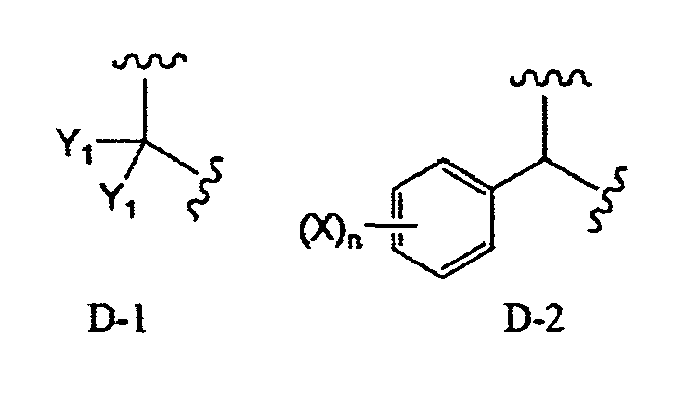
- Verbindung, dargestellt durch die Formel B2b:
 R1b Formyl; gegebenenfalls substituiertes geradkettiges C1-4 Alkylcarbonyl; gegebenenfalls substituiertes Benzyl; eine -SiR3R4R5-Gruppe, gegebenenfalls substituiert mit einem Halogenatom, wobei jeweils R3, R4 und R5 unabhängig ein geradkettiges oder verzweigtkettiges C1-6 Alkyl oder Phenyl darstellen; C1-6 Alkyloxy-C1-6 Alkyl, gegebenenfalls substituiert mit einem Halogenatom; C1-6 Alkylthio-C1-6 Alkyl, gegebenenfalls substituiert mit einem Halogenatom; geradkettiges, verzweigtkettiges oder cyclisches C1-4 Alkyl, gegebenenfalls substituiert mit einem Halogenatom, mit der Maßgabe, dass, wenn das Alkyl der C1-4 Alkylgruppe verzweigtkettig oder cyclisch ist, die Alkylgruppe ein C3-4 Alkyl ist; C2-6 Alkenyl, gegebenenfalls substituiert mit einem Halogenatom; C2-6 Alkynyl, gegebenenfalls substituiert mit einem Halogenatom; oder eine gegebenenfalls substituierte gesättigte oder ungesättigte fünf- oder sechsgliedrige heterocyclische Gruppe darstellt,wobei, in R1b, der Substituent, gegebenenfalls gebunden an ein Alkylcarbonyl, aus der Gruppe, bestehend aus Halogenatomen, C1-4 Alkyloxy, C1-4 Haloalkyloxy, C1-4 Alkylcarbonyl, C1-4 Haloalkylcarbonyl, C1-4 Alkylcarbonyloxy und C1-4 Haloalkylcarbonyloxy, ausgewählt ist, und der Substituent, gegebenenfalls gebunden an die heterocyclische Gruppe und Benzyl, aus der Gruppe, bestehend aus Halogenatomen, C1-4 Alkyl, C1-4 Alkyloxy, C1-4 Haloalkyloxy, C1-4 Alkylthio, C1-4 Haloalkyl, C1-4 Alkylcarbonyl, C1-4 Haloalkylcarbonyl, C1-4 Alkylcarbonyloxy, C1-4 Haloalkylcarbonyloxy, Nitro und Cyano, ausgewählt ist, undR' (cyclisches C3-6 Alkyl)Carbonyl darstellt.
 - Verbindung nach Anspruch 4, wobei R1b Acetyl; Chloroacetyl; eine -SiR3R4R5-Gruppe, gegebenenfalls substituiert mit einem Halogenatom, wobei jeweils R3, R4 und R5 unabhängig ein geradkettiges oder verzweigtkettiges C1-6 Alkyl oder Phenyl darstellen; oder eine gegebenenfalls substituierte gesättigte oder ungesättigte fünf- oder sechsgliedrige heterocyclische Gruppe darstellt, und R' cyclisches C3-6 Alkylcarbonyl darstellt.
Applications Claiming Priority (2)
| Application Number | Priority Date | Filing Date | Title |
|---|---|---|---|
| JP2007210804 | 2007-08-13 | ||
| EP08827512A EP2186815A4 (de) | 2007-08-13 | 2008-08-13 | Verfahren zur herstellung eines pyripyropenderivats und zwischenprodukt |
Related Parent Applications (2)
| Application Number | Title | Priority Date | Filing Date |
|---|---|---|---|
| EP08827512A Division EP2186815A4 (de) | 2007-08-13 | 2008-08-13 | Verfahren zur herstellung eines pyripyropenderivats und zwischenprodukt |
| EP08827512.8 Division | 2008-08-13 |
Publications (3)
| Publication Number | Publication Date |
|---|---|
| EP2592084A1 EP2592084A1 (de) | 2013-05-15 |
| EP2592084B1 true EP2592084B1 (de) | 2014-07-09 |
| EP2592084B8 EP2592084B8 (de) | 2014-08-27 |
Family
ID=40350754
Family Applications (2)
| Application Number | Title | Priority Date | Filing Date |
|---|---|---|---|
| EP08827512A Withdrawn EP2186815A4 (de) | 2007-08-13 | 2008-08-13 | Verfahren zur herstellung eines pyripyropenderivats und zwischenprodukt |
| EP13154660.8A Active EP2592084B8 (de) | 2007-08-13 | 2008-08-13 | Verfahren zur Herstellung von Pyripyropenderivate und Zwischenstoffe zur Herstellung davon |
Family Applications Before (1)
| Application Number | Title | Priority Date | Filing Date |
|---|---|---|---|
| EP08827512A Withdrawn EP2186815A4 (de) | 2007-08-13 | 2008-08-13 | Verfahren zur herstellung eines pyripyropenderivats und zwischenprodukt |
Country Status (16)
| Country | Link |
|---|---|
| US (2) | US8263778B2 (de) |
| EP (2) | EP2186815A4 (de) |
| JP (1) | JP5544553B2 (de) |
| KR (1) | KR101570887B1 (de) |
| CN (1) | CN101821272B (de) |
| AU (1) | AU2008287799B2 (de) |
| BR (1) | BRPI0814980B1 (de) |
| CA (1) | CA2696039C (de) |
| EC (1) | ECSP10010019A (de) |
| IL (1) | IL203698B (de) |
| MX (1) | MX2010001609A (de) |
| NZ (1) | NZ583710A (de) |
| RU (1) | RU2494101C2 (de) |
| TW (1) | TWI422333B (de) |
| WO (1) | WO2009022702A1 (de) |
| ZA (1) | ZA201001744B (de) |
Families Citing this family (24)
| Publication number | Priority date | Publication date | Assignee | Title |
|---|---|---|---|---|
| BRPI0916355B8 (pt) | 2008-07-24 | 2022-12-13 | Meiji Seika Kaisha | Vetor recombinante compreendendo um polinucleotídeo isolado, e, método para produzir um precursor de piripiropeno a |
| PL2426124T3 (pl) * | 2009-05-13 | 2013-12-31 | Meiji Seika Pharma Co Ltd | Sposób wytwarzania pirypiropenowych pochodnych |
| WO2010150739A1 (ja) * | 2009-06-23 | 2010-12-29 | 学校法人北里研究所 | Acat2阻害活性を示す水酸基含有ピリピロペン誘導体 |
| AU2011210967B2 (en) * | 2010-01-26 | 2016-06-23 | Mitsui Chemicals Crop & Life Solutions, Inc. | Method for manufacturing a pyripyropene |
| CN102791871A (zh) * | 2010-01-26 | 2012-11-21 | 明治制果药业株式会社 | 通过酶法生产啶南平衍生物的方法 |
| CA2788080C (en) | 2010-01-26 | 2018-04-17 | Meiji Seika Pharma Co., Ltd. | Nucleic acid construct comprising pyripyropene biosynthetic gene cluster and marker gene |
| UA111151C2 (uk) * | 2010-03-01 | 2016-04-11 | Мейдзі Сейка Фарма Ко., Лтд. | Спосіб одержання похідних пірипіропену |
| BR112012028760A2 (pt) * | 2010-05-24 | 2018-02-06 | Meiji Seika Pharma Co Ltd | agente de controle de organismo nocivo |
| KR101861868B1 (ko) | 2010-05-28 | 2018-05-28 | 바스프 에스이 | 살충 혼합물 |
| CN102905528B (zh) | 2010-05-28 | 2015-07-22 | 巴斯夫欧洲公司 | 农药混合物 |
| JP2013166704A (ja) * | 2010-06-16 | 2013-08-29 | Meiji Seikaファルマ株式会社 | 新規殺虫剤 |
| WO2011161132A1 (en) | 2010-06-25 | 2011-12-29 | Basf Se | Pesticidal mixtures |
| WO2011161131A1 (en) | 2010-06-25 | 2011-12-29 | Basf Se | Herbicidal mixtures |
| JP5877202B2 (ja) | 2010-09-14 | 2016-03-02 | ビーエーエスエフ ソシエタス・ヨーロピアBasf Se | ピリピロペン殺虫剤及び塩基を含有する組成物 |
| AU2011303970B2 (en) | 2010-09-14 | 2015-08-13 | Basf Se | Composition containing a pyripyropene insecticide and an adjuvant |
| KR102056608B1 (ko) * | 2012-03-12 | 2019-12-17 | 바스프 에스이 | 피리피로펜 살곤충제의 수성 현탁액 농축물 제형의 제조 방법 |
| KR102055551B1 (ko) | 2012-03-12 | 2019-12-13 | 바스프 에스이 | 피리피로펜 살충제 i 함유 액체 농축 제형 |
| US9924712B2 (en) | 2012-03-12 | 2018-03-27 | Basf Se | Liquid concentrate formulation containing a pyripyropene insecticide II |
| JP6088552B2 (ja) | 2012-03-13 | 2017-03-01 | ビーエーエスエフ ソシエタス・ヨーロピアBasf Se | ピリピロペン殺虫剤iii含有液体濃厚製剤 |
| KR102163826B1 (ko) * | 2013-01-16 | 2020-10-12 | 바스프 에스이 | 피리피로펜 살충제를 포함하는 액체 에멀전화성 제형의 제조 방법 |
| WO2014111398A1 (en) | 2013-01-16 | 2014-07-24 | Basf Se | Method for preparing a pyripyropene compound |
| US10004224B2 (en) | 2013-01-25 | 2018-06-26 | Base Se | Method for producing aqueous suspension concentrate formulations |
| CN105102625A (zh) * | 2013-03-28 | 2015-11-25 | 巴斯夫欧洲公司 | 自干生物质制备啶南平 |
| CN113735924A (zh) * | 2021-09-01 | 2021-12-03 | 河北威远生物化工有限公司 | 一种23-酮阿维菌素B2a/B2b衍生物的制备方法 |
Family Cites Families (10)
| Publication number | Priority date | Publication date | Assignee | Title |
|---|---|---|---|---|
| JPS5111171B1 (de) * | 1971-06-28 | 1976-04-09 | Sumitomo Chemical Co | |
| JP3233476B2 (ja) * | 1992-10-22 | 2001-11-26 | 社団法人北里研究所 | Fo−1289物質およびその製造法 |
| JPH08239385A (ja) | 1995-03-03 | 1996-09-17 | Kitasato Inst:The | Fo−1289物質およびその製造法 |
| JP3725198B2 (ja) * | 1995-03-27 | 2005-12-07 | 社団法人北里研究所 | ピリピロペン誘導体 |
| JPH08269065A (ja) * | 1995-04-03 | 1996-10-15 | Kitasato Inst:The | ピリピロペン誘導体 |
| KR100522446B1 (ko) | 2003-01-07 | 2005-10-18 | 한국생명공학연구원 | 아실 코에이:콜레스테롤 아실 트란스퍼라제의 저해활성을갖는 화합물 또는 그 염을 유효성분으로 하는 살충제 |
| TWI388282B (zh) * | 2005-06-01 | 2013-03-11 | Meiji Seika Pharma Co Ltd | 害蟲控制劑 |
| US7491738B2 (en) * | 2005-06-01 | 2009-02-17 | Meiji Seika Kaisha, Ltd. | Pest control agents |
| KR100943983B1 (ko) | 2006-07-27 | 2010-02-26 | 한국생명공학연구원 | 피리피로펜 유도체 및 이를 포함하는 살충제 조성물 |
| ES2379928T3 (es) * | 2006-11-30 | 2012-05-07 | Meiji Seika Kaisha Ltd. | Agente de control de plagas |
-
2008
- 2008-08-13 KR KR1020107005415A patent/KR101570887B1/ko active Active
- 2008-08-13 NZ NZ583710A patent/NZ583710A/en not_active IP Right Cessation
- 2008-08-13 RU RU2010109368/04A patent/RU2494101C2/ru not_active IP Right Cessation
- 2008-08-13 MX MX2010001609A patent/MX2010001609A/es active IP Right Grant
- 2008-08-13 EP EP08827512A patent/EP2186815A4/de not_active Withdrawn
- 2008-08-13 CA CA2696039A patent/CA2696039C/en active Active
- 2008-08-13 CN CN2008801111451A patent/CN101821272B/zh active Active
- 2008-08-13 US US12/733,113 patent/US8263778B2/en active Active
- 2008-08-13 TW TW097130831A patent/TWI422333B/zh active
- 2008-08-13 AU AU2008287799A patent/AU2008287799B2/en not_active Ceased
- 2008-08-13 WO PCT/JP2008/064520 patent/WO2009022702A1/ja not_active Ceased
- 2008-08-13 JP JP2009528134A patent/JP5544553B2/ja active Active
- 2008-08-13 BR BRPI0814980-1A patent/BRPI0814980B1/pt active IP Right Grant
- 2008-08-13 EP EP13154660.8A patent/EP2592084B8/de active Active
-
2010
- 2010-02-03 IL IL203698A patent/IL203698B/en active IP Right Grant
- 2010-03-08 EC EC2010010019A patent/ECSP10010019A/es unknown
- 2010-03-11 ZA ZA2010/01744A patent/ZA201001744B/en unknown
-
2012
- 2012-08-13 US US13/572,971 patent/US8759529B2/en active Active
Also Published As
| Publication number | Publication date |
|---|---|
| CN101821272A (zh) | 2010-09-01 |
| ECSP10010019A (es) | 2010-06-29 |
| CN101821272B (zh) | 2013-03-27 |
| RU2010109368A (ru) | 2011-09-20 |
| KR20100051857A (ko) | 2010-05-18 |
| RU2494101C2 (ru) | 2013-09-27 |
| AU2008287799A1 (en) | 2009-02-19 |
| BRPI0814980B1 (pt) | 2022-05-31 |
| JPWO2009022702A1 (ja) | 2010-11-18 |
| TW200915987A (en) | 2009-04-16 |
| US8759529B2 (en) | 2014-06-24 |
| US8263778B2 (en) | 2012-09-11 |
| US20100160640A1 (en) | 2010-06-24 |
| AU2008287799B2 (en) | 2013-10-31 |
| BRPI0814980A2 (pt) | 2015-02-03 |
| EP2186815A1 (de) | 2010-05-19 |
| TWI422333B (zh) | 2014-01-11 |
| NZ583710A (en) | 2012-03-30 |
| WO2009022702A1 (ja) | 2009-02-19 |
| EP2592084B8 (de) | 2014-08-27 |
| KR101570887B1 (ko) | 2015-11-20 |
| IL203698B (en) | 2018-04-30 |
| MX2010001609A (es) | 2010-03-15 |
| CA2696039C (en) | 2015-11-24 |
| JP5544553B2 (ja) | 2014-07-09 |
| CA2696039A1 (en) | 2009-02-19 |
| US20120330021A1 (en) | 2012-12-27 |
| ZA201001744B (en) | 2011-06-29 |
| EP2592084A1 (de) | 2013-05-15 |
| BRPI0814980A8 (pt) | 2016-07-26 |
| EP2186815A4 (de) | 2012-01-25 |
Similar Documents
| Publication | Publication Date | Title |
|---|---|---|
| US8759529B2 (en) | Process for producing pyripyropene derivatives and intermediates for the production thereof | |
| WO2017218580A1 (en) | Synthetic methods for the preparation of nicotinamide riboside and related compounds | |
| JP2000109497A (ja) | スピロ環式c―グリコシド | |
| SG171963A1 (en) | Novel intermediate and process for preparing entecavir using same | |
| US8853413B2 (en) | Process for producing pyripyropene derivatives | |
| US8853414B2 (en) | Process for producing pyripyropene derivatives | |
| Wang et al. | Synthesis and antitumor activity of 20-O-linked nitrogen-based camptothecin ester derivatives | |
| WO2018029264A1 (en) | Process for preparation of dapagliflozin and intermediates thereof | |
| RU2738408C1 (ru) | Способы селективного введения защитных групп в производные резорцина | |
| AU2010347354B9 (en) | Process for producing pyripyropene derivatives | |
| WO2001009133A1 (en) | NEW CYTOTOXIC PYRIDO[2,3,4-kl]ACRIDINE DERIVATIVES, THEIR PREPARATION AND THEIR THERAPEUTIC USE | |
| JPH02275894A (ja) | 3―デオキシマイカミノシルタイロノライド化合物 | |
| Tanimori et al. | Synthesis of (±)-(2 RS, 3 SR)-2-Hydroxyethyl-3-[(1 RS)-1-hydroxy-ethyl] cyclopentanone Derivatives, Potential Intermediates in the Synthesis of Thienamycin | |
| JPH07291990A (ja) | α−2’−デオキシヌクレオシド誘導体の製造方法 | |
| JP2003252891A (ja) | サイトサミノマイシン合成中間体、及びその製法 |
Legal Events
| Date | Code | Title | Description |
|---|---|---|---|
| PUAI | Public reference made under article 153(3) epc to a published international application that has entered the european phase |
Free format text: ORIGINAL CODE: 0009012 |
|
| 17P | Request for examination filed |
Effective date: 20130208 |
|
| AC | Divisional application: reference to earlier application |
Ref document number: 2186815 Country of ref document: EP Kind code of ref document: P |
|
| AK | Designated contracting states |
Kind code of ref document: A1 Designated state(s): AT BE BG CH CY CZ DE DK EE ES FI FR GB GR HR HU IE IS IT LI LT LU LV MC MT NL NO PL PT RO SE SI SK TR |
|
| AX | Request for extension of the european patent |
Extension state: AL BA MK RS |
|
| GRAP | Despatch of communication of intention to grant a patent |
Free format text: ORIGINAL CODE: EPIDOSNIGR1 |
|
| INTG | Intention to grant announced |
Effective date: 20140120 |
|
| RIN1 | Information on inventor provided before grant (corrected) |
Inventor name: TAKASHI, ANDO Inventor name: GOTO, KIMIHIKO Inventor name: YAMAMOTO, KAZUMI Inventor name: MITOMI, MASAAKI Inventor name: SAKAI, MASAYO |
|
| GRAS | Grant fee paid |
Free format text: ORIGINAL CODE: EPIDOSNIGR3 |
|
| GRAA | (expected) grant |
Free format text: ORIGINAL CODE: 0009210 |
|
| AC | Divisional application: reference to earlier application |
Ref document number: 2186815 Country of ref document: EP Kind code of ref document: P |
|
| AK | Designated contracting states |
Kind code of ref document: B1 Designated state(s): AT BE BG CH CY CZ DE DK EE ES FI FR GB GR HR HU IE IS IT LI LT LU LV MC MT NL NO PL PT RO SE SI SK TR |
|
| AX | Request for extension of the european patent |
Extension state: AL BA MK RS |
|
| REG | Reference to a national code |
Ref country code: GB Ref legal event code: FG4D |
|
| REG | Reference to a national code |
Ref country code: CH Ref legal event code: EP Ref country code: AT Ref legal event code: REF Ref document number: 676547 Country of ref document: AT Kind code of ref document: T Effective date: 20140715 |
|
| REG | Reference to a national code |
Ref country code: IE Ref legal event code: FG4D |
|
| RAP2 | Party data changed (patent owner data changed or rights of a patent transferred) |
Owner name: BASF SE |
|
| REG | Reference to a national code |
Ref country code: DE Ref legal event code: R096 Ref document number: 602008033260 Country of ref document: DE Effective date: 20140821 |
|
| REG | Reference to a national code |
Ref country code: CH Ref legal event code: NV Representative=s name: SCHNEIDER FELDMANN AG PATENT- UND MARKENANWAEL, CH |
|
| REG | Reference to a national code |
Ref country code: AT Ref legal event code: MK05 Ref document number: 676547 Country of ref document: AT Kind code of ref document: T Effective date: 20140709 |
|
| REG | Reference to a national code |
Ref country code: NL Ref legal event code: VDEP Effective date: 20140709 |
|
| REG | Reference to a national code |
Ref country code: LT Ref legal event code: MG4D |
|
| PG25 | Lapsed in a contracting state [announced via postgrant information from national office to epo] |
Ref country code: ES Free format text: LAPSE BECAUSE OF FAILURE TO SUBMIT A TRANSLATION OF THE DESCRIPTION OR TO PAY THE FEE WITHIN THE PRESCRIBED TIME-LIMIT Effective date: 20140709 Ref country code: BG Free format text: LAPSE BECAUSE OF FAILURE TO SUBMIT A TRANSLATION OF THE DESCRIPTION OR TO PAY THE FEE WITHIN THE PRESCRIBED TIME-LIMIT Effective date: 20141009 Ref country code: SE Free format text: LAPSE BECAUSE OF FAILURE TO SUBMIT A TRANSLATION OF THE DESCRIPTION OR TO PAY THE FEE WITHIN THE PRESCRIBED TIME-LIMIT Effective date: 20140709 Ref country code: GR Free format text: LAPSE BECAUSE OF FAILURE TO SUBMIT A TRANSLATION OF THE DESCRIPTION OR TO PAY THE FEE WITHIN THE PRESCRIBED TIME-LIMIT Effective date: 20141010 Ref country code: LT Free format text: LAPSE BECAUSE OF FAILURE TO SUBMIT A TRANSLATION OF THE DESCRIPTION OR TO PAY THE FEE WITHIN THE PRESCRIBED TIME-LIMIT Effective date: 20140709 Ref country code: PT Free format text: LAPSE BECAUSE OF FAILURE TO SUBMIT A TRANSLATION OF THE DESCRIPTION OR TO PAY THE FEE WITHIN THE PRESCRIBED TIME-LIMIT Effective date: 20141110 Ref country code: FI Free format text: LAPSE BECAUSE OF FAILURE TO SUBMIT A TRANSLATION OF THE DESCRIPTION OR TO PAY THE FEE WITHIN THE PRESCRIBED TIME-LIMIT Effective date: 20140709 Ref country code: NO Free format text: LAPSE BECAUSE OF FAILURE TO SUBMIT A TRANSLATION OF THE DESCRIPTION OR TO PAY THE FEE WITHIN THE PRESCRIBED TIME-LIMIT Effective date: 20141009 |
|
| PG25 | Lapsed in a contracting state [announced via postgrant information from national office to epo] |
Ref country code: NL Free format text: LAPSE BECAUSE OF FAILURE TO SUBMIT A TRANSLATION OF THE DESCRIPTION OR TO PAY THE FEE WITHIN THE PRESCRIBED TIME-LIMIT Effective date: 20140709 Ref country code: AT Free format text: LAPSE BECAUSE OF FAILURE TO SUBMIT A TRANSLATION OF THE DESCRIPTION OR TO PAY THE FEE WITHIN THE PRESCRIBED TIME-LIMIT Effective date: 20140709 Ref country code: IS Free format text: LAPSE BECAUSE OF FAILURE TO SUBMIT A TRANSLATION OF THE DESCRIPTION OR TO PAY THE FEE WITHIN THE PRESCRIBED TIME-LIMIT Effective date: 20141109 Ref country code: CY Free format text: LAPSE BECAUSE OF FAILURE TO SUBMIT A TRANSLATION OF THE DESCRIPTION OR TO PAY THE FEE WITHIN THE PRESCRIBED TIME-LIMIT Effective date: 20140709 Ref country code: PL Free format text: LAPSE BECAUSE OF FAILURE TO SUBMIT A TRANSLATION OF THE DESCRIPTION OR TO PAY THE FEE WITHIN THE PRESCRIBED TIME-LIMIT Effective date: 20140709 Ref country code: HR Free format text: LAPSE BECAUSE OF FAILURE TO SUBMIT A TRANSLATION OF THE DESCRIPTION OR TO PAY THE FEE WITHIN THE PRESCRIBED TIME-LIMIT Effective date: 20140709 Ref country code: LV Free format text: LAPSE BECAUSE OF FAILURE TO SUBMIT A TRANSLATION OF THE DESCRIPTION OR TO PAY THE FEE WITHIN THE PRESCRIBED TIME-LIMIT Effective date: 20140709 |
|
| REG | Reference to a national code |
Ref country code: DE Ref legal event code: R097 Ref document number: 602008033260 Country of ref document: DE |
|
| PG25 | Lapsed in a contracting state [announced via postgrant information from national office to epo] |
Ref country code: BE Free format text: LAPSE BECAUSE OF NON-PAYMENT OF DUE FEES Effective date: 20140831 Ref country code: CZ Free format text: LAPSE BECAUSE OF FAILURE TO SUBMIT A TRANSLATION OF THE DESCRIPTION OR TO PAY THE FEE WITHIN THE PRESCRIBED TIME-LIMIT Effective date: 20140709 Ref country code: IT Free format text: LAPSE BECAUSE OF FAILURE TO SUBMIT A TRANSLATION OF THE DESCRIPTION OR TO PAY THE FEE WITHIN THE PRESCRIBED TIME-LIMIT Effective date: 20140709 Ref country code: SK Free format text: LAPSE BECAUSE OF FAILURE TO SUBMIT A TRANSLATION OF THE DESCRIPTION OR TO PAY THE FEE WITHIN THE PRESCRIBED TIME-LIMIT Effective date: 20140709 Ref country code: DK Free format text: LAPSE BECAUSE OF FAILURE TO SUBMIT A TRANSLATION OF THE DESCRIPTION OR TO PAY THE FEE WITHIN THE PRESCRIBED TIME-LIMIT Effective date: 20140709 Ref country code: MC Free format text: LAPSE BECAUSE OF FAILURE TO SUBMIT A TRANSLATION OF THE DESCRIPTION OR TO PAY THE FEE WITHIN THE PRESCRIBED TIME-LIMIT Effective date: 20140709 Ref country code: EE Free format text: LAPSE BECAUSE OF FAILURE TO SUBMIT A TRANSLATION OF THE DESCRIPTION OR TO PAY THE FEE WITHIN THE PRESCRIBED TIME-LIMIT Effective date: 20140709 |
|
| PLBE | No opposition filed within time limit |
Free format text: ORIGINAL CODE: 0009261 |
|
| STAA | Information on the status of an ep patent application or granted ep patent |
Free format text: STATUS: NO OPPOSITION FILED WITHIN TIME LIMIT |
|
| REG | Reference to a national code |
Ref country code: IE Ref legal event code: MM4A |
|
| 26N | No opposition filed |
Effective date: 20150410 |
|
| PG25 | Lapsed in a contracting state [announced via postgrant information from national office to epo] |
Ref country code: IE Free format text: LAPSE BECAUSE OF NON-PAYMENT OF DUE FEES Effective date: 20140813 |
|
| PG25 | Lapsed in a contracting state [announced via postgrant information from national office to epo] |
Ref country code: SI Free format text: LAPSE BECAUSE OF FAILURE TO SUBMIT A TRANSLATION OF THE DESCRIPTION OR TO PAY THE FEE WITHIN THE PRESCRIBED TIME-LIMIT Effective date: 20140709 |
|
| PG25 | Lapsed in a contracting state [announced via postgrant information from national office to epo] |
Ref country code: RO Free format text: LAPSE BECAUSE OF FAILURE TO SUBMIT A TRANSLATION OF THE DESCRIPTION OR TO PAY THE FEE WITHIN THE PRESCRIBED TIME-LIMIT Effective date: 20140709 |
|
| PG25 | Lapsed in a contracting state [announced via postgrant information from national office to epo] |
Ref country code: MT Free format text: LAPSE BECAUSE OF FAILURE TO SUBMIT A TRANSLATION OF THE DESCRIPTION OR TO PAY THE FEE WITHIN THE PRESCRIBED TIME-LIMIT Effective date: 20140709 |
|
| PG25 | Lapsed in a contracting state [announced via postgrant information from national office to epo] |
Ref country code: TR Free format text: LAPSE BECAUSE OF FAILURE TO SUBMIT A TRANSLATION OF THE DESCRIPTION OR TO PAY THE FEE WITHIN THE PRESCRIBED TIME-LIMIT Effective date: 20140709 Ref country code: HU Free format text: LAPSE BECAUSE OF FAILURE TO SUBMIT A TRANSLATION OF THE DESCRIPTION OR TO PAY THE FEE WITHIN THE PRESCRIBED TIME-LIMIT; INVALID AB INITIO Effective date: 20080813 Ref country code: LU Free format text: LAPSE BECAUSE OF NON-PAYMENT OF DUE FEES Effective date: 20140813 Ref country code: BE Free format text: LAPSE BECAUSE OF FAILURE TO SUBMIT A TRANSLATION OF THE DESCRIPTION OR TO PAY THE FEE WITHIN THE PRESCRIBED TIME-LIMIT Effective date: 20140709 |
|
| REG | Reference to a national code |
Ref country code: FR Ref legal event code: PLFP Year of fee payment: 9 |
|
| REG | Reference to a national code |
Ref country code: FR Ref legal event code: PLFP Year of fee payment: 10 |
|
| REG | Reference to a national code |
Ref country code: FR Ref legal event code: PLFP Year of fee payment: 11 |
|
| REG | Reference to a national code |
Ref country code: CH Ref legal event code: PFA Owner name: BASF SE, DE Free format text: FORMER OWNER: BASF SE, DE |
|
| P01 | Opt-out of the competence of the unified patent court (upc) registered |
Effective date: 20230404 |
|
| PGFP | Annual fee paid to national office [announced via postgrant information from national office to epo] |
Ref country code: DE Payment date: 20250827 Year of fee payment: 18 |
|
| PGFP | Annual fee paid to national office [announced via postgrant information from national office to epo] |
Ref country code: GB Payment date: 20250826 Year of fee payment: 18 |
|
| PGFP | Annual fee paid to national office [announced via postgrant information from national office to epo] |
Ref country code: FR Payment date: 20250825 Year of fee payment: 18 |
|
| PGFP | Annual fee paid to national office [announced via postgrant information from national office to epo] |
Ref country code: CH Payment date: 20250901 Year of fee payment: 18 |