EP2588120B1 - Compositions and methods related to protein a (spa) variants - Google Patents
Compositions and methods related to protein a (spa) variants Download PDFInfo
- Publication number
- EP2588120B1 EP2588120B1 EP11801511.4A EP11801511A EP2588120B1 EP 2588120 B1 EP2588120 B1 EP 2588120B1 EP 11801511 A EP11801511 A EP 11801511A EP 2588120 B1 EP2588120 B1 EP 2588120B1
- Authority
- EP
- European Patent Office
- Prior art keywords
- protein
- spa
- composition
- polypeptide
- staphylococcal
- Prior art date
- Legal status (The legal status is an assumption and is not a legal conclusion. Google has not performed a legal analysis and makes no representation as to the accuracy of the status listed.)
- Active
Links
Images






Classifications
-
- C—CHEMISTRY; METALLURGY
- C07—ORGANIC CHEMISTRY
- C07K—PEPTIDES
- C07K14/00—Peptides having more than 20 amino acids; Gastrins; Somatostatins; Melanotropins; Derivatives thereof
- C07K14/195—Peptides having more than 20 amino acids; Gastrins; Somatostatins; Melanotropins; Derivatives thereof from bacteria
- C07K14/305—Peptides having more than 20 amino acids; Gastrins; Somatostatins; Melanotropins; Derivatives thereof from bacteria from Micrococcaceae (F)
- C07K14/31—Peptides having more than 20 amino acids; Gastrins; Somatostatins; Melanotropins; Derivatives thereof from bacteria from Micrococcaceae (F) from Staphylococcus (G)
-
- A—HUMAN NECESSITIES
- A61—MEDICAL OR VETERINARY SCIENCE; HYGIENE
- A61K—PREPARATIONS FOR MEDICAL, DENTAL OR TOILETRY PURPOSES
- A61K39/00—Medicinal preparations containing antigens or antibodies
- A61K39/02—Bacterial antigens
- A61K39/085—Staphylococcus
-
- A—HUMAN NECESSITIES
- A61—MEDICAL OR VETERINARY SCIENCE; HYGIENE
- A61P—SPECIFIC THERAPEUTIC ACTIVITY OF CHEMICAL COMPOUNDS OR MEDICINAL PREPARATIONS
- A61P31/00—Antiinfectives, i.e. antibiotics, antiseptics, chemotherapeutics
- A61P31/04—Antibacterial agents
-
- A—HUMAN NECESSITIES
- A61—MEDICAL OR VETERINARY SCIENCE; HYGIENE
- A61P—SPECIFIC THERAPEUTIC ACTIVITY OF CHEMICAL COMPOUNDS OR MEDICINAL PREPARATIONS
- A61P37/00—Drugs for immunological or allergic disorders
- A61P37/02—Immunomodulators
- A61P37/04—Immunostimulants
-
- A—HUMAN NECESSITIES
- A61—MEDICAL OR VETERINARY SCIENCE; HYGIENE
- A61P—SPECIFIC THERAPEUTIC ACTIVITY OF CHEMICAL COMPOUNDS OR MEDICINAL PREPARATIONS
- A61P43/00—Drugs for specific purposes, not provided for in groups A61P1/00-A61P41/00
-
- C—CHEMISTRY; METALLURGY
- C07—ORGANIC CHEMISTRY
- C07K—PEPTIDES
- C07K16/00—Immunoglobulins [IG], e.g. monoclonal or polyclonal antibodies
- C07K16/12—Immunoglobulins [IG], e.g. monoclonal or polyclonal antibodies against material from bacteria
- C07K16/1267—Gram-positive bacteria
- C07K16/1271—Micrococcaceae (F); Staphylococcaceae (F), e.g. Staphylococcus (G)
-
- A—HUMAN NECESSITIES
- A61—MEDICAL OR VETERINARY SCIENCE; HYGIENE
- A61K—PREPARATIONS FOR MEDICAL, DENTAL OR TOILETRY PURPOSES
- A61K39/00—Medicinal preparations containing antigens or antibodies
- A61K2039/57—Medicinal preparations containing antigens or antibodies characterised by the type of response, e.g. Th1, Th2
Definitions
- the present invention relates generally to the fields of immunology, microbiology, and pathology. More particularly, it concerns methods and compositions involving bacterial Protein A variants, which can be used to invoke an immune response
- the major nosocomial pathogens include Staphylococcus aureus, coagulase-negative Staphylococci (mostly Staphylococcus epidermidis ), enterococcus spp., Escherichia coli and Pseudomonas aeruginosa. Although these pathogens cause approximately the same number of infections, the severity of the disorders they can produce combined with the frequency of antibiotic resistant isolates balance this ranking towards S. aureus and S . epidermidis as being the most significant nosocomial pathogens.
- Staphylococci can cause a wide variety of diseases in humans and other animals through either toxin production or invasion. Staphylococcal toxins are also a common cause of food poisoning, as the bacteria can grow in improperly-stored food.
- Staphylococcus epidermidis is a normal skin commensal which is also an important opportunistic pathogen responsible for infections of impaired medical devices and infections at sites of surgery.
- Medical devices infected by S. epidermidis include cardiac pacemakers, cerebrospinal fluid shunts, continuous ambulatory peritoneal dialysis catheters, orthopedic devices and prosthetic heart valves.
- Staphylococcus aureus is the most common cause of nosocomial infections with a significant morbidity and mortality. It is the cause of some cases of osteomyelitis, endocarditis, septic arthritis, pneumonia, abscesses, and toxic shock syndrome. S. aureus can survive on dry surfaces, increasing the chance of transmission. Any S. aureus infection can cause the staphylococcal scalded skin syndrome, a cutaneous reaction to exotoxin absorbed into the bloodstream. It can also cause a type of septicemia called pyaemia that can be life-threatening. Problematically, Methicillin-resistant Staphylococcus aureus (MRSA) has become a major cause of hospital-acquired infections.
- MRSA Methicillin-resistant Staphylococcus aureus
- S. aureus and S. epidermidis infections are typically treated with antibiotics, with penicillin being the drug of choice, whereas vancomycin is used for methicillin resistant isolates.
- the percentage of staphylococcal strains exhibiting wide-spectrum resistance to antibiotics has become increasingly prevalent, posing a threat for effective antimicrobial therapy.
- vancomycin resistant S. aureus strain has aroused fear that MRSA strains are emerging and spreading for which no effective therapy is available.
- S. aureus secretes a plethora of virulence factors into the extracellular milieu (Archer, 1998; 3,s et al., 2000; Foster, 2005; Shaw et al., 2004; Sibbald et al., 2006). Like most secreted proteins, these virulence factors are translocated by the Sec machinery across the plasma membrane. Proteins secreted by the Sec machinery bear an N-terminal leader peptide that is removed by leader peptidase once the pre-protein is engaged in the Sec translocon (Dalbey and Wickner, 1985; van Wely et al., 2001).
- ESAT-6 early secreted antigen target 6 kDa
- CFP-10 culture filtrate antigen 10 kDa
- ESX-1 serum secretion system
- S. aureus two ESAT-6 like factors designated EsxA and EsxB are secreted by the Ess pathway ( E SAT-6 s ecretion s ystem) (Burts et al., 2005).
- Protein A (SpA)(SEQ ID NO:33), a cell wall anchored surface protein of Staphylococcus aureus, provides for bacterial evasion from innate and adaptive immune responses. Protein A binds immunoglobulins at their Fc portion, interacts with the VH3 domain of B cell receptors inappropriately stimulating B cell proliferation and apotosis, binds to von Willebrand factor A1 domains to activate intracellular clotting, and also binds to the TNF Receptor-1 to contribute to the pathogenesis of staphylococcal pneumonia. Due to the fact that Protein A captures immunoglobulin and displays toxic attributes, the possibility that this surface molecule may function as a vaccine in humans has not been rigorously pursued.
- Protein A variants no longer able to bind to immunoglobulins, which are thereby removed of their toxigenic potential, i.e., are non-toxigenic, stimulate humoral immune responses that protect against staphylococcal disease.
- the invention provides an isolated immunogenic polypeptide comprising a Protein A (SpA) variant D domain having (a) two amino acid substitutions that disrupt Fc binding and (b) two amino acid substitutions that disrupt VH3 binding, wherein for (a) the SpA variant comprises a glycine residue substitution at each of the amino acid positions corresponding to amino acid positions 9 and 10 of SEQ ID NO: 2 and for (b) the SpA variant comprises a serine residue substitution at each of the amino acid positions corresponding to amino acid positions 36 and 37 of SEQ ID NO: 2.
- SpA Protein A
- the SpA variant comprises or consists of the amino acid sequence that is 80, 90, 95, 98, 99, or 100% identical to the amino acid sequence of SEQ ID NO:34
- the SpA variant comprises a segment of SpA.
- the SpA segment can comprise at least or at most 1, 2, 3, 4, 5 or more IgG binding domains.
- the IgG domains can be at least or at most 1, 2, 3, 4, 5 or more variant A, B, C, D, or E domains.
- the SpA variant comprises at least or at most 1, 2, 3, 4, 5, or more variant A domains.
- the SpA variant comprises at least or at most 1, 2, 3, 4, 5, or more variant B domains. In still a further aspect the SpA variant comprises at least or at most 1, 2, 3, 4, 5, or more variant C domains. In yet a further aspect the SpA variant comprises at least or at most 1, 2, 3, 4, 5, or more variant D domains. In certain aspects the SpA variant comprises at least or at most 1, 2, 3, 4, 5, or more variant E domains. In a further aspect the SpA variant comprises a combination of A, B, C, D, and E domains in various combinations and permutations. The combinations can include all or part of a SpA signal peptide segment, a SpA region X segment, and/or a SpA sorting signal segment.
- a variant A domain comprises a substitution at position(s) 7, 8, 34, and/or 35 of SEQ ID NO:4.
- a variant B domain comprises a substitution at position(s) 7, 8, 34, and/or 35 of SEQ ID NO:6.
- a variant C domain comprises a substitution at position(s) 7, 8, 34, and/or 35 of SEQ ID NO:5.
- a variant D domain comprises a substitution at position(s) 9, 10, 36, and/or 37 of SEQ ID NO:2.
- a variant E domain comprises a substitution at position(s) 6, 7, 33, and/or 34 of SEQ ID NO:3.
- an SpA domain D variant or its equivalent can comprise a mutation at position 9 and 36; 9 and 37; 9 and 10; 36 and 37; 10 and 36; 10 and 37; 9, 36, and 37; 10, 36, and 37, 9, 10 and 36; or 9,10 and 37 of SEQ ID NO:2.
- analogous mutations can be included in one or more of domains A, B, C, or E.
- the amino acid glutamine (Q) at position 9 of SEQ ID NO:2 can be replaced with an alanine (A), an asparagine (N), an aspartic acid (D), a cysteine (C), a glutamic acid (E), a phenylalanine (F), a glycine (G), a histidine (H), an isoleucine (I), a lysine (K), a leucine (L), a methionine (M), a proline (P), a serine (S), a threonine (T), a valine (V), a tryptophane (W), or a tyrosine (Y).
- A alanine
- N asparagine
- D aspartic acid
- C cysteine
- C glutamic acid
- E glutamic acid
- F a phenylalanine
- G glycine
- H histidine
- I isoleucine
- the glutamine at position 9 can be substituted with an arginine (R).
- the glutamine at position 9 of SEQ ID NO:2, or its equivalent can be substituted with a lysine or a glycine. Any 1, 2, 3, 4, 5, 6, 7, 8, 9, 10, or more of the substitutions can be explicitly excluded.
- the amino acid glutamine (Q) at position 10 of SEQ ID NO:2 can be replaced with an alanine (A), an asparagine (N), an aspartic acid (D), a cysteine (C), a glutamic acid (E), a phenylalanine (F), a glycine (G), a histidine (H), an isoleucine (I), a lysine (K), a leucine (L), a methionine (M), a proline (P), a serine (S), a threonine (T), a valine (V), a tryptophane (W), or a tyrosine (Y).
- A alanine
- N asparagine
- D aspartic acid
- C cysteine
- C glutamic acid
- E glutamic acid
- F a phenylalanine
- G glycine
- H histidine
- I isoleucine
- the glutamine at position 10 can be substituted with an arginine (R).
- the glutamine at position 10 of SEQ ID NO:2, or its equivalent can be substituted with a lysine or a glycine. Any 1, 2, 3, 4, 5, 6, 7, 8, 9, 10, or more of the substitutions can be explicitly excluded.
- the aspartic acid (D) at position 36 of SEQ ID NO:2 can be replaced with an alanine (A), an asparagine (N), an arginine (R), a cysteine (C), a phenylalanine (F), a glycine (G), a histidine (H), an isoleucine (I), a lysine (K), a leucine (L), a methionine (M), a proline (P), a glutamine (Q), a serine (S), a threonine (T), a valine (V), a tryptophane (W), or a tyrosine (Y).
- A alanine
- N asparagine
- R arginine
- C cysteine
- F a phenylalanine
- G glycine
- H histidine
- I isoleucine
- K a lysine
- K leucine
- M
- the aspartic acid at position 36 can be substituted with a glutamic acid (E).
- E glutamic acid
- an aspartic acid at position 36 of SEQ ID NO:2, or its equivalent can be substituted with an alanine or a serine. Any 1, 2, 3, 4, 5, 6, 7, 8, 9, 10, or more of the substitutions can be explicitly excluded.
- the aspartic acid (D) at position 37 of SEQ ID NO:2 can be replaced with an alanine (A), a an asparagine (N), an arginine (R), a cysteine (C), a phenylalanine (F), a glycine (G), a histidine (H), an isoleucine (I), a lysine (K), a leucine (L), a methionine (M), a proline (P), a glutamine (Q), a serine (S), a threonine (T), a valine (V), a tryptophane (W), or a tyrosine (Y).
- A alanine
- N an asparagine
- R arginine
- C cysteine
- F a phenylalanine
- G glycine
- H histidine
- I isoleucine
- K a lysine
- K leucine
- the aspartic acid at position 37 can be substituted with a glutamic acid (E).
- E glutamic acid
- an aspartic acid at position 37 of SEQ ID NO:2, or its equivalent can be substituted with an alanine or a serine. Any 1, 2, 3, 4, 5, 6, 7, 8, 9, 10, or more of the substitutions can be explicitly excluded.
- the amino at position 9 of SEQ ID NO:2 (or an analogous amino acid in another SpA domain) is replaced by an alanine (A), a glycine (G), an isoleucine (I), a leucine (L), a proline (P), a serine (S), or a valine (V),
- the amino acid at position 9 of SEQ ID NO:2 is replaced by a glycine.
- the amino acid at position 9 of SEQ ID NO:2 is replaced by a lysine.
- the amino at position 10 of SEQ ID NO:2 (or an analogous amino acid in another SpA domain) is replaced by an alanine (A), a glycine (G), an isoleucine (I), a leucine (L), a proline (P), a serine (S), or a valine (V),
- the amino acid at position 10 of SEQ ID NO:2 is replaced by a glycine.
- the amino acid at position 10 of SEQ ID NO:2 is replaced by a lysine.
- the amino at position 36 of SEQ ID NO:2 (or an analogous amino acid in another SpA domain) is replaced by an alanine (A), a glycine (G), an isoleucine (I), a leucine (L), a proline (P), a serine (S), or a valine (V),
- the amino acid at position 36 of SEQ ID NO:2 is replaced by a serine.
- the amino acid at position 36 of SEQ ID NO:2 is replaced by an alanine.
- the amino at position 37 of SEQ ID NO:2 (or an analogous amino acid in another SpA domain) is replaced by an alanine (A), a glycine (G), an isoleucine (I), a leucine (L), a proline (P), a serine (S), or a valine (V),
- the amino acid at position 37 of SEQ ID NO:2 is replaced by a serine.
- the amino acid at position 37 of SEQ ID NO:2 is replaced by an alanine.
- the SpA variant includes a substitution of (a) one or more amino acid substitution in an IgG Fc binding sub-domain of SpA domain A, B, C, D, and/or E that disrupts or decreases binding to IgG Fc, and (b) one or more amino acid substitution in a V H 3 binding sub-domain of SpA domain A, B, C, D, and/or E that disrupts or decreases binding to V H 3.
- the amino acid sequence of a SpA variant comprises an amino acid sequence that is at least 50%, 60%, 70%, 80%, 90%, 95%, or 100% identical, including all values and ranges there between, to the amino acid sequence of SEQ ID NOs:2-6.
- the SpA variant includes (a) one or more amino acid substitution in an IgG Fc binding sub-domain of SpA domain D, or at a corresponding amino acid position in other IgG domains, that disrupts or decreases binding to IgG Fc, and (b) one or more amino acid substitution in a V H 3 binding sub-domain of SpA domain D, or at a corresponding amino acid position in other IgG domains, that disrupts or decreases binding to V H 3.
- amino acid residue F5, Q9, Q10, S11, F13, Y14, L17, N28, I31, and/or K35 (SEQ ID NO:2, QQNNFNKDQQSAFYEILNMPNLNEAQRNGFIQSLKDDPSQSTNVLGEAKKLNES) of the IgG Fc binding sub-domain of domain D are modified or substituted.
- amino acid residue Q26, G29, F30, S33, D36, D37, Q40, N43, and/or E47 (SEQ ID NO:2) of the V H 3 binding sub-domain of domain D are modified or substituted such that binding to Fc or V H 3 is attenuated.
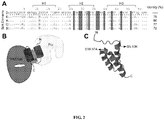
- corresponding modifications or substitutions can be engineered in corresponding positions of the domain A, B, C, and/or E. Corresponding positions are defined by alignment of the domain D amino acid sequence with one or more of the amino acid sequences from other IgG binding domains of SpA, for example see FIG. 2A .
- the amino acid substitution can be any of the other 20 amino acids.
- conservative amino acid substitutions can be specifically excluded from possible amino acid substitutions.
- only non-conservative substitutions are included.
- any substitution or combination of substitutions that reduces the binding of the domain such that SpA toxicity is significantly reduced is contemplated. The significance of the reduction in binding refers to a variant that produces minimal to no toxicity when introduced into a subject and can be assessed using in vitro methods described herein.
- a variant SpA comprises at least or at most 1, 2, 3, 4, 5, 6, 7, 8, 9, 10, or more variant SpA domain D peptides.
- 1, 2, 3, 4, 5, 6, 7, 8, 9, 10, 11, 12, 13, 14, 15, 16, 17, 18, or 19 or more amino acid residues of the variant SpA are substituted or modified - including but not limited to amino acids F5, Q9, Q10, S11, F13, Y14, L17, N28, I31, and/or K35 (SEQ ID NO:2) of the IgG Fc binding sub-domain of domain D and amino acid residue Q26, G29, F30, S33, D36, D37, Q40, N43, and/or E47 (SEQ ID NO:2) of the V H 3 binding sub-domain of domain D.
- glutamine residues at position 9 and/or 10 of SEQ ID NO:2 are mutated.
- aspartic acid residues 36 and/or 37 of SEQ ID NO:2 are mutated.
- glutamine 9 and 10 and aspartic acid residues 36 and 37 are mutated.
- Purified non-toxigenic SpA or SpA-D mutants/variants described herein are no longer able to significantly bind (i.e., demonstrate attenuated or disrupted binding affinity) Fc ⁇ or F(ab) 2 V H 3 and also do not stimulate B cell apoptosis.
- non-toxigenic Protein A variants can be used as subunit vaccines and raise humoral immune responses and confer protective immunity against S. aureus challenge.
- immunization with SpA-D variants resulted in an increase in Protein A specific antibody.
- immunization with the non-toxigenic Protein A variants generated significant protection from staphylococcal infection and abscess formation.
- S. aureus strains express Protein A
- immunization of humans with the non-toxigenic Protein A variants can neutralize this virulence factor and thereby establish protective immunity.
- the protective immunity protects or ameliorates infection by drug resistant strains of Staphylococcus, such as USA300 and other MRSA strains.
- Embodiments include the use of Protein A variants in compositions for the treatment of bacterial and/or staphylococcal infection.
- This application also provides an immunogenic composition comprising a Protein A variant or immunogenic fragment thereof.
- the immunogenic fragment is a Protein A domain D segment.
- the present invention provides compositions that can be used to treat (e.g., limiting staphylococcal abscess formation and/or persistence in a subject) or prevent bacterial infection.
- methods for stimulating an immune response involve administering to the subject an effective amount of a composition including or encoding all or part of a Protein A variant polypeptide or antigen, and in certain aspects other bacterial proteins.
- bacterial proteins include, but are not limited to (i) a secreted virulence factor, and/or a cell surface protein or peptide, or (ii) a recombinant nucleic acid molecule encoding a secreted virulence factor, and/or a cell surface protein or peptide.
- the subject can be administered all or part of a Protein A variant, such as a variant Protein A domain D segment.
- the polypeptide of the invention can be formulated in a pharmaceutically acceptable composition.
- the composition can further comprise one or more of at least or at most 1, 2, 3, 4, 5, 6, 7, 8, 9, 10, 11, 12, 13, 14, 15, 16, 17, 18, or 19 additional staphylococcal antigen or immunogenic fragment thereof (e.g., Eap, Ebh, Emp, EsaB, EsaC, EsxA, EsxB, SdrC, SdrD, SdrE, IsdA, IsdB, ClfA, ClfB, Coa, Hla ( e.g., H35 mutants), IsdC, SasF, vWbp, or vWh).
- Additional staphylococcal antigens that can be used in combination with a Protein A variant include, but are not limited to 52kDa vitronectin binding protein ( WO 01/60852 ), Aaa (GenBank CAC80837), Aap (GenBank accession AJ249487), Ant (GenBank accession NP_372518), autolysin glucosaminidase, autolysin amidase, Cna, collagen binding protein ( US6288214 ), EFB (FIB), Elastin binding protein (EbpS), EPB, FbpA, fibrinogen binding protein ( US6008341 ), Fibronectin binding protein ( US5840846 ), FnbA, FnbB, GehD ( US 2002/0169288 ), HarA, HBP, Immunodominant ABC transporter, IsaA/PisA, laminin receptor, Lipase GehD, MAP, Mg2+ transporter, MHC II analogue ( US5648240 ),
- the staphylococcal antigen or immunogenic fragment can be administered concurrently with the Protein A variant.
- the staphylococcal antigen or immunogenic fragment and the Protein A variant can be administered in the same composition.
- the Protein A variant can also be a recombinant nucleic acid molecule encoding a Protein A variant.
- a recombinant nucleic acid molecule can encode the Protein A variant and at least one staphylococcal antigen or immunogenic fragment thereof.
- the term “modulate” or “modulation” encompasses the meanings of the words “enhance,” or “inhibit.” "Modulation" of activity may be either an increase or a decrease in activity.
- modulator refers to compounds that effect the function of a moiety, including up-regulation, induction, stimulation, potentiation, inhibition, down-regulation, or suppression of a protein, nucleic acid, gene, organism or the like.
- the methods and compositions use or include or encode all or part of the Protein A variant or antigen.
- the Protein A variant may be used in combination with secreted factors or surface antigens including, but not limited to one or more of an isolated Eap, Ebh, Emp, EsaB, EsaC, EsxA, EsxB, SdrC, SdrD, SdrE, IsdA, IsdB, ClfA, ClfB, Coa, Hla, IsdC, SasF, vWbp, or vWh polypeptide or immunogenic segment thereof.
- Additional staphylococcal antigens that can be used in combination with a Protein A variant include, but are not limited to 52kDa vitronectin binding protein ( WO 01/60852 ), Aaa, Aap, Ant, autolysin glucosaminidase, autolysin amidase, Cna, collagen binding protein ( US6288214 ), EFB (FIB), Elastin binding protein (EbpS), EPB, FbpA, fibrinogen binding protein ( US6008341 ), Fibronectin binding protein ( US5840846 ), FnbA, FnbB, GehD ( US 2002/0169288 ), HarA, HBP, Immunodominant ABC transporter, IsaA/PisA, laminin receptor, Lipase GehD, MAP, Mg2+ transporter, MHC II analogue ( US5648240 ), MRPII, Npase, RNA III activating protein (RAP), SasA, SasB, Sas
- the isolated Protein A variant is multimerized, e . g ., dimerized or a linear fusion of two or more polypeptides or peptide segments.
- a composition comprises multimers or concatamers of 1, 2, 3, 4, 5, 6, 7, 8, 9, 10, 11, 12, 13, 14, 15, 16, 17, 18, 19, 20 or more isolated cell surface proteins or segments thereof.
- Concatamers are linear polypeptides having one or more repeating peptide units.
- SpA polypeptides or fragments can be consecutive or separated by a spacer or other peptide sequences, e . g ., one or more additional bacterial peptide.
- the other polypeptides or peptides contained in the multimer or concatamer can include, but are not limited to 1, 2, 3, 4, 5, 6, 7, 8, 9, 10, 11, 12, 13, 14, 15, 16, 17, 18, 19 of Eap, Ebh, Emp, EsaB, EsaC, EsxA, EsxB, SdrC, SdrD, SdrE, IsdA, IsdB, ClfA, ClfB, Coa, Hla, IsdC, SasF, vWbp, vWh or immunogenic fragments thereof.
- Additional staphylococcal antigens that can be used in combination with a Protein A variant include, but are not limited to 52kDa vitronectin binding protein ( WO 01/60852 ), Aaa, Aap, Ant, autolysin glucosaminidase, autolysin amidase, Cna, collagen binding protein ( US6288214 ), EFB (FIB), Elastin binding protein (EbpS), EPB, FbpA, fibrinogen binding protein ( US6008341 ), Fibronectin binding protein ( US5840846 ), FnbA, FnbB, GehD ( US 2002/0169288 ), HarA, HBP, Immunodominant ABC transporter, IsaA/PisA, laminin receptor, Lipase GehD, MAP, Mg2+ transporter, MHC II analogue ( US5648240 ), MRPII, Npase, RNA III activating protein (RAP), SasA, SasB, Sas
- Protein A variant refers to polypeptides that include a SpA IgG domain having two or more amino acid substitutions that disrupt binding to Fc and V H 3.
- a SpA variant includes a variant domain D peptide, as well as variants of SpA polypeptides and segments thereof that are non-toxigenic and stimulate an immune response against staphylococcus bacteria Protein A and/or bacteria expressing such.
- Embodiments of the present invention include compositions for use in eliciting an immune response against a staphylococcus bacterium or staphylococci in a subject comprising providing to the subject an effective amount of a Protein A variant or a segment thereof.
- the compositions for use in eliciting an immune response against a staphylococcus bacterium or staphylococci in a subject are for use in a method comprising providing to the subject an effective amount of 1, 2, 3, 4, 5, 6, 7, 8, 9, 10, 11, 12, 13, 14, 15, 16, 17, 18, 19 or more secreted proteins and/or cell surface proteins or segments/fragments thereof.
- a secreted protein or cell surface protein includes, but is not limited to Eap, Ebh, Emp, EsaB, EsaC, EsxA, EsxB, SdrC, SdrD, SdrE, IsdA, IsdB, ClfA, ClfB, Coa, Hla, IsdC, SasF, vWbp, and/or vWh proteins and immunogenic fragments thereof.
- Additional staphylococcal antigens that can be used in combination with a Protein A variant include, but are not limited to 52kDa vitronectin binding protein ( WO 01/60852 ), Aaa, Aap, Ant, autolysin glucosaminidase, autolysin amidase, Cna, collagen binding protein ( US6288214 ), EFB (FIB), Elastin binding protein (EbpS), EPB, FbpA, fibrinogen binding protein ( US6008341 ), Fibronectin binding protein ( US5840846 ), FnbA, FnbB, GehD ( US 2002/0169288 ), HarA, HBP, Immunodominant ABC transporter, IsaA/PisA, laminin receptor, Lipase GehD, MAP, Mg2+ transporter, MHC II analogue ( US5648240 ), MRPII, Npase, RNA III activating protein (RAP), SasA, SasB, Sas
- compositions that include a polypeptide, peptide, or protein that is or is at least 70%, 75%, 80%, 85%, 90%, 95%, 96%, 97%, 98%, or 99% identical or similar to Protein A, or a second protein or peptide that is a secreted bacterial protein or a bacterial cell surface protein.
- a composition may include a polypeptide, peptide, or protein that is or is at least 70%, 75%, 80%, 85%, 90%, 95%, 96%, 97%, 98%, or 99% identical or similar to a Protein A domain D polypeptide (SEQ ID NO:2), domain E (SEQ ID NO:3), domain A (SEQ ID NO:4), domain C (SEQ ID NO:5), domain B (SEQ ID NO:6), or a nucleic acid sequence encoding a Protein A domain D, domain E, domain A, domain C, or domain B polypeptide.
- a Protein A polypeptide segment will have an amino acid sequence of SEQ ID NO:8.
- Sequence identity and/or similarity is determined using standard techniques known in the art, including, but not limited to, the local sequence identity algorithm of Smith & Waterman (1981), by the sequence identity alignment algorithm of Needleman & Wunsch (1970), by the search for similarity method of Pearson & Lipman (1988), by computerized implementations of these algorithms (GAP, BESTFIT, FASTA, and TFASTA in the Wisconsin Genetics Software Package, Genetics Computer Group, 575 Science Drive, Madison, Wis.), the Best Fit sequence program described by Devereux et al.
- percent identity is calculated by using alignment tools known to and readily ascertainable to those of skill in the art. Percent identity is essentially the number of identical amino acids divided by the total number of amino acids compared times one hundred.
- compositions for use in methods for stimulating in a subject a protective or therapeutic immune response against a staphylococcus bacterium comprising administering to the subject an effective amount of a composition including (i) a SpA variant, e . g ., a variant SpA domain D polypeptide or peptide thereof; or, (ii) administering a SpA variant domain D polypeptide with any combination or permutation of bacterial proteins described herein.
- the composition is not a staphylococcus bacterium.
- the subject is a human or a cow.
- the composition is formulated in a pharmaceutically acceptable formulation.
- the staphylococci may be Staphylococcus aureus.
- inventions include vaccines comprising a pharmaceutically acceptable composition having an isolated SpA variant polypeptide , wherein the composition is capable of stimulating an immune response against a staphylococcus bacterium.
- the vaccine comprises an isolated SpA variant polypeptide described herein.
- the isolated SpA variant polypeptide, or any other combination or permutation of protein(s) or peptide(s) described are multimerized, e . g ., dimerized or concatamerized.
- the vaccine composition is contaminated by less than about 10, 9, 8, 7, 6, 5, 4, 3, 2, 1, 0.5, 0.25, 0.05% (or any range derivable therein) of other Staphylococcal proteins.
- a composition may further comprise an isolated non-SpA polypeptide.
- the vaccine comprises an adjuvant.
- a protein or peptide of the invention is linked (covalently or non-covalently) to the adjuvant, preferably the adjuvant is chemically conjugated to the protein.
- a vaccine composition is a pharmaceutically acceptable composition having a recombinant nucleic acid encoding all or part of a SpA variant polypeptide, or any other combination or permutation of protein(s) or peptide(s) described herein, wherein the composition is capable of stimulating an immune response against a staphylococcus bacteria.
- the vaccine composition may comprise a recombinant nucleic acid encoding all or part of a SpA variant polypeptide, or any other combination or permutation of protein(s) or peptide(s) described herein.
- the recombinant nucleic acid contains a heterologous promoter.
- the recombinant nucleic acid is a vector.
- the vector is a plasmid or a viral vector.
- the vaccine includes a recombinant, non-staphylococcus bacterium containing the nucleic acid.
- the recombinant non-staphylococci may be Salmonella or another gram-positive bacteria.
- the vaccine may comprise a pharmaceutically acceptable excipient, more preferably an adjuvant.
- compositions for use in methods for stimulating in a subject a protective or therapeutic immune response against a staphylococcus bacterium comprising administering to the subject an effective amount of a composition of a SpA variant polypeptide and further comprising one or more of a Eap, Ebh, Emp, EsaB, EsaC, EsxA, EsxB, SdrC, SdrD, SdrE, IsdA, IsdB, ClfA, ClfB, Coa, Hla, IsdC, SasF, vWbp, or vWh protein or peptide thereof.
- the composition comprises a non-staphylococcus bacterium.
- composition is formulated in a pharmaceutically acceptable formulation.
- the staphylococci for which a subject is being treated may be Staphylococcus aureus.
- embodiments of the invention also include SpA variant compositions that contain 1, 2, 3, 4, 5, 6, 7, 8, 9, 10, 11, 12, 13, 14, 15, 16, 17, 18, 19 or more secreted virulence factors and/or cell surface proteins, such as Eap, Ebh, Emp, EsaC, EsxA, EsxB, SdrC, SdrD, SdrE, IsdA, IsdB, ClfA, ClfB, Coa, Hla, IsdC, SasF, vWbp, or vWh in various combinations.
- a vaccine formulation includes Eap, Ebh, Emp, EsaC, EsxA, EsxB, SdrC, SdrD, SdrE, IsdA, IsdB, ClfA, ClfB, Coa, Hla, IsdC, SasF, vWbp, and vWh.
- an antigen combination can include (1) a SpA variant and IsdA; (2) SpA variant and ClfB; (3) SpA variant and SdrD; (4) SpA variant and Hla or Hla variant; (5) SpA variant and ClfB, SdrD, and Hla or Hla variant; (6) SpA variant, IsdA, SdrD, and Hla or Hla variant; (7) SpA variant, IsdA, ClfB, and Hla or Hla variant; (8) SpA variant, IsdA, ClfB, and SdrD; (9) SpA variant, IsdA, ClfB, SdrD and Hla or Hla variant; (10) SpA variant, IsdA, ClfB, and SdrD; (11) SpA variant, IsdA, SdrD, and Hla or Hla variant; (12) SpA variant, IsdA, and Hla or Hla variant; (13) SpA variant, IsdA, ClfB, and Hla or
- a bacterium delivering a composition of the invention will be limited or attenuated with respect to prolonged or persistent growth or abscess formation.
- SpA variant(s) can be overexpressed in an attenuated bacterium to further enhance or supplement an immune response or vaccine formulation.
- EsxA protein refers to a protein that includes isolated wild-type EsxA polypeptides from staphylococcus bacteria and segments thereof, as well as variants that stimulate an immune response against staphylococcus bacteria EsxA proteins.
- EsxB protein refers to a protein that includes isolated wild-type EsxB polypeptides from staphylococcus bacteria and segments thereof, as well as variants that stimulate an immune response against staphylococcus bacteria EsxB proteins.
- SdrD protein refers to a protein that includes isolated wild-type SdrD polypeptides from staphylococcus bacteria and segments thereof, as well as variants that stimulate an immune response against staphylococcus bacteria SdrD proteins.
- SdrE protein refers to a protein that includes isolated wild-type SdrE polypeptides from staphylococcus bacteria and segments thereof, as well as variants that stimulate an immune response against staphylococcus bacteria SdrE proteins.
- IsdA protein refers to a protein that includes isolated wild-type IsdA polypeptides from staphylococcus bacteria and segments thereof, as well as variants that stimulate an immune response against staphylococcus bacteria IsdA proteins.
- IsdB protein refers to a protein that includes isolated wild-type IsdB polypeptides from staphylococcus bacteria and segments thereof, as well as variants that stimulate an immune response against staphylococcus bacteria IsdB proteins.
- Eap protein refers to a protein that includes isolated wild-type Eap polypeptides from staphylococcus bacteria and segments thereof, as well as variants that stimulate an immune response against staphylococcus bacteria Eap proteins.
- Ebh protein refers to a protein that includes isolated wild-type Ebh polypeptides from staphylococcus bacteria and segments thereof, as well as variants that stimulate an immune response against staphylococcus bacteria Ebh proteins.
- Emp protein refers to a protein that includes isolated wild-type Emp polypeptides from staphylococcus bacteria and segments thereof, as well as variants that stimulate an immune response against staphylococcus bacteria Emp proteins.
- EsaB protein refers to a protein that includes isolated wild-type EsaB polypeptides from staphylococcus bacteria and segments thereof, as well as variants that stimulate an immune response against staphylococcus bacteria EsaB proteins.
- EsaC protein refers to a protein that includes isolated wild-type EsaC polypeptides from staphylococcus bacteria and segments thereof, as well as variants that stimulate an immune response against staphylococcus bacteria EsaC proteins.
- SdrC protein refers to a protein that includes isolated wild-type SdrC polypeptides from staphylococcus bacteria and segments thereof, as well as variants that stimulate an immune response against staphylococcus bacteria SdrC proteins.
- ClfA protein refers to a protein that includes isolated wild-type ClfA polypeptides from staphylococcus bacteria and segments thereof, as well as variants that stimulate an immune response against staphylococcus bacteria ClfA proteins.
- ClfB protein refers to a protein that includes isolated wild-type ClfB polypeptides from staphylococcus bacteria and segments thereof, as well as variants that stimulate an immune response against staphylococcus bacteria ClfB proteins.
- Coa protein refers to a protein that includes isolated wild-type Coa polypeptides from staphylococcus bacteria and segments thereof, as well as variants that stimulate an immune response against staphylococcus bacteria Coa proteins.
- Hla protein refers to a protein that includes isolated wild-type Hla polypeptides from staphylococcus bacteria and segments thereof, as well as variants that stimulate an immune response against staphylococcus bacteria Hla proteins.
- IsdC protein refers to a protein that includes isolated wild-type IsdC polypeptides from staphylococcus bacteria and segments thereof, as well as variants that stimulate an immune response against staphylococcus bacteria IsdC proteins.
- SasF protein refers to a protein that includes isolated wild-type SasF polypeptides from staphylococcus bacteria and segments thereof, as well as variants that stimulate an immune response against staphylococcus bacteria SasF proteins.
- vWbp protein refers to a protein that includes isolated wild-type vWbp (von Willebrand factor binding protein) polypeptides from staphylococcus bacteria and segments thereof, as well as variants that stimulate an immune response against staphylococcus bacteria vWbp proteins.
- vWbp von Willebrand factor binding protein
- vWh protein refers to a protein that includes isolated wild-type vWh (von Willebrand factor binding protein homolog) polypeptides from staphylococcus bacteria and segments thereof, as well as variants that stimulate an immune response against staphylococcus bacteria vWh proteins.
- vWh von Willebrand factor binding protein homolog
- An immune response refers to a humoral response, a cellular response, or both a humoral and cellular response in an organism.
- An immune response can be measured by assays that include, but are not limited to, assays measuring the presence or amount of antibodies that specifically recognize a protein or cell surface protein, assays measuring T-cell activation or proliferation, and/or assays that measure modulation in terms of activity or expression of one or more cytokines.
- compositions may include a polypeptide, peptide, or protein that is or is at least 70%, 75%, 80%, 85%, 90%, 95%, 96%, 97%, 98%, or 99% identical or similar to an EsxA protein.
- EsxA protein will have all or part of the amino acid sequence of SEQ ID NO: 11.
- composition may include a polypeptide, peptide, or protein that is or is at least 70%, 75%, 80%, 85%, 90%, 95%, 96%, 97%, 98%, or 99% identical or similar to an EsxB protein.
- EsxB protein will have all or part of the amino acid sequence of SEQ ID NO: 12.
- compositions may include a polypeptide, peptide, or protein that is or is at least 70%, 75%, 80%, 85%, 90%, 95%, 96%, 97%, 98%, or 99% identical or similar to an SdrD protein.
- SdrD protein will have all or part of the amino acid sequence of SEQ ID NO:13.
- compositions may include a polypeptide, peptide, or protein that is or is at least 70%, 75%, 80%, 85%, 90%, 95%, 96%, 97%, 98%, or 99% identical or similar to an SdrE protein.
- SdrE protein will have all or part of the amino acid sequence of SEQ ID NO:14.
- compositions may include a polypeptide, peptide, or protein that is or is at least 70%, 75%, 80%, 85%, 90%, 95%, 96%, 97%, 98%, or 99% identical or similar to an IsdA protein.
- the IsdA protein will have all or part of the amino acid sequence of SEQ ID NO: 15.
- compositions may include a polypeptide, peptide, or protein that is or is at least 70%, 75%, 80%, 85%, 90%, 95%, 96%, 97%, 98%, or 99% identical or similar to an IsdB protein.
- IsdB protein will have all or part of the amino acid sequence of SEQ ID NO: 16.
- compositions that include a polypeptide, peptide, or protein that is or is at least 70%, 75%, 80%, 85%, 90%, 95%, 96%, 97%, 98%, or 99% identical or similar to a EsaB protein.
- EsaB protein will have all or part of the amino acid sequence of SEQ ID NO: 17.
- a composition may include a polypeptide, peptide, or protein that is or is at least 70%, 75%, 80%, 85%, 90%, 95%, 96%, 97%, 98%, or 99% identical or similar to a ClfB protein.
- the ClfB protein will have all or part of the amino acid sequence of SEQ ID NO: 18.
- compositions may include a polypeptide, peptide, or protein that is or is at least 70%, 75%, 80%, 85%, 90%, 95%, 96%, 97%, 98%, or 99% identical or similar to an IsdC protein.
- the IsdC protein will have all or part of the amino acid sequence of SEQ ID NO: 19.
- composition may include a polypeptide, peptide, or protein that is or is at least 70%, 75%, 80%, 85%, 90%, 95%, 96%, 97%, 98%, or 99% identical or similar to a SasF protein.
- the SasF protein will have all or part of the amino acid sequence of SEQ ID NO:20.
- compositions may include a polypeptide, peptide, or protein that is or is at least 70%, 75%, 80%, 85%, 90%, 95%, 96%, 97%, 98%, or 99% identical or similar to a SdrC protein.
- SdrC protein will have all or part of the amino acid sequence of SEQ ID NO:21.
- composition may include a polypeptide, peptide, or protein that is or is at least 70%, 75%, 80%, 85%, 90%, 95%, 96%, 97%, 98%, or 99% identical or similar to a ClfA protein.
- ClfA protein will have all or part of the amino acid sequence of SEQ ID NO:22.
- composition may include a polypeptide, peptide, or protein that is or is at least 70%, 75%, 80%, 85%, 90%, 95%, 96%, 97%, 98%, or 99% identical or similar to an Eap protein.
- Eap protein will have all or part of the amino acid sequence of SEQ ID NO:23.
- composition may include a polypeptide, peptide, or protein that is or is at least 70%, 75%, 80%, 85%, 90%, 95%, 96%, 97%, 98%, or 99% identical or similar to an Ebh protein.
- Ebh protein will have all or part of the amino acid sequence of SEQ ID NO:24.
- composition may include a polypeptide, peptide, or protein that is or is at least 70%, 75%, 80%, 85%, 90%, 95%, 96%, 97%, 98%, or 99% identical or similar to an Emp protein.
- the Emp protein will have all or part of the amino acid sequence of SEQ ID NO:25.
- a composition may include a polypeptide, peptide, or protein that is or is at least 70%, 75%, 80%, 85%, 90%, 95%, 96%, 97%, 98%, or 99% identical or similar to an EsaC protein.
- EsaC protein will have all or part of the amino acid sequence of SEQ ID NO:26. Sequence of EsaC polypeptides can be found in the protein databases and include, but are not limited to accession numbers ZP_02760162 (GI:168727885), NP_645081.1 (GI:21281993), and NP_370813.1 (GI:15923279).
- composition may include a polypeptide, peptide, or protein that is or is at least 70%, 75%, 80%, 85%, 90%, 95%, 96%, 97%, 98%, or 99% identical or similar to a Coa protein.
- the Coa protein will have all or part of the amino acid sequence of SEQ ID NO:27.
- composition may include a polypeptide, peptide, or protein that is or is at least 70%, 75%, 80%, 85%, 90%, 95%, 96%, 97%, 98%, or 99% identical or similar to a Hla protein.
- Hla protein will have all or part of the amino acid sequence of SEQ ID NO:28.
- compositions may include a polypeptide, peptide, or protein that is or is at least 70%, 75%, 80%, 85%, 90%, 95%, 96%, 97%, 98%, or 99% identical or similar to a vWa protein.
- vWa protein will have all or part of the amino acid sequence of SEQ ID NO:29.
- compositions may include a polypeptide, peptide, or protein that is or is at least 70%, 75%, 80%, 85%, 90%, 95%, 96%, 97%, 98%, or 99% identical or similar to a vWbp protein.
- vWbp protein will have all or part of the amino acid sequence of SEQ ID NO:32.
- a polypeptide or segment/fragment can have a sequence that is at least 85%, at least 90%, at least 95%, at least 98%, or at least 99% or more identical to the amino acid sequence of the reference polypeptide.
- similarity refers to a polypeptide that has a sequence that has a certain percentage of amino acids that are either identical with the reference polypeptide or constitute conservative substitutions with the reference polypeptides.
- the polypeptides described herein may include 1, 2, 3, 4, 5, 6, 7, 8, 9, 10, 11, 12, 13, 14, 15, or more variant amino acids within at least, or at most 3, 4, 5, 6, 7, 8, 9, 10, 11, 12, 13, 14, 15, 16, 17, 18, 19, 20, 21, 22, 23, 24, 25, 26, 27, 28, 29, 30, 31, 32, 33, 34, 35, 36, 37, 38, 39, 40, 41, 42, 43, 44, 45, 46, 47, 48, 49, 50, 51, 52, 53, 54, 55, 56, 57, 58, 59, 60, 61, 62, 63, 64, 65, 66, 67, 68, 69, 70, 71, 72, 73, 74, 75, 76, 77, 78, 79, 80, 81, 82, 83, 84, 85, 86, 87, 88, 89, 90, 91, 92, 93, 94, 95, 96, 97, 98, 99, 100, 101, 102, 103, 104, 105, 106,
- a polypeptide segment as described herein may include 3, 4, 5, 6, 7, 8, 9, 10, 11, 12, 13, 14, 15, 16, 17, 18, 19, 20, 21, 22, 23, 24, 25, 26, 27, 28, 29, 30, 31, 32, 33, 34, 35, 36, 37, 38, 39, 40, 41, 42, 43, 44, 45, 46, 47, 48, 49, 50, 51, 52, 53, 54, 55, 56, 57, 58, 59, 60, 61, 62, 63, 64, 65, 66, 67, 68, 69, 70, 71, 72, 73, 74, 75, 76, 77, 78, 79, 80, 81, 82, 83, 84, 85, 86, 87, 88, 89, 90, 91, 92, 93, 94, 95, 96, 97, 98, 99, 100, 101, 102, 103, 104, 105, 106, 107, 108, 109, 110, 111, 112, 113, 114, 115, 116
- compositions may be formulated in a pharmaceutically acceptable composition.
- the staphylococcus bacterium is an S . aureus bacterium.
- a composition may be administered more than one time to the subject, and may be administered 1, 2, 3, 4, 5, 6, 7, 8, 9, 10, 15, 20 or more times.
- the administration of the compositions include, but is not limited to oral, parenteral, subcutaneous, intramuscular, intravenous, or various combinations thereof, including inhalation or aspiration.
- a composition comprises a recombinant nucleic acid molecule encoding a polypeptide described herein or segments/fragments thereof.
- a recombinant nucleic acid molecule encoding a polypeptide described herein contains a heterologous promoter.
- a recombinant nucleic acid molecule is a vector, in still other aspects the vector is a plasmid. In certain aspects the vector is a viral vector.
- a composition includes a recombinant, non-staphylococcus bacterium containing or expressing a polypeptide described herein.
- the recombinant non-staphylococcus bacteria is Salmonella or another gram-positive bacteria.
- a composition is typically administered to mammals, such as human subjects, but administration to other animals that are capable of eliciting an immune response is contemplated.
- the staphylococcus bacterium containing or expressing the polypeptide is Staphylococcus aureus.
- the immune response is a protective immune response.
- composition comprises a recombinant nucleic acid molecule encoding all or part of one or more of a Eap, Ebh, Emp, EsaB, EsaC, EsxA, EsxB, SdrC, SdrD, SdrE, IsdA, IsdB, ClfA, ClfB, Coa, Hla, IsdC, SasF, SpA, vWbp, or vWh protein or peptide or variant thereof.
- Additional staphylococcal antigens that can be used in combination with the polypeptides described herein include, but are not limited to 52kDa vitronectin binding protein ( WO 01/60852 ), Aaa, Aap, Ant, autolysin glucosaminidase, autolysin amidase, Cna, collagen binding protein ( US6288214 ), EFB (FIB), Elastin binding protein (EbpS), EPB, FbpA, fibrinogen binding protein ( US6008341 ), Fibronectin binding protein ( US5840846 ), FnbA, FnbB, GehD ( US 2002/0169288 ), HarA, HBP, Immunodominant ABC transporter, IsaA/PisA, laminin receptor, Lipase GehD, MAP, Mg2+ transporter, MHC II analogue ( US5648240 ), MRPII, Npase, RNA III activating protein (RAP), SasA, SasB
- compositions of the invention are typically administered to human subjects, but administration to other animals that are capable of eliciting an immune response to a staphylococcus bacterium is contemplated, particularly cattle, horses, goats, sheep and other domestic animals, i.e., mammals.
- the staphylococcus bacterium is a Staphylococcus aureus.
- the immune response is a protective immune response.
- the compositions of the invention can be used to prevent, ameliorate, reduce, or treat infection of tissues or glands, e . g ., mammary glands, particularly mastitis and other infections.
- Other methods include, but are not limited to prophylactically reducing bacterial burden in a subject not exhibiting signs of infection, particularly those subjects suspected of or at risk of being colonized by a target bacteria, e . g ., patients that are or will be at risk or susceptible to infection during a hospital stay, treatment, and/or recovery.
- any embodiment discussed with respect to one aspect of the invention applies to other aspects of the invention as well.
- any embodiment discussed in the context of a SpA variant polypeptide or peptide or nucleic acid may be implemented with respect to other antigens, such as Eap, Ebh, Emp, EsaC, EsxA, EsxB, SdrC, SdrD, SdrE, IsdA, IsdB, ClfA, ClfB, Coa, Hla, IsdC, SasF, vWbp, vWh, 52kDa vitronectin binding protein ( WO 01/60852 ), Aaa, Aap, Ant, autolysin glucosaminidase, autolysin amidase, Cna, collagen binding protein ( US6288214 ), EFB (FIB), Elastin binding protein (EbpS), EPB, FbpA, fibrinogen binding protein ( US6008341 ), Fibronectin binding protein ( US58408
- Embodiments of the invention include compositions that contain or do not contain a bacterium.
- a composition may or may not include an attenuated or viable or intact staphylococcal bacterium.
- the composition comprises a bacterium that is not a staphylococcal bacterium or does not contain staphylococcal bacteria.
- a bacterial composition comprises an isolated or recombinantly expressed staphylococcal Protein A variant.
- the composition may be or include a recombinantly engineered staphylococcus bacterium that has been altered in a way that comprises specifically altering the bacterium with respect to a secreted virulence factor or cell surface protein.
- the bacteria may be recombinantly modified to express more of the virulence factor or cell surface protein than it would express if unmodified.
- isolated can refer to a nucleic acid or polypeptide that is substantially free of cellular material, bacterial material, viral material, or culture medium (when produced by recombinant DNA techniques) of their source of origin, or chemical precursors or other chemicals (when chemically synthesized).
- an isolated compound refers to one that can be administered to a subject as an isolated compound; in other words, the compound may not simply be considered “isolated” if it is adhered to a column or embedded in an agarose gel.
- an "isolated nucleic acid fragment” or “isolated peptide” is a nucleic acid or protein fragment that is not naturally occurring as a fragment and/or is not typically in the functional state.
- Moieties of the invention such as polypeptides, peptides, antigens, or immunogens, may be conjugated or linked covalently or noncovalently to other moieties such as adjuvants, proteins, peptides, supports, fluorescence moieties, or labels.
- the term "conjugate” or “immunoconjugate” is broadly used to define the operative association of one moiety with another agent and is not intended to refer solely to any type of operative association, and is particularly not limited to chemical "conjugation.” Recombinant fusion proteins are particularly contemplated.
- Compositions of the invention may further comprise an adjuvant or a pharmaceutically acceptable excipient.
- An adjuvant may be covalently or non-covalently coupled to a polypeptide or peptide of the invention.
- the adjuvant is chemically conjugated to a protein, polypeptide, or peptide.
- providing is used according to its ordinary meaning to indicate "to supply or furnish for use.”
- the protein is provided directly by administering the protein, while in other aspects, the protein is effectively provided by administering a nucleic acid that encodes the protein.
- the disclosure contemplates compositions comprising various combinations of nucleic acid, antigens, peptides, and/or epitopes.
- compositions of the present invention include immunogenic compositions wherein the antigen(s) or epitope(s) are contained in an amount effective to achieve the intended purpose. More specifically, an effective amount means an amount of active ingredients necessary to stimulate or elicit an immune response, or provide resistance to, amelioration of, or mitigation of infection. In more specific aspects, an effective amount prevents, alleviates or ameliorates symptoms of disease or infection, or prolongs the survival of the subject being treated. Determination of the effective amount is well within the capability of those skilled in the art, especially in light of the detailed disclosure provided herein.
- an effective amount or dose can be estimated initially from in vitro studies, cell culture, and/or animal model assays.
- a dose can be formulated in animal models to achieve a desired immune response or circulating antibody concentration or titer. Such information can be used to more accurately determine useful doses in humans.
- Staphylococcus aureus is a commensal of the human skin and nares, and the leading cause of bloodstream, skin and soft tissue infections (Klevens et al., 2007). Recent dramatic increases in the mortality of staphylococcal diseases are attributed to the spread of methicillin-resistant S. aureus (MRSA) strains often not susceptible to antibiotics (Kennedy et al., 2008). In a large retrospective study, the incidence of MRSA infections was 4.6% of all hospital admissions in the United States (Klevens et al., 2007). The annual health care costs for 94,300 MRSA infected individuals in the United States exceed $2.4 billion (Klevens et al., 2007). The current MRSA epidemic has precipitated a public health crisis that needs to be addressed by development of a preventive vaccine (Boucher and Corey, 2008). To date, an FDA licensed vaccine that prevents S. aureus diseases is not available.
- the inventors describe here the use of Protein A, a cell wall anchored surface protein of staphylococci, for the generation of variants that can serve as subunit vaccines.
- the pathogenesis of staphylococcal infections is initiated as bacteria invade the skin or blood stream via trauma, surgical wounds, or medical devices (Lowy, 1998). Although the invading pathogen may be phagocytosed and killed, staphylococci can also escape innate immune defenses and seed infections in organ tissues, inducing inflammatory responses that attract macrophages, neutrophils, and other phagocytes (Lowy, 1998).
- necrotic tissue debris The responsive invasion of immune cells to the site of infection is accompanied by liquefaction necrosis as the host seeks to prevent staphylococcal spread and allow for removal of necrotic tissue debris (Lam et al., 1963). Such lesions can be observed by microscopy as hypercellular areas containing necrotic tissue, leukocytes, and a central nidus of bacteria (Lam et al., 1963). Unless staphylococcal abscesses are surgically drained and treated with antibiotics, disseminated infection and septicemia produce a lethal outcome (Sheagren, 1984).
- SpA Staphylcoccal Protein A
- Staphylococcus aureus strains express the structural gene for Protein A (spa) (Jensen, 1958 ; Said-Salim et al., 2003), a well characterized virulence factor whose cell wall anchored surface protein product (SpA) encompasses five highly homologous immunoglobulin binding domains designated E, D, A, B, and C (Sjodahl, 1977). These domains display ⁇ 80% identity at the amino acid level, are 56 to 61 residues in length, and are organized as tandem repeats (Uhlen et al., 1984).
- SpA is synthesized as a precursor protein with an N-terminal YSIRK/GS signal peptide and a C-terminal LPXTG motif sorting signal (DeDent et al., 2008; Schneewind et al., 1992). Cell wall anchored Protein A is displayed in great abundance on the staphylococcal surface (DeDent et al., 2007; Sjoquist et al., 1972).
- Each of its immunoglobulin binding domains is composed of anti-parallel ⁇ -helices that assemble into a three helix bundle and bind the Fc domain of immunoglobulin G (IgG) (Deisenhofer, 1981; Deisenhofer et al., 1978), the VH3 heavy chain (Fab) of IgM ( i.e., the B cell receptor) (Graille et al., 2000), the von Willebrand factor at its A1 domain [vWF AI is a ligand for platelets] (O'Seaghdha et al., 2006) and the tumor necrosis factor ⁇ (TNF- ⁇ ) receptor I (TNFRI) (Gomez et al., 2006), which is displayed on surfaces of airway epithelia (Gomez et al., 2004; Gomez et al., 2007).
- IgG immunoglobulin G
- Fab VH3 heavy chain
- vWF AI is a ligand for
- SpA impedes neutrophil phagocytosis of staphylococci through its attribute of binding the Fc component of IgG (Jensen, 1958; Uhlen et al., 1984). Moreover, SpA is able to activate intravascular clotting via its binding to von Willebrand factor AI domains (Hartleib et al., 2000).
- Plasma proteins such as fibrinogen and fibronectin act as bridges between staphylococci (CIfA and CIfB) and the platelet integrin GPIIb/IIIa (O'Brien et al., 2002), an activity that is supplemented through Protein A association with vWF AI, which allows staphylococci to capture platelets via the GPIb- ⁇ platelet receptor (Foster, 2005; O'Seaghdha et al., 2006).
- SpA also binds TNFRI and this interaction contributes to the pathogenesis of staphylococcal pneumonia (Gomez et al., 2004).
- SpA activates proinflammatory signaling through TNFR1 mediated activation of TRAF2, the p38/c-Jun kinase, mitogen activate protein kinase (MAPK) and the Rel-transcription factor NF-KB.
- SpA binding further induces TNFR1 shedding, an activity that appears to require the TNF-converting enzyme (TACE)(Gomez et al., 2007). All of the aforementioned SpA activities are mediated through its five IgG binding domains and can be perturbed by the same amino acid substitutions, initially defined by their requirement for the interaction between Protein A and human IgG1 (Cedergren et al., 1993.
- SpA also functions as a B cell superantigen by capturing the Fab region of VH3 bearing IgM, the B cell receptor (Gomez et al., 2007; Goodyear et al., 2003; Goodyear and Silverman, 2004; Roben et al., 1995).
- Stphylococcal Protein A (SpA) mutations show a reduction in staphylococcal load in organ tissues and dramatically diminished ability to form abscesses (described herein). During infection with wildtype S.
- abscesses are formed within forty-eight hours and are detectable by light microscopy of hematoxylin-eosin stained, thin-sectioned kidney tissue, initially marked by an influx of polymorphonuclear leukocytes (PMNs).
- PMNs polymorphonuclear leukocytes
- abscesses increase in size and enclosed a central population of staphylococci, surrounded by a layer of eosinophilic, amorphous material and a large cuff of PMNs. Histopathology revealed massive necrosis of PMNs in proximity to the staphylococcal nidus at the center of abscess lesions as well as a mantle of healthy phagocytes.
- the inventors also observed a rim of necrotic PMNs at the periphery of abscess lesions, bordering the eosinophilic pseudocapsule that separated healthy renal tissue from the infectious lesion. Staphylococcal variants lacking Protein A are unable to establish the histopathology features of abscesses and are cleared during infection.
- Brown et al. (1998) describe studies designed to engineer new proteins based on SpA that allow the use of more favorable elution conditions when used as affinity ligands.
- the mutations studied included single mutations of Q13A, Q14H, N15A, N15H, F17H, Y18F, L21H, N32H, or K39H.
- Brown et al. report that Q13A, N15A, N15H, and N32H substitutions made little difference to the dissociation constant values and that the Y18F substitution resulted in a 2 fold decrease in binding affinity as compared to wild type SpA.
- Brown et al. also report that L21H and F17H substitutions decrease the binding affinity by five-fold and a hundred-fold respectively.
- Brown et al. studies were directed to generating a SpA with a more favorable elution profile, hence the use of His substitutions to provide a pH sensitive alteration in the binding affinity. Brown et al. ia silent on the use of SpA as a vaccine antigen.
- Graille et al. describe a crystal structure of domain D of SpA and the Fab fragment of a human IgM antibody.
- Graille et al. define by analysis of a crystal structure the D domain amino acid residues that interact with the Fab fragment as residues Q26, G29, F30, Q32, S33, D36, D37, Q40, N43, E47, or L51, as well as the amino acid residues that form the interface between the domain D sub-domains.
- Graille et al. define the molecular interactions of these two proteins, but is silent in regard to any use of substitutions in the interacting residues in producing a vaccine antigen.
- Gomez et al. (2006) describe the identifcation of residues responsible for activation of the TNFR1 by using single mutations of F5A, F13A, Y14A, L17A, N21A, I31A, Q32A, and K35A. Gomez et al. is silent in regard to any use of substitutions in the interacting residues in producing a vaccine antigen.
- Recombinant affinity tagged Protein A a polypeptide encompassing the five IgG domains (EDCAB) (Sjodahl, 1977) but lacking the C-terminal Region X (Guss et al., 1984), was purified from recombinant E. coli and used as a vaccine antigen (Stranger-Jones et al., 2006). Because of the attributes of SpA in binding the Fc portion of IgG, a specific humoral immune response to Protein A could not be measured (Stranger-Jones et al., 2006). The inventors have overcome this obstacle through the generation of SpA-DQ9,10K;D36,37A.
- SpA Protein A
- Each of the five SpA domains i.e., domains formed from three helix bundles designated E, D, A, B, and C
- E, D, A, B, and C exerts similar binding properties (Jansson et al., 1998).
- the solution and crystal structure of the domain D has been solved both with and without the Fc and VH3 (Fab) ligands, which bind Protein A in a non-competitive manner at distinct sites (Graille et al., 2000).
- SpA specifically targets a subset of B cells that express VH3 family related IgM on their surface, i.e., VH3 type B cell receptors (Roben et al., 1995). Upon interaction with SpA, these B cells proliferate and commit to apoptosis, leading to preferential and prolonged deletion of innate-like B lymphocytes (i.e ., marginal zone B cells and follicular B2 cells)(Goodyear et al., 2003; Goodyear et al., 2004).
- VH3 type B cell receptors Rosen et al., 1995.
- innate-like B lymphocytes i.e ., marginal zone B cells and follicular B2 cells
- Protein A is synthesized as a precursor in the bacterial cytoplasm and secreted via its YSIRK signal peptide at the cross wall, i.e. the cell division septum of staphylococci ( FIG. 1 ) (DeDent et al., 2007; DeDent et al., 2008). Following cleavage of the C-terminal LPXTG sorting signal, Protein A is anchored to bacterial peptidoglycan crossbridges by sortase A (Mazmanian et al., 1999; Schneewind et al., 1995; Mazmanian et al., 2000).
- Protein A is the most abundant surface protein of staphylococci; the molecule is expressed by virtually all S. aureus strains (Cespedes et al., 2005; Kennedy et al., 2008; Said-Salim et al., 2003). Staphylococci turn over 15-20% of their cell wall per division cycle (Navarre and Schneewind, 1999). Murine hydrolases cleave the glycan strands and wall peptides of peptidoglycan, thereby releasing Protein A with its attached C-terminal cell wall disaccharide tetrapeptide into the extracellular medium (Ton-That et al., 1999). Thus, by physiological design, Protein A is both anchored to the cell wall and displayed on the bacterial surface but also released into surrounding tissues during host infection (Marraffini et al., 2006).
- Protein A captures immunoglobulins on the bacterial surface and this biochemical activity enables staphylococcal escape from host innate and acquired immune responses (Jensen, 1958; Goodyear et al., 2004).
- region X of Protein A (Guss et al., 1984), a repeat domain that tethers the IgG binding domains to the LPXTG sorting signal / cell wall anchor, is perhaps the most variable portion of the staphylococcal genome (Said-Salim, 2003; Schneewind et al., 1992).
- Each of the five immunoglobulin binding domains of Protein A (SpA), formed from three helix bundles and designated E, D, A, B, and C, exerts similar structural and functional properties (Sjodahl, 1977; Jansson et al., 1998).
- the solution and crystal structure of the domain D has been solved both with and without the Fc and V H 3 (Fab) ligands, which bind Protein A in a non-competitive manner at distinct sites (Graille 2000).
- the Fab interacts with helix II and helix III of domain D via a surface composed of four VH region ⁇ -strands (Graille 2000).
- the major axis of helix II of domain D is approximately 50° to the orientation of the strands, and the interhelical portion of domain D is most proximal to the C0 strand.
- the site of interaction on Fab is remote from the Ig light chain and the heavy chain constant region. The interaction involves the following domain D residues: Asp-36 of helix II, Asp-37 and Gln-40 in the loop between helix II and helix III and several other residues (Graille 2000).
- Both interacting surfaces are composed predominantly of polar side chains, with three negatively charged residues on domain D and two positively charged residues on the 2A2 Fab buried by the interaction, providing an overall electrostatic attraction between the two molecules. Of the five polar interactions identified between Fab and domain D, three are between side chains. A salt bridge is formed between Arg-H19 and Asp-36 and two hydrogen bonds are made between Tyr-H59 and Asp-37 and between Asn-H82a and Ser-33. Because of the conservation of Asp-36 and Asp-37 in all five IgG binding domains of Protein A, the inventors mutated these residues.
- the SpA-D sites responsible for Fab binding are structurally separate from the domain surface that mediates Fc ⁇ binding.
- the interaction of Fc ⁇ with domain D primarily involves residues in helix I with lesser involvement of helix II (Gouda et al., 1992; Deisenhofer, 1981).
- the SpA domains in these complexes have been superimposed to construct a model of a complex between Fab, the SpA-domain D, and the Fc ⁇ molecule.
- the Protein A immunoglobulin Fab binding activity targets a subset of B cells that express V H 3 family related IgM on their surface, i.e., these molecules function as VH3type B cell receptors (Roben et al., 1995). Upon interaction with SpA, these B cells rapidly proliferate and then commit to apoptosis, leading to preferential and prolonged deletion of innate-like B lymphocytes (i.e., marginal zone B cells and follicular B2 cells) (Goodyear and Silverman, 2004; Goodyear and Silverman, 2003).
- innate-like B lymphocytes i.e., marginal zone B cells and follicular B2 cells
- Protein A functions analogously to staphylococcal superantigens (Roben et al., 1995), albeit that the latter class of molecules, for example SEB, TSST-1, TSST-2, form complexes with the T cell receptor to inappropriately stimulate host immune responses and thereby precipitating characteristic disease features of staphylococcal infections (Roben et al., 1995; Tiedemann et al., 1995).
- SEB staphylococcal superantigens
- TSST-1 TSST-2
- Protein A domains can viewed as displaying two different interfaces for binding with host molecules and any development of Protein A based vaccines must consider the generation of variants that do not perturb host cell signaling, platelet aggregation, sequestration of immunoglobulins or the induction of B cell proliferation and apoptosis.
- Such Protein A variants should also be useful in analyzing vaccines for the ability of raising antibodies that block the aforementioned SpA activities and occupy the five repeat domains at their dual binding interfaces. This goal is articulated and pursued here for the first time and methods are described in detail for the generation of Protein A variants that can be used as a safe vaccine for humans.
- glutamine (Q) 9 and 10 [numbering derived from the SpA domain D as described in Uhlen et al., 1984] were mutated, and generated lysine substitutions for both glutamines with the expectation that these abolish the ligand attributes at the first binding interface.
- aspartate (D) 36 and 37 were mutated, each of which is required for the association with the B cell receptor. D36 and D37 were both substituted with alanine.
- SpA-DQ9,10K;D36,37A Q9,10K and D36,37A mutations are here combined in the recombinant molecule SpA-DQ9,10K;D36,37A and tested for the binding attributes of Protein A. Further, SpA-D and SpA-DQ9,10K;D36,37A are subjected to immunization studies in mice and rabbits and analyzed for [1] the production of specific antibodies (SpA-D Ab); [2] the ability of SpA-D Ab to block the association between Protein A and its four different ligands; and, [3] the attributes of SpA-D Ab to generate protective immunity against staphylococcal infections. ( See Examples section below).
- Coagulases are enzymes produced by Staphylococcus bacteria that convert fibrinogen to fibrin. Coa and vW h activate prothrombin without proteolysis (Friedrich et al., 2003). The coagulase ⁇ prothrombin complex recognizes fibrinogen as a specific substrate, converting it directly into fibrin. The crystal structure of the active complex revealed binding of the D1 and D2 domains to prothrombin and insertion of its Ile1-Val 2 N-terminus into the Ile 16 pocket, inducing a functional active site in the zymogen through conformational change (Friedrich et al., 2003).
- Exosite I of ⁇ -thrombin, the fibrinogen recognition site, and proexosite I on prothrombin are blocked by the D2 of Coa (Friedrich et al., 2003). Nevertheless, association of the tetrameric (Coa ⁇ prothrombin) 2 complex binds fibrinogen at a new site with high affinity (Panizzi et al., 2006). This model explains the coagulant properties and efficient fibrinogen conversion by coagulase (Panizzi et al., 2006).
- Fibrinogen is a large glycoprotein ( M r ⁇ 340,000), formed by three pairs of A ⁇ -, B ⁇ -, and ⁇ -chains covalently linked to form a "dimer of trimers," where A and B designate the fibrinopeptides released by thrombin cleavage (Panizzi et al., 2006).
- the elongated molecule folds into three separate domains, a central fragment E that contains the N-termini of all six chains and two flanking fragments D formed mainly by the C-termini of the B ⁇ - and ⁇ -chains. These globular domains are connected by long triple-helical structures.
- Coagulase-prothrombin complexes which convert human fibrinogen to the self-polymerizing fibrin, are not targeted by circulating thrombin inhibitors (Panizzi et al., 2006). Thus, staphylococcal coagulases bypass the physiological blood coagulation pathway.
- aureus Newman a fully virulent clinical isolate (Duthie et al., 1952), it is described herein that coa mutants indeed display virulence defects in a lethal bacteremia and renal abscess model in mice.
- S. aureus 8325-4 is not fully virulent and it is presumed that mutational lesions in this strain may not be able to reveal virulence defects in vivo.
- antibodies raised against Coa or vWbp perturb the pathogenesis of S. aureus Newman infections to a degree mirroring the impact of gene deletions.
- Coa and vWbp contribute to staphylococcal abscess formation and lethal bacteremia and may also function as protective antigens in subunit vaccines.
- Biochemical studies document the biological value of antibodies against Coa and vWbp. By binding to antigen and blocking its association with clotting factors, the antibodies prevent the formation of Coa-prothrombin and vWbp ⁇ prothrombin complexes. Passive transfer studies revealed protection of experimental animals against staphylococcal abscess formation and lethal challenge by Coa and vWbp antibodies. Thus, Coa and vWbp neutralizing antibodies generate immune protection against staphylococcal disease.
- staphylococcal vaccines are hindered by the multifaceted nature of staphylococcal invasion mechanisms. It is well established that live attenuated microorganisms are highly effective vaccines; immune responses elicited by such vaccines are often of greater magnitude and of longer duration than those produced by non-replicating immunogens. One explanation for this may be that live attenuated strains establish limited infections in the host and mimic the early stages of natural infection.
- Embodiments of the invention are directed to compositions and methods including variant SpA polypeptides and peptides, as well as other immunogenic extracellular proteins, polypeptides, and peptides (including both secreted and cell surface proteins or peptides) of gram positive bacteria for the use in mitigating or immunizing against infection.
- the bacteria is a staphylococcus bacteria.
- Extracellular proteins, polypeptides, or peptides include, but are not limited to secreted and cell surface proteins of the targeted bacteria.
- Staphylococcal esxA and esxB are clustered with six other genes in the order of transcription: esxA esaA essA esaB essB essC esaC esxB.
- Essa stands for ESAT-6 secretion accessory, system, and extracellular, respectively, depending whether the encoded proteins play an accessory (esa) or direct (ess) role for secretion, or are secreted (esx) in the extracellular milieu.
- the entire cluster of eight genes is herein referred to as the Ess cluster.
- EsxA, esxB, essA, essB, and essC are all required for synthesis or secretion of EsxA and EsxB. Mutants that fail to produce EsxA, EsxB, and EssC display defects in the pathogenesis of S.
- the Staphylococcus aureus Ess pathway can be viewed as a secretion module equipped with specialized transport components (Ess), accessory factors (Esa) and cognate secretion substrates (Esx).
- EssA, EssB and EssC are required for EsxA and EsxB secretion. Because EssA, EssB and EssC are predicted to be transmembrane proteins, it is contemplated that these proteins form a secretion apparatus. Some of the proteins in the ess gene cluster may actively transport secreted substrates (acting as motor) while others may regulate transport (regulator).
- Regulation may be achieved, but need not be limited to, transcriptional or post-translational mechanisms for secreted polypeptides, sorting of specific substrates to defined locations ( e . g ., extracellular medium or host cells), or timing of secretion events during infection. At this point, it is unclear whether all secreted Esx proteins function as toxins or contribute indirectly to pathogenesis.
- Staphylococci rely on surface protein mediated-adhesion to host cells or invasion of tissues as a strategy for escape from immune defenses. Furthermore, S. aureus utilize surface proteins to sequester iron from the host during infection. The majority of surface proteins involved in staphylococcal pathogenesis carry C-terminal sorting signals, i.e., they are covalently linked to the cell wall envelope by sortase. Further, staphylococcal strains lacking the genes required for surface protein anchoring, i . e ., sortase A and B, display a dramatic defect in the virulence in several different mouse models of disease.
- surface protein antigens represent a validated vaccine target as the corresponding genes are essential for the development of staphylococcal disease and can be exploited in various embodiments of the invention.
- the sortase enzyme superfamily are Gram-positive transpeptidases responsible for anchoring surface protein virulence factors to the peptidoglycan cell wall layer.
- Two sortase isoforms have been identified in Staphylococcus aureus, SrtA and SrtB. These enzymes have been shown to recognize a LPXTG motif in substrate proteins.
- the SrtB isoform appears to be important in heme iron acquisition and iron homeostasis, whereas the SrtA isoform plays a critical role in the pathogenesis of Gram-positive bacteria by modulating the ability of the bacterium to adhere to host tissue via the covalent anchoring of adhesins and other proteins to the cell wall peptidoglycan.
- the SpA variants described herein can be used in combination with other staphylococcal proteins such as Coa, Eap, Ebh, Emp, EsaC, EsaB, EsxA, EsxB, Hla, SdrC, SdrD, SdrE, IsdA, IsdB, ClfA, ClfB, IsdC, SasF, vWbp, and/or vWh proteins.
- staphylococcal proteins such as Coa, Eap, Ebh, Emp, EsaC, EsaB, EsxA, EsxB, Hla, SdrC, SdrD, SdrE, IsdA, IsdB, ClfA, ClfB, IsdC, SasF, vWbp, and/or vWh proteins.
- Certain embodiments of the invention include proteinaceous compositions including polypeptides, peptides, or nucleic acid encoding SpA variant(s) and other staphylococcal antigens such as other proteins transported by the Ess pathway, or sortase substrates. These proteins may be modified by deletion, insertion, and/or substitution.
- the Esx polypeptides include the amino acid sequence of Esx proteins from bacteria in the Staphylococcus genus.
- the Esx sequence may be from a particular staphylococcus species, such as Staphylococcus aureus, and may be from a particular strain, such as Newman.
- the EsxA sequence is SAV0282 from strain Mu50 (which is the same amino acid sequence for Newman) and can be accessed using Genbank Accession Number Q99WU4 (gi
- the EsxB sequence is SAV0290 from strain Mu50 (which is the same amino acid sequence for Newman) and can be accessed using Genbank Accession Number Q99WT7 (gi
- other polypeptides transported by the Ess pathway may be used, the sequences of which may be identified by one of skill in the art using databases and internet accessible resources.
- the sortase substrate polypeptides include, but are not limited to the amino acid sequence of SdrC, SdrD, SdrE, IsdA, IsdB, ClfA, ClfB, IsdC or SasF proteins from bacteria in the Staphylococcus genus.
- the sortase substrate polypeptide sequence may be from a particular staphylococcus species, such as Staphylococcus aureus, and may be from a particular strain, such as Newman.
- the SdrD sequence is from strain N315 and can be accessed using Genbank Accession Number NP_373773.1 (gi
- the SdrE sequence is from strain N315 and can be accessed using Genbank Accession Number NP_373774.1 (gi
- the IsdA sequence is SAV1130 from strain Mu50 (which is the same amino acid sequence for Newman) and can be accessed using Genbank Accession Number NP_371654.1 (gi
- the IsdB sequence is SAV1129 from strain Mu50 (which is the same amino acid sequence for Newman) and can be accessed using Genbank Accession Number NP_371653.1 (gi
- other polypeptides transported by the Ess pathway or processed by sortase may be used, the sequences of which may be identified by one of skill in the art using databases and internet accessible resources.
- Examples of various proteins that can be used in the context of the present invention can be identified by analysis of database submissions of bacterial genomes, including but not limited to accession numbers NC_002951 (GI:57650036 and GenBank CP000046), NC_002758 (GI:57634611 and GenBank BA000017), NC_002745 (GI:29165615 and GenBank BA000018), NC_003923 (GI:21281729 and GenBank BA000033), NC_002952 (GI:49482253 and GenBank BX571856), NC_002953 (GI:49484912 and GenBank BX571857), NC_007793 (GI:87125858 and GenBank CP000255), NC_007795 (GI:87201381 and GenBank CP000253).
- a "protein” or “polypeptide” refers to a molecule comprising at least ten amino acid residues.
- a wild-type version of a protein or polypeptide are employed, however, in many embodiments of the invention, a modified protein or polypeptide is employed to generate an immune response.
- a "modified protein” or “modified polypeptide” or a “variant” refers to a protein or polypeptide whose chemical structure, particularly its amino acid sequence, is altered with respect to the wild-type protein or polypeptide.
- a modified/variant protein or polypeptide has at least one modified activity or function (recognizing that proteins or polypeptides may have multiple activities or functions). It is specifically contemplated that a modified/variant protein or polypeptide may be altered with respect to one activity or function yet retain a wild-type activity or function in other respects, such as immunogenicity.
- the size of a protein or polypeptide may comprise, but is not limited to, 5, 6, 7, 8, 9, 10, 11, 12, 13, 14, 15, 16, 17, 18, 19, 20, 21, 22, 23, 24, 25, 26, 27, 28, 29, 30, 31, 32, 33, 34, 35, 36, 37, 38, 39, 40, 41, 42, 43, 44, 45, 46, 47, 48, 49, 50, 51, 52, 53, 54, 55, 56, 57, 58, 59, 60, 61, 62, 63, 64, 65, 66, 67, 68, 69, 70, 71, 72, 73, 74, 75, 76, 77, 78, 79, 80, 81, 82, 83, 84, 85, 86, 87, 88, 89, 90, 91, 92, 93, 94, 95, 96, 97, 98, 99, 100, 110, 120, 130, 140, 150, 160, 170, 180, 190, 200, 210, 220,
- polypeptides may be mutated by truncation, rendering them shorter than their corresponding wild-type form, but also they might be altered by fusing or conjugating a heterologous protein sequence with a particular function (e . g ., for targeting or localization, for enhanced immunogenicity, for purification purposes, etc .).
- amino molecule refers to any amino acid, amino acid derivative, or amino acid mimic known in the art.
- the residues of the proteinaceous molecule are sequential, without any non-amino molecule interrupting the sequence of amino molecule residues.
- the sequence may comprise one or more non-amino molecule moieties.
- the sequence of residues of the proteinaceous molecule may be interrupted by one or more non-amino molecule moieties.
- proteinaceous composition encompasses amino molecule sequences comprising at least one of the 20 common amino acids in naturally synthesized proteins, or at least one modified or unusual amino acid.
- Proteinaceous compositions may be made by any technique known to those of skill in the art, including (i) the expression of proteins, polypeptides, or peptides through standard molecular biological techniques, (ii) the isolation of proteinaceous compounds from natural sources, or (iii) the chemical synthesis of proteinaceous materials.
- the nucleotide as well as the protein, polypeptide, and peptide sequences for various genes have been previously disclosed, and may be found in the recognized computerized databases.
- One such database is the National Center for Biotechnology Information's Genbank and GenPept databases (on the World Wide Web at ncbi.nlm.nih.gov/).
- Genbank and GenPept databases on the World Wide Web at ncbi.nlm.nih.gov/).
- the coding regions for these genes may be amplified and/or expressed using the techniques disclosed herein or as would be known to those of ordinary skill in the art.
- Amino acid sequence variants of SpA, coagulases and other polypeptides of the disclosure can be substitutional, insertional, or deletion variants.
- a variation in a polypeptide of the disclosure may affect 1, 2, 3, 4, 5, 6, 7, 8, 9, 10, 11, 12, 13, 14, 15, 16, 17, 18, 19, 20, 21, 22, 23, 24, 25, 26, 27, 28, 29, 30, 31, 32, 33, 34, 35, 36, 37, 38, 39, 40, 41, 42, 43, 44, 45, 46, 47, 48, 49, 50, or more non-contiguous or contiguous amino acids of the polypeptide, as compared to wild-type.
- a variant can comprise an amino acid sequence that is at least 50%, 60%, 70%, 80%, or 90%, including all values and ranges there between, identical to any sequence provided or referenced herein, e.g., SEQ ID NO:2-8 or SEQ ID NO:11-30, A variant can include 2, 3, 4, 5, 6, 7, 8, 9, 10, 11, 12, 13, 14, 15, 16, 17, 18, 19, 20, or more substitute amino acids.
- a polypeptide processed or secreted by the Ess pathway or other surface proteins (see Table 1) or sortase substrates from any staphylococcus species and strain are contemplated for use in compositions and methods described herein.
- Deletion variants typically lack one or more residues of the native or wild-type protein. Individual residues can be deleted or a number of contiguous amino acids can be deleted. A stop codon may be introduced (by substitution or insertion) into an encoding nucleic acid sequence to generate a truncated protein. Insertional mutants typically involve the addition of material at a non-terminal point in the polypeptide. This may include the insertion of one or more residues. Terminal additions, called fusion proteins, may also be generated. These fusion proteins include multimers or concatamers of one or more peptide or polypeptide described or referenced herein.
- Substitutional variants typically contain the exchange of one amino acid for another at one or more sites within the protein, and may be designed to modulate one or more properties of the polypeptide, with or without the loss of other functions or properties. Substitutions may be conservative, that is, one amino acid is replaced with one of similar shape and charge.
- Conservative substitutions are well known in the art and include, for example, the changes of: alanine to serine; arginine to lysine; asparagine to glutamine or histidine; aspartate to glutamate; cysteine to serine; glutamine to asparagine; glutamate to aspartate; glycine to proline; histidine to asparagine or glutamine; isoleucine to leucine or valine; leucine to valine or isoleucine; lysine to arginine; methionine to leucine or isoleucine; phenylalanine to tyrosine, leucine or methionine; serine to threonine; threonine to serine; tryptophan to tyrosine; tyrosine to tryptophan or phenylalanine; and valine to isoleucine or leucine.
- substitutions may be non-conservative such that a function or activity of the polypeptide is affected.
- Non-conservative changes typically involve substituting a residue with one that is chemically dissimilar, such as a polar or charged amino acid for a nonpolar or uncharged amino acid, and vice versa.
- Table 2 Exemplary surface proteins of S. aureus strains.
- Proteins of the invention may be recombinant, or synthesized in vitro .
- a non-recombinant or recombinant protein may be isolated from bacteria. It is also contemplated that a bacteria containing such a variant may be implemented in compositions of the invention. Consequently, a protein need not be isolated.
- the term "functionally equivalent codon” is used herein to refer to codons that encode the same amino acid, such as the six codons for arginine or serine, and also refers to codons that encode biologically equivalent amino acids (see Table 2, below).
- Table 3 Codon Table Amino Acids Codons Alanine Ala A GCA GCC GCG GCU Cysteine Cys C UGC UGU Aspartic acid Asp D GAC GAU Glutamic acid Glu E GAA GAG Phenylalanine Phe F UUC UUU Glycine Gly G GGA GGC GGG GGU Histidine His H CAC CAU Isoleucine Ile I AUA AUC AUU Lysine Lys K AAA AAG Leucine Leu L UUA UUG CUA CUC CUG CUU Methionine Met M AUG Asparagine Asn N AAC AAU Proline Pro P CCA CCC CCG CCU Glutamine Gln Q CAA CAG Arginine Arg R AGA
- amino acid and nucleic acid sequences may include additional residues, such as additional N- or C-terminal amino acids, or 5' or 3' sequences, respectively, and yet still be essentially as set forth in one of the sequences disclosed herein, so long as the sequence meets the criteria set forth above, including the maintenance of biological protein activity (e.g ., immunogenicity) where protein expression is concerned.
- the addition of terminal sequences particularly applies to nucleic acid sequences that may, for example, include various non-coding sequences flanking either of the 5' or 3' portions of the coding region.
- amino acids of a protein may be substituted for other amino acids in a protein structure with or without appreciable loss of interactive binding capacity with structures such as, for example, antigen-binding regions of antibodies or binding sites on substrate molecules. Since it is the interactive capacity and nature of a protein that defines that protein's functional activity, certain amino acid substitutions can be made in a protein sequence, and in its underlying DNA coding sequence, and nevertheless produce a protein with a desirable property. It is thus contemplated by the inventors that various changes may be made in the DNA sequences of genes.
- compositions of the invention there is between 0.001 mg and 10 mg of total polypeptide, peptide, and/or protein per ml.
- concentration of protein in a composition can be about, at least about or at most about 0.001, 0.010, 0.050, 0.1, 0.2, 0.3, 0.4, 0.5, 0.6, 0.7, 0.8, 0.9, 1.0, 1.5, 2.0, 2.5, 3.0, 3.5, 4.0, 4.5, 5.0, 5.5, 6.0, 6.5, 7.0, 7.5, 8.0, 8.5, 9.0, 9.5, 10.0 mg/ml or more.
- about, at least about, or at most about 1, 2, 3, 4, 5, 6, 7, 8, 9, 10, 11, 12, 13, 14, 15, 16, 17, 18, 19, 20, 21, 22, 23, 24, 25, 26, 27, 28, 29, 30, 31, 32, 33, 34, 35, 36, 37, 38, 39, 40, 41, 42, 43, 44, 45, 46, 47, 48, 49, 50, 51, 52, 53, 54, 55, 56, 57, 58, 59, 60, 61, 62, 63, 64, 65, 66, 67, 68, 69, 70, 71, 72, 73, 74, 75, 76, 77, 78, 79, 80, 81, 82, 83, 84, 85, 86, 87, 88, 89, 90, 91, 92, 93, 94, 95, 96, 97, 98, 99, 100% may be an SpA variant, and may be used in combination with other peptides or polypeptides, such as other bacterial peptides and/or antigens.
- the present invention contemplates variant SpA polypeptides or peptides for use in a method of preventative therapy or therapeutic method against the development of a disease or condition associated with infection by a staphylococcus pathogen.
- combinations of staphylococcal antigens are used in the production of an immunogenic composition that is effective at treating or preventing staphylococcal infection.
- Staphylococcal infections progress through several different stages.
- the staphylococcal life cycle involves commensal colonization, initiation of infection by accessing adjoining tissues or the bloodstream, and/or anaerobic multiplication in the blood.
- the interplay between S. aureus virulence determinants and the host defense mechanisms can induce complications such as endocarditis, metastatic abscess formation, and sepsis syndrome.
- Different molecules on the surface of the bacterium are involved in different steps of the infection cycle.
- Combinations of certain antigens can elicit an immune response which protects against multiple stages of staphylococcal infection.
- the effectiveness of the immune response can be measured either in animal model assays and/or using an opsonophagocytic assay.
- the present invention describes polypeptides, peptides, and proteins and immunogenic fragments thereof for use in various embodiments of the present invention.
- specific polypeptides are assayed for or used to elicit an immune response.
- All or part of the proteins of the invention can also be synthesized in solution or on a solid support in accordance with conventional techniques.
- Various automatic synthesizers are commercially available and can be used in accordance with known protocols. See, for example, Stewart and Young, (1984); Tam et al. , (1983); Merrifield, (1986); and Barany and Merrifield (1979).
- recombinant DNA technology may be employed wherein a nucleotide sequence which encodes a peptide of the invention is inserted into an expression vector, transformed or transfected into an appropriate host cell and cultivated under conditions suitable for expression.
- One aspect of the disclosure includes the use of gene transfer to cells, including microorganisms, for the production and/or presentation of polypeptides or peptides.
- the gene for the polypeptide or peptide of interest may be transferred into appropriate host cells followed by culture of cells under the appropriate conditions.
- the generation of recombinant expression vectors, and the elements included therein, are well known in the art and briefly discussed herein.
- the protein to be produced may be an endogenous protein normally synthesized by the cell that is isolated and purified.
- Another aspect of the disclosure uses autologous B lymphocyte cell lines, which are transfected with a viral vector that expresses an immunogen product, and more specifically, a protein having immunogenic activity.
- mammalian host cell lines include, but are not limited to Vero and HeLa cells, other B- and T- cell lines, such as CEM, 721.221, H9, Jurkat, Raji, as well as cell lines of Chinese hamster ovary, W138, BHK, COS-7, 293, HepG2, 3T3, RIN and MDCK cells.
- a host cell strain may be chosen that modulates the expression of the inserted sequences, or that modifies and processes the gene product in the manner desired.
- Such modifications e.g., glycosylation
- processing e.g ., cleavage
- protein products may be important for the function of the protein.
- Different host cells have characteristic and specific mechanisms for the post-translational processing and modification of proteins. Appropriate cell lines or host systems can be chosen to ensure the correct modification and processing of the foreign protein expressed.
- a number of selection systems may be used including, but not limited to HSV thymidine kinase, hypoxanthine-guanine phosphoribosyltransferase, and adenine phosphoribosyltransferase genes, in tk-, hgprt- or aprt- cells, respectively.
- antimetabolite resistance can be used as the basis of selection: for dhfr, which confers resistance to trimethoprim and methotrexate; gpt, which confers resistance to mycophenolic acid; neo, which confers resistance to the aminoglycoside G418; and hygro, which confers resistance to hygromycin.
- Animal cells can be propagated in vitro in two modes: as non-anchorage-dependent cells growing in suspension throughout the bulk of the culture or as anchorage-dependent cells requiring attachment to a solid substrate for their propagation ( i.e., a monolayer type of cell growth).
- Non-anchorage dependent or suspension cultures from continuous established cell lines are the most widely used means of large scale production of cells and cell products.
- suspension cultured cells have limitations, such as tumorigenic potential and lower protein production than adherent cells.
- a protein is specifically mentioned herein, it is preferably a reference to a native or recombinant protein or optionally a protein in which any signal sequence has been removed.
- the protein may be isolated directly from the staphylococcal strain or produced by recombinant DNA techniques.
- Immunogenic fragments of the protein may be incorporated into the immunogenic composition of the invention. These are fragments comprising at least 10 amino acids, 20 amino acids, 30 amino acids, 40 amino acids, 50 amino acids, or 100 amino acids, including all values and ranges there between, taken contiguously from the amino acid sequence of the protein.
- immunogenic fragments are immunologically reactive with antibodies generated against the Staphylococcal proteins or with antibodies generated by infection of a mammalian host with Staphylococci.
- Immunogenic fragments also include fragments that when administered at an effective dose, (either alone or as a hapten bound to a carrier), elicit a protective or therapeutic immune response against Staphylococcal infection, in certain aspects it is protective against S. aureus and/or S. epidermidis infection.
- an immunogenic fragment may include, for example, the protein lacking an N-terminal leader sequence, and/or a transmembrane domain and/or a C-terminal anchor domain.
- the immunogenic fragment according to the invention comprises substantially all of the extracellular domain of a protein which has at least 80% identity, at least 85% identity, at least 90% identity, at least 95% identity, or at least 97-99% identity, including all values and ranges there between, to a sequence selected segment of a polypeptide described.
- fusion proteins composed of one or more Staphylococcal proteins, or immunogenic fragments of staphylococcal proteins.
- Such fusion proteins may be made recombinantly and may comprise one portion of at least 1, 2, 3, 4, 5, or 6 staphylococcal proteins or segments.
- a fusion protein may comprise multiple portions of at least 1, 2, 3, 4 or 5 staphylococcal proteins. These may combine different Staphylococcal proteins and/or multiples of the same protein or proten fragment, or immunogenic fragments in the same protein (forming a multimer or a concatamer).
- the disclosure also includes individual fusion proteins of Staphylococcal proteins or immunogenic fragments thereof, as a fusion protein with heterologous sequences such as a provider of T-cell epitopes or purification tags, for example: ⁇ -galactosidase, glutathione-S-transferase, green fluorescent proteins (GFP), epitope tags such as FLAG, myc tag, poly histidine, or viral surface proteins such as influenza virus haemagglutinin, or bacterial proteins such as tetanus toxoid, diphtheria toxoid, or CRM197.
- heterologous sequences such as a provider of T-cell epitopes or purification tags, for example: ⁇ -galactosidase, glutathione-S-transferase, green fluorescent proteins (GFP), epitope tags such as FLAG, myc tag, poly histidine, or viral surface proteins such as influenza virus haemagglutinin, or bacterial proteins such as t
- polypeptides encoding the proteins, polypeptides, peptides of the invention.
- the nucleic acid sequences for SpA, coagulases and other bacterial proteins are included, and can be used to prepare peptides or polypeptides.
- polynucleotide refers to a nucleic acid molecule that either is recombinant or has been isolated free of total genomic nucleic acid. Included within the term “polynucleotide” are oligonucleotides (nucleic acids of 100 residues or less in length), recombinant vectors, including, for example, plasmids, cosmids, phage, viruses, and the like. Polynucleotides include, in certain aspects, regulatory sequences, isolated substantially away from their naturally occurring genes or protein encoding sequences.
- Polynucleotides may be single-stranded (coding or antisense) or double-stranded, and may be RNA, DNA (genomic, cDNA or synthetic), analogs thereof, or a combination thereof. Additional coding or non-coding sequences may, but need not, be present within a polynucleotide.
- the term “gene,” “polynucleotide,” or “nucleic acid” is used to refer to a nucleic acid that encodes a protein, polypeptide, or peptide (including any sequences required for proper transcription, post-translational modification, or localization). As will be understood by those in the art, this term encompasses genomic sequences, expression cassettes, cDNA sequences, and smaller engineered nucleic acid segments that express, or may be adapted to express, proteins, polypeptides, domains, peptides, fusion proteins, and mutants.
- a nucleic acid encoding all or part of a polypeptide may contain a contiguous nucleic acid sequence of: 10, 20, 30, 40, 50, 60, 70, 80, 90, 100, 110, 120, 130, 140, 150, 160, 170, 180, 190, 200, 210, 220, 230, 240, 250, 260, 270, 280, 290, 300, 310, 320, 330, 340, 350, 360, 370, 380, 390, 400, 410, 420, 430, 440, 441, 450, 460, 470, 480, 490, 500, 510, 520, 530, 540, 550, 560, 570, 580, 590, 600, 610, 620, 630, 640, 650, 660, 670, 680, 690, 700, 710, 720, 730, 740, 750, 760, 770, 780, 790, 800, 810, 820, 830, 840
- the invention concerns isolated nucleic acid segments and recombinant vectors incorporating nucleic acid sequences that encode a variant SpA or coagulase.
- the term "recombinant" may be used in conjunction with a polynucleotide or polypeptide and generally refers to a polypeptide or polynucleotide produced and/or manipulated in vitro or that is a replication product of such a molecule.
- the invention concerns isolated nucleic acid segments and recombinant vectors incorporating nucleic acid sequences that encode a variant SpA or coagulase polypeptide or peptide to generate an immune response in a subject. Also disclosed are nucleic acids for use in genetic vaccines.
- nucleic acid segments used can be combined with other nucleic acid sequences, such as promoters, polyadenylation signals, additional restriction enzyme sites, multiple cloning sites, other coding segments, and the like, such that their overall length may vary considerably. It is therefore contemplated that a nucleic acid fragment of almost any length may be employed, with the total length preferably being limited by the ease of preparation and use in the intended recombinant nucleic acid protocol.
- a nucleic acid sequence may encode a polypeptide sequence with additional heterologous coding sequences, for example to allow for purification of the polypeptide, transport, secretion, post-translational modification, or for therapeutic benefits such as targeting or efficacy.
- a tag or other heterologous polypeptide may be added to the modified polypeptide-encoding sequence, wherein "heterologous" refers to a polypeptide that is not the same as the modified polypeptide.
- the invention concerns isolated nucleic acid segments and recombinant vectors that include within their sequence a contiguous nucleic acid sequence from SEQ ID NO:1 (SpA domain D) or SEQ ID NO:3 (SpA) or any other nucleic acid sequences encoding coagulases or other secreted virulence factors and/or surface proteins including proteins transported by the Ess pathway, processed by sortase, or proteins.
- polynucleotide variants having substantial identity to the sequences disclosed herein; those comprising at least 70%, 75%, 80%, 85%, 90%, 95%, 96%, 97%, 98%, or 99% or higher sequence identity, including all values and ranges there between, compared to a polynucleotide sequence of this invention using the methods described herein (e.g., BLAST analysis using standard parameters).
- the disclosure also contemplates the use of polynucleotides which are complementary to all the above described polynucleotides.
- Polypeptides of the invention may be encoded by a nucleic acid molecule comprised in a vector.
- vector is used to refer to a carrier nucleic acid molecule into which a heterologous nucleic acid sequence can be inserted for introduction into a cell where it can be replicated and expressed.
- a nucleic acid sequence can be "heterologous,” which means that it is in a context foreign to the cell in which the vector is being introduced or to the nucleic acid in which is incorporated, which includes a sequence homologous to a sequence in the cell or nucleic acid but in a position within the host cell or nucleic acid where it is ordinarily not found.
- Vectors include DNAs, RNAs, plasmids, cosmids, viruses (bacteriophage, animal viruses, and plant viruses), and artificial chromosomes (e.g. , YACs).
- viruses bacteriophage, animal viruses, and plant viruses
- artificial chromosomes e.g. , YACs
- One of skill in the art would be well equipped to construct a vector through standard recombinant techniques (for example Sambrook et al. , 2001; Ausubel et al. , 1996).
- the vector can encode other polypeptide sequences such as a one or more other bacterial peptide, a tag, or an immunogenicity enhancing peptide.
- Useful vectors encoding such fusion proteins include pIN vectors (Inouye et al. , 1985), vectors encoding a stretch of histidines, and pGEX vectors, for use in generating glutathione S-transferase (GST)
- expression vector refers to a vector containing a nucleic acid sequence coding for at least part of a gene product capable of being transcribed. In some cases, RNA molecules are then translated into a protein, polypeptide, or peptide.
- Expression vectors can contain a variety of "control sequences,” which refer to nucleic acid sequences necessary for the transcription and possibly translation of an operably linked coding sequence in a particular host organism. In addition to control sequences that govern transcription and t ranslation, vectors and expression vectors may contain nucleic acid sequences that serve other functions as well and are described herein.
- a “promoter” is a control sequence.
- the promoter is typically a region of a nucleic acid sequence at which initiation and rate of transcription are controlled. It may contain genetic elements at which regulatory proteins and molecules may bind such as RNA polymerase and other transcription factors.
- the phrases "operatively positioned,” “operatively linked,” “under control,” and “under transcriptional control” mean that a promoter is in a correct functional location and/or orientation in relation to a nucleic acid sequence to control transcriptional initiation and expression of that sequence.
- a promoter may or may not be used in conjunction with an “enhancer,” which refers to a cis-acting regulatory sequence involved in the transcriptional activation of a nucleic acid sequence.
- promoter and/or enhancer that effectively directs the expression of the DNA segment in the cell type or organism chosen for expression.
- Those of skill in the art of molecular biology generally know the use of promoters, enhancers, and cell type combinations for protein expression (see Sambrook et al. , 2001).
- the promoters employed may be constitutive, tissue-specific, or inducible and in certain embodiments may direct high level expression of the introduced DNA segment under specified conditions, such as large-scale production of recombinant proteins or peptides.
- Various elements/promoters may be employed in the context of the present invention to regulate the expression of a gene.
- inducible elements which are regions of a nucleic acid sequence that can be activated in response to a specific stimulus, include but are not limited to Immunoglobulin Heavy Chain (Banerji et al. , 1983; Gilles et al. , 1983; Grosschedl et al. , 1985; Atchinson et al. , 1986, 1987; Imler et al. , 1987; Weinberger et al. , 1984; Kiledjian et al. , 1988; Porton et al. ; 1990), Immunoglobulin Light Chain (Queen et al.
- MHC Class II HLA-DR ⁇ (Sherman et al. , 1989), MHC Class II HLA-DR ⁇ (Sherman et al. , 1989), ⁇ -Actin (Kawamoto et al. , 1988; Ng et al. ; 1989), Muscle Creatine Kinase (MCK) (Jaynes et al. , 1988; Horlick et al. , 1989; Johnson et al. , 1989), Prealbumin (Transthyretin) (Costa et al. , 1988), Elastase I (Ornitz et al. , 1987), Metallothionein (MTII) (Karin et al. , 1987; Culotta et al.
- TN I Troponin I
- PDGF Platelet-Derived Growth Factor
- Duchenne Muscular Dystrophy Klamut et al. , 1990
- SV40 Bonerji et al. , 1981; Moreau et al. , 1981; Sleigh et al. , 1985; Firak et al. , 1986; Herr et al. , 1986; Imbra et al. , 1986; Kadesch et al. , 1986; Wang et al. , 1986; Ondek et al. , 1987; Kuhl et al.
- Hepatitis B Virus (Bulla et al. , 1986; Jameel et al. , 1986; Shaul et al. , 1987; Spandau et al. , 1988; Vannice et al. , 1988), Human Immunodeficiency Virus (Muesing et al. , 1987; Hauber et al. , 1988; Jakobovits et al. , 1988; Feng et al. , 1988; Takebe et al. , 1988; Rosen et al. , 1988; Berkhout et al. , 1989; Laspia et al. , 1989; Sharp et al.
- CMV Cytomegalovirus
- Inducible elements include, but are not limited to MT II - Phorbol Ester (TFA)/Heavy metals (Palmiter et al. , 1982; Haslinger et al. , 1985; Searle et al. , 1985; Stuart et al. , 1985; Imagawa et al. , 1987, Karin et al. , 1987; Angel et al. , 1987b; McNeall et al. , 1989); MMTV (mouse mammary tumor virus) - Glucocorticoids (Huang et al. , 1981; Lee et al. , 1981; Majors et al. , 1983; Chandler et al.
- the particular promoter that is employed to control the expression of peptide or protein encoding polynucleotide of the invention is not believed to be critical, so long as it is capable of expressing the polynucleotide in a targeted cell, preferably a bacterial cell. Where a human cell is targeted, it is preferable to position the polynucleotide coding region adjacent to and under the control of a promoter that is capable of being expressed in a human cell. Generally speaking, such a promoter might include either a bacterial, human or viral promoter.
- a desirable promoter for use with the vector is one that is not down-regulated by cytokines or one that is strong enough that even if down-regulated, it produces an effective amount of a variant SpA for eliciting an immune response.
- cytokines CMV IE and RSV LTR.
- Tissue specific promoters can be used, particularly if expression is in cells in which expression of an antigen is desirable, such as dendritic cells or macrophages.
- the mammalian MHC I and MHC II promoters are examples of such tissue-specific promoters.
- a specific initiation signal also may be required for efficient translation of coding sequences. These signals include the ATG initiation codon or adjacent sequences. Exogenous translational control signals, including the ATG initiation codon, may need to be provided. One of ordinary skill in the art would readily be capable of determining this and providing the necessary signals.
- IRES elements are used to create multigene, or polycistronic, messages.
- IRES elements are able to bypass the ribosome scanning model of 5' ⁇ methylated Cap dependent translation and begin translation at internal sites (Pelletier and Sonenberg, 1988; Macejak and Sarnow, 1991).
- IRES elements can be linked to heterologous open reading frames. Multiple open reading frames can be transcribed together, each separated by an IRES, creating polycistronic messages. Multiple genes can be efficiently expressed using a single promoter/enhancer to transcribe a single message (see U.S. Patents 5,925,565 and 5,935,819 .
- cells containing a nucleic acid construct of the present invention may be identified in vitro or in vivo by encoding a screenable or selectable marker in the expression vector.
- a marker When transcribed and translated, a marker confers an identifiable change to the cell permitting easy identification of cells containing the expression vector.
- a selectable marker is one that confers a property that allows for selection.
- a positive selectable marker is one in which the presence of the marker allows for its selection, while a negative selectable marker is one in which its presence prevents its selection.
- An example of a positive selectable marker is a drug resistance marker.
- the terms "cell,” “cell line,” and “cell culture” may be used interchangeably. All of these terms also include their progeny, which is any and all subsequent generations. It is understood that all progeny may not be identical due to deliberate or inadvertent mutations.
- "host cell” refers to a prokaryotic or eukaryotic cell, and it includes any transformable organism that is capable of replicating a vector or expressing a heterologous gene encoded by a vector.
- a host cell can, and has been, used as a recipient for vectors or viruses.
- a host cell may be "transfected” or “transformed,” which refers to a process by which exogenous nucleic acid, such as a recombinant protein-encoding sequence, is transferred or introduced into the host cell.
- a transformed cell includes the primary subject cell and its progeny.
- Host cells may be derived from prokaryotes or eukaryotes, including bacteria, yeast cells, insect cells, and mammalian cells for replication of the vector or expression of part or all of the nucleic acid sequence(s). Numerous cell lines and cultures are available for use as a host cell, and they can be obtained through the American Type Culture Collection (ATCC), which is an organization that serves as an archive for living cultures and genetic materials (www.atcc.org).
- ATCC American Type Culture Collection
- Prokaryote- and/or eukaryote-based systems can be employed for use with the present invention to produce nucleic acid sequences, or their cognate polypeptides, proteins and peptides. Many such systems are commercially and widely available.
- the insect cell/baculovirus system can produce a high level of protein expression of a heterologous nucleic acid segment, such as described in U.S. Patents 5,871,986 , 4,879,236 , and which can be bought, for example, under the name MAXBAC® 2.0 from INVITROGEN® and BACPACKTM BACULOVIRUS EXPRESSION SYSTEM FROM CLONTECH®.
- a heterologous nucleic acid segment such as described in U.S. Patents 5,871,986 , 4,879,236 , and which can be bought, for example, under the name MAXBAC® 2.0 from INVITROGEN® and BACPACKTM BACULOVIRUS EXPRESSION SYSTEM FROM CLONTECH®.
- expression systems include STRATAGENE®'s COMPLETE CONTROLTM Inducible Mammalian Expression System, which involves a synthetic ecdysone-inducible receptor, or its pET Expression System, an E. coli expression system.
- INVITROGEN® which carries the T-REXTM (tetracycline-regulated expression) System, an inducible mammalian expression system that uses the full-length CMV promoter.
- INVITROGEN® also provides a yeast expression system called the Pichia methanolica Expression System, which is designed for high-level production of recombinant proteins in the methylotrophic yeast Pichia methanolica.
- a vector such as an expression construct, to produce a nucleic acid sequence or its cognate polypeptide, protein, or peptide.
- the immunogenic compositions of the invention may further comprise capsular polysaccharides including one or more of PIA (also known as PNAG) and/or S. aureus Type V and/or type VIII capsular polysaccharide and/or S. epidermidis Type I, and/or Type Il and/or Type III capsular polysaccharide.
- PIA also known as PNAG
- S. aureus Type V and/or type VIII capsular polysaccharide and/or S. epidermidis Type I, and/or Type Il and/or Type III capsular polysaccharide may further comprise capsular polysaccharides including one or more of PIA (also known as PNAG) and/or S. aureus Type V and/or type VIII capsular polysaccharide and/or S. epidermidis Type I, and/or Type Il and/or Type III capsular polysaccharide.
- PIA or PNAG encompasses all these polysaccharides or oligosaccharides derived from them.
- PIA is a polysaccharide intercellular adhesin and is composed of a polymer of ⁇ -(1 ⁇ 6)-linked glucosamine substituted with N-acetyl and O-succinyl constituents.
- This polysaccharide is present in both S. aureus and S. epidermidis and can be isolated from either source (Joyce et al. , 2003; Maira-Litran et al. , 2002).
- PNAG may be isolated from S. aureus strain MN8m ( WO04/43407 ).
- PIA isolated from S. epidermidis is a integral constituent of biofilm.
- PNSG poly-N-succinyl- ⁇ -(1 ⁇ 6)-glucosamine
- PIA may be of different sizes varying from over 400kDa to between 75 and 400kDa to between 10 and 75kDa to oligosaccharides composed of up to 30 repeat units (of ⁇ -(1 ⁇ 6)-linked glucosamine substituted with N-acetyl and O-succinyl constituents). Any size of PIA polysaccharide or oligosaccharide may be use in an immunogenic composition of the invention, in one aspect the polysaccharide is over 40kDa. Sizing may be achieved by any method known in the art, for instance by micro fluidization, ultrasonic irradiation or by chemical cleavage ( WO 03/53462 , EP497524 , EP497525 ). In certain aspects PIA (PNAG) is at least or at most 40-400kDa, 40-300kDa, 50-350kDa, 60-300kDa, 50-250kDa and 60-200kDa.
- PIA can have different degree of acetylation due to substitution on the amino groups by acetate. PIA produced in vitro is almost fully substituted on amino groups (95- 100%).
- a deacetylated PIA PNAG
- PNAG can be used having less than 60%, 50%, 40%, 30%, 20%, 10% acetylation.
- Use of a deacetylated PIA (PNAG) is preferred since non-acetylated epitopes of PNAG are efficient at mediating opsonic killing of Gram positive bacteria, preferably S. aureus and/or S. epidermidis.
- the PIA (PNAG) has a size between 40kDa and 300kDa and is deacetylated so that less than 60%, 50%, 40%, 30% or 20% of amino groups are acetylated.
- deacetylated PNAG refers to a PNAG polysaccharide or oligosaccharide in which less than 60%, 50%, 40%, 30%, 20% or 10% of the amino agroups are acetylated.
- PNAG is deaceylated to form dPNAG by chemically treating the native polysaccharide.
- the native PNAG is treated with a basic solution such that the pH rises to above 10.
- the PNAG is treated with 0.1-5 M, 0.2-4 M, 0.3-3 M, 0.5-2 M, 0.75-1.5 M or 1 M NaOH, KOH or NH 4 OH.
- Treatment is for at least 10 to 30 minutes, or 1, 2, 3, 4, 5, 10, 15 or 20 hours at a temperature of 20-100, 25-80, 30-60 or 30-50 or 35-45 °C.
- dPNAG may be prepared as described in WO 04/43405 .
- the polysaccharide(s) can be conjugated or unconjugated to a carrier protein.
- Type 5 and Type 8 polysaccharides from S. aureus
- Type 5 and Type 8 capsular polysaccharide antigens are described in Moreau et al. , (1990) and Fournier et al. , (1984). Both have FucNAcp in their repeat unit as well as ManNAcA which can be used to introduce a sulfhydryl group. The structures are:
- Polysaccharides may be extracted from the appropriate strain of S. aureus using method well known to of skill in the art, See U.S. Patent 6,294,177 .
- ATCC 12902 is a Type 5 S . aureus strain
- ATCC 12605 is a Type 8 S . aureus strain.
- Polysaccharides are of native size or alternatively may be sized, for instance by microfluidisation, ultrasonic irradiation, or by chemical treatment.
- the invention also covers oligosaccharides derived from the type 5 and 8 polysaccharides from S. aureus .
- the type 5 and 8 polysaccharides included in the immunogenic composition of the invention are preferably conjugated to a carrier protein as described below or are alternatively unconjugated.
- the immunogenic compositions of the invention alternatively contains either type 5 or type 8 polysaccharide.
- the 336 antigen comprises ⁇ -linked hexosamine, contains no O-acetyl groups, and specifically binds to antibodies to S. aureus Type 336 deposited under ATCC 55804.
- the 336 antigen is a polysaccharide which is of native size or alternatively may be sized, for instance by microfluidisation, ultrasonic irradiation, or by chemical treatment. Also disclosed are oligosaccharides derived from the 336 antigen.
- the 336 antigen can be unconjugated or conjugated to a carrier protein.
- polysaccharides per se are poor immunogens. It is preferred that the polysaccharides utilized in the invention are linked to a protein carrier which provide bystander T-cell help to improve immunogenicity.
- Examples of such carriers which may be conjugated to polysaccharide immunogens include the Diphtheria and Tetanus toxoids (DT, DT CRM197 and TT respectively), Keyhole Limpet Haemocyanin (KLH), and the purified protein derivative of Tuberculin (PPD), Pseudomonas aeruginosa exoprotein A (rEPA), protein D from Haemophilus influenzae , pneumolysin or fragments of any of the above. Fragments suitable for use include fragments encompassing T-helper epitopes. In particular the protein D fragment from H. influenza will preferably contain the N-terminal 1/3 of the protein.
- Protein D is an IgD-binding protein from Haemophilus influenzae ( EP 0 594 610 B1 ) and is a potential immunogen.
- staphylococcal proteins may be used as a carrier protein in the polysaccharide conjugates of the invention.
- a carrier protein that would be particularly advantageous to use in the context of a staphylococcal vaccine is staphylococcal alpha toxoid.
- the native form may be conjugated to a polysaccharide since the process of conjugation reduces toxicity.
- genetically detoxified alpha toxins such as the His35Leu or His35Arg variants are used as carriers since residual toxicity is lower.
- the alpha toxin is chemically detoxified by treatment with a cross-linking reagent, formaldehyde or glutaraldehyde.
- a genetically detoxified alpha toxin is optionally chemically detoxified, preferably by treatment with a cross-linking reagent, formaldehyde or glutaraldehyde to further reduce toxicity.
- the polysaccharides may be linked to the carrier protein(s) by any known method (for example those methods described in U.S. Patents 4,372,945 , 4,474,757 , and 4,356,170 ).
- CDAP conjugation chemistry is carried out (see WO95/08348 ).
- CDAP the cyanylating reagent 1-cyano-dimethylaminopyridinium tetrafluoroborate (CDAP) is preferably used for the synthesis of polysaccharide-protein conjugates.
- the cyanilation reaction can be performed under relatively mild conditions, which avoids hydrolysis of the alkaline sensitive polysaccharides. This synthesis allows direct coupling to a carrier protein.
- Conjugation preferably involves producing a direct linkage between the carrier protein and polysaccharide.
- a spacer such as adipic dihydride (ADH)
- ADH adipic dihydride
- the invention concerns compositions for use in evoking or inducing an immune response in a subject against a variant SpA or coagulase peptide.
- the immune response can protect against or treat a subject having, suspected of having, or at risk of developing an infection or related disease, particularly those related to staphylococci.
- One use of the immunogenic compositions of the invention is to prevent nosocomial infections by inoculating a subject prior to undergoing procedures in a hospital or other environment having an increased risk of infection.
- Immunoassays include, but are not limited to, those described in U.S. Patent 4,367,110 (double monoclonal antibody sandwich assay) and U.S. Patent 4,452,901 (western blot). Other assays include immunoprecipitation of labeled ligands and immunocytochemistry, both in vitro and in vivo .
- Immunoassays generally are binding assays. Certain preferred immunoassays are the various types of enzyme linked immunosorbent assays (ELISAs) and radioimmunoassays (RIA) known in the art. Immunohistochemical detection using tissue sections is also particularly useful.
- ELISAs enzyme linked immunosorbent assays
- RIA radioimmunoassays
- Immunohistochemical detection using tissue sections is also particularly useful.
- antibodies or antigens are immobilized on a selected surface, such as a well in a polystyrene microtiter plate, dipstick, or column support. Then, a test composition suspected of containing the desired antigen or antibody, such as a clinical sample, is added to the wells. After binding and washing to remove non specifically bound immune complexes, the bound antigen or antibody may be detected.
- Detection is generally achieved by the addition of another antibody, specific for the desired antigen or antibody, that is linked to a detectable label. This type of ELISA is known as a "sandwich ELISA.” Detection also may be achieved by the addition of a second antibody specific for the desired antigen, followed by the addition of a third antibody that has binding affinity for the second antibody, with the third antibody being linked to a detectable label.
- Competition ELISAs are also possible implementations in which test samples compete for binding with known amounts of labeled antigens or antibodies.
- the amount of reactive species in the unknown sample is determined by mixing the sample with the known labeled species before or during incubation with coated wells. The presence of reactive species in the sample acts to reduce the amount of labeled species available for binding to the well and thus reduces the ultimate signal.
- ELISAs have certain features in common, such as coating, incubating or binding, washing to remove non specifically bound species, and detecting the bound immune complexes.
- Antigen or antibodies may also be linked to a solid support, such as in the form of plate, beads, dipstick, membrane, or column matrix, and the sample to be analyzed is applied to the immobilized antigen or antibody.
- a solid support such as in the form of plate, beads, dipstick, membrane, or column matrix
- the sample to be analyzed is applied to the immobilized antigen or antibody.
- a plate with either antigen or antibody one will generally incubate the wells of the plate with a solution of the antigen or antibody, either overnight or for a specified period. The wells of the plate will then be washed to remove incompletely-adsorbed material. Any remaining available surfaces of the wells are then "coated" with a nonspecific protein that is antigenically neutral with regard to the test antisera. These include bovine serum albumin (BSA), casein, and solutions of milk powder.
- BSA bovine serum albumin
- casein casein
- solutions of milk powder The coating allows for blocking of nonspecific adsorption sites on
- the presentdisclosure contemplates the use of these polypeptides, proteins, peptides, and/or antibodies in a variety of ways, including the detection of the presence of Staphylococci to diagnose an infection, whether in a patient or on medical equipment which may also become infected.
- a preferred method of detecting the presence of infections involves the steps of obtaining a sample suspected of being infected by one or more staphylococcal bacteria species or strains, such as a sample taken from an individual, for example, from one's blood, saliva, tissues, bone, muscle, cartilage, or skin.
- diagnostic assays utilizing the polypeptides, proteins, peptides, and/or antibodies of the present invention may be carried out to detect the presence of staphylococci, and such assay techniques for determining such presence in a sample are well known to those skilled in the art and include methods such as radioimmunoassay, western blot analysis and ELISA assays.
- a method of diagnosing an infection wherein a sample suspected of being infected with staphylococci has added to it the polypeptide, protein, peptide, antibody, or monoclonal antibody in accordance with the present invention, and staphylococci are indicated by antibody binding to the polypeptides, proteins, and/or peptides, or polypeptides, proteins, and/or peptides binding to the antibodies in the sample.
- antibodies may be used for the prevention of infection from staphylococcal bacteria (i.e., passive immunization), for the treatment of an ongoing infection, or for use as research tools.
- the term "antibodies” as used herein includes monoclonal, polyclonal, chimeric, single chain, bispecific, simianized, and humanized or primatized antibodies as well as Fab fragments, such as those fragments which maintain the binding specificity of the antibodies, including the products of an Fab immunoglobulin expression library. Accordingly, the disclosure contemplates the use of single chains such as the variable heavy and light chains of the antibodies. Generation of any of these types of antibodies or antibody fragments is well known to those skilled in the art. Specific examples of the generation of an antibody to a bacterial protein can be found in U.S. Patent Pub. No. 20030153022 .
- any of the above described polypeptides, proteins, peptides, and/or antibodies may be labeled directly with a detectable label for identification and quantification of staphylococcal bacteria.
- Labels for use in immunoassays are generally known to those skilled in the art and include enzymes, radioisotopes, and fluorescent, luminescent and chromogenic substances, including colored particles such as colloidal gold or latex beads.
- Suitable immunoassays include enzyme-linked immunosorbent assays (ELISA).
- proteinaceous compositions confer protective immunity to a subject.
- Protective immunity refers to a body's ability to mount a specific immune response that protects the subject from developing a particular disease or condition that involves the agent against which there is an immune response.
- An immunogenically effective amount is capable of conferring protective immunity to the subject.
- polypeptide or peptide refer to a stretch of amino acids covalently linked there amongst via peptide bonds.
- Different polypeptides have different functionalities according to the present invention. While according to one aspect, a polypeptide is derived from an immunogen designed to induce an active immune response in a recipient, according to another aspect of the invention, a polypeptide is derived from an antibody which results following the elicitation of an active immune response in, for example, an animal, and which can serve to induce a passive immune response in the recipient. In both cases, however, the polypeptide is encoded by a polynucleotide according to any possible codon usage.
- immune response refers to the development of a humoral (antibody mediated), cellular (mediated by antigen-specific T cells or their secretion products) or both humoral and cellular response directed against a protein, peptide, carbohydrate, or polypeptide of the invention in a recipient patient.
- a humoral antibody mediated
- cellular mediated by antigen-specific T cells or their secretion products
- humoral and cellular response directed against a protein, peptide, carbohydrate, or polypeptide of the invention in a recipient patient.
- Such a response can be an active response induced by administration of immunogen or a passive response induced by administration of antibody, antibody containing material, or primed T-cells.
- a cellular immune response is elicited by the presentation of polypeptide epitopes in association with Class I or Class II MHC molecules, to activate antigen-specific CD4 (+) T helper cells and/or CD8 (+) cytotoxic T cells.
- the response may also involve activation of monocytes, macrophages, NK cells, basophils, dendritic cells, astrocytes, microglia cells, eosinophils or other components of innate immunity.
- active immunity refers to any immunity conferred upon a subject by administration of an antigen.
- Passive immunity refers to any immunity conferred upon a subject without administration of an antigen to the subject.
- Passive immunity therefore includes, but is not limited to, administration of activated immune effectors including cellular mediators or protein mediators (e.g ., monoclonal and/or polyclonal antibodies) of an immune response.
- a monoclonal or polyclonal antibody composition may be used in passive immunization for the prevention or treatment of infection by organisms that carry the antigen recognized by the antibody.
- An antibody composition may include antibodies that bind to a variety of antigens that may in turn be associated with various organisms.
- the antibody component can be a polyclonal antiserum.
- the antibody or antibodies are affinity purified from an animal or second subject that has been challenged with an antigen(s).
- an antibody mixture may be used, which is a mixture of monoclonal and/or polyclonal antibodies to antigens present in the same, related, or different microbes or organisms, such as gram-positive bacteria, gram-negative bacteria, including but not limited to staphylococcus bacteria.
- Passive immunity may be imparted to a patient or subject by administering to the patient immunoglobulins (Ig) and/or other immune factors obtained from a donor or other non-patient source having a known immunoreactivity.
- an antigenic composition of the present invention can be administered to a subject who then acts as a source or donor for globulin, produced in response to challenge with the antigenic composition ("hyperimmune globulin"), that contains antibodies directed against Staphylococcus or other organism.
- hyperimmune globulin that contains antibodies directed against Staphylococcus or other organism.
- a subject thus treated would donate plasma from which hyperimmune globulin would then be obtained, via conventional plasma-fractionation methodology, and administered to another subject in order to impart resistance against or to treat staphylococcus infection.
- Hyperimmune globulins according to the invention are particularly useful for immune-compromised individuals, for individuals undergoing invasive procedures or where time does not permit the individual to produce their own antibodies in response to vaccination. See U.S. Patents 6,936,258 , 6,770,278 , 6,756,361 , 5,548,066 , 5,512,282 , 4,338,298 , and 4,748,018 for exemplary methods and compositions related to passive immunity.
- epitopes and “antigenic determinant” are used interchangeably to refer to a site on an antigen to which B and/or T cells respond or recognize.
- B-cell epitopes can be formed both from contiguous amino acids or noncontiguous amino acids juxtaposed by tertiary folding of a protein. Epitopes formed from contiguous amino acids are typically retained on exposure to denaturing solvents whereas epitopes formed by tertiary folding are typically lost on treatment with denaturing solvents.
- An epitope typically includes at least 3, and more usually, at least 5 or 8-10 amino acids in a unique spatial conformation.
- Methods of determining spatial conformation of epitopes include, for example, x-ray crystallography and 2-dimensional nuclear magnetic resonance. See, e.g., Epitope Mapping Protocols (1996 ).
- Antibodies that recognize the same epitope can be identified in a simple immunoassay showing the ability of one antibody to block the binding of another antibody to a target antigen.
- T-cells recognize continuous epitopes of about nine amino acids for CD8 cells or about 13-15 amino acids for CD4 cells.
- T cells that recognize the epitope can be identified by in vitro assays that measure antigen-dependent proliferation, as determined by 3 H-thymidine incorporation by primed T cells in response to an epitope (Burke et al. , 1994), by antigen-dependent killing (cytotoxic T lymphocyte assay, Tigges et al. , 1996) or by cytokine secretion.
- the presence of a cell-mediated immunological response can be determined by proliferation assays (CD4 (+) T cells) or CTL (cytotoxic T lymphocyte) assays.
- proliferation assays CD4 (+) T cells
- CTL cytotoxic T lymphocyte
- the relative contributions of humoral and cellular responses to the protective or therapeutic effect of an immunogen can be distinguished by separately isolating IgG and T-cells from an immunized syngeneic animal and measuring protective or therapeutic effect in a second subject.
- antibody or “immunoglobulin” are used interchangeably and refer to any of several classes of structurally related proteins that function as part of the immune response of an animal or recipient, which proteins include IgG, IgD, IgE, IgA, IgM and related proteins.
- Antibodies of the IgG class are made up of four polypeptide chains linked together by disulfide bonds.
- the four chains of intact IgG molecules are two identical heavy chains referred to as H-chains and two identical light chains referred to as L-chains.
- a host such as a rabbit or goat
- the antigen or antigen fragment generally with an adjuvant and, if necessary, coupled to a carrier.
- Antibodies to the antigen are subsequently collected from the sera of the host.
- the polyclonal antibody can be affinity purified against the antigen rendering it monospecific.
- Monoclonal antibodies can be produced by hyperimmunization of an appropriate donor with the antigen or ex-vivo by use of primary cultures of splenic cells or cell lines derived from spleen (Anavi, 1998; Huston et al. , 1991; Johnson et al. , 1991; Mernaugh et al. , 1995).
- an immunological portion of an antibody includes a Fab fragment of an antibody, a Fv fragment of an antibody, a heavy chain of an antibody, a light chain of an antibody, a heterodimer consisting of a heavy chain and a light chain of an antibody, a variable fragment of a light chain of an antibody, a variable fragment of a heavy chain of an antibody, and a single chain variant of an antibody, which is also known as scFv.
- the term includes chimeric immunoglobulins which are the expression products of fused genes derived from different species, one of the species can be a human, in which case a chimeric immunoglobulin is said to be humanized.
- an immunological portion of an antibody competes with the intact antibody from which it was derived for specific binding to an antigen.
- an antibody or preferably an immunological portion of an antibody can be chemically conjugated to, or expressed as, a fusion protein with other proteins.
- a fusion protein with other proteins.
- immunological agent or “immunogen” or “antigen” are used interchangeably to describe a molecule capable of inducing an immunological response against itself on administration to a recipient, either alone, in conjunction with an adjuvant, or presented on a display vehicle.
- compositions for use in a Method of Treatment are provided.
- compositions of the invention can be used in methods of treating a disease or condition caused by a staphylococcus pathogen.
- An immunogenic polypeptide of the invention can be given to induce an immune response in a person infected with staphylococcus or suspected of having been exposed to staphylococcus. Methods may be employed with respect to individuals who have tested positive for exposure to staphylococcus or who are deemed to be at risk for infection based on possible exposure.
- compositions of the invention can be used in a method of treatment for staphylococcal infection, particularly hospital acquired nosocomial infections.
- the immunogenic compositions and vaccines of the invention are particularly advantageous to use in cases of elective surgery. Such patients will know the date of surgery in advance and could be inoculated in advance.
- the immunogenic compositions and vaccines of the invention are also advantageous to use to inoculate health care workers.
- the composition is administered in the presence of adjuvants or carriers or other staphylococcal antigens.
- treatment comprises administration of other agents commonly used against bacterial infection, such as one or more antibiotics.
- peptides for vaccination can require, but not necessarily, conjugation of the peptide to an immunogenic carrier protein, such as hepatitis B surface antigen, keyhole limpet hemocyanin, or bovine serum albumin. Methods for performing this conjugation are well known in the art.
- the present invention includes compositions for use in methods for preventing or ameliorating staphylococcal infections, particularly hospital acquired nosocomial infections.
- the disclosure contemplates vaccines for use in both active and passive immunization.
- Immunogenic compositions proposed to be suitable for use as a vaccine, may be prepared from immunogenic SpA polypeptide(s), such as a SpA domain D variant, or immunogenic coagulases.
- SpA can be used in combination with other secreted virulence proteins, surface proteins or immunogenic fragments thereof.
- antigenic material is extensively dialyzed to remove undesired small molecular weight molecules and/or lyophilized for more ready formulation into a desired vehicle.
- nucleic acids encoding the antigen(s) as DNA vaccines.
- nucleic acids encoding the antigen(s) as DNA vaccines.
- recent reports described construction of recombinant vaccinia viruses expressing either 10 contiguous minimal CTL epitopes (Thomson, 1996) or a combination of B cell, cytotoxic T-lymphocyte (CTL), and T-helper (Th) epitopes from several microbes (An, 1997), and successful use of such constructs to immunize mice for priming protective immune responses.
- CTL cytotoxic T-lymphocyte
- Th T-helper
- vaccines that contain polypeptide or peptide sequence(s) as active ingredients is generally well understood in the art, as exemplified by U.S. Patents 4,608,251 ; 4,601,903 ; 4,599,231 ; 4,599,230 ; 4,596,792 ; and 4,578,770 .
- such vaccines are prepared as injectables either as liquid solutions or suspensions: solid forms suitable for solution in or suspension in liquid prior to injection may also be prepared.
- the preparation may also be emulsified.
- the active immunogenic ingredient is often mixed with excipients that are pharmaceutically acceptable and compatible with the active ingredient.
- Suitable excipients are, for example, water, saline, dextrose, glycerol, ethanol, or the like and combinations thereof.
- the vaccine may contain amounts of auxiliary substances such as wetting or emulsifying agents, pH buffering agents, or adjuvants that enhance the effectiveness of the vaccines.
- vaccines are formulated with a combination of substances, as described in U.S. Patents 6,793,923 and 6,733,754 .
- Vaccines may be conventionally administered parenterally, by injection, for example, either subcutaneously or intramuscularly. Additional formulations which are suitable for other modes of administration include suppositories and, in some cases, oral formulations.
- traditional binders and carriers may include, for example, polyalkalene glycols or triglycerides: such suppositories may be formed from mixtures containing the active ingredient in the range of about 0.5% to about 10%, preferably about 1% to about 2%.
- Oral formulations include such normally employed excipients as, for example, pharmaceutical grades of mannitol, lactose, starch, magnesium stearate, sodium saccharine, cellulose, magnesium carbonate and the like. These compositions take the form of solutions, suspensions, tablets, pills, capsules, sustained release formulations or powders and contain about 10% to about 95% of active ingredient, preferably about 25% to about 70%.
- polypeptides and polypeptide-encoding DNA constructs may be formulated into a vaccine as neutral or salt forms.
- Pharmaceutically-acceptable salts include the acid addition salts (formed with the free amino groups of the peptide) and those that are formed with inorganic acids such as, for example, hydrochloric or phosphoric acids, or such organic acids as acetic, oxalic, tartaric, mandelic, and the like.
- vaccines are administered in a manner compatible with the dosage formulation, and in such amount as will be therapeutically effective and immunogenic.
- the quantity to be administered depends on the subject to be treated, including the capacity of the individual's immune system to synthesize antibodies and the degree of protection desired. Precise amounts of active ingredient required to be administered depend on the judgment of the practitioner. However, suitable dosage ranges are of the order of several hundred micrograms of active ingredient per vaccination. Suitable regimes for initial administration and booster shots are also variable, but are typified by an initial administration followed by subsequent inoculations or other administrations.
- Any of the conventional methods for administration of a vaccine are applicable. These are believed to include oral application within a solid physiologically acceptable base or in a physiologically acceptable dispersion, parenterally, by injection and the like.
- the dosage of the vaccine will depend on the route of administration and will vary according to the size and health of the subject.
- the vaccine in certain instances, it will be desirable to have multiple administrations of the vaccine, e.g., 2, 3, 4, 5, 6 or more administrations.
- the vaccinations can be at 1, 2, 3, 4, 5, 6, 7, 8, to 5, 6, 7, 8, 9 ,10, 11, 12 twelve week intervals, including all ranges there between. Periodic boosters at intervals of 1-5 years will be desirable to maintain protective levels of the antibodies.
- the course of the immunization may be followed by assays for antibodies against the antigens, as described in U.S. Patents 3,791,932 ; 4,174,384 and 3,949,064 .
- a given composition may vary in its immunogenicity. It is often necessary therefore to boost the host immune system, as may be achieved by coupling a peptide or polypeptide to a carrier.
- exemplary and preferred carriers are keyhole limpet hemocyanin (KLH) and bovine serum albumin (BSA). Other albumins such as ovalbumin, mouse serum albumin, or rabbit serum albumin can also be used as carriers.
- KLH keyhole limpet hemocyanin
- BSA bovine serum albumin
- Other albumins such as ovalbumin, mouse serum albumin, or rabbit serum albumin can also be used as carriers.
- Means for conjugating a polypeptide to a carrier protein are well known in the art and include glutaraldehyde, m-maleimidobencoyl-N-hydroxysuccinimide ester, carbodiimyde, and bis-biazotized benzidine.
- the immunogenicity of polypeptide or peptide compositions can be enhanced by the use of non-specific stimulators of the immune response, known as adjuvants.
- Suitable adjuvants include all acceptable immunostimulatory compounds, such as cytokines, toxins, or synthetic compositions.
- a number of adjuvants can be used to enhance an antibody response against a variant SpA polypeptide or coagulase, or any other bacterial protein or combination contemplated herein.
- Adjuvants can (1) trap the antigen in the body to cause a slow release; (2) attract cells involved in the immune response to the site of administration; (3) induce proliferation or activation of immune system cells; or (4) improve the spread of the antigen throughout the subject's body.
- Adjuvants include, but are not limited to, oil-in-water emulsions, water-in-oil emulsions, mineral salts, polynucleotides, and natural substances. Specific adjuvants that may be used include IL-1, IL-2, IL-4, IL-7, IL-12, ⁇ -interferon, GMCSP, BCG, aluminum salts, such as aluminum hydroxide or other aluminum compound, MDP compounds, such as thur-MDP and nor-MDP, CGP (MTP-PE), lipid A, and monophosphoryl lipid A (MPL).
- MDP compounds such as thur-MDP and nor-MDP
- CGP MTP-PE
- MPL monophosphoryl lipid A
- RIBI which contains three components extracted from bacteria, MPL, trehalose dimycolate (TDM), and cell wall skeleton (CWS) in a 2% squalene/Tween 80 emulsion. MHC antigens may even be used.
- Others adjuvants or methods are exemplified in U.S. Patents 6,814,971 , 5,084,269 , 6,656,462 .
- Various methods of achieving adjuvant affect for the vaccine includes use of agents such as aluminum hydroxide or phosphate (alum), commonly used as about 0.05 to about 0.1% solution in phosphate buffered saline, admixture with synthetic polymers of sugars (Carbopol®) used as an about 0.25% solution, aggregation of the protein in the vaccine by heat treatment with temperatures ranging between about 70° to about 101°C for a 30-second to 2-minute period, respectively. Aggregation by reactivating with pepsin-treated (Fab) antibodies to albumin; mixture with bacterial cells (e.g., C.
- Fab pepsin-treated
- endotoxins or lipopolysaccharide components of Gram-negative bacteria emulsion in physiologically acceptable oil vehicles (e.g. , mannide mono-oleate (Aracel A)); or emulsion with a 20% solution of a perfluorocarbon (Fluosol-DA®) used as a block substitute may also be employed to produce an adjuvant effect.
- physiologically acceptable oil vehicles e.g. , mannide mono-oleate (Aracel A)
- emulsion with a 20% solution of a perfluorocarbon (Fluosol-DA®) used as a block substitute may also be employed to produce an adjuvant effect.
- adjuvants examples include complete Freund's adjuvant (a non-specific stimulator of the immune response containing killed Mycobacterium tuberculosis ), incomplete Freund's adjuvants, and aluminum hydroxide.
- the adjuvant be selected to be a preferential inducer of either a Th1 or a Th2 type of response.
- a preferential inducer of either a Th1 or a Th2 type of response high levels of Th1-type cytokines tend to favor the induction of cell mediated immune responses to a given antigen, while high levels of Th2-type cytokines tend to favor the induction of humoral immune responses to the antigen.
- Th1 and Th2-type immune response are not absolute. In reality an individual will support an immune response which is described as being predominantly Th1 or predominantly Th2. However, it is often convenient to consider the families of cytokines in terms of that described in murine CD4+ T cell clones by Mosmann and Coffman (Mosmann, and Coffman, 1989). Traditionally, Th1-type responses are associated with the production of the INF- ⁇ and IL-2 cytokines by T-lymphocytes. Other cytokines often directly associated with the induction of Th1-type immune responses are not produced by T-cells, such as IL-12. In contrast, Th2-type responses are associated with the secretion of IL- 4, IL-5, IL-6, IL-10.
- BRM biologic response modifiers
- BRMs have been shown to upregulate T cell immunity or downregulate suppresser cell activity.
- BRMs include, but are not limited to, Cimetidine (CIM; 1200 mg/d) (Smith/Kline, PA); or low-dose Cyclophosphamide (CYP; 300 mg/m 2 ) (Johnson/ Mead, NJ) and cytokines such as ⁇ -interferon, IL-2, or IL-12 or genes encoding proteins involved in immune helper functions, such as B-7.
- compositions comprising one or more lipids associated with a nucleic acid or a polypeptide/peptide.
- a lipid is a substance that is insoluble in water and extractable with an organic solvent. Compounds other than those specifically described herein are understood by one of skill in the art as lipids, and are encompassed by the compositions and methods of the presentdisclosure.
- a lipid component and a non-lipid may be attached to one another, either covalently or non-covalently.
- a lipid may be a naturally occurring lipid or a synthetic lipid.
- a lipid is usually a biological substance.
- Biological lipids are well known in the art, and include for example, neutral fats, phospholipids, phosphoglycerides, steroids, terpenes, lysolipids, glycosphingolipids, glucolipids, sulphatides, lipids with ether and ester-linked fatty acids and polymerizable lipids, and combinations thereof.
- a nucleic acid molecule or a polypeptide/peptide, associated with a lipid may be dispersed in a solution containing a lipid, dissolved with a lipid, emulsified with a lipid, mixed with a lipid, combined with a lipid, covalently bonded to a lipid, contained as a suspension in a lipid or otherwise associated with a lipid.
- a lipid or lipid-poxvirus-associated composition of the presentdisclosure is not limited to any particular structure. For example, they may also simply be interspersed in a solution, possibly forming aggregates which are not uniform in either size or shape. In another example, they may be present in a bilayer structure, as micelles, or with a "collapsed" structure. In another non-limiting example, a lipofectamine(Gibco BRL)-poxvirus or Superfect (Qiagen)-poxvirus complex is also contemplated.
- a composition may comprise about 1%, about 2%, about 3%, about 4% about 5%, about 6%, about 7%, about 8%, about 9%, about 10%, about 11%, about 12%, about 13%, about 14%, about 15%, about 16%, about 17%, about 18%, about 19%, about 20%, about 21%, about 22%, about 23%, about 24%, about 25%, about 26%, about 27%, about 28%, about 29%, about 30%, about 31%, about 32%, about 33%, about 34%, about 35%, about 36%, about 37%, about 38%, about 39%, about 40%, about 41%, about 42%, about 43%, about 44%, about 45%, about 46%, about 47%, about 48%, about 49%, about 50%, about 51%, about 52%, about 53%, about 54%, about 55%, about 56%, about 57%, about 58%, about 59%, about 60%, about 61%, about 62%, about 63%, about 6
- a composition may comprise about 10% to about 20% neutral lipids, and about 33% to about 34% of a cerebroside, and about 1% cholesterol.
- a liposome may comprise about 4% to about 12% terpenes, wherein about 1% of the micelle is specifically lycopene, leaving about 3% to about 11% of the liposome as comprising other terpenes; and about 10% to about 35% phosphatidyl choline, and about 1% of a non-lipid component.
- compositions of the present invention may comprise any of the lipids, lipid types or other components in any combination or percentage range.
- compositions and related methods of the present invention may also be used in combination with the administration of traditional therapies.
- antibiotics such as streptomycin, ciprofloxacin, doxycycline, gentamycin, chloramphenicol, trimethoprim, sulfamethoxazole, ampicillin, tetracycline or various combinations of antibiotics.
- a polypeptide vaccine and/or therapy is used in conjunction with antibacterial treatment.
- the therapy may precede or follow the other agent treatment by intervals ranging from minutes to weeks.
- the other agents and/or a proteins or polynucleotides are administered separately, one would generally ensure that a significant period of time did not expire between the time of each delivery, such that the agent and antigenic composition would still be able to exert an advantageously combined effect on the subject.
- one may administer both modalities within about 12-24 h of each other or within about 6-12 h of each other.
- antibiotic therapy is "A” and the immunogenic molecule given as part of an immune therapy regime, such as an antigen, is "B”:
- the immunogenic compositions of the present invention to a patient/subject will follow general protocols for the administration of such compounds, taking into account the toxicity, if any, of the SpA composition, or other compositions described herein. It is expected that the treatment cycles would be repeated as necessary. It also is contemplated that various standard therapies, such as hydration, may be applied in combination with the described therapy.
- compositions are administered to a subject.
- Different aspects of the presentdisclosure involve administering an effective amount of a composition to a subject.
- Staphylococcal antigens, members of the Ess pathway, including polypeptides or peptides of the Esa or Esx class, and/or members of sortase substrates may be administered to the patient to protect against infection by one or more staphylococcus pathogens.
- an expression vector encoding one or more such polypeptides or peptides may be given to a patient as a preventative treatment.
- such compounds can be administered in combination with an antibiotic or an antibacterial.
- Such compositions will generally be dissolved or dispersed in a pharmaceutically acceptable carrier or aqueous medium.
- other pharmaceutically acceptable forms include, e.g. , tablets or other solids for oral administration; time release capsules; and any other form currently used, including creams, lotions, mouthwashes, inhalants and the like.
- the active compounds of the present invention can be formulated for parenteral administration, e.g. , formulated for injection via the intravenous, intramuscular, subcutaneous, or even intraperitoneal routes.
- parenteral administration e.g. , formulated for injection via the intravenous, intramuscular, subcutaneous, or even intraperitoneal routes.
- the preparation of an aqueous composition that contains a compound or compounds that increase the expression of an MHC class I molecule will be known to those of skill in the art in light of the present disclosure.
- such compositions can be prepared as injectables, either as liquid solutions or suspensions; solid forms suitable for use to prepare solutions or suspensions upon the addition of a liquid prior to injection can also be prepared; and, the preparations can also be emulsified.
- Solutions of the active compounds as free base or pharmacologically acceptable salts can be prepared in water suitably mixed with a surfactant, such as hydroxypropylcellulose. Dispersions can also be prepared in glycerol, liquid polyethylene glycols, and mixtures thereof and in oils. Under ordinary conditions of storage and use, these preparations contain a preservative to prevent the growth of microorganisms.
- the pharmaceutical forms suitable for injectable use include sterile aqueous solutions or dispersions; formulations including sesame oil, peanut oil, or aqueous propylene glycol; and sterile powders for the extemporaneous preparation of sterile injectable solutions or dispersions.
- the form must be sterile and must be fluid to the extent that it may be easily injected. It also should be stable under the conditions of manufacture and storage and must be preserved against the contaminating action of microorganisms, such as bacteria and fungi.
- the proteinaceous compositions may be formulated into a neutral or salt form.
- Pharmaceutically acceptable salts include the acid addition salts (formed with the free amino groups of the protein) and which are formed with inorganic acids such as, for example, hydrochloric or phosphoric acids, or such organic acids as acetic, oxalic, tartaric, mandelic, and the like. Salts formed with the free carboxyl groups can also be derived from inorganic bases such as, for example, sodium, potassium, ammonium, calcium, or ferric hydroxides, and such organic bases as isopropylamine, trimethylamine, histidine, procaine and the like.
- the carrier also can be a solvent or dispersion medium containing, for example, water, ethanol, polyol (for example, glycerol, propylene glycol, and liquid polyethylene glycol, and the like), suitable mixtures thereof, and vegetable oils.
- the proper fluidity can be maintained, for example, by the use of a coating, such as lecithin, by the maintenance of the required particle size in the case of dispersion, and by the use of surfactants.
- the prevention of the action of microorganisms can be brought about by various antibacterial and antifungal agents, for example, parabens, chlorobutanol, phenol, sorbic acid, thimerosal, and the like.
- isotonic agents for example, sugars or sodium chloride.
- Prolonged absorption of the injectable compositions can be brought about by the use in the compositions of agents delaying absorption, for example, aluminum monostearate and gelatin.
- Sterile injectable solutions are prepared by incorporating the active compounds in the required amount in the appropriate solvent with various of the other ingredients enumerated above, as required, followed by filtered sterilization.
- dispersions are prepared by incorporating the various sterilized active ingredients into a sterile vehicle which contains the basic dispersion medium and the required other ingredients from those enumerated above.
- the preferred methods of preparation are vacuum-drying and freeze-drying techniques, which yield a powder of the active ingredient, plus any additional desired ingredient from a previously sterile-filtered solution thereof.
- compositions according to the present invention will typically be via any common route. This includes, but is not limited to oral, nasal, or buccal administration. Alternatively, administration may be by orthotopic, intradermal, subcutaneous, intramuscular, intraperitoneal, intranasal, or intravenous injection. In certain embodiments, a vaccine composition may be inhaled (e.g., U.S. Patent 6,651,655 ). Such compositions would normally be administered as pharmaceutically acceptable compositions that include physiologically acceptable carriers, buffers or other excipients.
- the term “pharmaceutically acceptable” refers to those compounds, materials, compositions, and/or dosage forms which are, within the scope of sound medical judgment, suitable for contact with the tissues of human beings and animals without excessive toxicity, irritation, allergic response, or other problem complications commensurate with a reasonable benefit/risk ratio.
- pharmaceutically acceptable carrier means a pharmaceutically acceptable material, composition or vehicle, such as a liquid or solid filler, diluent, excipient, solvent or encapsulating material, involved in carrying or transporting a chemical agent.
- aqueous solutions For parenteral administration in an aqueous solution, for example, the solution should be suitably buffered, if necessary, and the liquid diluent first rendered isotonic with sufficient saline or glucose.
- aqueous solutions are especially suitable for intravenous, intramuscular, subcutaneous, and intraperitoneal administration.
- sterile aqueous media which can be employed will be known to those of skill in the art in light of the present disclosure.
- one dosage could be dissolved in isotonic NaCl solution and either added to hypodermoclysis fluid or injected at the proposed site of infusion, (see for example, Remington's Pharmaceutical Sciences, 1990 ). Some variation in dosage will necessarily occur depending on the condition of the subject. The person responsible for administration will, in any event, determine the appropriate dose for the individual subject.
- unit dose refers to physically discrete units suitable for use in a subject, each unit containing a predetermined quantity of the composition calculated to produce the desired responses discussed above in association with its administration, i.e., the appropriate route and regimen.
- the quantity to be administered both according to number of treatments and unit dose, depends on the protection desired.
- Precise amounts of the composition also depend on the judgment of the practitioner and are peculiar to each individual. Factors affecting dose include physical and clinical state of the subject, route of administration, intended goal of treatment (alleviation of symptoms versus cure), and potency, stability, and toxicity of the particular composition.
- solutions Upon formulation, solutions will be administered in a manner compatible with the dosage formulation and in such amount as is therapeutically or prophylactically effective.
- the formulations are easily administered in a variety of dosage forms, such as the type of injectable solutions described above.
- in vitro administration refers to manipulations performed on cells removed from or outside of a subject, including, but not limited to cells in culture.
- ex vivo administration refers to cells which have been manipulated in vitro , and are subsequently administered to a subject.
- in vivo administration includes all manipulations performed within a subject.
- compositions may be administered either in vitro , ex vivo , or in vivo .
- autologous B-lymphocyte cell lines are incubated with a virus vector of the instant invention for 24 to 48 hours or with a variant SpA and/or cogaulase and/or any other composition described herein for two hours.
- the transduced cells can then be used for in vitro analysis, or alternatively for ex vivo administration.
- U.S. Patents 4,690,915 and 5,199,942 disclose methods for ex vivo manipulation of blood mononuclear cells and bone marrow cells for use in therapeutic applications.
- Another aspect of the disclosure is a method of preparing an immunoglobulin for use in prevention or treatment of staphylococcal infection comprising the steps of immunizing a recipient or donor with the vaccine of the invention and isolating immunoglobulin from the recipient or donor.
- An immunoglobulin prepared by this method is a further aspect of the disclosure.
- a pharmaceutical composition comprising the immunoglobulin of the disclosure and a pharmaceutically acceptable carrier is a further aspect which could be used in the manufacture of a medicament for the treatment or prevention of staphylococcal disease.
- Compositions for use in a method for treating or preventing staphylococcal infection comprising a step of administering to a patient an effective amount of the pharmaceutical preparation of the invention is further disclosed.
- Inocula for polyclonal antibody production are typically prepared by dispersing the antigenic composition in a physiologically tolerable diluent such as saline or other adjuvants suitable for human use to form an aqueous composition.
- a physiologically tolerable diluent such as saline or other adjuvants suitable for human use to form an aqueous composition.
- An immunostimulatory amount of inoculum is administered to a mammal and the inoculated mammal is then maintained for a time sufficient for the antigenic composition to induce protective antibodies.
- Antibodies can be isolated to the extent desired by well known techniques such as affinity chromatography (Harlow and Lane, 1988). Antibodies can include antiserum preparations from a variety of commonly used animals, e.g. goats, primates, donkeys, swine, horses, guinea pigs, rats or man.
- An immunoglobulin produced in accordance with the disclosure can include whole antibodies, antibody fragments or subfragments.
- Antibodies can be whole immunoglobulins of any class (e.g., IgG, IgM, IgA, IgD or IgE), chimeric antibodies or hybrid antibodies with dual specificity to two or more antigens of the invention. They may also be fragments ( e.g. , F(ab')2, Fab', Fab, Fv and the like) including hybrid fragments.
- An immunoglobulin also includes natural, synthetic, or genetically engineered proteins that act like an antibody by binding to specific antigens to form a complex.
- a vaccine of the present invention can be administered to a recipient who then acts as a source of immunoglobulin, produced in response to challenge from the specific vaccine.
- a subject thus treated would donate plasma from which hyperimmune globulin would be obtained via conventional plasma fractionation methodology.
- the hyperimmune globulin would be administered to another subject in order to impart resistance against or treat staphylococcal infection.
- Hyperimmune globulins are particularly useful for treatment or prevention of staphylococcal disease in infants, immune compromised individuals, or where treatment is required and there is no time for the individual to produce antibodies in response to vaccination.
- An additional aspect of the disclosure is a pharmaceutical composition
- a pharmaceutical composition comprising two of more monoclonal antibodies (or fragments thereof; preferably human or humanised) reactive against at least two constituents of the immunogenic composition of the invention, which could be used to treat or prevent infection by Gram positive bacteria, preferably staphylococci, more preferably S. aureus or S. epidermidis.
- Such pharmaceutical compositions comprise monoclonal antibodies that can be whole immunoglobulins of any class, chimeric antibodies, or hybrid antibodies with specificity to two or more antigens of the invention. They may also be fragments ( e.g ., F(ab')2, Fab', Fab, Fv and the like) including hybrid fragments.
- monoclonal antibodies are well known in the art and can include the fusion of splenocytes with myeloma cells (Kohler and Milstein, 1975; Harlow and Lane, 1988). Alternatively, monoclonal Fv fragments can be obtained by screening a suitable phage display library (Vaughan et al. , 1998). Monoclonal antibodies may be humanized or part humanized by known methods.
- mice developed disseminated abscesses in multiple organs, detectable by light microscopy of hematoxylin-eosin stained, thin-sectioned kidney tissue.
- the initial abscess diameter was 524 ⁇ M ( ⁇ 65 ⁇ M); lesions were initially marked by an influx of polymorphonuclear leukocytes (PMNs) and harbored no discernable organization of staphylococci, most of which appeared to reside within PMNs.
- PRNs polymorphonuclear leukocytes
- abscesses increased in size and enclosed a central population of staphylococci, surrounded by a layer of eosinophilic, amorphous material and a large cuff of PMNs.
- Peripheral lesions were prone to rupture, thereby releasing necrotic material and staphylococci into the peritoneal cavity or the retroperitoneal space. These events resulted in bacteremia as well as a secondary wave of abscesses, eventually precipitating a lethal outcome.
- kidneys were visually inspected, and each individual organ was given a score of one or zero. The final sum was divided by the total number of kidneys to calculate percent surface abscesses (Table 4).
- randomly chosen kidneys were fixed in formalin, embedded, thin sectioned, and stained with hematoxylin-eosin. For each kidney, four sagittal sections at 200 ⁇ M intervals were viewed by microscopy.
- S. aureus Newman When examined by scanning electron microscopy, S. aureus Newman was located in tightly associated lawns at the center of abscesses. Staphylococci were contained by an amorphous pseudocapsule that separated bacteria from the cuff of abscesses leukocytes. No immune cells were observed in these central nests of staphylococci, however occasional red blood cells were located among the bacteria. Bacterial populations at the abscess center, designated staphylococcal abscess communities (SAC), appeared homogenous and coated by an electron-dense, granular material. The kinetics of the appearance of infectious lesions and the morphological attributes of abscesses formed by S. aureus Newman were similar to those observed following mouse infection with S.
- SAC staphylococcal abscess communities
- Sortase A is a transpeptidase that immobilizes nineteen surface proteins in the envelope of S . aureus strain Newman (Mazmanian et al. , 1999; Mazmanian et al. , 2000). Earlier work identified sortase A as a virulence factor in multiple animal model systems, however the contributions of this enzyme and its anchored surface proteins to abscess formation or persistence have not yet been revealed (Jonsson et al. , 2002; Weiss et al. , 2004). Compared to the wild-type parent (Baba et al.
- sortase A anchored surface proteins enable the formation of abscess lesions and the persistence of bacteria in host tissues, wherein staphylococci replicate as communities embedded in an extracellular matrix and shielded from surrounding leukocytes by an amorphous pseudocapsule.
- Sortase A anchors a large spectrum of proteins with LPXTG motif sorting signals to the cell wall envelope, thereby providing for the surface display of many virulence factors (Mazmanian et al. , 2002).
- Protein A blocks innate and adaptive immune responses .
- Protein A impedes phagocytosis of staphylococci by binding the Fc component of immunoglobulin (Jensen 1958; Uhlén et al. , 1984), activates platelet aggregation via the von Willebrand factor (Hartleib et al. , 2000), functions as a B cell superantigen by capturing the F(ab) 2 region of VH3 bearing IgM (Roben et al. , 1995), and, through its activation of TNFR1, can initiate staphylococcal pneumonia (Gomez et al. , 2004).
- Protein A captures immunoglobulin and displays toxic attributes
- this surface molecule may function as a vaccine in humans has not been rigorously pursued.
- the inventors demonstrate for the first time that Protein A variants no longer able to bind to immunoglobulins, vWF and TNFR-1 are removed of their toxigenic potential and are able to stimulate humoral immune responses that protect against staphylococcal disease.
- Protein A is synthesized as a precursor in the bacterial cytoplasm and secreted via its YSIRK signal peptide at the cross wall, i.e., the cell division septum of staphylococci ( FIG. 1 ). (DeDent et al. , 2007; DeDent et al. , 2008). Following cleavage of the C-terminal LPXTG sorting signal, Protein A is anchored to bacterial peptidoglycan crossbridges by sortase A (Schneewind et al. , 1995; Mazmanian et al. , 1999; Mazmanian et al. , 2000).
- Protein A is the most abundant surface protein of staphylococci; the molecule is expressed by virtually all S. aureus strains (Sa ⁇ d-Salim et al. , 2003; Cespedes et al. , 2005; Kennedy et al. , 2008). Staphylococci turn over 15-20% of their cell wall per division cycle (Navarre and Schneewind 1999). Murine hydrolases cleave the glycan strands and wall peptides of peptidoglycan, thereby releasing Protein A with its attached C-terminal cell wall disaccharide tetrapeptide into the extracellular medium (Ton-That et al. , 1999). Thus, by physiological design, Protein A is both anchored to the cell wall and displayed on the bacterial surface but also released into surrounding tissues during host infection (Marraffini et al. , 2006).
- Protein A captures immunoglobulins on the bacterial surface and this biochemical activity enables staphylococcal escape from host innate and acquired immune responses (Jensen 1958; Goodyear and Silverman 2004).
- region X of Protein A (Guss et al. , 1984), a repeat domain that tethers the IgG binding domains to the LPXTG sorting signal/cell wall anchor, is perhaps the most variable portion of the staphylococcal genome (Schneewind et al. , 1992; Sa ⁇ d-Salim et al. , 2003).
- Each of the five immunoglobulin binding domains of Protein A (SpA), formed from three helix bundles and designated E, D, A, B, and C, exerts similar structural and functional properties (Sjödahl 1977; Jansson et al. , 1998).
- the solution and crystal structure of domain D has been solved both with and without the Fc and V H 3 (Fab) ligands, which bind Protein A in a non-competitive manner at distinct sites (Graille et al. , 2000).
- the Fab interacts with helix II and helix III of domain D via a surface composed of four VH region ⁇ -strands (Graille et al. , 2000).
- the major axis of helix II of domain D is approximately 50° to the orientation of the strands, and the interhelical portion of domain D is most proximal to the C0 strand.
- the site of interaction on Fab is remote from the Ig light chain and the heavy chain constant region.
- the interaction involves the following domain D residues: Asp-36 of helix II as well as Asp-37 and Gln-40 in the loop between helix II and helix III, in addition to several other residues with SpA-D (Graille et al. , 2000).
- Both interacting surfaces are composed predominantly of polar side chains, with three negatively charged residues on domain D and two positively charged residues on the 2A2 Fab buried by the interaction, providing an overall electrostatic attraction between the two molecules. Of the five polar interactions identified between Fab and domain D, three are between side chains. A salt bridge is formed between Arg-H19 and Asp-36 and two hydrogen bonds are made between Tyr-H59 and Asp-37 and between Asn-H82a and Ser-33. Because of the conservation of Asp-36 and Asp-37 in all five IgG binding domains of Protein A, these residues were selected for mutagenesis.
- the SpA-D sites responsible for Fab binding are structurally separate from the domain surface that mediates Fc ⁇ binding.
- the interaction of Fc ⁇ with domain B primarily involves residues in helix I with lesser involvement of helix II (Deisenhofer 1981; Gouda et al. , 1992).
- the SpA domains in these complexes have been superimposed to construct a model of a complex between Fab, the SpA-domain D, and the Fc ⁇ molecule.
- Non-toxigenic variant of Protein A The inventors have developed a non-toxigenic variant of staphylococcal Protein A and, with this reagent in hand, aimed for the first time to measure the immune response of animals to Protein A immunization. Further, the inventors address whether immunization of animals with a non-toxigenic variant of Protein A could generate immune responses that raise protective immunity against staphylococcal infection.
- glutamine (Q) residues 9 and 10 [the numbering here is derived from that established for the SpA domain D] were modified generating lysine or glycine substitutions for both glutamines with the expectation that these substitutions abolish the ion bonds formed between wild-type Protein A and its ligands.
- the added effect of the dual lysine substitutions may be that these positively charged residues institute a repellent charge for immunoglobulins.
- the inventors selected the aspartate (D) residues 36 and 37 of SpA-D, each of which is required for the association of Protein A with the B cell receptor.
- D36 and D37 were both substituted with alanine.
- the Q9,10K and D36,37A mutations were combined in the recombinant molecule SpA-D Q9,10K;D36,37A and examined for the binding attributes of Protein A.
- the Protein A ( spa ) genomic sequence of Staphylococcus aureus N315 was PCR amplified with the primers (GCTGCACATATGGCGCAACACGATGAAGCTCAAC [5'primer](SEQ ID NO:35) and AGTGGATCCTTATGCTTTGTTAGCATCTGC [3' primer] (SEQ ID NO:36)), cloned into the pET15b vector (pYSJ1, codons 48-486) (Stranger-Jones, et al. , 2006) and recombinant plasmid transformed into E. coli BL21(DE3) (Studier et al. , 1990).
- the Protein A product derived from pYSJ1 harbors SpA residues 36-265 fused to the N-terminal His tag (MGSSHHHHHHSSGLVPRGS (SEQ ID NO:37)). Following IPTG inducible expression, recombinant N-terminal His 6 -tagged SpA was purified by affinity chromatography on Ni-NTA resin (Stranger-Jones et al. , 2006).
- the domain D of SpA was PCR amplified with a pair of specific primers (AACATATGTTCAACAAAGATCAACAAAGC [5' primer](SEQ ID NO:38) and AAGGATCCAGATTCGTTTAATTTTTTAGC [3' primer] (SEQ ID NO:39)), sub-cloned into the pET15b vector (pHAN1, spa codons 212-261) and recombinant plasmid transformed into E. coli BL21(DE3) to express and purify recombinant N-terminal His 6 -tagged protein.
- Protein samples were eluted with 2 ml elution buffer (500 mM imidazole in column buffer), fractions collected and aliquots subjected to SDS-PAGE gel electrophoresis, followed by Coomassie-Blue staining.
- wild-type Protein A (SpA) and its SpA-domain D both retained immunogobulin during chromatography.
- the SpA-D Q9,10K;D36,37A variant did not bind to immunoglobulin.
- SpA-D Q9,10K;D36,37A displayed a significant reduction in the ability to bind the VH3 domain of immunoglobulin.
- Non-toxigenic Protein A variants elicit vaccine protection.
- SpA, SpA-D, SpA-D Q9,10K;D36,37A , and SpA-D Q9,10K;D36,37A were emulsified with complete or incomplete Freund's adjuvant and immunized 4 week old BALB/c mice on day 1 and day 11 with 50 ⁇ g of purified protein.
- mice generated only a modest humoral immune response directed at wild-type Protein A or its SpA-D module, whereas the amount of antibody raised following immunization with SpA-D Q9,10K;D36,37A or SpA-D Q9,10K;D36,37A was increased four to five fold.
- animals were killed on day 4, their kidneys removed and either analyzed for staphylococcal load (by plating tissue homogenate on agar plates and enumerating colony forming units, CFU) or histopathology.
- Protein A is an ideal candidate for a human vaccine that prevents S . aureus disease.
- Vaccine protection in murine abscess, murine lethal infection, and murine pneumonia models Three animal models have been established for the study of S. aureus infectious disease. These models are used here to examine the level of protective immunity provided via the generation of Protein A specific antibodies.
- Murine abscess - BALB/c mice (24-day-old female, 8-10 mice per group, Charles River Laboratories, Wilmington, MA) are immunized by intramuscular injection into the hind leg with purified protein (Chang et al. , 2003; Schneewind et al. , 1992).
- Purified SpA, SpA-D or SpA-DQ9,10K;D36,37A (50 ⁇ g protein) is administered on days 0 (emulsified 1:1 with complete Freund's adjuvant) and 11 (emulsified 1:1 with incomplete Freund's adjuvant). Blood samples are drawn by retroorbital bleeding on days 0, 11, and 20.
- Sera are examined by ELISA for IgG titers for specific SpA-D and SpA-DQ9,10K;D36,37A binding activity.
- Immunized animals are challenged on day 21 by retroorbital injection of 100 ⁇ l of S. aureus Newman or S. aureus USA300 suspension (1 x 10 7 cfu). For this, overnight cultures of S. aureus Newman are diluted 1:100 into fresh tryptic soy broth and grown for 3 h at 37°C. Staphylococci are centrifuged, washed twice, and diluted in PBS to yield an A 600 of 0.4 (1 x 10 8 cfu per ml). Dilutions are verified experimentally by agar plating and colony formation.
- mice are anesthetized by intraperitoneal injection of 80-120 mg of ketamine and 3-6 mg of xylazine per kilogram of body weight and infected by retroorbital injection. On day 5 or 15 following challenge, mice are euthanized by compressed CO 2 inhalation. Kidneys are removed and homogenized in 1% Triton X-100. Aliquots are diluted and plated on agar medium for triplicate determination of cfu. For histology, kidney tissue is incubated at room temperature in 10% formalin for 24 h. Tissues are embedded in paraffin, thin-sectioned, stained with hematoxylinleosin, and examined by microscopy.
- Murine lethal infection - BALB/c mice (24-day-old female, 8-10 mice per group, Charles River Laboratories, Wilmington, MA) are immunized by intramuscular injection into the hind leg with purified SpA, SpA-D or SpA-D Q9,10K;D36,37A (50 ⁇ g protein).
- Vaccine is administered on days 0 (emulsified 1:1 with complete Freund's adjuvant) and 11 (emulsified 1:1 with incomplete Freund's adjuvant). Blood samples are drawn by retroorbital bleeding on days 0, 11, and 20.
- Sera are examined by ELISA for IgG titers with specific SpA-D and SpA-D Q9,10K;D36,37A binding activity.
- Immunized animals are challenged on day 21 by retroorbital injection of 100 ⁇ l of S. aureus Newman or S. aureus USA300 suspension (15 x 10 7 cfu) (34). For this, overnight cultures of S. aureus Newman are diluted 1:100 into fresh tryptic soy broth and grown for 3 h at 37°C. Staphylococci are centrifuged, washed twice, diluted in PBS to yield an A 600 of 0.4 (1 x 10 8 cfu per ml) and concentrated. Dilutions are verified experimentally by agar plating and colony formation. Mice are anesthetized by intraperitoneal injection of 80-120 mg of ketamine and 3-6 mg of xylazine per kilogram of body weight.
- Immunized animals are challenged on day 21 by intraperitoneal inject with 2 x 10 10 cfu of S. aureus Newman or 3-10 x 10 9 cfu of clinical S. aureus isolates. Animals are monitored for 14 days, and lethal disease is recorded.
- Murine pneumonia model - S. aureus strains Newman or USA300 are grown at 37°C in tryptic soy broth/agar to OD 660 0.5. 50-ml culture aliquots are centrifuged, washed in PBS, and suspended in 750 ⁇ l PBS for mortality studies (3-4 x 10 8 CFU per 30- ⁇ l volume), or 1,250 ⁇ l PBS (2 x 10 8 CFU per 30- ⁇ l volume) for bacterial load and histopathology experiments (2, 3).
- 7-wk-old C57BL/6J mice (The Jackson Laboratory) are anesthetized before inoculation of 30 ⁇ l of S. aureus suspension into the left nare.
- mice For active immunization, 4-wk-old mice receive 20 ⁇ g SpA-D or SpA-D Q9,10K;D36,37A in CFA on day 0 via the i.m. route, followed by a boost with 20 ⁇ g SpA-D or SpA-D Q9,10K;D36,37A in incomplete Freund's adjuvant (IFA) on day 10. Animals are challenged with S. aureus on day 21. Sera are collected before immunization and on day 20 to assess specific antibody production.
- IFA incomplete Freund's adjuvant
- mice receive 100 ⁇ l of either NRS (normal rabbit serum) or SpA-D-specific rabbit antisera via i.p. injection 24 h before challenge.
- NRS normal rabbit serum
- SpA-D-specific rabbit antisera via i.p. injection 24 h before challenge.
- infected animals are killed via forced CO 2 inhalation before removal of both lungs.
- the right lung is homogenized for enumeration of lung bacterial load.
- the left lung is placed in 1% formalin and paraffin embedded, thin sectioned, stained with hematoxylin-eosin, and analyzed by microscopy.
- Rabbit antibodies - Purified 200 ⁇ g SpA-D or SpA-D Q9,10K;D36,37A is used as an immunogen for the production of rabbit antisera.
- 200 ⁇ g protein is emulsified with CFA for injection at day 0, followed by booster injections with 200 ⁇ g protein emulsified with IFA on days 21 and 42.
- Rabbit antibody titers are determined by ELISA.
- Purified antibodies are obtained by affinity chromatography of rabbit serum on SpA-D or SpA-D Q9,10K;D36,37A sepharose. The concentration of eluted antibodies is measured by absorbance at A 280 and specific antibody titers are determined by ELISA.
- any reduction in bacterial load (murine abscess and pneumonia), histopathology evidence of staphylococcal disease (murine abscess and pneumonia) and protection from lethal disease (murine lethal challenge and pneumonia) is measured.
- mice Passive immunization with affinity purified rabbit polyclonal antibodies generated against SpA-domain D variants.
- mice are passively immunized with 5 mg/kg of purified SpA-D or SpA-D Q9,10K;D36,37A derived rabbit antibodies. Both of these antibody preparations are purified by affinity chromatography using immobilized SpA-D or SpA-D Q9,10K;D36,37A .
- animals are passively immunized with rV10 antibodies (a plague protective antigen that has no impact on the outcome of staphylococcal infections).
- Antibody titers against all Protein A preparations are determined using SpA-D Q9,10K; D36,37A as an antigen, as this variant cannot bind the Fc or Fab portion of IgG.
- the infectious disease models described above the reduction in bacterial load (murine abscess and pneumonia), histopathology evidence of staphylococcal disease (murine abscess and pneumonia), and the protection from lethal disease (murine lethal challenge and pneumonia) is measured.
- the inventors distinguish between Fc domain and B cell receptor activation of Igs and measured association of human Fc ⁇ and F(ab) 2 fragments, both of which bound to full-length SpA or SpA-D, but not to SpA-D KKAA ( Fig. 6 ).
- Injection of SpA-D into the peritoneal cavity of mice resulted in B cell expansion followed by apoptotic collapse of CD19+ lymphocytes in spleen tissue of BALB/c mice (Goodyear and Silverman, 2003)( Fig. 6 ).
- Immunized mice were challenged by intravenous inoculation with S. aureus Newman and the ability of staphylococci to seed abscesses in renal tissues was examined by necropsy four days after challenge.
- SpA KKAA which includes all five IgBDs with four amino acid substitutions - substitutions corresponding to Gln9Lys, Gln10Lys, Asp36Ala and Asp37Ala of domain D - in each of its five domains (E, D, A, B and C).
- Polyhistidine tagged SpA KKAA was purified by affinity chromatography and analyzed by Coomassie Blue-stained SDS-PAGE ( FIG. 9 ). Unlike full-length SpA, SpA KKAA did not bind human IgG, Fc and F(ab) 2 or vWF ( FIG. 9 ).
- SpA KKAA failed to display B cell superantigen activity, as injection of the variant into BALB/c mice did not cause a depletion of CD19+ B cells in splenic tissue ( FIG. 9 ).
- SpA KKAA vaccination generated higher specific antibody titers than SpA-D KKAA immunization and provided mice with elevated protection against S. aureus USA300 challenge (Table 6).
- SpA KKAA was used to immunize rabbits.
- mice Following infection with virulent S. aureus , mice do not develop protective immunity against subsequent infection with the same strain (Burts et al. , 2008)( FIG. 10 ).
- the average abundance of SpA-D KKAA specific IgG in these animals was determined by dot blot as 0.20 ⁇ g ml -1 ( ⁇ 0.04) and 0.14 ⁇ g ml -1 ( ⁇ 0.01) for strains Newman and USA300 LAC, respectively ( FIG. 9 ).
- the minimal concentration of protein A-specific IgG required for disease protection in SpA KKAA or SpA-D KKAA vaccinated animals was calculated as 4.05 ⁇ g ml -1 ( ⁇ 0.88).
- Average serum concentration of SpA-specific IgG in adult healthy human volunteers was 0.21 ⁇ g ml -1 ( ⁇ 0.02).
- Protein A an essential virulence factor whose B cell surperantigen activity and evasive attributes towards opsono-phagocytic clearance are absolutely required for staphylococcal abscess formation (Palmqvist et al. , 2005; Cheng et al. , 2009; Silverman and Goodyear, 2006). Protein A can thus be thought of as a toxin, essential for pathogenesis, whose molecular attributes must be neutralized in order to achieve protective immunity. By generating non-toxigenic variants unable to bind Igs via Fc ⁇ or VH 3 -Fab domains, the inventors measure here for the first time protein A neutralizing immune responses as a correlate for protective immunity against S.
- CA-MRSA isolate USA300 LAC is significantly more virulent (Cheng et al. , 2009).
- immunization of experimental animals with the surface protein IsdB raises antibodies that confer protection against S. aureus Newman (Stranger-Jones et al. , 2009) but not against USA300 challenge.
- the methods utilized include:
- the coding sequence for SpA was PCR-amplified with two primers, gctgcacatatggcgcaacacgatgaagctcaac (SEQ ID NO:35) and agtggatccttatgcttgagctttgttagcatctgc (SEQ ID NO:36) using S. aureus Newman template DNA.
- SpA-D was PCR-amplified with two primers, aacatatgttcaacaaagatcaacaagc (SEQ ID NO:38) and aaggatccagattcgtttaattttttagc (SEQ ID NO:39).
- the sequence for SpA-D KKAA was mutagenized with two sets of primers catatgttcaacaagataaaaaaagcgccttctatgaaatc (SEQ ID NO:42) and gatttcatagaaggcgcttttttatctttgttgaacatatg (SEQ ID NO:43) for for Q9K, Q10K as well as cttcattcaaagtctttaaagccgcccaagccaaagcactaac (SEQ ID NO:40) and gttagtgcttttggcttggggcggctttaagactttgaatgaag (SEQ ID NO:41) for D36A,D37A.
- the sequence of SpA KKAA was synthesized by Integrated DNA Technologies, Inc. PCR products were cloned into pET-15b generating N-terminal His 6 tagged recombinant protein. Plasmids were transformed into BL21(DE3). Overnight cultures of transformants were diluted 1:100 into fresh media and grown at 37°C to an OD 600 0.5, at which point cultures were induced with 1 mM isopropyl ⁇ -D-1-thiogalatopyranoside (IPTG) and grown for an additional three hours.
- IPTG isopropyl ⁇ -D-1-thiogalatopyranoside
- Bacterial cells were sedimented by centrifugation, suspended in column buffer (50 mM Tris-HCl, pH 7.5, 150 mM NaCl) and disrupted with a French pressure cell at 14,000 psi. Lysates were cleared of membrane and insoluble components by ultracentrifugation at 40,000 ⁇ g . Proteins in the soluble lysate were subjected to nickel-nitrilotriacetic acid (Ni-NTA, Qiagen) affinity chromatography. Proteins were eluted in column buffer containing successively higher concentrations of imidazole (100-500 mM). Protein concentrations were determined by bicinchonic acid (BCA) assay (Thermo Scientific).
- BCA bicinchonic acid
- rabbits (6 month old New-Zealand white, female, Charles River Laboratories) were immunized with 500 ⁇ g protein emulsified in Complete Freund's Adjuvant (Difco) by subscapular injection.
- proteins emulsified in Incomplete Freund's Adjuvant were injected 24 or 48 days following the initial immunization.
- rabbits were bled and serum recovered.
- Purified antigen (5 mg protein) was covalently linked to HiTrap NHS-activated HP columns (GE Healthcare). Antigen-matrix was used for affinity chromatography of 10-20 ml of rabbit serum at 4°C. Charged matrix was washed with 50 column volumes of PBS, antibodies eluted with elution buffer (1 M glycine, pH 2.5, 0.5 M NaCl) and immediately neutralized with 1M Tris-HCl, pH 8.5. Purified antibodies were dialyzed overnight against PBS at 4°C.
- F(ab) 2 fragments Affinity purified antibodies were mixed with 3 mg of pepsin at 37 °C for 30 minutes. The reaction was quenched with 1 M Tris-HCl, pH 8.5 and F(ab) 2 fragments were affinity purified with specific antigen-conjugated HiTrap NHS-activated HP columns. Purified antibodies were dialyzed overnight against PBS at 4°C, loaded onto SDS-PAGE gel and visualized with Coomassie Blue staining.
- mice (week old, female, Charles River Laboratories) were immunized with 50 ⁇ g protein emulsified in Complete Freund's Adjuvant (Difco) by intramuscular injection.
- proteins were emulsified in Incomplete Freund's Adjuvant and injected 11 days following the initial immunization.
- ELISA enzyme-linked immunosorbent assay
- Affinity purified antibodies in PBS were injected at a concentration 5 mg kg -1 of experimental animal weight into the peritoneal cavity of BALB/c mice (6 week old, female, Charles River Laboratories) 24 hours prior to challenge with S. aureus.
- Animal blood was collected via periorbital vein puncture.
- Blood cells were removed with heparinized micro-hematocrit capillary tubes (Fisher) and Z-gel serum separation micro tubes (Sarstedt) were used to collect and measure antigen specific antibody titers by ELISA.
- mice were infected by retro-obital injection with 1 ⁇ 10 7 CFU of S. aureus Newman or 5 ⁇ 10 6 CFU of S. aureus USA300.
- mice were killed by CO 2 inhalation.
- Both kidneys were removed, and the staphylococcal load in one organ was analyzed by homogenizing renal tissue with PBS, 1% Triton X-100. Serial dilutions of homogenate were spread on TSA and incubated for colony formation. The remaining organ was examined by histopathology. Briefly, kidneys were fixed in 10% formalin for 24 hours at room temperature.
- Tissues were embedded in paraffin, thin-sectioned, stained with hematoxylin-eosin, and inspected by light microscopy to enumerate abscess lesions. All mouse experiments were performed in accordance with the institutional guidelines following experimental protocol review and approval by the Institutional Biosafety Committee (IBC) and the Institutional Animal Care and Use Committee (IACUC) at the University of Chicago.
- IBC Institutional Biosafety Committee
- IACUC Institutional Animal Care and Use Committee
- Protein A binding For human IgG binding, Ni-NTA affinity columns were precharged with 200 ⁇ g of purified proteins (SpA, SpA-D, SpA-D KKAA , and SrtA) in column buffer. After washing, 200 ⁇ g of human IgG (Sigma) was loaded onto the column. Protein samples were collected from washes and elutions and subjected to SDS-PAGE gel electrophoresis, followed by Coomassie Blue staining.
- Purified proteins (SpA, SpA KKAA , SpA-D and SpA-D KKAA ) were coated onto MaxiSorp ELISA plates (NUNC) in 0.1M carbonate buffer (pH 9.5) at 1 ⁇ g ml -1 concentration overnight at 4°C. Plates were next blocked with 5% whole milk followed by incubation with serial dilutions of peroxidase-conjugated human IgG, Fc or F(ab) 2 fragments for one hour. Plates were washed and developed using OptEIA ELISA reagents (BD). Reactions were quenched with 1 M phosphoric acid and A 450 readings were used to calculate half maximal titer and percent binding.
- NUNC MaxiSorp ELISA plates
- vWF von Willebrand Factor binding assays.
- Purified proteins SpA, SpA KKAA , SpA D and SpA-D KKAA ) were coated and blocked as described above. Plates were incubated with human vWF at 1 ⁇ g ml -1 concentration for two hours, then washed and blocked with human IgG for another hour. After washing, plates were incubated with serial dilution of peroxidase-conjugated antibody directed against human vWF for one hour. Plates were washed and developed using OptEIA ELISA reagents (BD). Reactions were quenched with 1 M phosphoric acid and A 450 readings were used to calculate half maximal titer and percent binding. For inhibition assays, plates were incubated with affinity purified F(ab) 2 fragments specific for SpA-D KKAA at 10 ⁇ g ml -1 concentration for one hour prior to ligand binding assays.
- Splenocyte apoptosis Splenocyte apoptosis.
- Affinity purified proteins 150 ⁇ g of SpA, SpA-D, SpA KKAA , and SpA-D KKAA ) were injected into the peritoneal cavity of BALB/c mice (6 week old, female, Charles River Laboratories). Four hours following injection, animals were killed by CO 2 inhalation. Their spleens were removed and homogenized. Cell debris were removed using cell strainer and suspended cells were transferred to ACK lysis buffer (0.15 M NH 4 Cl, 10 mM KHCO 3 , 0.1 mM EDTA) to lyse red blood cells.
- White blood cells were sedimented by centrifugation, suspended in PBS and stained with 1:250 diluted R-PE conjugated anti-CD 19 monoclonal antibody (Invitrogen) on ice and in the dark for one hour. Cells were washed with 1% FBS and fixed with 4% formalin overnight at 4°C. The following day, cells were diluted in PBS and analyzed by flow cytometry. The remaining organ was examined for histopathology. Briefly, spleens were fixed in 10% formalin for 24 hours at room temperature. Tissues were embedded in paraffin, thin-sectioned, stained with the Apoptosis detection kit (Millipore), and inspected by light microscopy.
- R-PE conjugated anti-CD 19 monoclonal antibody Invitrogen
Landscapes
- Health & Medical Sciences (AREA)
- Chemical & Material Sciences (AREA)
- Life Sciences & Earth Sciences (AREA)
- Organic Chemistry (AREA)
- General Health & Medical Sciences (AREA)
- Medicinal Chemistry (AREA)
- Immunology (AREA)
- Veterinary Medicine (AREA)
- Animal Behavior & Ethology (AREA)
- Pharmacology & Pharmacy (AREA)
- Public Health (AREA)
- Genetics & Genomics (AREA)
- Molecular Biology (AREA)
- Biophysics (AREA)
- Biochemistry (AREA)
- Proteomics, Peptides & Aminoacids (AREA)
- General Chemical & Material Sciences (AREA)
- Chemical Kinetics & Catalysis (AREA)
- Nuclear Medicine, Radiotherapy & Molecular Imaging (AREA)
- Mycology (AREA)
- Gastroenterology & Hepatology (AREA)
- Microbiology (AREA)
- Epidemiology (AREA)
- Bioinformatics & Cheminformatics (AREA)
- Engineering & Computer Science (AREA)
- Communicable Diseases (AREA)
- Oncology (AREA)
- Peptides Or Proteins (AREA)
- Medicines That Contain Protein Lipid Enzymes And Other Medicines (AREA)
- Medicines Containing Antibodies Or Antigens For Use As Internal Diagnostic Agents (AREA)
- Pharmaceuticals Containing Other Organic And Inorganic Compounds (AREA)
- Micro-Organisms Or Cultivation Processes Thereof (AREA)
Applications Claiming Priority (3)
| Application Number | Priority Date | Filing Date | Title |
|---|---|---|---|
| US36121810P | 2010-07-02 | 2010-07-02 | |
| US37072510P | 2010-08-04 | 2010-08-04 | |
| PCT/US2011/042845 WO2012003474A2 (en) | 2010-07-02 | 2011-07-01 | Compositions and methods related to protein a (spa) variants |
Publications (3)
| Publication Number | Publication Date |
|---|---|
| EP2588120A2 EP2588120A2 (en) | 2013-05-08 |
| EP2588120A4 EP2588120A4 (en) | 2014-03-26 |
| EP2588120B1 true EP2588120B1 (en) | 2017-11-15 |
Family
ID=45402686
Family Applications (1)
| Application Number | Title | Priority Date | Filing Date |
|---|---|---|---|
| EP11801511.4A Active EP2588120B1 (en) | 2010-07-02 | 2011-07-01 | Compositions and methods related to protein a (spa) variants |
Country Status (12)
| Country | Link |
|---|---|
| US (8) | US8821894B2 (enExample) |
| EP (1) | EP2588120B1 (enExample) |
| JP (1) | JP6002128B2 (enExample) |
| KR (1) | KR20130093084A (enExample) |
| CN (1) | CN103037885B (enExample) |
| AU (1) | AU2011274367B2 (enExample) |
| BR (1) | BR112013000097B1 (enExample) |
| CA (1) | CA2803298C (enExample) |
| ES (1) | ES2655701T3 (enExample) |
| SG (1) | SG186290A1 (enExample) |
| WO (1) | WO2012003474A2 (enExample) |
| ZA (1) | ZA201209561B (enExample) |
Families Citing this family (36)
| Publication number | Priority date | Publication date | Assignee | Title |
|---|---|---|---|---|
| US9181329B2 (en) * | 2007-08-31 | 2015-11-10 | The University Of Chicago | Methods and compositions related to immunizing against Staphylococcal lung diseases and conditions |
| HRP20160274T1 (hr) * | 2009-04-03 | 2016-04-08 | University Of Chicago | Pripravci i metode vezane za varijante proteina a (spa) |
| PT2493498T (pt) * | 2009-10-30 | 2017-05-24 | Glaxosmithkline Biologicals Sa | Purificação de sacáridos capsulares de staphylococcus aureus tipo 5 e tipo 8 |
| AU2011274367B2 (en) * | 2010-07-02 | 2015-04-23 | The University Of Chicago | Compositions and methods related to protein A (SpA) variants |
| CA2807552A1 (en) | 2010-08-06 | 2012-02-09 | Moderna Therapeutics, Inc. | Engineered nucleic acids and methods of use thereof |
| JP5793194B2 (ja) * | 2010-09-09 | 2015-10-14 | ザ・ユニバーシティ・オブ・シカゴThe University Of Chicago | 感染防御ブドウ球菌抗原が関与する方法および組成物 |
| EP2857499A1 (en) | 2010-10-01 | 2015-04-08 | Moderna Therapeutics, Inc. | Engineered nucleic acids and methods of use thereof |
| CA2831613A1 (en) | 2011-03-31 | 2012-10-04 | Moderna Therapeutics, Inc. | Delivery and formulation of engineered nucleic acids |
| US9556281B2 (en) | 2011-08-15 | 2017-01-31 | The University Of Chicago | Compositions and methods related to antibodies to staphylococcal protein A |
| US9464124B2 (en) | 2011-09-12 | 2016-10-11 | Moderna Therapeutics, Inc. | Engineered nucleic acids and methods of use thereof |
| PT3682905T (pt) | 2011-10-03 | 2022-04-07 | Modernatx Inc | Nucleósidos, nucleótidos e ácidos nucleicos modificados e respetivas utilizações |
| ES2923757T3 (es) | 2011-12-16 | 2022-09-30 | Modernatx Inc | Composiciones de ARNm modificado |
| WO2013151664A1 (en) | 2012-04-02 | 2013-10-10 | modeRNA Therapeutics | Modified polynucleotides for the production of proteins |
| US9283287B2 (en) | 2012-04-02 | 2016-03-15 | Moderna Therapeutics, Inc. | Modified polynucleotides for the production of nuclear proteins |
| US10501512B2 (en) | 2012-04-02 | 2019-12-10 | Modernatx, Inc. | Modified polynucleotides |
| US9572897B2 (en) | 2012-04-02 | 2017-02-21 | Modernatx, Inc. | Modified polynucleotides for the production of cytoplasmic and cytoskeletal proteins |
| AU2013252888B2 (en) | 2012-04-26 | 2018-06-14 | University Of Chicago | Compositions and methods related to antibodies that neutralize coagulase activity during Staphylococcus aureus disease |
| WO2013162746A1 (en) * | 2012-04-26 | 2013-10-31 | University Of Chicago | Staphylococcal coagulase antigens and methods of their use |
| PT2922554T (pt) | 2012-11-26 | 2022-06-28 | Modernatx Inc | Arn modificado nas porções terminais |
| US8980864B2 (en) | 2013-03-15 | 2015-03-17 | Moderna Therapeutics, Inc. | Compositions and methods of altering cholesterol levels |
| GB201310008D0 (en) * | 2013-06-05 | 2013-07-17 | Glaxosmithkline Biolog Sa | Immunogenic composition for use in therapy |
| US10023626B2 (en) | 2013-09-30 | 2018-07-17 | Modernatx, Inc. | Polynucleotides encoding immune modulating polypeptides |
| KR20160067219A (ko) | 2013-10-03 | 2016-06-13 | 모더나 세라퓨틱스, 인코포레이티드 | 저밀도 지단백질 수용체를 암호화하는 폴리뉴클레오타이드 |
| WO2015085463A1 (zh) * | 2013-12-09 | 2015-06-18 | 重庆原伦生物科技有限公司 | 金黄色葡萄球菌SpA5突变体、包含该突变体的组合物及制备方法和应用 |
| US9546208B2 (en) | 2014-01-03 | 2017-01-17 | Bio-Rad Laboratories, Inc. | Removal of impurities from protein A eluates |
| JP6705806B2 (ja) * | 2015-03-26 | 2020-06-03 | Jsr株式会社 | イムノグロブリン結合タンパク質およびそれを用いたアフィニティー担体 |
| JP7117244B2 (ja) | 2016-02-12 | 2022-08-12 | ザ・ユニバーシティ・オブ・シカゴ | 黄色ブドウ球菌疾患の間にコアグラーゼ活性を中和する抗体に関連した組成物および方法 |
| US10738338B2 (en) | 2016-10-18 | 2020-08-11 | The Research Foundation for the State University | Method and composition for biocatalytic protein-oligonucleotide conjugation and protein-oligonucleotide conjugate |
| EP3521304B9 (en) | 2018-02-01 | 2023-10-04 | Repligen Corporation | Fc binding proteins with cysteine in the c-terminal helical region |
| CN111132994B (zh) | 2017-08-07 | 2024-05-31 | 瑞普利金公司 | 在c末端螺旋区中具有半胱氨酸的fc结合蛋白 |
| GB201802339D0 (en) * | 2018-02-13 | 2018-03-28 | Glaxosmithkline Biologicals Sa | Immunogenic composition |
| CA3139981A1 (en) * | 2019-05-14 | 2020-11-19 | The University Of Chicago | Methods and compositions comprising staphylococcus protein a (spa) variants |
| EP3777884A1 (en) | 2019-08-15 | 2021-02-17 | GlaxoSmithKline Biologicals S.A. | Immunogenic composition |
| US12528882B2 (en) | 2019-09-13 | 2026-01-20 | The University Of Chicago | Methods and compositions for treating staphylococcal infections |
| WO2021067785A1 (en) * | 2019-10-02 | 2021-04-08 | Janssen Vaccines & Prevention B.V | Staphylococcus peptides and methods of use |
| CN117700501A (zh) * | 2022-09-13 | 2024-03-15 | 普米斯生物技术(珠海)有限公司 | 免疫球蛋白结合蛋白及其应用 |
Family Cites Families (188)
| Publication number | Priority date | Publication date | Assignee | Title |
|---|---|---|---|---|
| NL154600B (nl) | 1971-02-10 | 1977-09-15 | Organon Nv | Werkwijze voor het aantonen en bepalen van specifiek bindende eiwitten en hun corresponderende bindbare stoffen. |
| US3949064A (en) | 1973-10-26 | 1976-04-06 | Baxter Laboratories, Inc. | Method of detecting antigens or antibodies |
| GB1499035A (en) | 1975-04-10 | 1978-01-25 | Ts Nii Gematologii I Perelivan | Antistaphylococcus human immune globulin and method of preparing same |
| US4174384A (en) | 1975-06-30 | 1979-11-13 | Syva Company | Fluorescence quenching with immunological pairs in immunoassays |
| US4367110A (en) | 1979-07-02 | 1983-01-04 | Toppan Printing Co. | Decorative laminate and a manufacturing method therefor |
| US4327082A (en) | 1979-07-12 | 1982-04-27 | Adcock-Ingram Laboratories Limited | Mastitis vaccination |
| US4372945A (en) | 1979-11-13 | 1983-02-08 | Likhite Vilas V | Antigen compounds |
| US4452901A (en) | 1980-03-20 | 1984-06-05 | Ciba-Geigy Corporation | Electrophoretically transferring electropherograms to nitrocellulose sheets for immuno-assays |
| US4338298A (en) | 1980-04-04 | 1982-07-06 | Endowment And Research Foundation At Montana State University | Vaccine for passive immunization against enteric colibacillosis and method of use |
| US4554101A (en) | 1981-01-09 | 1985-11-19 | New York Blood Center, Inc. | Identification and preparation of epitopes on antigens and allergens on the basis of hydrophilicity |
| IL61904A (en) | 1981-01-13 | 1985-07-31 | Yeda Res & Dev | Synthetic vaccine against influenza virus infections comprising a synthetic peptide and process for producing same |
| US4356170A (en) | 1981-05-27 | 1982-10-26 | Canadian Patents & Development Ltd. | Immunogenic polysaccharide-protein conjugates |
| US4596792A (en) | 1981-09-04 | 1986-06-24 | The Regents Of The University Of California | Safe vaccine for hepatitis containing polymerized serum albumin |
| NL8200523A (nl) | 1982-02-11 | 1983-09-01 | Univ Leiden | Werkwijze voor het in vitro transformeren van planteprotoplasten met plasmide-dna. |
| US4748018A (en) | 1984-02-07 | 1988-05-31 | Stolle Research & Development Corp. | Method of passive immunization of mammals using avian antibody |
| JPS5938877A (ja) | 1982-08-30 | 1984-03-02 | Musashi Eng Kk | 紙葉判別方法 |
| US5151350A (en) | 1982-10-27 | 1992-09-29 | Repligen Corporation | Cloned genes encoding recombinant protein a |
| US4599231A (en) | 1984-03-09 | 1986-07-08 | Scripps Clinic And Research Foundation | Synthetic hepatitis B virus vaccine including both T cell and B cell determinants |
| US4599230A (en) | 1984-03-09 | 1986-07-08 | Scripps Clinic And Research Foundation | Synthetic hepatitis B virus vaccine including both T cell and B cell determinants |
| US4879236A (en) | 1984-05-16 | 1989-11-07 | The Texas A&M University System | Method for producing a recombinant baculovirus expression vector |
| US5189015A (en) | 1984-05-30 | 1993-02-23 | Alfa-Laval Agri International Ab | Method for prophylactic treatment of the colonization of a Staphylococcus aureus bacterial strain by bacterial cell surface protein with fibronectin and fibrinogen binding ability |
| US5221605A (en) | 1984-10-31 | 1993-06-22 | Igen, Inc. | Luminescent metal chelate labels and means for detection |
| US5310687A (en) | 1984-10-31 | 1994-05-10 | Igen, Inc. | Luminescent metal chelate labels and means for detection |
| US5238808A (en) | 1984-10-31 | 1993-08-24 | Igen, Inc. | Luminescent metal chelate labels and means for detection |
| US4608251A (en) | 1984-11-09 | 1986-08-26 | Pitman-Moore, Inc. | LHRH analogues useful in stimulating anti-LHRH antibodies and vaccines containing such analogues |
| US4683195A (en) | 1986-01-30 | 1987-07-28 | Cetus Corporation | Process for amplifying, detecting, and/or-cloning nucleic acid sequences |
| US4683202A (en) | 1985-03-28 | 1987-07-28 | Cetus Corporation | Process for amplifying nucleic acid sequences |
| US4601903A (en) | 1985-05-01 | 1986-07-22 | The United States Of America As Represented By The Department Of Health And Human Services | Vaccine against Neisseria meningitidis Group B serotype 2 invasive disease |
| US4690915A (en) | 1985-08-08 | 1987-09-01 | The United States Of America As Represented By The Department Of Health And Human Services | Adoptive immunotherapy as a treatment modality in humans |
| US4800159A (en) | 1986-02-07 | 1989-01-24 | Cetus Corporation | Process for amplifying, detecting, and/or cloning nucleic acid sequences |
| US5084269A (en) | 1986-11-06 | 1992-01-28 | Kullenberg Fred W | Adjuvant for dose treatment with antigens |
| AU622104B2 (en) | 1987-03-11 | 1992-04-02 | Sangtec Molecular Diagnostics Ab | Method of assaying of nucleic acids, a reagent combination and kit therefore |
| US5320951A (en) | 1987-06-01 | 1994-06-14 | Hoeoek Magnus | Fibronectin binding protein as well as its preparation |
| FR2619122B1 (fr) | 1987-08-03 | 1990-03-09 | Pasteur Institut | Procede d'obtention de polyosides capsulaires de staphylocoques, polyosides obtenus, applications de ces polyosides et souches pour la mise en oeuvre du procede |
| US4952500A (en) | 1988-02-01 | 1990-08-28 | University Of Georgia Research Foundation, Inc. | Cloning systems for Rhodococcus and related bacteria |
| US5858652A (en) | 1988-08-30 | 1999-01-12 | Abbott Laboratories | Detection and amplification of target nucleic acid sequences |
| US5703055A (en) | 1989-03-21 | 1997-12-30 | Wisconsin Alumni Research Foundation | Generation of antibodies through lipid mediated DNA delivery |
| SE8901687D0 (sv) | 1989-05-11 | 1989-05-11 | Alfa Laval Agri Int | Fibronectin binding protein as well as its preparation |
| US5302523A (en) | 1989-06-21 | 1994-04-12 | Zeneca Limited | Transformation of plant cells |
| US7705215B1 (en) | 1990-04-17 | 2010-04-27 | Dekalb Genetics Corporation | Methods and compositions for the production of stably transformed, fertile monocot plants and cells thereof |
| US5550318A (en) | 1990-04-17 | 1996-08-27 | Dekalb Genetics Corporation | Methods and compositions for the production of stably transformed, fertile monocot plants and cells thereof |
| US5322783A (en) | 1989-10-17 | 1994-06-21 | Pioneer Hi-Bred International, Inc. | Soybean transformation by microparticle bombardment |
| US5484956A (en) | 1990-01-22 | 1996-01-16 | Dekalb Genetics Corporation | Fertile transgenic Zea mays plant comprising heterologous DNA encoding Bacillus thuringiensis endotoxin |
| SE466259B (sv) | 1990-05-31 | 1992-01-20 | Arne Forsgren | Protein d - ett igd-bindande protein fraan haemophilus influenzae, samt anvaendning av detta foer analys, vacciner och uppreningsaendamaal |
| US5384253A (en) | 1990-12-28 | 1995-01-24 | Dekalb Genetics Corporation | Genetic transformation of maize cells by electroporation of cells pretreated with pectin degrading enzymes |
| CA2059693C (en) | 1991-01-28 | 2003-08-19 | Peter J. Kniskern | Polysaccharide antigens from streptococcus pneumoniae |
| CA2059692C (en) | 1991-01-28 | 2004-11-16 | Peter J. Kniskern | Pneumoccoccal polysaccharide conjugate vaccine |
| US5199942A (en) | 1991-06-07 | 1993-04-06 | Immunex Corporation | Method for improving autologous transplantation |
| WO1993004169A1 (en) | 1991-08-20 | 1993-03-04 | Genpharm International, Inc. | Gene targeting in animal cells using isogenic dna constructs |
| US5610042A (en) | 1991-10-07 | 1997-03-11 | Ciba-Geigy Corporation | Methods for stable transformation of wheat |
| US5620896A (en) | 1992-03-23 | 1997-04-15 | University Of Massachusetts Medical Center | DNA vaccines against rotavirus infections |
| AU667533B2 (en) | 1992-03-26 | 1996-03-28 | Microcarb, Inc. | Monospecific polyclonal antibodies to shiga-like toxins |
| US5217277A (en) | 1992-05-11 | 1993-06-08 | The Berkline Corporation | Seat arm with concealed table |
| DK0604662T3 (da) | 1992-07-07 | 2008-10-20 | Japan Tobacco Inc | Fremgangsmåde til transformering af monocotyledon |
| US5702932A (en) | 1992-07-20 | 1997-12-30 | University Of Florida | Microinjection methods to transform arthropods with exogenous DNA |
| AU670316B2 (en) | 1992-07-27 | 1996-07-11 | Pioneer Hi-Bred International, Inc. | An improved method of (agrobacterium)-mediated transformation of cultured soybean cells |
| DE4228457A1 (de) | 1992-08-27 | 1994-04-28 | Beiersdorf Ag | Herstellung von heterodimerem PDGF-AB mit Hilfe eines bicistronischen Vektorsystems in Säugerzellen |
| EP0621875B1 (en) | 1992-09-21 | 2002-03-27 | Alfa-Laval Agri International Ab | Fibrinogen binding protein |
| GB9222888D0 (en) | 1992-10-30 | 1992-12-16 | British Tech Group | Tomography |
| US5846709A (en) | 1993-06-15 | 1998-12-08 | Imclone Systems Incorporated | Chemical process for amplifying and detecting nucleic acid sequences |
| FR2708288B1 (fr) | 1993-07-26 | 1995-09-01 | Bio Merieux | Procédé d'amplification d'acides nucléiques par transcription utilisant le déplacement, réactifs et nécessaire pour la mise en Óoeuvre de ce procédé. |
| EP0720485B1 (en) | 1993-09-22 | 2003-11-19 | Henry M. Jackson Foundation For The Advancement Of Military Medicine | Method of activating soluble carbohydrate using novel cyanylating reagents for the production of immunogenic constructs |
| US5928905A (en) | 1995-04-18 | 1999-07-27 | Glaxo Group Limited | End-complementary polymerase reaction |
| US5648240A (en) | 1994-05-24 | 1997-07-15 | Texas A&M University | MHC II analog from Staphylococcus aureus |
| AU707391B2 (en) | 1994-05-28 | 1999-07-08 | Tepnel Medical Limited | Producing copies of nucleic acids |
| US5656610A (en) | 1994-06-21 | 1997-08-12 | University Of Southern California | Producing a protein in a mammal by injection of a DNA-sequence into the tongue |
| US5942391A (en) | 1994-06-22 | 1999-08-24 | Mount Sinai School Of Medicine | Nucleic acid amplification method: ramification-extension amplification method (RAM) |
| FR2722208B1 (fr) | 1994-07-05 | 1996-10-04 | Inst Nat Sante Rech Med | Nouveau site interne d'entree des ribosomes, vecteur le contenant et utilisation therapeutique |
| US6008341A (en) | 1994-08-22 | 1999-12-28 | The Provost, Fellows And Scholars Of The College Of The Holy And Undivided Trinity Of Queen Elizabeth Near Dublin | S. aureus fibrinogen binding protein gene |
| US5871986A (en) | 1994-09-23 | 1999-02-16 | The General Hospital Corporation | Use of a baculovirus to express and exogenous gene in a mammalian cell |
| US5736524A (en) | 1994-11-14 | 1998-04-07 | Merck & Co.,. Inc. | Polynucleotide tuberculosis vaccine |
| US5935825A (en) | 1994-11-18 | 1999-08-10 | Shimadzu Corporation | Process and reagent for amplifying nucleic acid sequences |
| US6770278B1 (en) | 1994-12-02 | 2004-08-03 | Central Biomedia, Inc. | Methods of making and using immunoglobulin (Ig) compositions |
| US5548066A (en) | 1994-12-02 | 1996-08-20 | Central Biomedia, Inc. | Failure of passive transfer immune serum and method of making same |
| US5843650A (en) | 1995-05-01 | 1998-12-01 | Segev; David | Nucleic acid detection and amplification by chemical linkage of oligonucleotides |
| WO1997014800A1 (en) | 1995-10-16 | 1997-04-24 | Smithkline Beecham Plc | Novel saliva binding protein |
| US5780448A (en) | 1995-11-07 | 1998-07-14 | Ottawa Civic Hospital Loeb Research | DNA-based vaccination of fish |
| US6833253B2 (en) | 1996-01-05 | 2004-12-21 | Human Genome Sciences, Inc. | Staphylococcus aureus polynucleotides and polypeptides |
| US6593114B1 (en) | 1996-01-05 | 2003-07-15 | Human Genome Sciences, Inc. | Staphylococcus aureus polynucleotides and sequences |
| US6737248B2 (en) | 1996-01-05 | 2004-05-18 | Human Genome Sciences, Inc. | Staphylococcus aureus polynucleotides and sequences |
| US6403337B1 (en) | 1996-01-05 | 2002-06-11 | Human Genome Sciences, Inc. | Staphylococcus aureus genes and polypeptides |
| US5612473A (en) | 1996-01-16 | 1997-03-18 | Gull Laboratories | Methods, kits and solutions for preparing sample material for nucleic acid amplification |
| FR2746398B1 (fr) | 1996-03-21 | 1998-04-30 | Bio Merieux | Anticorps specifique de staphylococcus aureaus, et utilisations |
| US5928906A (en) | 1996-05-09 | 1999-07-27 | Sequenom, Inc. | Process for direct sequencing during template amplification |
| US6288214B1 (en) | 1996-05-16 | 2001-09-11 | Texas A&M University Systems | Collagen binding protein compositions and methods of use |
| US6013763A (en) | 1996-06-04 | 2000-01-11 | Genentech, Inc. | Peptide variants of protein A |
| US5939291A (en) | 1996-06-14 | 1999-08-17 | Sarnoff Corporation | Microfluidic method for nucleic acid amplification |
| US5945100A (en) | 1996-07-31 | 1999-08-31 | Fbp Corporation | Tumor delivery vehicles |
| US6294177B1 (en) | 1996-09-11 | 2001-09-25 | Nabi | Staphylococcus aureus antigen-containing whole cell vaccine |
| US5849546A (en) | 1996-09-13 | 1998-12-15 | Epicentre Technologies Corporation | Methods for using mutant RNA polymerases with reduced discrimination between non-canonical and canonical nucleoside triphosphates |
| US5981274A (en) | 1996-09-18 | 1999-11-09 | Tyrrell; D. Lorne J. | Recombinant hepatitis virus vectors |
| JP2002514056A (ja) | 1996-10-23 | 2002-05-14 | アメリカン・ホーム・プロダクツ・コーポレーション | ワクチン |
| US5849497A (en) | 1997-04-03 | 1998-12-15 | The Research Foundation Of State University Of New York | Specific inhibition of the polymerase chain reaction using a non-extendable oligonucleotide blocker |
| US6610293B1 (en) | 1997-06-16 | 2003-08-26 | The Henry M. Jackson Foundation For The Advancement Of Military Medicine | Opsonic and protective monoclonal and chimeric antibodies specific for lipoteichoic acid of gram positive bacteria |
| US5866366A (en) | 1997-07-01 | 1999-02-02 | Smithkline Beecham Corporation | gidB |
| US5916776A (en) | 1997-08-27 | 1999-06-29 | Sarnoff Corporation | Amplification method for a polynucleotide |
| US6756361B1 (en) | 1997-10-14 | 2004-06-29 | Nabi | Enterococcus antigens and vaccines |
| US5994624A (en) | 1997-10-20 | 1999-11-30 | Cotton Incorporated | In planta method for the production of transgenic plants |
| US5932451A (en) | 1997-11-19 | 1999-08-03 | Incyte Pharmaceuticals, Inc. | Method for unbiased mRNA amplification |
| CA2310217A1 (en) | 1997-11-26 | 1999-06-03 | Bioresearch Ireland | Extracellular matrix-binding proteins from staphylococcus aureus |
| US6680195B1 (en) | 1997-11-26 | 2004-01-20 | Inhibitex, Inc. | Extracellular matrix-binding proteins from staphylococcus aureus |
| AU761021B2 (en) | 1998-07-10 | 2003-05-29 | U.S. Medical Research Institute Of Infectious Diseases Department Of The Army | Vaccine against staphylococcus intoxication |
| IL141639A (en) | 1998-08-31 | 2005-12-18 | Inhibitex Inc | Multicomponent vaccines |
| US6703025B1 (en) | 1998-08-31 | 2004-03-09 | Inhibitex, Inc. | Multicomponent vaccines |
| EP2330192A1 (en) | 1998-08-31 | 2011-06-08 | The Provost, Fellows and Scholars of the College of the Holy and Undivided Trinity of Queen Elizabeth near Dublin | Polypeptides and polynucleotides from coagulase-negative staphylococci |
| WO2000012132A1 (en) | 1998-08-31 | 2000-03-09 | Inhibitex, Inc. | Staphylococcal immunotherapeutics via donor selection and donor stimulation |
| US6692739B1 (en) | 1998-08-31 | 2004-02-17 | Inhibitex, Inc. | Staphylococcal immunotherapeutics via donor selection and donor stimulation |
| AU6131999A (en) | 1998-09-01 | 2000-03-21 | Human Genome Sciences, Inc. | (staphylococcus aureus) genes and polypeptides |
| ES2321892T3 (es) | 1998-09-14 | 2009-06-12 | Nabi Biopharmaceuticals | Composiciones de beta-glucanos e inmunoglobulinas especificas. |
| AU769539B2 (en) | 1999-01-29 | 2004-01-29 | Zoetis Services Llc | Adjuvants for use in vaccines |
| US6936258B1 (en) | 1999-03-19 | 2005-08-30 | Nabi Biopharmaceuticals | Staphylococcus antigen and vaccine |
| AU4810600A (en) | 1999-04-28 | 2000-11-10 | Provost, Fellows And Scholars Of The College Of The Holy And Undivided Trinity Of Queen Elizabeth Near Dublin, The | Method of inhibiting leukocyte adhesion to fibrinogen |
| JP2003503015A (ja) | 1999-05-03 | 2003-01-28 | メダレツクス・インコーポレーテツド | スタフィロコッカス・アウレウスに対するヒト抗体 |
| WO2000069457A1 (en) | 1999-05-15 | 2000-11-23 | University Of California, San Diego | Protein a based binding domains with desirable activities |
| US6703492B1 (en) | 1999-11-09 | 2004-03-09 | Smithkline Beecham Corporation | Staphylococcus epidermidis nucleic acids and proteins |
| AU1478301A (en) | 1999-11-09 | 2001-06-06 | Glaxo Group Limited | Staphylococcus epidermidis nucleic acids and proteins |
| JP2003515569A (ja) | 1999-12-03 | 2003-05-07 | セルテック アール アンド ディ リミテッド | ワクチンアジュバントとして有用なインターロイキン−1ムテイン |
| US6651655B1 (en) | 2000-01-18 | 2003-11-25 | Quadrant Technologies Limited | Inhaled vaccines |
| SE0000514D0 (sv) | 2000-02-17 | 2000-02-17 | Biostapro Ab | A 52 kDa protein from coagulase negative staphylococci and fragments |
| EP1267930A4 (en) | 2000-03-17 | 2005-01-19 | Inhibitex Inc | CROSS-REACTION DISPLACEMENT ANTIBODIES FROM COLLAGEN BINDING PROTEINS AND METHOD OF IDENTIFICATION AND USE |
| EP1268774A2 (en) | 2000-03-21 | 2003-01-02 | Elitra Pharmaceuticals, Inc. | Identification of essential genes in prokaryotes |
| GB0014907D0 (en) | 2000-06-20 | 2000-08-09 | Univ Sheffield | Antigenic polypeptides |
| SE0003573D0 (sv) | 2000-10-04 | 2000-10-04 | Bengt Guss | Method and means for producing novel von Willebrand factor binding proteins and their use in biotechnology |
| DE60117164T2 (de) | 2000-11-07 | 2006-08-03 | Immuno Vaccine Technologies Inc., Halifax | Impfstoffe mit erhöhter immunantwort und verfahren zur deren herstellung |
| AT410798B (de) | 2001-01-26 | 2003-07-25 | Cistem Biotechnologies Gmbh | Verfahren zur identifizierung, isolierung und herstellung von antigenen gegen ein spezifisches pathogen |
| US20020169288A1 (en) | 2001-03-15 | 2002-11-14 | Magnus Hook | Collagen-binding adhesin from staphylococcus epidermidis and method of use |
| GB0107661D0 (en) | 2001-03-27 | 2001-05-16 | Chiron Spa | Staphylococcus aureus |
| US6790448B2 (en) | 2001-05-08 | 2004-09-14 | The Texas A&M University System University | Surface proteins from gram-positive bacteria having highly conserved motifs and antibodies that recognize them |
| EP2339344A1 (en) | 2001-06-15 | 2011-06-29 | Inhibitex, Inc. | Cross-reactive monoclonal and polyclonal antibodies which recognize surface proteins from coagulase-negative staphylococci and staphylococcus aureus |
| CA2351018A1 (en) | 2001-07-09 | 2003-01-09 | Universite De Sherbrooke | Dna vaccine against staphylococcus aureus |
| EP1412379B1 (en) | 2001-08-02 | 2012-01-25 | The University Of Sheffield | Vaccine |
| US20030113350A1 (en) | 2001-09-19 | 2003-06-19 | Fattom Ali I. | Glycoconjugate vaccines for use in immune-compromised populations |
| US7115264B2 (en) | 2001-11-05 | 2006-10-03 | Inhibitex | Monoclonal antibodies to the fibronectin binding protein and method of use in treating or preventing infections |
| WO2003041726A1 (en) | 2001-11-16 | 2003-05-22 | Biostapro Ab | Use of an extracellular adherence protein for the manufacture of an anti-inflammatory drug |
| EP1455817B1 (en) | 2001-12-11 | 2008-12-31 | Merck & Co., Inc. | Staphylococcus aureus exopolysaccharide and process |
| WO2003076470A1 (en) | 2002-03-05 | 2003-09-18 | Inhibitex, Inc. | Monoclonal and polyclonal antibodies recognizing coagulase-negative staphylococcal proteins |
| US7736652B2 (en) | 2002-03-21 | 2010-06-15 | The Regents Of The University Of California | Antibody fusion proteins: effective adjuvants of protein vaccination |
| US6984381B2 (en) | 2002-07-05 | 2006-01-10 | The United States Of America As Represented By The Secretary Of Agriculture | Vaccine for the prevention of bacterial infection of the bovine mammary gland |
| WO2004025416A2 (en) | 2002-09-13 | 2004-03-25 | The Texas A & M University System | Bioinformatic method for identifying surface-anchored proteins from gram-positive bacteria and proteins obtained thereby |
| JP2006510353A (ja) | 2002-10-03 | 2006-03-30 | インターツェル・アクチェンゲゼルシャフト | ハプトグロビン受容体リガンド結合と相互作用する分子の使用 |
| WO2004043405A2 (en) | 2002-11-12 | 2004-05-27 | The Brigham And Women's Hospital, Inc. | Polysaccharide vaccine for staphylococcal infections |
| AU2003290867A1 (en) | 2002-11-12 | 2004-06-03 | The Brigham And Women's Hospital, Inc. | Methods and products for treating staphylococcal infections |
| EP1580557A4 (en) | 2002-11-22 | 2006-09-06 | Daiichi Pure Chemicals Co Ltd | METHOD FOR THE STUDY OF STAPHYLOCOCCUS AUREUS |
| JP2007525446A (ja) | 2003-03-28 | 2007-09-06 | エルシス セラピューティクス, インク. | 抗体活性の転換のための方法及び組成物 |
| WO2004094600A2 (en) | 2003-04-16 | 2004-11-04 | The Texas A & M University System | Staphylococcus aureus efb protein and c3 binding region which inhibit complement activation |
| NZ544542A (en) | 2003-07-24 | 2009-01-31 | Merck & Co Inc | Polypeptides for inducing a protective immune response against staphylococcus aureus |
| WO2005009378A2 (en) | 2003-07-24 | 2005-02-03 | Merck & Co., Inc. | Polypeptides for inducing a protective immune response against staphylococcus aureus |
| US20080160089A1 (en) | 2003-10-14 | 2008-07-03 | Medivas, Llc | Vaccine delivery compositions and methods of use |
| CN1918176A (zh) | 2004-02-18 | 2007-02-21 | 默克公司 | 用于诱导针对金黄色葡萄球菌的保护性免疫反应的多肽 |
| US7284284B2 (en) | 2004-06-15 | 2007-10-23 | James Wysopal | Headgear article incorporating a bottle opener |
| EP1791560A4 (en) | 2004-09-17 | 2009-01-14 | Merck & Co Inc | POLYPEPTIDES FOR INDUCING A PROTECTIVE IMMUNE RESPONSE AGAINST STAPHYLOCOCCUS AUREUS |
| ES2730275T3 (es) | 2004-09-22 | 2019-11-11 | Glaxosmithkline Biologicals Sa | Composición inmunógena para uso en vacunación contra estafilococos |
| WO2006059247A2 (en) | 2004-10-25 | 2006-06-08 | The University Of Western Ontario | VACCINES, COMPOSITIONS AND METHODS BASED ON STAPHYLOCOCCUS AUREUS IRON-REGULATED SURFACE DETERMINANTS IsdA, IsdB, and IsdC |
| CA2585849A1 (en) | 2004-10-29 | 2006-05-11 | Elusys Therapeutics, Inc. | Use of cr1-binding molecules in clearance and induction of immune responses |
| US20060134141A1 (en) | 2004-12-14 | 2006-06-22 | Nabi Biopharmaceuticals | Glycoconjugate vaccines containing peptidoglycan |
| ES2433467T3 (es) | 2005-01-20 | 2013-12-11 | Isconova Ab | Composición de vacuna que comprende una proteína de unión a fibronectina o un péptido de unión a fibronectina |
| US20060228368A1 (en) | 2005-04-07 | 2006-10-12 | Nabi Biopharmaceuticals | Method of protecting against staphylococcal infection |
| US8398991B2 (en) | 2005-06-22 | 2013-03-19 | Institut Pasteur | Modified ESAT-6 molecules and improved vaccine strains of Mycobacterium bovis BCG |
| GB0526038D0 (en) | 2005-12-21 | 2006-02-01 | Glaxosmithkline Biolog Sa | Immunogenic composition |
| AU2007281934B2 (en) * | 2006-01-18 | 2012-11-15 | University Of Chicago | Compositions and methods related to Staphylococcal bacterium proteins |
| JP2009524428A (ja) | 2006-01-27 | 2009-07-02 | メルク エンド カムパニー インコーポレーテッド | スタヒロコッカス・アウレウスorf0657nを標的とする抗原結合タンパク質 |
| WO2007095057A2 (en) | 2006-02-10 | 2007-08-23 | Government Of The United States Of America, Represented By The Secretary, Department Of Health And Human Services | Use of eap protein for treating and preventing autoimmune neuroinflammatory diseases |
| AU2007221321B2 (en) | 2006-02-22 | 2012-06-28 | The Texas A & M University System | Antibodies recognizing a highly expressed putative antigen of CA-MRSA and methods of use |
| NZ570805A (en) | 2006-03-30 | 2011-10-28 | Glaxosmithkline Biolog Sa | Vaccine comprising Type 5 and Type 8 capsular polysaccharides from Staphyloccocus aureus |
| AR060187A1 (es) | 2006-03-30 | 2008-05-28 | Glaxosmithkline Biolog Sa | Composicion inmunogenica |
| JP2009539979A (ja) | 2006-06-12 | 2009-11-19 | ナビ バイオファーマシューティカルズ | ブドウ球菌感染症を治療および予防するための、α毒素の使用 |
| CA2667788A1 (en) | 2006-10-30 | 2008-12-18 | The University Of Western Ontario | Staphylococcus aureus specific anti-infectives |
| WO2008140487A2 (en) | 2006-11-14 | 2008-11-20 | Elusys Therapeutics, Inc. | Improved staphylococcal protein a mono- and bispecific antibodies and methods of their use |
| US7488807B2 (en) | 2006-11-22 | 2009-02-10 | 3M Innovative Properties Company | Antibody with protein A selectivity |
| US20100047252A1 (en) | 2006-11-22 | 2010-02-25 | 3M Innovative Properties Company | Antibody with protein a selectivity |
| GB0700136D0 (en) | 2007-01-04 | 2007-02-14 | Glaxosmithkline Biolog Sa | Process for manufacturing vaccines |
| KR20100021577A (ko) | 2007-05-31 | 2010-02-25 | 머크 앤드 캄파니 인코포레이티드 | 에스.아우레우스 ORF0657n을 표적화하는 항원 결합 단백질 |
| US9181329B2 (en) | 2007-08-31 | 2015-11-10 | The University Of Chicago | Methods and compositions related to immunizing against Staphylococcal lung diseases and conditions |
| KR20100072228A (ko) | 2007-08-31 | 2010-06-30 | 유니버시티 오브 시카고 | 스타필로코커스 폐 질환 및 상태에 대한 면역화와 관련된 방법 및 조성물 |
| WO2009140236A2 (en) | 2008-05-12 | 2009-11-19 | Strox Biopharmaceuticals, Llc | Staphylococcus aureus-specific antibody preparations |
| US8758765B2 (en) | 2008-07-29 | 2014-06-24 | The University Of Chicago | Compositions and methods related to Staphylococcal bacterium proteins |
| US8592555B2 (en) | 2008-08-11 | 2013-11-26 | Emd Millipore Corporation | Immunoglobulin-binding proteins with improved specificity |
| US20110262477A1 (en) | 2008-10-06 | 2011-10-27 | University Of Chicago | Compositions and Methods Related to Bacterial EAP, EMP, and/or ADSA Proteins |
| MX2011006870A (es) | 2008-12-23 | 2011-07-19 | Genentech Inc | Variantes de inmunoglobulina con union alterada a proteina a. |
| HRP20160274T1 (hr) | 2009-04-03 | 2016-04-08 | University Of Chicago | Pripravci i metode vezane za varijante proteina a (spa) |
| AU2010264538B2 (en) | 2009-06-22 | 2013-10-03 | Wyeth Llc | Immunogenic compositions of Staphylococcus aureus antigens |
| WO2012122533A2 (en) | 2011-03-10 | 2012-09-13 | The University Of Chicago | Compositions and methods related to antibodies to staphylococcal proteins isda or isdb |
| FR2957821B1 (fr) | 2010-03-24 | 2014-08-29 | Inst Francais Du Petrole | Nouvelle zone de regeneration du catalyseur divisee en secteurs pour unites catalytiques regeneratives |
| EP2555794A4 (en) * | 2010-04-05 | 2014-01-15 | Univ Chicago | COMPOSITIONS AND METHODS RELATING TO PROTEIN A (SPA) ANTIBODIES AS IMMUNE REACTION AMPLIFIERS |
| AU2011274367B2 (en) * | 2010-07-02 | 2015-04-23 | The University Of Chicago | Compositions and methods related to protein A (SpA) variants |
| JP5793194B2 (ja) | 2010-09-09 | 2015-10-14 | ザ・ユニバーシティ・オブ・シカゴThe University Of Chicago | 感染防御ブドウ球菌抗原が関与する方法および組成物 |
| US20130236419A1 (en) | 2010-09-09 | 2013-09-12 | The University Of Chicago | Compositions and methods related to attenuated staphylococcal strains |
| US8945588B2 (en) | 2011-05-06 | 2015-02-03 | The University Of Chicago | Methods and compositions involving protective staphylococcal antigens, such as EBH polypeptides |
-
2011
- 2011-07-01 AU AU2011274367A patent/AU2011274367B2/en active Active
- 2011-07-01 WO PCT/US2011/042845 patent/WO2012003474A2/en not_active Ceased
- 2011-07-01 CN CN201180032798.2A patent/CN103037885B/zh active Active
- 2011-07-01 KR KR1020137002673A patent/KR20130093084A/ko not_active Abandoned
- 2011-07-01 CA CA2803298A patent/CA2803298C/en active Active
- 2011-07-01 US US13/807,598 patent/US8821894B2/en active Active
- 2011-07-01 EP EP11801511.4A patent/EP2588120B1/en active Active
- 2011-07-01 BR BR112013000097-0A patent/BR112013000097B1/pt active IP Right Grant
- 2011-07-01 SG SG2012091104A patent/SG186290A1/en unknown
- 2011-07-01 ES ES11801511.4T patent/ES2655701T3/es active Active
- 2011-07-01 JP JP2013518766A patent/JP6002128B2/ja not_active Expired - Fee Related
-
2012
- 2012-12-14 ZA ZA2012/09561A patent/ZA201209561B/en unknown
-
2014
- 2014-08-22 US US14/466,514 patent/US9315554B2/en active Active
-
2016
- 2016-03-04 US US15/060,861 patent/US20160194363A1/en not_active Abandoned
-
2017
- 2017-09-12 US US15/702,037 patent/US10464971B2/en active Active
-
2019
- 2019-10-23 US US16/661,155 patent/US11059866B2/en active Active
-
2021
- 2021-06-07 US US17/340,532 patent/US11939358B2/en active Active
-
2024
- 2024-02-21 US US18/583,180 patent/US20240190927A1/en not_active Abandoned
- 2024-10-07 US US18/908,562 patent/US20250236649A1/en active Pending
Also Published As
| Publication number | Publication date |
|---|---|
| US8821894B2 (en) | 2014-09-02 |
| US20170369536A1 (en) | 2017-12-28 |
| US20250236649A1 (en) | 2025-07-24 |
| CN103037885A (zh) | 2013-04-10 |
| JP2013534532A (ja) | 2013-09-05 |
| US20130171183A1 (en) | 2013-07-04 |
| WO2012003474A2 (en) | 2012-01-05 |
| US11059866B2 (en) | 2021-07-13 |
| AU2011274367B2 (en) | 2015-04-23 |
| US20210290748A1 (en) | 2021-09-23 |
| CA2803298A1 (en) | 2012-01-05 |
| ES2655701T3 (es) | 2018-02-21 |
| US20160194363A1 (en) | 2016-07-07 |
| ZA201209561B (en) | 2016-10-26 |
| BR112013000097A2 (pt) | 2017-05-16 |
| SG186290A1 (en) | 2013-01-30 |
| EP2588120A4 (en) | 2014-03-26 |
| JP6002128B2 (ja) | 2016-10-05 |
| AU2011274367A1 (en) | 2013-01-10 |
| KR20130093084A (ko) | 2013-08-21 |
| BR112013000097B1 (pt) | 2022-02-01 |
| CN103037885B (zh) | 2015-08-26 |
| US20200140494A1 (en) | 2020-05-07 |
| US20240190927A1 (en) | 2024-06-13 |
| US11939358B2 (en) | 2024-03-26 |
| US10464971B2 (en) | 2019-11-05 |
| WO2012003474A3 (en) | 2012-04-05 |
| CA2803298C (en) | 2020-07-14 |
| US9315554B2 (en) | 2016-04-19 |
| EP2588120A2 (en) | 2013-05-08 |
| US20150056240A1 (en) | 2015-02-26 |
Similar Documents
| Publication | Publication Date | Title |
|---|---|---|
| US11939358B2 (en) | Compositions and methods related to protein A (SpA) variants | |
| US9095540B2 (en) | Methods and compositions involving protective staphylococcal antigens | |
| US9567379B2 (en) | Compositions and methods related to protein A (SpA) variants | |
| US9907850B2 (en) | Compositions and methods related to protein A (SpA) antibodies as an enhancer of immune response | |
| US8945588B2 (en) | Methods and compositions involving protective staphylococcal antigens, such as EBH polypeptides | |
| AU2015202158B2 (en) | Compositions and methods related to protein a (spa) variants | |
| HK1162533B (en) | Compositions and methods related to protein a (spa) variants |
Legal Events
| Date | Code | Title | Description |
|---|---|---|---|
| PUAI | Public reference made under article 153(3) epc to a published international application that has entered the european phase |
Free format text: ORIGINAL CODE: 0009012 |
|
| 17P | Request for examination filed |
Effective date: 20130130 |
|
| AK | Designated contracting states |
Kind code of ref document: A2 Designated state(s): AL AT BE BG CH CY CZ DE DK EE ES FI FR GB GR HR HU IE IS IT LI LT LU LV MC MK MT NL NO PL PT RO RS SE SI SK SM TR |
|
| DAX | Request for extension of the european patent (deleted) | ||
| A4 | Supplementary search report drawn up and despatched |
Effective date: 20140226 |
|
| RIC1 | Information provided on ipc code assigned before grant |
Ipc: A61P 31/04 20060101ALI20140220BHEP Ipc: A61K 38/04 20060101AFI20140220BHEP Ipc: A61K 39/085 20060101ALI20140220BHEP Ipc: C07K 16/12 20060101ALI20140220BHEP |
|
| 17Q | First examination report despatched |
Effective date: 20160202 |
|
| STAA | Information on the status of an ep patent application or granted ep patent |
Free format text: STATUS: EXAMINATION IS IN PROGRESS |
|
| GRAP | Despatch of communication of intention to grant a patent |
Free format text: ORIGINAL CODE: EPIDOSNIGR1 |
|
| STAA | Information on the status of an ep patent application or granted ep patent |
Free format text: STATUS: GRANT OF PATENT IS INTENDED |
|
| INTG | Intention to grant announced |
Effective date: 20170619 |
|
| RIN1 | Information on inventor provided before grant (corrected) |
Inventor name: SCHNEEWIND, OLAF Inventor name: KIM, HWAN Inventor name: MISSIAKAS, DOMINIQUE, M. Inventor name: CHENG, ALICE, G. |
|
| GRAS | Grant fee paid |
Free format text: ORIGINAL CODE: EPIDOSNIGR3 |
|
| GRAA | (expected) grant |
Free format text: ORIGINAL CODE: 0009210 |
|
| STAA | Information on the status of an ep patent application or granted ep patent |
Free format text: STATUS: THE PATENT HAS BEEN GRANTED |
|
| AK | Designated contracting states |
Kind code of ref document: B1 Designated state(s): AL AT BE BG CH CY CZ DE DK EE ES FI FR GB GR HR HU IE IS IT LI LT LU LV MC MK MT NL NO PL PT RO RS SE SI SK SM TR |
|
| REG | Reference to a national code |
Ref country code: AT Ref legal event code: REF Ref document number: 945610 Country of ref document: AT Kind code of ref document: T Effective date: 20171115 Ref country code: GB Ref legal event code: FG4D Ref country code: CH Ref legal event code: EP |
|
| REG | Reference to a national code |
Ref country code: IE Ref legal event code: FG4D |
|
| REG | Reference to a national code |
Ref country code: DE Ref legal event code: R096 Ref document number: 602011043426 Country of ref document: DE |
|
| REG | Reference to a national code |
Ref country code: NL Ref legal event code: FP |
|
| REG | Reference to a national code |
Ref country code: ES Ref legal event code: FG2A Ref document number: 2655701 Country of ref document: ES Kind code of ref document: T3 Effective date: 20180221 |
|
| REG | Reference to a national code |
Ref country code: LT Ref legal event code: MG4D |
|
| REG | Reference to a national code |
Ref country code: AT Ref legal event code: MK05 Ref document number: 945610 Country of ref document: AT Kind code of ref document: T Effective date: 20171115 |
|
| PG25 | Lapsed in a contracting state [announced via postgrant information from national office to epo] |
Ref country code: LT Free format text: LAPSE BECAUSE OF FAILURE TO SUBMIT A TRANSLATION OF THE DESCRIPTION OR TO PAY THE FEE WITHIN THE PRESCRIBED TIME-LIMIT Effective date: 20171115 Ref country code: SE Free format text: LAPSE BECAUSE OF FAILURE TO SUBMIT A TRANSLATION OF THE DESCRIPTION OR TO PAY THE FEE WITHIN THE PRESCRIBED TIME-LIMIT Effective date: 20171115 Ref country code: NO Free format text: LAPSE BECAUSE OF FAILURE TO SUBMIT A TRANSLATION OF THE DESCRIPTION OR TO PAY THE FEE WITHIN THE PRESCRIBED TIME-LIMIT Effective date: 20180215 Ref country code: FI Free format text: LAPSE BECAUSE OF FAILURE TO SUBMIT A TRANSLATION OF THE DESCRIPTION OR TO PAY THE FEE WITHIN THE PRESCRIBED TIME-LIMIT Effective date: 20171115 |
|
| PG25 | Lapsed in a contracting state [announced via postgrant information from national office to epo] |
Ref country code: BG Free format text: LAPSE BECAUSE OF FAILURE TO SUBMIT A TRANSLATION OF THE DESCRIPTION OR TO PAY THE FEE WITHIN THE PRESCRIBED TIME-LIMIT Effective date: 20180215 Ref country code: GR Free format text: LAPSE BECAUSE OF FAILURE TO SUBMIT A TRANSLATION OF THE DESCRIPTION OR TO PAY THE FEE WITHIN THE PRESCRIBED TIME-LIMIT Effective date: 20180216 Ref country code: RS Free format text: LAPSE BECAUSE OF FAILURE TO SUBMIT A TRANSLATION OF THE DESCRIPTION OR TO PAY THE FEE WITHIN THE PRESCRIBED TIME-LIMIT Effective date: 20171115 Ref country code: AT Free format text: LAPSE BECAUSE OF FAILURE TO SUBMIT A TRANSLATION OF THE DESCRIPTION OR TO PAY THE FEE WITHIN THE PRESCRIBED TIME-LIMIT Effective date: 20171115 Ref country code: HR Free format text: LAPSE BECAUSE OF FAILURE TO SUBMIT A TRANSLATION OF THE DESCRIPTION OR TO PAY THE FEE WITHIN THE PRESCRIBED TIME-LIMIT Effective date: 20171115 Ref country code: LV Free format text: LAPSE BECAUSE OF FAILURE TO SUBMIT A TRANSLATION OF THE DESCRIPTION OR TO PAY THE FEE WITHIN THE PRESCRIBED TIME-LIMIT Effective date: 20171115 |
|
| REG | Reference to a national code |
Ref country code: FR Ref legal event code: PLFP Year of fee payment: 8 |
|
| PG25 | Lapsed in a contracting state [announced via postgrant information from national office to epo] |
Ref country code: CY Free format text: LAPSE BECAUSE OF FAILURE TO SUBMIT A TRANSLATION OF THE DESCRIPTION OR TO PAY THE FEE WITHIN THE PRESCRIBED TIME-LIMIT Effective date: 20171115 Ref country code: CZ Free format text: LAPSE BECAUSE OF FAILURE TO SUBMIT A TRANSLATION OF THE DESCRIPTION OR TO PAY THE FEE WITHIN THE PRESCRIBED TIME-LIMIT Effective date: 20171115 Ref country code: SK Free format text: LAPSE BECAUSE OF FAILURE TO SUBMIT A TRANSLATION OF THE DESCRIPTION OR TO PAY THE FEE WITHIN THE PRESCRIBED TIME-LIMIT Effective date: 20171115 Ref country code: DK Free format text: LAPSE BECAUSE OF FAILURE TO SUBMIT A TRANSLATION OF THE DESCRIPTION OR TO PAY THE FEE WITHIN THE PRESCRIBED TIME-LIMIT Effective date: 20171115 Ref country code: EE Free format text: LAPSE BECAUSE OF FAILURE TO SUBMIT A TRANSLATION OF THE DESCRIPTION OR TO PAY THE FEE WITHIN THE PRESCRIBED TIME-LIMIT Effective date: 20171115 |
|
| REG | Reference to a national code |
Ref country code: DE Ref legal event code: R097 Ref document number: 602011043426 Country of ref document: DE |
|
| PG25 | Lapsed in a contracting state [announced via postgrant information from national office to epo] |
Ref country code: RO Free format text: LAPSE BECAUSE OF FAILURE TO SUBMIT A TRANSLATION OF THE DESCRIPTION OR TO PAY THE FEE WITHIN THE PRESCRIBED TIME-LIMIT Effective date: 20171115 Ref country code: SM Free format text: LAPSE BECAUSE OF FAILURE TO SUBMIT A TRANSLATION OF THE DESCRIPTION OR TO PAY THE FEE WITHIN THE PRESCRIBED TIME-LIMIT Effective date: 20171115 Ref country code: PL Free format text: LAPSE BECAUSE OF FAILURE TO SUBMIT A TRANSLATION OF THE DESCRIPTION OR TO PAY THE FEE WITHIN THE PRESCRIBED TIME-LIMIT Effective date: 20171115 |
|
| PLBE | No opposition filed within time limit |
Free format text: ORIGINAL CODE: 0009261 |
|
| STAA | Information on the status of an ep patent application or granted ep patent |
Free format text: STATUS: NO OPPOSITION FILED WITHIN TIME LIMIT |
|
| 26N | No opposition filed |
Effective date: 20180817 |
|
| PG25 | Lapsed in a contracting state [announced via postgrant information from national office to epo] |
Ref country code: SI Free format text: LAPSE BECAUSE OF FAILURE TO SUBMIT A TRANSLATION OF THE DESCRIPTION OR TO PAY THE FEE WITHIN THE PRESCRIBED TIME-LIMIT Effective date: 20171115 |
|
| REG | Reference to a national code |
Ref country code: CH Ref legal event code: PL |
|
| PG25 | Lapsed in a contracting state [announced via postgrant information from national office to epo] |
Ref country code: LU Free format text: LAPSE BECAUSE OF NON-PAYMENT OF DUE FEES Effective date: 20180701 Ref country code: MC Free format text: LAPSE BECAUSE OF FAILURE TO SUBMIT A TRANSLATION OF THE DESCRIPTION OR TO PAY THE FEE WITHIN THE PRESCRIBED TIME-LIMIT Effective date: 20171115 |
|
| PG25 | Lapsed in a contracting state [announced via postgrant information from national office to epo] |
Ref country code: CH Free format text: LAPSE BECAUSE OF NON-PAYMENT OF DUE FEES Effective date: 20180731 Ref country code: LI Free format text: LAPSE BECAUSE OF NON-PAYMENT OF DUE FEES Effective date: 20180731 |
|
| PG25 | Lapsed in a contracting state [announced via postgrant information from national office to epo] |
Ref country code: MT Free format text: LAPSE BECAUSE OF NON-PAYMENT OF DUE FEES Effective date: 20180701 |
|
| PG25 | Lapsed in a contracting state [announced via postgrant information from national office to epo] |
Ref country code: PT Free format text: LAPSE BECAUSE OF FAILURE TO SUBMIT A TRANSLATION OF THE DESCRIPTION OR TO PAY THE FEE WITHIN THE PRESCRIBED TIME-LIMIT Effective date: 20171115 Ref country code: HU Free format text: LAPSE BECAUSE OF FAILURE TO SUBMIT A TRANSLATION OF THE DESCRIPTION OR TO PAY THE FEE WITHIN THE PRESCRIBED TIME-LIMIT; INVALID AB INITIO Effective date: 20110701 |
|
| PG25 | Lapsed in a contracting state [announced via postgrant information from national office to epo] |
Ref country code: MK Free format text: LAPSE BECAUSE OF NON-PAYMENT OF DUE FEES Effective date: 20171115 |
|
| PG25 | Lapsed in a contracting state [announced via postgrant information from national office to epo] |
Ref country code: IS Free format text: LAPSE BECAUSE OF FAILURE TO SUBMIT A TRANSLATION OF THE DESCRIPTION OR TO PAY THE FEE WITHIN THE PRESCRIBED TIME-LIMIT Effective date: 20180315 Ref country code: AL Free format text: LAPSE BECAUSE OF FAILURE TO SUBMIT A TRANSLATION OF THE DESCRIPTION OR TO PAY THE FEE WITHIN THE PRESCRIBED TIME-LIMIT Effective date: 20171115 |
|
| P01 | Opt-out of the competence of the unified patent court (upc) registered |
Effective date: 20230517 |
|
| PGFP | Annual fee paid to national office [announced via postgrant information from national office to epo] |
Ref country code: GB Payment date: 20250529 Year of fee payment: 15 |
|
| PGFP | Annual fee paid to national office [announced via postgrant information from national office to epo] |
Ref country code: NL Payment date: 20250613 Year of fee payment: 15 Ref country code: BE Payment date: 20250619 Year of fee payment: 15 |
|
| PGFP | Annual fee paid to national office [announced via postgrant information from national office to epo] |
Ref country code: FR Payment date: 20250610 Year of fee payment: 15 |
|
| PGFP | Annual fee paid to national office [announced via postgrant information from national office to epo] |
Ref country code: TR Payment date: 20250624 Year of fee payment: 15 |
|
| PGFP | Annual fee paid to national office [announced via postgrant information from national office to epo] |
Ref country code: IE Payment date: 20250610 Year of fee payment: 15 |
|
| PGFP | Annual fee paid to national office [announced via postgrant information from national office to epo] |
Ref country code: ES Payment date: 20250806 Year of fee payment: 15 |
|
| PGFP | Annual fee paid to national office [announced via postgrant information from national office to epo] |
Ref country code: DE Payment date: 20250604 Year of fee payment: 15 |
|
| PGFP | Annual fee paid to national office [announced via postgrant information from national office to epo] |
Ref country code: IT Payment date: 20250623 Year of fee payment: 15 |