EP2568049B1 - Mice expressing an immunoglobulin hybrid light chain with a human variable region - Google Patents
Mice expressing an immunoglobulin hybrid light chain with a human variable region Download PDFInfo
- Publication number
- EP2568049B1 EP2568049B1 EP12195716.1A EP12195716A EP2568049B1 EP 2568049 B1 EP2568049 B1 EP 2568049B1 EP 12195716 A EP12195716 A EP 12195716A EP 2568049 B1 EP2568049 B1 EP 2568049B1
- Authority
- EP
- European Patent Office
- Prior art keywords
- mouse
- human
- gene
- light chain
- endogenous
- Prior art date
- Legal status (The legal status is an assumption and is not a legal conclusion. Google has not performed a legal analysis and makes no representation as to the accuracy of the status listed.)
- Active
Links
- JAPMJSVZDUYFKL-UHFFFAOYSA-N C1C2C1CCC2 Chemical compound C1C2C1CCC2 JAPMJSVZDUYFKL-UHFFFAOYSA-N 0.000 description 1
- BKGBBKIXPAQHOX-UHFFFAOYSA-N CC1CC[N](CC2)(CCC2C2C=CCCCC2)CCC1 Chemical compound CC1CC[N](CC2)(CCC2C2C=CCCCC2)CCC1 BKGBBKIXPAQHOX-UHFFFAOYSA-N 0.000 description 1
Images








Classifications
-
- C—CHEMISTRY; METALLURGY
- C12—BIOCHEMISTRY; BEER; SPIRITS; WINE; VINEGAR; MICROBIOLOGY; ENZYMOLOGY; MUTATION OR GENETIC ENGINEERING
- C12N—MICROORGANISMS OR ENZYMES; COMPOSITIONS THEREOF; PROPAGATING, PRESERVING, OR MAINTAINING MICROORGANISMS; MUTATION OR GENETIC ENGINEERING; CULTURE MEDIA
- C12N5/00—Undifferentiated human, animal or plant cells, e.g. cell lines; Tissues; Cultivation or maintenance thereof; Culture media therefor
- C12N5/06—Animal cells or tissues; Human cells or tissues
- C12N5/0602—Vertebrate cells
- C12N5/0603—Embryonic cells ; Embryoid bodies
- C12N5/0606—Pluripotent embryonic cells, e.g. embryonic stem cells [ES]
-
- A—HUMAN NECESSITIES
- A01—AGRICULTURE; FORESTRY; ANIMAL HUSBANDRY; HUNTING; TRAPPING; FISHING
- A01K—ANIMAL HUSBANDRY; AVICULTURE; APICULTURE; PISCICULTURE; FISHING; REARING OR BREEDING ANIMALS, NOT OTHERWISE PROVIDED FOR; NEW BREEDS OF ANIMALS
- A01K67/00—Rearing or breeding animals, not otherwise provided for; New or modified breeds of animals
- A01K67/027—New or modified breeds of vertebrates
- A01K67/0275—Genetically modified vertebrates, e.g. transgenic
-
- A—HUMAN NECESSITIES
- A01—AGRICULTURE; FORESTRY; ANIMAL HUSBANDRY; HUNTING; TRAPPING; FISHING
- A01K—ANIMAL HUSBANDRY; AVICULTURE; APICULTURE; PISCICULTURE; FISHING; REARING OR BREEDING ANIMALS, NOT OTHERWISE PROVIDED FOR; NEW BREEDS OF ANIMALS
- A01K67/00—Rearing or breeding animals, not otherwise provided for; New or modified breeds of animals
- A01K67/027—New or modified breeds of vertebrates
-
- A—HUMAN NECESSITIES
- A01—AGRICULTURE; FORESTRY; ANIMAL HUSBANDRY; HUNTING; TRAPPING; FISHING
- A01K—ANIMAL HUSBANDRY; AVICULTURE; APICULTURE; PISCICULTURE; FISHING; REARING OR BREEDING ANIMALS, NOT OTHERWISE PROVIDED FOR; NEW BREEDS OF ANIMALS
- A01K67/00—Rearing or breeding animals, not otherwise provided for; New or modified breeds of animals
- A01K67/027—New or modified breeds of vertebrates
- A01K67/0275—Genetically modified vertebrates, e.g. transgenic
- A01K67/0278—Knock-in vertebrates, e.g. humanised vertebrates
-
- C—CHEMISTRY; METALLURGY
- C07—ORGANIC CHEMISTRY
- C07K—PEPTIDES
- C07K16/00—Immunoglobulins [IGs], e.g. monoclonal or polyclonal antibodies
-
- C—CHEMISTRY; METALLURGY
- C07—ORGANIC CHEMISTRY
- C07K—PEPTIDES
- C07K16/00—Immunoglobulins [IGs], e.g. monoclonal or polyclonal antibodies
- C07K16/18—Immunoglobulins [IGs], e.g. monoclonal or polyclonal antibodies against material from animals or humans
-
- C—CHEMISTRY; METALLURGY
- C07—ORGANIC CHEMISTRY
- C07K—PEPTIDES
- C07K16/00—Immunoglobulins [IGs], e.g. monoclonal or polyclonal antibodies
- C07K16/46—Hybrid immunoglobulins
-
- C—CHEMISTRY; METALLURGY
- C07—ORGANIC CHEMISTRY
- C07K—PEPTIDES
- C07K16/00—Immunoglobulins [IGs], e.g. monoclonal or polyclonal antibodies
- C07K16/46—Hybrid immunoglobulins
- C07K16/461—Igs containing Ig-regions, -domains or -residues form different species
-
- C—CHEMISTRY; METALLURGY
- C07—ORGANIC CHEMISTRY
- C07K—PEPTIDES
- C07K16/00—Immunoglobulins [IGs], e.g. monoclonal or polyclonal antibodies
- C07K16/46—Hybrid immunoglobulins
- C07K16/461—Igs containing Ig-regions, -domains or -residues form different species
- C07K16/462—Igs containing a variable region (Fv) from one specie and a constant region (Fc) from another
-
- C—CHEMISTRY; METALLURGY
- C12—BIOCHEMISTRY; BEER; SPIRITS; WINE; VINEGAR; MICROBIOLOGY; ENZYMOLOGY; MUTATION OR GENETIC ENGINEERING
- C12N—MICROORGANISMS OR ENZYMES; COMPOSITIONS THEREOF; PROPAGATING, PRESERVING, OR MAINTAINING MICROORGANISMS; MUTATION OR GENETIC ENGINEERING; CULTURE MEDIA
- C12N15/00—Mutation or genetic engineering; DNA or RNA concerning genetic engineering, vectors, e.g. plasmids, or their isolation, preparation or purification; Use of hosts therefor
- C12N15/09—Recombinant DNA-technology
- C12N15/10—Processes for the isolation, preparation or purification of DNA or RNA
-
- C—CHEMISTRY; METALLURGY
- C12—BIOCHEMISTRY; BEER; SPIRITS; WINE; VINEGAR; MICROBIOLOGY; ENZYMOLOGY; MUTATION OR GENETIC ENGINEERING
- C12N—MICROORGANISMS OR ENZYMES; COMPOSITIONS THEREOF; PROPAGATING, PRESERVING, OR MAINTAINING MICROORGANISMS; MUTATION OR GENETIC ENGINEERING; CULTURE MEDIA
- C12N15/00—Mutation or genetic engineering; DNA or RNA concerning genetic engineering, vectors, e.g. plasmids, or their isolation, preparation or purification; Use of hosts therefor
- C12N15/09—Recombinant DNA-technology
- C12N15/63—Introduction of foreign genetic material using vectors; Vectors; Use of hosts therefor; Regulation of expression
- C12N15/79—Vectors or expression systems specially adapted for eukaryotic hosts
- C12N15/85—Vectors or expression systems specially adapted for eukaryotic hosts for animal cells
- C12N15/8509—Vectors or expression systems specially adapted for eukaryotic hosts for animal cells for producing genetically modified animals, e.g. transgenic
-
- A—HUMAN NECESSITIES
- A01—AGRICULTURE; FORESTRY; ANIMAL HUSBANDRY; HUNTING; TRAPPING; FISHING
- A01K—ANIMAL HUSBANDRY; AVICULTURE; APICULTURE; PISCICULTURE; FISHING; REARING OR BREEDING ANIMALS, NOT OTHERWISE PROVIDED FOR; NEW BREEDS OF ANIMALS
- A01K2207/00—Modified animals
- A01K2207/15—Humanized animals
-
- A—HUMAN NECESSITIES
- A01—AGRICULTURE; FORESTRY; ANIMAL HUSBANDRY; HUNTING; TRAPPING; FISHING
- A01K—ANIMAL HUSBANDRY; AVICULTURE; APICULTURE; PISCICULTURE; FISHING; REARING OR BREEDING ANIMALS, NOT OTHERWISE PROVIDED FOR; NEW BREEDS OF ANIMALS
- A01K2217/00—Genetically modified animals
- A01K2217/05—Animals comprising random inserted nucleic acids (transgenic)
-
- A—HUMAN NECESSITIES
- A01—AGRICULTURE; FORESTRY; ANIMAL HUSBANDRY; HUNTING; TRAPPING; FISHING
- A01K—ANIMAL HUSBANDRY; AVICULTURE; APICULTURE; PISCICULTURE; FISHING; REARING OR BREEDING ANIMALS, NOT OTHERWISE PROVIDED FOR; NEW BREEDS OF ANIMALS
- A01K2217/00—Genetically modified animals
- A01K2217/05—Animals comprising random inserted nucleic acids (transgenic)
- A01K2217/052—Animals comprising random inserted nucleic acids (transgenic) inducing gain of function
-
- A—HUMAN NECESSITIES
- A01—AGRICULTURE; FORESTRY; ANIMAL HUSBANDRY; HUNTING; TRAPPING; FISHING
- A01K—ANIMAL HUSBANDRY; AVICULTURE; APICULTURE; PISCICULTURE; FISHING; REARING OR BREEDING ANIMALS, NOT OTHERWISE PROVIDED FOR; NEW BREEDS OF ANIMALS
- A01K2217/00—Genetically modified animals
- A01K2217/07—Animals genetically altered by homologous recombination
-
- A—HUMAN NECESSITIES
- A01—AGRICULTURE; FORESTRY; ANIMAL HUSBANDRY; HUNTING; TRAPPING; FISHING
- A01K—ANIMAL HUSBANDRY; AVICULTURE; APICULTURE; PISCICULTURE; FISHING; REARING OR BREEDING ANIMALS, NOT OTHERWISE PROVIDED FOR; NEW BREEDS OF ANIMALS
- A01K2217/00—Genetically modified animals
- A01K2217/07—Animals genetically altered by homologous recombination
- A01K2217/072—Animals genetically altered by homologous recombination maintaining or altering function, i.e. knock in
-
- A—HUMAN NECESSITIES
- A01—AGRICULTURE; FORESTRY; ANIMAL HUSBANDRY; HUNTING; TRAPPING; FISHING
- A01K—ANIMAL HUSBANDRY; AVICULTURE; APICULTURE; PISCICULTURE; FISHING; REARING OR BREEDING ANIMALS, NOT OTHERWISE PROVIDED FOR; NEW BREEDS OF ANIMALS
- A01K2217/00—Genetically modified animals
- A01K2217/15—Animals comprising multiple alterations of the genome, by transgenesis or homologous recombination, e.g. obtained by cross-breeding
-
- A—HUMAN NECESSITIES
- A01—AGRICULTURE; FORESTRY; ANIMAL HUSBANDRY; HUNTING; TRAPPING; FISHING
- A01K—ANIMAL HUSBANDRY; AVICULTURE; APICULTURE; PISCICULTURE; FISHING; REARING OR BREEDING ANIMALS, NOT OTHERWISE PROVIDED FOR; NEW BREEDS OF ANIMALS
- A01K2227/00—Animals characterised by species
- A01K2227/10—Mammal
- A01K2227/105—Murine
-
- A—HUMAN NECESSITIES
- A01—AGRICULTURE; FORESTRY; ANIMAL HUSBANDRY; HUNTING; TRAPPING; FISHING
- A01K—ANIMAL HUSBANDRY; AVICULTURE; APICULTURE; PISCICULTURE; FISHING; REARING OR BREEDING ANIMALS, NOT OTHERWISE PROVIDED FOR; NEW BREEDS OF ANIMALS
- A01K2267/00—Animals characterised by purpose
- A01K2267/01—Animal expressing industrially exogenous proteins
-
- A—HUMAN NECESSITIES
- A01—AGRICULTURE; FORESTRY; ANIMAL HUSBANDRY; HUNTING; TRAPPING; FISHING
- A01K—ANIMAL HUSBANDRY; AVICULTURE; APICULTURE; PISCICULTURE; FISHING; REARING OR BREEDING ANIMALS, NOT OTHERWISE PROVIDED FOR; NEW BREEDS OF ANIMALS
- A01K2267/00—Animals characterised by purpose
- A01K2267/02—Animal zootechnically ameliorated
-
- A—HUMAN NECESSITIES
- A01—AGRICULTURE; FORESTRY; ANIMAL HUSBANDRY; HUNTING; TRAPPING; FISHING
- A01K—ANIMAL HUSBANDRY; AVICULTURE; APICULTURE; PISCICULTURE; FISHING; REARING OR BREEDING ANIMALS, NOT OTHERWISE PROVIDED FOR; NEW BREEDS OF ANIMALS
- A01K2267/00—Animals characterised by purpose
- A01K2267/03—Animal model, e.g. for test or diseases
- A01K2267/035—Animal model for multifactorial diseases
- A01K2267/0381—Animal model for diseases of the hematopoietic system
-
- C—CHEMISTRY; METALLURGY
- C07—ORGANIC CHEMISTRY
- C07K—PEPTIDES
- C07K2317/00—Immunoglobulins specific features
- C07K2317/10—Immunoglobulins specific features characterized by their source of isolation or production
-
- C—CHEMISTRY; METALLURGY
- C07—ORGANIC CHEMISTRY
- C07K—PEPTIDES
- C07K2317/00—Immunoglobulins specific features
- C07K2317/10—Immunoglobulins specific features characterized by their source of isolation or production
- C07K2317/14—Specific host cells or culture conditions, e.g. components, pH or temperature
-
- C—CHEMISTRY; METALLURGY
- C07—ORGANIC CHEMISTRY
- C07K—PEPTIDES
- C07K2317/00—Immunoglobulins specific features
- C07K2317/20—Immunoglobulins specific features characterized by taxonomic origin
- C07K2317/21—Immunoglobulins specific features characterized by taxonomic origin from primates, e.g. man
-
- C—CHEMISTRY; METALLURGY
- C07—ORGANIC CHEMISTRY
- C07K—PEPTIDES
- C07K2317/00—Immunoglobulins specific features
- C07K2317/20—Immunoglobulins specific features characterized by taxonomic origin
- C07K2317/24—Immunoglobulins specific features characterized by taxonomic origin containing regions, domains or residues from different species, e.g. chimeric, humanized or veneered
-
- C—CHEMISTRY; METALLURGY
- C07—ORGANIC CHEMISTRY
- C07K—PEPTIDES
- C07K2317/00—Immunoglobulins specific features
- C07K2317/50—Immunoglobulins specific features characterized by immunoglobulin fragments
-
- C—CHEMISTRY; METALLURGY
- C07—ORGANIC CHEMISTRY
- C07K—PEPTIDES
- C07K2317/00—Immunoglobulins specific features
- C07K2317/50—Immunoglobulins specific features characterized by immunoglobulin fragments
- C07K2317/515—Complete light chain, i.e. VL + CL
-
- C—CHEMISTRY; METALLURGY
- C07—ORGANIC CHEMISTRY
- C07K—PEPTIDES
- C07K2317/00—Immunoglobulins specific features
- C07K2317/50—Immunoglobulins specific features characterized by immunoglobulin fragments
- C07K2317/56—Immunoglobulins specific features characterized by immunoglobulin fragments variable (Fv) region, i.e. VH and/or VL
-
- C—CHEMISTRY; METALLURGY
- C07—ORGANIC CHEMISTRY
- C07K—PEPTIDES
- C07K2317/00—Immunoglobulins specific features
- C07K2317/60—Immunoglobulins specific features characterized by non-natural combinations of immunoglobulin fragments
- C07K2317/64—Immunoglobulins specific features characterized by non-natural combinations of immunoglobulin fragments comprising a combination of variable region and constant region components
-
- C—CHEMISTRY; METALLURGY
- C12—BIOCHEMISTRY; BEER; SPIRITS; WINE; VINEGAR; MICROBIOLOGY; ENZYMOLOGY; MUTATION OR GENETIC ENGINEERING
- C12N—MICROORGANISMS OR ENZYMES; COMPOSITIONS THEREOF; PROPAGATING, PRESERVING, OR MAINTAINING MICROORGANISMS; MUTATION OR GENETIC ENGINEERING; CULTURE MEDIA
- C12N15/00—Mutation or genetic engineering; DNA or RNA concerning genetic engineering, vectors, e.g. plasmids, or their isolation, preparation or purification; Use of hosts therefor
- C12N15/09—Recombinant DNA-technology
- C12N15/63—Introduction of foreign genetic material using vectors; Vectors; Use of hosts therefor; Regulation of expression
- C12N15/79—Vectors or expression systems specially adapted for eukaryotic hosts
- C12N15/85—Vectors or expression systems specially adapted for eukaryotic hosts for animal cells
- C12N15/8509—Vectors or expression systems specially adapted for eukaryotic hosts for animal cells for producing genetically modified animals, e.g. transgenic
- C12N2015/8518—Vectors or expression systems specially adapted for eukaryotic hosts for animal cells for producing genetically modified animals, e.g. transgenic expressing industrially exogenous proteins, e.g. for pharmaceutical use, human insulin, blood factors, immunoglobulins, pseudoparticles
-
- C—CHEMISTRY; METALLURGY
- C12—BIOCHEMISTRY; BEER; SPIRITS; WINE; VINEGAR; MICROBIOLOGY; ENZYMOLOGY; MUTATION OR GENETIC ENGINEERING
- C12N—MICROORGANISMS OR ENZYMES; COMPOSITIONS THEREOF; PROPAGATING, PRESERVING, OR MAINTAINING MICROORGANISMS; MUTATION OR GENETIC ENGINEERING; CULTURE MEDIA
- C12N2800/00—Nucleic acids vectors
- C12N2800/30—Vector systems comprising sequences for excision in presence of a recombinase, e.g. loxP or FRT
Definitions
- mice that comprise an unrearranged human ⁇ immunoglobulin light chain variable gene segment (hV ⁇ ) and a human ⁇ joining gene segment (hJ ⁇ ) operably linked with an intact mouse lambda ( ⁇ ) light chain constant region.
- mice that express antibodies that are fully human, or partly human and partly mouse, are known in the art.
- transgenic mice that express fully human antibodies from transgenes containing human light and heavy chain immunoglobulin variable region genes have been reported.
- Genetically modified mice that comprise a replacement of the endogenous mouse heavy chain variable region (HCVR) gene segments and kappa ( ⁇ ) light chain variable region (LCVR) gene segments with human HCVR and LCVR gene segments and that make chimeric antibodies with a chimeric human/mouse kappa chain are known as well.
- Antibody light chains are encoded by one of two separate loci: kappa ( ⁇ ) and lambda ( ⁇ ).
- Mouse antibody light chains are primarily of the ⁇ type. The ratio of ⁇ to ⁇ light chain usage in humans is about 60:40, whereas in mice it is about 95:5. Biased usage of ⁇ light chains in mice is reportedly sustained in genetically modified mice capable of expressing fully or partly human antibodies. Thus, mice that express fully or partly human antibodies appear to be constrained in lambda variable usage.
- mice that express fully or partly human antibodies, wherein the mice display an increased ⁇ variable (V ⁇ ) usage.
- WO 00/26373 refers to murine expression of human Ig ⁇ locus.
- WO 2010/039900 relates to knock-in non-human cells and mammals having a genome encoding chimeric Ig chains and antibodies and methods for producing such knock-in cells and mammals.
- a knock-in mouse having a genome comprising a human VH segment, a human JH gene segment and a human DH gene segment and a portion of a syngeneic Ig heavy chain locus, is disclosed, where the human heavy chain locus replaces all or portion of an endogenous heavy chain locus so that the animal is capable of producing chimeric heavy chains.
- the mouse genome further comprises a human Ig ⁇ light chain locus, or a portion thereof, and an Ig ⁇ 3'LCR, where the human Ig ⁇ light chain locus replaces all or portion of an endogenous Ig light chain locus.
- mice Genetically modified mice, embryos, cells, tissues, as well as nucleic acid constructs for modifying mice, and methods and compositions for making and using them, are disclosed. Mice and cells that generate human ⁇ variable regions in the context of a ⁇ light chain, from an endogenous mouse light chain locus, are also provided as recited in the claims. Also disclosed are methods for making antibodies that comprise lambda variable regions. Methods for selecting heavy chains that express with cognate lambda variable regions are also disclosed.
- Chimeric and human antigen-binding proteins e.g., antibodies
- nucleic acids encoding them are disclosed that comprise somatically mutated variable regions, including antibodies that have light chains comprising a variable domain derived from a human V ⁇ and a human J ⁇ gene segment fused to a mouse lambda light chain constant domain.
- the present invention provides a mouse comprising:
- the invention further provides:
- the present invention further provides a method of making an antibody in a mouse comprising: (a) exposing a mouse of the invention to an antigen; (b) allowing the mouse to develop an immune response to the antigen; and (c) isolating from the mouse of (b) an antibody that specifically recognizes the antigen, or isolating from the mouse of (b) a cell comprising an immunoglobulin domain that specifically recognizes the antigen, or identifying in the mouse of (b) a nucleic acid sequence encoding a heavy and/or light chain variable domain that binds the antigen, wherein the antibody comprises a light chain derived from a hV ⁇ , a hJ ⁇ and a mouse C ⁇ gene.
- Antibodies comprise (a) a human heavy chain variable domain (hV H ) fused to a mouse heavy chain constant region, and (b) a human V ⁇ fused to a mouse C L domain; including wherein one or more of the variable domains are somatically mutated, e.g., during antibody or immune cell selection in a mouse of the invention.
- the unrearranged hV ⁇ and unrearranged hJ ⁇ are operably linked with an intact mouse ⁇ constant region (C ⁇ ).
- mouse that comprises in its germline, at an endogenous mouse light chain locus, a human ⁇ light chain variable region sequence, wherein the human lambda variable region sequence is expressed in a light chain that comprises a mouse immunoglobulin lambda constant region gene sequence.
- the endogenous mouse light chain locus is a ⁇ locus.
- the mouse lacks an endogenous light chain variable sequence at the endogenous mouse light chain locus.
- all or substantially all endogenous mouse light chain variable region gene segments are replaced with one or more human ⁇ variable region gene segments.
- the human ⁇ light chain variable region sequence comprises a human J ⁇ sequence.
- the human J ⁇ sequence is selected from the group consisting of J ⁇ 1, J ⁇ 2, J ⁇ 3, J ⁇ 7, and a combination thereof.
- the human ⁇ light chain variable region sequence comprises a fragment of cluster A of the human light chain locus.
- the fragment of cluster A of the human ⁇ light chain locus extends from hV ⁇ 3-27 through hV ⁇ 3-1.
- the human ⁇ light chain variable region sequence comprises a fragment of cluster B of the human light chain locus.
- the fragment of cluster B of the human ⁇ light chain locus extends from hV ⁇ 5-52 through hV ⁇ 1-40.
- the human ⁇ light chain variable region sequence comprises a genomic fragment of cluster A and a genomic fragment of cluster B. In a one aspect, the human ⁇ light chain variable region sequence comprises at least one gene segment of cluster A and at least one gene segment of cluster B.
- more than 10% of the light chain na ⁇ ve repertoire of the mouse is derived from at least two hV ⁇ gene segments selected from 2-8, 2-23, 1-40, 5-45, and 9-49. In one aspect, more than 20% of the light chain na ⁇ ve repertoire of the mouse is derived from at least three hV ⁇ gene segments selected from 2-8, 2-23, 1-40, 5-45, and 9-49. In one aspect, more than 30% of the light chain na ⁇ ve repertoire of the mouse is derived from at least four hV ⁇ gene segments selected from 2-8, 2-23, 1-40, 5-45, and 9-49.
- mouse comprises an unrearranged immunoglobulin V ⁇ and a J ⁇ gene segment operably linked to a mouse light chain locus that comprises an intact mouse C ⁇ gene.
- V ⁇ and J ⁇ gene segments are human gene segments.
- the endogenous mouse light chain locus is a ⁇ light chain locus.
- the mouse further comprises a replacement of one or more heavy chain V, D, and/or J gene segments with one or more human V, D, and/or J gene segments at an endogenous mouse heavy chain immunoglobulin locus.
- the mouse comprises an unrearranged human immunoglobulin ⁇ light chain variable gene segment (V ⁇ ) and a ⁇ joining gene segment (J ⁇ ) at an endogenous mouse ⁇ light chain locus that comprises an intact mouse C ⁇ gene.
- V ⁇ human immunoglobulin ⁇ light chain variable gene segment
- J ⁇ ⁇ joining gene segment
- the ⁇ light chain variable gene locus (the " ⁇ locus") comprises at least one hV ⁇ gene segment and at least one human J ⁇ (hJ ⁇ ) gene segment. In another aspect, the ⁇ locus comprises up to four hJ ⁇ gene segments.
- the V ⁇ locus comprises a plurality of hV ⁇ s.
- the plurality of hV ⁇ s are selected so as to result in expression of a ⁇ light chain variable region repertoire that reflects about 10%, about 20%, about 30%, about 40%, about 50%, about 60%, about 70%, about 80%, or about 90% or more of the V ⁇ usage observed in a human.
- the V ⁇ locus comprises gene segments hV ⁇ 1-40, 1-44, 2-8, 2-14, 3-21, and a combination thereof.
- the hV ⁇ s include 3-1, 4-3, 2-8, 3-9, 3-10, 2-11, and 3-12.
- the V ⁇ locus comprises a contiguous sequence of the human ⁇ light chain locus that spans from V ⁇ 3-12 to V ⁇ 3-1.
- the V ⁇ locus comprises at least 2, 3, 4, 5, 6, 7, 8, 9, 10, 11 or 12 hV ⁇ s.
- the hV ⁇ s include 3-1, 4-3, 2-8, 3-9, 3-10, 2-11, and 3-12.
- the V ⁇ locus comprises a contiguous sequence of the human ⁇ locus that spans from V ⁇ 3-12 to V ⁇ 3-1.
- the endogenous ⁇ locus is deleted in part or completely.
- the V ⁇ locus comprises 13 to 28 or more hV ⁇ s.
- the hV ⁇ s include 2-14, 3-16, 2-18, 3-19, 3-21, 3-22, 2-23, 3-25, and 3-27.
- the endogenous ⁇ locus is deleted in part or completely.
- the V ⁇ locus comprises 29 to 40 hV ⁇ s.
- all or substantially all sequence between hV ⁇ 1-40 and hV ⁇ 3-29 in the genetically modified mouse consists essentially of a human ⁇ sequence of approximately 959 bp found in nature (e.g., in the human population) downstream of the hV ⁇ 1-40 gene segment (downstream of the 3' untranslated portion), a restriction enzyme site (e.g ., PI-Scel), followed by a human ⁇ sequence of approximately 3,431 bp upstream of the hV ⁇ 3-29 gene segment found in nature.
- the endogenous mouse ⁇ locus is deleted in part or completely.
- the V ⁇ locus comprises at least one hJ ⁇ . In one aspect, the V ⁇ locus comprises a plurality of hJ ⁇ s. In one aspect, the V ⁇ locus comprises at least 2, 3, 4, 5, 6, or 7 hJ ⁇ . In a specific aspect, the V ⁇ locus comprises four hJ ⁇ . In a specific aspect, the four hJ ⁇ s are hJ ⁇ 1, hJ ⁇ 2, hJ ⁇ 3, and hJ ⁇ 7. In one aspect, the V ⁇ locus comprises one hJ ⁇ . In a specific aspect, the one hJ ⁇ is hJ ⁇ 1. In a specific aspect, the endogenous ⁇ locus is deleted in part or completely.
- the V ⁇ locus comprises at least one hV ⁇ , at least one hJ ⁇ , and an intact mouse C ⁇ gene.
- the intact mouse C ⁇ gene is C ⁇ 2.
- the mouse comprises a replacement of endogenous mouse V ⁇ gene segments at the endogenous mouse ⁇ locus with one or more human V ⁇ gene segments at the endogenous mouse ⁇ locus, wherein the hV ⁇ gene segments are operably linked to an intact mouse C ⁇ region gene, such that the mouse rearranges the hV ⁇ gene segments and expresses a reverse chimeric immunoglobulin light chain that comprises a hV ⁇ domain and a mouse C ⁇ .
- the intact mouse C ⁇ gene is C ⁇ 2.
- 90-100% of unrearranged mouse V ⁇ gene segments are replaced with at least one unrearranged hV ⁇ gene segment.
- all or substantially all of the endogenous mouse V ⁇ gene segments are replaced with at least one unrearranged hV ⁇ gene segment.
- the replacement is with at least 12, at least 28, or at least 40 unrearranged hV ⁇ gene segments.
- the replacement is with at least 7 functional unrearranged hV ⁇ gene segments, at least 16 functional unrearranged hV ⁇ gene segments, or at least 27 functional unrearranged hV ⁇ gene segments.
- the mouse comprises a replacement of all mouse J ⁇ gene segments with at least one unrearranged hJ ⁇ gene segment.
- the at least one unrearranged hJ ⁇ gene segment is selected from J ⁇ 1, J ⁇ 2, J ⁇ 3, J ⁇ 4, J ⁇ 5, J ⁇ 6, J ⁇ 7, and a combination thereof.
- the one or more hV ⁇ gene segment is selected from a 3-1, 4-3, 2-8, 3-9, 3-10, 2-11, 3-12, 2-14, 3-16, 2-18, 3-19, 3-21, 3-22, 2-23, 3-25, 3-27, 1-40, 7-43, 1-44, 5-45, 7-46, 1-47, 5-48, 9-49, 1-50, 1-51, a 5-52 hV ⁇ gene segment, and a combination thereof.
- the at least one unrearranged hJ ⁇ gene segment is selected from J ⁇ 1, J ⁇ 2, J ⁇ 3, J ⁇ 7, and a combination thereof.
- a genetically modified mouse wherein the mouse comprises no more than two light chain alleles, wherein the light chain alleles comprise (a) an unrearranged immunoglobulin human V ⁇ and a J ⁇ gene segment at an endogenous mouse light chain locus that comprises an intact mouse C ⁇ gene; and, (b) an unrearranged immunoglobulin V L and a J L gene segment at an endogenous mouse light chain locus that comprises a mouse C L gene.
- the endogenous mouse light chain locus is a ⁇ locus. In another aspect, the endogenous mouse light chain locus is a ⁇ locus.
- the no more than two light chain alleles are selected from a ⁇ allele and a ⁇ allele, and two ⁇ alleles.
- one of the two light chain alleles is a ⁇ allele that comprises an intact C ⁇ 2 gene.
- the mouse comprises one functional immunoglobulin light chain locus and one nonfunctional light chain locus, wherein the functional light chain locus comprises an unrearranged immunoglobulin human V ⁇ and a J ⁇ gene segment at an endogenous mouse ⁇ light chain locus that comprises an intact mouse C ⁇ gene.
- the intact C ⁇ gene is C ⁇ 2.
- the mouse further comprises at least one immunoglobulin heavy chain allele.
- the at least one immunoglobulin heavy chain allele comprises a human V H gene segment, a human D H gene segment, and a human J H gene segment at an endogenous mouse heavy chain locus that comprises a human heavy chain gene that expresses a human/mouse heavy chain.
- the mouse comprises two immunoglobulin heavy chain alleles, and the mouse expresses a human/mouse heavy chain.
- the mouse comprises a first light chain allele that comprises an unrearranged hV ⁇ and an unrearranged hJ ⁇ , at an endogenous mouse ⁇ locus that comprises an endogenous C ⁇ gene; and a second light chain allele that comprises an unrearranged hV ⁇ and an unrearranged hJ ⁇ , at an endogenous mouse ⁇ locus that comprises an intact endogenous C ⁇ gene as recited in the claims.
- the first and the second light chain alleles are the only functional light chain alleles of the genetically modified mouse.
- the intact endogenous C ⁇ gene is C ⁇ 2.
- the mouse comprises six immunoglobulin alleles, wherein the first allele comprises an unrearranged immunoglobulin V ⁇ and J ⁇ gene segment at an endogenous mouse ⁇ light chain locus that comprises a mouse C ⁇ gene, the second comprises an unrearranged immunoglobulin V ⁇ and J ⁇ gene segment at an endogenous mouse ⁇ light chain locus that comprises a mouse C ⁇ gene, the third comprises an unrearranged immunoglobulin V ⁇ and J ⁇ gene segment at an endogenous mouse ⁇ light chain locus that comprises an intact mouse C ⁇ gene as recited in the claims, the fourth and fifth each independently comprise an unrearranged V H and D H and J H gene segment at an endogenous mouse heavy chain locus that comprises a mouse heavy chain gene, and the sixth comprises either (a) an unrearranged immunoglobulin V ⁇ and J ⁇ gene segment at an endogenous mouse ⁇ light chain locus that comprises a mouse C ⁇ gene, (b) a ⁇ locus that is nonfunctional, or (c) a deletion in whole or in part of
- the first allele comprises an unrearranged hV ⁇ and hJ ⁇ .
- the second allele comprises an unrearranged hV ⁇ and hJ ⁇ .
- the third allele comprises an unrearranged hV ⁇ and hJ ⁇ .
- the fourth and fifth each independently comprise an unrearranged hV H and hD H and hJ H .
- the sixth allele comprises an endogenous mouse ⁇ locus that is deleted in whole or in part.
- the mouse comprises six immunoglobulin alleles, wherein the first allele comprises an unrearranged immunoglobulin V ⁇ and J ⁇ gene segment at an endogenous mouse ⁇ light chain locus that comprises an intact mouse C ⁇ gene, the second comprises an unrearranged immumoglobulin V ⁇ and J ⁇ gene segment at an endogenous mouse ⁇ light chain locus that comprises a mouse C ⁇ gene, the third comprises an unrearranged immunoglobulin V ⁇ and J ⁇ gene segment at an endogenous mouse ⁇ light chain locus that comprises a mouse C ⁇ gene, the fourth and fifth each independently comprise an unrearranged V H and D H and J H gene segment at an endogenous mouse heavy chain locus that comprises a mouse heavy chain gene, and the sixth comprises either (a) an unrearranged immunoglobulin V ⁇ and J ⁇ gene segment at an endogenous mouse ⁇ light chain locus that comprises a mouse C ⁇ gene, (b) a ⁇ locus that is nonfunctional, or (c) a deletion of one or more elements of the ⁇ loc
- the first allele comprises an unrearranged hV ⁇ and hJ ⁇ gene segment.
- the second allele comprises an unrearranged hV ⁇ and hJ ⁇ gene segment.
- the third allele comprises an unrearranged hV ⁇ and hJ ⁇ gene segment.
- the fourth and fifth each independently comprise an unrearranged hV H and hD H and hJ H gene segment.
- the sixth allele comprises an endogenous mouse ⁇ locus that is functionally silenced.
- the genetically modified mouse comprises a B cell that comprises a rearranged antibody gene comprising a rearranged hV ⁇ domain operably linked to an intact mouse C ⁇ domain.
- the mouse C ⁇ domain is derived from a C ⁇ 2 gene.
- a mouse that expresses an antibody comprising a light chain derived from a hV ⁇ , a hJ ⁇ and a mouse C ⁇ gene.
- the C ⁇ region is C ⁇ 2.
- the antibody further comprises a heavy chain comprising a variable domain derived from a human V, a human D and a human J gene segment, and a heavy chain constant domain derived from a mouse heavy chain constant region gene.
- the mouse heavy chain constant region gene comprises a hinge-CH 2 -CH 3 sequence of a heavy chain constant domain.
- the mouse heavy chain constant region gene comprises a CH 1 -hinge-CH 2 -CH 3 sequence of a heavy chain constant domain.
- the mouse heavy chain constant region gene comprises a CH 1 -CH 2 -CH 3 -CH 4 sequence of a heavy chain constant domain. In another aspect, the mouse heavy chain constant region gene comprises a CH 2 -CH 3 -CH 4 sequence of a heavy chain constant domain.
- the mouse expresses an antibody comprising a light chain that comprises a rearranged immunoglobulin ⁇ light chain variable region comprising a human V ⁇ /J ⁇ sequence selected from 3-1/1, 3-1/7, 4-3/1, 4-3/7, 2-8/1, 3-9/1, 3-10/1, 3-10/3, 3-10/7, 2-14/1, 3-19/1, 2-23/1, 3-25/1, 1-40/1, 1-40/2, 1-40/3, 1-40/7, 7-43/1, 7-43/3, 1-44/1, 1-44/7, 5-45/1, 5-45/2, 5-45/7, 7-46/1, 7-46/2, 7-46/7, 9-49/1, 9-49/2, 9-49/7 and 1-51/1.
- a mouse that expresses an antibody comprising (a) a heavy chain comprising a heavy chain variable domain derived from an unrearranged human heavy chain variable region gene segment, wherein the heavy chain variable domain is fused to a mouse heavy chain constant (C H ) region; and, (b) a light chain comprising a light chain variable domain derived from an unrearranged hV ⁇ and a hJ ⁇ , wherein the light chain variable domain is fused to an intact mouse C ⁇ region.
- C H mouse heavy chain constant
- the mouse comprises (i) a heavy chain locus that comprises a replacement of all or substantially all functional endogenous mouse V, D and J gene segments with all or substantially all functional human V, D, and J gene segments, a mouse C H gene, (ii) a first ⁇ light chain locus comprising a replacement of all or substantially all functional endogenous mouse V ⁇ and J ⁇ gene segments with all, substantially all, or a plurality of, functional hV ⁇ and hJ ⁇ gene segments, and an intact mouse C ⁇ gene, (iii) a second ⁇ light chain locus comprising a replacement of all or substantially all functional endogenous mouse V ⁇ and J ⁇ gene segments with all, substantially all, or a plurality of, functional hV ⁇ and hJ ⁇ gene segments, and an intact mouse C ⁇ gene.
- the intact mouse C ⁇ gene is C ⁇ 2.
- the mouse comprises a deletion of a C ⁇ gene and/or a V ⁇ and/or a J ⁇ gene segment. In one embodiment, the mouse comprises a nonfunctional ⁇ light chain locus.
- a genetically modified mouse that expresses an antibody, wherein greater than 10%, greater than 15%, greater than 20%, greater than 25%, greater than 30%, greater than 35%, greater than 40%, greater than 60%, greater than 70%, greater than 80%, or greater than 90% of total IgG antibody produced by the mouse comprises a ⁇ -derived variable domain, and wherein the mouse expresses antibodies comprising a ⁇ -derived variable domain fused with a mouse C ⁇ region.
- about 15-40%, 20-40%, 25-40%, 30-40%, or 35-40% of total antibody produced by the mouse comprises a ⁇ -derived variable domain.
- the ⁇ -derived variable domain is derived from a hV ⁇ and a hJ ⁇ .
- the ⁇ -derived variable region is in a light chain that comprises a mouse C ⁇ region.
- the C ⁇ region is a C ⁇ 2 region.
- an isolated DNA construct that comprises an upstream homology arm and a downstream homology arm, wherein the upstream and the downstream homology arms target the construct to a mouse ⁇ locus, and the construct comprises a functional unrearranged hV ⁇ segment and a functional unrearranged hJ ⁇ segment, and a selection or marker sequence.
- an isolated DNA construct comprising, from 5' to 3' with respect to the direction of transcription, a targeting arm for targeting a mouse ⁇ sequence upstream of mouse V ⁇ 2, a selection cassette flanked 5' and 3' with recombinase recognition sites, and a targeting arm for targeting a mouse ⁇ sequence 3' of mouse J ⁇ 2.
- the selection cassette is a Frt'ed Hyg-TK cassette.
- the 3' targeting arm comprises mouse C ⁇ 2, J ⁇ 4, C ⁇ 4, and mouse enhancer 2.4.
- an isolated DNA construct comprising, from 5' to 3' with respect to the direction of transcription, a targeting arm for targeting the mouse ⁇ locus 5' with respect to V ⁇ 1, a selection cassette flanked 5' and 3' with recombinase recognition sites, and a 3' targeting arm for targeting a mouse ⁇ sequence 3' with respect to mouse C ⁇ 1.
- the selection cassette is a loxed neomycin cassette.
- the 3' targeting arm comprises the mouse ⁇ 3' enhancer and mouse ⁇ 3' enhancer 3.1.
- an isolated DNA construct comprising from 5' to 3' with respect to the direction of transcription, a targeting arm for targeting the mouse ⁇ locus 5' with respect to V ⁇ 2, a selection cassette flanked 5' and 3' with recombinase recognition sites, and a 3' targeting arm for targeting a mouse ⁇ sequence 3' with respect to mouse J ⁇ 2 and 5' with respect to mouse C ⁇ 2.
- the selection cassette is a Frt'ed hygromycin-TK cassette.
- the 3' targeting arm comprises the mouse C ⁇ 2-J ⁇ 4-C ⁇ 4 gene segments and mouse ⁇ enhancer 2.4.
- an isolated DNA construct comprising, from 5' to 3' with respect to the direction of transcription, a targeting arm for targeting the mouse ⁇ locus 5' with respect to V ⁇ 2, a selection cassette flanked 5' and 3' with recombinase recognition sites, a human genomic fragment comprising a contiguous region of the human ⁇ light chain locus from hV ⁇ 3-12 downstream to the end of hJ ⁇ 1, and a 3' targeting arm for targeting a mouse ⁇ sequence 3' with respect to mouse J ⁇ 2.
- the selection cassette is a Frt'ed neomycin cassette.
- the 3' targeting arm comprises the mouse C ⁇ 2-J ⁇ 4-C ⁇ 4 gene segments and mouse ⁇ enhancer 2.4.
- an isolated DNA construct comprising a contiguous region of the human ⁇ light chain locus from hV ⁇ 3-12 downstream to the end of hJ ⁇ 1.
- an isolated DNA construct comprising, from 5' to 3' with respect to the direction of transcription, a targeting arm for targeting the mouse ⁇ locus 5' with respect to V ⁇ 2, a selection cassette flanked 5' and 3' with recombinase recognition sites and a human genomic fragment comprising a contiguous region of the human ⁇ light chain locus from hV ⁇ 3-27 downstream to the end of hV ⁇ 2-8.
- the selection cassette is a Frt'ed hygromycin cassette.
- the human genomic fragment comprises a 3' targeting arm.
- the 3' targeting arm comprises about 53 kb of the human ⁇ light chain locus from hV ⁇ 3-12 downstream to the end of hV ⁇ 2-8.
- an isolated DNA construct comprising a contiguous region of the human ⁇ light chain locus from hV ⁇ 3-27 downstream to the end of hV ⁇ 3-12.
- an isolated DNA construct comprising, from 5' to 3' with respect to the direction of transcription, a targeting arm for targeting the mouse ⁇ locus 5' with respect to V ⁇ 2, a selection cassette flanked 5' and 3' with recombinase recognition sites, a first human genomic fragment comprising a contiguous region of the human ⁇ light chain locus from hV ⁇ 5-52 downstream to the end of hV ⁇ 1-40, a restriction enzyme site, and a second human genomic fragment comprising a contiguous region of the human ⁇ light chain locus from hV ⁇ 3-29 downstream to the end of hV ⁇ 82K.
- the selection cassette is a Frt'ed neomycin cassette.
- the restriction enzyme site is a site for a homing endonuclease.
- the homing endonuclease is PI-Scel.
- the second human genomic fragment is a 3' targeting arm.
- the 3' targeting arm comprises about 27 kb of the human ⁇ light chain locus from h ⁇ 3-29 downstream to the end of hV ⁇ 82K.
- an isolated DNA construct comprising a contiguous region of the human ⁇ light chain locus from hV ⁇ 5-52 downstream to the end of hV ⁇ 1-40.
- an isolated DNA construct comprising, from 5' to 3' with respect to the direction of transcription, a targeting arm for targeting the mouse ⁇ locus 5' with respect to the endogenous V ⁇ gene segments, two juxtaposed recombinase recognition sites, a selection cassette 3' to the juxtaposed recombinase recognition sites, and a 3' targeting arm for targeting a mouse ⁇ sequence 5' with respect to the ⁇ light chain variable gene segments.
- the juxtaposed recombinase recognition sites are in opposite orientation with respect to one another.
- the recombinase recognition sites are different.
- the recombinase recognition sites are a lox P site and a lox 511 site.
- the selection cassette is a neomycin cassette.
- an isolated DNA construct comprising, from 5' to 3' with respect to the direction of transcription, a targeting arm for targeting the mouse ⁇ locus 5' with respect to the mouse J ⁇ gene segments, a selection cassette, a recombinase recognition site 3' to the selection cassette, and a 3' targeting arm for targeting a mouse ⁇ sequence 3' with respect to the mouse J ⁇ gene segments and 5' to the mouse ⁇ intronic enhancer.
- the selection cassette is a hygromycin-TK cassette.
- the recombinase recognition site is in the same direction with respect to transcription as the selection cassette.
- the recombinase recognition site is a lox P site.
- an isolated DNA construct comprising, from 5' to 3' with respect to the direction of transcription, a first mouse genomic fragment comprising sequence 5' of the endogenous mouse V ⁇ gene segments, a first recombinase recognition site, a second recombinase recognition site, and a second mouse genomic fragment comprising sequence 3' of the endogenous mouse J ⁇ gene segments and 5' of the mouse ⁇ intronic enhancer.
- genetically modified mouse wherein the genetic modification comprises a modification with one or more of the DNA constructs described above or herein.
- non-human stem cell that comprises a targeting vector that comprises a DNA construct as described above and herein. Also disclosed is a non-human stem cell, wherein the non-human stem cell is derived from a mouse described herein.
- the non-human stem cell is an embryonic stem (ES) cell.
- the ES cell is a mouse ES cell.
- non-human stem cell as described herein to make a mouse as described herein. Also disclosed is the use of a non-human stem cell as described herein to make an antigen-binding protein.
- mouse embryo wherein the mouse embryo comprises a genetic modification as disclosed herein.
- a host mouse embryo that comprises a donor ES cell is disclosed, wherein the donor ES cell comprises a genetic modification as described herein.
- the mouse embryo is a pre-morula stage embryo.
- the pre-morula stage embryo is a 4-cell stage embryo or an 8-cell stage embryo.
- the mouse embryo is a blastocyst.
- mouse embryo as described herein to make a mouse as described herein.
- use of a mouse embryo as described herein to make an antigen-binding protein is disclosed.
- non-human cell wherein the non-human cell comprises a rearranged immunoglobulin light chain gene sequence derived from a genetically modified mouse as described herein.
- the cell is a B cell.
- the cell is a hybridoma.
- the cell encodes an immunoglobulin light chain variable domain and/or an immunoglobulin heavy chain variable domain that is somatically mutated.
- non-human cell wherein the non-human cell comprises a rearranged immunoglobulin light chain gene sequence derived from a genetically modified mouse as described herein.
- the cell is a B cell.
- the cell is a hybridoma.
- the cell encodes an immunoglobulin light chain variable domain and/or an immunoglobulin heavy chain variable domain that is somatically mutated.
- non-human cell as described herein to make a mouse as described herein.
- use of a non-human cell as described herein to make an antigen-binding protein is disclosed.
- mouse B cell that expresses an immunoglobulin light chain that comprises (a) a variable region derived from a hV ⁇ gene segment and a hJ ⁇ gene segment; and, (b) a mouse C ⁇ gene.
- the C ⁇ gene is C ⁇ 2.
- the mouse B cell further expresses a cognate heavy chain that comprises (c) a variable region derived from a hV H , a hD H , and (d) a hJ H segment.
- the B cell does not comprise a rearranged ⁇ gene.
- the B cell does not comprise a rearranged ⁇ gene.
- Also disclosed is a method for making an antibody in a genetically modified mouse comprising: (a) exposing a genetically modified mouse to an antigen, wherein the mouse has a genome comprising at least one hV ⁇ and at least one hJ ⁇ at an endogenous light chain locus, wherein the endogenous light chain locus comprises a mouse C ⁇ gene; (b) allowing the genetically modified mouse to develop an immune response to the antigen; and, (c) isolating from the mouse of (b) an antibody that specifically recognizes the antigen, or isolating from the mouse of (b) a cell comprising an immunoglobulin domain that specifically recognizes the antigen, wherein the antibody comprises a light chain derived from a hV ⁇ , a hJ ⁇ and a mouse C ⁇ gene.
- a method for making an antibody in a genetically modified mouse comprising: (a) exposing a genetically modified mouse to an antigen, wherein the mouse has a genome comprising at least one hV ⁇ at a ⁇ light chain locus and at least one J ⁇ at the ⁇ light chain locus, wherein the ⁇ light chain locus comprises an intact mouse C ⁇ gene; (b) allowing the genetically modified mouse to develop an immune response to the antigen; and, (c) isolating from the mouse of (b) an antibody that specifically recognizes the antigen, or isolating from the mouse of (b) a cell comprising an immunoglobulin domain that specifically recognizes the antigen, or identifying in the mouse of B a nucleic acid sequence encoding a heavy and/or light chain variable domain that binds the antigen, wherein the antibody comprises a light chain derived from a hV ⁇ , a hJ ⁇ and a mouse C ⁇ gene.
- the ⁇ light chain constant gene is an intact mouse C ⁇ gene.
- the intact mouse C ⁇ gene is selected from C ⁇ 1, C ⁇ 2 and C ⁇ 3.
- the mouse C ⁇ gene is C ⁇ 2.
- a method for making a rearranged antibody gene in a genetically modified mouse comprising: (a) exposing a genetically modified mouse to an antigen, wherein the genetic modification comprises a hV ⁇ and a hJ ⁇ at an endogenous light chain locus, wherein the endogenous light chain locus comprises an intact mouse C ⁇ gene; and, (b) identifying a rearranged immunoglobulin gene in said mouse, wherein the rearranged immunoglobulin gene comprises a ⁇ light chain variable region gene segment and a C ⁇ gene or functional fragment thereof.
- the method further comprises cloning a nucleic acid sequence encoding a heavy and/or light chain variable region from the mouse, wherein the heavy and/or light chain variable region is from an antibody that comprises a human V ⁇ and a mouse C ⁇ .
- a method for making a rearranged antibody gene in a genetically modified mouse comprising: (a) exposing a genetically modified mouse to an antigen, wherein the genetic modification comprises a hV ⁇ and a hJ ⁇ at a mouse ⁇ light chain locus, wherein the ⁇ light chain locus comprises an intact mouse C ⁇ gene; and, (b) identifying a rearranged immunoglobulin gene in said mouse, wherein the rearranged immunoglobulin gene comprises a ⁇ light chain variable region gene segment and a C ⁇ gene.
- the ⁇ light chain constant gene is an intact mouse C ⁇ gene.
- the method further comprises cloning a nucleic acid sequence encoding a heavy and/or light chain variable region from the mouse, wherein the heavy and/or light chain variable region is from an antibody that comprises a human V ⁇ and a mouse C ⁇ .
- Also disclosed is a method for making an antibody comprising exposing a mouse as described herein to an antigen, allowing the mouse to mount an immune response that comprises making an antibody that specifically binds the antigen, identifying a rearranged nucleic acid sequence in the mouse that encodes heavy chain and a rearranged nucleic acid sequence in the mouse that encodes a cognate light chain variable domain sequence of an antibody, wherein the antibody specifically binds the antigen, and employing the nucleic acid sequences of the heavy and light chain variable domains fused to human constant domains to make a desired antibody, wherein the desired antibody comprises a light chain that comprises a V ⁇ domain fused to a C L domain.
- the V ⁇ domain is human and the C L domain is a mouse C ⁇ domain.
- a method for making an antibody comprising exposing a mouse as described herein to an antigen, allowing the mouse to mount an immune response that comprises making an antibody that specifically binds the antigen, identifying a rearranged nucleic acid sequence in the mouse that encodes a heavy chain variable domain and a rearranged nucleic acid sequence that encodes a cognate light chain variable domain sequence of an antibody, wherein the antibody specifically binds the antigen, and employing the nucleic acid sequences fused to nucleic acid sequences that encode a human heavy chain constant domain and a human light chain constant domain to make an antibody derived from human sequences, wherein the antibody that specifically binds the antigen comprises a light chain that comprises a human V ⁇ domain fused to a mouse C ⁇ region.
- the mouse C ⁇ region is selected from C ⁇ 1, C ⁇ 2 and C ⁇ 3. In a specific aspect, the mouse C ⁇ region is C ⁇ 2.
- a method for making a rearranged antibody light chain variable region gene sequence comprising (a) exposing a mouse as described herein to an antigen; (b) allowing the mouse to mount an immune response; (c) identifying a cell in the mouse that comprises a nucleic acid sequence that encodes a rearranged human V ⁇ domain sequence fused with a mouse C ⁇ domain, wherein the cell also encodes a cognate heavy chain comprising a human V H domain and a mouse C H domain, and wherein the cell expresses an antibody that binds the antigen; (d) cloning from the cell a nucleic acid sequence encoding the human V ⁇ domain and a nucleic acid sequence encoding the cognate human V H domain; and, (e) using the cloned nucleic acid sequence encoding the human V ⁇ domain and the cloned nucleic acid sequence encoding the cognate human V H domain to make a fully human antibody.
- a method for making a rearranged antibody light chain variable region gene sequence comprising (a) exposing a mouse as described herein to an antigen; (b) allowing the mouse to mount an immune response to the antigen; (c) identifying a cell in the mouse that comprises DNA that encodes a rearranged human V ⁇ domain sequence fused with a mouse C ⁇ domain, wherein the cell also encodes a cognate heavy chain comprising a human V H domain and a mouse C H domain, and wherein the cell expresses an antibody that binds the antigen; (d) cloning from the cell a nucleic acid sequence encoding the rearranged human V ⁇ domain and a nucleic acid sequence encoding the cognate human V H domain; and, (e) using the cloned nucleic acid sequence encoding the human V ⁇ domain and the cloned nucleic acid sequence encoding the cognate human V H domain to make a fully human antibody.
- the mouse C ⁇ domain comprises DNA that encodes a
- a genetically modified mouse that expresses a human ⁇ -derived light chain fused to an endogenous light chain constant region (C ⁇ ), wherein the mouse, upon immunization with antigen, makes an antibody comprising a human V ⁇ domain fused to a mouse C ⁇ domain.
- C ⁇ domain is C ⁇ 2.
- a genetically modified mouse comprising a modified endogenous ⁇ light chain locus as described herein, that expresses a plurality of immunoglobulin ⁇ light chains associated with a plurality of immunoglobulin heavy chains.
- the heavy chain comprises a human sequence.
- the human sequence is selected from a variable sequence, a C H 1, a hinge, a C H 2, a C H 3, and a combination thereof.
- the plurality of immunoglobulin ⁇ light chains comprises a human sequence.
- the human sequence is selected from a variable sequence, a constant sequence, and a combination thereof.
- the mouse comprises a disabled endogenous immunoglobulin locus and expresses the heavy chain from a transgene or extrachromosomal episome.
- the mouse comprises a replacement at an endogenous mouse locus of some or all endogenous mouse heavy chain gene segments (i.e., V, D, J), and/or some or all endogenous mouse heavy chain constant sequences ( e.g., C H 1, hinge, C H 2, C H 3, or a combination thereof), and/or some or all endogenous mouse light chain sequences (e.g. , V, J, constant, or a combination thereof), with one or more human immunoglobulin sequences.
- endogenous mouse heavy chain gene segments i.e., V, D, J
- endogenous mouse heavy chain constant sequences e.g., C H 1, hinge, C H 2, C H 3, or a combination thereof
- endogenous mouse light chain sequences e.g. , V, J, constant, or a combination thereof
- a mouse suitable for making antibodies that have a human ⁇ -derived light chain wherein all or substantially all antibodies made in the mouse are expressed with a human ⁇ -derived light chain.
- the human ⁇ -derived light chain is expressed from an endogenous light chain locus.
- Also disclosed is a method for making a ⁇ -derived light chain for a human antibody comprising obtaining from a mouse as described herein a light chain sequence and a heavy chain sequence, and employing the light chain sequence and the heavy chain sequence in making a human antibody.
- Also disclosed is a method for making an antigen-binding protein comprising exposing a mouse as described herein to an antigen; allowing the mouse to mount an immune response; and obtaining from the mouse an antigen-binding protein that binds the antigen, or obtaining from the mouse a sequence to be employed in making an antigen-binding protein that binds the antigen.
- the cell is selected from an embryonic stem cell, a pluripotent cell, an induced pluripotent cell, a B cell, and a hybridoma.
- the cell that comprises a genetic modification as described herein.
- the cell is a mouse cell.
- the cell is selected from a hybridoma and a quadroma.
- the cell expresses an immunoglobulin light chain that comprises a human ⁇ variable sequence fused with a mouse ⁇ constant sequence.
- tissue derived from a mouse as described herein.
- the antigen-binding protein is a human protein.
- the human protein is a human antibody.
- an antigen-binding protein made by a mouse, cell, tissue, or method as described herein.
- the antigen-binding protein is a human protein.
- the human protein is a human antibody.
- contiguous includes reference to occurrence on the same nucleic acid molecule, e.g., two nucleic acid sequences are “contiguous” if they occur on the same nucleic molecule but are interrupted by another nucleic acid sequence.
- a rearranged V(D)J sequence is "contiguous” with a constant region gene sequence, although the final codon of the V(D)J sequence is not followed immediately by the first codon of the constant region sequence.
- V gene segment sequences are "contiguous" if they occur on the same genomic fragment, although they may be separated by sequence that does not encode a codon of the V region, e.g., they may be separated by a regulatory sequence, e.g., a promoter or other noncoding sequence.
- a contiguous sequence includes a genomic fragment that contains genomic sequences arranged as found in a wild-type genome.
- variable region when used concerning a variable region "derived from” a cited gene or gene segment includes the ability to trace the sequence back to a particular unrearranged gene segment or gene segments that were rearranged to form a gene that expresses the variable domain (accounting for, where applicable, splice differences and somatic mutations).
- variable region gene segment or joining gene segment refers to usage in an expressed antibody repertoire; e.g. , in humans V ⁇ gene segments 3-1, 4-3, 2-8, etc. are functional, whereas V ⁇ gene segments 3-2, 3-4, 2-5, etc. are nonfunctional.
- a "heavy chain locus” includes a location on a chromosome, e.g ., a mouse chromosome, wherein in a wild-type mouse heavy chain variable (V H ), heavy chain diversity (D H ), heavy chain joining (J H ), and heavy chain constant (C H ) region DNA sequences are found.
- V H mouse heavy chain variable
- D H heavy chain diversity
- J H heavy chain joining
- C H heavy chain constant
- a " ⁇ locus” includes a location on a chromosome, e.g., a mouse chromosome, wherein in a wild-type mouse ⁇ variable (V ⁇ ), ⁇ joining (J ⁇ ), and ⁇ constant (C ⁇ ) region DNA sequences are found.
- a " ⁇ locus” includes a location on a chromosome, e.g., a mouse chromosome, wherein in a wild-type mouse ⁇ variable (V ⁇ ), ⁇ joining (J ⁇ ), and ⁇ constant (C ⁇ ) region DNA sequences are found.
- V ⁇ wild-type mouse ⁇ variable
- J ⁇ ⁇ joining
- C ⁇ ⁇ constant
- unrearranged includes the state of an immunoglobulin locus wherein V gene segments and J gene segments (for heavy chains, D gene segments as well) are maintained separately but are capable of being joined to form a rearranged V(D)J gene that comprises a single V,(D),J of the V(D)J repertoire.
- mice that express antibodies that are fully human, or partly human and partly mouse, have previously been reported.
- VELOCIMMUNE® genetically engineered mice comprise a replacement of unrearranged V(D)J gene segments at endogenous mouse loci with human V(D)J gene segments.
- VELOCIMMUNE® mice express chimeric antibodies having human variable domains and mouse constant domains (see, e.g., US Pat. No. 7,605,237 ). Most other reports concern mice that express fully human antibodies from fully human transgenes in mice that have disabled endogenous immunoglobulin loci.
- Antibody light chains are encoded by one of two separate loci: kappa ( ⁇ ) and lambda ( ⁇ ).
- Mouse antibody light chains are primarily of the ⁇ type. Mice that make mouse antibodies, and modified mice that make fully human or chimeric human-mouse antibodies, display a bias in light chain usage. Humans also exhibit light chain bias, but not so pronounced as in mice; the ratio of ⁇ light chains to ⁇ light chains in mice is about 95:5, whereas in humans the ratio is about 60:40. The more pronounced bias in mice is not thought to severely affect antibody diversity, because in mice the ⁇ variable locus is not so diverse in the first instance. This is not so in humans. The human ⁇ light chain locus is richly diverse.
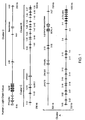
- the human ⁇ light chain locus extends over 1,000 kb and contains over 80 genes that encode variable (V) or joining (J) segments ( FIG. 1 ). Within the human ⁇ light chain locus, over half of all observed V ⁇ domains are encoded by the gene segments 1-40, 1-44, 2-8, 2-14, and 3-21. Overall, about 30 or so of the human V ⁇ gene segments are believed to be functional. There are seven J ⁇ gene segments, only four of which are regarded as generally functional J ⁇ gene segments J ⁇ 1, J ⁇ 2, J ⁇ 3, and J ⁇ 7.
- the ⁇ light chain locus in humans is similar in structure to the ⁇ locus of both mice and humans in that the human ⁇ light chain locus has several variable region gene segments that are capable of recombining to form a functional light chain protein.
- the human ⁇ light chain locus contains approximately 70 V gene segments and 7 J ⁇ -C ⁇ gene segment pairs. Only four of these J ⁇ -C ⁇ gene segment pairs appear to be functional. In some alleles, a fifth J ⁇ -C ⁇ gene segment pair is reportedly a pseudo gene (C ⁇ 6).
- the 70 V ⁇ gene segments appear to contain 38 functional gene segments.
- the 70 V ⁇ sequences are arranged in three clusters, all of which contain different members of distinct V gene family groups (clusters A, B and C; FIG. 1 ). This is a potentially rich source of relatively untapped diversity for generating antibodies with human V regions in non-human animals.
- mice ⁇ light chain locus contains only two or three (depending on the strain) mouse V ⁇ region gene segments ( FIG. 2 ). At least for this reason, the severe ⁇ bias in mice is not thought to be particularly detrimental to total antibody diversity.
- the locus consists essentially of two clusters of gene segments within a span of approximately 200 kb ( FIG.2 ).
- the two clusters contain two sets of V, J, and C genes that are capable of independent rearrangement: V ⁇ 2-J ⁇ 2-C ⁇ 2-J ⁇ 4-C ⁇ 4 and V ⁇ 1-J ⁇ 3-C ⁇ 3-J ⁇ 1-C ⁇ 1.
- V ⁇ 2 has been found to recombine with all J ⁇ gene segments
- V ⁇ 1 appears to exclusively recombine with C ⁇ 1.
- C ⁇ 4 is believed to be a pseudo gene with defective splice sites.
- mouse ⁇ light chain locus is strikingly different.
- the structure and number of gene segments that participate in the recombination events leading to a functional light chain protein from the mouse ⁇ locus is much more complex ( FIG. 3 ).
- mouse ⁇ light chains do not greatly contribute to the diversity of an antibody population in a typical mouse.
- mice Exploiting the rich diversity of the human ⁇ light chain locus in mice would likely result in, among other things, a source for a more complete human repertoire of light chain V domains.
- Previous attempts to tap this diversity used human transgenes containing chunks of the human ⁇ light chain locus randomly incorporated into the mouse genome (see, e.g., US 6,998,514 and US 7,435,871 ).
- Mice containing these randomly integrated transgenes reportedly express fully human ⁇ light chains, however, in some cases, one or both endogenous light chain loci remain intact. This situation is not desirable as the human ⁇ light chain sequences contend with the mouse light chain ( ⁇ or ⁇ ) in the expressed antibody repertoire of the mouse.
- mice that are capable of expressing one or more ⁇ light chain nucleic acid sequences directly from an endogenous lambda mouse light chain locus.
- Genetically modified mice capable of expressing human ⁇ light chain sequences from an endogenous ⁇ locus may be further bred to mice that comprise a human heavy chain locus and thus be used to express antibodies comprising V regions (heavy and ⁇ light) that are fully human.
- the V regions express with mouse constant regions.
- no endogenous mouse immunoglobulin gene segments are present and the V regions express with human constant regions.
- mice that comprise an unrearranged human V ⁇ gene segment and an unrearranged human J ⁇ at an endogenous immunoglobulin ⁇ light chain locus.
- Mice that express antibodies that comprise a light chain having a human V ⁇ domain fused to a C ⁇ region are described.
- Genetic modifications are described that, in various aspects, comprise a deletion of one or both endogenous light chain loci.
- a deletion of a first V ⁇ -J ⁇ -C ⁇ gene cluster and replacement, in whole or in part, of the V ⁇ -J ⁇ gene segments of a second gene cluster with human V ⁇ -J ⁇ gene segments can be made as recited in the claims.
- Genetically modified mouse embryos, cells, and targeting constructs for making the mice, mouse embryos, and cells are also disclosed.
- the deletion of one endogenous V ⁇ -J ⁇ -C ⁇ gene cluster and replacement of the V ⁇ -J ⁇ gene segments of another endogenous V ⁇ -J ⁇ -C ⁇ gene cluster employs a relatively minimal disruption in natural antibody constant region association and function in the animal, in various aspects, because endogenous C ⁇ genes are left intact and therefore retain normal functionality and capability to associate with the constant region of an endogenous heavy chain.
- the modification does not affect other endogenous heavy chain constant regions dependent upon functional light chain constant regions for assembly of a functional antibody molecule containing two heavy chains and two light chains.
- the modification does not affect the assembly of a functional membrane-bound antibody molecule involving an endogenous heavy chain and a light chain, e.g., a hV ⁇ domain linked to a mouse C ⁇ region.
- a functional membrane-bound antibody molecule involving an endogenous heavy chain and a light chain, e.g., a hV ⁇ domain linked to a mouse C ⁇ region.
- animals containing a replacement of the V ⁇ -J ⁇ gene segments of an endogenous V ⁇ -J ⁇ -C ⁇ gene cluster with human V ⁇ -J ⁇ gene segments should be able to make normal ⁇ light chains that are capable of binding antigen during an immune response through the human V ⁇ -J ⁇ gene segments present in the expressed antibody repertoire of the animal.
- FIG. 2 A schematic illustration (not to scale) of a deleted endogenous mouse V ⁇ -J ⁇ -C ⁇ gene cluster is provided in FIG. 2 .
- the mouse ⁇ light chain locus is organized into two gene clusters, both of which contain function gene segments capable of recombining to form a function mouse ⁇ light chain.
- the endogenous mouse V ⁇ 1-J ⁇ 3-C ⁇ 3-J ⁇ 1-C ⁇ 1 gene cluster is deleted by a targeting construct (Targeting Vector 1) with a neomycin cassette flanked by recombination sites.
- the other endogenous gene cluster (V ⁇ 2-V ⁇ 3-J ⁇ 2-C ⁇ 2-J ⁇ 4-C ⁇ 4) is deleted in part by a targeting construct (Targeting Vector 2) with a hygromycin-thymidine kinase cassette flanked by recombination sites.
- a targeting construct (Targeting Vector 2) with a hygromycin-thymidine kinase cassette flanked by recombination sites.
- the second targeting construct (Targeting Vector 2) is constructed using recombination sites that are different than those in the first targeting construct (Targeting Vector 1) thereby allowing for the selective deletion of the selection cassette after a successful targeting has been achieved.
- the resulting double-targeted locus is functionally silenced in that no endogenous ⁇ light chain can be produced.
- This modified locus can be used for the insertion of human V ⁇ and J ⁇ gene segments to create an endogenous mouse ⁇ locus comprising human V ⁇ and J ⁇ gene segments, whereby, upon recombination at the modified locus, the animal produces ⁇ light chains comprising rearranged human V ⁇ and J ⁇ gene segments linked to an endogenous mouse C ⁇ gene segment.
- a genetically modified mouse that expresses a hV ⁇ linked to a mouse C ⁇ gene having been recombined at the endogenous mouse ⁇ light chain locus can be made by any method known in the art.
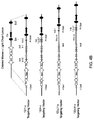
- a schematic illustration (not to scale) of the replacement of the endogenous mouse V ⁇ 2-V ⁇ 3-J ⁇ 2 gene segments with human V ⁇ and J ⁇ gene segments is provided in FIG. 4A .
- an endogenous mouse ⁇ light chain locus that had been rendered nonfunctional is replaced by a targeting construct (12/1- ⁇ Targeting Vector) that includes a neomycin cassette flanked by recombination sites.
- the V ⁇ 2-V ⁇ 3-J ⁇ 2 gene segments are replaced with a genomic fragment containing human ⁇ sequence that includes 12 hV ⁇ gene segments and a single hJ ⁇ gene segment.
- this first approach positions one or more hV ⁇ gene segments at the endogenous ⁇ light chain locus contiguous with a single hJ ⁇ gene segment ( FIG. 4A ).
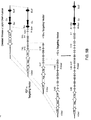
- FIG. 5A schematic illustrations of two additional targeting constructs (+16- ⁇ and +12- ⁇ Targeting Vectors) used for progressive insertion of addition human hV ⁇ gene segments are provided in FIG. 5A .
- additional genomic fragments containing specific human hV ⁇ gene segments are inserted into the modified endogenous ⁇ light chain locus in successive steps using homology provided by the previous insertion of human ⁇ light chain sequences.
- 28 additional hV ⁇ gene segments are inserted into the modified endogenous ⁇ light chain locus. This creates a chimeric locus that produces a ⁇ light chain protein that comprises human V ⁇ -J ⁇ gene segments linked to a mouse C ⁇ gene.
- compositions and methods for making a mouse that expresses a light chain comprising hV ⁇ and J ⁇ gene segments operably linked to a mouse C ⁇ gene segment including compositions and method for making a mouse that expresses such genes from an endogenous mouse ⁇ light chain locus.
- the methods include selectively rendering one endogenous mouse V ⁇ -J ⁇ -C ⁇ gene cluster nonfunctional ( e.g., by a targeted deletion), and employing a hV ⁇ and J ⁇ gene segments at the endogenous mouse ⁇ light chain locus to express a hV ⁇ domain in a mouse.
- human ⁇ light chain gene segments may be positioned at the endogenous ⁇ light chain locus.
- the genetic modification comprises a deletion of the endogenous ⁇ light chain locus.
- a deletion of the mouse V ⁇ and J ⁇ gene segments can be made.
- Genetically modified mouse embryos, cells, and targeting constructs for making the mice, mouse embryos, and cells are also disclosed.
- FIG. 3 A schematic illustration (not to scale) of deleted mouse V ⁇ and J ⁇ gene segments is provided in FIG. 3 .
- the endogenous mouse V ⁇ and J ⁇ gene segments are deleted via recombinase-mediated deletion of mouse sequences position between two precisely positioned targeting vectors each employing site-specific recombination sites.
- a first targeting vector J ⁇ Targeting Vector
- a second targeting vector V ⁇ Targeting Vector
- V ⁇ Targeting Vector is employed in a second, sequential targeting event to delete a sequence located 5' of the most distal mouse V ⁇ gene segment.
- Both targeting vectors contain site-specific recombination sites thereby allowing for the selective deletion of both selection cassettes and all intervening mouse ⁇ light chain sequences after a successful targeting has been achieved.
- the resulting deleted locus is functionally silenced in that no endogenous ⁇ light chain can be produced.
- This modified locus can be used for the insertion of hV ⁇ and J ⁇ gene segments to create an endogenous mouse ⁇ locus comprising hV ⁇ and J ⁇ gene segments, whereby, upon recombination at the modified locus, the animal produces ⁇ light chains comprising rearranged hV ⁇ and J ⁇ gene segments operably linked to an endogenous mouse C ⁇ gene segment.
- Various targeting vectors comprising human ⁇ light chain sequences can be used in conjunction with this deleted mouse ⁇ locus to create a hybrid light chain locus containing human ⁇ gene segments operably linked with a mouse C ⁇ region.
- a second approach positions one or more human V ⁇ gene segments are positioned at the mouse ⁇ light chain locus contiguous with a single human J ⁇ gene segment (12/1- ⁇ Targeting Vector, FIG. 4B ).
- Modifications to this approach can be made to add gene segments and/or regulatory sequences to optimize the usage of the human ⁇ light chain sequences from the mouse ⁇ locus within the mouse antibody repertoire.
- hV ⁇ gene segments are positioned at the mouse ⁇ light chain locus contiguous with four hJ ⁇ gene sequences (12/4- ⁇ Targeting Vector FIG. 4B ).
- one or more hV ⁇ gene segments are positioned at the mouse ⁇ light chain locus contiguous with a human ⁇ intergenic sequence and a single hJ ⁇ gene sequence (12( ⁇ )1- ⁇ Targeting Vector, FIG. 4B ).
- one or more hV ⁇ gene segments are positioned at the mouse ⁇ light chain locus contiguous with a human ⁇ intergenic sequence four hJ ⁇ gene sequences (12( ⁇ )4- ⁇ Targeting Vector FIG. 4B ).
- mice comprising human ⁇ sequences at the mouse ⁇ light chain locus will express a light chain that comprises a hV ⁇ region fused to a mouse C ⁇ region.
- a functionally silenced light chain locus e.g., a knockout of the endogenous mouse ⁇ or ⁇ light chain locus
- (b) comprise an endogenous mouse ⁇ light chain locus that comprises hV ⁇ and hJ ⁇ gene segments operably linked to an endogenous mouse C ⁇ gene as recited in the claims
- (c) comprise an endogenous mouse ⁇ light chain locus that comprises hV ⁇ and hJ ⁇ gene segments operably linked to an endogenous mouse C ⁇ gene
- the antibodies that comprise the hV ⁇ domains expressed in the context of either C ⁇ are used to make fully human antibodies by cloning the nucleic acids encoding the hV ⁇ domains into expression constructs that bear genes encoding human C ⁇ . Resulting expression constructs are transfected into suitable host cells for expressing antibodies that display a fully hV ⁇ domain fused to hC ⁇ .
- proximal cluster comprising V ⁇ 1-J ⁇ 3-C ⁇ 3-J ⁇ 1-C ⁇ 1 gene segments was deleted in a single targeting event using a targeting vector comprising a neomycin cassette flanked by lox P sites with a 5' mouse homology arm containing sequence 5' of the V ⁇ 1 gene segment and a 3' mouse homology arm containing sequence 3' of the C ⁇ 1 gene segment ( FIG. 2 , Targeting Vector 1).
- a second targeting construct was prepared to precisely delete the distal endogenous mouse ⁇ gene cluster containing V ⁇ 2-J ⁇ 2-C ⁇ 2-J ⁇ 4-C ⁇ 4 except that the targeting construct contained a 5' mouse homology arm that contained sequence 5' of the V ⁇ 2 gene segment and a 3' mouse homology arm that contained sequence 5' to the endogenous C ⁇ 2 gene segment ( FIG. 2 , Targeting Vector 2).
- the second targeting construct precisely deleted V ⁇ 2-J ⁇ 2, while leaving C ⁇ 2-J ⁇ 4-C ⁇ 4 intact at the endogenous mouse ⁇ locus.
- ES cells containing an inactivated endogenous ⁇ locus were confirmed by karyotyping and screening methods (e.g ., TAQMAN®) known in the art.
- DNA was then isolated from the modified ES cells and subjected to treatment with CRE recombinase thereby mediating the deletion of the proximal targeting cassette containing the neomycin marker gene, leaving only a single lox P site at the deletion point ( FIG. 2 , bottom).
- the J ⁇ gene segments (1-5) of the endogenous mouse ⁇ light chain locus were deleted in a single targeting event using a targeting vector comprising a hygromycin-thymidine kinase (hyg-TK) cassette containing a single lox P site 3' to the hyg-TK cassette ( FIG. 3 , J ⁇ Targeting Vector).
- the homology arms used to make this targeting vector contained mouse genomic sequence 5' and 3' of the endogenous mouse J ⁇ gene segments.
- a second targeting vector was prepared to delete a portion of mouse genomic sequence upstream (5') to the most distal endogenous mouse V ⁇ gene segment ( FIG. 3 , V ⁇ Targeting Vector).
- This targeting vector contained an inverted lox 511 site, a lox P site and a neomycin cassette.
- the homology arms used to make this targeting vector contained mouse genomic sequence upstream of the most distal mouse V ⁇ gene segment.
- the targeting vectors were used in a sequential fashion ( i . e ., J ⁇ then V ⁇ ) to target DNA in ES cells.
- ES bearing a double-targeted chromosome i . e ., a single endogenous mouse ⁇ locus targeted with both targeting vectors
- DNA was then isolated from the modified ES cells and subjected to treatment with Cre recombinase thereby mediating the deletion of endogenous mouse V ⁇ gene segments and both selection cassettes, while leaving two juxtaposed lox sites in opposite orientation relative to one another ( FIG. 3 , bottom; SEQ ID NO:1).
- FIGs. 4A and 4B show the targeting vectors that were constructed for making an initial insertion of human ⁇ light chain gene segments at the mouse ⁇ and ⁇ light chain loci, respectively.
- a 124,125 bp DNA fragment from the 729g4 BAC clone containing 12 hV ⁇ gene segments and a hJ ⁇ 1 gene segment was engineered to contain a PI-Scel site 996 bp downstream (3') of the hJ ⁇ 1 gene segment for ligation of a 3' mouse homology arm.
- two different sets of homology arms were used for ligation to this human fragment; one set of homology arms contained endogenous mouse ⁇ sequences from the 135k15 BAC clone ( FIG.4A ) and another set contained endogenous ⁇ sequence 5' and 3' of the mouse V ⁇ and J ⁇ gene segments from mouse BAC clones RP23-302g12 and RP23-254m04, respectively ( FIG. 4B ).
- a PI-Scel site was engineered at the 5' end of a 27,847 bp DNA fragment containing the mouse C ⁇ 2-J ⁇ 4-C ⁇ 4 and enhancer 2.4 of the modified mouse ⁇ locus described in Example 1.
- the ⁇ 28 kb mouse fragment was used as a 3' homology arm by ligation to the -124 kb human ⁇ fragment, which created a 3' junction containing, from 5' to 3', a hJ ⁇ 1 gene segment, 996 bp of human ⁇ sequence 3' of the hJ ⁇ 1 gene segment, 1229 bp of mouse ⁇ sequence 5' to the mouse C ⁇ 2 gene, the mouse C ⁇ 2 gene and the remaining portion of the ⁇ 28 kb mouse fragment.
- Upstream (5') from the human V ⁇ 3-12 gene segment was an additional 1456 bp of human ⁇ sequence before the start of the 5' mouse homology arm, which contained 23,792 bp of mouse genomic DNA corresponding to sequence 5' of the endogenous mouse ⁇ locus. Between the 5' homology arm and the beginning of the human ⁇ sequence was a neomycin cassette flanked by Frt sites.
- the 12/1- ⁇ Targeting Vector included, from 5' to 3', a 5' homology arm containing -24 kb of mouse ⁇ genomic sequence 5' of the endogenous ⁇ locus, a 5' Frt site, a neomycin cassette, a 3' Frt site, -123 kb of human genomic ⁇ sequence containing the first 12 consecutive hV ⁇ gene segments and a hJ ⁇ 1 gene segment, a PI-Scel site, and a 3' homology arm containing -28 kb of mouse genomic sequence including the endogenous C ⁇ 2-J ⁇ 4-C ⁇ 4 gene segments, the mouse enhancer 2.4 sequence and additional mouse genomic sequence downstream (3') of the enhancer 2.4 ( FIG. 4A ).
- the 12/1- ⁇ Targeting Vector ( FIG. 4B ) employed the same -124 human ⁇ fragment with the exception that mouse homology arms containing mouse ⁇ sequence were used such that targeting to the endogenous ⁇ locus could be achieved by homologous recombination.
- the 12/1- ⁇ Targeting Vector included, from 5' to 3', a 5' homology arm containing ⁇ 23 kb of mouse genomic sequence 5' of the endogenous ⁇ locus, an I-Ceul site, a 5' Frt site, a neomycin cassette, a 3' Frt site, ⁇ 124 kb of human genomic ⁇ sequence containing the first 12 consecutive hV ⁇ gene segments and a hJ ⁇ 1 gene segment, a PI-Scel site, and a 3' homology arm containing -28 kb of mouse genomic sequence including the endogenous the mouse C ⁇ gene, E ⁇ i and E ⁇ 3' and additional mouse genomic sequence downstream (3') of E ⁇ 3' ( FIG. 4B , 12/1- ⁇ Targeting Vector).
- ⁇ or ⁇ modified mouse light chain locus containing 12 hV ⁇ gene segments and a hJ ⁇ 1 gene segment operably linked to the endogenous mouse light chain constant gene and enhancers (C ⁇ or C ⁇ 2 and E ⁇ i/E ⁇ 3' or Enh 2.4/Enh 3.1) gene which, upon recombination, leads to the formation of a chimeric ⁇ light chain.
- a human ⁇ mini-locus with 12 human V ⁇ and four human J ⁇ gene segments was engineered to insert the first 12 consecutive human V ⁇ gene segments from cluster A and hJ ⁇ 1, 2, 3 and 7 gene segments into the mouse ⁇ light chain locus ( FIG. 4B , 12/4- ⁇ Targeting Vector).
- a DNA segment containing hJ ⁇ 1, J ⁇ 2, J ⁇ 3 and J ⁇ 7 gene segments was made by de novo DNA synthesis (Integrated DNA Technologies) including each J ⁇ gene segment and human genomic sequence of ⁇ 100 bp from both the immediate 5' and 3' regions of each J ⁇ gene segment.
- a PI-Scel site was engineered into the 3' end of this ⁇ 1 kb DNA fragment and ligated to a chloroamphenicol cassette.
- Homology arms were PCR amplified from human ⁇ sequence at 5' and 3' positions relative to the hJ ⁇ 1 gene segment of the human BAC clone 729g4.
- Homologous recombination with this intermediate targeting vector was performed on a modified 729g4 BAC clone that had been previously targeted upstream (5') of the human V ⁇ 3-12 gene segment with a neomycin cassette flanked by Frt sites, which also contained an I-Ceul site 5' to the 5' Frt site.
- the double-targeted 729g4 BAC clone included from 5' to 3' an I-Ceul site, a 5' Frt site, a neomycin cassette, a 3' Frt site, a ⁇ 123 kb fragment containing the first 12 hV ⁇ gene segments, a ⁇ 1 kb fragment containing human J ⁇ 1, 2, 3 and 7 gene segments, a PI-Scel site, and a chloroamphenicol cassette.
- This intermediate targeting vector was digested together with I-Ceul and PI-Scel and subsequently ligated into the modified mouse BAC clone (described above) to create the third targeting vector.
- a third targeting vector for insertion of human ⁇ sequences into the endogenous ⁇ light chain locus which included, from 5' to 3', a 5' mouse homology arm containing -23 kb of genomic sequence 5' of the endogenous mouse ⁇ locus, an I-Ceul site, a 5' Frt site, a neomycin cassette, a 3' Frt site, a -123 kb fragment containing the first 12 hV ⁇ gene segments, a -1 kb fragment containing hJ ⁇ 1, 2, 3 and 7 gene segments, a PI-Scel site and a 3' homology arm containing -28 kb of mouse genomic sequence including the endogenous the mouse C ⁇ gene, E ⁇ i and E ⁇ 3' and additional mouse genomic sequence downstream (3') of E ⁇ 3' ( FIG.
- a human ⁇ mini-locus with an integrated human ⁇ light chain sequence A human ⁇ mini-locus with an integrated human ⁇ light chain sequence.
- two additional targeting vectors similar to those engineered to make an initial insertion of human ⁇ gene segments into the endogenous ⁇ light chain locus ( FIG. 4B , 12/1- ⁇ and 12/4- ⁇ Targeting Vectors) were engineered to progressively insert human ⁇ light chain gene segments using uniquely constructed targeting vectors containing contiguous human ⁇ and ⁇ genomic sequences. These targeting vectors were constructed to include a ⁇ 23 kb human ⁇ genomic sequence naturally located between human V ⁇ 4-1 and J ⁇ 1 gene segments. This human ⁇ genomic sequence was specifically positioned in these two additional targeting vectors between human V ⁇ and human J ⁇ gene segments ( FIG. 4B , 12( ⁇ )1- ⁇ and 12( ⁇ )4- ⁇ Targeting Vectors).
- Both targeting vectors containing the human ⁇ genomic sequence were made using the modified RP11-729g4 BAC clone described above ( FIG. 6 ).
- This modified BAC clone was targeted with a spectinomycin selection cassette flanked by NotI and AsiSI restriction sites ( FIG.6 , top left).
- Homologous recombination with the spectinomycin cassette resulted in a double-targeted 729g4 BAC clone which included, from 5' to 3', an I-Ceul site, a 5' Frt site, a neomycin cassette, a 3' Frt site, a -123 kb fragment containing the first 12 hV ⁇ gene segments, a NotI site about 200 bp downstream (3') to the nonamer sequence of the hV ⁇ 3-1 gene segment, a spectinomycin cassette and an AsiSI site.
- a separate human BAC clone containing human ⁇ sequence (CTD-2366j12) was targeted two independent times to engineer restriction sites at locations between hV ⁇ 4-1 and hJ ⁇ 1 gene segments to allow for subsequent cloning of a ⁇ 23 kb fragment for ligation with the hV ⁇ gene segments contained in the double targeted modified 729g4 BAC clone ( FIG. 6 , top right).
- the 2366j12 BAC clone is about 132 kb in size and contains hV ⁇ gene segments 1-6, 1-5, 2-4, 7-3, 5-2, 4-1, human ⁇ genomic sequence down stream of the V ⁇ gene segments, hJ ⁇ gene segments 1-5, the hC ⁇ and about 20 kb of additional genomic sequence of the human ⁇ locus.
- This clone was first targeted with a targeting vector containing a hygromycin cassette flanked by Frt sites and a NotI site downstream (3') of the 3' Frt site.
- the homology arms for this targeting vector contained human genomic sequence 5' and 3' of the V ⁇ gene segments within the BAC clone such that upon homologous recombination with this targeting vector, the V ⁇ gene segments were deleted and a Notl site was engineered -133 bp downstream of the hV ⁇ 4-1 gene segment ( FIG. 6 , top right).
- This modified 2366j12 BAC clone was targeted independently with two targeting vectors at the 3' end to delete the hJ ⁇ gene segments with a chloroamphenicol cassette that also contained either a hJ ⁇ 1 gene segment, a PI-Scel site and an AsiSI site or a human X genomic fragment containing four hJ ⁇ gene segments ( supra ), a PI-Scel site and an AsiSI site ( FIG. 6 , top right).
- the homology arms for these two similar targeting vectors contained sequence 5' and 3' of the hJ ⁇ gene segments.
- a double-targeted 2366j12 clone which included, from 5' to 3', a 5' Frt site, a hygromycin cassette, a 3' Frt site, a NotI site, a 22,800 bp genomic fragment of the human ⁇ locus containing the intergenic region between the V ⁇ 4-1 and J ⁇ 1 gene segments, either a hJ ⁇ 1 gene segment or a human ⁇ genomic fragment containing hJ ⁇ 1, J ⁇ 2, J ⁇ 3 and J ⁇ 7, a PI-Scel site and a chloroamphenicol cassette ( FIG. 6 , top right).
- Two final targeting vectors to make the two additional modifications were achieved by two ligation steps using the double-targeted 729g4 and 2366j12 clones.
- Double targeted 729g4 and 2366j12 clones were digested with NotI and AsiSI yielding one fragment containing the neomycin cassette and hV ⁇ gene segments and another fragment containing the ⁇ 23 kb genomic fragment of the human ⁇ locus containing the intergenic region between the V ⁇ 4-1 and J ⁇ 1 gene segments, either a hJ ⁇ 1 gene segment or a genomic fragment containing hJ ⁇ 1, J ⁇ 2, J ⁇ 3 and J ⁇ 7 gene segments, the PI-Scel site and the chloroamphenicol cassette, respectively.
- BAC clones were then digested with I-Ceul and PI-Scel to release the unique fragments containing the upstream neomycin cassette and the contiguous human ⁇ and ⁇ sequences and ligated into a modified mouse BAC clone 302g12 which contained from 5' to 3' mouse genomic sequence 5' of the endogenous ⁇ locus, an I-Ceul site, a 5' Frt site, a neomycin cassette, a 3' Frt site, hV ⁇ gene segments (3-12 to 3-1), a Notl site ⁇ 200 bp downstream of V ⁇ 3-1, -23 kb of human ⁇ sequence naturally found between the human V ⁇ 4-1 and J ⁇ 1 gene segments, either a hJ ⁇ 1 gene segment or a genomic fragment containing hJ ⁇ 1, J ⁇ 2, J ⁇ 3 and J ⁇ 7 gene segments, the mouse E ⁇ i, the mouse C ⁇ gene and E ⁇ 3' ( FIG.
- Upstream (5') homology arms used in constructing targeting vectors for adding 16 additional hv ⁇ gene segments to the modified light chain loci described in Example 2 contained mouse genomic sequence 5' of either the endogenous ⁇ or ⁇ light chain loci.
- the 3' homology arms were the same for all targeting vectors and contained human genomic sequence overlapping with the 5' end of the human ⁇ sequence of the modifications as described in Example 2.
- FIG. 5A and 5B two targeting vectors were engineered for introduction of 16 additional hV ⁇ gene segments to the modified mouse light chain loci described in Example 2 ( FIG. 5A and 5B , +16- ⁇ or +16- ⁇ Targeting Vector).
- a ⁇ 172 kb DNA fragment from human BAC clone RP11-761I13 (Invitrogen) containing 21 consecutive hV ⁇ gene segments from cluster A was engineered with a 5' homology arm containing mouse genomic sequence 5' to either the endogenous ⁇ or ⁇ light chain loci and a 3' homology arm containing human genomic ⁇ sequence.
- the 5' mouse ⁇ or ⁇ homology arms used in these targeting constructs were the same 5' homology arms described in Example 2 ( FIG. 5A and 5B ).
- the 3' homology arm included a 53,057 bp overlap of human genomic ⁇ sequence corresponding to the equivalent 5' end of the ⁇ 123 kb fragment of human genomic ⁇ sequence described in Example 2.
- These two targeting vectors included, from 5' to 3', a 5' mouse homology arm containing either ⁇ 23 kb of genomic sequence 5' of the endogenous mouse ⁇ light chain locus or ⁇ 24 kb of mouse genomic sequence 5' of the endogenous ⁇ light chain locus, a 5' Frt site, a hygromycin cassette, a 3' Frt site and 171,457 bp of human genomic ⁇ sequence containing 21 consecutive hV ⁇ gene segments, ⁇ 53 kb of which overlaps with the 5' end of the human ⁇ sequence described in Example 3 and serves as the 3' homology arm for this targeting construct ( FIG.
- the +16- ⁇ Targeting Vector was also used to introduce the 16 additional hV ⁇ gene segments to the other initial modifications described in Example 2 that incorporated multiple hJ ⁇ gene segments with and without an integrated human ⁇ sequence ( FIG. 4B ).
- Homologous recombination with this targeting vector at the endogenous mouse ⁇ locus containing the other initial modifications created mouse ⁇ light chain loci containing 28 hV ⁇ gene segments and hJ ⁇ 1, 2, 3 and 7 gene segments with and without a human V ⁇ -J ⁇ genomic sequence operably linked to the endogenous mouse C ⁇ gene which, upon recombination, leads to the formation of a chimeric ⁇ - ⁇ light chain.
- Additional human V ⁇ gene segments were added independently to each of the modifications described above using similar targeting vectors and methods.
- the final locus structure resulting from homologous recombination with targeting vectors containing additional hV ⁇ gene segments are shown in FIG. 7A and 7B .
- a targeting vector was engineered for introduction of 12 additional hV ⁇ gene segments to the modified mouse ⁇ and ⁇ light chain loci described above ( FIG. 5A and 5B , +12- ⁇ or 12- ⁇ Targeting Vectors).
- a 93,674 bp DNA fragment from human BAC clone RP11-22I18 (Invitrogen) containing 12 consecutive hV ⁇ gene segments from cluster B was engineered with a 5' homology arm containing mouse genomic sequence 5' to either the endogenous mouse ⁇ or ⁇ light chain loci and a 3' homology arm containing human genomic ⁇ sequence.
- the 5' homology arms used in this targeting construct were the same 5' homology arms used for the addition of 16 hV ⁇ gene segments described above ( FIG.
- the 3' homology arm was made by engineering a PI-SceI site ⁇ 3431 bp 5' to the human V ⁇ 3-29P gene segment contained in a 27,468 bp genomic fragment of human ⁇ sequence from BAC clone RP11-761I13.
- This PI-SceI site served as a ligation point to join the ⁇ 94 kb fragment of additional human ⁇ sequence to the ⁇ 27 kb fragment of human ⁇ sequence that overlaps with the 5' end of the human ⁇ sequence in the previous modification using the +16- ⁇ or +16- ⁇ Targeting Vectors ( FIG. 5A and 5B ).
- a 5' homology arm containing either ⁇ 23 kb of mouse genomic sequence 5' of the endogenous ⁇ light chain locus or ⁇ 24 kb of mouse genomic sequence 5' of the endogenous ⁇ light chain locus, a 5' Frt site, a neomycin cassette, a 3' Frt site and 121,188 bp of human genomic ⁇ sequence containing 16 hV ⁇ gene segments and a PI-SceI site, ⁇ 27 kb of which overlaps with the 5' end of the human ⁇ sequence from the insertion of 16 addition hV ⁇ gene segments and serves as the 3' homology arm for this targeting construct ( FIG.
- 5A and 5B +12- ⁇ or 12- ⁇ Targeting Vectors. Homologous recombination with these targeting vectors independently created modified mouse ⁇ and ⁇ light chain loci containing 40 hV ⁇ gene segments and human J ⁇ 1 operably linked to the endogenous mouse constant genes (C ⁇ or C ⁇ 2) which, upon recombination, leads to the formation of a chimeric light chain (bottom of FIG.5A and 5B ).
- the +12- ⁇ Targeting Vector was also used to introduce the 12 additional hV ⁇ gene segments to the other initial modifications that incorporated multiple hJ ⁇ gene segments with and without an integrated human ⁇ sequence ( FIG. 4B ).
- Homologous recombination with this targeting vector at the endogenous mouse ⁇ locus containing the other modifications created a mouse ⁇ light chain locus containing 40 hV ⁇ gene segments and hJ ⁇ 1, 2, 3 and 7 gene segments with and without a human V ⁇ -J ⁇ genomic sequence operably linked to the endogenous mouse C ⁇ gene which, upon recombination, leads to the formation of a chimeric ⁇ - ⁇ light chain.
- Targeted BAC DNA made according to the foregoing Examples was used to electroporate mouse ES cells to create modified ES cells for generating chimeric mice that express human ⁇ light chain gene segments.
- ES cells containing an insertion of unrearranged human ⁇ light chain gene segments were identified by a quantitative TAQMAN® assay.
- Specific primers sets and probes were design for insertion of human ⁇ sequences and associated selection cassettes (gain of allele, GOA), loss of endogenous mouse sequences and any selection cassettes (loss of allele, LOA) and retention of flanking mouse sequences (allele retention, AR).
- ES cells bearing the human ⁇ light chain gene segments are optionally transfected with a construct that expresses FLP in order to remove the Frt'ed neomycin cassette introduced by the insertion of the targeting construct containing human V ⁇ 5-52-V ⁇ 1-40 gene segments ( FIG. 5A and 5B ).
- the neomycin cassette may optionally be removed by breeding to mice that express FLP recombinase ( e.g., US 6,774,279 ).
- the neomycin cassette is retained in the mice.
- Targeted ES cells described above were used as donor ES cells and introduced into an 8-cell stage mouse embryo by the VELOCIMOUSE® method (see, e.g., US Pat. No. 7,294,754 and Poueymirou et al. (2007) F0 generation mice that are essentially fully derived from the donor gene-targeted ES cells allowing immediate phenotypic analyses Nature Biotech. 25(1):91-99 .
- VELOCIMICE® F0 mice fully derived from the donor ES cell
- independently bearing human ⁇ gene segments were identified by genotyping using a modification of allele assay (Valenzuela et al., supra ) that detected the presence of the unique human ⁇ gene segments ( supra ) .
- mice bearing human ⁇ light chain gene segments ⁇ : ⁇ light chain usage of mice bearing human ⁇ light chain gene segments.
- Mice homozygous for each of three successive insertions of hV ⁇ gene segments with a single hJ ⁇ gene segment FIG. 5B
- mice homozygous for a first insertion of hV ⁇ gene segments with either a single hJ ⁇ gene segment or four human J ⁇ gene segments including a human V ⁇ -J ⁇ genomic sequence FIG. 4B
- FIG. 4B were analyzed for ⁇ and ⁇ light chain expression in splenocytes using flow cytometry.
- spleens were harvested from groups of mice (ranging from three to seven animals per group) and grinded using glass slides. Following lysis of red blood cells (RBCs) with ACK lysis buffer (Lonza Walkersville), splenocytes were stained with fluorescent dye conjugated antibodies specific for mouse CD19 (Clone 1 D3; BD Biosciences), mouse CD3 (17A2; Biolegend), mouse Ig ⁇ (187.1; BD Biosciences) and mouse Ig ⁇ (RML-42; Biolegend). Data was acquired using a BDTM LSR II flow cytometer (BD Biosciences) and analyzed using FLOWJOTM software (Tree Star, Inc.).
- Table 3 sets forth the average percent values for B cells (CD19 + ), ⁇ light chain (CD19 + Ig ⁇ + Ig ⁇ - ) ⁇ and ⁇ light chain (CD19 + Ig ⁇ - Ig ⁇ + ) expression observed in splenocytes from groups of animals bearing each genetic modification.
- FIG. 8A shows the Ig ⁇ and Ig ⁇ expression in CD19 + B cells for a representative mouse from each group. The number of CD19 + B cells per spleen was also recorded for each mouse ( FIG. 8B ).
- B cell contents of the spleen and bone marrow compartments from mice homozygous for 40 hV ⁇ and four hJ ⁇ gene segments including a human V ⁇ -J ⁇ genomic sequence operably linked to the mouse C ⁇ gene were analyzed for progression through B cell development using flow cytometry of various cell surface markers.
- Bone marrow panel anti-mouse FITC-CD43 (1 B11, BioLegend), PE-ckit (2B8, BioLegend), PeCy7-IgM (II/41, eBioscience), PerCP-Cy5.5-IgD (11-26c.2a, BioLegend), APC- B220 (RA3-6B2, eBioscience), APC-H7-CD19 (ID3, BD) and Pacific Blue-CD3 (17A2, BioLegend).
- Bone marrow and spleen panel anti-mouse FITC-Ig ⁇ (187.1, BD), PE-Ig ⁇ (RML-42, BioLegend), PeCy7-IgM (II/41 ebioscience), PerCP-Cy5.5-IgD (11-26c.2a, BioLegend), Pacific Blue-CD3 (17A2, BioLegend), APC- B220 (RA3-6B2, eBioscience), APC-H7-CD19 (ID3, BD).
- FIGs. 9A - 9D show the results for the splenic compartment of one representative mouse from each group.
- FIGs. 10A - 10E show the results for the bone marrow compartment of one representative mouse from each group.
- Table 4 sets forth the average percent values for B cells (CD19 + ), ⁇ light chain (CD19 + Ig ⁇ + Ig ⁇ - ) ⁇ and ⁇ light chain (CD19 + Ig ⁇ - Ig ⁇ + ) expression observed in splenocytes from groups of animals bearing various genetic modifications.
- Table 5 sets forth the average percent values for B cells (CD19 + ), mature B cells (B220 hi IgM + ), immature B cells (B220 int IgM + ), immature B cells expressing ⁇ light chain (B220 int IgM + Ig ⁇ + ) and immature B cells expressing ⁇ light chain (B220 int IgM + Ig ⁇ + ) observed in bone marrow of wild type and mice homozygous for 40 hV ⁇ and four hJ ⁇ gene segments including a human V ⁇ -J ⁇ genomic sequence operably linked to the mouse C ⁇ gene. This experiment was repeated with additional groups of the mice described above and demonstrated similar results (data not shown).
- Human V ⁇ gene usage in mice bearing human ⁇ light chain gene segments were analyzed for human ⁇ light chain gene usage by reverse-transcriptase polymerase chain reaction (RT-PCR) using RNA isolated from splenocytes.
- RT-PCR reverse-transcriptase polymerase chain reaction
- spleens were harvested and perfused with 10 mL RPMI-1640 (Sigma) with 5% HI-FBS in sterile disposable bags. Each bag containing a single spleen was then placed into a STOMACHERTM (Seward) and homogenized at a medium setting for 30 seconds. Homogenized spleens were filtered using a 0.7 ⁇ m cell strainer and then pelleted with a centrifuge (1000 rpm for 10 minutes) and RBCs were lysed in BD PHARM LYSETM (BD Biosciences) for three minutes.
- STOMACHERTM Seward
- Homogenized spleens were filtered using a 0.7 ⁇ m cell strainer and then pelleted with a centrifuge (1000 rpm for 10 minutes) and RBCs were lysed in BD PHARM LYSETM (BD Biosciences) for three minutes.
- RT-PCR was performed on splenocyte RNA using primers specific for human hV ⁇ gene segments and the mouse C ⁇ gene (Table 6).
- PCR products were gel-purified and cloned into pCR2.1-TOPO TA vector (Invitrogen) and sequenced with primers M13 Forward (GTAAAACGAC GGCCAG; SEQ ID NO: 55) and M13 Reverse (CAGGAAACAG CTATGAC; SEQ ID NO:56) located within the vector at locations flanking the cloning site.
- Eighty-four total clones derived from the first and third insertions of human ⁇ sequences were sequenced to determine hV ⁇ gene usage (Table 7).
- the nucleotide sequence of the hV ⁇ -hJ ⁇ 1-mC ⁇ junction for selected RT-PCR clones is shown in FIG. 11 .
- mice homozygous for a third insertion of human ⁇ light chain gene sequences i.e . 40 hV ⁇ gene segments and four hJ ⁇ gene segments including a human V ⁇ -J ⁇ genomic sequence, bottom of FIG. 7B ) operably linked to the endogenous mouse C ⁇ gene were analyzed for human ⁇ light chain gene usage by RT-PCR using RNA isolated from splenocytes (as described above).
- the human ⁇ light chain gene segment usage for 26 selected RT-PCR clones are shown in Table 8.
- the nucleotide sequence of the hV ⁇ -hJ ⁇ -mC ⁇ junction for selected RT-PCR clones is shown in FIG. 12 .
- mice homozygous for a first insertion of human ⁇ light chain gene segments (12 hV ⁇ gene segments and hJ ⁇ 1, FIG. 4A & FIG. 5A ) operably linked to the endogenous mouse C ⁇ 2 gene were analyzed for human ⁇ light chain gene usage by RT-PCR using RNA isolated from splenocytes (as described above).
- the primers specific for hV ⁇ gene segments (Table 6) were paired with one of two primers specific for the mouse C ⁇ 2 gene; C ⁇ 2-1 (SEQ ID NO:104) or C ⁇ 2-2 (SEQ ID NO:105).
- hV ⁇ gene segments rearranged to h ⁇ 1 were observed from the RT-PCR clones from mice bearing human ⁇ light chain gene segments at the endogenous mouse ⁇ light chain locus.
- the nucleotide sequence of the hV ⁇ -hJ ⁇ -mC ⁇ 2 junction for selected RT-PCR clones is shown in FIG. 13 .
- FIG. 11 shows the sequence of the hV ⁇ -hJ ⁇ 1-mC ⁇ junction for RT-PCR clones from mice bearing a first and third insertion of hV ⁇ gene segments with a single hJ ⁇ gene segment.
- the sequences shown in FIG. 11 illustrate unique rearrangements involving different hV ⁇ gene segments with hJ ⁇ 1 recombined to the mouse C ⁇ gene.
- Heterozygous mice bearing a single modified endogenous ⁇ locus containing 12 hV ⁇ gene segments and hJ ⁇ 1 and homozygous mice bearing two modified endogenous ⁇ loci containing 40 hV ⁇ gene segments and hJ ⁇ 1 were both able to produce human ⁇ gene segments operably linked to the mouse C ⁇ gene and produce B cells that expressed human ⁇ light chains. These rearrangements demonstrate that the chimeric loci were able to independently rearrange human ⁇ gene segments in multiple, independent B cells in these mice.
- mice made functional antibodies containing rearranged human V ⁇ -J ⁇ gene segments operably linked to mouse C ⁇ genes as part of the endogenous immunoglobulin light chain repertoire.
- FIG. 12 shows the sequence of the hV ⁇ -hJ ⁇ -mC ⁇ junction for selected RT-PCR clones from mice homozygous for 40 hV ⁇ and four hJ ⁇ gene segments including a human V ⁇ -J ⁇ genomic sequence.
- the sequences shown in FIG. 12 illustrate additional unique rearrangements involving multiple different hV ⁇ gene segments, spanning the entire chimeric locus, with multiple different hJ ⁇ gene segments rearranged and operably linked to the mouse C ⁇ gene.
- Homozygous mice bearing modified endogenous ⁇ loci containing 40 hV ⁇ and four hJ ⁇ gene segments were also able to produce human ⁇ gene segments operably linked to the mouse C ⁇ gene and produce B cells that expressed human ⁇ light chains.
- FIG. 13 shows the sequence of the hV ⁇ -hJ ⁇ -mC ⁇ 2 junction for three individual RT-PCR clones from mice homozygous for 12 hV ⁇ gene segments and hJ ⁇ 1.
- One clone demonstrated a nonproductive rearrangement due to N additions at the hV ⁇ -hJ ⁇ junction (2D1, FIG.13 ).
- mice bearing modified endogenous ⁇ loci containing 12 hV ⁇ gene segments and hJ ⁇ 1 were also able to produce human ⁇ gene segments operably linked to an endogenous mouse C ⁇ gene and produce B cells that expressed reverse chimeric ⁇ light chains containing hV ⁇ regions linked to mouse C ⁇ regions.
- human ⁇ light chain gene segments placed at the other light chain locus i.e., the ⁇ locus
- mice also made functional antibodies containing human V ⁇ -J ⁇ gene segments operably linked to a mouse C ⁇ region as part of the endogenous immunoglobulin light chain repertoire.
- mice bearing human ⁇ light chain gene segments at the endogenous ⁇ and ⁇ light chain loci are capable of rearranging human ⁇ light chain gene segments and expressing them in the context of a mouse C ⁇ and/or C ⁇ region as part of the normal antibody repertoire of the mouse because a functional light chain is required at various checkpoints in B cell development in both the spleen and bone marrow.
- early subsets of B cells e.g ., pre-, pro- and transitional B cells
- mice bearing the unrearranged human ⁇ gene segments are bred to another mouse containing a deletion in the opposing endogenous light chain locus (either ⁇ or ⁇ ).
- human ⁇ gene segments positioned at the endogenous ⁇ locus would be the only functional light chain gene segments present in a mouse that also carried a deletion in the endogenous ⁇ light chain locus.
- the progeny obtained would express only human ⁇ light chains as described in the foregoing examples. Breeding is performed by standard techniques recognized in the art and, alternatively, by commercial companies, e.g., The Jackson Laboratory.
- Mouse strains bearing human ⁇ light chain gene segments at the endogenous ⁇ locus and a deletion of the endogenous ⁇ light chain locus are screened for presence of the unique reverse-chimeric (human-mouse) ⁇ light chains and absence of endogenous mouse ⁇ light chains.
- mice bearing an unrearranged human ⁇ light chain locus are also bred with mice that contain a replacement of the endogenous mouse heavy chain variable gene locus with the human heavy chain variable gene locus (see US 6,596,541 , Regeneron Pharmaceuticals, the VELOCIMMUNE® genetically engineered mouse).
- the VELOCIMMUNE® mouse includes, in part, having a genome comprising human heavy chain variable regions operably linked to endogenous mouse constant region loci such that the mouse produces antibodies comprising a human heavy chain variable region and a mouse heavy chain constant region in response to antigenic stimulation.
- the DNA encoding the variable regions of the heavy chains of the antibodies can be isolated and operably linked to DNA encoding the human heavy chain constant regions.
- mice bearing a replacement of the endogenous mouse heavy chain locus with the human heavy chain locus and an unrearranged human ⁇ light chain locus at the endogenous ⁇ light chain locus is obtained.
- Antibodies containing somatically mutated human heavy chain variable regions and human ⁇ light chain variable regions can be isolated upon immunization with an antigen of interest.
- mice that contain the unrearranged human ⁇ light chain locus After breeding mice that contain the unrearranged human ⁇ light chain locus to various desired strains containing modifications and deletions of other endogenous Ig loci (as described above), selected mice are immunized with an antigen of interest.
- a VELOCIMMUNE® mouse containing one of the single rearranged human germline light chain regions is challenged with an antigen, and lymphatic cells (such as B-cells) are recovered from serum of the animals.
- lymphatic cells such as B-cells
- the lymphatic cells may be fused with a myeloma cell line to prepare immortal hybridoma cell lines, and such hybridoma cell lines are screened and selected to identify hybridoma cell lines that produce antibodies containing human heavy chain and human ⁇ light chain that are specific to the antigen used for immunization.
- DNA encoding the variable regions of the heavy chains and the ⁇ light chains may be isolated and linked to desirable isotypic constant regions of the heavy chain and light chain.
- the diversity of the light chain repertoire is dramatically increased and confers higher diversity on the antigen-specific repertoire upon immunization.
- the resulting cloned antibody sequences may be subsequently produced in a cell, such as a CHO cell.
- DNA encoding the antigen-specific chimeric antibodies or the variable domains of the light and heavy chains may be isolated directly from antigen-specific lymphocytes ( e.g. , B cells).
- high affinity chimeric antibodies are isolated having a human variable region and a mouse constant region.
- the antibodies are characterized and selected for desirable characteristics, including affinity, selectivity, epitope, etc.
- the mouse constant regions are replaced with a desired human constant region to generate the fully human antibody containing a somatically mutated human heavy chain and a human ⁇ light chain derived from an unrearranged human ⁇ light chain locus of the invention.
- Suitable human constant regions include, for example wild type or modified IgG1, IgG2, IgG3, or IgG4.
Landscapes
- Health & Medical Sciences (AREA)
- Life Sciences & Earth Sciences (AREA)
- Chemical & Material Sciences (AREA)
- Organic Chemistry (AREA)
- Genetics & Genomics (AREA)
- Engineering & Computer Science (AREA)
- General Health & Medical Sciences (AREA)
- Zoology (AREA)
- Biotechnology (AREA)
- Biochemistry (AREA)
- Biomedical Technology (AREA)
- Biophysics (AREA)
- Molecular Biology (AREA)
- Wood Science & Technology (AREA)
- Bioinformatics & Cheminformatics (AREA)
- Immunology (AREA)
- Environmental Sciences (AREA)
- General Engineering & Computer Science (AREA)
- Medicinal Chemistry (AREA)
- Proteomics, Peptides & Aminoacids (AREA)
- Veterinary Medicine (AREA)
- Microbiology (AREA)
- Animal Behavior & Ethology (AREA)
- Animal Husbandry (AREA)
- Biodiversity & Conservation Biology (AREA)
- Plant Pathology (AREA)
- Physics & Mathematics (AREA)
- Crystallography & Structural Chemistry (AREA)
- Developmental Biology & Embryology (AREA)
- Gynecology & Obstetrics (AREA)
- Reproductive Health (AREA)
- Cell Biology (AREA)
- Micro-Organisms Or Cultivation Processes Thereof (AREA)
- Peptides Or Proteins (AREA)
- Preparation Of Compounds By Using Micro-Organisms (AREA)
- Position Input By Displaying (AREA)
- Medicines Containing Antibodies Or Antigens For Use As Internal Diagnostic Agents (AREA)
- Measuring Or Testing Involving Enzymes Or Micro-Organisms (AREA)
- Medicines Containing Material From Animals Or Micro-Organisms (AREA)
- Electrochromic Elements, Electrophoresis, Or Variable Reflection Or Absorption Elements (AREA)
Priority Applications (4)
| Application Number | Priority Date | Filing Date | Title |
|---|---|---|---|
| MEP-2016-119A ME02442B (me) | 2010-06-22 | 2011-06-22 | Miševi koji ispoljavaju laki lanac hibridnog imunoglobulina sa promenljivim regionom čovjeka |
| SI201130889A SI2568049T1 (sl) | 2010-06-22 | 2011-06-22 | miši, ki izražajo hibridno lahko verigo imunoglobulina s humano spremenljivo regijo |
| RS20160548A RS55042B1 (sr) | 2010-06-22 | 2011-06-22 | Miševi koji ispoljavaju laki lanac hibridnog imunoglobulina sa promenljivim regionom čoveka |
| HRP20160865TT HRP20160865T1 (hr) | 2010-06-22 | 2016-07-13 | Miš koji izražava hibridni laki lanac imunoglobulina s humanom varijabilnom regijom |
Applications Claiming Priority (3)
| Application Number | Priority Date | Filing Date | Title |
|---|---|---|---|
| US35731410P | 2010-06-22 | 2010-06-22 | |
| US35731710P | 2010-06-22 | 2010-06-22 | |
| EP11728508.0A EP2480675B1 (en) | 2010-06-22 | 2011-06-22 | Mice expressing a light chain with human lambda variable and mouse constant regions |
Related Parent Applications (3)
| Application Number | Title | Priority Date | Filing Date |
|---|---|---|---|
| EP11728508.0 Division | 2011-06-22 | ||
| EP11728508.0A Division-Into EP2480675B1 (en) | 2010-06-22 | 2011-06-22 | Mice expressing a light chain with human lambda variable and mouse constant regions |
| EP11728508.0A Division EP2480675B1 (en) | 2010-06-22 | 2011-06-22 | Mice expressing a light chain with human lambda variable and mouse constant regions |
Publications (2)
| Publication Number | Publication Date |
|---|---|
| EP2568049A1 EP2568049A1 (en) | 2013-03-13 |
| EP2568049B1 true EP2568049B1 (en) | 2016-04-13 |
Family
ID=44509861
Family Applications (7)
| Application Number | Title | Priority Date | Filing Date |
|---|---|---|---|
| EP12195716.1A Active EP2568049B1 (en) | 2010-06-22 | 2011-06-22 | Mice expressing an immunoglobulin hybrid light chain with a human variable region |
| EP11728509.8A Active EP2480676B1 (en) | 2010-06-22 | 2011-06-22 | Mice expressing an immunoglobulin hybrid light chain |
| EP17162880.3A Pending EP3205726A1 (en) | 2010-06-22 | 2011-06-22 | Mice with humanised lambda variable gene segments |
| EP18202954.6A Pending EP3456832A1 (en) | 2010-06-22 | 2011-06-22 | Mice expressing an immunoglobulin hybrid light chain |
| EP16154526.4A Active EP3034608B1 (en) | 2010-06-22 | 2011-06-22 | Mice expressing an immunoglobulin hybrid light chain with a human variable region |
| EP14198318.9A Active EP2905338B8 (en) | 2010-06-22 | 2011-06-22 | Transgenic mice with a modified endogenous lambda immunoglobulin locus |
| EP11728508.0A Active EP2480675B1 (en) | 2010-06-22 | 2011-06-22 | Mice expressing a light chain with human lambda variable and mouse constant regions |
Family Applications After (6)
| Application Number | Title | Priority Date | Filing Date |
|---|---|---|---|
| EP11728509.8A Active EP2480676B1 (en) | 2010-06-22 | 2011-06-22 | Mice expressing an immunoglobulin hybrid light chain |
| EP17162880.3A Pending EP3205726A1 (en) | 2010-06-22 | 2011-06-22 | Mice with humanised lambda variable gene segments |
| EP18202954.6A Pending EP3456832A1 (en) | 2010-06-22 | 2011-06-22 | Mice expressing an immunoglobulin hybrid light chain |
| EP16154526.4A Active EP3034608B1 (en) | 2010-06-22 | 2011-06-22 | Mice expressing an immunoglobulin hybrid light chain with a human variable region |
| EP14198318.9A Active EP2905338B8 (en) | 2010-06-22 | 2011-06-22 | Transgenic mice with a modified endogenous lambda immunoglobulin locus |
| EP11728508.0A Active EP2480675B1 (en) | 2010-06-22 | 2011-06-22 | Mice expressing a light chain with human lambda variable and mouse constant regions |
Country Status (30)
| Country | Link |
|---|---|
| US (22) | US9035128B2 (it) |
| EP (7) | EP2568049B1 (it) |
| JP (16) | JP6009441B2 (it) |
| KR (16) | KR101970944B1 (it) |
| CN (4) | CN103068994B (it) |
| AU (1) | AU2011271046B2 (it) |
| BR (3) | BR112012033248A2 (it) |
| CA (2) | CA2804311C (it) |
| CY (5) | CY1117537T1 (it) |
| DK (5) | DK2905338T3 (it) |
| ES (5) | ES2576928T3 (it) |
| HR (5) | HRP20160497T1 (it) |
| HU (5) | HUE044001T2 (it) |
| IL (12) | IL300712B2 (it) |
| LT (4) | LT3034608T (it) |
| ME (5) | ME02444B (it) |
| MX (6) | MX347322B (it) |
| MY (6) | MY195217A (it) |
| NO (1) | NO2905338T3 (it) |
| NZ (6) | NZ627119A (it) |
| PL (5) | PL2568049T3 (it) |
| PT (5) | PT2480676E (it) |
| RS (5) | RS54891B1 (it) |
| RU (3) | RU2590594C2 (it) |
| SG (4) | SG186391A1 (it) |
| SI (5) | SI3034608T1 (it) |
| SM (5) | SMT201700506T1 (it) |
| TR (1) | TR201905992T4 (it) |
| WO (2) | WO2011163314A1 (it) |
| ZA (5) | ZA201300063B (it) |
Families Citing this family (93)
| Publication number | Priority date | Publication date | Assignee | Title |
|---|---|---|---|---|
| US6596541B2 (en) | 2000-10-31 | 2003-07-22 | Regeneron Pharmaceuticals, Inc. | Methods of modifying eukaryotic cells |
| US20050144655A1 (en) | 2000-10-31 | 2005-06-30 | Economides Aris N. | Methods of modifying eukaryotic cells |
| WO2010039900A2 (en) | 2008-09-30 | 2010-04-08 | Aliva Biopharmaceuticals, Inc. | Non-human mammals for the production of chimeric antibodies |
| KR101711222B1 (ko) | 2008-12-18 | 2017-02-28 | 에라스무스 유니버시티 메디컬 센터 로테르담 | 인간화 항체들을 발현하는 비-인간 유전자이식 동물들 및 그의 이용 |
| US9445581B2 (en) * | 2012-03-28 | 2016-09-20 | Kymab Limited | Animal models and therapeutic molecules |
| ES2948572T3 (es) | 2009-07-08 | 2023-09-14 | Kymab Ltd | Modelos de roedores y moléculas terapéuticas |
| US20130045492A1 (en) | 2010-02-08 | 2013-02-21 | Regeneron Pharmaceuticals, Inc. | Methods For Making Fully Human Bispecific Antibodies Using A Common Light Chain |
| US9796788B2 (en) | 2010-02-08 | 2017-10-24 | Regeneron Pharmaceuticals, Inc. | Mice expressing a limited immunoglobulin light chain repertoire |
| ES2547142T5 (es) | 2010-02-08 | 2021-12-09 | Regeneron Pharma | Cadena ligera común de ratón |
| KR20210010942A (ko) | 2010-03-31 | 2021-01-28 | 아블렉시스, 엘엘씨 | 키메라 항체의 제조를 위한 비-인간 동물의 유전적 조작 |
| MY195217A (en) * | 2010-06-22 | 2023-01-11 | Regeneron Pharma | MICE Expressing An Immunoglobulin Hybrid Light Chain |
| US10662256B2 (en) | 2010-07-26 | 2020-05-26 | Trianni, Inc. | Transgenic mammals and methods of use thereof |
| EP2597945B1 (en) | 2010-07-26 | 2020-07-22 | Trianni, Inc. | Transgenic animals and methods of use |
| US10793829B2 (en) | 2010-07-26 | 2020-10-06 | Trianni, Inc. | Transgenic mammals and methods of use thereof |
| IL315833A (en) * | 2010-08-02 | 2024-11-01 | Regeneron Pharma | Mice producing binding proteins containing VL regions |
| IL273982B2 (en) | 2011-08-05 | 2023-03-01 | Regeneron Pharma | Humanized mice possess a universal light chain |
| WO2013041845A2 (en) | 2011-09-19 | 2013-03-28 | Kymab Limited | Animals, repertoires & methods |
| EP2757875B2 (en) | 2011-09-19 | 2023-03-22 | Kymab Limited | Manipulation of immunoglobulin gene diversity and multi-antibody therapeutics |
| WO2013045916A1 (en) | 2011-09-26 | 2013-04-04 | Kymab Limited | Chimaeric surrogate light chains (slc) comprising human vpreb |
| US9253965B2 (en) * | 2012-03-28 | 2016-02-09 | Kymab Limited | Animal models and therapeutic molecules |
| SG11201403326VA (en) * | 2011-12-20 | 2014-07-30 | Regeneron Pharma | Humanized light chain mice |
| RU2664473C2 (ru) | 2012-03-16 | 2018-08-17 | Регенерон Фармасьютикалз, Инк. | ОТЛИЧНЫЕ ОТ ЧЕЛОВЕКА ЖИВОТНЫЕ, ЭКСПРЕССИРУЮЩИЕ ЧУВСТВИТЕЛЬНЫЕ К pН ПОСЛЕДОВАТЕЛЬНОСТИ ИММУНОГЛОБУЛИНОВ |
| EP2825036B1 (en) | 2012-03-16 | 2018-05-02 | Regeneron Pharmaceuticals, Inc. | Histidine engineered light chain antibodies and genetically modified rodents for generating the same |
| US20140013456A1 (en) | 2012-03-16 | 2014-01-09 | Regeneron Pharmaceuticals, Inc. | Histidine Engineered Light Chain Antibodies and Genetically Modified Non-Human Animals for Generating the Same |
| AU2013204581B2 (en) | 2012-03-16 | 2015-06-25 | Regeneron Pharmaceuticals, Inc. | Non-human animals expressing pH-sensitive immunoglobulin sequences |
| US10251377B2 (en) | 2012-03-28 | 2019-04-09 | Kymab Limited | Transgenic non-human vertebrate for the expression of class-switched, fully human, antibodies |
| GB2502127A (en) | 2012-05-17 | 2013-11-20 | Kymab Ltd | Multivalent antibodies and in vivo methods for their production |
| WO2013144567A1 (en) | 2012-03-28 | 2013-10-03 | Kymab Limited | Transgenic non-human vertebrate for the expression of class - switched, fully human, antibodies |
| SMT201800435T1 (it) | 2013-02-20 | 2018-09-13 | Regeneron Pharma | Animali non umani con sequenze della catena pesante dell’immunoglobulina modificate riferimento incrociato a domande correlate |
| AU2014244020B2 (en) * | 2013-03-13 | 2020-06-04 | Regeneron Pharmaceuticals, Inc. | Mice expressing a limited immunoglobulin light chain repertoire |
| EP3841876A1 (en) | 2013-03-14 | 2021-06-30 | Erasmus University Medical Center Rotterdam | Transgenic mouse for antibody production |
| US9788534B2 (en) | 2013-03-18 | 2017-10-17 | Kymab Limited | Animal models and therapeutic molecules |
| US9783618B2 (en) | 2013-05-01 | 2017-10-10 | Kymab Limited | Manipulation of immunoglobulin gene diversity and multi-antibody therapeutics |
| US9783593B2 (en) | 2013-05-02 | 2017-10-10 | Kymab Limited | Antibodies, variable domains and chains tailored for human use |
| US11707056B2 (en) | 2013-05-02 | 2023-07-25 | Kymab Limited | Animals, repertoires and methods |
| RU2019121863A (ru) * | 2013-09-18 | 2019-08-29 | Регенерон Фармасьютикалз, Инк. | Антитела со встроенным в легкие цепи гистидином и генетически модифицированные отличные от человека животные для их получения |
| ES2993142T3 (en) | 2013-10-01 | 2024-12-23 | Kymab Ltd | Animal models and therapeutic molecules |
| EP3092007A4 (en) * | 2014-01-10 | 2017-06-07 | Allermabs Co. Ltd. | Transgenic animals capable of producing humanized ige at much higher levels than mouse ige |
| BR112016021572A2 (pt) | 2014-03-21 | 2017-10-03 | Regeneron Pharma | Métodos para preparar um animal não humano geneticamente modificado e para produzir proteínas de ligação, hibridoma, ácido nucleico, célula, e, proteína de ligação |
| ES2762640T3 (es) | 2014-03-21 | 2020-05-25 | Regeneron Pharma | Proteínas VL de unión a antígeno que exhiben diferentes características de unión |
| AU2015271709B2 (en) | 2014-06-06 | 2020-11-26 | Bristol-Myers Squibb Company | Antibodies against glucocorticoid-induced tumor necrosis factor receptor (GITR) and uses thereof |
| RU2017113134A (ru) | 2014-09-19 | 2018-10-19 | Регенерон Фармасьютикалз, Инк. | Химерные антигенные рецепторы |
| SG11201702606TA (en) | 2014-10-03 | 2017-04-27 | Massachusetts Inst Technology | Antibodies that bind ebola glycoprotein and uses thereof |
| TWI711630B (zh) | 2014-11-21 | 2020-12-01 | 美商必治妥美雅史谷比公司 | 抗cd73抗體及其用途 |
| PT3233912T (pt) | 2014-12-19 | 2021-08-09 | Regenesance B V | Antocorpos que se ligam a c6 humano e utilizações destes |
| JP6180663B2 (ja) | 2014-12-23 | 2017-08-16 | ブリストル−マイヤーズ スクイブ カンパニーBristol−Myers Squibb Company | Tigitに対する抗体 |
| WO2016124709A1 (de) | 2015-02-05 | 2016-08-11 | Basf Se | Solarkraftwerk mit einem ersten wärmeträgerkreislauf und einem zweiten wärmeträgerkreislauf |
| EP3271403A1 (en) * | 2015-03-19 | 2018-01-24 | Regeneron Pharmaceuticals, Inc. | Non-human animals that select for light chain variable regions that bind antigen |
| MX2017015041A (es) | 2015-05-29 | 2018-02-26 | Squibb Bristol Myers Co | Anticuerpos contra el miembro 4 de la superfamilia del receptor del factor de necrosis tumoral (ox40) y sus usos. |
| MX2017016502A (es) | 2015-06-29 | 2018-03-12 | Univ Rockefeller | Anticuerpos contra cd40 con actividad agonista mejorada. |
| CN105274116B (zh) * | 2015-10-21 | 2020-09-29 | 重庆金迈博生物科技有限公司 | 一种制备人源化抗体的核酸分子及其应用 |
| JP6983776B2 (ja) | 2015-11-19 | 2021-12-17 | ブリストル−マイヤーズ スクイブ カンパニーBristol−Myers Squibb Company | グルココルチコイド誘発腫瘍壊死因子受容体(gitr)に対する抗体およびその使用 |
| EP3384030A4 (en) | 2015-12-03 | 2019-07-03 | Trianni, Inc. | IMPROVED IMMUNOGLULINIVITY |
| WO2017136734A1 (en) | 2016-02-04 | 2017-08-10 | Trianni, Inc. | Enhanced production of immunoglobulins |
| EP4406550A3 (en) | 2016-03-04 | 2024-10-16 | The Rockefeller University | Antibodies to cd40 with enhanced agonist activity |
| CA3016187A1 (en) | 2016-03-04 | 2017-09-08 | Bristol-Myers Squibb Company | Combination therapy with anti-cd73 antibodies |
| US10968279B2 (en) | 2016-05-09 | 2021-04-06 | Bristol-Myers Squibb Company | TL1A antibodies and uses thereof |
| MX2018014172A (es) | 2016-05-20 | 2019-08-22 | Regeneron Pharma | Métodos para romper la tolerancia inmunológica usando múltiples arn guías. |
| CN109640644B (zh) | 2016-06-03 | 2021-10-26 | 瑞泽恩制药公司 | 表达外源末端脱氧核苷酸转移酶的非人动物 |
| WO2017214089A1 (en) * | 2016-06-06 | 2017-12-14 | Regeneron Pharmaceuticals, Inc. | Non-human animals expressing antibodies with human lambda light chains |
| US20170371963A1 (en) * | 2016-06-27 | 2017-12-28 | Facebook, Inc. | Systems and methods for identifying matching content |
| EP4512829A3 (en) | 2016-07-14 | 2025-06-11 | Bristol-Myers Squibb Company | Antibodies against tim3 and uses thereof |
| WO2018044970A1 (en) | 2016-08-31 | 2018-03-08 | University Of Rochester | Human monoclonal antibodies to human endogenous retrovirus k envelope (herv-k) and uses thereof |
| CR20210094A (es) | 2016-10-13 | 2021-03-31 | Massachusetts Inst Technology | ANTICUERPOS QUE SE UNEN A LA PROTEÍNA DE ENVOLTURA DEL VIRUS ZIKA Y USOS DE LOS MISMOS (Divisional 2019-0193) |
| CN109906272A (zh) | 2016-10-31 | 2019-06-18 | 国立大学法人鸟取大学 | 产生人抗体的非人动物和使用该非人动物的人抗体制作方法 |
| CA3038720A1 (en) | 2016-11-04 | 2018-07-12 | Regeneron Pharmaceuticals, Inc. | Non-human animals having an engineered immunoglobulin lambda light chain locus |
| EP3583124A1 (en) | 2017-02-17 | 2019-12-25 | Bristol-Myers Squibb Company | Antibodies to alpha-synuclein and uses thereof |
| TWI788340B (zh) | 2017-04-07 | 2023-01-01 | 美商必治妥美雅史谷比公司 | 抗icos促效劑抗體及其用途 |
| SG11202003044SA (en) | 2017-12-05 | 2020-04-29 | Regeneron Pharma | Non-human animals having an engineered immunoglobulin lambda light chain and uses thereof |
| CN120192415A (zh) | 2018-01-12 | 2025-06-24 | 百时美施贵宝公司 | 抗tim3抗体及其用途 |
| PE20210665A1 (es) | 2018-03-23 | 2021-03-31 | Bristol Myers Squibb Co | Anticuerpos contra mica y/o micb y sus usos |
| US20210051929A1 (en) | 2018-03-24 | 2021-02-25 | Regeneron Pharmaceuticals, Inc. | Genetically modified non-human animals for generating therapeutic antibodies against peptide-mhc complexes, methods of making and uses thereof |
| CA3093850A1 (en) | 2018-03-26 | 2019-10-03 | Regeneron Pharmaceuticals, Inc. | Humanized rodents for testing therapeutic agents |
| US11337409B2 (en) | 2018-06-08 | 2022-05-24 | Crystal Bioscience Inc. | Transgenic animal for producing diversified antibodies that have the same light chain I |
| IL318469A (en) | 2018-06-14 | 2025-03-01 | Regeneron Pharma | Non-human animals capable of reorganizing transgenic DH-DH, and their uses |
| WO2020085011A1 (ja) | 2018-10-26 | 2020-04-30 | ビークルエナジージャパン株式会社 | 電池制御装置 |
| US11274150B2 (en) | 2018-11-16 | 2022-03-15 | Bristol-Myers Squibb Company | Anti-human natural killer cell inhibitory receptor group 2A protein (NKG2A) antibodies |
| WO2020154293A1 (en) | 2019-01-22 | 2020-07-30 | Bristol-Myers Squibb Company | Antibodies against il-7r alpha subunit and uses thereof |
| US11464217B2 (en) | 2019-02-22 | 2022-10-11 | Regeneron Pharmaceuticals, Inc. | Rodents having genetically modified sodium channels and methods of use thereof |
| SG11202111258TA (en) * | 2019-06-05 | 2021-11-29 | Regeneron Pharma | Non-human animals having a limited lambda light chain repertoire expressed from the kappa locus and uses thereof |
| EP3993623B1 (en) * | 2019-07-01 | 2025-02-19 | Trianni, Inc. | Transgenic rodents and methods of use thereof |
| CN114901678A (zh) | 2019-12-02 | 2022-08-12 | 瑞泽恩制药公司 | 肽-mhc ii蛋白构建体及其用途 |
| US20230192867A1 (en) | 2020-05-15 | 2023-06-22 | Bristol-Myers Squibb Company | Antibodies to garp |
| KR20230024822A (ko) * | 2020-06-25 | 2023-02-21 | 주식회사 휴맵 | 이형접합성 형질전환 동물 |
| TW202229328A (zh) | 2020-09-11 | 2022-08-01 | 美商再生元醫藥公司 | 抗原特異性抗體之鑑定及產生 |
| JP2024500399A (ja) | 2020-12-16 | 2024-01-09 | リジェネロン・ファーマシューティカルズ・インコーポレイテッド | ヒト化Fcアルファ受容体を発現するマウス |
| IL303868A (en) | 2020-12-23 | 2023-08-01 | Regeneron Pharma | Nucleic acids encoding anchor-modified antibodies and uses thereof |
| CA3197426A1 (en) | 2020-12-23 | 2022-06-30 | Regeneron Pharmaceuticals, Inc. | Methods for obtaining antibodies that bind transmembrane proteins and cells that produce the same |
| WO2023199655A1 (ja) | 2022-04-13 | 2023-10-19 | 日本精工株式会社 | 軸受装置の状態の検出方法、検出装置、およびプログラム |
| USD999969S1 (en) * | 2022-04-29 | 2023-09-26 | Shenzhen Intellirocks Tech. Co., Ltd. | Lamp |
| WO2024163477A1 (en) | 2023-01-31 | 2024-08-08 | University Of Rochester | Immune checkpoint blockade therapy for treating staphylococcus aureus infections |
| CN121079326A (zh) | 2023-05-04 | 2025-12-05 | 诺瓦森塔股份有限公司 | 抗cd161抗体及其使用方法 |
| WO2025184208A1 (en) | 2024-02-27 | 2025-09-04 | Bristol-Myers Squibb Company | Anti-ceacam5 antibodies and uses thereof |
Citations (1)
| Publication number | Priority date | Publication date | Assignee | Title |
|---|---|---|---|---|
| WO2010039900A2 (en) * | 2008-09-30 | 2010-04-08 | Aliva Biopharmaceuticals, Inc. | Non-human mammals for the production of chimeric antibodies |
Family Cites Families (36)
| Publication number | Priority date | Publication date | Assignee | Title |
|---|---|---|---|---|
| GB8823869D0 (en) | 1988-10-12 | 1988-11-16 | Medical Res Council | Production of antibodies |
| US6673986B1 (en) | 1990-01-12 | 2004-01-06 | Abgenix, Inc. | Generation of xenogeneic antibodies |
| US7041871B1 (en) * | 1995-10-10 | 2006-05-09 | Genpharm International, Inc. | Transgenic non-human animals capable of producing heterologous antibodies |
| US5770429A (en) * | 1990-08-29 | 1998-06-23 | Genpharm International, Inc. | Transgenic non-human animals capable of producing heterologous antibodies |
| WO1992018619A1 (en) | 1991-04-10 | 1992-10-29 | The Scripps Research Institute | Heterodimeric receptor libraries using phagemids |
| CA2078539C (en) * | 1991-09-18 | 2005-08-02 | Kenya Shitara | Process for producing humanized chimera antibody |
| US6632976B1 (en) | 1995-08-29 | 2003-10-14 | Kirin Beer Kabushiki Kaisha | Chimeric mice that are produced by microcell mediated chromosome transfer and that retain a human antibody gene |
| EP1500329B1 (en) * | 1996-12-03 | 2012-03-21 | Amgen Fremont Inc. | Human antibodies that specifically bind human TNF alpha |
| US6774279B2 (en) | 1997-05-30 | 2004-08-10 | Carnegie Institution Of Washington | Use of FLP recombinase in mice |
| GB9823930D0 (en) * | 1998-11-03 | 1998-12-30 | Babraham Inst | Murine expression of human ig\ locus |
| CN101498731A (zh) * | 2000-05-18 | 2009-08-05 | 日本烟草产业株式会社 | 抗协同刺激信号转导分子ailim的人单克隆抗体及其药物用途 |
| US6596541B2 (en) | 2000-10-31 | 2003-07-22 | Regeneron Pharmaceuticals, Inc. | Methods of modifying eukaryotic cells |
| US6586251B2 (en) | 2000-10-31 | 2003-07-01 | Regeneron Pharmaceuticals, Inc. | Methods of modifying eukaryotic cells |
| ES2405944T3 (es) * | 2000-11-30 | 2013-06-04 | Medarex, Inc. | Ácidos nucleicos que codifican las secuencias de inmunoglobulina humana reorganizadas a partir de ratones transcromoscómicos transgénicos zadas |
| GB0031284D0 (en) * | 2000-12-21 | 2001-01-31 | Ks Biomedix Ltd | High affinity antibodies |
| EP1970448A1 (en) * | 2001-05-11 | 2008-09-17 | Kirin Pharma Kabushiki Kaisha | Human artificial chromosome containting human antibody lambda light chain and non-human animal containting the human artificial chromosome capable of genetic transmission |
| GB0115256D0 (en) * | 2001-06-21 | 2001-08-15 | Babraham Inst | Mouse light chain locus |
| EP1461442B1 (en) | 2001-11-30 | 2017-09-06 | Amgen Fremont Inc. | Transgenic animals bearing human ig lambda light chain genes |
| US20030217171A1 (en) | 2002-05-17 | 2003-11-20 | Von Stuermer Wolfgang R. | Self-replicating and self-installing software apparatus |
| MXPA06000562A (es) * | 2003-07-15 | 2006-03-30 | Therapeutic Human Polyclonals | Loci de inmunoglobulina humanizada. |
| CN1605628A (zh) * | 2003-09-03 | 2005-04-13 | 中国疾病预防控制中心病毒病预防控制所 | Cho细胞生产的人源抗甲肝病毒基因工程抗体 |
| ME01803B (me) * | 2004-08-05 | 2010-12-31 | Genentech Inc | Humanizovani anti-cmet antagonisti |
| PL2767161T3 (pl) | 2004-10-19 | 2018-09-28 | Regeneron Pharmaceuticals, Inc. | Sposób wytwarzania zwierzęcia homozygotycznego pod względem modyfikacji genetycznej |
| JP4642862B2 (ja) * | 2004-12-29 | 2011-03-02 | ユーハン・コーポレイション | ヒト腫瘍壊死因子−アルファに特異的なヒト化抗体 |
| WO2007117410A2 (en) | 2006-03-31 | 2007-10-18 | Medarex, Inc. | Transgenic animals expressing chimeric antibodies for use in preparing human antibodies |
| CN101501073A (zh) * | 2006-08-22 | 2009-08-05 | G2英弗勒美欣私人有限公司 | 抗体制备方法 |
| CN101522716B (zh) | 2006-10-02 | 2013-03-20 | 瑞泽恩制药公司 | 抗人il-4受体的高亲和力人抗体 |
| US7864492B2 (en) | 2006-10-31 | 2011-01-04 | Siemens Industry, Inc. | Systems and methods for arc fault detection |
| DE102007045897A1 (de) | 2007-09-26 | 2009-04-09 | Carl Zeiss Microimaging Gmbh | Verfahren zur mikroskopischen dreidimensionalen Abbildung einer Probe |
| CA2721231C (en) * | 2008-04-14 | 2015-10-06 | Innovative Targeting Solutions Inc. | Sequence diversity generation in immunoglobulins |
| EP2669298A3 (en) | 2008-05-23 | 2014-02-26 | Ablexis, LLC | Single variable immunoglobulin domain comprising VL-DH-JL |
| KR101711222B1 (ko) * | 2008-12-18 | 2017-02-28 | 에라스무스 유니버시티 메디컬 센터 로테르담 | 인간화 항체들을 발현하는 비-인간 유전자이식 동물들 및 그의 이용 |
| ES2948572T3 (es) * | 2009-07-08 | 2023-09-14 | Kymab Ltd | Modelos de roedores y moléculas terapéuticas |
| ES2547142T5 (es) * | 2010-02-08 | 2021-12-09 | Regeneron Pharma | Cadena ligera común de ratón |
| CA2802591A1 (en) | 2010-06-17 | 2011-12-22 | Kymab Limited | Animal models and therapeutic molecules |
| MY195217A (en) * | 2010-06-22 | 2023-01-11 | Regeneron Pharma | MICE Expressing An Immunoglobulin Hybrid Light Chain |
-
2011
- 2011-06-22 MY MYPI2016000693A patent/MY195217A/en unknown
- 2011-06-22 SI SI201131716T patent/SI3034608T1/sl unknown
- 2011-06-22 RU RU2013102596/10A patent/RU2590594C2/ru active
- 2011-06-22 DK DK14198318.9T patent/DK2905338T3/da active
- 2011-06-22 NZ NZ627119A patent/NZ627119A/en unknown
- 2011-06-22 MX MX2015009162A patent/MX347322B/es unknown
- 2011-06-22 AU AU2011271046A patent/AU2011271046B2/en active Active
- 2011-06-22 PL PL12195716T patent/PL2568049T3/pl unknown
- 2011-06-22 EP EP12195716.1A patent/EP2568049B1/en active Active
- 2011-06-22 IL IL300712A patent/IL300712B2/en unknown
- 2011-06-22 ME MEP-2016-87A patent/ME02444B/me unknown
- 2011-06-22 ES ES12195716.1T patent/ES2576928T3/es active Active
- 2011-06-22 WO PCT/US2011/041370 patent/WO2011163314A1/en not_active Ceased
- 2011-06-22 RS RS20160483A patent/RS54891B1/sr unknown
- 2011-06-22 MX MX2012015300A patent/MX336344B/es unknown
- 2011-06-22 MY MYPI2012005500A patent/MY165287A/en unknown
- 2011-06-22 PL PL11728508T patent/PL2480675T3/pl unknown
- 2011-06-22 SI SI201130867A patent/SI2480675T1/sl unknown
- 2011-06-22 NZ NZ707198A patent/NZ707198A/en unknown
- 2011-06-22 MY MYPI2016000694A patent/MY195214A/en unknown
- 2011-06-22 RS RS20171091A patent/RS56589B1/sr unknown
- 2011-06-22 HU HUE16154526A patent/HUE044001T2/hu unknown
- 2011-06-22 RU RU2016119423A patent/RU2724736C2/ru active
- 2011-06-22 ME MEP-2016-132A patent/ME02440B/me unknown
- 2011-06-22 IL IL313063A patent/IL313063A/en unknown
- 2011-06-22 LT LTEP16154526.4T patent/LT3034608T/lt unknown
- 2011-06-22 NO NO14198318A patent/NO2905338T3/no unknown
- 2011-06-22 HR HRP20160497TT patent/HRP20160497T1/hr unknown
- 2011-06-22 PT PT117285098T patent/PT2480676E/pt unknown
- 2011-06-22 TR TR2019/05992T patent/TR201905992T4/tr unknown
- 2011-06-22 SM SM20170506T patent/SMT201700506T1/it unknown
- 2011-06-22 KR KR1020187036167A patent/KR101970944B1/ko active Active
- 2011-06-22 SG SG2012093266A patent/SG186391A1/en unknown
- 2011-06-22 HU HUE11728508A patent/HUE029692T2/en unknown
- 2011-06-22 KR KR1020207036106A patent/KR102320944B1/ko active Active
- 2011-06-22 RS RS20160548A patent/RS55042B1/sr unknown
- 2011-06-22 JP JP2013516716A patent/JP6009441B2/ja active Active
- 2011-06-22 LT LTEP11728508.0T patent/LT2480675T/lt unknown
- 2011-06-22 ME MEP-2017-244A patent/ME02902B/me unknown
- 2011-06-22 ES ES14198318.9T patent/ES2646052T3/es active Active
- 2011-06-22 BR BR112012033248A patent/BR112012033248A2/pt not_active Application Discontinuation
- 2011-06-22 SG SG10201504568YA patent/SG10201504568YA/en unknown
- 2011-06-22 NZ NZ707200A patent/NZ707200A/en unknown
- 2011-06-22 PL PL14198318T patent/PL2905338T3/pl unknown
- 2011-06-22 SG SG10201504324UA patent/SG10201504324UA/en unknown
- 2011-06-22 EP EP11728509.8A patent/EP2480676B1/en active Active
- 2011-06-22 MY MYPI2016000695A patent/MY195212A/en unknown
- 2011-06-22 SI SI201130810A patent/SI2480676T1/sl unknown
- 2011-06-22 MX MX2015008807A patent/MX348942B/es unknown
- 2011-06-22 PT PT141983189T patent/PT2905338T/pt unknown
- 2011-06-22 RU RU2013102595/10A patent/RU2601297C2/ru active
- 2011-06-22 KR KR1020217002982A patent/KR102266097B1/ko active Active
- 2011-06-22 HU HUE12195716A patent/HUE030285T2/en unknown
- 2011-06-22 MX MX2012015298A patent/MX2012015298A/es active IP Right Grant
- 2011-06-22 KR KR1020197002903A patent/KR102001430B1/ko active Active
- 2011-06-22 DK DK12195716.1T patent/DK2568049T3/en active
- 2011-06-22 ES ES11728509T patent/ES2570131T3/es active Active
- 2011-06-22 CN CN201180038415.2A patent/CN103068994B/zh active Active
- 2011-06-22 PT PT16154526T patent/PT3034608T/pt unknown
- 2011-06-22 CN CN201410535091.9A patent/CN104404050B/zh active Active
- 2011-06-22 KR KR1020197012527A patent/KR102118565B1/ko active Active
- 2011-06-22 NZ NZ605751A patent/NZ605751A/en unknown
- 2011-06-22 JP JP2013516714A patent/JP5988969B2/ja active Active
- 2011-06-22 MY MYPI2016000459A patent/MY194456A/en unknown
- 2011-06-22 EP EP17162880.3A patent/EP3205726A1/en active Pending
- 2011-06-22 SM SM20190241T patent/SMT201900241T1/it unknown
- 2011-06-22 KR KR1020207015360A patent/KR102193823B1/ko active Active
- 2011-06-22 ES ES11728508.0T patent/ES2575223T3/es active Active
- 2011-06-22 CN CN201180038411.4A patent/CN103068993B/zh active Active
- 2011-06-22 CA CA2804311A patent/CA2804311C/en active Active
- 2011-06-22 RS RS20160496A patent/RS55037B1/sr unknown
- 2011-06-22 NZ NZ605758A patent/NZ605758A/en unknown
- 2011-06-22 KR KR1020227037565A patent/KR20220150430A/ko active Pending
- 2011-06-22 EP EP18202954.6A patent/EP3456832A1/en active Pending
- 2011-06-22 HR HRP20160794TT patent/HRP20160794T1/hr unknown
- 2011-06-22 KR KR1020137001586A patent/KR101945352B1/ko active Active
- 2011-06-22 CA CA2803864A patent/CA2803864C/en active Active
- 2011-06-22 SG SG2012093258A patent/SG186390A1/en unknown
- 2011-06-22 BR BR122020013427-5A patent/BR122020013427B1/pt active IP Right Grant
- 2011-06-22 KR KR1020197017074A patent/KR102059909B1/ko active Active
- 2011-06-22 EP EP16154526.4A patent/EP3034608B1/en active Active
- 2011-06-22 US US13/166,200 patent/US9035128B2/en active Active
- 2011-06-22 PL PL16154526T patent/PL3034608T3/pl unknown
- 2011-06-22 RS RS20190533A patent/RS58736B1/sr unknown
- 2011-06-22 WO PCT/US2011/041366 patent/WO2011163311A1/en not_active Ceased
- 2011-06-22 LT LTEP12195716.1T patent/LT2568049T/lt unknown
- 2011-06-22 EP EP14198318.9A patent/EP2905338B8/en active Active
- 2011-06-22 KR KR1020237006658A patent/KR20230036157A/ko active Pending
- 2011-06-22 DK DK16154526.4T patent/DK3034608T3/da active
- 2011-06-22 HU HUE11728509A patent/HUE029691T2/en unknown
- 2011-06-22 MX MX2015008806A patent/MX347318B/es unknown
- 2011-06-22 KR KR1020217034867A patent/KR102506001B1/ko active Active
- 2011-06-22 EP EP11728508.0A patent/EP2480675B1/en active Active
- 2011-06-22 KR KR1020187036183A patent/KR101975884B1/ko active Active
- 2011-06-22 KR KR1020197002870A patent/KR101991234B1/ko active Active
- 2011-06-22 DK DK11728508.0T patent/DK2480675T3/en active
- 2011-06-22 KR KR1020217017823A patent/KR102462042B1/ko active Active
- 2011-06-22 HU HUE14198318A patent/HUE036597T2/hu unknown
- 2011-06-22 DK DK11728509.8T patent/DK2480676T3/en active
- 2011-06-22 BR BR112012032991-0A patent/BR112012032991B1/pt active IP Right Grant
- 2011-06-22 KR KR1020137001582A patent/KR101934852B1/ko active Active
- 2011-06-22 PT PT117285080T patent/PT2480675T/pt unknown
- 2011-06-22 SI SI201130889A patent/SI2568049T1/sl unknown
- 2011-06-22 ES ES16154526T patent/ES2721749T3/es active Active
- 2011-06-22 SI SI201131325T patent/SI2905338T1/sl unknown
- 2011-06-22 ME MEP-2019-128A patent/ME03386B/me unknown
- 2011-06-22 US US13/166,171 patent/US9012717B2/en active Active
- 2011-06-22 PT PT121957161T patent/PT2568049T/pt unknown
- 2011-06-22 CN CN201410538631.9A patent/CN104342455B/zh active Active
- 2011-06-22 MY MYPI2012005501A patent/MY157477A/en unknown
- 2011-06-22 KR KR1020197037332A patent/KR102211911B1/ko active Active
- 2011-06-22 ME MEP-2016-119A patent/ME02442B/me unknown
- 2011-06-22 NZ NZ626979A patent/NZ626979A/en unknown
- 2011-06-22 LT LTEP14198318.9T patent/LT2905338T/lt unknown
- 2011-06-22 PL PL11728509.8T patent/PL2480676T3/pl unknown
-
2012
- 2012-12-18 IL IL223719A patent/IL223719A/en active IP Right Grant
- 2012-12-18 IL IL223720A patent/IL223720A/en active IP Right Grant
- 2012-12-19 MX MX2022002117A patent/MX2022002117A/es unknown
-
2013
- 2013-01-03 ZA ZA2013/00063A patent/ZA201300063B/en unknown
- 2013-01-03 ZA ZA2013/00062A patent/ZA201300062B/en unknown
- 2013-07-18 US US13/945,573 patent/US9029628B2/en active Active
- 2013-07-18 US US13/945,582 patent/US9006511B2/en active Active
- 2013-12-18 US US14/132,412 patent/US9066502B2/en active Active
-
2014
- 2014-06-23 ZA ZA2014/04600A patent/ZA201404600B/en unknown
- 2014-06-23 ZA ZA2014/04601A patent/ZA201404601B/en unknown
- 2014-12-05 US US14/561,867 patent/US9394373B2/en active Active
-
2015
- 2015-03-03 US US14/636,784 patent/US9206261B2/en active Active
- 2015-03-04 US US14/638,429 patent/US9206263B2/en active Active
- 2015-03-04 US US14/638,424 patent/US9206262B2/en active Active
- 2015-05-18 US US14/715,145 patent/US9163092B2/en active Active
- 2015-05-18 US US14/715,147 patent/US9150662B2/en active Active
- 2015-07-15 US US14/800,257 patent/US9334333B2/en active Active
- 2015-07-15 US US14/800,263 patent/US9226484B2/en active Active
- 2015-09-07 ZA ZA2015/06598A patent/ZA201506598B/en unknown
- 2015-10-19 JP JP2015205439A patent/JP6073441B2/ja active Active
- 2015-10-19 JP JP2015205321A patent/JP6243384B2/ja active Active
- 2015-11-17 US US14/943,672 patent/US9399683B2/en active Active
- 2015-11-17 US US14/943,890 patent/US9540452B2/en active Active
-
2016
- 2016-03-06 IL IL244450A patent/IL244450A/en active IP Right Grant
- 2016-05-20 CY CY20161100440T patent/CY1117537T1/el unknown
- 2016-06-28 CY CY20161100585T patent/CY1117692T1/el unknown
- 2016-07-05 SM SM201600212T patent/SMT201600212B/it unknown
- 2016-07-05 SM SM201600213T patent/SMT201600213B/it unknown
- 2016-07-13 CY CY20161100670T patent/CY1118126T1/el unknown
- 2016-07-13 HR HRP20160865TT patent/HRP20160865T1/hr unknown
- 2016-07-13 SM SM201600229T patent/SMT201600229B/it unknown
- 2016-08-21 IL IL247386A patent/IL247386A/en active IP Right Grant
- 2016-10-19 JP JP2016204854A patent/JP2017006152A/ja not_active Withdrawn
- 2016-10-25 JP JP2016208582A patent/JP6341972B2/ja active Active
-
2017
- 2017-01-04 US US15/398,410 patent/US9850462B2/en active Active
- 2017-05-24 US US15/604,021 patent/US9844212B2/en active Active
- 2017-10-22 IL IL255179A patent/IL255179B/en active IP Right Grant
- 2017-10-24 CY CY20171101102T patent/CY1119478T1/el unknown
- 2017-10-31 HR HRP20171666TT patent/HRP20171666T1/hr unknown
- 2017-11-13 US US15/810,900 patent/US10266803B2/en active Active
- 2017-11-20 JP JP2017222512A patent/JP6545773B2/ja active Active
-
2018
- 2018-06-12 IL IL259965A patent/IL259965B/en active IP Right Grant
- 2018-10-04 JP JP2018188846A patent/JP2018201527A/ja active Pending
- 2018-10-04 JP JP2018188847A patent/JP2018201528A/ja active Pending
- 2018-12-06 JP JP2018228851A patent/JP6963542B2/ja active Active
-
2019
- 2019-02-04 IL IL264634A patent/IL264634B/en active IP Right Grant
- 2019-02-06 US US16/269,477 patent/US20190153384A1/en not_active Abandoned
- 2019-03-11 US US16/298,308 patent/US20190203171A1/en not_active Abandoned
- 2019-04-30 CY CY20191100459T patent/CY1122877T1/el unknown
- 2019-04-30 HR HRP20190807TT patent/HRP20190807T1/hr unknown
- 2019-09-02 IL IL269078A patent/IL269078B/en active IP Right Grant
-
2020
- 2020-01-31 JP JP2020015538A patent/JP2020062061A/ja not_active Withdrawn
- 2020-02-12 US US16/788,532 patent/US20200239837A1/en not_active Abandoned
- 2020-06-05 JP JP2020098480A patent/JP7236409B2/ja active Active
-
2021
- 2021-01-25 JP JP2021009451A patent/JP2021061863A/ja not_active Withdrawn
- 2021-05-03 IL IL282872A patent/IL282872B/en unknown
-
2022
- 2022-03-07 JP JP2022034415A patent/JP2022066449A/ja not_active Withdrawn
- 2022-03-13 IL IL291301A patent/IL291301B2/en unknown
-
2023
- 2023-08-03 JP JP2023127047A patent/JP2023133554A/ja active Pending
- 2023-12-18 US US18/543,857 patent/US20240327785A1/en active Pending
-
2024
- 2024-12-09 JP JP2024214653A patent/JP2025027148A/ja active Pending
Patent Citations (1)
| Publication number | Priority date | Publication date | Assignee | Title |
|---|---|---|---|---|
| WO2010039900A2 (en) * | 2008-09-30 | 2010-04-08 | Aliva Biopharmaceuticals, Inc. | Non-human mammals for the production of chimeric antibodies |
Also Published As
Similar Documents
| Publication | Publication Date | Title |
|---|---|---|
| EP2568049B1 (en) | Mice expressing an immunoglobulin hybrid light chain with a human variable region | |
| HK40010621A (en) | Mice expressing an immunoglobulin hybrid light chain | |
| HK1242732A1 (en) | Mice with humanised lambda variable gene segments | |
| HK1183321B (en) | Mice expressing an immunoglobulin hybrid light chain with a human variable region | |
| HK1226766B (en) | Mice expressing an immunoglobulin hybrid light chain with a human variable region | |
| HK1170766B (en) | Mice expressing a light chain with human lambda variable and mouse constant regions | |
| HK1168384B (en) | Mice expressing an immunoglobulin hybrid light chain |
Legal Events
| Date | Code | Title | Description |
|---|---|---|---|
| PUAI | Public reference made under article 153(3) epc to a published international application that has entered the european phase |
Free format text: ORIGINAL CODE: 0009012 |
|
| AC | Divisional application: reference to earlier application |
Ref document number: 2480675 Country of ref document: EP Kind code of ref document: P |
|
| AK | Designated contracting states |
Kind code of ref document: A1 Designated state(s): AL AT BE BG CH CY CZ DE DK EE ES FI FR GB GR HR HU IE IS IT LI LT LU LV MC MK MT NL NO PL PT RO RS SE SI SK SM TR |
|
| AX | Request for extension of the european patent |
Extension state: BA ME |
|
| 17P | Request for examination filed |
Effective date: 20130913 |
|
| RAX | Requested extension states of the european patent have changed |
Extension state: ME Payment date: 20130913 Extension state: BA Payment date: 20130913 |
|
| RBV | Designated contracting states (corrected) |
Designated state(s): AL AT BE BG CH CY CZ DE DK EE ES FI FR GB GR HR HU IE IS IT LI LT LU LV MC MK MT NL NO PL PT RO RS SE SI SK SM TR |
|
| REG | Reference to a national code |
Ref country code: HK Ref legal event code: DE Ref document number: 1183321 Country of ref document: HK |
|
| 17Q | First examination report despatched |
Effective date: 20140310 |
|
| TPAC | Observations filed by third parties |
Free format text: ORIGINAL CODE: EPIDOSNTIPA |
|
| REG | Reference to a national code |
Ref country code: DE Ref legal event code: R079 Ref document number: 602011025405 Country of ref document: DE Free format text: PREVIOUS MAIN CLASS: C12N0015850000 Ipc: C07K0016180000 |
|
| RIC1 | Information provided on ipc code assigned before grant |
Ipc: C07K 16/18 20060101AFI20151119BHEP Ipc: C07K 16/00 20060101ALI20151119BHEP Ipc: C12N 15/85 20060101ALI20151119BHEP Ipc: C12N 15/10 20060101ALI20151119BHEP Ipc: A01K 67/027 20060101ALI20151119BHEP Ipc: C07K 16/46 20060101ALI20151119BHEP |
|
| GRAP | Despatch of communication of intention to grant a patent |
Free format text: ORIGINAL CODE: EPIDOSNIGR1 |
|
| INTG | Intention to grant announced |
Effective date: 20160111 |
|
| GRAS | Grant fee paid |
Free format text: ORIGINAL CODE: EPIDOSNIGR3 |
|
| GRAA | (expected) grant |
Free format text: ORIGINAL CODE: 0009210 |
|
| AC | Divisional application: reference to earlier application |
Ref document number: 2480675 Country of ref document: EP Kind code of ref document: P |
|
| AK | Designated contracting states |
Kind code of ref document: B1 Designated state(s): AL AT BE BG CH CY CZ DE DK EE ES FI FR GB GR HR HU IE IS IT LI LT LU LV MC MK MT NL NO PL PT RO RS SE SI SK SM TR |
|
| AX | Request for extension of the european patent |
Extension state: BA ME |
|
| REG | Reference to a national code |
Ref country code: GB Ref legal event code: FG4D |
|
| REG | Reference to a national code |
Ref country code: AT Ref legal event code: REF Ref document number: 790050 Country of ref document: AT Kind code of ref document: T Effective date: 20160415 Ref country code: CH Ref legal event code: EP |
|
| REG | Reference to a national code |
Ref country code: IE Ref legal event code: FG4D |
|
| REG | Reference to a national code |
Ref country code: DE Ref legal event code: R096 Ref document number: 602011025405 Country of ref document: DE |
|
| REG | Reference to a national code |
Ref country code: FR Ref legal event code: PLFP Year of fee payment: 6 |
|
| REG | Reference to a national code |
Ref country code: CH Ref legal event code: NV Representative=s name: VENI GMBH, CH |
|
| REG | Reference to a national code |
Ref country code: RO Ref legal event code: EPE |
|
| REG | Reference to a national code |
Ref country code: PT Ref legal event code: SC4A Ref document number: 2568049 Country of ref document: PT Date of ref document: 20160711 Kind code of ref document: T Free format text: AVAILABILITY OF NATIONAL TRANSLATION Effective date: 20160623 |
|
| REG | Reference to a national code |
Ref country code: ES Ref legal event code: FG2A Ref document number: 2576928 Country of ref document: ES Kind code of ref document: T3 Effective date: 20160712 |
|
| REG | Reference to a national code |
Ref country code: HR Ref legal event code: TUEP Ref document number: P20160865 Country of ref document: HR |
|
| REG | Reference to a national code |
Ref country code: DK Ref legal event code: T3 Effective date: 20160726 |
|
| REG | Reference to a national code |
Ref country code: SE Ref legal event code: TRGR |
|
| REG | Reference to a national code |
Ref country code: NL Ref legal event code: FP |
|
| REG | Reference to a national code |
Ref country code: NO Ref legal event code: T2 Effective date: 20160413 |
|
| REG | Reference to a national code |
Ref country code: EE Ref legal event code: FG4A Ref document number: E012204 Country of ref document: EE Effective date: 20160712 |
|
| REG | Reference to a national code |
Ref country code: HR Ref legal event code: T1PR Ref document number: P20160865 Country of ref document: HR |
|
| REG | Reference to a national code |
Ref country code: SK Ref legal event code: T3 Ref document number: E 21414 Country of ref document: SK |
|
| REG | Reference to a national code |
Ref country code: DE Ref legal event code: R097 Ref document number: 602011025405 Country of ref document: DE |
|
| REG | Reference to a national code |
Ref country code: GR Ref legal event code: EP Ref document number: 20160401592 Country of ref document: GR Effective date: 20161020 |
|
| PLBE | No opposition filed within time limit |
Free format text: ORIGINAL CODE: 0009261 |
|
| STAA | Information on the status of an ep patent application or granted ep patent |
Free format text: STATUS: NO OPPOSITION FILED WITHIN TIME LIMIT |
|
| 26N | No opposition filed |
Effective date: 20170116 |
|
| REG | Reference to a national code |
Ref country code: HK Ref legal event code: GR Ref document number: 1183321 Country of ref document: HK |
|
| REG | Reference to a national code |
Ref country code: FR Ref legal event code: PLFP Year of fee payment: 7 |
|
| REG | Reference to a national code |
Ref country code: HU Ref legal event code: AG4A Ref document number: E030285 Country of ref document: HU |
|
| REG | Reference to a national code |
Ref country code: HU Ref legal event code: HC9C |
|
| REG | Reference to a national code |
Ref country code: FR Ref legal event code: PLFP Year of fee payment: 8 |
|
| REG | Reference to a national code |
Ref country code: HR Ref legal event code: ODRP Ref document number: P20160865 Country of ref document: HR Payment date: 20190521 Year of fee payment: 9 |
|
| REG | Reference to a national code |
Ref country code: AT Ref legal event code: UEP Ref document number: 790050 Country of ref document: AT Kind code of ref document: T Effective date: 20160413 |
|
| REG | Reference to a national code |
Ref country code: HR Ref legal event code: ODRP Ref document number: P20160865 Country of ref document: HR Payment date: 20200603 Year of fee payment: 10 |
|
| REG | Reference to a national code |
Ref country code: HR Ref legal event code: ODRP Ref document number: P20160865 Country of ref document: HR Payment date: 20210621 Year of fee payment: 11 |
|
| REG | Reference to a national code |
Ref country code: FR Ref legal event code: PLFP Year of fee payment: 12 |
|
| REG | Reference to a national code |
Ref country code: HR Ref legal event code: ODRP Ref document number: P20160865 Country of ref document: HR Payment date: 20220621 Year of fee payment: 12 |
|
| P01 | Opt-out of the competence of the unified patent court (upc) registered |
Effective date: 20230404 |
|
| REG | Reference to a national code |
Ref country code: HR Ref legal event code: ODRP Ref document number: P20160865 Country of ref document: HR Payment date: 20230620 Year of fee payment: 13 |
|
| REG | Reference to a national code |
Ref country code: HR Ref legal event code: ODRP Ref document number: P20160865 Country of ref document: HR Payment date: 20240527 Year of fee payment: 14 |
|
| PGFP | Annual fee paid to national office [announced via postgrant information from national office to epo] |
Ref country code: CY Payment date: 20240522 Year of fee payment: 14 |
|
| PGFP | Annual fee paid to national office [announced via postgrant information from national office to epo] |
Ref country code: NL Payment date: 20250520 Year of fee payment: 15 |
|
| PGFP | Annual fee paid to national office [announced via postgrant information from national office to epo] |
Ref country code: SM Payment date: 20250522 Year of fee payment: 15 |
|
| REG | Reference to a national code |
Ref country code: HR Ref legal event code: ODRP Ref document number: P20160865 Country of ref document: HR Payment date: 20250605 Year of fee payment: 15 |
|
| PGFP | Annual fee paid to national office [announced via postgrant information from national office to epo] |
Ref country code: MC Payment date: 20250526 Year of fee payment: 15 |
|
| PGFP | Annual fee paid to national office [announced via postgrant information from national office to epo] |
Ref country code: FI Payment date: 20250520 Year of fee payment: 15 |
|
| PGFP | Annual fee paid to national office [announced via postgrant information from national office to epo] |
Ref country code: PL Payment date: 20250522 Year of fee payment: 15 Ref country code: DE Payment date: 20250520 Year of fee payment: 15 |
|
| PGFP | Annual fee paid to national office [announced via postgrant information from national office to epo] |
Ref country code: GB Payment date: 20250520 Year of fee payment: 15 Ref country code: DK Payment date: 20250520 Year of fee payment: 15 |
|
| PGFP | Annual fee paid to national office [announced via postgrant information from national office to epo] |
Ref country code: LT Payment date: 20250520 Year of fee payment: 15 |
|
| PGFP | Annual fee paid to national office [announced via postgrant information from national office to epo] |
Ref country code: IS Payment date: 20250612 Year of fee payment: 15 Ref country code: RS Payment date: 20250611 Year of fee payment: 15 Ref country code: NO Payment date: 20250522 Year of fee payment: 15 |
|
| PGFP | Annual fee paid to national office [announced via postgrant information from national office to epo] |
Ref country code: AL Payment date: 20250624 Year of fee payment: 15 Ref country code: LU Payment date: 20250523 Year of fee payment: 15 Ref country code: BE Payment date: 20250520 Year of fee payment: 15 Ref country code: IT Payment date: 20250520 Year of fee payment: 15 |
|
| PGFP | Annual fee paid to national office [announced via postgrant information from national office to epo] |
Ref country code: HR Payment date: 20250605 Year of fee payment: 15 |
|
| PGFP | Annual fee paid to national office [announced via postgrant information from national office to epo] |
Ref country code: LV Payment date: 20250520 Year of fee payment: 15 Ref country code: PT Payment date: 20250521 Year of fee payment: 15 |
|
| PGFP | Annual fee paid to national office [announced via postgrant information from national office to epo] |
Ref country code: EE Payment date: 20250606 Year of fee payment: 15 Ref country code: HU Payment date: 20250613 Year of fee payment: 15 Ref country code: FR Payment date: 20250520 Year of fee payment: 15 |
|
| PGFP | Annual fee paid to national office [announced via postgrant information from national office to epo] |
Ref country code: MT Payment date: 20250530 Year of fee payment: 15 Ref country code: BG Payment date: 20250527 Year of fee payment: 15 Ref country code: GR Payment date: 20250522 Year of fee payment: 15 |
|
| PGFP | Annual fee paid to national office [announced via postgrant information from national office to epo] |
Ref country code: AT Payment date: 20250522 Year of fee payment: 15 Ref country code: RO Payment date: 20250602 Year of fee payment: 15 |
|
| PGFP | Annual fee paid to national office [announced via postgrant information from national office to epo] |
Ref country code: TR Payment date: 20250528 Year of fee payment: 15 Ref country code: SK Payment date: 20250526 Year of fee payment: 15 |
|
| PGFP | Annual fee paid to national office [announced via postgrant information from national office to epo] |
Ref country code: CZ Payment date: 20250529 Year of fee payment: 15 |
|
| PGFP | Annual fee paid to national office [announced via postgrant information from national office to epo] |
Ref country code: IE Payment date: 20250522 Year of fee payment: 15 |
|
| PGFP | Annual fee paid to national office [announced via postgrant information from national office to epo] |
Ref country code: SI Payment date: 20250527 Year of fee payment: 15 Ref country code: SE Payment date: 20250520 Year of fee payment: 15 |
|
| PGFP | Annual fee paid to national office [announced via postgrant information from national office to epo] |
Ref country code: ES Payment date: 20250701 Year of fee payment: 15 |
|
| PGFP | Annual fee paid to national office [announced via postgrant information from national office to epo] |
Ref country code: CH Payment date: 20250701 Year of fee payment: 15 |
|
| PGFP | Annual fee paid to national office [announced via postgrant information from national office to epo] |
Ref country code: MK Payment date: 20250523 Year of fee payment: 15 |