EP2459224B1 - Blood coagulation protein conjugates - Google Patents
Blood coagulation protein conjugates Download PDFInfo
- Publication number
- EP2459224B1 EP2459224B1 EP10738119.6A EP10738119A EP2459224B1 EP 2459224 B1 EP2459224 B1 EP 2459224B1 EP 10738119 A EP10738119 A EP 10738119A EP 2459224 B1 EP2459224 B1 EP 2459224B1
- Authority
- EP
- European Patent Office
- Prior art keywords
- psa
- blood coagulation
- coagulation protein
- aminooxy
- protein
- Prior art date
- Legal status (The legal status is an assumption and is not a legal conclusion. Google has not performed a legal analysis and makes no representation as to the accuracy of the status listed.)
- Active
Links
Images





Classifications
-
- C—CHEMISTRY; METALLURGY
- C12—BIOCHEMISTRY; BEER; SPIRITS; WINE; VINEGAR; MICROBIOLOGY; ENZYMOLOGY; MUTATION OR GENETIC ENGINEERING
- C12N—MICROORGANISMS OR ENZYMES; COMPOSITIONS THEREOF; PROPAGATING, PRESERVING, OR MAINTAINING MICROORGANISMS; MUTATION OR GENETIC ENGINEERING; CULTURE MEDIA
- C12N9/00—Enzymes; Proenzymes; Compositions thereof; Processes for preparing, activating, inhibiting, separating or purifying enzymes
- C12N9/96—Stabilising an enzyme by forming an adduct or a composition; Forming enzyme conjugates
-
- C—CHEMISTRY; METALLURGY
- C07—ORGANIC CHEMISTRY
- C07K—PEPTIDES
- C07K1/00—General methods for the preparation of peptides, i.e. processes for the organic chemical preparation of peptides or proteins of any length
- C07K1/107—General methods for the preparation of peptides, i.e. processes for the organic chemical preparation of peptides or proteins of any length by chemical modification of precursor peptides
-
- A—HUMAN NECESSITIES
- A61—MEDICAL OR VETERINARY SCIENCE; HYGIENE
- A61K—PREPARATIONS FOR MEDICAL, DENTAL OR TOILETRY PURPOSES
- A61K38/00—Medicinal preparations containing peptides
- A61K38/16—Peptides having more than 20 amino acids; Gastrins; Somatostatins; Melanotropins; Derivatives thereof
- A61K38/17—Peptides having more than 20 amino acids; Gastrins; Somatostatins; Melanotropins; Derivatives thereof from animals; from humans
- A61K38/36—Blood coagulation or fibrinolysis factors
-
- A—HUMAN NECESSITIES
- A61—MEDICAL OR VETERINARY SCIENCE; HYGIENE
- A61K—PREPARATIONS FOR MEDICAL, DENTAL OR TOILETRY PURPOSES
- A61K31/00—Medicinal preparations containing organic active ingredients
- A61K31/70—Carbohydrates; Sugars; Derivatives thereof
-
- A—HUMAN NECESSITIES
- A61—MEDICAL OR VETERINARY SCIENCE; HYGIENE
- A61K—PREPARATIONS FOR MEDICAL, DENTAL OR TOILETRY PURPOSES
- A61K38/00—Medicinal preparations containing peptides
- A61K38/16—Peptides having more than 20 amino acids; Gastrins; Somatostatins; Melanotropins; Derivatives thereof
- A61K38/17—Peptides having more than 20 amino acids; Gastrins; Somatostatins; Melanotropins; Derivatives thereof from animals; from humans
- A61K38/36—Blood coagulation or fibrinolysis factors
- A61K38/37—Factors VIII
-
- A—HUMAN NECESSITIES
- A61—MEDICAL OR VETERINARY SCIENCE; HYGIENE
- A61K—PREPARATIONS FOR MEDICAL, DENTAL OR TOILETRY PURPOSES
- A61K38/00—Medicinal preparations containing peptides
- A61K38/16—Peptides having more than 20 amino acids; Gastrins; Somatostatins; Melanotropins; Derivatives thereof
- A61K38/43—Enzymes; Proenzymes; Derivatives thereof
- A61K38/46—Hydrolases (3)
- A61K38/48—Hydrolases (3) acting on peptide bonds (3.4)
- A61K38/482—Serine endopeptidases (3.4.21)
- A61K38/4846—Factor VII (3.4.21.21); Factor IX (3.4.21.22); Factor Xa (3.4.21.6); Factor XI (3.4.21.27); Factor XII (3.4.21.38)
-
- A—HUMAN NECESSITIES
- A61—MEDICAL OR VETERINARY SCIENCE; HYGIENE
- A61K—PREPARATIONS FOR MEDICAL, DENTAL OR TOILETRY PURPOSES
- A61K47/00—Medicinal preparations characterised by the non-active ingredients used, e.g. carriers or inert additives; Targeting or modifying agents chemically bound to the active ingredient
- A61K47/50—Medicinal preparations characterised by the non-active ingredients used, e.g. carriers or inert additives; Targeting or modifying agents chemically bound to the active ingredient the non-active ingredient being chemically bound to the active ingredient, e.g. polymer-drug conjugates
- A61K47/51—Medicinal preparations characterised by the non-active ingredients used, e.g. carriers or inert additives; Targeting or modifying agents chemically bound to the active ingredient the non-active ingredient being chemically bound to the active ingredient, e.g. polymer-drug conjugates the non-active ingredient being a modifying agent
- A61K47/56—Medicinal preparations characterised by the non-active ingredients used, e.g. carriers or inert additives; Targeting or modifying agents chemically bound to the active ingredient the non-active ingredient being chemically bound to the active ingredient, e.g. polymer-drug conjugates the non-active ingredient being a modifying agent the modifying agent being an organic macromolecular compound, e.g. an oligomeric, polymeric or dendrimeric molecule
- A61K47/59—Medicinal preparations characterised by the non-active ingredients used, e.g. carriers or inert additives; Targeting or modifying agents chemically bound to the active ingredient the non-active ingredient being chemically bound to the active ingredient, e.g. polymer-drug conjugates the non-active ingredient being a modifying agent the modifying agent being an organic macromolecular compound, e.g. an oligomeric, polymeric or dendrimeric molecule obtained otherwise than by reactions only involving carbon-to-carbon unsaturated bonds, e.g. polyureas or polyurethanes
- A61K47/60—Medicinal preparations characterised by the non-active ingredients used, e.g. carriers or inert additives; Targeting or modifying agents chemically bound to the active ingredient the non-active ingredient being chemically bound to the active ingredient, e.g. polymer-drug conjugates the non-active ingredient being a modifying agent the modifying agent being an organic macromolecular compound, e.g. an oligomeric, polymeric or dendrimeric molecule obtained otherwise than by reactions only involving carbon-to-carbon unsaturated bonds, e.g. polyureas or polyurethanes the organic macromolecular compound being a polyoxyalkylene oligomer, polymer or dendrimer, e.g. PEG, PPG, PEO or polyglycerol
-
- A—HUMAN NECESSITIES
- A61—MEDICAL OR VETERINARY SCIENCE; HYGIENE
- A61K—PREPARATIONS FOR MEDICAL, DENTAL OR TOILETRY PURPOSES
- A61K47/00—Medicinal preparations characterised by the non-active ingredients used, e.g. carriers or inert additives; Targeting or modifying agents chemically bound to the active ingredient
- A61K47/50—Medicinal preparations characterised by the non-active ingredients used, e.g. carriers or inert additives; Targeting or modifying agents chemically bound to the active ingredient the non-active ingredient being chemically bound to the active ingredient, e.g. polymer-drug conjugates
- A61K47/51—Medicinal preparations characterised by the non-active ingredients used, e.g. carriers or inert additives; Targeting or modifying agents chemically bound to the active ingredient the non-active ingredient being chemically bound to the active ingredient, e.g. polymer-drug conjugates the non-active ingredient being a modifying agent
- A61K47/56—Medicinal preparations characterised by the non-active ingredients used, e.g. carriers or inert additives; Targeting or modifying agents chemically bound to the active ingredient the non-active ingredient being chemically bound to the active ingredient, e.g. polymer-drug conjugates the non-active ingredient being a modifying agent the modifying agent being an organic macromolecular compound, e.g. an oligomeric, polymeric or dendrimeric molecule
- A61K47/61—Medicinal preparations characterised by the non-active ingredients used, e.g. carriers or inert additives; Targeting or modifying agents chemically bound to the active ingredient the non-active ingredient being chemically bound to the active ingredient, e.g. polymer-drug conjugates the non-active ingredient being a modifying agent the modifying agent being an organic macromolecular compound, e.g. an oligomeric, polymeric or dendrimeric molecule the organic macromolecular compound being a polysaccharide or a derivative thereof
-
- A—HUMAN NECESSITIES
- A61—MEDICAL OR VETERINARY SCIENCE; HYGIENE
- A61P—SPECIFIC THERAPEUTIC ACTIVITY OF CHEMICAL COMPOUNDS OR MEDICINAL PREPARATIONS
- A61P43/00—Drugs for specific purposes, not provided for in groups A61P1/00-A61P41/00
-
- A—HUMAN NECESSITIES
- A61—MEDICAL OR VETERINARY SCIENCE; HYGIENE
- A61P—SPECIFIC THERAPEUTIC ACTIVITY OF CHEMICAL COMPOUNDS OR MEDICINAL PREPARATIONS
- A61P7/00—Drugs for disorders of the blood or the extracellular fluid
- A61P7/04—Antihaemorrhagics; Procoagulants; Haemostatic agents; Antifibrinolytic agents
-
- C—CHEMISTRY; METALLURGY
- C08—ORGANIC MACROMOLECULAR COMPOUNDS; THEIR PREPARATION OR CHEMICAL WORKING-UP; COMPOSITIONS BASED THEREON
- C08B—POLYSACCHARIDES; DERIVATIVES THEREOF
- C08B37/00—Preparation of polysaccharides not provided for in groups C08B1/00 - C08B35/00; Derivatives thereof
- C08B37/0006—Homoglycans, i.e. polysaccharides having a main chain consisting of one single sugar, e.g. colominic acid
-
- C—CHEMISTRY; METALLURGY
- C08—ORGANIC MACROMOLECULAR COMPOUNDS; THEIR PREPARATION OR CHEMICAL WORKING-UP; COMPOSITIONS BASED THEREON
- C08J—WORKING-UP; GENERAL PROCESSES OF COMPOUNDING; AFTER-TREATMENT NOT COVERED BY SUBCLASSES C08B, C08C, C08F, C08G or C08H
- C08J7/00—Chemical treatment or coating of shaped articles made of macromolecular substances
- C08J7/12—Chemical modification
-
- C—CHEMISTRY; METALLURGY
- C12—BIOCHEMISTRY; BEER; SPIRITS; WINE; VINEGAR; MICROBIOLOGY; ENZYMOLOGY; MUTATION OR GENETIC ENGINEERING
- C12N—MICROORGANISMS OR ENZYMES; COMPOSITIONS THEREOF; PROPAGATING, PRESERVING, OR MAINTAINING MICROORGANISMS; MUTATION OR GENETIC ENGINEERING; CULTURE MEDIA
- C12N9/00—Enzymes; Proenzymes; Compositions thereof; Processes for preparing, activating, inhibiting, separating or purifying enzymes
- C12N9/14—Hydrolases (3)
- C12N9/48—Hydrolases (3) acting on peptide bonds (3.4)
- C12N9/50—Proteinases, e.g. Endopeptidases (3.4.21-3.4.25)
- C12N9/64—Proteinases, e.g. Endopeptidases (3.4.21-3.4.25) derived from animal tissue
- C12N9/6421—Proteinases, e.g. Endopeptidases (3.4.21-3.4.25) derived from animal tissue from mammals
- C12N9/6424—Serine endopeptidases (3.4.21)
- C12N9/6437—Coagulation factor VIIa (3.4.21.21)
-
- C—CHEMISTRY; METALLURGY
- C12—BIOCHEMISTRY; BEER; SPIRITS; WINE; VINEGAR; MICROBIOLOGY; ENZYMOLOGY; MUTATION OR GENETIC ENGINEERING
- C12N—MICROORGANISMS OR ENZYMES; COMPOSITIONS THEREOF; PROPAGATING, PRESERVING, OR MAINTAINING MICROORGANISMS; MUTATION OR GENETIC ENGINEERING; CULTURE MEDIA
- C12N9/00—Enzymes; Proenzymes; Compositions thereof; Processes for preparing, activating, inhibiting, separating or purifying enzymes
- C12N9/14—Hydrolases (3)
- C12N9/48—Hydrolases (3) acting on peptide bonds (3.4)
- C12N9/50—Proteinases, e.g. Endopeptidases (3.4.21-3.4.25)
- C12N9/64—Proteinases, e.g. Endopeptidases (3.4.21-3.4.25) derived from animal tissue
- C12N9/6421—Proteinases, e.g. Endopeptidases (3.4.21-3.4.25) derived from animal tissue from mammals
- C12N9/6424—Serine endopeptidases (3.4.21)
- C12N9/644—Coagulation factor IXa (3.4.21.22)
-
- C—CHEMISTRY; METALLURGY
- C12—BIOCHEMISTRY; BEER; SPIRITS; WINE; VINEGAR; MICROBIOLOGY; ENZYMOLOGY; MUTATION OR GENETIC ENGINEERING
- C12Y—ENZYMES
- C12Y304/00—Hydrolases acting on peptide bonds, i.e. peptidases (3.4)
- C12Y304/21—Serine endopeptidases (3.4.21)
- C12Y304/21021—Coagulation factor VIIa (3.4.21.21)
-
- C—CHEMISTRY; METALLURGY
- C12—BIOCHEMISTRY; BEER; SPIRITS; WINE; VINEGAR; MICROBIOLOGY; ENZYMOLOGY; MUTATION OR GENETIC ENGINEERING
- C12Y—ENZYMES
- C12Y304/00—Hydrolases acting on peptide bonds, i.e. peptidases (3.4)
- C12Y304/21—Serine endopeptidases (3.4.21)
- C12Y304/21022—Coagulation factor IXa (3.4.21.22)
Definitions
- the present invention relates to materials and methods for conjugating a polysialic acid to a blood coagulation protein.
- Therapeutic polypeptides such as blood coagulation proteins including Factor IX (FIX), Factor VIII (FVIII), Factor VIIa (FVIIa), Von Willebrand Factor (VWF), Factor FV (FV), Factor X (FX), Factor XI (FXI), Factor XII (FXII), thrombin (FII), protein C, protein S, tPA, PAI-1, tissue factor (TF) and ADAMTS 13 protease are rapidly degraded by proteolytic enzymes and neutralized by antibodies. This reduces their half-life and circulation time, thereby limiting their therapeutic effectiveness. Relatively high doses and frequent administration are necessary to reach and sustain the desired therapeutic or prophylactic effect of these coagulation proteins. As a consequence, adequate dose regulation is difficult to obtain and the need of frequent intravenous administrations imposes restrictions on the patient's way of living.
- PEGylation of polypeptide drugs protects them in circulation and improves their pharmacodynamic and pharmacokinetic profiles ( Harris and Chess, Nat Rev Drug Discov. 2003;2:214-21 ).
- the PEGylation process attaches repeating units of ethylene glycol (polyethylene glycol (PEG)) to a polypeptide drug.
- PEG molecules have a large hydrodynamic volume (5-10 times the size of globular proteins), are highly water soluble and hydrated, non-toxic, non-immunogenic and rapidly cleared from the body.
- PEGylation of molecules can lead to increased resistance of drugs to enzymatic degradation, increased half-life in vivo, reduced dosing frequency, decreased immunogenicity, increased physical and thermal stability, increased solubility, increased liquid stability, and reduced aggregation.
- the first PEGylated drugs were approved by the FDA in the early 1990s. Since then, the FDA has approved several PEGylated drugs for oral, injectable, and topical administration.
- PSA Polysialic acid
- CA colominic acid
- PSA acid is biodegradable.
- the preparation of conjugates by forming a covalent linkage between the water soluble polymer and the therapeutic protein can be carried out by a variety of chemical methods. For example, coupling of PEG-derivatives to peptides or proteins is reviewed by Roberts et al. (Adv Drug Deliv Rev 2002;54:459-76 ).
- One approach for coupling water soluble polymers to therapeutic proteins is the conjugation of the polymers via the carbohydrate moieties of the protein.
- Vicinal hydroxyl (OH) groups of carbohydrates in proteins can be easily oxidized with sodium periodate (NaIO4) to form active aldehyde groups ( Rothfus et Smith, J Biol Chem 1963; 238:1402-10 ; van Lenten et Ashwell, J Biol Chem 1971 ;246:1889-94 ).
- the polymer can be coupled to the aldehyde groups of the carbohydrate by use of reagents containing, for example, an active hydrazide group ( Wilchek M and Bayer EA, Methods Enzymol 1987;138:429-42 ).
- reagents containing aminooxy groups which react with aldehydes to form oxime linkages ( WO 96/40662 , WO2008/025856 ).
- the present invention provides materials and methods for conjugating polymers to proteins that improves the protein's pharmacodynamic and/or pharmacokinetic properties while minimizing the costs associated with the various reagents.
- a method of conjugating a water soluble polymer to an oxidized carbohydrate moiety of a blood coagulation protein comprising contacting the oxidized carbohydrate moiety with an activated water soluble polymer under conditions that allow conjugation; the blood coagulation protein selected from the group consisting of Factor IX (FIX), Factor VIII (FVIII), or a biologically active fragment, derivative or variant thereof; the water soluble polymer containing an active aminooxy group is a polysialic acid (PSA) ; and the carbohydrate moiety oxidized by incubation with a buffer comprising an oxidizing agent selected from the group consisting of sodium periodate (NaIO4), lead tetraacetate (Pb(OAc)4) and potassium perruthenate (KRuO4); wherein an oxime linkage is formed between the oxidized carbohydrate moiety and the active aminooxy group on the water soluble polymer.
- the blood coagulation protein selected from the group consisting of Factor IX (FIX
- the water soluble polymer according to the aforementioned method is PSA.
- the PSA is comprised of about 5-500 or 10 - 300 sialic acid units.
- the blood coagulation protein according to the aforementioned method is FIX.
- the blood coagulation protein according to the aforementioned method is FVIII.
- the aforementioned method is provided wherein the oxidizing agent is sodium periodate (NaIO4).
- the oxidized carbohydrate moiety of the blood coagulation protein according to the aforementioned method is located in the activation peptide of the blood coagulation protein.
- the aforementioned method is provided wherein the PSA is prepared by reacting an activated aminooxy linker with oxidized PSA; wherein the aminooxy linker is selected from the group consisting of:
- the aforementioned method wherein the contacting of the oxidized carbohydrate moiety with the activated water soluble polymer occurs in a buffer comprising a nucleophilic catalyst selected from the group consisting of aniline and aniline derivatives.
- an aforementioned method further comprising the step of reducing an oxime linkage in the conjugated blood coagulation protein by incubating the conjugated blood coagulation protein in a buffer comprising a reducing compound selected from the group consisting of sodium cyanoborohydride (NaCNBH3) and ascorbic acid (vitamin C).
- a reducing compound selected from the group consisting of sodium cyanoborohydride (NaCNBH3) and ascorbic acid (vitamin C).
- the reducing compound is sodium cyanoborohydride (NaCNBH3).
- a modified blood coagulation protein produced by an aforementioned method is provided.
- a modified FIX comprising a FIX molecule or a biologically active fragment, derivative or variant thereof; and at least one aminooxy PSA bound to the FIX molecule, wherein said aminooxy PSA is attached to the FIX via one or more carbohydrate moieties.
- modified FVIIa comprising a FVIIa molecule or a biologically active fragment, derivative or variant thereof; and at least one aminooxy PSA bound to the FVIIa molecule, wherein said aminooxy PSA is attached to the FVIIa via one or more carbohydrate moieties.
- a modified FVIII comprising a FVIII molecule or a biologically active fragment, derivative or variant thereof; and at least one aminooxy PSA bound to the FVIII molecule, wherein said aminooxy PSA is attached to the FVIII via one or more carbohydrate moieties.
- a modified FIX comprising a FIX molecule or a biologically active fragment, derivative or variant thereof; and at least one aminooxy PEG bound to the FIX molecule, wherein said aminooxy PEG is attached to the FIX via one or more carbohydrate moieties.
- modified FVIIa comprising a FVIIa molecule or a biologically active fragment, derivative or variant thereof; and at least one aminooxy PEG bound to the FVIIa molecule, wherein said aminooxy PEG is attached to the FVIIa via one or more carbohydrate moieties.
- a modified FVIII comprising a FVIII molecule or a biologically active fragment, derivative or variant thereof; and at least one aminooxy PEG bound to the FVIII molecule, wherein said aminooxy PEG is attached to the FVIII via one or more carbohydrate moieties.
- a water soluble polymer comprising an active aminooxy linker; said water soluble polymer being polysialic acid (PSA); said active aminooxy linker is selected from the group consisting of: a 3-oxa-pentane-1,5-dioxyamine linker of the formula: and a 3,6,9-trioxa-undecane-1,1 1-dioxyamine linker of the formula:
- activated aminooxy linker comprises 1-50 ethylene glycol units.
- polymeric compounds such as polyethylene glycol (PEG), branched PEG, polysialic acid (PSA), carbohydrate, polysaccharides, pullulane, chitosan, hyaluronic acid, chondroitin sulfate, dermatan sulfate, starch, dextran, carboxymethyl-dextran, polyalkylene oxide (PAO), polyalkylene glycol (PAG), polypropylene glycol (PPG), polyoxazoline, polyacryloylmorpholine, polyvinyl alcohol (PVA), polycarboxylate, polyvinylpyrrolidone, polyphosphazene, polyoxazoline, polyethylene-co-maleic acid anhydride, polystyrene-co-maleic acid anhydride, poly(1-hydroxymethylethylene hydroxymethylformal) (PHF), 2-methacryloyloxy-2'-ethyl
- PEG polyethylene glycol
- PSA polysialic acid
- the properties of the resulting conjugates generally strongly depend on the structure and the size of the polymer.
- polymers with a defined and narrow size distribution are usually preferred in the art.
- Synthetic polymers like PEG can be manufactured easily with a narrow size distribution, while PSA can be purified in such a manner that results in a final PSA preparation with a narrow size distribution.
- PEGylation reagents with defined polymer chains and narrow size distribution are on the market and commercially available for a reasonable price.
- a soluble polymer such as through polysialylation is one approach to improve the properties of a blood coagulation protein such as FIX, as well as other coagulation proteins (e.g., VWF, FVIIa (see, e.g., US 2008/0221032A1 ) and FVIII).
- FIX blood coagulation protein
- other coagulation proteins e.g., VWF, FVIIa (see, e.g., US 2008/0221032A1 ) and FVIII).
- blood coagulation proteins including Factor IX (FIX) and Factor VIII (FVIII) are contemplated by the invention.
- blood coagulation protein refers to any Factor IX (FIX) and Factor VIII (FVIII) which exhibits biological activity that is associated with that particular native blood coagulation protein.
- the blood coagulation cascade is divided into three distinct segments: the intrinsic, extrinsic, and common pathways ( Schenone et al., Curr Opin Hematol. 2004;11:272-7 ).
- the cascade involves a series of serine protease enzymes (zymogens) and protein cofactors. When required, an inactive zymogen precursor is converted into the active form, which consequently converts the next enzyme in the cascade.
- zymogens serine protease enzymes
- protein cofactors protein cofactors
- the intrinsic pathway requires the clotting factors VIII, IX, X, XI, and XII. Initiation of the intrinsic pathway occurs when prekallikrein, high-molecular-weight kininogen, factor XI (FXI) and factor XII (FXII) are exposed to a negatively charged surface. Also required are calcium ions and phospholipids secreted from platelets.
- the extrinsic pathway is initiated when the vascular lumen of blood vessels is damaged.
- the membrane glycoprotein tissue factor is exposed and then binds to circulating factor VII (FVII) and to small preexisting amounts of its activated form FVIIa. This binding facilitates full conversion of FVII to FVIIa and subsequently, in the presence of calcium and phospholipids, the conversion of factor IX (FIX) to factor IXa (FIXa) and factor X (FX) to factor Xa (FXa).
- FVIIa The association of FVIIa with tissue factor enhances the proteolytic activity by bringing the binding sites of FVII for the substrate (FIX and FX) into closer proximity and by inducing a conformational change, which enhances the enzymatic activity of FVIIa.
- FX Factor XIIIa
- FVIIa Conversion of FVII to FVIIa is also catalyzed by a number of proteases, including thrombin, FIXa, FXa, factor XIa (FXIa), and factor XIIa (FXIIa).
- tissue factor pathway inhibitor targets FVIIa/tissue factor/FXa product complex.
- the starting material of the present invention is a blood coagulation protein, which can be derived from human plasma, or produced by recombinant engineering techniques, as described in patents US Patent No. 4,757,006 ; US Patent No. 5,733,873 ; US Patent No. 5,198,349 ; US Patent No. 5,250,421 ; US Patent No. 5,919,766 ; and EP 306 968 .
- the term blood coagulation protein refers to any blood coagulation protein molecule which exhibits biological activity that is associated with the native blood coagulation protein.
- the blood coagulation protein molecule is a full-length blood coagulation protein.
- Blood coagulation protein molecules contemplated include full-length proteins, precursors of full length proteins, biologically active subunits or fragments of full length proteins, as well as biologically active derivatives and variants of any of these forms of blood coagulation proteins.
- blood coagulation protein include those that (1) have an amino acid sequence that has greater than about 60%, about 65%, about 70%, about 75%, about 80%, about 85%, about 90%, about 91%, about 92%, about 93%, about 94%, about 95%, about 96%, about 97%, about 98% or about 99% or greater amino acid sequence identity, over a region of at least about 25, about 50, about 100, about 200, about 300, about 400, or more amino acids, to a polypeptide encoded by a referenced nucleic acid or an amino acid sequence described herein; and/or (2) specifically bind to antibodies, e.g., polyclonal or monoclonal antibodies, generated against an immunogen comprising a referenced amino acid sequence as described herein, an immunogenic fragment thereof, and
- the term "recombinant blood coagulation protein” includes any blood coagulation protein obtained via recombinant DNA technology. In certain embodiments, the term encompasses proteins as described herein.
- endogenous blood coagulation protein includes a blood coagulation protein which originates from the mammal intended to receive treatment.
- the term also includes blood coagulation protein transcribed from a transgene or any other foreign DNA present in said mammal.
- exogenous blood coagulation protein includes a blood coagulation protein which does not originate from the mammal intended to receive treatment.
- plasma-derived blood coagulation protein or "plasmatic” includes all forms of the protein found in blood obtained from a mammal having the property participating in the coagulation pathway.
- biologically active derivative or “biologically active variant” includes any derivative or variant of a molecule having substantially the same functional and/or biological properties of said molecule, such as binding properties, and/or the same structural basis, such as a peptidic backbone or a basic polymeric unit.
- polypeptide variant refers to a polypeptide sharing substantially similar structure and having the same biological activity as a reference polypeptide.
- Variants or analogs differ in the composition of their amino acid sequences compared to the naturally-occurring polypeptide from which the analog is derived, based on one or more mutations involving (i) deletion of one or more amino acid residues at one or more termini of the polypeptide and/or one or more internal regions of the naturally-occurring polypeptide sequence (e.g., fragments), (ii) insertion or addition of one or more amino acids at one or more termini (typically an "addition” or “fusion") of the polypeptide and/or one or more internal regions (typically an "insertion") of the naturally-occurring polypeptide sequence or (iii) substitution of one or more amino acids for other amino acids in the naturally-occurring polypeptide sequence.
- a “derivative” refers to a polypeptide sharing the same or substantially similar structure as a reference polypeptide that has been modified, e.g., chemically.
- Variant or analog polypeptides include insertion variants, wherein one or more amino acid residues are added to a blood coagulation protein amino acid sequence of the invention. Insertions may be located at either or both termini of the protein, and/or may be positioned within internal regions of the blood coagulation protein amino acid sequence. Insertion variants, with additional residues at either or both termini, include for example, fusion proteins and proteins including amino acid tags or other amino acid labels.
- the blood coagulation protein molecule optionally contains an N-terminal Met, especially when the molecule is expressed recombinantly in a bacterial cell such as E. coli.
- one or more amino acid residues in a blood coagulation protein polypeptide as described herein are removed.
- Deletions can be effected at one or both termini of the blood coagulation protein polypeptide, and/or with removal of one or more residues within the blood coagulation protein amino acid sequence.
- Deletion variants therefore, include fragments of a blood coagulation protein polypeptide sequence.
- substitution variants one or more amino acid residues of a blood coagulation protein polypeptide are removed and replaced with alternative residues.
- the substitutions are conservative in nature and conservative substitutions of this type are well known in the art.
- the invention embraces substitutions that are also non-conservative. Exemplary conservative substitutions are described in Lehninger, [Biochemistry, 2nd Edition; Worth Publishers, Inc., New York (1975), pp.71-77 ] and are set out immediately below.
- Nucleic acids encoding a blood coagulation protein of the invention include, for example and without limitation, genes, pre-mRNAs, mRNAs, cDNAs, polymorphic variants, alleles, synthetic and naturally-occurring mutants.
- Polynucleotides encoding a blood coagulation protein of the invention also include, without limitation, those that (1) specifically hybridize under stringent hybridization conditions to a nucleic acid encoding a referenced amino acid sequence as described herein, and conservatively modified variants thereof; (2) have a nucleic acid sequence that has greater than about 95%, about 96%, about 97%, about 98%, about 99%, or higher nucleotide sequence identity, over a region of at least about 25, about 50, about 100, about 150, about 200, about 250, about 500, about 1000, or more nucleotides (up to the full length sequence of 1218 nucleotides of the mature protein), to a reference nucleic acid sequence as described herein.
- Exemplary "stringent hybridization” conditions include hybridization at 42oC in 50% formamide, 5X SSC, 20 mM Na ⁇ PO4, pH 6.8; and washing in 1X SSC at 55oC for 30 minutes. It is understood that variation in these exemplary conditions can be made based on the length and GC nucleotide content of the sequences to be hybridized. Formulas standard in the art are appropriate for determining appropriate hybridization conditions. See Sambrook et al., Molecular Cloning: A Laboratory Manual (Second ed., Cold Spring Harbor Laboratory Press, 1989) ⁇ 9.47-9.51 .
- a "naturally-occurring" polynucleotide or polypeptide sequence is typically from a mammal including, but not limited to, primate, e.g., human; rodent, e.g., rat, mouse, hamster; cow, pig, horse, sheep, or any mammal.
- the nucleic acids and proteins of the invention can be recombinant molecules (e.g., heterologous and encoding the wild type sequence or a variant thereof, or non-naturally occurring).
- polypeptides and polynucleotides are exemplified by the following blood coagulation proteins.
- FVII also known as stable factor or proconvertin
- FVII is a vitamin K-dependent serine protease glycoprotein with a pivotal role in hemostasis and coagulation ( Eigenbrot, Curr Protein Pept Sci. 2002;3:287-99 ).
- FVII is synthesized in the liver and secreted as a single-chain glycoprotein of 48 kD.
- FVII shares with all vitamin K-dependent serine protease glycoproteins a similar protein domain structure consisting of an amino-terminal gamma-carboxyglutamic acid (Gla) domain with 9-12 residues responsible for the interaction of the protein with lipid membranes, a carboxy-terminal serine protease domain (catalytic domain), and two epidermal growth factor-like domains containing a calcium ion binding site that mediates interaction with tissue factor.
- Gamma-glutamyl carboxylase catalyzes carboxylation of Gla residues in the amino-terminal portion of the molecule.
- the carboxylase is dependent on a reduced form of vitamin K for its action, which is oxidized to the epoxide form.
- Vitamin K epoxide reductase is required to convert the epoxide form of vitamin K back to the reduced form.
- the major proportion of FVII circulates in plasma in zymogen form, and activation of this form results in cleavage of the peptide bond between arginine 152 and isoleucine 153.
- the resulting activated FVIIa consists of a NH 2 -derived light chain (20 kD) and a COOH terminal-derived heavy chain (30 kD) linked via a single disulfide bond (Cys 135 to Cys 262).
- the light chain contains the membrane-binding Gla domain, while the heavy chain contains the catalytic domain.
- the plasma concentration of FVII determined by genetic and environmental factors is about 0.5 mg/mL ( Pinotti et al., Blood. 2000;95:3423-8 ).
- Different FVII genotypes can result in several-fold differences in mean FVII levels.
- Plasma FVII levels are elevated during pregnancy in healthy females and also increase with age and are higher in females and in persons with hypertriglyceridemia.
- FVII has the shortest half-life of all procoagulant factors (3-6 h).
- the mean plasma concentration of FVIIa is 3.6 ng/mL in healthy individuals and the circulating half-life of FVIIa is relatively long (2.5 h) compared with other coagulation factors.
- Hereditary FVII deficiency is a rare autosomal recessive bleeding disorder with a prevalence estimated to be 1 case per 500,000 persons in the general population (Acharya et al., J Thromb Haemost. 2004;2248-56). Acquired FVII deficiency from inhibitors is also very rare. Cases have also been reported with the deficiency occurring in association with drugs such as cephalosporins, penicillins, and oral anticoagulants. Furthermore, acquired FVII deficiency has been reported to occur spontaneously or with other conditions, such as myeloma, sepsis, aplastic anemia, with interleukin-2 and antithymocyte globulin therapy.
- Reference polynucleotide and polypeptide sequences include, e.g., GenBank Accession Nos. J02933 for the genomic sequence, M13232 for the cDNA ( Hagen et al. PNAS 1986; 83: 2412-6 ), and P08709 for the polypeptide sequence.
- GenBank Accession Nos. J02933 for the genomic sequence
- M13232 for the cDNA Hagen et al. PNAS 1986; 83: 2412-6
- P08709 for the polypeptide sequence.
- a variety of polymorphisms of FVII have been described, for example see Sabater-Lleal et al. (Hum Genet. 2006; 118:741-51 ).
- FIX is a vitamin K-dependent plasma protein that participates in the intrinsic pathway of blood coagulation by converting FX to its active form in the presence of calcium ions, phospholipids and FVIIIa.
- the predominant catalytic capability of FIX is as a serine protease with specificity for a particular arginine-isoleucine bond within FX.
- Activation of FIX occurs by FXIa which causes excision of the activation peptide from FIX to produce an activated FIX molecule comprising two chains held by one or more disulphide bonds. Defects in FIX are the cause of recessive X-linked hemophilia B.
- Hemophilia A and B are inherited diseases characterized by deficiencies in FVIII and FIX polypeptides, respectively.
- the underlying cause of the deficiencies is frequently the result of mutations in FVIII and FIX genes, both of which are located on the X chromosome.
- Traditional therapy for hemophilias often involves intravenous administration of pooled plasma or semi-purified coagulation proteins from normal individuals. These preparations can be contaminated by pathogenic agents or viruses, such as infectious prions, HIV, parvovirus, hepatitis A, and hepatitis C. Hence, there is an urgent need for therapeutic agents that do not require the use of human serum.
- the level of the decrease in FIX activity is directly proportional to the severity of hemophilia B.
- the current treatment of hemophilia B consists of the replacement of the missing protein by plasma-derived or recombinant FIX (so-called FIX substitution or replacement treatment or therapy).
- Polynucleotide and polypeptide sequences of FIX can be found for example in the UniProtKB/Swiss-Prot Accession No. P00740, US Pat. No. 6,531,298 and in Figure 1 .
- Coagulation factor VIII (FVIII) circulates in plasma at a very low concentration and is bound non-covalently to Von Willebrand factor (VWF). During hemostasis, FVIII is separated from VWF and acts as a cofactor for activated factor IX (FIXa)-mediated FX activation by enhancing the rate of activation in the presence of calcium and phospholipids or cellular membranes.
- VWF Von Willebrand factor
- FVIII is synthesized as a single-chain precursor of approximately 270-330 kD with the domain structure A1-A2-B-A3-C1-C2.
- FVIII is composed of a heavy chain (A1-A2-B) and a light chain (A3-C1-C2).
- the molecular mass of the light chain is 80 kD whereas, due to proteolysis within the B domain, the heavy chain is in the range of 90-220 kD.
- FVIII is also synthesized as a recombinant protein for therapeutic use in bleeding disorders.
- Various in vitro assays have been devised to determine the potential efficacy of recombinant FVIII (rFVIII) as a therapeutic medicine. These assays mimic the in vivo effects of endogenous FVIII.
- In vitro thrombin treatment of FVIII results in a rapid increase and subsequent decrease in its procoagulant activity, as measured by in vitro assays. This activation and inactivation coincides with specific limited proteolysis both in the heavy and the light chains, which alter the availability of different binding epitopes in FVIII, e.g. allowing FVIII to dissociate from VWF and bind to a phospholipid surface or altering the binding ability to certain monoclonal antibodies.
- the lack or dysfunction of FVIII is associated with the most frequent bleeding disorder, hemophilia A.
- the treatment of choice for the management of hemophilia A is replacement therapy with plasma derived or rFVIII concentrates. Patients with severe haemophilia A with FVIII levels below 1%, are generally on prophylactic therapy with the aim of keeping FVIII above 1% between doses. Taking into account the average half-lives of the various FVIII products in the circulation, this result can usually be achieved by giving FVIII two to three times a week.
- Reference polynucleotide and polypeptide sequences include, e.g., UniProtKB/Swiss-Prot P00451 (FA8_HUMAN); Gitschier J et al., Characterization of the human Factor VIII gene, Nature, 312(5992): 326-30 (1984 >S Vehar GH et al., Structure of human Factor VIII, Nature, 312(5992):337-42 (1984 ); Thompson AR. Structure and Function of the Factor VIII gene and protein, Semin Thromb Hemost, 2003:29;11-29 (2002 ).
- Von Willebrand factor is a glycoprotein circulating in plasma as a series of multimers ranging in size from about 500 to 20,000 kD.
- Multimeric forms of VWF are composed of 250 kD polypeptide subunits linked together by disulfide bonds. VWF mediates initial platelet adhesion to the sub-endothelium of the damaged vessel wall. Only the larger multimers exhibit hemostatic activity. It is assumed that endothelial cells secrete large polymeric forms of VWF and those forms of VWF which have a low molecular weight (low molecular weight VWF) arise from proteolytic cleavage.
- the multimers having large molecular masses are stored in the Weibel-Pallade bodies of endothelial cells and liberated upon stimulation.
- VWF is synthesized by endothelial cells and megakaryocytes as prepro-VWF that consists to a large extent of repeated domains.
- pro-VWF dimerizes through disulfide linkages at its C-terminal region.
- the dimers serve as protomers for multimerization, which is governed by disulfide linkages between the free end termini.
- the assembly to multimers is followed by the proteolytic removal of the propeptide sequence ( Leyte et al., Biochem. J. 274 (1991), 257-261 ).
- the primary translation product predicted from the cloned cDNA of VWF is a 2813-residue precursor polypeptide (prepro-VWF).
- the prepro-VWF consists of a 22 amino acid signal peptide and a 741 amino acid propeptide, with the mature VWF comprising 2050 amino acids ( Ruggeri Z.A., and Ware, J., FASEB J., 308-316 (1993 ).
- VWD type 3 is the most severe form in which VWF is completely missing, and VWD type 1 relates to a quantitative loss of VWF and its phenotype can be very mild.
- VWD type 2 relates to qualitative defects of VWF and can be as severe as VWD type 3.
- VWD type 2 has many sub forms, some being associated with the loss or the decrease of high molecular weight multimers.
- Von Willebrand disease type 2a (VWD-2A) is characterized by a loss of both intermediate and large multimers.
- VWD-2B is characterized by a loss of highest-molecular-weight multimers.
- Other diseases and disorders related to VWF are known in the art.
- polynucleotide and amino acid sequences of prepro-VWF are available at GenBank Accession Nos. NM_000552 and NP_000543, respectively.
- Production of a blood coagulation protein includes any method known in the art for (i) the production of recombinant DNA by genetic engineering, (ii) introducing recombinant DNA into prokaryotic or eukaryotic cells by, for example and without limitation, transfection, electroporation or microinjection, (iii) cultivating said transformed cells, (iv) expressing blood coagulation protein, e.g. constitutively or upon induction, and (v) isolating said blood coagulation protein, e.g. from the culture medium or by harvesting the transformed cells, in order to obtain purified blood coagulation protein.
- the blood coagulation protein is produced by expression in a suitable prokaryotic or eukaryotic host system characterized by producing a pharmacologically acceptable blood coagulation protein molecule.
- suitable prokaryotic or eukaryotic host system characterized by producing a pharmacologically acceptable blood coagulation protein molecule.
- eukaryotic cells are mammalian cells, such as CHO, COS, HEK 293, BHK, SK-Hep, and HepG2.
- vectors are used for the preparation of the blood coagulation protein and are selected from eukaryotic and prokaryotic expression vectors.
- vectors for prokaryotic expression include plasmids such as, and without limitation, pRSET, pET, and pBAD, wherein the promoters used in prokaryotic expression vectors include one or more of, and without limitation, lac, trc, trp, recA, or araBAD.
- vectors for eukaryotic expression include: (i) for expression in yeast, vectors such as, and without limitation, pAO, pPIC, pYES, or pMET, using promoters such as, and without limitation, AOX1, GAP, GAL1, or AUG1; (ii) for expression in insect cells, vectors such as and without limitation, pMT, pAc5, pIB, pMIB, or pBAC, using promoters such as and without limitation PH, p10, MT, Ac5, OpIE2, gp64, or polh, and (iii) for expression in mammalian cells, vectors such as and without limitation pSVL, pCMV, pRc/RSV, pcDNA3, or pBPV, and vectors derived from, in one aspect, viral systems such as and without limitation vaccinia virus, adeno-associated viruses, herpes viruses, or retroviruses, using promoters such as and without limitation C
- a conjugated blood coagulation protein of the present invention may be administered by injection, such as intravenous, intramuscular, or intraperitoneal injection.
- compositions comprising a conjugated blood coagulation protein of the present invention to human or test animals
- the compositions comprise one or more pharmaceutically acceptable carriers.
- pharmaceutically acceptable carriers include any and all clinically useful solvents, dispersion media, coatings, antibacterial and antifungal agents, isotonic and absorption delaying agents and the like, including those agents disclosed above.
- an effective amount includes a dose suitable for treating a mammal having a bleeding disorder as described herein.
- compositions may be administered orally, topically, transdermally, parenterally, by inhalation spray, vaginally, rectally, or by intracranial injection.
- parenteral as used herein includes subcutaneous injections, intravenous, intramuscular, intracisternal injection, or infusion techniques. Administration by intravenous, intradermal, intramuscular, intramammary, intraperitoneal, intrathecal, retrobulbar, intrapulmonary injection and or surgical implantation at a particular site is contemplated as well.
- compositions are essentially free of pyrogens, as well as other impurities that could be harmful to the recipient.
- Single or multiple administrations of the compositions can be carried out with the dose levels and pattern being selected by the treating physician.
- the appropriate dosage will depend on the type of disease to be treated, as described above, the severity and course of the disease, whether drug is administered for preventive or therapeutic purposes, previous therapy, the patient's clinical history and response to the drug, and the discretion of the attending physician.
- the present invention also relates to a pharmaceutical composition
- a pharmaceutical composition comprising an effective amount of a conjugated blood coagulation protein as defined herein.
- the pharmaceutical composition may further comprise a pharmaceutically acceptable carrier, diluent, salt, buffer, or excipient.
- the pharmaceutical composition can be used for treating the above-defined bleeding disorders.
- the pharmaceutical composition of the invention may be a solution or a lyophilized product. Solutions of the pharmaceutical composition may be subjected to any suitable lyophilization process.
- kits which comprise a composition of the invention packaged in a manner which facilitates its use for administration to subjects.
- a kit includes a compound or composition described herein (e.g., a composition comprising a conjugated blood coagulation protein), packaged in a container such as a sealed bottle or vessel, with a label affixed to the container or included in the package that describes use of the compound or composition in practicing the method.
- the kit contains a first container having a composition comprising a conjugated blood coagulation protein and a second container having a physiologically acceptable reconstitution solution for the composition in the first container.
- the compound or composition is packaged in a unit dosage form.
- the kit may further include a device suitable for administering the composition according to a specific route of administration.
- the kit contains a label that describes use of the therapeutic protein or peptide composition.
- a blood coagulation protein derivative i.e., a conjugated blood coagulation protein
- PSA polysialic acid
- the water soluble polymer is consisting of sialic acid molecule having a molecular weight range of 350 to 120,000, 500 to 100,000,1000 to 80,000, 1500 to 60,000, 2,000 to 45,000 Da, 3,000 to 35,000 Da, and 5,000 to 25,000 Da.
- the coupling of the water soluble polymer can be carried out by direct coupling to the protein or via linker molecules.
- a chemical linker is MBPH (4-[4-N-Maleimidophenyl]butyric acid hydrazide) containing a carbohydrate-selective hydrazide and a sulfhydryl-reactive maleimide group ( Chamow et al., J Biol Chem 1992;267:15916-22 ).
- Other exemplary and preferred linkers are described below.
- the derivative retains the full functional activity of native therapeutic blood coagulation protein products, and provides an extended half-life in vivo, as compared to native therapeutic blood coagulation protein products. In another embodiment, the derivative retains at least 20, 21, 22, 23, 24, 25, 26, 27, 28, 29, 30, 31, 32, 34, 35, 36, 37, 38, 39, 40, 41, 42, 43, 44.
- the biological activities of the derivative and native blood coagulation protein are determined by the ratios of chromogenic activity to blood coagulation factor antigen value (blood coagulation factor:Chr: blood coagulation factor:Ag).
- the half-life of the construct is decreased or increased 0.5, 0.6, 0.7, 0.8, 0.9, 1.0, 1.1, 1.2, 1.3, 1.4, 1.5, 2, 3, 4, 5, 6, 7, 8, 9, or 10-fold relative to the in vivo half-life of native blood coagulation protein.
- sialic acid moieties includes sialic acid monomers or polymers ("polysaccharides") which are soluble in an aqueous solution or suspension and have little or no negative impact, such as side effects, to mammals upon administration of the PSA-blood coagulation protein conjugate in a pharmaceutically effective amount.
- the polymers are characterized, in one aspect, as having 1, 2, 3, 4, 5, 10, 20, 30, 40, 50, 60, 70, 80, 90, 100, 200, 300, 400, or 500 sialic acid units. In certain aspects, different sialic acid units are combined in a chain.
- the sialic acid portion of the polysaccharide compound is highly hydrophilic, and in another embodiment the entire compound is highly hydrophilic. Hydrophilicity is conferred primarily by the pendant carboxyl groups of the sialic acid units, as well as the hydroxyl groups.
- the saccharide unit may contain other functional groups, such as, amine, hydroxyl or sulphate groups, or combinations thereof. These groups may be present on naturally-occurring saccharide compounds, or introduced into derivative polysaccharide compounds.
- the naturally occurring polymer PSA is available as a polydisperse preparation showing a broad size distribution (e.g. Sigma C-5762) and high polydispersity (PD). Because the polysaccharides are usually produced in bacteria carrying the inherent risk of copurifying endotoxins, the purification of long sialic acid polymer chains may raise the probability of increased endotoxin content. Short PSA molecules with 1-4 sialic acid units can also be synthetically prepared ( Kang SH et al., Chem Commun. 2000;227-8 ; Ress DK and Linhardt RJ, Current Organic Synthesis. 2004;1:31-46 ), thus minimizing the risk of high endotoxin levels.
- Polysaccharide compounds of particular use for the invention are, in one aspect, those produced by bacteria. Some of these naturally-occurring polysaccharides are known as glycolipids. In one embodiment, the polysaccharide compounds are substantially free of terminal galactose units.
- blood coagulation factor e.g., FVIII, FVIIa, FIX, or other blood coagulation factor molecules that are conjugated to a water soluble polymer by any of a variety of chemical methods ( Roberts JM et al., Advan Drug Delivery Rev 2002;54:459-76 ).
- FVIII, FVIIa, or FIX For example, the modification of FVIII, FVIIa, or FIX by the conjugation of PEG to free amino groups of the protein using N-hydroxysuccinimide (NHS) esters is disclosed Also disclosed herein is the coupling of PEG to free SH groups using maleimide chemistry or the coupling of PEG hydrazides or PEG amines to carbohydrate moieties of the FVIII, FVIIa, or FIX after prior oxidation.
- NHS N-hydroxysuccinimide
- the conjugation can be performed by direct coupling (or coupling via linker systems) of the water soluble polymer to blood coagulation factor, e.g., FVIII, FVIIa, or FIX, under formation of stable bonds.
- blood coagulation factor e.g., FVIII, FVIIa, or FIX
- degradable, releasable or hydrolysable linker systems can be used ( Tsubery et al. J Biol Chem 2004;279:38118-24 / Greenwald et al., J Med Chem 1999;42:3657-67 / Zhao et al., Bioconj Chem 2006;17:341-51 / WO2006/138572A2 / US7259224B2 / US7060259B2 ).
- a blood coagulation factor e.g., FVIII, FVIIa, or FIX
- polyethylene glycol derivatives containing an active N-hydroxysuccinimide ester such as succinimidyl succinate, succinimidyl glutarate or succinimidyl propionate.
- NHS N-hydroxysuccinimide ester
- These derivatives react with the lysine residues of FVIII, FVIIa, or FIX under mild conditions by forming a stable amide bond.
- the chain length of the PEG derivative is 5,000 Da.
- Other PEG derivatives with chain lengths of 500 to 2,000 Da, 2,000 to 5,000 Da, greater than 5,000 up to 10,000 Da or greater than 10,000 up to 20,000 Da, or greater than 20,000 up to 150,000 Da can be used, including linear and branched structures.
- PEGylation of amino groups are, without limitation, the chemical conjugation with PEG carbonates by forming urethane bonds, or the reaction with aldehydes or ketones by reductive amination forming secondary amide bonds.
- a blood coagulation factor e.g., FVIII, FVIIa, FIX, or other blood coagulation factor, molecule is chemically modified using PEG derivatives that are commercially available. These PEG derivatives in alternative aspects have a linear or branched structures. Examples of PEG-derivatives containing NHS groups are listed below.
- PEG derivatives are non-limiting examples of those commercially available from Nektar Therapeutics (Huntsville, Ala.; see www.nektar.com/PEG reagent catalog; Nektar Advanced PEGylation, price list 2005-2006):
- PEG derivatives are commercially available from NOF Corporation (Tokyo, Japan; see www.nof.co.jp/english: Catalogue 2005)
- propane derivatives show a glycerol backbone with a 1,2 substitution pattern.
- Branched PEG derivatives based on glycerol structures with 1,3 substitution or other branched structures are described in US2003/0143596A1 .
- PEG derivatives with degradable are described by Tsubery et al. (J Biol Chem 2004;279:38118-24 ) and Shechter et al. (WO04089280A3 )
- the PEGylated FVIII, FVIIa, FIX, or other blood coagulation factor according to the disclosure exhibits functional activity, combined with an extended half-life in vivo.
- the PEGylated rFVIII, FVIIa, FIX, or other blood coagulation factor seems to be more resistant against thrombin inactivation.
- a blood coagulation protein may be covalently linked to a polysaccharide compounds by various techniques known to those of skill in the art. According to the disclosure, sialic acid moieties are bound to a blood coagulation protein, e.g., FIX, FVIII, FVIIa or VWF, by the method described in US Patent No. 4,356,1 70 .
- Exemplary techniques include linkage through a peptide bond between a carboxyl group on one of either the blood coagulation protein or polysaccharide and an amine group of the blood coagulation protein or polysaccharide, or an ester linkage between a carboxyl group of the blood coagulation protein or polysaccharide and a hydroxyl group of the blood coagulation protein or polysaccharide.
- Another linkage by which the blood coagulation protein is covalently bonded to the polysaccharide compound is via a Schiff base, between a free amino group on the blood coagulation protein being reacted with an aldehyde group formed at the non-reducing end of the polysaccharide by periodate oxidation ( Jennings HJ and Lugowski C, J Immunol. 1981;127:1011-8 ; Fernandes AI and Gregoriadis G, Biochim Biophys Acta. 1997;1341;26-34 ).
- the generated Schiff base is in one aspect stabilized by specific reduction with NaCNBH3 to form a secondary amine.
- Bifunctional reagents can be used for linking two amino or two hydroxyl groups.
- PSA containing an amino group is coupled to amino groups of the protein with reagents like BS3 (Bis(sulfosuccinimidyl)suberate / Pierce, Rockford, IL).
- reagents like BS3 (Bis(sulfosuccinimidyl)suberate / Pierce, Rockford, IL).
- heterobifunctional cross linking reagents like Sulfo-EMCS (N- ⁇ -Maleimidocaproyloxy) sulfosuccinimide ester / Pierce) is used for instance to link amine and thiol groups.
- a PSA hydrazide is prepared and coupled to the carbohydrate moiety of the protein after prior oxidation and generation of aldehyde functions.
- a free amine group of the therapeutic protein reacts with the 1-carboxyl group of the sialic acid residue to form a peptidyl bond or an ester linkage is formed between the 1-carboxylic acid group and a hydroxyl or other suitable active group on a blood coagulation protein.
- a carboxyl group forms a peptide linkage with deacetylated 5-amino group
- an aldehyde group of a molecule of a blood coagulation protein forms a Schiff base with the N-deacetylated 5-amino group of a sialic acid residue.
- the blood coagulation protein is linked to or associated with the polysaccharide compound in stoichiometric amounts (e.g., 1:1, 1:2, 1:3, 1:4, 1:5, 1:6, 1:7, 1:7, 1:8, 1:9, or 1:10, etc.).
- 1-6, 7-12 or 13-20 polysaccharides are linked to the blood coagulation protein.
- 1, 2, 3, 4, 5, 6, 7, 8, 9, 10, 11, 12, 13, 14, 15, 16, 17, 18, 19, 20 or more polysaccharides are linked to the blood coagulation protein.
- the blood coagulation protein is modified to introduce glycosylation sites (i.e., sites other than the native glycosylation sites). Such modification may be accomplished using standard molecular biological techniques known in the art.
- the blood coagulation protein prior to conjugation to a water soluble polymer via one or more carbohydrate moieties, may be glycosylated in vivo or in vitro. These glycosylated sites can serve as targets for conjugation of the proteins with water soluble polymers ( US Patent Application No. 20090028822 , US Patent Application No. 2009/0093399 , US Patent Application No. 2009/0081188 , US Patent Application No. 2007/0254836 , US Patent Application No. 2006/0111279 , and DeFrees S. et al., Glycobiology, 2006, 16, 9, 833-43 ).
- the reaction of hydroxylamine or hydroxylamine derivatives with aldehydes (e.g., on a carbohydrate moiety following oxidation by sodium periodate) to form an oxime group is applied to the preparation of conjugates of blood coagulation protein.
- a glycoprotein e.g., a blood coagulation protein according to the present invention
- a oxidizing agent such as sodium periodate (NaIO 4 ) ( Rothfus JA et Smith EL., J Biol Chem 1963, 238, 1402-10 ; and Van Lenten L and Ashwell G., J Biol Chem 1971, 246, 1889-94 ).
- the periodate oxidation of glycoproteins is based on the classical Malaprade reaction described in 1928, the oxidation of vicinal diols with periodate to form an active aldehyde group ( Malaprade L., Analytical application, Bull Soc Chim France, 1928, 43, 683-96 ).
- oxidizing agent a mild oxidizing compound which is capable of oxidizing vicinal diols in carbohydrates, thereby generating active aldehyde groups under physiological reaction conditions is meant.
- the second step is the coupling of the polymer containing an aminooxy group to the oxidized carbohydrate moiety to form an oxime linkage.
- this step can be carried out in the presence of catalytic amounts of the nucleophilic catalyst aniline or aniline derivatives ( Dirksen A et Dawson PE, Bioconjugate Chem. 2008 ; Zeng Y et al., Nature Methods 2009;6:207-9 ).
- the aniline catalysis dramatically accelerates the oxime ligation allowing the use of very low concentrations of the reagents.
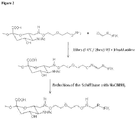
- the oxime linkage is stabilized by reduction with NaCNBH3 to form an alkoxyamine linkage ( Figure 2 ).
- reaction steps to conjugate a water soluble polymer to a blood coagulation protein are carried out separately and sequentially (i.e., starting materials (e.g., blood coagulation protein, water soluble polymer, etc), reagents (e.g., oxidizing agents, aniline, etc) and reaction products (e.g., oxidized carbohydrate on a blood coagulation protein, activated aminooxy water soluble polymer, etc) are separated between individual reaction steps).
- starting materials e.g., blood coagulation protein, water soluble polymer, etc
- reagents e.g., oxidizing agents, aniline, etc
- reaction products e.g., oxidized carbohydrate on a blood coagulation protein, activated aminooxy water soluble polymer, etc
- EP 1681303A1 HASylated erythropoietin
- WO 2005/014024 conjugates of a polymer and a protein linked by an oxime linking group
- WO96/40662 aminooxy-containing linker compounds and their application in conjugates
- WO 2008/025856 Modified proteins
- Peri F et al., Tetrahedron 1998, 54, 12269-78 Kubler-Kielb J et.
- the water soluble polymer which is linked according to the aminooxy technology described herein to an oxidized carbohydrate moiety of a blood coagulation protein is a polysialic acid (PSA).
- the homobifunctional linker NH 2 [OCH 2 CH 2 ] 2 ONH 2 (3-oxa-pentane-1,5-dioxyamine) containing two active aminooxy groups was synthesized according to Boturyn et al. (Tetrahedron 1997;53:5485-92 ) in a two step organic reaction employing a modified Gabriel-Synthesis of primary amines ( Figure 3 ).
- one molecule of 2,2-chlorodiethylether was reacted with two molecules of Endo-N-hydroxy-5-norbornene-2,3-dicarboximide in dimethylformamide (DMF).
- DMF dimethylformamide
- the desired homobifunctional product was prepared from the resulting intermediate by hydrazinolysis in ethanol.
- the homobifunctional linker NH 2 [OCH 2 CH 2 ] 4 ONH 2 (3,6,9-trioxa-undecane-1,11-dioxyamine) containing two active aminooxy groups was synthesized according to Boturyn et al. (Tetrahedron 1997;53:5485-92 ) in a two step organic reaction employing a modified Gabriel-Synthesis of primary amines ( Figure 3 ).
- In the first step one molecule of Bis-(2-(2-chlorethoxy)-ethyl)-ether was reacted with two molecules of Endo-N-hydroxy-5-norbornene-2,3-dicarboximide in DMF.
- the desired homobifunctional product was prepared from the resulting intermediate by hydrazinolysis in ethanol.
- UF/DF ultrafiltration/diafiltration procedure
- the excess PSA reagent was removed by hydrophobic interaction chromatography (HIC).
- HIC hydrophobic interaction chromatography
- the conductivity of the cooled reaction mixture was raised to 180mS/cm and loaded onto a 5ml HiTrap Butyl FF (GE Healthcare, Fairfield, CT) HIC column (1.6 x 2.5cm), pre-equilibrated with 50mM HEPES, 3M sodium chloride, 6.7mM calcium chloride, 0.01% Tween 80, pH 6.9.
- the conjugate was eluted within 2.4 column volumes (CV) with 50mM HEPES, 6.7mM calcium chloride, 0.005% Tween 80, pH 7.4 at a flow rate of 5ml/min.
- the conductivity of the cooled reaction mixture was raised to 180mS/cm and loaded onto a 5ml HiTrap Butyl FF (GE Healthcare, Fairfield, CT) HIC column (1.6 x 2.5cm), pre-equilibrated with 50mM HEPES, 3M sodium chloride, 6.7mM calcium chloride, 0.01% Tween 80, pH 6.9.
- the conjugate was eluted with a linear gradient to 50mM HEPES, 6.7mM calcium chloride, 0.005% Tween 80, pH 7.4 in 20CV with at a flow rate of 5ml/min.
- the excess PSA reagent was removed by means of HIC.
- the conductivity of the cooled reaction mixture was raised to 180mS/cm and loaded onto a 5ml HiTrap Butyl FF (GE Healthcare, Fairfield, CT) HIC column (1.6 x 2.5cm), pre-equilibrated with 50mM HEPES, 3M sodium chloride, 6.7mM calcium chloride, 0.01% Tween 80, pH 6.9.
- the conjugate was eluted within 2.4CV with 50mM HEPES, 6.7mM calcium chloride, 0.005% Tween 80, pH 7.4 at a flow rate of 5ml/min.
- the ionic strength was increased by adding a buffer containing 8M ammonium acetate (8M ammonium acetate, 50mM Hepes, 5mM CaCl 2 , 350mM NaCl, 0.01% Tween 80, pH 6.9) to get a final concentration of 2.5M ammonium acetate.
- a buffer containing 8M ammonium acetate 8M ammonium acetate, 50mM Hepes, 5mM CaCl 2 , 350mM NaCl, 0.01% Tween 80, pH 6.9
- equilibration buffer 2.5M ammonium acetate, 50mM Hepes, 5mM CaCl 2 , 350mM NaCl, 0.01% Tween 80, pH 6.9.
- the product was eluted with elution buffer (50mM Hepes, 5mM CaCl 2 , 0.01 % Tween 80, pH 7.4), and the eluate was concentrated by centrifugal filtration using Vivaspin (Sartorius, Goettingen, Germany) devices with 30,000 MWCO.
- elution buffer 50mM Hepes, 5mM CaCl 2 , 0.01 % Tween 80, pH 7.4
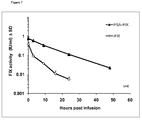
- FIX-deficient mice were injected with either rFIX or PSA-rFIX (prepared according to Example 4) in formulation buffer (10mM histidine, 260mM glycine, 29mM sucrose, 0.005% Tween 80, pH 6.8) in a volume dose of 10 ml/kg bodyweight.
- formulation buffer 10mM histidine, 260mM glycine, 29mM sucrose, 0.005% Tween 80, pH 6.8
- FIX activity was determined with a chromogenic FIX assay (Biophen FIX assay, Hyphen Biomed, Neuville-sur-Oise, France) and elimination curves were constructed ( Figure 7 ). Actual FIX activity doses were 123IU FIX/kg for PSA-rFIX and 143IU FIX/kg for rFIX. Pharmacokinetic parameters were calculated with program R (The R Foundation for Statistical Computing, 2008). In vivo recovery was 13% for rFIX and 29% for PSA-rFIX.
- the homobifunctional linker NH 2 [OCH 2 CH 2 ] 6 ONH 2 (3,6,9,12,15-penatoxa-heptadecane-1,17-dioxyamine) containing two active aminooxy groups was synthesized according to Boturyn et al. (Tetrahedron 1997;53:5485-92 ) in a two step organic reaction employing a modified Gabriel-Synthesis of primary amines. In the first step one molecule of hexaethylene glycol dichloride was reacted with two molecules of Endo-N-hydroxy-5-norbornene-2,3-dicarboximide in DMF. The desired homobifunctional product was prepared from the resulting intermediate by hydrazinolysis in ethanol.
- An Aminooxy-PSA reagent is prepared by use of a maleimido/aminooxy linker system ( Toyokuni et al., Bioconjugate Chem 2003; 14, 1253-9 ).
- PSA-SH (20kD) containing a free terminal SH - group is prepared using a two step procedure: a) Preparation of PSA-NH 2 by reductive amination of oxidized PSA with NH 4 Cl according to WO05016973A1 and b) introduction of a sulfhydryl group by reaction of the terminal primary amino group with 2-iminothiolane (Traut's reagent / Pierce, Rockford, IL) as described in US7645860 .
- PSA-SH is coupled to the maleimido-group of the linker at pH 7.5 in PBS - buffer using a 10 fold molar excess of the linker and a PSA-SH concentration of 50 mg/ml.
- the reaction mixture is incubated for 2 hours under gentle shaking at room temperature. Then the excess linker reagent is removed and the aminooxy-PSA is buffer exchanged into oxidation buffer (50mM sodium phosphate, pH 6.0) by diafiltration.
- the buffer is exchanged 25 times employing a Pellicon XL5kD regenerated cellulose membrane (Millipore, Billerica, MA).
- rFIX is oxidized in 50 mM sodium phosphate buffer, pH 6.0 employing 100 ⁇ M sodium periodate in the buffer. The mixture was shaken in the dark for 1h at 4°C and quenched for 15 min at room temperature by the addition of glycerol to a final concentration of 5mM. Low molecular weight contaminates were removed by means of size exclusion chromatography (SEC) employing PD-10 desalting columns (GE Healthcare, Fairfield, CT). Oxidized rFIX is then spiked with aniline to obtain a final concentration of 10mM and mixed with the aminooxy-PSA reagent to achieve a 5 fold molar excess of PSA. The reaction mixture was incubated for 2 hours under gentle shaking in the dark at room temperature.
- SEC size exclusion chromatography
- the excess of PSA reagent and free rFIX is removed by means of HIC.
- the conductivity of the reaction mixture is raised to 180 mS/cm and loaded onto a column filled with 48 ml Butyl - Sepharose FF (GE Healthcare, Fairfield, CT) pre-equilibrated with 50 mM Hepes, 3 M sodium chloride, 6.7 mM calcium chloride, 0.01% Tween 80, pH 6.9. Subsequently the conjugate is eluted with a linear gradient of 60% elution buffer (50mM) Hepes, 6.7mM calcium chloride, pH 7.4) in 40 CV.
- PSA-rFIX containing fractions are collected and subjected to UF/DF by use of a 30 kD membrane made of regenerated cellulose (Millipore).
- the preparation is analytically characterized by measuring total protein (BCA) and FIX chromogenic activity.
- BCA total protein
- FIX chromogenic activity For the PSA-rFIX conjugates prepared with both variants a specific activity of > 50 % in comparison to native rFIX is determined.
- An Aminooxy - PSA reagent was prepared according to Example 3. The final product was diafiltrated against buffer, pH 7.2 (50 mM Hepes) using a 5 kD membrane (regenerated cellulose, Millipore), frozen at -80°C and lyophilized. After lyophilization the reagent was dissolved in the appropriate volume of water and used for preparation of PSA-protein conjugates via carbohydrate modification.
- a PSA-FVIII conjugate was prepared according Example 8.
- the conjugate showed a specific activity of 6237 IU/mg (FVIII activity determined by the chromogenic assay; total protein determined by the Bradford assay) and had a polysialylation degree of 6.7 (mole PSA per mole FVIII) as measured by the Resorcinol assay ( Svennerholm L, Biochim Biophys Acta 1957; 24: 604-11 ).
- FVIII deficient mice described in detail by Bi et al. were used as a model of severe human hemophilia A.
- Groups of 6 mice received a bolus injection (200 IU FVIII/kg) via the tail vein with either PSA-rFVIII prepared according to Example 8 or native rFVIII (ADVATE, Baxter Healthcare Corporation) in a dose of 200 IU FVIII/kg bodyweight.
- Citrate plasma by heart puncture after anesthesia was prepared from the respective groups 5 minutes, 3, 6, 9, 16, 24, 32 and 42 hours after injection.
- FVIII activity levels were measured in plasma samples by use of the chromogenic assay. The results of this experiment are summarized in Table 3 and illustrated in Figure 8 .
- 3-oxa-pentane-1,5 dioxyamine was synthesized according to Botyryn et al (Tetrahedron 1997; 53:5485-92 ) in a two step organic synthesis as outlined in Example 1.
- the crude product was further purified by column chromatography (Silicagel 60; isocratic elution with Dichloromethane/Methanol mixture, 9+1) to yield 11.7 g of the pure final product 3-oxa-pentane -1,5-dioxyamine.
- rFIX is polysialylated by use of a PSA hydrazide reagent, which was prepared by reaction of oxidized PSA with adipic acid dihydrazide (ADH).
- Step 2 Reaction of PSA hydrazide with rFIX and purification of the conjugate
- rFIX is polysialylated by use of a PSA hydrazide reagent as described in Step 1.
- rFIX concentration 1 mg/ml
- NaIO 4 concentration: 80 ⁇ M
- the reaction is stopped by addition of glycerol and the oxidized FIX is subjected to UF/DF by use of a 30 kD membrane made of regenerated cellulose (Vivaspin).
- the oxidized rFIX is then polysialylated at pH 6.5 using a 200-fold molar excess of reagent and a protein concentration of 1 mg/ml.
- rFIX and the polysialyation reagent are incubated for 2 hours under gentle shaking in the dark at room temperature. Finally, the PSA-rFIX conjugate is purified by HIC.
- the conductivity of the reaction mixture is raised to 130 mS/cm by adding a buffer containing ammonium acetate (50mM Hepes, 350mM NaCl, 5mM Calcium chloride, 8M ammonium acetate, 0.01% Tween 80, pH 6.9) and loaded onto a HiTrap Butyl FF column (5 ml, GE Healthcare, Fairfield, CT) pre-equilibrated with 50mM Hepes, 2.5M ammonium acetate, 350mM sodium chloride, 5mM calcium chloride, 0.01 % Tween 80, pH 6.9.
- a buffer containing ammonium acetate 50mM Hepes, 350mM NaCl, 5mM Calcium chloride, 8M ammonium acetate, 0.01% Tween 80, pH 6.
- the conjugate is eluted with 50mM Hepes, 5mM calcium chloride, 0.01% Tween 80, pH 7.4. Finally the PSA-rFIX containing fractions are collected and subjected to UF/DF by use of a 30 kD membrane made of regenerated cellulose (Vivaspin). For the PEG-rFIX conjugate, a specific activity of > 50% in comparison to native rFIX is determined (chromogenic assay).
- rFIX 123mg rFIX are dissolved in 60ml phosphate buffer (50mM NaPO 4 , pH 6.5) buffer. Then 1.2ml of an aqueous sodium periodate solution (10mM) is added and the mixture is incubated for 1h in the dark at 4°C under gentle stirring. Subsequently the reaction is quenched for 15min at RT by the addition of 600 ⁇ l of 1M aqueous glycerol solution. The mixture is subsequently subjected to UF/DF employing a Pellicon XL Ultracel 30kD membrane.
- the UF/D F retentate (63.4ml), containing oxidized rFIX, is further diluted with 59.6ml phosphate buffer (50mM NaPO 4 , pH 6.0) and mixed with 6.5ml of an aqueous aniline solution (200mM) and incubated for 30 min at RT. Then 12.3ml of the PSA-hydrazide reagent (prepared according Example 16) is added to give a 5 fold molar reagent excess. This mixture is incubated for 2 h at RT in the dark under gentle stirring.
- the excess of the PSA-hydrazide reagent and free rFIX is removed by means of HIC.
- the conductivity of the reaction mixture is raised to 180 mS/cm and loaded onto a column filled with 48 ml Butyl - Sepharose FF (GE Healthcare, Fairfield, CT) pre-equilibrated with 50mM Hepes, 3M sodium chloride, 6.7 mM calcium chloride, 0.01% Tween 80, pH 6.9. Subsequently the conjugate is eluted with 50mM Hepes, 5mM calcium chloride, 0.01% Tween 80, pH 7.4.
- PSA-rFIX containing fractions are collected and subjected to UF/DF by use of a 30 kD membrane made of regenerated cellulose (Millipore).
- the preparation is analytically characterized by measuring total protein (BCA) and FIX chromogenic activity.
- BCA total protein
- FIX chromogenic activity For the PSA-rFIX conjugate a specific activity of > 50% in comparison to native rFIX is determined.
- rFIX 140mg rFIX was dissolved in 62ml phosphate buffer (50mM NaPO 4 ,pH 6.0) buffer. Then 1.92ml of an aqueous sodium periodate solution (10mM were added and the mixture was incubated for 1h in the dark at 4°C under gentle stirring and quenched for 15min at RT by the addition of 64 ⁇ l of an 1M aqueous glycerol solution. Subsequently the mixture was subjected to UF/DF employing a Pellicon XL Ultracel 30kD membrane.
- the free rFIX is removed by means of anion exchange chromatography (AIEC).
- the reaction mixture is diluted with 20ml Buffer A (50mM Hepes, 5mM CaCl 2 , pH 7.5) and loaded onto a Q-Sepharose FF 26/10 column (GE Healthcare, Fairfield, CT) pre-equilibrated with Buffer A. Then the column is eluted with Buffer B (50mM Hepes, 1M NaCl, 5mM CaCl 2 , pH 7.5).
- Buffer B 50mM Hepes, 1M NaCl, 5mM CaCl 2 , pH 7.5.
- Free rFIX elutes at a conductivity between 12 - 25mS/cm and the conjugate between 27 - 45mS/cm.
- the conductivity of the conjugate containing fractions are subsequently raised to 190mS/cm by addition of Buffer C (50mM Hepes, 5M NaCl, 5mM CaCl 2 , pH 6.9) and loaded onto a Butyl Sepharose FF 26/10 column (GE Healthcare, Fairfield, CT) pre-equilibrated with Buffer D (50mM Hepes, 3M NaCl, 5mM CaCl 2 , pH 6.9). Free PSA-reagent is washed out within 5CV Buffer D. Subsequently the conjugate is eluted with 100% Buffer E (50mM Hepes, 5mM CaCl 2 , pH 7.4).
- Buffer C 50mM Hepes, 5M NaCl, 5mM CaCl 2 , pH 6.9
- Buffer D 50mM Hepes, 3M NaCl, 5mM CaCl 2 , pH 6.9
- Free PSA-reagent is washed out within 5CV Buffer D.
- the conjugate containing fractions are concentrated by UF/DF using a 10 kD membrane made of regenerated cellulose (88cm 2 , cut-off 10kD / Millipore).
- the final diafiltration step is performed against histidine buffer, pH 7.2 containing 150mM NaCl and 5mM CaCl 2 .
- the preparation is analytically characterized by measuring total protein (BCA) and FIX chromogenic activity. For the PSA-rFIX conjugate a specific activity of > 50% in comparison to native rFIX is determined.
- a solution of 10 mg rFVIIa in 5 ml reaction buffer (50 mM Hepes, 150 mM sodium chloride, 5 mM calcium chloride, pH 6.0) is mixed with an aqueous solution of NaIO 4 (final concentration: 100 ⁇ M) and incubated for 1h at 4°C under gentle stirring in the dark and quenched by the addition of an aqueous solution of cysteine (final concentration: 1 mM) for 15 min.
- the reaction mixture is subsequently subjected to UF/DF.
- a 30 fold molar excess of Aminooxy reagent (prepared according to Example 1) is added. The coupling reaction is performed for 2 hours at room temperature in the dark under gentle shaking.
- the excess of aminooxy reagent is removed by HIC.
- the conductivity of the reaction mixture is raised to 130 mS/cm by adding a buffer containing ammonium acetate (50 mM Hepes, 350 mM NaCl, 5 mM Calcium chloride, 8 M ammonium acetate, 0.01% Tween 80, pH 6.9) and loaded onto a HiTrap Butyl FF column (5 ml, GE Healthcare, Fairfield, CT) pre-equilibrated with 50 mM Hepes, 2.5 M ammonium acetate, 350 mM sodium chloride, 5 mM calcium chloride, 0.01 % Tween 80, pH 6.9.
- a buffer containing ammonium acetate 50 mM Hepes, 350 mM NaCl, 5 mM Calcium chloride, 8 M ammonium acetate, 0.01% Tween 80, pH 6.9
- HiTrap Butyl FF column 5 ml, GE Healthcare, Fairfield, CT
- the conjugate is eluted with 50 mM Hepes, 5 mM calcium chloride, 0.01% Tween 80, pH 7.4 by a linear gradient of 100% elution buffer in 20 CV.
- the PSA-rFVIIa containing fractions are collected and subjected to UF/DF by use of a 30 kD membrane made of regenerated cellulose (Vivaspin).
- the preparation is analytically characterized by measuring total protein (BCA) and FVIIa chromogenic activity (Staclot assay, Diagnostica Stago, Asgros, France) and shows a specific activity of > 20% compared to the rFVIIa starting material.
- the conductivity of the cooled reaction mixture is raised to 180mS/cm and loaded onto a 5ml HiTrap Butyl FF (GE Healthcare, Fairfield, CT) HIC column (1.6 x 2.5cm), pre-equilibrated with 50mM Hepes, 3M sodium chloride, 6.7mM calcium chloride, 0.01% Tween 80, pH 6.9.
- the conjugate is eluted with a linear gradient to 50mM HEPES, 6.7mM calcium chloride, 0.005% Tween 80, pH 7.4 in 20 CV with at a flow rate of 5ml/min.
- a branched PEG-aldehyde (MW 40 kD) is used for coupling to the diaminooxy linker, which is prepared as described in Example 1.
- This PEG-aldehyde reagent is available from NOF (NOF Corp., Tokyo, Japan). 500 mg of PEG-aldehyde is dissolved in 8 ml 50 mM sodium acetate buffer, pH 5.5. Then 100 mg 3-oxa-pentane-1,5-dioxyamine is added. After shaking for 2 hrs at room temperature, 44 mg sodium cyanoborohydride is added.
- reaction mix After shaking for another 4 hrs at 4°C, the reaction mix is loaded into a Slide-A-Lyzer (Pierce, Rockford, IL) dialysis cassette (3.5 kD membrane, regenerated cellulose) and dialyzed against PBS pH 7.2 for 4 days. The product is frozen at -80°C.
- Slide-A-Lyzer Pierford, IL
- rFIX is PEGylated by use of a linear 20 kD PEGylation reagent containing an aminooxy group.
- An example of this type of reagent is the Sunbright ® CA series from NOF (NOF Corp., Tokyo, Japan).
- rFIX is oxidized at a protein concentration of 2mg/ml with NaIO 4 (final: concentration: 100 ⁇ M) for 1 hour under gentle shaking in the dark at 4°C in reaction buffer (50 mM Hepes, 150 mM sodium chloride, 5 mM calcium chloride, pH 6.0) and quenched by the addition of an aqueous solution of glycerol (final concentration: 1 mM) for 15 min.
- the reaction mixture is subsequently subjected to UF/DF.
- rFVIII is PEGylated by use of a linear 20 kD PEGylation reagent containing an aminooxy group.
- An example of this type of reagent is the Sunbright ® CA series from NOF (NOF Corp., Tokyo, Japan).
- rFVIII is oxidized at a protein concentration of 1 mg/ml with NaIO 4 (final: concentration: 100 ⁇ M) for 1 hour under gentle shaking in the dark at 4°C in reaction buffer (50 mM Hepes, 150 mM sodium chloride, 5 mM calcium chloride, pH 6.0) and quenched by the addition of an aqueous solution of cysteine (final concentration: 1 mM) for 15 min.
- the reaction mixture is subsequently subjected to UF/DF.
- the conjugate is eluted with 50 mM Hepes buffer containing 5 mM CaCl 2 and 500 mM sodium chloride, pH 7.4 and is then subjected to UF/DF using a 30 kD membrane.
- the analytical characterization of the conjugate by FVIII chromogenic assay and determination of total protein (BCA assay) shows a specific activity of > 60% compared to the rFVIII starting material.
- rFVIIa is PEGylated by use of a linear 20 kD PEGylation reagent containing an aminooxy group.
- An example of this type of reagent is the Sunbright ® CA series from NOF (NOF Corp., Tokyo, Japan).
- rFVIIa is oxidized at a protein concentration of 2mg/ml with NaIO 4 (final: concentration: 100 ⁇ M) for 1 hour under gentle shaking in the dark at 4°C in reaction buffer (50 mM Hepes, 150 mM sodium chloride, 5 mM calcium chloride, pH 6.0) and quenched by the addition of an aqueous solution of glycerol (final concentration: 1 mM) for 15 min.
- reaction mixture is subsequently subjected to UF/DF.
- a 5 fold molar excess of Aminooxy reagent and aniline (a nucleophilic catalyst, final concentration: 10mM) are added.
- the coupling reaction is performed for 2 hours at room temperature in the dark under gentle shaking.
- the PEG-rFVIIa conjugate is purified by ion-exchange chromatography on Q-Sepharose FF. 1.5 mg protein/ml gel is loaded on the column pre equilibrated with 20mM Hepes buffer containing 1 mM CaCl 2 , pH 7.4.
- the conjugate is eluted with 20mM Hepes buffer containing 1 mM CaCl 2 and 500 mM sodium chloride, pH 7.4 and is then subjected to UF/DF using a 30 kD membrane.
- the analytical characterization of the conjugate by measuring FVIIa activity shows a specific activity of > 25% compared to the rFVIIa starting material.
- rFIX is PEGylated by use of a linear 20 kD PEGylation reagent containing a hydrazide group.
- An example of this type of reagent is the Sunbright ® HZ series from NOF (NOF Corp., Tokyo, Japan).
- rFIX is oxidized at a protein concentration of 2mg/ml with NaIO 4 (final: concentration: 100 ⁇ M) for 1 hour under gentle shaking in the dark at 4°C in reaction buffer (50 mM Hepes, 150 mM sodium chloride, 5 mM calcium chloride, pH 6.0) and quenched by the addition of an aqueous solution of glycerol (final concentration: 1 mM) for 15 min.
- the reaction mixture is subsequently subjected to UF/DF.
- a 50 fold molar excess of Hydrazide reagent and aniline (a nucleophilic catalyst, final concentration: 10mM) are added.
- the coupling reaction is performed for 2 hours at room temperature in the dark under gentle shaking.
- the PEG-rFIX conjugate is purified by ion-exchange chromatography on Q-Sepharose FF.
- the reaction mixture is loaded onto the column (1.5 mg protein/ml gel), which is preequilibrated with 50 mM Tris - buffer, pH 8.0.
- the conjugate is eluted with 20 CV Tris - buffer, pH 8.0 (50 mM Tris, 1 M NaCl) and is then subjected to UF/DF using a 30 kD membrane.
- the preparation is analytically characterized by measuring total protein (BCA) and FIX chromogenic activity.
- BCA total protein
- FIX FIX chromogenic activity
- reaction buffer 50 mM Hepes, 350 mM sodium chloride, 5 mM calcium chloride, 0.01% Tween 80, pH 6
- reaction buffer 50 mM Hepes, 350 mM sodium chloride, 5 mM calcium chloride, 0.01% Tween 80, pH 6
- protein concentration 1 mg/ml
- oxidized with NaIO 4 final: concentration: 100 ⁇ M
- reaction buffer 50 mM Hepes, 150 mM sodium chloride, 5 mM calcium chloride, pH 6.0
- an aqueous solution of cysteine final concentration: 1 mM
- the reaction mixture is subsequently subjected to UF/DF.
- the conductivity of the reaction mixture is raised to 130 mS/cm by adding a buffer containing ammonium acetate (50 mM Hepes, 350 mM sodium chloride, 5 mM calcium chloride, 8 M ammonium acetate, 0.01% Tween 80, pH 6.9) and loaded onto a column filled with 53 ml Butyl - Sepharose FF (GE Healthcare, Fairfield, CT) pre-equilibrated with 50 mM Hepes, 2.5 M ammonium acetate, 350 mM sodium chloride, 5 mM calcium chloride, 0.01% Tween 80, pH 6.9.
- a buffer containing ammonium acetate 50 mM Hepes, 350 mM sodium chloride, 5 mM calcium chloride, 8 M ammonium acetate, 0.01% Tween 80, pH 6.9
- the conjugate is eluted with 50 mM Hepes, 5 mM calcium chloride, 0.01% Tween 80, pH 7.4.
- the PSA-rFIX containing fractions are collected and subjected to UF/DF by use of a 30 kD membrane made of regenerated cellulose (Millipore, Billerica, MA).
- the preparation is analytically characterized by measuring total protein (BCA) and FVIII chromogenic activity.
- BCA total protein
- FVIII chromogenic activity For the PSA-rFVIII conjugate a specific activity of 80% in comparison to native rFVIII is determined.
- reaction buffer 50 mM Hepes, 350 mM sodium chloride, 5 mM calcium chloride, 0.01% Tween 80, pH 6
- reaction buffer 50 mM Hepes, 350 mM sodium chloride, 5 mM calcium chloride, 0.01% Tween 80, pH 6
- protein concentration 1 mg/ml
- oxidized with NaIO 4 final: concentration: 100 ⁇ M
- reaction buffer 50 mM Hepes, 150 mM sodium chloride, 5 mM calcium chloride, pH 6.0
- an aqueous solution of cysteine final concentration: 1 mM
- the reaction mixture is subsequently subjected to UF/DF.
- the conductivity of the reaction mixture is raised to 130 mS/cm by adding a buffer containing ammonium acetate (50 mM Hepes, 350 mM sodium chloride, 5 mM calcium chloride, 8 M ammonium acetate, 0.01% Tween 80, pH 6.9) and loaded onto a column filled with 53 ml Butyl - Sepharose FF (GE Healthcare, Fairfield, CT) pre-equilibrated with 50 mM Hepes, 2.5 M ammonium acetate, 350 mM sodium chloride, 5 mM calcium chloride, 0.01% Tween 80, pH 6.9.
- a buffer containing ammonium acetate 50 mM Hepes, 350 mM sodium chloride, 5 mM calcium chloride, 8 M ammonium acetate, 0.01% Tween 80, pH 6.9
- the conjugate is eluted with 50 mM Hepes, 5 mM calcium chloride, 0.01% Tween 80, pH 7.4.
- the PSA-rFIX containing fractions are collected and subjected to UF/DF by use of a 30 kD membrane made of regenerated cellulose (Millipore, Billerica, MA).
- the preparation is analytically characterized by measuring total protein (BCA) and FVIII chromogenic activity.
- BCA total protein
- FVIII chromogenic activity For the PSA-rFVIII conjugate a specific activity of 80% in comparison to native rFVIII is determined.
- PEGylation of a blood coagulation proteins may be extended to a branched or linear PEGylation reagent as described in Example 21, which is made of an aldehyde and a suitable linker containing an active aminooxy group.
Landscapes
- Health & Medical Sciences (AREA)
- Life Sciences & Earth Sciences (AREA)
- Chemical & Material Sciences (AREA)
- Engineering & Computer Science (AREA)
- Bioinformatics & Cheminformatics (AREA)
- Medicinal Chemistry (AREA)
- General Health & Medical Sciences (AREA)
- Organic Chemistry (AREA)
- Zoology (AREA)
- Public Health (AREA)
- Veterinary Medicine (AREA)
- Pharmacology & Pharmacy (AREA)
- Animal Behavior & Ethology (AREA)
- Genetics & Genomics (AREA)
- Epidemiology (AREA)
- Wood Science & Technology (AREA)
- Biomedical Technology (AREA)
- Molecular Biology (AREA)
- Biochemistry (AREA)
- Proteomics, Peptides & Aminoacids (AREA)
- Biotechnology (AREA)
- Microbiology (AREA)
- General Engineering & Computer Science (AREA)
- Immunology (AREA)
- Gastroenterology & Hepatology (AREA)
- Chemical Kinetics & Catalysis (AREA)
- Hematology (AREA)
- General Chemical & Material Sciences (AREA)
- Polymers & Plastics (AREA)
- Nuclear Medicine, Radiotherapy & Molecular Imaging (AREA)
- Analytical Chemistry (AREA)
- Biophysics (AREA)
- Materials Engineering (AREA)
- Diabetes (AREA)
- Peptides Or Proteins (AREA)
- Medicines That Contain Protein Lipid Enzymes And Other Medicines (AREA)
- Medicinal Preparation (AREA)
- Pharmaceuticals Containing Other Organic And Inorganic Compounds (AREA)
- Medicines Containing Material From Animals Or Micro-Organisms (AREA)
- Macromolecular Compounds Obtained By Forming Nitrogen-Containing Linkages In General (AREA)
Priority Applications (3)
| Application Number | Priority Date | Filing Date | Title |
|---|---|---|---|
| HRP20160916TT HRP20160916T1 (hr) | 2009-07-27 | 2010-07-26 | Konjugati proteina za koagulaciju krvi |
| SI201031240A SI2459224T1 (sl) | 2009-07-27 | 2010-07-26 | Konjugati krvnega koagulacijskega proteina |
| EP16165650.9A EP3093029A1 (en) | 2009-07-27 | 2010-07-26 | Blood coagulation protein conjugates |
Applications Claiming Priority (3)
| Application Number | Priority Date | Filing Date | Title |
|---|---|---|---|
| US22882809P | 2009-07-27 | 2009-07-27 | |
| US34713610P | 2010-05-21 | 2010-05-21 | |
| PCT/US2010/043242 WO2011017055A2 (en) | 2009-07-27 | 2010-07-26 | Blood coagulation protein conjugates |
Related Child Applications (2)
| Application Number | Title | Priority Date | Filing Date |
|---|---|---|---|
| EP16165650.9A Division EP3093029A1 (en) | 2009-07-27 | 2010-07-26 | Blood coagulation protein conjugates |
| EP16165650.9A Division-Into EP3093029A1 (en) | 2009-07-27 | 2010-07-26 | Blood coagulation protein conjugates |
Publications (2)
| Publication Number | Publication Date |
|---|---|
| EP2459224A2 EP2459224A2 (en) | 2012-06-06 |
| EP2459224B1 true EP2459224B1 (en) | 2016-06-01 |
Family
ID=46582462
Family Applications (1)
| Application Number | Title | Priority Date | Filing Date |
|---|---|---|---|
| EP10738119.6A Active EP2459224B1 (en) | 2009-07-27 | 2010-07-26 | Blood coagulation protein conjugates |
Country Status (21)
| Country | Link |
|---|---|
| US (3) | US8637640B2 (enExample) |
| EP (1) | EP2459224B1 (enExample) |
| JP (1) | JP5908401B2 (enExample) |
| KR (3) | KR101832937B1 (enExample) |
| CN (1) | CN102497884A (enExample) |
| AR (1) | AR077600A1 (enExample) |
| AU (1) | AU2010281453C1 (enExample) |
| BR (1) | BR112012001814A8 (enExample) |
| CA (1) | CA2769326A1 (enExample) |
| CY (1) | CY1117880T1 (enExample) |
| DK (1) | DK2459224T3 (enExample) |
| ES (1) | ES2597954T3 (enExample) |
| GB (1) | GB2472303A (enExample) |
| HR (1) | HRP20160916T1 (enExample) |
| MX (1) | MX2012001207A (enExample) |
| NZ (1) | NZ598056A (enExample) |
| RU (1) | RU2595442C2 (enExample) |
| SG (1) | SG178141A1 (enExample) |
| SM (1) | SMT201600314B (enExample) |
| TW (1) | TWI537006B (enExample) |
| WO (1) | WO2011017055A2 (enExample) |
Families Citing this family (22)
| Publication number | Priority date | Publication date | Assignee | Title |
|---|---|---|---|---|
| DK2101821T3 (da) | 2006-12-15 | 2014-10-06 | Baxter Healthcare Sa | Faktor VIIA-(poly)sialinsyre-konjugat med forlænget halveringstid in vivo |
| RU2744370C2 (ru) | 2009-07-27 | 2021-03-05 | Баксалта Инкорпорейтед | Конъюгаты белков свертывания крови |
| BR112012001814A8 (pt) | 2009-07-27 | 2018-02-06 | Baxalta GmbH | Conjugados de proteína de coagulação sanguínea |
| EP3081233B1 (en) | 2009-07-27 | 2020-12-23 | Baxalta GmbH | Glycopolysialylation of proteins other than blood coagulation proteins |
| US8642737B2 (en) | 2010-07-26 | 2014-02-04 | Baxter International Inc. | Nucleophilic catalysts for oxime linkage |
| US8809501B2 (en) | 2009-07-27 | 2014-08-19 | Baxter International Inc. | Nucleophilic catalysts for oxime linkage |
| LT2536399T (lt) * | 2010-02-21 | 2020-03-10 | Bayer Healthcare Llc | Biomolekulių aktyvinimo ir konjugavimo būdas |
| TWI534152B (zh) * | 2010-07-30 | 2016-05-21 | 巴克斯特國際公司 | 用於肟連接的親核性催化劑 |
| AU2015275284C1 (en) * | 2010-07-30 | 2018-04-05 | Takeda Pharmaceutical Company Limited | Nucleophilic Catalysts for Oxime Linkage |
| PL2710375T3 (pl) | 2011-05-18 | 2019-07-31 | Baxalta GmbH | Testy aktywności zależne od modyfikacji |
| WO2013123457A1 (en) * | 2012-02-15 | 2013-08-22 | Biogen Idec Ma Inc. | Recombinant factor viii proteins |
| HK1200695A1 (en) * | 2012-04-16 | 2015-08-14 | Cantab Biopharmaceuticals Patents Limited | Optimised subcutaneous therapeutic agents |
| AU2013204754C1 (en) * | 2012-05-16 | 2018-10-11 | Takeda Pharmaceutical Company Limited | Nucleophilic Catalysts for Oxime Linkage |
| EP2828088B1 (en) | 2012-07-03 | 2020-05-27 | Hewlett-Packard Development Company, L.P. | Fluid ejection apparatus |
| TW201731869A (zh) * | 2015-12-03 | 2017-09-16 | 百克莎塔股份有限公司 | 具有延長之半衰期及降低之配位體結合性質的因子viii |
| CN105801870B (zh) * | 2016-04-08 | 2018-08-21 | 北京华熙海御科技有限公司 | 一种聚唾液酸-透明质酸复合凝胶的制备方法及所得产品和应用 |
| WO2018017923A1 (en) * | 2016-07-22 | 2018-01-25 | Nektar Therapeutics | Conjugates of a factor viii moiety having an oxime-containing linkage |
| KR20190086269A (ko) * | 2018-01-12 | 2019-07-22 | 재단법인 목암생명과학연구소 | 체내 지속형 재조합 당단백질 및 이의 제조방법 |
| CA3126476A1 (en) | 2019-01-23 | 2020-07-30 | Regeneron Pharmaceuticals, Inc. | Treatment of ophthalmic conditions with angiopoietin-like 7 (angptl7) inhibitors |
| US11845989B2 (en) | 2019-01-23 | 2023-12-19 | Regeneron Pharmaceuticals, Inc. | Treatment of ophthalmic conditions with angiopoietin-like 7 (ANGPTL7) inhibitors |
| CN111450080A (zh) * | 2020-03-31 | 2020-07-28 | 天津大学 | 一种IgA肾病治疗纳米制剂的合成方法 |
| WO2022182768A1 (en) | 2021-02-26 | 2022-09-01 | Regeneron Pharmaceuticals, Inc. | Treatment of inflammation with glucocorticoids and angiopoietin-like 7 (angptl7) inhibitors |
Family Cites Families (133)
| Publication number | Priority date | Publication date | Assignee | Title |
|---|---|---|---|---|
| US4179337A (en) * | 1973-07-20 | 1979-12-18 | Davis Frank F | Non-immunogenic polypeptides |
| JPS54113492A (en) | 1978-02-24 | 1979-09-05 | Sanyo Chem Ind Ltd | Preparation of glucoprotein derivative |
| US4356170A (en) | 1981-05-27 | 1982-10-26 | Canadian Patents & Development Ltd. | Immunogenic polysaccharide-protein conjugates |
| US4757006A (en) | 1983-10-28 | 1988-07-12 | Genetics Institute, Inc. | Human factor VIII:C gene and recombinant methods for production |
| US4970300A (en) | 1985-02-01 | 1990-11-13 | New York University | Modified factor VIII |
| US5198349A (en) | 1986-01-03 | 1993-03-30 | Genetics Institute, Inc. | Method for producing factor VIII:C and analogs |
| US5250421A (en) | 1986-01-03 | 1993-10-05 | Genetics Institute, Inc. | Method for producing factor VIII:C-type proteins |
| JPH0387173A (ja) | 1987-09-10 | 1991-04-11 | Teijin Ltd | ヒト活性化天然型ファクター8cの製造方法及びそれに用いる形質転換体 |
| US5153265A (en) | 1988-01-20 | 1992-10-06 | Cetus Corporation | Conjugation of polymer to colony stimulating factor-1 |
| US4966999A (en) | 1988-06-07 | 1990-10-30 | Cytogen Corporation | Radiohalogenated compounds for site specific labeling |
| US5122614A (en) * | 1989-04-19 | 1992-06-16 | Enzon, Inc. | Active carbonates of polyalkylene oxides for modification of polypeptides |
| SE465222C5 (sv) | 1989-12-15 | 1998-02-10 | Pharmacia & Upjohn Ab | Ett rekombinant, humant faktor VIII-derivat och förfarande för dess framställning |
| SE466754B (sv) | 1990-09-13 | 1992-03-30 | Berol Nobel Ab | Saett att kovalent binda biopolymerer till hydrofila ytor |
| CA2073511A1 (en) | 1990-11-14 | 1992-05-29 | Matthew R. Callstrom | Conjugates of poly(vinylsaccharide) with proteins for the stabilization of proteins |
| AU1676992A (en) | 1991-03-18 | 1992-10-21 | Enzon, Inc. | Hydrazine containing conjugates of polypeptides and glycopolypeptides with polymers |
| US5846951A (en) | 1991-06-06 | 1998-12-08 | The School Of Pharmacy, University Of London | Pharmaceutical compositions |
| US6037452A (en) * | 1992-04-10 | 2000-03-14 | Alpha Therapeutic Corporation | Poly(alkylene oxide)-Factor VIII or Factor IX conjugate |
| WO1994005332A2 (en) | 1992-09-01 | 1994-03-17 | Berlex Laboratories, Inc. | Glycolation of glycosylated macromolecules |
| ATE198277T1 (de) | 1992-10-02 | 2001-01-15 | Genetics Inst | Zusammensetzung, welche den koagulationsfaktor viii beinhaltet; verfahren zu deren herstellung und die benutzung eines oberflächenaktiven stoffes als stabilisator |
| NZ250375A (en) | 1992-12-09 | 1995-07-26 | Ortho Pharma Corp | Peg hydrazone and peg oxime linkage forming reagents and protein derivatives |
| FI935485L (fi) * | 1992-12-09 | 1994-06-10 | Ortho Pharma Corp | PEG-hydratsoni- ja PEG-oksiimisidoksen muodostavat reagenssit ja niiden proteiinijohdannaiset |
| US5298643A (en) * | 1992-12-22 | 1994-03-29 | Enzon, Inc. | Aryl imidate activated polyalkylene oxides |
| WO1994015625A1 (en) * | 1993-01-15 | 1994-07-21 | Enzon, Inc. | Factor viii - polymeric conjugates |
| WO1994028024A1 (en) | 1993-06-01 | 1994-12-08 | Enzon, Inc. | Carbohydrate-modified polymer conjugates with erythropoietic activity |
| US5621039A (en) * | 1993-06-08 | 1997-04-15 | Hallahan; Terrence W. | Factor IX- polymeric conjugates |
| SE504074C2 (sv) | 1993-07-05 | 1996-11-04 | Pharmacia Ab | Proteinberedning för subkutan, intramuskulär eller intradermal administrering |
| CA2204726A1 (en) | 1994-11-09 | 1996-12-27 | Robin E. Offord | Functionalized polymers for site-specific attachment |
| WO1996040731A1 (en) | 1995-06-07 | 1996-12-19 | Mount Sinai School Of Medicine Of The City University Of New York | Pegylated modified proteins |
| WO1996040662A2 (en) | 1995-06-07 | 1996-12-19 | Cellpro, Incorporated | Aminooxy-containing linker compounds and their application in conjugates |
| SE9503380D0 (sv) | 1995-09-29 | 1995-09-29 | Pharmacia Ab | Protein derivatives |
| US6323322B1 (en) | 1997-04-30 | 2001-11-27 | Enzon, Inc. | Single-chain antigen-binding proteins capable of glycosylation, production and uses thereof |
| US6183738B1 (en) | 1997-05-12 | 2001-02-06 | Phoenix Pharamacologics, Inc. | Modified arginine deiminase |
| PT1012259E (pt) | 1997-06-04 | 2009-11-06 | Oxford Biomedica Ltd | Vector dirigido a tumor |
| WO1999003496A1 (en) | 1997-07-21 | 1999-01-28 | The University Of North Carolina At Chapel Hill | Factor ix antihemophilic factor with increased clotting activity |
| WO1999028455A1 (de) | 1997-12-03 | 1999-06-10 | Roche Diagnostics Gmbh | Verfahren zur herstellung von polypeptiden mit geeigneter glykosilierung |
| US5985263A (en) | 1997-12-19 | 1999-11-16 | Enzon, Inc. | Substantially pure histidine-linked protein polymer conjugates |
| DE69914611T2 (de) | 1998-08-28 | 2004-12-23 | Gryphon Therapeutics, Inc., South San Francisco | Verfahren zur herstellung von polyamidketten von genauer länge und deren konjugate mit proteinen |
| DK1656952T3 (da) | 1998-10-16 | 2014-01-20 | Biogen Idec Inc | Polyalkylenglycolkonjugater af interferon beta-1A og anvendelser deraf |
| DE19852729A1 (de) | 1998-11-16 | 2000-05-18 | Werner Reutter | Rekombinante Glycoproteine, Verfahren zu ihrer Herstellung, sie enthaltende Arzneimittel und ihre Verwendung |
| EP1820516B1 (en) | 1999-02-22 | 2013-07-24 | University of Connecticut | Novel albumin-free factor VIII formulations |
| US6531122B1 (en) | 1999-08-27 | 2003-03-11 | Maxygen Aps | Interferon-β variants and conjugates |
| US7230081B1 (en) | 1999-11-12 | 2007-06-12 | Maxygen Holdings, Ltd. | Interferon gamma conjugates |
| US7074878B1 (en) | 1999-12-10 | 2006-07-11 | Harris J Milton | Hydrolytically degradable polymers and hydrogels made therefrom |
| US6413507B1 (en) | 1999-12-23 | 2002-07-02 | Shearwater Corporation | Hydrolytically degradable carbamate derivatives of poly (ethylene glycol) |
| WO2001058935A2 (en) | 2000-02-11 | 2001-08-16 | Maxygen Aps | FACTOR VII OR VIIa-LIKE MOLECULES |
| US6586398B1 (en) | 2000-04-07 | 2003-07-01 | Amgen, Inc. | Chemically modified novel erythropoietin stimulating protein compositions and methods |
| JP5090605B2 (ja) | 2000-05-03 | 2012-12-05 | ノボ ノルディスク ヘルス ケア アクチェンゲゼルシャフト | 凝固因子viiの皮下投与 |
| WO2001083725A1 (en) | 2000-05-03 | 2001-11-08 | Novo Nordisk A/S | Human coagulation factor vii variants |
| CA2414076A1 (en) * | 2000-06-08 | 2001-12-13 | La Jolla Pharmaceutical Company | Multivalent platform molecules comprising high molecular weight polyethylene oxide |
| US6423826B1 (en) | 2000-06-30 | 2002-07-23 | Regents Of The University Of Minnesota | High molecular weight derivatives of vitamin K-dependent polypeptides |
| US7118737B2 (en) | 2000-09-08 | 2006-10-10 | Amylin Pharmaceuticals, Inc. | Polymer-modified synthetic proteins |
| EP2226385B1 (en) | 2000-09-13 | 2013-07-10 | Novo Nordisk Health Care AG | Human Coagulation Factor VII Variants |
| AU2001291653A1 (en) | 2000-10-02 | 2002-04-15 | Novo-Nordisk A/S | Industrial-scale serum-free production of recombinant factor vii in mammalian cells |
| ES2432967T3 (es) | 2001-03-22 | 2013-12-05 | Novo Nordisk Health Care Ag | Derivados del Factor VII de coagulación |
| US6913915B2 (en) | 2001-08-02 | 2005-07-05 | Phoenix Pharmacologics, Inc. | PEG-modified uricase |
| US7214660B2 (en) | 2001-10-10 | 2007-05-08 | Neose Technologies, Inc. | Erythropoietin: remodeling and glycoconjugation of erythropoietin |
| US7265084B2 (en) | 2001-10-10 | 2007-09-04 | Neose Technologies, Inc. | Glycopegylation methods and proteins/peptides produced by the methods |
| EP2292273A3 (en) | 2001-10-10 | 2011-11-23 | BioGeneriX AG | Remodeling and glycoconjugation of peptides |
| US7795210B2 (en) | 2001-10-10 | 2010-09-14 | Novo Nordisk A/S | Protein remodeling methods and proteins/peptides produced by the methods |
| EP1446438A2 (en) | 2001-11-07 | 2004-08-18 | Nektar Therapeutics Al, Corporation | Branched polymers and their conjugates |
| JP2005535280A (ja) | 2001-11-28 | 2005-11-24 | ネオーズ テクノロジーズ, インコーポレイテッド | エンドグリカナーゼを用いる糖タンパク質のリモデリング |
| JP2005510229A (ja) | 2001-11-28 | 2005-04-21 | ネオーズ テクノロジーズ, インコーポレイテッド | アミダーゼを用いる糖タンパク質のリモデリング |
| ES2363205T3 (es) | 2002-06-21 | 2011-07-26 | Novo Nordisk Health Care Ag | Glicoformas del factor vii pegilado. |
| US7087229B2 (en) | 2003-05-30 | 2006-08-08 | Enzon Pharmaceuticals, Inc. | Releasable polymeric conjugates based on aliphatic biodegradable linkers |
| US7122189B2 (en) | 2002-08-13 | 2006-10-17 | Enzon, Inc. | Releasable polymeric conjugates based on aliphatic biodegradable linkers |
| MXPA05002594A (es) | 2002-09-11 | 2005-05-27 | Fresenius Kabi Gmbh | Derivados de polipeptidos con hidroxialquilalmidon, especialmente derivados de eritropoyetina con hidroxialquilalmidon. |
| US20040062748A1 (en) | 2002-09-30 | 2004-04-01 | Mountain View Pharmaceuticals, Inc. | Polymer conjugates with decreased antigenicity, methods of preparation and uses thereof |
| ATE444984T1 (de) | 2002-12-31 | 2009-10-15 | Nektar Therapeutics Al Corp | Hydrolysestabile maleimidendgruppen-enthaltende polymere |
| KR101031206B1 (ko) | 2002-12-31 | 2011-04-27 | 넥타르 테라퓨틱스 | 말레암산 중합체 유도체 및 이의 바이오컨쥬게이트 |
| EP1596887B1 (en) | 2003-02-26 | 2022-03-23 | Nektar Therapeutics | Polymer-factor viii moiety conjugates |
| WO2004089280A2 (en) | 2003-04-08 | 2004-10-21 | Yeda Research And Development Co. Ltd. | Reversible pegylated drugs |
| WO2005014024A2 (en) | 2003-08-08 | 2005-02-17 | Fresenius Kabi Deutschland Gmbh | Conjugates of a polymer and a protein linked by an oxime linking group |
| WO2005014035A2 (en) | 2003-08-08 | 2005-02-17 | Novo Nordisk Health Care Ag | Use of galactose oxidase for selective chemical conjugation of protractor molecules to proteins of therapeutic interest |
| EP1654290B1 (en) | 2003-08-12 | 2019-03-13 | Lipoxen Technologies Limited | Sialic acid derivatives for protein derivatisation and conjugation |
| ES2294535T3 (es) | 2003-08-12 | 2008-04-01 | Lipoxen Technologies Limited | Derivados del acido polisialico. |
| PL1653994T3 (pl) * | 2003-08-12 | 2010-05-31 | Tigenix Nv | Zastosowanie chemokiny CXCL6 w profilaktyce lub naprawie ubytków chrząstki |
| US8633157B2 (en) | 2003-11-24 | 2014-01-21 | Novo Nordisk A/S | Glycopegylated erythropoietin |
| ES2422187T3 (es) | 2003-12-03 | 2013-09-09 | Biogenerix Ag | Factor estimulante de colonias de granulocitos glicopegilados |
| US20060040856A1 (en) | 2003-12-03 | 2006-02-23 | Neose Technologies, Inc. | Glycopegylated factor IX |
| JP4738346B2 (ja) | 2003-12-03 | 2011-08-03 | ノヴォ ノルディスク アー/エス | GlycoPEG化された第IX因子 |
| NZ548123A (en) | 2004-01-08 | 2010-05-28 | Novo Nordisk As | O-linked glycosylation of peptides |
| US20060109877A1 (en) * | 2004-06-21 | 2006-05-25 | Caton John W | External cavity laser with adaptive fiber bragg grating (FBG) for minimizing noise related to stimulated brillouin scattering (SBS) in dispersive fiber links |
| WO2006020372A2 (en) | 2004-07-23 | 2006-02-23 | Neose Technologies, Inc. | Enzymatic modification of glycopeptides |
| US20090176967A1 (en) | 2004-08-02 | 2009-07-09 | Novo Nordisk Healthcare A/G | Conjugation of FVII |
| EP1776389B1 (en) | 2004-08-12 | 2016-06-29 | Lipoxen Technologies Limited | Sialic acid derivatives |
| CN101039965A (zh) * | 2004-08-12 | 2007-09-19 | 利普生技术有限公司 | 唾液酸衍生物 |
| WO2006031811A2 (en) | 2004-09-10 | 2006-03-23 | Neose Technologies, Inc. | Glycopegylated interferon alpha |
| DK2371856T3 (en) | 2004-11-12 | 2022-08-08 | Bayer Healthcare Llc | Site-directed modifikation af FVIII |
| AU2005322067B8 (en) | 2004-12-27 | 2012-07-26 | Takeda Pharmaceutical Company Limited | Polymer-von Willebrand factor-conjugates |
| EP1838332A1 (en) | 2005-01-06 | 2007-10-03 | Neose Technologies, Inc. | Glycoconjugation using saccharyl fragments |
| US20080255026A1 (en) | 2005-05-25 | 2008-10-16 | Glycopegylated Factor 1X | Glycopegylated Factor Ix |
| CA2611823C (en) | 2005-06-16 | 2013-07-30 | Nektar Therapeutics Al, Corporation | Conjugates having a degradable linkage and polymeric reagents useful in preparing such conjugates |
| US8633300B2 (en) | 2005-06-17 | 2014-01-21 | Novo Nordisk Healthcare Ag | Selective reduction and derivatization of engineered proteins comprising at least one non-native cysteine |
| US20090017007A1 (en) | 2005-08-26 | 2009-01-15 | Maxygen Holdings Ltd. | Liquid factor vii composition |
| JP5405122B2 (ja) | 2005-12-21 | 2014-02-05 | ワイス・エルエルシー | 低粘度のタンパク質製剤およびその用途 |
| US7645860B2 (en) * | 2006-03-31 | 2010-01-12 | Baxter Healthcare S.A. | Factor VIII polymer conjugates |
| WO2007126808A1 (en) | 2006-03-31 | 2007-11-08 | Baxter International Inc | Pegylated factor viii |
| WO2007140282A1 (en) | 2006-05-24 | 2007-12-06 | Peg Biosciences | Peg linker compounds and biologically active conjugates thereof |
| US7939632B2 (en) | 2006-06-14 | 2011-05-10 | Csl Behring Gmbh | Proteolytically cleavable fusion proteins with high molar specific activity |
| PL2049692T3 (pl) | 2006-07-13 | 2016-08-31 | Serum Inst India Ltd | Sposób wytwarzania poli(kwasu sialowego) o wysokiej czystości |
| CN103169984B (zh) | 2006-07-25 | 2016-08-03 | 利普生技术有限公司 | N末端聚唾液酸化 |
| US20100056428A1 (en) * | 2006-09-01 | 2010-03-04 | Novo Nordisk Health Care Ag | Modified proteins |
| US8969532B2 (en) | 2006-10-03 | 2015-03-03 | Novo Nordisk A/S | Methods for the purification of polypeptide conjugates comprising polyalkylene oxide using hydrophobic interaction chromatography |
| DK2101821T3 (da) | 2006-12-15 | 2014-10-06 | Baxter Healthcare Sa | Faktor VIIA-(poly)sialinsyre-konjugat med forlænget halveringstid in vivo |
| JP5558106B2 (ja) | 2007-01-03 | 2014-07-23 | ノボ ノルディスク ヘルス ケア アーゲー | 凝固第vii因子関連ポリペプチドの皮下投与 |
| WO2008119815A1 (en) | 2007-04-02 | 2008-10-09 | Novo Nordisk A/S | Subcutaneous administration of coagulation factor ix |
| TWI569810B (zh) * | 2007-06-26 | 2017-02-11 | 巴克斯歐塔公司 | 可水解之聚合茀基甲氧基羰基-連接劑 |
| CA2690440A1 (en) | 2007-07-03 | 2009-01-08 | Children's Hospital & Research Center At Oakland | Oligosialic acid derivatives, methods of manufacture, and immunological uses |
| US20100239517A1 (en) | 2007-10-09 | 2010-09-23 | Stephen Brocchini | Novel conjugated proteins and peptides |
| CN102037004A (zh) | 2008-01-08 | 2011-04-27 | 生物种属学股份公司 | 使用寡糖基转移酶的多肽的糖缀合 |
| US20130189239A1 (en) | 2008-02-27 | 2013-07-25 | Novo Nordisk A/S | Conjugated Factor VIII Molecules |
| KR20110016440A (ko) | 2008-04-24 | 2011-02-17 | 셀틱 파르마 피이지 엘티디. | 연장된 반감기를 가진 제 ⅰⅹ 인자 접합체 |
| EP2285412A1 (en) | 2008-05-23 | 2011-02-23 | Novo Nordisk Health Care AG | Formulations of peg-functionalised serine proteases with high concentrations of an aromatic preservative |
| US20110112029A1 (en) | 2008-05-23 | 2011-05-12 | Novo Nordisk Health Care Ag | Low viscosity compositions comprising a pegylated gla-domain containing protein |
| JP5674650B2 (ja) | 2008-06-04 | 2015-02-25 | バイエル・ヘルスケア・エルエルシー | フォン・ヴィレブランド病の処置のためのfviii変異タンパク質 |
| ES2560807T3 (es) | 2008-07-21 | 2016-02-22 | Polytherics Limited | Nuevos reactivos y procedimiento de conjugación de moléculas biológicas |
| EP2352515A4 (en) | 2008-11-03 | 2012-04-25 | Bayer Healthcare Llc | METHOD FOR TREATING HEMOPHILIA |
| CA2748662A1 (en) | 2009-01-19 | 2010-07-22 | Bayer Healthcare Llc | Protein conjugate having an endopeptidase-cleavable bioprotective moiety |
| US20110306551A1 (en) | 2009-02-19 | 2011-12-15 | Novo Nordisk A/S | Modification of Factor VIII |
| US9005598B2 (en) | 2009-03-04 | 2015-04-14 | Polytherics Limited | Conjugated proteins and peptides |
| WO2010120365A2 (en) | 2009-04-16 | 2010-10-21 | Wu Nian | Protein-carrier conjugates |
| GB0908393D0 (en) | 2009-05-15 | 2009-06-24 | Almac Sciences Scotland Ltd | Labelling method |
| BR112012001814A8 (pt) | 2009-07-27 | 2018-02-06 | Baxalta GmbH | Conjugados de proteína de coagulação sanguínea |
| EP3081233B1 (en) | 2009-07-27 | 2020-12-23 | Baxalta GmbH | Glycopolysialylation of proteins other than blood coagulation proteins |
| EA201290069A1 (ru) | 2009-07-31 | 2012-07-30 | Байер Хелскер Ллс | Модифицированные полипептиды фактора ix и их применения |
| DE102009028526A1 (de) | 2009-08-13 | 2011-02-24 | Leibniz-Institut Für Polymerforschung Dresden E.V. | Verfahren zur Modifikation und Funktionalisierung von Sacchariden |
| EP2480578A4 (en) | 2009-09-25 | 2013-04-17 | Vybion Inc | MODIFICATION OF POLYPEPTIDE |
| CN107383158A (zh) | 2009-11-24 | 2017-11-24 | 诺沃—诺迪斯克保健股份有限公司 | 纯化聚乙二醇化蛋白质的方法 |
| EP2536753B1 (en) | 2010-02-16 | 2017-12-20 | Novo Nordisk A/S | Factor viii molecules with reduced vwf binding |
| GB201007356D0 (en) | 2010-04-30 | 2010-06-16 | Leverton Licence Holdings Ltd | Conjugated factor VIIa |
| GB201007357D0 (en) | 2010-04-30 | 2010-06-16 | Leverton Licence Holdings Ltd | Conjugated factor VIII |
| JP2014503495A (ja) | 2010-11-15 | 2014-02-13 | バイオジェン アイデック インコーポレイテッド | 過負荷結合および溶出クロマトグラフィによる選択生成物アイソフォームの富化および濃縮 |
| EP4169525A1 (en) | 2011-07-08 | 2023-04-26 | Bioverativ Therapeutics Inc. | Factor viii chimeric and hybrid polypeptides, and methods of use thereof |
-
2010
- 2010-07-26 BR BR112012001814A patent/BR112012001814A8/pt not_active Application Discontinuation
- 2010-07-26 GB GB1012482A patent/GB2472303A/en not_active Withdrawn
- 2010-07-26 ES ES10738119.6T patent/ES2597954T3/es active Active
- 2010-07-26 WO PCT/US2010/043242 patent/WO2011017055A2/en not_active Ceased
- 2010-07-26 RU RU2012106589/15A patent/RU2595442C2/ru not_active IP Right Cessation
- 2010-07-26 EP EP10738119.6A patent/EP2459224B1/en active Active
- 2010-07-26 JP JP2012522940A patent/JP5908401B2/ja active Active
- 2010-07-26 NZ NZ598056A patent/NZ598056A/en unknown
- 2010-07-26 AU AU2010281453A patent/AU2010281453C1/en active Active
- 2010-07-26 KR KR1020127003964A patent/KR101832937B1/ko active Active
- 2010-07-26 US US12/843,542 patent/US8637640B2/en active Active
- 2010-07-26 HR HRP20160916TT patent/HRP20160916T1/hr unknown
- 2010-07-26 TW TW099124493A patent/TWI537006B/zh active
- 2010-07-26 KR KR1020187005130A patent/KR102068133B1/ko active Active
- 2010-07-26 CN CN2010800370028A patent/CN102497884A/zh active Pending
- 2010-07-26 CA CA2769326A patent/CA2769326A1/en not_active Abandoned
- 2010-07-26 MX MX2012001207A patent/MX2012001207A/es active IP Right Grant
- 2010-07-26 SG SG2012006094A patent/SG178141A1/en unknown
- 2010-07-26 DK DK10738119.6T patent/DK2459224T3/en active
- 2010-07-26 KR KR1020127003344A patent/KR101759300B1/ko not_active Expired - Fee Related
- 2010-07-27 AR ARP100102720A patent/AR077600A1/es active IP Right Grant
-
2013
- 2013-12-20 US US14/136,266 patent/US20140107320A1/en not_active Abandoned
-
2016
- 2016-01-06 US US14/988,931 patent/US20160120994A1/en not_active Abandoned
- 2016-08-10 CY CY20161100787T patent/CY1117880T1/el unknown
- 2016-09-09 SM SM201600314T patent/SMT201600314B/it unknown
Also Published As
Similar Documents
| Publication | Publication Date | Title |
|---|---|---|
| AU2010281453C1 (en) | Blood coagulation protein conjugates | |
| US11040109B2 (en) | Blood coagulation protein conjugates | |
| EP2532369B1 (en) | Factor VIIa-(poly)sialic acid conjugate having prolonged in vivo half-life | |
| EP2810662B1 (en) | Factor VIII polymer conjugates | |
| EP3505186B1 (en) | Nucleophilic catalysts for oxime linkage | |
| HK1230975A1 (en) | Blood coagulation protein conjugates | |
| HK1230975A (en) | Blood coagulation protein conjugates | |
| HK1171691B (en) | Blood coagulation protein conjugates | |
| HK40009331B (en) | Nucleophilic catalysts for oxime linkage | |
| HK1229229A (zh) | 凝血蛋白綴合物 | |
| HK1229229A1 (en) | Blood coagulation protein conjugates |
Legal Events
| Date | Code | Title | Description |
|---|---|---|---|
| PUAI | Public reference made under article 153(3) epc to a published international application that has entered the european phase |
Free format text: ORIGINAL CODE: 0009012 |
|
| 17P | Request for examination filed |
Effective date: 20120224 |
|
| AK | Designated contracting states |
Kind code of ref document: A2 Designated state(s): AL AT BE BG CH CY CZ DE DK EE ES FI FR GB GR HR HU IE IS IT LI LT LU LV MC MK MT NL NO PL PT RO SE SI SK SM TR |
|
| DAX | Request for extension of the european patent (deleted) | ||
| REG | Reference to a national code |
Ref country code: HK Ref legal event code: DE Ref document number: 1171691 Country of ref document: HK |
|
| 17Q | First examination report despatched |
Effective date: 20140703 |
|
| GRAP | Despatch of communication of intention to grant a patent |
Free format text: ORIGINAL CODE: EPIDOSNIGR1 |
|
| RAP1 | Party data changed (applicant data changed or rights of an application transferred) |
Owner name: BAXALTA INCORPORATED Owner name: BAXALTA GMBH |
|
| INTG | Intention to grant announced |
Effective date: 20151211 |
|
| GRAS | Grant fee paid |
Free format text: ORIGINAL CODE: EPIDOSNIGR3 |
|
| GRAA | (expected) grant |
Free format text: ORIGINAL CODE: 0009210 |
|
| AK | Designated contracting states |
Kind code of ref document: B1 Designated state(s): AL AT BE BG CH CY CZ DE DK EE ES FI FR GB GR HR HU IE IS IT LI LT LU LV MC MK MT NL NO PL PT RO SE SI SK SM TR |
|
| REG | Reference to a national code |
Ref country code: GB Ref legal event code: FG4D |
|
| REG | Reference to a national code |
Ref country code: AT Ref legal event code: REF Ref document number: 803459 Country of ref document: AT Kind code of ref document: T Effective date: 20160615 Ref country code: CH Ref legal event code: EP |
|
| REG | Reference to a national code |
Ref country code: FR Ref legal event code: PLFP Year of fee payment: 7 |
|
| REG | Reference to a national code |
Ref country code: IE Ref legal event code: FG4D |
|
| REG | Reference to a national code |
Ref country code: CH Ref legal event code: NV Representative=s name: ISLER AND PEDRAZZINI AG, CH |
|
| REG | Reference to a national code |
Ref country code: DE Ref legal event code: R096 Ref document number: 602010033780 Country of ref document: DE |
|
| REG | Reference to a national code |
Ref country code: HR Ref legal event code: TUEP Ref document number: P20160916 Country of ref document: HR |
|
| REG | Reference to a national code |
Ref country code: DK Ref legal event code: T3 Effective date: 20160715 |
|
| REG | Reference to a national code |
Ref country code: SE Ref legal event code: TRGR |
|
| REG | Reference to a national code |
Ref country code: RO Ref legal event code: EPE |
|
| REG | Reference to a national code |
Ref country code: PT Ref legal event code: SC4A Ref document number: 2459224 Country of ref document: PT Date of ref document: 20160905 Kind code of ref document: T Free format text: AVAILABILITY OF NATIONAL TRANSLATION Effective date: 20160830 |
|
| REG | Reference to a national code |
Ref country code: NL Ref legal event code: FP |
|
| REG | Reference to a national code |
Ref country code: EE Ref legal event code: FG4A Ref document number: E012297 Country of ref document: EE Effective date: 20160815 |
|
| REG | Reference to a national code |
Ref country code: NO Ref legal event code: T2 Effective date: 20160601 |
|
| REG | Reference to a national code |
Ref country code: HR Ref legal event code: T1PR Ref document number: P20160916 Country of ref document: HR |
|
| REG | Reference to a national code |
Ref country code: HU Ref legal event code: AG4A Ref document number: E028056 Country of ref document: HU |
|
| REG | Reference to a national code |
Ref country code: DE Ref legal event code: R079 Ref document number: 602010033780 Country of ref document: DE Free format text: PREVIOUS MAIN CLASS: A61K0047480000 Ipc: A61K0047500000 |
|
| REG | Reference to a national code |
Ref country code: ES Ref legal event code: FG2A Ref document number: 2597954 Country of ref document: ES Kind code of ref document: T3 Effective date: 20170124 |
|
| REG | Reference to a national code |
Ref country code: SK Ref legal event code: T3 Ref document number: E 22332 Country of ref document: SK Ref country code: GR Ref legal event code: EP Ref document number: 20160401857 Country of ref document: GR Effective date: 20161118 |
|
| REG | Reference to a national code |
Ref country code: DE Ref legal event code: R097 Ref document number: 602010033780 Country of ref document: DE |
|
| PLBE | No opposition filed within time limit |
Free format text: ORIGINAL CODE: 0009261 |
|
| STAA | Information on the status of an ep patent application or granted ep patent |
Free format text: STATUS: NO OPPOSITION FILED WITHIN TIME LIMIT |
|
| 26N | No opposition filed |
Effective date: 20170302 |
|
| REG | Reference to a national code |
Ref country code: HK Ref legal event code: GR Ref document number: 1171691 Country of ref document: HK |
|
| REG | Reference to a national code |
Ref country code: DE Ref legal event code: R082 Ref document number: 602010033780 Country of ref document: DE Representative=s name: HOFFMANN - EITLE PATENT- UND RECHTSANWAELTE PA, DE |
|
| REG | Reference to a national code |
Ref country code: FR Ref legal event code: PLFP Year of fee payment: 8 |
|
| REG | Reference to a national code |
Ref country code: FR Ref legal event code: PLFP Year of fee payment: 9 |
|
| REG | Reference to a national code |
Ref country code: AT Ref legal event code: UEP Ref document number: 803459 Country of ref document: AT Kind code of ref document: T Effective date: 20160601 |
|
| REG | Reference to a national code |
Ref country code: HR Ref legal event code: ODRP Ref document number: P20160916 Country of ref document: HR Payment date: 20190626 Year of fee payment: 10 |
|
| REG | Reference to a national code |
Ref country code: HR Ref legal event code: ODRP Ref document number: P20160916 Country of ref document: HR Payment date: 20200709 Year of fee payment: 11 |
|
| PGFP | Annual fee paid to national office [announced via postgrant information from national office to epo] |
Ref country code: SM Payment date: 20200622 Year of fee payment: 11 |
|
| REG | Reference to a national code |
Ref country code: CH Ref legal event code: PUE Owner name: TAKEDA PHARMACEUTICAL COMPANY LIMITED, JP Free format text: FORMER OWNER: BAXALTA INCORPORATED, CH |
|
| REG | Reference to a national code |
Ref country code: NO Ref legal event code: CREP Representative=s name: BRYN AARFLOT AS, STORTINGSGATA 8, 0161 OSLO, NORGE Ref country code: NO Ref legal event code: CHAD Owner name: TAKEDA PHARMACEUTICAL COMPANY LIMITED, JP |
|
| REG | Reference to a national code |
Ref country code: HU Ref legal event code: GB9C Owner name: TAKEDA PHARMACEUTICAL COMPANY LIMITED, JP Free format text: FORMER OWNER(S): BAXALTA GMBH, CH; BAXALTA INCORPORATED, US |
|
| REG | Reference to a national code |
Ref country code: CH Ref legal event code: NV Representative=s name: ISLER AND PEDRAZZINI AG, CH |
|
| REG | Reference to a national code |
Ref country code: EE Ref legal event code: GB1A Ref document number: E012297 Country of ref document: EE |
|
| REG | Reference to a national code |
Ref country code: FI Ref legal event code: PCE Owner name: TAKEDA PHARMACEUTICAL COMPANY LIMITED |
|
| REG | Reference to a national code |
Ref country code: LU Ref legal event code: PD Owner name: TAKEDA PHARMACEUTICAL COMPANY LIMITED; JP Free format text: FORMER OWNER: BAXALTA INCORPORATED Effective date: 20210419 |
|
| REG | Reference to a national code |
Ref country code: HR Ref legal event code: PPPP Ref document number: P20160916 Country of ref document: HR Owner name: TAKEDA PHARMACEUTICAL COMPANY LIMITED, JP |
|
| REG | Reference to a national code |
Ref country code: DE Ref legal event code: R081 Ref document number: 602010033780 Country of ref document: DE Owner name: TAKEDA PHARMACEUTICAL COMPANY LIMITED, OSAKA-S, JP Free format text: FORMER OWNERS: BAXALTA GMBH, GLATTPARK, OPFIKON, CH; BAXALTA INCORPORATED, BANNOCKBURN, ILL., US Ref country code: DE Ref legal event code: R082 Ref document number: 602010033780 Country of ref document: DE Representative=s name: HOFFMANN - EITLE PATENT- UND RECHTSANWAELTE PA, DE Ref country code: DE Ref legal event code: R081 Ref document number: 602010033780 Country of ref document: DE Owner name: TAKEDA PHARMACEUTICAL CO. LTD., JP Free format text: FORMER OWNERS: BAXALTA GMBH, GLATTPARK, OPFIKON, CH; BAXALTA INCORPORATED, BANNOCKBURN, ILL., US |
|
| REG | Reference to a national code |
Ref country code: NL Ref legal event code: PD Owner name: TAKEDA PHARMACEUTICAL COMPANY LIMITED; JP Free format text: DETAILS ASSIGNMENT: CHANGE OF OWNER(S), ASSIGNMENT; FORMER OWNER NAME: BAXALTA INCORPORATED Effective date: 20210617 |
|
| REG | Reference to a national code |
Ref country code: SK Ref legal event code: PC4A Ref document number: E 22332 Country of ref document: SK Owner name: TAKEDA PHARMACEUTICAL COMPANY LIMITED, CHUO-KU, JP Free format text: FORMER OWNER: BAXALTA GMBH, GLATTPARK, OPFIKON, CH; BAXALTA INCORPORATED, BANNOCKBURN, IL, US Effective date: 20210809 |
|
| REG | Reference to a national code |
Ref country code: HR Ref legal event code: ODRP Ref document number: P20160916 Country of ref document: HR Payment date: 20210723 Year of fee payment: 12 |
|
| REG | Reference to a national code |
Ref country code: AT Ref legal event code: PC Ref document number: 803459 Country of ref document: AT Kind code of ref document: T Owner name: TAKEDA PHARMACEUTICAL COMPANY LIMITED, JP Effective date: 20210719 |
|
| REG | Reference to a national code |
Ref country code: BE Ref legal event code: PD Owner name: TAKEDA PHARMACEUTICAL COMPANY LIMITED; JP Free format text: DETAILS ASSIGNMENT: CHANGE OF OWNER(S), ASSIGNMENT; FORMER OWNER NAME: BAXALTA INCORPORATED Effective date: 20210401 |
|
| REG | Reference to a national code |
Ref country code: SI Ref legal event code: SP73 Owner name: TAKEDA PHARMACEUTICAL COMPANY LIMITED; JP Effective date: 20210930 |
|
| REG | Reference to a national code |
Ref country code: GB Ref legal event code: 732E Free format text: REGISTERED BETWEEN 20220210 AND 20220216 |
|
| PG25 | Lapsed in a contracting state [announced via postgrant information from national office to epo] |
Ref country code: SM Free format text: LAPSE BECAUSE OF NON-PAYMENT OF DUE FEES Effective date: 20220210 |
|
| REG | Reference to a national code |
Ref country code: HR Ref legal event code: ODRP Ref document number: P20160916 Country of ref document: HR Payment date: 20220720 Year of fee payment: 13 |
|
| P01 | Opt-out of the competence of the unified patent court (upc) registered |
Effective date: 20230530 |
|
| REG | Reference to a national code |
Ref country code: DE Ref legal event code: R081 Ref document number: 602010033780 Country of ref document: DE Owner name: TAKEDA PHARMACEUTICAL COMPANY LIMITED, OSAKA-S, JP Free format text: FORMER OWNER: TAKEDA PHARMACEUTICAL CO. LTD., OSAKA, JP |
|
| REG | Reference to a national code |
Ref country code: HR Ref legal event code: ODRP Ref document number: P20160916 Country of ref document: HR Payment date: 20230720 Year of fee payment: 14 |
|
| REG | Reference to a national code |
Ref country code: HR Ref legal event code: ODRP Ref document number: P20160916 Country of ref document: HR Payment date: 20240709 Year of fee payment: 15 |
|
| PGFP | Annual fee paid to national office [announced via postgrant information from national office to epo] |
Ref country code: MT Payment date: 20250627 Year of fee payment: 16 |
|
| PGFP | Annual fee paid to national office [announced via postgrant information from national office to epo] |
Ref country code: SE Payment date: 20250619 Year of fee payment: 16 |
|
| PGFP | Annual fee paid to national office [announced via postgrant information from national office to epo] |
Ref country code: HU Payment date: 20250714 Year of fee payment: 16 |
|
| REG | Reference to a national code |
Ref country code: HR Ref legal event code: ODRP Ref document number: P20160916 Country of ref document: HR Payment date: 20250710 Year of fee payment: 16 |
|
| PGFP | Annual fee paid to national office [announced via postgrant information from national office to epo] |
Ref country code: ES Payment date: 20250801 Year of fee payment: 16 |
|
| PGFP | Annual fee paid to national office [announced via postgrant information from national office to epo] |
Ref country code: DE Payment date: 20250620 Year of fee payment: 16 |
|
| PGFP | Annual fee paid to national office [announced via postgrant information from national office to epo] |
Ref country code: HR Payment date: 20250710 Year of fee payment: 16 |
|
| PGFP | Annual fee paid to national office [announced via postgrant information from national office to epo] |
Ref country code: AL Payment date: 20250728 Year of fee payment: 16 Ref country code: AT Payment date: 20250623 Year of fee payment: 16 |
|
| PGFP | Annual fee paid to national office [announced via postgrant information from national office to epo] |
Ref country code: CH Payment date: 20250801 Year of fee payment: 16 |
|
| PGFP | Annual fee paid to national office [announced via postgrant information from national office to epo] |
Ref country code: CZ Payment date: 20250701 Year of fee payment: 16 |
|
| PGFP | Annual fee paid to national office [announced via postgrant information from national office to epo] |
Ref country code: RO Payment date: 20250707 Year of fee payment: 16 |
|
| PGFP | Annual fee paid to national office [announced via postgrant information from national office to epo] |
Ref country code: MK Payment date: 20240626 Year of fee payment: 15 |
|
| PGFP | Annual fee paid to national office [announced via postgrant information from national office to epo] |
Ref country code: CY Payment date: 20250620 Year of fee payment: 16 |
|
| PGFP | Annual fee paid to national office [announced via postgrant information from national office to epo] |
Ref country code: GB Payment date: 20260618 Year of fee payment: 17 Ref country code: DK Payment date: 20260618 Year of fee payment: 17 Ref country code: PL Payment date: 20260619 Year of fee payment: 17 |
|
| PGFP | Annual fee paid to national office [announced via postgrant information from national office to epo] |
Ref country code: IT Payment date: 20260619 Year of fee payment: 17 Ref country code: MC Payment date: 20260622 Year of fee payment: 17 Ref country code: GR Payment date: 20260619 Year of fee payment: 17 |
|
| PGFP | Annual fee paid to national office [announced via postgrant information from national office to epo] |
Ref country code: LT Payment date: 20260618 Year of fee payment: 17 |
|
| PGFP | Annual fee paid to national office [announced via postgrant information from national office to epo] |
Ref country code: NO Payment date: 20260619 Year of fee payment: 17 |
|
| PGFP | Annual fee paid to national office [announced via postgrant information from national office to epo] |
Ref country code: FI Payment date: 20260618 Year of fee payment: 17 |
|
| PGFP | Annual fee paid to national office [announced via postgrant information from national office to epo] |
Ref country code: LU Payment date: 20260618 Year of fee payment: 17 Ref country code: IE Payment date: 20260619 Year of fee payment: 17 Ref country code: BE Payment date: 20260618 Year of fee payment: 17 |
|
| PGFP | Annual fee paid to national office [announced via postgrant information from national office to epo] |
Ref country code: EE Payment date: 20260626 Year of fee payment: 17 |
|
| PGFP | Annual fee paid to national office [announced via postgrant information from national office to epo] |
Ref country code: IS Payment date: 20260624 Year of fee payment: 17 Ref country code: PT Payment date: 20260622 Year of fee payment: 17 |
|
| PGFP | Annual fee paid to national office [announced via postgrant information from national office to epo] |
Ref country code: NL Payment date: 20260622 Year of fee payment: 17 Ref country code: TR Payment date: 20260625 Year of fee payment: 17 |
|
| PGFP | Annual fee paid to national office [announced via postgrant information from national office to epo] |
Ref country code: FR Payment date: 20260619 Year of fee payment: 17 |
|
| PGFP | Annual fee paid to national office [announced via postgrant information from national office to epo] |
Ref country code: LV Payment date: 20260618 Year of fee payment: 17 |
|
| PGFP | Annual fee paid to national office [announced via postgrant information from national office to epo] |
Ref country code: SK Payment date: 20260624 Year of fee payment: 17 |
|
| PGFP | Annual fee paid to national office [announced via postgrant information from national office to epo] |
Ref country code: BG Payment date: 20260623 Year of fee payment: 17 |
|
| PGFP | Annual fee paid to national office [announced via postgrant information from national office to epo] |
Ref country code: SI Payment date: 20260623 Year of fee payment: 17 |
|
| REG | Reference to a national code |
Ref country code: HR Ref legal event code: ODRP Ref document number: P20160916 Country of ref document: HR Payment date: 20260629 Year of fee payment: 17 |
|
| REG | Reference to a national code |
Ref country code: CH Ref legal event code: U11 Free format text: ST27 STATUS EVENT CODE: U-0-0-U10-U11 (AS PROVIDED BY THE NATIONAL OFFICE) Effective date: 20260801 |