EP2398861B1 - Procede de detoxication permettant l'obtention d'un compose pigmentaire zincifere exempt d'ecotoxicite - Google Patents
Procede de detoxication permettant l'obtention d'un compose pigmentaire zincifere exempt d'ecotoxicite Download PDFInfo
- Publication number
- EP2398861B1 EP2398861B1 EP10704159.2A EP10704159A EP2398861B1 EP 2398861 B1 EP2398861 B1 EP 2398861B1 EP 10704159 A EP10704159 A EP 10704159A EP 2398861 B1 EP2398861 B1 EP 2398861B1
- Authority
- EP
- European Patent Office
- Prior art keywords
- obtaining
- pigment compound
- compound obtained
- detoxification
- detoxification method
- Prior art date
- Legal status (The legal status is an assumption and is not a legal conclusion. Google has not performed a legal analysis and makes no representation as to the accuracy of the status listed.)
- Active
Links
Images

Classifications
-
- C—CHEMISTRY; METALLURGY
- C09—DYES; PAINTS; POLISHES; NATURAL RESINS; ADHESIVES; COMPOSITIONS NOT OTHERWISE PROVIDED FOR; APPLICATIONS OF MATERIALS NOT OTHERWISE PROVIDED FOR
- C09C—TREATMENT OF INORGANIC MATERIALS, OTHER THAN FIBROUS FILLERS, TO ENHANCE THEIR PIGMENTING OR FILLING PROPERTIES ; PREPARATION OF CARBON BLACK ; PREPARATION OF INORGANIC MATERIALS WHICH ARE NO SINGLE CHEMICAL COMPOUNDS AND WHICH ARE MAINLY USED AS PIGMENTS OR FILLERS
- C09C1/00—Treatment of specific inorganic materials other than fibrous fillers; Preparation of carbon black
- C09C1/0081—Composite particulate pigments or fillers, i.e. containing at least two solid phases, except those consisting of coated particles of one compound
-
- C—CHEMISTRY; METALLURGY
- C09—DYES; PAINTS; POLISHES; NATURAL RESINS; ADHESIVES; COMPOSITIONS NOT OTHERWISE PROVIDED FOR; APPLICATIONS OF MATERIALS NOT OTHERWISE PROVIDED FOR
- C09D—COATING COMPOSITIONS, e.g. PAINTS, VARNISHES OR LACQUERS; FILLING PASTES; CHEMICAL PAINT OR INK REMOVERS; INKS; CORRECTING FLUIDS; WOODSTAINS; PASTES OR SOLIDS FOR COLOURING OR PRINTING; USE OF MATERIALS THEREFOR
- C09D11/00—Inks
- C09D11/02—Printing inks
- C09D11/03—Printing inks characterised by features other than the chemical nature of the binder
-
- C—CHEMISTRY; METALLURGY
- C09—DYES; PAINTS; POLISHES; NATURAL RESINS; ADHESIVES; COMPOSITIONS NOT OTHERWISE PROVIDED FOR; APPLICATIONS OF MATERIALS NOT OTHERWISE PROVIDED FOR
- C09D—COATING COMPOSITIONS, e.g. PAINTS, VARNISHES OR LACQUERS; FILLING PASTES; CHEMICAL PAINT OR INK REMOVERS; INKS; CORRECTING FLUIDS; WOODSTAINS; PASTES OR SOLIDS FOR COLOURING OR PRINTING; USE OF MATERIALS THEREFOR
- C09D5/00—Coating compositions, e.g. paints, varnishes or lacquers, characterised by their physical nature or the effects produced; Filling pastes
- C09D5/08—Anti-corrosive paints
- C09D5/082—Anti-corrosive paints characterised by the anti-corrosive pigment
- C09D5/084—Inorganic compounds
Definitions
- Zinciferous pigmentary compounds are confronted with increasingly severe constraints in terms of use to meet the various European environmental requirements and directives, and in particular in areas such as transport, storage and recycling.
- Zinc phosphate is labeled N / Dangerous for the aquatic environment, and R50 / 53 - "Very toxic to aquatic organisms, may cause long-term adverse effects in the aquatic environment".
- Table 1 summarizes according to the quantities used of zinc phosphate Zn 3 (PO 4 ) 2 , 2 to 4 H 2 O in a product used, the labeling constraints as well as the risk phrases of the labor code associated in accordance with the Directive 99/45 / EC.
- Table 1 Labeling and risk phrases when using zinc phosphate in a product according to 1999/45 / EC.
- Very toxic to aquatic organisms may cause long-term adverse effects in the aquatic environment 2.5% - 25% R51 / 53
- Toxic to aquatic organisms may cause long-term adverse effects in the aquatic environment 0.25% - 2.5%
- Any R52 / 53 Harmful to aquatic organisms may cause long-term adverse effects in the aquatic environment. ⁇ 0.25% Any Any
- N labeling In accordance with Directive 99/45 / EC, the formulator, in order to avoid N labeling, is obliged to use less than 2.5% by mass of an N, R50 / 53 product such as zinc phosphate, or the case of anticorrosive paints, resistance performance increases with the zinc phosphate content.
- anti-corrosion pigments containing magnesium phosphate have interesting attractions in painting ( Albright and Wilson, 1976, US003960611A ), but without equalizing the zinc phosphate.
- the objective is to develop a detoxification process for obtaining a pigment compound free of acute and chronic aquatic ecotoxicity comprising at least one zinc-based component having good anticorrosive properties highly toxic phosphate zinc Zn 3 (PO 4 ) 2 , 0 to 4H 2 O and / or zinc oxide characterized in that it comprises, the mixture of zinc phosphate Zn 3 (PO 4 ) 2 , 0 to 4H 2 With magnesium phosphate MgHPO 4 , 3H 2 O or the mixture of zinc phosphate Zn 3 (PO 4 ) 2 , 0 to 4H 2 O and zinc oxide with magnesium phosphate MgHPO 4 , 3H 2 O, the weight ratio of zinc phosphate to magnesium phosphate being about 90% / 10%, or the weight ratio of zinc phosphate, magnesium phosphate, and zinc oxide being about 80% / 10% / 10%.
- said pigment component which is free from toxicity has an algal inhibition rate of less than 50% according to the OECD 201 protocol, a daphnia immobilization rate of less than 50% according to the OECD 202 protocol, a fish mortality rate below 50% according to the OECD 203 protocol, which leads to LC50 (lethal concentration by ingestion for 50% of the population) and EC50 (lethal concentration by inhalation for 50% of the population) greater than 100 mg / L, and a NOEC (Observed No Effect Concentration) strictly greater than 1 mg / L on the reproduction of daphnids according to the OECD 211 protocol.
- the invention also relates to a process for producing an anticorrosion paint characterized in that it uses the pigmentary compound obtained by the detoxification process according to the invention.
- the paint production process comprises the use of a pigmentary compound in combination with a non-ecotoxic filler such as, for example, talc, baryte, kaolin, silica, silicates or carbonates of aluminum, calcium, magnesium, potassium, iron oxide, green chromium oxide, mica, ferrite, carbonate, titanium dioxide for the production of a paint.
- a non-ecotoxic filler such as, for example, talc, baryte, kaolin, silica, silicates or carbonates of aluminum, calcium, magnesium, potassium, iron oxide, green chromium oxide, mica, ferrite, carbonate, titanium dioxide for the production of a paint.
- the detoxification process for obtaining a pigmentary compound comprises the mixing of powder by physical or chemical means of sequential precipitation type, sequential crystallization, coprecipitation, co-crystallization, grinding, mixing, dispersion, extrusion , pasting, granulation.
- the invention also relates to a process for obtaining a coating comprising a polymer of epoxy, alkyd, acrylic, vinyl, polyurethane, polyester, aminoplast, polyolefin, phenolic, butyral, butadiene, PVDF, rubber, synthetic oil or natural characterized in that it uses the pigmentary compound obtained by the detoxification process of the invention.
- the subject of the invention is also the use of an anticorrosive coating obtained according to the process of the present invention, for the treatment of metal parts or objects such as motor vehicles, ships, aircraft, bridges, construction machines, railways, agricultural, industrial building, coil coating, electronic equipment, computer, and household appliances, oil and gas installation.
- metal parts or objects such as motor vehicles, ships, aircraft, bridges, construction machines, railways, agricultural, industrial building, coil coating, electronic equipment, computer, and household appliances, oil and gas installation.
- the subject of the invention is also a process for obtaining a plastic material, characterized in that it uses the pigmentary compound obtained by the detoxification process according to the invention.
- the subject of the invention is also a process for obtaining a putty, characterized in that it uses the pigmentary compound obtained by the detoxification process according to the invention.
- the invention also relates to a process for obtaining an adhesive characterized in that it uses the pigmentary compound obtained by the detoxification process according to the invention.
- the subject of the invention is also a process for obtaining an ink, characterized in that it uses the pigmentary compound obtained by the detoxification process according to the invention.
- the invention also relates to a process for obtaining a natural or synthetic rubber material characterized in that it uses the pigmentary compound obtained by the detoxification process according to the invention.
- the subject of the invention is also a process for obtaining a solid or liquid lubricant, characterized in that it uses the pigmentary compound obtained by the detoxification process according to the invention.
- the subject of the invention is also a process for obtaining a fertilising substance, characterized in that it uses the pigmentary compound obtained by the detoxification process according to the invention.
- the subject of the invention is also a process for obtaining an anti-UV compound for plastics, characterized in that it uses the pigmentary compound obtained by the detoxification process according to the invention.
- the invention finally relates to a process for obtaining an anti-UV cosmetic compound, characterized in that it uses the pigmentary compound obtained by the detoxification process according to the invention.
- the subject of the invention is also the use of an anticorrosion coating according to the invention, for the treatment of metal parts or objects such as motor vehicles, ships, aircraft, bridges, construction machines, railways, agricultural buildings and industrial buildings. , Coil coating, electronic equipment, computers, and household appliances, gas and oil installations.
- Example of anticorrosion compound based on zinc phosphate, zinc oxide and magnesium phosphate Example of anticorrosion compound based on zinc phosphate, zinc oxide and magnesium phosphate.
- PZATB PZ 80% / PAT30 10% / ZnO 10% with PZ: Zn 3 (PO 4 ) 2 , 0 to 4H 2 O and PAT30: MgHPO 4 , 3H 2 O
- the GHS Global Harmonized Labeling System in its latest revision of 2009 reiterates and confirms the maximum limits of 1 (category 1) 10 (category 2 [1 to 10mg / l]) and 100 mg / l (category 3 [10 to 100mg / l]) as acute aquatic toxicity classification criteria of categories 1 to 3. Above 100 mg / l of acute toxicity the substance or preparation is not classified for toxicity.
- the GHS also states that when chronic toxicity has a no-observed-effect concentration greater than 1 mg / l, then this substance or mixture is not classified for its chronic nature.
- the preparation was carried out by physical mixing.
- the GLP designation refers to tests performed according to Good Laboratory Practices.
- Table 3 shows that the inhibition of algae is less than 50%.
- the preparation is therefore not ecotoxic for algae because of an acute ecotoxicity LC50> 100mg / L according to the OECD 201 protocol.
- Table 4 shows that no daphnia is immobilized. The preparation is therefore not ecotoxic for crustaceans because of an acute ecotoxicity EC50> 100mg / L according to the OECD 202 protocol.
- Table 5 shows that no trout is dead.
- the preparation is not toxic to fish due to acute ecotoxicity LC50> 100mg / L according to OECD Protocol 203.
- Example of anti-corrosion compounds based on zinc phosphate and magnesium phosphate Example of anti-corrosion compounds based on zinc phosphate and magnesium phosphate.
- the preparations were made by physical mixing.
- the GLP designation refers to tests performed according to Good Laboratory Practices.
- Table 6 shows that the inhibition of algae is less than 50%.
- the preparation is therefore not ecotoxic for algae because of an acute ecotoxicity LC50> 100mg / L according to the OECD 201 protocol.
- Table 7 shows that no daphnia is immobilized.
- the preparation is therefore not ecotoxic for crustaceans because of an acute ecotoxicity EC50> 100mg / L according to the OECD 202 protocol.
- Table 8 Results of acute ecotoxicity on Oncorhynchus Mykiss fish Preparation GLP / non-GLP test Number of trout Trout mortality (%) LC50 (mg / L) PZ 99% / PAT30 1% GLP 10 0 > 100 PZ 95% / PAT30 5% GLP 10 0 > 100 PZ 90% / PAT30 10% GLP 10 0 > 100 PZ 80% / PAT30 20% No GLP 10 0 > 100 PZ 70% / PAT30 30% No GLP 10 0 > 100 PZ 60% / PAT30 40% No GLP 10 0 > 100 PZ 50% / PAT30 50% No GLP 10 0 > 100 PZ 40% / PAT30 60% No GLP 10 0 > 100 PZ 4.3% / PAT30 95.7% GLP 10 0 > 100
- Table 8 shows that no trout are dead.
- the preparation is not toxic to fish due to acute ecotoxicity LC50> 100mg / L according to OECD Protocol 203.
- the preparations were made by physical mixing.
- Table 11 shows that the preparations do not exhibit chronic ecotoxicity due to a NOEC> 1 mg / L according to the OECD 211 protocol.
- anti-corrosion adhesion primers corresponding to the first layer intended to coat a metal surface, itself intended to support in a conventional manner a second layer of paint generally the color of said coating and frequently referred to as a finishing coat.
- Illustration 1 Tests of the preparation in a vinyl alkyd solvent phase primer
- Table 12 Formulation of a vinyl alkyd solvent phase primer
- RAW MATERIALS % WEIGHT DESCRIPTION SUPPLIERS SETAL 199-SS-55 25.5
- Medium alkyd oil NUPLEX ACETONE 5.00
- solvent SHELL NUODEX 10%
- Ca 0.50 Dispersing agent ELEMENTIS Specialties
- BENTONE SD2 0.30
- Rheological additive NL Chemicals SOLVESSO 100
- Corrosion Inhibitor SNCZ TALC 10 M2 4.00 charge
- RIO TINTO Minerals MICA MU M 2/1 9.00 charge WACC MICRONOX 11,00
- Thixotropic additive NL Chemicals grinding 40 minutes to Hegman fineness of 6 LAROFLEX MP35 / S100 at 28.5% 21,10 Vinyl chloride copolymer
- a layer of anticorrosion primer incorporating the pigmentary compounds is produced in an alkyd resin of thickness 40 ⁇ m on a metal surface. This layer is covered with a film of an alkyd layer 25 microns thick, also commonly called finishing layer.
- the assembly is exposed to salt spray (ASTM B117 standard) for 300 hours.
- the figure 1 illustrates the results obtained.
- a rating was used to assess the degree of rust and degree of blistering.
- Table 13 The rating in Table 13 is made according to the standards described above. Table 13: Rating of Vinyl Alkyd Solvent Phase Eluent Degree of rust NF-ISO 4828-3 T 30140-3 Degree of blistering NF-ISO 4828-3 T 30140-3 ASTM 1654 Claw Corrosion General classification full plate ASTM 1654 PZ RI1 D2S2 6 6 PZAT90 RI1 D3S2 4 4 PZATB RI0 D0S0 8 9
- the PZATB is as efficient as the PZ, and more efficient than the PZAT90.
- Table 14 Formulation of an epoxy amide solvent phase primer RAW MATERIALS % WEIGHT DESCRIPTION SUPPLIERS PART A Introduce under mixing in the following order EPIKOTE 1001 / XYLENE 50/50 weight / weight 22,90 Epoxy resin Hexion SOLVESSO 100 7.20 Hydrocarbon aromatic solvent TOTAL Chemistry ISOBUTYL ALCOHOL 1.60 Solvent SHELL DOWANOL PMA 7.30 Glycol ester, solvent DOW NUODEX 10% Ca 0.50 Dispersion agent ELEMENTIS Specialties BENTONE SD2 0.15 Rheological additive ELEMENTIS Specialties TiO 2 TR92 4.30 rutile HUNSTMANN ZINC PHOSPHATE PZ20 8.00 Corrosion Inhibitor SNCZ YELLOW IRON OXIDE 3920 5.10 Dye pigment BAYER TALC 10 M2 9.30 Charge RIO TINTO Minerals MICA MU 2/1 10.70 Charge WACC THIXATROL ST 0.20 Thixo
- a layer of anticorrosive primer incorporating the pigmentary compounds is produced in a thick amide epoxy type resin. 50 ⁇ m on a metal surface. This layer is covered with a 100 ⁇ m thick PU polyurethane film, also known as the finishing layer.
- the assembly is exposed to salt spray (ASTM B117 standard) for 600 hours.
- the figure 2 illustrates the results obtained.
- Table 15 The rating in Table 15 is carried out according to the same standards as mentioned above.
- Table 15 Rating of the primary epoxy amide solvent phase Degree of rust NF-ISO 4828-3 T 30140-3 Degree of blistering NF-ISO 4828-3 T 30140-3 ASTM * 1654 Claw Corrosion ASTM * 1654 Full Plate Full Rating PZ RI1 D2S2 4 7 PZAT90 RI1 D2S2 6 8 PZATB RI1 D2S2 3 6
- the PZAT90 is as efficient as the PZ, and more efficient than the PZATB.
- Table 16 Formula of a primary epoxy amine solvent phase RAW MATERIALS % WEIGHT DESCRIPTION SUPPLIERS PART A Introduce under mixing in the following order EPIKOTE 1001 / XYLENE 50/50 weight / weight 25.40 Epoxy resin Hexion SOLVESSO 100 7.90 Hydrocarbon aromatic solvent TOTAL chemistry ISOBUTYL ALCOHOL 1.80 Solvent SHELL DOWANOL PMA 8.00 Glycol ester, solvent DOW NUODEX 10% Ca 0.50 Dispersion agent ELEMENTIS Specialties BENTONE SD2 0.20 Rheological additive ELEMENTIS Specialties TiO 2 TR92 4.80 rutile HUNSTMANN ZINC PHOSPHATE PZ20 8.00 Corrosion Inhibitor SNCZ YELLOW IRON OXIDE 3920 5.70 Dye pigment BAYER TALC 10 M2 9.00 Charge RIO TINTO Minerals MICA MU 2/1 10.00 Charge WACC THIXATROL ST 0.20 Thi
- the assembly is subjected to the exposure of a salt spray-standard ASTM B117-during 600 hours.
- Table 17 The rating in Table 17 is carried out according to the same standards as mentioned above.
- Table 17 Listing of the primary epoxy amine solvent phase Degree of rust NF-ISO 4828-3 T 30140-3 Degree of blistering NF-ISO 4828-3 T 30140-3 ASTM * 1654 Claw Corrosion ASTM * 1654 Full Plate Full Rating PZ RI1 D0S0 6 6 PZAT90 RI0 D0S0 8 9 PZATB RI1 D0S0 6 6
- the PZATB is as efficient as the PZ, the PZAT90 is more efficient than these two other compounds.
Landscapes
- Chemical & Material Sciences (AREA)
- Organic Chemistry (AREA)
- Wood Science & Technology (AREA)
- Life Sciences & Earth Sciences (AREA)
- Engineering & Computer Science (AREA)
- Materials Engineering (AREA)
- Inorganic Chemistry (AREA)
- General Chemical & Material Sciences (AREA)
- Chemical Kinetics & Catalysis (AREA)
- Composite Materials (AREA)
- Paints Or Removers (AREA)
- Cosmetics (AREA)
- Fertilizers (AREA)
- Pigments, Carbon Blacks, Or Wood Stains (AREA)
- Inks, Pencil-Leads, Or Crayons (AREA)
- Adhesives Or Adhesive Processes (AREA)
Description
- Les composés pigmentaires zincifères sont confrontés à des contraintes de plus en plus sévères en terme d'utilisation pour répondre aux différentes exigences et directives environnementales européennes et notamment dans les domaines tels que le transport, le stockage et le recyclage.
- Ces dernières années de nombreuses réglementations sont apparues, parmi lesquelles on peut citer les réglementations suivantes :
- DEEE - Déchets d'Équipements Électriques et Électroniques - 2002
- ROHS - Restriction of the use of certain Hazardous Substances - 2002
- Recyclage des Véhicules Hors d'Usage - RVHU - 2002
- REACH - Registration, Evaluation and Authorisation of Chemicals - 2007
- GHS - Globally Harmonized System of Classification and Labelling of Chemicals - 2005
- Ainsi de part leur écotoxicité, l'utilisation des composés pigmentaires zincifères s'est complexifiée au fil des années.
- C'est notamment le cas du phosphate de zinc et de l'oxyde de zinc.
- La classification des sels de zinc dont notamment le phosphate de zinc et l'oxyde de zinc a ainsi été établie en 2004. Le phosphate de zinc est nommément mentionné dans le 28ème A.P.T. - Adaptation aux Progrès Techniques - de la directive européenne 67/548/CEE. Le phosphate de zinc est étiqueté N/Dangereux pour l'environnement aquatique, et R50/53 - « Très toxique pour les organismes aquatiques, peut entraîner des effets néfastes à long terme pour l'environnement aquatique ».
- Le tableau 1 récapitule selon les quantités utilisées de phosphate de zinc Zn3(PO4)2, 2 à 4 H2O dans un produit utilisé, les contraintes d'étiquetage ainsi que les phrases de risque du code du travail associées conformément à la directive 99/45/CE.
Tableau 1 : Etiquetage et phrases de risque lors de l'utilisation de phosphate de zinc dans un produit selon 1999/45/CE. Quantité de Zn3(PO4)2 Etiquetage Phrase de risque >25% 
R50/53 Très toxique pour les organismes aquatiques, peut entraîner des effets néfastes à long terme pour l'environnement aquatique 2,5% - 25% 
R51/53 Toxique pour les organismes aquatiques, peut entraîner des effets néfastes à long terme pour l'environnement aquatique 0,25% - 2,5% Aucune R52/53 Nocif pour les organismes aquatiques, peut entraîner des effets néfastes à long terme pour l'environnement aquatique. <0,25% Aucune Aucune - Ainsi toute formule qui contient plus de 2,5% en masse de ce composé est de ce fait étiquetée N/Dangereux pour l'environnement aquatique. Un nouveau besoin est ainsi apparu car certains marchés n'acceptent pas cet étiquetage et demandent des composés pigmentaires qui n'entrainent pas l'étiquetage N.
- Conformément à la directive 99/45/CE, le formulateur, pour éviter l'étiquetage N, est contraint d'utiliser moins de 2,5% en masse d'un produit N, R50/53 comme le phosphate de zinc, or dans le cas des peintures anticorrosion, les performances de résistance augmentent avec la teneur en phosphate de zinc.
- Il est à noter que de manière conventionnelle, sont définis comme « substances », d'après la directive européenne 1999/45/CE, les éléments chimiques et leurs composés à l'état naturel ou tels qu'obtenus par tout procédé de production, y compris tout additif nécessaire pour préserver la stabilité du produit et toute impureté dérivant du procédé, mais à l'exclusion de tout solvant qui peut être séparé sans affecter la stabilité de la substance ni modifier sa composition.
- Il est à noter également que de manière conventionnelle, sont définis comme « préparations », les mélanges ou solutions composés de deux substances ou plus.
- Dans ce contexte, des composés pigmentaires utilisés en peinture anticorrosion ne contenant pas de zinc, qui avaient ainsi été développés ces dernières années, retrouvent de l'intérêt. Des brevets ont notamment été déposés sur le phosphate B-tricalcique (
Budenheim, 1991, DE 4014523 A1 ), et sur les mélanges de phosphate B-tricalcique ou dicalcique et de phosphate trimagnésien (Budenheim, 1996-1997, DE 195 41 895 A1 -US005665149A ). - Il a également été démontré que les pigments anticorrosion contenant du phosphate de magnésium ont des attraits intéressants en peinture (
Albright et Wilson, 1976, US003960611A ), sans toutefois égaler le phosphate de zinc. - Ces pigments sans zinc sont performants dans certains systèmes de peintures mais ne sont pas aussi universels que le phosphate de zinc. En effet, le phosphate de zinc est performant dans la plupart des formulations utilisées en peinture anticorrosion.
- Dans ce contexte, l'objectif recherché est de développer un procédé de détoxication permettant l'obtention d'un composé pigmentaire exempt d'écotoxicité aquatique aigüe et chronique comprenant au moins un composant à base de zinc présentant de bonnes propriétés anticorrosives fortement toxique de phosphate de zinc Zn3(PO4)2,0 à 4H2O et/ou de l'oxyde de zinc caractérisé en ce qu'il comprend, le mélange de phosphate de zinc Zn3(PO4)2,0 à 4H2O avec du phosphate de magnésium MgHPO4,3H2O ou le mélange de phosphate de zinc Zn3(PO4)2,0 à 4H2O et d'oxyde de zinc avec du phosphate de magnésium MgHPO4,3H2O, le ratio pondéral entre le phosphate de zinc et le phosphate de magnésium étant d'environ 90 %/10%, ou le ratio pondéral entre le phosphate de zinc, le phosphate de magnésium, et l'oxyde de zinc étant d'environ 80%/10%/10%.
- Selon une variante de l'invention, ledit composant pigmentaire exempt de toxicité présente un taux d'inhibition des algues inférieur à 50% selon le protocole OCDE 201, un taux d'immobilisation des daphnies inférieur à 50% selon le protocole OCDE 202, un taux de mortalité des poissons inférieur à 50% selon le protocole OCDE 203, ce qui conduit à des CL50 (concentration léthales par ingestion pour 50% de la population) et CE50 (concentration léthale par inhalation pour 50% de la population) supérieures à 100mg/L, et une CSEO (Concentration Sans Effet Observé) strictement supérieure à 1 mg/L sur la reproduction des daphnies selon le protocole OCDE 211.
- L'invention a aussi pour objet un procédé d'élaboration d'une peinture anticorrosion caractérisé en ce qu'il utilise le composé pigmentaire obtenu par le procédé de détoxication selon l'invention.
- Selon une variante de l'invention, le procédé d'élaboration de peinture, comprend l'utilisation d'un composé pigmentaire en combinaison avec une charge non écotoxique comme par exemple le talc, la baryte, le kaolin, la silice, les silicates ou carbonates d'aluminium, de calcium, de magnésium, de potassium, l'oxyde de fer, le vert oxyde de chrome, le mica, la ferrite, le carbonate, le dioxyde de titane pour l'élaboration d'une peinture.
- Selon une variante de l'invention, le procédé de détoxication permettant l'obtention d'un composé pigmentaire comprend le mélange de poudre par voie physique ou chimique de type précipitation séquentielle, cristallisation séquentielle, coprécipitation, cocristallisation, broyage, malaxage, dispersion, extrusion, empâtage, granulation.
- L'invention a aussi pour objet un procédé d'obtention d'un revêtement comportant un polymère de type époxy, alkyde, acrylique, vinylique, polyuréthane, polyester, aminoplaste, polyoléfine, phénolique, butyrale, butadiène, PVDF, caoutchouc, huile synthétique ou naturelle caractérisé en ce qu'il utilise le composé pigmentaire obtenu par le procédé de détoxication de l'invention.
- L'invention a encore pour objet l'utilisation d'un revêtement anticorrosion obtenu selon le procédé de la présente invention, pour le traitement de pièce ou objet métallique tel que véhicule automobile, navire, aéronef, pont, engin de travaux publics, ferroviaire, bâtiment agricole, industriel, « coil coating », matériel électronique, informatique, et électroménager, installation gazière et pétrolière.
- L'invention a encore pour objet un procédé d'obtention d'une matière plastique caractérisé en ce qu'il utilise le composé pigmentaire obtenu par le procédé de détoxication selon l'invention.
- L'invention a encore pour objet un procédé d'obtention d'un mastic caractérisé en ce qu'il utilise le composé pigmentaire obtenu par le procédé de détoxication selon l'invention.
- L'invention a aussi pour objet un procédé d'obtention d'un adhésif caractérisé en ce qu'il utilise le composé pigmentaire obtenu par le procédé de détoxication selon l'invention.
- L'invention a encore pour objet un procédé d'obtention d'une encre caractérisé en ce qu'il utilise le composé pigmentaire obtenu par le procédé de détoxication selon l'invention.
- L'invention a aussi pour objet un procédé d'obtention d'une matière caoutchoutique naturelle ou synthétique caractérisé en ce qu'il utilise le composé pigmentaire obtenu par le procédé de détoxication selon l'invention.
- L'invention a encore pour objet un procédé d'obtention d'un lubrifiant solide ou liquide caractérisé en ce qu'il utilise le composé pigmentaire obtenu par le procédé de détoxication selon l'invention.
- L'invention a aussi pour objet un procédé d'obtention d'une substance fertilisante caractérisé en ce qu'il utilise le composé pigmentaire obtenu par le procédé de détoxication selon l'invention.
- L'invention a encore pour objet un procédé d'obtention d'un composé anti-UV pour matières plastiques caractérisé en ce qu'il utilise le composé pigmentaire obtenu par le procédé de détoxication selon l'invention.
- L'invention a enfin pour objet un procédé d'obtention d'un composé anti-UV pour cosmétiques caractérisé en ce qu'il utilise le composé pigmentaire obtenu par le procédé de détoxication selon l'invention.
- L'invention a encore pour objet l'utilisation d'un revêtement anticorrosion selon l'invention, pour le traitement de pièce ou objet métallique tel que véhicule automobile, navire, aéronef, pont, engin de travaux publics, ferroviaire, bâtiment agricole, industriel, « coil coating », matériel électronique, informatique, et électroménager, installation gazière et pétrolière.
- L'invention sera mieux comprise et d'autres avantages apparaîtront à la lecture de la description qui va suivre donnée à titre non limitatif et grâce aux figures annexées parmi lesquelles :
- la
figure 1 illustre des tests de peinture permettant d'évaluer les performances anticorrosion réalisés selon les normes cloquage pleine plaque et degré d'enrouillement ASTM 1654 d'un revêtement comprenant un primaire d'adhérence anticorrosion d'un premier type d'époxy amide incorporant un phosphate de zinc standard, d'un revêtement comprenant un primaire d'adhérence anticorrosion d'un premier type d'époxy amide incorporant un premier composé selon l'invention, et d'un revêtement comprenant un primaire d'adhérence anticorrosion d'un deuxième type d'époxy amide incorporant un deuxième composé selon l'invention - la
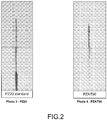
figure 2 illustre des tests de peinture permettant d'évaluer les performances anticorrosion réalisés selon les normes cloquage pleine plaque et degré d'enrouillement ASTM 1654 d'un revêtement comprenant un primaire d'adhérence anticorrosion d'un premier type d'époxy amine incorporant un phosphate de zinc standard, d'un revêtement comprenant un primaire d'adhérence anticorrosion d'un premier type d'époxy amine incorporant un premier composé selon l'invention, et d'un revêtement comprenant un primaire d'adhérence anticorrosion d'un premier type d'époxy amine incorporant un deuxième composé selon l'invention. - La suite de la description est plus particulièrement présentée dans le cadre du mono hydrogéno-phosphate de magnésium, très bien adapté car présentant une très bonne compatibilité avec le phosphate de zinc.
- Le composé suivant a été testé :
PZATB: PZ 80%/PAT30 10%/ZnO 10% avec PZ : Zn3(PO4)2,0 à 4H2O et PAT30 : MgHPO4,3H2O - Il existe deux voies possibles pour déterminer l'étiquetage dangereux pour l'environnement des préparations :
- une première voie régie selon la règle des mélanges de substances, c'est-à-dire selon la composition du produit. Par cette voie, tout produit contenant du zinc est de ce fait dangereux pour l'environnement.
- une deuxième voie régie selon les tests d'écotoxicité en accord avec les protocoles OCDE 201, 202, 203 pour l'écotoxicité aigüe sur la préparation contenant des matières dangereuses, cette deuxième voie possible prévalant sur la première voie tel que défini dans les règlements 1999/45/CE et 1272/2008/CE reprenant les critères de classification d'une préparation ou d'un mélange testé contenant au moins une matière dangereuse.
- Selon la deuxième voie, les tests sont réalisés sur les trois espèces suivantes : les algues, les daphnies, et les poissons.
- D'un point de vue réglementation la demanderesse a suivi l'annexe 5 modifié de la directive 67/548/CEE, la directive 99/45/CEE relative aux préparations modifiées, le rapport du GHS réalisé en 2003 - partie 3, paragraphe 3.10.3 relatif aux critères de classification des mélanges, et des tests ont été réalisés suivant les lignes directrices de l'OCDE 201 adoptée le 23 Mars 2006, 202 adoptée le 13 avril 2004, 203 adoptée le 17 juillet 1992.
- L'étiquetage classique d'un composé s'effectue par la suite par rapport au résultat le plus mauvais des trois tests aigue et permet d'apporter les résultats récapitulés dans le tableau 2, dans lequel sont définis selon une concentration C, une durée de test exprimée en heures et un taux de 50 pourcent d'espèces succombant au terme du nombre d'heures identifiées, les étiquetages imposés ou non.
Tableau 2 : Etiquetage et phrases de risque selon les résultats obtenus lors des tests d'écotoxicité selon 1999/45/CE Tests Concentration C Etiquetage Phrase de risque 96H CL50 (poisson) ≤ 1 mg/l 
R50/53 48 H CE50 (daphnie) Très toxique pour les organismes aquatiques, peut entraîner des effets néfastes à long terme pour l'environnement aquatique 72H CL50 (algues) 96H CL50 (poisson) entre 1 et 10 mg/l 
R51/53 48 H CE50 (daphnie) Toxique pour les organismes aquatiques, peut entraîner des effets néfastes à long terme pour l'environnement aquatique 72H CL50 (algues) 96H CL50 (poisson) entre 10 et 100 mg/l Aucun R52/53 48 H CE50 (daphnie) Nocif pour les organismes aquatiques, peut entraîner des effets néfastes à long terme pour l'environnement aquatique. 72H CL50 (algues) 96H CL50 (poisson) > 100mg/L Aucun R53 ou aucune phrase de risque en fonction de l'écotoxicité chronique 48 H CE50 (daphnie) 72H CL50 (algues - Le système d'étiquetage harmonisé global GHS dans sa dernière révision de 2009, reprend et confirme les limites maximales de 1 (catégorie 1) 10 (catégorie 2 [1 à 10mg/l]) et 100 mg/l (catégorie 3 [10 à 100mg/l]) comme critères de classification de toxicité aquatique aigue des catégories 1 à 3. Au dessus de 100 mg/l de toxicité aigue la substance ou la préparation n'est pas classifiée pour sa toxicité.
- En outre le GHS précise également que lorsque la toxicité chronique présente une concentration sans effet observé supérieure à 1 mg/l, alors cette substance ou ce mélange n'est pas soumis à classification pour son caractère chronique
- Les tests ont été effectués au CIT, Centre International de Toxicologie à Evreux (France).
- La préparation a été réalisée par mélange physique.
- L'appellation BPL désigne les tests réalisés selon les Bonnes Pratiques de Laboratoire.
- On désigne par :
- la référence CL50 : la concentration létale par ingestion pour 50% de la population ;
- la référence CE50 : la concentration létale par inhalation pour 50% de la population
-
Tableau 3 : Résultats de l'écotoxicité aigüe sur les algues Pseudokirchneriella Subcapitata Préparation Test BPL / Non BPL Inhibition algues (%) CL50 (mg /l) PZATB Non BPL 36,2 >100 - Le tableau 3 montre que l'inhibition des algues est inférieure à 50%. La préparation n'est donc pas écotoxique pour les algues du fait d'une écotoxicité aigüe CL50>100mg/L selon le protocole OCDE 201.
-
Tableau 4 : Résultats de l'écotoxicité aigüe sur les crustacés Daphnia Magna Préparation Test BPL/ non BPL Immobilisation daphnies (%) CE50 (mg/L) PZATB Non BPL 0 >100 - Le tableau 4 montre qu'aucune daphnie n'est immobilisée. La préparation n'est donc pas écotoxique pour les crustacés du fait d'une écotoxicité aigüe CE50>100mg/L selon le protocole OCDE 202.
-
Tableau 5 : Résultats de l'écotoxicité aigüe sur les poissons Oncorhynchus Mykiss Préparation Test BPL/ non BPL Nombre de truites Mortalité truites (%) CL50 (mg/L) PZATB Non BPL 10 0 >100 - Le tableau 5 montre qu'aucune truite n'est morte. La préparation ne présente pas de toxicité pour les poissons du fait d'une écotoxicité aigüe CL50>100mg/L selon le protocole OCDE 203.
- Il ressort ainsi de ces analyses que le PZATB ne présente pas de toxicité aigue.
- Différents composés ont été fabriqués et testés présentant des ratio pondéraux entre phosphate de zinc et mono hydrogéno-phosphate de magnésium variant de 99%/1% à 4,3%/95,7%, et identifiés comme suit :
PZAT 99*: PZ 99%/PAT30 1% PZAT 95*: PZ 95%/PAT30 5% PZAT 90: PZ 90%/PAT30 10% PZAT 80*: PZ 80%/PAT30 20% PZAT 70*: PZ 70%/PAT30 30% PZAT 60*: PZ 60%/PAT30 40% PZAT 50*: PZ 50%/PAT30 50% PZAT 40*: PZ 40%/PAT30 60% PZAT 04* PZ 4,3%/PAT30 95,7% avec PZ : Zn3(PO4)2,0 à 4H2O et PAT30 : MgHPO4,3H2O (* Mode de réalisation non couvert par les revendications) - Des tests ont été effectués au CIT, Centre International de Toxicologie à Evreux (France).
- Les préparations ont été réalisées par mélange physique.
- L'appellation BPL désigne les tests réalisés selon les Bonnes Pratiques de Laboratoire.
- On désigne par :
- la référence CL50 : la concentration létale par ingestion pour 50% de la population ;
- la référence CE50 : la concentration létale par inhalation pour 50% de la population
-
Tableau 6 : Résultats de l'écotoxicité aigüe sur les algues Pseudokirchneriella Subcapitata Préparation Test BPL / Non BPL Inhibition algues (%) CL50 (mg /l) PZ 99%/PAT30 1 % BPL 16,29 >100 PZ 95%/PAT30 5% BPL 6,76 >100 PZ 90%/PAT30 10% BPL 11,67 >100 PZ 80%/PAT30 20% Non BPL 23,58 >100 PZ 70%/PAT30 30% Non BPL 19,16 >100 PZ 60%/PAT30 40% Non BPL 17,5 >100 PZ 50%/PAT30 50% Non BPL 13,72 >100 PZ 40%/PAT30 60% Non BPL 6,58 >100 PZ 4,3%/PAT30 95,7% BPL 12,24 >100 - Le tableau 6 montre que l'inhibition des algues est inférieure à 50%. La préparation n'est donc pas écotoxique pour les algues du fait d'une écotoxicité aigüe CL50>100mg/L selon le protocole OCDE 201.
-
Tableau 7 : Résultats de l'écotoxicité aigüe sur les crustacés Daphnia Magna Préparation Test BPL/ non BPL Immobilisation daphnies (%) CE50 (mg/L) PZ 99%/PAT30 1 % BPL 0 >100 PZ 95%/PAT30 5% BPL 0 >100 PZ 90%/PAT30 10% BPL 0 >100 PZ 80%/PAT30 20% Non BPL 0 >100 PZ 70%/PAT30 30% Non BPL 0 >100 PZ 60%/PAT30 40% Non BPL 0 >100 PZ 50%/PAT30 50% Non BPL 0 >100 PZ 40%/PAT30 60% Non BPL 0 >100 PZ 4,3%/PAT30 95,7% BPL 0 >100 - Le tableau 7 montre qu'aucune daphnie n'est immobilisée. La préparation n'est donc pas écotoxique pour les crustacés du fait d'une écotoxicité aigüe CE50>100mg/L selon le protocole OCDE 202.
-
Tableau 8 : Résultats de l'écotoxicité aigüe sur les poissons Oncorhynchus Mykiss Préparation Test BPL/ non BPL Nombre de truites Mortalité truites (%) CL50 (mg/L) PZ 99%/PAT30 1 % BPL 10 0 >100 PZ 95%/PAT30 5% BPL 10 0 >100 PZ 90%/PAT30 10% BPL 10 0 >100 PZ 80%/PAT30 20% Non BPL 10 0 >100 PZ 70%/PAT30 30% Non BPL 10 0 >100 PZ 60%/PAT30 40% Non BPL 10 0 >100 PZ 50%/PAT30 50% Non BPL 10 0 >100 PZ 40%/PAT30 60% Non BPL 10 0 >100 PZ 4,3%/PAT30 95,7% BPL 10 0 >100 - Le tableau 8 montre qu'aucune truite n'est morte. La préparation ne présente pas de toxicité pour les poissons du fait d'une écotoxicité aigüe CL50>100mg/L selon le protocole OCDE 203.
- Différents composés ont été fabriqués et testés présentant des ratio pondéraux entre phosphate de zinc et mono hydrogéno-phosphate de magnésium variant de 99%/1% à 25%/75%, et identifiés comme suit :
PZAT 99 * : PZ 99%/PAT30 1 % PZAT 92 * : PZ 92%/PAT30 8% PZAT 25 * : PZ 75%/PAT30 25% avec PZ : Zn3(PO4)2,0à 4H2O et PAT30 : MgHPO4,3H2O (* Mode de réalisation non couvert par les revendications) - Il existe deux voies possibles pour déterminer l'étiquage dangereux pour l'environnement à long terme des préparations :
- une première voie régie selon la règle des mélanges de substances, c'est-à-dire selon la composition du produit. Par cette voie, tout produit contenant plus de 25% d'un produit R53 (1999/45/CE) présente de ce fait une écotoxicité chronique
- une deuxième voie régie selon les tests d'écotoxicité sur l'espèce la plus sensible qui dans le cas des sels de zinc sont les daphnies en accord avec le protocole OCDE 211 sur la préparation contenant des matières dangereuses, cette deuxième voie possible prévalant sur la première voie.
- D'un point de vue réglementation la demanderesse a suivi l'annexe 5 modifié de la directive 67/548/CEE, la directive 99/45/CEE relative aux préparations modifiées au tableau 9, le règlement 1272/2008 CE issu des recommandations de l'ONU rapport du GHS réalisé en 2003 modifié - partie 3, paragraphe 3.10.3 au tableau 10 relatif aux critères de classification des mélanges, et des tests ont été réalisés suivant les lignes directrices de l'OCDE 211 adoptée le 3 octobre 2008.
On désigne par CSEO la Concentration Sans Effet Observé.Tableau 9 : Etiquetage et phrases de risque d'écotoxicité chronique selon le GHS Tests Etiquetage et phrases de risque selon le GHS Si CSEO < ou = 1 mg/L Peut entraîner des effets néfastes à long terme pour l'environnement aquatique Si CSEO > 1mg/L Pas d'étiquette Pas de phrase de risque Tableau 10 : Etiquetage et phrases de risque d'écotoxicité chronique selon la réglementation 1999/45/CE pour les préparations ou mélanges Contenu Etiquetage et phrases de risque selon la réglementation actuelle Si le contenu en substance R53 >25% (en l'absence de R50 ou 51 ou 52) R53 Peut entraîner des effets néfastes à long terme pour l'environnement aquatique Si le contenu en substance R53 <25% (en l'absence de R50 ou 51 ou 52) Pas d'étiquette Pas de phrase de risque - Des tests ont été effectués au CIT, Centre International de Toxicologie à Evreux (France).
- Les préparations ont été réalisées par mélange physique.
- Les tests ont été effectués en BPL. L'appellation BPL désigne les tests réalisés selon les Bonnes Pratiques de Laboratoire.
Tableau 11 : Résultats des tests d'écotoxicité chronique Préparation Mortalité Croissance Reproduction CSEO PZAT99 Sans effet Sans effet Sans effet > ou = 1,5mg/L PZAT92 Sans effet Sans effet Sans effet > ou = 1,5mg/L PZAT25 Sans effet Sans effet Sans effet > ou = 1,5mg/L - Le tableau 11 montre que les préparations ne présentent pas d'écotoxicité chronique du fait d'une CSEO > 1mg/L selon le protocole OCDE 211.
- Ainsi l'ensemble des préparations contenant du phosphate de zinc et du phosphate de magnésium ne présente aucun étiquetage dangereux pour l'environnement (pas d'écotoxicité aigüe ni chronique).
- Les préparations de 0 à 25% de phosphate de zinc ne présentant pas d'écotoxicité chronique d'après la règle des mélanges, on a démontré que tout composé contenant de 0 à 99% de phosphate de zinc en mélange avec du phosphate de magnésium est de ce fait exempt d'étiquetage dangereux pour l'environnement.
- Il ressort ainsi de ces analyses que l'ensemble de ces préparations citées ci-dessus en point 2 et 3 ne sont pas dangereuses pour l'environnement tant pour les caractères aigue et chronique.
- Les composés correspondant énumérés ci-dessus ont été évalués en terme d'écotoxicité et, à titre d'illustration industrielle, sont également évalués en terme de performances anticorrosion.
- Pour cela on réalise des primaires d'adhérence anticorrosion classiques de type système époxy en phase solvant incorporant les différents composés pigmentaires sans qu'il y ait de notables pertes de performances par rapport au PZ.
- En effet dans le cadre de la problématique de revêtement anticorrosion, on cherche à développer des primaires d'adhérence anticorrosion correspondant à la première couche destinée à revêtir une surface métallique, elle-même destinée à supporter de manière classique une seconde couche de peinture portant généralement la couleur dudit revêtement et dénommée fréquemment couche de finition.
- Ainsi la demanderesse a effectué des tests en peinture prouvant les bonnes performances anticorrosion en peinture des composés. Ces tests ont été effectués avec des primaires époxy phase solvant.
- La formule du tableau 12 a été réalisée.
Tableau 12 : formule d'un primaire alkyde vinylique phase solvant MATIERES PREMIERES % POIDS DESCRIPTION FOURNISSEURS SETAL 199-SS-55 25,5 Alkyde moyenne en huile NUPLEX ACETONE 5,00 solvant SHELL NUODEX 10% Ca 0,50 Agent dispersant ELEMENTIS Specialities BENTONE SD2 0,30 Additif rheologique NL Chemicals SOLVESSO 100 7,5 Solvant aromatique EXXON CHEMICAL PHOSPHATE DE ZINC PZ20 8,00 Inhibiteur de corrosion SNCZ TALC 10 M2 4,00 charge RIO TINTO Minerals MICA MU M 2/1 9,00 charge CMMP MICRONOX 11,00 Oxyde de fer naturel micronisé KEYSER ET MACKAY THIXATROL ST 0,30 Additif thixotropique NL Chemicals broyage 40 minutes jusqu'à finesse Hegman de 6 LAROFLEX MP35/S100 at 28.5% 21,10 Copolymer chlorure de vinyl BASF SOLVESSO 100 2,93 Solvant aromatique EXXON CHEMICAL ALCCOL ISOPROPYLIC 1,20 solvant SHELL CERECLOR 42 0,60 Paraffine chorée, plastifiant INEOS NUODEX 8% Co 0,05 siccatif ELEMENTIS Specialities NUODEX 10% Zr 0,12 siccatif ELEMENTIS Specialities DUOMEEN TDO 0,30 Surfactant cationique AKZO Chemie MEKO 0,50 Methylethyl cetoxime, agent antipeau CVP % (concentration volumique pigmentaire) 30,21 Extrait sec en poids% 60,49 Extrait sec volumique% 41,62 Ratio pigment/liant (en volume) 0,43 - Le PZ (Mode de réalisation non couvert par les revendications), la préparation PZ 80%/PAT30 10%/ZnO 10%, et la préparation PZ 90%/PAT30 10% ont été comparés. Le PZATB, et le PZAT90 ont été réalisés par mélange physique.
- On réalise une couche de primaire anticorrosion incorporant les composés pigmentaires dans une résine de type alkyde d'épaisseur 40µm sur une surface métallique. Cette couche est recouverte d'un film d'une couche alkyde de 25 µm d'épaisseur, encore dénommée couramment couche de finition.
- L'ensemble est soumis à l'exposition d'un brouillard salin (norme ASTM B117) durant 300 heures.
- La
figure 1 illustre les résultats obtenus. - Une cotation a permis d'évaluer le degré d'enrouillement et le degré de cloquage.
- Pour le degré d'enrouillement, la norme NF ISO 4628-3 T30-140-3 a été utilisée.
Ri0 : pas d'enrouillement, 0% d'aire rouillée
Ri1 : très peu d'enrouillement 0,5% d'aire rouillée
Ri5 : très rouillé 40 à 50% d'aire rouillée - Pour le degré de cloquage, les normes NF ISO 4628-1 T30-140-2 et NF ISO 4628-3 T30-140-2 ont été utilisées
D0S0 : aucun défaut décelable à dimension invisible sous agrandissement X10
D2S2 : petites cloques en petite quantité
D5S5 : grosses cloques en grande quantité - La « cotation griffe » et la « cotation générale » se sont effectuées suivant la norme ASTM D 1654 Janvier 2005- « Standard Test Method for Evaluation of Painted or Coated Specimens Subjected to Corrosive Environments »- tableau 1 et 2 respectivement page 3.
Cotation à la griffe : - 10 représente 0 mm à la griffe
- 0 représente 16 mm et plus à la griffe
- 10 représente 0% de dégradation
- 0 représente plus de 75% de dégradation
- La cotation au tableau 13 s'effectue en suivant les normes décrites ci-dessus.
Tableau 13 : cotation du primaire alkyde vinylique phase solvant Degré d'enrouillement NF-ISO 4828-3 T 30140-3 Degré de cloquage NF-ISO 4828-3 T 30140-3 Corrosion griffe ASTM 1654 Cotation générale pleine plaque ASTM 1654 PZ RI1 D2S2 6 6 PZAT90 RI1 D3S2 4 4 PZATB RI0 D0S0 8 9 - Le PZATB est aussi performant que le PZ, et plus performant que le PZAT90.
- La formule du tableau 14 a été réalisée.
Tableau 14 : Formule d'un primaire époxy amide phase solvant MATIERES PREMIERES % POIDS DESCRIPTION FOURNISSEURS PART A Introduire sous mélange dans l'ordre suivant EPIKOTE 1001/XYLENE 50/50 poids/poids 22,90 Résine époxy HEXION SOLVESSO 100 7,20 Hydrocarbure aromatique solvant TOTAL Chimie ALCOOL ISOBUTYLIQUE 1,60 Solvant SHELL DOWANOL PMA 7,30 Ester de glycol, solvant DOW NUODEX 10% Ca 0,50 Agent de dispersion ELEMENTIS Specialities BENTONE SD2 0,15 Additif rheologique ELEMENTIS Specialities TiO2 TR92 4,30 Rutile HUNSTMANN PHOSPHATE DE ZINC PZ20 8,00 Inhibiteur de Corrosion SNCZ YELLOW IRON OXIDE 3920 5,10 Pigment colorant BAYER TALC 10 M2 9,30 Charge RIO TINTO Minerais MICA MU 2/1 10,70 Charge CMMP THIXATROL ST 0,20 Additif thixotropique ELEMENTIS Specialities Broyage billes pendant 40 minutes jusqu'à finesse 5 Hegman ACETATE DE BUTYL 2,50 Ester, solvant TOTAL chimie CERECLOR M50 2,40 Paraffine chlorée plastifiant INEOS DUOMEEN TDO 0,15 Surfactant type cationique AKZO Chemie PART B XYLENE 3,00 Hydrocarbure aromatique, solvant TOTAL Chimie EPILINK 230 0,30 Accélérateur AKZO Chemie ARADUR 115 X70 BD 14,40 Durcisseur polyamino amide VANTICO CVP % (concentration volumique pigmentaire) 34,5 Extrait sec en poids% 62,39 Extrait sec volumique% 44,75 Ratio pigment/liant (en volume) 0,53 - Le PZ (Mode de réalisation non couvert par les revendications), la préparation PZ 80%/PAT30 10%/ZnO 10%, et la préparation PZ 90%/PAT30 10% ont été comparés. Le PZATB, et le PZAT90 ont été réalisés par mélange physique.
- On réalise une couche de primaire anticorrosion incorporant les composés pigmentaires dans une résine de type époxy amide d'épaisseur 50µm sur une surface métallique. Cette couche est recouverte d'un film de polyuréthane PU de 100 µm d'épaisseur, encore dénommée couramment couche de finition.
- L'ensemble est soumis à l'exposition d'un brouillard salin (norme ASTM B117) durant 600 heures.
- La
figure 2 illustre les résultats obtenus. - La cotation au tableau 15 s'effectue en suivant les mêmes normes que citées précédemment.
Tableau 15 : cotation du primaire époxy amide phase solvant Degré d'enrouillement NF-ISO 4828-3 T 30140-3 Degré de cloquage NF-ISO 4828-3 T 30140-3 Corrosion griffe ASTM* 1654 Cotation générale pleine plaque ASTM* 1654 PZ RI1 D2S2 4 7 PZAT90 RI1 D2S2 6 8 PZATB RI1 D2S2 3 6 - Le PZAT90 est aussi performant que le PZ, et plus performant que le PZATB.
- La formule au tableau 16 a été réalisée.
Tableau 16 : Formule d'un primaire époxy amine phase solvant MATIERES PREMIERES % POIDS DESCRIPTION FOURNISSEURS PART A Introduire sous mélange dans l'ordre suivant EPIKOTE 1001/XYLENE 50/50 poids/poids 25,40 Résine époxy HEXION SOLVESSO 100 7,90 Hydrocarbure aromatique solvant TOTAL chimie ALCOOL ISOBUTYLIQUE 1,80 Solvant SHELL DOWANOL PMA 8,00 Ester de glycol, solvant DOW NUODEX 10% Ca 0,50 Agent de dispersion ELEMENTIS Specialities BENTONE SD2 0,20 Additif rheologique ELEMENTIS Specialities TiO2 TR92 4,80 Rutile HUNSTMANN PHOSPHATE DE ZINC PZ20 8,00 Inhibiteur de Corrosion SNCZ OXYDE DE FER JAUNE 3920 5,70 Pigment colorant BAYER TALC 10 M2 9,00 Charge RIO TINTO Minerais MICA MU 2/1 10,00 Charge CMMP THIXATROL ST 0,20 Additif thixotropique ELEMENTIS Specialities Broyage billes pendant 40 minutes jusqu'à finesse 5 hegman BUTYL ACETATE 2,60 Ester, solvant TOTAL chimie CERECLOR M50 2,60 Paraffine chlorée plastifiant INEOS DUOMEEN TDO 0,20 Surfactant type cationique AKZO Chemie PART B XYLENE 4,10 Hydrocarbure aromatique solvant TOTAL chimie DOWANOL PMA 4.10 ester de glycol, solvant DOW EFFIDUR 433 4,90 Cycloaliphatique polyamine France INDUSTRIE CVP % (concentration volumique pigmentaire) 39,27 Extrait sec en poids% 58,56 Extrait sec volumique% 39,27 Ratio pigment/liant (en volume) 0,65 - On réalise un primaire anticorrosion à base d'époxy amine incorporant les préparations pigmentaires, d'épaisseur 50µm. Cette couche est recouverte d'un film de polyuréthane PU de 100 µm d'épaisseur, encore dénommée couramment couche de finition.
- L'ensemble est soumis à l'exposition d'un brouillard salin-norme ASTM B117-durant 600 heures.
- La figure 3 illustre les résultats obtenus.
- La cotation au tableau 17 s'effectue en suivant les mêmes normes que citées précédemment.
Tableau 17 : Cotation du primaire époxy amine phase solvant Degré d'enrouillement NF-ISO 4828-3 T 30140-3 Degré de cloquage NF-ISO 4828-3 T 30140-3 Corrosion griffe ASTM* 1654 Cotation générale pleine plaque ASTM* 1654 PZ RI1 D0S0 6 6 PZAT90 RI0 D0S0 8 9 PZATB RI1 D0S0 6 6 - Le PZATB est aussi performant que le PZ, le PZAT90 est plus performant que ces deux autres composés.
- Une comparaison du PZ et du pigment PZAT90 en système époxy amide, et époxy amide en phase solvant montre des résultats très satisfaisants concernant la performance du pigment PZAT90.
Claims (16)
- Procédé de détoxication permettant l'obtention d'un composé pigmentaire exempt d'écotoxicité aquatique aigüe et chronique comprenant au moins un composant à base de zinc présentant de bonnes propriétés anticorrosives fortement toxique de phosphate de zinc Zn3(PO4)2,0 à 4H2O et/ou de l'oxyde de zinc caractérisé en ce qu'il comprend, le mélange de phosphate de zinc Zn3(PO4)2,0 à 4H2O avec du phosphate de magnésium MgHPO4,3H2O ou le mélange de phosphate de zinc Zn3(PO4)2,0 à 4H2O et d'oxyde de zinc avec du phosphate de magnésium MgHPO4,3H2O, le ratio pondéral entre le phosphate de zinc et le phosphate de magnésium étant d'environ 90 %/10%, ou le ratio pondéral entre le phosphate de zinc, le phosphate de magnésium, et l'oxyde de zinc étant d'environ 80%/10%/10%.
- Procédé de détoxication permettant l'obtention d'un composé pigmentaire exempt d'écotoxicité aquatique aigüe et chronique selon la revendication 1, caractérisé en ce que ledit composant pigmentaire exempt de toxicité présente un taux d'inhibition des algues inférieur à 50% selon le protocole OCDE 201, un taux d'immobilisation des daphnies inférieur à 50% selon le protocole OCDE 202, un taux de mortalité des poissons inférieur à 50% selon le protocole OCDE 203, ce qui conduit à des CL50 (concentration léthales par ingestion pour 50% de la population) et CE50 (concentration léthale par inhalation pour 50% de la population) supérieures à 100mg/L, et une CSEO (Concentration Sans Effet Observé) strictement supérieure à 1 mg/L sur la reproduction des daphnies selon le protocole OCDE 211.
- Procédé d'élaboration d'une peinture anticorrosion caractérisé en ce qu'il utilise le composé pigmentaire obtenu par le procédé de détoxication selon l'une des revendications 1 à 2.
- Procédé d'élaboration d'une peinture anticorrosion selon la revendication 3, caractérisé en ce qu'il comprend l'utilisation d'un composé pigmentaire en combinaison avec une charge non écotoxique comme par exemple le talc, la baryte, le kaolin, la silice, les silicates ou carbonates d'aluminium, de calcium, de magnésium, de potassium, l'oxyde de fer, le vert oxyde de chrome, le mica, la ferrite, le carbonate, le dioxyde de titane pour l'élaboration d'une peinture.
- Procédé de détoxication permettant l'obtention d'un composé pigmentaire exempt d'écotoxicité aquatique aigüe et chronique selon l'une des revendications 1 à 2, caractérisé en ce qu'il comprend le mélange de poudre par voie physique ou chimique de type précipitation séquentielle, cristallisation séquentielle, coprécipitation, cocristallisation, broyage, malaxage, dispersion, extrusion, empâtage, granulation.
- Procédé d'obtention d'un revêtement comportant un polymère de type époxy, alkyde, acrylique, vinylique, polyuréthane, polyester, aminoplaste, polyoléfine, phénolique, butyrale, butadiène, PVDF, caoutchouc, huile synthétique ou naturelle caractérisé en ce qu'il utilise le composé pigmentaire obtenu par le procédé de détoxication selon l'une des revendications 1 à 2.
- Utilisation d'un revêtement anticorrosion obtenu selon le procédé de la revendication 6, pour le traitement de pièce ou objet métallique tel que véhicule automobile, navire, aéronef, pont, engin de travaux publics, ferroviaire, bâtiment agricole, industriel, « coil coating », matériel électronique, informatique, et électroménager, installation gazière et pétrolière.
- Procédé d'obtention d'une matière plastique caractérisé en ce qu'il utilise le composé pigmentaire obtenu par le procédé de détoxication selon l'une des revendications 1 à 2.
- Procédé d'obtention d'un mastic caractérisé en ce qu'il utilise le composé pigmentaire obtenu par le procédé de détoxication selon l'une des revendications 1 à 2.
- Procédé d'obtention d'un adhésif caractérisé en ce qu'il utilise le composé pigmentaire obtenu par le procédé de détoxication selon l'une des revendications 1 à 2.
- Procédé d'obtention d'une encre caractérisé en ce qu'il utilise le composé pigmentaire obtenu par le procédé de détoxication selon l'une des revendications 1 à 2.
- Procédé d'obtention d'une matière caoutchoutique naturelle ou synthétique caractérisé en ce qu'il utilise le composé pigmentaire obtenu par le procédé de détoxication selon l'une des revendications 1 à 2.
- Procédé d'obtention d'un lubrifiant solide ou liquide caractérisé en ce qu'il utilise le composé pigmentaire obtenu par le procédé de détoxication selon l'une des revendications 1 à 2.
- Procédé d'obtention d'une substance fertilisante caractérisé en ce qu'il utilise le composé pigmentaire obtenu par le procédé de détoxication selon l'une des revendications 1 à 2.
- Procédé d'obtention d'un composé anti-UV pour matières plastiques caractérisé en ce qu'il utilise le composé pigmentaire obtenu par le procédé de détoxication selon l'une des revendications 1 à 2.
- Procédé d'obtention d'un composé anti-UV pour cosmétiques caractérisé en ce qu'il utilise le composé pigmentaire obtenu par le procédé de détoxication selon l'une des revendications 1 à 2.
Priority Applications (1)
| Application Number | Priority Date | Filing Date | Title |
|---|---|---|---|
| PL10704159T PL2398861T3 (pl) | 2009-02-20 | 2010-02-19 | Metoda odtruwania pozwalająca na uzyskanie związku barwnikowego zawierającego cynk pozbawiona ekotoksyczności |
Applications Claiming Priority (2)
| Application Number | Priority Date | Filing Date | Title |
|---|---|---|---|
| FR0951104A FR2942478B1 (fr) | 2009-02-20 | 2009-02-20 | Compose pigmentaire zincifere exempt d'ecotoxicite et primaire d'adherence anticorrosion incorporant ledit compose. |
| PCT/EP2010/052118 WO2010094764A1 (fr) | 2009-02-20 | 2010-02-19 | Procede de detoxication permettant l'obtention d'un compose pigmentaire zincifere exempt d'ecotoxicite |
Publications (2)
| Publication Number | Publication Date |
|---|---|
| EP2398861A1 EP2398861A1 (fr) | 2011-12-28 |
| EP2398861B1 true EP2398861B1 (fr) | 2018-07-25 |
Family
ID=41130154
Family Applications (1)
| Application Number | Title | Priority Date | Filing Date |
|---|---|---|---|
| EP10704159.2A Active EP2398861B1 (fr) | 2009-02-20 | 2010-02-19 | Procede de detoxication permettant l'obtention d'un compose pigmentaire zincifere exempt d'ecotoxicite |
Country Status (8)
| Country | Link |
|---|---|
| US (1) | US9840623B2 (fr) |
| EP (1) | EP2398861B1 (fr) |
| JP (1) | JP5906552B2 (fr) |
| AU (1) | AU2010215430B2 (fr) |
| ES (1) | ES2692496T3 (fr) |
| FR (1) | FR2942478B1 (fr) |
| PL (1) | PL2398861T3 (fr) |
| WO (1) | WO2010094764A1 (fr) |
Families Citing this family (5)
| Publication number | Priority date | Publication date | Assignee | Title |
|---|---|---|---|---|
| WO2016165936A1 (fr) * | 2015-04-17 | 2016-10-20 | Basf Coatings Gmbh | Procédé de revêtement |
| BE1024119B1 (fr) | 2016-12-16 | 2017-11-16 | Societe Industrielle Liegeoise Des Oxydes Sa | Composition pulverulente durable |
| CN107338425A (zh) * | 2017-06-22 | 2017-11-10 | 山东大学苏州研究院 | 一种钛表面含锶磷酸盐生物活性转化膜的制备方法 |
| CN108558515A (zh) * | 2018-06-01 | 2018-09-21 | 山东农业大学 | 一种纳米材料改性地沟油包膜控释肥及其制备方法 |
| CN113617348B (zh) * | 2021-09-13 | 2023-07-04 | 中国石油化工股份有限公司 | 一种分子筛负载TiO2光催化材料及其制备方法和应用 |
Family Cites Families (25)
| Publication number | Priority date | Publication date | Assignee | Title |
|---|---|---|---|---|
| US3533859A (en) * | 1966-06-18 | 1970-10-13 | Hooker Chemical Corp | Coating process for ferrous metal surfaces |
| CA1040410A (fr) * | 1973-12-13 | 1978-10-17 | Erco Industries Limited | Composes d'enduction |
| GB1536660A (en) * | 1974-12-20 | 1978-12-20 | Albright & Wilson | Coating compositions |
| US4017315A (en) * | 1975-06-27 | 1977-04-12 | Amax Inc. | Molybdate-phosphate corrosion inhibiting pigment |
| US4237114A (en) * | 1979-01-22 | 1980-12-02 | Environmental Chemicals, Inc. | Method and composition for the long term controlled release of a non-persistent organotin pesticide from an inert monolithic thermoplastic dispenser |
| DE2940695A1 (de) * | 1979-10-08 | 1981-04-16 | Hoechst Ag, 6000 Frankfurt | Korrosionsinhibierendes pigment |
| US4623469A (en) * | 1983-09-15 | 1986-11-18 | Chem-Technics, Inc. | Method for rendering hazardous wastes less permeable and more resistant to leaching |
| JPS624753A (ja) * | 1985-07-01 | 1987-01-10 | Teikoku Kako Kk | 防錆顔料組成物 |
| JP2639714B2 (ja) * | 1988-12-05 | 1997-08-13 | テイカ株式会社 | 防錆顔料組成物 |
| US5037479A (en) * | 1990-04-20 | 1991-08-06 | Rmt, Inc. | Method for reduction of heavy metal leaching from hazardous waste under acidic and nonacidic conditions |
| DE4014523A1 (de) * | 1990-05-07 | 1991-11-14 | Budenheim Rud A Oetker Chemie | Korrosionsschutzpigment |
| JPH0570742A (ja) * | 1991-09-11 | 1993-03-23 | Sunstar Eng Inc | 自動車構造部材用アルミニウム合金の接合方法 |
| JP3184260B2 (ja) * | 1991-09-17 | 2001-07-09 | サンスター技研株式会社 | 自動車構造部材用アルミニウム合金のウェルドボンド接合方法 |
| JP3089347B2 (ja) * | 1992-08-04 | 2000-09-18 | 太平化学産業株式会社 | 防錆顔料 |
| JPH0841374A (ja) * | 1994-08-02 | 1996-02-13 | Nippon Chem Ind Co Ltd | 白色防錆顔料とその製造方法 |
| JPH0841375A (ja) * | 1994-08-02 | 1996-02-13 | Nippon Chem Ind Co Ltd | 白色防錆顔料およびその製造方法 |
| DE19541895A1 (de) * | 1994-12-22 | 1996-06-27 | Budenheim Rud A Oetker Chemie | Korrosionsschutzpigment und dessen Anwendung |
| NO312911B1 (no) | 1994-12-22 | 2002-07-15 | Budenheim Rud A Oetker Chemie | Antikorrosjonspigment og anvendelse av dette |
| JP3871402B2 (ja) * | 1997-07-31 | 2007-01-24 | 日本化学工業株式会社 | 防錆顔料組成物およびこれを含有する防錆塗料 |
| IL143551A0 (en) * | 2001-06-04 | 2002-04-21 | Pigmentan Ltd | Paints and coatings composition useful for corrosion inhibition and a method for production therefor |
| US20090238811A1 (en) * | 2002-09-09 | 2009-09-24 | Mcdaniel C Steven | Enzymatic Antimicrobial and Antifouling Coatings and Polymeric Materials |
| JP2004359818A (ja) * | 2003-06-04 | 2004-12-24 | Toshiba Corp | 防錆塗料およびその塗装物 |
| JP2006116736A (ja) | 2004-10-19 | 2006-05-11 | Nisshin Steel Co Ltd | 耐食性に優れた塗装ステンレス鋼板 |
| JP5367983B2 (ja) * | 2005-10-20 | 2013-12-11 | 中国塗料株式会社 | 防錆顔料含有多官能性エポキシ樹脂系塗料組成物、その塗膜、その塗膜で被覆された基材および防食方法 |
| JP2008248073A (ja) * | 2007-03-30 | 2008-10-16 | Kansai Paint Co Ltd | 水性塗料組成物、防錆顔料分散体及び水性塗料組成物の製造方法 |
-
2009
- 2009-02-20 FR FR0951104A patent/FR2942478B1/fr active Active
-
2010
- 2010-02-19 PL PL10704159T patent/PL2398861T3/pl unknown
- 2010-02-19 AU AU2010215430A patent/AU2010215430B2/en active Active
- 2010-02-19 JP JP2011550578A patent/JP5906552B2/ja active Active
- 2010-02-19 EP EP10704159.2A patent/EP2398861B1/fr active Active
- 2010-02-19 US US13/202,462 patent/US9840623B2/en active Active
- 2010-02-19 WO PCT/EP2010/052118 patent/WO2010094764A1/fr not_active Ceased
- 2010-02-19 ES ES10704159.2T patent/ES2692496T3/es active Active
Non-Patent Citations (1)
| Title |
|---|
| None * |
Also Published As
| Publication number | Publication date |
|---|---|
| PL2398861T3 (pl) | 2018-12-31 |
| FR2942478B1 (fr) | 2011-07-15 |
| JP2012518696A (ja) | 2012-08-16 |
| JP5906552B2 (ja) | 2016-04-20 |
| WO2010094764A1 (fr) | 2010-08-26 |
| ES2692496T3 (es) | 2018-12-03 |
| AU2010215430A1 (en) | 2011-09-29 |
| AU2010215430B2 (en) | 2015-05-14 |
| FR2942478A1 (fr) | 2010-08-27 |
| US20110300084A1 (en) | 2011-12-08 |
| US9840623B2 (en) | 2017-12-12 |
| EP2398861A1 (fr) | 2011-12-28 |
Similar Documents
| Publication | Publication Date | Title |
|---|---|---|
| EP3131978B1 (fr) | Composition de revêtement résistant à la corrosion | |
| JP6439022B2 (ja) | 防錆塗料、防錆塗膜、及び防錆積層塗膜 | |
| CN114286845A (zh) | 水性涂料 | |
| EP0255102A1 (fr) | Compositions de révêtement contenant des pigments réactifs et possedant une excellente résistance à l'agression de l'environnement | |
| EP2398861A1 (fr) | Procede de detoxication permettant l'obtention d'un compose pigmentaire zincifere exempt d'ecotoxicite | |
| US5158605A (en) | Sol/gel polymer surface coatings and corrosion protection enhancement | |
| BE1001193A5 (fr) | Composition de revetement aqueuse d'hydrosol acrylique pigmente. | |
| EP3199605A1 (fr) | Composition de peinture antirouille, et mise en uvre de celle-ci | |
| CA2322632A1 (fr) | Compositions de revetement et procedes | |
| FR2660928A1 (fr) | Composition pigmentaire anticorrosive destinee au revetement. | |
| EP3280773B1 (fr) | Pigments anti-corrosion a base de polyphosphate d'aluminium et de terre rare | |
| RU2378305C1 (ru) | Антикоррозионный состав для покрытий | |
| LU84248A1 (fr) | Peintures riches en zinc contenant de la fumee d'oxyde manganomanganique pigmentaire | |
| JP3686206B2 (ja) | 防食鏡 | |
| AU623938B2 (en) | Surface treatment | |
| KR101614054B1 (ko) | 수성 방청제 조성물 | |
| US2287218A (en) | Antifouling composition | |
| RU2304602C1 (ru) | Композиция для получения антикоррозионного покрытия | |
| US20240101830A1 (en) | Metallic pigment preparation | |
| JPH067000B2 (ja) | 上水道用の内面塗装鋼管 | |
| US20230151244A1 (en) | Primer coating composition | |
| EP1409595B1 (fr) | Peintures et revetements a base de niobium, ses oxydes et utilisation en tant que protection anticorrosion | |
| AU2020478543B2 (en) | Anticorrosive coating composition | |
| US5108499A (en) | Corrosion inhibitor for use in coating formulations comprising synergistic combinations of a calcium borate and zinc bis[3-N,N-dipropylamine]propionate | |
| JPS58133872A (ja) | 防食被覆方法 |
Legal Events
| Date | Code | Title | Description |
|---|---|---|---|
| PUAI | Public reference made under article 153(3) epc to a published international application that has entered the european phase |
Free format text: ORIGINAL CODE: 0009012 |
|
| 17P | Request for examination filed |
Effective date: 20110818 |
|
| AK | Designated contracting states |
Kind code of ref document: A1 Designated state(s): AT BE BG CH CY CZ DE DK EE ES FI FR GB GR HR HU IE IS IT LI LT LU LV MC MK MT NL NO PL PT RO SE SI SK SM TR |
|
| DAX | Request for extension of the european patent (deleted) | ||
| 17Q | First examination report despatched |
Effective date: 20160225 |
|
| GRAP | Despatch of communication of intention to grant a patent |
Free format text: ORIGINAL CODE: EPIDOSNIGR1 |
|
| STAA | Information on the status of an ep patent application or granted ep patent |
Free format text: STATUS: GRANT OF PATENT IS INTENDED |
|
| INTG | Intention to grant announced |
Effective date: 20180221 |
|
| GRAS | Grant fee paid |
Free format text: ORIGINAL CODE: EPIDOSNIGR3 |
|
| GRAA | (expected) grant |
Free format text: ORIGINAL CODE: 0009210 |
|
| STAA | Information on the status of an ep patent application or granted ep patent |
Free format text: STATUS: THE PATENT HAS BEEN GRANTED |
|
| AK | Designated contracting states |
Kind code of ref document: B1 Designated state(s): AT BE BG CH CY CZ DE DK EE ES FI FR GB GR HR HU IE IS IT LI LT LU LV MC MK MT NL NO PL PT RO SE SI SK SM TR |
|
| REG | Reference to a national code |
Ref country code: GB Ref legal event code: FG4D Free format text: NOT ENGLISH |
|
| REG | Reference to a national code |
Ref country code: CH Ref legal event code: EP |
|
| REG | Reference to a national code |
Ref country code: AT Ref legal event code: REF Ref document number: 1021739 Country of ref document: AT Kind code of ref document: T Effective date: 20180815 |
|
| REG | Reference to a national code |
Ref country code: IE Ref legal event code: FG4D Free format text: LANGUAGE OF EP DOCUMENT: FRENCH |
|
| REG | Reference to a national code |
Ref country code: DE Ref legal event code: R096 Ref document number: 602010052142 Country of ref document: DE |
|
| REG | Reference to a national code |
Ref country code: NL Ref legal event code: FP |
|
| REG | Reference to a national code |
Ref country code: SE Ref legal event code: TRGR |
|
| REG | Reference to a national code |
Ref country code: ES Ref legal event code: FG2A Ref document number: 2692496 Country of ref document: ES Kind code of ref document: T3 Effective date: 20181203 |
|
| REG | Reference to a national code |
Ref country code: LT Ref legal event code: MG4D |
|
| PG25 | Lapsed in a contracting state [announced via postgrant information from national office to epo] |
Ref country code: NO Free format text: LAPSE BECAUSE OF FAILURE TO SUBMIT A TRANSLATION OF THE DESCRIPTION OR TO PAY THE FEE WITHIN THE PRESCRIBED TIME-LIMIT Effective date: 20181025 Ref country code: BG Free format text: LAPSE BECAUSE OF FAILURE TO SUBMIT A TRANSLATION OF THE DESCRIPTION OR TO PAY THE FEE WITHIN THE PRESCRIBED TIME-LIMIT Effective date: 20181025 Ref country code: GR Free format text: LAPSE BECAUSE OF FAILURE TO SUBMIT A TRANSLATION OF THE DESCRIPTION OR TO PAY THE FEE WITHIN THE PRESCRIBED TIME-LIMIT Effective date: 20181026 Ref country code: IS Free format text: LAPSE BECAUSE OF FAILURE TO SUBMIT A TRANSLATION OF THE DESCRIPTION OR TO PAY THE FEE WITHIN THE PRESCRIBED TIME-LIMIT Effective date: 20181125 Ref country code: FI Free format text: LAPSE BECAUSE OF FAILURE TO SUBMIT A TRANSLATION OF THE DESCRIPTION OR TO PAY THE FEE WITHIN THE PRESCRIBED TIME-LIMIT Effective date: 20180725 Ref country code: LT Free format text: LAPSE BECAUSE OF FAILURE TO SUBMIT A TRANSLATION OF THE DESCRIPTION OR TO PAY THE FEE WITHIN THE PRESCRIBED TIME-LIMIT Effective date: 20180725 |
|
| PG25 | Lapsed in a contracting state [announced via postgrant information from national office to epo] |
Ref country code: LV Free format text: LAPSE BECAUSE OF FAILURE TO SUBMIT A TRANSLATION OF THE DESCRIPTION OR TO PAY THE FEE WITHIN THE PRESCRIBED TIME-LIMIT Effective date: 20180725 Ref country code: HR Free format text: LAPSE BECAUSE OF FAILURE TO SUBMIT A TRANSLATION OF THE DESCRIPTION OR TO PAY THE FEE WITHIN THE PRESCRIBED TIME-LIMIT Effective date: 20180725 |
|
| REG | Reference to a national code |
Ref country code: DE Ref legal event code: R097 Ref document number: 602010052142 Country of ref document: DE |
|
| PG25 | Lapsed in a contracting state [announced via postgrant information from national office to epo] |
Ref country code: EE Free format text: LAPSE BECAUSE OF FAILURE TO SUBMIT A TRANSLATION OF THE DESCRIPTION OR TO PAY THE FEE WITHIN THE PRESCRIBED TIME-LIMIT Effective date: 20180725 Ref country code: CZ Free format text: LAPSE BECAUSE OF FAILURE TO SUBMIT A TRANSLATION OF THE DESCRIPTION OR TO PAY THE FEE WITHIN THE PRESCRIBED TIME-LIMIT Effective date: 20180725 Ref country code: RO Free format text: LAPSE BECAUSE OF FAILURE TO SUBMIT A TRANSLATION OF THE DESCRIPTION OR TO PAY THE FEE WITHIN THE PRESCRIBED TIME-LIMIT Effective date: 20180725 |
|
| PG25 | Lapsed in a contracting state [announced via postgrant information from national office to epo] |
Ref country code: SK Free format text: LAPSE BECAUSE OF FAILURE TO SUBMIT A TRANSLATION OF THE DESCRIPTION OR TO PAY THE FEE WITHIN THE PRESCRIBED TIME-LIMIT Effective date: 20180725 Ref country code: DK Free format text: LAPSE BECAUSE OF FAILURE TO SUBMIT A TRANSLATION OF THE DESCRIPTION OR TO PAY THE FEE WITHIN THE PRESCRIBED TIME-LIMIT Effective date: 20180725 Ref country code: SM Free format text: LAPSE BECAUSE OF FAILURE TO SUBMIT A TRANSLATION OF THE DESCRIPTION OR TO PAY THE FEE WITHIN THE PRESCRIBED TIME-LIMIT Effective date: 20180725 |
|
| PLBE | No opposition filed within time limit |
Free format text: ORIGINAL CODE: 0009261 |
|
| STAA | Information on the status of an ep patent application or granted ep patent |
Free format text: STATUS: NO OPPOSITION FILED WITHIN TIME LIMIT |
|
| 26N | No opposition filed |
Effective date: 20190426 |
|
| PG25 | Lapsed in a contracting state [announced via postgrant information from national office to epo] |
Ref country code: SI Free format text: LAPSE BECAUSE OF FAILURE TO SUBMIT A TRANSLATION OF THE DESCRIPTION OR TO PAY THE FEE WITHIN THE PRESCRIBED TIME-LIMIT Effective date: 20180725 |
|
| REG | Reference to a national code |
Ref country code: CH Ref legal event code: PL |
|
| PG25 | Lapsed in a contracting state [announced via postgrant information from national office to epo] |
Ref country code: LU Free format text: LAPSE BECAUSE OF NON-PAYMENT OF DUE FEES Effective date: 20190219 Ref country code: MC Free format text: LAPSE BECAUSE OF FAILURE TO SUBMIT A TRANSLATION OF THE DESCRIPTION OR TO PAY THE FEE WITHIN THE PRESCRIBED TIME-LIMIT Effective date: 20180725 |
|
| PG25 | Lapsed in a contracting state [announced via postgrant information from national office to epo] |
Ref country code: CH Free format text: LAPSE BECAUSE OF NON-PAYMENT OF DUE FEES Effective date: 20190228 Ref country code: LI Free format text: LAPSE BECAUSE OF NON-PAYMENT OF DUE FEES Effective date: 20190228 |
|
| PG25 | Lapsed in a contracting state [announced via postgrant information from national office to epo] |
Ref country code: PT Free format text: LAPSE BECAUSE OF FAILURE TO SUBMIT A TRANSLATION OF THE DESCRIPTION OR TO PAY THE FEE WITHIN THE PRESCRIBED TIME-LIMIT Effective date: 20181125 Ref country code: MT Free format text: LAPSE BECAUSE OF FAILURE TO SUBMIT A TRANSLATION OF THE DESCRIPTION OR TO PAY THE FEE WITHIN THE PRESCRIBED TIME-LIMIT Effective date: 20180725 |
|
| REG | Reference to a national code |
Ref country code: AT Ref legal event code: UEP Ref document number: 1021739 Country of ref document: AT Kind code of ref document: T Effective date: 20180725 |
|
| PG25 | Lapsed in a contracting state [announced via postgrant information from national office to epo] |
Ref country code: CY Free format text: LAPSE BECAUSE OF FAILURE TO SUBMIT A TRANSLATION OF THE DESCRIPTION OR TO PAY THE FEE WITHIN THE PRESCRIBED TIME-LIMIT Effective date: 20180725 |
|
| PG25 | Lapsed in a contracting state [announced via postgrant information from national office to epo] |
Ref country code: HU Free format text: LAPSE BECAUSE OF FAILURE TO SUBMIT A TRANSLATION OF THE DESCRIPTION OR TO PAY THE FEE WITHIN THE PRESCRIBED TIME-LIMIT; INVALID AB INITIO Effective date: 20100219 |
|
| PG25 | Lapsed in a contracting state [announced via postgrant information from national office to epo] |
Ref country code: MK Free format text: LAPSE BECAUSE OF FAILURE TO SUBMIT A TRANSLATION OF THE DESCRIPTION OR TO PAY THE FEE WITHIN THE PRESCRIBED TIME-LIMIT Effective date: 20180725 |
|
| PGFP | Annual fee paid to national office [announced via postgrant information from national office to epo] |
Ref country code: NL Payment date: 20260128 Year of fee payment: 17 |
|
| PGFP | Annual fee paid to national office [announced via postgrant information from national office to epo] |
Ref country code: SE Payment date: 20260128 Year of fee payment: 17 |
|
| PGFP | Annual fee paid to national office [announced via postgrant information from national office to epo] |
Ref country code: GB Payment date: 20260119 Year of fee payment: 17 |
|
| PGFP | Annual fee paid to national office [announced via postgrant information from national office to epo] |
Ref country code: ES Payment date: 20260310 Year of fee payment: 17 |
|
| PGFP | Annual fee paid to national office [announced via postgrant information from national office to epo] |
Ref country code: DE Payment date: 20260114 Year of fee payment: 17 Ref country code: IE Payment date: 20260123 Year of fee payment: 17 |
|
| PGFP | Annual fee paid to national office [announced via postgrant information from national office to epo] |
Ref country code: AT Payment date: 20260127 Year of fee payment: 17 |
|
| PGFP | Annual fee paid to national office [announced via postgrant information from national office to epo] |
Ref country code: IT Payment date: 20260128 Year of fee payment: 17 Ref country code: BE Payment date: 20260113 Year of fee payment: 17 |
|
| PGFP | Annual fee paid to national office [announced via postgrant information from national office to epo] |
Ref country code: FR Payment date: 20260121 Year of fee payment: 17 |
|
| PGFP | Annual fee paid to national office [announced via postgrant information from national office to epo] |
Ref country code: TR Payment date: 20260218 Year of fee payment: 17 |
|
| PGFP | Annual fee paid to national office [announced via postgrant information from national office to epo] |
Ref country code: PL Payment date: 20260121 Year of fee payment: 17 |