EP2382315B1 - Nukleinsäureaufreinigungsverfahren - Google Patents
Nukleinsäureaufreinigungsverfahren Download PDFInfo
- Publication number
- EP2382315B1 EP2382315B1 EP09804132.0A EP09804132A EP2382315B1 EP 2382315 B1 EP2382315 B1 EP 2382315B1 EP 09804132 A EP09804132 A EP 09804132A EP 2382315 B1 EP2382315 B1 EP 2382315B1
- Authority
- EP
- European Patent Office
- Prior art keywords
- groups
- group
- binding
- support material
- dimethylamino
- Prior art date
- Legal status (The legal status is an assumption and is not a legal conclusion. Google has not performed a legal analysis and makes no representation as to the accuracy of the status listed.)
- Active
Links
- 0 CC(C)(CC(C)(CN(C)C)C#C)*(*)* Chemical compound CC(C)(CC(C)(CN(C)C)C#C)*(*)* 0.000 description 6
- AQPZTXPHRROITH-UHFFFAOYSA-N CC(C)(CC(C)(C)C1CC1)C[Si](C)(C)Cl Chemical compound CC(C)(CC(C)(C)C1CC1)C[Si](C)(C)Cl AQPZTXPHRROITH-UHFFFAOYSA-N 0.000 description 1
- WVIRSVSEDZCNHL-UHFFFAOYSA-N CC(C)(CC(C)(C)I)CNC Chemical compound CC(C)(CC(C)(C)I)CNC WVIRSVSEDZCNHL-UHFFFAOYSA-N 0.000 description 1
- ICBJLCGRXWPCTI-UHFFFAOYSA-N C[Si](C)(CCC(CCl)=C)Cl Chemical compound C[Si](C)(CCC(CCl)=C)Cl ICBJLCGRXWPCTI-UHFFFAOYSA-N 0.000 description 1
Images



Classifications
-
- C—CHEMISTRY; METALLURGY
- C12—BIOCHEMISTRY; BEER; SPIRITS; WINE; VINEGAR; MICROBIOLOGY; ENZYMOLOGY; MUTATION OR GENETIC ENGINEERING
- C12N—MICROORGANISMS OR ENZYMES; COMPOSITIONS THEREOF; PROPAGATING, PRESERVING, OR MAINTAINING MICROORGANISMS; MUTATION OR GENETIC ENGINEERING; CULTURE MEDIA
- C12N15/00—Mutation or genetic engineering; DNA or RNA concerning genetic engineering, vectors, e.g. plasmids, or their isolation, preparation or purification; Use of hosts therefor
- C12N15/09—Recombinant DNA-technology
- C12N15/10—Processes for the isolation, preparation or purification of DNA or RNA
- C12N15/1003—Extracting or separating nucleic acids from biological samples, e.g. pure separation or isolation methods; Conditions, buffers or apparatuses therefor
- C12N15/1006—Extracting or separating nucleic acids from biological samples, e.g. pure separation or isolation methods; Conditions, buffers or apparatuses therefor by means of a solid support carrier, e.g. particles, polymers
Definitions
- the present invention relates to a method and a kit for the purification of nucleic acids with a nucleic acid-binding carrier material.
- suitable processes for the preparation of corresponding support materials are described.
- a known method for nucleic acid purification is the so-called "charge-switch method". Thereafter, a nucleic acid-binding phase containing predominantly weakly basic polymers such as poly bis-tris, poly tris, polyhistidine, polyhydroxylated amines, chitosan or triethanolamine is contacted at a first pH with a nucleic acid-containing sample at which the nucleic acid-binding phase has a positive charge. This promotes binding of the negatively charged nucleic acids to the phase.
- weakly basic polymers such as poly bis-tris, poly tris, polyhistidine, polyhydroxylated amines, chitosan or triethanolamine
- a second pH is set according to the charge-switch principle, which is higher than the pKs value of the nucleic acid-binding phase in order to invert or neutralize the positive charge.
- the pH adjustment above the pKs value of the nucleic acid binding groups of the solid phase promotes the detachment of the bound nucleic acids from the nucleic acid binding phase.
- the purified nucleic acids are usually processed further. These include, for example, amplifications, such as the polymerase chain reaction (PCR), enzymatic reactions, such as restriction, ligation, phosphorylation, dephosphorylation or RNA transcription, hybrid capture assays and electrophoresis. These "downstream" reactions are often less tolerant of higher salt concentrations, so that often a desalting step must be performed prior to processing the nucleic acids.
- amplifications such as the polymerase chain reaction (PCR)
- enzymatic reactions such as restriction, ligation, phosphorylation, dephosphorylation or RNA transcription
- hybrid capture assays hybrid capture assays
- electrophoresis electrophoresis
- the elution buffer be not too rich in salt and also not too basic.
- the elution capacity increases with the pH and salt concentration of the elution buffer.
- the chromatographic requirements are therefore in direct contradiction to the requirements regarding DNA processing.
- the prior art therefore attempts in particular to promote the elution of the nucleic acids by selecting suitable nucleic acid binding groups and pH conditions.
- WO 2008/097342 describes a process for the purification of nucleic acids in which polycations such as spermine are non-covalently bound to a support to prepare it for nucleic acid binding.
- polycations such as spermine
- a carrier material for non-covalent application of the polycations among other silica materials are mentioned.
- This document aims to elute under mild conditions so that the eluate can be further processed immediately. For this it is crucial that the nucleic acid binding groups are non-covalently bound to the carrier matrix and that further specific washing steps are carried out.
- WO 00/69872 discloses a method for the purification of nucleic acids, in which a specially functionalized pH-dependent solid phase is used for binding the nucleic acids.
- this document describes the use of a nucleic acid binding solid phase functionalized with two different types of ligands, the first ligand having a nucleic acid binding group and the second type ligand having an acidic group.
- WO 02/48164 also discloses a nucleic acid purification method based on the charge-switch principle.
- the sample is contacted at a first pH with a material having an ionizable group, the material having a positive charge at the first pH such that the nucleic acids can be bound to the material.
- the nucleic acids then become at a second, higher pH at which the charge of the material is negative, neutral or less positive.
- the present invention is therefore based on the object to provide a method for the purification of nucleic acids, which allows the direct further processing of the sample.
- a method is to be provided which allows elution at low salt concentrations.
- the present invention solves this problem by a method for purification of nucleic acids, in which a specific nucleic acid binding phase is used.
- the nucleic acid-binding phase has nucleic acid binding groups A, which have a pKa of 8 to 13, as well as binding-weakening charge-neutral groups N, which are neutrally charged at the binding pH used and at the elution pH used, the nucleic acid-binding phase a carrier material which is provided with different ligands (ligand I and ligand II), wherein the ligands I have at least one group A and the ligands II at least one group N.
- the present invention relates to the purification of nucleic acids by means of a nucleic acid-binding phase which, in addition to nucleic acid-binding groups A, also has bond-weakening groups N.
- the nucleic acid binding groups A according to the invention have a pKa of 8 to 13.
- the binding of the nucleic acids takes place at a pH below the pKa value of at least one of these groups A.
- the groups A therefore take up a proton and are thereby positively charged, with the result that the nucleic acid-binding phase can bind the negatively charged nucleic acids. Elution occurs at a pH above the binding pH, thereby decreasing the positive charge of the nucleic acid binding phase.
- the additionally present groups N are charge-neutral at the binding pH and also at the elution pH.
- the groups N therefore influence the binding strength of the groups A in several respects: (1) They interrupt the arrangement of the groups A and thus influence the bond strength by the reduced density of A groups the nucleic acids to the nucleic acid binding phase. (2) As functional groups that can undergo weak (eg by van der Waals interactions) to medium interactions (eg through hydrogen bonds), they can modulate the binding strength in a targeted manner. (3.)
- the groups N can cause a steric shielding of the nucleic acid binding groups A with increasing size or number and thus a reduction of the binding strength. The groups N therefore cause a uniform, pH-independent reduction of the nucleic acid binding strength.
- the nucleic acids bound thereby to a reduced extent can be more easily detached from the nucleic acid binding phase.
- the groups N have the function of reducing the binding strength or number of groups A in a targeted and controlled manner and thus to set a desired frequency in the nucleic acid-binding phase according to the invention. The higher the proportion of the groups N, the lower the proportion of groups A and the lower the charge density and the weaker the nucleic acids are bound to the nucleic acid binding phase.
- the ratio of groups A to groups N can be adjusted in a targeted manner by the production process, so that it is possible to obtain the desired nucleic acid binding strength in advance or by the method for producing the corresponding nucleic acid-binding phase (eg by polymerization, (poly-) Condensation and in particular by the coating of a support material) set.
- the method for producing the corresponding nucleic acid-binding phase eg by polymerization, (poly-) Condensation and in particular by the coating of a support material
- the elution process according to the invention advantageously permits elution at low salt concentrations or low ionic strength, so that direct further processing in a subsequent biotechnological method, in particular a PCR reaction, is made possible.
- the concept of weakening the binding of the nucleic acids by the use of the groups N leads to surprisingly good results.
- the prior art requires optimum binding of the nucleic acid for the process optimization and then dedicates itself to the optimization of the binding and in particular elution conditions.
- a weakening of the binding strength was considered to be disadvantageous in relation to the expected yield, for example because the nucleic acids could bind only insufficiently to the nucleic acid-binding phase in the binding step or could be eluted during washing. From these points of view, the inventive concept of successful and gentle purification of nucleic acids despite Reduction of the bond strength by the presence of the groups N to be regarded as extremely surprising.
- the proportion of A groups based on the N groups may be 1% to 99%, 1 to 50%, preferably 1% to 25%.
- the nucleic acid binding phase is modified to introduce groups A and N. According to the invention there are various embodiments for this purpose, which are explained in more detail below.
- the nucleic acid-binding phase is provided with different ligands (ligands I and ligands II), wherein the ligands I have at least one group A and the ligands II at least one group N.
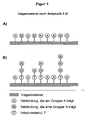
- This embodiment is in Figure 1A illustrated.
- the groups A and N are then in the immediate vicinity, wherein polymer coatings can be formed.
- the presence of the N-group-bearing ligands II decreases the number of groups A, thereby reducing the binding strength of the nucleic acids. This particular when using a substrate. Due to the groups N, therefore, the density of the groups A on the support surface is reduced, which results in a reduction of the binding affinity to the nucleic acids. As a result, the nucleic acids can be eluted more easily.
- ligand refers in particular to a surface functionalization by which a carrier material with at least one group A and / or a group N is preferably modified in order to provide the nucleic acid-binding phase according to the invention.
- the ligands I and II are preferably bound to the support material and may, for example, be present as monomers, dimers, oligomers or polymers of reactive single molecules.
- the groups A or the groups N are bonded as a constituent of compounds which react with the support material directly or via a linker or spacer to a support material. According to a preferred embodiment, this modification is achieved by bringing the carrier material into contact with a mixture comprising the different ligands I and II.
- the ligands can also form a polymer coating.
- the support material may further be provided with groups A and initiator molecules T, wherein one or more groups N are bonded to the initiator molecules. This embodiment is in FIG. 1B ). The groups N are then relative to the surface of the carrier material "above" the groups A before. Furthermore, it is also possible to attach the groups A via initiator molecules.
- the carrier material is further modified with nucleic acid binding ligands, wherein within a ligand one or more groups A and one or more groups N occur.
- This embodiment is in FIG. 2 illustrated in more detail. Different possibilities exist to realize this concept.
- the support material is provided with groups A (either directly or by way of example bound via an initiator molecule T) which carry one or more compounds which contain a group N (see also US Pat FIG. 2A ).
- groups N can also be in the form of an unbranched chain or as a branched tree structure or as a corresponding mixture.
- groups N for example, 1 to 100 groups N, 1-20, preferably 1-10 and particularly preferably 1-5 groups N per ligand may occur.
- other groups A and N can also be introduced.
- This linking strategy results in a relatively homogeneous bond plane with nearly pure A-group population and one or more planes that adjoin outward and reduce the bond strength of groups A through the N-group population.
- the support material is equipped with groups A (either directly or for example via an initiator molecule T bound) carrying a mixture of N groups and A groups (see also FIG. 2B ).
- groups A can first be bound to the carrier material.
- a - containing fuselage ligands are then linked compounds which introduce at least one or more groups N.
- the groups N may be randomly distributed (see, for example, US Pat. FIG. 2B , right figure), have an alternating sequence (see, for example. FIG. 2B , left figure) or else be arranged as a block copolymer. Also combinations are possible. Suitable methods for forming the corresponding A and N-containing functionalizations / ligands are described in detail below.
- the support material is modified with groups A and N, wherein the groups A are sterically shielded by compounds which have at least one, preferably a plurality of groups N. Also for this embodiment, there are different variants.
- the steric shielding preferably takes place by means of oligomers or polymers having groups N.
- These can be bound, for example, to the ligands having the group (s) A (see also US Pat Fig. 3B ). However, they can also be arranged adjacent thereto provided the steric shielding is ensured (see also Fig. 3A ).
- the N-group oligomers / polymers shield groups A by forming more or less ordered secondary structures (eg, "random coils" or helices) as a kind of cap against the ambient environment, thereby weakening the binding of nucleic acids.
- the oligomers / polymers may also be formed from groups N and further introduced as block copolymers.
- initiator groups T for example by silanization
- graft groups A containing monomers by means of ATRP (atom transfer radical polymerization).
- ATRP atom transfer radical polymerization
- a copolymer then forms on the support consisting of a first homopolymer carrying anion exchange groups and a second homopolymer linked to the first and bearing neutral groups N.
- the amount of the second monomer carrying the groups N can be used to control the length of the polymer chain formed and thus the strength of the steric shielding.
- steric shielding can therefore be controlled by chain length and monomer substitutions.
- the monomers described in this application can be used to form the N-bearing oligomers / polymers , which will be described in detail. Particularly suitable are polyacrylates.
- Preferred polymers used are polyacrylates according to the following formula:
- a particularly suitable reagent for achieving steric shielding is glycidyl methacrylate, from which neutral diol groups N are formed after hydrolysis.
- an initiator molecule T can be applied.
- a first monomer for example an N, N-dimethylaminopropyl methacrylate, for example, is polymerized on the support by means of ATRP.
- These groups are then sterically shielded in a second polymerization step.
- a second monomer can be introduced, for example glycidyl methacrylate from the diol groups N which are neutral after hydrolysis.
- the steric effect prevents the close contact of the nucleic acid with the A groups, so that they can not be so strongly bound and eluted at low ionic strength and thus low salt concentration of the nucleic acid binding phase.
- the steric shielding of the N groups can also be achieved by "bulky” substituents, for example branched alkyl radicals, such as isopropyl, diisopropyl, tertiary-butyl, aliphatic or aromatic rings, either as carbon rings or as heterocycles.
- These sterically inhibiting groups N can also be used in the form of oligomers / polymers.
- the steric shielding can therefore be controlled in particular by (i) the proportion of additional introduced groups N; (ii) the structure of the compounds carrying the group N; (iii) the selection or structure of group N and (iv) the chain length of the N-group oligomers / polymers.
- a particularly good steric shielding of the group (s) A can thus take place by groups N which occur in the same ligand or are arranged adjacent thereto. Also, a bond to the group A is possible.
- the steric shielding increases with the size of the group (n) N-containing compound and also with the size of the group N, wherein both an increase in the chain length, as well as a stronger branching of the carbon chains or an increase in the ring size in cyclic groups, the steric Shielding increased.
- the carrier material is modified with a combination of all the linking strategies described above. Examples are in FIG. 4 shown.
- the support material in direct attachment of the groups A, the sterically shielding groups N and initiator molecules T, the initiator molecules are still equipped with other sterically shielding groups N have (see, for example. FIG. 4 A)
- This type of linking can be carried out, for example, with the usual groups N (see, for example, FIG. FIG. 4B ).
- the support material can, for example, be equipped with groups A (bound directly or via an initiator molecule T) and attached thereto carry a mixture of N groups and A groups, where the groups N are completely or partially present as a sterically inhibiting group (see FIGS. 4D and 4E ).
- a method for purifying nucleic acids with a nucleic acid-binding phase having a support material which is modified with groups A, only a part of the support material being occupied by groups A.
- FIG. 5 shows an embodiment of this concept. This embodiment also makes it possible to elute the nucleic acids under conditions which allow the direct further processing of the nucleic acids, because in particular low salt concentrations can be used to elute the nucleic acid from the nucleic acid-binding phase.
- the deficiency of A groups on the support material can be achieved by using the compound which introduces the group A in excess relative to the support material.
- the carrier material has a smaller amount of potential binding sites to which the groups A can be attached.
- Another embodiment involves the chemical or physical pretreatment of the support material, which causes a reduction in the binding sites or a reduced reactivity of the binding sites.
- the group A-bearing compound may be applied in admixture with another compound that also binds to the support material. Due to the competing binding, the proportion of A groups on the surface of the support material decreases.
- the embodiment based on a deficit of A groups can be combined with one or more of the embodiments described above for modifying the support material with groups A and N, wherein according to claim 1, the nucleic acid-binding phase comprises a support material with different ligands (ligands I and ligands II), wherein the ligands I have at least one group A and the ligands II at least one group N.
- the nucleic acid-binding phase comprises a support material with different ligands (ligands I and ligands II), wherein the ligands I have at least one group A and the ligands II at least one group N.
- the equipment of the carrier with groups A in the deficit is particularly advantageous when using a silica support material, since it has silanol groups.
- the groups A are introduced by means of silanes or a silane mixture.
- a minimum amount of silane is needed for the complete coating of the carrier. This minimum amount is defined by the specific surface area of the carrier material. If the amount of silane (s) is insufficient to cover the surface of the support, the charge density can be reduced. By the amount of silane to be applied, therefore, the amount of groups A and thereby the binding strength of the nucleic acid-binding phase can be adjusted.
- the support material has a silica surface which is coated with a silane containing groups A, the amount of silane being 0.1 to 50 ⁇ mol (micromole, also referred to herein as umol), preferably 0.1 to 10 ⁇ mol. It is crucial to reduce the amount of silane until the elution at lower ionic strengths or lower (desired) salt concentrations is possible. This can, for example, be experimentally tested and checked by means of a chromatogram. The amount of silane can therefore preferably be optimized depending on the carrier used in order to achieve the desired binding / elution properties.
- the nucleic acid binding phase is a solid phase.
- the groups A, the weakening groups N and the initiator molecules T can be bound to a solid support material if present. Details are described below in detail.
- the use of a solid phase facilitates the separation of the bound nucleic acids from the sample. According to one embodiment, therefore, a separation of the solid phase or of the unbound supernatant takes place after the binding of the nucleic acids.
- Suitable carriers for the nucleic acid binding groups are, for example, oxidic materials.
- oxides such as Al 2 O 3 , TiO 2 , ZrO 2 , Ta 2 O 5 , SiO 2 and polysilicic acid are suitable here, SiO 2 or polysilicic acids being preferred as support material.
- Suitable carriers include organic polymers such as polystyrene and its derivatives, polyacrylates and methacrylates, and their derivatives or polyurethanes, nylon, polyethylene, polypropylene, polybutylidene and copolymers of these materials.
- nucleic acid-binding groups may also be linked to polysaccharides, in particular hydrogels such as agarose, cellulose, dextran, Sephadex, Sephacryl, chitosan.
- the nucleic acid-binding groups may also be attached to inorganic carriers such as, for example, glass or metal surfaces, such as, for example, glass or metal surfaces. B. gold, are tied. Magnetic particles are particularly advantageous in handling.
- the nucleic acid-binding groups A and / or the groups N can be bound to these carriers directly or else via other chemical molecules, for example initiator molecules or linkers. They can also be part of a larger molecule. If the carrier material does not have suitable functional groups as binding sites, these can be introduced in a manner known per se.
- support materials include non-magnetic and magnetic particles, column materials, membranes, as well as surface coatings.
- functionalized carriers such as tubes, membranes, nonwovens, paper, reaction vessels such as PCR tubes, "Eppendorf Tubes", multiplates, chips and microarrays may be mentioned.
- the nucleic acid binding phase is positively charged in both binding and elution.
- Soluble polymers may, for example, have alternating and random groups A and N (see, for example, US Pat. Fig. 2B ).
- the side chains of the A groups may also be screened off by groups N, in particular alkyl radicals, for example diisopropyl radicals on the nitrogen.
- the nucleic acid binding groups A are ion exchangers according to one embodiment; preferably anion exchangers.
- Preferred groups A which have proven useful for the binding of nucleic acids are amino groups, preference being given to primary, secondary and tertiary amino groups. These may be substituted or unsubstituted.
- the amines may bear substituents, for example alkyl, alkenyl, alkynyl or aromatic substituents, moreover, the hydrocarbon chains may also be closed in a ring.
- the hydrocarbon chains can also have heteroatoms, such as oxygen, nitrogen, sulfur or silicon, or branches.
- the amino groups have, as groups A, pKa values of 8 to 13, preferably 9 to 13, particularly preferably 10 to 12.
- the group A may be part of a compound which forms an oligomer or polymer by polymerization or condensation and is therefore particularly suitable for the formation of the ligands.
- chain-forming compounds are amino-containing acrylates such as N- (3-aminomethyl) methacrylamide, N- (3-aminoethyl) methacrylamide, N- (3-aminopropyl) methacrylamide, N- (3-aminoisopropyl) methacrylamide N, N-dimethylacrylamide, N, N-diethylacrylamide, N, N-diisopropylacrylamide N, N- (dimethylamino) ethyl acrylamide, N, N- (dimethylamino) ethyl acrylate, N, N- (dimethylamino) ethyl methacrylamide, N, N- (dimethylamino) ethyl methacrylamide, N, N- (dimethylamino) propyl
- N N- (dimethylamino) propyl methacrylate is particularly preferred.
- Corresponding reactive silanes can be used to introduce groups A. Particularly preferred are diethylaminopropyltrimethoxysilane (DEAPS), dimethylamino-propyltrimethoxysilane and N, N-diisopropylaminopropyltrimethoxysilane.
- DEAPS diethylaminopropyltrimethoxysilane
- dimethylamino-propyltrimethoxysilane dimethylamino-propyltrimethoxysilane
- N N-diisopropylaminopropyltrimethoxysilane.
- the binding of the nucleic acids takes place at a pH of 2 to 8, preferably 4 to 7.5.
- This information refers to the pH during binding and thus in the sample.
- the method according to the invention can therefore be carried out even under very mild conditions, and can be carried out almost in the neutral range. Due to the fact that the protonatable groups of the nucleic acid-binding phase have a pKa of 8 to 13, preferably 9 to 13 and particularly preferably 10 to 12, these are sufficiently positively charged, even at relatively neutral pH values, for the effective binding to allow the nucleic acids. Therefore, the bond can - if desired - be carried out under very mild conditions.
- the binding may be preceded by at least one customary lysis step in order to liberate the nucleic acids.
- nucleic acid release occurs at a pH above the binding pH. This has the consequence that the groups A are less positively charged in the elution, whereby the release of the nucleic acids is favored.
- the presence of the weakening groups N causes a reduced binding of the nucleic acids to the support material. As stated above, this has the consequence that the elution can be carried out even at low salt concentrations.
- the elution pH is preferably below the pK value of groups A.
- the elution takes place at a pH of 8 to 11, 8 to 10, preferably at a pH, depending on the nucleic acid-binding group A or nucleic acid-binding phase used from 8.0 to 9, more preferably 8.5 to 9.
- higher pH values could also be used.
- particularly advantageous results are achieved because the nucleic acids can still be released at low salt concentrations and the conditions are mild.
- the salt concentration is therefore, according to one embodiment, from 1 mM to 1000 mM, more preferably from 1 mM to 200 mM, 1 mM to 250 mM, or 1 mM to 100 mM.
- Suitable salts may include chlorides of the alkali and alkaline earth metals or ammonium, other salts of mineral acids, acetates, borates and compounds such as tris, bis-tris and organic buffers such as MIS, CHAPS, HEPES and similar represent. The same applies to the binding buffer.
- Suitable substances for elution are also known in the art.
- the salt concentration is unchanged in the binding step and in the elution step or is slightly raised during the elution. Preferably, however, the concentration is not increased such that the subsequent reactions are hindered.
- the temperature during binding and elution may be the same or raised during elution.
- the wash buffers preferably in a concentration of 1 mM to 1000 mM, more preferably from 1 mM to 200 mM, 1 mM to 250 mM, or 1 mM to 100 mM.
- the buffer may be organic compounds such as carbohydrates and preferably organic solvents such as, for example, alcohols, polyols, polyethylene glycols, ethers, polyethers, dimethyl sulfoxide, acetone or acetonitrile.
- the wash buffers should not have interfering amounts of the corresponding organic ingredients so as not to interfere with the downstream applications.
- Charge-neutral groups such as hydroxyl groups, diol groups, triol groups, saccharides, epoxide groups, C1-C6 alkyl, alkene, or alkyne groups, polyol groups, ethers, polyethers, halides or imides can serve as bond-weakening groups N.
- hydrophilic groups N the ion exchanger remains well wettable with aqueous buffers.
- the group N may be part of a compound which forms an oligomer or polymer by polymerization or condensation.
- Examples of compounds by which groups N can be introduced are acrylates such as butyl acrylate, propyl acrylate, ethyl acrylate, methyl acrylate, glycidyl methacrylate, hydroxyethyl methacrylate (HEMA), glycidoxypropyl methacrylate, glycerol monomethacrylate (isomer mixture), glycol monomethacrylate and N-acryloxysuccinimide.
- acrylates such as butyl acrylate, propyl acrylate, ethyl acrylate, methyl acrylate, glycidyl methacrylate, hydroxyethyl methacrylate (HEMA), glycidoxypropyl methacrylate, glycerol monomethacrylate (isomer mixture), glycol monomethacrylate and N-acryloxysuccinimide.
- the carrier material comprises initiator groups T, which are at least partially functionalized with compounds which have groups A and / or N. Suitable examples will be explained in detail below.
- the binding of initiator molecules T to the carrier material takes place in a first step. These serve as a starting point for the growth of a copolymer chain.
- the polymer chain is extended by the addition of further at least one group A and / or at least one group N compounds.
- the polymerization can also be controlled so that the groups A and N are incorporated as oligomers, so that block copolymers arise.
- An example of a controlled polymerization reaction which can be used according to the invention is, for example, the so-called "atom transfer radical polymerization" (ATRP).
- ATRP atom transfer radical polymerization
- the ATRP is characterized by the fact that the concentration of free radicals is reduced by the addition of a transition metal complex and in combination with an atom transfer process with an organohalide so far that chain termination reactions, such as disproportionation or recombination are largely suppressed.
- the functionalization of the carrier material with initiator groups T takes place in a first step. The addition of compounds having at least one group A and attachment of these to the initiator molecules T ensues.
- the groups A are shielded by attachment at least one compound having at least one group N.
- the groups N are preferably in the form of oligomers / polymers (see above), which cause a steric shielding of the groups A due to their three-dimensional structure. Details are explained above in connection with the method according to the invention.
- the nucleic acid-binding phase comprises a carrier material which is provided with different ligands (ligands I and ligands II), wherein the ligands I at least one group A and the ligands II at least one Groups exhibit.
- ligands I and ligands II ligands I and ligands II
- these groups are introduced via monofunctional, bi- or trifunctional reactive silanes or by means of a mixture of at least two differently functional reactive silanes.
- reactive silanes for example, aminosilanes, disilazanes, chlorosilanes or alkoxysilanes can be used.
- the proportion of A groups based on the N groups is 1% to 99%, 1 to 50%, preferably 1% to 25%.
- Trifunctional and bifunctional reactive silanes tend to form thick layers crosslinked by polycondensation on the support.
- monofunctional reactive silanes for example, react with the silanol groups of the support material to form siloxane (Si-O-Si) bonds. This then leads to more monomolecular layers on the support.
- the reaction of the support material with reactive silanes can be carried out in the gas phase or in suspension in a solvent, it being possible for the latter to use organic and preferably aqueous solvents, depending on the chemistry of the reactive silane.
- 2- (chloromethyl) allyltrimethoxysilane or [3- (2-bromoisobutyryl) propyl] ethoxydimethylsilane (BPDS) is used as the initiator molecule.
- halide-containing silanes can be used to grow homopolymers, copolymers and block copolymers by means of ATRP (Atom Transfer Radical Polymerization).
- ATRP is a special form of Living / Controlled Free Radical Polymerization (LFRP) in which the concentration of free radicals is reduced by the addition of a transition metal complex and in combination with an atom transfer process with an organohalide to the extent that chain termination reactions, such as disproportionation or recombination, as far as possible become.
- LFRP Living / Controlled Free Radical Polymerization
- this method makes it possible to specifically set the charge density of the carrier surface and thus to influence the binding strength of the nucleic acids.
- the groups A and / or N can be selectively applied.
- nucleic acid-binding carrier materials can be used in particular in the purification process according to the invention.
- the invention further relates to the use of a nucleic acid-binding phase according to the invention for the purification of nucleic acids.
- Nucleic acids within the meaning of the invention include in particular DNA and RNA, in particular genomic DNA, plasmid DNA, as well as PCR fragments, cDNA, miRNA, siRNA, as well as oligonucleotides and modified nucleic acids such as. PMA or LMA. It is also possible to purify viral or bacterial RNA and DNA or nucleic acids from human, animal or plant sources. Furthermore, for a purification according to the invention, DNA / RNA hybrids are also suitable as well as modified nucleic acids.
- kits for the purification of nucleic acids characterized in that it comprises a nucleic acid-binding carrier material according to the invention which has nucleic acid binding groups A with at least one protonatable group having a pKa of 8 to 13, preferably 9 to 13, especially preferably 10 to 12 have.
- the kit may further comprise binding, washing and / or elution buffers such as those described above in connection with the purification process.
- it may have lysis and neutralization buffers.
- nucleic acid binding phase Details of the nucleic acid binding phase as well as the elution conditions are described in detail above and also apply in the context of the disclosed kit and characterize the ingredients / buffers used therein. We refer to the above revelation.
- kits can be used in particular in the context of the method according to the invention.
- the present methods, kits and nucleic acid-binding solid phases can be used in particular in the field of molecular biology, the molecular diagnostics, in forensics, in food analysis and in applied testing.
- the application of the disclosed kit allows the immediate further processing of the purified nucleic acids in "downstream" applications, in particular in a PCR reaction.
- the pH of the nucleic acid-binding phase can be optimally adjusted with respect to the elution conditions. Accordingly, the elution profile of the nucleic acid-binding phase, in particular the salt concentration and the elution pH, can be controlled or adjusted.
- Nucleic acids that can be purified with the systems of the invention can be present in body fluids such as blood, urine, stool, saliva, in biological sources such as tissue, cells, especially animal cells, human cells, plant cells, bacterial cells and the like, organs such as liver, kidney or lung ,
- the nucleic acid from support materials such as Swabs, PapSmears, and stabilizing media such as PreServCyt or Surepath, or from other liquids, such as Juices, aqueous samples or food are generally obtained.
- the nucleic acids can be recovered from plant material, bacterial lysates, paraffin-embedded tissue, aqueous solutions or gels.
- the eluted nucleic acids can preferably be further processed directly, so for example in the context of a PCR, RT-PCR, a restriction digestion or a transcription are used. Further purification is not required as long as the elution buffers are designed as described above and preferably have a low salt concentration.
- plasmid DNA was used as model systems for nucleic acids.
- Carrier material Silica / silica gel with a pore size of approx. 150nm. The specific surface area is approx. 25m 2 / g.
- Coating Reagents 2- (chloromethyl) allyltrimethoxysilane, DEAPS; QSP1 buffer (acid acetate buffer).
- the identical support material was modified exclusively with the compound A bearing DEAPS group.
- 70 ml of water, 2.5 ml of QSP1 buffer, and 825 .mu.l DEAPS were presented with resulting pH 5.5 and added 18 g of silica gel.
- the mixture was heated with stirring within 20 min at 95 ° C, stirred for 4 hours at this temperature and then cooled for 1 h with stirring.
- the silica gel was separated on a P3 frit and washed successively with 32.3 g Tris / NaCl buffer, twice with 30 ml deionized water, twice with 35 ml of methanol and finally with 30 ml of methanol.
- the finished support material AAK01-30 was dried overnight at 125 ° C.
- the binding was carried out in a buffer 50 mM Tris-HCl pH 7.0, 15% ethanol.
- a step gradient of 0% to 100% buffer B 50 mM Tris-HCl, pH 7.0, 15% ethanol, 2M NaCl was run within 23 min and the amount of eluted DNA was determined continuously by UV spectroscopy.
- the support material coated exclusively with the protonatable group A shows the elution point at 1600 mM NaCl at a pH of 7.0.
- DEAPS protonatable group A
- AAK01-30 shows the elution point at 1600 mM NaCl at a pH of 7.0.
- the elution point is ⁇ 700 mM NaCl.
- the ionic strength required for elution was thus reduced by more than 50%.
- HEMA oligomers are built up on the already bound chlorosilane.
- the support material AAK01-30 modified with DEAPS was reacted and worked up in the same way with HEMA.
- the final product of this reaction was designated AAK01-31. Since the DEAPS carries only one tertiary amine as the functional group, but no polymerizable allyl group, no HEMA coupling should take place.
- the support material AAK01-31 coated exclusively with the protonatable groups (DEAPS) shows the elution point at 1500 mM NaCl at a pH of 7.0.
- DEAPS protonatable groups
- the carrier material used was FF silica beads.
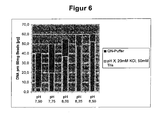
- Silane per g carrier material [ ⁇ mol] Ratio of silanes to each other pH of the elution buffer eluted by elution buffer * DNA per 50mg beads [ ⁇ g] residual bound DNA per 50mg beads eluted with QN ** buffer eluted [ ⁇ g] Silane A Silane N [Mmol%] [.Mu.mol] [Mmol%] [.Mu.mol] HL09MB 182.8 25,00 45,700 75.00 137.100 pH 7.50 4.7 35.6 HL09MB 182.8 25,00 45,700 75.00 137.100 pH 7.75 20.3 29.0 HL09MB 182.8 25,00 45,700 75.00 137.100 pH 8.00 37.3 17.3 HL09MB 182.8 25,00 45,700 75.00 137.100 pH 8.25 48.1 11.0 HL09MB 182.8 25,00 45,700 75.00 137.100 pH 8.50 52.5 7.2 *: Composition elution buffer:
- the carrier material used were the magnetic silica beads MagAttract Beads G from QIAGEN: Silane per g carrier material [ ⁇ mol] Ratio of silanes to each other pH of the elution buffer eluted by elution buffer * DNA per 50mg beads [ ⁇ g] residual bound DNA per 50mg beads eluted with QN ** buffer eluted [ ⁇ g] Silane A Silane N [Mmol%] [.Mu.mol] [Mmol%] [.Mu.mol] HLG09ST 182.8 25,00 45,700 75.00 137.100 pH 7.50 4.3 69.5 HLG09ST 182.8 25,00 45,700 75.00 137.100 pH 7.75 28.6 40.9 HLG09ST 182.8 25,00 45,700 75.00 137.100 pH 8.00 50.6 15.5 HLG09ST 182.8 25,00 45,700 75.00 137.100 pH 8.25 60.3 2.8 HLG09ST 182.8 25,00 45,700 75.00 137.100 pH 8.
- the mixture reacted with stirring (100 1 / min) at 85 ° C (oil bath temperature) overnight (16h). Thereafter, the oil bath was removed and the suspension was cooled within 1 ⁇ 2h with stirring.
- the modified support material / Kieseigelinitiator (KI04) was separated on a P3 frit and washed on this with 7 x 20 mL hexane. Thereafter, the modified substrate was dried at 40 ° C overnight (about 12 hours) in a vacuum oven.
- the starting material for this series of experiments were the silica gel initiators (KI04d) with BPDS as initiator.
- the apparatus was evacuated by means of a membrane pump for 1 minute and then filled with argon. This procedure was performed 3 times. Subsequently, a slight stream of argon was continuously fed into the apparatus to prevent atmospheric oxygen from entering.
- the mixture of ligand and monomer (s) was first treated for 5 minutes in an ultrasonic bath and then the gas space was evacuated by high vacuum for 5 min.
- the ligand-monomer mixture was pipetted to the submitted bdy / copper-I-bromide.
- the apparatus was evacuated by means of a membrane pump for 1 minute and then filled with argon. This procedure was performed 3 times. Subsequently, a slight stream of argon was continuously fed into the apparatus.
- the copper-ligand complex was dissolved within 15 min. Thereafter, 1.2 g of the silica gel initiator KI 04d were added.
- the apparatus was evacuated by means of a membrane pump for 1 minute and then filled with argon. This procedure was performed 3 times. Subsequently, a slight stream of argon was continuously fed into the apparatus.
- the support material with the grown-up groups (hereinafter referred to as silica gel) was separated directly via a P3 frit and subsequently with one after the other 5 x 8 ml DMF 5 x 8 ml of THF 5 x 8 ml 0.1 M EDTA / acetate buffer pH 3.6 (0.2M Na acetate with glacial acetic acid) 2 x 8 ml Tris / NaCl buffer pH 7.0 3 x 8 ml of water as well Washed 3 x 8 ml of methanol.
- silica gel was dried at 40 ° C in a vacuum oven to constant weight.
- the resulting anion exchangers (the modified support material or silica gel) and the starting material (the silica gel initiator) were investigated with regard to their pDNA binding capacity, as explained in more detail below, and corresponding elution profiles were recorded.
- the anion exchangers were examined for the CHN content, and from this the polymer chain lengths and the ratio A to N were determined. It could be shown that the used (molar) proportions of the monomers are reflected in the resulting silica gel.
- silica gel 50.00 mg (+/- 5 mg) of silica gel were weighed into a 2 ml Safe Lock reaction tube from Eppendorf (referred to below as Eppendorf tube), and for a DNA solution, 100 ⁇ g pcmvb per silica gel weighing 100 ⁇ g each with the binding buffer made up to 1 ml.
- the silica gel DNA suspension with a truncated tip was pipetted into a prepared lower frit Tip 20 (hereinafter referred to as Tips) under which a 2 ml Eppendorf tube was provided for collecting the supernatant.
- Tris-NaCl buffer 100 ⁇ l of Tris-NaCl buffer were used as blank for the Tris-NaCl solution.
- the support material / silica gel (KI04d-01) coated exclusively with the groups A (DMAEMA) showed the elution point at 1032 mM NaCl at a pH of 8.5.
- the elution point was ⁇ 580 mM NaCl. The ionic strength required for elution was thus reduced by almost 50%.
- the starting material for this series of experiments were the silica gel initiators (KI04e) with BPDS as initiator.
- an aminopolymer chain of at least one group A monomer was applied.
- a polymer chain of at least one group N monomer preferably HEMA
- the apparatus was evacuated by means of a membrane pump for 1 minute and then filled with argon. This procedure was performed 3 times. Subsequently, a slight stream of argon was continuously fed into the apparatus to prevent atmospheric oxygen from entering.
- the DMF-DMAEMA mixture was pipetted to the bdy / cuprous bromide.
- the apparatus was evacuated by means of a membrane pump for 1 minute and then filled with argon. This procedure was performed 3 times. Subsequently, a slight stream of argon was continuously fed into the apparatus.
- the copper-ligand complex was dissolved within 15 min. Thereafter, 9 g of the silica gel initiator KI04e were added.
- the apparatus was evacuated by means of a membrane pump for 1 minute and then filled with argon. This procedure was performed 3 times. Subsequently, a slight stream of argon was continuously fed into the apparatus.
- the silica gel KI04e-01 with the grown groups A was separated directly via a P3 frit and subsequently with one after the other 5 x 60 ml DMF 5 x 60 ml of THF 5 x 60 ml 0.1 M EDTA / acetate buffer pH 3.6 (0.2M Na acetate with glacial acetic acid) 2 x 60 ml Tris / NaCl buffer pH 7.0 as well Washed 3 x 60 ml of water.
- silica gel KI04e-01 was dried at 40 ° C in a vacuum oven to constant weight.
- the apparatus was evacuated by means of a membrane pump for 1 minute and then filled with argon. This procedure was performed 3 times. Subsequently, a slight stream of argon was continuously fed into the apparatus to prevent atmospheric oxygen from entering.
- the DMF-HEMA mixture was pipetted to the bdy / copper-I-bromide.
- the apparatus was evacuated by means of a membrane pump for 1 minute and then filled with argon. This procedure was performed 3 times. Subsequently, a slight stream of argon was continuously fed into the apparatus.
- the copper-ligand complex was dissolved within 15 min. Thereafter, 1.2 g of the silica gel initiator KI04e-01 were added.
- the apparatus was evacuated by means of a membrane pump for 1 minute and then filled with argon. This procedure was performed 3 times. Subsequently, a slight stream of argon was continuously fed into the apparatus.
- the silica gel KI04e-01-01 with the grown groups A was separated directly via a P3 frit and subsequently with one after the other 5 x 8 ml DMF 5 x 8 ml of THF 5 x 8 ml 0.1 M EDTA / acetate buffer pH 3.6 (0.2M Na acetate with glacial acetic acid) 2 x 8 ml Tris / NaCl buffer pH 7.0 3 x 8 ml of water as well Washed 3 x 8 ml of methanol.
- silica gel KI04e-01-01 was dried at 40 ° C in a vacuum oven to constant weight.
Landscapes
- Health & Medical Sciences (AREA)
- Chemical & Material Sciences (AREA)
- Engineering & Computer Science (AREA)
- Biomedical Technology (AREA)
- Life Sciences & Earth Sciences (AREA)
- Genetics & Genomics (AREA)
- Organic Chemistry (AREA)
- Zoology (AREA)
- Wood Science & Technology (AREA)
- Bioinformatics & Cheminformatics (AREA)
- Biotechnology (AREA)
- General Engineering & Computer Science (AREA)
- Molecular Biology (AREA)
- General Health & Medical Sciences (AREA)
- Biophysics (AREA)
- Microbiology (AREA)
- Physics & Mathematics (AREA)
- Crystallography & Structural Chemistry (AREA)
- Biochemistry (AREA)
- Plant Pathology (AREA)
- Analytical Chemistry (AREA)
- Saccharide Compounds (AREA)
- Measuring Or Testing Involving Enzymes Or Micro-Organisms (AREA)
- Sampling And Sample Adjustment (AREA)
- Solid-Sorbent Or Filter-Aiding Compositions (AREA)
- Treatment Of Liquids With Adsorbents In General (AREA)
Applications Claiming Priority (2)
| Application Number | Priority Date | Filing Date | Title |
|---|---|---|---|
| DE102008063001A DE102008063001A1 (de) | 2008-12-23 | 2008-12-23 | Nukleinsäureaufreinigungsverfahren |
| PCT/EP2009/067909 WO2010072834A1 (de) | 2008-12-23 | 2009-12-23 | Nukleinsäureaufreinigungsverfahren |
Publications (2)
| Publication Number | Publication Date |
|---|---|
| EP2382315A1 EP2382315A1 (de) | 2011-11-02 |
| EP2382315B1 true EP2382315B1 (de) | 2015-09-23 |
Family
ID=42078045
Family Applications (1)
| Application Number | Title | Priority Date | Filing Date |
|---|---|---|---|
| EP09804132.0A Active EP2382315B1 (de) | 2008-12-23 | 2009-12-23 | Nukleinsäureaufreinigungsverfahren |
Country Status (7)
| Country | Link |
|---|---|
| US (1) | US9102935B2 (enExample) |
| EP (1) | EP2382315B1 (enExample) |
| JP (2) | JP2012513386A (enExample) |
| CN (1) | CN102264902B (enExample) |
| AU (1) | AU2009332900B2 (enExample) |
| DE (1) | DE102008063001A1 (enExample) |
| WO (1) | WO2010072834A1 (enExample) |
Families Citing this family (26)
| Publication number | Priority date | Publication date | Assignee | Title |
|---|---|---|---|---|
| DE102008063003A1 (de) * | 2008-12-23 | 2010-06-24 | Qiagen Gmbh | Nukleinsäureaufreinigungsverfahren |
| JP5899731B2 (ja) * | 2011-09-13 | 2016-04-06 | ソニー株式会社 | 核酸精製方法、核酸抽出方法、及び核酸精製用キット |
| US20140243216A1 (en) | 2011-09-26 | 2014-08-28 | Qiagen Gmbh | Methods for separating nucleic acids by size |
| CN113388605A (zh) | 2011-09-26 | 2021-09-14 | 凯杰有限公司 | 用于分离细胞外核酸的快速方法 |
| EP2771462A4 (en) * | 2011-10-27 | 2015-04-08 | Ge Healthcare Bio Sciences Ab | PURIFICATION OF NUCLEIC ACIDS |
| CN104470606B (zh) * | 2012-05-31 | 2017-03-22 | 新加坡科技研究局 | 用带负电荷颗粒对多核苷酸的色谱纯化 |
| CN103789297A (zh) * | 2012-10-26 | 2014-05-14 | 上海医脉赛科技有限公司 | 快速纯化核酸的方法及试剂盒 |
| JP6255034B2 (ja) | 2012-12-11 | 2017-12-27 | キアゲン ゲーエムベーハー | シリカ粒子の調製 |
| WO2014144767A1 (en) | 2013-03-15 | 2014-09-18 | Moderna Therapeutics, Inc. | Ion exchange purification of mrna |
| US10077439B2 (en) | 2013-03-15 | 2018-09-18 | Modernatx, Inc. | Removal of DNA fragments in mRNA production process |
| EP2971033B8 (en) | 2013-03-15 | 2019-07-10 | ModernaTX, Inc. | Manufacturing methods for production of rna transcripts |
| US10792640B2 (en) * | 2014-09-10 | 2020-10-06 | Quantumdx Group Limited | Sorbent material for separating bio-macromolecules |
| US10319502B2 (en) | 2014-10-23 | 2019-06-11 | Corning Incorporated | Polymer-encapsulated magnetic nanoparticles |
| US11118173B2 (en) | 2015-03-20 | 2021-09-14 | Toray Industries, Inc. | Method of collecting a nucleic acid(s) |
| EP3885438A1 (en) | 2015-06-10 | 2021-09-29 | QIAGEN GmbH | Method for isolating extracellular nucleic acids using anion exchange particles |
| WO2017162518A1 (en) | 2016-03-19 | 2017-09-28 | Qiagen Gmbh | Stabilization of rna |
| US12385034B2 (en) | 2016-06-24 | 2025-08-12 | Modernatx, Inc. | Methods and apparatus for filtration |
| KR102689348B1 (ko) | 2017-12-27 | 2024-07-30 | 도레이 카부시키가이샤 | 핵산의 회수 방법 |
| CN108102881A (zh) * | 2018-02-05 | 2018-06-01 | 中国科学院苏州纳米技术与纳米仿生研究所 | 具有微结构阵列的微流控芯片及核酸固相纯化提取方法 |
| CN108456678A (zh) * | 2018-07-06 | 2018-08-28 | 大连元和健路医学检验实验室有限公司 | 一种快速提取基因组dna的方法 |
| CN108795929A (zh) * | 2018-07-06 | 2018-11-13 | 大连元和健路医学检验实验室有限公司 | 一种dna分子筛柱子的制备方法 |
| WO2020202952A1 (ja) * | 2019-03-29 | 2020-10-08 | 住友化学株式会社 | 無機多孔質担体、及びこれを用いた核酸の製造方法 |
| WO2021122846A1 (en) | 2019-12-16 | 2021-06-24 | Qiagen Gmbh | Enrichment method |
| EP4355873A1 (en) | 2021-06-17 | 2024-04-24 | QIAGEN GmbH | Method for isolating non-vesicular mirna |
| CN118339287A (zh) | 2021-11-12 | 2024-07-12 | 舒万诺知识产权公司 | 加工多核酸的方法 |
| CN115537416A (zh) * | 2022-09-29 | 2022-12-30 | 杭州联川生物技术股份有限公司 | 一种纯化寡核苷酸的方法和试剂盒 |
Citations (1)
| Publication number | Priority date | Publication date | Assignee | Title |
|---|---|---|---|---|
| WO2002048164A2 (en) * | 2000-12-14 | 2002-06-20 | Dna Research Innovations Limited | Isolation of nucleic acids |
Family Cites Families (13)
| Publication number | Priority date | Publication date | Assignee | Title |
|---|---|---|---|---|
| US4767670A (en) * | 1987-01-21 | 1988-08-30 | E. I. Du Pont De Nemours And Company | Chromatographic supports for separation of oligonucleotides |
| US5079600A (en) * | 1987-03-06 | 1992-01-07 | Schnur Joel M | High resolution patterning on solid substrates |
| WO1995027718A2 (en) * | 1994-04-08 | 1995-10-19 | Hybridon, Inc. | Purification of oligodeoxynucleotide phosphorothioates using anion exchange chromatography |
| US5582988A (en) | 1994-09-15 | 1996-12-10 | Johnson & Johnson Clinical Diagnostics, Inc. | Methods for capture and selective release of nucleic acids using weakly basic polymer and amplification of same |
| US5652348A (en) * | 1994-09-23 | 1997-07-29 | Massey University | Chromatographic resins and methods for using same |
| JP3689896B2 (ja) * | 1995-12-04 | 2005-08-31 | Jsr株式会社 | 核酸吸着剤 |
| US6103479A (en) * | 1996-05-30 | 2000-08-15 | Cellomics, Inc. | Miniaturized cell array methods and apparatus for cell-based screening |
| ES2177093T3 (es) | 1997-12-06 | 2002-12-01 | Dna Res Innovations Ltd | Aislamiento de acidos nucleicos. |
| US6310199B1 (en) * | 1999-05-14 | 2001-10-30 | Promega Corporation | pH dependent ion exchange matrix and method of use in the isolation of nucleic acids |
| JP2003104996A (ja) * | 2001-09-28 | 2003-04-09 | Hitachi Maxell Ltd | 核酸結合用磁性担体およびその製造方法 |
| KR100714988B1 (ko) * | 2005-08-09 | 2007-05-09 | 삼성전자주식회사 | 산화막이 표면에 형성된 실리콘 구조물 표면을 이용한dna 정제 방법 및 정제장치 |
| WO2008097342A2 (en) * | 2006-07-31 | 2008-08-14 | Sigma-Aldrich Co. | Compositions and methods for isolation of biological molecules |
| WO2008035991A2 (en) * | 2006-09-19 | 2008-03-27 | Michael Ronald Cook | A nucleic acid extraction method |
-
2008
- 2008-12-23 DE DE102008063001A patent/DE102008063001A1/de not_active Withdrawn
-
2009
- 2009-12-23 US US13/141,878 patent/US9102935B2/en active Active
- 2009-12-23 CN CN200980152958.XA patent/CN102264902B/zh active Active
- 2009-12-23 AU AU2009332900A patent/AU2009332900B2/en active Active
- 2009-12-23 WO PCT/EP2009/067909 patent/WO2010072834A1/de not_active Ceased
- 2009-12-23 EP EP09804132.0A patent/EP2382315B1/de active Active
- 2009-12-23 JP JP2011541520A patent/JP2012513386A/ja not_active Withdrawn
-
2016
- 2016-01-26 JP JP2016012103A patent/JP6072945B2/ja active Active
Patent Citations (1)
| Publication number | Priority date | Publication date | Assignee | Title |
|---|---|---|---|---|
| WO2002048164A2 (en) * | 2000-12-14 | 2002-06-20 | Dna Research Innovations Limited | Isolation of nucleic acids |
Also Published As
| Publication number | Publication date |
|---|---|
| US9102935B2 (en) | 2015-08-11 |
| EP2382315A1 (de) | 2011-11-02 |
| US20110319506A1 (en) | 2011-12-29 |
| AU2009332900A1 (en) | 2010-07-01 |
| CN102264902B (zh) | 2018-06-01 |
| JP2016135784A (ja) | 2016-07-28 |
| JP2012513386A (ja) | 2012-06-14 |
| DE102008063001A1 (de) | 2010-06-24 |
| AU2009332900B2 (en) | 2014-05-29 |
| WO2010072834A1 (de) | 2010-07-01 |
| JP6072945B2 (ja) | 2017-02-01 |
| CN102264902A (zh) | 2011-11-30 |
Similar Documents
| Publication | Publication Date | Title |
|---|---|---|
| WO2010072834A1 (de) | Nukleinsäureaufreinigungsverfahren | |
| EP2370576B1 (de) | Nukleinsäureaufreinigungsverfahren | |
| DE60012318T2 (de) | pH ABHÄNGIGE IONTAUSCHERMATRIX UND ANWENDUNGSVERFAHREN IN DER ISOLIERUNG VON NUKLEINSÄUREN | |
| DE69636553T2 (de) | Nukleinsäuren bindender magnetischer Träger und Verfahren für die Nukleinsäureisolierung unter dessen Verwendung | |
| KR101646610B1 (ko) | 생체 물질 정제용 고활성 실리카 자성나노입자 및 이의 제조 방법 | |
| DE60013317T2 (de) | Magnetteilchen-zusammenstellung | |
| DE3117732A1 (de) | Gemischtphasige chromatographische massen und verfahren zu ihrer herstellung | |
| EP0154246B1 (de) | Phasenträger für die Verteilungschromatographie von Makromolekülen, Verfahren zu ihrer Herstellung und ihre Verwendung | |
| EP1259322B1 (de) | Polymere anionenaustauscherharze und deren verwendung in chromatographischen verfahren | |
| EP1560926B1 (de) | Neuartige pufferformulierungen zur isolierung, reinigung und rückgewinnung lang- und kurzkettiger nukleinsäuren | |
| EP3228710B1 (de) | Aufreinigung von nukleinsäure aus einer nukleinsäure und endotoxin enthaltenden probe | |
| WO2008058996A2 (de) | Verfahren zur herstellung von magnetischen kieselsäurepartikeln | |
| DE60123828T2 (de) | Lysat-klärung und nukleinsäureisolierung mit silanisierten silicamatrizes | |
| EP0722362B1 (de) | Verfahren und träger für die gelpermeationschromotographie | |
| EP1771242B1 (de) | Verfahren zur effizienten isolierung von nukleinsäuren | |
| EP1934347B1 (de) | Verfahren und formulierung zur extraktion von nukleinsäuren aus beliebigen komplexen ausgangsmaterialien | |
| EP0697905B1 (de) | Verfahren und träger für die gelpermeationschromatographie | |
| WO2021055083A1 (en) | Apparatuses systems and methods using core-shell-shell magnetic beads | |
| EP2285485A1 (de) | Ce(iv) initiierte pfropfpolymerisation auf nicht hydroxylgruppenhaltigen polymeren | |
| WO2010018200A1 (de) | Verfahren zur isolation von nukleinsäuren und testkit | |
| CA3202531A1 (en) | Ribonucleic acid purification | |
| WO2012007582A1 (de) | Verfahren zur schnellen bereitstellung von inhaltsstoffen aus biologischen proben | |
| DE19641014A1 (de) | Mittel zum Abtrennen, Konzentrieren und Reinigen von Nukleinsäuren aus Flüssigkeiten |
Legal Events
| Date | Code | Title | Description |
|---|---|---|---|
| PUAI | Public reference made under article 153(3) epc to a published international application that has entered the european phase |
Free format text: ORIGINAL CODE: 0009012 |
|
| 17P | Request for examination filed |
Effective date: 20110725 |
|
| AK | Designated contracting states |
Kind code of ref document: A1 Designated state(s): AT BE BG CH CY CZ DE DK EE ES FI FR GB GR HR HU IE IS IT LI LT LU LV MC MK MT NL NO PL PT RO SE SI SK SM TR |
|
| DAX | Request for extension of the european patent (deleted) | ||
| 17Q | First examination report despatched |
Effective date: 20130607 |
|
| 17Q | First examination report despatched |
Effective date: 20131017 |
|
| GRAP | Despatch of communication of intention to grant a patent |
Free format text: ORIGINAL CODE: EPIDOSNIGR1 |
|
| INTG | Intention to grant announced |
Effective date: 20150409 |
|
| GRAS | Grant fee paid |
Free format text: ORIGINAL CODE: EPIDOSNIGR3 |
|
| GRAA | (expected) grant |
Free format text: ORIGINAL CODE: 0009210 |
|
| AK | Designated contracting states |
Kind code of ref document: B1 Designated state(s): AT BE BG CH CY CZ DE DK EE ES FI FR GB GR HR HU IE IS IT LI LT LU LV MC MK MT NL NO PL PT RO SE SI SK SM TR |
|
| REG | Reference to a national code |
Ref country code: GB Ref legal event code: FG4D Free format text: NOT ENGLISH |
|
| REG | Reference to a national code |
Ref country code: CH Ref legal event code: EP |
|
| REG | Reference to a national code |
Ref country code: AT Ref legal event code: REF Ref document number: 751274 Country of ref document: AT Kind code of ref document: T Effective date: 20151015 |
|
| REG | Reference to a national code |
Ref country code: IE Ref legal event code: FG4D Free format text: LANGUAGE OF EP DOCUMENT: GERMAN |
|
| REG | Reference to a national code |
Ref country code: DE Ref legal event code: R096 Ref document number: 502009011629 Country of ref document: DE |
|
| REG | Reference to a national code |
Ref country code: FR Ref legal event code: PLFP Year of fee payment: 7 |
|
| REG | Reference to a national code |
Ref country code: NL Ref legal event code: MP Effective date: 20150923 |
|
| PG25 | Lapsed in a contracting state [announced via postgrant information from national office to epo] |
Ref country code: GR Free format text: LAPSE BECAUSE OF FAILURE TO SUBMIT A TRANSLATION OF THE DESCRIPTION OR TO PAY THE FEE WITHIN THE PRESCRIBED TIME-LIMIT Effective date: 20151224 Ref country code: NO Free format text: LAPSE BECAUSE OF FAILURE TO SUBMIT A TRANSLATION OF THE DESCRIPTION OR TO PAY THE FEE WITHIN THE PRESCRIBED TIME-LIMIT Effective date: 20151223 Ref country code: FI Free format text: LAPSE BECAUSE OF FAILURE TO SUBMIT A TRANSLATION OF THE DESCRIPTION OR TO PAY THE FEE WITHIN THE PRESCRIBED TIME-LIMIT Effective date: 20150923 Ref country code: LT Free format text: LAPSE BECAUSE OF FAILURE TO SUBMIT A TRANSLATION OF THE DESCRIPTION OR TO PAY THE FEE WITHIN THE PRESCRIBED TIME-LIMIT Effective date: 20150923 Ref country code: LV Free format text: LAPSE BECAUSE OF FAILURE TO SUBMIT A TRANSLATION OF THE DESCRIPTION OR TO PAY THE FEE WITHIN THE PRESCRIBED TIME-LIMIT Effective date: 20150923 |
|
| REG | Reference to a national code |
Ref country code: LT Ref legal event code: MG4D |
|
| PG25 | Lapsed in a contracting state [announced via postgrant information from national office to epo] |
Ref country code: SE Free format text: LAPSE BECAUSE OF FAILURE TO SUBMIT A TRANSLATION OF THE DESCRIPTION OR TO PAY THE FEE WITHIN THE PRESCRIBED TIME-LIMIT Effective date: 20150923 Ref country code: HR Free format text: LAPSE BECAUSE OF FAILURE TO SUBMIT A TRANSLATION OF THE DESCRIPTION OR TO PAY THE FEE WITHIN THE PRESCRIBED TIME-LIMIT Effective date: 20150923 |
|
| PG25 | Lapsed in a contracting state [announced via postgrant information from national office to epo] |
Ref country code: NL Free format text: LAPSE BECAUSE OF FAILURE TO SUBMIT A TRANSLATION OF THE DESCRIPTION OR TO PAY THE FEE WITHIN THE PRESCRIBED TIME-LIMIT Effective date: 20150923 |
|
| PG25 | Lapsed in a contracting state [announced via postgrant information from national office to epo] |
Ref country code: IT Free format text: LAPSE BECAUSE OF FAILURE TO SUBMIT A TRANSLATION OF THE DESCRIPTION OR TO PAY THE FEE WITHIN THE PRESCRIBED TIME-LIMIT Effective date: 20150923 Ref country code: IS Free format text: LAPSE BECAUSE OF FAILURE TO SUBMIT A TRANSLATION OF THE DESCRIPTION OR TO PAY THE FEE WITHIN THE PRESCRIBED TIME-LIMIT Effective date: 20160123 Ref country code: CZ Free format text: LAPSE BECAUSE OF FAILURE TO SUBMIT A TRANSLATION OF THE DESCRIPTION OR TO PAY THE FEE WITHIN THE PRESCRIBED TIME-LIMIT Effective date: 20150923 Ref country code: SK Free format text: LAPSE BECAUSE OF FAILURE TO SUBMIT A TRANSLATION OF THE DESCRIPTION OR TO PAY THE FEE WITHIN THE PRESCRIBED TIME-LIMIT Effective date: 20150923 Ref country code: ES Free format text: LAPSE BECAUSE OF FAILURE TO SUBMIT A TRANSLATION OF THE DESCRIPTION OR TO PAY THE FEE WITHIN THE PRESCRIBED TIME-LIMIT Effective date: 20150923 Ref country code: EE Free format text: LAPSE BECAUSE OF FAILURE TO SUBMIT A TRANSLATION OF THE DESCRIPTION OR TO PAY THE FEE WITHIN THE PRESCRIBED TIME-LIMIT Effective date: 20150923 |
|
| PG25 | Lapsed in a contracting state [announced via postgrant information from national office to epo] |
Ref country code: RO Free format text: LAPSE BECAUSE OF FAILURE TO SUBMIT A TRANSLATION OF THE DESCRIPTION OR TO PAY THE FEE WITHIN THE PRESCRIBED TIME-LIMIT Effective date: 20150923 Ref country code: PT Free format text: LAPSE BECAUSE OF FAILURE TO SUBMIT A TRANSLATION OF THE DESCRIPTION OR TO PAY THE FEE WITHIN THE PRESCRIBED TIME-LIMIT Effective date: 20160125 Ref country code: BE Free format text: LAPSE BECAUSE OF NON-PAYMENT OF DUE FEES Effective date: 20151231 Ref country code: PL Free format text: LAPSE BECAUSE OF FAILURE TO SUBMIT A TRANSLATION OF THE DESCRIPTION OR TO PAY THE FEE WITHIN THE PRESCRIBED TIME-LIMIT Effective date: 20150923 |
|
| REG | Reference to a national code |
Ref country code: DE Ref legal event code: R097 Ref document number: 502009011629 Country of ref document: DE |
|
| PG25 | Lapsed in a contracting state [announced via postgrant information from national office to epo] |
Ref country code: MC Free format text: LAPSE BECAUSE OF FAILURE TO SUBMIT A TRANSLATION OF THE DESCRIPTION OR TO PAY THE FEE WITHIN THE PRESCRIBED TIME-LIMIT Effective date: 20150923 Ref country code: LU Free format text: LAPSE BECAUSE OF FAILURE TO SUBMIT A TRANSLATION OF THE DESCRIPTION OR TO PAY THE FEE WITHIN THE PRESCRIBED TIME-LIMIT Effective date: 20151223 |
|
| PLBE | No opposition filed within time limit |
Free format text: ORIGINAL CODE: 0009261 |
|
| STAA | Information on the status of an ep patent application or granted ep patent |
Free format text: STATUS: NO OPPOSITION FILED WITHIN TIME LIMIT |
|
| 26N | No opposition filed |
Effective date: 20160624 |
|
| PG25 | Lapsed in a contracting state [announced via postgrant information from national office to epo] |
Ref country code: DK Free format text: LAPSE BECAUSE OF FAILURE TO SUBMIT A TRANSLATION OF THE DESCRIPTION OR TO PAY THE FEE WITHIN THE PRESCRIBED TIME-LIMIT Effective date: 20150923 |
|
| REG | Reference to a national code |
Ref country code: IE Ref legal event code: MM4A |
|
| PG25 | Lapsed in a contracting state [announced via postgrant information from national office to epo] |
Ref country code: IE Free format text: LAPSE BECAUSE OF NON-PAYMENT OF DUE FEES Effective date: 20151223 |
|
| PG25 | Lapsed in a contracting state [announced via postgrant information from national office to epo] |
Ref country code: SI Free format text: LAPSE BECAUSE OF FAILURE TO SUBMIT A TRANSLATION OF THE DESCRIPTION OR TO PAY THE FEE WITHIN THE PRESCRIBED TIME-LIMIT Effective date: 20150923 |
|
| REG | Reference to a national code |
Ref country code: FR Ref legal event code: PLFP Year of fee payment: 8 |
|
| REG | Reference to a national code |
Ref country code: AT Ref legal event code: MM01 Ref document number: 751274 Country of ref document: AT Kind code of ref document: T Effective date: 20151223 |
|
| PG25 | Lapsed in a contracting state [announced via postgrant information from national office to epo] |
Ref country code: BG Free format text: LAPSE BECAUSE OF FAILURE TO SUBMIT A TRANSLATION OF THE DESCRIPTION OR TO PAY THE FEE WITHIN THE PRESCRIBED TIME-LIMIT Effective date: 20150923 Ref country code: HU Free format text: LAPSE BECAUSE OF FAILURE TO SUBMIT A TRANSLATION OF THE DESCRIPTION OR TO PAY THE FEE WITHIN THE PRESCRIBED TIME-LIMIT; INVALID AB INITIO Effective date: 20091223 Ref country code: SM Free format text: LAPSE BECAUSE OF FAILURE TO SUBMIT A TRANSLATION OF THE DESCRIPTION OR TO PAY THE FEE WITHIN THE PRESCRIBED TIME-LIMIT Effective date: 20150923 Ref country code: AT Free format text: LAPSE BECAUSE OF NON-PAYMENT OF DUE FEES Effective date: 20151223 |
|
| PG25 | Lapsed in a contracting state [announced via postgrant information from national office to epo] |
Ref country code: CY Free format text: LAPSE BECAUSE OF FAILURE TO SUBMIT A TRANSLATION OF THE DESCRIPTION OR TO PAY THE FEE WITHIN THE PRESCRIBED TIME-LIMIT Effective date: 20150923 |
|
| PG25 | Lapsed in a contracting state [announced via postgrant information from national office to epo] |
Ref country code: MT Free format text: LAPSE BECAUSE OF FAILURE TO SUBMIT A TRANSLATION OF THE DESCRIPTION OR TO PAY THE FEE WITHIN THE PRESCRIBED TIME-LIMIT Effective date: 20150923 Ref country code: TR Free format text: LAPSE BECAUSE OF FAILURE TO SUBMIT A TRANSLATION OF THE DESCRIPTION OR TO PAY THE FEE WITHIN THE PRESCRIBED TIME-LIMIT Effective date: 20150923 |
|
| REG | Reference to a national code |
Ref country code: FR Ref legal event code: PLFP Year of fee payment: 9 |
|
| PG25 | Lapsed in a contracting state [announced via postgrant information from national office to epo] |
Ref country code: MK Free format text: LAPSE BECAUSE OF FAILURE TO SUBMIT A TRANSLATION OF THE DESCRIPTION OR TO PAY THE FEE WITHIN THE PRESCRIBED TIME-LIMIT Effective date: 20150923 |
|
| REG | Reference to a national code |
Ref country code: CH Ref legal event code: U11 Free format text: ST27 STATUS EVENT CODE: U-0-0-U10-U11 (AS PROVIDED BY THE NATIONAL OFFICE) Effective date: 20260101 |
|
| PGFP | Annual fee paid to national office [announced via postgrant information from national office to epo] |
Ref country code: DE Payment date: 20251211 Year of fee payment: 17 |
|
| PGFP | Annual fee paid to national office [announced via postgrant information from national office to epo] |
Ref country code: GB Payment date: 20251219 Year of fee payment: 17 |
|
| PGFP | Annual fee paid to national office [announced via postgrant information from national office to epo] |
Ref country code: FR Payment date: 20251222 Year of fee payment: 17 |
|
| PGFP | Annual fee paid to national office [announced via postgrant information from national office to epo] |
Ref country code: CH Payment date: 20260101 Year of fee payment: 17 |