EP2341075A1 - Antibodies binding to the f protein of a respiratory syncytial virus (rsv) - Google Patents
Antibodies binding to the f protein of a respiratory syncytial virus (rsv) Download PDFInfo
- Publication number
- EP2341075A1 EP2341075A1 EP10010678A EP10010678A EP2341075A1 EP 2341075 A1 EP2341075 A1 EP 2341075A1 EP 10010678 A EP10010678 A EP 10010678A EP 10010678 A EP10010678 A EP 10010678A EP 2341075 A1 EP2341075 A1 EP 2341075A1
- Authority
- EP
- European Patent Office
- Prior art keywords
- antibody
- cdr2
- cdr3
- cdr1
- antibodies
- Prior art date
- Legal status (The legal status is an assumption and is not a legal conclusion. Google has not performed a legal analysis and makes no representation as to the accuracy of the status listed.)
- Withdrawn
Links
Images



Classifications
-
- C—CHEMISTRY; METALLURGY
- C07—ORGANIC CHEMISTRY
- C07K—PEPTIDES
- C07K16/00—Immunoglobulins [IGs], e.g. monoclonal or polyclonal antibodies
- C07K16/08—Immunoglobulins [IGs], e.g. monoclonal or polyclonal antibodies against material from viruses
- C07K16/10—Immunoglobulins [IGs], e.g. monoclonal or polyclonal antibodies against material from viruses from RNA viruses
- C07K16/1027—Paramyxoviridae, e.g. respiratory syncytial virus
-
- A—HUMAN NECESSITIES
- A61—MEDICAL OR VETERINARY SCIENCE; HYGIENE
- A61P—SPECIFIC THERAPEUTIC ACTIVITY OF CHEMICAL COMPOUNDS OR MEDICINAL PREPARATIONS
- A61P11/00—Drugs for disorders of the respiratory system
-
- A—HUMAN NECESSITIES
- A61—MEDICAL OR VETERINARY SCIENCE; HYGIENE
- A61P—SPECIFIC THERAPEUTIC ACTIVITY OF CHEMICAL COMPOUNDS OR MEDICINAL PREPARATIONS
- A61P31/00—Antiinfectives, i.e. antibiotics, antiseptics, chemotherapeutics
-
- A—HUMAN NECESSITIES
- A61—MEDICAL OR VETERINARY SCIENCE; HYGIENE
- A61P—SPECIFIC THERAPEUTIC ACTIVITY OF CHEMICAL COMPOUNDS OR MEDICINAL PREPARATIONS
- A61P31/00—Antiinfectives, i.e. antibiotics, antiseptics, chemotherapeutics
- A61P31/12—Antivirals
-
- A—HUMAN NECESSITIES
- A61—MEDICAL OR VETERINARY SCIENCE; HYGIENE
- A61P—SPECIFIC THERAPEUTIC ACTIVITY OF CHEMICAL COMPOUNDS OR MEDICINAL PREPARATIONS
- A61P31/00—Antiinfectives, i.e. antibiotics, antiseptics, chemotherapeutics
- A61P31/12—Antivirals
- A61P31/14—Antivirals for RNA viruses
-
- C—CHEMISTRY; METALLURGY
- C07—ORGANIC CHEMISTRY
- C07K—PEPTIDES
- C07K16/00—Immunoglobulins [IGs], e.g. monoclonal or polyclonal antibodies
-
- A—HUMAN NECESSITIES
- A61—MEDICAL OR VETERINARY SCIENCE; HYGIENE
- A61K—PREPARATIONS FOR MEDICAL, DENTAL OR TOILETRY PURPOSES
- A61K39/00—Medicinal preparations containing antigens or antibodies
- A61K2039/505—Medicinal preparations containing antigens or antibodies comprising antibodies
-
- C—CHEMISTRY; METALLURGY
- C07—ORGANIC CHEMISTRY
- C07K—PEPTIDES
- C07K2317/00—Immunoglobulins specific features
- C07K2317/50—Immunoglobulins specific features characterized by immunoglobulin fragments
- C07K2317/56—Immunoglobulins specific features characterized by immunoglobulin fragments variable (Fv) region, i.e. VH and/or VL
- C07K2317/567—Framework region [FR]
Definitions
- the present invention relates to high potency antibodies, methods of increasing antibody potency and to methods of using such antibodies for prevention and treatment of diseases.
- Antibodies have been, and are currently being, developed for the prevention and treatment of various diseases, especially those caused by infectious microorganisms, such as the viruses.
- mouse complementarity determining regions have been grafted onto human constant and framework regions with some of the mouse framework amino acids (amino acids in the variable region of the antibody but outside of the CDRs) being substituted for correspondingly positioned amino acids from a human antibody of like specificity to provide a so-called "humanized” antibody.
- CDRs mouse complementarity determining regions
- high potency antibodies i.e., antibodies with high biological activity, such as antigen neutralizing ability
- antibodies with ultra high affinity for the target antigen would be desirable from the point of view of both the neutralizing ability of such an antibody as well as from the more practical aspects of requiring less antibody in order to achieve a desirable degree of clinical effectiveness, thereby cutting costs of use.
- Antibody affinity is measured by the binding constant of the antibody for a particular antigen, and such binding constant is often calculated by the ratio of the rate constant for antibody-antigen complex formation (referred to as the "k on " value) to the rate constant for dissociation of said complex (the “k off " value).
- k on the rate constant for antibody-antigen complex formation
- k off the rate constant for dissociation of said complex
- the potency of an antibody is increased by increasing the rate constant for antigen-antibody complex formation (the "k on " value).
- the present invention relates to high potency antibodies, other than vitaxin, including immunologically active portions, fragments, or segments thereof, having a k on of at least 2.5 x 10 5 M -1 s -1 , preferably at least about 5 x 10 5 M -1 s -1 and most preferably at least about 7.5 X 10 5 M -1 sec -1 .
- Such antibodies may also have a high affinity (at least about 10 9 M -1 ).
- the present invention relates to high potency neutralizing antibodies, including immunologically active portions, fragments, or segments thereof, having a k on of at least 2.5 x 10 5 M -1 s -1 , preferably at least about 5x10 5 M -1 s -1 , and most preferably at least about 7.5 X 10 5 M -1 sec -1 .
- Such antibodies may also have a high affinity (at least about 10 9 M -1 ).
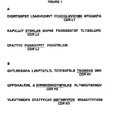
- the present invention provides antibodies having substantially the variable chain framework (FR) regions of the antibody disclosed in Figure 1 (with the same specificity as this antibody) but wherein the polypeptide structures contain one or more amino acid differences in one or more of the CDRs (or complementarity determining regions) thereof.
- the antibodies of the present invention will differ from the antibody of Figures 1 or 2 (hereafter, the "basic structure” or “reference structure”) only in the sequences of one or more of the CDRs, including L1, L2, L3, H1, H2 and H3.
- the basic structure or “reference structure”
- compositions comprising the antibodies disclosed herein wherein said antibodies are suspended in a pharmacologically acceptable carrier, diluent or excipient.
- the potency of an antibody is increased by increasing the rate constant for antigen-antibody complex formation, which is referred to as the "k on " value, by replacement of CDR sequences of such antibody with high potency CDR sequences in their place.
- the present invention relates to high potency antibodies, other than vitaxin, including immunologically active portions, fragments, or segments of said high potency antibodies, having a k on of at least 2.5 x 10 5 M - 1 s -1 , preferably at least about 5x10 5 M -1 s -1 , and most preferably at least about 7.5 X 10 5 M -1 sec -1 .
- Such antibodies may also have a high affinity (at least about 10 9 M -1 ).
- the present invention relates to high potency neutralizing antibodies, including immunologically active portions, fragments, or segments thereof, having a k on of at least 2.5 x 10 5 M -1 s -1 , preferably at least about 5 x 10 5 M -1 s -1 , and most preferably at least about 7.5 X 10 5 M -1 sec -1 .
- Such antibodies may also have a high affinity (at least about 10 9 M -1 ).
- the present invention is directed to methods of producing antibodies, neutralizing or non-neutralizing, having high potency, or biological activity, preferably having an affinity of at least about 10 9 M -1 , and having a k on value of at least about 2.5 x 10 5 M -1 sec -1 , preferably at least about 5X10 5 M -1 sec -1 , and most preferably at least about 7.5 x 10 5 M -1 s -1 .
- antibodies Regardless of how they are constructed, antibodies have a similar overall 3 dimensional structure usually given as L 2 H 2 wherein the molecule commonly comprises 2 light (L) amino acid chains and 2 heavy (H) amino acid chains. Both chains have regions capable of interacting with a structurally complementary antigenic target. The regions interacting with the target are referred to as "variable” or “V” regions and are characterized by differences in amino acid sequence from antibodies of different antigenic specificity.
- variable regions of either H or L chains contain the amino acid sequences capable of specifically binding to antigenic targets. Within these sequences are smaller sequences dubbed “hypervariable” because of their extreme variability between antibodies of differing specificity. Such hypervariable regions are called “complementarity determining regions” or “CDR” regions. These CDR regions account for the basic specificity of the antibody for a particular antigenic determinant structure.
- the CDRs represent non-contiguous stretches of amino acids within the variable regions but the positional locations of these critical amino acid sequences within the variable heavy and light chain regions have been found to have similar locations within the amino acid sequences of the immunoglobulin structure.
- the variable heavy and light chains of all antibodies each have 3 CDR regions, each non-contiguous with the others (termed L1, L2, L3, H1, H2, H3) for the respective light and heavy chains.
- the accepted CDR regions have been described by Kabat et al, J. Biol. Chem. 252:6609-6616 (1977 ).
- the numbering scheme is shown in Figures 1-3 , where the CDRs are underlined and the numbers follow the Kabat scheme.
- antibody polypeptides contain constant (i.e., highly conserved) and variable regions comprising both CDRs and so-called "framework regions,” the latter made up of amino acid sequences within the variable region but outside the CDRs.
- affinity refers to a quantitative measure of the strength of binding of the antibody to a particular ligand and is given in terms of an "affinity constant.”
- affinity constants may be determined as either association or dissociation constants and represent the ratio of the equilibrium concentrations of the free ligand and free antibody with respect to the antibody-ligand complex. As used herein, affinity will be given as an association constant.
- K a the association (or affinity) constant
- the brackets indicate molar concentration of the enclosed species.
- the ratio of the concentration of the complex to the product of the concentrations of the reacting species is constant. So long as saturating conditions are not reached for the antibody or antigen (ligand), a change in concentration of either binding species will alter the concentration of the complex (Ab-Ag) by an amount dictated by the above equation (sine K a is constant).
- Such interaction operates according to a mass-action law.
- Such antibody-antigen reaction can be described kinetically as a dynamic equilibrium where the affinity constant can be measured as a ratio of the individual rate constants for formation and dissociation of the complex: Ab + Ag ⁇ - - - - - - - - - - - - - - - > k off k on Ab - Ag
- the k on value is the rate constant, or specific reaction rate, of the forward, or complex-forming, reaction, measured in units: M -1 sec -1 .
- the k off value is the rate constant, or specific reaction rate, for dissociation of the Ab-Ag complex and is measured in units of sec -1 .
- the present invention relates to high potency neutralizing antibodies, including immunologically active portions, fragments, and/or segments thereof, having a k on of at least 2.5 x 10 5 M -1 s -1 , preferably at least about 5 x 10 5 M -1 s -1 , and most preferably at least about 7.5 x 10 5 M -1 s -1 .
- portion when used in relation to polypeptides, refer to a continuous sequence of residues, such as amino acid residues, which sequence forms a subset of a larger sequence.
- residues such as amino acid residues
- oligopeptides resulting from such treatment would represent portions, segments or fragments of the starting polypeptide.
- proteainases are commonly used to generate fragments of antibodies, such as those described herein, although such fragments can now more easily be generated by direct cloning or synthesis of the particular polypeptide desired to be produced.
- the antibodies of the present invention are high potency antibodies, generally exhibiting high k on values.
- the term "high potency” refers to a potency reflected by an EC 50 (or effective concentration showing at least a reduction of 50% in the OD 450 in the below described micro neutralization assay) of below about 6 nM (nanomolar or 10 -9 molar).
- the antibodies according to the present invention may be neutralizing (causing destruction of the target species, such as a virus, and thereby decreasing viral load). An antibody not neutralizing for one use may be neutralizing for a different use.
- the high potency antibodies of the present invention may have specificity for antigenic determinants found on microbes and are capable of neutralizing said microbes by attaching thereto.
- microbes are most often viruses, bacteria or fungi, especially organisms that cause respiratory disease and most preferably viruses.
- a specific example, used in the examples herein, is respiratory syncytial virus (RSV); another example is parainfluenza virus (PIV).
- the high potency antibodies of the present invention may also have specificity for antigens displayed on the surfaces of cancer cells (but will generally not include antibodies, such as vitaxin, that are non-neutralizing. (See: Wu et al., Proc. Natl. Acad. Sci. 95:6037-6042 (1998 ))
- the antibodies of the present invention also include antibodies for use in other non-neutralizing reactions.
- the high potency antibodies of the present invention may also have specificity for chemical substances such as toxic substances, or toxins, or for the products of toxins, including, but not limited to, products produced by an organism's metabolism of such toxin(s).
- the high potency antibodies of the present invention may be useful in nullifying, or otherwise ameliorating, the effects of addictive drugs, such as cocaine.
- the high potency antibodies of the present invention may also have high affinity for their specific antigen, such as the F antigen of RSV, and, where such high affinity is exhibited, the affinity constant (K a ) of such antibodies is at least about 10 9 M -1 , preferably at least about 10 10 M -1 , and most preferably at least about 10 11 M -1 .
- the antibodies of the present invention exhibit high potency when measured in, for example, the microneutralization assay described in Example 2.
- high potency is measured by the EC 50 value and commonly have an EC 50 of less than about 6.0 nM (nanomolar or 10 -9 M), preferably less than about 3.0 nM, and most preferably less than about 1.0 nM.
- the lower the EC 50 the higher the potency, or biological activity.
- the high potency antibodies of the present invention exhibit such high potency due to their high k on values, which is determined by the amino acid sequences making up the framework (FR) and complementarity determining regions (CDRs). These antibodies, or active fragments thereof, have high potency complementarity determining regions (CDR) within their amino acid sequences.
- the high potency neutralizing antibodies of the present invention may comprise at least 2 high potency CDRs, or 3 high potency CDRs, or even 4 high potency CDRs, or 5 high potency CDRs, and may even comprise 6 high potency CDRs. Of course, in the latter case, all 6 CDRs of the antibody, or active fragments thereof, are high potency CDRs.
- such high potency neutralizing antibodies of the present invention have high potency CDRs that consist of one each of light chain CDRs L1 (CDR L1), L2 (CDR L2), and L3 (CDR L3) and heavy chain CDRs H1 (CDR H1), H2 (CDR H2) and H3 (CDR H3).
- said high potency CDRs have amino acid sequences selected from the group consisting of SEQ ID NO: 11, 12, 13 and 56 for CDR L1, SEQ ID NO: 14, 15, 16, 17, 18, 19, 20, 21, 22, 57 and 58 for CDR L2, SEQ ID NO: 23 for CDR L3, SEQ ID NO: 24 and 25 for CDR H1, SEQ ID NO: 26, 27, 28, 29, 30 and 55 for CDR H2, SEQ ID NO: 31, 32, 33 and 34 for CDR H3.
- the high potency neutralizing antibodies of the present invention comprise variable heavy and light chains with amino acid sequences selected from the group consisting of SEQ ID NO: 35 and 36.
- the present invention further relates to a process for producing a high potency antibody comprising:
- the antibodies produced according to the present invention will commonly have high affinity constants and high k on values, the latter yielding high biological activity, or potency.
- the high potency antibodies produced according to the present invention commonly have a k on of at least about 2.5 x 10 5 M -1 s -1 , preferably at least about 5 X 10 5 M -1 s -1 , and most preferably at least about 7.5 x 10 5 M -1 s -1 .
- the processes of the invention produce a high potency antibody wherein the preselected amino acid sequences producing a high k on (and resulting high potency) are present in either both framework region and at least two or three CDR regions, perhaps all six CDR regions, of the antibody or are restricted to just CDR regions.
- the preselected amino acid sequences producing a high k on are present in either both framework region and at least three CDR regions of the antibody or are restricted to just CDR regions.
- the preselected amino acid sequences producing a high k on are present in either both framework region and at least four CDR regions of the antibody or are restricted to just CDR regions.
- the antibodies produced according to the present invention may be complete tetrameric antibodies, having the H 2 L 2 structure, or may be fragments of such antibody structures, including single chain antibodies or fragments such as Fab or F(ab) 2 ' fragments.
- the antigens for which the antibodies are specific are often, but not always, antigens expressed by viruses, such as respiratory syncytial virus (RSV) or parainfluenza virus (PIV).
- viruses such as respiratory syncytial virus (RSV) or parainfluenza virus (PIV).
- the present invention also relates to a process for producing a high potency antibody comprising producing a recombinant antibody comprising heavy and light chain constant region derived from a mammalian antibody and heavy and light chain variable regions containing framework and/or complementarity determining regions (CDR) wherein at least one CDR is a high k on (or high potency) CDR having an amino acid sequence not found in nature and wherein the presence of said CDR results in a high k on .
- CDR complementarity determining regions
- the processes of the present invention produce high potency recombinant antibodies wherein the recombinant high k on antibody comprises at least two high k on CDRs, possibly three high k on CDRs, and even four high k on CDRs, and as many as five or six high k on CDRs.
- the presence of such CDR sequences result in the antibody, or fragment, exhibiting a high k on and thereby a high potency.
- the aforementioned high association constant of the antibodies produced by the methods of the invention are at least about 2.5 x 10 5 M -1 s -1 , preferably at least about 5 X 10 5 M -1 s -1 , and most preferably at least about 7.5 x 10 5 M -1 s -1
- the present invention further relates to a process for producing a high potency antibody comprising:
- the processes disclosed herein produce high potency antibodies having both high affinity and high k on wherein the affinity constant is at least 10 9 M -1 and k on is at least 2.5 X 10 5 M -1 s -1 , especially where said affinity is at least 10 10 M -1 and said k on is at least 2.5 X 10 5 M -1 s -1 , most especially where said affinity constant is at least 10 11 M -1 and said k on is at least 2.5 X 10 5 M -1 s -1 , with most preferred embodiments having very high affinity and k on , especially where said affinity is at least 10 9 M -1 and said k on is at least 5 X 10 5 M -1 s -1 , and most especially where the affinity constant is at least 10 10 M -1 and k on is at least 2.5 X 10 5 M -1 s -1 , a most especially preferred embodiment being one wherein the processes of the invention produce a high potency antibody wherein the affinity constant is at least 10 11 M -1 and the
- inventions of the present invention also include processes wherein the preselected amino acid sequence producing a high k on is present in either both framework region and CDR regions, or just CDR regions, and wherein such sequences, selected from SEQ ID NO: 11 to 34 and 55 to 58, are present in 1, 2, 3, 4, 5, or all 6, CDR regions, wherein the individual CDR sequence is selected from the individual sequences as disclosed herein. Methods of doing this are well within the skill of those in the art and will not be discussed further herein.
- the methods of the present invention are not limited to merely producing novel high affinity antibodies that are specific for a particular antigen and which have been produced without regard to already existing immunogenic molecules and structures.
- the methods disclosed herein provide a means for selected modifications to the structures of known antibody molecules, thereby producing increases in the k on of such antibodies and concomitant increased biological activity. This is accomplished by selective incorporation of the high potency CDR sequences disclosed herein.
- the antibody whose potency is to be increased will have an initial and/or final affinity constant of at least 10 9 M -1 , preferably at least about 10 10 M -1 , and most preferably at least about 10 11 M -1 .
- the antibodies produced according to the methods of the invention will have higher k on constants after amino acid changes to produce high potency sequences of the invention and as a result of said amino acid changes, especially where the k on value following said amino acid changes is at least 2.5 X 10 5 M -1 sec -1 , especially at least about 5 X 10 5 M -1 s -1 , and most especially at least about 7.5 X 10 5 M -1 s -1 (regardless of the particular affinity constant) (K a ).
- the use of selected amino acid sequences in the CDRs of an antibody molecule may result in a sizeable increase in both association (k on ) and dissociation (k off ) rate constants and, if both are increased by the same factor, the result is a high, or higher, potency (due to the higher k on ) but with no resulting increase in K a (because the ratio of the k on to k off is the same).
- the result is an antibody, or active fragment thereof, with higher affinity but with little or no increase in potency.
- a process for preventing or treating a disease comprising administering to a patient at risk of such disease, or afflicted with such disease, a therapeutically (or prophylactically) effective amount of a high potency antibody, or active fragment thereof, having a polypeptide sequence as disclosed herein or produced according to the methods disclosed herein.
- the disease is caused by a virus, especially one selected from the group respiratory syncytial virus and parainfluenza virus.
- the highly potent neutralizing antibodies of the present invention are achieved through generating appropriate antibody gene sequences, i.e., amino acid sequences, by arranging the appropriate nucleotide sequences and expressing these in a suitable cell line.
- Any desired nucleotide sequences can be produced using the method of codon based mutagenesis, as described, for example, in U.S. Pat. Nos. 5,264,563 and 5,523,388 (the disclosures of which are hereby incorporated by reference in their entirety).
- Such procedures permit the production of any and all frequencies of amino acid residues at any desired codon positions within an oligonucleotide. This can include completely random substitutions of any of the 20 amino acids at an desired position or in any specific subset of these.
- this process can be carried out so as to achieve a particular amino acid a desired location within an amino acid chain, such as the novel CDR sequences according to the invention.
- the appropriate nucleotide sequence to express any amino acid sequence desired can be readily achieved and using such procedures the novel CDR sequences of the present invention can be reproduced.
- enhanced antibody variants can be generated by combining in a single polypeptide structure one, two or more novel CDR sequences as disclosed herein (see, for example, SEQ ID NO: 11-34), each shown to independently result in enhanced potency or biological activity.
- novel amino acids sequences can be combined into one antibody, in the same or different CDRs, to produce antibodies with desirable levels of biological activity. Such desirable levels will often result from producing antibodies whose k on values are at least about 2.5 X 10 5 M -1 sec -1 .
- 3 such novel CDR sequences may be employed and the resulting antibodies screened for potency, or biological activity, using either the cotton rat protocol or the microneutralization protocol described herein, where the said antibody demonstrates high affinity for a particular antigenic structure, such as the F antigen of RSV.
- the overall result would thus be an iterative process of combining various single amino acid substitutions and screening the resulting antibodies for antigenic affinity and potency in a step by step manner, thereby insuring that potency is increased without sacrifice of a desirably high, or at least minimum value for, affinity.
- This iterative method can be used to generate double and triple amino acid replacements in a stepwise process so as to narrow the search for antibodies having higher affinity.
- such rules determine the amino acid changes that must be made in the CDR regions of antibodies, or the amino acid sequences that must be prepared in wholly novel and synthetic antibody polypeptides, so as to achieve high affinities.
- high affinity is often a property of antibodies useful in therapeutic applications, such antibodies do not always have a sufficient potency to afford practical utility in such uses.
- affinity is measured by the ratio of the k on and k off constants. For example, a k on of 10 5 M -1 sec -1 and a k off of 10 -5 sec -1 would combine to give an affinity constant of 10 10 M -1 (see values in Table 3).
- antibodies showing such high affinity may still lack the potency required to make them useful therapeutic agents.
- antibody potency is dependent on the value of the k on rate for the antibody binding reaction. Thus, an antibody, regardless of affinity for the respective antigen, will exhibit an increase in potency (such as neutralizing ability) where said antibody has a higher k on value, regardless of K a or k off .
- increased potency of an existing antibody is achieved through selective changes to one or more of the amino acids present in one or more of the CDR regions of said antibody whereby said amino acid changes have the effect of producing an increase in the k on for said antibody, preferably with an increase in antibody affinity.
- Higher potency can be achieved with a higher k on value even if the affinity remains the same or is reduced somewhat.
- Such an antibody is most advantageously produced by synthesis of the required polypeptide chains via synthesis in suitably engineered cells having incorporated therein the appropriate nucleotide sequences coding for the required polypeptide chains containing the altered CDR segments.
- a novel antibody having a desirable level of potency, or biological activity can be prepared de novo by incorporation of selected amino acids at selected locations within the CDR regions of said antibody polypeptide chains using genetically engineered cells as described herein or wholly through chemical synthesis of the required polypeptide chains with subsequent formation of the necessary disulfide bonds.
- the antibodies produced according to the methods of the present invention may be antibodies possessing tetrameric, dimeric or monomeric structures.
- antibody as used herein includes whole tetrameric antibody molecules, as are commonly found in nature, as well as portions and fragments thereof, including L 2 H 2 , LH, Fab, F(ab') 2 , and other fragments, the only requirement of such structures being that they retain biological activity as measured by the assays and protocols described herein.
- the antibodies of the present invention are high affinity monoclonal antibodies. Such antibodies, however, are monoclonal only in the sense that they may be derived from a clone of a single cell type. However, this is not meant to limit them to a particular origin. Such antibodies may readily be produced in cells that commonly do not produce antibodies, such as CHO or COS cells. In addition, such antibodies may be produced in other types of cells, especially mammalian and even plant cells, by genetically engineering such cells to express and assemble the polypeptide light and heavy chains forming the antibody product.
- monoclonal antibody is intended to denote more the specificity and purity of the antibody molecules produced by the methods disclosed herein rather than the mere mechanism used for production of said antibodies.
- potency is intended to describe the dependency of the effect of the antibody, when utilized for its intended purpose, on the concentration of such antibody.
- potency means biological activity with respect to a given antigen.
- the potency, or biological activity, or biological effect is measured for an anti-RSV antibody, by either the cotton rat procedure or the microneutralization procedure, as described in the Methods section.
- the affinity of an antibody for the antigen is simply a mathematical measure of the ratio of k on to k off .
- the affinities (K a ) of the antibodies produced according to the methods of the present invention will typically be in the range of 10 10 M -1 .
- This range may, for example, be within 10-fold, higher or lower, of 10 10 M -1 or be more than 10-fold greater than 10 10 M -1 or may even be numerically equal to 10 10 M -1 .
- the affinity of the antibody for antigen is proportional to the value of this constant (i.e., the higher the constant, the greater the affinity due to greater concentration of the complex - see the equation for the affinity constant).
- Such a constant is measured by standard kinetic methodology for antibody reactions (as described in Example 1).
- the antibodies produced according to the methods of the present invention will commonly comprise a mammalian, preferably a human, constant region and a variable region, said variable region comprising heavy and light chain framework regions and heavy and light chain CDRs, wherein the heavy and light chain framework regions have sequences characteristic of a mammalian antibody, preferably a human antibody, and wherein the CDR sequences are similar to those of an antibody of some species other than a human, preferably a mouse.
- the framework amino acid sequences are characteristic of those of a non-human, the latter is preferably a mouse.
- the antibody is a human antibody wherein the antibody has a k on value as herein described to provide for improved potency.
- antibodies produced according to the present invention will commonly bind the same epitope as prior to applying the methods disclosed herein to increase the k on value.
- the antibody after applying the methods of the present invention, the antibody will have CDR sequences similar, but not identical, to the CDR sequences prior to application of the methods disclosed herein in that at least one of the CDRs of said antibody will contain a high potency amino acid sequence, such as one selected from SEQ ID NO: 11-34 if the antibody is to be used to neutralize a virus such as RSV.
- potency is increased using a neutralizing antibody against respiratory syncytial virus (RSV) having an affinity constant of at least 10 9 M -1 , and preferably at least 10 10 M -1 (for the F antigen thereof) by increasing the k on value to at least 2.5 X 10 5 M -1 sec -1 .
- RSV respiratory syncytial virus
- the amino acids present in the CDRs of such an Fab fragment are shown in Table 3 (for example, clone 5).
- the approach used to determine affinity and kinetic constants of antibodies before and after application of the methods of the invention to increase the k on value was to generate nucleotide sequences for the genes expressing the desired antibody chains (in accordance with the present invention) and insert these into vectors that were then used to transform COS-1 cells by standard protocols. The cells were grown in wells and the supernatant sampled and measured for antigen binding using standard ELISA techniques. These polynucleotides were designed so as to provide one or more amino acid replacements in the CDRs that could then be screened for increased k on values, with beneficial replacements (those yielding increased k on values) being selectively combined for increased affinity. These are then subsequently screened for binding affinity for the respective antigen, such as the F antigen of RSV versus the basic or reference structure, thereby determining that no serious change in affinity resulted from the increase in k on values.
- the respective antigen such as the F antigen of RSV versus the basic or reference structure
- the present invention relates to an isolated antibody comprising an affinity constant of at least 10 9 M -1 , preferably at least 10 10 M -1 and most preferably at least 10 11 M -1 and wherein the k on is at least about 2.5 x 10 5 M -1 sec -1 , preferably at least about 5 X 10 5 M -1 sec -1 , and most preferably at least 7.5 x 10 5 M -1 sec -1 (including all combinations thereof).
- antibodies produced according to the methods of the present invention will include an antibody selected from the group consisting of a naturally occurring mammalian antibody, naturally occurring human antibodies, naturally occurring mouse antibodies, single chain antibodies, chimeric antibodies (having constant regions of an antibody of one species and variable regions of an antibody of a different species), CDR-grafted antibodies (having the CDR regions of an antibody of one species and the constant and, possibly, framework regions of an antibody of a different species), humanized antibodies (in which selected amino acids, of either the variable framework and/or CDR regions, have been altered so as to be similar to a human antibody despite such sequences being largely derived from a different species, such as a mouse), preferably humanized mouse antibodies, altered mammalian, preferably mouse, most preferably human, antibodies (wherein selected amino acids of an existing antibody have been altered at some point in the polypeptide chain, commonly through the techniques of genetic engineering, to afford antibody structures similar
- the present invention also relates to methods of increasing the potency of one of the aforementioned types of antibodies (as previously described) comprising selectively changing the amino acids within the variable regions of the antibody so as to increase the measured k on value of said antibody with respect to a particular antigen.
- the k on value may be different for the same antibody following the same amino acid changes where the reaction is measured using a different antigen or antigenic determinant.
- affinities are also likely to change as the identity of the antigenic determinant changes.
- amino acid changes introduced into the sequences of the polypeptides of such antibodies are preferably restricted to the CDR portions of the variable regions of the antibodies although these could involve changes to the framework regions as well.
- the methods disclosed herein facilitate the production of high potency antibodies of a completely novel structure in that their CDR sequences are high potency CDRs as determined by the methods disclosed herein so as to deliberately increase the k on values of such antibodies and without destroying the specificity and affinity of such antibody for the intended antigenic target.
- an already existing antibody is modified to increase the potency thereof by increasing the k on value.
- the antibody is one with high affinities, e.g., at least about 10 9 M -1 or 10 10 M -1 .
- the antibody is synthesized, using clones or genetically engineered animal or plant cells, so as to introduce amino acid changes into the heavy and/or light polypeptide chains of said antibody, preferably where said antibody changes are introduced into the complementarity determining regions (CDRs) of said polypeptide chains, to increase the k on value for binding of said antibody to a particular antigen with concomitant increase in the potency of the antibody.
- CDRs complementarity determining regions
- the methods of the present invention are advantageously utilized to produce an antibody molecule wherein the k on value of said antibody following the amino acid changes to its sequence, preferably the variable regions of said sequence, most preferably the CDR portions, is higher than the k on value exhibited by said antibody prior to said amino acid changes when the k on values are measured with respect to the same antigen.
- the k on of said antibodies will be increased by at least 2-fold, preferably at least 5-fold, and most preferably at least 10-fold. More specifically, the k on value of said antibody is increased to at least about 2.5 X 10 5 M -1 sec -1 , preferably increased to at least 5 X 10 5 M -1 sec -1 , most preferably at least 7.5 X 10 5 M -1 sec -1 .
- the present invention also relates to a method of producing an antibody having a k on value of at least 2.5 X 10 5 M -1 sec -1 , comprising preparing an antibody whose polypeptide sequences contain selected amino acids at selected locations, especially within the CDR sequences, and then screening said antibodies for those having a k on value of at least 2.5 X 10 5 M -1 sec -1 , or a k on value of at least 5 X 10 5 M -1 sec -1 or even 7.5 X 10 5 M -1 sec -1 .
- Such antibodies will result from the presence of one or more of the high potency CDRs as disclosed herein.
- Such antibodies are readily screened for high k on values.
- the methods of the present invention can be utilized for the production of antibodies with high potency, or antibodies of increased potency, having affinity for any desired antigen, although such antigen is preferably an antigen characteristic of a microorganism, such as a bacterium, virus, or fungus, preferably a virus (for example, respiratory syncytial virus (RSV)).
- a microorganism such as a bacterium, virus, or fungus, preferably a virus (for example, respiratory syncytial virus (RSV)).
- RSV respiratory syncytial virus
- the present invention relates to a method of preventing or treating a disease comprising administering to a patient at risk of such disease, or afflicted with such disease, of a therapeutically active amount of an antibody prepared by the methods disclosed herein.
- an antibody may be a completely novel antibody or a known and clinically useful antibody whose potency has been increased by application of the methods of the present invention.
- the disease prevented or treated by antibodies prepared by the methods disclosed herein may commonly be diseases caused by microorganisms, such as bacteria and viruses, preferably viruses and most preferably RSV.
- the antibodies thus disclosed will also commonly have framework regions derived from a human antibody but, where not so derived, preferably from a mouse.
- the basic or reference antibody (heavy and light chain variable regions (CDRs plus Framework) shown in Figures 1 and 2 ) was used as the "template” for generating the novel CDR sequences of the antibodies of the present invention, the latter imparting higher k on values.
- Standard approaches to characterizing and synthesizing the six CDR libraries of single mutations were used (see Wu et al, Proc. Natl. Acad. Sci. 95:6037-6042 (1998 ), the disclosure of which is hereby incorporated by reference in its entirety).
- the target CDR was first deleted for each of the libraries prior to annealing the nucleotides.
- the CDRs of a reference antibody (see Figure 2 ) were defined as in Table 1. Codon based mutagenesis for oligonucleotide synthesis to yield the CDR sequences of the invention was employed (as described above).
- DNA from the highest k on variants was sequenced to determine the nature of the beneficial or high potency replacements.
- antibodies are then prepared with the high-k on amino acid replacements, either singly or in various combinations, so as to maximize the effects of such substitutions and thereby produce high affinity antibodies also exhibiting high potency.
- the high potency (i.e., high k on ) neutralizing antibodies disclosed herein contain amino acid sequences differing from that of the base or reference antibody (for example, as shown in Figures 1 and 2 ) only in complementarity determining regions L1 (or CDRL1), L2 (or CDRL2), L3 (or CDRL3), H1 (or CDRH1) and H3 (or CDRH3).
- Table 2 Sequences of CDRs tending to induce high potency in antibodies Clone CDR High Potency CDR Sequence SEQ ID NO.
- Table 2 indicates the amino acid sequences (all sequences in standard amino acid one letter code) of the high k on , CDRs employed in the high potency antibodies prepared according to the methods disclosed herein.
- Table 2 indicates the locations of key amino acid substitutions made in the corresponding CDRs of table 1 (i.e., locations at which CDRs differ in amino acids) are indicated in bold face and underlined.
- an antibody prepared so as to have increased k on is an RSV-neutralizing antibody, with an affinity of at least 10 9 M -1 and preferably at least 10 10 M -1 , that is also a humanized antibody that includes a human constant region and a framework for the heavy and light chains wherein at least a portion of the framework is derived from a human antibody (or from a consensus sequence of a human antibody framework).
- all of the framework is derived from a human antibody (or a human consensus sequence).
- an antibody produced according to the present invention is a grafted antibody having a human constant region, one or more CDRs that are derived from a non-human antibody in which at least one of the amino acids in at least one of said CDRs is changed and in which all or a portion of the framework is derived from a human antibody (or a consensus sequence of a human antibody framework).
- genes with the desired sequences can be assembled and, using a variety of vectors, inserted into appropriate cells for expression of the functional tetrameric antibody molecules. Coupling this with the methodology already described, permits the assembly of single mutation libraries wherein the antibodies possess the same sequences as corresponding grafted antibodies and, therefore, the same structure and binding affinities.
- the combinations of CDR sequences disclosed in Table 2 can be present in whole tetrameric antibody molecules or in active fragments, such as Fab fragment.
- the potency data for clones 1 through 15 shown in Table 3 are for Fab fragments while the data for clones 16 and 17 of Table 3 are for whole antibody molecules (clone 16 is MEDI-493 with sequence disclosed in Johnson et al (1997)).
- Whole antibody molecules according to the present invention include antibody molecules having heavy chain sequences (variable plus constant region) selected from the group consisting of SEQ ID NO: 37, 39, 41, 43, 45, 47, 49, 51 and 53 and with light chain sequences (variable plus constant region) selected from the group consisting of SEQ ID NO: 38, 40, 42, 44, 46, 48, 50, 52, and 54.
- heavy chain sequences variable plus constant region
- light chain sequences variable plus constant region
- the relatively high k on antibodies of the invention can be present in a relatively pure or isolated form as well as in a supernatant drawn from cells grown in wells or on plates.
- the antibodies of the invention can thus also be present in the form of a composition comprising the antibody of the invention and wherein said antibody is suspended in a pharmacologically acceptable diluent or excipient.
- the antibodies of the invention may be present in such a composition at a concentration, or in an amount, sufficient to be of therapeutic or pharmacological value in treating or preventing diseases, (for example, preventing RSV, including the higher incidence of asthma and wheezing that often occur following such infections).
- Said antibodies may also be present in a composition in a more dilute form.
- the invention is also directed to providing a method of preventing and/or treating disease, especially viral diseases, most especially respiratory syncytial virus infections, comprising the administering to a patient at risk thereof, or afflicted therewith, of a therapeutically effective amount of the antibody composition described herein.
- a high potency neutralizing antibody of the present invention has the sequence of Figure 3 (SEQ ID NO: 101 and 102) for clone 15 with the CDRs of clone 15 given in Table 2).
- antibodies of the present invention could be assembled from CDR regions and non-CDR regions derived from actual neutralizing antibodies by splicing amino acid segments together (and antibodies so assembled would be within the invention disclosed herein)
- the antibodies of the present invention are most conveniently prepared by genetically engineering appropriate gene sequences into vectors that may then be transfected into suitable cell lines for eventual expression of the assembled antibody molecules by the engineered cells. In fact, such recombinant procedures were employed to prepare the antibodies disclosed herein.
- sequences of the chains of the high affinity antibodies are known from the disclosure herein, such antibodies could also be assembled by direct synthesis of the appropriate chains and then allowed to self-assemble into tetrameric antibody structures.
- MEDI-493 is an IgG 1 (COR)/ kappa (K102) humanized MAb (heavy and light chain variable region sequences shown in Figure 1 ) containing the antigen binding determinants of murine MAb 1129 [ Johnson et al, J. Infect Dis., 176, 1215-1224 (1997 ) ; Beeler and van Wyck Coelingh, J. Virol., 63, 2941-2950 (1989 )].
- RSV Fusion Inhibition Assay The ability of the antibodies to block RSV-induced fusion after viral attachment to the cells was determined in a fusion inhibition assay. This assay was identical to the microneutralization assay, except that the cells were infected with RSV (Long) for four hours prior to addition of antibody [ Taylor et al, J. Gen. Virol., 73, 2217-2223 (1992 )]
- BIAcore Analysis Epitope analysis of the MAbs was performed using a BlAcore biosensor (BlAcore, Piscataway, NJ) [ Karlsson et al, J. Immunol. Methods, 145, 229-240 (1991 ); Johne, Mol. Biotechnol., 9, 65-71 (1998 )] with a plasmin resonance microfluidics system.
- the antigen used for this assay was a truncated RSV (A2) F protein (amino acids 1-526) expressed in baculovirus.
- RSV F protein was covalently coupled to an N-hydroxysuccinimide/l-ethyl-3-[3-dimethylaminopropyl]-carbodiimide - activated CM5 sensor chip according to the manufacturer's protocol, and unreacted active ester groups were reacted with 1 M ethanolamine.
- a primary injection of either 1 ⁇ M or 10 ⁇ M MEDI-493 was followed by an HBSS wash step, and then by a secondary injection of either MEDI-493 or RHSZI9. Sensorgrams were analyzed using BlAevaluation software.
- Cotton Rat Prophylaxis In vivo efficacy is determined using the cotton rat model [ Prince et al, J. Virol., 55, 517-520 (1985 )].
- Cotton rats Sigmodon hispidus, average weight 100 grams
- MAb purified MAb by intramuscular injection (i.m.) at doses of 5, 2.5, 1.25, or 0.625 mg/kg body weight, or bovine serum albumin (BSA) control at 5 mg/kg body weight.
- BSA bovine serum albumin
- mice Twenty-four hours later animals are again anesthetized, bled for serum MAb concentration determination, and challenged by intranasal instillation (i.n.) of 10 5 PFU A (Long) or B (18537) strains of RSV. Four days later animals are sacrificed and their lungs are harvested. Lungs are homogenized in 10 parts (wt/vol) of Hanks balanced salt solution and the resultant suspension was used to determine pulmonary viral titers by plaque assay. Serum antibody titers at the time of challenge are determined by an anti-human IgG ELISA.
- the kinetics of interaction between high affinity anti-RSV Mabs and the RSV F protein was studied by surface plasmon resonance using a Pharmacia BIAcoreTM biosensor.
- a recombinant baculovirus expressing a C-terminal truncated F protein provided an abundant source of antigen for kinetic studies.
- the supernatant, which contained the secreted F protein was enriched approximately 20-fold by successive chromatography on concanavalin A and Q-sepharose columns.
- the pooled fractions were dialyzed against 10 mM sodium citrate (pH 5.5), and concentrated to approximately 0.1 mg/ml.
- a typical kinetic study involved the injection of 35 ml of Mab at varying concentrations (25-300 nM) in PBS buffer containing 0.05% Tween-20 (PBS/Tween). The flow rate was maintained at 5 ml/min, giving a 7 min binding phase. Following the injection of Mab, the flow was exchanged with PBS/Tween buffer for 30 min for determining the rate of dissociation. The sensor chip was regenerated between cycles with a 2 min pulse of 10 mM HCl. The regeneration step caused a minimal loss of binding capacity of the immobilized F-protein (4% loss per cycle). This small decrease did not change the calculated values of the rate constants for binding and dissociation (also called the k on and k off , respectively).
- EDC N-ethyl-N'-[3-diethylaminopropyl)-carbodiimide.
- 4 ⁇ g/ml of F protein in 10 mM NaOAc, pH 4.0 was prepared and about a 30 ⁇ l injection gives about 500 RU (response units) of immobilized F protein under the above referenced conditions.
- the blank flow cell VnR immobilized-CM dextran surface
- the column could be regenerated using 100 mM HCl (with 72 seconds of contact time being required for full regeneration).
- Fab concentrations were 12.5 nM, 25 nM, 50 nM, 100 nM, 200 nM, and 400 nM.
- the dissociation phase was analyzed from 230 seconds (30 seconds after start of the dissociation phase) to 900 seconds.
- Kinetics were analyzed by 1:1 Langmuir fitting (global fitting). Measurements were done in HBS-EP buffer (10 mM HEPES, pH 7.4, 150 mM NaCl, 3 mM EDTA, 0.005% (v/v) Surfactant P20.
- the k on and k off were measured separately.
- the k on was measured at conditions that were the same as those for the single mutation clones and was analyzed similarly.
- k off or k dissoc
- the following conditions were employed. Briefly, 4100 RU of F protein were immobilized (as above) with CM-dextran used as the blank. Here, 3000 RU of Fab was bound (with dissociated Fab high enough to offset machine fluctuation). HBS plus 5 nM F protein (about 350 - 2000 times higher than the k dissoc or K d - the dissociation equilibrium constant) was used as buffer. The dissociation phase was 6 - 15 hours at a flow rate of 5 ⁇ l/min. Under the conditions used herein, re-binding of the dissociated Fab was minimal. For further details, see the manual with the biosensor.
- K d k diss /k assoc
- a plot of dr/dt as a function of R gives a slope of (k assoc [Mab]+k diss )--Since these slopes are linearly related to the [Mab], the value k assoc can be derived from a replot of the slopes versus [Mab].
- the slope of the new line is equal to k assoc .
- the value of k diss can be extrapolated from the Y-intercept, a more accurate value was determined by direct measurement of k diss .
- the reference clone is the Fab fragment with the sequences shown in Figure 2 and CDRs shown in Table 1.
- Clones 1-15 are Fab fragments having the framework sequences of Figure 2 and the indicated CDR combinations of clones 1-15 of Table 2 (where the "X" indicates a high potency CDR (i.e., a CDR whose presence versus the reference sequence results in high potency and higher potency than the reference Fab)). Where no "X" appears next to the CDR of Table 2, the sequence is just the corresponding sequence of the reference Fab (from Table 1 and Figure 2 ). Table 3. Summary of Kinetic Constants for High Potency Antibodies. Clone No.
- Clones 16 and 17 of Table 3 are actual monoclonal antibodies with the framework sequences of Figure 1 and constant regions as described in Johnson et al (1997).
- the framework sequences of these antibodies may differ slightly from those of the Fab fragments.
- Clones 18 to 26 of Table 4 are tetrameric antibody molecules similar to clones 16 and 17 but having high potency CDR sequences.
- Antibody clone 21 has the same CDR sequences as Fab clone 9
- antibody clone 22 has the same CDR sequences as Fab clone 10
- antibody clone 23 has the same CDR sequences as Fab clone 11
- antibody clone 24 has the same CDR sequences as Fab clone 12
- antibody clone 25 has the same CDR sequences as Fab clone 13
- antibody clone 26 has the same CDR sequences as Fab clone 15.
- Antibody clones 18, 19 and 20 of Table 3 are full length tetrameric antibodies with CDR combinations given in Table 2. The framework sequences of these antibodies may differ slightly from those of the Fab fragments.
- the underlined amino acids of the CDR sequences of Table 2 represent the amino acid residues located at the key locations within the high potency CDRs of the high potency antibodies produced by the methods of the present invention.
- the amino acids located at the key positions as taught herein by the bold and underlined residues in Table 1 for the reference antibody would be replaced by the amino acids listed under CDRs in Table 2 (and also bold and underlined).
- these one letter codes represent the amino acids replacing the reference amino acids at the key positions (or critical positions) of the CDRs shown in Figure 2 (residues in bold in the sequences of Table 2) for a reference antibody whose potency is to be increased.
- clone 18 has the full length sequences given by SEQ ID NO: 41 (heavy chain) and 42 (light chain)
- clone 19 has the full length sequences given by SEQ ID NO: 45 (heavy chain) and 46 (light chain)
- clone 20 has the full length sequences given by SEQ ID NO: 47 (heavy chain) and 48 (light chain)
- clone 21 has the full length sequences given by SEQ ID NO: 51 (heavy chain) and 52 (light chain)
- clone 22 has the full length sequences given by SEQ ID NO: 53 (heavy chain) and 54 (light chain)
- clone 23 has the full length sequences given by SEQ ID NO: 49 (heavy chain) and 50 (light chain)
- clone 24 has the full length sequences given by SEQ ID NO: 43 (heavy chain) and 44 (light chain)
- clone 25 has the full length sequences given by SEQ ID NO: 37 (heavy chain) and 38 (light chain)
- clone 18 (IgG) and clone 27 (Fab) have the same CDRs
- clone 19 (IgG) and clone 29 (Fab) have the same CDRs
- clone 20 (IgG) and clone 28 (Fab) have the same CDRs
- clone 21 (IgG) and clone 9 (Fab) have the same CDRs
- clone 21 (IgG) and clone 9 (Fab) have the same CDRs
- clone 21 (IgG) and clone 9 (Fab) have the same CDRs
- clone 22 (lgG) and clone 10 (Fab) have the same CDRs
- clone 23 (IgG) and clone 11 (Fab) have the same CDRs
- clone 24 (IgG) and clone 12 (Fab) have the same CDRs
- the present invention includes full tetrameric high potency neutralizing antibodies wherein said antibody has a heavy chain amino acid sequence selected from the group consisting of SEQ ID NO: 37, 39, 41, 45, 47, 49, 51 and 53, and a light chain amino acid sequence selected from the group consisting of SEQ ID NO: 38, 40, 42, 44, 46, 48, 50, 52 and 54, preferably where said antibodies are the antibodies of clones 18 - 26.
- Neutralization of the antibodies of the present invention were determined by microneutralization assay.
- This microneutralization assay is a modification of the procedures described by Anderson et al ["Microneutralization test for respiratory syncytial virus based on an enzyme immunoassay, J. Clin. Microbiol. 22, 1050-1052 (1985 ), the disclosure of which is hereby incorporated by reference in its entirety].
- the procedure used here is described in Johnson et al [J. Infectious Diseases, 180, 35-40 (1999 ), the disclosure of which is hereby incorporated by reference in its entirety].
- Antibody dilutions were made in triplicate using a 96-well plate.
Landscapes
- Health & Medical Sciences (AREA)
- Chemical & Material Sciences (AREA)
- Life Sciences & Earth Sciences (AREA)
- Organic Chemistry (AREA)
- General Health & Medical Sciences (AREA)
- Medicinal Chemistry (AREA)
- Virology (AREA)
- Molecular Biology (AREA)
- Veterinary Medicine (AREA)
- Biophysics (AREA)
- Nuclear Medicine, Radiotherapy & Molecular Imaging (AREA)
- Animal Behavior & Ethology (AREA)
- General Chemical & Material Sciences (AREA)
- Public Health (AREA)
- Chemical Kinetics & Catalysis (AREA)
- Proteomics, Peptides & Aminoacids (AREA)
- Genetics & Genomics (AREA)
- Immunology (AREA)
- Biochemistry (AREA)
- Pharmacology & Pharmacy (AREA)
- Communicable Diseases (AREA)
- Oncology (AREA)
- Pulmonology (AREA)
- Engineering & Computer Science (AREA)
- Bioinformatics & Cheminformatics (AREA)
- Peptides Or Proteins (AREA)
- Medicines Containing Antibodies Or Antigens For Use As Internal Diagnostic Agents (AREA)
- Preparation Of Compounds By Using Micro-Organisms (AREA)
- Medicines That Contain Protein Lipid Enzymes And Other Medicines (AREA)
Applications Claiming Priority (2)
| Application Number | Priority Date | Filing Date | Title |
|---|---|---|---|
| US18625200P | 2000-03-01 | 2000-03-01 | |
| EP01914657A EP1259547B1 (en) | 2000-03-01 | 2001-03-01 | High potency recombinant antibodies and method for producing them |
Related Parent Applications (1)
| Application Number | Title | Priority Date | Filing Date |
|---|---|---|---|
| EP01914657.0 Division | 2001-03-01 |
Publications (1)
| Publication Number | Publication Date |
|---|---|
| EP2341075A1 true EP2341075A1 (en) | 2011-07-06 |
Family
ID=22684221
Family Applications (3)
| Application Number | Title | Priority Date | Filing Date |
|---|---|---|---|
| EP01914657A Expired - Lifetime EP1259547B1 (en) | 2000-03-01 | 2001-03-01 | High potency recombinant antibodies and method for producing them |
| EP10010678A Withdrawn EP2341075A1 (en) | 2000-03-01 | 2001-03-01 | Antibodies binding to the f protein of a respiratory syncytial virus (rsv) |
| EP10010677A Withdrawn EP2341074A1 (en) | 2000-03-01 | 2001-03-01 | Antibodies binding to the f protein of a respiratory syncytial virus (rsv) |
Family Applications Before (1)
| Application Number | Title | Priority Date | Filing Date |
|---|---|---|---|
| EP01914657A Expired - Lifetime EP1259547B1 (en) | 2000-03-01 | 2001-03-01 | High potency recombinant antibodies and method for producing them |
Family Applications After (1)
| Application Number | Title | Priority Date | Filing Date |
|---|---|---|---|
| EP10010677A Withdrawn EP2341074A1 (en) | 2000-03-01 | 2001-03-01 | Antibodies binding to the f protein of a respiratory syncytial virus (rsv) |
Country Status (10)
| Country | Link |
|---|---|
| US (2) | US7700735B2 (enExample) |
| EP (3) | EP1259547B1 (enExample) |
| JP (2) | JP2003525061A (enExample) |
| AU (4) | AU2001240020B9 (enExample) |
| CA (1) | CA2401652A1 (enExample) |
| CY (1) | CY1113298T1 (enExample) |
| DK (1) | DK1259547T3 (enExample) |
| ES (1) | ES2390761T3 (enExample) |
| PT (1) | PT1259547E (enExample) |
| WO (1) | WO2001064751A2 (enExample) |
Cited By (1)
| Publication number | Priority date | Publication date | Assignee | Title |
|---|---|---|---|---|
| US9447173B2 (en) | 2013-03-14 | 2016-09-20 | Regeneron Pharmaceuticals, Inc. | Human antibodies to respiratory syncytial virus F protein and methods of use thereof |
Families Citing this family (49)
| Publication number | Priority date | Publication date | Assignee | Title |
|---|---|---|---|---|
| US7229619B1 (en) | 2000-11-28 | 2007-06-12 | Medimmune, Inc. | Methods of administering/dosing anti-RSV antibodies for prophylaxis and treatment |
| AU2001240020B9 (en) | 2000-03-01 | 2008-12-04 | Medimmune, Llc | High potency recombinant antibodies and method for producing them |
| ES2349348T3 (es) * | 2000-01-27 | 2010-12-30 | Medimmune, Llc | Anticuerpos neutralizantes de rsv de ultra alta afinidad. |
| TWI327599B (en) * | 2000-11-28 | 2010-07-21 | Medimmune Llc | Methods of administering/dosing anti-rsv antibodies for prophylaxis and treatment |
| US7179900B2 (en) * | 2000-11-28 | 2007-02-20 | Medimmune, Inc. | Methods of administering/dosing anti-RSV antibodies for prophylaxis and treatment |
| US6855493B2 (en) * | 2000-11-28 | 2005-02-15 | Medimmune, Inc. | Methods of administering/dosing anti-RSV antibodies for prophylaxis and treatment |
| EP1355919B1 (en) * | 2000-12-12 | 2010-11-24 | MedImmune, LLC | Molecules with extended half-lives, compositions and uses thereof |
| AU2002365925A1 (en) * | 2001-11-02 | 2003-09-02 | Centocor | Rsv proteins, antibodies, compositions, methods and uses |
| EP2075256A2 (en) | 2002-01-14 | 2009-07-01 | William Herman | Multispecific binding molecules |
| ES2365606T3 (es) * | 2002-02-13 | 2011-10-07 | Ludwig Institute For Cancer Research Ltd. | Anticuerpos contra gm-csf quiméricos. |
| US20050152899A1 (en) * | 2002-05-10 | 2005-07-14 | Kinch Michael S. | EphA2 agonistic monoclonal antibodies and methods of use thereof |
| EP1575509B1 (en) * | 2002-05-10 | 2011-10-26 | Purdue Research Foundation | Epha2 agonistic monoclonal antibodies and methods of use thereof |
| JP4557714B2 (ja) * | 2002-05-10 | 2010-10-06 | メディミューン,エルエルシー | EphA2モノクローナル抗体およびその使用法 |
| US7425618B2 (en) * | 2002-06-14 | 2008-09-16 | Medimmune, Inc. | Stabilized anti-respiratory syncytial virus (RSV) antibody formulations |
| US7132100B2 (en) * | 2002-06-14 | 2006-11-07 | Medimmune, Inc. | Stabilized liquid anti-RSV antibody formulations |
| CA2494485A1 (en) * | 2002-07-25 | 2004-02-05 | Medimmune, Inc. | Methods of treating and preventing rsv, hmpv, and piv using anti-rsv, anti-hmpv, and anti-piv antibodies |
| CA2509136C (en) * | 2003-01-24 | 2013-10-29 | Applied Molecular Evolution, Inc. | Human il-1 beta antagonists |
| CA2521594A1 (en) * | 2003-04-11 | 2004-10-28 | Medimmune, Inc. | Epha2 and non-neoplastic hyperproliferative cell disorders |
| EP1618184A4 (en) * | 2003-04-11 | 2006-06-21 | Medimmune Inc | EPHA2, HYPOPROLIFERATIVE CELL DISORDERS, AND EPITHELIAL AND ENDOTHELIAL RECONSTITUTION |
| US7070786B2 (en) | 2003-06-06 | 2006-07-04 | Centocor, Inc. | RSV proteins, antibodies, compositions, methods and uses |
| EP1720908A2 (en) * | 2004-02-17 | 2006-11-15 | Absalus, Inc. | Super-humanized antibodies against respiratory syncytial virus |
| AU2004324464A1 (en) * | 2004-10-22 | 2006-05-04 | Applied Molecular Evolution, Inc. | Methods of optimizing antibody variable region binding affinity |
| EP1812068A4 (en) * | 2004-10-29 | 2010-06-09 | Medimmune Inc | METHODS FOR PREVENTING AND TREATING RSV INFECTIONS AND ASSOCIATED DISEASES |
| KR20080113223A (ko) * | 2006-03-06 | 2008-12-29 | 심포젠 에이/에스 | 호흡기세포 융합 바이러스 감염 치료용 재조합 폴리클로날 항체 |
| WO2008070042A2 (en) * | 2006-12-04 | 2008-06-12 | Medimmune, Inc. | High potency recombinant antibodies, methods for producing them and use in cancer therapy |
| WO2008106980A2 (en) * | 2007-03-06 | 2008-09-12 | Symphogen A/S | Recombinant antibodies for treatment of respiratory syncytial virus infections |
| EP1997830A1 (en) | 2007-06-01 | 2008-12-03 | AIMM Therapeutics B.V. | RSV specific binding molecules and means for producing them |
| NZ616254A (en) | 2007-06-27 | 2015-04-24 | Us Sec Dep Of Health And Human Services | Complexes of il-15 and il-15ralpha and uses thereof |
| EP2313435A4 (en) * | 2008-07-01 | 2012-08-08 | Aveo Pharmaceuticals Inc | FIBROBLAST GROWTH FACTOR RECEPTOR 3 (FGFR3) BINDING PROTEINS |
| US8775090B2 (en) | 2008-12-12 | 2014-07-08 | Medimmune, Llc | Crystals and structure of a human IgG Fc variant with enhanced FcRn binding |
| WO2010085590A1 (en) | 2009-01-23 | 2010-07-29 | Biosynexus Incorporated | Opsonic and protective antibodies specific for lipoteichoic acid gram positive bacteria |
| US8852608B2 (en) | 2009-02-02 | 2014-10-07 | Medimmune, Llc | Antibodies against and methods for producing vaccines for respiratory syncytial virus |
| CA2769822C (en) | 2009-08-13 | 2019-02-19 | The Johns Hopkins University | Methods of modulating immune function |
| US8568726B2 (en) | 2009-10-06 | 2013-10-29 | Medimmune Limited | RSV specific binding molecule |
| CN102812043A (zh) * | 2009-11-19 | 2012-12-05 | 新加坡国立大学 | 用于制备t细胞受体样单克隆抗体的方法及其用途 |
| KR20130056855A (ko) | 2010-03-01 | 2013-05-30 | 카리스 라이프 사이언스 룩셈부르크 홀딩스 | 치료진단용 생물학적 지표들 |
| KR20130043104A (ko) | 2010-04-06 | 2013-04-29 | 카리스 라이프 사이언스 룩셈부르크 홀딩스 | 질병용 순환 생물학적 지표들 |
| HUE049154T2 (hu) * | 2011-05-04 | 2020-09-28 | Omeros Corp | Készítmények a MASP-2-függõ komplement-aktiválás gátlására |
| SG10201604040PA (en) | 2011-05-20 | 2016-07-28 | Alderbio Holdings Llc | Anti-cgrp compositions and use thereof |
| JP6374789B2 (ja) | 2011-05-20 | 2018-08-15 | アルダーバイオ・ホールディングズ・エルエルシー | 羞明または光嫌悪症を予防または抑制する抗cgrp抗体および抗体断片のそれを必要とする対象、特に片頭痛患者における使用 |
| CN103957935B (zh) | 2011-05-20 | 2018-04-03 | 奥尔德生物控股有限责任公司 | 抗cgrp或抗cgrp‑r抗体或抗体片段用于治疗或预防慢性和急性形式的腹泻的用途 |
| US20170114122A1 (en) | 2015-10-23 | 2017-04-27 | Alderbio Holdings Llc | Regulation of glucose metabolism using anti-cgrp antibodies |
| US11161891B2 (en) | 2015-12-09 | 2021-11-02 | The Scripps Research Institute | Relaxin immunoglobulin fusion proteins and methods of use |
| EP3528840A1 (en) | 2016-10-21 | 2019-08-28 | Adimab, LLC | Anti-respiratory syncytial virus antibodies, and methods of their generation and use |
| EP3529272A2 (en) | 2016-10-21 | 2019-08-28 | Adimab, LLC | Anti-respiratory syncytial virus antibodies, and methods of their generation and use |
| US11485775B2 (en) | 2016-10-21 | 2022-11-01 | Adimab, Llc | Anti-respiratory syncytial virus antibodies, and methods of their generation and use |
| JOP20210156A1 (ar) | 2019-01-08 | 2023-01-30 | H Lundbeck As | علاج إسعافي وعلاج سريع للصداع باستخدام أجسام مضادة لـ cgrp |
| AU2020202454A1 (en) | 2020-04-06 | 2021-10-21 | H. Lundbeck A/S | Treatment of most bothersome symptom (MBS) associated with migraine using anti-CGRP antibodies |
| WO2025104604A1 (en) | 2023-11-14 | 2025-05-22 | Janssen Pharmaceuticals, Inc. | Anti-respiratory syncytial virus antibodies and uses thereof |
Citations (4)
| Publication number | Priority date | Publication date | Assignee | Title |
|---|---|---|---|---|
| US5264563A (en) | 1990-08-24 | 1993-11-23 | Ixsys Inc. | Process for synthesizing oligonucleotides with random codons |
| WO1996005229A1 (en) * | 1994-08-15 | 1996-02-22 | Medimmune, Inc. | Human-murine chimeric antibodies against respiratory syncytial virus |
| US5693761A (en) | 1988-12-28 | 1997-12-02 | Protein Design Labs, Inc. | Polynucleotides encoding improved humanized immunoglobulins |
| WO1998033919A2 (en) * | 1997-01-30 | 1998-08-06 | Ixsys, Incorporated | Anti-alpha-v beta-3 recombinant humanized antibodies, nucleic acids encoding same and methods of use |
Family Cites Families (97)
| Publication number | Priority date | Publication date | Assignee | Title |
|---|---|---|---|---|
| NZ197553A (en) | 1980-07-01 | 1985-03-20 | Nat Res Dev | Production of antigens specific to r.s.v.;cell lines bearing these antigens and pharmaceutical compositions |
| WO1982003089A1 (en) | 1981-03-06 | 1982-09-16 | Lennox Edwin Samuel | Monoclonal antibody |
| DE3378250D1 (en) | 1982-04-22 | 1988-11-24 | Ici Plc | Continuous release formulations |
| US5340926A (en) | 1983-03-25 | 1994-08-23 | Celltech, Limited | Process for the recovery of recombinantly produced protein from insoluble aggregate |
| JPS60100516A (ja) | 1983-11-04 | 1985-06-04 | Takeda Chem Ind Ltd | 徐放型マイクロカプセルの製造法 |
| US5332805A (en) | 1984-02-03 | 1994-07-26 | Celltech Limited | Process for the recovery of recombinantly produced chymosin from insoluble aggregate |
| US5128326A (en) | 1984-12-06 | 1992-07-07 | Biomatrix, Inc. | Drug delivery systems based on hyaluronans derivatives thereof and their salts and methods of producing same |
| FR2590674B1 (fr) | 1985-11-25 | 1989-03-03 | Inst Nat Sante Rech Med | Nouveaux reactifs de diagnostic |
| US5149650A (en) | 1986-01-14 | 1992-09-22 | University Of North Carolina At Chapel Hill | Vaccines for human respiratory virus |
| US4659563A (en) | 1986-01-27 | 1987-04-21 | Miles Laboratories, Inc. | High titer anti-respiratory syncytial virus intravenous immune globulin |
| US4717766A (en) | 1986-01-27 | 1988-01-05 | Miles Laboratories, Inc. | Method of preparing high titer anti-respiratory syncytial virus intravenous immune globulin |
| US5271927A (en) | 1986-02-13 | 1993-12-21 | Celltech Limited | Antibody conjugates with macrocyclic ligands |
| US5468606A (en) | 1989-09-18 | 1995-11-21 | Biostar, Inc. | Devices for detection of an analyte based upon light interference |
| AU600575B2 (en) | 1987-03-18 | 1990-08-16 | Sb2, Inc. | Altered antibodies |
| US4800078A (en) | 1987-05-28 | 1989-01-24 | The United States Of America As Represented By The Secretary Of The Department Of Health And Human Services | Immunotherapeutic method of treating respiratory disease by intranasal administration of Igb |
| US4880078A (en) | 1987-06-29 | 1989-11-14 | Honda Giken Kogyo Kabushiki Kaisha | Exhaust muffler |
| GB8719041D0 (en) | 1987-08-12 | 1987-09-16 | Parker D | Conjugate compounds |
| US4916893A (en) * | 1987-09-02 | 1990-04-17 | Sundstrand Corporation | Multipurpose auxiliary power unit |
| GB8720833D0 (en) | 1987-09-04 | 1987-10-14 | Celltech Ltd | Recombinant dna product |
| US5223254A (en) | 1987-09-29 | 1993-06-29 | Praxis Biologics, Inc. | Respiratory syncytial virus: vaccines |
| ATE85622T1 (de) | 1987-12-23 | 1993-02-15 | Upjohn Co | Chimarenglykoproteine, enthaltend immunogene segmente des humanen respiratorischen synzytialvirus. |
| JP3095168B2 (ja) | 1988-02-05 | 2000-10-03 | エル. モリソン,シェリー | ドメイン‐変性不変部を有する抗体 |
| US5183657A (en) | 1988-03-11 | 1993-02-02 | Celltech Limited | Antibodies for use in antilymphocyte antibody therapy |
| JPH01268646A (ja) | 1988-04-20 | 1989-10-26 | Meiji Milk Prod Co Ltd | 抗腫瘍剤 |
| US5137804A (en) | 1988-05-10 | 1992-08-11 | E. I. Du Pont De Nemours And Company | Assay device and immunoassay |
| US5223409A (en) | 1988-09-02 | 1993-06-29 | Protein Engineering Corp. | Directed evolution of novel binding proteins |
| FI903489A0 (fi) | 1988-11-11 | 1990-07-10 | Medical Res Council | Ligander med en enda sektion, receptorer innehaollande naemnda ligander, foerfaranden foer deras framstaellning samt anvaendning av liganderna och receptorerna. |
| IL162181A (en) | 1988-12-28 | 2006-04-10 | Pdl Biopharma Inc | A method of producing humanized immunoglubulin, and polynucleotides encoding the same |
| US5354554A (en) | 1989-02-10 | 1994-10-11 | Celltech Limited | Crosslinked antibodies and processes for their preparation |
| US6093872A (en) | 1989-05-05 | 2000-07-25 | Systemix, Inc. | Extended human hematopoiesis in a heterologous host |
| FR2650598B1 (fr) | 1989-08-03 | 1994-06-03 | Rhone Poulenc Sante | Derives de l'albumine a fonction therapeutique |
| US5332567A (en) | 1989-08-24 | 1994-07-26 | Immunomedics | Detection and treatment of infections with immunoconjugates |
| US5518725A (en) | 1989-09-25 | 1996-05-21 | University Of Utah Research Foundation | Vaccine compositions and method for induction of mucosal immune response via systemic vaccination |
| CA2071867A1 (en) | 1989-11-06 | 1991-05-07 | Edith Mathiowitz | Method for producing protein microspheres |
| GB8928874D0 (en) | 1989-12-21 | 1990-02-28 | Celltech Ltd | Humanised antibodies |
| US5279935A (en) | 1990-03-01 | 1994-01-18 | Becton, Dickinson And Company | Method of immunossay including deactivation of endogenous alkaline phosphatase |
| EP0481058B1 (en) | 1990-05-03 | 1996-07-17 | Systemix, Inc. | Human lymphoid tissue in an immunocompromised host |
| DK1471142T3 (da) * | 1991-04-10 | 2009-03-09 | Scripps Research Inst | Heterodimere receptor-biblioteker under anvendelse af fagemider |
| DE69223955T2 (de) | 1991-04-22 | 1998-08-13 | Massachusetts Health Research Institute, Inc. (Mhri), Boston, Mass. | Verfahren für das screening von plasma-proben für einen effektiven antikörpernachweis gegen respiratorische viren |
| AU666852B2 (en) | 1991-05-01 | 1996-02-29 | Henry M. Jackson Foundation For The Advancement Of Military Medicine | A method for treating infectious respiratory diseases |
| CA2044940A1 (en) | 1991-06-10 | 1992-12-11 | Inder M. Verma | Transdominant negative proto-oncogene |
| US5240694A (en) | 1991-09-23 | 1993-08-31 | University Of Virginia | Combined antiviral and antimediator treatment of common colds |
| US5418136A (en) | 1991-10-01 | 1995-05-23 | Biostar, Inc. | Devices for detection of an analyte based upon light interference |
| ES2115683T3 (es) * | 1991-11-15 | 1998-07-01 | Cornell Res Foundation Inc | Inmunoensayo indirecto para detectar compuestos de tipo dioxina. |
| US20020102257A1 (en) | 1998-09-21 | 2002-08-01 | Leslie Sid Johnson | Human-murine chimeric antibodies against respiratory syncytial virus |
| US5667988A (en) * | 1992-01-27 | 1997-09-16 | The Scripps Research Institute | Methods for producing antibody libraries using universal or randomized immunoglobulin light chains |
| US5912015A (en) | 1992-03-12 | 1999-06-15 | Alkermes Controlled Therapeutics, Inc. | Modulated release from biocompatible polymers |
| ATE231002T1 (de) | 1992-09-16 | 2003-02-15 | Scripps Research Inst | Menschliche, neutralisierende, monoklonale antikörper gegen das respiratorische synzytialvirus |
| US6685942B1 (en) | 1993-12-10 | 2004-02-03 | The Scripps Research Institute | Human neutralizing monoclonal antibodies to respiratory syncytial virus |
| EP0680337A4 (en) | 1993-01-12 | 1997-07-30 | Anthony George Gristina | METHODS AND COMPOSITIONS FOR DIRECT APPLICATION WITH HIGH CONCENTRATION OF ANTIBODIES, PRODUCING PASSIVE IMMUNITY. |
| US5934272A (en) | 1993-01-29 | 1999-08-10 | Aradigm Corporation | Device and method of creating aerosolized mist of respiratory drug |
| US5424189A (en) | 1993-03-05 | 1995-06-13 | Kansas State University Research Foundation | Bovine respiratory syncytial virus detection and primers |
| NZ269735A (en) | 1993-07-30 | 1998-01-26 | Oravax Inc | Monoclonal iga antibody against respiratory syncytial virus (rsv) |
| US5538952A (en) | 1994-05-26 | 1996-07-23 | Abbott Laboratories | Inhibition of infection of mammalian cells by respiratory syncytial virus |
| US5506209A (en) | 1994-05-26 | 1996-04-09 | Abbott Laboratories | Product for inhibition of infection of mammalian cells by respiratory syncytial virus |
| US5538733A (en) | 1994-07-07 | 1996-07-23 | Willmar Poultry Company, Inc. | Method of priming an immune response in a one-day old animal |
| US5792456A (en) * | 1994-08-04 | 1998-08-11 | Bristol-Myers Squibb Company | Mutant BR96 antibodies reactive with human carcinomas |
| US6019968A (en) | 1995-04-14 | 2000-02-01 | Inhale Therapeutic Systems, Inc. | Dispersible antibody compositions and methods for their preparation and use |
| US6121022A (en) | 1995-04-14 | 2000-09-19 | Genentech, Inc. | Altered polypeptides with increased half-life |
| US5811524A (en) | 1995-06-07 | 1998-09-22 | Idec Pharmaceuticals Corporation | Neutralizing high affinity human monoclonal antibodies specific to RSV F-protein and methods for their manufacture and therapeutic use thereof |
| US5916597A (en) | 1995-08-31 | 1999-06-29 | Alkermes Controlled Therapeutics, Inc. | Composition and method using solid-phase particles for sustained in vivo release of a biologically active agent |
| CA2230127A1 (en) | 1995-09-18 | 1997-03-27 | Intracel Corporation | Neutralizing monoclonal antibodies to respiratory syncytial virus |
| JP2000506165A (ja) | 1996-03-04 | 2000-05-23 | ザ ペン ステイト リサーチ ファウンデーション | 細胞インターナリゼーションを増強するための物質および方法 |
| US5855913A (en) | 1997-01-16 | 1999-01-05 | Massachusetts Instite Of Technology | Particles incorporating surfactants for pulmonary drug delivery |
| US5874064A (en) | 1996-05-24 | 1999-02-23 | Massachusetts Institute Of Technology | Aerodynamically light particles for pulmonary drug delivery |
| US5985309A (en) | 1996-05-24 | 1999-11-16 | Massachusetts Institute Of Technology | Preparation of particles for inhalation |
| FR2758331B1 (fr) | 1997-01-14 | 1999-03-05 | Univ Bourgogne | Nouveaux moyens pour le diagnostic, la prevention et le traitement vis-a-vis de contaminations ou d'infections par des virus a tropisme muqueux |
| US6117980A (en) | 1997-02-21 | 2000-09-12 | Genentech, Inc. | Humanized anti-IL-8 monoclonal antibodies |
| US6277375B1 (en) | 1997-03-03 | 2001-08-21 | Board Of Regents, The University Of Texas System | Immunoglobulin-like domains with increased half-lives |
| US5989463A (en) | 1997-09-24 | 1999-11-23 | Alkermes Controlled Therapeutics, Inc. | Methods for fabricating polymer-based controlled release devices |
| US6528624B1 (en) | 1998-04-02 | 2003-03-04 | Genentech, Inc. | Polypeptide variants |
| US6194551B1 (en) | 1998-04-02 | 2001-02-27 | Genentech, Inc. | Polypeptide variants |
| US6572856B1 (en) | 1998-09-10 | 2003-06-03 | The University Of Virginia Patent Foundation | Methods for the prevention and treatment of cancer using anti-C3b(i) antibodies |
| US6737056B1 (en) | 1999-01-15 | 2004-05-18 | Genentech, Inc. | Polypeptide variants with altered effector function |
| AU2001240020B9 (en) | 2000-03-01 | 2008-12-04 | Medimmune, Llc | High potency recombinant antibodies and method for producing them |
| US7229619B1 (en) | 2000-11-28 | 2007-06-12 | Medimmune, Inc. | Methods of administering/dosing anti-RSV antibodies for prophylaxis and treatment |
| ES2349348T3 (es) | 2000-01-27 | 2010-12-30 | Medimmune, Llc | Anticuerpos neutralizantes de rsv de ultra alta afinidad. |
| WO2001059142A1 (en) | 2000-02-09 | 2001-08-16 | Medimmune, Inc. | Antibody gene therapy with adeno-associated viral vectors |
| AU2001241918A1 (en) | 2000-03-02 | 2001-09-12 | Med Immune, Inc. | Methods of enhancing activity of vaccines and vaccine compositions |
| EP2264072A1 (en) | 2000-04-13 | 2010-12-22 | The Rockefeller University | Enhancement of antibody-mediated cytotoxicity. |
| EP1278545A1 (en) | 2000-05-03 | 2003-01-29 | Medimmune, Inc. | Combination therapy of respiratory diseases using antibodies |
| EP1152199B1 (de) | 2000-05-03 | 2005-07-27 | IPV Inheidener Produktions- und Vertriebsgesellschaft mbH | Thermobehälter |
| ES2338098T3 (es) | 2000-05-03 | 2010-05-04 | Medimmune, Llc | Terapia de combinacion de enfermedades respiratorias usando anticuerpos y agentes antiinflamatorios. |
| AU2001263443A1 (en) | 2000-05-25 | 2001-12-03 | Med Immune, Inc. | F-protein epitope-based vaccine for respiratory syncytial virus infection |
| JP5490972B2 (ja) * | 2000-08-04 | 2014-05-14 | 中外製薬株式会社 | タンパク質注射製剤 |
| US6565888B1 (en) | 2000-08-23 | 2003-05-20 | Alkermes Controlled Therapeutics, Inc. | Methods and compositions for the targeted delivery of biologically active agents |
| US7179900B2 (en) | 2000-11-28 | 2007-02-20 | Medimmune, Inc. | Methods of administering/dosing anti-RSV antibodies for prophylaxis and treatment |
| TWI327599B (en) | 2000-11-28 | 2010-07-21 | Medimmune Llc | Methods of administering/dosing anti-rsv antibodies for prophylaxis and treatment |
| US6855493B2 (en) | 2000-11-28 | 2005-02-15 | Medimmune, Inc. | Methods of administering/dosing anti-RSV antibodies for prophylaxis and treatment |
| US6818216B2 (en) | 2000-11-28 | 2004-11-16 | Medimmune, Inc. | Anti-RSV antibodies |
| US7658921B2 (en) * | 2000-12-12 | 2010-02-09 | Medimmune, Llc | Molecules with extended half-lives, compositions and uses thereof |
| EP1355919B1 (en) | 2000-12-12 | 2010-11-24 | MedImmune, LLC | Molecules with extended half-lives, compositions and uses thereof |
| US20040002587A1 (en) | 2002-02-20 | 2004-01-01 | Watkins Jeffry D. | Fc region variants |
| US7425618B2 (en) | 2002-06-14 | 2008-09-16 | Medimmune, Inc. | Stabilized anti-respiratory syncytial virus (RSV) antibody formulations |
| US7132100B2 (en) | 2002-06-14 | 2006-11-07 | Medimmune, Inc. | Stabilized liquid anti-RSV antibody formulations |
| JP2008513540A (ja) | 2004-09-21 | 2008-05-01 | メディミューン,インコーポレーテッド | 呼吸器合胞体ウイルスに対する抗体及び該ウイルス用のワクチンを製造する方法 |
| EP1812068A4 (en) | 2004-10-29 | 2010-06-09 | Medimmune Inc | METHODS FOR PREVENTING AND TREATING RSV INFECTIONS AND ASSOCIATED DISEASES |
-
2001
- 2001-03-01 AU AU2001240020A patent/AU2001240020B9/en not_active Ceased
- 2001-03-01 PT PT01914657T patent/PT1259547E/pt unknown
- 2001-03-01 DK DK01914657.0T patent/DK1259547T3/da active
- 2001-03-01 EP EP01914657A patent/EP1259547B1/en not_active Expired - Lifetime
- 2001-03-01 EP EP10010678A patent/EP2341075A1/en not_active Withdrawn
- 2001-03-01 CA CA002401652A patent/CA2401652A1/en not_active Abandoned
- 2001-03-01 AU AU4002001A patent/AU4002001A/xx active Pending
- 2001-03-01 WO PCT/US2001/006815 patent/WO2001064751A2/en not_active Ceased
- 2001-03-01 US US09/796,848 patent/US7700735B2/en not_active Expired - Fee Related
- 2001-03-01 EP EP10010677A patent/EP2341074A1/en not_active Withdrawn
- 2001-03-01 ES ES01914657T patent/ES2390761T3/es not_active Expired - Lifetime
- 2001-03-01 JP JP2001564244A patent/JP2003525061A/ja active Pending
-
2007
- 2007-05-08 AU AU2007202040A patent/AU2007202040B2/en not_active Ceased
-
2010
- 2010-02-09 JP JP2010026290A patent/JP2010162025A/ja active Pending
- 2010-02-17 US US12/707,527 patent/US8153133B2/en not_active Expired - Fee Related
- 2010-09-03 AU AU2010219289A patent/AU2010219289B2/en not_active Ceased
-
2012
- 2012-10-05 CY CY20121100934T patent/CY1113298T1/el unknown
Patent Citations (7)
| Publication number | Priority date | Publication date | Assignee | Title |
|---|---|---|---|---|
| US5693761A (en) | 1988-12-28 | 1997-12-02 | Protein Design Labs, Inc. | Polynucleotides encoding improved humanized immunoglobulins |
| US5693762A (en) | 1988-12-28 | 1997-12-02 | Protein Design Labs, Inc. | Humanized immunoglobulins |
| US5264563A (en) | 1990-08-24 | 1993-11-23 | Ixsys Inc. | Process for synthesizing oligonucleotides with random codons |
| US5523388A (en) | 1990-08-24 | 1996-06-04 | Ixsys, Inc. | Methods of synthesizing oligonucleotides with random codons |
| US5824307A (en) | 1991-12-23 | 1998-10-20 | Medimmune, Inc. | Human-murine chimeric antibodies against respiratory syncytial virus |
| WO1996005229A1 (en) * | 1994-08-15 | 1996-02-22 | Medimmune, Inc. | Human-murine chimeric antibodies against respiratory syncytial virus |
| WO1998033919A2 (en) * | 1997-01-30 | 1998-08-06 | Ixsys, Incorporated | Anti-alpha-v beta-3 recombinant humanized antibodies, nucleic acids encoding same and methods of use |
Non-Patent Citations (20)
| Title |
|---|
| ANDERSON ET AL.: "Microneutralization test for respiratory syncytial virus based on an enzyme immunoassay", J. CLIN. MICROBIOL., vol. 22, 1985, pages 1050 - 1052 |
| BEELER; VAN WYCK COELINGH, J. VIROL., vol. 63, 1989, pages 2941 - 2950 |
| CWIRLA ET AL., PROC. NATL. ACAD. SCI., vol. 87, 1990, pages 6378 - 6382 |
| DEVLIN ET AL., SCIENCE, vol. 249, 1990, pages 404 - 406 |
| DOYLE; HENSLEY, METHODS ENZYMOL., vol. 295, 1998, pages 88 - 99 |
| JOHNE, MOL. BIOTECHNOL., vol. 9, 1998, pages 65 - 71 |
| JOHNSON ET AL., J. INFECT DIS., vol. 176, 1997, pages 1215 - 1224 |
| JOHNSON ET AL., J. INFECT. DIS., vol. 176, 1997, pages 1215 - 1224 |
| JOHNSON ET AL., J. INFECTIOUS DISEASES, vol. 180, 1999, pages 35 - 40 |
| KABAT, J. BIOL. CHEM., vol. 252, 1977, pages 6609 - 6616 |
| KARLSSON ET AL., J. IMMUNOL. METHODS, vol. 145, 1991, pages 229 - 240 |
| PRINCE ET AL., J. VIROL., vol. 55, 1985, pages 517 - 520 |
| TAYLOR ET AL., J. GEN. VIRAL., vol. 73, 1992, pages 2217 - 2223 |
| WISEMAN ET AL., ANAL. BIOCHEM., vol. 179, 1989, pages 131 - 137 |
| WU ET AL., PROC. NATL. ACAD. SCI., vol. 95, 1998, pages 6037 - 6042 |
| WU ET AL: "Development of Motavizumab, an Ultra-potent Antibody for the Prevention of Respiratory Syncytial Virus Infection in the Upper and Lower Respiratory Tract", JOURNAL OF MOLECULAR BIOLOGY, LONDON, GB, vol. 368, no. 3, 6 April 2007 (2007-04-06), pages 652 - 665, XP022020027, ISSN: 0022-2836, DOI: 10.1016/J.JMB.2007.02.024 * |
| WU H ET AL: "Humanization of a murine monoclonal antibody by simultaneous optimization of framework and CDR residues", JOURNAL OF MOLECULAR BIOLOGY,LONDON,GB, vol. 294, no. 1, 19 November 1999 (1999-11-19), pages 151 - 162, XP000978702, ISSN: 0022-2836 * |
| WU H ET AL: "Immunoprophylaxis of RSV infection: advancing from RSV-IGIV to palivizumab and motavizumab", CURRENT TOPICS IN MICROBIOLOGY AND IMMUNOLOGY, SPRINGER, BERLIN, DE, vol. 317, 1 January 2008 (2008-01-01), pages 103 - 123, XP009136603, ISSN: 0070-217X * |
| WU H ET AL: "Ultra-potent Antibodies Against Respiratory Syncytial Virus: Effects of Binding Kinetics and Binding Valence on Viral Neutralization", JOURNAL OF MOLECULAR BIOLOGY, LONDON, GB, vol. 350, no. 1, 1 July 2005 (2005-07-01), pages 126 - 144, XP004918535, ISSN: 0022-2836, DOI: DOXP009136603I:10.1016/J.JMB.2005.04.049 * |
| YANG W -P ET AL: "CDR walking mutagenesis for the affinity maturation of a potent human anti-HIV-1 antibody into the picomolar range", JOURNAL OF MOLECULAR BIOLOGY,GB,LONDON, vol. 254, 1995, pages 392 - 403, XP000199739, ISSN: 0022-2836 * |
Cited By (2)
| Publication number | Priority date | Publication date | Assignee | Title |
|---|---|---|---|---|
| US9447173B2 (en) | 2013-03-14 | 2016-09-20 | Regeneron Pharmaceuticals, Inc. | Human antibodies to respiratory syncytial virus F protein and methods of use thereof |
| US10125188B2 (en) | 2013-03-14 | 2018-11-13 | Regeneron Pharmaceuticals, Inc. | Human antibodies to respiratory syncytial virus F protein and methods of use thereof |
Also Published As
| Publication number | Publication date |
|---|---|
| AU2007202040B2 (en) | 2010-06-10 |
| CA2401652A1 (en) | 2001-09-07 |
| US20100239574A1 (en) | 2010-09-23 |
| JP2010162025A (ja) | 2010-07-29 |
| AU2007202040A1 (en) | 2007-05-24 |
| AU2001240020B9 (en) | 2008-12-04 |
| JP2003525061A (ja) | 2003-08-26 |
| EP2341074A1 (en) | 2011-07-06 |
| EP1259547A2 (en) | 2002-11-27 |
| US20020098189A1 (en) | 2002-07-25 |
| CY1113298T1 (el) | 2016-04-13 |
| ES2390761T3 (es) | 2012-11-16 |
| DK1259547T3 (da) | 2012-10-15 |
| PT1259547E (pt) | 2012-10-15 |
| US8153133B2 (en) | 2012-04-10 |
| AU4002001A (en) | 2001-09-12 |
| AU2001240020B2 (en) | 2007-02-08 |
| US7700735B2 (en) | 2010-04-20 |
| WO2001064751A2 (en) | 2001-09-07 |
| EP1259547B1 (en) | 2012-07-11 |
| WO2001064751A3 (en) | 2001-12-20 |
| AU2010219289B2 (en) | 2012-05-10 |
| AU2010219289A1 (en) | 2010-09-30 |
Similar Documents
| Publication | Publication Date | Title |
|---|---|---|
| EP1259547B1 (en) | High potency recombinant antibodies and method for producing them | |
| AU2001240020A1 (en) | High potency recombinant antibodies and method for producing them | |
| EP1265928B1 (en) | Ultra high affinity rsv neutralizing antibodies | |
| EP2570433A1 (en) | Neutralizing human antibodies to anthrax toxin generated by recall technology | |
| AU2012211451A1 (en) | High potency recombinant antibodies and method for producing them | |
| HK1159653A (en) | Antibodies binding to the f protein of a respiratory syncytial virus (rsv) | |
| HK1159655A (en) | Antibodies binding to the f protein of a respiratory syncytial virus (rsv) | |
| EP4291306A1 (en) | Human monoclonal antibodies against pneumococcal antigens | |
| AU2006203015B2 (en) | Ultra high affinity neutralizing antibodies | |
| HK1154803A (en) | Ultra high affinity neutralizing antibodies | |
| AU2012213962A1 (en) | Ultra high affinity neutralizing antibodies |
Legal Events
| Date | Code | Title | Description |
|---|---|---|---|
| PUAI | Public reference made under article 153(3) epc to a published international application that has entered the european phase |
Free format text: ORIGINAL CODE: 0009012 |
|
| AC | Divisional application: reference to earlier application |
Ref document number: 1259547 Country of ref document: EP Kind code of ref document: P |
|
| AK | Designated contracting states |
Kind code of ref document: A1 Designated state(s): AT BE CH CY DE DK ES FI FR GB GR IE IT LI LU MC NL PT SE TR |
|
| RTI1 | Title (correction) |
Free format text: ANTIBODIES BINDING TO THE F PROTEIN OF A RESPIRATORY SYNCYTIAL VIRUS (RSV) |
|
| 17P | Request for examination filed |
Effective date: 20111229 |
|
| 17Q | First examination report despatched |
Effective date: 20120202 |
|
| REG | Reference to a national code |
Ref country code: HK Ref legal event code: DE Ref document number: 1159653 Country of ref document: HK |
|
| STAA | Information on the status of an ep patent application or granted ep patent |
Free format text: STATUS: THE APPLICATION IS DEEMED TO BE WITHDRAWN |
|
| 18D | Application deemed to be withdrawn |
Effective date: 20131001 |
|
| REG | Reference to a national code |
Ref country code: HK Ref legal event code: WD Ref document number: 1159653 Country of ref document: HK |