EP2306299A2 - Vorrichtung zur Erstellung von Ausschießinformationen und Aufzeichnungsmedium - Google Patents
Vorrichtung zur Erstellung von Ausschießinformationen und Aufzeichnungsmedium Download PDFInfo
- Publication number
- EP2306299A2 EP2306299A2 EP10008389A EP10008389A EP2306299A2 EP 2306299 A2 EP2306299 A2 EP 2306299A2 EP 10008389 A EP10008389 A EP 10008389A EP 10008389 A EP10008389 A EP 10008389A EP 2306299 A2 EP2306299 A2 EP 2306299A2
- Authority
- EP
- European Patent Office
- Prior art keywords
- information
- folding
- selection
- print sheet
- imposition
- Prior art date
- Legal status (The legal status is an assumption and is not a legal conclusion. Google has not performed a legal analysis and makes no representation as to the accuracy of the status listed.)
- Ceased
Links
Images




Classifications
-
- G—PHYSICS
- G06—COMPUTING OR CALCULATING; COUNTING
- G06F—ELECTRIC DIGITAL DATA PROCESSING
- G06F3/00—Input arrangements for transferring data to be processed into a form capable of being handled by the computer; Output arrangements for transferring data from processing unit to output unit, e.g. interface arrangements
- G06F3/12—Digital output to print unit, e.g. line printer, chain printer
- G06F3/1201—Dedicated interfaces to print systems
- G06F3/1223—Dedicated interfaces to print systems specifically adapted to use a particular technique
- G06F3/1237—Print job management
- G06F3/1253—Configuration of print job parameters, e.g. using UI at the client
- G06F3/1257—Configuration of print job parameters, e.g. using UI at the client by using pre-stored settings, e.g. job templates, presets, print styles
-
- G—PHYSICS
- G06—COMPUTING OR CALCULATING; COUNTING
- G06F—ELECTRIC DIGITAL DATA PROCESSING
- G06F3/00—Input arrangements for transferring data to be processed into a form capable of being handled by the computer; Output arrangements for transferring data from processing unit to output unit, e.g. interface arrangements
- G06F3/12—Digital output to print unit, e.g. line printer, chain printer
- G06F3/1201—Dedicated interfaces to print systems
- G06F3/1202—Dedicated interfaces to print systems specifically adapted to achieve a particular effect
- G06F3/1203—Improving or facilitating administration, e.g. print management
- G06F3/1204—Improving or facilitating administration, e.g. print management resulting in reduced user or operator actions, e.g. presetting, automatic actions, using hardware token storing data
-
- G—PHYSICS
- G06—COMPUTING OR CALCULATING; COUNTING
- G06F—ELECTRIC DIGITAL DATA PROCESSING
- G06F3/00—Input arrangements for transferring data to be processed into a form capable of being handled by the computer; Output arrangements for transferring data from processing unit to output unit, e.g. interface arrangements
- G06F3/12—Digital output to print unit, e.g. line printer, chain printer
- G06F3/1201—Dedicated interfaces to print systems
- G06F3/1223—Dedicated interfaces to print systems specifically adapted to use a particular technique
- G06F3/1237—Print job management
- G06F3/125—Page layout or assigning input pages onto output media, e.g. imposition
-
- G—PHYSICS
- G06—COMPUTING OR CALCULATING; COUNTING
- G06F—ELECTRIC DIGITAL DATA PROCESSING
- G06F3/00—Input arrangements for transferring data to be processed into a form capable of being handled by the computer; Output arrangements for transferring data from processing unit to output unit, e.g. interface arrangements
- G06F3/12—Digital output to print unit, e.g. line printer, chain printer
- G06F3/1201—Dedicated interfaces to print systems
- G06F3/1278—Dedicated interfaces to print systems specifically adapted to adopt a particular infrastructure
- G06F3/1282—High volume printer device
Definitions
- the present invention relates to a technique of generating imposition information for printing a print sheet which is to be folded into a section after printing.
- a book manufacturing process a plurality of pages are conventionally imposed on each surface of one print sheet to be printed thereon.
- the printed sheet is folded by a folding machine to make a section and a plurality of sections are stacked. After that, they are stitched and a trimming process is performed to complete a book product such as a book.
- Japanese Patent Application Laid-Open No. 2008-302518 discloses a technique which enables a user to check before execution of printing which part of printing data appears on a front surface of printed matter after execution of paper folding.
- an indication of a paper folding method by the user is acquired, a preview image where a printing data image is synthesized with a template image according to the indication of the paper folding method is generated, and the preview image is displayed.
- imposition information indicating positions of areas on the print sheet corresponding to respective pages of a book product and orientations of the respective pages on the print sheet.
- the imposition information is generated in accordance with a combination of a page size of the book product, a folding method of the print sheet to make the section, a selection whether bag-like portions in the section are to be located on the top or bottom of the section (i.e., a selection of an orientation of the bag-like portions), a selection which side (left side or right side) of the section is to be stitched and the like.
- the present invention is intended for an apparatus for generating imposition information for printing a print sheet which is to be folded into a section after printing. It is an object of the present invention to generate the imposition information easily.
- the apparatus comprises: a memory which stores folding template information indicating an instruction to fold a print sheet; an input receiving part for receiving input of selection information including a page size of a book product, a selection whether bag-like portions in a section are to be located on the top or bottom of the section, and a selection which side of the section is to be bound; and an imposition information generator for generating imposition information indicating positions of areas on the print sheet corresponding to respective pages of the book product and orientations of the respective pages on the print sheet, on the basis of the folding template information and the selection information.
- the folding template information is prepared in advance, the imposition information can be generated easily.
- the selection information includes a selection of perfect binding or saddle binding. Therefore, the imposition information can be generated in consideration of difference between perfect binding and saddle binding.
- the folding template information includes a cutting position on a print sheet between printing and folding processes and an overlaying position of a plurality of sheets after cutting, or the number of print sheets to be overlaid and folded as a unit after a printing process. It is therefore possible to generate the imposition information easily in the case where the folding process is performed on the sheets overlaid as a unit.
- the apparatus further comprises: a template generator for generating the folding template information on the basis of input by an operator indicating the instruction; and a display for displaying the instruction which folding template information in the course of generation indicates.
- the folding template information can be generated easily by referring to the instruction displayed on the display.
- the apparatus further comprises: a folding information generator for generating folding information indicating, in the order of folding events, folding position coordinates and folding directions on an object in a folding process on the basis of the folding template information and the selection information.
- a folding information generator for generating folding information indicating, in the order of folding events, folding position coordinates and folding directions on an object in a folding process on the basis of the folding template information and the selection information.
- the present invention is also intended for a computer-readable recording medium carrying a program for causing a computer to generate imposition information for printing a print sheet which is to be folded into a section after printing.
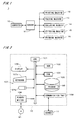
- Fig. 1 is a block diagram showing a constitution of a book manufacturing system 1 for manufacturing a book product such as a book.
- the book manufacturing system 1 in Fig. 1 comprises a printing machine 12 for printing a print sheet such as a print paper, a folding machine 13 for making a section (it is also called a fold section or signature) by performing a folding process on the print sheet after printing, a collating machine 14 for stacking a plurality of sections in a predetermined order, a stitching machine 15 for stitching (binding) the plurality of sections, a trimming machine 16 for performing three-side trimming (cutting) on the stitched sections, and a server 11 connected to the printing machine 12, the folding machine 13, the collating machine 14, the stitching machine 15 and the trimming machine 16.
- a computer 10 is connected to the server 11, a computer 10 is connected.
- Fig. 2 is a view showing a structure of the computer 10.
- the computer 10 has a structure of general computer system where a CPU 101 for performing various computations, a ROM 102 for storing a basic program and a RAM 103 for storing various information are connected to a bus line.
- a fixed disk 105 for storing information
- a display 106 for displaying various information
- a keyboard 107a and a mouse 107b (hereinafter, generically referred to as an "input part 107") for receiving input from an operator
- a reader/writer 108 which reads information from a computer-readable recording medium 91 such as an optical disk, a magnetic disk or a magneto-optic disk and writes information into the recording medium 91
- a communication part 109 for making communications with the server II are further connected through interfaces (I/F) as appropriate.
- a program 92 is read out from the recording medium 91 through the reader/writer 108 in advance and stored in the fixed disk 105.
- the program 92 is copied in the RAM 103, the CPU 101 performs a computation according to the program in the RAM 103 (that is, the computer executes the program), and the computer 10 operates as an imposition information generating apparatus for generating after-mentioned imposition information (i.e., allocation information or pagination information) used in the printing machine 12.
- Fig. 3 is a block diagram showing a functional constitution implemented by the computer 10.
- a template generator 21 in Fig. 3 generates folding template information 31 indicating an instruction to fold a print sheet
- an imposition information generator 22 generates imposition information 32 (see after-mentioned Fig. 13 ) indicating positions of areas on the print sheet corresponding to respective pages of a book product and orientations of the respective pages on the print sheet
- a folding information generator 23 generates information used for the folding process in the folding machine 13 and a trimming process in the trimming machine 16.
- a memory 24 stores the folding template information 31 and the imposition information 32.
- An input receiving part 25 receives various input entered through the input part 107 or the communication part 109, and various information is displayed on a display 106 by display control in the template generator 21 and so on.
- these functions which are regarded as the imposition information generating apparatus 2 are implemented by the computer 10.
- the functions of the template generator 21, the imposition information generator 22, the folding information generator 23 and the input receiving part 25 may be constructed as a dedicated electric circuit or a dedicated electric circuit may be partially used.
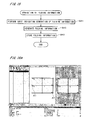
- Fig. 4 is a flowchart showing an operation flow for generating the folding template information 31.
- the process of generating the folding template information in Fig. 4 is performed as advance preparation of an after-mentioned process of generating the imposition information 32.
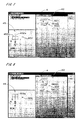
- Step S11 input indicating generation of the folding template information 31 is performed through the input part 107 by the operator, to display a window 4 for template generation work shown in Fig. 5 on the display 106.
- Step S12 desired input is performed by the operator and the input is received by the input receiving part 25 (Step S12).
- an image 431 showing a print sheet is displayed by the template generator 21, on an instruction displaying part 43 at the right portion of the window 4.
- dividing lines which equally divide one print sheet into 4 columns and 2 rows are shown.
- the number of print sheets in the setting part 41 indicates the number of print sheets for which a one-time folding process by the folding machine 13 is intended.
- an image 451 showing a print sheet is displayed, and three vertical dividing lines 451a which equally divide the print sheet into 4 columns and one horizontal dividing line 451b which equally divides the print sheet into 2 rows are shown in the image 451 in a similar fashion to the image 431 in the instruction displaying part 43.
- input indicating folding positions and folding directions i.e., mountain fold or valley fold
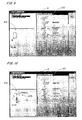
- the central vertical dividing line 451a of three vertical dividing lines 451a is selected as a folding position and a valley fold is selected as a folding direction. Therefore, as shown in the instruction displaying part 43 of Fig. 7 , displayed is an image 432 showing the print sheet in the state where the print sheet shown in the image 431 is valley folded at the central vertical dividing line 451a (see the instruction setting part 45 in Fig. 6 ).
- an image 452 showing the print sheet in the state corresponding to the latest image 432 in the instruction displaying part 43 is displayed (the same applies to the instruction setting part 45 in after-mentioned Figs. 8 to 11 ).
- the print sheet since the print sheet is in the state where it is folded in half, one vertical dividing line 452a which equally divides the print sheet into 2 columns and one horizontal dividing line 452b which equally divides the print sheet into 2 rows are shown.
- an image 435 showing the print sheet in the state where the print sheet shown in the image 434 is rotated clockwise by 90 degrees is displayed (Steps S16, S15).
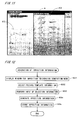
- an image 455 on the instruction setting part 45 of Fig. 10 only one vertical dividing line 455a which equally divides the print sheet into 2 columns is shown, and the vertical dividing line 455a is selected as a folding position and a valley fold is selected as a folding direction. Therefore, as shown in the instruction displaying part 43 of Fig. 11 , an image 436 showing the print sheet in the state where the print sheet shown in the image 435 is valley folded at the vertical dividing line 455a is displayed (Steps S16, S15).
- Step S16 input of a folding position and a folding direction or input of rotation is iterated.
- the print sheet shown in an image 456 on the instruction setting part 45 becomes a size corresponding to one rectangle obtained by dividing the original print sheet by the three vertical dividing lines 451a and the one horizontal dividing line 451b in the image 451 of Fig. 6 , iteration of process of Step S15 is finished (Step S16).
- the above iteration of process of Step S15 is information indicating, in the order of folding events, folding positions (folding positions on a print sheet of indefinite size) and folding directions on a print sheet, that is a teaching process of information indicating an instruction to fold a print sheet, and the information is stored as the folding template information 31 (i.e., one set of folding template information 31) in the memory 24 to finish the process of generating the folding template information (Step S17).
- the folding template information 31 i.e., one set of folding template information 31
- Fig. 12 is a flowchart showing an operation flow for generating the imposition information 32.
- input indicating generation of the imposition information 32 is performed through the input part 107 by the operator, to display a window for imposition information generation work on the display 106 (Step S31).
- predetermined input is performed by the operator to select a set of folding template information 31 (Step S32).
- a plurality of sets of folding template information 31 indicating various instructions to fold a print sheet have been generated and stored in the memory 24 (only one set of folding template information 31 is shown in Fig. 3 ), and the set of folding template information 31 which indicates a folding instruction (i.e., an instruction to fold a print sheet) desired by the operator is specified by the input, to be outputted to the imposition information generator 22.
- the page size of book product includes vertical and horizontal lengths of the rectangular page and an orientation of a longitudinal direction.
- the selection of orientation of bag-like portions in the section is to specify whether the bag-like portions in the section are to be located on the top or bottom of the section. In the section (i.e., folded print sheet) shown in the image 456 of Fig.
- the bag-like portions is located on the top of the section (also see the images 435, 436).
- the selection which side of the section is to be stitched is to specify any one of the right side, the left side and the upper side.
- the selection of stitching method in the stitching process (it can be treated as a collating method in a collating process) is to specify perfect binding or saddle stitching.
- the imposition information generator 22 generated is the imposition information 32 (it is also called an imposition layout) indicating positions of areas on print sheets corresponding to respective pages of the book product and orientations of the respective pages on the print sheets, in accordance with an combination of the folding instruction, the page size, the number of pages, the orientation of bag-like portions in the section, the side to be stitched in the section, and the stitching method in the stitching process which are included in the folding template information 31 and the selection information (Step S34).
- the imposition information 32 is also called an imposition layout
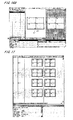
- Fig. 13 is a view showing the positions of areas on the print sheets corresponding to respective pages of the book product and the orientations of the respective pages on the print sheets (i.e., content of the imposition information 32).
- the array on the left side of Fig. 13 shows page allocation on front surfaces of print sheets and the array on the right side shows page allocation on back surfaces of the print sheets.
- Fig. 13 shows page allocation on front and back surfaces of the first to fourth print sheets from the top downward.
- the 13 is based on predetermined folding template information 31 where the number of print sheets is 1 and the numbers of columns and rows are 2 columns and 2 rows when the folding process is performed, and also the page size is A4 vertical, the number of pages is 32, the orientation of bag-like portions in the section is the top, the side of the section to be stitched is the left side and the stitching method in the stitching process is the perfect binding.
- margins between page areas on the print sheet they relate to a trimming width in the trimming machine 16
- outer margins in the case where printing is performed with use of a printing plate in the printing machine 12 and so on are set in advance (or they are set together with the selection information)
- the imposition information 32 becomes information including a size of print sheets and indicates coordinates of ranges of areas on the print sheets corresponding to respective pages of the book product.
- the orientations of respective pages on the print sheets are also included in the imposition information 32 (the same applies to after-mentioned Figs. 16A and 16B ).
- the imposition information 32 generated in the imposition information generator 22 is stored in the memory 24 with a file name designated by the operator and furthermore it is outputted to the server 11 in Fig. 1 to be stored in a memory in the server 11 (Step S35).
- a print sheet number corresponding to each page of the book product, and a position and an orientation of the page on the print sheet are specified on the basis of the imposition information 32.
- image data of each page of the book product is printed at the position on the specified print sheet in the orientation by the printing machine 12.
- a plate making system is constructed by the imposition information generating apparatus 2 and the printing machine 12. In the printing machine 12, plateless printing (for example, inkjet printing) where no printing plate is used may be performed.
- the folding information is information utilized at the time when the folding process is performed by the folding machine 13 on print sheets after printing, and in the operation of Fig. 15 , information utilized in the trimming process by the trimming machine 16 is also generated as described later.
- the folding information generator 23 of Fig. 3 the folding information indicating, in the order of folding events, folding position coordinates and folding directions on the print sheet (the print sheet after printing) which is an object in the folding process is generated on the basis of the folding template information 31 and the selection information (Step S42).
- the folding information indicates, in the order of events, folding position coordinates and folding directions on the print sheet, and rotation.
- the folding information generator 23 information of coordinates of positions to be trimmed (hereinafter, the information is referred to as "trimming information") in the section after the folding process (in fact, that is a plurality of sections which are stacked and stitched) is generated on the basis of the folding template information 31 and the selection information.
- the folding information and the trimming information are outputted to the server 11 to be stored in the memory of the server 11 (and the memory 24 of the imposition information generating apparatus 2) with a file name designated by the operator (Step S43).
- the folding process is performed on each print sheet after printing in the folding machine 13 on the basis of the folding information to make a section, and a plurality of sections are stacked in a predetermined order by the collating machine 14. After the plurality of sections are stitched by the stitching machine 15, three-side trimming is performed by the trimming machine 16 on the basis of the trimming information to complete a book product.
- apparatus-specific correction values and the like are reflected in addition to the folding information or the trimming information, as necessary.
- the folding information and the trimming information can be treated as preset information for the apparatuses.
- the imposition information 32 is obtained as shown in Fig. 16A by returning to Step S33 of Fig. 12 to change the side to be stitched in the selection information to the right side.
- the folding information and the trimming information can be generated again by the operation of Fig. 15 , as necessary.
- the imposition information 32 is obtained as shown in Fig.
- the imposition information 32 of Fig. 13 is generated, even if the stitching machine 15 (or the collating machine 14) is replaced with another machine and the stitching method in the stitching process is changed from the perfect binding to the saddle stitching, the imposition information 32 showing page allocation is obtained as shown in Fig. 17 by returning to Step S33 of Fig. 12 to change the stitching method included in the selection information to the saddle stitching.
- the imposition information 32 can be generated with making one set of folding template information 31 responsive to other various conditions.
- a plurality of sets of imposition information (it is also called folding catalogues) corresponding to a plurality of combinations of a page size of book product
- an instruction to fold a print sheet, an orientation of bag-like portions in a section, a side of the section to be stitched and so on are prepared in advance and one set of imposition information corresponding to an actual book manufacturing process is selected from these sets of imposition information, since the number of these combinations becomes large, generation and management of many sets of imposition information are complicated and there is a possibility that a wrong selection is made when one set of imposition information corresponding to an actual book manufacturing process is selected from many sets of imposition information.
- imposition information need be regenerated from the start.
- the folding template information 31 indicating the instruction to fold the print sheet is prepared in advance.
- the selection information including the page size and the number of pages of the book product, the selection whether bag-like portions in the section are to be located on the top or bottom of the section, the selection which side of the section is to be stitched, and the selection of stitching method in the stitching process, is received.
- the imposition information 32 for printing the print sheet which is to be folded into the section is generated on the basis of the folding template information 31 and the selection information.
- the setting phase of complicated folding template information 31 is made different from the setting phase of selection information indicating the other conditions by preparing the folding template information 31 in advance, and therefore the number of conditions included in the selection information (i.e., the number of items to be selected) can become small to generate the imposition information 32 easily. Also in the present technique, preliminary generation and management of many sets of imposition information need not be done, and a wrong selection of imposition information like the above comparative example can not be made.
- the imposition information 32 can be obtained (regenerated) easily only by changing the selection information without change of the folding template information 31 and it is possible to deal with the change of condition promptly.
- the folding instruction which folding template information in the course of generation indicates is displayed on the display 106 by the template generator 21 in parallel with the generation process. Therefore, the operator can generate the folding template information 31 easily by referring to the folding instruction displayed on the display 106. Furthermore, since the folding information indicating, in the order of events, the folding position coordinates and the folding directions on the print sheet after printing is generated on the basis of the folding template information 31 and the selection information, setting of the external folding machine 13 for the folding process can be performed easily in a short amount of time.
- Steps S13, S18 input indicating a manner of overlaying of the plurality of print sheets is performed (Steps S13, S18).
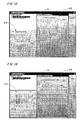
- input indicating that two print sheets are completely overlaid each other is performed, and as shown in Fig. 19 , an image 462 showing two print sheets which are completely overlaid is displayed on the instruction displaying part 43.
- Step S17 input of a folding position and a folding direction or input of rotation is iterated in a similar fashion to the above example (Steps S15, S16), and as shown in images 461 to 466 on the instruction displaying part 43 of Fig. 20 , the folding template information 31 indicating the manner of overlaying of the plurality of print sheets and the folding instruction of the overlaid print sheets is generated and stored in the memory 24 (Step S17).
- the plurality of print sheets need not be completely overlaid, and they may be overlaid in the state where they are offset from each other as needed.
- the print sheets more than two may be the object in the folding process.
- Step S12 of Fig. 4 “ 1 " is inputted to the setting part 41 of the number of sheets and "6 columns and 2 rows” is inputted to the setting part 42 of the numbers of columns and rows
- Step S13, S14 when cutting of the print sheet is performed between the printing and folding processes (after the printing process before the folding process)
- Step S19 input of a cutting position on the print sheet is performed by the operator
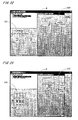
- an image 471 showing the print sheet on the instruction setting part 45 of Fig. 21 five vertical dividing lines 471a which equally divide the print sheet into 6 columns and one horizontal dividing line 471b which equally divides the print sheet into 2 rows are shown.
- an image 482 showing two sheets obtained by dividing the print sheet into two at the vertical dividing line 471a is displayed.
- Step S20 input indicating a manner of overlaying of the two sheets after cutting is performed.
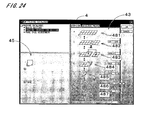
- input indicating that a smaller sheet of the two sheets (the right sheet in image 482) is completely overlaid on the right half of the other sheet (in other words, two sheets are overlapped so that two right edges of the two sheets meet) is entered, and as shown in Fig. 23 , an image 483 showing overlaid two sheets is displayed on the instruction displaying part 43.
- input of a folding position and a folding direction or input of rotation is iterated in a similar fashion to the above example (Steps S15, S16), and as shown in images 481 to 487 on the instruction displaying part 43 of Fig.
- Step S17 cutting may be performed more than one time.
- the folding template information 31 including the cutting position on the print sheet between the printing and folding processes and the overlaying position of the plurality of sheets after cutting, or the number of print sheets to be overlaid and folded as a unit after the printing process can be generated
- the imposition information 32 is generated on the basis of the folding template information 31 and the selection information which is inputted separately. It is therefore possible to easily generate the imposition information 32 in the imposition information generating apparatus 2 in the case where the folding process is performed on the sheets overlaid as the unit. In the case where Step S18 or Steps S19, S20 are performed, the cutting position or/and the overlaying position is included in the folding information, and the object in the actual folding process by the folding machine 13 becomes the overlaid sheets.
- the selection information includes the selection of perfect binding or saddle stitching
- the imposition information can be generated easily in consideration of difference between perfect binding and saddle stitching.
- the selection of the stitching method may be excluded from the selection information.
- the stitching method is decided as the perfect binding, same allocation order is repeated for a plurality of print sheets.
- the selection information may include at least the page size of the book product, the selection whether bag-like portions in the section are to be located on the top or bottom of the section, and the selection which side of the section is to be stitched.
- the selection information includes at least the page size of the book product, the selection whether bag-like portions in the section are to be located on the top or bottom of the section, and the selection which side of the section is to be bound.
- the selection information further includes the selection of perfect binding or saddle binding.
- Printing for the print sheet may be one side printing, and a selection of both sides printing or one side printing may be added to the selection information.
- the folding template information 31 is generated by an external apparatus, the folding template information 31 is inputted to the imposition information generating apparatus 2 to be stored and prepared in the memory 24.
- the selection information is inputted after the folding template information 31 is selected.
- the folding template information 31 may be selected after the selection information is inputted.
- the order of steps in each operation of Fig. 4 , Fig. 12 and Fig. 15 may be changed to the extent possible.
Landscapes
- Engineering & Computer Science (AREA)
- Theoretical Computer Science (AREA)
- Human Computer Interaction (AREA)
- Physics & Mathematics (AREA)
- General Engineering & Computer Science (AREA)
- General Physics & Mathematics (AREA)
- Record Information Processing For Printing (AREA)
- Document Processing Apparatus (AREA)
Applications Claiming Priority (1)
| Application Number | Priority Date | Filing Date | Title |
|---|---|---|---|
| JP2009221558A JP5606712B2 (ja) | 2009-09-25 | 2009-09-25 | 面付け情報生成装置およびプログラム |
Publications (2)
| Publication Number | Publication Date |
|---|---|
| EP2306299A2 true EP2306299A2 (de) | 2011-04-06 |
| EP2306299A3 EP2306299A3 (de) | 2012-12-26 |
Family
ID=42941860
Family Applications (1)
| Application Number | Title | Priority Date | Filing Date |
|---|---|---|---|
| EP10008389A Ceased EP2306299A3 (de) | 2009-09-25 | 2010-08-11 | Vorrichtung zur Erstellung von Ausschießinformationen und Aufzeichnungsmedium |
Country Status (3)
| Country | Link |
|---|---|
| US (1) | US8879111B2 (de) |
| EP (1) | EP2306299A3 (de) |
| JP (1) | JP5606712B2 (de) |
Cited By (3)
| Publication number | Priority date | Publication date | Assignee | Title |
|---|---|---|---|---|
| EP3002131A1 (de) * | 2014-10-01 | 2016-04-06 | OCE-Technologies B.V. | Falzverfahren und falzvorrichtung und dokumentenverarbeitungssystem |
| EP3266734A1 (de) * | 2016-07-04 | 2018-01-10 | Heidelberger Druckmaschinen AG | Automatisiertes falzverfahren |
| WO2021175345A3 (es) * | 2021-01-13 | 2021-10-28 | Salcedo Rafael | Método para la imposición de libros, revistas y similares en impresos para la industria de las artes gráficas |
Families Citing this family (9)
| Publication number | Priority date | Publication date | Assignee | Title |
|---|---|---|---|---|
| JP5367016B2 (ja) * | 2011-05-24 | 2013-12-11 | 富士フイルム株式会社 | データ作成装置、データ作成方法及びプログラム |
| CN103129125B (zh) * | 2011-11-30 | 2015-11-25 | 北大方正集团有限公司 | 目录监控方法和装置 |
| JP5911818B2 (ja) * | 2013-03-26 | 2016-04-27 | 富士フイルム株式会社 | データ生成装置、データ生成方法及びプログラム |
| JP5802698B2 (ja) | 2013-04-16 | 2015-10-28 | 富士フイルム株式会社 | データ編集装置、データ編集方法及びプログラム |
| JP5938425B2 (ja) * | 2014-01-28 | 2016-06-22 | 富士フイルム株式会社 | データ処理装置、方法及びプログラム |
| JP6661474B2 (ja) | 2015-08-06 | 2020-03-11 | キヤノン株式会社 | 印刷制御装置、印刷制御装置の制御方法、及びプログラム |
| JP2017062667A (ja) * | 2015-09-25 | 2017-03-30 | 富士ゼロックス株式会社 | 情報処理装置、画像形成システム及びプログラム |
| JP6903526B2 (ja) | 2017-09-06 | 2021-07-14 | 株式会社Screenホールディングス | 印刷制御装置、印刷制御方法、および印刷制御プログラム |
| JP7025241B2 (ja) * | 2018-02-22 | 2022-02-24 | 株式会社Screenホールディングス | 印刷データ生成装置、印刷データ生成方法、および印刷データ生成プログラム |
Citations (1)
| Publication number | Priority date | Publication date | Assignee | Title |
|---|---|---|---|---|
| JP2008302518A (ja) | 2007-06-05 | 2008-12-18 | Konica Minolta Business Technologies Inc | 画像形成装置、画像形成方法、および画像形成プログラム |
Family Cites Families (14)
| Publication number | Priority date | Publication date | Assignee | Title |
|---|---|---|---|---|
| US6384932B1 (en) * | 1997-08-28 | 2002-05-07 | Dainippon Screen Mfg. Co., Ltd. | Digital impositioning apparatus |
| US7268910B2 (en) * | 2001-05-16 | 2007-09-11 | Agfa Corporation | Just-in-time raster image assembly |
| JP2003348322A (ja) * | 2002-05-28 | 2003-12-05 | Fuji Photo Film Co Ltd | 簡易製本用編集装置、簡易製本用編集プログラム、および簡易製本キット |
| US7349121B2 (en) * | 2002-08-02 | 2008-03-25 | Agfa Graphics Nv | Method for automatically determining an imposition plan |
| JP2005275324A (ja) * | 2004-03-26 | 2005-10-06 | Mitsubishi Paper Mills Ltd | ページ面付け方法 |
| JP2006268358A (ja) * | 2005-03-23 | 2006-10-05 | Canon Inc | 情報処理装置及びその制御方法 |
| WO2007058390A1 (ja) * | 2005-11-21 | 2007-05-24 | Canon Kabushiki Kaisha | 画像形成装置およびその制御方法および情報処理装置およびその制御方法 |
| GB2447435A (en) * | 2006-03-29 | 2008-09-17 | Fujifilm Electronic Imaging | Document verification system |
| JP4847183B2 (ja) * | 2006-03-31 | 2011-12-28 | キヤノン株式会社 | 情報処理装置及びその制御方法、プログラム |
| JP2008037523A (ja) * | 2006-08-01 | 2008-02-21 | Ricoh Co Ltd | 用紙処理装置の制御方法、画像形成システム、画像形成装置及びコンピュータプログラム |
| JP4598016B2 (ja) * | 2007-04-20 | 2010-12-15 | 大日本印刷株式会社 | 面付装置、面付方法、プログラム、記録媒体 |
| JP2008276623A (ja) * | 2007-05-01 | 2008-11-13 | Canon Inc | 文書処理システム及び文書処理方法、プログラム、記憶媒体 |
| JP4908436B2 (ja) * | 2008-02-01 | 2012-04-04 | 富士フイルム株式会社 | 印刷管理システム |
| JP5173595B2 (ja) * | 2008-05-27 | 2013-04-03 | キヤノン株式会社 | 文書処理システム、文書処理方法、コンピュータプログラム |
-
2009
- 2009-09-25 JP JP2009221558A patent/JP5606712B2/ja active Active
-
2010
- 2010-08-11 EP EP10008389A patent/EP2306299A3/de not_active Ceased
- 2010-08-17 US US12/858,160 patent/US8879111B2/en active Active
Patent Citations (1)
| Publication number | Priority date | Publication date | Assignee | Title |
|---|---|---|---|---|
| JP2008302518A (ja) | 2007-06-05 | 2008-12-18 | Konica Minolta Business Technologies Inc | 画像形成装置、画像形成方法、および画像形成プログラム |
Cited By (6)
| Publication number | Priority date | Publication date | Assignee | Title |
|---|---|---|---|---|
| EP3002131A1 (de) * | 2014-10-01 | 2016-04-06 | OCE-Technologies B.V. | Falzverfahren und falzvorrichtung und dokumentenverarbeitungssystem |
| US10322905B2 (en) | 2014-10-01 | 2019-06-18 | Océ-Technologies B.V. | Folding method and folding device and document processing system |
| EP3266734A1 (de) * | 2016-07-04 | 2018-01-10 | Heidelberger Druckmaschinen AG | Automatisiertes falzverfahren |
| CN107571612A (zh) * | 2016-07-04 | 2018-01-12 | 海德堡印刷机械股份公司 | 自动化的折叠方法 |
| WO2021175345A3 (es) * | 2021-01-13 | 2021-10-28 | Salcedo Rafael | Método para la imposición de libros, revistas y similares en impresos para la industria de las artes gráficas |
| US20230339250A1 (en) * | 2021-01-13 | 2023-10-26 | Rafael Salcedo | Method for the printing layout of books, magazines and the like on printed sheets for the graphic arts industry |
Also Published As
| Publication number | Publication date |
|---|---|
| US8879111B2 (en) | 2014-11-04 |
| US20110077759A1 (en) | 2011-03-31 |
| EP2306299A3 (de) | 2012-12-26 |
| JP5606712B2 (ja) | 2014-10-15 |
| JP2011070449A (ja) | 2011-04-07 |
Similar Documents
| Publication | Publication Date | Title |
|---|---|---|
| EP2306299A2 (de) | Vorrichtung zur Erstellung von Ausschießinformationen und Aufzeichnungsmedium | |
| US8780390B2 (en) | Image editing apparatus, image editing method, and recording medium | |
| JP6742850B2 (ja) | レイアウト編集装置、レイアウト編集方法、およびプログラム | |
| JP5173595B2 (ja) | 文書処理システム、文書処理方法、コンピュータプログラム | |
| US10324665B2 (en) | Document processing system for processing a print job | |
| JP6661474B2 (ja) | 印刷制御装置、印刷制御装置の制御方法、及びプログラム | |
| US8605323B2 (en) | Automated imposition | |
| JP3573175B2 (ja) | 画像処理装置 | |
| JP4557597B2 (ja) | 印刷処理方法およびこの方法を実現する印刷処理制御システム | |
| US11023182B2 (en) | Document processing system for processing a printjob including a production route simulation | |
| JP2010030079A (ja) | 画像形成装置及びプリンタドライバ | |
| JP2020004272A5 (de) | ||
| JP2001205885A (ja) | 印刷制御装置、印刷システムおよび印刷方法 | |
| JP7690314B2 (ja) | 情報処理装置、制御方法、プログラム及び記憶媒体 | |
| US9019554B2 (en) | Display apparatus and method, image forming apparatus, and non-transitory computer readable medium | |
| CN105027072B (zh) | 生成打印作业的方法及系统 | |
| US9876936B2 (en) | Imposition device, printing system, recording medium, and imposition method | |
| JP4502045B2 (ja) | 制御装置、背表紙幅演算システム、背表紙幅演算方法、および背表紙幅演算プログラム | |
| JP2005025386A (ja) | 画像印刷装置 | |
| NL2021943B1 (en) | A Method of Creating a Print Job for a Multi-Page Print Product | |
| JP4608873B2 (ja) | 画像形成装置、中綴じ冊子作成装置、画像形成方法、中綴じ冊子の製造方法、およびプログラム | |
| JP6626664B2 (ja) | 画像表示装置、画像表示方法、および、画像表示プログラム | |
| JPH063801A (ja) | 製版用台割り表の自動作成装置 | |
| JP4862849B2 (ja) | 画像形成装置及び画像形成プログラム | |
| JP2014078108A (ja) | 印刷制御装置及び面付けプログラム |
Legal Events
| Date | Code | Title | Description |
|---|---|---|---|
| PUAI | Public reference made under article 153(3) epc to a published international application that has entered the european phase |
Free format text: ORIGINAL CODE: 0009012 |
|
| AK | Designated contracting states |
Kind code of ref document: A2 Designated state(s): AL AT BE BG CH CY CZ DE DK EE ES FI FR GB GR HR HU IE IS IT LI LT LU LV MC MK MT NL NO PL PT RO SE SI SK SM TR |
|
| AX | Request for extension of the european patent |
Extension state: BA ME RS |
|
| RAP1 | Party data changed (applicant data changed or rights of an application transferred) |
Owner name: DAINIPPON SCREEN MFG. CO., LTD. |
|
| PUAL | Search report despatched |
Free format text: ORIGINAL CODE: 0009013 |
|
| AK | Designated contracting states |
Kind code of ref document: A3 Designated state(s): AL AT BE BG CH CY CZ DE DK EE ES FI FR GB GR HR HU IE IS IT LI LT LU LV MC MK MT NL NO PL PT RO SE SI SK SM TR |
|
| AX | Request for extension of the european patent |
Extension state: BA ME RS |
|
| RIC1 | Information provided on ipc code assigned before grant |
Ipc: G06F 3/12 20060101AFI20121121BHEP |
|
| 17P | Request for examination filed |
Effective date: 20130610 |
|
| 17Q | First examination report despatched |
Effective date: 20140325 |
|
| RAP1 | Party data changed (applicant data changed or rights of an application transferred) |
Owner name: SCREEN HOLDINGS CO., LTD. |
|
| STAA | Information on the status of an ep patent application or granted ep patent |
Free format text: STATUS: THE APPLICATION HAS BEEN REFUSED |
|
| 18R | Application refused |
Effective date: 20150922 |