EP2246342B1 - Triacetontriperoxid-Derivat, Verfahren zu dessen Herstellung sowie dessen Verwendung - Google Patents
Triacetontriperoxid-Derivat, Verfahren zu dessen Herstellung sowie dessen Verwendung Download PDFInfo
- Publication number
- EP2246342B1 EP2246342B1 EP10160157A EP10160157A EP2246342B1 EP 2246342 B1 EP2246342 B1 EP 2246342B1 EP 10160157 A EP10160157 A EP 10160157A EP 10160157 A EP10160157 A EP 10160157A EP 2246342 B1 EP2246342 B1 EP 2246342B1
- Authority
- EP
- European Patent Office
- Prior art keywords
- tatp
- derivative
- group
- derivative according
- acid
- Prior art date
- Legal status (The legal status is an assumption and is not a legal conclusion. Google has not performed a legal analysis and makes no representation as to the accuracy of the status listed.)
- Not-in-force
Links
Images

Classifications
-
- C—CHEMISTRY; METALLURGY
- C07—ORGANIC CHEMISTRY
- C07K—PEPTIDES
- C07K16/00—Immunoglobulins [IG], e.g. monoclonal or polyclonal antibodies
- C07K16/44—Immunoglobulins [IG], e.g. monoclonal or polyclonal antibodies against material not provided for elsewhere, e.g. haptens, metals, DNA, RNA, amino acids
-
- C—CHEMISTRY; METALLURGY
- C07—ORGANIC CHEMISTRY
- C07D—HETEROCYCLIC COMPOUNDS
- C07D323/00—Heterocyclic compounds containing more than two oxygen atoms as the only ring hetero atoms
-
- C—CHEMISTRY; METALLURGY
- C07—ORGANIC CHEMISTRY
- C07D—HETEROCYCLIC COMPOUNDS
- C07D323/00—Heterocyclic compounds containing more than two oxygen atoms as the only ring hetero atoms
- C07D323/04—Six-membered rings
-
- G—PHYSICS
- G01—MEASURING; TESTING
- G01N—INVESTIGATING OR ANALYSING MATERIALS BY DETERMINING THEIR CHEMICAL OR PHYSICAL PROPERTIES
- G01N33/00—Investigating or analysing materials by specific methods not covered by groups G01N1/00 - G01N31/00
- G01N33/48—Biological material, e.g. blood, urine; Haemocytometers
- G01N33/50—Chemical analysis of biological material, e.g. blood, urine; Testing involving biospecific ligand binding methods; Immunological testing
- G01N33/53—Immunoassay; Biospecific binding assay; Materials therefor
- G01N33/5308—Immunoassay; Biospecific binding assay; Materials therefor for analytes not provided for elsewhere, e.g. nucleic acids, uric acid, worms, mites
Definitions
- the invention relates to a Triacetontriperoxid- derivative, a process for its preparation and its uses for the production of antibodies and for the production of immunosensors for the detection of TATP, in particular in the air.
- TATP is widely known as an explosive, which i.a. used by suicide bombers. Its preference for terrorist applications is, on the one hand, that the compound can be prepared very easily from generally available starting materials, such as acetone contained in nail polish removers and hydrogen peroxide found in hair bleaches.
- initial explosive i. Due to its high impact and impact sensitivity, it also eliminates the need for a separate, optionally metal-containing and thus easily detectable igniter.
- TATP does not contain nitrogen, thereby precipitating some detection methods for its detection, and has a density as low as that of sugar, and is therefore reduced by common, e.g. Scanners used in the baggage screening not displayed.
- TATP has also been repeatedly or inadvertently manufactured by amateur hobbyists, or occasionally arises through improper joint disposal of appropriate precursors in chemical waste.
- immunochemical methods are particularly suitable. They rely on a strong binding of the antigen acting here as an antigen to a highly selective antibody and a suitable detection of this bond by converting the binding process into a signal easily detected.
- a quartz crystal microbalance eg AV Kuznetsov and OI Osetrov in "Detection and Disposal of Improvised Explosive” NATO Security through Science Series - B: Physics and Biophysics, H. Schubert and A. Kuznetsov (ed.), Springer-Verlag, 2006, 7-23 ).
- TATP Triacetone Triperoxide
- DADP diacetone diperoxide
- CAS No. 1073-91-2 IUPAC name 3,3,6,6, tetramethyl-1,2,4,5-tetraoxane
- F. Dubnikova et al. “Decomposition of triacteone Triperoxide is an entropic explosion ", Journal of the American Chemical Society 2005, 127 (4), 1146-1159 ; R. Matya's "Study of TATP: Spontaneous Transformation of TATP to DADP” Propellants Explosive Pyrotechnics 33 (2), 2008, 89-91 ).
- Antibodies are obtained by immunization of vertebrates, to which they are usually injected the antigen.
- analytes such as TATP or DADP
- the substance must be coupled to an (immunogenic) carrier protein. Due to its chemical structure, in particular the lack of suitable chemical groups, a coupling of TATP or DADP to proteins is not readily possible.
- another object of the invention is to provide TATP-specific antibodies and sensors.
- the derivatives of the invention (which may comprise both enantiomers or the racemate) differ from the actual target structure of the TATP by the substitution of a methyl radical by a side chain containing the functional group X.
- a coupling of the derivative to an (immunogenic) carrier protein is possible, wherein the particular covalent bond can be made, for example, to a functional group of a side chain of the protein backbone, such as a carboxy, hydroxyl, amino or thiol group.
- One of the surprising features of the derivatives according to the invention is their stability, which is unusual for these peroxides, which also enables immunization. Due to this longer-term stability, commercial use is also possible, e.g. Conjugates in a simple manner possible. The substances pose virtually no danger to humans and the environment and can be safely transported diluted.
- the linker molecule R 2 can be virtually any structures known for example from the field of immunology (eg Greg. T. Hermanson: Bioconjugate Techniques).
- R 2 may be a preferably unbranched, saturated or mono- or polyunsaturated C 1 - to C 20 -alkyl radical.
- "monounsaturated or polyunsaturated alkyl groups” are understood to mean those hydrocarbon radicals which have one or more double bonds or triple bonds or mixtures of these in any desired arrangements.
- R 2 may be an oligoethylene oxide, a peptide, a peptidoid, a nucleic acid, an oligosugar, and other synthetic or natural polymers or copolymers and combinations of the foregoing groups.
- R 2 may advantageously be an unbranched, saturated C 1 - to C 8 -alkyl radical, in particular a C 2 - to C 7 -alkyl radical, preferably a C 5 -alkyl radical.
- X may be an amino group NH 2 , a carboxyl group COOH, an aldehyde group CHO, a hydroxyl group OH, a thiol group SH, an oxirane group (epoxide group) CH (O) CH 2 , an aziridine group (ethylenimine group) CH (NH) CH 2 , a hydrazine group NH-NH 2 , a hydrazide group CONH-NH 2 , a hydroxylamono ONH 2 , an N-hydroxysuccinimide ester, and the like.
- Noncovalent binding groups are also suitable as a couplable group X, for example biotin and its derivatives, so-called peptide tags, in particular his tags (oligo-histidine) and others.
- the group X may also be or comprise a detectable label, for example a dye, in particular a fluorescent dye or another, a radioactive label or a stable isotope label.
- X is a carboxyl group or an activated ester, a mixed or symmetrical anhydride.
- the linkage of such a carboxyl group to a carrier protein is particularly easy to carry out.
- R 1 is a methyl group.
- the triacetontriperoxide derivative according to the invention preferably corresponds to the specific formula (Ia) (6- (3,6,6,9,9-pentamethyl-1,2,4,5,7,8-hexaoxonan-3-yl) hexanoic acid) or an activated ester (eg N-hydroxysuccinimide ester, NHS ester) or a mixed anhydride (eg made with isobutyl chloroformate).
- an activated ester eg N-hydroxysuccinimide ester, NHS ester
- a mixed anhydride eg made with isobutyl chloroformate
- a further aspect of the invention relates to a process for the preparation of the above-described triacetontriperoxide derivative according to the invention, in which acetone, hydrogen peroxide and a compound according to the general formula (III) are reacted with one another, wherein R 1 is a hydrogen radical H or an optionally halogenated or perhalogenated C 1 to C 5 alkyl group, R 2 is a linker molecule and X is a functional, covalently or non-covalently coupling group.
- radicals R 1 and R 2 correspond to those mentioned in connection with the TATP derivative according to the invention.
- reaction used here thus corresponds to the approach according to Wolffenstein (supra), whereby an acetone building block is replaced by the compound according to general formula (III) and in particular by 7-oxooctanoic acid.
- the reaction according to the invention is substantially accelerated by the presence of protons. Therefore, it is preferably carried out in an acidic environment. This can be achieved by adding laboratory standard mineral acids, for example sulfuric acid, hydrochloric acid, nitric acid, phosphoric acid, perchloric acid, methanesulfonic acid, formic acid, acetic acid, citric acid, or others. Preferably, sulfuric acid or hydrochloric acid is used here. If one of the educts itself has acidic properties, it is possible to dispense with the addition of an acid and to carry out the reaction autocatalytically.
- laboratory standard mineral acids for example sulfuric acid, hydrochloric acid, nitric acid, phosphoric acid, perchloric acid, methanesulfonic acid, formic acid, acetic acid, citric acid, or others.
- sulfuric acid or hydrochloric acid is used here. If one of the educts itself has acidic properties, it is possible to dispense with the addition of an acid
- the reaction can be carried out without the addition of solvents, since acetone itself is a solvent.
- the reaction is preferably carried out at room temperature or lower.
- Another aspect of the present invention relates to the use of the TATP derivative according to the invention described above for covalent or non-covalent coupling to proteins (eg immunogenic carrier proteins, coating proteins or marker enzymes), DNA, sugars or labels (eg fluorescent dyes, radioisotopes or stable Isotopes), inert carriers (eg agarose), microparticles or membranes.
- proteins eg immunogenic carrier proteins, coating proteins or marker enzymes
- DNA eg fluorescent dyes, radioisotopes or stable Isotopes
- sugars or labels eg fluorescent dyes, radioisotopes or stable Isotopes
- inert carriers eg agarose
- microparticles or membranes eg agarose
- TATP derivative of the invention described above as an antigen for the production of TATP-specific binders, in particular antibodies, preferably monoclonal antibodies, their fragments, derivatives or fusion products, antibody analogs, aptamers, binders based on protein scaffolds, molecularly imprinted systems (MIPs), nanostructured materials, selectively binding surfaces or isotopically labeled compounds.
- the production of antibodies is usually carried out by preferably covalent binding of the derivative to a suitable carrier protein, for example ovalbumin, bovine serum albumin or KLH (hemocyanin), and subsequent immunization of vertebrates. For this they are added to the antigen, i.
- polyclonal antibodies formed can then be isolated from the blood of the animal and purified. Monoclonal antibodies can also be obtained from such immunized animals.
- the methods used to produce polyclonal and monoclonal antibodies are well known to biochemists and molecular biologists and therefore need not be explained in detail here.
- TATP-specific binders in particular the antibodies, are preferably used in an affinity sensor (immunosensor) for the detection of triacetone-triperoxide (TATP).
- an affinity sensor immunosensor
- TATP triacetone-triperoxide
- a detection mechanism that provides a measurable signal upon binding between antibody and TATP (or a derivative thereof).
- all detection systems used in known immunosensors are suitable, in particular quartz microbalances, Cantilever systems, surface plasmon resonance (SPR) systems and other optical and electrochemical systems.
- TATP-specific binders particularly the antibodies, can be used in affinity assays (e.g., ELISA) or in affinity-enriching systems (e.g., immunoaffinity chromatography columns) to detect triacetone-triperoxide (TATP).
- affinity assays e.g., ELISA
- affinity-enriching systems e.g., immunoaffinity chromatography columns
- the antibody specific for the triacetontriperoxide derivative according to the invention and thus for TATP P itself, in particular monoclonal antibodies, or antibody fragments and sensor containing such antibodies for the detection of TATP represent further aspects of the present invention.
- antibodies include immunoassays (e.g., ELISA) for the detection of TATP in liquid samples; Affinity materials containing immobilized antibodies or haptens for affinity chromatography or affinity enrichment, and rapid immunological assays for detection of TATP, for example in the form of test strips, immunochromatographic systems, lateral flow tests or similar systems.
- immunoassays e.g., ELISA
- Affinity materials containing immobilized antibodies or haptens for affinity chromatography or affinity enrichment for rapid immunological assays for detection of TATP, for example in the form of test strips, immunochromatographic systems, lateral flow tests or similar systems.
- TATP-interacting "binders” can be made.
- Such compounds include, for example, antibody fragments (e.g., Fab), recombinant antibodies, DNA or RNA aptamers, protein scaffolds based binders, Molecularly Imprinted Polymers (MIPs), phage display peptides, mimotopes.
- TATP tracers can be synthesized, for example enzyme conjugates, fluorescence conjugates, radio tracers, isotope tracers, particle tracers and the like.
- microarrays immunoarrays or hapten arrays
- bead-based arrays Another use is in the production of microarrays (immunoarrays or hapten arrays) or bead-based arrays and the use of derivatives for cell labeling in flow cytometry.
- the synthesis was carried out according to the reaction equation given below. 80.71 mg of 7-oxo-octanoic acid (purity 98%, 0.5 mmol) were weighed out and dissolved in 36.76 ⁇ l of acetone (0.5 mmol) and 51.05 ⁇ l of hydrogen peroxide (30%, 0.5 mmol) were added , By adding 2.5 .mu.l of sulfuric acid H 2 S0 4 (2 M, 0.005 mmol) at 0 ° C, an acidic medium was adjusted (pH value not determined, ratio acetone / acid ⁇ 1x 10 -2 ). The batch was allowed to rest for 24 hours to about 7 days at room temperature.
- the TATP derivative was treated with N-hydroxysuccinimide (NHS) and dicyclohexylcarbodiimide (DCC) in anhydrous THF or anhydrous DMF in a TATP derivative: NHS: DCC molar ratio of 1: 1.2-2: 1.2 -2 implemented. It is very important to pay attention to anhydrous conditions. In this case, the activated ester of the TATP derivative was obtained.
- NHS N-hydroxysuccinimide
- DCC dicyclohexylcarbodiimide
- the activated ester of the TATP derivative was coupled to various proteins in the presence of 0.13 M sodium bicarbonate NaHCO 3 (0.13 M).
- the proteins bovine serum albumin (BSA, about 66 kDa) horseradish peroxidase (POD, about 44 kDa) and ovalbumin (OVA, about 43 kDa) were used. In each case, a covalent peptide bond was formed via a lysine of the respective protein.
- the following reaction scheme shows the coupling reaction using the example of BSA.
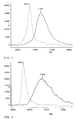
- MALDI-TOF MS spectra of two BSA conjugates were recorded compared to uncoupled BSA. Desalting of the protein solution prior to measurement was done over ZebaSpin columns. The matrix used was sinapinic acid. The spectra were smoothed by a moving average (100 points) and subjected to baseline correction. No mass calibration of the MALDI-TOF mass spectrometer was performed. The mass spectra are in FIG.
- Curve b shows a direct ELISA with 1: 120,000 diluted rabbit serum and 1: 30,000 diluted TATP peroxidase tracer (TATP derivative-POD conjugate).
Landscapes
- Chemical & Material Sciences (AREA)
- Organic Chemistry (AREA)
- Health & Medical Sciences (AREA)
- Life Sciences & Earth Sciences (AREA)
- Molecular Biology (AREA)
- Immunology (AREA)
- Engineering & Computer Science (AREA)
- Biochemistry (AREA)
- Urology & Nephrology (AREA)
- General Health & Medical Sciences (AREA)
- Biomedical Technology (AREA)
- Hematology (AREA)
- Medicinal Chemistry (AREA)
- Physics & Mathematics (AREA)
- General Physics & Mathematics (AREA)
- Microbiology (AREA)
- Cell Biology (AREA)
- Analytical Chemistry (AREA)
- Tropical Medicine & Parasitology (AREA)
- Biotechnology (AREA)
- Food Science & Technology (AREA)
- Pathology (AREA)
- Biophysics (AREA)
- Genetics & Genomics (AREA)
- Proteomics, Peptides & Aminoacids (AREA)
- Peptides Or Proteins (AREA)
- Steroid Compounds (AREA)
Description
- Die Erfindung betrifft ein Triacetontriperoxid- Derivat, ein Verfahren zu dessen Herstellung sowie dessen Verwendungen zur Herstellung von Antikörpern und zur Herstellung von lmmunsensoren zum Nachweis von TATP, insbesondere in der Luft.
- Triacetontriperoxid (TATP) - oder korrekt nach IUPAC 3,3,6,6,9,9-Hexamethyl-1,2,4,5,7,8-hexaoxocyclononan (CAS-Nr. 17088-37-8) - wurde erstmalig bereits 1895 aus Aceton CH3COCH3 und Wasserstoffperoxid H2O2 in Gegenwart geringer Mengen Phosphorsäure synthetisiert (R. Wolffenstein "Über die Einwirkung von Wasserstoffsuperoxyd auf Aceton und Mesityloxyd", Berichte der Deutschen Chemischen Gesellschaft, 28(2), 1895, 2265-2269). Bereits damals wurde die enorme, durch Schlag, Reibung oder Erwärmung auslösbare Explosivität der Verbindung beobachtet.
- Heute ist TATP weitläufig als Explosivstoff bekannt, der u.a. von Selbstmordattentätern eingesetzt wird. Seine Bevorzugung für terroristische Anwendungen liegt einerseits darin, dass die Verbindung sehr einfach aus allgemein verfügbaren Ausgangsstoffen hergestellt werden kann, etwa aus in Nagellackentfernern enthaltenem Aceton und Wasserstoffperoxid, das sich in Haarbleichmitteln findet. Durch seine Eigenschaft als Initialsprengstoff, d.h. durch seine hohe Stoß- und Schlagempfindlichkeit, entfällt zudem das Erfordernis eines gesonderten, gegebenenfalls metallhaltigen und damit leicht detektierbaren Zünders. Darüber hinaus enthält TATP keinen Stickstoff, wodurch einige Detektionsverfahren für seinen Nachweis ausfallen, und hat eine ähnlich niedrige Dichte wie Zucker und wird dadurch von gängigen, z.B. bei der Gepäckdurchleuchtung eingesetzten Scannern nicht angezeigt.
- Neben seinem kriminellen Einsatz wurde TATP jedoch auch wiederholt beabsichtigt oder unbeabsichtigt von Hobbybastlern hergestellt oder entsteht gelegentlich durch unsachgemäße gemeinsame Entsorgung entsprechender Vorstufen in Chemikalienabfällen.
- Es besteht somit ein dringender Bedarf an einem Verfahren bzw. einer Detektionsvorrichtung zum Nachweis von TATP in der Luft, auf Oberflächen von Gegenständen, in Geweben etc..
- Für eine hochselektive und sehr nachweisempfindliche Detektion von Substanzen, insbesondere auch Explosivstoffen, sind immunchemische Methoden besonders geeignet. Sie beruhen auf einer starken Bindung des hier als Antigen agierenden Analyten an einen hochselektiven Antikörper und einem geeigneten Nachweis dieser Bindung durch Umwandlung des Bindungsvorgangs in ein einfach nachzuweisendes Signal. Beispielsweise ist bekannt, die Antikörper auf einer Quarzkristall-Mikrowaage zu verwenden (z.B. A.V. Kuznetsov und O.I. Osetrov in "Detection and Disposal of Improvised Explosives" NATO Security through Science Series - B: Physics and Biophysics, H. Schubert und A. Kuznetsov (Hrsg.), Springer-Verlag, 2006, 7-23). Ein Gassensor mit einer Nachweisempfindlichkeit für Trinitrotoluol (TNT) von 73 ppb, der mit monoklonalen TNT-Antikörpern ausgestattet ist und die Methode der Oberflächenplasmonenresonanz (SPR) zum Nachweis der Antikörper-Antigen-Bindung nutzt, wurde in der Literatur beschrieben (J. Bowen et al. "Gas-Phase Detection of Trinitrotoluene Utilizing a Solid-Phase Antibody Immobilized on a Gold Film by Means of Surface Plasmon Resonance Spectroscopy", Applied Spectroscopy 57(8), 2003, 906-914).
- Der Dampfdruck von TATP bei Raumtemperatur wurde gaschromatographisch zu etwa 7 Pa bestimmt und ist damit um einen Faktor 104 höher als der von TNT (J.C. Oxley et al. "Determination of the Vapor Density of Triacetone Triperoxide (TATP) Using a Gas Chromatagraphy Headspace Technique", Propellants Explosives Pyrotechnics 30(2), 2005, 127-130). Somit sollte eine Detektion von TATP in der Luft grundsätzlich möglich sein. Jedoch ist ein Immunsensor für TATP bislang ebenso wenig bekannt wie ein TATP-Antikörper (A.V. Kuznetsov und O.I. Osetrov in "Detection and Disposal of Improvised Explosives" NATO Security through Science Series - B: Physics and Biophysics, H. Schubert und A. Kuznetsov (Hrsg.), Springer-Verlag, 2006, 7-23).
- Darüber hinaus ist auch Diacetondiperoxid (DADP, CAS-Nr. 1073-91-2, IUPAC-Name 3,3,6,6,-Tetramethyl-1,2,4,5-tetraoxan) bekannt, das über ähnliche Eigenschaften wie sein trimeres Pendant verfügt und sich in Gegenwart bestimmter Säuren in einer äußerst langsamen Reaktion aus diesem bildet (F. Dubnikova et al. "Decomposition of triacteone triperoxide is an entropic explosion", Journal of the American Chemical Society 2005, 127(4), 1146-1159; R. Matyas "Study of TATP: Spontaneous transformation of TATP to DADP" Propellants Explosives Pyrotechnics 33(2), 2008, 89-91).
- Antikörper werden durch Immunisierung von Wirbeltieren gewonnen, wozu diesen üblicherweise das Antigen injiziert wird. Allerdings muss im Fall von niedermolekularen Analyten wie TATP oder DADP, damit dieses vom Immunsystem des Tieres als Antigen erkannt wird, die Substanz an ein (immunogenes) Trägerprotein gekoppelt werden. Aufgrund seiner chemischen Struktur, insbesondere des Fehlens geeigneter chemischer Gruppen, ist eine Kopplung von TATP bzw. DADP an Proteine jedoch nicht ohne Weiteres möglich.
- Der Erfindung liegt die Aufgabe zugrunde, ein Derivat von TATP zur Verfügung zu stellen, das an ein Protein koppelbar ist, um somit TATP- spezifische Antikörper zum Einsatz in TATP- Sensoren herstellen zu können. Folglich besteht eine weitere Aufgabe der Erfindung in der Bereitstellung in TATP- spezifischen Antikörpern und Sensoren.
- Diese Aufgabe wird durch ein Triacetontriperoxid-Derivat gemäß der allgemeinen Formel (I) gelöst,

- Die erfindungsgemäßen Derivate (die beide Enantiomere oder das Racemat umfassen können) unterscheiden sich von der eigentlichen Target-Struktur des TATP durch die Substitution eines Methylrestes durch eine, die funktionelle Gruppe X enthaltende Seitenkette. Durch diese funktionelle Gruppe ist eine Kopplung des Derivates an ein (immunogenes) Trägerprotein möglich, wobei die insbesondere kovalente Bindung beispielsweise an eine funktionelle Gruppe einer Seitenkette des Proteinrückgrates, etwa einer Carboxy-, Hydroxyl-, Amino- oder Thiolgruppe erfolgen kann.
- Überraschend an den erfindungsgemäßen Derivaten ist unter anderem ihre für diese Peroxide ungewöhnliche Stabilität, die auch eine Immunisierung ermöglicht. Aufgrund dieser längerfristigen Stabilität ist auch eine kommerzielle Nutzung z.B. von Konjugaten in einfacher Weise möglich. Die Substanzen stellen praktisch keine Gefahr für Mensch und Umwelt dar und lassen sich verdünnt gefahrlos transportieren.
- Bei dem Linker-Molekül R2 kann es sich um nahezu beliebige Strukturen handeln, die beispielsweise aus der Fachliteratur der Immunologie bekannt sind (z.B. Greg. T. Hermanson: Bioconjugate Techniques). Insbesondere kann R2 ein vorzugsweise unverzweigter, gesättigter oder einfach oder mehrfach ungesättigter C1- bis C20-Alkylrest sein. Dabei werden unter "einfach oder mehrfach ungesättigten Alkylgruppen" solche Kohlenwasserstoffreste verstanden, die eine oder mehrere Doppelbindungen oder Dreifachbindungen oder Mischungen von diesen in beliebigen Anordnungen aufweisen. Außerdem kann R2 ein Oligoethylenoxid, ein Peptid, ein Peptidoid, eine Nukleinsäure, ein Oligozucker sein sowie andere synthetische oder natürliche Polymere oder Copolymere und Kombinationen der vorgenannten Gruppen.
- Gemäß einer bevorzugten Ausgestaltung kann R2 vorteilhaft ein unverzweigter, gesättigter C1- bis C8-Alkylrest sein, insbesondere ein C2- bis C7-Alkylrest, vorzugsweise ein C5-Alkylrest.
- Für die koppelbare (aktive) Gruppe X kommen gleichfalls aus der einschlägigen Fachliteratur bekannte funktionelle Gruppen in Frage (z.B. Greg. T. Hermanson: Bioconjugate Techniques). Insbesondere kann X eine Aminogruppe NH2, eine Carboxylgruppe COOH, eine Aldehydgruppe CHO, eine Hydroxylgruppe OH, eine Thiolgruppe SH, eine Oxirangruppe (Epoxidgruppe) CH(O)CH2, eine Aziridingruppe (Ethylenimingruppe) CH(NH)CH2, eine Hydrazingruppe NH-NH2, eine Hydrazidgruppe CONH-NH2, eine Hydroxylamonogruppe ONH2, ein N-Hydroxysuccinimidester u.ä. bedeuten. Ebenfalls eingeschlossen sind Salze, Ester (insbesondere aktivierte Ester) und Anhydride der funktionellen Gruppen X, soweit sie zu deren Bildung befähigt sind. Auch nicht-kovalente Bindungsgruppen sind als koppelbare Gruppe X geeignet, so z.B. Biotin und dessen Derivate, so genannte Peptid-Tags, insbesondere His-Tags (Oligo-Histidin) und andere. Die Gruppe X kann auch eine detektierbare Markierung sein oder eine solche umfassen, beispielsweise ein Farbstoff, insbesondere Fluoreszenzfarbstoff oder ein anderer, eine radioaktive Markierung oder eine stabile Isotopen-Markierung.
- Es ist ferner bevorzugt, dass X eine Carboxylgruppe oder ein aktivierter Ester, ein gemischtes oder symmetrisches Anhydrid ist. Die Verknüpfung einer solchen Carboxylgruppe an ein Trägerprotein ist besonders einfach durchführbar.
- In bevorzugter Ausgestaltung der Erfindung ist R1 eine Methylgruppe.
- Vorzugsweise entspricht das erfindungsgemäße Triacetontriperoxid-Derivat der speziellen Formel (la) (6-(3,6,6,9,9-Pentamethyl-1,2,4,5,7,8-hexaoxonan-3-yl)hexansäure) oder einem aktivierten Ester (z.B. N-Hydroxysuccinimidester, NHS-Ester) oder einem gemischten Anhydrid (z.B. hergestellt mit Isobutylchlorformiat).

- Ein weiterer Aspekt der Erfindung betrifft ein Verfahren zur Herstellung des erfindungsgemäßen, vorstehend beschriebenen Triacetontriperoxid- Derivats, wobei Aceton, Wasserstoffperoxid und eine Verbindung gemäß der allgemeinen Formel (III) miteinander umgesetzt werden,

- Bevorzugte Ausgestaltungen der Reste R1 und R2 entsprechen den im Zusammenhang mit dem erfindungsgemäßen TATP-Derivat genannten.
- Die Herstellung des TATP-Derivats entspricht somit der Reaktionsgleichung (IV).

- Vorzugsweise wird als Verbindung gemäß allgemeiner Formel (III) 7-Oxooktansäure gemäß Formel (IIIa) eingesetzt, so dass das Triacetontriperoxid-Derivat nach Formel (la) resultiert.

- Die hier angewandte Reaktion entspricht somit dem Ansatz gemäß Wolffenstein (s.o.), wobei ein Aceton-Baustein durch die Verbindung gemäß allgemeiner Formel (III) und insbesondere durch 7-Oxooktansäure ersetzt wird.
- Die erfindungsgemäße Reaktion wird durch die Gegenwart von Protonen wesentlich beschleunigt. Daher wird sie vorzugsweise in einem sauren Milieu durchgeführt. Dieses kann durch Zugabe laborüblicher Mineralsäuren erreicht werden, beispielsweise Schwefelsäure, Salzsäure, Salpetersäure, Phosphorsäure, Perchlorsäure, Methansulfonsäure, Ameisensäure, Essigsäure, Zitronensäure, oder andere. Vorzugsweise wird hier Schwefelsäure oder Salzsäure eingesetzt. Falls eines der Edukte selbst saure Eigenschaften aufweist, so kann auf die Zugabe einer Säure verzichtet und die Reaktion autokatalytisch durchgeführt werden.
- Besonders gute Ausbeuten und geringere Mengen Nebenprodukte werden erhalten, wenn Aceton, Wasserstoffperoxid und die Verbindung gemäß der allgemeinen Formel (III) in einem molaren Verhältnis von etwa 1 : 1 : 1 zum Ansatz gebracht werden. Auf diese Weise können die Anteile an Nebenprodukten geringer gehalten werden.
- Abgesehen von aus dem Wasserstoffperoxid stammendem Wasser kann die Reaktion ohne die Zugabe von Lösungsmitteln durchgeführt werden, da Aceton selbst ein Lösungsmittel ist.
- Die Reaktion wird vorzugsweise bei Zimmertemperatur oder niedriger durchgeführt.
- Ein weiterer Aspekt der vorliegenden Erfindung betrifft die Verwendung des vorstehend beschriebenen erfindungsgemäßen TATP- Derivats zur kovalenten oder nicht-kovalenten Kopplung an Proteine (z.B. immunogene Carrier-Proteine, Beschichtungsproteine oder Markerenzyme), DNA, Zucker, oder Labels (z.B. Fluoreszenzfarbstoffe, Radioisotope oder stabile Isotope), inerte Träger (z.B. Agarose), Mikropartikel oder Membranen.
- Noch ein weiterer Aspekt der vorliegenden Erfindung betrifft die Verwendung des vorstehend beschriebenen erfindungsgemäßen TATP- Derivats als Antigen zur Herstellung von TATP- spezifischen Bindern, insbesondere von Antikörpern, vorzugsweise von monoklonalen Antikörpern, deren Fragmenten, Derivaten oder Fusionsprodukten, Antikörper-Analogen, Aptameren, Bindern auf Basis von Proteingerüsten, molekular geprägte Systeme (MIPs), nanostrukturierte Materialien, selektiv bindenden Oberflächen oder isotopenmarkierten Verbindungen. Die Herstellung von Antikörpern erfolgt üblicherweise durch vorzugsweise kovalente Bindung des Derivats an ein geeignetes Trägerprotein, beispielsweise Ovalbumin, Rinderserumalbumin oder KLH (Hämocyanin), und anschließende Immunisierung von Wirbeltieren. Hierzu werden diese dem Antigen, d.h. dem Konjugat aus Trägerprotein und daran gekoppelten TATP- Derivat, ausgesetzt, was üblicherweise durch mehrfache Injektion des Antigens erfolgt. Nach einer gewissen Immunisierungsdauer können dann die gebildeten (polyklonalen) Antikörper aus dem Blut des Tieres isoliert und aufgereinigt werden. Monoklonale Antikörper können ebenfalls aus derartig immunisierten Tieren gewonnen werden. Die zur Herstellung von polyklonalen und monoklonalen Antikörpern angewandten Methoden gehören zum allgemeinen Fachwissen von Biochemikern und Molekularbiologen und müssen daher hier nicht im Einzelnen erläutert werden.
- Die so erhaltenen TATPspezifischen Binder, insbesondere die Antikörper, werden bevorzugt in einem Affinitätssensor (Immunsensor) zum Nachweis von Triacetontriperoxid (TATP) eingesetzt. Neben den immobilisierten Antikörpern enthält ein solcher Sensor einen Detektionsmechanismus, der bei erfolgter Bindung zwischen Antikörper und TATP (oder einem Derivat von diesen) ein messbares Signal liefert. Hier kommen grundsätzlich alle bei bekannten Immunsensoren angewandten Detektionssysteme in Frage, insbesondere Quarzmikrowaagen, Cantilever-Systeme, SPR-Systeme (surface plasmon resonance) und andere optische und elektrochemische Systeme.
- Ebenfalls können die TATP- spezifischen Binder, insbesondere die Antikörper, in Affinitätsassays (z.B. ELISA) oder in affinitätsanreichernden Systemen (z.B. Immunaffinitätschromatographiesäulen) zum Nachweis von Triacetontriperoxid (TATP) eingesetzt werden.
- Die für das erfindungsgemäße Triacetontriperoxid- Derivat und damit für TATP P selbst spezifischen Antikörper, insbesondere monoklonalen Antikörper, oder Antikörperfragmente sowie ein solche Antikörper enthaltender Sensor zum Nachweis von TATP stellen weitere Aspekte der vorliegenden Erfindung dar.
- Weitere Anwendungen der Antikörper betreffen Immunoassays (z.B. ELISA) für die Detektion von TATP in flüssigen Proben; Affinitätsmaterialien, die immobilisierte Antikörper oder Haptene enthalten, für die Affinitätschromatographie oder Affinitätsanreicherung, und immunologische Schnelltests zum Nachweis von TATP , beispielsweise in Form von Teststreifen, immunchromatographischen Systemen, Lateral-Flow-Tests oder ähnliche Systeme.
- Darüber hinaus können andere spezifisch mit TATP wechselwirkende "Binder" hergestellt werden. Solche Verbindungen sind beispielsweise Antikörperfragmente (z.B. Fab), rekombinante Antikörper, DNA- oder RNA-Aptamere, Binder auf Basis anderer Polymergerüste ("protein scaffolds"), Molecularly Imprinted Polymers (MIPs), Phage Display Peptide, Mimotope.
- Ebenfalls können mit Hilfe der erfindungsgemäßen Derivate weitere TATP- Tracer synthetisiert werden, etwa Enzymkonjugate, Fluoreszenzkonjugate, Radiotracer, Isotopentracer, Partikeltracer u.a.
- Eine weitere Verwendung besteht in der Herstellung von Microarrays (Immunoarrays oder Hapten-Arrays) oder Bead-based Arrays sowie die Verwendung der Derivate zur Zellmarkierung in der Durchflusszytometrie.
- Weitere bevorzugte Ausgestaltungen der Erfindung ergeben sich aus den übrigen, in den Unteransprüchen genannten Merkmalen.
- Die Erfindung wird nachfolgend in Ausführungsbeispielen anhand der zugehörigen Figuren näher erläutert. Es zeigen:
- Figur 1
- MALDI-TOF-Massenspektren eines an BSA gekoppelten TATP-Derivats (durch- gezogene Linie) mit einer Kopplungsdichte von 11 TATP-Derivat-Molekülen pro BSA-Molekül sowie von ungekoppeltem BSA (gestrichelte Linie);
- Figur 2
- MALDI-TOF-Massenspektren eines an BSA gekoppelten TATP-Derivats (durch- gezogene Linie) mit einer Kopplungsdichte von 15 TATP-Derivat-Molekülen pro BSA-Molekül sowie von ungekoppeltem BSA (gestrichelte Linie);
- Figur 3
- zeitlicher Verlauf der Immunisierung von Mäusen mit BSA-Konjugat des TATP- Derivats (a: direkter ELISA; b: indirekter ELISA); und
- Figur 4
- zeitlicher Verlauf der Immunisierung von Kaninchen mit BSA-Konjugat des TATP-Derivats (a: direkter ELISA; b: indirekter ELISA).
- Die Synthese erfolgte gemäß der unten angegebenen Reaktionsgleichung. Es wurden 80,71 mg 7-Oxooktansäure (Reinheit 98%, 0,5 mmol) eingewogen und in 36,76 µl Aceton (0,5 mmol) gelöst und 51,05 µl Wasserstoffperoxid (30 %, 0,5 mmol) zugemischt. Durch Zugabe von 2,5 µl Schwefelsäure H2S04 (2 M, 0,005 mmol) bei 0 °C wurde ein saures Milieu eingestellt (pH-Wert nicht bestimmt, Verhältnis Aceton/Säure ≤ 1x 10⁻²). Der Ansatz wurde für 24 h bis ca. 7 Tage bei Raumtemperatur ruhen gelassen. Danach wurde mit H2O ausgefällt und ein zähflüssiges Pellet erhalten, das in einer Acetonitril/Wasser-Mischung aufgenommen wurde. Die Aufreinigung erfolgte mittels HPLC-DAD per Acetonitril/Wasser-Gradienten mit TFA.

- Die Struktur des gereinigten TATP-Derivats wurde 1H-NMR-spektroskopisch (Bruker, 600 MHz) und 13C-NMR-spektroskopisch (Bruker 150,9 MHz) jeweils in MeOD verifiziert. Außerdem wurde ein hochaufgelöstes Massenspektrum (ESI-negative-FT-MS) des gereinigten TATP-Derivats in Acetonitril aufgenommen. Die gefundenen Massen von 321,1552 (m/z) weicht um weniger als 0,0001 % von der theoretischen (M(C14H25O8) = 321,1555) ab.
- Nach dem folgenden Reaktionsschema wurde das TATP-Derivat mit N-Hydroxysuccinimid (NHS) und Dicyclohexylcarbodümid (DCC) in wasserfreiem THF oder wasserfreiem DMF in einem molaren Verhältnis TATP-Derivat : NHS : DCC von 1 : 1,2-2 : 1,2-2 umgesetzt. Es ist hierbei strengstens auf wasserfreie Bedingungen zu achten. Dabei wurde der aktivierte Ester des TATP-Derivats erhalten.


- Der gemäß der vorstehenden Beschreibung hergestellte aktivierte Ester des TATP-Derivats wurde in Gegenwart von 0,13 M Natriumhydrogencarbonat NaHC03 (0,13 M) an verschiedene Proteine gekoppelt. Es wurden die Proteine Rinderserumalbumin (BSA, ca. 66 kDa) Meerrettichperoxidase (POD, ca. 44 kDa) und Ovalbumin (OVA, ca. 43 kDa) eingesetzt. Es entstand jeweils eine kovalente Peptidbindung über ein Lysin des jeweiligen Proteins. Das nachfolgende Reaktionsschema zeigt die Kopplungsreaktion am Beispiel des BSA.

- Als Nachweis des Erfolgs der Kopplung des TATP-Derivats an das Protein wurden MALDI-TOF-MS-Spektren zweier BSA-Konjugate im Vergleich mit ungekoppeltem BSA aufgenommen. Das Entsalzen der Protein-Lösung vor der Messung erfolgte über ZebaSpin-Säulen. Als Matrix wurde Sinapinsäure verwendet. Die Spektren wurden durch einen gleitenden Durchschnitt (100 Punkte) geglättet und einer Basislinienkorrektur unterzogen. Es wurde keine Massenkalibration des MALDI-TOF-Massenspektrometers durchgeführt. Die Massenspektren sind in
Figur 1 gezeigt, in der die gestrichelte Linie das Spektrum von ungekoppeltem BSA (Edukt) zeigt und die durchgezogene Linie das des BSA-Konjugats (= Immunogen) für die Immunisierung von Mäusen, welches eine mittlere Kopplungsdichte von 11 Haptenen (TATP-Derivat-Moleküle) pro BSA-Molekül aufweist. InFigur 2 sind analoge Massenspektren dargestellt, wobei die mittlere Kopplungsdichte hier 15 Haptenen (TATP-Derivat-Moleküle) pro BSA-Molekül beträgt. - Für Kopplungen mit Meerrettichperoxidase (POD) und Ovalbumin (OVA) wurden mittlere Kopplungsdichten von 2 bzw. 4 Haptenen (TATP-Derivat-Moleküle) je Protein-Molekül erzielt (nicht dargestellt).
- Mit dem unter 1.3 gezeigten BSA-Konjugat wurden 3 BALB/c-Mäuse immunisiert, dazu wurden 50 µg Immunogen alle 4 Wochen injiziert. Die Erstimmunisierung erfolgte unter Verwendung von komplettem Freunds Adjuvans, die Nachimmunisierungen wurden mit inkomplettem Freunds Adjuvans durchgeführt. Mit den Seren, die 7 Tage nach jeder Immunisierung den Tieren entnommen wurden, konnte der Immunisierungsverlauf per ELISA (Enzyme-Linked Immunosorbent Assay) überwacht werden, woraus sich die in
Figur 3 gezeigten sigmoidalen TATP-Kalibrierkurven ergaben (Fehlerbalken: Standardabweichung). Kurve a zeigt einen direkten ELISA mit 1:10.000 verdünntem Mausserum und 1:10.000 verdünnten TATP-Peroxidase-Tracer (TATP-Derivat-POD-Konjugat). Der Wendepunkt ist bei 2,5 mg L-1; die mittlere Antikörperaffinität beträgt ca. 5,7 µM und die Nachweisgrenze liegt bei 65 µg L-1 (n = 4). Kurve b zeigt einen indirekten ELISA mit 1:10.000 verdünntem Mausserum und 1:5.000 verdünnten anti-Maus-Peroxidase-Tracer. Der Wendepunkt ist bei 5,6 mg L-1; die mittlere Antikörperaffinität beträgt ca. 13 µM und die Nachweisgrenze liegt bei 870 µg L-1 (n = 3). - Mit dem unter 1.3 gezeigten BSA-Konjugat wurden 2 Kaninchen immunisiert, dazu wurden 50 µg Immunogen alle 4 Wochen injiziert. Die Immunisierungen erfolgten unter Verwendung eines Adjuvans. Mit den Seren, die 7 Tage nach jeder Immunisierung den Tieren entnommen wurden, konnte der Immunisierungsverlauf per ELISA überwacht werden, woraus sich die in
Figur 4 gezeigten sigmoidalen TATP-Kalibrierkurven ergaben (Fehlerbalken: Standardabweichung). Kurve a zeigt einen direkten ELISA mit 1:120.000 verdünntem Kaninchenserum und 1:30.000 verdünntem TATP-Peroxidase-Tracer (TATP-Derivat-POD-Konjugat). Der Wendepunkt ist bei 1,6 µg L-1; die mittlere Antikörperaffinität beträgt ca. 5,7 nM und die Nachweisgrenze liegt bei 92 ng L-1 (n = 3). Kurve b zeigt einen direkten ELISA mit 1 : 120.000 verdünntem Kaninchenserum und 1 : 30.000 verdünntem TATP-Peroxidase-Tracer (TATP-Derivat-POD-Konjugat). Der Wendepunkt ist bei 0,98 µg L-1; die mittlere Antikörperaffinität beträgt ca. 3,5 nM und die Nachweisgrenze liegt bei 170 ng L-1 (n = 3). - Mit den Seren der beiden Kaninchen aus Beispiel 1.4 wurden für die einzelnen Edukte der TATP-Derivat-Synthese (7-Oxooktansäure, H2O2 und Aceton) die Kreuzreaktivitäten relativ zu TATP bestimmt. Die Kreuzreaktivitäten wurden über den Quotienten der Wendepunkte (in µg L-1) der sigmoidalen Kalibrierkurven ermittelt. Es zeigt sich in nachfolgender Tabelle, dass die polyklonalen Antikörper sehr selektiv sind. Die Ergebnisse wurden im direkten als auch indirekten ELISA erzielt.
Tabelle: Kaninchen 1 Kaninchen 2 TATP 100 % 100 % 7-Oxooktansäure < 0,1 % < 0,1 % H2O2 < 0,1 % < 0,1 % Aceton < 0,1 % < 0,1 % - Die Synthese erfolgte analog zur TATP-Synthese wie in Dubnikova et al. (Decomposition of triacteone triperoxide is an entropic explosion. Journal of the American Chemical Society 2005, 127(4), 1148).
Claims (16)
- Triacetontriperoxid-Derivat gemäß der allgemeinen Formel (I),

- TATP-Derivat nach Anspruch 1, wobei R2 ein gesättigter oder einfach oder mehrfach ungesättigter C1- bis C20-Alkylrest ist, ein Oligoethylenoxid, ein Peptid, ein Peptidoid, eine Nukleinsäure, ein Oligozucker, ein synthetisches oder natürliches Polymer oder Copolymer oder eine Kombinationen der vorgenannten Gruppen ist.
- TATP-Derivat nach Anspruch 2, wobei R2 ein unverzweigter gesättigter C1- bis C8-Alkylrest, insbesondere ein C2- bis C7-Alkylrest, vorzugsweise ein C5-Alkylrest, ist.
- TATP-Derivat nach einem der vorhergehenden Ansprüche, wobei X eine Aminogruppe, eine Carboxylgruppe, eine Aldehydgruppe, eine Hydroxylgruppe, eine Thiolgruppe, eine Oxirangruppe, eine Aziridingruppe, eine Hydrazingruppe, eine Hydroxylamingruppe, eine Hydrazidgruppe, ein N-Hydroxysuccinimidester oder ein Salz, Ester oder Anhydrid von diesen bedeutet oder einer nicht-kovalent an Proteine koppelbaren Gruppe, insbesondere Biotin oder einem Derivat von diesem oder einem Peptid-Tag, insbesondere Oligo-Histidin, entspricht.
- TATP-Derivat nach einem der vorhergehenden Ansprüche, wobei X einen Farbstoff, eine radioaktive Markierung oder eine stabile Isotopen-Markierung umfasst.
- TATP-Derivat nach einem der vorhergehenden Ansprüche, wobei R1 eine Methylgruppe ist.
- TATP-Derivat nach einem der vorhergehenden Ansprüche, wobei das Triacetontriperoxid-Derivat 6-(3,6,6,9,9-Pentamethyl-1,2,4,5,7,8-hexaoxonan-3-yl)hexansäure gemäß der Formel (Ia) ist oder ein aktivierter Ester, ein Anhydrid oder Säurehalogenid von diesem

- Verfahren zur Herstellung eines Triacetontriperoxid-Derivats nach einem der Ansprüche 1 bis 7 durch Umsetzung von Aceton, einem Aceton-Derivat oder einer Acetonabspaltenden Vorstufe mit Wasserstoffperoxid, einem Wasserstoffperoxid-Derivat oder einer Wasserstoffperoxid-abspaltenden Vorstufe mit einer Verbindung gemäß der allgemeinen Formel (III),

- Verfahren nach einem der Anspruch 8, wobei die Verbindung gemäß allgemeiner Formel (III) 7-Oxooktansäure gemäß Formel (IIIa) ist

- Verfahren nach einem der Ansprüche 8 oder 9, wobei die Reaktion in Gegenwart einer Säure durchgeführt wird oder autokatalytisch unter Verwendung eines saure Eigenschaften aufweisenden Edukts.
- Verfahren nach einem der Ansprüche 8 bis 10, wobei Aceton, Wasserstoffperoxid und die Verbindung gemäß der allgemeinen Formel (III) in einem molaren Verhältnis von etwa 1 : 1 :1 eingesetzt werden.
- Verwendung eines TATP-Derivats nach einem der Ansprüche 1 bis 7 zur kovalenten oder nicht-kovalenten Kopplung an Proteine, DNA oder Labels.
- Verwendung eines TATP-Derivats nach einem der Ansprüche 1 bis 7 als Antigen zur Herstellung von TATP-spezifischen Bindern, insbesondere von monoklonalen oder polyklonalen Antikörpern, deren Fragmenten, Derivaten oder Fusionsprodukten, Antikörper-Analogen, Aptameren, Bindern auf Basis von Proteingerüsten, molekular geprägten Systemen, nanostrukturierten Materialien, selektiv bindenden Oberflächen oder isotopenmarkierten Verbindungen.
- Verwendung nach Anspruch 13, wobei die TATP-spezifischen Binder in einem Affinitätssensor, in einem Affinitätsassay oder in einem affnitätsanreichernden System zum Nachweis von Triacetontriperoxid (TATP) eingesetzt werden.
- Antikörper oder Antikörperfragment gegen ein Triacetontriperoxid-Derivat nach einem der Ansprüche 1 bis 7.
- Sensor zum Nachweis von Triacetontriperoxid enthaltend einen TATP-spezifischen Binder nach Anspruch 13.
Applications Claiming Priority (1)
| Application Number | Priority Date | Filing Date | Title |
|---|---|---|---|
| DE102009002652A DE102009002652A1 (de) | 2009-04-27 | 2009-04-27 | Triacetontriperoxid und Diacetondiperoxid-Derivat, Verfahren zu ihrer Herstellung sowie ihre Verwendung |
Publications (3)
| Publication Number | Publication Date |
|---|---|
| EP2246342A2 EP2246342A2 (de) | 2010-11-03 |
| EP2246342A3 EP2246342A3 (de) | 2011-09-28 |
| EP2246342B1 true EP2246342B1 (de) | 2013-01-23 |
Family
ID=42557286
Family Applications (1)
| Application Number | Title | Priority Date | Filing Date |
|---|---|---|---|
| EP10160157A Not-in-force EP2246342B1 (de) | 2009-04-27 | 2010-04-16 | Triacetontriperoxid-Derivat, Verfahren zu dessen Herstellung sowie dessen Verwendung |
Country Status (3)
| Country | Link |
|---|---|
| US (1) | US20100273193A1 (de) |
| EP (1) | EP2246342B1 (de) |
| DE (1) | DE102009002652A1 (de) |
Families Citing this family (1)
| Publication number | Priority date | Publication date | Assignee | Title |
|---|---|---|---|---|
| CN102532094B (zh) * | 2012-01-09 | 2014-08-06 | 北京理工大学 | 过氧化碳氢化合物的制备方法及检测方法 |
Family Cites Families (3)
| Publication number | Priority date | Publication date | Assignee | Title |
|---|---|---|---|---|
| US5367061A (en) * | 1993-05-06 | 1994-11-22 | Westinghouse Electric Company | Method of detecting nitrate esters |
| CN1068323C (zh) * | 1994-07-21 | 2001-07-11 | 阿克佐诺贝尔公司 | 环酮过氧化物配制剂 |
| IL123451A (en) * | 1998-02-25 | 2003-07-06 | Ehud Keinan | Method and kit for the detection of peroxide-based explosives |
-
2009
- 2009-04-27 DE DE102009002652A patent/DE102009002652A1/de not_active Withdrawn
-
2010
- 2010-04-16 EP EP10160157A patent/EP2246342B1/de not_active Not-in-force
- 2010-04-26 US US12/767,305 patent/US20100273193A1/en not_active Abandoned
Also Published As
| Publication number | Publication date |
|---|---|
| US20100273193A1 (en) | 2010-10-28 |
| EP2246342A2 (de) | 2010-11-03 |
| EP2246342A3 (de) | 2011-09-28 |
| DE102009002652A1 (de) | 2010-10-28 |
Similar Documents
| Publication | Publication Date | Title |
|---|---|---|
| DE2808523C2 (de) | ||
| DE69030829T2 (de) | Reagenzien zum Nachweis von Drogen | |
| DE69321655T2 (de) | Zweianalytenimmunoassay | |
| DE3875354T2 (de) | Fluoreszenzpolarisationsimmunassay fuer amphetamin/methamphetamin. | |
| DE69520383T2 (de) | Quaternäre ammonium immunogenische Konjugate und Immuntest-Reagenz | |
| DE69113114T2 (de) | Test für Phencyclidin und Phencyclidin-Metaboliten, Tracer, Immunogene, Antikörper und Reagenzsatz dafür. | |
| DE69610716T2 (de) | Topiramate-immunoassay, sowie analoge und antikörper | |
| DE60211849T2 (de) | Verfahren zur Identifizierung von Liganden eines biologischen Substrats | |
| JPH04500361A (ja) | アミノ―またはアミドアルキルマレイミド、アミドアルキルマレイミドとペプチドまたはタンパク質との複合体またはヘテロ二官能性複合体の製法 | |
| DE10111224B4 (de) | Analoge der Ecstasy-Klasse sowie Verwendung derselben beim Nachweis von Verbindungen der Ecstasy-Klasse | |
| DE60219124T2 (de) | Verfahren und Kit zum Nachweis, oder zum Quantifizieren von, Metaboliten von Fentanyl und Metaboliten von Fentanyl Analoga | |
| EP0089598B1 (de) | Anti-Streptolysin O-Latex-Reagenz und Verfahren zu seiner Herstellung | |
| EP2246342B1 (de) | Triacetontriperoxid-Derivat, Verfahren zu dessen Herstellung sowie dessen Verwendung | |
| CN106674138A (zh) | 一种戊唑醇新型半抗原及其合成方法和应用 | |
| CN107619440A (zh) | 一种氯吡脲人工抗原和多克隆抗体的制备方法与应用 | |
| EP0326073B1 (de) | Hapten-Protein-Konjugate und ihre Verwendung | |
| DE69332637T2 (de) | Kokainderivat,Proteinkonjugat,davon,einen monoklonalen Antikörper produzierende Hybridom-Zellinie, Verfahren zur Herstellung der Hybridom-Zellinie und des monoklonalen Antikörpers | |
| EP0442372B1 (de) | Verbesserte markierte Haptene, Verfahren zu deren Herstellung sowie Verwendung dieser markierten Haptene in Immunoassays | |
| DE69023357T2 (de) | Fluoreszenz-Polarisationsimmunoassay für Methadon. | |
| EP2418492B1 (de) | Immunoreagens für Meprobamate | |
| CN116789603A (zh) | 一种新型多菌灵半抗原、全抗原、抗体及其制备方法及应用 | |
| DE69616493T2 (de) | Chinidin-konjugate und ihre anwendung in immunoassays | |
| EP2950103A1 (de) | Immunoassay fur synthetischen cannabinoiden der familie 3-adamantanyl indazole/indole-3-carboxamide | |
| DE69922680T2 (de) | Detektion und quantifikation von vancomycin in den biologischen flüssigkeiten | |
| DE69415030T2 (de) | Nucleosid derivate, verfahren zu ihrer herstellung und für diese derivate spezifische monoklonale und polyklonale antikörper |
Legal Events
| Date | Code | Title | Description |
|---|---|---|---|
| PUAI | Public reference made under article 153(3) epc to a published international application that has entered the european phase |
Free format text: ORIGINAL CODE: 0009012 |
|
| AK | Designated contracting states |
Kind code of ref document: A2 Designated state(s): AT BE BG CH CY CZ DE DK EE ES FI FR GB GR HR HU IE IS IT LI LT LU LV MC MK MT NL NO PL PT RO SE SI SK SM TR |
|
| AX | Request for extension of the european patent |
Extension state: AL BA ME RS |
|
| PUAL | Search report despatched |
Free format text: ORIGINAL CODE: 0009013 |
|
| AK | Designated contracting states |
Kind code of ref document: A3 Designated state(s): AT BE BG CH CY CZ DE DK EE ES FI FR GB GR HR HU IE IS IT LI LT LU LV MC MK MT NL NO PL PT RO SE SI SK SM TR |
|
| AX | Request for extension of the european patent |
Extension state: AL BA ME RS |
|
| RIC1 | Information provided on ipc code assigned before grant |
Ipc: C07D 323/00 20060101AFI20110819BHEP Ipc: C07D 323/04 20060101ALI20110819BHEP Ipc: G01N 33/53 20060101ALI20110819BHEP Ipc: C07K 16/44 20060101ALI20110819BHEP |
|
| 17P | Request for examination filed |
Effective date: 20120327 |
|
| GRAP | Despatch of communication of intention to grant a patent |
Free format text: ORIGINAL CODE: EPIDOSNIGR1 |
|
| GRAS | Grant fee paid |
Free format text: ORIGINAL CODE: EPIDOSNIGR3 |
|
| GRAA | (expected) grant |
Free format text: ORIGINAL CODE: 0009210 |
|
| AK | Designated contracting states |
Kind code of ref document: B1 Designated state(s): AT BE BG CH CY CZ DE DK EE ES FI FR GB GR HR HU IE IS IT LI LT LU LV MC MK MT NL NO PL PT RO SE SI SK SM TR |
|
| REG | Reference to a national code |
Ref country code: GB Ref legal event code: FG4D Free format text: NOT ENGLISH |
|
| REG | Reference to a national code |
Ref country code: CH Ref legal event code: EP |
|
| REG | Reference to a national code |
Ref country code: AT Ref legal event code: REF Ref document number: 594902 Country of ref document: AT Kind code of ref document: T Effective date: 20130215 Ref country code: CH Ref legal event code: EP |
|
| REG | Reference to a national code |
Ref country code: IE Ref legal event code: FG4D Free format text: LANGUAGE OF EP DOCUMENT: GERMAN |
|
| REG | Reference to a national code |
Ref country code: DE Ref legal event code: R096 Ref document number: 502010002184 Country of ref document: DE Effective date: 20130321 |
|
| REG | Reference to a national code |
Ref country code: LT Ref legal event code: MG4D |
|
| REG | Reference to a national code |
Ref country code: NL Ref legal event code: VDEP Effective date: 20130123 |
|
| PG25 | Lapsed in a contracting state [announced via postgrant information from national office to epo] |
Ref country code: NO Free format text: LAPSE BECAUSE OF FAILURE TO SUBMIT A TRANSLATION OF THE DESCRIPTION OR TO PAY THE FEE WITHIN THE PRESCRIBED TIME-LIMIT Effective date: 20130423 Ref country code: SE Free format text: LAPSE BECAUSE OF FAILURE TO SUBMIT A TRANSLATION OF THE DESCRIPTION OR TO PAY THE FEE WITHIN THE PRESCRIBED TIME-LIMIT Effective date: 20130123 Ref country code: BG Free format text: LAPSE BECAUSE OF FAILURE TO SUBMIT A TRANSLATION OF THE DESCRIPTION OR TO PAY THE FEE WITHIN THE PRESCRIBED TIME-LIMIT Effective date: 20130423 Ref country code: ES Free format text: LAPSE BECAUSE OF FAILURE TO SUBMIT A TRANSLATION OF THE DESCRIPTION OR TO PAY THE FEE WITHIN THE PRESCRIBED TIME-LIMIT Effective date: 20130504 Ref country code: LT Free format text: LAPSE BECAUSE OF FAILURE TO SUBMIT A TRANSLATION OF THE DESCRIPTION OR TO PAY THE FEE WITHIN THE PRESCRIBED TIME-LIMIT Effective date: 20130123 Ref country code: IS Free format text: LAPSE BECAUSE OF FAILURE TO SUBMIT A TRANSLATION OF THE DESCRIPTION OR TO PAY THE FEE WITHIN THE PRESCRIBED TIME-LIMIT Effective date: 20130523 |
|
| PG25 | Lapsed in a contracting state [announced via postgrant information from national office to epo] |
Ref country code: NL Free format text: LAPSE BECAUSE OF FAILURE TO SUBMIT A TRANSLATION OF THE DESCRIPTION OR TO PAY THE FEE WITHIN THE PRESCRIBED TIME-LIMIT Effective date: 20130123 Ref country code: PT Free format text: LAPSE BECAUSE OF FAILURE TO SUBMIT A TRANSLATION OF THE DESCRIPTION OR TO PAY THE FEE WITHIN THE PRESCRIBED TIME-LIMIT Effective date: 20130523 Ref country code: LV Free format text: LAPSE BECAUSE OF FAILURE TO SUBMIT A TRANSLATION OF THE DESCRIPTION OR TO PAY THE FEE WITHIN THE PRESCRIBED TIME-LIMIT Effective date: 20130123 Ref country code: GR Free format text: LAPSE BECAUSE OF FAILURE TO SUBMIT A TRANSLATION OF THE DESCRIPTION OR TO PAY THE FEE WITHIN THE PRESCRIBED TIME-LIMIT Effective date: 20130424 Ref country code: PL Free format text: LAPSE BECAUSE OF FAILURE TO SUBMIT A TRANSLATION OF THE DESCRIPTION OR TO PAY THE FEE WITHIN THE PRESCRIBED TIME-LIMIT Effective date: 20130123 Ref country code: FI Free format text: LAPSE BECAUSE OF FAILURE TO SUBMIT A TRANSLATION OF THE DESCRIPTION OR TO PAY THE FEE WITHIN THE PRESCRIBED TIME-LIMIT Effective date: 20130123 Ref country code: SI Free format text: LAPSE BECAUSE OF FAILURE TO SUBMIT A TRANSLATION OF THE DESCRIPTION OR TO PAY THE FEE WITHIN THE PRESCRIBED TIME-LIMIT Effective date: 20130123 |
|
| PG25 | Lapsed in a contracting state [announced via postgrant information from national office to epo] |
Ref country code: HR Free format text: LAPSE BECAUSE OF FAILURE TO SUBMIT A TRANSLATION OF THE DESCRIPTION OR TO PAY THE FEE WITHIN THE PRESCRIBED TIME-LIMIT Effective date: 20130123 |
|
| BERE | Be: lapsed |
Owner name: BAM BUNDESANSTALT FUR MATERIALFORSCHUNG UND -PRUF Effective date: 20130430 |
|
| PG25 | Lapsed in a contracting state [announced via postgrant information from national office to epo] |
Ref country code: CZ Free format text: LAPSE BECAUSE OF FAILURE TO SUBMIT A TRANSLATION OF THE DESCRIPTION OR TO PAY THE FEE WITHIN THE PRESCRIBED TIME-LIMIT Effective date: 20130123 Ref country code: EE Free format text: LAPSE BECAUSE OF FAILURE TO SUBMIT A TRANSLATION OF THE DESCRIPTION OR TO PAY THE FEE WITHIN THE PRESCRIBED TIME-LIMIT Effective date: 20130123 Ref country code: DK Free format text: LAPSE BECAUSE OF FAILURE TO SUBMIT A TRANSLATION OF THE DESCRIPTION OR TO PAY THE FEE WITHIN THE PRESCRIBED TIME-LIMIT Effective date: 20130123 Ref country code: SK Free format text: LAPSE BECAUSE OF FAILURE TO SUBMIT A TRANSLATION OF THE DESCRIPTION OR TO PAY THE FEE WITHIN THE PRESCRIBED TIME-LIMIT Effective date: 20130123 Ref country code: RO Free format text: LAPSE BECAUSE OF FAILURE TO SUBMIT A TRANSLATION OF THE DESCRIPTION OR TO PAY THE FEE WITHIN THE PRESCRIBED TIME-LIMIT Effective date: 20130123 |
|
| PG25 | Lapsed in a contracting state [announced via postgrant information from national office to epo] |
Ref country code: CY Free format text: LAPSE BECAUSE OF FAILURE TO SUBMIT A TRANSLATION OF THE DESCRIPTION OR TO PAY THE FEE WITHIN THE PRESCRIBED TIME-LIMIT Effective date: 20130123 Ref country code: MC Free format text: LAPSE BECAUSE OF FAILURE TO SUBMIT A TRANSLATION OF THE DESCRIPTION OR TO PAY THE FEE WITHIN THE PRESCRIBED TIME-LIMIT Effective date: 20130123 |
|
| PLBE | No opposition filed within time limit |
Free format text: ORIGINAL CODE: 0009261 |
|
| STAA | Information on the status of an ep patent application or granted ep patent |
Free format text: STATUS: NO OPPOSITION FILED WITHIN TIME LIMIT |
|
| PG25 | Lapsed in a contracting state [announced via postgrant information from national office to epo] |
Ref country code: IT Free format text: LAPSE BECAUSE OF FAILURE TO SUBMIT A TRANSLATION OF THE DESCRIPTION OR TO PAY THE FEE WITHIN THE PRESCRIBED TIME-LIMIT Effective date: 20130123 |
|
| 26N | No opposition filed |
Effective date: 20131024 |
|
| REG | Reference to a national code |
Ref country code: IE Ref legal event code: MM4A |
|
| PG25 | Lapsed in a contracting state [announced via postgrant information from national office to epo] |
Ref country code: BE Free format text: LAPSE BECAUSE OF NON-PAYMENT OF DUE FEES Effective date: 20130430 |
|
| REG | Reference to a national code |
Ref country code: FR Ref legal event code: ST Effective date: 20131231 |
|
| REG | Reference to a national code |
Ref country code: DE Ref legal event code: R097 Ref document number: 502010002184 Country of ref document: DE Effective date: 20131024 |
|
| PG25 | Lapsed in a contracting state [announced via postgrant information from national office to epo] |
Ref country code: FR Free format text: LAPSE BECAUSE OF NON-PAYMENT OF DUE FEES Effective date: 20130430 |
|
| PG25 | Lapsed in a contracting state [announced via postgrant information from national office to epo] |
Ref country code: IE Free format text: LAPSE BECAUSE OF NON-PAYMENT OF DUE FEES Effective date: 20130416 |
|
| REG | Reference to a national code |
Ref country code: CH Ref legal event code: PL |
|
| GBPC | Gb: european patent ceased through non-payment of renewal fee |
Effective date: 20140416 |
|
| PG25 | Lapsed in a contracting state [announced via postgrant information from national office to epo] |
Ref country code: LI Free format text: LAPSE BECAUSE OF NON-PAYMENT OF DUE FEES Effective date: 20140430 Ref country code: GB Free format text: LAPSE BECAUSE OF NON-PAYMENT OF DUE FEES Effective date: 20140416 Ref country code: CH Free format text: LAPSE BECAUSE OF NON-PAYMENT OF DUE FEES Effective date: 20140430 |
|
| PG25 | Lapsed in a contracting state [announced via postgrant information from national office to epo] |
Ref country code: MT Free format text: LAPSE BECAUSE OF FAILURE TO SUBMIT A TRANSLATION OF THE DESCRIPTION OR TO PAY THE FEE WITHIN THE PRESCRIBED TIME-LIMIT Effective date: 20130123 |
|
| PG25 | Lapsed in a contracting state [announced via postgrant information from national office to epo] |
Ref country code: SM Free format text: LAPSE BECAUSE OF FAILURE TO SUBMIT A TRANSLATION OF THE DESCRIPTION OR TO PAY THE FEE WITHIN THE PRESCRIBED TIME-LIMIT Effective date: 20130123 |
|
| PG25 | Lapsed in a contracting state [announced via postgrant information from national office to epo] |
Ref country code: TR Free format text: LAPSE BECAUSE OF FAILURE TO SUBMIT A TRANSLATION OF THE DESCRIPTION OR TO PAY THE FEE WITHIN THE PRESCRIBED TIME-LIMIT Effective date: 20130123 |
|
| PG25 | Lapsed in a contracting state [announced via postgrant information from national office to epo] |
Ref country code: MK Free format text: LAPSE BECAUSE OF FAILURE TO SUBMIT A TRANSLATION OF THE DESCRIPTION OR TO PAY THE FEE WITHIN THE PRESCRIBED TIME-LIMIT Effective date: 20130123 Ref country code: LU Free format text: LAPSE BECAUSE OF NON-PAYMENT OF DUE FEES Effective date: 20130416 Ref country code: HU Free format text: LAPSE BECAUSE OF FAILURE TO SUBMIT A TRANSLATION OF THE DESCRIPTION OR TO PAY THE FEE WITHIN THE PRESCRIBED TIME-LIMIT; INVALID AB INITIO Effective date: 20100416 |
|
| PGFP | Annual fee paid to national office [announced via postgrant information from national office to epo] |
Ref country code: DE Payment date: 20150429 Year of fee payment: 6 |
|
| REG | Reference to a national code |
Ref country code: AT Ref legal event code: MM01 Ref document number: 594902 Country of ref document: AT Kind code of ref document: T Effective date: 20150416 |
|
| PG25 | Lapsed in a contracting state [announced via postgrant information from national office to epo] |
Ref country code: AT Free format text: LAPSE BECAUSE OF NON-PAYMENT OF DUE FEES Effective date: 20150416 |
|
| REG | Reference to a national code |
Ref country code: DE Ref legal event code: R119 Ref document number: 502010002184 Country of ref document: DE |
|
| PG25 | Lapsed in a contracting state [announced via postgrant information from national office to epo] |
Ref country code: DE Free format text: LAPSE BECAUSE OF NON-PAYMENT OF DUE FEES Effective date: 20161101 |