EP2102331B1 - Anti-tumor vaccine derived from normal chemically modified cd4+ cells - Google Patents
Anti-tumor vaccine derived from normal chemically modified cd4+ cells Download PDFInfo
- Publication number
- EP2102331B1 EP2102331B1 EP08701232A EP08701232A EP2102331B1 EP 2102331 B1 EP2102331 B1 EP 2102331B1 EP 08701232 A EP08701232 A EP 08701232A EP 08701232 A EP08701232 A EP 08701232A EP 2102331 B1 EP2102331 B1 EP 2102331B1
- Authority
- EP
- European Patent Office
- Prior art keywords
- cells
- lymphocytes
- tumor
- antigens
- composition
- Prior art date
- Legal status (The legal status is an assumption and is not a legal conclusion. Google has not performed a legal analysis and makes no representation as to the accuracy of the status listed.)
- Active
Links
Images



Classifications
-
- C—CHEMISTRY; METALLURGY
- C12—BIOCHEMISTRY; BEER; SPIRITS; WINE; VINEGAR; MICROBIOLOGY; ENZYMOLOGY; MUTATION OR GENETIC ENGINEERING
- C12N—MICROORGANISMS OR ENZYMES; COMPOSITIONS THEREOF; PROPAGATING, PRESERVING, OR MAINTAINING MICROORGANISMS; MUTATION OR GENETIC ENGINEERING; CULTURE MEDIA
- C12N5/00—Undifferentiated human, animal or plant cells, e.g. cell lines; Tissues; Cultivation or maintenance thereof; Culture media therefor
- C12N5/06—Animal cells or tissues; Human cells or tissues
- C12N5/0602—Vertebrate cells
- C12N5/0634—Cells from the blood or the immune system
- C12N5/0636—T lymphocytes
-
- A—HUMAN NECESSITIES
- A61—MEDICAL OR VETERINARY SCIENCE; HYGIENE
- A61K—PREPARATIONS FOR MEDICAL, DENTAL OR TOILETRY PURPOSES
- A61K40/00—Cellular immunotherapy
- A61K40/10—Cellular immunotherapy characterised by the cell type used
- A61K40/11—T-cells, e.g. tumour infiltrating lymphocytes [TIL] or regulatory T [Treg] cells; Lymphokine-activated killer [LAK] cells
-
- A—HUMAN NECESSITIES
- A61—MEDICAL OR VETERINARY SCIENCE; HYGIENE
- A61K—PREPARATIONS FOR MEDICAL, DENTAL OR TOILETRY PURPOSES
- A61K40/00—Cellular immunotherapy
- A61K40/20—Cellular immunotherapy characterised by the effect or the function of the cells
- A61K40/24—Antigen-presenting cells [APC]
-
- A—HUMAN NECESSITIES
- A61—MEDICAL OR VETERINARY SCIENCE; HYGIENE
- A61K—PREPARATIONS FOR MEDICAL, DENTAL OR TOILETRY PURPOSES
- A61K40/00—Cellular immunotherapy
- A61K40/40—Cellular immunotherapy characterised by antigens that are targeted or presented by cells of the immune system
- A61K40/41—Vertebrate antigens
- A61K40/42—Cancer antigens
- A61K40/4267—Cancer testis antigens, e.g. SSX, BAGE, GAGE or SAGE
-
- A—HUMAN NECESSITIES
- A61—MEDICAL OR VETERINARY SCIENCE; HYGIENE
- A61P—SPECIFIC THERAPEUTIC ACTIVITY OF CHEMICAL COMPOUNDS OR MEDICINAL PREPARATIONS
- A61P35/00—Antineoplastic agents
-
- C—CHEMISTRY; METALLURGY
- C12—BIOCHEMISTRY; BEER; SPIRITS; WINE; VINEGAR; MICROBIOLOGY; ENZYMOLOGY; MUTATION OR GENETIC ENGINEERING
- C12N—MICROORGANISMS OR ENZYMES; COMPOSITIONS THEREOF; PROPAGATING, PRESERVING, OR MAINTAINING MICROORGANISMS; MUTATION OR GENETIC ENGINEERING; CULTURE MEDIA
- C12N5/00—Undifferentiated human, animal or plant cells, e.g. cell lines; Tissues; Cultivation or maintenance thereof; Culture media therefor
- C12N5/06—Animal cells or tissues; Human cells or tissues
- C12N5/0602—Vertebrate cells
- C12N5/0634—Cells from the blood or the immune system
- C12N5/0636—T lymphocytes
- C12N5/0637—Immunosuppressive T lymphocytes, e.g. regulatory T cells or Treg
-
- A—HUMAN NECESSITIES
- A61—MEDICAL OR VETERINARY SCIENCE; HYGIENE
- A61K—PREPARATIONS FOR MEDICAL, DENTAL OR TOILETRY PURPOSES
- A61K39/00—Medicinal preparations containing antigens or antibodies
- A61K2039/57—Medicinal preparations containing antigens or antibodies characterised by the type of response, e.g. Th1, Th2
- A61K2039/572—Medicinal preparations containing antigens or antibodies characterised by the type of response, e.g. Th1, Th2 cytotoxic response
-
- C—CHEMISTRY; METALLURGY
- C12—BIOCHEMISTRY; BEER; SPIRITS; WINE; VINEGAR; MICROBIOLOGY; ENZYMOLOGY; MUTATION OR GENETIC ENGINEERING
- C12N—MICROORGANISMS OR ENZYMES; COMPOSITIONS THEREOF; PROPAGATING, PRESERVING, OR MAINTAINING MICROORGANISMS; MUTATION OR GENETIC ENGINEERING; CULTURE MEDIA
- C12N2501/00—Active agents used in cell culture processes, e.g. differentation
- C12N2501/06—Anti-neoplasic drugs, anti-retroviral drugs, e.g. azacytidine, cyclophosphamide
-
- C—CHEMISTRY; METALLURGY
- C12—BIOCHEMISTRY; BEER; SPIRITS; WINE; VINEGAR; MICROBIOLOGY; ENZYMOLOGY; MUTATION OR GENETIC ENGINEERING
- C12N—MICROORGANISMS OR ENZYMES; COMPOSITIONS THEREOF; PROPAGATING, PRESERVING, OR MAINTAINING MICROORGANISMS; MUTATION OR GENETIC ENGINEERING; CULTURE MEDIA
- C12N2501/00—Active agents used in cell culture processes, e.g. differentation
- C12N2501/20—Cytokines; Chemokines
- C12N2501/23—Interleukins [IL]
-
- C—CHEMISTRY; METALLURGY
- C12—BIOCHEMISTRY; BEER; SPIRITS; WINE; VINEGAR; MICROBIOLOGY; ENZYMOLOGY; MUTATION OR GENETIC ENGINEERING
- C12N—MICROORGANISMS OR ENZYMES; COMPOSITIONS THEREOF; PROPAGATING, PRESERVING, OR MAINTAINING MICROORGANISMS; MUTATION OR GENETIC ENGINEERING; CULTURE MEDIA
- C12N2502/00—Coculture with; Conditioned medium produced by
- C12N2502/11—Coculture with; Conditioned medium produced by blood or immune system cells
- C12N2502/1121—Dendritic cells
Definitions
- the invention relates primarily to compositions suitable for inducing immune responses against malignancies; therefore the compositions can be used as a vaccine or for generating cytotoxic cells for adoptive immunotherapy. More particularly, the invention pertains to preparation of a cellular anti-tumor vaccine based on use of only normal cells of the immune system.
- Cell-based immune therapies represent the most promising non-toxic method of cancer treatment. Cancer immunotherapy aims to destroy tumor cells by immunological mechanisms. It may be used as a sole treatment, or as an adjuvant for other types of therapies such as e.g. surgery, irradiation and chemotherapy. The strategy is based on ex vivo manipulation and reintroduction of cellular products to circumvent immune competences for the purpose of inducing tumor specific immune responses. Thus, the ultimate goal of such cell-based immune therapies is the induction of tumor-specific effector cells and recent advances has focused on CD8+ cytotoxic T lymphocytes (CTL) capable of recognizing and killing tumor cells. It is important that these CTL should be able to survive for a long time in the organism in form of memory cells that can rapidly be reactivated and expanded upon re-appearance of tumor cells in the organism.
- CTL cytotoxic T lymphocytes
- differentiation antigens such as MART-1, gp100 and tyrosinase for melanomas, and PSA and PSMA for prostate cancer
- overexpressed antigens such as telomerase and survivin
- CTA cancer/testis antigens
- CTA cancer-derived neuropeptide
- germ cells of testis which are not recognized by the immune system
- human cells lack expression of histocompatibility molecules
- activation of CTA in tumor cells is due to promoter demethylation at CpG regions and is a consequence of genome-wide demethylation process that occurs in many cancers, and is correlated with tumor progression (De Smet et al., 1996).
- CTA expression was shown to be associated with tumor progression (Brasseur et al., 1995; Eura et al., 1995; Katano et al., 1997; Patard et al., 1995).
- Therapeutic potentials of this group of tumor antigens have been confirmed by a number of studies. For example, (a) melanoma patient MZ-2 with metastases was subjected to multiple vaccinations with killed autologous tumor cells leading to development of CTL responses against several CTA (MAGE-1, MAGE-3, GAGE and BAGE, see review (van Pel et al., 1995)) experienced long-lasting disease-free period (P.
- vaccines targeting these antigens should be as polyvalent as possible.
- the patent application WO 03/045427 describes such a polyvalent vaccine targeting CTA that is based on pre-selected human melanoma cell line that express high levels of CTA and do not express melanocyte differentiation antigens. All other tumor cell-based vaccines either employ autologous tumors, or standard cell lines selected on the principle "the more different tumor antigens, the better". Employment of autologous tumor cells in a vaccine as a source of antigens may in some cases induce tumor regression, when it is applied in the form of dendritic cell-based vaccination (O'Rourke et al., 2003; Marshall et al., 2006).
- exogenous tumor protein antigens need to be taken up by antigen presenting cells through the process of endocytosis and then transferred from endocytic vesicles into the cytosol (see review (Cresswell et al., 2005)). This is required for the processing of protein antigens and formation of antigenic peptides. Later on the peptides are presented on the surface in association with MHC class I molecules. Only a small portion of exogenously added antigens enters the cell and only a small fraction of the protein taken up thereafter undergoes cross-presentation.
- RNA isolated from tumor cells for transfection of antigen presenting cells (Gilboa and Vieweg, 2004; Schaft et al., 2005; Kyte et al., 2006).
- the major limiting factor of RNA transfection is lack of formation of complexes of antigenic peptides and MHC class II molecules that is required for induction of T-helper response. Without T-helper response no formation of the CD8+ immunological memory is taking place (Bevan, 2004; Castellino and Germain, 2006), and without formation of memory, CD8+ CTLs die after the initial expansion.
- formation of CD8+ memory response may be corrupted due to the presence of regulatory cells (Klebanoff et al., 2006).
- 5-Aza-2'-deoxycytidine has been known to induce expression of cancer/testis antigens primarily in tumor cells (Weber et al., 1994). Also, it was previously demonstrated by one group (De Smet et al., 1996) but not another (Weber et al., 1994) that 5-Aza-CdR might also induce expression of at least one of CTA, MAGE-A1, in PHA-activated peripheral blood lymphocytes.
- This technique is used in the patent application WO 03/012086 as part of a method of generating antigen presenting cells which comprises collecting cells from a subject, activating the cells with agents such as pokeweed mitogen (PWM) and phytohemagglutinin (PHA), culturing the activated cells ex vivo, and treating the cultured cells with DNA hypomethylating agents so that the cells express multiple tumor associated antigens (CTA).
- PWM pokeweed mitogen
- PHA phytohemagglutinin
- CTA tumor associated antigens
- the CTA produced in this way are proposed for use as cancer vaccines.
- a major issue in this procedure is the use of foreign agents such as pokeweed mitogen (PWM) and phytohemagglutinin (PHA) for activation the cells.
- the present invention provides a composition for inducing an immune response in a mammal, comprising lymphoid cells in which expression of tumor antigens has been chemically induced after activation with mature dendritic cells.
- the present invention uses only normal cells i.e. unadulterated lymphoid cells and dendritic cells as isolated from body fluids, thus excluding cells that have been treated with any foreign agents such as plant derived activators e.g. PWM and PHA. Also the present invention does not employ tumor antigen preparations, either synthetic or isolated from tumor cells. As a result the preparation and regulatory approval of a vaccine is much easier and safer. Preferably a patient's own cells are used.
- the tumor antigens are induced in proliferating (normal) lymphoid cells, especially during the log phase of proliferation.
- the proliferation of the normal lymphoid cells is stimulated by (normal) mature dendritic cells.
- the lymphoid cells are lymphocytes, especially peripheral blood lymphocytes.
- the tumor antigens are cancer/testis antigens (CTA), which may be chemically induced by DNA demethylation, for example, by treatment with 5-aza-2'-deoxycytidine.
- CTA cancer/testis antigens
- An alternative procedure is that the tumor antigens are chemically induced by histone acetylation, for example, by treatment with histone deacetylase inhibitors such as trichostatin (TSA).
- TSA histone deacetylase inhibitors
- Cancer/testis antigens are expressed in a wide range of tumors, so the composition of the invention is able to raise an immune response that is effective against a wide range of tumors, despite the fact that it is derived from normal cells.
- the present invention provides use of the composition for stimulating an immune response to the tumor antigens, i.e. for preparation of an anti-tumor vaccine.
- the vaccine may be used prophylactically or for direct treatment of existing tumors.
- the invention provides use of the composition as antigen presenting cells for in vitro activation of cytotoxic T lymphocytes e.g. in adoptive T cell immunotherapy.
- the present invention provides a method of preparing tumor-specific CD8+ cytotoxic T lymphocytes which comprises activating T lymphocytes using the composition as antigen presenting cells.
- the expansion of the cytotoxic cells is preferably induced by (normal) active dendritic cells.
- the method may be carried out in vivo as a therapeutic procedure or in vitro followed by use of the T cells in adoptive T cell immunotherapy.
- the scope of the present invention is defined by the claims and any information that does not fall within the claims is provided for information only
- the present invention aims to provide an effective immune response by procedures in which the antigen-presenting cells are normal cells in which expression of tumor-associated antigens has been chemically induced, and also which are enriched in CD4+ cells, and so able to directly stimulate cytotoxic T lymphocytes and provide CD4+ mediated help which is vital for formation of the immunological memory.
- These antigen-presenting cells may be used as a cell based vaccine for in vivo stimulation of an immune response or in adoptive T cell therapy in which cytotoxic T lymphocytes are stimulated in vitro.
- the invention is based on the finding that normal lymphoid cells can be induced to proliferate by mature dendritic cells, and during proliferation can be induced by chemical treatment to express tumor antigens, such as canter/testis antigens, resulting in a composition that contains CD4+ cells, and so is capable of presenting tumor antigens to T-cells to generate cytotoxic CD8+ cells, some of which include CD62L memory cell markers.
- tumor antigens such as canter/testis antigens
- the normal lymphoid cells are most conveniently lymphocytes, especially peripheral blood lymphocytes, which can be induced by treatment with DNA demethylating agents to express cancer/testis antigens.
- the expansion of the cytotoxic composition is also conveniently achieved by using normal mature dendritic cells to stimulate proliferation.
- lymphoid cells are peripheral blood lymphocytes extracted from heterlogous or autologous blood.
- the present invention comprises the following procedures:
- tumor antigens are induced endogenously in proliferating antigen-presenting cells of the immune system by chemical treatment. In this way the immune response with formation of tumor antigen-specific CTLs is initiated without need of antigen uptake and cross-presentation.
- T helper cells CD4+ lymphocytes
- the first task addressed by the present inventors was how to generate a culture of proliferating lymphocytes enriched in CD4+ T cells. It is well known that the best way of generating antigen-specific T-helper cells is to employ mature dendritic cells loaded with the antigen (Jonuleit et al., 2001; De Vries et al., 2003). However, the present inventors mixed antigen-unloaded mature dendritic cells with a non-adherent fraction of lymphocytes and found that after 7-8 days of incubation, there was an intensive proliferation of lymphocytes. The proliferating cultures were mainly T lymphocytes enriched in CD4+ lymphocytes.
- 5-aza-2'-deoxycytidine has been known to induce expression of cancer/testis antigens primarily in tumor cells (Weber et al., 1994). Also, it was previously demonstrated by one group (De Smet et al., 1996) but not another (Weber et al., 1994) that 5-Aza-CdR might also induce expression of at least one of CTA, MAGE-A1, in PHA-activated peripheral blood lymphocytes.
- NK natural killer
- the present inventors have developed a new antigen presenting cell composition for induction of cytotoxic T lymphocyte response with broad anti-tumor specificity and characteristics of memory response.
- This composition can be employed either for direct vaccination of cancer patients, or for in vitro generation and expansion of cytotoxic T lymphocytes for adoptive immunotherapy.
- DNA demethylation with 5-aza-2'-deoxycytidine is preferred.
- Other reagents that may be used for DNA demethylatlon are 5-azacytldine, 5-fluoro-2'-deoxycytidine, and zebularine, which is also a cytidine analogue. Zebularine may produce a similar effect as 5-Aza-CdR (Chong et al., 2003).
- histone acetylation is histone deacetylation which may be achieved by using histone deacetylase inhibitors.
- Trichostatin A TSA
- TSA Trichostatin A
- these reagents may induce a strong expression of "silenced" genes which may exceed an additive effect (Wlachnewski et al., 2006).
- Another group of histone deacetylase inhibitors are some depsipeptides that also can be used in combination with 5-Aza-CdR (Weiser et al., 2001).
- the inventors' experimental work has at this stage necessarily used blood from normal donors.
- the therapies offered by this invention will normally use blood from cancer patients.
- the fact the invention involves inducing antigens in normal cells points to the possibility of generating vaccine from normal donors for treatment of cancer patients. In this case very careful selection of donor-recipient pairs will be needed in order to decrease alloantigen-specific reaction against donor lymphocytes.
- dendritic cells obtained from the same blood samples as the lymphocytes.
- the use of dendritic cells other than from the same person would be much more convenient, but creates a problem of safety testing of the donor's dendritic cells.
- traces of allo-antigens derived from dendritic cells may be acquired by lymphocytes that, in turn, may stimulate allo-response in addition to response to tumor antigens, possibly leading to decrease in tumor-specific response.
- the compositions may include conventional adjuvants as desired or necessary.
- antigen presenting compositions are sometimes used together with separate injection of IL-2, but more often as a cellular composition alone.
- Cytotoxic lymphocyte compositions are usually used together with injection of adjuvants such as IL-2.
- injection of cytotoxic lymphocyte composition is sometimes preceded by chemotherapy (such as a combination of cyclophosphamide and fludarabine) leading to lymphodepletlon.
- chemotherapy such as a combination of cyclophosphamide and fludarabine
- cells are usually suspended in phosphate-buffered saline supplemented with human serum albumin or autologous plasma. Further information on a delivery formulation can be seen in reviews on the adoptive T cell therapy, for example, (Gattinoni et al, 2006; Yee, 2005).
- Interleukins such as IL-2 may also be used to enhance the proliferation of lymphocytes. They are optional, and different interleukins could be used. For example, IL-7 and IL-15 could be used instead of IL-2.
- Generation of dendritic cells from monocytes usually requires the presence of cytokines, with GM-CSF being the most preferred, although others could be substituted.
- CD4+ cells as antigen presenting cells is that they are able to stimulate formation of memory CD8+ cells (Kennedy et al., 2005).
- the present inventors therefore first decided to optimize the preparation of proliferating cultures of CD4+-enriched lymphocytes. In the example described below the addition of mature dendritic cells to cultures of lymphocytes isolated from peripheral blood was successfully employed.
- the upper layer containing diluted plasma (approx. 40%) was collected for further use as additive to culture medium and for freezing of cells.
- plasma was centrifuged at 1500 g for 15 min and kept frozen at -80°C until use.
- Mononuclear cells were collected from the interface of the Lymphoprep gradient in 25 ml of pre-cooled DPBS-EDTA (Cambrex) and washed four-five times with pre-cooled DPBS-EDTA by centrifugation first at 250 g, then at 200 g, and then at 150 g, each time for 12 min at 4°C.
- cells were re-suspended in RPMI 1640 medium (Cambrex) and counted using the Coulter Counter, model Z2.
- concentration of lymphocytes and monocytes were determined by gating the corresponding peaks of cells.
- the cell suspension was frozen in aliquots each containing approx. 10 7 of monocytes and a variable number of lymphocytes in the freezing medium consisting of 90% of the diluted plasma and 10% of DMSO.
- Cell suspensions were placed freezing boxes (Nalgen) at -80°C and were stored at this temperature for up to 6-9 months. All cultures were established from the frozen mononuclear cells.
- dendritic cells were generated in T25 tissue culture flasks pre-treated with 5 ml of 5% human serum in RPMI 1640 medium for at least 30 min before experiment.
- 1 ampoule of the frozen mononuclear cells was thawed in water bath (37°C), 1 ml of cell suspension was immediately diluted in 13 ml of pre-warmed AIM-V medium (Gibco, Invitrogen).
- Pre-treatment medium was removed from the flasks and immediately replaced by 7 ml of cell suspension. After 45 min of incubation at 37°C, non-adherent lymphocytes were collected, and adherent monocytes were rinsed twice with pre-warmed RPMI 1640 medium.
- AIM-V medium containing 0.5% plasma
- the flasks were placed in a CO2-incubator at 37°C.
- the collected lymphocytes were centrifuged and re-suspended in the freezing medium consisting of AIM-V (70 %), human serum (20%) and DMSO (10%) and frozen down.
- GM-CSF and IL-4 both from Gentaur, Belgium
- GM-CSF and IL-4 both from Gentaur, Belgium
- a maturation cocktail consisting of IL-1beta (10 ng/ml), IL-6 (1000 IU/ml), TNF-alpha (10 ng/ml) (all from Gentaur) and PGE2 (Sigma) (1 ng/ml) was added.
- non-adherent cells were harvested, counted and either used for experiment, or were frozen in aliquots of 10 6 cells in the freezing medium consisting of AIM-V (70 %), human serum (20%) and DMSO (10%).
- the lymphocyte medium consisted of AIM-V medium (Gibco, Invitrogen) and 5 % of partially delipidated human AB serum. Delipidation was done according the following procedure. Human serum, stored at -80° C, was thawed overnight in refrigerator and without mixing centrifuged at 3000x g for 1 hr at 4° C. Supernatant was fractionated from bottom into three portions and centrifuged again, as above. Fractions, starting from the bottom, were distributed into new tubes, and remaining floating lipid layer was discarded.
- AIM-V medium Gibco, Invitrogen
- the fractions were centrifuged at 29500x g for 1 hr at 4° C. The liquid was collected by a syringe, so that the pellet of inactivated protein and the lipid layer on the top were left in the tube. The combined fractions were sterilized by filtration through 0.2 ⁇ m filter and stored frozen at -80° C in aliquots. Dendritic cells and non-adherent lymphocytes were thawed, washed and re-suspended in lymphocyte medium and 0.1 ml of cell suspension containing 10 4 dendritic cells and 4-8x10 4 lymphocytes was dispensed into wells of U-bottom tissue culture 96-well plate.
- lymphocyte medium containing interleukin 2 IL-2 final concentration 15 IU/ml was added into each wells.
- IL-2 interleukin 2
- cells were harvested and used in the experiments on induction of cancer/testis antigen expression (Example 2).
- Phenotyping of cell samples was done by staining with the direct conjugated antibodies, CD4-fluorescein isothiocyanate (FITC), CD8-phycoerythrin (PE), CD56-PE, CD3-FITC (BD Biosciences, Denmark, 555346 , 555635 , 555516 and Beckman Coulter, Sweden, IM1281).
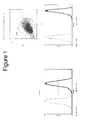
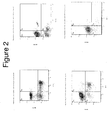
- Phenotypic characterization of cells performed by flow cytometric analysis indicated increase in proportion of CD4+ cells compared to original culture, as shown in Figure 2 .
- Lymphocyte population expanded from peripheral blood in the presence of autologous mature dendritic cells was harvested, washed, re-suspended at 0.5x10 6 /ml in lymphocyte culture medium containing 10 ⁇ M of 5-aza-2'-deoxycytidine (Sigma) and 150 IU/ml of IL-2 and placed in the wells of 24-well tissue culture plate in 2 ml per well. Cells were incubated for 3 days, after which they were harvested and counted. Some cells were used in culture with autologous lymphocytes (Example 3), while other were frozen in aliquots as described in the Example 1 for non-adherent lymphocytes. About 2 x10 6 cells were washed in DPBS and frozen as pellet for RT-PCR analysis.
- RNA coding for these proteins 2x10 6 cells were spun down, the supernatant was discarded, and the pellet was solubilized in 0.3 ml of Cell Lysis Solution (Purescript R RNA isolation kit, Gentra Systems, Minneapois, MN). Total RNA was isolated according to the manufacturer's instructions, precipitated by adding two volumes of 100% isopropanol over the lysis solution, washed with 70% ethanol and re-hydrated in 10 ⁇ l RNAase-free distilled water. The isolated RNA was treated by DNAase using the reagents of DNA-free TM kit (Ambion, Austin, TX).
- RNAase H reverse transcriptase kit (Invitrogen Life Technologies, Carlsbad, CA) and 10 ⁇ l RNA in 20 ⁇ l total volume according to the manufacturers' protocol. Reverse transcription (RT) was performed at 50° C for 60 min, followed by 70° C for 15 min.
- Synthesized cDNA was diluted 2-fold by adding equal volume of 10% DMSO in RNAase-free distilled water.
- Expression profile of MAGE-A1, -A3, -A4, -A6,-A10, and -A12, as well as expression of glyceraldehyde-3-phosphate dehydrogenase (GAPDH) as a positive control for performance of the reaction and for integrity of RNA was detected by PCR using the forward (sense) and reverse (anti-sense) primers described formerly (De Plaen et al, 1994; thor Straten et al, 1997).
- 1/20 of cDNA was used in PCR amplification in the medium containing 50 mM KCl, 10 mM Tris-HCl, 1.5 mM MgCl 2 , 0.2 mM cresol, 12% sucrose, 0.5% DMSO, 0.05% BSA, pH 8.6/ 25° C, 10 pmol of each primer, and during the first cycle at "hot start” added 1.25U AmpliTaq DNA polymerase (Applied Biosystems, Foster City, CA) and 50 ⁇ M final concentration of each dNTP, total volume 30 ⁇ l.
- Parameters of the reaction for NY-ESO-1 and GAGE 3-7 after "hot start” were: 32-36cycles of 95 °C 30 sec, 60°C 1 min, 72°C 2 min in the same medium as for MAGE antigens.
- the primers selected by (Vatolin et al., 2005) were used.
- Medium and the first cycle was the same as above excepted 2U Taq polymerase and 150 ⁇ M dNTP in the reaction, and "hot start” followed by 40-45 cycles (94°C 30 sec, 60°C 30 sec, 72°C 2 min) and final extension at 72°C for 15 min.
- thermocycler GeneAmp R PCR System 9700 (Applied Biosystems). Negative controls contained aliquots of water instead of cDNA and, in addition, in some experiments on detection of NY-ESO-1 also (minus RT) reaction was performed, where RNA sample after DNAase treatment, but prior to reverse transcription step was used instead of cDNA in order to exclude bands originated not from cDNA.
- the PCR products were separated together with 100-bp ladder exhibiting 100-bp and 800-bp as most intensive bands (Amersham Pharmacia Biotech) by electrophoresis through 2% agarose gel at 100V, stained with ethidium bromide, visualized under UV illumination and recorded by an image recording system.
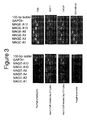
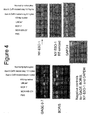
- FIGS 3 and 4 present data on induction of CTA expression in 5-Aza-CdR-treated lymphocytes. For comparison, expression of cancer antigens in tumor cell lines used below in Example 3 is also demonstrated.
- 5-Aza-CdR-treatment of two proliferating lymphocyte cultures is compared: the one taken from log phase of growth (day 8), and the other taken from "plateau” (day 10), where proliferation was stopped due to high cell density.
- day 8 the one taken from log phase of growth
- plateau day 10
- delipidated HS containing 0.05% sodium azide was used after dilution to 10% by DPBS containing calcium and magnesium. After blocking at 4°C overnight, wells were incubated for 1 hr at 37° C and then for 1 hr at r.t. with either anti-MAGE or with isotype-matching control antibodies.
- anti-MAGE antibody hybridoma supernatant of broad- spectrum MAGE-specific 57B clone (kindly provided by Dr. Spagnoli, Switzerland) was used that detects all listed above MAGE antigens excepted MAGE-A10 (Rimoldi et al., 2000).
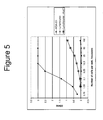
- Figure 5 illustrates the results of cell-based ELISA analysis of MAGE-A expression in untreated and 5-Aza-CdR-treated lymphocytes as well as in breast cancer cell line MDA-MB-231.
- no expression of MAGE protein is detected in normal lymphocytes, while 5-Aza-CdR-treated lymphocytes express a significant amount of protein, demonstrating induction of expression of MAGE antigens not only on RNA, but also on the protein level.
- Comparative analysis of the curves for MDA-MB-231 cells and 5-Aza-CdR-treated lymphocytes shows that absolute number of MAGE proteins per cell is about 40-fold higher in tumor cells than in lymphocytes.
- MDA-MB-231 cells are significantly larger, containing 3.61 mg of total protein per 10 7 cells as compared to 0.81 mg of protein per 10 7 lymphocytes (measured by BCA method as described above).
- the fraction of MAGEs in the total cellular protein between the progressed, highly MAGE-expressing tumor cell line MDA-MB-231 ( Figure 3 ) and the 5-Aza-CdR-treated lymphocytes differs less than 10-fold. It is noteworthy that this amount of MAGE proteins is localized intracellularly (in cytosol), and already within antigen-presenting cells, thus, bypassing the low efficient steps of uptake and cross-presentation, which is supposed to be critical for stimulation of tumor antigen-specific CTL response.
- lymphocytes After induction of CTA in normal lymphocytes after 5-Aza-CdR treatment, these lymphocytes were employed for the generation of tumor-specific immune response in vitro.
- 5-Aza-CdR-treated cultures were harvested, counted, and seeded in 96-well plate at 20x10 3 per well together with 20-40x10 3 of thawed non-adherent autologous lymphocytes in 0.1 ml of lymphocyte medium. After 2 days of incubation, 0.05 ml of lymphocyte medium supplemented with 75 IU/ml of IL-2 was added into each well. Addition of 0.05 ml of lymphocyte medium alone was repeated at days 5 and 7. At day 9, cultures were harvested and counted and used for analysis of immune response.
- Phenotyping of the cells were done by staining with the direct conjugated antibodies, CD4-fluorescein isothiocyanate (FITC), CD8-phycoerythrin (PE), CD56-PE, CD3-FITC and CD62L-phycoerythrin-cyanide 5 (PC5) (BD Biosciences, Denmark, 555346 , 555635 , 555516 , Beckman Coulter, Sweden, IM1281, IM2655). The recommended isotypic controls were used for the phenotyping of the cells. The cell samples were analyzed using FC500 MPL Flow Cytometer (Beckman Coulter) and the CXP analytical software (Beckman Coulter).
- the cells were washed twice by adding cold DPBS buffer (Cambrex, Denmark, BE02-017F) containing 0.5% Foetal Calf serum (Cambrex, DE14-801 F) to the cell suspension. After removal of the buffer the cells were magnetically labelled with CD8 Microbeads (Miltenyi Biotec, 130-045-201).
- the cell suspension was loaded on a column which was placed in the magnetic field of a MACS Separator.
- the magnetically labelled CD8 positive cells were retained on the column.
- the unlabelled cells run through and this cell fraction is depleted of CD8 positive cells.
- the magnetically retained CD8 positive cells were eluted as the positively selected fraction.
- Figure 7 illustrate the phenotype of the positively isolated cells, showing that the purity of isolated CD8+ cells is higher than 90%.
- lymphocytes were intensively washed, re-suspended in culture medium supplemented with 25 IU/ml of IL-2 and placed in 24-well plate. After overnight incubation, lymphocytes were harvested, washed once, re-suspended at 1x10 6 /ml, and added to a panel of prostate and breast cancer cell lines.
- tumor cell lines prostate cancer cell lines: LNCaP (HLA-A2+) and PC3 (HLA-A2-); breast cancer cell lines: MCF-7 (HLA-A2+), MDA-MB-231 (HLA-A2+) and T47D (HLA-A2-).
- 25x10 3 tumor cells were seeded in 48-well plate in 1 ml of RPMI-1640 medium with addition of 10% of FCS and incubated 2 days before test. Before addition of lymphocytes, 0,5 ml of culture supernatant was removed, and 0.25 ml of the suspension of isolated lymphocytes containing 0.25x10 6 cells were added to tumor cells. Cells were cultured together for 18-20 hours.
- the cytotoxic activity of isolated lymphocytes was determined by detection of production of IFN-gamma in the culture supernatant, as well as microscopic monitoring of disappearance of tumor cells. For INF-gamma determination, 0,35 ml of culture supernatant was collected and kept frozen (-20°C) until analysis. Concentration of IFN-g in the culture supernatants was measured by sandwich ELISA using "Ready-Set-Go" kit (eBioscience, San Diego,Ca, USA) that included capture Abs, standard, biotinylated detection Abs, and HRP-streptavidin.
- TMB Tetramethylbenzidine
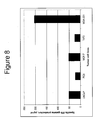
- FIG 8 shows release of IFN-gamma by lymphocytes after overnight incubation with different tumor cells. It is clearly seen that release in the presence of the HLA-A2-positives cell lines LNCaP, MCF-7 and MDA-MB-231 is higher than release in the presence of the HLA-A2-negatives cell lines PC3 and T47D.
- IFN-gamma after incubation with HLA-A2-negative cell lines seen at Figure 8 may be mediated by CD56+ NK cells that are still present in the CD8+-enriched lymphocyte population (see Figure 7 ).
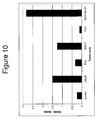
- lymphocytes were recovered after contact with tumor cells and expanded in the presence of dendritic cells and IL-2. After 3 weeks of expansion, one of such cultures, showing high cytotoxicity against HLA-A2+ tumor cell lines, produced IFN-gamma only in HLA-A2-restricted way (see Figure 10 ; note that in this experiment only 0.062x10 6 lymphocytes were added to each well with tumor cells).
- Example 4 Up-scaling of the production of cytotoxic lymphocytes for adoptive immunotherapy.
- Example 3 Use of ex vivo generated tumor-specific cytotoxic lymphocytes for adoptive immunotherapy requires establishment of a culture system capable of producing large number of effector cells in a safe way.
- the procedure described in Example 3 employs 96-well and 24-well plates that make the whole process very laborious and subjected to high risk of contamination.
- This Example employs two types of large tissue culture flasks: standard T225 tissue culture flasks (Nunc) for generation of dendritic cells and 235 cm 2 expanded surface flasks (Corning, cat. No 431346) for activation and growing of lymphocytes.
- lymphocytes grow much better in U-bottom 96-well plates than in 24-well flat bottom plates or in T225 tissue culture flasks.
- tissue culture flasks that might support formation of such tight cell associations
- the inventors came across to 235 cm 2 expanded surface flasks, where the bottom consists of numerous V-form grooves.
- the inventors compared growth of activated lymphocytes in 96-well plate and 235 cm 2 expanded surface flask. The results demonstrated that lymphocytes were able to expand in 235 cm 2 expanded surface flasks with the same efficiency as in 96-well U-bottom plates.
- the whole process is adapted to these tissue culture flasks. It employs isolated peripheral blood mononuclear cells and consists of 5 steps: 1) generation of the mature dendritic cells from monocytes, 2) stimulation of lymphocytes by the mature dendritic cells leading to preferential proliferation of CD4+ cells, 3) treatment of the activated lymphocytes with demethylating agent leading to induction of expression of cancer/testis antigens, 4) generation of cytotoxic lymphocytes by co-cultivation of lymphocytes with activated and treated lymphocytes, and 5) expansion of cytotoxic lymphocytes in the presence of autologous dendritic cells as feeder cells.
- PBMC peripheral blood mononuclear cells
- GM-CSF 100 ng/ml
- IL-4 25 ng/ml
- maturation mixture consisting of IL-1beta (10 ng/ml), IL-6 (1000 U/ml), TNF-alpha (10 ng/ml) and prostaglandin E2 (0.1 ⁇ g/ml) was added into the flasks.
- non-adherent cells were harvested and part of them was used for immediate start of activation of lymphocytes while the rest were frozen for further use at the expansion step.
- Non-adherent lymphocytes frozen at the start of culture were thawed, counted, and 40x10 6 cells were mixed with 4x10 6 dendritic cells. After centrifugation, this mixture was suspended in 40 ml of lymphocyte cultivation medium consisting of AIM-V medium supplemented with 5 % of human AB serum, placed in 235 cm 2 expanded surface flask and cultured during 8 days. At days 2 and 5, 20 ml of fresh medium supplemented with interleukin 2 (final concentration of 15 U/ml) was added into the flask.
- activated lymphocytes were harvested, counted, and 20x10 6 cells were centrifuged, suspended in 40 ml of lymphocyte cultivation medium supplemented with 10 ⁇ M of 5-aza-2'-deoxycytidine (5-Aza-CdR) and placed in 235 cm 2 expanded surface flask. After 3 days, cells were harvested, counted, and used as stimulators for generation of cytotoxic lymphocytes.
- 5-aza-2'-deoxycytidine 5-Aza-CdR
- Non-adherent lymphocytes frozen at the start of culture were thawed, counted, and 20x10 6 cells were mixed with 20x10 6 of 5-Aza-CdR-treated cells. After centrifugation, this mixture was suspended in 40 ml of lymphocyte cultivation medium consisting of AIM-V medium supplemented with 5 % of human AB serum, placed in 235 cm 2 expanded surface flask and cultured during 11 days. At days 2, 5 and 8, 20 ml of fresh medium supplemented with interleukin 2 (final concentration of 25 U/ml) was added into the flask.
- the inventors have performed preparation of cytotoxic lymphocytes by this method from lymphocytes isolated from blood of six donors (Table 2). Characterization of cell phenotype of generated lymphocytes by flow cytometry method demonstrates that they have phenotype similar to the one described in Example 3. Three main populations were present: CD8+ lymphocytes, CD4+ lymphocytes and CD3- CD56+ NK cells. Population of CD8+ cells is usually dominant, varying from 17% to 57% (average 40.8%), while proportion of CD4+ cells varies from 2 to 15% except one donor where their proportion was close to 30%. Proportion of NK cells varies from 3% to 54% (average 25.59). Total number of cells generated after 35 days from the start of reaction varied between 3x10 8 and 7x10 8 .
- Table 2 Percentage of main lymphocyte populations in the MLC cultures generated in T235 expanded area flasks.
- the described procedure permits generation of large number of cytotoxic lymphocytes employing only tissue culture flasks that permits to perform the whole reaction in a safe and relatively non-laborious way.
- This procedure may be easily adapted to the production of tumor-specific cytotoxic lymphocytes in GMP conditions.
- LAGE-1 a new gene with tumor specificity. Int. J. Cancer 76, 903-908 .
- Dendritic cells loaded with killed allogeneic melanoma cells can induce objective clinical responses and MART-1 specific CD8+ T-cell immunity. J. Immunother. 29, 545-557 .
- Patard,J.J. Brasseur,F., Gil-Diez,S., Radvanyi,F., Marchand,M., Francois,P., Abi-Aad,A., Van Cangh,P., Abbou,C.C., Chopin,D., and Boon,T. (1995). Expression of MAGE genes in transitional-cell carcinomas of the urinary bladder. Int. J. Cancer 64, 60-64 .
- Anti-MAGE-3. antibody 57b and anti-MAGE-1 antibody 6C1 can be used to study different proteins of the MAGE-A family. Int. J. Cancer 86, 749-751 .
- van Pel,A. van der Bruggen,P., Coulie,P.G., Brichard,V.G., Lethé,B., Van den Eynde,B.J., Uyttenhove,C., Renauld,J.C., and Boon,T. (1995).
Landscapes
- Health & Medical Sciences (AREA)
- Life Sciences & Earth Sciences (AREA)
- Engineering & Computer Science (AREA)
- Biomedical Technology (AREA)
- General Health & Medical Sciences (AREA)
- Immunology (AREA)
- Chemical & Material Sciences (AREA)
- Organic Chemistry (AREA)
- Biotechnology (AREA)
- Bioinformatics & Cheminformatics (AREA)
- Zoology (AREA)
- Wood Science & Technology (AREA)
- Genetics & Genomics (AREA)
- Public Health (AREA)
- Veterinary Medicine (AREA)
- Animal Behavior & Ethology (AREA)
- Epidemiology (AREA)
- Microbiology (AREA)
- Hematology (AREA)
- Biochemistry (AREA)
- General Engineering & Computer Science (AREA)
- Cell Biology (AREA)
- Medicinal Chemistry (AREA)
- Pharmacology & Pharmacy (AREA)
- General Chemical & Material Sciences (AREA)
- Chemical Kinetics & Catalysis (AREA)
- Nuclear Medicine, Radiotherapy & Molecular Imaging (AREA)
- Medicines Containing Material From Animals Or Micro-Organisms (AREA)
- Medicines Containing Antibodies Or Antigens For Use As Internal Diagnostic Agents (AREA)
- Micro-Organisms Or Cultivation Processes Thereof (AREA)
- Oncology (AREA)
- Mycology (AREA)
- Medicines That Contain Protein Lipid Enzymes And Other Medicines (AREA)
Priority Applications (3)
| Application Number | Priority Date | Filing Date | Title |
|---|---|---|---|
| SI200830447T SI2102331T1 (sl) | 2007-01-03 | 2008-01-03 | Antitumorsko cepivo, izvedeno iz normalnih kemično modificiranih CD4+ celic |
| PL08701232T PL2102331T3 (pl) | 2007-01-03 | 2008-01-03 | Szczepionka przeciwnowotworowa otrzymana z prawidłowych, chemicznie modyfikowanych komórek CD4+ |
| CY20111101112T CY1112668T1 (el) | 2007-01-03 | 2011-11-17 | Εμβολιο εναντι ογκων που προκυπτει απο φυσιολογικα χημικως τροποποιημενα cd4+ κυτταρα |
Applications Claiming Priority (2)
| Application Number | Priority Date | Filing Date | Title |
|---|---|---|---|
| GBGB0700058.1A GB0700058D0 (en) | 2007-01-03 | 2007-01-03 | Anti-tumor vaccine based on normal cells |
| PCT/EP2008/050050 WO2008081035A1 (en) | 2007-01-03 | 2008-01-03 | Anti-tumor vaccine derived from normal chemically modified cells |
Publications (2)
| Publication Number | Publication Date |
|---|---|
| EP2102331A1 EP2102331A1 (en) | 2009-09-23 |
| EP2102331B1 true EP2102331B1 (en) | 2011-08-31 |
Family
ID=37759205
Family Applications (1)
| Application Number | Title | Priority Date | Filing Date |
|---|---|---|---|
| EP08701232A Active EP2102331B1 (en) | 2007-01-03 | 2008-01-03 | Anti-tumor vaccine derived from normal chemically modified cd4+ cells |
Country Status (14)
| Country | Link |
|---|---|
| US (2) | US10023839B2 (enExample) |
| EP (1) | EP2102331B1 (enExample) |
| JP (1) | JP5452231B2 (enExample) |
| AT (1) | ATE522600T1 (enExample) |
| AU (1) | AU2008203730B2 (enExample) |
| CY (1) | CY1112668T1 (enExample) |
| DK (1) | DK2102331T3 (enExample) |
| ES (1) | ES2372713T3 (enExample) |
| GB (1) | GB0700058D0 (enExample) |
| HR (1) | HRP20110899T1 (enExample) |
| PL (1) | PL2102331T3 (enExample) |
| PT (1) | PT2102331E (enExample) |
| SI (1) | SI2102331T1 (enExample) |
| WO (1) | WO2008081035A1 (enExample) |
Families Citing this family (73)
| Publication number | Priority date | Publication date | Assignee | Title |
|---|---|---|---|---|
| EA011421B1 (ru) * | 2008-08-26 | 2009-02-27 | Петр Генриевич ЛОХОВ | Способ получения противоопухолевой вакцины |
| US8467973B2 (en) | 2009-07-28 | 2013-06-18 | Promising Future, Llc | Pairing processes for preparing alloreactive cytotoxic T cells |
| US8666674B2 (en) | 2009-07-28 | 2014-03-04 | Promising Future, Llc | Pairing processes for preparing reactive cytotoxic T cells |
| US9211321B2 (en) | 2009-10-27 | 2015-12-15 | Immunicum Ab | Method for proliferation of antigen-specific T cells |
| GB201013443D0 (en) | 2010-08-11 | 2010-09-22 | Cytovac As | Compositions and methods for producing dendritic cells |
| US10426740B1 (en) | 2010-08-18 | 2019-10-01 | Avm Biotechnology, Llc | Compositions and methods to inhibit stem cell and progenitor cell binding to lymphoid tissue and for regenerating germinal centers in lymphatic tissues |
| KR102349677B1 (ko) | 2015-05-28 | 2022-01-12 | 카이트 파마 인코포레이티드 | T 세포 요법을 위해 환자를 컨디셔닝하는 방법 |
| KR20230005428A (ko) | 2015-05-28 | 2023-01-09 | 카이트 파마 인코포레이티드 | T 세포 요법을 위한 진단 방법 |
| IL292504B2 (en) | 2015-10-20 | 2024-01-01 | Kite Pharma Inc | -methods of preparing t cells for t cell therapy |
| NZ746700A (en) | 2016-04-01 | 2023-04-28 | Kite Pharma Inc | Bcma binding molecules and methods of use thereof |
| SG10201912519VA (en) | 2016-04-01 | 2020-02-27 | Kite Pharma Inc | Chimeric receptors and methods of use thereof |
| KR102427334B1 (ko) | 2016-04-01 | 2022-08-03 | 카이트 파마 인코포레이티드 | 키메라 항원 및 t 세포 수용체 및 사용 방법 |
| EP3583129B1 (en) | 2017-02-14 | 2021-11-03 | Kite Pharma, Inc. | Cd70 binding molecules and methods of use thereof |
| WO2018169922A2 (en) | 2017-03-13 | 2018-09-20 | Kite Pharma, Inc. | Chimeric antigen receptors for melanoma and uses thereof |
| CN110475571B (zh) | 2017-04-01 | 2023-04-04 | Avm生物技术有限责任公司 | 细胞免疫疗法前细胞毒性预调理的替代 |
| KR20190130024A (ko) | 2017-04-03 | 2019-11-20 | 카이트 파마 인코포레이티드 | 최적화된 다기능 t 세포를 포함하는 키메라 수용체 t 세포를 사용하는 치료 |
| BR102018008260A2 (pt) | 2017-04-24 | 2020-04-28 | Kite Pharma, Inc. | domínios de ligação ao antígeno humanizado e métodos de uso |
| US12097218B2 (en) | 2017-05-26 | 2024-09-24 | Kite Pharma, Inc. | Methods of making and using embryonic mesenchymal progenitor cells |
| CN111315403A (zh) | 2017-09-15 | 2020-06-19 | 凯德药业股份有限公司 | 用于进行具有监管链和身份链生物样品跟踪的患者特异性免疫疗法规程的方法和系统 |
| EP3684816B1 (en) | 2017-09-22 | 2024-05-29 | Kite Pharma, Inc. | Chimeric polypeptides and uses thereof |
| EP3697500A1 (en) | 2017-10-18 | 2020-08-26 | Kite Pharma, Inc. | Methods of administering chimeric antigen receptor immunotherapy |
| WO2019099707A1 (en) | 2017-11-16 | 2019-05-23 | Kite Pharma, Inc | Modified chimeric antigen receptors and methods of use |
| AU2019206724A1 (en) | 2018-01-15 | 2020-07-16 | Kite Pharma, Inc. | Methods of administering chimeric antigen receptor immunotherapy in combination with 4-1BB agonist |
| WO2019152957A1 (en) | 2018-02-02 | 2019-08-08 | Arizona Board Of Regents On Behalf Of Arizona State University | Dna-chimeric antigen receptor t cells for immunotherapy |
| CA3090793C (en) | 2018-02-16 | 2024-10-08 | Kite Pharma, Inc. | MODIFIED MULTIPOTENTED STEM CELLS, AND METHODS OF PREPARATION AND USE |
| CN119656304A (zh) | 2018-04-12 | 2025-03-21 | 凯德药业股份有限公司 | 使用肿瘤微环境的特征的嵌合受体t细胞治疗 |
| KR102734592B1 (ko) | 2018-06-01 | 2024-11-27 | 카이트 파마 인코포레이티드 | 키메라 항원 수용체 t 세포 요법 |
| US20210155941A1 (en) | 2018-06-22 | 2021-05-27 | Kite Pharma Eu B.V. | Compositions and methods for making engineered t cells |
| AU2019314452B2 (en) | 2018-08-02 | 2022-12-08 | Kite Pharma, Inc | Chimeric antigen receptor therapy T cell expansion kinetics and uses thereof |
| EP3488851A1 (en) | 2018-10-03 | 2019-05-29 | AVM Biotechnology, LLC | Immunoablative therapies |
| EP3632446B3 (en) | 2018-10-03 | 2024-01-24 | AVM Biotechnology, LLC | Immunoablative therapies |
| KR20250116790A (ko) | 2018-12-12 | 2025-08-01 | 카이트 파마 인코포레이티드 | 키메라 항원 수용체 및 car-t 세포 및 사용 방법 |
| WO2020208054A1 (en) | 2019-04-12 | 2020-10-15 | Cytovac A/S | Method for preparation of cancer/testis antigen-specific t-cells |
| CN114206346A (zh) | 2019-05-03 | 2022-03-18 | 凯德药业股份有限公司 | 施用嵌合抗原受体免疫疗法的方法 |
| CN114391021B (zh) | 2019-06-21 | 2026-01-16 | 凯德药业股份有限公司 | TGF-β受体和使用方法 |
| WO2021046134A1 (en) | 2019-09-03 | 2021-03-11 | Allogene Therapeutics, Inc. | Methods of preparing t cells for t cell therapy |
| IL292665B2 (en) | 2019-11-06 | 2026-02-01 | Kite Pharma Inc | Chimeric antigen receptor T cell therapy |
| WO2021168375A1 (en) | 2020-02-20 | 2021-08-26 | Kite Pharma, Inc. | Chimeric antigen receptor t cell therapy |
| US20230293530A1 (en) | 2020-06-24 | 2023-09-21 | Yeda Research And Development Co. Ltd. | Agents for sensitizing solid tumors to treatment |
| KR20230084470A (ko) | 2020-08-14 | 2023-06-13 | 카이트 파마 인코포레이티드 | 면역 세포 기능의 향상 |
| EP4501951A3 (en) | 2020-08-25 | 2025-04-30 | Kite Pharma, Inc. | T cells with improved functionality |
| AU2021369507B2 (en) | 2020-10-28 | 2025-06-26 | Kite Pharma, Inc. | Flow cytometric method for characterization of t-cell impurities |
| WO2022140159A1 (en) | 2020-12-24 | 2022-06-30 | Kite Pharma, Inc. | Prostate cancer chimeric antigen receptors |
| WO2022150582A1 (en) | 2021-01-10 | 2022-07-14 | Kite Pharma, Inc. | T cell therapy |
| EP4281545A1 (en) | 2021-01-21 | 2023-11-29 | CytoVac A/S | Method for t-cell expansion and related medical applications |
| JP2024507199A (ja) | 2021-02-20 | 2024-02-16 | カイト ファーマ インコーポレイテッド | 免疫療法を選択するための遺伝子マーカー |
| KR20230155521A (ko) | 2021-03-11 | 2023-11-10 | 카이트 파마 인코포레이티드 | 면역 세포 기능의 향상 |
| US12337035B2 (en) | 2021-04-16 | 2025-06-24 | Kite Pharma, Inc. | TACI binding molecules |
| EP4323943A1 (en) | 2021-04-16 | 2024-02-21 | Kite Pharma, Inc. | Methods and systems for scheduling a patient-specific immunotherapy procedure |
| KR20230173179A (ko) | 2021-05-14 | 2023-12-26 | 카이트 파마 인코포레이티드 | 키메라 항원 수용체 t세포 요법 |
| AU2022282266B2 (en) | 2021-05-24 | 2025-09-18 | Kite Pharma, Inc. | NKG2D-based chimeric antigen receptor |
| WO2022261061A1 (en) | 2021-06-08 | 2022-12-15 | Kite Pharma, Inc. | Gpc3 binding molecules |
| WO2022269019A1 (en) | 2021-06-25 | 2022-12-29 | Cytovac A/S | Method for preparation of cytotoxic t lymphocytes with broad tumour-specific reactivity and characteristics of early differentiation cells |
| WO2023278553A1 (en) | 2021-07-01 | 2023-01-05 | Kite Pharma, Inc. | Closed-system and method for autologous and allogeneic cell therapy manufacturing |
| US20230103457A1 (en) | 2021-07-02 | 2023-04-06 | Kite Pharma, Inc. | Method for identifying variants in gene products from gene constructs used in cell therapy applications |
| US20230060292A1 (en) | 2021-07-26 | 2023-03-02 | Kite Pharma, Inc. | Split chimeric antigen receptors and methods of use |
| KR20240027077A (ko) | 2021-07-30 | 2024-02-29 | 카이트 파마 인코포레이티드 | 세포 요법-유도 독성의 모니터링 및 관리 |
| US20230303655A1 (en) | 2021-10-18 | 2023-09-28 | Kite Pharma, Inc. | Signaling domains for chimeric antigen receptors |
| CN118742810A (zh) | 2022-02-15 | 2024-10-01 | 凯德药业股份有限公司 | 从免疫疗法预测不良事件 |
| WO2023247324A1 (en) | 2022-06-24 | 2023-12-28 | Cytovac A/S | Novel combination treatment with adoptive cellular therapy |
| US20240091261A1 (en) | 2022-08-26 | 2024-03-21 | Kite Pharma, Inc. | Immune cell function |
| JP2026508791A (ja) | 2022-10-28 | 2026-03-13 | カイト ファーマ インコーポレイテッド | 免疫療法の有効性及び永続的奏効の改善 |
| TWI882495B (zh) | 2022-10-28 | 2025-05-01 | 美商凱特製藥公司 | 用於將免疫療法最佳化之因素 |
| CN120917153A (zh) | 2023-03-17 | 2025-11-07 | 凯德药业股份有限公司 | 肿瘤微环境对免疫疗法疗效的影响 |
| US20250161361A1 (en) | 2023-11-01 | 2025-05-22 | Kite Pharma, Inc. | Factors for optimizing immunotherapy efficacy |
| US20250262300A1 (en) | 2024-02-16 | 2025-08-21 | Kite Pharma, Inc. | Systems, methods, and kits for generating and administering engineered t cells and cd38 targeting compounds as a combination therapy |
| US20250290154A1 (en) | 2024-03-04 | 2025-09-18 | Kite Pharma, Inc. | Predictive markers for immunotherapy |
| TW202604957A (zh) | 2024-05-03 | 2026-02-01 | 美商凱特製藥公司 | 嵌合受體及其使用方法 |
| US20250382383A1 (en) | 2024-05-31 | 2025-12-18 | Kite Pharma, Inc. | Tricistronic constructs for anti-gpc3 car |
| TW202607133A (zh) | 2024-07-08 | 2026-02-16 | 美商凱特製藥公司 | 用於對活細胞施加機械力以產生表型反應的系統及方法 |
| WO2026084968A1 (en) | 2024-10-14 | 2026-04-23 | Kite Pharma, Inc. | Biomarker based standards and methods of use |
| US20260224626A1 (en) | 2024-11-04 | 2026-08-06 | Kite Pharma, Inc. | Biomarkers related to immunotherapy efficacy |
| WO2026136591A1 (en) | 2024-12-18 | 2026-06-25 | Kite Pharma, Inc. | Jaml transmembrane and co-signaling domains for chimeric antigen receptors |
Family Cites Families (1)
| Publication number | Priority date | Publication date | Assignee | Title |
|---|---|---|---|---|
| WO2003012085A1 (en) * | 2001-07-30 | 2003-02-13 | Sigma-Tau Industrie Farmaceutiche Riunite S.P.A. | Antigen presenting cells, method for their preparation and their use for cancer vaccines |
-
2007
- 2007-01-03 GB GBGB0700058.1A patent/GB0700058D0/en not_active Ceased
-
2008
- 2008-01-03 EP EP08701232A patent/EP2102331B1/en active Active
- 2008-01-03 PL PL08701232T patent/PL2102331T3/pl unknown
- 2008-01-03 AT AT08701232T patent/ATE522600T1/de active
- 2008-01-03 WO PCT/EP2008/050050 patent/WO2008081035A1/en not_active Ceased
- 2008-01-03 US US12/522,048 patent/US10023839B2/en active Active
- 2008-01-03 PT PT08701232T patent/PT2102331E/pt unknown
- 2008-01-03 JP JP2009544412A patent/JP5452231B2/ja not_active Expired - Fee Related
- 2008-01-03 ES ES08701232T patent/ES2372713T3/es active Active
- 2008-01-03 AU AU2008203730A patent/AU2008203730B2/en not_active Ceased
- 2008-01-03 DK DK08701232.4T patent/DK2102331T3/da active
- 2008-01-03 HR HR20110899T patent/HRP20110899T1/hr unknown
- 2008-01-03 SI SI200830447T patent/SI2102331T1/sl unknown
-
2011
- 2011-11-17 CY CY20111101112T patent/CY1112668T1/el unknown
-
2017
- 2017-09-18 US US15/707,474 patent/US20180036397A1/en not_active Abandoned
Non-Patent Citations (1)
| Title |
|---|
| TOLDBOD-HE ET AL.: "Potent influence of bovine serum proteins in experimental dendritic cell-based vaccination protocols", SCAND J IMMUNOL., vol. 58, no. 1, July 2003 (2003-07-01), pages 43-50 * |
Also Published As
| Publication number | Publication date |
|---|---|
| CY1112668T1 (el) | 2016-02-10 |
| PT2102331E (pt) | 2011-12-19 |
| JP2010514455A (ja) | 2010-05-06 |
| PL2102331T3 (pl) | 2012-01-31 |
| US20180036397A1 (en) | 2018-02-08 |
| SI2102331T1 (sl) | 2012-01-31 |
| AU2008203730A1 (en) | 2008-07-10 |
| DK2102331T3 (da) | 2011-10-17 |
| GB0700058D0 (en) | 2007-02-07 |
| US10023839B2 (en) | 2018-07-17 |
| HRP20110899T1 (hr) | 2011-12-31 |
| ATE522600T1 (de) | 2011-09-15 |
| WO2008081035A1 (en) | 2008-07-10 |
| US20100092498A1 (en) | 2010-04-15 |
| EP2102331A1 (en) | 2009-09-23 |
| ES2372713T3 (es) | 2012-01-25 |
| AU2008203730B2 (en) | 2013-11-07 |
| JP5452231B2 (ja) | 2014-03-26 |
Similar Documents
| Publication | Publication Date | Title |
|---|---|---|
| US10023839B2 (en) | Anti-tumour vaccine derived from normal cells | |
| von Euw et al. | A phase I clinical study of vaccination of melanoma patients with dendritic cells loaded with allogeneic apoptotic/necrotic melanoma cells. Analysis of toxicity and immune response to the vaccine and of IL-10-1082 promoter genotype as predictor of disease progression | |
| EP1448229B1 (en) | Pharmaceutical composition for inducing an immune response in a human or animal | |
| US11684671B2 (en) | Enhancing the T-cell stimulatory capacity of human antigen presenting cells in vitro and in vivo and its use in vaccination | |
| EP2603582B1 (en) | Compositions and methods for producing dendritic cells | |
| EP3255143A2 (en) | Enhancing the t-cells stimulatory capacity of human antigen presenting cells and their use in vaccination | |
| EP1814580A2 (en) | Methods of using il-21 for adoptive immunotherapy and identification of tumor antigens | |
| EP2459707B1 (en) | Compositions and methods of preparing alloreactive cytotoxic t cells | |
| Calderhead et al. | Cytokine maturation followed by CD40L mRNA electroporation results in a clinically relevant dendritic cell product capable of inducing a potent proinflammatory CTL response | |
| Whiteside | Anti-tumor vaccines in head and neck cancer: targeting immune responses to the tumor | |
| Millard et al. | Dendritic cell KLH loading requirements for efficient CD4+ T-cell priming and help to peptide-specific cytotoxic T-cell response, in view of potential use in cancer vaccines | |
| Sprinzl et al. | Dendritic cell vaccines for cancer therapy | |
| Piemonti et al. | Generation and functional characterisation of dendritic cells from patients with pancreatic carcinoma with special regard to clinical applicability | |
| Vichchatorn et al. | Dendritic cells pulsed with total tumor RNA for activation NK-like T cells against glioblastoma multiforme | |
| Ohshita et al. | Generation of tumor-reactive effector lymphocytes using tumor RNA-introduced dendritic cells in gastric cancer patients | |
| Schöttker et al. | Pulsing with blast cell lysate or blast-derived total RNA reverses the dendritic cell-mediated cytotoxic activity of cytokine-induced killer cells against allogeneic acute myelogenous leukemia cells | |
| JP7390740B2 (ja) | 腫瘍の治療及び/又は予防のための組成物 | |
| Yuan et al. | The characterization and role of leukemia cell-derived dendritic cells in immunotherapy for leukemic diseases | |
| Abe et al. | Targeted cancer therapy by dendritic cell vaccine | |
| gegen allogene akute myeloische Zellen | Pulsing with blast cell lysate or blast-derived total RNA reverses the dendritic cell-mediated cytotoxic activity of cytokine-induced killer cells against allogeneic acute myelogenous leukemia cells |
Legal Events
| Date | Code | Title | Description |
|---|---|---|---|
| PUAI | Public reference made under article 153(3) epc to a published international application that has entered the european phase |
Free format text: ORIGINAL CODE: 0009012 |
|
| 17P | Request for examination filed |
Effective date: 20090619 |
|
| AK | Designated contracting states |
Kind code of ref document: A1 Designated state(s): AT BE BG CH CY CZ DE DK EE ES FI FR GB GR HR HU IE IS IT LI LT LU LV MC MT NL NO PL PT RO SE SI SK TR |
|
| 17Q | First examination report despatched |
Effective date: 20091105 |
|
| DAX | Request for extension of the european patent (deleted) | ||
| RTI1 | Title (correction) |
Free format text: ANTI-TUMOR VACCINE DERIVED FROM NORMAL CHEMICALLY MODIFIED CD4+ CELLS |
|
| GRAP | Despatch of communication of intention to grant a patent |
Free format text: ORIGINAL CODE: EPIDOSNIGR1 |
|
| REG | Reference to a national code |
Ref country code: DE Ref legal event code: R079 Ref document number: 602008009293 Country of ref document: DE Free format text: PREVIOUS MAIN CLASS: C12N0005060000 Ipc: C12N0005078400 |
|
| RIC1 | Information provided on ipc code assigned before grant |
Ipc: A61P 35/00 20060101ALI20110217BHEP Ipc: A61K 45/00 20060101ALI20110217BHEP Ipc: C12N 5/0784 20100101AFI20110217BHEP |
|
| RAP1 | Party data changed (applicant data changed or rights of an application transferred) |
Owner name: CYTOVAC A/S |
|
| GRAS | Grant fee paid |
Free format text: ORIGINAL CODE: EPIDOSNIGR3 |
|
| GRAA | (expected) grant |
Free format text: ORIGINAL CODE: 0009210 |
|
| AK | Designated contracting states |
Kind code of ref document: B1 Designated state(s): AT BE BG CH CY CZ DE DK EE ES FI FR GB GR HR HU IE IS IT LI LT LU LV MC MT NL NO PL PT RO SE SI SK TR |
|
| REG | Reference to a national code |
Ref country code: GB Ref legal event code: FG4D Ref country code: CH Ref legal event code: EP |
|
| REG | Reference to a national code |
Ref country code: IE Ref legal event code: FG4D |
|
| REG | Reference to a national code |
Ref country code: DK Ref legal event code: T3 |
|
| REG | Reference to a national code |
Ref country code: DE Ref legal event code: R096 Ref document number: 602008009293 Country of ref document: DE Effective date: 20111110 |
|
| REG | Reference to a national code |
Ref country code: RO Ref legal event code: EPE |
|
| REG | Reference to a national code |
Ref country code: HR Ref legal event code: TUEP Ref document number: P20110899 Country of ref document: HR Ref country code: CH Ref legal event code: NV Representative=s name: ISLER & PEDRAZZINI AG |
|
| REG | Reference to a national code |
Ref country code: NL Ref legal event code: T3 |
|
| REG | Reference to a national code |
Ref country code: PT Ref legal event code: SC4A Free format text: AVAILABILITY OF NATIONAL TRANSLATION Effective date: 20111125 |
|
| REG | Reference to a national code |
Ref country code: SE Ref legal event code: TRGR |
|
| REG | Reference to a national code |
Ref country code: HR Ref legal event code: T1PR Ref document number: P20110899 Country of ref document: HR |
|
| REG | Reference to a national code |
Ref country code: NO Ref legal event code: T2 Effective date: 20110831 |
|
| REG | Reference to a national code |
Ref country code: ES Ref legal event code: FG2A Ref document number: 2372713 Country of ref document: ES Kind code of ref document: T3 Effective date: 20120125 |
|
| REG | Reference to a national code |
Ref country code: PL Ref legal event code: T3 |
|
| REG | Reference to a national code |
Ref country code: SK Ref legal event code: T3 Ref document number: E 10556 Country of ref document: SK |
|
| REG | Reference to a national code |
Ref country code: EE Ref legal event code: FG4A Ref document number: E006169 Country of ref document: EE Effective date: 20111130 |
|
| REG | Reference to a national code |
Ref country code: GR Ref legal event code: EP Ref document number: 20110402853 Country of ref document: GR Effective date: 20120117 |
|
| REG | Reference to a national code |
Ref country code: HU Ref legal event code: AG4A Ref document number: E012962 Country of ref document: HU |
|
| PLBE | No opposition filed within time limit |
Free format text: ORIGINAL CODE: 0009261 |
|
| STAA | Information on the status of an ep patent application or granted ep patent |
Free format text: STATUS: NO OPPOSITION FILED WITHIN TIME LIMIT |
|
| 26N | No opposition filed |
Effective date: 20120601 |
|
| REG | Reference to a national code |
Ref country code: DE Ref legal event code: R097 Ref document number: 602008009293 Country of ref document: DE Effective date: 20120601 |
|
| REG | Reference to a national code |
Ref country code: FR Ref legal event code: PLFP Year of fee payment: 9 |
|
| REG | Reference to a national code |
Ref country code: FR Ref legal event code: PLFP Year of fee payment: 10 |
|
| REG | Reference to a national code |
Ref country code: FR Ref legal event code: PLFP Year of fee payment: 11 |
|
| REG | Reference to a national code |
Ref country code: HR Ref legal event code: ODRP Ref document number: P20110899 Country of ref document: HR Payment date: 20181204 Year of fee payment: 12 |
|
| REG | Reference to a national code |
Ref country code: HR Ref legal event code: ODRP Ref document number: P20110899 Country of ref document: HR Payment date: 20191204 Year of fee payment: 13 |
|
| PGFP | Annual fee paid to national office [announced via postgrant information from national office to epo] |
Ref country code: CZ Payment date: 20191223 Year of fee payment: 13 Ref country code: RO Payment date: 20191210 Year of fee payment: 13 Ref country code: LT Payment date: 20191220 Year of fee payment: 13 Ref country code: SK Payment date: 20191223 Year of fee payment: 13 Ref country code: PT Payment date: 20191212 Year of fee payment: 13 |
|
| PGFP | Annual fee paid to national office [announced via postgrant information from national office to epo] |
Ref country code: PL Payment date: 20191204 Year of fee payment: 13 |
|
| PGFP | Annual fee paid to national office [announced via postgrant information from national office to epo] |
Ref country code: AT Payment date: 20200121 Year of fee payment: 13 Ref country code: EE Payment date: 20200127 Year of fee payment: 13 Ref country code: IE Payment date: 20200116 Year of fee payment: 13 Ref country code: IT Payment date: 20200117 Year of fee payment: 13 Ref country code: BG Payment date: 20200122 Year of fee payment: 13 Ref country code: NO Payment date: 20200120 Year of fee payment: 13 Ref country code: ES Payment date: 20200203 Year of fee payment: 13 Ref country code: HU Payment date: 20191230 Year of fee payment: 13 Ref country code: MC Payment date: 20200116 Year of fee payment: 13 Ref country code: GR Payment date: 20200121 Year of fee payment: 13 Ref country code: SE Payment date: 20200122 Year of fee payment: 13 Ref country code: FI Payment date: 20200120 Year of fee payment: 13 Ref country code: NL Payment date: 20200120 Year of fee payment: 13 Ref country code: LV Payment date: 20200120 Year of fee payment: 13 |
|
| PGFP | Annual fee paid to national office [announced via postgrant information from national office to epo] |
Ref country code: LU Payment date: 20200120 Year of fee payment: 13 Ref country code: SI Payment date: 20191211 Year of fee payment: 13 Ref country code: HR Payment date: 20200103 Year of fee payment: 13 Ref country code: IS Payment date: 20200121 Year of fee payment: 13 Ref country code: CH Payment date: 20200120 Year of fee payment: 13 Ref country code: BE Payment date: 20200120 Year of fee payment: 13 Ref country code: CY Payment date: 20191210 Year of fee payment: 13 |
|
| PGFP | Annual fee paid to national office [announced via postgrant information from national office to epo] |
Ref country code: MT Payment date: 20200106 Year of fee payment: 13 Ref country code: TR Payment date: 20200102 Year of fee payment: 13 |
|
| REG | Reference to a national code |
Ref country code: HR Ref legal event code: PBON Ref document number: P20110899 Country of ref document: HR Effective date: 20210103 |
|
| PG25 | Lapsed in a contracting state [announced via postgrant information from national office to epo] |
Ref country code: CZ Free format text: LAPSE BECAUSE OF NON-PAYMENT OF DUE FEES Effective date: 20210103 |
|
| REG | Reference to a national code |
Ref country code: FI Ref legal event code: MAE |
|
| REG | Reference to a national code |
Ref country code: EE Ref legal event code: MM4A Ref document number: E006169 Country of ref document: EE Effective date: 20210131 |
|
| REG | Reference to a national code |
Ref country code: NO Ref legal event code: MMEP |
|
| PG25 | Lapsed in a contracting state [announced via postgrant information from national office to epo] |
Ref country code: MC Free format text: LAPSE BECAUSE OF NON-PAYMENT OF DUE FEES Effective date: 20210201 |
|
| REG | Reference to a national code |
Ref country code: CH Ref legal event code: PL Ref country code: SE Ref legal event code: EUG |
|
| REG | Reference to a national code |
Ref country code: NL Ref legal event code: MM Effective date: 20210201 |
|
| REG | Reference to a national code |
Ref country code: AT Ref legal event code: MM01 Ref document number: 522600 Country of ref document: AT Kind code of ref document: T Effective date: 20210103 |
|
| REG | Reference to a national code |
Ref country code: SK Ref legal event code: MM4A Ref document number: E 10556 Country of ref document: SK Effective date: 20210103 |
|
| PG25 | Lapsed in a contracting state [announced via postgrant information from national office to epo] |
Ref country code: LU Free format text: LAPSE BECAUSE OF NON-PAYMENT OF DUE FEES Effective date: 20210103 |
|
| REG | Reference to a national code |
Ref country code: BE Ref legal event code: MM Effective date: 20210131 |
|
| REG | Reference to a national code |
Ref country code: LT Ref legal event code: MM4D Effective date: 20210103 |
|
| PG25 | Lapsed in a contracting state [announced via postgrant information from national office to epo] |
Ref country code: HR Free format text: LAPSE BECAUSE OF NON-PAYMENT OF DUE FEES Effective date: 20210103 Ref country code: HU Free format text: LAPSE BECAUSE OF NON-PAYMENT OF DUE FEES Effective date: 20210104 Ref country code: BG Free format text: LAPSE BECAUSE OF NON-PAYMENT OF DUE FEES Effective date: 20210731 Ref country code: AT Free format text: LAPSE BECAUSE OF NON-PAYMENT OF DUE FEES Effective date: 20210103 Ref country code: NL Free format text: LAPSE BECAUSE OF NON-PAYMENT OF DUE FEES Effective date: 20210201 Ref country code: FI Free format text: LAPSE BECAUSE OF NON-PAYMENT OF DUE FEES Effective date: 20210103 Ref country code: CY Free format text: LAPSE BECAUSE OF NON-PAYMENT OF DUE FEES Effective date: 20210103 Ref country code: EE Free format text: LAPSE BECAUSE OF NON-PAYMENT OF DUE FEES Effective date: 20210131 |
|
| PG25 | Lapsed in a contracting state [announced via postgrant information from national office to epo] |
Ref country code: CH Free format text: LAPSE BECAUSE OF NON-PAYMENT OF DUE FEES Effective date: 20210131 Ref country code: SK Free format text: LAPSE BECAUSE OF NON-PAYMENT OF DUE FEES Effective date: 20210103 Ref country code: NO Free format text: LAPSE BECAUSE OF NON-PAYMENT OF DUE FEES Effective date: 20210131 Ref country code: PT Free format text: LAPSE BECAUSE OF NON-PAYMENT OF DUE FEES Effective date: 20210705 Ref country code: LV Free format text: LAPSE BECAUSE OF NON-PAYMENT OF DUE FEES Effective date: 20210103 Ref country code: LI Free format text: LAPSE BECAUSE OF NON-PAYMENT OF DUE FEES Effective date: 20210131 Ref country code: GR Free format text: LAPSE BECAUSE OF NON-PAYMENT OF DUE FEES Effective date: 20210805 Ref country code: SE Free format text: LAPSE BECAUSE OF NON-PAYMENT OF DUE FEES Effective date: 20210104 Ref country code: RO Free format text: LAPSE BECAUSE OF NON-PAYMENT OF DUE FEES Effective date: 20210103 |
|
| PG25 | Lapsed in a contracting state [announced via postgrant information from national office to epo] |
Ref country code: IE Free format text: LAPSE BECAUSE OF NON-PAYMENT OF DUE FEES Effective date: 20210103 Ref country code: LT Free format text: LAPSE BECAUSE OF NON-PAYMENT OF DUE FEES Effective date: 20210103 |
|
| REG | Reference to a national code |
Ref country code: SI Ref legal event code: KO00 Effective date: 20211129 |
|
| PG25 | Lapsed in a contracting state [announced via postgrant information from national office to epo] |
Ref country code: SI Free format text: LAPSE BECAUSE OF NON-PAYMENT OF DUE FEES Effective date: 20210104 |
|
| REG | Reference to a national code |
Ref country code: ES Ref legal event code: FD2A Effective date: 20220413 |
|
| PG25 | Lapsed in a contracting state [announced via postgrant information from national office to epo] |
Ref country code: IT Free format text: LAPSE BECAUSE OF NON-PAYMENT OF DUE FEES Effective date: 20210103 |
|
| PG25 | Lapsed in a contracting state [announced via postgrant information from national office to epo] |
Ref country code: MT Free format text: LAPSE BECAUSE OF NON-PAYMENT OF DUE FEES Effective date: 20210103 |
|
| PG25 | Lapsed in a contracting state [announced via postgrant information from national office to epo] |
Ref country code: ES Free format text: LAPSE BECAUSE OF NON-PAYMENT OF DUE FEES Effective date: 20210104 Ref country code: BE Free format text: LAPSE BECAUSE OF NON-PAYMENT OF DUE FEES Effective date: 20210131 |
|
| PG25 | Lapsed in a contracting state [announced via postgrant information from national office to epo] |
Ref country code: PL Free format text: LAPSE BECAUSE OF NON-PAYMENT OF DUE FEES Effective date: 20210103 |
|
| PGFP | Annual fee paid to national office [announced via postgrant information from national office to epo] |
Ref country code: DE Payment date: 20250121 Year of fee payment: 18 |
|
| PGFP | Annual fee paid to national office [announced via postgrant information from national office to epo] |
Ref country code: DK Payment date: 20250103 Year of fee payment: 18 |
|
| PGFP | Annual fee paid to national office [announced via postgrant information from national office to epo] |
Ref country code: FR Payment date: 20250117 Year of fee payment: 18 |
|
| PGFP | Annual fee paid to national office [announced via postgrant information from national office to epo] |
Ref country code: GB Payment date: 20250121 Year of fee payment: 18 |
|
| PG25 | Lapsed in a contracting state [announced via postgrant information from national office to epo] |
Ref country code: IS Free format text: LAPSE BECAUSE OF NON-PAYMENT OF DUE FEES Effective date: 20210803 |
|
| PG25 | Lapsed in a contracting state [announced via postgrant information from national office to epo] |
Ref country code: TR Free format text: LAPSE BECAUSE OF NON-PAYMENT OF DUE FEES Effective date: 20210103 |