EP2089005B1 - Layered pharmaceutical formulations comprising an intermediate rapidly dissolving layer - Google Patents
Layered pharmaceutical formulations comprising an intermediate rapidly dissolving layer Download PDFInfo
- Publication number
- EP2089005B1 EP2089005B1 EP07864161A EP07864161A EP2089005B1 EP 2089005 B1 EP2089005 B1 EP 2089005B1 EP 07864161 A EP07864161 A EP 07864161A EP 07864161 A EP07864161 A EP 07864161A EP 2089005 B1 EP2089005 B1 EP 2089005B1
- Authority
- EP
- European Patent Office
- Prior art keywords
- pharmaceutical
- layer
- layered
- formulation
- layers
- Prior art date
- Legal status (The legal status is an assumption and is not a legal conclusion. Google has not performed a legal analysis and makes no representation as to the accuracy of the status listed.)
- Active
Links
- 0 *C1CCCCC1 Chemical compound *C1CCCCC1 0.000 description 1
- UAEPNZWRGJTJPN-UHFFFAOYSA-N CC1CCCCC1 Chemical compound CC1CCCCC1 UAEPNZWRGJTJPN-UHFFFAOYSA-N 0.000 description 1
Images


Classifications
-
- A—HUMAN NECESSITIES
- A61—MEDICAL OR VETERINARY SCIENCE; HYGIENE
- A61K—PREPARATIONS FOR MEDICAL, DENTAL OR TOILETRY PURPOSES
- A61K9/00—Medicinal preparations characterised by special physical form
- A61K9/20—Pills, tablets, discs, rods
- A61K9/2072—Pills, tablets, discs, rods characterised by shape, structure or size; Tablets with holes, special break lines or identification marks; Partially coated tablets; Disintegrating flat shaped forms
- A61K9/2086—Layered tablets, e.g. bilayer tablets; Tablets of the type inert core-active coat
- A61K9/209—Layered tablets, e.g. bilayer tablets; Tablets of the type inert core-active coat containing drug in at least two layers or in the core and in at least one outer layer
-
- A—HUMAN NECESSITIES
- A61—MEDICAL OR VETERINARY SCIENCE; HYGIENE
- A61K—PREPARATIONS FOR MEDICAL, DENTAL OR TOILETRY PURPOSES
- A61K31/00—Medicinal preparations containing organic active ingredients
- A61K31/13—Amines
- A61K31/135—Amines having aromatic rings, e.g. ketamine, nortriptyline
- A61K31/137—Arylalkylamines, e.g. amphetamine, epinephrine, salbutamol, ephedrine or methadone
-
- A—HUMAN NECESSITIES
- A61—MEDICAL OR VETERINARY SCIENCE; HYGIENE
- A61K—PREPARATIONS FOR MEDICAL, DENTAL OR TOILETRY PURPOSES
- A61K31/00—Medicinal preparations containing organic active ingredients
- A61K31/13—Amines
- A61K31/135—Amines having aromatic rings, e.g. ketamine, nortriptyline
- A61K31/138—Aryloxyalkylamines, e.g. propranolol, tamoxifen, phenoxybenzamine
-
- A—HUMAN NECESSITIES
- A61—MEDICAL OR VETERINARY SCIENCE; HYGIENE
- A61K—PREPARATIONS FOR MEDICAL, DENTAL OR TOILETRY PURPOSES
- A61K31/00—Medicinal preparations containing organic active ingredients
- A61K31/13—Amines
- A61K31/155—Amidines (), e.g. guanidine (H2N—C(=NH)—NH2), isourea (N=C(OH)—NH2), isothiourea (—N=C(SH)—NH2)
-
- A—HUMAN NECESSITIES
- A61—MEDICAL OR VETERINARY SCIENCE; HYGIENE
- A61K—PREPARATIONS FOR MEDICAL, DENTAL OR TOILETRY PURPOSES
- A61K31/00—Medicinal preparations containing organic active ingredients
- A61K31/33—Heterocyclic compounds
- A61K31/335—Heterocyclic compounds having oxygen as the only ring hetero atom, e.g. fungichromin
- A61K31/35—Heterocyclic compounds having oxygen as the only ring hetero atom, e.g. fungichromin having six-membered rings with one oxygen as the only ring hetero atom
-
- A—HUMAN NECESSITIES
- A61—MEDICAL OR VETERINARY SCIENCE; HYGIENE
- A61K—PREPARATIONS FOR MEDICAL, DENTAL OR TOILETRY PURPOSES
- A61K31/00—Medicinal preparations containing organic active ingredients
- A61K31/33—Heterocyclic compounds
- A61K31/335—Heterocyclic compounds having oxygen as the only ring hetero atom, e.g. fungichromin
- A61K31/357—Heterocyclic compounds having oxygen as the only ring hetero atom, e.g. fungichromin having two or more oxygen atoms in the same ring, e.g. crown ethers, guanadrel
-
- A—HUMAN NECESSITIES
- A61—MEDICAL OR VETERINARY SCIENCE; HYGIENE
- A61K—PREPARATIONS FOR MEDICAL, DENTAL OR TOILETRY PURPOSES
- A61K31/00—Medicinal preparations containing organic active ingredients
- A61K31/33—Heterocyclic compounds
- A61K31/395—Heterocyclic compounds having nitrogen as a ring hetero atom, e.g. guanethidine or rifamycins
- A61K31/41—Heterocyclic compounds having nitrogen as a ring hetero atom, e.g. guanethidine or rifamycins having five-membered rings with two or more ring hetero atoms, at least one of which being nitrogen, e.g. tetrazole
- A61K31/42—Oxazoles
-
- A—HUMAN NECESSITIES
- A61—MEDICAL OR VETERINARY SCIENCE; HYGIENE
- A61K—PREPARATIONS FOR MEDICAL, DENTAL OR TOILETRY PURPOSES
- A61K31/00—Medicinal preparations containing organic active ingredients
- A61K31/33—Heterocyclic compounds
- A61K31/395—Heterocyclic compounds having nitrogen as a ring hetero atom, e.g. guanethidine or rifamycins
- A61K31/41—Heterocyclic compounds having nitrogen as a ring hetero atom, e.g. guanethidine or rifamycins having five-membered rings with two or more ring hetero atoms, at least one of which being nitrogen, e.g. tetrazole
- A61K31/42—Oxazoles
- A61K31/423—Oxazoles condensed with carbocyclic rings
-
- A—HUMAN NECESSITIES
- A61—MEDICAL OR VETERINARY SCIENCE; HYGIENE
- A61K—PREPARATIONS FOR MEDICAL, DENTAL OR TOILETRY PURPOSES
- A61K31/00—Medicinal preparations containing organic active ingredients
- A61K31/33—Heterocyclic compounds
- A61K31/395—Heterocyclic compounds having nitrogen as a ring hetero atom, e.g. guanethidine or rifamycins
- A61K31/435—Heterocyclic compounds having nitrogen as a ring hetero atom, e.g. guanethidine or rifamycins having six-membered rings with one nitrogen as the only ring hetero atom
- A61K31/47—Quinolines; Isoquinolines
- A61K31/485—Morphinan derivatives, e.g. morphine, codeine
-
- A—HUMAN NECESSITIES
- A61—MEDICAL OR VETERINARY SCIENCE; HYGIENE
- A61K—PREPARATIONS FOR MEDICAL, DENTAL OR TOILETRY PURPOSES
- A61K31/00—Medicinal preparations containing organic active ingredients
- A61K31/33—Heterocyclic compounds
- A61K31/395—Heterocyclic compounds having nitrogen as a ring hetero atom, e.g. guanethidine or rifamycins
- A61K31/55—Heterocyclic compounds having nitrogen as a ring hetero atom, e.g. guanethidine or rifamycins having seven-membered rings, e.g. azelastine, pentylenetetrazole
- A61K31/551—Heterocyclic compounds having nitrogen as a ring hetero atom, e.g. guanethidine or rifamycins having seven-membered rings, e.g. azelastine, pentylenetetrazole having two nitrogen atoms, e.g. dilazep
-
- A—HUMAN NECESSITIES
- A61—MEDICAL OR VETERINARY SCIENCE; HYGIENE
- A61K—PREPARATIONS FOR MEDICAL, DENTAL OR TOILETRY PURPOSES
- A61K31/00—Medicinal preparations containing organic active ingredients
- A61K31/33—Heterocyclic compounds
- A61K31/395—Heterocyclic compounds having nitrogen as a ring hetero atom, e.g. guanethidine or rifamycins
- A61K31/55—Heterocyclic compounds having nitrogen as a ring hetero atom, e.g. guanethidine or rifamycins having seven-membered rings, e.g. azelastine, pentylenetetrazole
- A61K31/551—Heterocyclic compounds having nitrogen as a ring hetero atom, e.g. guanethidine or rifamycins having seven-membered rings, e.g. azelastine, pentylenetetrazole having two nitrogen atoms, e.g. dilazep
- A61K31/5513—1,4-Benzodiazepines, e.g. diazepam or clozapine
-
- A—HUMAN NECESSITIES
- A61—MEDICAL OR VETERINARY SCIENCE; HYGIENE
- A61K—PREPARATIONS FOR MEDICAL, DENTAL OR TOILETRY PURPOSES
- A61K45/00—Medicinal preparations containing active ingredients not provided for in groups A61K31/00 - A61K41/00
- A61K45/06—Mixtures of active ingredients without chemical characterisation, e.g. antiphlogistics and cardiaca
-
- A—HUMAN NECESSITIES
- A61—MEDICAL OR VETERINARY SCIENCE; HYGIENE
- A61K—PREPARATIONS FOR MEDICAL, DENTAL OR TOILETRY PURPOSES
- A61K47/00—Medicinal preparations characterised by the non-active ingredients used, e.g. carriers or inert additives; Targeting or modifying agents chemically bound to the active ingredient
- A61K47/06—Organic compounds, e.g. natural or synthetic hydrocarbons, polyolefins, mineral oil, petrolatum or ozokerite
- A61K47/26—Carbohydrates, e.g. sugar alcohols, amino sugars, nucleic acids, mono-, di- or oligo-saccharides; Derivatives thereof, e.g. polysorbates, sorbitan fatty acid esters or glycyrrhizin
-
- A—HUMAN NECESSITIES
- A61—MEDICAL OR VETERINARY SCIENCE; HYGIENE
- A61K—PREPARATIONS FOR MEDICAL, DENTAL OR TOILETRY PURPOSES
- A61K9/00—Medicinal preparations characterised by special physical form
- A61K9/0002—Galenical forms characterised by the drug release technique; Application systems commanded by energy
-
- A—HUMAN NECESSITIES
- A61—MEDICAL OR VETERINARY SCIENCE; HYGIENE
- A61K—PREPARATIONS FOR MEDICAL, DENTAL OR TOILETRY PURPOSES
- A61K9/00—Medicinal preparations characterised by special physical form
- A61K9/0012—Galenical forms characterised by the site of application
- A61K9/0053—Mouth and digestive tract, i.e. intraoral and peroral administration
-
- A—HUMAN NECESSITIES
- A61—MEDICAL OR VETERINARY SCIENCE; HYGIENE
- A61K—PREPARATIONS FOR MEDICAL, DENTAL OR TOILETRY PURPOSES
- A61K9/00—Medicinal preparations characterised by special physical form
- A61K9/20—Pills, tablets, discs, rods
- A61K9/2004—Excipients; Inactive ingredients
- A61K9/2013—Organic compounds, e.g. phospholipids, fats
- A61K9/2018—Sugars, or sugar alcohols, e.g. lactose, mannitol; Derivatives thereof, e.g. polysorbates
-
- A—HUMAN NECESSITIES
- A61—MEDICAL OR VETERINARY SCIENCE; HYGIENE
- A61K—PREPARATIONS FOR MEDICAL, DENTAL OR TOILETRY PURPOSES
- A61K9/00—Medicinal preparations characterised by special physical form
- A61K9/20—Pills, tablets, discs, rods
- A61K9/2004—Excipients; Inactive ingredients
- A61K9/2022—Organic macromolecular compounds
- A61K9/205—Polysaccharides, e.g. alginate, gums; Cyclodextrin
- A61K9/2054—Cellulose; Cellulose derivatives, e.g. hydroxypropyl methylcellulose
-
- A—HUMAN NECESSITIES
- A61—MEDICAL OR VETERINARY SCIENCE; HYGIENE
- A61K—PREPARATIONS FOR MEDICAL, DENTAL OR TOILETRY PURPOSES
- A61K9/00—Medicinal preparations characterised by special physical form
- A61K9/20—Pills, tablets, discs, rods
- A61K9/2004—Excipients; Inactive ingredients
- A61K9/2022—Organic macromolecular compounds
- A61K9/205—Polysaccharides, e.g. alginate, gums; Cyclodextrin
- A61K9/2059—Starch, including chemically or physically modified derivatives; Amylose; Amylopectin; Dextrin
-
- A—HUMAN NECESSITIES
- A61—MEDICAL OR VETERINARY SCIENCE; HYGIENE
- A61P—SPECIFIC THERAPEUTIC ACTIVITY OF CHEMICAL COMPOUNDS OR MEDICINAL PREPARATIONS
- A61P25/00—Drugs for disorders of the nervous system
- A61P25/04—Centrally acting analgesics, e.g. opioids
-
- A—HUMAN NECESSITIES
- A61—MEDICAL OR VETERINARY SCIENCE; HYGIENE
- A61P—SPECIFIC THERAPEUTIC ACTIVITY OF CHEMICAL COMPOUNDS OR MEDICINAL PREPARATIONS
- A61P25/00—Drugs for disorders of the nervous system
- A61P25/08—Antiepileptics; Anticonvulsants
-
- A—HUMAN NECESSITIES
- A61—MEDICAL OR VETERINARY SCIENCE; HYGIENE
- A61P—SPECIFIC THERAPEUTIC ACTIVITY OF CHEMICAL COMPOUNDS OR MEDICINAL PREPARATIONS
- A61P25/00—Drugs for disorders of the nervous system
- A61P25/24—Antidepressants
-
- A—HUMAN NECESSITIES
- A61—MEDICAL OR VETERINARY SCIENCE; HYGIENE
- A61P—SPECIFIC THERAPEUTIC ACTIVITY OF CHEMICAL COMPOUNDS OR MEDICINAL PREPARATIONS
- A61P3/00—Drugs for disorders of the metabolism
-
- A—HUMAN NECESSITIES
- A61—MEDICAL OR VETERINARY SCIENCE; HYGIENE
- A61P—SPECIFIC THERAPEUTIC ACTIVITY OF CHEMICAL COMPOUNDS OR MEDICINAL PREPARATIONS
- A61P3/00—Drugs for disorders of the metabolism
- A61P3/04—Anorexiants; Antiobesity agents
-
- A—HUMAN NECESSITIES
- A61—MEDICAL OR VETERINARY SCIENCE; HYGIENE
- A61P—SPECIFIC THERAPEUTIC ACTIVITY OF CHEMICAL COMPOUNDS OR MEDICINAL PREPARATIONS
- A61P3/00—Drugs for disorders of the metabolism
- A61P3/06—Antihyperlipidemics
-
- A—HUMAN NECESSITIES
- A61—MEDICAL OR VETERINARY SCIENCE; HYGIENE
- A61P—SPECIFIC THERAPEUTIC ACTIVITY OF CHEMICAL COMPOUNDS OR MEDICINAL PREPARATIONS
- A61P3/00—Drugs for disorders of the metabolism
- A61P3/08—Drugs for disorders of the metabolism for glucose homeostasis
- A61P3/10—Drugs for disorders of the metabolism for glucose homeostasis for hyperglycaemia, e.g. antidiabetics
-
- A—HUMAN NECESSITIES
- A61—MEDICAL OR VETERINARY SCIENCE; HYGIENE
- A61P—SPECIFIC THERAPEUTIC ACTIVITY OF CHEMICAL COMPOUNDS OR MEDICINAL PREPARATIONS
- A61P43/00—Drugs for specific purposes, not provided for in groups A61P1/00-A61P41/00
-
- A—HUMAN NECESSITIES
- A61—MEDICAL OR VETERINARY SCIENCE; HYGIENE
- A61K—PREPARATIONS FOR MEDICAL, DENTAL OR TOILETRY PURPOSES
- A61K2300/00—Mixtures or combinations of active ingredients, wherein at least one active ingredient is fully defined in groups A61K31/00 - A61K41/00
Definitions
- This invention relates to pharmaceutical formulations having two or more pharmaceutical layers interspersed with one or more intermediate layers, wherein the pharmaceutical layers include, but are not limited to, pharmaceutical compositions useful for affecting weight loss, suppressing appetite and/or treating obesity-related conditions in individuals.
- Certain types of layered tablets are known in pharmaceutical applications. Some pharmaceutical applications separate potentially interacting layers from one another within a tablet.
- U.S. Patent No. 6,576,256 discloses separating potentially interacting compounds from each other using separate flat layers of a tablet, concentric layers, coated beads or granules, and/or using buffers.
- Thombre, A. G., L. E. Appel, et al. (2004), "Osmotic drug delivery using swellable-core technology" J. Control Release 94(1): 75-89 discloses a core tablet containing a drug and a water-swellable component, and one or more delivery ports in different core configurations including a tablet-in-tablet (TNT) bilayer and trilayer formation.
- TNT tablet-in-tablet
- 6,706,283 discloses an osmotic delivery device fabricated in a bilayer geometry, wherein the core comprises a sweller layer "sandwiched" between two drug layers.
- the coating of a bilayer tablet may include a water permeable membrane, but is substantially impermeable to the drug and/or the excipients contained therein.
- U.S. Patent No. 6,630,165 discloses dosage forms and methods for providing sustained release reboxetine including a trilayered compressed core with a first component drug layer, a second component push layer and a third component barrier layer separating the drug layer from the push layer.
- the barrier layer is inert with the respect to the composition of the drug layer and substantially impermeable, such that the drug and the components of the push layer are prevented from mixing.
- one type includes a first layer to provide immediate release of a drug and a second layer to provide controlled-release of the drug.
- U.S. Patent No. 6,514,531 discloses coated trilayer immediate/prolonged release tablets comprising zolpidem hemitartrate.
- U.S. Patent No. 6,087,386 discloses a trilayer tablet with an enalapril layer, a losartan potassium layer and a second enalapril maleate layer or an excipient layer.
- U.S. Patent No. 6,926,907 discloses a trilayer tablet that separates famotidine contained in a film coat from a core comprising controlled-release naproxen formulated using excipients which control the drug release.
- the film coat is an enteric coating configured to delay the release of naproxen until the dosage form reaches an environment where the pH is above four.
- An embodiment provides a layered pharmaceutical formulation comprising two or more pharmaceutical layers and an intermediate layer disposed between at least two of the two or more pharmaceutical layers.
- the intermediate layer is configured to dissolve in vivo to thereby leave the two or more pharmaceutical layers substantially intact, but physically separated, essentially forming two distinct pills.
- the dissolution rate of one of the separated two or more pharmaceutical layers is substantially similar to that of a singly compressed tablet comprising the same pharmaceutical composition as that of the pharmaceutical layer.
- a first compound and a second compound in the preparation of a medicament for affecting weight loss, suppressing appetite and/or treating an obesity-related condition, wherein the medicament comprises layered pharmaceutical formulations of the present invention.
- Figure 1A illustrates an embodiment of a layered pharmaceutical formulation.
- Figures 1B & 1C illustrate the layered pharmaceutical formulation of Figure 1 A in progressive stages as an intermediate layer dissolves.
- Figure 2A illustrates a second embodiment of a layered pharmaceutical formulation.
- Figure 2B illustrates the second embodiment of Figure 2A after an intermediate layer dissolves.
- Figure 3 illustrates a third embodiment of a layered pharmaceutical formulation.
- Figure 4 illustrates a fourth embodiment of a layered pharmaceutical formulation.
- Figure 5 illustrates a fifth embodiment of a layered pharmaceutical formulation with multiple intermediate layers.
- Figure 6 illustrates a sixth embodiment of a layered pharmaceutical formulation with lenticular shaped layers.
- Figure 7 illustrates a seventh embodiment of a layered pharmaceutical formulation.
- a layered pharmaceutical formulation comprises two or more pharmaceutical layers and at least one intermediate layer disposed between at least two of the two or more pharmaceutical layers.
- the at least one intermediate layer is configured to dissolve in vivo to thereby leave the two or more pharmaceutical layers substantially intact.
- the dissolution rate of one or more of a separated pharmaceutical layer is substantially similar to that of a singly compressed tablet comprising the same pharmaceutical composition as that of the pharmaceutical layer. The separated pharmaceutical layer thus has an independent and predictable dissolution profile.
- a dissolution profile for a drug comprises the known dissolution rate and particular dissolution characteristics of the drug.
- a predictable dissolution profile for a specific drug allows for more accurate treatment of a given symptom.
- Predictable dissolution profiles for different drugs within a multilayer tablet allow for coordinated treatment of multiple symptoms with a single pharmaceutical formulation.
- multilayer pharmaceutical formulations present challenges in maintaining predictable dissolution profiles.
- in vivo conditions often disrupt an otherwise predictable multilayer pharmaceutical formulation dissolution profile.
- a multilayer tablet may be manufactured with drugs of known dissolution profiles. Once the multilayer tablet is ingested by a patient, however, there is no guarantee that each drug will dissolve as predicted by its individual dissolution profile. Drug configuration within a tablet, tablet shape, excipients or fillers in the tablet, tablet coatings and in vivo conditions may all affect the dissolution profiles. Additionally, interaction between different drugs within a multilayer tablet may cause a change in dissolution profile for one or more compositions within the multilayer tablet:
- the multilayer tablet becomes attached to the lining of the stomach, only a portion of the-tablet would be exposed to the stomach fluids.
- the dissolution of the exposed portion of the tablet may occur at a more predictable rate while the unexposed portion of the multilayer tablet shielded from the stomach fluids would have a longer dissolution profile than would otherwise be expected from a singly compressed tablet of an identical composition.
- having a multilayer tablet is desirable for ease of administration of multiple pharmaceutical compositions within a single tablet.
- a pharmaceutical formulation comprising two or more pharmaceutical layers and at least one intermediate layer configured to dissolve in vivo to thereby leave the two or more pharmaceutical layers substantially intact.
- the dissolution rate of one or more of the separated pharmaceutical layers is substantially similar to that of a singly compressed tablet comprising the same pharmaceutical composition as that of the pharmaceutical layer.
- the pharmaceutical layer comprises a single pharmaceutically active compound or drug.
- the pharmaceutical layer comprises a pharmaceutical composition.
- pharmaceutical composition refers to a mixture of a chemical compound or compounds (e.g., a drug or drugs) with additional pharmaceutical components, such as diluents or carriers.
- compositions facilitates administration of the drug to an organism.
- Pharmaceutical compositions can also be obtained in the form of pharmaceutically acceptable salts by reacting drug compounds with inorganic or organic acids such as hydrochloric acid, hydrobromic acid, sulfuric acid, nitric acid, phosphoric acid, methanesulfonic acid, ethanesulfonic acid, p-toluenesulfonic acid, salicylic acid and the like.
- the two or more pharmaceutical layers comprise one or more immediate-release formulations.
- immediate-release is used herein to specify that the immediate release formulation is not configured to alter the dissolution profile of the pharmaceutical layer.
- an immediate release pharmaceutical layer may be a pharmaceutical composition that does not contain ingredients included for the purpose of altering the dissolution profile.
- the two or more pharmaceutical layers comprise one or more controlled-release formulations.
- controlled-release is used herein in its ordinary sense and thus includes pharmaceutical compositions combined with ingredients to alter their dissolution profile.
- a "sustained-release" formulation is a type of controlled-release formulation, wherein ingredients have been added to a pharmaceutical composition such that the dissolution profile is extended over a longer period of time than that of an immediate release formulation comprising a similar pharmaceutical composition.
- the at least one intermediate layer is a flat layer separating at least two pharmaceutical layers.
- the at least one intermediate layer has exposed edges. Exposed edges allow for fluid to contact and dissolve the at least one intermediate layer.
- the pharmaceutical formulations comprises a coating covering the two or more pharmaceutical layers and the at least one intermediate layer. The coating is configured to dissolve in vivo more or less uniformly over the two or more pharmaceutical layers and the at least one intermediate layer such that the at least one intermediate layer is left exposed to the fluids that will dissolve the at least one intermediate layer in vivo .
- the at least one intermediate layer is or comprises an impermeable membrane. In some embodiments the at least one intermediate layer has a substantially higher dissolution rate than at least one of the pharmaceutical layers. In some preferred embodiments the at least one intermediate layer dissolves in a nearly immediate fashion with respect to the dissolution of at least one of the pharmaceutical layers. In some embodiments the at least one intermediate layer comprises at least one of a monosaccharide or a disaccharide sugar, a starch (e.g., corn or potato starches), or any other suitable tablet ingredients known in the art. In some preferred embodiments the at least one intermediate layer comprises lactose.
- the intermediate layer dissolves in a nearly immediate fashion as compared to the dissolution rates of the respective pharmaceutical layers, e.g., such that upon dissolution of the intermediate layer, substantially all of the surface area of each of the two pharmaceutical layers is exposed.
- the immediate release layer is dissolved to the extent that at least two pharmaceutical layers present in the pharmaceutical formulation are separated in less than 0.1, 0.2, 0.3, 0.4, 0.5, 0.6, 0.7, 0.8, 0.9, 1, 2, 3, 4, 5, 6, 7, 8, 9, 10, 15, 20, 25 or 30 minutes.
- compositions of drugs can be configured in various ways and in a variety of dosage forms to modify a dissolution rate of the drug.
- one type of controlled-release pharmaceutical formulation is a sustained-release pharmaceutical formulation.
- Sustained-release pharmaceutical formulations can contain a variety of excipients, such as retardant excipients (also referred to as release modifiers) and/or fillers that are selected and incorporated into the formulation in such a way as to slow the dissolution rate of the formulation (and thereby slow the dissolution and/or release of the zonisamide) under in vivo conditions as compared to an otherwise comparable immediate-release formulation.
- a "comparable" immediate-release formulation is one that is substantially identical to the controlled-release formulation, except that that it is configured to provide immediate-release instead of controlled-release under substantially identical conditions.
- immediate-release is used herein to specify a formulation that is not configured to alter the dissolution profile of the active ingredient (e.g., zonisamide, bupropion, naltrexone, olanzapine, phentermine, topiramate, metformin, fluoxetine).
- an immediate-release pharmaceutical formulation may be a pharmaceutical formulation that does not contain ingredients that have been included for the purpose of altering the dissolution profile.
- An immediate-release formulation thus includes drug formulations that take less than 30 minutes for substantially complete dissolution of the drug in a standard dissolution test.
- a "standard dissolution test,” as that term is used herein, is a test conducted according to United States Pharmacopeia 24th edition (2000) (USP 24), pp.
- controlled-release is used herein in its ordinary sense and thus includes pharmaceutical formulations that are combined with ingredients to alter their dissolution profile.
- a "sustained-release” formulation is a type of controlled-release formulation, wherein ingredients have been added to a pharmaceutical formulation such that the dissolution profile of the active ingredient is extended over a longer period of time than that of an otherwise comparable immediate-release formulation.
- a controlled-release formulation thus includes drug formulations that take 30 minutes or longer for substantially complete dissolution of the drug in a standard dissolution test, conditions which are representative of the in vivo release profile.
- a pharmaceutical layer may be configured in various ways. For example, in some embodiments a layer comprises a flat portion of a pharmaceutical formulation. In some embodiments a layer comprises a rounded portion of a pharmaceutical formulation. In some embodiments a layer comprises a conical section of a pharmaceutical formulation. In some embodiments a layer comprises an elliptical section of a pharmaceutical formulation. In some embodiments a layer comprises a sideways section of a pharmaceutical formulation. In some embodiments a layer comprises a cubical section of a pharmaceutical formulation. In some embodiments a layer comprises a wedge of a pharmaceutical formulation. In some embodiments a layer comprises a substantial portion of a pharmaceutical formulation. A substantial portion is preferably at least about 25% of the pharmaceutical formulation and more preferably at least about 50% of the pharmaceutical formulation.
- At least one pharmaceutical layer reacts when brought into contact with another of the pharmaceutical layers within the layered pharmaceutical formulation. In some embodiments at least one pharmaceutical layer does not react when brought into contact with another of the pharmaceutical layers.
- an intermediate layer is configured to dissolve in vivo .
- Dissolving is the act of solvation wherein a solute is dissolved in a solvent to create a solution.
- Dissolving in vivo means that the dissolving takes place within an organism or within living tissue either taken from or part of an organism.
- An organism is any living animal, plant, bacteria or fungus. In preferred embodiments the organism is human.
- a dissolving intermediate layer separates at least two of the pharmaceutical layers.
- the two pharmaceutical layers contain different pharmaceutical compositions.
- the pharmaceutical layers are no longer held together within the pharmaceutical formulation.
- the pharmaceutical layers remain substantially intact.
- a pharmaceutical layer remains substantially intact when it retains at least about 50% of its original mass in a single entity post-dissolution of the one or more intermediate layers.
- the pharmaceutical layer remains substantially intact when it retains at least about 75% of its original mass post-dissolution of the one or more intermediate layers.
- the pharmaceutical layer remains substantially intact when it retains at least about 85% of its original mass post-dissolution of the one or more intermediate layers.
- each pharmaceutical layer has a different dissolution rate.
- a dissolution rate is the solvation of a pharmaceutical layer volume per unit time.
- one or more pharmaceutical layers have similar dissolution rates.
- the one or more intermediate layers have a higher dissolution rate than the two or more pharmaceutical layers.
- Figure 1A illustrates a preferred embodiment of a pharmaceutical formulation 100.
- the pharmaceutical formulation 100 comprises two pharmaceutical layers 102A and 102B.
- Pharmaceutical layer 102A comprises a pharmaceutical composition.
- the pharmaceutical layer 102B comprises the same pharmaceutical composition as that of the pharmaceutical layer 102A.
- the pharmaceutical layer 102A comprises a different pharmaceutical composition than that of the pharmaceutical layer 102B.
- the pharmaceutical formulation 100 also comprises an intermediate layer 106.
- the intermediate layer 106 is configured to dissolve in vivo.
- Each of the pharmaceutical layers 102A and 102B comprises one or more pharmaceutical compositions. As illustrated in the pharmaceutical formulation 100, the dosage amount of each pharmaceutical layer 102A and 102B is similar. The dosage strength of each pharmaceutical layer may also be similar. In other embodiments the dosage amount and/or strength of one pharmaceutical layer is much greater than that of another layer. This difference in dosage amount or strength allows for individualized treatment of symptoms that are addressed by increasing or decreasing a dosage of one or more pharmaceutical layers while maintaining a dosage of other layers. The amount or strength of dosage of a drug contained within a pharmaceutical formulation will, of course, be dependent on the subject being treated, on the subject's weight, the severity of the affliction, the manner of administration and the judgment of the prescribing physician.
- the illustrated pharmaceutical formulation 100 includes, but is not limited to, drugs for affecting weight loss, suppressing appetite and/or treating an obesity-related condition in a patient.
- the illustrated pharmaceutical layer 102A comprises zonisamide and the pharmaceutical layer 102B comprises bupropion.
- the intermediate layer 106 comprises lactose or a suitable monosaccharide sugar, disaccharide sugar or a starch.
- one or more of the pharmaceutical layers comprises naltrexone
- one or more of the pharmaceutical layers comprises bupropion
- at least one intermediate layer comprises a monosaccharide sugar, a disaccharide sugar or a starch.
- one or more of the pharmaceutical layers comprises naltrexone, one or more of the pharmaceutical layers comprises zonisamide, and at least one intermediate layer comprises a monosaccharide sugar, a disaccharide sugar or a starch.
- one or more of the pharmaceutical layers comprises naltrexone, one or more of the pharmaceutical layers comprises fluoxetine, and at least one intermediate layer comprises a monosaccharide sugar, a disaccharide sugar or a starch.
- one or more of the pharmaceutical layers comprises olanzapine, one or more of the pharmaceutical layers comprises zonisamide, and at least one intermediate layer comprises a monosaccharide sugar, a disaccharide sugar or a starch.
- one or more of the pharmaceutical layers comprises metformin, one or more of the pharmaceutical layers comprises zonisamide, and at least one intermediate layer comprises a monosaccharide sugar, a disaccharide sugar or a starch.
- one or more of the pharmaceutical layers comprises phentermine, one or more of the pharmaceutical layers comprises topiramate, and at least one intermediate layer comprises a monosaccharide sugar, a disaccharide sugar or a starch.
- the presence of one drug in a pharmaceutical formulation enhances the desired physiological effects and/or reduces undesired physiological effects of one or more other drugs in the pharmaceutical formulation. In some embodiments the presence of one or more drugs in a pharmaceutical formulation enhances the desired physiological effects of the drugs over the additive physiological effects of the one or more drugs in comparable, but separate pharmaceutical formulations when administered alone.
- Figure 1B illustrates the pharmaceutical formulation 100 of Figure 1A as a fluid, as represented by the arrow 108, begins to dissolve the intermediate layer 106.
- the fluid comprises at least one bodily fluid selected from saliva, sweat, chyme, mucus and bile.
- the intermediate layer 106 dissolves the pharmaceutical layers 102A and 102B begin to separate as shown.
- each pharmaceutical layer comprises the same pharmaceutical composition.
- the pharmaceutical layers 102A and 102B each comprise a different pharmaceutical composition.
- one or more of the pharmaceutical layers comprises a controlled-release formulation.
- one or more of the controlled-release formulations comprises a sustained-release formulation.
- Figure 1C illustrates the layered pharmaceutical formulation 100 of Figure 1A after the intermediate layer 106 has completely dissolved.
- the pharmaceutical layers 102A and 102B have separated and remain substantially intact.
- FIG. 2A illustrates an embodiment of a second layered pharmaceutical formulation 200.
- the second pharmaceutical formulation 200 comprises second pharmaceutical layers 202A, 202B and 202C.
- two or more of the second pharmaceutical layers 202A, 202B and 202C comprise the same pharmaceutical composition.
- each of the pharmaceutical layers 202A, 202B and 202C comprises a different pharmaceutical composition.
- the second pharmaceutical formulation 200 also comprises an intermediate layer 106 configured to dissolve in vivo.
- Figure 2B illustrates the second layered pharmaceutical formulation 200 of Figure 2A .
- the fluid as represented by the arrow 108, has dissolved an intermediate layer 106 and the second pharmaceutical layers 202A, 202B and 202C are separated and left substantially intact.
- FIG. 3 illustrates an embodiment of a third layered pharmaceutical formulation 300.
- the third pharmaceutical formulation 300 comprises third pharmaceutical layers 302A, 302B and 302C separated by an intermediate layer 106.
- Each of the third pharmaceutical layers 302A, 302B and 302C comprises one or more pharmaceutical compositions.
- the third pharmaceutical layer 302A comprises a similar dosage volume to the third pharmaceutical layer 302B.
- the third pharmaceutical layer 302C comprises a larger dosage volume than third pharmaceutical layers 302A or 302B.
- varying dosage amounts or strengths of particular pharmaceutical layers within a pharmaceutical formulation allows for individualized treatment of particular symptoms.
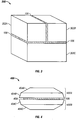
- Figure 4 illustrates an embodiment of a fourth layered pharmaceutical formulation 400.
- the fourth pharmaceutical formulation 400 includes, but is not limited to fourth pharmaceutical layers 402A and 402B and an intermediate layer 106.
- the fourth pharmaceutical layer 402A comprises a first drug 404A and a second drug 404B.
- the first drug 404A and the second drug 404B are positioned within the fourth pharmaceutical layer 402A so as to be in physical contact with the other; no intermediate layer 106 separates the first drug 404A from the second drug 404B within the layer 402A.
- the fourth pharmaceutical layer 402B comprises a third drug 404C and a fourth drug 404D; no intermediate layer 106 separates the third drug 404C and the fourth drug 404D.
- the intermediate layer 106 is disposed between fourth pharmaceutical layers 402C and 402B.
- the edges of intermediate layer 106 are not aligned with the fourth pharmaceutical layers 402C and 402B.
- a space 408 allows for fluids to interact with and dissolve the intermediate layer 106.
- the intermediate layer 106 is not flush with the outside edge of the fourth pharmaceutical formulation 400, the intermediate layer 106 is exposed for purposes of dissolution upon contact with bodily fluids.
- Figure 5 illustrates an embodiment of a fifth layered pharmaceutical formulation 500 depicted after separation has occurred.
- the fifth pharmaceutical formulation 500 includes, but is not limited to fifth pharmaceutical layers 502A and 502B.
- the fifth pharmaceutical layers 502A and 502B each include, but are not limited to one or more pharmaceutical compositions.
- the fifth pharmaceutical formulation 500 further comprises a first intermediate layer 506A and a second intermediate layer 506B.
- the first intermediate layer 506A is configured to physically and chemically separate the fifth pharmaceutical layers 502A and 502B.
- the second intermediate layer 506B is configured to physically and chemically separate the fifth pharmaceutical layers 502A and 502B.
- the first intermediate layer 506A and the second intermediate layer 506B each comprise one or more formulations configured to dissolve in vivo.
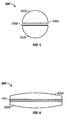
- Figure 6 illustrates an embodiment of a sixth layered pharmaceutical formulation 600.
- the sixth pharmaceutical formulation 600 includes, but is not limited to sixth pharmaceutical layers 602A and 602B and an intermediate layer 106.
- the sixth pharmaceutical formulation 600 is configured in a lenticular shape, wherein each pharmaceutical layer 602A and 602B comprises a single convex shape.
- Pharmaceutical layers may be configured in various shapes.
- pharmaceutical layers may be configured in elliptical shapes, spherical shapes, oblong shapes, square shapes or flat shapes.
- pharmaceutical formulations are combined with fillers or excipients and placed in tablets, granules or capsules for later administration.
- the tablets are configured in spherical, elliptical, lenticular or capsule shapes.
- Figure 7 illustrates another embodiment of a seventh layered pharmaceutical formulation 700.
- the seventh pharmaceutical formulation 700 includes, but is not limited to seventh pharmaceutical layers 702A, 702B, 702C, 702D, 702E and 702F.
- Each seventh pharmaceutical layer 702A, 702B, 702C, 702D, 702E and 702F comprises one or more pharmaceutical compositions.
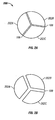
- Each seventh pharmaceutical layer 702A, 702B, 702C, 702D, 702E and 702F is in a wedge shape.
- the seventh pharmaceutical formulation 700 additionally comprises an intermediate layer 106 disposed between seventh pharmaceutical layers 702B, 702C and 702D and also between seventh pharmaceutical layers 702A, 702F and 702E.
- the intermediate layer 106 is configured to dissolve in vivo upon contact with a certain type of bodily fluid.
- the seventh pharmaceutical formulation 700 additionally comprises a special intermediate layer 706 disposed between seventh pharmaceutical layers 702A and 702B and between seventh pharmaceutical layers 702D and 702E.
- the special intermediate layer 706 is configured to dissolve under bodily conditions different than those conditions that dissolve intermediate layer 106.
- the seventh pharmaceutical layers 702A and 702B and the seventh pharmaceutical layers 702D and 702E are left substantially intact.
- intermediate layer 106 were configured to dissolve under the acidic conditions of the stomach in a human patient
- special intermediate layer 706 may be configured to dissolve only after the pharmaceutical formulation 700 reaches the duodenum.
- at least one of the pharmaceutical layers comprises an enteric coating.
- pharmaceutical formulations may be configured in various shapes and sizes for ease of administration to a patient.
- Manufacture of pharmaceutical formulations configured in tablets comprises steps known in the art.
- tablets may be prepared through wet-granulation, dry-granulation or direct compression.
- Layered pharmaceutical formulations may be configured in tablet form in a similar manner.
- To manufacture each pharmaceutical layer one or more drugs are obtained in, for example, a crystalline, amorphous or powdered form, and mixed with or without diluents and/or excipients into a solid with pressure.
- the solid pharmaceutical layer is added with other pharmaceutical layers and/or intermediate layers and configured in a desired tablet geometry with pressure.
- pharmaceutical formulations include, but are not limited to, one or more of polyvinylpyrrolidine (polyvinylpyrrolidone), hydroxypropyl cellulose (HPC), hydroxypropylmethyl cellulose (HPMC), methyl cellulose (MC), vinyl acetate/crotonic acid copolymers, methacrylic acid copolymers (Eudragit), maleic anhydride/methyl vinyl ether copolymers.
- polyvinylpyrrolidine polyvinylpyrrolidone
- HPMC hydroxypropylmethyl cellulose
- MC methyl cellulose
- vinyl acetate/crotonic acid copolymers vinyl acetate/crotonic acid copolymers
- methacrylic acid copolymers Eudragit
- maleic anhydride/methyl vinyl ether copolymers include, but are not limited to, one or more of polyvinylpyrrolidine (polyvinylpyrrolidone), hydroxypropyl cellulose (HPC), hydroxypropylmethyl cellulose
- pharmaceutical formulations include, but are not limited to controlled-release formulations.
- controlled-release formulations include, but are not limited to sustained-release formulations.
- the layered pharmaceutical formulation may be used to treat obesity.
- Obesity is a disorder characterized by the accumulation of excess fat in the body. Obesity has been recognized as one of the leading causes of disease and is emerging as a global problem. Increased instances of complications from obesity, such as hypertension, non-insulin-dependent diabetes mellitus, arteriosclerosis, dyslipidemia, certain forms of cancer, sleep apnea and osteoarthritis, have been related to increased instances of obesity in the general population.
- Various methods of affecting weight loss, suppressing appetite and/or treating an obesity-related condition in a patient involve administering certain drugs or combinations thereof.
- a number of references disclose the administration of certain weight loss formulations that include an anticonvulsant, an opioid antagonist and/or a norepinephrine reuptake inhibitor (NRI) to a patient in need thereof to affect weight loss.
- NRI norepinephrine reuptake inhibitor
- Weight gain has been a major concern with certain of the newer antidepressants, particularly, with paroxetine (PAXIL® PAXIL CR®) and mirtazapine ( Fava, J. Clin. Psych. 61 (suppl. 11):37-41 (2000 ); Carpenter et al, J. Clin. Psych. 60:45-49 (1999 ); Aronne et al, J. Clin. Psych. 64 (suppl. 8):22-29 (2003 ), both of which are incorporated by reference herein in their entirety).
- PAXIL® PAXIL CR® paroxetine
- mirtazapine Fava, J. Clin. Psych. 61 (suppl. 11):37-41 (2000 ); Carpenter et al, J. Clin. Psych. 60:45-49 (1999 ); Aronne et al, J. Clin. Psych. 64 (suppl. 8):22-29 (2003 ), both of which are incorporated by reference herein in their entirety).
- controlled-release formulations help to suppress some if not all of the negative side effects that may arise from administration of such medication. Even in controlled-release formulations, however, the administration of certain anticonvulsants or opioid receptor antagonists at a full dosage may initially incur severe adverse side effects. Thus, at least initially, patients may be unable to tolerate a full dosage of the prescribed drug, which may include, but is not limited to an anticonvulsant or an opioid receptor antagonist. This intolerance may lead to more severe side effects and/or premature abandonment of the medication and/or the treatment program.
- Administering combinations of drugs may enhance the ability of the anticonvulsant to affect weight loss, but does not necessarily eliminate the initial adverse side effects that may accompany the administration of the anticonvulsant or the opioid receptor antagonist.
- a system comprises a layered pharmaceutical for minimizing side effects during treatment of obesity.
- a method comprises administering a layered pharmaceutical formulation comprising an anticonvulsant or the opioid receptor antagonist to affect weight loss while minimizing or eliminating the initial adverse side effects on the patient.
- the layered pharmaceutical formulation is useful for the treatment of obesity and/or for affecting weight loss.
- Some preferred embodiments comprise at least one of an antidepressant and an anticonvulsant.
- Other preferred embodiments comprise at least one of an antidepressant and an opioid receptor antagonist.
- Other preferred embodiments comprise at least one of an anticonvulsant and an opioid receptor antagonist.
- Other preferred embodiments comprise at least one of an anticonvulsant and an antidiabetic.
- an antidepressant comprises a dopamine reuptake inhibitor or receptor antagonist.
- dopamine reuptake inhibitors include, but are not limited to phentermine and pharmaceutically acceptable salts or prodrugs thereof
- dopamine receptor antagonists include, but are not limited to haloperidol, ocaperidone, risperidone, olanzapine, quetiapine, amisulpride, and pimozide and pharmaceutically acceptable salts or prodrugs thereof
- the antidepressant comprises a norepinephrine reuptake inhibitor.
- norepinephrine reuptake inhibitors include, but are not limited to bupropion, thionisoxetine, atomoxetine and reboxetine and pharmaceutically acceptable salts or prodrugs thereof
- Other embodiments include, but are not limited to those in which the antidepressant is a dopamine agonist.
- Dopamine agonists available on the market include cabergoline, amantadine, lisuride, pergolide, ropinirole, pramipexole, and bromocriptine.
- the antidepressant comprises a serotonin reuptake inhibitor.
- serotonin reuptake inhibitors include, but are not limited to fluoxetine and pharmaceutically acceptable salts or prodrugs thereof
- the term "pharmaceutically acceptable salt” refers to a formulation of a compound that does not cause significant irritation to an organism to which it is administered and does not abrogate the biological activity and properties of the compound.
- Pharmaceutical salts can be obtained by reacting a compound of the disclosure with inorganic acids such as hydrochloric acid, hydrobromic acid, sulfuric acid, nitric acid, phosphoric acid, methanesulfonic acid, ethanesulfonic acid, p-toluenesulfonic acid, salicylic acid and the like.
- Pharmaceutical salts can also be obtained by reacting a compound of the disclosure with a base to form a salt such as ammonium salt, an alkali metal salt such as a sodium or a potassium salt, an alkaline earth metal salt such as a calcium or a magnesium salt, a salt of organic bases such as dicyclohexylamine, N-methyl-D-glucamine, tris(hydroxymethyl) methylamine and salts thereof with amino acids such as arginine, lysine and the like.
- a salt such as ammonium salt, an alkali metal salt such as a sodium or a potassium salt, an alkaline earth metal salt such as a calcium or a magnesium salt, a salt of organic bases such as dicyclohexylamine, N-methyl-D-glucamine, tris(hydroxymethyl) methylamine and salts thereof with amino acids such as arginine, lysine and the like.
- prodrug refers to an agent that is converted into the parent drug in vivo. Prodrugs are often useful because, in some situations, they are easier to administer than the parent drug. They can, for instance, be bioavailable by oral administration whereas the parent is not. The prodrug can also have improved solubility in pharmaceutical compositions over the parent drug or can demonstrate increased palpability or be easier to formulate.
- prodrug a compound of the present disclosure which is administered as an ester (the "prodrug") to facilitate transmittal across a cell membrane where water solubility is detrimental to mobility but which then is metabolically hydrolyzed to the carboxylic acid, the active entity, once inside the cell where water-solubility is beneficial.
- prodrug a short peptide (polyaminoacid) bonded to an acid group where the peptide is metabolized to provide the active moiety.
- Bupropion whose chemical name is ( ⁇ )-1-(3-chlorophenyl)-2-[(1,1-dimethylethyl)amino]-1-propanone, is the active ingredient in the drugs marketed as ZYBAN ® and WELLBUTRIN ® , and is usually administered as a hydrochloride salt.
- the term "bupropion” is used, it is understood that the term encompasses bupropion as a free base, or as a physiologically acceptable salt thereof, or as a bupropion metabolite or salt thereof
- the metabolites of bupropion suitable for inclusion in the methods and compositions described herein include the erythro- and threo-amino alcohols of bupropion, the erythro-amino diol of bupropion, and morpholinol metabolites of bupropion.
- the metabolite of bupropion is ( ⁇ )-(2R*,3R*)-2-(3-chlorophenyl)-3,5,5-trimethyl-2-morpholinol.
- the metabolite is (-)-(2R*,3R*)-2-(3-chlorophenyl)-3,5,5-trimethyl-2-morpholinol, while in other embodiments, the metabolite is (+)-(2S,3S)-2-(3-chlorophenyl)-3,5,5-trimethyl-2-morpholinol.
- the metabolite of bupropion is (+)-(2S,3S)-2-(3-chlorophenyl)-3,5,5-trimethyl-2-morpholinol, which is known by its common name of radafaxine.
- Olanzapine whose chemical name is 2-methyl-4-(4-methyl-1-piperazinyl)-10H-thieno[2,3-b][1,5]benzodiazepine, is used as a psychotherapeutic agent primarily for the treatment of schizophrenia, acute manic episodes in bipolar disorder acute, maintenance treatment in bipolar disorder and agitation associated with both these disorders.
- olanzapine a free base, or as a physiologically acceptable salt thereof, or as a olanzapine metabolite or salt thereof.
- Olanzapine displays linear kinetics. Its elimination half-life ranges from 21 to 54 hours. Steady state plasma concentrations are achieved in about a week. Olanzapine undergoes extensive first pass metabolism and bioavailability is not affected by food.
- the psychotherapeutic agent may be selected from the group consisting of mirtazapine, setiptiline, paroxetine, venlafaxine, olanzapine, bupropion, risperidone, lamotrogine, risperidone, a lithium salt, valproic acid, and pharmaceutically acceptable salts or prodrugs thereof.
- the psychotherapeutic agent is an antidepressant, an antimigrane, an antibipolar, an antimania drug, a mood stabilizer, or an antiepileptic. Examples of antidepressants include paroxetine, mirtazapine, and bupropion.
- antibipolar drugs examples include lithium, valproate, carbamezepine, oxycarbamezepine, lamotrogine, tiagabine, olanzapine, clozapine, risperidone, quetiapine, aripiprazole, ziprasidone, and benzodiazepines. Also included are pharmaceutically acceptable salts or prodrugs of these drugs, extended release or controlled release formulations of the above drugs, as well as combinations of the above drugs.
- Fluoxetine is a selective serotonin reuptake inhibitor (SSRI), whose chemical name is N-methyl-3-phenyl-3-[4-(trifluoromethyl)phenoxy]-propan-1-amine, is used primarily for the treatment of depression (including pediatric depression), obsessive-compulsive disorder (in both adult and pediatric populations), bulimia nervosa, panic disorder, premenstrual dysphoric disorder, hypochondriasis and body dysmorphic disorder.
- SSRI selective serotonin reuptake inhibitor
- Fluoxetine has a bioavailability of approximately 72%, and peak plasma concentrations are reached in 6 to 8 hours. It is highly bound to plasma proteins, mostly albumin. Its elimination half-life ranges from 1 to 3 days-after a single dose-to 4 to 6 days (after long-term use) in healthy adults, and is prolonged in those with liver disease. The half-life of norfluoxetine is longer (16 days after long-term use). Complete excretion of the drug may take several weeks.
- the SSRI can be selected from fluoxetine, fluvoxamine, sertraline, paroxetine, citalopram, escitalopram, sibutramine, duloxetine, and venlafaxine, and pharmaceutically acceptable salts or prodrugs thereof
- the SSRI is fluoxetine or a pharmaceutically acceptable salt or prodrug thereof.
- Fluoxetine has a physiological half life of about 24 hours, whereas that of naltrexone is about 1.5 hours. However their metabolites may demonstrate half-lives in excess of 24 hours. Thus, in some cases, it may be beneficial to administer one dose of fluoxetine per day in conjunction with two or three or more doses of naltrexone throughout the day. Naltrexone may also be in a time-release formulation where the dose is administered once a day, but naltrexone gradually enters the blood stream throughout the day, or in the course of a 12 hour period.
- Symptoms of the obsessive compulsive disorders are inhibited in individuals being administered fluoxetine and naltrexone.
- Adverse events associated with the obsessive compulsive disorders are reduced in individuals being administered fluoxetine and naltrexone.
- the effects of administration of both fluoxetine and naltrexone on obsessive compulsive disorder are synergistic compared to effects of those expected by administration of fluoxetine and naltrexone alone.
- Newer generation antidepressants include selective serotonin reuptake inhibitors (e.g., fluoxetine, fluvoxamine, sertraline, paroxetine, citalopram, and escitalopram), venlafaxine, duloxetine, nefazodone, mianserin setiptiline, viqualine trazodone, cianopramine, and mirtazapine.
- selective serotonin reuptake inhibitors e.g., fluoxetine, fluvoxamine, sertraline, paroxetine, citalopram, and escitalopram
- venlafaxine duloxetine
- nefazodone nefazodone
- mianserin setiptiline mianserin setiptiline
- viqualine trazodone cianopramine
- mirtazapine mirtazapine.
- Phentermine is an example of a dopamine reuptake inhibitor with a chemical name 2-methyl-1-phenylpropan-2-amine and 2-methyl-amphetamine. Throughout the present disclosure, whenever the term "phentermine” is used, it is understood that the term encompasses phentermine as a free base, or as a physiologically acceptable salt thereof, or as a phentermine metabolite or salt thereof.
- an antidiabetic includes, but is not limited to a biguanide, glucosidase inhibitor, insulin, meglitinide, sulfonylurea or a thiazolidinedione.
- a biguanide comprises metformin hydrochloride.
- a glucosidase inhibitor includes, but is not limited to acarbose and miglitol.
- insulin include, but are not limited to human insulin, pork insulin, beef insulin, beef-pork insulin, insulin from different sources such as recombinant DNA and animal sources, as well as regular, NPH, and LENTEN® types of insulin.
- insulin examples include, but are not limited to mixtures of the various forms of insulin (e.g. NPH and regular human and pork insulin).
- Other examples of insulin include mixtures of Insulin Lispro Protamine and Insulin Injection (rDNA origin), a 50/50 (or a 70/30) mixture of Human Insulin Isophane Suspension and Human Insulin Injection, a 70/30 mixture of NPH Human Insulin Isophane Suspension and Human Insulin Injection (rDNA), insulin glargine, insulin lispro, insulin aspart, as well as insulin mixed with other ingredients such as zinc crystals or in a phosphate buffer.
- Insulin may be from Saccharomyces cerevisiae or other sources.
- meglitinides include, but are not limited to nateglinide and repaglinide.
- sulfonylureas include, but are not limited to glimepiride, glyburide, glibenclamide, gliquidone, gliclazide, chlorpropamide, tolbutamide, tolazamide and glipizide.
- thiazolidinediones include, but are not limited to rosiglitazone and pioglitazone.
- the antidiabetic is metformin.
- Metformin whose chemical name is 1-(diaminomethylidene)-3,3-dimethyl-guanidine, is often used in the treatment of diabetes mellitus type 2, especially when accompanied obesity and insulin resistance. Metformin has also been proven to reduce the cardiovascular complications of diabetes.
- the anticonvulsant is selected from the group including, but not limited to zonisamide, topiramate, nembutal, lorazepam, clonazepam, clorazepate, tiagabine, gabapentin, fosphenytoin, phenytoin, carbamazepine, balproate, felbamate, lebetiracetam, oxcarbazepine, lamotrigine, methsuximide and ethosuxmide.
- Zonisamide is a marketed anticonvulsant indicated as adjunctive therapy for adults with partial onset seizures. Without being bound by any particular theory, it is believed that the mechanism of antiepileptic activity appears to be: (1) sodium-channel blocking; and (2) reduction of inward T-type calcium occurrence.
- zonisamide binds to the GABA/benzodiazepine receptor complex without producing change in chloride flux. Further, zonisamide facilitates serotonergic and dopaminergic neurotransmission and possesses a weak inhibitory effect on carbonic anhydrase.
- Zonisamide has been shown to cause significant weight loss (comparable to marketed weight loss medications) in patients presenting primary obesity. It has been postulated that the affect of zonisamide on the CNS concentration of serotonin, dopamine and carbonic anhydrase is responsible for this effect. There is evidence that zonisamide increases serotonin and dopamine synthesis rates herein. There is further evidence suggesting that zonisamide stimulates dopamine D 2 receptors.
- Zonisamide can be formulated in a controlled- or sustained-release tablet or gel form. This allows a patient newly prescribed zonisamide to ramp up the dosage level over a period of several days. This increase in dosage form allows the patient to avoid some of the negative side effects that have been exhibited during the initial administration of zonisamide to a patient. Some of these initial side effects include a shock to the body. Although patients who start with a full dose of zonisamide will become acclimated to the dosage over a period of time, the negative side effects accompanying the initial shock to the body can be avoided with a method wherein dosages are increased over a period of several days.
- a method of administering sustained-release zonisamide in a layered tablet can reduce shock to the body while maximizing bioavailability, and thus have a maximum effect for prevention of weight gain and/or treatment of obesity.
- the anticonvulsant is a ⁇ -amino butyric acid (GABA) inhibitor, a GABA receptor antagonist or a GABA channel modulator.
- GABA inhibitor it is meant a compound that reduces the production of GABA in the cells, reduces the release of GABA from the cells, or reduces the activity of GABA on its receptors, either by preventing the binding of GABA to GABA receptors or by minimizing the effect of such binding.
- the GABA inhibitor may be a 5-HT1b agonist or another agent that inhibits the activity of NPY/AgRP/GABA neurons.
- the GABA inhibitor may suppress the expression of the AgRP gene, or the GABA inhibitor may suppress the production or release of AgRP. It is, however, understood that a 5-HT1b agonist may inhibit the NPY/AgRP/GABA neuron (and therefore activate pro-opiomelanocortin (POMC) neurons) without acting as an inhibitor of the GABA pathway.
- POMC pro-opiomelanocortin
- the GABA inhibitor increases the expression of the POMC gene. In some of these embodiments, the GABA inhibitor increases the production or release of POMC protein. In certain other of these embodiments, the GABA inhibitor increases the activity on POMC expressing neurons.
- the GABA inhibitor is topiramate.
- Topiramate whose chemical name is 2,3:4,5-Bis-O-(1-methylethylidene)-beta-D-fructopyranose sulfamate, is often used to treat epilepsy, Lennox-Gastaut syndrome (a disorder causing seizures and developmental delays), neuropathic pain, bipolar disorder, obesity including reduction of binge eating, alcoholism, Post Traumatic Stress Disorder, infantile spasm, bulimia nervosa, or obsessive-compulsive disorder or to assist smoking cessation or prevent migraines.
- initial doses of topiramate are low and increased in slow steps. The usual initial dose is 25 to 50 mg daily in 2 single doses. Recommended increments vary, but are usually between 25 mg and 50 mg every 1 or 2 weeks. Common doses for maintenance treatment include, but are not limited to doses of approximately 100 to 200 mg daily.
- the opioid antagonist antagonizes a ⁇ -opioid receptor (MOP-R) in a mammal.
- the mammal may be selected from the group including, but not limited to mice, rats, rabbits, guinea pigs, dogs, cats, sheep, goats, cows, primates, such as monkeys, chimpanzees, and apes, and humans.
- the opioid antagonist is selected from the group including, but not limited to alvimopan, norbinaltorphimine, nalmefene, naloxone, naltrexone, methylnaltrexone, and nalorphine, and pharmaceutically acceptable salts or prodrugs thereof
- the opioid antagonist is a partial opioid agonist.
- Compounds of this class have some agonist activity at opioid receptors. However, because they are weak agonists, they function as de-facto antagonists.
- partial opioid agonists include, but are not limited to pentacozine, buprenorphine, nalorphine, propiram, and lofexidine.
- Naltrexone (17-(cyclopropylmethly)-4, 5 ⁇ -epoxy- 3, 14-dihydroxymorphinan-6-one), shown below, is an opioid receptor antagonist used primarily in the management of alcohol dependence and opioid dependence.
- ⁇ -subtype selective opioid antagonists such as naltrexone are also of considerable current interest as agents for the treatment of obesity ( Glass, M. J.; Billington, C. J.; Levine, A. S. Neuropeptides 1999, 33, 350 ) and CNS disorders ( Reneric, J. P.; Bouvard, M. P. CNS Drugs 1998, 10, 365 ).
- REVIATM is an immediate release formulation of naltrexone, with 100 mg strength.
- the maximum serum concentration of immediate release naltrexone is reached very rapidly, typically a T max of approximately 1 hour.
- Immediate release naltrexone can induce side effects such as nausea, which is attributable to the maximum blood plasma concentration levels (C max ).
- naltrexone that is able to effect naltrexone release at a rate sufficiently slow to ameliorate side effects, yet sufficiently fast to achieve good bioavailability would provide a significant improvement in dosing compliance and convenience.
- an improved dosage form which lowered the incidence of gastrointestinal side-effects would also be of significant value.
- oral dosage forms of naltrexone are effective to provide an AUC between about 75% to about 125% of 50 mg immediate release naltrexone tablets. In some embodiments oral dosage forms of naltrexone provide an amount of a retardant excipient that is effective to provide a C max that is less than or equal to about 80% of the C max of 50 mg immediate release naltrexone tablets.
- oral dosage forms of naltrexone are effective to provide an AUC between about 75% to about 125% of 50 mg immediate release naltrexone tablets.
- oral dosage forms of naltrexone comprise an amount of a retardant excipient that is effective to provide a C max that is less than or equal to about 80% of the C max , of 50 mg immediate release naltrexone tablets.
- oral dosage forms described herein can formulate oral dosage forms described herein.
- an oral dosage form that includes, but is not limited to an amount of naltrexone effective to provide an AUC between about 75% to about 125% of 50 mg immediate release naltrexone tablets, and an amount of an appropriate retardant excipient effective to provide a C max that is less than or equal to about 80% of the C max of 50 mg immediate release naltrexone tablets.
- the skilled artisan could formulate an oral dosage form having a pharmacodynamic profile characterized by coverage of greater than or equal to 80% of the opioid receptors in the hypothalamus.
- Table 1 Formulations for Sustained-Release (SR) Tablets Containing Bupropion Ingredient 70 mg Bupropion SR Amount per Tablet 90 mg Bupropion SR Amount per Tablet Bupropion HCL, USP 70.0 mg 90.0 mg Microcrystalline Cellulose, NF (Avicel PH 101) 173.3 mg 153 .3 mg Hydroxypropyl Cellulose, NF (Klucel HXF) 56.7 mg 56.7 mg Cysteine HCL, NF 12.5 mg 12.5 mg Magnesium Stearate, NF 2.5 mg 2.5 mg Tablet Weight 315.0 mg 315.0 mg Table 2: Formulations for Sustained-Release (SR) Tablets Containing Zonisamide Ingredient 30 mg Zonisamide SR Amount per Tablet 60 mg Zonisamide SR Amount per Tablet 90 mg Zonisamide SR Amount per Tablet Zonisamide 30 mg 60 mg 90 mg Klucel 110 mg 3 mg 35 mg Lac
- embodiments of pharmaceutical formulations may comprise controlled-release (e.g., sustained release in the illustrated embodiments) formulations of bupropion, zonisamide and/or naltrexone.
- a layered pharmaceutical formulation is a tablet comprising a first layer comprising a controlled-release zonisamide and a second layer comprising a bupropion.
- a layered pharmaceutical formulation is a tablet comprising a first layer comprising a controlled-release naltrexone and a second layer comprising a controlled-release bupropion.
- the first layer and the second layer are separated by an intermediate layer comprising lactose or other suitable fast-dissolving ingredient.
- the oral dosage forms of pharmaceutical formulations can, if desired, be presented in a unit dosage package which may contain one or more unit dosage forms containing the active ingredient.
- the unit dosage package may for example comprise metal or plastic foil, such as a blister pack.
- the unit dosage package may be accompanied by instructions for administration.
- the unit dosage package may also be accompanied with a notice associated with the container in form prescribed by a governmental agency regulating the manufacture, use, or sale of pharmaceuticals, which notice is reflective of approval by the agency of the form of the drug for human or veterinary administration. Such notice, for example, may be the labeling approved by the U.S. Food and Drug Administration for prescription drugs, or the approved product insert.
- Compositions comprising a compound of the disclosure formulated in a compatible pharmaceutical carrier may also be prepared, placed in an appropriate container, and labeled for treatment of an indicated condition.
- the weight loss medications are provided at least once, twice or three times a day for a set period, which can be at least, at least about, less than, less than about, equal to or between any range within 1, 2, 3, 4, 5, 6, 7, 8, 9, 10, 11, 12, 13, 14, 15, 16, 17, 18, 19, 20, 21, 22, 23, 24, 25, 26, 27, 28, 29, or 30 consecutive days or at least, at least about, less than, less than about, equal to or between any range within of 1, 2, 3, 4, 5, 6, 7, 8, 9, 10, 11, 12, 13, 14, 15, 16, 17, 18, 19, 20, 21, 22, 23, 24, 25, 26, 27, 28, 29, or 30 consecutive weeks or at least, at least about, less than, less than about, equal to or between any range within 1, 2, 3, 4, 5, 6, 7, 8, 9, 10, 11, 12, 13, 14, 15, 16, 17, 18, 19, 20, 21, 22, 23, 24, 25, 26, 27, 28, 29, or 30 consecutive months.
- the amount of drug in any pharmaceutical formulation described herein includes, but is not limited to amounts of at least, at least about, less than, less than about, equal to or between any range within 0.01, 0.02, 0.03, 0.04, 0.05, 0.06, 0.07, 0.08, 0.09, 0.1,0.2, 0.3, 0.4, 0.5, 0.6, 0.7, 0.8, 0.9, 1, 2, 3, 4, 5, 6, 7, 8, 9, 10, 15, 20, 25, 30, 35, 40, 45, 50, 55, 60, 65, 70, 75, 80, 85, 90, 95, 100, 125, 150, 175, 200, 250, 300, 350, 400, 450, 500, 550, 600, 650, 700, 750, 800, 850, 900, 950, 1000, 1500, 2000, 3000, 4000 or 5000 mg.
- a layered pharmaceutical formulation for the administration of two or more active pharmaceutical ingredients comprises a first pharmaceutical layer comprising a first active pharmaceutical ingredient, a second pharmaceutical layer comprising a second active pharmaceutical ingredient and at least one intermediate layer disposed between the first and the second pharmaceutical layers, wherein the at least one intermediate layer is configured to dissolve in vivo to thereby leave the first and the second pharmaceutical layers substantially intact.
- each of the first and the second pharmaceutical layers comprises a dissolution profile substantially similar to a singularly compressed tablet of a similar composition. In some embodiments each of the first and the second pharmaceutical layers comprises a different pharmaceutical composition. In some embodiments at least one of the first and the second pharmaceutical layers comprises a controlled-release pharmaceutical composition. In some embodiments the controlled-release pharmaceutical composition comprises a sustained release pharmaceutical composition.
- At least one of the first and the second pharmaceutical layers comprises zonisamide. In some embodiments the zonisamide comprises a controlled-release zonisamide. In some embodiments the controlled-release zonisamide comprises a sustained-release zonisamide. In some embodiments at least one of the first and the second pharmaceutical layers comprises bupropion. In some embodiments the bupropion comprises a controlled-release bupropion. In some embodiments the controlled-release bupropion comprises a sustained-release bupropion. In some embodiments at least one of the first and the second pharmaceutical layers comprises naltrexone. In some embodiments at least one of the first and the second pharmaceutical layers comprises fluoxetine.
- At least one of the first and the second pharmaceutical layers comprises olanzapine. In some embodiments at least one of the first and the second pharmaceutical layers comprises an antidiabetic. In some embodiments the antidiabetic comprises metformin. In some embodiments at least one of the first and the second pharmaceutical layers comprises topiramate. In some embodiments at least one of the first and the second pharmaceutical layers comprises phentermine. In some embodiments the at least one intermediate layer comprises at least one of a monosaccharide sugar, a disaccharide sugar, or a starch. In some embodiments the at least one intermediate layer comprises lactose.
- a method for affecting weight loss, suppressing appetite and/or treating an obesity-related condition in a patient comprises providing a first dosage of the layered pharmaceutical formulation to a patient in need thereof on a first day and providing a second dosage of the layered pharmaceutical formulation to the patient on a second day.
- the first dosage is greater than the second dosage.
- the second dosage is greater than the first dosage.
- a method for treating an obesity related condition in a patient comprises identifying a patient with an obesity related condition or at risk of an obesity related condition comprises providing a first dosage of the layered pharmaceutical formulation of Claims 1 to the patient on a first day and providing a second dosage of the layered pharmaceutical formulation to the patient on a second day.
- the first dosage is different than the second dosage.
- the second dosage is greater than the first dosage.
- a first compound and a second compound in the formulation of a medicament for affecting weight loss, suppressing appetite or treating an obesity-related condition, wherein the medicament comprises a layered pharmaceutical formulation of the present invention.
Landscapes
- Health & Medical Sciences (AREA)
- Life Sciences & Earth Sciences (AREA)
- Chemical & Material Sciences (AREA)
- Pharmacology & Pharmacy (AREA)
- Veterinary Medicine (AREA)
- Medicinal Chemistry (AREA)
- Public Health (AREA)
- Animal Behavior & Ethology (AREA)
- General Health & Medical Sciences (AREA)
- Epidemiology (AREA)
- Engineering & Computer Science (AREA)
- Bioinformatics & Cheminformatics (AREA)
- Chemical Kinetics & Catalysis (AREA)
- General Chemical & Material Sciences (AREA)
- Nuclear Medicine, Radiotherapy & Molecular Imaging (AREA)
- Organic Chemistry (AREA)
- Emergency Medicine (AREA)
- Diabetes (AREA)
- Obesity (AREA)
- Hematology (AREA)
- Molecular Biology (AREA)
- Biomedical Technology (AREA)
- Neurology (AREA)
- Neurosurgery (AREA)
- Pain & Pain Management (AREA)
- Oil, Petroleum & Natural Gas (AREA)
- Biophysics (AREA)
- Biochemistry (AREA)
- Child & Adolescent Psychology (AREA)
- Endocrinology (AREA)
- Nutrition Science (AREA)
- Physiology (AREA)
- Psychiatry (AREA)
- Pharmaceuticals Containing Other Organic And Inorganic Compounds (AREA)
- Medicinal Preparation (AREA)
- Acyclic And Carbocyclic Compounds In Medicinal Compositions (AREA)
- Medicines That Contain Protein Lipid Enzymes And Other Medicines (AREA)
Applications Claiming Priority (2)
| Application Number | Priority Date | Filing Date | Title |
|---|---|---|---|
| US86515706P | 2006-11-09 | 2006-11-09 | |
| PCT/US2007/084177 WO2008060963A2 (en) | 2006-11-09 | 2007-11-08 | Layered pharmaceutical formulations comprising an intermediate rapidly dissolving layer |
Publications (2)
| Publication Number | Publication Date |
|---|---|
| EP2089005A2 EP2089005A2 (en) | 2009-08-19 |
| EP2089005B1 true EP2089005B1 (en) | 2010-03-17 |
Family
ID=39322569
Family Applications (1)
| Application Number | Title | Priority Date | Filing Date |
|---|---|---|---|
| EP07864161A Active EP2089005B1 (en) | 2006-11-09 | 2007-11-08 | Layered pharmaceutical formulations comprising an intermediate rapidly dissolving layer |
Country Status (18)
| Country | Link |
|---|---|
| US (6) | US8088786B2 (enExample) |
| EP (1) | EP2089005B1 (enExample) |
| JP (5) | JP2010509367A (enExample) |
| KR (5) | KR101971218B1 (enExample) |
| CN (1) | CN101588795A (enExample) |
| AR (1) | AR063959A1 (enExample) |
| AT (1) | ATE460925T1 (enExample) |
| AU (1) | AU2007319471B9 (enExample) |
| CA (1) | CA2668884C (enExample) |
| CL (1) | CL2007003245A1 (enExample) |
| DE (1) | DE602007005402D1 (enExample) |
| DK (1) | DK2089005T3 (enExample) |
| ES (1) | ES2344440T3 (enExample) |
| IL (2) | IL198577A (enExample) |
| MX (1) | MX2009004874A (enExample) |
| RU (1) | RU2452471C2 (enExample) |
| TW (3) | TW201811315A (enExample) |
| WO (1) | WO2008060963A2 (enExample) |
Families Citing this family (79)
| Publication number | Priority date | Publication date | Assignee | Title |
|---|---|---|---|---|
| US7674776B2 (en) | 1999-06-14 | 2010-03-09 | Vivus, Inc. | Combination therapy for effecting weight loss and treating obesity |
| US20050215552A1 (en) * | 2002-05-17 | 2005-09-29 | Gadde Kishore M | Method for treating obesity |
| KR101167579B1 (ko) | 2003-04-29 | 2012-07-27 | 오렉시젠 세러퓨틱스 인크. | 체중감량용 조성물 |
| PT2135603E (pt) | 2005-11-22 | 2013-04-03 | Orexigen Therapeutics Inc | Composições e métodos para aumentar a sensibilidade à insulina |
| WO2007089318A2 (en) * | 2005-11-23 | 2007-08-09 | Orexigen Therapeutics, Inc. | Compositions and methods for reducing food cravings |
| US8916195B2 (en) * | 2006-06-05 | 2014-12-23 | Orexigen Therapeutics, Inc. | Sustained release formulation of naltrexone |
| WO2008060964A2 (en) | 2006-11-09 | 2008-05-22 | Orexigen Therapeutics, Inc. | Unit dosage package and methods for administering weight loss medications |
| DE602007005402D1 (de) * | 2006-11-09 | 2010-04-29 | Orexigen Therapeutics Inc | Mehrschichtige pharmazeutische formulierungen mit einer schnell auflösenden zwischenschicht |
| EP2394643B1 (en) | 2006-11-17 | 2015-09-02 | Supernus Pharmaceuticals, Inc. | Sustained-release formulations of topiramate |
| US8071557B2 (en) | 2007-06-13 | 2011-12-06 | Vivus, Inc. | Treatment of pulmonary hypertension with carbonic anhydrase inhibitors |
| CA2725930A1 (en) | 2008-05-30 | 2009-12-30 | Orexigen Therapeutics, Inc. | Methods for treating visceral fat conditions |
| US8580298B2 (en) | 2008-06-09 | 2013-11-12 | Vivus, Inc. | Low dose topiramate/phentermine composition and methods of use thereof |
| US20090304789A1 (en) | 2008-06-09 | 2009-12-10 | Thomas Najarian | Novel topiramate compositions and an escalating dosing strategy for treating obesity and related disorders |
| WO2010045522A2 (en) * | 2008-10-16 | 2010-04-22 | Metabolous Pharmaceuticals, Inc. | Combination therapies for the treatment of obesity |
| US20100113604A1 (en) * | 2008-10-16 | 2010-05-06 | Aronne Louis J | Combination therapies for the treatment of obesity |
| US20100113583A1 (en) * | 2008-10-16 | 2010-05-06 | Aronne Louis J | Combination therapies for the treatment of obesity |
| US20100113581A1 (en) * | 2008-10-16 | 2010-05-06 | Aronne Louis J | Combination therapies for the treatment of obesity |
| WO2010075275A1 (en) * | 2008-12-23 | 2010-07-01 | Usworldmeds Llc | Selective release of non-racemic mixtures of two enantiomers from tablets and capsules |
| WO2010151503A2 (en) * | 2009-06-25 | 2010-12-29 | Metabolous Pharmaceuticals, Inc. | Combination therapies for the treatment of obesity |
| WO2010151565A2 (en) * | 2009-06-26 | 2010-12-29 | Metabolous Pharmaceuticals, Inc. | Combination therapies for the treatment of obesity |
| US20100331999A1 (en) * | 2009-06-29 | 2010-12-30 | Aronne Louis J | Combination Therapies for the Treatment of Obesity |
| WO2011009115A2 (en) * | 2009-07-17 | 2011-01-20 | Metabolous Pharmaceuticals, Inc. | Combination therapies for the treatment of obesity |
| US20110082407A1 (en) * | 2009-10-01 | 2011-04-07 | Aronne Louis J | Combination Therapies for the Treatment of Obesity |
| ES2762113T3 (es) | 2010-01-11 | 2020-05-22 | Nalpropion Pharmaceuticals Inc | Métodos de proporcionar terapia de pérdida de peso en pacientes con depresión mayor |
| US20110280936A1 (en) * | 2010-05-17 | 2011-11-17 | Aptapharma, Inc. | Self Breaking Tablets |
| US20120003312A1 (en) * | 2010-06-30 | 2012-01-05 | Aptapharma, Inc. | Multilayer Minitablets with Different Release Rates |
| PT3222280T (pt) | 2010-12-03 | 2021-04-22 | Nalpropion Pharmaceuticals Llc | Aumento da biodisponibilidade farmacológica numa terapêutica com naltrexona |
| NO2646011T3 (enExample) | 2010-12-03 | 2018-01-13 | ||
| JP6110589B2 (ja) * | 2010-12-13 | 2017-04-05 | 第一三共ヘルスケア株式会社 | ロキソプロフェンナトリウムとクレマスチンフマル酸塩を含有する固形製剤 |
| JP6126780B2 (ja) * | 2010-12-13 | 2017-05-10 | 第一三共ヘルスケア株式会社 | ロキソプロフェンナトリウム及びトラネキサム酸を含有する固形製剤 |
| JP6106359B2 (ja) * | 2010-12-13 | 2017-03-29 | 第一三共ヘルスケア株式会社 | ロキソプロフェンナトリウムとビタミンb1を含有する固形製剤 |
| JP6112765B2 (ja) * | 2010-12-13 | 2017-04-12 | 第一三共ヘルスケア株式会社 | ロキソプロフェンナトリウム及びdl−メチルエフェドリン塩酸塩を含有する固形製剤 |
| WO2012094636A2 (en) | 2011-01-07 | 2012-07-12 | Elcelyx Therapeutics, Inc. | Chemosensory receptor ligand-based therapies |
| US9572784B2 (en) | 2011-01-07 | 2017-02-21 | Elcelyx Therapeutics, Inc. | Compositions comprising statins, biguanides and further agents for reducing cardiometabolic risk |
| US9480663B2 (en) | 2011-01-07 | 2016-11-01 | Elcelyx Therapeutics, Inc. | Biguanide compositions and methods of treating metabolic disorders |
| US9211263B2 (en) | 2012-01-06 | 2015-12-15 | Elcelyx Therapeutics, Inc. | Compositions and methods of treating metabolic disorders |
| US11759441B2 (en) | 2011-01-07 | 2023-09-19 | Anji Pharmaceuticals Inc. | Biguanide compositions and methods of treating metabolic disorders |
| US8796338B2 (en) | 2011-01-07 | 2014-08-05 | Elcelyx Therapeutics, Inc | Biguanide compositions and methods of treating metabolic disorders |
| US11974971B2 (en) | 2011-01-07 | 2024-05-07 | Anji Pharmaceuticals Inc. | Compositions and methods for treating metabolic disorders |
| US10576045B2 (en) | 2011-02-16 | 2020-03-03 | Nir Barak | Low dosage combinations of fluoxetine and reboxetine for treating obesity |
| CN104349773A (zh) | 2012-01-06 | 2015-02-11 | 埃尔舍利克斯治疗公司 | 用于治疗代谢性病症的组合物和方法 |
| BR112014016808B1 (pt) | 2012-01-06 | 2022-01-11 | Anji Pharma (Us) Llc | Uso de um composto de biguanida para a fabricação de um medicamento para baixar os níveis de glicose no sangue e para o tratamento de um distúrbio do metabolismo de glicose |
| US20130237504A1 (en) * | 2012-03-12 | 2013-09-12 | Mehdi El Glaoui | Pharmaceutical Forms and Methods for Designing the Same |
| PL4104824T3 (pl) | 2012-06-06 | 2025-11-12 | Nalpropion Pharmaceuticals Llc | Kompozycja do zastosowania w sposobie leczenia nadwagi i otyłości u pacjentów z wysokim ryzykiem sercowo-naczyniowym |
| JP6160263B2 (ja) * | 2012-06-07 | 2017-07-12 | 大正製薬株式会社 | ロキソプロフェン含有医薬組成物 |
| WO2014131825A1 (en) * | 2013-03-01 | 2014-09-04 | Sanovel Ilac Sanayi Ve Ticaret A.S. | Pharmaceutical formulations comprising quetiapine and escitalopram |
| US12194006B2 (en) | 2013-11-05 | 2025-01-14 | Antecip Bioventures Ii Llc | Bupropion as a modulator of drug activity |
| US11433067B2 (en) | 2013-11-05 | 2022-09-06 | Antecip Bioventures Ii Llc | Bupropion as a modulator of drug activity |
| US12109178B2 (en) | 2013-11-05 | 2024-10-08 | Antecip Bioventures Ii Llc | Bupropion as a modulator of drug activity |
| US11969421B2 (en) | 2013-11-05 | 2024-04-30 | Antecip Bioventures Ii Llc | Bupropion as a modulator of drug activity |
| US11534414B2 (en) | 2013-11-05 | 2022-12-27 | Antecip Bioventures Ii Llc | Bupropion as a modulator of drug activity |
| US8969371B1 (en) | 2013-12-06 | 2015-03-03 | Orexigen Therapeutics, Inc. | Compositions and methods for weight loss in at risk patient populations |
| EP3182970A4 (en) * | 2014-08-22 | 2018-03-21 | Medipath Inc. | Compositions and methods for cannabinoid coatings for use in drug delivery |
| US20180015042A1 (en) * | 2015-02-07 | 2018-01-18 | Intas Pharmaceuticals Ltd. | Pharmaceutical composition for the treatment of obesity |
| WO2016125108A1 (en) * | 2015-02-07 | 2016-08-11 | Intas Pharmaceuticals Ltd. | Bilayer pharmaceutical composition for the treatment of obesity |
| US10702548B2 (en) * | 2015-03-04 | 2020-07-07 | Joelle Michele Forbes | Compositions and methods for treating drug addiction |
| CN107530379A (zh) * | 2015-03-11 | 2018-01-02 | 佩特尼资源有限公司 | 用于治疗肥胖症和2型糖尿病(t2d)的胰腺内分泌祖细胞疗法 |
| AU2016331879A1 (en) * | 2015-09-30 | 2018-05-17 | Wellesley Pharmaceuticals, Llc | Composition for reducing the frequency of urination, method of making and use thereof |
| US12569479B2 (en) | 2016-05-25 | 2026-03-10 | Antecip Bioventures Ii Llc | Bupropion as a modulator of drug activity |
| CN109475505A (zh) * | 2016-07-06 | 2019-03-15 | 度瑞公司 | 具有药物组成物、屏障层及药物层的口服剂型 |
| CN111407734A (zh) * | 2019-01-05 | 2020-07-14 | 厦门赛诺邦格生物科技股份有限公司 | 一种阳痿早泄治疗药物的固体制剂 |
| WO2021053542A1 (en) * | 2019-09-20 | 2021-03-25 | Dr. Reddy’S Laboratories Limited | Pharmaceutical compositions for obesity management |
| US12472156B2 (en) | 2020-06-05 | 2025-11-18 | Antecip Bioventures Ii Llc | Compounds and combinations thereof for treating neurological and psychiatric conditions |
| US20250073188A1 (en) | 2020-06-05 | 2025-03-06 | Antecip Bioventures Ii Llc | Compounds and combinations thereof for treating neurological and psychiatric conditions |
| US12433884B2 (en) | 2020-06-05 | 2025-10-07 | Antecip Bioventures Ii Llc | Compounds and combinations thereof for treating neurological and psychiatric conditions |
| KR102536511B1 (ko) * | 2020-06-25 | 2023-05-26 | (주) 넥스팜코리아 | 날트렉손 서방형 매트릭스 제제와 부프로피온 서방형 매트릭스 제제의 단층정 복합제제와 그 제조 방법 |
| WO2022101444A1 (en) * | 2020-11-12 | 2022-05-19 | Alkermes Pharma Ireland Limited | Immediate release multilayer tablet |
| CN122440635A (zh) | 2020-12-01 | 2026-07-24 | 安泰赛普生物风投二代有限责任公司 | 用于降低抑郁症患者的自杀风险的安非他酮和右美沙芬 |
| US20220331344A1 (en) * | 2021-04-15 | 2022-10-20 | Resurgent Biosciences, Inc | Oral formulations of psychotropic macrofungus botanical extracts with mouthfeel experience enhancers |
| US12036191B1 (en) | 2022-06-30 | 2024-07-16 | Antecip Bioventures Ii Llc | Treatment of poor metabolizers of dextromethorphan with a combination of bupropion and dextromethorphan |
| US12156914B2 (en) | 2022-06-30 | 2024-12-03 | Axsome Therapeutics, Inc. | Pharmaceutical compositions comprising bupropion and cysteine |
| US11717518B1 (en) | 2022-06-30 | 2023-08-08 | Antecip Bioventures Ii Llc | Bupropion dosage forms with reduced food and alcohol dosing effects |
| US12194036B2 (en) | 2022-07-07 | 2025-01-14 | Antecip Bioventures Ii Llc | Combination of dextromethorphan and bupropion for treating depression |
| US11730706B1 (en) | 2022-07-07 | 2023-08-22 | Antecip Bioventures Ii Llc | Treatment of depression in certain patient populations |
| US11844797B1 (en) | 2023-04-20 | 2023-12-19 | Antecip Bioventures Ii Llc | Combination of dextromethorphan and bupropion for treating depression |
| WO2024073334A1 (en) | 2022-09-26 | 2024-04-04 | Rose Research Center, Llc | Combination for use in a method of preventing weight gain |
| KR20250114110A (ko) | 2022-11-28 | 2025-07-28 | 안테씨프 바이오벤쳐스 투 엘엘씨 | 약물 활성의 조절제로서의 부프로피온 |
| US20250268831A1 (en) * | 2024-02-25 | 2025-08-28 | Alexia C. Harvey | Compact compositions comprising zingiberaceae rhizomes for active and additive applications and manufacturing method thereof |
| US12303604B1 (en) | 2024-10-16 | 2025-05-20 | Currax Pharmaceuticals Llc | Pharmaceutical formulations comprising naltrexone and/or bupropion |
Family Cites Families (195)
| Publication number | Priority date | Publication date | Assignee | Title |
|---|---|---|---|---|
| US3885046A (en) | 1969-12-04 | 1975-05-20 | Burroughs Wellcome Co | Meta chloro or fluoro substituted alpha-T-butylaminopropionphenones in the treatment of depression |
| BE759838A (fr) | 1969-12-04 | 1971-06-03 | Wellcome Found | Cetones a activite biologique |
| US3942641A (en) | 1972-05-05 | 1976-03-09 | Syntex Corporation | Dispensing packages containing novel cyclic progestogen-interrupted estrogen oral contraceptive regimens |
| US4089855A (en) | 1976-04-23 | 1978-05-16 | Cornell Research Foundation, Inc. | Process for the stereoselective reduction of 6- and 8-keto morphine and morphinan derivatives with formamidinesulfinic acid and compounds obtained thereby |
| GB1557082A (en) * | 1977-01-25 | 1979-12-05 | Fisons Ltd | Pharmaceutical mixture containing an antiinflammatory |
| US4218433A (en) | 1977-03-03 | 1980-08-19 | Nippon Kayaku Kabushiki Kaisha | Constant-rate eluting tablet and method of producing same |
| US4217353A (en) | 1978-05-19 | 1980-08-12 | E. I. Du Pont De Nemours And Company | Method for inducing anorexia |
| US4172896A (en) | 1978-06-05 | 1979-10-30 | Dainippon Pharmaceutical Co., Ltd. | Methane-sulfonamide derivatives, the preparation thereof and composition comprising the same |
| IL58649A (en) | 1978-11-10 | 1982-04-30 | Beecham Group Ltd | Pharmaceutical dispensing container |
| JPS58134019A (ja) | 1982-02-05 | 1983-08-10 | Ono Pharmaceut Co Ltd | プロスタグランジン含有持続放出型三層状フイルム製剤及びその製造方法 |
| US4513006A (en) | 1983-09-26 | 1985-04-23 | Mcneil Lab., Inc. | Anticonvulsant sulfamate derivatives |
| US5266574A (en) | 1984-04-09 | 1993-11-30 | Ian S. Zagon | Growth regulation and related applications of opioid antagonists |
| US4689332A (en) | 1984-04-09 | 1987-08-25 | Research Corporation | Growth regulation and related applications of opioid antagonists |
| US4673679A (en) | 1986-05-14 | 1987-06-16 | E. I. Du Pont De Nemours And Company | Use of prodrugs of 3-hydroxymorphinans to prevent bitter taste upon buccal, nasal or sublingual administration |
| US4895845A (en) | 1986-09-15 | 1990-01-23 | Seed John C | Method of assisting weight loss |
| NL8800823A (nl) | 1987-04-10 | 1988-11-01 | Sandoz Ag | Werkwijze voor het toepassen van dopamine-receptor agonisten en farmaceutische preparaten die deze agonisten bevatten. |
| ATE93721T1 (de) | 1987-05-04 | 1993-09-15 | Lilly Co Eli | Verwendung von fluoxetin zur behandlung des diabetes. |
| US5000886A (en) | 1987-05-26 | 1991-03-19 | American Cyanamid Company | Silicone-hardened pharmaceutical microcapsules and process of making the same |
| US5364841A (en) | 1988-01-11 | 1994-11-15 | Amylin Pharmaceuticals, Inc. | Treatment of obesity and essential hypertension and related disorders |
| US4831031A (en) | 1988-01-22 | 1989-05-16 | Pfizer Inc. | Aryl piperazinyl-(C2 or C4) alkylene heterocyclic compounds having neuroleptic activity |
| US5719197A (en) | 1988-03-04 | 1998-02-17 | Noven Pharmaceuticals, Inc. | Compositions and methods for topical administration of pharmaceutically active agents |
| US5202128A (en) | 1989-01-06 | 1993-04-13 | F. H. Faulding & Co. Limited | Sustained release pharmaceutical composition |
| US5114976A (en) | 1989-01-06 | 1992-05-19 | Norden Michael J | Method for treating certain psychiatric disorders and certain psychiatric symptoms |
| DK469989D0 (da) | 1989-09-22 | 1989-09-22 | Bukh Meditec | Farmaceutisk praeparat |
| ES2062310T3 (es) | 1989-12-06 | 1994-12-16 | Akzo Nv | Un procedimiento para fabricar un preparado farmaceutico acuoso estabilizado. |
| FR2657350B1 (fr) | 1990-01-19 | 1992-05-15 | Centre Nat Rech Scient | Composes destines a l'encapsulation dans les erythrocytes - nouveaux derives de la naloxone et naltrexone. |
| US5028612A (en) | 1990-03-22 | 1991-07-02 | Hillel Glover | Method for treating emotional numbness |
| US5213807A (en) | 1990-05-03 | 1993-05-25 | Chemburkar Pramod B | Pharmaceutical composition containing ibuprofen and a prostaglandin |
| US5486362A (en) | 1991-05-07 | 1996-01-23 | Dynagen, Inc. | Controlled, sustained release delivery system for treating drug dependency |
| US5403595A (en) | 1991-05-07 | 1995-04-04 | Dynagen, Inc. | Controlled, sustained release delivery system for smoking cessation |
| DE4136215A1 (de) | 1991-11-02 | 1993-05-06 | Ferring Arzneimittel Gmbh, 2300 Kiel, De | Verwendung von opiat-antagonisten zur behandlung von endogener hyperinsulinaemie |
| GB9217295D0 (en) | 1992-08-14 | 1992-09-30 | Wellcome Found | Controlled released tablets |
| US5312925A (en) | 1992-09-01 | 1994-05-17 | Pfizer Inc. | Monohydrate of 5-(2-(4-(1,2-benzisothiazol-3-yl)-1-piperazinyl)-ethyl)-6-chloro-1,3-dihydro-2H-indol-2-one-hydrochloride |
| IT1255522B (it) * | 1992-09-24 | 1995-11-09 | Ubaldo Conte | Compressa per impiego terapeutico atta a cedere una o piu' sostanze attive con differenti velocita' |
| IT1256393B (it) * | 1992-11-17 | 1995-12-04 | Inverni Della Beffa Spa | Forme matriciali multistrato per il rilascio controllato di principi attivi |
| US5512593A (en) | 1993-03-02 | 1996-04-30 | John S. Nagle | Composition and method of treating depression using natoxone or naltrexone in combination with a serotonin reuptake inhibitor |
| GB9315856D0 (en) | 1993-07-30 | 1993-09-15 | Wellcome Found | Stabilized pharmaceutical |
| US5358970A (en) | 1993-08-12 | 1994-10-25 | Burroughs Wellcome Co. | Pharmaceutical composition containing bupropion hydrochloride and a stabilizer |
| US5541231A (en) | 1993-07-30 | 1996-07-30 | Glaxo Wellcome Inc. | Stabilized Pharmaceutical |
| US6183778B1 (en) | 1993-09-21 | 2001-02-06 | Jagotec Ag | Pharmaceutical tablet capable of liberating one or more drugs at different release rates |
| IT1265240B1 (it) | 1993-11-30 | 1996-10-31 | Ekita Investments Nv | Compressa farmaceutica a rilascio controllato, di forma lenticolare |
| DK0782445T3 (da) | 1994-09-19 | 2002-05-06 | Bristol Myers Squibb Pharma Co | Kombination af en opioidantagonist og en selektiv serotoningenoptagelsesinhibitor til behandling af alkoholisme og alkoholafhængighed |
| US5714519A (en) | 1995-06-07 | 1998-02-03 | Ergo Science Incorporated | Method for regulating glucose metabolism |
| PT914097E (pt) | 1996-03-12 | 2002-06-28 | Alza Corp | Composicao e forma de dosagem compreendendo antagonista de opioide |
| JPH11505547A (ja) * | 1996-03-13 | 1999-05-21 | エール ユニバーシティ | ナルトレキソン及び関連化合物を用いる禁煙処置 |
| US5716976A (en) | 1996-03-13 | 1998-02-10 | Bernstein; Richard K. | Method of treatment for carbohydrate addiction |
| IL121076A (en) | 1996-06-19 | 2000-10-31 | Akzo Nobel Nv | Pharmaceutical combinations comprising mirtazapine and one or more selective serotonin reuptake inhibitors |
| US6087386A (en) | 1996-06-24 | 2000-07-11 | Merck & Co., Inc. | Composition of enalapril and losartan |
| EP0915697B1 (en) | 1996-06-28 | 2002-09-18 | Ortho-McNeil Pharmaceutical, Inc. | Anticonvulsant sulfamate derivatives useful in treating obesity |
| FR2758723B1 (fr) | 1997-01-28 | 1999-04-23 | Sanofi Sa | Utilisation des antagonistes des recepteurs aux cannabinoides centraux pour la preparation de medicaments |
| CA2216215A1 (en) | 1997-04-05 | 1998-10-05 | Isa Odidi | Controlled release formulations using intelligent polymers having opposing wettability characteristics of hydrophobicity and hydrophilicity |
| ES2234139T3 (es) | 1997-08-11 | 2005-06-16 | Alza Corporation | Forma de dosificacion de un agente activo de liberacion prolongada adaptada para la retencion gastrica. |
| US6622036B1 (en) | 2000-02-09 | 2003-09-16 | Cns Response | Method for classifying and treating physiologic brain imbalances using quantitative EEG |
| AU750808B2 (en) | 1997-10-03 | 2002-07-25 | Cary Medical Corporation | Compositon for the treatment of nicotine addiction containing a nicotine receptor antagonist and an anti-depressant or anti-anxiety drug |
| US6652882B1 (en) | 1997-10-06 | 2003-11-25 | Intellipharmaceutics Corp | Controlled release formulation containing bupropion |
| US6262049B1 (en) | 1997-10-28 | 2001-07-17 | Schering Corporation | Method of reducing nicotine and tobacco craving in mammals |
| IL127497A (en) | 1997-12-18 | 2002-07-25 | Pfizer Prod Inc | Medicinal products containing piperazinyl-heterocyclic compounds for the treatment of psychiatric disorders |
| ES2244103T3 (es) | 1997-12-26 | 2005-12-01 | Dainippon Pharmaceutical Co., Ltd. | Remedio para enfermedades neurodegenerativas. |
| BR9907203A (pt) | 1998-01-21 | 2000-10-17 | Glaxo Group Ltd | "composto, composições farmacêuticas, uso de um composto, e, processo de tratametno de depressão, distúrbio de hiperatividade por deficiência de atenção (adhd), obesidade, enxaqueca, dor, disfunção sexual, doença de parkinson, doença de alzeheimer, ou vìcio de cocaìna ou de produtos contendo nicotina (especialmente tabaco) em um indivìduo animal ou humano. " |
| AU2483599A (en) | 1998-01-29 | 1999-08-16 | Sepracor, Inc. | Pharmaceutical uses of optically pure (-)-bupropion |
| US6048322A (en) | 1998-04-15 | 2000-04-11 | Kushida; Clete | Morphometric measurement tool |
| US6153223A (en) | 1998-06-05 | 2000-11-28 | Watson Pharmaceuticals, Inc. | Stabilized pharmaceutical compositions |
| US6150366A (en) | 1998-06-15 | 2000-11-21 | Pfizer Inc. | Ziprasidone formulations |
| US8236352B2 (en) | 1998-10-01 | 2012-08-07 | Alkermes Pharma Ireland Limited | Glipizide compositions |
| US6096341A (en) | 1998-10-30 | 2000-08-01 | Pharma Pass Llc | Delayed release tablet of bupropion hydrochloride |
| US6033686A (en) | 1998-10-30 | 2000-03-07 | Pharma Pass Llc | Controlled release tablet of bupropion hydrochloride |
| EP1005863A1 (en) | 1998-12-04 | 2000-06-07 | Synthelabo | Controlled-release dosage forms comprising a short acting hypnotic or a salt thereof |
| US20030144174A1 (en) | 1998-12-09 | 2003-07-31 | Miles B. Brennan | Methods for identifying compounds useful for the regulation of body weight and associated conditions |
| US6238697B1 (en) | 1998-12-21 | 2001-05-29 | Pharmalogix, Inc. | Methods and formulations for making bupropion hydrochloride tablets using direct compression |
| US6797283B1 (en) | 1998-12-23 | 2004-09-28 | Alza Corporation | Gastric retention dosage form having multiple layers |
| US6635281B2 (en) | 1998-12-23 | 2003-10-21 | Alza Corporation | Gastric retaining oral liquid dosage form |
| US6706283B1 (en) | 1999-02-10 | 2004-03-16 | Pfizer Inc | Controlled release by extrusion of solid amorphous dispersions of drugs |
| NZ513643A (en) | 1999-02-24 | 2005-04-29 | Univ Cincinnati | Use of sulfamate derivatives for treating impulse control disorders |
| US6248363B1 (en) | 1999-11-23 | 2001-06-19 | Lipocine, Inc. | Solid carriers for improved delivery of active ingredients in pharmaceutical compositions |
| US20030035840A1 (en) | 2001-02-08 | 2003-02-20 | Boyong Li | Controlled release oral dosage form |
| US8545880B2 (en) | 1999-02-26 | 2013-10-01 | Andrx Pharmaceuticals, Llc | Controlled release oral dosage form |
| US6210716B1 (en) | 1999-02-26 | 2001-04-03 | Andrx Pharmaceuticals, Inc. | Controlled release bupropion formulation |
| US6294192B1 (en) | 1999-02-26 | 2001-09-25 | Lipocine, Inc. | Triglyceride-free compositions and methods for improved delivery of hydrophobic therapeutic agents |
| US6589553B2 (en) | 2001-02-08 | 2003-07-08 | Andrx Pharmaceuticals, Inc. | Controlled release oral dosage form |
| US6342496B1 (en) | 1999-03-01 | 2002-01-29 | Sepracor Inc. | Bupropion metabolites and methods of use |
| US6387956B1 (en) | 1999-03-24 | 2002-05-14 | University Of Cincinnati | Methods of treating obsessive-compulsive spectrum disorders |
| US6459003B1 (en) | 1999-04-01 | 2002-10-01 | Esperion Therapeutics, Inc. | Ether compounds |
| US6383471B1 (en) | 1999-04-06 | 2002-05-07 | Lipocine, Inc. | Compositions and methods for improved delivery of ionizable hydrophobic therapeutic agents |
| CA2368083A1 (en) | 1999-04-06 | 2000-10-12 | Sepracor Inc. | Derivatives of venlafaxine and methods of preparing and using the same |
| US6420369B1 (en) | 1999-05-24 | 2002-07-16 | Ortho-Mcneil Pharmaceutical, Inc. | Anticonvulsant derivatives useful in treating dementia |
| WO2000076493A1 (en) * | 1999-06-14 | 2000-12-21 | Thomas Najarian | Combination therapy for effecting weight loss and treating obesity |
| US7056890B2 (en) | 1999-06-14 | 2006-06-06 | Vivus, Inc. | Combination therapy for effecting weight loss and treating obesity |
| DE19927688A1 (de) * | 1999-06-17 | 2000-12-21 | Gruenenthal Gmbh | Mehrschichttablette zur Verabreichung einer fixen Kombination von Tramadol und Diclofenac |
| US20040115134A1 (en) | 1999-06-22 | 2004-06-17 | Elan Pharma International Ltd. | Novel nifedipine compositions |
| US6500459B1 (en) | 1999-07-21 | 2002-12-31 | Harinderpal Chhabra | Controlled onset and sustained release dosage forms and the preparation thereof |
| US6071918A (en) | 1999-07-21 | 2000-06-06 | Dupont Pharmaceuticals Company | Combination of an opioid antagonist and a selective serotonin reuptake inhibitor for treatment of alcoholism and alcohol dependence |
| US6387403B1 (en) | 1999-09-15 | 2002-05-14 | Alza Corporation | Dosage forms and methods for providing effective reboxetine therapy with once-a-day dosing |
| US6403657B1 (en) | 1999-10-04 | 2002-06-11 | Martin C. Hinz | Comprehensive pharmacologic therapy for treatment of obesity |
| GB2355191A (en) | 1999-10-12 | 2001-04-18 | Laxdale Ltd | Combination formulations for fatigue, head injury and strokes |
| US6410736B1 (en) | 1999-11-29 | 2002-06-25 | Pfizer Inc. | Biaryl ether derivatives useful as monoamine reuptake inhibitors |
| US20020055512A1 (en) | 2000-01-21 | 2002-05-09 | Cortendo Ab. | Compositions for delivery of a cortisol antagonist |
| KR20020081271A (ko) | 2000-01-22 | 2002-10-26 | 알버트 슐만 | 물질 남용의 치료 방법 |
| US20020090615A1 (en) | 2000-01-31 | 2002-07-11 | Rosen Craig A. | Nucleic acids, proteins, and antibodies |
| US6627223B2 (en) | 2000-02-11 | 2003-09-30 | Eurand Pharmaceuticals Ltd. | Timed pulsatile drug delivery systems |
| AU4743601A (en) | 2000-03-15 | 2001-09-24 | Wolfgang Sadee | Neutral antagonists and use thereof in treating drug abuse |
| WO2001068104A1 (en) | 2000-03-16 | 2001-09-20 | The Mclean Hospital Corporation | Compounds for the treatment of psychiatric or substance abuse disorders |
| US6437147B1 (en) | 2000-03-17 | 2002-08-20 | Novo Nordisk | Imidazole compounds |
| WO2001078725A2 (en) | 2000-04-13 | 2001-10-25 | Synthon B.V. | Modified release formulations containing a hypnotic agent |
| JPWO2001078681A1 (ja) | 2000-04-17 | 2004-01-08 | 山之内製薬株式会社 | 薬物動態学的な薬物相互作用を回避する薬物送達システム及びその方法 |
| US6761895B2 (en) | 2000-04-17 | 2004-07-13 | Yamanouchi Pharmaceutical Co., Ltd. | Drug delivery system for averting pharmacokinetic drug interaction and method thereof |
| US6306436B1 (en) | 2000-04-28 | 2001-10-23 | Teva Pharmaceuticals Usa, Inc. | Stabilized, acid-free formulation for sustained release of bupropion hydrochloride |
| US20020044962A1 (en) | 2000-06-06 | 2002-04-18 | Cherukuri S. Rao | Encapsulation products for controlled or extended release |
| US6191117B1 (en) | 2000-07-10 | 2001-02-20 | Walter E. Kozachuk | Methods of producing weight loss and treatment of obesity |
| US6528520B2 (en) | 2000-08-15 | 2003-03-04 | Cpd, Llc | Method of treating the syndrome of coronary heart disease risk factors in humans |
| PT1326630E (pt) | 2000-09-18 | 2008-09-02 | Sanos Bioscience As | Utilização de péptidos glp-2 |
| DE60121988T2 (de) | 2000-10-30 | 2007-02-15 | Ortho-Mcneil Pharmaceutical, Inc. | Kombinationstherapie mit antidiabetischen und antikonvulsiven mitteln |
| US6569449B1 (en) | 2000-11-13 | 2003-05-27 | University Of Kentucky Research Foundation | Transdermal delivery of opioid antagonist prodrugs |
| JP2004527553A (ja) | 2001-04-26 | 2004-09-09 | オーソ−マクニール・フアーマシユーチカル・インコーポレーテツド | 抗痙攣性誘導体と非典型的抗精神病薬を用いた共治療を含んで成る精神病性障害治療 |
| EP1262196A3 (en) | 2001-05-23 | 2002-12-18 | Pfizer Products Inc. | Combination of a monoamine reuptake inhibitor and an opioid antagonist for use in alcoholism and alcohol dependence |
| US6960357B2 (en) | 2001-05-25 | 2005-11-01 | Mistral Pharma Inc. | Chemical delivery device |
| DK1411900T4 (da) | 2001-06-01 | 2014-01-27 | Pozen Inc | Farmaceutiske sammensætninger til den koordinerede frigørelse af NSAIDs |
| US6462237B1 (en) | 2001-06-14 | 2002-10-08 | Usv Limited | Cyclodextrin stabilized pharmaceutical compositions of bupropion hydrochloride |
| US7842307B2 (en) | 2001-08-06 | 2010-11-30 | Purdue Pharma L.P. | Pharmaceutical formulation containing opioid agonist, opioid antagonist and gelling agent |
| US20030087896A1 (en) | 2001-08-09 | 2003-05-08 | Hillel Glover | Treatment of refractory depression with an opiate antagonist and an antidepressant |
| US20030044462A1 (en) | 2001-08-20 | 2003-03-06 | Kali Laboratories, Inc. | Sustained release tablets containing bupropion hydrochloride |
| US6576256B2 (en) | 2001-08-28 | 2003-06-10 | The Brigham And Women's Hospital, Inc. | Treatment of patients at elevated cardiovascular risk with a combination of a cholesterol-lowering agent, an inhibitor of the renin-angiotensin system, and aspirin |
| US20030091630A1 (en) | 2001-10-25 | 2003-05-15 | Jenny Louie-Helm | Formulation of an erodible, gastric retentive oral dosage form using in vitro disintegration test data |
| ITFI20010230A1 (it) * | 2001-11-29 | 2003-05-29 | Menarini Int Operations Lu Sa | Composizioni farmaceutiche per il trattamento del diabete mellito di tipo ii |
| MXPA04006163A (es) | 2001-12-20 | 2004-11-01 | Pharmacia Corp | Formas de dosis de liberacion sostenida del orden-cero y metodo de fabricacion de las mismas. |
| US6682759B2 (en) | 2002-02-01 | 2004-01-27 | Depomed, Inc. | Manufacture of oral dosage forms delivering both immediate-release and sustained-release drugs |
| US20040029941A1 (en) | 2002-05-06 | 2004-02-12 | Jennings Julianne E. | Zonisamide use in obesity and eating disorders |
| US20050215552A1 (en) | 2002-05-17 | 2005-09-29 | Gadde Kishore M | Method for treating obesity |
| AU2003231788B2 (en) | 2002-05-17 | 2008-09-11 | Duke University | Method for treating obesity |
| US6972291B2 (en) | 2002-07-02 | 2005-12-06 | Bernstein Richard K | Method for reducing food intake |
| EP2283864A1 (en) | 2002-07-16 | 2011-02-16 | Elan Pharma International Ltd. | Liquid dosage compositions fo stable nanoparticulate active agents |
| US7086532B2 (en) | 2003-07-16 | 2006-08-08 | Allergan, Inc. | Titration/compliance pack with increasing doses |
| US8268352B2 (en) | 2002-08-05 | 2012-09-18 | Torrent Pharmaceuticals Limited | Modified release composition for highly soluble drugs |
| US7985422B2 (en) | 2002-08-05 | 2011-07-26 | Torrent Pharmaceuticals Limited | Dosage form |
| US8216609B2 (en) | 2002-08-05 | 2012-07-10 | Torrent Pharmaceuticals Limited | Modified release composition of highly soluble drugs |
| US7713551B2 (en) | 2002-09-11 | 2010-05-11 | Elan Pharma International Ltd. | Gel stabilized nanoparticulate active agent compositions |
| CA2500908A1 (en) | 2002-10-04 | 2004-04-22 | Elan Pharma International Limited | Gamma irradiation of solid nanoparticulate active agents |
| US20040092504A1 (en) | 2002-11-12 | 2004-05-13 | Anuthep Benja-Athon | Definitive medications for treating fibromyalgia |
| US6893660B2 (en) | 2002-11-21 | 2005-05-17 | Andrx Pharmaceuticals, Inc. | Stable pharmaceutical compositions without a stabilizer |
| US20040122033A1 (en) | 2002-12-10 | 2004-06-24 | Nargund Ravi P. | Combination therapy for the treatment of obesity |
| US20040115265A1 (en) * | 2002-12-11 | 2004-06-17 | Loutfy Benkerrour | Multilayered tablet containing pravastatin and aspirin and method |
| JP2006514986A (ja) * | 2002-12-13 | 2006-05-18 | シラグ・アクチエンゲゼルシヤフト | トラマドールおよびトピラメートを含んでなる制御放出調製物 |
| ES2380827T3 (es) * | 2002-12-26 | 2012-05-18 | Pozen, Inc. | Formas de dosificación con múltiples capas que contienen naproxeno y triptanes |
| US20040185097A1 (en) | 2003-01-31 | 2004-09-23 | Glenmark Pharmaceuticals Ltd. | Controlled release modifying complex and pharmaceutical compositions thereof |
| US20040158194A1 (en) | 2003-02-06 | 2004-08-12 | Wolff Andy And Beiski Ben Z. | Oral devices and methods for controlled drug release |
| WO2004078113A2 (en) | 2003-03-04 | 2004-09-16 | Pharmacia Corporation | Treatment and prevention of obesity with cox-2 inhibitors alone or in combination with weight-loss agents |
| WO2004087175A1 (en) | 2003-04-04 | 2004-10-14 | Pharmacia Corporation | Oral extended release compressed tablets of multiparticulates |
| KR101167579B1 (ko) | 2003-04-29 | 2012-07-27 | 오렉시젠 세러퓨틱스 인크. | 체중감량용 조성물 |
| CA2525366A1 (en) | 2003-05-16 | 2004-11-25 | Pfizer Products Inc. | Therapeutic combinations of atypical antipsychotics with gaba modulators, anticonvulsants or benzodiazapines |
| US20050013863A1 (en) | 2003-07-18 | 2005-01-20 | Depomed, Inc., A Corporation Of The State Of California | Dual drug dosage forms with improved separation of drugs |
| EP1663179A1 (en) | 2003-07-21 | 2006-06-07 | Noven Pharmaceuticals, Inc. | Composition and method for controlling drug delivery from silicone adhesive blends |
| WO2005009377A2 (en) | 2003-07-23 | 2005-02-03 | University Of Kentucky Research Foundation | Novel oral bioavailable prodrugs |
| CN1819821B (zh) | 2003-08-08 | 2010-10-13 | 拜奥维尔实验室国际股份有限公司 | 盐酸安非他酮的改良释放片剂 |
| ES2318330T3 (es) | 2003-08-08 | 2009-05-01 | Elan Pharma International Limited | Nuevas composiciones de metaxalona. |
| US20050043704A1 (en) | 2003-08-21 | 2005-02-24 | Eisai Co., Ltd | Methods of using zonisamide as an adjunctive therapy for partial seizures |
| CN1835759B (zh) | 2003-08-21 | 2012-05-02 | 达切斯内公司 | 微量营养素补充剂 |
| US20050043773A1 (en) | 2003-08-21 | 2005-02-24 | Ivan Lieberburg | Methods of improving the safety of zonisamide therapy |
| US20050043705A1 (en) | 2003-08-21 | 2005-02-24 | Eisai Co., Ltd. | Methods of using zonisamide as an adjunctive therapy for partial seizures |
| US20050112198A1 (en) | 2003-10-27 | 2005-05-26 | Challapalli Prasad V. | Bupropion formulation for sustained delivery |
| US20050096311A1 (en) | 2003-10-30 | 2005-05-05 | Cns Response | Compositions and methods for treatment of nervous system disorders |
| US20050147664A1 (en) | 2003-11-13 | 2005-07-07 | Elan Pharma International Ltd. | Compositions comprising antibodies and methods of using the same for targeting nanoparticulate active agent delivery |
| US20070149451A1 (en) | 2003-11-17 | 2007-06-28 | Holmes David G | Combination of a dpp IV inhibitor and an antiobesity or appetite regulating agent |
| US20050181049A1 (en) | 2003-11-19 | 2005-08-18 | Dong Liang C. | Composition and method for enhancing bioavailability |
| WO2005065645A2 (en) | 2003-12-31 | 2005-07-21 | Actavis Group Hf | Donepezil formulations |
| US7713959B2 (en) | 2004-01-13 | 2010-05-11 | Duke University | Compositions of an anticonvulsant and mirtazapine to prevent weight gain |
| BRPI0506829A (pt) | 2004-01-13 | 2007-05-29 | Univ Duke | composições de anticonvulsivo e droga antipsicótica e métodos para sua utilização para afetar perda de peso |
| US20060160750A1 (en) | 2004-01-13 | 2006-07-20 | Krishnan K R R | Compositions of an anticonvulsant and an antipsychotic drug and methods of using the same for affecting weight loss |
| EP1727538A2 (en) | 2004-02-13 | 2006-12-06 | Neuromolecular Inc. | Combination of an nmda receptor antagonist and an anti-epileptic drug for the treatment of epilepsy and other cns disorders |
| US20050214371A1 (en) | 2004-03-03 | 2005-09-29 | Simona Di Capua | Stable pharmaceutical composition comprising an acid labile drug |
| US20060100205A1 (en) | 2004-04-21 | 2006-05-11 | Eckard Weber | Compositions for affecting weight loss |
| MXPA06012685A (es) * | 2004-05-03 | 2007-01-16 | Univ Duke | Composiciones para afectar la perdida de peso. |
| US20050250838A1 (en) | 2004-05-04 | 2005-11-10 | Challapalli Prasad V | Formulation for sustained delivery |
| BRPI0514060A (pt) * | 2004-08-03 | 2008-05-27 | Orexigen Therapeutics Inc | combinação de bupropion e um segundo composto para acarretar a perda de peso |
| US20060069086A1 (en) | 2004-09-23 | 2006-03-30 | Alexander Michalow | Methods for regulating neurotransmitter systems by inducing counteradaptations |
| US20060122127A1 (en) | 2004-11-17 | 2006-06-08 | Cypress Bioscience, Inc. | Methods for reducing the side effects associated with mirtzapine treatment |
| JP2006232675A (ja) * | 2005-02-22 | 2006-09-07 | Kowa Co | 複合型口腔内溶解用固形製剤 |
| CA2601011C (en) * | 2005-03-10 | 2013-07-23 | Taisho Pharmaceutical Co., Ltd. | Sugar-coated pill |
| EP1871762A2 (en) | 2005-04-18 | 2008-01-02 | Neurogen Corporation | Subtituted heteroaryl cb1 antagonists |
| US20060246131A1 (en) | 2005-04-28 | 2006-11-02 | Cottlingham Elizabeth M | Use of metformin to counteract weight gain associated with psychotropic medications |
| EP1890700A2 (en) | 2005-05-31 | 2008-02-27 | Orexigen Therapeutics, Inc. | Methods and compositions for managing psychotic disorders |
| JP2009502931A (ja) | 2005-07-27 | 2009-01-29 | オレキシジェン・セラピューティクス・インコーポレーテッド | 体重減少を促すための組成物 |
| PT2135603E (pt) | 2005-11-22 | 2013-04-03 | Orexigen Therapeutics Inc | Composições e métodos para aumentar a sensibilidade à insulina |
| WO2007089318A2 (en) | 2005-11-23 | 2007-08-09 | Orexigen Therapeutics, Inc. | Compositions and methods for reducing food cravings |
| PL1954241T3 (pl) | 2005-11-28 | 2013-03-29 | Orexigen Therapeutics Inc | Formulacja zonisamidu o przedłużonym uwalnianiu |
| JP2009517393A (ja) | 2005-11-28 | 2009-04-30 | オレキシジェン・セラピューティクス・インコーポレーテッド | 不安症の治療方法 |
| WO2007084290A2 (en) | 2006-01-12 | 2007-07-26 | Orexigen Therapeutics, Inc. | Compositions of an anticonvulsant and psychotherapeutic and methods of using the same for reversing weight gain |
| US8916195B2 (en) | 2006-06-05 | 2014-12-23 | Orexigen Therapeutics, Inc. | Sustained release formulation of naltrexone |
| EP3626236A1 (en) * | 2006-06-05 | 2020-03-25 | Nalpropion Pharmaceuticals, Inc. | Sustained release formulation of naltrexone |
| CA2693992C (en) | 2006-07-20 | 2017-01-31 | Somaxon Pharmaceuticals, Inc. | Methods of improving the pharmacokinetics of doxepin |
| US8682445B2 (en) | 2006-07-28 | 2014-03-25 | Cyberonics, Inc. | Patient management system for treating depression using an implantable medical device |
| WO2008060964A2 (en) | 2006-11-09 | 2008-05-22 | Orexigen Therapeutics, Inc. | Unit dosage package and methods for administering weight loss medications |
| DE602007005402D1 (de) * | 2006-11-09 | 2010-04-29 | Orexigen Therapeutics Inc | Mehrschichtige pharmazeutische formulierungen mit einer schnell auflösenden zwischenschicht |
| US8318813B2 (en) | 2007-09-13 | 2012-11-27 | Lcs Group, Llc | Method of treating binge eating disorder |
| US8071918B2 (en) | 2007-10-30 | 2011-12-06 | Prince Castle LLC. | Controller for a food holding oven |
| CA2725930A1 (en) | 2008-05-30 | 2009-12-30 | Orexigen Therapeutics, Inc. | Methods for treating visceral fat conditions |
| ES2762113T3 (es) | 2010-01-11 | 2020-05-22 | Nalpropion Pharmaceuticals Inc | Métodos de proporcionar terapia de pérdida de peso en pacientes con depresión mayor |
-
2007
- 2007-11-08 DE DE602007005402T patent/DE602007005402D1/de active Active
- 2007-11-08 AT AT07864161T patent/ATE460925T1/de active
- 2007-11-08 TW TW106126885A patent/TW201811315A/zh unknown
- 2007-11-08 US US11/937,421 patent/US8088786B2/en active Active
- 2007-11-08 TW TW104113742A patent/TWI609702B/zh active
- 2007-11-08 KR KR1020167035323A patent/KR101971218B1/ko active Active
- 2007-11-08 KR KR1020097011226A patent/KR101479324B1/ko active Active
- 2007-11-08 RU RU2009116835/15A patent/RU2452471C2/ru active
- 2007-11-08 AU AU2007319471A patent/AU2007319471B9/en active Active
- 2007-11-08 DK DK07864161.0T patent/DK2089005T3/da active
- 2007-11-08 ES ES07864161T patent/ES2344440T3/es active Active
- 2007-11-08 CA CA2668884A patent/CA2668884C/en active Active
- 2007-11-08 TW TW096142297A patent/TWI504419B/zh active
- 2007-11-08 MX MX2009004874A patent/MX2009004874A/es active IP Right Grant
- 2007-11-08 JP JP2009536494A patent/JP2010509367A/ja active Pending
- 2007-11-08 KR KR1020147021316A patent/KR101735466B1/ko active Active
- 2007-11-08 KR KR1020157009741A patent/KR101654176B1/ko active Active
- 2007-11-08 AR ARP070104991A patent/AR063959A1/es not_active Application Discontinuation
- 2007-11-08 KR KR1020197010891A patent/KR20190042766A/ko not_active Withdrawn
- 2007-11-08 EP EP07864161A patent/EP2089005B1/en active Active
- 2007-11-08 WO PCT/US2007/084177 patent/WO2008060963A2/en not_active Ceased
- 2007-11-08 CN CNA2007800494404A patent/CN101588795A/zh active Pending
- 2007-11-09 CL CL200703245A patent/CL2007003245A1/es unknown
-
2009
- 2009-05-05 IL IL198577A patent/IL198577A/en active IP Right Grant
-
2011
- 2011-12-19 US US13/330,395 patent/US8318788B2/en active Active
-
2012
- 2012-11-19 US US13/680,922 patent/US20130177602A1/en not_active Abandoned
-
2014
- 2014-02-20 JP JP2014030437A patent/JP5908008B2/ja active Active
- 2014-07-01 IL IL233471A patent/IL233471A0/en unknown
- 2014-11-14 US US14/541,525 patent/US20150164806A1/en not_active Abandoned
-
2015
- 2015-11-18 JP JP2015225519A patent/JP6240140B2/ja active Active
-
2016
- 2016-01-05 US US14/988,556 patent/US20160338965A1/en not_active Abandoned
-
2017
- 2017-01-04 JP JP2017000075A patent/JP6353089B2/ja active Active
-
2018
- 2018-05-28 JP JP2018101297A patent/JP6633130B2/ja active Active
-
2023
- 2023-05-04 US US18/143,254 patent/US20230301922A1/en active Pending
Also Published As
Similar Documents
| Publication | Publication Date | Title |
|---|---|---|
| US20230301922A1 (en) | Layered Pharmaceutical Formulations | |
| US10307376B2 (en) | Methods for administering weight loss medications | |
| HK1135026B (en) | Layered pharmaceutical formulations comprising an intermediate rapidly dissolving layer | |
| AU2017200230A1 (en) | Unit Dosage Package and Methods for Administering Weight Loss Medications |
Legal Events
| Date | Code | Title | Description |
|---|---|---|---|
| PUAI | Public reference made under article 153(3) epc to a published international application that has entered the european phase |
Free format text: ORIGINAL CODE: 0009012 |
|
| 17P | Request for examination filed |
Effective date: 20090515 |
|
| AK | Designated contracting states |
Kind code of ref document: A2 Designated state(s): AT BE BG CH CY CZ DE DK EE ES FI FR GB GR HU IE IS IT LI LT LU LV MC MT NL PL PT RO SE SI SK TR |
|
| GRAP | Despatch of communication of intention to grant a patent |
Free format text: ORIGINAL CODE: EPIDOSNIGR1 |
|
| DAX | Request for extension of the european patent (deleted) | ||
| GRAS | Grant fee paid |
Free format text: ORIGINAL CODE: EPIDOSNIGR3 |
|
| GRAA | (expected) grant |
Free format text: ORIGINAL CODE: 0009210 |
|
| AK | Designated contracting states |
Kind code of ref document: B1 Designated state(s): AT BE BG CH CY CZ DE DK EE ES FI FR GB GR HU IE IS IT LI LT LU LV MC MT NL PL PT RO SE SI SK TR |
|
| REG | Reference to a national code |
Ref country code: GB Ref legal event code: FG4D |
|
| REG | Reference to a national code |
Ref country code: CH Ref legal event code: EP |
|
| REG | Reference to a national code |
Ref country code: IE Ref legal event code: FG4D |
|
| REF | Corresponds to: |
Ref document number: 602007005402 Country of ref document: DE Date of ref document: 20100429 Kind code of ref document: P |
|
| REG | Reference to a national code |
Ref country code: HK Ref legal event code: DE Ref document number: 1135026 Country of ref document: HK |
|
| REG | Reference to a national code |
Ref country code: NL Ref legal event code: T3 |
|
| REG | Reference to a national code |
Ref country code: SE Ref legal event code: TRGR |
|
| REG | Reference to a national code |
Ref country code: DK Ref legal event code: T3 |
|
| PG25 | Lapsed in a contracting state [announced via postgrant information from national office to epo] |
Ref country code: LT Free format text: LAPSE BECAUSE OF FAILURE TO SUBMIT A TRANSLATION OF THE DESCRIPTION OR TO PAY THE FEE WITHIN THE PRESCRIBED TIME-LIMIT Effective date: 20100317 |
|
| LTIE | Lt: invalidation of european patent or patent extension |
Effective date: 20100317 |
|
| REG | Reference to a national code |
Ref country code: ES Ref legal event code: FG2A Ref document number: 2344440 Country of ref document: ES Kind code of ref document: T3 |
|
| PG25 | Lapsed in a contracting state [announced via postgrant information from national office to epo] |
Ref country code: LV Free format text: LAPSE BECAUSE OF FAILURE TO SUBMIT A TRANSLATION OF THE DESCRIPTION OR TO PAY THE FEE WITHIN THE PRESCRIBED TIME-LIMIT Effective date: 20100317 Ref country code: PL Free format text: LAPSE BECAUSE OF FAILURE TO SUBMIT A TRANSLATION OF THE DESCRIPTION OR TO PAY THE FEE WITHIN THE PRESCRIBED TIME-LIMIT Effective date: 20100317 Ref country code: FI Free format text: LAPSE BECAUSE OF FAILURE TO SUBMIT A TRANSLATION OF THE DESCRIPTION OR TO PAY THE FEE WITHIN THE PRESCRIBED TIME-LIMIT Effective date: 20100317 Ref country code: SI Free format text: LAPSE BECAUSE OF FAILURE TO SUBMIT A TRANSLATION OF THE DESCRIPTION OR TO PAY THE FEE WITHIN THE PRESCRIBED TIME-LIMIT Effective date: 20100317 |
|
| PG25 | Lapsed in a contracting state [announced via postgrant information from national office to epo] |
Ref country code: CY Free format text: LAPSE BECAUSE OF FAILURE TO SUBMIT A TRANSLATION OF THE DESCRIPTION OR TO PAY THE FEE WITHIN THE PRESCRIBED TIME-LIMIT Effective date: 20100317 Ref country code: GR Free format text: LAPSE BECAUSE OF FAILURE TO SUBMIT A TRANSLATION OF THE DESCRIPTION OR TO PAY THE FEE WITHIN THE PRESCRIBED TIME-LIMIT Effective date: 20100618 Ref country code: RO Free format text: LAPSE BECAUSE OF FAILURE TO SUBMIT A TRANSLATION OF THE DESCRIPTION OR TO PAY THE FEE WITHIN THE PRESCRIBED TIME-LIMIT Effective date: 20100317 Ref country code: EE Free format text: LAPSE BECAUSE OF FAILURE TO SUBMIT A TRANSLATION OF THE DESCRIPTION OR TO PAY THE FEE WITHIN THE PRESCRIBED TIME-LIMIT Effective date: 20100317 |
|
| REG | Reference to a national code |
Ref country code: HK Ref legal event code: GR Ref document number: 1135026 Country of ref document: HK |
|
| PG25 | Lapsed in a contracting state [announced via postgrant information from national office to epo] |
Ref country code: CZ Free format text: LAPSE BECAUSE OF FAILURE TO SUBMIT A TRANSLATION OF THE DESCRIPTION OR TO PAY THE FEE WITHIN THE PRESCRIBED TIME-LIMIT Effective date: 20100317 Ref country code: BG Free format text: LAPSE BECAUSE OF FAILURE TO SUBMIT A TRANSLATION OF THE DESCRIPTION OR TO PAY THE FEE WITHIN THE PRESCRIBED TIME-LIMIT Effective date: 20100617 Ref country code: SK Free format text: LAPSE BECAUSE OF FAILURE TO SUBMIT A TRANSLATION OF THE DESCRIPTION OR TO PAY THE FEE WITHIN THE PRESCRIBED TIME-LIMIT Effective date: 20100317 Ref country code: IS Free format text: LAPSE BECAUSE OF FAILURE TO SUBMIT A TRANSLATION OF THE DESCRIPTION OR TO PAY THE FEE WITHIN THE PRESCRIBED TIME-LIMIT Effective date: 20100717 |
|
| PLBE | No opposition filed within time limit |
Free format text: ORIGINAL CODE: 0009261 |
|
| STAA | Information on the status of an ep patent application or granted ep patent |
Free format text: STATUS: NO OPPOSITION FILED WITHIN TIME LIMIT |
|
| PG25 | Lapsed in a contracting state [announced via postgrant information from national office to epo] |
Ref country code: PT Free format text: LAPSE BECAUSE OF FAILURE TO SUBMIT A TRANSLATION OF THE DESCRIPTION OR TO PAY THE FEE WITHIN THE PRESCRIBED TIME-LIMIT Effective date: 20100719 |
|
| 26N | No opposition filed |
Effective date: 20101220 |
|
| PG25 | Lapsed in a contracting state [announced via postgrant information from national office to epo] |
Ref country code: MC Free format text: LAPSE BECAUSE OF NON-PAYMENT OF DUE FEES Effective date: 20101130 |
|
| PG25 | Lapsed in a contracting state [announced via postgrant information from national office to epo] |
Ref country code: IT Free format text: LAPSE BECAUSE OF NON-PAYMENT OF DUE FEES Effective date: 20101108 Ref country code: MT Free format text: LAPSE BECAUSE OF FAILURE TO SUBMIT A TRANSLATION OF THE DESCRIPTION OR TO PAY THE FEE WITHIN THE PRESCRIBED TIME-LIMIT Effective date: 20100317 |
|
| PG25 | Lapsed in a contracting state [announced via postgrant information from national office to epo] |
Ref country code: LU Free format text: LAPSE BECAUSE OF NON-PAYMENT OF DUE FEES Effective date: 20101108 Ref country code: HU Free format text: LAPSE BECAUSE OF FAILURE TO SUBMIT A TRANSLATION OF THE DESCRIPTION OR TO PAY THE FEE WITHIN THE PRESCRIBED TIME-LIMIT Effective date: 20100918 |
|
| PG25 | Lapsed in a contracting state [announced via postgrant information from national office to epo] |
Ref country code: TR Free format text: LAPSE BECAUSE OF FAILURE TO SUBMIT A TRANSLATION OF THE DESCRIPTION OR TO PAY THE FEE WITHIN THE PRESCRIBED TIME-LIMIT Effective date: 20100317 |
|
| REG | Reference to a national code |
Ref country code: FR Ref legal event code: PLFP Year of fee payment: 9 |
|
| REG | Reference to a national code |
Ref country code: FR Ref legal event code: PLFP Year of fee payment: 10 |
|
| REG | Reference to a national code |
Ref country code: FR Ref legal event code: PLFP Year of fee payment: 11 |
|
| REG | Reference to a national code |
Ref country code: FR Ref legal event code: PLFP Year of fee payment: 12 |
|
| REG | Reference to a national code |
Ref country code: GB Ref legal event code: 732E Free format text: REGISTERED BETWEEN 20211230 AND 20220105 |
|
| P01 | Opt-out of the competence of the unified patent court (upc) registered |
Effective date: 20230523 |
|
| PGFP | Annual fee paid to national office [announced via postgrant information from national office to epo] |
Ref country code: NL Payment date: 20251015 Year of fee payment: 19 |
|
| REG | Reference to a national code |
Ref country code: CH Ref legal event code: U11 Free format text: ST27 STATUS EVENT CODE: U-0-0-U10-U11 (AS PROVIDED BY THE NATIONAL OFFICE) Effective date: 20251201 |
|
| PGFP | Annual fee paid to national office [announced via postgrant information from national office to epo] |
Ref country code: DE Payment date: 20251007 Year of fee payment: 19 |
|
| PGFP | Annual fee paid to national office [announced via postgrant information from national office to epo] |
Ref country code: GB Payment date: 20251016 Year of fee payment: 19 |
|
| PGFP | Annual fee paid to national office [announced via postgrant information from national office to epo] |
Ref country code: AT Payment date: 20251027 Year of fee payment: 19 |
|
| PGFP | Annual fee paid to national office [announced via postgrant information from national office to epo] |
Ref country code: DK Payment date: 20251112 Year of fee payment: 19 Ref country code: IT Payment date: 20251022 Year of fee payment: 19 |
|
| PGFP | Annual fee paid to national office [announced via postgrant information from national office to epo] |
Ref country code: FR Payment date: 20251008 Year of fee payment: 19 |
|
| PGFP | Annual fee paid to national office [announced via postgrant information from national office to epo] |
Ref country code: BE Payment date: 20251015 Year of fee payment: 19 |
|
| PGFP | Annual fee paid to national office [announced via postgrant information from national office to epo] |
Ref country code: SE Payment date: 20251010 Year of fee payment: 19 Ref country code: CH Payment date: 20251201 Year of fee payment: 19 |
|
| PGFP | Annual fee paid to national office [announced via postgrant information from national office to epo] |
Ref country code: IE Payment date: 20251009 Year of fee payment: 19 |
|
| PGFP | Annual fee paid to national office [announced via postgrant information from national office to epo] |
Ref country code: ES Payment date: 20251210 Year of fee payment: 19 |