EP2039677B1 - Heteroatomhaltige organische Verbindungen und ihre Verwendung in Ziegler-Natta-Katalysatoren mit einzelnem Aktivierungszentrum - Google Patents
Heteroatomhaltige organische Verbindungen und ihre Verwendung in Ziegler-Natta-Katalysatoren mit einzelnem Aktivierungszentrum Download PDFInfo
- Publication number
- EP2039677B1 EP2039677B1 EP07721221.5A EP07721221A EP2039677B1 EP 2039677 B1 EP2039677 B1 EP 2039677B1 EP 07721221 A EP07721221 A EP 07721221A EP 2039677 B1 EP2039677 B1 EP 2039677B1
- Authority
- EP
- European Patent Office
- Prior art keywords
- group
- natta catalyst
- ziegler
- compound
- catalyst
- Prior art date
- Legal status (The legal status is an assumption and is not a legal conclusion. Google has not performed a legal analysis and makes no representation as to the accuracy of the status listed.)
- Not-in-force
Links
- 0 C*=CC(c1ccccc1)=O Chemical compound C*=CC(c1ccccc1)=O 0.000 description 16
- XJHPBOPVIIGYTN-MSUUIHNZSA-N C/C(/Nc(cccc1)c1Oc1ccccc1)=C/C(c1ccccc1)=O Chemical compound C/C(/Nc(cccc1)c1Oc1ccccc1)=C/C(c1ccccc1)=O XJHPBOPVIIGYTN-MSUUIHNZSA-N 0.000 description 1
- RCRWRDMTHQOAAC-FPLPWBNLSA-N C/C(/Nc(cccc1)c1Sc(c(F)c(c(F)c1F)F)c1F)=C/C(P=C)=O Chemical compound C/C(/Nc(cccc1)c1Sc(c(F)c(c(F)c1F)F)c1F)=C/C(P=C)=O RCRWRDMTHQOAAC-FPLPWBNLSA-N 0.000 description 1
- ZCGICMLFISMGSI-PFONDFGASA-N C/C(/Nc1cccc2c1[o]c1c2cccc1)=C/C(c1ccccc1)=O Chemical compound C/C(/Nc1cccc2c1[o]c1c2cccc1)=C/C(c1ccccc1)=O ZCGICMLFISMGSI-PFONDFGASA-N 0.000 description 1
- IOZMSSXYHBBRMM-SEYXRHQNSA-N C/C(/Nc1ccccc1SC)=C/C(c1ccccc1)=O Chemical compound C/C(/Nc1ccccc1SC)=C/C(c1ccccc1)=O IOZMSSXYHBBRMM-SEYXRHQNSA-N 0.000 description 1
Images

Classifications
-
- C—CHEMISTRY; METALLURGY
- C07—ORGANIC CHEMISTRY
- C07C—ACYCLIC OR CARBOCYCLIC COMPOUNDS
- C07C225/00—Compounds containing amino groups and doubly—bound oxygen atoms bound to the same carbon skeleton, at least one of the doubly—bound oxygen atoms not being part of a —CHO group, e.g. amino ketones
- C07C225/02—Compounds containing amino groups and doubly—bound oxygen atoms bound to the same carbon skeleton, at least one of the doubly—bound oxygen atoms not being part of a —CHO group, e.g. amino ketones having amino groups bound to acyclic carbon atoms of the carbon skeleton
- C07C225/14—Compounds containing amino groups and doubly—bound oxygen atoms bound to the same carbon skeleton, at least one of the doubly—bound oxygen atoms not being part of a —CHO group, e.g. amino ketones having amino groups bound to acyclic carbon atoms of the carbon skeleton the carbon skeleton being unsaturated
-
- C—CHEMISTRY; METALLURGY
- C08—ORGANIC MACROMOLECULAR COMPOUNDS; THEIR PREPARATION OR CHEMICAL WORKING-UP; COMPOSITIONS BASED THEREON
- C08F—MACROMOLECULAR COMPOUNDS OBTAINED BY REACTIONS ONLY INVOLVING CARBON-TO-CARBON UNSATURATED BONDS
- C08F10/00—Homopolymers and copolymers of unsaturated aliphatic hydrocarbons having only one carbon-to-carbon double bond
- C08F10/02—Ethene
-
- C—CHEMISTRY; METALLURGY
- C07—ORGANIC CHEMISTRY
- C07C—ACYCLIC OR CARBOCYCLIC COMPOUNDS
- C07C211/00—Compounds containing amino groups bound to a carbon skeleton
- C07C211/43—Compounds containing amino groups bound to a carbon skeleton having amino groups bound to carbon atoms of six-membered aromatic rings of the carbon skeleton
- C07C211/44—Compounds containing amino groups bound to a carbon skeleton having amino groups bound to carbon atoms of six-membered aromatic rings of the carbon skeleton having amino groups bound to only one six-membered aromatic ring
- C07C211/45—Monoamines
-
- C—CHEMISTRY; METALLURGY
- C07—ORGANIC CHEMISTRY
- C07C—ACYCLIC OR CARBOCYCLIC COMPOUNDS
- C07C225/00—Compounds containing amino groups and doubly—bound oxygen atoms bound to the same carbon skeleton, at least one of the doubly—bound oxygen atoms not being part of a —CHO group, e.g. amino ketones
- C07C225/02—Compounds containing amino groups and doubly—bound oxygen atoms bound to the same carbon skeleton, at least one of the doubly—bound oxygen atoms not being part of a —CHO group, e.g. amino ketones having amino groups bound to acyclic carbon atoms of the carbon skeleton
- C07C225/14—Compounds containing amino groups and doubly—bound oxygen atoms bound to the same carbon skeleton, at least one of the doubly—bound oxygen atoms not being part of a —CHO group, e.g. amino ketones having amino groups bound to acyclic carbon atoms of the carbon skeleton the carbon skeleton being unsaturated
- C07C225/16—Compounds containing amino groups and doubly—bound oxygen atoms bound to the same carbon skeleton, at least one of the doubly—bound oxygen atoms not being part of a —CHO group, e.g. amino ketones having amino groups bound to acyclic carbon atoms of the carbon skeleton the carbon skeleton being unsaturated and containing six-membered aromatic rings
-
- C—CHEMISTRY; METALLURGY
- C07—ORGANIC CHEMISTRY
- C07C—ACYCLIC OR CARBOCYCLIC COMPOUNDS
- C07C225/00—Compounds containing amino groups and doubly—bound oxygen atoms bound to the same carbon skeleton, at least one of the doubly—bound oxygen atoms not being part of a —CHO group, e.g. amino ketones
- C07C225/02—Compounds containing amino groups and doubly—bound oxygen atoms bound to the same carbon skeleton, at least one of the doubly—bound oxygen atoms not being part of a —CHO group, e.g. amino ketones having amino groups bound to acyclic carbon atoms of the carbon skeleton
- C07C225/14—Compounds containing amino groups and doubly—bound oxygen atoms bound to the same carbon skeleton, at least one of the doubly—bound oxygen atoms not being part of a —CHO group, e.g. amino ketones having amino groups bound to acyclic carbon atoms of the carbon skeleton the carbon skeleton being unsaturated
- C07C225/16—Compounds containing amino groups and doubly—bound oxygen atoms bound to the same carbon skeleton, at least one of the doubly—bound oxygen atoms not being part of a —CHO group, e.g. amino ketones having amino groups bound to acyclic carbon atoms of the carbon skeleton the carbon skeleton being unsaturated and containing six-membered aromatic rings
- C07C225/18—Compounds containing amino groups and doubly—bound oxygen atoms bound to the same carbon skeleton, at least one of the doubly—bound oxygen atoms not being part of a —CHO group, e.g. amino ketones having amino groups bound to acyclic carbon atoms of the carbon skeleton the carbon skeleton being unsaturated and containing six-membered aromatic rings the carbon skeleton containing also rings other than six-membered aromatic rings
-
- C—CHEMISTRY; METALLURGY
- C07—ORGANIC CHEMISTRY
- C07C—ACYCLIC OR CARBOCYCLIC COMPOUNDS
- C07C323/00—Thiols, sulfides, hydropolysulfides or polysulfides substituted by halogen, oxygen or nitrogen atoms, or by sulfur atoms not being part of thio groups
- C07C323/23—Thiols, sulfides, hydropolysulfides or polysulfides substituted by halogen, oxygen or nitrogen atoms, or by sulfur atoms not being part of thio groups containing thio groups and nitrogen atoms, not being part of nitro or nitroso groups, bound to the same carbon skeleton
- C07C323/24—Thiols, sulfides, hydropolysulfides or polysulfides substituted by halogen, oxygen or nitrogen atoms, or by sulfur atoms not being part of thio groups containing thio groups and nitrogen atoms, not being part of nitro or nitroso groups, bound to the same carbon skeleton having the sulfur atoms of the thio groups bound to acyclic carbon atoms of the carbon skeleton
- C07C323/25—Thiols, sulfides, hydropolysulfides or polysulfides substituted by halogen, oxygen or nitrogen atoms, or by sulfur atoms not being part of thio groups containing thio groups and nitrogen atoms, not being part of nitro or nitroso groups, bound to the same carbon skeleton having the sulfur atoms of the thio groups bound to acyclic carbon atoms of the carbon skeleton the carbon skeleton being acyclic and saturated
-
- C—CHEMISTRY; METALLURGY
- C07—ORGANIC CHEMISTRY
- C07C—ACYCLIC OR CARBOCYCLIC COMPOUNDS
- C07C323/00—Thiols, sulfides, hydropolysulfides or polysulfides substituted by halogen, oxygen or nitrogen atoms, or by sulfur atoms not being part of thio groups
- C07C323/23—Thiols, sulfides, hydropolysulfides or polysulfides substituted by halogen, oxygen or nitrogen atoms, or by sulfur atoms not being part of thio groups containing thio groups and nitrogen atoms, not being part of nitro or nitroso groups, bound to the same carbon skeleton
- C07C323/31—Thiols, sulfides, hydropolysulfides or polysulfides substituted by halogen, oxygen or nitrogen atoms, or by sulfur atoms not being part of thio groups containing thio groups and nitrogen atoms, not being part of nitro or nitroso groups, bound to the same carbon skeleton having the sulfur atom of at least one of the thio groups bound to a carbon atom of a six-membered aromatic ring of the carbon skeleton
- C07C323/33—Thiols, sulfides, hydropolysulfides or polysulfides substituted by halogen, oxygen or nitrogen atoms, or by sulfur atoms not being part of thio groups containing thio groups and nitrogen atoms, not being part of nitro or nitroso groups, bound to the same carbon skeleton having the sulfur atom of at least one of the thio groups bound to a carbon atom of a six-membered aromatic ring of the carbon skeleton having at least one of the nitrogen atoms bound to a carbon atom of the same non-condensed six-membered aromatic ring
- C07C323/35—Thiols, sulfides, hydropolysulfides or polysulfides substituted by halogen, oxygen or nitrogen atoms, or by sulfur atoms not being part of thio groups containing thio groups and nitrogen atoms, not being part of nitro or nitroso groups, bound to the same carbon skeleton having the sulfur atom of at least one of the thio groups bound to a carbon atom of a six-membered aromatic ring of the carbon skeleton having at least one of the nitrogen atoms bound to a carbon atom of the same non-condensed six-membered aromatic ring the thio group being a sulfide group
- C07C323/36—Thiols, sulfides, hydropolysulfides or polysulfides substituted by halogen, oxygen or nitrogen atoms, or by sulfur atoms not being part of thio groups containing thio groups and nitrogen atoms, not being part of nitro or nitroso groups, bound to the same carbon skeleton having the sulfur atom of at least one of the thio groups bound to a carbon atom of a six-membered aromatic ring of the carbon skeleton having at least one of the nitrogen atoms bound to a carbon atom of the same non-condensed six-membered aromatic ring the thio group being a sulfide group the sulfur atom of the sulfide group being further bound to an acyclic carbon atom
-
- C—CHEMISTRY; METALLURGY
- C07—ORGANIC CHEMISTRY
- C07C—ACYCLIC OR CARBOCYCLIC COMPOUNDS
- C07C323/00—Thiols, sulfides, hydropolysulfides or polysulfides substituted by halogen, oxygen or nitrogen atoms, or by sulfur atoms not being part of thio groups
- C07C323/23—Thiols, sulfides, hydropolysulfides or polysulfides substituted by halogen, oxygen or nitrogen atoms, or by sulfur atoms not being part of thio groups containing thio groups and nitrogen atoms, not being part of nitro or nitroso groups, bound to the same carbon skeleton
- C07C323/31—Thiols, sulfides, hydropolysulfides or polysulfides substituted by halogen, oxygen or nitrogen atoms, or by sulfur atoms not being part of thio groups containing thio groups and nitrogen atoms, not being part of nitro or nitroso groups, bound to the same carbon skeleton having the sulfur atom of at least one of the thio groups bound to a carbon atom of a six-membered aromatic ring of the carbon skeleton
- C07C323/33—Thiols, sulfides, hydropolysulfides or polysulfides substituted by halogen, oxygen or nitrogen atoms, or by sulfur atoms not being part of thio groups containing thio groups and nitrogen atoms, not being part of nitro or nitroso groups, bound to the same carbon skeleton having the sulfur atom of at least one of the thio groups bound to a carbon atom of a six-membered aromatic ring of the carbon skeleton having at least one of the nitrogen atoms bound to a carbon atom of the same non-condensed six-membered aromatic ring
- C07C323/35—Thiols, sulfides, hydropolysulfides or polysulfides substituted by halogen, oxygen or nitrogen atoms, or by sulfur atoms not being part of thio groups containing thio groups and nitrogen atoms, not being part of nitro or nitroso groups, bound to the same carbon skeleton having the sulfur atom of at least one of the thio groups bound to a carbon atom of a six-membered aromatic ring of the carbon skeleton having at least one of the nitrogen atoms bound to a carbon atom of the same non-condensed six-membered aromatic ring the thio group being a sulfide group
- C07C323/37—Thiols, sulfides, hydropolysulfides or polysulfides substituted by halogen, oxygen or nitrogen atoms, or by sulfur atoms not being part of thio groups containing thio groups and nitrogen atoms, not being part of nitro or nitroso groups, bound to the same carbon skeleton having the sulfur atom of at least one of the thio groups bound to a carbon atom of a six-membered aromatic ring of the carbon skeleton having at least one of the nitrogen atoms bound to a carbon atom of the same non-condensed six-membered aromatic ring the thio group being a sulfide group the sulfur atom of the sulfide group being further bound to a carbon atom of a six-membered aromatic ring
-
- C—CHEMISTRY; METALLURGY
- C07—ORGANIC CHEMISTRY
- C07C—ACYCLIC OR CARBOCYCLIC COMPOUNDS
- C07C391/00—Compounds containing selenium
- C07C391/02—Compounds containing selenium having selenium atoms bound to carbon atoms of six-membered aromatic rings
-
- C—CHEMISTRY; METALLURGY
- C07—ORGANIC CHEMISTRY
- C07D—HETEROCYCLIC COMPOUNDS
- C07D215/00—Heterocyclic compounds containing quinoline or hydrogenated quinoline ring systems
- C07D215/02—Heterocyclic compounds containing quinoline or hydrogenated quinoline ring systems having no bond between the ring nitrogen atom and a non-ring member or having only hydrogen atoms or carbon atoms directly attached to the ring nitrogen atom
- C07D215/16—Heterocyclic compounds containing quinoline or hydrogenated quinoline ring systems having no bond between the ring nitrogen atom and a non-ring member or having only hydrogen atoms or carbon atoms directly attached to the ring nitrogen atom with hetero atoms or with carbon atoms having three bonds to hetero atoms with at the most one bond to halogen, e.g. ester or nitrile radicals, directly attached to ring carbon atoms
- C07D215/38—Nitrogen atoms
- C07D215/40—Nitrogen atoms attached in position 8
-
- C—CHEMISTRY; METALLURGY
- C07—ORGANIC CHEMISTRY
- C07D—HETEROCYCLIC COMPOUNDS
- C07D307/00—Heterocyclic compounds containing five-membered rings having one oxygen atom as the only ring hetero atom
- C07D307/77—Heterocyclic compounds containing five-membered rings having one oxygen atom as the only ring hetero atom ortho- or peri-condensed with carbocyclic rings or ring systems
- C07D307/91—Dibenzofurans; Hydrogenated dibenzofurans
-
- C—CHEMISTRY; METALLURGY
- C08—ORGANIC MACROMOLECULAR COMPOUNDS; THEIR PREPARATION OR CHEMICAL WORKING-UP; COMPOSITIONS BASED THEREON
- C08F—MACROMOLECULAR COMPOUNDS OBTAINED BY REACTIONS ONLY INVOLVING CARBON-TO-CARBON UNSATURATED BONDS
- C08F10/00—Homopolymers and copolymers of unsaturated aliphatic hydrocarbons having only one carbon-to-carbon double bond
-
- C—CHEMISTRY; METALLURGY
- C08—ORGANIC MACROMOLECULAR COMPOUNDS; THEIR PREPARATION OR CHEMICAL WORKING-UP; COMPOSITIONS BASED THEREON
- C08F—MACROMOLECULAR COMPOUNDS OBTAINED BY REACTIONS ONLY INVOLVING CARBON-TO-CARBON UNSATURATED BONDS
- C08F110/00—Homopolymers of unsaturated aliphatic hydrocarbons having only one carbon-to-carbon double bond
- C08F110/02—Ethene
-
- C—CHEMISTRY; METALLURGY
- C08—ORGANIC MACROMOLECULAR COMPOUNDS; THEIR PREPARATION OR CHEMICAL WORKING-UP; COMPOSITIONS BASED THEREON
- C08F—MACROMOLECULAR COMPOUNDS OBTAINED BY REACTIONS ONLY INVOLVING CARBON-TO-CARBON UNSATURATED BONDS
- C08F210/00—Copolymers of unsaturated aliphatic hydrocarbons having only one carbon-to-carbon double bond
- C08F210/16—Copolymers of ethene with alpha-alkenes, e.g. EP rubbers
-
- C—CHEMISTRY; METALLURGY
- C08—ORGANIC MACROMOLECULAR COMPOUNDS; THEIR PREPARATION OR CHEMICAL WORKING-UP; COMPOSITIONS BASED THEREON
- C08F—MACROMOLECULAR COMPOUNDS OBTAINED BY REACTIONS ONLY INVOLVING CARBON-TO-CARBON UNSATURATED BONDS
- C08F4/00—Polymerisation catalysts
- C08F4/42—Metals; Metal hydrides; Metallo-organic compounds; Use thereof as catalyst precursors
- C08F4/44—Metals; Metal hydrides; Metallo-organic compounds; Use thereof as catalyst precursors selected from light metals, zinc, cadmium, mercury, copper, silver, gold, boron, gallium, indium, thallium, rare earths or actinides
- C08F4/60—Metals; Metal hydrides; Metallo-organic compounds; Use thereof as catalyst precursors selected from light metals, zinc, cadmium, mercury, copper, silver, gold, boron, gallium, indium, thallium, rare earths or actinides together with refractory metals, iron group metals, platinum group metals, manganese, rhenium technetium or compounds thereof
- C08F4/62—Refractory metals or compounds thereof
- C08F4/64—Titanium, zirconium, hafnium or compounds thereof
- C08F4/659—Component covered by group C08F4/64 containing a transition metal-carbon bond
- C08F4/65912—Component covered by group C08F4/64 containing a transition metal-carbon bond in combination with an organoaluminium compound
Definitions
- the present invention provides a new class of organic compounds containing heteroatom, their syntheses, and applications as donor in preparing single-site Ziegler-Natta catalysts.
- the single-site Ziegler-Natta catalysts can efficiently promote ethylene polymerization or ethylene/ ⁇ -olefin copolymerization to provide high-performance polyolefin materials.
- High-performance polyolefin materials can be prepared mainly in two ways: 1) by excellent single-site catalyst; 2) by advanced technology process.
- single-site catalyst homogeneous catalysts
- the properties of polymer could be controlled well and so a variety of high-performance polyolefin materials are provided.
- metal complexes as the real active species of single-site catalysts are unstable, difficult to be synthesized, and difficult in exhibiting their original characters after supported on carrier. All of these difficulties largely limit the applications and development of single-site catalysts.
- a large number of expensive cocatalysts such as alkyl aluminoxane (such as MMAO) is always needed to get high activity.
- the catalyst is prepared by directly reacting a magnesium compound of liquid phase having no reducing power with a titanium compound of liquid phase in the presence of at least one electron donor, which contains at least one hydroxyl group. Superior in activity as well as production yield in polymerizing olefins, the catalyst is capable of not only providing the polymer with high stereoregularity but also improving the bulk density of the polymer, especially polyethylene; U.S.
- Patent 5,106,807 and 4,330,649 disclose the activity of catalysts and polymer molecular weight can be controlled by the addition of ester compounds; CN1189487C ( PCT/KR2000/001549 ) provides a method to prepare ethylene homopolymers and copolymers with narrow molecular weight distributions 3.6-4.3; Terano reported Ziegler-Natta catalysts supported either on surface functionalized SiO 2 or on ethylene/propylene/diene elastomers (EPDM). The molecular weight distribution of polyethylenes varied from narrow to broad (1.6-30) by solely changing the type of Al-alkyl cocatalyst. This is the narrowest molecular weight distribution obtained by Ziegler-Natta catalyst ( Terano, M. Catalysis Commun. 2003, 4, 657-662 ; Macromol. Chem. Phys. 1998, 199, 1765 ), however, either the activity of catalyst or the polymer molecular weight decreased significantly.
- EP 1229055 A1 provides a process for the (co-) polymerisation of olefins using a Ziegler-Natta type catalyst, in particular to a process for the gas-phase (co-) polymerisation of olefins in a fluidised bed reactor using a Ziegler-Natta type catalyst.
- Example 6 in D6 discloses a method for the preparation of a Ziegler-Natta type catalyst by suspending silica in hexane at 50°C, adding dibutylmagnesium, followed by adding adding a 2,4-diketone as chelating ligand and subsequently adding TiCl 4 , followed by filtration and drying of the solid in vacuum.
- the purpose of the invention is to provide a new class of organic compounds containing heteroatoms.
- the purpose of the invention is also to provide the application of the organic compounds as electronic donors in the preparation of the single-site Ziegler-Natta catalyst.
- the purpose of the invention is also to provide a new class of single-site Ziegler-Natta catalysts and their preparation methods.
- the purpose of the invention is also to provide the usage of the catalysts and the catalysts systems.
- the catalysts and the catalysts systems are highly active to catalyze the ethylene polymerization or copolymerization with ⁇ -olefin of C 3 -C 18 , with good control of the polymer molecular weight and well comonomer distribution.
- the molecular weight distribution (PDI) of the obtained polymer is narrow (PDI 1.6 to 5.0).
- the present invention provides a new class of organic compounds containing heteroatoms and their applications as electron donors in the preparation of single-site Ziegler-Natta catalyst, along with magnesium compound and metal compound or/and supporter.
- the organic compounds may be easily synthesized in high yields under mild conditions by refluxing the corresponding 1, 3-diketone derivatives with amine derivatives in organic solvents for 2-48 hours.
- the prepared single-site Ziegler-Natta catalysts are highly active for ethylene polymerization or copolymerization with ⁇ -olefin of C 3 -C 18 , with the highest activity of ethylene polymerization up to 18000 g polymer/g catalyst; the incorporation ratio of comonomer such as 1-hexene can be higher than 2.0 mol%.
- the molecular weight distribution of the resulting polymer is narrow (PDI 1.6 to 5.0), and the structure of the polymer is controllable. All of the distinguish characters make the catalyst suitable for commercialization.
- the organic compound containing heteroatom in the invention has a structure of following general formula (I), and which can be a mixture of I and II in organic solvents:
- R 1 -R 9 are the groups as aforementioned.
- the present invention also relates to a method for preparing a single-site Ziegler-Natta catalyst, wherein the organic compounds containing heteroatoms are used as electron donors, said organic compounds having a formula of wherein:
- One organic compound or a mixture of two or more of compounds mentioned above can be used as electron donor (ED) in preparing single activation center Ziegler-Natta catalyst, preferably ED01, ED02, ED06-ED11, ED13-ED14, ED18, ED21-ED28, ED33-36, and ED37-ED44; more preferably, ED01, ED06, ED09, ED13, ED14, ED18, ED21-ED24, ED27-ED28, ED33, ED35, ED37-ED38.
- ED01, ED06, ED09, ED13, ED14, ED18, ED21-ED24, ED27-ED28, ED33, ED35, ED37-ED38 preferably, ED01, ED06, ED09, ED13, ED14, ED18, ED21-ED24, ED27-ED28, ED33, ED35, ED37-ED38
- the organic compounds containing heteroatoms can be prepared according to literature methods ( Hu W.-Q. et. al., Organometallics 2004, 23, 1684-1688 ; Wang, C. et. al. Macromol. Rapid Commun. 2005, 26, 1609-1614 ).
- the compound is prepared in organic solvent by mixing diketone derivative( III ) with amine derivative ( IV ) in the presence of catalyst. The mixture is refluxed for 2-48 hrs, and after removing the solvent, the residue is purified by recrystallization in alcohol solvent to get compound ( I ).
- the single activation center Ziegler-Natta catalyst is made of magnesium compound, carrier, metallic compound and the organic compound containing heteroatoms, and the content of metal is in the range of 0.1-15 wt%.
- the magnesium compound can be magnesium halide, alkyl magnesium, alkoxy magnesium halide, alkoxy magnesium or magnesium halide coordinate alcohol. Of the above named magnesium compound, a mixture of two or more may also be used; the magnesium halide or alkyl magnesium is more preferable.
- the carrier of the single activation center Ziegler-Natta catalyst is an organic material or inorganic oxides containing the metal oxides of the group 2, 4, 13 and 14.
- the inorganic oxides is Al 2 O 3 , SiO 2 , a mixture of oxides, clay, molecular sieve, or oxide materials provided by a gaseous metal oxide or silica compound through hydrolysis at high temperature;
- the "metallic compound” can be represented by the formula ( V ): ML a ( V ) wherein:
- Examples of the "metallic compound” include titanium compound, zirconium compound, chromium compound, or vanadium compound.
- Titanium compound may be tetrahalogenated titanium or tetrahalogenated titanium coordinated with THF or Et 2 O, preferably TiCl 4 , TiCl 4 (THF) 2 ; or alkoxy trihalogenated titanium, preferably Ti(OCH 3 )Cl 3 , Ti(OC 2 H 5 )Cl 3 or Ti(OC 2 H 5 )Br 3 ; or alkoxy dihalogenated titanium, preferably Ti(OCH 3 ) 2 Cl 2 , Ti(OC 2 H 5 ) 2 Cl 2 ; or alkoxy halogenated titanium, preferably Ti(OCH 3 ) 3 Cl, Ti(OC 2 H 5 ) 3 Cl; or tetraalkoxy titanium, tetraamido titanium or tetraalkyl titanium.
- Zirconium compound prefers ZrCl 4 or tetraamido zirconium.
- Chromium compound prefers CrCl 3 or CrCl 3 (THF) 3 .
- Vanadium compound prefers VCl 5 , VCl 3 (THF) 3 or VCl 3 (PMe) 3 .
- More preferable "metallic compound” is TiCl 4 , TiCl 4 (THF) 2 , Ti(NMe 2 ) 4 , Ti(NEt 2 ) 4 , Ti(CH 2 Ph) 4 , ZrCl 4 , Zr(NMe 2 ) 4 , Zr(NEt 2 ) 4 , CrCl 3 , CrCl 3 (THF) 3 , VCl 3 , or VCl 3 (THF) 3 .
- the most preferable "metallic compound” is TiCl 4 , TiCl4(THF) 2 , Ti(CH 2 Ph) 4 , ZrCl 4 , CrCl 3 , CrCl 3 (THF) 3 or VCl 3 (THF) 3 .
- the organic compound containing heteroatoms is used effectively as an electron donor (ED) to prepare a single activation center Ziegler-Natta catalyst by the following procedure:
- step (1) the solid, which is used as a carrier, is treated at 30-1000°C for 1-24 hrs under inert atmosphere or reduced pressure; and the optimal carrier is silica with particle size of 1-50 ⁇ m, specific surface area of 100-300 m 2 /g, pore volume of 0.5-3 mL/g, and an average pore diameter of 10-50 nm.
- step (2) the ratio of magnesium compound to THF is 1g : 1-100 mL, preferably 1g : 20-80 mL.
- the weight ratio of magnesium compound to carrier is 1 : 0.1-20, preferably 1 : 0.5-10; the mole ratio of magnesium compound to metallic compound is 0.5-100 : 1, preferably 0.5-50 : 1; the mole ratio of electron donor (ED) to metallic compound is 0.01-10 : 1, preferably 0.1-5 : 1; the reaction temperature is room temperature to 100 °C, preferably 50 - 70 °C; reaction time is 2-48 hrs, preferably 4-24 hrs.
- the inert hydrocarbon solvent is hydrocarbon of C 5 -C 10 or arene of C 6 -C 8 , which is selected from pentane, hexane, decane, heptane, octane or toluene, preferably hexane or toluene.
- step (3) it is workable to treat magnesium compound with metallic compound for 2-48 hrs at room temperature to 100 °C first, then with the pretreated carrier, and finally with electron donor for 2-48 hrs at room temperature to 100 °C. After removing the solvent, the residue was washed with inert hydrocarbon solvent and dried to provide Ziegler-Natta catalyst; the procedure can also be carried out by the following sequence: treating magnesium compound with a carrier for 2-48 hrs at room temperature to 100 °C to get a composite carrier which then react with a solution of an electronic donor and metallic compound for 2-48 hrs at room temperature to 100 °C, and by the same treatment mentioned above to provide the desired catalyst.
- the solvents used during preparing single activation center Ziegler-Natta catalyst are treated to remove water and oxygen strictly and all manipulations were performed under inert atmosphere using standard Schlenk techniques which will not be described again in the following examples.
- the catalyst in this invention is suitable for ethene homo-polymerization, ethene/ ⁇ -olefin combined polymerization and ethene/cycloolefin combined polymerization.
- Alkyl aluminium, alkyl aluminoxane or a mixture of two or more of them is used as catalyst promoter in the polymerization process.
- a suitable catalyst promoter is selected from AlEt 3 , Al(i-Bu) 3 , AlEt 2 Cl, Al(n-Hex) 3 , MAO, EAO, MMAO or a mixture of two or more of them, preferably AlEt 3 , MMAO or a mixture of them;
- the suitable mole ratio of Al/Ti is 20-1000, preferably 20-500;
- the useful ⁇ -olefins in the invention are C 3 -C 20 such as propene, 1-butene, 1-hexene, 1-octene, 1-heptene, 4-methyl-1-petene, 1-decene, 1-undecene, 1-dodecene, 1-tetradecene, 1-hexadecene, 1-octadecene;
- the cycloolefins are cyclopetene, cyclohexene, norbornene or alkyl substitute thereof. Either ⁇ -olefin
- the polymerization can be run in slurry process or gas process.
- the polymerization is generally performed at 80-120 °C under a total pressure of 0.1-10 MPa with 0-1.0 MPa hydrogen pressure; the polymerization may be carried out under supercritical or subcritical state with inert solvent such as propane, isobutane or hexane as solvent; either autoclave or loop reactor are useful.
- inert solvent such as propane, isobutane or hexane as solvent
- the polymerization is generally conducted under a total pressure of 0.1-10 MPa at 40-100 °C in gas fluidized bed or gas autoclave.
- the metal mass content of the prepared single activation center Ziegle -Natta catalyst is measured by ICP-AES, OPTRMA-3000 inductively coupled plasma atomic emission spectrometry.
- Molecular weight and molecular weight distribution of the polymers are measured by Waters Alliance GPC2000 (differential refractive index detector) at 135 °C and 1,2,4-trichlorobenzene as eluent (flow rate 1.0 mL/min) polystyrene as a reference sample.
- the 13 C NMR of the polymer was measured by Varian XL-300 MHz nuclear magnetic resonance spectrometer at 110 °C in D 4 -o-dichlorobenzene. And the incorporation ratio of the comonomer is calculated by the literature method ( J. C. Randall, JMS-Rev. Maromol. Chem. Phys. 1989, C29(2&3), 201-317 .).
- Figure 1 is an X-ray of compound ED14 in example 9 .
- Figure 2 is a 13 C NMR of the ethene/1-hexene copolymer in example 78.
- Examples 2-7 provide some examples of the prepared electron donor (ED):
- Example 3 ED05: 1 H NMR (300 MHz, CDCl3): ⁇ (ppm) 12.82 (s, 1 H), 7.88-7.85 (m, 2H), 7.44-6.86 (m, 11 H), 5.87 (s, 1 H), 2.13 (s, 3H); 13 C NMR (75 MHz, CDCl3): ⁇ (ppm) 188.86, 162.13, 155.96, 150.53, 139.91, 132.63, 130.85, 130.38, 128.19, 127.07, 127.02, 126.89, 124.13, 120.13, 119.69, 115.97, 94.68, 20.32.
- Example 4 ED06: 1 H NMR (300 MHz, CDCl3): ⁇ 12.82 (s, 1 H), 7.88-7.84 (m, 2H), 7.42-7.38 (m, 5H), 7.10-6.84 (m, 6H), 5.86 (s, 1 H), 3.72 (s, 3H), 2.09 (s, 3H).
- Example 5 ED07: 1 H NMR (300 MHz, CDCl3): ⁇ (ppm) 12.84 (s, 1 H), 7.89-7.86 (m, 2H), 7.43-6.93 (m, 11 H), 5.87 (s, 1 H), 2.15 (s, 3H), 1.28 (s, 9H).
- Example 6 ED08: 1 H NMR (300 MHz, CDCl3): ⁇ (ppm) 12.91 (s, 1 H), 7.85-7.79 (m, 5H), 7.42-7.26 (m, 11H), 5.85 (s,1H), 2.17 (s, 3H); 13 C NMR (75 MHz, CDCl3): ⁇ (ppm) 188.72, 162.35, 154.31, 151.14, 139.97, 134.14, 130.73, 130.29, 130.15, 129.91, 128.12, 127.69, 127.09, 127.04, 126.96, 126.82, 126.47, 124.77, 123.63, 119.78, 119.41, 114.20, 94.58, 20.37.
- Example 7 ED09: 1 H NMR (300 MHz, CDCl3): ⁇ 12.82 (s, 1 H), 7.95-7.91 (m, 2H), 7.41-7.14 (m, 7H), 5.92 (s, 1 H), 3.64 (s, 3H), 2.06 (s, 3H).
- ED17-ED22 were prepared from the corresponding diketone derivatives and amine following the procedures of example 11 :
- Example 12 ED17: 1 H NMR (300 MHz, CDCl 3 ): ⁇ 12.95 (s, 1 H), 7.91-7.88 (m, 2H), 7.47-7.15 (m, 11 H), 5.81 (s, 1 H), 1.95 (s, 3H); 13 C NMR (75 MHz, CDCl3): ⁇ (ppm) 189.00, 161.53, 139.83, 138.97, 136.57, 134.73, 132.99, 131.35, 130.89, 130.69, 130.08, 129.32, 128.44, 128.15, 127.39, 127.12, 126.99, 126.83, 94.59, 19.99.
- Example 13 ED18: 1 H NMR (300 MHz, CDCl 3 ): ⁇ 12.89 (s, 1 H), 7.97-7.94 (m, 2H), 7.44-7.40 (m, 5H), 7.13-6.86 (m, 6H), 5.91 (s, 1 H), 3.80 (s, 3H), 1.99 (s, 3H); 13C NMR (75 MHz, CDCl3): ⁇ (ppm) 188.83, 162.59, 160.10, 139.92, 136.71, 136.21, 136.02, 130.85, 128.51, 128.18, 127.17, 127.03, 125.96, 122.36, 115.06, 109.71, 94.10, 55.32, 20.12.
- Example 15 ED22: 1 H NMR (300 MHz, CDCl3): ⁇ 12.82 (s, 1 H), 7.94-7.90 (m, 2H), 7.41-7.13 (m, 7H), 5.91 (s, 1 H), 2.47 (s, 3H), 2.04 (s, 3H)
- Example 18 ED25: 1 H NMR (300 MHz, CDCl3): ⁇ (ppm) 13.17 (s, 1 H), 7.98-7.94 (m, 2H), 7.66-7.63 (m, 1 H), 7.47-7.17 (m, 6H), 5.93 (s, 1 H), 2.14 (s, 3H), 1.32 (s, 9H); 13C NMR (75 MHz, CDCl3): ⁇ (ppm) 188.53, 160.52, 143.05, 139.82, 130.80, 129.64, 128.16, 127.20, 125.20, 125.02, 95.17, 47.86, 30.84, 20.82; IR: 3060, 2980, 1596, 1577, 1555, 1456, 1321, 1280, 759 cm -1 ; LRMS-EI(m/z): 325 (M + ), 105 (100); elemental analysis for C 20 H 23 NOS: calculated value: C, 73.81; H, 7.
- Example 20 ED27: 1 H NMR (300 MHz, CDCl 3 ): ⁇ (ppm) 12.91 (s, 1 H), 7.99-6.41 (m, 18H), 6.08 (s, 1H); 13 C NMR (75 MHz, CDCl3): ⁇ (ppm) 189.59, 160.50, 139.94, 139.68, 135.87, 134.50, 132.95, 131.91, 131.31, 129.61, 129.12, 128.91, 128.44, 128.27, 128.03, 127.53, 127.41, 127.36, 124.90, 124.46, 97.92; IR: 3051, 1545, 1480, 1438, 1330, 1282, 1207, 1050, 1022, 781, 754, 686cm -1 ; elemental analysis for C 27 H 21 NOS: calculated value: C, 79.57; H, 5.19; N, 3.44; measured value: C, C
- IR 3058, 1575, 1500, 1462, 1439, 1377, 1355, 1275, 1186, 1063, 1024, 993, 921, 751, 691, 660cm -1 ; LRMS-EI(m/z): 283 (M + ), 174 (100); elemental analysis for C 17 H 17 NOS: calculated value: C, 72.05; H, 6.05; N, 4.94; measured value: C, 72.09; H, 6.02; N, 4.78.
- ED33-44 were prepared following the procedure shown in example 21 .
- Example 22 ED33: 1 H NMR (300 MHz, CDCl3): ⁇ (ppm) 12.90 (s, 1 H), 7.93-7.14 (m, 19H), 5.81 (s, 1 H), 1.94 (s, 3H).
- Example 23 ED35: 1 H NMR (300 MHz, CDCl3): ⁇ (ppm) 12.87 (s, 1 H), 7.95-7.11 (m, 24H), 6.35 (s, 1 H).
- Example 25 ED38: 1 H NMR (300 MHz, CDCl3): ⁇ 13.28 (s, 1H), 7.81-7.49 (m, 5H), 5.77 (s, 1 H), 3.02 (t, 2H), 2.88 (m, 1 H), 2.70 (t, 2H), 1.95 (t, 3H), 1.25(d, 6H).
- Example 26 ED39: 1 H NMR (300 MHz, CDCl3): ⁇ 12.38 (s, 1 H), 7.81-6.56 (m, 16H), 5.99 (s, 1 H), 1.71 (t, 3H).
- Example 28 ED41: 1 H NMR (300 MHz, CDCl3): ⁇ 12.89 (s, 1 H), 7.97-7.64 (m, 5H), 7.44-7.22 (m, 5H), 6.66-6.24 (m, 3H), 5.95 (s, 1 H), 1.91 (s, 3H).
- Example 29 ED42: 1 H NMR (300 MHz, CDCl3): ⁇ 12.38 (s, 1H), 9.77 (s, 1 H), 7.81-7.49 (m, 5H), 7.33-6.98 (m, 5H), 6.61-6.21 (m, 4H), 5.99 (s, 1 H), 1.71 (s, 3H).
- Example 30 ED43: 1 H NMR (300 MHz, CDCl3): ⁇ 12.38 (s, 1H), 8.80 (s, 1 H), 7.94-6.84 (m, 10H), 5.97 (s, 1 H), 1.73 (s, 3H).
- Example 31 ED44: 1 H NMR (300 MHz, CDCl3): ⁇ 12.40 (s, 1H), 7.98-6.39 (m, 12H), 5.95 (s, 1 H), 1.75 (s, 3H).
- a 2 L stainless-steel autoclave equipped with mechanical stirrer was dried under vacuum and then purged with nitrogen three times and with ethene twice.
- Ziegler-Natta catalyst (30 mg), n-hexane (200 g), and AlEt3 (2.1 mL, 0.88 M in n-hexane solution) were added to a charging tank and were shaken sufficiently and then the charging tank were connected to the polymerization system.
- the solution in the charging tank was pressed into autoclave by nitrogen gas, and then the residual pressure in autoclave was released.
- ethene gas was fed into the reactor to keep the pressure of the autoclave (the hydrogen has been pumped in first in the case of hydrogen modulation polymerization) to 0.8 MPa. After 5 min, the rotate speed was raised to 250 rpm and the temperature of water bath rose to 85 °C. in the case of combined polymerization, a certain amount of comonomers was added after the polymerization was ran for 20 min. After 2 h, the autoclave was cooled quickly to below 50 °C. The product was vented and dried to get the polymer as particles.
- Example Catalyst Comonomer Comonomer loading (g) Activity (g/g) M w (10 4 g/mol) PDI Comonomer incorporation (mol %) 104 SC11 - 0 18000 30.2 2.18 - 105 SC11 1-butene 30 12500 31.5 2.65 0.15 106 SC11 1-butene 60 9500 - - 0.34 107 SC11 1-hexene 30 11000 19.8 3.66 0.61 108 SC11 1-hexane 60 7400 - - - 109 SC12 - 0 5300 - - - 110 SC13 - 0 8600 - - - 111 SC15 - 0 12600 25.4 3.12 - 112 SC15 1-butene 30 10500 19.0 3.45 - 113 SC15 1-hexene 30 7200 - - - 114 SC15 1-hexane 60 4700 17.6 3.19 0.26 115 SC17 - 0 16000 - - - 116 SC23
Landscapes
- Chemical & Material Sciences (AREA)
- Organic Chemistry (AREA)
- Health & Medical Sciences (AREA)
- Chemical Kinetics & Catalysis (AREA)
- Medicinal Chemistry (AREA)
- Polymers & Plastics (AREA)
- Transition And Organic Metals Composition Catalysts For Addition Polymerization (AREA)
- Organic Low-Molecular-Weight Compounds And Preparation Thereof (AREA)
- Polymerisation Methods In General (AREA)
- Polymerization Catalysts (AREA)
Claims (15)
- Organische Verbindung, dadurch gekennzeichnet, dass die Verbindung die folgende ist:




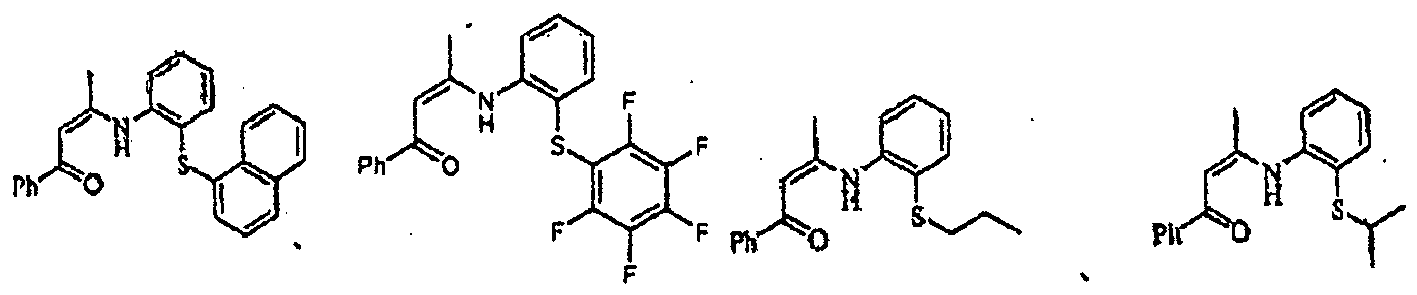


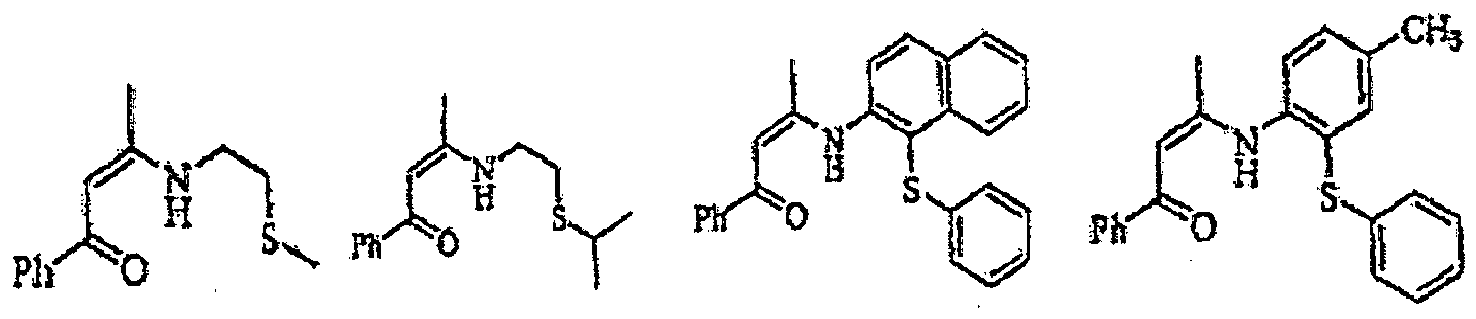

- Organische Verbindung, die Heteroatome nach Anspruch 1 enthält, dadurch gekennzeichnet, dass die Verbindung eine Mischung von zwei oder von einer von zwei Tautomerien in organischen Lösemitteln ist:

- Organische Verbindung, die Heteroatome nach Anspruch 1 enthält, dadurch gekennzeichnet, dass die Verbindung hergestellt wird durch ein Rückfließen einer Mischung von Diketonderivat und eines Aminderivats in einem organischen Lösemittel in Gegenwart eines entsprechenden Katalysators in einem molaren Verhältnis von (1-1,5) : 1 : (0,01-0,1) während einer Zeitdauer von 2 bis 48 Stunden,
wobei das Diketon eine Formel aufweist von:

- Verfahren zum Herstellen eines Ziegler-Natta-Katalysators mit einer (einzigen) aktiven Stelle (Single-Site Katalysator) dadurch gekennzeichnet, dass die organischen Verbindungen, die Heteroatome enthalten, als Elektronendonoren verwendet werden, wobei die organischen Verbindungen eine Formel aufweisen von:
 R1 und R2 jeweils H, ein Hydrocarbyl von C1-C30, substituiertes Hydrocarbyl von C1-C30, eine Arylgruppe von C5-C50 oder eine substituierte Arylgruppe von C5-C50 darstellen, wobei diese Gruppen dieselben oder verschieden sind;R3, R4, R5 und R7 jeweils H, eine Hydrocarbylgruppe von C1-C30, eine substituierte Hydrocarbylgruppe von C1-C30, eine Arylgruppe von C5-C50 oder eine substituierte Arylgruppe von C5-C50 darstellen, wobei diese Gruppen dieselben oder verschieden sind, von denen R4, R5 mit R6 oder R7, R6 mit R8 oder R9, R7 mit R8 oder R9 wahlweise eine Bindung oder einen Ring bilden;R8 und R9 jeweils eine Hydrocarbylgruppe von C1-C30, eine substituierte Hydrocarbylgruppe von C1-C30, eine Arylgruppe von C5-C50 oder eine substituierte Arylgruppe von C5-C50 darstellen, wobei diese Gruppen dieselben oder verschieden sind, von denen R4, R5 mit R6 oder R7, R6 mit R8 oder R9, R7 mit R8 oder R9 wahlweise eine Bindung oder einen Ring bilden;X für O, S, Se oder P steht; undwenn X für O, S oder Se steht, dann gibt es nur eine Gruppe, R8 oder R9, auf X;die Arylgruppe Phenyl, Naphthyl, Anthryl, Phenanthryl oder eine andere heteroaromatische Gruppe ist;die substituierte Hydrocarbylgruppe oder substituierte Arylgruppe für die Gruppe, die mit einem Hydrocarbylkohlenstoff, Halogen substituiert ist, für die Gruppe, die Silizium enthält, für die Gruppe, die ein Sauerstoffatom -OR10 enthält, für die Gruppe, die ein Schwefelatom -SR11 oder -S(O)R12 enthält, für die Gruppe, die ein Stickstoffatom -NR13R14 oder -N(O)R15R16 enthält, oder für die Gruppe steht, die ein Phosphoratom -PR17R18 oder -P(O)R19R20 enthält;R10, R11, R12, R13, R14, R15, R16, R17, R18, R19 oder R20 jeweils mit einer Hydrocarbylgruppe von C1-C30 oder einer Arylgruppe von C5-C50 substituiert ist, wobei diese Gruppen dieselben oder verschieden sind, von denen sich R13 und R14, R15 und R16, R17 und R18, R19 und R20 miteinander verbinden, um eine kovalente Bindung oder einen Ring zu bilden
 - Verfahren zum Herstellen eines Ziegler-Natta-Katalysators mit einer aktiven Stelle nach Anspruch 4, dadurch gekennzeichnet, dass der Katalysator aus einer Magnesiumverbindung, einem Träger, einem Metallkomplex und der organischen Verbindung, die Heteroatome enthält, mit einem Gewichtsverhältnis der Magnesiumverbindung und des Trägers, das 1 : 0,1-20 beträgt, mit einem molaren Verhältnis von Magnesiumverbindung und Metallkomplex, das 0,5-100 : 1 beträgt, mit einem molaren Verhältnis der organischen Verbindung, die Heteroatome enthält, und des Metallkomplexes, das 0,01-10 : 1 beträgt, hergestellt ist, wobei der Metallgehalt in einem Bereich von 0,1-15 Gew.% liegt;
die Magnesiumverbindung des Ziegler-Natta-Katalysators mit einer aktiven Stelle Magnesiumhalid, Alkylmagnesium, Alkoxymagnesiumhalid, Alkoxymagnesium, koordinativer Magnesiumhalidalkohol oder eine Mischung von zwei oder mehreren davon ist;
der Träger des Ziegler-Natta-Katalysators mit einer aktiven Stelle ein organisches Material ist oder aus anorganischen Oxiden besteht, die die Metalloxide der Gruppe 2, 4, 13 und 14 enthalten, während die anorganischen Oxide Al2O3, SiO2, eine Mischung von Oxiden, Ton, ein Molekularsieb oder das Oxidmaterial, das durch ein gasförmiges Metalloxid oder durch Siliciumdioxid durch Hydrolyse bei hohen Temperaturen bereitgestellt wird, sind;
der "Metallkomplex" durch folgende Formel dargestellt wird:
MLa,
wobei:a für 3 oder 4 steht;L ein Halogenatom, ein Hydrocarbyl von C1-C30, eine Gruppe, die ein Sauerstoffatom enthält, oder eine Gruppe, die ein Stickstoffatom enthält, ist; jedes L in der Formel ist gleich oder verschieden, und die L's können sich miteinander verbinden, um Bindungen oder einen Ring zu bilden;das Halogenatom F, Cl, B oder I ist;die Gruppe, die ein Sauerstoffatom enthält, ein Alkoxy-OR23, Tetrahydrofuran oder ein Diethylether ist; die Gruppe, die ein Stickstoffatom enthält,-NR24R25 ist;R23, R24, R25, R26 und R27 jeweils H, eine Hydrocarbylgruppe von C1-C30 oder eine Arylgruppe von C5-C50 sind, und diese Gruppen sind gleich oder verschieden, und R24 kann mit R25, R26 kann mit R27 eine Bindung oder einen Ring bilden;M ist ein Übergangsmetall von der Gruppe IV zu der Gruppe VI. - Verfahren zum Herstellen eines Ziegler-Natta-Katalysators mit einer aktiven Stelle nach Anspruch 5, dadurch gekennzeichnet, dass die Titanverbindung TiCl4, TiCl4 (THF)2, Ti(OCH3)Cl3 oder Ti(OC2H5)Cl3 und THF, das Tetrahydrofuran ist, ist.
- Verfahren zum Herstellen eines Ziegler-Natta-Katalysators mit einer aktiven Stelle nach Anspruch 5, dadurch gekennzeichnet, dass der Metallkomplex TiCl4, TiCl4(THF)2, Ti(NMe2)4, Ti(CH2PH)4, ZrCl4, Zr(NMe2)4, CrCl3, CrCl3(THF)3, VCl3 oder VCl3(THE)3 ist.
- Verfahren zum Herstellen eines Ziegler-Natta-Katalysators mit einer aktiven Stelle nach Anspruch 5, dadurch gekennzeichnet, dass: der Träger SiO2 ist.
- Verfahren zum Herstellen eines Ziegler-Natta-Katalysators mit einer aktiven Stelle nach Anspruch 5, dadurch gekennzeichnet, dass die organische Verbindung, die Heteroatome enthält, als ein Elektronendonor verwendet wird, um den Ziegler-Natta-Katalysator mit einer aktiven Stelle mit den folgenden Herstellungsschritten herzustellen:(1) Behandeln eines organischen oder anorganischen Feststoffs oder eine Mischung davon bei 30 bis 1000 °C während einer Zeitdauer von 1 bis 24 Stunden unter einer inerten oder reduzierten Atmosphäre;(2) bei Raumtemperatur bis hin zu 70 °C Auflösen einer Magnesiumverbindung in THF, um eine Lösung mit einem Verhältnis der Magnesiumverbindung und des THF von 1 g : 10-100 ml zu bilden;(3) nacheinander Hinzugeben des in (1) erhaltenen Trägers, eines Metallkomplexes und eines Elektronendonors zu der Lösung (2), um eine Reaktionsmischung zu bilden, und Halten der Reaktionsmischung bei Raumtemperatur bis hin zu 100 °C während einer Zeitdauer von 2 bis 48 Stunden, während das Gewichtsverhältnis der Magnesiumverbindung und des Trägers 1 : 0,1-20 beträgt; das molare Verhältnis der Magnesiumverbindung und des Metallkomplexes beträgt 0,5-100 : 1; das molare Verhältnis der organischen Verbindung, die Heteroatome enthält, und des Metallkomplexes beträgt 0,01-10 : 1.
- Verfahren zum Herstellen eines Ziegler-Natta-Katalysators mit einer aktiven Stelle nach Anspruch 9, dadurch gekennzeichnet, dass die Magnesiumverbindung mit dem Metallkomplex bei Raumtemperatur bis hin zu 100 °C während einer Zeitdauer von 2 bis 48 Stunden reagiert, bevor sie mit einem vorbehandelten Träger behandelt wird, dann wird ein davon erhaltener Feststoff mit dem Elektronendonor bei Raumtemperatur bis hin zu 100 °C während einer Zeitdauer von 2 bis 48 Stunden behandelt, um den Ziegler-Natta-Katalysator mit einer aktiven Stelle bereitzustellen.
- Verfahren zum Herstellen eines Ziegler-Natta-Katalysators mit einer aktiven Stelle nach Anspruch 9, dadurch gekennzeichnet, dass die Magnesiumverbindung bei Raumtemperatur bis hin zu 100°C während einer Zeitdauer von 2 bis 48 Stunden mit einem Träger behandelt wird, um eine Trägerzusammensetzung zu erhalten, und dass sie dann mit einer Lösung des Elektronendonors und des Metallkomplexes bei Raumtemperatur bis hin zu 100 °C während einer Zeitdauer von 2 bis 48 Stunden reagiert, um den Ziegler-Natta-Katalysator mit einer aktiven Stelle bereitzustellen.
- Ziegler-Natta-Katalysator mit einer aktiven Stelle, wie er durch das Verfahren nach Anspruch 5 hergestellt worden ist, dadurch gekennzeichnet, dass der Katalysator für eine Ethylenpolymerisation, Ethylen/α-Olefin-Copolymerisation und für eine Ethylen/Cycloolefin-Copolymerisation geeignet ist.
- Ziegler-Natta-Katalysator mit einer aktiven Stelle nach Anspruch 12, dadurch gekennzeichnet, dass ein Alkyaluminium, Alkyaluminoxan oder eine Mischung von zwei oder mehreren als Cokatalysator in der Polymerisation verwendet wird, wobei der Cokatalysator AlEt3, Al(i-Bu)3, AlEt2Cl, Al(n-Hex)3, MAO, EAO, MMAO oder eine Mischung von zwei oder mehreren ist; das molare Verhältnis von Al/Ti beträgt 20 bis 1000; α-Olefine sind die Olefine von C3-C20; Cycloolefine sind Cyclopeten, Cylohexen, Norbornen oder ihre Derivative, und alle α-Olefine und Cycloolefine enthalten wahlweise eine Hydroxylgruppe, Carboxylgruppe, Estergruppe oder eine Amingruppe.
- Ziegler-Natta-Katalysator mit einer aktiven Stelle nach Anspruch 12, dadurch gekennzeichnet, dass die Polymerisation in einem aufgeschlämmten Verfahren (Slurry-Verfahren) oder in einem Gasverfahren abläuft.
- Ziegler-Natta-Katalysator mit einer aktiven Stelle nach Anspruch 12, dadurch gekennzeichnet, dass in dem Verfahren der Aufschlämmungspolymerisation die Polymerisation im Allgemeinen unter 0,1 bis 10 MPa Gesamtdruck mit einem Wasserstoffdruck, der bei 0,1 bis 1,0 MPa liegt, geführt wird, wobei die Temperatur bei 80 bis 120 °C liegt; die Polymerisation wird unter einem superkritischen Zustand oder unterkritischen Zustand in Propan, Isobuten oder Hexan ausgeführt; in dem Verfahren der Gaspolymerisation wird die Polymerisation unter 1,0 bis 10,0 MPa bei 40 bis 100 °C in einem Gasfließbett oder in einem Gasautoklav durchgeführt.
Applications Claiming Priority (2)
| Application Number | Priority Date | Filing Date | Title |
|---|---|---|---|
| CNB2006100267662A CN100569734C (zh) | 2006-05-22 | 2006-05-22 | 一类含杂原子的有机化合物及其在齐格勒-纳塔催化剂中的应用 |
| PCT/CN2007/001648 WO2007134537A1 (en) | 2006-05-22 | 2007-05-21 | Organic compounds containing heteroatoms and their use in ziegler-natta catalyst with single activation center |
Publications (3)
| Publication Number | Publication Date |
|---|---|
| EP2039677A1 EP2039677A1 (de) | 2009-03-25 |
| EP2039677A4 EP2039677A4 (de) | 2009-07-29 |
| EP2039677B1 true EP2039677B1 (de) | 2014-04-23 |
Family
ID=37582573
Family Applications (1)
| Application Number | Title | Priority Date | Filing Date |
|---|---|---|---|
| EP07721221.5A Not-in-force EP2039677B1 (de) | 2006-05-22 | 2007-05-21 | Heteroatomhaltige organische Verbindungen und ihre Verwendung in Ziegler-Natta-Katalysatoren mit einzelnem Aktivierungszentrum |
Country Status (5)
| Country | Link |
|---|---|
| US (2) | US20090137383A1 (de) |
| EP (1) | EP2039677B1 (de) |
| JP (1) | JP2009537573A (de) |
| CN (1) | CN100569734C (de) |
| WO (1) | WO2007134537A1 (de) |
Families Citing this family (16)
| Publication number | Priority date | Publication date | Assignee | Title |
|---|---|---|---|---|
| CN100569734C (zh) * | 2006-05-22 | 2009-12-16 | 中国科学院上海有机化学研究所 | 一类含杂原子的有机化合物及其在齐格勒-纳塔催化剂中的应用 |
| CN101412768B (zh) * | 2007-10-16 | 2012-05-30 | 中国石化扬子石油化工有限公司 | 一种镁化合物负载型非茂金属催化剂及其制备方法 |
| KR101207294B1 (ko) | 2007-10-16 | 2012-12-03 | 시노펙 양지 페트로케미컬 컴퍼니 엘티디. | 담지된 비-메탈로센 촉매 및 이의 제조방법 |
| KR101206940B1 (ko) * | 2007-10-16 | 2012-11-30 | 시노펙 양지 페트로케미컬 컴퍼니 엘티디. | 마그네슘 화합물 상에 담지된 비-메탈로센 촉매 및 이의 제조방법 |
| WO2011050565A1 (zh) | 2009-10-26 | 2011-05-05 | 中国石油化工股份有限公司 | 负载型非茂金属催化剂、其制备方法及其应用 |
| JP5523572B2 (ja) * | 2009-10-26 | 2014-06-18 | 中国石油化工股▲ふん▼有限公司 | 担持型非メタロセン触媒、その製造方法およびその使用 |
| US8952113B2 (en) | 2009-11-13 | 2015-02-10 | China Petroleum & Chemical Corp. | Supported nonmetallocene catalyst, preparation and use thereof |
| EP2500364B1 (de) | 2009-11-13 | 2020-03-04 | China Petroleum & Chemical Corporation | Geträgerter nicht-metallocen-katalysator, verfahren zu seiner herstellung und anwendung |
| CN101798362B (zh) * | 2010-02-10 | 2012-07-11 | 中国科学院上海有机化学研究所 | 一类具有单活性中心性质的齐格勒-纳塔烯烃聚合催化剂 |
| CN102219870B (zh) * | 2010-09-14 | 2015-08-05 | 中国科学院上海有机化学研究所 | 一类烯烃聚合催化剂及超低支化度超高分子量聚乙烯 |
| SG11201405269UA (en) * | 2012-02-29 | 2014-11-27 | Mitsui Chemicals Tohcello Inc | Sheet set for encapsulating solar battery |
| US10076117B2 (en) * | 2014-08-28 | 2018-09-18 | Rotam Agrochem International Company Limited | Pesticide formulation comprising a water soluble active ingredient and a penetration enhancer and use of the same |
| CN105440194A (zh) * | 2014-09-16 | 2016-03-30 | 中国科学院上海有机化学研究所 | 聚乙烯粉料、交联聚乙烯管材、其原料组合物及制备方法 |
| ES2870594T3 (es) * | 2014-11-25 | 2021-10-27 | Versalis Spa | Complejo fosfínico de vanadio, sistema catalítico que comprende dicho complejo fosfínico de vanadio y proceso para la (co)polimerización de dienos conjugados |
| SG10202013132UA (en) * | 2016-06-30 | 2021-02-25 | Dow Global Technologies Llc | Procatalyst compositions useful for low comonomer incorporation and process for preparing the same |
| CN118026887A (zh) * | 2024-01-31 | 2024-05-14 | 中国科学院青岛生物能源与过程研究所 | 一类用于制备高等规聚1-丁烯的催化剂用有机配体及其制备方法和应用 |
Citations (1)
| Publication number | Priority date | Publication date | Assignee | Title |
|---|---|---|---|---|
| US4759926A (en) * | 1982-05-05 | 1988-07-26 | Johnson & Johnson Baby Products | Sunscreen compositions |
Family Cites Families (11)
| Publication number | Priority date | Publication date | Assignee | Title |
|---|---|---|---|---|
| GB1603724A (en) * | 1977-05-25 | 1981-11-25 | Montedison Spa | Components and catalysts for the polymerisation of alpha-olefins |
| JPS56811A (en) | 1979-06-18 | 1981-01-07 | Mitsui Petrochem Ind Ltd | Preparation of olefin polymer or copolymer |
| IT1241062B (it) | 1990-01-10 | 1993-12-29 | Himont Inc | Componenti e catalizzatori per la polimerizzazione di olefine |
| US5459116A (en) | 1993-05-07 | 1995-10-17 | Samsung General Chemicals Co., Ltd. | Highly active catalyst for the polymerization of olefins and method for the preparation of the same |
| DE19637370A1 (de) * | 1996-09-13 | 1998-03-19 | Basf Ag | Bei ihrer Herstellung modifizierte Ziegler-Natta-Katalysatorsysteme |
| JP2001172273A (ja) * | 1999-12-14 | 2001-06-26 | Sumitomo Chem Co Ltd | ジイミノ置換ジフェニレン誘導体およびその製造法 |
| US6531424B2 (en) * | 1999-12-17 | 2003-03-11 | E. I. Du Pont De Nemours And Company | Polymerization of olefins |
| KR100353960B1 (ko) * | 2000-05-31 | 2002-09-27 | 삼성종합화학주식회사 | 에틸렌 중합체 및 공중합체의 제조방법 |
| EP1229055A1 (de) * | 2001-02-06 | 2002-08-07 | BP Chemicals S.N.C. | Verfahren zur gasphasen (co)-polymerisation von olefinen in einem fliessbettreaktor |
| WO2003010207A1 (en) * | 2001-07-23 | 2003-02-06 | Shanghai Institute Of Organic Chemistry, Chinese Academy Of Sciences | Catalyst for polymerization or copolymerization of olefins, preparation and use of the same |
| CN100569734C (zh) * | 2006-05-22 | 2009-12-16 | 中国科学院上海有机化学研究所 | 一类含杂原子的有机化合物及其在齐格勒-纳塔催化剂中的应用 |
-
2006
- 2006-05-22 CN CNB2006100267662A patent/CN100569734C/zh not_active Expired - Lifetime
-
2007
- 2007-05-21 JP JP2009511322A patent/JP2009537573A/ja active Pending
- 2007-05-21 EP EP07721221.5A patent/EP2039677B1/de not_active Not-in-force
- 2007-05-21 WO PCT/CN2007/001648 patent/WO2007134537A1/zh not_active Ceased
-
2008
- 2008-11-21 US US12/275,882 patent/US20090137383A1/en not_active Abandoned
-
2013
- 2013-09-16 US US14/028,130 patent/US20140073500A1/en not_active Abandoned
Patent Citations (1)
| Publication number | Priority date | Publication date | Assignee | Title |
|---|---|---|---|---|
| US4759926A (en) * | 1982-05-05 | 1988-07-26 | Johnson & Johnson Baby Products | Sunscreen compositions |
Non-Patent Citations (4)
| Title |
|---|
| KATSUMA HIRAKI, TOYOHIKO MASUMOTO, YOSHIO FUCHITA, YASUSHI ZEGI: "Organopalladium(II) complexes derived fromchloro[4-[2-(diphenylphosphino)ethylamino]-3-penten-2-onato-O,N,P]palladium(II)", BULLETIN OF THE CHEMICAL SOCIETY OF JAPAN, vol. 54, 1981, pages 1044 - 1047 * |
| MILTON M D ET AL: "Synthesis of beta-ketoenamine donors having O, N, Se/Te donor functionalities and their reaction chemistry with Pd(II) and Pt(II) metal ions", TETRAHEDRON LETTERS, ELSEVIER, AMSTERDAM, NL, vol. 45, no. 36, 30 August 2004 (2004-08-30), pages 6745 - 6747, XP004556634, ISSN: 0040-4039, DOI: 10.1016/J.TETLET.2004.07.057 * |
| NEUMAYER D A ET AL: "Approaches to alkaline earth metal-organic chemical vapor deposition precursors. Synthesis and characterization of Barium fluoro-beta-ketoiminate complexes having appended poyether lariats", INORGANIC CHEMISTRY, AMERICAN CHEMICAL SOCIETY, EASTON, US, vol. 37, no. 21, 1 January 1998 (1998-01-01), pages 5625 - 5633, XP002261922, ISSN: 0020-1669, DOI: 10.1021/IC980208+ * |
| YUN CHI, SUDHIR RANJAN, PO-WEN CHUNG, CHAO-SHIUAN LIU, SHIE-MING PENG, GENE-HSIANG LEE: "Synthesis and characterization of two novel tetranuclear sodiumketoiminate complexes; structural evidence for formation of dative Na....F and Na-C (olefin) bonding interactions", JOURNAL OF THE CHEMICAL SOCIETY, DALTON TRANSACTIONS, 1999, pages 343 - 347 * |
Also Published As
| Publication number | Publication date |
|---|---|
| US20140073500A1 (en) | 2014-03-13 |
| JP2009537573A (ja) | 2009-10-29 |
| WO2007134537A1 (en) | 2007-11-29 |
| CN100569734C (zh) | 2009-12-16 |
| US20090137383A1 (en) | 2009-05-28 |
| EP2039677A4 (de) | 2009-07-29 |
| CN1884253A (zh) | 2006-12-27 |
| EP2039677A1 (de) | 2009-03-25 |
Similar Documents
| Publication | Publication Date | Title |
|---|---|---|
| EP2039677A1 (de) | Heteroatomhaltige organische verbindungen und ihre verwendung in ziegler-natta-katalysatoren mit einzelnem aktivierungszentrum | |
| US7253133B2 (en) | Catalyst for polymerization or copolymerization of olefins, preparation and use of the same | |
| US11091568B2 (en) | Hybrid supported metallocene catalyst and polyolefin preparation method using same | |
| EP3173429B1 (de) | Metallocenverbindung, metallocengestützter katalysator und verfahren zur herstellung von polyolefin damit | |
| CN104334590B (zh) | 用于制备uhmwpe的单中心催化剂在无机氧化物载体上的固定化 | |
| KR101691626B1 (ko) | 메탈로센 화합물, 이를 포함하는 촉매 조성물 및 이를 이용하는 올레핀계 중합체의 제조방법 | |
| US9828403B2 (en) | Metallocene compounds, catalyst compositions comprising the same, and method for preparing olefin polymers using the same | |
| US6583242B2 (en) | Supported olefin polymerization catalysts | |
| KR101262333B1 (ko) | 에틸렌 및 알파-올레핀의 중합을 위한 비스(나프톡시)피리딘 및 비스(나프톡시)티오펜 리간드 기재의 포스트-메탈로센 착물 | |
| US6723675B1 (en) | Catalyst for the production of olefin polymers | |
| EP3138846B1 (de) | Metallocenverbindung, katalysatorzusammensetzung damit und verfahren zur herstellung eines olefinbasierten polymers damit | |
| KR101601935B1 (ko) | 이핵 메탈로센 화합물, 촉매 조성물 및 이를 이용한 폴리올레핀의 제조방법 | |
| JP3300696B2 (ja) | オレフィン重合用キレート触媒およびこれを利用したオレフィン重合方法 | |
| JP2004514767A (ja) | オレフィン重合用触媒およびオレフィン重合方法 | |
| CN101472960A (zh) | 烯烃聚合方法 | |
| US8492493B2 (en) | Sterically emcumbered bidentate and tridentate naphthoxy-imine metallic complexes | |
| KR102784732B1 (ko) | 메탈로센 화합물 및 이를 포함하는 폴리올레핀 중합용 촉매 | |
| CN118598910B (zh) | 一种op二齿亚胺钒配合物的制备方法及应用 | |
| KR102803225B1 (ko) | 메탈로센계 담지 촉매의 제조 방법 및 이를 이용한 폴리올레핀의 제조 방법 | |
| CN114478866B (zh) | 用于烯烃聚合的催化剂及其制备方法和应用 | |
| CN120923648A (zh) | 烯烃聚合用内给电子体、催化剂组分、催化剂及其应用 | |
| CN117924554A (zh) | 一种杂双金属催化剂及其催化剂体系的制备方法及应用 | |
| KR20250117854A (ko) | 폴리올레핀 중합용 하프 샌드위치형 메탈로센 촉매 및 그의 제조방법 | |
| CN119039494A (zh) | 一种金属催化剂、催化剂组合物及其应用 | |
| CN116648466A (zh) | 聚乙烯及其制备方法 |
Legal Events
| Date | Code | Title | Description |
|---|---|---|---|
| PUAI | Public reference made under article 153(3) epc to a published international application that has entered the european phase |
Free format text: ORIGINAL CODE: 0009012 |
|
| 17P | Request for examination filed |
Effective date: 20081222 |
|
| AK | Designated contracting states |
Kind code of ref document: A1 Designated state(s): AT BE BG CH CY CZ DE DK EE ES FI FR GB GR HU IE IS IT LI LT LU LV MC MT NL PL PT RO SE SI SK TR |
|
| AX | Request for extension of the european patent |
Extension state: AL BA HR MK RS |
|
| A4 | Supplementary search report drawn up and despatched |
Effective date: 20090630 |
|
| 17Q | First examination report despatched |
Effective date: 20090817 |
|
| DAX | Request for extension of the european patent (deleted) | ||
| GRAP | Despatch of communication of intention to grant a patent |
Free format text: ORIGINAL CODE: EPIDOSNIGR1 |
|
| GRAS | Grant fee paid |
Free format text: ORIGINAL CODE: EPIDOSNIGR3 |
|
| GRAA | (expected) grant |
Free format text: ORIGINAL CODE: 0009210 |
|
| INTG | Intention to grant announced |
Effective date: 20140224 |
|
| AK | Designated contracting states |
Kind code of ref document: B1 Designated state(s): AT BE BG CH CY CZ DE DK EE ES FI FR GB GR HU IE IS IT LI LT LU LV MC MT NL PL PT RO SE SI SK TR |
|
| REG | Reference to a national code |
Ref country code: GB Ref legal event code: FG4D |
|
| REG | Reference to a national code |
Ref country code: CH Ref legal event code: EP |
|
| REG | Reference to a national code |
Ref country code: AT Ref legal event code: REF Ref document number: 663749 Country of ref document: AT Kind code of ref document: T Effective date: 20140515 |
|
| REG | Reference to a national code |
Ref country code: IE Ref legal event code: FG4D |
|
| REG | Reference to a national code |
Ref country code: DE Ref legal event code: R096 Ref document number: 602007036233 Country of ref document: DE Effective date: 20140605 |
|
| REG | Reference to a national code |
Ref country code: AT Ref legal event code: MK05 Ref document number: 663749 Country of ref document: AT Kind code of ref document: T Effective date: 20140423 |
|
| REG | Reference to a national code |
Ref country code: NL Ref legal event code: VDEP Effective date: 20140423 |
|
| REG | Reference to a national code |
Ref country code: LT Ref legal event code: MG4D |
|
| PG25 | Lapsed in a contracting state [announced via postgrant information from national office to epo] |
Ref country code: GR Free format text: LAPSE BECAUSE OF FAILURE TO SUBMIT A TRANSLATION OF THE DESCRIPTION OR TO PAY THE FEE WITHIN THE PRESCRIBED TIME-LIMIT Effective date: 20140724 Ref country code: IS Free format text: LAPSE BECAUSE OF FAILURE TO SUBMIT A TRANSLATION OF THE DESCRIPTION OR TO PAY THE FEE WITHIN THE PRESCRIBED TIME-LIMIT Effective date: 20140823 Ref country code: FI Free format text: LAPSE BECAUSE OF FAILURE TO SUBMIT A TRANSLATION OF THE DESCRIPTION OR TO PAY THE FEE WITHIN THE PRESCRIBED TIME-LIMIT Effective date: 20140423 Ref country code: LT Free format text: LAPSE BECAUSE OF FAILURE TO SUBMIT A TRANSLATION OF THE DESCRIPTION OR TO PAY THE FEE WITHIN THE PRESCRIBED TIME-LIMIT Effective date: 20140423 Ref country code: NL Free format text: LAPSE BECAUSE OF FAILURE TO SUBMIT A TRANSLATION OF THE DESCRIPTION OR TO PAY THE FEE WITHIN THE PRESCRIBED TIME-LIMIT Effective date: 20140423 Ref country code: BG Free format text: LAPSE BECAUSE OF FAILURE TO SUBMIT A TRANSLATION OF THE DESCRIPTION OR TO PAY THE FEE WITHIN THE PRESCRIBED TIME-LIMIT Effective date: 20140723 Ref country code: CY Free format text: LAPSE BECAUSE OF FAILURE TO SUBMIT A TRANSLATION OF THE DESCRIPTION OR TO PAY THE FEE WITHIN THE PRESCRIBED TIME-LIMIT Effective date: 20140423 |
|
| PG25 | Lapsed in a contracting state [announced via postgrant information from national office to epo] |
Ref country code: ES Free format text: LAPSE BECAUSE OF FAILURE TO SUBMIT A TRANSLATION OF THE DESCRIPTION OR TO PAY THE FEE WITHIN THE PRESCRIBED TIME-LIMIT Effective date: 20140423 Ref country code: SE Free format text: LAPSE BECAUSE OF FAILURE TO SUBMIT A TRANSLATION OF THE DESCRIPTION OR TO PAY THE FEE WITHIN THE PRESCRIBED TIME-LIMIT Effective date: 20140423 Ref country code: AT Free format text: LAPSE BECAUSE OF FAILURE TO SUBMIT A TRANSLATION OF THE DESCRIPTION OR TO PAY THE FEE WITHIN THE PRESCRIBED TIME-LIMIT Effective date: 20140423 Ref country code: LV Free format text: LAPSE BECAUSE OF FAILURE TO SUBMIT A TRANSLATION OF THE DESCRIPTION OR TO PAY THE FEE WITHIN THE PRESCRIBED TIME-LIMIT Effective date: 20140423 Ref country code: PL Free format text: LAPSE BECAUSE OF FAILURE TO SUBMIT A TRANSLATION OF THE DESCRIPTION OR TO PAY THE FEE WITHIN THE PRESCRIBED TIME-LIMIT Effective date: 20140423 |
|
| PG25 | Lapsed in a contracting state [announced via postgrant information from national office to epo] |
Ref country code: PT Free format text: LAPSE BECAUSE OF FAILURE TO SUBMIT A TRANSLATION OF THE DESCRIPTION OR TO PAY THE FEE WITHIN THE PRESCRIBED TIME-LIMIT Effective date: 20140825 |
|
| REG | Reference to a national code |
Ref country code: CH Ref legal event code: PL |
|
| REG | Reference to a national code |
Ref country code: DE Ref legal event code: R097 Ref document number: 602007036233 Country of ref document: DE |
|
| PG25 | Lapsed in a contracting state [announced via postgrant information from national office to epo] |
Ref country code: MC Free format text: LAPSE BECAUSE OF FAILURE TO SUBMIT A TRANSLATION OF THE DESCRIPTION OR TO PAY THE FEE WITHIN THE PRESCRIBED TIME-LIMIT Effective date: 20140423 Ref country code: SK Free format text: LAPSE BECAUSE OF FAILURE TO SUBMIT A TRANSLATION OF THE DESCRIPTION OR TO PAY THE FEE WITHIN THE PRESCRIBED TIME-LIMIT Effective date: 20140423 Ref country code: CZ Free format text: LAPSE BECAUSE OF FAILURE TO SUBMIT A TRANSLATION OF THE DESCRIPTION OR TO PAY THE FEE WITHIN THE PRESCRIBED TIME-LIMIT Effective date: 20140423 Ref country code: RO Free format text: LAPSE BECAUSE OF FAILURE TO SUBMIT A TRANSLATION OF THE DESCRIPTION OR TO PAY THE FEE WITHIN THE PRESCRIBED TIME-LIMIT Effective date: 20140423 Ref country code: DK Free format text: LAPSE BECAUSE OF FAILURE TO SUBMIT A TRANSLATION OF THE DESCRIPTION OR TO PAY THE FEE WITHIN THE PRESCRIBED TIME-LIMIT Effective date: 20140423 Ref country code: CH Free format text: LAPSE BECAUSE OF NON-PAYMENT OF DUE FEES Effective date: 20140531 Ref country code: EE Free format text: LAPSE BECAUSE OF FAILURE TO SUBMIT A TRANSLATION OF THE DESCRIPTION OR TO PAY THE FEE WITHIN THE PRESCRIBED TIME-LIMIT Effective date: 20140423 Ref country code: LI Free format text: LAPSE BECAUSE OF NON-PAYMENT OF DUE FEES Effective date: 20140531 Ref country code: BE Free format text: LAPSE BECAUSE OF FAILURE TO SUBMIT A TRANSLATION OF THE DESCRIPTION OR TO PAY THE FEE WITHIN THE PRESCRIBED TIME-LIMIT Effective date: 20140423 |
|
| REG | Reference to a national code |
Ref country code: IE Ref legal event code: MM4A |
|
| PLBE | No opposition filed within time limit |
Free format text: ORIGINAL CODE: 0009261 |
|
| STAA | Information on the status of an ep patent application or granted ep patent |
Free format text: STATUS: NO OPPOSITION FILED WITHIN TIME LIMIT |
|
| PG25 | Lapsed in a contracting state [announced via postgrant information from national office to epo] |
Ref country code: IT Free format text: LAPSE BECAUSE OF FAILURE TO SUBMIT A TRANSLATION OF THE DESCRIPTION OR TO PAY THE FEE WITHIN THE PRESCRIBED TIME-LIMIT Effective date: 20140423 |
|
| 26N | No opposition filed |
Effective date: 20150126 |
|
| PG25 | Lapsed in a contracting state [announced via postgrant information from national office to epo] |
Ref country code: IE Free format text: LAPSE BECAUSE OF NON-PAYMENT OF DUE FEES Effective date: 20140521 |
|
| REG | Reference to a national code |
Ref country code: DE Ref legal event code: R097 Ref document number: 602007036233 Country of ref document: DE Effective date: 20150126 |
|
| PG25 | Lapsed in a contracting state [announced via postgrant information from national office to epo] |
Ref country code: SI Free format text: LAPSE BECAUSE OF FAILURE TO SUBMIT A TRANSLATION OF THE DESCRIPTION OR TO PAY THE FEE WITHIN THE PRESCRIBED TIME-LIMIT Effective date: 20140423 |
|
| PG25 | Lapsed in a contracting state [announced via postgrant information from national office to epo] |
Ref country code: MT Free format text: LAPSE BECAUSE OF FAILURE TO SUBMIT A TRANSLATION OF THE DESCRIPTION OR TO PAY THE FEE WITHIN THE PRESCRIBED TIME-LIMIT Effective date: 20140423 |
|
| REG | Reference to a national code |
Ref country code: FR Ref legal event code: PLFP Year of fee payment: 10 |
|
| PG25 | Lapsed in a contracting state [announced via postgrant information from national office to epo] |
Ref country code: HU Free format text: LAPSE BECAUSE OF FAILURE TO SUBMIT A TRANSLATION OF THE DESCRIPTION OR TO PAY THE FEE WITHIN THE PRESCRIBED TIME-LIMIT; INVALID AB INITIO Effective date: 20070521 Ref country code: TR Free format text: LAPSE BECAUSE OF FAILURE TO SUBMIT A TRANSLATION OF THE DESCRIPTION OR TO PAY THE FEE WITHIN THE PRESCRIBED TIME-LIMIT Effective date: 20140423 Ref country code: LU Free format text: LAPSE BECAUSE OF NON-PAYMENT OF DUE FEES Effective date: 20140521 |
|
| PGFP | Annual fee paid to national office [announced via postgrant information from national office to epo] |
Ref country code: GB Payment date: 20160503 Year of fee payment: 10 |
|
| REG | Reference to a national code |
Ref country code: FR Ref legal event code: PLFP Year of fee payment: 11 |
|
| PGFP | Annual fee paid to national office [announced via postgrant information from national office to epo] |
Ref country code: FR Payment date: 20170522 Year of fee payment: 11 Ref country code: DE Payment date: 20170531 Year of fee payment: 11 |
|
| GBPC | Gb: european patent ceased through non-payment of renewal fee |
Effective date: 20170521 |
|
| PG25 | Lapsed in a contracting state [announced via postgrant information from national office to epo] |
Ref country code: GB Free format text: LAPSE BECAUSE OF NON-PAYMENT OF DUE FEES Effective date: 20170521 |
|
| REG | Reference to a national code |
Ref country code: DE Ref legal event code: R119 Ref document number: 602007036233 Country of ref document: DE |
|
| PG25 | Lapsed in a contracting state [announced via postgrant information from national office to epo] |
Ref country code: FR Free format text: LAPSE BECAUSE OF NON-PAYMENT OF DUE FEES Effective date: 20180531 Ref country code: DE Free format text: LAPSE BECAUSE OF NON-PAYMENT OF DUE FEES Effective date: 20181201 |