EP2039655A1 - Poröses teilchenförmiges calciumoxidmaterial und poröses teilchenförmiges calciumhydroxidmaterial - Google Patents
Poröses teilchenförmiges calciumoxidmaterial und poröses teilchenförmiges calciumhydroxidmaterial Download PDFInfo
- Publication number
- EP2039655A1 EP2039655A1 EP07744655A EP07744655A EP2039655A1 EP 2039655 A1 EP2039655 A1 EP 2039655A1 EP 07744655 A EP07744655 A EP 07744655A EP 07744655 A EP07744655 A EP 07744655A EP 2039655 A1 EP2039655 A1 EP 2039655A1
- Authority
- EP
- European Patent Office
- Prior art keywords
- calcium hydroxide
- calcium oxide
- granular
- range
- water content
- Prior art date
- Legal status (The legal status is an assumption and is not a legal conclusion. Google has not performed a legal analysis and makes no representation as to the accuracy of the status listed.)
- Withdrawn
Links
Images
Classifications
-
- C—CHEMISTRY; METALLURGY
- C01—INORGANIC CHEMISTRY
- C01F—COMPOUNDS OF THE METALS BERYLLIUM, MAGNESIUM, ALUMINIUM, CALCIUM, STRONTIUM, BARIUM, RADIUM, THORIUM, OR OF THE RARE-EARTH METALS
- C01F11/00—Compounds of calcium, strontium, or barium
- C01F11/02—Oxides or hydroxides
-
- B—PERFORMING OPERATIONS; TRANSPORTING
- B01—PHYSICAL OR CHEMICAL PROCESSES OR APPARATUS IN GENERAL
- B01J—CHEMICAL OR PHYSICAL PROCESSES, e.g. CATALYSIS OR COLLOID CHEMISTRY; THEIR RELEVANT APPARATUS
- B01J20/00—Solid sorbent compositions or filter aid compositions; Sorbents for chromatography; Processes for preparing, regenerating or reactivating thereof
- B01J20/02—Solid sorbent compositions or filter aid compositions; Sorbents for chromatography; Processes for preparing, regenerating or reactivating thereof comprising inorganic material
- B01J20/04—Solid sorbent compositions or filter aid compositions; Sorbents for chromatography; Processes for preparing, regenerating or reactivating thereof comprising inorganic material comprising compounds of alkali metals, alkaline earth metals or magnesium
-
- B—PERFORMING OPERATIONS; TRANSPORTING
- B01—PHYSICAL OR CHEMICAL PROCESSES OR APPARATUS IN GENERAL
- B01D—SEPARATION
- B01D53/00—Separation of gases or vapours; Recovering vapours of volatile solvents from gases; Chemical or biological purification of waste gases, e.g. engine exhaust gases, smoke, fumes, flue gases, aerosols
- B01D53/34—Chemical or biological purification of waste gases
- B01D53/46—Removing components of defined structure
- B01D53/68—Halogens or halogen compounds
- B01D53/685—Halogens or halogen compounds by treating the gases with solids
-
- B—PERFORMING OPERATIONS; TRANSPORTING
- B01—PHYSICAL OR CHEMICAL PROCESSES OR APPARATUS IN GENERAL
- B01J—CHEMICAL OR PHYSICAL PROCESSES, e.g. CATALYSIS OR COLLOID CHEMISTRY; THEIR RELEVANT APPARATUS
- B01J20/00—Solid sorbent compositions or filter aid compositions; Sorbents for chromatography; Processes for preparing, regenerating or reactivating thereof
- B01J20/02—Solid sorbent compositions or filter aid compositions; Sorbents for chromatography; Processes for preparing, regenerating or reactivating thereof comprising inorganic material
- B01J20/04—Solid sorbent compositions or filter aid compositions; Sorbents for chromatography; Processes for preparing, regenerating or reactivating thereof comprising inorganic material comprising compounds of alkali metals, alkaline earth metals or magnesium
- B01J20/041—Oxides or hydroxides
-
- B—PERFORMING OPERATIONS; TRANSPORTING
- B01—PHYSICAL OR CHEMICAL PROCESSES OR APPARATUS IN GENERAL
- B01J—CHEMICAL OR PHYSICAL PROCESSES, e.g. CATALYSIS OR COLLOID CHEMISTRY; THEIR RELEVANT APPARATUS
- B01J20/00—Solid sorbent compositions or filter aid compositions; Sorbents for chromatography; Processes for preparing, regenerating or reactivating thereof
- B01J20/28—Solid sorbent compositions or filter aid compositions; Sorbents for chromatography; Processes for preparing, regenerating or reactivating thereof characterised by their form or physical properties
- B01J20/28054—Solid sorbent compositions or filter aid compositions; Sorbents for chromatography; Processes for preparing, regenerating or reactivating thereof characterised by their form or physical properties characterised by their surface properties or porosity
- B01J20/28057—Surface area, e.g. B.E.T specific surface area
-
- B—PERFORMING OPERATIONS; TRANSPORTING
- B01—PHYSICAL OR CHEMICAL PROCESSES OR APPARATUS IN GENERAL
- B01J—CHEMICAL OR PHYSICAL PROCESSES, e.g. CATALYSIS OR COLLOID CHEMISTRY; THEIR RELEVANT APPARATUS
- B01J20/00—Solid sorbent compositions or filter aid compositions; Sorbents for chromatography; Processes for preparing, regenerating or reactivating thereof
- B01J20/28—Solid sorbent compositions or filter aid compositions; Sorbents for chromatography; Processes for preparing, regenerating or reactivating thereof characterised by their form or physical properties
- B01J20/28054—Solid sorbent compositions or filter aid compositions; Sorbents for chromatography; Processes for preparing, regenerating or reactivating thereof characterised by their form or physical properties characterised by their surface properties or porosity
- B01J20/28069—Pore volume, e.g. total pore volume, mesopore volume, micropore volume
-
- B—PERFORMING OPERATIONS; TRANSPORTING
- B01—PHYSICAL OR CHEMICAL PROCESSES OR APPARATUS IN GENERAL
- B01J—CHEMICAL OR PHYSICAL PROCESSES, e.g. CATALYSIS OR COLLOID CHEMISTRY; THEIR RELEVANT APPARATUS
- B01J20/00—Solid sorbent compositions or filter aid compositions; Sorbents for chromatography; Processes for preparing, regenerating or reactivating thereof
- B01J20/28—Solid sorbent compositions or filter aid compositions; Sorbents for chromatography; Processes for preparing, regenerating or reactivating thereof characterised by their form or physical properties
- B01J20/28054—Solid sorbent compositions or filter aid compositions; Sorbents for chromatography; Processes for preparing, regenerating or reactivating thereof characterised by their form or physical properties characterised by their surface properties or porosity
- B01J20/28078—Pore diameter
-
- B—PERFORMING OPERATIONS; TRANSPORTING
- B01—PHYSICAL OR CHEMICAL PROCESSES OR APPARATUS IN GENERAL
- B01J—CHEMICAL OR PHYSICAL PROCESSES, e.g. CATALYSIS OR COLLOID CHEMISTRY; THEIR RELEVANT APPARATUS
- B01J20/00—Solid sorbent compositions or filter aid compositions; Sorbents for chromatography; Processes for preparing, regenerating or reactivating thereof
- B01J20/28—Solid sorbent compositions or filter aid compositions; Sorbents for chromatography; Processes for preparing, regenerating or reactivating thereof characterised by their form or physical properties
- B01J20/28054—Solid sorbent compositions or filter aid compositions; Sorbents for chromatography; Processes for preparing, regenerating or reactivating thereof characterised by their form or physical properties characterised by their surface properties or porosity
- B01J20/28088—Pore-size distribution
- B01J20/28092—Bimodal, polymodal, different types of pores or different pore size distributions in different parts of the sorbent
-
- C—CHEMISTRY; METALLURGY
- C01—INORGANIC CHEMISTRY
- C01F—COMPOUNDS OF THE METALS BERYLLIUM, MAGNESIUM, ALUMINIUM, CALCIUM, STRONTIUM, BARIUM, RADIUM, THORIUM, OR OF THE RARE-EARTH METALS
- C01F11/00—Compounds of calcium, strontium, or barium
- C01F11/02—Oxides or hydroxides
- C01F11/04—Oxides or hydroxides by thermal decomposition
-
- B—PERFORMING OPERATIONS; TRANSPORTING
- B01—PHYSICAL OR CHEMICAL PROCESSES OR APPARATUS IN GENERAL
- B01D—SEPARATION
- B01D2251/00—Reactants
- B01D2251/60—Inorganic bases or salts
- B01D2251/602—Oxides
-
- B—PERFORMING OPERATIONS; TRANSPORTING
- B01—PHYSICAL OR CHEMICAL PROCESSES OR APPARATUS IN GENERAL
- B01D—SEPARATION
- B01D2251/00—Reactants
- B01D2251/60—Inorganic bases or salts
- B01D2251/604—Hydroxides
-
- B—PERFORMING OPERATIONS; TRANSPORTING
- B01—PHYSICAL OR CHEMICAL PROCESSES OR APPARATUS IN GENERAL
- B01D—SEPARATION
- B01D2257/00—Components to be removed
- B01D2257/20—Halogens or halogen compounds
- B01D2257/202—Single element halogens
- B01D2257/2027—Fluorine
-
- C—CHEMISTRY; METALLURGY
- C01—INORGANIC CHEMISTRY
- C01P—INDEXING SCHEME RELATING TO STRUCTURAL AND PHYSICAL ASPECTS OF SOLID INORGANIC COMPOUNDS
- C01P2006/00—Physical properties of inorganic compounds
- C01P2006/12—Surface area
-
- C—CHEMISTRY; METALLURGY
- C01—INORGANIC CHEMISTRY
- C01P—INDEXING SCHEME RELATING TO STRUCTURAL AND PHYSICAL ASPECTS OF SOLID INORGANIC COMPOUNDS
- C01P2006/00—Physical properties of inorganic compounds
- C01P2006/14—Pore volume
-
- C—CHEMISTRY; METALLURGY
- C01—INORGANIC CHEMISTRY
- C01P—INDEXING SCHEME RELATING TO STRUCTURAL AND PHYSICAL ASPECTS OF SOLID INORGANIC COMPOUNDS
- C01P2006/00—Physical properties of inorganic compounds
- C01P2006/16—Pore diameter
-
- Y—GENERAL TAGGING OF NEW TECHNOLOGICAL DEVELOPMENTS; GENERAL TAGGING OF CROSS-SECTIONAL TECHNOLOGIES SPANNING OVER SEVERAL SECTIONS OF THE IPC; TECHNICAL SUBJECTS COVERED BY FORMER USPC CROSS-REFERENCE ART COLLECTIONS [XRACs] AND DIGESTS
- Y10—TECHNICAL SUBJECTS COVERED BY FORMER USPC
- Y10T—TECHNICAL SUBJECTS COVERED BY FORMER US CLASSIFICATION
- Y10T428/00—Stock material or miscellaneous articles
- Y10T428/29—Coated or structually defined flake, particle, cell, strand, strand portion, rod, filament, macroscopic fiber or mass thereof
- Y10T428/2982—Particulate matter [e.g., sphere, flake, etc.]
Definitions
- the present invention relates to a granular porous calcium oxide and a granular porous calcium hydroxide.
- calcium oxide (quick lime) and calcium hydroxide (slaked lime) are highly reactive with an acid, they are utilized as absorbents (chemical absorbents) for gaseous acids such as a hydrogen fluoride gas, a hydrogen chloride gas, a sulfur dioxide gas, and a carbon dioxide gas. Further, since calcium oxide is highly reactive to water, it is also employed as a moisture-absorbing material. Furthermore, calcium oxide and calcium hydroxide have been studied as materials for fixing halide gasses such as CxFy gas (e.g., CF 4 , C 5 F 8 ) and SiF 4 gas and their decomposition products. These halide gases are used in semiconductor device-manufacturing processes.
- CxFy gas e.g., CF 4 , C 5 F 8
- semiconductor substrates include substrates of semiconductors, substrates composed of a base plate of dielectric material and films of semiconductor material formed on the base plate, and further structures comprising any of these substrates and one or more of a film of a dielectric material , a film of a semiconductor material and/or a film of an electrically conductive material formed thereon), processes of forming a CF films on the semiconductor substrate by CVD, or processes of cleaning unnecessary deposits formed on a chamber inner wall after the CVD process.
- D1 discloses a method for treating gaseous halide contained in an exhaust gas derived from apparatuses or systems of manufacturing semiconductor devices which comprises the steps of processing the gaseous halide with plasma under reduced pressure to give excited gaseous halide and bringing the exited gaseous halide into contact, under reduced pressure, with granules (reactive-removing material) composed of calcium oxide, calcium hydroxide or their mixture which is filled in a cylindrical reactive vessel.
- JP 2002-224565A discloses a process for decomposing gaseous fluorocarbon which comprises bringing fluorocarbon into contact with a heated mixture of granular aluminium oxide and granular alkaline earth metal oxide (e.g., calcium oxide) or thermally decomposed alkaline earth metal compound (e.g., calcium hydroxide).
- granular aluminium oxide and granular alkaline earth metal oxide e.g., calcium oxide
- thermally decomposed alkaline earth metal compound e.g., calcium hydroxide
- the highly reactive calcium oxide which is favorably employable as a moisture absorbent and an acidic gas-fixing material are disclosed in the below-mentioned documents.
- D3 JP 2006-21945A discloses a highly reactive calcium oxide having a BET specific surface area of 30 m 2 /g or more and a total pore volume of 1.0 ⁇ 10 -4 dm 3 /g or more, which is produced by calcining calcium hydroxide having a specifically defined BET specific surface area under calcining conditions in which the calcining temperature, calcining period and calcining atmosphere are specified.
- D3 describes that it is important to increase BET specific surface area and total pore volume of the calcium oxide in consideration of its hydrolysis and reactivity with acidic gases.
- the largest BET specific surface area and largest total pore volume of calcium oxide described in working examples of D3 are 56.2 m 2 /g and 0.18 ⁇ 10 -4 dm 3 /g (0.018 mL/g), respectively.
- D4 JP 7-149580A discloses a porous calcium oxide which is produced by calcining granules prepared by granulating a powdery calcium hydroxide having a particle size of 300 ⁇ m or less under such conditions that the calcining temperature elevates from 390°C to 480°C for a period of at least 5 minutes at an ambient pressure.
- D4 contains a working example in which a granular porous calcium oxide having a cylindrical form (diameter: 3 mm, length: 3 mm) and a BET specific surface area of more than 50 m 2 /g. However, D4 is silent with respect to a pore volume.
- a highly reactive calcium hydroxide which is favorably employable as an acidic gas fixing agent is described the below-mentioned documents.
- D5 JP 2002-516247A discloses a granular calcium hydroxide having a large BET specific surface area and a large pore volume comprising cylindrical porous calcium hydroxide particles which is produced by an extruding procedure using a binder.
- a working example of D3 describes a granular cylindrical calcium hydroxide having a BET specific surface area of 34 m 2 /g (maximum value) and a total pore volume of 0.240 mL/g (i.e., total pore volume of pores having a diameter of 2-100 nm).
- JP 2005-350343A discloses a powdery calcium hydroxide having a BET specific surface area of 30 m 2 /g or more and a total pore volume of 0.30 mL/g (i.e., total pore volume of pores having a diameter of 2-100 nm).
- calcium oxide or calcium hydroxide to be filled into a cylindrical reaction vessel for fixing a gaseous material are in the form of granules so that the gaseous material can flow smoothly in the cylindrical reaction vessel.
- a granular porous calcium oxide prepared by the below-mentioned process has a BET specific surface area of 50 m 2 /g or more and a total pore volume of pores having a diameter of 2 to 100 nm is such large as a volume in the range of 0.40 to 0.70 mL/g (the pores are contained in whole porous particles):
- a granular porous calcium oxide prepared by the below-mentioned process also has a large BET specific surface and a large total pore volume of pores at levels mentioned above:
- the inventors have confirmed that the granular porous calcium oxide prepared having a BET specific surface area of 50 m 2 /g or more and a total pore volume of pores having a diameter in the range of 2 to 100 nm is such large as a volume in the range of 0.40 to 0.70 mL/g, the pores being contained in a whole of the porous particles has a prominent ability for fixing a halide gas and their decomposition products thereto.
- a granular porous calcium hydroxide prepared by the below-mentioned process has a BET specific surface area of 20 m 2 /g or more and a total pore volume of pores having a diameter in the range of 2 to 100 nm is in the range of 0.25 to 0.40 mL/g (which is larger than the corresponding total pore volume provided by the conventional granular calcium hydroxide), the pores being contained in a whole of the porous particles:
- a granular porous calcium hydroxide prepared by the below-mentioned process also has a large BET specific surface and a large total pore volume of pores at levels mentioned above:
- the present invention resides in a granular porous calcium oxide comprising aggregated porous spherical calcium oxide particles, which has a BET specific surface area of 50 m 2 /g or more and a total pore volume of pores having a diameter of 2 to 100 nm is in the range of 0.40 to 0.70 mL/g, the pores being contained in whole porous particles.
- the invention further resides in a process for preparing the above-mentioned granular porous calcium oxide of the invention, which comprises the steps of:
- the invention further resides in a process for preparing the above-mentioned granular porous calcium oxide of the invention, which comprises the steps of:
- the invention furthermore resides in fixing material comprising granular calcium oxide for fixing a halide gas or decomposition products of the halide gas thereto, the granular calcium oxide comprising aggregated porous spherical calcium oxide particles and having a BET specific surface area of 50 m 2 /g or more and a total pore volume of pores having a diameter of 2 to 100 nm is in the range of 0.40 to 0.70 mL/g, the pores being contained in a whole of the porous particles.
- the invention furthermore resides in a cylindrical reaction vessel for fixing a halide gas or decomposition products thereof which is filled with the above-mentioned granular porous calcium oxide of the invention, which shows a utilization efficiency of the granular porous calcium oxide in a ratio of 30 molar % or more when a halide gas or decomposition products thereof are processed for fixing.
- the invention furthermore resides in a method for fixing a halide gas or decomposition products thereof, which comprises a step of bringing the halide gas or decomposition products thereof into contact with a granular porous calcium oxide comprising aggregated porous spherical calcium oxide particles, which has a BET specific surface area of 50 m 2 /g or more and a total pore volume of pores having a diameter of 2 to 100 nm is in the range of 0.40 to 0.70 mL/g, the pores being contained in whole porous particles under reduced pressure.
- the invention furthermore resides in a method for fixing an exhaust gas produced in a semiconductor device-manufacturing apparatus, which comprises a step of bringing a halide gas having been used in the semiconductor device-manufacturing processes or decomposition products thereof into contact with a granular porous calcium oxide filled into a cylindrical reaction vessel, under reduced pressure, the granular porous calcium oxide comprising aggregated porous spherical calcium oxide particles and having a BET specific surface area of 50 m 2 /g or more and a total pore volume of pores having a diameter of 2 to 100 nm is in the range of 0.40 to 0.70 mL/g, the pores being contained in whole porous particles.
- the invention furthermore resides in a process for manufacturing a semiconductor device which comprises the steps of:
- the invention furthermore resides in a granular porous calcium hydroxide comprising aggregated porous spherical calcium hydroxide particles, which has a BET specific surface area of 20 m 2 /g or more and a total pore volume of pores having a diameter of 2 to 100 nm is in the range of 0.25 to 0.40 mL/g, the pores being contained in whole porous particles.
- the invention furthermore resides in a process for preparing the above-mentioned granular porous calcium hydroxide of the invention, which comprises the steps of:
- the invention furthermore resides in a process for preparing the aforementioned granular porous calcium hydroxide of the invention, which comprises the steps of:
- the granular porous calcium oxide and granular porous calcium hydroxide according to the invention show a high reactivity particularly with various gases such as halide gases and their decomposition products. Therefore, the granular porous calcium oxide and granular porous calcium hydroxide according to the invention are of great value as materials for fixing halide gases and their decomposition products.
- the method for fixing halide gases and their decomposition products according to the invention is valuable in industry for fixing and removing halide gases and their decomposition products contained in gases exhausted from semiconductor device-manufacturing apparatuses.
- the preparation processes of the invention enable industrially advantageous provision of a granular porous calcium oxide and a granular porous calcium hydroxide which are highly reactive with various gases such as halide gases and their decomposition products.
- the granular porous calcium oxide of the invention are in the form aggregated porous spherical calcium oxide particles.
- a particle in the aggregated porous spherical calcium oxide particles is formed of spherically aggregated micro particles (primary particles) of calcium oxide.
- the granular porous calcium oxide of the invention has a BET specific surface area of 50 m 2 /g or more, preferably in the range of 50 to 120 m 2 /g, more preferably in the range of 60 to 90 m 2 /g.
- the granular porous calcium oxide of the invention has a total pore volume of pores having a diameter of 2 to 100 nm is in the range of 0.40 to 0.70 mL/g, preferably in the range of 0.40 to 0.60 mL.
- the pores are contained in whole porous particles.
- the total pore volume in the specification means a pore volume obtained by the known BJH method from a nitrogen gas-desorption isotherm.
- the granular porous calcium oxide of the invention preferably has a maximum pore diameter of 30 nm or more, more preferably in the range of 30 to 100 nm, most preferably in the range of 40 to 80 nm.
- the maximum pore diameter means a mode size of pores measured by a mercury-pressing method and is a diameter of a pore having a maximum pore volume which is indicated by dv (log d). If the maximum pore diameter is too small, it is difficult for the gas to be processed to enter the inside of the porous particles constituting the granules, resulting in decrease of the capacity for the target gas.
- the mechanical strength of the particles constituting the granules likely decreases, resulting in disintegration of the granules when the granules are filled into a cylindrical reaction vessel for fixing gases such as a halide gas and the gas-absorbing procedure is performed.
- the granules likely cannot keep their appropriate grain sizes and the conductance of the cylindrical reaction vessel decreases.
- the halide gas is excited by plasma, granules having too large maximum pore diameter cannot keep their particle skeletons, likely causing pressure loss in the reaction vessel and disturbing the plasma discharge.
- the granular porous calcium oxide of the invention preferably has a powderization ratio of not more than 2.0 wt.%, more preferably not more than 1.5 wt.%, more preferably not more than 1.0 wt.%, most preferably not more than 0.4 wt.%.
- the powderization ratio means a percentage by weight of particles having passed through a sieve having an aperture of 250 ⁇ m which is measured by placing granular porous calcium oxide on the sieve and vibrating the sieve for 10 minutes at a frequency of 50 times/sec and an amplitude of 1 mm.
- the powderization ratio is an index to indicate easiness of disintegration when porous particles are transferred or filled into a cylindrical reaction vessel (i.e., column). Therefore, the granular porous calcium oxide to be filled into a column preferably has a small powderization ratio.
- the granular porous calcium oxide of the invention may contain calcium carbonate and/or calcium hydroxide under such conditions their contents do not exceed 20 wt.%, particularly do not exceed 10 wt.%.
- the granular porous calcium oxide of the invention preferably gives a pore size distribution (obtainable by the BJH from a desorption isotherm measured using a nitrogen gas) having splitting two peaks in the regions of a diameter range of 2 to 9 nm and a diameter range of 10 to 100 nm.
- a pore size distribution curve Ds (log d) in terms of a specific surface area which is obtained by the BJH method within the diameter range of 2 to 9 nm and the diameter range of 10 to 100 nm.
- the pores in the diameter range of 2 to 9 nm correspond to pores present on the surfaces or inside of the micro particles constituting the porous particles. Accordingly, if the specific surface area of a total of the pores having a pore size in the diameter range of 2 to 9 nm is large, the micro particles constituting the porous particles show a higher gas absorbing capacity.
- the specific surface area of a total of the pores having a pore size in the diameter range of 2 to 9 nm preferably is in the range of 20 to 100 m 2 /g, more preferably 30 to 85 m 2 /g.
- the pores in the diameter range of 10 to 100 nm correspond to pores formed between the adjacently positioned micro particles constituting the porous particles. Therefore, if the pore volume of the pores in the diameter range of 10 to 100 nm is large, the gas to be absorbed easily enter the spaces between the adjacent micro particles and the gas absorbing capacity increases.
- the total pore volume of the pores having a diameter range of 10 to 100 nm is preferably in the range of 0.10 to 0.60 mL/g, more preferably in the range of 0.20 to 0.55 mL, most preferably in the range of 0.35 to 0.55 mL/g.
- the granular porous calcium oxide of the invention preferably shows a ratio of 60 molar % or more for contributing to a reaction with a halide gas or decomposition products thereof when it is used for fixing the halide gas or its decomposition products.
- the ratio for contributing the reaction means a molar percentage of calcium converted into a calcium halide by the contact with a halide gas or its decomposition products per the total calcium in the granular porous calcium oxide.
- the cylindrical reaction vessel filled with the granular porous calcium oxide of the invention preferably shows a utilization efficiency of the granular porous calcium oxide in a ratio of 30 molar % or more when a halide gas or decomposition products thereof are processed for fixing.
- the utilization efficiency means a molar percentage of calcium converted into a calcium halide when the granular porous calcium oxide is brought into contact with the halide gas or its decomposition products, per a total calcium in the granular porous calcium oxide.
- the granular porous calcium oxide of the invention can be prepared by a process comprising the steps of:
- the calcium hydroxide powder used as the starting material for the above-mentioned preparation of the granular porous calcium oxide preferably has a BET specific surface area in the range of 30 to 65 m 2 /g, more preferably 30 to 60 m 2 /g.
- the calcium hydroxide powder preferably has a total pore volume of pores having a diameter of 2 to 100 nm is in the range of 0.25 to 0.50 mL/g, the pores being contained in whole porous particles.
- the calcium hydroxide powder having a BET specific surface area of 30 m 2 /g or more can be prepared by the below-described processes (1) to (3).
- the high water content calcium hydroxide powder can be the high water content calcium hydroxide produced in the above-mentioned process (1) as the intermediate.
- the high water content calcium hydroxide powder can be prepared by a process comprising the steps of bringing a powdery or granular calcium oxide into contact with a slaking water in an amount as much as 1.5 to 5 times by weight a theoretical amount required for slaking the calcium oxide under stirring, the slaking water containing a water-soluble compound selected from the group consisting of an oxycarboxylic acid, an oxycarboxylic acid salt, a saccharide, a sugar alcohol, a monohydric alcohol, a polyhydric alcohol, a primary amine, a secondary amine, an alcohol amine, succinic acid, a metal succinate and a ligninsulfonic acid salt, whereby slaking the calcium oxide to give a low water content calcium hydroxide powder having a water content in the range of 5 to 33 wt.%; and adding water
- the water soluble compound preferably is a sugar alcohol or a polyhydric alcohol. More preferred are sorbitol and diethylene glycol.
- the amount of the water soluble compound in the slaking water is generally in a range of 0.1 to 20 wt.%, preferably in a range of 0.1 to 10 wt.%, more preferably in a range of 0.1 to 5.0 wt.%, based on the amount of calcium hydroxide produced by slaking the calcium oxide in the case that the water soluble compound is sorbitol or diethylene glycol.
- the above-mentioned high water content calcium hydroxide powder is so rotated as to bring the powder into contact with each other, whereby producing an aggregated spherical water-containing calcium hydroxide (an aggregate of water-containing spherical porous particles) having a water content in the range of 28 to 50 wt.%.
- the procedure for aggregating particles by bringing the particles into contact with each other under rotation can be performed by means of tumbling granulation or agitation granulation.
- the spaces between the calcium hydroxide micro particles are larger than the corresponding spaces of the porous particles prepared by extrusion.
- the powdery or granular calcium oxide employed as the starting material preferably has an activity (measured for 50 g of calcium oxide using 4N hydrochloric acid by a grain titration method which is defined in Reference Test Method by Japan Lime Society) of 200 mL (measured at 5 min.) or more.
- the granulation of the high water content calcium hydroxide powder is preferably performed under heating the calcium hydroxide powder to a temperature of 100 to 200°C. If the granulation of the high water content calcium hydroxide powder is performed under heating, the grain growth of the calcium hydroxide micro particles increases and the calcium hydroxide micro particles (primary particle) are more strongly combined to each other, so that the resulting water-containing porous particles can acquire increased strength.
- the granular water-containing calcium hydroxide prepared in the above-mentioned granulation procedure is then dried for a period of 5 hours or more, until the water content decreases to 0.5 wt.% or less.
- the drying temperature generally is in the range of 100 to 250°C, preferably in the range of 120 to 200°C.
- the granular water-containing calcium hydroxide is preferably dried in a closed oven dryer with degassing the inner atmosphere of the dryer, so that calcium hydroxide can be prevented from carbonization.
- the pressure in the oven dryer is generally set to a range from an atmospheric pressure to 0.1x10 5 Pa.
- the granular water-containing calcium hydroxide is preferably dried to have the water content of 0.5 wt.% or less within a period of 10 to 30 hours, more preferably within a period of 20 to 30 hours. If a longer drying period is adopted, the powderization ratio of the finally resulting granular calcium oxide decreases and hence production of a micro powder is minimized.
- the dried granular calcium hydroxide obtained in the above-mentioned drying procedure has a BET specific surface area of generally 20 m 2 /g or more, preferably 20 to 55 m 2 /g, more preferably 20 to 50 m 2 /g.
- the dried granular calcium hydroxide has a total pore volume of pores having a diameter of 2 to 100 nm is generally in the range of 0.25 to 0.40 mL/g, preferably in the range of 0.25 to 0.35 mL/g.
- the above-mentioned dried calcium hydroxide is calcined generally at a temperature of 315-500°C, preferably at a temperature of 330-450°C and at a pressure of generally 300 Pa or less, preferably 1-200 Pa, more preferably 1-150 Pa, to prepare the granular porous calcium oxide.
- the period of calcination can be adjusted in consideration of the calcination temperature, but generally is in the range of 30 minutes to 30 hours.
- the granular porous calcium oxide of the invention can be utilized advantageously for fixing moisture, acidic gases, halide gases, and their decomposition products.
- acidic gases include hydrogen fluoride gas, hydrogen chloride gas, sulfur dioxide gas and carbon dioxide gas.
- halide gases include hydrocarbons in which a portion or all of the hydrogens are replaced with halogens (particularly, fluorine and bromine) and their decomposition products.
- fluorocarbon gas including perfluorocarbon gas
- halon gas can be mentioned.
- the granular porous calcium oxide of the invention can be employed in the form of a mixture with a fluorocarbon gas-decomposition catalyst for fixing a fluorocarbon gas (including perfluorocarbon gas).
- a fluorocarbon gas-decomposition catalyst for fixing a fluorocarbon gas (including perfluorocarbon gas).
- the fluorocarbon gas-decomposition catalyst include aluminum oxide and an alumina catalyst composed of 80% of aluminum oxide and 20% of nickel oxide (NiO 2 ). It is preferred that the fluorocarbon gas-decomposition catalyst can decompose the fluorocarbon gas at a temperature of 300-1,000°C, particularly 700-1,000°C, in the presence of vaporized water.
- the fluorocarbon gas-decomposition catalyst preferably comprises granular porous material.
- the catalyst and the granular porous calcium oxide of the invention can be combined in a weight ratio of 10:90 to 90:10.
- the granular porous calcium oxide of the invention can be advantageously filled in a cylindrical reaction vessel (column).
- the column filled with the granular porous calcium oxide of the invention can be placed in the passage of the gas to be processed.
- the granular porous calcium oxide of the invention can be adjusted in its size (size of granule) in consideration with its use.
- the granular porous calcium oxide preferably has a size distribution in which a content of particles having a size of 1 mm or less is less than 5 wt.% (particularly, 1 wt.% or less) and a content of particles having a size of 10 mm or more is less than 5 wt.% (particularly, 1 wt.% or less).
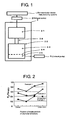
- Fig. 1 illustrates one system of a halide gas-fixing system in which the granular porous calcium oxide of the invention is placed as a fixing material.
- the halide gas-fixing apparatus 3 is composed of a pre-treatment unit 31 and a gas-fixing unit 32 which is connected to the pre-treatment unit 31 via a pipe 36.
- the halide gas is excited to increase its reactivity with calcium oxide or the halide gas is decomposed and converted into decomposition products having a high reactivity with calcium oxide.
- the excitation of halide gas can be performed by plasma treatment.
- the decomposition of halide gas to give the highly reactive decomposition products can be performed by hydrolysis, combustion decomposition, oxidation decomposition, pyrolysis or catalytic decomposition.
- the gas-fixing unit 32 the halide gas or its decomposition products are brought into contact with the granular porous calcium oxide, whereby the halide gas or its decomposition products react with the granular porous calcium oxide and are fixed.
- the gas-fixing unit 32 is a cylindrical vessel having a porous plate 34 placed therein and the granular porous calcium oxide 33 placed on the porous plate 34.
- an evacuating pump 5 To the space 35 between the bottom of the gas-fixing unit 32 and the porous plate 34 is attached an evacuating pump 5.
- the gas in the gas-fixing unit 32 is preferably evacuated by means of the evacuating pump 5 so that the pressure in the gas-fixing unit 32 can be kept in a range of 100 Pa to an atmospheric pressure.
- the halide gas used in the semiconductor device-manufacturing apparatus 1 for selectively etching semiconductor substrates include substrates of semiconductors, substrates composed of a base plate of dielectric material and a film of semiconductor material, and further structures comprising one or more of these substrate and a dielectric material coat, a semiconductor material coat and/or an electro-conductive material coat) to form a CF film on a semiconductor substrate by CVD processing, or cleaning deposits produced on a chamber inner wall after the CVD processing is exhausted from the semiconductor device-manufacturing apparatus 1 by means of the exhaust pump 2.
- the gas exhausted from the etching process may contain a halide gas such as CxFy gas (e.g., CF 4 , C 5 F 8 ) and its decomposition products and SiF 4 gas derived from the etched material (e.g., Si and SiO 2 ).
- the exhaust gas may contain a CxFy gas (e.g., C 5 F 8 ) having been used for the CVD processing and its decomposition product gases such as C 2 F 4 , C 2 F 6 , C 3 F 8 ) .
- the exhausted gas may contain CF 3 gas, CF 4 gas, COF 2 gas, and the like.
- the gas exhausted from the semiconductor device-manufacturing apparatus 1 is sent to the halide gas-fixing apparatus 3.
- the exhaust gas is excited or decomposed in the pre-treatment unit 31 and subsequently sent to the gas-fixing unit 32 through the pipe 36.
- the excited halide gas or the decomposition products are brought into contact with the granular porous calcium oxide under reduced pressure and removed by fixation.
- the gas from which the halide gas or its decomposition products are removed is then passed through the space 35 and exhausted to air by means of an evacuating (or exhaust) pump 5.
- the granular porous calcium hydroxide of the invention is described below.
- the granular porous calcium hydroxide of the invention is in the form aggregated porous spherical calcium hydroxide particles.
- the porous calcium hydroxide comprises a spherical aggregate of calcium hydroxide micro particles (primary particles).
- the granular porous calcium hydroxide of the invention has a BET specific surface area of 20 m 2 /g or more, preferably in the range of 20 to 55 m 2 /g, more preferably in the range of 20 to 50 m 2 /g and a total pore volume of pores having a diameter of 2 to 100 nm is in the range of 0.25 to 0.40 mL/g, preferably in the range of 0.25 to 0.35 mL/g, in which the pores are contained in a whole of the porous particles.
- the granular porous calcium hydroxide of the invention can be employed for the preparation of the granular porous calcium oxide of the invention as the dry granular calcium hydroxide to be subjected to calcination.
- the granular porous calcium hydroxide of the invention preferably has a powderization ratio of not more than 2.0 wt.%, more preferably not more than 1.0 wt.%, more preferably not more than 0.4 wt.%, most preferably not more than 0.2 wt.%.
- the granular porous calcium hydroxide of the invention may contain calcium carbonate and/or calcium oxide, so far as their contents do not exceed 20 wt.%, particularly do not exceed 10 wt.%.
- the granular porous calcium hydroxide of the invention preferably gives a pore size distribution (obtained by the BJH from a desorption isotherm measured using a nitrogen gas) having splitting two peaks in the regions of a diameter range of 2 to 9 nm and a diameter range of 10 to 100 nm.
- a pore size distribution curve Ds (log d) in terms of a specific surface area which is obtained by the BJH method within the diameter range of 2 to 9 nm and the diameter range of 10 to 100 nm.
- the pores in the diameter range of 2 to 9 nm correspond to pores present on the surfaces or inside of the micro particles constituting the porous particles. Accordingly, if the specific surface area of a total of the pores having a pore size in the diameter range of 2 to 9 nm is large, the micro particles constituting the porous particles show a higher gas absorbing capacity.
- the specific surface area of a total of the pores having a pore size in the diameter range of 2 to 9 nm preferably is in the range of 5 to 25 m 2 /g, more preferably 10 to 25 m 2 /g.
- the pores in the diameter range of 10 to 100 nm correspond to pores formed between the adjacently positioned micro particles constituting the porous particles. Therefore, if the pore volume of the pores in the diameter range of 10 to 100 nm is large, the gas to be absorbed easily enter the spaces between the adjacent micro particles and the gas absorbing capacity increases.
- the total pore volume of the pores having a diameter range of 10 to 100 nm is preferably in the range of 0.20 to 0.35 mL/g, more preferably in the range of 0.25 to 0.35 mL/g.
- the high water content calcium hydroxide powder having a water content of 35 to 55 wt.% which is used for the preparation of the granular porous calcium hydroxide of the invention can be prepared by mixing a calcium hydroxide powder having a BET specific surface area of 30 m 2 /g or more with water.
- the calcium hydroxide powder preferably has a BET specific surface area in the range of 30 to 65 m 2 /g, more preferably 30 to 60 m 2 /g.
- the calcium hydroxide powder preferably has a total pore volume of pores having a diameter of 2 to 100 nm in the range of 0.25 to 0.50 mL/g.
- the high water content calcium hydroxide powder can be prepared by bringing a powdery or granular calcium oxide into contact with a slaking water in an amount as much as 1.5 to 5 times by weight a theoretical amount required for slaking the calcium oxide under stirring, the slaking water containing a water-soluble compound selected from the group consisting of an oxycarboxylic acid, an oxycarboxylic acid salt, a saccharide, a sugar alcohol, a monohydric alcohol, a polyhydric alcohol, a primary amine, a secondary amine, an alcohol amine, succinic acid, a metal succinate and a ligninsulfonic acid salt, whereby slaking the calcium oxide to give a low water content calcium hydroxide powder having a water content in the range of 5 to 33 wt.%; adding water to the low water content calcium hydroxide powder under stirring to give a high water content calcium hydroxide powder having a water content in the range of 35 to 55 wt.%.
- the water soluble compound preferably is a sugar alcohol or a polyhydric alcohol. More preferred are sorbitol and diethylene glycol.
- the amount of the water soluble compound in the slaking water is generally in a range of 0.1 to 20 wt.%, preferably in a range of 0.1 to 10 wt.%, more preferably in a range of 0.1 to 5.0 wt.%, based on the amount of calcium hydroxide produced by slaking the calcium oxide in the case that the water soluble compound is sorbitol or diethylene glycol.
- the powdery or granular calcium oxide employed as the starting material preferably has an activity (measured for 50 g of calcium oxide using 4N hydrochloric acid by a grain titration method which is defined in Reference Test Method by Japan Lime Society) of 200 mL (measured at 5 min.) or more.
- the above-mentioned high water content calcium hydroxide powder is so rotated as to bring the powder into contact with each other, whereby producing an aggregated spherical water-containing calcium hydroxide (an aggregate of water-containing spherical porous particles) having a water content in the range of 28 to 50 wt.%.
- the procedure for aggregating particles by bringing the particles into contact with each other under rotation can be performed by tumbling granulation or agitation granulation.
- the granulation of the high water content calcium hydroxide powder is preferably performed under heating the calcium hydroxide powder to a temperature of 100 to 200°C. If the granulation of the high water content calcium hydroxide powder is performed under heating, the grain growth of the calcium hydroxide micro particles increases and the calcium hydroxide micro particles (primary particle) are more strongly combined to each other, so that the resulting water-containing porous particles can acquire increased strength.
- the granular water-containing calcium hydroxide prepared in the above-mentioned granulation procedure is then dried at a temperature in the range of 100 to 250°C, preferably in the range of 120 to 200°C.
- the granular water-containing calcium hydroxide is preferably dried in a closed oven dryer with degassing the inner atmosphere of the dryer, so that calcium hydroxide can be prevented from carbonization. If the pressure in the dryer is adjusted by degassing, the period for drying the water content of the water-containing calcium hydroxide can be controlled.
- the pressure in the oven dryer is generally set to an atmospheric pressure to 0.1x10 5 Pa.
- the granular porous calcium hydroxide of the invention can be utilized advantageously for fixing moisture, acidic gases, halide gases, and their decomposition products, as is described hereinbefore for the granular porous calcium oxide of the invention.
- the granular porous calcium hydroxide of the invention can be employed in the form of a mixture with a fluorocarbon gas decomposition catalyst for fixing a fluorocarbon gas (including perfluorocarbon gas).
- the granular porous calcium hydroxide of the invention can be adjusted in its size (size of granule) in consideration with its use.
- the granular porous calcium hydroxide has a size distribution in which a content of particles having a size of 1 mm or less is less than 5 wt.% (particularly, 1 wt.% or less) and a content of particles having a size of 10 mm or more is less than 5 wt.% (particularly, 1 wt.% or less).
- the water content, BET specific surface area, total pore specific surface area, total pore volume, maximum pore diameter and powderization ratio were determined by the below-given methods.
- the object is placed in a vacuum tray dryer and dried at 180°C for 90 minutes and at a pressure of 50 Pa.
- BET specific surface area is measured at five points by means of Full Automatic Gas Adsorption Measuring Apparatus (Autosorb-3B, available from Quantachrome).
- the pore distribution is determined from a pore size distribution curve Ds (log d) obtainable from specific surface area which is calculated from a desorption isotherm by the BJH method.
- the pore specific surface area is determined from an accumulated pore specific surface area curve which is obtained from a desorption isotherm by the BJH method.
- the desorption isotherm is obtained by a nitrogen gas-adsorption method using Full Automatic Gas Adsorption Measuring Apparatus (Autosorb-3B, available from Quantachrome).
- the maximum pore diameter is determined by the mercury porosimetry using Full Automatic Pore Size Distribution Measuring Apparatus (PoreMater 60-GT, available from Quantachrome).
- the object is precisely weighed to give a sample of 60 g.
- the sample is placed on a circular standard sieve having an aperture size of 250 ⁇ m and a diameter of 75 mm.
- the sieve is vibrated using a magnetic vibrator (A-3PRO, available from FRITSCH Co., Ltd.) for 10 minutes under the conditions that the amplitude is 1 mm and the frequency is 50 times/sec.
- A-3PRO available from FRITSCH Co., Ltd.
- the undersize particles having passed through the sieve are weighed and its weight is introduced into the below-given equation to obtain the powderization ratio (after 10 min.).
- Powderization ratio ( after 10 min . ) 100 ⁇ weight ( g ) of undersize particles / 60 g
- Calcium oxide mass (calcined quick lime) having a particle size of 40-70 mm was pulverized to give a calcium oxide powder under the conditions that 75 wt.% of the powder would pass through a sieve (200 mesh) having an aperture size of 74 ⁇ m.
- a sieve 200 mesh having an aperture size of 74 ⁇ m.
- the activity was determined by the below-described method (Grain titration method defined in Reference Test Method by Japan Lime Society).
- Pure water (500 mL) warmed to 30°C is placed in a 2 L-volume vessel. A small amount of a phenolphthalein indicator was added to the water. The water is stirred at 350 rpm by means of a stirrer. 25 g of calcium oxide powder is precisely weighed to give a sample. The sample is added to the water with checking the time of addition. Subsequently, 4N hydrochloric acid is continuously dropped into the water keeping the color of the indicator from disappearance. The amount of hydrochloric acid dropped into the water within 5 minutes is measured to obtain the 5 min. activity, as well as the amount of hydrochloric acid dropped into the water within 10 minutes is measured to obtain the 10 min. activity.
- a jacketed stirring mixer (effective volume: 75 L, high speed mixer, Proshear Mixer, available from Taiheiyou Machine Manufacturing Co., Ltd.) was heated to 110°C (temperature in the stirring mixer) by introducing steam heated to 110°C into the jacket.
- the heated stirring mixer were placed 9 kg of the above-mentioned calcium oxide powder and 9.73 kg of a slaking water prepared by dissolving 1.8 wt.% of diethylene glycol in pure water. The amount of diethylene glycol corresponded to 1.5 wt.% based on the amount of the resulting calcium hydroxide.
- the calcium oxide powder and slaking water were stirred at 85 rpm for 5 minutes to obtain a low water content calcium hydroxide powder having a water content of 25 wt.%.
- 3.2 kg of pure water (secondary water) was placed in the stirring mixer, and the pure water and the low water content calcium hydroxide powder were stirred at 120 rpm for 5 minutes, to obtain a high water content calcium hydroxide powder having a water content of 37 wt.%.
- the high water content calcium hydroxide powder was stirred at 180 rpm for 5 minutes to give a granular water-containing porous particles having a water content of 30 wt.%.
- the granular water-containing calcium hydroxide obtained in (3) above was placed in a tray vacuum dryer and dried at 180°C for 24 hours with evacuating the dryer to keep the inner pressure at approx. 1.0x10 5 Pa, until the water content reached 0.5 wt.% or less.
- Thus obtained dry granular calcium hydroxide was classified on a circular vibrating sieve to adjust the particle size in the range of 2.0 to 5.6 mm.
- the dry granular calcium hydroxide prepared in (4) above was placed in a vacuum calcining furnace and calcined at 425°C for 14 hours after the inner pressure of the furnace was adjusted to 50 Pa by means of a vacuum pump and the furnace temperature (inside temperature) was increased to 425°C from the ambient temperature at a temperature elevation rate of 1.5°C/min. Subsequently, the furnace was allowed to cool to 250°C (inside temperature), and the calcined product was taken out after the inside pressure of the furnace was adjusted to the ambient temperature. In the calcining procedure, the inside of the furnace was evacuated by a vacuum pump so that the inside pressure would be kept at 150 Pa or less.
- the calcined product was analyzed in its chemical composition by the X-ray diffraction method. The analysis confirmed that the calcined product was granular porous calcium oxide.
- the obtained granular porous calcium oxide had a BET specific surface area of 75.4 m 2 /g, a total pore volume (total volume of pores having a pore size of 2-100 nm) of 0.560 mL/g, a maximum pore diameter of 58.8 nm, and a powderization ratio of 0.18 wt.%.
- the granular porous calcium oxide was then subjected to determination of pore size distribution from a pore size distribution curve Ds (log d) based on specific surface area. It was confirmed that the pore size distribution curve of the granular product had a peak in the pore size range of 2-9 nm as well as the pore size range of 10-100 nm.
- the specific surface area of all pores in the pore range of 2-9 nm was 67.3 m 2 /g, and the total pore volume of all pores in the pore range of 10-100 nm was 0.459 mL/g.
- the granular porous calcium oxide (an average particle size was approx. 3 mm, containing 1 wt.% or less of particles having a particle size of 1 mm or less and 1 wt.% or less of particles having a particle size of 10 mm or more) obtained in the manner described above was filled into a gas-fixing unit 32 of the halide gas-fixing apparatus of Fig. 1 and subjected to a procedure for fixing CF 4 gas and its decomposition products.
- the pre-treatment unit 31 of the fixing apparatus was a commercially available radio frequency plasma generator comprising an alumina cylinder, a radio frequency coil coiled around the cylinder and a radio frequency electric source (frequency: 2 MHz).
- the plasma generator was activated at an output of 3.0 kW to generate an inductively coupled plasma within the cylinder.
- the gas-fixing unit 32 was a cylindrical reactive vessel (inner diameter: 150 mm, length: 600 mm, bottom closed) of stainless steel. In the gas-fixing unit 32 was filled 2 kg of the granular porous calcium oxide (height of the filled calcium oxide: 155 mm).
- the procedure of fixing CF 4 gas and its decomposition products was carried out by continuously measuring the gases contained in the exhaust gas in the exhaust pump 5 by means of an infrared absorption spectrometer (FT-IR) arranged on the side of the exhaust pump 5 connected to the gas-fixing unit 32.
- FT-IR infrared absorption spectrometer
- the procedure of fixing CF 4 gas and its decomposition products was continued until hydrogen fluoride (HF) was detected in the exhaust gas by FT-IR (detection limit: 500 ppm).
- a gaseous mixture of Ar gas, O 2 gas and CF 4 gas (Ar: 300 sccm, O 2 : 150 sccm, CF 4 : 50 sccm) was introduced into the pre-treatment unit 31 in which an inside pressure was kept at 0.4 kPa (3 torr).
- the filled granular porous calcium oxide was stable and did not corrupt during the gas-fixing procedure.
- the pressure loss produced in the gas-fixing unit 32 was so low as 0.2 kPa in the gas-fixing process. Therefore, the inside pressure in the pre-treatment unit 31 was kept stable, so that good plasma discharge was maintained.
- the granular porous calcium oxide of the invention was kept stable in its structure with little powderization and did not increase pressure loss in the gas-fixing unit 32, maintaining the good plasma discharge.
- one porous calcium oxide granule was sampled at a depth of 50 mm from the upper surface of the filled granular porous calcium oxide and analyzed on the section in its composition for Ca and F by means of EDX (energy-dispersive fluorescent X-ray analyzer).
- EDX energy-dispersive fluorescent X-ray analyzer
- the results are illustrated in Fig. 2 .
- the F 2 /Ca ratio after the gas-fixing procedure was approx. 0.7 in the center area and approx. 0.9 in the vicinity of the outer shell. Accordingly, an average F 2 /Ca ratio in whole granule was 0.86 and thus the ratio of contribution to the reaction was 86 molar %.
- Example 1 The procedures of Example 1 were repeated to give a calcined product except that the procedure of Example 1(4) for drying the granular water-containing calcium hydroxide was performed at a temperature of 180°C and a pressure (inside of the dryer) of approx. 0.5x10 5 Pa for 8 hours so that the water content of the granular water-containing calcium hydroxide reached 0.5 wt.% or lower.
- the calcined product was analyzed in its chemical composition by the X-ray diffraction method. The analysis confirmed that the calcined product was granular porous calcium oxide.
- the obtained granular porous calcium oxide had a BET specific surface area of 70.0 m 2 /g, a total pore volume (total volume of pores having a pore size of 2-100 nm) of 0.567 mL/g, a maximum pore diameter of 37.1 nm, and a powderization ratio of 0.45 wt.%.
- the granular porous calcium oxide was then subjected to determination of pore size distribution from a pore size distribution curve Ds (log d) based on specific surface area. It was confirmed that the pore size distribution curve of the granular product had a peak in the pore size range of 2-9 nm as well as the pore size range of 10-100 nm.
- the specific surface area of all pores in the pore range of 2-9 nm was 40.9 m 2 /g, and the total pore volume of all pores in the pore range of 10-100 nm was 0.505 mL/g.
- the granular porous calcium oxide (an average particle size was approx. 3 mm, containing 1 wt.% or less of particles having a particle size of 1 mm or less and 1 wt.% or less of particles having a particle size of 10 mm or more) obtained in the manner described above was filled into a gas-fixing unit 32 of the halide gas-fixing apparatus as is done in Example 1 and subjected to a procedure for fixing CF 4 gas and its decomposition products.
- one porous calcium oxide granule was sampled in the same manner as in Example 1 and analyzed on the section in its composition for Ca and F. The results are illustrated in Fig. 2 .
- the F 2 /Ca ratio after the gas-fixing procedure was approx. 0.5 in the center area and approx. 0.7 in the vicinity of the outer shell. Accordingly, an average F 2 /Ca ratio in whole granule was 0.60 and thus the ratio of contribution to the reaction was 60 molar %.
- Example 1 The procedures of Example 1 were repeated keeping the furnace pressure under 500 Pa to give a calcined product except that the procedure of Example 1(5) for calcining the dry granular calcium hydroxide was performed at a temperature of 550°C for 7 hours.
- the calcined product was analyzed in its chemical composition by the X-ray diffraction method. The analysis confirmed that the calcined product was granular porous calcium oxide.
- the obtained granular porous calcium oxide had a BET specific surface area of 41.8 m 2 /g, a total pore volume (total volume of pores having a pore size of 2-100 nm) of 0.344 mL/g, a maximum pore diameter of 45 nm, and a powderization ratio of 0.45 wt.%.
- the granular porous calcium oxide was then subjected to determination of pore size distribution. It was confirmed that the pore size distribution curve of the granular product had a peak in the pore size range of 2-9 nm as well as the pore size range of 10-100 nm.
- the specific surface area of all pores in the pore range of 2-9 nm was 27.8 m 2 /g, and the total pore volume of all pores in the pore range of 10-100 nm was 0.312 mL/g.
- the granular porous calcium oxide (18 g, an average particle size was approx. 3 mm, containing 1 wt.% or less of particles having a particle size of 1 mm or less and 1 wt.% or less of particles having a particle size of 10 mm or more) was filled into a gas-fixing unit 32 of the gas-fixing apparatus to form a column having a height of 5 mm.
- the gas-fixing procedure was terminated when HF gas was detected in the exhaust gas in the exhaust pump 5.
- one porous calcium oxide granule was sampled from the upper surface of the filled granular porous calcium oxide and analyzed on the section in its composition for Ca and F.
- the results are illustrated in Fig. 2 .
- the F 2 /Ca ratio after the gas-fixing procedure was approx. 0.3 in the center area and approx. 0.4 in the vicinity of the outer shell. Accordingly, an average F 2 /Ca ratio in whole granule was 0.36 and thus the ratio of contribution to the reaction was 36 molar %.
- the BET specific surface area, total pore volume of the pores having a diameter of 2-100 nm, maximum pore diameter and ratio of contribution to reaction of the granular porous calcium oxides prepared in Examples 1 and 2 and Comparison Example 1 are set forth in the following Table 1.
- Table 1 BET specific surface area Total pore Volume Maximum pore diameter Ratio of Contribution (m 2 /g) (mL/g) (nm) (molar %) Ex. 1 75.4 0.560 58.8 86 Ex. 2 70.0 0.567 37.1 60 Comp.1 41.8 0.344 45 36
- Comparison between Examples 1 & 2 and Comparison Example 1 indicates that the increased BET specific surface area and total pore volume contribute to increase the ratio of contribution to reaction of the granular porous calcium oxide. Comparison between Examples 1 and 2 indicates that the increase of the ratio of contribution to reaction is larger than the increases of BET specific surface area and total pore volume. This is understood to be derived that the prominent increase of the maximum pore diameter (1.58 times: 58.8/37.1). Under a low pressure condition, the gas molecules have a longer mean free path and hardly reach the center area of the particle having a small pore diameter.
- Example 1 The procedures of Example 1 were repeated to give a calcined product except that the procedure of Example 1(4) for drying the granular water-containing calcium hydroxide was performed for 72 hours.
- the calcined product was analyzed in its chemical composition by the X-ray diffraction method. The analysis confirmed that the calcined product was granular porous calcium oxide.
- the obtained granular porous calcium oxide had a BET specific surface area of 108.5 m 2 /g, a total pore volume (total volume of pores having a pore size of 2-100 nm) of 0.415 mL/g, a maximum pore diameter of 70.5 nm, and a powderization ratio of 1.2 wt.%.
- the granular porous calcium oxide was then subjected to determination of pore size distribution from a pore size distribution curve Ds (log d) based on specific surface area. It was confirmed that the pore size distribution curve of the granular product had a peak in the pore size range of 2-9 nm as well as the pore size range of 10-100 nm.
- the specific surface area of all pores in the pore range of 2-9 nm was 113.5 m 2 /g, and the total pore volume of all pores in the pore range of 10-100 nm was 0.297 mL/g.
- the granular porous calcium oxide was filled into a gas-fixing unit 32 of the halide gas-fixing apparatus in the same manner as in Example 1 and subjected to a procedure for fixing CF 4 gas and its decomposition products.
- the pressure loss produced in the gas-fixing unit 32 was 0.4 kPa in the gas-fixing process. Although the pressure loss is relatively higher than that observed in Example 1, CF 4 gas was removed at almost the same level as observed in Example 1.
- Example 2 The procedures of Example 2 were repeated to give a granular porous calcium oxide except that the procedure for calcining the dry granular calcium hydroxide was performed for 4 hours.
- the obtained granular calcium oxide had a BET specific surface area of 78.0 m 2 /g, a total pore volume (total volume of pores having a pore size of 2-100 nm) of 0.558 mL/g and a powderization ratio of 0.14 wt.% and contained 4 wt.% of calcium hydroxide.
- the granular porous calcium oxide was filled in the gas-fixing unit 32 of the halide gas fixing apparatus in the same manner as in Example 1, and the procedure for fixing CF 4 gas and its decomposition products was performed. From the beginning of the gas-fixing procedure, the water content of the exhaust gas in the exhaust pump 5 was measured by FT-IR.
- Example 1 The procedures of Example 1 were repeated to give a calcined product except that the procedure of Example 1(5) for calcining the dry granular calcium hydroxide was performed for 4.5 hours.
- the granular porous calcium oxide had a BET specific surface area of 77.4 m 2 /g, a total pore volume (total volume of pores having a pore size of 2-100 nm) of 0.557 mL/g and a powderization ratio of 0.15 wt.%.
- the granular porous calcium oxide was then subjected to determination of pore size distribution from a pore size distribution curve Ds (log d) based on specific surface area. It was confirmed that the pore size distribution curve of the granular product had a peak in the pore size range of 2-9 nm as well as the pore size range of 10-100 nm.
- the specific surface area of all pores in the pore range of 2-9 nm was 72.8 m 2 /g, and the total pore volume of all pores in the pore range of 10-100 nm was 0.456 mL/g.
- Example 1 The procedures of Example 1 were repeated to give a calcined product except that the procedure of Example 1(4) for drying the granular water-containing calcium hydroxide was performed at a temperature of 180°C and a pressure (inside of the dryer) of approx. 0.5x10 5 Pa for 8 hours so that the water content of the granular water-containing calcium hydroxide reached 0.5 wt.% or less and that the dry granular calcium hydroxide was calcined for 4.5 hours.
- the calcined product was analyzed in its chemical composition by the X-ray diffraction method. The analysis confirmed that the calcined product was granular porous calcium oxide.
- the obtained granular porous calcium oxide had a BET specific surface area of 79.0 m 2 /g, a total pore volume (total volume of pores having a pore size of 2-100 nm) of 0.573 mL/g, and a powderization ratio of 0.62 wt.%.
- the granular porous calcium oxide was then subjected to determination of pore size distribution from a pore size distribution curve Ds (log d) based on specific surface area. It was confirmed that the pore size distribution curve of the granular product had a peak in the pore size range of 2-9 nm as well as the pore size range of 10-100 nm.
- the specific surface area of all pores in the pore range of 2-9 nm was 54.5 m 2 /g, and the total pore volume of all pores in the pore range of 10-100 nm was 0.500 mL/g.
- the granular water-containing calcium hydroxide obtained in the same manner as in Example 1(2) was placed in a tray vacuum dryer and dried at 180°C with evacuating the dryer to keep the inner pressure at approx. 0.5x10 5 Pa or lower, until the water content reached 0.5 wt.% or less.
- dry granular calcium hydroxide was pulverized to give a dry granular calcium hydroxide having a BET specific surface area of 38.5 m 2 /g and a total pore volume (of pores having a diameter of 2-100 nm) of 0.317 mL/g.
- a jacketed stirring mixer (effective volume: 75 L) was heated to 110°C (temperature in the stirring mixer) by introducing steam heated to 110°C into the jacket.
- the heated stirring mixer were placed 9 kg of the above-mentioned dry calcium hydroxide powder and 6 kg of pure water.
- the calcium oxide powder and pure water were stirred at 120 rpm for 5 minutes to obtain a high water content calcium hydroxide powder having a water content of 37 wt.%.
- the high water content calcium hydroxide powder was stirred at 180 rpm for 5 minutes, to obtain spherical water-containing porous particles.
- Thus obtained granular water-containing calcium hydroxide had a water content of 30 wt.%.
- the calcined product was analyzed in its chemical composition by the X-ray diffraction method. The analysis confirmed that the calcined product was granular porous calcium oxide.
- the obtained granular porous calcium oxide had a BET specific surface area of 72.3 m 2 /g, a total pore volume (total volume of pores having a pore size of 2-100 nm) of 0.575 mL/g, and a powderization ratio of 0.08 wt.%.
- the granular porous calcium oxide was then subjected to determination of pore size distribution from a pore size distribution curve Ds (log d) based on specific surface area. It was confirmed that the pore size distribution curve of the granular product had a peak in the pore size range of 2-9 nm as well as the pore size range of 10-100 nm.
- the specific surface area of all pores in the pore range of 2-9 nm was 67.3 m 2 /g, and the total pore volume of all pores in the pore range of 10-100 nm was 0.475 mL/g.
- a jacketed stirring mixer (effective volume: 75 L) was heated to 110°C (temperature in the stirring mixer) by introducing steam heated to 110°C into the jacket.
- the heated stirring mixer were placed 9 kg of the calcium oxide powder prepared in Example 1(1) and 8.67 kg of a slaking water prepared by dissolving 1.8 wt.% of diethylene glycol in pure water.
- the amount of diethylene glycol corresponded to 1.3 wt.% based on the amount of the resulting calcium hydroxide.
- the calcium oxide powder and slaking water were stirred at 85 rpm for 5 minutes to obtain a low water content calcium hydroxide powder having a water content of 20 wt.%.
- the low water content calcium hydroxide powder was placed in a vacuum dryer and dried at 180°C with evacuating the dryer to keep the inner pressure at approx. 0.5x10 5 Pa or lower, until the water content reached 0.5 wt.% or less.
- dry granular calcium hydroxide was classified to give a dry calcium hydroxide powder having a BET specific surface area of 47.0 m 2 /g and a total pore volume (total volume of pores having a pore size of 2-100 nm) of 0.276 mL/g.
- a jacketed stirring mixer (effective volume: 75 L) was heated to 110°C (temperature in the stirring mixer) by introducing steam heated to 110°C into the jacket.
- the calcium hydroxide powder and pure water were stirred at 120 rpm for 5 minutes to obtain a high water content calcium hydroxide powder having a water content of 37 wt.%.
- the high water content calcium hydroxide powder was stirred at 180 rpm for 5 minutes, to obtain spherical water-containing porous particles.
- Thus obtained granular water-containing calcium hydroxide had a water content of 31 wt.%.
- the calcined product was analyzed in its chemical composition by the X-ray diffraction method. The analysis confirmed that the calcined product was granular porous calcium oxide.
- the obtained granular porous calcium oxide had a BET specific surface area of 77.0 m 2 /g, a total pore volume (total volume of pores having a pore size of 2-100 nm) of 0.537 mL/g, and a powderization ratio of 0.15 wt.%.
- the granular porous calcium oxide was then subjected to determination of pore size distribution from a pore size distribution curve Ds (log d) based on specific surface area. It was confirmed that the pore size distribution curve of the granular product had a peak in the pore size range of 2-9 nm as well as the pore size range of 10-100 nm.
- the specific surface area of all pores in the pore range of 2-9 nm was 80.8 m 2 /g, and the total pore volume of all pores in the pore range of 10-100 nm was 0.418 mL/g.
- Example 6 The procedures of Example 6 were repeated to give a calcined product except that the procedure for drying the granular water-containing calcium hydroxide was performed at a pressure (inside of the dryer) of approx. 0.5x10 5 Pa for 8 hours so that the water content of the granular water-containing calcium hydroxide reached 0.5 wt.% or less.
- the calcined product was analyzed in its chemical composition by the X-ray diffraction method. The analysis confirmed that the calcined product was granular porous calcium oxide.
- the obtained granular porous calcium oxide had a BET specific surface area of 76.8 m 2 /g, a total pore volume (total volume of pores having a pore size of 2-100 nm) of 0.579 mL/g, and a powderization ratio of 0.78 wt.%.
- the granular porous calcium oxide was then subjected to determination of pore size distribution from a pore size distribution curve Ds (log d) based on specific surface area. It was confirmed that the pore size distribution curve of the granular product had a peak in the pore size range of 2-9 nm as well as the pore size range of 10-100 nm.
- the specific surface area of all pores in the pore range of 2-9 nm was 47.6 m 2 /g, and the total pore volume of all pores in the pore range of 10-100 nm was 0.512 mL/g.
- the drying period for drying granular water-containing calcium hydroxide, BET specific surface area, total pore volume of the pores having a diameter of 2-100 nm, and powderization ratio the granular porous calcium oxides prepared in Examples 5 to 9 are set forth in the following Table 2.
- Table 2 Drying period BET specific surface area Total pore Volume Powderization ratio (hrs.) (m 2 /g) (mL/g) (wt.%) Ex. 5 24 77.4 0.557 0.15 Ex. 6 8 79.0 0.573 0.62 Ex. 7 24 72.3 0.575 0.08 Ex. 8 24 77.0 0.537 0.15 Ex. 9 8 76.8 0.579 0.78
- Calcium oxide mass (calcined quick lime) having a particle size of 40-70 mm was pulverized to give a calcium oxide powder in which 75 wt.% of the powder passed through a sieve (200 mesh) having an aperture size of 74 ⁇ m.
- a sieve 200 mesh having an aperture size of 74 ⁇ m.
- a jacketed stirring mixer (effective volume: 75 L, high speed mixer, Proshear Mixer, available from Taiheiyou Machine Manufacturing Co., Ltd.) was heated to 110°C (temperature in the stirring mixer) by introducing steam heated to 110°C into the jacket.
- the heated stirring mixer were placed 9 kg of the above-mentioned calcium oxide powder and 9.73 kg of a slaking water prepared by dissolving 1.8 wt.% of diethylene glycol in pure water. The amount of diethylene glycol corresponded to 1.5 wt.% based on the amount of the resulting calcium hydroxide.
- the calcium oxide powder and slaking water were stirred at 85 rpm for 5 minutes to obtain a low water content calcium hydroxide powder having a water content of 25 wt.%.
- 3.2 kg of pure water (secondary water) was placed in the stirring mixer, and the pure water and the low water content calcium hydroxide powder were stirred at 120 rpm for 5 minutes, to obtain a high water content calcium hydroxide powder having a water content of 37 wt.%.
- the high water content calcium hydroxide powder was stirred at 180 rpm for 5 minutes to give a granular water-containing porous particles having a water content of 30 wt.%.
- the above-mentioned granular water-containing calcium hydroxide was placed in a tray vacuum dryer and dried at 180°C with evacuating the dryer to keep the inner pressure at approx. 1.0x10 5 Pa for 24 hours, until the water content reached 0.5 wt.% or less.
- dry granular calcium hydroxide was classified on a circular vibrating sieve to adjust the particle size in the range of 2.0 to 5.6 mm.
- the above-mentioned granular porous calcium hydroxide had a BET specific surface area of 28.7 m 2 /g, a total pore volume (total volume of pores having a pore size of 2-100 nm) of 0.301 mL/g, and a powderization ratio of 0.07 wt.%.
- the granular porous calcium hydroxide was then subjected to determination of pore size distribution from a pore size distribution curve Ds (log d) based on specific surface area. It was confirmed that the pore size distribution curve of the granular product had a peak in the pore size range of 2-9 nm as well as the pore size range of 10-100 nm.
- the specific surface area of all pores in the pore range of 2-9 nm was 13.0 m 2 /g, and the total pore volume of all pores in the pore range of 10-100 nm was 0.286 mL/g.
- the high water content calcium hydroxide powder prepared in the same manner as in Example 10 was placed in a tray vacuum dryer and dried at 180°C with evacuating the dryer to keep the inner pressure at approx. 0.5x10 5 Pa or lower, until the water content reached 0.5 wt.% or less.
- dry calcium hydroxide powder was pulverized to give a dry granular calcium hydroxide powder having a BET specific surface area of 38.5 m 2 /g and a total pore volume (of pores having a diameter of 2-100) of 0.317 mL/g.
- a jacketed stirring mixer (effective volume: 75 L) was heated to 110°C (temperature in the stirring mixer) by introducing steam heated to 110°C into the jacket.
- the calcium hydroxide powder and pure water were stirred at 120 rpm for 5 minutes to obtain a high water content calcium hydroxide powder having a water content of 37 wt.%.
- the high water content calcium hydroxide powder was stirred at 180 rpm for 5 minutes, to obtain granular spherical water-containing calcium hydroxide.
- Thus obtained granular water-containing calcium hydroxide had a water content of 30 wt.%.
- Example 10 granular water-containing calcium hydroxide obtained was dried in the same manner as in Example 10 under the following conditions: the dryer inner pressure of at approx. 1.0x10 5 Pa, temperature of 180°C, period of 24 hours until the water content reached 0.5 wt.% or less, to give a dry granular calcium hydroxide.
- dry granular calcium hydroxide was classified to adjust the particle size in the range of 2.0 to 5.6 mm.
- the obtained granular porous calcium hydroxide had a BET specific surface area of 29.6 m 2 /g, a total pore volume (total volume of pores having a pore size of 2-100 nm) of 0.293 mL/g, and a powderization ratio of 0.08 wt.%.
- the granular porous calcium hydroxide was then subjected to determination of pore size distribution from a pore size distribution curve Ds (log d) based on specific surface area. It was confirmed that the pore size distribution curve of the granular product had a peak in the pore size range of 2-9 nm as well as the pore size range of 10-100 nm.
- the specific surface area of all pores in the pore range of 2-9 nm was 17.5 m 2 /g, and the total pore volume of all pores in the pore range of 10-100 nm was 0.274 mL/g.
- a jacketed stirring mixer (effective volume: 75 L) was heated to 110°C (temperature in the stirring mixer) by introducing steam heated to 110°C into the jacket.
- the heated stirring mixer were placed 9 kg of the calcium oxide powder prepared in Example 10 and 8.67 kg of a slaking water prepared by dissolving 1.8 wt.% of diethylene glycol in pure water.
- the amount of diethylene glycol corresponded to 1.3 wt.% based on the amount of the resulting calcium hydroxide.
- the calcium oxide powder and slaking water were stirred at 85 rpm for 5 minutes to obtain a low water content calcium hydroxide powder having a water content of 20 wt.%.
- the low water content calcium hydroxide powder was placed in a vacuum dryer and dried at 180°C with evacuating the dryer to keep the inner pressure at approx. 0.5x10 5 Pa or lower, until the water content reached 0.5 wt.% or less, and pulverized.
- dry calcium hydroxide powder had a BET specific surface area of 47.0 m 2 /g and a total pore volume (total volume of pores having a pore size of 2-100 nm) of 0.276 mL/g.
- a jacketed stirring mixer (effective volume: 75 L) was heated to 110°C (temperature in the stirring mixer) by introducing steam heated to 110°C into the jacket.
- the heated stirring mixer were placed 9 kg of the dry calcium hydroxide powder and 6 kg of pure water.
- the calcium hydroxide powder and pure water were stirred at 120 rpm for 5 minutes to obtain a high water content calcium hydroxide powder having a water content of 37 wt.%.
- the high water content calcium hydroxide powder was stirred at 180 rpm for 5 minutes, to obtain spherical water-containing porous particles.
- Thus obtained granular water-containing calcium hydroxide had a water content of 31 wt.%.
- the obtained granular porous calcium hydroxide had a BET specific surface area of 23.5 m 2 /g, a total pore volume (total volume of pores having a pore size of 2-100 nm) of 0.260 mL/g, and a powderization ratio of 0.07 wt.%.
- the granular porous calcium hydroxide was then subjected to determination of pore size distribution from a pore size distribution curve Ds (log d) based on specific surface area. It was confirmed that the pore size distribution curve of the granular product had a peak in the pore size range of 2-9 nm as well as the pore size range of 10-100 nm.
- the specific surface area of all pores in the pore range of 2-9 nm was 15.5 m 2 /g, and the total pore volume of all pores in the pore range of 10-100 nm was 0.244 mL/g.
- Example 10 The procedures of Example 10 were repeated to give a granular porous calcium hydroxide except that the procedure for drying the granular water-containing calcium hydroxide was performed at a pressure (inside of the dryer) of approx. 0.5x10 5 Pa for 8 hours so that the water content of the granular water-containing calcium hydroxide reached 0.5 wt.% or less.
- the obtained granular porous calcium hydroxide had a BET specific surface area of 46.6 m 2 /g, a total pore volume (total volume of pores having a pore size of 2-100 nm) of 0.316 mL/g, and a powderization ratio of 0.20 wt.%.
- the granular porous calcium hydroxide was then subjected to determination of pore size distribution from a pore size distribution curve Ds (log d) based on specific surface area. It was confirmed that the pore size distribution curve of the granular product had a peak in the pore size range of 2-9 nm as well as the pore size range of 10-100 nm.
- the specific surface area of all pores in the pore range of 2-9 nm was 18.7 m 2 /g, and the total pore volume of all pores in the pore range of 10-100 nm was 0.289 mL/g.
- Example 11 The procedures of Example 11 were repeated to give a granular porous calcium hydroxide except that the procedure for drying the granular water-containing calcium hydroxide was performed at a pressure (inside of the dryer) of approx. 0.5x10 5 Pa for 8 hours so that the water content of the granular water-containing calcium hydroxide reached 0.5 wt.% or less.
- the obtained granular porous calcium hydroxide had a BET specific surface area of 41.2 m 2 /g, a total pore volume (total volume of pores having a pore size of 2-100 nm) of 0.296 mL/g, and a powderization ratio of 0.05 wt.%.
- the granular porous calcium hydroxide was then subjected to determination of pore size distribution from a pore size distribution curve Ds (log d) based on specific surface area. It was confirmed that the pore size distribution curve of the granular product had a peak in the pore size range of 2-9 nm as well as the pore size range of 10-100 nm.
- the specific surface area of all pores in the pore range of 2-9 nm was 14.5 m 2 /g, and the total pore volume of all pores in the pore range of 10-100 nm was 0.276 mL/g.
- Example 12 The procedures of Example 12 were repeated to give a granular porous calcium hydroxide except that the procedure for drying the granular water-containing calcium hydroxide was performed at a pressure (inside of the dryer) of approx. 0.5x10 5 Pa for 8 hours so that the water content of the granular water-containing calcium hydroxide reached 0.5 wt.% or less.
- the obtained granular porous calcium hydroxide had a BET specific surface area of 42.8 m 2 /g, a total pore volume (total volume of pores having a pore size of 2-100 nm) of 0.313 mL/g, and a powderization ratio of 0.05 wt.%.
- the granular porous calcium hydroxide was then subjected to determination of pore size distribution from a pore size distribution curve Ds (log d) based on specific surface area. It was confirmed that the pore size distribution curve of the granular product had a peak in the pore size range of 2-9 nm as well as the pore size range of 10-100 nm.
- the specific surface area of all pores in the pore range of 2-9 nm was 18.6 m 2 /g, and the total pore volume of all pores in the pore range of 10-100 nm was 0.288 mL/g.
- the BET specific surface area, total pore volume of the pores having a diameter of 2-100 nm, and powderization ratio of the granular porous calcium hydroxides prepared in Examples 10 to 15 are set forth in the following Table 3.
- Table 3 BET specific surface area Total pore Volume Powderization ratio (m 2 /g) (mL/g) (wt.%) Ex. 10 28.7 0.301 0.07 Ex. 11 29.6 0.293 0.08 Ex. 12 23.5 0.260 0.07 Ex. 13 46.6 0.316 0.20 Ex. 14 41.2 0.296 0.05 Ex. 15 42.8 0.313 0.05
Landscapes
- Chemical & Material Sciences (AREA)
- Organic Chemistry (AREA)
- Analytical Chemistry (AREA)
- Chemical Kinetics & Catalysis (AREA)
- Inorganic Chemistry (AREA)
- Geology (AREA)
- Life Sciences & Earth Sciences (AREA)
- Engineering & Computer Science (AREA)
- Health & Medical Sciences (AREA)
- Oil, Petroleum & Natural Gas (AREA)
- General Chemical & Material Sciences (AREA)
- Environmental & Geological Engineering (AREA)
- Biomedical Technology (AREA)
- Physics & Mathematics (AREA)
- Thermal Sciences (AREA)
- Compounds Of Alkaline-Earth Elements, Aluminum Or Rare-Earth Metals (AREA)
- Solid-Sorbent Or Filter-Aiding Compositions (AREA)
- Treating Waste Gases (AREA)
Applications Claiming Priority (3)
| Application Number | Priority Date | Filing Date | Title |
|---|---|---|---|
| JP2006155292 | 2006-06-02 | ||
| JP2006155291 | 2006-06-02 | ||
| PCT/JP2007/061295 WO2007142192A1 (ja) | 2006-06-02 | 2007-06-04 | 多孔質酸化カルシウム粒状物及び多孔質水酸化カルシウム粒状物 |
Publications (1)
| Publication Number | Publication Date |
|---|---|
| EP2039655A1 true EP2039655A1 (de) | 2009-03-25 |
Family
ID=38801443
Family Applications (1)
| Application Number | Title | Priority Date | Filing Date |
|---|---|---|---|
| EP07744655A Withdrawn EP2039655A1 (de) | 2006-06-02 | 2007-06-04 | Poröses teilchenförmiges calciumoxidmaterial und poröses teilchenförmiges calciumhydroxidmaterial |
Country Status (7)
| Country | Link |
|---|---|
| US (1) | US20090246524A1 (de) |
| EP (1) | EP2039655A1 (de) |
| JP (1) | JP5148490B2 (de) |
| KR (1) | KR101383996B1 (de) |
| IL (1) | IL195635A0 (de) |
| TW (1) | TWI415793B (de) |
| WO (1) | WO2007142192A1 (de) |
Cited By (2)
| Publication number | Priority date | Publication date | Assignee | Title |
|---|---|---|---|---|
| FR2958182A1 (fr) * | 2010-04-06 | 2011-10-07 | Inst Francais Du Petrole | Procede permettant l'elimination des halogenures alcalins en phase gazeuse |
| WO2018114526A1 (fr) | 2016-12-22 | 2018-06-28 | Carmeuse Research And Technology | Particules d'hydroxyde de calcium a fins pores et leur procede de fabrication |
Families Citing this family (23)
| Publication number | Priority date | Publication date | Assignee | Title |
|---|---|---|---|---|
| JP5165213B2 (ja) * | 2006-06-20 | 2013-03-21 | 宇部マテリアルズ株式会社 | 酸化カルシウム粉末及びその製造方法 |
| JP2010221089A (ja) * | 2009-03-19 | 2010-10-07 | Jfe Engineering Corp | 含塩素揮発性有機化合物の無害化方法 |
| JP5252327B2 (ja) * | 2011-07-14 | 2013-07-31 | 宇部マテリアルズ株式会社 | 有機el素子用水分吸着剤及びその製造方法 |
| US9517471B1 (en) | 2011-08-26 | 2016-12-13 | Mississippi Lime Company | High reactivity lime hydrate and methods of manufacturing and uses thereof |
| JP2015157230A (ja) * | 2012-06-06 | 2015-09-03 | 株式会社共立 | 処理装置および方法 |
| US10155227B2 (en) | 2012-08-24 | 2018-12-18 | Mississippi Lime Company | Systems and method for removal of acid gas in a circulating dry scrubber |
| US9751043B1 (en) | 2014-09-05 | 2017-09-05 | Mississippi Lime Company | Systems and method for removal of acid gas in a circulating dry scrubber |
| PT2920248T (pt) * | 2012-11-15 | 2019-02-13 | Kalkfabrik Netstal Ag | Óxido de cálcio modificado na superfície e processo para produção de óxido de cálcio modificado na superfície |
| US10221094B1 (en) | 2013-03-04 | 2019-03-05 | Mississippi Lime Company | Method of manufacturing hydrated lime |
| US10549256B1 (en) | 2013-03-04 | 2020-02-04 | Mississippi Lime Company | Hydrated Lime product |
| US9963386B1 (en) | 2013-03-04 | 2018-05-08 | Mississippi Lime Company | Method of manufacturing hydrated lime |
| US10668480B1 (en) | 2014-09-05 | 2020-06-02 | Mississippi Lime Company | Systems and method for removal of acid gas in a circulating dry scrubber |
| CA2999811A1 (en) | 2015-09-25 | 2017-03-30 | Clean World Technologies Ltd. | Producing calcium phosphate compositions |
| EP3463622A4 (de) * | 2016-06-03 | 2020-01-22 | Carmeuse North America | Calciumoxidzusammensetzungen |
| JP6886175B2 (ja) * | 2017-03-08 | 2021-06-16 | 河合石灰工業株式会社 | ポーラス生石灰およびその製造方法 |
| US11148149B2 (en) | 2017-12-29 | 2021-10-19 | Mississippi Lime Company | Hydrated lime with reduced resistivity and method of manufacture |
| US11365150B1 (en) * | 2018-07-18 | 2022-06-21 | Mississippi Lime Company | Lime hydrate with improved reactivity via additives |
| CN109433000B (zh) * | 2018-12-04 | 2021-12-24 | 厦门朗净钙业科技有限公司 | 一种脱硫吸收剂及其制备方法和应用 |
| JP7332316B2 (ja) * | 2019-03-28 | 2023-08-23 | タテホ化学工業株式会社 | 化学蓄熱用造粒体の製造方法 |
| CN114950104B (zh) * | 2021-02-25 | 2024-05-28 | 陕西青朗万城环保科技有限公司 | 一种含氟化氢有机废气的处理方法及其控制系统 |
| CN113289487A (zh) * | 2021-05-24 | 2021-08-24 | 承德石油高等专科学校 | 化工酸性尾气处理系统 |
| CN114538799B (zh) * | 2021-10-18 | 2022-09-13 | 浙江天石纳米科技股份有限公司 | 具有丛簇状分生结构的超高比表氢氧化钙粉体的制备方法 |
| CN115353136B (zh) * | 2022-07-28 | 2023-09-01 | 吉林新睿来科技有限公司 | 高比表面积高活性氢氧化钙的生产工艺 |
Family Cites Families (16)
| Publication number | Priority date | Publication date | Assignee | Title |
|---|---|---|---|---|
| JPH0474710A (ja) * | 1990-07-13 | 1992-03-10 | Adachi Sekkai Kogyo Kk | 顆粒状消石灰の製造方法 |
| US5223239A (en) * | 1990-07-24 | 1993-06-29 | Research Corporation Technologies, Inc. | Method of preparing hydrated lime |
| JP3381948B2 (ja) | 1992-12-02 | 2003-03-04 | 鈴木工業株式会社 | 高活性酸化カルシウム多孔質体の製造方法 |
| BE1011935A3 (fr) * | 1998-05-26 | 2000-03-07 | Lhoist Rech & Dev Sa | Produit d'extrusion a base de chaux hydratee. |
| JP2001354414A (ja) * | 2000-06-09 | 2001-12-25 | Okayama Prefecture Kyodo Sekkai Kk | 高反応性アルカリ土類金属酸化物の製造方法 |
| JP2002029738A (ja) * | 2000-07-18 | 2002-01-29 | Okutama Kogyo Co Ltd | 水酸化カルシウム及びそれを用いた酸性ガス処理剤 |
| JP2002080249A (ja) * | 2000-09-06 | 2002-03-19 | Yahashi Kogyo Kk | 消石灰の製造方法、及び消石灰 |
| JP4691770B2 (ja) * | 2000-10-06 | 2011-06-01 | 吉澤石灰工業株式会社 | 高反応性水酸化カルシウムの製造方法 |
| JP2002224565A (ja) | 2000-12-01 | 2002-08-13 | Japan Pionics Co Ltd | フルオロカーボンの分解処理剤及び分解処理方法 |
| JP2003300725A (ja) | 2002-04-02 | 2003-10-21 | Ube Material Industries Ltd | 高活性消石灰の製造 |
| JP4341229B2 (ja) * | 2002-11-13 | 2009-10-07 | 吉澤石灰工業株式会社 | ハンドリング性を改善した高反応性水酸化カルシウムの製造方法 |
| JP4462885B2 (ja) * | 2003-09-29 | 2010-05-12 | Jfeミネラル株式会社 | 高比表面積消石灰及びその製造方法 |
| US7732372B2 (en) * | 2003-11-26 | 2010-06-08 | Cabot Corporation | Particulate absorbent materials |
| JP4895612B2 (ja) * | 2004-01-29 | 2012-03-14 | 大陽日酸株式会社 | 排ガス処理方法および排ガス処理装置 |
| JP4189390B2 (ja) * | 2004-05-14 | 2008-12-03 | 宇部マテリアルズ株式会社 | 多孔質消石灰の製造方法 |
| JP2006021945A (ja) * | 2004-07-07 | 2006-01-26 | Yoshizawa Lime Industry | 高反応性の生石灰とその製造方法 |
-
2007
- 2007-06-04 EP EP07744655A patent/EP2039655A1/de not_active Withdrawn
- 2007-06-04 JP JP2008520562A patent/JP5148490B2/ja active Active
- 2007-06-04 TW TW096120270A patent/TWI415793B/zh active
- 2007-06-04 WO PCT/JP2007/061295 patent/WO2007142192A1/ja not_active Ceased
- 2007-06-04 US US12/303,005 patent/US20090246524A1/en not_active Abandoned
- 2007-06-04 KR KR1020087031527A patent/KR101383996B1/ko active Active
-
2008
- 2008-12-01 IL IL195635A patent/IL195635A0/en unknown
Non-Patent Citations (1)
| Title |
|---|
| See references of WO2007142192A1 * |
Cited By (5)
| Publication number | Priority date | Publication date | Assignee | Title |
|---|---|---|---|---|
| FR2958182A1 (fr) * | 2010-04-06 | 2011-10-07 | Inst Francais Du Petrole | Procede permettant l'elimination des halogenures alcalins en phase gazeuse |
| WO2011124773A1 (fr) * | 2010-04-06 | 2011-10-13 | IFP Energies Nouvelles | Procede permettant l'elimination des halogenures alcalins en phase gazeuse |
| WO2018114526A1 (fr) | 2016-12-22 | 2018-06-28 | Carmeuse Research And Technology | Particules d'hydroxyde de calcium a fins pores et leur procede de fabrication |
| US11155470B2 (en) | 2016-12-22 | 2021-10-26 | Carmeuse Research And Technology | Small-pore calcium hydroxide particles and method for manufacturing same |
| EA039296B1 (ru) * | 2016-12-22 | 2021-12-30 | Кармез Рисеч Энд Текнолоджи | Мелкопористые частицы гидроксида кальция и способ их производства |
Also Published As
| Publication number | Publication date |
|---|---|
| JP5148490B2 (ja) | 2013-02-20 |
| KR101383996B1 (ko) | 2014-04-10 |
| TW200815287A (en) | 2008-04-01 |
| US20090246524A1 (en) | 2009-10-01 |
| TWI415793B (zh) | 2013-11-21 |
| WO2007142192A1 (ja) | 2007-12-13 |
| KR20090019861A (ko) | 2009-02-25 |
| IL195635A0 (en) | 2009-09-01 |
| JPWO2007142192A1 (ja) | 2009-10-22 |
Similar Documents
| Publication | Publication Date | Title |
|---|---|---|
| EP2039655A1 (de) | Poröses teilchenförmiges calciumoxidmaterial und poröses teilchenförmiges calciumhydroxidmaterial | |
| JP3531868B2 (ja) | 活性酸素種を包接する12CaO・7Al2O3化合物およびその製造方法 | |
| EP1452229A1 (de) | Metalloxidteilchen im Nanometer-grössenbereich zur Adsorption von toxischen Chemikalien bei Umgebungstemperatur | |
| Gonzalez-Prior et al. | Oxidation of chlorinated alkanes over Co 3 O 4/SBA-15 catalysts. Structural characterization and reaction mechanism | |
| EA037828B1 (ru) | Цеолитовые адсорбенты с большой внешней поверхностью и их применение | |
| JP5020136B2 (ja) | フッ素固定剤及びpfc分解処理剤並びにこれらの調製方法 | |
| WO2018037322A1 (en) | Rod-shaped mesoporous carbon nitride materials and uses thereof | |
| Medine et al. | Synthesis and adsorption properties of intimately intermingled mixed metal oxide nanoparticles | |
| US7976806B2 (en) | Granular material comprising porous particles containing calcium and/or magnesium | |
| JP2001190959A (ja) | フッ素化合物の分解用反応剤、分解方法及びその用途 | |
| US20210121848A1 (en) | 3d cage type high nitrogen containing mesoporous carbon nitride from diaminoguanidine precursors for co2 capture and conversion | |
| WO2018220474A1 (en) | Synthesis of nitrogen rich 2d mesoporous carbon nitride with rod shaped morphology and tunable pore diameters | |
| WO2023190609A1 (ja) | ゼオライト成形体、吸着装置、精製ガスの製造方法、及びゼオライト成形体の製造方法 | |
| JP3432687B2 (ja) | 一酸化炭素吸着剤及びその製造方法 | |
| WO2018230121A1 (ja) | フッ素含有ガスの分解除去剤、その製造方法と、それを使用したフッ素含有ガス除去方法、及びフッ素資源を回収する方法 | |
| AU2020310943A1 (en) | Hydrogen storage material | |
| JP5031783B2 (ja) | 分解処理剤 | |
| JP2008505750A (ja) | アルカリ土類金属でイオン交換されたゼオライトを用いた三フッ化窒素ガスの精製方法 | |
| Schwanke et al. | Gallium-containing mesoporous silica: supported catalysts with high catalytic activity for oxidation of benzene, toluene and o-xylene | |
| JP5403543B2 (ja) | 光触媒、光触媒製造方法およびトリクロロエチレンの分解処理方法 | |
| TWI322030B (en) | Exhaust gas treating agent, process for treating exhaust gas and treating apparatus of exhaust gas | |
| EP4501849A1 (de) | Gis-zeolith, zeolithformkörper, adsorptionsvorrichtung und verfahren zur herstellung von gereinigtem gas | |
| Krödel et al. | Structure of Na Species in Promoted CaO-Based Sorbents and Their Effect on the Rate and Extent of the CO | |
| CN120615027A (zh) | 气体分离装置、气体分离装置的管理方法、气体分离方法以及精制气体的制造方法 | |
| CN118419867A (zh) | 一种富含介孔管状氮化碳的制备方法 |
Legal Events
| Date | Code | Title | Description |
|---|---|---|---|
| PUAI | Public reference made under article 153(3) epc to a published international application that has entered the european phase |
Free format text: ORIGINAL CODE: 0009012 |
|
| 17P | Request for examination filed |
Effective date: 20081217 |
|
| AK | Designated contracting states |
Kind code of ref document: A1 Designated state(s): AT BE BG CH CY CZ DE DK EE ES FI FR GB GR HU IE IS IT LI LT LU LV MC MT NL PL PT RO SE SI SK TR |
|
| AX | Request for extension of the european patent |
Extension state: AL BA HR MK RS |
|
| STAA | Information on the status of an ep patent application or granted ep patent |
Free format text: STATUS: THE APPLICATION HAS BEEN WITHDRAWN |
|
| DAX | Request for extension of the european patent (deleted) | ||
| RBV | Designated contracting states (corrected) |
Designated state(s): DE FR IT NL |
|
| 18W | Application withdrawn |
Effective date: 20090612 |