EP2017117A1 - Antriebsausgabeeinheit und einstellungsverfahren für sekundärzelle - Google Patents
Antriebsausgabeeinheit und einstellungsverfahren für sekundärzelle Download PDFInfo
- Publication number
- EP2017117A1 EP2017117A1 EP07742728A EP07742728A EP2017117A1 EP 2017117 A1 EP2017117 A1 EP 2017117A1 EP 07742728 A EP07742728 A EP 07742728A EP 07742728 A EP07742728 A EP 07742728A EP 2017117 A1 EP2017117 A1 EP 2017117A1
- Authority
- EP
- European Patent Office
- Prior art keywords
- power
- output
- motor
- secondary battery
- driveshaft
- Prior art date
- Legal status (The legal status is an assumption and is not a legal conclusion. Google has not performed a legal analysis and makes no representation as to the accuracy of the status listed.)
- Granted
Links
Images


Classifications
-
- B—PERFORMING OPERATIONS; TRANSPORTING
- B60—VEHICLES IN GENERAL
- B60L—PROPULSION OF ELECTRICALLY-PROPELLED VEHICLES; SUPPLYING ELECTRIC POWER FOR AUXILIARY EQUIPMENT OF ELECTRICALLY-PROPELLED VEHICLES; ELECTRODYNAMIC BRAKE SYSTEMS FOR VEHICLES IN GENERAL; MAGNETIC SUSPENSION OR LEVITATION FOR VEHICLES; MONITORING OPERATING VARIABLES OF ELECTRICALLY-PROPELLED VEHICLES; ELECTRIC SAFETY DEVICES FOR ELECTRICALLY-PROPELLED VEHICLES
- B60L58/00—Methods or circuit arrangements for monitoring or controlling batteries or fuel cells, specially adapted for electric vehicles
- B60L58/10—Methods or circuit arrangements for monitoring or controlling batteries or fuel cells, specially adapted for electric vehicles for monitoring or controlling batteries
- B60L58/12—Methods or circuit arrangements for monitoring or controlling batteries or fuel cells, specially adapted for electric vehicles for monitoring or controlling batteries responding to state of charge [SoC]
-
- H—ELECTRICITY
- H01—ELECTRIC ELEMENTS
- H01M—PROCESSES OR MEANS, e.g. BATTERIES, FOR THE DIRECT CONVERSION OF CHEMICAL ENERGY INTO ELECTRICAL ENERGY
- H01M10/00—Secondary cells; Manufacture thereof
- H01M10/36—Accumulators not provided for in groups H01M10/05-H01M10/34
-
- B—PERFORMING OPERATIONS; TRANSPORTING
- B60—VEHICLES IN GENERAL
- B60K—ARRANGEMENT OR MOUNTING OF PROPULSION UNITS OR OF TRANSMISSIONS IN VEHICLES; ARRANGEMENT OR MOUNTING OF PLURAL DIVERSE PRIME-MOVERS IN VEHICLES; AUXILIARY DRIVES FOR VEHICLES; INSTRUMENTATION OR DASHBOARDS FOR VEHICLES; ARRANGEMENTS IN CONNECTION WITH COOLING, AIR INTAKE, GAS EXHAUST OR FUEL SUPPLY OF PROPULSION UNITS IN VEHICLES
- B60K6/00—Arrangement or mounting of plural diverse prime-movers for mutual or common propulsion, e.g. hybrid propulsion systems comprising electric motors and internal combustion engines
- B60K6/20—Arrangement or mounting of plural diverse prime-movers for mutual or common propulsion, e.g. hybrid propulsion systems comprising electric motors and internal combustion engines the prime-movers consisting of electric motors and internal combustion engines, e.g. HEVs
- B60K6/22—Arrangement or mounting of plural diverse prime-movers for mutual or common propulsion, e.g. hybrid propulsion systems comprising electric motors and internal combustion engines the prime-movers consisting of electric motors and internal combustion engines, e.g. HEVs characterised by apparatus, components or means specially adapted for HEVs
- B60K6/26—Arrangement or mounting of plural diverse prime-movers for mutual or common propulsion, e.g. hybrid propulsion systems comprising electric motors and internal combustion engines the prime-movers consisting of electric motors and internal combustion engines, e.g. HEVs characterised by apparatus, components or means specially adapted for HEVs characterised by the motors or the generators
-
- B—PERFORMING OPERATIONS; TRANSPORTING
- B60—VEHICLES IN GENERAL
- B60K—ARRANGEMENT OR MOUNTING OF PROPULSION UNITS OR OF TRANSMISSIONS IN VEHICLES; ARRANGEMENT OR MOUNTING OF PLURAL DIVERSE PRIME-MOVERS IN VEHICLES; AUXILIARY DRIVES FOR VEHICLES; INSTRUMENTATION OR DASHBOARDS FOR VEHICLES; ARRANGEMENTS IN CONNECTION WITH COOLING, AIR INTAKE, GAS EXHAUST OR FUEL SUPPLY OF PROPULSION UNITS IN VEHICLES
- B60K6/00—Arrangement or mounting of plural diverse prime-movers for mutual or common propulsion, e.g. hybrid propulsion systems comprising electric motors and internal combustion engines
- B60K6/20—Arrangement or mounting of plural diverse prime-movers for mutual or common propulsion, e.g. hybrid propulsion systems comprising electric motors and internal combustion engines the prime-movers consisting of electric motors and internal combustion engines, e.g. HEVs
- B60K6/22—Arrangement or mounting of plural diverse prime-movers for mutual or common propulsion, e.g. hybrid propulsion systems comprising electric motors and internal combustion engines the prime-movers consisting of electric motors and internal combustion engines, e.g. HEVs characterised by apparatus, components or means specially adapted for HEVs
- B60K6/34—Arrangement or mounting of plural diverse prime-movers for mutual or common propulsion, e.g. hybrid propulsion systems comprising electric motors and internal combustion engines the prime-movers consisting of electric motors and internal combustion engines, e.g. HEVs characterised by apparatus, components or means specially adapted for HEVs characterised by the absence of energy storing means
-
- B—PERFORMING OPERATIONS; TRANSPORTING
- B60—VEHICLES IN GENERAL
- B60K—ARRANGEMENT OR MOUNTING OF PROPULSION UNITS OR OF TRANSMISSIONS IN VEHICLES; ARRANGEMENT OR MOUNTING OF PLURAL DIVERSE PRIME-MOVERS IN VEHICLES; AUXILIARY DRIVES FOR VEHICLES; INSTRUMENTATION OR DASHBOARDS FOR VEHICLES; ARRANGEMENTS IN CONNECTION WITH COOLING, AIR INTAKE, GAS EXHAUST OR FUEL SUPPLY OF PROPULSION UNITS IN VEHICLES
- B60K6/00—Arrangement or mounting of plural diverse prime-movers for mutual or common propulsion, e.g. hybrid propulsion systems comprising electric motors and internal combustion engines
- B60K6/20—Arrangement or mounting of plural diverse prime-movers for mutual or common propulsion, e.g. hybrid propulsion systems comprising electric motors and internal combustion engines the prime-movers consisting of electric motors and internal combustion engines, e.g. HEVs
- B60K6/22—Arrangement or mounting of plural diverse prime-movers for mutual or common propulsion, e.g. hybrid propulsion systems comprising electric motors and internal combustion engines the prime-movers consisting of electric motors and internal combustion engines, e.g. HEVs characterised by apparatus, components or means specially adapted for HEVs
- B60K6/36—Arrangement or mounting of plural diverse prime-movers for mutual or common propulsion, e.g. hybrid propulsion systems comprising electric motors and internal combustion engines the prime-movers consisting of electric motors and internal combustion engines, e.g. HEVs characterised by apparatus, components or means specially adapted for HEVs characterised by the transmission gearings
- B60K6/365—Arrangement or mounting of plural diverse prime-movers for mutual or common propulsion, e.g. hybrid propulsion systems comprising electric motors and internal combustion engines the prime-movers consisting of electric motors and internal combustion engines, e.g. HEVs characterised by apparatus, components or means specially adapted for HEVs characterised by the transmission gearings with the gears having orbital motion
-
- B—PERFORMING OPERATIONS; TRANSPORTING
- B60—VEHICLES IN GENERAL
- B60K—ARRANGEMENT OR MOUNTING OF PROPULSION UNITS OR OF TRANSMISSIONS IN VEHICLES; ARRANGEMENT OR MOUNTING OF PLURAL DIVERSE PRIME-MOVERS IN VEHICLES; AUXILIARY DRIVES FOR VEHICLES; INSTRUMENTATION OR DASHBOARDS FOR VEHICLES; ARRANGEMENTS IN CONNECTION WITH COOLING, AIR INTAKE, GAS EXHAUST OR FUEL SUPPLY OF PROPULSION UNITS IN VEHICLES
- B60K6/00—Arrangement or mounting of plural diverse prime-movers for mutual or common propulsion, e.g. hybrid propulsion systems comprising electric motors and internal combustion engines
- B60K6/20—Arrangement or mounting of plural diverse prime-movers for mutual or common propulsion, e.g. hybrid propulsion systems comprising electric motors and internal combustion engines the prime-movers consisting of electric motors and internal combustion engines, e.g. HEVs
- B60K6/42—Arrangement or mounting of plural diverse prime-movers for mutual or common propulsion, e.g. hybrid propulsion systems comprising electric motors and internal combustion engines the prime-movers consisting of electric motors and internal combustion engines, e.g. HEVs characterised by the architecture of the hybrid electric vehicle
- B60K6/44—Series-parallel type
- B60K6/445—Differential gearing distribution type
-
- B—PERFORMING OPERATIONS; TRANSPORTING
- B60—VEHICLES IN GENERAL
- B60K—ARRANGEMENT OR MOUNTING OF PROPULSION UNITS OR OF TRANSMISSIONS IN VEHICLES; ARRANGEMENT OR MOUNTING OF PLURAL DIVERSE PRIME-MOVERS IN VEHICLES; AUXILIARY DRIVES FOR VEHICLES; INSTRUMENTATION OR DASHBOARDS FOR VEHICLES; ARRANGEMENTS IN CONNECTION WITH COOLING, AIR INTAKE, GAS EXHAUST OR FUEL SUPPLY OF PROPULSION UNITS IN VEHICLES
- B60K6/00—Arrangement or mounting of plural diverse prime-movers for mutual or common propulsion, e.g. hybrid propulsion systems comprising electric motors and internal combustion engines
- B60K6/20—Arrangement or mounting of plural diverse prime-movers for mutual or common propulsion, e.g. hybrid propulsion systems comprising electric motors and internal combustion engines the prime-movers consisting of electric motors and internal combustion engines, e.g. HEVs
- B60K6/42—Arrangement or mounting of plural diverse prime-movers for mutual or common propulsion, e.g. hybrid propulsion systems comprising electric motors and internal combustion engines the prime-movers consisting of electric motors and internal combustion engines, e.g. HEVs characterised by the architecture of the hybrid electric vehicle
- B60K6/44—Series-parallel type
- B60K6/448—Electrical distribution type
-
- B—PERFORMING OPERATIONS; TRANSPORTING
- B60—VEHICLES IN GENERAL
- B60K—ARRANGEMENT OR MOUNTING OF PROPULSION UNITS OR OF TRANSMISSIONS IN VEHICLES; ARRANGEMENT OR MOUNTING OF PLURAL DIVERSE PRIME-MOVERS IN VEHICLES; AUXILIARY DRIVES FOR VEHICLES; INSTRUMENTATION OR DASHBOARDS FOR VEHICLES; ARRANGEMENTS IN CONNECTION WITH COOLING, AIR INTAKE, GAS EXHAUST OR FUEL SUPPLY OF PROPULSION UNITS IN VEHICLES
- B60K6/00—Arrangement or mounting of plural diverse prime-movers for mutual or common propulsion, e.g. hybrid propulsion systems comprising electric motors and internal combustion engines
- B60K6/20—Arrangement or mounting of plural diverse prime-movers for mutual or common propulsion, e.g. hybrid propulsion systems comprising electric motors and internal combustion engines the prime-movers consisting of electric motors and internal combustion engines, e.g. HEVs
- B60K6/42—Arrangement or mounting of plural diverse prime-movers for mutual or common propulsion, e.g. hybrid propulsion systems comprising electric motors and internal combustion engines the prime-movers consisting of electric motors and internal combustion engines, e.g. HEVs characterised by the architecture of the hybrid electric vehicle
- B60K6/48—Parallel type
-
- B—PERFORMING OPERATIONS; TRANSPORTING
- B60—VEHICLES IN GENERAL
- B60K—ARRANGEMENT OR MOUNTING OF PROPULSION UNITS OR OF TRANSMISSIONS IN VEHICLES; ARRANGEMENT OR MOUNTING OF PLURAL DIVERSE PRIME-MOVERS IN VEHICLES; AUXILIARY DRIVES FOR VEHICLES; INSTRUMENTATION OR DASHBOARDS FOR VEHICLES; ARRANGEMENTS IN CONNECTION WITH COOLING, AIR INTAKE, GAS EXHAUST OR FUEL SUPPLY OF PROPULSION UNITS IN VEHICLES
- B60K6/00—Arrangement or mounting of plural diverse prime-movers for mutual or common propulsion, e.g. hybrid propulsion systems comprising electric motors and internal combustion engines
- B60K6/20—Arrangement or mounting of plural diverse prime-movers for mutual or common propulsion, e.g. hybrid propulsion systems comprising electric motors and internal combustion engines the prime-movers consisting of electric motors and internal combustion engines, e.g. HEVs
- B60K6/50—Architecture of the driveline characterised by arrangement or kind of transmission units
- B60K6/52—Driving a plurality of drive axles, e.g. four-wheel drive
-
- B—PERFORMING OPERATIONS; TRANSPORTING
- B60—VEHICLES IN GENERAL
- B60L—PROPULSION OF ELECTRICALLY-PROPELLED VEHICLES; SUPPLYING ELECTRIC POWER FOR AUXILIARY EQUIPMENT OF ELECTRICALLY-PROPELLED VEHICLES; ELECTRODYNAMIC BRAKE SYSTEMS FOR VEHICLES IN GENERAL; MAGNETIC SUSPENSION OR LEVITATION FOR VEHICLES; MONITORING OPERATING VARIABLES OF ELECTRICALLY-PROPELLED VEHICLES; ELECTRIC SAFETY DEVICES FOR ELECTRICALLY-PROPELLED VEHICLES
- B60L50/00—Electric propulsion with power supplied within the vehicle
- B60L50/50—Electric propulsion with power supplied within the vehicle using propulsion power supplied by batteries or fuel cells
-
- B—PERFORMING OPERATIONS; TRANSPORTING
- B60—VEHICLES IN GENERAL
- B60L—PROPULSION OF ELECTRICALLY-PROPELLED VEHICLES; SUPPLYING ELECTRIC POWER FOR AUXILIARY EQUIPMENT OF ELECTRICALLY-PROPELLED VEHICLES; ELECTRODYNAMIC BRAKE SYSTEMS FOR VEHICLES IN GENERAL; MAGNETIC SUSPENSION OR LEVITATION FOR VEHICLES; MONITORING OPERATING VARIABLES OF ELECTRICALLY-PROPELLED VEHICLES; ELECTRIC SAFETY DEVICES FOR ELECTRICALLY-PROPELLED VEHICLES
- B60L58/00—Methods or circuit arrangements for monitoring or controlling batteries or fuel cells, specially adapted for electric vehicles
- B60L58/10—Methods or circuit arrangements for monitoring or controlling batteries or fuel cells, specially adapted for electric vehicles for monitoring or controlling batteries
- B60L58/18—Methods or circuit arrangements for monitoring or controlling batteries or fuel cells, specially adapted for electric vehicles for monitoring or controlling batteries of two or more battery modules
- B60L58/20—Methods or circuit arrangements for monitoring or controlling batteries or fuel cells, specially adapted for electric vehicles for monitoring or controlling batteries of two or more battery modules having different nominal voltages
-
- B—PERFORMING OPERATIONS; TRANSPORTING
- B60—VEHICLES IN GENERAL
- B60L—PROPULSION OF ELECTRICALLY-PROPELLED VEHICLES; SUPPLYING ELECTRIC POWER FOR AUXILIARY EQUIPMENT OF ELECTRICALLY-PROPELLED VEHICLES; ELECTRODYNAMIC BRAKE SYSTEMS FOR VEHICLES IN GENERAL; MAGNETIC SUSPENSION OR LEVITATION FOR VEHICLES; MONITORING OPERATING VARIABLES OF ELECTRICALLY-PROPELLED VEHICLES; ELECTRIC SAFETY DEVICES FOR ELECTRICALLY-PROPELLED VEHICLES
- B60L58/00—Methods or circuit arrangements for monitoring or controlling batteries or fuel cells, specially adapted for electric vehicles
- B60L58/10—Methods or circuit arrangements for monitoring or controlling batteries or fuel cells, specially adapted for electric vehicles for monitoring or controlling batteries
- B60L58/24—Methods or circuit arrangements for monitoring or controlling batteries or fuel cells, specially adapted for electric vehicles for monitoring or controlling batteries for controlling the temperature of batteries
-
- B—PERFORMING OPERATIONS; TRANSPORTING
- B60—VEHICLES IN GENERAL
- B60W—CONJOINT CONTROL OF VEHICLE SUB-UNITS OF DIFFERENT TYPE OR DIFFERENT FUNCTION; CONTROL SYSTEMS SPECIALLY ADAPTED FOR HYBRID VEHICLES; ROAD VEHICLE DRIVE CONTROL SYSTEMS FOR PURPOSES NOT RELATED TO THE CONTROL OF A PARTICULAR SUB-UNIT
- B60W10/00—Conjoint control of vehicle sub-units of different type or different function
- B60W10/04—Conjoint control of vehicle sub-units of different type or different function including control of propulsion units
- B60W10/06—Conjoint control of vehicle sub-units of different type or different function including control of propulsion units including control of combustion engines
-
- B—PERFORMING OPERATIONS; TRANSPORTING
- B60—VEHICLES IN GENERAL
- B60W—CONJOINT CONTROL OF VEHICLE SUB-UNITS OF DIFFERENT TYPE OR DIFFERENT FUNCTION; CONTROL SYSTEMS SPECIALLY ADAPTED FOR HYBRID VEHICLES; ROAD VEHICLE DRIVE CONTROL SYSTEMS FOR PURPOSES NOT RELATED TO THE CONTROL OF A PARTICULAR SUB-UNIT
- B60W10/00—Conjoint control of vehicle sub-units of different type or different function
- B60W10/04—Conjoint control of vehicle sub-units of different type or different function including control of propulsion units
- B60W10/08—Conjoint control of vehicle sub-units of different type or different function including control of propulsion units including control of electric propulsion units, e.g. motors or generators
-
- B—PERFORMING OPERATIONS; TRANSPORTING
- B60—VEHICLES IN GENERAL
- B60W—CONJOINT CONTROL OF VEHICLE SUB-UNITS OF DIFFERENT TYPE OR DIFFERENT FUNCTION; CONTROL SYSTEMS SPECIALLY ADAPTED FOR HYBRID VEHICLES; ROAD VEHICLE DRIVE CONTROL SYSTEMS FOR PURPOSES NOT RELATED TO THE CONTROL OF A PARTICULAR SUB-UNIT
- B60W10/00—Conjoint control of vehicle sub-units of different type or different function
- B60W10/24—Conjoint control of vehicle sub-units of different type or different function including control of energy storage means
- B60W10/26—Conjoint control of vehicle sub-units of different type or different function including control of energy storage means for electrical energy, e.g. batteries or capacitors
-
- B—PERFORMING OPERATIONS; TRANSPORTING
- B60—VEHICLES IN GENERAL
- B60W—CONJOINT CONTROL OF VEHICLE SUB-UNITS OF DIFFERENT TYPE OR DIFFERENT FUNCTION; CONTROL SYSTEMS SPECIALLY ADAPTED FOR HYBRID VEHICLES; ROAD VEHICLE DRIVE CONTROL SYSTEMS FOR PURPOSES NOT RELATED TO THE CONTROL OF A PARTICULAR SUB-UNIT
- B60W20/00—Control systems specially adapted for hybrid vehicles
-
- B—PERFORMING OPERATIONS; TRANSPORTING
- B60—VEHICLES IN GENERAL
- B60W—CONJOINT CONTROL OF VEHICLE SUB-UNITS OF DIFFERENT TYPE OR DIFFERENT FUNCTION; CONTROL SYSTEMS SPECIALLY ADAPTED FOR HYBRID VEHICLES; ROAD VEHICLE DRIVE CONTROL SYSTEMS FOR PURPOSES NOT RELATED TO THE CONTROL OF A PARTICULAR SUB-UNIT
- B60W20/00—Control systems specially adapted for hybrid vehicles
- B60W20/10—Controlling the power contribution of each of the prime movers to meet required power demand
- B60W20/13—Controlling the power contribution of each of the prime movers to meet required power demand in order to stay within battery power input or output limits; in order to prevent overcharging or battery depletion
-
- B—PERFORMING OPERATIONS; TRANSPORTING
- B60—VEHICLES IN GENERAL
- B60K—ARRANGEMENT OR MOUNTING OF PROPULSION UNITS OR OF TRANSMISSIONS IN VEHICLES; ARRANGEMENT OR MOUNTING OF PLURAL DIVERSE PRIME-MOVERS IN VEHICLES; AUXILIARY DRIVES FOR VEHICLES; INSTRUMENTATION OR DASHBOARDS FOR VEHICLES; ARRANGEMENTS IN CONNECTION WITH COOLING, AIR INTAKE, GAS EXHAUST OR FUEL SUPPLY OF PROPULSION UNITS IN VEHICLES
- B60K1/00—Arrangement or mounting of electrical propulsion units
- B60K1/02—Arrangement or mounting of electrical propulsion units comprising more than one electric motor
-
- B—PERFORMING OPERATIONS; TRANSPORTING
- B60—VEHICLES IN GENERAL
- B60L—PROPULSION OF ELECTRICALLY-PROPELLED VEHICLES; SUPPLYING ELECTRIC POWER FOR AUXILIARY EQUIPMENT OF ELECTRICALLY-PROPELLED VEHICLES; ELECTRODYNAMIC BRAKE SYSTEMS FOR VEHICLES IN GENERAL; MAGNETIC SUSPENSION OR LEVITATION FOR VEHICLES; MONITORING OPERATING VARIABLES OF ELECTRICALLY-PROPELLED VEHICLES; ELECTRIC SAFETY DEVICES FOR ELECTRICALLY-PROPELLED VEHICLES
- B60L2240/00—Control parameters of input or output; Target parameters
- B60L2240/40—Drive Train control parameters
- B60L2240/42—Drive Train control parameters related to electric machines
- B60L2240/421—Speed
-
- B—PERFORMING OPERATIONS; TRANSPORTING
- B60—VEHICLES IN GENERAL
- B60L—PROPULSION OF ELECTRICALLY-PROPELLED VEHICLES; SUPPLYING ELECTRIC POWER FOR AUXILIARY EQUIPMENT OF ELECTRICALLY-PROPELLED VEHICLES; ELECTRODYNAMIC BRAKE SYSTEMS FOR VEHICLES IN GENERAL; MAGNETIC SUSPENSION OR LEVITATION FOR VEHICLES; MONITORING OPERATING VARIABLES OF ELECTRICALLY-PROPELLED VEHICLES; ELECTRIC SAFETY DEVICES FOR ELECTRICALLY-PROPELLED VEHICLES
- B60L2240/00—Control parameters of input or output; Target parameters
- B60L2240/40—Drive Train control parameters
- B60L2240/48—Drive Train control parameters related to transmissions
- B60L2240/486—Operating parameters
-
- B—PERFORMING OPERATIONS; TRANSPORTING
- B60—VEHICLES IN GENERAL
- B60W—CONJOINT CONTROL OF VEHICLE SUB-UNITS OF DIFFERENT TYPE OR DIFFERENT FUNCTION; CONTROL SYSTEMS SPECIALLY ADAPTED FOR HYBRID VEHICLES; ROAD VEHICLE DRIVE CONTROL SYSTEMS FOR PURPOSES NOT RELATED TO THE CONTROL OF A PARTICULAR SUB-UNIT
- B60W2510/00—Input parameters relating to a particular sub-units
- B60W2510/08—Electric propulsion units
- B60W2510/081—Speed
-
- B—PERFORMING OPERATIONS; TRANSPORTING
- B60—VEHICLES IN GENERAL
- B60W—CONJOINT CONTROL OF VEHICLE SUB-UNITS OF DIFFERENT TYPE OR DIFFERENT FUNCTION; CONTROL SYSTEMS SPECIALLY ADAPTED FOR HYBRID VEHICLES; ROAD VEHICLE DRIVE CONTROL SYSTEMS FOR PURPOSES NOT RELATED TO THE CONTROL OF A PARTICULAR SUB-UNIT
- B60W2510/00—Input parameters relating to a particular sub-units
- B60W2510/24—Energy storage means
- B60W2510/242—Energy storage means for electrical energy
- B60W2510/244—Charge state
-
- B—PERFORMING OPERATIONS; TRANSPORTING
- B60—VEHICLES IN GENERAL
- B60W—CONJOINT CONTROL OF VEHICLE SUB-UNITS OF DIFFERENT TYPE OR DIFFERENT FUNCTION; CONTROL SYSTEMS SPECIALLY ADAPTED FOR HYBRID VEHICLES; ROAD VEHICLE DRIVE CONTROL SYSTEMS FOR PURPOSES NOT RELATED TO THE CONTROL OF A PARTICULAR SUB-UNIT
- B60W2510/00—Input parameters relating to a particular sub-units
- B60W2510/24—Energy storage means
- B60W2510/242—Energy storage means for electrical energy
- B60W2510/246—Temperature
-
- B—PERFORMING OPERATIONS; TRANSPORTING
- B60—VEHICLES IN GENERAL
- B60W—CONJOINT CONTROL OF VEHICLE SUB-UNITS OF DIFFERENT TYPE OR DIFFERENT FUNCTION; CONTROL SYSTEMS SPECIALLY ADAPTED FOR HYBRID VEHICLES; ROAD VEHICLE DRIVE CONTROL SYSTEMS FOR PURPOSES NOT RELATED TO THE CONTROL OF A PARTICULAR SUB-UNIT
- B60W2520/00—Input parameters relating to overall vehicle dynamics
- B60W2520/10—Longitudinal speed
-
- B—PERFORMING OPERATIONS; TRANSPORTING
- B60—VEHICLES IN GENERAL
- B60W—CONJOINT CONTROL OF VEHICLE SUB-UNITS OF DIFFERENT TYPE OR DIFFERENT FUNCTION; CONTROL SYSTEMS SPECIALLY ADAPTED FOR HYBRID VEHICLES; ROAD VEHICLE DRIVE CONTROL SYSTEMS FOR PURPOSES NOT RELATED TO THE CONTROL OF A PARTICULAR SUB-UNIT
- B60W2540/00—Input parameters relating to occupants
- B60W2540/10—Accelerator pedal position
-
- B—PERFORMING OPERATIONS; TRANSPORTING
- B60—VEHICLES IN GENERAL
- B60W—CONJOINT CONTROL OF VEHICLE SUB-UNITS OF DIFFERENT TYPE OR DIFFERENT FUNCTION; CONTROL SYSTEMS SPECIALLY ADAPTED FOR HYBRID VEHICLES; ROAD VEHICLE DRIVE CONTROL SYSTEMS FOR PURPOSES NOT RELATED TO THE CONTROL OF A PARTICULAR SUB-UNIT
- B60W2540/00—Input parameters relating to occupants
- B60W2540/12—Brake pedal position
-
- B—PERFORMING OPERATIONS; TRANSPORTING
- B60—VEHICLES IN GENERAL
- B60W—CONJOINT CONTROL OF VEHICLE SUB-UNITS OF DIFFERENT TYPE OR DIFFERENT FUNCTION; CONTROL SYSTEMS SPECIALLY ADAPTED FOR HYBRID VEHICLES; ROAD VEHICLE DRIVE CONTROL SYSTEMS FOR PURPOSES NOT RELATED TO THE CONTROL OF A PARTICULAR SUB-UNIT
- B60W2540/00—Input parameters relating to occupants
- B60W2540/16—Ratio selector position
-
- B—PERFORMING OPERATIONS; TRANSPORTING
- B60—VEHICLES IN GENERAL
- B60W—CONJOINT CONTROL OF VEHICLE SUB-UNITS OF DIFFERENT TYPE OR DIFFERENT FUNCTION; CONTROL SYSTEMS SPECIALLY ADAPTED FOR HYBRID VEHICLES; ROAD VEHICLE DRIVE CONTROL SYSTEMS FOR PURPOSES NOT RELATED TO THE CONTROL OF A PARTICULAR SUB-UNIT
- B60W2710/00—Output or target parameters relating to a particular sub-units
- B60W2710/06—Combustion engines, Gas turbines
- B60W2710/0666—Engine torque
-
- H—ELECTRICITY
- H01—ELECTRIC ELEMENTS
- H01M—PROCESSES OR MEANS, e.g. BATTERIES, FOR THE DIRECT CONVERSION OF CHEMICAL ENERGY INTO ELECTRICAL ENERGY
- H01M10/00—Secondary cells; Manufacture thereof
- H01M10/05—Accumulators with non-aqueous electrolyte
- H01M10/052—Li-accumulators
- H01M10/0525—Rocking-chair batteries, i.e. batteries with lithium insertion or intercalation in both electrodes; Lithium-ion batteries
-
- H—ELECTRICITY
- H01—ELECTRIC ELEMENTS
- H01M—PROCESSES OR MEANS, e.g. BATTERIES, FOR THE DIRECT CONVERSION OF CHEMICAL ENERGY INTO ELECTRICAL ENERGY
- H01M4/00—Electrodes
- H01M4/02—Electrodes composed of, or comprising, active material
- H01M2004/021—Physical characteristics, e.g. porosity, surface area
-
- H—ELECTRICITY
- H01—ELECTRIC ELEMENTS
- H01M—PROCESSES OR MEANS, e.g. BATTERIES, FOR THE DIRECT CONVERSION OF CHEMICAL ENERGY INTO ELECTRICAL ENERGY
- H01M10/00—Secondary cells; Manufacture thereof
- H01M10/42—Methods or arrangements for servicing or maintenance of secondary cells or secondary half-cells
- H01M2010/4292—Aspects relating to capacity ratio of electrodes/electrolyte or anode/cathode
-
- Y—GENERAL TAGGING OF NEW TECHNOLOGICAL DEVELOPMENTS; GENERAL TAGGING OF CROSS-SECTIONAL TECHNOLOGIES SPANNING OVER SEVERAL SECTIONS OF THE IPC; TECHNICAL SUBJECTS COVERED BY FORMER USPC CROSS-REFERENCE ART COLLECTIONS [XRACs] AND DIGESTS
- Y02—TECHNOLOGIES OR APPLICATIONS FOR MITIGATION OR ADAPTATION AGAINST CLIMATE CHANGE
- Y02E—REDUCTION OF GREENHOUSE GAS [GHG] EMISSIONS, RELATED TO ENERGY GENERATION, TRANSMISSION OR DISTRIBUTION
- Y02E60/00—Enabling technologies; Technologies with a potential or indirect contribution to GHG emissions mitigation
- Y02E60/10—Energy storage using batteries
-
- Y—GENERAL TAGGING OF NEW TECHNOLOGICAL DEVELOPMENTS; GENERAL TAGGING OF CROSS-SECTIONAL TECHNOLOGIES SPANNING OVER SEVERAL SECTIONS OF THE IPC; TECHNICAL SUBJECTS COVERED BY FORMER USPC CROSS-REFERENCE ART COLLECTIONS [XRACs] AND DIGESTS
- Y02—TECHNOLOGIES OR APPLICATIONS FOR MITIGATION OR ADAPTATION AGAINST CLIMATE CHANGE
- Y02T—CLIMATE CHANGE MITIGATION TECHNOLOGIES RELATED TO TRANSPORTATION
- Y02T10/00—Road transport of goods or passengers
- Y02T10/60—Other road transportation technologies with climate change mitigation effect
- Y02T10/62—Hybrid vehicles
-
- Y—GENERAL TAGGING OF NEW TECHNOLOGICAL DEVELOPMENTS; GENERAL TAGGING OF CROSS-SECTIONAL TECHNOLOGIES SPANNING OVER SEVERAL SECTIONS OF THE IPC; TECHNICAL SUBJECTS COVERED BY FORMER USPC CROSS-REFERENCE ART COLLECTIONS [XRACs] AND DIGESTS
- Y02—TECHNOLOGIES OR APPLICATIONS FOR MITIGATION OR ADAPTATION AGAINST CLIMATE CHANGE
- Y02T—CLIMATE CHANGE MITIGATION TECHNOLOGIES RELATED TO TRANSPORTATION
- Y02T10/00—Road transport of goods or passengers
- Y02T10/60—Other road transportation technologies with climate change mitigation effect
- Y02T10/64—Electric machine technologies in electromobility
-
- Y—GENERAL TAGGING OF NEW TECHNOLOGICAL DEVELOPMENTS; GENERAL TAGGING OF CROSS-SECTIONAL TECHNOLOGIES SPANNING OVER SEVERAL SECTIONS OF THE IPC; TECHNICAL SUBJECTS COVERED BY FORMER USPC CROSS-REFERENCE ART COLLECTIONS [XRACs] AND DIGESTS
- Y02—TECHNOLOGIES OR APPLICATIONS FOR MITIGATION OR ADAPTATION AGAINST CLIMATE CHANGE
- Y02T—CLIMATE CHANGE MITIGATION TECHNOLOGIES RELATED TO TRANSPORTATION
- Y02T10/00—Road transport of goods or passengers
- Y02T10/60—Other road transportation technologies with climate change mitigation effect
- Y02T10/70—Energy storage systems for electromobility, e.g. batteries
Definitions
- the present invention relates to a power output apparatus and a method of setting a secondary battery.
- One proposed structure for a secondary battery used in power output apparatuses is a design satisfying a relation of WHC/T ⁇ 50 (mm), where H, T, and W respectively denotes a width, a lamination height, and a depth of a flat electrode assembly, and C represents a clearance between a flat face of the flat electrode assembly and an inner wall of a rectangular container (see, for example, Patent Document 1).
- H, T, and W respectively denotes a width, a lamination height, and a depth of a flat electrode assembly
- C represents a clearance between a flat face of the flat electrode assembly and an inner wall of a rectangular container.
- Patent Document 1 One typical example of such a secondary battery is a lithium ion battery satisfying the above relation. The size of the clearance ensuring the favorable results is selectable according to this relation.
- the secondary battery used in the power output apparatus is desired to exert the sufficient functions corresponding to the output characteristics of a motor and a generator included in the power output apparatus and the response characteristics of an internal combustion engine and other power sources.
- Mounting a secondary battery of excessively high performance on a vehicle may, however, lower the acceleration performance of the vehicle, due to the high weight of the high-performance secondary battery.
- Application of a motor and a generator of excessively high performances to such a vehicle to improve the lowered acceleration performance may undesirably lower the fuel consumption of the vehicle.
- Mounting a secondary battery of insufficient performance on the vehicle may, on the other hand, restrict the performances of the motor and the generator. Application of the secondary battery having appropriate performances is thus required.
- An object of the present invention is to provide a power output apparatus and a method of setting a secondary battery with a secondary battery having performances corresponding to performances of a motor and a generator.
- the present invention accomplishes at least part of the object mentioned above and the other relevant demands by the following configurations applied to the power output apparatus and the method of setting the secondary battery.
- a first power output apparatus is configured to output power to at least one driveshaft, the power output apparatus comprising: at least one motor constructed to enable power input and power output from and to the at least one driveshaft; and a secondary battery designed to enable transmission of electric power to and from any of the at least one motor and to have an electrode satisfying a condition that a ratio of a total electrode area to a sum of rated output of all the at least one motor in power operation is not lower than a first predetermined ratio.
- the first power output apparatus is equipped with the secondary battery having the electrode satisfying the condition that the ratio of the total electrode area to the sum of rated output of all the at least one motor in power operation is not lower than the first predetermined ratio.
- the secondary battery has the performance corresponding to the drive performance of the motor and thus ensures sufficient exertion of the drive performance of the motor.
- a second power output apparatus is configured to output power to at least one driveshaft, the power output apparatus comprising: at least one motor constructed to enable power input and power output from and to the at least one driveshaft; a power source constructed to output power; at least one generator constructed to enable power generation by using the output power of the power source, while the motor outputs power to the driveshaft; and a secondary battery designed to enable transmission of electric power to and from any of the at least one motor and the at least one generator and to have an electrode satisfying a condition that a ratio of a total electrode area to a total of a sum of rated output of all the at least one motor in regenerative operation and a sum of rated output of all the at least one generator is not less than a second predetermined ratio.
- the second power output apparatus is equipped with the secondary battery having the electrode satisfying the condition that the ratio of the total electrode area to the total of the sum of rated output of all the at least one motor in regenerative operation and the sum of rated output of all the at least one generator is not less than the second predetermined ratio.
- the secondary battery has the performance corresponding to the power generation performances of the motor and the generator and thus ensures sufficient exertion of the power generation performances of the motor and the generator.
- a third power output apparatus is configured to output power to at least one driveshaft, the power output apparatus comprising: at least one motor constructed to enable power input and power output from and to the at least one driveshaft; a power source constructed to output power; at least one generator constructed to enable power generation by using the output power of the power source, while the motor outputs power to the driveshaft; and a secondary battery designed to enable transmission of electric power to and from any of the at least one motor and the at least one generator and to have an electrode satisfying a condition that a ratio of a total electrode area to a sum of rated output of all the at least one motor in power operation is not less than a first predetermined ratio and a condition that a ratio of the total electrode area to a total of a sum of rated output of all the at least one motor in regenerative operation and a sum of rated output of all the at least one generator is not less than a second predetermined ratio.
- the third power output apparatus is equipped with the secondary battery having the electrode satisfying the condition that the ratio of the total electrode area to the sum of rated output of all the at least one motor in power operation is not less than the first predetermined ratio and the condition that the ratio of the total electrode area to the total of the sum of rated output of all the at least one motor in regenerative operation and the sum of rated output of all the at least one generator is not less than the second predetermined ratio.
- the secondary battery has the performances corresponding to the drive performance of the motor and the power generation performances of the motor and the generator and thus ensures sufficient exertion of the drive performance of the motor as well as the power generation performances of the motor and the generator.
- the first predetermined ratio is set based on an amount of electric power per unit area of the electrode in discharge from the secondary battery at a maximum rated output. In the case of a lithium ion battery adopted for the secondary battery, the first predetermined ratio may be 0.04 (m 2 /kW). In one preferable application of either of the second and the third power output apparatuses according to the above aspects of the invention, the second predetermined ratio is set based on an amount of electric power per unit area of the electrode in charge into the secondary battery at a maximum rated output. In the case of a lithium ion battery adopted for the secondary battery, the second predetermined ratio may be 0.09 (m 2 /kW).
- either of the second and the third power output apparatuses further has a three shaft-type power input output assembly connected with three shafts, an output shaft of the power source, the driveshaft, and a rotating shaft of the generator, and designed to input and output power from and to a residual shaft based on powers input from and output to any two shafts among the three shafts.
- any of the first through the third power output apparatuses according to the invention may be mounted on a vehicle as a power source for outputting power for driving the vehicle.
- the driveshaft of the power output apparatus is linked with an axle of the vehicle.
- the vehicle equipped with one of the first through the third power output apparatuses has the similar effects and advantages to those of the corresponding one of the first through the third power output apparatuses discussed above.
- such a vehicle is equipped with the secondary battery having the performance corresponding to the drive performance of the motor or with the secondary battery having the performance corresponding to the power generation performances of the motor and the generator.
- a first method is a method of setting a secondary battery in a power output apparatus, where the power output apparatus includes: at least one motor constructed to enable power input and power output from and to at least one driveshaft; and the secondary battery designed to enable transmission of electric power to and from any of the at least one motor.
- the method sets a performance of the secondary battery to have an electrode satisfying a condition that a ratio of a total electrode area to a sum of rated output of all the at least one motor in power operation is not lower than a first predetermined ratio.
- the first method of setting the secondary battery according to this aspect of the invention sets the performance of the secondary battery to have the electrode satisfying the condition that the ratio of the total electrode area to the sum of rated output of all the at least one motor in power operation is not lower than the first predetermined ratio.
- the secondary battery has the performance corresponding to the drive performance of the motor and thus ensures sufficient exertion of the drive performance of the motor.
- a second method is a method of setting a secondary battery in a power output apparatus, where the power output apparatus includes: at least one motor constructed to enable power input and power output from and to at least one driveshaft; a power source constructed to output power; at least one generator constructed to enable power generation by using the output power of the power source, while the motor outputs power to the driveshaft; and the secondary battery designed to enable transmission of electric power to and from any of the at least one motor and the at least one generator.
- the method sets a performance of the secondary battery to have an electrode satisfying a condition that a ratio of a total electrode area to a total of a sum of rated output of all the at least one motor in regenerative operation and a sum of rated output of all the at least one generator is not less than a second predetermined ratio.
- the second method of setting the secondary battery according to this aspect of the invention sets the performance of the secondary battery to have the electrode satisfying the condition that the ratio of the total electrode area to the total of the sum of rated output of all the at least one motor in regenerative operation and the sum of rated output of all the at least one generator is not less than the second predetermined ratio.
- the secondary battery has the performance corresponding to the power generation performances of the motor and the generator and thus ensures sufficient exertion of the power generation performances of the motor and the generator.
- a third method is a method of setting a secondary battery in a power output apparatus, where the power output apparatus includes: at least one motor constructed to enable power input and power output from and to at least one driveshaft; a power source constructed to output power; at least one generator constructed to enable power generation by using the output power of the power source, while the motor outputs power to the driveshaft; and the secondary battery designed to enable transmission of electric power to and from any of the at least one motor and the at least one generator.
- the method sets a performance of the secondary battery to have an electrode satisfying a condition that a ratio of a total electrode area to a sum of rated output of all the at least one motor in power operation is not less than a first predetermined ratio and a condition that a ratio of the total electrode area to a total of a sum of rated output of all the at least one motor in regenerative operation and a sum of rated output of all the at least one generator is not less than a second predetermined ratio.
- the third method of setting the secondary battery according to this aspect of the invention sets the performance of the secondary battery to have the electrode satisfying the condition that the ratio of the total electrode area to the sum of rated output of all the at least one motor in power operation is not less than the first predetermined ratio and the condition that the ratio of the total electrode area to the total of the sum of rated output of all the at least one motor in regenerative operation and the sum of rated output of all the at least one generator is not less than the second predetermined ratio.
- the secondary battery has the performances corresponding to the drive performance of the motor and the power generation performances of the motor and the generator and thus ensures sufficient exertion of the drive performance of the motor as well as the power generation performances of the motor and the generator.
- Fig. 1 schematically illustrates the configuration of a hybrid vehicle 10 equipped with a power output apparatus 20 in one embodiment of the invention.
- the hybrid vehicle 10 of the embodiment includes an engine 22 constructed as an internal combustion engine to output power by consumption of a hydrocarbon fuel, such as gasoline or light oil, a planetary gear mechanism 30 arranged to have a sun gear connected with a crankshaft 24 or an output shaft of the engine 22 via a non-illustrated damper and a ring gear connected with a driveshaft 28 linked to front wheels 14a and 14b via a differential gear 12, a motor MG1 arranged to have a rotating shaft 26 connected with a carrier of the planetary gear mechanism 30 and have power generation capability, a motor MG2 arranged to input and output power from and to the driveshaft 28, a battery 36 constructed to transmit electric power to and from the motors MG1 and MG2 via respective inverters 32 and 34, and an electronic control unit 40 configured to control
- a hydrocarbon fuel such as gasoline or light oil
- a planetary gear mechanism 30
- the motors MG1 and MG2 are constructed as known synchronous motor generators to enable operations as both a generator and a motor.
- the motors MG1 and MG2 transmit electric power to and from the battery 36 via the inverters 32 and 34.
- Power lines connecting the battery 36 with the inverters 32 and 34 are structured as common positive bus and negative bus shared by the inverters 32 and 34.
- Such connection enables electric power generated by one of the motors MG1 and MG2 to be consumed by the other motor MG2 or MG1.
- the battery 36 may thus be charged with surplus electric power generated by either of the motors MG1 and MG2, while being discharged to supplement insufficient electric power.
- the battery 36 is neither charged nor discharged upon the balance of the input and output of electric powers between the motors MG1 and MG2.
- the battery 36 is a lithium ion battery designed to satisfy a relation of Sb/Pm2max >0.09 (m 2 /kW) as a first requirement and a relation of Sb/(
- Sb denotes a total electrode area of the battery and is equal to the smaller between a total electrode area S1 of a positive electrode and a total electrode area S2 of a negative electrode.
- Pm2max, Pm1min, and Pm2min respectively represent a rated output (maximum output) of the motor MG2 in power operation, a rated output of the motor MG1 in regenerative operation, and a rated output of the motor MG2 in regenerative operation.
- the first requirement and the second requirement will be discussed later in detail.
- the electronic control unit 40 is constructed as a microprocessor including a CPU 42, a ROM 44 configured to store processing programs, a RAM 46 configured to temporarily store data, input and output ports (not shown), and a communication port (not shown).
- the electronic control unit 40 inputs, via its input port, a gearshift position SP or a current setting position of a gearshift lever 51 from a gearshift position sensor 52, an accelerator opening Acc or the driver's depression amount of an accelerator pedal 53 from an accelerator pedal position sensor 54, a brake pedal position BP or the driver's depression amount of a brake pedal 55 from a brake pedal position sensor 56, a vehicle speed V from a vehicle speed sensor 58, and motor rotation speeds from rotation speed sensors (not shown) attached to the motors MG1 and MG2.
- the operations of the engine 22 and the motors MG1 and MG2 are controlled, based on these input data.
- the hybrid vehicle 10 of the embodiment constructed as described above computes a torque demand to be output to the driveshaft 28, based on the vehicle speed V and the accelerator opening Acc corresponding to the driver' s depression amount of the accelerator pedal 53 and controls the operations of the engine 22 and the motors MG1 and MG2 to ensure output of a power demand corresponding to the computed torque demand to the driveshaft 28.
- a torque conversion drive mode while the engine 22 is driven and controlled to output a required level of power corresponding to the power demand, the motors MG1 and MG2 are driven and controlled to enable all the output power of the engine 22 to be subjected to torque conversion by the planetary gear mechanism 30 and the motors MG1 and MG2 and to be output to the driveshaft 28.
- a charge-discharge drive mode the engine 22 is driven and controlled to output a required level of power corresponding to the sum of the power demand and electric power used to charge the battery 36 or discharged from the battery 36.
- the motors MG1 and MG2 are driven and controlled to enable all or part of the output power of the engine 22, which is equivalent to the power demand with charge or discharge of the battery 36, to be subjected to torque conversion by the planetary gear mechanism 30 and the motors MG1 and MG2 and to be output to the driveshaft 28.
- the motor MG2 is driven and controlled to ensure output of a required level of power corresponding to the power demand to the driveshaft 28, while the engine 22 stops its operation.
- a secondary battery for example, a lithium ion battery like the battery 36 in the embodiment is charged and discharged by electrode reactions on the positive electrode and on the negative electrode.
- the maximum charging power and the maximum discharging power thus depend upon the electrode area.
- the electrode reactions are the chemical reactions and are affected by the temperature condition. Namely the maximum charging power and the maximum discharging power of a battery having a fixed electrode area are varied according to the battery temperature. In general, both the charging power and the discharging power decrease with a decrease in battery temperature.
- the motor MG2 may be driven in the motor drive mode to output a maximum torque at low temperatures, for example, -20°C.
- the power output apparatus 20 of the embodiment is assumed to be mounted on a general automobile.
- the condition required for enabling output of the rated power from the battery 36 to the motor MG2 at low temperatures is determinable as a relation of the total electrode area Sb of the battery to the rated output Pm2max of the motor MG2 in power operation.
- the required condition is Sb/Pm2max >0.09 (m 2 /kW) for a lithium ion battery adopted for the battery 36. This is given as the first requirement.
- the allowable battery voltage excess rate represents an excess ratio of an allowable voltage of the battery 36 against the ratio (Sb/Pm2max) of the total electrode area Sb of the battery 36 to the rated output Pm2max of the motor MG2 in power operation.
- the allowable battery voltage excess rate is less than 100% in a range of the ratio (Sb/Pm2max) exceeding 0.09 (m 2 /kW). This ensures output of the rated power Pm2max from the motor MG2 in power operation in the range of the allowable voltage the battery 36. It is then assumed that the front wheels 14a and 14b have a skid at a start of the hybrid vehicle 10 with the driver's depression of the accelerator pedal 53.
- the motor MG1 is under regenerative control with a large regenerative torque and the motor MG2 outputs a large torque for a start.
- the skid of the front wheels 14a and 14b in this state leads to a slip of the front wheels 14a and 14b.
- the battery 36 is thus instantaneously charged with both the regenerative power of the motor MG1 and the regenerative power of the motor MG2.
- the condition required for enabling the battery 36 to be instantaneously charged with both the regenerative power of the motor MG1 and the regenerative power of the motor MG2 is determinable as a relation of the total electrode area Sb of the battery to the sum of the rated output Pm1min of the motor MG1 in regenerative operation and the rated output Pm2min of the motor MG2 in regenerative operation.
- the required condition is Sb/(
- the allowable battery voltage excess rate represents the excess ratio of the allowable voltage of the battery 36 against the ratio (Sb/
- the allowable battery voltage excess rate is less than 100% in a range of the ratio (Sb/
- the battery 36 of the embodiment is thus constructed by the lithium ion battery having the electrode conditions satisfying both the first requirement of Sb/Pm2max >0.09 (m 2 /kW) and the second requirement of Sb/(
- the battery 36 of the embodiment is designed to have the minimum possible area as the total electrode area Sb in a specific range satisfying both the first requirement and the second requirement. Such design minimizes the size of the battery 36 while ensuring sufficient exertion of the performances of both the motors MG1 and MG2.
- the battery 36 is constructed by the lithium ion battery satisfying the first requirement of Sb/Pm2max >0.09 (m 2 /kW) as the relation of the total electrode area Sb of the battery to the rated output Pm2max of the motor MG2 in power operation and the second requirement of Sb/(
- the lithium ion battery satisfying the first requirement and the second requirement ensures sufficient exertion of the drive characteristics of the motor MG2 and the power generation characteristics of both the motors MG1 and MG2.
- the battery 36 of the embodiment is designed to have the minimum possible area as the total electrode area Sb in the specific range satisfying both the first requirement and the second requirement. Such design ensures sufficient exertion of the performances of both the motors MG1 and MG2, while minimizing the size of the battery 36 and thereby effectively improving the fuel consumption of the vehicle.
- the hybrid vehicle 10 equipped with the power output apparatus 20 of the embodiment uses the lithium battery ion for the battery 36.
- the battery 36 is, however, not restricted to the lithium ion battery but may be any of other various secondary batteries, for example, a nickel hydride battery.
- ) >0.04 (m 2 /kW) are adjusted with a ratio of an amount of electric power per unit area of an electrode in discharge from or charge into the applied secondary battery at its maximum rated output to an amount of electric power per unit area of the electrode in discharge from or charge into the lithium ion battery at the maximum rated output.
- the hybrid vehicle 10 equipped with the power output apparatus 20 of the embodiment has the engine 22, the planetary gear mechanism 30, the motors MG1 and MG2, and the battery 36 arranged to transmit electric power to and from the motors MG1 and MG2.
- This configuration of the vehicle is, however, not restrictive.
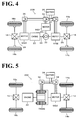
- the technique of the invention is also applicable to another hybrid vehicle equipped with a power output apparatus 20B of a modified configuration as shown in Fig. 4 .
- the hybrid vehicle of this modified example has a motor MG3 connected with rear wheels 18a and 18b and configured to input and output power from and to a rear driveshaft 29 via a differential gear 16, in addition to the structure of the hybrid vehicle 10 of the embodiment.
- the first requirement is given by Sb (Pm2max+Pm3max) >0.09 (m 2 /kW) as a relation of the total electrode area Sb of the battery to the sum of a rated output Pm3max of the motor MG3 in power operation and the rated output Pm2max of the motor MG2 in power operation.
- the first requirement may be regarded as a ratio of the total electrode area Sb of the battery to a sum of rated outputs of all motors in power operation, which are arranged to enable power output to the driveshaft 28 or to the rear driveshaft 29.
- the second requirement is given by Sb/(
- the second requirement may be regarded as a ratio of the total electrode area Sb of the battery to the absolute value of a sum of rated outputs of all the motors in regenerative operation.
- the first requirement is generally expressible as the ratio of the total electrode area Sb of the battery to the sum of rated outputs of all motors in power operation, which are arranged to enable power output to the driveshaft 28 or to the rear driveshaft 29.
- the second requirement is generally expressible as the ratio of the total electrode area Sb of the battery to the absolute value of the sum of rated outputs of all the motors in regenerative operation.
- the first requirement and the second requirement are applicable to the battery 36 in another hybrid vehicle equipped with a power output apparatus 20C of one modified configuration where the planetary gear mechanism 30 and the motor MG1 are replaced by a pair-rotor motor TRMG with an outer rotor and an inner rotor as shown in Fig. 5 .
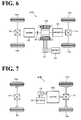
- the first requirement and the second requirement are also applicable to the battery 36 in still another hybrid vehicle equipped with a power output apparatus 20D of another modified configuration where the engine 22 is separable by means of a clutch 23 and the output power of a motor MG is transmittable by a transmission 60 as shown in Fig. 6 .
- the first requirement and the second requirement are further applicable to the battery 36 in another hybrid vehicle equipped with a power output apparatus 20E of still another modified configuration including only a motor MG as a driving power source with omission of the engine 22 as shown in Fig. 7 . All the hybrid vehicle 10 equipped with the power output apparatus 20 of the embodiment shown in Fig. 1 , the hybrid vehicle equipped with the power output apparatus 20B of the modified example shown in Fig.
- the hybrid vehicle equipped with the power output apparatus 20C of the modified example shown in Fig. 5 the hybrid vehicle equipped with the power output apparatus 20D of the modified example shown in Fig. 6 , and the hybrid vehicle equipped with the power output apparatus 20E of the modified example shown in Fig. 7 have the differential gears 12 and 16.
- the differential gears 12 and 16 may, however, be omitted when not required.
- the hybrid vehicle 10 equipped with the power output apparatus 20 of the embodiment uses the lithium ion battery satisfying the first requirement of Sb/Pm2max >0.09 (m 2 /kW) and the second requirement of Sb/(
- the lithium ion battery used for the battery 36 may satisfy only the first requirement of Sb/Pm2max >0. 09 (m 2 /kW) while dissatisfying the second requirement of Sb/ (
- the lithium ion battery used for the battery 36 may otherwise satisfy only the second requirement of Sb/(
- the embodiment discussed above regards the hybrid vehicle 10 equipped with the power output apparatus 20.
- the technique of the invention is also applicable to a secondary battery used for a power output apparatus that is not mounted on a hybrid vehicle or any other vehicle.
- the principle of the invention is not restricted to the power output apparatus 20 or the hybrid vehicle 10 but is also actualized by a method of setting a secondary battery.
- the technique of the present invention is preferably applied to the manufacturing industries of power output apparatuses and other relevant devices.
Landscapes
- Engineering & Computer Science (AREA)
- Transportation (AREA)
- Mechanical Engineering (AREA)
- Chemical & Material Sciences (AREA)
- Combustion & Propulsion (AREA)
- Power Engineering (AREA)
- Sustainable Development (AREA)
- Sustainable Energy (AREA)
- Life Sciences & Earth Sciences (AREA)
- Automation & Control Theory (AREA)
- Manufacturing & Machinery (AREA)
- Chemical Kinetics & Catalysis (AREA)
- Electrochemistry (AREA)
- General Chemical & Material Sciences (AREA)
- Electric Propulsion And Braking For Vehicles (AREA)
- Hybrid Electric Vehicles (AREA)
Applications Claiming Priority (2)
| Application Number | Priority Date | Filing Date | Title |
|---|---|---|---|
| JP2006131890A JP4379432B2 (ja) | 2006-05-10 | 2006-05-10 | 動力出力装置およびこれを搭載する車両並びに二次電池の設定手法 |
| PCT/JP2007/059293 WO2007129632A1 (ja) | 2006-05-10 | 2007-05-01 | 動力出力装置および二次電池の設定手法 |
Publications (3)
| Publication Number | Publication Date |
|---|---|
| EP2017117A1 true EP2017117A1 (de) | 2009-01-21 |
| EP2017117A4 EP2017117A4 (de) | 2015-12-23 |
| EP2017117B1 EP2017117B1 (de) | 2020-04-29 |
Family
ID=38667741
Family Applications (1)
| Application Number | Title | Priority Date | Filing Date |
|---|---|---|---|
| EP07742728.4A Ceased EP2017117B1 (de) | 2006-05-10 | 2007-05-01 | Antriebsausgabeeinheit und einstellungsverfahren für sekundärzelle |
Country Status (6)
| Country | Link |
|---|---|
| US (1) | US7803478B2 (de) |
| EP (1) | EP2017117B1 (de) |
| JP (1) | JP4379432B2 (de) |
| KR (1) | KR100973765B1 (de) |
| CN (1) | CN101443210B (de) |
| WO (1) | WO2007129632A1 (de) |
Cited By (1)
| Publication number | Priority date | Publication date | Assignee | Title |
|---|---|---|---|---|
| RU2786903C1 (ru) * | 2022-07-27 | 2022-12-26 | Общество с ограниченной ответственностью "Сергеев Динамикс" | Полноприводный автомобиль повышенной проходимости с электрическим приводом колёс |
Families Citing this family (8)
| Publication number | Priority date | Publication date | Assignee | Title |
|---|---|---|---|---|
| JP4725815B2 (ja) * | 2008-11-21 | 2011-07-13 | 本田技研工業株式会社 | 蓄電器冷却装置 |
| JP5889750B2 (ja) * | 2012-08-10 | 2016-03-22 | 株式会社デンソー | 車両用電源システム |
| JP6332172B2 (ja) * | 2015-07-06 | 2018-05-30 | トヨタ自動車株式会社 | ハイブリッド自動車 |
| JP6706507B2 (ja) * | 2016-02-12 | 2020-06-10 | 本田技研工業株式会社 | 車両 |
| JPWO2017158960A1 (ja) * | 2016-03-16 | 2018-11-08 | オートモーティブエナジーサプライ株式会社 | ハイブリッド型電気自動車およびハイブリッド型電気自動車用のリチウムイオン二次電池の選定方法 |
| JP7122186B2 (ja) * | 2018-07-13 | 2022-08-19 | 日野自動車株式会社 | モーター制御装置 |
| US11131376B2 (en) * | 2018-09-14 | 2021-09-28 | Brian K Ott | Multisection speed/torque compensating electro-mechanical energy-conversion device |
| CN112253349B (zh) * | 2020-09-23 | 2022-07-05 | 安庆船用电器有限责任公司 | 一种用于船用低速柴油机启动的辅助设备 |
Family Cites Families (15)
| Publication number | Priority date | Publication date | Assignee | Title |
|---|---|---|---|---|
| DE4001684A1 (de) * | 1990-01-22 | 1991-07-25 | Merck Patent Gmbh | Hybridsystem fuer traktionszwecke |
| JP3188033B2 (ja) | 1993-04-02 | 2001-07-16 | 三洋電機株式会社 | 非水系二次電池 |
| JPH08331704A (ja) * | 1995-05-30 | 1996-12-13 | Honda Motor Co Ltd | 電気推進車両およびそのバッテリ出力設定方法 |
| JPH09233608A (ja) * | 1996-02-28 | 1997-09-05 | Jeol Ltd | ハイブリッド電気自動車 |
| JPH11224693A (ja) * | 1997-12-03 | 1999-08-17 | Matsushita Electric Ind Co Ltd | 非水電解液二次電池 |
| CA2327597A1 (en) | 1999-12-07 | 2001-06-07 | Ngk Insulators, Ltd. | Lithium secondary battery and transportation method thereof |
| JP3394484B2 (ja) * | 1999-12-07 | 2003-04-07 | 日本碍子株式会社 | リチウム二次電池及びその設計方法 |
| JP3707411B2 (ja) * | 2001-09-28 | 2005-10-19 | トヨタ自動車株式会社 | 動力出力装置およびこれを備える自動車 |
| JP4313992B2 (ja) | 2002-07-12 | 2009-08-12 | トヨタ自動車株式会社 | 角型二次電池の設計方法 |
| US6769389B2 (en) * | 2002-11-26 | 2004-08-03 | General Motors Corporation | Dual voltage tandem engine start system and method |
| JP3948421B2 (ja) * | 2003-03-10 | 2007-07-25 | 日産自動車株式会社 | 密閉型ニッケル水素二次電池を備えたハイブリッド電気自動車 |
| JP2004288405A (ja) * | 2003-03-20 | 2004-10-14 | Ngk Insulators Ltd | リチウム二次電池 |
| JP4013905B2 (ja) * | 2003-05-21 | 2007-11-28 | トヨタ自動車株式会社 | 動力出力装置およびその制御方法並びに自動車 |
| DE102004008767A1 (de) * | 2004-02-25 | 2005-09-15 | Robert Bosch Gmbh | Fahrzeugbatterie |
| JP3915801B2 (ja) | 2004-06-23 | 2007-05-16 | トヨタ自動車株式会社 | 動力出力装置およびその制御方法 |
-
2006
- 2006-05-10 JP JP2006131890A patent/JP4379432B2/ja active Active
-
2007
- 2007-05-01 CN CN2007800168922A patent/CN101443210B/zh not_active Expired - Fee Related
- 2007-05-01 KR KR1020087027351A patent/KR100973765B1/ko not_active Expired - Fee Related
- 2007-05-01 US US12/298,955 patent/US7803478B2/en active Active
- 2007-05-01 EP EP07742728.4A patent/EP2017117B1/de not_active Ceased
- 2007-05-01 WO PCT/JP2007/059293 patent/WO2007129632A1/ja not_active Ceased
Cited By (1)
| Publication number | Priority date | Publication date | Assignee | Title |
|---|---|---|---|---|
| RU2786903C1 (ru) * | 2022-07-27 | 2022-12-26 | Общество с ограниченной ответственностью "Сергеев Динамикс" | Полноприводный автомобиль повышенной проходимости с электрическим приводом колёс |
Also Published As
| Publication number | Publication date |
|---|---|
| WO2007129632A1 (ja) | 2007-11-15 |
| EP2017117A4 (de) | 2015-12-23 |
| KR100973765B1 (ko) | 2010-08-04 |
| CN101443210A (zh) | 2009-05-27 |
| EP2017117B1 (de) | 2020-04-29 |
| CN101443210B (zh) | 2011-12-14 |
| US7803478B2 (en) | 2010-09-28 |
| JP2007306698A (ja) | 2007-11-22 |
| US20090258280A1 (en) | 2009-10-15 |
| JP4379432B2 (ja) | 2009-12-09 |
| KR20090018046A (ko) | 2009-02-19 |
Similar Documents
| Publication | Publication Date | Title |
|---|---|---|
| EP2127981B1 (de) | Fahrzeug und steuerungsverfahren dafür | |
| EP1731346B1 (de) | Leistungsausgabevorrichtung und damit versehenes kraftfahrzeug | |
| US9027680B2 (en) | Hybrid vehicle and control method thereof | |
| JP4453746B2 (ja) | 動力出力装置およびその制御方法並びに車両 | |
| EP2679460B1 (de) | Steuerungsvorrichtung für ein hybridfahrzeug | |
| EP1904354B1 (de) | Hybridfahrzeug und steuerverfahren für hybridfahrzeug | |
| EP2017117B1 (de) | Antriebsausgabeeinheit und einstellungsverfahren für sekundärzelle | |
| US20100250042A1 (en) | Vehicle and method of controlling the vehicle | |
| US20120136519A1 (en) | Motor vehicle | |
| JP2007239511A (ja) | 車両の駆動制御装置 | |
| EP1795726A1 (de) | Leistungsabgabeeinheit, kraftfahrzeug damit und verfahren zur steuerung der leistungsabgabeeinheit | |
| CN101208230B (zh) | 混合动力车辆 | |
| JP4229105B2 (ja) | ハイブリッド車およびその制御方法 | |
| JP2011188569A (ja) | 車両およびその制御方法 | |
| JP2008254677A (ja) | 車両及びその制御方法 | |
| JP2009126449A (ja) | 車両、内燃機関の始動制御装置及び内燃機関の始動方法 | |
| JP4365354B2 (ja) | 動力出力装置およびこれを搭載する自動車並びに動力出力装置の制御方法 | |
| JP2014040199A (ja) | 車両用制御装置 | |
| JP4812648B2 (ja) | 車両およびその制御方法 | |
| JP2010023588A (ja) | 動力出力装置およびこれを搭載する車両並びに動力出力装置の制御方法 | |
| JP2009227074A (ja) | ハイブリッド車およびその制御方法 | |
| JP2007230366A (ja) | 動力出力装置、それを搭載する車両及び動力出力装置の制御方法 | |
| JP4492605B2 (ja) | 動力出力装置およびその制御方法並びに車両 | |
| JP4281731B2 (ja) | 動力出力装置およびその制御方法並びに車両 | |
| JP2008162346A (ja) | 動力出力装置およびその制御方法並びに車両 |
Legal Events
| Date | Code | Title | Description |
|---|---|---|---|
| PUAI | Public reference made under article 153(3) epc to a published international application that has entered the european phase |
Free format text: ORIGINAL CODE: 0009012 |
|
| 17P | Request for examination filed |
Effective date: 20081010 |
|
| AK | Designated contracting states |
Kind code of ref document: A1 Designated state(s): AT BE BG CH CY CZ DE DK EE ES FI FR GB GR HU IE IS IT LI LT LU LV MC MT NL PL PT RO SE SI SK TR |
|
| AX | Request for extension of the european patent |
Extension state: AL BA HR MK RS |
|
| DAX | Request for extension of the european patent (deleted) | ||
| RBV | Designated contracting states (corrected) |
Designated state(s): DE FR GB |
|
| RAP1 | Party data changed (applicant data changed or rights of an application transferred) |
Owner name: TOYOTA JIDOSHA KABUSHIKI KAISHA |
|
| RA4 | Supplementary search report drawn up and despatched (corrected) |
Effective date: 20151125 |
|
| RIC1 | Information provided on ipc code assigned before grant |
Ipc: H01M 2/34 20060101ALI20151119BHEP Ipc: B60K 6/48 20071001ALI20151119BHEP Ipc: B60K 6/26 20071001ALI20151119BHEP Ipc: B60W 10/06 20060101ALI20151119BHEP Ipc: B60K 6/34 20071001ALI20151119BHEP Ipc: B60W 20/00 20060101ALI20151119BHEP Ipc: B60K 6/52 20071001ALI20151119BHEP Ipc: H01M 4/02 20060101ALI20151119BHEP Ipc: B60W 10/08 20060101ALI20151119BHEP Ipc: B60K 1/02 20060101ALI20151119BHEP Ipc: H01M 10/36 20100101ALI20151119BHEP Ipc: B60K 6/448 20071001ALI20151119BHEP Ipc: B60K 6/365 20071001ALI20151119BHEP Ipc: B60K 6/445 20071001ALI20151119BHEP Ipc: H01M 10/0525 20100101ALI20151119BHEP Ipc: B60L 11/18 20060101AFI20151119BHEP Ipc: H01M 10/42 20060101ALI20151119BHEP Ipc: B60W 10/26 20060101ALI20151119BHEP |
|
| STAA | Information on the status of an ep patent application or granted ep patent |
Free format text: STATUS: EXAMINATION IS IN PROGRESS |
|
| 17Q | First examination report despatched |
Effective date: 20180613 |
|
| RIC1 | Information provided on ipc code assigned before grant |
Ipc: B60K 6/52 20071001ALI20151119BHEP Ipc: B60W 10/06 20060101ALI20151119BHEP Ipc: B60K 6/34 20071001ALI20151119BHEP Ipc: H01M 10/36 20100101ALI20151119BHEP Ipc: B60L 11/18 20060101AFI20151119BHEP Ipc: B60K 1/02 20060101ALI20151119BHEP Ipc: B60K 6/48 20071001ALI20151119BHEP Ipc: B60W 20/00 20160101ALI20151119BHEP Ipc: B60W 10/26 20060101ALI20151119BHEP Ipc: B60K 6/365 20071001ALI20151119BHEP Ipc: H01M 4/02 20060101ALI20151119BHEP Ipc: B60K 6/448 20071001ALI20151119BHEP Ipc: B60K 6/26 20071001ALI20151119BHEP Ipc: H01M 2/34 20060101ALI20151119BHEP Ipc: H01M 10/0525 20100101ALI20151119BHEP Ipc: H01M 10/42 20060101ALI20151119BHEP Ipc: B60K 6/445 20071001ALI20151119BHEP Ipc: B60W 10/08 20060101ALI20151119BHEP |
|
| RIC1 | Information provided on ipc code assigned before grant |
Ipc: B60L 50/00 20190101ALI20190221BHEP Ipc: B60W 10/08 20060101ALI20190221BHEP Ipc: B60K 6/448 20071001ALI20190221BHEP Ipc: B60W 20/00 20160101ALI20190221BHEP Ipc: B60K 6/445 20071001ALI20190221BHEP Ipc: H01M 10/0525 20100101ALI20190221BHEP Ipc: B60K 6/48 20071001ALI20190221BHEP Ipc: B60L 58/20 20190101ALI20190221BHEP Ipc: B60L 58/24 20190101ALI20190221BHEP Ipc: H01M 2/34 20060101ALI20190221BHEP Ipc: H01M 4/02 20060101ALI20190221BHEP Ipc: B60L 58/12 20190101ALI20190221BHEP Ipc: B60K 6/26 20071001ALI20190221BHEP Ipc: B60W 10/26 20060101ALI20190221BHEP Ipc: B60W 10/06 20060101ALI20190221BHEP Ipc: H01M 10/42 20060101ALI20190221BHEP Ipc: B60W 20/13 20160101ALI20190221BHEP Ipc: H01M 10/36 20100101AFI20190221BHEP Ipc: B60K 6/52 20071001ALI20190221BHEP |
|
| REG | Reference to a national code |
Ref country code: DE Ref legal event code: R079 Ref document number: 602007060153 Country of ref document: DE Free format text: PREVIOUS MAIN CLASS: B60L0011180000 Ipc: H01M0010360000 |
|
| GRAP | Despatch of communication of intention to grant a patent |
Free format text: ORIGINAL CODE: EPIDOSNIGR1 |
|
| STAA | Information on the status of an ep patent application or granted ep patent |
Free format text: STATUS: GRANT OF PATENT IS INTENDED |
|
| RIC1 | Information provided on ipc code assigned before grant |
Ipc: B60W 20/13 20160101ALI20191210BHEP Ipc: B60L 50/00 20190101ALI20191210BHEP Ipc: B60K 6/34 20071001ALI20191210BHEP Ipc: B60K 6/48 20071001ALI20191210BHEP Ipc: B60K 1/02 20060101ALI20191210BHEP Ipc: B60L 58/20 20190101ALI20191210BHEP Ipc: B60W 10/26 20060101ALI20191210BHEP Ipc: B60W 10/08 20060101ALI20191210BHEP Ipc: B60L 58/24 20190101ALI20191210BHEP Ipc: B60K 6/445 20071001ALI20191210BHEP Ipc: B60L 58/12 20190101ALI20191210BHEP Ipc: B60W 20/00 20160101ALI20191210BHEP Ipc: B60K 6/52 20071001ALI20191210BHEP Ipc: B60K 6/365 20071001ALI20191210BHEP Ipc: H01M 10/36 20100101AFI20191210BHEP Ipc: B60K 6/448 20071001ALI20191210BHEP Ipc: B60K 6/26 20071001ALI20191210BHEP Ipc: B60W 10/06 20060101ALI20191210BHEP |
|
| INTG | Intention to grant announced |
Effective date: 20200115 |
|
| GRAS | Grant fee paid |
Free format text: ORIGINAL CODE: EPIDOSNIGR3 |
|
| GRAA | (expected) grant |
Free format text: ORIGINAL CODE: 0009210 |
|
| STAA | Information on the status of an ep patent application or granted ep patent |
Free format text: STATUS: THE PATENT HAS BEEN GRANTED |
|
| AK | Designated contracting states |
Kind code of ref document: B1 Designated state(s): DE FR GB |
|
| REG | Reference to a national code |
Ref country code: GB Ref legal event code: FG4D |
|
| REG | Reference to a national code |
Ref country code: DE Ref legal event code: R096 Ref document number: 602007060153 Country of ref document: DE |
|
| REG | Reference to a national code |
Ref country code: DE Ref legal event code: R097 Ref document number: 602007060153 Country of ref document: DE |
|
| PLBE | No opposition filed within time limit |
Free format text: ORIGINAL CODE: 0009261 |
|
| STAA | Information on the status of an ep patent application or granted ep patent |
Free format text: STATUS: NO OPPOSITION FILED WITHIN TIME LIMIT |
|
| GBPC | Gb: european patent ceased through non-payment of renewal fee |
Effective date: 20200729 |
|
| 26N | No opposition filed |
Effective date: 20210201 |
|
| PG25 | Lapsed in a contracting state [announced via postgrant information from national office to epo] |
Ref country code: FR Free format text: LAPSE BECAUSE OF NON-PAYMENT OF DUE FEES Effective date: 20200629 Ref country code: GB Free format text: LAPSE BECAUSE OF NON-PAYMENT OF DUE FEES Effective date: 20200729 |
|
| PGFP | Annual fee paid to national office [announced via postgrant information from national office to epo] |
Ref country code: DE Payment date: 20220322 Year of fee payment: 16 |
|
| P01 | Opt-out of the competence of the unified patent court (upc) registered |
Effective date: 20230427 |
|
| REG | Reference to a national code |
Ref country code: DE Ref legal event code: R119 Ref document number: 602007060153 Country of ref document: DE |
|
| PG25 | Lapsed in a contracting state [announced via postgrant information from national office to epo] |
Ref country code: DE Free format text: LAPSE BECAUSE OF NON-PAYMENT OF DUE FEES Effective date: 20231201 |