EP1966373B1 - Polypeptide having esterase activity and recombinant esterase and use thereof - Google Patents
Polypeptide having esterase activity and recombinant esterase and use thereof Download PDFInfo
- Publication number
- EP1966373B1 EP1966373B1 EP06829433A EP06829433A EP1966373B1 EP 1966373 B1 EP1966373 B1 EP 1966373B1 EP 06829433 A EP06829433 A EP 06829433A EP 06829433 A EP06829433 A EP 06829433A EP 1966373 B1 EP1966373 B1 EP 1966373B1
- Authority
- EP
- European Patent Office
- Prior art keywords
- alkyl
- formula
- halopent
- esterase
- polypeptide
- Prior art date
- Legal status (The legal status is an assumption and is not a legal conclusion. Google has not performed a legal analysis and makes no representation as to the accuracy of the status listed.)
- Not-in-force
Links
- 108090000371 Esterases Proteins 0.000 title claims abstract description 60
- 230000000694 effects Effects 0.000 title claims abstract description 34
- 229920001184 polypeptide Polymers 0.000 title claims abstract description 21
- 108090000765 processed proteins & peptides Proteins 0.000 title claims abstract description 21
- 102000004196 processed proteins & peptides Human genes 0.000 title claims abstract description 21
- 125000003275 alpha amino acid group Chemical group 0.000 claims abstract description 10
- 102000007056 Recombinant Fusion Proteins Human genes 0.000 claims abstract description 7
- 108010008281 Recombinant Fusion Proteins Proteins 0.000 claims abstract description 7
- 150000002148 esters Chemical class 0.000 claims description 27
- 210000004185 liver Anatomy 0.000 claims description 21
- LFQSCWFLJHTTHZ-UHFFFAOYSA-N Ethanol Chemical compound CCO LFQSCWFLJHTTHZ-UHFFFAOYSA-N 0.000 claims description 12
- 239000012038 nucleophile Substances 0.000 claims description 11
- 239000002773 nucleotide Substances 0.000 claims description 11
- 125000003729 nucleotide group Chemical group 0.000 claims description 11
- XLYOFNOQVPJJNP-UHFFFAOYSA-N water Substances O XLYOFNOQVPJJNP-UHFFFAOYSA-N 0.000 claims description 11
- 239000000203 mixture Substances 0.000 claims description 10
- 239000002253 acid Substances 0.000 claims description 8
- 229910052801 chlorine Inorganic materials 0.000 claims description 8
- 239000000460 chlorine Substances 0.000 claims description 8
- 108020004999 messenger RNA Proteins 0.000 claims description 8
- WKBOTKDWSSQWDR-UHFFFAOYSA-N Bromine atom Chemical group [Br] WKBOTKDWSSQWDR-UHFFFAOYSA-N 0.000 claims description 7
- 230000003321 amplification Effects 0.000 claims description 7
- GDTBXPJZTBHREO-UHFFFAOYSA-N bromine Chemical group BrBr GDTBXPJZTBHREO-UHFFFAOYSA-N 0.000 claims description 7
- 229910052794 bromium Inorganic materials 0.000 claims description 7
- 125000001309 chloro group Chemical group Cl* 0.000 claims description 7
- 239000002299 complementary DNA Substances 0.000 claims description 7
- 238000000034 method Methods 0.000 claims description 7
- 238000003199 nucleic acid amplification method Methods 0.000 claims description 7
- 125000004178 (C1-C4) alkyl group Chemical group 0.000 claims description 6
- 238000012986 modification Methods 0.000 claims description 6
- 230000004048 modification Effects 0.000 claims description 6
- 125000000217 alkyl group Chemical group 0.000 claims description 5
- 239000000284 extract Substances 0.000 claims description 5
- 150000007523 nucleic acids Chemical group 0.000 claims description 5
- ZCYVEMRRCGMTRW-UHFFFAOYSA-N 7553-56-2 Chemical group [I] ZCYVEMRRCGMTRW-UHFFFAOYSA-N 0.000 claims description 4
- 150000007513 acids Chemical class 0.000 claims description 4
- 238000012217 deletion Methods 0.000 claims description 4
- 230000037430 deletion Effects 0.000 claims description 4
- 230000004927 fusion Effects 0.000 claims description 4
- 239000011630 iodine Chemical group 0.000 claims description 4
- 229910052740 iodine Chemical group 0.000 claims description 4
- PNDPGZBMCMUPRI-UHFFFAOYSA-N iodine Chemical group II PNDPGZBMCMUPRI-UHFFFAOYSA-N 0.000 claims description 3
- 230000035772 mutation Effects 0.000 claims description 3
- 238000010839 reverse transcription Methods 0.000 claims description 2
- HBAQYPYDRFILMT-UHFFFAOYSA-N 8-[3-(1-cyclopropylpyrazol-4-yl)-1H-pyrazolo[4,3-d]pyrimidin-5-yl]-3-methyl-3,8-diazabicyclo[3.2.1]octan-2-one Chemical class C1(CC1)N1N=CC(=C1)C1=NNC2=C1N=C(N=C2)N1C2C(N(CC1CC2)C)=O HBAQYPYDRFILMT-UHFFFAOYSA-N 0.000 claims 1
- 238000003780 insertion Methods 0.000 claims 1
- 230000037431 insertion Effects 0.000 claims 1
- 230000014509 gene expression Effects 0.000 description 28
- 108090000623 proteins and genes Proteins 0.000 description 27
- 102000004169 proteins and genes Human genes 0.000 description 24
- -1 C1-C6-alkyl radical Chemical group 0.000 description 16
- 108020004414 DNA Proteins 0.000 description 14
- 239000013612 plasmid Substances 0.000 description 13
- 102000004190 Enzymes Human genes 0.000 description 10
- 108090000790 Enzymes Proteins 0.000 description 10
- 210000004027 cell Anatomy 0.000 description 10
- 241000235058 Komagataella pastoris Species 0.000 description 9
- 239000000047 product Substances 0.000 description 9
- 239000000243 solution Substances 0.000 description 9
- 239000000758 substrate Substances 0.000 description 8
- 239000013598 vector Substances 0.000 description 8
- 150000001413 amino acids Chemical class 0.000 description 7
- 238000006243 chemical reaction Methods 0.000 description 7
- 230000014759 maintenance of location Effects 0.000 description 7
- 108091008146 restriction endonucleases Proteins 0.000 description 7
- CSCPPACGZOOCGX-UHFFFAOYSA-N Acetone Chemical compound CC(C)=O CSCPPACGZOOCGX-UHFFFAOYSA-N 0.000 description 6
- PEDCQBHIVMGVHV-UHFFFAOYSA-N Glycerine Chemical compound OCC(O)CO PEDCQBHIVMGVHV-UHFFFAOYSA-N 0.000 description 6
- OKKJLVBELUTLKV-UHFFFAOYSA-N Methanol Chemical compound OC OKKJLVBELUTLKV-UHFFFAOYSA-N 0.000 description 6
- YXFVVABEGXRONW-UHFFFAOYSA-N Toluene Chemical compound CC1=CC=CC=C1 YXFVVABEGXRONW-UHFFFAOYSA-N 0.000 description 6
- BHFJTVFRXXWPLV-UHFFFAOYSA-N methyl 5-chloro-2-propan-2-ylpent-4-enoate Chemical compound COC(=O)C(C(C)C)CC=CCl BHFJTVFRXXWPLV-UHFFFAOYSA-N 0.000 description 6
- VLKZOEOYAKHREP-UHFFFAOYSA-N n-Hexane Chemical compound CCCCCC VLKZOEOYAKHREP-UHFFFAOYSA-N 0.000 description 6
- IAZDPXIOMUYVGZ-UHFFFAOYSA-N Dimethylsulphoxide Chemical compound CS(C)=O IAZDPXIOMUYVGZ-UHFFFAOYSA-N 0.000 description 5
- 108010076504 Protein Sorting Signals Proteins 0.000 description 5
- 108010084455 Zeocin Proteins 0.000 description 5
- 238000003776 cleavage reaction Methods 0.000 description 5
- CWCMIVBLVUHDHK-ZSNHEYEWSA-N phleomycin D1 Chemical compound N([C@H](C(=O)N[C@H](C)[C@@H](O)[C@H](C)C(=O)N[C@@H]([C@H](O)C)C(=O)NCCC=1SC[C@@H](N=1)C=1SC=C(N=1)C(=O)NCCCCNC(N)=N)[C@@H](O[C@H]1[C@H]([C@@H](O)[C@H](O)[C@H](CO)O1)O[C@@H]1[C@H]([C@@H](OC(N)=O)[C@H](O)[C@@H](CO)O1)O)C=1N=CNC=1)C(=O)C1=NC([C@H](CC(N)=O)NC[C@H](N)C(N)=O)=NC(N)=C1C CWCMIVBLVUHDHK-ZSNHEYEWSA-N 0.000 description 5
- 230000007017 scission Effects 0.000 description 5
- 239000002904 solvent Substances 0.000 description 5
- 102100036826 Aldehyde oxidase Human genes 0.000 description 4
- 102000016928 DNA-directed DNA polymerase Human genes 0.000 description 4
- 108010014303 DNA-directed DNA polymerase Proteins 0.000 description 4
- 101000928314 Homo sapiens Aldehyde oxidase Proteins 0.000 description 4
- IMNFDUFMRHMDMM-UHFFFAOYSA-N N-Heptane Chemical compound CCCCCCC IMNFDUFMRHMDMM-UHFFFAOYSA-N 0.000 description 4
- 108091028043 Nucleic acid sequence Proteins 0.000 description 4
- WYURNTSHIVDZCO-UHFFFAOYSA-N Tetrahydrofuran Chemical compound C1CCOC1 WYURNTSHIVDZCO-UHFFFAOYSA-N 0.000 description 4
- 210000004899 c-terminal region Anatomy 0.000 description 4
- 239000012634 fragment Substances 0.000 description 4
- 230000001939 inductive effect Effects 0.000 description 4
- 244000005700 microbiome Species 0.000 description 4
- 230000003248 secreting effect Effects 0.000 description 4
- 241000235648 Pichia Species 0.000 description 3
- 240000004808 Saccharomyces cerevisiae Species 0.000 description 3
- 235000014680 Saccharomyces cerevisiae Nutrition 0.000 description 3
- IOUPEELXVYPCPG-UHFFFAOYSA-N Valylglycine Chemical compound CC(C)C(N)C(=O)NCC(O)=O IOUPEELXVYPCPG-UHFFFAOYSA-N 0.000 description 3
- IXKSXJFAGXLQOQ-XISFHERQSA-N WHWLQLKPGQPMY Chemical group C([C@@H](C(=O)N[C@@H](CC=1C2=CC=CC=C2NC=1)C(=O)N[C@@H](CC(C)C)C(=O)N[C@@H](CCC(N)=O)C(=O)N[C@@H](CC(C)C)C(=O)N1CCC[C@H]1C(=O)NCC(=O)N[C@@H](CCC(N)=O)C(=O)N[C@@H](CC(O)=O)C(=O)N1CCC[C@H]1C(=O)N[C@@H](CCSC)C(=O)N[C@@H](CC=1C=CC(O)=CC=1)C(O)=O)NC(=O)[C@@H](N)CC=1C2=CC=CC=C2NC=1)C1=CNC=N1 IXKSXJFAGXLQOQ-XISFHERQSA-N 0.000 description 3
- 238000010367 cloning Methods 0.000 description 3
- 238000004519 manufacturing process Methods 0.000 description 3
- 239000013600 plasmid vector Substances 0.000 description 3
- 238000002360 preparation method Methods 0.000 description 3
- JRBJSXQPQWSCCF-UHFFFAOYSA-N 3,3'-Dimethoxybenzidine Chemical compound C1=C(N)C(OC)=CC(C=2C=C(OC)C(N)=CC=2)=C1 JRBJSXQPQWSCCF-UHFFFAOYSA-N 0.000 description 2
- IJGRMHOSHXDMSA-UHFFFAOYSA-N Atomic nitrogen Chemical compound N#N IJGRMHOSHXDMSA-UHFFFAOYSA-N 0.000 description 2
- 241000588724 Escherichia coli Species 0.000 description 2
- KFZMGEQAYNKOFK-UHFFFAOYSA-N Isopropanol Chemical compound CC(C)O KFZMGEQAYNKOFK-UHFFFAOYSA-N 0.000 description 2
- 241001465754 Metazoa Species 0.000 description 2
- BZLVMXJERCGZMT-UHFFFAOYSA-N Methyl tert-butyl ether Chemical compound COC(C)(C)C BZLVMXJERCGZMT-UHFFFAOYSA-N 0.000 description 2
- BELBBZDIHDAJOR-UHFFFAOYSA-N Phenolsulfonephthalein Chemical compound C1=CC(O)=CC=C1C1(C=2C=CC(O)=CC=2)C2=CC=CC=C2S(=O)(=O)O1 BELBBZDIHDAJOR-UHFFFAOYSA-N 0.000 description 2
- DKGAVHZHDRPRBM-UHFFFAOYSA-N Tert-Butanol Chemical compound CC(C)(C)O DKGAVHZHDRPRBM-UHFFFAOYSA-N 0.000 description 2
- 239000000872 buffer Substances 0.000 description 2
- 239000013599 cloning vector Substances 0.000 description 2
- 150000001875 compounds Chemical class 0.000 description 2
- 238000004925 denaturation Methods 0.000 description 2
- 230000036425 denaturation Effects 0.000 description 2
- 239000003814 drug Substances 0.000 description 2
- 238000000605 extraction Methods 0.000 description 2
- 239000000499 gel Substances 0.000 description 2
- 230000007062 hydrolysis Effects 0.000 description 2
- 238000006460 hydrolysis reaction Methods 0.000 description 2
- 238000011534 incubation Methods 0.000 description 2
- 239000000543 intermediate Substances 0.000 description 2
- 230000000968 intestinal effect Effects 0.000 description 2
- 230000003834 intracellular effect Effects 0.000 description 2
- 125000001449 isopropyl group Chemical group [H]C([H])([H])C([H])(*)C([H])([H])[H] 0.000 description 2
- 238000010841 mRNA extraction Methods 0.000 description 2
- 229910052757 nitrogen Inorganic materials 0.000 description 2
- 108020004707 nucleic acids Proteins 0.000 description 2
- 102000039446 nucleic acids Human genes 0.000 description 2
- 239000000825 pharmaceutical preparation Substances 0.000 description 2
- 239000008057 potassium phosphate buffer Substances 0.000 description 2
- 238000002741 site-directed mutagenesis Methods 0.000 description 2
- 238000002415 sodium dodecyl sulfate polyacrylamide gel electrophoresis Methods 0.000 description 2
- 230000000707 stereoselective effect Effects 0.000 description 2
- YLQBMQCUIZJEEH-UHFFFAOYSA-N tetrahydrofuran Natural products C=1C=COC=1 YLQBMQCUIZJEEH-UHFFFAOYSA-N 0.000 description 2
- 230000009466 transformation Effects 0.000 description 2
- RYHBNJHYFVUHQT-UHFFFAOYSA-N 1,4-Dioxane Chemical compound C1COCCO1 RYHBNJHYFVUHQT-UHFFFAOYSA-N 0.000 description 1
- HIXDQWDOVZUNNA-UHFFFAOYSA-N 2-(3,4-dimethoxyphenyl)-5-hydroxy-7-methoxychromen-4-one Chemical compound C=1C(OC)=CC(O)=C(C(C=2)=O)C=1OC=2C1=CC=C(OC)C(OC)=C1 HIXDQWDOVZUNNA-UHFFFAOYSA-N 0.000 description 1
- QKNYBSVHEMOAJP-UHFFFAOYSA-N 2-amino-2-(hydroxymethyl)propane-1,3-diol;hydron;chloride Chemical compound Cl.OCC(N)(CO)CO QKNYBSVHEMOAJP-UHFFFAOYSA-N 0.000 description 1
- WEVYAHXRMPXWCK-UHFFFAOYSA-N Acetonitrile Chemical compound CC#N WEVYAHXRMPXWCK-UHFFFAOYSA-N 0.000 description 1
- 229920001817 Agar Polymers 0.000 description 1
- BSWHERGFUNMWGS-UHFFFAOYSA-N Asp-Ile Chemical compound CCC(C)C(C(O)=O)NC(=O)C(N)CC(O)=O BSWHERGFUNMWGS-UHFFFAOYSA-N 0.000 description 1
- 241000228257 Aspergillus sp. Species 0.000 description 1
- 241000193830 Bacillus <bacterium> Species 0.000 description 1
- 241000193744 Bacillus amyloliquefaciens Species 0.000 description 1
- 241000194108 Bacillus licheniformis Species 0.000 description 1
- 235000014469 Bacillus subtilis Nutrition 0.000 description 1
- 241000894006 Bacteria Species 0.000 description 1
- 108010051152 Carboxylesterase Proteins 0.000 description 1
- 102000013392 Carboxylesterase Human genes 0.000 description 1
- ZAMOUSCENKQFHK-UHFFFAOYSA-N Chlorine atom Chemical compound [Cl] ZAMOUSCENKQFHK-UHFFFAOYSA-N 0.000 description 1
- XDTMQSROBMDMFD-UHFFFAOYSA-N Cyclohexane Chemical compound C1CCCCC1 XDTMQSROBMDMFD-UHFFFAOYSA-N 0.000 description 1
- ZAFNJMIOTHYJRJ-UHFFFAOYSA-N Diisopropyl ether Chemical compound CC(C)OC(C)C ZAFNJMIOTHYJRJ-UHFFFAOYSA-N 0.000 description 1
- 241000233866 Fungi Species 0.000 description 1
- YBAFDPFAUTYYRW-YUMQZZPRSA-N Glu-Leu Chemical compound CC(C)C[C@@H](C(O)=O)NC(=O)[C@@H](N)CCC(O)=O YBAFDPFAUTYYRW-YUMQZZPRSA-N 0.000 description 1
- WQZGKKKJIJFFOK-GASJEMHNSA-N Glucose Natural products OC[C@H]1OC(O)[C@H](O)[C@@H](O)[C@@H]1O WQZGKKKJIJFFOK-GASJEMHNSA-N 0.000 description 1
- KGVHCTWYMPWEGN-FSPLSTOPSA-N Gly-Ile Chemical compound CC[C@H](C)[C@@H](C(O)=O)NC(=O)CN KGVHCTWYMPWEGN-FSPLSTOPSA-N 0.000 description 1
- 241001481828 Glyptocephalus cynoglossus Species 0.000 description 1
- 241001138401 Kluyveromyces lactis Species 0.000 description 1
- HHSJMSCOLJVTCX-ZDLURKLDSA-N L-Glutaminyl-L-threonine Chemical compound C[C@@H](O)[C@@H](C(O)=O)NC(=O)[C@@H](N)CCC(N)=O HHSJMSCOLJVTCX-ZDLURKLDSA-N 0.000 description 1
- XGDCYUQSFDQISZ-BQBZGAKWSA-N Leu-Ser Chemical compound CC(C)C[C@H](N)C(=O)N[C@@H](CO)C(O)=O XGDCYUQSFDQISZ-BQBZGAKWSA-N 0.000 description 1
- YBAFDPFAUTYYRW-UHFFFAOYSA-N N-L-alpha-glutamyl-L-leucine Natural products CC(C)CC(C(O)=O)NC(=O)C(N)CCC(O)=O YBAFDPFAUTYYRW-UHFFFAOYSA-N 0.000 description 1
- CTQNGGLPUBDAKN-UHFFFAOYSA-N O-Xylene Chemical compound CC1=CC=CC=C1C CTQNGGLPUBDAKN-UHFFFAOYSA-N 0.000 description 1
- 108091034117 Oligonucleotide Proteins 0.000 description 1
- 239000001888 Peptone Substances 0.000 description 1
- 108010080698 Peptones Proteins 0.000 description 1
- WEQJQNWXCSUVMA-RYUDHWBXSA-N Phe-Pro Chemical compound C([C@H]([NH3+])C(=O)N1[C@@H](CCC1)C([O-])=O)C1=CC=CC=C1 WEQJQNWXCSUVMA-RYUDHWBXSA-N 0.000 description 1
- 102000029797 Prion Human genes 0.000 description 1
- 108091000054 Prion Proteins 0.000 description 1
- GVUVRRPYYDHHGK-VQVTYTSYSA-N Pro-Thr Chemical compound C[C@@H](O)[C@@H](C(O)=O)NC(=O)[C@@H]1CCCN1 GVUVRRPYYDHHGK-VQVTYTSYSA-N 0.000 description 1
- 241000589516 Pseudomonas Species 0.000 description 1
- 241000589540 Pseudomonas fluorescens Species 0.000 description 1
- 241000589776 Pseudomonas putida Species 0.000 description 1
- 101710113948 Putative esterase Proteins 0.000 description 1
- 102100028255 Renin Human genes 0.000 description 1
- 108090000783 Renin Proteins 0.000 description 1
- 239000012722 SDS sample buffer Substances 0.000 description 1
- 241000187747 Streptomyces Species 0.000 description 1
- 241000187398 Streptomyces lividans Species 0.000 description 1
- 241000187179 Streptomyces tendae Species 0.000 description 1
- HYLXOQURIOCKIH-VQVTYTSYSA-N Thr-Arg Chemical compound C[C@@H](O)[C@H](N)C(=O)N[C@H](C(O)=O)CCCNC(N)=N HYLXOQURIOCKIH-VQVTYTSYSA-N 0.000 description 1
- BQBCIBCLXBKYHW-CSMHCCOUSA-N Thr-Leu Chemical compound CC(C)C[C@@H](C([O-])=O)NC(=O)[C@@H]([NH3+])[C@@H](C)O BQBCIBCLXBKYHW-CSMHCCOUSA-N 0.000 description 1
- QOLYAJSZHIJCTO-VQVTYTSYSA-N Thr-Pro Chemical compound C[C@@H](O)[C@H](N)C(=O)N1CCC[C@H]1C(O)=O QOLYAJSZHIJCTO-VQVTYTSYSA-N 0.000 description 1
- 241000700605 Viruses Species 0.000 description 1
- JLCPHMBAVCMARE-UHFFFAOYSA-N [3-[[3-[[3-[[3-[[3-[[3-[[3-[[3-[[3-[[3-[[3-[[5-(2-amino-6-oxo-1H-purin-9-yl)-3-[[3-[[3-[[3-[[3-[[3-[[5-(2-amino-6-oxo-1H-purin-9-yl)-3-[[5-(2-amino-6-oxo-1H-purin-9-yl)-3-hydroxyoxolan-2-yl]methoxy-hydroxyphosphoryl]oxyoxolan-2-yl]methoxy-hydroxyphosphoryl]oxy-5-(5-methyl-2,4-dioxopyrimidin-1-yl)oxolan-2-yl]methoxy-hydroxyphosphoryl]oxy-5-(6-aminopurin-9-yl)oxolan-2-yl]methoxy-hydroxyphosphoryl]oxy-5-(6-aminopurin-9-yl)oxolan-2-yl]methoxy-hydroxyphosphoryl]oxy-5-(6-aminopurin-9-yl)oxolan-2-yl]methoxy-hydroxyphosphoryl]oxy-5-(6-aminopurin-9-yl)oxolan-2-yl]methoxy-hydroxyphosphoryl]oxyoxolan-2-yl]methoxy-hydroxyphosphoryl]oxy-5-(5-methyl-2,4-dioxopyrimidin-1-yl)oxolan-2-yl]methoxy-hydroxyphosphoryl]oxy-5-(4-amino-2-oxopyrimidin-1-yl)oxolan-2-yl]methoxy-hydroxyphosphoryl]oxy-5-(5-methyl-2,4-dioxopyrimidin-1-yl)oxolan-2-yl]methoxy-hydroxyphosphoryl]oxy-5-(5-methyl-2,4-dioxopyrimidin-1-yl)oxolan-2-yl]methoxy-hydroxyphosphoryl]oxy-5-(6-aminopurin-9-yl)oxolan-2-yl]methoxy-hydroxyphosphoryl]oxy-5-(6-aminopurin-9-yl)oxolan-2-yl]methoxy-hydroxyphosphoryl]oxy-5-(4-amino-2-oxopyrimidin-1-yl)oxolan-2-yl]methoxy-hydroxyphosphoryl]oxy-5-(4-amino-2-oxopyrimidin-1-yl)oxolan-2-yl]methoxy-hydroxyphosphoryl]oxy-5-(4-amino-2-oxopyrimidin-1-yl)oxolan-2-yl]methoxy-hydroxyphosphoryl]oxy-5-(6-aminopurin-9-yl)oxolan-2-yl]methoxy-hydroxyphosphoryl]oxy-5-(4-amino-2-oxopyrimidin-1-yl)oxolan-2-yl]methyl [5-(6-aminopurin-9-yl)-2-(hydroxymethyl)oxolan-3-yl] hydrogen phosphate Polymers Cc1cn(C2CC(OP(O)(=O)OCC3OC(CC3OP(O)(=O)OCC3OC(CC3O)n3cnc4c3nc(N)[nH]c4=O)n3cnc4c3nc(N)[nH]c4=O)C(COP(O)(=O)OC3CC(OC3COP(O)(=O)OC3CC(OC3COP(O)(=O)OC3CC(OC3COP(O)(=O)OC3CC(OC3COP(O)(=O)OC3CC(OC3COP(O)(=O)OC3CC(OC3COP(O)(=O)OC3CC(OC3COP(O)(=O)OC3CC(OC3COP(O)(=O)OC3CC(OC3COP(O)(=O)OC3CC(OC3COP(O)(=O)OC3CC(OC3COP(O)(=O)OC3CC(OC3COP(O)(=O)OC3CC(OC3COP(O)(=O)OC3CC(OC3COP(O)(=O)OC3CC(OC3COP(O)(=O)OC3CC(OC3COP(O)(=O)OC3CC(OC3CO)n3cnc4c(N)ncnc34)n3ccc(N)nc3=O)n3cnc4c(N)ncnc34)n3ccc(N)nc3=O)n3ccc(N)nc3=O)n3ccc(N)nc3=O)n3cnc4c(N)ncnc34)n3cnc4c(N)ncnc34)n3cc(C)c(=O)[nH]c3=O)n3cc(C)c(=O)[nH]c3=O)n3ccc(N)nc3=O)n3cc(C)c(=O)[nH]c3=O)n3cnc4c3nc(N)[nH]c4=O)n3cnc4c(N)ncnc34)n3cnc4c(N)ncnc34)n3cnc4c(N)ncnc34)n3cnc4c(N)ncnc34)O2)c(=O)[nH]c1=O JLCPHMBAVCMARE-UHFFFAOYSA-N 0.000 description 1
- 239000008272 agar Substances 0.000 description 1
- 238000000246 agarose gel electrophoresis Methods 0.000 description 1
- 150000001335 aliphatic alkanes Chemical class 0.000 description 1
- 210000004102 animal cell Anatomy 0.000 description 1
- 229940030600 antihypertensive agent Drugs 0.000 description 1
- 239000002220 antihypertensive agent Substances 0.000 description 1
- 150000001491 aromatic compounds Chemical class 0.000 description 1
- 238000003556 assay Methods 0.000 description 1
- 230000001580 bacterial effect Effects 0.000 description 1
- 230000015572 biosynthetic process Effects 0.000 description 1
- UDSAIICHUKSCKT-UHFFFAOYSA-N bromophenol blue Chemical compound C1=C(Br)C(O)=C(Br)C=C1C1(C=2C=C(Br)C(O)=C(Br)C=2)C2=CC=CC=C2S(=O)(=O)O1 UDSAIICHUKSCKT-UHFFFAOYSA-N 0.000 description 1
- 229940041514 candida albicans extract Drugs 0.000 description 1
- 238000004440 column chromatography Methods 0.000 description 1
- 238000010276 construction Methods 0.000 description 1
- 238000007796 conventional method Methods 0.000 description 1
- NKLPQNGYXWVELD-UHFFFAOYSA-M coomassie brilliant blue Chemical compound [Na+].C1=CC(OCC)=CC=C1NC1=CC=C(C(=C2C=CC(C=C2)=[N+](CC)CC=2C=C(C=CC=2)S([O-])(=O)=O)C=2C=CC(=CC=2)N(CC)CC=2C=C(C=CC=2)S([O-])(=O)=O)C=C1 NKLPQNGYXWVELD-UHFFFAOYSA-M 0.000 description 1
- 238000002425 crystallisation Methods 0.000 description 1
- 230000008025 crystallization Effects 0.000 description 1
- 238000001514 detection method Methods 0.000 description 1
- 239000006185 dispersion Substances 0.000 description 1
- 238000004821 distillation Methods 0.000 description 1
- 238000005516 engineering process Methods 0.000 description 1
- 230000002255 enzymatic effect Effects 0.000 description 1
- RTZKZFJDLAIYFH-UHFFFAOYSA-N ether Substances CCOCC RTZKZFJDLAIYFH-UHFFFAOYSA-N 0.000 description 1
- 125000001495 ethyl group Chemical group [H]C([H])([H])C([H])([H])* 0.000 description 1
- 239000012467 final product Substances 0.000 description 1
- 239000012847 fine chemical Substances 0.000 description 1
- 210000001035 gastrointestinal tract Anatomy 0.000 description 1
- 238000012239 gene modification Methods 0.000 description 1
- 230000005017 genetic modification Effects 0.000 description 1
- 235000013617 genetically modified food Nutrition 0.000 description 1
- 125000004051 hexyl group Chemical group [H]C([H])([H])C([H])([H])C([H])([H])C([H])([H])C([H])([H])C([H])([H])* 0.000 description 1
- 230000002401 inhibitory effect Effects 0.000 description 1
- 125000000959 isobutyl group Chemical group [H]C([H])([H])C([H])(C([H])([H])[H])C([H])([H])* 0.000 description 1
- 238000002955 isolation Methods 0.000 description 1
- 239000007788 liquid Substances 0.000 description 1
- 230000004807 localization Effects 0.000 description 1
- 239000006166 lysate Substances 0.000 description 1
- 239000002609 medium Substances 0.000 description 1
- WCYWZMWISLQXQU-UHFFFAOYSA-N methyl Chemical compound [CH3] WCYWZMWISLQXQU-UHFFFAOYSA-N 0.000 description 1
- BHFJTVFRXXWPLV-JQTRYQTASA-N methyl (e,2s)-5-chloro-2-propan-2-ylpent-4-enoate Chemical compound COC(=O)[C@H](C(C)C)C\C=C\Cl BHFJTVFRXXWPLV-JQTRYQTASA-N 0.000 description 1
- 125000002496 methyl group Chemical group [H]C([H])([H])* 0.000 description 1
- 239000004570 mortar (masonry) Substances 0.000 description 1
- 238000002703 mutagenesis Methods 0.000 description 1
- 231100000350 mutagenesis Toxicity 0.000 description 1
- 125000004108 n-butyl group Chemical group [H]C([H])([H])C([H])([H])C([H])([H])C([H])([H])* 0.000 description 1
- 125000004123 n-propyl group Chemical group [H]C([H])([H])C([H])([H])C([H])([H])* 0.000 description 1
- VGKONPUVOVVNSU-UHFFFAOYSA-N naphthalen-1-yl acetate Chemical compound C1=CC=C2C(OC(=O)C)=CC=CC2=C1 VGKONPUVOVVNSU-UHFFFAOYSA-N 0.000 description 1
- 239000003960 organic solvent Substances 0.000 description 1
- 125000001147 pentyl group Chemical group C(CCCC)* 0.000 description 1
- 235000019319 peptone Nutrition 0.000 description 1
- 229940127557 pharmaceutical product Drugs 0.000 description 1
- 229960003531 phenolsulfonphthalein Drugs 0.000 description 1
- 125000001997 phenyl group Chemical group [H]C1=C([H])C([H])=C(*)C([H])=C1[H] 0.000 description 1
- 229920002401 polyacrylamide Polymers 0.000 description 1
- 238000000746 purification Methods 0.000 description 1
- 238000004451 qualitative analysis Methods 0.000 description 1
- 238000002708 random mutagenesis Methods 0.000 description 1
- 238000003757 reverse transcription PCR Methods 0.000 description 1
- 238000012163 sequencing technique Methods 0.000 description 1
- 241000894007 species Species 0.000 description 1
- 239000006228 supernatant Substances 0.000 description 1
- 238000003786 synthesis reaction Methods 0.000 description 1
- 125000000999 tert-butyl group Chemical group [H]C([H])([H])C(*)(C([H])([H])[H])C([H])([H])[H] 0.000 description 1
- 238000012360 testing method Methods 0.000 description 1
- 239000008096 xylene Substances 0.000 description 1
- 239000012138 yeast extract Substances 0.000 description 1
- 239000007222 ypd medium Substances 0.000 description 1
- DGVVWUTYPXICAM-UHFFFAOYSA-N β‐Mercaptoethanol Chemical compound OCCS DGVVWUTYPXICAM-UHFFFAOYSA-N 0.000 description 1
Images

Classifications
-
- C—CHEMISTRY; METALLURGY
- C12—BIOCHEMISTRY; BEER; SPIRITS; WINE; VINEGAR; MICROBIOLOGY; ENZYMOLOGY; MUTATION OR GENETIC ENGINEERING
- C12N—MICROORGANISMS OR ENZYMES; COMPOSITIONS THEREOF; PROPAGATING, PRESERVING, OR MAINTAINING MICROORGANISMS; MUTATION OR GENETIC ENGINEERING; CULTURE MEDIA
- C12N9/00—Enzymes; Proenzymes; Compositions thereof; Processes for preparing, activating, inhibiting, separating or purifying enzymes
- C12N9/14—Hydrolases (3)
- C12N9/16—Hydrolases (3) acting on ester bonds (3.1)
- C12N9/18—Carboxylic ester hydrolases (3.1.1)
-
- C—CHEMISTRY; METALLURGY
- C12—BIOCHEMISTRY; BEER; SPIRITS; WINE; VINEGAR; MICROBIOLOGY; ENZYMOLOGY; MUTATION OR GENETIC ENGINEERING
- C12N—MICROORGANISMS OR ENZYMES; COMPOSITIONS THEREOF; PROPAGATING, PRESERVING, OR MAINTAINING MICROORGANISMS; MUTATION OR GENETIC ENGINEERING; CULTURE MEDIA
- C12N15/00—Mutation or genetic engineering; DNA or RNA concerning genetic engineering, vectors, e.g. plasmids, or their isolation, preparation or purification; Use of hosts therefor
- C12N15/09—Recombinant DNA-technology
- C12N15/11—DNA or RNA fragments; Modified forms thereof; Non-coding nucleic acids having a biological activity
- C12N15/52—Genes encoding for enzymes or proenzymes
-
- C—CHEMISTRY; METALLURGY
- C12—BIOCHEMISTRY; BEER; SPIRITS; WINE; VINEGAR; MICROBIOLOGY; ENZYMOLOGY; MUTATION OR GENETIC ENGINEERING
- C12P—FERMENTATION OR ENZYME-USING PROCESSES TO SYNTHESISE A DESIRED CHEMICAL COMPOUND OR COMPOSITION OR TO SEPARATE OPTICAL ISOMERS FROM A RACEMIC MIXTURE
- C12P41/00—Processes using enzymes or microorganisms to separate optical isomers from a racemic mixture
-
- C—CHEMISTRY; METALLURGY
- C12—BIOCHEMISTRY; BEER; SPIRITS; WINE; VINEGAR; MICROBIOLOGY; ENZYMOLOGY; MUTATION OR GENETIC ENGINEERING
- C12P—FERMENTATION OR ENZYME-USING PROCESSES TO SYNTHESISE A DESIRED CHEMICAL COMPOUND OR COMPOSITION OR TO SEPARATE OPTICAL ISOMERS FROM A RACEMIC MIXTURE
- C12P41/00—Processes using enzymes or microorganisms to separate optical isomers from a racemic mixture
- C12P41/003—Processes using enzymes or microorganisms to separate optical isomers from a racemic mixture by ester formation, lactone formation or the inverse reactions
- C12P41/005—Processes using enzymes or microorganisms to separate optical isomers from a racemic mixture by ester formation, lactone formation or the inverse reactions by esterification of carboxylic acid groups in the enantiomers or the inverse reaction
-
- C—CHEMISTRY; METALLURGY
- C12—BIOCHEMISTRY; BEER; SPIRITS; WINE; VINEGAR; MICROBIOLOGY; ENZYMOLOGY; MUTATION OR GENETIC ENGINEERING
- C12P—FERMENTATION OR ENZYME-USING PROCESSES TO SYNTHESISE A DESIRED CHEMICAL COMPOUND OR COMPOSITION OR TO SEPARATE OPTICAL ISOMERS FROM A RACEMIC MIXTURE
- C12P7/00—Preparation of oxygen-containing organic compounds
- C12P7/02—Preparation of oxygen-containing organic compounds containing a hydroxy group
Definitions
- the invention relates to a novel polypeptide having esterase activity, especially having 2-alkyl-5-halopent-4-enecarboxylesterase activity, and to an enzymatically active recombinant protein having esterase activity and to the use thereof for resolving racemates of 2-alkyl-5-halopent-4-enecarboxylic ester enantiomer mixtures.
- Enantiomerically enriched 2-alkyl-5-halopent-4-enecarboxylic acids and their esters are valuable intermediates for preparing pharmaceuticals, such as, for instance, for delta-amino-gamma-hydroxy-omega-arylalkanecarboxamides, which have renin-inhibiting properties and can be used as antihypertensive agents in pharmaceutical preparations.
- Esterases are generally employed in the resolution of racemates and asymmetrization.
- esterase extracts from pig liver can selectively hydrolyze the (R) enantiomer of methyl 5-chloro-2-(1-methylethyl)-4-pentenoate.
- racemic 2-alkyl-5-halopent-4-enecarboxylic esters is not described in any of these articles.
- a novel polypeptide having esterase activity and a novel recombinant esterase whose amino acid sequence differs in 21 of a total of 548 amino acids from the known PLE sequence.
- the novel rAPLE differs in the amino acid sequence also from the known pig intestinal carboxylesterase (PICE) in 12 of a total of 548 amino acids.
- PICE pig intestinal carboxylesterase
- the present invention accordingly relates to a polypeptide having esterase activity, which exhibits at least 90% identity to the amino acid sequence SEQ. ID. No. 1, and has activity for racemate resolution of 2-alkyl-5-halopent-4-enecarboxylic esters of the formula (I).
- the present invention further relates to a novel recombinant protein having esterase activity, which exhibits at least 98% identify to the amino acid sequence SEQ. ID. No. 1, and has activity for racemate resolution of 2-alkyl-5-halopent-4-enecarboxylic esters of the formula (I).
- the polypeptide and the recombinant rAPLE of the invention have the ability to resolve stereoselectively racemic 2-alkyl-5-halopent-4-enecarboxylic esters of the formula (I) in which R is a C 1 -C 6 -alkyl radical R 1 is C 1 -C 4 -alkyl and X is chlorine, bromine or iodine.
- the polypeptide of the invention having esterase activity, and the novel recombinant esterase rAPLE differ, as stated above, in 21 of a total of 548 amino acids of the known sequence disclosed in FEBS Lett. (1991), 293, 37-41 and in 12 of a total of 548 amino acids from the known PICE protein disclosed in David et al., (1998) Eur. J. Biochem. 257, 142-148 .
- sequence of the protein of the novel rAPLE of the invention differs in the following amino acid positions from the known sequence of the PLE protein: APLE Position PLE Glu 73 Asp Ile 75 Val Gly 76 Val Gly 77 Glu Leu 80 Thr Arg 87 Gly Ile 92 Thr Pro 93 Leu Val 129 Leu Ser 133 Pro Thr 134 Met Leu 138 Val Ala 139 Val Phe 234 Leu Ala 236 Val Gly 237 Ala Phe 286 Leu Ala 287 Thr Leu 290 Phe Pro 294 Gln Thr 302 Pro
- the protein of the invention and the novel recombinant rAPLE may moreover be in the form of a modified sequence as shown in SEQ ID No 1, which can be obtained for example by usual modifications such as, for instance, exchange, deletion or attachment of amino acid(s) in the sequence at the N or C terminus, such as, for instance, GluAlaGluAla from the ⁇ factor signal sequence, or by fusion to other proteins.
- the invention also further includes muteins having modifications within the protein sequence of the enzyme of the invention having the appropriate activity, in particular on 2-alkyl-5-halopent-4-enecarboxylic esters. Muteins can be obtained for example by modifications of the DNA which codes for the enzyme of the invention, by known mutagenesis techniques (random mutagenesis, site-directed mutagenesis, directed evolution, gene shuffling etc.) so that the DNA codes for an enzyme which differs at least by one amino acid from the enzyme of the invention, and subsequent expression of the modified DNA in a suitable host cell.
- the invention thus also includes modified DNA sequences as shown in SEQ ID. No 1, obtained by the mutations, deletions, extensions, fusions described above, and which code for enzymes having the desired esterase activity.
- Esterase activity is defined in this connection as the ability to resolve racemates of 2-alkyl-5-halopent-4-enecarboxylic esters of the formula (I).
- polypeptide of the invention and the recombinant rAPLE can be prepared as described below:
- mRNA is isolated from pig liver using a suitable kit, and then the cDNA is generated by reverse transcription based on the mRNA extract. Subsequently, specific PCR primers based on the sequence of the known pig liver esterase gene of GenBank accesssion No. X63323 (Matsushima et al., 1991) is prepared, followed by amplification and cloning. These specific primers are:
- the other sequence part of the primers comprises for example information for cleavage sites for restriction endonucleases (in italics) or sequence elements which are important for expression. This part may vary in the preparation of the rAPLE of the invention.
- Amplification then takes place with primers 1 and 2 by prior art PCR methods.
- the PCR product is subsequently used to prepare by prior art methods expression constructs for heterologous expression of the encoded rAPLE protein in suitable host organisms. This preferably entails the PCR product being initially cloned into suitable plasmid vectors.
- the recombinant plasmids obtained in this way are then transformed into a suitable host, for example Escherichia coli . Inserts of several resulting clones are then sequenced.
- the present invention further relates to a nucleic acid or nucleotide sequence which codes for the polypeptide of the invention and the recombinant esterase rAPLE.
- a nucleic acid has the nucleotide sequence shown in SEQ. ID. No. 2.
- the invention also relates further to nucleotide sequences which include a nucleotide sequence which codes for the polypeptide of the invention and the recombinant esterase rAPLE, or comprises the nucleotide sequence shown in SEQ. ID. No. 2.
- a further possibility is to prepare appropriate oligonucleotides corresponding to nucleic acid sequences according to the present invention which code for the esterase of the invention by standardized synthetic techniques, for example with use of automated DNA synthesizers.
- the known pig liver esterase (PLE, Swiss-Prot ID Q29550) comprises an N-terminal signal sequence and a C-terminal ER retention signal, the last 4 amino acids HAEL.
- Suitable host cells in this connection are for example microorganisms, animal cell lines and plants.
- prokaryotic and eukaryotic microorganisms can be employed.
- Preferred prokarytic hosts are Escherichia coli, and strains from the genera Bacillus (e.g. B. subtilis, B. licheniformis, B.amyloliquefaciens), Pseudomonas (e.g. P.fluorescens, P.putida), or Streptomyces (e.g. S.lividans, S. tendae)
- Eukaryotic microorganisms are preferred, and fungi are particularly preferred. Examples thereof are Saccharomyces cerevisiae, Pichia pastoris , Kluyveromyces lactis or Aspergillus sp.. Expression may be secretory or intracellular and both inducible and constitutive.
- bacterial expression a choice of species-specific signals can be obtained, a.o. as commercially available strains and vectors for protein expression (e.g provided by companies like Invitrogen, Novagen, New England Biolabs), that allow inducible or constitutive expression, intracellular and secretory localization of the target protein; in addition, technology to enable or promote the correct folding of proteins in order to result in soluble and active protein may be applied.
- strains and vectors for protein expression e.g provided by companies like Invitrogen, Novagen, New England Biolabs
- technology to enable or promote the correct folding of proteins in order to result in soluble and active protein may be applied.
- the proteins are preferably expressed in a secretory manner, in which case vectors in which the sequences of PLE and APLE are linked N-terminally to the ⁇ factor signal sequence of S. cerevisiae are preferably constructed.
- a further preferred expression is inducible expression of constructs with or without ER retention signal.
- constructs having the ER retention signal can also be expressed and lead to an rAPLE which is capable of selective resolution of racemic 2-alkyl-5-halopent-4-enecarboxylic esters.
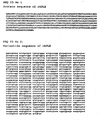
- amino acid sequence of the novel esterase rAPLE which is derived from the nucleotide sequence of the APLE gene is depicted in SEQ ID No. 1.
- novel polypeptide or the rAPLE protein is able, in contrast to the known rPLE, in each case obtained by expression of the DNA segments coding for APLE and PLE, respectively, for example in P. pastoris cells, to resolve racemic 2-alkyl-5-halopent-4-enecarboxylic esters stereoselectively.
- the invention accordingly further relates to the use of the polypeptide having esterase activity and of the recombinant esterase (rAPLE) of the invention, which have at least 98% identity to the sequence shown in SEQ ID No. 1, for resolving racemates of 2-alkyl-5-halopent-4-enecarboxylic esters of the formula (I) in which R is a C 1 -C 6 -alkyl radical, R 1 is C 1 -C 4 -alkyl and X is chlorine, bromine or iodine.
- rAPLE recombinant esterase
- polypeptide having esterase activity and the recombinant esterase (rAPLE) of the invention have at least 98%, identity to the sequence of the protein shown in SEQ ID No. 1. It is also possible to employ polypeptide having an esterase activity or the recombinant esterase (rAPLE) of the invention with modified DNA sequences shown in SEQ ID. No. 1, obtained by usual modifications such as, for instance, mutations, deletions, extensions, fusions, which code for enzymes having the desired esterase activity.
- R in the formula (II) is a C 1 -C 6 -alkyl radical such as, for instance, methyl, ethyl, n- and i-propyl, n-, i-and t-butyl, pentyl and hexyl.
- C 1 -C 4 -Alkyl radicals are preferred, and the i-propyl radical is particularly preferred.
- A is H, R 1 where R 1 is a C 1 -C 4 -alkyl radical, preferably a C 1 -C 2 -alkyl radical and particularly preferably a methyl radical, or R 2 , where R 2 is an alkyl radical which is not equal to R 1 .
- R 2 is particularly preferably a C 1 -C 6 -alkyl radical.
- X is chlorine, bromine or iodine, preferably chlorine.
- Enantiomerically enriched compounds mean in this connection those which exhibit an enantiomeric excess (ee) of >80%, preferably of >90% and particularly preferably of >97%.
- the enzyme of the invention can moreover be used in any form.
- dispersion as solution, immobilized, as crude enzyme, as enzyme which has been obtained from its source by a combination of known purification methods, as whole cells (where appropriate immobilized and/or permeabilized) which have the required enzymatic activity (naturally or through genetic modifications) or in a lysate of such cells.
- the reaction temperature for the conversion of the invention is normally between 0 and 90°C, preferably between 10 and 60°C.
- the pH of the reaction solution is between 4 and 11, preferably between 6 and 9.
- the choice of the solvent depends on the nucleophile employed.
- solvents which can be employed are water, a mixture of water with a water-miscible solvent, for example witch an alcohol such as, for instance, methanol, ethanol, isopropanol, t-butanol, etc., dioxane, tetrahydrofuran, acetone or dimethyl sulfoxide or a two-phase system of water and of a water-immiscible solvent, for example an aromatic compound such as, for instance, toluene, xylene, etc., an alkane such as, for instance, hexane, heptane, cyclohexane, etc., ether such as, for instance, diisopropyl ether, methyl t-butyl ether, etc.
- an alcohol such as, for instance, methanol, ethanol, isopropanol, t-butanol, etc.
- dioxane tetrahydrofuran
- the solvent preferably employed is the alcohol R 2 OH where R 2 is an alkyl group which is not, however, equal to R 1 .
- R 2 is an alkyl group which is not, however, equal to R 1 .
- an organic solvent such as, for instance, tetrahydrofuran, heptane, toluene, hexane, CH 3 CN, methyl t-butyl ether etc.
- the desired final product is isolated.
- This may be either the remaining enantiomerically enriched 2-alkyl-5-halopent-4-enecarboxylic ester of the formula (II) with A equal to R 2 , or if water is the nucleophile the enantiomerically enriched 2-alkyl-5-halopent-4-enecarboxylic acid of the formula (II) with A equal to H which has formed, or if the alcohol is the nucleophile the enantiomerically enriched 2-alkyl-5-halopent-4-enecarboxylic ester of the formula (II) with A equal to R 2 .
- the isolation can take place for example by conventional methods such as, for instance, extraction, crystallization, column chromatography, distillation, etc.
- the method of the invention results in the corresponding acids or esters of the formula (I) in theoretical yields of up to 98% yield and with an e.e. of up to >99%.
- Example 1 mRNA isolation and generation of cDNA
- Example 2 Amplification and cloning of cDNA fragments from pig liver
- Primer 1 5'-CA GAATT CATGGCTATC GGGCAGCCAGCCTCGC -3'(SEQ ID. No. 3)
- Primer 2 5'-CCG GAATTC AGCCTCCCCT TCACAGCTCAG -3' (SEQ ID No. 4)
- Bases homologous to the known PLE sequence are in bold script. Recognition sequences for restriction endonucleases are italicized for emphasis.
- the amplification took place in a 50 ⁇ l mixture with 1 U of Phusion DNA polymerase (Finnzymes, Espoo, Finland), with 500 ng of cDNA as template, 2.0 ⁇ mol each of primer 1 and 2, 5 ⁇ l of a dNTP mix (2 mM each), all in 1xPhusion HF buffer in accordance with 'Phusion High-Fidelity DNA Polymerase' manual (Finnzymes), starting with a 30 second denaturation step at 98°C, followed by 30 cycles (10 sec 98°C, 20 sec 68°C, 1 min 72°C) for amplification and a final incubation at 70°C for 8 min to prepare complete products.
- This PCR product was then purified using the Qiaquick kit (Qiagen, Hilden, Germany) in accordance with the manual included.
- the vectors were then transformed into TOP10 electrocompetent cells prepared in accordance with 'Current Protocols in Molecular Biology'.
- Example 3 Introduction of the a factor signal sequence and variations of the C-terminal end.
- vectors in which the sequence of PLE and APLE was connected N-terminally to the a factor start sequence of the cloning vector EPIC2 ⁇ were constructed.
- constructs in which the C-terminal tetrapeptide HAEL was deleted were prepared.
- PCR I The EcoRIalpha1/alphaPLE2 primer pair was used to amplify the ⁇ factor signal sequence of the cloning vector pPICZ ⁇ (Invitrogen). The PCR was carried out in a 50 ⁇ l mixture (2 ng of template, 0.5 ⁇ M of each primer, 0.2 mM dNTPs, 1 U of the Phusion DNA polymerase (Finnzymes) all in 1xPhusion HF buffer in accordance with the 'Phusion High-Fidelity DNA Polymerase' manual (Finnzymes)).
- Denaturation at 95°C for 3 minutes was followed by amplification in 30 cycles (30 sec 95°C, 30 sec 57°C, 15 sec 72°C) and a final step at 72°C for 7 min.
- PCR II The PLE and APLE sequences were amplified from pHILZ plasmids using either the PLEalpha1/EcoRIPLE+ER2 primer pair or the PLEalpha1/EcoRIPLE2 (deletion of the C-terminal HAEL tetrapeptide) primer pair.
- PCRs were again carried out in 50 ⁇ l mixtures (2 ng of template, 0.5 ⁇ M of each primer, 0.2 mM dNTPs, 1 U of the Phusion DNA polymerase (Finnzymes) all in 1xPhusion HF buffer in accordance with the 'Phusion High-Fidelity DNA Polymerase' Manual (Finnzymes)).
- a denaturation at 95°C for 3 minutes was followed by amplification in 30 cycles (30 sec 95°C, 30 sec 57°C, 15 sec 72°C) and a final step at 72°C for 7 min.
- PCR III 3 ⁇ l of the products from PCR 1 and PCR II were used to combine these two products by primerless PCR.
- the extension was carried out in a 45 ⁇ l mixture with 0.2 mM dNTPs, 1 U of the Phusion DNA polymerase (Finnzymes) all in 1xPhusion HF buffer.
- the reaction mixture was heated at 95°C for 3 minutes and then 10 cycles with 30 sec at 95°C and 45 sec at 72°C were carried out.
- 5 ⁇ l of primer mix (3 ⁇ l of water, 1 ⁇ l of 5 ⁇ M EcoRIalpha1 primer and 1 ⁇ l of 5 ⁇ M EcoRIPLE+ER2 or EcoRIPLE2 primer) were added.
- the products were amplified with 20 PCR cycles (30 sec 95°C, 30 sec 57°C, 1 min 72°C) and a single temperature stop at 72°C for 7 min.
- Example 4 Construction of expression constructs for the heterologous expression of pig liver esterases in Pichia pastoris
- the overlapping extension PCR products from example 3 were purified using the Qiaquick kit (Qiagen, Hilden, Germany) in accordance with the manual included. About 0.1 ⁇ g of the purified PCR products was cut using the EcoRI restriction endonuclease and cloned via the EcoRI cleavage site into the plasmid vector pGAPZ A (Invitrogen).
- Example 5 Constitutive expression of pig liver esterases in Pichia pastoris
- the plasmids pGAPZ A PLE-ER, pGAPZ A PLE+ER, pGAPZ A APLE-ER and pGAPZ A APLE+ER were transformed into P . pastori s X-33.
- the transformation took place in accordance with the instructions of the protocol for the Pichia Expressions kit from Invitrogen.
- the transformants were selected on YPD plates (1% yeast extract, 2% peptone, 2% D-glucose, 2% agar) which contained 100 mg/l zeocin. 52 zeocin-resistant clones were streaked onto YPD plates with 100 mg/l zeocin and preserved in 15% glycerol.
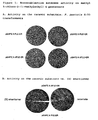
- P. pastoris transformants were cultured on YPD plates with 100 mg/l zeocin at 30°C for 48 h. The cells were lifted onto Whatman 541 hardened cashless 70 mm ⁇ filters and air-dried. The filters were incubated with a solution of 6 mg of ⁇ -naphthyl acetate (Sigma, dissolved in 500 ⁇ l of acetone), 2.5 mg of tetrazotized o-dianisidine (Fast Blue Salt BN, Sigma, dissolved in 125 ⁇ l of water) and 5 ml of 0.1 M potassium phosphate buffer, pH 7, in order to visualize the esterase activity by a color reaction.
- ⁇ -naphthyl acetate Sigma, dissolved in 500 ⁇ l of acetone
- tetrazotized o-dianisidine Fest Blue Salt BN, Sigma, dissolved in 125 ⁇ l of water
- P. pastoris transformants as described in example 6 were cultured on YPD plates with 100 mg/l zeocin at 30°C for 48 h. The cells were lifted onto Whatman 541 hardened ashless 70 mm ⁇ filters and air-dried. The filters were incubated either with substrate solution A (100 ⁇ l of racemic methyl 5-chloro-2-(1-methylethyl)-4-pentenoate, 200 ⁇ l of 0.1 M potassium phosphate buffer, pH 8; 150 ⁇ l of 10 mg/ml phenol red; 450 ⁇ l of DMSO; 650 ⁇ l of H 2 O) or with substrate solution B (identical to solution A but employing methyl (2S,4E)-5-chloro-2-(1-methylethyl)-4-pentenoate instead of the racemate). Owing to the specific esterase activity on the substrates, the liberation of acid On hydrolysis of the ester substrate results in a pH decrease which in turn leads to a change in the color of the phenol
- Transformants obtained with the plasmids pGAPZ A PLE-ER or pGAPZ A PLE+ER showed no reaction with substrate solutions A or B under the same conditions.
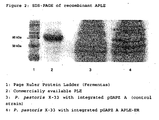
- the SDS-PAGE shows a protein band with the expected size for rAPLE (-60 kDa) in the yeast strain having the pGAPZ A APLE plasmid, but not in the control strain ( figure 2 ).
- the commercially available pig liver esterase which was also analyzed for comparison showed two protein bands in the same size range (arrow in figure 2 ).
- Example 9 Induced expression of pig liver esterases with the AOX1 promoter
- the plasmids pGAPZ A PLE-ER, pGAPZ A PLE+ER, pGAPZ A APLE-ER and pGAPZ A APLE+ER were cut with the restriction endonuclease XhoI, and the respective fragments coding for APLE and PLE proteins, with or without ER retention signal, were cloned via the XhoI cleavage site into the pPIC9 vector (Invitrogen). Correct orientation of the fragments in relation to the AOX1 promoter was checked by means of control cuts with the restriction endonuclease NcoI.
- the vectors having the AOX1 promoter were named, in analogy to the plasmids named in example 4, pPIC9 PLE-ER, pPIC9 PLE+ER, pPIC9 APLE-ER and pPIC9 APLE+ER, linearized with SalI and transformed into P . pastoris KM71. Transformation and selection for His prototrophy took place in accordance with the instructions of the Pichia expression kit from Invitrogen. Selected transformants and the KM71 strain were cultured on complete medium in accordance with the Pichia expression kit from Invitrogen overnight and induced with 1% methanol for 48 h.
- the resulting cultures were analyzed by means of the qualitative pH-shift assay described in example 7, testing 2 ⁇ l of the cultures in the mixtures in each case.
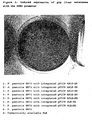
- Expression under the control of the inducible AOX1 promoter led to very much higher, by comparison with the situation described for constitutive expression in example 7, rAPLE enzymic activities in relation to racemic methyl 5-chloro-2-(1-methylethyl)-4-pentenoate.
- the phenyl red color change (red to yellow) was detectable after only a few minutes ( figure 3 ).
- the rAPLE activity was independent of the presence of the ER retention signal HAEL at the C terminus, i.e. even cells which expressed rAPLE with ER retention signal showed activity.
- yeast strains for producing rPLE had no activity in relation to racemic methyl 5-chloro-2-(1-methylethyl)-4-pentenoate.
Landscapes
- Chemical & Material Sciences (AREA)
- Organic Chemistry (AREA)
- Life Sciences & Earth Sciences (AREA)
- Engineering & Computer Science (AREA)
- Zoology (AREA)
- Wood Science & Technology (AREA)
- Health & Medical Sciences (AREA)
- Genetics & Genomics (AREA)
- Bioinformatics & Cheminformatics (AREA)
- General Engineering & Computer Science (AREA)
- Biotechnology (AREA)
- Microbiology (AREA)
- General Health & Medical Sciences (AREA)
- Biochemistry (AREA)
- Chemical Kinetics & Catalysis (AREA)
- General Chemical & Material Sciences (AREA)
- Biomedical Technology (AREA)
- Molecular Biology (AREA)
- Medicinal Chemistry (AREA)
- Analytical Chemistry (AREA)
- Physics & Mathematics (AREA)
- Biophysics (AREA)
- Plant Pathology (AREA)
- Enzymes And Modification Thereof (AREA)
- Micro-Organisms Or Cultivation Processes Thereof (AREA)
- Preparation Of Compounds By Using Micro-Organisms (AREA)
Priority Applications (1)
| Application Number | Priority Date | Filing Date | Title |
|---|---|---|---|
| PL06829433T PL1966373T3 (pl) | 2005-12-27 | 2006-12-08 | Polipeptyd o aktywności esterazy i rekombinowana esteraza oraz ich zastosowanie |
Applications Claiming Priority (2)
| Application Number | Priority Date | Filing Date | Title |
|---|---|---|---|
| AT0208105A AT502990A1 (de) | 2005-12-27 | 2005-12-27 | Neues polypeptid mit esteraseaktivität, und rekombinante esterase sowie deren verwendung |
| PCT/EP2006/011832 WO2007073845A2 (en) | 2005-12-27 | 2006-12-08 | Polypeptide having esterase activity and recombinant esterase and use thereof |
Publications (2)
| Publication Number | Publication Date |
|---|---|
| EP1966373A2 EP1966373A2 (en) | 2008-09-10 |
| EP1966373B1 true EP1966373B1 (en) | 2012-03-14 |
Family
ID=38017096
Family Applications (1)
| Application Number | Title | Priority Date | Filing Date |
|---|---|---|---|
| EP06829433A Not-in-force EP1966373B1 (en) | 2005-12-27 | 2006-12-08 | Polypeptide having esterase activity and recombinant esterase and use thereof |
Country Status (14)
| Country | Link |
|---|---|
| US (2) | US8158393B2 (enExample) |
| EP (1) | EP1966373B1 (enExample) |
| JP (1) | JP5119166B2 (enExample) |
| KR (1) | KR101388391B1 (enExample) |
| CN (1) | CN101351548B (enExample) |
| AT (2) | AT502990A1 (enExample) |
| BR (1) | BRPI0621280A8 (enExample) |
| CA (1) | CA2635380C (enExample) |
| ES (1) | ES2383702T3 (enExample) |
| IL (1) | IL192400A (enExample) |
| NO (1) | NO343225B1 (enExample) |
| PL (1) | PL1966373T3 (enExample) |
| SG (1) | SG170757A1 (enExample) |
| WO (1) | WO2007073845A2 (enExample) |
Families Citing this family (2)
| Publication number | Priority date | Publication date | Assignee | Title |
|---|---|---|---|---|
| PL2171061T3 (pl) * | 2007-07-04 | 2019-03-29 | Patheon Austria Gmbh & Co Kg | Preparat esterazy |
| ES2689941T3 (es) * | 2009-04-24 | 2018-11-16 | Patheon Austria Gmbh & Co Kg | Esterasas de hígado de cerdo mejoradas |
Family Cites Families (3)
| Publication number | Priority date | Publication date | Assignee | Title |
|---|---|---|---|---|
| US5817490A (en) * | 1996-05-17 | 1998-10-06 | Eastman Chemical Company | Enzymatic process for the manufacture of ascorbic acid 2-keto-L-gulonic acid and esters of 2-keto-L-gulonic acid |
| DE10061864A1 (de) | 2000-12-12 | 2002-07-11 | Aventis Res & Tech Gmbh & Co | Rekombinante Schweineleberesterase, deren Verwendung sowie ein Verfahren zu deren Herstellung |
| DE10258327A1 (de) * | 2002-12-13 | 2004-06-24 | Degussa Ag | Artifizielle Esterasen |
-
2005
- 2005-12-27 AT AT0208105A patent/AT502990A1/de not_active Application Discontinuation
-
2006
- 2006-12-08 US US12/159,547 patent/US8158393B2/en not_active Expired - Fee Related
- 2006-12-08 KR KR1020087018341A patent/KR101388391B1/ko not_active Expired - Fee Related
- 2006-12-08 SG SG201102064-1A patent/SG170757A1/en unknown
- 2006-12-08 EP EP06829433A patent/EP1966373B1/en not_active Not-in-force
- 2006-12-08 PL PL06829433T patent/PL1966373T3/pl unknown
- 2006-12-08 BR BRPI0621280A patent/BRPI0621280A8/pt not_active Application Discontinuation
- 2006-12-08 WO PCT/EP2006/011832 patent/WO2007073845A2/en not_active Ceased
- 2006-12-08 AT AT06829433T patent/ATE549400T1/de active
- 2006-12-08 CN CN200680049665.5A patent/CN101351548B/zh not_active Expired - Fee Related
- 2006-12-08 ES ES06829433T patent/ES2383702T3/es active Active
- 2006-12-08 CA CA2635380A patent/CA2635380C/en active Active
- 2006-12-08 JP JP2008547868A patent/JP5119166B2/ja not_active Expired - Fee Related
-
2008
- 2008-06-23 IL IL192400A patent/IL192400A/en active IP Right Grant
- 2008-06-27 NO NO20082864A patent/NO343225B1/no not_active IP Right Cessation
-
2012
- 2012-03-12 US US13/417,734 patent/US8642312B2/en active Active
Also Published As
| Publication number | Publication date |
|---|---|
| KR101388391B1 (ko) | 2014-04-22 |
| JP5119166B2 (ja) | 2013-01-16 |
| US20120220014A1 (en) | 2012-08-30 |
| CN101351548B (zh) | 2015-08-19 |
| WO2007073845A8 (en) | 2008-07-24 |
| AT502990A1 (de) | 2007-07-15 |
| JP2009521239A (ja) | 2009-06-04 |
| NO343225B1 (no) | 2018-12-10 |
| EP1966373A2 (en) | 2008-09-10 |
| CN101351548A (zh) | 2009-01-21 |
| BRPI0621280A2 (pt) | 2011-12-06 |
| IL192400A0 (en) | 2009-02-11 |
| US20100151541A1 (en) | 2010-06-17 |
| CA2635380C (en) | 2014-10-21 |
| US8158393B2 (en) | 2012-04-17 |
| CA2635380A1 (en) | 2007-07-05 |
| BRPI0621280A8 (pt) | 2017-09-19 |
| SG170757A1 (en) | 2011-05-30 |
| KR20080093109A (ko) | 2008-10-20 |
| NO20082864L (no) | 2008-09-25 |
| PL1966373T3 (pl) | 2012-08-31 |
| WO2007073845A3 (en) | 2007-08-02 |
| ES2383702T3 (es) | 2012-06-25 |
| WO2007073845A2 (en) | 2007-07-05 |
| IL192400A (en) | 2013-06-27 |
| HK1128306A1 (en) | 2009-10-23 |
| US8642312B2 (en) | 2014-02-04 |
| ATE549400T1 (de) | 2012-03-15 |
Similar Documents
| Publication | Publication Date | Title |
|---|---|---|
| AU2003221082B2 (en) | Novel carbonyl reductase, gene encoding it and process for producing optically active alcohols using the same | |
| US8642312B2 (en) | Polypeptide having esterase activity and recombinant esterase and use thereof | |
| EP2013336B1 (en) | A novel group of esterases for the production of fine and speciality chemicals | |
| US7229817B2 (en) | Recombinant porcine liver esterases, their use and a method for the production thereof | |
| CN101641437B (zh) | 猪肝酯酶的同工型 | |
| AU2001284047B2 (en) | Butinol I esterase | |
| WO2004055177A2 (en) | Artificial esterases | |
| WO2007073847A1 (en) | Novel polypeptide having esterase activity and recombinant esterase and use thereof | |
| JP2009521239A5 (enExample) | ||
| WO2004078951A1 (ja) | ラクトナーゼの製法およびその利用 | |
| HK1128306B (en) | Polypeptide having esterase activity and ecombinant esterase and use thereof | |
| WO2007073846A1 (en) | Method for preparing enantiomerically enriched 2-alkyl-5-halopent-4-enecarboxylic acids and -carboxylic esters | |
| KR102884132B1 (ko) | sn-1과 sn-3에 대한 균등한 입체선택성을 보이는 라이페이스 | |
| KR20050119151A (ko) | 판토락톤 하이드롤라제 | |
| AU751921B2 (en) | D-pantolactone hydrolase and gene encoding the same | |
| JP2001238682A (ja) | 還元酵素をコードする遺伝子 |
Legal Events
| Date | Code | Title | Description |
|---|---|---|---|
| PUAI | Public reference made under article 153(3) epc to a published international application that has entered the european phase |
Free format text: ORIGINAL CODE: 0009012 |
|
| 17P | Request for examination filed |
Effective date: 20080623 |
|
| AK | Designated contracting states |
Kind code of ref document: A2 Designated state(s): AT BE BG CH CY CZ DE DK EE ES FI FR GB GR HU IE IS IT LI LT LU LV MC NL PL PT RO SE SI SK TR |
|
| 17Q | First examination report despatched |
Effective date: 20081103 |
|
| GRAP | Despatch of communication of intention to grant a patent |
Free format text: ORIGINAL CODE: EPIDOSNIGR1 |
|
| RTI1 | Title (correction) |
Free format text: POLYPEPTIDE HAVING ESTERASE ACTIVITY AND RECOMBINANT ESTERASE AND USE THEREOF |
|
| DAX | Request for extension of the european patent (deleted) | ||
| GRAS | Grant fee paid |
Free format text: ORIGINAL CODE: EPIDOSNIGR3 |
|
| GRAA | (expected) grant |
Free format text: ORIGINAL CODE: 0009210 |
|
| AK | Designated contracting states |
Kind code of ref document: B1 Designated state(s): AT BE BG CH CY CZ DE DK EE ES FI FR GB GR HU IE IS IT LI LT LU LV MC NL PL PT RO SE SI SK TR |
|
| REG | Reference to a national code |
Ref country code: GB Ref legal event code: FG4D |
|
| REG | Reference to a national code |
Ref country code: CH Ref legal event code: EP Ref country code: AT Ref legal event code: REF Ref document number: 549400 Country of ref document: AT Kind code of ref document: T Effective date: 20120315 |
|
| REG | Reference to a national code |
Ref country code: IE Ref legal event code: FG4D |
|
| REG | Reference to a national code |
Ref country code: DE Ref legal event code: R096 Ref document number: 602006028234 Country of ref document: DE Effective date: 20120510 |
|
| REG | Reference to a national code |
Ref country code: ES Ref legal event code: FG2A Ref document number: 2383702 Country of ref document: ES Kind code of ref document: T3 Effective date: 20120625 |
|
| REG | Reference to a national code |
Ref country code: NL Ref legal event code: VDEP Effective date: 20120314 |
|
| PG25 | Lapsed in a contracting state [announced via postgrant information from national office to epo] |
Ref country code: LT Free format text: LAPSE BECAUSE OF FAILURE TO SUBMIT A TRANSLATION OF THE DESCRIPTION OR TO PAY THE FEE WITHIN THE PRESCRIBED TIME-LIMIT Effective date: 20120314 |
|
| LTIE | Lt: invalidation of european patent or patent extension |
Effective date: 20120314 |
|
| PG25 | Lapsed in a contracting state [announced via postgrant information from national office to epo] |
Ref country code: LV Free format text: LAPSE BECAUSE OF FAILURE TO SUBMIT A TRANSLATION OF THE DESCRIPTION OR TO PAY THE FEE WITHIN THE PRESCRIBED TIME-LIMIT Effective date: 20120314 Ref country code: FI Free format text: LAPSE BECAUSE OF FAILURE TO SUBMIT A TRANSLATION OF THE DESCRIPTION OR TO PAY THE FEE WITHIN THE PRESCRIBED TIME-LIMIT Effective date: 20120314 Ref country code: GR Free format text: LAPSE BECAUSE OF FAILURE TO SUBMIT A TRANSLATION OF THE DESCRIPTION OR TO PAY THE FEE WITHIN THE PRESCRIBED TIME-LIMIT Effective date: 20120615 |
|
| REG | Reference to a national code |
Ref country code: PL Ref legal event code: T3 |
|
| REG | Reference to a national code |
Ref country code: AT Ref legal event code: MK05 Ref document number: 549400 Country of ref document: AT Kind code of ref document: T Effective date: 20120314 |
|
| PG25 | Lapsed in a contracting state [announced via postgrant information from national office to epo] |
Ref country code: CY Free format text: LAPSE BECAUSE OF FAILURE TO SUBMIT A TRANSLATION OF THE DESCRIPTION OR TO PAY THE FEE WITHIN THE PRESCRIBED TIME-LIMIT Effective date: 20120314 |
|
| PG25 | Lapsed in a contracting state [announced via postgrant information from national office to epo] |
Ref country code: IS Free format text: LAPSE BECAUSE OF FAILURE TO SUBMIT A TRANSLATION OF THE DESCRIPTION OR TO PAY THE FEE WITHIN THE PRESCRIBED TIME-LIMIT Effective date: 20120714 Ref country code: BE Free format text: LAPSE BECAUSE OF FAILURE TO SUBMIT A TRANSLATION OF THE DESCRIPTION OR TO PAY THE FEE WITHIN THE PRESCRIBED TIME-LIMIT Effective date: 20120314 Ref country code: SE Free format text: LAPSE BECAUSE OF FAILURE TO SUBMIT A TRANSLATION OF THE DESCRIPTION OR TO PAY THE FEE WITHIN THE PRESCRIBED TIME-LIMIT Effective date: 20120314 Ref country code: EE Free format text: LAPSE BECAUSE OF FAILURE TO SUBMIT A TRANSLATION OF THE DESCRIPTION OR TO PAY THE FEE WITHIN THE PRESCRIBED TIME-LIMIT Effective date: 20120314 Ref country code: SI Free format text: LAPSE BECAUSE OF FAILURE TO SUBMIT A TRANSLATION OF THE DESCRIPTION OR TO PAY THE FEE WITHIN THE PRESCRIBED TIME-LIMIT Effective date: 20120314 Ref country code: RO Free format text: LAPSE BECAUSE OF FAILURE TO SUBMIT A TRANSLATION OF THE DESCRIPTION OR TO PAY THE FEE WITHIN THE PRESCRIBED TIME-LIMIT Effective date: 20120314 |
|
| PG25 | Lapsed in a contracting state [announced via postgrant information from national office to epo] |
Ref country code: SK Free format text: LAPSE BECAUSE OF FAILURE TO SUBMIT A TRANSLATION OF THE DESCRIPTION OR TO PAY THE FEE WITHIN THE PRESCRIBED TIME-LIMIT Effective date: 20120314 Ref country code: PT Free format text: LAPSE BECAUSE OF FAILURE TO SUBMIT A TRANSLATION OF THE DESCRIPTION OR TO PAY THE FEE WITHIN THE PRESCRIBED TIME-LIMIT Effective date: 20120716 |
|
| PLBE | No opposition filed within time limit |
Free format text: ORIGINAL CODE: 0009261 |
|
| STAA | Information on the status of an ep patent application or granted ep patent |
Free format text: STATUS: NO OPPOSITION FILED WITHIN TIME LIMIT |
|
| PG25 | Lapsed in a contracting state [announced via postgrant information from national office to epo] |
Ref country code: DK Free format text: LAPSE BECAUSE OF FAILURE TO SUBMIT A TRANSLATION OF THE DESCRIPTION OR TO PAY THE FEE WITHIN THE PRESCRIBED TIME-LIMIT Effective date: 20120314 Ref country code: AT Free format text: LAPSE BECAUSE OF FAILURE TO SUBMIT A TRANSLATION OF THE DESCRIPTION OR TO PAY THE FEE WITHIN THE PRESCRIBED TIME-LIMIT Effective date: 20120314 Ref country code: NL Free format text: LAPSE BECAUSE OF FAILURE TO SUBMIT A TRANSLATION OF THE DESCRIPTION OR TO PAY THE FEE WITHIN THE PRESCRIBED TIME-LIMIT Effective date: 20120314 |
|
| 26N | No opposition filed |
Effective date: 20121217 |
|
| REG | Reference to a national code |
Ref country code: HU Ref legal event code: AG4A Ref document number: E015090 Country of ref document: HU |
|
| REG | Reference to a national code |
Ref country code: DE Ref legal event code: R097 Ref document number: 602006028234 Country of ref document: DE Effective date: 20121217 |
|
| PG25 | Lapsed in a contracting state [announced via postgrant information from national office to epo] |
Ref country code: BG Free format text: LAPSE BECAUSE OF FAILURE TO SUBMIT A TRANSLATION OF THE DESCRIPTION OR TO PAY THE FEE WITHIN THE PRESCRIBED TIME-LIMIT Effective date: 20120614 Ref country code: MC Free format text: LAPSE BECAUSE OF NON-PAYMENT OF DUE FEES Effective date: 20121231 |
|
| REG | Reference to a national code |
Ref country code: IE Ref legal event code: MM4A |
|
| PG25 | Lapsed in a contracting state [announced via postgrant information from national office to epo] |
Ref country code: IE Free format text: LAPSE BECAUSE OF NON-PAYMENT OF DUE FEES Effective date: 20121208 |
|
| PG25 | Lapsed in a contracting state [announced via postgrant information from national office to epo] |
Ref country code: TR Free format text: LAPSE BECAUSE OF FAILURE TO SUBMIT A TRANSLATION OF THE DESCRIPTION OR TO PAY THE FEE WITHIN THE PRESCRIBED TIME-LIMIT Effective date: 20120314 |
|
| PG25 | Lapsed in a contracting state [announced via postgrant information from national office to epo] |
Ref country code: LU Free format text: LAPSE BECAUSE OF NON-PAYMENT OF DUE FEES Effective date: 20121208 |
|
| REG | Reference to a national code |
Ref country code: FR Ref legal event code: PLFP Year of fee payment: 10 |
|
| REG | Reference to a national code |
Ref country code: FR Ref legal event code: PLFP Year of fee payment: 11 |
|
| REG | Reference to a national code |
Ref country code: FR Ref legal event code: PLFP Year of fee payment: 12 |
|
| PGFP | Annual fee paid to national office [announced via postgrant information from national office to epo] |
Ref country code: DE Payment date: 20211102 Year of fee payment: 16 Ref country code: CZ Payment date: 20211116 Year of fee payment: 16 Ref country code: FR Payment date: 20211115 Year of fee payment: 16 Ref country code: GB Payment date: 20211104 Year of fee payment: 16 |
|
| PGFP | Annual fee paid to national office [announced via postgrant information from national office to epo] |
Ref country code: IT Payment date: 20211110 Year of fee payment: 16 Ref country code: HU Payment date: 20211110 Year of fee payment: 16 Ref country code: CH Payment date: 20211116 Year of fee payment: 16 |
|
| PGFP | Annual fee paid to national office [announced via postgrant information from national office to epo] |
Ref country code: PL Payment date: 20211115 Year of fee payment: 16 |
|
| PGFP | Annual fee paid to national office [announced via postgrant information from national office to epo] |
Ref country code: ES Payment date: 20220104 Year of fee payment: 16 |
|
| REG | Reference to a national code |
Ref country code: DE Ref legal event code: R119 Ref document number: 602006028234 Country of ref document: DE |
|
| PG25 | Lapsed in a contracting state [announced via postgrant information from national office to epo] |
Ref country code: CZ Free format text: LAPSE BECAUSE OF NON-PAYMENT OF DUE FEES Effective date: 20221208 |
|
| REG | Reference to a national code |
Ref country code: CH Ref legal event code: PL |
|
| GBPC | Gb: european patent ceased through non-payment of renewal fee |
Effective date: 20221208 |
|
| PG25 | Lapsed in a contracting state [announced via postgrant information from national office to epo] |
Ref country code: LI Free format text: LAPSE BECAUSE OF NON-PAYMENT OF DUE FEES Effective date: 20221231 Ref country code: GB Free format text: LAPSE BECAUSE OF NON-PAYMENT OF DUE FEES Effective date: 20221208 Ref country code: DE Free format text: LAPSE BECAUSE OF NON-PAYMENT OF DUE FEES Effective date: 20230701 Ref country code: CH Free format text: LAPSE BECAUSE OF NON-PAYMENT OF DUE FEES Effective date: 20221231 |
|
| PG25 | Lapsed in a contracting state [announced via postgrant information from national office to epo] |
Ref country code: HU Free format text: LAPSE BECAUSE OF NON-PAYMENT OF DUE FEES Effective date: 20221209 Ref country code: FR Free format text: LAPSE BECAUSE OF NON-PAYMENT OF DUE FEES Effective date: 20221231 |
|
| REG | Reference to a national code |
Ref country code: ES Ref legal event code: FD2A Effective date: 20240126 |
|
| PG25 | Lapsed in a contracting state [announced via postgrant information from national office to epo] |
Ref country code: IT Free format text: LAPSE BECAUSE OF NON-PAYMENT OF DUE FEES Effective date: 20221208 |
|
| PG25 | Lapsed in a contracting state [announced via postgrant information from national office to epo] |
Ref country code: ES Free format text: LAPSE BECAUSE OF NON-PAYMENT OF DUE FEES Effective date: 20221209 |
|
| PG25 | Lapsed in a contracting state [announced via postgrant information from national office to epo] |
Ref country code: ES Free format text: LAPSE BECAUSE OF NON-PAYMENT OF DUE FEES Effective date: 20221209 |
|
| PG25 | Lapsed in a contracting state [announced via postgrant information from national office to epo] |
Ref country code: PL Free format text: LAPSE BECAUSE OF NON-PAYMENT OF DUE FEES Effective date: 20221208 |