EP1945728B1 - Low application temperature hot melt adhesive - Google Patents
Low application temperature hot melt adhesive Download PDFInfo
- Publication number
- EP1945728B1 EP1945728B1 EP06825664A EP06825664A EP1945728B1 EP 1945728 B1 EP1945728 B1 EP 1945728B1 EP 06825664 A EP06825664 A EP 06825664A EP 06825664 A EP06825664 A EP 06825664A EP 1945728 B1 EP1945728 B1 EP 1945728B1
- Authority
- EP
- European Patent Office
- Prior art keywords
- composition
- adhesive
- gsm
- weight
- softening point
- Prior art date
- Legal status (The legal status is an assumption and is not a legal conclusion. Google has not performed a legal analysis and makes no representation as to the accuracy of the status listed.)
- Active
Links
Images
Classifications
-
- A—HUMAN NECESSITIES
- A61—MEDICAL OR VETERINARY SCIENCE; HYGIENE
- A61L—METHODS OR APPARATUS FOR STERILISING MATERIALS OR OBJECTS IN GENERAL; DISINFECTION, STERILISATION OR DEODORISATION OF AIR; CHEMICAL ASPECTS OF BANDAGES, DRESSINGS, ABSORBENT PADS OR SURGICAL ARTICLES; MATERIALS FOR BANDAGES, DRESSINGS, ABSORBENT PADS OR SURGICAL ARTICLES
- A61L15/00—Chemical aspects of, or use of materials for, bandages, dressings or absorbent pads
- A61L15/16—Bandages, dressings or absorbent pads for physiological fluids such as urine or blood, e.g. sanitary towels, tampons
- A61L15/42—Use of materials characterised by their function or physical properties
- A61L15/58—Adhesives
- A61L15/585—Mixtures of macromolecular compounds
-
- C—CHEMISTRY; METALLURGY
- C09—DYES; PAINTS; POLISHES; NATURAL RESINS; ADHESIVES; COMPOSITIONS NOT OTHERWISE PROVIDED FOR; APPLICATIONS OF MATERIALS NOT OTHERWISE PROVIDED FOR
- C09J—ADHESIVES; NON-MECHANICAL ASPECTS OF ADHESIVE PROCESSES IN GENERAL; ADHESIVE PROCESSES NOT PROVIDED FOR ELSEWHERE; USE OF MATERIALS AS ADHESIVES
- C09J153/00—Adhesives based on block copolymers containing at least one sequence of a polymer obtained by reactions only involving carbon-to-carbon unsaturated bonds; Adhesives based on derivatives of such polymers
- C09J153/02—Vinyl aromatic monomers and conjugated dienes
-
- C—CHEMISTRY; METALLURGY
- C08—ORGANIC MACROMOLECULAR COMPOUNDS; THEIR PREPARATION OR CHEMICAL WORKING-UP; COMPOSITIONS BASED THEREON
- C08L—COMPOSITIONS OF MACROMOLECULAR COMPOUNDS
- C08L2666/00—Composition of polymers characterized by a further compound in the blend, being organic macromolecular compounds, natural resins, waxes or and bituminous materials, non-macromolecular organic substances, inorganic substances or characterized by their function in the composition
- C08L2666/02—Organic macromolecular compounds, natural resins, waxes or and bituminous materials
Definitions
- the present invention relates to hot melt adhesives, and more particularly to a hot melt adhesive having low viscosity and showing good cohesion level like high initial bond resistance that may be applied at relatively low temperatures for example for making elastic components such as laminates containing elastic strands for use in disposable diapers.
- Hot melt adhesives are being used to bond a wider variety of substrates, within a broader adhesive application process window, and for a large end-use portfolio.
- materials involved may be non-woven materials, polymeric films, and in general elastomeric components. These elastomeric components can be used in products like diapers, in a form of strands, films, nonwovens or any other continuous or discrete form.
- Hot melt adhesive Processability of hot melt adhesive is linked to their ability to be melted, and transported and/or coated in a molten stage to the final location where the bond is required. Usually the molten adhesive is sprayed, or coated as a film. Once cooled down, the adhesive needs to fulfill multiple requirements, like bond strength measured by peel force or bond retention under or after mechanical stress, and under or after various thermal conditions.
- hot melt adhesives can be based on polymers such as polyolefins (ethylene- or propene- based polymers), or functionalized polyolefins (ethylene or propene copolymers with oxygenated function containing monomers), or styrene block copolymers containing at least one rubbery phase, like SIS, or SBS.
- Styrene block copolymers are of interest due to their dual characteristics, i.e. cohesion of the styrenic phase associated with the rubber behavior of another phase.
- Typical application temperatures are equal to or higher than 150°C.
- low application temperature hot melt adhesive corresponds to the ability to apply the molten or deformable adhesive material at a relatively low process temperature, or "application temperature”, i.e. less than 150°C, in order to build a bond between two substrates.
- application temperature i.e. less than 150°C
- SAFT Shear Adhesion Failure Temperature
- US 6,180,229 B1 is focused on the very narrow process engineering domain of a screen roller or an engraved roller to provide discontinuous coatings of any Hot Melt Pressure Sensitive Adhesive (HMPSA).
- HMPSA Hot Melt Pressure Sensitive Adhesive
- the application areas are feminine napkin, bandages, tapes, where intended internal cohesion of the adhesive does not need to be high, as the described formulae examples contain more than 30% of an oil.
- this amount of oil at the viscosity level claimed i.e. less than 5,000 mPa.s at 125°C, it is clear that this reference does not teach how to achieve a conventional elastic attachment at low temperature. No mention is made about spraying the adhesive material at low temperature on elastic strands and in-between thin film substrates in order to hold these elastic strands in place over time.
- EP 0 451919 B1 and EP 0 451 920 also do not mention any potential for the adhesive materials to hold elastic strands in a diaper structure. Although they mention that maintaining adhesion in elastically demanding applications is generally the role of styrenic block copolymer based adhesives, there is no discussion in either of these references about how to achieve a conventional elastic attachment at low application temperature.
- EP 0 798 358 B1 is focused on bottle labeling applications, where elevated temperature storage conditions and long open times are required. Again, this does not help to get bond retention in the way needed for elastic attachment in a diaper structure.
- US 6,818,093 B1 is very specific to construction applications in which dermatologically-compatible coatings are present on substrates. This reference proposes an interesting way to enhance the adhesion level of adhesives, as it is well know that the dermatological compatible coating affects the surface nature of the substrates and the ageing effect of adhesive bonding. Although this reference mentions that hot melt adhesives for structural or elastic attachment are available on the market, it does not provide any solution to applying them at low temperatures for elastic attachment.
- WO 97/10310 mentions adhesive systems that can be applied at temperatures as low as 121°C, and having a very high diblock content in the polymer component. This is typical of non-cohesive systems in that the diblock structure provides a tendency for the adhesive material to creep upon ageing, due to temperature or mechanical stress.
- WO 00/78886A1 mentions applications at low temperatures of 130°C to 135°C. Unfortunately, application results are exhibited only for spiral construction or bottle labeling, which are non-demanding applications in terms of cohesion and bond retention, in contrast to the ones needed in an elastic attachment environment. A cohesive adhesive formula is shown in an example, but its viscosity level at 135°C does not lead one to think this material can be easily applied at this temperature or below.
- aromatic modified resins having a softening point approximately equal to or lower than 100°C, which leads to poor cohesion levels, non-aromatic modified resins having a softening point in a broad range of temperature (100 to 140°C), which lead to bad adhesion levels, and use of pure aromatic resins with softening points greater than about 100°C, which is directionally opposite to the present invention.
- EP 0 451 919 B1 and EP 0 451 920 propose polymer structures to coat adhesive at temperature as low as 121°C. These references exhibit formulas with specific polymers that are present at a level of 25% or more in the formulation, with an oil content from 0 to 25%, preferably from 0 to 15%. These conditions are remote from low viscosity products with the conditions the present invention proposes. No mention is made of the resin nature or softening point, except a general statement and examples that a 95°C softening point resin is usable, and only mentioning that resins with softening points of 80 to 115°C could be used.
- WO 2004/035705 A2 covers the use of waxes, specifically microcrystalline waxes from 1 to 10%, to allow the viscosity of the composition to be lower than 10,000 mPa.s at 120°C, and to allow adhesive coating at below 120°C. No specific description of formulas is reported, but comparisons are made between compositions corresponding to different amounts and natures of wax. The reference discusses various test methods, i.e. a specific cube flow test, aged peel test, and G' measurement which do not teach how to properly achieve bond retention in a given application.
- WO 99/13016 presents a way to enhance specific adhesion, using a fatty acid oil and/or a natural oil in a hot melt adhesive composition. This allows for a lower application temperature as low as 100°C to 130°C. This solution may not provide any economic advantage over current technology using conventional synthetic mineral oils, and does not teach how to make a hot melt composition that would be adapted to creep resistance or bond retention in general, and elastic attachment into a diaper structure in particular.
- US 5,275,589 proposes to apply hot melt adhesive at around 107°C with the specific feature of obtaining a non tacky coating.
- the adhesive contains substantially no oil.
- low softening point resins are used to soften or make the polymer grades thinner.
- the targeted resin's softening point window obtained by mixing several resins together, is from 25 to 50°C, which again is not compatible with an adhesive material getting acceptable creep resistance performances in general.
- US 6,465,557 B1 exhibits formulas where oil content is very high, higher than 25% and sometimes higher than 30%. Resins exhibited in the examples have a softening point of around 100°C, which prevents an acceptable bond retention of the adhesive bond at elevated temperature in the sense the present invention is showing it.
- US 6,184,285B1 describes an adhesive composition having acceptable bond performances both at low and high testing temperatures. This uses a specific combination of polymer grades, and exhibits no high softening point resin, although it mentions that any conventional resin can be used. This reference does not focus specifically on solving creep resistance or bond retention issues.
- alicyclic petroleum hydrocarbon resins Mention is also made of aliphatic/aromatic or cycloaliphatic/aromatic resins and hydrogenated derivatives, with no mention of the softening points.
- preferred midblock tackifying resins like Wingtack 95, Hercures C, Eastotac H100R, Escorez 5600, all having a softening point around 100°C. No mention is made about the aromatic/aliphatic nature of these resins, except that aliphatic ones are preferred.
- Concerning end-block tackifying resins no mention is made about the softening point range that would be adequate to use.
- WO 97/10310 focuses on the use of diblock structures to provide the right level of adhesion, without considering a specific and relevant domain for the tackifying resins' chemistry. Low to medium softening point mid-block resins are described, and no substantially aromatic resins are mentioned and none are exhibited.
- WO 00/78886A1 claims adhesive formulas which all contain some additive like surfactants or polyether derivatives. Based on this peculiar feature, this reference does not bring any relevance to the present invention.
- WO 98/02498 claims the use of wax materials to achieve low application temperatures in packaging applications.
- resins mentioned in the examples have softening points of 100°C or below, which does help with decreasing the viscosity of the adhesive, but not building enough cohesion in it.
- a non aromatic 130°C-softening point resin which do not show anything different from the examples where softening points are maintained at 100°C or lower.
- WO 2005/063914 A2 focuses on low viscosity hot melt adhesive using SIBS polymer and also including among other constituents mid-block tackifying resins, potentially having an aromatic character, and with softening point not higher than 95°C.
- US 6,818,093 B1 is very specific to construction applications in which some dermatologically-compatible coatings are present on substrates.
- This reference exhibit examples of formulas containing either low molecular weight polymer like a diblock structure SI, or low softening point mid-block resins. This interesting way to decrease cohesion and viscosity of the formulation does not correspond to what the present invention intends to do.
- EP 0 798 358 B1 is focused on bottle labeling applications and claims low viscosity levels, and shows examples with high amounts of an oil plasticizer. Resins shown in the examples have softening points of approximately 100°C.
- EP 0900258 B1 is another reference describing some specific polymer features in a hot melt composition where only a 100°C softening point resin is used. interesting viscosity levels are reached at 130°C but the compositions are outside of the domain the present invention.
- WO 98/02498 claims to achieve low application temperatures in the packaging area, which temperatures are intended to be lower than 150°C, but then also referred to be 135°C and above. This is not sufficient to teach how to build cohesion in the adhesive material while having a low application temperature.
- formulas are applied at 135°C, showing interesting creep resistance performances in elastic attachment, although no good indication is provided about adhesive add-on levels, as the width of the adhesive patterns is not specified.
- ionomer resins are used, it is stated that these formulas can be applied at temperatures lower than 135°C, but it is not shown, and it is further not shown that it could be done for elastic attachment.
- This reference is of no help in what the present invention intends to show, as it is mainly focused on the use of ionomer resin, and as it does not teach how to use hot melt raw materials in conjunction with elastic attachment made effectively at application temperatures lower than 135°C, and with effectively good creep resistance performances.
- US 6,184,285 B1 claims specific adhesive formulations that can be applied at about 135°C or higher temperatures. Although it exhibits viscosity measurements at temperatures as low as 100°C, it does not show that this low level of temperature is achieved while applying the adhesive.
- EP 0734426B1 focuses on low viscosity hot melt formulations but claims an application temperature of 150 to 200°C. This is outside of the domain the present invention.
- WO 2005/063914 A2 claims low viscosity hot melt adhesives, with viscosities at or lower than 80,000 mPa.s at 177°C. Moreover, casting a film of adhesives materials in solvents is the method used for all the coating applications shown by this reference. No illustration of a potentially low process temperature for applying the adhesive is depicted, or discussed.
- Aromatic resins including pure monomer resins, are commonly used raw materials to formulate hot melt adhesives, those being PSA or not.
- the softening point of these materials is typically between 5°C and 160°C, and their presence in the formulas can be driven by the level of tack and of adhesion required, as well as by the need to reinforce the styrenic phase of any styrenic block copolymer. Reinforcing resins help to provide a higher cohesion to the adhesive bond, at room temperature as well as at elevated temperature.
- WO 97/19582 mentions the use of aromatic resins or pure monomer resins to reinforce the Tg of the styrene phase. This is very typical of the intent to use this kind of resin to enhance the level of cohesion of the adhesive material, with no emphasis on the level of viscosity that the presence of the resin is generating. Furthermore, there is typically no link with the need of applying the adhesives at low temperature. In this reference, no teaching is exhibited to help understand how or why low viscosity products made this way could be applied at low temperature.
- WO 00/78886A1 mentions the use of Hercolite 290, which is a high softening point aromatic resin that helps to build cohesion into the adhesive material, as pure monomer resins are known for, but definitively does not help with lowering the application temperature.
- compositions for elastic attachment which can use pure monomer resins of low/medium to high softening points, and specify a process temperature of 143°C to 163°C to apply hot melt adhesives according to the invention. This is evidence that no link has been made between low application temperature and low to medium softening point aromatic resins.
- aromatic resins including pure monomer resins, are mentioned as a potential component of the adhesive formulas.
- these resins as conventional ingredients widely used in typical hot melt formulation, are described in this reference in the same way other conventional ingredients are described like polymers, mid-block tackifying resins, and waxes, and no link is made to the fact that their presence is necessary or useful for their use in low application temperature formulations.
- the use of a end-block compatible resin is mentioned, but only expressly in conjunction with the presence of an ionomer resin, from 0.1 to 40%.
- the present invention solves the very important requirement of having a hot melt adhesive applied at relatively low application temperature, i.e. under 1.50°C, using the same application techniques as currently used, like coating techniques and add-on levers, and providing the end-use application the same level of performances expected with the current technologies, i.e, high bond strength levels in term of creep resistance, peel force and in general bond retention with mechanical resistance and heat resistance.
- the present invention is based on a unique formulation using styrene block copolymers, particularly for elastic attachment into diaper structures.
- a hot melt adhesive at fairly low viscosity on a substrate. This can be made by roll coating or any printing type method, or by slot coating, by extrusion or by spray gun. Spray gun techniques are numerous and can be done with or without assistance of compressed. air that would shape the adhesive spray, and consequently the adhesive pattern.
- the hot melt adhesive material is generally allowed to melt in tanks, and then pumped through hoses to the final coating spot on the substrates.
- Preferred methods of applying the adhesive of the present invention would be by spray application most preferably assisted by air. Among these technique, the most common are spiral spray (Controlled FiberizationTM by Nordson), SummitTM by Nordson, SurewrapTM by Nordson, OmegaTM by ITW, Curtain CoatingTM by Nordson and melt blown process.
- the temperature at which the hot melt adhesive of the present invention is applied should be below 150°C, so that the heat sensitive substates would not be damaged.
- this temperature should be equal to or lower than 140°C, most preferably lower than 135°C.
- the viscosity of the adhesive material needs to be generally lower than 20,000 mPa.s, more preferably lower than 15,000 mPa.s, most preferably lower than 12,000 mPa.s measured at 120°C.
- An adhesive with such low viscosity is needed to be operated through standard hot melt adhesive equipment and to achieve the right pattern and consequently the right bonding performances at the application temperature.
- the adhesive of the present invention can be used with any process of conventional or non-conventional elastic attachment technology as known in the state of the art.
- the adhesive of the present invention can be used with any application where various substrate materials are involved like non-woven materials, polymeric films, and in general elastomeric components put in items like diapers, in the form of strands, films, nonwovens or any other continuous or discrete form. Any substrate material and any substrate form could be used in any combination possible, the adhesive allowing to bond two or more substrates together.
- the substrates can be of multiple form for example fiber, film, thread, strip, ribbon, coating, foil, sheet, and band.
- the substrate can be of any known composition for example polyolefin, polyacrylic, polyester, polyvinyl chloride, polystyrene cellulosic like wood, cardboard and paper, or made out of mineral compounds like concrete, glass or ceramics.
- the substrate's mechanical behavior can be rigid, plastic or elastomeric.
- elastomeric material are various examples like natural or synthetic rubber, polyurethane based copolymers, polyether or polyester urethanes, block copolymers of styrene or of amides, or olefinic copolymers.
- the above lists are not limitative or all-inclusive, but are only provided as common examples.
- Various methods to process hot melt adhesives of the present invention can be employed, linked to their ability to be melted, and transported and/or coated or sprayed in a molten stage to the final location where the bond is required.
- the adhesive of the present invention can also be used with any application where composites and disposable products are made with the help of bonding parts together with a hot melt adhesive used at a temperature lower than 150°C, preferably equal to or lower than 140°C, most preferably lower than 135°C, while obtaining adequate cohesion from the adhesive bond to withstand mechanical stress at low, ambient or elevated temperature, in particular under creep conditions.
- a hot melt adhesive used at a temperature lower than 150°C, preferably equal to or lower than 140°C, most preferably lower than 135°C, while obtaining adequate cohesion from the adhesive bond to withstand mechanical stress at low, ambient or elevated temperature, in particular under creep conditions.
- Diaper, adult incontinence products, sanitary napkins and other absorbent disposable products are envisioned applications for the adhesive composition of the invention, as well as bed pads, absorbing pads, surgical drapes and other related medical or surgical devices.
- Construction applications, structural applications or packaging applications, in particular disposable items packaging and food packaging can also be applications where the invention is useful.
- the most specific application of the present hot melt adhesive is for elastic attachment, wherein the present invention allows bonding of elastic strands on film substrates while applying the adhesive at a temperature lower than 150°C, preferably equal to or lower than 140°C, most preferably lower than 135°C.
- Good performance conditions for elastic attachment in a diaper application is typically when the bond retention is either more than 60%, preferably more than 70%, more preferably more than 75%, most preferably more than 80% in a specific test described hereinafter when it is done within 2 days after adhesive has been applied on substrates (initial creep test), or more than 50%, preferably more than 60%, most preferably more than 70%, when it is done after a storage time of one week at 54°C (one-week-aged creep test). These tests are indicative of what level of adhesion and creep resistance (or bond retention) can be achieved by an adhesive.
- preferred adhesive add-ons are lower than 18 gsm (grams of adhesive material per square meter of substrate covered by the adhesive material), more preferably equal to or lower than 15 gsm, and most preferably equal to or lower than 12 gsm.
- Performances of the adhesive can also be assessed by rheometry, with a temperature sweep in a frequency response analysis configuration to measure loss (G") and storage (G') moduli.
- G' at 60°C and the ratio (called tan delta) of G" over G' at 100°C area relevant indication of the bond retention under creep conditions of the adhesive bond, and G" at 120°C and again the ratio (called tan delta) of G" over G' at 100°C are two parameters that can indicate if the adhesive material can be processed and coated at low temperature, lower than 150°C, preferably equal to or lower than 140°C, most preferably lower than 135°C.
- the present invention proposes an innovative way to fulfill the earlier described requirements.
- high softening point (SP) tackifying resins i.e. an SP equal to or higher than 110°C, preferably equal to or higher than 115°C
- SP softening point
- an SP equal to or higher than 110°C, preferably equal to or higher than 115°C
- an adhesive can then be applied with conventional techniques at a temperature lower than 150°C, preferably equal to or lower than 140°C, more preferably lower than 135°C.
- the aromatic content of the resin also needs to be defined properly to fulfill the above requirements.
- High softening point is defined herein as a softening point equal to or higher than 110°C, preferably equal to or higher than 115°C.
- Low to medium softening point is defined herein as a softening point below 125°C, preferably between 50 and 120°C, most preferably between 70 and 115°C. Softening point of these aromatic resins is important to control both the molten viscosity at the application temperature and the level of adhesion of the adhesives.
- the present invention provides a hot melt adhesive composition, comprising a blend of the following components:
- A comprises a polyvinyl aromatic block having a Tg higher than 80°C
- B comprises a rubbery midblock having a Tg lower than -10°C
- Y comprises a multivalent compound
- n is an integer of at least 3;
- a first midblock tackifying resin having a softening point of at least about 110°C and having an aromatic content of at least about 1.5% by weight;
- the viscosity of the composition is equal to or less than about 20,000 mPa.s at 120°C, and is applied at a temperature lower than 150°C, and initial bond retention of the composition on elastic strands is at least about 60%.
- the block copolymer is selected from SB, SBS, SIS, SIBS, SEBS, SEP, SEPS, SBBS, SEEPS, and blends thereof, and is most preferably SIS, SBS, or a mixture of SIS and SBS block copolymers.
- the viscosity of the hot melt adhesive composition of the present invention is equal to or less than about 20,000 mPa.s at 120°C, and the composition is applied at a temperature lower than 150°C, and the composition has an elastic modulus G' at 60°C higher than 5000 Pa, preferably higher than 6000 Pa, and a viscous modulus G" at 120°C higher than about 50 Pa, preferably between 50 Pa and 500 Pa, and a tan delta value at 100°C between 0.5 and 60, preferably between 1 and 50, more preferably between 2 and 30.
- the present invention also provides a laminate comprising a first layer of nonwoven material, a second layer of nonwoven material, and one or a plurality of elastomeric substrates, disposed between said first and second nonwoven layers, bonded together with the adhesive composition.
- the laminate may also comprise a first layer of nonwoven material, a second layer of film material, and one or a plurality of elastomeric substrates disposed between said first and second layers, bonded together with the adhesive composition.
- the film material may comprise a polyethylene film, a polypropylene film, an ethylene-propylene copolymer film or a cloth-like coated film material, and the elastomeric substrate is preferably a plurality of elastic strands.
- the laminate may further comprise a first layer of nonwoven material bonded to a second layer of film material with the adhesive composition, and without any elastomeric substrate therebetween.
- the adhesive composition and/or laminate of the present invention may be used in making a variety of end products. Examples include a disposable diaper, a sanitary napkin, a bed pad, a bandage, a surgical drape, a tape, a label, a plastic sheet, a nonwoven sheet, a paper sheet, a cardboard, a book, a filter, or a package.
- a method of making laminate comprising the steps of: feeding a first substrate in a first direction; feeding a second substrate spaced from said first substrate in said first direction; applying the adhesive composition to one or both of said substrates; and composes said substrates together to form the laminate is also described
- the method includes the additional steps of feeding one or a plurality of elastomeric substrate or substrates between said first and second substrates in said first direction, said elastomeric substrates are stretched before, during or after adhesive application; and applying the adhesive composition to either said elastomeric substrate or substrates or one or both of said substrates before comprising the substrates together.
- the elastomeric substrate is preferably a plurality of elastic strands each stretched up to 500% from their initial relaxed state.
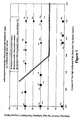
- Figure 1 is a graph illustrating the percentage of aromaticity of the high softening point resin fraction as a function of the high SP resin fraction into the total quantity of tackifying resin
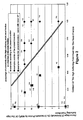
- Figure 2 is a graph illustrating the softening point of the high softening point resin faction as a function of the high SP resin fraction into the total quantity of tackifying resin..
- a tackifying resin as defined in the present description can be a molecule or a macro-molecule, generally a chemical compound or a fairly low molecular weight polymer, compared to common polymers, from a natural source or from a chemical process or combination thereof that in general enhances the adhesion of a final hot melt adhesive composition.
- the use of tackifying resins to impart adhesion needs to be assessed by using the same process conditions when applying the adhesive, in order to compare different resins to each other.
- tackifying resins are obtained by polymerizing C5 or C9 streams from a petroleum feedstock, or combinations of them together or with other monomers, from natural sources or resulting from any chemical process. Tackifying resins from the C5 streams are called aliphatic resins, while those from the C9 stream or from pure monomers of C9 or C10 configuration or from derivatives or mixtures thereof are called aromatic resins.
- the C5 stream can be composed of linear or cyclic monomers, or combinations thereof.
- an aliphatic resin can be obtained by hydrogenation of a polymerized aromatic feedstock. Hydrogenation can also be partial, so that part of the monomers keep their aromatic function into the polymer chain, while some become aliphatic.
- any combination can be made in terms of monomer composition and hydrogenation process, in order to have aliphatic or aromatic resins, or to have any incremental point between a substantially aliphatic and a substantially aromatic tackifying resin.
- an aromatic-modified aliphatic resin is a term that encompasses both cases when some quantity of C9 monomers are polymerized with a major part of C5 monomers, or when a C9 stream is polymerized, then hydrogenated in a way that most of the monomer aromatic functions become aliphatic.
- aliphatic-modified aromatic resin when appropriate.
- Other types of monomers can enter into the composition of such resin's polymeric chain.
- Resins like terpene-based polymers for example styrenated terpene resins, are part of the general description referred to herein as hydrocarbon resins, although terpenic monomers are not from petroleum derivatives but from natural sources. Rosin derivatives can be encompassed by the present resin description if one considers their aromatic character measured by a solvent cloud point test method called MMAP that would make them similar or at least comparable to an aromatic modified aliphatic resin.
- MMAP solvent cloud point test method
- a tackifying resin made substantially out of aromatic monomers can be called an aromatic resin or an end-block resin, as it would be compatible with end-blocks usually made of styrenic or aromatic compounds.
- a material's softening point is defined in the present description by the ring and ball test method ASTM - E 28-99, and aromatic character or aromatic content is defined either by the ratio in percent of hydrogen protons involved in an aromatic bond in the polymer chain, measured by standard 1 H NMR analytical method, after dissolution for example in deuterium chloroform, or by a solvent cloud point test method called MMAP described in EP 0 802 251 A1 .
- MMAP solvent cloud point test method described in EP 0 802 251 A1 .
- the cloud point method the temperature at which turbidity occurs is the cloud point value, when the resin is dissolved in a specific solvent. The lower the cloud point value, the more aromatic character the resin presents, relative to the chemistry of the resin.
- the percentage of aromatic protons is less than 0.5% for aliphatic resins, and is usually higher than 40% for aromatic resins. Any resin having an aromatic proton percent between 0.5% and 40% would be called either an aromatic-modified aliphatic tackifying resin or an aliphatic-modified aromatic tackifying resin, and would be considered as a mid-block tackifying resin.
- the mid-block tackifying resin ingredient in the present composition may be incorporated entirely from a single resin grade, or may comprise a blend or mixture of two or more resins.
- the mid-block tackifying resins are preferably selected from aliphatic hydrocarbon resins and their hydrogenated derivatives like Eastotac H-130 available from Eastman Chemical, hydrogenated cycloaliphatic hydrocarbon resins like Escorez 5415 available from Exxon Mobil Chemical, aromatic modified aliphatic or hydrogenated cycloaliphatic resins like Escorez 5615 available from Exxon Mobil Chemical, aliphatic modified aromatic resins like Norsolene Ml 100 available from Sartomer-Cray Valley, partially or fully hydrogenated aromatic hydrocarbon resins like Regalite S7125 available from Eastman Chemical, polyterpene and styrenated polyterpene resins like Sylvares ZT 115 available from Arizona Chemical.
- the mid-block tackifying resins are more preferably selected from hydrogenated cycloaliphatic hydrocarbon resins, aromatic modified hydrogenated cycloaliphatic resins, aliphatic modified aromatic resins, partially or fully hydrogenated aromatic hydrocarbon resins, polyterpene and styrenated polyterpene resins.
- the mid-block tackifying resins are most preferably selected from aromatic modified hydrogenated cycloaliphatic resins, and partially hydrogenated aromatic hydrocarbon resins.
- the amount of resin used depends on the desired formulation and end use, but should be from about 15% to about 70%, preferably from about 40% to about 65%, and most preferably from about 50% to about 62%, by weight.
- any type of elastomeric block copolymer can be used in a hot melt adhesive formula according to the present invention, and may be incorporated into the composition in amounts of from about 10% to about 40% by weight, preferably from about 10% to about 25% by weight, and most preferably from about 12% to about 24% by weight.
- the useful elastomeric block copolymers are those having structure A-B, A-B-A, A-(B-A) n -B, or (A-B) n -Y wherein A comprises a polyvinyl aromatic block having a Tg higher than 80°C, B comprises a rubbery midblock having a Tg lower than -10°C, Y comprises a multivalent compound, and n is an integer of at least 3.
- SBc styrenic block copolymers
- SB styrene-butadiene
- SBS styrene-butadiene-styrene
- SIBS styrene-isoprene-styrene
- SIBS styrene-ethylene-butylene-styrene
- SEBS styrene-ethylene-butylene
- SEB styrene-ethylene-butylene
- SEB styrene-ethylene propylene-styrene
- SEP styrene-ethylene propylene-styrene
- SEEPS styrene-ethylene-propylene-styrene
- the total styrene content of the polymers can be as much as 51 wt-% of the polymer, and since the polymers can have more than two A blocks for optimal performance, the total A block should be less than or equal to about 45 wt-% of the polymers, and, most preferably, is less than or equal to 35 wt-% of the polymer.
- the preferred molecule weight is about 50,000 to 120,000, and the preferred styrene content is about 20 to 45 wt-%.
- an S-I-S (styrene-isoprene-styrene) copolymer the preferred molecular weight is about 100,000 to 200,000 and the preferred styrene content is about 14-35 wt-%.
- Hydrogenating the butadiene midblocks produces rubbery midblocks that are typically converted to ethylene-butylene midblocks.
- block copolymers are available for example from Kraton Polymers, Polimeri Europa, Total Petrochemicals, Dexco, and Kuraray.
- Multiblock or tapered block copolymers (the A-(B-A) n -B type) are available from Firestone.
- Block copolymers structures can contain any acrylic monomers or acrylic phase in general, either presenting a high Tg like methyl methacrylate, or having an elastomeric behavior like butyl acrylate.
- the polymer fraction of the hot melt adhesive can contain one or more other phases, can contain more than one structure or can contain other polymers like copolymers of ethene, propene or other olefinic monomer, or like copolymerization of acrylic monomers.
- These additional polymers can be homopolymers, or copolymers and can be potentially modified by any during- or after-polymerization modification like grafting or chain-scission. Blends of various polymers may also be employed so long as the composition retains the desired viscosity, creep resistance and low temperature application characteristics of the present invention.
- Hot melt adhesive formulas according to the present invention also contain about 5% to about 35%, preferably about 14% to about 35%, more preferably about 16% to about 35%, and most preferably about 18% to about 35%, by weight, of any plasticizer.
- a suitable plasticizer may be selected from the group which not only includes the usual plasticizing oils, such as mineral oil, but also olefin oligomers and low molecular weight polymers, glycol benzoates, as well as vegetable and animal oil and derivatives of such oils:
- the petroleum-derived oils that may be employed are relatively high boiling temperature materials containing only a minor proportion of aromatic hydrocarbons. In this regard, the aromatic hydrocarbons should preferably be less than 30%, and more particularly less than 15%, by weight, of the oil.
- the oil may be totally non-aromatic.
- the oligomers may be polypropylenes, polybutenes, hydrogenated polyisoprene, hydrogenated butadiene, or the like having average molecular weights between about 100 and about 10,000 g/mol.
- Suitable vegetable and animal oils include glycerol esters of the usual fatty acids and polymerization products thereof.
- Other plasticizers may be used provided they have suitable compatibility.
- Nyflex 222B a naphtenic mineral oil manufactured by Nynas Corporation, has also been found to be an appropriate plasticizer. As will be appreciated, plasticizers have typically been employed to lower the viscosity of the overall adhesive composition without substantially decreasing the adhesive strength and/or the service temperature of the adhesive.
- plasticizer can be useful in formulation for specific end uses (such as wet strength core applications). Because of economics involved in production and in material cost, as plasticizers are usually of lower cost than other materials involved in the formulation like polymers and tackifying resins, the amount of plasticizer in the adhesive should be about 5% to about 35% by weight, preferably higher than about 14% in weight, more preferably higher than about 16%, and most preferably higher than about 18%.
- Waxes can also be used in the adhesive composition, and are used to reduce the melt viscosity of the hot melt construction adhesives without appreciably decreasing their adhesive bonding characteristics. These waxes also are used to reduce the open time of the composition without affecting the temperature performance.
- the wax material component of the adhesive is optional but when included may comprise up to about 25% by weight of the adhesive composition.
- Low molecular weight that is, 100-6000 g/mol, polyethylene having a hardness value, as determined by ASTM method D-1321, of from about 0.1 to 120 and ASTM softening points of from about 66°C° to 120°C;
- Petroleum waxes such as paraffin wax having a melting point of from about 130° to 170° F and microcrystalline wax having a melting point of from about 135° to 200° F, the latter melting points being determined by ASTM method D127-60;
- atactic polypropylene having a Ring and Ball softening point of from about 120° to 160° C;
- metallocene catalyzed wax or single-site catalyzed wax like for example those described in U.S. Patents 4,914,253 , 6,319,979 or WO 97/33921 or WO 98/03603 .
- polyolefin waxes refers to those polymeric or long-chain entities comprised of olefinic monomer units. These materials are commercially available from Eastman Chemical Co. under the trade name "Epolene.” The materials which are preferred to use in the compositions of the present invention have a Ring and Ball softening point of 200°F to 350°F. As should be understood, each of these waxes is solid at room temperature.
- Other useful substances include hydrogenated animal, fish and vegetable fats and oils such as hydrogenated tallow, lard, soy oil, cottonseed oil, castor oil, menhadin oil, cod liver oil, etc., and which are solid at ambient temperature by virtue of their being hydrogenated, have also been found to be useful with respect to functioning as a wax material equivalent.
- hydrogenated materials are often referred to in the adhesives industry as "animal or vegetable waxes”.
- the preferred wax material is a paraffin wax having a melting point of 60°C to 70°C, a hard wax such as Paraflint H1 commercialized by Sasol-Schuman, or Bareco PX 100 commercialized by Bareco, those hard waxes having a hardness dmm at 23°C of about 2 dmm or less and a melting point of 75°C to 120°C, or blends of a paraffin wax and a hard wax.
- the preferred hard wax has a melting point lower than 95°C.
- hard wax refers to any low molecular weight, highly crystalline ethylene-based polymer.
- the adhesive also typically includes a stabilizer or antioxidant.
- the stabilizers which are useful in the hot melt adhesive compositions of the present invention are incorporated to help protect the polymers noted above, and thereby the total adhesive system, from the effects of thermal and oxidative degradation which normally occurs during the manufacture and application of the adhesive as well as in the ordinary exposure of the final product to the ambient environment. Such degradation is usually manifested by a deterioration in the appearance, physical properties and performance characteristics of the adhesive.
- a particularly preferred antioxidant is Irganox 1010, a tetrakis(methylene(3,5-di-teri-butyl-4-hydroxyhydrocinnamate))methane manufactured by Ciba-Geigy.
- hindered phenols are well known to those skilled in the art and may be characterized as phenolic compounds which also contain sterically bulky radicals in close proximity to the phenolic hydroxyl group thereof.
- tertiary butyl groups generally are substituted onto the benzene ring in at least one of the ortho positions relative to the phenolic hydroxyl group.
- the presence of these sterically bulky substituted radicals in the vicinity of the hydroxyl group serves to retard its stretching frequency and correspondingly, its reactivity; this steric hindrance thus providing the phenolic compound with its stabilizing properties.
- Representative hindered phenols include:
- These stabilizers may be further enhanced by utilizing, in conjunction therewith; (1) synergists such as, for example, as thiodipropionate esters and phosphites; and (2) chelating agents and metal deactivators as, for example, ethylenediaminetetraacetic acid, salts thereof, and disalicylalpropylenediimine.
- synergists such as, for example, as thiodipropionate esters and phosphites
- chelating agents and metal deactivators as, for example, ethylenediaminetetraacetic acid, salts thereof, and disalicylalpropylenediimine.
- the adhesive composition of the present invention may be produced using any of the techniques known in the art, A representative example of the procedure involves placing all of the substances, in a jacketed mixing kettle, and preferably in a jacketed heavy duty mixer of the Baker-Perkins or Day type, and which is equipped with rotors, and thereafter raising the temperature of this mixture to a range of 120°C to 177°C. It should be understood that the precise temperature to be used in this step would depend on the melting point of the particular ingredients. The resulting, adhesive composition is agitated until the polymers completely dissolve. A vacuum is then applied to remove any entrapped air.
- Optional additives may be incorporated into the adhesive composition in order to modify particular physical properties.
- These additives may include colorants, such as titanium dioxide and fillers such as talo and clay, crosslinking agents, nucleating agents, reactive compounds, fire-retardant mineral or organic agents, as well as ultraviolet light (UV) absorbing agents and UV fluorescing agents.
- the present invention for polymerized ones, as the balance between aromatic and aliphatic character is easier to get from choosing monomers or adjusting hydrogenation process conditions.
- the softening point value is also easier to determined by adjusting the length of the resin's polymeric chain once the monomers have been selected.
- tackifying resins that have softening points equal or higher than 110°C, preferably equal to or higher than 115°C, should be incorporated into the formulation. At least part of the total tackifying resin amount incorporated into the formulation should have this level of softening point.
- This high softening point tackifying resin fraction can be comprised of one resin grade, or a blend/combination of different resins.
- the high softening point resin fraction should also have a minimum level of aromaticity, to allow the adhesive to fulfill all the requirements in term of processability and adhesion performances.
- the minimum of aromaticity needed is 1.5%, preferably 2% of the protons to be of aromatic nature.
- this minimum should be correlated to the actual amount of the resin fraction which has a SP above 110°C. This correlation may be expressed by the following formula: y ⁇ - 17 ⁇ x + 18 where y is the aromaticity content in % of aromatic protons, and where x is the resin fraction of softening point equal to or greater than 110°C, preferably equal to or 115°C.
- the resin fraction (having a softening point of at least 110°C) that would be 10% aromatic should represent at least 0.5 of the total midblock tackifying resin quantity in the adhesive, according to the present invention.
- MMAP cloud point method should be used to characterize it, and compare it to the MMAP value of partially hydro genated aromatic hydrocarbon tackifying resins, so that one can give a theoretical but relevant aromaticity content of this rosin derivated resin that should be considered for the correlation cited above.
- aromaticity content of the highest softening point resin should be equal or higher than about 1%, preferably higher than 1.5%, more preferably higher than 2%.
- the high softening point resin fraction should have a softening point high enough to withstand mechanical stress under a wide range of temperature, especially elevated temperature due to weather conditions. It has been found that the adhesive should contain a resin with a softening point equal to or above 110°C, preferably 115°C, and more preferably the softening point should follow the correlation: z ⁇ - 60 ⁇ x + 146 where z is the actual softening point of the resin fraction which softening point is above 110°C, preferably equal to or above 115°C, and where x is the resin fraction of softening point equal to or greater than 110°C, preferably equal to or greater than 115°C.
- the resin fraction that would have a softening point of 120°C should represent at least 0.44 of the total mid-block tackifying resin quantity in the adhesive, according to the present invention.
- the softening point of the highest softening point resin should be higher than 110°C, preferably higher than 115°C, and more preferably should correspond to points in Figure 2 that are in the right upper corner defined by the two straight lines, i.e. about and to the right of the lines.
- the aromaticity content of the highest softening point resin should be equal or higher than about 1%, preferably equal or higher than 2%, and preferably be defined by points in Figure 1 that are to the right side of the straight line.
- the tackifying resin in the adhesive should have a softening point high enough to withstand mechanical stress under a wide range of temperature, especially elevated temperature due to weather conditions during shipping and storage periods. At least a fraction of the resin total quantity should have a softening point high enough to fulfill these requirements. It has been found that adhesion performances can be achieved when at least 0.5 of the resin fraction has a softening point equal to or higher than 110°C, preferably equal to or higher than 115°C.
- the adhesive formula may contain a sufficiently low softening point substantially fully aromatic resin.
- the aromatic or substantially fully aromatic resin should have softening point equal to or below 125°C, preferably equal to or below 115°C, and more preferably equal to or below 100°C.
- this substantially fully aromatic resin will be made of pure monomer polymerization of styrene, alpha-methyl styrene, toluene, indene monomers or similar monomers, or derivatives, or mixtures thereof.
- styrene and/or alpha-methyl-styrene and/or vinyl-toluene monomers are among the monomer compositions of the pure monomer resin.
- Quantity of this resin should be under 20% in the adhesive composition, preferably between 2% to 15%, more preferably 4% to 12%, and most preferably 6% to 10%.
- the highest softening point mid-blook resin should be at least 25% of the tackifying resin fraction, and the this highest SP should be equal or higher than 110°C, preferably equal or higher than 115°C.
- a hot melt adhesive at fairly low viscosity on a substrate. This can be made by roll coating or any printing type method, or by slot coating, by extrusion or by spray gun. Spray gun techniques are numerous and can be done with or without assistance of compressed air that would shape the adhesive spray, and consequently the adhesive pattern.
- the hot melt adhesive material is generally allowed to melt in tanks, and then pumped through hoses to the final coating spot on the substrates.
- Preferred methods of applying the adhesive of the present invention would be by spray application, most preferably assisted by air.
- spray application most preferably assisted by air.
- the most common are spiral spray (Controlled FiberizationTM by Nordson), SummitTM by Nordson, SurewrapTM by Nordson, OmegaTM by ITW, Curtain CoatingTM by Nordsan and melt blown process.
- the temperature at which the hot melt adhesive is applied should be below 150°C, so that the heat sensitive substrates will not be damaged. Preferably, this temperature should be equal to or lower than 140°C, most preferably lower than 135°C.
- the viscosity of the adhesive material needs to be generally lower than 20,000 mPa.s, more preferably lower than 15,000 mPa.s, most preferably lower than 12,000 mPa.s at the application temperature in order to achieve the right pattern and consequently the right bonding performances.
- Line speed, add-on levels as well as open time, set time, compression forces and compression time are also process control parameters.
- the adhesive is typically sprayed either on a polymeric film (usually ethylene based or propylene based under 40 gsm of basis weight), or on elastic strands stretched at up to about 500% from their initial relaxed state, and preferably at about 300% elongation. Film and elastic strands are put in contact together, before, during or after the adhesive spray. The film together with the stretched elastic strands are then laminated to a non-woven web of low basis weight (under 50 gsm).
- the primary substrate can also be a non-woven web, and can be the same as the secondary web substrate, when this web is simply sprayed with adhesive and then folded over the elastic strands.
- Plastic films can have various features like breathability, color, printing, stretchiness, embossing, or surface treatments, for example to favor adhesion from adhesives or inks.
- Elastic strands can be made of natural or synthetic rubber, of specialty polyurethane formulations, and can be in a strip form, or in a multifilament form.
- More specifically elastic strands for diaper construction are usually made of polyester polyurethane microfilaments bonded together to get the right elastomeric strength, like LycraTM or Lycra XATM from Invista, or narrow bands made of natural or synthetic rubber narrow bands like FullflexTM, from Fulflex Elastomerics.
- Line speeds can be as high as 700 feet per minute or higher, open times are typically around 0.2 second, and can be considered to be the same as compression time.
- Set time is considered as immediate or negligible, as compression into nip rolls is usually helping them adhesive material to set.
- Add-on levels vary according to applications and to the required level of bond strength, from a few gsm of adhesive, on a localized area where the elastic strands need to be bonded.
- the viscosity of the adhesives of the present invention is lower than 20,000 mPa.s at 120°C.
- it should be lower than 15,000 mPa.s, more preferably below 12,000 mPa.s, as determined by employing a Brookfield Thermocel or other appropriate viscometer and utilizing the testing techniques which are set forth in ASTM Method D3236-73.
- the adhesive compositions of the present invention may also be used in any process or conventional or non-conventional elastic attachment technology as known in the state of the art.
- the adhesive compositions of the present invention may also be used in any application where various materials can be involved like non-woven materials, polymeric films, and in general elastomeric components put in items like diapers, in a form of strands, films, nonwovens or any other continuous or discrete form.
- Any substrate material and any substrate form could be used in any combination possible, the adhesive allowing to bond two or more substrates together.
- Form of substrates can be for example fiber, film, thread, strip, ribbon, coating, foil, sheet, and band.
- Material of substrate can be a polyolefin, a polyacrylic, a polyester, a polyvinyl chloride, a polystyrene, a cellulosic like wood, cardboard and paper, or made out of a mineral compound like concrete, glass or ceramics.
- the substrate mechanical behavior can be rigid, plastic or elastomeric.
- elastomeric materials are various examples like natural or synthetic rubber, polyurethane based copolymers, polyether or polyester urethanes, block copolymers of styrene or of amides, or olefinic copolymers. The above list is not limitative, but is only meant to describe examples of what the present invention may encompass.
- hot melt adhesives of the present invention can be envisioned, linked to their ability to be melted, and transported and/or coated or sprayed in a molten stage to the final location where the bond is required.
- the adhesive compositions of the present invention may be used in any application where laminates, composites and disposable products are made with the help of bonding parts together with a hot melt adhesive used at a temperature lower than 150°C, preferably equal to or lower than 140°C, most preferably lower than 135°C, while obtaining good cohesion from the adhesive bond to withstand mechanical stress at low, ambient or elevated temperature, in particular under creep conditions.
- a hot melt adhesive used at a temperature lower than 150°C, preferably equal to or lower than 140°C, most preferably lower than 135°C, while obtaining good cohesion from the adhesive bond to withstand mechanical stress at low, ambient or elevated temperature, in particular under creep conditions.
- Diaper, adult incontinence products, sanitary napkins and other absorbent disposable product can be envisioned applications for the adhesive of the present invention, as well as bed pads, absorbing pads, surgical drapes and other related medical or surgical devices.
- Construction applications, structural applications or packaging applications, in particular disposable items packaging and food packaging can be applications where the invention is useful.
- the present invention allows bonding of the elastic strands on film substrates while applying the adhesive at a temperature lower than 150°C, preferably equal to or lower than 140°C, most preferably lower than 135°C. Bonding strength is measured primarily by testing the bond under a specific creep configuration, giving a model of the constraints encountered in a real life cycle of a disposable diaper, where baby movements are stretching the laminates at room temperature or body temperature.
- Creep test methods can vary among the industry, and the Applicant has developed over the years its own test method that satisfies the majority of the applications seen in the field, and, more important, that can compare and differentiate adhesives from each other, determining if one adhesive is suitable or not for an efficient elastic attachment function, once this adhesive has been coated to form a laminated structure.
- the creep test can be performed within the first days following the coating operation, and can be performed after a few days or few weeks at elevated temperature, to simulate the effects of ageing under storage and shipping conditions.
- Conditions evidencing good performance for elastic attachment in a diaper application is typically when the initial bond retention is either more than 60%, preferably more than 70%, more preferably more than 75%, most preferably more than 80% when the creep test is performed within 2 days after adhesive has been applied on substrates (initial creep test), or more than 50%, preferably more than 60%, most preferably more than 70%, when it is done after a storage time of one week at 54°C (one-week-aged creep test). These conditions are indicative of what level of adhesion and bond retention under creep conditions can be achieved. These conditions depend on the adhesive application technique used, like spiral spray or surewrap for example; on the level of adhesive add-on; on process parameters like air pressure, line speed, and adhesive temperature. Because of economics involved in production and in material cost, preferred adhesive add-ons are lower than 18 gsm, more preferably equal to or lower than 15 gsm, most preferably equal to or lower than 12 gsm.
- Performance of the adhesive can also be assessed by rheometry, with a single temperature sweep in a vibratory mode configuration to measure loss (G") and storage (G') moduli.
- G' at 60°C and the ratio (called tan delta) of G" over G' at 100°C are a relevant indication of the bond retention of the adhesive
- G" at 120°C and again the ratio (called tan delta) of G" over G' at 100°C are two parameters that can indicate if the adhesive material can be processed and coated at low temperature, i.e. lower than 150°C, preferably equal to or lower than 140°C, most preferably lower than 135°C.
- a good performance adhesive for both processability, cohesion and adhesion, should have an elastic modulus G' at 60°C higher than 5000 Pa, preferably higher than 6000 Pa, and a viscous modulus G" at 120°C higher than 50 Pa, preferably between 50, and 500 Pa, as well as a tan delta value at 100°C of between 0.5 and 60, preferably between 1 and 50, more preferably between 2 and 30.
- Hot melt adhesive compositions can be easily characterized directly by different conventional analytical methods or after solubilization and/or semi-preparative liquid chromatography followed by a fraction-by-fraction identification, such as Gel Permeation Chromatography, High Pressure Liquid Chromatography, Differential Scanning Calorimetry (DSC), Infra-Red (bulk or surface) spectroscopy, steric exclusion chromatography, TREF i.e. crystallinity-driven fractional SEC, Nuclear Magnetic Resonance (NMR).
- DSC Differential Scanning Calorimetry
- DSC Differential Scanning Calorimetry
- Infra-Red bulk or surface
- steric exclusion chromatography TREF i.e. crystallinity-driven fractional SEC, Nuclear Magnetic Resonance (NMR).
- a hot melt adhesive composition is applied on a heat sensitive substrate, the heat deterioration of this substrate will depend on the adhesive quantity as well as the adhesive temperature among other parameters. It is easy to recognize if a substrate material is intrinsically heat sensible, using for example DSC technique. If such a heat sensitive substrate seen in the field has not been damaged by the hot melt adhesive application, this should mean that this application has been done at a relatively low temperature, related to whatever melting point, softening point or degradation temperature the substrate material would exhibit. This is a way to try to recognize a posteriori if a hot melt adhesive has been applied at relatively low temperature or not.
- Hot melt adhesive were prepared with the ingredients and mixing procedures described herein below. A total of 2000 grams each were made and the mixing was carried out at about 150°C to 190°C under carbon dioxide atmosphere in a laboratory type mixer that consists of a propeller powered by a motor, a heating mantle, a temperature control unit and a container of about 1 gallon in size. The appropriate amounts of each component, calculated according to the ratios shown in the tables below, were added to the container in an appropriate sequence to allow mixing while limiting the heat or shear degradation of ingredients. After the ingredients in the container were completely melted and mixed thoroughly to allow a good visual homogeneity, samples were stored appropriately to be tested.
- Laminated specimens were formed by using a Nordson Meltex CT225, or Nordson NT4015 hot melt high speed coater, at 800 feet per minute.
- the coater When a spiral spray technique was used, the coater was fitted with a conventional 0.018-inch to 0.020-inch diameter spiral spray extrusion nozzle, with 12 air holes, available from Nordson Corporation.
- Surewrap technique When Surewrap technique was used, the coater was fitted with a 3-strands 0.018 inch diameter extrusion nozzle available from Nordson Corporation.
- Adhesives were sprayed at various coating weights, depending on the application required, with different open times - typically 0.05 to 0.1 seconds - to the 1-bar-nip rolls compression. Application temperature was set between 120°C and 130°C, or higher temperatures for some counter-examples.
- Standard polypropylene- based spun-bond non-woven web is available from BBA Corporation at 15.7 gram per square meter coating weight
- Standard polyethylene non-breathable treated and embossed white film at 17 gram per square meter is available under trade name DH-216 from Clopay Corporation.
- Standard spandex strands are available from Invista, under the Trademark Lycra XA, and the grade used is 262P, at 800 decitex.
- the spray head When spiral spray is used, the spray head is generally perpendicular to the substrate and at a height between 0.5 and 1 inch to get a 12 to 14 mm wide pattern into the laminated structure, covering 3 parallel strands of Lycra material with 5 mm in-between them. Usually between 5 and 8 to 10 spiral revolution shapes per linear inch can be counted, depending on process parameters and on the adhesive composition and viscosity.
- the term flat configuration is used when the adhesive is sprayed over the elastic strands and the first film substrate toughing each other
- the term wrap configuration is used when the adhesive is sprayed into the elastic strands, and wraps around them, before the elastic strands come into contact with the first film substrate.
- the wrap configuration gets a better surface coverage of the elastic strands than the flat one and thus will give in general a better creep test result.
- Creep Resistance or bond retention test is carried out with the laminated specimens containing elastic strands.
- the specimen cut to about 300 mm in length, is stretched out completely and its ends were securely attached to a piece of rigid board. A length of 200 mm was marked in the machine direction and the elastic strands are cut at the marks.
- the specimen is then placed in an air-circulating oven at 100°F. Under these conditions, the stretched elastic strands can retract or contract to a certain distance. The distance between the ends of each elastic strand is measured after four hours.
- the ratio of the final length to the initial length defined as bond Retention and expressed in percentage (%), is a measure of the ability of the adhesive to hold the elastic strands. This ratio is measured on 8 to 12 elastic strands and the result is then averaged. If this test is performed within 2 days after the adhesive coating has been done, it is called the initial creep test. If it is performed after the specimen have been put in an oven at 60°C one week after the coating operation, this test is called the one-week-aged creep
- Performances of the adhesive can also be assessed by rheometry, with a temperature sweep in a frequency response analysis configuration to measure loss (G") and storage (G') moduli.
- the frequency is kept at 10 rad/s
- the strain rate is imposed to an adhesive sample, adapted to the measurement conditions for torque and displacement and compatible with the Newtonian domain of the adhesive material, and the level of G' and G" are recorded every 4°C from 140°C till -50°C on a sample maintained in-between two parallel temperature-controlled metal plates.
- G' at 60°C and the ratio (called tan delta) of G" over G' at 100°C and G" at 120°C are reported.
- NYFLEX 222B is a naphthenic oil available from Nynas Corporation.
- ARKON M-115 and M-100 are partially hydrogenated aromatic tackifying resins with a softening point of respectively about 115°C and about 100°C, available from Arakawa Chemical.
- SUKOREZ SU-420 is a hydrogenated polycyclic aromatic-modified aliphatic tackifying resin with a softening point of about 120°C, available from Kolon Chemical.
- REGALITE S-5100 and S-7125 are partially hydrogenated aromatic tackifying resins with softening points of respectively about 100°C and about 125°C, available from Eastman Chemical.
- NORSOLENE M-1091 is an aliphatic-modified aromatic tackifying resin with a softening point of about 105°C, available from Cray Valley.
- ESCOREZ 5400 and 5415 are both hydrogenated polycyclic aliphatic tackifying resins with softening points respectively of about 100°C and about 115°C, available from Exxon Mobil Chemicals.
- ESCOREZ 5600 and 5615 are both hydrogenated polycyclic - aromatic-modified aliphatic tackifying resins with softening points respectively of about 100°C and about 115°C, available from Exxon Mobil Chemicals.
- PICCOTEX 75 and 120, KRISTALEX 3070 and 3085 and F115 are pure monomer fully aromatic tackifying resins with softening points of about respectively 75°C, 120°C, 70°C, 85°C and 115°C, available from Eastman Chemical.
- VECTOR 4211, 4215 and 4411 and DPX-602 are SIS block-copolymers available from Dexco.
- VECTOR 4461 is an SBS block-copolymer available from Dexco.
- EUROPRENE SOL T6414 and SOL T9326 are respectively SBS and SIS block-copolymers available from Polymeri Europe.
- KRATON D-1124 is an SIS block copolymer available from Kraton Polymers.
- IRGANOX 1010 is a hindered phenol type of antioxidant obtained from Ciba-Specialty Chemicals, Tarryton, NY.
- H2465-03 is a commercial hot melt adhesive for elastic attachment applications when applied at around 154°C, available from Bostik, Inc.
- Table 1a illustrates three different compositions suitable according to the present invention, containing three different polymers, with viscosity at 120°C, and values of G' and G" in specific conditions.
- Table 1b illustrates the initial creep resistance results of the compositions described in Table 1a when coated at 125°C to 130°C, when the adhesive add-on is 12 and 15 gsm, in flat or wrap spray configuration.
- Table 1c shows the one-week-aged creep test results. From these results, it is clear that the three formulas are suitable to fulfill the requirements the present invention has described.
- Table 2a illustrates four different compositions suitable according to the present invention, containing three different resins, with viscosity at 120°C, and values of G' and G" in specific conditions.
- Table 2b illustrates the initial creep test results of the compositions described in Table 2a when coated at various temperatures from 120°C to 130°C, when the adhesive add-on is 12 and 15 gsm, in flat or wrap spray configuration.
- Table 2c shows the one-week-aged creep test results. From these results, it is clear that the four formulas are suitable to fulfill the requirements the present invention has described.
- Table 3a illustrates six different compositions suitable according to the present invention, containing six different tackifying resin fractions where only part are high softening point aromatic-modified tackifying resin grades, with viscosity at 120°C, and values of G' and G" in specific conditions.
- Table 3b illustrates the initial creep test results of the compositions described in Table 3a when coated at various temperatures from 125°C to 130°C, when the adhesive add-on is 12 and 15 gsm, in flat or wrap spray configuration.
- Table 3c shows the one-week-aged creep test results. From these results, it is clear that the six formulas are suitable to fulfill the requirements the present invention has described.
- Tables 4a illustrates ten different compositions that are not suitable according to the present invention, with viscosity at 120°C, and values of G' and G" in specific conditions.
- Table 4b illustrates the initial creep test results of the compositions described in Table 4a, when the adhesive add-on is 12 and 15 gsm and when coated at various temperatures from 120°C to 130°C, in flat or wrap spray configuration.
- Table 4c shows the one-week-aged creep test results. From these results, it is clear that none of these ten formulas is suitable to fulfill the requirements the present invention has described, either because the viscosity was far too high to be applied at low temperature, or because of the poor results obtained in the creep tests.
- Table 5a illustrates one composition outside of the formulation domain claimed by the present invention, H2465-03, but that could work at higher temperature, with its viscosity value at 120°C.
- Table 5b illustrates the initial creep test results of the composition described in Table 5a, when the adhesive add-on is 12 and 15 gsm when coated at 154°C, in flat or wrap spray configuration.
- Table 5c shows the one-week-aged creep test results. This kind of commercial adhesive has been applied in the market place at temperatures around 150°C and above. Applying them at lower temperature, when their viscosity level allows it, induces a significant lack of wet-out from the adhesive material onto the substrates' surfaces, leading then to poor bond retention.
- Table 6a illustrates two different compositions suitable according to the present invention, containing different resins or polymers with viscosity at 120°C, and values of G' and G" in specific conditions.
- Table 6b illustrates the initial creep test results of the compositions described in Table 6a when coated at various temperatures from 120°C to 130°C, when the adhesive add-on is 15 gsm, in flat or wrap spray configuration.
- Table 6c shows the one-week-aged creep test results. From these results, it is clear that the two formulas are suitable to fulfill the requirements the present invention has described.
- Table 7a illustrates four different compositions suitable according to the present invention, containing an SBS polymer, with viscosity at 120°C, and values of G' and G" in specific conditions.
- Table 7b illustrates the initial creep test results of the compositions described in Table 7a when coated at various temperatures from 125°C to 130°C, when the adhesive add-on is 15 gsm, in flat or wrap spray configuration.
- Table 7c shows the one-week-aged creep test results. From these results, it is clear that the four formulas are suitable to fulfill the requirements the present invention has described.
- Table 8a illustrates two different compositions suitable according to the present invention, containing a mixture of SIS and SBS polymers, with viscosity at 120°C, and values of G' and G" in specific conditions.
- Table 8b illustrates the initial creep test results of the compositions described in Table 8a when coated at various temperatures from 125°C to 130°C, when the adhesive add-on is 15 gsm, in flat or wrap spray configuration.
- Table 8c shows the one-week-aged creep test results. From these results, it is clear that the two formulas are suitable to fulfill the requirements the present invention has described.
- Table 9a illustrates two different compositions suitable according to the present invention, with viscosity at 120°C, and values of G' and G" in specific conditions.
- Table 9b illustrates the initial creep test results of the compositions described in Table 9a when coated at various temperatures from 120°C to 130°C, when the adhesive add-on is 33 and 45 mg per linear meter of each elastic strand, in SurewrapTM technique configuration.
- Table 9c shows the one-week-aged creep test results. From these results, it is clear that the two formulas are suitable to fulfill the requirements the present invention has described.
- Table 1a composition, physical properties Sample name 1-a 1-b 1-c Composition Nyplast 222B 22 23 22 Arkon M115 59,6 Reqalite S7125 59,1 59,6 Vector 4211 17,9 Vector 4215 17,4 Vector 4411 17,9 Irganox 1010 0,5 0,5 0,5 Physical properties Brookfield viscosity @ 120°C (mPa.s) 8940 15850 20250 G' @ 60°C (Pa) 5300 8050 6500 G" @ 120°C (Pa) 62 103 70 tan ⁇ @ 100°C 15 5,2 13
- Table 1b creep resistance results, initial test.
- Table 2a composition, physical properties Sample name 1-a 1-b 2-a 2-b Composition Nyplast 222B 22 23 23 23 23 23 Arkon M115 59,6 Regalite S7125 59,1 Escorez 5615 59,1 Sukorez SU420 59,1 Vector 4211 17,9 Vector 4215 17,4 17,4 17,4 Irganox 1010 0,5 0,5 0,5 0,5 Physical properties Brookfield viscosity @ 120°C (mPa.s) 8940 15850 9912 11020 G' @ 60°C (Pa) 5300 8050 7500 10200 G" @ 120°C (Pa) 62
- Table 6a composition, physical properties Sample name 6-a 6-b Composition Nyplast 222B 18,9 22,1 Reqalite S7125 20,6 19,3 Escorez 5415 20,6 19,3 Escorez 5600 15,9 14,9 Piccotex 75 8,0 Kristalex 3085 8,4 Vector 4215 15,1 Vector DPX593 16,0 Irganox 1010 0,5 Physical properties Brookfield viscosity @ 120°C (mPa.s) 10400 7010 G' @ 60°C (Pa) 8770 7640 G" @ 120°C (Pa) 100 280 tan ⁇ @ 100°C 13,5 19 Table 6b: creep resistance results, initial test.
- Sample name 6-a 6-b Application temperature (°C) Add-on and pattern Bond retention (%) 120 12 gsm flat spiral 69 62 120 12 gsm wrapped spiral 64 120 15 gsm flat spiral 62 120 15 gsm wrapped spiral 69 125 12 gsm flat spiral 125 12 gsm wrapped spiral 125 15 gsm flat spiral 73 125 15 gsm wrapped spiral 84 130 12 gsm flat spiral 73 130 12 gsm wrapped spiral 130 15 gsm flat spiral 130 15 gsm wrapped spiral Table 6c: creep resistance results, 1 week aging.
- Sample name 6-a 6-b Application temperature (°C) Add-on and pattern Bond retention (%) 120 12 gsm flat spiral 62 53 120 12 gsm wrapped spiral 61 120 15 gsm flat spiral 54 120 15 gsm wrapped spiral 57 125 12 gsm flat spiral 125 12 gsm wrapped spiral 125 15 gsm flat spiral 63 125 15 gsm wrapped spiral 75
- Table 7a composition, physical properties Sample name 7-a 7-b 7-c 7-d Composition Nyplast 222B 22 22 20,9 20,9 Arkon M115 59,6 Escorez 5615 28,9 28,7 Escorez 5415 59,6 Arkon M100 28,6 28,6 Vector 4461 D 17,9 17,9 Europrene Sol T 6414 21,6 10,9 Europrene Sol T 9326 10,9 Irganox 1010 0,5 0,5 0,5 0,5 Physical properties Brookfield viscosity @ 120°C (mPa.s) 10640 10675 16021 13780 G' @ 60°C (Pa
- Sample name 7-a 7-b 7-c 7-d Application temperature (°C) Add-on and pattern Bond retention (%) 125 12 gsm flat spiral 125 12 gsm wrapped spiral 125 15 gsm flat spiral 125 15 gsm wrapped spiral 70 65 130 12 gsm flat spiral 130 12 gsm wrapped spiral 130 15 gsm flat spiral 70 68 130 15 gsm wrapped spiral 76 74 70
- Table 7c creep resistance results, 1 week aging
- Sample name 7-a 7-b 7-c 7-d Application temperature (°C) Add-on and pattern Bond retention (%) 125 12 gsm flat spiral 125 12 gsm wrapped spiral 125 1 gsm flat spiral 125 15 gsm wrapped spiral 130 12 gsm flat spiral 130 12 gsm wrapped spiral 130 15 gsm flat spiral 57 61 130 15 gsm wrapped spiral 55
- Table 8a composition, physical properties Sample name 8-a 8-b Composition Nyplast 222B 22,5 21,7 Regalit
- Table 9a composition, physical properties Sample name 2-a 9-b Composition Nyplast 222B 23 18,9 Regalite S7125 20,6 Escorez 5615 59,1 Escorez 5415 20,6 Escorez 5600 15,9 Kristalex 3085 8,4 Vector 4215 17,4 Vector DPX593 15,1 Irganox 1010 0,5 0,5 Physical properties Brookfield viscosity @ 120°C (mPa.s) 9912 8970 G' @ 60°C (Pa) 7500 8900 G" @ 120°C (Pa) 86 115 tan ⁇ @ 100°C 17 15 Table 9b: creep resistance results,
Landscapes
- Chemical & Material Sciences (AREA)
- Health & Medical Sciences (AREA)
- General Health & Medical Sciences (AREA)
- Public Health (AREA)
- Materials Engineering (AREA)
- Epidemiology (AREA)
- Life Sciences & Earth Sciences (AREA)
- Animal Behavior & Ethology (AREA)
- Hematology (AREA)
- Engineering & Computer Science (AREA)
- Veterinary Medicine (AREA)
- Chemical Kinetics & Catalysis (AREA)
- Organic Chemistry (AREA)
- Adhesives Or Adhesive Processes (AREA)
- Absorbent Articles And Supports Therefor (AREA)
- Laminated Bodies (AREA)
Applications Claiming Priority (2)
| Application Number | Priority Date | Filing Date | Title |
|---|---|---|---|
| US11/251,256 US20070088116A1 (en) | 2005-10-14 | 2005-10-14 | Low application temperature hot melt adhesive |
| PCT/US2006/039471 WO2007047232A1 (en) | 2005-10-14 | 2006-10-10 | Low application temperature hot melt adhesive |
Publications (2)
| Publication Number | Publication Date |
|---|---|
| EP1945728A1 EP1945728A1 (en) | 2008-07-23 |
| EP1945728B1 true EP1945728B1 (en) | 2011-11-16 |
Family
ID=37759553
Family Applications (1)
| Application Number | Title | Priority Date | Filing Date |
|---|---|---|---|
| EP06825664A Active EP1945728B1 (en) | 2005-10-14 | 2006-10-10 | Low application temperature hot melt adhesive |
Country Status (9)
| Country | Link |
|---|---|
| US (2) | US20070088116A1 (enExample) |
| EP (1) | EP1945728B1 (enExample) |
| JP (1) | JP5339911B2 (enExample) |
| CN (1) | CN101331203B (enExample) |
| AT (1) | ATE533824T1 (enExample) |
| BR (1) | BRPI0617276B8 (enExample) |
| CA (1) | CA2625528C (enExample) |
| ES (1) | ES2380505T3 (enExample) |
| WO (1) | WO2007047232A1 (enExample) |
Families Citing this family (70)
| Publication number | Priority date | Publication date | Assignee | Title |
|---|---|---|---|---|
| US20080081858A1 (en) * | 2006-10-02 | 2008-04-03 | Genta Okazaki | High styrene SBS hot melt adhesive |
| US8163824B2 (en) * | 2006-10-02 | 2012-04-24 | Bostik, Inc. | High styrene SBS hot melt adhesive |
| DE102006049089A1 (de) | 2006-10-18 | 2008-04-30 | Clariant International Limited | Heißschmelzklebemasse |
| US7935099B2 (en) * | 2007-03-14 | 2011-05-03 | The Procter & Gamble Company | Absorbent article with patterned SBS based adhesive |
| US7838590B2 (en) * | 2007-06-08 | 2010-11-23 | Bostik, Inc. | Hot melt adhesive based on styrene-ethylene-ethylene-propylene-styrene copolymer |
| US9321941B2 (en) | 2008-01-02 | 2016-04-26 | Equistar Chemicals, Lp | Tie-layer adhesives for styrene polymers and articles |
| US20090078590A1 (en) | 2008-01-21 | 2009-03-26 | Smith Dennis R | Ultrasecure card package |
| EP2416956B1 (en) | 2009-04-08 | 2016-01-06 | The Procter and Gamble Company | Stretchable laminates of nonwoven web(s) and elastic film |
| US8231595B2 (en) * | 2009-04-08 | 2012-07-31 | The Procter & Gamble Company | Stretchable laminates of nonwoven web(s) and elastic film |
| EP2416959B1 (en) * | 2009-04-08 | 2016-01-06 | The Procter and Gamble Company | Stretchable laminates of nonwoven web(s) and elastic film |
| WO2010118216A1 (en) * | 2009-04-08 | 2010-10-14 | The Procter & Gamble Company | Stretchable laminates of nonwoven web(s) and elastic film |
| CN102666089B (zh) * | 2009-12-22 | 2015-06-17 | 3M创新有限公司 | 经粘合的基底以及用于粘合基底的方法 |
| JP5512417B2 (ja) * | 2010-06-29 | 2014-06-04 | ヘンケルジャパン株式会社 | ホットメルト接着剤 |
| CN101928535A (zh) * | 2010-08-20 | 2010-12-29 | 沈阳天荣电缆材料有限公司 | 电缆半导电带的接头用热熔压敏胶及其制造方法 |
| CN102030995B (zh) * | 2010-09-21 | 2012-07-04 | 北京同仁堂股份有限公司 | 一种中药蜜丸包装蜡组合物 |
| KR101932166B1 (ko) | 2011-02-14 | 2018-12-24 | 쿠라레이 아메리카 인코포레이티드 | 막 및 시트에 유용한 엘라스토머 제형 |
| RU2620389C2 (ru) | 2011-02-18 | 2017-05-25 | ХЕНКЕЛЬ АйПи ЭНД ХОЛДИНГ ГМБХ | Низкотемпературные клеи-расплавы для изделий одноразового использования с высоким сопротивлением ползучести |
| US20120271265A1 (en) * | 2011-04-20 | 2012-10-25 | Frederick Michael Langdon | Zero-Strain Stretch Laminate with Enhanced Strength, Appearance and Tactile Features, and Absorbent Articles Having Components Formed Therefrom |
| WO2012147951A1 (ja) * | 2011-04-27 | 2012-11-01 | 東洋インキScホールディングス株式会社 | ホットメルト粘着剤、粘着フィルム、被覆物品および被覆物品の製造方法 |
| JP5442061B2 (ja) * | 2011-04-27 | 2014-03-12 | 東洋インキScホールディングス株式会社 | ホットメルト粘着剤、粘着フィルム、被覆物品および被覆物品の製造方法 |
| MX2013011917A (es) | 2011-04-29 | 2013-11-01 | Procter & Gamble | Articulo absorbente con doblez obturador para piernas. |
| JP2014516756A (ja) | 2011-06-21 | 2014-07-17 | ザ プロクター アンド ギャンブル カンパニー | 収縮を有するウエストバンド付きの吸収性物品 |
| JP2014516758A (ja) | 2011-06-21 | 2014-07-17 | ザ プロクター アンド ギャンブル カンパニー | ギャザーを有するウエストバンド及びレッグカフ付きの吸収性物品 |
| TWI588226B (zh) * | 2011-10-19 | 2017-06-21 | 3M新設資產公司 | 具有薄熔體塗覆之物件及彼等之製造方法 |
| CN102443242B (zh) * | 2011-10-28 | 2013-12-11 | 文银春 | 高分子复合材料及其制造方法 |
| CN102559112B (zh) * | 2011-12-27 | 2013-09-18 | 上海康达化工新材料股份有限公司 | 一种热塑性弹性体sbs胶黏剂及其制备方法 |
| JP2015515921A (ja) | 2012-05-15 | 2015-06-04 | ザ プロクター アンド ギャンブルカンパニー | 有利な伸長及び製造性特性を有する使い捨て吸収性パンツ並びに、その製造方法 |
| JP2014065781A (ja) * | 2012-09-25 | 2014-04-17 | Hitachi Kasei Polymer Co Ltd | 積層部材の製造方法及びそれに用いるホットメルト樹脂組成物 |
| CN102925087B (zh) * | 2012-11-08 | 2014-07-23 | 无锡市万力粘合材料有限公司 | 车灯密封用热熔胶组合物及其制备方法 |
| JP6594606B2 (ja) * | 2013-01-31 | 2019-10-23 | 日東電工株式会社 | 粘着剤組成物および粘着シート |
| MX2015013471A (es) | 2013-03-22 | 2016-01-12 | Procter & Gamble | Articulos absorbentes desechables. |
| JP6001483B2 (ja) | 2013-03-26 | 2016-10-05 | ヘンケルジャパン株式会社 | ホットメルト接着剤 |
| JP6001493B2 (ja) | 2013-04-23 | 2016-10-05 | ヘンケルジャパン株式会社 | ホットメルト接着剤 |
| JP6023001B2 (ja) | 2013-05-22 | 2016-11-09 | ヘンケルジャパン株式会社 | ホットメルト接着剤 |
| JP6449273B2 (ja) * | 2013-07-11 | 2019-01-09 | ボスティック,インコーポレイテッド | 低いブロッキング力を示す、水素化スチレン系ブロック共重合体およびエチレン酢酸ビニル共重合体を含有するホットメルト接着剤 |
| CN103540281B (zh) * | 2013-10-21 | 2016-08-24 | 广东东方树脂有限公司 | 一种快速固化的橡胶型热熔胶 |
| CN103694934B (zh) * | 2013-12-09 | 2016-01-13 | 烟台德邦科技有限公司 | 一种热熔压敏胶及其制备方法 |
| CN105849217B (zh) * | 2013-12-31 | 2018-09-18 | 陶氏环球技术有限责任公司 | 具有乙烯/α-烯烃多嵌段共聚物的热熔粘合剂组合物 |
| CA2943782C (en) * | 2014-03-26 | 2022-05-17 | Bostik, Inc. | Solvent-based low temperature heat seal coating |
| CN103948958B (zh) * | 2014-04-18 | 2016-03-02 | 朱云 | 同时具备抗菌除臭和微磁场功能的吸收性制品及其制备方法 |
| ES2703201T3 (es) * | 2014-06-26 | 2019-03-07 | Khs Gmbh | Adhesivo de fusión en caliente y uso del mismo |
| WO2016031622A1 (ja) * | 2014-08-26 | 2016-03-03 | 日東電工株式会社 | 伸縮性積層体およびそれを含む物品 |
| US20160068721A1 (en) * | 2014-09-09 | 2016-03-10 | H.B. Fuller Company | Elastic hot melt adhesive composition and an elastic composite made with the same |
| US9758626B2 (en) * | 2014-09-19 | 2017-09-12 | Honeywell International Inc. | High performance anti-block treatments for viscoelastic solids |
| JP6544942B2 (ja) | 2015-02-20 | 2019-07-17 | ヘンケルジャパン株式会社 | ホットメルト接着剤及び使い捨て製品 |
| WO2016149375A1 (en) | 2015-03-16 | 2016-09-22 | H.B. Fuller Company | Low application temperature hot melt adhesive composition |
| CN107427397A (zh) | 2015-03-18 | 2017-12-01 | 宝洁公司 | 带有腿箍的吸收制品 |
| CN107427396A (zh) | 2015-03-18 | 2017-12-01 | 宝洁公司 | 带有腿箍的吸收制品 |
| US10716716B2 (en) | 2015-03-18 | 2020-07-21 | The Procter & Gamble Company | Absorbent article with leg cuffs |
| JP2018512211A (ja) | 2015-03-18 | 2018-05-17 | ザ プロクター アンド ギャンブル カンパニー | 腰部ガスケット要素及びレッグカフを備える吸収性物品 |
| CA2980146A1 (en) | 2015-03-18 | 2016-09-22 | The Procter & Gamble Company | Absorbent article with waist gasketing element and leg cuffs |
| CN107405227B (zh) | 2015-03-18 | 2020-09-11 | 宝洁公司 | 具有腰衬圈元件和腿箍的吸收制品 |
| CN107405230B (zh) | 2015-03-18 | 2020-10-20 | 宝洁公司 | 具有腿箍的吸收制品 |
| US10588790B2 (en) | 2015-03-18 | 2020-03-17 | The Procter & Gamble Company | Absorbent article with leg cuffs |
| WO2016149591A1 (en) | 2015-03-18 | 2016-09-22 | The Procter & Gamble Company | Absorbent article with waist gasketing element and leg cuffs |
| BR112017019864A2 (pt) | 2015-03-18 | 2018-05-29 | The Procter & Gamble Company | artigo absorvente com elemento de vedação na cintura e braçadeiras para pernas |
| US10633567B2 (en) * | 2015-10-29 | 2020-04-28 | Kraton Polymers U.S. Llc | Hot melt elastic attachment adhesive for low temperature applications |
| MX2018011090A (es) | 2016-04-08 | 2018-11-22 | Avery Dennison Corp | Adhesivos transparentes de fusion en caliente. |
| CN106085306A (zh) * | 2016-08-24 | 2016-11-09 | 泉州市嘉华卫生用品有限公司 | 一种纸尿裤用热熔胶及其制备方法 |
| JP7126804B2 (ja) * | 2016-10-26 | 2022-08-29 | ヘンケルジャパン株式会社 | ホットメルト接着剤 |
| EP3538165B1 (en) | 2016-11-11 | 2022-11-09 | Avery Dennison Corporation | Rubber-based soft gel skin adhesives |
| JP2020523472A (ja) * | 2017-06-06 | 2020-08-06 | トップ・グローブ・グローバル・エスディーエヌ・ビーエイチディーTop Glove Global Sdn Bhd | 架橋スチレン性ブロック共重合体 |
| CN111320763B (zh) * | 2018-12-14 | 2022-12-02 | 科建高分子材料(上海)股份有限公司 | 一种防止热熔胶产生颗粒的生产工艺 |
| US20200377716A1 (en) * | 2019-05-31 | 2020-12-03 | H.B. Fuller Company | Hot melt compositions including styrene block copolymer and wax |
| CN110239196A (zh) * | 2019-06-28 | 2019-09-17 | 振德医疗用品股份有限公司 | 一种哑光阻水高透湿复合材料的制造方法 |
| MX2023001637A (es) * | 2020-08-26 | 2023-03-07 | Bostik Sa | Composicion adhesiva termofusible. |
| PT117210B (pt) * | 2021-04-30 | 2023-07-31 | Colquimica Industria Nac De Colas S A | Cola termofusível indicadora de humidade e seu processo de produção |
| ES2971924T3 (es) * | 2021-08-24 | 2024-06-10 | Antolin Grupo Ing Sa | Envoltura para revestir partes interiores de vehículos retroiluminadas, procedimiento e instalación para su fabricación |
| CN118139942A (zh) * | 2021-10-22 | 2024-06-04 | 汉高股份有限及两合公司 | 热熔粘合剂组合物及其用途 |
| WO2024039874A1 (en) | 2022-08-18 | 2024-02-22 | Sun Chemical Corporation | Low bond-temperature hot melt adhesive with high impact strength and chemical resistance |
Family Cites Families (39)
| Publication number | Priority date | Publication date | Assignee | Title |
|---|---|---|---|---|
| US4914253A (en) * | 1988-11-04 | 1990-04-03 | Exxon Chemical Patents Inc. | Method for preparing polyethylene wax by gas phase polymerization |
| US5275589A (en) * | 1988-12-05 | 1994-01-04 | H. B. Fuller Company | Rubber based non-pressure sensitive hot melt adhesive and application |
| US5149741A (en) * | 1989-07-21 | 1992-09-22 | Findley Adhesives, Inc. | Hot melt construction adhesives for disposable soft goods |
| US5266394A (en) * | 1989-08-11 | 1993-11-30 | The Dow Chemical Company | Disposable articles of manufacture containing polystyrene-polyisoprene-polystyrene block copolymers |
| US5143968A (en) * | 1989-08-11 | 1992-09-01 | The Dow Chemical Company | Polystyrene-polyisoprene-polystyrene block copolymers, hot melt adhesive compositions, and articles produced therefrom |
| KR100204813B1 (ko) | 1990-04-11 | 1999-06-15 | 알베르투스 빌헬무스 요아네스 ㅔ스트라텐 | 저 점도 저 작용온도 열 용융형 접착제용 스티렌- 이소프렌- 스티렌 블록 공중합체 조성물 |
| US5118762A (en) | 1990-04-11 | 1992-06-02 | Shell Oil Company | Styrene-isoprene-styrene block copolymer composition for low viscosity low temperature hot melt adhesives |
| JP3361547B2 (ja) * | 1992-05-07 | 2003-01-07 | 積水化学工業株式会社 | ホットメルト接着剤 |
| EP0734426B1 (en) | 1993-12-15 | 1998-09-02 | Exxon Chemical Patents Inc. | Low viscosity hot melt pressure sensitive adhesive compositions |
| US5719226A (en) | 1995-09-15 | 1998-02-17 | Shell Oil Company | Low viscosity hot melt disposables adhesive composition |
| EP0861285B1 (en) | 1995-11-16 | 2006-02-15 | H.B. Fuller Licensing & Financing, Inc. | A polymeric composition in pellet form |
| ID17196A (id) | 1996-03-14 | 1997-12-11 | Dow Chemical Co | Bahan-bahan perekat yang mengandung polimer-polimer olefin |
| US5916959A (en) | 1996-03-29 | 1999-06-29 | H.B. Fuller Licensing & Financing, Inc. | Radial styrene-isoprene-styrene based hot melt pressure sensitive adhesive |
| EP0802251B1 (en) * | 1996-04-15 | 2003-10-15 | Eastman Chemical Resins, Inc. | Styrenic block copolymer based hot-melt adhesives |
| JP2806875B2 (ja) * | 1996-04-26 | 1998-09-30 | 日本エヌエスシー株式会社 | ホットメルト接着剤組成物及びその製造方法 |
| US5750623A (en) | 1996-05-20 | 1998-05-12 | The Dow Chemical Co. | Hot-melt adhesives for disposable items and articles made therefrom |
| DE69707681D1 (de) * | 1996-07-12 | 2001-11-29 | Fuller H B Licensing Financ | "hot-melt" mit hervorragender wärme- und kältebeständigkeit fur eine niedrige anwendungstemperatur |
| CN1103358C (zh) | 1996-07-22 | 2003-03-19 | 陶氏化学公司 | 热熔型粘合剂 |
| WO1999013016A1 (en) | 1997-09-08 | 1999-03-18 | National Starch And Chemical Investment Holding Corporation | The use of natural oils in hot melt adhesives |
| US6184285B1 (en) * | 1997-12-04 | 2001-02-06 | Henkel Corporation | Hot melt construction adhesives for disposable articles |
| US6180229B1 (en) * | 1998-06-17 | 2001-01-30 | H. B. Fuller Licensing & Financing, Inc. | Hot melt pressure sensitive adhesive composition useful for contact coating on heat sensitive substrates |
| US6833404B2 (en) * | 1998-06-30 | 2004-12-21 | H.B. Fuller Licensing & Financing Inc. | Hot melts utilizing a high glass transition temperature substantially aliphatic tackifying resin |
| JP2000109759A (ja) * | 1998-10-07 | 2000-04-18 | Sekisui Chem Co Ltd | 接着剤アプリケータの使用方法 |
| JP2000129036A (ja) * | 1998-10-21 | 2000-05-09 | Zeon Kasei Co Ltd | 遮音シート用組成物及び遮音シート |
| US6232391B1 (en) * | 1998-12-23 | 2001-05-15 | National Starch And Chemical Investment Holding Corporation | Multipurpose hot melt adhesive |
| DE10016183A1 (de) * | 1999-04-13 | 2001-03-15 | Henkel Kgaa | Niedrigviskoser Schmelzklebstoff |
| WO2000078886A1 (en) | 1999-06-24 | 2000-12-28 | National Starch And Chemical Investment Holding Corporation | Rubber based hot melt adhesives with improved wicking properties with low levels of surfactant |
| US6465557B1 (en) * | 1999-06-25 | 2002-10-15 | Kraton Polymers U.S. Llc | Hot melt pressure sensitive positioning adhesive |
| JP3628666B2 (ja) * | 2001-03-28 | 2005-03-16 | 三洋化成工業株式会社 | ホットメルト接着剤 |
| JP4217449B2 (ja) * | 2002-09-26 | 2009-02-04 | ヘンケルテクノロジーズジャパン株式会社 | ホットメルト型粘着組成物 |
| US7795336B2 (en) | 2002-10-18 | 2010-09-14 | Henkel Ag & Co. Kgaa | Low application temperature hot melt adhesive |
| JP2005105205A (ja) * | 2003-10-01 | 2005-04-21 | Sanyo Chem Ind Ltd | ホットメルト接着剤組成物 |
| EP1553149A1 (en) | 2003-12-31 | 2005-07-13 | Kraton Polymers Research B.V. | Low viscosity, hot-melt stable adhesive compositions |
| US20050176867A1 (en) * | 2004-02-06 | 2005-08-11 | Qiwei He | Low application temperature elastic attachment adhesive |
| US7655720B2 (en) * | 2004-02-13 | 2010-02-02 | Henkel Ag & Co. Kgaa | Adhesive containing radial block copolymer |
| US8465844B2 (en) * | 2004-02-13 | 2013-06-18 | Henkel Ag & Co. Kgaa | Elastic attachment adhesive containing radial block copolymer |
| US20050182194A1 (en) * | 2004-02-13 | 2005-08-18 | Qiwei He | Adhesive containing radial block copolymer |
| EP1566423A1 (en) * | 2004-02-19 | 2005-08-24 | Kraton Polymers Research B.V. | Low viscosity hot-melt adhesive composition for non-wovens |
| US20060229411A1 (en) * | 2005-04-06 | 2006-10-12 | Stephen Hatfield | Hot melt pressure sensitive adhesives based on blends of styrene/butadiene copolymers |
-
2005
- 2005-10-14 US US11/251,256 patent/US20070088116A1/en not_active Abandoned
-
2006
- 2006-10-10 WO PCT/US2006/039471 patent/WO2007047232A1/en not_active Ceased
- 2006-10-10 EP EP06825664A patent/EP1945728B1/en active Active
- 2006-10-10 JP JP2008535613A patent/JP5339911B2/ja not_active Expired - Fee Related
- 2006-10-10 AT AT06825664T patent/ATE533824T1/de active
- 2006-10-10 CN CN2006800470072A patent/CN101331203B/zh active Active
- 2006-10-10 CA CA2625528A patent/CA2625528C/en active Active
- 2006-10-10 BR BRPI0617276A patent/BRPI0617276B8/pt not_active IP Right Cessation
- 2006-10-10 ES ES06825664T patent/ES2380505T3/es active Active
-
2009
- 2009-06-02 US US12/476,940 patent/US8129464B2/en not_active Expired - Lifetime
Also Published As
| Publication number | Publication date |
|---|---|
| JP5339911B2 (ja) | 2013-11-13 |
| ATE533824T1 (de) | 2011-12-15 |
| BRPI0617276A2 (pt) | 2013-02-26 |
| BRPI0617276B1 (pt) | 2017-02-07 |
| ES2380505T3 (es) | 2012-05-14 |
| WO2007047232A1 (en) | 2007-04-26 |
| JP2009511713A (ja) | 2009-03-19 |
| US20090264580A1 (en) | 2009-10-22 |
| US8129464B2 (en) | 2012-03-06 |
| CA2625528C (en) | 2013-07-30 |
| CN101331203B (zh) | 2012-04-25 |
| EP1945728A1 (en) | 2008-07-23 |
| BRPI0617276B8 (pt) | 2021-07-27 |
| US20070088116A1 (en) | 2007-04-19 |
| CA2625528A1 (en) | 2007-04-26 |
| CN101331203A (zh) | 2008-12-24 |
| AU2006304041A1 (en) | 2007-04-26 |
Similar Documents
| Publication | Publication Date | Title |
|---|---|---|
| US8129464B2 (en) | Low application temperature hot melt adhesive | |
| EP2171009B1 (en) | Hot melt adhesive based on styrene-ethylene-ethylene-propylene-styrene copolymer | |
| EP2456819B1 (en) | Hot melt adhesive based on olefin block copolymers | |
| AU779079B2 (en) | Multipurpose hot melt adhesive | |
| US7799863B2 (en) | Low application temperature elastic attachment adhesive | |
| EP3559141B1 (en) | Hot-melt adhesive composition for elastic attachments | |
| AU2006304041B2 (en) | Low application temperature hot melt adhesive |
Legal Events
| Date | Code | Title | Description |
|---|---|---|---|
| PUAI | Public reference made under article 153(3) epc to a published international application that has entered the european phase |
Free format text: ORIGINAL CODE: 0009012 |
|
| 17P | Request for examination filed |
Effective date: 20080514 |
|
| AK | Designated contracting states |
Kind code of ref document: A1 Designated state(s): AT BE BG CH CY CZ DE DK EE ES FI FR GB GR HU IE IS IT LI LT LU LV MC NL PL PT RO SE SI SK TR |
|
| RIN1 | Information on inventor provided before grant (corrected) |
Inventor name: SAJOT, NICOLAS, EDGARD Inventor name: ABBA, FABIENNE Inventor name: MOREL-FOURRIER, CHRISTOPHE |
|
| 17Q | First examination report despatched |
Effective date: 20090716 |
|
| GRAP | Despatch of communication of intention to grant a patent |
Free format text: ORIGINAL CODE: EPIDOSNIGR1 |
|
| DAX | Request for extension of the european patent (deleted) | ||
| GRAS | Grant fee paid |
Free format text: ORIGINAL CODE: EPIDOSNIGR3 |
|
| GRAA | (expected) grant |
Free format text: ORIGINAL CODE: 0009210 |
|
| AK | Designated contracting states |
Kind code of ref document: B1 Designated state(s): AT BE BG CH CY CZ DE DK EE ES FI FR GB GR HU IE IS IT LI LT LU LV MC NL PL PT RO SE SI SK TR |
|
| REG | Reference to a national code |
Ref country code: GB Ref legal event code: FG4D |
|
| REG | Reference to a national code |
Ref country code: CH Ref legal event code: EP |
|
| REG | Reference to a national code |
Ref country code: IE Ref legal event code: FG4D |
|
| REG | Reference to a national code |
Ref country code: DE Ref legal event code: R096 Ref document number: 602006025935 Country of ref document: DE Effective date: 20120112 |
|
| REG | Reference to a national code |
Ref country code: NL Ref legal event code: T3 |
|
| REG | Reference to a national code |
Ref country code: SE Ref legal event code: TRGR |
|
| LTIE | Lt: invalidation of european patent or patent extension |
Effective date: 20111116 |
|
| PG25 | Lapsed in a contracting state [announced via postgrant information from national office to epo] |
Ref country code: LT Free format text: LAPSE BECAUSE OF FAILURE TO SUBMIT A TRANSLATION OF THE DESCRIPTION OR TO PAY THE FEE WITHIN THE PRESCRIBED TIME-LIMIT Effective date: 20111116 Ref country code: IS Free format text: LAPSE BECAUSE OF FAILURE TO SUBMIT A TRANSLATION OF THE DESCRIPTION OR TO PAY THE FEE WITHIN THE PRESCRIBED TIME-LIMIT Effective date: 20120316 |
|
| REG | Reference to a national code |
Ref country code: ES Ref legal event code: FG2A Ref document number: 2380505 Country of ref document: ES Kind code of ref document: T3 Effective date: 20120514 |
|
| PG25 | Lapsed in a contracting state [announced via postgrant information from national office to epo] |
Ref country code: LV Free format text: LAPSE BECAUSE OF FAILURE TO SUBMIT A TRANSLATION OF THE DESCRIPTION OR TO PAY THE FEE WITHIN THE PRESCRIBED TIME-LIMIT Effective date: 20111116 Ref country code: PL Free format text: LAPSE BECAUSE OF FAILURE TO SUBMIT A TRANSLATION OF THE DESCRIPTION OR TO PAY THE FEE WITHIN THE PRESCRIBED TIME-LIMIT Effective date: 20111116 Ref country code: PT Free format text: LAPSE BECAUSE OF FAILURE TO SUBMIT A TRANSLATION OF THE DESCRIPTION OR TO PAY THE FEE WITHIN THE PRESCRIBED TIME-LIMIT Effective date: 20120316 Ref country code: BE Free format text: LAPSE BECAUSE OF FAILURE TO SUBMIT A TRANSLATION OF THE DESCRIPTION OR TO PAY THE FEE WITHIN THE PRESCRIBED TIME-LIMIT Effective date: 20111116 Ref country code: GR Free format text: LAPSE BECAUSE OF FAILURE TO SUBMIT A TRANSLATION OF THE DESCRIPTION OR TO PAY THE FEE WITHIN THE PRESCRIBED TIME-LIMIT Effective date: 20120217 Ref country code: SI Free format text: LAPSE BECAUSE OF FAILURE TO SUBMIT A TRANSLATION OF THE DESCRIPTION OR TO PAY THE FEE WITHIN THE PRESCRIBED TIME-LIMIT Effective date: 20111116 |
|
| PG25 | Lapsed in a contracting state [announced via postgrant information from national office to epo] |
Ref country code: CY Free format text: LAPSE BECAUSE OF FAILURE TO SUBMIT A TRANSLATION OF THE DESCRIPTION OR TO PAY THE FEE WITHIN THE PRESCRIBED TIME-LIMIT Effective date: 20111116 |
|
| PG25 | Lapsed in a contracting state [announced via postgrant information from national office to epo] |
Ref country code: CZ Free format text: LAPSE BECAUSE OF FAILURE TO SUBMIT A TRANSLATION OF THE DESCRIPTION OR TO PAY THE FEE WITHIN THE PRESCRIBED TIME-LIMIT Effective date: 20111116 Ref country code: BG Free format text: LAPSE BECAUSE OF FAILURE TO SUBMIT A TRANSLATION OF THE DESCRIPTION OR TO PAY THE FEE WITHIN THE PRESCRIBED TIME-LIMIT Effective date: 20120216 Ref country code: EE Free format text: LAPSE BECAUSE OF FAILURE TO SUBMIT A TRANSLATION OF THE DESCRIPTION OR TO PAY THE FEE WITHIN THE PRESCRIBED TIME-LIMIT Effective date: 20111116 Ref country code: DK Free format text: LAPSE BECAUSE OF FAILURE TO SUBMIT A TRANSLATION OF THE DESCRIPTION OR TO PAY THE FEE WITHIN THE PRESCRIBED TIME-LIMIT Effective date: 20111116 Ref country code: SK Free format text: LAPSE BECAUSE OF FAILURE TO SUBMIT A TRANSLATION OF THE DESCRIPTION OR TO PAY THE FEE WITHIN THE PRESCRIBED TIME-LIMIT Effective date: 20111116 |
|
| PLBI | Opposition filed |
Free format text: ORIGINAL CODE: 0009260 |
|
| PG25 | Lapsed in a contracting state [announced via postgrant information from national office to epo] |
Ref country code: RO Free format text: LAPSE BECAUSE OF FAILURE TO SUBMIT A TRANSLATION OF THE DESCRIPTION OR TO PAY THE FEE WITHIN THE PRESCRIBED TIME-LIMIT Effective date: 20111116 |
|
| REG | Reference to a national code |
Ref country code: AT Ref legal event code: MK05 Ref document number: 533824 Country of ref document: AT Kind code of ref document: T Effective date: 20111116 |
|
| PLAX | Notice of opposition and request to file observation + time limit sent |
Free format text: ORIGINAL CODE: EPIDOSNOBS2 |
|
| 26 | Opposition filed |
Opponent name: HENKEL AG & CO. KGAA Effective date: 20120815 |
|
| REG | Reference to a national code |
Ref country code: DE Ref legal event code: R026 Ref document number: 602006025935 Country of ref document: DE Effective date: 20120815 |
|
| PLAF | Information modified related to communication of a notice of opposition and request to file observations + time limit |
Free format text: ORIGINAL CODE: EPIDOSCOBS2 |
|
| PG25 | Lapsed in a contracting state [announced via postgrant information from national office to epo] |
Ref country code: AT Free format text: LAPSE BECAUSE OF FAILURE TO SUBMIT A TRANSLATION OF THE DESCRIPTION OR TO PAY THE FEE WITHIN THE PRESCRIBED TIME-LIMIT Effective date: 20111116 |
|
| PLBB | Reply of patent proprietor to notice(s) of opposition received |
Free format text: ORIGINAL CODE: EPIDOSNOBS3 |
|
| PG25 | Lapsed in a contracting state [announced via postgrant information from national office to epo] |
Ref country code: MC Free format text: LAPSE BECAUSE OF NON-PAYMENT OF DUE FEES Effective date: 20121031 |
|
| REG | Reference to a national code |
Ref country code: CH Ref legal event code: PL |
|
| PG25 | Lapsed in a contracting state [announced via postgrant information from national office to epo] |
Ref country code: FI Free format text: LAPSE BECAUSE OF FAILURE TO SUBMIT A TRANSLATION OF THE DESCRIPTION OR TO PAY THE FEE WITHIN THE PRESCRIBED TIME-LIMIT Effective date: 20111116 |
|
| REG | Reference to a national code |
Ref country code: IE Ref legal event code: MM4A |
|
| PG25 | Lapsed in a contracting state [announced via postgrant information from national office to epo] |
Ref country code: LI Free format text: LAPSE BECAUSE OF NON-PAYMENT OF DUE FEES Effective date: 20121031 Ref country code: CH Free format text: LAPSE BECAUSE OF NON-PAYMENT OF DUE FEES Effective date: 20121031 Ref country code: IE Free format text: LAPSE BECAUSE OF NON-PAYMENT OF DUE FEES Effective date: 20121010 |
|
| PG25 | Lapsed in a contracting state [announced via postgrant information from national office to epo] |
Ref country code: TR Free format text: LAPSE BECAUSE OF FAILURE TO SUBMIT A TRANSLATION OF THE DESCRIPTION OR TO PAY THE FEE WITHIN THE PRESCRIBED TIME-LIMIT Effective date: 20111116 |
|
| PG25 | Lapsed in a contracting state [announced via postgrant information from national office to epo] |
Ref country code: LU Free format text: LAPSE BECAUSE OF NON-PAYMENT OF DUE FEES Effective date: 20121010 |
|
| PG25 | Lapsed in a contracting state [announced via postgrant information from national office to epo] |
Ref country code: HU Free format text: LAPSE BECAUSE OF FAILURE TO SUBMIT A TRANSLATION OF THE DESCRIPTION OR TO PAY THE FEE WITHIN THE PRESCRIBED TIME-LIMIT Effective date: 20061010 |
|
| REG | Reference to a national code |
Ref country code: DE Ref legal event code: R100 Ref document number: 602006025935 Country of ref document: DE |
|
| PLCK | Communication despatched that opposition was rejected |
Free format text: ORIGINAL CODE: EPIDOSNREJ1 |
|
| PLBN | Opposition rejected |
Free format text: ORIGINAL CODE: 0009273 |
|
| STAA | Information on the status of an ep patent application or granted ep patent |
Free format text: STATUS: OPPOSITION REJECTED |
|
| 27O | Opposition rejected |
Effective date: 20150527 |
|
| REG | Reference to a national code |
Ref country code: FR Ref legal event code: PLFP Year of fee payment: 11 |
|
| REG | Reference to a national code |
Ref country code: FR Ref legal event code: PLFP Year of fee payment: 12 |
|
| REG | Reference to a national code |
Ref country code: FR Ref legal event code: PLFP Year of fee payment: 13 |
|
| PGFP | Annual fee paid to national office [announced via postgrant information from national office to epo] |
Ref country code: NL Payment date: 20210928 Year of fee payment: 16 |
|
| REG | Reference to a national code |
Ref country code: NL Ref legal event code: MM Effective date: 20221101 |
|
| P01 | Opt-out of the competence of the unified patent court (upc) registered |
Effective date: 20230530 |
|
| PG25 | Lapsed in a contracting state [announced via postgrant information from national office to epo] |
Ref country code: NL Free format text: LAPSE BECAUSE OF NON-PAYMENT OF DUE FEES Effective date: 20221101 |
|
| PGFP | Annual fee paid to national office [announced via postgrant information from national office to epo] |
Ref country code: SE Payment date: 20230830 Year of fee payment: 18 |
|
| PGFP | Annual fee paid to national office [announced via postgrant information from national office to epo] |
Ref country code: GB Payment date: 20240829 Year of fee payment: 19 |
|
| PGFP | Annual fee paid to national office [announced via postgrant information from national office to epo] |
Ref country code: FR Payment date: 20240909 Year of fee payment: 19 |
|
| PGFP | Annual fee paid to national office [announced via postgrant information from national office to epo] |
Ref country code: IT Payment date: 20240910 Year of fee payment: 19 |
|
| PGFP | Annual fee paid to national office [announced via postgrant information from national office to epo] |
Ref country code: DE Payment date: 20240904 Year of fee payment: 19 |
|
| PGFP | Annual fee paid to national office [announced via postgrant information from national office to epo] |
Ref country code: ES Payment date: 20241104 Year of fee payment: 19 |
|
| REG | Reference to a national code |
Ref country code: SE Ref legal event code: EUG |
|
| PG25 | Lapsed in a contracting state [announced via postgrant information from national office to epo] |
Ref country code: SE Free format text: LAPSE BECAUSE OF NON-PAYMENT OF DUE FEES Effective date: 20241011 |
|
| REG | Reference to a national code |
Ref country code: DE Ref legal event code: R119 Ref document number: 602006025935 Country of ref document: DE |
|
| GBPC | Gb: european patent ceased through non-payment of renewal fee |
Effective date: 20251010 |
|
| PG25 | Lapsed in a contracting state [announced via postgrant information from national office to epo] |
Ref country code: GB Free format text: LAPSE BECAUSE OF NON-PAYMENT OF DUE FEES Effective date: 20251010 |
|
| PG25 | Lapsed in a contracting state [announced via postgrant information from national office to epo] |
Ref country code: DE Free format text: LAPSE BECAUSE OF NON-PAYMENT OF DUE FEES Effective date: 20260501 |
|
| PG25 | Lapsed in a contracting state [announced via postgrant information from national office to epo] |
Ref country code: FR Free format text: LAPSE BECAUSE OF NON-PAYMENT OF DUE FEES Effective date: 20251031 |