EP1765860B1 - High affinity ny-eso t cell receptor - Google Patents
High affinity ny-eso t cell receptor Download PDFInfo
- Publication number
- EP1765860B1 EP1765860B1 EP05745017A EP05745017A EP1765860B1 EP 1765860 B1 EP1765860 B1 EP 1765860B1 EP 05745017 A EP05745017 A EP 05745017A EP 05745017 A EP05745017 A EP 05745017A EP 1765860 B1 EP1765860 B1 EP 1765860B1
- Authority
- EP
- European Patent Office
- Prior art keywords
- tcr
- variable domain
- seq
- chain variable
- chain
- Prior art date
- Legal status (The legal status is an assumption and is not a legal conclusion. Google has not performed a legal analysis and makes no representation as to the accuracy of the status listed.)
- Expired - Lifetime
Links
Images
















Classifications
-
- C—CHEMISTRY; METALLURGY
- C07—ORGANIC CHEMISTRY
- C07K—PEPTIDES
- C07K14/00—Peptides having more than 20 amino acids; Gastrins; Somatostatins; Melanotropins; Derivatives thereof
- C07K14/435—Peptides having more than 20 amino acids; Gastrins; Somatostatins; Melanotropins; Derivatives thereof from animals; from humans
- C07K14/705—Receptors; Cell surface antigens; Cell surface determinants
- C07K14/70503—Immunoglobulin superfamily
- C07K14/7051—T-cell receptor (TcR)-CD3 complex
-
- A—HUMAN NECESSITIES
- A61—MEDICAL OR VETERINARY SCIENCE; HYGIENE
- A61K—PREPARATIONS FOR MEDICAL, DENTAL OR TOILETRY PURPOSES
- A61K35/00—Medicinal preparations containing materials or reaction products thereof with undetermined constitution
- A61K35/12—Materials from mammals; Compositions comprising non-specified tissues or cells; Compositions comprising non-embryonic stem cells; Genetically modified cells
-
- A—HUMAN NECESSITIES
- A61—MEDICAL OR VETERINARY SCIENCE; HYGIENE
- A61K—PREPARATIONS FOR MEDICAL, DENTAL OR TOILETRY PURPOSES
- A61K38/00—Medicinal preparations containing peptides
- A61K38/16—Peptides having more than 20 amino acids; Gastrins; Somatostatins; Melanotropins; Derivatives thereof
- A61K38/17—Peptides having more than 20 amino acids; Gastrins; Somatostatins; Melanotropins; Derivatives thereof from animals; from humans
- A61K38/177—Receptors; Cell surface antigens; Cell surface determinants
-
- A—HUMAN NECESSITIES
- A61—MEDICAL OR VETERINARY SCIENCE; HYGIENE
- A61K—PREPARATIONS FOR MEDICAL, DENTAL OR TOILETRY PURPOSES
- A61K39/00—Medicinal preparations containing antigens or antibodies
- A61K39/39—Medicinal preparations containing antigens or antibodies characterised by the immunostimulating additives, e.g. chemical adjuvants
-
- A—HUMAN NECESSITIES
- A61—MEDICAL OR VETERINARY SCIENCE; HYGIENE
- A61P—SPECIFIC THERAPEUTIC ACTIVITY OF CHEMICAL COMPOUNDS OR MEDICINAL PREPARATIONS
- A61P35/00—Antineoplastic agents
-
- A—HUMAN NECESSITIES
- A61—MEDICAL OR VETERINARY SCIENCE; HYGIENE
- A61P—SPECIFIC THERAPEUTIC ACTIVITY OF CHEMICAL COMPOUNDS OR MEDICINAL PREPARATIONS
- A61P37/00—Drugs for immunological or allergic disorders
- A61P37/02—Immunomodulators
- A61P37/04—Immunostimulants
-
- A—HUMAN NECESSITIES
- A61—MEDICAL OR VETERINARY SCIENCE; HYGIENE
- A61P—SPECIFIC THERAPEUTIC ACTIVITY OF CHEMICAL COMPOUNDS OR MEDICINAL PREPARATIONS
- A61P43/00—Drugs for specific purposes, not provided for in groups A61P1/00-A61P41/00
-
- C—CHEMISTRY; METALLURGY
- C07—ORGANIC CHEMISTRY
- C07K—PEPTIDES
- C07K14/00—Peptides having more than 20 amino acids; Gastrins; Somatostatins; Melanotropins; Derivatives thereof
- C07K14/435—Peptides having more than 20 amino acids; Gastrins; Somatostatins; Melanotropins; Derivatives thereof from animals; from humans
- C07K14/52—Cytokines; Lymphokines; Interferons
- C07K14/54—Interleukins [IL]
- C07K14/55—IL-2
-
- C—CHEMISTRY; METALLURGY
- C07—ORGANIC CHEMISTRY
- C07K—PEPTIDES
- C07K14/00—Peptides having more than 20 amino acids; Gastrins; Somatostatins; Melanotropins; Derivatives thereof
- C07K14/435—Peptides having more than 20 amino acids; Gastrins; Somatostatins; Melanotropins; Derivatives thereof from animals; from humans
- C07K14/705—Receptors; Cell surface antigens; Cell surface determinants
-
- C—CHEMISTRY; METALLURGY
- C07—ORGANIC CHEMISTRY
- C07K—PEPTIDES
- C07K19/00—Hybrid peptides, i.e. peptides covalently bound to nucleic acids, or non-covalently bound protein-protein complexes
-
- A—HUMAN NECESSITIES
- A61—MEDICAL OR VETERINARY SCIENCE; HYGIENE
- A61K—PREPARATIONS FOR MEDICAL, DENTAL OR TOILETRY PURPOSES
- A61K39/00—Medicinal preparations containing antigens or antibodies
- A61K2039/51—Medicinal preparations containing antigens or antibodies comprising whole cells, viruses or DNA/RNA
- A61K2039/515—Animal cells
- A61K2039/5156—Animal cells expressing foreign proteins
-
- A—HUMAN NECESSITIES
- A61—MEDICAL OR VETERINARY SCIENCE; HYGIENE
- A61K—PREPARATIONS FOR MEDICAL, DENTAL OR TOILETRY PURPOSES
- A61K39/00—Medicinal preparations containing antigens or antibodies
- A61K2039/58—Medicinal preparations containing antigens or antibodies raising an immune response against a target which is not the antigen used for immunisation
- A61K2039/585—Medicinal preparations containing antigens or antibodies raising an immune response against a target which is not the antigen used for immunisation wherein the target is cancer
-
- A—HUMAN NECESSITIES
- A61—MEDICAL OR VETERINARY SCIENCE; HYGIENE
- A61K—PREPARATIONS FOR MEDICAL, DENTAL OR TOILETRY PURPOSES
- A61K38/00—Medicinal preparations containing peptides
-
- C—CHEMISTRY; METALLURGY
- C07—ORGANIC CHEMISTRY
- C07K—PEPTIDES
- C07K2319/00—Fusion polypeptide
- C07K2319/33—Fusion polypeptide fusions for targeting to specific cell types, e.g. tissue specific targeting, targeting of a bacterial subspecies
-
- C—CHEMISTRY; METALLURGY
- C07—ORGANIC CHEMISTRY
- C07K—PEPTIDES
- C07K2319/00—Fusion polypeptide
- C07K2319/40—Fusion polypeptide containing a tag for immunodetection, or an epitope for immunisation
-
- C—CHEMISTRY; METALLURGY
- C07—ORGANIC CHEMISTRY
- C07K—PEPTIDES
- C07K2319/00—Fusion polypeptide
- C07K2319/70—Fusion polypeptide containing domain for protein-protein interaction
- C07K2319/74—Fusion polypeptide containing domain for protein-protein interaction containing a fusion for binding to a cell surface receptor
Definitions
- the present invention relates to T-cell receptors (TCRs) having the property of binding to SLLMWITQC-HLA-A*0201 and comprising at least one TCR ⁇ chain variable domain and/or at least one TCR ⁇ chain variable domain CHARACTERISED IN THAT said TCR is mutated relative to the native 1G4 TCR ⁇ chain variable domain (SEQ ID No: 1) and/or ⁇ chain variable domain (SEQ ID NO: 2) in at least one complementarity determining region or in at least one variable domain framework region thereof, and has a K D for the said SLLMWITQC-HLA-A*201 complex of less than or equal to 1 ⁇ M and/or has an off-rate (k off ) for the SLLMWITQC-HLA-A*0201 complex of 1x10 -3 S -1 or slower.
- TCRs T-cell receptors
- the SLLMWITQC peptide is derived from the NY-ESO-1 protein that is expressed by a range of tumours ( Chen et al., (1997) PNAS USA 94 1914-1918 ).
- the Class I HLA molecules of these cancerous cells present peptides from this protein, including SLLMWITQC. Therefore, the SLLMWITQC-HLA-A2 complex provides a cancer marker that TCRs can target, for example for the purpose of delivering cytotoxic or immuno-stimulatory agents to the cancer cells. However, for that purpose it would be desirable if the TCR had a higher affinity and/or a slower off-rate for the peptide-HLA complex than native TCRs specific for that complex.
- the present invention provides a T-cell receptors (TCR) having the property of binding to SLLMWITQC-HLA-A*0201 and comprising at least one TCR ⁇ chain variable domain and/or at least one TCR ⁇ chain variable domain CHARACTERISED IN THAT said TCR is mutated relative to the native 1 G4 TCR ⁇ chain variable domain (SEQ ID No: 1) and/or ⁇ chain variable domain (SEQ ID NO: 2) in at least one complementarity determining region or in at least one variable domain framework region thereof, and has a K D for the said SLLMWITQC-HLA-A*0201 complex of less than or equal to 1 ⁇ M and/or has an off-rate (k off ) for the SLLMWITQC-HLA-A*0201 complex of 1x10 -3 S -1 or slower.
- the K D and/or (k off ) measurement can be made by any of the known methods.
- a preferred method is the Surface Plasmon Resonance (Biacore) method of Example 5.
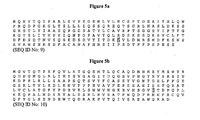
- the interaction of a disulfide-linked soluble variant of the native 1 G4 TCR (see SEQ ID NO: 9 for TCR ⁇ chain and SEQ ID NO: 10 for TCR ⁇ chain) and the SLLMWITQC-HLA-A*0201 complex has a K D of approximately 10 ⁇ M, an off-rate (K off ) of 1.28 x 10 -1 S -1 and a half-life of 0.17 minutes as measured by the Biacore-base method of Example 5.
- the native 1G4 TCR specific for the SLLMWITQC-HLA-A*0201 complex has the following Valpha chain and Vbeta chain gene usage:
- the native 1 G4 TCR can be used as a template into which various mutations that impart high affinity and/or a slow off-rate for the interaction between TCRs of the invention and the SLLMWITQC-HLA-A*0201 complex can be introduced.
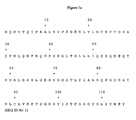
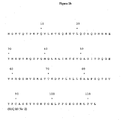
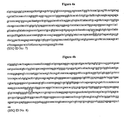
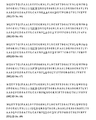
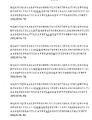
- the invention includes TCRs which are mutated relative to the native 1G4 TCR ⁇ chain variable domain (see Figure 1a and SEQ ID No: 1) and/or ⁇ chain variable domain (see Figure 1b and SEQ ID NO: 2) in at least one complementarity determining region (CDR) and/or variable domain framework region thereof.
- CDR complementarity determining region
- HV4 regions may be mutated so as to produce a high affinity mutant.
- TCRs exist in heterodimeric ⁇ or ⁇ forms. However, recombinant TCRs consisting of a single TCR ⁇ or TCR ⁇ chain have previously been shown to bind to peptide MHC molecules.
- the TCR of the invention comprise both an ⁇ chain variable domain and an TCR ⁇ chain variable domain.
- WO 03/020763 discloses a soluble ⁇ TCR construct suitable for the production of soluble TCRs of the present invention.
- the soluble TCRs disclosed in WO 03/020763 comprise TCR ⁇ and ⁇ chain extracellular sequences associated via a non-native disulfide interchain bond.
- the mutation(s) in the TCR ⁇ chain sequence and/or TCR ⁇ chain sequence may be one or more of substitution(s), deletion(s) or insertion(s).
- These mutations can be carried out using any appropriate method including, but not limited to, those based on polymerase chain reaction (PCR), restriction enzyme-based cloning, or ligation independent cloning (LIC) procedures. These methods are detailed in many of the standard molecular biology texts.
- any ⁇ TCR that comprises similar Valpha and Vbeta gene usage and therefore amino acid sequence to that of the 1 G4 TCR could make a convenient template TCR. It would then be possible to introduce into the DNA encoding one or both of the variable domains of the template ⁇ TCR the changes required to produce the mutated high affinity TCRs of the invention. As will be obvious to those skilled in the art, the necessary mutations could be introduced by a number of methods, for example site-directed mutagenesis.
- the TCRs of the invention include those in which one or more of the TCR alpha chain variable domain amino acids corresponding to those listed below are mutated relative to the amino acid occurring at these positions in the sequence provided for the native 1 G4 TCR alpha chain variable domain in Figure 1 a and SEQ ID No: 1.
- the TCR amino acid sequences herein are generally provided including an N-terminal methionine (Met or M) residue. As will be known to those skilled in the art this residue may be removed during the production of recombinant proteins. Furthermore, unless stated to the contrary, the soluble TCR and TCR variable domain sequences have been truncated at the N-terminus thereof. (Resulting in the lose of the N-terminal "K” and “NA” in the TCR alpha and beta chain sequences respectively.). As will be obvious to those skilled in the art these "missing" N-terminal TCR residues may be re-introduced into the TCRs of the present invention.
- variable domain is understood to encompass all amino acids of a given TCR which are not included within the constant domain as encoded by the TRAC gene for TCR ⁇ chains and either the TRBC1 or TRBC2 for TCR ⁇ chains.
- part of the diversity of the TCR repertoire is due to variations which occur in the amino acid encoded by the codon at the boundary between the variable domain, as defined herein, and the constant domain.
- the codon that is present at this boundary in the wild-type IG4 TCR sequence results in the presence of the Tyrosine (Y) residue at the C-terminal of the variable domain sequences herein.
- This Tyrosine replaces the N-terminal Asparagine (N) residue encoded by the TRAC gene shown in Figure 8A .
- Embodiments of the invention include mutated TCRs which comprise mutation of one or more of alpha chain variable domain amino acids corresponding to: 20V, 51Q, 52S, 53S, 94P, 95T, 96S, 97G, 98G, 99S, 100Y, 101I and 103T, for example the amino acids:
- Embodiments of the invention also include TCRs which comprise mutation of one or more of the TCR beta chain variable domain amino acids corresponding to those listed below, are relative to the amino acid occurring at these positions in the sequence provided for the native 1 G4 TCR alpha chain variable domain of the native 1 G4 TCR beta chain in Figure 1b and SEQ ID No: 2.
- the amino acids referred to which may be mutated are:18M, 50G, 51A, 52G, 53I, 55D, 56Q, 70T, 94Y, 95V and 97N, for example:
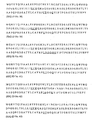
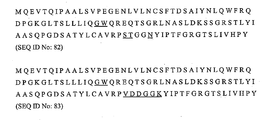
- TCRs comprising one of the mutated alpha chain variable domain amino acid sequences shown in Fig 6 (SEQ ID Nos: 11 to 83). Phenotypically silent variants of such TCRs also form part of this invention.
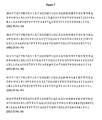
- TCRs comprising one of the mutated beta chain variable domain amino acid sequences shown in Figures 7 or 13 . (SEQ ID Nos: 84 to 99 or 117 to 121). Phenotypically silent variants of such TCRs also form part of this invention.
- TCRs exist in heterodimeric ⁇ or ⁇ forms. However, recombinant TCRs consisting of ⁇ or ⁇ homodimers have previously been shown to bind to peptide MHC molecules. Therefore, one embodiment of the invention is provided by TCR ⁇ or TCR ⁇ homodimers.
- TCRs of the invention comprising the alpha chain variable domain amino acid sequence and the beta chain variable domain amino acid sequence combinations listed below, phenotypically silent variants of such TCRs also form part of this invention:
- Alpha chain variable domain sequence SEQ ID NO: Beta chain variable domain sequence, SEQ ID NO: 1 84 1 85 1 86 1 87 1 88 11 84 12 84 12 85 12 90 11 85 11 86 11 92 11 93 13 86 14 84 14 85 15 84 15 85 16 84 16 85 17 86 18 86 19 84 20 86 21 84 21 85 22 84 23 86 24 84 25 84 26 84 27 84 28 84 29 84 30 84 31 84 32 84 33 84 20 86 34 86 35 89 36 89 37 89 38 89 39 89 16 89 17 89 31 89 40 89 1 90 1 91 41 90 42 2 42 85 42 92 1 92 1 93 43 92 44 92 45 92 46 92 47 92 48 .
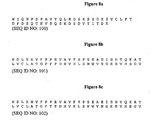
- TCRs of the invention comprising the variable domain combinations detailed above further comprise the alpha chain constant region amino acid sequence shown in Figure 8a (SEQ ID NO: 100) and one of the beta chain amino acid constant region sequences shown in Figures 8b and 8c (SEQ ID NOs: 101 and 102) or phenotypically silent variants thereof.
- phenotypically silent variants is understood to refer to those TCRs which have a K D for the said SLLMWITQC-HLA-A*0201 complex of less than or equal to 1 ⁇ M and/or have an off-rate (k off ) of 1x10 -3 S -1 or slower.
- K D K D for the said SLLMWITQC-HLA-A*0201 complex of less than or equal to 1 ⁇ M
- k off off-rate
- Such trivial variants are included in the scope of this invention. Those TCRs in which one or more conservative substitutions have been made also form part of this invention.
- the TCRs of the invention are in the form of either single chain TCRs (scTCRs) or dimeric TCRs (dTCRs) as described in WO 04/033685 and WO 03/020763 .
- a suitable scTCR form comprises a first segment constituted by an amino acid sequence corresponding to a TCR ⁇ chain variable domain, a second segment constituted by an amino acid sequence corresponding to a TCR ⁇ chain variable domain sequence fused to the N terminus of an amino acid sequence corresponding to a TCR ⁇ chain constant domain extracellular sequence, and a linker sequence linking the C terminus of the first segment to the N terminus of the second segment.
- the first segment may be constituted by an amino acid sequence corresponding to a TCR ⁇ chain variable domain
- the second segment may be constituted by an amino acid sequence corresponding to a TCR ⁇ chain variable domain sequence fused to the N terminus of an amino acid sequence corresponding to a TCR ⁇ chain constant domain extracellular sequence
- the above scTCRs may further comprise a disulfide bond between the first and second chains, said disulfide bond being one which has no equivalent in native ⁇ T cell receptors, and wherein the length of the linker sequence and the position of the disulfide bond being such that the variable domain sequences of the first and second segments are mutually orientated substantially as in native ⁇ T cell receptors.
- the first segment may be constituted by an amino acid sequence corresponding to a TCR ⁇ chain variable domain sequence fused to the N terminus of an amino acid sequence corresponding to a TCR ⁇ chain constant domain extracellular sequence
- the second segment may be constituted by an amino acid sequence corresponding to a TCR ⁇ chain variable domain fused to the N terminus of an amino acid sequence corresponding to TCR ⁇ chain constant domain extracellular sequence
- a disulfide bond may be provided between the first and second chains, said disulfide bond being one which has no equivalent in native ⁇ T cell receptors.
- the linker sequence may link the C terminus of the first segment to the N terminus of the second segment, and may have the formula -PGGG-(SGGGG) n P- wherein n is 5 or 6 and P is proline, G is glycine and S is serine.
- -PGGG-SGGGGSGGGGSGGGGSGGGGSGGGG-P SEQ ID NO: 103
- -PGGG-SGGGGSGGGGSGGGGSGGGGGGSGGGGSGGGGGG-P SEQ ID NO: 104)
- a suitable dTCR form of the TCRs of the present invention comprises a first polypeptide wherein a sequence corresponding to a TCR ⁇ chain variable domain sequence is fused to the N terminus of a sequence corresponding to a TCR chain constant domain extracellular sequence, and a second polypeptide wherein a sequence corresponding to a TCR ⁇ chain variable domain sequence fused to the N terminus a sequence corresponding to a TCR ⁇ chain constant domain extracellular sequence, the first and second polypeptides being linked by a disulfide bond which has no equivalent in native ⁇ T cell receptors.
- the first polypeptide may comprise a TCR ⁇ chain variable domain sequence is fused to the N terminus of a sequence corresponding to a TCR ⁇ chain constant domain extracellular sequence, and a second polypeptide wherein a sequence corresponding to a TCR ⁇ chain variable domain sequence is fused to the N terminus a sequence corresponding to a TCR ⁇ chain constant domain extracellular sequence, the first and second polypeptides being linked by a disulfide bond between cysteine residues substituted for Thr 48 of exon 1 of TRAC*01 and Ser 57 of exon 1 of TRBC1*01 or TRBC2*01 or the non-human equivalent thereof.
- the dTCR or scTCR form of the TCRs of the invention may have amino acid sequences corresponding to human ⁇ TCR extracellular constant and variable domain sequences, and a disulfide bond may link amino acid residues of the said constant domain sequences, which disulfide bond has no equivalent in native TCRs.
- the disulfide bond is between cysteine residues corresponding to amino acid residues whose ⁇ carbon atoms are less than 0.6 nm apart in native TCRs, for example between cysteine residues substituted for Thr 48 of exon 1 of TRAC*01 and Ser 57 of exon 1 of TRBC1*01 or TRBC22*01 or the non-human equivalent thereof.
- cysteines can be introduced to form the disulfide bond
- residues in exon 1 of TRAC*01 for the TCR ⁇ chain and TRBC1*01 or TRBC2*01 for the TCR ⁇ chain are the following residues in exon 1 of TRAC*01 for the TCR ⁇ chain and TRBC1*01 or TRBC2*01 for the TCR ⁇ chain: TCR ⁇ chain TCR ⁇ chain Native ⁇ carbon separation (nm) Thr 45 Ser 77 0.533 Tyr 10 Ser 17 0.359 Thr 45 Asp 59 0.560 Ser 15 Glu 15 0.59
- the dTCR or scTCR form of the TCRs of the invention may include a disulfide bond between residues corresponding to those linked by a disulfide bond in native TCRs.
- the dTCR or scTCR form of the TCRs of the invention preferably does not contain a sequence corresponding to transmembrane or cytoplasmic sequences of native TCRs.
- a TCR of the invention is associated with at least one polyalkylene glycol chain(s). This association may be cause in a number of ways known to those skilled in the art.
- the polyalkylene chain(s) is/are covalently linked to the TCR.
- the polyethylene glycol chains of the present aspect of the invention comprise at least two polyethylene repeating units.
- One aspect of the invention provides a multivalent TCR complex comprising at least two TCRs of the invention.
- at least two TCR molecules are linked via linker moieties to form multivalent complexes.
- the complexes are water soluble, so the linker moiety should be selected accordingly.
- the linker moiety should be capable of attachment to defined positions on the TCR molecules, so that the structural diversity of the complexes formed is minimised.
- One embodiment of the present aspect is provided by a TCR complex of the invention wherein the polymer chain or peptidic linker sequence extends between amino acid residues of each TCR which are not located in a variable region sequence of the TCR.
- the linker moieties should be chosen with due regard to their pharmaceutical suitability, for example their immunogenicity.
- linker moieties which fulfil the above desirable criteria are known in the art, for example the art of linking antibody fragments.
- a TCR complex of the invention in which the TCRs are linked by a polyalkylene glycol chain provides one embodiment of the present aspect.
- hydrophilic polymers such as polyalkylene glycols.
- the most commonly used of this class are based on polyethylene glycol or PEG, the structure of which is shown below.
- n is greater than two.
- suitable, optionally substituted, polyalkylene glycols include polypropylene glycol, and copolymers of ethylene glycol and propylene glycol.
- Such polymers may be used to treat or conjugate therapeutic agents, particularly polypeptide or protein therapeutics, to achieve beneficial changes to the PK profile of the therapeutic, for example reduced renal clearance, improved plasma half-life, reduced immunogenicity, and improved solubility.
- therapeutic agents particularly polypeptide or protein therapeutics
- Such improvements in the PK profile of the PEG-therapeutic conjugate are believe to result from the PEG molecule or molecules forming a 'shell' around the therapeutic which sterically hinders the reaction with the immune system and reduces proteolytic degradation.
- the size of the hydrophilic polymer used my in particular be selected on the basis of the intended therapeutic use of the TCR complex.
- the polymer used can have a linear or branched conformation.
- Branched PEG molecules, or derivatives thereof, can be induced by the addition of branching moieties including glycerol and glycerol oligomers, pentaerythritol, sorbitol and lysine.
- the polymer will have a chemically reactive group or groups in its structure, for example at one or both termini, and/or on branches from the backbone, to enable the polymer to link to target sites in the TCR.
- This chemically reactive group or groups may be attached directly to the hydrophilic polymer, or there may be a spacer group/moiety between the hydrophilic polymer and the reactive chemistry as shown below:
- spacer used in the formation of constructs of the type outlined above may be any organic moiety that is a non-reactive, chemically stable, chain, Such spacers include, by are not limited to the following:
- a TCR complex of the invention in which a divalent alkylene spacer radical is located between the polyalkylene glycol chain and its point of attachment to a TCR of the complex provides a further embodiment of the present aspect.
- a TCR complex of the invention in which the polyalkylene glycol chain comprises at least two polyethylene glycol repeating units provides a further embodiment of the present aspect.
- hydrophilic polymers linked, directly or via a spacer, to reactive chemistries that may be of use in the present invention. These suppliers include Nektar Therapeutics (CA, USA), NOF Corporation (Japan), Sunbio (South Korea) and Enzon Pharmaceuticals (NJ, USA).
- hydrophilic polymers linked, directly or via a spacer, to reactive chemistries include, but are not limited to, the following: PEG linkerDescription Source of PEG Catalogue number TCR Monomer attachment 5K linear (Maleimide) Nektar 2D2MOHO1 20K linear (Maleimide) Nektar 2D2MOPO1 20K linear (Maleimide) NOF Corporation SUNBFJGHT ME-200MA 20K branched (Maleimide) NOF Corporation NOF Corporation SUNBRIGHT GL2-200MA 30K linear (Maleimide) 30K linear (Maleimide) NOF Corporation NOFCorporation SUNBRIGHT ME-300MA 40K branched PEG (Maleimide) Nektar 2D3XOTO1 5K-NP linear (for Lys attachment) NOFCorporation SUNBRIGHT MENP-50H 10K-NP linear (for Lys attachment) NOF Corporation SUNBRIGHT MENP-50H 10K-NP linear (for Ly
- coupling chemistries can be used to couple polymer molecules to protein and peptide therapeutics.
- the choice of the most appropriate coupling chemistry is largely dependant on the desired coupling site.
- the following coupling chemistries have been used attached to one or more of the termini of PEG molecules (Source: Nektar Molecular Engineering Catalogue 2003):
- non-PEG based polymers also provide suitable linkers for multimerising the TCRs of the present invention.
- linkers for multimerising the TCRs of the present invention.
- moieties containing maleimide termini linked by aliphatic chains such as BMH and BMOE (Pierce, products Nos. 22330 and 22323) can be used.
- Peptidic linkers are the other class of TCR linkers. These linkers are comprised of chains of amino acids, and function to produce simple linkers or multimerisation domains onto which TCR molecules can be attached.
- the biotin / streptavidin system has previously been used to produce TCR tetramers (see WO/99/60119 ) for in-vitro binding studies.
- stepavidin is a microbially-derived polypeptide and as such not ideally suited to use in a therapeutic.
- a TCR complex of the invention in which the TCRs are linked by a peptidic linker derived from a human multimerisation domain provides a further embodiment of the present aspect.
- a multivalent TCR complex of the invention comprising at least two TCRs provides a final embodiment of this aspect, wherein at least one of said TCRs is associated with a therapeutic agent.
- a TCR (or multivalent complex thereof) of the present invention may alternatively or additionally comprise a reactive cysteine at the C-terminal or N-terminal of the alpha or beta chains thereof.
- the TCR of the invention may be associated with a therapeutic agent or detectable moiety.
- said therapeutic agent or detectable moiety may be covalently linked to the TCR.
- said therapeutic agent or detectable moiety is covalently linked to the C-terminus of one or both TCR chains.
- the scTCR or one or both of the dTCR chains of TCRs of the present invention may be labelled with an detectable moiety, for example a label that is suitable for diagnostic purposes.
- Such labelled TCRs are useful in a method for detecting a SLLMWITQC-HLA-A*0201 complex which method comprises contacting the TCR ligand with a TCR (or a multimeric high affinity TCR complex) which is specific for the TCR ligand; and detecting binding to the TCR ligand.
- fluorescent streptavidin can be used to provide a detectable label.
- Such a fluorescently-labelled TCR tetramer is suitable for use in FACS analysis, for example to detect antigen presenting cells carrying theSLLMWITQC-HLA-A*0201 complex for which these high affinity TCRs are specific.
- TCR-specific antibodies in particular monoclonal antibodies.
- anti-TCR antibodies such as ⁇ F1 and ⁇ F1, which recognise the constant domains of the ⁇ and ⁇ chains, respectively.
- a TCR (or multivalent complex thereof) of the present invention may alternatively or additionally be associated with (e.g. covalently or otherwise linked to) a therapeutic agent which may be, for example, a toxic moiety for use in cell killing, or an immune effector molecule such as an interleukin or a cytokine.
- a multivalent TCR complex of the invention may have enhanced binding capability for a TCR ligand compared to a non-multimeric wild-type or T cell receptor heterodimer of the invention.
- the multivalent TCR complexes according to the invention are particularly useful for tracking or targeting cells presenting particular antigens in vitro or in vivo, and are also useful as intermediates for the production of further multivalent TCR complexes having such uses. These TCRs or multivalent TCR complexes may therefore be provided in a pharmaceutically acceptable formulation for use in vivo.
- the TCRs of the invention may be used in a method for delivering a therapeutic agent to a target cell, which method comprises contacting potential target cells with a TCR or multivalent TCR complex in accordance with the invention under conditions to allow attachment of the TCR or multivalent TCR complex to the target cell, said TCR or multivalent TCR complex being specific for theSLLMWITQC-HLA-A*0201 complex and having the therapeutic agent associated therewith.
- the soluble TCR or multivalent TCR complex of the present invention can be used to deliver therapeutic agents to the location of cells presenting a particular antigen. This would be useful in many situations and, in particular, against tumours. A therapeutic agent could be delivered such that it would exercise its effect locally but not only on the cell it binds to.
- one particular strategy envisages anti-tumour molecules linked to TCRs or multivalent TCR complexes according to the invention specific for tumour antigens.
- therapeutic agents could be employed for this use, for instance radioactive compounds, enzymes (perforin for example) or chemotherapeutic agents (cis-platin for example).
- radioactive compounds for instance
- enzymes perforin for example
- chemotherapeutic agents cis-platin for example.
- the toxin could be inside a liposome linked to streptavidin so that the compound is released slowly. This will prevent damaging effects during the transport in the body and ensure that the toxin has maximum effect after binding of the TCR to the relevant antigen presenting cells.
- Suitable therapeutic agents include:
- Antibody fragments and variants/analogues which are suitable for use in the compositions and methods described herein include, but are not limited to, the following.
- the defining functional characteristic of antibodies in the context of the present invention is their ability to bind specifically to a target ligand. As is known to those skilled in the art it is possible to engineer such binding characteristics into a range of other proteins.
- Examples of antibody variants and analogues suitable for use in the compositions and methods of the present invention include, but are not limited to, the following.
- Protein scaffold-based binding polypeptides - This family of binding constructs comprise mutated analogues of proteins which contain native binding loops.
- Affibodies marketed by Affibody (Sweden), which are based on a three-helix motif derived from one of the IgG binding domains of Staphylococcus aureus Protein A.
- Evibodies marketed by EvoGenix (Australia) which are based on the extracellular domains of CTLA-4into which domains similar to antibody binding loops are grafted.
- Cytokine Traps marketed by Regeneron Pharmaceuticals (US), graft cytokine receptor domains into antibody scaffolds.
- anti-CD3 antibodies can be raised to any of the polypeptide chains from which this complex is formed (i.e. ⁇ , ⁇ , ⁇ , ⁇ and ⁇ CD3 chains)
- Antibodies which bind to the ⁇ CD3 chain are the preferred anti-CD3 antibodies for use in the compositions and methods of the present invention.
- Soluble TCRs or multivalent TCR complexes of the invention may be linked to an enzyme capable of converting a prodrug to a drug. This allows the prodrug to be converted to the drug only at the site where it is required (i.e. targeted by the sTCR).
- the localisation in the vicinity of tumours or metastasis would enhance the effect of toxins or immunostimulants.
- the vaccine antigen could be localised in the vicinity of antigen presenting cells, thus enhancing the efficacy of the antigen.
- the method can also be applied for imaging purposes.
- an isolated cell presenting a TCR of the invention.
- said cell may be a T cell.
- the invention also provides for the use of a TCR or a multivalent TCR complex of the invention (optionally associated with a therapeutic agent), or a plurality of cells presenting at least one TCR of the invention, in the preparation of a composition for the treatment of cancer.
- Therapeutic or imaging TCRs in accordance with the invention will usually be supplied as part of a sterile, pharmaceutical composition which will normally include a pharmaceutically acceptable carrier.
- This pharmaceutical composition may be in any suitable form, (depending upon the desired method of administering it to a patient). It may be provided in unit dosage form, will generally be provided in a sealed container and may be provided as part of a kit. Such a kit would normally (although not necessarily) include instructions for use. It may include a plurality of said unit dosage forms.
- the pharmaceutical composition may be adapted for administration by any appropriate route, for example parenteral, transdermal or via inhalation, preferably a parenteral (including subcutaneous, intramuscular, or, most preferably intravenous) route.
- a parenteral route for example parenteral, transdermal or via inhalation, preferably a parenteral (including subcutaneous, intramuscular, or, most preferably intravenous) route.
- Such compositions may be prepared by any method known in the art of pharmacy, for example by admixing the active ingredient with the carrier(s) or excipient(s) under sterile conditions.
- Dosages of the substances of the present invention can vary between wide limits, depending upon the disease or disorder to be treated, the age and condition of the individual to be treated, etc. and a physician will ultimately determine appropriate dosages to be used.
- a scTCR or dTCR (which preferably is constituted by constant and variable sequences corresponding to human sequences) of the present invention may be provided in substantially pure form, or as a purified or isolated preparation. For example, it may be provided in a form which is substantially free of other proteins.
- the invention also provides a method of producing a high affinity TCR having the property of binding to SLLMWITQC-HLA-A*0201.CHARACTERISED IN THAT the TCR (i) comprises at least one TCR ⁇ chain variable domain and/or at least one TCR ⁇ chain variable domain and (ii) has a K D for the said SLLMWITQC-HLA-A*0201 complex of less than or equal to 1 ⁇ M and/or an off-rate (k off ) for the SLLMWITQC-HLA-A*0201 complex of 1x10 -3 S -1 or slower, wherein the method comprises:
- Example 1- Production of a soluble disulfide-linked TCR comprising the native 1 G4 TCR variable domains
- RNA was mixed and incubated for 1 hour at 37°C. cDNA was then stored at -80°C.
- the above cDNA was used as template.
- a panel of forward primers covering all possible alpha and beta variable chains was used to screen for, and amplify by PCR, alpha and beta chains genes.
- Primer sequences used for TCR chain gene amplification were designed from the NCBI website (http://www.ncbi.nlin.nih.gov/Entrezn using accession numbers obtained from the T cell receptor Factsbook, (2001) LeFranc and LeFranc, Academic Press, ISBN 0-12-441352-8 .
- Alpha -chain forward primers were designed to contain a ClaI restriction site and the universal alpha chain reverse primer a SaII restriction site.
- Beta-chain forward primers were designed to contain a AseI restriction site and universal beta reverse primer an AgeI restriction site.
- Recipient vectors for the TCR gene fragments were based on a pGMT7 parent plasmid, which contains the T7 promoter for high level expression in E.coli strain BL21-DE3(pLysS) ( Pan et al., Biotechniques (2000) 29 (6): 1234-8 )
- Alpha chain purified PCR products were digested with ClaI and SalII and ligated into pEX954 (see figure 9 ) cut with ClaI and XhoI.
- Beta chain purified PCR products were digested with AseI and AgeI and ligated into pEX821 (See Figure 10 ) cut with NdeI / AgeI.
- the cut PCR product and cut vector were ligated using a rapid DNA ligation kit (Roche) following the manufacturers instructions.
- Ligated plasmids were transformed into competent E.coli strain XLl-blue cells and plated out on LB/agar plates containing 100mg/ml ampicillin. Following incubation overnight at 37°C, single colonies were picked and grown in 10 ml LB containing 100mg/ml ampicillin overnight at 37°C with shaking. Cloned plasmids were purified using a Miniprep kit (Qiagen) and the insert was sequenced using an automated DNA sequencer (Lark Technologies).
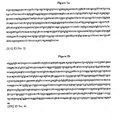
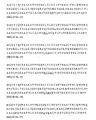
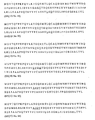
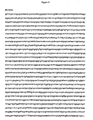
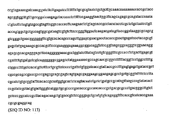
- Figures 4a and 4b show respectively the DNA sequence of soluble versions of the 1G4 TCR ⁇ and ⁇ chains mutated to include additional cysteine residues to form a non-native disulphide bond.
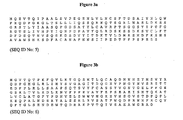
- Figures 5a and 5b show respectively the NY-ESO TCR ⁇ and ⁇ chain extracellular amino acid sequences produced from the DNA sequences of Figures 4a and 4b
- the soluble disulfide-linked native 1G4 TCR produced as described in Example 1 can be used a template from which to produce the TCRs of the invention which have an increased affinity for the SLLMWITQC (SEQ ID NO: 125) -HLA-A*0201 complex.
- Mutagenesis was carried out using the following conditions : 50ng plasmid template, 1 ⁇ l of 10mM dNTP, 5 ⁇ l of 10x Pfu DNA polymerase buffer as supplied by the manufacturer, 25 pmol of fwd primer, 25 pmol of rev primer, 1 ⁇ l pfu DNA polymerase in total volume 50 ⁇ l. After an initial denaturation step of 2 mins at 95C, the reaction was subjected to 25 cycles of denaturation (95C, 10 secs), annealing (55C 10 secs), and elongation (72C, 8 niins). The resulting product was digested with DpnI restriction enzyme to remove the template plasmid and transformed into E. coli strain XL1-blue. Mutagenesis was verified by sequencing.
- the construct was made by PCR stitching.
- the plasmid pEX202 (see Figure 11 ), coding for a wild type affinity TCR alpha chain fused to human c-jun leucine zipper domain and not containing the code for the introduced inter-chain di-sulfide bridge, was used as template. PCR with the following primer pair generated the desired constant domain.
- C-alpha fwd CCAGAACCCTGACCCTGCCG (SEQ ID NO: 107) 3'-alpha rev aagcttcccgggggaactttctgggctggg (SEQ ID NO: 108)
- the two products were mixed and diluted 1000 fold and 1 ⁇ l was used as template in a 50 ⁇ l PCR with 5'-TRAV21 fwd and 3'-alpha rev primers.
- the resulting PCR product was digested using restriction enzymes Asel and Xmal and ligated into pEX202 cut with Ndel and XmaI.
- PCRs were carried out using the following conditions : 50 pg plasmid template, 1 ⁇ l of 10 mM dNTP, 5 ⁇ l of 10x Pfu DNA polymerase buffer as supplied by the manufacturer, 25 pmol of fwd primer, 25 pmol of rev primer, 1 ⁇ l Pfu DNA polymerase in total volume 50 ⁇ l. After an initial denaturation step of 2 mins at 95C, the reaction was subjected to 30 cycles of denaturation (95C, 10 secs), annealing (55C 10 secs), and elongation (72C, 2 mins).
- the construct was made by PCR stitching.
- the plasmid pEX205 (see Figure 12 ), coding for a wild type affinity TCR beta chain fused to the human c-fos leucine zipper domain and not containing the code for the introduced inter-chain di-sulfide bridge, was used as template. PCR with the following two primers generated the desired constant domain gene fragment.
- C-beta fwd GCTGTGTTTGAGCCATCAGAAG (SEQ ID NO: 111)
- TRBC rev aagctt cccggg gtctgctctaccccaggc (SEQ ID NO: 112)
- the two products were mixed and diluted 1000 fold and 1 ⁇ l was used as template in a 50 ⁇ l PCR with TRBV6-5 fwd and TRBC rev primers. PCRs were carried out as described above.
- the resulting PCR product was digested using restriction enzymes Asel and XmaI and ligated into pEX205 cut with Ndel and XmaI.
- the expression plasmids containing the mutated ⁇ -chain and ⁇ -chain respectively as prepared in Examples 1, 2 or 3 were transformed separately into E.coli strain BL2lpLysS, and single ampicillin-resistant colonies were grown at 37°C in TYP (ampicillin 100ug/ml) medium to OD 600 of 0.4 before inducing protein expression with 0.5mM IPTG. Cells were harvested three hours post-induction by centrifugation for 30 minutes at 4000rpm in a Beckman J-6B.
- Cell pellets were re-suspended in a buffer containing 50mM Tris-HCI, 25% (w/v) sucrose, 1mM NaEDTA, 0.1% (w/v) NaAzide, 10mM DTT, pH 8.0. After an overnight freeze-thaw step, re-suspended cells were sonicated in 1 minute bursts for a total of around 10 minutes in a Milsonix XL2020 sonicator using a standard 12mm diameter probe. Inclusion body pellets were recovered by centrifugation for 30 minutes at 13000rpm in a Beckman J2-21 centrifuge. Three detergent washes were then carried out to remove cell debris and membrane components.
- Triton buffer 50mM Tris-HCI, 0.5% Triton-X100, 200mM NaCI, 10mM NaEDTA, 0.1% (w/v) NaAzide, 2mM DTT, pH 8.0
- Detergent and salt was then removed by a similar wash in the following buffer: 50mM Tris-HCI, 1mM NaEDTA, 0.1% (w/v) NaAzide, 2mM DTT, pH 8.0.
- the inclusion bodies were divided into 30 mg aliquots and frozen at -70°C. Inclusion body protein yield was quantitated by solubilising with 6M guanidine-HCl and measurement with a Bradford dye-binding assay (PerBio).
- TCR ⁇ chain and 60mg of TCR ⁇ chain solubilised inclusion bodies were thawed from frozen stocks, samples were then mixed and the mixture diluted into 15ml of a guanidine solution (6 M Guanidine-hydrochloride, 10mM Sodium Acetate, 10mM EDTA), to ensure complete chain de-naturation.
- a guanidine solution (6 M Guanidine-hydrochloride, 10mM Sodium Acetate, 10mM EDTA), to ensure complete chain de-naturation.
- the guanidine solution containing fully reduced and denatured TCR. chains was then injected into 1 litre of the following refolding buffer: 100mM Tris pH 8.5, 400mM L-Arginine, 2mM EDTA, 5mM reduced Glutathione, 0.5mM oxidised Glutathione, 5M urea, 0.2mM PMSF.
- the redox couple (2-mercaptoethylamine and cystamine (to final concentrations of 6.6mM and 3.7mM, respectively) were added approximately 5 minutes before addition of the denatured TCR chains. The solution was left for 5 hrs ⁇ 15minutes. The refolded TCR was dialysed in Spectrapor 1 membrane (Spectrum; Product No. 132670) against 10 L 10 mM Tris pH 8.1 at 5°C ⁇ 3°C for 18-20 hours. After this time, the dialysis buffer was changed to fresh 10 mM Tris pH 8.1 (10 L) and dialysis was continued at 5°C ⁇ 3°C for another 20-22 hours.
- Spectrapor 1 membrane Spectrum; Product No. 132670
- sTCR was separated from degradation products and impurities by loading the dialysed refold onto a POROS 50HQ anion exchange column and eluting bound protein with a gradient of 0-500mM NaCI over 50 column volumes using an Akta purifier (Pharmacia). Peak fractions were stored at 4°C and analysed by Coomassie-stained SDS-PAGE before being pooled and concentrated. Finally, the sTCR was purified and characterised using a Superdex 200HR gel filtration column pre-equilibrated in HBS-EP buffer (10 mM HEPES pH 7.4, 150 mM NaCI, 3:5 mM EDTA, 0.05% nonidet p40). The peak eluting at a relative molecular weight of approximately 50 kDa was pooled and concentrated prior to characterisation by BIAcore surface plasmon resonance analysis.
- a surface plasmon resonance biosensor (Biacore 3000TM) was used to analyse the binding of a sTCR to its peptide-MHC ligand. This was facilitated by producing single pMHC complexes (described below) which were immobilised to a streptavidin-coated binding surface in a semi-oriented fashion, allowing efficient testing of the binding of a soluble T-cell receptor to up to four different pMHC (immobilised on separate flow cells) simultaneously. Manual injection of HLA complex allows the precise level of immobilised class I molecules to be manipulated easily.
- HLA-A*0201 molecules were refolded in vitro from bacterially-expressed inclusion bodies containing the constituent subunit proteins and synthetic peptide, followed by purification and in vitro enzymatic biotinylation ( O'Callaghan et al. (1999) Anal. Biochem. 266: 9-15 ).
- HLA-A*0201-heavy chain was expressed with a C-terminal biotinylation tag which replaces the transmembrane and cytoplasmic domains of the protein in an appropriate construct.
- Inclusion body expression levels of ⁇ 75 mg/litre bacterial culture were obtained.
- the MHC light-chain or ⁇ 2-microglobulin was also expressed as inclusion bodies in E.coli from an appropriate construct, at a level of ⁇ 500 mg/litre bacterial culture.
- E. coli cells were lysed and inclusion bodies are purified to approximately 80% purity. Protein from inclusion bodies was denatured in 6 M guanidine-HCl, 50 mM Tris pH 8.1, 100 mM NaCl, 10 mM DTT, 10 mM EDTA, and was refolded at a concentration of 30 mg/litre heavy chain, 30 mg/litre ⁇ 2m into 0.4 M L-Arginine-HCl, 100 mM Tris pH 8.1, 3.7 mM cystamine, mM cysteamine, 4 mg/ml of the SLLMWITQC peptide required to be loaded by the HLA-A*0201 molecule, by addition of a single pulse of denatured protein into refold buffer at ⁇ 5°C. Refolding was allowed to reach completion at 4°C for at least 1 hour.
- Buffer was exchanged by dialysis in 10 volumes of 10 mM Tris pH 8.1. Two changes of buffer were necessary to reduce the ionic strength of the solution sufficiently.
- the protein solution was then filtered through a 1.5 ⁇ m cellulose acetate filter and loaded onto a POROS 50HQ anion exchange column (8 ml bed volume). Protein was eluted with a linear 0-500 mM NaCl gradient. HLA-A*0201-peptide complex eluted at approximately 250 mM NaCl, and peak fractions were collected, a cocktail of protease inhibitors (Calbiochem) was added and the fractions were chilled on ice.
- Biotinylation tagged pMHC molecules were buffer exchanged into 10 mM Tris pH 8.1, 5 mM NaCl using a Pharmacia fast desalting column equilibrated in the same buffer. Immediately upon elution, the protein-containing fractions were chilled on ice and protease inhibitor cocktail (Calbiochem) was added. Biotinylation reagents were then added: 1 mM biotin, 5 mM ATP (buffered to pH 8), 7.5 mM MgCl2, and 5 ⁇ g/ml BirA enzyme (purified according to O'Callaghan et al. (1999) Anal. Biochem. 266: 9-15 ). The mixture was then allowed to incubate at room temperature overnight.
- the biotinylated pHLA-A*0201 molecules were purified using gel filtration chromatography. A Pharmacia Superdex 75 HR 10/30 column was pre-equilibrated with filtered PBS and 1 ml of the biotinylation reaction mixture was loaded and the column was developed with PBS at 0.5 ml/min. Biotinylated pHLA-A*0201 molecules eluted as a single peak at approximately 15 ml. Fractions containing protein were pooled, chilled on ice, and protease inhibitor cocktail was added. Protein concentration was determined using a Coomassie-binding assay (PerBio) and aliquots of biotinylated pHLA-A*0201 molecules were stored frozen at -20°C. Streptavidin was immobilised by standard amine coupling methods.
- PerBio Coomassie-binding assay
- Such immobilised complexes are capable of binding both T-cell receptors and the coreceptor CD8 ⁇ , both of which may be injected in the soluble phase. Specific binding of TCR is obtained even at low concentrations (at least 40 ⁇ g/ml), implying the TCR is relatively stable.
- the pMHC binding properties of sTCR are observed to be qualitatively and quantitatively similar if sTCR is used either in the soluble or immobilised phase. This is an important control for partial activity of soluble species and also suggests that biotinylated pMHC complexes are biologically as active as non-biotinylated complexes.
- SPR measures changes in refractive index expressed in response units (RU) near a sensor surface within a small flow cell, a principle that can be used to detect receptor ligand interactions and to analyse their affinity and kinetic parameters.
- the probe flow cells were prepared by immobilising the individual HLA-peptide complexes in separate flow cells via binding between the biotin cross linked onto ⁇ 2m and streptavidin which have been chemically cross linked to the activated surface of the flow cells.
- the assay was then performed by passing sTCR over the surfaces of the different flow cells at a constant flow rate, measuring the SPR response in doing so.
- K D was determined by experimentally measuring the dissociation rate constant, kd, and the association rate constant, ka.
- the equilibrium constant K D was calculated as kd/ka.
- TCR was injected over two different cells one coated with ⁇ 300 RU of specific HLA-A2-nyeso peptide complex, the second coated with ⁇ 300 RU of non-specific HLA-A2 -peptide complex.
- Flow rate was set at 50 ⁇ l/min. Typically 250 ⁇ l of TCR at ⁇ 3 ⁇ M concentration was injected. Buffer was then flowed over until the response had returned to baseline.
- Kinetic parameters were calculated using Biaevaluation software.
- the dissociation phase was also fitted to a single exponential decay equation enabling calculation of half-life.
- the TCRs specified in the following table have a K D of less than or equal to 1 ⁇ M and/or a K off of 1 ⁇ 10 -3 S - 1 or slower.
- Alpha chain variable domain sequence SEQ ID NO: Beta chain variable domain sequence, SEQ ID NO: 1 84 1 85 1 86 1 87 1 88 11 84 12 84 12 85 12 90 11 85 11 86 11 92 11 93 13 86 14 84 14 85 15 84 15 85 16 84 16 85 17 86 18 86 19 84 20 86 21 84 21 85 22 84 23 86 24 84 25 84 26 84 27 84 28 84 29 84 30 84 31 84 32 84 33 84 20 86 34 86 35 89 36 89 37 89 38 89 39 89 16 89 17 89 31 89 40 89 1 90 1 91 41 90 42 2 42 85 42 92 1 92 1 93 43 92 44 92 45 92 46 92 47 92 48 84 49 94 50 84 50 94
- Example 6 In-vitro cell staining using a high affinity c58c61 NY-ESO TCR- IL-2 fusion protein .
- T2 lymphoblastoid cells were pulsed with the NY-ESO-derived SLLMWITQC, NY-ESO-analogue SLLMWITQV peptide, or an irrelevant peptide at a range of concentrations (10 -5 - 10 -10 M) for 180 minutes at 37°C.
- the NY-ESO-analogue SLLMWITQV peptide (V-variant peptide) was used as this peptide is known to have a higher affinity for the binding cleft of the HLA-A*0201 complex than the native NY-ESO-derived SLLMWITQC peptide.
- TCR-IL-2 After pulsing, cells were washed in serum-free RPMI and 5 x 10 5 cells were incubated with high affinity c58c61 NY-ESO TCR- IL-2 fusion protein for 10min at room temperature, followed by secondary anti-IL-2 mAb conjugated with PE (Serotec) for 15min at room temperature. After washing, bound TCR-IL-2 was quantified by flow cytometry using a FACSVantage SE (Becton Dickinson).Controls, also using peptide-pulsed T2 cells were included where TCR-IL-2 was omitted.
- Figure 14a details the amino acid sequence of the alpha chain of the c58c61 NY-ESO TCR. (SEQ ID NO: 122).
- Figure 14c (SEQ ID NO: 124) details the amino acid sequence of the beta chain of the c58c61 NY-ESO TCR using the TRBC2 encoded constant region.
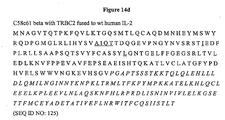
- Figure 14d (SEQ ID NO: 125) details the amino acid sequence of the beta chain of the c58c61 NY-ESO TCR using the TRBC2 encoded constant region fused via a peptide linker to wild-type human IL-2.
- the alpha and beta chain variable domain mutations contained within the soluble c58c61 1G4 TCR - IL-2 fusion protein correspond to those detailed in SEQ ID NO: 49 and SEQ ID NO: 94 respectively.
- SEQ ID NOs: 121 -125 have been provided in a form which includes the N-terminal methionine (M) and the "K” and "NA” residues omitted in the majority of the other TCR alpha chain and beta chain amino acid sequences.
- SK-MEL-37, ScaBER, J82, HcT119 and Colo 205 cancer cells transfected with a NY-ESO-derived SLLMWITQC peptide expressing ubiquitin minigene construct were used.
- the cancer cells were transfected using substantially the methods described in ( Rimoldi et al., (2000) J. Immunol. 165 7253-7261 ). Cells were labelled as described above.
- Figure 15a shows FACs staining of T2 cell pulsed with a range of NY-ESO-analogue SLLMWITQV peptide concentrations using the high affinity c58c61 1G4 TCR-IL-2 fusion proteins.
- Figure 15a shows FACs staining of T2 cell pulsed with a range of NY-ESO-analogue SLLMWITQV peptide concentrations using the high affinity c58c61 1G4 TCR-IL-2 fusion proteins.
- Figure 15b shows FACs staining of T2 cell pulsed with a range ofNY-ESO-derived SLLMWITQC peptide concentrations using the high affinity c58c61 1G4 TCR-IL-2 fusion proteins.
- Figure 16 shows FACs staining of SK-MEL-37, ScaBER, J82, HcT119 and Colo 205 cancer cells transfected with an SLLMWITQC peptide producing ubiquitin minigene ( ⁇ proteosome inhibitors) using the high affinity c58c61 1G4 TCR-IL-2 fusion proteins.
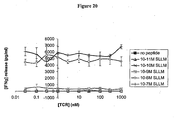
- the following assay was carried out to demonstrate that the soluble high affinity c58c61 NY-ESO TCR was capable of inhibiting activation of an SLLMWITQC-HLA-A*0201 specific CTL clone (1G4). IFN- ⁇ production was used as the read-out for CTL activation.
- R10 Assay media 10% FCS (heat-inactivated, Gibco, cat# 10108-165), 88% RPMI 1640 (Gibco, cat# 42401-018), 1% glutamine (Gibco, cat# 25030-024) and 1% penicillin/streptomycin (Gibco, cat# 15070-063).
- Peptide (obtained from various sources) initially dissolved in DMSO (Sigma, cat# D2650) at 4mg/ml and frozen.
- Wash buffer 0.01M PBS/0.05% Tween 20 (1 sachet of Phosphate buffered saline with Tween 20, pH7.4 from Sigma, Cat. # P-3563 dissolved in 1 litre distilled water gives final composition 0.01M PBS, 0.138M NaCl, 0.0027M KCl, 0.05% Tween 20). PBS (Gibco, cat#10010-015).
- the EliSpot kit contains all other reagents required i.e. capture and detection antibodies, skimmed milk powder, BSA, streptavidin-alkaline phosphatase, BCIP/NBT solution (Human IFN-g PVDF Eli-spot 20 x 96 wells with plates (IDS cat# DC-856.051.020, DC-856.000.000). The following method is based on the instructions supplied with each kit but contains some alterations.
- MEL-624 and SK-MEL-37 melanoma cell lines were treated with trypsin for 5 minutes at 37 °C. The cells are then washed and re-suspended in R10 media.
- the following assay was carried out to demonstrate that the soluble high affinity c58c61 1G4 TCR was capable of inhibiting activation of an SLLMWITQC-HLA-A*0201 specific CTL clone (1 G4). IFN- ⁇ production was used as the read-out for CTL activation.
- R10 Assay media 10% FCS (heat-inactivated, Gibco, cat# 10108-165), 88% RPMI 1640 (Gibco, cat# 42401-018), 1% glutamine (Gibco, cat# 25030-024) and 1% penicillin/streptomycin (Gibco, cat# 15070-063).
- Peptide (obtained from various sources) initially dissolved in DMSO (Sigma, cat# D2650) at 4mg/ml and frozen.
- Wash buffer 0.01M PBS/0.05% Tween 20 (1 sachet of Phosphate buffered saline with Tween 20, pH7.4 from Sigma, Cat. # P-3563 dissolved in 1 litre distilled water gives final composition 0.01M PBS, 0.138M Nad, 0.0027M KCl, 0.05% Tween 20). PBS (Gibco, cat#10010-015).
- the ELISA kit contains all other reagents except BSA (Sigma). required i.e. capture and detection antibodies, skimmed milk powder, streptavidin-HRP, TMB solution (Human IFN-g Eli-pair 20 x 96 wells with plates. The following method is based substantially on the instructions supplied with each kit.
- ELISA plates were prepared according to the manufacturers instructions. (Diaclone kit, Immunodiagnostic systems, UK
- T2 cell line target cells were washed and re-suspended in R10 media with or without varying concentrations (100nM -10pM) of SLLMWITQC peptide, then incubated for 1 hour at 37°C, 5%CO 2 .
- the plates were then incubated for 48 hours at 37°C, 5% CO 2 .
- the ELISA was then processed according to manufacturer's instructions.
- Example 11 In-vivo tumour targeting using a high affinity c58c61 IG4 TCR-IL-2 fusion protein
- the rats then received the following i.v. bolus dosage of c58c61 high affinity NY-ESO TCR/IL-2 fusion protein:
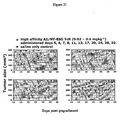
- Doses ranged between 0.02 and 1.0 mg/kg high affinity 1G4 TCR/IL-2 fusion proteins in PBS, administered at 5, 6, 7, 8, 11, 13, 17, 20, 24, 28, and 30 day post-tumor engraftment.
- a control treatment group was included where PBS alone was substituted for the TCR/IL-2 immunoconjugate.
- the TCR/IL-2 immunoconjugate exhibited a clear dose-dependent anti-tumor effect as shown by the tumour growth curves depicted in Figure 21 .
- Example 12 Quantification of cell surface TCR ligands by fluorescence microscopy using high affinity c58c61 1G4 TCR
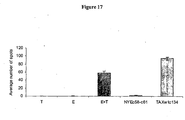
- the number of SLLMWITQC-HLA-A*0201 antigens on cancer cells was determined (on the assumption that one fluorescence signal relates to a single labelled TCR bound to its cognate pMHC ligand on the surface of the target cell) by single molecule fluorescence microscopy using the high-affinity c58c61 1G4 TCR. This was facilitated by using biotinylated TCR to target the antigen-expressing cancer cells and subsequent labelling of cell-bound TCR by streptavidin-R phycoerythrin (PE) conjugates. Individual PE molecules were then imaged by 3-dimensional fluorescence microscopy.
- TCR solution was removed, and cells were washed three times with 500 ⁇ l of PBS/Mg.
- Cells were incubated in 200 ⁇ l of streptavidin-PE solution (5 ⁇ g ml -1 streptavidin-PE in PBS/Mg containing 0.5% BSA) at room temperature in the dark for 20 min. Streptavidin-PE solution was removed and cells were washed five times with 500 ⁇ l of PBS/Mg. Wash media was removed, and cells kept in 400 ⁇ l of imaging media before imaging by fluorescence microscopy.
- Fluorescence microscopy Fluorescent microscopy was carried out using an Axiovert 200M (Zeiss) microscope with a 63x Oil objective (Zeiss).
- a Lambda LS light source containing a 300W Xenon Arc lamp (Sutter) was used for illumination, and light intensity was reduced to optimal levels by placing a 0.3 and a 0.6 neutral density filter into the light path.
- Excitation and emission spectra were separated using a TRITC/DiI filter set (Chroma).
- Cells were imaged in three dimensions by z-stack acquisition (21 planes, 1 ⁇ m apart). Image acquisition and analysis was performed using Metamorph software (Universal Imaging) as described ( Irvine et al., Nature (419), p845-9 , and Purbhoo et al., Nature Immunology (5), p524-30 .).
Landscapes
- Health & Medical Sciences (AREA)
- Life Sciences & Earth Sciences (AREA)
- Chemical & Material Sciences (AREA)
- Immunology (AREA)
- Organic Chemistry (AREA)
- General Health & Medical Sciences (AREA)
- Medicinal Chemistry (AREA)
- Zoology (AREA)
- Proteomics, Peptides & Aminoacids (AREA)
- Cell Biology (AREA)
- Veterinary Medicine (AREA)
- Public Health (AREA)
- Animal Behavior & Ethology (AREA)
- Pharmacology & Pharmacy (AREA)
- Biochemistry (AREA)
- Gastroenterology & Hepatology (AREA)
- Genetics & Genomics (AREA)
- Molecular Biology (AREA)
- Biophysics (AREA)
- Engineering & Computer Science (AREA)
- Toxicology (AREA)
- Epidemiology (AREA)
- Chemical Kinetics & Catalysis (AREA)
- General Chemical & Material Sciences (AREA)
- Bioinformatics & Cheminformatics (AREA)
- Nuclear Medicine, Radiotherapy & Molecular Imaging (AREA)
- Virology (AREA)
- Developmental Biology & Embryology (AREA)
- Biotechnology (AREA)
- Biomedical Technology (AREA)
- Mycology (AREA)
- Microbiology (AREA)
- Peptides Or Proteins (AREA)
- Medicines That Contain Protein Lipid Enzymes And Other Medicines (AREA)
- Micro-Organisms Or Cultivation Processes Thereof (AREA)
- Preparation Of Compounds By Using Micro-Organisms (AREA)
- Medicines Containing Antibodies Or Antigens For Use As Internal Diagnostic Agents (AREA)
- Medicines Containing Material From Animals Or Micro-Organisms (AREA)
- Secondary Cells (AREA)
Applications Claiming Priority (3)
| Application Number | Priority Date | Filing Date | Title |
|---|---|---|---|
| GB0411123A GB0411123D0 (en) | 2004-05-19 | 2004-05-19 | High-affinity NY-ESO T cell receptors |
| GB0419643A GB0419643D0 (en) | 2004-09-03 | 2004-09-03 | High affinity ny-eso t cell receptors |
| PCT/GB2005/001924 WO2005113595A2 (en) | 2004-05-19 | 2005-05-18 | High affinity ny-eso t cell receptor |
Publications (2)
| Publication Number | Publication Date |
|---|---|
| EP1765860A2 EP1765860A2 (en) | 2007-03-28 |
| EP1765860B1 true EP1765860B1 (en) | 2008-12-10 |
Family
ID=35428916
Family Applications (1)
| Application Number | Title | Priority Date | Filing Date |
|---|---|---|---|
| EP05745017A Expired - Lifetime EP1765860B1 (en) | 2004-05-19 | 2005-05-18 | High affinity ny-eso t cell receptor |
Country Status (10)
| Country | Link |
|---|---|
| US (10) | US8143376B2 (enExample) |
| EP (1) | EP1765860B1 (enExample) |
| JP (1) | JP4773434B2 (enExample) |
| AT (1) | ATE417065T1 (enExample) |
| AU (1) | AU2005245664B2 (enExample) |
| CA (1) | CA2566363C (enExample) |
| DE (1) | DE602005011617D1 (enExample) |
| DK (1) | DK1765860T3 (enExample) |
| NZ (1) | NZ550810A (enExample) |
| WO (1) | WO2005113595A2 (enExample) |
Cited By (1)
| Publication number | Priority date | Publication date | Assignee | Title |
|---|---|---|---|---|
| US9273283B2 (en) | 2009-10-29 | 2016-03-01 | The Trustees Of Dartmouth College | Method of producing T cell receptor-deficient T cells expressing a chimeric receptor |
Families Citing this family (207)
| Publication number | Priority date | Publication date | Assignee | Title |
|---|---|---|---|---|
| EP1435776A4 (en) | 2001-09-24 | 2006-01-25 | Univ Pittsburgh | VACCINE AGAINST CANCER AND DIAGNOSTIC PROCEDURE AND REAGENTS |
| AU2005245664B2 (en) | 2004-05-19 | 2012-02-02 | Adaptimmune Limited | High affinity NY-ESO T cell receptor |
| EP4049671A1 (en) | 2004-07-06 | 2022-08-31 | 3D Matrix, Inc. | Purified amphiphilic peptide compositions and uses thereof |
| US7994298B2 (en) | 2004-09-24 | 2011-08-09 | Trustees Of Dartmouth College | Chimeric NK receptor and methods for treating cancer |
| WO2007044033A2 (en) | 2004-12-07 | 2007-04-19 | University Of Pittsburgh Of The Commonwealth System Of Higher Education | Therapeutic and diagnostic cloned mhc-unrestricted receptor specific for the muc1 tumor associated antigen |
| ES2323651T3 (es) | 2005-01-05 | 2009-07-22 | F-Star Biotechnologische Forschungs- Und Entwicklungsges.M.B.H. | Dominios sinteticos de inmunoglobulina con propiedades de union elaborados por ingenieria en regiones de la molecula diferentes de las regiones que determinan la complementariedad. |
| GB0511124D0 (en) | 2005-06-01 | 2005-07-06 | Avidex Ltd | High affinity melan-a t cell receptors |
| IL296832A (en) | 2005-10-18 | 2022-11-01 | Nat Jewish Health | Process of preparing red blood cells using conditionally immortalized long-term hematopoietic stem cells and erythropoietin |
| CA2634292A1 (en) * | 2005-12-20 | 2007-06-28 | Erasmus University Medical Center Rotterdam | Apoptosis-inducing protein complexes and therapeutic use thereof |
| AT503861B1 (de) | 2006-07-05 | 2008-06-15 | F Star Biotech Forsch & Entw | Verfahren zur manipulation von t-zell-rezeptoren |
| AT503889B1 (de) | 2006-07-05 | 2011-12-15 | Star Biotechnologische Forschungs Und Entwicklungsges M B H F | Multivalente immunglobuline |
| WO2008039818A2 (en) * | 2006-09-26 | 2008-04-03 | Government Of The United States Of America, Represented By The Secretary, Department Of Health And Human Services | Modified t cell receptors and related materials and methods |
| WO2008038002A2 (en) * | 2006-09-29 | 2008-04-03 | Medigene Limited | T cell therapies |
| WO2008037943A1 (en) * | 2006-09-29 | 2008-04-03 | Medigene Limited | Cells transformed with nucleic acid encoding ny-eso t cell receptors |
| ES2975748T3 (es) | 2007-06-26 | 2024-07-12 | F Star Therapeutics Ltd | Presentación de agentes de unión |
| US20100297093A1 (en) * | 2007-09-25 | 2010-11-25 | The United States Of America, As Represented By The Secretary, Department Of Health And Human | Modified t cell receptors and related materials and methods |
| EP2113255A1 (en) | 2008-05-02 | 2009-11-04 | f-star Biotechnologische Forschungs- und Entwicklungsges.m.b.H. | Cytotoxic immunoglobulin |
| IL287311B2 (en) | 2008-05-16 | 2024-06-01 | Taiga Biotechnologies Inc | Antibodies and processes for their preparation |
| US8748170B2 (en) | 2008-07-25 | 2014-06-10 | University of Pittsburgh—of the Commonwealth System of Higher Education | Polypeptides derived from cyclin B1 and uses thereof |
| EP2318435B1 (en) | 2008-08-28 | 2015-12-23 | Taiga Biotechnologies, Inc. | Modulators of myc, methods of using the same, and methods of identifying agents that modulate myc |
| GB0816096D0 (en) * | 2008-09-04 | 2008-10-15 | Medigene Ltd | Diabetes t cell receptors |
| GB0908613D0 (en) * | 2009-05-20 | 2009-06-24 | Immunocore Ltd | T Cell Reseptors |
| US9181527B2 (en) | 2009-10-29 | 2015-11-10 | The Trustees Of Dartmouth College | T cell receptor-deficient T cell compositions |
| US12492376B2 (en) | 2009-10-29 | 2025-12-09 | The Trustees Of Dartmouth College | T-cell receptor-deficient T cell compositions |
| EP2598528A1 (en) * | 2010-07-28 | 2013-06-05 | Immunocore Ltd. | T cell receptors |
| US9833476B2 (en) | 2011-08-31 | 2017-12-05 | The Trustees Of Dartmouth College | NKP30 receptor targeted therapeutics |
| WO2013041865A1 (en) * | 2011-09-22 | 2013-03-28 | Immunocore Limited | T cell receptors |
| JP2014530009A (ja) | 2011-09-29 | 2014-11-17 | エーピーオー‐ティー ビー.ヴイ. | 異常細胞を標的とする多重特異性結合分子 |
| EP2802356A1 (en) | 2012-01-13 | 2014-11-19 | Apo-T B.V. | Aberrant cell-restricted immunoglobulins provided with a toxic moiety |
| US9790278B2 (en) | 2012-05-07 | 2017-10-17 | The Trustees Of Dartmouth College | Anti-B7-H6 antibody, fusion proteins, and methods of using the same |
| US9487573B2 (en) | 2012-05-22 | 2016-11-08 | The United States Of America, As Represented By The Secretary, Department Of Health And Human Services | Murine anti-NY-ESO-1 T cell receptors |
| WO2014015312A1 (en) | 2012-07-20 | 2014-01-23 | Taiga Biotechnologies, Inc. | Enhanced reconstitution and autoreconstitution of the hematopoietic compartment |
| MX2015000979A (es) | 2012-07-27 | 2015-11-23 | Univ Illinois | Ingenieria de receptores de celulas t. |
| US10272115B2 (en) | 2013-03-11 | 2019-04-30 | Taiga Biotechnologies, Inc. | Production and use of red blood cells |
| EP2971045B1 (en) | 2013-03-13 | 2019-06-19 | Health Research, Inc. | Compositions and methods for use of recombinant t cell receptors for direct recognition of tumor antigen |
| EP2975942B1 (en) | 2013-03-21 | 2018-08-08 | Sangamo Therapeutics, Inc. | Targeted disruption of t cell receptor genes using engineered zinc finger protein nucleases |
| WO2014206304A1 (zh) | 2013-06-26 | 2014-12-31 | 广州市香雪制药股份有限公司 | 高稳定性的t细胞受体及其制法和应用 |
| WO2015077615A1 (en) | 2013-11-22 | 2015-05-28 | The Board Of Trustees Of The University Of Illinois | Engineered high-affinity human t cell receptors |
| US10801070B2 (en) | 2013-11-25 | 2020-10-13 | The Broad Institute, Inc. | Compositions and methods for diagnosing, evaluating and treating cancer |
| WO2015085147A1 (en) | 2013-12-05 | 2015-06-11 | The Broad Institute Inc. | Polymorphic gene typing and somatic change detection using sequencing data |
| KR20230076867A (ko) | 2013-12-20 | 2023-05-31 | 더 브로드 인스티튜트, 인코퍼레이티드 | 신생항원 백신과의 병용 요법 |
| CA2942433C (en) * | 2014-03-14 | 2023-08-01 | Immunocore Limited | Tcr libraries |
| CA2955984A1 (en) | 2014-07-22 | 2016-01-28 | The University Of Notre Dame Du Lac | Molecular constructs and uses thereof |
| US10201597B2 (en) | 2014-09-30 | 2019-02-12 | The Regents Of The University Of California | Codon-optimized lentiviral vector for stem cell reprogramming |
| BR112017008693A2 (pt) | 2014-10-31 | 2018-02-27 | The Trustees Of The University Of Pennsylvania | célula t modificada, métodos para gerar uma célula t modificada, para tratar uma doença ou condição, para estimular uma resposta imune mediada por célula t e para terapia de transferência de célula adotiva, uso de uma célula t modificada, e, composição. |
| WO2016100977A1 (en) | 2014-12-19 | 2016-06-23 | The Broad Institute Inc. | Methods for profiling the t-cel- receptor repertoire |
| US10975442B2 (en) | 2014-12-19 | 2021-04-13 | Massachusetts Institute Of Technology | Molecular biomarkers for cancer immunotherapy |
| GB201506642D0 (en) * | 2015-04-20 | 2015-06-03 | Ucl Business Plc | T cell receptor |
| WO2016187508A2 (en) | 2015-05-20 | 2016-11-24 | The Broad Institute Inc. | Shared neoantigens |
| CN106279404A (zh) * | 2015-05-20 | 2017-01-04 | 广州市香雪制药股份有限公司 | 一种可溶且稳定的异质二聚tcr |
| NL2014935B1 (en) | 2015-06-08 | 2017-02-03 | Applied Immune Tech Ltd | T cell receptor like antibodies having fine specificity. |
| WO2016205749A1 (en) | 2015-06-18 | 2016-12-22 | The Broad Institute Inc. | Novel crispr enzymes and systems |
| CA2993431A1 (en) | 2015-07-31 | 2017-02-09 | Regents Of The University Of Minnesota | Nuclease based knockouts of immunological checkpoint genes in immune cells |
| GB201516272D0 (en) * | 2015-09-15 | 2015-10-28 | Adaptimmune Ltd And Immunocore Ltd | TCR Libraries |
| WO2017069958A2 (en) | 2015-10-09 | 2017-04-27 | The Brigham And Women's Hospital, Inc. | Modulation of novel immune checkpoint targets |
| WO2017075451A1 (en) | 2015-10-28 | 2017-05-04 | The Broad Institute Inc. | Compositions and methods for evaluating and modulating immune responses by detecting and targeting pou2af1 |
| WO2017075465A1 (en) | 2015-10-28 | 2017-05-04 | The Broad Institute Inc. | Compositions and methods for evaluating and modulating immune responses by detecting and targeting gata3 |
| EP3368689B1 (en) | 2015-10-28 | 2020-06-17 | The Broad Institute, Inc. | Composition for modulating immune responses by use of immune cell gene signature |
| US11001622B2 (en) | 2015-11-19 | 2021-05-11 | The Brigham And Women's Hospital, Inc. | Method of treating autoimmune disease with lymphocyte antigen CD5-like (CD5L) protein |
| GB201522592D0 (en) | 2015-12-22 | 2016-02-03 | Immunocore Ltd | T cell receptors |
| US10188749B2 (en) | 2016-04-14 | 2019-01-29 | Fred Hutchinson Cancer Research Center | Compositions and methods to program therapeutic cells using targeted nucleic acid nanocarriers |
| WO2017184590A1 (en) | 2016-04-18 | 2017-10-26 | The Broad Institute Inc. | Improved hla epitope prediction |
| SI3464380T1 (sl) | 2016-06-02 | 2025-03-31 | Immunocore Limited | Režim doziranja za gp100-specifični tcr - anti-cd3 scfv fuzijski protein |
| WO2018035364A1 (en) | 2016-08-17 | 2018-02-22 | The Broad Institute Inc. | Product and methods useful for modulating and evaluating immune responses |
| US20190262399A1 (en) | 2016-09-07 | 2019-08-29 | The Broad Institute, Inc. | Compositions and methods for evaluating and modulating immune responses |
| JP2020501508A (ja) | 2016-09-15 | 2020-01-23 | クアドルセプト バイオ リミテッド | 多量体、四量体および八量体 |
| WO2018064208A1 (en) | 2016-09-28 | 2018-04-05 | The Broad Institute, Inc. | Systematic screening and mapping of regulatory elements in non-coding genomic regions, methods, compositions, and applications thereof |
| WO2018067991A1 (en) | 2016-10-07 | 2018-04-12 | The Brigham And Women's Hospital, Inc. | Modulation of novel immune checkpoint targets |
| EP4338799A3 (en) | 2016-10-18 | 2024-06-05 | Regents of the University of Minnesota | Tumor infiltrating lymphocytes and methods of therapy |
| GB201617714D0 (en) | 2016-10-19 | 2016-11-30 | Ucl Business Plc | T Cell receptor |
| TWI788307B (zh) | 2016-10-31 | 2023-01-01 | 美商艾歐凡斯生物治療公司 | 用於擴增腫瘤浸潤性淋巴細胞之工程化人造抗原呈現細胞 |
| US12227578B2 (en) | 2016-11-11 | 2025-02-18 | The Broad Institute, Inc. | Modulation of intestinal epithelial cell differentiation, maintenance and/or function through T cell action |
| CN108117596B (zh) | 2016-11-29 | 2023-08-29 | 香雪生命科学技术(广东)有限公司 | 针对ny-eso的高亲和力tcr |
| CN110177758B (zh) | 2016-12-02 | 2021-10-01 | 泰加生物工艺学公司 | 纳米颗粒调配物 |
| IL266892B2 (en) | 2016-12-02 | 2025-10-01 | Univ Southern California | Artificial immune receptors and methods of using them |
| CA3049244A1 (en) | 2017-01-05 | 2018-07-12 | Fred Hutchinson Cancer Research Center | Systems and methods to improve vaccine efficacy |
| AU2018205234B2 (en) | 2017-01-06 | 2024-09-19 | Iovance Biotherapeutics, Inc. | Expansion of tumor infiltrating lymphocytes (TILs) with tumor necrosis factor receptor superfamily (TNFRSF) agonists and therapeutic combinations of TILs and TNFRSF agonists |
| JP7664020B2 (ja) | 2017-01-06 | 2025-04-17 | アイオバンス バイオセラピューティクス,インコーポレイテッド | カリウムチャネルアゴニストによる腫瘍浸潤リンパ球の増殖及びその治療的使用 |
| JP2020503883A (ja) * | 2017-01-13 | 2020-02-06 | アジェナス インコーポレイテッド | Ny−eso−1に結合するt細胞受容体およびその使用方法 |
| EP3574116A1 (en) | 2017-01-24 | 2019-12-04 | The Broad Institute, Inc. | Compositions and methods for detecting a mutant variant of a polynucleotide |
| EP3580561B1 (en) | 2017-02-12 | 2023-11-01 | BioNTech US Inc. | Hla-based methods and compositions and uses thereof |
| EP3596108A4 (en) | 2017-03-15 | 2020-12-23 | Pandion Operations, Inc. | TARGETED IMMUNOTOLERANCE |
| UA128717C2 (uk) | 2017-03-27 | 2024-10-09 | Ф. Хоффманн-Ля Рош Аг | Поліпшені антигензв'язуючі рецептори |
| US11963966B2 (en) | 2017-03-31 | 2024-04-23 | Dana-Farber Cancer Institute, Inc. | Compositions and methods for treating ovarian tumors |
| WO2018183921A1 (en) | 2017-04-01 | 2018-10-04 | The Broad Institute, Inc. | Methods and compositions for detecting and modulating an immunotherapy resistance gene signature in cancer |
| US20200071773A1 (en) | 2017-04-12 | 2020-03-05 | Massachusetts Eye And Ear Infirmary | Tumor signature for metastasis, compositions of matter methods of use thereof |
| MX2019012398A (es) | 2017-04-18 | 2020-09-25 | Broad Inst Inc | Composiciones para detectar secreciones y metodos de uso. |
| WO2019103857A1 (en) | 2017-11-22 | 2019-05-31 | Iovance Biotherapeutics, Inc. | Expansion of peripheral blood lymphocytes (pbls) from peripheral blood |
| EP3622092A4 (en) | 2017-05-11 | 2021-06-23 | The Broad Institute, Inc. | METHODS AND COMPOSITIONS OF USE OF CD8 + TUMOR-INFILTRATING LYMPHOCYTE SUBTYPES AND GENE SIGNATURES THEREOF |
| EP3625342B1 (en) | 2017-05-18 | 2022-08-24 | The Broad Institute, Inc. | Systems, methods, and compositions for targeted nucleic acid editing |
| JP2020521452A (ja) | 2017-05-24 | 2020-07-27 | パンディオン・セラピューティクス・インコーポレイテッド | 標的化免疫寛容 |
| US11897953B2 (en) | 2017-06-14 | 2024-02-13 | The Broad Institute, Inc. | Compositions and methods targeting complement component 3 for inhibiting tumor growth |
| EP3645021A4 (en) | 2017-06-30 | 2021-04-21 | Intima Bioscience, Inc. | ADENO-ASSOCIATED VIRAL VECTORS FOR GENE THERAPY |
| WO2019014581A1 (en) | 2017-07-14 | 2019-01-17 | The Broad Institute, Inc. | METHODS AND COMPOSITIONS FOR MODULATING THE ACTIVITY OF A CYTOTOXIC LYMPHOCYTE |
| JP6731114B2 (ja) | 2017-08-03 | 2020-07-29 | タイガ バイオテクノロジーズ,インク. | メラノーマの処置のための方法および組成物 |
| US10149898B2 (en) | 2017-08-03 | 2018-12-11 | Taiga Biotechnologies, Inc. | Methods and compositions for the treatment of melanoma |
| WO2019060746A1 (en) | 2017-09-21 | 2019-03-28 | The Broad Institute, Inc. | SYSTEMS, METHODS, AND COMPOSITIONS FOR THE TARGETED EDITING OF NUCLEIC ACIDS |
| MX2020003144A (es) | 2017-09-22 | 2020-07-28 | Wuxi Biologics Ireland Ltd | Nuevos complejos de polipeptidos biespecificos cd3/cd19. |
| KR102839644B1 (ko) * | 2017-09-22 | 2025-07-31 | 우시 바이올로직스 아일랜드 리미티드 | 신규한 이중특이적 폴리펩티드 복합체 |
| WO2019070755A1 (en) | 2017-10-02 | 2019-04-11 | The Broad Institute, Inc. | METHODS AND COMPOSITIONS FOR DETECTING AND MODULATING A GENETIC SIGNATURE OF IMMUNOTHERAPY RESISTANCE IN CANCER |
| US20200308279A1 (en) | 2017-10-06 | 2020-10-01 | Oslo Universitetssykehus Hf | Chimeric antigen receptors |
| WO2019084055A1 (en) | 2017-10-23 | 2019-05-02 | Massachusetts Institute Of Technology | CLASSIFICATION OF GENETIC VARIATION FROM UNICELLULAR TRANSCRIPTOMS |
| WO2019084427A1 (en) * | 2017-10-27 | 2019-05-02 | Kite Pharma, Inc. | T-LYMPHOCYTE RECEPTOR ANTIGEN BINDING MOLECULES AND METHODS OF USE THEREOF |
| WO2019094955A1 (en) | 2017-11-13 | 2019-05-16 | The Broad Institute, Inc. | Methods and compositions for targeting developmental and oncogenic programs in h3k27m gliomas |
| WO2019094983A1 (en) | 2017-11-13 | 2019-05-16 | The Broad Institute, Inc. | Methods and compositions for treating cancer by targeting the clec2d-klrb1 pathway |
| CN109837245A (zh) * | 2017-11-25 | 2019-06-04 | 深圳宾德生物技术有限公司 | 一种tcr敲除的靶向ny-eso-1的t细胞受体基因修饰t细胞及其制备方法和应用 |
| US10174092B1 (en) | 2017-12-06 | 2019-01-08 | Pandion Therapeutics, Inc. | IL-2 muteins |
| USRE50550E1 (en) | 2017-12-06 | 2025-08-26 | Pandion Operations, Inc. | IL-2 muteins and uses thereof |
| US10946068B2 (en) | 2017-12-06 | 2021-03-16 | Pandion Operations, Inc. | IL-2 muteins and uses thereof |
| US20210369775A1 (en) | 2017-12-15 | 2021-12-02 | Iovance Biotherapeutics, Inc. | Systems and methods for determining the beneficial administration of tumor infiltrating lymphocytes, and methods of use thereof and beneficial administration of tumor infiltrating lymphocytes, and methods of use thereof |
| US11994512B2 (en) | 2018-01-04 | 2024-05-28 | Massachusetts Institute Of Technology | Single-cell genomic methods to generate ex vivo cell systems that recapitulate in vivo biology with improved fidelity |
| WO2019162043A1 (en) * | 2018-02-26 | 2019-08-29 | Medigene Immunotherapies Gmbh | Nyeso tcr |
| WO2019175209A1 (en) | 2018-03-14 | 2019-09-19 | Medigene Immunotherapies Gmbh | Inducible t cell receptors and uses thereof |
| EP3773632A4 (en) | 2018-04-06 | 2022-05-18 | The Regents of The University of California | Methods of treating egfrviii expressing glioblastomas |
| EP3773633A4 (en) | 2018-04-06 | 2022-01-26 | The Regents of The University of California | METHODS OF TREATMENT OF GLIOBLASTOMA |
| US11957695B2 (en) | 2018-04-26 | 2024-04-16 | The Broad Institute, Inc. | Methods and compositions targeting glucocorticoid signaling for modulating immune responses |
| US20210371932A1 (en) | 2018-06-01 | 2021-12-02 | Massachusetts Institute Of Technology | Methods and compositions for detecting and modulating microenvironment gene signatures from the csf of metastasis patients |
| US12036240B2 (en) | 2018-06-14 | 2024-07-16 | The Broad Institute, Inc. | Compositions and methods targeting complement component 3 for inhibiting tumor growth |
| WO2020033923A1 (en) | 2018-08-09 | 2020-02-13 | Compass Therapeutics Llc | Antigen binding agents that bind cd277 and uses thereof |
| US12460244B2 (en) | 2018-08-20 | 2025-11-04 | The Broad Institute, Inc. | Inhibitors of RNA-guided nuclease activity and uses thereof |
| WO2020068304A2 (en) | 2018-08-20 | 2020-04-02 | The Broad Institute, Inc. | Inhibitors of rna-guided nuclease target binding and uses thereof |
| WO2020041387A1 (en) | 2018-08-20 | 2020-02-27 | The Brigham And Women's Hospital, Inc. | Degradation domain modifications for spatio-temporal control of rna-guided nucleases |
| JP7558151B2 (ja) | 2018-09-05 | 2024-09-30 | アダプティミューン・リミテッド | T細胞改変 |
| WO2020072700A1 (en) | 2018-10-02 | 2020-04-09 | Dana-Farber Cancer Institute, Inc. | Hla single allele lines |
| US20210379057A1 (en) | 2018-10-16 | 2021-12-09 | Massachusetts Institute Of Technology | Nutlin-3a for use in treating a mycobacterium tuberculosis infection |
| CA3117539A1 (en) * | 2018-10-23 | 2020-04-30 | Regeneron Pharmaceuticals, Inc. | Ny-eso-1 t cell receptors and methods of use thereof |
| WO2020092455A2 (en) | 2018-10-29 | 2020-05-07 | The Broad Institute, Inc. | Car t cell transcriptional atlas |
| WO2020131586A2 (en) | 2018-12-17 | 2020-06-25 | The Broad Institute, Inc. | Methods for identifying neoantigens |
| MX2021007556A (es) | 2018-12-21 | 2021-09-10 | Biontech Us Inc | Método y sistemas de predicción de epítopos específicos de hla de clase ii y caracterización de células t cd4+. |
| US11739156B2 (en) | 2019-01-06 | 2023-08-29 | The Broad Institute, Inc. Massachusetts Institute of Technology | Methods and compositions for overcoming immunosuppression |
| BR112021016875A2 (pt) | 2019-03-01 | 2022-01-04 | Iovance Biotherapeutics Inc | Processo para expansão de linfócitos de sangue periférico |
| CA3128971A1 (en) | 2019-03-08 | 2020-09-17 | Klinikum Der Universitat Munchen | Ccr8 expressing lymphocytes for targeted tumor therapy |
| WO2020186101A1 (en) | 2019-03-12 | 2020-09-17 | The Broad Institute, Inc. | Detection means, compositions and methods for modulating synovial sarcoma cells |
| EP3942023A1 (en) | 2019-03-18 | 2022-01-26 | The Broad Institute, Inc. | Compositions and methods for modulating metabolic regulators of t cell pathogenicity |
| JP7680032B2 (ja) * | 2019-03-18 | 2025-05-20 | ラディック インスティテュート フォア キャンサー リサーチ リミテッド | A2/ny-eso-1特異的t細胞受容体およびその使用 |
| GB201903767D0 (en) | 2019-03-19 | 2019-05-01 | Quadrucept Bio Ltd | Multimers, tetramers & octamers |
| GB201904328D0 (en) * | 2019-03-28 | 2019-05-15 | Immunocore Ltd | Specific binding molecules |
| JP2022527117A (ja) | 2019-04-08 | 2022-05-30 | タイガ バイオテクノロジーズ,インク. | 免疫細胞の凍結保存のための組成物および方法 |
| EP3969041A4 (en) | 2019-05-14 | 2023-05-10 | Taiga Biotechnologies, Inc. | COMPOSITIONS AND METHODS FOR TREATMENT OF T-CELL DEPLETION |
| US20220235340A1 (en) | 2019-05-20 | 2022-07-28 | The Broad Institute, Inc. | Novel crispr-cas systems and uses thereof |
| EP3972992A4 (en) | 2019-05-20 | 2023-07-19 | Pandion Operations, Inc. | MADCAM TARGETED IMMUNOTLERANCE |
| US20220226464A1 (en) | 2019-05-28 | 2022-07-21 | Massachusetts Institute Of Technology | Methods and compositions for modulating immune responses |
| MX2021015452A (es) | 2019-06-25 | 2022-02-11 | Gilead Sciences Inc | Proteinas de fusion flt3l-fc y metodos de uso. |
| EP3993817A4 (en) * | 2019-07-03 | 2023-08-30 | Regeneron Pharmaceuticals, Inc. | ANTI-NEW YORK ESOPHAGUS SQUARE EPHITHELIAL CELL CARCINOMA 1 (NY-ESO-1) ANTIGEN-BINDING PROTEINS AND METHODS OF USE |
| CN112300268B (zh) * | 2019-08-02 | 2023-02-28 | 香雪生命科学技术(广东)有限公司 | 识别ny-eso-1抗原的高亲和力t细胞受体 |
| WO2021030182A1 (en) | 2019-08-09 | 2021-02-18 | A2 Biotherapeutics, Inc. | Bifunctional single variable domain t cell receptors and uses thereof |
| WO2021028690A1 (en) | 2019-08-13 | 2021-02-18 | King's College London | Immunoresponsive cells armoured with spatiotemporally restricted activity of cytokines of the il-1 superfamily |
| WO2021030627A1 (en) | 2019-08-13 | 2021-02-18 | The General Hospital Corporation | Methods for predicting outcomes of checkpoint inhibition and treatment thereof |
| US12421557B2 (en) | 2019-08-16 | 2025-09-23 | The Broad Institute, Inc. | Methods for predicting outcomes and treating colorectal cancer using a cell atlas |
| US20220298501A1 (en) | 2019-08-30 | 2022-09-22 | The Broad Institute, Inc. | Crispr-associated mu transposase systems |
| US12297426B2 (en) | 2019-10-01 | 2025-05-13 | The Broad Institute, Inc. | DNA damage response signature guided rational design of CRISPR-based systems and therapies |
| US12394502B2 (en) | 2019-10-02 | 2025-08-19 | The General Hospital Corporation | Method for predicting HLA-binding peptides using protein structural features |
| US11981922B2 (en) | 2019-10-03 | 2024-05-14 | Dana-Farber Cancer Institute, Inc. | Methods and compositions for the modulation of cell interactions and signaling in the tumor microenvironment |
| US12195725B2 (en) | 2019-10-03 | 2025-01-14 | Dana-Farber Cancer Institute, Inc. | Compositions and methods for modulating and detecting tissue specific TH17 cell pathogenicity |
| US11793787B2 (en) | 2019-10-07 | 2023-10-24 | The Broad Institute, Inc. | Methods and compositions for enhancing anti-tumor immunity by targeting steroidogenesis |
| US11844800B2 (en) | 2019-10-30 | 2023-12-19 | Massachusetts Institute Of Technology | Methods and compositions for predicting and preventing relapse of acute lymphoblastic leukemia |
| US12195723B2 (en) | 2019-11-08 | 2025-01-14 | The Broad Institute, Inc. | Engineered antigen presenting cells and uses thereof |
| US11865168B2 (en) | 2019-12-30 | 2024-01-09 | Massachusetts Institute Of Technology | Compositions and methods for treating bacterial infections |
| US12165747B2 (en) | 2020-01-23 | 2024-12-10 | The Broad Institute, Inc. | Molecular spatial mapping of metastatic tumor microenvironment |
| MX2022009947A (es) | 2020-02-14 | 2022-11-07 | Jounce Therapeutics Inc | Anticuerpos y proteinas de fusion que se unen a ccr8 y usos de estos. |
| WO2021168079A1 (en) | 2020-02-21 | 2021-08-26 | Pandion Operations, Inc. | Tissue targeted immunotolerance with a cd39 effector |
| WO2021190980A1 (en) | 2020-03-22 | 2021-09-30 | Quadrucept Bio Limited | Multimers for viral strain evolution |
| IL296514A (en) | 2020-03-30 | 2022-11-01 | Univ Mie | Bispecific antibody |
| CN111690051B (zh) * | 2020-06-28 | 2021-08-17 | 英威福赛生物技术有限公司 | 靶向ny-eso-1(157-165)表位的特异性t细胞受体及抗肿瘤应用 |
| TWI815194B (zh) | 2020-10-22 | 2023-09-11 | 美商基利科學股份有限公司 | 介白素2-Fc融合蛋白及使用方法 |
| IL302276A (en) | 2020-10-23 | 2023-06-01 | Asher Biotherapeutics Inc | Fusions with cd8 antigen binding molecules for modulating immune cell function |
| EP4293042A4 (en) | 2021-02-09 | 2024-06-19 | Liyang TCR Biotherapeutics Co., Ltd | TCR AND ITS APPLICATION |
| TW202246511A (zh) | 2021-02-25 | 2022-12-01 | 美商萊爾免疫藥物股份有限公司 | 靶向ny-eso-1之增強免疫細胞療法 |
| WO2022184659A1 (en) | 2021-03-01 | 2022-09-09 | Quadrucept Bio Limited | Antibody domains & multimers |
| US20240150711A1 (en) | 2021-03-01 | 2024-05-09 | Dana-Farber Cancer Institute, Inc. | Personalized redirection and reprogramming of t cells for precise targeting of tumors |
| TW202313094A (zh) | 2021-05-18 | 2023-04-01 | 美商基利科學股份有限公司 | 使用FLT3L—Fc融合蛋白之方法 |
| AU2022310862A1 (en) | 2021-07-14 | 2024-02-01 | Regeneron Pharmaceuticals, Inc. | Engineered t cell receptors fused to binding domains from antibodies |
| EP4387991A1 (en) | 2021-08-18 | 2024-06-26 | Julius-Maximilians-Universität Würzburg | Hybrid tumor/cancer therapy based on targeting the resolution of or inducing transcription-replication conflicts (trcs) |
| WO2023077028A1 (en) | 2021-10-28 | 2023-05-04 | Lyell Immunopharma, Inc. | Enhanced t cell therapy targeting ny-eso-1 |
| TWI857377B (zh) | 2021-10-28 | 2024-10-01 | 美商基利科學股份有限公司 | 嗒-3(2h)-酮衍生物 |
| JP7787991B2 (ja) | 2021-10-29 | 2025-12-17 | ギリアード サイエンシーズ, インコーポレイテッド | Cd73化合物 |
| CA3237577A1 (en) | 2021-12-22 | 2023-06-29 | Gilead Sciences, Inc. | Ikaros zinc finger family degraders and uses thereof |
| CN118488946A (zh) | 2021-12-22 | 2024-08-13 | 吉利德科学公司 | Ikaros锌指家族降解剂及其用途 |
| TW202340168A (zh) | 2022-01-28 | 2023-10-16 | 美商基利科學股份有限公司 | Parp7抑制劑 |
| US12103971B2 (en) | 2022-02-20 | 2024-10-01 | Immunocore Limited | HIV specific binding molecules |
| US12358887B2 (en) | 2022-03-17 | 2025-07-15 | Gilead Sciences, Inc. | IKAROS Zinc Finger Family degraders and uses thereof |
| JP2025511872A (ja) | 2022-04-08 | 2025-04-16 | リジェネロン・ファーマシューティカルズ・インコーポレイテッド | 多部位受容体及びシグナル伝達複合体 |
| JP2025513258A (ja) | 2022-04-21 | 2025-04-24 | ギリアード サイエンシーズ, インコーポレイテッド | Kra g12d調節化合物 |
| US20250288675A1 (en) * | 2022-05-02 | 2025-09-18 | Tscan Therapeutics, Inc. | Multiplexed t cell receptor compositions, combination therapies, and uses thereof |
| IL317958A (en) | 2022-07-01 | 2025-02-01 | Gilead Sciences Inc | CD73 compounds |
| WO2024077256A1 (en) | 2022-10-07 | 2024-04-11 | The General Hospital Corporation | Methods and compositions for high-throughput discovery ofpeptide-mhc targeting binding proteins |
| WO2024098024A1 (en) | 2022-11-04 | 2024-05-10 | Iovance Biotherapeutics, Inc. | Expansion of tumor infiltrating lymphocytes from liquid tumors and therapeutic uses thereof |
| WO2024123794A2 (en) * | 2022-12-05 | 2024-06-13 | Board Of Regents, The University Of Texas System | A t cell receptor recognizing a her2 mutation presented on hla-a*02:01 and methods of use |
| WO2024124044A1 (en) | 2022-12-07 | 2024-06-13 | The Brigham And Women’S Hospital, Inc. | Compositions and methods targeting sat1 for enhancing anti¬ tumor immunity during tumor progression |
| CN116239700B (zh) * | 2022-12-20 | 2024-06-21 | 浙江大学 | 一种肿瘤双靶向的三特异性t细胞衔接器及其应用 |
| EP4638436A1 (en) | 2022-12-22 | 2025-10-29 | Gilead Sciences, Inc. | Prmt5 inhibitors and uses thereof |
| CN116284448B (zh) * | 2023-02-14 | 2024-06-21 | 浙江大学 | 一种超抗原参与的三功能t细胞衔接器及其应用 |
| WO2024192141A1 (en) | 2023-03-13 | 2024-09-19 | Dana-Farber Cancer Institute, Inc. | Treatment of cancers having a drug-resistant mesenchymal cell state |
| CN120882725A (zh) | 2023-04-11 | 2025-10-31 | 吉利德科学公司 | Kras调节化合物 |
| AU2024259556A1 (en) | 2023-04-21 | 2025-10-23 | Gilead Sciences, Inc. | Prmt5 inhibitors and uses thereof |
| WO2024226838A2 (en) | 2023-04-25 | 2024-10-31 | The Brigham And Women's Hospital, Inc. | Treatment of autoimmune diseases having a pathogenic t cell state |
| US20250042922A1 (en) | 2023-06-30 | 2025-02-06 | Gilead Sciences, Inc. | Kras modulating compounds |
| WO2025024663A1 (en) | 2023-07-26 | 2025-01-30 | Gilead Sciences, Inc. | Parp7 inhibitors |
| US20250100998A1 (en) | 2023-07-26 | 2025-03-27 | Gilead Sciences, Inc. | Parp7 inhibitors |
| US20250109147A1 (en) | 2023-09-08 | 2025-04-03 | Gilead Sciences, Inc. | Kras g12d modulating compounds |
| WO2025054347A1 (en) | 2023-09-08 | 2025-03-13 | Gilead Sciences, Inc. | Kras g12d modulating compounds |
| WO2025059533A1 (en) | 2023-09-13 | 2025-03-20 | The Broad Institute, Inc. | Crispr enzymes and systems |
| WO2025097055A2 (en) | 2023-11-02 | 2025-05-08 | The Broad Institute, Inc. | Compositions and methods of use of t cells in immunotherapy |
| US20250154172A1 (en) | 2023-11-03 | 2025-05-15 | Gilead Sciences, Inc. | Prmt5 inhibitors and uses thereof |
| WO2025117544A1 (en) | 2023-11-29 | 2025-06-05 | The Broad Institute, Inc. | Engineered omega guide molecule and iscb compositions, systems, and methods of use thereof |
| WO2025137640A1 (en) | 2023-12-22 | 2025-06-26 | Gilead Sciences, Inc. | Azaspiro wrn inhibitors |
| WO2025245003A1 (en) | 2024-05-21 | 2025-11-27 | Gilead Sciences, Inc. | Prmt5 inhibitors and uses thereof |
Family Cites Families (4)
| Publication number | Priority date | Publication date | Assignee | Title |
|---|---|---|---|---|
| US6759243B2 (en) * | 1998-01-20 | 2004-07-06 | Board Of Trustees Of The University Of Illinois | High affinity TCR proteins and methods |
| US6811785B2 (en) * | 2001-05-07 | 2004-11-02 | Mount Sinai School Of Medicine Of New York University | Multivalent MHC class II—peptide chimeras |
| CA2457652C (en) * | 2001-08-31 | 2012-08-07 | Avidex Limited | Soluble t cell receptor |
| AU2005245664B2 (en) * | 2004-05-19 | 2012-02-02 | Adaptimmune Limited | High affinity NY-ESO T cell receptor |
-
2005
- 2005-05-18 AU AU2005245664A patent/AU2005245664B2/en not_active Expired
- 2005-05-18 US US11/596,458 patent/US8143376B2/en active Active
- 2005-05-18 NZ NZ550810A patent/NZ550810A/en not_active IP Right Cessation
- 2005-05-18 AT AT05745017T patent/ATE417065T1/de not_active IP Right Cessation
- 2005-05-18 EP EP05745017A patent/EP1765860B1/en not_active Expired - Lifetime
- 2005-05-18 DK DK05745017T patent/DK1765860T3/da active
- 2005-05-18 WO PCT/GB2005/001924 patent/WO2005113595A2/en not_active Ceased
- 2005-05-18 DE DE602005011617T patent/DE602005011617D1/de not_active Expired - Lifetime
- 2005-05-18 JP JP2007517414A patent/JP4773434B2/ja not_active Expired - Lifetime
- 2005-05-18 CA CA2566363A patent/CA2566363C/en not_active Expired - Lifetime
-
2010
- 2010-08-11 US US12/854,691 patent/US8008438B2/en not_active Expired - Lifetime
-
2011
- 2011-07-05 US US13/176,090 patent/US8367804B2/en not_active Expired - Lifetime
-
2012
- 2012-03-26 US US13/429,944 patent/US9156903B2/en not_active Expired - Lifetime
-
2015
- 2015-04-17 US US14/690,193 patent/US20150231202A1/en not_active Abandoned
- 2015-12-14 US US14/967,584 patent/US9512197B2/en not_active Expired - Lifetime
-
2016
- 2016-10-12 US US15/291,540 patent/US9822163B2/en not_active Expired - Fee Related
-
2017
- 2017-09-08 US US15/698,897 patent/US20180072788A1/en not_active Abandoned
-
2018
- 2018-08-06 US US16/056,079 patent/US20180371049A1/en not_active Abandoned
-
2020
- 2020-10-05 US US17/063,056 patent/US20210061878A1/en not_active Abandoned
Cited By (1)
| Publication number | Priority date | Publication date | Assignee | Title |
|---|---|---|---|---|
| US9273283B2 (en) | 2009-10-29 | 2016-03-01 | The Trustees Of Dartmouth College | Method of producing T cell receptor-deficient T cells expressing a chimeric receptor |
Also Published As
| Publication number | Publication date |
|---|---|
| EP1765860A2 (en) | 2007-03-28 |
| US20110014169A1 (en) | 2011-01-20 |
| US20150231202A1 (en) | 2015-08-20 |
| DK1765860T3 (da) | 2009-03-09 |
| US20110038842A1 (en) | 2011-02-17 |
| ATE417065T1 (de) | 2008-12-15 |
| US20170088599A1 (en) | 2017-03-30 |
| US9512197B2 (en) | 2016-12-06 |
| JP2008509090A (ja) | 2008-03-27 |
| CA2566363A1 (en) | 2005-12-01 |
| US8143376B2 (en) | 2012-03-27 |
| US9156903B2 (en) | 2015-10-13 |
| WO2005113595A3 (en) | 2006-06-01 |
| US8008438B2 (en) | 2011-08-30 |
| AU2005245664B2 (en) | 2012-02-02 |
| US20130058908A1 (en) | 2013-03-07 |
| JP4773434B2 (ja) | 2011-09-14 |
| US20180072788A1 (en) | 2018-03-15 |
| DE602005011617D1 (de) | 2009-01-22 |
| US8367804B2 (en) | 2013-02-05 |
| AU2005245664A1 (en) | 2005-12-01 |
| US20160159881A1 (en) | 2016-06-09 |
| US20110262414A1 (en) | 2011-10-27 |
| US20210061878A1 (en) | 2021-03-04 |
| WO2005113595A2 (en) | 2005-12-01 |
| CA2566363C (en) | 2014-12-16 |
| US9822163B2 (en) | 2017-11-21 |
| NZ550810A (en) | 2009-05-31 |
| US20180371049A1 (en) | 2018-12-27 |
Similar Documents
| Publication | Publication Date | Title |
|---|---|---|
| EP1765860B1 (en) | High affinity ny-eso t cell receptor | |
| EP1885754B1 (en) | T cell receptors which specifically bind to vygfvracl-hla-a24 | |
| US8217144B2 (en) | High affinity Melan-A T cell receptors | |
| US8017730B2 (en) | T cell receptors which specifically bind to VYGFVRACL-HLA-A24 | |
| EP1758935B1 (en) | High affinity telomerase t cell receptors | |
| CN1989153B (zh) | 高亲和力ny-eso t细胞受体 |
Legal Events
| Date | Code | Title | Description |
|---|---|---|---|
| PUAI | Public reference made under article 153(3) epc to a published international application that has entered the european phase |
Free format text: ORIGINAL CODE: 0009012 |
|
| 17P | Request for examination filed |
Effective date: 20061109 |
|
| AK | Designated contracting states |
Kind code of ref document: A2 Designated state(s): AT BE BG CH CY CZ DE DK EE ES FI FR GB GR HU IE IS IT LI LT LU MC NL PL PT RO SE SI SK TR |
|
| 17Q | First examination report despatched |
Effective date: 20070703 |
|
| DAX | Request for extension of the european patent (deleted) | ||
| RAP1 | Party data changed (applicant data changed or rights of an application transferred) |
Owner name: MEDIGENE LTD. |
|
| GRAP | Despatch of communication of intention to grant a patent |
Free format text: ORIGINAL CODE: EPIDOSNIGR1 |
|
| RIN1 | Information on inventor provided before grant (corrected) |
Inventor name: DUNN, STEVEN, MARK Inventor name: BOULTER, JONATHAN MICHAEL Inventor name: LI, YI Inventor name: MOLLOY, PETER, EAMON Inventor name: JAKOBSEN, BENT, KARSTEN |
|
| GRAS | Grant fee paid |
Free format text: ORIGINAL CODE: EPIDOSNIGR3 |
|
| GRAA | (expected) grant |
Free format text: ORIGINAL CODE: 0009210 |
|
| AK | Designated contracting states |
Kind code of ref document: B1 Designated state(s): AT BE BG CH CY CZ DE DK EE ES FI FR GB GR HU IE IS IT LI LT LU MC NL PL PT RO SE SI SK TR |
|
| REG | Reference to a national code |
Ref country code: GB Ref legal event code: FG4D |
|
| REG | Reference to a national code |
Ref country code: CH Ref legal event code: EP |
|
| REG | Reference to a national code |
Ref country code: IE Ref legal event code: FG4D |
|
| REF | Corresponds to: |
Ref document number: 602005011617 Country of ref document: DE Date of ref document: 20090122 Kind code of ref document: P |
|
| REG | Reference to a national code |
Ref country code: CH Ref legal event code: PUE Owner name: IMMUNOCORE LIMITED Free format text: MEDIGENE LTD.# #57C MILTON PARK ABINGDON, OXFORDSHIRE, OX14 4RX (GB) -TRANSFER TO- IMMUNOCORE LIMITED#57C MILTON PARK#ABINGDON, OXFORDSHIRE OX14 4RX (GB) Ref country code: CH Ref legal event code: NV Representative=s name: KIRKER & CIE S.A. |
|
| REG | Reference to a national code |
Ref country code: DK Ref legal event code: T3 |
|
| PG25 | Lapsed in a contracting state [announced via postgrant information from national office to epo] |
Ref country code: LT Free format text: LAPSE BECAUSE OF FAILURE TO SUBMIT A TRANSLATION OF THE DESCRIPTION OR TO PAY THE FEE WITHIN THE PRESCRIBED TIME-LIMIT Effective date: 20081210 |
|
| PG25 | Lapsed in a contracting state [announced via postgrant information from national office to epo] |
Ref country code: PL Free format text: LAPSE BECAUSE OF FAILURE TO SUBMIT A TRANSLATION OF THE DESCRIPTION OR TO PAY THE FEE WITHIN THE PRESCRIBED TIME-LIMIT Effective date: 20081210 Ref country code: FI Free format text: LAPSE BECAUSE OF FAILURE TO SUBMIT A TRANSLATION OF THE DESCRIPTION OR TO PAY THE FEE WITHIN THE PRESCRIBED TIME-LIMIT Effective date: 20081210 Ref country code: SI Free format text: LAPSE BECAUSE OF FAILURE TO SUBMIT A TRANSLATION OF THE DESCRIPTION OR TO PAY THE FEE WITHIN THE PRESCRIBED TIME-LIMIT Effective date: 20081210 |
|
| PG25 | Lapsed in a contracting state [announced via postgrant information from national office to epo] |
Ref country code: RO Free format text: LAPSE BECAUSE OF FAILURE TO SUBMIT A TRANSLATION OF THE DESCRIPTION OR TO PAY THE FEE WITHIN THE PRESCRIBED TIME-LIMIT Effective date: 20081210 Ref country code: BG Free format text: LAPSE BECAUSE OF FAILURE TO SUBMIT A TRANSLATION OF THE DESCRIPTION OR TO PAY THE FEE WITHIN THE PRESCRIBED TIME-LIMIT Effective date: 20090310 Ref country code: EE Free format text: LAPSE BECAUSE OF FAILURE TO SUBMIT A TRANSLATION OF THE DESCRIPTION OR TO PAY THE FEE WITHIN THE PRESCRIBED TIME-LIMIT Effective date: 20081210 Ref country code: ES Free format text: LAPSE BECAUSE OF FAILURE TO SUBMIT A TRANSLATION OF THE DESCRIPTION OR TO PAY THE FEE WITHIN THE PRESCRIBED TIME-LIMIT Effective date: 20090321 Ref country code: BE Free format text: LAPSE BECAUSE OF FAILURE TO SUBMIT A TRANSLATION OF THE DESCRIPTION OR TO PAY THE FEE WITHIN THE PRESCRIBED TIME-LIMIT Effective date: 20081210 |
|
| REG | Reference to a national code |
Ref country code: FR Ref legal event code: TP |
|
| PG25 | Lapsed in a contracting state [announced via postgrant information from national office to epo] |
Ref country code: SE Free format text: LAPSE BECAUSE OF FAILURE TO SUBMIT A TRANSLATION OF THE DESCRIPTION OR TO PAY THE FEE WITHIN THE PRESCRIBED TIME-LIMIT Effective date: 20090310 Ref country code: AT Free format text: LAPSE BECAUSE OF FAILURE TO SUBMIT A TRANSLATION OF THE DESCRIPTION OR TO PAY THE FEE WITHIN THE PRESCRIBED TIME-LIMIT Effective date: 20081210 Ref country code: PT Free format text: LAPSE BECAUSE OF FAILURE TO SUBMIT A TRANSLATION OF THE DESCRIPTION OR TO PAY THE FEE WITHIN THE PRESCRIBED TIME-LIMIT Effective date: 20090511 Ref country code: IS Free format text: LAPSE BECAUSE OF FAILURE TO SUBMIT A TRANSLATION OF THE DESCRIPTION OR TO PAY THE FEE WITHIN THE PRESCRIBED TIME-LIMIT Effective date: 20090410 Ref country code: CZ Free format text: LAPSE BECAUSE OF FAILURE TO SUBMIT A TRANSLATION OF THE DESCRIPTION OR TO PAY THE FEE WITHIN THE PRESCRIBED TIME-LIMIT Effective date: 20081210 |
|
| PG25 | Lapsed in a contracting state [announced via postgrant information from national office to epo] |
Ref country code: SK Free format text: LAPSE BECAUSE OF FAILURE TO SUBMIT A TRANSLATION OF THE DESCRIPTION OR TO PAY THE FEE WITHIN THE PRESCRIBED TIME-LIMIT Effective date: 20081210 |
|
| PLBE | No opposition filed within time limit |
Free format text: ORIGINAL CODE: 0009261 |
|
| STAA | Information on the status of an ep patent application or granted ep patent |
Free format text: STATUS: NO OPPOSITION FILED WITHIN TIME LIMIT |
|
| 26N | No opposition filed |
Effective date: 20090911 |
|
| PG25 | Lapsed in a contracting state [announced via postgrant information from national office to epo] |
Ref country code: MC Free format text: LAPSE BECAUSE OF NON-PAYMENT OF DUE FEES Effective date: 20090531 |
|
| REG | Reference to a national code |
Ref country code: NL Ref legal event code: SD Effective date: 20100407 |
|
| REG | Reference to a national code |
Ref country code: GB Ref legal event code: 732E Free format text: REGISTERED BETWEEN 20100812 AND 20100818 |
|
| PG25 | Lapsed in a contracting state [announced via postgrant information from national office to epo] |
Ref country code: GR Free format text: LAPSE BECAUSE OF FAILURE TO SUBMIT A TRANSLATION OF THE DESCRIPTION OR TO PAY THE FEE WITHIN THE PRESCRIBED TIME-LIMIT Effective date: 20090311 |
|
| PG25 | Lapsed in a contracting state [announced via postgrant information from national office to epo] |
Ref country code: IT Free format text: LAPSE BECAUSE OF FAILURE TO SUBMIT A TRANSLATION OF THE DESCRIPTION OR TO PAY THE FEE WITHIN THE PRESCRIBED TIME-LIMIT Effective date: 20081210 |
|
| PG25 | Lapsed in a contracting state [announced via postgrant information from national office to epo] |
Ref country code: LU Free format text: LAPSE BECAUSE OF NON-PAYMENT OF DUE FEES Effective date: 20090518 |
|
| PG25 | Lapsed in a contracting state [announced via postgrant information from national office to epo] |
Ref country code: HU Free format text: LAPSE BECAUSE OF FAILURE TO SUBMIT A TRANSLATION OF THE DESCRIPTION OR TO PAY THE FEE WITHIN THE PRESCRIBED TIME-LIMIT Effective date: 20090611 |
|
| PG25 | Lapsed in a contracting state [announced via postgrant information from national office to epo] |
Ref country code: TR Free format text: LAPSE BECAUSE OF FAILURE TO SUBMIT A TRANSLATION OF THE DESCRIPTION OR TO PAY THE FEE WITHIN THE PRESCRIBED TIME-LIMIT Effective date: 20081210 |
|
| PG25 | Lapsed in a contracting state [announced via postgrant information from national office to epo] |
Ref country code: CY Free format text: LAPSE BECAUSE OF FAILURE TO SUBMIT A TRANSLATION OF THE DESCRIPTION OR TO PAY THE FEE WITHIN THE PRESCRIBED TIME-LIMIT Effective date: 20081210 |
|
| REG | Reference to a national code |
Ref country code: GB Ref legal event code: 732E Free format text: REGISTERED BETWEEN 20130919 AND 20130925 |
|
| REG | Reference to a national code |
Ref country code: DE Ref legal event code: R082 Ref document number: 602005011617 Country of ref document: DE Representative=s name: HOFFMANN - EITLE, DE |
|
| REG | Reference to a national code |
Ref country code: CH Ref legal event code: PUE Owner name: ADAPTIMMUNE LIMITED, GB Free format text: FORMER OWNER: IMMUNOCORE LIMITED, GB |
|
| REG | Reference to a national code |
Ref country code: DE Ref legal event code: R081 Ref document number: 602005011617 Country of ref document: DE Owner name: ADAPTIMMUNE LTD., GB Free format text: FORMER OWNER: IMMUNOCORE LTD., ABINGDON, OXFORDSHIRE, GB Effective date: 20140729 Ref country code: DE Ref legal event code: R082 Ref document number: 602005011617 Country of ref document: DE Representative=s name: HOFFMANN - EITLE PATENT- UND RECHTSANWAELTE PA, DE Effective date: 20140729 Ref country code: DE Ref legal event code: R082 Ref document number: 602005011617 Country of ref document: DE Representative=s name: HOFFMANN - EITLE, DE Effective date: 20140729 |
|
| REG | Reference to a national code |
Ref country code: FR Ref legal event code: PLFP Year of fee payment: 12 |
|
| REG | Reference to a national code |
Ref country code: NL Ref legal event code: PD Owner name: ADAPTIMMUNE LIMITED; GB Free format text: DETAILS ASSIGNMENT: VERANDERING VAN EIGENAAR(S), OVERDRACHT; FORMER OWNER NAME: IMMUNOCORE LTD. Effective date: 20160614 |
|
| REG | Reference to a national code |
Ref country code: FR Ref legal event code: PLFP Year of fee payment: 13 |
|
| REG | Reference to a national code |
Ref country code: FR Ref legal event code: PLFP Year of fee payment: 14 |
|
| P01 | Opt-out of the competence of the unified patent court (upc) registered |
Effective date: 20230719 |
|
| PGFP | Annual fee paid to national office [announced via postgrant information from national office to epo] |
Ref country code: NL Payment date: 20240526 Year of fee payment: 20 |
|
| PGFP | Annual fee paid to national office [announced via postgrant information from national office to epo] |
Ref country code: IE Payment date: 20240527 Year of fee payment: 20 |
|
| PGFP | Annual fee paid to national office [announced via postgrant information from national office to epo] |
Ref country code: GB Payment date: 20240527 Year of fee payment: 20 |
|
| PGFP | Annual fee paid to national office [announced via postgrant information from national office to epo] |
Ref country code: DE Payment date: 20240530 Year of fee payment: 20 |
|
| PGFP | Annual fee paid to national office [announced via postgrant information from national office to epo] |
Ref country code: DK Payment date: 20240527 Year of fee payment: 20 |
|
| PGFP | Annual fee paid to national office [announced via postgrant information from national office to epo] |
Ref country code: CH Payment date: 20240602 Year of fee payment: 20 |
|
| PGFP | Annual fee paid to national office [announced via postgrant information from national office to epo] |
Ref country code: FR Payment date: 20240527 Year of fee payment: 20 |
|
| REG | Reference to a national code |
Ref country code: GB Ref legal event code: 732E Free format text: REGISTERED BETWEEN 20240704 AND 20240710 |
|
| REG | Reference to a national code |
Ref country code: DE Ref legal event code: R071 Ref document number: 602005011617 Country of ref document: DE |
|
| REG | Reference to a national code |
Ref country code: DK Ref legal event code: EUP Expiry date: 20250518 |
|
| REG | Reference to a national code |
Ref country code: NL Ref legal event code: MK Effective date: 20250517 |
|
| REG | Reference to a national code |
Ref country code: CH Ref legal event code: PL |
|
| REG | Reference to a national code |
Ref country code: GB Ref legal event code: PE20 Expiry date: 20250517 |
|
| REG | Reference to a national code |
Ref country code: IE Ref legal event code: MK9A |
|
| PG25 | Lapsed in a contracting state [announced via postgrant information from national office to epo] |
Ref country code: GB Free format text: LAPSE BECAUSE OF EXPIRATION OF PROTECTION Effective date: 20250517 |
|
| PG25 | Lapsed in a contracting state [announced via postgrant information from national office to epo] |
Ref country code: IE Free format text: LAPSE BECAUSE OF EXPIRATION OF PROTECTION Effective date: 20250518 |