EP1725586B1 - Partially loaded antibodies and methods of their conjugation - Google Patents
Partially loaded antibodies and methods of their conjugation Download PDFInfo
- Publication number
- EP1725586B1 EP1725586B1 EP05724726.4A EP05724726A EP1725586B1 EP 1725586 B1 EP1725586 B1 EP 1725586B1 EP 05724726 A EP05724726 A EP 05724726A EP 1725586 B1 EP1725586 B1 EP 1725586B1
- Authority
- EP
- European Patent Office
- Prior art keywords
- antibody
- drug
- cac10
- agent
- antibodies
- Prior art date
- Legal status (The legal status is an assumption and is not a legal conclusion. Google has not performed a legal analysis and makes no representation as to the accuracy of the status listed.)
- Expired - Lifetime
Links
Images



Classifications
-
- C—CHEMISTRY; METALLURGY
- C07—ORGANIC CHEMISTRY
- C07K—PEPTIDES
- C07K16/00—Immunoglobulins [IG], e.g. monoclonal or polyclonal antibodies
- C07K16/18—Immunoglobulins [IG], e.g. monoclonal or polyclonal antibodies against material from animals or humans
- C07K16/28—Immunoglobulins [IG], e.g. monoclonal or polyclonal antibodies against material from animals or humans against receptors, cell surface antigens or cell surface determinants
- C07K16/2878—Immunoglobulins [IG], e.g. monoclonal or polyclonal antibodies against material from animals or humans against receptors, cell surface antigens or cell surface determinants against the NGF-receptor/TNF-receptor superfamily, e.g. CD27, CD30, CD40, CD95
-
- A—HUMAN NECESSITIES
- A61—MEDICAL OR VETERINARY SCIENCE; HYGIENE
- A61K—PREPARATIONS FOR MEDICAL, DENTAL OR TOILETRY PURPOSES
- A61K47/00—Medicinal preparations characterised by the non-active ingredients used, e.g. carriers or inert additives; Targeting or modifying agents chemically bound to the active ingredient
- A61K47/50—Medicinal preparations characterised by the non-active ingredients used, e.g. carriers or inert additives; Targeting or modifying agents chemically bound to the active ingredient the non-active ingredient being chemically bound to the active ingredient, e.g. polymer-drug conjugates
- A61K47/51—Medicinal preparations characterised by the non-active ingredients used, e.g. carriers or inert additives; Targeting or modifying agents chemically bound to the active ingredient the non-active ingredient being chemically bound to the active ingredient, e.g. polymer-drug conjugates the non-active ingredient being a modifying agent
- A61K47/68—Medicinal preparations characterised by the non-active ingredients used, e.g. carriers or inert additives; Targeting or modifying agents chemically bound to the active ingredient the non-active ingredient being chemically bound to the active ingredient, e.g. polymer-drug conjugates the non-active ingredient being a modifying agent the modifying agent being an antibody, an immunoglobulin or a fragment thereof, e.g. an Fc-fragment
- A61K47/6801—Drug-antibody or immunoglobulin conjugates defined by the pharmacologically or therapeutically active agent
- A61K47/6803—Drugs conjugated to an antibody or immunoglobulin, e.g. cisplatin-antibody conjugates
- A61K47/68031—Drugs conjugated to an antibody or immunoglobulin, e.g. cisplatin-antibody conjugates the drug being an auristatin
-
- A—HUMAN NECESSITIES
- A61—MEDICAL OR VETERINARY SCIENCE; HYGIENE
- A61K—PREPARATIONS FOR MEDICAL, DENTAL OR TOILETRY PURPOSES
- A61K47/00—Medicinal preparations characterised by the non-active ingredients used, e.g. carriers or inert additives; Targeting or modifying agents chemically bound to the active ingredient
- A61K47/50—Medicinal preparations characterised by the non-active ingredients used, e.g. carriers or inert additives; Targeting or modifying agents chemically bound to the active ingredient the non-active ingredient being chemically bound to the active ingredient, e.g. polymer-drug conjugates
- A61K47/51—Medicinal preparations characterised by the non-active ingredients used, e.g. carriers or inert additives; Targeting or modifying agents chemically bound to the active ingredient the non-active ingredient being chemically bound to the active ingredient, e.g. polymer-drug conjugates the non-active ingredient being a modifying agent
- A61K47/68—Medicinal preparations characterised by the non-active ingredients used, e.g. carriers or inert additives; Targeting or modifying agents chemically bound to the active ingredient the non-active ingredient being chemically bound to the active ingredient, e.g. polymer-drug conjugates the non-active ingredient being a modifying agent the modifying agent being an antibody, an immunoglobulin or a fragment thereof, e.g. an Fc-fragment
- A61K47/6835—Medicinal preparations characterised by the non-active ingredients used, e.g. carriers or inert additives; Targeting or modifying agents chemically bound to the active ingredient the non-active ingredient being chemically bound to the active ingredient, e.g. polymer-drug conjugates the non-active ingredient being a modifying agent the modifying agent being an antibody, an immunoglobulin or a fragment thereof, e.g. an Fc-fragment the modifying agent being an antibody or an immunoglobulin bearing at least one antigen-binding site
- A61K47/6849—Medicinal preparations characterised by the non-active ingredients used, e.g. carriers or inert additives; Targeting or modifying agents chemically bound to the active ingredient the non-active ingredient being chemically bound to the active ingredient, e.g. polymer-drug conjugates the non-active ingredient being a modifying agent the modifying agent being an antibody, an immunoglobulin or a fragment thereof, e.g. an Fc-fragment the modifying agent being an antibody or an immunoglobulin bearing at least one antigen-binding site the antibody targeting a receptor, a cell surface antigen or a cell surface determinant
-
- A—HUMAN NECESSITIES
- A61—MEDICAL OR VETERINARY SCIENCE; HYGIENE
- A61P—SPECIFIC THERAPEUTIC ACTIVITY OF CHEMICAL COMPOUNDS OR MEDICINAL PREPARATIONS
- A61P1/00—Drugs for disorders of the alimentary tract or the digestive system
- A61P1/04—Drugs for disorders of the alimentary tract or the digestive system for ulcers, gastritis or reflux esophagitis, e.g. antacids, inhibitors of acid secretion, mucosal protectants
-
- A—HUMAN NECESSITIES
- A61—MEDICAL OR VETERINARY SCIENCE; HYGIENE
- A61P—SPECIFIC THERAPEUTIC ACTIVITY OF CHEMICAL COMPOUNDS OR MEDICINAL PREPARATIONS
- A61P1/00—Drugs for disorders of the alimentary tract or the digestive system
- A61P1/16—Drugs for disorders of the alimentary tract or the digestive system for liver or gallbladder disorders, e.g. hepatoprotective agents, cholagogues, litholytics
-
- A—HUMAN NECESSITIES
- A61—MEDICAL OR VETERINARY SCIENCE; HYGIENE
- A61P—SPECIFIC THERAPEUTIC ACTIVITY OF CHEMICAL COMPOUNDS OR MEDICINAL PREPARATIONS
- A61P11/00—Drugs for disorders of the respiratory system
- A61P11/02—Nasal agents, e.g. decongestants
-
- A—HUMAN NECESSITIES
- A61—MEDICAL OR VETERINARY SCIENCE; HYGIENE
- A61P—SPECIFIC THERAPEUTIC ACTIVITY OF CHEMICAL COMPOUNDS OR MEDICINAL PREPARATIONS
- A61P11/00—Drugs for disorders of the respiratory system
- A61P11/06—Antiasthmatics
-
- A—HUMAN NECESSITIES
- A61—MEDICAL OR VETERINARY SCIENCE; HYGIENE
- A61P—SPECIFIC THERAPEUTIC ACTIVITY OF CHEMICAL COMPOUNDS OR MEDICINAL PREPARATIONS
- A61P17/00—Drugs for dermatological disorders
-
- A—HUMAN NECESSITIES
- A61—MEDICAL OR VETERINARY SCIENCE; HYGIENE
- A61P—SPECIFIC THERAPEUTIC ACTIVITY OF CHEMICAL COMPOUNDS OR MEDICINAL PREPARATIONS
- A61P17/00—Drugs for dermatological disorders
- A61P17/06—Antipsoriatics
-
- A—HUMAN NECESSITIES
- A61—MEDICAL OR VETERINARY SCIENCE; HYGIENE
- A61P—SPECIFIC THERAPEUTIC ACTIVITY OF CHEMICAL COMPOUNDS OR MEDICINAL PREPARATIONS
- A61P19/00—Drugs for skeletal disorders
- A61P19/02—Drugs for skeletal disorders for joint disorders, e.g. arthritis, arthrosis
-
- A—HUMAN NECESSITIES
- A61—MEDICAL OR VETERINARY SCIENCE; HYGIENE
- A61P—SPECIFIC THERAPEUTIC ACTIVITY OF CHEMICAL COMPOUNDS OR MEDICINAL PREPARATIONS
- A61P19/00—Drugs for skeletal disorders
- A61P19/04—Drugs for skeletal disorders for non-specific disorders of the connective tissue
-
- A—HUMAN NECESSITIES
- A61—MEDICAL OR VETERINARY SCIENCE; HYGIENE
- A61P—SPECIFIC THERAPEUTIC ACTIVITY OF CHEMICAL COMPOUNDS OR MEDICINAL PREPARATIONS
- A61P21/00—Drugs for disorders of the muscular or neuromuscular system
- A61P21/04—Drugs for disorders of the muscular or neuromuscular system for myasthenia gravis
-
- A—HUMAN NECESSITIES
- A61—MEDICAL OR VETERINARY SCIENCE; HYGIENE
- A61P—SPECIFIC THERAPEUTIC ACTIVITY OF CHEMICAL COMPOUNDS OR MEDICINAL PREPARATIONS
- A61P25/00—Drugs for disorders of the nervous system
-
- A—HUMAN NECESSITIES
- A61—MEDICAL OR VETERINARY SCIENCE; HYGIENE
- A61P—SPECIFIC THERAPEUTIC ACTIVITY OF CHEMICAL COMPOUNDS OR MEDICINAL PREPARATIONS
- A61P25/00—Drugs for disorders of the nervous system
- A61P25/28—Drugs for disorders of the nervous system for treating neurodegenerative disorders of the central nervous system, e.g. nootropic agents, cognition enhancers, drugs for treating Alzheimer's disease or other forms of dementia
-
- A—HUMAN NECESSITIES
- A61—MEDICAL OR VETERINARY SCIENCE; HYGIENE
- A61P—SPECIFIC THERAPEUTIC ACTIVITY OF CHEMICAL COMPOUNDS OR MEDICINAL PREPARATIONS
- A61P27/00—Drugs for disorders of the senses
- A61P27/02—Ophthalmic agents
-
- A—HUMAN NECESSITIES
- A61—MEDICAL OR VETERINARY SCIENCE; HYGIENE
- A61P—SPECIFIC THERAPEUTIC ACTIVITY OF CHEMICAL COMPOUNDS OR MEDICINAL PREPARATIONS
- A61P29/00—Non-central analgesic, antipyretic or antiinflammatory agents, e.g. antirheumatic agents; Non-steroidal antiinflammatory drugs [NSAID]
-
- A—HUMAN NECESSITIES
- A61—MEDICAL OR VETERINARY SCIENCE; HYGIENE
- A61P—SPECIFIC THERAPEUTIC ACTIVITY OF CHEMICAL COMPOUNDS OR MEDICINAL PREPARATIONS
- A61P3/00—Drugs for disorders of the metabolism
-
- A—HUMAN NECESSITIES
- A61—MEDICAL OR VETERINARY SCIENCE; HYGIENE
- A61P—SPECIFIC THERAPEUTIC ACTIVITY OF CHEMICAL COMPOUNDS OR MEDICINAL PREPARATIONS
- A61P3/00—Drugs for disorders of the metabolism
- A61P3/08—Drugs for disorders of the metabolism for glucose homeostasis
- A61P3/10—Drugs for disorders of the metabolism for glucose homeostasis for hyperglycaemia, e.g. antidiabetics
-
- A—HUMAN NECESSITIES
- A61—MEDICAL OR VETERINARY SCIENCE; HYGIENE
- A61P—SPECIFIC THERAPEUTIC ACTIVITY OF CHEMICAL COMPOUNDS OR MEDICINAL PREPARATIONS
- A61P31/00—Antiinfectives, i.e. antibiotics, antiseptics, chemotherapeutics
-
- A—HUMAN NECESSITIES
- A61—MEDICAL OR VETERINARY SCIENCE; HYGIENE
- A61P—SPECIFIC THERAPEUTIC ACTIVITY OF CHEMICAL COMPOUNDS OR MEDICINAL PREPARATIONS
- A61P31/00—Antiinfectives, i.e. antibiotics, antiseptics, chemotherapeutics
- A61P31/04—Antibacterial agents
-
- A—HUMAN NECESSITIES
- A61—MEDICAL OR VETERINARY SCIENCE; HYGIENE
- A61P—SPECIFIC THERAPEUTIC ACTIVITY OF CHEMICAL COMPOUNDS OR MEDICINAL PREPARATIONS
- A61P31/00—Antiinfectives, i.e. antibiotics, antiseptics, chemotherapeutics
- A61P31/04—Antibacterial agents
- A61P31/08—Antibacterial agents for leprosy
-
- A—HUMAN NECESSITIES
- A61—MEDICAL OR VETERINARY SCIENCE; HYGIENE
- A61P—SPECIFIC THERAPEUTIC ACTIVITY OF CHEMICAL COMPOUNDS OR MEDICINAL PREPARATIONS
- A61P31/00—Antiinfectives, i.e. antibiotics, antiseptics, chemotherapeutics
- A61P31/10—Antimycotics
-
- A—HUMAN NECESSITIES
- A61—MEDICAL OR VETERINARY SCIENCE; HYGIENE
- A61P—SPECIFIC THERAPEUTIC ACTIVITY OF CHEMICAL COMPOUNDS OR MEDICINAL PREPARATIONS
- A61P31/00—Antiinfectives, i.e. antibiotics, antiseptics, chemotherapeutics
- A61P31/12—Antivirals
-
- A—HUMAN NECESSITIES
- A61—MEDICAL OR VETERINARY SCIENCE; HYGIENE
- A61P—SPECIFIC THERAPEUTIC ACTIVITY OF CHEMICAL COMPOUNDS OR MEDICINAL PREPARATIONS
- A61P31/00—Antiinfectives, i.e. antibiotics, antiseptics, chemotherapeutics
- A61P31/12—Antivirals
- A61P31/14—Antivirals for RNA viruses
- A61P31/18—Antivirals for RNA viruses for HIV
-
- A—HUMAN NECESSITIES
- A61—MEDICAL OR VETERINARY SCIENCE; HYGIENE
- A61P—SPECIFIC THERAPEUTIC ACTIVITY OF CHEMICAL COMPOUNDS OR MEDICINAL PREPARATIONS
- A61P31/00—Antiinfectives, i.e. antibiotics, antiseptics, chemotherapeutics
- A61P31/12—Antivirals
- A61P31/20—Antivirals for DNA viruses
- A61P31/22—Antivirals for DNA viruses for herpes viruses
-
- A—HUMAN NECESSITIES
- A61—MEDICAL OR VETERINARY SCIENCE; HYGIENE
- A61P—SPECIFIC THERAPEUTIC ACTIVITY OF CHEMICAL COMPOUNDS OR MEDICINAL PREPARATIONS
- A61P33/00—Antiparasitic agents
-
- A—HUMAN NECESSITIES
- A61—MEDICAL OR VETERINARY SCIENCE; HYGIENE
- A61P—SPECIFIC THERAPEUTIC ACTIVITY OF CHEMICAL COMPOUNDS OR MEDICINAL PREPARATIONS
- A61P33/00—Antiparasitic agents
- A61P33/02—Antiprotozoals, e.g. for leishmaniasis, trichomoniasis, toxoplasmosis
-
- A—HUMAN NECESSITIES
- A61—MEDICAL OR VETERINARY SCIENCE; HYGIENE
- A61P—SPECIFIC THERAPEUTIC ACTIVITY OF CHEMICAL COMPOUNDS OR MEDICINAL PREPARATIONS
- A61P33/00—Antiparasitic agents
- A61P33/10—Anthelmintics
-
- A—HUMAN NECESSITIES
- A61—MEDICAL OR VETERINARY SCIENCE; HYGIENE
- A61P—SPECIFIC THERAPEUTIC ACTIVITY OF CHEMICAL COMPOUNDS OR MEDICINAL PREPARATIONS
- A61P33/00—Antiparasitic agents
- A61P33/10—Anthelmintics
- A61P33/12—Schistosomicides
-
- A—HUMAN NECESSITIES
- A61—MEDICAL OR VETERINARY SCIENCE; HYGIENE
- A61P—SPECIFIC THERAPEUTIC ACTIVITY OF CHEMICAL COMPOUNDS OR MEDICINAL PREPARATIONS
- A61P35/00—Antineoplastic agents
-
- A—HUMAN NECESSITIES
- A61—MEDICAL OR VETERINARY SCIENCE; HYGIENE
- A61P—SPECIFIC THERAPEUTIC ACTIVITY OF CHEMICAL COMPOUNDS OR MEDICINAL PREPARATIONS
- A61P35/00—Antineoplastic agents
- A61P35/02—Antineoplastic agents specific for leukemia
-
- A—HUMAN NECESSITIES
- A61—MEDICAL OR VETERINARY SCIENCE; HYGIENE
- A61P—SPECIFIC THERAPEUTIC ACTIVITY OF CHEMICAL COMPOUNDS OR MEDICINAL PREPARATIONS
- A61P35/00—Antineoplastic agents
- A61P35/04—Antineoplastic agents specific for metastasis
-
- A—HUMAN NECESSITIES
- A61—MEDICAL OR VETERINARY SCIENCE; HYGIENE
- A61P—SPECIFIC THERAPEUTIC ACTIVITY OF CHEMICAL COMPOUNDS OR MEDICINAL PREPARATIONS
- A61P37/00—Drugs for immunological or allergic disorders
-
- A—HUMAN NECESSITIES
- A61—MEDICAL OR VETERINARY SCIENCE; HYGIENE
- A61P—SPECIFIC THERAPEUTIC ACTIVITY OF CHEMICAL COMPOUNDS OR MEDICINAL PREPARATIONS
- A61P37/00—Drugs for immunological or allergic disorders
- A61P37/02—Immunomodulators
-
- A—HUMAN NECESSITIES
- A61—MEDICAL OR VETERINARY SCIENCE; HYGIENE
- A61P—SPECIFIC THERAPEUTIC ACTIVITY OF CHEMICAL COMPOUNDS OR MEDICINAL PREPARATIONS
- A61P37/00—Drugs for immunological or allergic disorders
- A61P37/02—Immunomodulators
- A61P37/06—Immunosuppressants, e.g. drugs for graft rejection
-
- A—HUMAN NECESSITIES
- A61—MEDICAL OR VETERINARY SCIENCE; HYGIENE
- A61P—SPECIFIC THERAPEUTIC ACTIVITY OF CHEMICAL COMPOUNDS OR MEDICINAL PREPARATIONS
- A61P37/00—Drugs for immunological or allergic disorders
- A61P37/08—Antiallergic agents
-
- A—HUMAN NECESSITIES
- A61—MEDICAL OR VETERINARY SCIENCE; HYGIENE
- A61P—SPECIFIC THERAPEUTIC ACTIVITY OF CHEMICAL COMPOUNDS OR MEDICINAL PREPARATIONS
- A61P39/00—General protective or antinoxious agents
-
- A—HUMAN NECESSITIES
- A61—MEDICAL OR VETERINARY SCIENCE; HYGIENE
- A61P—SPECIFIC THERAPEUTIC ACTIVITY OF CHEMICAL COMPOUNDS OR MEDICINAL PREPARATIONS
- A61P43/00—Drugs for specific purposes, not provided for in groups A61P1/00-A61P41/00
-
- A—HUMAN NECESSITIES
- A61—MEDICAL OR VETERINARY SCIENCE; HYGIENE
- A61P—SPECIFIC THERAPEUTIC ACTIVITY OF CHEMICAL COMPOUNDS OR MEDICINAL PREPARATIONS
- A61P5/00—Drugs for disorders of the endocrine system
- A61P5/14—Drugs for disorders of the endocrine system of the thyroid hormones, e.g. T3, T4
-
- A—HUMAN NECESSITIES
- A61—MEDICAL OR VETERINARY SCIENCE; HYGIENE
- A61P—SPECIFIC THERAPEUTIC ACTIVITY OF CHEMICAL COMPOUNDS OR MEDICINAL PREPARATIONS
- A61P7/00—Drugs for disorders of the blood or the extracellular fluid
-
- A—HUMAN NECESSITIES
- A61—MEDICAL OR VETERINARY SCIENCE; HYGIENE
- A61P—SPECIFIC THERAPEUTIC ACTIVITY OF CHEMICAL COMPOUNDS OR MEDICINAL PREPARATIONS
- A61P7/00—Drugs for disorders of the blood or the extracellular fluid
- A61P7/06—Antianaemics
-
- A—HUMAN NECESSITIES
- A61—MEDICAL OR VETERINARY SCIENCE; HYGIENE
- A61P—SPECIFIC THERAPEUTIC ACTIVITY OF CHEMICAL COMPOUNDS OR MEDICINAL PREPARATIONS
- A61P9/00—Drugs for disorders of the cardiovascular system
-
- A—HUMAN NECESSITIES
- A61—MEDICAL OR VETERINARY SCIENCE; HYGIENE
- A61K—PREPARATIONS FOR MEDICAL, DENTAL OR TOILETRY PURPOSES
- A61K39/00—Medicinal preparations containing antigens or antibodies
- A61K2039/505—Medicinal preparations containing antigens or antibodies comprising antibodies
-
- Y—GENERAL TAGGING OF NEW TECHNOLOGICAL DEVELOPMENTS; GENERAL TAGGING OF CROSS-SECTIONAL TECHNOLOGIES SPANNING OVER SEVERAL SECTIONS OF THE IPC; TECHNICAL SUBJECTS COVERED BY FORMER USPC CROSS-REFERENCE ART COLLECTIONS [XRACs] AND DIGESTS
- Y02—TECHNOLOGIES OR APPLICATIONS FOR MITIGATION OR ADAPTATION AGAINST CLIMATE CHANGE
- Y02A—TECHNOLOGIES FOR ADAPTATION TO CLIMATE CHANGE
- Y02A50/00—TECHNOLOGIES FOR ADAPTATION TO CLIMATE CHANGE in human health protection, e.g. against extreme weather
- Y02A50/30—Against vector-borne diseases, e.g. mosquito-borne, fly-borne, tick-borne or waterborne diseases whose impact is exacerbated by climate change
Definitions
- the present disclosure is directed to modified proteins having at least one point of conjugation with, for example, a drug resulting in specific isomers of the protein-drug conjugate, and to methods for such conjugation resulting in the specific isomers. It is further directed to antibodies to which cytotoxic agents and/or cytostatic agents can be conjugated resulting in specific isomers and methods for their conjugation.
- mAbs Monoclonal antibodies
- mAbs Monoclonal antibodies
- mAbs Monoclonal antibodies
- mAbs are a valuable weapon in the battle against cancer.
- mAbs are also used in the treatment of immune disorders.
- mAb-based therapies for cancer and immune disorders a number of novel approaches have been explored.
- One approach is to increase the cytotoxic potential of mAbs against tumor cells by attaching cell-killing payloads.
- Molecules such as protein toxins, radionuclides, and anti-cancer drugs have been conjugated to certain mAbs to generate immunotoxins, radioimmunoconjugates, and antibody-drug conjugates (ADCs), respectively.
- ADCs antibody-drug conjugates
- Factors which have previously been considered in developing ADCs have included the choice of antibody, and optimizing the potency of the drug component, the stability of the linker, and the method by which the drug was covalently attached to the mAb.
- the common convention for producing ADCs conjugated through the disulfide bonds has been by reducing all inter-chain disulfide bonds of an antibody and reacting all the reduced mAb thiols with a compound capable of interaction with all the reduced thiols, forming uniformly-substituted ADCs with 8 drugs/mAb, i.e. "fully loaded,” without the ability to obtain specificity for certain site of conjugation.
- the antigen CD30 is highly expressed on cancers such as Hodgkin's disease (HD) and anaplastic large cell lymphomas (ALCL).
- HD Hodgkin's disease
- ACL anaplastic large cell lymphomas
- the chimeric mAb directed to CD30, cAC10 has antitumor activity against HD both in vitro and in subcutaneous and disseminated SCID mouse xenograft models.
- the anti-tumor activity of cAC10 was enhanced by generating fully loaded ADCs in which all eight of the interchain thiols were linked to derivatives of the cytotoxic agent auristatin E as the drug component.
- EP0403225 discloses a method for radiolabeling a protein with a radioisotope of technetium or rhenium, which method comprises the steps of contacting a solution of a protein containing a plurality of adjacent free sulfhydryl groups, or in particular cases, intact protein containing at least one disulfide group, with stannous ions, and then with radiopertechnetate or radioperrhenate, the amount of stannous ion being sufficient to substantially completely reduce the radioper-technetate or radioperrhenate, and recovering radiolabeled protein.
- the present disclosure describes protein-drug conjugates and methods of making protein-drug and protein-labeled conjugates. Also provided are proteins having points of conjugation for receiving a drug or label.
- the conjugates can be used therapeutically, diagnostically (e.g., in vitro or in vivo), for in vivo imaging, and for other uses.
- the modified proteins generally include a binding region for interaction with a binding partner and at least two points of conjugation, each point of conjugation covalently linked a drug or label. Typically, less that all possible points of conjugation having a similar accessibility or activability are linked to a drug or label.
- the modified protein can be, for example, an antibody, a receptor, a receptor ligand, a hormone, a cytokine, or the like.
- the points of conjugation can be, for example, amino groups, vicinal hydroxyl groups, hydroxyl groups, carboxyl groups, or thiol groups.
- the protein can be, for example, a receptor, a receptor ligand, a hormone, a cytokine, or the like.
- a method of preparing a conjugate of a protein having one or more disulfide bonds, and a drug reactive with free thiols is provided.
- the method generally includes partially reducing the protein with a reducing agent; and conjugating the drug reactive with free thiols to the partially reduced protein.
- a method of preparing a conjugate of a protein having one or more disulfide bonds, and a drug reactive with free thiols is provided.
- the method generally includes fully reducing the protein with a reducing agent; partially reoxidizing the protein with a reoxidizing agent; and conjugating the drug reactive with free thiols to the antibody.
- a partially-loaded antibody includes an antigen binding region, at least one interchain disulfide bond, and at least two drugs or labels, each drug or label conjugated to an interchain thiol.
- the points of the conjugation of the drug or label optionally are readily assignable.
- the antibody can have at least four cytotoxic or cytostatic drugs, each drug conjugated to an interchain thiol.
- the antibody has the configuration of species 4A, 4B, 4C, 4D, 4E or 4F.
- the partially-loaded antibody can be, for example, a murine, humanized, human or chimeric antibody.
- the drug can be, for example, a cytotoxic or cytostatic agent such as, for example, MMAF, MMAE or AFP.
- a cytotoxic or cytostatic agent such as, for example, MMAF, MMAE or AFP.
- pharmaceutical compositions comprising partially loaded antibodies.
- antibodies are provided having at least one point of conjugation for a cytotoxic or cytostatic agent, wherein the point of conjugation for the cytotoxic or cytostatic agent on the antibody can be readily assigned. On the antibody, less than all possible points are conjugation are available for conjugation to the cytotoxic or cytostatic agent.
- the points of conjugation can be, for example, interchain thiols.
- the points of conjugation can be, for example, at least one of species 4A through 4F.
- a composition of modified antibodies having assignable conjugation points is also provided.
- the composition can have, for example, at least two, at least four, at least 6 at least 7, at least 10 or more species of modified antibody.
- each species can have at least one specified conjugation pairs having two interchain thiols, and at least one interchain disulfide bond.
- the antibody species can have, for example, 4A, 4B, 4C, 4D, 4E and/or 4F.
- the specified conjugation pair can be at a constant light-constant heavy interchain disulfide bond and/or at a constant heavy-constant heavy interchain disulfide bond.
- the specified conjugation pair can be proximal to the N-terminal end of the hinge region and/or proximal to the C-terminal end of the hinge region.
- the specified conjugation pair is at the constant light-constant heavy interchain sulfide bond and at the hinge region located closer to the N-terminal end of the modified antibody, or at the constant light-constant heavy interchain disulfide bond and at the hinge region located closer to the C-terminal end of the modified antibody.
- Each species of antibody optionally can include at least two specified conjugation pairs at the constant light-constant heavy interchain disulfide bonds or at least two specified conjugation pairs at the hinge region interchain disulfide bonds.
- the composition optionally can further include a pharmaceutically acceptable carrier.
- a partially loaded antibody in yet another embodiment, includes at least one antigen-binding domain, at least two reactive group on the antibody, and at least two drugs or labels, each drug or label conjugated to a reactive group to form a point of conjugation.
- the points of conjugation for the drug or label are readily assignable.
- a method of reducing and conjugating a drug to an antibody resulting in selectivity in the placement of the drug generally includes fully reducing the antibody with a reducing agent, treating the fully reduced antibody with limiting amounts of a reoxidizing agent to reform at least one interchain disulfide bond of the antibody, such that at least two interchain thiols remain; and conjugating the drug to the interchain thiols.
- the reoxidizing agent can be, for example, 5,5'-dithio-bis-2-nitrobenzoic acid, 4,4'-dithiodipyridine, 2,2'-dithiodipyridine, sodium tetrathionate or iodosobenzoic acid.
- the drug can be, for example, a cytotoxic or cytostatic agent or an immunosuppressive agent.
- the drug can be a minor grove binder, AEB, AEVB, MMAF, MMAE or AFP.
- the reducing agent can be, for example, DTT or TCEP.
- a method of reducing antibody interchain disulfide bonds and conjugating a drug to the resulting interchain thiols resulting in selectivity in the placement of the drugs on the antibody generally includes fully reducing the antibody with a reducing agent to form interchain thiols; partially reoxidizing the antibody with a reoxidizing agent to reform at least one interchain disulfide bond; and conjugating the drug to the interchain thiols.
- the reoxidizing agent can be, for example, 5,5'-dithio-bis-2-nitrobenzoic acid, 4,4'-dithiodipyridine, 2,2'-dithiodipyridine, sodium tetrathionate, or iodosobenzoic acid.
- the reducing agent can be, for example, DTT or TCEP.
- the drug can be, for example, MMAF, MMAE, or AFP.
- the partially reoxidized antibody optionally can be purified prior to conjugation.
- a method of reducing antibody interchain disulfide bonds and conjugating a drug to the resulting interchain thiols to selectively locate drugs on the antibody generally includes partially reducing the antibody with a reducing agent to form at least two interchain thiols; and conjugating the drug to the interchain thiols of the partially reduced antibody.
- the antibody is partially reduced with a limiting concentration of a reducing agent in a buffer with a chelating agent.
- the drug can be conjugated , for example, by cooling the antibody solution and dissolving the drug in a cold solvent and mixing with the antibody solution.
- the antibody and drug solution are incubated for a period of time sufficient to form a partially loaded antibody-drug conjugate(s).
- the reaction can be quenched with a quenching the excess drug with a thiol-containing reagent.
- the conjugate can be further purified.
- the antibody is partially reduced for about 1 hour at about 37 °C.
- the reduced antibody can be cooled, for example, to about 0 °C.
- the antibody and drug solution can be incubated, for example, for about 30 minutes at about 0 °C.
- the thiol-containing reagent can be, for example, cysteine or N-acetyl cysteine.
- the reducing agent can be, for example, DTT or TCEP.
- the buffer can be, for example, a sodium borate solution and the chelating agent is dethylenetriaminepentaacetic acid.
- the chelating agent also can be, for example, ethylenetriaminepentaacetic acid or EDTA.
- the solvent can be, for example, acetonitrile, alcohol or DMSO.
- the drug can be, for example, a cytotoxic or a cytostatic agent.
- the reduced antibody can be purified prior to conjugation, using for example, column chromatography, dialysis, or diafiltration.
- the column used in column chromatography can be, for example, a desalting column, such as a PD-10 column.
- the reduced antibody is not purified after partial reduction and prior to conjugation.
- the conjugate can be purified using, for example, column chromatography, dialysis, or diafiltration.
- the column used in column chromatography can be, for example, a desalting column, such as a PD-10 column.
- a method of producing an antibody with selective conjugation of drug generally includes fully reducing the antibody for a period of time sufficient to produce interchain thiols, as determined by , for example, DTNB titration, by adding a large excess of a reducing agent and incubating the solution at about 37 °C for about 30 minutes; purifying the antibody; partially reoxidizing the antibody using an oxidizing agent to form at least one interchain disulfide bond by cooling the reduced antibody to 0 °C; treating the reduced and cooled antibody with 1.5 to 2.5 molar equivalents of the oxidizing agent; mixing the solution by inversion; allowing the solution to incubate at about 0 °C for about 10 minutes; purifying the partially reoxidized antibody; conjugating the drug to the interchain thiols of the partially reoxidized antibody to form a conjugated antibody; and purifying the conjugated antibody.
- the reducing agent can be, for example, DTT or TCEP.
- the partially-reduced antibody optionally can be purified, for example, using column chromatography, dialysis, or diafiltration.
- the column used in column chromatography can be, for example, a desalting column such as as a PD-10 column.
- the conjugated antibody can be purified, for example, using column chromatography, dialysis, or diafiltration.
- the column used in column chromatography can be, for example, a desalting column such as as a PD-10 column.
- the reoxidizing agent can be, for example, 5,5'-dithio-bis-2-nitrobenzoic acid, 4,4'-dithiodipyridine, 2,2'-dithiodipyridine, sodium tetrathionate, or iodosobenzoic acid.
- drug means an element, compound, agent, or molecular entity, including, e.g., a pharmaceutical, therapeutic, or pharmacologic compound. Drugs can be natural or synthetic or a combination thereof.
- a "therapeutic drug” is an agent that exerts a therapeutic (e.g., beneficial) effect on cancer cells or immune cells (e.g., activated immune cells), either alone or in combination with another agent (e.g., a prodrug converting enzyme in combination with a prodrug).
- therapeutic drugs useful in accordance with the methods and compositions described herein are those that exert a cytotoxic, cytostatic, or immunosuppressive effect.
- a drug is not a radioactive element.
- Cytotoxic agent in reference to the effect of an agent on a cell, means killing of the cell.
- Cytostatic agent means an inhibition of cell proliferation.
- polypeptide refers to a polymer of amino acids and its equivalent and does not refer to a specific length of a product; thus, “peptides” and “proteins” are included within the definition of a polypeptide. Also included within the definition of polypeptides are “antibodies” as defined herein.
- a "polypeptide region” refers to a segment of a polypeptide, which segment may contain, for example, one or more domains or motifs (e.g., a polypeptide region of an antibody can contain, for example, one or more CDRs).
- fragment refers to a portion of a polypeptide typically having at least 20 contiguous or at least 50 contiguous amino acids of the polypeptide.
- a “derivative” includes a polypeptide or fragment thereof having conservative amino acid substitutions relative to a second polypeptide; or a polypeptide or fragment thereof that is modified by covalent attachment of a second molecule such as, e.g., by attachment of a heterologous polypeptide, or by glycosylation, acetylation, phosphorylation, and the like. Further included are, for example, polypeptide analogs containing one or more analogs of an amino acid (e.g., unnatural amino acids and the like), polypeptides with unsubstituted linkages, as well as other modifications known in the art, both naturally and non-naturally occurring. Polypeptide analogs include, for example, protein mimetics and bombesin.
- antibody refers to (a) immunoglobulin polypeptides and immunologically active portions of immunoglobulin polypeptides, i.e., polypeptides of the immunoglobulin family, or fragments thereof, that contain an antigen binding site that immunospecifically binds to a specific antigen, or (b) conservatively substituted derivatives of such immunoglobulin polypeptides or fragments that immunospecifically bind to the antigen.
- Antibodies are generally described in, for example, Harlow & Lane, Antibodies: A Laboratory Manual (Cold Spring Harbor Laboratory Press, 1988 ).
- an “antibody derivative” as used herein means an antibody, as defined above, that is modified by covalent attachment of a heterologous molecule such as, e.g., by attachment of a heterologous polypeptide, or by glycosylation, acetylation or phosphorylation not normally associated with the antibody, and the like.
- the term “monoclonal antibody” refers to an antibody that is derived from a single cell clone, including any eukaryotic or prokaryotic cell clone, or a phage clone, and not the method by which it is produced. Thus, the term “monoclonal antibody” as used herein is not limited to antibodies produced through hybridoma technology.
- interchain disulfide bond in the context of an antibody, refers to a disulfide bond between two heavy chains, or a heavy and a light chain.
- interchain thiol refers to a thiol group of an antibody heavy or light chain that can participate in the formation of an interchain disulfide bond.
- a protein is referred to as "fully-loaded” when all points of conjugation of a particular type and/or of similar reactivity are conjugated to drugs, resulting in a homogeneous population of protein-drug conjugate.
- a protein is referred to as “partially-loaded” when only some of the possible points of conjugation of a particular type and/or of a similar reactivity are conjugated to drugs, resulting in formation of a certain isomer or isomers of the protein-drug conjugate.
- isolated in the context of a molecule or macromolecule (e.g., an antibody) is one which has been identified and separated and/or recovered from a component of its natural environment. Contaminant components of its natural environment are materials which would interfere with the desired use (e.g., diagnostic or therapeutic) of the molecule, and may include enzymes, hormones, and other proteinaceous or nonproteinaceous solutes.
- an isolated molecule or macromolecule will be purified (1) to greater than 95%, or greater than 99%, by weight of the molecule or macromolecule as determined by, for example, the Lowry or Bradford methods, (2) to a degree sufficient to obtain at least 15 residues of N-terminal or internal amino acid sequence by use of a spinning cup sequenator, or (3) to homogeneity by SDS-PAGE under reducing or nonreducing conditions using Coomassie blue or, preferably, silver stain.
- Isolated molecules and macromolecules include the molecule and macromolecule in situ within recombinant cells since at least one component of the antibody's natural environment will not be present. Ordinarily, however, isolated antibody will be prepared by at least one purification step.
- AFP refers to dimethylvaline-valine-dolaisoleuine-dolaproine-phenylalanine-p-phenylenediamine having the general formula shown immediately following:
- MMAE monomethyl auristatin E having the general formula shown immediately following:
- MMAF dovaline-valine-dolaisoleunine-dolaproine-phenylalanine having the general formula shown immediately following:
- AEB refers to an ester produced by reacting auristatin E with paraacetyl benzoic acid.
- AEVB refers to an ester produced by reacting auristatin E with benzoylvaleric acid.
- salts refers to pharmaceutically acceptable organic or inorganic salts of a molecule or macromolecule. Acid addition salts can be formed with amino groups. Exemplary salts include, but are not limited, to sulfate, citrate, acetate, oxalate, chloride, bromide, iodide, nitrate, bisulfate, phosphate, acid phosphate, isonicotinate, lactate, salicylate, acid citrate, tartrate, oleate, tannate, pantothenate, bitartrate, ascorbate, succinate, maleate, gentisinate, fumarate, gluconate, glucuronate, saccharate, formate, benzoate, glutamate, methanesulfonate, ethanesulfonate, benzenesulfonate, p -toluenesulfonate, and pamoate (i.e., 1,1
- a pharmaceutically acceptable salt may involve the inclusion of another molecule such as an acetate ion, a succinate ion or other counterion.
- the counterion may be any organic or inorganic moiety that stabilizes the charge on the parent compound.
- a pharmaceutically acceptable salt may have more than one charged atom in its structure. Instances where multiple charged atoms are part of the pharmaceutically acceptable salt can have multiple counter ions. Hence, a pharmaceutically acceptable salt can have one or more charged atoms and/or one or more counterion.
- “Pharmaceutically acceptable solvate” or “solvate” refer to an association of one or more solvent molecules and a molecule or macromolecule.
- solvents that form pharmaceutically acceptable solvates include, but are not limited to, water, isopropanol, ethanol, methanol, DMSO, ethyl acetate, acetic acid, and ethanolamine.
- the present disclosure describes protein-drug conjugates and methods of making protein-drug conjugates. Also provided are proteins having points of conjugation for receiving a drug.
- the protein-drug conjugates can be used therapeutically, diagnostically (e.g., in vitro or in vivo), for in vivo imaging, and for other uses.
- proteins can be conjugated, including antibodies, enzymes, glycosylated proteins, lectins, various biological receptors, protein hormones, and other proteins that can serve as a binding agent for a binding partner.
- the proteins contain at least one reactive site, such as a disulfide bond, amino group, hydroxyl group or carboxyl group, where conjugation of a drug to the protein can occur.
- the reactive site is accessible and capable of activation, such as by chemical or means.
- the protein to be chemically activated for conjugation purposes is one containing disulfide bonds non-essential for the intended use of the protein, and/or one which would not interfere with the protein (such as but not limited to causing degradation of the protein or interfere with binding or other functions (e.g., effector function.)).
- a disulfide bond is present as a result of the oxidation of the thiol (--SH) side groups of two cysteine residues. These residues may lie on different polypeptide chains, or on the same polypeptide chain.
- a disulfide bond (--S--S--) is formed between the beta carbons of the original cysteine residues.
- the residues are termed often interchangeably half-cystines and cystine.
- Treatment of the disulfide bond with a reducing agent causes reductive cleavage of the disulfide bonds to leave free thiol groups.
- proteins containing disulfide bonds include antibodies, many enzymes, certain hormones, and certain receptors.
- the disulfide bond can be naturally occurring.
- a sulfhydryl group(s) can also be chemically introduced into a protein (e.g., an antibody). Suitable methods for introducing sulfhydryl groups include chemical means (e.g., using a thiolating agent such as 2-IT), or using recombinant DNA technology. For example, cysteine residues can be introduced into a protein by mutagenesis of a nucleic acid encoding the protein.
- Sulfhydryl groups can be introduced into a protein, for example, within the polypeptide or at the carboxy-terminus.
- the protein is an antibody.
- Such an antibody may be used in in vitro or in vivo diagnosis, in vivo imaging, or therapy of diseases or conditions with distinctive antigens.
- the basic unit of an antibody structure is a complex of four polypeptides--two identical low molecular weight (“light”) chains and two identical high molecular weight (“heavy”) chains, linked together by both non-covalent associations and by disulfide bonds. Different antibodies will have anywhere from one to five of these basic units.
- the antibody may be represented schematically as a "Y". Each branch of the "Y” is formed by the amino terminal portion of a heavy chain and an associated light chain.
- the base of the "Y” is formed by the carboxy terminal portions of the two heavy chains.
- the node of the "Y” is referred to as the hinge region.
- immunoglobulin molecule Five human antibody classes (IgG, IgA, IgM, IgD and IgE), and within these classes, various subclasses (e.g., IgG1, IgG2, IgG3, IgG4, IgA1 and IgA2) or subclass of immunoglobulin molecule., are recognized on the basis of structural differences, such as the number of immunoglobulin units in a single antibody molecule, the disulfide bridge structure of the individual units, and differences in chain length and sequence.
- the class and subclass of an antibody is its isotype.
- the antibody can be an intact antibody or an antigen-binding antibody fragment such as, for example, a Fab, a F(ab'), a F(ab') 2 , a Fd chain, a single-chain Fv (scFv), a single-chain antibody, a disulfide-linked Fv (sdFv), a fragment comprising either a V L or V H domain, or fragments produced by a Fab expression library.
- Antigen-binding antibody fragments, including single-chain antibodies can comprise the variable region(s) alone or in combination with the entirety or a portion of the following: hinge region, C H 1, C H 2, C H 3, C H 4 and C L domains.
- antigen-binding fragments can comprise any combination of variable region(s) with a hinge region, C H 1, C H 2, C H 3, C H 4 and C L domains.
- an antibody fragment comprises at least one domain, or part of a domain, that includes interchain disulfide bonds.
- the antibodies are human, rodent (e.g., mouse and rat), donkey, sheep, rabbit, goat, guinea pig, camelid, horse, or chicken.
- "human” antibodies include antibodies having the amino acid sequence of a human immunoglobulin and include antibodies isolated from human immunoglobulin libraries, from human B cells, or from animals transgenic for one or more human immunoglobulin, as described infra and, for example in U.S. Patent Nos. 5,939,598 sand 6,111,166 .
- the antibodies may be monospecific, bispecific, trispecific, or of greater multispecificity.
- the constant domains have effector function.
- antibody effector function(s)," or AEC refers to a function contributed by an Fc domain(s) of an Ig. Such function can be effected by, for example, binding of an Fc effector domain(s) to an Fc receptor on an immune cell with phagocytic or lytic activity or by binding of an Fc effector domain(s) to components of the complement system.
- the effect(s) mediated by the Fc-binding cells or complement components result in inhibition and/or depletion of the CD70 targeted cell.
- the effector function can be, for example, "antibody-dependent cellular cytotoxicity” or ADCC, “antibody-dependent cellular phagocytosis” or ADCP, “complement-dependent cytotoxicity” or CDC.
- the constant domain lack one or more effector functions.
- the antibodies may be directed against antigen of interest, such as medical and/or therapeutic interest.
- the antigen can be one associated with pathogens (such as but not limited to viruses, bacteria, fungi, and protozoa), parasites, tumor cells, or particular medical conditions.
- pathogens such as but not limited to viruses, bacteria, fungi, and protozoa
- the cancer may be of the immune system, lung, colon, rectum, breast, ovary, prostate gland, head, neck, bone, or any other anatomical location.
- Antigens of interest include, but are not limited to, CD30, CD40, Lewis Y, and CD70.
- the antigen is CD2, CD20, CD22, CD33, CD38, CD40, CD52, HER2, EGFR, VEGF, CEA, HLA-DR, HLA-Dr10, CA125, CA15-3, CA19-9, L6, Lewis X, alpha fetoprotein, CA 242, placental alkaline phosphatase, prostate specific antigen, prostatic acid phosphatase, epidermal growth factor, MAGE-1, MAGE-2, MAGE-3, MAGE-4, anti-transferrin receptor, p97, MUC1-KLH, gp100, MART1, IL-2 receptor, human chorionic gonadotropin, mucin, P21, MPG, and Neu oncogene product.
- Some specific useful antibodies include, but are not limited to, BR96 mAb ( Trail et al. (1993), Science 261:212-215 ), BR64 ( Trail et al. (1997), Cancer Research 57:100-105 ), mAbs against the CD 40 antigen, such as S2C6 mAb ( Francisco et al. (2000) Cancer Res. 60:3225-3231 ), and mAbs against the CD30 antigen, such as AC 10 ( Bowen et al. (1993) J. Immunol. 151:5896-5906 ).
- Many other internalizing antibodies that bind to tumor specific antigens can be used, and have been reviewed (see, e.g., Franke et al. (2000), Cancer Biother Radiopharm. 15:459-76 ; Murray (2000), Semin Oncol. 27:64-70 ; Breitling et al., Recombinant Antibodies, John Wiley, and Sons, New York, 1998 ).
- tumor-specific antigen as used herein will be understood to connote an antigen characteristic of a particular tumor, or strongly correlated with such a tumor.
- tumor-specific antigens are not necessarily unique to tumor tissue, however, i.e., that antibodies to them may cross-react with antigens of normal tissue.
- a tumor-specific antigen is not unique to tumor cells, it frequently occurs that, as a practical matter, antibodies binding to tumor-specific antigens are sufficiently specific to tumor cells to carry out the desired procedures without unwarranted risk or interference due to cross-reactions. Many factors contribute to this practical specificity.
- the amount of antigen on the tumor cell may greatly exceed the amount of the cross-reactive antigen found on normal cells, or the antigen on the tumor cells may be more effectively presented. Therefore the term "tumor-specific antigen” relates herein to a specificity of practical utility, and is not intended to denote absolute specificity or to imply an antigen is unique to the tumor.
- the antibody may be a polyclonal antibody or a monoclonal antibody.
- the antibody may be obtained by immunizing any animal capable of mounting a usable immune response to the antigen.
- the animal may be a mouse, rat, goat, sheep, rabbit or other suitable experimental animal.
- the antigen may be presented in the form of a naturally occurring immunogen, or a synthetic immunogenic conjugate of a hapten and an immunogenic carrier.
- antibody producing cells of the immunized animal may be fused with "immortal" or "immortalized” human or animal cells to obtain a hybridoma which produces the antibody.
- the genes encoding one or more of the immunoglobulin chains may be cloned so that the antibody may be produced in different host cells, and if desired, the genes may be mutated so as to alter the sequence and hence the immunological characteristics of the antibody produced.
- Human monoclonal antibodies may be made by any of numerous techniques known in the art (e.g., Teng et al. (1983), Proc. Natl. Acad. Sci. USA. 80, 7308-7312 ; Kozbor et al. (1983) Immunology Today 4, 72-79 ; and Olsson et al. (1982), Meth. Enzymol. 92, 3-16 ).
- the antibody can be, for example, a murine, a chimeric, humanized, or fully human antibody produced by techniques well-known to one of skill in the art.
- Recombinant antibodies such as chimeric and humanized monoclonal antibodies, comprising both human and non-human portions, which can be made using standard recombinant DNA techniques, are useful antibodies.
- a chimeric antibody is a molecule in which different portions are derived from different animal species, such as those having a variable region derived from a murine monoclonal and human immunoglobulin constant regions. (See, e.g., Cabilly et al., U.S. Patent No. 4,816,567 ; and Boss et al., U.S. Patent No.
- Humanized antibodies are antibody molecules from non-human species having one or more complementarity determining regions (CDRs) from the non-human species and a framework region from a human immunoglobulin molecule.
- CDRs complementarity determining regions
- Such chimeric and humanized monoclonal antibodies can be produced by recombinant DNA techniques known in the art, for example using methods described in International Publication No. WO 87/02671 ; European Patent Publication No. 184,187 ; European Patent Publication No. 171496 ; European Patent Publication No. 173494 ; International Publication No. WO 86/01533 ; European Patent Publication No.
- Completely human antibodies can be produced, for example, using transgenic mice that are incapable of expressing endogenous immunoglobulin heavy and light chains genes, but which can express human heavy and light chain genes.
- the transgenic mice are immunized in the normal fashion with a selected antigen or a portion thereof.
- Monoclonal antibodies directed against the antigen can be obtained using conventional hybridoma technology.
- the human immunoglobulin transgenes harbored by the transgenic mice rearrange during B cell differentiation, and subsequently undergo class switching and somatic mutation.
- it is possible to produce therapeutically useful IgG, IgA, IgM and IgE antibodies for an overview of this technology for producing human antibodies, see Lonberg and Huszar (1995, Int. Rev. Immunol.
- Completely human antibodies that recognize a selected epitope also can be generated using a technique referred to as "guided selection.”
- a selected non-human monoclonal antibody e.g., a mouse antibody
- Human antibodies can also be produced using various techniques known in the art, including phage display libraries ( Hoogenboom and Winter (1991), J. Mol. Biol. 227:381 ; Marks et al. (1991), J. Mol. Biol.
- the antibody can also be a bispecific antibody.
- Methods for making bispecific antibodies are known in the art. Traditional production of full-length bispecific antibodies is based on the coexpression of two immunoglobulin heavy chain-light chain pairs, where the two chains have different specificities ( Milstein et al., 1983, Nature 305:537-539 ). Because of the random assortment of immunoglobulin heavy and light chains, these hybridomas (quadromas) produce a potential mixture of 10 different antibody molecules, of which only one has the correct bispecific structure. Similar procedures are disclosed in International Publication No. WO 93/08829 , and in Traunecker et al. (1991), EMBO J. 10:3655-3659 .
- antibody variable domains with the desired binding specificities are fused to immunoglobulin constant domain sequences.
- the fusion preferably is with an immunoglobulin heavy chain constant domain, comprising at least part of the hinge, C H 2, and C H 3 regions. It is preferred to have the first heavy-chain constant region (C H 1) containing the site necessary for light chain binding, present in at least one of the fusions.
- Nucleic acids with sequences encoding the immunoglobulin heavy chain fusions and, if desired, the immunoglobulin light chain are inserted into separate expression vectors, and are co-transfected into a suitable host organism.
- the bispecific antibodies have a hybrid immunoglobulin heavy chain with a first binding specificity in one arm, and a hybrid immunoglobulin heavy chain-light chain pair (providing a second binding specificity) in the other arm.
- This asymmetric structure facilitates the separation of the desired bispecific compound from unwanted immunoglobulin chain combinations, as the presence of an immunoglobulin light chain in only one half of the bispecific molecule provides for a facile way of separation (International Publication No. WO 94/04690 ).
- bispecific antibodies can be prepared for use in the treatment or prevention of disease.
- Bifunctional antibodies are also described in European Patent Publication No. EPA 0 105 360 .
- hybrid or bifunctional antibodies can be derived either biologically, i.e., by cell fusion techniques, or chemically, especially with cross-linking agents or disulfide-bridge forming reagents, and may comprise whole antibodies or fragments thereof. Methods for obtaining such hybrid antibodies are disclosed for example, in International Publication WO 83/03679 , and European Patent Publication No. EPA 0 217 577 .
- the antibody is a fusion protein of an antibody, or a functionally active fragment thereof, for example in which the antibody is fused via a covalent bond (e.g., a peptide bond), at either the N-terminus or the C-terminus to an amino acid sequence of another protein (or portion thereof, preferably at least 10, 20 or 50 amino acid portion of the protein) that is not the antibody.
- a covalent bond e.g., a peptide bond
- the antibody or fragment thereof is covalently linked to the other protein at the N-terminus of the constant domain.
- the protein can be a fusion protein of the binding portion of a non-antibody molecule fused via a covalent bond to the antibody heavy and/or light chain constant region domain, optionally including a hinge region.
- a fusion protein optionally can include at least one, typically at least two, interchain disulfide bonds.
- the fusion protein can include the C H 1 and C L regions, and a hinge region.
- a drug can be coupled to a protein or other suitable molecule at an activatable site.
- Suitable activatable sites include conjugation points such as thiol groups, amino groups (e.g., the epsilon amino group of lysine residues or at the N-terminus of proteins), vicinal hydroxyl groups (1,2-diols) (e.g., oxidized carbohydrates) and carboxyl groups (e.g., the C-terminus of proteins, aspartic acid and glutamic acid residues, and carbohydrate, such as sialic acid residues).
- conjugation points such as thiol groups, amino groups (e.g., the epsilon amino group of lysine residues or at the N-terminus of proteins), vicinal hydroxyl groups (1,2-diols) (e.g., oxidized carbohydrates) and carboxyl groups (e.g., the C-terminus of proteins, aspartic acid and glutamic acid residues, and
- a drug can be coupled directly to a conjugation point.
- a drug can be attached by alkylation of the ⁇ -amino group of antibody lysines, reductive amination of oxidized carbohydrate or reaction with a hydrazide, transesterification between hydroxyl and carboxyl groups, amidation at amino groups or carboxyl groups, and conjugation to thiols (e.g., interchain thiols) or introduced thiols by, for example, alkylating lysines with 2-iminothiolane (Traut's reagent).
- thiols e.g., interchain thiols
- 2-iminothiolane Teleut's reagent.
- Suitable methods conjugating drugs to conjugation points are disclosed in, for example, Current Protocols in Protein Science (John Wiley & Sons, Inc.), Chapter 15 (Chemical Modifications of Proteins ).
- a drug also can be coupled indirectly via another molecule, such as a linker.
- a drug also can be conjugated via a maleimide group coupled to a sulfhydryl group in, for example, but not limited to, the hinge region of an antibody.
- Antibody conjugates can be made by reacting a maleimide-derivatized form of the drug with the antibody. More specifically, antibody conjugates can be made by reducing an antibody to produce the reduced antibody, producing an amine drug, derivatizing the amine drug with maleimide to produce a maleimide-derivatized drug, and reacting the maleimide-derivatized drug with the antibody.
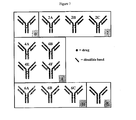
- an IgG 1 such as cAC10 possesses many disulfide bonds, only four of which are interchain. Because the four interchain disulfide bonds are clustered in the highly-flexible hinge region and much more solvent-accessible than other (intra-chain) disulfide bonds, reduction with an excess of, for example, a reducing agent, such as but not limited to dithiothreitol (DTT), Tris(2-carboxyethyl)phosphine (TCEP), or 2-Mercaptoethanol, breaks all four bonds and generates eight cysteines (i.e., containing the free thiol group). Conjugation of all eight cysteines with the drug-linker generates a fully-loaded conjugate with approximately eight drugs per antibody, as shown in see Fig. 7 .
- DTT dithiothreitol
- TCEP Tris(2-carboxyethyl)phosphine
- 2-Mercaptoethanol breaks all four bonds and generates eight cysteines (i.
- the present disclosure surprisingly demonstrates that the biological properties of ADCs can be improved with antibodies having an average of 2, 2.5, 4 or 6 drugs per antibody, which yields lower toxicity while maintaining the efficacy of fully loaded conjugates, i.e. conjugates having 8 drugs per antibody.
- the therapeutic window concentration of drug-antibody conjugate where toxicity is first seen divided by the lowest efficacious dose
- the therapeutic window concentration of drug-antibody conjugate where toxicity is first seen divided by the lowest efficacious dose
- the therapeutic window concentration of drug-antibody conjugate where toxicity is first seen divided by the lowest efficacious dose
- Methods to produce partially loaded ADCs include the following: method 1 ("partial reduction”) partial reduction of the antibody by a reducing agent such as but not limited to DTT or TCEP followed by conjugation, and method 2 ("full reduction and reoxidation") full reduction of the antibody with a reducing agent such as but not limited to DTT or TCEP, followed by partial reoxidation of the antibody with a reoxidizing agent (for example but not limited to 5,5'-dithio-bis-2-nitrobenzoic acid (DTNB), 4,4'-dithiodipyridine, 2,2'-dithiodipyridine, sodium tetrathionate, or iodosobenzoic acid) and finally conjugation.
- a reducing agent such as but not limited to DTT or TCEP
- a reoxidizing agent for example but not limited to 5,5'-dithio-bis-2-nitrobenzoic acid (DTNB), 4,4'-dithiodipyridine, 2,2
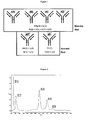
- Figure 1 shows the 6 possible E4 species (referred to as 4A through 4F species) that can be generated during a conjugation reaction.
- Species 4A-D are not individually distinguishable by certain analytic methods; however, they can be distinguished from both 4E and 4F.
- conjugates with, for example, 4 drugs per antibody can be made by full reduction of the antibody with, for example but not limited to DTT, to yield 8 antibody cysteines followed by conjugation to 4 equivalents of drug.
- DTT full reduction of the antibody with, for example but not limited to DTT
- the antibody is reduced by limiting quantities of, for example DTT, such that an average of only 2 of the 4 disulfides are reduced (liberating 4 cysteines) followed by complete drug conjugation, only even drug loaded species (0, 2, 4, 6, and 8 drugs per antibody) will be formed. This reduces the complexity of the mixture, which can be further reduced by purification to isolate these different drug loaded species.
- certain potential points of conjugation on a protein can be selectively activated. This selective activation allows for ready assignability of the conjugation site(s) of a drug on the protein.
- an antibody e.g., cAC10
- DTT or TCEP results in the selective reduction of the heavy-light chain disulfides.
- full DTT reduction of an antibody followed by partial reoxidation using a strong thiol oxidizing agent such as DTNB results in selective reoxidation of the heavy-light chain hinge disulfides, leading to drug predominantly conjugated on the heavy chain in the hinge region.
- the isomer populations of E2 and E6 produced by both of these methods can approach 90% isomeric homogeneity.
- the conjugated drug-antibody species can be separated.
- the conjugated antibody species can be separated based on the characteristics of the antibody, the drug and/or the conjugate. For example, hydrophobic interaction chromatograph (HIC) has been successful in isolating and separating species corresponding to 0, 2, 4, 6, and 8 drugs per antibody. The yields of each of these drug loaded isomers by method 1 is close to what would be expected by a statistical distribution. The 4 drug loaded species is typically 30% of the total material.
- HIC hydrophobic interaction chromatograph
- method 2 full reduction with partial reoxidation, to prepare drug-antibody conjugates with, for example, 4 drugs
- the antibody was fully reduced with, for example but not limited to, DTT and then treated with limiting amounts of, for example but not limited to, DTNB to reform some of the disulfides such that 4 antibody cysteine thiols remained.
- cysteines were conjugated to drug and analyzed by the methods described herein.
- the yield of 4 drug loaded antibodies in the mixture increased to as much as 40%, and once purified the location of the drug favored placement on the cysteines that originally made disulfides between the heavy chains in the hinge region.
- Both the yield of 4 drug loaded antibodies and the selectivity compared to common convention, which favors a different isomer from certain partial reduction methods, are unexpected. Using various chemical means, drug location within the antibody can be readily assigned for the production of different isomers.
- partial reduction occurs in which, on average, less than four inter-chain disulfide bonds are broken per antibody. Because all four inter-chain disulfide bonds are highly exposed, reduction proceeds through various pathways and produces partially-reduced antibody composed of a mixture of species with 0, 2, 4, 6, or 8 cysteines. Conjugation of partially-reduced antibody, therefore can generate a mixture of conjugates with 0, 2, 4, 6, or 8 drugs per antibody, as shown in Figures 1 and 7 . Depending on the extent of partial reduction, the drug-load distribution (i.e., the percent of 0, 2, 4, 6, or 8 drug-loaded species) changes.
- Partial reduction not only produces a mixture containing species with variable number of drugs per antibody, it also creates further heterogeneity as a result of the multiple locations of drug attachment.
- Figure 7 shows that there is more than one isomer possible for the 2, 4, and 6 drug-loaded species.
- the conjugated drug-protein species can be separated.
- the conjugated antibody species can be separated based on the characteristics of the antibody, the drug and/or the conjugate. For example, hydrophobic interaction chromatograph (HIC) has been successful in isolating and separating species corresponding to 0, 2, 4, 6, and 8 drugs per antibody.
- HIC hydrophobic interaction chromatograph
- HIC is the analytical method used to determine yields and isomeric mixtures from resultant conjugates (e.g., for E4 conjugates).
- This technique is able to separate antibodies loaded with various numbers of drugs.
- the drug loading level can be determined based on the ratio of absorbances, e.g., at 250 nm and 280 nm. For example, if a drug can absorb at 250 nm while the antibody absorbs at 280 nm. The 250/280 ratio therefore increases with drug loading.
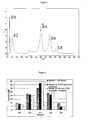
- Figures 2 and 3 show HIC separations for cAC10-vcMMAE produced by methods 2a and 2b, respectively.
- Figure 4 shows the percent composition for the various substitutions from these chromatograms as well as from method 1. Method 1 yields about 30% E4, while method 2b yields about 40% E4.
- HIC can also be used preparatively at milligram to gram levels to purify E4 from a mixture of substitution levels.
- Pure E4 from Figure 3 (collection time of 34-38 min indicated) was obtained and analyzed by two methods to determine the isomeric E4 mixture.
- an Agilent Bioanalyzer was used, which denatures noncovalent interactions and separates based on protein mass, yielding the following antibody components in order of elution: light chain (L), heavy chain (H), heavy-light (HL), heavy-heavy (HH), heavy-heavy-light (HHL), and heavy-heavy-light-light (HHLL).
- L light chain
- H heavy-light
- HH heavy-heavy-light
- HHLL heavy-heavy-light-light
- Figure 1 also describes which antibody components will be observed from denaturation of the various E4 isomers.
- pure E4 prepared by method 2b is dominated by HL, with a small amount of L and HHL. This result can be explained by the presence of mostly species 4F (exclusively yields HL) with some species 4A-D (yielding HHL and L).
- the same analysis of cAC10-vcMMAE made by method 1 yields approximately equal amounts of L, HL, and HH, which would be consistent with a mixture of mostly species 4E and some species 4F.
- an analytical tool is chromatography on a reversed-phase PLRP column; the column support is composed of crosslinked divinylbenzene, rather than a typical reversed phase column built on a silica support which can nonspecifically retain proteins.
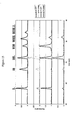
- This denaturing and reductive technique cleanly separates the 6 species consisting of light chain with 0 and 1 drug (L0 and L1) and heavy chain with 0 through 3 drugs (HO through H3).
- Figure 1 shows the drug loading levels that can be observed for the various E4 species. Pure E4 from method 2b was separated by PLRP in Figure 6 .
- Unmodified light chain (L0) and heavy chain with two drugs (H2) are the species expected from 4F, while L1 and H1 are expected from 4A-D.
- a protein may be conjugated with any drug of interest, including a cytostatic agent or cytotoxic agent, an immunosuppressive agent, a toxin, a chelate, a compound, a molecule, a radionucleotide, or the like.
- Cytotoxic and cytostatic drugs include antibiotics (e.g., adriamycin), antitumor agents such as auristatins and auristatin derivatives, methotrexate, mitomycin C, daunorubicin, doxorubicin, and vinblastine, 5-fluorouracil DNA minor grove binders, DNA replication inhibitors, alkylating agents (e.g., platinum complexes such as cisplatin, mono(platinum), bis(platinum) and tri-nuclear platinum complexes and carboplatin), antiparasitic agents (e.g., pentamidine isethionate), anthracyclines, antifolates, antimetabolites, chemotherapy sensitizers, duocarmycins, etoposides, fluorinated pyrimidines, ionophores, lexitropsins, nitrosoureas, platinols, pre-forming compounds, purine antimetabolites,
- cytotoxic or cytostatic agents include, for example, an androgen, anthramycin (AMC), asparaginase, 5-azacytidine, azathioprine, bleomycin, busulfan, buthionine sulfoximine, camptothecin, carboplatin, carmustine (BSNU), CC-1065, chlorambucil, cisplatin, colchicine, cyclophosphamide, cytarabine, cytidine arabinoside, cytochalasin B, dacarbazine, dactinomycin (formerly actinomycin), daunorubicin, decarbazine, docetaxel, doxorubicin, an estrogen, 5-fluordeoxyuridine, 5-fluorouracil, gramicidin D, hydroxyurea, idarubicin, ifosfamide, irinotecan, lomustine (CCNU), mechlorethamine, melphalan
- cytotoxic agents include, for example, dolastatins (see infra) DNA minor groove binders such as the enediynes (e.g., calicheamicin) and lexitropsins (see, also U.S. Patent No.
- duocarmycins e.g., paclitaxel and docetaxel
- puromycins CC-1065, SN-38, topotecan, morpholino-doxorubicin, rhizoxin, cyanomorpholinodoxorubicin, echinomycin, combretastatin, netropsin, epothilone A, B or D, estramustine, cryptophysins, cemadotin, maytansinoids, discodermolide, eleutherobin, and mitoxantrone.
- taxanes e.g., paclitaxel and docetaxel
- puromycins CC-1065, SN-38, topotecan, morpholino-doxorubicin, rhizoxin, cyanomorpholinodoxorubicin, echinomycin, combretastatin, netropsin, epothilone A, B or D, estramustine,
- the cytotoxic agent is a chemotherapeutic such as, for example, doxorubicin, melphalan, vinca alkaloids, methotrexate, mitomycin C or etoposide.
- chemotherapeutic such as, for example, doxorubicin, melphalan, vinca alkaloids, methotrexate, mitomycin C or etoposide.
- potent agents such as CC-1065 analogues, calicheamicin, maytansine, analogues of dolastatin 10, rhizoxin, and palytoxin can be linked to proteins.
- the cytotoxic or cytostatic agent is auristatin E (also known in the art as dolastatin-10) or a derivative thereof.
- the auristatin E derivative is, e.g., an ester formed between auristatin E and a keto acid.
- auristatin E can be reacted with paraacetyl benzoic acid or benzoylvaleric acid to produce AEB and AEVB, respectively.
- Other typical auristatin derivatives include AFP, MMAF, and MMAE.
- the cytotoxic or cytostatic agent is an anti-tubulin agent.
- anti-tubulin agents include, but are not limited to, taxanes (e.g., Taxol® (paclitaxel), Taxotere® (docetaxel)), T67 (Tularik), vinca alkyloids (e.g., vincristine, vinblastine, vindesine, and vinorelbine), and dolastatins (e.g., auristatin E, AFP, MMAF, MMAE, AEB, AEVB).
- taxanes e.g., Taxol® (paclitaxel), Taxotere® (docetaxel)
- T67 Tularik
- vinca alkyloids e.g., vincristine, vinblastine, vindesine, and vinorelbine
- dolastatins e.g., auristatin E, AFP, MMAF, MMAE, AEB, AEVB
- antitubulin agents include, for example, baccatin derivatives, taxane analogs (e.g., epothilone A and B), nocodazole, colchicine and colcimid, estramustine, cryptophysins, cemadotin, maytansinoids, combretastatins, discodermolide, and eleutherobin.
- the cytotoxic agent is a maytansinoid, another group of anti-tubulin agents.
- the maytansinoid is maytansine or DM-1 (ImmunoGen, Inc.; see also Chari et al. (1992), Cancer Res. 52:127-131 ).
- the therapeutic agent is not a radioisotope.
- the cytotoxic or immunosuppressive agent is an antimetabolite.
- the antimetabolite can be, for example, a purine antagonist (e.g., azothioprine or mycophenolate mofetil), a dihydrofolate reductase inhibitor (e.g., methotrexate), acyclovir, gangcyclovir, zidovudine, vidarabine, ribavarin, azidothymidine, cytidine arabinoside, amantadine, dideoxyuridine, iododeoxyuridine, poscarnet, or trifluridine.
- a purine antagonist e.g., azothioprine or mycophenolate mofetil
- a dihydrofolate reductase inhibitor e.g., methotrexate
- acyclovir gangcyclovir
- zidovudine vidarabine
- ribavarin azidothymidine
- the cytotoxic or immunosuppressive agent is tacrolimus, cyclosporine or rapamycin.
- the cytotoxic agent is aldesleukin, alemtuzumab, alitretinoin, allopurinol, altretamine, amifostine, anastrozole, arsenic trioxide, bexarotene, bexarotene, calusterone, capecitabine, celecoxib, cladribine, Darbepoetin alfa, Denileukin diftitox, dexrazoxane, dromostanolone propionate, epirubicin, Epoetin alfa, estramustine, exemestane, Filgrastim, floxuridine, fludarabine, fulvestrant, gemcitabine, goserelin, idarubicin, ifosfamide, imatinib mesylate, Interferon al
- the agent is an immunosuppressive agent.
- the immunosuppressive agent can be, for example, gancyclovir, tacrolimus, cyclosporine, rapamycin, cyclophosphamide, azathioprine, mycophenolate mofetil or methotrexate.
- the immunosuppressive agent can be, for example, a glucocorticoid (e.g., cortisol or aldosterone) or a glucocorticoid analogue (e.g., prednisone or dexamethasone).
- the immunosuppressive agent is an anti-inflammatory agent, such as arylcarboxylic derivatives, pyrazole-containing derivatives, oxicam derivatives and nicotinic acid derivatives.
- Classes of anti-inflammatory agents include, for example, cyclooxygenase inhibitors, 5-lipoxygenase inhibitors, and leukotriene receptor antagonists.
- Suitable cyclooxygenase inhibitors include meclofenamic acid, mefenamic acid, carprofen, diclofenac, diflunisal, fenbufen, fenoprofen, ibuprofen, indomethacin, ketoprofen, nabumetone, naproxen, sulindac, tenoxicam, tolmetin, and acetylsalicylic acid.
- Suitable lipoxygenase inhibitors include redox inhibitors (e.g., catechol butane derivatives, nordihydroguaiaretic acid (NDGA), masoprocol, phenidone, Ianopalen, indazolinones, naphazatrom, benzofuranol, alkylhydroxylamine), and non-redox inhibitors (e.g., hydroxythiazoles, methoxyalkylthiazoles, benzopyrans and derivatives thereof, methoxytetrahydropyran, boswellic acids and acetylated derivatives of boswellic acids, and quinolinemethoxyphenylacetic acids substituted with cycloalkyl radicals), and precursors of redox inhibitors.
- redox inhibitors e.g., catechol butane derivatives, nordihydroguaiaretic acid (NDGA), masoprocol, phenidone, Ianopalen, indazolinones, naphaz
- lipoxygenase inhibitors include antioxidants (e.g., phenols, propyl gallate, flavonoids and/or naturally occurring substrates containing flavonoids, hydroxylated derivatives of the flavones, flavonol, dihydroquercetin, luteolin, galangin, orobol, derivatives of chalcone, 4,2',4'-trihydroxychalcone, ortho-aminophenols, N-hydroxyureas, benzofuranols, ebselen and species that increase the activity of the reducing selenoenzymes), iron chelating agents (e.g., hydroxamic acids and derivatives thereof, N-hydroxyureas, 2-benzyl-1-naphthol, catechols, hydroxylamines, carnosol trolox C, catechol, naphthol, sulfasalazine, zyleuton, 5-hydroxyanthranilic acid and 4-(omega-arylalkyl
- lipoxygenase inhibitors include inhibitors of eicosanoids (e.g., octadecatetraenoic, eicosatetraenoic, docosapentaenoic, eicosahexaenoic and docosahexaenoic acids and esters thereof, PGE1 (prostaglandin E1), PGA2 (prostaglandin A2), viprostol, 15-monohydroxyeicosatetraenoic, 15-monohydroxy-eicosatrienoic and 15-monohydroxyeicosapentaenoic acids, and leukotrienes B5, C5 and D5), compounds interfering with calcium flows, phenothiazines, diphenylbutylamines, verapamil, fuscoside, curcumin, chlorogenic acid, caffeic acid, 5,8,11,14-eicosatetrayenoic acid (ETYA), hydroxyphenylretinamide,
- Leukotriene receptor antagonists include calcitriol, ontazolast, Bayer Bay-x-1005, Ciba-Geigy CGS-25019C, ebselen, Leo Denmark ETH-615, Lilly LY-293111, Ono ONO-4057, Terumo TMK-688, Boehringer Ingleheim BI-RM-270, Lilly LY 213024, Lilly LY 264086, Lilly LY 292728, Ono ONO LB457, Pfizer 105696, Perdue Frederick PF 10042, Rhone-Poulenc Rorer RP 66153, SmithKline Beecham SB-201146, SmithKline Beecham SB-201993, SmithKline Beecham SB-209247, Searle SC-53228, Sumitamo SM 15178, American Home Products WAY 121006, Bayer Bay-o-8276, Warner-Lambert CI-987, Warner-Lambert CI-987BPC-15LY 223982, Lilly
- Toxins are usefully conjugated to antibodies specific for antigens associated with tumor, parasite or microbial cells.
- the toxin may be from, e.g., a plant (e.g., ricin or abrin), animal (e.g., a snake venom), or microbial (e.g., diphtheria or tetanus toxin).
- the drugs or toxins may be conjugated to other carrier proteins, such as albumin.
- the drug has, or is modified to include, a group reactive with a conjugation point on the protein.
- a drug can be attached by alkylation (e.g., at the ⁇ -amino group of antibody lysines or the N-terminus of protein), reductive amination of oxidized carbohydrate, transesterification between hydroxyl and carboxyl groups, amidation at amino groups or carboxyl groups, and conjugation to thiols.
- alkylation e.g., at the ⁇ -amino group of antibody lysines or the N-terminus of protein
- reductive amination of oxidized carbohydrate e.g., at the ⁇ -amino group of antibody lysines or the N-terminus of protein
- transesterification between hydroxyl and carboxyl groups e.g., transesterification between hydroxyl and carboxyl groups
- amidation at amino groups or carboxyl groups e.g., amidation at amino groups or carboxyl
- the protein when chemical activation of the protein results in formation of free thiol groups, the protein may be conjugated with a sulfhydryl reactive agent.
- the agent is one which is substantially specific for free thiol groups.
- agents include, for example, malemide, haloacetamides (e.g., iodo, bromo or chloro), haloesters (e.g., iodo, bromo or chloro), halomethyl ketones (e.g., iodo, bromo or chloro), benzylic halides (e.g., iodide, bromide or chloride), vinyl sulfone and pyridyithio.
- haloacetamides e.g., iodo, bromo or chloro
- haloesters e.g., iodo, bromo or chloro
- halomethyl ketones e.g., i
- Sulfyhydryl reactive agents include alpha-haloacetyl compounds such as iodoacetamide, maleimides such as N-ethylmaleimide, mercury derivatives such as 3,6-bis-(mercurimethyl)dioxane with counter ions of acetate, chloride or nitrate, and disulfide derivatives such as disulfide dioxide derivatives, polymethylene bismethane thiosulfonate reagents and crabescein (a fluorescent derivative of fluorescein containing two free sulfhydryl groups which have been shown to add across disulfide bonds of reduced antibody).
- alpha-haloacetyl compounds such as iodoacetamide
- maleimides such as N-ethylmaleimide
- mercury derivatives such as 3,6-bis-(mercurimethyl)dioxane with counter ions of acetate, chloride or nitrate
- disulfide derivatives such as disulfide dioxide derivative
- Alpha-haloacetyl compounds such as iodoacetate readily react with sulfhydryl groups to form amides. These compounds have been used to carboxymethylate free thiols. They are not strictly SH specific and will react with amines. The reaction involves nucleophilic attack of the thiolate ion resulting in a displacement of the halide.
- the reactive haloacetyl moiety, X--CH 2 CO-- has been incorporated into compounds for various purposes. For example, bromotrifluoroacetone has been used for F-19 incorporation, and N-chloroacetyliodotyramine has been employed for the introduction of radioactive iodine into proteins.
- Maleimides such as N-ethylmaleimide are considered to be fairly specific to sulfhydryl groups, especially at pH values below 7, where other groups are protonated.
- Thiols undergo Michael reactions with maleimides to yield exclusively the adduct to the double bond.
- the resulting thioether bond is very stable. They also react at a much slower rate with amino and imidazoyl groups.
- the reaction with simple thiols is about 1,000 fold faster than with the corresponding amines.
- the characteristic absorbance change in the 300 nm region associated with the reaction provides a convenient method for monitoring the reaction. These compounds are stable at low pH but are susceptible to hydrolysis at high pH. See generally Wong, Chemistry of Protein Conjugation and Cross-linking; CRC Press, Inc., Boca Raton, 1991: Chapters 2 and 4 ).
- a molecule (such as a drug) which is not inherently reactive with sulfhydryls may still be conjugated to the chemically activated proteins by means of a bifunctional crosslinking agent which bears both a group reactive with the molecule of interest and a sulfhydryl reactive group.
- This agent may be reacted simultaneously with both the molecule of interest (e.g., through an amino, carboxy or hydroxy group) and the chemically activated protein, or it may be used to derivatize the molecule of interest to form a partner molecule which is then sulfhydryl reactive by virtue of a moiety derived from the agent, or it may be used to derivatize the chemically activated protein to make it reactive with the molecule of interest.
- the drug can be linked to a protein by a linker.
- Suitable linkers include, for example, cleavable and non-cleavable linkers.
- a cleavable linker is typically susceptible to cleavage under intracellular conditions.
- Suitable cleavable linkers include, for example, a peptide linker cleavable by an intracellular protease, such as lysosomal protease or an endosomal protease.
- the linker can be a dipeptide linker, such as a valine-citrulline (val-cit) or a phenylalanine-lysine (phe-lys) linker.
- Other suitable linkers include linkers hydrolyzable at a pH of less than 5.5, such as a hydrazone linker. Additional suitable cleavable linkers include disulfide linkers.
- a linker can include a group for linkage to the protein.
- linker can include an amino, hydroxyl, carboxyl or sulfhydryl reactive groups (e.g., malemide, haloacetamides (e.g., iodo, bromo or chloro), haloesters (e.g., iodo, bromo or chloro), halomethyl ketones (e.g., iodo, bromo or chloro), benzylic halides (e.g., iodide, bromide or chloride), vinyl sulfone and pyridyithio). See generally Wong, Chemistry of Protein Conjugation and Cross-linking; CRC Press, Inc., Boca Raton, 1991 .
- the antibody or protein drug conjugate can be of the following formula: or pharmaceutically acceptable salts or solvates thereof. wherein:
- p can be, for example, 2, 4, 8, 10, 12, 16, 25, or more.
- a stretcher unit can is capable of linking a linker unit to an antibody or other protein.
- the stretcher unit has a functional group that can form a bond with a functional group of the antibody or other protein.
- Useful functional groups include, but are not limited to, sulfhydryl (-SH), amino, hydroxyl, carboxy, the anomeric hydroxyl group of a carbohydrate, and carboxyl.
- the linker unit is typically an amino acid unit, such as for example a dipeptide, tripeptide, tetrapeptide, pentapeptide, hexapeptide, heptapeptide, octapeptide, nonapeptide, decapeptide, undecapeptide or dodecapeptide unit.
- the linker unit can be cleavage or non-cleavable inside the cell.
- a spacer unit links a linker unit to the drug, alternately, a spacer unit can link a stretcher unit to a drug moiety when the linker unit is absent.
- the spacer unit can also link a drug to an antibody or protein when both the linker unit and stretcher unit are absent.
- a protein e.g., an antibody
- the label may be a radiolabel, fluorophore, or enzyme which is directly or indirectly conjugatable to conjugation point (e.g., a free thiol group) of the chemically activated antibody.
- the sample may be of clinical (e.g., blood, urine, semen, or cerebrospinal fluid, or a solid tissue or organ) or non-clinical (e.g., soil, water, food) nature.
- the assay may be qualitative or quantitative, and in any desired format, including sandwich and competitive formats.
- an immunoconjugate may also be used for in vivo immunoimaging.
- the protein e.g., an antibody
- an immunoimaging agent will be an antibody labeled directly (as with Technetium) or indirectly (as with chelated Indium) with a suitable radioisotope.
- the location of the conjugate may be tracked by a detector sensitive to particles emitted by the radiolabel, e.g., a gamma-scintillation camera in the case of a gamma emitter.
- a protein can be conjugated to suitable drug, such as a cytotoxic or cytostatic agent, an immunosuppressive agent, a radioisotope, a toxin, or the like.
- suitable drug such as a cytotoxic or cytostatic agent, an immunosuppressive agent, a radioisotope, a toxin, or the like.
- the conjugate can be used for inhibiting the multiplication of a tumor cell or cancer cell, causing apoptosis in a tumor or cancer cell, or for treating cancer in a patient.
- the conjugate can be used accordingly in a variety of settings for the treatment of animal cancers.
- the conjugate can be used to deliver a drug to a tumor cell or cancer cell.
- the conjugate binds to or associates with a cancer-cell or a tumor-associated antigen
- the conjugate and/or drug can be taken up inside a tumor cell or cancer cell through receptor-mediated endocytosis.
- the antigen can be attached to a tumor cell or cancer cell or can be an extracellular matrix protein associated with the tumor cell or cancer cell.
- one or more specific peptide sequences within the conjugte e.g., in a linker
- the released drug is then free to migrate within the cell and induce cytotoxic or cytostatic or other activities.
- the drug is cleaved from the antibody outside the tumor cell or cancer cell, and the drug subsequently penetrates the cell, or acts at the cell surface.
- the conjugate or other protein binds to the tumor cell or cancer cell.
- the conjugate binds to a tumor cell or cancer cell antigen which is on the surface of the tumor cell or cancer cell.
- the conjugate binds to a tumor cell or cancer cell antigen which is an extracellular matrix protein associated with the tumor cell or cancer cell.
- the specificity of the protein for a particular tumor cell or cancer cell can be important for determining those tumors or cancers that are most effectively treated.
- antibodies having an anti-CD30 or an anti-CD40 antibody or other binding protein can be useful for treating hematologic malignancies.
- cancers that can be treated with the protein-drug conjugates include, but are not limited to, solid tumors, including but not limited to: fibrosarcoma, myxosarcoma, liposarcoma, chondrosarcoma, osteogenic sarcoma, chordoma, angiosarcoma, endotheliosarcoma, lymphangiosarcoma, lymphangioendotheliosarcoma, synovioma, mesothelioma, Ewing's tumor, leiomyosarcoma, rhabdomyosarcoma, colon cancer, colorectal cancer, kidney cancer, pancreatic cancer, bone cancer, breast cancer, ovarian cancer, prostate cancer, esophogeal cancer, stomach cancer, oral cancer, nasal cancer, throat cancer, squamous cell carcinoma, basal cell carcinoma, adenocarcinoma, sweat gland carcinoma, sebaceous gland carcinoma, papillary carcinoma, papillary adeno
- cancers including, but not limited to, a tumor, metastasis, or other disease or disorder characterized by uncontrolled cell growth, can be treated or prevented by administration of a protein-drug conjugate.
- methods for treating or preventing cancer including administering to a patient in need thereof an effective amount of a conjugate and a chemotherapeutic agent.
- the chemotherapeutic agent is that with which treatment of the cancer has not been found to be refractory.
- the chemotherapeutic agent is that with which the treatment of cancer has been found to be refractory.
- the conjugate can be administered to a patient that has also undergone an treatment, such as surgery for treatment for the cancer.
- the additional method of treatment is radiation therapy.
- the protein-drug conjugate is administered concurrently with the chemotherapeutic agent or with radiation therapy.
- the chemotherapeutic agent or radiation therapy is administered prior or subsequent to administration of the protein-drug conjugate, in one aspect at least an hour, five hours, 12 hours, a day, a week, a month, in further aspects several months (e.g., up to three months), prior or subsequent to administration of the conjugate.
- a chemotherapeutic agent can be administered over a series of sessions. Any one or a combination of the chemotherapeutic agents listed below can be administered.
- any radiation therapy protocol can be used depending upon the type of cancer to be treated.
- x-ray radiation can be administered; in particular, high-energy megavoltage (radiation of greater that 1 MeV energy) can be used for deep tumors, and electron beam and orthovoltage x-ray radiation can be used for skin cancers.
- Gamma-ray emitting radioisotopes such as radioactive isotopes of radium, cobalt and other elements, can also be administered.
- methods of treatment of cancer with a protein-drug conjugate are provided as an alternative to chemotherapy or radiation therapy, where the chemotherapy or the radiation therapy has proven or can prove too toxic, e.g., results in unacceptable or unbearable side effects, for the subject being treated.
- the animal being treated can, optionally, be treated with another cancer treatment such as surgery, radiation therapy or chemotherapy, depending on which treatment is found to be acceptable or bearable.
- the protein-drug conjugate can also be used in an in vitro or ex vivo fashion, such as for the treatment of certain cancers, including, but not limited to leukemias and lymphomas, such treatment involving autologous stem cell transplants.
- This can involve a multi-step process in which the animal's autologous hematopoietic stem cells are harvested and purged of all cancer cells, the animal's remaining bone-marrow cell population is then eradicated via the administration of a high dose of a conjugate with or without accompanying high dose radiation therapy, and the stem cell graft is infused back into the animal. Supportive care is then provided while bone marrow function is restored and the animal recovers.
- Methods for treating cancer include administering to a patient in need thereof an effective amount of an a protein-drug conjugate and another therapeutic agent that is an anti-cancer agent are disclosed.
- Suitable anticancer agents include, but are not limited to, methotrexate, taxol, L-asparaginase, mercaptopurine, thioguanine, hydroxyurea, cytarabine, cyclophosphamide, ifosfamide, nitrosoureas, cisplatin, carboplatin, mitomycin, dacarbazine, procarbizine, topotecan, nitrogen mustards, cytoxan, etoposide, 5-fluorouracil, BCNU, irinotecan, camptothecins, bleomycin, doxorubicin, idarubicin, daunorubicin, dactinomycin, plicamycin, mitoxantrone, asparaginase, vinblastine,
- the anti-cancer agent includes, but is not limited to, a drug such as an alkylating agents such as a nitrogen mustard (e.g., cyclophosphamide, ifosfamide, trofosfamide, chlorambucil, melphalan), nitrosoureas (e.g., carmustine (BCNU), lomustine (CCNU)), alkylsulphonates (e.g., busulfan, treosulfan), triazenes (e.g., decarbazine), Platinum containing compounds (e.g., cisplatin, carboplatin); plant alkaloids, such as vinca alkaloids (e.g., vincristine, vinblastine, vindesine, vinorelbine), taxoids (e.g., paclitaxel, docetaxol); DNA topoisomerase inhibitors such as epipodophyllins (e.g., etoposide, teniposide, to
- the protein-drug conjugates are useful for killing or inhibiting the replication of a cell that produces an autoimmune disease or for treating an autoimmune disease.
- the conjugates can be used accordingly in a variety of settings for the treatment of an autoimmune disease in a patient.
- the conjugates can be used to deliver a drug to a target cell.
- the conjugates associate with an antigen on the surface of a target cell, and the conjugate is then taken up inside a target-cell through receptor-mediated endocytosis.
- one or more specific peptide sequences e.g., within a linker
- the drug is cleaved from the conjugate outside the target cell, and the drug subsequently penetrates the cell.
- the protein-drug conjugate binds to an autoimmune antigen.
- the antigen is on the surface of a cell involved in an autoimmune condition.
- an antibody binds to an autoimmune antigen which is on the surface of a cell.
- an antibody binds to activated lymphocytes that are associated with the autoimmune disease state.
- the conjugates kill or inhibit the multiplication of cells that produce an autoimmune antibody associated with a particular autoimmune disease.
- Th2 lymphocyte related disorders e.g., atopic dermatitis, atopic asthma, rhinoconjunctivitis, allergic rhinitis, Omenn's syndrome, systemic sclerosis, and graft versus host disease
- Th1 lymphocyte related disorders e.g., rheumatoid arthritis, multiple sclerosis, psoriasis, Sjorgren's syndrome, Hashimoto's thyroiditis, Grave's disease, primary biliary cirrhosis, Wegener's granulomatosis and tuberculosis
- activated B lymphocyte related disorders e.g., systemic lupus erythematosus, Goodpasture's syndrome, rheumatoid arthritis and type I diabetes.
- autoimmune diseases include, but are not limited to, active chronic hepatitis, Addison's disease, allergic alveolitis, allergic reaction, allergic rhinitis, Alport's Syndrome, anaphlaxis, ankylosing spondylitis, anti-phosholipid syndrome, arthritis, ascariasis, aspergillosis, atopic allergy, atropic dermatitis, atropic rhinitis, Behcet's disease, Bird-Fancier's Lung, bronchial asthma, Caplan's syndrome, cardiomyopathy, Celiac disease, Chagas' disease, chronic glomerulonephritis, Cogan's Syndrome, cold agglutinin disease, congenital rubella infection, CREST syndrome, Crohn's disease, cryoglobulinemia, Cushing's syndrome, dermatomyositis, discoid lupus, Dressler's syndrome, Eaton-Lambert syndrome, echovirus infection, encephalomyelitis,
- Methods for treating an autoimmune disease include administering to a patient in need thereof an effective amount of a protein-drug conjugate alone or in combination another therapeutic agent known for the treatment of an autoimmune disease.
- the anti-autoimmune disease agent can include, but is not limited to, the following: cyclosporine, cyclosporine A, mycophenylate mofetil, sirolimus, tacrolimus, enanercept, prednisone, azathioprine, methotrexate, cyclophosphamide, aminocaproic acid, chloroquine, hydroxychloroquine, hydrocortisone, dexamethasone, chlorambucil, DHEA, danazol, bromocriptine, meloxicam and infliximab.
- the protein-drug conjugates are useful for killing or inhibiting the multiplication of a cell that produces an infectious disease or for treating an infectious disease.
- the conjugates can be used accordingly in a variety of settings for the treatment of an infectious disease in a patient.
- the ADCs can be used to deliver a drug to a target cell.
- the antibody binds to the infectious disease cell.
- the conjugate kills or inhibit the multiplication of cells that produce a particular infectious disease.
- infectious diseases include, but are not limited to, the following: bacterial diseases, such as diphtheria, pertussis, occult bacteremia, urinary tract infection, gastroenteritis, cellulites, epiglottitis, tracheitis, adenoid hypertrophy, retropharyngeal abcess, impetigo, ecthyma, pneumonia, endocarditis, septic arthritis, pneumococcal, peritonitis, bactermia, meningitis, acute purulent meningitis, urethritis, cervicitis, proctitis, pharyngitis, salpingitis, epididymitis, gonorrhea, syphilis, listeriosis, anthrax, nocardiosis, salmonella, typhoid fever, dysentery, conjunctivitis, sinusitis, brucellosis, tularemia, cholera,
- bacterial diseases such as diphth
- the anti-infectious disease agent can be, but not limited to, the following: ⁇ -lactam antibiotics, such as penicillin G, penicillin V, cloxacilliin, dicloxacillin, methicillin, nafcillin, oxacillin, ampicillin, amoxicillin, bacampicillin, azlocillin, carbenicillin, mezlocillin, piperacillin and ticarcillin; aminoglycosides such as amikacin, gentamicin, kanamycin, neomycin, netilmicin, streptomycin and tobramycin; macrolides such as azithromycin, clarithromycin, erythromycin, lincomycin and clindamycin; tetracyclines such as demeclocycline, doxycycline, min
- the conjugate is introduced into a subject.
- the composition can comprise a single isomer, or one or more partially-loaded isomers, of the conjugate.
- the protein is an antibody
- the composition can comprise a single E2, E4 or E6 isomer, a mixture of selected E2, E4 or E6 isomers, all E2, E4 or E6 isomers alone, or a mixture of E2, E4 and E6 isomers.
- a composition containing a certain isomer(s) can be substantially free of other isomers.
- substantially free means the composition contains less than about 20%, less than about 10%, less than about 5% less than about 2% or less than about 1% of the other isomers.
- compositions can be in any form that allows for the composition to be administered to a patient.
- the composition can be in the form of a solid, liquid or gas (aerosol).
- routes of administration include, without limitation, oral, topical, parenteral, sublingual, rectal, vaginal, ocular, intra-tumor, and intranasal.
- Parenteral administration includes subcutaneous injections, intravenous, intramuscular, intrasternal injection or infusion techniques.
- the compositions are administered parenterally.
- the conjugate or compositions are administered intravenously.
- the conjugate can be introduced by injection. Typically, the conjugate is administered intravascularly (intravenously or intraarterially) or intrathetically, often by infusion. In addition, in appropriate cases the conjugate may be introduced subcutaneously, submucosally, intramuscularly, intracranially, or by other accepted routes of drug administration.
- the composition includes an effective amount of a conjugate and a pharmaceutically acceptable carrier or vehicle.
- Such compositions are suitable for veterinary or human administration.
- compositions can be formulated so as to allow a conjugate to be bioavailable upon administration of the composition to a patient.
- Compositions can take the form of one or more dosage units, where for example, a tablet can be a single dosage unit, and a container of a conjugate in injectable form can hold a plurality of dosage units.
- compositions can be non-toxic in the amounts used. It will be evident to those of ordinary skill in the art that the optimal dosage of the active ingredient(s) in the pharmaceutical composition will depend on a variety of factors. Relevant factors include, without limitation, the type of animal (e.g., human), the particular form of the conjugate, the manner of administration, and the composition employed.
- the pharmaceutically acceptable carrier or vehicle can be particulate, so that the compositions are, for example, in tablet or powder form.
- the carrier(s) can be liquid, with the compositions being, for example, an oral syrup or injectable liquid.
- the carrier(s) can be gaseous or particulate, so as to provide an aerosol composition useful in, e.g., inhalatory administration.
- composition When intended for oral administration, the composition is preferably in solid or liquid form, where semi-solid, semi-liquid, suspension and gel forms are included within the forms considered herein as either solid or liquid.
- the composition can be formulated into a powder, granule, compressed tablet, pill, capsule, chewing gum, wafer or the like.
- a solid composition typically contains one or more inert diluents.
- binders such as carboxymethylcellulose, ethyl cellulose, microcrystalline cellulose, or gelatin; excipients such as starch, lactose or dextrins; disintegrating agents such as alginic acid, sodium alginate, Primogel, corn starch and the like; lubricants such as magnesium stearate or Sterotex; glidants such as colloidal silicon dioxide; sweetening agents such as sucrose or saccharin, a flavoring agent such as peppermint, methyl salicylate or orange flavoring, and a coloring agent.
- composition when in the form of a capsule, e.g., a gelatin capsule, it can contain, in addition to materials of the above type, a liquid carrier such as polyethylene glycol, cyclodextrin or a fatty oil.
- a liquid carrier such as polyethylene glycol, cyclodextrin or a fatty oil.
- the composition can be in the form of a liquid, e.g., an elixir, syrup, solution, emulsion or suspension.
- the liquid can be useful for oral administration or for delivery by injection.
- a composition can comprise one or more of a sweetening agent, preservatives, dye/colorant and flavor enhancer.
- a surfactant, preservative, wetting agent, dispersing agent, suspending agent, buffer, stabilizer and isotonic agent can also be included.
- the liquid compositions can also include one or more of the following: sterile diluents such as water for injection, saline solution, preferably physiological saline, Ringer's solution, isotonic sodium chloride, fixed oils such as synthetic mono or digylcerides which can serve as the solvent or suspending medium, polyethylene glycols, glycerin, cyclodextrin, propylene glycol or other solvents; antibacterial agents such as benzyl alcohol or methyl paraben; antioxidants such as ascorbic acid or sodium bisulfite; chelating agents such as ethylenediaminetetraacetic acid; buffers such as acetates, citrates or phosphates and agents for the adjustment of tonicity such as sodium chloride or dextrose.
- sterile diluents such as water for injection, saline solution, preferably physiological saline, Ringer's solution, isotonic sodium chloride
- fixed oils such as synthetic mono or digylcer
- a parenteral composition can be enclosed in ampoule, a disposable syringe or a multiple-dose vial made of glass, plastic or other material.
- Physiological saline is an exemplary adjuvant.
- An injectable composition is preferably sterile.
- Preparations for parenteral administration include sterile aqueous or non-aqueous solutions, suspensions, and emulsions.
- non-aqueous solvents are propylene glycol, polyethylene glycol, vegetable oils such as olive oil, and injectable organic esters such as ethyl oleate.
- Aqueous carriers include water, alcoholic/aqueous solutions, emulsions or suspensions, including saline and buffered media.
- Parenteral vehicles include sodium chloride solution, Ringer's dextrose, dextrose and sodium chloride, lactated Ringer's, or fixed oils.
- Intravenous vehicles include fluid and nutrient replenishers, electrolyte replenishers (such as those based on Ringer's dextrose), and the like. Preservatives and other additives may also be present such as, for example, antimicrobials, anti-oxidants, chelating agents, and inert gases and the like.
- the amount of the conjugate that is effective in the treatment of a particular disorder or condition will depend on the nature of the disorder or condition, and can be determined by standard clinical techniques.
- the dosage ranges for the administration of the disclosed protein-drug conjugates are those large enough to produce the desired effect in which the symptoms of the condition or disorder are ameliorated.
- the dosage should not be so large as to cause adverse side effects, such as unwanted cross-reactions, anaphylactic reactions, and the like.
- in vitro or in vivo assays can optionally be employed to help identify optimal dosage ranges.
- compositions will also depend on the age, condition, sex and extent of the disease in the patient, route of administration, and the seriousness of the disease or disorder, and should be decided according to the judgment of the practitioner and each patient's circumstances.
- compositions comprise an effective amount of a conjugate such that a suitable dosage will be obtained. Typically, this amount is at least about 0.01% of a conjugate by weight of the composition. When intended for oral administration, this amount can be varied to range from about 0.1 % to about 80% by weight of the composition. In one aspect, oral compositions can comprise from about 4% to about 50% of the conjugate by weight of the composition. In yet another aspect, present compositions are prepared so that a parenteral dosage unit contains from about 0.01% to about 2% by weight of the conjugate.
- the composition can comprise from about 0.01 to about 100 mg of a conjugate per kg of the animal's body weight. In one aspect, the composition can include from about 1 to about 100 mg of a conjugate per kg of the animal's body weight. In another aspect, the amount administered will be in the range from about 0.1 to about 25 mg/kg of body weight of the conjugate.
- the dosage of an conjugate administered to a patient is typically about 0.01 mg/kg to about 2000 mg/kg of the animal's body weight. In one aspect, the dosage administered to a patient is between about 0.01 mg/kg to about 10 mg/kg of the animal's body weight. In another aspect, the dosage administered to a patient is between about 0.1 mg/kg and about 250 mg/kg of the animal's body weight. In yet another aspect, the dosage administered to a patient is between about 0.1 mg/kg and about 20 mg/kg of the animal's body weight. In yet another aspect the dosage administered is between about 0.1 mg/kg to about 10 mg/kg of the animal's body weight. In yet another aspect, the dosage administered is between about 1 mg/kg to about 10 mg/kg of the animal's body weight.
- the conjugates can be administered by any convenient route, for example by infusion or bolus injection, by absorption through epithelial or mucocutaneous linings (e.g., oral mucosa, rectal and intestinal mucosa, etc.). Administration can be systemic or local.
- Various delivery systems are known, e.g., encapsulation in liposomes, microparticles, microcapsules, capsules, etc., and can be used to administer a conjugate or composition. In certain embodiments, more than one conjugate or composition is administered to a patient.
- administration can be by direct injection at the site (or former site) of a cancer, tumor or neoplastic or pre-neoplastic tissue. In another embodiment, administration can be by direct injection at the site (or former site) of a manifestation of an autoimmune disease.
- Intraventricular injection can be facilitated by an intraventricular catheter, for example, attached to a reservoir, such as an Ommaya reservoir.
- Pulmonary administration can also be employed, e.g., by use of an inhaler or nebulizer, and formulation with an aerosolizing agent, or via perfusion in a fluorocarbon or synthetic pulmonary surfactant.
- the conjugates can be delivered in a controlled release system, such as but not limited to, a pump or various polymeric materials can be used.
- a controlled-release system can be placed in proximity of the target of the conjugates, e.g., the brain, thus requiring only a fraction of the systemic dose (see, e.g., Goodson, in Medical Applications of Controlled Release, supra, vol. 2, pp. 115-138 (1984 )).
- Other controlled-release systems discussed in the review by Langer Science 249:1527-1533 (1990 ) can be used.
- a protein conjugate can be combined with a carrier to form a compostion.
- carrier refers to a diluent, adjuvant or excipient, with which a conjugate is administered.
- Such pharmaceutical carriers can be liquids, such as water and oils, including those of petroleum, animal, vegetable or synthetic origin, such as peanut oil, soybean oil, mineral oil, sesame oil and the like.
- the carriers can be saline, gum acacia, gelatin, starch paste, talc, keratin, colloidal silica, urea, and the like.
- auxiliary, stabilizing, thickening, lubricating and coloring agents can be used.
- the conjugate or compositions and pharmaceutically acceptable carriers are sterile.
- Water is an exemplary carrier when the conjugate are administered intravenously.
- Saline solutions and aqueous dextrose and glycerol solutions can also be employed as liquid carriers, particularly for injectable solutions.
- Suitable pharmaceutical carriers also include excipients such as starch, glucose, lactose, sucrose, gelatin, malt, rice, flour, chalk, silica gel, sodium stearate, glycerol monostearate, talc, sodium chloride, dried skim milk, glycerol, propylene, glycol, water, ethanol and the like.
- the compositions if desired, can also contain minor amounts of wetting or emulsifying agents, or pH buffering agents.
- compositions can take the form of solutions, suspensions, emulsion, tablets, pills, pellets, capsules, capsules containing liquids, powders, sustained-release formulations, suppositories, emulsions, aerosols, sprays, suspensions, or any other form suitable for use.
- suitable pharmaceutical carriers are described in "Remington's Pharmaceutical Sciences” by E.W. Martin.
- the conjugate is formulated in accordance with routine procedures as a pharmaceutical composition adapted for intravenous administration to animals, particularly human beings.
- the carriers or vehicles for intravenous administration are sterile isotonic aqueous buffer solutions.
- the compositions can also include a solubilizing agent.
- Compositions for intravenous administration can optionally comprise a local anesthetic such as lignocaine to ease pain at the site of the injection.
- the ingredients are supplied either separately or mixed together in unit dosage form, for example, as a dry lyophilized powder or water free concentrate in a hermetically sealed container such as an ampoule or sachette indicating the quantity of active agent.
- a conjugate is to be administered by infusion, it can be dispensed, for example, with an infusion bottle containing sterile pharmaceutical grade water or saline.
- an ampoule of sterile water for injection or saline can be provided so that the ingredients can be mixed prior to administration.
- compositions for oral delivery can be in the form of tablets, lozenges, aqueous or oily suspensions, granules, powders, emulsions, capsules, syrups, or elixirs, for example.
- Orally administered compositions can contain one or more optionally agents, for example, sweetening agents such as fructose, aspartame or saccharin; flavoring agents such as peppermint, oil of wintergreen, or cherry; coloring agents; and preserving agents, to provide a pharmaceutically palatable preparation.
- sweetening agents such as fructose, aspartame or saccharin
- flavoring agents such as peppermint, oil of wintergreen, or cherry
- coloring agents such as peppermint, oil of wintergreen, or cherry
- preserving agents to provide a pharmaceutically palatable preparation.
- the compositions can be coated to delay disintegration and absorption in the gastrointestinal tract thereby providing a sustained action over an extended period of time.
- Selectively permeable membranes surrounding an osmotically active driving compound are also suitable for orally administered compounds.
- fluid from the environment surrounding the capsule is imbibed by the driving compound, which swells to displace the agent or agent composition through an aperture.
- delivery platforms can provide an essentially zero order delivery profile as opposed to the spiked profiles of immediate release formulations.
- a time-delay material such as glycerol monostearate or glycerol stearate can also be used.
- compositions can be intended for topical administration, in which case the carrier may be in the form of a solution, emulsion, ointment or gel base. If intended for transdermal administration, the composition can be in the form of a transdermal patch or an iontophoresis device.
- Topical formulations can comprise a concentration of a conjugate of from about 0.05% to about 50% w/v (weight per unit volume of composition), in another aspect, from 0.1% to 10% w/v.
- composition can be intended for rectal administration, in the form, e.g., of a suppository which will melt in the rectum and release the conjugate.
- the composition can include various materials that modify the physical form of a solid or liquid dosage unit.
- the composition can include materials that form a coating shell around the active ingredients.
- the materials that form the coating shell are typically inert, and can be selected from, for example, sugar, shellac, and other enteric coating agents.
- the active ingredients can be encased in a gelatin capsule.
- compositions can consist of gaseous dosage units, e.g., it can be in the form of an aerosol.
- aerosol is used to denote a variety of systems ranging from those of colloidal nature to systems consisting of pressurized packages. Delivery can be by a liquefied or compressed gas or by a suitable pump system that dispenses the active ingredients.
- the present compositions can include a pharmacological agent used in the treatment of cancer, an autoimmune d isease or an infectious disease.
- the purified material with 4 drugs per antibody from the DTT method is similar in efficacy and toxicity, while purified material with 4 drugs per antibody from the DTNB method has a slightly higher MTD of 120 mg/Kg while being efficacious at half the dose of the other conjugates (0.5 mg/Kg).
- cAC10-E4 demonstrated comparable anti-tumor activity to cAC10-E8 in a Karpas-299 xenograft model at the same dose of antibody, half the MMAE dose. Based on the in vitro finding that potency was directly related to drug loading, the equivalent in vivo anti-tumor activity of cAC10-E4 and cAC10-E8 was unanticipated. Investigation of the pharmacokinetics of the ADCs revealed that clearance was directly related to the drug loading of the ADCs and exposure (Area Under the Curve - AUC) was inversely related to drug loading. The AUC of cAC10-E4 was 3-fold higher than cAC10-E8.
- cAC10-E2 As disclosed in Example 8, dosing cAC10-E2 with 1.0 mg/kg/dose q4dx4 yielded ten out often cures. While cAC10-E2 did not demonstrate equivalent anti-tumor activity compared to cAC10-E4 at the same mAb dose, the dose of cAC10-E2 to achieve equivalent anti-tumor activity compared to cAC10-E4 is probably less than two-fold, based on the in vivo efficacy experiments. Similar to cAC10-E4, the improved exposure of cAC10-E2 may play a significant part in compromising the lower in vitro potency.
- a high therapeutic index is needed. Reducing the amount of MMAE molecules per mAb from eight to four enhanced the therapeutic index from 100 to 200. Given steep dose-response curves of chemotherapeutic reagents a two-fold difference in therapeutic index may be significant in terms of the overall clinical implications with regards to toxicities.
- MMAE By reducing the quantity of MMAE from eight to four molecules per mAb, there was a decrease of in vitro activity, yet a demonstrated equivalent anti-tumor activity in vivo. While a further reduction in drug loading to two MMAE molecules per antibody further reduced the in vitro activity, cAC10-E2 had equivalent or better efficacy than cAC10-E4 and cAC10-E8 at double the dose in a multi-dose setting. The therapeutic window was increased two-fold by reducing drug loading from eight MMAE molecules to four, and at the very least maintained with a further reduction to two drugs per antibody. There is considerable value in optimizing drug substitution of ADCs.
- cAC10 was partially reduced with limited concentration of DTT as follows: cAC10 (8 mg/mL or 53.8 ⁇ M) was treated with 3.5 molar equivalents of DTT (188.4 ⁇ M; Sigma) in 0.05 M sodium borate pH 8, 0.05 M NaCl, and 1 mM diethylenetriaminepentaacetic acid (DTPA; Aldrich) for 1 h at 37 °C. The reduced antibody was then purified by desalting on a PD-10 column (Amersham Biosciences).
- the PD-10 column was equilibrated with 25 mL of phosphate buffered saline (PBS) pH 7.4 (GIBCO) with 1 mM DTPA (PBSD), 1 mL of the above solution applied to the column, the column washed with 1.8 mL of PBSD, and the column eluted with 1.4 mL of PBSD.
- the protein concentration was quantitated using an absorbance value of 1.58 at 280 nm for a 1.0-mg/mL solution, and the molar concentration determined using a molecular weight of 150,000 g/mol.
- the concentration of antibody-cysteine thiols produced was determined by titrating with 5,5'-dithio-bis-(2-nitrobenzoic acid) (DTNB; Pierce), typically resulting in slightly higher than 4 antibody-cysteine thiols per antibody using this method.
- DTNB 5,5'-dithio-bis-(2-nitrobenzoic acid)
- reduced cAC10 typically 30 ⁇ M antibody and 120 ⁇ M antibody-cysteine thiols final concentration
- reduced cAC10 typically 30 ⁇ M antibody and 120 ⁇ M antibody-cysteine thiols final concentration
- vcMMAE was dissolved in cold acetonitrile and rapidly mixed with the antibody solution.
- the final acetonitrile concentration was 20%, while the final drug concentration was 135 to 150 ⁇ M (4.5 to 5 molar equivalents, which is a slight excess over the antibody-cysteine thiols).
- This solution was allowed to incubate for 30 min at 0 °C, the excess vcMMAE quenched with cysteine (1 mM final concentration), and the conjugate purified using a PD-10 column as described above.
- cAC10 with 4 vcMMAE per antibody was prepared with limiting amounts of DTT as follows: cAC10 was treated with 3.25 molar equivalents of DTT in 0.025 M sodium borate pH 8, 0.025 M NaCl, 1 mM DTPA for 2 h at 37 °C. This mixture was diluted 5 fold with water and applied to a hydroxyapatite column (Macroprep ceramic type I 40 ⁇ m, BioRad, Hercules, CA) at a flow rate of 10 mL/min. The column size was 1 mL per 10 mg of cAC10.
- the column was previously equilibrated with 5 column volumes of 0.5 M sodium phosphate pH 7, 10 mM NaCl and 5 column volumes of 10 mM sodium phosphate pH 7, 10 mM NaCl. Following application, the column was washed with 5 column volumes of 10 mM sodium phosphate pH 7, 10 mM NaCl and then eluted with 100 mM sodium phosphate pH 7, 10 mM NaCl.
- DTPA was added to 1 mM following elution.
- the protein concentration was quantitated using an absorbance value of 1.58 at 280 nm for a 1.0-mg/mL solution, and the molar concentration determined using a molecular weight of 148,449 g/mol.
- the concentration of antibody-cysteine thiols produced was determined by titrating with DTNB, typically resulting in 4.0 to 4.5 thiols per antibody.
- Reduced cAC10 was alkylated with a slight excess of vcMMAE over antibody-cysteine thiols (1.1 molar equivalents). To keep the vcMMAE soluble, 10% DMSO was present in the final reaction mixture. Alternatively, the vcMMAE could be kept in a solution comprising 5% by volume of an alcohol, such as ethanol and isopropyl alcohol. The alkylation reaction was performed at 0 °C for 30 min. Cysteine (1 mM final) was used to quench any unreacted vcMMAE. cAC10-vcMMAE was purified by hydroxyapatite chromatography as described above.
- the buffer was changed to phosphate buffered saline (Invitrogen, Carlsbad, CA) using Amicon (Millipore, Bedford, MA) Ultrafree 30K cutoff spin concentration devices.
- the protein concentration was quantitated using an absorbance value of 1.62 at 280 nm for a 1.0-mg/mL solution.
- cAC10 was fully reduced by adding a large excess of DTT.
- the final reaction concentrations were 8 mg/mL cAC10, 0.05 M sodium borate pH 8, 0.05 M NaCl, 10 mM DTT, and 1 mM DTPA. This solution was incubated at 37 °C for 30 min and the antibody purified by desalting on a PD-10 column as described above. Slightly more than 8 antibody-cysteine thiols as determined by DTNB titration were produced using these conditions.
- Partial reoxidation was achieved using DTNB as an oxidizing agent.
- Reduced cAC10 typically 30 ⁇ M
- DTNB 45 to 75 ⁇ M final concentration; the highest yields of E4 were obtained using 2.0 equivalents.
- the solution was rapidly mixed by inversion and allowed to incubate at 0 °C for 10-20 min. The extent of reaction can be observed since the released TNB- is yellow. Typically, the reaction appeared to be complete within a few seconds. Cysteine was added (1 mM final concentration) to ensure that all TNB was present as TNB - rather than in mixed disulfides with antibody cysteines.
- the antibody was then purified on a PD-10 column or a hydroxylapatite column as described above. Typically 4 antibody-cysteine thiols were observed by DTNB titration following this partial reoxidation procedure.
- the vcMMAE drug was finally conjugated to these antibody-cysteine thiols and purified by PD-10 as described above for method 1.
- Fully reduced cAC10 was prepared as described above for method 2a. Fully reduced cAC10 (typically 30 ⁇ M) was cooled to 0 °C and then treated with 1.5 to 2.5 equivalents of DTNB (45 to 75 ⁇ M final concentration). The solution was rapidly mixed by inversion and allowed to incubate at 0 °C for 10 min. Without further purification, the partially reoxidized cAC10 was then rapidly mixed with 5 equivalents vcMMAE dissolved in cold acetonitrile. As with method 1, the final concentration of acetonitrile was 20%.
- the cAC10 final concentration was 24 ⁇ M (96 ⁇ M antibody-cysteine thiols or 4 per antibody) and the final vcMMAE concentration was 120 ⁇ M (5 molar equivalents).
- This solution was incubated for 30 min at 0 °C before quenching with cysteine and purifying by PD-10 as described above.
- This mixture was diluted to 250 mL with water and applied to a 70 mL hydroxyapatite column (Macroprep ceramic type I 40 ⁇ m, BioRad) at a flow rate of 10 mL/min.
- the column was previously equilibrated with 5 column volumes of 0.5 M sodium phosphate pH 7, 10 mM NaCl and 5 column volumes of 10 mM sodium phosphate pH 7, 10 mM NaCl. Following application, the column was washed with 5 column volumes of 10 mM sodium phosphate pH 7, 10 mM NaCl and then eluted with 100 mM sodium phosphate pH 7, 10 mM NaCl.
- Fully reduced cAC10 was reoxidized with DTNB as follows: eluted material from above (6.02 mg/mL or 40.2 ⁇ M, 1.02 g in 170 mL) was cooled to 0 °C and then treated with 2.0 equivalents of DTNB (10 mM stock) for 20 min. Without further purification, reoxidized cAC10 was conjugated to vcMMAE. Cold cAC10 (31.9 ⁇ M final) was treated with 5 equivalents of vcMMAE (159.5 ⁇ M final) dissolved in DMSO (20% final) in a final volume of 214 mL.
- E2 was eluted with 35% solvent B
- E4 was eluted with 70% solvent B
- E6 was eluted with 95% solvent B
- E8 was eluted with 100% solvent B.
- Purified E4 was concentrated and the buffer changed to PBS using several 15 mL Amicon Ultrafree 30K cutoff spin concentration devices, yielding 235 mg of pure E4 from two 400 mg purifications. Purity analysis by analytical HIC (below) showed E4 purity greater than 90%.
- TCEP limited reduction followed by alkylation without intermediate purification was accomplished by treating cAC10 with 2.75 molar equivalents of TCEP in 0.025 M sodium borate pH 8, 0.025 M NaCl, 1 mM DTPA for 2 h at 37 °C. See also Figure 9 The mixture was then cooled to 0 °C, and partially reduced cAC10 was alkylated with vcMMAE as described above. cAClO-vcMMAE was desalted using PD-10 columns (Amersham Biosciences, Piscataway, NJ) equilibrated with phosphate buffered saline. (Partial reduction can also be performed with an intermediate purification step of the partially reduced antibody, as shown in Figure 8 .)
- cAC10 was reduced with 3.0 equivalents of DTT in 50 mM sodium phosphate pH 7.5 and 5 mM EDTA at 37 °C. At the indicated time points, samples were removed, quenched with an equal volume of 200 mM sodium citrate pH 5, and purified using PD-10 columns equilibrated with phosphate buffered saline containing 5 mM EDTA. Reduced cAC10 was treated with vcMMAE as previously described and purified using PD-10 columns equilibrated with phosphate buffered saline.
- E0 was not retained by the column.
- the different drug loaded species were eluted by sequential step gradients: E2 was eluted with 35% solvent B, E4 was eluted with 70% solvent B, E6 was eluted with 95% solvent B, and E8 was eluted with 100% solvent B.
- Purified E4 was concentrated and the buffer changed to phosphate buffered saline using Amicon Ultrafree 30K cutoff spin concentration devices.
- Drug loading was determined by measuring the ratio of the absorbance at 250 and 280 nm (A250/280).
- the number of vcMMAE per cAC10 has been empirically determined to be (A250/280 - 0.36)/.0686.
- the conjugates were analyzed for percent E4 purity by hydrophobic interaction chromatography (HIC) using a Tosoh Biosceince Ether-5PW column (part 08641) at a flow rate of 1 mL/min and a column temperature of 30 °C.
- Solvent A was 50 mM sodium phosphate pH 7 and 2 M NaCl.
- Solvent B was 80% 50 mM sodium phosphate pH 7, 10% 2-propanol, and 10% acetonitrile. Isocratic 0% B for 15 min, a 50-min linear gradient from 0 to 100% B, a 0.1-min linear gradient from 100 to 0% B, and isocratic 0% B for 14.9 min.
- Injections typically 90-100 ⁇ L
- the ADC's including pure E4 from HIC chromatography, were analyzed under denaturing and non-reducing conditions using an Agilent Bioanalyzer.
- a protein 200 chip was used under denaturing but nonreducing conditions as described by the manufacturer. Briefly, 4 ⁇ L of 1 mg/mL cAC10-vcMMAE was mixed with 2 ⁇ L of nonreducing loading buffer and heated to 100 °C for 5 min. Water (84 ⁇ L) was added and 6 ⁇ L of this mixture was loaded into each well of the chip.
- the ADC's also were analyzed under denaturing and reducing conditions on a PLRP-S column (Polymer Laboratories) (2.1 x 150 mm, 8 ⁇ , 1000 ⁇ ). The flow rate was 1 mL/min and the column temperature was 80 °C. Solvent A was 0.05% trifluoroacetic acid in water and solvent B was 0.04% trifluroacetic acid in acetonitrile. Isocratic 25% B for 3 min, a 25-min linear gradient to 50% B, a 2-min linear gradient to 95% B, a 1-min linear gradient to 25% B, and isocratic 25% B for 2 min.
- Injections were 10-20 ⁇ L of I mg/ml cAC10-vcMMAE previously reduced with 20 mM DTT at 37 °C for 15 min to cleave the remaining interchain disulfides.
- the mole fraction of each chain was determined using the following molar extinction coefficients: light chain with 0 vcMMAE: 30,160 M -1 cm -1 ; light chain with 1 vcMMAE: 31,660 M -1 cm -1 ; heavy chain with 0 vcMMAE: 86,915 M -1 cm -1 ; heavy chain with 1 vcMMAE: 88,415 M -1 cm -1 ; heavy chain with 2 vcMMAE: 89,915 M -1 cm -1 ; heavy chain with 3 vcMMAE: 91,415 M -1 cm -1 .
- the isomeric distribution for E2 and E6 was determined using solely PLRP-S HPLC data.
- E2 isomer A for these analyses, “isomer A” refers to both isomers 2A and 2B of Figure 7
- the mole fraction of light chain with 0 vcMMAE (L0) is equal to the mole fraction of heavy chain with 1 vcMMAE (H1)
- E2 isomer C the mole fraction of light chain with 0 and 1 vcMMAE and the mole fraction of heavy chain with 0 and 1 vcMMAE are all equal.
- % C 2 ⁇ L ⁇ 1 + 2 ⁇ H ⁇ 0
- the percent of isomer A is assumed to be 100 - %C. Small amounts (less than 3% total) of heavy chain with 2 or 3 vcMMAE are often observed in the PLRP-S HPLC data. These are probably due to contaminating E4 or E6 in the E2 sample. For the purposes of calculating the percent of E2 isomers A and C, the sum of the mole percent of L0, L1, H1, and H2 was set to 100%.
- the percentages of the E4 isomers cannot be obtained solely from the PLRP-S HPLC data because there is not a unique solution. At least one isomer needs to be fixed before PLRP data can be used to solve for the other two isomers.
- the mole percent of HHL, HH, and HL were determined from Bioanalyzer data using the following molecular weights: 124,720.8 (HHL), 100,992.6 (HH), and 74,224.5 (HL) g/mol.
- the Bioanalyzer uses the fluorescence of bound dye for instrument readout, and it is assumed that HHL, HH, and HL bind the dye equally per unit molecule weight, although it is unlikely that this assumption is true.
- E4 isomer A contributes equally to the populations of L0, L1, H1, and H2, and the H1 and L1 contributions of isomer A (half of its total contribution) must be subtracted from the total observed amount of H1 and L1 to give the remaining amount of H1 and L1 that must be due to the presence of isomer E. A similar subtraction for the contribution of H2 and L0 for isomer A will yield the amount present due to isomer F. As with E2 and E6, the sum of the mole percent of L0, L1, H1, and H2 was set to 100%.
- cAC10 can be fully reduced with 10 mM DTT and then partially reoxidized with DTNB.
- This reoxidiation process is very efficient, requiring 2.0 equivalents of DTNB to reoxidize 8 antibody cysteines to 4.
- Treatment of this reoxidized antibody with a thiol such as cysteine does not liberate any bound thionitrobenzoic acid, suggesting that the reoxidized cysteines are in the form of antibody disulfides rather than mixed TNB-cysteine disulfides.
- the analytical methods described below also show the presence of antibody disulfides.
- the remaining antibody cysteines can be conjugated to vcMMAE as described above to yield E4 mix.
- FIG. 13A shows a hydrophobic interaction (HIC) HPLC trace of E4 mix made by DTT partial reduction. All of the even drug loaded species can be separated from each other, and small amounts of odd drug loaded species can be seen in the trough between the even species. The drug loading of these species can be assigned by inspection of the UV spectra of the peaks.
- the PABA group in the drug linker has a maximum absorbance near 248 nm, while the antibody has a minimum absorbance at the same wavelength.
- the number of drugs per antibody can be assigned for the starting ADC mixture and each of the observed peaks ( Hamblett et al. (2004), Clin Cancer Res 10: 7063-70 ).
- Table 1 shows the percentages of the even drug loaded species prepared by DTT partial reduction, TCEP partial reduction, and partial DTNB reoxidation.
- the DTNB partial reduction method yields a slightly higher percentage of E4 (38%) than the partial reduction methods (30% for DTT and 33% for TCEP). This comes at the expense of mainly E6 and E8, which total about 34% for DTT partial reduction and 31 % for TCEP partial reduction, while only 24% for DTNB partial reoxidation.
- the odd drug loaded species not shown on the table and account for 7-10% of the total material.
- This HIC-HPLC method can be used to isolate a few milligrams of E2, E4, and E6 pure.
- preparative HIC using step gradients can be used to isolate hundreds of milligrams of E2, E4, and E6 pure, as shown in Figure 13B, C, D .
- the purity of these materials, with respect to their drug loading levels, is at least 95%.
- FIGS 1 and 7 illustrate the antibody fragments and the number of associated drugs for each of the isomers.
- the isomeric populations of E2 and E6 can easily be determined by PLRP-S HPLC alone or capillary electrophoresis alone because each isomer yields a unique pattern. For instance, only isomer E2C yields L1 and H0 under denaturing and reducing conditions, while E2A only yields L0 and H1, and under denaturing and non-reducing conditions isomer E2A yields HHLL while E2C yields L and HHL.
- partial DTNB reoxidation yields almost the opposite result for E2 and E4 isomers, 77% isomer E2A and 75% E4A, where one heavy-heavy chain disulfide is intact, and the same result for E6, 96% E6C.
- Acidic reduction with AET yields an isomer population that is very similar to DTT partial reduction, and favors cleavage of the heavy-light chain disulfides.
- the kinetics of the isomer distribution for DTT partial reduction is shown in Table 3.
- cAC10 was reduced with 3.0 equivalents of DTT and samples were periodically removed and alkylated with vcMMAE.
- E2, E4, and E6 pure were obtained by HIC-HPLC, and the isomer distribution was determined by PLRP-S HPLC and Bioanaylzer.
- the isomer compositions are identical over the course of the experiment, covering 10 to 120 min of reduction time and a total drug loading of 1.3 to 3.9 drugs per antibody.
- ADC Binding IC 50 ( ⁇ g/mL) a Karpas 299 IC 50 (ng/mL) b E0 (cAC10) 2.70 ⁇ 1.91 N/D E2 mix DTT N/D 11.4 ⁇ 2.4 E2 pure DTT 3.57 ⁇ 2.41 13.8 ⁇ 3.6 E2 mix DTNB N/D 11.7 ⁇ 4.5 E2 pure DTNB 2.02 ⁇ 1.22 13.2 ⁇ 2.7 E4 mix DTT N/D 3.4 ⁇ 1.2 E4 pure DTT 7.76 ⁇ 3.93 4.8 ⁇ 0.7 E4 mix DTNB N/D 5.0 ⁇ 0.0 E4 pure DTNB 7.69 ⁇ 4.42 4.3 ⁇ 0.9 E8 6.53 ⁇ 3.09 2.7 ⁇ 0.2 a Binding to Karpas 299, in ⁇ g of antibody component/mL, determined from 4-7 independent measurement plus or minus the standard deviation. N/D, not determined. b In vitro cytotoxicity, in ng of antibody component/mL, determined from 3
- Table 4 lists the results of in vitro binding and cytotoxicity experiments that were performed for ADCs of several drug loading levels. E2 and E4 mix as well as E2 and E4 pure from DTT partial reduction and DTNB partial reoxidation were tested.
- the fully loaded conjugate with 8 drugs per antibody was the most cytotoxic, with an IC50 value on the CD30 positive Karpas 299 cell line of 2.7 ng/mL (calculated based on the weight of the antibody).
- the ADCs with 4 drugs per antibody were slightly less cytotoxic, with IC50 values between 3.4 and 5.0 ng/mL, and the ADCs with 2 drugs per antibody were the least cytotoxic, with IC50 values between 11.4 and 13.8 ng/mL.
- the chemistry used to produce the ADCs did not show any significant differences in the cytotoxicity, nor were there significant differences between the mixtures and the HIC-purified ADCs.
- the in vitro cytotoxicity appears to depend only on the total dose of drug. Binding to CD30 positive cells was very similar for E0, E2, and E4, with E8 being slightly impaired, demonstrating that conjugation does not interfere with antigen binding.
- the in vitro cytotoxicities of the ADCs (measuring the antibody component) show the expected trend: the larger the number of drugs, the lower the IC50 value. Within the error of the experiment, the location of the drugs does not appear to influence the in vitro cytotoxicity.
- CD30-positive ALCL line Karpas-299 was obtained from the Deutsche Sammlung von Mikroorganism und Zellkulturen GmbH (Braunschweig, Germany).
- L540cy a derivative of the HD line L540 adapted to xenograft growth, was rationally provided by Dr. Harald Stein (Institut fur Pathologie, Univ. Veinikum Benjamin Franklin, Hindenburgdamm 30, 12200 Berlin, Germany).
- Cell lines were grown in RPMI-1640 media (Life Technologies Inc., Gaithersburg, MD) supplemented with 10% fetal bovine serum.
- cAC10-Val-Cit-MMAE ADCs Construction and purification of cAC10-Val-Cit-MMAE ADCs. Briefly, cAC10 with 8 drugs per antibody was produced by cAC10 was mixed with dithiothreitol (DTT) at 37° C for 30 min, and the buffer was exchanged by elution through Sephadex G-25 resin with PBS containing 1 mM diethylenetriaminepentaacetic acid (DTPA). PBS containing 1 mM DTPA (PBS/D) was added to the reduced mAb (final concentration 2.5 mg/mL).
- DTT dithiothreitol
- PBS/D PBS containing 1 mM DTPA
- Val-Cit-MMAE A 9.5 molar excess of maleimidocaproyl-Val-Cit-MMAE, referred to as Val-Cit-MMAE, was added to the reduced antibody at 4°C for 1 h and the conjugation reaction was quenched by adding a 20-fold excess of cysteine.
- the reaction mixture was concentrated by centrifugal ultrafiltration and buffer-exchanged through Sephadex G25 equilibrated in PBS at 4°C. The conjugate was then filtered through a 0.2 micron filter under sterile conditions.
- cAC10 ADCs with two and four MMAE molecules per antibody involved a partial reduction followed by reaction with Val-Cit-MMAE.
- the antibody cAC10 (10 mg/ml) was partially reduced by addition of DTT to a final DTT:mAb molar ratio of 3.0 followed by incubation at 37°C for ⁇ 2 h.
- the reduction reaction was then chilled to ⁇ 10°C and the reduced cAC10 purified away from excess DTT via diafiltration.
- the thiol concentration in the partially-reduced cAC10 was determined by the DTNB (Ellman's) assay; in this manner, an average of about 2 disulfide bonds were reduced, thus exposing about 4 reduced Cys:mAb.
- Val-Cit-cMMAE was added to a final Val-Cit-MMAE:reduced Cys molar ratio of about 1.15.
- the conjugation reaction was carried out in the presence of 15% v/v of DMSO and allowed to proceed at about 10°C for about 30 min.
- excess free Cys (2 moles of Cys per mole of Val-Cit-MMAE) was added to quench unreacted Val-Cit-MMAE to produce the Cys-Val-Cit-MMAE adduct.
- the Cys quenching reaction was allowed to proceed at about 10°C for about 30 min.
- the Cys-quenched reaction mixture was purified and buffer-exchanged into PBS by diafiltration to obtain the partially loaded cAC10- Val-Cit-MMAE.
- the growth inhibitory activities of cAC10 conjugates were determined by measuring DNA synthesis. Conjugates were incubated with CD30 + Karpas-299 or L540cy cells or CD30 - WSU-NHL cells. After a 92 h incubation with cAC10 or cAC10 ADCs cells were labeled with [ 3 H]-thymidine, 0.5 ⁇ Ci/well, for 4 h at 37°C. Cells were harvested onto filters using a harvester, mixed with scintillation fluid and the radioactivity was measured with a Topcount scintillation counter (Packard Instruments, Meriden, CT). The percent untreated was plotted versus concentration for each molecule to determine the IC 50 (defined as the mAb concentration that gave 50% inhibition of DNA synthesis).
- mice Hard, Indianapolis, IN were injected with 30-60 mg/kg of cAC10-E8, 60-120 mg/kg of cAC10-E4, or 200-250 mg/kg of cAC10-vcMMAE2 via the tail vein to determine the single dose maximum tolerated dose (MTD). Mice were monitored daily for 14 days, and both weight and clinical observations were recorded. Mice that developed significant signs of distress were sacrificed in accordance with ACUC guidelines.
- the maximum tolerated dose was defined as the highest dose which did not cause a serious overt toxicities or greater than 20 percent weight loss within two weeks of injection in any of the animals.
- cAC10, cAC10-E2, cAC10-E4, and cAC10-E8 were evaluated in SCID mice.
- the secondary step consisted of a mouse anti-human IgG-HRP conjugate (Southern Biotech, Birmingham, AL) incubated for 1 h. Subsequently, 100 ⁇ L of 3,3',5,5'-tetramethylbenzidine (Sigma, St. Louis, MO) was added to each well and upon color development the reaction was stopped with 100 ⁇ L of 1 N sulfuric acid. Optical density was measured using a VMax Kinetic Microplate reader (Molecular Devices, Sunnyvale, CA) at 450 nm and a blank at 630 nm. Non-compartmental pharmacokinetic parameters were calculated with WinNonlin (Pharsight, Mountain View, CA).
- cAC10-E8 demonstrated significant activity against the Karpas-299 cells with an IC 50 of 1.0 ng/mL ( Figure 11a ). Decreasing the amount of drug in half to four MMAE molecules per mAb (cAC10-E4) increased the IC 50 to 2.9 ng/mL. Halving the drug loading again further increased the IC 50 to 6.2 ng/mL with cAC10-E2.
- the ADCs had a similar trend with IC 50 values of 1.4, 4.5, and 9.2 ng/mL for cAC10-E8, cAC10-E4, and cAC10-E2, respectively ( Figure 11b ).
- Selectivity of the ADCs was evaluated with CD30 - WSU-NHL cell line which were insensitive to all cAC10-ADCs with IC 50 values > 1000 ng/ml (data not shown).
- Xenograft models of human ALCL The effect of drug loading on in vivo anti-tumor activity was evaluated with a Karpas-299 subcutaneous xenograft models. Therapy was administered every fourth day for a total of 4 injections (q4dx4) starting when tumor volumes reached 50-100 mm 3 . Using this schedule, it was previously found that cAC10-E8 at 1 mg/kg produced 100% CRs, at the same dose cAC10-E4 obtained 100% CRs (data not shown). With the goal of comparing the activity of the ADCs, lower doses were used for cAC10-E4 and cAC10-E8.
- mice bearing subcutaneous Karpas-299 xenografts were treated with multiple doses of cAC10-E2 (0.5 mg/kg/dose or 1 mg/kg/dose), cAC10-E4 (0.25 or 0.5 mg/kg/dose), or cAC10-E8 (0.25 or 0.5 mg/kg/dose).
- Table 5 displays a summary of the efficacy results.
- Table 5 Anti-tumor activity of cAC10-E2, cAC10-E4, cAC10-E4-Mixture, and cAC10-E8 in a subcutaneous Karpas-299 xenograft model. Animals were treated with ADCs once tumor volumes reached 50-100 mm 3 . Doses were given once (xl) or four times every four days (q4dx4). The number of complete regressions, cures and tumor growth inhibition (TGI) are reported. a one mouse with a cure was found dead on Day 72 with no sign of tumor mass.
- TGI tumor growth inhibition
- cAC10-E8 had twice the amount of MMAE as cAC10-E4 at the same mAb dose, they were equally effective at both dose levels ( Figure 12A ).
- CRs complete regressions
- cAC10-E8 induced six often CRs.
- Untreated tumors reached a mean tumor volume of 986 mm 3 19 days following implant.
- Tumor growth inhibition of cAC10-E4 was 91% compared to 90% for cAC10-E8.
- both of these ADCs induced a similar delay in tumor growth compared to untreated control animals but no complete regressions.
- cAC10-E2 at 1.0 mg/kg/dose, a dose which contained the same amount of MMAE as cAC10-E4 at 0.5 mg/kg/dose and cAC10-E8 at 0.25 mg/kg, induced 10/10 cures.
- the effect on tumor growth with cAC10-E2 at 0.5 mg/kg/dose was comparable to that seen with cAC10-E4 and cAC10-E8 at 0.25 mg/kg/dose generating a TGI of 68%.
- mice were dosed at 10 mg/kg intervals from 30-60 mg/kg. At a dose of 50 mg/kg, mice had a maximum weight loss of 14% six days after injection, after which the weight loss recovered. A dose of 60 mg/kg induced 23% weight loss six days post injection in one animal.
- mice reached a maximum weight loss of approximately 10%.
- mice reached a maximum weight loss of approximately 10%.
- mice displayed signs of significant distress and 17% weight loss and the animal was euthanized.
- the MTD of cAC10-E2 was at least 250 mg/kg
- cAC10-E4 was 100 mg/kg
- cAC10-E8 was 50 mg/kg.
- Therapeutic index was defined as ratio of the single dose MTD to the multi-dose efficacious dose, yielding 100 for cAC10-E8, 200 for cAC10-E4, and at least 250 for cAC10-E2.
- the time-concentration curves of cAC10, cAC10-E2, cAC10-E4, and cAC10-E8 followed bi-exponential declines.
- the terminal half-lives were 16.7, 16.9, 14.0 and 14.7 days, respectively and thus, did not directly correlate with drug loading.
- the exposure of ADCs as determined by the AUC increased as drug loading decreased, ranging from 2638 ⁇ g-day/mL for unmodified cAC10 to 520 ⁇ g-day/mL for cAC10-E8.
- the clearance values increased from 3.8 mL/day/kg for cAC10 to 4.4, 6.0 and 19.2 mL/day/kg for cAC10-E2, cAC10-E4, and cAC10-E8, respectively.
- the volume of distribution was found to directly correlate to drug loading.
- the efficacious dose was 1 mg/Kg, despite the fact that the amount of injected drug component changed with the drug loading.
- the isomeric distribution of the drugs did not influence the efficacy.
- BALB/c mice parent strain of the C.B.-17 SCID
- Animal weights were measured and clinical observations were recorded over a 14 day period.
- the MTD was assigned as the highest single dose administered to a BALB/c mouse that did not result in weight loss ⁇ 20% or show signs of distress.
- doses were 40, 50 and 60 mg/Kg, for E4, doses were 80, 100 and 120 mg/Kg, and for E2, doses were 200 and 250 mg/Kg.
- the absolute drug loading level did influence the MTD, with higher drug loading levels having lower MTD values.
Landscapes
- Health & Medical Sciences (AREA)
- Life Sciences & Earth Sciences (AREA)
- Chemical & Material Sciences (AREA)
- Veterinary Medicine (AREA)
- General Health & Medical Sciences (AREA)
- Medicinal Chemistry (AREA)
- Organic Chemistry (AREA)
- Public Health (AREA)
- Animal Behavior & Ethology (AREA)
- Pharmacology & Pharmacy (AREA)
- General Chemical & Material Sciences (AREA)
- Chemical Kinetics & Catalysis (AREA)
- Nuclear Medicine, Radiotherapy & Molecular Imaging (AREA)
- Engineering & Computer Science (AREA)
- Bioinformatics & Cheminformatics (AREA)
- Immunology (AREA)
- Oncology (AREA)
- Communicable Diseases (AREA)
- Diabetes (AREA)
- Virology (AREA)
- Hematology (AREA)
- Tropical Medicine & Parasitology (AREA)
- Pulmonology (AREA)
- Molecular Biology (AREA)
- Epidemiology (AREA)
- Neurology (AREA)
- Biomedical Technology (AREA)
- Physical Education & Sports Medicine (AREA)
- Neurosurgery (AREA)
- Obesity (AREA)
- Cell Biology (AREA)
- Endocrinology (AREA)
- Orthopedic Medicine & Surgery (AREA)
- Dermatology (AREA)
- Rheumatology (AREA)
- Proteomics, Peptides & Aminoacids (AREA)
- Genetics & Genomics (AREA)
- Biophysics (AREA)
- Biochemistry (AREA)
- Heart & Thoracic Surgery (AREA)
Applications Claiming Priority (2)
| Application Number | Priority Date | Filing Date | Title |
|---|---|---|---|
| US54947604P | 2004-03-02 | 2004-03-02 | |
| PCT/US2005/007239 WO2005084390A2 (en) | 2004-03-02 | 2005-03-02 | Partially loaded antibodies and methods of their conjugation |
Publications (3)
| Publication Number | Publication Date |
|---|---|
| EP1725586A2 EP1725586A2 (en) | 2006-11-29 |
| EP1725586A4 EP1725586A4 (en) | 2011-06-01 |
| EP1725586B1 true EP1725586B1 (en) | 2015-01-14 |
Family
ID=34919495
Family Applications (1)
| Application Number | Title | Priority Date | Filing Date |
|---|---|---|---|
| EP05724726.4A Expired - Lifetime EP1725586B1 (en) | 2004-03-02 | 2005-03-02 | Partially loaded antibodies and methods of their conjugation |
Country Status (7)
| Country | Link |
|---|---|
| US (2) | US7837980B2 (https=) |
| EP (1) | EP1725586B1 (https=) |
| JP (1) | JP4942643B2 (https=) |
| AU (1) | AU2005218642B2 (https=) |
| CA (1) | CA2558399C (https=) |
| ES (1) | ES2533695T3 (https=) |
| WO (1) | WO2005084390A2 (https=) |
Families Citing this family (179)
| Publication number | Priority date | Publication date | Assignee | Title |
|---|---|---|---|---|
| US20100056762A1 (en) | 2001-05-11 | 2010-03-04 | Old Lloyd J | Specific binding proteins and uses thereof |
| US20110313230A1 (en) | 2001-05-11 | 2011-12-22 | Terrance Grant Johns | Specific binding proteins and uses thereof |
| AU2002311919B8 (en) | 2001-05-11 | 2007-03-22 | Ludwig Institute For Cancer Research Ltd | Specific binding proteins and uses thereof |
| JP5355839B2 (ja) | 2001-10-23 | 2013-11-27 | ピーエスエムエー デベロプメント カンパニー, エル.エル.シー. | Psma抗体およびタンパク質マルチマー |
| US20050215472A1 (en) | 2001-10-23 | 2005-09-29 | Psma Development Company, Llc | PSMA formulations and uses thereof |
| DK1545613T3 (da) | 2002-07-31 | 2011-11-14 | Seattle Genetics Inc | Auristatinkonjugater og deres anvendelse til behandling af cancer, en autoimmun sygdom eller en infektiøs sygdom |
| EP2478912B1 (en) | 2003-11-06 | 2016-08-31 | Seattle Genetics, Inc. | Auristatin conjugates with anti-HER2 or anti-CD22 antibodies and their use in therapy |
| AR059900A1 (es) | 2006-03-17 | 2008-05-07 | Genentech Inc | Anticuerpos anti-tat226 e inmunoconjugados |
| PT2099823E (pt) | 2006-12-01 | 2014-12-22 | Seattle Genetics Inc | Agentes de ligação ao alvo variantes e suas utilizações |
| US9090693B2 (en) * | 2007-01-25 | 2015-07-28 | Dana-Farber Cancer Institute | Use of anti-EGFR antibodies in treatment of EGFR mutant mediated disease |
| CA2680854C (en) | 2007-03-15 | 2017-02-14 | Ludwig Institute For Cancer Research | Treatment method using egfr antibodies and src inhibitors and related formulations |
| PE20090943A1 (es) | 2007-07-16 | 2009-08-05 | Genentech Inc | Anticuerpos anti-cd79b e inmunoconjugados |
| EP2176295B1 (en) | 2007-07-16 | 2014-11-19 | Genentech, Inc. | Humanized anti-cd79b antibodies and immunoconjugates and methods of use |
| US9901567B2 (en) | 2007-08-01 | 2018-02-27 | Syntarga B.V. | Substituted CC-1065 analogs and their conjugates |
| CN108424454B (zh) | 2007-08-14 | 2022-05-31 | 路德维格癌症研究所有限公司 | 靶向egf受体的单克隆抗体175及其衍生物和用途 |
| WO2009086284A1 (en) * | 2007-12-21 | 2009-07-09 | University Of Rochester | Cd24 as a brain tumor stem cell marker and a diagnostic and therapeutic target in primary neaural and glial tumors of the brain |
| EP2078492A1 (de) * | 2008-01-11 | 2009-07-15 | Roche Diagnostics GmbH | Bandkassette für ein medizinisches Handgerät und Blutzuckermesssystem |
| KR101607346B1 (ko) | 2008-01-31 | 2016-03-29 | 제넨테크, 인크. | 항-cd79b 항체 및 면역접합체 및 사용 방법 |
| EP2326350B1 (en) | 2008-09-08 | 2013-09-04 | Psma Development Company, L.L.C. | Compounds for killing psma-expressing, taxane-resistant cancer cells |
| ES2647317T3 (es) | 2008-11-03 | 2017-12-20 | Syntarga B.V. | Análogos de CC-1065 y sus conjugados |
| WO2010081004A1 (en) | 2009-01-09 | 2010-07-15 | Seattle Genetics, Inc. | Weekly dosing regimens for anti-cd30 vc-pab-mmae antibody drug-conjugates |
| WO2010096394A2 (en) | 2009-02-17 | 2010-08-26 | Redwood Biosciences, Inc. | Aldehyde-tagged protein-based drug carriers and methods of use |
| JP2013505944A (ja) * | 2009-09-24 | 2013-02-21 | シアトル ジェネティックス, インコーポレイテッド | Dr5リガンド薬物結合体 |
| US20110076232A1 (en) * | 2009-09-29 | 2011-03-31 | Ludwig Institute For Cancer Research | Specific binding proteins and uses thereof |
| SG10201407757XA (en) | 2009-10-23 | 2015-01-29 | Millennium Pharm Inc | Anti-gcc antibody molecules and related compositions and methods |
| PL2542576T3 (pl) | 2010-03-02 | 2016-10-31 | Sposoby badań przesiewowych przeciwciał | |
| PT3056203T (pt) | 2010-04-21 | 2018-02-15 | Syntarga Bv | Conjugados de análogos de cc-1065 e ligantes bifuncionais |
| EP3581206B8 (en) | 2010-10-22 | 2025-02-19 | Seagen Inc. | Synergistic effects between auristatin-based antibody drug conjugates and inhibitors of the pi3k-akt mtor pathway |
| JOP20210044A1 (ar) | 2010-12-30 | 2017-06-16 | Takeda Pharmaceuticals Co | الأجسام المضادة لـ cd38 |
| WO2012097333A2 (en) | 2011-01-14 | 2012-07-19 | Redwood Bioscience, Inc. | Aldehyde-tagged immunoglobulin polypeptides and method of use thereof |
| UA112434C2 (uk) | 2011-05-27 | 2016-09-12 | Ґлаксо Ґруп Лімітед | Антигензв'язувальний білок, який специфічно зв'язується з всма |
| WO2013015821A1 (en) | 2011-07-22 | 2013-01-31 | The Research Foundation Of State University Of New York | Antibodies to the b12-transcobalamin receptor |
| US9120858B2 (en) | 2011-07-22 | 2015-09-01 | The Research Foundation Of State University Of New York | Antibodies to the B12-transcobalamin receptor |
| MX353958B (es) | 2011-09-22 | 2018-02-07 | Amgen Inc | Proteinas de union al antigeno cd27l. |
| US9156915B2 (en) | 2012-04-26 | 2015-10-13 | Thomas Jefferson University | Anti-GCC antibody molecules |
| AR091069A1 (es) | 2012-05-18 | 2014-12-30 | Amgen Inc | Proteinas de union a antigeno dirigidas contra el receptor st2 |
| CN104619350A (zh) * | 2012-06-14 | 2015-05-13 | Ambrx公司 | 结合到核受体配体多肽的抗psma抗体 |
| ES2773710T3 (es) | 2012-10-11 | 2020-07-14 | Daiichi Sankyo Co Ltd | Enlazadores para conjugados de anticuerpo - fármaco |
| WO2014061277A1 (ja) | 2012-10-19 | 2014-04-24 | 第一三共株式会社 | 親水性構造を含むリンカーで結合させた抗体-薬物コンジュゲート |
| CA2891280C (en) | 2012-11-24 | 2018-03-20 | Hangzhou Dac Biotech Co., Ltd. | Hydrophilic linkers and their uses for conjugation of drugs to cell binding molecules |
| WO2014089177A2 (en) | 2012-12-04 | 2014-06-12 | Massachusetts Institute Of Technology | Compounds, conjugates and compositions of epipolythiodiketopiperazines and polythiodiketopiperazines |
| TW201425336A (zh) | 2012-12-07 | 2014-07-01 | Amgen Inc | Bcma抗原結合蛋白質 |
| EP2948478B1 (en) | 2013-01-25 | 2019-04-03 | Amgen Inc. | Antibodies targeting cdh19 for melanoma |
| MX2015012549A (es) | 2013-03-15 | 2016-06-21 | Abbvie Deutschland | Formulaciones de conjugado anticuerpo anti-egfr-farmaco. |
| EP2968589A1 (en) | 2013-03-15 | 2016-01-20 | AbbVie Inc. | Antibody drug conjugate (adc) purification |
| HUE056580T2 (hu) | 2013-05-30 | 2022-02-28 | Kiniksa Pharmaceuticals Ltd | Onkosztatin-M-receptor antigénjét kötõ fehérjék |
| KR20160018579A (ko) * | 2013-06-04 | 2016-02-17 | 싸이톰스 테라퓨틱스, 인크. | 활성화가능 항체를 접합하기 위한 조성물 및 방법 |
| US10208125B2 (en) | 2013-07-15 | 2019-02-19 | University of Pittsburgh—of the Commonwealth System of Higher Education | Anti-mucin 1 binding agents and uses thereof |
| WO2015017552A1 (en) | 2013-08-01 | 2015-02-05 | Agensys, Inc. | Antibody drug conjugates (adc) that bind to cd37 proteins |
| SG11201601424PA (en) | 2013-08-28 | 2016-03-30 | Stemcentrx Inc | Site-specific antibody conjugation methods and compositions |
| TW201605896A (zh) | 2013-08-30 | 2016-02-16 | 安美基股份有限公司 | Gitr抗原結合蛋白 |
| RU2016122041A (ru) | 2013-11-06 | 2017-12-11 | ЭББВИ СТЕМСЕНТРКС ЭлЭлСи | Новые анти-клаудин антитела и способы их применения |
| SG11201604664PA (en) | 2013-12-12 | 2016-07-28 | Stemcentrx Inc | Novel anti-dpep3 antibodies and methods of use |
| AU2014371934B2 (en) | 2013-12-25 | 2020-01-23 | Daiichi Sankyo Company, Limited | Anti-TROP2 antibody-drug conjugate |
| RU2680404C2 (ru) | 2014-01-10 | 2019-02-21 | Синтон Байофармасьютикалс Б. В. | Способ очистки cys-связанных конъюгатов антитело-лекарственное средство |
| RU2686085C2 (ru) * | 2014-01-10 | 2019-04-24 | Синтон Байофармасьютикалс Б. В. | Конъюгаты антитело-лекарственное средство (adc) с дуокармицином, применяемые для лечения рака эндометрия |
| CA2935433C (en) | 2014-01-10 | 2019-04-02 | Synthon Biopharmaceuticals B.V. | Duocarmycin anti-her2 antibody drug conjucates with activity against her2 expressing malignancies |
| IL310627B2 (en) | 2014-01-31 | 2026-04-01 | Daiichi Sankyo Co Ltd | Anti-HER2 antibody-drug conjugates, compositions containing them and uses thereof |
| CA2939941A1 (en) | 2014-02-21 | 2015-08-27 | Abbvie Stemcentrx Llc | Anti-dll3 antibodies and drug conjugates for use in melanoma |
| US10464955B2 (en) | 2014-02-28 | 2019-11-05 | Hangzhou Dac Biotech Co., Ltd. | Charged linkers and their uses for conjugation |
| JP5639294B1 (ja) | 2014-03-26 | 2014-12-10 | 滝本技研工業株式会社 | 二酸化塩素ガスによる二酸化塩素発生装置 |
| EP3130608B1 (en) | 2014-04-10 | 2019-09-04 | Daiichi Sankyo Co., Ltd. | (anti-her2 antibody)-drug conjugate |
| KR102445502B1 (ko) | 2014-04-10 | 2022-09-21 | 다이이찌 산쿄 가부시키가이샤 | 항her3 항체-약물 콘주게이트 |
| SG11201609372UA (en) | 2014-05-22 | 2016-12-29 | Synthon Biopharmaceuticals Bv | Site-specific conjugation of linker drugs to antibodies and resulting adcs |
| EP3160513B1 (en) | 2014-06-30 | 2020-02-12 | Glykos Finland Oy | Saccharide derivative of a toxic payload and antibody conjugates thereof |
| SG11201700365TA (en) * | 2014-07-24 | 2017-02-27 | Genentech Inc | Methods of conjugating an agent to a thiol moiety in a protein that contains at least one trisulfide bond |
| TW201617368A (zh) | 2014-09-05 | 2016-05-16 | 史坦森特瑞斯公司 | 新穎抗mfi2抗體及使用方法 |
| HUE049175T2 (hu) | 2014-09-23 | 2020-09-28 | Hoffmann La Roche | Eljárás anti-CD79b immunkonjugátumok alkalmazására |
| JP6864953B2 (ja) | 2014-12-09 | 2021-04-28 | アンスティチュ ナショナル ドゥ ラ サンテ エ ドゥ ラ ルシェルシュ メディカル | Axlに対するヒトモノクローナル抗体 |
| EP4592311A3 (en) | 2015-02-16 | 2026-02-25 | Lonza Ltd | Antibodies |
| JP6433339B2 (ja) * | 2015-03-02 | 2018-12-05 | キヤノン株式会社 | 情報処理システム、サーバ装置、制御方法およびプログラム |
| CN106153712B (zh) * | 2015-04-16 | 2019-02-12 | 深圳华大生命科学研究院 | 一种多肽二硫键的定位方法 |
| CA2989269C (en) | 2015-06-15 | 2020-09-22 | Robert Yongxin Zhao | Hydrophilic linkers for conjugation of a cytotoxic agent or chromophore molecule to a cell-binding molecule |
| SMT202000614T1 (it) | 2015-06-29 | 2021-01-05 | Immunogen Inc | Coniugati di anticorpi ingegnerizzati con cisteina |
| CN116059395A (zh) | 2015-06-29 | 2023-05-05 | 第一三共株式会社 | 用于选择性制造抗体-药物缀合物的方法 |
| NZ739830A (en) | 2015-07-12 | 2021-12-24 | Hangzhou Dac Biotech Co Ltd | Bridge linkers for conjugation of cell-binding molecules |
| US9839687B2 (en) | 2015-07-15 | 2017-12-12 | Suzhou M-Conj Biotech Co., Ltd. | Acetylenedicarboxyl linkers and their uses in specific conjugation of a cell-binding molecule |
| EP3356415B1 (en) | 2015-09-29 | 2024-05-01 | Amgen Inc. | Asgr inhibitors for reduzing cholesterol levels |
| WO2017060397A1 (en) | 2015-10-09 | 2017-04-13 | INSERM (Institut National de la Santé et de la Recherche Médicale) | Methods for predicting the survival time of subjects suffering from melanoma metastases |
| WO2017067944A1 (en) | 2015-10-19 | 2017-04-27 | INSERM (Institut National de la Santé et de la Recherche Médicale) | Methods for predicting the survival time of subjects suffering from triple negative breast cancer |
| AU2016358854B2 (en) | 2015-11-24 | 2023-02-02 | Byondis B.V. | Anti-5T4 antibodies and antibody-drug conjugates |
| CN109641955B (zh) | 2016-03-22 | 2022-07-08 | 国家医疗保健研究所 | 人源化抗claudin-1抗体及其用途 |
| CN109311910B (zh) | 2016-03-24 | 2022-02-01 | 杜兰教育基金委员会 | 他克莫司偶联物、其组合物、及其用途 |
| JP2019515677A (ja) | 2016-04-26 | 2019-06-13 | アール.ピー.シェーラー テクノロジーズ エルエルシー | 抗体複合体ならびにそれを作製および使用する方法 |
| WO2017197045A1 (en) | 2016-05-11 | 2017-11-16 | Movassaghi Mohammad | Convergent and enantioselective total synthesis of communesin analogs |
| SI3626273T1 (sl) * | 2016-05-17 | 2021-04-30 | Abbvie Biotherapeutics Inc. | Konjugati protitelesa proti CMET in zdravila ter postopki za njihovo uporabo |
| US20180126000A1 (en) | 2016-06-02 | 2018-05-10 | Abbvie Inc. | Glucocorticoid receptor agonist and immunoconjugates thereof |
| US11020686B2 (en) * | 2016-08-16 | 2021-06-01 | Regeneron Pharmaceuticals, Inc. | Methods for quantitating individual antibodies from a mixture |
| CA3080270A1 (en) | 2016-10-25 | 2018-05-03 | Inserm (Institut National De La Sante Et De La Recherche Medicale) | Monoclonal antibodies binding to the cd160 transmembrane isoform |
| KR20220150408A (ko) | 2016-11-14 | 2022-11-10 | 항저우 디에이씨 바이오테크 씨오, 엘티디 | 결합 링커, 그러한 결합 링커를 함유하는 세포 결합 분자-약물 결합체, 링커를 갖는 그러한 결합체의 제조 및 사용 |
| WO2018098258A2 (en) | 2016-11-23 | 2018-05-31 | Immunogen, Inc. | Selective sulfonation of benzodiazepine derivatives |
| US9839710B1 (en) | 2016-12-08 | 2017-12-12 | Takimotogiken Kogyo Co., Ltd. | Chlorine dioxide gas generator |
| US11273155B2 (en) | 2016-12-12 | 2022-03-15 | Daiichi Sankyo Company, Limited | Combination of antibody-drug conjugate and immune checkpoint inhibitor |
| EP3554544A4 (en) | 2016-12-16 | 2020-07-29 | Bluefin Biomedicine, Inc. | ANTI-PROTEIN 1 ANTIBODY CONTAINING AN ANTI-CUB DOMAIN (CDCP1), ANTIBODY-DRUG CONJUGATES AND THEIR METHODS OF USE |
| JP6679762B2 (ja) | 2017-01-17 | 2020-04-15 | 第一三共株式会社 | 抗gpr20抗体及び抗gpr20抗体−薬物コンジュゲート |
| WO2018146253A1 (en) | 2017-02-10 | 2018-08-16 | INSERM (Institut National de la Santé et de la Recherche Médicale) | Methods and pharmaceutical compositions for the treatment of cancers associated with activation of the mapk pathway |
| US11932650B2 (en) | 2017-05-11 | 2024-03-19 | Massachusetts Institute Of Technology | Potent agelastatin derivatives as modulators for cancer invasion and metastasis |
| TW202532104A (zh) | 2017-05-15 | 2025-08-16 | 日商第一三共股份有限公司 | 抗體-藥物結合物及其用途 |
| US20210403573A1 (en) | 2017-06-22 | 2021-12-30 | INSERM (Institut National de la Santé et de la Recherche Médicale | Methods and pharmaceutical compositions for the treatment of fibrosis with agents capable of inhibiting the activation of mucosal-associated invariant t (mait) cells |
| LT3661562T (lt) * | 2017-08-04 | 2024-10-25 | Amgen Inc. | Cys-mab konjugavimo būdas |
| CA3074208C (en) | 2017-08-31 | 2023-10-03 | Daiichi Sankyo Company, Limited | Novel method for producing antibody-drug conjugate |
| IL324591A (en) | 2017-08-31 | 2026-01-01 | Daiichi Sankyo Co Ltd | Improved antibody-drug conjugate production methods |
| US11795229B2 (en) | 2017-10-11 | 2023-10-24 | Seattle Genetics, Inc. | Methods of reducing side effects of anti-CD30 antibody drug conjugate therapy |
| US10640508B2 (en) | 2017-10-13 | 2020-05-05 | Massachusetts Institute Of Technology | Diazene directed modular synthesis of compounds with quaternary carbon centers |
| CN107746424A (zh) * | 2017-10-30 | 2018-03-02 | 上海药明生物技术有限公司 | 一种IgG4抗体的生物偶联方法 |
| US20220226439A1 (en) | 2017-11-01 | 2022-07-21 | Seagen Inc. | Methods of reducing side effects of anti-cd30 antibody drug conjugate therapy |
| BR112020010694A2 (pt) | 2017-12-01 | 2020-11-10 | Abbvie Inc. | agonista de receptor de glicocorticoides e imunoconjugados do mesmo |
| EP3498293A1 (en) | 2017-12-15 | 2019-06-19 | Institut National De La Sante Et De La Recherche Medicale (Inserm) | Treatment of monogenic diseases with an anti-cd45rc antibody |
| WO2019183131A1 (en) | 2018-03-19 | 2019-09-26 | Bioventures, Llc | Periostin antibodies and methods of using the same |
| TW202003047A (zh) | 2018-03-23 | 2020-01-16 | 美商西雅圖遺傳學公司 | 包括微管蛋白破壞劑之抗體藥物結合物治療實體腫瘤之用途 |
| UA129352C2 (uk) | 2018-05-07 | 2025-03-26 | Генмаб А/С | Способи лікування раку за допомогою комбінації антитіла до pd-1 і кон'югата антитіла до тканинного фактора та лікарського засобу |
| TW202506732A (zh) | 2018-05-07 | 2025-02-16 | 丹麥商珍美寶股份有限公司 | 使用抗pd-1抗體與抗組織因子抗體-藥物共軛體之組合以治療癌症之方法 |
| SG11202010496WA (en) | 2018-05-18 | 2020-12-30 | Daiichi Sankyo Co Ltd | Anti-muc1 antibody-drug conjugate |
| SG11202100653YA (en) | 2018-07-25 | 2021-02-25 | Daiichi Sankyo Co Ltd | Effective method for manufacturing antibody-drug conjugate |
| WO2020022475A1 (ja) | 2018-07-27 | 2020-01-30 | 第一三共株式会社 | 抗体-薬物コンジュゲートの薬物部位を認識する蛋白質 |
| CA3108044A1 (en) | 2018-07-31 | 2020-02-06 | Daiichi Sankyo Company, Limited | Treatment of metastatic brain tumor by administration of antibody-drug conjugate |
| EP3853251A1 (en) | 2018-09-19 | 2021-07-28 | INSERM (Institut National de la Santé et de la Recherche Médicale) | Methods and pharmaceutical composition for the treatment of cancers resistant to immune checkpoint therapy |
| EP3626265A1 (en) | 2018-09-21 | 2020-03-25 | INSERM (Institut National de la Santé et de la Recherche Médicale) | Anti-human cd45rc antibodies and uses thereof |
| US20200102399A1 (en) | 2018-10-01 | 2020-04-02 | Seattle Genetics, Inc. | Methods of Treating Peripheral T Cell Lymphoma Using Anti-CD30 Antibody Drug Conjugate Therapy |
| TWI844571B (zh) | 2018-10-30 | 2024-06-11 | 丹麥商珍美寶股份有限公司 | 使用抗血管內皮生長因子(vegf)抗體與抗組織因子(tf)抗體-藥物共軛體之組合以治療癌症之方法 |
| WO2020094609A1 (en) | 2018-11-06 | 2020-05-14 | INSERM (Institut National de la Santé et de la Recherche Médicale) | Methods and pharmaceutical compositions for the treatment of acute myeloid leukemia by eradicating leukemic stem cells |
| EP3894543A1 (en) | 2018-12-14 | 2021-10-20 | INSERM (Institut National de la Santé et de la Recherche Médicale) | Isolated mhc-derived human peptides and uses thereof for stimulating and activating the suppressive function of cd8cd45rc low tregs |
| US11478553B2 (en) | 2019-02-15 | 2022-10-25 | Wuxi Biologies Ireland Limited | Process for preparing antibody-drug conjugates with improved homogeneity |
| US12109273B2 (en) | 2019-02-15 | 2024-10-08 | Wuxi Xdc Singapore Private Limited | Process for preparing antibody-drug conjugates with improved homogeneity |
| EP3738614A1 (en) * | 2019-05-13 | 2020-11-18 | Farmhispania S.A. | Methods for producing homogeneous antibody drug conjugates |
| US11535634B2 (en) | 2019-06-05 | 2022-12-27 | Massachusetts Institute Of Technology | Compounds, conjugates, and compositions of epipolythiodiketopiperazines and polythiodiketopiperazines and uses thereof |
| CA3149494A1 (en) | 2019-08-12 | 2021-02-18 | Purinomia Biotech, Inc. | Methods and compositions for promoting and potentiating t-cell mediated immune responses through adcc targeting of cd39 expressing cells |
| AU2020351751A1 (en) | 2019-09-25 | 2022-04-21 | Seagen Inc. | Combination anti-CD30 ADC, anti-PD-1 and chemotherapeutic for treatment of hematopoietic cancers |
| WO2021064184A1 (en) | 2019-10-04 | 2021-04-08 | INSERM (Institut National de la Santé et de la Recherche Médicale) | Methods and pharmaceutical composition for the treatment of ovarian cancer, breast cancer or pancreatic cancer |
| TW202131954A (zh) | 2019-11-07 | 2021-09-01 | 丹麥商珍美寶股份有限公司 | 利用鉑類劑與抗組織因子抗體-藥物共軛體之組合來治療癌症之方法 |
| TW202132343A (zh) | 2019-11-07 | 2021-09-01 | 丹麥商珍美寶股份有限公司 | 使用抗pd-1抗體與抗組織因子抗體-藥物共軛體之組合以治療癌症之方法 |
| EP4153628A1 (en) | 2020-05-20 | 2023-03-29 | Institut Curie | Single domain antibodies and their use in cancer therapies |
| EP4171652A1 (en) | 2020-06-29 | 2023-05-03 | Genmab A/S | Anti-tissue factor antibody-drug conjugates and their use in the treatment of cancer |
| IL299803A (en) | 2020-07-17 | 2023-03-01 | Daiichi Sankyo Co Ltd | Production method for antibody-drug conjugate |
| EP4189071A1 (en) | 2020-08-03 | 2023-06-07 | Institut National de la Santé et de la Recherche Médicale (INSERM) | Population of treg cells functionally committed to exert a regulatory activity and their use for adoptive therapy |
| CN112062855B (zh) | 2020-08-26 | 2024-08-30 | 北京天诺健成医药科技有限公司 | 一种含有衔接器的药物治疗剂的开发和应用 |
| WO2022079270A1 (en) | 2020-10-16 | 2022-04-21 | Université D'aix-Marseille | Anti-gpc4 single domain antibodies |
| CN112326623B (zh) * | 2020-10-23 | 2024-05-14 | 中国人民解放军军事科学院军事医学研究院 | 一种双层拉曼分子标记的硅核银壳复合纳米标签、制备方法及免疫层析应用 |
| CN114524878B (zh) | 2020-11-23 | 2024-08-02 | 康诺亚生物医药科技(成都)有限公司 | 一种双特异性抗体及其用途 |
| CN114573703A (zh) | 2020-12-02 | 2022-06-03 | 康诺亚生物医药科技(成都)有限公司 | 一种t细胞衔接器治疗剂的开发和应用 |
| CN114573702A (zh) | 2020-12-02 | 2022-06-03 | 康诺亚生物医药科技(成都)有限公司 | 一种新型肿瘤衔接器治疗药物的开发和应用 |
| CN114685657B (zh) | 2020-12-31 | 2024-08-16 | 康诺亚生物医药科技(成都)有限公司 | 一种功能增强型抗体阻断剂的开发及其应用 |
| US20240317890A1 (en) | 2021-01-14 | 2024-09-26 | Institut Curie | Her2 single domain antibodies variants and cars thereof |
| WO2022182415A1 (en) | 2021-02-24 | 2022-09-01 | Massachusetts Institute Of Technology | Himastatin derivatives, and processes of preparation thereof, and uses thereof |
| WO2022200303A1 (en) | 2021-03-23 | 2022-09-29 | INSERM (Institut National de la Santé et de la Recherche Médicale) | Methods for the diagnosis and treatment of t cell-lymphomas |
| EP4320153A1 (en) | 2021-04-09 | 2024-02-14 | INSERM (Institut National de la Santé et de la Recherche Médicale) | Methods for the treatment of anaplastic large cell lymphoma |
| US20240209080A1 (en) | 2021-04-10 | 2024-06-27 | Profoundbio Us Co. | Folr1 binding agents, conjugates thereof and methods of using the same |
| CA3216459A1 (en) | 2021-04-23 | 2022-10-27 | Profoundbio Us Co. | Anti-cd70 antibodies, conjugates thereof and methods of using the same |
| CA3217112A1 (en) | 2021-04-30 | 2022-11-03 | Wei Zhou | Antibody-drug conjugate targeting nectin-4 and preparation method therefor and use thereof |
| EP4362982A1 (en) | 2021-06-28 | 2024-05-08 | Byondis B.V. | Conjugates comprising phosphoantigens and their use in therapy |
| PL4401842T3 (pl) | 2021-09-16 | 2025-11-24 | Aboleris Pharma | Domeny wiążące przeciwko ludzkiemu CD45RC i ich zastosowania |
| EP4426727A2 (en) | 2021-11-03 | 2024-09-11 | Hangzhou Dac Biotech Co., Ltd. | Specific conjugation of an antibody |
| WO2023092099A1 (en) | 2021-11-19 | 2023-05-25 | Ardeagen Corporation | Gpc3 binding agents, conjugates thereof and methods of using the same |
| US20250051440A1 (en) | 2021-12-14 | 2025-02-13 | Institut National de la Santé et de la Recherche Médicale | Depletion of nk cells for the treatment of adverse post-ischemic cardiac remodeling |
| WO2023144303A1 (en) | 2022-01-31 | 2023-08-03 | INSERM (Institut National de la Santé et de la Recherche Médicale) | Cd38 as a biomarker and biotarget in t-cell lymphomas |
| WO2023198648A1 (en) | 2022-04-11 | 2023-10-19 | Institut National de la Santé et de la Recherche Médicale | Methods for the diagnosis and treatment of t-cell malignancies |
| WO2023198874A1 (en) | 2022-04-15 | 2023-10-19 | Institut National de la Santé et de la Recherche Médicale | Methods for the diagnosis and treatment of t cell-lymphomas |
| IL316289A (en) | 2022-04-29 | 2024-12-01 | Purinomia Biotech Inc | Methods and compositions for treating diseases and disorders driven by eosinophils |
| WO2023213960A1 (en) | 2022-05-06 | 2023-11-09 | Genmab A/S | Methods of treating cancer with anti-tissue factor antibody-drug conjugates |
| AU2023271317A1 (en) | 2022-05-16 | 2024-11-07 | Byondis B.V. | Novel masked antibodies |
| WO2024003310A1 (en) | 2022-06-30 | 2024-01-04 | Institut National de la Santé et de la Recherche Médicale | Methods for the diagnosis and treatment of acute lymphoblastic leukemia |
| JP2025526336A (ja) | 2022-07-22 | 2025-08-13 | アンスティチュ ナショナル ドゥ ラ サンテ エ ドゥ ラ ルシェルシュ メディカル | T細胞悪性腫瘍におけるバイオマーカー及びバイオターゲットとしてのgarp |
| WO2024023283A1 (en) | 2022-07-29 | 2024-02-01 | Institut National de la Santé et de la Recherche Médicale | Lrrc33 as a biomarker and biotarget in cutaneous t-cell lymphomas |
| KR20250044409A (ko) * | 2022-08-22 | 2025-03-31 | 수저우 바이오리노 바이오테크놀로지 리미티드 컴퍼니 | 부위 특이적 변형이 있는 항체를 제조하는 방법 |
| JP2025536268A (ja) | 2022-10-12 | 2025-11-05 | アンスティチュ ナショナル ドゥ ラ サンテ エ ドゥ ラ ルシェルシュ メディカル | T細胞悪性腫瘍におけるバイオマーカー及びバイオターゲットとしてのcd81 |
| CN120379696A (zh) | 2022-12-22 | 2025-07-25 | 拜奥迪斯私人有限公司 | 包含磷酸抗原的新的接头药物、新的缀合物及其在治疗中的用途 |
| JP2026506554A (ja) | 2023-02-06 | 2026-02-25 | アンスティチュ ナショナル ドゥ ラ サンテ エ ドゥ ラ ルシェルシュ メディカル | 多重塩基編集による遺伝子改変造血幹細胞の濃縮 |
| WO2024170543A1 (en) | 2023-02-14 | 2024-08-22 | Institut National de la Santé et de la Recherche Médicale | Anti-cd44 antibodies and uses thereof |
| AU2024237541A1 (en) | 2023-03-13 | 2025-08-28 | Heidelberg Pharma Research Gmbh | Subcutaneously administered antibody-drug conjugates for use in cancer treatment |
| CN121311250A (zh) | 2023-03-22 | 2026-01-09 | 信立泰生物医药公司 | 抗5t4抗原结合结构域、抗体-药物缀合物及其使用方法 |
| EP4724110A1 (en) * | 2023-06-07 | 2026-04-15 | Wuxi Xdc Singapore Private Limited | Process for preparing antibody-drug conjugates with improved homogeneity |
| EP4737483A1 (en) | 2023-06-30 | 2026-05-06 | Daiichi Sankyo Company, Limited | Antibody-drug conjugate production method including purification step using activated carbon material |
| CN121311252A (zh) * | 2023-07-10 | 2026-01-09 | 上海药明合联生物技术有限公司 | 抗体药物偶联物及其生产 |
| WO2025120015A1 (en) | 2023-12-06 | 2025-06-12 | Institut National de la Santé et de la Recherche Médicale | Cd5 targeting antibodies with depleting and t or b-cell activation effects |
| EP4624494A1 (en) | 2024-03-29 | 2025-10-01 | Institut Curie | Her2 single domain antibody and uses thereof |
| WO2025238052A1 (en) | 2024-05-15 | 2025-11-20 | Institut National de la Santé et de la Recherche Médicale | Depletion of plasmacytoid dendritic cells for the treatment of respiratory viral infections |
| US20260048137A1 (en) | 2024-08-16 | 2026-02-19 | Ardeagen Corporation | Anti-mesothelin antibody conjugates and methods of use thereof |
| WO2026077659A1 (en) | 2024-09-17 | 2026-04-16 | Institut National de la Santé et de la Recherche Médicale | Enrichment of genetically modified hematopoietic stem cells through epigenome editing |
| WO2026061986A1 (en) | 2024-09-17 | 2026-03-26 | Institut National de la Santé et de la Recherche Médicale | Antisense oligonucleotide (aso)-mediated down-regulation of cd33 to safely enrich for genetically modified cells |
Family Cites Families (15)
| Publication number | Priority date | Publication date | Assignee | Title |
|---|---|---|---|---|
| US5128119A (en) | 1989-06-12 | 1992-07-07 | Immunomedics, Inc. | Methods for technetium/rhenium labeling of f(ab1)2 fragments |
| CA2016584C (en) * | 1989-05-17 | 1999-06-29 | Robert S. Greenfield | Anthracycline conjugates having a novel linker and methods for their production |
| WO1993008829A1 (en) | 1991-11-04 | 1993-05-13 | The Regents Of The University Of California | Compositions that mediate killing of hiv-infected cells |
| JP2000329765A (ja) * | 1999-05-19 | 2000-11-30 | Matsushita Electric Ind Co Ltd | 色素標識抗体 |
| US20040018194A1 (en) * | 2000-11-28 | 2004-01-29 | Francisco Joseph A. | Recombinant anti-CD30 antibodies and uses thereof |
| US6884869B2 (en) * | 2001-04-30 | 2005-04-26 | Seattle Genetics, Inc. | Pentapeptide compounds and uses related thereto |
| DK1545613T3 (da) * | 2002-07-31 | 2011-11-14 | Seattle Genetics Inc | Auristatinkonjugater og deres anvendelse til behandling af cancer, en autoimmun sygdom eller en infektiøs sygdom |
| EP1419786A1 (en) * | 2002-11-13 | 2004-05-19 | Bracco Imaging S.p.A. | Method for the selective and quantitative functionalization of immunoglobulin fab fragments, conjugate compounds obtained with the same and compositions thereof |
| GB0316294D0 (en) * | 2003-07-11 | 2003-08-13 | Polytherics Ltd | Conjugated biological molecules and their preparation |
| AU2004273791A1 (en) * | 2003-09-05 | 2005-03-31 | Genentech, Inc. | Antibodies with altered effector functions |
| EP2478912B1 (en) * | 2003-11-06 | 2016-08-31 | Seattle Genetics, Inc. | Auristatin conjugates with anti-HER2 or anti-CD22 antibodies and their use in therapy |
| US20050175619A1 (en) * | 2004-02-05 | 2005-08-11 | Robert Duffy | Methods of producing antibody conjugates |
| US7279379B2 (en) * | 2004-04-26 | 2007-10-09 | Micron Technology, Inc. | Methods of forming memory arrays; and methods of forming contacts to bitlines |
| DK1791565T3 (en) | 2004-09-23 | 2016-08-01 | Genentech Inc | Cysteingensplejsede antibodies and conjugates |
| JP2008521828A (ja) | 2004-11-29 | 2008-06-26 | シアトル ジェネティックス, インコーポレイテッド | 操作された抗体およびイムノコンジュゲート |
-
2005
- 2005-03-02 JP JP2007502057A patent/JP4942643B2/ja not_active Expired - Lifetime
- 2005-03-02 EP EP05724726.4A patent/EP1725586B1/en not_active Expired - Lifetime
- 2005-03-02 AU AU2005218642A patent/AU2005218642B2/en not_active Expired
- 2005-03-02 WO PCT/US2005/007239 patent/WO2005084390A2/en not_active Ceased
- 2005-03-02 US US10/591,743 patent/US7837980B2/en not_active Expired - Lifetime
- 2005-03-02 CA CA2558399A patent/CA2558399C/en not_active Expired - Lifetime
- 2005-03-02 ES ES05724726.4T patent/ES2533695T3/es not_active Expired - Lifetime
-
2010
- 2010-10-29 US US12/916,294 patent/US20110097322A1/en not_active Abandoned
Non-Patent Citations (1)
| Title |
|---|
| KING H D ET AL: "MONOCLONAL ANTIBODY CONJUGATES OF DOXORUBICIN PREPARED WITH BRANCHED PEPTIDE LINKERS: INHIBITION OF AGGREGATION BY METHOXYTRIETHYLENEGLYCOL CHAINS", JOURNAL OF MEDICINAL CHEMISTRY, AMERICAN CHEMICAL SOCIETY, vol. 45, no. 19, 1 January 2002 (2002-01-01), pages 4336 - 4343, XP001193748, ISSN: 0022-2623, DOI: 10.1021/JM020149G * |
Also Published As
| Publication number | Publication date |
|---|---|
| US20090010945A1 (en) | 2009-01-08 |
| JP4942643B2 (ja) | 2012-05-30 |
| EP1725586A2 (en) | 2006-11-29 |
| AU2005218642B2 (en) | 2011-04-28 |
| ES2533695T3 (es) | 2015-04-14 |
| EP1725586A4 (en) | 2011-06-01 |
| AU2005218642A1 (en) | 2005-09-15 |
| WO2005084390A3 (en) | 2006-10-05 |
| US7837980B2 (en) | 2010-11-23 |
| CA2558399A1 (en) | 2005-09-15 |
| JP2008500961A (ja) | 2008-01-17 |
| US20110097322A1 (en) | 2011-04-28 |
| WO2005084390A2 (en) | 2005-09-15 |
| CA2558399C (en) | 2015-05-19 |
Similar Documents
| Publication | Publication Date | Title |
|---|---|---|
| EP1725586B1 (en) | Partially loaded antibodies and methods of their conjugation | |
| US20240252672A1 (en) | Beta-glucuronide-linker drug conjugates | |
| AU2020202805B2 (en) | Self-stabilizing linker conjugates | |
| US20220193069A1 (en) | Camptothecin peptide conjugates | |
| US20230405140A1 (en) | Anti-cd56 antibody-drug conjugates and their use in therapy | |
| JP2022027823A (ja) | 抗cd74抗体コンジュゲート、抗cd74抗体コンジュゲートを含む組成物および抗cd74抗体コンジュゲートを使用する方法 | |
| WO2007103288A2 (en) | Engineered antibody drug conjugates | |
| US20150320879A1 (en) | Self-stabilizing linker conjugates | |
| EP3505191A1 (en) | Auristatins having an aminobenzoic acid unit at the n terminus | |
| TWI660741B (zh) | 抗體藥物複合物及其製造方法 | |
| EP3738614A1 (en) | Methods for producing homogeneous antibody drug conjugates | |
| HK1246200B (en) | Beta-glucuronide drug linker conjugates | |
| HK1193052A1 (zh) | 抗体-药物缀合物 |
Legal Events
| Date | Code | Title | Description |
|---|---|---|---|
| PUAI | Public reference made under article 153(3) epc to a published international application that has entered the european phase |
Free format text: ORIGINAL CODE: 0009012 |
|
| 17P | Request for examination filed |
Effective date: 20060921 |
|
| AK | Designated contracting states |
Kind code of ref document: A2 Designated state(s): AT BE BG CH CY CZ DE DK EE ES FI FR GB GR HU IE IS IT LI LT LU MC NL PL PT RO SE SI SK TR |
|
| AX | Request for extension of the european patent |
Extension state: AL BA HR LV MK YU |
|
| RIC1 | Information provided on ipc code assigned before grant |
Ipc: A61K 39/395 20060101ALI20061128BHEP Ipc: A61K 39/00 20060101ALI20061128BHEP Ipc: A61K 38/44 20060101ALI20061128BHEP Ipc: C07K 16/00 20060101AFI20061128BHEP Ipc: C07K 16/28 20060101ALI20061128BHEP |
|
| RIN1 | Information on inventor provided before grant (corrected) |
Inventor name: ALLEY, STEPHEN, CHARLES Inventor name: TORGOV, MICHAEL Y. Inventor name: SUN, MICHAEL |
|
| DAX | Request for extension of the european patent (deleted) | ||
| RIC1 | Information provided on ipc code assigned before grant |
Ipc: C07K 16/00 20060101AFI20061128BHEP Ipc: A61K 39/395 20060101ALI20110412BHEP Ipc: A61K 38/44 20060101ALI20110412BHEP Ipc: A61K 39/00 20060101ALI20110412BHEP Ipc: A61K 47/48 20060101ALI20110412BHEP Ipc: C07K 16/28 20060101ALI20110412BHEP |
|
| A4 | Supplementary search report drawn up and despatched |
Effective date: 20110504 |
|
| 17Q | First examination report despatched |
Effective date: 20111025 |
|
| GRAP | Despatch of communication of intention to grant a patent |
Free format text: ORIGINAL CODE: EPIDOSNIGR1 |
|
| INTG | Intention to grant announced |
Effective date: 20140806 |
|
| GRAS | Grant fee paid |
Free format text: ORIGINAL CODE: EPIDOSNIGR3 |
|
| GRAA | (expected) grant |
Free format text: ORIGINAL CODE: 0009210 |
|
| AK | Designated contracting states |
Kind code of ref document: B1 Designated state(s): AT BE BG CH CY CZ DE DK EE ES FI FR GB GR HU IE IS IT LI LT LU MC NL PL PT RO SE SI SK TR |
|
| REG | Reference to a national code |
Ref country code: GB Ref legal event code: FG4D |
|
| REG | Reference to a national code |
Ref country code: CH Ref legal event code: EP |
|
| REG | Reference to a national code |
Ref country code: IE Ref legal event code: FG4D |
|
| REG | Reference to a national code |
Ref country code: AT Ref legal event code: REF Ref document number: 707012 Country of ref document: AT Kind code of ref document: T Effective date: 20150215 |
|
| REG | Reference to a national code |
Ref country code: DE Ref legal event code: R096 Ref document number: 602005045676 Country of ref document: DE Effective date: 20150226 |
|
| REG | Reference to a national code |
Ref country code: SE Ref legal event code: TRGR |
|
| REG | Reference to a national code |
Ref country code: ES Ref legal event code: FG2A Ref document number: 2533695 Country of ref document: ES Kind code of ref document: T3 Effective date: 20150414 |
|
| REG | Reference to a national code |
Ref country code: NL Ref legal event code: VDEP Effective date: 20150114 |
|
| REG | Reference to a national code |
Ref country code: AT Ref legal event code: MK05 Ref document number: 707012 Country of ref document: AT Kind code of ref document: T Effective date: 20150114 |
|
| REG | Reference to a national code |
Ref country code: LT Ref legal event code: MG4D |
|
| PG25 | Lapsed in a contracting state [announced via postgrant information from national office to epo] |
Ref country code: FI Free format text: LAPSE BECAUSE OF FAILURE TO SUBMIT A TRANSLATION OF THE DESCRIPTION OR TO PAY THE FEE WITHIN THE PRESCRIBED TIME-LIMIT Effective date: 20150114 Ref country code: LT Free format text: LAPSE BECAUSE OF FAILURE TO SUBMIT A TRANSLATION OF THE DESCRIPTION OR TO PAY THE FEE WITHIN THE PRESCRIBED TIME-LIMIT Effective date: 20150114 Ref country code: BG Free format text: LAPSE BECAUSE OF FAILURE TO SUBMIT A TRANSLATION OF THE DESCRIPTION OR TO PAY THE FEE WITHIN THE PRESCRIBED TIME-LIMIT Effective date: 20150414 |
|
| PG25 | Lapsed in a contracting state [announced via postgrant information from national office to epo] |
Ref country code: NL Free format text: LAPSE BECAUSE OF FAILURE TO SUBMIT A TRANSLATION OF THE DESCRIPTION OR TO PAY THE FEE WITHIN THE PRESCRIBED TIME-LIMIT Effective date: 20150114 Ref country code: PL Free format text: LAPSE BECAUSE OF FAILURE TO SUBMIT A TRANSLATION OF THE DESCRIPTION OR TO PAY THE FEE WITHIN THE PRESCRIBED TIME-LIMIT Effective date: 20150114 Ref country code: IS Free format text: LAPSE BECAUSE OF FAILURE TO SUBMIT A TRANSLATION OF THE DESCRIPTION OR TO PAY THE FEE WITHIN THE PRESCRIBED TIME-LIMIT Effective date: 20150514 Ref country code: AT Free format text: LAPSE BECAUSE OF FAILURE TO SUBMIT A TRANSLATION OF THE DESCRIPTION OR TO PAY THE FEE WITHIN THE PRESCRIBED TIME-LIMIT Effective date: 20150114 Ref country code: GR Free format text: LAPSE BECAUSE OF FAILURE TO SUBMIT A TRANSLATION OF THE DESCRIPTION OR TO PAY THE FEE WITHIN THE PRESCRIBED TIME-LIMIT Effective date: 20150415 |
|
| REG | Reference to a national code |
Ref country code: DE Ref legal event code: R097 Ref document number: 602005045676 Country of ref document: DE |
|
| PG25 | Lapsed in a contracting state [announced via postgrant information from national office to epo] |
Ref country code: EE Free format text: LAPSE BECAUSE OF FAILURE TO SUBMIT A TRANSLATION OF THE DESCRIPTION OR TO PAY THE FEE WITHIN THE PRESCRIBED TIME-LIMIT Effective date: 20150114 Ref country code: SK Free format text: LAPSE BECAUSE OF FAILURE TO SUBMIT A TRANSLATION OF THE DESCRIPTION OR TO PAY THE FEE WITHIN THE PRESCRIBED TIME-LIMIT Effective date: 20150114 Ref country code: DK Free format text: LAPSE BECAUSE OF FAILURE TO SUBMIT A TRANSLATION OF THE DESCRIPTION OR TO PAY THE FEE WITHIN THE PRESCRIBED TIME-LIMIT Effective date: 20150114 Ref country code: CZ Free format text: LAPSE BECAUSE OF FAILURE TO SUBMIT A TRANSLATION OF THE DESCRIPTION OR TO PAY THE FEE WITHIN THE PRESCRIBED TIME-LIMIT Effective date: 20150114 Ref country code: LU Free format text: LAPSE BECAUSE OF FAILURE TO SUBMIT A TRANSLATION OF THE DESCRIPTION OR TO PAY THE FEE WITHIN THE PRESCRIBED TIME-LIMIT Effective date: 20150302 Ref country code: RO Free format text: LAPSE BECAUSE OF FAILURE TO SUBMIT A TRANSLATION OF THE DESCRIPTION OR TO PAY THE FEE WITHIN THE PRESCRIBED TIME-LIMIT Effective date: 20150114 Ref country code: MC Free format text: LAPSE BECAUSE OF FAILURE TO SUBMIT A TRANSLATION OF THE DESCRIPTION OR TO PAY THE FEE WITHIN THE PRESCRIBED TIME-LIMIT Effective date: 20150114 |
|
| PLBE | No opposition filed within time limit |
Free format text: ORIGINAL CODE: 0009261 |
|
| STAA | Information on the status of an ep patent application or granted ep patent |
Free format text: STATUS: NO OPPOSITION FILED WITHIN TIME LIMIT |
|
| 26N | No opposition filed |
Effective date: 20151015 |
|
| PG25 | Lapsed in a contracting state [announced via postgrant information from national office to epo] |
Ref country code: SI Free format text: LAPSE BECAUSE OF FAILURE TO SUBMIT A TRANSLATION OF THE DESCRIPTION OR TO PAY THE FEE WITHIN THE PRESCRIBED TIME-LIMIT Effective date: 20150114 |
|
| REG | Reference to a national code |
Ref country code: FR Ref legal event code: PLFP Year of fee payment: 12 |
|
| PG25 | Lapsed in a contracting state [announced via postgrant information from national office to epo] |
Ref country code: BE Free format text: LAPSE BECAUSE OF FAILURE TO SUBMIT A TRANSLATION OF THE DESCRIPTION OR TO PAY THE FEE WITHIN THE PRESCRIBED TIME-LIMIT Effective date: 20150114 |
|
| REG | Reference to a national code |
Ref country code: FR Ref legal event code: PLFP Year of fee payment: 13 |
|
| PG25 | Lapsed in a contracting state [announced via postgrant information from national office to epo] |
Ref country code: HU Free format text: LAPSE BECAUSE OF FAILURE TO SUBMIT A TRANSLATION OF THE DESCRIPTION OR TO PAY THE FEE WITHIN THE PRESCRIBED TIME-LIMIT; INVALID AB INITIO Effective date: 20050302 |
|
| PG25 | Lapsed in a contracting state [announced via postgrant information from national office to epo] |
Ref country code: CY Free format text: LAPSE BECAUSE OF FAILURE TO SUBMIT A TRANSLATION OF THE DESCRIPTION OR TO PAY THE FEE WITHIN THE PRESCRIBED TIME-LIMIT Effective date: 20150114 |
|
| PG25 | Lapsed in a contracting state [announced via postgrant information from national office to epo] |
Ref country code: PT Free format text: LAPSE BECAUSE OF FAILURE TO SUBMIT A TRANSLATION OF THE DESCRIPTION OR TO PAY THE FEE WITHIN THE PRESCRIBED TIME-LIMIT Effective date: 20150514 |
|
| PG25 | Lapsed in a contracting state [announced via postgrant information from national office to epo] |
Ref country code: TR Free format text: LAPSE BECAUSE OF FAILURE TO SUBMIT A TRANSLATION OF THE DESCRIPTION OR TO PAY THE FEE WITHIN THE PRESCRIBED TIME-LIMIT Effective date: 20150114 |
|
| REG | Reference to a national code |
Ref country code: FR Ref legal event code: PLFP Year of fee payment: 14 |
|
| REG | Reference to a national code |
Ref country code: DE Ref legal event code: R082 Ref document number: 602005045676 Country of ref document: DE Representative=s name: MEWBURN ELLIS LLP, DE Ref country code: DE Ref legal event code: R081 Ref document number: 602005045676 Country of ref document: DE Owner name: SEAGEN INC. (N.D.GES.D. STAATES DELAWARE), BOT, US Free format text: FORMER OWNER: SEATTLE GENETICS, INC., BOTHELL, WASH., US |
|
| REG | Reference to a national code |
Ref country code: ES Ref legal event code: PC2A Owner name: SEAGEN INC. Effective date: 20210816 |
|
| P01 | Opt-out of the competence of the unified patent court (upc) registered |
Effective date: 20230515 |
|
| PGFP | Annual fee paid to national office [announced via postgrant information from national office to epo] |
Ref country code: IE Payment date: 20240327 Year of fee payment: 20 |
|
| PGFP | Annual fee paid to national office [announced via postgrant information from national office to epo] |
Ref country code: DE Payment date: 20240327 Year of fee payment: 20 Ref country code: GB Payment date: 20240327 Year of fee payment: 20 |
|
| PGFP | Annual fee paid to national office [announced via postgrant information from national office to epo] |
Ref country code: SE Payment date: 20240327 Year of fee payment: 20 Ref country code: IT Payment date: 20240321 Year of fee payment: 20 Ref country code: FR Payment date: 20240325 Year of fee payment: 20 |
|
| PGFP | Annual fee paid to national office [announced via postgrant information from national office to epo] |
Ref country code: CH Payment date: 20240402 Year of fee payment: 20 |
|
| PGFP | Annual fee paid to national office [announced via postgrant information from national office to epo] |
Ref country code: ES Payment date: 20240401 Year of fee payment: 20 |
|
| REG | Reference to a national code |
Ref country code: DE Ref legal event code: R071 Ref document number: 602005045676 Country of ref document: DE |
|
| REG | Reference to a national code |
Ref country code: CH Ref legal event code: PL |
|
| REG | Reference to a national code |
Ref country code: GB Ref legal event code: PE20 Expiry date: 20250301 Ref country code: ES Ref legal event code: FD2A Effective date: 20250326 |
|
| PG25 | Lapsed in a contracting state [announced via postgrant information from national office to epo] |
Ref country code: ES Free format text: LAPSE BECAUSE OF EXPIRATION OF PROTECTION Effective date: 20250303 |
|
| PG25 | Lapsed in a contracting state [announced via postgrant information from national office to epo] |
Ref country code: IE Free format text: LAPSE BECAUSE OF EXPIRATION OF PROTECTION Effective date: 20250302 |
|
| REG | Reference to a national code |
Ref country code: IE Ref legal event code: MK9A |
|
| PG25 | Lapsed in a contracting state [announced via postgrant information from national office to epo] |
Ref country code: GB Free format text: LAPSE BECAUSE OF EXPIRATION OF PROTECTION Effective date: 20250301 |
|
| REG | Reference to a national code |
Ref country code: SE Ref legal event code: EUG |