EP1669367B1 - Peptides which can bind to transforming growth factor beta 1 (tgf-beta1) - Google Patents
Peptides which can bind to transforming growth factor beta 1 (tgf-beta1) Download PDFInfo
- Publication number
- EP1669367B1 EP1669367B1 EP04742049A EP04742049A EP1669367B1 EP 1669367 B1 EP1669367 B1 EP 1669367B1 EP 04742049 A EP04742049 A EP 04742049A EP 04742049 A EP04742049 A EP 04742049A EP 1669367 B1 EP1669367 B1 EP 1669367B1
- Authority
- EP
- European Patent Office
- Prior art keywords
- seq
- peptide
- tgf
- peptides
- sequence
- Prior art date
- Legal status (The legal status is an assumption and is not a legal conclusion. Google has not performed a legal analysis and makes no representation as to the accuracy of the status listed.)
- Expired - Lifetime
Links
Images



Classifications
-
- C—CHEMISTRY; METALLURGY
- C07—ORGANIC CHEMISTRY
- C07K—PEPTIDES
- C07K7/00—Peptides having 5 to 20 amino acids in a fully defined sequence; Derivatives thereof
- C07K7/04—Linear peptides containing only normal peptide links
- C07K7/06—Linear peptides containing only normal peptide links having 5 to 11 amino acids
-
- A—HUMAN NECESSITIES
- A61—MEDICAL OR VETERINARY SCIENCE; HYGIENE
- A61P—SPECIFIC THERAPEUTIC ACTIVITY OF CHEMICAL COMPOUNDS OR MEDICINAL PREPARATIONS
- A61P1/00—Drugs for disorders of the alimentary tract or the digestive system
-
- A—HUMAN NECESSITIES
- A61—MEDICAL OR VETERINARY SCIENCE; HYGIENE
- A61P—SPECIFIC THERAPEUTIC ACTIVITY OF CHEMICAL COMPOUNDS OR MEDICINAL PREPARATIONS
- A61P1/00—Drugs for disorders of the alimentary tract or the digestive system
- A61P1/16—Drugs for disorders of the alimentary tract or the digestive system for liver or gallbladder disorders, e.g. hepatoprotective agents, cholagogues, litholytics
-
- A—HUMAN NECESSITIES
- A61—MEDICAL OR VETERINARY SCIENCE; HYGIENE
- A61P—SPECIFIC THERAPEUTIC ACTIVITY OF CHEMICAL COMPOUNDS OR MEDICINAL PREPARATIONS
- A61P11/00—Drugs for disorders of the respiratory system
-
- A—HUMAN NECESSITIES
- A61—MEDICAL OR VETERINARY SCIENCE; HYGIENE
- A61P—SPECIFIC THERAPEUTIC ACTIVITY OF CHEMICAL COMPOUNDS OR MEDICINAL PREPARATIONS
- A61P13/00—Drugs for disorders of the urinary system
- A61P13/12—Drugs for disorders of the urinary system of the kidneys
-
- A—HUMAN NECESSITIES
- A61—MEDICAL OR VETERINARY SCIENCE; HYGIENE
- A61P—SPECIFIC THERAPEUTIC ACTIVITY OF CHEMICAL COMPOUNDS OR MEDICINAL PREPARATIONS
- A61P17/00—Drugs for dermatological disorders
-
- A—HUMAN NECESSITIES
- A61—MEDICAL OR VETERINARY SCIENCE; HYGIENE
- A61P—SPECIFIC THERAPEUTIC ACTIVITY OF CHEMICAL COMPOUNDS OR MEDICINAL PREPARATIONS
- A61P17/00—Drugs for dermatological disorders
- A61P17/02—Drugs for dermatological disorders for treating wounds, ulcers, burns, scars, keloids, or the like
-
- A—HUMAN NECESSITIES
- A61—MEDICAL OR VETERINARY SCIENCE; HYGIENE
- A61P—SPECIFIC THERAPEUTIC ACTIVITY OF CHEMICAL COMPOUNDS OR MEDICINAL PREPARATIONS
- A61P19/00—Drugs for skeletal disorders
- A61P19/02—Drugs for skeletal disorders for joint disorders, e.g. arthritis, arthrosis
-
- A—HUMAN NECESSITIES
- A61—MEDICAL OR VETERINARY SCIENCE; HYGIENE
- A61P—SPECIFIC THERAPEUTIC ACTIVITY OF CHEMICAL COMPOUNDS OR MEDICINAL PREPARATIONS
- A61P19/00—Drugs for skeletal disorders
- A61P19/04—Drugs for skeletal disorders for non-specific disorders of the connective tissue
-
- A—HUMAN NECESSITIES
- A61—MEDICAL OR VETERINARY SCIENCE; HYGIENE
- A61P—SPECIFIC THERAPEUTIC ACTIVITY OF CHEMICAL COMPOUNDS OR MEDICINAL PREPARATIONS
- A61P43/00—Drugs for specific purposes, not provided for in groups A61P1/00-A61P41/00
-
- A—HUMAN NECESSITIES
- A61—MEDICAL OR VETERINARY SCIENCE; HYGIENE
- A61P—SPECIFIC THERAPEUTIC ACTIVITY OF CHEMICAL COMPOUNDS OR MEDICINAL PREPARATIONS
- A61P5/00—Drugs for disorders of the endocrine system
-
- C—CHEMISTRY; METALLURGY
- C07—ORGANIC CHEMISTRY
- C07K—PEPTIDES
- C07K7/00—Peptides having 5 to 20 amino acids in a fully defined sequence; Derivatives thereof
- C07K7/04—Linear peptides containing only normal peptide links
- C07K7/08—Linear peptides containing only normal peptide links having 12 to 20 amino acids
-
- A—HUMAN NECESSITIES
- A61—MEDICAL OR VETERINARY SCIENCE; HYGIENE
- A61K—PREPARATIONS FOR MEDICAL, DENTAL OR TOILETRY PURPOSES
- A61K38/00—Medicinal preparations containing peptides
-
- C—CHEMISTRY; METALLURGY
- C12—BIOCHEMISTRY; BEER; SPIRITS; WINE; VINEGAR; MICROBIOLOGY; ENZYMOLOGY; MUTATION OR GENETIC ENGINEERING
- C12N—MICROORGANISMS OR ENZYMES; COMPOSITIONS THEREOF; PROPAGATING, PRESERVING, OR MAINTAINING MICROORGANISMS; MUTATION OR GENETIC ENGINEERING; CULTURE MEDIA
- C12N2770/00—MICROORGANISMS OR ENZYMES; COMPOSITIONS THEREOF; PROPAGATING, PRESERVING, OR MAINTAINING MICROORGANISMS; MUTATION OR GENETIC ENGINEERING; CULTURE MEDIA ssRNA viruses positive-sense
- C12N2770/00011—Details
- C12N2770/36011—Togaviridae
- C12N2770/36111—Alphavirus, e.g. Sindbis virus, VEE, EEE, WEE, Semliki
Definitions
- the invention generally refers to peptides with the capacity to bind to transforming growth factor ⁇ 1 (TGF- ⁇ 1), and their applications.
- TGF- ⁇ 1 transforming growth factor ⁇ 1
- the invention refers to peptides that inhibit the biological activity of TGF- ⁇ 1 as a result of direct bonding to TGF- ⁇ 1, and to their use in the treatment of diseases or pathological alterations based on the excessive or deregulated expression of TGF- ⁇ 1.
- TGF- ⁇ 1 is a glycoprotein belonging to a superfamily of structurally related regulatory proteins (cytokines) included within one of the three isoforms described in mammals (TGF- ⁇ 1, 2 and 3).
- the most abundant isoform is TGF- ⁇ 1, which consists of a 25 kDa homodimer composed of two subunits joined by a disulfide bond.
- the amino acid sequence of human TGF- ⁇ 1 has been described by authors such as Derynck K et al., "Human transforming growth factor-beta complementary DNA sequence and expression in normal and transformed cells”. Nature 316 (6030), 701-705 (1985 ).
- TGF- ⁇ 1 is a molecule with a highly preserved sequence in evolutive terms. Although it was originally defined by its capacity to induce adhesion independent of proliferation and morphological changes in rat fibroblasts, subsequent investigations have shown that TGF- ⁇ 1 is a general inhibitor of proliferation of a broad range of cell types. The molecule is produced by a great variety of cell types and in different tissues during all phases of cell differentiation. It has a large series of biological effects, with the generation of potent and very often opposite effects in relation to development, physiology and immune response. Information on the role of TGF- ⁇ 1 in liver regeneration and differentiation, and in liver fibrosis, as well as on the effects of the molecule upon the extracellular matrix, can be found in Spanish patent application ES 2146552 A1 .
- TGF- ⁇ 1 fibrosis associated to organ or tissue function loss, or surgical or esthetic complications
- TGF- ⁇ 1 Several strategies have been used to inhibit the biological activity of TGF- ⁇ 1 including the use of: (i) specific neutralizing antibodies; (ii) antisense oligonucleotides sequences of the gene encoding TGF- ⁇ 1 which block its expression; or (iii) soluble receptors for TGF- ⁇ 1 that act in a way similar to antibodies.
- immunoglobulin stability over time does not allow short-time control of the blocking activity of this cytokine.
- Antisense oligonucleotides sequences inhibit TGF- ⁇ 1 production at gene expression level - a fact that can generate important deregulation of all processes in which this cytokine participates.
- Spanish patent application ES 2146552 A1 describes some synthetic peptides originating from both TGF- ⁇ 1 and its receptors, or from proteins capable of binding to TGF- ⁇ 1, and which can be used as inhibitors of the biological activity of TGF- ⁇ 1.
- the invention in general addresses the problem of seeking new compounds capable to inhibit the biological activity of TGF- ⁇ 1.
- the solution provided by the present invention is based on the fact that the inventors have identified a series of peptides capable not only of binding to TGF- ⁇ 1 but also of inhibiting the biological activity of TGF- ⁇ 1 through direct binding to the latter. Some of these peptides have been identified using a technology associated to phage-displayed peptide libraries that allow the identification of peptides, with a typical size in the range of 6 to 15 amino acids, capable of binding with high affinity to TGF- ⁇ 1, quantifying, subsequently, by in vitro and in vivo assays their capacity to inhibit the biological activity of TGF- ⁇ 1. Other peptides have been obtained through truncation of peptides previously identified with this technology associated with phage libraries.
- Peptides capable of binding to TGF- ⁇ 1, and in particular those able to inhibit the biological activity of TGF- ⁇ 1, by its direct bonding to TGF- ⁇ 1, are potentially useful for the treatment of diseases and pathological alterations associated with excessive or deregulated expression of TGF- ⁇ 1.
- peptides capable of binding to TGF- ⁇ 1 offer a tool for studying the biological role of TGF- ⁇ 1 (an aspect that remains to be clarified in many areas of the regulation of different biological processes).
- one aspect of this invention relates to peptides capable of binding to TGF- ⁇ 1 as defined in claim 1.
- these peptides are, also, able to inhibit the biological activity of TGF- ⁇ 1.
- the invention relates to a pharmaceutical composition comprising at least one of the mentioned peptides.
- the invention relates to the use of said peptides for the preparation of a pharmaceutical composition for the treatment of diseases and pathological alterations associated with excessive or deregulated TGF- ⁇ 1 expression as defined in claim 7.
- diseases or pathological alterations associated with excessive or deregulated TGF- ⁇ 1 expression include fibrosis associated with tissue or organ function loss, as well as surgical and/or esthetic complications.
- the invention relates to DNA sequences that encode said peptides.
- the invention in another aspect, relates to a DNA construct comprising a sequence of DNA that encodes a peptide provided by this invention.
- the invention in another aspect, relates to a vector comprising said DNA sequence or DNA construct.
- the invention relates to a host cell, such as a transformed host cell, that comprises said DNA construct or vector.
- the invention relates to a process for producing a peptide provided by this invention which comprises culturing said host cells under conditions allowing expression of said peptide, and, if desired, recovering the peptide obtained.
- the invention relates to a peptide characterized by its capacity of binding to TGF- ⁇ 1, henceforth referred to as the peptide of the invention, wherein the amino acid sequence of said peptide is SEQ ID NO: 17, or a fragment thereof with capacity of binding to TGF- ⁇ 1, which comprises between 9 and 14 consecutive amino acid residues of SEQ ID NO: 17 and their pharmaceucically acceptable salts.
- the peptides of the invention are able to bind to TGF- ⁇ 1. Some of these peptides are capable of inhibiting the biological activity of TGF- ⁇ 1 in vitro and/or in vivo.
- the capacity of the peptides of the invention to bind to TGF- ⁇ 1 can be assessed by any appropriate method that allows determination of bonding between two molecules, for example, by means of an affinity assay which comprises placing TGF- ⁇ 1 in contact with the testing peptide under conditions that allow bonding of the peptide to TGF- ⁇ 1; and evaluating the bonding between the peptide and TGF- ⁇ 1.
- this affinity assay can be performed using radioactively labeled TGF- ⁇ 1, e.g., human 125 I-TGF- ⁇ 1, as is described in ES 2146552 A1 .
- the testing peptide can be the labeled component.
- this kind of affinity assays involves placing TGF- ⁇ 1 (for example, immobilized on a plate blocked with streptavidin) in contact with the testing peptide whose affinity is to be determined, and, after incubating for an appropriate incubation period of time, analysing the bonding of the peptide to TGF- ⁇ 1.
- the peptides with low affinity for TGF- ⁇ 1 are eliminated by washings, while the peptides with a high affinity remain bound to TGF- ⁇ 1 and can be freed by breaking the molecular interactions between the two molecules (e.g., by lowering pH).
- the capacity of the peptides of the invention to inhibit the biological activity of TGF- ⁇ 1 in vitro can be evaluated and, if desired, quantified by an Mv-1-Lu cell line growth inhibition test, a cell line derived from mink lung epithelium, the proliferation of which is inhibited by TGF- ⁇ 1 (see Example 2):
- the capacity of the peptides of the invention to inhibit the biological activity of TGF- ⁇ 1 in vivo can be evaluated and, if desired, quantified by testing in an animal model of acute liver damage induced for example by the administration of carbon tetrachloride (CCl 4 ) (see Example 3).
- acute liver damage generates a cascade of effects and physiological responses including an increase in the levels of TGF- ⁇ 1, which in turn is responsible (among other effects) for the expression of type I collagen gene.
- pharmaceutically acceptable salts of the peptide of the invention are those habitually used to form metal salts or acid addition salts. The nature of the salt is not a critical consideration, provided it is pharmaceutically acceptable.
- pharmaceutically acceptable salts of the peptide of the invention can be obtained from acids or bases (organic or inorganic), based on conventional methods that are well known by the technicians in the field.
- the invention provides a peptide comprising 9, 10, 11, 12, 13 or 14 consecutive amino acid residues of SEQ ID NO: 17 and their pharmaceutically acceptable salts.
- the invention provides a peptide identified by SEQ ID NO: 17 and their pharmaceutically acceptable salts.
- the invention provides a peptide selected from the group formed by the peptides identified by SEQ ID NO: 24, SEQ ID NO: 25, SEQ ID NO: 26, SEQ ID NO: 27, SEQ ID NO: 28, SEQ ID NO: 29, SEQ ID NO: 30, SEQ ID NO: 31, SEQ ID NO: 32, SEQ ID NO: 33, SEQ ID NO: 34, SEQ ID NO: 35 and SEQ ID NO: 36, and their pharmaceutically acceptable salts.
- These peptides comprise between 9 and 14 consecutive amino acid residues of the sequence of amino acids of the peptide identified by SEQ ID NO: 17, and have been obtained by truncation of said peptide (Example 4).
- the invention provides a peptide selected from the group formed by the peptides identified by SEQ ID NO: 17, SEQ ID NO: 33 and SEQ ID NO: 34, and their pharmaceutically acceptable salts.
- the peptide identified by SEQ ID NO: 17, shows an inhibitory capacity of the biological activity of TGF- ⁇ 1, both in vitro and in vivo.
- the peptides identified by SEQ ID NO: 33 and SEQ ID NO: 34 show inhibitory activity of the biological activity of TGF- ⁇ 1 in vitro.
- phage-displayed peptide libraries that allow determining peptides with high binding affinity for TGF- ⁇ 1 and, subsequently, quantifying in vitro and in vivo their capacity to inhibit the biological activity of TGF- ⁇ 1.
- the sequence of said peptides that bind to TGF- ⁇ 1, inhibiting the biological activity of TGF- ⁇ 1 in vitro or in vivo can be deduced from the corresponding DNA sequence after various "biopanning" cycles (generally 3).
- the use of phage-displayed peptide libraries to identify inhibitors of certain products has been described, for example, by Chirinos-Rojas C.L.
- a method for identifying peptides capable of binding to TGF- ⁇ 1 which comprises:
- a phage-displayed peptide library comprising a plurality of filamentous bacteriophages (M13), each one containing a different 15-aa peptide genetically fused to a protein of the phage envelope, in this case bond to the N-terminal end of the envelope protein pIII.
- M13 filamentous bacteriophages
- the phage presents a surface with a 15-aa peptide in each one of the 5 surface protein molecules, while the DNA encoding the mentioned peptide sequence is contained within the phage.
- the sequence encoding the peptide originates from a sequence degenerated in each one of the 15 positions with the 20 natural amino acids, thus allowing the presentation of 1.1 x 10 12 possible sequences of 15 amino acids in different phages.
- the physical ratio, 1:1, between the peptide sequence and the DNA encoding it within the bacteriophage allows the selection (from among a broad range of variants) of those sequences that specifically bind to TGF- ⁇ 1. This process is carried out via an affinity assay.
- the mentioned affinity assay consists in an in vitro selection protocol known as "biopanning".
- biopanning this technique involves the incubation of a set of phages representative in practical terms of all the variants of 15-aa peptides (in this case) in a plate blocked with streptavidin and to which biotinylated TGF- ⁇ 1 is added.
- the biotinylated TGF- ⁇ 1 is thus anchored to the plate through the biotin-streptavidin bond thus being correctly displayed for its interaction of TGF- ⁇ 1 with the peptides carried by the phages.
- the unbound phages are eliminated by washings, and the specifically bound phages are then specifically eluted by lowering the pH, a procedure that breaks the molecular interactions between TGF- ⁇ 1 and the peptides presented by the phages.
- the eluted phages are then amplified via infection in a bacterial strain. The procedure is repeated 3 cycles, so that an enrichment in the content of phages which specifically bind, and with high affinity, to TGF- ⁇ 1 is achieved.
- the concentration of biotinylated TGF- ⁇ 1 used to block the plates is gradually reduced in each cycle, e.g., from 2.5 to 0.01, and finally to 0.001 ⁇ g/ml.
- phages which have been selected by their affinity to TGF- ⁇ 1 are sequenced using primers. This allows obtaining the sequence of the peptides presented by the phages.
- Example 1 shows the selection of peptides that bind to TGF- ⁇ 1 via phage libraries, "biopanning” selection, and sequencing of the peptides that bind with high affinity to TGF- ⁇ 1.
- a method for the identification of peptides capable of binding to TGF- ⁇ 1 which comprises truncation of the peptides that are able to bind to TGF- ⁇ 1, followed by testing the capacity of these truncated peptides to bind to TGF- ⁇ 1.
- the truncated peptides can be obtained by any conventional method, such as for example chemical synthesis (in view of their size) of the peptide versions truncated at the N-terminal or C-terminal ends.
- the capacity of these truncated peptides to bind to TGF- ⁇ 1 can be determined using any appropriate method to characterize binding between two molecules, e.g., an affinity assay, which involves placing TGF- ⁇ 1 in contact with the testing peptide under conditions allowing binding of the mentioned peptide to TGF- ⁇ 1 and evaluating the binding of the peptide to TGF- ⁇ 1, as it has been mentioned above Likewise, the capacity of these truncated peptides to inhibit the biological activity of TGF- ⁇ 1 in vitro and/or in vivo can be tested by any of the methods mentioned in this description.
- TGF- ⁇ 1 inhibitory activity of the peptides of the invention Due to the role played by TGF- ⁇ 1 in many biological processes, a consequence of the TGF- ⁇ 1 inhibitory activity of the peptides of the invention has to do with the potential development of a family of drugs for the treatment of diseases and pathological alterations associated with excessive or deregulated TGF- ⁇ 1 expression, since such peptides can block the damage-induced by excessive or deregulated expression of this cytokine.
- the peptides of the invention therefore can be used in the treatment of (i) fibrosis associated to organ or tissue function loss, e.g., pulmonary fibrosis, liver fibrosis (cirrhosis), renal fibrosis, corneal fibrosis, etc.; and (ii) surgical and/or esthetic complications, e.g., fibrosis associated to skin and peritoneal surgery, fibrosis associated with burns, osteoarticular fibrosis, keloids, etc.
- organ or tissue function loss e.g., pulmonary fibrosis, liver fibrosis (cirrhosis), renal fibrosis, corneal fibrosis, etc.
- surgical and/or esthetic complications e.g., fibrosis associated to skin and peritoneal surgery, fibrosis associated with burns, osteoarticular fibrosis, keloids, etc.
- the invention relates to a pharmaceutical composition
- a pharmaceutical composition comprising a therapeutically effective amount of a peptide of the invention together with at least one pharmaceutically acceptable excipient.
- the pharmaceutical composition provided by this invention can contain one or more peptides of the invention, optionally in combination with one or more alternative TGF- ⁇ 1 inhibiting compounds.
- This pharmaceutical composition is useful for administration and/or application to the human or animal body (preferably in the former).
- peptides such as those of the present invention, instead of antibodies or antisense oligonucleotides sequences, offers many advantages, since these are small molecules with higher diffusion potential and a shorter half-life.
- the peptides can exhibit high affinity for TGF- ⁇ 1, though they degrade faster than antibodies, nevertheless, the side effects may be controlled by dosage. Vehiculization of the peptides to target organs and tissues is also easier compared with other types of compounds.
- the peptides of the invention can be administered to treat diseases and pathological alterations associated with excessive or deregulated TGF- ⁇ 1 expression via any means that place the peptide of the invention in contact with its action site or target within the human or animal body.
- the amount of peptide, derivative or pharmaceutically acceptable salt that can be present in the pharmaceutical composition provided by this invention can vary over a considerable range.
- the dosage indicated to treat a disease or pathological alteration associated with excessive or deregulated TGF- ⁇ 1 expression using the peptides and/or pharmaceutical compositions of the invention will depend on numerous factors - including patient age, condition, the severity of the background disorder or pathological alteration, and the route and frequency of administration of the invention peptide involved.
- compositions containing the peptides of the invention can be formulated in any form of administration, e.g., solid or liquid, and can be administered via any appropriate route, e.g., oral, parenteral, rectal or topical.
- acceptable pharmaceutical excipients needed for the formulation of the desired administration form must be included, such as for example ointments (lipogels, hydrogels, etc.), eyedrops, nebulization aerosols, injectable solutions, osmotic pump systems, etc.
- the invention relates to the use of a peptide of the invention in the manufacture of a pharmaceutical composition for the treatment of fibrosis associated with organ or tissue function loss, e.g., pulmonary fibrosis, liver fibrosis (cirrhosis), renal fibrosis, corneal fibrosis, etc.; and surgical and/or esthetic complications, e.g., fibrosis associated to skin and peritoneal surgery, fibrosis associated with burns, osteoarticular fibrosis, keloids.
- organ or tissue function loss e.g., pulmonary fibrosis, liver fibrosis (cirrhosis), renal fibrosis, corneal fibrosis, etc.
- surgical and/or esthetic complications e.g., fibrosis associated to skin and peritoneal surgery, fibrosis associated with burns, osteoarticular fibrosis, keloids.
- the peptides of the invention can be obtained by conventional methods, such as for example by solid phase chemical synthesis, purified with high performance liquid chromatography (HPLC), and, if desired, analyzed by conventional techniques such as for example sequencing and mass spectrometry, amino acid analysis, nuclear magnetic resonance techniques, etc.
- HPLC high performance liquid chromatography
- the peptides of the invention can be obtained by recombinant DNA technology.
- the invention yields a DNA sequence encoding a peptide of the invention. Said DNA sequence can easily be deduced from the amino acid sequence of the peptide.
- Said DNA sequence can be contained within a DNA construct.
- the invention yields a DNA construct comprising a sequence of DNA that encodes a peptide of the invention.
- This DNA construct can operatively incorporate a regulatory sequence for the expression of the DNA sequence encoding the peptide of the invention.
- Control sequences are sequences that control and regulate the transcription and, where applicable, the translation of the peptide of the invention; they include promoter and terminator sequences, etc., which are functional in transformed host cells, that comprise the mentioned DNA sequence or DNA construct.
- said control expression sequence is functional in bacteria.
- this DNA construct also comprises a marker or gene that encodes a motif or phenotype which allows selection of the transformed host cell by means of the DNA construct.
- the DNA construct provided by this invention can be obtained by means of methods which are well known in the state of the art [ Sambrook et al., "Molecular cloning, a Laboratory Manual", 2nd ed., Cold Spring Harbor Laboratory Press, N.Y., 1989 Vol. 1-3 ].
- the DNA sequence or DNA construct provided by this invention can be inserted in an appropriate vector.
- the invention relates to a vector, such as an expression vector, that comprises the mentioned DNA sequence or DNA construct.
- a vector such as an expression vector
- the choice of vector will depend on the host cell into which it is to be inserted subsequently.
- the vector into which the DNA sequence is inserted can be a plasmid or vector which, upon insertion into the cell, may or may not integrate to the cell genome.
- the vector can be obtained by conventional methods known by the skilled person [Sambrok et al., 1989, cited supra ].
- the invention relates to a host cell, such as a transformed host cell, that comprises a DNA sequence or DNA construct provided by this invention.
- the invention in another aspect, relates to a process for producing a peptide of the invention which comprises growing a host cell with the DNA sequence or DNA construct provided by the invention, under conditions that allow the production of the mentioned peptide of the invention, and, if desired, recovering the peptide of the invention.
- the conditions for optimizing culture of the host cell will depend on the type of host cell employed.
- the process for producing the peptide of the invention includes isolation and purification of the peptide.
- phage-displayed peptide libraries comprise a plurality of filamentous bacteriophages (M13), each one containing a peptide genetically fused to a protein of the virus envelope - in this case bound to the N-terminal end of envelope protein pIII ( Figure 1 ).
- M13 filamentous bacteriophages
- Figure 1 the phage displays a 15-aa peptide at the surface of each one of the 5 copies of the surface protein pIII, whereas the DNA sequence encoding the peptide is contained within the phage.
- the sequence encoding the peptide originates from a sequence degenerated in each one of the 15 positions with the 20 natural amino acids, thus allowing the presentation of 1.1 x 10 12 possible sequences of 15 amino acids in different phages.
- the physical ratio, 1:1, between the peptide sequence and the DNA encoding it within the bacteriophage allows the selection (from a broad range of variants) of those sequences that specifically bind to TGF- ⁇ 1. This process is carried out via an in vitro selection protocol known as "biopanning".
- the phage-displayed library used for this example originates from a second amplification of the primary library described by T. Nishi, H. Tsuri and H. Saya [Exp. Med. (Japan) 11, 1759 (1993 )], and supplied by the laboratory of George P. Smith. Additional information on this technology can be found at the following website: http://www.biosci.missouri.edu/smithgp/PhageDisplayWebsite/ PhageDisplayWebsiteIndex.html
- This technique involves incubating a set of phages representative (to practical effects) of all the 15-aa variants, in a plate blocked with streptavidin (10 ⁇ g/ml in 0.1 M NaHCO 3 , during 2 h at room temperature) to which biotinylated TGF- ⁇ 1 is added.
- streptavidin (10 ⁇ g/ml in 0.1 M NaHCO 3 , during 2 h at room temperature) to which biotinylated TGF- ⁇ 1 is added.
- the biotinylated TGF- ⁇ 1 is anchored to the plate through the biotin-streptavidin interaction, thereby it remains correctly displayed for its interaction with the peptides carried by the phages.
- TGF- ⁇ 1 contacts the peptides carried by the phages at a concentration of 3 x 10 4 virus/ml.
- the concentration of biotinylated TGF- ⁇ 1 used to block the plates is gradually reduced in each cycle, e.g., from 2.5 to 0.01 ⁇ g/ml, and finally to 0.001 ⁇ g/ml.
- the phages selected in each cycle show more and more affinity for TGF- ⁇ 1.
- phages which have been selected for their affinity for TGF- ⁇ 1 are sequenced by using primers, after isolation by tetracycline resistance of the genetically modified phages after infecting E.coli cells. This allows obtaining the peptides sequences displayed in the phages of a number of clones obtained from isolated colonies.
- the number of times which a sequence is repeated, corresponding to a 15 amino acids peptide carried by each clone, from the total of sequenced colonies is an indication of the degree of relative affinity of said 15 amino acids sequence for TGF- ⁇ 1.
- the selection of clones, obtained from the "biopanning" was carried out by selection of the bacterial colonies infected with the phages in the presence of a bacterial antibiotic; the bacteria resistance is acquired by a tetracycline resistance gene encoded by the phage genome. Thus, only those colonies infected with bacteriophages are able to grow. This means that each colony contains the genome of only one phage coding for only one peptide presented in its surface.
- the number of clones (colonies) of each sequence gives an approximate indication of the degree of affinity of the peptide for TGF- ⁇ 1, that is, the more colonies the more binding affinity.
- the degree of affinity does not correlate to the capacity of the peptide to block the biological activity of TGF- ⁇ 1.
- the most active peptide, identified by SEQ ID NO: 17 is represented by 3 clones, while the peptide identified by SEQ ID NO: 3, which is represented by 41 clones, is much less active in the acute liver damage assay (Table 3). While not being adhered to any concrete theory, this observation might be explained by postulating that the most active peptide probably blocks the binding of TGF- ⁇ 1 to its receptor.
- the cell line Mv-1-Lu (CCL-64, American Type Cell Culture, Virginia, USA) derives from mink pulmonary epithelium, grows as a monolayer, and responds to the presence of TGF- ⁇ 1 by decreasing its proliferation ( Figure 5 ).
- the peptide-mediated inhibition of this cytokine is able to restore cell growth and reflects the capacity of the different peptides to inhibit the biological activity of TGF- ⁇ 1 in vitro.
- the peptides tested were obtained by peptide synthesis, in accordance to conventional procedures ( Merrifield RB. J Am Chem Soc 1963; 85:2149-2154 ; Atherton E et al. J Chem Soc Perkin Trans 1981; 1:538-546 ).
- the Mv-1-Lu cells are cultured to confluence in complete medium [RPMI-1640 supplemented with L-glutamine, sodium pyruvate, antibiotics and 10% fetal bovine serum (FBS)] at 37°C and in 5% CO 2 in 162 cm 2 bottles (Costar Corporation, CA, USA). Following trypsinization, the cells are cultured in 200 ⁇ l of complete medium in 96-well plates at an initial density of 5,000 cells/well at 37°C and in 5% CO 2 during 6 hours to ensure adhesion. Then, different concentrations of the peptides to be tested are added, starting from 200 ⁇ g/ml, and following 200 pg/ml of TGF- ⁇ 1 (Roche) are added.
- complete medium RPMI-1640 supplemented with L-glutamine, sodium pyruvate, antibiotics and 10% fetal bovine serum (FBS)
- FBS fetal bovine serum
- the negative control represents the incorporation of tritiated thymidine in the presence of TGF- ⁇ 1 but in the absence of peptide
- the positive control refers to the incorporation of tritiated thymidine in the absence of TGF- ⁇ 1 and peptide.
- the peptides identified as SEQ ID NO: 3, 11, 17 and 18 inhibit the biological activity of TGF- ⁇ 1 in vitro with a percentage of inhibition higher than 20%.
- the activity of the peptide identified as P144 in the Spanish patent application ES 2146552 A1 was compared with the activity of the peptide identified as SEQ ID NO: 17.
- the peptide identified as SEQ ID NO: 17 exhibited an improved capacity.
- Acute liver damage generates a cascade of effects and physiological responses, including elevations in the concentrations of TGF- ⁇ 1. This elevation is responsible for the expression of the type I collagen gene, among others.
- female Balb/C mice weighing 25 to 30 g, were orally administered a dose of 2 ⁇ l of CCl 4 (per gram of body weight) dissolved in an equivalent volume of corn oil (volumetric ratio of 1:1).
- the control group received an equivalent volume of corn oil only, and the treated groups received (following the single oral administration of CCl 4 in corn oil) 50 ⁇ g of peptide in 500 ⁇ l of 1% physiological saline solution in DMSO (dimethyl sulfoxide) every 24 h.
- liver tissue was frozen in liquid nitrogen and stored at -80°C until further use.
- Other liver tissue samples were stored in OCT® or Tissue-Tek® (Sakura Finetek B.V.) and processed in the same way as the samples used for mRNA studies.
- Other liver samples were fixed in 10% buffered formalin solution, embedded in paraffin and processed for their histological evaluation.
- the amount of mRNA encoding type I collagen was quantified in all groups using a quantitative polymerase chain reaction (PCR) technique.
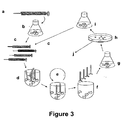
- Figure 6 shows a flow chart of the induction, obtaining of the samples and results quantification in the acute liver damage assay.
- the capacity of the testing peptides to block the acute damage, as assessed by measuring the levels of induced type I collagen mRNA was quantified by real time PCR.
- Table 3 shows the degree of inhibition of the expression of collagen type I mRNA by phage-derived peptides.
- the peptides tested were obtained by conventional solid peptide synthesis procedures ( Merrifield RB. J Am Chem Soc 1963; 85:2149-2154 ; Atherton E et al. J Chem Soc Perkin Trans 1981; 1:538-546 ).
- the peptides identified as SEQ ID NO: 2, 4, 6, 11, 14 and 17 inhibit the biological activity of TGF- ⁇ 1 in vivo, with a percentage of inhibition greater than 35%.
- the activity of the peptide identified as P144 in the Spanish patent application ES 2146552 A1 was compared with the activity of the peptide identified as SEQ ID NO: 17.
- the peptide identified as SEQ ID NO: 17 inhibits the expression of type I collagen mRNA to a much greater extent than the peptide identified as P144 in the Spanish patent application ES 2146552 A1 , which does not show any activity in this assay.
- This example shows the inhibitory activity of some peptides whose amino acid sequences comprise between 3 and 15 consecutive amino acid residues of one of the amino acid sequences of the invention.
Landscapes
- Health & Medical Sciences (AREA)
- Chemical & Material Sciences (AREA)
- Organic Chemistry (AREA)
- Medicinal Chemistry (AREA)
- General Health & Medical Sciences (AREA)
- Life Sciences & Earth Sciences (AREA)
- Engineering & Computer Science (AREA)
- Chemical Kinetics & Catalysis (AREA)
- General Chemical & Material Sciences (AREA)
- Nuclear Medicine, Radiotherapy & Molecular Imaging (AREA)
- Public Health (AREA)
- Pharmacology & Pharmacy (AREA)
- Veterinary Medicine (AREA)
- Animal Behavior & Ethology (AREA)
- Bioinformatics & Cheminformatics (AREA)
- Biophysics (AREA)
- Biochemistry (AREA)
- Proteomics, Peptides & Aminoacids (AREA)
- Molecular Biology (AREA)
- Genetics & Genomics (AREA)
- Dermatology (AREA)
- Physical Education & Sports Medicine (AREA)
- Diabetes (AREA)
- Orthopedic Medicine & Surgery (AREA)
- Pulmonology (AREA)
- Gastroenterology & Hepatology (AREA)
- Biomedical Technology (AREA)
- Endocrinology (AREA)
- Rheumatology (AREA)
- Urology & Nephrology (AREA)
- Immunology (AREA)
- Peptides Or Proteins (AREA)
- Medicines That Contain Protein Lipid Enzymes And Other Medicines (AREA)
- Preparation Of Compounds By Using Micro-Organisms (AREA)
- Micro-Organisms Or Cultivation Processes Thereof (AREA)
- Medicines Containing Material From Animals Or Micro-Organisms (AREA)
Priority Applications (3)
| Application Number | Priority Date | Filing Date | Title |
|---|---|---|---|
| SI200431516T SI1669367T1 (sl) | 2003-08-22 | 2004-07-05 | Peptidi s sposobnostjo vezanja na transformacijski rastni faktor beta TGF beta |
| PL04742049T PL1669367T3 (pl) | 2003-08-22 | 2004-07-05 | Peptydy, które mogą wiązać się z transformującym czynnikiem wzrostu beta 1 (TGF-BETA1) |
| CY20101101024T CY1110885T1 (el) | 2003-08-22 | 2010-11-12 | Πεπτιδια που μπορουν να συνδεθουν στον αυξητικο παραγοντα μεταμορφωσης βητα 1 (tgf-beta1) |
Applications Claiming Priority (2)
| Application Number | Priority Date | Filing Date | Title |
|---|---|---|---|
| ES200302020A ES2304069B1 (es) | 2003-08-22 | 2003-08-22 | Peptidos con capacidad de unirse al factor transformante de crecimiento beta 1 (tgf-b1). |
| PCT/ES2004/000320 WO2005019244A1 (es) | 2003-08-22 | 2004-07-05 | Péptidos con capacidad de unirse al factor transformante de crecimiento beta 1 (tgf-beta1) |
Publications (2)
| Publication Number | Publication Date |
|---|---|
| EP1669367A1 EP1669367A1 (en) | 2006-06-14 |
| EP1669367B1 true EP1669367B1 (en) | 2010-09-01 |
Family
ID=34203356
Family Applications (1)
| Application Number | Title | Priority Date | Filing Date |
|---|---|---|---|
| EP04742049A Expired - Lifetime EP1669367B1 (en) | 2003-08-22 | 2004-07-05 | Peptides which can bind to transforming growth factor beta 1 (tgf-beta1) |
Country Status (18)
| Country | Link |
|---|---|
| US (1) | US7666841B2 (pl) |
| EP (1) | EP1669367B1 (pl) |
| JP (1) | JP4902352B2 (pl) |
| CN (1) | CN100424093C (pl) |
| AT (1) | ATE479702T1 (pl) |
| AU (2) | AU2004266856A1 (pl) |
| BR (1) | BRPI0413215A (pl) |
| CA (1) | CA2535807A1 (pl) |
| CY (1) | CY1110885T1 (pl) |
| DE (1) | DE602004028949D1 (pl) |
| DK (1) | DK1669367T3 (pl) |
| ES (2) | ES2304069B1 (pl) |
| HR (1) | HRP20100637T1 (pl) |
| PL (1) | PL1669367T3 (pl) |
| PT (1) | PT1669367E (pl) |
| RU (2) | RU2333917C2 (pl) |
| SI (1) | SI1669367T1 (pl) |
| WO (1) | WO2005019244A1 (pl) |
Families Citing this family (25)
| Publication number | Priority date | Publication date | Assignee | Title |
|---|---|---|---|---|
| US8158589B2 (en) | 2003-08-22 | 2012-04-17 | Proyecto Biomedicine Cima, S.L. | Peptides with the capacity to bind to transforming growth factor β1 (TGF-β1) |
| AU2005337776B2 (en) * | 2005-10-24 | 2013-01-31 | Proyecto De Biomedicina Cima, S.L. | Use of TGF-Beta1 inhibitor peptides in the preparation of an immune response modulating agent |
| RU2420307C2 (ru) * | 2005-10-24 | 2011-06-10 | Проекто Де Биомедисина Сима, С.Л. | ПРИМЕНЕНИЕ ИНГИБИРУЮЩИХ TGF-бета1 ПЕПТИДОВ ДЛЯ ПРИГОТОВЛЕНИЯ МОДУЛИРУЮЩЕГО ИММУННЫЙ ОТВЕТ АГЕНТА |
| ES2327088B1 (es) * | 2007-08-20 | 2010-07-26 | Proyecto De Biomedicina Cima S.L. | Combinaciones terapeuticas para el tratamiento de las metastasis. |
| ES2337973B8 (es) | 2008-05-16 | 2011-07-21 | Proyecto De Biomedicina Cima, S.L. | Adenovirus auxiliares auto-inactivantes para la produccion de adenovirus recombinantes de alta capacidad. |
| ES2330826B1 (es) | 2008-06-04 | 2010-07-26 | Proyecto De Biomedicina Cima, S.L. | Sistema para empaquetamiento de adenovirus de alta capacidad. |
| CN102123737B (zh) | 2008-06-13 | 2014-01-01 | 西马生物医学计划公司 | 用于生物活性化合物施用的轭合物 |
| CA2750559A1 (en) * | 2009-02-05 | 2010-08-12 | Digna Biotech, S.L. | Pharmaceutical formulations of tgf-.beta.1 inhibitor peptides |
| BR112012010755A2 (pt) | 2009-11-05 | 2015-09-22 | Proyecto Biomedicina Cima Sl | constructo de gene que permite a expressão hepato-específica induzível de um polinucleotídeo de interesse em resposta a um agente indutor, vetor, genoma viral recombinante, vírion, método in vitro para a expressão de um polinucleotídeo de interesse em uma célula de origem hepática, composição farmacêutica e operador-promotor bi-direcional induzível adequado para a expressão hepato-específica induzível de dois polinucleotídeos de interesse por um agente indutor |
| RU2413769C1 (ru) * | 2009-12-24 | 2011-03-10 | Учреждение Российской академии наук Институт биоорганической химии им. академиков М.М. Шемякина и Ю.А. Овчинникова РАН | РЕКОМБИНАНТНАЯ ПЛАЗМИДНАЯ ДНК pET-32a, КОДИРУЮЩАЯ ГЕН ЛИГАНД-СВЯЗЫВАЮЩЕГО ДОМЕНА РЕЦЕПТОРА II ТИПА ТРАНСФОРМИРУЮЩЕГО ФАКТОРА РОСТА-β ЧЕЛОВЕКА (TβRII), ШТАММ БАКТЕРИЙ Escherichia coli - ПРОДУЦЕНТ СЛИТНОГО БЕЛКА ТИОРЕДОКСИН/TβRII И СПОСОБ РЕНАТУРАЦИИ И ОЧИСТКИ ЦЕЛЕВОГО БЕЛКА TβRII |
| WO2012001196A2 (es) | 2010-06-28 | 2012-01-05 | Proyecto De Biomedicina Cima, S.L. | Vectores alfavirales y usos de los mismos para la expresión de genes heterólogos |
| KR101029705B1 (ko) * | 2010-06-30 | 2011-04-18 | (주)엔솔테크 | 신규 펩타이드 및 그 용도 |
| EP2407534A1 (en) | 2010-07-14 | 2012-01-18 | Neo Virnatech, S.L. | Methods and reagents for obtaining transcriptionally active virus-like particles and recombinant virions |
| MX2014006404A (es) | 2011-11-28 | 2015-03-03 | Institució Catalana De Recerca I Estudis Avançats | Metodos y kits para el pronostico del cancer colorrectal. |
| WO2013113755A1 (en) | 2012-01-30 | 2013-08-08 | Fundació Institut D'investigació Biomèdica De Bellvitge (Idibell) | Reagents and methods for the treatment of diseases based on the inhibition of calcineurin - nfat signalling pathway |
| ES2791627T3 (es) | 2012-11-12 | 2020-11-05 | Inst Catalana Recerca Estudis Avancats | Métodos y kits para el pronóstico del cáncer colorrectal |
| US20140170158A1 (en) * | 2012-12-17 | 2014-06-19 | The Johns Hopkins University | Compositions and methods for treating or preventing lung diseases |
| ES2523016B1 (es) | 2013-05-20 | 2015-09-09 | 3P Biopharmaceuticals | Vectores alfavirales y líneas celulares para la producción de proteínas recombinantes |
| JP6730701B2 (ja) | 2013-11-14 | 2020-07-29 | 学校法人同志社 | 細胞増殖促進または細胞障害抑制による角膜内皮治療薬 |
| EP2878674A1 (en) | 2013-11-28 | 2015-06-03 | Fundación Centro Nacional de Investigaciones Cardiovasculares Carlos III (CNIC) | Stable episomes based on non-integrative lentiviral vectors |
| EP3089755A1 (en) | 2014-01-03 | 2016-11-09 | Fundacion Biofisica Bizkaia | VLPs, METHODS FOR THEIR OBTENTION AND APPLICATIONS THEREOF |
| US20170121685A1 (en) | 2015-11-02 | 2017-05-04 | Tigenix S.A.U. | Mesenchymal stem cell-derived exosomes and their uses |
| US10980787B2 (en) | 2015-12-24 | 2021-04-20 | The Doshisha | Drug for treating or preventing disorder caused by TGF-B signals, and application thereof |
| GB201707561D0 (en) * | 2017-05-11 | 2017-06-28 | Argenx Bvba | GARP-TGF-beta antibodies |
| CA3070938A1 (en) | 2017-07-26 | 2019-01-31 | The Doshisha | Drug for treating or preventing disorder caused by tgf-.beta. signalling, and application thereof |
Family Cites Families (5)
| Publication number | Priority date | Publication date | Assignee | Title |
|---|---|---|---|---|
| JPH08151396A (ja) * | 1994-11-28 | 1996-06-11 | Teijin Ltd | Hla結合性オリゴペプチド及びそれを含有する免疫調節剤 |
| US6660843B1 (en) * | 1998-10-23 | 2003-12-09 | Amgen Inc. | Modified peptides as therapeutic agents |
| ES2146552B1 (es) * | 1998-11-24 | 2001-04-16 | Inst Cientifico Tecnol Navarra | Peptidos inhibidores de tgf/31 |
| US6509318B1 (en) * | 2000-09-29 | 2003-01-21 | The Regents Of The University Of California | TGF-B inhibitors and methods |
| PL376714A1 (pl) * | 2002-11-01 | 2006-01-09 | Boys Town National Research Hospital | Indukowalny ligand Ó1ß1 integryny i zastosowania |
-
2003
- 2003-08-22 ES ES200302020A patent/ES2304069B1/es not_active Expired - Fee Related
-
2004
- 2004-07-05 SI SI200431516T patent/SI1669367T1/sl unknown
- 2004-07-05 CN CNB200480024201XA patent/CN100424093C/zh not_active Expired - Fee Related
- 2004-07-05 AT AT04742049T patent/ATE479702T1/de active
- 2004-07-05 EP EP04742049A patent/EP1669367B1/en not_active Expired - Lifetime
- 2004-07-05 ES ES04742049T patent/ES2351865T3/es not_active Expired - Lifetime
- 2004-07-05 BR BRPI0413215-7A patent/BRPI0413215A/pt not_active IP Right Cessation
- 2004-07-05 CA CA002535807A patent/CA2535807A1/en not_active Abandoned
- 2004-07-05 PT PT04742049T patent/PT1669367E/pt unknown
- 2004-07-05 US US10/569,012 patent/US7666841B2/en not_active Expired - Fee Related
- 2004-07-05 WO PCT/ES2004/000320 patent/WO2005019244A1/es not_active Ceased
- 2004-07-05 DE DE602004028949T patent/DE602004028949D1/de not_active Expired - Lifetime
- 2004-07-05 RU RU2006109011/13A patent/RU2333917C2/ru not_active IP Right Cessation
- 2004-07-05 PL PL04742049T patent/PL1669367T3/pl unknown
- 2004-07-05 AU AU2004266856A patent/AU2004266856A1/en not_active Abandoned
- 2004-07-05 HR HR20100637T patent/HRP20100637T1/hr unknown
- 2004-07-05 DK DK04742049.2T patent/DK1669367T3/da active
- 2004-07-05 JP JP2006524375A patent/JP4902352B2/ja not_active Expired - Fee Related
-
2008
- 2008-04-21 RU RU2008115678/10A patent/RU2455358C2/ru not_active IP Right Cessation
-
2010
- 2010-08-20 AU AU2010212466A patent/AU2010212466B2/en not_active Ceased
- 2010-11-12 CY CY20101101024T patent/CY1110885T1/el unknown
Also Published As
| Publication number | Publication date |
|---|---|
| RU2333917C2 (ru) | 2008-09-20 |
| US7666841B2 (en) | 2010-02-23 |
| CN1839149A (zh) | 2006-09-27 |
| WO2005019244A1 (es) | 2005-03-03 |
| CY1110885T1 (el) | 2015-06-10 |
| DK1669367T3 (da) | 2010-11-08 |
| ES2304069B1 (es) | 2009-08-12 |
| PT1669367E (pt) | 2010-12-07 |
| US20070142275A1 (en) | 2007-06-21 |
| SI1669367T1 (sl) | 2010-11-30 |
| AU2004266856A1 (en) | 2005-03-03 |
| BRPI0413215A (pt) | 2007-06-19 |
| AU2010212466A1 (en) | 2010-09-09 |
| JP4902352B2 (ja) | 2012-03-21 |
| EP1669367A1 (en) | 2006-06-14 |
| CA2535807A1 (en) | 2005-03-03 |
| RU2008115678A (ru) | 2009-10-27 |
| ATE479702T1 (de) | 2010-09-15 |
| PL1669367T3 (pl) | 2011-02-28 |
| RU2006109011A (ru) | 2006-07-27 |
| RU2455358C2 (ru) | 2012-07-10 |
| ES2351865T3 (es) | 2011-02-11 |
| HRP20100637T1 (hr) | 2010-12-31 |
| AU2010212466B2 (en) | 2012-07-19 |
| CN100424093C (zh) | 2008-10-08 |
| JP2007525204A (ja) | 2007-09-06 |
| DE602004028949D1 (en) | 2010-10-14 |
| ES2304069A1 (es) | 2008-09-01 |
Similar Documents
| Publication | Publication Date | Title |
|---|---|---|
| AU2010212466B2 (en) | Peptides with the capacity to bind to transforming growth factor beta1 (TGF beta1) | |
| US8158589B2 (en) | Peptides with the capacity to bind to transforming growth factor β1 (TGF-β1) | |
| JP5231814B2 (ja) | 線維性障害を治療するための組成物および方法 | |
| US5668110A (en) | Peptides and compounds that bind to the IL-5 receptor | |
| IL122102A (en) | Peptides and compounds that bind to a thrombopoietin receptor, pharmaceutical compositions comprising them and their use as medicaments | |
| JP2007259856A (ja) | SrcSH3結合性ペプチドとその分離法と利用法 | |
| JP2001521383A (ja) | 20個のヒト分泌タンパク質 | |
| JP2007529410A (ja) | 子宮内膜症を治療又は防止するためのペプチド | |
| KR100885545B1 (ko) | Rank 저해 활성을 갖는 폴리펩티드, 그를 포함하는약학적 조성물, 그를 이용한 개체의 파골세포 분화를억제하는 방법 및 파골세포의 분화 및 활성화로 인하여야기되는 질병을 치료 또는 예방하는 방법, 그를 코딩하는핵산, 상기 핵산을 포함하는 벡터 및 숙주세포 | |
| DK1781315T3 (en) | PEPTIDE INHIBITORS FOR MEDIATION OF stress responses | |
| US20090030179A1 (en) | Antimicrobial peptide and use thereof | |
| Chen et al. | A TSP-1 functional fragment inhibits activation of latent transforming growth factor-β1 derived from rat alveolar macrophage after bleomycin treatment | |
| CA2310677C (en) | In vitro and in vivo growth-promoting proteins and peptides for kidney epithelial cells | |
| MXPA06001922A (en) | Peptides which can bind to transforming growth factor beta 1 (tgf-beta1) | |
| AU777774B2 (en) | Novel method for identifying antibacterial compounds | |
| US7615534B2 (en) | Antimicrobial peptides and use thereof | |
| JP7764502B2 (ja) | 環状RNA Circ-ACE2翻訳によるポリペプチド及びその使用 | |
| CN101017166A (zh) | 人rtn4b蛋白在制备抗肿瘤药物中的应用 | |
| US20020099172A1 (en) | Endoderm, cardiac and neural inducing factors - xenopus paraxial protocadherin protein | |
| US6444443B1 (en) | Gene | |
| CN114316013A (zh) | 冠状病毒阻断蛋白及其制备和应用 | |
| JP2006121915A (ja) | アポトーシス誘導性ペプチド及びその利用 | |
| WO2005005476A1 (en) | Modified epidermal growth factors |
Legal Events
| Date | Code | Title | Description |
|---|---|---|---|
| PUAI | Public reference made under article 153(3) epc to a published international application that has entered the european phase |
Free format text: ORIGINAL CODE: 0009012 |
|
| 17P | Request for examination filed |
Effective date: 20060322 |
|
| AK | Designated contracting states |
Kind code of ref document: A1 Designated state(s): AT BE BG CH CY CZ DE DK EE ES FI FR GB GR HU IE IT LI LU MC NL PL PT RO SE SI SK TR |
|
| AX | Request for extension of the european patent |
Extension state: AL HR LT LV MK |
|
| 17Q | First examination report despatched |
Effective date: 20061020 |
|
| GRAP | Despatch of communication of intention to grant a patent |
Free format text: ORIGINAL CODE: EPIDOSNIGR1 |
|
| GRAS | Grant fee paid |
Free format text: ORIGINAL CODE: EPIDOSNIGR3 |
|
| RIN1 | Information on inventor provided before grant (corrected) |
Inventor name: DOTOR DE LAS HERRERIAS, JAVIER Inventor name: LOPEZ VAZQUEZ, ANA BELEN Inventor name: BORRAS CUESTA, FRANCISCO Inventor name: LASARTE SAGASTIBELZA, JUAN JOSE Inventor name: PRIETO VALTUENA, JESUS |
|
| RAP1 | Party data changed (applicant data changed or rights of an application transferred) |
Owner name: PROYECTO DE BIOMEDICINA CIMA, S.L. |
|
| RIN1 | Information on inventor provided before grant (corrected) |
Inventor name: LOPEZ VAZQUEZ, ANA BELEN Inventor name: LASARTE SAGASTIBELZA, JUAN JOSE Inventor name: PRIETO VALTUENA, JESUS Inventor name: BORRAS CUESTA, FRANCISCO Inventor name: DOTOR DE LAS HERRERIAS, JAVIER |
|
| GRAA | (expected) grant |
Free format text: ORIGINAL CODE: 0009210 |
|
| AK | Designated contracting states |
Kind code of ref document: B1 Designated state(s): AT BE BG CH CY CZ DE DK EE ES FI FR GB GR HU IE IT LI LU MC NL PL PT RO SE SI SK TR |
|
| AX | Request for extension of the european patent |
Extension state: AL HR LT LV MK |
|
| REG | Reference to a national code |
Ref country code: GB Ref legal event code: FG4D |
|
| REG | Reference to a national code |
Ref country code: CH Ref legal event code: EP |
|
| REG | Reference to a national code |
Ref country code: IE Ref legal event code: FG4D |
|
| REF | Corresponds to: |
Ref document number: 602004028949 Country of ref document: DE Date of ref document: 20101014 Kind code of ref document: P |
|
| REG | Reference to a national code |
Ref country code: CH Ref legal event code: NV Representative=s name: ING. MARCO ZARDI C/O M. ZARDI & CO. S.A. |
|
| REG | Reference to a national code |
Ref country code: DK Ref legal event code: T3 |
|
| REG | Reference to a national code |
Ref country code: HR Ref legal event code: TUEP Ref document number: P20100637 Country of ref document: HR Ref country code: NL Ref legal event code: T3 |
|
| REG | Reference to a national code |
Ref country code: RO Ref legal event code: EPE |
|
| REG | Reference to a national code |
Ref country code: PT Ref legal event code: SC4A Free format text: AVAILABILITY OF NATIONAL TRANSLATION Effective date: 20101125 |
|
| REG | Reference to a national code |
Ref country code: SE Ref legal event code: TRGR Ref country code: GR Ref legal event code: EP Ref document number: 20100402578 Country of ref document: GR |
|
| REG | Reference to a national code |
Ref country code: HR Ref legal event code: T1PR Ref document number: P20100637 Country of ref document: HR |
|
| REG | Reference to a national code |
Ref country code: ES Ref legal event code: FG2A Effective date: 20110201 |
|
| REG | Reference to a national code |
Ref country code: PL Ref legal event code: T3 |
|
| REG | Reference to a national code |
Ref country code: SK Ref legal event code: T3 Ref document number: E 8326 Country of ref document: SK |
|
| REG | Reference to a national code |
Ref country code: HU Ref legal event code: AG4A Ref document number: E009560 Country of ref document: HU |
|
| PLBE | No opposition filed within time limit |
Free format text: ORIGINAL CODE: 0009261 |
|
| STAA | Information on the status of an ep patent application or granted ep patent |
Free format text: STATUS: NO OPPOSITION FILED WITHIN TIME LIMIT |
|
| 26N | No opposition filed |
Effective date: 20110606 |
|
| REG | Reference to a national code |
Ref country code: DE Ref legal event code: R097 Ref document number: 602004028949 Country of ref document: DE Effective date: 20110606 |
|
| PGFP | Annual fee paid to national office [announced via postgrant information from national office to epo] |
Ref country code: DK Payment date: 20110725 Year of fee payment: 8 Ref country code: CH Payment date: 20110725 Year of fee payment: 8 |
|
| PGFP | Annual fee paid to national office [announced via postgrant information from national office to epo] |
Ref country code: SK Payment date: 20110812 Year of fee payment: 9 Ref country code: CZ Payment date: 20110630 Year of fee payment: 8 |
|
| REG | Reference to a national code |
Ref country code: HR Ref legal event code: ODRP Ref document number: P20100637 Country of ref document: HR Payment date: 20120628 Year of fee payment: 9 |
|
| PGFP | Annual fee paid to national office [announced via postgrant information from national office to epo] |
Ref country code: MC Payment date: 20120619 Year of fee payment: 9 Ref country code: EE Payment date: 20120621 Year of fee payment: 9 |
|
| PGFP | Annual fee paid to national office [announced via postgrant information from national office to epo] |
Ref country code: PL Payment date: 20120621 Year of fee payment: 9 |
|
| PGFP | Annual fee paid to national office [announced via postgrant information from national office to epo] |
Ref country code: LU Payment date: 20120801 Year of fee payment: 9 |
|
| PGFP | Annual fee paid to national office [announced via postgrant information from national office to epo] |
Ref country code: FI Payment date: 20120727 Year of fee payment: 9 Ref country code: RO Payment date: 20120702 Year of fee payment: 9 Ref country code: SE Payment date: 20120727 Year of fee payment: 9 Ref country code: GB Payment date: 20120725 Year of fee payment: 9 Ref country code: IE Payment date: 20120725 Year of fee payment: 9 |
|
| PGFP | Annual fee paid to national office [announced via postgrant information from national office to epo] |
Ref country code: BG Payment date: 20120730 Year of fee payment: 9 Ref country code: SI Payment date: 20120627 Year of fee payment: 9 Ref country code: GR Payment date: 20120727 Year of fee payment: 9 |
|
| PGFP | Annual fee paid to national office [announced via postgrant information from national office to epo] |
Ref country code: BE Payment date: 20120725 Year of fee payment: 9 Ref country code: FR Payment date: 20120731 Year of fee payment: 9 Ref country code: DE Payment date: 20120727 Year of fee payment: 9 Ref country code: HU Payment date: 20120626 Year of fee payment: 9 Ref country code: IT Payment date: 20120723 Year of fee payment: 9 Ref country code: ES Payment date: 20120709 Year of fee payment: 9 |
|
| PGFP | Annual fee paid to national office [announced via postgrant information from national office to epo] |
Ref country code: PT Payment date: 20120105 Year of fee payment: 9 Ref country code: NL Payment date: 20120724 Year of fee payment: 9 |
|
| PGFP | Annual fee paid to national office [announced via postgrant information from national office to epo] |
Ref country code: AT Payment date: 20120620 Year of fee payment: 9 |
|
| REG | Reference to a national code |
Ref country code: HR Ref legal event code: PBON Ref document number: P20100637 Country of ref document: HR Effective date: 20130706 Ref country code: PT Ref legal event code: MM4A Free format text: LAPSE DUE TO NON-PAYMENT OF FEES Effective date: 20140106 |
|
| BERE | Be: lapsed |
Owner name: PROYECTO DE BIOMEDICINA CIMA, S.L. Effective date: 20130731 |
|
| PG25 | Lapsed in a contracting state [announced via postgrant information from national office to epo] |
Ref country code: CZ Free format text: LAPSE BECAUSE OF NON-PAYMENT OF DUE FEES Effective date: 20130705 |
|
| REG | Reference to a national code |
Ref country code: NL Ref legal event code: V1 Effective date: 20140201 |
|
| REG | Reference to a national code |
Ref country code: DK Ref legal event code: EBP Effective date: 20130731 |
|
| REG | Reference to a national code |
Ref country code: LT Ref legal event code: MM9D Effective date: 20130705 |
|
| PG25 | Lapsed in a contracting state [announced via postgrant information from national office to epo] |
Ref country code: MC Free format text: LAPSE BECAUSE OF NON-PAYMENT OF DUE FEES Effective date: 20130731 |
|
| REG | Reference to a national code |
Ref country code: CH Ref legal event code: PL |
|
| REG | Reference to a national code |
Ref country code: SE Ref legal event code: EUG |
|
| REG | Reference to a national code |
Ref country code: AT Ref legal event code: MM01 Ref document number: 479702 Country of ref document: AT Kind code of ref document: T Effective date: 20130705 |
|
| GBPC | Gb: european patent ceased through non-payment of renewal fee |
Effective date: 20130705 |
|
| REG | Reference to a national code |
Ref country code: SI Ref legal event code: KO00 Effective date: 20140217 |
|
| REG | Reference to a national code |
Ref country code: SK Ref legal event code: MM4A Ref document number: E 8326 Country of ref document: SK Effective date: 20130705 |
|
| REG | Reference to a national code |
Ref country code: GR Ref legal event code: ML Ref document number: 20100402578 Country of ref document: GR Effective date: 20140204 |
|
| REG | Reference to a national code |
Ref country code: EE Ref legal event code: MM4A Ref document number: E004917 Country of ref document: EE Effective date: 20130731 |
|
| REG | Reference to a national code |
Ref country code: IE Ref legal event code: MM4A |
|
| REG | Reference to a national code |
Ref country code: FR Ref legal event code: ST Effective date: 20140331 |
|
| PG25 | Lapsed in a contracting state [announced via postgrant information from national office to epo] |
Ref country code: SE Free format text: LAPSE BECAUSE OF NON-PAYMENT OF DUE FEES Effective date: 20130706 Ref country code: DE Free format text: LAPSE BECAUSE OF NON-PAYMENT OF DUE FEES Effective date: 20140201 Ref country code: RO Free format text: LAPSE BECAUSE OF NON-PAYMENT OF DUE FEES Effective date: 20130705 Ref country code: FI Free format text: LAPSE BECAUSE OF NON-PAYMENT OF DUE FEES Effective date: 20130705 Ref country code: CH Free format text: LAPSE BECAUSE OF NON-PAYMENT OF DUE FEES Effective date: 20130731 Ref country code: NL Free format text: LAPSE BECAUSE OF NON-PAYMENT OF DUE FEES Effective date: 20140201 Ref country code: LI Free format text: LAPSE BECAUSE OF NON-PAYMENT OF DUE FEES Effective date: 20130731 Ref country code: HU Free format text: LAPSE BECAUSE OF NON-PAYMENT OF DUE FEES Effective date: 20130706 Ref country code: EE Free format text: LAPSE BECAUSE OF NON-PAYMENT OF DUE FEES Effective date: 20130731 Ref country code: GB Free format text: LAPSE BECAUSE OF NON-PAYMENT OF DUE FEES Effective date: 20130705 Ref country code: SK Free format text: LAPSE BECAUSE OF NON-PAYMENT OF DUE FEES Effective date: 20130705 Ref country code: BE Free format text: LAPSE BECAUSE OF NON-PAYMENT OF DUE FEES Effective date: 20130731 |
|
| REG | Reference to a national code |
Ref country code: DE Ref legal event code: R119 Ref document number: 602004028949 Country of ref document: DE Effective date: 20140201 |
|
| PG25 | Lapsed in a contracting state [announced via postgrant information from national office to epo] |
Ref country code: FR Free format text: LAPSE BECAUSE OF NON-PAYMENT OF DUE FEES Effective date: 20130731 Ref country code: SI Free format text: LAPSE BECAUSE OF NON-PAYMENT OF DUE FEES Effective date: 20130706 Ref country code: GR Free format text: LAPSE BECAUSE OF NON-PAYMENT OF DUE FEES Effective date: 20140204 Ref country code: AT Free format text: LAPSE BECAUSE OF NON-PAYMENT OF DUE FEES Effective date: 20130705 Ref country code: CY Free format text: LAPSE BECAUSE OF NON-PAYMENT OF DUE FEES Effective date: 20130705 Ref country code: IT Free format text: LAPSE BECAUSE OF NON-PAYMENT OF DUE FEES Effective date: 20130705 |
|
| PGFP | Annual fee paid to national office [announced via postgrant information from national office to epo] |
Ref country code: TR Payment date: 20120625 Year of fee payment: 9 |
|
| PG25 | Lapsed in a contracting state [announced via postgrant information from national office to epo] |
Ref country code: PT Free format text: LAPSE BECAUSE OF NON-PAYMENT OF DUE FEES Effective date: 20140106 |
|
| PG25 | Lapsed in a contracting state [announced via postgrant information from national office to epo] |
Ref country code: IE Free format text: LAPSE BECAUSE OF NON-PAYMENT OF DUE FEES Effective date: 20130705 |
|
| PG25 | Lapsed in a contracting state [announced via postgrant information from national office to epo] |
Ref country code: BG Free format text: LAPSE BECAUSE OF NON-PAYMENT OF DUE FEES Effective date: 20140630 |
|
| REG | Reference to a national code |
Ref country code: ES Ref legal event code: FD2A Effective date: 20140908 |
|
| PG25 | Lapsed in a contracting state [announced via postgrant information from national office to epo] |
Ref country code: DK Free format text: LAPSE BECAUSE OF NON-PAYMENT OF DUE FEES Effective date: 20130731 Ref country code: BG Free format text: LAPSE BECAUSE OF NON-PAYMENT OF DUE FEES Effective date: 20130731 |
|
| PG25 | Lapsed in a contracting state [announced via postgrant information from national office to epo] |
Ref country code: BG Free format text: LAPSE BECAUSE OF NON-PAYMENT OF DUE FEES Effective date: 20140930 |
|
| REG | Reference to a national code |
Ref country code: PL Ref legal event code: LAPE |
|
| PG25 | Lapsed in a contracting state [announced via postgrant information from national office to epo] |
Ref country code: ES Free format text: LAPSE BECAUSE OF NON-PAYMENT OF DUE FEES Effective date: 20130706 Ref country code: PL Free format text: LAPSE BECAUSE OF NON-PAYMENT OF DUE FEES Effective date: 20130705 |
|
| PG25 | Lapsed in a contracting state [announced via postgrant information from national office to epo] |
Ref country code: LU Free format text: LAPSE BECAUSE OF NON-PAYMENT OF DUE FEES Effective date: 20130705 |
|
| PG25 | Lapsed in a contracting state [announced via postgrant information from national office to epo] |
Ref country code: TR Free format text: LAPSE BECAUSE OF NON-PAYMENT OF DUE FEES Effective date: 20130705 |
|
| PG25 | Lapsed in a contracting state [announced via postgrant information from national office to epo] |
Ref country code: BG Free format text: LAPSE BECAUSE OF NON-PAYMENT OF DUE FEES Effective date: 20140131 |