EP1636135B1 - Mischmetalloxide und ihre verwendung in co2-sensoren - Google Patents
Mischmetalloxide und ihre verwendung in co2-sensoren Download PDFInfo
- Publication number
- EP1636135B1 EP1636135B1 EP04740344A EP04740344A EP1636135B1 EP 1636135 B1 EP1636135 B1 EP 1636135B1 EP 04740344 A EP04740344 A EP 04740344A EP 04740344 A EP04740344 A EP 04740344A EP 1636135 B1 EP1636135 B1 EP 1636135B1
- Authority
- EP
- European Patent Office
- Prior art keywords
- mixed metal
- metal oxide
- elements
- doping
- periodic table
- Prior art date
- Legal status (The legal status is an assumption and is not a legal conclusion. Google has not performed a legal analysis and makes no representation as to the accuracy of the status listed.)
- Expired - Lifetime
Links
Images

Classifications
-
- B—PERFORMING OPERATIONS; TRANSPORTING
- B82—NANOTECHNOLOGY
- B82Y—SPECIFIC USES OR APPLICATIONS OF NANOSTRUCTURES; MEASUREMENT OR ANALYSIS OF NANOSTRUCTURES; MANUFACTURE OR TREATMENT OF NANOSTRUCTURES
- B82Y30/00—Nanotechnology for materials or surface science, e.g. nanocomposites
-
- C—CHEMISTRY; METALLURGY
- C01—INORGANIC CHEMISTRY
- C01F—COMPOUNDS OF THE METALS BERYLLIUM, MAGNESIUM, ALUMINIUM, CALCIUM, STRONTIUM, BARIUM, RADIUM, THORIUM, OR OF THE RARE-EARTH METALS
- C01F17/00—Compounds of rare earth metals
- C01F17/30—Compounds containing rare earth metals and at least one element other than a rare earth metal, oxygen or hydrogen, e.g. La4S3Br6
- C01F17/32—Compounds containing rare earth metals and at least one element other than a rare earth metal, oxygen or hydrogen, e.g. La4S3Br6 oxide or hydroxide being the only anion, e.g. NaCeO2 or MgxCayEuO
-
- C—CHEMISTRY; METALLURGY
- C01—INORGANIC CHEMISTRY
- C01G—COMPOUNDS CONTAINING METALS NOT COVERED BY SUBCLASSES C01D OR C01F
- C01G1/00—Methods of preparing compounds of metals not covered by subclasses C01B, C01C, C01D, or C01F, in general
- C01G1/02—Oxides
-
- C—CHEMISTRY; METALLURGY
- C01—INORGANIC CHEMISTRY
- C01G—COMPOUNDS CONTAINING METALS NOT COVERED BY SUBCLASSES C01D OR C01F
- C01G19/00—Compounds of tin
-
- C—CHEMISTRY; METALLURGY
- C01—INORGANIC CHEMISTRY
- C01G—COMPOUNDS CONTAINING METALS NOT COVERED BY SUBCLASSES C01D OR C01F
- C01G23/00—Compounds of titanium
- C01G23/003—Titanates
- C01G23/006—Alkaline earth titanates
-
- G—PHYSICS
- G01—MEASURING; TESTING
- G01N—INVESTIGATING OR ANALYSING MATERIALS BY DETERMINING THEIR CHEMICAL OR PHYSICAL PROPERTIES
- G01N27/00—Investigating or analysing materials by the use of electric, electrochemical, or magnetic means
- G01N27/02—Investigating or analysing materials by the use of electric, electrochemical, or magnetic means by investigating impedance
- G01N27/04—Investigating or analysing materials by the use of electric, electrochemical, or magnetic means by investigating impedance by investigating resistance
- G01N27/12—Investigating or analysing materials by the use of electric, electrochemical, or magnetic means by investigating impedance by investigating resistance of a solid body in dependence upon absorption of a fluid; of a solid body in dependence upon reaction with a fluid, for detecting components in the fluid
- G01N27/125—Composition of the body, e.g. the composition of its sensitive layer
- G01N27/127—Composition of the body, e.g. the composition of its sensitive layer comprising nanoparticles
-
- C—CHEMISTRY; METALLURGY
- C01—INORGANIC CHEMISTRY
- C01P—INDEXING SCHEME RELATING TO STRUCTURAL AND PHYSICAL ASPECTS OF SOLID INORGANIC COMPOUNDS
- C01P2002/00—Crystal-structural characteristics
- C01P2002/30—Three-dimensional structures
- C01P2002/34—Three-dimensional structures perovskite-type (ABO3)
-
- C—CHEMISTRY; METALLURGY
- C01—INORGANIC CHEMISTRY
- C01P—INDEXING SCHEME RELATING TO STRUCTURAL AND PHYSICAL ASPECTS OF SOLID INORGANIC COMPOUNDS
- C01P2002/00—Crystal-structural characteristics
- C01P2002/50—Solid solutions
- C01P2002/52—Solid solutions containing elements as dopants
-
- C—CHEMISTRY; METALLURGY
- C01—INORGANIC CHEMISTRY
- C01P—INDEXING SCHEME RELATING TO STRUCTURAL AND PHYSICAL ASPECTS OF SOLID INORGANIC COMPOUNDS
- C01P2002/00—Crystal-structural characteristics
- C01P2002/50—Solid solutions
- C01P2002/52—Solid solutions containing elements as dopants
- C01P2002/54—Solid solutions containing elements as dopants one element only
-
- C—CHEMISTRY; METALLURGY
- C01—INORGANIC CHEMISTRY
- C01P—INDEXING SCHEME RELATING TO STRUCTURAL AND PHYSICAL ASPECTS OF SOLID INORGANIC COMPOUNDS
- C01P2002/00—Crystal-structural characteristics
- C01P2002/70—Crystal-structural characteristics defined by measured X-ray, neutron or electron diffraction data
- C01P2002/77—Crystal-structural characteristics defined by measured X-ray, neutron or electron diffraction data by unit-cell parameters, atom positions or structure diagrams
-
- C—CHEMISTRY; METALLURGY
- C01—INORGANIC CHEMISTRY
- C01P—INDEXING SCHEME RELATING TO STRUCTURAL AND PHYSICAL ASPECTS OF SOLID INORGANIC COMPOUNDS
- C01P2004/00—Particle morphology
- C01P2004/60—Particles characterised by their size
- C01P2004/64—Nanometer sized, i.e. from 1-100 nanometer
-
- C—CHEMISTRY; METALLURGY
- C01—INORGANIC CHEMISTRY
- C01P—INDEXING SCHEME RELATING TO STRUCTURAL AND PHYSICAL ASPECTS OF SOLID INORGANIC COMPOUNDS
- C01P2006/00—Physical properties of inorganic compounds
- C01P2006/40—Electric properties
-
- G—PHYSICS
- G01—MEASURING; TESTING
- G01N—INVESTIGATING OR ANALYSING MATERIALS BY DETERMINING THEIR CHEMICAL OR PHYSICAL PROPERTIES
- G01N33/00—Investigating or analysing materials by specific methods not covered by groups G01N1/00 - G01N31/00
- G01N33/0004—Gaseous mixtures, e.g. polluted air
- G01N33/0009—General constructional details of gas analysers, e.g. portable test equipment
- G01N33/0027—General constructional details of gas analysers, e.g. portable test equipment concerning the detector
- G01N33/0036—General constructional details of gas analysers, e.g. portable test equipment concerning the detector specially adapted to detect a particular component
- G01N33/004—CO or CO2
Definitions
- the invention relates to novel mixed metal oxides and their preparation and use, and to a novel CO 2 sensor based on these mixed metal oxides.
- CO 2 sensors are used for fire or explosion protection, for process monitoring in industrial plants or are used in sensor arrays as "chemical noses”. Furthermore, CO 2 sensors for measuring the indoor air quality, of automotive or industrial waste gases or in Biomonitoring Scheme (fermentation processes, fouling, fermentation, respiration, etc.) or in air conditioning an increasingly broad field of application.
- electrochemical sensors in which a potential difference between the measuring and encapsulated reference electrode is detected in the adsorption of gas molecules.
- Such sensors are expensive, suffer from a long response time (up to 30 seconds), a cross-sensitivity to humidity and a fault-prone Construction.
- a special case of such electrochemical CO 2 sensors can be found on the basis of sodium ion-conducting solid electrolyte with an alkali carbonate electrode. These are known as NASICON sensors (sodium super-ionic conductor).
- NASICON sensors sodium super-ionic conductor
- doped SnO 2 was investigated as a semiconducting, gas-sensitive material [ Tamaki, Akiyama, Xu, Chemistry Letters (1990), 1243 ].
- this is not suitable for selective CO 2 detection because the detection limit is too high and the cross sensitivities to oxidizable gases (especially to CO and H 2 ) can not be suppressed [ Delabie, Honore, Lenaerts et al., Sensors and Actuators B, (1997), 44, 446 ].
- the homogeneity of the doping can not be guaranteed, which leads to non-reproducible measurement results [ Kim, Yoon, Park et al., Sensors and Actuators B (2000), 62, 61 ].
- gas sensors tin compounds are in the EP 263 394 described.
- a gas sensor based on BaSnO 3 can be prepared by precipitating barium stannate from water and then thermally treating the precipitate.
- a carbon dioxide sensor based on a material of copper oxide and barium titanate is used in the DE 44 37 692 A1 described.
- This material is elaborately synthesized by ball milling, which brings with it major disadvantages: in addition to the great expense, the effective surface of the material is greatly restricted by agglomeration of the individual crystallites due to the process of particle aggregation. Furthermore, the dopants are not homogeneously distributed and tend to migrate to the grain boundaries during sintering. In addition, can be produced with the mentioned method no monodisperse particles, which means that larger are present in addition to smaller particles that react differently sensitive to CO 2 due to their different sized surface.
- a gas sensor for oxygen based on Gd-doped BaCeO 3 is used in the GB 2 206 571 A described.
- the preparation of this material is also carried out by milling from the corresponding oxides, wherein the particles obtained by the milling have particle sizes in the range between 5 to 40 microns.
- the production of nanoparticles by grinding processes has further fundamental disadvantages.
- the abrasion of the Mahlbecher and Mahlkugeln in the resulting Nanomaterial again, which Time required is very long (up to several weeks), the particle size distribution is very broad, and the resulting material typically has defects, lattice stresses, and lattice defects to a large extent.
- Materials produced in this way may have catalytic properties or be used as electron conductors.
- As a sensor material for a gas sensor however, they are useless, since a largely defect-free, homogeneous, molecular doped material is required without Gitterfeh ler.
- the invention is therefore based on the object to develop new materials. These are to be used in particular in a simple and inexpensive measuring arrangement as a gas sensor with high sensitivity and specificity.
- the inventive method is characterized in that using the so-called single-source precursor technique a Mischmetallalkoxid is prepared, which is turned off in the stoichiometry and the structure of the Mischmetalloxid to be prepared, and this Mischmetalloxid is hydrolyzed after a doping step to the Mischmetalloxid.
- nanoscale particles are intended to indicate that the mean particle size of the mixed metal oxide particles is far in the sub-micron range.
- This particle size should refer to the single particle in the non-agglomerated state. Nanoscale particles often aggregate due to their high surface energies, thus forming agglomerates or particle clusters that simulate a larger particle size than the single particle actually possesses.
- the size data in the invention accordingly relate, as far as possible, to the average particle size of an individual particle / particle, which in this connection can also be referred to as "primary particles".
- the average particle size of the mixed metal oxides according to the invention is less than 100 nm, in particular less than 50 nm.
- the mixed metal oxides according to the invention are preferably semiconducting materials, the properties of semiconductors are known in the art.
- Such semiconducting materials can be used (doped or undoped) in a variety of ways, in particular as gas sensors, for example for the detection of CO 2 .
- the inventive method is limited to the production of mixed metal oxides by the so-called single-source precursor technique.
- various mixed metal oxides according to the invention it will certainly be possible to prepare these substances from two or more starting compounds present separately from one another, for example alkoxides.
- the presence of a single such starting compound, such as such an alkoxide as a single source is not necessarily required in such cases.
- doped mixed metal oxides perovskites
- metal-metal oxide composites with a doping are particularly suitable for CO 2 detection.
- these substances can not be easily prepared, since established methods such as precipitation or classical sol-gel chemistry are often not used.
- suitable reactive precursors or it is especially in the case of sol-gel process with individual precursors (alkoxides) to do, which are characterized by greatly different reactivities and hydrolysis.
- Simple metal alkoxides can be prepared by organometallic syntheses and have been known for some time. So z.
- Barium isopropanolate can be prepared by boiling barium metal in anhydrous isopropanol under inert gas atmosphere.
- metal alkoxides like the propylates of titanium or zirconium, are already commercially available. A mixture of such alkoxides with other alkoxides can lead to hydrolysis and workup to a non-uniform structure, which is not suitable for example as a CO 2 sensor. For other compositions, the precursors are not commercially available. Furthermore, for optimum performance, homogeneous doping is preferably low Atom% range needed, which can not be achieved by these methods.
- nanoscale doped barium ceriumates and barium stannate compounds are suitable as CO 2 -sensitive materials, but in which it is essential to tailor them on a molecular level, which this patent shows.
- the alkoxide used which is not commercially available, is itself synthesized.
- doped BaCeO 3 was identified as the CO 2 -sensitive material.
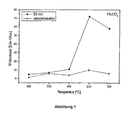
- the material thus obtained may be screen or pad printing methods known to those skilled in the art as a layer on a sensor substrate, for. Alumina (Al 2 O 3 ), or may be implemented in commercial sensor platforms (eg, from Heraeus). If the (electrical) resistance of the nanoscale doped BaCeO 3 in CO 2 atmosphere is then measured as a function of the temperature, it can be seen in illustration 1 Surprisingly, at 600 ° C a jump in the signal of the sensor. In a microcrystalline BaCeO 3 comparison sample with a much smaller surface area, such an abrupt increase can not be detected. This means that in particular a nanocrystalline material (here: particle size 30 nm) has CO 2 -sensitive properties.
- Starting materials for the sensor material are Mischmetallalkoxide, the metal-metal ratio at a molecular level (Ba: Ce here 1: 1) of the resulting after hydrolysis oxide have already been defined in a molecule and are linked together by oxygen bridges.
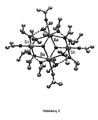
- iPr stands for isopropyl.
- Even more complicated compositions were realized (Ba (Ti, Ce) (OR) 8 for Ba (Ti 0.5 ce 0.5 ) O 3 ).
- R is alkyl, preferably isopropyl.
- the structure of a precursor for BaSnO 3 in Figure 2 detect.
- the three-dimensional network of the phase-forming elements formed after the hydrolysis of the alkoxides chemically combines all the relevant atoms (oxygen or metal) in the correct arrangement.
- This scaffold provides the foundation for the nanoparticles that are already formed at low temperatures.
- the CO 2 -sensitive material obtained after work-up is homogeneously doped at the mesoscopic level and is phase-pure, and has an almost monodisperse particle distribution in the nm range.
- the material can optionally be thermal after treatment, ie crystallized.
- the substances either precipitate in crystalline form during the hydrolysis or are gently hydrothermally crystallized in a high-pressure autoclave.
- the hydrothermal technique has the advantage of avoiding particle agglomeration and leaving the surface in the reactive, ie modifiable, state.
- Figure 3 shows the temperature-dependent gas sensitivity of BaCeO 3 doped with 5% copper.
- the material had been deposited on alumina via a spin and / or dip-coating process and is present as a thin film.
- the material having a mean particle size of 20 nm was heat-treated at 1000 ° C. It showed in the range of low temperatures (350 ° C to 450 ° C) a significantly higher CO 2 -sensitivity than in the range of higher temperatures (500 to 650 ° C).
- thermal aftertreatment can play a major role with respect to the CO 2 sensitivity of the resulting materials.
- the thermal aftertreatment can influence the surface properties of the materials.
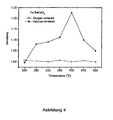
- Figure 4 also shows the temperature-dependent gas sensitivity of nanoscale BaCeO 3 doped with 5% copper. Also plotted here is the sensitivity to temperature (° C), once for a sensor made of material that has been sintered in vacuum, once for a material that has been sintered in the presence of oxygen. In comparison, it can clearly be seen that sintering in a vacuum leads to significantly higher sensitivity than comparable sintering in the presence of oxygen.
- the method described is inexpensive, alsskalierbar and reproducible.
- Various metals can be specifically doped in a carrier matrix, for which no other method known in the literature is suitable.
- the sensor is extremely sensitive, specific (no cross sensitivity to water or CO) and has a very low operating temperature, which has a positive effect on the stability and thus the operating time.
- a doping with a copper source such as CuCl 2 in alcohol or a Cu alkoxide in the desired stoichiometry can take place.
- a copper source such as CuCl 2 in alcohol or a Cu alkoxide in the desired stoichiometry
- 0.255 g of CuCl 2 (5 mol%) in 10 ml of isopropanol are added and stirred vigorously for 2 h.
- the doped Ba-Ce alkoxide sol is mixed with a stoichiometric amount of a 1.0 molar water solution in isopropanol with vigorous stirring.
- the still clear sol is concentrated at 45 ° C bath temperature on a rotary evaporator.
- the concentrated BaCeO 3 sol is then freeze-dried or freed of residual moisture at 120 ° C.
- the material is crystallized at 1,000 ° C. for 2 hours.
- the material obtained in this way can be deposited on a sensor substrate (Al 2 O 3 ) as a layer on a sensor substrate (Al 2 O 3 ) using screen or pad printing methods known to those skilled in the art commercial sensor platforms (eg from Heraeus).
- a doping with a copper source such as CuCl 2 in alcohol or a Cu alkoxide in the desired stoichiometry can take place.
- a copper source such as CuCl 2 in alcohol or a Cu alkoxide in the desired stoichiometry
- 0.255 g of CuCl 2 (5 mol%) in 10 ml of isopropanol are added and stirred vigorously for 2 h.
- the doped Ba-Ce alkoxide sol is mixed with a stoichiometric amount of a 1.0 molar water solution in isopropanol with vigorous stirring.
- the still clear sol is concentrated at 45 ° C bath temperature on a rotary evaporator.
- nanomaterials are suitable as CO 2 sensor material. These include, in place of Ce, elements of the 4th, 7th, 13th and 14th group in particular Ce, Ti, Zr, In, Sn, Mn and mixtures of two or more elements thereof.
- elements of groups 1, 2 and 3 may be used, in particular Li, Mg, Ca, Sr, Ba, Y, and La and mixtures of two or more elements thereof.
- the sensors have doping between 0.01 and 20 atom%, in particular between 0.1 and 10, very particularly between 1 and 6%.
- the mixed metal oxides have doping between 1 and 6 atomic%.
- Suitable doping besides Cu are: elements of the lanthanides in particular: Pr, Nd, Sm, Eu, Gd, La, Er, etc., as well as mixtures of two or more elements thereof as well as elements of the 3rd, 10th, 11th, 12th and 13th group, in particular In, Ga, Zn, Co, Ni, Cu, Ag, Au, Pt, or Pd and mixtures of two or more elements thereof.
- metal / metal composite compounds are prepared by decomposing organometallic precursors as described in the examples above, but such that not only metal oxides but also elemental metals can be formed in a metal oxide matrix.
- These ternary composites can be used as gas-sensitive, in particular as CO 2 -sensitive materials. This is because additional charge carriers are introduced into the system by the elemental metals, which improves the conductivity of the semiconducting base material so that the entire composite reacts very sensitively, for example, to CO 2 .
- the precursor molecule provides the template for a submicroscopic mixing of the individual components.
- a precursor for CuAl 2 O 4 such as, for example, Cu [Al 2 (O i Pr) 8 ].
- the hydrolyzate of such a precursor decomposes thermally under reducing conditions to a homogeneous nanoscale Cu / Al 2 O 3 composite.
- Becomes the reducing atmosphere varies, arise CuO / Al 2 O 3 or Cu 2 O / Al 2 O 3 composites or mixtures of Cu / Cu 2 O / CuO in an Al 2 O 3 matrix.
- single-source composite compounds which can be prepared by the described methods or other methods include, inter alia, Cu or Cu 2 O or CuO in a TiO 2 matrix or Sn, Cu or Cu 2 O or CuO in a SnO 2 matrix.
- ZrO 2 , CeO 2 , Fe 2 O 3 , SiO 2 , and Y 2 O 3 are suitable as further matrix materials.
- elements of the lanthanides in particular: Pr, Nd, Sm, Eu, Gd, La, Er, etc., as well as mixtures of two or more elements thereof, as well as elements of the 3. , 8, 9, 10, 11, 12 and 13 group, in particular In, Ga, Zn, Co, Ni, Ru, Os, Rh, Ir, Cu, Ag, Au, Pt, or Pd and mixtures made of two or more elements suitable.
Landscapes
- Chemical & Material Sciences (AREA)
- Organic Chemistry (AREA)
- Inorganic Chemistry (AREA)
- Engineering & Computer Science (AREA)
- Life Sciences & Earth Sciences (AREA)
- Nanotechnology (AREA)
- Physics & Mathematics (AREA)
- General Physics & Mathematics (AREA)
- Geology (AREA)
- Health & Medical Sciences (AREA)
- Pathology (AREA)
- Chemical Kinetics & Catalysis (AREA)
- General Life Sciences & Earth Sciences (AREA)
- Analytical Chemistry (AREA)
- Biochemistry (AREA)
- General Health & Medical Sciences (AREA)
- Environmental & Geological Engineering (AREA)
- Immunology (AREA)
- Electrochemistry (AREA)
- Composite Materials (AREA)
- Condensed Matter Physics & Semiconductors (AREA)
- Materials Engineering (AREA)
- Crystallography & Structural Chemistry (AREA)
- Investigating Or Analyzing Materials By The Use Of Fluid Adsorption Or Reactions (AREA)
- Investigating Or Analyzing Materials By The Use Of Electric Means (AREA)
- Compounds Of Alkaline-Earth Elements, Aluminum Or Rare-Earth Metals (AREA)
- Inorganic Compounds Of Heavy Metals (AREA)
Description
- Die Erfindung betrifft neue Mischmetalloxide sowie deren Herstellung und Verwendung sowie einen neuen CO2-Sensor auf Basis dieser Mischmetalloxide.
- CO2-Sensoren dienen zum Brand- oder Explosionsschutz, zur Prozeßüberwachung in industriellen Anlagen oder werden in Sensorarrays als "Chemische Nasen" eingesetzt. Weiterhin finden CO2-Sensoren zur Messung der Raumluftqualität, von Auto- oder Industrieabgasen oder im Biomonitoringbereich (Gärprozesse, Fouling, Fermentierung, Atmung etc.) oder in Klimaeinrichtungen ein immer breiteres Anwendungsfeld.
- Für nicht brennbare, d. h. nicht oxidierbare Gase wie CO2, gibt es derzeit zwei verschiedene Meßprinzipien:
- Zum einen sind dies optische Methoden mittels NDIR (nicht dispersive Infrarotabsorption). Diese Methode detektiert die CO2-Absorptionsbande bei 4,27 µm und zeichnet sich durch eine hohe Empfindlichkeit aus. Sie ist sehr aufwendig, da eine komplizierte Optik in Verbindung mit Präzisionsmechanik (Spektrometer) benötigt wird. Solche Sensoren werden auch in Zukunft keine Verbreitung in Massenmärkten, in denen ein einfacher und kostengünstiger Aufbau wichtig ist, finden.
- Zum anderen handelt es sich um elektrochemische Sensoren, bei denen ein Potentialunterschied zwischen Meß- und gekapselter Referenzelektrode bei der Adsorption von Gasmolekülen detektiert wird. Solche Sensoren sind aufwendig, leiden unter einer langen Ansprechzeit (bis zu 30 Sekunden), einer Querempfindlichkeit auf Luftfeuchte und einem störungsanfälligen Aufbau. Einen Spezialfall solcher elektrochemischer CO2-Sensoren findet man auf Basis natriumionenleitender Festelektrolyten mit einer Alkalicarbonatelektrode. Diese sind als NASICON-Sensoren (Natrium Super-Ionic Conductor) bekannt. Solche Systeme müssen wegen ihrer Feuchtigkeitsempfindlichkeit weitgehend gekapselt sein und haben eine lange Ansprechzeit, sind aber langzeitstabil und empfindlich.
- Da beide Verfahren sehr kostenintensiv sind, muß ein anderes Meßprinzip zur CO2-Detektion gesucht werden. Geeignet erscheinen vor allem halbleitende Materialien, die in der Lage sind, CO2-Moleküle reversibel zu adsorbieren und bei einer Gasadsorption mit einer detektierbaren Widerstandsänderung zu reagieren. Ein solches Verfahren sollte sich bei Applikation des Halbleiters als dünne Schicht auf einem Trägermaterial preisgünstig realisieren lassen.
- Als halbleitendes, gassensitives Material wurde beispielsweise dotiertes SnO2 untersucht [Tamaki, Akiyama, Xu, Chemistry Letters (1990), 1243 ]. Dieses ist jedoch zur selektiven CO2-Detektion nicht geeignet, da die Nachweisgrenze zu hoch liegt und die Querempfindlichkeiten zu oxidierbaren Gasen (vor allem zu CO und H2) nicht unterdrückt werden können [Delabie, Honore, Lenaerts et al., Sensors and Actuators B, (1997), 44, 446]. Darüber hinaus ist die Homogenität der Dotierung nicht zu gewährleisten, was zu nicht reproduzierbaren Messergebnissen führt [Kim, Yoon, Park et al., Sensors and Actuators B (2000), 62, 61].
- Weitere für Gassensoren geeignete Zinn-Verbindungen werden in der
EP 263 394 - Wei et al. [J. Appl. Phys. (2000), 88, 4818] beschäftigten sich mit CuO-BaTiO3-Verbindungen und deren Eignung als CO2-Sensoren, wobei die CuO-BaTiO3-Verbindungen durch Vermischen von BaCO3-Pulver und TiO2-Pulver in equimolarem Verhältnis und anschließendes Sintern bei 1200 °C gewonnen wurden.
- Ein Kohlendioxid-Sensor auf Basis eines Materials aus Kupferoxid und Barium-Titanat wird in der
DE 44 37 692 A1 beschrieben. Dieses Material wird aufwendig durch Kugelmahlen synthetisiert, was große Nachteile mit sich bringt: Neben dem großen Aufwand ist durch Partikelaggregation verfahrensbedingt die effektive Oberfläche des Materials durch Agglomeration der einzelnen Kristallite stark eingeschränkt. Weiterhin sind die Dotierungen nicht homogen verteilt und tendieren dazu, beim Sintern an die Korngrenzen zu wandern. Darüber hinaus lassen sich mit den erwähnten Verfahren keine monodispersen Partikel herstellen, was dazu führt, daß größere neben kleineren Partikeln vorliegen, die aufgrund ihrer verschieden großen Oberfläche unterschiedlich empfindlich auf CO2 reagieren. - Ein Gassensor für Sauerstoff auf Basis von Gd-dotiertem BaCeO3 wird in der
GB 2 206 571 A - Insbesondere die Herstellung von Nanopartikeln durch Mahlvorgänge weist weitere grundsätzliche Nachteile auf. So findet man den Abrieb der Mahlbecher und Mahlkugeln im resultierenden Nanomaterial wieder, der Zeitbedarf ist sehr groß (bis zu mehreren Wochen), die Partikelgrößenverteilung ist sehr breit und das erhaltene Material weist üblicherweise in hohem Grad Defekte, Gitterspannungen und Gitterfehler auf. Auf diese Weise hergestellte Materialien können katalytische Eigenschaften aufweisen oder als Elektronenleiter verwendet werden. Als Sensormaterial für einen Gassensor sind sie hingegen unbrauchbar, da dafür ein weitestgehend defektfreies, homogenes, molekulardotiertes Material ohne Gitterfeh ler benötigt wird.
- Die vorstehend erwähnten Nachteile führen dazu, daß aufgrund der bekannten Herstellungsverfahren und Materialien die Sensitivität und Selektivität von Gassensoren, insbesondere von CO2-Sensoren, sehr stark verbesserungsbedürftig sind. Ein Sensor auf Basis bekannter Materialien ist für eine kommerzielle Anwendung ungeeignet.
- Der Erfindung liegt somit die Aufgabe zugrunde, neue Materialien zu entwickeln. Diese sollen insbesondere in einer einfachen und kostengünstigen Meßanordnung als Gassensor mit hoher Empfindlichkeit und Spezifizität eingesetzt werden.
- Diese Aufgabe wird gelöst durch Mischmetalloxide mit den Merkmalen das Anspruchs 11.
- Das erfindungsgemäße Verfahren zeichnet sich dadurch aus, dass mit Hilfe der sogenannten Single-Source-Precursortechnik ein Mischmetallalkoxid hergestellt wird, das in der Stöchiometrie und der Struktur auf das herzustellende Mischmetalloxid abgestellt ist, und dieses Mischmetalloxid nach einem Dotierungsschritt zu dem Mischmetalloxid hydrolysiert wird.
- Ebenso Gegenstand der vorliegenden Erfindung ist die Verwendung solcher Mischmetalloxide oder von Mischungen daraus zur Detektion von Gasen, vorzugsweise zur Detektion nicht brennbarer Gase.
- Daneben ist auch ein Sensor zur Detektion von CO2 mit den Merkmalen das Anspruchs 1 Gegenstand der vorliegenden Erfindung. Zur Offenbarung der Erfindung soll an dieser Stelle ausdrücklich auf die Formulierungen der einzelnen Ansprüche Bezug genommen und verwiesen werden. In diesem Zusammenhang sollen die in den Ansprüchen verwendeten Begriffe wie folgt noch näher erläutert werden.
- Die Numerierung der Gruppen des Periodensystems, die in den Ansprüchen angegeben ist, erfolgt in der IUPAC-Version, bei der die einzelnen Gruppen des Periodensystems einfach durchnumeriert werden.
- Der Begriff "nanoskatig" soll aussagen, daß sich die mittlere Teilchengröße der Mischmetalloxid-Partikel weit im sub-µm-Bereich befindet. Dabei soll sich diese Teilchengröße auf das einzelne Partikel im nicht-agglomerierten Zustand beziehen. Nanoskalige Partikel lagern sich aufgrund ihrer hohen Oberflächenenergien häufig zusammen und bilden auf diese Weise Agglomerate oder Teilchentrauben, die eine größere Teilchengröße vortäuschen, als das einzelne Teilchen tatsächlich besitzt. Die Größenangaben bei der Erfindung beziehen sich dementsprechend, soweit möglich, auf die mittlere Teilchengröße eines einzelnen Teilchens/Partikels, das in diesem Zusammenhang auch als "Primärteitchen" bezeichnet werden kann. Die mittlere Partikelgröße der erfindungsgemäßen Mischmetalloxide beträgt weniger als 100 nm, insbesondere weniger als 50 nm.
- Bei den erfindungsgemäßen Mischmetalloxiden handelt es sich vorzugsweise um halbleitende Materialien, wobei die Eigenschaften von Halbleitern aus dem Stand der Technik bekannt sind. Solche halbleitenden Materialien sind (dotiert oder undotiert) auf vielfältige Weise einsetzbar, insbesondere als Gassensoren, beispielsweise zur Detektion von CO2.
- Das erfindungsgemäße Verfahren ist auf die Herstellung der Mischmetalloxide durch die sogenannte Single-Source-Precursortechnik beschränkt. Bei verschiedenen erfindungsgemäßen Mischmetalloxiden wird es durchaus möglich sein, diese Substanzen aus zwei oder mehreren nebeneinander getrennt vorliegenden Ausgangsverbindungen, wie beispielsweise Alkoxiden, herzustellen. Das Vorliegen einer einzelnen solchen Ausgangsverbindung, beispielsweise eines solchen Alkoxids als Single-Source ist in solchen Fällen nicht zwingend erforderlich.
- Es zeigte sich, daß insbesondere zur CO2-Detektion dotierte Mischmetalloxide (Perowskite) sowie Metall-Metalloxid-Komposite mit einer Dotierung geeignet sind. Diese Substanzen können jedoch nicht ohne weiteres hergestellt werden, da etablierte Methoden wie Fällung oder klassische Sol-Gel-Chemie häufig nicht verwendet können. Es mangelt entweder an geeigneten reaktiven Vorstufen, oder man hat es vor allem im Falle der Sol-Gel-Prozesses mit individuellen Precursoren (Alkoxiden) zu tun, die sich durch stark unterschiedliche Reaktivitäten und Hydrolysegeschwindigkeiten auszeichnen. Einfache Metallalkoxide können über metallorganische Synthesen hergestellt werden und sind seit einiger Zeit bekannt. So kann z. B. Bariumisopropanolat durch Kochen von Bariummetall in wasserfreiem Isopropanol unter Inertgasatmosphäre hergestellt werden. Andere Metallalkoholate sind wie die Propylate von Titan oder Zirkon zwar bereits großtechnisch verfügbar. Eine Mischung aus solchen Alkoxiden mit anderen Alkoxiden kann nach Hydrolyse und Aufarbeitung zu einem ungleichmäßigen Gefüge führen, das beispielsweise als CO2-Sensor nicht geeignet ist. Für andere Zusammensetzungen sind die Vorstufen kommerziell nicht verfügbar. Weiterhin ist für eine optimale Leistungscharakteristik eine homogene Dotierung im vorzugsweise niedrigen Atom-%-Bereich nötig, was durch diese Methoden nicht erreicht werden kann.
- Es konnte nun gefunden werden, daß sich insbesondere nanoskalige dotierte Bariumcerate und Bariumstannatverbindungen als CO2-sensitive Materialien eignen, bei denen es jedoch essentiell ist, auf molekularer Ebene maßzuschneidern, was diese Patentschrift zeigt.
- Überraschenderweise wurde nun ermittelt, daß insbesondere die für das CVD-Verfahren bekannte Single-Source-Precursortechnik [R.C. Mehrotra, Chemtracts: Org. Chem, (1990) 2, 338 oder Sing and Mehrotra, Z. Anorg. Allg. Chemie, (1984), 512, 221] dazu geeignet ist, ebensolche CO2-sensitive Materialien mit hoher Homogenität sowohl einfach als auch kostengünstig herzustellen. Diese Materialien weisen die auf molekularer Ebene erwünschte homogene Dotierung und Vermischung auf, wozu hydrolysierbare komplexe Metallalkoxidverbindungen als molekulare Template verwendet werden. Dieses Single-Source-Verfahren erzielt extrem reine und vorzugsweise im Atom-%-Bereich von 0,01 bis 10 % dotierte Verbindungen, die ausgezeichnete Gassensoreigenschaften, wie in
Abbildung 1 dargelegt, besitzen. Darüber hinaus lassen sich sehr kleine und monodisperse Kristallitgrößen und somit große Oberflächen realisieren, was für die Empfindlichkeit eines Sensors sehr wichtig ist. - In einer besonderen Ausführungsform der Erfindung wird das verwendete Alkoxid, das kommerziell nicht erhältlich ist, selbst synthetisiert.
- Erfindungsgemäß wurde als CO2-sensitives Material vorzugsweise dotiertes BaCeO3 identifiziert. Es gelang hier zum erstenmal die Herstellung eines homogen mit Cu dotierten BaCeO3 mit CO2-sensitiven und selektiven Eigenschaften, was weit über den Stand der Technik hinausgeht.
- Das so erhaltene Material kann über dem Fachmann bekannte Sieboder Tampondruckverfahren als Schicht auf einem Sensorsubstrat, z. B. Aluminiumoxid (Al2O3), abgeschieden oder in kommerzielle Sensorplattformen (z. B. von Heraeus) implementiert werden. Wird dann der (elektrische) Widerstand des nanoskaligen dotierten BaCeO3 in CO2-Atmosphäre in Abhängigkeit von der Temperatur gemessen, erkennt man in
Abbildung 1 überraschenderweise bei 600 °C einen sprunghaften Anstieg im Signal des Sensors. Bei einer mikrokristallinen BaCeO3-Vergleichprobe mit einer sehr viel geringeren Oberfläche ist ein solcher sprunghafter Anstieg nicht zu erkennen. Dies bedeutet, daß insbesondere ein nanokristallines Material (hier: Teilchengröße 30 nm) CO2-sensitive Eigenschaften besitzt. - Ausgangssubstanzen für das Sensormaterial sind Mischmetallalkoxide, die in einem Molekül das Metall-Metall-Verhältnis auf molekularer Ebene (Ba:Ce hier 1:1) des nach Hydrolyse resultierenden Oxids bereits vorgegeben haben und durch Sauerstoffbrücken miteinander verknüpft sind. Beispiel (
Abbildung 2 : BaSn(OiPr)8) als Precursor für BaSnO3). iPr steht für Isopropyl. Auch kompliziertere Zusammensetzungen wurden realisiert (Ba(Ti,Ce)(OR)8 für Ba(Ti0.5ce0.5)O3). R steht für Alkyl, vorzugsweise Isopropyl. Exemplarisch kann man die Struktur an einem Precursor für BaSnO3 inAbbildung 2 erkennen. - Von großem Vorteil ist, im Precursormolekül die Stöchiometrie und die Struktur der nach der Hydrolyse resultierenden Verbindung vorzugeben. Hierzu verbindet das nach der Hydrolyse der Alkoxide gebildete dreidimensionale Netzwerk der phasenbildenden Elemente alle relevanten Atome (Sauerstoff bzw. Metall) in der richtigen Anordnung chemisch miteinander. Dieses Gerüst liefert das Fundament für die Nanopartikel, die bereits bei niedrigen Temperaturen ausgebildet werden. Das nach Aufarbeitung erhaltene CO2-sensitive Material ist auf mesoskopischer Ebene homogen dotiert und phasenrein, und besitzt eine nahezu monodisperse Partikelverteilung im nm-Bereich. Das Material kann optional thermisch nachbehandelt, d. h. kristallisiert werden. Die Stoffe fallen entweder bereits bei der Hydrolyse kristallin an oder werden schonend hydrothermal im Hochdruckautoklaven kristallisiert. Gegenüber einer Kalzinierung besitzt die Hydrothermaltechnik den Vorteil, eine Partikelagglomeration zu vermeiden und die Oberfläche im reaktiven, d. h. modifizierbaren Zustand zu belassen.
- Aber auch aus einer Nachbehandlung durch Kalzinierung resultieren Materialien mit hervorragenden CO2-sensitiven Eigenschaften. Abbildung 3 beispielsweise zeigt die temperaturabhängige Gassensitivität von mit 5 % Kupfer dotiertem BaCeO3. Das Material war über ein spinund/oder dip-coating Verfahren auf Aluminiumoxid abgeschieden worden und liegt als dünner Film vor. Das Material mit einer mittleren Partikelgröße von 20 nm war bei 1000 °C hitzebehandelt worden. Es zeigte im Bereich niedriger Temperaturen (350 °C bis 450 °C) eine deutlich höhere CO2-Sensitivität als im Bereich höherer Temperaturen (500 bis 650 °C).
- Herstellungsverfahren und auch thermische Nachbehandlung können eine große Rolle in Bezug auf die CO2-Sensitivität der resultierenden Materialien spielen. Durch die thermische Nachbehandlung können die Oberflächeneigenschaften der Materialien beeinflusst werden. Im Falle der Nachbehandlung durch Kalzinierung wurde überraschenderweise gefunden, daß eine Durchführung der thermischen Nachbehandlung im Vakuum zu einem starken Anstieg der CO2-Sensitivität führen kann. Abbildung 4 zeigt ebenfalls die temperaturabhängige Gassensitivität von mit 5 % Kupfer dotiertem, nanoskaligem BaCeO3. Aufgetragen ist auch hier die Sensitivität gegen die Temperatur (°C), einmal für einen Sensor aus Material, das im Vakuum gesintert wurde, einmal für ein Material, das unter Anwesenheit von Sauerstoff gesintert wurde. Im Vergleich ist deutlich zu sehen, dass das Sintern im Vakuum zu deutlich höherer Sensitivität führt als das vergleichbare Sintern unter Anwesenheit von Sauerstoff.
- Das beschriebene Verfahren ist preisgünstig, aufskalierbar und reproduzierbar. Es können verschiedene Metalle gezielt in eine Trägermatrix eindotiert werden, wozu kein anderes in der Literatur bekanntes Verfahren geeignet ist. Der Sensor ist extrem empfindlich, spezifisch (keine Querempfindlichkeit auf Wasser oder CO) und hat eine sehr niedrige Betriebstemperatur, die sich positiv auf die Stabilität und damit die Betriebsdauer auswirkt.
- 8,506 g Ba(OtBu)2 (0.03mol) (tBu steht für tert.-Butyl.) werden in absolutem PriOH (200 ml) (Pri bzw. iPr steht für Isopropyl.) suspendiert, und eine stöchiometrische Menge Ce(OiPr)4 (9.827g, 0.03mol) wird langsam unter Rühren unter Schutzgasatmosphäre dazugegeben. Die trübe Mischung wird 6 h bis zum Erhalt einer klaren Lösung gerührt. Zu diesem Zeitpunkt hat sich ein gemischtes Ba-Ce-Alkoxid, genaugenommen Ba-Ce[(OtBu)2(OiPr)4], gebildet, das im Gegensatz zu den ursprünglichen Alkoholaten in PriOH löslich ist. Anschließend kann eine Dotierung mit einer Kupferquelle wie CuCl2 in Alkohol oder einem Cu-Alkoxid in der gewünschten Stöchiometrie erfolgen. Dazu werden 0,255 g CuCl2 (5 Mol-%) in 10 ml Isopropanol dazugegeben und für 2 h stark gerührt. Man erhält ein transparentes grünes Sol. Das dotierte Ba-Ce-Alkoxidsol wird mit einer stöchiometrischen Menge einer 1,0 molaren Wasserlösung in Isopropanol unter heftigem Rühren vermengt. Das weiterhin klare Sol wird bei 45 °C Badtemperatur am Rotationsverdampfer eingeengt. Das eingeengte BaCeO3-Sol wird dann gefriergetrocknet oder bei 120 °C im Trockenschrank von Restfeuchte befreit. Nachdem bei 400 °C die organischen Bestandteile in einem Muffelofen pyrolisiert wurden, wird das Material 2 h bei 1.000 °C kristallisiert. Das so erhaltene Material kann über dem Fachmann bekannte Sieb- oder Tampondruckverfahren als Schicht auf einem Sensorsubstrat (Al2O3) abgeschieden oder in kommerzielle Sensorplattformen (z. B. von Heraeus) implementiert werden.
- 8,506 g Ba(OtBu)2 (0,03 mol) werden in absolutem PriOH (200 ml) suspendiert, und eine stöchiometrische Menge Ce(OiPr)4 (9,827 g, 0,03 mol) wird langsam unter Rühren unter Schutzgasatmosphäre dazugegeben. Die trübe Mischung wird 6 h bis zum Erhalt einer klaren Lösung gerührt. Zu diesem Zeitpunkt hat sich ein gemischtes Ba-Ce-Alkoxid, genaugenommen BaCe[(OtBu)2(OiPr)4], gebildet, das im Gegensatz zu den ursprünglichen Alkoholaten in PriOH löslich ist. Anschließend kann eine Dotierung mit einer Kupferquelle wie CuCl2 in Alkohol oder einem Cu-Alkoxid in der gewünschten Stöchiometrie erfolgen. Dazu werden 0,255 g CuCl2 (5 Mol-%) in 10 ml Isopropanol dazugegeben und für 2 h stark gerührt. Man erhält ein transparentes grünes Sol. Das dotierte Ba-Ce-Alkoxidsol wird mit einer stöchiometrischen Menge einer 1,0 molaren Wasserlösung in Isopropanol unter heftigem Rühren vermengt. Das weiterhin klare Sol wird bei 45 °C Badtemperatur am Rotationsverdampfer eingeengt. 110 g eines solchen Cu dotierten hydrolisierten BaCeO3-Sols (Feststoffgehalt: 10 %) werden 6 h bei 250 °C in einem 250 ml Rührautoklaven mit Tefloninnengefäß bei einem Innendruck von 50 bar autoklaviert. Nach Abkühlen erhält man ein weißes Pulver, das mehrfach mit Alkohol und Wasser gewaschen wird. Röntgendiffraktometrie ergibt phasenreines BaCeO3 mit geringen Spuren an CuO.
- Anstelle von Cu dotiertem BaCeO3 sind eine Reihe anderer Nanomaterialien als CO2-Sensormaterial geeignet.
Diese umfassen anstelle von Ce, Elemente der 4., 7., 13. und 14. Gruppe insbesondere Ce, Ti, Zr, In, Sn, Mn sowie Mischungen aus zwei oder mehr Elementen daraus. - Anstelle von Ba, können Elemente der 1., 2. und 3 Gruppe verwendet werden, insbesondere Li, Mg, Ca, Sr, Ba, Y, und La sowie Mischungen aus zwei oder mehr Elementen daraus.
- Die sensoren weisen Dotierungen zwischen 0,01 und 20 Atom-%, insbesondere zwischen 0,1 und 10, ganz besonders zwischen 1 und 6 % auf. Die Mischmetalloxide weisen Dotierungen zwischen 1 und 6 Atom-% auf.
Als Dotierion ist neben Cu geeignet: Elemente der Lanthaniden insbesondere: Pr, Nd, Sm, Eu, Gd, La, Er, etc., sowie Mischungen aus zwei oder mehr Elementen daraus sowie Elemente der 3., 10., 11., 12 und 13. Gruppe, insbesondere In, Ga, Zn, Co, Ni, Cu, Ag, Au, Pt, oder Pd sowie Mischungen aus zwei oder mehr Elementen daraus. - In einer anderen besonderen Ausführungsform werden Metall/Metallkompositverbindungen hergestellt, indem metallorganische Precursoren, wie in den zuvor beschriebenen Beispielen zerset werden, jedoch so, daß nicht nur Metalloxide sondern auch elementare Metalle in einer Metalloxidmatrix entstehen können. Diese ternären Komposite sind als gassensitive, insbesondere als CO2-sensitive Materialien einsetzbar. Dies liegt daran, daß durch die elementaren Metalle zusätzliche Ladungsträger in das System eingebracht werden, was die Leitfähigkeit des halbleitenden Basismaterials so verbessert, daß das gesamte Komposit sehr empfindlich beispielsweise auf CO2 reagiert. Das Precursormolekül liefert dabei das Templat für eine submikroskopische Vermischung der einzelnen Komponenten.
- Im Fall eines Cu/Al2O3-Komposits geht man dabei von einem Precursor für CuAl2O4 wie beispielsweise Cu[Al2(OiPr)8] aus. Das Hydrolysat eines solchen Precursors zersetzt sich thermisch unter reduzierenden Bedingungen zu einem homogenen nanoskaligen Cu/Al2O3- Komposit. Wird die reduzierende Atmosphäre variiert, entstehen CuO/Al2O3 bzw. Cu2O/ Al2O3-Komposite bzw. Gemische aus Cu/Cu2O/CuO in einer Al2O3-Matrix.
- Weitere durch die beschriebene oder andere Methoden herstellbare Single-Source-Kompositverbindungen umfassen unter anderem Cu bzw. Cu2O oder CuO in einer TiO2-Matrix oder Sn, Cu bzw. Cu2O oder CuO in einer SnO2-Matrix.
- Als weitere Matrixmaterialien sind ZrO2, CeO2, Fe2O3, SiO2, und Y2O3 geeignet.
- Als Metall bzw. gegebenenfalls Metalloxid in der Matrix sind neben Cu oder Sn Elemente der Lanthaniden insbesondere: Pr, Nd, Sm, Eu, Gd, La, Er, etc., sowie Mischungen aus zwei oder mehr Elementen daraus, sowie Elemente der 3., 8., 9., 10., 11., 12 und 13. Gruppe, insbesondere In, Ga, Zn, Co, Ni, Ru, Os, Rh, Ir, Cu, Ag, Au, Pt, oder Pd sowie Mischungen aus zwei oder mehr Elementen daraus geeignet.
Claims (23)
- Sensor zur Detektion von CO2, herstellbar durch Single-Source-Precursortechnik, dadurch gekennzeichnet, dass er mindestens ein Mischmetalloxid der Formel AXO3 aufweist, wobei- A mindestens ein Element ausgewählt aus den Elementen der 1., 2. und 3. Gruppe des Periodensystems und- X mindestens ein Element ausgewählt aus den Elementen Cer und den Elementen der 4., 7., 13. und 14. Gruppe des Periodensystems ist,wobei die mittlere Partikelgröße des Mischmetalloxids < 100 nm ist und das Mischmetalloxid dotiert ist, wobei der Gehalt an Dotierelementen zwischen 0,01 und 20 Atom-% beträgt.
- Sensor nach Anspruch 1, dadurch gekennzeichnet, dass die mittlere Partikelgröße des Mischmetalloxids < 50 nm ist.
- Sensor nach einem der Ansprüche 1 oder 2, dadurch gekenneichnet, dass zur Dotierung mindestens ein Element ausgewählt aus den Elementen der 3., 10., 11., 12. und 13. Gruppe des Periodensystems und der Lanthanoide vorhanden ist.
- Sensor nach Anspruch 3, dadurch gekennzeichnet, dass es sich bei dem Dotierelement um Kupfer handelt.
- Sensor nach einem der vorhergehenden Ansprüche, dadurch gekennzeichnet, dass der Gehalt an Dotierelementen zwischen 0,1 und 10 Atom-%, insbesondere zwischen 1 und 6 Atom-%, beträgt.
- Sensor nach einem der vorhergehenden Ansprüche, dadurch gekennzeichnet, dass A aus den Elementen der 2. Gruppe des Periodensystems ausgewählt ist, wobei es sich vorzugsweise um Barium handelt.
- Sensor nach einem der vorhergehenden Ansprüche, dadurch gekennzeichnet, dass X Cer ist.
- Sensor nach einem der vorhergehenden Ansprüche, dadurch gekennzeichnet, dass X Titan oder Zirkonium ist.
- Sensor nach einem der vorhergehenden Ansprüche, dadurch gekennzeichnet, dass das Mischmetalloxid die Formel BaXO3 hat, wobei X Cer ist.
- Sensor nach Anspruch 9, dadurch gekennzeichnet, dass das Mischmetalloxid mit Kupfer dotiert ist.
- Mischmetalloxid der Formel AXO3, herstellbar durch Single-Source-Precursortechnik, wobei- A mindestens ein Element ausgewählt aus den Elementen der 1., 2. und 3. Gruppe des Periodensystems und- X mindestens ein Element ausgewählt aus den Elementen Cer und den Elementen der 4., 7., 13. und 14. Gruppe des Periodensystems ist,wobei die mittlere Partikelgröße des Mischmetalloxids < 100 nm ist und das Mischmetalloxid dotiert ist, wobei der Gehalt an Dotierelementen zwischen 1 und 6 Atom-% beträgt, und Mischungen solcher Mischmetalloxide.
- Mischmetalloxid nach Anspruch 11, dadurch gekennzeichnet, dass die mittlere Partikelgröße < 50 nm ist.
- Mischmetalloxid nach einem der Ansprüche 11 oder 12, dadurch gekennzeichnet, dass zur Dotierung mindestens ein Element ausgewählt aus den Elementen der 3., 10., 11., 12. und 13. Gruppe des Periodensystems und der Lanthanoide vorhanden ist.
- Mischmetalloxid nach Anspruch 13, dadurch gekennzeichnet, dass es sich bei dem Dotierelement um Kupfer handelt.
- Mischmetalloxid nach einem der Ansprüche 11 bis 14, dadurch gekennzeichnet, dass A aus den Elementen der 2. Gruppe des Periodensystems ausgewählt ist, wobei es sich vorzugsweise um Barium handelt.
- Mischmetalloxid nach einem der Ansprüche 11 bis 15, dadurch gekennzeichnet, dass X Cer ist.
- Mischmetalloxid nach einem der Ansprüche 11 bis 16, dadurch gekennzeichnet, dass X Titan oder Zirkonium ist.
- Mischmetalloxid nach einem der Ansprüche 11 bis 17, dadurch gekennzeichnet, dass das Mischmetalloxid die Formel BaXO3 hat, wobei X Cer ist.
- Mischmetalloxid nach Anspruch 18, dadurch gekennzeichnet, dass das Mischmetalloxid mit Kupfer dotiert ist.
- Mischmetalloxid nach einem der Ansprüche 11 bis 19, dadurch gekennzeichnet, dass es auf ein Substrat aufgebracht und/oder in ein Substrat eingebracht ist.
- Mischmetalloxid nach Anspruch 20, dadurch gekennzeichnet, dass es sich bei dem Substrat um ein Substrat für Sensoren, insbesondere für Gassensoren handelt.
- Verwendung der Mischmetalloxide nach einem der Ansprüche 11 bis 21 zur Detektion von Gasen, vorzugsweise zur Detektion nicht brennbarer Gase.
- Verfahren zur Herstellung von Mischmetalloxiden nach einem der Ansprüche 11 bis 22, dadurch gekennzeichnet, dass mit Hilfe der sogenannten Single-Source-Precursortechnik ein Mischmetallalkoxid hergestellt wird, das in der Stöchiometrie und der Struktur auf das herzustellende Mischmetalloxid abgestellt ist, und dieses Mischmetalloxid nach einem Dotierungsschritt zu dem Mischmetalloxid hydrolysiert wird.
Applications Claiming Priority (2)
| Application Number | Priority Date | Filing Date | Title |
|---|---|---|---|
| DE10329626A DE10329626A1 (de) | 2003-06-25 | 2003-06-25 | Mischmetalloxide und ihre Verwendung in CO2-Sensoren |
| PCT/EP2004/006938 WO2004113229A1 (de) | 2003-06-25 | 2004-06-25 | Mischmetalloxide und ihre verwendung in co2-sensoren |
Publications (2)
| Publication Number | Publication Date |
|---|---|
| EP1636135A1 EP1636135A1 (de) | 2006-03-22 |
| EP1636135B1 true EP1636135B1 (de) | 2011-05-11 |
Family
ID=33521239
Family Applications (1)
| Application Number | Title | Priority Date | Filing Date |
|---|---|---|---|
| EP04740344A Expired - Lifetime EP1636135B1 (de) | 2003-06-25 | 2004-06-25 | Mischmetalloxide und ihre verwendung in co2-sensoren |
Country Status (6)
| Country | Link |
|---|---|
| US (1) | US20070009415A1 (de) |
| EP (1) | EP1636135B1 (de) |
| JP (1) | JP4805146B2 (de) |
| AT (1) | ATE508986T1 (de) |
| DE (1) | DE10329626A1 (de) |
| WO (1) | WO2004113229A1 (de) |
Families Citing this family (10)
| Publication number | Priority date | Publication date | Assignee | Title |
|---|---|---|---|---|
| DE102004016131A1 (de) * | 2004-04-01 | 2005-10-20 | Max Planck Gesellschaft | Herstellung von Metalloxid-Nanoteilchen hoher Kristallinität und hoher Reinheit |
| EP1904607A1 (de) * | 2005-06-06 | 2008-04-02 | Albemarle Netherlands B.V. | Metalldotiertes mischmetalloxid, seine herstellung und verwendung als katalysatorzusammensetzung |
| JP4952880B2 (ja) * | 2005-11-15 | 2012-06-13 | 戸田工業株式会社 | プロトン伝導性ペロブスカイト微粒子の製造法、及び該粒子粉末 |
| US20100135937A1 (en) * | 2007-03-26 | 2010-06-03 | The Trustees Of Columbia University In The City Of New York | Metal oxide nanocrystals: preparation and uses |
| KR100946701B1 (ko) * | 2007-12-10 | 2010-03-12 | 한국전자통신연구원 | 나노 결정 복합 산화물 박막, 이를 구비한 환경 가스 센서및 환경 가스 센서의 제조방법 |
| WO2010044935A2 (en) * | 2008-10-16 | 2010-04-22 | Apollo, Inc. | Sensitive materials for gas sensing and method of making same |
| US9373863B2 (en) * | 2012-08-03 | 2016-06-21 | Cerion Llc | Barium cerate nanoparticles for use in solid oxide fuel cells |
| CN114764081B (zh) * | 2021-01-14 | 2024-11-19 | 长城汽车股份有限公司 | 水分子传感器、水含量检测装置及水含量检测方法 |
| CN113295737B (zh) * | 2021-05-17 | 2022-10-18 | 电子科技大学长三角研究院(湖州) | 一种锰掺杂四氧化三钴多孔纳米片状材料及其制备方法与应用 |
| DE102023003142A1 (de) * | 2023-07-29 | 2025-01-30 | Eberhard Karls Universität Tübingen, Körperschaft des öffentlichen Rechts | CO2-Sensor mit einem geringen elektrischen Widerstand und einer hohen Unempfindlichkeit gegenüber der Luftfeuchtigkeit sowie Verfahren zu seiner Herstellung |
Family Cites Families (23)
| Publication number | Priority date | Publication date | Assignee | Title |
|---|---|---|---|---|
| JPH07104310B2 (ja) * | 1986-09-29 | 1995-11-13 | フイガロ技研株式会社 | 排気ガスセンサおよびその製造方法 |
| GB2206571A (en) * | 1987-07-09 | 1989-01-11 | British Petroleum Co Plc | Barium cerate doped with gadolinium |
| JPH0465306A (ja) * | 1990-07-03 | 1992-03-02 | Asahi Glass Co Ltd | 酸化物超電導体薄膜 |
| JP2882104B2 (ja) * | 1991-07-17 | 1999-04-12 | 松下電器産業株式会社 | プロトン伝導体およびその製造方法 |
| US5344948A (en) * | 1992-02-25 | 1994-09-06 | Iowa State University Research Foundation, Inc. | Single-source molecular organic chemical vapor deposition agents and use |
| US5266355A (en) * | 1992-06-18 | 1993-11-30 | Eastman Kodak Company | Chemical vapor deposition of metal oxide films |
| DE4437692A1 (de) * | 1994-10-21 | 1996-04-25 | Fraunhofer Ges Forschung | Kohlendioxid-Sensor |
| JPH08169800A (ja) * | 1994-12-19 | 1996-07-02 | Kyocera Corp | BaTiO3配向膜の製造方法 |
| JP3607352B2 (ja) * | 1995-03-13 | 2005-01-05 | 財団法人石油産業活性化センター | BaCeO3系イオン伝導性セラミックス及びその製造方法 |
| JPH08310802A (ja) * | 1995-03-15 | 1996-11-26 | Takeshi Yao | ペロブスカイト型複合酸化物析出物の製造方法 |
| JPH09257747A (ja) * | 1996-03-21 | 1997-10-03 | Matsushita Electric Ind Co Ltd | 炭酸ガスセンサ |
| JPH09264864A (ja) * | 1996-03-27 | 1997-10-07 | Ngk Spark Plug Co Ltd | ガスセンサ及びその製造方法並びにその感度測定方法 |
| US6124427A (en) * | 1997-03-31 | 2000-09-26 | North Dakota State University | Organometallic single source precursors for inorganic films coatings and powders |
| JPH1157461A (ja) * | 1997-08-08 | 1999-03-02 | Kansai Shin Gijutsu Kenkyusho:Kk | 分子認識能を有する有機・無機複合体ならびにその製造方法および使用方法 |
| JPH1176814A (ja) * | 1997-09-02 | 1999-03-23 | Toru Yamamoto | 酸性ガス吸着分解剤及びその製造方法並びに酸性ガス吸着分解方法 |
| US6017504A (en) * | 1998-07-16 | 2000-01-25 | Universite Laval | Process for synthesizing perovskites using high energy milling |
| US6369183B1 (en) * | 1998-08-13 | 2002-04-09 | Wm. Marsh Rice University | Methods and materials for fabrication of alumoxane polymers |
| KR100737657B1 (ko) * | 1998-09-06 | 2007-07-09 | 라이브니츠-인스티투트 퓌어 노이에 마테리알리엔 게마인누찌게 게엠베하 | 산화 인듐 주석을 기재로 하는 현탁액 및 분말의 제조방법및 그의 용도 |
| JP3598344B2 (ja) * | 1998-09-30 | 2004-12-08 | 独立行政法人物質・材料研究機構 | 高酸化物イオン伝導性セリア系固体電解質 |
| US6596236B2 (en) * | 1999-01-15 | 2003-07-22 | Advanced Technology Materials, Inc. | Micro-machined thin film sensor arrays for the detection of H2 containing gases, and method of making and using the same |
| JP2001302342A (ja) * | 2000-04-25 | 2001-10-31 | Toshiba Corp | 誘電体磁器組成物、積層セラミックコンデンサとその製造方法 |
| US6953532B2 (en) * | 2003-03-06 | 2005-10-11 | Cabot Microelectronics Corporation | Method of polishing a lanthanide substrate |
| DE10323816A1 (de) * | 2003-05-23 | 2004-12-09 | Basf Ag | Verfahren zur Herstellung von Mischoxiden mit mittleren Durchmessern kleiner als 10 Nanometer |
-
2003
- 2003-06-25 DE DE10329626A patent/DE10329626A1/de not_active Withdrawn
-
2004
- 2004-06-25 JP JP2006516064A patent/JP4805146B2/ja not_active Expired - Fee Related
- 2004-06-25 EP EP04740344A patent/EP1636135B1/de not_active Expired - Lifetime
- 2004-06-25 AT AT04740344T patent/ATE508986T1/de active
- 2004-06-25 WO PCT/EP2004/006938 patent/WO2004113229A1/de not_active Ceased
- 2004-06-25 US US10/561,624 patent/US20070009415A1/en not_active Abandoned
Also Published As
| Publication number | Publication date |
|---|---|
| DE10329626A1 (de) | 2005-01-20 |
| JP2007526865A (ja) | 2007-09-20 |
| EP1636135A1 (de) | 2006-03-22 |
| US20070009415A1 (en) | 2007-01-11 |
| WO2004113229A1 (de) | 2004-12-29 |
| ATE508986T1 (de) | 2011-05-15 |
| JP4805146B2 (ja) | 2011-11-02 |
Similar Documents
| Publication | Publication Date | Title |
|---|---|---|
| Punginsang et al. | Effects of cobalt doping on nitric oxide, acetone and ethanol sensing performances of FSP-made SnO2 nanoparticles | |
| Liangyuan et al. | Synthesis of ZnO–SnO2 nanocomposites by microemulsion and sensing properties for NO2 | |
| Upadhyay et al. | Cr-doped WO3 nanosheets: Structural, optical and formaldehyde sensing properties | |
| DE69328197T2 (de) | Transparente, leitende schicht, transparentes, leitendes basismaterial und leitendes material | |
| Chang et al. | Heterostructural (Sr0. 6Bi0. 305) 2Bi2O7/ZnO for novel high-performance H2S sensor operating at low temperature | |
| Shkir et al. | High performance of the rare earth (Er, Gd & Pr) doped MoO3 thin films for advanced applications towards ammonia gas sensing | |
| JPH06234565A (ja) | ターゲットおよびその製造方法 | |
| EP1789367B1 (de) | Feinteilige erdalkalititanate und verfahren zu deren herstellung unter verwendung von titanoxidpartikeln | |
| GangaReddy et al. | Physical vapour deposition of Zn2+ doped NiO nanostructured thin films for enhanced selective and sensitive ammonia sensing | |
| Spagnoli et al. | Design of a metal-oxide solid solution for selective detection of ethanol with marginal influence by humidity | |
| WO2013155638A2 (en) | Reference materials | |
| Zubair et al. | Influence of Cu induced crystallographic disorder on the optical and lattice vibrational properties of ZnO nanoparticles | |
| EP0427938B1 (de) | Verfahren zur Herstellung von Zirkondioxidpulver | |
| WO2004113229A1 (de) | Mischmetalloxide und ihre verwendung in co2-sensoren | |
| CN1746131A (zh) | 一种贵金属掺杂复合金属氧化物气敏材料及其制备方法 | |
| Chantelle et al. | Zn2SnO4 and Zn2TiO4 inverse spinels: influence of the temperature on structural, microstructural and luminescent properties | |
| Wang et al. | Broad-spectrum UV absorption and gas-sensing improvement of ZnSnO3 cubic particles based on Al-doping and nano-TiO2 decoration | |
| DE68918100T2 (de) | Metalloxid-keramische pulver und verfahren zur herstellung. | |
| Singh et al. | Photoluminescence based humidity sensing characteristics of potassium doped magnesium ferrite nanoparticles | |
| JP2023167934A (ja) | 多孔質ZnOナノベルト、ZnOHFナノベルト、多孔質ZnOナノベルトの製造方法およびガスセンサ | |
| WO2025026476A1 (de) | Co2-sensor sowie verfahren zu seiner herstellung | |
| KR900005614B1 (ko) | 배기가스의 제조방법 | |
| WO2024089664A1 (en) | Nanostructured semiconductor material for carbon dioxide detection | |
| Shailja et al. | Xylene sensing using Dy-doped NiO nanoparticles | |
| DE102006020253B3 (de) | Dünnschicht-Gassensor für reduzierende Gase mit niedriger Arbeitstemperatur |
Legal Events
| Date | Code | Title | Description |
|---|---|---|---|
| PUAI | Public reference made under article 153(3) epc to a published international application that has entered the european phase |
Free format text: ORIGINAL CODE: 0009012 |
|
| 17P | Request for examination filed |
Effective date: 20060118 |
|
| AK | Designated contracting states |
Kind code of ref document: A1 Designated state(s): AT BE BG CH CY CZ DE DK EE ES FI FR GB GR HU IE IT LI LU MC NL PL PT RO SE SI SK TR |
|
| DAX | Request for extension of the european patent (deleted) | ||
| RAP1 | Party data changed (applicant data changed or rights of an application transferred) |
Owner name: ITN NANOVATION AG |
|
| 17Q | First examination report despatched |
Effective date: 20060508 |
|
| GRAP | Despatch of communication of intention to grant a patent |
Free format text: ORIGINAL CODE: EPIDOSNIGR1 |
|
| GRAS | Grant fee paid |
Free format text: ORIGINAL CODE: EPIDOSNIGR3 |
|
| GRAA | (expected) grant |
Free format text: ORIGINAL CODE: 0009210 |
|
| AK | Designated contracting states |
Kind code of ref document: B1 Designated state(s): AT BE BG CH CY CZ DE DK EE ES FI FR GB GR HU IE IT LI LU MC NL PL PT RO SE SI SK TR |
|
| REG | Reference to a national code |
Ref country code: GB Ref legal event code: FG4D Free format text: NOT ENGLISH |
|
| REG | Reference to a national code |
Ref country code: CH Ref legal event code: EP |
|
| REG | Reference to a national code |
Ref country code: IE Ref legal event code: FG4D |
|
| REG | Reference to a national code |
Ref country code: DE Ref legal event code: R096 Ref document number: 502004012503 Country of ref document: DE Effective date: 20110622 |
|
| REG | Reference to a national code |
Ref country code: CH Ref legal event code: NV Representative=s name: ZIMMERLI, WAGNER & PARTNER AG |
|
| REG | Reference to a national code |
Ref country code: NL Ref legal event code: T3 |
|
| PG25 | Lapsed in a contracting state [announced via postgrant information from national office to epo] |
Ref country code: SE Free format text: LAPSE BECAUSE OF FAILURE TO SUBMIT A TRANSLATION OF THE DESCRIPTION OR TO PAY THE FEE WITHIN THE PRESCRIBED TIME-LIMIT Effective date: 20110511 Ref country code: PT Free format text: LAPSE BECAUSE OF FAILURE TO SUBMIT A TRANSLATION OF THE DESCRIPTION OR TO PAY THE FEE WITHIN THE PRESCRIBED TIME-LIMIT Effective date: 20110912 |
|
| PG25 | Lapsed in a contracting state [announced via postgrant information from national office to epo] |
Ref country code: ES Free format text: LAPSE BECAUSE OF FAILURE TO SUBMIT A TRANSLATION OF THE DESCRIPTION OR TO PAY THE FEE WITHIN THE PRESCRIBED TIME-LIMIT Effective date: 20110822 Ref country code: FI Free format text: LAPSE BECAUSE OF FAILURE TO SUBMIT A TRANSLATION OF THE DESCRIPTION OR TO PAY THE FEE WITHIN THE PRESCRIBED TIME-LIMIT Effective date: 20110511 Ref country code: GR Free format text: LAPSE BECAUSE OF FAILURE TO SUBMIT A TRANSLATION OF THE DESCRIPTION OR TO PAY THE FEE WITHIN THE PRESCRIBED TIME-LIMIT Effective date: 20110812 Ref country code: CY Free format text: LAPSE BECAUSE OF FAILURE TO SUBMIT A TRANSLATION OF THE DESCRIPTION OR TO PAY THE FEE WITHIN THE PRESCRIBED TIME-LIMIT Effective date: 20110511 Ref country code: SI Free format text: LAPSE BECAUSE OF FAILURE TO SUBMIT A TRANSLATION OF THE DESCRIPTION OR TO PAY THE FEE WITHIN THE PRESCRIBED TIME-LIMIT Effective date: 20110511 |
|
| REG | Reference to a national code |
Ref country code: IE Ref legal event code: FD4D |
|
| BERE | Be: lapsed |
Owner name: ITN NANOVATION A.G. Effective date: 20110630 |
|
| PG25 | Lapsed in a contracting state [announced via postgrant information from national office to epo] |
Ref country code: IE Free format text: LAPSE BECAUSE OF FAILURE TO SUBMIT A TRANSLATION OF THE DESCRIPTION OR TO PAY THE FEE WITHIN THE PRESCRIBED TIME-LIMIT Effective date: 20110511 Ref country code: CZ Free format text: LAPSE BECAUSE OF FAILURE TO SUBMIT A TRANSLATION OF THE DESCRIPTION OR TO PAY THE FEE WITHIN THE PRESCRIBED TIME-LIMIT Effective date: 20110511 Ref country code: EE Free format text: LAPSE BECAUSE OF FAILURE TO SUBMIT A TRANSLATION OF THE DESCRIPTION OR TO PAY THE FEE WITHIN THE PRESCRIBED TIME-LIMIT Effective date: 20110511 |
|
| PG25 | Lapsed in a contracting state [announced via postgrant information from national office to epo] |
Ref country code: PL Free format text: LAPSE BECAUSE OF FAILURE TO SUBMIT A TRANSLATION OF THE DESCRIPTION OR TO PAY THE FEE WITHIN THE PRESCRIBED TIME-LIMIT Effective date: 20110511 Ref country code: RO Free format text: LAPSE BECAUSE OF FAILURE TO SUBMIT A TRANSLATION OF THE DESCRIPTION OR TO PAY THE FEE WITHIN THE PRESCRIBED TIME-LIMIT Effective date: 20110511 Ref country code: SK Free format text: LAPSE BECAUSE OF FAILURE TO SUBMIT A TRANSLATION OF THE DESCRIPTION OR TO PAY THE FEE WITHIN THE PRESCRIBED TIME-LIMIT Effective date: 20110511 Ref country code: DK Free format text: LAPSE BECAUSE OF FAILURE TO SUBMIT A TRANSLATION OF THE DESCRIPTION OR TO PAY THE FEE WITHIN THE PRESCRIBED TIME-LIMIT Effective date: 20110511 |
|
| PLBE | No opposition filed within time limit |
Free format text: ORIGINAL CODE: 0009261 |
|
| STAA | Information on the status of an ep patent application or granted ep patent |
Free format text: STATUS: NO OPPOSITION FILED WITHIN TIME LIMIT |
|
| PG25 | Lapsed in a contracting state [announced via postgrant information from national office to epo] |
Ref country code: BE Free format text: LAPSE BECAUSE OF NON-PAYMENT OF DUE FEES Effective date: 20110630 |
|
| 26N | No opposition filed |
Effective date: 20120214 |
|
| PG25 | Lapsed in a contracting state [announced via postgrant information from national office to epo] |
Ref country code: IT Free format text: LAPSE BECAUSE OF FAILURE TO SUBMIT A TRANSLATION OF THE DESCRIPTION OR TO PAY THE FEE WITHIN THE PRESCRIBED TIME-LIMIT Effective date: 20110511 |
|
| REG | Reference to a national code |
Ref country code: DE Ref legal event code: R097 Ref document number: 502004012503 Country of ref document: DE Effective date: 20120214 |
|
| PGFP | Annual fee paid to national office [announced via postgrant information from national office to epo] |
Ref country code: NL Payment date: 20120628 Year of fee payment: 9 Ref country code: CH Payment date: 20120622 Year of fee payment: 9 Ref country code: DE Payment date: 20120622 Year of fee payment: 9 |
|
| PGFP | Annual fee paid to national office [announced via postgrant information from national office to epo] |
Ref country code: FR Payment date: 20120705 Year of fee payment: 9 Ref country code: GB Payment date: 20120621 Year of fee payment: 9 |
|
| REG | Reference to a national code |
Ref country code: AT Ref legal event code: MM01 Ref document number: 508986 Country of ref document: AT Kind code of ref document: T Effective date: 20110625 |
|
| PG25 | Lapsed in a contracting state [announced via postgrant information from national office to epo] |
Ref country code: AT Free format text: LAPSE BECAUSE OF NON-PAYMENT OF DUE FEES Effective date: 20110625 |
|
| PG25 | Lapsed in a contracting state [announced via postgrant information from national office to epo] |
Ref country code: MC Free format text: LAPSE BECAUSE OF NON-PAYMENT OF DUE FEES Effective date: 20110630 |
|
| PG25 | Lapsed in a contracting state [announced via postgrant information from national office to epo] |
Ref country code: LU Free format text: LAPSE BECAUSE OF NON-PAYMENT OF DUE FEES Effective date: 20110625 |
|
| PG25 | Lapsed in a contracting state [announced via postgrant information from national office to epo] |
Ref country code: BG Free format text: LAPSE BECAUSE OF FAILURE TO SUBMIT A TRANSLATION OF THE DESCRIPTION OR TO PAY THE FEE WITHIN THE PRESCRIBED TIME-LIMIT Effective date: 20110811 |
|
| PG25 | Lapsed in a contracting state [announced via postgrant information from national office to epo] |
Ref country code: TR Free format text: LAPSE BECAUSE OF FAILURE TO SUBMIT A TRANSLATION OF THE DESCRIPTION OR TO PAY THE FEE WITHIN THE PRESCRIBED TIME-LIMIT Effective date: 20110511 |
|
| PG25 | Lapsed in a contracting state [announced via postgrant information from national office to epo] |
Ref country code: HU Free format text: LAPSE BECAUSE OF FAILURE TO SUBMIT A TRANSLATION OF THE DESCRIPTION OR TO PAY THE FEE WITHIN THE PRESCRIBED TIME-LIMIT Effective date: 20110511 |
|
| REG | Reference to a national code |
Ref country code: NL Ref legal event code: V1 Effective date: 20140101 |
|
| REG | Reference to a national code |
Ref country code: CH Ref legal event code: PL |
|
| GBPC | Gb: european patent ceased through non-payment of renewal fee |
Effective date: 20130625 |
|
| REG | Reference to a national code |
Ref country code: FR Ref legal event code: ST Effective date: 20140228 |
|
| REG | Reference to a national code |
Ref country code: DE Ref legal event code: R119 Ref document number: 502004012503 Country of ref document: DE Effective date: 20140101 |
|
| PG25 | Lapsed in a contracting state [announced via postgrant information from national office to epo] |
Ref country code: NL Free format text: LAPSE BECAUSE OF NON-PAYMENT OF DUE FEES Effective date: 20140101 Ref country code: CH Free format text: LAPSE BECAUSE OF NON-PAYMENT OF DUE FEES Effective date: 20130630 Ref country code: LI Free format text: LAPSE BECAUSE OF NON-PAYMENT OF DUE FEES Effective date: 20130630 Ref country code: DE Free format text: LAPSE BECAUSE OF NON-PAYMENT OF DUE FEES Effective date: 20140101 Ref country code: GB Free format text: LAPSE BECAUSE OF NON-PAYMENT OF DUE FEES Effective date: 20130625 |
|
| PG25 | Lapsed in a contracting state [announced via postgrant information from national office to epo] |
Ref country code: FR Free format text: LAPSE BECAUSE OF NON-PAYMENT OF DUE FEES Effective date: 20130701 |