EP1632604B1 - Mehrschichtiges Papierprodukt und dessen Herstellungsverfahren - Google Patents
Mehrschichtiges Papierprodukt und dessen Herstellungsverfahren Download PDFInfo
- Publication number
- EP1632604B1 EP1632604B1 EP05019027.1A EP05019027A EP1632604B1 EP 1632604 B1 EP1632604 B1 EP 1632604B1 EP 05019027 A EP05019027 A EP 05019027A EP 1632604 B1 EP1632604 B1 EP 1632604B1
- Authority
- EP
- European Patent Office
- Prior art keywords
- ply
- wetting resistant
- product
- tissue ply
- absorbent
- Prior art date
- Legal status (The legal status is an assumption and is not a legal conclusion. Google has not performed a legal analysis and makes no representation as to the accuracy of the status listed.)
- Expired - Lifetime
Links
Images


Classifications
-
- B—PERFORMING OPERATIONS; TRANSPORTING
- B32—LAYERED PRODUCTS
- B32B—LAYERED PRODUCTS, i.e. PRODUCTS BUILT-UP OF STRATA OF FLAT OR NON-FLAT, e.g. CELLULAR OR HONEYCOMB, FORM
- B32B29/00—Layered products comprising a layer of paper or cardboard
- B32B29/06—Layered products comprising a layer of paper or cardboard specially treated, e.g. surfaced, parchmentised
-
- B—PERFORMING OPERATIONS; TRANSPORTING
- B32—LAYERED PRODUCTS
- B32B—LAYERED PRODUCTS, i.e. PRODUCTS BUILT-UP OF STRATA OF FLAT OR NON-FLAT, e.g. CELLULAR OR HONEYCOMB, FORM
- B32B29/00—Layered products comprising a layer of paper or cardboard
-
- B—PERFORMING OPERATIONS; TRANSPORTING
- B32—LAYERED PRODUCTS
- B32B—LAYERED PRODUCTS, i.e. PRODUCTS BUILT-UP OF STRATA OF FLAT OR NON-FLAT, e.g. CELLULAR OR HONEYCOMB, FORM
- B32B29/00—Layered products comprising a layer of paper or cardboard
- B32B29/002—Layered products comprising a layer of paper or cardboard as the main or only constituent of a layer, which is next to another layer of the same or of a different material
- B32B29/005—Layered products comprising a layer of paper or cardboard as the main or only constituent of a layer, which is next to another layer of the same or of a different material next to another layer of paper or cardboard layer
-
- D—TEXTILES; PAPER
- D21—PAPER-MAKING; PRODUCTION OF CELLULOSE
- D21H—PULP COMPOSITIONS; PREPARATION THEREOF NOT COVERED BY SUBCLASSES D21C OR D21D; IMPREGNATING OR COATING OF PAPER; TREATMENT OF FINISHED PAPER NOT COVERED BY CLASS B31 OR SUBCLASS D21G; PAPER NOT OTHERWISE PROVIDED FOR
- D21H27/00—Special paper not otherwise provided for, e.g. made by multi-step processes
- D21H27/30—Multi-ply
-
- B—PERFORMING OPERATIONS; TRANSPORTING
- B32—LAYERED PRODUCTS
- B32B—LAYERED PRODUCTS, i.e. PRODUCTS BUILT-UP OF STRATA OF FLAT OR NON-FLAT, e.g. CELLULAR OR HONEYCOMB, FORM
- B32B2250/00—Layers arrangement
- B32B2250/20—All layers being fibrous or filamentary
-
- B—PERFORMING OPERATIONS; TRANSPORTING
- B32—LAYERED PRODUCTS
- B32B—LAYERED PRODUCTS, i.e. PRODUCTS BUILT-UP OF STRATA OF FLAT OR NON-FLAT, e.g. CELLULAR OR HONEYCOMB, FORM
- B32B2255/00—Coating on the layer surface
- B32B2255/12—Coating on the layer surface on paper layer
-
- B—PERFORMING OPERATIONS; TRANSPORTING
- B32—LAYERED PRODUCTS
- B32B—LAYERED PRODUCTS, i.e. PRODUCTS BUILT-UP OF STRATA OF FLAT OR NON-FLAT, e.g. CELLULAR OR HONEYCOMB, FORM
- B32B2255/00—Coating on the layer surface
- B32B2255/26—Polymeric coating
-
- B—PERFORMING OPERATIONS; TRANSPORTING
- B32—LAYERED PRODUCTS
- B32B—LAYERED PRODUCTS, i.e. PRODUCTS BUILT-UP OF STRATA OF FLAT OR NON-FLAT, e.g. CELLULAR OR HONEYCOMB, FORM
- B32B2307/00—Properties of the layers or laminate
- B32B2307/70—Other properties
- B32B2307/726—Permeability to liquids, absorption
-
- B—PERFORMING OPERATIONS; TRANSPORTING
- B32—LAYERED PRODUCTS
- B32B—LAYERED PRODUCTS, i.e. PRODUCTS BUILT-UP OF STRATA OF FLAT OR NON-FLAT, e.g. CELLULAR OR HONEYCOMB, FORM
- B32B2307/00—Properties of the layers or laminate
- B32B2307/70—Other properties
- B32B2307/726—Permeability to liquids, absorption
- B32B2307/7265—Non-permeable
-
- B—PERFORMING OPERATIONS; TRANSPORTING
- B32—LAYERED PRODUCTS
- B32B—LAYERED PRODUCTS, i.e. PRODUCTS BUILT-UP OF STRATA OF FLAT OR NON-FLAT, e.g. CELLULAR OR HONEYCOMB, FORM
- B32B2307/00—Properties of the layers or laminate
- B32B2307/70—Other properties
- B32B2307/73—Hydrophobic
-
- B—PERFORMING OPERATIONS; TRANSPORTING
- B32—LAYERED PRODUCTS
- B32B—LAYERED PRODUCTS, i.e. PRODUCTS BUILT-UP OF STRATA OF FLAT OR NON-FLAT, e.g. CELLULAR OR HONEYCOMB, FORM
- B32B2555/00—Personal care
- B32B2555/02—Diapers or napkins
-
- D—TEXTILES; PAPER
- D21—PAPER-MAKING; PRODUCTION OF CELLULOSE
- D21H—PULP COMPOSITIONS; PREPARATION THEREOF NOT COVERED BY SUBCLASSES D21C OR D21D; IMPREGNATING OR COATING OF PAPER; TREATMENT OF FINISHED PAPER NOT COVERED BY CLASS B31 OR SUBCLASS D21G; PAPER NOT OTHERWISE PROVIDED FOR
- D21H17/00—Non-fibrous material added to the pulp, characterised by its constitution; Paper-impregnating material characterised by its constitution
- D21H17/03—Non-macromolecular organic compounds
- D21H17/05—Non-macromolecular organic compounds containing elements other than carbon and hydrogen only
- D21H17/11—Halides
-
- D—TEXTILES; PAPER
- D21—PAPER-MAKING; PRODUCTION OF CELLULOSE
- D21H—PULP COMPOSITIONS; PREPARATION THEREOF NOT COVERED BY SUBCLASSES D21C OR D21D; IMPREGNATING OR COATING OF PAPER; TREATMENT OF FINISHED PAPER NOT COVERED BY CLASS B31 OR SUBCLASS D21G; PAPER NOT OTHERWISE PROVIDED FOR
- D21H17/00—Non-fibrous material added to the pulp, characterised by its constitution; Paper-impregnating material characterised by its constitution
- D21H17/03—Non-macromolecular organic compounds
- D21H17/05—Non-macromolecular organic compounds containing elements other than carbon and hydrogen only
- D21H17/14—Carboxylic acids; Derivatives thereof
- D21H17/15—Polycarboxylic acids, e.g. maleic acid
- D21H17/16—Addition products thereof with hydrocarbons
-
- D—TEXTILES; PAPER
- D21—PAPER-MAKING; PRODUCTION OF CELLULOSE
- D21H—PULP COMPOSITIONS; PREPARATION THEREOF NOT COVERED BY SUBCLASSES D21C OR D21D; IMPREGNATING OR COATING OF PAPER; TREATMENT OF FINISHED PAPER NOT COVERED BY CLASS B31 OR SUBCLASS D21G; PAPER NOT OTHERWISE PROVIDED FOR
- D21H17/00—Non-fibrous material added to the pulp, characterised by its constitution; Paper-impregnating material characterised by its constitution
- D21H17/03—Non-macromolecular organic compounds
- D21H17/05—Non-macromolecular organic compounds containing elements other than carbon and hydrogen only
- D21H17/17—Ketenes, e.g. ketene dimers
-
- D—TEXTILES; PAPER
- D21—PAPER-MAKING; PRODUCTION OF CELLULOSE
- D21H—PULP COMPOSITIONS; PREPARATION THEREOF NOT COVERED BY SUBCLASSES D21C OR D21D; IMPREGNATING OR COATING OF PAPER; TREATMENT OF FINISHED PAPER NOT COVERED BY CLASS B31 OR SUBCLASS D21G; PAPER NOT OTHERWISE PROVIDED FOR
- D21H17/00—Non-fibrous material added to the pulp, characterised by its constitution; Paper-impregnating material characterised by its constitution
- D21H17/62—Rosin; Derivatives thereof
-
- D—TEXTILES; PAPER
- D21—PAPER-MAKING; PRODUCTION OF CELLULOSE
- D21H—PULP COMPOSITIONS; PREPARATION THEREOF NOT COVERED BY SUBCLASSES D21C OR D21D; IMPREGNATING OR COATING OF PAPER; TREATMENT OF FINISHED PAPER NOT COVERED BY CLASS B31 OR SUBCLASS D21G; PAPER NOT OTHERWISE PROVIDED FOR
- D21H21/00—Non-fibrous material added to the pulp, characterised by its function, form or properties; Paper-impregnating or coating material, characterised by its function, form or properties
- D21H21/14—Non-fibrous material added to the pulp, characterised by its function, form or properties; Paper-impregnating or coating material, characterised by its function, form or properties characterised by function or properties in or on the paper
- D21H21/16—Sizing or water-repelling agents
-
- D—TEXTILES; PAPER
- D21—PAPER-MAKING; PRODUCTION OF CELLULOSE
- D21H—PULP COMPOSITIONS; PREPARATION THEREOF NOT COVERED BY SUBCLASSES D21C OR D21D; IMPREGNATING OR COATING OF PAPER; TREATMENT OF FINISHED PAPER NOT COVERED BY CLASS B31 OR SUBCLASS D21G; PAPER NOT OTHERWISE PROVIDED FOR
- D21H27/00—Special paper not otherwise provided for, e.g. made by multi-step processes
- D21H27/02—Patterned paper
-
- Y—GENERAL TAGGING OF NEW TECHNOLOGICAL DEVELOPMENTS; GENERAL TAGGING OF CROSS-SECTIONAL TECHNOLOGIES SPANNING OVER SEVERAL SECTIONS OF THE IPC; TECHNICAL SUBJECTS COVERED BY FORMER USPC CROSS-REFERENCE ART COLLECTIONS [XRACs] AND DIGESTS
- Y10—TECHNICAL SUBJECTS COVERED BY FORMER USPC
- Y10T—TECHNICAL SUBJECTS COVERED BY FORMER US CLASSIFICATION
- Y10T156/00—Adhesive bonding and miscellaneous chemical manufacture
- Y10T156/10—Methods of surface bonding and/or assembly therefor
-
- Y—GENERAL TAGGING OF NEW TECHNOLOGICAL DEVELOPMENTS; GENERAL TAGGING OF CROSS-SECTIONAL TECHNOLOGIES SPANNING OVER SEVERAL SECTIONS OF THE IPC; TECHNICAL SUBJECTS COVERED BY FORMER USPC CROSS-REFERENCE ART COLLECTIONS [XRACs] AND DIGESTS
- Y10—TECHNICAL SUBJECTS COVERED BY FORMER USPC
- Y10T—TECHNICAL SUBJECTS COVERED BY FORMER US CLASSIFICATION
- Y10T156/00—Adhesive bonding and miscellaneous chemical manufacture
- Y10T156/10—Methods of surface bonding and/or assembly therefor
- Y10T156/1002—Methods of surface bonding and/or assembly therefor with permanent bending or reshaping or surface deformation of self sustaining lamina
- Y10T156/1007—Running or continuous length work
- Y10T156/1023—Surface deformation only [e.g., embossing]
-
- Y—GENERAL TAGGING OF NEW TECHNOLOGICAL DEVELOPMENTS; GENERAL TAGGING OF CROSS-SECTIONAL TECHNOLOGIES SPANNING OVER SEVERAL SECTIONS OF THE IPC; TECHNICAL SUBJECTS COVERED BY FORMER USPC CROSS-REFERENCE ART COLLECTIONS [XRACs] AND DIGESTS
- Y10—TECHNICAL SUBJECTS COVERED BY FORMER USPC
- Y10T—TECHNICAL SUBJECTS COVERED BY FORMER US CLASSIFICATION
- Y10T156/00—Adhesive bonding and miscellaneous chemical manufacture
- Y10T156/10—Methods of surface bonding and/or assembly therefor
- Y10T156/1002—Methods of surface bonding and/or assembly therefor with permanent bending or reshaping or surface deformation of self sustaining lamina
- Y10T156/1039—Surface deformation only of sandwich or lamina [e.g., embossed panels]
-
- Y—GENERAL TAGGING OF NEW TECHNOLOGICAL DEVELOPMENTS; GENERAL TAGGING OF CROSS-SECTIONAL TECHNOLOGIES SPANNING OVER SEVERAL SECTIONS OF THE IPC; TECHNICAL SUBJECTS COVERED BY FORMER USPC CROSS-REFERENCE ART COLLECTIONS [XRACs] AND DIGESTS
- Y10—TECHNICAL SUBJECTS COVERED BY FORMER USPC
- Y10T—TECHNICAL SUBJECTS COVERED BY FORMER US CLASSIFICATION
- Y10T428/00—Stock material or miscellaneous articles
- Y10T428/24—Structurally defined web or sheet [e.g., overall dimension, etc.]
- Y10T428/24479—Structurally defined web or sheet [e.g., overall dimension, etc.] including variation in thickness
-
- Y—GENERAL TAGGING OF NEW TECHNOLOGICAL DEVELOPMENTS; GENERAL TAGGING OF CROSS-SECTIONAL TECHNOLOGIES SPANNING OVER SEVERAL SECTIONS OF THE IPC; TECHNICAL SUBJECTS COVERED BY FORMER USPC CROSS-REFERENCE ART COLLECTIONS [XRACs] AND DIGESTS
- Y10—TECHNICAL SUBJECTS COVERED BY FORMER USPC
- Y10T—TECHNICAL SUBJECTS COVERED BY FORMER US CLASSIFICATION
- Y10T428/00—Stock material or miscellaneous articles
- Y10T428/24—Structurally defined web or sheet [e.g., overall dimension, etc.]
- Y10T428/24479—Structurally defined web or sheet [e.g., overall dimension, etc.] including variation in thickness
- Y10T428/24612—Composite web or sheet
Definitions
- This description is directed to a paper product with improved moisture strike through resistance. More particularly, a multi-ply paper product with improved strike through resistance is described, wherein at least one ply is a wetting resistant ply comprising at least one wetting resistant agent and at least one ply is an absorbent ply possessing greater absorbency than the wetting resistant ply. Even more particularly, a two-ply paper napkin with improved moisture strike through resistance is described, wherein the wetting resistant ply comprises alkyl ketene dimer and the two plies are separately microembossed and then glue laminated. This description is also directed to methods of making paper products with improved moisture strike through resistance.
- Paper tissues are usually first regarded for their softness; paper towels and napkins are usually first regarded for their absorbency and durability.
- the paper products must also be attractive and possess good strength, while at the same time be recyclable and low-cost.
- paper products are often made from one or more paper plies that are joined together to form the finished product.
- Each of these plies may possess different characteristics to impart specific properties to the finished product, or the plies may all have the same properties that add up to form the finished product.
- multi-ply products sacrifice expense and ease of manufacture in order to achieve one of the consumer attributes of softness, absorbency, durability, and strength. Many products require three or more plies to achieve one or more of these desired attributes.
- Moisture strike through resistance may also be an important characteristic for consumer paper products.
- a paper product with moisture strike through resistance may provide benefits to the consumer, such as a paper napkin to protect the user's lap against spills of food or liquid.
- Other paper products, like coasters, doilies, and placemats, also benefit from moisture strike through resistance in an effort to protect the surface underneath. It is therefore desirous to create a paper product with both absorbency and moisture strike through resistance.
- US-A-2002103469 discloses a dual-zoned, three-dimensional, resilient absorbent web is disclosed which is suitable as body-side liner for absorbent articles such as feminine pads and diapers.
- WO-A-2004044320 discloses an absorbent paper sheet is treated with an aqueous wax dispersion such that the sheet includes a fused wax and emulsifier residue in an amount of from about 1 to about 20 weight percent of the sheet based on the combined weight of the fiber, wax residue and an emulsifier residue in the sheet.
- US-A-6132803 discloses a tissue which has at least one fibrous ply. A hydrophobically treated foam stratum is placed on at least one of the fibrous plies in order to prevent the penetration of moisture through the tissue.
- US-B-6332952 discloses a toilet tissue product may include a first cellulosic ply and a second cellulosic ply.
- the present invention is directed to a multi-ply tissue paper product comprising:
- the present invention is directed to a method of making the multi-ply tissue paper product of claim 1, comprising:
- a multi-ply paper product with at least one wetting resistant ply and at least one absorbent ply allows the paper product to be light-weight, absorbent, durable, and possess strike through resistance. Because the paper product may be made from as few as two plies, the product may be light-weight and require significantly less paper and manufacturing time, both of which are good for the environment. Furthermore, when the product is produced with the at least one wetting resistant ply folded to the interior of the product, such as a napkin, the napkin exhibits absorbency, good hand feel, and increased moisture strike through resistance.
- the mutli-ply paper product may be a consumer paper good, like a napkin, coaster, doily, placemat, towel, and tissue.
- the multi-ply paper product may also be called an absorbent paper product, which may also be a consumer paper good.
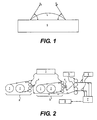
- Figure 1 is a drawing showing the contact angle ⁇ of a liquid droplet on a solid surface.
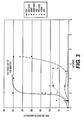
- Figure 2 is a schematic drawing of one embodiment of a converting process that may be used to produce paper products in the form of napkins in accordance with the present description.
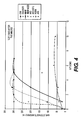
- Figure 3 is a graph showing, for the different hydrophobes of Example 1, the WAR in seconds to absorb 0.01 mL of liquid versus the amount of hydrophobe added in pounds per ton (0.5 g/kg).
- Figure 4 is a graph showing, for the different hydrophobes of Example 1, the WAR in seconds to absorb 0.1 mL of liquid versus the amount of hydrophobe added in pounds per ton (0.5 g/kg).
- Figure 5 is a graph showing, for the different hydrophobes of Example 1, the initial contact angle in degrees versus the amount of hydrophobe added in pounds per ton (0.5 g/kg).
- Figure 6 is a graph displaying the results of the contact angle tests from Example 2 by plotting the measured contact angle in degrees versus the time of contact in minutes.
- Figure 7 is a graph displaying the results of the contact angle tests from Example 3 by plotting the measured contact angle in degrees versus the time of contact in minutes.
- a paper product is produced from at least two plies, the first of which comprises at least one wetting resistant compound (hereinafter called “wetting resistant ply” or “hydrophobic ply”) and the second of which possesses greater absorbency than the first ply (hereinafter called “absorbent ply”).
- the paper product may possess improved strike through resistance when compared to paper products without at least one wetting resistant ply.
- the two plies are joined together by a technique that does not provide paths allowing penetration of moisture though the composite structure, such as glue lamination with or without point-to-point embossing.
- the at least one absorbent ply may be microembossed.
- the at least one absorbent ply and the at least one wetting resistant ply may be separately microembossed.
- the term "ply,” as used herein, refers to a monolithic or stratified fibrous structure that is integrally formed on a papermaking machine.
- the paper plies may be manufactured on any type of papermaking machine.
- the production of paper plies and products occurs by one of three methods: (1) conventional wet press (CWP) with wet creping and embossing, as described in U.S. Patent No. 5,048,589 ; (2) CWP with dry creping and embossing, as also described in U.S. Patent No. 5,048,589 ; and (3) through-air-drying (TAD) with or without creping, as described in U.S. Patent Nos. 3,301,746 and 3,905,863 .
- CWP wet press
- TAD through-air-drying
- Paper plies are generally manufactured by suspending cellulosic fibers in an aqueous medium to form a web and then removing most of the liquid.
- the resulting paper derives some of its structural integrity from the geometric and mechanical arrangement of the cellulosic fibers in the web; however, most of the paper's strength is derived from hydrogen bonding that links the cellulosic fibers to one another.
- the degree of strength imparted by this inter-fiber bonding while necessary to the utility of the product, may result in a lack of perceived softness that is inimical to consumer acceptance.
- Creping may occur by affixing the cellulosic web to a Yankee dryer with an adhesive or adhesive/release agent combination and then scraping the web off the Yankee with a creping blade. By breaking a significant number of inter-fiber bonds, creping adds to and increases the perceived softness of the paper product. Creping, Yankee dryers, adhesive agents, release agents, and creping blades are described in more detail in U.S. Patent Nos. 5,961,782 , 6,207,011 , and 6,663,942 .
- Another method of increasing the perceived softness of a paper product is to add chemical softening and debonding agents.
- the agents may be either added to the wet end of the papermaking process, sprayed on the paper web after it is formed but before it is dried, sprayed on the paper web after it is formed and after it is dried, or combinations of these.
- the degree of increased perceived softness is generally lessened by spraying versus wet end addition.
- Papermaking fibers used to form the paper products described herein include cellulosic fibers commonly referred to as wood pulp fibers, which may be liberated in a pulping process from either or both of softwood (gymnosperm or coniferous) trees or hardwood (angiosperm or deciduous) trees.
- the papermaking fibers comprise a mixture of hardwood kraft and softwood kraft fibers. The particular type of tree or trees and pulping process used to produce fibers are not critical to the success of the paper products described herein.
- Cellulosic fibers that may be used also include non-woody fibers such as those from sabai grass, rice straw, banana leaves, paper mulberry (i.e., bast fiber), abaca leaves, pineapple leaves, esparto grass leaves, and the genus hesperalae in the family agavaceae.
- artificial or synthetic fibers may be used in varying percentages, including, glass fiber, nylon fiber, acrylic fiber, polyester fiber, rayon fiber, polystyrene fiber, carbon fiber, and polyacrylamide fiber.
- recycled fibers from a hardwood, softwood, non-woody sources, and/or artificial or synthetic fibers may also be used in varying percentages.
- the papermaking fibers may be liberated from their source material by any one of a number of chemical pulping processes known to one of ordinary skill, including sulfate, sulfite, polysulfite, and soda pulping.
- the pulp may be bleached by chemical means including chlorine, chlorine dioxide, and oxygen.
- the papermaking fibers may also be liberated from their source material by any one of a number of chemical/mechanical pulping processes know to one of ordinary skill, including mechanical pulping, thermomechanical pulping, and chemithermomechanical pulping.
- the pulp may be bleached by chemical means including alkaline peroxide and ozone bleaching.
- the paper product as described herein comprises at least one ply comprising at least one wetting resistant compound.
- a wetting resistant compound is a substance that will bond to cellulose and also repel a liquid or liquids.
- the cellulosic bond may be either electrostatic or covalent or both.
- Wetting resistant compounds suitable for use are selected from the group consisting of alkenyl ketene dimer (ALKD), alkyl ketene dimer (AKD), fluorocarbons, alkenyl succinic anhydride (ASA), hydrophobically modified anionic polymer (HMAP), ethylene-acrylic acid (EAA), and neutral rosin emulsions.
- the at least one wetting resistant compound is an ASA emulsion.
- the at least one wetting resistant compound is AKD, such as NovaSize® AKD 3016 made by Georgia-Pacific Corp.
- the at least one wetting resistant compound is ALKD.
- the at least one wetting resistant compound may form different chemical species and/or may become chemically bound to the paper fibers as discussed in " A New Method for the Analysis of AKD Oligomers in Papermaking Systems" (Nordic Pulp and Paper Research Journal, Vol. 17, March 2002 ). As discussed in that paper, AKD may react with cellulose to give bound AKD; in addition, AKD may react with water to form dialkyl ketones or may react with itself to form oligomers.
- fluorochemicals suitable for use include fluorochemicals.
- the fluorochemical is a polymeric fluoro compound, such as perfluorinated polyacrylates and perfluorinated polyurethanes.
- the fluorochemical is a relatively small molecule, such as a linear perfluoropolyethers (PFPEs) and molecules possessing single or twin perfluorinated chains, and may be in the form of carboxylate and phosphate salts, including amphoteric and ammonium salt derivatives of these.
- PFPEs linear perfluoropolyethers
- the fluorochemical comprises a perfluoroalkyl chain or chains attached to a polar functional group.
- the fluorochemical is polytetrafluoroethylene, such as, for example, TEFLON® sold by the DuPont Company of Wilmington, Delaware.
- the fluorochemical is a perfluoroalkyl substituted carboxylic acid, such as, for example, Ciba® LODYNE® 2000 sold by Ciba Specialty Chemicals of Tarrytown, New York.
- the pH of the papermaking system used to produce the at least one wetting resistant ply may influence the choice of and the retention of the at least one wetting resistant compound.
- the at least one wetting resistant compound is a hydrophobe in the form of a neutral rosin at an acidic pH.
- the at least one wetting resistant compound is a hydrophobe in the form of ASA at a slightly acidic to alkaline pH.
- the least one wetting resistant compounds is a hydrophobe in the form of AKD at about a neutral to an alkaline pH.
- Appropriate wetting resistant compounds for use a different pH levels will be readily apparent to the skilled artisan.
- appropriate pH levels for use with different wetting resistant compounds will also be readily apparent to the skilled artisan.
- the at least one wetting resistant compound may be present in an amount ranging from 1 to 6 g/kg (2 to 12 pounds per ton). In general, larger amounts of the at least one wetting resistant compound are used in a furnish with a higher amount of fiber fines and other anionic trash; cleaner furnish generally requires lesser amounts of the at least one wetting resistant compound.
- the at least one wetting resistant compound may be present in 1 to 1.5 g/kg (2 to 3 pounds per ton) of very clean furnish.
- the at least one wetting resistant compound may be present in 1.5 to 2 g/kg (3 to 4 pounds per ton) of clean furnish.
- the at least one wetting resistant compound may be present in 4 to 5 g/kg (8 to 10 pounds per ton) of dirty furnish or furnish containing greater than 50% of recycled fibers.
- the at least one wetting resistant compound is generally added to the wetting resistant ply as a dilute solution of solids. In one embodiment, the at least one wetting resistant compound is added as a solution of about 1% solids. In another embodiment, the at least one wetting resistant compound is added as a solution of about 2% solids.
- the at least one wetting resistant compound may impart increased release properties to the wetting resistant ply.
- release agent flow on a Yankee may be decreased or set to zero.
- adhesion agent flow on a Yankee may be maintained or increased to compensate for the increased release properties of the at least one wetting resistant agent.
- higher amounts of the at least one wetting resistant compound are used to compensate for a dirty furnish, little or no release agent will be included on the Yankee while adhesion agent flow may be increased.
- the at least one wetting resistant compound may also possess an increased charge density.
- a wetting resistant compound with an increased charge density is called a promoted wetting resistant compound.
- a promoted wetting resistant compound may facilitate bonds with anionic or cationic species in the paper furnish.
- a promoted wetting resistant compound has an increased negative charge density such that it is substantially anionic.
- a promoted wetting resistant compound may be produced by any process that attaches to the wetting resistant compound a substituent group or groups with substantial cationic or anionic nature.
- the at least one wetting resistant compound may be prepared or stabilized by emulsifying the at least one wetting resistant compound with water and/or starch.
- an at least one hydrophobe is prepared by emulsifying AKD with water.
- an at least one hydrophobe is prepared by emulsifying AKD with starch in water.
- an at least one hydrophobe is prepared by emulsifying ASA with water.
- an at least one hydrophobe is prepared by emulsifying ASA with starch in water.
- Each of the foregoing embodiments also contemplate the preparation of at least one hydrophobe by emulsifying promoted AKD or ASA with water and/or starch.
- the at least one wetting resistant compound may be introduced to the ply comprising at least one wetting resistant compound at many or multiple points during the papermaking process. Moreover, different at least one wetting resistant compounds may be introduced to the ply at the same or different points during the papermaking process. Furthermore, different at least one wetting resistant compounds may be introduced to the ply at many or multiple points during the papermaking process. Multiple points of the papermaking process may facilitate the addition of at least one hydrophobe and at least one oleophobe to the wetting resistant ply. Degree of coverage and/or uniformity of the at least one wetting resistant compound on or throughout the wetting resistant ply may influence the point(s) of introduction, as well as the speed of the papermaking process.
- the at least one wetting resistant compound is added to the stuffbox. In another embodiment, the at least one wetting resistant compound is added to the suction side of the machine chest pump. In a further embodiment, the at least one wetting resistant compound is sprayed onto the ply before the suction pressure roll. In yet another embodiment, the at least one wetting resistant compound is sprayed onto the ply before the Yankee hood. In yet a further embodiment, the least one wetting resistant compound is added either to the stuff box or the suction side of the machine chest pump, and sprayed onto the ply either before the suction pressure roll or before the Yankee hood. In another embodiment, the at least one wetting resistant compound is sprayed onto the ply after the Yankee hood. In a further embodiment, the at least one wetting resistant compound is added to the suction side of the machine chest pump and sprayed onto the ply after the Yankee hood.
- the wetting resistant ply described herein may also comprise at least one retention aid.
- a retention aid is a compound that tends to improve the retention of cellulosic fiber fines and/or the at least one wetting resistant compound in the wetting resistant ply, rather than allow the fiber fines to pass through the forming wire.
- the retention aid operates by neutralizing anionic trash and fines present in a paper furnish.
- the retention aid of the latter embodiment may neutralize anionic trash through a cationic charge preventing an attraction between the trash and the at least one wetting resistant compound.
- the retention aid operates by creating or facilitating an attraction or bond between the fibers of the paper furnish and the at least one wetting resistant compound.
- the retention aid of the latter embodiment may facilitate such an attraction or bond through a combination of high molecular weight, such that it becomes trapped in the paper furnish and retained in the paper web as it is being formed, and of cationic nature, such that it attracts any anionic trash to which the at least one wetting resistant compound may also have been attracted.
- the retention aid operates both by neutralizing anionic trash and by facilitating an attraction between the paper fibers and the at least one wetting resistant compound.
- the retention aid may be introduced in a number of places during the papermaking process.
- the at least one retention aid is introduced to the wetting resistant ply by its addition to the suction side of the machine chest pump at the wet end of the papermaking process, either before or after the addition of the at least one wetting resistant compound.
- the at least one retention aid is introduced to the wetting resistant ply after the fan pump, either before or after the addition of the at least one wetting resistant compound.
- Retention aids suitable for use include polyamines, acrylamides, diallyl dimethyl ammonium chloride (DADMAC), polyethylenimines, and cationic coagulants.
- the retention aid is a cationic coagulant, such as Bufloc® 5031 sold by Buckman Laboratories, Inc., of Memphis, TN.
- the retention aid is a cationic polyacrylamide, such as Butloc® 2149 sold by Buckman Laboratories, Inc.
- the at least one retention aid may be added in an amount ranging from 0 to 6 g/kg (0 to 12 pounds per ton) of fiber. In one embodiment, the at least one retention aid is added in an amount of 0.5 to 1.5 g/kg (1 to 3 pounds per ton) of fiber. In another embodiment, the at least one retention aid is added in an amount of 1 g/kg (2 pounds per tons) of fiber. In a further embodiment, the at least one retention aid is added in an amount of 2.5 to 3.5 g/kg (5 to 7 pounds per ton) of fiber. In yet another embodiment, the at least one retention aid is added in an amount of 3 g/kg (6 pounds per ton) of fiber. In yet a further embodiment, the at least one retention aid is added in an amount of 5 g/kg (10 pounds per ton) of fiber.
- the paper product described herein also comprises at least one absorbent ply.
- the absorbent ply possesses greater absorbency than the wetting resistant ply.
- the at least one absorbent ply is made from the same composition as the at least one wetting resistant ply but contains a decreased amount of the at least one wetting resistant compound.
- the at least one absorbent ply is made from the same composition as the at least one wetting resistant ply but contains a decreased amount of the at least one wetting resistant compound and an increased amount of any at least one wet strength additive.
- the at least one absorbent ply is made from the same composition as the at least one wetting resistant ply but contains none of the at least one wetting resistant compound.
- the at least one absorbent ply is made from the same composition as the at least one wetting resistant ply but contains none of the at least one wetting resistant compound and an increased amount of any at least one wet strength additive.
- One or more of the paper plies may comprise at least one wet strength additive.
- the additive is introduced to the at least one wetting resistant ply by its addition to the suction side of the machine chest pump at the wet end of the papermaking process, either before or after the addition of the at least one wetting resistant compound.
- Wet strength additives suitable for use include aliphatic and aromatic aldehydes, urea-formaldehyde resins, melamine formaldehyde resins, and polyamide-epichlorohydrin resins.
- the at least one wet strength additive is a polyamide-epichlorohydrin (PAE) resin.
- PAE polyamide-epichlorohydrin
- Such resins and the process of making the resins are described in U.S. Patent Nos. 3,700,623 and 3,772,076 .
- Additional description of polyamide-epichlorohydrin resins is given in Espy, "Chapter 2: Alkaline-Curing Polymeric Amine-Epichlorohydrin Resins," Wet Strength Resins and TheirApplication (L. Chan, ed., 1994 ). Further description and examples of polyamide-epichlorohydrin resins is given in Westfelt, Cellulose Chemistry and Technology, Vol. 13, p. 813 (1979 ).
- the at least one wet strength additive is a temporary wet strength agent.
- Useful temporary wet strength agents include aliphatic and aromatic aldehydes including glyoxal, malonic dialdehyde, succinic dialdehyde, glutaraldehyde and dialdehyde starches, as well as substituted or reacted starches, disaccharides, polysaccharides, chitosan, or reacted polymeric reaction products of monomers or polymers having aldehyde groups, and optionally, amine groups.
- Representative nitrogen containing polymers which can suitably be reacted with the aldehyde containing monomers or polymers, include vinyl-amides, acrylamides, and related nitrogen containing polymers.
- the temporary wet strength resin may be any one of a variety of watersoluble organic polymers comprising aldehydic units and cationic units used to increase dry and wet tensile strength of a paper product. Such resins are described in U.S. Patent Nos. 4,675,394 ; 5,240,562 ; 5,138,002 ; 5,085,736 ; 4,981,557 ; 5,008,344 ; 4,603,176 ; 4,983,748 ; 4,866,151 ; 4,804,769 ; and 5,217,576 . Modified starches sold under the trademarks CO-BOND® 1000 and CO-BOND® 1000 Plus, by National Starch and Chemical Company of Bridgewater, N.J., may also be used.
- a cationic aldehydic water soluble polymer may be prepared by preheating an aqueous slurry of approximately 5% solids maintained at a temperature of approximately 115.6°C (240°F) and a pH of about 2.7 for approximately 3.5 minutes. The slurry can be then quenched and diluted by adding water to produce a mixture of approximately 1.0% solids at less than 54.4°C (130°F).
- Temporary wet strength agents such as glyoxylated polyacrylamide can be used.
- Temporary wet strength agents such as glyoxylated polyacrylamide resins are produced by reacting acrylamide with diallyl dimethyl ammonium chloride (DADMAC) to produce a cationic polyacrylamide copolymer which is ultimately reacted with glyoxal to produce a cationic cross-linking temporary or semi- permanent wet strength resin, glyoxylated polyacrylamide.
- DADMAC diallyl dimethyl ammonium chloride
- Resins of this type are commercially available under the trade name of PAREZ® 631 NC, by Lanxess of Pittsburgh, PA. Different mole ratios of acrylamide/DADMAC/glyoxal can be used to produce cross-linking resins, which are useful as wet strength agents. Furthermore, other dialdehydes can be substituted for glyoxal to produce wet strength characteristics. According to one embodiment, the pulp contains up to about 15 g/kg (30 lbs/ton) of temporary wet strength agent. According to another embodiment, the pulp contains from 0 to 5 g/kg (10 lbs/ton) of a temporary wet strength agent.
- the at least one wet strength additive may be present in an amount ranging from 0 to 15 g/kg (0 to 30 pounds per ton). In one embodiment, 1 pound (0.5 g/kg) of the at least one wet strength additive is added per ton of fiber. In another embodiment, about 2 pounds (1 g/kg) of the at least one wet strength additive are added per ton of fiber. In a further embodiment, 4 pounds (2 g/kg) of the least one wet strength additive are added per ton of fiber. In yet another embodiment, 10 pounds (5 g/kg) of the at least one wet strength additive are added per ton of fiber. In yet a further embodiment, 20.5 pounds (10.25 g/kg) of the at least one wet strength additive are added per ton of fiber.
- the at least one wet strength additive may affect the amount of retention of the at least one wetting resistant compound on the paper fibers. In one such embodiment, 1 to 2 pounds (0.5 to 1 g/kg) of the at least one wet strength additive are added per ton of fiber.
- One or more of the paper plies may include a dry strength agent.
- dry strength agents include, starch, guar gum, polyacrylamides, and carboxymethyl cellulose.
- the dry strength agent is carboxymethyl cellulose, an example of which is sold under the trade name HERCULES CMC, by Hercules Inc. of Wilmington, Delaware.
- the pulp contains from 0 to 7.5 g/kg (15 lbs/ton) of dry strength agent.
- the pulp contains from 1 to 2.5 g/kg (5 lbs/ton) of dry strength agent.
- One or more of the paper plies may include a debonder and/or softener. These debonders and softeners may be incorporated into the pulp or sprayed upon the web after its formation. According to one embodiment, softening and debonding agents are added in an amount of not greater than about 2% by weight. According to another embodiment, softening and debonding agents are added in amount of not greater than about 1 % by weight. According to yet another embodiment, softening and debonding agents are added in an amount of greater than 0% but less than 0.4% by weight.
- the softener material is an imidazoline derived from partially acid neutralized amines.
- imidazoline derived from partially acid neutralized amines.
- Such materials are disclosed in U.S. Patent No. 4,720,383 . Also relevant are the following articles: Evans, Chemistry and Industry, 5 July 1969, pp. 893-903 ; Egan, J. Am. Oil Chemist's Soc., Vol. 55 (1978), pp. 118-121 ; and Trivedi et al., J. Am. Oil Chemist's Soc., June 1981, pp. 754-756 .
- Softeners are often available commercially as complex mixtures rather than as single compounds. While this discussion will focus on the predominant species, it should be understood that commercially available mixtures could generally be used.
- HERCULES 632 sold by Hercules, Inc. of Wilmington, Delaware, is a suitable softener material, which may be derived by alkylating a condensation product of oleic acid and diethylenetriamine. Synthesis conditions using a deficiency of alkylation agent (e.g., diethyl sulfate) and only one alkylating step, followed by pH adjustment to protonate the non-ethylated species, result in a mixture consisting of cationic ethylated and cationic non-ethylated species. Since only a minor proportion (e.g., about 10%) of the resulting amino or amidol salt cyclize to imidazoline compounds, the major portion of these chemicals are pH sensitive.
- alkylation agent e.g., diethyl sulfate
- pH adjustment to protonate the non-ethylated species result in a mixture consisting of cationic ethylated and cationic non-ethylated
- Quaternary ammonium compounds such as dialkyl dimethyl quaternary ammonium salts are also suitable, particularly when the alkyl groups contain from 14 to 20 carbon atoms. These compounds have the advantage of being relatively insensitive to pH.
- the paper plies may also comprise a class of cationic softeners comprising imidazolines, which have a melting point of 0°C to 40°C when formulated with aliphatic polyols, aliphatic diols, alkoxylated aliphatic diols, alkoxylated polyols, alkoxylated fatty acid esters, or a mixture of these compounds.
- the softener may comprise an imidazoline moiety formulated in aliphatic polyols, aliphatic diols, alkoxylated aliphatic diols, alkoxylated aliphatic polyols, alkoxylated fatty acid esters, or a mixture of these compounds is dispersible in water at a temperature of 1 °C to 40°C.
- the organic compound component of the softener may be selected from aliphatic diols, alkoxylated aliphatic diols, aliphatic polyols, alkoxylated aliphatic polyols, alkoxylated fatty esters, esters of polyethylene oxides, or a mixture of these compounds having a weight average molecular weight of from 60 to 1500.
- the cold-water dispersed aliphatic diols may have a molecular weight of 90 to 150. According to another embodiment, the molecular weight of from 120 to 150.
- the diol is 2,2,4 trimethyl 1,3 pentane diol (TMPD) and the alkoxylated diol is ethoxylated 2,2,4 trimethyl 1,3 pentane diol (TMPD/EO).
- TMPD 2,2,4 trimethyl 1,3 pentane diol
- TMPD/EO ethoxylated 2,2,4 trimethyl 1,3 pentane diol
- the alkoxylated diol is TMPD (EO) n wherein n is an integer from 1 to 7, inclusive.
- Dispersants for the imidazoline moiety are alkoxylated aliphatic diols and alkoxylated polyols.
- a suitable imidazoline softener is sold by Hercules, Inc. of Wilmington, Delaware, under the trade name PROSOFT 230.
- Biodegradable softeners can also be utilized.
- Representative biodegradable cationic softeners/debonders are disclosed in U.S. Patent Nos. 5,312,522 ; 5,415,737 ; 5,262,007 ; 5,264,082 ; and 5,223,096 . These compounds are biodegradable diesters of quaternary ammonia compounds, quaternized amine-esters, biodegradable vegetable oil based esters functionalized with quaternary ammonium chloride, and diester dierucyldimethyl ammonium chloride are representative biodegradable softeners.
- One or more of the paper plies may include at least one particulate filler.
- Useful particulate fillers include clay, calcium carbonate, titanium dioxide, talc, aluminum silicate, silica, calcium silicate, calcium sulfate, as well as the "ash" normally occurring in recycled fibers.
- One or more of the paper plies may include at least one other additive, including sizing agents, absorbency aids, opacifiers, brighteners, optical whiteners, dyes, colorants, or starches.
- the paper plies described herein may be manufactured according to any of the papermaking methods previously discussed and others known to one of ordinary skill or later developed.
- at least one paper ply is made by CWP.
- at least one paper ply is made by TAD.
- at least one paper ply is made by a process that produces a ply with a relatively uniform pore structure.
- at least one paper ply is made by a process that produces a ply with a relatively uniform structure of relatively small pores.
- converting operations are generally carried out on reeled paper plies, a converting operation may also be added directly to the end of a papermaking process or processes. Converting includes operations such as calendering, embossing, plying, the application of treatment agents, heat treating, slitting, and folding.
- the paper product may be subjected to any of the recognized converting operations that are readily apparent to the skilled artisan.
- Either or both of the at least one absorbent ply and the at least one wetting resistant ply may be calendered. In one embodiment, both the at least one absorbent ply and the at least one wetting resistant ply are separately calendered. In another embodiment, both the at least one absorbent ply and the at least one wetting resistant ply are separately calendered to possess a TMI friction value of at 0.27 to 0.59 In a further embodiment, the either or both of the at least one absorbent ply and the at least one wetting resistant ply possess a TMI friction value of 0.43. TMI friction and tests for TMI friction are discussed and described in U.S. Patent Application Publication No. 2004/0168780 .
- the caliper of the paper plies or products of the present description may be measured, for example, by using a Model 89-I JR, 89-II JR, or Progage Electronic Thickness Tester available from the Thwing-Albert Instrument Company of Philadelphia, Pennsylvania.
- the caliper is measured with a Model 89-II Tester on a sample consisting of a stack of eight sheets of plies using a 5.08 cm (two-inch) diameter anvil at a 539.+-.10 gram dead weight load with a 0.231 in/sec descent rate.
- the caliper is measured with a Model 89-II Tester on a sample consisting of a stack of eight completely unfold napkins made in accordance with the present description using a 5.08 cm (two-inch) diameter anvil at a 539 ⁇ 10 gram dead weight load with a 0.231 in/sec descent rate.
- Embossing is the act of mechanically working a substrate to cause the substrate to conform under pressure to the depths and contours of a patterned embossing roll.
- the paper web or ply is passed between a pair of emboss rolls that, under pressure, form contours within the surface of the web or ply.
- at least one of the two roller surfaces directly carriers the patterns to be transferred to the paper web or ply.
- Known configurations of this type include rigid-to-resilient and rigid-to-rigid embossing.
- a single or multi-ply substrate is passed through a nip formed between a first roll, the substantially rigid surface of which contains the embossing pattern as a multiplicity of protuberances and/or depressions arranged into an aesthetically pleasing manner, and a second roll, the substantially resilient surface of which may either be smooth or also contain a multiplicity of protuberances and/or depressions that cooperate with the rigid surfaced patterned roll.
- Rigid rolls generally comprise either a steel body that is directly engraved or a hard rubber coated surface (either directly coated or sleeved) that is laser engraved. While a directly engraved steel roll has a longer lifespan, its production may require significant lead time. Laser engraved sleeved rolls may require less production lead time, but often have a lifespan substantially less than that of a steel roll.
- Resilient rolls may comprise a steel core directly coated or sleeved with a resilient material and may or may not be engraved with a pattern. If a pattern is present, the pattern may be either a mated, matched-mated, or a non-mated pattern with respect to the pattern carried on the rigid roll.
- a single-ply or multi-ply substrate is passed through a nip formed between two substantially rigid rolls.
- the surfaces of both rolls contain the pattern to be embossed as a multiplicity of protuberances and/or depressions arranged into an aesthetically pleasing manner.
- the protuberance and/or depressions of the second roll cooperate with those patterned in the first rigid roll.
- the first rigid roll is generally comprises either a steel body that is directly engraved or a hard rubber coated surface (either directly coated or sleeved) that is laser engraved.
- the second rigid roll generally comprises a steel body that is directly engraved or a hard rubber covered surface (either directly coated or sleeved) possessing a matching or mated pattern that is either conventionally engraved or laser engraved.
- the paper product may be embossed using any art recognized or after-developed embossing pattern.
- the embossing process may be used not only to increase bulk and absorbance, but also to ply the product. Embossing may also be used to improve the aesthetic appearance of the paper product.
- the paper products are embossed according to U.S. Patent No. 5,415,918 .
- the paper plies of the paper product may be microembossed.
- Microembossing is an embossing process that comprises embossing a paper ply using emboss elements of less than about 1 millimeter in size.
- Microembossing is generally used to impart bulk to a paper ply, although it may also be used to impart an aesthetic design.
- a microembossed ply possesses 40 to 60 dots per square centimeter.
- Either or both of the at least one absorbent ply and the at least one wetting resistant ply are microembossed. In one embodiment, both the at least one absorbent ply and the at least one wetting resistant ply are separately microembossed. In another embodiment, the at least one absorbent ply is microembossed and the at least one wetting resistant ply is not microembossed. In a further embodiment, the at least one absorbent ply is not microembossed and the at least one wetting resistant ply is microembossed. In yet another embodiment, the at least one absorbent ply is microembossed and comprises at least one wet strength agent in a greater amount than the at least one wetting resistant ply.
- both the at least one absorbent ply and the at least one wetting resistant ply are separately microembossed and the at least one absorbent ply comprises at least one wet strength agent in a greater amount than the at least one wetting resistant ply.
- the at least one wetting resistant ply is not embossed and the at least one absorbent ply is microembossed and comprises at least one wet strength agent in a greater amount than the at least one wetting resistant ply.
- the paper plies of the paper product may be macroembossed.
- Macroembossing is an embossing process that comprises embossing a paper ply using emboss elements of greater than about 1 millimeter in size. Macroembossing is generally used to impart an aesthetic design to a paper ply, although it may also be used for plying and/or to increase bulk.
- the paper product may comprise plies that have been separately embossed before plying or embossed as a whole after plying or both.
- the at least one wetting resistant ply and the at least one absorbent ply are separately microembossed before plying, and then macroembossed at the same time after plying.
- U.S. Patent Application Publication No. 2004/0168780 describes embossing processes that include one or both of microembossing and macroembossing.
- the paper plies may also be coin edged.
- Coin edging is generally used for plying the edges of a multi-ply paper product, although it may also be used to impart an aesthetic design and/or to increase bulk.
- the at least one hydrophobic ply and the least one wetting resistant ply are coin edged.
- the at least one wetting resistant ply and the least one absorbent ply are both macroembossed and coin edged.
- the at least one wetting resistant ply and the least one absorbent ply are separately microembossed, macroembossed together, and coin edged together.
- Plying is the act of joining two or more substrates.
- the plies of the paper product are produced separately, the plies are plied together to form the paper product.
- plying involves glue laminating the plies together.
- plying involves the mechanical ply bonding of the plies.
- plying involves hot melt gluing the plies together.
- plying involves emboss ply bonding the plies together.
- plying in the form of glue lamination may be accomplished by several different techniques.
- plying involves glue laminating in a point to flat configuration.
- plying involves glue laminating the plies together in a point to point configuration.
- a point to point configuration implies that the plies being glue laminated have been embossed or otherwise marked in some fashion as to create points, ridges, waves, lines, or some form of protrusion(s) that may either be registered together or nested to form the plied product.
- plying involves glue laminating the plies together in a point to point configuration with the Yankee or smoother side of the at least one wetting resistant ply on the outside.
- the glue may be applied by several different techniques.
- the glue for plying by glue lamination is rolled onto one ply. In another embodiment, the glue for plying by glue lamination is rolled onto the at least one wetting resistant ply. In a further embodiment, the glue for plying by glue lamination is rolled onto the points or tips of one ply after microembossing. In yet another embodiment, the glue for plying by glue lamination is rolled onto the points or tips of the at least one wetting resistant ply after microembossing. In yet another embodiment, the glue for plying by glue lamination is rolled onto the points or tips of the at least one absorbent ply after microembossing.
- Separate microembossing of the plies along with glue lamination in a point to point configuration may be carried out by one apparatus, such as the point to point embossing units sold by OMET S.R.L. of Lecco, Italy.
- Each of the embodiments described may also describe rolling glue for plying by glue lamination onto the point of tips of at least one ply after macroembossing, without or without microembossing.
- the glue or adhesive used for glue lamination may be any of those known to one of ordinary skill in the art.
- the glue is a water-based synthetic resin.
- the solids in the glue comprise more than 50% of a polyvinyl alcohol.
- the glue may comprise a polyamide-epichlorohydrin (PAE) resin.
- PAE polyamide-epichlorohydrin
- the converting process for the paper products may also comprise a slitter apparatus to cut a given paper web into multiple webs.
- the converting process may further comprise a folder apparatus, if the paper products to be made require folding before packaging and/or shipment. Folding may be carried out by an apparatus manufactured by, for example, C. G. Bretting Manufacturing Co., Inc.
- Figure 2 reveals one embodiment of a converting process that may be used to produce paper napkins in accordance with one embodiment of this description.
- Two rolls of absorbent ply 1 and two rolls of wetting resistant ply 2 are pre-calendered and loaded into the two sections A and B of the converting apparatus.
- Each of the plies 1 and 2 are passed through separate microembossing stations 3 before being passed through plying stations 4 that glue laminate the two plies together in a point to point configuration.
- the glue laminated product is then carried to the macroembossing stations 5 that may impart one or both of a central pattern and edge pattern to the paper.
- the macroembossed product is then passed through slitter assemblies 6 to create two strips of product per section of the converting apparatus.
- the four strips of product are then introduced into the folder 7 that creates finished napkin products 8.
- a paper napkin is prepared from one absorbent ply and one hydrophobic ply with AKD as the at least one hydrophobe.
- the two plies are calendered to a TMI friction of about 0.43, separately microembossed with 40 to 60 dots per square centimeter, and then glue laminated in a point to point configuration.
- the laminated product is then macroembossed, slit, and folded into the finished napkin.
- the napkin possesses a caliper of at least about 110 mils/ 8 sheets and a GM modulus between 20 to 50g/% stretch for a 2.54 cm (1 inch) sample.
- WAR water absorption rate
- Strike through is a test to determine the ability of a paper product or ply to prevent the passage of water through its thickness, graded on a pass/fail basis.
- Contact angle is the angle at which a quantity of water contacts the surface of a paper product or ply, a measurement of its surface energy.
- the water absorption rate (WAR) of a paper product or ply is the time it takes for a drop of water to wick into the paper product or ply such that the liquid is no longer visible as a distinct drop.
- the WAR is almost instantaneous, i.e., less than two seconds.
- the at least one absorbent ply may exhibit a WAR similar to that of the paper plies of commercially available paper napkins. In one embodiment, the WAR of the at least one absorbent ply is less than about two seconds. In another embodiment, the WAR of the at least one absorbent ply is less than about five seconds.
- the WAR of the at least one absorbent ply is less than about ten seconds. In yet another embodiment, the WAR of the least one absorbent ply is less than the WAR of the at least one wetting resistant ply. In another embodiment, the absorbency of the at least one absorbent ply is greater than the absorbency of the at least one wetting resistant ply because the WAR of the at least one absorbent ply is less than the WAR of the at least one wetting resistant ply.
- the at least one wetting resistant ply may exhibit a longer WAR than the paper plies of commercially available paper napkins.
- the WAR of the wetting resistant ply is greater than about 5 seconds.
- the WAR of the wetting resistant ply is greater than about 50 seconds.
- the WAR of the wetting resistant ply is greater than about 100 seconds.
- the WAR of the wetting resistant ply is greater than about 200 seconds.
- the WAR of the at least one wetting resistant ply is greater than the WAR of the at least one absorbent ply.
- One test for WAR involves conditioning a sample of the ply or plies to be tested to about 23°C and about 50% relative humidity.
- the conditioned sample is secured lightly in a frame without substantial stretching in either the machine or cross directions, but with sufficient tension in all directions such that the sample is smooth.
- the sample is suspended in the frame horizontally such that both surfaces of the sample are not in contact with any other surface; that is, both surfaces of the sample contact only air, such a third surface in contact with the sample can significantly influence moisture penetration delay times.
- the surface side of the sample to be tested is oriented upwardly and a droplet of colored water is placed gently thereon. In one version of the test, the droplet is approximately 0.01 mL. In another version of the test, the droplet is approximately 0.1 mL.
- a timer is started simultaneously with the placement of the colored water droplet on the surface and is stopped when the droplet is completely absorbed into the sheet and no longer projects upwardly from the surface of the sample as observed with the naked eye.
- the time is recorded as the WAR.
- WAR is not necessarily limited to water or aqueous solutions, in spite of its name.
- Strike through is a test to determine the ability of a paper product or ply to prevent the passage of water or other liquid through its thickness, graded on a pass/fail basis.
- a paper product or ply passing the strike through test is said to exhibit moisture strike through resistance.
- One test for strike through involves first curing a sample ply for about 5 minutes at about 105 °C, which is then cooled for about 5 minutes. Second, a 4-ply test sample is constructed on blotter paper, including (1) a non-sample ply on the top; (2) two sample plies in the middle; and (3) a non-sample ply on the bottom that contacts the blotter paper.
- the 4-ply test sample includes (1) an absorbent ply on the top; (2) two wetting resistant plies in the middle; and (3) an absorbent ply on the bottom.
- the 4-ply test sample is prepared by folding the napkin such that the wetting resistant plies are on the inside of the folded test sample and the absorbent plies are on the outside. Third, a moderate amount of colored water (about 0.3g or 5 drops) is poured or placed onto the top ply of the test sample. After about five seconds, the test sample is moved to observe the water wet-through trace on the surface of the blotter paper.
- a paper product may be said to exhibit strike through resistance if it passes the described strike-through test.
- the test may also be performed with other liquids, such as oils and emulsions, for which knowledge of strike through resistance is desired. As such, strike through is not limited to water or aqueous solutions.
- a contact angle test may provide useful information about the water or liquid resistance of a given paper ply.
- a contact angle is defined as the angle between a tangent to a liquid droplet surface at its air/liquid interface at the droplet's line of contact with a solid and the solid substrate surface upon which the droplet rests (as measured through the liquid).
- a contact angle may be measured at any point at the line of contact of the three phases: air, liquid, and solid.
- Contact angle refers to the contact angles of a paper ply with water or other liquid at room temperature as measured with a goniometer.
- the contact angle is one method of measuring the surface free energy of a ply.
- plies with higher surface free energies have higher initial contact angles and increased moisture strike through resistance.
- An initial contact angle of 0° represents a lack of moisture strike through resistance.
- the at least one absorbent ply exhibits an initial contact angle of about 0°. In another embodiment, the at least one absorbent ply exhibits an initial contact angle less than the initial contact angle of the at least one wetting resistant ply.
- Any suitable goniometer may be employed; one example is a goniometer available from Rame-Hart Inc., operated with a Panasonic® camera model WV-BP312 and Java-based software to measure the initial contact angle. Video signals may also be recorded at multiple time intervals after contacting the droplet to the surface in order to measure the change in contact angle over time.
- an initial contact angle of greater than 90° reveals a ply that may exhibit increased moisture strike through resistance.
- the wetting resistant ply exhibits an initial contact angle of at least about 80°.
- the wetting resistant ply exhibits an initial contact angle of at least about 90°.
- the wetting resistant ply exhibits an initial contact angle of at least about 100°.
- the wetting resistant ply exhibits an initial contact angle of at least about 110 °.
- the wetting resistant ply exhibits an initial contact angle of at least about 130°.
- the wetting resistant ply exhibits an initial contact angle greater than the initial contact angle of the at least one absorbent ply.
- a ply that maintains a high contact angle over the time of exposure to moisture also may be said to exhibit moisture strike though resistance.
- the wetting resistant ply exhibits a contact angle of at least 70° after contact with liquid for about five minutes. In another embodiment, the wetting resistant ply exhibits a contact angle of greater than 80° for five minutes after contact. In a further embodiment, the wetting resistant ply exhibits a contact angle of greater than 90° for five minutes after contact. In yet another embodiment, the wetting resistant ply exhibits a contact angle of greater than 110° for five minutes after contact.
- the wet tensile strength of a paper ply or paper product according to the present disclosure may be measured using a 7.62 cm (three-inch) wide strip of sample that is folded into a loop, clamped in a special fixture termed a Finch Cup, then immersed in water. From a sample is cut two CD specimens, 7.62 cm (3 inches) wide by at least 11.4 cm (4.5 inches) long.
- the Finch Cup which is available from High-tech Manufacturing Services, Inc. of Vancouver, Washington, is mounted onto a tensile tester with the flange of the Finch Cup clamped by the tester's lower jaw and the ends of tissue loop clamped into the upper jaw of the tensile tester.
- the sample is immersed in water that has been adjusted to a pH of 7.0 ⁇ 0.1 and the tensile is tested after a 5 second immersion time. Normally the cross direction wet tensile is tested, as the strength in this direction is generally lower than that of the machine direction and the tissue is more likely to fail in use in the cross-machine direction.
- the wet tensile strength of a "cured" or aged sample may be measured, to determine the effect, if any, on time and wet tensile strength for a given ply or product.
- Tensile strength of a ply or paper product produced in accordance with the present disclosure may be measured in the machine direction and cross-machine direction on a tensile tester with the gauge length set to 7.62 cm (3 inches).
- the area of tissue tested is assumed to be 7.62 cm (3 inches) wide by 7.62 cm (3 inches) long (the distance between the grips).
- the length of the samples may be the distance between lines of perforation, in the case of machine direction tensile strength, and the width of the samples is the width of the roll, in the case of cross-machine direction tensile strength.
- the maximum load and stretch are recorded for each direction. The results are reported in units of "grams per 7.62 cm (3 inches)" or "g/3 in.”; a more complete rendering of the units would be "grams per 7.62 cm (3 inches) by 7.62 cm (3 inches) strip.”
- the break modulus (also referred to as tensile stiffness, stiffness modulus, or tensile modulus) may be determined by the procedure for measuring tensile strength and stretch described above.
- the modulus of a ply or paper product is the peak load divided by the stretch at the peak.
- the geometric mean (GM) modulus may be determined by taking the square root of the product of the machine direction modulus and the cross direction modulus, and the overall GM modulus may be determined by averaging the GM modulus for multiple replicates on the same sample.
- the following five hydrophobes were evaluated for use as the at least one hydrophobe in the hydrophobic ply: EAA, HMAP, AKD, rosin, and ASA.
- Paper plies were made on a pilot scale papermaking machine with 20% refined softwood fibers (Marathon, 480 CSF, 42 minutes) and 80% refined hardwood fibers (Aracruz, 500 CSF, 10 minutes open). The paper plies were dried on a Yankee dryer using a 10° creping blade or a square blade, depending on the crepe structure. A coating of 90% Cevol® 09-523, 5% Hercules 1184, and 5% Hercules 1145 was applied to the Yankee dryer for all samples. After drying, the paper plies were lightly calendered.
- the EAA used in Trial One was prepared from PrimacorTM 5980 supplied by Dow Chemical of Midland, Michigan. A 2L glass beaker was charged with 1 L deionized water, to which 40.70g of sodium hydroxide pellets (1.1 equivalents of acrylic acid content) were added during rapid mechanical stirring with a plastic rotor. After the sodium hydroxide dissolved and the temperature of the solution fell below 40 °C, 333g of PrimacorTM 5980 were added during rapid stirring, after which the temperature of the solution was gradually raised to 92 °C. The solution then formed a bluish-white EAA emulsion and was cooled to about 50 to about 60°C for storage.
- the HMAP used in Trial One was prepared from Chevron® PA-18 sodium salt supplied by Chevron. In a steam jacketed kettle, 56.76g (1.42 mol) of sodium hydroxide pellets were dissolved in 15 L of deionized water, to which 227g (0.66 mol) of Chevron® PA-18 were added during vigorous stirring. The temperature of solution was gradually raised to 85 °C and maintained until a clear HMAP fluid was formed.
- the AKD used in Trial One was Novasize AKDTM 3016 from Georgia-Pacific Chemicals, delivered as a 16% total solids solution and diluted to about 1% solids prior to addition to the fiber furnish.
- the neutral rosin used in Trial One was NovamaxTM rosin from Georgia-Pacific Chemicals, delivered as a 34.7% total solids solution and diluted to about 1% solids prior to addition to the fiber furnish.
- the ASA used in Trial One was NovasizeTM ASA BZ38 from Georgia-Pacific Chemicals, delivered as a 34.7% total solids solution and diluted to about 1 to about 2% solids prior to addition to the fiber furnish and after emulsification with NovasizeTM EML 1520 from Georgia-Pacific Chemicals.
- the ASA emulsion used was prepared by mixing 280g water and 60.0g NovasizeTM EML 1520 in a blender at low speed, to which 60.0g was NovasizeTM ASA BZ38 was solely added with care to avoid direct contact of the ASA with the blender walls and blades.
- the resulting composition was mixture at high speed for four minutes to give a 15% by weight ASA emulsion, which was then diluted with cold water to about 1 to about 2% solids.
- the emulsion prepared in this manner possessed sufficient stability to be used within 4 to 5 hours.
- Figure 3 shows for the different hydrophobes the WAR in seconds to absorb 0.01 mL of liquid versus the amount of hydrophobe added in g/kg (pounds per ton). As noted by Figure 3 , the WAR test ended after 300 seconds; plies with WAR times greater than 300 seconds are listed as "300.0+" in Table 2.
- Figure 4 shows for different hydrophobes the WAR in seconds to absorb 0.1 mL of liquid versus the amount of hydrophobe added in g/kg (pounds per ton). As noted by Figure 4 , the WAR test ended after 300 seconds; plies with WAR times greater than 300 seconds are listed as "300.0+" in Table 2.
- Figure 5 shows for different hydrophobes the initial contact angle in degrees versus the amount of hydrophobe added in pounds per ton.
- the test samples with ASA at 1 g/kg (2 lb/T), AKD at 1 g/kg (2 lb/T), and AKD at 2 g/kg (4 lb/T) each showed an initial contact angle about 90°.
- a two-ply paper product in accordance with the present description was produced in a full-scale CWP mill. Both paper plies were manufactured according to the parameters given in Table 5 to achieve the listed target, minimum, and maximum physical properties, and possess the listed measured physical properties, given in Table 4.
- a reel of the absorbent ply was made first and loaded onto a rewinder.
- the hydrophobic ply was then produced (with the AKD being added to the stuffbox and the WSR being added at the suction side of the machine chest pump) and plied (Yankee side out) with the absorbent ply reel such that the absorbent ply was on the outside.
- the plied product was then slit on the rewinder to produce ten 2-ply, 101.6 cm (40") diameter, 61.0 cm (24”) wide rolls.
- the contact angle of the hydrophobic ply side of the sample product was measured initially and at 1, 2, and 3 minutes after contact.
- Figure 6 displays the results of the contact angle tests by plotting the measured contact angle in degrees versus the time in minutes.
- Figure 6 displays the results from similar tests on a sample of the paper ply from Example One with 2 g/kg (4 pounds/Ton) AKD.
- Figure 6 reveals that hydrophobic plies produced in a mill have a smaller initial contact angle, and smaller contact angles over time, than hydrophobic plies produced on a pilot machine. The smaller WAR may be attributed to less AKD being retained in the mill-produced ply and that ply being made from a furnish with less clean fibers than the pilot machine plies.
- a two-ply paper product in accordance with the present description was produced on a full-scale CWP papermaking machine.
- An absorbent ply was used from Example Two.
- the hydrophobic paper ply was manufactured according to the parameters given in Table 6: Table 6 - Process Conditions for Trial Three Hydrophobic Ply Process Condition Centerline or Parameter Furnish 30% Hardwood 40% Softwood 15% SEC 15% Broke Refining Level As Needed Crepe Blade Square Reel Crepe 15% Reel Moisture 5.0% Hydrophobe NovasizeTM AKD 3016 2.0 to 8.0 pounds/ton Wet Strength Resin AMRES® 15 HP 2.0 to 4.0 pounds/ton Yankee Coating / Release Package Hercules Cropetrol 1145 Rezosol 4609
- a reel of the absorbent ply from Example Two was loaded onto a rewinder.
- the hydrophobic ply was then produced (with the WSR being added to the stuffbox and the AKD being added at the suction side of the machine chest pump) and plied (Yankee side out) with the absorbent ply reel such that the absorbent ply was on the outside.
- the plied product was then slit on the rewinder to produce a 2-ply, 101.6 cm (40") diameter, 61.0 cm (24”) wide roll.
- the contact angle of the hydrophobic ply side of the sample product was measured initially and at 1, 3, and 5 minutes after contact.
- Figure 7 displays the results of the contact angle tests by plotting the measured contact angle in degrees versus the time in minutes.
- Figure 7 displays the results from similar tests on a sample of the paper ply from Example One with 2 g/kg (4 pounds/Ton) AKD and a sample of the paper ply from Example Two.
- Figure 7 reveals that the Trial Two hydrophobic plies have a smaller initial contact angle, and smaller contact angles over time, than the hydrophobic plies produced in Example Three.
- the larger contact angle may be attributed to the addition of the AKD at the suction side of the machine chest pump, which improved contact time with the fibers and enabled better mixing.
- a two-ply paper product in accordance with the present description was produced in a full-scale CWP mill.
- two different hydrophobic plies were made: one with the at least one hydrophobe sprayed onto the surface of the hydrophobic ply after the suction pressure roll (i.e., sprayed onto the air-side of the sheet while on the Yankee dryer) and another with the at least one hydrophobe added to the machine chest pump at the wet end.
- the paper plies were manufactured according to the parameters given in Tables 8 and 9 to achieve the listed target, minimum, and maximum physical properties, and possess the listed measured physical properties, given in Table 7: Table 7 - Physical Properties of Trial Four Plies Physical Property Desired Values Absorbent Ply Hydrophobic Ply - Spray Hydrophobic Ply - Wet End Target Min Max Basis Weight at Reel (pounds / ream)*) 11.7 11.1 12.3 10.1 11.9 11.6 Reel Caliper (mils / 8 sheets)*) 35.0 30.0 40.0 32.3 38.9 33.8 Rewinder Caliper (mils / 8 sheets) 25.0 22.0 28.0 N/A 27.0 23.7 MD Dry Tensile (g / 3 in.) *) 1000 750 1250 948 989 1249 CD Dry Tensile (g / 3 in.) 500 350 750 495 479 610 M D Stretch (%) 14.0 9.5 N/A 14.7 15.9 16.4 CD Finch Wet Tensile (g / 3 in.)
- a reel of the absorbent ply was made first from the furnish listed in Table 8 with 3.5 g/kg (7 pounds per ton) of the wet strength resin listed in Table 8 added to the stuffbox.
- the spray and wet end hydrophobic plies were then produced, calendered, and slit on the rewinder to produce five, 1-ply, 101.6 cm (40") diameter, 61.0 cm (24") wide rolls of each ply.
- the hydrophobic plies were plied (Yankee side out) with the absorbent ply, such that the absorbent ply was on the outside, by glue lamination with point to point emboss followed by a macroemboss and folding.
Landscapes
- Paper (AREA)
- Laminated Bodies (AREA)
Claims (18)
- Mehrlagiges Tissue-Papier-Produkt, Folgendes umfassend:a. mindestens eine feuchtigkeitsresistente Tissue-Lage, die Cellulosefasern umfasst, wobei die Cellulosefasern mit mindestens einer feuchtigkeitsresistenten Verbindung imprägniert sind, die hydrophob ist,b. mindestens eine absorbierende Tissue-Lage, die Cellulosefasern umfasst, wobei die absorbierende Lage eine größere Wasserabsorptionsrate aufweist als die mindestens eine feuchtigkeitsresistente Lage,c. wobei die mindestens eine absorbierende Tissue-Lage und die mindestens eine feuchtigkeitsresistente Tissue-Lage aneinander lagengebunden sind,dadurch gekennzeichnet, dass die feuchtigkeitsresistente Verbindung aus mindestens einem der Folgenden gewählt ist: Alkenylketendimer, Alkylketendimer, Fluorkohlenwasserstoffe, Alkenylbernsteinsäureanhydrid, HMAP, Ethylen-Acrylsäure und neutralen Harzemulsionen, wobei die mindestens eine feuchtigkeitsresistente Tissue-Lage und/oder die mindestens eine absorbierende Tissue-Lage ein Mikro-Prägemuster tragen, wobei das Mikro-Prägemuster durch Prägen der Tissue-Lage mit Hilfe von Prägeelementen von weniger als 1 Millimeter Größe erzielt werden kann, und die mindestens eine feuchtigkeitsresistente Tissue-Lage einen anfänglichen Kontaktwinkel von mindestens 80° aufweist.
- Verfahren zur Herstellung des mehrlagigen Tissue-Papier-Produkts nach Anspruch 1, Folgendes umfassend:a. Bilden mindestens einer feuchtigkeitsresistenten Tissue-Lage durch In-Kontakt-Bringen mindestens einer feuchtigkeitsresistenten Verbindung, die hydrophob ist, mit einer wässrigen Celluloseaufschlämmung,b. Bereitstellen mindestens einer absorbierenden Tissue-Lage, die eine größere Wasserabsorptionsrate aufweist als die mindestens eine feuchtigkeits-resistente Tissue-Lage, undc. Lagenbinden der mindestens einen absorbierenden Tissue-Lage und der mindestens einen feuchtigkeitsresistenten Tissue-Lage,dadurch gekennzeichnet, dass die feuchtigkeits-resistente Verbindung aus mindestens einem der Folgenden gewählt wird: Alkenylketendimer, Alkylketendimer, Fluorkohlenwasserstoffe, Alkenylbernsteinsäureanhydrid, HMAP, Ethylen-Acrylsäure und neutralen Harzemulsionen, wobei die mindestens eine feuchtigkeitsresistente Tissue-Lage und/oder die mindestens eine absorbierende Tissue-Lage mit einem Mikro-Prägemuster versehen ist/sind, wobei das Mikro-Prägemuster durch Prägen der Tissue-Lage mit Hilfe von Prägeelementen von weniger als 1 Millimeter Größe erzielt werden kann, und die feuchtigkeitsresistente Verbindung in einer Menge im Bereich von 1 bis 6 kg/t (2 bis 12 pounds per ton) vorhanden ist.
- Produkt oder Verfahren entweder nach Anspruch 1 oder Anspruch 2, wobei die mindestens eine feuchtigkeitsresistente Tissue-Lage ferner mindestens eine Fluorchemikalie umfasst, die aus mindestens einem der Folgenden ausgewählt ist: perfluorierte Polyacrylate, perfluorierte Polyurethane, lineare Perfluorpolyether, Moleküle, die einfache oder doppelte perfluorierte Ketten aufweisen, einschließlich derer in Form von Carboxylat- und Phosphatsalzen, einschließlich amphoterer und Ammoniumsalz-Derivaten, einer Perfluoralkylkette oder Ketten, die an eine polare funktionale Gruppe gebunden sind, Polytetrafluorethylen und perfluoralkylsubstituierten Carbonsäuren.
- Produkt oder Verfahren entweder nach Anspruch 1 oder Anspruch 2, wobei die mindestens eine feuchtigkeitsresistente Tissue-Lage ferner mindestens ein Retentionsmittel umfasst.
- Produkt oder Verfahren entweder nach Anspruch 1 oder Anspruch 2, wobei die mindestens eine feuchtigkeitsresistente Tissue-Lage einen anfänglichen Kontaktwinkel von 90° aufweist.
- Produkt oder Verfahren entweder nach Anspruch 1 oder Anspruch 2, wobei die mindestens eine feuchtigkeitsresistente Tissue-Lage nach fünfminütigem Kontakt mit Wasser einen Kontaktwinkel von mindestens 80° aufweist.
- Produkt oder Verfahren entweder nach Anspruch 1 oder Anspruch 2, wobei die mindestens eine feuchtigkeitsresistente Tissue-Lage eine Wasserabsorptionsrate von mindestens 50 Sekunden aufweist.
- Produkt oder Verfahren entweder nach Anspruch 1 oder Anspruch 2, wobei die mindestens eine feuchtigkeitsresistente Tissue-Lage eine Wasserabsorptionsrate von mindestens 100 Sekunden aufweist.
- Produkt oder Verfahren entweder nach Anspruch 1 oder Anspruch 2, wobei die mindestens eine absorbierende Lage eine in Sekunden ausgedrückte Wasserabsorptionsrate aufweist, die zahlenmäßig kleiner ist als die Wasserabsorptionsrate der mindestens einen feuchtigkeitsresistenten Tissue-Lage.
- Produkt oder Verfahren entweder nach Anspruch 1 oder Anspruch 2, wobei das Mikroprägen der mindestens einen feuchtigkeitsresistenten Tissue-Lage und/oder der mindestens einen absorbierenden Tissue-Lage mindestens 40 bis 60 Punkte pro cm2 verleiht.
- Produkt oder Verfahren entweder nach Anspruch 1 oder Anspruch 2, wobei die mindestens eine feuchtigkeitsresistente Tissue-Lage mit Leim an die mindestens eine absorbierende Tissue-Lage laminiert ist.
- Produkt oder Verfahren entweder nach Anspruch 1 oder Anspruch 2, wobei die mindestens eine feuchtigkeitsresistente Tissue-Lage und die mindestens eine absorbierende Tissue-Lage in einer Erhebung-zu-flach-Gestaltung mit Leim laminiert sind.
- Produkt oder Verfahren entweder nach Anspruch 1 oder Anspruch 2, wobei sowohl die mindestens eine feuchtigkeitsresistente Tissue-Lage und als auch die mindestens eine absorbierende Tissue-Lage mit mindestens 40 bis 60 Punkten pro cm2 Mikroprägung versehen ist.
- Produkt, hergestellt durch das Verfahren nach einem der Ansprüche 2 bis 13.
- Produkt oder Verfahren entweder nach Anspruch 1 oder Anspruch 2. wobei die mindestens eine absorbierende Tissue-Lage mindestens ein Additiv für temporäre Nassfestigkeit umfasst.
- Produkt oder Verfahren entweder nach Anspruch 1 oder Anspruch 2. wobei die mindestens eine feuchtigkeitsresistente Tissue-Lage mindestens ein Retentionsmittel umfasst und die mindestens eine absorbierende Tissue-Lage mindestens ein Additiv für temporäre Nassfestigkeit umfasst.
- Produkt oder Verfahren entweder nach Anspruch 1 oder Anspruch 2, wobei die mindestens eine absorbierende Tissue-Lage im Vergleich zur mindestens einen feuchtigkeitsresistenten Tissue-Lage eine verminderte Menge der mindestens einen feuchtigkeitsresistenten Verbindung und eine erhöhte Menge des mindestens einen Additivs für temporäre Nassfestigkeit umfasst.
- Produkt oder Verfahren entweder nach Anspruch 1 oder Anspruch 2, wobei die mindestens eine absorbierende Tissue-Lage im Vergleich zur mindestens einen feuchtigkeitsresistenten Tissue-Lage keine der mindestens einen feuchtigkeitsresistenten Verbindung und eine erhöhte Menge des mindestens einen Additivs für temporäre Nassfestigkeit umfasst.
Applications Claiming Priority (3)
| Application Number | Priority Date | Filing Date | Title |
|---|---|---|---|
| US60667404P | 2004-09-01 | 2004-09-01 | |
| US61167104P | 2004-09-20 | 2004-09-20 | |
| US10/995,457 US7799169B2 (en) | 2004-09-01 | 2004-11-22 | Multi-ply paper product with moisture strike through resistance and method of making the same |
Publications (2)
| Publication Number | Publication Date |
|---|---|
| EP1632604A1 EP1632604A1 (de) | 2006-03-08 |
| EP1632604B1 true EP1632604B1 (de) | 2013-10-23 |
Family
ID=35457373
Family Applications (1)
| Application Number | Title | Priority Date | Filing Date |
|---|---|---|---|
| EP05019027.1A Expired - Lifetime EP1632604B1 (de) | 2004-09-01 | 2005-09-01 | Mehrschichtiges Papierprodukt und dessen Herstellungsverfahren |
Country Status (4)
| Country | Link |
|---|---|
| US (3) | US7799169B2 (de) |
| EP (1) | EP1632604B1 (de) |
| CA (2) | CA2936264C (de) |
| ES (1) | ES2436091T3 (de) |
Cited By (4)
| Publication number | Priority date | Publication date | Assignee | Title |
|---|---|---|---|---|
| US8613831B2 (en) | 2005-03-16 | 2013-12-24 | International Paper Company | Paper substrates useful in wallboard tape applications |
| US8771466B2 (en) | 2008-03-06 | 2014-07-08 | Sca Tissue France | Method for manufacturing an embossed sheet comprising a ply of water-soluble material |
| US12091820B2 (en) | 2020-10-09 | 2024-09-17 | Kimberly-Clark Worldwide, Inc. | Embossed tissue |
| WO2025216784A1 (en) | 2024-04-09 | 2025-10-16 | Emd Millipore Corporation | Vgt depth filtration media |
Families Citing this family (62)
| Publication number | Priority date | Publication date | Assignee | Title |
|---|---|---|---|---|
| WO1999064673A1 (en) * | 1998-06-12 | 1999-12-16 | Fort James Corporation | Method of making a paper web having a high internal void volume of secondary fibers and a product made by the process |
| ITFI20040102A1 (it) * | 2004-04-29 | 2004-07-29 | Guglielmo Biagiotti | Metodo e dispositivo per la produzione di carta tissue |
| US7799169B2 (en) * | 2004-09-01 | 2010-09-21 | Georgia-Pacific Consumer Products Lp | Multi-ply paper product with moisture strike through resistance and method of making the same |
| US7524399B2 (en) | 2004-12-22 | 2009-04-28 | Kimberly-Clark Worldwide, Inc. | Multiple ply tissue products having enhanced interply liquid capacity |
| ITMI20050188A1 (it) * | 2005-02-10 | 2006-08-11 | Solvay Solexis Spa | Composizioni acquose contenenti sali di-carbossilici perfluoropolieterei per il trattamento oleorepellente della carta |
| ATE525528T1 (de) | 2005-02-11 | 2011-10-15 | Int Paper Co | Papiersubstrate für wandplattenstreifen |
| US8133353B2 (en) * | 2005-03-15 | 2012-03-13 | Wausau Paper Corp. | Creped paper product |
| US7718035B2 (en) * | 2005-03-15 | 2010-05-18 | Georgia-Pacific Consumer Products Lp | Phosphoric acid quenched creping adhesive |
| US7799167B2 (en) * | 2005-06-09 | 2010-09-21 | Kawano Paper Co., Ltd. | Embossed crepe paper and its manufacturing method |
| US20070012414A1 (en) * | 2005-07-12 | 2007-01-18 | Kajander Richard E | Multilayer nonwoven fibrous mats with good hiding properties, laminates and method |
| ITFI20050218A1 (it) * | 2005-10-20 | 2007-04-21 | Guglielmo Biagiotti | Perfezionamenti ai metodi e dispositivi per la produzione di carte tissue e velo di carta da questi derivante |
| US8187422B2 (en) | 2006-03-21 | 2012-05-29 | Georgia-Pacific Consumer Products Lp | Disposable cellulosic wiper |
| US20080006378A1 (en) * | 2006-07-06 | 2008-01-10 | Maciel Antonio N | Paper sheet with high/low density polyethylene |
| LT2057016T (lt) * | 2006-08-30 | 2017-07-25 | Georgia-Pacific Consumer Products Lp | Daugiasluoksnis popierinis rankšluostis |
| CL2007002685A1 (es) * | 2006-09-18 | 2008-01-25 | Sca Hygiene Prod Ab | Tela multicapas de material flexible que comprende un agente blanqueador fluorescente, la tela incluye primera y segunda capa interconectadas por una composicion adhesiva de polivinil alcohol y polimero cationico; producto; metodo para optimizar la rapidez de corrimiento del agente blanqueador. |
| CA2671038A1 (en) * | 2006-12-01 | 2008-06-05 | Akzo Nobel N.V. | Packaging laminate |
| US7678230B2 (en) * | 2006-12-15 | 2010-03-16 | Kimberly-Clark Worldwide, Inc. | Environmentally sustainable multiple ply paper product |
| EP2466004B1 (de) * | 2007-02-19 | 2016-06-22 | 3M Innovative Properties Company | Flexibles Fasermaterial, Verschmutzungssteuerungsvorrichtung und Herstellungsverfahren dafür |
| CA2687068A1 (en) * | 2007-05-09 | 2008-11-20 | Buckman Laboratories International, Inc. | Asa sizing emulsions for paper and paperboard |
| US8697934B2 (en) | 2007-07-31 | 2014-04-15 | Kimberly-Clark Worldwide, Inc. | Sensor products using conductive webs |
| US8058194B2 (en) * | 2007-07-31 | 2011-11-15 | Kimberly-Clark Worldwide, Inc. | Conductive webs |
| PL3441054T3 (pl) * | 2007-11-05 | 2021-05-04 | Abigo Medical Ab | Urządzenie do leczenia infekcji grzybiczych pochwy |
| EP2250317A4 (de) * | 2008-03-07 | 2012-07-25 | Sca Hygiene Prod Ab | Mehrlagige bahn aus flexiblem material, wie tissuepapier oder vliesstoff, und produkt sowie verfahren zur verbesserung der ausblutechtheit eines optischen aufhellers einer mehrlagigen bahn |
| CA2725378C (en) | 2008-05-27 | 2016-11-22 | Georgia-Pacific Consumer Products Lp | Ultra premium bath tissue |
| IT1392784B1 (it) * | 2008-07-21 | 2012-03-23 | Futura Spa | Dispositivo e metodo per realizzare l'unione di due o piu' veli di materiale cartaceo mediante incollaggio |
| MX2008016581A (es) * | 2008-12-19 | 2009-09-10 | Copamex S A De C V | Papel a base de papeles recuperados y proceso para producir el mismo. |
| US8172982B2 (en) * | 2008-12-22 | 2012-05-08 | Kimberly-Clark Worldwide, Inc. | Conductive webs and process for making same |
| US20110022498A1 (en) * | 2009-07-23 | 2011-01-27 | Xerox Corporation | Method and system for automatically transforming product intent descriptions into a process network and populating an order entry system |
| JP4676564B1 (ja) * | 2009-12-28 | 2011-04-27 | 大王製紙株式会社 | ティシュペーパー製品の製造方法及び製造設備 |
| US20120107511A1 (en) | 2010-11-01 | 2012-05-03 | Georgia-Pacific Consumer Products Lp | Method Of Applying Fugitive Hydrophobic Treatment To Tissue Product |
| CN102304869B (zh) * | 2011-08-26 | 2013-02-13 | 山东轻工业学院 | 一种高吸水湿强纸及其应用 |
| KR102014688B1 (ko) | 2011-09-21 | 2019-08-27 | 도널드선 컴파니 인코포레이티드 | 수지상 알데히드 조성물과 가교된 중합체로 제조된 미세 섬유 |
| US20140050890A1 (en) | 2012-08-17 | 2014-02-20 | Kenneth John Zwick | High Basis Weight Tissue with Low Slough |
| US8894813B2 (en) * | 2012-08-17 | 2014-11-25 | Kimberly-Clark Worldwide, Inc. | Absorbent barrier tissue |
| US9283730B2 (en) | 2012-08-17 | 2016-03-15 | Kimberly-Clark Worldwide, Inc. | High basis weight creped tissue |
| US20140102651A1 (en) * | 2012-10-12 | 2014-04-17 | Georgia-Pacific Chemicals Llc | Greaseproof paper with lower content of fluorochemicals |
| US8702905B1 (en) | 2013-01-31 | 2014-04-22 | Kimberly-Clark Worldwide, Inc. | Tissue having high strength and low modulus |
| US8834677B2 (en) | 2013-01-31 | 2014-09-16 | Kimberly-Clark Worldwide, Inc. | Tissue having high improved cross-direction stretch |
| US9206555B2 (en) | 2013-01-31 | 2015-12-08 | Kimberly-Clark Worldwide, Inc. | Tissue having high strength and low modulus |
| US8753751B1 (en) | 2013-01-31 | 2014-06-17 | Kimberly-Clark Worldwide, Inc. | Absorbent tissue |
| CN105143527B (zh) | 2013-03-09 | 2019-04-16 | 唐纳森公司 | 由反应性添加剂制备的细纤维 |
| US20140305604A1 (en) * | 2013-04-16 | 2014-10-16 | Burrows Paper Corporation | Specialty Papers And/or Methods For Making Specialty Papers |
| FR3026345B1 (fr) * | 2014-09-26 | 2016-09-30 | Ahlstroem Oy | Support a base de fibres cellulosiques, son procede de fabrication et son utilisation en tant que ruban de masquage |
| US11649382B2 (en) | 2014-09-26 | 2023-05-16 | Ahlstrom Oyj | Biodegradable cellulose fiber-based substrate, its manufacturing process, and use in an adhesive tape |
| US9719213B2 (en) | 2014-12-05 | 2017-08-01 | First Quality Tissue, Llc | Towel with quality wet scrubbing properties at relatively low basis weight and an apparatus and method for producing same |
| BR112017017435B1 (pt) | 2015-03-20 | 2023-05-09 | Kimberly-Clark Worldwide, Inc | Produto de papel tissue crepado |
| JP5956636B1 (ja) * | 2015-03-31 | 2016-07-27 | 大王製紙株式会社 | ティシュペーパー |
| FR3035611B1 (fr) * | 2015-04-28 | 2019-08-09 | Centre Technique Du Papier | Procede et dispositif de fabrication d'un materiau stratifie comprenant une couche de cellulose fibrillee |
| SE539751C2 (en) * | 2015-11-09 | 2017-11-14 | Stora Enso Oyj | Active moisture control material for packaging and a method for production thereof |
| US10280565B2 (en) * | 2016-02-26 | 2019-05-07 | Ecolab Usa Inc. | Drainage management in multi-ply papermaking |
| GB2569081B (en) | 2016-09-29 | 2021-08-04 | Kimberly Clark Co | Soft tissue comprising synthetic fibers |
| US10487986B2 (en) * | 2017-06-16 | 2019-11-26 | Exxonmobil Upstream Research Company | Protecting a fluid stream from fouling |
| FI20185867A1 (fi) * | 2018-10-15 | 2020-04-16 | Valmet Technologies Oy | Menetelmä monikerrosrainan liimaamiseksi ja muodostusosa monikerrosrainaa varten |
| WO2020256685A1 (en) | 2019-06-17 | 2020-12-24 | Kimberly-Clark Worldwide, Inc. | Soft and strong tissue product including regenerated cellulose fibers |
| MX2021014702A (es) | 2019-06-17 | 2022-01-18 | Kimberly Clark Co | Producto de papel tisu suave y fuerte que incluye fibras de celulosa regenerada. |
| US11993054B2 (en) | 2019-11-05 | 2024-05-28 | United States Gypsum Company | Method of preparing gypsum wallboard from high salt gypsum, and related product |
| US11891336B2 (en) | 2019-11-22 | 2024-02-06 | United States Gypsum Company | Gypsum board containing high absorption paper and related methods |
| WO2022087608A1 (en) * | 2020-10-21 | 2022-04-28 | Hoffmaster Group, Inc. | Anti-microbial paper products including silver ions |
| KR102286262B1 (ko) * | 2021-02-04 | 2021-08-10 | 모리스앤코 주식회사 | 반려견 대변 처리용 위생용지의 제조방법 및 그 위생용지 |
| EP4044327A1 (de) * | 2021-02-16 | 2022-08-17 | VARTA Microbattery GmbH | Metall-luft-zelle und verfahren zur herstellung |
| US20230340730A1 (en) * | 2022-04-25 | 2023-10-26 | Max Abecassis | Facial Tissue Comprising An Interleaved Waterproofing Plastic Film. |
| EP4532834A1 (de) | 2022-05-31 | 2025-04-09 | GPCP IP Holdings LLC | Geprägte mehrlagige papierprodukte und verfahren zur herstellung davon |
Family Cites Families (336)
| Publication number | Priority date | Publication date | Assignee | Title |
|---|---|---|---|---|
| US1682346A (en) | 1928-08-28 | Assigstor to the otaka | ||
| US2117256A (en) | 1933-11-18 | 1938-05-10 | Raffold Process Corp | Paper manufacture |
| US2142986A (en) | 1936-02-13 | 1939-01-10 | Du Pont | Fibrous product |
| US2123982A (en) | 1936-02-29 | 1938-07-19 | Everett R Wiles | Process of making waxes |
| US2755213A (en) | 1953-04-15 | 1956-07-17 | Hartford City Paper Company | Laminated wrapping |
| US2797168A (en) | 1953-12-01 | 1957-06-25 | John R Gimler | Coating composition |
| US2824815A (en) | 1956-01-18 | 1958-02-25 | Thilmany Pulp & Paper Company | Carbon paper and method of making same |
| US2961367A (en) | 1957-02-27 | 1960-11-22 | Hercules Powder Co Ltd | Sized paper and method of making same |
| US3084092A (en) | 1959-06-16 | 1963-04-02 | American Cyanamid Co | Sized paper manufacture |
| US3130111A (en) | 1961-08-14 | 1964-04-21 | Sobef Soc De Brevets De Fermet | Separable pile fastener |
| US3212961A (en) | 1961-10-23 | 1965-10-19 | Hercules Powder Co Ltd | Pretreatment of paper pulp with ketene dimer in improving sizeability |
| US3261740A (en) | 1963-09-27 | 1966-07-19 | Diamond Int Corp | Method and mold for producing multilayer absorbent tray |
| US3301746A (en) | 1964-04-13 | 1967-01-31 | Procter & Gamble | Process for forming absorbent paper by imprinting a fabric knuckle pattern thereon prior to drying and paper thereof |
| US3323983A (en) | 1964-09-08 | 1967-06-06 | Kimberly Clark Co | Apparatus for embossing multi-ply paper sheets |
| US3414459A (en) | 1965-02-01 | 1968-12-03 | Procter & Gamble | Compressible laminated paper structure |
| US3556932A (en) | 1965-07-12 | 1971-01-19 | American Cyanamid Co | Water-soluble,ionic,glyoxylated,vinylamide,wet-strength resin and paper made therewith |
| GB1203634A (en) | 1967-05-17 | 1970-08-26 | Bowater Scott Corp | Improvements relating to napkins for babies |
| US3607348A (en) | 1968-05-14 | 1971-09-21 | Little Rapids Pulp Co | Twice-coated cellulosic-fiber structure and its manufacture |
| US3546716A (en) | 1968-06-19 | 1970-12-15 | David H E Laumann | Disposable bedpan liner |
| GB1277216A (en) | 1968-07-31 | 1972-06-07 | Yamanouchi Pharma Co Ltd | Sanitary napkin |
| US3867225A (en) | 1969-01-23 | 1975-02-18 | Paper Converting Machine Co | Method for producing laminated embossed webs |
| US3556933A (en) | 1969-04-02 | 1971-01-19 | American Cyanamid Co | Regeneration of aged-deteriorated wet strength resins |
| US3650882A (en) | 1969-07-11 | 1972-03-21 | Kimberly Clark Co | Multi-ply paper towel |
| US3654064A (en) | 1969-10-30 | 1972-04-04 | David H E Laumann | Water-disintegratable sheet material |
| US3926700A (en) | 1969-11-20 | 1975-12-16 | Gen Latex And Chemical Corp | Cellular-urethane backed carpet |
| US3673060A (en) | 1970-01-12 | 1972-06-27 | Int Paper Co | Adhesively laminated creped dinner napkin |
| US3772076A (en) | 1970-01-26 | 1973-11-13 | Hercules Inc | Reaction products of epihalohydrin and polymers of diallylamine and their use in paper |
| US3684603A (en) | 1970-04-06 | 1972-08-15 | Kimberly Clark Co | Method of making a two-sided towel |
| US3700623A (en) | 1970-04-22 | 1972-10-24 | Hercules Inc | Reaction products of epihalohydrin and polymers of diallylamine and their use in paper |
| US3916447A (en) | 1972-04-24 | 1975-11-04 | Kimberly Clark Co | Low cost, absorbent, clinging, aqueous liquid barrier protective covering |
| US4074959A (en) | 1972-09-09 | 1978-02-21 | Karl Kroyer St. Anne's Limited | Apparatus for forming multi-ply fibrous sheets |
| US3868205A (en) | 1973-03-15 | 1975-02-25 | Kimberly Clark Co | Embossed paper toweling and method of production |
| US3833937A (en) | 1973-03-16 | 1974-09-10 | Raymond Lee Organization Inc | Napkin for ties |
| US3905863A (en) | 1973-06-08 | 1975-09-16 | Procter & Gamble | Process for forming absorbent paper by imprinting a semi-twill fabric knuckle pattern thereon prior to final drying and paper thereof |
| NL7308406A (de) | 1973-06-18 | 1974-12-20 | ||
| JPS5112727B2 (de) | 1973-07-09 | 1976-04-22 | ||
| US3953638A (en) | 1973-11-26 | 1976-04-27 | The Procter & Gamble Company | Multi-ply absorbent wiping product having relatively inextensible center ply bonded to highly extensible outer plies |
| US3960272A (en) | 1974-06-03 | 1976-06-01 | Crown Zellerbach Corporation | Roll product with manually graspable tail end and manufacture thereof |
| US4071651A (en) | 1974-10-10 | 1978-01-31 | Karl Kroyer St. Anne's Limited | Treatment of fibrous material |
| AU501180B2 (en) | 1974-12-02 | 1979-06-14 | The Buckeye Cellulose Corporation | Tissue laminate |
| CA1052157A (en) | 1975-05-05 | 1979-04-10 | Thomas J. Flautt (Jr.) | Two-ply tissue product |
| US3978553A (en) | 1976-02-06 | 1976-09-07 | Lawrence Peska Associates, Inc. | Napkin |
| US4075382A (en) | 1976-05-27 | 1978-02-21 | The Procter & Gamble Company | Disposable nonwoven surgical towel and method of making it |
| JPS5341511A (en) | 1976-09-27 | 1978-04-15 | Oji Paper Co | Production of moisture and water proof paper |
| US4145464A (en) | 1976-10-15 | 1979-03-20 | Scott Paper Company | Absorbent articles |
| GB2376436B (en) | 2001-06-15 | 2004-07-07 | Sca Hygiene Prod Gmbh | Multi-ply tissue paper product and method for producing same |
| US4196245A (en) | 1978-06-16 | 1980-04-01 | Buckeye Cellulos Corporation | Composite nonwoven fabric comprising adjacent microfine fibers in layers |
| US4287251A (en) | 1978-06-16 | 1981-09-01 | King Mary K | Disposable absorbent nonwoven structure |
| US4349610A (en) | 1979-04-09 | 1982-09-14 | Beloit Corporation | Method for waterproofing paper |
| US4276339A (en) | 1979-12-03 | 1981-06-30 | Stoveken F Raymond | Laminated foam-creped paper product and method of production thereof |
| US4288877A (en) | 1979-12-14 | 1981-09-15 | Klepfer Harlan A | Disposable protective garment |
| US4330888A (en) | 1980-03-06 | 1982-05-25 | Klepfer Harlan A | Disposable protective garment |
| US4302853A (en) | 1980-05-27 | 1981-12-01 | Johnson & Johnson Baby Products Company | Disposable undergarment |
| JPS5756562A (en) | 1980-09-20 | 1982-04-05 | Uni Charm Corp | Nonwoven fabric and production thereof |
| US4537615A (en) * | 1981-01-07 | 1985-08-27 | James C. Barber And Associates, Inc. | Fertilizer from phosphorus furnace waste stream |
| US4601938A (en) | 1981-06-18 | 1986-07-22 | Lever Brothers Company | Article suitable for wiping surfaces |
| DE3140784A1 (de) | 1981-10-14 | 1983-04-28 | Freudenberg, Carl, 6940 Weinheim | "saugfaehiges flaechengebilde und verfahren zu seiner herstellung" |
| US4469735A (en) | 1982-03-15 | 1984-09-04 | The Procter & Gamble Company | Extensible multi-ply tissue paper product |
| EP0097036A3 (de) | 1982-06-14 | 1987-03-25 | The Procter & Gamble Company | Stark absorbierendes industrielles Putztuch |
| US4648876A (en) | 1982-09-24 | 1987-03-10 | Personal Products Company | Breathable panty liner |
| JPS59145138A (ja) | 1983-02-08 | 1984-08-20 | 東洋紡績株式会社 | 三層構造素材 |
| US4574021A (en) | 1983-03-03 | 1986-03-04 | Kimberly-Clark Corporation | Soft moisture resistant tissue product |
| US4489118A (en) | 1983-03-03 | 1984-12-18 | Kimberly-Clark Corporation | Soft moisture resistant tissue product |
| US4610915A (en) | 1983-03-11 | 1986-09-09 | The Procter & Gamble Company | Two-ply nonwoven fabric laminate |
| US4447484A (en) | 1983-03-25 | 1984-05-08 | Compo Industries, Inc. | Flame-resistant vinyl foam gasket and method of preparation |
| EP0144658A1 (de) | 1983-11-08 | 1985-06-19 | Kimberly-Clark Corporation | Produkte vom Papiertuchtyp innere Sperrschichten gegen Wasser enthaltend |
| US4695422A (en) | 1984-02-16 | 1987-09-22 | The Procter & Gamble Company | Production of formed material by solid-state formation with a high-pressure liquid stream |
| BR8502148A (pt) | 1984-05-11 | 1986-01-07 | Unilever Nv | Artigo de limpeza substancialmente seco ao toque |
| US4657946A (en) | 1984-06-25 | 1987-04-14 | Nalco Chemical Company | Paper sizing method and emulsion |
| US4605702A (en) | 1984-06-27 | 1986-08-12 | American Cyanamid Company | Temporary wet strength resin |
| US4637949A (en) | 1984-07-03 | 1987-01-20 | James River Corporation | Scrim reinforced, flat cloth-like composite laminate and a method of making |
| US4675394A (en) | 1984-08-17 | 1987-06-23 | National Starch And Chemical Corporation | Polysaccharide derivatives containing aldehyde groups, their preparation from the corresponding acetals and use as paper additives |
| US4703116A (en) | 1984-08-17 | 1987-10-27 | National Starch And Chemical Corporation | Polysaccharide derivatives containing aldehyde groups, their preparation from the corresponding acetals and use as paper additives |
| US4983748A (en) | 1984-08-17 | 1991-01-08 | National Starch And Chemical Investment Holding Corporation | Acetals useful for the preparation of polysaccharide derivatives |
| DE3437183C2 (de) | 1984-10-10 | 1986-09-11 | Fa. Carl Freudenberg, 6940 Weinheim | Mikroporöser Mehrschichtvliesstoff für medizinische Anwendungszwecke und Verfahren zu dessen Herstellung |
| US4603176A (en) | 1985-06-25 | 1986-07-29 | The Procter & Gamble Company | Temporary wet strength resins |
| US4657538A (en) | 1985-07-29 | 1987-04-14 | Personal Products Company | Panty liner with flow retarding layer |
| US4648878A (en) * | 1985-12-23 | 1987-03-10 | Kelman Charles D | Posterior chamber lens implant |
| DE3614949A1 (de) | 1986-05-02 | 1987-11-05 | Heimbach Gmbh Thomas Josef | Materialbahn, insbesondere fuer filterzwecke, verfahren zu deren herstellung sowie deren verwendung |
| US4720383A (en) | 1986-05-16 | 1988-01-19 | Quaker Chemical Corporation | Softening and conditioning fibers with imidazolinium compounds |
| US4816320A (en) | 1986-06-16 | 1989-03-28 | St Cyr Napoleon | Toilet tissue and facial tissue |
| US4806183A (en) | 1986-08-11 | 1989-02-21 | Consolidated Papers, Inc. | Method of and apparatus for controlling application of glue to defined areas |
| US4660224A (en) | 1986-09-15 | 1987-04-28 | Jeanne Ashcraft | Unisex bib-apron |
| US4866151A (en) | 1987-03-25 | 1989-09-12 | National Starch And Chemical Corporation | Polysaccharide graft polymers containing acetal groups and their conversion to aldehyde groups |
| US4789564A (en) | 1987-03-31 | 1988-12-06 | Union Carbide Corporation | Hydridoaminosilane treatment for rendering surfaces water-repellent |
| US4786367A (en) | 1987-08-06 | 1988-11-22 | Scott Paper Company | Chemically treated paper products--towel and tissue |
| CA1341084C (en) | 1987-11-16 | 2000-08-15 | George W. Green | Coated fibrous mat-faced gypsum board resistant to water and humidity |
| US4885202A (en) | 1987-11-24 | 1989-12-05 | Kimberly-Clark Corporation | Tissue laminate |
| JPH0627361B2 (ja) | 1988-01-06 | 1994-04-13 | 東レ株式会社 | 自己付着性を持つエプロン |
| US4938515A (en) | 1988-04-05 | 1990-07-03 | Fazio Sebastian C | Gripper napkin |
| US5048589A (en) | 1988-05-18 | 1991-09-17 | Kimberly-Clark Corporation | Non-creped hand or wiper towel |
| US4927588A (en) | 1988-05-24 | 1990-05-22 | James River Corporation Of Virginia | Method multi-ply embossed fibrous sheet |
| US5093068A (en) | 1988-05-24 | 1992-03-03 | James River Corporation Of Virginia | Method of producing multi-ply embossed fibrous webs |
| US5085736A (en) | 1988-07-05 | 1992-02-04 | The Procter & Gamble Company | Temporary wet strength resins and paper products containing same |
| US5138002A (en) | 1988-07-05 | 1992-08-11 | The Procter & Gamble Company | Temporary wet strength resins with nitrogen heterocyclic nonnucleophilic functionalities and paper products containing same |
| US4981557A (en) | 1988-07-05 | 1991-01-01 | The Procter & Gamble Company | Temporary wet strength resins with nitrogen heterocyclic nonnucleophilic functionalities and paper products containing same |
| US5008344A (en) | 1988-07-05 | 1991-04-16 | The Procter & Gamble Company | Temporary wet strength resins and paper products containing same |
| US4924527A (en) | 1989-01-23 | 1990-05-15 | Hintermeyer Marian G | Garment protector |
| US5227242A (en) | 1989-02-24 | 1993-07-13 | Kimberly-Clark Corporation | Multifunctional facial tissue |
| US4950545A (en) | 1989-02-24 | 1990-08-21 | Kimberly-Clark Corporation | Multifunctional facial tissue |
| US5196244A (en) | 1989-03-20 | 1993-03-23 | Donald Guthrie Foundation For Medical Research, Inc. | Disposable tissue trap with aseptic barrier |
| CA2096237C (en) | 1989-04-04 | 2000-05-23 | Linda L. Bunker | A composite integral sheet of wrap material and method of making |
| FR2653793B1 (de) | 1989-10-30 | 1992-01-03 | Kaysersberg Sa | |
| US5407537A (en) | 1990-01-22 | 1995-04-18 | Exxon Chemical Patents Inc | Process for sizing paper and similar products |
| US5171808A (en) | 1990-06-11 | 1992-12-15 | American Cyanamid Company | Cross-linked anionic and amphoteric polymeric microparticles |
| US5167766A (en) | 1990-06-18 | 1992-12-01 | American Cyanamid Company | Charged organic polymer microbeads in paper making process |
| US5158523A (en) | 1990-09-17 | 1992-10-27 | James River Corporation Of Virginia | Apparatus for enhanced emboss bonding of multi-ply tissue products |
| US5180471A (en) | 1991-01-09 | 1993-01-19 | Kimberly-Clark Corporation | Non-nesting multi-ply tissue and method for making same |
| FR2672843B1 (fr) | 1991-02-20 | 1993-04-23 | Kaysersberg Sa | Feuilles de papier multicouches presentant des marquages, procede et dispositif pour leur elaboration. |
| US5260536A (en) | 1991-05-01 | 1993-11-09 | Peery William W | Heat retaining napkin |
| CA2112137C (en) | 1991-06-13 | 2004-08-31 | Robert Patterson | Composite integral sheet of highly absorbent wrap material with hydrophobic water-vapor permeable pellicle and method of making same |
| CA2077239C (en) | 1991-09-02 | 1997-05-06 | Takeshi Demura | Bathroom tissue and process for producing the same |
| US5223096A (en) | 1991-11-01 | 1993-06-29 | Procter & Gamble Company | Soft absorbent tissue paper with high permanent wet strength |
| US5217576A (en) | 1991-11-01 | 1993-06-08 | Dean Van Phan | Soft absorbent tissue paper with high temporary wet strength |
| US5252754A (en) * | 1991-11-18 | 1993-10-12 | Hercules Incorporated | Fluorinated aldoketene dimer structures and their use as combination oil and water resistant sizes for cellulosic materials |
| SE500972C2 (sv) | 1992-03-30 | 1994-10-10 | Moelnlycke Ab | Förfarande och anordning för tillverkning av sårförband samt ett sårförband tillverkat medelst förfarandet |
| US5262007A (en) | 1992-04-09 | 1993-11-16 | Procter & Gamble Company | Soft absorbent tissue paper containing a biodegradable quaternized amine-ester softening compound and a temporary wet strength resin |
| US5264082A (en) | 1992-04-09 | 1993-11-23 | Procter & Gamble Company | Soft absorbent tissue paper containing a biodegradable quaternized amine-ester softening compound and a permanent wet strength resin |
| US5399366A (en) | 1992-07-06 | 1995-03-21 | The James River Corporation Of Virginia | Perforated package of a composite integral sheet material |
| US5240562A (en) | 1992-10-27 | 1993-08-31 | Procter & Gamble Company | Paper products containing a chemical softening composition |
| US5455074A (en) | 1992-12-29 | 1995-10-03 | Kimberly-Clark Corporation | Laminating method and products made thereby |
| US5312522A (en) | 1993-01-14 | 1994-05-17 | Procter & Gamble Company | Paper products containing a biodegradable chemical softening composition |
| US5514435A (en) | 1993-03-10 | 1996-05-07 | New Oji Paper Co., Ltd. | Adhesive sheet |
| US5449551A (en) | 1993-06-03 | 1995-09-12 | Kawano Paper Co., Ltd. | Highly water absorbent fibrous web and a process for producing the same |
| US5456968A (en) | 1993-06-25 | 1995-10-10 | International Coverter, Inc. | Paper laminate and method for its manufacture |
| US5342858A (en) | 1993-06-30 | 1994-08-30 | The Procter & Gamble Company | Elastomeric adhesive foam |
| FR2707311B1 (fr) | 1993-07-09 | 1995-09-08 | Kaysersberg Sa | Papiers gaufrés multicouches, dispositif et procédure pour leur élaboration. |
| US5626945A (en) | 1993-09-28 | 1997-05-06 | International Paper Company | Repulpable, water repellant paperboard |
| US5437766A (en) | 1993-10-22 | 1995-08-01 | The Procter & Gamble Company | Multi-ply facial tissue paper product comprising biodegradable chemical softening compositions and binder materials |
| US5397435A (en) | 1993-10-22 | 1995-03-14 | Procter & Gamble Company | Multi-ply facial tissue paper product comprising chemical softening compositions and binder materials |
| US5415918A (en) | 1993-12-22 | 1995-05-16 | James River Corporation Of Virginia | Functional emboss design for multi-ply napkins |
| US6221211B1 (en) | 1994-02-04 | 2001-04-24 | Kimberly-Clark Worldwide, Inc. | Multi-ply tissues having internal indicia |
| US5562805A (en) * | 1994-02-18 | 1996-10-08 | Kimberly-Clark Corporation | Method for making soft high bulk tissue |
| US5387284A (en) | 1994-03-07 | 1995-02-07 | James River Paper Company, Inc. | Apparatus and method for forming coreless paper roll products |
| US5543202A (en) | 1994-03-14 | 1996-08-06 | Kimberly-Clark Corporation | Process for producing a crimp-bonded fibrous cellulosic laminate |
| US5601930A (en) | 1994-04-13 | 1997-02-11 | The Mead Corporation | Decor sheet and decorative laminates prepared therefrom |
| CN1106481C (zh) | 1994-06-17 | 2003-04-23 | 普罗克特和甘保尔公司 | 洗剂处理过的薄页纸 |
| US5882464A (en) | 1994-06-22 | 1999-03-16 | The Procter & Gamble Co. | Continuous process for the manufacture of an absorbent core |
| WO1996000548A1 (en) | 1994-06-30 | 1996-01-11 | The Procter & Gamble Company | Fluid transport webs exhibiting surface energy gradients |
| BR9508897A (pt) | 1994-09-09 | 1998-01-06 | Kimberly Clark Co | Trama fibrosa produto absorvente meio de transporte de liquido na direção z e processo de formação de meio de transporte de liquido na direção z |
| US5415737A (en) | 1994-09-20 | 1995-05-16 | The Procter & Gamble Company | Paper products containing a biodegradable vegetable oil based chemical softening composition |
| US6436234B1 (en) | 1994-09-21 | 2002-08-20 | Kimberly-Clark Worldwide, Inc. | Wet-resilient webs and disposable articles made therewith |
| US5849000A (en) | 1994-12-29 | 1998-12-15 | Kimberly-Clark Worldwide, Inc. | Absorbent structure having improved liquid permeability |
| US5858173A (en) | 1995-01-06 | 1999-01-12 | Tim-Bar Corporation | Paper making process |
| US5563179A (en) | 1995-01-10 | 1996-10-08 | The Proctor & Gamble Company | Absorbent foams made from high internal phase emulsions useful for acquiring and distributing aqueous fluids |
| US20030192664A1 (en) | 1995-01-30 | 2003-10-16 | Kulick Russell J. | Use of vinylamine polymers with ionic, organic, cross-linked polymeric microbeads in paper-making |
| US5601871A (en) | 1995-02-06 | 1997-02-11 | Krzysik; Duane G. | Soft treated uncreped throughdried tissue |
| US5665426A (en) | 1995-02-06 | 1997-09-09 | Kimberly-Clark Corporation | Soft treated tissue |
| KR100393499B1 (ko) | 1995-03-14 | 2003-10-17 | 킴벌리-클라크 월드와이드, 인크. | 습윤성제품 |
| US5552200A (en) | 1995-04-18 | 1996-09-03 | Gureff; Arnold | Paper napkin |
| FR2751267B1 (fr) | 1996-07-16 | 1998-09-25 | Naturembal Sa | Materiau d'approvisionnement de machine de fabrication de produit de rembourrage |
| ES2135849T3 (es) | 1995-05-18 | 1999-11-01 | Fort James Corp | Nuevas formulaciones de adhesivo de crespado, metodo de crespado y banda fibrosa crespada. |
| US5595807A (en) | 1995-06-01 | 1997-01-21 | Gooding, Jr.; Robert B. | Combination wet dry wipe |
| US5858554A (en) | 1995-08-25 | 1999-01-12 | The Procter & Gamble Company | Paper product comprising adhesively joined plies |
| US5693406A (en) | 1995-08-25 | 1997-12-02 | The Procter & Gamble Company | Multi-ply paper product |
| US6494990B2 (en) | 1995-08-25 | 2002-12-17 | Bayer Corporation | Paper or board with surface of carboxylated surface size and polyacrylamide |
| US5550167A (en) | 1995-08-30 | 1996-08-27 | The Procter & Gamble Company | Absorbent foams made from high internal phase emulsions useful for acquiring aqueous fluids |
| DE69611645T2 (de) | 1995-09-22 | 2001-09-06 | Oji Paper Co., Ltd. | Feuchtigkeitsdichtes Papierblatt |
| US5658639A (en) | 1995-09-29 | 1997-08-19 | The Proctor & Gamble Company | Method for selectively aperturing a nonwoven web exhibiting surface energy gradients |
| US5792404A (en) | 1995-09-29 | 1998-08-11 | The Procter & Gamble Company | Method for forming a nonwoven web exhibiting surface energy gradients and increased caliper |
| US6107539A (en) | 1995-11-14 | 2000-08-22 | The Procter & Gamble Company | Disposable absorbent articles having reduced surface wetness |
| US6232521B1 (en) | 1995-12-28 | 2001-05-15 | The Procter & Gamble Company | Absorbent articles having fluid contact angle gradients |
| DE19610995C2 (de) | 1996-03-21 | 2002-12-19 | Betzdearborn Inc | Papierleimungsmittel und -verfahren |
| US5760212A (en) * | 1996-03-28 | 1998-06-02 | Smith; David Jay | Temporary wet strength additives |
| US6136422A (en) | 1996-04-05 | 2000-10-24 | Eatern Pulp & Paper Corporation | Spray bonded multi-ply tissue |
| US6027611A (en) | 1996-04-26 | 2000-02-22 | Kimberly-Clark Worldwide, Inc. | Facial tissue with reduced moisture penetration |
| US6332952B1 (en) | 1996-04-26 | 2001-12-25 | Kimberly-Clark Worldwide, Inc. | Tissue with strikethrough resistance |
| US6419790B1 (en) * | 1996-05-09 | 2002-07-16 | Fort James Corporation | Methods of making an ultra soft, high basis weight tissue and product produced thereby |
| AU735270B2 (en) | 1996-05-23 | 2001-07-05 | Procter & Gamble Company, The | Multiple ply tissue paper |
| US5906711A (en) | 1996-05-23 | 1999-05-25 | Procter & Gamble Co. | Multiple ply tissue paper having two or more plies with different discrete regions |
| ES2205228T3 (es) | 1996-05-23 | 2004-05-01 | THE PROCTER & GAMBLE COMPANY | Papel tisu de multiples capas con zonas de red continuas. |
| JP2975894B2 (ja) * | 1996-07-12 | 1999-11-10 | 難波プレス工業株式会社 | 表皮付き多層異硬度座席およびその製造方法 |
| US6379497B1 (en) * | 1996-09-20 | 2002-04-30 | Fort James Corporation | Bulk enhanced paperboard and shaped products made therefrom |
| AU5690798A (en) | 1996-12-06 | 1998-06-29 | Weyerhaeuser Company | Unitary stratified composite |
| US5885697A (en) | 1996-12-17 | 1999-03-23 | Kimberly-Clark Worldwide, Inc. | Soft treated tissue |
| US6919111B2 (en) * | 1997-02-26 | 2005-07-19 | Fort James Corporation | Coated paperboards and paperboard containers having improved tactile and bulk insulation properties |
| US5968853A (en) | 1997-03-10 | 1999-10-19 | The Procter & Gamble Company | Tissue with a moisture barrier |
| US5990377A (en) | 1997-03-21 | 1999-11-23 | Kimberly-Clark Worldwide, Inc. | Dual-zoned absorbent webs |
| AU6464698A (en) | 1997-03-21 | 1998-10-20 | Kimberly-Clark Worldwide, Inc. | Dual-zoned absorbent webs |
| US6015935A (en) | 1997-03-27 | 2000-01-18 | The Procter & Gamble Company | Absorbent articles comprising a material having a high vertical wicking capacity |
| US5930836A (en) | 1997-04-04 | 1999-08-03 | Morris; Bert | Adjustable reusable disposable bib |
| US6182290B1 (en) | 1997-04-04 | 2001-02-06 | Bert W. Morris | Easy-on-and-off adjustable protective covering |
| US6030496A (en) | 1997-04-16 | 2000-02-29 | Kimberly-Clark Worldwide, Inc. | Making a web |
| US6440268B1 (en) | 1997-04-16 | 2002-08-27 | Kimberly-Clark Worldwide, Inc. | High bulk tissue web |
| EP0977657B1 (de) | 1997-04-18 | 2003-03-19 | Atoma International Corp. | Dekorationsinnenbekleidigungselemente für kraftfahrzeuge mit einer gegossenen, lichtstabilen bedeckung und verfahren zu deren herstellung |
| US5851352A (en) | 1997-05-12 | 1998-12-22 | The Procter & Gamble Company | Soft multi-ply tissue paper having a surface deposited strengthening agent |
| CA2291124C (en) | 1997-05-23 | 2004-09-14 | Saeed Fereshtehkhou | Structures useful as cleaning sheets |
| US5904812A (en) * | 1997-06-16 | 1999-05-18 | Kimberly-Clark Worldwide, Inc. | Calendered and embossed tissue products |
| DE69811293T2 (de) | 1997-06-20 | 2003-10-23 | Rohm And Haas Co., Philadelphia | Polymerzusammensetzungen |
| US5928472A (en) * | 1997-09-03 | 1999-07-27 | Watkins; Kenneth S. | Paper web and process for making the same |
| US6045900A (en) | 1997-09-15 | 2000-04-04 | Kimberly-Clark Worldwide, Inc. | Breathable filled film laminate |
| US6129972A (en) | 1997-09-18 | 2000-10-10 | The Procter & Gamble Company | Embossed joined laminae having an essentially continuous network and juxtaposed embossments |
| US6165585A (en) | 1997-09-19 | 2000-12-26 | The Procter & Gamble Company | Laminated fibrous structure and method for manufacturing same |
| JP3566044B2 (ja) | 1997-09-24 | 2004-09-15 | ユニ・チャーム株式会社 | 水解性の繊維シート及びそれが重ねられた拭き取り用シート |
| US6383960B1 (en) | 1997-10-08 | 2002-05-07 | Kimberly-Clark Worldwide, Inc. | Layered absorbent structure |
| HUP0100053A3 (en) | 1997-10-10 | 2001-09-28 | Union Carbide Chem Plastic | Method for the spray application of an additive composition to sheet material products |
| US20020096282A1 (en) | 1997-10-17 | 2002-07-25 | Elf Atochem S.A. | Novel additives for improving the wet strength and dry strength of paper |
| US20010009180A1 (en) | 1997-11-05 | 2001-07-26 | Hercules Inc. | Compositions and processes for increasing hot stock sizing effectiveness |
| WO1999032718A1 (en) | 1997-12-22 | 1999-07-01 | International Paper Company | Dimensionally stable paper and paperboard products |
| DE19758069C1 (de) | 1997-12-29 | 1999-11-04 | Sca Hygiene Prod Gmbh | Verfahren und Vorrichtung zum Erzeugen einer Lagenhaftung zwischen Lagen aus Tissue-Papier |
| US6187695B1 (en) | 1998-12-08 | 2001-02-13 | Kimberly-Clark Worldwide, Inc. | Cool feeling tissue product and method |
| US6054020A (en) | 1998-01-23 | 2000-04-25 | Kimberly-Clark Worldwide, Inc. | Soft absorbent tissue products having delayed moisture penetration |
| US6180214B1 (en) | 1998-01-26 | 2001-01-30 | The Procter & Gamble Company | Wiping article which exhibits differential wet extensibility characteristics |
| US6270875B1 (en) | 1998-01-26 | 2001-08-07 | The Procter & Gamble Company | Multiple layer wipe |
| FI103735B (fi) | 1998-01-27 | 1999-08-31 | Kemira Chemicals Oy | Paperin tai vastaavan kuitutuotteen hydrofobointijärjestelmä |
| WO1999044814A1 (en) | 1998-03-02 | 1999-09-10 | Fabio Perini S.P.A. | Method and device for producing an embossed web material and product made in this way |
| FR2775698B1 (fr) | 1998-03-06 | 2000-04-21 | Fort James France | Nouveau produit en papier absorbant comprenant trois plis et son procede de fabrication |
| US5864878A (en) | 1998-04-03 | 1999-02-02 | Mashrick; Morna J. | Clear garment protector with attached napkin |
| US6328850B1 (en) | 1998-04-16 | 2001-12-11 | The Procter & Gamble Company | Layered tissue having improved functional properties |
| US6074525A (en) | 1998-05-18 | 2000-06-13 | The Procter & Gamble Company | Process for increasing bulk of foreshortened fibrous web |
| US6149769A (en) | 1998-06-03 | 2000-11-21 | The Procter & Gamble Company | Soft tissue having temporary wet strength |
| WO1999064673A1 (en) * | 1998-06-12 | 1999-12-16 | Fort James Corporation | Method of making a paper web having a high internal void volume of secondary fibers and a product made by the process |
| US6573203B1 (en) | 1998-07-15 | 2003-06-03 | Kimberly-Clark Worldwide, Inc. | High utility towel |
| US6203889B1 (en) | 1998-07-30 | 2001-03-20 | Kimberly-Clark Worldwide, Inc. | Nonwoven webs having zoned migration of internal additives |
| US6491790B1 (en) | 1998-09-10 | 2002-12-10 | Bayer Corporation | Methods for reducing amine odor in paper |
| US6238519B1 (en) | 1998-11-18 | 2001-05-29 | Kimberly Clark Worldwide, Inc. | Soft absorbent paper product containing deactivated ketene dimer agents |
| CA2287699A1 (en) | 1998-11-18 | 2000-05-18 | Nancy S. Clungeon | Soft highly absorbent paper product containing ketene dimer sizing agents |
| US20040045685A1 (en) | 1998-11-24 | 2004-03-11 | The Procter & Gamble Company | Process for the manufacture of multi-ply tissue |
| US6251207B1 (en) | 1998-12-31 | 2001-06-26 | Kimberly-Clark Worldwide, Inc. | Embossing and laminating irregular bonding patterns |
| SE513602C2 (sv) | 1999-02-17 | 2000-10-09 | Stora Kopparbergs Bergslags Ab | Limningskomposition, metod för framställning av limmat papper eller limmad kartong, samt limmat papper eller limmad kartong |
| US6514384B1 (en) | 1999-03-19 | 2003-02-04 | Weyerhaeuser Company | Method for increasing filler retention of cellulosic fiber sheets |
| US6193918B1 (en) | 1999-04-09 | 2001-02-27 | The Procter & Gamble Company | High speed embossing and adhesive printing process and apparatus |
| JP4255167B2 (ja) | 1999-05-24 | 2009-04-15 | 東レ・ダウコーニング株式会社 | 拭き取り紙用水系処理剤および拭き取り紙の処理方法 |
| US6334220B1 (en) | 1999-07-13 | 2002-01-01 | Greg M. Frye | Adjustable disposable garment protector |
| US6551691B1 (en) | 1999-08-31 | 2003-04-22 | Gerogia-Pacific France | Absorbent paper product of at least three plies and method of manufacture |
| US6162327A (en) | 1999-09-17 | 2000-12-19 | The Procter & Gamble Company | Multifunctional tissue paper product |
| US7118796B2 (en) | 1999-11-01 | 2006-10-10 | Fort James Corporation | Multi-ply absorbent paper product having impressed pattern |
| TW483970B (en) | 1999-11-08 | 2002-04-21 | Ciba Spec Chem Water Treat Ltd | A process for making paper and paperboard |
| US6572722B1 (en) | 1999-11-22 | 2003-06-03 | The Procter & Gamble Company | Process for autogeneously bonding laminae of a mult-lamina cellulosic substrate |
| MXPA00001414A (es) | 1999-11-23 | 2002-03-08 | Westvaco Corp | Carbon activado recubierto-. |
| MXPA02004758A (es) | 1999-11-23 | 2002-08-30 | Kimberly Clark Co | Productos de tisu sanitarios con desecho mejorado con descarga de agua. |
| US6602387B1 (en) | 1999-11-26 | 2003-08-05 | The Procter & Gamble Company | Thick and smooth multi-ply tissue |
| US6372064B1 (en) | 1999-12-13 | 2002-04-16 | C. G. Bretting Manufacturing Company, Inc. | Tail sealer apparatus and method |
| US6286145B1 (en) | 1999-12-22 | 2001-09-11 | Kimberly-Clark Worldwide, Inc. | Breathable composite barrier fabric and protective garments made thereof |
| US6544386B1 (en) | 1999-12-27 | 2003-04-08 | Kimberly-Clark Worldwide, Inc. | Ply bonded lotion treated tissue and method for making same |
| US6866906B2 (en) * | 2000-01-26 | 2005-03-15 | International Paper Company | Cut resistant paper and paper articles and method for making same |
| US20030045844A1 (en) | 2000-04-14 | 2003-03-06 | Taylor Jack Draper | Dimensionally stable, breathable, stretch-thinned, elastic films |
| FI117716B (fi) | 2000-04-18 | 2007-01-31 | Ciba Sc Holding Ag | Menetelmä täyteaineen esikäsittelemiseksi, modifioitu täyteaine ja sen käyttö |
| EP1149552A1 (de) | 2000-04-28 | 2001-10-31 | Georgia-Pacific France | Absorbierendes Papierprodukt wie Servietten oder Taschentücher, Verfahren zur Herstellung und Vorrichtungen zur Durchführung dieser Verfahren |
| US6582559B2 (en) | 2000-05-04 | 2003-06-24 | Sca Hygiene Products Zeist B.V. | Aldehyde-containing polymers as wet strength additives |
| US6576049B1 (en) | 2000-05-18 | 2003-06-10 | Bayer Corporation | Paper sizing compositions and methods |
| US6402871B1 (en) | 2000-05-26 | 2002-06-11 | The Mead Corporation | Method for increasing the absorption capacity of saturating papers |
| MXPA01005678A (es) * | 2000-06-07 | 2003-08-20 | Kimberly Clark Co | Productos de papel y metodos para aplicar aditivos quimicos a las fibras en la fabricacion de papel. |
| US6439388B1 (en) | 2000-07-20 | 2002-08-27 | Louis L. Lerner | Self-balancing, single-hand food holder |
| US6818100B2 (en) | 2000-08-07 | 2004-11-16 | Akzo Nobel N.V. | Process for sizing paper |
| US6478927B1 (en) | 2000-08-17 | 2002-11-12 | Kimberly-Clark Worldwide, Inc. | Method of forming a tissue with surfaces having elevated regions |
| US6464829B1 (en) | 2000-08-17 | 2002-10-15 | Kimberly-Clark Worldwide, Inc. | Tissue with surfaces having elevated regions |
| US6537407B1 (en) | 2000-09-06 | 2003-03-25 | Acordis Acetate Chemicals Limited | Process for the manufacture of an improved laminated material |
| CA2425992C (fr) | 2000-09-27 | 2009-11-17 | Georgia-Pacific France | Procede de fabrication d'une feuille de papier absorbant multipli et produit obtenu |
| US6610173B1 (en) * | 2000-11-03 | 2003-08-26 | Kimberly-Clark Worldwide, Inc. | Three-dimensional tissue and methods for making the same |
| EP1358388A2 (de) | 2000-11-14 | 2003-11-05 | Kimberly-Clark Worldwide, Inc. | Verbessserte mehrlagige tissueprodukte |
| IT1314877B1 (it) | 2000-11-22 | 2003-01-16 | Perini Fabio Spa | Metodo e dispositivo per la produzione di un materiale cartaceo infoglio plurivelo e prodotto cosi'ottenuto |
| ES2547459T3 (es) * | 2000-11-24 | 2015-10-06 | Sca Tissue France | Hoja de papel absorbente crepado, rodillo para el estampado en relieve y proceso de fabricación de dicha hoja |
| US6986932B2 (en) | 2001-07-30 | 2006-01-17 | The Procter & Gamble Company | Multi-layer wiping device |
| US6444091B1 (en) | 2000-12-20 | 2002-09-03 | Nalco Chemical Company | Structurally rigid nonionic and anionic polymers as retention and drainage aids in papermaking |
| US20020114933A1 (en) * | 2000-12-28 | 2002-08-22 | Gould Richard J. | Grease masking packaging materials and methods thereof |
| US6607630B2 (en) | 2001-01-31 | 2003-08-19 | Little Rapids Corporation | Print bonded multi-ply tissue |
| US7407560B2 (en) * | 2001-02-16 | 2008-08-05 | The Procter & Gamble Company | Lotioned and embossed tissue paper |
| US20050230069A1 (en) * | 2001-02-16 | 2005-10-20 | Klaus Hilbig | Method of making a thick and smooth embossed tissue |
| GB2374313B (en) | 2001-04-10 | 2003-06-18 | Sca Hygiene Products Holding G | Method and device for producing a multi-ply web of flexible material such as paper and nonwoven and multi-ply material produced by the method |
| US7279071B2 (en) | 2001-04-11 | 2007-10-09 | International Paper Company | Paper articles exhibiting water resistance and method for making same |
| US6896768B2 (en) | 2001-04-27 | 2005-05-24 | Fort James Corporation | Soft bulky multi-ply product and method of making the same |
| US6733866B2 (en) * | 2001-06-15 | 2004-05-11 | Sca Hygiene Products Gmbh | Multi-ply tissue paper product and method for producing same |
| ES2260179T3 (es) * | 2001-06-29 | 2006-11-01 | Georgia-Pacific France | Procedimiento de fabricacion de una hoja de guata de celulosa gofrada y cilindro de gofrado. |
| US6755938B2 (en) | 2001-08-20 | 2004-06-29 | Armstrong World Industries, Inc. | Fibrous sheet binders |
| GB2380447B (en) | 2001-10-02 | 2004-01-14 | Sca Hygiene Prod Gmbh | Device and method for applying a spot embossing pattern to a web of multi-ply tissue paper |
| US6863107B2 (en) | 2001-10-02 | 2005-03-08 | Sca Hygiene Products Gmbh | Device for applying a spot embossing pattern to a web of multi-ply tissue paper |
| JP2003120381A (ja) * | 2001-10-15 | 2003-04-23 | Nissan Motor Co Ltd | 内燃機関の空燃比制御装置 |
| US6607636B2 (en) * | 2001-11-01 | 2003-08-19 | Kimberly-Clark Worldwide, Inc. | Non-rewetting multi-fiber hand towel and methods of making same |
| US6427240B1 (en) | 2001-11-02 | 2002-08-06 | Carlos Royal | Clothing protector |
| US6722606B2 (en) | 2001-11-13 | 2004-04-20 | Kimberly-Clark Worldwide, Inc. | System and method for simultaneously unwinding multiple rolls of material |
| US6924042B2 (en) | 2001-11-20 | 2005-08-02 | Sca Hygiene Products Gmbh | Multi-ply planar product including adhesively bonded fibrous plies |
| DE60213459T2 (de) | 2001-12-07 | 2007-02-22 | Hercules Inc., Wilmington | Zusammensetzung enthaltend eine Cellulosefaser und ein wasserlösliches anionisches Copolymer sowie Verfahren zur Herstellung dieser Zusammensetzung |
| US6490731B1 (en) | 2001-12-11 | 2002-12-10 | Dan A. Hyatt | Travel apron |
| ATE393856T1 (de) | 2001-12-12 | 2008-05-15 | Georgia Pacific France | Mehrlagige bahn eines saugfähigen papiers |
| US7214633B2 (en) * | 2001-12-18 | 2007-05-08 | Kimberly-Clark Worldwide, Inc. | Polyvinylamine treatments to improve dyeing of cellulosic materials |
| US6913673B2 (en) | 2001-12-19 | 2005-07-05 | Kimberly-Clark Worldwide, Inc. | Heated embossing and ply attachment |
| US6821387B2 (en) | 2001-12-19 | 2004-11-23 | Paper Technology Foundation, Inc. | Use of fractionated fiber furnishes in the manufacture of tissue products, and products produced thereby |
| US20030121629A1 (en) | 2001-12-19 | 2003-07-03 | Kimberly-Clark Worldwide, Inc. | Use of fractionated fiber furnishes in the manufacture of tissue products, and products produced thereby |
| US6797114B2 (en) | 2001-12-19 | 2004-09-28 | Kimberly-Clark Worldwide, Inc. | Tissue products |
| US20030111196A1 (en) | 2001-12-19 | 2003-06-19 | Kimberly-Clark Worldwide, Inc. | Tissue products and methods for manufacturing tissue products |
| US6811652B2 (en) | 2001-12-20 | 2004-11-02 | Sca Hygiene Products Ab | Multi-layer paper web and a method of forming it |
| US6713140B2 (en) * | 2001-12-21 | 2004-03-30 | Kimberly-Clark Worldwide, Inc. | Latently dispersible barrier composite material |
| US6758943B2 (en) | 2001-12-27 | 2004-07-06 | Kimberly-Clark Worldwide, Inc. | Method of making a high utility tissue |
| DK1325982T3 (da) | 2001-12-27 | 2007-06-11 | Georgia Pacific France | Gaufreret papirblad |
| US7153390B2 (en) | 2001-12-31 | 2006-12-26 | Kimberly-Clark Wordwide, Inc. | Process for manufacturing a cellulosic paper product exhibiting reduced malodor |
| US6649025B2 (en) | 2001-12-31 | 2003-11-18 | Kimberly-Clark Worldwide, Inc. | Multiple ply paper wiping product having a soft side and a textured side |
| EP1488040B1 (de) | 2002-03-04 | 2012-04-25 | Amcol International Corporation | Papier und materialien und verfahren zu seiner herstellung |
| US6723204B2 (en) | 2002-04-08 | 2004-04-20 | Hercules Incorporated | Process for increasing the dry strength of paper |
| US7063766B2 (en) | 2002-04-09 | 2006-06-20 | Sca Hygiene Products Ab | Method for producing a multi-ply web of flexible material, such as paper and nonwoven, and multi-ply material produced by the method |
| JP4248413B2 (ja) | 2002-04-25 | 2009-04-02 | ウェヤーハウザー・カンパニー | 架橋セルロース繊維を含むティシュおよびタオル製品を製造するための方法 |
| EP1365068B1 (de) * | 2002-05-10 | 2008-05-07 | The Procter & Gamble Company | Geprägtes Tissue mit abstehenden Oberflächenfasern und Verfahren zu dessen Herstellung |
| JP2005530060A (ja) | 2002-06-19 | 2005-10-06 | ランクセス コーポレーション | 強力かつ分散性の紙製品 |
| US6727004B2 (en) | 2002-07-24 | 2004-04-27 | Kimberly-Clark Worldwide, Inc. | Multi-ply paper sheet with high absorbent capacity and rate |
| US20040044320A1 (en) | 2002-08-27 | 2004-03-04 | Kainth Arvinder Pal Singh | Composites having controlled friction angles and cohesion values |
| US6992028B2 (en) | 2002-09-09 | 2006-01-31 | Kimberly-Clark Worldwide, Inc. | Multi-layer nonwoven fabric |
| US7282108B2 (en) | 2002-09-27 | 2007-10-16 | Sca Hygiene Products Ab | Method for producing a multi-ply web of flexible material, such as paper and nonwoven |
| US6911114B2 (en) * | 2002-10-01 | 2005-06-28 | Kimberly-Clark Worldwide, Inc. | Tissue with semi-synthetic cationic polymer |
| US7662257B2 (en) | 2005-04-21 | 2010-02-16 | Georgia-Pacific Consumer Products Llc | Multi-ply paper towel with absorbent core |
| US7429309B2 (en) | 2002-10-24 | 2008-09-30 | Spectra-Kote Corporation | Coating compositions comprising alkyl ketene dimers and alkyl succinic anhydrides for use in paper making |
| US6964725B2 (en) | 2002-11-06 | 2005-11-15 | Kimberly-Clark Worldwide, Inc. | Soft tissue products containing selectively treated fibers |
| US7300547B2 (en) * | 2002-11-07 | 2007-11-27 | Georgia-Pacific Consumer Products Llc | Absorbent sheet exhibiting resistance to moisture penetration |
| US7468114B2 (en) | 2002-11-13 | 2008-12-23 | Kao Corporation | Composite sheet and process and apparatus for producing the same |
| DE10254443B4 (de) | 2002-11-21 | 2007-01-11 | Disetronic Licensing Ag | Einsetzhilfe zum Einsetzen eines Katheterkopfes in ein organisches Gewebe |
| US20040166290A1 (en) | 2002-12-09 | 2004-08-26 | Sca Hygiene Products Gmbh | Process for laminating plies of tissue paper and laminated tissue paper |
| TW200504265A (en) | 2002-12-17 | 2005-02-01 | Bayer Chemicals Corp | Alkenylsuccinic anhydride surface-applied system and uses thereof |
| US6949167B2 (en) | 2002-12-19 | 2005-09-27 | Kimberly-Clark Worldwide, Inc. | Tissue products having uniformly deposited hydrophobic additives and controlled wettability |
| US6896766B2 (en) * | 2002-12-20 | 2005-05-24 | Kimberly-Clark Worldwide, Inc. | Paper wiping products treated with a hydrophobic additive |
| US6964726B2 (en) | 2002-12-26 | 2005-11-15 | Kimberly-Clark Worldwide, Inc. | Absorbent webs including highly textured surface |
| US7306699B2 (en) * | 2002-12-31 | 2007-12-11 | Kimberly-Clark Worldwide, Inc. | Tissue product containing a topical composition in the form of discrete droplets |
| US8163133B2 (en) | 2003-04-01 | 2012-04-24 | Akzo Nobel N.V. | Dispersion |
| US6896767B2 (en) | 2003-04-10 | 2005-05-24 | Kimberly-Clark Worldwide, Inc. | Embossed tissue product with improved bulk properties |
| EP1658403B1 (de) * | 2003-08-28 | 2014-03-05 | Kimberly-Clark Worldwide, Inc. | Weiches papierblatt mit verbesserter schleimentfernung |
| US20050045293A1 (en) * | 2003-09-02 | 2005-03-03 | Hermans Michael Alan | Paper sheet having high absorbent capacity and delayed wet-out |
| DE10342201A1 (de) * | 2003-09-13 | 2005-04-28 | Daimler Chrysler Ag | Verfahren zur Herstellung von nichtkommunizierenden Strukturen bei gewölbten Oberflächen |
| US20050247397A1 (en) | 2003-09-29 | 2005-11-10 | The Procter & Gamble Company | Process for producing embossed products |
| US7314663B2 (en) | 2003-09-29 | 2008-01-01 | The Procter + Gamble Company | Embossed multi-ply fibrous structure product and process for making same |
| US7125469B2 (en) * | 2003-10-16 | 2006-10-24 | The Procter & Gamble Company | Temporary wet strength resins |
| US20050103456A1 (en) * | 2003-10-24 | 2005-05-19 | Sca Hygiene Products Gmbh | Apparatus and method for embossing a multi-ply paper product |
| WO2005042843A1 (en) | 2003-10-24 | 2005-05-12 | National Gypsum Properties, Llc | Process for making abrasion resistant paper and paper and paper products made by the process |
| US20050263234A1 (en) | 2003-10-28 | 2005-12-01 | Greener Bags, Llc | Reinforced paper product and method for making same |
| US20050224200A1 (en) | 2004-04-07 | 2005-10-13 | Robert Bouchard | Super absorbent tissue products |
| US7413629B2 (en) | 2004-05-21 | 2008-08-19 | The Procter & Gamble Company | Process for producing deep-nested embossed paper products |
| US7381299B2 (en) * | 2004-06-10 | 2008-06-03 | Kimberly-Clark Worldwide, Inc. | Apertured tissue products |
| ITFI20040143A1 (it) | 2004-06-25 | 2004-09-25 | Perini Fabio Spa | Un tovagliolo di carta o prodotto analogo, stampato e goffrato |
| US7799169B2 (en) * | 2004-09-01 | 2010-09-21 | Georgia-Pacific Consumer Products Lp | Multi-ply paper product with moisture strike through resistance and method of making the same |
| US20060070712A1 (en) | 2004-10-01 | 2006-04-06 | Runge Troy M | Absorbent articles comprising thermoplastic resin pretreated fibers |
| ES2424293T3 (es) * | 2004-11-03 | 2013-09-30 | J. Rettenmaier & Sohne Gmbh + Co. Kg | Carga que contiene celulosa para productos de papel, papel tisú o cartón así como procedimientos de producción para la misma así como producto de papel, papel tisú o cartón que contiene tal carga o mezcla seca usada para ello |
| US20060144541A1 (en) | 2004-12-30 | 2006-07-06 | Deborah Joy Nickel | Softening agent pre-treated fibers |
| ATE525528T1 (de) | 2005-02-11 | 2011-10-15 | Int Paper Co | Papiersubstrate für wandplattenstreifen |
| US7914866B2 (en) | 2005-05-26 | 2011-03-29 | Kimberly-Clark Worldwide, Inc. | Sleeved tissue product |
| US20060289136A1 (en) | 2005-06-24 | 2006-12-28 | Doherty Erin A S | Retention and drainage in the manufacture of paper |
| US8206553B2 (en) | 2005-06-24 | 2012-06-26 | Hercules Incorporated | Retention and drainage in the manufacture of paper |
| US7282273B2 (en) * | 2005-10-26 | 2007-10-16 | Polymer Ventures, Inc. | Grease resistance and water resistance compositions and methods |
| US20080003384A1 (en) * | 2006-06-29 | 2008-01-03 | Polymer Ventures, Inc. | Multi-layer coatings to increase water and grease resistance of porous materials and materials having such protection |
| JP2008272267A (ja) | 2007-04-27 | 2008-11-13 | Daio Paper Corp | トイレットペーパー及びその製造方法 |
-
2004
- 2004-11-22 US US10/995,457 patent/US7799169B2/en active Active
-
2005
- 2005-08-30 CA CA2936264A patent/CA2936264C/en not_active Expired - Lifetime
- 2005-08-30 CA CA2517552A patent/CA2517552C/en not_active Expired - Lifetime
- 2005-09-01 ES ES05019027T patent/ES2436091T3/es not_active Expired - Lifetime
- 2005-09-01 EP EP05019027.1A patent/EP1632604B1/de not_active Expired - Lifetime
-
2009
- 2009-11-13 US US12/618,124 patent/US8216424B2/en not_active Expired - Fee Related
-
2010
- 2010-08-31 US US12/872,763 patent/US8025764B2/en not_active Expired - Lifetime
Cited By (4)
| Publication number | Priority date | Publication date | Assignee | Title |
|---|---|---|---|---|
| US8613831B2 (en) | 2005-03-16 | 2013-12-24 | International Paper Company | Paper substrates useful in wallboard tape applications |
| US8771466B2 (en) | 2008-03-06 | 2014-07-08 | Sca Tissue France | Method for manufacturing an embossed sheet comprising a ply of water-soluble material |
| US12091820B2 (en) | 2020-10-09 | 2024-09-17 | Kimberly-Clark Worldwide, Inc. | Embossed tissue |
| WO2025216784A1 (en) | 2024-04-09 | 2025-10-16 | Emd Millipore Corporation | Vgt depth filtration media |
Also Published As
| Publication number | Publication date |
|---|---|
| US20100116451A1 (en) | 2010-05-13 |
| CA2517552A1 (en) | 2006-03-01 |
| ES2436091T3 (es) | 2013-12-27 |
| US8025764B2 (en) | 2011-09-27 |
| CA2936264A1 (en) | 2006-03-01 |
| US20060042767A1 (en) | 2006-03-02 |
| CA2936264C (en) | 2020-07-14 |
| HK1083114A1 (en) | 2006-06-23 |
| US7799169B2 (en) | 2010-09-21 |
| EP1632604A1 (de) | 2006-03-08 |
| US8216424B2 (en) | 2012-07-10 |
| CA2517552C (en) | 2016-10-11 |
| US20100319864A1 (en) | 2010-12-23 |
Similar Documents
| Publication | Publication Date | Title |
|---|---|---|
| CA2936264C (en) | Multi-ply paper product featuring hydrophobe, retention aid and temporary wet strength agent | |
| US8080130B2 (en) | High basis weight TAD towel prepared from coarse furnish | |
| US7662257B2 (en) | Multi-ply paper towel with absorbent core | |
| US8834978B1 (en) | High bulk rolled tissue products | |
| US6190499B1 (en) | Hydrophilic, humectant, soft, pliable, absorbent paper having wet strength agents and method for its manufacture | |
| MX2008014070A (es) | Producto con estructura fibrosa de alta suavidad. | |
| KR20090098829A (ko) | 환경 지속성이 있는 다겹 종이 제품 | |
| CA2722650C (en) | Method of moist creping absorbent paper base sheet | |
| EP2088237A1 (de) | Hochgewichtiges TAD-Handtuch aus einer groben Stoffmischung | |
| HK1083114B (en) | Multi-ply paper product and method of making the same | |
| HK1178851A (en) | Multi-ply paper towel with absorbent core | |
| HK1117461B (en) | Multi-ply paper towel with absorbent core |
Legal Events
| Date | Code | Title | Description |
|---|---|---|---|
| PUAI | Public reference made under article 153(3) epc to a published international application that has entered the european phase |
Free format text: ORIGINAL CODE: 0009012 |
|
| AK | Designated contracting states |
Kind code of ref document: A1 Designated state(s): AT BE BG CH CY CZ DE DK EE ES FI FR GB GR HU IE IS IT LI LT LU LV MC NL PL PT RO SE SI SK TR |
|
| AX | Request for extension of the european patent |
Extension state: AL BA HR MK YU |
|
| REG | Reference to a national code |
Ref country code: HK Ref legal event code: DE Ref document number: 1083114 Country of ref document: HK |
|
| 17P | Request for examination filed |
Effective date: 20060804 |
|
| AKX | Designation fees paid |
Designated state(s): AT BE BG CH CY CZ DE DK EE ES FI FR GB GR HU IE IS IT LI LT LU LV MC NL PL PT RO SE SI SK TR |
|
| RAP1 | Party data changed (applicant data changed or rights of an application transferred) |
Owner name: GEORGIA-PACIFIC CONSUMER PRODUCTS LP |
|
| 17Q | First examination report despatched |
Effective date: 20071116 |
|
| GRAP | Despatch of communication of intention to grant a patent |
Free format text: ORIGINAL CODE: EPIDOSNIGR1 |
|
| GRAP | Despatch of communication of intention to grant a patent |
Free format text: ORIGINAL CODE: EPIDOSNIGR1 |
|
| INTG | Intention to grant announced |
Effective date: 20130712 |
|
| GRAS | Grant fee paid |
Free format text: ORIGINAL CODE: EPIDOSNIGR3 |
|
| GRAA | (expected) grant |
Free format text: ORIGINAL CODE: 0009210 |
|
| AK | Designated contracting states |
Kind code of ref document: B1 Designated state(s): AT BE BG CH CY CZ DE DK EE ES FI FR GB GR HU IE IS IT LI LT LU LV MC NL PL PT RO SE SI SK TR |
|
| REG | Reference to a national code |
Ref country code: GB Ref legal event code: FG4D |
|
| REG | Reference to a national code |
Ref country code: DE Ref legal event code: R081 Ref document number: 602005041575 Country of ref document: DE Owner name: GPCP IP HOLDINGS LLC, ATLANTA, US Free format text: FORMER OWNER: FORT JAMES CORP., ATLANTA, GA., US |
|
| REG | Reference to a national code |
Ref country code: CH Ref legal event code: EP |
|
| REG | Reference to a national code |
Ref country code: AT Ref legal event code: REF Ref document number: 637687 Country of ref document: AT Kind code of ref document: T Effective date: 20131115 |
|
| REG | Reference to a national code |
Ref country code: IE Ref legal event code: FG4D |
|
| REG | Reference to a national code |
Ref country code: SE Ref legal event code: TRGR |
|
| REG | Reference to a national code |
Ref country code: NL Ref legal event code: T3 |
|
| REG | Reference to a national code |
Ref country code: DE Ref legal event code: R096 Ref document number: 602005041575 Country of ref document: DE Effective date: 20131219 |
|
| REG | Reference to a national code |
Ref country code: ES Ref legal event code: FG2A Ref document number: 2436091 Country of ref document: ES Kind code of ref document: T3 Effective date: 20131227 |
|
| REG | Reference to a national code |
Ref country code: HK Ref legal event code: GR Ref document number: 1083114 Country of ref document: HK |
|
| REG | Reference to a national code |
Ref country code: AT Ref legal event code: MK05 Ref document number: 637687 Country of ref document: AT Kind code of ref document: T Effective date: 20131023 |
|
| REG | Reference to a national code |
Ref country code: LT Ref legal event code: MG4D |
|
| PG25 | Lapsed in a contracting state [announced via postgrant information from national office to epo] |
Ref country code: LT Free format text: LAPSE BECAUSE OF FAILURE TO SUBMIT A TRANSLATION OF THE DESCRIPTION OR TO PAY THE FEE WITHIN THE PRESCRIBED TIME-LIMIT Effective date: 20131023 Ref country code: BE Free format text: LAPSE BECAUSE OF FAILURE TO SUBMIT A TRANSLATION OF THE DESCRIPTION OR TO PAY THE FEE WITHIN THE PRESCRIBED TIME-LIMIT Effective date: 20131023 Ref country code: IS Free format text: LAPSE BECAUSE OF FAILURE TO SUBMIT A TRANSLATION OF THE DESCRIPTION OR TO PAY THE FEE WITHIN THE PRESCRIBED TIME-LIMIT Effective date: 20140223 Ref country code: FI Free format text: LAPSE BECAUSE OF FAILURE TO SUBMIT A TRANSLATION OF THE DESCRIPTION OR TO PAY THE FEE WITHIN THE PRESCRIBED TIME-LIMIT Effective date: 20131023 |
|
| PG25 | Lapsed in a contracting state [announced via postgrant information from national office to epo] |
Ref country code: AT Free format text: LAPSE BECAUSE OF FAILURE TO SUBMIT A TRANSLATION OF THE DESCRIPTION OR TO PAY THE FEE WITHIN THE PRESCRIBED TIME-LIMIT Effective date: 20131023 Ref country code: LV Free format text: LAPSE BECAUSE OF FAILURE TO SUBMIT A TRANSLATION OF THE DESCRIPTION OR TO PAY THE FEE WITHIN THE PRESCRIBED TIME-LIMIT Effective date: 20131023 Ref country code: CY Free format text: LAPSE BECAUSE OF FAILURE TO SUBMIT A TRANSLATION OF THE DESCRIPTION OR TO PAY THE FEE WITHIN THE PRESCRIBED TIME-LIMIT Effective date: 20131023 |
|
| PG25 | Lapsed in a contracting state [announced via postgrant information from national office to epo] |
Ref country code: PT Free format text: LAPSE BECAUSE OF FAILURE TO SUBMIT A TRANSLATION OF THE DESCRIPTION OR TO PAY THE FEE WITHIN THE PRESCRIBED TIME-LIMIT Effective date: 20140224 |
|
| REG | Reference to a national code |
Ref country code: DE Ref legal event code: R097 Ref document number: 602005041575 Country of ref document: DE |
|
| PG25 | Lapsed in a contracting state [announced via postgrant information from national office to epo] |
Ref country code: EE Free format text: LAPSE BECAUSE OF FAILURE TO SUBMIT A TRANSLATION OF THE DESCRIPTION OR TO PAY THE FEE WITHIN THE PRESCRIBED TIME-LIMIT Effective date: 20131023 |
|
| PG25 | Lapsed in a contracting state [announced via postgrant information from national office to epo] |
Ref country code: SK Free format text: LAPSE BECAUSE OF FAILURE TO SUBMIT A TRANSLATION OF THE DESCRIPTION OR TO PAY THE FEE WITHIN THE PRESCRIBED TIME-LIMIT Effective date: 20131023 Ref country code: RO Free format text: LAPSE BECAUSE OF FAILURE TO SUBMIT A TRANSLATION OF THE DESCRIPTION OR TO PAY THE FEE WITHIN THE PRESCRIBED TIME-LIMIT Effective date: 20131023 Ref country code: PL Free format text: LAPSE BECAUSE OF FAILURE TO SUBMIT A TRANSLATION OF THE DESCRIPTION OR TO PAY THE FEE WITHIN THE PRESCRIBED TIME-LIMIT Effective date: 20131023 Ref country code: CZ Free format text: LAPSE BECAUSE OF FAILURE TO SUBMIT A TRANSLATION OF THE DESCRIPTION OR TO PAY THE FEE WITHIN THE PRESCRIBED TIME-LIMIT Effective date: 20131023 |
|
| PLBE | No opposition filed within time limit |
Free format text: ORIGINAL CODE: 0009261 |
|
| STAA | Information on the status of an ep patent application or granted ep patent |
Free format text: STATUS: NO OPPOSITION FILED WITHIN TIME LIMIT |
|
| PG25 | Lapsed in a contracting state [announced via postgrant information from national office to epo] |
Ref country code: DK Free format text: LAPSE BECAUSE OF FAILURE TO SUBMIT A TRANSLATION OF THE DESCRIPTION OR TO PAY THE FEE WITHIN THE PRESCRIBED TIME-LIMIT Effective date: 20131023 |
|
| 26N | No opposition filed |
Effective date: 20140724 |
|
| REG | Reference to a national code |
Ref country code: DE Ref legal event code: R097 Ref document number: 602005041575 Country of ref document: DE Effective date: 20140724 |
|
| PG25 | Lapsed in a contracting state [announced via postgrant information from national office to epo] |
Ref country code: SI Free format text: LAPSE BECAUSE OF FAILURE TO SUBMIT A TRANSLATION OF THE DESCRIPTION OR TO PAY THE FEE WITHIN THE PRESCRIBED TIME-LIMIT Effective date: 20131023 |
|
| PG25 | Lapsed in a contracting state [announced via postgrant information from national office to epo] |
Ref country code: LU Free format text: LAPSE BECAUSE OF FAILURE TO SUBMIT A TRANSLATION OF THE DESCRIPTION OR TO PAY THE FEE WITHIN THE PRESCRIBED TIME-LIMIT Effective date: 20140901 Ref country code: MC Free format text: LAPSE BECAUSE OF FAILURE TO SUBMIT A TRANSLATION OF THE DESCRIPTION OR TO PAY THE FEE WITHIN THE PRESCRIBED TIME-LIMIT Effective date: 20131023 |
|
| REG | Reference to a national code |
Ref country code: CH Ref legal event code: PL |
|
| REG | Reference to a national code |
Ref country code: IE Ref legal event code: MM4A |
|
| PG25 | Lapsed in a contracting state [announced via postgrant information from national office to epo] |
Ref country code: CH Free format text: LAPSE BECAUSE OF NON-PAYMENT OF DUE FEES Effective date: 20140930 Ref country code: LI Free format text: LAPSE BECAUSE OF NON-PAYMENT OF DUE FEES Effective date: 20140930 |
|
| PG25 | Lapsed in a contracting state [announced via postgrant information from national office to epo] |
Ref country code: IE Free format text: LAPSE BECAUSE OF NON-PAYMENT OF DUE FEES Effective date: 20140901 |
|
| PG25 | Lapsed in a contracting state [announced via postgrant information from national office to epo] |
Ref country code: BG Free format text: LAPSE BECAUSE OF FAILURE TO SUBMIT A TRANSLATION OF THE DESCRIPTION OR TO PAY THE FEE WITHIN THE PRESCRIBED TIME-LIMIT Effective date: 20131023 |
|
| PG25 | Lapsed in a contracting state [announced via postgrant information from national office to epo] |
Ref country code: GR Free format text: LAPSE BECAUSE OF FAILURE TO SUBMIT A TRANSLATION OF THE DESCRIPTION OR TO PAY THE FEE WITHIN THE PRESCRIBED TIME-LIMIT Effective date: 20140124 |
|
| PG25 | Lapsed in a contracting state [announced via postgrant information from national office to epo] |
Ref country code: TR Free format text: LAPSE BECAUSE OF FAILURE TO SUBMIT A TRANSLATION OF THE DESCRIPTION OR TO PAY THE FEE WITHIN THE PRESCRIBED TIME-LIMIT Effective date: 20131023 Ref country code: HU Free format text: LAPSE BECAUSE OF FAILURE TO SUBMIT A TRANSLATION OF THE DESCRIPTION OR TO PAY THE FEE WITHIN THE PRESCRIBED TIME-LIMIT; INVALID AB INITIO Effective date: 20050901 |
|
| REG | Reference to a national code |
Ref country code: FR Ref legal event code: PLFP Year of fee payment: 12 |
|
| REG | Reference to a national code |
Ref country code: FR Ref legal event code: PLFP Year of fee payment: 13 |
|
| REG | Reference to a national code |
Ref country code: NL Ref legal event code: PD Owner name: GPCP IP HOLDINGS LLC; US Free format text: DETAILS ASSIGNMENT: CHANGE OF OWNER(S), ASSIGNMENT; FORMER OWNER NAME: GEORGIA-PACIFIC CONSUMER PRODUCTS LP Effective date: 20180123 |
|
| REG | Reference to a national code |
Ref country code: ES Ref legal event code: PC2A Owner name: GPCP IP HOLDINGS LLC Effective date: 20180417 Ref country code: ES Ref legal event code: PC2A Owner name: GPCP IP HOLDINGS LLC Effective date: 20180403 |
|
| REG | Reference to a national code |
Ref country code: GB Ref legal event code: 732E Free format text: REGISTERED BETWEEN 20180503 AND 20180509 |
|
| REG | Reference to a national code |
Ref country code: FR Ref legal event code: PLFP Year of fee payment: 14 |
|
| REG | Reference to a national code |
Ref country code: FR Ref legal event code: TP Owner name: GPCP IP HOLDINGS LLC, US Effective date: 20180611 |
|
| REG | Reference to a national code |
Ref country code: DE Ref legal event code: R081 Ref document number: 602005041575 Country of ref document: DE Owner name: GPCP IP HOLDINGS LLC, ATLANTA, US Free format text: FORMER OWNER: GEORGIA-PACIFIC CONSUMER PRODUCTS LP, ATLANTA, GA., US |
|
| P01 | Opt-out of the competence of the unified patent court (upc) registered |
Effective date: 20230528 |
|
| PGFP | Annual fee paid to national office [announced via postgrant information from national office to epo] |
Ref country code: NL Payment date: 20240705 Year of fee payment: 20 |
|
| PGFP | Annual fee paid to national office [announced via postgrant information from national office to epo] |
Ref country code: DE Payment date: 20240702 Year of fee payment: 20 |
|
| PGFP | Annual fee paid to national office [announced via postgrant information from national office to epo] |
Ref country code: GB Payment date: 20240701 Year of fee payment: 20 |
|
| PGFP | Annual fee paid to national office [announced via postgrant information from national office to epo] |
Ref country code: FR Payment date: 20240702 Year of fee payment: 20 |
|
| PGFP | Annual fee paid to national office [announced via postgrant information from national office to epo] |
Ref country code: IT Payment date: 20240812 Year of fee payment: 20 Ref country code: SE Payment date: 20240702 Year of fee payment: 20 |
|
| PGFP | Annual fee paid to national office [announced via postgrant information from national office to epo] |
Ref country code: ES Payment date: 20241007 Year of fee payment: 20 |
|
| REG | Reference to a national code |
Ref country code: DE Ref legal event code: R071 Ref document number: 602005041575 Country of ref document: DE |
|
| REG | Reference to a national code |
Ref country code: NL Ref legal event code: MK Effective date: 20250831 |
|
| REG | Reference to a national code |
Ref country code: GB Ref legal event code: PE20 Expiry date: 20250831 |
|
| REG | Reference to a national code |
Ref country code: ES Ref legal event code: FD2A Effective date: 20250926 |
|
| PG25 | Lapsed in a contracting state [announced via postgrant information from national office to epo] |
Ref country code: ES Free format text: LAPSE BECAUSE OF EXPIRATION OF PROTECTION Effective date: 20250902 |
|
| REG | Reference to a national code |
Ref country code: SE Ref legal event code: EUG |