EP1623791A2 - Verfahren zum Raffinieren und homogenen Verteilen von Legierungspartnern sowie Entfernen von unerwünschten Reaktionspartnern und Schlacken in bzw. aus Weichloten beim Herstellen von Feinstlotpulver - Google Patents
Verfahren zum Raffinieren und homogenen Verteilen von Legierungspartnern sowie Entfernen von unerwünschten Reaktionspartnern und Schlacken in bzw. aus Weichloten beim Herstellen von Feinstlotpulver Download PDFInfo
- Publication number
- EP1623791A2 EP1623791A2 EP05076782A EP05076782A EP1623791A2 EP 1623791 A2 EP1623791 A2 EP 1623791A2 EP 05076782 A EP05076782 A EP 05076782A EP 05076782 A EP05076782 A EP 05076782A EP 1623791 A2 EP1623791 A2 EP 1623791A2
- Authority
- EP
- European Patent Office
- Prior art keywords
- oil
- reaction products
- solder
- slags
- melt
- Prior art date
- Legal status (The legal status is an assumption and is not a legal conclusion. Google has not performed a legal analysis and makes no representation as to the accuracy of the status listed.)
- Granted
Links
Images




Classifications
-
- B—PERFORMING OPERATIONS; TRANSPORTING
- B22—CASTING; POWDER METALLURGY
- B22F—WORKING METALLIC POWDER; MANUFACTURE OF ARTICLES FROM METALLIC POWDER; MAKING METALLIC POWDER; APPARATUS OR DEVICES SPECIALLY ADAPTED FOR METALLIC POWDER
- B22F9/00—Making metallic powder or suspensions thereof
-
- B—PERFORMING OPERATIONS; TRANSPORTING
- B22—CASTING; POWDER METALLURGY
- B22F—WORKING METALLIC POWDER; MANUFACTURE OF ARTICLES FROM METALLIC POWDER; MAKING METALLIC POWDER; APPARATUS OR DEVICES SPECIALLY ADAPTED FOR METALLIC POWDER
- B22F9/00—Making metallic powder or suspensions thereof
- B22F9/02—Making metallic powder or suspensions thereof using physical processes
- B22F9/06—Making metallic powder or suspensions thereof using physical processes starting from liquid material
-
- B—PERFORMING OPERATIONS; TRANSPORTING
- B23—MACHINE TOOLS; METAL-WORKING NOT OTHERWISE PROVIDED FOR
- B23K—SOLDERING OR UNSOLDERING; WELDING; CLADDING OR PLATING BY SOLDERING OR WELDING; CUTTING BY APPLYING HEAT LOCALLY, e.g. FLAME CUTTING; WORKING BY LASER BEAM
- B23K35/00—Rods, electrodes, materials, or media, for use in soldering, welding, or cutting
- B23K35/02—Rods, electrodes, materials, or media, for use in soldering, welding, or cutting characterised by mechanical features, e.g. shape
- B23K35/0222—Rods, electrodes, materials, or media, for use in soldering, welding, or cutting characterised by mechanical features, e.g. shape for use in soldering or brazing
- B23K35/0244—Powders, particles or spheres; Preforms made therefrom
-
- B—PERFORMING OPERATIONS; TRANSPORTING
- B23—MACHINE TOOLS; METAL-WORKING NOT OTHERWISE PROVIDED FOR
- B23K—SOLDERING OR UNSOLDERING; WELDING; CLADDING OR PLATING BY SOLDERING OR WELDING; CUTTING BY APPLYING HEAT LOCALLY, e.g. FLAME CUTTING; WORKING BY LASER BEAM
- B23K35/00—Rods, electrodes, materials, or media, for use in soldering, welding, or cutting
- B23K35/22—Rods, electrodes, materials, or media, for use in soldering, welding, or cutting characterised by the composition or nature of the material
- B23K35/24—Selection of soldering or welding materials proper
-
- B—PERFORMING OPERATIONS; TRANSPORTING
- B23—MACHINE TOOLS; METAL-WORKING NOT OTHERWISE PROVIDED FOR
- B23K—SOLDERING OR UNSOLDERING; WELDING; CLADDING OR PLATING BY SOLDERING OR WELDING; CUTTING BY APPLYING HEAT LOCALLY, e.g. FLAME CUTTING; WORKING BY LASER BEAM
- B23K35/00—Rods, electrodes, materials, or media, for use in soldering, welding, or cutting
- B23K35/22—Rods, electrodes, materials, or media, for use in soldering, welding, or cutting characterised by the composition or nature of the material
- B23K35/24—Selection of soldering or welding materials proper
- B23K35/26—Selection of soldering or welding materials proper with the principal constituent melting at less than 400°C
-
- B—PERFORMING OPERATIONS; TRANSPORTING
- B23—MACHINE TOOLS; METAL-WORKING NOT OTHERWISE PROVIDED FOR
- B23K—SOLDERING OR UNSOLDERING; WELDING; CLADDING OR PLATING BY SOLDERING OR WELDING; CUTTING BY APPLYING HEAT LOCALLY, e.g. FLAME CUTTING; WORKING BY LASER BEAM
- B23K35/00—Rods, electrodes, materials, or media, for use in soldering, welding, or cutting
- B23K35/22—Rods, electrodes, materials, or media, for use in soldering, welding, or cutting characterised by the composition or nature of the material
- B23K35/36—Selection of non-metallic compositions, e.g. coatings or fluxes; Selection of soldering or welding materials, conjoint with selection of non-metallic compositions, both selections being of interest
- B23K35/362—Selection of compositions of fluxes
-
- B—PERFORMING OPERATIONS; TRANSPORTING
- B23—MACHINE TOOLS; METAL-WORKING NOT OTHERWISE PROVIDED FOR
- B23K—SOLDERING OR UNSOLDERING; WELDING; CLADDING OR PLATING BY SOLDERING OR WELDING; CUTTING BY APPLYING HEAT LOCALLY, e.g. FLAME CUTTING; WORKING BY LASER BEAM
- B23K35/00—Rods, electrodes, materials, or media, for use in soldering, welding, or cutting
- B23K35/40—Making wire or rods for soldering or welding
-
- C—CHEMISTRY; METALLURGY
- C22—METALLURGY; FERROUS OR NON-FERROUS ALLOYS; TREATMENT OF ALLOYS OR NON-FERROUS METALS
- C22C—ALLOYS
- C22C11/00—Alloys based on lead
-
- B—PERFORMING OPERATIONS; TRANSPORTING
- B22—CASTING; POWDER METALLURGY
- B22F—WORKING METALLIC POWDER; MANUFACTURE OF ARTICLES FROM METALLIC POWDER; MAKING METALLIC POWDER; APPARATUS OR DEVICES SPECIALLY ADAPTED FOR METALLIC POWDER
- B22F9/00—Making metallic powder or suspensions thereof
- B22F9/02—Making metallic powder or suspensions thereof using physical processes
- B22F9/06—Making metallic powder or suspensions thereof using physical processes starting from liquid material
- B22F2009/065—Melting inside a liquid, e.g. making spherical balls
-
- B—PERFORMING OPERATIONS; TRANSPORTING
- B22—CASTING; POWDER METALLURGY
- B22F—WORKING METALLIC POWDER; MANUFACTURE OF ARTICLES FROM METALLIC POWDER; MAKING METALLIC POWDER; APPARATUS OR DEVICES SPECIALLY ADAPTED FOR METALLIC POWDER
- B22F9/00—Making metallic powder or suspensions thereof
- B22F9/02—Making metallic powder or suspensions thereof using physical processes
- B22F9/06—Making metallic powder or suspensions thereof using physical processes starting from liquid material
- B22F9/08—Making metallic powder or suspensions thereof using physical processes starting from liquid material by casting, e.g. through sieves or in water, by atomising or spraying
- B22F9/082—Making metallic powder or suspensions thereof using physical processes starting from liquid material by casting, e.g. through sieves or in water, by atomising or spraying atomising using a fluid
- B22F2009/086—Cooling after atomisation
- B22F2009/0864—Cooling after atomisation by oil, other non-aqueous fluid or fluid-bed cooling
-
- B—PERFORMING OPERATIONS; TRANSPORTING
- B23—MACHINE TOOLS; METAL-WORKING NOT OTHERWISE PROVIDED FOR
- B23K—SOLDERING OR UNSOLDERING; WELDING; CLADDING OR PLATING BY SOLDERING OR WELDING; CUTTING BY APPLYING HEAT LOCALLY, e.g. FLAME CUTTING; WORKING BY LASER BEAM
- B23K35/00—Rods, electrodes, materials, or media, for use in soldering, welding, or cutting
- B23K35/02—Rods, electrodes, materials, or media, for use in soldering, welding, or cutting characterised by mechanical features, e.g. shape
- B23K35/0222—Rods, electrodes, materials, or media, for use in soldering, welding, or cutting characterised by mechanical features, e.g. shape for use in soldering or brazing
Definitions
- the invention relates to a method for refining and homogeneously distributing alloying partners and removing unwanted reaction products such as oxides and / or slags in or from soft solders in the manufacture of Feinstlotpulver, wherein the solder alloy melted in a high temperature resistant vegetable and / or animal oil, the melt in a further oil original with a temperature of at least 20 ° C above the liquidus temperature spent, stirred there and subjected to multiple shear treatment by rotors and stators to form a consisting of solder balls and oil dispersion, from which the solder balls are divided by subsequent sedimentation.
- From DE 101 61 826 A1 discloses a lead-free solder on the basis of a tin-silver-copper solder alloy is known in the a base alloy containing from 5 to 20% by weight of silver, from 0.8 to 1.2% by weight of copper, the remainder tin and customary impurities always from 0.8 to 1.2% by weight of indium and from 0.01 to 0, 2 wt .-% of an element of lanthanides such as lanthanum or neodymium are added.
- This known lead-free solder behaves starting from 214 ° C eutectic, suppresses the formation of large Zinndentriden, ensures after melting a smooth and homogeneous surface and also has good physical and chemical properties such as a very good wetting ability, high alternating strength, good corrosion resistance , Plasticity and toughness and also a low electrical resistance.
- solder is melted and the melted solder is broken up into drops by means of inert gas.
- inert gas atmosphere it can not be ruled out that the reactive metals, such as neodymium or lanthanum, undergo reactions with bound oxygen, so that the solder alloy contains more or fewer oxides of these metals and the doping with, for example, neodymium or lanthanum is more or less lost.
- US Pat. No. 6,231,691 B1 describes a tin-based lead-free solder alloy containing 4.7% by weight of silver, 1.7% by weight of copper and 0.15% by weight of nickel. This known alloy tends to increase the formation of intermetallic phases of the Cu 3 Sn and / or Cu 6 Sn 5 type, which have very negative effects on the mechanical / physical properties of the solder joint.
- the present invention seeks to reliably prevent the reaction of the reactive alloying partners with oxygen, nitrogen and other reactants in the processing of lead-free solder alloys to Feinstlotpulvern, to avoid agglomeration of the reaction products in the matrix of solder balls and the alloying partners to disperse finely dispersed and homogeneously in the matrix of solder balls.
- the solution according to the invention is characterized in that the oil used to melt the solder is both an inert medium relative to the alloying partners, for example lanthanum or neodymium, in soldering alloys and a separating medium for dissolving out the reaction products contained in the soldering alloy, such as oxides and / or slags ,
- the inventive method also makes it possible to refine the alloying partners in the solder alloy in a sense and to distribute them homogeneously and finely dispersed in the alloy.
- the complex problem of these processes should be clarified by the fact that the sheared solder balls have even dimensions that come very close to the structure of the structure elements.
- the method according to the invention is intended to produce ultrafine balls of the lead-free alloy SnAg5Cu1In1Nd0.2 with a diameter of 5 to 15 ⁇ m (Type 6).
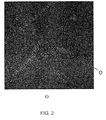
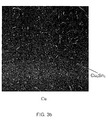
- Figures 1, 2, 3a and 3b show the initial state of the lead-free solder alloy according to the prior art, from which very clearly the inclusions of neodymium oxide (Figure 1) and the intermetallic phases Ag 3 Sn and Cu 6 Sn 5 (Fig 3a and 3b) can be seen.
- Figure 1 the distribution of Oxygen in the alloy, which proves that the inclusions are oxides (Nd 2 O 3 ).
- the oxide inclusions have a melting point of 2,272 ° C, a density of 7.29 g / cm 3, and are hard, brittle and non-ductile.
- the oxide accumulates relatively much elemental neodymium so that it lacks the grain boundaries, thereby negatively affecting the thermal fatigue strength of the solder joints by cracks and rapid crack propagation. The inclusions then lead in the solder joint to interruptions and irregularities in the electrical properties, so that such a solder is no longer particularly well suited for micro-contacting.
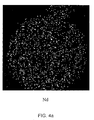
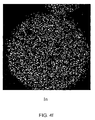
- FIGS. 4a to 4f show the distribution of the alloying partners tin, silver, copper, indium and neodymium of a lead-free soft solder alloy in a solder ball which was produced by the method according to the invention.
- the oil behaves anaerobically with respect to the solder and completely closes the molten solder with respect to the atmosphere. From the molten solder, the neodymium oxides are released during melting. As a result of their lower density in the oil, they increase their density in the oil and accumulate there within 2 hours until the process temperature of the plant is reached.
- the oil thus acts not only as a heat carrier and Dispersant, but also as a separation medium.
- the remaining molten solder is discharged through a nozzle system into another oil template of castor oil and thus separated from the excreted impurities.
- the temperature of this oil is also at least 20 ° C above the liquidus temperature of the solder alloy.
- the molten solder passes into a dispersing reactor in which the solder melt is subjected to a shearing treatment by rotors passing stators at a peripheral speed of 23 m / s so that the solder melt is divided into small solder balls, whereby the surface area of the melt is increased to 2,500 times and previously trapped impurities are released.
- the divided solder balls are repeatedly, together with the oil, ie at least 20 times circulated through the dispersing reactor until the desired diameter distribution of the solder balls is achieved and at the same time remaining impurities are expelled from the molten solder.
- dispersing the solder is carried out with a volume ratio of solder to the oil of 1:20 to 1:50 and a dispersion time of 16 minutes. After this time, the disperse Lotkugel oil mixture is placed in a settling tank, where the sheared solder balls solidify in the oil and sediment. The impurities precipitated during dispersion accumulate in the oil due to their lower density compared to the solder. Oil and impurities are sucked off and thus separated from the solder balls.
- FIG. 4a shows the distribution of the neodymium in the matrix of a solder ball produced in accordance with the method according to the invention. It can be seen in FIG. 4a that the distribution of the Neodymium is regular and regular. Coarse inclusions of neodymium oxide or slags are no longer present. Intermetallic phases are reduced in size and distributed homogeneously. Likewise, all other alloying partners are homogeneously distributed in the volume of the sphere, so that optimum soldering properties can be achieved.
Landscapes
- Engineering & Computer Science (AREA)
- Mechanical Engineering (AREA)
- Chemical & Material Sciences (AREA)
- Materials Engineering (AREA)
- Metallurgy (AREA)
- Organic Chemistry (AREA)
- Manufacture And Refinement Of Metals (AREA)
- Manufacture Of Metal Powder And Suspensions Thereof (AREA)
- Pharmaceuticals Containing Other Organic And Inorganic Compounds (AREA)
- Peptides Or Proteins (AREA)
- Preparation Of Compounds By Using Micro-Organisms (AREA)
- Powder Metallurgy (AREA)
- Steroid Compounds (AREA)
- Electric Connection Of Electric Components To Printed Circuits (AREA)
Abstract
Der Erfindung liegt die Aufgabe zugrunde, die Reaktion der Lanthanoide mit Sauerstoff, Stickstoff und anderen Reaktionspartnern bei der Verarbeitung von bleifreien Weichlotlegierungen zu Feinstlotpulvern sicher zu verhindern, eine Agglomeration der Reaktionsprodukte in der Matrix der Lotkugeln zu vermeiden und die Legierungspartner feindispers und homogen in der Matrix der Lotkugeln zu verteilen. Das erfindungsgemäße Verfahren umfasst folgende Schritte:
- a) Verwenden des Öls als Trennmedium von Schmelze und Reaktionsprodukten und/oder Schlacken und Freisetzen letzterer beim Aufschmelzen des Lots,
- b) Anreichern der freigesetzten Reaktionsprodukte und/oder Schlacken im Öl infolge von Dichteunterschieden zwischen Schmelze und Reaktionsprodukten und/oder Schlacken nach Schritt a),
- c) Abtrennen des Öls mit den Reaktionsprodukten und/oder Schlacken durch Ablassen der Schmelze in die weitere Ölvorlage bei einer Temperatur von mindestens 20 °C oberhalb der Liquidustemperatur und Absaugen des Öls mit den Reaktionsprodukten und/oder Schlacken,
- d) Austreiben der im Inneren der Lotschmelze noch vorhandenen Reaktionsprodukte und/oder Schlacken durch Vergrößern der Oberfläche der Lotschmelze beim Scheren mit einer Umfangsgeschwindigkeit der Statoren von 15,0 bis 25 m/s unter Einhaltung eines Volumenverhältnisses zwischen Schmelze und Öl von 1:20 bis 1:50,
- e) Anreichern der beim Scheren aus dem Inneren der Lotschmelze ausgetriebenen Reaktionsprodukte und/oder Schlacken im Öl durch die Dichtunterschiede nach Schritt b),
- f) turbulentes Vermischen der verbleibenden Lotschmelze während eines Umwälzzeitraums von 10 bis 30 Minuten zum homogenen Verteilen der Legierungspartner im Lot,
- g) Abtrennen der angereicherten Reaktionsprodukte und/oder Schlacken gemäß Schritt c) und e) zusammen mit dem Öl nach Sedimentation der Lotkugeln.
Description
- Die Erfindung betrifft ein Verfahren zum Raffinieren und homogenen Verteilen von Legierungspartnern sowie Entfernen unerwünschter Reaktionsprodukte wie Oxide und/oder Schlacken in bzw. aus Weichloten beim Herstellen von Feinstlotpulver, bei dem die Lotlegierung in einem hochtemperaturbeständigen pflanzlichen und/oder tierischen Öl aufgeschmolzen, die Schmelze in eine weitere Ölvorlage mit einer Temperatur von mindestens 20 °C oberhalb der Liquidustemperatur verbracht, dort gerührt und einer mehrfachen Scherbehandlung durch Rotoren und Statoren zum Bilden einer aus Lotkugeln und Öl bestehenden Dispersion unterworfen wird, von der die Lotkugeln mittels anschließender Sedimentation abgeteilt werden.
- Aus der DE 101 61 826 A1 ist ein bleifreies Weichlot auf der Basis einer Zinn-Silber-Kupfer-Lotlegierung bekannt, bei der einer Basislegierung mit 5 bis 20 Gew.-% Silber, 0,8 bis 1,2 Gew.-% Kupfer, Rest Zinn und übliche Verunreinigungen stets 0,8 bis 1,2 Gew.-% Indium und 0,01 bis 0,2 Gew.-% eines Elementes der Lanthanoide wie beispielsweise Lanthan oder Neodym zulegiert sind.
Dieses bekannte bleifreie Weichlot verhält sich beginnend ab 214°C eutektisch, unterdrückt die Ausbildung von großen Zinndentriden, gewährleistet nach dem Aufschmelzen eine glatte und homogene Oberfläche und hat auch gute physikalische und chemische Eigenschaften wie beispielsweise eine sehr gute Benetzungsfähigkeit, hohe Wechselfestigkeit, eine gute Korrosionsbeständigkeit, Plastizität und Zähigkeit und auch einen geringen elektrischen Widerstand. - Die Erschmelzung der Legierung und auch die Verarbeitung dieser bekannten Legierung zu Feinstlotkugeln führt jedoch insbesondere durch die sehr hohe Reaktivität der Legierungsbestandteile Lanthan oder Neodym zu ernsten Problemen, die sich in einer Agglomeration von Reaktionsprodukten des Neodyms oder Lanthans in den Lotkugeln äußern. Neodym reagiert äußerst heftig, beispielsweise auch mit gebundenem Restsauerstoff in der Schmelze, der in Spuren immer vorhanden ist, und bildet Oxide, die in den Lotkugeln außerdem zu größeren Gebilden agglomerieren. Diese Oxide akkumulieren verhältnismäßig viel Neodym, das dann in der Matrix bzw. den Korngrenzen fehlt. Des weiteren können intermetallische Phasen der Zusammensetzung Ag3Sn und Cu6Sn5 auftreten.
Die Verarbeitungsfähigkeit und die elektrischen Eigenschaften derartiger Weichlote werden durch diese harten Einschlüsse nachhaltig eingeschränkt. - Aus der DE 198 30 057 C2 ist auch ein Verfahren zum drucklosen Herstellen von Weichlotpulver in einem Kornbandspektrum von 1 bis 100 µm bekannt, bei dem das metallische Lot in einem hochtemperaturbeständigen pflanzlichen oder tierischen Öl aufgeschmolzen, anschließend gerührt und in einer mehrfachen Scherbehandlung durch Rotoren und Statoren zu Lotkugeln definierter Größe dispergiert wird.
- Nach der US 5 411 602 A wird Lot aufgeschmolzen und das aufgeschmolzene Lot mittels Inertgas in Tropfen zerteilt.
Trotz der Inertgasatmosphäre kann nicht ausgeschlossen werden, dass die reaktiven Metalle wie Neodym oder Lanthan Reaktionen mit gebundenem Sauerstoff eingehen, so dass die Lotlegierung mehr oder weniger Oxide dieser Metalle enthalten und die Dotierung beispielsweise mit Neodym oder Lanthan mehr oder weniger verloren geht. - In der US 6 231 691 B1 ist eine bleifreie Lotlegierung auf Zinnbasis mit 4,7 Gew.-% Silber, 1,7 Gew.-% Kupfer und 0,15 Gew.-% Nickel beschrieben. Diese bekannte Legierung neigt zur verstärkten Bildung von intermetallischen Phasen des Cu3Sn und/oder Cu6Sn5-Typs, die sehr negative Auswirkungen auf die mechanisch/physikalischen Eigenschaften der Lötverbindung haben.
- Bei diesem Stand der Technik liegt der Erfindung die Aufgabe zugrunde, die Reaktion der reaktiver Legierungspartner mit Sauerstoff, Stickstoff und anderen Reaktionspartnern bei der Verarbeitung von bleifreien Weichlotlegierungen zu Feinstlotpulvern sicher zu verhindern, eine Agglomeration der Reaktionsprodukte in der Matrix der Lotkugeln zu vermeiden und die Legierungspartner feindispers und homogen in der Matrix der Lotkugeln zu verteilen.
- Diese Aufgabe wird durch ein Verfahren der eingangs genannten Gattung mit den Merkmalen des Anspruches 1, 10 und 11 gelöst.
Vorteilhafte Ausgestaltungen des Verfahrens sind den Unteransprüchen entnehmbar. - Die erfindungsgemäße Lösung zeichnet sich dadurch aus, dass das zum Aufschmelzen des Lots eingesetzte Öl sowohl ein inertes Medium gegenüber den Legierungspartnern, beispielsweise Lanthan oder Neodym, in Weichlotlegierungen als auch ein Trennmedium zum Herauslösen der in der Lotlegierung enthaltenen Reaktionsprodukte wie Oxide und/oder Schlacken darstellt.
- Das erfindungsgemäße Verfahren gestattet es ferner, die Legierungspartner in der Lotlegierung gewissermaßen zu raffinieren und diese homogen sowie feindispers in der Legierung zu verteilen. Die komplexe Problematik dieser Vorgänge soll dadurch verdeutlicht werden, dass die abgescherten Lotkugeln selbst Dimensionen aufweisen, die dem Strukturaufbau der Elemente sehr nahe kommen.
Durch das Herauslösen der mit dem Erschmelzungsprozeß oder der Verarbeitung dieser Lote zur Herstellung von Feinstlotpulvern gebildeten Oxideinschlüsse der Lanthanoide oder anderer reaktiver Metalle und der nachteiligen Schlacken gelingt die Bereitstellung eines Feinstlotpulvers, das alle Ansprüche für die Mikrokontaktierung erfüllt. - Weitere Vorteile und Einzelheiten ergeben sich aus der nachfolgenden Beschreibung unter Bezugnahme auf die beigefügten Zeichnungen.
- Die Erfindung soll nachstehend an einem Ausführungsbeispiel näher erläutert werden.
- Es zeigen:
- Fig. 1
- eine REM-Aufnahme (Mapping) einer bleifreien Lotlegierung mit Neodymoxid-Einschlüssen nach dem Stand der Technik,
- Fig. 2
- eine REM-Aufnahme (Mapping) mit Sauerstoff-Verteilung gemäß Fig. 1,
- Fig. 3a und b
- eine REM-Aufnahme einer bleifreien Lotlegierung mit intermetallischen Phasen der Zusammensetzung Ag3Sn und Cu6Sn5 gemäß Fig. 1,
- Fig. 4 a bis f
- eine REM-Aufnahme einer nach der Erfindung erzeugten Lotkugel mit Verteilung der Legierungsbestandteile (Silber, Zinn, Kupfer, Indium, Neodym und Sauerstoff) in der Lotkugel.
- Mit dem erfindungsgemäßen Verfahren sollen Feinstlotkugeln der bleifreien Legierung SnAg5Cu1In1Nd0,2 mit einem Durchmesser von 5 bis 15 µm (Typ 6) hergestellt werden.
Die Fig. 1, 2, 3a und 3 b zeigen den Ausgangszustand der bleifreien Lotlegierung nach dem Stand der Technik, aus der sehr deutlich die Einschlüsse aus Neodymoxid (Fig. 1) und die intermetallischen Phasen Ag3Sn und Cu6Sn5 (Fig. 3a und 3b) zu erkennen sind. In der Fig. 2 ist die Verteilung des Sauerstoffs in der Legierung gezeigt, die den Beweis erbringt, dass die Einschlüsse Oxide (Nd2O3) sind.
Die Oxid-Einschlüsse haben einen Schmelzpunkt von 2.272 °C, eine Dichte von 7,29 g/cm3 und sind hart, nicht duktil und spröde. Das Oxid akkumuliert außerdem verhältnismäßig viel elementares Neodym, so dass dieses an den Korngrenzen fehlt, wodurch die Temperaturwechselfestigkeit der Lötstellen durch Risse und schnelle Rissfortpflanzung negativ beeinflusst wird.
Die Einschlüsse führen dann in der Lötverbindung zu Unterbrechungen und zu Unregelmäßigkeiten in den elektrischen Eigenschaften, so dass ein solches Lot für die Mikrokontaktierung nicht mehr besonders gut geeignet ist. - Die Fig. 4a bis 4f zeigen die Verteilung der Legierungspartner Zinn, Silber, Kupfer, Indium und Neodym einer bleifreien Weichlotlegierung in einer Lotkugel, die nach dem erfindungsgemäßen Verfahren erzeugt wurde.
- Hierzu werden 12 kg der bleifreien Lotlegierung SnAg5Cu1In1Nd0,2 als Massel oder Stange in einem mit 3 Liter Rizinusöl gefüllten Schmelzbehälter gegeben und das Öl zum Aufschmelzen der Lotlegierung auf mindestens 20 °C oberhalb der Liquidustemperatur der Lotlegierung, beispielsweise 240 °C, erhitzt. Das Öl verhält sich gegenüber dem Lot anaerob und schließt die Lotschmelze vollkommen gegenüber der Atmosphäre ab. Aus der Lotschmelze werden die Neodymoxide beim Aufschmelzen freigesetzt. Diese treiben infolge ihrer gegenüber der Schmelze geringeren Dichte in dem Öl auf und reichern sich dort innerhalb von 2 Stunden bis zum Erreichen der Prozeßtemperatur der Anlage an. Das Öl fungiert somit nicht nur als Wärmeträger und Dispergiermittel, sondern auch als Trennmedium.
Die verbleibende Lotschmelze wird durch ein Düsensystem in eine weitere Ölvorlage aus Rizinusöl abgelassen und somit von den ausgeschiedenen Verunreinigungen getrennt. Die Temperatur dieses Öls liegt ebenfalls mindestens 20 °C über der Liquidustemperatur der Lotlegierung. Die Lotschmelze gelangt in einen Dispergierreaktor, in dem die Lotschmelze einer Scherbehandlung durch mit einer Umfangsgeschwindigkeit von 23 m/s an Statoren vorbeilaufenden Rotoren unterworfen wird, so dass die Lotschmelze in kleine Lotkugeln geteilt wird, wodurch eine Oberflächenvergrößerung der Schmelze auf das 2.500fache erfolgt und bisher eingeschlossene Verunreinigungen freigesetzt werden. Die abgeteilten Lotkugeln werden zusammen mit dem Öl mehrfach, d.h. mindestens 20mal im Kreislauf durch den Dispergierreaktor gefahren, bis die gewünschte Durchmesserverteilung der Lotkugeln erreicht wird und zugleich restliche Verunreinigungen aus der Lotschmelze ausgetrieben werden. Beim Dispergieren des Lots wird mit einem Volumenverhältnis von Lot zum Öl von 1:20 bis 1:50 und einer Dispergierzeit von 16 Minuten gearbeitet.
Nach Ablauf dieser Zeit wird das disperse Lotkugel-Öl-Gemisch in einen Absetzbehälter gegeben, wo die abgescherten Lotkugeln im Öl erstarren und sedimentieren. Die beim Dispergieren ausgeschiedenen Verunreinigungen sammeln sich infolge ihrer geringeren Dichte gegenüber dem Lot im Öl an. Öl und Verunreinigungen werden abgesaugt und damit von den Lotkugeln getrennt. - Die Fig. 4a zeigt die Verteilung des Neodyms in der Matrix einer solch nach dem erfindungsgemäßen Verfahren erzeugten Lotkugel. Man erkennt in Fig. 4a, dass die Verteilung des Neodyms regelmäßig und regulär ist. Grobe Einschlüsse aus Neodymoxid oder Schlacken sind nicht mehr vorhanden. Intermetallische Phasen werden verkleinert und homogen verteilt. Ebenso sind alle anderen Legierungspartner homogen im Volumen des Kugel verteilt, so dass optimale Löteigenschaften erreicht werden können.
Claims (11)
- Verfahren zum Raffinieren und homogenen Verteilen von Legierungspartnern sowie Entfernen unerwünschter Reaktionsprodukte wie Oxide und/oder Schlacken in bzw. aus Weichloten beim Herstellen von Feinstlotpulver, bei dem die Lotlegierung in einem hochtemperaturbeständigen pflanzlichen und/oder tierischen Öl aufgeschmolzen, die Schmelze in eine weitere Ölvorlage mit einer Temperatur von mindestens 20 °C oberhalb der Liquidustemperatur verbracht, dort gerührt und einer mehrfachen Scherbehandlung durch Rotoren und Statoren zum Bilden einer aus Lotkugeln und Öl bestehenden Dispersion unterworfen wird, von der die Lotkugeln mittels anschließender Sedimentation abgeteilt werden, gekennzeichnet durch folgende Schritte:a) Verwenden des Öls als Trennmedium von Schmelze und Reaktionsprodukten und/oder Schlacken sowie Freisetzen letzterer beim Aufschmelzen des Lots,b) Anreichern der freigesetzten Reaktionsprodukte und/oder Schlacken im Öl infolge von Dichteunterschieden zwischen Schmelze und Reaktionsprodukten und/oder Schlacken nach Schritt a),c) Abtrennen des Öls mit den Reaktionsprodukten und/oder Schlacken durch Ablassen der Schmelze in die weitere Ölvorlage bei einer Temperatur von mindestens 20 °C oberhalb der Liquidustemperatur und Absaugen des Öls mit den Reaktionsprodukten und/oder Schlacken,d) Austreiben der im Inneren der Lotschmelze noch vorhandenen Reaktionsprodukte und/oder Schlacken durch Vergrößern der Oberfläche der Lotschmelze beim Scheren mit einer Umfangsgeschwindigkeit der Statoren von 15,0 bis 25 m/s unter Einhaltung eines Volumenverhältnisses zwischen Schmelze und Öl von 1:20 bis 1:50,e) Anreichern der beim Scheren aus dem Inneren der Lotschmelze ausgetriebenen Reaktionsprodukte und/oder Schlacken im Öl durch die Dichtunterschiede nach Schritt b),f) turbulentes Vermischen der verbleibenden Lotschmelze während eines Umwälzzeitraums von 10 bis 30 Minuten zum homogenen Verteilen der Legierungspartner im Lot,g) Abtrennen der angereicherten Reaktionsprodukte und/oder Schlacken gemäß Schritt c) und e) zusammen mit dem Öl nach Sedimentation der Lotkugeln.
- Verfahren nach Anspruch 1, dadurch gekennzeichnet, dass Weichlote einer im wesentlichen aus Sn, Ag, Cu, In und Lanthanoide sowie Reaktionsprodukte der Lanthanoide bestehenden Legierung verwendet werden.
- Verfahren nach Anspruch 1 oder 2, dadurch gekennzeichnet, dass Weichlote einer im wesentlichen aus Sn, Ag, Cu, In und Nd sowie Reaktionsprodukten in Form von Neodymoxid und/oder intermetallischen Phasen des Ag3Sn- und Cu6Sn5-Typs bestehenden Legierung verwendet werden.
- Verfahren nach Anspruch 1, dadurch gekennzeichnet, dass Weichlote einer im wesentlichen aus Sn, Ag, Cu und Ni sowie Reaktionsprodukten in Form von intermetallischen Phasen des Cu3Sn- und/oder Cu6Sn5-Typs bestehenden Legierung verwendet werden.
- Verfahren nach Anspruch 1, dadurch gekennzeichnet, dass Weichlote einer im wesentlichen aus Sn und Ag sowie Reaktionsprodukten in Form von intermetallischen Phasen des Ag3Sn-Typs bestehenden Legierung verwendet werden.
- Verfahren nach Anspruch 1, dadurch gekennzeichnet, dass Weichlote einer im wesentlichen aus Sn und Cu sowie Reaktionsprodukten in Form von intermetallischen Phasen des Cu3Sn- und/oder Cu6Sn5-Typs bestehenden Legierung verwendet werden.
- Verfahren nach Anspruch 1 bis 6, dadurch gekennzeichnet, dass Feinstlotpulver mit einem Durchmesser zwischen 2,5 und 45 µm erzeugt werden.
- Verfahren nach Anspruch 1 bis 7, dadurch gekennzeichnet, dass die Oberfläche der Lotschmelze durch das Scheren auf das 2000 bis 4000fache vergrößert wird.
- Verfahren nach Anspruch 1 bis 8, dadurch gekennzeichnet, dass als Trennöl Rizinusöl eingesetzt wird.
- Verwendung von tierischem und/oder pflanzlichem Öl, vorzugsweise Rizinusöl, zum Raffinieren und homogenen Verteilen der Legierungspartner in Weichloten zum Herstellen von Feinstlotpulver zwischen 2,5 und 45 µm Durchmesser.
- Verwendung von tierischem und/oder pflanzlichem Öl, vorzugsweise Rizinusöl, zum Abtrennen von Reaktionsprodukten wie Oxide und/oder Schlacken aus Weichloten zum Herstellen von Feinstlotpulver zwischen 2,5 und 45 µm Durchmesser.
Priority Applications (2)
| Application Number | Priority Date | Filing Date | Title |
|---|---|---|---|
| PL05076782T PL1623791T3 (pl) | 2004-08-03 | 2005-07-27 | Sposób rafinowania i jednorodnego rozdzielania składników stopu oraz usuwania niepożądanych partnerów reakcji i żużli w względnie z lutów miękkich przy wytwarzaniu drobnego proszku lutowniczego |
| SI200530849T SI1623791T1 (sl) | 2004-08-03 | 2005-07-27 | Postopek za rafinacijo in homogeno porazdelitev zlitinskih komponent kot tudi za odstranitev neĺ˝elenih reakcijskih komponent in ĺ kaj v oziroma iz mehkih spajk pri proizvodnji najfinejĺ ega spajkalnega praĺ ka |
Applications Claiming Priority (1)
| Application Number | Priority Date | Filing Date | Title |
|---|---|---|---|
| DE102004038280A DE102004038280B4 (de) | 2004-08-03 | 2004-08-03 | Verfahren zum Herstellen von Feinstlotpulvern |
Publications (3)
| Publication Number | Publication Date |
|---|---|
| EP1623791A2 true EP1623791A2 (de) | 2006-02-08 |
| EP1623791A3 EP1623791A3 (de) | 2007-08-22 |
| EP1623791B1 EP1623791B1 (de) | 2009-10-14 |
Family
ID=35423533
Family Applications (1)
| Application Number | Title | Priority Date | Filing Date |
|---|---|---|---|
| EP05076782A Expired - Lifetime EP1623791B1 (de) | 2004-08-03 | 2005-07-27 | Verfahren zum Raffinieren und homogenen Verteilen von Legierungspartnern sowie Entfernen von unerwünschten Reaktionspartnern und Schlacken in bzw. aus Weichloten beim Herstellen von Feinstlotpulver |
Country Status (13)
| Country | Link |
|---|---|
| US (1) | US7331498B2 (de) |
| EP (1) | EP1623791B1 (de) |
| JP (1) | JP2006045676A (de) |
| KR (1) | KR101243283B1 (de) |
| CN (1) | CN100574940C (de) |
| AT (1) | ATE445478T1 (de) |
| DE (2) | DE102004038280B4 (de) |
| DK (1) | DK1623791T3 (de) |
| ES (1) | ES2332918T3 (de) |
| PL (1) | PL1623791T3 (de) |
| PT (1) | PT1623791E (de) |
| SI (1) | SI1623791T1 (de) |
| TW (1) | TW200609072A (de) |
Cited By (2)
| Publication number | Priority date | Publication date | Assignee | Title |
|---|---|---|---|---|
| DE102006047764A1 (de) * | 2006-10-06 | 2008-04-10 | W.C. Heraeus Gmbh | Bleifreies Weichlot mit verbesserten Eigenschaften bei Temperaturen >150°C |
| EP2641676A4 (de) * | 2010-11-18 | 2015-05-06 | Dowa Holdings Co Ltd | Lötpulver und verfahren zur herstellung des lötpulvers |
Families Citing this family (11)
| Publication number | Priority date | Publication date | Assignee | Title |
|---|---|---|---|---|
| TWI465312B (zh) * | 2005-07-19 | 2014-12-21 | 日本斯倍利亞股份有限公司 | 追加供應用無鉛焊料及焊浴中之Cu濃度及Ni濃度之調整方法 |
| DE202006015429U1 (de) * | 2006-10-09 | 2008-02-21 | Innowatec Dipl.-Ing. Grieger & Englert Gmbh & Co. Kg | Vorrichtung zum Reinigen eines Druckzylinders |
| JP4375485B2 (ja) * | 2008-02-22 | 2009-12-02 | 日本ジョイント株式会社 | 鉛フリーはんだ合金の製造方法及び半導体装置の製造方法 |
| JP4375491B1 (ja) | 2008-06-23 | 2009-12-02 | 日本ジョイント株式会社 | 電子部品のはんだ付け装置およびはんだ付け方法 |
| EP2260968B1 (de) * | 2009-02-09 | 2015-03-18 | Tanigurogumi Corporation | Herstellungsverfahren für zinn oder lötlegierung |
| CN104178655B (zh) * | 2013-05-21 | 2016-06-01 | 西南科技大学 | 一种含稀土La的中温合金钎料及其制备方法 |
| CN106271216A (zh) * | 2016-08-31 | 2017-01-04 | 邓柳平 | 一种不吸潮焊粉及其制备方法 |
| CN107442965A (zh) * | 2017-08-11 | 2017-12-08 | 东北大学 | 一种Sn‑Bi系合金焊粉及其制备方法 |
| CN117428197B (zh) * | 2023-10-30 | 2025-10-10 | 云南前沿液态金属研究院有限公司 | 一种基于射流喷射法制备超细球性金属粉末的方法 |
| WO2025110921A1 (en) | 2023-11-22 | 2025-05-30 | Heraeus Materials Singapore Pte. Ltd. | Tin-based solder alloy powder |
| WO2025110922A1 (en) | 2023-11-22 | 2025-05-30 | Heraeus Materials Singapore Pte. Ltd. | Tin-based solder alloy powder |
Citations (4)
| Publication number | Priority date | Publication date | Assignee | Title |
|---|---|---|---|---|
| US5411602A (en) | 1994-02-17 | 1995-05-02 | Microfab Technologies, Inc. | Solder compositions and methods of making same |
| DE19830057C1 (de) | 1998-06-29 | 2000-03-16 | Juergen Schulze | Verfahren und Vorrichtung zum drucklosen Herstellen von Weichlotpulver |
| US6231691B1 (en) | 1997-02-10 | 2001-05-15 | Iowa State University Research Foundation, Inc. | Lead-free solder |
| US20030177865A1 (en) | 2002-03-19 | 2003-09-25 | Takao Ono | Process of producing metal powders |
Family Cites Families (5)
| Publication number | Priority date | Publication date | Assignee | Title |
|---|---|---|---|---|
| SE8801894D0 (sv) * | 1988-05-20 | 1988-05-20 | Alfa Laval Agri Int | Fibronektinbindande protein |
| JP2555715B2 (ja) * | 1988-10-26 | 1996-11-20 | 三菱マテリアル株式会社 | はんだ合金微粉末の製造方法 |
| US6517602B2 (en) * | 2000-03-14 | 2003-02-11 | Hitachi Metals, Ltd | Solder ball and method for producing same |
| JP2003166007A (ja) * | 2001-03-28 | 2003-06-13 | Tamura Kaken Co Ltd | 金属微粒子の製造方法、金属微粒子含有物及びソルダーペースト組成物 |
| BR0215041A (pt) | 2001-12-15 | 2004-11-03 | Pfarr Stanztechnik Gmbh | Solda macia sem chumbo |
-
2004
- 2004-08-03 DE DE102004038280A patent/DE102004038280B4/de not_active Expired - Fee Related
-
2005
- 2005-07-21 TW TW094124734A patent/TW200609072A/zh not_active IP Right Cessation
- 2005-07-27 DE DE502005008305T patent/DE502005008305D1/de not_active Expired - Lifetime
- 2005-07-27 PT PT05076782T patent/PT1623791E/pt unknown
- 2005-07-27 SI SI200530849T patent/SI1623791T1/sl unknown
- 2005-07-27 AT AT05076782T patent/ATE445478T1/de active
- 2005-07-27 PL PL05076782T patent/PL1623791T3/pl unknown
- 2005-07-27 EP EP05076782A patent/EP1623791B1/de not_active Expired - Lifetime
- 2005-07-27 ES ES05076782T patent/ES2332918T3/es not_active Expired - Lifetime
- 2005-07-27 DK DK05076782.1T patent/DK1623791T3/da active
- 2005-07-28 US US11/193,758 patent/US7331498B2/en not_active Expired - Lifetime
- 2005-08-02 JP JP2005224205A patent/JP2006045676A/ja not_active Withdrawn
- 2005-08-02 KR KR1020050070763A patent/KR101243283B1/ko not_active Expired - Lifetime
- 2005-08-03 CN CN200510023009A patent/CN100574940C/zh not_active Expired - Lifetime
Patent Citations (4)
| Publication number | Priority date | Publication date | Assignee | Title |
|---|---|---|---|---|
| US5411602A (en) | 1994-02-17 | 1995-05-02 | Microfab Technologies, Inc. | Solder compositions and methods of making same |
| US6231691B1 (en) | 1997-02-10 | 2001-05-15 | Iowa State University Research Foundation, Inc. | Lead-free solder |
| DE19830057C1 (de) | 1998-06-29 | 2000-03-16 | Juergen Schulze | Verfahren und Vorrichtung zum drucklosen Herstellen von Weichlotpulver |
| US20030177865A1 (en) | 2002-03-19 | 2003-09-25 | Takao Ono | Process of producing metal powders |
Cited By (4)
| Publication number | Priority date | Publication date | Assignee | Title |
|---|---|---|---|---|
| DE102006047764A1 (de) * | 2006-10-06 | 2008-04-10 | W.C. Heraeus Gmbh | Bleifreies Weichlot mit verbesserten Eigenschaften bei Temperaturen >150°C |
| WO2008043482A1 (de) * | 2006-10-06 | 2008-04-17 | W.C. Heraeus Gmbh | Bleifreies weichlot mit verbesserten eigenschaften bei hohen temperaturen |
| EP2641676A4 (de) * | 2010-11-18 | 2015-05-06 | Dowa Holdings Co Ltd | Lötpulver und verfahren zur herstellung des lötpulvers |
| US9132514B2 (en) | 2010-11-18 | 2015-09-15 | Dowa Holdings Co., Ltd. | Solder powder and method of producing solder powder |
Also Published As
| Publication number | Publication date |
|---|---|
| US7331498B2 (en) | 2008-02-19 |
| DE102004038280B4 (de) | 2006-07-27 |
| ATE445478T1 (de) | 2009-10-15 |
| EP1623791B1 (de) | 2009-10-14 |
| PT1623791E (pt) | 2009-12-29 |
| TWI317671B (de) | 2009-12-01 |
| CN1817508A (zh) | 2006-08-16 |
| KR101243283B1 (ko) | 2013-03-13 |
| TW200609072A (en) | 2006-03-16 |
| SI1623791T1 (sl) | 2010-02-26 |
| US20060208042A1 (en) | 2006-09-21 |
| PL1623791T3 (pl) | 2010-06-30 |
| DE502005008305D1 (de) | 2009-11-26 |
| KR20060049046A (ko) | 2006-05-18 |
| DK1623791T3 (da) | 2010-03-01 |
| ES2332918T3 (es) | 2010-02-15 |
| JP2006045676A (ja) | 2006-02-16 |
| EP1623791A3 (de) | 2007-08-22 |
| CN100574940C (zh) | 2009-12-30 |
| DE102004038280A1 (de) | 2006-02-23 |
Similar Documents
| Publication | Publication Date | Title |
|---|---|---|
| EP1623791B1 (de) | Verfahren zum Raffinieren und homogenen Verteilen von Legierungspartnern sowie Entfernen von unerwünschten Reaktionspartnern und Schlacken in bzw. aus Weichloten beim Herstellen von Feinstlotpulver | |
| EP2069101B1 (de) | Bleifreies weichlot mit verbesserten eigenschaften bei hohen temperaturen | |
| DE112007000673T5 (de) | Magnesiumlegierung mit hoher Festigkeit und hoher Zähigkeit und Verfahren zu deren Herstellung | |
| DE2505934A1 (de) | Dentalamalgam und verfahren zu dessen herstellung | |
| DE112011104328B4 (de) | Pb-freie Lotlegierung, die überwiegend Zn enthält | |
| DE112011102163B4 (de) | Pb-freie Lotlegierung | |
| DE112010000752B4 (de) | Ermüdungsbeständige lötpastenmaterialien, die eine bleifreielotlegierung enthalten, und kombinierte produkte, die dasermüdungsbeständige lötpastenmaterialien verwenden | |
| DE2924896C2 (de) | ||
| EP1888798B1 (de) | Aluminium-gleitlagerlegierung | |
| DE4320319C2 (de) | Verfahren zur Herstellung eines hochangereicherten Nickelsteins und metallisierten Sulfidsteins | |
| CH673843A5 (de) | ||
| DE2133963B2 (de) | Zusachlagstoffe fuer das umschmelzen von metallen unter elektrisch leitender schlacke und verfahren zu ihrer herstellung | |
| DE60319932T2 (de) | Bleifreie Lötkugel | |
| WO2017005620A1 (de) | Legierungen | |
| AT393697B (de) | Verbesserte metallegierung auf kupferbasis, insbesondere fuer den bau elektronischer bauteile | |
| DE102006053099A1 (de) | Lötlegierung und Lötverfahren | |
| EP1647352A1 (de) | Lotmaterial | |
| DE102009013919B4 (de) | Lotmaterial mit einem Zusatzwerkstoff, Trägerbauteil oder Bauelement mit einem solchen Lotmaterial sowie Verwendung eines Flussmittels | |
| DE102004034035A1 (de) | Bleifreie Lotpasten mit erhöhter Zuverlässigkeit | |
| DE4114816C2 (de) | Verfahren zur Beseitigung von Abfällen eines faserverstärkten Aluminiumlegierungsverbundmaterials | |
| EP0134403B1 (de) | Pulvermetallurgische Herstellung der intermetallischen Verbindung Lithium-Aluminium und ihre Verwendung | |
| EP1264903B1 (de) | Reinigung von Aluminium-Gusslegierungen mittels Zugabe von Bor | |
| DE102016002830B4 (de) | Auf pulvermetallurgischem Wege hergestelltes manganhaltiges Vormaterial zu Herstellung einer Leichtmetalllegierung, Verfahren zu seiner Herstellung sowie seine Verwendung | |
| DE102005028435A1 (de) | Herstellungsverfahren für Kokille mit Antihaftbeschichtung | |
| DE10304469A1 (de) | Weichlotlegierungszusammensetzung, Weichlotlegierung, Verwendung einer Weichlotlegierungszusammensetzung und Verfahren zum Herstellen einer Weichlotlegierung |
Legal Events
| Date | Code | Title | Description |
|---|---|---|---|
| PUAI | Public reference made under article 153(3) epc to a published international application that has entered the european phase |
Free format text: ORIGINAL CODE: 0009012 |
|
| AK | Designated contracting states |
Kind code of ref document: A2 Designated state(s): AT BE BG CH CY CZ DE DK EE ES FI FR GB GR HU IE IS IT LI LT LU LV MC NL PL PT RO SE SI SK TR |
|
| AX | Request for extension of the european patent |
Extension state: AL BA HR MK YU |
|
| PUAL | Search report despatched |
Free format text: ORIGINAL CODE: 0009013 |
|
| AK | Designated contracting states |
Kind code of ref document: A3 Designated state(s): AT BE BG CH CY CZ DE DK EE ES FI FR GB GR HU IE IS IT LI LT LU LV MC NL PL PT RO SE SI SK TR |
|
| AX | Request for extension of the european patent |
Extension state: AL BA HR MK YU |
|
| 17P | Request for examination filed |
Effective date: 20080112 |
|
| 17Q | First examination report despatched |
Effective date: 20080218 |
|
| AKX | Designation fees paid |
Designated state(s): AT BE BG CH CY CZ DE DK EE ES FI FR GB GR HU IE IS IT LI LT LU LV MC NL PL PT RO SE SI SK TR |
|
| GRAP | Despatch of communication of intention to grant a patent |
Free format text: ORIGINAL CODE: EPIDOSNIGR1 |
|
| R17C | First examination report despatched (corrected) |
Effective date: 20080218 |
|
| GRAS | Grant fee paid |
Free format text: ORIGINAL CODE: EPIDOSNIGR3 |
|
| GRAA | (expected) grant |
Free format text: ORIGINAL CODE: 0009210 |
|
| AK | Designated contracting states |
Kind code of ref document: B1 Designated state(s): AT BE BG CH CY CZ DE DK EE ES FI FR GB GR HU IE IS IT LI LT LU LV MC NL PL PT RO SE SI SK TR |
|
| REG | Reference to a national code |
Ref country code: GB Ref legal event code: FG4D Free format text: NOT ENGLISH |
|
| REG | Reference to a national code |
Ref country code: CH Ref legal event code: EP |
|
| REG | Reference to a national code |
Ref country code: IE Ref legal event code: FG4D |
|
| REF | Corresponds to: |
Ref document number: 502005008305 Country of ref document: DE Date of ref document: 20091126 Kind code of ref document: P |
|
| REG | Reference to a national code |
Ref country code: CH Ref legal event code: NV Representative=s name: BOVARD AG PATENTANWAELTE |
|
| REG | Reference to a national code |
Ref country code: PT Ref legal event code: SC4A Free format text: AVAILABILITY OF NATIONAL TRANSLATION Effective date: 20091222 |
|
| REG | Reference to a national code |
Ref country code: EE Ref legal event code: FG4A Ref document number: E003798 Country of ref document: EE Effective date: 20100104 Ref country code: ES Ref legal event code: FG2A Ref document number: 2332918 Country of ref document: ES Kind code of ref document: T3 |
|
| REG | Reference to a national code |
Ref country code: DK Ref legal event code: T3 |
|
| NLV1 | Nl: lapsed or annulled due to failure to fulfill the requirements of art. 29p and 29m of the patents act | ||
| PG25 | Lapsed in a contracting state [announced via postgrant information from national office to epo] |
Ref country code: SE Free format text: LAPSE BECAUSE OF FAILURE TO SUBMIT A TRANSLATION OF THE DESCRIPTION OR TO PAY THE FEE WITHIN THE PRESCRIBED TIME-LIMIT Effective date: 20091014 |
|
| REG | Reference to a national code |
Ref country code: SK Ref legal event code: T3 Ref document number: E 6711 Country of ref document: SK |
|
| REG | Reference to a national code |
Ref country code: HU Ref legal event code: AG4A Ref document number: E007134 Country of ref document: HU |
|
| PG25 | Lapsed in a contracting state [announced via postgrant information from national office to epo] |
Ref country code: LV Free format text: LAPSE BECAUSE OF FAILURE TO SUBMIT A TRANSLATION OF THE DESCRIPTION OR TO PAY THE FEE WITHIN THE PRESCRIBED TIME-LIMIT Effective date: 20091014 |
|
| PG25 | Lapsed in a contracting state [announced via postgrant information from national office to epo] |
Ref country code: RO Free format text: LAPSE BECAUSE OF FAILURE TO SUBMIT A TRANSLATION OF THE DESCRIPTION OR TO PAY THE FEE WITHIN THE PRESCRIBED TIME-LIMIT Effective date: 20091014 Ref country code: BG Free format text: LAPSE BECAUSE OF FAILURE TO SUBMIT A TRANSLATION OF THE DESCRIPTION OR TO PAY THE FEE WITHIN THE PRESCRIBED TIME-LIMIT Effective date: 20100114 |
|
| PLBE | No opposition filed within time limit |
Free format text: ORIGINAL CODE: 0009261 |
|
| STAA | Information on the status of an ep patent application or granted ep patent |
Free format text: STATUS: NO OPPOSITION FILED WITHIN TIME LIMIT |
|
| 26N | No opposition filed |
Effective date: 20100715 |
|
| PG25 | Lapsed in a contracting state [announced via postgrant information from national office to epo] |
Ref country code: GR Free format text: LAPSE BECAUSE OF FAILURE TO SUBMIT A TRANSLATION OF THE DESCRIPTION OR TO PAY THE FEE WITHIN THE PRESCRIBED TIME-LIMIT Effective date: 20100115 |
|
| PG25 | Lapsed in a contracting state [announced via postgrant information from national office to epo] |
Ref country code: MC Free format text: LAPSE BECAUSE OF NON-PAYMENT OF DUE FEES Effective date: 20100731 |
|
| PG25 | Lapsed in a contracting state [announced via postgrant information from national office to epo] |
Ref country code: IT Free format text: LAPSE BECAUSE OF FAILURE TO SUBMIT A TRANSLATION OF THE DESCRIPTION OR TO PAY THE FEE WITHIN THE PRESCRIBED TIME-LIMIT Effective date: 20091014 |
|
| REG | Reference to a national code |
Ref country code: CH Ref legal event code: PFA Owner name: W.C. HERAEUS GMBH Free format text: W.C. HERAEUS GMBH#HERAEUSSTRASSE 12 - 14#63450 HANAU (DE) -TRANSFER TO- W.C. HERAEUS GMBH#HERAEUSSTRASSE 12 - 14#63450 HANAU (DE) |
|
| PGFP | Annual fee paid to national office [announced via postgrant information from national office to epo] |
Ref country code: CH Payment date: 20110725 Year of fee payment: 7 Ref country code: DK Payment date: 20110720 Year of fee payment: 7 |
|
| PGFP | Annual fee paid to national office [announced via postgrant information from national office to epo] |
Ref country code: CZ Payment date: 20110725 Year of fee payment: 7 |
|
| REG | Reference to a national code |
Ref country code: DE Ref legal event code: R082 Ref document number: 502005008305 Country of ref document: DE Representative=s name: COHAUSZ HANNIG BORKOWSKI WISSGOTT, DE |
|
| REG | Reference to a national code |
Ref country code: DE Ref legal event code: R082 Ref document number: 502005008305 Country of ref document: DE Representative=s name: COHAUSZ HANNIG BORKOWSKI WISSGOTT, DE Effective date: 20111219 Ref country code: DE Ref legal event code: R081 Ref document number: 502005008305 Country of ref document: DE Owner name: HERAEUS MATERIALS TECHNOLOGY GMBH & CO. KG, DE Free format text: FORMER OWNER: W.C. HERAEUS GMBH, 63450 HANAU, DE Effective date: 20111219 Ref country code: DE Ref legal event code: R081 Ref document number: 502005008305 Country of ref document: DE Owner name: HERAEUS DEUTSCHLAND GMBH & CO. KG, DE Free format text: FORMER OWNER: W.C. HERAEUS GMBH, 63450 HANAU, DE Effective date: 20111219 |
|
| REG | Reference to a national code |
Ref country code: CH Ref legal event code: PFA Owner name: HERAEUS MATERIALS TECHNOLOGY GMBH & CO. KG Free format text: W.C. HERAEUS GMBH#HERAEUSSTRASSE 12 - 14#63450 HANAU (DE) -TRANSFER TO- HERAEUS MATERIALS TECHNOLOGY GMBH & CO. KG#HERAEUSSTRASSE 12-14#63450 HANAU (DE) |
|
| REG | Reference to a national code |
Ref country code: EE Ref legal event code: GB1A Ref document number: E003798 Country of ref document: EE |
|
| REG | Reference to a national code |
Ref country code: ES Ref legal event code: PC2A Owner name: HERAEUS MATERIALS TECHNOLOGY GMBH & CO.KG Effective date: 20120503 |
|
| REG | Reference to a national code |
Ref country code: HU Ref legal event code: GB9C Owner name: HERAEUS MATERIALS TECHNOLOGY GMBH & CO. KG, DE Free format text: FORMER OWNER(S): W.C. HERAEUS GMBH, DE |
|
| REG | Reference to a national code |
Ref country code: SI Ref legal event code: SP73 Owner name: HERAEUS MATERIALS TECHNOLOGY GMBH & CO.KG; DE Effective date: 20120530 |
|
| REG | Reference to a national code |
Ref country code: AT Ref legal event code: PC Ref document number: 445478 Country of ref document: AT Kind code of ref document: T Owner name: HERAEUS MATERIALS TECHNOLOGY GMBH & CO. KG, DE Effective date: 20120518 |
|
| PGFP | Annual fee paid to national office [announced via postgrant information from national office to epo] |
Ref country code: TR Payment date: 20120625 Year of fee payment: 8 Ref country code: LT Payment date: 20120625 Year of fee payment: 8 Ref country code: IS Payment date: 20120621 Year of fee payment: 8 |
|
| PG25 | Lapsed in a contracting state [announced via postgrant information from national office to epo] |
Ref country code: CY Free format text: LAPSE BECAUSE OF FAILURE TO SUBMIT A TRANSLATION OF THE DESCRIPTION OR TO PAY THE FEE WITHIN THE PRESCRIBED TIME-LIMIT Effective date: 20091014 |
|
| PGFP | Annual fee paid to national office [announced via postgrant information from national office to epo] |
Ref country code: PL Payment date: 20120622 Year of fee payment: 8 Ref country code: LU Payment date: 20120720 Year of fee payment: 8 |
|
| PG25 | Lapsed in a contracting state [announced via postgrant information from national office to epo] |
Ref country code: NL Free format text: LAPSE BECAUSE OF FAILURE TO SUBMIT A TRANSLATION OF THE DESCRIPTION OR TO PAY THE FEE WITHIN THE PRESCRIBED TIME-LIMIT Effective date: 20091014 |
|
| REG | Reference to a national code |
Ref country code: SK Ref legal event code: TC4A Ref document number: E 6711 Country of ref document: SK Owner name: HERAEUS MATERIALS TECHNOLOGY GMBH & CO. KG, HA, DE Effective date: 20120816 |
|
| PGFP | Annual fee paid to national office [announced via postgrant information from national office to epo] |
Ref country code: FI Payment date: 20120711 Year of fee payment: 8 Ref country code: EE Payment date: 20120713 Year of fee payment: 8 Ref country code: IE Payment date: 20120719 Year of fee payment: 8 |
|
| PGFP | Annual fee paid to national office [announced via postgrant information from national office to epo] |
Ref country code: SK Payment date: 20120726 Year of fee payment: 8 Ref country code: SI Payment date: 20120629 Year of fee payment: 8 |
|
| PGFP | Annual fee paid to national office [announced via postgrant information from national office to epo] |
Ref country code: ES Payment date: 20120713 Year of fee payment: 8 Ref country code: HU Payment date: 20120801 Year of fee payment: 8 |
|
| PGFP | Annual fee paid to national office [announced via postgrant information from national office to epo] |
Ref country code: PT Payment date: 20120130 Year of fee payment: 8 |
|
| PGFP | Annual fee paid to national office [announced via postgrant information from national office to epo] |
Ref country code: AT Payment date: 20120711 Year of fee payment: 8 |
|
| PGFP | Annual fee paid to national office [announced via postgrant information from national office to epo] |
Ref country code: BE Payment date: 20130719 Year of fee payment: 9 |
|
| REG | Reference to a national code |
Ref country code: PT Ref legal event code: MM4A Free format text: LAPSE DUE TO NON-PAYMENT OF FEES Effective date: 20140127 |
|
| REG | Reference to a national code |
Ref country code: DK Ref legal event code: EBP Effective date: 20130731 |
|
| REG | Reference to a national code |
Ref country code: CH Ref legal event code: PL |
|
| REG | Reference to a national code |
Ref country code: AT Ref legal event code: MM01 Ref document number: 445478 Country of ref document: AT Kind code of ref document: T Effective date: 20130727 |
|
| REG | Reference to a national code |
Ref country code: LT Ref legal event code: MM4D Effective date: 20130727 |
|
| REG | Reference to a national code |
Ref country code: SK Ref legal event code: MM4A Ref document number: E 6711 Country of ref document: SK Effective date: 20130727 |
|
| REG | Reference to a national code |
Ref country code: EE Ref legal event code: MM4A Ref document number: E003798 Country of ref document: EE Effective date: 20130731 |
|
| REG | Reference to a national code |
Ref country code: IE Ref legal event code: MM4A |
|
| PG25 | Lapsed in a contracting state [announced via postgrant information from national office to epo] |
Ref country code: EE Free format text: LAPSE BECAUSE OF NON-PAYMENT OF DUE FEES Effective date: 20130731 Ref country code: CH Free format text: LAPSE BECAUSE OF NON-PAYMENT OF DUE FEES Effective date: 20130731 Ref country code: SK Free format text: LAPSE BECAUSE OF NON-PAYMENT OF DUE FEES Effective date: 20130727 Ref country code: IS Free format text: LAPSE BECAUSE OF FAILURE TO SUBMIT A TRANSLATION OF THE DESCRIPTION OR TO PAY THE FEE WITHIN THE PRESCRIBED TIME-LIMIT Effective date: 20140201 Ref country code: HU Free format text: LAPSE BECAUSE OF NON-PAYMENT OF DUE FEES Effective date: 20130728 Ref country code: LI Free format text: LAPSE BECAUSE OF NON-PAYMENT OF DUE FEES Effective date: 20130731 Ref country code: LT Free format text: LAPSE BECAUSE OF NON-PAYMENT OF DUE FEES Effective date: 20130727 Ref country code: FI Free format text: LAPSE BECAUSE OF NON-PAYMENT OF DUE FEES Effective date: 20130727 Ref country code: CZ Free format text: LAPSE BECAUSE OF NON-PAYMENT OF DUE FEES Effective date: 20130727 |
|
| REG | Reference to a national code |
Ref country code: SI Ref legal event code: KO00 Effective date: 20140401 |
|
| PG25 | Lapsed in a contracting state [announced via postgrant information from national office to epo] |
Ref country code: SI Free format text: LAPSE BECAUSE OF NON-PAYMENT OF DUE FEES Effective date: 20130728 Ref country code: AT Free format text: LAPSE BECAUSE OF NON-PAYMENT OF DUE FEES Effective date: 20130727 |
|
| PG25 | Lapsed in a contracting state [announced via postgrant information from national office to epo] |
Ref country code: PT Free format text: LAPSE BECAUSE OF NON-PAYMENT OF DUE FEES Effective date: 20140127 |
|
| PG25 | Lapsed in a contracting state [announced via postgrant information from national office to epo] |
Ref country code: IE Free format text: LAPSE BECAUSE OF NON-PAYMENT OF DUE FEES Effective date: 20130727 |
|
| REG | Reference to a national code |
Ref country code: FR Ref legal event code: CJ Effective date: 20140630 |
|
| REG | Reference to a national code |
Ref country code: ES Ref legal event code: FD2A Effective date: 20140908 |
|
| PG25 | Lapsed in a contracting state [announced via postgrant information from national office to epo] |
Ref country code: DK Free format text: LAPSE BECAUSE OF NON-PAYMENT OF DUE FEES Effective date: 20130731 |
|
| REG | Reference to a national code |
Ref country code: PL Ref legal event code: LAPE |
|
| PG25 | Lapsed in a contracting state [announced via postgrant information from national office to epo] |
Ref country code: ES Free format text: LAPSE BECAUSE OF NON-PAYMENT OF DUE FEES Effective date: 20130728 Ref country code: PL Free format text: LAPSE BECAUSE OF NON-PAYMENT OF DUE FEES Effective date: 20130727 |
|
| REG | Reference to a national code |
Ref country code: DE Ref legal event code: R082 Ref document number: 502005008305 Country of ref document: DE Representative=s name: COHAUSZ HANNIG BORKOWSKI WISSGOTT, DE |
|
| REG | Reference to a national code |
Ref country code: DE Ref legal event code: R081 Ref document number: 502005008305 Country of ref document: DE Owner name: HERAEUS DEUTSCHLAND GMBH & CO. KG, DE Free format text: FORMER OWNER: HERAEUS MATERIALS TECHNOLOGY GMBH & CO. KG, 63450 HANAU, DE Effective date: 20150223 Ref country code: DE Ref legal event code: R082 Ref document number: 502005008305 Country of ref document: DE Representative=s name: COHAUSZ HANNIG BORKOWSKI WISSGOTT, DE Effective date: 20150223 |
|
| REG | Reference to a national code |
Ref country code: FR Ref legal event code: PLFP Year of fee payment: 11 |
|
| PG25 | Lapsed in a contracting state [announced via postgrant information from national office to epo] |
Ref country code: LU Free format text: LAPSE BECAUSE OF NON-PAYMENT OF DUE FEES Effective date: 20130727 |
|
| PGFP | Annual fee paid to national office [announced via postgrant information from national office to epo] |
Ref country code: FR Payment date: 20150626 Year of fee payment: 11 |
|
| PG25 | Lapsed in a contracting state [announced via postgrant information from national office to epo] |
Ref country code: TR Free format text: LAPSE BECAUSE OF NON-PAYMENT OF DUE FEES Effective date: 20130727 |
|
| PGFP | Annual fee paid to national office [announced via postgrant information from national office to epo] |
Ref country code: GB Payment date: 20160721 Year of fee payment: 12 |
|
| PG25 | Lapsed in a contracting state [announced via postgrant information from national office to epo] |
Ref country code: FR Free format text: LAPSE BECAUSE OF NON-PAYMENT OF DUE FEES Effective date: 20160801 |
|
| REG | Reference to a national code |
Ref country code: FR Ref legal event code: ST Effective date: 20170331 |
|
| PG25 | Lapsed in a contracting state [announced via postgrant information from national office to epo] |
Ref country code: BE Free format text: LAPSE BECAUSE OF NON-PAYMENT OF DUE FEES Effective date: 20140731 |
|
| GBPC | Gb: european patent ceased through non-payment of renewal fee |
Effective date: 20170727 |
|
| PG25 | Lapsed in a contracting state [announced via postgrant information from national office to epo] |
Ref country code: GB Free format text: LAPSE BECAUSE OF NON-PAYMENT OF DUE FEES Effective date: 20170727 |
|
| REG | Reference to a national code |
Ref country code: DE Ref legal event code: R081 Ref document number: 502005008305 Country of ref document: DE Owner name: HERAEUS ELECTRONICS GMBH & CO. KG, DE Free format text: FORMER OWNER: HERAEUS DEUTSCHLAND GMBH & CO. KG, 63450 HANAU, DE |
|
| PGFP | Annual fee paid to national office [announced via postgrant information from national office to epo] |
Ref country code: DE Payment date: 20240719 Year of fee payment: 20 |
|
| REG | Reference to a national code |
Ref country code: DE Ref legal event code: R071 Ref document number: 502005008305 Country of ref document: DE |