EP1592175A1 - Kommunikationsverfahren, kommunikationseinrichtung und computerprogramm - Google Patents
Kommunikationsverfahren, kommunikationseinrichtung und computerprogramm Download PDFInfo
- Publication number
- EP1592175A1 EP1592175A1 EP04707628A EP04707628A EP1592175A1 EP 1592175 A1 EP1592175 A1 EP 1592175A1 EP 04707628 A EP04707628 A EP 04707628A EP 04707628 A EP04707628 A EP 04707628A EP 1592175 A1 EP1592175 A1 EP 1592175A1
- Authority
- EP
- European Patent Office
- Prior art keywords
- packet
- transmission
- communication
- reception
- transmitted
- Prior art date
- Legal status (The legal status is an assumption and is not a legal conclusion. Google has not performed a legal analysis and makes no representation as to the accuracy of the status listed.)
- Ceased
Links
Images





Classifications
-
- H—ELECTRICITY
- H04—ELECTRIC COMMUNICATION TECHNIQUE
- H04W—WIRELESS COMMUNICATION NETWORKS
- H04W74/00—Wireless channel access
- H04W74/08—Non-scheduled access, e.g. ALOHA
- H04W74/0808—Non-scheduled access, e.g. ALOHA using carrier sensing, e.g. carrier sense multiple access [CSMA]
- H04W74/0816—Non-scheduled access, e.g. ALOHA using carrier sensing, e.g. carrier sense multiple access [CSMA] with collision avoidance
-
- H—ELECTRICITY
- H04—ELECTRIC COMMUNICATION TECHNIQUE
- H04L—TRANSMISSION OF DIGITAL INFORMATION, e.g. TELEGRAPHIC COMMUNICATION
- H04L1/00—Arrangements for detecting or preventing errors in the information received
-
- H—ELECTRICITY
- H04—ELECTRIC COMMUNICATION TECHNIQUE
- H04L—TRANSMISSION OF DIGITAL INFORMATION, e.g. TELEGRAPHIC COMMUNICATION
- H04L1/00—Arrangements for detecting or preventing errors in the information received
- H04L1/0001—Systems modifying transmission characteristics according to link quality, e.g. power backoff
- H04L1/0002—Systems modifying transmission characteristics according to link quality, e.g. power backoff by adapting the transmission rate
-
- H—ELECTRICITY
- H04—ELECTRIC COMMUNICATION TECHNIQUE
- H04L—TRANSMISSION OF DIGITAL INFORMATION, e.g. TELEGRAPHIC COMMUNICATION
- H04L1/00—Arrangements for detecting or preventing errors in the information received
- H04L1/0001—Systems modifying transmission characteristics according to link quality, e.g. power backoff
- H04L1/0023—Systems modifying transmission characteristics according to link quality, e.g. power backoff characterised by the signalling
- H04L1/0025—Transmission of mode-switching indication
-
- H—ELECTRICITY
- H04—ELECTRIC COMMUNICATION TECHNIQUE
- H04L—TRANSMISSION OF DIGITAL INFORMATION, e.g. TELEGRAPHIC COMMUNICATION
- H04L1/00—Arrangements for detecting or preventing errors in the information received
- H04L1/004—Arrangements for detecting or preventing errors in the information received by using forward error control
- H04L1/0072—Error control for data other than payload data, e.g. control data
-
- H—ELECTRICITY
- H04—ELECTRIC COMMUNICATION TECHNIQUE
- H04L—TRANSMISSION OF DIGITAL INFORMATION, e.g. TELEGRAPHIC COMMUNICATION
- H04L1/00—Arrangements for detecting or preventing errors in the information received
- H04L1/12—Arrangements for detecting or preventing errors in the information received by using return channel
- H04L1/16—Arrangements for detecting or preventing errors in the information received by using return channel in which the return channel carries supervisory signals, e.g. repetition request signals
- H04L1/1607—Details of the supervisory signal
-
- H—ELECTRICITY
- H04—ELECTRIC COMMUNICATION TECHNIQUE
- H04L—TRANSMISSION OF DIGITAL INFORMATION, e.g. TELEGRAPHIC COMMUNICATION
- H04L12/00—Data switching networks
- H04L12/28—Data switching networks characterised by path configuration, e.g. LAN [Local Area Networks] or WAN [Wide Area Networks]
-
- H—ELECTRICITY
- H04—ELECTRIC COMMUNICATION TECHNIQUE
- H04L—TRANSMISSION OF DIGITAL INFORMATION, e.g. TELEGRAPHIC COMMUNICATION
- H04L12/00—Data switching networks
- H04L12/28—Data switching networks characterised by path configuration, e.g. LAN [Local Area Networks] or WAN [Wide Area Networks]
- H04L12/40—Bus networks
- H04L12/407—Bus networks with decentralised control
- H04L12/413—Bus networks with decentralised control with random access, e.g. carrier-sense multiple-access with collision detection [CSMA-CD]
-
- H—ELECTRICITY
- H04—ELECTRIC COMMUNICATION TECHNIQUE
- H04L—TRANSMISSION OF DIGITAL INFORMATION, e.g. TELEGRAPHIC COMMUNICATION
- H04L69/00—Network arrangements, protocols or services independent of the application payload and not provided for in the other groups of this subclass
- H04L69/22—Parsing or analysis of headers
-
- H—ELECTRICITY
- H04—ELECTRIC COMMUNICATION TECHNIQUE
- H04W—WIRELESS COMMUNICATION NETWORKS
- H04W84/00—Network topologies
- H04W84/18—Self-organising networks, e.g. ad-hoc networks or sensor networks
Definitions
- the present invention relates to a communication method and a communication device as well as a computer program which are suitable to be applied to a wireless LAN (Local Area Network: a local information communication network) system for, for example, performing data communications and the like, and particularly relates to technology in the case where access is performed using CSMA (Carrier Sense Multiple Access).
- a wireless LAN Local Area Network: a local information communication network
- CSMA Carrier Sense Multiple Access
- IFS Inter Frame Space
- SIFS Short IFS
- PIFS PCF IFS
- DIFS DIFS
- CSMA Carrier Sense Multiple Access
- DCF Distributed Coordination Function
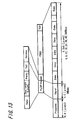
- FIG. 13 is a diagram showing the frame format according to the IEEE802.11a.
- a preamble is added to the head of each packet to indicate existence of the packet.
- a known symbol pattern is defined as the preamble, and a receiver judges based on the known pattern whether a received signal is entitled to be the preamble or not.
- a signal field is defined.
- Information required for decoding an information portion of the packet is stored in the signal field.
- the information required for decoding the packet is called a PLCP header (Physical Layer Convergence Protocol header), and the PLCP header includes a rate field indicating a transmission rate of an information portion (in addition, a service field which is a part of the PLCP header is also included, however hereinafter it is generally termed the information portion in order to simplify an explanation), a data length field indicating a length of the information portion, a parity bit, a tail bit of an encoder and the like.
- the receiver performs decoding operations of the subsequent information portions based on the result of decoding the rate and length fields of the PLCP header.
- Encoding resistant to noise is applied to a signal portion which stores the PLCP header, and transmission is performed at a rate equivalent to 6 Mbps.
- the information portion in an ordinary packet is transmitted in a transmission rate mode with which the highest bit rate is provided within the range where error as little as possible is generated in accordance with SNR or the like in the receiver.
- total eight kinds of transmission rate mode which are 6, 9, 12, 18, 24, 36, 48, and 54 Mbps, are defined in the IEEE802.11a.
- PSDU Physical Layer Service Data Unit
- FIG. 14 is a diagram showing a frame field of the PSDU. Although some frame types are defined in the IEEE802.11, hereupon only three kinds of frame, which are necessary for the explanation, are explained.
- a frame control field and a duration field are defined in common in each frame.
- Information indicating a kind, use and the like of the frame is stored in the Frame Control field.
- information on use for NAV (Network Allocation Vector) is stored in the Duration field, and a period of time until a transaction of the packet is completed is written therein.
- NAV Network Allocation Vector
- RA receiver address
- TA transmitter address
- FCS checksum
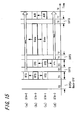
- FIGS. 11 and 15 An RTS/CTS procedure in the IEEE802.11 is explained using FIGS. 11 and 15.
- CSMA/CA according to the RTS/CTS procedure is known as a methodology for solving much of this problem. This methodology is employed also in the IEEE802.11.
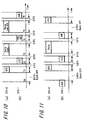
- FIG. 11 shows an example in which some information (Data) is transmitted from a communication station STA0 to a communication station STA1.
- the communication station STA0 Prior to transmission of actual information, the communication station STA0 transmits an RTS (Request To Send) packet to the communication station STA1 which is a destination of the information in accordance with the CSMA procedure.
- RTS Request To Send
- CTS Clear To Send
- FIG. 15 an explanation is made to an example in which communication stations STA2, STA0, STA1 and STA3 exist and only communication stations adjacent to each other are located within the range of reaching an electric wave. Further, it is assumed to be the case in which the communication station STA0 transmits information addressed to the communication station STA1. After confirming that a medium is clear for a predetermined period of time (from time T0 to time T1) in accordance with the above described CSMA procedure, the communication station STA0 starts to transmit an RTS packet addressed to the communication station STA2 at the time T1.
- Information indicating that the packet is RTS is written in a frame control field of the RTS packet, a period of time until a transmission and reception transaction of that packet is completed (that is, the period of time until time T8) is written in a duration field, an address of the destination communication station (STA1) is written in a RA field, and an address thereof (STA0) is written in a TA field.
- This RTS packet is also received by the communication station STA2 which is located in the neighborhood of the communication station STA0.
- the communication station STA2 starts a receiving operation on discovering a preamble, and further decodes PSDU based on information obtained by decoding a PLCP header. It is recognized from the frame control field in the PSDU that the packet is the RTS packet and it is learned that the communication station STA0 is to transmit some information. Furthermore, it is recognized from the RA field that the communication station STA2 is not a destination communication station.
- the communication station STA2 recognizes without monitoring a medium that the medium is in an occupied state and stops transmission until the transaction is completed, that is, until the time T8 when the transmission of ACK is completed in the example shown in FIG. 15.
- This operation is called setting up NAV (Network Allocation Vector) or the like.
- NAV Network Allocation Vector
- the NAV becomes effective over a period which is indicated in the duration field and the communication station STA2 becomes in a transmission disapproval state until the time T8.
- this RTS packet is also received by the communication station STA1 which is the destination thereof.
- the STA1 recognizes similarly to the above procedure that the communication station STA0 is to transmit the packet addressed thereto, the STA1 returns the CTS packet at time T3 after an SIFS interval.
- the transmission rate mode of the CTS packet should be the same as that of the RTS.
- it is written in the frame control field of PSDU that the packet is the CTS packet, a period of time until the transaction is completed (that is, the period of time until the time T8) is written in the duration field, and the address of the destination communication station (STA1) is written in the RA field.
- This CTS packet is also received by the communication station STA3 which is located in the neighborhood of the communication station STA1.
- the communication station STA3 recognizes that "a certain nearby communication station expects to receive the packet until the time T8" by decoding PSDU using the procedure similar to the above. Then, in order not to interrupt the reception by the communication station STA1, the communication station STA3 sets up NAV to stop transmission until that transaction is completed. The NAV becomes effective over the period indicated in the duration field, and the communication station STA3 also becomes in a transmission disapproval state until the time T8.
- this CTS packet is also received by the communication station STA0 which is the destination thereof.
- the communication station STA0 recognizes by decoding PSDU using the procedure similar to the above that the communication station STA1 is ready for the reception and starts transmission of a data packet at time T5 after the SIFS interval.
- the ACK is returned at time T7 after the SIFS interval and the communication station STA0 receives the ACK to complete the transmission and reception transaction for one packet at the time T8.
- the communication stations STA2 and STA3 which are the neighboring communication stations take the NAV down so as to return to a normal transmission and reception state.
- Japanese Published Patent Application No. H8-98255 discloses a conventional example of such access control of wireless communications.
- the CTS packet needs to be transmitted by the same transmission rate as the data packet and the transmission is performed between a transmitting station and a receiving station only at a transmission rate having the minimum necessary noise-proof characteristics. Therefore, since the CTS packet can be delivered only to communication stations which exist within the range up to a distance equivalent to that of the transmitting station when viewing from the receiving station (CTS transmitting station), the problem of hidden terminals cannot solved fundamentally. Further, the same can also be said with respect to the RTS packet.
- a terminal which has received an RTS/CTS packet addressed to the other terminals is made to stop transmission processing (NAV) until a transaction is completed; however, actually even communication not affecting the reception in the terminal which has transmitted the CTS has been restricted. Due to the operation, a usability of a line has not been improved.
- NAV transmission processing
- the present invention is made in light of the above problems and aims to solve problems when performing an access control in a communication system such as a wireless LAN system.
- the present invention is communication performed within a network including a plurality of communication stations, wherein in the case where an access control in which a communication timing of a packet may not collide with that of another station by detecting a signal transmitted from another station is performed, information required for extracting information in a payload of a packet and a field that controls an access reservation for transmitting a packet generated as a result of the transmission of the packet are at least included in "a header area such as a physical layer header portion of the packet which is processed not to become an error easily"; and processing which uses the field can be performed.
- the present invention is communication performed within a network including a plurality of communication stations, wherein in the case where an access control in which a communication timing of a packet may not collide with that of another station by detecting a signal transmitted from another station is performed, information on a period of time until completing reception of a new packet which is generated as a result of transmission of a relevant packet is written in a field for controlling the access reservation of the packet which is transmitted from a communication station, so that processing based on the information can be performed.
- the present invention is communication performed within a network including a plurality of communication stations, wherein in the case where an access control in which a communication timing of a packet may not collide with that of another station by detecting a signal transmitted from another station is performed and when it is judged from a destination address included in a header of a received packet that the packet is not addressed thereto, transmission processing is suspended until the time indicated in the access reservation field included in the packet.
- the present invention is communication performed within a network including a plurality of communication stations, wherein in the case where an access control in which a communication timing of a packet may not collide with that of another station by detecting a signal transmitted from another station is performed and when some signal is transmitted to a transmission source of a received packet after identifying an instruction to delay the return of a reception acknowledgement response signal in the received packet, the reception acknowledgement response signal is included in the signal.
- a reaching range of a transmission request packet and that of a transmission request acknowledgement response packet can be expanded, and therefore an excellent communication method and a communication device as well as a computer program can be provided.
- a transmission rate used at the time of transmitting information can be judged based on the latest receiving condition, so that a selection of the transmission rate can be made precisely.
- a transmission path for communication assumed in this embodiment is of wireless, and also it is assumed to be the case in which a network is established among a plurality of devices using a single transmission medium (in the case where a link is not separated by a frequency channel). However, the same can be said even if a plurality of frequency channels exist as a transmission medium.
- the communication assumed in this embodiment is a store-and-forward type traffic and information is transferred in a unit of packets.
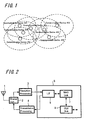
- FIG. 1 shows an example of an arrangement of communication devices included in the wireless communication system according to an embodiment of the present invention.
- a specific control station is not disposed and each communication device operates in an autonomous decentralized manner to form an ad hoc network.
- the state in which communication devices #0 to #6 are distributed in the same space is shown.
- a communication range of each communication device is shown with a broken line in this drawing, and not only communication can mutually be performed with another communication device existing within the range, but also the range is defined as the one where a signal transmitted by itself interferes in others.
- the communication device #0 is located within the range where communication with the communication devices #1 and #4 which exist in the neighborhood can be performed; the communication device #1 is located within the range where communication with the communication devices #0, #2 and #4 which exist in the neighborhood can be performed; the communication device #2 is located within the range where communication with the communication devices #1, #3 and #6 which exist in the neighborhood can be performed; the communication device #3 is located within the range where communication with the communication device #2 which exists in the neighborhood can be performed; the communication device #4 is located within the range where communication with the communication devices #0, #1 and #5 which exist in the neighborhood can be performed; the communication device #5 is located within the range where communication with the communication device #4 which exists in the neighborhood can be performed; and the communication device #6 is located within the range where communication with the communication device #2 which exists in the neighborhood can
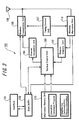
- FIG. 2 is a block diagram showing an example of a configuration of a wireless transmitting and receiving device constituting a communication station applied to the system of this embodiment.
- an antenna 1 is connected to a reception processing unit 3 and a transmission processing unit 4 through an antenna shared unit 2, and the reception processing unit 3 and the transmission processing unit 4 are connected to a base-band unit 5.
- various communication methods suitable for comparatively short range communication and applicable to a wireless LAN can be applied, for example. Specifically, a UWB (Ultra Wideband) method, an OFDM (Orthogonal Frequency Division Multiplex) method, a CDMA (Code Division Multiple Access) method and the like can be applied.
- UWB Ultra Wideband
- OFDM Orthogonal Frequency Division Multiplex
- CDMA Code Division Multiple Access
- a wireless communication device 100 includes: an interface 101, a data buffer 102, a central control unit 103, a beacon generation unit 104, a wireless transmission unit 106, a timing control unit 107, an antenna 109, a wireless reception unit 110, a beacon analysis unit 112 and an information memory unit 113.
- the interface 101 exchanges various information sets with an external device (for example, a personal computer (not shown) and the like) which is connected to the wireless communication device 100.
- an external device for example, a personal computer (not shown) and the like
- the wireless transmission unit 106 performs predetermined modulation processing to wirelessly transmit data and the beacon signal temporarily stored in the data buffer 102. Also, the wireless reception unit 110 performs reception processing of information and a signal such as a beacon signal sent from another wireless communication device at a predetermined time.
- the information memory unit 113 stores an execution procedure command (a program describing the collision avoidance processing procedure and the like) such as a series of access control operation which is performed in the central control unit 103, the neighboring device information obtained from an analyzed result of the received beacon, and the like.
- an execution procedure command a program describing the collision avoidance processing procedure and the like
- a transmission rate of the next packet to be transmitted is determined considering a transmission quality of a packet which has been received immediately before and a duration value calculated from the determined transmission rate can be set. Accordingly, since a station which transmits RTS has conventionally determined a data rate to calculate a duration value at the time of transmitting the RTS, there has been a problem that an alteration of a transmission rate due to a change of condition thereafter in a transmission path can not be taken into consideration; however, such problem does not occur according to this embodiment.
- control is performed so as not to set NAV which is longer than required regardless of the kind of a transmitted packet (RTS, CTS, Data, ACK and the like), a usability of a medium is improved.
- each communication station When recognizing reception of a packet and judging from the result of decoding a PSDU that the packet is not addressed thereto, each communication station performs processing of making transmission always disapproved over the period of time which is indicated by a duration field in a PLCP header.
- each communication station makes a reception operation stopped at the time when it is judged that the packet is not addressed thereto and makes a shift into a normal transmission and reception state.
- An encoding particularly resistant to noise, that is, excellent in noise characteristics is applied to a signal portion in which the PLCP header is stored, and the portion is transmitted at, for example, around 4 Mbps which is lower than the minimum rate for transmitting an information portion (payload portion). Further, when a reception SNR is low such that the reception power is too low, a preamble portion can not be discovered and it is not possible to recognize that the packet is received. Therefore, when it is recognized that the packet has been received, a duration field can be extracted without an error regardless of a transmission rate of the information portion.
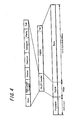
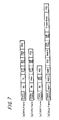
- FIG. 7 is a diagram showing frame fields of PSDU. Hereupon, an explanation is made with respect to only four kinds of frame which are necessary for explaining different aspects from prior art.
- a frame control field in which information indicating a kind, use and the like of the frame is stored is defined in common.
- a duration field conventionally existed is not arranged in this field, because according to this embodiment the duration field is transmitted in a PLCP header that is a physical layer header.
- an ACK type field indicating an ARQ method and an ACK SEQ field indicating an object frame of ACK exist in addition to fields which have conventionally been defined.
- an ACK type field indicating an ARQ method, an ACK SEQ field indicating the object frame of ACK and a data length field indicating the number of bits of a data frame transmitted later on exist in addition to fields which have conventionally been defined.
- a rate field indicating a transmission rate of the data frame transmitted later on, an ACK type field indicating the ARQ method and an ACK SEQ field indicating the object frame of ACK exist in addition to fields which have conventionally been defined.
- an ACK SEQ field indicating the object frame of ACK exists in addition to fields which have conventionally been defined.
- a communication station judges whether the packet is addressed thereto or not by referring to a destination address field of a frame, which is similar to prior art examples.
- FIG. 6 is a diagram showing an example of an RTS/CTS procedure according to this embodiment.
- the communication station STA0 After confirming that a medium has been clear for a certain period of time (from time T0 to time T1) based on a conventional CSMA procedure, the communication station STA0 starts to transmit an RTS packet addressed to the communication station STA2 at the time T1.
- a period of time (that is, the period of time from T2 to T4) until completing reception of CTS which is transmitted as a result of receiving RTS is written in a duration field of the RTS packet.
- This RTS packet is also received in the communication station STA2 which is located in the neighborhood of the communication station STA0. Even if the communication station STA2 failed in decoding the PSDU, there is a high possibility of decoding the PLCP header portion correctly, because the portion is excellent in noise characteristics.
- the time T2 is recognized from the rate field and the data length field in the PLCP header, and the time T4 is recognized by referring further to the duration field to effect transmission disapproval by setting up NAV during the time until T4.
- the communication station STA1 evaluates a quality of the RTS packet received prior to the return of the CTS packet and based on the result of this evaluation, a transmission rate of a data packet which is transmitted thereafter is determined. Since a determination process is not a feature of this embodiment, an explanation thereof will be omitted.
- a time length of the data packet is calculated from the number of bits in the data packet indicated by the RTS packet and the determined transmission rate, and the period of time until T6 which is the time to finish the transmission of the data packet transmitted as the result of reception of the CTS packet is written in a duration field in a PLCP header of a CTS packet similarly to the procedure described above. There may also be a case in which time until around T7 is written so as to have some margin. Further, since the transmission of a CTS packet is performed addressing to the source of transmitting a RTS packet as the result of the reception of the RTS packet, information indicating that "there has been the exchange of the packet with the receiving side prior to the transmission of the packet" is written in a category field.
- transmission power indicated in the power field which has been written in the RTS packet is set as the transmission power, and a value indicating this transmission power is written in a power field. If the communication station STA1 is unable to transmit with the transmission power indicated in the power field which has been written in the RTS packet, the closest value to the transmission power indicated in the RTS packet is set within the range of transmission power with which the STA1 is able to perform transmission, and that transmission power is written in the power field of the CTS packet. Furthermore, the transmission rate determined is written in a rate field within the PSDU of the CTS packet. The transmission of the PSDU of the CTS packet itself is performed at a transmission rate which is (in many cases, the most) excellent in noise characteristics so that a possibility of not being able to decode the CTS packet can be made as low as possible.
- the communication station STA1 when the communication station STA1 fails in decoding PSDU even though succeeded in decoding the PLCP header of the RTS packet, the communication station STA1 is also made into the transmission disapproval state by setting up NAV for the period of time until T4 indicated in the duration field or the like which has been obtained from the PLCP header.
- the communication station STA0 since a CTS packet is not returned from the communication station STA1 before the expected time T4, the communication station STA0 tries to resend the RTS packet in accordance with a procedure of random back-off.
- the communication station STA2 also takes NAV down at the time T4 to enter a normal transmissible state and a damage caused by the fact that the CTS packet has not been returned can be most minimized.
- the CTS packet is returned as expected at the time T4 in accordance with the above described procedure. Since the CTS packet is forwarded at the transmission rate which is excellent in noise characteristics, there is a high possibility that the transmission and reception of the PDSU can be performed without an error.
- This CTS packet can also be received by the communication station STA3 which is located in the neighborhood of the communication station STA1.
- the communication station STA3 decodes the duration field and the like in PLCP of the CTS packet and further confirms that an RA address in PSDU is not addressed thereto, the communication station STA3 sets up NAV over the period of time indicated in the duration field and the like to stop transmission. As a result, the communication station STA3 becomes a transmission disapproval state until the time T6 which is the time indicated in the duration field.
- This CTS packet is also received by the communication station STA0 which is a destination.
- the communication station STA0 By decoding the PSDU, the communication station STA0 recognizes that the communication station STA1 is ready for reception and also expects the reception at the transmission rate indicated in the rate field.
- the communication station STA0 generates a data packet at the instructed transmission rate and further writes into a duration field of the PLCP header a period of time until completing reception of an ACK packet transmitted as a result of reception of the data packet in the same procedure as described above.
- the transmission power indicated in the power field written in the CTS packet is set as a transmission power and a value indicating this transmission power is written in a power field. If the communication station STA0 is unable to transmit with the transmission power indicated in the power field written in the CTS packet, the closest value to the transmission power indicated in the CTS packet is set within the range of transmission power with which the communication station STA0 can perform transmission, and the transmission power is written in the power field of the data packet which is transmitted.
- the data packet generated in the above described procedure starts to be transmitted at time T5 from the CTS packet after an SIFS interval.
- the data packet is received by the communication station STA2 which is located in the neighborhood of the communication station STA0 and by decoding information of a PLCP header in the data packet, the communication station STA2 understands that the transmission of the data packet is performed until the time T6 and also that it is expected to make transmission disapproved until time T8 after that; and the communication station STA2 sets up NAV from time T6 to time T8 to make the transmission disapproved. This process is performed even if the PSDU of the data packet can not be decoded correctly.
- the data packet is also received by the communication station STA1 which is a destination, and when the transmission of the data packet is completed at the time T6 and the communication station STA1 has been able to decode this without an error, ACK is returned at the time T7 after a SIFS interval and the communication station STA0 receives this, so that a transmission and reception transaction for one packet is completed at the time T8.
- the communication station STA1 Although the communication station STA1 generates an ACK packet in accordance with almost the same procedure as that at the time of generating the CTS packet, the communication station STA1 notifies neighboring stations that "there is no time zone to make transmission disapproved after completing the transmission of the ACK packet" by storing a value 0 or the like in a duration field in a PLCP header of the ACK packet.
- the communication station STA3 takes NAV down at the time T6 and the communication station STA2 takes NAV down at the time T8 to return to a normal transmission and reception state.
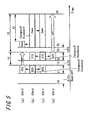
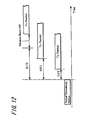
- FIG. 5 is a diagram showing another example of an RTS/CTS procedure according to an embodiment of the present invention.
- a length of time during which transmission is expected to make disapproved after the transmission of the relevant packet is completed is written by a unit of [p sec] in a duration field of the packet transmitted in the example of FIG. 5.
- the duration Field does not always need to include a field in which length information is written by the unit of [ ⁇ sec], and as long as the duration field includes information or information groups which can instruct communication stations other than a destination to be in a transmission disapproval state over a desired period of time, the purpose thereof can be achieved.
- the period of time indicated in the duration becomes a transmission disapproval period.
- the period of time indicated in the duration becomes a transmission disapproval period.
- Time until completing reception of the packet becomes a transmission disapproval period. Transmission becomes possible at the time when recognized that both fields of the duration and category are 0.
- This data packet is received by the communication station STA2 located in the neighborhood of the communication station STA0, and by decoding information in the PLCP header of the data packet, the communication station STA2 recognizes that an exchange of a packet is performed with a receiving side prior to the transmission of that packet, that the transmission of that data packet is performed until the time T6 and that there exists no time period to make transmission disapproved after that; and also the communication station STA2 learns that the packet is not addressed thereto by referring to a destination address field of PSDU.
- FIGS. 8 to 10 An ARQ procedure for the case in which an ACK packet is not returned immediately after transmitting a data packet as shown in FIG. 5 is explained using FIGS. 8 to 10.
- there exist at least two variations as a method for returning an ACK in which an immediate ACK as shown in FIG. 5 where the ACK is returned immediately after the reception of a data packet without an error and a delayed ACK where the ACK is returned after counting a predetermined period of time until transmitting the ACK when the data packet is received without an error are defined. While the procedures shown in a conventional example and in FIG. 5 are taken by the immediate ACK, the following procedure is taken by the delayed ACK.
- an ACK type field indicating the manner in which the ACK is returned is defined in a control frame of data to be transmitted or others as shown in FIG. 7, and a transmitting side writes request information indicating the manner in which the ACK is returned from a receiving side in the field in an RTS frame and a data frame, and confirmation information indicating the manner in which the ACK is returned is written in the field in a CST frame.
- an ACK SEQ field is defined. The ACK SEQ field is used as follows.
- FIG. 8 is a diagram showing a first example of a transmission and reception procedure in a wireless communication system of this embodiment.
- a case in which two data packets addressed to the communication station STA1 are transmitted from the communication station STA0 is referred to as an example.
- the communication station STA1 which has received the above returns a CTS packet at time T2. At this time, confirmation information that the ACK is returned by the delayed ACK as instructed is written in an ACK type field of the CTS packet, and information indicating that the packet is not shared by ACK information is written in an ACK SEQ field.
- the communication station STA0 which has received the above transmits a data packet at time T3.
- the information on requesting that the ACK be returned by the delayed ACK (Del. Ack) is written again in a ACK type field of the data packet, information indicating that the packet is not shared by ACK information is written in an ACK SEQ field, and a sequence number (for example, 023) of the packet is written in an SEQ field.
- the communication station STA1 which has received the above activates a timer for returning an ACK at time T4. Further, before the timer comes to an end, the communication station STA0 transmits an RTS packet at time T5 after having a delay of random period of time so as to again transmit the data packet addressed to the communication station STA1. At this time, information on requesting that the ACK be returned this time by an immediate ACK is written in an ACK Type field of the RTS packet, and information indicating that the packet is not shared by ACK information is written in an ACK SEQ field.
- the communication station STA1 which has received the above returns a CTS packet at time T6. At this time, information confirming that the ACK is returned by the immediate ACK is written in an ACK type field of the CTS packet. Further, since the communication station STA1 holds the ACK addressed to the communication station STA0 which has not yet been transmitted, ACK information which is a reception acknowledgement response of the previously received packet of the sequence number 023 is made to share the ACK SEQ field, and the sequence number 023 of the data frame which is an object of the ACK is written in the ACK SEQ field.
- the communication station STA0 which has received the above transmits the next data packet at time T7 while confirming that previous data frame has been received without an error.
- the information on requesting that the ACK be returned by the immediate ACK (Imd. Ack) is again written in an ACK type field of the data packet, information indicating that the packet is not shared by ACK information is written in an ACK SEQ field, and a sequence number (for example, 024) of the packet is written in an SEQ field.
- an ACK packet is returned immediately at time T8 this time.
- the previously received sequence number 024 is written in an ACK SEQ field of the ACK packet.
- FIG. 9 is a diagram showing a second example of a transmission and reception procedure in a wireless communication system of this embodiment. Also in this example, a case in which two data packets addressed to the communication station STA1 are transmitted from the communication station STA0 is referred to as an example.
- the communication station STA1 activates a timer for returning an ACK at the time T4.
- the communication station STA0 Before this timer comes to an end, the communication station STA0 transmits an RTS packet at the time T5 after having a delay of random period of time so as to again transmit a data packet addressed to the communication station STA1. At this time, information on requesting that an ACK be returned again by the delayed ACK is written in an ACK type field of the RTS packet, and information indicating that the packet is not shared by ACK information is written in an ACK SEQ field.
- the communication station STA1 which has received the above returns a CTS packet at the time T6. At this time, information confirming that the ACK is returned by the delayed ACK as instructed is written in an ACK type field of the CTS packet. Further, since the communication station STA1 holds the ACK addressed to the communication station STA0 which has not been transmitted, ACK information which is a reception acknowledgement response of the previously received packet of the sequence number 023 is made to share an ACK SEQ field and the sequence number 023 of the data frame which is an object of the ACK is written in the ACK SEQ field.
- the communication station STA0 which has received the above transmits the next data packet at the time T7 while confirming that the previous data frame has been received without an error.
- the information on requesting that the ACK be returned by the delayed ACK is again written in an ACK type field of the data packet, information indicating that the packet is not shared by ACK information is written in an ACK SEQ field, and a sequence number (for example, 024) of the packet is written in an SEQ field.
- the communication station STA1 which has received the above activates the timer for returning the ACK after confirming that the information has been taken out without an error. This time, since transmission of a packet addressed to the communication station STA0 has not occurred during a period until the timer comes to an end, the communication station STA1 activates the transmission process of an ACK frame addressed to the communication station STA0. When the timer comes to an end, the ACK frame is transmitted at time T9 after having a delay of random period of time so as to transmit the ACK frame. At this time, the number 024 which is the sequence number of the previously received data frame is written in an ACK SEQ field.
- the communication station STA0 which has received the above immediately transmits a response signal for that ACK frame at time T10 while recognizing that the data packet of the sequence number 024 has been decoded without an error by extracting the ACK SEQ field of the ACK frame.
- the response signal is required to have only a similar field as a conventional ACK frame.
- the communication station STA1 holds the ACK information which has not yet been returned, this has not been transmitted.
- the communication station STA0 judges that the sequence number 024 might not have been received based on the fact that an ACK for the packet of the sequence number 024 which was transmitted previously at the time T7 has not been returned over a predetermined period of time; and transmits an RTS packet for request-to-resend at the time T9 (not shown in the figure).
- the communication station STA1 which has received the above returns a CTS packet at the time T10 after writing ACK information indicating that the packet has already been received (there is also a case in which an ACK packet is returned instead of the CTS packet).
- a value 0 is stored in a duration field of the CTS (ACK) packet.
- the communication station STA0 which has received this CTS packet recognizes that the packet of the sequence number 024 has been received without any trouble.
- FIG. 10 is a diagram showing a third example of a transmission and reception procedure in a wireless communication system of this embodiment. Also in this example, a case in which two data packets addressed to the communication station STA1 are transmitted from the communication station STA0 is referred to as an example.
- the communication station STA0 activates a transmission procedure of a data packet at time T0 to start a back-off count in accordance with the procedure of CSMA in order to acquire a transmission right.
- a back-off count is completed and it is confirmed that a medium is clear during this period of time, an RTS packet is transmitted.
- information requesting that an ACK be returned by an immediate ACK is written in an ACK type field of the RTS packet, and information indicating that the packet is not shared by ACK information is written in an ACK SEQ field.
- the communication station STA1 which has received the above returns a CTS packet at time T2. At this time, information confirming that the ACK is returned by the immediate ACK as instructed is written in an ACK type field of the CTS packet, and information indicating that the packet is not shared by the ACK information is written in an ACK SEQ field.
- the communication station STA0 which has received the above transmits a data packet at time T3.
- the information requesting that the ACK be returned by the immediate ACK is again written in an ACK type field of the data packet
- the information indicating that the packet is not shared by the ACK information is written in an ACK SEQ field
- a sequence number (for example, 023) of the packet is written in an SEQ field.
- the communication station STA1 which has received the above returns an immediate ACK at time T4.
- the previously received sequence number 023 is written in an ACK SEQ field of the ACK packet. Further, it is informed in a category field or the like that the ACK packet also functions as a CTS message for the next data packet.
- the communication station STA0 which has received the above transmits the next data packet at time T5 while confirming that the previous data frame has been received without an error.
- the information requesting that the ACK be returned by the immediate ACK is again written in an ACK type field of the data packet
- information indicating that the packet is not shared by ACK information is written in an ACK SEQ field
- a sequence number for example, 024
- an ACK packet is returned immediately at time T6 this time.
- the previously received sequence number 024 is written in an ACK SEQ field of the ACK packet.
- the CTS can be considered to transmit the CTS at a transmission rate which is resistant to noise. Since a duration field or the like is not written in a PLCP header, there may exist a case in which the duration field or the like can not be extracted without an error in a remote communication station depending on a transmission rate of an information unit. However, in CSMA/CA which together uses the RTS/CTS procedures it is necessary to transmit the CTS also to a communication station which has a possibility of becoming an interference source.
Landscapes
- Engineering & Computer Science (AREA)
- Computer Networks & Wireless Communication (AREA)
- Signal Processing (AREA)
- Quality & Reliability (AREA)
- Computer Security & Cryptography (AREA)
- Mobile Radio Communication Systems (AREA)
- Small-Scale Networks (AREA)
- Communication Control (AREA)
Priority Applications (2)
| Application Number | Priority Date | Filing Date | Title |
|---|---|---|---|
| EP15200542.7A EP3029872B1 (de) | 2003-02-03 | 2004-02-03 | Kollisions-vermeidung in mobilen ad-hoc netzen |
| EP11164179.1A EP2357759B1 (de) | 2003-02-03 | 2004-02-03 | Kollisions-Vermeidung in mobilen ad-hoc Netzen |
Applications Claiming Priority (3)
| Application Number | Priority Date | Filing Date | Title |
|---|---|---|---|
| JP2003026461 | 2003-02-03 | ||
| JP2003026461 | 2003-02-03 | ||
| PCT/JP2004/001028 WO2004071021A1 (ja) | 2003-02-03 | 2004-02-03 | 通信方法及び通信装置、並びにコンピュータプログラム |
Related Child Applications (2)
| Application Number | Title | Priority Date | Filing Date |
|---|---|---|---|
| EP11164179.1A Division EP2357759B1 (de) | 2003-02-03 | 2004-02-03 | Kollisions-Vermeidung in mobilen ad-hoc Netzen |
| EP15200542.7A Division EP3029872B1 (de) | 2003-02-03 | 2004-02-03 | Kollisions-vermeidung in mobilen ad-hoc netzen |
Publications (2)
| Publication Number | Publication Date |
|---|---|
| EP1592175A1 true EP1592175A1 (de) | 2005-11-02 |
| EP1592175A4 EP1592175A4 (de) | 2010-03-17 |
Family
ID=32844141
Family Applications (3)
| Application Number | Title | Priority Date | Filing Date |
|---|---|---|---|
| EP15200542.7A Expired - Lifetime EP3029872B1 (de) | 2003-02-03 | 2004-02-03 | Kollisions-vermeidung in mobilen ad-hoc netzen |
| EP11164179.1A Expired - Lifetime EP2357759B1 (de) | 2003-02-03 | 2004-02-03 | Kollisions-Vermeidung in mobilen ad-hoc Netzen |
| EP04707628A Ceased EP1592175A4 (de) | 2003-02-03 | 2004-02-03 | Kommunikationsverfahren, kommunikationseinrichtung und computerprogramm |
Family Applications Before (2)
| Application Number | Title | Priority Date | Filing Date |
|---|---|---|---|
| EP15200542.7A Expired - Lifetime EP3029872B1 (de) | 2003-02-03 | 2004-02-03 | Kollisions-vermeidung in mobilen ad-hoc netzen |
| EP11164179.1A Expired - Lifetime EP2357759B1 (de) | 2003-02-03 | 2004-02-03 | Kollisions-Vermeidung in mobilen ad-hoc Netzen |
Country Status (6)
| Country | Link |
|---|---|
| US (4) | US7653043B2 (de) |
| EP (3) | EP3029872B1 (de) |
| JP (2) | JP4561630B2 (de) |
| KR (1) | KR100971540B1 (de) |
| CN (2) | CN100469025C (de) |
| WO (1) | WO2004071021A1 (de) |
Cited By (3)
| Publication number | Priority date | Publication date | Assignee | Title |
|---|---|---|---|---|
| WO2006035027A1 (de) * | 2004-09-27 | 2006-04-06 | Siemens Aktiengesellschaft | Vielfachzugriffsverfahren für isochronen oder quasi-isochronen datenverkehr |
| US8995343B2 (en) | 2009-12-18 | 2015-03-31 | Electronics And Telecommunications Research Institute | Method for sending/receiving data in a wireless packet communication system in which there is simultaneous communication with various terminals |
| US11357049B2 (en) | 2018-02-09 | 2022-06-07 | Sony Corporation | Communication apparatus |
Families Citing this family (74)
| Publication number | Priority date | Publication date | Assignee | Title |
|---|---|---|---|---|
| CN101662816B (zh) * | 2003-02-03 | 2014-03-05 | 索尼株式会社 | 无线通信系统,无线通信设备和无线通信方法及计算机程序 |
| JP4561630B2 (ja) * | 2003-02-03 | 2010-10-13 | ソニー株式会社 | 通信方法及び通信装置、並びにコンピュータプログラム |
| JP2006050519A (ja) * | 2003-10-24 | 2006-02-16 | Sony Corp | 無線通信システム、無線通信装置及び無線通信方法、並びにコンピュータ・プログラム |
| US8274961B2 (en) | 2003-10-24 | 2012-09-25 | Sony Corporation | Apparatus and associated methodology of adjusting a RTS/CTS transmission protocol |
| RU2335090C2 (ru) * | 2004-01-26 | 2008-09-27 | Самсунг Электроникс Ко., Лтд. | Способ и устройство для установления, передачи и приема данных для контроля виртуальной несущей при связи в беспроводной сети |
| KR100703686B1 (ko) * | 2004-01-26 | 2007-04-05 | 삼성전자주식회사 | 무선 네트워크 통신에 있어 가상 캐리어 센싱을 위한 정보송수신 및 정보 설정 방법과 이를 구현하는 장치 |
| US7664130B2 (en) | 2004-03-01 | 2010-02-16 | Sony Corporation | Wireless communication system, wireless communication apparatus, wireless communication method and computer program |
| US8995921B2 (en) | 2004-09-10 | 2015-03-31 | Interdigital Technology Corporation | Measurement support for a smart antenna in a wireless communication system |
| US7590078B2 (en) * | 2004-10-05 | 2009-09-15 | Qualcomm Incorporated | Detecting legacy spoofing in reduced functionality user terminals |
| US7724858B2 (en) * | 2004-11-29 | 2010-05-25 | Intel Corporation | Techniques to manage latency for multiple receivers |
| KR101229768B1 (ko) * | 2005-03-07 | 2013-02-06 | 퀄컴 인코포레이티드 | 무선 패킷 네트워크용 블록 확인응답 프로토콜 |
| US8830846B2 (en) * | 2005-04-04 | 2014-09-09 | Interdigital Technology Corporation | Method and system for improving responsiveness in exchanging frames in a wireless local area network |
| JP4747646B2 (ja) * | 2005-04-11 | 2011-08-17 | ソニー株式会社 | 無線通信システム,無線通信装置,無線通信方法,およびコンピュータプログラム。 |
| JP4692051B2 (ja) * | 2005-04-14 | 2011-06-01 | ソニー株式会社 | 無線通信装置,無線通信システム,無線通信方法,およびコンピュータプログラム |
| JP4548235B2 (ja) * | 2005-06-17 | 2010-09-22 | 沖電気工業株式会社 | 通信制御装置、通信制御方法、ノード及び通信システム |
| US7948911B2 (en) * | 2005-11-07 | 2011-05-24 | Telefonaktiebolaget L M Ericsson (Publ) | Implicit signaling for link adaptation |
| TWI281329B (en) * | 2005-12-08 | 2007-05-11 | Inst Information Industry | Wireless communication system, method for enhancing network efficiency, and computer readable medium therefor |
| KR100728297B1 (ko) | 2006-01-17 | 2007-06-13 | 삼성전자주식회사 | 무선 애드 혹 네트워크에서의 무선 자원 처리 방법 및 그장치 |
| US7957414B2 (en) * | 2006-05-29 | 2011-06-07 | Kyocera Corporation | Transmitting apparatus and transmission rate control method |
| JP4770635B2 (ja) * | 2006-08-09 | 2011-09-14 | 株式会社デンソー | 車車間通信システム、車車間通信方法 |
| US20080056227A1 (en) * | 2006-08-31 | 2008-03-06 | Motorola, Inc. | Adaptive broadcast multicast systems in wireless communication networks |
| US7792138B2 (en) * | 2006-09-13 | 2010-09-07 | Seoul National University Foundation | Distributed opportunistic scheduling in IEEE 802.11 wireless location area networks (WLANs) |
| US8879448B2 (en) * | 2006-12-22 | 2014-11-04 | Samsung Electronics Co., Ltd. | Apparatus for controlling power of WiMedia media access control device and method using the same |
| US7995985B2 (en) * | 2007-09-10 | 2011-08-09 | Utc Fire & Security Americas Corporation, Inc. | Wireless security messaging model |
| US8134958B2 (en) * | 2007-10-08 | 2012-03-13 | Nec Laboratories America, Inc. | Synchronous two-phase rate and power control in WLANs |
| CN101420418B (zh) * | 2007-10-24 | 2011-10-05 | 华为技术有限公司 | 一种无线网络通信的方法及信标设备 |
| US8320358B2 (en) * | 2007-12-12 | 2012-11-27 | Qualcomm Incorporated | Method and apparatus for resolving blinded-node problems in wireless networks |
| US8498578B2 (en) * | 2008-05-16 | 2013-07-30 | Qualcomm Incorporated | Dynamic interference management for wireless networks |
| US9974065B2 (en) * | 2008-06-25 | 2018-05-15 | Qualcomm Incorporated | Dynamic control blanking in heterogeneous networks |
| US8503359B2 (en) * | 2009-06-26 | 2013-08-06 | Intel Corporation | Use of delayed clear-to-send and denial-to-send in directional wireless networks |
| US9173191B2 (en) | 2009-12-20 | 2015-10-27 | Intel Corporation | Device, system and method of simultaneously communicating with a group of wireless communication devices |
| US20120076081A1 (en) * | 2010-03-31 | 2012-03-29 | Qualcomm Incorporated | Protection mechanisms for multi-user mimo transmissions |
| US9173234B2 (en) | 2010-03-31 | 2015-10-27 | Qualcomm Incorporated | Protection mechanisms for multi-user MIMO transmissions |
| US8989066B2 (en) | 2010-03-31 | 2015-03-24 | Qualcomm, Incorporated | Protection mechanisms for multi-user MIMO transmissions |
| US20120020269A1 (en) * | 2010-07-20 | 2012-01-26 | Gong Michelle X | Media access techniques for multiple user transmissions |
| CN101973031B (zh) * | 2010-08-24 | 2013-07-24 | 中国科学院深圳先进技术研究院 | 云机器人系统及实现方法 |
| JP5429754B2 (ja) * | 2010-10-15 | 2014-02-26 | 株式会社日立製作所 | データ転送システム、送信装置、受信装置、データ転送方法、送信方法並びに受信方法。 |
| US8411632B2 (en) * | 2010-11-04 | 2013-04-02 | Nokia Corporation | Transmission protection scheme |
| US9137823B1 (en) | 2011-05-23 | 2015-09-15 | Marvell International Ltd. | Downlink and uplink staggering techniques with aid bitmap segmentation |
| US9414413B2 (en) * | 2011-06-08 | 2016-08-09 | Lg Electronics Inc. | Method and device for transmitting a frame using a multiple physical layer in a wireless LAN system |
| EP2721895A4 (de) * | 2011-06-16 | 2014-11-26 | Nokia Corp | Verfahren und vorrichtung für zugriff auf ein drahtloses medium |
| US9025466B2 (en) * | 2011-07-07 | 2015-05-05 | Qualcomm Incorporated | Methods and apparatus for facilitating channel access in a communication system |
| US9049733B2 (en) * | 2011-07-07 | 2015-06-02 | Qualcomm Incorporated | Synchronous transmission methods and apparatus |
| US8942123B2 (en) * | 2011-09-02 | 2015-01-27 | Qualcomm Incorporated | Deferral mechanism for improved medium reuse in wireless networks with transmit power imbalances |
| US8842692B2 (en) * | 2011-09-06 | 2014-09-23 | Qualcomm Incorporated | Methods and apparatus for enabling multiple devices to share a data transmission period |
| US8971213B1 (en) * | 2011-10-20 | 2015-03-03 | Cisco Technology, Inc. | Partial association identifier computation in wireless networks |
| JP5627019B2 (ja) * | 2011-11-22 | 2014-11-19 | 日本電信電話株式会社 | 基地局装置及び通信方法 |
| US9204371B2 (en) | 2011-11-23 | 2015-12-01 | Marvell World Trade Ltd. | 802.11 restricted access windows |
| US9155027B1 (en) | 2011-11-23 | 2015-10-06 | Marvell International Ltd. | 802.11 enhanced distributed channel access |
| US9001780B2 (en) * | 2012-01-27 | 2015-04-07 | Qualcomm Incorporated | Physical layer issues related to multi-TA group support |
| KR101917174B1 (ko) * | 2012-02-24 | 2018-11-09 | 삼성전자주식회사 | 전자 장치 사이의 스트림 전송 방법 및 그 방법을 처리하는 전자 장치 |
| US9655144B2 (en) * | 2012-03-30 | 2017-05-16 | Lg Electronics Inc. | Method and device for controlling channel access in wireless LAN system |
| US9735855B2 (en) | 2012-04-18 | 2017-08-15 | Marvell World Trade Ltd. | Method and apparatus for relaying communication between an access point and a station in a wireless network |
| US9445349B1 (en) | 2012-04-18 | 2016-09-13 | Marvell International Ltd. | 802.11ah duty cycle based channel access priorities |
| WO2013184889A1 (en) * | 2012-06-08 | 2013-12-12 | Marvell World Trade Ltd. | Method and apparatus for restricting channel access to a wireless station operating in accordance with a power saving scheme |
| CN102724069B (zh) * | 2012-06-14 | 2015-04-22 | 福建星网锐捷网络有限公司 | 热堆叠系统中双主用设备冲突检测方法、装置及网络设备 |
| JP5958106B2 (ja) * | 2012-06-15 | 2016-07-27 | 富士通株式会社 | 情報共有方法、情報処理装置、及び情報共有プログラム |
| US9148873B1 (en) | 2012-07-05 | 2015-09-29 | Marvell International Ltd. | Method and apparatus for providing different types of physical layer devices access to a wireless medium |
| US8953634B2 (en) * | 2012-09-04 | 2015-02-10 | Intel Corporation | Device, system and method of communicating data during an allocated time period |
| US9858208B2 (en) | 2013-03-21 | 2018-01-02 | International Business Machines Corporation | System for securing contents of removable memory |
| KR101838412B1 (ko) * | 2013-06-21 | 2018-03-13 | 콘비다 와이어리스, 엘엘씨 | 데이터 전송을 위한 계층 교차적 및 애플리케이션 교차적 긍정 응답 |
| US9253743B2 (en) * | 2013-06-27 | 2016-02-02 | Broadcom Corporation | Systems and methods for reduced latency and improved beacon reception in devices capable of providing multiple wireless interfaces via a single radio |
| CN105706515A (zh) * | 2013-10-25 | 2016-06-22 | 瑞典爱立信有限公司 | 接收机信道预留 |
| US20150341858A1 (en) * | 2014-05-21 | 2015-11-26 | Qualcomm Incorporated | Apparatus, methods, and computer program products providing power savings in sps-configured volte with c-drx |
| CN106664721B (zh) * | 2014-07-11 | 2020-03-20 | 索尼公司 | 信息处理设备 |
| US10043480B2 (en) * | 2014-08-29 | 2018-08-07 | Lattice Semiconductor Corporation | Inter-device conflict resolution on a multimedia link |
| KR101657884B1 (ko) * | 2014-09-18 | 2016-09-20 | 한국과학기술원 | 통신 자원의 효율 개선을 위한 rts/cts 핸드쉐이킹 방법 |
| JP6856524B2 (ja) | 2014-09-19 | 2021-04-07 | 華為技術有限公司Huawei Technologies Co.,Ltd. | ワイヤレスローカルエリアネットワークデータ送信方法および装置 |
| US10390329B2 (en) * | 2014-09-25 | 2019-08-20 | Sony Corporation | Device and system |
| US9693368B2 (en) * | 2015-01-26 | 2017-06-27 | Qualcomm Incorporated | Bandwidth acquisition in contention-based networks |
| US9900826B2 (en) * | 2015-04-16 | 2018-02-20 | Netgear, Inc. | Beacon protection in a wireless network |
| JP6070774B2 (ja) * | 2015-06-19 | 2017-02-01 | 富士通株式会社 | 無線局、通信システム、及び通信方法 |
| JP6578831B2 (ja) * | 2015-09-08 | 2019-09-25 | ソニー株式会社 | 無線通信装置および無線通信方法 |
| EP3425967B1 (de) * | 2016-03-02 | 2021-03-31 | Sony Corporation | Informationsverarbeitungsvorrichtung, kommunikationssystem, informationsverarbeitungsverfahren und programm |
Family Cites Families (32)
| Publication number | Priority date | Publication date | Assignee | Title |
|---|---|---|---|---|
| US5546540A (en) * | 1991-01-14 | 1996-08-13 | Concord Communications, Inc. | Automatic topology monitor for multi-segment local area network |
| US5684796A (en) * | 1994-05-03 | 1997-11-04 | Bay Networks Group, Inc. | Method and apparatus for determining and maintaining agent topology information in a multi-segment network |
| JP2600622B2 (ja) | 1994-09-22 | 1997-04-16 | 日本電気株式会社 | Tdma方式の移動通信システムにおける下り制御信号の送信制御方法 |
| JPH098255A (ja) | 1995-06-16 | 1997-01-10 | Fujitsu Ltd | 半導体記憶装置 |
| US5721725A (en) * | 1995-10-30 | 1998-02-24 | Xerox Corporation | Protocol for channel access in wireless or network data communication |
| US6067291A (en) * | 1997-09-23 | 2000-05-23 | Lucent Technologies Inc. | Wireless local area network with enhanced carrier sense provision |
| US7184413B2 (en) | 1999-02-10 | 2007-02-27 | Nokia Inc. | Adaptive communication protocol for wireless networks |
| JP3784982B2 (ja) * | 1999-02-26 | 2006-06-14 | 株式会社東芝 | 再送制御方法 |
| US7054329B2 (en) * | 2000-07-07 | 2006-05-30 | Koninklijke Philips Electronics, N.V. | Collision avoidance in IEEE 802.11 contention free period (CFP) with overlapping basic service sets (BSSs) |
| JP3469188B2 (ja) * | 2000-10-13 | 2003-11-25 | 日本電信電話株式会社 | 無線パケット中継方法、無線パケット中継システム及び無線局 |
| US7185099B1 (en) * | 2000-11-22 | 2007-02-27 | International Business Machines Corporation | Apparatus and method for communicating between computer systems using a sliding send window for ordered messages in a clustered computing environment |
| JP2002198974A (ja) * | 2000-12-26 | 2002-07-12 | Matsushita Electric Ind Co Ltd | 無線接続装置 |
| US20020172186A1 (en) * | 2001-04-09 | 2002-11-21 | Peter Larsson | Instantaneous joint transmit power control and link adaptation for RTS/CTS based channel access |
| US7206840B2 (en) * | 2001-05-11 | 2007-04-17 | Koninklike Philips Electronics N.V. | Dynamic frequency selection scheme for IEEE 802.11 WLANs |
| US7164671B2 (en) * | 2001-12-27 | 2007-01-16 | Koninklijke Philips Electronics N.V. | Overlapping network allocation vector (ONAV) for avoiding collision in the IEEE 802.11 WLAN operating under HCF |
| US6693888B2 (en) | 2001-06-06 | 2004-02-17 | Networks Associates Technology, Inc. | Method and apparatus for filtering that specifies the types of frames to be captured and to be displayed for an IEEE802.11 wireless LAN |
| US7570656B2 (en) * | 2001-06-18 | 2009-08-04 | Yitran Communications Ltd. | Channel access method for powerline carrier based media access control protocol |
| JP3770399B2 (ja) * | 2001-07-06 | 2006-04-26 | シャープ株式会社 | 通信管理方法、通信管理プログラム、通信管理プログラムを記録した記録媒体、通信システム、通信装置、および中央管理装置 |
| US20030023915A1 (en) * | 2001-07-30 | 2003-01-30 | Koninklijke Philips Electronics N.V. | Forward error correction system and method for packet based communication systems |
| US7519030B2 (en) * | 2001-11-19 | 2009-04-14 | At&T Intellectual Property Ii, L.P. | Adaptive MAC fragmentation and rate selection for 802.11 wireless networks |
| US6977944B2 (en) * | 2002-01-12 | 2005-12-20 | Conexant, Inc. | Transmission protection for communications networks having stations operating with different modulation formats |
| US7164904B2 (en) * | 2002-01-28 | 2007-01-16 | Research In Motion Limited | Multiple-processor wireless mobile communication device |
| GB0228396D0 (en) * | 2002-12-05 | 2003-01-08 | Synad Technologies Ltd | Terminating frame reception |
| US7263105B2 (en) * | 2002-12-18 | 2007-08-28 | Intel Corporation | WLAN device and method for interfacing between a MAC sublayer and a physical layer |
| JP4407126B2 (ja) * | 2003-01-09 | 2010-02-03 | ソニー株式会社 | 無線通信システム、無線通信装置及び無線通信方法、並びにコンピュータ・プログラム |
| JP4561630B2 (ja) * | 2003-02-03 | 2010-10-13 | ソニー株式会社 | 通信方法及び通信装置、並びにコンピュータプログラム |
| CN101662816B (zh) | 2003-02-03 | 2014-03-05 | 索尼株式会社 | 无线通信系统,无线通信设备和无线通信方法及计算机程序 |
| JP2006050519A (ja) | 2003-10-24 | 2006-02-16 | Sony Corp | 無線通信システム、無線通信装置及び無線通信方法、並びにコンピュータ・プログラム |
| US8274961B2 (en) | 2003-10-24 | 2012-09-25 | Sony Corporation | Apparatus and associated methodology of adjusting a RTS/CTS transmission protocol |
| JP2007533173A (ja) * | 2004-02-02 | 2007-11-15 | コーニンクレッカ フィリップス エレクトロニクス エヌ ヴィ | 無線通信システムにおける周波数帯の最適な再利用のための改良型ネットワークアロケーションベクトル機構 |
| JP4577019B2 (ja) | 2004-03-04 | 2010-11-10 | ソニー株式会社 | 無線通信システム、無線通信装置及び無線通信方法、並びにコンピュータ・プログラム |
| US7768988B2 (en) * | 2005-02-22 | 2010-08-03 | Intel Corporation | Method and apparatus to perform network medium reservation in a wireless network |
-
2004
- 2004-02-03 JP JP2005504824A patent/JP4561630B2/ja not_active Expired - Fee Related
- 2004-02-03 WO PCT/JP2004/001028 patent/WO2004071021A1/ja not_active Ceased
- 2004-02-03 EP EP15200542.7A patent/EP3029872B1/de not_active Expired - Lifetime
- 2004-02-03 US US10/505,696 patent/US7653043B2/en not_active Expired - Fee Related
- 2004-02-03 EP EP11164179.1A patent/EP2357759B1/de not_active Expired - Lifetime
- 2004-02-03 KR KR20047015662A patent/KR100971540B1/ko not_active Expired - Lifetime
- 2004-02-03 CN CNB2004800000824A patent/CN100469025C/zh not_active Expired - Lifetime
- 2004-02-03 CN CN2007101471651A patent/CN101159518B/zh not_active Expired - Lifetime
- 2004-02-03 EP EP04707628A patent/EP1592175A4/de not_active Ceased
-
2008
- 2008-04-29 US US12/111,680 patent/US7715426B2/en not_active Expired - Lifetime
-
2010
- 2010-02-05 JP JP2010024624A patent/JP5136570B2/ja not_active Expired - Fee Related
- 2010-03-04 US US12/717,680 patent/US8249093B2/en not_active Expired - Fee Related
-
2012
- 2012-05-18 US US13/475,600 patent/US8619806B2/en not_active Expired - Fee Related
Cited By (7)
| Publication number | Priority date | Publication date | Assignee | Title |
|---|---|---|---|---|
| WO2006035027A1 (de) * | 2004-09-27 | 2006-04-06 | Siemens Aktiengesellschaft | Vielfachzugriffsverfahren für isochronen oder quasi-isochronen datenverkehr |
| US8995343B2 (en) | 2009-12-18 | 2015-03-31 | Electronics And Telecommunications Research Institute | Method for sending/receiving data in a wireless packet communication system in which there is simultaneous communication with various terminals |
| DE112010004877B4 (de) * | 2009-12-18 | 2015-10-22 | Electronics And Telecommunications Research Institute | Verfahren und Vorrichtung zum Senden von Daten in einem drahtlosen Paketkommunikationssysem, in welchem es gleichzeitige Kommunikation mit verschiedenen Endgeräten gibt |
| US9288017B2 (en) | 2009-12-18 | 2016-03-15 | Jeeyon Choi | Method for sending/receiving data in a wireless packet communication system in which there is simultaneous communication with various terminals |
| DE112010006113B4 (de) * | 2009-12-18 | 2016-09-29 | Electronics And Telecommunications Research Institute | Verfahren und Empfänger zum Empfangen von Daten in einem drahtlosen Paketkommunikationssystem, in welchem es gleichzeitige Kommunikation mit verschiedenen Endgeräten gibt |
| US10958455B2 (en) | 2009-12-18 | 2021-03-23 | Electronics And Telecommunications Research Institute | Method for sending/receiving data in a wireless packet communication system in which there is simultaneous communication with various terminals |
| US11357049B2 (en) | 2018-02-09 | 2022-06-07 | Sony Corporation | Communication apparatus |
Also Published As
| Publication number | Publication date |
|---|---|
| JP4561630B2 (ja) | 2010-10-13 |
| US7715426B2 (en) | 2010-05-11 |
| EP1592175A4 (de) | 2010-03-17 |
| JP2010124490A (ja) | 2010-06-03 |
| CN101159518A (zh) | 2008-04-09 |
| EP2357759B1 (de) | 2016-02-03 |
| US7653043B2 (en) | 2010-01-26 |
| KR20050096840A (ko) | 2005-10-06 |
| WO2004071021A1 (ja) | 2004-08-19 |
| JP5136570B2 (ja) | 2013-02-06 |
| CN1698315A (zh) | 2005-11-16 |
| US20050105504A1 (en) | 2005-05-19 |
| CN101159518B (zh) | 2012-02-22 |
| CN100469025C (zh) | 2009-03-11 |
| EP3029872B1 (de) | 2020-04-01 |
| US8249093B2 (en) | 2012-08-21 |
| EP3029872A1 (de) | 2016-06-08 |
| EP2357759A1 (de) | 2011-08-17 |
| KR100971540B1 (ko) | 2010-07-21 |
| JPWO2004071021A1 (ja) | 2006-06-01 |
| US20100157967A1 (en) | 2010-06-24 |
| US8619806B2 (en) | 2013-12-31 |
| US20120230349A1 (en) | 2012-09-13 |
| US20080273525A1 (en) | 2008-11-06 |
Similar Documents
| Publication | Publication Date | Title |
|---|---|---|
| US7653043B2 (en) | Communication method, communication device, and computer program | |
| USRE47579E1 (en) | Method and apparatus for transmitting control frame to hidden node in wireless LAN | |
| CN101626386B (zh) | 通信设备、通信方法和通信系统 | |
| EP3399791B1 (de) | Informationsverarbeitungsvorrichtung | |
| US20060092871A1 (en) | Communication method for wireless LANS | |
| US20090022132A1 (en) | Wireless communication system and wireless terminal | |
| US7373135B2 (en) | Communication system, communication apparatus, communication method, and program | |
| KR102818885B1 (ko) | 무선 근거리 네트워크에서의 무선 통신을 위한 장치 및 방법 | |
| US20080159205A1 (en) | Wireless communication apparatus | |
| JPWO2004102888A1 (ja) | 通信方法、無線端末および基地局 | |
| CN1902862B (zh) | 用于多标准无线局域网中多个站共存的分组结构 | |
| US9838907B2 (en) | Methods and devices for transmitting frame in network | |
| JP5582178B2 (ja) | 無線通信システム、並びに、無線通信装置及び無線通信方法 | |
| JP2006500816A (ja) | 伝送ネットワークにおける資源予約 | |
| EP4325980A2 (de) | Endgerätevorrichtung, basisstationsvorrichtung und kommunikationsverfahren | |
| KR100703686B1 (ko) | 무선 네트워크 통신에 있어 가상 캐리어 센싱을 위한 정보송수신 및 정보 설정 방법과 이를 구현하는 장치 |
Legal Events
| Date | Code | Title | Description |
|---|---|---|---|
| PUAI | Public reference made under article 153(3) epc to a published international application that has entered the european phase |
Free format text: ORIGINAL CODE: 0009012 |
|
| 17P | Request for examination filed |
Effective date: 20050720 |
|
| AK | Designated contracting states |
Kind code of ref document: A1 Designated state(s): AT BE BG CH CY CZ DE DK EE ES FI FR GB GR HU IE IT LI LU MC NL PT RO SE SI SK TR |
|
| AX | Request for extension of the european patent |
Extension state: AL LT LV MK |
|
| DAX | Request for extension of the european patent (deleted) | ||
| RBV | Designated contracting states (corrected) |
Designated state(s): DE FR GB |
|
| A4 | Supplementary search report drawn up and despatched |
Effective date: 20100211 |
|
| RIC1 | Information provided on ipc code assigned before grant |
Ipc: H04W 74/00 20090101ALI20100205BHEP Ipc: H04B 7/26 20060101ALI20100205BHEP Ipc: H04L 12/28 20060101AFI20040820BHEP |
|
| 17Q | First examination report despatched |
Effective date: 20110202 |
|
| REG | Reference to a national code |
Ref country code: DE Ref legal event code: R003 |
|
| STAA | Information on the status of an ep patent application or granted ep patent |
Free format text: STATUS: THE APPLICATION HAS BEEN REFUSED |
|
| 18R | Application refused |
Effective date: 20130115 |