EP1572791B1 - Recycle method for polycarbonate resin waste - Google Patents
Recycle method for polycarbonate resin waste Download PDFInfo
- Publication number
- EP1572791B1 EP1572791B1 EP20030813021 EP03813021A EP1572791B1 EP 1572791 B1 EP1572791 B1 EP 1572791B1 EP 20030813021 EP20030813021 EP 20030813021 EP 03813021 A EP03813021 A EP 03813021A EP 1572791 B1 EP1572791 B1 EP 1572791B1
- Authority
- EP
- European Patent Office
- Prior art keywords
- polycarbonate
- waste
- group concentration
- polycondensation
- reaction
- Prior art date
- Legal status (The legal status is an assumption and is not a legal conclusion. Google has not performed a legal analysis and makes no representation as to the accuracy of the status listed.)
- Expired - Lifetime
Links
- 0 OC(c1cc(*c(cc2)ccc2O)ccc1Oc1ccc(*c(cc2)ccc2O)cc1)=O Chemical compound OC(c1cc(*c(cc2)ccc2O)ccc1Oc1ccc(*c(cc2)ccc2O)cc1)=O 0.000 description 1
Images

Classifications
-
- C—CHEMISTRY; METALLURGY
- C08—ORGANIC MACROMOLECULAR COMPOUNDS; THEIR PREPARATION OR CHEMICAL WORKING-UP; COMPOSITIONS BASED THEREON
- C08J—WORKING-UP; GENERAL PROCESSES OF COMPOUNDING; AFTER-TREATMENT NOT COVERED BY SUBCLASSES C08B, C08C, C08F, C08G or C08H
- C08J11/00—Recovery or working-up of waste materials
- C08J11/04—Recovery or working-up of waste materials of polymers
- C08J11/10—Recovery or working-up of waste materials of polymers by chemically breaking down the molecular chains of polymers or breaking of crosslinks, e.g. devulcanisation
- C08J11/18—Recovery or working-up of waste materials of polymers by chemically breaking down the molecular chains of polymers or breaking of crosslinks, e.g. devulcanisation by treatment with organic material
- C08J11/22—Recovery or working-up of waste materials of polymers by chemically breaking down the molecular chains of polymers or breaking of crosslinks, e.g. devulcanisation by treatment with organic material by treatment with organic oxygen-containing compounds
-
- C—CHEMISTRY; METALLURGY
- C08—ORGANIC MACROMOLECULAR COMPOUNDS; THEIR PREPARATION OR CHEMICAL WORKING-UP; COMPOSITIONS BASED THEREON
- C08J—WORKING-UP; GENERAL PROCESSES OF COMPOUNDING; AFTER-TREATMENT NOT COVERED BY SUBCLASSES C08B, C08C, C08F, C08G or C08H
- C08J2369/00—Characterised by the use of polycarbonates; Derivatives of polycarbonates
-
- Y—GENERAL TAGGING OF NEW TECHNOLOGICAL DEVELOPMENTS; GENERAL TAGGING OF CROSS-SECTIONAL TECHNOLOGIES SPANNING OVER SEVERAL SECTIONS OF THE IPC; TECHNICAL SUBJECTS COVERED BY FORMER USPC CROSS-REFERENCE ART COLLECTIONS [XRACs] AND DIGESTS
- Y02—TECHNOLOGIES OR APPLICATIONS FOR MITIGATION OR ADAPTATION AGAINST CLIMATE CHANGE
- Y02W—CLIMATE CHANGE MITIGATION TECHNOLOGIES RELATED TO WASTEWATER TREATMENT OR WASTE MANAGEMENT
- Y02W30/00—Technologies for solid waste management
- Y02W30/50—Reuse, recycling or recovery technologies
- Y02W30/62—Plastics recycling; Rubber recycling
Definitions
- Polycarbonates are a high value material that is used in product applications like lenses, compact discs, construction materials, automobile parts, chassis of office appliances, camera bodies, bottles, fibres, etc. The demand for these resins is increasing.
- polycarbonate resin wastes are used after partial remolding.
- remolding When remolding is carried out, it has the problems of lowering of molecular weight, deterioration of physical properties like strength, and discoloration of the material, all of which make large-scale reapplication difficult
- the material is discarded after one reuse. Thus, it is not recycling in the true sense.
- Kokai no. 6-220184 discloses a method for reuse of polycarbonate, wherein waste polycarbonate is dissolved in monophenol and made to undergo depolymerisation (disintegration) in the presence of a quaternary ammonium compound or quaternary phosphonium compound catalyst to form a mixture of oligocarbonate, and diphenol. The oligocarbonate is then polycondensed.
- Kokai no. 7-316280 has mentioned a recycling method where the aromatic dihydroxy compound or diaryl carbonate obtained by disintegration of aromatic polycarbonate resin waste, is used again as a raw material for the preparation of aromatic polycarbonate resin.
- aromatic polycarbonate raw material of aromatic dihydroxy compound and diaryl carbonate are recovered by transesterification reaction between aromatic polycarbonate waste and aromatic monohydroxy compound, through the following steps: (A) In step I aromatic polycarbonate resin and aromatic monohydroxy compound are subjected to transesterification reaction, (B) in step II, diaryl carbonate, containing aromatic monohydroxy compound is separated by distillation from the reaction product of the Step 1, (C) in step 3 where aromatic monohydroxy compound is added to aromatic dihydroxy compound left as residue in step 2 and is heated to form their addition product and the addition product is separated after it is deposited out as crystals by cooling, and (D) step 4 in which the crystals obtained in Step 3 are heated and melted, and aromatic monohydroxy compound is distilled off to obtain aromatic dihydroxy compound.
- the above methods may be described as the depolymerization of high molecular weight polycarbonates made with high energy processes energy, wherein the depolymerization process also requires high energy inputs. Thus, such process is not energy efficiency.
- Kokai no. 11-152371 mentions a method of solid phase polymerisation where the polycarbonate is not depolymerized. In this method, after dissolving the polycarbonate waste in a solvent, the dissolved polycarbonate component is crystallised. However, this process requires solvent and is not satisfactory from the viewpoint of energy efficiency and environmental hygiene.
- One method of recycling polycarbonate waste resin comprises: combining a polycarbonate oligomer and a polycarbonate waste component to form a polycarbonate polycondensation component, wherein the polycarbonate oligomer is the reaction product of a dihydroxy compound and a carbonate diester; subjecting the polycarbonate waste component to one or both of a transesterification reaction and a polycondensation reaction, wherein the polycarbonate waste component has an OH group concentration and comprises polycarbonate resin waste; and adjusting the OH group concentration of the polycarbonate waste component.
- Another embodiment of the method of recycling polycarbonate resin waste comprises: introducing a dihydroxy compound and a carbonate diester to a mixing tank to form a mixing tank composition; directing the mixing tank composition to a prepolymerization tank to form a prepolymerization composition; melting a polycarbonate waste component, wherein the polycarbonate waste component has an OH group concentration and comprises polycarbonate resin waste; combining the prepolymerization composition with the melted polycarbonate waste component to form a combination; adjusting the OH group concentration of the polycarbonate waste component; polymerizing the combination to form a polycarbonate product; and extruding the polycarbonate product.
- Polycarbonate resin waste used can be prepared by transesterification or the interface method.
- the OH concentration, the base point for transesterification, for polycarbonate obtained by transesterification reaction and polycarbonate obtained by interface method is different, and hence reaction speed also differs. For this reason, problems such as increase in reaction speed can result if polycarbonate resin waste is simply added to a transesterification apparatus.
- the disclosed recycling method for polycarbonate waste resin can employ adjusting OH group concentration of polycarbonate polycondensation component contained in transesterification system when polycarbonate waste resin and/or polycarbonate oligomer are added to transesterification polymerization equipment and polycondensation reaction is carried out.
- the disclosed method of recycling polycarbonate resin can employ adjusting the terminal OH group concentration of polycarbonate oligomer in advance when polycarbonate waste resin is added to transesterification polymerization equipment and transesterification reaction/polycondensation reaction is carried out during the recycling method for polycarbonate.
- the recycling method for polycarbonate resin wherein the waste polycondensation resign in which terminal OH concentration is adjusted, is supplied from the outlet of a polymerisation reactor in the first step of the polycondensation process (oligomerisation process) to carry out transesterification reaction and/or polycondensation reaction between the waste resin supplied and the resin being prepared in the second stage of the polycondensation process during the preparation of polycarbonate resin in a continuous melt-polycondensation apparatus with more than one polymerisation reactor connected in series.
- a suitable polycarbonate is an aromatic polycarbonate such as bisphenol-A (BPA).
- BPA bisphenol-A
- a terminal regulator can also be added in the disclosed method.
- the terminal regulator is an aromatic dihydroxy compound such as bisphenol-A.
- Disclosed is a method of recycling polycarbonate resin comprising introducing a polycarbonate polycondensation component to transesterification polymerization equipment and comprising at least one of polycarbonate resin waste, polycarbonate oligomer, and mixtures thereof, subjecting the polycarbonate polycondensation component to one or both of a transesterification reaction and a polycondensation reaction, and adjusting an OH group concentration of the polycarbonate polycondensation component.
- the disclosed method results in the preparation of new polycarbonate using recycled polycarbonate resin waste.
- polycarbonate resin waste means both reused/recycled polycarbonate once used as a part of a useful product that has been discarded, as well as reused/recycled plastic made from excess polycarbonate material or defective parts discarded during the manufacturing process. This excludes polycarbonate that has been recycled in the process of manufacturing the product.
- weight average molecular weight of polycarbonate resin waste suitable for use in the disclosed method.
- Suitable polycarbonate resin waste suitable can be resin recovered from waste molding articles and resins that are prepared but do not meet required standards (e.g., below standard products produced due to change in brand, initial stages of operation, etc.), waste produced during molding, spool, below standard products during molding, molded articles with expired life, etc.
- required standards e.g., below standard products produced due to change in brand, initial stages of operation, etc.
- Common additive agents such as heat resistant additives, weather resistant additives, lubricants, inorganic fillers, organic fillers, fire retardant additives, velocity regulating additives, catalysts, etc., can be added to such waste molded articles. Moreover, substances with plated surfaces, or painted surfaces can also be used.
- Waste polycarbonate resin such as that from molded articles, is crushed, filtered through screen mesh, and foreign material eliminated.
- filtering through screen mesh include the sorting method for waste plastics, re-pelletization by extrusion, fusion, and kneading. Such processes can be operated simultaneously, or when removal of foreign material is required, it can be filtered through screen mesh along with the other two processes.
- the opening diameter of the eye of suitable mesh changes with the filtering requirement. In one embodiment, greater than or equal to about 10 mesh is preferred as per Japan Institute of Standards (JIS).
- the crushed material of waste resin molded article can be used as it is for the fabrication of composition, but such use can negatively affect productivity and feeder processes due to the shape of crushed material, unstable extrusion, and the like. Therefore, in one exemplary embodiment, polycarbonate resin waste will be crushed material having a longitudinal direction of less than or equal to about 30 milliliters (mm).
- Environmental particles such as dust, grease, and the like, may adhere to polycarbonate resin waste. Therefore, the surfaces of such waste may be cleaned, e.g., by a dry process, water or organic solvent, or wet washing method that uses an interfacial active agent.
- Waste resin moldings often contain metal pieces depending on the application or recovery route. Contamination by such metal pieces affects the properties of the recycle material and can also cause major damage to extruders. Therefore, such metal pieces will generally be eliminated using metal detection.
- Aromatic polycarbonate prepared by phosgene method or fusion method such as that disclosed in Kokai no. 63-215763 and 02-124934 can be used as polycarbonate waste resin.
- Polycarbonate waste resin may contain end-capping agents and various additive agents, such as stabilizers and catalysts used during polycondensation.
- polycarbonate resin waste is added to a transesterification system in molten form.
- Polycarbonate waste resin containing additive agents that inhibit the reaction can be added to the polycondensation reaction and the polycondensation reaction advances smoothly by planning the kind of catalyst as well as optimization of quantity depending on OH concentration of the transesterification reaction.
- there is no variation in the average molecular weight of the obtained polycarbonate and it possible to control the desired weight.
- the molecular weight of polycarbonate resin finally obtained can be controlled within the desirable range, even if the average molecular weight of polycondensation resin waste is higher or lower than what is desired in the final product. While not wishing to be bound to a particular theory, it is believed that the polycarbonate resin waste added during the polycondensation reaction undergoes depolymerisation, transesterification reaction, or further polycondensation reaction.
- Dihydroxy compound and carbonate diester are used as polycarbonate resin waste for recycling polycarbonate resin.
- Bisphenol represented by general Formula (I) can be used. wherein R a and R b each represent a halogen atom or a monovalent hydrocarbon group and may be the same or different; p and q are each independently integers from 0 to 4; and X a represents one of the groups of Formula (II): wherein R c and R d each independently represent a hydrogen atom or a monovalent linear or cyclic hydrocarbon group and R e is a divalent hydrocarbon group.
- bisphenol series represented by the above Formula (I) include bis(hydroxy aryl alkane) series, such as 1,1-bis(4-hydroxyphenyl)methane, 1,1-bis(4-hydroxyphenyl)ethane, 2,2-bis(4-hydroxyphenyl)propane (bisphenol-A), 2,2-bis(4-hydroxyphenyl)butane, 2,2-bis(4-hydroxyphenyl)octane, 1,1-bis(4-hydroxyphenyl)propane, 1,1-bis(4-hydroxyphenyl)n-butane, bis(4-hydroxyphenyl)phenylmethane, 2,2-bis(4-hydroxy-1-methylphenyl)propane, 2,2-bis(4-hydroxy-1-methylphenyl)propane, 1,1-bis(4-hydroxy-t-butylphenyl)propane, 2,2-bis(4-hydroxy-3-bromophenyl)propane; bis(hydroxyaryl)cyaoalkane
- Bisphenol where X may be -O-, -S-, -SO- or -SO 2 - can also be used.
- Compounds represented by the general Formula (III) are illustrative examples: wherein R f is a halogen atom, a hydrocarbon group or a halogen-substituted hydrocarbon group having about 1 to about 10 carbon atoms; n is any integer of 0 to 4; and R f may be the same or different when n is 2 or more.
- the bisphenol represented by the general Formula (I) above will be used, specifically bisphenol A.
- dihydroxy compounds may be combined to prepare polycarbonate copolymer.
- suitable carbonate diester used in the disclosed method are diphenyl carbonate (DPC), bis(2,4-dichlorophenyl)carbonate, bis(2,4,6-trichlorophenyl)carbonate, bis(2-cyanophenyl)carbonate, bis(o-nitrophenyl)carbonate, ditolyl carbonate, m-cresyl carbonate, dinaphthyl carbonate, bis(diphenyl) carbonate, diethyl carbonate, dimethyl carbonate, dibutyl carbonate and dicyclohexyl carbonate, and mixtures comprising at least one of the foregoing.
- diphenyl carbonate will be used in one exemplary embodiment.
- the carbonate diester used in the disclosed method of recycling can contain dicarboxylic acid or dicarboxylic acid ester.
- carbonate diester can contain dicarboxylic acid and/or dicarboxylic acid ester in an amount of less than or equal to about 50 mole%, preferably about 5 mole% to about 50 mole% within this range, and amount of less than or equal to about 30 mole% is preferred.
- suitable dicarboxylic acid and dicarboxylic acid ester are terephthalic acid, isophthalic acid, sebacic acid, decanedioic acid, dodecanedioic acid, diphenyl sebacate, diphenyl terephthalate, diphenyl isophthalate and diphenyl decanedioic acid.
- the carbonate diester can contain at least two kinds of dicarboxylic acid or dicarboxylate ester.
- alkali metal and/or alkali earth metal as alkali (earth) metal compound is used as the catalyst for fusion polycondensation.
- suitable alkali (earth) metal compounds (a) organic acid salts, inorganic acid salts, oxides, hydroxides, hydrides, and/or alcoholate are used in some exemplary embodiments.
- alkali metal compounds are sodium hydroxide, potassium hydroxide, lithium hydroxide, sodium hydrogen carbonate, potassium hydrogen carbonate, lithium hydrogen carbonate, sodium carbonate, potassium carbonate, lithium carbonate, sodium acetate, potassium acetate, lithium acetate, sodium stearate, potassium stearate, lithium stearate, sodium borohydride, lithium borohydride, phenyl sodium borohydride, sodium benzoate, potassium benzoate, lithium benzoate, disodium hydrogen phosphate, dipotassium hydrogen phosphate, dilithium hydrogen phosphate, rubidium dihydrogen phosphate, cesium dihydrogen phosphate, dilithium hydrogen phosphite (Li 2 HPO 3 ), sodium dihydrogen phosphite (NaH 2 PO 3 ), potassium dihydrogen phosphite (KH 2 PO 3 ), rubidium dihydrogen phosphite (RbH 2 PO 3 ), cesium dihydrogen phosphit
- alkali earth metal compounds include calcium hydroxide, barium hydroxide, magnesium hydroxide, strontium hydroxide, calcium hydrogen carbonate, barium hydrogen carbonate, magnesium hydrogen carbonate, strontium hydrogen carbonate, calcium carbonate, barium carbonate, magnesium carbonate, strontium carbonate, calcium acetate, barium acetate, magnesium acetate, strontium acetate, calcium stearate, barium stearate, magnesium stearate and strontium stearate, and mixtures comprising at least one of the foregoing compounds.
- the amount of alkali (earth) metal compound in one exemplary embodiment is about 1 x 10 -8 to about 1 x 10 -3 mole per mole of bisphenol. In other exemplary embodiments, about 1 x 10 -7 to about 2 x 10 -6 mole of alkali (earth) metal compound will be used per mole of bisphenol. In still other exemplary embodiments, about 1 x 10 -7 to about 8 x 10 -7 mole of alkali (earth) metal compound per 1 mole of bisphenol will be used during the fusion polycondensation reaction.
- the amount of the alkali (earth) metal compound to be added is preferably controlled in such a manner that its total amount is as specified above, with respect to the amount of the bisphenol, during the polycondensation.
- a basic compound (b) may also be used as the catalyst for the fusion polycondensation reaction.
- the basic compound (b) are nitrogen containing and phosphorus containing bases that are easily decomposed or are volatile at high temperature. Specifically, below mentioned compounds can also be used.
- ammonium hydroxide containing alkyl, aryl or araryl groups such as tetramethyl ammonium hydroxide (Me 4 NOH), tetraethyl ammonium hydroxide (Et 4 NOH), tetrabutyl ammonium hydroxide (Bu 4 NOH) and trimethylbenzyl ammonium hydroxide ( ⁇ -CH 2 (Me) 3 NOH); phosphonium hydroxide containing alkyl, aryl or araryl groups, such as tetramethyl phosphonium hydroxide (Me 4 POH), tetraethyl phosphonium hydroxide (Et 4 POH), tetrabutyl phosphonium hydroxide (Bu 4 POH), and trimethylbenzyl phosphonium hydroxide ( ⁇ -CH 2 (Me) 3 POH); tertiary amines like trimethylamine, triethylamine, dimethylbenzylamine, triphen
- the nitrogen-containing basic compound (b) can be tetra alkyl ammonium hydroxides and/or their salts, and/or tetra alkyl phosphonium hydroxides and/or their salts.
- the above mentioned nitrogen-containing basic compound (b) may be added to the extent of about I x 10 -6 to about 1 x 10 -1 mole per mole of bisphenol. In one exemplary embodiment, the basic compound (b) will be used in an amount of about 1 x 10 -5 to about 1 x 10 -2 mole per mole of bisphenol.
- boric acid compound (c) may also be used as a catalyst.
- Such boric acid compounds (c) are boric acid and boric acid esters.
- Examples of boric acid esters can be represented by the general Formula (V): B(OR) n (OH) 3-n (V) wherein R is an alkyl group such as methyl or ethyl or an aryl such as phenyl, and n is 1,2, or 3.
- Illustrative examples of such boric acid esters are trimethyl borate, triethyl borate, tributyl borate, trihexyl borate, triheptyl borate, triphenyl borate, tritolyl borate, and trinaphthyl borate.
- boric acid or boric acid ester (c) may be added to the extent of about 1 x 10 -8 to about 1 x 10 -1 moles per mole of bisphenol. In one exemplary embodiment, about 1 x 10 -7 to about 1 x 10 -2 moles boric acid or boric acid ester (c) per mole of bisphenol will be used. In another exemplary embodiment, about 1 x 10 -6 to about 1 x 10 -4 moles boric acid or boric acid ester (c) per mole of bisphenol will be used.
- a combination of an alkali (earth) metal compound (a) and a nitrogen-containing basic compound (b) will be used as a catalyst for the fusion polycondensation.
- a combination of (a), (b), and boric acid or a boric acid ester (c) is used as a catalyst for the fusion polycondensation reaction.
- the catalyst components may be added separately or after mixing to the fused mixture of the bisphenol and the carbonate diester.
- the polycondensation of dihydroxy compound and carbonate diester can be carried out under reaction conditions used for polycondensation reaction.
- bisphenol and carbonate diester in the first stage of the reaction, can be allowed to react at about 80 to about 250°C, preferably about 100 to about 230°C, and most preferably at about 120 to about 190°C for up to about 5 hours, preferably up to about 4 hours, and most preferably up to about 3 hours under normal pressure.
- the temperature is raised while bringing the reaction system under reduced pressure.
- the temperature is brought to about 240 to about 320°C and polycondensation is carried out between bisphenol and carbonate diester in this temperature range under a pressure of less than or equal to about 5 mm Hg. In one exemplary embodiment, the pressure will be lower than about 1 mm Hg.
- the recycle method for polycarbonate resin comprises adjusting the OH concentration of polycarbonate polycondensed products contained in transesterification reaction during the progress of the polycondensation reaction when the polycarbonate waste resin or/and polycarbonate oligomer is added to the transesterification apparatus.
- the OH group concentration is based upon the degree of polymerization in the final product and target polymerization speed.
- the OH concentration of the polycarbonate resin waste and polycarbonate oligomer, before polymerization is preferably about 200 to about 25,000 parts per million (ppm).
- the OH concentration of the polycarbonate resin waste and polycarbonate oligomer unit present, before polymerization is preferably about 500 to about 20,000 ppm, and more preferably about 500 to about 10,000 ppm. If OH concentration is in the above-mentioned range, the reaction will progress smoothly, and polycarbonate with outstanding hue, transparency, and less branched compound is obtained.
- Polycarbonate polycondensed component refers to the mixture of polycarbonate oligomer, polycarbonate waste resin, polycarbonate resin waste depolymerized product, and aromatic dihydroxy compound present in the transesterification reactor.
- the intrinsic viscosity of polycarbonate finally obtained by the disclosed method is about 0.1 to about 1.0 deciliter per gram (dl/g). In one exemplary embodiment, the intrinsic viscosity of polycarbonate obtained by the disclosed method of recycling is about 0.30 to about 0.65 dl/g. All intrinsic viscosity discussed herein is measured in methylene chloride of 0.5 dl/g concentration at 20°C using an Ubbelohde viscometer.
- polycarbonate with low OH concentration obtained by fusion method or polycarbonate with high OH group concentration obtained by interface method (phosgene method) can be used.
- the above mentioned polycondensation method can be operated continuously or batch wise.
- the apparatus for the above mentioned reaction can be tank type, tube type, or tower type.
- the disclosed method of manufacturing polycarbonate resin can be carried out using continuous fusion polycondensation apparatus where two or more polymerisation reactors are connected in series.
- the OH group concentration in the reaction mixture is adjusted, in advance, so that the polymerisation degree of the final product and target polymerisation speed is attained. The speed is typically based upon processing efficiency.
- reactors can be used during the disclosed recycling method of continuously preparing polycarbonate. It is desirable to use a different reactor of agitator style, specifically in the pre-polymerization stage where the viscosity of reaction product is low, as compared to the post-polymerization stage where the viscosity is high.
- Suitable reactors are vertical agitator reactor, thin-film evaporation reactor, vacuum chamber reactor, horizontal agitator reactor, biaxial vent extruder, etc. In one exemplary embodiment, it is desirable to use at least two reactors connected in series. In another exemplary embodiment, at least one of them is preferred to be a horizontal agitator reactor. Combinations of various reactors may be used. Illustrative examples of suitable combinations include vertical agitator reactor and horizontal agitator reactor, horizontal agitator reactor and vertical agitator reactor, horizontal agitator reactor and horizontal agitator reactor, vertical agitator reactor, vacuum chamber reactor and horizontal agitator reactor, and thin-film evaporation reactor and two horizontal agitator reactors.
- At least one reactor will be a horizontal reactor, such as a horizontal agitator reactor.
- illustrative combinations include at least two vertical agitator reactors and one horizontal agitator reactor; at least one vertical agitator reactor and at least one thin-film evaporation reactor and at least one horizontal agitator reactor; and at least one vertical agitator reactor and at least two horizontal agitator reactors.
- the polycondensation reaction can be carried out efficiently, if at least two of the reactors are connected in series.
- the terminal OH concentration of polycarbonate oligomer at the time of addition of polycarbonate resin waste is about 200 to about 25,000 ppm, per unit weight of polycarbonate oligomer contained in transesterification reaction. In another exemplary embodiment, the terminal OH concentration of polycarbonate oligomer at the time of addition of polycarbonate resin waste is about 500 to about 20,000 ppm per unit weight of polycarbonate oligomer contained in transesterification reaction, with about 500 to about 10,000 ppm also possible.
- the intrinsic viscosity of polycarbonate finally obtained by the disclosed method is about 0.10 to about 1.0 dl/g. In another exemplary embodiment, the intrinsic viscosity of polycarbonate obtained by the disclosed method of recycling is about 0.30 to about 0.65 dl/g.
- the polycondensation reaction can be carried out even if OH group contained in polycarbonate resin waste is changed.
- polycarbonate with low OH concentration obtained by fusion method, or polycarbonate with high OH group concentration obtained by interface method (phosgene method) can be used.
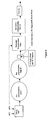
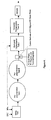
- condition III an example of which is illustrated in Figure 4
- the preparation of polycarbonate waste uses continuous fusion polycondensation reactor where the reactors are connected in series.
- the waste polycondensation resin in which terminal OH concentration is adjusted is supplied from the outlet of a polymerisation reactor in the first step of the polycondensation process (oligomerisation process) to carry out transesterification reaction and/or polycondensation reaction between the waste resin supplied and the resin being prepared in the second stage of the polycondensation process.
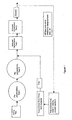
- Figure 1 represents the first stage polycondensation process (in other words, after the preparation of oligomer). It is a schematic diagram of polymerization reactor used in recycling method for polycarbonate resin.
- the polymerization reactor is equipped with agitator tank, prepolymerization tank I, prepolymerization tank II, horizontal polymerization tank I, horizontal polymerization tank II, and extruder and resin waste fusion apparatus.
- the polymerization material e.g., bisphenol A (BPA) and diphenyl carbonate (DPC)
- BPA bisphenol A
- DPC diphenyl carbonate
- the obtained low polycondensed oligomer is supplied to horizontal tanks I and II.
- the molten polycarbonate resin waste in resin waste fusion apparatus is supplied to the outlet of prepolymerization tank II, and later to horizontal polymerization tank, and it continues until polycondensation reaction attains predetermined intrinsic viscosity.
- the terminal OH concentration of polycarbonate waste resin is generally about 200 to about 25,000 ppm, per unit weight of polycarbonate oligomer contained in transesterification reaction. In another embodiment, the terminal OH concentration of polycarbonate waste resin is about 500 to about 20,000 ppm per unit weight of polycarbonate oligomer contained in transesterification reaction.
- the terminal OH concentration of polycarbonate waste resin can be adjusted by adding suitable amount of aliphatic, alicyclic, or aromatic compounds, dihydroxy compounds, compounds with OH group, or carbonic acid diesters, such as diphenyl carbonate.
- a lower amount of polycarbonate oligomer is preferable.
- 0 to 10,000 parts by weight of polycarbonate oligomer to 100 parts by weight polycarbonate resin waste will be present.
- 0 to 200 parts by weight of polycarbonate oligomer to 100 parts by weight polycarbonate resin waste will be present.
- a terminal regulator can be added during the addition of resin waste.
- the above mentioned aromatic dihydroxy compound is preferred as terminal regulator, specifically bisphenol A.
- the OH concentration of the transesterification process is about 200 to about 25,000 ppm, in one exemplary embodiment, about 500 to about 20,000 ppm, per unit weight of polycarbonate resin waste and oligomer.
- the terminal regulator can be added during the melting of polycarbonate resin waste, or it can be added separately. During the addition of polycarbonate resin waste, additional monomer, catalyst, and oligomer, can also be added.
- the product After the polycondensation reaction of polycarbonate, the product can be blended with additive agent and pelletized.
- polycarbonate resin waste can be added in a first step, or in multiple steps.
- the obtained polycarbonate has an intrinsic viscosity of about 0.10 to about 1.0 dl/g, in one exemplary embodiment about 0.30 to about 0.65 dl/g.
- polycarbonate with improved colour can be prepared efficiently, suppressing the formation of the Branches (I) and (II) set forth below to the maximum extent.
- X stands for a straight chain or branched hydrocarbon group.
- sulphur-containing acidic compounds and/or derivatives of such compounds with a pKa of less than or equal to about 3, as specified below can be added immediately after the polycondensation, without cooling the reaction product polycarbonate.
- Suitable sulphur containing acidic compound and their derivatives include sulphurous acid, sulphuric acid, sulphinic acid compounds, sulphonic acid compounds, and their derivatives.
- Illustrative examples are ethyl benzene sulphonate, butyl benzene sulphonate, methyl p-toluene sulphonate, ethyl p-toluene sulphonate, and butyl p-toluene sulphonate.
- These acidic compounds may be used to the extent of about 0.1 to about 50 moles per mole of the total alkali metal component used as the catalyst for the above mentioned polycarbonate reaction. In one exemplary embodiment, these acidic compounds may be used to the extent of about 0.1 to about 15 moles, and in another exemplary embodiment, about 0.1 to about 7 moles, per mole of the total alkali metal component used as the catalyst for the above mentioned polycarbonate reaction. Adding these acidic compounds to the reaction product (polycarbonate) neutralises or deactivates the residual phosphite of the alkali metal compound, improving the retention stability and water resistance of the obtained polycarbonate.
- Polycarbonate can be molded using ordinary kneaders, such as monoaxial extruders, biaxial extruders, static mixers, etc. Both the kneaders, with or without vents, can be used effectively.
- Polycarbonate can contain additives to the extent that they do not adversely affect the advantages of the disclosed method.
- the additive(s) that may be used are those generally added to polycarbonate depending on the purpose of their application.
- Illustrative examples include heat resistance stabilisers, epoxy compounds, UV absorbents, mold lubricants, pigments, antistatic agents, slipping agents, antiblocking agents, lubricants, defogging agents, natural oils, synthetic oils, wax, organic and inorganic fillers, etc.
- Polycarbonates prepared in this manner are pelletized, if needed, before they are used in various applications.
- the obtained polycarbonate has superior colour and is suitable for various fields, such as optical materials. It has been found that the direct addition of polycarbonate resin waste to a fusion polycondensation apparatus and subsequent reaction without an initial depolymerisation step results in the obtainment of polycarbonate that is on a par with product obtained using only virgin materials.
- polycarbonate resins prepared by fusion polycondensation can be recycled without subjecting polycarbonate resin waste to cumbersome operations like depolymerisation and extraction of oligomer components.
- the obtained polycarbonate resin has substantially the same characteristics as virgin resin containing no recycled elements.
- the disclosed recycling method minimizes the formation of branches and improves resin color.
- the terminal OH group concentration of polycarbonate was measured by dissolving 0.4 grams (g) of the polycarbonate sample in 3 milliliters (ml) of chloroform and the percentage (%) of OH groups in the total terminal groups determined by 13 C-NMR.
- the polymerization was carried out as per Comparative Example 2, except using 100 parts by weight polycarbonate resin waste (II) having IV 0.353 dl/g, terminal OH group concentration of 740 ppm, phenol terminal.
- the intrinsic viscosity, terminal OH group concentration, and amount of branched compound of obtained polymerised product were evaluated. The results are shown in Table 2.
- polycarbonate resin waste has more thermal history than virgin polycarbonate that results in heat degradation and decreased mechanical properties
- articles produced using the polycarbonate resin waste as taught herein have substantially similar properties as products formed solely from virgin polycarbonate (i.e., polycarbonate with no heat history from molding).
Landscapes
- Chemical & Material Sciences (AREA)
- Life Sciences & Earth Sciences (AREA)
- Sustainable Development (AREA)
- Health & Medical Sciences (AREA)
- Chemical Kinetics & Catalysis (AREA)
- Medicinal Chemistry (AREA)
- Polymers & Plastics (AREA)
- Organic Chemistry (AREA)
- Polyesters Or Polycarbonates (AREA)
- Separation, Recovery Or Treatment Of Waste Materials Containing Plastics (AREA)
- Manufacture Of Porous Articles, And Recovery And Treatment Of Waste Products (AREA)
- Processing And Handling Of Plastics And Other Materials For Molding In General (AREA)
Applications Claiming Priority (5)
| Application Number | Priority Date | Filing Date | Title |
|---|---|---|---|
| JP2002359578A JP3967674B2 (ja) | 2002-12-11 | 2002-12-11 | ポリカーボネートの樹脂のリサイクル法 |
| JP2002359578 | 2002-12-11 | ||
| US10/707,033 US7105632B2 (en) | 2002-12-11 | 2003-11-17 | Recycle method for polycarbonate resin waste |
| US707033 | 2003-11-17 | ||
| PCT/US2003/040065 WO2004052972A2 (en) | 2002-12-11 | 2003-12-05 | Recycle method for polycarbonate resin waste |
Publications (2)
| Publication Number | Publication Date |
|---|---|
| EP1572791A2 EP1572791A2 (en) | 2005-09-14 |
| EP1572791B1 true EP1572791B1 (en) | 2009-10-14 |
Family
ID=32500943
Family Applications (1)
| Application Number | Title | Priority Date | Filing Date |
|---|---|---|---|
| EP20030813021 Expired - Lifetime EP1572791B1 (en) | 2002-12-11 | 2003-12-05 | Recycle method for polycarbonate resin waste |
Country Status (9)
| Country | Link |
|---|---|
| US (1) | US7105632B2 (enExample) |
| EP (1) | EP1572791B1 (enExample) |
| JP (1) | JP3967674B2 (enExample) |
| CN (2) | CN101100529B (enExample) |
| AT (1) | ATE445668T1 (enExample) |
| AU (1) | AU2003302930A1 (enExample) |
| DE (1) | DE60329707D1 (enExample) |
| TW (1) | TW200422324A (enExample) |
| WO (1) | WO2004052972A2 (enExample) |
Families Citing this family (16)
| Publication number | Priority date | Publication date | Assignee | Title |
|---|---|---|---|---|
| WO2006068093A1 (ja) * | 2004-12-21 | 2006-06-29 | Asahi Kasei Chemicals Corporation | 重縮合ポリマー回収品のリサイクル方法 |
| US20100311920A1 (en) | 2005-08-26 | 2010-12-09 | Cid Centro De Investigacion Y Desarrollo Tecnologico Sa De Cv | Using Reactive Block Copolymers as Chain Extenders and Surface Modifiers |
| US20100311849A1 (en) | 2006-08-23 | 2010-12-09 | Cid Centro De Investigacion Y Desarrollo Tecnologico Sa De Cv | Using Reactive Block Copolymers as Chain Extenders and Surface Modifiers |
| WO2009033129A1 (en) * | 2007-09-07 | 2009-03-12 | Rogers Charles J | Polymer recycling methods employing catalytic transfer hydrogenation and base cleavage reactions |
| JP2010202746A (ja) * | 2009-03-03 | 2010-09-16 | Sony Corp | 芳香族ポリカーボネート樹脂組成物及びその成形品 |
| JP2012025819A (ja) * | 2010-07-21 | 2012-02-09 | Idemitsu Kosan Co Ltd | 廃棄光ディスク及び/又は回収光ディスクからの難燃性ポリカーボネート樹脂組成物及び射出成形体 |
| CN101805445B (zh) * | 2010-01-29 | 2012-01-25 | 成强 | 熔融缩聚类高分子废旧料再生的化学处理方法 |
| BR102016015868A2 (pt) * | 2016-07-07 | 2018-01-23 | Universidade Estadual De Campinas - Unicamp | Processo de obtenção de oligômeros hidroxilados de policarbonato de bisfenol a e uso |
| AT521534A2 (de) * | 2018-07-03 | 2020-02-15 | Next Generation Recyclingmaschinen Gmbh | Verfahren zur Herstellung einer Polykondensatschmelze aus einem Primärmaterial und einem Sekundärmaterial |
| KR102881146B1 (ko) | 2019-12-27 | 2025-11-04 | 미츠비시 가스 가가쿠 가부시키가이샤 | 재생 수지의 제조 방법 |
| CN111440304A (zh) * | 2020-03-27 | 2020-07-24 | 聊城鲁西聚碳酸酯有限公司 | 光气界面缩聚法pc低聚物废液回收利用的系统及方法 |
| WO2023083802A1 (de) * | 2021-11-12 | 2023-05-19 | Polymetrix Ag | Verfahren und vorrichtung zur herstellung und verarbeitung eines gemisches aus rezykliertem polyestermaterial und einem polyester-prepolymer aus einem polyester-herstellprozess |
| EP4450546A3 (de) * | 2021-11-12 | 2024-12-18 | Polymetrix AG | Verfahren und vorrichtung zur herstellung und verarbeitung eines gemisches aus rezykliertem polyestermaterial und einem polyester-prepolymer aus einem polyester-herstellprozess |
| EP4180199B1 (de) * | 2021-11-12 | 2025-04-16 | Polymetrix AG | Verfahren und vorrichtung zur herstellung und verarbeitung eines gemisches aus rezykliertem polyestermaterial und einem polyester-prepolymer aus einem polyester-herstellprozess |
| CN114044867B (zh) * | 2021-12-07 | 2023-07-21 | 西南石油大学 | 一种基于废旧光盘制备苯并噁嗪树脂的方法 |
| CN115449206B (zh) * | 2022-09-19 | 2023-07-21 | 碳中和环保科技(广州)有限公司 | 一种由废旧塑料制备的改性塑料 |
Family Cites Families (5)
| Publication number | Priority date | Publication date | Assignee | Title |
|---|---|---|---|---|
| DE46353C (de) | CH. SELDEN in Baltimore, Maryland, V. St. A | Schaltung der beim gleichzeitigen Telegraphiren und Telephoniren auf derselben Leitung zur Anwendung kommenden Apparate | ||
| DD46353A (enExample) * | ||||
| JP3361882B2 (ja) * | 1994-05-23 | 2003-01-07 | 帝人株式会社 | 廃芳香族ポリカーボネート樹脂のリサイクル方法 |
| DE4421701A1 (de) | 1994-06-21 | 1996-01-04 | Bayer Ag | Verfahren zum chemischen Recycling von Polycarbonaten |
| DE10142735A1 (de) * | 2001-08-31 | 2003-03-20 | Bayer Ag | Verfahren zur Verwendung von Polycarbonaten |
-
2002
- 2002-12-11 JP JP2002359578A patent/JP3967674B2/ja not_active Expired - Fee Related
-
2003
- 2003-11-17 US US10/707,033 patent/US7105632B2/en not_active Expired - Fee Related
- 2003-12-05 EP EP20030813021 patent/EP1572791B1/en not_active Expired - Lifetime
- 2003-12-05 AT AT03813021T patent/ATE445668T1/de not_active IP Right Cessation
- 2003-12-05 DE DE60329707T patent/DE60329707D1/de not_active Expired - Lifetime
- 2003-12-05 WO PCT/US2003/040065 patent/WO2004052972A2/en not_active Ceased
- 2003-12-05 CN CN2007101383241A patent/CN101100529B/zh not_active Expired - Fee Related
- 2003-12-05 AU AU2003302930A patent/AU2003302930A1/en not_active Abandoned
- 2003-12-05 CN CNB2003801082047A patent/CN100354349C/zh not_active Expired - Fee Related
- 2003-12-11 TW TW92135039A patent/TW200422324A/zh unknown
Also Published As
| Publication number | Publication date |
|---|---|
| JP2004189887A (ja) | 2004-07-08 |
| CN100354349C (zh) | 2007-12-12 |
| EP1572791A2 (en) | 2005-09-14 |
| US20040116642A1 (en) | 2004-06-17 |
| WO2004052972A3 (en) | 2004-07-29 |
| WO2004052972A2 (en) | 2004-06-24 |
| AU2003302930A1 (en) | 2004-06-30 |
| JP3967674B2 (ja) | 2007-08-29 |
| TW200422324A (en) | 2004-11-01 |
| CN101100529A (zh) | 2008-01-09 |
| CN1735651A (zh) | 2006-02-15 |
| ATE445668T1 (de) | 2009-10-15 |
| US7105632B2 (en) | 2006-09-12 |
| DE60329707D1 (de) | 2009-11-26 |
| CN101100529B (zh) | 2012-02-01 |
| AU2003302930A8 (en) | 2004-06-30 |
Similar Documents
| Publication | Publication Date | Title |
|---|---|---|
| EP1572791B1 (en) | Recycle method for polycarbonate resin waste | |
| KR100357656B1 (ko) | 폴리카보네이트의제조방법 | |
| US6887970B2 (en) | Method for producing polycarbonates | |
| US6303735B1 (en) | Polycarbonate production method | |
| JPH06234845A (ja) | 芳香族ポリカーボネートの製造法 | |
| EP1490422B1 (en) | Recycle process for polycondensation resins | |
| KR101530614B1 (ko) | 아크릴로니트릴-부타디엔-스티렌-함유 폴리카보네이트 조성물의 알코올분해 방법 | |
| EP1472302B1 (en) | Polycarbonate resin composition for optical applications and methods for manufacture thereof | |
| US6797803B2 (en) | Recycle process for polycondensation resins | |
| EP1245607A1 (en) | Method of crystallizing low-molecular polycarbonate and process for producing polycarbonate resin from the same | |
| JP4267344B2 (ja) | 芳香族ポリカーボネートおよびその製造方法 | |
| JP3530706B2 (ja) | 芳香族ポリカーボネートの製造方法 | |
| EP1546233B1 (en) | Method for preparing polycarbonate resin | |
| JP3390581B2 (ja) | ポリカーボネート樹脂の製造方法 | |
| JP2000136239A (ja) | ポリカーボネートの製造方法 | |
| JP2000136238A (ja) | ポリカーボネートの製造方法 | |
| JP2000136240A (ja) | ポリカーボネートの製造方法 | |
| JPH09235368A (ja) | ポリカーボネートの製造方法 | |
| JPH0952947A (ja) | 芳香族ポリカーボネートの製造方法 | |
| JPH09136950A (ja) | ポリカーボネートの製造方法 | |
| JPWO2001021681A1 (ja) | 低分子量ポリカーボネートの結晶化方法及びそれを用いたポリカーボネート樹脂の製造方法 | |
| JPH0959370A (ja) | 芳香族ポリカーボネートの製造方法 | |
| JP2000136237A (ja) | ポリカーボネートの製造方法 |
Legal Events
| Date | Code | Title | Description |
|---|---|---|---|
| PUAI | Public reference made under article 153(3) epc to a published international application that has entered the european phase |
Free format text: ORIGINAL CODE: 0009012 |
|
| 17P | Request for examination filed |
Effective date: 20050711 |
|
| AK | Designated contracting states |
Kind code of ref document: A2 Designated state(s): AT BE BG CH CY CZ DE DK EE ES FI FR GB GR HU IE IT LI LU MC NL PT RO SE SI SK TR |
|
| AX | Request for extension of the european patent |
Extension state: AL LT LV MK |
|
| DAX | Request for extension of the european patent (deleted) | ||
| 17Q | First examination report despatched |
Effective date: 20061019 |
|
| RAP1 | Party data changed (applicant data changed or rights of an application transferred) |
Owner name: SABIC INNOVATIVE PLASTICS IP B.V. |
|
| GRAP | Despatch of communication of intention to grant a patent |
Free format text: ORIGINAL CODE: EPIDOSNIGR1 |
|
| GRAS | Grant fee paid |
Free format text: ORIGINAL CODE: EPIDOSNIGR3 |
|
| GRAA | (expected) grant |
Free format text: ORIGINAL CODE: 0009210 |
|
| AK | Designated contracting states |
Kind code of ref document: B1 Designated state(s): AT BE BG CH CY CZ DE DK EE ES FI FR GB GR HU IE IT LI LU MC NL PT RO SE SI SK TR |
|
| REG | Reference to a national code |
Ref country code: GB Ref legal event code: FG4D |
|
| REG | Reference to a national code |
Ref country code: CH Ref legal event code: EP |
|
| REG | Reference to a national code |
Ref country code: IE Ref legal event code: FG4D |
|
| REF | Corresponds to: |
Ref document number: 60329707 Country of ref document: DE Date of ref document: 20091126 Kind code of ref document: P |
|
| NLV1 | Nl: lapsed or annulled due to failure to fulfill the requirements of art. 29p and 29m of the patents act | ||
| PG25 | Lapsed in a contracting state [announced via postgrant information from national office to epo] |
Ref country code: ES Free format text: LAPSE BECAUSE OF FAILURE TO SUBMIT A TRANSLATION OF THE DESCRIPTION OR TO PAY THE FEE WITHIN THE PRESCRIBED TIME-LIMIT Effective date: 20100125 Ref country code: FI Free format text: LAPSE BECAUSE OF FAILURE TO SUBMIT A TRANSLATION OF THE DESCRIPTION OR TO PAY THE FEE WITHIN THE PRESCRIBED TIME-LIMIT Effective date: 20091014 Ref country code: PT Free format text: LAPSE BECAUSE OF FAILURE TO SUBMIT A TRANSLATION OF THE DESCRIPTION OR TO PAY THE FEE WITHIN THE PRESCRIBED TIME-LIMIT Effective date: 20100215 Ref country code: SE Free format text: LAPSE BECAUSE OF FAILURE TO SUBMIT A TRANSLATION OF THE DESCRIPTION OR TO PAY THE FEE WITHIN THE PRESCRIBED TIME-LIMIT Effective date: 20091014 |
|
| PG25 | Lapsed in a contracting state [announced via postgrant information from national office to epo] |
Ref country code: SI Free format text: LAPSE BECAUSE OF FAILURE TO SUBMIT A TRANSLATION OF THE DESCRIPTION OR TO PAY THE FEE WITHIN THE PRESCRIBED TIME-LIMIT Effective date: 20091014 |
|
| PG25 | Lapsed in a contracting state [announced via postgrant information from national office to epo] |
Ref country code: AT Free format text: LAPSE BECAUSE OF FAILURE TO SUBMIT A TRANSLATION OF THE DESCRIPTION OR TO PAY THE FEE WITHIN THE PRESCRIBED TIME-LIMIT Effective date: 20091014 Ref country code: BE Free format text: LAPSE BECAUSE OF FAILURE TO SUBMIT A TRANSLATION OF THE DESCRIPTION OR TO PAY THE FEE WITHIN THE PRESCRIBED TIME-LIMIT Effective date: 20091014 |
|
| PG25 | Lapsed in a contracting state [announced via postgrant information from national office to epo] |
Ref country code: MC Free format text: LAPSE BECAUSE OF NON-PAYMENT OF DUE FEES Effective date: 20100701 Ref country code: RO Free format text: LAPSE BECAUSE OF FAILURE TO SUBMIT A TRANSLATION OF THE DESCRIPTION OR TO PAY THE FEE WITHIN THE PRESCRIBED TIME-LIMIT Effective date: 20091014 Ref country code: BG Free format text: LAPSE BECAUSE OF FAILURE TO SUBMIT A TRANSLATION OF THE DESCRIPTION OR TO PAY THE FEE WITHIN THE PRESCRIBED TIME-LIMIT Effective date: 20100114 Ref country code: DK Free format text: LAPSE BECAUSE OF FAILURE TO SUBMIT A TRANSLATION OF THE DESCRIPTION OR TO PAY THE FEE WITHIN THE PRESCRIBED TIME-LIMIT Effective date: 20091014 Ref country code: EE Free format text: LAPSE BECAUSE OF FAILURE TO SUBMIT A TRANSLATION OF THE DESCRIPTION OR TO PAY THE FEE WITHIN THE PRESCRIBED TIME-LIMIT Effective date: 20091014 |
|
| REG | Reference to a national code |
Ref country code: CH Ref legal event code: PL |
|
| PLBE | No opposition filed within time limit |
Free format text: ORIGINAL CODE: 0009261 |
|
| STAA | Information on the status of an ep patent application or granted ep patent |
Free format text: STATUS: NO OPPOSITION FILED WITHIN TIME LIMIT |
|
| PG25 | Lapsed in a contracting state [announced via postgrant information from national office to epo] |
Ref country code: CZ Free format text: LAPSE BECAUSE OF FAILURE TO SUBMIT A TRANSLATION OF THE DESCRIPTION OR TO PAY THE FEE WITHIN THE PRESCRIBED TIME-LIMIT Effective date: 20091014 Ref country code: SK Free format text: LAPSE BECAUSE OF FAILURE TO SUBMIT A TRANSLATION OF THE DESCRIPTION OR TO PAY THE FEE WITHIN THE PRESCRIBED TIME-LIMIT Effective date: 20091014 |
|
| 26N | No opposition filed |
Effective date: 20100715 |
|
| PG25 | Lapsed in a contracting state [announced via postgrant information from national office to epo] |
Ref country code: LI Free format text: LAPSE BECAUSE OF NON-PAYMENT OF DUE FEES Effective date: 20091231 Ref country code: CH Free format text: LAPSE BECAUSE OF NON-PAYMENT OF DUE FEES Effective date: 20091231 Ref country code: IE Free format text: LAPSE BECAUSE OF NON-PAYMENT OF DUE FEES Effective date: 20091205 Ref country code: GR Free format text: LAPSE BECAUSE OF FAILURE TO SUBMIT A TRANSLATION OF THE DESCRIPTION OR TO PAY THE FEE WITHIN THE PRESCRIBED TIME-LIMIT Effective date: 20100115 |
|
| PG25 | Lapsed in a contracting state [announced via postgrant information from national office to epo] |
Ref country code: IT Free format text: LAPSE BECAUSE OF FAILURE TO SUBMIT A TRANSLATION OF THE DESCRIPTION OR TO PAY THE FEE WITHIN THE PRESCRIBED TIME-LIMIT Effective date: 20091014 |
|
| PG25 | Lapsed in a contracting state [announced via postgrant information from national office to epo] |
Ref country code: LU Free format text: LAPSE BECAUSE OF NON-PAYMENT OF DUE FEES Effective date: 20091205 |
|
| PG25 | Lapsed in a contracting state [announced via postgrant information from national office to epo] |
Ref country code: HU Free format text: LAPSE BECAUSE OF FAILURE TO SUBMIT A TRANSLATION OF THE DESCRIPTION OR TO PAY THE FEE WITHIN THE PRESCRIBED TIME-LIMIT Effective date: 20100415 |
|
| PG25 | Lapsed in a contracting state [announced via postgrant information from national office to epo] |
Ref country code: TR Free format text: LAPSE BECAUSE OF FAILURE TO SUBMIT A TRANSLATION OF THE DESCRIPTION OR TO PAY THE FEE WITHIN THE PRESCRIBED TIME-LIMIT Effective date: 20091014 |
|
| PG25 | Lapsed in a contracting state [announced via postgrant information from national office to epo] |
Ref country code: CY Free format text: LAPSE BECAUSE OF FAILURE TO SUBMIT A TRANSLATION OF THE DESCRIPTION OR TO PAY THE FEE WITHIN THE PRESCRIBED TIME-LIMIT Effective date: 20091014 |
|
| PG25 | Lapsed in a contracting state [announced via postgrant information from national office to epo] |
Ref country code: NL Free format text: LAPSE BECAUSE OF FAILURE TO SUBMIT A TRANSLATION OF THE DESCRIPTION OR TO PAY THE FEE WITHIN THE PRESCRIBED TIME-LIMIT Effective date: 20091014 |
|
| REG | Reference to a national code |
Ref country code: FR Ref legal event code: PLFP Year of fee payment: 13 |
|
| PGFP | Annual fee paid to national office [announced via postgrant information from national office to epo] |
Ref country code: GB Payment date: 20151202 Year of fee payment: 13 Ref country code: DE Payment date: 20151201 Year of fee payment: 13 |
|
| PGFP | Annual fee paid to national office [announced via postgrant information from national office to epo] |
Ref country code: FR Payment date: 20151110 Year of fee payment: 13 |
|
| REG | Reference to a national code |
Ref country code: DE Ref legal event code: R081 Ref document number: 60329707 Country of ref document: DE Owner name: SABIC GLOBAL TECHNOLOGIES B.V., NL Free format text: FORMER OWNER: SABIC INNOVATIVE PLASTICS IP B.V., BERGEN OP ZOOM, NL |
|
| REG | Reference to a national code |
Ref country code: FR Ref legal event code: CD Owner name: SABIC INNOVATIVE PLASTICS IP B.V., NL Effective date: 20160224 |
|
| REG | Reference to a national code |
Ref country code: DE Ref legal event code: R119 Ref document number: 60329707 Country of ref document: DE |
|
| GBPC | Gb: european patent ceased through non-payment of renewal fee |
Effective date: 20161205 |
|
| REG | Reference to a national code |
Ref country code: FR Ref legal event code: ST Effective date: 20170831 |
|
| PG25 | Lapsed in a contracting state [announced via postgrant information from national office to epo] |
Ref country code: FR Free format text: LAPSE BECAUSE OF NON-PAYMENT OF DUE FEES Effective date: 20170102 |
|
| PG25 | Lapsed in a contracting state [announced via postgrant information from national office to epo] |
Ref country code: DE Free format text: LAPSE BECAUSE OF NON-PAYMENT OF DUE FEES Effective date: 20170701 Ref country code: GB Free format text: LAPSE BECAUSE OF NON-PAYMENT OF DUE FEES Effective date: 20161205 |