EP1564395B1 - Vorrichtung und Verfahren zur Steuerung der Einspritzung eines Dieselmotors - Google Patents
Vorrichtung und Verfahren zur Steuerung der Einspritzung eines Dieselmotors Download PDFInfo
- Publication number
- EP1564395B1 EP1564395B1 EP05003469A EP05003469A EP1564395B1 EP 1564395 B1 EP1564395 B1 EP 1564395B1 EP 05003469 A EP05003469 A EP 05003469A EP 05003469 A EP05003469 A EP 05003469A EP 1564395 B1 EP1564395 B1 EP 1564395B1
- Authority
- EP
- European Patent Office
- Prior art keywords
- temperature
- bore wall
- fuel injection
- difference
- wall temperature
- Prior art date
- Legal status (The legal status is an assumption and is not a legal conclusion. Google has not performed a legal analysis and makes no representation as to the accuracy of the status listed.)
- Expired - Lifetime
Links
- 239000007924 injection Substances 0.000 title claims description 314
- 238000002347 injection Methods 0.000 title claims description 314
- 239000000446 fuel Substances 0.000 title claims description 223
- 238000000034 method Methods 0.000 title claims description 37
- 238000002485 combustion reaction Methods 0.000 claims description 75
- 230000007704 transition Effects 0.000 claims description 64
- 239000002826 coolant Substances 0.000 claims description 54
- 230000001052 transient effect Effects 0.000 claims description 50
- 230000008859 change Effects 0.000 claims description 13
- 238000001816 cooling Methods 0.000 claims description 2
- 230000008569 process Effects 0.000 description 25
- 238000007562 laser obscuration time method Methods 0.000 description 11
- 238000001514 detection method Methods 0.000 description 5
- 230000000694 effects Effects 0.000 description 4
- 239000002828 fuel tank Substances 0.000 description 4
- 239000000779 smoke Substances 0.000 description 4
- MWUXSHHQAYIFBG-UHFFFAOYSA-N nitrogen oxide Inorganic materials O=[N] MWUXSHHQAYIFBG-UHFFFAOYSA-N 0.000 description 3
- 230000003247 decreasing effect Effects 0.000 description 2
- 230000006866 deterioration Effects 0.000 description 2
- 239000007789 gas Substances 0.000 description 2
- 239000000203 mixture Substances 0.000 description 2
- 238000009834 vaporization Methods 0.000 description 2
- 230000008016 vaporization Effects 0.000 description 2
- 238000004364 calculation method Methods 0.000 description 1
- 230000007423 decrease Effects 0.000 description 1
- 238000009792 diffusion process Methods 0.000 description 1
- 230000006870 function Effects 0.000 description 1
- 230000020169 heat generation Effects 0.000 description 1
- 238000012423 maintenance Methods 0.000 description 1
- 230000009467 reduction Effects 0.000 description 1
- XLYOFNOQVPJJNP-UHFFFAOYSA-N water Substances O XLYOFNOQVPJJNP-UHFFFAOYSA-N 0.000 description 1
Images




Classifications
-
- F—MECHANICAL ENGINEERING; LIGHTING; HEATING; WEAPONS; BLASTING
- F02—COMBUSTION ENGINES; HOT-GAS OR COMBUSTION-PRODUCT ENGINE PLANTS
- F02D—CONTROLLING COMBUSTION ENGINES
- F02D35/00—Controlling engines, dependent on conditions exterior or interior to engines, not otherwise provided for
- F02D35/02—Controlling engines, dependent on conditions exterior or interior to engines, not otherwise provided for on interior conditions
- F02D35/025—Controlling engines, dependent on conditions exterior or interior to engines, not otherwise provided for on interior conditions by determining temperatures inside the cylinder, e.g. combustion temperatures
-
- F—MECHANICAL ENGINEERING; LIGHTING; HEATING; WEAPONS; BLASTING
- F02—COMBUSTION ENGINES; HOT-GAS OR COMBUSTION-PRODUCT ENGINE PLANTS
- F02D—CONTROLLING COMBUSTION ENGINES
- F02D41/00—Electrical control of supply of combustible mixture or its constituents
- F02D41/30—Controlling fuel injection
- F02D41/38—Controlling fuel injection of the high pressure type
- F02D41/40—Controlling fuel injection of the high pressure type with means for controlling injection timing or duration
-
- F—MECHANICAL ENGINEERING; LIGHTING; HEATING; WEAPONS; BLASTING
- F02—COMBUSTION ENGINES; HOT-GAS OR COMBUSTION-PRODUCT ENGINE PLANTS
- F02D—CONTROLLING COMBUSTION ENGINES
- F02D2250/00—Engine control related to specific problems or objectives
- F02D2250/31—Control of the fuel pressure
-
- F—MECHANICAL ENGINEERING; LIGHTING; HEATING; WEAPONS; BLASTING
- F02—COMBUSTION ENGINES; HOT-GAS OR COMBUSTION-PRODUCT ENGINE PLANTS
- F02D—CONTROLLING COMBUSTION ENGINES
- F02D41/00—Electrical control of supply of combustible mixture or its constituents
- F02D41/30—Controlling fuel injection
- F02D41/38—Controlling fuel injection of the high pressure type
- F02D41/40—Controlling fuel injection of the high pressure type with means for controlling injection timing or duration
- F02D41/402—Multiple injections
- F02D41/403—Multiple injections with pilot injections
-
- Y—GENERAL TAGGING OF NEW TECHNOLOGICAL DEVELOPMENTS; GENERAL TAGGING OF CROSS-SECTIONAL TECHNOLOGIES SPANNING OVER SEVERAL SECTIONS OF THE IPC; TECHNICAL SUBJECTS COVERED BY FORMER USPC CROSS-REFERENCE ART COLLECTIONS [XRACs] AND DIGESTS
- Y02—TECHNOLOGIES OR APPLICATIONS FOR MITIGATION OR ADAPTATION AGAINST CLIMATE CHANGE
- Y02T—CLIMATE CHANGE MITIGATION TECHNOLOGIES RELATED TO TRANSPORTATION
- Y02T10/00—Road transport of goods or passengers
- Y02T10/10—Internal combustion engine [ICE] based vehicles
- Y02T10/40—Engine management systems
Definitions
- the invention relates to a fuel injection control apparatus and fuel injection control method for a diesel engine.
- fuel injection control for adjusting fuel injection timing and a fuel injection amount is performed based on an operational state such as an engine rotational speed, an accelerator pedal operation amount, a coolant temperature, and an intake air temperature.
- Combustion performed in the diesel engine includes pre-mixed combustion and diffusive combustion.
- fuel injection is started, initially, a combustible gas mixture is generated due to vaporization and diffusion of the fuel (ignition delay period).
- ignition delay period a combustible gas mixture is generated due to vaporization and diffusion of the fuel.
- self ignition of the combustible gas mixture occurs at several portions in a combustion chamber substantially simultaneously, and combustion proceeds rapidly (pre-mixed combustion).
- fuel injection into the combustion chamber is continued, and the combustion is performed continuously (diffusive combustion). Then, heat generation is continued for a while, since unburned fuel remains even after the fuel injection ends (after-burning period).
- a fuel injection control apparatus which performs pilot injection for injecting a small amount of fuel in advance, temporarily stops the fuel injection, and then performs main injection when the fuel is ignited (becomes a so-called pilot flame).
- pilot injection makes it possible to moderate the initial combustion performed in the diesel engine, and suppress generation of diesel knocking. It is also possible to prevent occurrence of misfire, since the fuel injected by the pilot injection has already been ignited and a pilot flame has already been obtained when the main injection is performed. Accordingly, performing the pilot injection increases cold startability and reduces generation of white smoke when a temperature is low.
- the scale of the pre-mixed combustion is reduced, since the fuel injection amount during the ignition delay period is reduced due to the pilot injection. Generally, while the pre-mixed combustion is performed, the heat release rate is increased, and therefore generation of nitrogen oxides (hereinafter, referred to as "NOx") is promoted. However, the scale of pre-mixed combustion is reduced by performing the pilot injection. Accordingly, generation of NOx, and generation of noise due to the pre-mixed combustion are reduced.
- NOx nitrogen oxides
- the injection mode is changed between a main injection mode and a pilot injection mode based on an engine operational state such as an engine rotational speed and a load due to an accelerator pedal operation amount (e.g., a fuel injection amount). Namely, in this case, the pilot injection is performed in an operating range in which an engine rotational speed is low and a fuel injection amount is small.
- the conditions such as a required fuel injection amount vary depending on temperature conditions such as an engine temperature and an intake air temperature.
- the pilot injection amount needs to be set to a large value. However, if the pilot injection amount is uniformly increased, when the temperature is high, the fuel injected by the pilot injection is abruptly burned, and diesel knocking occurs.
- Japanese Patent Application Publication No. JP-A-2001-115885 discloses an apparatus including pilot injection control means for controlling pilot injection timing and a pilot injection amount based on an engine coolant temperature.
- the pilot injection timing is set to be more advanced by a table for converting the read coolant temperature into the pilot injection timing.
- the pilot injection amount is set to be increased by a table for converting the read coolant temperature into the pilot injection amount.
- the pilot injection timing and the pilot injection amount are set based on the engine coolant temperature. It is therefore possible to control a combustion state based on a change in a wall temperature of the combustion chamber, and suppress occurrence of a misfire, generation of white smoke and occurrence of diesel knocking due to excessively advanced injection timing.
- a bore wall temperature which is a temperature of a cylinder bore wall on the combustion chamber side, becomes higher than the coolant temperature by a larger amount as the engine load becomes higher. Therefore, the optimum values of various fuel injection parameters are adjusted in a state where there is such a temperature difference.
- the actual temperature of the cylinder bore wall cannot be sufficiently increased during a certain period after the engine load is changed, which causes deviation in the fuel injection parameters. Namely, transient delay occurs in the bore wall temperature, and the ignition delay period becomes longer due to such transient delay of the cylinder bore wall temperature. Accordingly, it becomes difficult to obtain the optimum combustion state.
- the state described so far is the same in the case where the engine load is suddenly changed from a high load to a low load.
- the invention is made in light of the above-mentioned circumstances. It is therefore an object of the invention to provide a fuel injection control apparatus and fuel injection control method for a diesel engine, which can maintain an appropriate combustion state even if transient delay occurs in a bore wall temperature.
- a fuel injection control apparatus and fuel injection control method for a diesel engine which can maintain an appropriate combustion state even if transient delay occurs in a bore wall temperature.
- a fuel injection control apparatus for a diesel engine which controls a fuel injection mode based on a fuel injection parameter whose optimum value is adjusted based on a temperature difference between a bore wall temperature, which is a temperature of a cylinder bore wall on a combustion chamber side, and a coolant temperature, which is a temperature of a coolant that cools the cylinder bore wall.
- the fuel injection control apparatus includes estimating means for estimating a difference between a difference between a bore wall temperature and a coolant temperature during a transition operation time and a difference between a bore wall temperature and a coolant temperature during a steady operation time, the difference being caused due to a sudden change in a load of the diesel engine; and correcting means for correcting the fuel injection parameter based on the estimated difference.
- the difference due to the sudden change in the load is estimated, and the fuel injection parameter is corrected based on the estimated difference. Accordingly, even when the optimum value of the fuel injection parameter is adjusted in advance under the above-mentioned condition, deviation in the parameter due to such transient delay of the bore wall temperature is corrected, and the combustion state is maintained appropriately.
- the correcting means may include steady operation time bore wall temperature computing means for obtaining the bore wall temperature at steady operation time based on a relationship between a rotational speed of the diesel engine and a fuel injection amount; transition operation time bore wall temperature estimating means for estimating a bore wall temperature with transient delay of the bore wall temperature taken into consideration, by using a time constant concerning the transient delay of the bore wall temperature that is decided based on the relationship between the rotational speed of the diesel engine and the fuel injection amount; and difference computing means for computing the difference based on a temperature difference between the estimated bore wall temperature with transient delay taken into consideration and the bore wall temperature at steady operation time.
- the correcting means may be able to correct the fuel injection parameter using the computed difference.
- the bore wall temperature at steady operation time is obtained based on the relationship between the rotational speed of the diesel engine and the fuel injection amount, and the bore wall temperature with transient delay of the bore wall temperature taken into consideration is estimated by using the time constant concerning the transient delay of the bore wall temperature that is decided based on the relationship between the rotational speed of the diesel engine and the fuel injection amount.
- the difference is computed based on a difference between a bore wall temperature and a coolant temperature during a transition operation time and a difference between a bore wall temperature and a coolant temperature during a steady operation time. It is thus possible to accurately obtain the amount of transient delay of the bore wall temperature, which occurs due to a sudden change in the engine load, based on the engine operational state when the sudden change occurs. Consequently, it is possible to correct the fuel injection parameter further accurately.
- the steady operation time bore wall temperature computing means may compute a steady operation time temperature difference, that is, a temperature difference between the bore wall temperature and the coolant temperature at steady operation time, as an index value of the bore wall temperature at steady operation time.
- the transition operation time bore wall temperature estimating means may estimate a transition operation time temperature difference, that is, a temperature difference between the bore wall temperature with transient delay taken into consideration and the coolant temperature, as an index value of the bore wall temperature with transient delay taken into consideration.
- Maps showing the steady operation time temperature difference and the time constant concerning the transient delay of the bore wall temperature, which is decided by the transition operation time bore wall temperature estimating means may be prepared based on the relationship between the rotational speed of the diesel engine and the fuel injection amount.
- the steady operation time temperature difference is obtained as the index value of the bore wall temperature at steady operation time
- the transition operation time temperature difference is estimated as the index value of the bore wall temperature with transient delay taken into consideration. It is therefore possible to obtain an index value of each bore wall temperature with the temperature of the coolant, which affects the combustion state, transition of the bore wall temperature, and the like, taken into consideration. Consequently, it is possible to appropriately estimate the difference.
- estimation of the transition operation time temperature difference is periodically performed by the transition operation time bore wall temperature estimating means according to the equation based on the value read from the map. It is therefore possible to appropriately maintain the accuracy and reliability of the estimation of the transition operation time temperature difference.
- the fuel injection parameter whose optimum value is adjusted based on the temperature difference between the bore wall temperature and the coolant temperature may be shown in a map as a base injection parameter related to the rotational speed of the diesel engine and the fuel injection amount.
- the correcting means may obtain the corresponding base parameter according to the map, and correct the fuel injection parameter by adding the transition correction amount corresponding to the difference, which is calculated based on the injection parameter, to the obtained base injection parameter. It is thus possible to easily obtain the fuel injection parameter whose optimum value is adjusted based on the temperature difference between the bore wall temperature and the coolant temperature, based on the rotational speed of the diesel engine and the fuel injection amount at each time. Also, it is possible to considerably easily make the above-mentioned correction to the obtained parameter.
- the fuel injection parameter to be corrected by the correcting means may be at least one of a pilot interval at the time of pilot injection, a pilot injection amount at the time of pilot injection, fuel injection timing at the time of main injection, a fuel injection amount at the time of main injection, and a fuel injection pressure of the injector.
- Each of the pilot interval at the time of pilot injection, the pilot injection amount at the time of pilot injection, the fuel injection timing at the time of main injection, the fuel injection amount at the time of main injection, and the fuel injection pressure of the injector is a parameter effective for preventing deterioration of the fuel state due to the transient delay of the bore wall temperature.
- a fuel injection control method for a diesel engine which controls a fuel injection mode based on a fuel injection parameter whose optimum value is adjusted based on a temperature difference between a bore wall temperature, which is a temperature of a cylinder bore wall on a combustion chamber side, and a coolant temperature, which is a temperature of a coolant for cooling the cylinder bore wall.
- the fuel injection control method includes a step of estimating a difference between a difference between a bore wall temperature and a coolant temperature during a transition operation time and a difference between a bore wall temperature and a coolant temperature during a steady operation time, the difference being caused due to a sudden change in a load of the diesel engine; and a step of correcting the fuel injection parameter based on the estimated difference.
- FIG. 1 shows a fuel injection control apparatus for a diesel engine according to an embodiment of the invention.
- the fuel injection control apparatus for a diesel engine according to the embodiment is obtained by applying the invention to an apparatus that is provided in a diesel engine including a common rail serving as an accumulator pipe and that controls fuel injection from an injector to which fuel is delivered, under pressure, from the common rail.
- the fuel injection control apparatus mainly includes a high pressure fuel injection system 10 which injects and supplies high pressure fuel to a diesel engine 1; a control system 20 which controls fuel pressure of the high pressure fuel injection system 10; a detection system 30 which outputs detection data obtained by various sensors to the control system as part of control data when the control system 20 performs control; and the like.
- the high pressure fuel injection system 10 includes a supply pump 13 which is coupled with, for example, an output shaft of the diesel engine 1 so as to be driven, sucks the fuel stored in a fuel tank 11 through a supply pipe 12, and pressurizes and discharges the fuel as high pressure fuel. Then, the high pressure fuel discharged by the supply pump 13 is supplied to a common rail 15, which serves as an accumulator pipe, through a supply pipe 14 and stored in the common rail 15. The high pressure fuel stored in the common rail 15 is then supplied to an injector (fuel injection valve) 17 through a supply pipe 16, and injected and supplied to a corresponding cylinder of the diesel engine 1 from the injector 17 according to driving of an electromagnetic valve 24 included in the control system 20.
- a supply pump 13 which is coupled with, for example, an output shaft of the diesel engine 1 so as to be driven, sucks the fuel stored in a fuel tank 11 through a supply pipe 12, and pressurizes and discharges the fuel as high pressure fuel. Then, the high pressure fuel discharged by the supply
- the supply pump 13 includes an intake port 13a which is connected to the supply pipe 12; a discharge port 13b which is connected to the supply pipe 14; and a return port 13c which is connected to a return pipe 18a.
- the amount of fuel discharged by the supply pump 13 is controlled by a pressure control valve 25 included in the control system 20. Then, the excessive fuel, which has not been discharged from the discharge port 13b, is returned to the fuel tank 11 through the return port 13c, and return pipes 18a and 18.
- the common rail 15, which stores the high pressure fuel therein, includes four output ports 15a to 15d corresponding to the four cylinders of the diesel engine 1, respectively; and a pressure regulator 15e.
- the fuel which is pressurized more than necessity for some reason, is returned to the fuel tank 11 through the pressure regulator 15e and return pipes 18b and 18.
- a supply port 17a is provided in a casing of the injector 17 which injects and supplies the fuel that is stored, under pressure, in the common rail 15 to the diesel engine 1 according to driving of the electromagnetic valve 24.
- the fuel which is stored, under pressure, in the common rail 15 is supplied to the inside of the injector 17 through the supply port 17a, and the high pressure fuel is injected and supplied to the corresponding cylinder of the diesel engine 1 through a nozzle hole 17b formed in a bottom portion of the injector 17.
- a cylinder bore is formed in a cylinder block C, and a piston reciprocates in the cylinder bore.
- a wall surface forming the cylinder bore is a so-called cylinder bore wall.
- a return port 17c for releasing fuel is formed in the casing of the injector 17.
- the excessive fuel is returned from the return port 17c to the fuel tank 11 through return pipes 18c and 18.
- the control system 20 mainly includes an electronic control unit 21; the electromagnetic valve 24 whose driving is controlled by the electronic control unit 21; and the pressure control valve 25.
- the electronic control unit 21 performs various controls of the diesel engine 1 according to various control programs stored in program memory (not shown).
- the electronic control unit 21 includes a microcomputer 22 which performs various control processes; various control circuits connected to an output port of the microcomputer 22 (for example, a drive circuit which drives the supply pump 13 and a driver 23 which drives the electromagnetic valve 24); and the like.
- the electronic control unit 21 performs various controls such as the fuel injection control through controls by these drive circuits.
- determination whether the pilot injection, which is performed prior to the main injection, can be performed is made, and control of various fuel injection parameters, and the like are performed.
- various fuel injection parameters are set based on the engine operational state and the like.
- the various fuel injection parameters are a fuel pressure in the common rail 15, a fuel injection amount (pilot injection amount) and fuel injection timing at the time of pilot injection, a fuel injection amount and fuel injection timing at the time of main injection, and an interval between the pilot injection and the main injection, that is, a pilot interval, and the like.
- the detection system 30 includes an accelerator sensor 31; a coolant temperature sensor 32; an engine rotational speed sensor 33; and a cylinder discriminating sensor 34; and a fuel pressure sensor 35.
- the accelerator sensor 31 is provided near an accelerator pedal (not shown), and detects an operation amount (depression amount) of the accelerator pedal.
- the coolant temperature sensor 32 is provided in a water jacket of the diesel engine 1, and detects a coolant temperature. Detection signals from the accelerator sensor 31 and the coolant temperature sensor 32 are appropriately converted from an analog signal to a digital signal, and captured by the microcomputer 22 provided in the electronic control unit 21.
- the engine rotational speed sensor 33 includes, for example, a rotor 33a which is attached to a crankshaft of the diesel engine 1; and an electromagnetic pickup 33b which is provided near the rotor 33a and which detects passage of protrusions formed on the outer periphery of the rotor 33a.
- the waveform of an output from the electromagnetic pickup 33b is usually shaped, and the output is captured by the microcomputer 22 as a pulse signal (NE pulse) corresponding to a rotational speed (rotational phase) of the crankshaft.
- the cylinder discriminating sensor 34 includes, for example, a rotor 34a which is attached to a camshaft of the diesel engine 1; and an electromagnetic pickup 34b which is provided near the rotor 34a and which detects passage of protrusions formed, for discrimination of the cylinders of the engine 1, on the outer periphery of the rotor 34a.
- the wave form of an output from the electromagnetic pickup 34b is usually shaped, and the output is captured by the microcomputer 22 as an appropriate pulse signal whose wave form has been shaped.
- the fuel pressure sensor 35 is provided, for example, in the common rail 15, and detects a fuel pressure of the high pressure fuel stored in the common rail 15.
- the detection signal from the fuel pressure sensor 35 is appropriately converted from an analog signal to a digital signal, and captured by the microcomputer 22 provided in the electronic control unit 21.
- the fuel injection control apparatus performs the pilot injection for injecting a small amount of fuel in advance, temporarily stops the fuel injection, and then performs the main injection when the fuel is ignited (become a pilot flame).
- the pilot injection is performed under predetermined conditions (for example, when the engine is operated at a low load, and when the engine is started at a low temperature).
- the optimum value of the fuel injection parameter used for the fuel injection such as the pilot injection and the main injection varies depending on temperature conditions such as an engine temperature and an intake air temperature. Accordingly, for example, a control apparatus is proposed which sets the fuel injection parameter based on the coolant temperature that has a correlation with the engine temperature.
- a bore wall temperature which is a temperature of the cylinder bore wall on the combustion chamber side, becomes higher than a coolant temperature by a larger amount as the engine load becomes higher. Therefore, in the embodiment, the optimum values of the various fuel injection parameters are adjusted in the state where there is such a temperature difference, that is, in the state where the wall temperature of the combustion chamber can be obtained more accurately. More particularly, the values of the various fuel injection parameters, which are set based on the engine load and the like, are optimized in advance based on the temperature difference between the temperature of the cylinder bore wall and the coolant temperature at steady operation time.
- the actual temperature of the cylinder bore wall cannot be increased sufficiently during a certain period after the engine load is changed, and the actual temperature is different from the bore wall temperature at the time of steady operation performed at a high load. Therefore, deviation occurs in the injection parameters. Namely, transient delay of the bore wall temperature occurs, and the above-mentioned ignition delay period becomes longer due to such transient delay. As a result, the optimum combustion state cannot be obtained.
- various fuel injection parameters are set in consideration of such transient delay of the bore wall temperature, and the appropriate combustion state is thus maintained.
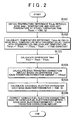
- FIG. 2 shows a routine of a transition correction process which is realized by embodying the correcting means for correcting the deviation in the fuel injection parameters due to the above-mentioned transient delay.
- the process is performed by the electronic control unit 21, for example, at predetermined intervals.
- a steady operation time temperature difference Thbdc which is a temperature difference between the bore wall temperature and a coolant temperature at steady operation time, is obtained based on a fuel injection amount Q and an engine rotational speed NE according to a temperature difference map shown in FIG. 3 (step S101).
- the fuel injection amount Q is calculated based on an engine load, which is obtained based on the engine rotational speed NE detected by the engine rotational speed sensor 33 and the accelerator pedal operation amount detected by the accelerator sensor 31, and the engine rotational speed NE.
- the temperature difference map is set such that the value of the steady operation time temperature difference Thbdc increases as the engine rotational speed NE increases and as the fuel injection amount Q increases.
- the process of calculating the steady operation time temperature difference Thbdc constitutes the steady operation time bore wall temperature computing means.
- a process different from the above-mentioned process may be employed for obtaining the steady operation time temperature difference Thbdc, if the steady operation time temperature difference Thbdc can be obtained appropriately.
- a transition operation time temperature difference Thbdt which is the temperature difference between the bore wall temperature and the coolant temperature and which is the temperature difference with transient delay of the bore wall temperature taken into consideration, is periodically estimated according to the following equation (1) (step S 102).
- Thbdtn Thbdtn + Thbdc - Thbdtn - 1 / time constant ⁇ )
- Thbdtn signifies an estimate value of the transition operation time temperature difference Thbdt which is obtained by the present process.
- Thbdtn-1 signifies an estimate value of the transition operation time temperature difference Thbdt which is obtained by the previous process.
- Thbdc signifies the steady operation time temperature difference which is obtained in step S101 at each time.
- the time constant ⁇ is a value concerning the transient delay of the bore wall temperature, and is obtained based on the fuel injection amount Q and the engine rotational speed NE according to a time constant map shown in FIG. 4.
- the fuel injection amount Q becomes smaller, the amount of heat generated when the fuel is burned becomes smaller. Therefore, the pace of increase in the bore wall temperature is reduced.
- the engine rotational speed NE becomes lower, the number of times fuel is injected during a predetermined period becomes smaller. Therefore, the pace of increase in the bore wall temperature per unit time is reduced. Accordingly, as shown in FIG.
- the time constant map is set such that, as the engine rotational speed NE becomes lower and as the fuel injection amount Q becomes smaller, the value of the time constant ⁇ , to be obtained, becomes larger, that is, an update amount, which is to be added to the transition operation time temperature difference Thbdtn-1 obtained in the previous process (Thbdc-Thbdtn-1/time constant ⁇ ), becomes smaller.
- the process of calculating the transition operation time temperature difference Thbdt constitutes the transition operation time bore wall temperature estimating means.
- the transition operation time temperature difference Thbdt is estimated according to the above-mentioned equation (1).
- another estimation method may be employed if the temperature difference with transient delay of the bore wall temperature taken into consideration can be obtained.
- a difference Thbd of the bore wall temperature that is, a temperature difference between the bore wall temperature at the time of transition of the engine load and the bore wall temperature at the time of steady operation which is performed after the engine load is changed, is estimated according to the following equation (2) (step S103).
- the process of calculating the difference Thbd constitutes the difference (Thbd) computing means. Thbd ⁇ transition operation time temperature difference Thbdt - steady operation time temperature difference Thbdc
- the difference Thbd becomes a negative value.
- the difference Thbd becomes a positive value.
- a transition correction amount for each fuel injection parameter is calculated based on the calculated difference Thbd (step S104).
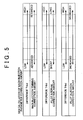
- a main injection timing correction amount MTH for correcting the injection timing of the main injection, a pilot interval correction amount PIH for correcting the pilot interval, and a pilot injection correction amount PQH for correcting the fuel injection amount at the time of pilot injection are obtained as the transition correction amounts according to the maps shown in FIG. 5, for example.
- These transition correction amounts are set in the following manner such that the appropriate combustion state can be maintained and therefore generation of noise due to combustion and the like can be suppressed.
- the correction shown in FIG. 5 is merely an example.
- the setting method may be changed as required, as long as the fuel injection parameter is corrected based on the bore wall temperature when the transient delay occurs, and therefore the appropriate combustion state can be maintained.
- the main injection timing correction amount MH is set such that, as the value of the difference Thbd becomes lower, the injection timing of the main injection is corrected so as to be more advanced.
- the injection timing of the main injection is corrected so as to be more advanced.
- the temperature in the combustion chamber in the case where the injection timing is corrected so as to be more advanced becomes higher than that in the case where the correction is not made. It is therefore possible to make the ignition delay period shorter.
- This correction makes it possible to maintain the appropriate combustion state, for example, to suppress generation of noise due to combustion, and the like.
- the main injection timing correction amount MH is set such that, as the value of the difference Thbd becomes higher, the injection timing of the main injection is corrected so as to be more advanced.
- the temperature in the combustion chamber in the case where the injection timing is corrected so as to be retarded becomes lower than that in the case where the correction is not made. It is therefore possible to suppress excessive reduction of the ignition delay period.
- This correction makes it possible to suppress rapid combustion of the fuel, and to suppress generation of noise due to maintenance of the appropriate combustion state.
- the pilot interval correction amount PIH is set such that, as the difference Thbd becomes lower, the pilot interval becomes shorter.
- the performance timing of the pilot injection comes closer to the performance timing of the main injection. Therefore, when a piston comes closer to the upper dead point, that is, when the cylinder pressure is high and temperature in the combustion chamber is high, the pilot injection is performed, and the fuel injected at this time can be ignited earlier. Accordingly, this correction makes it possible to maintain more appropriate combustion state, for example, to suppress generation of combustion noise due to ignition delay, and the like.
- the pilot interval correction amount PIH is set such that, as the value of the difference Thbd becomes higher, the pilot interval becomes longer.
- the performance timing of the pilot injection is more apart from the performance timing of the main injection. Accordingly, when the piston is apart from the upper dead point to some extent, that is, when the cylinder pressure is low and the temperature in the combustion chamber is not excessively high, the pilot injection is performed. As a result, rapid combustion of the fuel injected at this time can be suppressed. Therefore, this correction also makes it possible to maintain the appropriate combustion state, for example, to suppress combustion noise, and the like.
- the pilot injection correction amount PQH is set such that, as the value of the difference Thbd becomes lower, the pilot injection amount is corrected so as to be increased by a larger amount.
- the fuel injection amount is corrected so as to be increased by a larger amount. Accordingly, the fuel injected at this time can be reliably ignited. Therefore, this correction makes it possible to maintain more appropriate combustion state, for example, to suppress the combustion noise due to the ignition delay, and the like.
- the pilot injection correction amount PQH is set such that, as the difference Thbd becomes higher, the pilot injection amount is corrected so as to be decreased by a larger amount.
- the injection amount is corrected to be decreased by a larger amount. Accordingly, the combustion speed (flame propagation speed) of the fuel injected at this time can be reliably reduced. Therefore, this correction also makes it possible to maintain the appropriate combustion state, for example, to suppress the combustion noise, and the like.
- the base injection parameters are calculated based on the engine rotational speed NE and the fuel injection amount Q according to a map (step S105).
- the optimum values of the base injection parameters, to be calculated at this time, are adjusted in advance based on the temperature difference between the bore wall temperature and the coolant temperature at the steady operation time.
- each of the basic main injection timing MB which is the base injection parameter concerning the timing of the main injection, the basic pilot interval PIB which is the base injection parameter concerning the pilot interval, and the basic pilot injection amount PQB which is the base injection parameter concerning the fuel injection amount at the time of pilot injection is calculated.
- each of the fuel injection parameters is corrected by adding the above-mentioned transition correction amount to the base injection parameter (step S106).
- the main injection timing MT, the pilot interval PI and the pilot injection amount PQ which correspond to the difference of the bore wall temperature, are calculated by correcting the base injection parameters according to the following equations (3) to (5), afterwhich the process ends.
- Main injection timing MT ⁇ basic main injection timing MB + main injection timing correction amount MH Pilot interval PI ⁇ basic pilot interval PIB + pilot interval correction amount PIH Pilot injection amount PQ ⁇ basic pilot injection amount PQB + pilot injection correction amount PQH
- fuel injection from the injector 17 is controlled using the fuel injection parameters obtained through the above-mentioned process.
- FIG. 6A- 6E shows an example of the transition correction performed by the fuel injection control apparatus according to the embodiment.
- FIG. 6A- 6E shows an example of the correction of the pilot interval PI and the like when the operational state of the diesel engine 1 is changed from the low load operational state to the high load operational state.
- the state shown by a solid line shows the state according to the embodiment in which the transition correction process is performed
- the state shown by a chain line shows the state where the transition correction process is not performed.
- the fuel injection amount is changed from a fuel injection amount Q1 corresponding to the low load operation to a fuel injection amount Q2 corresponding to the high load operation.
- FIG. 6B shows a change in the bore wall temperature when the load is changed.
- the actual bore wall temperature cannot be sufficiently increased during a certain period after the load is changed (from time t1 to time t2), and the actual bore wall temperature reaches bore wall temperature at the time of steady operation performed at a high load at time t2.
- FIG. 6C there is a difference in the increase in the bore wall temperature when the load is changed. The difference becomes the maximum value immediately after the engine load is changed, decreases with time, and finally becomes "0".
- the reason is as follows.
- the bore wall temperature becomes higher than that when the engine is operated at a low load. Therefore, the pilot interval is set to a larger value.
- the performance timing of the pilot injection is more apart from and the performance timing of the main injection.
- the pilot injection is performed. Accordingly, when the engine is operated at a high load, setting the pilot interval to a larger value suppresses rapid combustion of the fuel injected by the pilot injection.
- the bore wall temperature in the certain period after the load is changed (from time t1 to time t2) is lower than the bore wall temperature at the time of steady operation performed at a high load. Accordingly, the ignition delay period of the fuel injected by the pilot injection is likely to be longer. If the pilot interval is made longer immediately after the load is changed although such a state occurs during the period from time t1 to time t2, the pilot injection is performed in the state where the temperature in the combustion chamber is not sufficiently increased. Therefore, the ignition delay period becomes further longer, and the combustion state deteriorates, which increases the combustion noise.
- the bore wall temperature which is estimated in the case of the pilot interval corresponding to the operation at a high load, is different from the bore wall temperature at the time of transient delay which occurs after the engine load is changed, and deviation occurs in the pilot interval which should be set to a value corresponding to the bore wall temperature. Accordingly, the combustion state deteriorates.
- the pilot interval is set, which is corrected based on the difference, that is, based on the bore wall temperature while the transient delay occurs. Therefore, as shown by a solid line in FIG. 6E, the combustion noise can be suppressed.
- the pilot interval is corrected so as to be shorter. Accordingly, the pilot injection is performed after the temperature in the combustion chamber is sufficiently increased. Also, even when the bore wall temperature is low, the ignition delay of the fuel injected by the pilot injection is suppressed. As the difference Thbd comes closer to "0" with time, the pilot interval is corrected so as to become gradually longer. Then, the pilot injection is performed at the optimum timing corresponding to the increase in the bore wall temperature.
- the transient correction process makes it possible to maintain the appropriate combustion state, and suppresses the combustion noise.
- the fuel injection parameters are corrected based on the difference Thbd according to the maps shown in FIG. 5. Therefore, even when the transient delay occurs in the bore wall temperature while the engine load is changed, it is possible to maintain the appropriate combustion state and suppress the combustion noise, and the like.
- the steady operation time temperature difference Thbdc which is the temperature difference between the bore wall temperature and the coolant temperature at steady operation time
- the transition operation time temperature difference Thbdt which is the temperature difference between the bore wall temperature with transient delay taken into consideration and the coolant temperature
- the difference Thbd is estimated and used as the index value of the bore wall temperature with transient delay taken into consideration. Accordingly, it is possible to obtain each index value of the bore wall temperature with the coolant temperature taken into consideration, the coolant temperature affecting the combustion state, transition of the bore wall temperature, and the like. It is also possible to appropriately estimate the difference Thbd.
- the fuel injection control apparatus for a diesel engine according to the invention is not limited to the fuel injection control apparatus according to the above-mentioned embodiment, and can be realized in, for example, the following modified embodiment.
- the difference of the bore wall temperature due to a sudden change in the load of the diesel engine is estimated by obtaining the temperature difference between the transition operation time temperature difference Thbdt and the steady operation time temperature difference Thbdc.
- another calculation method may be employed, as long as the difference can be estimated.
- the bore wall temperature at steady operation time of the engine load may be estimated using the parameter (for example, the engine load) having a correlation with the bore wall temperature at steady operation time of the engine load.
- the bore wall temperature in the period in which the transient delay occurs may be estimated using the parameter (for example, the bore wall temperature at the time of steady operation performed before the engine load is changed and the elapsed time since the engine load is changed) having correlation with the bore wall temperature in the period in which the transient delay occurs. Then, the difference can be estimated by obtaining the temperature difference between the bore wall temperature at steady operation time of the engine load and the bore wall temperature in the period in which the transient delay occurs (namely, the bore wall temperature with transient delay taken into consideration).
- the parameter for example, the bore wall temperature at the time of steady operation performed before the engine load is changed and the elapsed time since the engine load is changed
- the bore wall temperature at steady operation time and the bore wall temperature with transient delay taken into consideration may be directly obtained without obtaining the index value of the bore wall temperature at steady operation time (steady operation time temperature difference Thbdc) and the index value of the bore wall temperature with transient delay taken into consideration (transition operation time temperature difference Thbdt).
- it is possible to accurately obtain the difference Thbd which is caused due to a sudden change in the engine load, based on the engine operational state at each time. It is therefore possible to correct the fuel injection parameter further accurately.
- the map is prepared which shows the various fuel injection parameters whose optimum values are adjusted based on the steady operation time temperature difference Thbdc, the time constant concerning the transient delay of the bore wall temperature, the various transition correction amounts obtained based on the difference Thbd, and the temperature difference between the bore wall temperature and the coolant temperature.
- the calculating method is not limited to the method using the map.
- the values may be calculated using a function expression, and the method for calculating each value may be changed as required.
- the fuel injection timing at the time of main injection, the pilot interval at the time of pilot injection, and the pilot injection amount at the time of pilot injection are corrected based on the difference.
- the fuel injection parameters which are the targets of the correction, are not limited to these.
- the combustion state is changed by changing the fuel injection amount at the time of main injection, the fuel injection pressure of the injector, and the like. Therefore, by correcting these fuel injection parameters based on the difference, the effects similar to those in the above-mentioned embodiment can be obtained.
- the pilot injection amount at the time of pilot injection, the fuel injection timing at the time of main injection, the fuel injection amount at the time of main injection, and the fuel injection pressure of the injector may be corrected based on the difference.
- the appropriate combustion state can be obtained by correcting the fuel injection timing at the time of main injection, the fuel injection amount at the time of main injection, and the fuel injection pressure of the injector based on the difference.
- the fuel injection amount at the time of main injection constitutes the major portion of the fuel injection amount Q which is obtained based on the engine load, and the like. Accordingly, even when the fuel injection control apparatus which does not perform the pilot injection is used, the effects similar to those in the above-mentioned embodiment can be obtained by correcting the parameters corresponding to these fuel injection parameters.
- the transition correction process is performed when the operational state is changed from the low load operational state to the high load operational state, and when the operational state is changed from the high load operational state to the low load operational state.
- the transition correction process may be performed only when the operational state is changed from the low load operational state to the high load operational state, or only when the operational state is changed from the high load operational state to the low load operational state.
- the invention is applied to the so-called common rail type fuel injection control apparatus.
- the invention may be applied to another type of fuel injection control apparatus such as a distributor-type fuel injection apparatus and an in-line fuel injection control apparatus.
Landscapes
- Engineering & Computer Science (AREA)
- Chemical & Material Sciences (AREA)
- Combustion & Propulsion (AREA)
- Mechanical Engineering (AREA)
- General Engineering & Computer Science (AREA)
- Electrical Control Of Air Or Fuel Supplied To Internal-Combustion Engine (AREA)
- Combined Controls Of Internal Combustion Engines (AREA)
Claims (6)
- Kraftstoff-Einspritzvorrichtung für einen Dieselmotor, die einen Kraftstoff-Einspritzmodus auf der Basis eines Kraftstoff-Einspritzparameters steuert, dessen optimaler Wert auf der Basis eines Temperaturunterschieds zwischen einer Bohrungswandtemperatur, bei der es sich um eine Temperatur einer Zylinderbohrungswand auf einer Brennkammerseite handelt, und einer Kühlmitteltemperatur, bei der es sich um eine Temperatur eines Kühlmittels handelt, das die Zylinderbohrungswand kühlt, angepasst wird, dadurch gekennzeichnet, dass sie Folgendes aufweist:ein Schätzmittel zum Schätzen eines Unterschieds (Thbd) zwischen einem Unterschied zwischen einer Bohrungswandtemperatur und einer Kühlmitteltemperatur während einer Übergangsbetriebszeit und einem Unterschied zwischen einer Bohrungswandtemperatur und einer Kühlmitteltemperatur während einer Stetigbetriebszeit, wobei der Unterschied (Thbd) aufgrund einer plötzlichen Änderung einer Last des Dieselmotors (1) erzeugt wird; undein Korrekturmittel zum Korrigieren des Brennstoff-Einspritzparameters auf der Basis des geschätzten Unterschieds (Thbd).
- Kraftstoff-Einspritzvorrichtung für einen Dieselmotor nach Anspruch 1, dadurch gekennzeichnet, dass das Korrekturmittel Folgendes aufweist: ein Mittel zum Berechnen einer Stetigbetriebszeit-Bohrungswandtemperatur, um die Bohrungswandtemperatur während einer Stetigbetriebszeit auf der Basis einer Beziehung zwischen einer Drehzahl (NE) des Dieselmotors (1) und einer Kraftstoff-Einspritzmenge (Q) zu ermitteln, ein Mittel zum Schätzen einer Übergangsbetriebszeit-Bohrungswandtemperatur, um eine Bohrungswandtemperatur unter Berücksichtigung einer Übergangsverzögerung der Bohrungswandtemperatur mittels einer Zeitkonstanten in Bezug auf die Übergangsverzögerung der Bohrungswandtemperatur, die auf der Basis der Beziehung zwischen der Drehzahl des Dieselmotors und der Kraftstoff-Einspritzmenge festgelegt wird, zu schätzen, und ein Mittel zum Berechnen des Unterschieds (Thbd), wobei der Kraftstoff-Einspritzparameter unter Verwendung des errechneten Unterschieds (Thbd) korrigiert wird.
- Kraftstoff-Einspritzvorrichtung für einen Dieselmotor nach Anspruch 2, dadurch gekennzeichnet, dass das Mittel zum Berechnen einer Stetigbetriebszeit-Bohrungswandtemperatur einen Stetigbetriebszeit-Temperaturunterschied (Thbdc), d.h. einen Temperaturunterschied zwischen der Bohrungswandtemperatur und der Kühlmitteltemperatur während einer Stetigbetriebszeit, als einen Indexwert der Bohrungswandtemperatur während einer Stetigbetriebszeit berechnet; das Mittel zum Schätzen der Übergangsbetriebszeit-Bohrungswandtemperatur einen Übergangsbetriebszeit-Temperaturunterschied (Thbdt), d.h. einen Temperaturunterschied zwischen der Bohrungswandtemperatur unter Berücksichtigung einer Übergangsverzögerung und der Kühlmitteltemperatur, als einen Indexwert der Bohrungswandtemperatur unter Berücksichtigung einer Übergangsverzögerung schätzt; Kennfelder, die den Stetigbetriebszeit-Temperaturunterschied (Thbdc) und die Zeitkonstante (α) in Bezug auf die Übergangsverzögerung der Bohrungswandtemperatur, die durch das Mittel zum Schätzen der Übergangsbetriebszeit-Bohrungswandtemperatur festgelegt wird, zeigen, auf der Basis der Beziehung zwischen der Drehzahl des Dieselmotors und der Kraftstoff-Einspritzmenge erstellt werden; und in einem Fall, wo das Mittel zum Schätzen der Übergangsbetriebszeit-Bohrungswandtemperatur den Übergangsbetriebszeit-Temperaturunterschied (Thbdt) periodisch schätzt, wenn Thbdc den Stetigbetriebszeit-Temperaturunterschied anzeigt, der durch das Mittel zum Berechnen der Stetigbetriebszeit-Bohrungswandtemperatur jedes Mal ermittelt wird, wenn eine Schätzung durchgeführt wird, Thbdtn-1 einen vorhergehenden Schätzwert des Übergangsbetriebszeit-Temperaturunterschieds anzeigt und Thbdtn einen aktuellen Schätzwert des Übergangsbetriebszeit-Temperaturunterschieds anzeigt, das Mittel zur Schätzung der Übergangsbetriebszeit-Bohrungswandtemperatur den aktuellen Schätzwert durch Ausführen einer Gleichung

- Kraftstoff-Einspritzvorrichtung für einen Dieselmotor nach Anspruch 2 oder 3, dadurch gekennzeichnet, dass der Kraftstoff-Einspritzparameter, dessen optimaler Wert auf der Basis eines Temperaturunterschieds zwischen der Bohrungswandtemperatur und der Kühlmitteltemperatur angepasst wird, in einem Kennfeld als Basis-Einspritzparameter in Bezug auf die Drehzahl (NE) des Dieselmotors (1) und die Kraftstoff-Einspritzmenge gezeigt wird; und das Korrekturmittel einen entsprechenden Basisparameter entsprechend dem Kennfeld ermittelt und den Kraftstoff-Einspritzparameter durch Addieren eines Übergangskorrekturbetrags, der dem Unterschied (Thbd) entspricht und der auf der Basis des Einspritzparameters berechnet, wird, zum erhaltenen Basis-Einspritzparameter korrigiert.
- Kraftstoff-Einspritzvorrichtung für einen Dieselmotor nach einem der Ansprüche 1 bis 4, dadurch gekennzeichnet, dass der Kraftstoff-Einspritzparameter, der durch das Korrekturmittel zu korrigieren ist, ein Vorintervall zur Zeit der Voreinspritzung und/oder eine Voreinspritzmenge zur Zeit der Voreinspritzung und/oder ein Kraftstoff-Einspritzzeitpunkt während der Haupteinspritzung und/oder die Kraftstoff-Einspritzmenge (Q) während der Haupteinspritzung und/oder ein Kraftstoff-Einspritzdruck der Einspritzeinrichtung ist.
- Kraftstoff-Einspritzverfahren für einen Dieselmotor, zum Steuern eines Kraftstoff-Einspritzmodus auf der Basis eines Kraftstoff-Einspritzparameters, dessen optimaler Wert auf der Basis eines Temperaturunterschieds zwischen einer Bohrungswandtemperatur, bei der es sich um eine Temperatur einer Zylinderbohrungswand auf einer Brennkammerseite handelt, und einer Kühlmitteltemperatur, bei der es sich um eine Temperatur eines Kühlmittels handelt, das die Zylinderbohrungswand kühlt, angepasst wird, dadurch gekennzeichnet, dass es die folgende Schritte umfasst:Schätzen eines Unterschieds (Thbd) zwischen einem Unterschied zwischen einer Bohrungswandtemperatur und einer Kühlmitteltemperatur während einer Übergangsbetriebszeit und einem Unterschied zwischen einer Bohrungswandtemperatur und einer Kühlmitteltemperatur während einer Stetigbetriebszeit, wobei der Unterschied (Thbd) aufgrund einer plötzlichen Änderung einer Last des Dieselmotors (1) erzeugt wird; undKorrigieren des Brennstoff-Einspritzparameters auf der Basis des geschätzten Unterschieds (Thbd).
Applications Claiming Priority (2)
| Application Number | Priority Date | Filing Date | Title |
|---|---|---|---|
| JP2004039824A JP2005232990A (ja) | 2004-02-17 | 2004-02-17 | ディーゼルエンジンの燃料噴射制御装置 |
| JP2004039824 | 2004-02-17 |
Publications (3)
| Publication Number | Publication Date |
|---|---|
| EP1564395A2 EP1564395A2 (de) | 2005-08-17 |
| EP1564395A3 EP1564395A3 (de) | 2007-02-28 |
| EP1564395B1 true EP1564395B1 (de) | 2007-12-19 |
Family
ID=34697979
Family Applications (1)
| Application Number | Title | Priority Date | Filing Date |
|---|---|---|---|
| EP05003469A Expired - Lifetime EP1564395B1 (de) | 2004-02-17 | 2005-02-17 | Vorrichtung und Verfahren zur Steuerung der Einspritzung eines Dieselmotors |
Country Status (3)
| Country | Link |
|---|---|
| EP (1) | EP1564395B1 (de) |
| JP (1) | JP2005232990A (de) |
| DE (1) | DE602005003860T2 (de) |
Cited By (4)
| Publication number | Priority date | Publication date | Assignee | Title |
|---|---|---|---|---|
| US8725326B2 (en) | 2006-03-20 | 2014-05-13 | General Electric Company | System and method for predicting a vehicle route using a route network database |
| US8751073B2 (en) | 2006-03-20 | 2014-06-10 | General Electric Company | Method and apparatus for optimizing a train trip using signal information |
| US8903573B2 (en) | 2006-03-20 | 2014-12-02 | General Electric Company | Method and computer software code for determining a mission plan for a powered system when a desired mission parameter appears unobtainable |
| US8924049B2 (en) | 2003-01-06 | 2014-12-30 | General Electric Company | System and method for controlling movement of vehicles |
Families Citing this family (21)
| Publication number | Priority date | Publication date | Assignee | Title |
|---|---|---|---|---|
| US10308265B2 (en) | 2006-03-20 | 2019-06-04 | Ge Global Sourcing Llc | Vehicle control system and method |
| US10569792B2 (en) | 2006-03-20 | 2020-02-25 | General Electric Company | Vehicle control system and method |
| US9733625B2 (en) | 2006-03-20 | 2017-08-15 | General Electric Company | Trip optimization system and method for a train |
| JP4290715B2 (ja) * | 2005-10-13 | 2009-07-08 | 本田技研工業株式会社 | 内燃機関の制御装置 |
| US9156477B2 (en) | 2006-03-20 | 2015-10-13 | General Electric Company | Control system and method for remotely isolating powered units in a vehicle system |
| JP5469463B2 (ja) * | 2006-12-07 | 2014-04-16 | ゼネラル・エレクトリック・カンパニイ | 列車のための運行最適化システムおよび方法 |
| JP4793381B2 (ja) * | 2007-12-07 | 2011-10-12 | トヨタ自動車株式会社 | 内燃機関の燃料噴射制御装置 |
| JP5028245B2 (ja) * | 2007-12-20 | 2012-09-19 | 本田技研工業株式会社 | 内燃機関の内部egr制御装置 |
| JP2009287479A (ja) * | 2008-05-30 | 2009-12-10 | Honda Motor Co Ltd | 内燃機関の制御装置 |
| WO2010041308A1 (ja) * | 2008-10-07 | 2010-04-15 | トヨタ自動車株式会社 | 内燃機関の燃料噴射制御装置 |
| JP5126034B2 (ja) * | 2008-12-02 | 2013-01-23 | 日産自動車株式会社 | エンジンの点火時期制御装置及び点火時期制御方法 |
| JP5083228B2 (ja) * | 2009-01-19 | 2012-11-28 | トヨタ自動車株式会社 | 燃料噴射制御装置 |
| US9834237B2 (en) | 2012-11-21 | 2017-12-05 | General Electric Company | Route examining system and method |
| FR2957978B1 (fr) * | 2010-03-23 | 2012-03-16 | Peugeot Citroen Automobiles Sa | Procede de reglage du debit d'injection de carburant d'un moteur diesel |
| JP2011220186A (ja) | 2010-04-08 | 2011-11-04 | Toyota Motor Corp | 内燃機関の燃焼制御装置 |
| DE102011004190B4 (de) | 2011-02-16 | 2023-10-05 | Bayerische Motoren Werke Aktiengesellschaft | Verfahren zur Vorgabe von Einspritzimpulsen |
| JP5910125B2 (ja) * | 2012-02-02 | 2016-04-27 | マツダ株式会社 | 圧縮自己着火式エンジンの始動制御装置 |
| US9669851B2 (en) | 2012-11-21 | 2017-06-06 | General Electric Company | Route examination system and method |
| DE102016203436B4 (de) * | 2016-03-02 | 2017-11-30 | Continental Automotive Gmbh | Verfahren und Vorrichtung zum Ermitteln eines Einspritzzeitpunkts zum Einspritzen eines Kraftstoffs |
| JP6684680B2 (ja) * | 2016-08-08 | 2020-04-22 | 株式会社ケーヒン | 内燃機関制御装置 |
| JP2018053858A (ja) * | 2016-09-30 | 2018-04-05 | 株式会社ケーヒン | 燃料供給異常判定装置 |
Family Cites Families (4)
| Publication number | Priority date | Publication date | Assignee | Title |
|---|---|---|---|---|
| JPH0734927A (ja) * | 1993-07-19 | 1995-02-03 | Toyota Motor Corp | 内燃機関の空燃比制御装置 |
| JPH11236842A (ja) * | 1998-02-24 | 1999-08-31 | Isuzu Motors Ltd | ディーゼルエンジンの電子制御燃料噴射装置 |
| JP2001115885A (ja) * | 1999-10-18 | 2001-04-24 | Nissan Motor Co Ltd | ディーゼルエンジンの制御装置 |
| JP2004011483A (ja) * | 2002-06-05 | 2004-01-15 | Mikuni Corp | エンジン制御装置 |
-
2004
- 2004-02-17 JP JP2004039824A patent/JP2005232990A/ja active Pending
-
2005
- 2005-02-17 DE DE602005003860T patent/DE602005003860T2/de not_active Expired - Lifetime
- 2005-02-17 EP EP05003469A patent/EP1564395B1/de not_active Expired - Lifetime
Cited By (4)
| Publication number | Priority date | Publication date | Assignee | Title |
|---|---|---|---|---|
| US8924049B2 (en) | 2003-01-06 | 2014-12-30 | General Electric Company | System and method for controlling movement of vehicles |
| US8725326B2 (en) | 2006-03-20 | 2014-05-13 | General Electric Company | System and method for predicting a vehicle route using a route network database |
| US8751073B2 (en) | 2006-03-20 | 2014-06-10 | General Electric Company | Method and apparatus for optimizing a train trip using signal information |
| US8903573B2 (en) | 2006-03-20 | 2014-12-02 | General Electric Company | Method and computer software code for determining a mission plan for a powered system when a desired mission parameter appears unobtainable |
Also Published As
| Publication number | Publication date |
|---|---|
| DE602005003860D1 (de) | 2008-01-31 |
| EP1564395A2 (de) | 2005-08-17 |
| JP2005232990A (ja) | 2005-09-02 |
| DE602005003860T2 (de) | 2008-12-04 |
| EP1564395A3 (de) | 2007-02-28 |
Similar Documents
| Publication | Publication Date | Title |
|---|---|---|
| EP1564395B1 (de) | Vorrichtung und Verfahren zur Steuerung der Einspritzung eines Dieselmotors | |
| US7055503B2 (en) | Fuel injection controller for engine | |
| US6932053B2 (en) | Control device of internal combustion engine | |
| US6644274B2 (en) | Apparatus for detecting a condition of burning in an internal combustion engine | |
| JP4085900B2 (ja) | 筒内直接噴射式火花点火エンジンの燃料噴射制御装置 | |
| EP0921296A2 (de) | Kraftstoffeinspritzsteuerungsvorrichtung für eine Brennkraftmaschine | |
| EP1647690B1 (de) | Verfahren und Vorrichtung zur Verbrennungssteuerung einer direkteinspritzenden Brennkraftmaschine mit Fremdzündung | |
| EP0924420B1 (de) | Drehmomentregler für eine Brennkraftmaschine | |
| US6240896B1 (en) | Diesel engine fuel injection control device and fuel injection control method | |
| EP1681451B1 (de) | Steuervorrichtung für eine Brennkraftmaschine mit Direkteinspritzung | |
| JP4135643B2 (ja) | 直噴火花点火式内燃機関の制御装置 | |
| JP2000291436A (ja) | 圧縮自己着火式内燃機関 | |
| JP2011112017A (ja) | ディーゼルエンジンの制御装置 | |
| JP2005061239A (ja) | 内燃機関の燃料噴射制御装置 | |
| JP2003027997A (ja) | ディーゼル機関の制御システム | |
| JP3994465B2 (ja) | 燃料噴射時期制御装置 | |
| JP4227924B2 (ja) | 内燃機関の燃料噴射制御装置 | |
| US7207317B2 (en) | Engine control system | |
| JP2007285195A (ja) | 内燃機関の着火時期制御システム | |
| EP1234969B1 (de) | Verfahren und Vorrichtung zur Bestimmung der zuzuführenden Kraftstoffmenge in einer Brennkraftmaschine | |
| KR100291975B1 (ko) | 내연기관의 실린더 분사연료제어장치 | |
| JP2002038994A (ja) | 直噴火花点火式内燃機関の制御装置 | |
| JP2002038993A (ja) | 筒内噴射エンジンの制御装置 | |
| JPH09222038A (ja) | 筒内噴射エンジンの始動方法およびそのための装置 | |
| JPH11280520A (ja) | 内燃機関の制御装置 |
Legal Events
| Date | Code | Title | Description |
|---|---|---|---|
| PUAI | Public reference made under article 153(3) epc to a published international application that has entered the european phase |
Free format text: ORIGINAL CODE: 0009012 |
|
| 17P | Request for examination filed |
Effective date: 20050217 |
|
| AK | Designated contracting states |
Kind code of ref document: A2 Designated state(s): AT BE BG CH CY CZ DE DK EE ES FI FR GB GR HU IE IS IT LI LT LU MC NL PL PT RO SE SI SK TR |
|
| AX | Request for extension of the european patent |
Extension state: AL BA HR LV MK YU |
|
| PUAL | Search report despatched |
Free format text: ORIGINAL CODE: 0009013 |
|
| AK | Designated contracting states |
Kind code of ref document: A3 Designated state(s): AT BE BG CH CY CZ DE DK EE ES FI FR GB GR HU IE IS IT LI LT LU MC NL PL PT RO SE SI SK TR |
|
| AX | Request for extension of the european patent |
Extension state: AL BA HR LV MK YU |
|
| GRAP | Despatch of communication of intention to grant a patent |
Free format text: ORIGINAL CODE: EPIDOSNIGR1 |
|
| GRAS | Grant fee paid |
Free format text: ORIGINAL CODE: EPIDOSNIGR3 |
|
| AKX | Designation fees paid |
Designated state(s): DE FR GB |
|
| GRAA | (expected) grant |
Free format text: ORIGINAL CODE: 0009210 |
|
| RIN1 | Information on inventor provided before grant (corrected) |
Inventor name: KIBE, KAZUYA Inventor name: NEGISHI, AKIYOSHI |
|
| AK | Designated contracting states |
Kind code of ref document: B1 Designated state(s): DE FR GB |
|
| REG | Reference to a national code |
Ref country code: GB Ref legal event code: FG4D |
|
| REF | Corresponds to: |
Ref document number: 602005003860 Country of ref document: DE Date of ref document: 20080131 Kind code of ref document: P |
|
| ET | Fr: translation filed | ||
| PLBE | No opposition filed within time limit |
Free format text: ORIGINAL CODE: 0009261 |
|
| STAA | Information on the status of an ep patent application or granted ep patent |
Free format text: STATUS: NO OPPOSITION FILED WITHIN TIME LIMIT |
|
| 26N | No opposition filed |
Effective date: 20080922 |
|
| REG | Reference to a national code |
Ref country code: GB Ref legal event code: 746 Effective date: 20121112 |
|
| REG | Reference to a national code |
Ref country code: DE Ref legal event code: R084 Ref document number: 602005003860 Country of ref document: DE Effective date: 20121115 |
|
| REG | Reference to a national code |
Ref country code: FR Ref legal event code: PLFP Year of fee payment: 12 |
|
| REG | Reference to a national code |
Ref country code: FR Ref legal event code: PLFP Year of fee payment: 13 |
|
| PGFP | Annual fee paid to national office [announced via postgrant information from national office to epo] |
Ref country code: DE Payment date: 20170214 Year of fee payment: 13 Ref country code: FR Payment date: 20170112 Year of fee payment: 13 |
|
| PGFP | Annual fee paid to national office [announced via postgrant information from national office to epo] |
Ref country code: GB Payment date: 20170215 Year of fee payment: 13 |
|
| REG | Reference to a national code |
Ref country code: DE Ref legal event code: R119 Ref document number: 602005003860 Country of ref document: DE |
|
| GBPC | Gb: european patent ceased through non-payment of renewal fee |
Effective date: 20180217 |
|
| REG | Reference to a national code |
Ref country code: FR Ref legal event code: ST Effective date: 20181031 |
|
| PG25 | Lapsed in a contracting state [announced via postgrant information from national office to epo] |
Ref country code: DE Free format text: LAPSE BECAUSE OF NON-PAYMENT OF DUE FEES Effective date: 20180901 |
|
| PG25 | Lapsed in a contracting state [announced via postgrant information from national office to epo] |
Ref country code: GB Free format text: LAPSE BECAUSE OF NON-PAYMENT OF DUE FEES Effective date: 20180217 Ref country code: FR Free format text: LAPSE BECAUSE OF NON-PAYMENT OF DUE FEES Effective date: 20180228 |