EP1538166B1 - Hyaluronsäurederivat mit einer Urethanbindung - Google Patents
Hyaluronsäurederivat mit einer Urethanbindung Download PDFInfo
- Publication number
- EP1538166B1 EP1538166B1 EP04256686A EP04256686A EP1538166B1 EP 1538166 B1 EP1538166 B1 EP 1538166B1 EP 04256686 A EP04256686 A EP 04256686A EP 04256686 A EP04256686 A EP 04256686A EP 1538166 B1 EP1538166 B1 EP 1538166B1
- Authority
- EP
- European Patent Office
- Prior art keywords
- hyaluronic acid
- biodegradable
- acid derivative
- copolymer
- prepolymer
- Prior art date
- Legal status (The legal status is an assumption and is not a legal conclusion. Google has not performed a legal analysis and makes no representation as to the accuracy of the status listed.)
- Expired - Lifetime
Links
Images






Classifications
-
- A—HUMAN NECESSITIES
- A61—MEDICAL OR VETERINARY SCIENCE; HYGIENE
- A61K—PREPARATIONS FOR MEDICAL, DENTAL OR TOILETRY PURPOSES
- A61K47/00—Medicinal preparations characterised by the non-active ingredients used, e.g. carriers or inert additives; Targeting or modifying agents chemically bound to the active ingredient
- A61K47/50—Medicinal preparations characterised by the non-active ingredients used, e.g. carriers or inert additives; Targeting or modifying agents chemically bound to the active ingredient the non-active ingredient being chemically bound to the active ingredient, e.g. polymer-drug conjugates
- A61K47/69—Medicinal preparations characterised by the non-active ingredients used, e.g. carriers or inert additives; Targeting or modifying agents chemically bound to the active ingredient the non-active ingredient being chemically bound to the active ingredient, e.g. polymer-drug conjugates the conjugate being characterised by physical or galenical forms, e.g. emulsion, particle, inclusion complex, stent or kit
- A61K47/6905—Medicinal preparations characterised by the non-active ingredients used, e.g. carriers or inert additives; Targeting or modifying agents chemically bound to the active ingredient the non-active ingredient being chemically bound to the active ingredient, e.g. polymer-drug conjugates the conjugate being characterised by physical or galenical forms, e.g. emulsion, particle, inclusion complex, stent or kit the form being a colloid or an emulsion
- A61K47/6907—Medicinal preparations characterised by the non-active ingredients used, e.g. carriers or inert additives; Targeting or modifying agents chemically bound to the active ingredient the non-active ingredient being chemically bound to the active ingredient, e.g. polymer-drug conjugates the conjugate being characterised by physical or galenical forms, e.g. emulsion, particle, inclusion complex, stent or kit the form being a colloid or an emulsion the form being a microemulsion, nanoemulsion or micelle
-
- A—HUMAN NECESSITIES
- A61—MEDICAL OR VETERINARY SCIENCE; HYGIENE
- A61K—PREPARATIONS FOR MEDICAL, DENTAL OR TOILETRY PURPOSES
- A61K47/00—Medicinal preparations characterised by the non-active ingredients used, e.g. carriers or inert additives; Targeting or modifying agents chemically bound to the active ingredient
- A61K47/30—Macromolecular organic or inorganic compounds, e.g. inorganic polyphosphates
- A61K47/36—Polysaccharides; Derivatives thereof, e.g. gums, starch, alginate, dextrin, hyaluronic acid, chitosan, inulin, agar or pectin
-
- A—HUMAN NECESSITIES
- A61—MEDICAL OR VETERINARY SCIENCE; HYGIENE
- A61K—PREPARATIONS FOR MEDICAL, DENTAL OR TOILETRY PURPOSES
- A61K47/00—Medicinal preparations characterised by the non-active ingredients used, e.g. carriers or inert additives; Targeting or modifying agents chemically bound to the active ingredient
- A61K47/50—Medicinal preparations characterised by the non-active ingredients used, e.g. carriers or inert additives; Targeting or modifying agents chemically bound to the active ingredient the non-active ingredient being chemically bound to the active ingredient, e.g. polymer-drug conjugates
- A61K47/51—Medicinal preparations characterised by the non-active ingredients used, e.g. carriers or inert additives; Targeting or modifying agents chemically bound to the active ingredient the non-active ingredient being chemically bound to the active ingredient, e.g. polymer-drug conjugates the non-active ingredient being a modifying agent
- A61K47/54—Medicinal preparations characterised by the non-active ingredients used, e.g. carriers or inert additives; Targeting or modifying agents chemically bound to the active ingredient the non-active ingredient being chemically bound to the active ingredient, e.g. polymer-drug conjugates the non-active ingredient being a modifying agent the modifying agent being an organic compound
-
- A—HUMAN NECESSITIES
- A61—MEDICAL OR VETERINARY SCIENCE; HYGIENE
- A61K—PREPARATIONS FOR MEDICAL, DENTAL OR TOILETRY PURPOSES
- A61K47/00—Medicinal preparations characterised by the non-active ingredients used, e.g. carriers or inert additives; Targeting or modifying agents chemically bound to the active ingredient
- A61K47/50—Medicinal preparations characterised by the non-active ingredients used, e.g. carriers or inert additives; Targeting or modifying agents chemically bound to the active ingredient the non-active ingredient being chemically bound to the active ingredient, e.g. polymer-drug conjugates
- A61K47/51—Medicinal preparations characterised by the non-active ingredients used, e.g. carriers or inert additives; Targeting or modifying agents chemically bound to the active ingredient the non-active ingredient being chemically bound to the active ingredient, e.g. polymer-drug conjugates the non-active ingredient being a modifying agent
- A61K47/56—Medicinal preparations characterised by the non-active ingredients used, e.g. carriers or inert additives; Targeting or modifying agents chemically bound to the active ingredient the non-active ingredient being chemically bound to the active ingredient, e.g. polymer-drug conjugates the non-active ingredient being a modifying agent the modifying agent being an organic macromolecular compound, e.g. an oligomeric, polymeric or dendrimeric molecule
- A61K47/59—Medicinal preparations characterised by the non-active ingredients used, e.g. carriers or inert additives; Targeting or modifying agents chemically bound to the active ingredient the non-active ingredient being chemically bound to the active ingredient, e.g. polymer-drug conjugates the non-active ingredient being a modifying agent the modifying agent being an organic macromolecular compound, e.g. an oligomeric, polymeric or dendrimeric molecule obtained otherwise than by reactions only involving carbon-to-carbon unsaturated bonds, e.g. polyureas or polyurethanes
-
- A—HUMAN NECESSITIES
- A61—MEDICAL OR VETERINARY SCIENCE; HYGIENE
- A61K—PREPARATIONS FOR MEDICAL, DENTAL OR TOILETRY PURPOSES
- A61K47/00—Medicinal preparations characterised by the non-active ingredients used, e.g. carriers or inert additives; Targeting or modifying agents chemically bound to the active ingredient
- A61K47/50—Medicinal preparations characterised by the non-active ingredients used, e.g. carriers or inert additives; Targeting or modifying agents chemically bound to the active ingredient the non-active ingredient being chemically bound to the active ingredient, e.g. polymer-drug conjugates
- A61K47/51—Medicinal preparations characterised by the non-active ingredients used, e.g. carriers or inert additives; Targeting or modifying agents chemically bound to the active ingredient the non-active ingredient being chemically bound to the active ingredient, e.g. polymer-drug conjugates the non-active ingredient being a modifying agent
- A61K47/56—Medicinal preparations characterised by the non-active ingredients used, e.g. carriers or inert additives; Targeting or modifying agents chemically bound to the active ingredient the non-active ingredient being chemically bound to the active ingredient, e.g. polymer-drug conjugates the non-active ingredient being a modifying agent the modifying agent being an organic macromolecular compound, e.g. an oligomeric, polymeric or dendrimeric molecule
- A61K47/59—Medicinal preparations characterised by the non-active ingredients used, e.g. carriers or inert additives; Targeting or modifying agents chemically bound to the active ingredient the non-active ingredient being chemically bound to the active ingredient, e.g. polymer-drug conjugates the non-active ingredient being a modifying agent the modifying agent being an organic macromolecular compound, e.g. an oligomeric, polymeric or dendrimeric molecule obtained otherwise than by reactions only involving carbon-to-carbon unsaturated bonds, e.g. polyureas or polyurethanes
- A61K47/60—Medicinal preparations characterised by the non-active ingredients used, e.g. carriers or inert additives; Targeting or modifying agents chemically bound to the active ingredient the non-active ingredient being chemically bound to the active ingredient, e.g. polymer-drug conjugates the non-active ingredient being a modifying agent the modifying agent being an organic macromolecular compound, e.g. an oligomeric, polymeric or dendrimeric molecule obtained otherwise than by reactions only involving carbon-to-carbon unsaturated bonds, e.g. polyureas or polyurethanes the organic macromolecular compound being a polyoxyalkylene oligomer, polymer or dendrimer, e.g. PEG, PPG, PEO or polyglycerol
-
- C—CHEMISTRY; METALLURGY
- C08—ORGANIC MACROMOLECULAR COMPOUNDS; THEIR PREPARATION OR CHEMICAL WORKING-UP; COMPOSITIONS BASED THEREON
- C08B—POLYSACCHARIDES; DERIVATIVES THEREOF
- C08B37/00—Preparation of polysaccharides not provided for in groups C08B1/00 - C08B35/00; Derivatives thereof
- C08B37/006—Heteroglycans, i.e. polysaccharides having more than one sugar residue in the main chain in either alternating or less regular sequence; Gellans; Succinoglycans; Arabinogalactans; Tragacanth or gum tragacanth or traganth from Astragalus; Gum Karaya from Sterculia urens; Gum Ghatti from Anogeissus latifolia; Derivatives thereof
- C08B37/0063—Glycosaminoglycans or mucopolysaccharides, e.g. keratan sulfate; Derivatives thereof, e.g. fucoidan
- C08B37/0072—Hyaluronic acid, i.e. HA or hyaluronan; Derivatives thereof, e.g. crosslinked hyaluronic acid (hylan) or hyaluronates
-
- C—CHEMISTRY; METALLURGY
- C08—ORGANIC MACROMOLECULAR COMPOUNDS; THEIR PREPARATION OR CHEMICAL WORKING-UP; COMPOSITIONS BASED THEREON
- C08G—MACROMOLECULAR COMPOUNDS OBTAINED OTHERWISE THAN BY REACTIONS ONLY INVOLVING UNSATURATED CARBON-TO-CARBON BONDS
- C08G63/00—Macromolecular compounds obtained by reactions forming a carboxylic ester link in the main chain of the macromolecule
- C08G63/91—Polymers modified by chemical after-treatment
Definitions
- the present invention relates to a biodegradable hyaluronic acid derivative, and more particularly to a biodegradable hyaluronic acid derivative resulting from the reaction of hydroxy groups in hyaluronic acid and isocyanate groups in an isocyanate group-containing compound via a urethane linkage.
- Hyaluronan or hyaluronic acid is a linear mucopolysaccharide constituted by N-acetyl-D-glucosamine and D-glucuronic acid repeating units.
- Hyaluronic acid was first found in the vitreous body of the cattle eye by Meyer and Palmer in 1934, and then was found in other tissues such as extracellular matrix (ECM) and synovial fluid of the joints.
- ECM extracellular matrix
- Hyaluronic acid is a viscoelastic fluid filled in the space between cells and collagenous fibers and coated on some epidermal tissues.
- Hyaluronic acid plays an important role in the biological organism, firstly as a mechanical support of the cells of many tissues, such as the skin, the tendons, the muscles and cartilage.
- Hyaluronic acid also performs other functions in the biological processes, such as moistening of tissues, lubrication, and cellular migration.
- Hyaluronic acid may be extracted from natural tissues, such as rooster's combs, or also from certain bacteria.
- the molecular weight of hyaluronic acid obtained by extraction varies due to the source and the extraction process and is generally in the range of several millions to several tens of millions Dalton.
- Hyaluronic acid its molecular fractions and its salts have been used in pharmaceutical, surgical and cosmetic fields and in the field of biodegradable polymer materials.
- hyaluronic acid is very expensive and is biodegraded quite easily, its application is limited.
- many methods have been developed to modify hyaluronic acid in order to increase its resistance to biodegradation.
- tertiary amine salt of a glycosaminoglycan (such as hyaluronic acid) is reacted with a photoreactive compound to undergo esterification.
- the ester product is then exposed to UV radiation to form a crosslinked water-insoluble glycosaminoglycan derivative.
- Francesco della Valle et al. in U.S. Patent No. 5,442,053 discloses a composition including hyaluronic acid and a pharmacologically active substance.
- a hyaluronic acid fraction with a molecular weight between 50,000 and 100,000 is particularly suitable for wound healing and hyaluronic acid with a molecular weight between 500,000 and 730,000 is particularly suitable for intraarticular injection.
- Zefferino Righetto et al. in U.S. Patent No. 5,856,299 discloses highly reactive esters of carboxy polysaccharide and carboxy polysaccharides derived therefrom.
- Hyaluronic acid is first converted into a salt of hyaluronic acid capable of being dissolved in an organic solvent. Then, an aromatic alcohol is used to react with the carboxy group (COOH) in hyaluronic acid, thus forming a highly reactive esterified hyaluronic acid suitable for biomedical and pharmaceutical fields.
- WO 02/098923 relates to derivatives of hyaluronan, such as, for example, tetrabutyl ammonium phenylcarbamoylated hyluronan.
- the hydroxyl groups are carbamoylated, with compounds such as alkylaryl or alkylisocyanates.
- the derivatives are obtained by reaction of the isocyanate on the hydroxyl group and the carboxyl groups may be in the form of salt.
- US 5,705,270 relates to microcapsules comprising biologically active material encapsulated in a modified biocompatible material.
- the biocompatible material may be a polysaccharide derivative A-X, in which A (e.g. hyaluronic acid) and X (e.g. an acrylate group) arc covalently linked with, for example, urethane.
- US 5,510,418 relates to non-immunogenic compositions formed by covalently binding glycosaminoglycans to hydrophilic synthetic polymers to provide biocompatible conjugates.
- the glycosaminoglycan can for example be obtained by combining a hyaluronic acid with a hydrophilic polymer (e.g. PEG) via an ester or a urethane linkage.
- An object of the present invention is to provide a novel biodegradable hyaluronic acid derivative substituted with a short chain group on the hydroxy position via a urethane linkage.
- Another object of the present invention is to provide a novel biodegradable hyaluronic acid derivative grafted with a prepolymer on the hydroxy position via a urethane linkage.
- Another object of the present invention is to provide a biodegradable polymeric micelle composition.
- a further object of the present invention is to provide a pharmaceutical or bioactive composition including a pharmaceutically active molecule or a bioactive molecule entrapped within the micelles formed by the biodegradable hyaluronic acid derivative.
- HA is a unit including N-acetyl-D-glucosamine and D-glucuronic acid
- M is a modifying moiety containing an octyl or C 12-16 alkyl group or a hydrophobic biodegradable prepolymer
- p is an integer of 1 to 4.
- the biodegradable polymeric micelle composition of the present invention includes:
- the pharmaceutical or bioactive composition of the present invention includes:
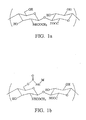
- the native hyaluronic acid is a linear mucopolysaccharide constituted by N-acetyl-D-glucosamine and D-glucuronic acid repeating units, as shown in FIG. 1a .
- the modifying moiety can contain an octyl or C 2-16 hydrocarbyl group or a prepolymer.
- HA is a unit including N-acetyl-D-glucosamine and D-glucuronic acid
- M is a modifying moiety containing an octyl or C 2-16 alkyl group or a hydrophobic biodegradable prepolymer
- p is 1 to 4.
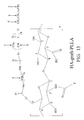
- FIG. 1b illustrates the chemical structure of formula (1), in which p is 1.
- the -COOH groups and the -NHCOCH 3 groups can remain intact, or, some of the -COOH groups and/or some of the -NHCOCH 3 groups can be substituted according to practical requirements.
- the -COOH group can be converted into a -COOM 1 group, wherein M 1 can be an alkaline metal, an alkaline earth metal, ammonium, or aluminum.
- M 1 can be an alkaline metal, an alkaline earth metal, ammonium, or aluminum.
- biodegradable hyaluronic acid derivative of the present invention can be classified into two categories:
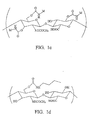
- FIG. 1d illustrates one example of formula (1) in category (A) outside the scope of the present invention, in which M is butyl and p is 1.
- a hyaluronic acid having a hydroxy group (-OH) is reacted with an octyl or C 2-16 hydrocarbyl isocyanate.
- the hydrocarbyl isocyanate can be formed from the reaction of an octyl or C 2-16 alcohol with an isocyanate group-containing compound.
- the hyaluronic acid starting material needs not to be a native hyaluronic acid, but can be a hyaluronic acid derivative. That is to say, the starting material can be a hyaluronic acid where the -COOH group or the -NHCOCH 3 group is substituted. Also, even the hydroxy group (-OH) in the hyaluronic acid starting material can be partially substituted, as long as there are still residual -OH groups for introducing the short chain moiety via the urethane linkage.
- the hyaluronic acid starting material can be a hyaluronic acid salt capable of being dissolved in an organic solvent.
- the hyaluronic acid having a hydroxy group can be a quaternary ammonium salt of hyaluronic acid. That is, the -COOH group in the native hyaluronic acid is converted into a -COONH 4 group.
- the hyaluronic acid having a hydroxy group (starting material) can have a molecular weight of 2,000 to 3500,000.
- the hydrocarbyl isocyanate (modifying compound) is an octyl or C 2-16 alkyl isocyanate, Representative examples include octyl isocyanate, and dodecyl isocyanate.
- the reaction can be conducted at a temperature of 10°C to 90°C in the presence of a catalyst such as di-n-butyltindilaurate, di-n-butyltin diacetate, sodium phenate, ferric chloride, copper acetylacetonate, zinc naphthenate, or tributylphosphine.
- a catalyst such as di-n-butyltindilaurate, di-n-butyltin diacetate, sodium phenate, ferric chloride, copper acetylacetonate, zinc naphthenate, or tributylphosphine.
- the hyaluronic acid derivative including a plurality of the formula (1) repeating units can constitute a comb-like, or a brush-like shaped graft copolymer as shown in FIG. 1e .
- the prepolymer grafted onto the -OH position of hyaluronic acid is hydrophobic.
- the prepolymer suitable for use is biodegradable and can be the same or different.
- the biodegradable hydrophobic prepolymer can be a biodegradable polyester-containing prepolymer.
- suitable biodegradable polyester-containing hydrophobic prepolymers include polycaprolactone (PCL), poly L-lactide (PLLA), polylactic acid (PLA), polyglycolic acid (PGA), poly-lactic-co-glycolic acid copolymer (PLGA copolymer), and polycaprolactone-polylactic acid copolymer (PCL-PLA copolymer).
- the hydrophobic biodegradable prepolymer can have a molecular weight of 500 to 200000, preferably 500 to 50000.
- the biodegradable prepolymer grafted onto the -OH position of hyaluronic acid can be the same or different. Different prepolymers can be mixed and then grafted onto the hyaluronic acid at the same time. Or, different prepolymers can be grafted onto the hyaluronic acid sequentially and separately.
- the diisocyanate suitable for use in the present invention can be aliphatic type isocyanate, such as hexamethylene diisocyanate or 4,4 -methylene-bis(phenylene isocyanate).
- the hyaluronic acid starting material needs not to be a native hyaluronic acid, but can be a hyaluronic acid derivative. That is to say, the starting material can be a hyaluronic acid where the -COOH group or the -NHCOCH 3 group is substituted. Also, even the hydroxy group (-OH) in the hyaluronic acid starting material can be partially substituted, as long as there are still residual -OH groups for introducing the short chain moiety via the urethane linkage.
- the hyaluronic acid starting material can be a hyaluronic acid salt capable of being dissolved in an organic solvent.
- the hyaluronic acid having a hydroxy group can be a quaternary ammonium salt of hyaluronic acid. That is, the -COOH group in the native hyaluronic acid is converted into a -COON(Bu) 4 group.
- the hyaluronic acid having a hydroxy group (starting material) can have a molecular weight of 2,000 to 3500,000.
- the prepolymer suitable for use in the present invention is biodegradable and hydrophobic.
- the biodegradable prepolymer having a hydroxy group can have a molecular weight of 500 to 200000, preferably 500 to 50000.
- suitable biodegradable hydrophobic prepolymers having a hydroxy group include polycaprolactone (PCL), poly L-lactide (PLLA), polylactic acid (PLA), polyglycolic acid (PGA), poly-lactic-co-glycolic acid copolymer (PLGA copolymer) , and polycaprolactone-polylactic acid copolymer (PCL-PLA copolymer).
- PCL-PLA copolymer polycaprolactone-polylactic acid copolymer
- biodegradable hydrophilic prepolymers having a hydroxy group include polyvinylpyrridone, polyethylene glycol, and polyvinylalcohol.
- the reaction can be conducted at a temperature of 10°C to 90°C in the presence of a catalyst such as di-n-butyltin dilaurate, di-n-butyltin diacetate, sodium phenate, ferric chloride, copper acetylacetonate, zinc naphthenate, or tributylphosphine.
- a catalyst such as di-n-butyltin dilaurate, di-n-butyltin diacetate, sodium phenate, ferric chloride, copper acetylacetonate, zinc naphthenate, or tributylphosphine.
- the hyaluronic acid derivative either substituted with short chain moiety octyl or (C 12-16 hydrocarbyl) as described above in category (A) or grafted with a hydrophobic biodegradable prepolymer as described above in category (B), can be dissolved in a hydrophilic medium.
- the hyaluronic acid derivative forms micelles.
- the biodegradable hyaluronic acid derivative is a comb-like shaped graft copolymer as described above and dissolved in a hydrophilic medium at a concentration higher than a critical micelle concentration
- the comb-like shaped graft copolymer is self assembled into micelles.
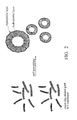
- FIG. 2 shows the schematic diagram of the micelles.
- the hyaluronic acid main chains form an outer hydrophilic layer and the biodegradable hydrophobic prepolymers form an inner hydrophobic layer.
- a hydrophobic core is formed inside the hydrophobic layer.
- the hyaluronic acid derivative in the micelle composition, can have a low critical micelle concentration in the range of 0.005 weight% to 1.0 weight%, preferably 0.005 to 0.5 weight%, most preferably 0.005 to 0.3 weight%.
- the hyaluronic acid derivative micelles can have a size of 10 nm to 500 nm, preferably of 50 nm to 400 nm, most preferably 50 to 300 nm.
- the hydrophilic medium can be water or an aqueous solution.
- the hyaluronic acid derivative either substituted with short chain moiety octyl or (C12-16 hydrocarbyl) as described above in category (A) or grafted with a hydrophobic biodegradable prepolymer as described above in category (B), when dissolved in a hydrophilic medium forms micelles with a hydrophobic core. Therefore, such micelles can be used to entrap a pharmaceutically active molecule or a bioactive molecule.
- the present invention provides a pharmaceutical or bioactive composition including
- the biodegradable hyaluronic acid derivative is a comb-like shaped graft copolymer and the pharmaceutically active or bioactive molecule is hydrophobic, such as anti-tumor drugs, anti-rejective drugs, opioid analgesics.
- Comparative Example A-1 100% substituted butyl urethane derivative of hyaluronic acid (C4-HA)
- the IR spectrum is shown in FIG. 3 and the urethane bond at 1710 cm -1 can be seen.
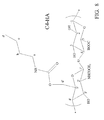
- FIG. 8 shows the chemical structure of C4-HA, in which hydrogen positions are labeled a, b, c, and d.
- 1 H NMR of 4-HA 4.36 ⁇ 2.98(m, hyaluronic acid backbone), 1.49 ⁇ 1.53(m, H-a) , 1.32 ⁇ 1.35(m, H-b), 1.18 ⁇ 1.26(m, H-c), 0.74-0.83(m,H-d).
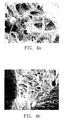
- FIGS. 4a and 4b are SEM photographs of the freeze-dried C4-HA (100% substituted butyl urethane derivative of hyaluronic acid). It shows that the hyaluronic acid derivative is porous and suitable for serving as a "scaffold for cell or tissue" (bioresorbable porous matrix).
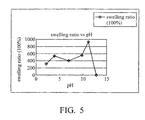
- FIG. 5 shows the relationship between the swelling ratio and the pH of C4-HA.
- C4-HA was assessed for cytotoxicity using L929 cell line according to the ASTM F895 method.
- Cell line L929 was cultured in a 6-well culture plate. After 24 hours, a confluent monolayer was formed. Culture supernatant was removed from the plate and then 2 ml of agar medium was spread on the cells for solidification.
- Comparative Example A-2 100% substituted sec-butyl urethane derivative of hyaluronic acid
- Example A-3 100% substituted octyl urethane derivative of hyaluronic acid
- Example A-4 50% substituted octyl urethane derivative of hyaluronic acid
- Example A-5 10% substituted octyl urethane derivative of hyaluronic acid
- Example A-6 100% substituted dodecyl urethane derivative of hyaluronic acid (C12-HA)
- FIG. 9 shows the chemical structure of C12-HA, in which hydrogen positions are labeled a, b, c, and d.
- Example A-7 50% substituted dodecyl urethane derivative of hyaluronic acid
- Example A-8 10% substituted dodecyl urethane derivative of hyaluronic acid
- FIG. 10 shows the chemical structure of mono-functional PCL, in which hydrogen positions are labeled a, b, c, d, e, f, g, h and h'.
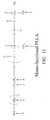
- FIG. 11 shows the chemical structure of mono-functional PLLA, in which hydrogen positions are labeled a, b, c, d, e, f, and g.
- Example B-1 Synthesis of hyaluronic acid copolymer grafted with PCL prepolymer (HA 220,000 -g- 100%-PCL 2,300 copolymer)
- FIG. 12 shows the chemical structure of HA-graft-PCL, in which hydrogen positions are labeled a, b, c, d, e, f, g, h, i and k.
- NMR Data ⁇ 4.58 (m, H-1), 4.49(m, H-1'), 4.07(m, H-2), 3.21(m, H-2'), 3.94(m, H-3), 3.60(m, H-3'), 3.52(m, H-4), 3.60(m, H-4'), 3.36(m, H-5), 3.52(m, H-5'), 4.16(m, H-6a) , 3.92(m, H-6b), 2.28(m, H-f), 3.90(m, H-b), 1.60(m, H-c, e), 1.45(m, H-d), 3.89(m, H-g), 1.40(m, H-h), 0.86(m, H-i), 2.03(s, H-k).
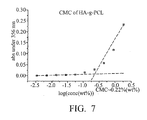
- CMC critical micelle concentration
- the HA 220,000 -g-100%-PCL 2,300 copolymer was dissolved in 4 ⁇ M diphenyl hexatriene (DPH) solution at a concentration of 0.001%, 0.005%, 0.01%, 0.025%, 0.05%, 0.1%, 0.5%, and 1% respectively.
- DPH diphenyl hexatriene
- Example B-2 Synthesis of hyaluronic acid copolymer grafted with PCL prepolymer (HA 220, 000 -g-10%-PCL 2,300 copolymer)
- reaction temperature was 60°C.
- DBA was added to stop the reaction, obtaining HA 220,000 -g-10%-PCL 2,300 copolymer.
- NMR data of HA-PCL ⁇ 4.58 (m, H-1), 4.49(m, H-1'), 4.07(m, H-2), 3.21(m, H-2'), 3.94(m, H-3), 3.60(m, H-3'), 3.52(m, H-4), 3.60(m, H-4'), 3.36(m, H-5), 3.52(m, H-5'), 4.16(m, H-6a) , 3.92(m, H-6b), 2.28(m, H-f), 3.90(m, H-b), 1.60(m, H-c, e), 1.45(m, H-d), 3.89(m, H-g), 1.40(m, H-h), 0.86(m, H-i), 2.03(s, H-k).
- L929-mouse fibroblast cell line was cultured in a 24-well plate at a density of 1x10 5 cell/ml at 37°C in a humidified 5% CO 2 /air incubator. After 24 hours, a confluent monolayer was formed.
- UV-sterilized HA-PCL copolymer (10% grafting ratio) powder was dissolved in the culture medium to prepare various solutions with concentration ranging from 10 -5 up to 10 -2 g/ml.
- the MTT chlorimetric assay Culture medium was removed and then washed three times with PBS (phosphate buffered saline). 5mg/ml MTT was added to each well and then incubated at 37°C for 3 hours. A equal volume of blocking solution (DMSO:SDS:medium (1:1:1)) was added for another 20 minutes. The fluid content of each well was transferred to the testing cuvette. The absorbances were measured at 560 nm wavelength. A higher absorbance indicates a higher viability.
- PBS phosphate buffered saline
- CMC critical micelle concentration
- the HA 220,000 -g-10%-PCL 2,300 copolymer was dissolved in 4 ⁇ M diphenyl hexatriene (DPH) solution at a concentration of 0.001%, 0.005%, 0.01%, 0.025%, 0.05%, 0.1%, 0.5%, and 1% respectively.
- Absorbance at 356 nm wavelength was measured with UV-VIS spectrometer.
- the CMC was 0.0851 wt%.
- Example B-3 Synthesis of hyaluronic acid copolymer grafted with PCL prepolymer (RA 50,000 -g-20%-PCL 10,000 copolymer)
- the reaction temperature was 60°C. After 12 hours of reaction, DBA was added to stop the reaction, obtaining HA 50,000 -g-20%-PCL 10,000 copolymer.
- NMR data of HA-PCL ⁇ 4.58 (m, H-1) , 4.49(m, H-1'), 4.07(m, H-2), 3.21(m, H-2'), 3.94(m, H-3), 3.60(m, H-3'), 3.52(m, H-4), 3.60(m, H-4'), 3.36(m, H-5), 3.52(m, H-5'), 4.16(m, H-6a), 3.92(m, H-6b), 2.28(m, H-f), 3.90(m, H-b), 1.60(m, H-c, e), 1.45(m, H-d), 3.89(m, H-g), 1.40(m, H-h), 0.86(m, H-i), 2.03(s, H-k).
- Example B-4 Synthesis of hyaluronic acid copolymer grafted with PCL prepolymer (HA 50,000 -g-100%-PCL 2,300 copolymer)
- the reaction temperature was 60°C. After 12 hours of reaction, DBA was added to stop the reaction, obtaining HA 50,000 -g-100%-PCL 2,300 copolymer.
- CMC critical micelle concentration
- the HA 50,000 -g-100%-PCL 2,300 copolymer was dissolved in 4 ⁇ M diphenyl hexatriene (DPH) solution at a concentration of 0.001%, 0.005%, 0.01%, 0.025%, 0.05%, 0.1%, 0.5%, and 1% respectively.
- Absorbance at 356 nm wavelength was measured with UV-VIS spectrometer.
- the CMC was 0.0794 wt%.
- Example B-5 Synthesis of hyaluronic acid copolymer grafted with PCL prepolymer (HA 220,000 -g-100%-PLLA 2,300 copolymer)
- the reaction temperature was 60°C. After 12 hours of reaction, DBA was added to stop the reaction, obtaining HA 220,000 -g-100-PLLA 2,300 copolymer.
- FIG. 13 shows the chemical structure of HA-graft-PLLA, in which hydrogen positions are labeled a, b, c, d, e, f, and g.
- Example B-6 Synthesis of hyaluronic acid copolymer grafted with PCL prepolymer (HA 20,000 -g- 100%-PCL 2,300 copolymer)
- the reaction temperature was 60°C. After 12 hours of reaction, DBA was added to stop the reaction, obtaining HA 20,000 -g-100%-PCL 2,300 copolymer.
- CMC critical micelle concentration
- the HA 20,000 -g-100%-PCL 2,300 copolymer was dissolved in 4 ⁇ M diphenyl hexatriene (DPH) solution at a concentration of 0.001%, 0.005%, 0.01%, 0.025%, 0.05%, 0.1%, 0.5%, and 1% respectively.
- Absorbance at 356 nm wavelength was measured with UV-VIS spectrometer.
- the CMC was 0.432 wt%.
- Example B-7 Synthesis of hyaluronic acid copolymer grafted with PCL prepolymer (HA 20,000 -g-50%-PCL 2,300 copolymer)
- the reaction temperature was 60°C. After 12 hours of reaction, DBA was added to stop the reaction, obtaining HA 20,000 -g-50%-PCL 2,300 copolymer.
- CMC critical micelle concentration
- the HA 20,000 -g-50%-PCL 2,300 copolymer was dissolved in 4 ⁇ M diphenyl hexatriene (DPH) solution at a concentration of 0.001%, 0.005%, 0.01%, 0.025%, 0.05%, 0.1%, 0.5%, and 1% respectively.
- Absorbance at 356 nm wavelength was measured with UV-VIS spectrometer.
- the CMC was 0.255 wt%.
- the present invention modifies native hyaluronic acid by introducing a short chain moiety or a prepolymer onto the -OH group via a urethane linkage.
- the hyaluronic acid derivative of the present invention has no cytotoxicity response.
- the hyaluronic acid derivative grafted with a biodegradable hydrophobic prepolymer when dissolved in a hydrophilic medium forms micelles and has a low critical micelle concentration (CMC) . Therefore, a pharmaceutically active or bioactive molecule can be entrapped in the hyaluronic acid derivative micelles to form a pharmaceutically active or bioactive composition with a stable controlled released effect.
- CMC critical micelle concentration
Landscapes
- Health & Medical Sciences (AREA)
- Chemical & Material Sciences (AREA)
- Life Sciences & Earth Sciences (AREA)
- Medicinal Chemistry (AREA)
- General Health & Medical Sciences (AREA)
- Pharmacology & Pharmacy (AREA)
- Veterinary Medicine (AREA)
- Public Health (AREA)
- Animal Behavior & Ethology (AREA)
- Engineering & Computer Science (AREA)
- Epidemiology (AREA)
- Bioinformatics & Cheminformatics (AREA)
- Organic Chemistry (AREA)
- Polymers & Plastics (AREA)
- Chemical Kinetics & Catalysis (AREA)
- Inorganic Chemistry (AREA)
- Materials Engineering (AREA)
- Biochemistry (AREA)
- Molecular Biology (AREA)
- Nanotechnology (AREA)
- Dispersion Chemistry (AREA)
- General Chemical & Material Sciences (AREA)
- Polysaccharides And Polysaccharide Derivatives (AREA)
- Materials For Medical Uses (AREA)
- Medicinal Preparation (AREA)
- Emulsifying, Dispersing, Foam-Producing Or Wetting Agents (AREA)
- Pharmaceuticals Containing Other Organic And Inorganic Compounds (AREA)
Claims (25)
- Biologisch abbaubares Hyaluronsäurederivat, umfassend mindestens eine modifizierte Hyaluronsäure-Repetiereinheit, die durch die folgende Formel repräsentiert wird:
(HA) - [O(C=O)NH-M]p,
wobei HA eine Einheit ist, die N-Acetyl-D-glucosamin und D-Glucuronsäure enthält, M eine modifizierende Komponente ist, die (i) eine Octyl- oder C12-16-Alkylgruppe oder (ii) ein hydrophobes biologisch abbaubares Präpolymer enthält, und p eine ganze Zahl zwischen 1 und 4 ist. - Biologisch abbaubares Hyaluronsäurederivat nach Anspruch 1, ferner umfassend eine native Hyaluronsäure-Repetiereinheit, die N-Acetyl-D-glucosamin und D-Glucuronsäure enthält.
- Biologisch abbaubares Hyaluronsäurederivat nach Anspruch 1, wobei M Dodecyl ist.
- Biologisch abbaubares Hyaluronsäurederivat nach Anspruch 1, das ein kammähnlich oder bürstenähnlich geformtes Pfropfcopolymer ist.
- Biologisch abbaubares Hyaluronsäurederivat nach Anspruch 1, wobei das hydrophobe biologisch abbaubare Präpolymer gleich oder verschieden ist.
- Biologisch abbaubares Hyaluronsäurederivat nach Anspruch 5, wobei das hydrophobe biologisch abbaubare Präpolymer ein biologisch abbaubares, Polyester enthaltendes Präpolymer ist.
- Biologisch abbaubares Hyaluronsäurederivat nach Anspruch 1, wobei das hydrophobe biologisch abbaubare Präpolymer Polycaprolacton (PCL), Poly-L-Lactid (PLLA), Polymilchsäure (PLA), Polyglycolsäure (PGA), Polymilchsäure-co-glycolsäure-Copolymer (PLGA-Copolymer) oder Polycaprolacton-Polymilchsäure-Copolymer (PCL-PLA-Copolymer) ist.
- Biologisch abbaubares Hyaluronsäurederivat nach Anspruch 1, wobei das hydrophobe biologisch abbaubare Präpolymer ein Molekulargewicht von 500 bis 200.000 aufweist.
- Biologisch abbaubare polymere Mizellenzusammensetzung, umfassend:ein hydrophiles Medium; undein biologisch abbaubares Hyaluronsäurederivat, umfassend eine modifizierte Hyaluronsäure-Repetiereinheit, die durch die Formel (HA)-[O(C=O)NH-M]p repräsentiert wird, wobei HA eine Einheit ist, die N-Acetyl-D-glucosamin und D-Glucuronsäure enthält, M eine modifizierende Komponente ist, die (i) eine Octyl- oder C12-16-Alkylgruppe; oder (ii) ein hydrophobes biologisch abbaubares Präpolymer enthält, und p eine ganze Zahl zwischen 1 und 4 ist.wobei das biologisch abbaubare Hyaluronsäurederivat Mizellen bildet.
- Biologisch abbaubare polymere Mizellenzusammensetzung nach Anspruch 9, wobei das biologisch abbaubare Hyaluronsäurederivat eine Konzentration aufweist, die höher ist als eine kritische Mizellenkonzentration.
- Biologisch abbaubare polymere Mizellenzusammensetzung nach Anspruch 10, wobei das biologisch abbaubare Hyaluronsäurederivat eine Konzentration von 0,005 Gew.-% bis 0,5 Gew.-% aufweist.
- Biologisch abbaubare polymere Mizellenzusammensetzung nach Anspruch 11, wobei das biologisch abbaubare Hyaluronsäurederivat eine Konzentration von 0,005 Gew.-% bis 0,3 Gew.-% aufweist.
- Biologisch abbaubare polymere Mizellenzusammensetzung nach Anspruch 9, wobei das biologisch abbaubare Hyaluronsäurederivat eine kammähnlich geformtes Pfropfcopolymer ist.
- Biologisch abbaubare polymere Mizellenzusammensetzung nach Anspruch 9, wobei das hydrophobe biologisch abbaubare Präpolymer gleich oder verschieden ist und Polycaprolacton (PCL), Poly-L-Lactid (PLLA), Polymilchsäure (PLA), Polyglycolsäure (PGA), Polymilchsäure-co-glycolsäure-Copolymer (PLGA-Copolymer) oder Polycaprolacton-Polymilchsäure-Copolymer (PCL-PLA-Copolymer) ist.
- Biologisch abbaubare polymere Mizellenzusammensetzung nach Anspruch 9, wobei das hydrophobe biologisch abbaubare Präpolymer ein Molekulargewicht von 500 bis 200.000 aufweist.
- Biologisch abbaubare polymere Mizellenzusammensetzung nach Anspruch 9, wobei das hydrophile Medium Wasser oder eine wässrige Lösung ist.
- Pharmazeutische oder bioaktive Zusammensetzung, umfassend:ein hydrophiles Medium;ein biologisch abbaubares Hyaluronsäurederivat, umfassend eine modifizierte Hyaluronsäure-Repetiereinheit, die durch die Formel (HA)-[O(C=O)NH-M]p repräsentiert wird, wobei HA eine Einheit ist, die N-Acetyl-D-glucosamin und D-Glucuronsäure enthält, M eine modifizierende Komponente ist, die (i) eine Octyl- oder C12-16-Alkylgruppe; oder (ii) ein hydrophobes biologisch abbaubares Präpolymer enthält, und p eine ganze Zahl zwischen 1 und 4 ist; undein pharmazeutisch aktives Molekül oder ein bioaktives Molekül, das in den Mizellen eingeschlossen ist, die von dem biologisch abbaubaren Hyaluronsäurederivat gebildet werden.
- Pharmazeutische oder bioaktive Zusammensetzung nach Anspruch 17, wobei das hydrophobe biologisch abbaubare Präpolymer gleich oder verschieden ist und Polycaprolacton (PCL), Poly-L-Lactid (PLLA), Polymilchsäure (PLA), Polyglycolsäure (PGA), Polymilchsäure-co-glycolsäure-Copolymer (PLGA-Copolymer) oder Polycaprolacton-Polymilchsäure-Copolymer (PCL-PLA-Copolymer) ist.
- Pharmazeutische oder bioaktive Zusammensetzung nach Anspruch 17, wobei das hydrophile Medium Wasser oder eine wässrige Lösung ist.
- Pharmazeutische oder bioaktive Zusammensetzung nach Anspruch 17, wobei das biologisch abbaubare Hyaluronsäurederivat eine Konzentration von 0,005 Gew.-% bis 0,5 Gew.-% aufweist.
- Pharmazeutische oder bioaktive Zusammensetzung nach Anspruch 20, wobei das biologisch abbaubare Hyaluronsäurederivat eine Konzentration von 0,005 Gew.-% bis 0,3 Gew.-% aufweist.
- Pharmazeutische oder bioaktive Zusammensetzung nach Anspruch 17, wobei das pharmazeutisch aktive oder bioaktive Molekül hydrophob ist.
- Biologisch abbaubares Hyaluronsäurederivat nach Anspruch 1, wobei p eine ganze Zahl zwischen 2 und 4 ist.
- Biologisch abbaubare polymere Mizellenzusammensetzung nach Anspruch 9, wobei p eine ganze Zahl zwischen 2 und 4 ist.
- Pharmazeutische oder bioaktive Zusammensetzung nach Anspruch 17, wobei p eine ganze Zahl zwischen 2 und 4 ist.
Applications Claiming Priority (2)
| Application Number | Priority Date | Filing Date | Title |
|---|---|---|---|
| GB0328168A GB2408741B (en) | 2003-12-04 | 2003-12-04 | Hyaluronic acid derivative with urethane linkage |
| GB0328168 | 2003-12-04 |
Publications (3)
| Publication Number | Publication Date |
|---|---|
| EP1538166A1 EP1538166A1 (de) | 2005-06-08 |
| EP1538166B1 true EP1538166B1 (de) | 2009-02-18 |
| EP1538166B8 EP1538166B8 (de) | 2009-04-08 |
Family
ID=29764606
Family Applications (1)
| Application Number | Title | Priority Date | Filing Date |
|---|---|---|---|
| EP04256686A Expired - Lifetime EP1538166B8 (de) | 2003-12-04 | 2004-10-29 | Hyaluronsäurederivat mit einer Urethanbindung |
Country Status (8)
| Country | Link |
|---|---|
| US (1) | US7780982B2 (de) |
| EP (1) | EP1538166B8 (de) |
| CN (2) | CN100420486C (de) |
| AT (1) | ATE423143T1 (de) |
| DE (1) | DE602004019488D1 (de) |
| DK (1) | DK1538166T3 (de) |
| GB (1) | GB2408741B (de) |
| TW (1) | TWI246516B (de) |
Families Citing this family (26)
| Publication number | Priority date | Publication date | Assignee | Title |
|---|---|---|---|---|
| EP1465598A4 (de) | 2001-12-21 | 2006-12-20 | David S Soane | Verwendung von oligomeren und polymeren zur solubilisierung, stabilisierung und zuführung von arzneistoffen |
| ITPD20040312A1 (it) * | 2004-12-15 | 2005-03-15 | Fidia Advanced Biopolymers Srl | Protesi e o supporto per la sostituzione, riparazione, rigenerazione del menisco |
| EP1853278A4 (de) * | 2005-02-18 | 2011-12-28 | Cartilix Inc | Glucosaminmaterialien |
| US7713637B2 (en) * | 2006-03-03 | 2010-05-11 | Advanced Cardiovascular Systems, Inc. | Coating containing PEGylated hyaluronic acid and a PEGylated non-hyaluronic acid polymer |
| CN101284883B (zh) * | 2008-05-14 | 2011-02-16 | 西北大学 | 聚乳酸-壳聚糖接枝共聚物的制备方法 |
| ITRM20080636A1 (it) * | 2008-11-28 | 2010-05-29 | Univ Palermo | Procedimento per la produzione di derivati funzionalizzati dell acido ialuronico e relativi idrogeli. |
| EP2213315A1 (de) * | 2009-01-30 | 2010-08-04 | Mero S.r.L. | Antibakterielles Hydrogel und dessen Verwendungen in der Orthopädie |
| US20100203150A1 (en) * | 2009-02-06 | 2010-08-12 | National Tsing Hua University | Novel amphiphilic copolymers and fabrication method thereof |
| CZ302504B6 (cs) | 2009-12-11 | 2011-06-22 | Contipro C A.S. | Derivát kyseliny hyaluronové oxidovaný v poloze 6 glukosaminové cásti polysacharidu selektivne na aldehyd, zpusob jeho prípravy a zpusob jeho modifikace |
| CZ302503B6 (cs) | 2009-12-11 | 2011-06-22 | Contipro C A.S. | Zpusob prípravy derivátu kyseliny hyaluronové oxidovaného v poloze 6 glukosaminové cásti polysacharidu selektivne na aldehyd a zpusob jeho modifikace |
| US8895069B2 (en) * | 2011-05-16 | 2014-11-25 | Postech Academy-Industry Foundation | Drug delivery system using hyaluronic acid-peptide conjugate micelle |
| TWI561535B (en) * | 2011-10-06 | 2016-12-11 | Bvw Holding Ag | Copolymers of hydrophobic and hydrophilic segments that reduce protein adsorption |
| CN103298838B (zh) * | 2011-12-29 | 2015-08-19 | 财团法人工业技术研究院 | pH敏感的透明质酸衍生物和其应用 |
| CZ2012136A3 (cs) | 2012-02-28 | 2013-06-05 | Contipro Biotech S.R.O. | Deriváty na bázi kyseliny hyaluronové schopné tvorit hydrogely, zpusob jejich prípravy, hydrogely na bázi techto derivátu, zpusob jejich prípravy a pouzití |
| CZ304512B6 (cs) | 2012-08-08 | 2014-06-11 | Contipro Biotech S.R.O. | Derivát kyseliny hyaluronové, způsob jeho přípravy, způsob jeho modifikace a použití |
| CZ2012842A3 (cs) | 2012-11-27 | 2014-08-20 | Contipro Biotech S.R.O. | Nanomicelární kompozice na bázi C6-C18-acylovaného hyaluronanu, způsob přípravy C6-C18-acylovaného hyaluronanu, způsob přípravy nanomicelární kompozice a stabilizované nanomicelární kompozice a použití |
| CZ2014150A3 (cs) | 2014-03-11 | 2015-05-20 | Contipro Biotech S.R.O. | Konjugáty oligomeru kyseliny hyaluronové nebo její soli, způsob jejich přípravy a použití |
| CZ2014451A3 (cs) | 2014-06-30 | 2016-01-13 | Contipro Pharma A.S. | Protinádorová kompozice na bázi kyseliny hyaluronové a anorganických nanočástic, způsob její přípravy a použití |
| CZ309295B6 (cs) | 2015-03-09 | 2022-08-10 | Contipro A.S. | Samonosný, biodegradabilní film na bázi hydrofobizované kyseliny hyaluronové, způsob jeho přípravy a použití |
| CZ306479B6 (cs) | 2015-06-15 | 2017-02-08 | Contipro A.S. | Způsob síťování polysacharidů s využitím fotolabilních chránicích skupin |
| CZ306662B6 (cs) | 2015-06-26 | 2017-04-26 | Contipro A.S. | Deriváty sulfatovaných polysacharidů, způsob jejich přípravy, způsob jejich modifikace a použití |
| CZ308106B6 (cs) | 2016-06-27 | 2020-01-08 | Contipro A.S. | Nenasycené deriváty polysacharidů, způsob jejich přípravy a jejich použití |
| CN107029235A (zh) * | 2017-03-31 | 2017-08-11 | 武汉理工大学 | 多功能协同主动靶向给药系统及其制备和应用 |
| CN107459590B (zh) * | 2017-09-26 | 2021-03-23 | 华熙生物科技股份有限公司 | 一种透明质酸季铵盐的制备方法 |
| CN109337082B (zh) * | 2018-09-27 | 2021-05-25 | 福建拓烯新材料科技有限公司 | 一种玻尿酸-聚乳酸改性材料的制备方法 |
| CN112159527B (zh) * | 2020-10-29 | 2023-06-06 | 绍兴文理学院 | 一种含有透明质酸基团的聚甘油脂肪酸酯ha-pg及其合成方法和其在制备药物制剂中的应用 |
Family Cites Families (16)
| Publication number | Priority date | Publication date | Assignee | Title |
|---|---|---|---|---|
| US5166331A (en) | 1983-10-10 | 1992-11-24 | Fidia, S.P.A. | Hyaluronics acid fractions, methods for the preparation thereof, and pharmaceutical compositions containing same |
| CA1238043A (en) * | 1983-12-15 | 1988-06-14 | Endre A. Balazs | Water insoluble preparations of hyaluronic acid and processes therefor |
| US4851521A (en) | 1985-07-08 | 1989-07-25 | Fidia, S.P.A. | Esters of hyaluronic acid |
| US5202431A (en) | 1985-07-08 | 1993-04-13 | Fidia, S.P.A. | Partial esters of hyaluronic acid |
| IT1198449B (it) | 1986-10-13 | 1988-12-21 | F I D I Farmaceutici Italiani | Esteri di alcoli polivalenti di acido ialuronico |
| IT1219942B (it) | 1988-05-13 | 1990-05-24 | Fidia Farmaceutici | Esteri polisaccaridici |
| US5510418A (en) * | 1988-11-21 | 1996-04-23 | Collagen Corporation | Glycosaminoglycan-synthetic polymer conjugates |
| CA2121129A1 (en) * | 1991-10-29 | 1993-05-13 | Patrick Soon-Shiong | Crosslinkable polysaccharides, polycations and lipids useful for encapsulation and drug release |
| JP2855307B2 (ja) | 1992-02-05 | 1999-02-10 | 生化学工業株式会社 | 光反応性グリコサミノグリカン、架橋グリコサミノグリカン及びそれらの製造方法 |
| IT1268955B1 (it) | 1994-03-11 | 1997-03-18 | Fidia Advanced Biopolymers Srl | Esteri attivi di polisaccaridi carbossilici |
| KR0180334B1 (ko) * | 1995-09-21 | 1999-03-20 | 김윤 | 블럭 공중합체 미셀을 이용한 약물전달체 및 이에 약물을 봉입하는 방법 |
| SK282967B6 (sk) * | 1997-04-10 | 2003-01-09 | Du�An Bako� | Hybridný resorbovateľný biokompatibilný materiál a spôsob jeho prípravy |
| ITPD980037A1 (it) * | 1998-02-25 | 1999-08-25 | Fidia Advanced Biopolymers Srl | Acido ialuronico solfatato e i suoi derivati legati covalentemente a polimeri sintetici pe la preparazione di biomateriali e per il rivesti |
| JP3380899B2 (ja) * | 2000-06-06 | 2003-02-24 | 独立行政法人産業技術総合研究所 | ヒアルロン酸架橋化物 |
| ITTS20010013A1 (it) * | 2001-06-04 | 2002-12-04 | Ct Ricerche Poly Tec H A R L S | Nuovi derivati di ialuronano. |
| US7807722B2 (en) * | 2003-11-26 | 2010-10-05 | Advanced Cardiovascular Systems, Inc. | Biobeneficial coating compositions and methods of making and using thereof |
-
2003
- 2003-12-04 GB GB0328168A patent/GB2408741B/en not_active Expired - Fee Related
- 2003-12-30 TW TW092137411A patent/TWI246516B/zh not_active IP Right Cessation
-
2004
- 2004-02-12 CN CNB2006100846468A patent/CN100420486C/zh not_active Expired - Fee Related
- 2004-02-12 CN CNB2004100042354A patent/CN1284801C/zh not_active Expired - Fee Related
- 2004-10-29 EP EP04256686A patent/EP1538166B8/de not_active Expired - Lifetime
- 2004-10-29 DK DK04256686T patent/DK1538166T3/da active
- 2004-10-29 AT AT04256686T patent/ATE423143T1/de not_active IP Right Cessation
- 2004-10-29 DE DE602004019488T patent/DE602004019488D1/de not_active Expired - Lifetime
- 2004-11-18 US US10/992,387 patent/US7780982B2/en not_active Expired - Fee Related
Also Published As
| Publication number | Publication date |
|---|---|
| EP1538166B8 (de) | 2009-04-08 |
| ATE423143T1 (de) | 2009-03-15 |
| US20050123505A1 (en) | 2005-06-09 |
| CN1284801C (zh) | 2006-11-15 |
| GB2408741B (en) | 2008-06-18 |
| CN100420486C (zh) | 2008-09-24 |
| DE602004019488D1 (de) | 2009-04-02 |
| GB2408741A (en) | 2005-06-08 |
| DK1538166T3 (da) | 2009-05-11 |
| GB0328168D0 (en) | 2004-01-07 |
| TW200519129A (en) | 2005-06-16 |
| US7780982B2 (en) | 2010-08-24 |
| CN1624002A (zh) | 2005-06-08 |
| EP1538166A1 (de) | 2005-06-08 |
| TWI246516B (en) | 2006-01-01 |
| CN1876185A (zh) | 2006-12-13 |
Similar Documents
| Publication | Publication Date | Title |
|---|---|---|
| US7780982B2 (en) | Biodegradable hyaluronic acid derivative and biodegradable polymeric micelle composition | |
| US8425931B2 (en) | Biodegradable hyaluronic acid derivative | |
| US9339586B2 (en) | Modular bioresorbable or biomedical, biologically active supramolecular materials | |
| Norouzi et al. | Electrospun nanofibers using β-cyclodextrin grafted chitosan macromolecules loaded with indomethacin as an innovative drug delivery system | |
| Takata | Polyrotaxane and polyrotaxane network: supramolecular architectures based on the concept of dynamic covalent bond chemistry | |
| Sahoo et al. | Synthesis of chitosan–polycaprolactone blend for control delivery of ofloxacin drug | |
| US6984393B2 (en) | Biodegradable elastomer and method of preparing same | |
| US6759485B2 (en) | Biodegradable poly (propylene fumarate) networks cross linked with poly (propylene fumarate) -diacrylate macromers | |
| Lee et al. | Controlled dual release of basic fibroblast growth factor and indomethacin from heparin-conjugated polymeric micelle | |
| Brossier et al. | Photoprintable gelatin-graft-poly (trimethylene carbonate) by stereolithography for tissue engineering applications | |
| Lu et al. | Sugars‐grafted aliphatic biodegradable poly (L‐lactide‐co‐carbonate) s by click reaction and their specific interaction with lectin molecules | |
| Duan et al. | One-step synthesis of amino-reserved chitosan-graft-polycaprolactone as a promising substance of biomaterial | |
| Hu et al. | Synthesis and characterization of amphiphilic block copolymers with allyl side‐groups | |
| Falco et al. | Recent developments in cyclic acetal biomaterials for tissue engineering applications | |
| Luman et al. | The convergent synthesis of poly (glycerol‐succinic acid) dendritic macromolecules | |
| Wang et al. | Bioresorbable hydrogels prepared by photo-initiated crosslinking of diacrylated PTMC-PEG-PTMC triblock copolymers as potential carrier of antitumor drugs | |
| Abraham et al. | Polymeric matrices based on graft copolymers of PCL onto acrylic backbones for releasing antitumoral drugs | |
| Paula et al. | ROS-responsive electrospun poly (amide thioketal) mats for wound dressing applications | |
| Liu et al. | Synthesis, characterization and drug delivery behaviors of new PCP polymeric micelles | |
| EP3295933A1 (de) | Hydrogele auf basis von funktionalisierten polysacchariden | |
| Magnago et al. | Polycaprolactone triol-based polyurethane film conjugated ibuprofen to sustained release: Synthesis, physicochemical, cytotoxic, and release studies | |
| EP1806367A2 (de) | Polysaccharide wie Alginate oder modifizierte Alginate enthaltende Polymere | |
| WO2007058539A2 (en) | Modular supramolecular materials for biomedical uses | |
| Khan et al. | Poly (organo) phosphazenes: recent progress in the synthesis and applications in tissue engineering and drug delivery | |
| Zou et al. | Synthesis and properties of star oligo/poly (trimethylene carbonate) s with cholic acid moieties as cores |
Legal Events
| Date | Code | Title | Description |
|---|---|---|---|
| PUAI | Public reference made under article 153(3) epc to a published international application that has entered the european phase |
Free format text: ORIGINAL CODE: 0009012 |
|
| AK | Designated contracting states |
Kind code of ref document: A1 Designated state(s): AT BE BG CH CY CZ DE DK EE ES FI FR GB GR HU IE IT LI LU MC NL PL PT RO SE SI SK TR |
|
| AX | Request for extension of the european patent |
Extension state: AL HR LT LV MK |
|
| 17P | Request for examination filed |
Effective date: 20051104 |
|
| AKX | Designation fees paid |
Designated state(s): AT BE BG CH CY CZ DE DK EE ES FI FR GB GR HU IE IT LI LU MC NL PL PT RO SE SI SK TR |
|
| RTI1 | Title (correction) |
Free format text: HYALURONIC ACID DERIVATIVE WITH URETHANE LINKAGE |
|
| GRAP | Despatch of communication of intention to grant a patent |
Free format text: ORIGINAL CODE: EPIDOSNIGR1 |
|
| GRAS | Grant fee paid |
Free format text: ORIGINAL CODE: EPIDOSNIGR3 |
|
| GRAA | (expected) grant |
Free format text: ORIGINAL CODE: 0009210 |
|
| AK | Designated contracting states |
Kind code of ref document: B1 Designated state(s): AT BE BG CH CY CZ DE DK EE ES FI FR GB GR HU IE IT LI LU MC NL PL PT RO SE SI SK TR |
|
| REG | Reference to a national code |
Ref country code: GB Ref legal event code: FG4D |
|
| REG | Reference to a national code |
Ref country code: CH Ref legal event code: EP |
|
| RBV | Designated contracting states (corrected) |
Designated state(s): AT BE BG CH CY CZ DE DK EE ES FI FR GR HU IE IT LI LU MC NL PL PT RO SE SI SK TR |
|
| REG | Reference to a national code |
Ref country code: IE Ref legal event code: FG4D |
|
| REF | Corresponds to: |
Ref document number: 602004019488 Country of ref document: DE Date of ref document: 20090402 Kind code of ref document: P |
|
| REG | Reference to a national code |
Ref country code: SE Ref legal event code: TRGR |
|
| REG | Reference to a national code |
Ref country code: CH Ref legal event code: NV Representative=s name: KIRKER & CIE S.A. |
|
| REG | Reference to a national code |
Ref country code: DK Ref legal event code: T3 |
|
| PG25 | Lapsed in a contracting state [announced via postgrant information from national office to epo] |
Ref country code: NL Free format text: LAPSE BECAUSE OF FAILURE TO SUBMIT A TRANSLATION OF THE DESCRIPTION OR TO PAY THE FEE WITHIN THE PRESCRIBED TIME-LIMIT Effective date: 20090218 Ref country code: ES Free format text: LAPSE BECAUSE OF FAILURE TO SUBMIT A TRANSLATION OF THE DESCRIPTION OR TO PAY THE FEE WITHIN THE PRESCRIBED TIME-LIMIT Effective date: 20090529 Ref country code: FI Free format text: LAPSE BECAUSE OF FAILURE TO SUBMIT A TRANSLATION OF THE DESCRIPTION OR TO PAY THE FEE WITHIN THE PRESCRIBED TIME-LIMIT Effective date: 20090218 Ref country code: SI Free format text: LAPSE BECAUSE OF FAILURE TO SUBMIT A TRANSLATION OF THE DESCRIPTION OR TO PAY THE FEE WITHIN THE PRESCRIBED TIME-LIMIT Effective date: 20090218 |
|
| NLV1 | Nl: lapsed or annulled due to failure to fulfill the requirements of art. 29p and 29m of the patents act | ||
| PG25 | Lapsed in a contracting state [announced via postgrant information from national office to epo] |
Ref country code: PL Free format text: LAPSE BECAUSE OF FAILURE TO SUBMIT A TRANSLATION OF THE DESCRIPTION OR TO PAY THE FEE WITHIN THE PRESCRIBED TIME-LIMIT Effective date: 20090218 Ref country code: AT Free format text: LAPSE BECAUSE OF FAILURE TO SUBMIT A TRANSLATION OF THE DESCRIPTION OR TO PAY THE FEE WITHIN THE PRESCRIBED TIME-LIMIT Effective date: 20090218 |
|
| PG25 | Lapsed in a contracting state [announced via postgrant information from national office to epo] |
Ref country code: BE Free format text: LAPSE BECAUSE OF FAILURE TO SUBMIT A TRANSLATION OF THE DESCRIPTION OR TO PAY THE FEE WITHIN THE PRESCRIBED TIME-LIMIT Effective date: 20090218 |
|
| PG25 | Lapsed in a contracting state [announced via postgrant information from national office to epo] |
Ref country code: CZ Free format text: LAPSE BECAUSE OF FAILURE TO SUBMIT A TRANSLATION OF THE DESCRIPTION OR TO PAY THE FEE WITHIN THE PRESCRIBED TIME-LIMIT Effective date: 20090218 Ref country code: PT Free format text: LAPSE BECAUSE OF FAILURE TO SUBMIT A TRANSLATION OF THE DESCRIPTION OR TO PAY THE FEE WITHIN THE PRESCRIBED TIME-LIMIT Effective date: 20090727 Ref country code: EE Free format text: LAPSE BECAUSE OF FAILURE TO SUBMIT A TRANSLATION OF THE DESCRIPTION OR TO PAY THE FEE WITHIN THE PRESCRIBED TIME-LIMIT Effective date: 20090218 |
|
| PG25 | Lapsed in a contracting state [announced via postgrant information from national office to epo] |
Ref country code: RO Free format text: LAPSE BECAUSE OF FAILURE TO SUBMIT A TRANSLATION OF THE DESCRIPTION OR TO PAY THE FEE WITHIN THE PRESCRIBED TIME-LIMIT Effective date: 20090218 Ref country code: SK Free format text: LAPSE BECAUSE OF FAILURE TO SUBMIT A TRANSLATION OF THE DESCRIPTION OR TO PAY THE FEE WITHIN THE PRESCRIBED TIME-LIMIT Effective date: 20090218 |
|
| PLBE | No opposition filed within time limit |
Free format text: ORIGINAL CODE: 0009261 |
|
| STAA | Information on the status of an ep patent application or granted ep patent |
Free format text: STATUS: NO OPPOSITION FILED WITHIN TIME LIMIT |
|
| 26N | No opposition filed |
Effective date: 20091119 |
|
| PG25 | Lapsed in a contracting state [announced via postgrant information from national office to epo] |
Ref country code: BG Free format text: LAPSE BECAUSE OF FAILURE TO SUBMIT A TRANSLATION OF THE DESCRIPTION OR TO PAY THE FEE WITHIN THE PRESCRIBED TIME-LIMIT Effective date: 20090518 |
|
| PG25 | Lapsed in a contracting state [announced via postgrant information from national office to epo] |
Ref country code: IE Free format text: LAPSE BECAUSE OF NON-PAYMENT OF DUE FEES Effective date: 20091029 Ref country code: GR Free format text: LAPSE BECAUSE OF FAILURE TO SUBMIT A TRANSLATION OF THE DESCRIPTION OR TO PAY THE FEE WITHIN THE PRESCRIBED TIME-LIMIT Effective date: 20090519 |
|
| PG25 | Lapsed in a contracting state [announced via postgrant information from national office to epo] |
Ref country code: LU Free format text: LAPSE BECAUSE OF NON-PAYMENT OF DUE FEES Effective date: 20091029 |
|
| PG25 | Lapsed in a contracting state [announced via postgrant information from national office to epo] |
Ref country code: HU Free format text: LAPSE BECAUSE OF FAILURE TO SUBMIT A TRANSLATION OF THE DESCRIPTION OR TO PAY THE FEE WITHIN THE PRESCRIBED TIME-LIMIT Effective date: 20090819 |
|
| PG25 | Lapsed in a contracting state [announced via postgrant information from national office to epo] |
Ref country code: TR Free format text: LAPSE BECAUSE OF FAILURE TO SUBMIT A TRANSLATION OF THE DESCRIPTION OR TO PAY THE FEE WITHIN THE PRESCRIBED TIME-LIMIT Effective date: 20090218 |
|
| PG25 | Lapsed in a contracting state [announced via postgrant information from national office to epo] |
Ref country code: CY Free format text: LAPSE BECAUSE OF FAILURE TO SUBMIT A TRANSLATION OF THE DESCRIPTION OR TO PAY THE FEE WITHIN THE PRESCRIBED TIME-LIMIT Effective date: 20090218 |
|
| REG | Reference to a national code |
Ref country code: FR Ref legal event code: PLFP Year of fee payment: 12 |
|
| REG | Reference to a national code |
Ref country code: FR Ref legal event code: PLFP Year of fee payment: 13 |
|
| REG | Reference to a national code |
Ref country code: FR Ref legal event code: PLFP Year of fee payment: 14 |
|
| PGFP | Annual fee paid to national office [announced via postgrant information from national office to epo] |
Ref country code: SE Payment date: 20191029 Year of fee payment: 16 Ref country code: DE Payment date: 20191029 Year of fee payment: 16 Ref country code: MC Payment date: 20191003 Year of fee payment: 16 |
|
| PGFP | Annual fee paid to national office [announced via postgrant information from national office to epo] |
Ref country code: DK Payment date: 20191029 Year of fee payment: 16 Ref country code: FR Payment date: 20191025 Year of fee payment: 16 Ref country code: IT Payment date: 20191023 Year of fee payment: 16 |
|
| PGFP | Annual fee paid to national office [announced via postgrant information from national office to epo] |
Ref country code: CH Payment date: 20191104 Year of fee payment: 16 |
|
| REG | Reference to a national code |
Ref country code: DE Ref legal event code: R119 Ref document number: 602004019488 Country of ref document: DE |
|
| REG | Reference to a national code |
Ref country code: DK Ref legal event code: EBP Effective date: 20201031 |
|
| REG | Reference to a national code |
Ref country code: CH Ref legal event code: PL |
|
| REG | Reference to a national code |
Ref country code: SE Ref legal event code: EUG |
|
| PG25 | Lapsed in a contracting state [announced via postgrant information from national office to epo] |
Ref country code: MC Free format text: LAPSE BECAUSE OF NON-PAYMENT OF DUE FEES Effective date: 20201103 |
|
| PG25 | Lapsed in a contracting state [announced via postgrant information from national office to epo] |
Ref country code: DE Free format text: LAPSE BECAUSE OF NON-PAYMENT OF DUE FEES Effective date: 20210501 Ref country code: FR Free format text: LAPSE BECAUSE OF NON-PAYMENT OF DUE FEES Effective date: 20201031 |
|
| PG25 | Lapsed in a contracting state [announced via postgrant information from national office to epo] |
Ref country code: LI Free format text: LAPSE BECAUSE OF NON-PAYMENT OF DUE FEES Effective date: 20201031 Ref country code: SE Free format text: LAPSE BECAUSE OF NON-PAYMENT OF DUE FEES Effective date: 20201030 Ref country code: CH Free format text: LAPSE BECAUSE OF NON-PAYMENT OF DUE FEES Effective date: 20201031 |
|
| PG25 | Lapsed in a contracting state [announced via postgrant information from national office to epo] |
Ref country code: IT Free format text: LAPSE BECAUSE OF NON-PAYMENT OF DUE FEES Effective date: 20201029 |
|
| PG25 | Lapsed in a contracting state [announced via postgrant information from national office to epo] |
Ref country code: DK Free format text: LAPSE BECAUSE OF NON-PAYMENT OF DUE FEES Effective date: 20201031 |