EP1518464B1 - Riegel und Süsswarenteile enthaltend Kakaopulver mit erhöhtem Polyphenolgehalt und Sterol-/Stanolestern und Verfahren zu ihrer Herstellung - Google Patents
Riegel und Süsswarenteile enthaltend Kakaopulver mit erhöhtem Polyphenolgehalt und Sterol-/Stanolestern und Verfahren zu ihrer Herstellung Download PDFInfo
- Publication number
- EP1518464B1 EP1518464B1 EP04255889A EP04255889A EP1518464B1 EP 1518464 B1 EP1518464 B1 EP 1518464B1 EP 04255889 A EP04255889 A EP 04255889A EP 04255889 A EP04255889 A EP 04255889A EP 1518464 B1 EP1518464 B1 EP 1518464B1
- Authority
- EP
- European Patent Office
- Prior art keywords
- cocoa
- cocoa solids
- syrup
- solids
- chocolate
- Prior art date
- Legal status (The legal status is an assumption and is not a legal conclusion. Google has not performed a legal analysis and makes no representation as to the accuracy of the status listed.)
- Expired - Lifetime
Links
Images
Classifications
-
- A—HUMAN NECESSITIES
- A23—FOODS OR FOODSTUFFS; TREATMENT THEREOF, NOT COVERED BY OTHER CLASSES
- A23G—COCOA; COCOA PRODUCTS, e.g. CHOCOLATE; SUBSTITUTES FOR COCOA OR COCOA PRODUCTS; CONFECTIONERY; CHEWING GUM; ICE-CREAM; PREPARATION THEREOF
- A23G1/00—Cocoa; Cocoa products, e.g. chocolate; Substitutes therefor
- A23G1/30—Cocoa products, e.g. chocolate; Substitutes therefor
- A23G1/50—Cocoa products, e.g. chocolate; Substitutes therefor characterised by shape, structure or physical form, e.g. products with an inedible support
- A23G1/54—Composite products, e.g. layered, laminated, coated or filled
-
- A—HUMAN NECESSITIES
- A23—FOODS OR FOODSTUFFS; TREATMENT THEREOF, NOT COVERED BY OTHER CLASSES
- A23G—COCOA; COCOA PRODUCTS, e.g. CHOCOLATE; SUBSTITUTES FOR COCOA OR COCOA PRODUCTS; CONFECTIONERY; CHEWING GUM; ICE-CREAM; PREPARATION THEREOF
- A23G1/00—Cocoa; Cocoa products, e.g. chocolate; Substitutes therefor
- A23G1/30—Cocoa products, e.g. chocolate; Substitutes therefor
- A23G1/56—Liquid products; Solid products in the form of powders, flakes or granules for making liquid products, e.g. for making chocolate milk, drinks and the products for their preparation, pastes for spreading or milk crumb
-
- A—HUMAN NECESSITIES
- A23—FOODS OR FOODSTUFFS; TREATMENT THEREOF, NOT COVERED BY OTHER CLASSES
- A23G—COCOA; COCOA PRODUCTS, e.g. CHOCOLATE; SUBSTITUTES FOR COCOA OR COCOA PRODUCTS; CONFECTIONERY; CHEWING GUM; ICE-CREAM; PREPARATION THEREOF
- A23G3/00—Sweetmeats; Confectionery; Marzipan; Coated or filled products
- A23G3/34—Sweetmeats, confectionery or marzipan; Processes for the preparation thereof
- A23G3/346—Finished or semi-finished products in the form of powders, paste or liquids
-
- A—HUMAN NECESSITIES
- A23—FOODS OR FOODSTUFFS; TREATMENT THEREOF, NOT COVERED BY OTHER CLASSES
- A23G—COCOA; COCOA PRODUCTS, e.g. CHOCOLATE; SUBSTITUTES FOR COCOA OR COCOA PRODUCTS; CONFECTIONERY; CHEWING GUM; ICE-CREAM; PREPARATION THEREOF
- A23G3/00—Sweetmeats; Confectionery; Marzipan; Coated or filled products
- A23G3/34—Sweetmeats, confectionery or marzipan; Processes for the preparation thereof
- A23G3/50—Sweetmeats, confectionery or marzipan; Processes for the preparation thereof characterised by shape, structure or physical form, e.g. products with supported structure
- A23G3/54—Composite products, e.g. layered, coated, filled
-
- A—HUMAN NECESSITIES
- A23—FOODS OR FOODSTUFFS; TREATMENT THEREOF, NOT COVERED BY OTHER CLASSES
- A23L—FOODS, FOODSTUFFS OR NON-ALCOHOLIC BEVERAGES, NOT OTHERWISE PROVIDED FOR; PREPARATION OR TREATMENT THEREOF
- A23L29/00—Foods or foodstuffs containing additives; Preparation or treatment thereof
- A23L29/30—Foods or foodstuffs containing additives; Preparation or treatment thereof containing carbohydrate syrups; containing sugars; containing sugar alcohols, e.g. xylitol; containing starch hydrolysates, e.g. dextrin
-
- A—HUMAN NECESSITIES
- A23—FOODS OR FOODSTUFFS; TREATMENT THEREOF, NOT COVERED BY OTHER CLASSES
- A23L—FOODS, FOODSTUFFS OR NON-ALCOHOLIC BEVERAGES, NOT OTHERWISE PROVIDED FOR; PREPARATION OR TREATMENT THEREOF
- A23L33/00—Modifying nutritive qualities of foods; Dietetic products; Preparation or treatment thereof
- A23L33/10—Modifying nutritive qualities of foods; Dietetic products; Preparation or treatment thereof using additives
- A23L33/105—Plant extracts, their artificial duplicates or their derivatives
- A23L33/11—Plant sterols or derivatives thereof, e.g. phytosterols
-
- A—HUMAN NECESSITIES
- A23—FOODS OR FOODSTUFFS; TREATMENT THEREOF, NOT COVERED BY OTHER CLASSES
- A23L—FOODS, FOODSTUFFS OR NON-ALCOHOLIC BEVERAGES, NOT OTHERWISE PROVIDED FOR; PREPARATION OR TREATMENT THEREOF
- A23L5/00—Preparation or treatment of foods or foodstuffs, in general; Food or foodstuffs obtained thereby; Materials therefor
-
- A—HUMAN NECESSITIES
- A23—FOODS OR FOODSTUFFS; TREATMENT THEREOF, NOT COVERED BY OTHER CLASSES
- A23L—FOODS, FOODSTUFFS OR NON-ALCOHOLIC BEVERAGES, NOT OTHERWISE PROVIDED FOR; PREPARATION OR TREATMENT THEREOF
- A23L7/00—Cereal-derived products; Malt products; Preparation or treatment thereof
- A23L7/10—Cereal-derived products
- A23L7/117—Flakes or other shapes of ready-to-eat type; Semi-finished or partly-finished products therefor
- A23L7/126—Snacks or the like obtained by binding, shaping or compacting together cereal grains or cereal pieces, e.g. cereal bars
-
- A—HUMAN NECESSITIES
- A23—FOODS OR FOODSTUFFS; TREATMENT THEREOF, NOT COVERED BY OTHER CLASSES
- A23G—COCOA; COCOA PRODUCTS, e.g. CHOCOLATE; SUBSTITUTES FOR COCOA OR COCOA PRODUCTS; CONFECTIONERY; CHEWING GUM; ICE-CREAM; PREPARATION THEREOF
- A23G2200/00—COCOA; COCOA PRODUCTS, e.g. CHOCOLATE; SUBSTITUTES FOR COCOA OR COCOA PRODUCTS; CONFECTIONERY; CHEWING GUM; ICE-CREAM; PREPARATION THEREOF containing organic compounds, e.g. synthetic flavouring agents
-
- A—HUMAN NECESSITIES
- A23—FOODS OR FOODSTUFFS; TREATMENT THEREOF, NOT COVERED BY OTHER CLASSES
- A23G—COCOA; COCOA PRODUCTS, e.g. CHOCOLATE; SUBSTITUTES FOR COCOA OR COCOA PRODUCTS; CONFECTIONERY; CHEWING GUM; ICE-CREAM; PREPARATION THEREOF
- A23G2200/00—COCOA; COCOA PRODUCTS, e.g. CHOCOLATE; SUBSTITUTES FOR COCOA OR COCOA PRODUCTS; CONFECTIONERY; CHEWING GUM; ICE-CREAM; PREPARATION THEREOF containing organic compounds, e.g. synthetic flavouring agents
- A23G2200/08—COCOA; COCOA PRODUCTS, e.g. CHOCOLATE; SUBSTITUTES FOR COCOA OR COCOA PRODUCTS; CONFECTIONERY; CHEWING GUM; ICE-CREAM; PREPARATION THEREOF containing organic compounds, e.g. synthetic flavouring agents containing cocoa fat if specifically mentioned or containing products of cocoa fat or containing other fats, e.g. fatty acid, fatty alcohol, their esters, lecithin, paraffins
-
- A—HUMAN NECESSITIES
- A23—FOODS OR FOODSTUFFS; TREATMENT THEREOF, NOT COVERED BY OTHER CLASSES
- A23G—COCOA; COCOA PRODUCTS, e.g. CHOCOLATE; SUBSTITUTES FOR COCOA OR COCOA PRODUCTS; CONFECTIONERY; CHEWING GUM; ICE-CREAM; PREPARATION THEREOF
- A23G2200/00—COCOA; COCOA PRODUCTS, e.g. CHOCOLATE; SUBSTITUTES FOR COCOA OR COCOA PRODUCTS; CONFECTIONERY; CHEWING GUM; ICE-CREAM; PREPARATION THEREOF containing organic compounds, e.g. synthetic flavouring agents
- A23G2200/14—COCOA; COCOA PRODUCTS, e.g. CHOCOLATE; SUBSTITUTES FOR COCOA OR COCOA PRODUCTS; CONFECTIONERY; CHEWING GUM; ICE-CREAM; PREPARATION THEREOF containing organic compounds, e.g. synthetic flavouring agents containing fruits, nuts, e.g. almonds, seeds, plants, plant extracts or essential oils
-
- A—HUMAN NECESSITIES
- A23—FOODS OR FOODSTUFFS; TREATMENT THEREOF, NOT COVERED BY OTHER CLASSES
- A23L—FOODS, FOODSTUFFS OR NON-ALCOHOLIC BEVERAGES, NOT OTHERWISE PROVIDED FOR; PREPARATION OR TREATMENT THEREOF
- A23L21/00—Marmalades, jams, jellies or the like; Products from apiculture; Preparation or treatment thereof
-
- A—HUMAN NECESSITIES
- A23—FOODS OR FOODSTUFFS; TREATMENT THEREOF, NOT COVERED BY OTHER CLASSES
- A23L—FOODS, FOODSTUFFS OR NON-ALCOHOLIC BEVERAGES, NOT OTHERWISE PROVIDED FOR; PREPARATION OR TREATMENT THEREOF
- A23L7/00—Cereal-derived products; Malt products; Preparation or treatment thereof
-
- A—HUMAN NECESSITIES
- A23—FOODS OR FOODSTUFFS; TREATMENT THEREOF, NOT COVERED BY OTHER CLASSES
- A23V—INDEXING SCHEME RELATING TO FOODS, FOODSTUFFS OR NON-ALCOHOLIC BEVERAGES AND LACTIC OR PROPIONIC ACID BACTERIA USED IN FOODSTUFFS OR FOOD PREPARATION
- A23V2002/00—Food compositions, function of food ingredients or processes for food or foodstuffs
Definitions
- the inventions relates to foods, food supplements, and or nutriceuticals containing sterol and/or stanol esters and cocoa polyphenols and processes for producing same.
- the products prepared by the processes of this invention have conserved levels of polyphenols.
- Polyphenolic compounds are bioactive substances that are derived from plant materials and are closely associated with the sensory and nutritional quality of products derived from these plant materials.
- Cocoa polyphenols have antioxidant activity and numerous health benefits. Consumption of the cocoa polyphenols in cocoa products provides significant health benefits. Cocoa polyphenols have been shown to have beneficial effects on the processes believed to be involved in the development of atherosclerosis and cardiovascular disease. Cocoa polyphenols inhibit LDL oxidation, enhance nitric oxide/nitric oxide synthase (NO/NOS) activity, and inhibit cyclo-oxygenase (COX) and lipoxygenase (LOX) activity. These effects are reported in WO 97/36497 published October 9, 1997 . Cocoa polyphenols can also be used to treat or prevent conditions which are known to be affected by the administration of non-steroidal anti-inflammatory drugs, for example, aspirin.
- non-steroidal anti-inflammatory drugs for example, aspirin.
- compositions containing polyphenols in combination with at least one cholesterol-lowering agent such as sterols and/or stanols or their esters have been prepared.
- the compositions have enhanced effects on the vascular health of a mammal, particularly a human, in comparison to previously known compositions containing polyphenols or cholesterol-lowering agents. See U.S. Patent No. 6,610,320 issued August 26, 2003 to H.H. Schmitz et al.
- cocoa polyphenols can be lost during the processing of cocoa ingredients containing cocoa polyphenols (e.g., cocoa solids, chocolate liquor, cocoa nibs, and cocoa extracts) into food products. Cocoa polyphenol losses can be avoided by pretreating the carbohydrate and/or the milk ingredient(s) used in food products with an antioxidant, an emulsifier, a fat, and/or a flavorant prior to the addition of the cocoa ingredient(s). See U.S. Patent No. 6,194,020 issued February 27, 2001 to M. E. Myers et al.).
- Foods and dietary supplements containing cocoa ingredients and cholesterol-lowering agents such as sterols and/or stanols or their have been prepared. See the '320 patent discussed above.
- the sterols/stanols or their esters may be added to the food or dietary supplement simply by mixing the sterol, stanol, and/or esters into the other ingredients.
- the sterols/stanols may be first dissolved in a solubilizing agent such as a fat, a vegetable oil, a monoglyceride, diglyceride, or triglyceride, and/or tocopherols or suspended or emulsified in carriers such as water, alcohol polyol, or other edible compound in which the sterols/stanols or esters are at least partially soluble, for example chocolate liquor.
- a solubilizing agent such as a fat, a vegetable oil, a monoglyceride, diglyceride, or triglyceride
- tocopherols or suspended or emulsified in carriers such as water, alcohol polyol, or other edible compound in which the sterols/stanols or esters are at least partially soluble, for example chocolate liquor.
- the sterols/stanols may be added to the dry mix containing the sugar and the butter or less preferably they may be added to the melted chocolate.
- the sugar and the cocoa powder were pre-blended and then mixed with the caramel. Free phytosterols (as in pulverized) were added to the sugar and cocoa mix.
- the syrup blend was prepared by melting palm kernel oil at 45°and adding to the oil a mixture of corn syrup, glycerin, cocoa powder, brown sugar, salt, lecithin and propyl gallate and then blending in nuts or soy puffs and semi-sweet chocolate pieces.
- Standard confectionery techniques for making bars and chews result in losses of flavanols and antioxidants compared to the known amounts added to the bars and chews.
- reference to high CP cocoa solids and cocoa solids having a high cocoa procyanidin content is not intended to be limited to the polyphenols (i.e., procyanidins) present in the cocoa solids but is intended to the other particulate food-grade anti'oxidants.
- a process for conserving the effectiveness of a particulate, food grade antioxidant or an antioxidant-containing particles by pretreating the antioxidant or the antioxidant-containing particles, prior to formulation into a food or a food supplement, with about 9% to about 90% by weight of a food-grade oil and/or a fat having a melting point below about 80°C, preferably about 60° to about 80°C, and optionally with up to about 5% by weight an emulsifier, the weights being based on the weight of the antioxidant or the antioxidant-containing particles.
- the antioxidant or the antioxidant-containing particles can be pretreated with about 0.75% up to about 5% by weight, preferably about 0.05 to about 0.3%, more preferably about 0.1 % to about 0.3% of a lecithin.
- the antioxidant or antioxidant-containing particles have particle sizes of about 1 to about 150 microns.
- the antioxidants can be selected from the group consisting of lecithin, butylated hydroxyanisole, butylated hydroxytoluene, tertiary butylated hydroquinone, propyl gallate, a phenolic acid, a polyphenol, ascorbic acid, stannous chloride, a tocopherol, sulfur dioxide, dilauryl thiodipropionate, and mixtures thereof;
- the oil and/or the fat is selected from the group consisting of cocoa butter, a polyol ester, a sterol ester, a stanol ester, a triglyceride, a fatty alcohol ester of a polycarboxylic acid, an esterified alkoxylated polyol, a glycerol ester, a vegetable oil, a partially hydrogenated vegetable oil, and mixtures thereof.
- the optional emulsifiers for use with the fat and/or the oil are selected from the group consisting of lecithin, a mono- or diglyceride, an ethoxylated mono- or diglyceride, a phospholipid, an ester of a monoglyceride and acetic, lactic, citric, succinic, or tartaric acid, a fatty acid ester of a polyglycerol, a sorbitol ester, a sucrose ester, propylene glycol, polyglycerol polyresorcinoleate, and mixtures thereof.
- the preferred emulsifier is lecithin.
- the antioxidant-containing particles are a mixture of cocoa polyphenols present in fully defatted or partially defatted cocoa solids
- the particles are preferably pretreated with about 20% to about 40% by weight of sterol ester(s) and/or stanol ester(s) and optionally up to about 20% of a chocolate liquor and/or with up to about 5 % of a lecithin, preferably soy lecithin.
- an additive for a food or a food supplement and a process for its preparation comprises pretreated, partially or fully defatted cocoa solids having a high cocoa procyanidin (CP) content.
- the cocoa solids are pretreated by mixing with about 9% to about 90% by weight, based on the cocoa solids, of sterol ester(s) and/or stanol ester(s) which are liquids at temperatures of about 80°C or less, preferably at about 60 to about 80°C.
- the cocoa solids after the pretreatment have a cocoa procyanidin content of at least about 50 to about 75 milligrams of a procyanidins, preferably about 60 to about 75, and more preferably about 75 to about 80 per gram of defatted cocoa solids.
- the additive can comprise high CP, partially or fully defatted cocoa solids pretreated by mixing with up to about 5% by weight, preferably about 0.05% to about 0.1%, and more preferably about 0.1% to about 0.3%, based on the cocoa solids, of a lecithin.
- a binder syrup and a process for its preparation are provided.
- the binder syrup comprises (i) a syrup and (ii) high CP cocoa solids pretreated with about 9 to about 90% by weight of a food-grade oil and/or a fat which is a liquid at 80°C or less, preferably at about 60 to about 80°C, and optionally with up to about 5% by weight of a lecithin and/or up to about 20% of a chocolate liquor, preferably about 0.5% to about 10%, and more preferably about 0.5% to about 3% of the chocolate liquor.
- the binder syrup is liquid at about 60°C to 80°C and solid at room temperature.
- It is prepared by mixing at about 20°C to 160°C, preferably about 50°C to about 120°C, more preferably about 80°C to about 110°C, the syrup with pretreated cocoa solids.
- the high CP cocoa solids after the pretreatment have a cocoa procyanidin content of at least about 50 to 75, preferably 60 to 75, more preferably about 75 to 80 milligrams of cocoa procyanidins per gram of cocoa solids.
- Pretreatment of the high CP cocoa solids conserves at least about 65% to 100% of the cocoa procyanidin originally present in the cocoa solids.
- a dry, ready-to-eat food and a process for its preparation comprises the steps of: (a) pretreating high CP cocoa solids with about 9% to 90% of sterol ester(s) and/or stanol ester(s) and optionally with up to about 20%, preferably about 1.5-10%, and more preferably about 0.5-3% of a chocolate liquor and/or up to about 5% of an emulsifier; the weights being based on the cocoa solids; (b) mixing the pretreated cocoa solids and a syrup with a mixture of dry ingredients comprising grain(s), flour(s), and/or protein(s) and optionally dried fruits and/or nuts to obtain a formable food; and (c) forming the food.
- the cocoa solids prior to the pretreatment have a cocoa procyanidin content of at least about 5 milligrams per gram of defatted cocoa solids.
- the pretreated cocoa solids and the syrup are liquid when blended into the dry ingredients and solid when the formed food is cooled to room temperature.
- the food can be decorated or enrobed with a chocolate, a yogurt, or a flavored sugar.
- the pretreated cocoa solids and the syrup are premixed at about 60°C to about 80°C to form a binder syrup prior to blending with the dry ingredients.
- the preferred cocoa solids are partially defatted cocoa solids containing about 8 to about 30% fat and having a cocoa procyanidin content of at least about 50 to about 150 milligrams, preferably about 50 to about 80 milligrams.
- the preferred sterol ester(s) are prepared from rapeseed oil and comprise ⁇ -sitosterol, campesterol, and stigmasterol.
- the emulsifier can be selected from the group discussed above; the preferred emulsifier is lecithin.
- the preferred syrup is a corn syrup having a DE of about 40 to about 65.
- the syrup optionally comprises a whole milk powder, a skim milk powder, and/or a malted milk powder, a flavorant, one or more vitamins and/or minerals, a sugar such as brown sugar and/or fructose, and/or a salt.
- the dry ingredients used for the granola bar include grains such as rice crisps, soy crisps, and/or oats. Other useful dry ingredients are flours such as bran, corn, wheat, and/or rice flour and proteins such as a milk protein, an egg protein, a soy protein and/or whey.
- a dry, ready to eat chocolate granola bar optionally containing almonds, dried cherries, or blueberries can be prepared by this process.
- the bar contains at least about 2, preferably about 2 to about 25, more preferably about 2.5 to about 10, and most preferably about 3 to about 7 milligrams of cocoa procyanidins per gram of the bar which is at least about 65%, typically about 90 to 100%, of the cocoa procyanidin originally present in the cocoa solids used to prepare the bar.
- the bar also contain about 4 to about 200, preferably about 40 to about 65 milligrams of sterol ester(s) and/or stanol ester(s) per gram of the bar.
- a chocolate confectionery such as dark chocolate or milk chocolate chew and a process for their preparation
- the process comprises (a) pretreating cocoa solids having a cocoa procyanidin content of at least about 5 milligrams per gram of defatted cocoa solids with about 9 to about 90% of sterol ester(s) and/or stanol ester(s) and with up to about 20%, preferably about 0.5% to about 10%, and most preferably about 0.5% to about 3% of chocolate liquor and/or with up to about 5%, preferably about 0.5% to about 5% of an emulsifier; (b) blending the pretreated cocoa solids with a syrup at about 20°C to about 160° C; (c) cooling the blend to about 5°C to about 60°C, preferably about 15°C to 40°C, and more preferably 20°C to about 30°C and (d) shaping the cooled blend into the confectionery.
- the preferred cocoa solids have a fat content of about 8% to about 30%, more preferably 10-12% and a cocoa procyanidin content of about 50 to about 150 milligrams.
- the preferred sterol esters are prepared from rapeseed oil and comprise esters of ⁇ -sitoserol, campesterol, and stigmasterol.
- the emulsifiers discussed above can be used; the preferred emulsifier is lecithin. When chocolate liquor and/or lecithin are used, they are preferably premixed with the sterol ester(s) and/or stanol ester(s) before addition to the cocoa solids.
- the syrup is an aqueous solution of a nutritional carbohydrate sweetener or artificial sweetener.
- the syrup has a moisture content of about 1% to about 15%.
- the syrup may further comprise a gum, vitamin(s) and/or mineral(s), a sugar such as brown sugar and/or fructose, and/or a flavorant.
- the preferred syrup is one or more corn syrups having a DE of about 40 to about 65.
- the dark or milk chocolate chews thus prepared contain at least about 2, preferably about 2 to about 25, more preferably about 2.5 to about 10, and most preferably about 3 to about 7 milligrams of cocoa procyanidins per gram of chew and about 4 to about 200 milligrams, or typically about 40 to about 65 milligrams of sterol esters per gram of the chew.
- the chews contain about 65 to 100%, typically about 90-100%, of the cocoa procyanidins originally present in the cocoa solids.
- the pretreated high CP cocoa powders of the present invention are useful in foods and food supplements other than those exemplified herein.
- they are useful in the preparation of chocolate confectioneries including SOI and non-SOI chocolates particularly semi-sweet and dark chocolates, cookies including brownies, cakes, chocolate coatings, toffees, caramels, hard candies, and the like.
- Chocolate snacks prepared by the above processes improve or promote vascular heart health in a mammal.
- These ready-to-eat snacks contain flavanols, specifically cocoa procyanidins, that promote healthy circulation and healthy blood vessels. They contain heart healthy vitamins such as B6, B12, and folic acid as well as antioxidant vitamins E and C and/or calcium. In addition, they contain plant sterol and/or stanol esters that are proven to reduce bad cholesterol (LDL) by up to about 15%.
- the snacks should be used as part of a diet that is low in saturated fat and cholesterol.
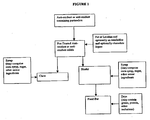
- the figure is a flow chart showing the preparation of a chew from a pretreated antioxidant or antioxidant-containing particle and a syrup and the preparation of a food bar from a pretreated antioxidant or antioxidant-containing particle, and a syrup, and dry ingredients.
- the pretreated antioxidant and the syrup are combined to form a binder which is added to the dry ingredients.
- the optional ingredients for inclusion in the pretreated antioxidant or antioxidant particles, the syrup, and the dry ingredients are shown.
- a further advantage of the pretreatment process in addition to conservation of cocoa procyanidins, is that it permits the preparation of two heated liquid streams which in the preferred embodiment for making granola bars are blended at the last possible moment.
- Both the pretreated cocoa solids and the syrup streams are much lower in viscosity than their combination. This facilitates using conventional tanks, lines, and positive-displacement pumps, as well as keeping the pressure drop in the piping within reasonable limits.
- the two heated liquid streams can be blended in-line, provided they are delivered in the desired proportions.
- Suitable equipment for in-line mixing is readily available, and due to its compact size, can be located in proximity to the point of use where the binder syrup (i.e., combined streams) is combined with the dry ingredients (grains, dried fruits and nuts and the like) to make confectionery products.
- antioxidant refers to compounds that prevent oxidation and function as a reducing agent or as an electron donor/receptor. According to their mode of action, antioxidants may be classified as free radical terminators, metal ion chelators, or as scavengers that react with oxygen. Suitable antioxidants classes include tannins, including condensed tannins and hydrolyzable tannins, quinones, polyhydroxy compounds, phospholipids, tocol compounds or derivatives thereof.
- antioxidants include, but are not limited to, butylated hydroxyanisole, butylated hydroxytoluene, tertiary butylated hydroquinone, propyl gallate, a phenolic acid, a polyphenol, ascorbic acid, stannous chloride, a tocopherol, sulfur dioxide, and dilauryl thiodipropionate.
- the antioxidants and antioxidant-containing particles have particle sizes of up to about 150 microns, typically about 5 to about 70 microns.
- food is a material consisting of protein, carbohydrate and/or fat, which is used in the body of any organism to sustain growth, repair vital processes, and to furnish energy. Foods may also contain supplementary substances, such as minerals, vitamins, and condiments (Merriam-Webster Collegiate Dictionary, 10 th Edition, 1993).
- food supplement is a product (other than tobacco) that is intended to supplement the diet that bears or contains one or more of the following dietary ingredients; a vitamin, a mineral, an herb or other botanical, an amino acid, a dietary substance for use by man to supplement the diet by increasing the total daily intake, or a concentrate, metabolite, constituent, extract or combination of these ingredients.
- supply means that nutrients have been added in amounts greater than 50% above the U.S. Recommended Daily Allowance (''Understanding Normal and Clinical Nutrition", 3 rd Edition, Editors Whitney, Catalado and Rolfes at page 525).
- the present invention relates to products such as foods or food supplements, other than beverages or beverage mixes, which contain antioxidants, preferably cocoa polyphenols, in combination with selected sterol ester(s) and/or stanol ester(s).
- the products may optionally contain L-arginine, minerals such as calcium, potassium and magnesium, vitamins such as B, C, and E, a carotenoid, and mono- or polyunsaturated fatty acids (e.g., an omega-3 fatty acid).
- Products containing polyphenols from sources other than cocoa which have antioxidant properties similar to those of cocoa polyphenols (for example, nuts, nut flours, and nut skins) may also be used in combination with the cocoa polyphenols.
- Cholesterol-lowering agents other than sterol/stanol esters may be used herein in combination with the sterol ester(s) and/or stanol ester(s). Examples include low caloric and non-caloric fats.
- cocoa polyphenols refers to polyphenolic compounds including proanthocyanidins, more particularly procyanidins, present in cocoa beans, cocoa nibs, cocoa ingredients prepared from cocoa beans or nibs, and cocoa extracts prepared from cocoa beans or cocoa ingredients.
- procyanidin refers to naturally occurring or synthetically derived oligomers of catechin and/or epicatechin; however, any reference to “cocoa procyanidins” herein should be understood to also include the monomers catechin and epicatechin.
- the monomers include (+)-catechin, (-)-epicatechin and their respective epimers (e.g. (-)-catechin and (+)-epicatechin).
- the monomers have the structure:
- Procyanidin oligomers may have from 2 to about 18 monomeric units.
- the oligomers include, for example, dimers, trimers, tetramers, pentamers, hexamers, heptamers, octamers, nonamers, decamers, etc.
- the monomers are connected via (4 ⁇ 6) and/or (4 ⁇ 8) interflavan linkages.
- Oligomers with exclusively (4 ⁇ 8) linkages are linear. The presence of at least one (4 ⁇ 6) linkage results in a branched oligomer.
- the '572 patent discloses coupling hydroxy-protected phenolic monomers (e.g., epicatechin or catechin) having a C-4 activating group (e.g. , a C 2 -C 6 alkoxy group having a termimal hydroxy group such as hydroxyethoxy) with a second protected phenolic monomer to prepare protected dimers which are then deprotected or optionally coupled with other protected, activated phenolic monomers.
- hydroxy-protected phenolic monomers e.g., epicatechin or catechin
- a C-4 activating group e.g. , a C 2 -C 6 alkoxy group having a termimal hydroxy group such as hydroxyethoxy
- Cocoa polyphenol derivatives may also be useful. These include gallated catechin and/or epicatechin monomers and oligomers, glycosylated monomers and oligomers, and mixtures thereof; metabolites of the procyanidin monomers and oligomers such as sulfated, glucoronidated, and methylated forms; and enzyme cleavage products of procyanidins generated by colonic microflora metabolism or internal mammalian metabolism.
- the derivatives may be from natural sources or prepared synthetically.
- Synthetic oligomers are also useful herein. See U.S. 6,156,912 issued December 5, 2000 to W. Tückmantel et al. and U.S. 6,476,241 issued November 5, 2002 to A. Kozikowski et al.
- fair average quality cocoa beans refers to cocoa beans that have been separated from the pulp material and dried and are relatively free of mold and infestation. Such beans are a commercial commodity and form the feedstock for preparing high CP cocoa solids. The term includes any such bean that has been genetically modified or produced.
- raw freshly harvested cocoa beans refers to seeds or beans freshly harvested from the cocoa pod and which have not been subjected to processing other than separation from the pulp.
- the term includes any such bean that has been genetically modified or produced.
- cocoa solids refers to partially or fully defatted cocoa solids (e.g. , cake or powder) prepared directly by screw pressing shelled cocoa beans into cocoa butter and partially defatted cocoa solids or by milling roasted cocoa beans into chocolate liquor and pressing the chocolate liquor to recover cocoa butter and partially defatted cocoa solids.
- high CP cocoa solids refers to cocoa solids in which the cocoa procyanidin content is conserved during the preparation of the cocoa solids and/or to cocoa solids prepared from unfermented, underfermented, or fair to average quality (FAQ) cocoa beans.
- Cocoa beans from any species of Theobroma, Herrania or inter- and intra-species crosses thereof may be used to prepare cocoa solids and chocolate liquor for use herein.
- the cocoa solids are prepared from unfermented and/or underfermented cocoa beans, i.e., slaty cocoa beans, purple cocoa beans, mixtures of slaty and purple cocoa beans, mixtures of purple and brown cocoa beans, or mixtures of slaty, purple, and brown cocoa beans.
- the cocoa beans are slaty and/or purple cocoa beans have a higher cocoa polyphenol content than fermented beans.
- the chocolate liquor is preferably prepared from roasted, fermented cocoa beans because the flavor/aroma of the roasted, fermented cocoa beans is better.
- cocoa polyphenol content of cocoa ingredients is higher when the cocoa beans or blends thereof have a fermentation factor of 275 or less.
- these cocoa beans are used for processing into high CP cocoa solids.
- the "fermentation factor" is determined using an industry-recognized grading system. To assess the degree of fermentation, cocoa beans are typically subjected to a standard cut test for assessing quality as defined by standards.
- a method for preparing cocoa solids having a high cocoa polyphenol content directly from cocoa beans is disclosed in U.S. 6,015,913 issued January 18, 2000 to Kirk S. Kealey et al., .
- the cocoa beans are heated for a time and at an internal bean temperature sufficient to loosen cocoa shell without roasting the cocoa nib (e.g. , infra-red heating to about 100°C to about 110°C).
- the cocoa nibs are winnowed from the cocoa shells.
- the cocoa nibs are screw pressed into the cocoa butter and the partially defatted cocoa solids.
- the cocoa solids contain cocoa polyphenols including cocoa procyanidins from the cocoa nibs.
- cocoa solids Much higher levels of the higher procyanidin oligomers are present in the cocoa solids thus produced then are present in cocoa solids prepared by a traditional roasting process.
- the total cocoa procyanidin amounts in the cocoa solids are determined as described hereafter.
- the method for determining the internal bean temperature (IBT) is described in the '913 patent.
- a method for preparing cocoa solids or chocolate liquor from roasted unfermented, underfermented, or fair to average quality cocoa beans is disclosed in U.S. 6,312,753 issued November 6, 2001 to Kirk S. Kealey et al., . Cocoa beans or nibs having a fermentation factor of 275 or less.
- the beans are passed through an infra-red heater, and winnowed to separate the shell (hull), roasted to an internal bean temperature of about 95° C to about 150° C, and milled into a course chocolate liquor from which the cocoa butter and partially defatted cocoa solids are pressed.
- the chocolate liquor may also be prepared from cocoa beans that have been processed using traditional cocoa processing methods (described, for example, in Industrial Chocolate Manufacture and Use, ed. Beckett, S.T., Blackie Acad. & Professional, New York, 1997, such as in Chapters 1, 5 and 6) or using the improved processing method described in the '913 patent discussed above.
- a cocoa extract can be included in the products herein.
- the preparation of cocoa extracts from cocoa beans is disclosed in U.S. 5,554,645 issued September 10, 1996 to Leo J. Romanczyk, Jr. et al .
- cocoa beans including the pulp are freeze dried, the freeze dried mass is depulped, the freeze dried cocoa beans are dehulled and ground, and the resulting cocoa mass is defatted and then solvent extracted, for example with aqueous methanol, aqueous acetone, or ethyl acetate. Extracts can also be prepared from high CP cocoa solids prepared by the processes described in the '913 and '753 patents previously discussed.
- This mixture also referred to as the fat phase, contains no added moisture.
- Antioxidants or antioxidant-containing particles such as high CP cocoa solids are pretreated with a food-grade fat or oil to protect the particles during further processing into a food, a food supplement, or a food additive. Pretreatment by mixing with the fat or oil prevents the loss of cocoa procyanidins.
- the antioxidants or antioxidant-containing particles are mixed with about 9 to about 90%, typically about 15-80%, preferably about 25-70%, more preferably about 40-60% of the fat and/or oil. If not liquid at room temperature, the fats should be liquifiable at about 70°-80°C, preferably at about 60°C.
- Preferred antioxidants including the preferred cocoa solids, are discussed above.
- Preferred fats and oils include sterol ester(s) and/or stanol ester(s) and vegetable oils such as corn, soya, cocoa butter and cocoa oil, coconut oil, and palm kernel oil. The most preferred are sterol ester(s) and/or stanol esters which are added as a cholesterol-lowering agent as well as as a pretreatment ingredient for protecting the antioxidant and high CP cocoa solids.
- Phytosterols are plant sterols that do not dissolve in water and have a molecular weight and structure similar to cholesterol. Over forty plant sterols have been identified but beta-sitosterol, campesterol and stigmasterol are the most abundant. Other examples of useful sterols are brassicasterol, desmosterol, chalinosterol, poriferasterol, and clionasterol.
- Stanols are saturated derivatives of sterols in which all carbon-carbon bonds in the rings are saturated.
- Stanols typically have 28 or 29 carbon atoms and include beta-sitostanol, clionastanol, 22,23-dyhydrobrassicastanol and campestenol.
- Stanols are found in small amounts in nature but may be easily prepared from sterols by hydrogenating sterols by any of the several methods known to those skilled in the art. When a sterol starting material is prepared from a plant material it will contain a mixture of several different sterols thus, after hydrogenation, the resulting stanol will also be a mixture of different stanols.
- Cocoa oil extracted from cocoa hulls is also a good source of phytosterols.
- Cocoa phytosterols are a mixture of free and bound sterols, with the free sterols being up to about 90% of the phytosterols present.
- the phytosterols include campesterol, ⁇ -sitosterol, stigmasterol, cycloartenoyl, 24-methylene cycloartoyl, as well as minor amounts of other phytosterols.
- the bound phytosterols include the fatty acid esters or ferulate derivatives of the phytosterols.
- Esterified forms of sterols and stanols are the forms used herein. Esterification renders the sterols/stanols more soluble in fats and oils.
- sterols may be esterified with fatty acid esters such as rapeseed oil, canola oil, and like oils. Suitable fatty acids include saturated or unsaturated fatty acids typically having 14 to 24 carbon atoms. Examples of esterified sterols include sitosterol acetate, sitosterol oleate and stigmasterol oleate.
- Stanol esters may be prepared as is known in the art and, as for example, described in U.S. 6,174,560 issued January 16, 2001 to Ricotenen et al.
- rapeseed oil using an interesterification catalyst such as sodium ethylate.
- An interesterification process such as that disclosed in the '045 patent can also be used to esterify sterol esters.
- useful stanol esters are prepared by esterifying at least one sterol with a C 2 to C 22 fatty acid ester as described in the '913 patent cited above.
- canola oil sterol esters canola oil sterol esters, sunflower oil sterol esters, and their mixtures. These sterol ester mixtures melt at around 30°-50°C; however, typically the esters are heated to about 60°-80°C to ensure the entire mixture is liquified.
- the liquid or liquefied sterols/stanol esters are mixed with the high CP cocoa solids to protect the CPs during the further processing of the cocoa solids into the final products prevents this loss about.
- up to about 40% to about 90% of the cocoa procyanidins can be lost during processing of the cocoa solids into the final product, depending on processing conditions such as temperature and shear.
- the CPs are moisture-sensitive and that pretreatment with sterol and/or stanol esters prior to contact with the aqueous syrup used in the preparation of the products protects the CPs.
- at least 65% of the cocoa procyanidins are conserved. Typically, about 80% to about 90% of the cocoa procyanidins are conserved. More preferably, about 90% to 100% are preserved.
- an emulsifier such as lecithin, a mono- or diglyceride, mono- or diglyceride, a phospholipid, an ester of a monoglyceride and acetic, lactic, citric, succinic, or tartaric acid, a fatty acid ester of a polyglycerol, sorbitol esters, sucrose esters, propylene glycol, or polyglycerol polyresorcinoleate is also premixed with the sterol and/or stanol esters and chocolate liquor before addition to the cocoa solids.
- an emulsifier such as lecithin, a mono- or diglyceride, mono- or diglyceride, a phospholipid, an ester of a monoglyceride and acetic, lactic, citric, succinic, or tartaric acid, a fatty acid ester of a polyglycerol, sorbitol esters, sucrose esters, propylene glycol
- the emulsifier is used in amounts of about 0.05% to about 5%, preferably about 0.05% to about 1%, more preferably about 0.05% to about 0.25%.
- Emulsifying agents are well known to play a critical role in suspension rheology and are used throughout food manufacturing, especially confectionery and chocolate manufacturing, to enhance the rheology (i.e., reduce viscosity and/or yield value) of solids suspensions.
- Soy lecithin is the preferred emulsifier for use herein. It is one of the oldest and most widely used emulsifying agents.
- lecithin demonstrates a significant viscosity lowering effect. It can be used in amounts of up to about 5%, preferably about 0.05% to about 0.3%, more preferably about 0.1 % to about 0.3% by weight, based on the finished chocolate.
- a combination of emulsifying agents is used, i.e., a base emulsifying agent and a second emulsifying agent.
- the base emulsifying agent is added in an amount of less than 1.0% by weight.
- the amount of the base emulsifying agent present in the reduced-fat chocolates is about 0.1 % to about 0.9%, preferably about 0.2% to about 0.8%, and more preferably about 0.4% to about 0.6% by weight, based on the total weight of the chocolate.
- Selected combinations of emulsifying agents have been identified for use in reduced-fat confectioneries, having improved rheology.
- Emulsifying agent combinations that are particularly useful are combinations of lecithin, sucrose polyerucate, sucrose polystearate, ammonium phosphatide, phosphated mono-di-glycerides/diacetyl tartaric acid of mono-glycerides, or fractionated lecithin, with sucrose polyerucate and/or polyglycerol polyricinoleate.
- the rheology of reduced-fat chocolates may be further improved using a three component emulsifier combination.
- the preferred combinations include lecithin-sucrose polyerucate, lecithin-polyglycerol polyricinoleate, sucrose polyerucate-polyglycerol polyricinoleate, and lecithin-sucrose polyerucate-polyglycerol polyricinoleate.
- chocolate liquors such as those discussed above are included with the pretreated cocoa solids in amounts of up to 20%, typically about 0.5% to about 10%, and more preferably about 0.5% to about 3%.
- amount of cocoa solids and chocolate liquor used will depend upon the type of product being prepared.
- the syrup comprises an aqueous solution of nutritive carbohydrate sweetener(s) and/or sugar substitute(s).
- Nutritive carbohydrate sweeteners with varying degrees of sweetness intensity are useful herein.
- the sweetener comprises a corn syrup or a blend of corn syrups and another sweetener.
- Suitable sweeteners include those typically used in foods and include, but are not limited to, sucrose ( e.g. , from cane or beet), dextrose, fructose, lactose, maltose, glucose syrup or the solids thereof, corn syrup or the solids thereof, invert sugar, hydrolyzed lactose, honey, maple sugar, brown sugar, molasses and the like.
- Sugar substitutes may be used to partially replace the sweetener in the syrup, particularly in the production of reduced-calorie products.
- the term "sugar substitute” includes high potency sweeteners, sugar alcohols (polyols) and bulking agents, or combinations thereof.
- the high potency sweeteners include aspartame, cyclamates, saccharin, acesulfame, neo-hesperidin dihydrochalcone, sucralose, alitame, stevia sweeteners, glycyrrhizin, thaumatin, and the like, and mixtures thereof.
- the preferred high potency sweeteners include aspartame, cyclamates, saccharin, and acesulfame-K.
- sugar alcohols may be any of those typically used in the art and include sorbitol, mannitol, xylitol, maltitol, isomalt, lactitol and the like.
- the food products of the present invention may also contain bulking agents, typically used in combination with high potency sweeteners.
- bulking agents as defined herein may be any of those typically used in the art and include polydextrose, cellulose and its derivatives, maltodextrin, gum arabic, and the like.
- the syrup comprise about 5% to 100% of corn syrup solids and up to 80% sugar, based on the total weight of the syrup.
- the corn syrup is about 5% to 100%, preferably about 65% to about 98%, and most preferably about 80% to about 95% and the sugar is up to about 20%, preferably about 1% to about 10%, and more preferably about 1% to about 5%.
- the corn syrup is about 5% to about 80%, preferably about 10% to about 50%, and most preferably about 20% to about 35%.
- Minor amounts of other water-soluble or water-dispersible ingredient are also included in the syrup, for example up to 15% of vitamins and/or minerals, up to 1% of a flavorant, and up to 3% of a salt.
- flavoring agent refers to flavored compounds or compositions used in food or food supplement to impart a desired taste and/or aroma.
- exemplary flavoring agents suitable for use herein include vanillin, raspberry spices, and naturally expressed citrus or spice oils.
- the binder syrup comprises the syrup and the pretreated solids (e.g., a particulate antioxidant or antioxidant-containing particles such as cocoa solids is formulated to first coat the dry ingredient and then "set” or harden to hold the final product in the desired shape.
- the binder syrup can also carry other water-soluble or water-dispersible ingredients such as flavorants.
- a sugar-based syrup that hardens when cooled is used. In ready-to-eat snack foods.
- the binder syrups contain about 50% to about 85%, preferably about 60% to about 80%, more preferably about 65% to about 80%, and most preferably about 70% to 75% by weight of the syrup and about 15% to about 50%, preferably about 20% to about 40%, more preferably about 25% to about 40% and most preferably about 25% to about 30% by weight of pretreated solids. The percentages are by weight and total 100%.
- the moisture content of the binder syrup is about 1% to about 15%, preferably about 3% to about 12%, and most preferably about 5 to about 10%.
- Typical grains include flaked oats, wheat, barley, and rye, toasted rolled oats, crisped rice and the like.
- Typical flours include bran, corn, wheat, and rice.
- Typical proteins include soy, whey, milk, peanut, and egg proteins.
- Optional dry ingredients include chopped or whole nuts, such as almonds, hazelnuts, peanuts, and coconut flakes, dried fruits such as blueberries and cherries, and chocolate chips.
- the binder syrup comprises about 30% to about 75% preferably about 40% to about 65%, more preferably about 50% to about 60%, and most preferably 55% by weight of the bar.
- the granola bar with or without fruit and/or nut inclusions is enrobed or decorated with chocolate, preferably a tempered dark chocolate, yogurt, or flavored granulated sugars.
- the granola bar can contain supplemental dietary fiber(s) which are added in the form of compressed flakes.
- supplemental dietary fiber refers to dietary fibers which are added to the bar apart from the fiber which is typically included in a granola bar.
- the supplementary dietary fibers can be of various types and preferably are a mixture of various types and, more preferably, a mixture of soluble and insoluble dietary fibers. Sources generally known to contribute insoluble fiber include, but are not limited to, soy fiber, apple fiber, com bran, wheat bran, oat bran, barley bran, rye bran, triticale bran, cellulose, pea fiber, sugar beet fiber, and peanut fiber.
- Sources generally known to contribute soluble fiber include, but are not limited to, gum arabic, gum ghatti, guar gum, pectins, psyllium, carrageenans, xathan, tragocanth, karaya, locust bean gum, agar, and alginates.
- the food products prepared herein have a reduced water availability to prevent microbial growth and lengthen shelf life. Such availability of water in a food is commonly termed “water activity" (A).
- water activity A
- a low A food product under 0.90 indicates the existence of an environment in which most bacteria will not generally grow, and 0.1-0.55 is preferred.
- the term "chocolate” is intended to refer to all chocolate or chocolate-like compositions with a temperable fat phase. As the invention is directed to the control of the characteristics of the fat or fat-like phase of the chocolate, rather than the non-fat materials within the chocolate, the term is intended to include all chocolate and chocolate-like compositions that contain at least one cocoa or cocoa-like component in the temperable fat or temperable fat-like phase.
- the term is intended, for example, to include standardized and non-standardized chocolates, i.e., including chocolates with compositions conforming to the U.S. Standards Of Identity (SOI) and compositions not conforming to the U.S.
- SOI Standards Of Identity
- Reduced fat chocolates comprise a fat, solid containing chocolate ingredients, and a combination of a base emulsifying agent and at least one other emulsifying agent.
- the chocolates are prepared by mixing the fat and chocolate ingredients, adding the base emulsifying agent to the mixture; and then adding at least one other emulsifying agent.
- the resulting confectioneries have the texture of a full-fat confectionery.
- Chocolate may take the form of solid pieces of chocolate, such as bars or novelty shapes, and may also be incorporated as an ingredient of other, more complex confections where chocolate is combined with and generally coats other foods such as caramel, peanut butter, nougat, fruit pieces, nuts, wafers, ice cream or the like. These foods are characterized as microbiologically shelf-stable at about 65° to about 85°F (18° to 29°C), under normal atmospheric conditions.
- the syrup is about 50% to about 85%, preferably about 60% to about 80%, more preferably about 65% to about 80%, and most preferably about 70% to about 75% of the chew.
- the cocoa solids are about 15% to about 50%, preferably about 20% to about 40%, more preferably about 25% to about 30% of the chews. The percentages are by weight and total 100%.
- the moisture content of the syrup is about 1% to about 15%, preferably about 3% to abut 12%, and most preferably about 5% to about 10%.
- the pretreated cocoa solids and the syrup are combined at a temperature of about 20°C to about 160°C, preferably about 50°C to about 120°C, more preferably about 80°C to about 110°C and then cooled to about 5°C to about 60°C, preferably about 15°C to about 40°C, and more preferably about 20°C to about 30°C and then shaped.
- the pretreated cocoa solids and syrup are combined immediately before addition to the solids ingredients and the resulting binder syrup is then added to the dry ingredients.
- the combining and cooling temperatures discussed above are suitable for the bars.
- cocoa procyanidin content of the cocoa solids, binder syrup, chocolate foods (e.g. , granola bars), and chocolate confectioneries (e.g., dark or milk chocolate chews) was determined by normal phase high pressure liquid chromatography (HPLC) on silica with fluorescent detection.
- HPLC normal phase high pressure liquid chromatography
- Cocoa solids were defatted with hexane prior to extraction of the procyanidins.
- Binder syrup and the chocolate products e.g. , chocolate chews and chocolate granola bars
- 70% acetone, 29.5% water, and 0.5% acetic acid were cyro-ground to a fine powder and immediately extracted.
- 70% acetone, 29.5% water, and 0.5% acetic acid were not defatted prior to procyanidin extraction.
- Cocoa procyanidin quantitation was achieved through the use of a well characterized composite reference standard material. Samples were then compared with the composite standard to accurately determine the levels of procyanidins.
- the theobromine and caffeine content of cocoa solids prepared from various cocoa beans was determined using the procedure described below.
- the solids are typically defatted first by extraction with hexane.
- theobromine and caffeine content of cocoa beans vary with the beans origin and fermentation factor, the content does not change markedly during the processing of cocoa solids or chocolate liquor into a final food product.
- the percentage of the methylxantines in a final cocoa product can be used to determine the amount of cocoa solids or chocolate liquor used to prepare the final chocolate product.
- the theobromine ranges from 1.13% to 1.49% and the caffeine from 0.06 to 0.29%.
- Example 1 Method for Preparing High CP Cocoa Solids from Cocoa Beans
- cocoa beans having an initial moisture content of about 7 to 8% by weight are pre-cleaned in a scalperator.
- the pre-cleaned bean from the scalperator are further cleaned in an air fluidized bed density separator.
- the cleaned cocoa beans are then passed through an infra-red heating apparatus at a rate of about 1,701 kilograms per hour.
- the depth of beans in the vibrating bed of the apparatus is about 2-3 beans deep.
- the surface temperature of the apparatus is set at about 165°C, thereby producing an internal bean temperature (IBT) of about 135°C in a time ranging from 1 to 1.5 minutes. This treatment causes the shells to dry rapidly and separate from the cocoa nibs.
- IBT internal bean temperature
- the broken pieces separated by the vibrating screen prior to the apparatus are re-introduced into the product stream prior to the winnowing step.
- the resulting beans after micronizing should have a moisture content of about 3.9% by weight.
- the beans emerge at an IBT of about 135°C and are immediately cooled to a temperature of about 90°C in about three minutes to minimize additional moisture loss.
- the beans are then winnowed to crack the beans to loosen the shells and separate the lighter shells from the nibs while at the same time minimizing the amount of nib lost with the shell reject stream.
- the resulting cocoa nibs are pressed using in two screw presses to extract the butter from the cocoa solids.
- Fair average quality (FAQ) cocoa beans having an initial moisture content 7.4% by weight and a fermentation factor level of 233 (31% slaty, 29% purple, 22% purple brown and 17% brown) are selected as the starting material.
- the cocoa beans are then passed through an infra-red heating apparatus.
- the feed rate of beans through the infra-red heater and the infra-red heater bed angle are varied to control the amount of heat treatment the beans receive.
- the amount of time the beans spend in the infra-red heater (residence time) is determined by the bed angle and the feed rate.
- the times that should be used to prepare the sample material are listed in the table below. At the outlet of the micronizer the IBT of the beans is measured. Expected values are also shown in the table.
- the cracked beans are then passed through a laboratory scale winnowing system.
- the cocoa nibs are then milled into a coarse liquor which crushes and grinds the nibs into a chocolate liquor.
- the normal operating temperature for the liquor in the crusher is approximately 50°C.
- the cocoa nibs are ground for one hour. The expected cocoa polyphenol values are shown below.
- the chews were prepared from the ingredients shown below by pre-mixing sterol esters, cocoa solids, lecithin, and dark chocolate liquor or milk chocolate liquor, for example in Z-blade mixer, to prepare the pretreated cocoa solids.
- the pretreated cocoa solids were incorporated into a cooked syrup (heated to 66° C) containing the remaining ingredients. The moisture content of the syrup was about 9%. The mixture was slowly cooled, rolled, and wrapped. The moisture content of the final mixture was about 8.3-8.7%.
- the cocoa solids used to prepare the chews had a cocoa procyanidin content of about 50 to about 80 milligrams per gram of defatted cocoa solids.
- the canola sterol esters used to prepare the chews were supplied by Raisio Benecol Ltd., Finland or Raisio Staaco U.S., Inc. They had a melting point of about 30°C and were heated at about 50-60°C to ensure complete liquification.
- the phytosterols present in the mixture include B-sitosterol (50.6%), campestoerol (27.6%), stigmasterol (16.8%), and other sterols (5%) esterified using the interesterification process described in U.S. 5,502,045 issued March 26, 1996 .
- a syrup containing all the minor ingredients (i.e ., vitamin mixture, brown sugar, salt vanilla) dissolved or dispersed in the corn syrups was prepared by blending the ingredients at about 55°C for 15 minutes in a high speed mixer.
- the high CP cocoa solids were mixed with a mixture of the canola sterol esters, chocolate liquor, and lecithin and blended briefly, e . g ., for about 15 minutes in a high speed mixer to create the pretreated cocoa solids.
- aqueous syrup stream and pretreated cocoa solids streams were mixed at the last possible moment, in an in-line mixer to create binder syrup and then blended with the dry ingredients (i.e ., rice, soy, oats, and optional almonds, cherries, and blueberries).
- the blend was deposited as a slab, compressed, slit into bars, and cooled.
- Chocolate almond crunch bars were prepared by adding 5-20%, preferably about 7-14%, chopped almonds to the dry mix. Similarly chocolate blueberry crunch bars and chocolate cherry crunch bars were prepared by adding 4-20%, preferably 6-14% of dried blueberries or cherries to the dry mix.
- Two binder syrups of identical composition were prepared to compare the effect of pretreating high CP cocoa solids.
- the formulation is the same as that used in Example 4 except the dry ingredients (soy crisp, crisp rice, and oats) were not used.
- the syrup ingredients as well as the high CP cocoa solids, sterol esters, chocolate liquor, and soy lecithin were all mixed in one step.
- the inventive binder the pretreated high CP cocoa solids were prepared separately, the syrup was prepared separately, and then the two liquids were combined. In both tests all materials were maintained at a temperature between 50 and 60°C.
- the average cocoa procyanidin content of binder syrups containing pretreated and untreated cocoa solids was determined using the analytical procedure described above. The results are set out below.
- Total Cocoa Procyanidins (mg./g of binder syrup) Mixing (minutes) Time Syrup Prepared with Untreated Cocoa Solids % Retained Cocoa Procyanidins Syrup Prepared with Pretreated Cocoa Solids Retained Cocoa Procyanidins 0 10 -- 10 -- 15 9.04 90% 10.07 100% retained 60 6.78 68% 9.87 99% 120 5.91 59% 9.12 90% 180 5.75 58% 8.87 89% 240 5.75 58% 8.86 89%
Landscapes
- Life Sciences & Earth Sciences (AREA)
- Food Science & Technology (AREA)
- Polymers & Plastics (AREA)
- Chemical & Material Sciences (AREA)
- Engineering & Computer Science (AREA)
- Health & Medical Sciences (AREA)
- Nutrition Science (AREA)
- Botany (AREA)
- Molecular Biology (AREA)
- Mycology (AREA)
- Confectionery (AREA)
- Coloring Foods And Improving Nutritive Qualities (AREA)
- Grain Derivatives (AREA)
- Jellies, Jams, And Syrups (AREA)
Claims (19)
- Zusatzstoff für ein Nahrungsmittel oder ein Nahrungsergänzungsmittel, welcher Zusatzstoff teilweise oder vollständig entfettete Kakao-Feststoffe umfasst, vorbehandelt durch Mischen mit(a) von 9 % bis 90 % nach Gewicht, basierend auf den Kakao-Feststoffen, an Sterolester(n) und/oder Stanolester(n), welche bei Temperaturen von 80 °C oder weniger Flüssigkeiten sind, wobei die Kakao-Feststoffe nach der Vorbehandlung einen Kakaoprocyanidin-Gehalt von wenigstens 50 bis 75 Milligramm pro Gramm der entfetteten Kakao-Feststoffe aufweisen, oder(b) von 0,05 % von 5 % nach Gewicht, basierend auf den Kakao-Feststoffen, eines Lecithins, wobei die Kakao-Feststoffe nach der Vorbehandlung einen Kakaoprocyanidin-Gehalt von wenigstens 50 bis 75 Milligramm pro Gramm der entfetteten Kakao-Feststoffe aufweisen.
- Verfahren zur Herstellung eines Bindemittelsirups für ein Nahrungsmittel oder ein Nahrungsergänzungsmittel, welches Verfahren das Mischen, bei von 20 °C bis 160 °C:(i) eines Sirups, welcher eine wässrige Lösung eines Kohlenhydrat-Süßungsmittels und/oder eines Zuckeraustauschstoffs umfasst; und(ii) von teilweise oder vollständig entfetteten Kakao-Feststoffen, die durch Mischen von 9 % bis 90 % nach Gewicht, basierend auf den Kakao-Feststoffen, an Sterolester(n) und/oder Stanolester(n), die bei Temperaturen von 80 °C oder weniger Flüssigkeiten sind, vorbehandelt sind, wobei die Kakao-Feststoffe nach der Vorbehandlung einen Kakaoprocyanidin-Gehalt von wenigstens 50 bis 75 Milligramm pro Gramm der entfetteten Feststoffe aufweisen, umfasst.
- Bindemittelsirup, welcher mittels eines Verfahrens nach Anspruch 2 erhalten ist.
- Bindemittelsirup, welcher ein Gemisch aus(i) einer wässrigen Lösung eines Kohlehydrat-Süßungsmittels und/oder eines Zuckeraustauschstoffs und(ii) Kakao-Feststoffen, die mit von 9 % bis 90 % nach Gewicht Sterolester(n) und/oder Stanolester(n) vorbehandelt sind, mit bis zu 5 Gew.-% eines Lecithins und/oder bis zu 20 Gew.-% eines Schokoladensirups, umfasst;wobei der Bindemittelsirup von 40 °C bis 80 °C flüssig ist und bei Raumtemperatur fest ist, und wobei die Gewichte auf den Kakao-Feststoffen basieren.
- Zusatzstoff nach Anspruch 1, Verfahren nach Anspruch 2 oder Bindemittelsirup nach Anspruch 4, wobei der Procyanidin-Gehalt von 60 bis 75 Milligramm pro Gramm der entfetteten Kakao-Feststoffe beträgt.
- Zusatzstoff nach Anspruch 1 oder Verfahren nach Anspruch 2, wobei der Kakaoprocyanidin-Gehalt von 75 bis 80 Milligramm pro Gramm der entfetteten Kakao-Feststoffe beträgt.
- Verfahren nach Anspruch 2 oder Bindemittelsirup nach Anspruch 3 oder 4,
wobei das Kohlenhydrat-Süßungsmittel Maissirup oder eine Mischung aus Maissirup und einem anderen Süßstoff umfasst. - Verfahren oder Bindemittelsirup nach Anspruch 7, wobei der andere Süßstoff Sucrose-, Dextrose-, Fructose-, Lactose-, Maltose-, Glucosesirup, Invertzucker, hydrolysierte Lactose, Honig, Ahornzucker, brauner Zucker oder Melasse ist.
- Verfahren nach Anspruch 2 oder Bindemittelsirup nach Anspruch 3 oder 4,
wobei der Zuckeraustauschstoff ein Süßstoff mit hoher Süßkraft, ein Zuckeralkohol oder ein Füllmittel ist. - Verfahren oder Bindemittelsirup nach Anspruch 9, wobei der Süßstoff mit hoher Süßkraft Aspartam, ein Cyclamat, Saccharin, Acesulfam, Neohesperidin-Dihydrochalcon, Sucralose, Alitam, Stevia, Glycyrrhizin und/oder Thaumatin ist;
wobei der Zuckeralkohol Sorbitol, Mannitol, Xylitol, Maltitol, Isomalt, Lactitol ist; und wobei das Füllmittel Polydextrose, Cellulose oder deren Derivate, Malodextrin oder Gummi arabicum ist. - Bindemittelsirup nach einem der Ansprüche 4 und 7 bis 10, worin der Schokoladensirup von etwa 0,5 % bis 10 % ausmacht.
- Bindemittelsirup nach einem der Ansprüche 4 und 7 bis 10, worin der Schokoladensirup von 0,5 % bis 3 % ausmacht.
- Bindemittelsirup nach einem der Ansprüche 4 und 7 bis 12, worin das Lecithin von einem Speiseöl stammt, ausgewählt aus Sojabohnen-, Baumwollsamen-, Mais-, Färberdistel- und Rapssamenöl.
- Bindemittelsirup nach Anspruch 13, worin das Lecithin Sojalecithin ist.
- Bindemittelsirup nach einem der Ansprüche 4 und 7 bis 14, worin der Sirup etwa 50 % bis etwa 85 % ausmacht und worin die vorbehandelten Kakao-Feststoffe etwa 15 % bis etwa 50 % ausmachen, wobei die Prozentsätze nach Gewicht sind und insgesamt 100 % betragen.
- Bindemittelsirup nach einem der Ansprüche 4 und 7 bis 14, worin der Sirup etwa 60 % bis etwa 80 % ausmacht und die vorbehandelten Kakao-Feststoffe etwa 20 % bis etwa 40 % ausmachen, wobei die Prozentsätze nach Gewicht sind und insgesamt 100 % betragen.
- Bindemittelsirup nach einem der Ansprüche 4 und 7 bis 14, worin der Sirup etwa 65 % bis etwa 80 % ausmacht und die vorbehandelten Kakao-Feststoffe etwa 20 % bis etwa 35 % ausmachen, wobei die Prozentsätze nach Gewicht sind und insgesamt 100 % betragen.
- Bindemittelsirup nach einem der Ansprüche 4 und 7 bis 14, worin der Sirup etwa 70 % bis etwa 75 % ausmacht und die vorbehandelten Kakao-Feststoffe etwa 25 % bis etwa 35 % ausmachen, wobei die Prozentsätze nach Gewicht sind und insgesamt 100 % betragen.
- Bindemittelsirup nach einem der Ansprüche 4 und 7 bis 18, außerdem umfassend bis zu 15 % Vitamine und/oder Mineralien, bis zu 1 % eines Geschmacksstoffs und bis zu 3 % eines Salzes, wobei die Gewichte auf den Kakao-Feststoffen basieren.
Applications Claiming Priority (2)
| Application Number | Priority Date | Filing Date | Title |
|---|---|---|---|
| US672232 | 1991-03-20 | ||
| US10/672,232 US7329429B2 (en) | 2003-09-25 | 2003-09-25 | Bars and confectioneries containing cocoa solids having a high cocoa polyphenol content and sterol/stanol esters and processes for their preparation |
Publications (2)
| Publication Number | Publication Date |
|---|---|
| EP1518464A1 EP1518464A1 (de) | 2005-03-30 |
| EP1518464B1 true EP1518464B1 (de) | 2009-08-26 |
Family
ID=34194860
Family Applications (1)
| Application Number | Title | Priority Date | Filing Date |
|---|---|---|---|
| EP04255889A Expired - Lifetime EP1518464B1 (de) | 2003-09-25 | 2004-09-27 | Riegel und Süsswarenteile enthaltend Kakaopulver mit erhöhtem Polyphenolgehalt und Sterol-/Stanolestern und Verfahren zu ihrer Herstellung |
Country Status (7)
| Country | Link |
|---|---|
| US (2) | US7329429B2 (de) |
| EP (1) | EP1518464B1 (de) |
| JP (1) | JP4360549B2 (de) |
| AT (1) | ATE440500T1 (de) |
| AU (1) | AU2004214567A1 (de) |
| CA (1) | CA2482475C (de) |
| DE (1) | DE602004022747D1 (de) |
Cited By (1)
| Publication number | Priority date | Publication date | Assignee | Title |
|---|---|---|---|---|
| US8110231B2 (en) | 2006-04-10 | 2012-02-07 | Kraft Foods Global Brands Llc | Methods for making improved texture cereal bars |
Families Citing this family (56)
| Publication number | Priority date | Publication date | Assignee | Title |
|---|---|---|---|---|
| US8507018B2 (en) * | 1998-03-12 | 2013-08-13 | Mars, Incorporated | Products containing polyphenol(s) and L-arginine and methods of use thereof |
| ATE509692T1 (de) | 2003-07-17 | 2011-06-15 | Unilever Nv | Verfahren zur herstellung einer öl und strukturierungsmittel enthaltenden essbaren dispersion |
| US7632532B2 (en) * | 2004-12-09 | 2009-12-15 | Eurak, LLC | Product and method for oral administration of nutraceuticals |
| WO2006087090A1 (en) * | 2005-02-17 | 2006-08-24 | Unilever N.V. | Granules comprising sterol |
| MX2007014587A (es) * | 2005-06-03 | 2008-02-05 | Horizon Science Pty Ltd | Sistemas de distribucion. |
| US8486469B2 (en) * | 2005-10-17 | 2013-07-16 | Intercontinental Great Brands Llc | Low-calorie food bar |
| ES2281270B1 (es) * | 2005-11-30 | 2008-07-01 | La Morella Nuts, S.A. | Alimento funcional con efectos positivos en la prevencion de enfermedades cardiovasculares. |
| EP1815745A1 (de) * | 2006-02-03 | 2007-08-08 | Friesland Brands B.V. | Cholesterinsenkende Milchprodukte und Verfahren zu deren Herstellung |
| JP5251504B2 (ja) * | 2006-03-31 | 2013-07-31 | 不二製油株式会社 | 蛋白含有油性食品 |
| WO2008140065A2 (en) * | 2007-05-08 | 2008-11-20 | Fujifilm Corporation | Emulsion-containing composition, food and topical product, and method of preventing coagulation of polyphenol compound |
| US9114114B2 (en) * | 2007-06-21 | 2015-08-25 | Mars, Inc. | Edible products having a high cocoa polyphenol content and improved flavor and the milled cocoa extracts used therein |
| US20090252838A1 (en) * | 2008-04-04 | 2009-10-08 | Campbell Rebecca A | Chocolate brittle |
| AU2009201515B2 (en) * | 2008-05-14 | 2011-05-19 | Unilever Plc | Frozen confectionery products |
| WO2010052703A1 (en) * | 2008-11-04 | 2010-05-14 | Natural Bits Food Design Ltd. | Semi-solid honey-based products |
| AU2009328392B2 (en) | 2008-12-19 | 2013-08-22 | Upfield Europe B.V. | Edible fat powders |
| US20100166921A1 (en) * | 2008-12-29 | 2010-07-01 | Conopco, Inc., D/B/A Unilever | Coating |
| ATE544350T1 (de) * | 2008-12-29 | 2012-02-15 | Unilever Nv | GEFRORENE SÜßWARENPRODUKTE UND GETRÄNKE, DIE THEOBROMIN UND KOFFEIN ENTHALTEN |
| US20100260915A1 (en) * | 2009-04-09 | 2010-10-14 | The Folgers Coffee Company | Ground roast coffee tablet |
| US20120015094A1 (en) | 2009-04-09 | 2012-01-19 | The Folgers Coffee Company | Ground roast coffee tablet |
| WO2011072224A1 (en) * | 2009-12-10 | 2011-06-16 | Hero Nutritionals, LLC | Dark chocolate delivery system for a combination of dietary supplements and pharmaceuticals |
| JP5593103B2 (ja) * | 2010-03-23 | 2014-09-17 | テルモ株式会社 | アミノ酸含有総合栄養食品およびその製造方法 |
| WO2011144545A1 (en) | 2010-05-19 | 2011-11-24 | Unilever Nv | Theobromine for increasing hdl-cholesterol |
| WO2011150364A2 (en) * | 2010-05-28 | 2011-12-01 | Compatible Technology International | Therapeutic food formulation |
| EA024216B1 (ru) | 2010-06-22 | 2016-08-31 | Юнилевер Н.В. | Порошкообразные пищевые жиры |
| ES2372381B1 (es) * | 2010-06-29 | 2012-11-28 | La Morella Nuts, S.A. | Ingrediente reconstituido de fruto seco y/o algarroba. |
| KR101274343B1 (ko) * | 2010-08-13 | 2013-06-13 | 호서대학교 산학협력단 | 쟈스민이 포함된 고형식품의 제조방법 및 이에 따른 영양바 |
| US8486470B2 (en) | 2010-09-30 | 2013-07-16 | Neu Naturals, Llc | Ready-to-eat food product |
| MX337914B (es) | 2010-12-17 | 2016-03-28 | Unilever Nv | Proceso para compactar polvo de grasa microporosa y polvo de grasa compactado asi obtenido. |
| MX342040B (es) | 2010-12-17 | 2016-09-12 | Unilever Nv | Emulsion de agua en aceite comestible. |
| JP5799544B2 (ja) * | 2011-03-28 | 2015-10-28 | ユーハ味覚糖株式会社 | チョコレート |
| JP2012213339A (ja) * | 2011-03-31 | 2012-11-08 | Lotte Co Ltd | 植物性ステロール配合チョコレートおよびその製造方法 |
| JP2012239383A (ja) * | 2011-05-13 | 2012-12-10 | Uha Mikakuto Co Ltd | チョコレート |
| MX2013013625A (es) * | 2011-06-03 | 2013-12-10 | Hershey Co | Proceso para preparacion y formulacion de productos alimenticios horneados aireados y productos de chocolate. |
| AR086993A1 (es) | 2011-06-20 | 2014-02-05 | Gen Biscuit | Masa de galletita |
| US20140154363A1 (en) * | 2012-12-05 | 2014-06-05 | Mom Brands Company | Granola composition and bar containing steel cut oats and process for making the same |
| EP3738439A1 (de) * | 2013-03-15 | 2020-11-18 | VDF Futureceuticals, Inc. | Zusammensetzungen und verfahren zur aktivierung von bdnf |
| JP6282552B2 (ja) * | 2014-07-18 | 2018-02-21 | 日清食品ホールディングス株式会社 | 果実が結着した乾燥食品の製造方法 |
| JP6282550B2 (ja) * | 2014-07-18 | 2018-02-21 | 日清食品ホールディングス株式会社 | 果実が結着した乾燥食品の製造方法 |
| JP6282551B2 (ja) * | 2014-07-18 | 2018-02-21 | 日清食品ホールディングス株式会社 | 果実が結着した乾燥食品の製造方法 |
| AU2015339513A1 (en) * | 2014-10-27 | 2017-05-18 | VitaThinQ, Inc. | Nutritional supplements |
| USD767241S1 (en) | 2015-09-03 | 2016-09-27 | The J.M. Smucker Company | Coated food product |
| USD767244S1 (en) | 2015-09-03 | 2016-09-27 | The J.M. Smucker Company | Coated food product |
| USD767242S1 (en) | 2015-09-03 | 2016-09-27 | The J.M Smucker Company | Coated food product |
| USD767243S1 (en) | 2015-09-03 | 2016-09-27 | The J.M. Smucker Company | Coated food product |
| WO2018016675A1 (ko) | 2016-07-22 | 2018-01-25 | (주)씨알푸드 | 혈당상승억제용 기능성 시리얼바 및 그의 제조방법 |
| WO2018016912A1 (ko) * | 2016-07-22 | 2018-01-25 | (주)씨알푸드 | 영양성분이 강화되고 혈당상승이 억제된 시리얼 바 |
| KR101949141B1 (ko) | 2016-12-26 | 2019-02-19 | (주)씨알푸드 | 영양성분이 강화된 시리얼 바 |
| JP2016220688A (ja) * | 2016-08-29 | 2016-12-28 | 株式会社ロッテ | 植物性ステロール配合チョコレートおよびその製造方法 |
| WO2018138620A1 (en) * | 2017-01-29 | 2018-08-02 | Gupta Samit | Ketogenic nutritional composition and preparation method thereof |
| EP3724158A4 (de) * | 2017-12-14 | 2022-01-26 | Buckyol Limited | Anisotrope nanopartikelzusammensetzungen und verfahren |
| JP6578396B2 (ja) * | 2018-03-02 | 2019-09-18 | 株式会社ロッテ | 植物性ステロール配合チョコレートおよびその製造方法 |
| CN108391804A (zh) * | 2018-05-02 | 2018-08-14 | 西南复星(北京)科技有限公司 | 一种油莎豆口嚼片、糖果及其制备方法 |
| WO2020219545A1 (en) * | 2019-04-22 | 2020-10-29 | The Hershey Company | Reduced sugar chocolate and method of making the same |
| EP3747275B1 (de) * | 2019-06-04 | 2026-03-25 | ODC Lizenz AG | Kakaoextraktionsverfahren und -techniken |
| JP2022072822A (ja) * | 2020-10-30 | 2022-05-17 | 森永製菓株式会社 | 油性菓子、複合油性菓子、及び複合油性菓子の製造方法 |
| JP2025179451A (ja) * | 2024-05-28 | 2025-12-10 | アサヒグループ食品株式会社 | 食品及びその製造方法、並びに食品の褐変抑制方法 |
Family Cites Families (19)
| Publication number | Priority date | Publication date | Assignee | Title |
|---|---|---|---|---|
| JPS62126966A (ja) | 1985-11-27 | 1987-06-09 | Nisshin Oil Mills Ltd:The | 改良されたインスタントパウダ−組成物 |
| US6312753B1 (en) * | 1996-09-06 | 2001-11-06 | Mars, Incorporated | Cocoa components, edible products having enriched polyphenol content, methods of making same and medical uses |
| US6015913A (en) * | 1996-09-06 | 2000-01-18 | Mars, Incorporated | Method for producing fat and/or solids from cocoa beans |
| US6558713B2 (en) * | 1996-09-06 | 2003-05-06 | Mars, Incorporated | Health of a mammal by administering a composition containing at least one cocoa polyphenol ingredient |
| US6423363B1 (en) * | 1997-08-22 | 2002-07-23 | Lipton, Division Of Conopco, Inc. | Aqueous dispersion |
| FI974648A7 (fi) * | 1997-09-09 | 1999-05-06 | Raisio Benecol Oy | Hydroksihappo-, maitohappo- ja hydroksialkanoaattiesterit ja niiden käyttö |
| SE512958C2 (sv) * | 1998-04-30 | 2000-06-12 | Triple Crown Ab | Kolesterolsänkande komposition innehållande beta-sitosterol och/eller beta-sitostanol samt förfarande för dess framställning |
| US6123978A (en) * | 1998-08-31 | 2000-09-26 | Mcneil-Ppc, Inc. | Stable salad dressings |
| US20020192318A1 (en) * | 1998-10-14 | 2002-12-19 | Mlb Enterprises, Llc | Anticholesterolemic edible oil |
| GB9901153D0 (en) * | 1999-01-19 | 1999-03-10 | Quaker Oats Co | Manufacture of granola and snack-food products |
| US6391370B1 (en) * | 1999-11-12 | 2002-05-21 | Kraft Foods, Inc. | Micromilling plant sterols and emulsifiers |
| US20020132035A1 (en) * | 2001-01-10 | 2002-09-19 | Dov Tamarkin | Synthetic fat composition |
| EP1274319B1 (de) * | 2000-04-14 | 2009-08-12 | Mars, Incorporated | Zusammensetzungen und methoden zur verbesserung der vaskulären gesundheit |
| FR2808167B1 (fr) * | 2000-04-28 | 2005-03-18 | Mars Alimentaire | Procede de realisation de confiseries en vrac |
| SE523094C2 (sv) | 2001-01-11 | 2004-03-30 | Karlshamns Ab | Förfarande för framställning av en fettkomposition som innehåller sterolestrar, fria steroler och glycerider, fettkomposition framställd genom förfarandet samt fettkompositionens användning |
| FI20010780A0 (fi) | 2001-04-12 | 2001-04-12 | Raisio Benecol Oy | Parannetut koostumukset |
| GB0114014D0 (en) | 2001-06-08 | 2001-08-01 | Novartis Nutrition Ag | Compostion and use |
| US20030068357A1 (en) * | 2001-10-10 | 2003-04-10 | Vala Lisa A. | Food product for lowering cholesterol levels |
| WO2006062699A2 (en) * | 2004-12-08 | 2006-06-15 | William Conrad Franke | Compositions and methods to deliver consumable water dispersible phytosterols |
-
2003
- 2003-09-25 US US10/672,232 patent/US7329429B2/en not_active Expired - Lifetime
-
2004
- 2004-09-24 AU AU2004214567A patent/AU2004214567A1/en not_active Abandoned
- 2004-09-24 CA CA2482475A patent/CA2482475C/en not_active Expired - Lifetime
- 2004-09-27 AT AT04255889T patent/ATE440500T1/de not_active IP Right Cessation
- 2004-09-27 DE DE602004022747T patent/DE602004022747D1/de not_active Expired - Lifetime
- 2004-09-27 EP EP04255889A patent/EP1518464B1/de not_active Expired - Lifetime
- 2004-09-27 JP JP2004279501A patent/JP4360549B2/ja not_active Expired - Lifetime
-
2008
- 2008-01-04 US US11/969,545 patent/US20080213456A1/en not_active Abandoned
Cited By (1)
| Publication number | Priority date | Publication date | Assignee | Title |
|---|---|---|---|---|
| US8110231B2 (en) | 2006-04-10 | 2012-02-07 | Kraft Foods Global Brands Llc | Methods for making improved texture cereal bars |
Also Published As
| Publication number | Publication date |
|---|---|
| US7329429B2 (en) | 2008-02-12 |
| ATE440500T1 (de) | 2009-09-15 |
| JP4360549B2 (ja) | 2009-11-11 |
| JP2005095177A (ja) | 2005-04-14 |
| EP1518464A1 (de) | 2005-03-30 |
| US20050069625A1 (en) | 2005-03-31 |
| CA2482475C (en) | 2013-01-15 |
| AU2004214567A1 (en) | 2005-04-14 |
| US20080213456A1 (en) | 2008-09-04 |
| CA2482475A1 (en) | 2005-03-25 |
| DE602004022747D1 (de) | 2009-10-08 |
Similar Documents
| Publication | Publication Date | Title |
|---|---|---|
| EP1518464B1 (de) | Riegel und Süsswarenteile enthaltend Kakaopulver mit erhöhtem Polyphenolgehalt und Sterol-/Stanolestern und Verfahren zu ihrer Herstellung | |
| EP2170091B1 (de) | Essbare produkte mit hohem kakaopolyphenolgehalt und verbessertem geschmack, und die dabei verwendeten gemahlenen kakaoextrakte | |
| RU2351325C2 (ru) | Лечение заболеваний, связанных с дефектной коммуникацией посредством щелевых контактов | |
| EP1061812B1 (de) | Lebensmittelprodukte mit erhöhtem kakaopolyphenolgehalt sowie verfahren zur herstellung derselben | |
| US20100055248A1 (en) | Products containing polyphenols | |
| CN101506190A (zh) | 含有多酚类的产品 | |
| RU2417711C2 (ru) | Продукты, содержащие полифенолы | |
| AU2006263563A1 (en) | Products containing polyphenols |
Legal Events
| Date | Code | Title | Description |
|---|---|---|---|
| PUAI | Public reference made under article 153(3) epc to a published international application that has entered the european phase |
Free format text: ORIGINAL CODE: 0009012 |
|
| AK | Designated contracting states |
Kind code of ref document: A1 Designated state(s): AT BE BG CH CY CZ DE DK EE ES FI FR GB GR HU IE IT LI LU MC NL PL PT RO SE SI SK TR |
|
| AX | Request for extension of the european patent |
Extension state: AL HR LT LV MK |
|
| 17P | Request for examination filed |
Effective date: 20050729 |
|
| AKX | Designation fees paid |
Designated state(s): AT BE BG CH CY CZ DE DK EE ES FI FR GB GR HU IE IT LI LU MC NL PL PT RO SE SI SK TR |
|
| 17Q | First examination report despatched |
Effective date: 20060907 |
|
| GRAP | Despatch of communication of intention to grant a patent |
Free format text: ORIGINAL CODE: EPIDOSNIGR1 |
|
| GRAS | Grant fee paid |
Free format text: ORIGINAL CODE: EPIDOSNIGR3 |
|
| GRAA | (expected) grant |
Free format text: ORIGINAL CODE: 0009210 |
|
| AK | Designated contracting states |
Kind code of ref document: B1 Designated state(s): AT BE BG CH CY CZ DE DK EE ES FI FR GB GR HU IE IT LI LU MC NL PL PT RO SE SI SK TR |
|
| REG | Reference to a national code |
Ref country code: GB Ref legal event code: FG4D |
|
| REG | Reference to a national code |
Ref country code: CH Ref legal event code: EP |
|
| REG | Reference to a national code |
Ref country code: IE Ref legal event code: FG4D |
|
| REF | Corresponds to: |
Ref document number: 602004022747 Country of ref document: DE Date of ref document: 20091008 Kind code of ref document: P |
|
| REG | Reference to a national code |
Ref country code: DE Ref legal event code: R096 Ref document number: 602004022747 Country of ref document: DE Effective date: 20091008 |
|
| PG25 | Lapsed in a contracting state [announced via postgrant information from national office to epo] |
Ref country code: SE Free format text: LAPSE BECAUSE OF FAILURE TO SUBMIT A TRANSLATION OF THE DESCRIPTION OR TO PAY THE FEE WITHIN THE PRESCRIBED TIME-LIMIT Effective date: 20090826 Ref country code: AT Free format text: LAPSE BECAUSE OF FAILURE TO SUBMIT A TRANSLATION OF THE DESCRIPTION OR TO PAY THE FEE WITHIN THE PRESCRIBED TIME-LIMIT Effective date: 20090826 Ref country code: FI Free format text: LAPSE BECAUSE OF FAILURE TO SUBMIT A TRANSLATION OF THE DESCRIPTION OR TO PAY THE FEE WITHIN THE PRESCRIBED TIME-LIMIT Effective date: 20090826 |
|
| NLV1 | Nl: lapsed or annulled due to failure to fulfill the requirements of art. 29p and 29m of the patents act | ||
| PG25 | Lapsed in a contracting state [announced via postgrant information from national office to epo] |
Ref country code: SI Free format text: LAPSE BECAUSE OF FAILURE TO SUBMIT A TRANSLATION OF THE DESCRIPTION OR TO PAY THE FEE WITHIN THE PRESCRIBED TIME-LIMIT Effective date: 20090826 Ref country code: PL Free format text: LAPSE BECAUSE OF FAILURE TO SUBMIT A TRANSLATION OF THE DESCRIPTION OR TO PAY THE FEE WITHIN THE PRESCRIBED TIME-LIMIT Effective date: 20090826 Ref country code: NL Free format text: LAPSE BECAUSE OF FAILURE TO SUBMIT A TRANSLATION OF THE DESCRIPTION OR TO PAY THE FEE WITHIN THE PRESCRIBED TIME-LIMIT Effective date: 20090826 |
|
| PG25 | Lapsed in a contracting state [announced via postgrant information from national office to epo] |
Ref country code: CY Free format text: LAPSE BECAUSE OF FAILURE TO SUBMIT A TRANSLATION OF THE DESCRIPTION OR TO PAY THE FEE WITHIN THE PRESCRIBED TIME-LIMIT Effective date: 20090826 Ref country code: BG Free format text: LAPSE BECAUSE OF FAILURE TO SUBMIT A TRANSLATION OF THE DESCRIPTION OR TO PAY THE FEE WITHIN THE PRESCRIBED TIME-LIMIT Effective date: 20091126 Ref country code: PT Free format text: LAPSE BECAUSE OF FAILURE TO SUBMIT A TRANSLATION OF THE DESCRIPTION OR TO PAY THE FEE WITHIN THE PRESCRIBED TIME-LIMIT Effective date: 20091228 |
|
| PG25 | Lapsed in a contracting state [announced via postgrant information from national office to epo] |
Ref country code: CZ Free format text: LAPSE BECAUSE OF FAILURE TO SUBMIT A TRANSLATION OF THE DESCRIPTION OR TO PAY THE FEE WITHIN THE PRESCRIBED TIME-LIMIT Effective date: 20090826 Ref country code: MC Free format text: LAPSE BECAUSE OF NON-PAYMENT OF DUE FEES Effective date: 20090930 Ref country code: RO Free format text: LAPSE BECAUSE OF FAILURE TO SUBMIT A TRANSLATION OF THE DESCRIPTION OR TO PAY THE FEE WITHIN THE PRESCRIBED TIME-LIMIT Effective date: 20090826 Ref country code: ES Free format text: LAPSE BECAUSE OF FAILURE TO SUBMIT A TRANSLATION OF THE DESCRIPTION OR TO PAY THE FEE WITHIN THE PRESCRIBED TIME-LIMIT Effective date: 20091207 Ref country code: EE Free format text: LAPSE BECAUSE OF FAILURE TO SUBMIT A TRANSLATION OF THE DESCRIPTION OR TO PAY THE FEE WITHIN THE PRESCRIBED TIME-LIMIT Effective date: 20090826 Ref country code: DK Free format text: LAPSE BECAUSE OF FAILURE TO SUBMIT A TRANSLATION OF THE DESCRIPTION OR TO PAY THE FEE WITHIN THE PRESCRIBED TIME-LIMIT Effective date: 20090826 |
|
| REG | Reference to a national code |
Ref country code: CH Ref legal event code: PL |
|
| PG25 | Lapsed in a contracting state [announced via postgrant information from national office to epo] |
Ref country code: SK Free format text: LAPSE BECAUSE OF FAILURE TO SUBMIT A TRANSLATION OF THE DESCRIPTION OR TO PAY THE FEE WITHIN THE PRESCRIBED TIME-LIMIT Effective date: 20090826 |
|
| PG25 | Lapsed in a contracting state [announced via postgrant information from national office to epo] |
Ref country code: BE Free format text: LAPSE BECAUSE OF FAILURE TO SUBMIT A TRANSLATION OF THE DESCRIPTION OR TO PAY THE FEE WITHIN THE PRESCRIBED TIME-LIMIT Effective date: 20090826 |
|
| PLBE | No opposition filed within time limit |
Free format text: ORIGINAL CODE: 0009261 |
|
| STAA | Information on the status of an ep patent application or granted ep patent |
Free format text: STATUS: NO OPPOSITION FILED WITHIN TIME LIMIT |
|
| PG25 | Lapsed in a contracting state [announced via postgrant information from national office to epo] |
Ref country code: IE Free format text: LAPSE BECAUSE OF NON-PAYMENT OF DUE FEES Effective date: 20090927 |
|
| 26N | No opposition filed |
Effective date: 20100527 |
|
| REG | Reference to a national code |
Ref country code: DE Ref legal event code: R097 Ref document number: 602004022747 Country of ref document: DE Effective date: 20100527 |
|
| PG25 | Lapsed in a contracting state [announced via postgrant information from national office to epo] |
Ref country code: GR Free format text: LAPSE BECAUSE OF FAILURE TO SUBMIT A TRANSLATION OF THE DESCRIPTION OR TO PAY THE FEE WITHIN THE PRESCRIBED TIME-LIMIT Effective date: 20091127 Ref country code: LI Free format text: LAPSE BECAUSE OF NON-PAYMENT OF DUE FEES Effective date: 20090930 Ref country code: CH Free format text: LAPSE BECAUSE OF NON-PAYMENT OF DUE FEES Effective date: 20090930 |
|
| PG25 | Lapsed in a contracting state [announced via postgrant information from national office to epo] |
Ref country code: IT Free format text: LAPSE BECAUSE OF FAILURE TO SUBMIT A TRANSLATION OF THE DESCRIPTION OR TO PAY THE FEE WITHIN THE PRESCRIBED TIME-LIMIT Effective date: 20090826 |
|
| PG25 | Lapsed in a contracting state [announced via postgrant information from national office to epo] |
Ref country code: LU Free format text: LAPSE BECAUSE OF NON-PAYMENT OF DUE FEES Effective date: 20090927 |
|
| PG25 | Lapsed in a contracting state [announced via postgrant information from national office to epo] |
Ref country code: HU Free format text: LAPSE BECAUSE OF FAILURE TO SUBMIT A TRANSLATION OF THE DESCRIPTION OR TO PAY THE FEE WITHIN THE PRESCRIBED TIME-LIMIT Effective date: 20100227 |
|
| PG25 | Lapsed in a contracting state [announced via postgrant information from national office to epo] |
Ref country code: TR Free format text: LAPSE BECAUSE OF FAILURE TO SUBMIT A TRANSLATION OF THE DESCRIPTION OR TO PAY THE FEE WITHIN THE PRESCRIBED TIME-LIMIT Effective date: 20090826 |
|
| REG | Reference to a national code |
Ref country code: FR Ref legal event code: PLFP Year of fee payment: 13 |
|
| REG | Reference to a national code |
Ref country code: FR Ref legal event code: PLFP Year of fee payment: 14 |
|
| REG | Reference to a national code |
Ref country code: FR Ref legal event code: PLFP Year of fee payment: 15 |
|
| P01 | Opt-out of the competence of the unified patent court (upc) registered |
Effective date: 20230516 |
|
| PGFP | Annual fee paid to national office [announced via postgrant information from national office to epo] |
Ref country code: GB Payment date: 20230927 Year of fee payment: 20 |
|
| PGFP | Annual fee paid to national office [announced via postgrant information from national office to epo] |
Ref country code: FR Payment date: 20230925 Year of fee payment: 20 Ref country code: DE Payment date: 20230927 Year of fee payment: 20 |
|
| REG | Reference to a national code |
Ref country code: DE Ref legal event code: R071 Ref document number: 602004022747 Country of ref document: DE |
|
| PG25 | Lapsed in a contracting state [announced via postgrant information from national office to epo] |
Ref country code: GB Free format text: LAPSE BECAUSE OF EXPIRATION OF PROTECTION Effective date: 20240926 |
|
| REG | Reference to a national code |
Ref country code: GB Ref legal event code: PE20 Expiry date: 20240926 |
|
| PG25 | Lapsed in a contracting state [announced via postgrant information from national office to epo] |
Ref country code: GB Free format text: LAPSE BECAUSE OF EXPIRATION OF PROTECTION Effective date: 20240926 |