EP1503741B1 - Diffusion-controlled dosage form and method of fabrication including three dimensional printing - Google Patents
Diffusion-controlled dosage form and method of fabrication including three dimensional printing Download PDFInfo
- Publication number
- EP1503741B1 EP1503741B1 EP03747680A EP03747680A EP1503741B1 EP 1503741 B1 EP1503741 B1 EP 1503741B1 EP 03747680 A EP03747680 A EP 03747680A EP 03747680 A EP03747680 A EP 03747680A EP 1503741 B1 EP1503741 B1 EP 1503741B1
- Authority
- EP
- European Patent Office
- Prior art keywords
- dosage form
- release
- shell
- polymer
- core
- Prior art date
- Legal status (The legal status is an assumption and is not a legal conclusion. Google has not performed a legal analysis and makes no representation as to the accuracy of the status listed.)
- Expired - Lifetime
Links
- 239000002552 dosage form Substances 0.000 title claims abstract description 277
- 238000009792 diffusion process Methods 0.000 title claims abstract description 53
- 238000004519 manufacturing process Methods 0.000 title claims abstract description 42
- 238000010146 3D printing Methods 0.000 title claims abstract description 32
- 239000008186 active pharmaceutical agent Substances 0.000 claims abstract description 208
- 229920000642 polymer Polymers 0.000 claims abstract description 206
- 239000000843 powder Substances 0.000 claims abstract description 121
- 239000002245 particle Substances 0.000 claims abstract description 85
- 238000000034 method Methods 0.000 claims abstract description 71
- 239000000203 mixture Substances 0.000 claims abstract description 70
- 239000000872 buffer Substances 0.000 claims abstract description 46
- 239000007788 liquid Substances 0.000 claims description 179
- 239000011230 binding agent Substances 0.000 claims description 93
- 239000004014 plasticizer Substances 0.000 claims description 69
- XLYOFNOQVPJJNP-UHFFFAOYSA-N water Substances O XLYOFNOQVPJJNP-UHFFFAOYSA-N 0.000 claims description 48
- 239000000126 substance Substances 0.000 claims description 47
- 229920003088 hydroxypropyl methyl cellulose Polymers 0.000 claims description 32
- LFQSCWFLJHTTHZ-UHFFFAOYSA-N Ethanol Chemical compound CCO LFQSCWFLJHTTHZ-UHFFFAOYSA-N 0.000 claims description 31
- 235000010979 hydroxypropyl methyl cellulose Nutrition 0.000 claims description 31
- 239000001866 hydroxypropyl methyl cellulose Substances 0.000 claims description 30
- UFVKGYZPFZQRLF-UHFFFAOYSA-N hydroxypropyl methyl cellulose Chemical compound OC1C(O)C(OC)OC(CO)C1OC1C(O)C(O)C(OC2C(C(O)C(OC3C(C(O)C(O)C(CO)O3)O)C(CO)O2)O)C(CO)O1 UFVKGYZPFZQRLF-UHFFFAOYSA-N 0.000 claims description 30
- 229920002689 polyvinyl acetate Polymers 0.000 claims description 26
- 239000002904 solvent Substances 0.000 claims description 26
- 230000009477 glass transition Effects 0.000 claims description 24
- 239000011118 polyvinyl acetate Substances 0.000 claims description 24
- 238000000151 deposition Methods 0.000 claims description 21
- 239000011800 void material Substances 0.000 claims description 21
- 238000000338 in vitro Methods 0.000 claims description 19
- 239000007787 solid Substances 0.000 claims description 18
- KWGRBVOPPLSCSI-UHFFFAOYSA-N d-ephedrine Natural products CNC(C)C(O)C1=CC=CC=C1 KWGRBVOPPLSCSI-UHFFFAOYSA-N 0.000 claims description 17
- BALXUFOVQVENIU-KXNXZCPBSA-N pseudoephedrine hydrochloride Chemical compound [H+].[Cl-].CN[C@@H](C)[C@@H](O)C1=CC=CC=C1 BALXUFOVQVENIU-KXNXZCPBSA-N 0.000 claims description 17
- 239000007864 aqueous solution Substances 0.000 claims description 16
- 230000007547 defect Effects 0.000 claims description 16
- -1 poly(vinyl acetate) Polymers 0.000 claims description 14
- 229960003447 pseudoephedrine hydrochloride Drugs 0.000 claims description 14
- 210000001124 body fluid Anatomy 0.000 claims description 12
- 238000001727 in vivo Methods 0.000 claims description 12
- 238000010438 heat treatment Methods 0.000 claims description 11
- 239000000243 solution Substances 0.000 claims description 11
- 229920000036 polyvinylpyrrolidone Polymers 0.000 claims description 10
- 235000013855 polyvinylpyrrolidone Nutrition 0.000 claims description 10
- 238000013270 controlled release Methods 0.000 claims description 9
- 230000008021 deposition Effects 0.000 claims description 9
- 239000001267 polyvinylpyrrolidone Substances 0.000 claims description 9
- VYPSYNLAJGMNEJ-UHFFFAOYSA-N Silicium dioxide Chemical compound O=[Si]=O VYPSYNLAJGMNEJ-UHFFFAOYSA-N 0.000 claims description 8
- DOOTYTYQINUNNV-UHFFFAOYSA-N Triethyl citrate Chemical compound CCOC(=O)CC(O)(C(=O)OCC)CC(=O)OCC DOOTYTYQINUNNV-UHFFFAOYSA-N 0.000 claims description 8
- 239000010839 body fluid Substances 0.000 claims description 7
- 239000001069 triethyl citrate Substances 0.000 claims description 7
- VMYFZRTXGLUXMZ-UHFFFAOYSA-N triethyl citrate Natural products CCOC(=O)C(O)(C(=O)OCC)C(=O)OCC VMYFZRTXGLUXMZ-UHFFFAOYSA-N 0.000 claims description 7
- 235000013769 triethyl citrate Nutrition 0.000 claims description 7
- RYYVLZVUVIJVGH-UHFFFAOYSA-N caffeine Chemical compound CN1C(=O)N(C)C(=O)C2=C1N=CN2C RYYVLZVUVIJVGH-UHFFFAOYSA-N 0.000 claims description 6
- 239000002775 capsule Substances 0.000 claims description 6
- FLKPEMZONWLCSK-UHFFFAOYSA-N diethyl phthalate Chemical compound CCOC(=O)C1=CC=CC=C1C(=O)OCC FLKPEMZONWLCSK-UHFFFAOYSA-N 0.000 claims description 6
- IDGUHHHQCWSQLU-UHFFFAOYSA-N ethanol;hydrate Chemical compound O.CCO IDGUHHHQCWSQLU-UHFFFAOYSA-N 0.000 claims description 6
- 150000004677 hydrates Chemical class 0.000 claims description 6
- 239000004094 surface-active agent Substances 0.000 claims description 6
- URAYPUMNDPQOKB-UHFFFAOYSA-N triacetin Chemical compound CC(=O)OCC(OC(C)=O)COC(C)=O URAYPUMNDPQOKB-UHFFFAOYSA-N 0.000 claims description 6
- VVQNEPGJFQJSBK-UHFFFAOYSA-N Methyl methacrylate Chemical compound COC(=O)C(C)=C VVQNEPGJFQJSBK-UHFFFAOYSA-N 0.000 claims description 5
- 229920002153 Hydroxypropyl cellulose Polymers 0.000 claims description 4
- DBMJMQXJHONAFJ-UHFFFAOYSA-M Sodium laurylsulphate Chemical compound [Na+].CCCCCCCCCCCCOS([O-])(=O)=O DBMJMQXJHONAFJ-UHFFFAOYSA-M 0.000 claims description 4
- 230000036760 body temperature Effects 0.000 claims description 4
- 239000003795 chemical substances by application Substances 0.000 claims description 4
- 235000019325 ethyl cellulose Nutrition 0.000 claims description 4
- 229920001249 ethyl cellulose Polymers 0.000 claims description 4
- 235000010977 hydroxypropyl cellulose Nutrition 0.000 claims description 4
- 239000000377 silicon dioxide Substances 0.000 claims description 4
- 235000019333 sodium laurylsulphate Nutrition 0.000 claims description 4
- CIVCELMLGDGMKZ-UHFFFAOYSA-N 2,4-dichloro-6-methylpyridine-3-carboxylic acid Chemical compound CC1=CC(Cl)=C(C(O)=O)C(Cl)=N1 CIVCELMLGDGMKZ-UHFFFAOYSA-N 0.000 claims description 3
- QZCLKYGREBVARF-UHFFFAOYSA-N Acetyl tributyl citrate Chemical compound CCCCOC(=O)CC(C(=O)OCCCC)(OC(C)=O)CC(=O)OCCCC QZCLKYGREBVARF-UHFFFAOYSA-N 0.000 claims description 3
- 241000416162 Astragalus gummifer Species 0.000 claims description 3
- 229920002134 Carboxymethyl cellulose Polymers 0.000 claims description 3
- DBAKFASWICGISY-BTJKTKAUSA-N Chlorpheniramine maleate Chemical compound OC(=O)\C=C/C(O)=O.C=1C=CC=NC=1C(CCN(C)C)C1=CC=C(Cl)C=C1 DBAKFASWICGISY-BTJKTKAUSA-N 0.000 claims description 3
- DBAKFASWICGISY-DASCVMRKSA-N Dexchlorpheniramine maleate Chemical compound OC(=O)\C=C/C(O)=O.C1([C@H](CCN(C)C)C=2N=CC=CC=2)=CC=C(Cl)C=C1 DBAKFASWICGISY-DASCVMRKSA-N 0.000 claims description 3
- 229920002148 Gellan gum Polymers 0.000 claims description 3
- 229920002907 Guar gum Polymers 0.000 claims description 3
- LPHGQDQBBGAPDZ-UHFFFAOYSA-N Isocaffeine Natural products CN1C(=O)N(C)C(=O)C2=C1N(C)C=N2 LPHGQDQBBGAPDZ-UHFFFAOYSA-N 0.000 claims description 3
- 229920000161 Locust bean gum Polymers 0.000 claims description 3
- 229920001615 Tragacanth Polymers 0.000 claims description 3
- FQPFAHBPWDRTLU-UHFFFAOYSA-N aminophylline Chemical compound NCCN.O=C1N(C)C(=O)N(C)C2=C1NC=N2.O=C1N(C)C(=O)N(C)C2=C1NC=N2 FQPFAHBPWDRTLU-UHFFFAOYSA-N 0.000 claims description 3
- 229960003556 aminophylline Drugs 0.000 claims description 3
- SRGKFVAASLQVBO-BTJKTKAUSA-N brompheniramine maleate Chemical compound OC(=O)\C=C/C(O)=O.C=1C=CC=NC=1C(CCN(C)C)C1=CC=C(Br)C=C1 SRGKFVAASLQVBO-BTJKTKAUSA-N 0.000 claims description 3
- 229960003108 brompheniramine maleate Drugs 0.000 claims description 3
- 229960001948 caffeine Drugs 0.000 claims description 3
- VJEONQKOZGKCAK-UHFFFAOYSA-N caffeine Natural products CN1C(=O)N(C)C(=O)C2=C1C=CN2C VJEONQKOZGKCAK-UHFFFAOYSA-N 0.000 claims description 3
- 235000010948 carboxy methyl cellulose Nutrition 0.000 claims description 3
- 150000001733 carboxylic acid esters Chemical class 0.000 claims description 3
- 229940046978 chlorpheniramine maleate Drugs 0.000 claims description 3
- 229920001577 copolymer Polymers 0.000 claims description 3
- SRGKFVAASLQVBO-DASCVMRKSA-N dexbrompheniramine maleate Chemical compound OC(=O)\C=C/C(O)=O.C1([C@H](CCN(C)C)C=2N=CC=CC=2)=CC=C(Br)C=C1 SRGKFVAASLQVBO-DASCVMRKSA-N 0.000 claims description 3
- 229960000525 diphenhydramine hydrochloride Drugs 0.000 claims description 3
- 235000010492 gellan gum Nutrition 0.000 claims description 3
- 239000000216 gellan gum Substances 0.000 claims description 3
- 239000001087 glyceryl triacetate Substances 0.000 claims description 3
- 235000013773 glyceryl triacetate Nutrition 0.000 claims description 3
- 235000010417 guar gum Nutrition 0.000 claims description 3
- 239000000665 guar gum Substances 0.000 claims description 3
- 229960002154 guar gum Drugs 0.000 claims description 3
- 235000010420 locust bean gum Nutrition 0.000 claims description 3
- 239000000711 locust bean gum Substances 0.000 claims description 3
- 229920000609 methyl cellulose Polymers 0.000 claims description 3
- 235000010981 methylcellulose Nutrition 0.000 claims description 3
- IUBSYMUCCVWXPE-UHFFFAOYSA-N metoprolol Chemical compound COCCC1=CC=C(OCC(O)CNC(C)C)C=C1 IUBSYMUCCVWXPE-UHFFFAOYSA-N 0.000 claims description 3
- 229960002237 metoprolol Drugs 0.000 claims description 3
- MMMNTDFSPSQXJP-UHFFFAOYSA-N orphenadrine citrate Chemical compound OC(=O)CC(O)(C(O)=O)CC(O)=O.C=1C=CC=C(C)C=1C(OCCN(C)C)C1=CC=CC=C1 MMMNTDFSPSQXJP-UHFFFAOYSA-N 0.000 claims description 3
- 229960001687 orphenadrine citrate Drugs 0.000 claims description 3
- 150000003014 phosphoric acid esters Chemical class 0.000 claims description 3
- 235000010487 tragacanth Nutrition 0.000 claims description 3
- 239000000196 tragacanth Substances 0.000 claims description 3
- 229940116362 tragacanth Drugs 0.000 claims description 3
- 229960002622 triacetin Drugs 0.000 claims description 3
- WEAPVABOECTMGR-UHFFFAOYSA-N triethyl 2-acetyloxypropane-1,2,3-tricarboxylate Chemical compound CCOC(=O)CC(C(=O)OCC)(OC(C)=O)CC(=O)OCC WEAPVABOECTMGR-UHFFFAOYSA-N 0.000 claims description 3
- 229920001285 xanthan gum Polymers 0.000 claims description 3
- 230000002209 hydrophobic effect Effects 0.000 claims description 2
- 239000000693 micelle Substances 0.000 claims description 2
- 239000002562 thickening agent Substances 0.000 claims description 2
- HNJBEVLQSNELDL-UHFFFAOYSA-N pyrrolidin-2-one Chemical compound O=C1CCCN1 HNJBEVLQSNELDL-UHFFFAOYSA-N 0.000 claims 3
- IXPNQXFRVYWDDI-UHFFFAOYSA-N 1-methyl-2,4-dioxo-1,3-diazinane-5-carboximidamide Chemical compound CN1CC(C(N)=N)C(=O)NC1=O IXPNQXFRVYWDDI-UHFFFAOYSA-N 0.000 claims 2
- JIGUQPWFLRLWPJ-UHFFFAOYSA-N Ethyl acrylate Chemical compound CCOC(=O)C=C JIGUQPWFLRLWPJ-UHFFFAOYSA-N 0.000 claims 2
- 239000004372 Polyvinyl alcohol Substances 0.000 claims 2
- TYVWBCMQECJNSK-UHFFFAOYSA-N [2-methyl-3-(2-methylprop-2-enoyloxy)butan-2-yl]azanium;chloride Chemical compound [Cl-].CC([NH3+])(C)C(C)OC(=O)C(C)=C TYVWBCMQECJNSK-UHFFFAOYSA-N 0.000 claims 2
- 239000001768 carboxy methyl cellulose Substances 0.000 claims 2
- 239000008112 carboxymethyl-cellulose Substances 0.000 claims 2
- 239000001863 hydroxypropyl cellulose Substances 0.000 claims 2
- 239000001923 methylcellulose Substances 0.000 claims 2
- PNJWIWWMYCMZRO-UHFFFAOYSA-N pent‐4‐en‐2‐one Natural products CC(=O)CC=C PNJWIWWMYCMZRO-UHFFFAOYSA-N 0.000 claims 2
- 229920001223 polyethylene glycol Polymers 0.000 claims 2
- 229920002451 polyvinyl alcohol Polymers 0.000 claims 2
- 235000019422 polyvinyl alcohol Nutrition 0.000 claims 2
- 235000010413 sodium alginate Nutrition 0.000 claims 2
- 239000000661 sodium alginate Substances 0.000 claims 2
- 229940005550 sodium alginate Drugs 0.000 claims 2
- 230000003685 thermal hair damage Effects 0.000 claims 2
- 235000010493 xanthan gum Nutrition 0.000 claims 2
- 239000000230 xanthan gum Substances 0.000 claims 2
- 229940082509 xanthan gum Drugs 0.000 claims 2
- 206010072064 Exposure to body fluid Diseases 0.000 claims 1
- 239000003125 aqueous solvent Substances 0.000 claims 1
- 238000005304 joining Methods 0.000 claims 1
- 230000001105 regulatory effect Effects 0.000 claims 1
- 239000011257 shell material Substances 0.000 description 191
- 238000009472 formulation Methods 0.000 description 47
- 238000012360 testing method Methods 0.000 description 40
- 238000004090 dissolution Methods 0.000 description 23
- 239000000463 material Substances 0.000 description 23
- 229920000191 poly(N-vinyl pyrrolidone) Polymers 0.000 description 23
- 239000012530 fluid Substances 0.000 description 21
- 238000007639 printing Methods 0.000 description 17
- 230000008569 process Effects 0.000 description 17
- 230000004888 barrier function Effects 0.000 description 14
- 230000008595 infiltration Effects 0.000 description 12
- 238000001764 infiltration Methods 0.000 description 12
- 238000010521 absorption reaction Methods 0.000 description 8
- 230000000740 bleeding effect Effects 0.000 description 8
- 230000007246 mechanism Effects 0.000 description 8
- 210000002381 plasma Anatomy 0.000 description 8
- 238000013461 design Methods 0.000 description 7
- 239000012738 dissolution medium Substances 0.000 description 7
- 229940079593 drug Drugs 0.000 description 7
- 239000003814 drug Substances 0.000 description 7
- 239000011248 coating agent Substances 0.000 description 6
- 238000000576 coating method Methods 0.000 description 6
- 230000003993 interaction Effects 0.000 description 6
- 238000012856 packing Methods 0.000 description 6
- 238000007906 compression Methods 0.000 description 5
- 238000010276 construction Methods 0.000 description 5
- 230000007480 spreading Effects 0.000 description 5
- 238000003892 spreading Methods 0.000 description 5
- 210000004369 blood Anatomy 0.000 description 4
- 239000008280 blood Substances 0.000 description 4
- 230000006835 compression Effects 0.000 description 4
- 238000001035 drying Methods 0.000 description 4
- 239000000499 gel Substances 0.000 description 4
- 239000007903 gelatin capsule Substances 0.000 description 4
- 238000003306 harvesting Methods 0.000 description 4
- 229920003134 Eudragit® polymer Polymers 0.000 description 3
- 150000001298 alcohols Chemical class 0.000 description 3
- 238000004458 analytical method Methods 0.000 description 3
- 230000015556 catabolic process Effects 0.000 description 3
- 230000001186 cumulative effect Effects 0.000 description 3
- 230000007423 decrease Effects 0.000 description 3
- 230000003247 decreasing effect Effects 0.000 description 3
- 238000006731 degradation reaction Methods 0.000 description 3
- 230000001079 digestive effect Effects 0.000 description 3
- 210000002249 digestive system Anatomy 0.000 description 3
- 238000012377 drug delivery Methods 0.000 description 3
- 238000009506 drug dissolution testing Methods 0.000 description 3
- 230000003628 erosive effect Effects 0.000 description 3
- 238000002474 experimental method Methods 0.000 description 3
- 230000006870 function Effects 0.000 description 3
- 230000002496 gastric effect Effects 0.000 description 3
- 239000012729 immediate-release (IR) formulation Substances 0.000 description 3
- 238000012417 linear regression Methods 0.000 description 3
- 239000012528 membrane Substances 0.000 description 3
- 239000006186 oral dosage form Substances 0.000 description 3
- 230000036470 plasma concentration Effects 0.000 description 3
- 229960003908 pseudoephedrine Drugs 0.000 description 3
- KWGRBVOPPLSCSI-WCBMZHEXSA-N pseudoephedrine Chemical compound CN[C@@H](C)[C@@H](O)C1=CC=CC=C1 KWGRBVOPPLSCSI-WCBMZHEXSA-N 0.000 description 3
- 238000012216 screening Methods 0.000 description 3
- 230000009747 swallowing Effects 0.000 description 3
- 230000001225 therapeutic effect Effects 0.000 description 3
- WHNWPMSKXPGLAX-UHFFFAOYSA-N N-Vinyl-2-pyrrolidone Chemical compound C=CN1CCCC1=O WHNWPMSKXPGLAX-UHFFFAOYSA-N 0.000 description 2
- 229920001213 Polysorbate 20 Polymers 0.000 description 2
- 229920003081 Povidone K 30 Polymers 0.000 description 2
- 210000004027 cell Anatomy 0.000 description 2
- 150000001875 compounds Chemical class 0.000 description 2
- 239000011258 core-shell material Substances 0.000 description 2
- 238000007922 dissolution test Methods 0.000 description 2
- 238000000203 droplet dispensing Methods 0.000 description 2
- 238000010410 dusting Methods 0.000 description 2
- 210000001035 gastrointestinal tract Anatomy 0.000 description 2
- 230000035876 healing Effects 0.000 description 2
- 230000036571 hydration Effects 0.000 description 2
- 238000006703 hydration reaction Methods 0.000 description 2
- 230000000968 intestinal effect Effects 0.000 description 2
- 239000006193 liquid solution Substances 0.000 description 2
- 239000012982 microporous membrane Substances 0.000 description 2
- 238000012986 modification Methods 0.000 description 2
- 230000004048 modification Effects 0.000 description 2
- 230000003204 osmotic effect Effects 0.000 description 2
- 239000000546 pharmaceutical excipient Substances 0.000 description 2
- 235000010486 polyoxyethylene sorbitan monolaurate Nutrition 0.000 description 2
- 239000000256 polyoxyethylene sorbitan monolaurate Substances 0.000 description 2
- 239000002994 raw material Substances 0.000 description 2
- 229920006395 saturated elastomer Polymers 0.000 description 2
- 238000001228 spectrum Methods 0.000 description 2
- 239000003381 stabilizer Substances 0.000 description 2
- 229940089453 sudafed Drugs 0.000 description 2
- 230000007704 transition Effects 0.000 description 2
- 239000004034 viscosity adjusting agent Substances 0.000 description 2
- IPVYMXZYXFFDGW-UHFFFAOYSA-N 1-methylpiperidin-4-ol;hydrochloride Chemical compound Cl.CN1CCC(O)CC1 IPVYMXZYXFFDGW-UHFFFAOYSA-N 0.000 description 1
- GUBGYTABKSRVRQ-XLOQQCSPSA-N Alpha-Lactose Chemical compound O[C@@H]1[C@@H](O)[C@@H](O)[C@@H](CO)O[C@H]1O[C@@H]1[C@@H](CO)O[C@H](O)[C@H](O)[C@H]1O GUBGYTABKSRVRQ-XLOQQCSPSA-N 0.000 description 1
- FBPFZTCFMRRESA-KVTDHHQDSA-N D-Mannitol Chemical compound OC[C@@H](O)[C@@H](O)[C@H](O)[C@H](O)CO FBPFZTCFMRRESA-KVTDHHQDSA-N 0.000 description 1
- 235000019739 Dicalciumphosphate Nutrition 0.000 description 1
- GUBGYTABKSRVRQ-QKKXKWKRSA-N Lactose Natural products OC[C@H]1O[C@@H](O[C@H]2[C@H](O)[C@@H](O)C(O)O[C@@H]2CO)[C@H](O)[C@@H](O)[C@H]1O GUBGYTABKSRVRQ-QKKXKWKRSA-N 0.000 description 1
- 229930195725 Mannitol Natural products 0.000 description 1
- 229920000168 Microcrystalline cellulose Polymers 0.000 description 1
- 230000009471 action Effects 0.000 description 1
- 239000013543 active substance Substances 0.000 description 1
- 239000000853 adhesive Substances 0.000 description 1
- 230000001070 adhesive effect Effects 0.000 description 1
- 235000010443 alginic acid Nutrition 0.000 description 1
- 239000000783 alginic acid Substances 0.000 description 1
- 229920000615 alginic acid Polymers 0.000 description 1
- 229960001126 alginic acid Drugs 0.000 description 1
- 150000004781 alginic acids Chemical class 0.000 description 1
- 238000000540 analysis of variance Methods 0.000 description 1
- 230000008901 benefit Effects 0.000 description 1
- 230000000903 blocking effect Effects 0.000 description 1
- 230000037396 body weight Effects 0.000 description 1
- 239000013590 bulk material Substances 0.000 description 1
- 230000009172 bursting Effects 0.000 description 1
- FUFJGUQYACFECW-UHFFFAOYSA-L calcium hydrogenphosphate Chemical compound [Ca+2].OP([O-])([O-])=O FUFJGUQYACFECW-UHFFFAOYSA-L 0.000 description 1
- 239000001506 calcium phosphate Substances 0.000 description 1
- 238000005119 centrifugation Methods 0.000 description 1
- 230000008859 change Effects 0.000 description 1
- NEFBYIFKOOEVPA-UHFFFAOYSA-K dicalcium phosphate Chemical compound [Ca+2].[Ca+2].[O-]P([O-])([O-])=O NEFBYIFKOOEVPA-UHFFFAOYSA-K 0.000 description 1
- 229940038472 dicalcium phosphate Drugs 0.000 description 1
- 229910000390 dicalcium phosphate Inorganic materials 0.000 description 1
- 238000001647 drug administration Methods 0.000 description 1
- 230000008030 elimination Effects 0.000 description 1
- 238000003379 elimination reaction Methods 0.000 description 1
- 238000005516 engineering process Methods 0.000 description 1
- 239000003623 enhancer Substances 0.000 description 1
- 238000011156 evaluation Methods 0.000 description 1
- 238000001704 evaporation Methods 0.000 description 1
- 230000008020 evaporation Effects 0.000 description 1
- 239000007888 film coating Substances 0.000 description 1
- 238000009501 film coating Methods 0.000 description 1
- 238000007667 floating Methods 0.000 description 1
- 235000013305 food Nutrition 0.000 description 1
- 230000037406 food intake Effects 0.000 description 1
- 238000009415 formwork Methods 0.000 description 1
- 239000007897 gelcap Substances 0.000 description 1
- 231100001261 hazardous Toxicity 0.000 description 1
- 229960002897 heparin Drugs 0.000 description 1
- 229920000669 heparin Polymers 0.000 description 1
- 239000000017 hydrogel Substances 0.000 description 1
- 230000000977 initiatory effect Effects 0.000 description 1
- 239000008101 lactose Substances 0.000 description 1
- 230000000670 limiting effect Effects 0.000 description 1
- 238000001294 liquid chromatography-tandem mass spectrometry Methods 0.000 description 1
- 239000000594 mannitol Substances 0.000 description 1
- 235000010355 mannitol Nutrition 0.000 description 1
- 230000008018 melting Effects 0.000 description 1
- 238000002844 melting Methods 0.000 description 1
- 235000019813 microcrystalline cellulose Nutrition 0.000 description 1
- 239000008108 microcrystalline cellulose Substances 0.000 description 1
- 229940016286 microcrystalline cellulose Drugs 0.000 description 1
- 210000003739 neck Anatomy 0.000 description 1
- 239000003960 organic solvent Substances 0.000 description 1
- 230000036961 partial effect Effects 0.000 description 1
- 230000037361 pathway Effects 0.000 description 1
- 230000035699 permeability Effects 0.000 description 1
- 229940124531 pharmaceutical excipient Drugs 0.000 description 1
- 239000000825 pharmaceutical preparation Substances 0.000 description 1
- 229940127557 pharmaceutical product Drugs 0.000 description 1
- 239000008363 phosphate buffer Substances 0.000 description 1
- 239000011148 porous material Substances 0.000 description 1
- 238000013064 process characterization Methods 0.000 description 1
- 238000012545 processing Methods 0.000 description 1
- 230000002035 prolonged effect Effects 0.000 description 1
- 238000000611 regression analysis Methods 0.000 description 1
- 150000003839 salts Chemical class 0.000 description 1
- 230000035945 sensitivity Effects 0.000 description 1
- 238000004513 sizing Methods 0.000 description 1
- 239000002002 slurry Substances 0.000 description 1
- 239000007921 spray Substances 0.000 description 1
- 238000013112 stability test Methods 0.000 description 1
- 229910001220 stainless steel Inorganic materials 0.000 description 1
- 239000010935 stainless steel Substances 0.000 description 1
- 238000003756 stirring Methods 0.000 description 1
- 210000002784 stomach Anatomy 0.000 description 1
- 238000003860 storage Methods 0.000 description 1
- 238000006467 substitution reaction Methods 0.000 description 1
- 239000000725 suspension Substances 0.000 description 1
- 230000008961 swelling Effects 0.000 description 1
- 238000012353 t test Methods 0.000 description 1
- 238000012956 testing procedure Methods 0.000 description 1
- 238000011287 therapeutic dose Methods 0.000 description 1
- 230000036962 time dependent Effects 0.000 description 1
- 230000000007 visual effect Effects 0.000 description 1
Images




Classifications
-
- A—HUMAN NECESSITIES
- A61—MEDICAL OR VETERINARY SCIENCE; HYGIENE
- A61K—PREPARATIONS FOR MEDICAL, DENTAL OR TOILETRY PURPOSES
- A61K9/00—Medicinal preparations characterised by special physical form
-
- A—HUMAN NECESSITIES
- A61—MEDICAL OR VETERINARY SCIENCE; HYGIENE
- A61K—PREPARATIONS FOR MEDICAL, DENTAL OR TOILETRY PURPOSES
- A61K31/00—Medicinal preparations containing organic active ingredients
- A61K31/13—Amines
- A61K31/135—Amines having aromatic rings, e.g. ketamine, nortriptyline
- A61K31/137—Arylalkylamines, e.g. amphetamine, epinephrine, salbutamol, ephedrine or methadone
-
- A—HUMAN NECESSITIES
- A61—MEDICAL OR VETERINARY SCIENCE; HYGIENE
- A61K—PREPARATIONS FOR MEDICAL, DENTAL OR TOILETRY PURPOSES
- A61K9/00—Medicinal preparations characterised by special physical form
- A61K9/20—Pills, tablets, discs, rods
- A61K9/2004—Excipients; Inactive ingredients
- A61K9/2022—Organic macromolecular compounds
- A61K9/2027—Organic macromolecular compounds obtained by reactions only involving carbon-to-carbon unsaturated bonds, e.g. polyvinyl pyrrolidone, poly(meth)acrylates
-
- A—HUMAN NECESSITIES
- A61—MEDICAL OR VETERINARY SCIENCE; HYGIENE
- A61K—PREPARATIONS FOR MEDICAL, DENTAL OR TOILETRY PURPOSES
- A61K9/00—Medicinal preparations characterised by special physical form
- A61K9/20—Pills, tablets, discs, rods
- A61K9/2072—Pills, tablets, discs, rods characterised by shape, structure or size; Tablets with holes, special break lines or identification marks; Partially coated tablets; Disintegrating flat shaped forms
- A61K9/2077—Tablets comprising drug-containing microparticles in a substantial amount of supporting matrix; Multiparticulate tablets
-
- A—HUMAN NECESSITIES
- A61—MEDICAL OR VETERINARY SCIENCE; HYGIENE
- A61K—PREPARATIONS FOR MEDICAL, DENTAL OR TOILETRY PURPOSES
- A61K9/00—Medicinal preparations characterised by special physical form
- A61K9/20—Pills, tablets, discs, rods
- A61K9/2072—Pills, tablets, discs, rods characterised by shape, structure or size; Tablets with holes, special break lines or identification marks; Partially coated tablets; Disintegrating flat shaped forms
- A61K9/2086—Layered tablets, e.g. bilayer tablets; Tablets of the type inert core-active coat
-
- A—HUMAN NECESSITIES
- A61—MEDICAL OR VETERINARY SCIENCE; HYGIENE
- A61K—PREPARATIONS FOR MEDICAL, DENTAL OR TOILETRY PURPOSES
- A61K9/00—Medicinal preparations characterised by special physical form
- A61K9/20—Pills, tablets, discs, rods
- A61K9/2095—Tabletting processes; Dosage units made by direct compression of powders or specially processed granules, by eliminating solvents, by melt-extrusion, by injection molding, by 3D printing
-
- A—HUMAN NECESSITIES
- A61—MEDICAL OR VETERINARY SCIENCE; HYGIENE
- A61P—SPECIFIC THERAPEUTIC ACTIVITY OF CHEMICAL COMPOUNDS OR MEDICINAL PREPARATIONS
- A61P11/00—Drugs for disorders of the respiratory system
- A61P11/08—Bronchodilators
-
- A—HUMAN NECESSITIES
- A61—MEDICAL OR VETERINARY SCIENCE; HYGIENE
- A61P—SPECIFIC THERAPEUTIC ACTIVITY OF CHEMICAL COMPOUNDS OR MEDICINAL PREPARATIONS
- A61P31/00—Antiinfectives, i.e. antibiotics, antiseptics, chemotherapeutics
- A61P31/04—Antibacterial agents
-
- B—PERFORMING OPERATIONS; TRANSPORTING
- B29—WORKING OF PLASTICS; WORKING OF SUBSTANCES IN A PLASTIC STATE IN GENERAL
- B29C—SHAPING OR JOINING OF PLASTICS; SHAPING OF MATERIAL IN A PLASTIC STATE, NOT OTHERWISE PROVIDED FOR; AFTER-TREATMENT OF THE SHAPED PRODUCTS, e.g. REPAIRING
- B29C64/00—Additive manufacturing, i.e. manufacturing of three-dimensional [3D] objects by additive deposition, additive agglomeration or additive layering, e.g. by 3D printing, stereolithography or selective laser sintering
- B29C64/10—Processes of additive manufacturing
- B29C64/141—Processes of additive manufacturing using only solid materials
- B29C64/153—Processes of additive manufacturing using only solid materials using layers of powder being selectively joined, e.g. by selective laser sintering or melting
-
- B—PERFORMING OPERATIONS; TRANSPORTING
- B33—ADDITIVE MANUFACTURING TECHNOLOGY
- B33Y—ADDITIVE MANUFACTURING, i.e. MANUFACTURING OF THREE-DIMENSIONAL [3-D] OBJECTS BY ADDITIVE DEPOSITION, ADDITIVE AGGLOMERATION OR ADDITIVE LAYERING, e.g. BY 3-D PRINTING, STEREOLITHOGRAPHY OR SELECTIVE LASER SINTERING
- B33Y70/00—Materials specially adapted for additive manufacturing
-
- B—PERFORMING OPERATIONS; TRANSPORTING
- B33—ADDITIVE MANUFACTURING TECHNOLOGY
- B33Y—ADDITIVE MANUFACTURING, i.e. MANUFACTURING OF THREE-DIMENSIONAL [3-D] OBJECTS BY ADDITIVE DEPOSITION, ADDITIVE AGGLOMERATION OR ADDITIVE LAYERING, e.g. BY 3-D PRINTING, STEREOLITHOGRAPHY OR SELECTIVE LASER SINTERING
- B33Y80/00—Products made by additive manufacturing
Definitions
- This invention relates generally to a diffusion-controlled dosage form and more particularly to a three-dimensionally printed polymer containing shell dosage form allowing diffusion controlled release of an Active Pharmaceutical Ingredient.
- Erosion involves the physical removal of both Active Pharmaceutical Ingredient (API) and excipient from a dosage form, such as by dissolution in bodily fluids or by degradation by bodily fluids.
- API Active Pharmaceutical Ingredient
- excipient from a dosage form, such as by dissolution in bodily fluids or by degradation by bodily fluids.
- API Active Pharmaceutical Ingredient
- an erosion-dominated dosage form at the conclusion of release, the dosage form essentially no longer exists as an intact solid unit.
- Diffusion involves the passage of API out of the dosage form, while the non-API material of the dosage form substantially remains in the dosage form. Diffusion is governed by concentration gradients and diffusivities.
- the dosage form has approximately the same overall dimensions as it did at the time of administration to the patient, but the API has passed out of the dosage form by diffusion. Such a dosage form may pass completely through the digestive tract of the patient retaining approximately its original dimensions.
- oral dosage forms have been fabricated with an API-containing interior and a coating which has been a release barrier.
- the release barrier has been permeable to water and digestive fluids, while not being soluble in these liquids. Ingestion of the dosage form by the patient has resulted in water diffusing through the release barrier and beginning to dissolve the API inside the dosage form. The dissolved API has then diffused outward through the release barrier into the patient's digestive system.
- the release barrier has typically been a single substance which has had a desired permeability for water or aqueous solutions of interest and typically has had a thickness of less than approximately 50 micrometers. Diffusion-controlled release has usually required that the release barrier be substantially free of macroscopic defects.
- a variation of this which is a release barrier having microporosity, has been created by depositing, onto the surface of a pre-manufactured tablet, a coating containing both an insoluble substance and micronized sugar. The sugar eventually dissolved out leaving a micro-porous membrane that controlled diffusion of the contents of the interior of the dosage form.
- dosage forms that comprise a diffusion barrier that covers some but not all of the surfaces of the dosage form. In such a dosage form, the barrier has not completely controlled diffusion.
- Another controlled release dosage form involving diffusion has been a device known as an osmotic pump.
- Such devices have been constructed from a core containing the API, a selectively impermeable coating with a defined exit orifice, and a hygroscopic salt or other material which has swelled when wet and has squeezed the API out through the orifice.
- manufacturing diffusion-controlled dosage forms has involved multiple manufacturing processes, one process to manufacture the interior, and another process to apply a coating or release barrier that controls the release.
- applying the release barrier has been performed by creating a liquid layer around the outside of an already-formed dosage form, and allowing the liquid to dry, or by fluidized bed methods or by pan-coating.
- This has involved a multi-step manufacturing sequence including two significantly different types of manufacturing processes and typically using different raw materials for each of the manufacturing processes.
- the osmotic pump in addition to the multi-step manufacturing process already described and the need for the film to be defect free other than at the defined exit orifice, this type of dosage form has suffered from the need for an exact size orifice.
- Figures 1A and 1B illustrate the three-dimensional printing process.
- Three-dimensional printing (3DP) has sometimes been used to make dosage forms. The ability of 3DP to deposit specific quantities and compositions of material in specific places has provided the ability to design and manufacture dosage forms in a detailed way which has not been achievable with other dosage form manufacturing techniques.
- Three-dimensional printing has, for example, been used to make a dosage form with a core-and-shell geometry as disclosed in Pending U.S. Application No.
- Porosity has existed in many 3DP printed parts in most industries, but the existence of porosity has often been considered a disadvantage, because for many purposes solid parts have really been what have been desired.
- porosity may be useful.
- porosity would only be useful if it could be closely controlled.
- 3DP to make a diffusion-controlled dosage form
- one choice would be that the shell would have to be made with a controlled porosity in order to achieve a desired diffusivity, which has been difficult.
- the other choice would be that the shell would have to be made essentially free of macroscopic defects and porosity, and then a controlled amount of porosity or diffusivity would have to be introduced or created.
- a desirable release profile would be to release API in approximately a constant release rate, which is a zero-order release. In most cases, diffusion-controlled dosage forms have not provided release profiles that are sufficiently close to a zero-order release profile.
- a single-process manufacturing scheme i.e., to make both the core and the shell approximately simultaneously by a single process. It would be desirable to provide a powder-based manufacturing process that uses only a single powder and yet can achieve shell properties that are different from the core properties. It would be desirable to make a three-dimensionally printed dosage form which comprises a substantially solid, non-porous shell even while other portions of the dosage form have porosity. It would be desirable to provide a three-dimensionally printed dosage form that contains a shell capable of accurately controlling the release of API by diffusion through the shell.
- the invention includes a core-and-shell unit or dosage form manufactured by three dimensional printing in which the core contains API and in which the shell substantially governs the release such as by controlling diffusion of API through the shell.
- the shell may comprise a release-blocking polymer that is poly(vinyl acetate) together with a release-regulating polymer that hydrates upon exposure to water such that an aqueous solution can diffuse therethrough interspersed within the release-blocking polymer.
- the shell may also comprise a plasticizer mixed in with the release-blocking polymer.
- the shell may be essentially continuous and free of leak paths when it is dry, but may have a known diffusivity when it is wet with aqueous liquids.
- the core may include a buffer region, which is free of API, between the shell and an API-containing central portion of the core.
- the dosage form may include multiple units that may be joined to each other and may be separated from each other under specified conditions.
- the dosage form of the invention is capable of providing a release profile that is close to zero-order. The invention permits adjustment of the time scale of the release profile by adjustment of proportions of the two types of polymers.
- the present invention includes a core-and-shell construction manufactured by a three dimensional printing process of a diffusion controlled oral dosage form.
- the printed core contains an Active Pharmaceutical Ingredient (API) and the printed shell substantially governs the release of the API.
- the printed shell may contain a release-blocking polymer that is poly(vinyl acetate) combined with a release-regulating polymer that hydrates upon exposure to water such that an aqueous solution can diffuse therethrough.
- the shell may further contain a plasticizer mixed in with the release-blocking polymer.
- the core may further include a buffer region between the shell and an API-containing core.
- the dosage form may include multiple individual units that may be joined to each other and may be separated from each other under specific conditions. Another embodiment of the present invention is a dosage form having a zero order release profile.
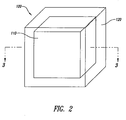
- the present invention includes a dosage form that comprises at least one unit 100.
- the unit 100 may comprise a core 110 and a shell 120, in which the shell 120 completely surrounds the core 110.
- the exemplary dosage form illustrated in Figure 2 is approximately cubical in shape.
- Figure 3 is a cross-section of the dosage form shown in Figure 2 .
- the core 110 may contain powder particles and may contain Active Pharmaceutical Ingredients (API).
- API Active Pharmaceutical Ingredients
- the amount of API contained in the core may be chosen according to the desired dose of API chosen for therapeutic effectiveness of a particular API. This amount may vary widely depending on the nature of the API.
- the powder particles may comprise at least two different kinds of particles each having their own composition, with the particles being mixed together with each other, as described elsewhere herein.
- the powder particles in the core may comprise both particles 230 of a release-blocking polymer and that is poly (vinyl acetate) particles 240 of a release-regulating polymer that hydrates upon exposure to water such that an aqueous solution can diffuse therethrough. It is possible that some or even all of the particles 230, 240 in the core 110 may not be bound to each other or to any other particle.
- particles 230 and 240 in the core 110 may be bound to each other at least to some degree.
- the binding may take the form of substances deposited between the powder particles 230, 240 that, as shown in Figure 3 , may at least partially occupy the space between the particles and may form necks 260 which connect either kind of powder particles 230, 240 to one or more adjacent particles 230, 240.
- the substance may be a core binder substance that binds particles together by surrounding or adhering to particles and partially occupying space between particles, although this is optional.
- the substance may be an API.
- the substance could be both a core binder substance and an API.
- the core may have pores distributed throughout it, or may be substantially solid with very little porosity such as less than 5%. It is possible that some of the powder particles, such.as the particles of the release-regulating polymer, may have API absorbed within them. It is possible that absorbed API within particles of release-regulating polymer may be the principal form in which API exists within the core.
- the API and optionally the core binder substance may be contained in substantially all of the core 110, or may be contained in less than all of the core 110, as described elsewhere herein in regard to the possible existence of a buffer region.
- the API may be water-soluble, meaning that the API would be soluble in bodily fluids- such as digestive fluids.
- a highly water-soluble API may have solubility greater than 500 mg/cc at room temperature. However, it is not necessary that the API be soluble to that degree.
- a wide range of aqueous solubility of the API is possible.
- any region such as the core or the portion of the core that contains API there is an aggregate volume of space not occupied by powder particles, and this aggregate volume may be termed the void volume.
- the amount of the API that could be dissolved in a volume of water equal to the void volume of the core at a specified temperature such as either room temperature or body temperature.
- the amount of API contained in the core could be less than or equal to the amount of API that than can be dissolved in the void volume of water.
- the amount of API contained in the core could be greater than such amount. As described elsewhere herein, this choice can have an impact on the release profile of the API from the dosage form and on certain details of the manufacturing method used to manufacture the dosage form.
- the amount of API in the dosage form may be determined by the therapeutic dose for a particular API, which can vary widely.
- the dosage form described in the Examples uses a relatively high-dosage API, but other API could have lower amounts per unit of core volume.
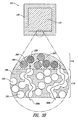
- the shell .120 which is shown in detail in Figure 3(a) and Figure 3(b) , may surround the core 110 in all directions.
- the shell 120 may be constructed so that the shell regulates the passage of substances, including API, through the shell by diffusion. Accordingly, the shell 120 may be substantially continuous and substantially free of pinholes or macroscopic defects (on the order of two or three microns), at least at the time of administration of the dosage form to a patient.
- the shell 120 may comprise a composition that gives it desired diffusive properties when it is wet with water or aqueous solutions.
- the shell 120 may contain no or substantially no API, may contain more API than the core, or any amount of API therebetween.
- the shell may comprise a release-blocking polymer that is poly (vinyl acetate) and a release-regulating polymer that hydrates upon exposure to water such that an aqueous solution can diffuse therethrough.
- a release-blocking polymer that is poly (vinyl acetate)
- a release-regulating polymer that hydrates upon exposure to water such that an aqueous solution can diffuse therethrough.
- the release-regulating polymer may exist in the shell 120 as identifiable particles which are release-reguiating polymer particles 250 which by their touching may form paths such as 280a.
- the release-regulating polymer may exist in the shell 120 as tortuous paths 280b that may have narrower parts and wider parts.
- the release-regulating polymer could exist as a three-dimensionally interconnected network, whose appearance in cross-section would also be as shown in Figure 3(b) .
- the release-blocking polymer may exist as a substantially continuous phase 290 of the release-blocking polymer that either fully or partially incorporates the release-regulating polymer particles 250 or other form of the release-regulating polymer.
- the release-blocking polymer may surround, adhere to, or be in substantial contact with the release-regulating polymer particles 250 or other form of the release-regulating polymer, thereby incorporating the release-regulating polymer to form a continuous structure that is the shell 120.
- the release-regulating polymer particles 250 in the shell may have overall dimensions which are somewhat less than the thickness of the shell 120, which contributes to the ability of the shell 120 to either partially or fully incorporate the release-regulating polymer particles 250.
- the maximum external dimension of the release-regulating polymer particles 250 may, for example, be less than one-third of the thickness of the shell 120.
- the release-regulating polymer particles 250 may touch each other or come in very close proximity to each other such that at least for some series of particles 250 there is a somewhat continuous path 280a from one side of the shell 120 to the other side, passing through various release-regulating polymer particles 250.
- a path 280a is labeled in Figure 3(a) .
- the release-regulating polymer may exist as a tortuous path 280b that may comprise narrower parts and wider parts. It is possible that the paths 280 may form a three-dimensionally interconnected network. Of course, any or all of these possible path geometries could exist together simultaneously in a shell 120.
- the release-regulating polymer may be such that upon exposure to water, path 280 attains a state such that water and aqueous API solution can diffuse along that path through the shell 120.
- the release-regulating polymer may hydrate upon exposure to water.
- the release-regulating polymer may be such that upon exposure to water or bodily fluids it forms a gel that permits diffusion through it of water and aqueous solutions.
- the release-regulating polymer may be such that its absorption of water is approximately independent of the pH of the water or aqueous solution to which it is exposed.
- the release-regulating polymer may be hydrophilic.
- the other polymer present in the shell 120 is the release-blocking polymer that is poly (vinyl acetate).
- the release-blocking polymer may be present in the shell as a continuous phase 290.
- the release-blocking polymer may be substantially impermeable to water and to aqueous solutions and may be substantially insoluble in water.
- the release-blocking polymer may be soluble in other solvents.
- the release-blocking polymer may be soluble in solvents such as ethanol and other alcohols to an extent suitable to permit certain manufacturing processes as described elsewhere herein.
- the release-blocking polymer may be hydrophobic.
- the release-blocking polymer by itself may have a glass transition temperature less than 50°C. Having such a transition temperature can be helpful in achieving a shell that is free of macroscopic defects.
- the release-blocking polymer may be chosen so that it is sufficiently pliable, either by itself or in the presence of a plasticizer, to undergo deformation in the form of a possible compressing operation, without suffering cracks.
- the proportion of the release-blocking polymer and the release-regulating polymer in the shell may be chosen so as to achieve a desired time scale of the release profile of the unit or dosage form. For example, greater content of release-regulating polymer would generally result in a faster overall time scale of the release profile.
- the release-blocking polymer may comprise at least 40% by volume of the shell, although this is only approximate.
- the proportion of release-blocking polymer to release-regulating polymer in the shell may be substantially the same as the proportion of release-blocking polymer to release-regulating polymer in the core or may include any ratio designed to meet a given release profile.
- the shell 120 may also comprise a plasticizer. More specifically, the release-blocking polymer in the shell may comprise a plasticizer.
- a plasticizer is a compound that may be added to a polymer to impart softness and flexibility, such as by causing polymer chains to relax.
- a plasticizer may be incorporated into a polymer to increase the workability, flexibility, or distensibility of a polymer by increasing the free volume between the polymer molecules. The increase in free volume increases the freedom of movement for molecules of the release-blocking polymer and therefore provides better fusing between particles of the release-blocking polymer to form a continuous phase 290 comprising release-blocking polymer.
- a plasticizer may be a polymeric material and may be a low or moderate molecular weight liquid, or occasionally, a low melting point solid. A plasticizer may cause the glass transition temperature of a polymer to be lower than it would be in the absence of the plasticizer.
- the plasticizer may be present in the shell in any form. The plasticizer is not specifically shown in Figure 3 because it might not exist in its own distinct regions and even if it did, these might be on a size scale that is far smaller than what is illustrated.
- the plasticizer may, for example, be present in the form of micelles or tiny drops interspersed in the release-blocking polymer.
- the plasticizer may be soluble in solvents such as ethanol or other alcohols.
- the presence of a plasticizer compound in the release-blocking polymer may be helpful in achieving a shell which is free of cracks, macroscopic porosity, macroscopic defects, etc., because a material which includes a plasticizer would not be brittle and hence this would lessen the possibility of cracks forming in the shell due to brittleness.
- the need for a plasticizer may depend on how pliable the release-blocking polymer is in the absence of a plasticizer.
- a release-blocking polymer with a high glass transition temperature in the absence of a plasticizer may need a plasticizer, although a plasticizer could be used even if not considered necessary.
- a release-blocking polymer with a low glass transition temperature may not need a plasticizer.
- the release-blocking polymer and the plasticizer and the concentration of the plasticizer may be chosen so as to result in the combination of the release-blocking polymer and the plasticizer having a desired glass transition temperature. They may be chosen so as to result in a glass transition temperature that is lower than a maximum allowable temperature to which the Active Pharmaceutical Ingredient (API) may be exposed without damage.
- the glass transition temperature of the combination of the release-blocking polymer and the plasticizer in the shell may be lower than the glass transition temperature of the release-blocking polymer in the core.
- the release-blocking polymer and a plasticizer and an appropriate concentration of plasticizer may be chosen so that the release-blocking polymer plus plasticizer is sufficiently pliable to undergo deformation in the form of a possible compressing operation, without suffering cracks.
- the shell region may have a substantially uniform wall thickness (thickness perpendicular to its local surface) everywhere within a unit.
- the shell may be designed so that the shell wall thickness is not uniform everywhere within a unit.
- the shell thickness might be uniform or might even be designed to be non-constant. In any case, it is still possible to practice the present invention.
- achievable shell wall thicknesses such as thicknesses being approximately a small integer multiple of a characteristic distance (drop-to-drop spacing, line-to-line spacing, or layer thickness) which is related to manufacturing, as discussed elsewhere herein.
- the small integer multiple may be the same as or different from each other.
- the small integer may be as small as 2 or even 1.
- the shell thickness in the present invention may be as small as 100 micrometers or smaller, or as large as 1000 micrometers or larger.
- the materials of the shell may be chosen and the shell may be manufactured so that the shell is substantially defect-free at the time of administration of the dosage form to a patient and, although the release-regulating polymer may become a gel upon exposure to aqueous liquids, the shell may remain substantially intact throughout the release.
- the shell materials may be chosen and the shell may be manufactured so that the shell is substantially defect-free at the time of administration of the dosage form, but at least a component of the shell is suitable to degrade somewhat upon exposure to bodily fluids during time period of interest for controlled release.
- the release-regulating polymer may be subject to degradation upon exposure to bodily fluids. The choice can depend on details of the desired release profile.
- the API-containing portion of the core may be less than the entire core. This is shown in Figure 4 , which is a cross-section of the unit or dosage form.
- API may be contained in only a central portion 310 of the core 110.
- the invention may further include, within the core, a buffer region 320, located inside the shell 120 and separating the API-containing portion 310 of the core from the shell 120 in all or at least some directions.
- the buffer region 320 may completely surround the API-containing region 310.
- the buffer region 320 may contain powder particles but may be free of API and may optionally be free of any other binder substance.
- the powder particles in the buffer region may be unconnected to each other or they may be at least somewhat connected to each other such as by a non-API-containing substance.
- the powder particles in the buffer region may have substantially the same proportion of release-regulating polymer to release-blocking polymer as the rest of the core has.
- the buffer region may have dimensions which are chosen so as to help produce a desired delay time between the time of administration of the API to a patient and the time when any substantial amount of API begins to be released from the dosage form.
- the buffer region may have dimensions that are chosen based on considerations related to bleeding, as described elsewhere herein.
- the buffer region or the entire core or any portion of the core may have void space between at least some of the powder particles.
- the buffer region or the entire core or any portion of the core may have powder particles and other substances in the core so packed together as to achieve a density having less than 5% void.
- the dosage form may consist of only one unit 100 having the core 110 and shell 120 designs that has already been described.
- the dosage form may comprise more than one unit 100 which may be joined to one or more other units by inter-unit binding regions 440 to make up a dosage form 400.
- the inter-unit binding region 440 may comprise powder particles and an inter-unit binding substance.
- the powder particles in the inter-unit binding region may have substantially the same proportion of release-regulating polymer to release-blocking polymer as the core or the shell has.
- the inter-unit binding substance may be a substance suitable to cause the individual units 100 to separate from each other upon exposure to any aqueous liquid, or to cause the units to separate from each other upon exposure to a liquid of specified pH, such as the pH of gastric fluid or the pH of intestinal fluid.
- the individual units either may be identical to each other or may be different from each other. If the units are different from each other, the differences between units may be in any one or more of features of the units such as size, shape, the composition of the API contained within the units, quantity of API contained within the units, release characteristics of API from the units, etc. It is possible that not all of the units have the core-and-shell structure that has been described; it would for example be possible for some units to have a structure that does not have a shell, which would provide a more immediate release of API. It is possible for at least one unit to have a buffer region in its core while at least one other unit does not have a buffer region. Of course, it is also possible for different units to contain different API.
- Figure 5 illustrates a dosage form 400 which comprises eight units 100 arranged in the form of two units by two units by two units in each of three mutually orthogonal directions, with each unit having at least approximately identical size and shape.
- the dosage form as a whole or the individual unit or units may have a rectangular prismatic shape, which may be cubical. Other possible shapes include cylindrical and other shapes.
- the overall dimensions and shape of the dosage form, whether it is a single unit or multiple units, may be chosen for ease of swallowing by a patient.
- either one unit or multiple unconnected units or a built-up dosage form 400 comprising multiple units may be further enclosed by a capsule such as a gelatin capsule.
- a capsule may, for example, fit loosely around the units or dosage form.
- a gelatin capsule may, for example, improve ease of swallowing. It is possible that a plurality of units may simply bye packaged together without being attached to each other, by being enclosed within a capsule.
- the release-regulating powder particles may be or may include hydroxypropyl methylcellulose.
- Hydroxypropyl methylcellulose HPMC is a pharmaceutical excipient that forms a gel upon contact with water but degrades only very slowly. HPMC is hydrophilic.
- Other examples of possible release-regulating polymers are hydroxypropyl celluloses (HPCs); methylcelluloses or carboxymethyl celluloses; natural hydrogels such as xantham gum, locust bean gum, alginic acid derivatives, gellan gum, guar gum, tragacanth; vinyl pyrrolidone/vinyl acetate copolymers; and polyvinyl pyrrolidones.
- the release-blocking polymer that is poly(vinyl acetate) may be or may include Kollidon.
- Kollidon BASF Corporation, Shreveport, LA
- BASF Corporation, Shreveport, LA is a polymer that is useful in dosage forms, which comprises 80% polyvinyl acetate and 19% polyvinylpyrrolidone (the balance being, surfactant, stabilizer or other substances). It is soluble in ethanol. If this substance is used as the release-blocking polymer, a plasticizer might not be necessary, although a plasticizer could still be used.
- Other examples of possible release-blocking polymers are polyvinyl acetate.
- plasticizer suitable for use with Kollidon is triethyl citrate.
- suitable plasticizers include triacetin, diethyl phthalate, acetyltriethyl citrate and acetyltributyl citrate.
- Still other examples of possible plasticizers include, but are not limited to, carboxylic acid esters and phosphoric acid esters.
- the plasticizer may be chosen to be sufficiently soluble in a selected solvent such as ethanol or another alcohol to permit the deposition of a sufficient amount of plasticizer to achieve the desired pliability or depression of the glass transition temperature of the release-blocking polymer.
- the API may be at least somewhat water-soluble, which may be helpful for allowing API to diffuse out through the diffusion boundary after water has permeated through the diffusion boundary.
- the API may have, as a minimum aqueous solubility, a solubility that is related to the desired dose of API from the unit.
- the API may be chosen to have an aqueous solubility at room temperature that is greater than 500 mg/cc, which is the approximate solubility of pseudoephedrine hydrochloride, which is a highly water-soluble API.
- solubility is not required.
- API of interest includes metoprolol, d-chlorpheniramine maleate, chlorpheniramine maleate, diphenhydramine hydrochloride, caffeine, d-brompheniramine maleate, brompheniramine maleate, aminophylline, and orphenadrine citrate.
- polyvinyl pyrrolidone ISP Technologies, New Milford, CT.
- 3DP three-dimensional printing
- Three-dimensional printing illustrated in Figure 1 , includes a set of steps which may be repeated as many times as are necessary to manufacture an article.
- powder may be deposited in the form of a layer.
- the powder may be deposited by roller spreading or by other means such as slurry deposition.
- drops of a liquid may be deposited onto the powder layer to bind powder particles to each other and to other bound powder particles.
- timing of drop deposition such as from a printhead may be coordinated, for example by software, with the motion of the printhead in two axes, to produce a desired pattern of deposited droplets.
- drops of a second liquid, and even if desired a third liquid may also be dispensed in a appropriate patterns on the same powder layer.
- registration or coordination may be performed to accurately determine the relative placement of the various liquids.
- the term drops can be understood to include not only spherical drops but any of the various possible dispensed fluid shapes or structures as are known in the art.
- the printing pattern(s) in each printed layer may in general be different from the printing pattem(s) in other layers, with each printing pattern being chosen appropriately so as to form an appropriate portion of a desired object.
- the liquid may be dispensed by a dispensing device suitable for dispensing small quantities of liquid drops, which may resemble an ink-jet printhead.
- the dispensing device could be a microvalve or it could be a piezoelectric drop-on-demand printhead or a continuous-jet printhead or other type of printhead as is known in the art.
- the unbound powder supports the bound shape and the later deposited layers of powder.
- the unbound and untrapped powder may be removed, leaving only the shape that has been bound together. If desired for a specific purpose, heating may be performed either before or after unbound powder is removed.
- liquids that are dispensed onto the bulk material may be a pure liquid, or may include solid particles in the form of a suspension or may be a liquid containing solubilized Active Pharmaceutical Ingredient (API).
- API Active Pharmaceutical Ingredient
- One possible purpose of a dispensed liquid may be to deliver the API to the dosage form being manufactured, and such a liquid may be referred to as an API-containing liquid.
- Another possible purpose of the dispensed liquid may be to cause powder particles to bind to each other. Any of the dispensed liquids may serve either or both of these functions or some portion thereof.
- Binding of the particles can occur through any of several mechanisms.
- One mechanism is that the dispensed liquid may be a solvent of at least some of the powder, in which case the dispensed liquid actually dissolves powder particles or portions of them. As the solvent in the dispensed liquid evaporates, the particles resolidify such that they are joined together. In this mechanism of binding, it is not necessary for the powder particles to dissolve completely; it is just necessary for enough dissolution to occur so that when the solvent substantially evaporates, the dissolved material together with any undissolved material forms a substantially solid mass.
- the dispensed liquid may simply solidify around solid particles, thereby binding them.
- the dispensed liquid may contain a dissolved adhesive substance that is left behind when the volatile part of the dispensed liquid evaporates, thereby binding the particles together.
- the dissolved substance may be or include a binding substance.
- the dissolved substance may be an API.
- the dissolved substance may be or include a polymer.
- the dissolved substance may be or include a plasticizer.
- the manufacturing method may comprise dispensing into the intended core region of the unit or dosage form an API-containing liquid.
- the API-containing liquid may simply serve as a means of placing the API within the dosage form, or it may also function as a binding agent.
- the API-containing liquid may be absorbed into at least some of the powder particles when it interacts with these particles.
- the manufacturing method may comprise dispensing into the intended shell region of the unit or dosage form a shell binder liquid.
- the shell binder liquid may be free of the API that is dispensed into the core.
- the shell binder liquid may comprise a plasticizer and may be a solvent for the release-blocking polymer.
- the manufacturing method may comprise dispensing into the intended inter-unit binding region of the unit or dosage form an inter-unit binder liquid, which may contain an inter-unit binding substance.
- Figure 1 illustrates a typical 3DP apparatus.
- the apparatus includes a printer including a first axis of movement, a second axis of movement that may be perpendicular to the first axis of movement, and a liquid dispensing device.
- the dispensing device can be moved with respect to a powder bed and can dispense drops of a liquid, or multiple liquids, onto a powder bed.
- Three-dimensional printing can have spatial descriptors in each of three different, typically orthogonal directions.
- fluid may be deposited in drops or in fluid units resembling drops. Drops may be deposited in a succession that forms a line corresponding to the motion of the printhead. The spacing between those drops is the drop-to-drop spacing.
- another line may be deposited adjacent to the earlier-deposited line and separated from the earlier-deposited line by a distance that is a line-to-line spacing.
- another powder layer may be deposited, with each powder layer having a layer thickness. The powder layer thickness is the third descriptor.
- a voxel or unit volume may be defined by one drop-to-drop spacing in the fast axis direction of motion, by one line-to-line spacing in the slow axis direction of motion, and by one layer thickness in the vertical direction. Some of this unit volume is occupied by powder particles, and the remainder of the unit volume is empty space that collectively has a volume that is the void volume.
- the saturation parameter describes how much of the void space in this unit volume is occupied by liquid which is dispensed in a drop or fluid unit which is dedicated to that particular voxel.
- the saturation parameter is the ratios of the dispensed fluid volume to the volume of empty space in the voxel.
- saturation parameters may be chosen to be slightly less than; or somewhere approximately equal to, 1.0. Excessively small saturation parameters tend to result in poor structural integrity of a manufactured part. Excessively large saturations parameters tend to result in excessive bleeding of liquid beyond where the liquid was deposited.
- the saturation parameter may be chosen, in the case of the shell, based upon what results in a defect-free shell, and may exceed 1.0 if necessary.
- the powder that is deposited to form a layer for use in 3DP may include both particles of the release-blocking polymer that is poly (vinyl acetate) and particles of the release-regulating polymer.
- the powder may be substantially identical everywhere within a deposited layer. Everywhere in a powder layer the deposited powder may, for example, have substantially the same proportion between the two types (release-blocking and release-regulating) of polymers. This means that the composition of the spread powder may be the same for local regions that eventually become part of the shell as it is for local regions that eventually become part of the core and for local regions that eventually become part of the inter-unit binding region (if an inter-unit binding region is present).
- the proportion of the release-blocking particles and the release-regulating particles may be chosen so as to determine the overall time scale of the release profile of API from the dosage form. A larger proportion of release-regulating polymer will result in a faster overall time scale of the release profile. More detailed types of powder spreading, which may include deposition of different compositions of powder in different places, are described in commonly assigned U.S. Patent Nos. 5,934,343 ; 6,213,168 ; and 6,336,480 .
- the shell of the dosage form of the present invention may be formed by the dispensing of a shell binder liquid onto the layer of powder.
- the shell binder liquid may be selected so that the release-blocking polymer is sufficiently soluble in the shell binder liquid so that the shell may be formed by at-least-partial dissolution of the release-blocking polymer followed by resolidification.
- a typical solvent used in the shell binder liquid may be ethanol or other alcohols or a mixture comprising a substantial fraction of ethanol.
- the use of some polymeric materials may involve the use of a plasticizer.
- the plasticizer may be contained in the shell binder liquid that is dispensed onto the powder in the intended locations of the shell.
- the plasticizer and the solvent in the shell binder liquid may be selected so that the solvent in the shell binder liquid is a solvent for the plasticizer, so that the plasticizer can be delivered to specified places in the dosage form which is being manufactured.
- the plasticizer and the solvent in the shell binder liquid may be selected so that the plasticizer is sufficiently soluble in the solvent which is included in the shell binder liquid so that sufficient plasticizer can be delivered to the release-blocking polymer to achieve the desired pliability of the release-blocking polymer in places at which the shell binder liquid is deposited.
- the shell binder liquid may dissolve at least portions of particles of release-blocking polymer and then when the solvent in the shell binder liquid evaporates, both release-blocking polymer and the plasticizer may come out of solution and may be left behind together when the solvent evaporates.
- the shell binder liquid may also include a viscosity-modifying agent suitable to produce a desired viscosity of the shell binder liquid by virtue of the agent being dissolved in the shell binder liquid.
- Suitable thickening agents include polyvinyl pyrrolidone.
- a typical shell binder formulation may be 15% by weight triethyl citrate (which is a plasticizer) dissolved in 85% by weight of a solvent which itself comprises water-ethanol in a 25:75 ratio (by weight).
- Ethanol and other organic solvents are known to have a relatively low surface tension such as approximately or less than 25 dyne/cm, which means that they can be more difficult to dispense in a precise, controlled manner than are liquids having a higher surface tension.
- the dispenser may be a microvalve, a piezoelectric drop-on-demand printhead, a continuous-jet-with-deflection printhead, or other type of dispenser or printhead as is known in the art.
- the API-containing liquid may contain the API that is intended to be in the core of the unit.
- the API-containing liquid may further contain a binder substance, although this is optional.
- the API-containing liquid may further comprise a viscosity modifier and/or a surfactant, although these are optional.
- a possible API-containing liquid for deposition in the core is 50 wt% pseudoephedrine hydrochloride as an API, 5% polyvinyl pyrrolidone, 0.01% Tween 20 as a surfactant, and the balance water.
- the API pseudoephedrine hydrochloride is highly water-soluble. Other possible API, including other API that are highly water-soluble, are described elsewhere herein.
- the printing may comprise just one printing pass, followed by the spreading of the next layer of powder.
- inter-unit binder liquid may contain the inter unit binding substance.
- the inter-unit binding liquid may be free of API.
- shell wall thicknesses may be related to parameters that pertain specifically to the three-dimensional printing.
- Primitive features that can be printed by three-dimensional printing can include a layer (which may correspond to a deposited powder layer), a line (such as a pass along the fast axis direction of printing), and a drop.
- the shell may be printed so that its thickness in one direction is formed by dispensing shell binder liquid into a small integer number of adjacent drops, and its thickness in another direction is formed by dispensing shell binder liquid into a small integer number of adjacent lines, and its thickness in another direction is formed by connecting a small integer number of adjacent layers.
- the small integers can in general be different from each other. It is possible that the powder layer thickness, the line-to-line spacing and the drop-to-drop spacing might not all be exactly equal to each other, which might mean that the three different shell thicknesses also would not exactly equal each other.
- the powder layer thickness, the line-to-line spacing and the drop-to-drop spacing can be chosen to be substantially equal to each other.
- the small integer can be different from place to place within the unit.
- the integer which describes the spacing in a particular direction as a multiple of a primitive feature dimension can be as small as, for example, 2.
- An absolute minimum value of the integer would be 1, and under some circumstances a value of 1 might be sufficient for producing a release barrier that is free of defects and pinholes. However, more confidence can be obtained with a value of 2. Still larger integers would provide even greater confidence, but would have an impact on the utilization of space inside the dosage form, because space that is utilized for the shell may be unavailable for placement of API.
- the described process may produce, by three-dimensional printing, a shell that is substantially solid and continuous and free of pinholes, even while other parts of the dosage form, such as the core, may contain porosity.
- Producing a shell which is substantially solid and continuous and free of pinholes means that the diffusion through the shell, and hence the release of API from the dosage form, may be determined by the behavior and quantity of the particles of release-regulating polymer in the shell.
- the product at the time of completion of 3DP frequently contains porosity, but in the dosage form of the present invention, in selected places (namely, the shell), there may be substantially no porosity, even while other parts of the dosage form (namely the core) may be porous.
- the substantially continuous shell may be achieved in part because of the use of a dispensed liquid that is a solvent for the release-blocking polymer, so that there is a process of at least partial dissolution of the particles of release-blocking polymer followed by resolidification.
- the saturation parameter is the ratio of dispensed shell binder liquid assigned to a voxel, divided by the total amount of empty volume (void space) between powder particles in the voxel. Another factor which may help to achieve the substantially continuous shell is dispensing the shell binder liquid with a fairly large saturation parameter such as approximately or even slightly greater than 1.
- a similar parameter that describes the amount of shell binder liquid dispensed is the volume of shell binder liquid in a drop compared to the overall volume of a voxel to which the drop is delivered.
- This parameter is more directly related to the conditions of operation of a three-dimensional printing machine in that it does not require knowledge of the actual packing fraction of particles.
- a typical situation for powders is a packing fraction of approximately 50%, which means that the void fraction is 100% - 50% or 50%, and so if the shell binder liquid is deposited at a volume of 0.50 milliliters of shell binder liquid per milliliter of overall voxel volume, for a powder packing fraction of 50%, the saturation parameter would be 1.
- a deposition of slightly more than 0.50 milliliters of shell binder liquid per milliliter of overall voxel volume would give a saturation parameter slightly more than 1.
- Yet another factor which may help to achieve the substantially continuous shell is dispensing shell binder liquid in a pattern such that in all directions the shell is at least two voxel units thick, i.e., at least two drop-to-drop spacings or two line-to-line spacings or two powder layer thicknesses.
- shell binder liquid in a pattern such that in all directions the shell is at least two voxel units thick, i.e., at least two drop-to-drop spacings or two line-to-line spacings or two powder layer thicknesses.
- another factor helping to achieve the substantially continuous shell may be the use of a plasticizer in the shell binder liquid such that when the solvent in the shell binder liquid evaporates, the release-blocking polymer and the plasticizer solidify together and are closely mixed with each other.
- the plasticizer makes the polymer less brittle and more likely to heal defects.
- the printed unit afterward to a temperature and for a time suitable to promote curing of the release-blocking polymer plus plasticizer.
- the heating may be done at a temperature which is suitable to cure the release-blocking polymer plus plasticizer, such as at a temperature above the glass transition temperature of that combination of substances, while (if desired) being below the temperature at which the API is thermally damaged and below the glass transition temperature of release-blocking polymer which does not contain plasticizer.
- the dosage form such that there is a buffer region that may be formed by not dispensing upon certain space either the API-containing liquid or the shell binder liquid.
- This buffer region may be designed into the dosage form so that even with whatever bleeding of an individual deposited liquid might occur, the API-containing liquid deposited into the core would not meet the shell binder liquid, even as a result of bleeding of deposited liquids.
- the buffer region may be designed to result in a desired delay characteristic in the release profile of API from the dosage form.
- the buffer region may be formed by not dispensing API-containing liquid or shell binder liquid into a small integer number of drop-to-drop spacings and line-to-line spacings and powder layer thicknesses in an appropriate pattern so as to surround the central region of the core in all directions and so as to in turn be surrounded in all directions by the shell.
- the dosage form comprise multiple units which are attached to each other at the time of administration of the dosage form but separate from each other after administration of the dosage form.
- Manufacture of such a dosage form may involve all of the previously described actions and also may involve dispensing yet a third liquid onto the powder bed in appropriate places.
- This third liquid may be termed the inter-unit binding liquid. Dispensing of this liquid may be suitably coordinated and registered with the dispensing of the shell binder liquid and the API-containing liquid.
- the inter-unit binder substance may be soluble in water or may be soluble only in aqueous solutions of a specified pH range.
- One of the later steps in manufacturing by three-dimensional printing may be to heat the articles being manufactured. Heating may be performed to accelerate evaporation of volatile substances such as solvents. Heating may be performed to help make the shell more defect-free by heating the shell to a temperature at which it is somewhat soft, which may encourage possible defects in the shell to heal through a curing process.
- heating may be performed at a temperature which is above the glass transition temperature of the release-blocking polymer containing plasticizer, i.e., the combination which is present in the shell, but is below the glass transition temperature of unplasticized release-blocking polymer that is poly (vinyl acetate) which exists elsewhere in the dosage form such as in the core. In this way, curing of polymer and healing of possible defects may be caused to occur in the shell, while not occurring in the core. It is possible that a heating step can be used either for the purpose of drying or for the purpose of healing defects or for both of these purposes simultaneously. Heating may be performed either before or after the harvesting and de-dusting of the units, or both before and after the harvesting and de-dusting.
- the manufacture of the dosage forms of the present invention can include compression of the dosage form after completion of three-dimensional printing. Compression can remove most of the inter-particle void space and can result in a larger amount of deposited API being included within the final dimensions of a dosage form, which may, for example, be chosen based on a constraint such as ease of swallowing.
- compression may be performed by placing a three dimensionally printed unit or dosage form in a die and compressing it with a ram as described in commonly assigned U.S. Patent Application No. 10/284,430 .
- compression may be performed such as to result in a void fraction of less than 5% everywhere in the unit or dosage form.
- the appropriate choice of polymer or polymer plus plasticizer can enable the release barrier to be sufficiently flexible to survive the significant deformations occurring during the compression process without experiencing the creation of any new cracks, pinholes or defects.
- the dosage form upon administration to a patient, the dosage form may break up into individual units either upon administration or later.
- the dosage form may break up upon exposure to any liquid, or specifically to gastric fluid, or specifically to intestinal or other types of fluid, such as may be determined for example by the pH of the fluid.
- the release-regulating polymer in the shell may absorb water or body fluids. Absorbing water or body fluids into the shell, which may be free of API, may require a certain period of time. This may help the unit or dosage form to avoid releasing any initial burst release of API, which is a sometimes undesirable phenomenon which has been known to occur with other types of dosage forms.
- the release-regulating polymer may, for example, become a gel upon absorbing water or body fluids. As a result, there may be formed paths through the shell that allow diffusion of liquids through it in either direction or both directions. Body fluids such as digestive fluids, or components of such fluids, may pass through the shell into the interior of the unit.
- the unit comprises a buffer region
- such fluid may also have to pass through the buffer region after passing through the shell, before encountering API.
- the buffer region may be designed and sized so that it helps to provide a delay of initial release of API from the dosage form. (As described elsewhere herein, another factor that may be used in sizing the buffer region may be the extent of bleeding which occurs under specific printing conditions.) As described elsewhere herein, a delay time of several hours is achievable, if desired. The existence of a delay time may itself be desirable for a particular API. In addition, as described in connection with the use of multiple units in a dosage form, the existence of a delay time may be useful in obtaining a desired overall release profile for an entire dosage form as a combination of various release profiles of individual dosage forms.
- the fluid When the fluid seeping into the core encounters API, the fluid may dissolve API to form an aqueous API-containing solution in the core region of the dosage form. The aqueous API-containing solution may then diffuse outward through the shell and thereby be released into the patient's digestive system.
- the void volume there is an aggregate volume of space not occupied by powder particles, which may be termed the void volume.
- the void volume together with known solubility data for a particular API, there is an amount of the API that could be dissolved in a volume of water equal to the void volume at a specified temperature such as either room temperature or body temperature.
- the amount of API contained in the core could be less than or equal to the amount of API that can be dissolved in the void volume of water.
- the concentration of API in the liquid inside the core may start out at its maximum value early in the time after fluid has diffused into the core, and may then decrease as time progresses and diffusion of API out of the core occurs.
- the amount of API in the core is more than what could be dissolved by the amount of water that can occupy the void spaces in the core.
- the water or fluid creates inside the shell an aqueous solution of API having the saturation concentration of API, and some solid API will remain in the core.
- some of the undissolved API may further dissolve, and there may continue to be a saturated aqueous solution of API in the core region for some time until all of the remaining solid API has dissolved, so that for a portion of the release profile this aqueous solution may have an essentially constant API concentration as a source which drives the diffusion. This latter situation may help to attain a nearly zero-order release profile, at least for as long as there remains undissolved solid API in the core.
- the units After being administered to a patient, the units may pass entirely through the patient's digestive system while retaining approximately their original dimensions, since a diffusion-controlled dosage form may typically be designed so that only the API leaves the dosage form.
- a dosage form may comprise multiple units that are not identical to each other.
- various units may have the same API but different release profiles as a result of, for example, different wall thicknesses, or could be quick release as a result of having no wall, or some units could have delay times.
- the overall release profile from the entire dosage form may be calculated as a sum or superposition of the release profiles of individual units.
- the overall release profile could be something other than zero-order.
- the overall release profile could, for example, be chosen so as to give a desired time history of blood concentration of API.
- a drop test was used to gain understanding of interactions between potential binder liquids and potential powders. This test included dropping a drop of a potential binder liquid onto a bed of a potential powder and visually observing the interaction. In such a test, the main observation was a qualitative observation of the infiltration of binder into powder, such as the rate of infiltration. The dropping of drops was done by hand, and the drop that was dropped was substantially larger than a dispensed drop from an actual printhead in three-dimensional printing, but still the observations were qualitatively useful.
- both core and shell binders need to be absorbed into the powder before the next pass of powder spreading. Slow infiltration results in insufficient time for the interaction to take place. There is also some disadvantage for excessively rapid infiltration in that it can cause undesirable bleeding into the local regions not intended to receive liquid.
- the material used as the powder was a single material, i.e., only the release-blocking polymer, not the combination of two different types of polymers which is described elsewhere herein for making actual dosage forms.
- the film was tested by being clamped all around its perimeter in a leak-tight manner and exposed on one side of the film to an API-containing liquid and on the other side of the film to simulated gastric fluid.
- the apparatus is shown in Figure 7 .
- the apparatus that clamped the test material and exposed it to an API-containing liquid was submerged in the liquid (dissolution medium) in a dissolution cell, in a position such that the film was at the bottom of the apparatus, to insure that any air bubbles contained inside the apparatus would float away from the film.
- the only path for release of API from the apparatus to the outside liquid (dissolution medium) was diffusion or leakage through the film itself.
- the liquid on the source side of the film was a simple liquid solution, without any solid solute being present along with the liquid, i.e., the liquid solution was not saturated.
- Kollidon SR in the shell region the major polymeric component of Kollidon SR, namely PVAc, becomes fused by the ethanolic shell binder liquid due to the high solubility of PVAc in ethanol.
- the subsequent drying process at 50°C for 12 hours effectively cured PVAc, which has a low glass transition temperature (35°C) even in its unplasticized state, to form an impermeable barrier to completely block the release other than through the hydrated HPMC if HPMC is included in the powder.
- Tests were performed by manufacturing dosage forms or units and then dissolving them in a liquid dissolution medium to obtain in vitro dissolution data which simulated in vivo conditions as closely as possible. Because it is not possible to predict exact conditions in the digestive tract of an actual patient, the formulations were tested under a variety of dissolution conditions, including varying the pH of the dissolution medium, the paddle stirring rate in the dissolution cell and the presence/absence of a sinker which (if used) served to keep the dosage forms submerged during dissolution testing. The number of units tested at any one time was varied together with the size of the dissolution chamber.
- Dissolution tests were performed in an 8-station dissolution test apparatus (VK 7000, VanKel Industries, Inc., Cary, NC) using a USP Apparatus II method and water or aqueous solutions as the dissolution medium.
- Dissolution media used included 0.1 N HCl solution having a pH of 1.2, and phosphate buffer solutions having pHs of 6.0 and 7.4, in order to evaluate the pH sensitivity of the dosage forms.
- the temperature of the dissolution medium was controlled at 37 ⁇ 0.5°C.
- the paddle speed was 50 rotations per minute, except when it was varied to 150 rpm to test the influence of that variable.
- Single units were used for dissolution studies except that some tests were performed for the purpose of in vivo-in vitro correlation, using 8 units encapsulated four units each in each of two #00 gelatin capsules (Gelcaps).
- Dissolution vessels of 200 mL and 900 mL were used for studies with single units and 8 units, respectively.
- the dosage forms were placed in a stainless steel cage in the dissolution vessels to prevent floating, while in other tests the dosage forms were allowed to float.
- Example dosage forms were manufactured on a 3DP machine.
- the powder used was a mixture, in specified ratios, of Kollidon SR (BASF Corp., Shreveport, LA) and hydroxypropylmethyl cellulose, substitution type 2910 (Pharmacoat 603, Shin-Etsu Chemical).
- Kollidon SR is a mixture of 80% polyvinyl acetate (PVAc) with a molecular weight of 450,000 Daltons, 19% polyvinylpyrrolidone with a molecular weight of 30,000 Daltons, and small amounts of sodium lauryl sulfate as a surfactant and silica as a stabilizer.
- the Kollidon was the release-blocking polymer and the hydroxypropylmethyl cellulose was the release-regulating polymer. These two materials were mixed using a twin shell blender for 15 minutes before fabrication. Three different ratios (by weight) were used, namely Kollidon SR-HPMC ratios of 80:20, 70:30 and 60:40. The 80:20 ratio was formulated to give the slowest release, and the 60:40 ratio the fastest release. Some data were also taken with a 40:60 ratio.
- Three-dimensional printing was performed using primitive dimensions that were a layer thickness of 400 micrometers, a drop-to-drop spacing of 400 micrometers, and a line-to-line spacing of 400 micrometers. Drops were dispensed at intervals of 1/800-second, and the printhead was moving at a rate of 400 microns for each 1/800-second, or 0.32 m/s.
- the flowrate of shell binder liquid which reliably gave defect-free shells was at least 1.8 g/min when the binder liquid was being dispensed at every consecutive droplet dispensing interval or every possible drop location at a droplet dispensing frequency of 800 Hz.
- the density of the shell binder liquid was 1.07 g/milliliter, so this means that the volume of an individual drop was 3.5E-11 m ⁇ 3.
- the overall volume of a voxel was 6.40E-11 m ⁇ 3. The ratio of these two quantities is 0.55 milliliters of shell binder liquid per milliliter of overall voxel volume.
- the packing density of the powder was not exactly known, but if the packing density were a typical value of 50%, then the saturation parameter would be slightly more than 1 (i.e., approximately 1.1).
- the shell binder liquid was approximately 15 wt% triethyl citrate (Spectrum Chemicals), together with approximately 85 wt% of an ethanol-water mixture, the ethanol-water mixture comprising approximately 75 wt% ethanol and 25 wt% water.
- the triethyl citrate was present as a plasticizer.
- the shell region was fabricated with a shell binder flow rate of 1.8 g/min.
- the shell binder liquid was dispensed through a microvalve and thence through a nozzle having an inside diameter of 0.003 inch (76 micrometers) or 0.004 inch (102 micrometers). Although other shell binder liquid flow rates were tested, 1.8 g/min was found to provide sufficient saturation to form a continuous shell free from pinholes.
- the API-containing liquid dispensed into the core was approximately 50 wt% pseudoephedrine hydrochloride, approximately 5 wt% polyvinyl pyrrolidone (molecular weight 17,000 Daltons, BASF Corp.), approximately 0.1 wt% of a surfactant which was Tween 20 (Spectrum Chemicals), with the balance of the composition being water.
- the API-containing liquid was dispensed through a microvalve and thence through a nozzle having an inside diameter of 0.0075 inch (190 micrometers).
- the flow rate of API-containing liquid was controlled at 2.1 g/min when a drop was being dispensed at every voxel under the specified conditions.
- This API is a relatively high-dose API.
- the units as printed were approximately cubical with an overall external side length of 4.6 mm. They had a core-shell structure with a shell thickness of 0.8 mm. The core had a side length of 2.8 mm.
- the fabricated dosage forms were oven dried at 50°C for 12 hours and were hand dedusted using a sieve to remove the excess unbound powder particles.
- a stability test was performed on the 12-hr formulation to determine the influence of high temperature and humidity on the dissolution properties.
- the dosage forms were stored at 25°C, 60% Relative Humidity and at 40°C, 75% Relative Humidity, in open and closed containers.
- Dissolution studies were performed on the samples at 1, 2 and 4 weeks. No significant changes in release characteristics were observed after a 4-week storage period for each of the samples in an open container condition.
- the excellent physical stability of the formulation may result from the drying conditions to which the dosage forms were exposed during manufacture.
- the dying step which was part of the manufacturing process, which was 12-hour exposure to 50°C, effectively cured the major polymeric component of the Kollidon SR, namely polyvinyl acetate, which has a low glass transition temperature (42-45°C) even when it is in an unplasticized state.
- the residual amount of ethanol in the nominal 12-hour formulation was also evaluated using a Gas Chromatograph method and was found to be less than 1.2 %.
- the Kollidon: HPMC ratio of 60:40 was intended to provide a release profile that released in approximately zero order fashion over a nominal 8 hour time period.
- the ratio of 70:30 was intended to provide a nominal 12-hour release profile.
- the ratio of 80:20 was intended to provide a nominal 16-hour release profile.
- An even faster release profile of approximately 4 hours was achieved with a Kollidon: HPMC ratio of 40:60.
- Figure 8 shows that these desired time frames were achieved. Although it is not shown in the Figure, repeatability among dosage forms manufactured at different times was good.
- the in vitro release profiles of the various formulations are demonstrated in Figure 8 .
- the overall in vitro release rates of the three formulations were close to their corresponding target release rates.
- the F2 statistics, used to compare the observed release profiles to the target profiles, were higher than 50% for all of the three formulations, demonstrating the similarity between the observed and target zero-order release profiles.
- every data point in the dissolution profiles of the three formulations deviated from the corresponding target release by less than 10%, except for the 16-hour data point for the nominal 16-hour formulation.
- the other two formulations were able to release drug to nearly 100% within the target time.
- For nominal 16-hr formulation it is known that the drug was released following zero-order kinetics up to approximately 75% at the 12 th hour. The release rate between 12 and 16 hr is not known because no sample was taken during this period of time.
- the dosage forms whose release profiles are shown in Figure 8 did not exhibit an initial burst release, which is a sometimes undesirable feature that often occurs with other designs of dosage forms. It is believed, although it is not wished to be restricted to this explanation, that the fact that the shell may be free of API, together with the fact that it takes a certain amount of time for the HPMC in the shell to hydrate and form paths which can support diffusion, helps to avoid the initial burst release feature which often occurs with other designs of dosage form.
- the dosage forms whose release profiles are shown in Figure 8 did not contain a buffer region (results for dosage forms which include a buffer region are given in the next example), and even without a buffer region they still did not exhibit any initial burst release.
- the shell for the dosage forms in this study was approximately 0.8 mm thick, much thicker than that typically obtained from the traditional film coating process. As a result, it took some time for HPMC in the shell to complete the hydration process to transition from the glassy state to the rubbery state so that the API could diffuse out of the dosage forms. It is believed, although not wishing to be restricted to this explanation, that this time-dependent hydration process in the shell was helpful in eliminating the initial bursting release, commonly observed with traditional reservoir type controlled release dosage forms.
- Units were manufactured, as described elsewhere herein, both with and without a buffer region.
- a buffer region When a buffer region was included in the dosage form, it had a thickness in all directions of two voxel units (two drop-to-drop spacings, two line-to-line spacings, two powder layer thicknesses) or approximately 800 micrometers, the same as the shell itself.
- the release profiles of units both with and without a buffer region were measured in the dissolution apparatus, and are shown in Figure 9 . It can be seen that the use of a buffer region of 800 micrometers thickness resulted in a delay of several hours in the start of release, compared to the release from a unit that had no buffer region. Part of the reason why the buffer region causes a delay may be time needed for the buffer region to hydrate.
- This data was taken with the formulation having a Kollidon SR: HPMC ratio of 60:40. The drug release from this dosage form was completely blocked for at least 3 hours.
- the dosage forms made as described previously, containing pseudoephedrine hydrochloride were administered to human subjects.
- the concentration of API in the subjects' blood was measured at designated times following administration of the dosage forms.
- the in vivo study was a single-dose, randomized, open-label, four-way crossover study. Ten normal adult male subjects between the ages of 21 and 28 and within ⁇ 15% of their ideal body weight according to the 1983 Metropolitan Height and Weight table were enrolled in this study after medical screening. The subjects were admitted to the clinic site for each phase at least 12 hours prior to dosing and were released after the 36-hour post-dose blood samples were taken.
- the dosage form of the present invention For subjects that received the dosage form of the present invention, four units of the formulation were manually inserted into a #00 gelatin capsule, and two capsules were administered to each subject. As a reference formulation, subjects were also administered Sudafed Immediate Release Tablets (GlaxoWellcome, South Africa) containing 60 mg of the same Active Pharmaceutical Ingredient. The dosage forms that were used as a control released all of their API within a short period of time after being administered to a patient.
- the dosing schedule of the four formulations was determined using a random number table. Each subject was randomly assigned to one of the four sequences to receive a single dose of 60 mg PEH after fasting for 10 hours. The subjects continued to fast until 4 hours after dosing, then a standard lunch was served. During each phase of the study, 7 ml venous blood sample were collected from each of the subjects immediately prior to drug administration (0 h) and at 0.25, 0.5, 1.0, 1.5, 2.0, 3.0, 4.0, 6.0, 8.0, 10, 12, 16, 20, 24, 30 and 36 hours after administration. The samples were transferred immediately into pre-cooled Li-Heparin containing test tubes. After centrifugation at 2000 rpm for 15 minutes, plasma samples were harvested and stored at -80°C until analysis.
- the plasma concentration-time curves for the three test formulations and the reference formulation are displayed in Figure 10 .
- the plasma profiles demonstrated a clear distinction between the formulations.
- the low variation of the plasma level data within the same formulation suggested the reproducible in vivo performance of the dosage forms.
- the pharmacokinetic parameters, calculated from the plasma concentration-time curves, are shown in Table 1.
- the C max values of the tested formulations decreased when the duration for drug release extended, as expected.
- the C max values of different formulations were also significantly different from each other.
- the T max values for the 12-hr and 16-hr formulations were not significantly distinguishable, however, both were significantly longer than the 8-hr formulation and the immediate release reference product.
- the relative bioavailability decreased slightly when the release duration was prolonged from the nominal 8-hour release to the nominal 12 hour release and to the nominal 16 hour release.
- the plasma pseudoephedrine concentrations above the LOQ were used for pharmacokinetic analysis.
- Pharmacokinetic parameters were calculated using the SAS System Statistics program (SAS Institute Inc., Cary, NC, USA) with the TPD (Therapeutic Products Directorate of Canada) macro PKVARM SAS.
- C max the area under the plasma concentration-time curve from time 0 to t, AUC( 0-t ), and from time 0 to infinity, AUC (0- ⁇ )
- the AUC (0-t) was calculated using trapezoid method.
- C( t ) is the plasma concentration of pseudoephedrine HCl at time t
- K e is the elimination rate constant, calculated as the negative value of the slope by linear regression of the terminal phase of the semilog plasma drug concentration-time profiles.
- the relative bioavailabilities (F rel ) of the test formulations were the ratios of their AUC (0- ⁇ ) values to the AUC (0- ⁇ ) of the reference formulation.
- the F rel values were derived for each subject and the arithmetic mean of ten subjects was used to represent the F rel of each test formulation.
- the cumulative in vitro release profiles of three formulations demonstrated good agreement with their corresponding in vivo absorption profiles, obtained using Wagner-Nelson method, as shown in Figure 11 .
- the in vitro release and the in vivo absorption plots were nearly superimposable for the three test formulations, indicating that the absorption of the active mainly depended on the release rates of the dosage forms.
- the linear regression analysis of the in vivo and in vitro data also suggested a significant linear in vivo-in vitro correlation.
- the slopes of the three test formulations are all close to unity, suggesting that the in vivo and in vitro release rates were similar.
- the release of active from the reference formulation was so rapid as to exceed the absorption rate, as indicated by the lower slope value.
- the intercepts of the three test formulations were all close to the origin, indicating the immediate absorption of active following administration.
- Diffusion-controlled dosage forms have been successfully developed using a core-and-shell geometry that can be made by three-dimensional printing.
- the dosage forms may have approximately a zero-order release profile.
- the time scale of the release profile can easily be altered by adjusting the ratio of the two types of polymers powder used in making the overall powder.
- Formulations having nominal release durations of 8, 12 and 16 hours, and also 4 hours, have been demonstrated.
- the release rates of the formulations increased with the fraction of HPMC in the polymer powder blend, due to the increased diffusion pathways for drug release.
- Defect-free shells have been fabricated even while other parts of the dosage form are porous.
- the manufacturing methods described have produced dosage forms which were consistent and repeatable and gave expected release profiles in both in vitro and in vivo tests.
- the manufacturing methods described produce the entire dosage form essentially in one process using only one powder raw material, rather than producing one part of the dosage form in one operation and another part in another operation.
- a release-blocking polymer that is poly(vinyl acetate) and particles of a water-soluble substance.
- a release-blocking polymer that is poly(vinyl acetate)
- particles of a water-soluble substance for example, lactose or mannitol could be used.
- This would make a micro-porous membrane (resembling that which is described in Kim, Controlled Release Dosage Form Design), but by a different method which would be a single-process manufacturing technique. Also, such a membrane could be substantially thicker than the membrane of Kim, which was made by a coating technique.
Landscapes
- Health & Medical Sciences (AREA)
- Chemical & Material Sciences (AREA)
- Animal Behavior & Ethology (AREA)
- Engineering & Computer Science (AREA)
- Veterinary Medicine (AREA)
- Public Health (AREA)
- Medicinal Chemistry (AREA)
- General Health & Medical Sciences (AREA)
- Pharmacology & Pharmacy (AREA)
- Life Sciences & Earth Sciences (AREA)
- Epidemiology (AREA)
- Materials Engineering (AREA)
- Manufacturing & Machinery (AREA)
- Bioinformatics & Cheminformatics (AREA)
- Physics & Mathematics (AREA)
- Optics & Photonics (AREA)
- Nuclear Medicine, Radiotherapy & Molecular Imaging (AREA)
- Organic Chemistry (AREA)
- General Chemical & Material Sciences (AREA)
- Chemical Kinetics & Catalysis (AREA)
- Emergency Medicine (AREA)
- Mechanical Engineering (AREA)
- Pulmonology (AREA)
- Oncology (AREA)
- Communicable Diseases (AREA)
- Medicinal Preparation (AREA)
- Pharmaceuticals Containing Other Organic And Inorganic Compounds (AREA)
- Acyclic And Carbocyclic Compounds In Medicinal Compositions (AREA)
Applications Claiming Priority (5)
| Application Number | Priority Date | Filing Date | Title |
|---|---|---|---|
| US37844902P | 2002-05-06 | 2002-05-06 | |
| US378449P | 2002-05-06 | ||
| US42509402P | 2002-11-08 | 2002-11-08 | |
| US425094P | 2002-11-08 | ||
| PCT/US2003/014376 WO2003092633A2 (en) | 2002-05-06 | 2003-05-06 | Diffusion-controlled dosage form and method of fabrication including three dimensional printing |
Publications (2)
| Publication Number | Publication Date |
|---|---|
| EP1503741A2 EP1503741A2 (en) | 2005-02-09 |
| EP1503741B1 true EP1503741B1 (en) | 2008-09-10 |
Family
ID=29406838
Family Applications (1)
| Application Number | Title | Priority Date | Filing Date |
|---|---|---|---|
| EP03747680A Expired - Lifetime EP1503741B1 (en) | 2002-05-06 | 2003-05-06 | Diffusion-controlled dosage form and method of fabrication including three dimensional printing |
Country Status (9)
| Country | Link |
|---|---|
| US (2) | US8088415B2 (enExample) |
| EP (1) | EP1503741B1 (enExample) |
| JP (1) | JP5041663B2 (enExample) |
| AT (1) | ATE407665T1 (enExample) |
| AU (1) | AU2003232078A1 (enExample) |
| CA (1) | CA2483028C (enExample) |
| DE (1) | DE60323482D1 (enExample) |
| ES (1) | ES2316791T3 (enExample) |
| WO (1) | WO2003092633A2 (enExample) |
Cited By (1)
| Publication number | Priority date | Publication date | Assignee | Title |
|---|---|---|---|---|
| WO2019199328A1 (en) * | 2018-04-13 | 2019-10-17 | Hewlett-Packard Development Company, L.P. | Three-dimensional printing |
Families Citing this family (69)
| Publication number | Priority date | Publication date | Assignee | Title |
|---|---|---|---|---|
| EP1503741B1 (en) | 2002-05-06 | 2008-09-10 | Massachusetts Institute Of Technology | Diffusion-controlled dosage form and method of fabrication including three dimensional printing |
| US8246986B2 (en) * | 2003-09-26 | 2012-08-21 | Alza Corporation | Drug coating providing high drug loading |
| US8101244B2 (en) * | 2004-06-09 | 2012-01-24 | Smithkline Beecham Corporation | Apparatus and method for producing or processing a product or sample |
| US20060002594A1 (en) * | 2004-06-09 | 2006-01-05 | Clarke Allan J | Method for producing a pharmaceutical product |
| TWI547431B (zh) * | 2004-06-09 | 2016-09-01 | 史密斯克萊美占公司 | 生產藥物之裝置及方法 |
| JPWO2006004069A1 (ja) * | 2004-07-01 | 2008-04-24 | 日本碍子株式会社 | 微小カプセルおよびその製造方法 |
| EP2131817A2 (en) * | 2007-03-09 | 2009-12-16 | Synthon B.V. | Pharmaceutical composition of quetiapine fumarate |
| EP2227226B1 (en) * | 2007-12-21 | 2016-10-26 | Johnson & Johnson Consumer Inc. | Manufacture of a tablet |
| CN101716162B (zh) * | 2009-11-26 | 2012-11-14 | 扬州中宝制药有限公司 | 一种氨茶碱缓释胶囊及其制备方法 |
| US8251837B2 (en) * | 2010-08-11 | 2012-08-28 | Nike, Inc. | Floating golf ball |
| US9233076B2 (en) | 2010-12-13 | 2016-01-12 | Purdue Pharma L.P. | Controlled release dosage forms |
| US9381154B2 (en) * | 2011-06-09 | 2016-07-05 | Xerox Corporation | Direct inkjet fabrication of drug delivery devices |
| EP3360663B1 (en) | 2012-09-05 | 2021-02-24 | Aprecia Pharmaceuticals LLC | Three-dimensional printing system, equipment assembly and method |
| US8888480B2 (en) | 2012-09-05 | 2014-11-18 | Aprecia Pharmaceuticals Company | Three-dimensional printing system and equipment assembly |
| US20140099351A1 (en) * | 2012-10-04 | 2014-04-10 | Axxia Pharmaceuticals, Llc | Process for making controlled release medical implant products |
| EP3431141B1 (en) | 2013-03-15 | 2021-12-08 | Aprecia Pharmaceuticals LLC | Three-dimensional printing method |
| US9339489B2 (en) | 2013-03-15 | 2016-05-17 | Aprecia Pharmaceuticals Company | Rapid disperse dosage form containing levetiracetam |
| WO2015023729A1 (en) | 2013-08-16 | 2015-02-19 | The Exone Company | Three-dimensional printed metal-casting molds and methods for making the same |
| WO2015057761A1 (en) | 2013-10-17 | 2015-04-23 | The Exone Company | Three-dimensional printed hot isostatic pressing containers and processes for making same |
| EP2875933B1 (de) * | 2013-11-25 | 2019-04-03 | MTU Aero Engines GmbH | Dokumentation generativer Herstellungsverfahren |
| EP3082852B1 (en) * | 2013-12-16 | 2020-06-17 | Massachusetts Institute of Technology | Micromolded or 3-d printed pulsatile release vaccine formulations |
| SG10201808645TA (en) | 2013-12-16 | 2018-11-29 | Massachusetts Inst Technology | Fortified Micronutrient Salt Formulations |
| US11001048B2 (en) | 2013-12-23 | 2021-05-11 | The Exone Company | Method of three-dimensional printing using a multi-component build powder |
| EP3086920B1 (en) | 2013-12-23 | 2019-07-24 | The Exone Company | Methods and systems for three-dimensional printing utilizing multiple binder fluids |
| IL232696B (en) | 2014-05-19 | 2018-08-30 | Technion Res & Dev Foundation | Compound and method for detecting molecules of interest |
| US20170120329A1 (en) | 2014-05-29 | 2017-05-04 | The Exone Company | Process for Making Nickel-Based Superalloy Articles by Three-Dimensional Printing |
| WO2016011098A2 (en) | 2014-07-17 | 2016-01-21 | The Exone Company | Methods and apparatuses for curing three-dimensional printed articles |
| CN114670437B (zh) * | 2014-09-08 | 2025-10-31 | 兰开夏大学 | 固体剂型生产 |
| US9844930B2 (en) | 2014-11-05 | 2017-12-19 | Xerox Corporation | 3D printing of digestible shells for medicaments |
| CN107206746A (zh) | 2014-12-03 | 2017-09-26 | 艾克斯温有限责任公司 | 通过三维打印制造致密碳制品的方法 |
| CN108653221B (zh) * | 2015-06-03 | 2021-09-07 | 南京三迭纪医药科技有限公司 | 药品剂型及其使用 |
| WO2016192680A1 (en) | 2015-06-03 | 2016-12-08 | Triastek, Inc. | Dosage forms and use thereof |
| WO2017010938A1 (en) * | 2015-07-16 | 2017-01-19 | National University Of Singapore | Printing drug tablets with fully customizable release profiles for personalized medicine |
| MX2018001940A (es) | 2015-08-21 | 2018-11-09 | Aprecia Pharmaceuticals LLC | Sistema de impresion tridimensional y ensamblaje de equipo. |
| GB201519128D0 (en) * | 2015-10-29 | 2015-12-16 | Univ Central Lancashire | Solid forms and methods of preparing the same |
| EP3981392A1 (en) | 2016-05-05 | 2022-04-13 | Triastek, Inc. | Controlled release dosage form |
| US12303603B2 (en) * | 2016-06-20 | 2025-05-20 | Sciperio, Inc | Real-time compounding 3D printer |
| US10765658B2 (en) | 2016-06-22 | 2020-09-08 | Mastix LLC | Oral compositions delivering therapeutically effective amounts of cannabinoids |
| GB201612853D0 (en) | 2016-07-25 | 2016-09-07 | Univ Central Lancashire | Solid dosage form production |
| EP3321002A1 (en) * | 2016-11-15 | 2018-05-16 | Höganäs AB | Feedstock for an additive manufacturing method, additive manufacturing method using the same, and article obtained therefrom |
| DE102017200773A1 (de) * | 2017-01-18 | 2018-07-19 | Eos Gmbh Electro Optical Systems | Verfahren zum Nachbehandeln und Nachbehandlungssytem |
| EP3573602A4 (en) * | 2017-01-26 | 2020-09-16 | Triastek, Inc. | DOSAGE FORMS OF CONTROLLED RELEASE AT SPECIFIC GASTROINTESTINAL SITES |
| US10369557B2 (en) | 2017-04-12 | 2019-08-06 | International Business Machines Corporation | Three-dimensional printed objects for chemical reaction control |
| US20210213678A1 (en) * | 2017-04-28 | 2021-07-15 | Hewlett-Packard Development Company, L.P. | Producing diffusion-controlled release devices |
| WO2019025869A1 (en) * | 2017-07-31 | 2019-02-07 | Teva Pharmaceutical Industries Limited | GALENIC FORMS WITH CONTROLLED RELEASE MANUFACTURED IN ADDITIVE MANNER |
| US11642841B2 (en) | 2017-10-13 | 2023-05-09 | Ut-Battelle, Llc | Indirect additive manufacturing process |
| US10350822B1 (en) * | 2018-01-09 | 2019-07-16 | Triastek Inc. | Dosage forms with desired release profiles and methods of designing and making thereof |
| WO2019137200A1 (en) | 2018-01-09 | 2019-07-18 | Triastek, Inc. | Oral drug dosage forms comprising a fixed-dose of an adhd non-stimulant and an adhd stimulant |
| EP3768378B1 (en) | 2018-03-22 | 2025-08-06 | InCarda Therapeutics, Inc. | A novel method to slow ventricular rate |
| DE102018107585B3 (de) * | 2018-03-29 | 2019-03-28 | Universität Rostock | Vorrichtung zur Herstellung von 3D-gedruckten Wirkstofffreisetzungssystemen mit Wirkstoffdepots, sowie Verfahren zur Herstellung von 3D-gedruckten Wirkstofffreisetzungssystemen |
| CN108939162B (zh) * | 2018-07-10 | 2021-11-19 | 上海理工大学 | 一种介孔生物玻璃/海藻酸钠-海藻酸钠分层骨组织工程支架的制备方法 |
| GB201813186D0 (en) | 2018-08-13 | 2018-09-26 | Univ Central Lancashire | Solid dosage from production |
| CA3112618A1 (en) * | 2018-09-14 | 2020-03-19 | Merck Patent Gmbh | Process for the preparation of a coated solid pharmaceutical dosage form |
| CN112867482B (zh) | 2018-10-15 | 2023-04-25 | 阿普雷奇亚制药有限责任公司 | 在包装内形成剂型的方法和系统 |
| US11254617B2 (en) | 2019-01-09 | 2022-02-22 | Ut-Battelle, Llc | Indirect additive manufacturing process using amine-containing adhesive polymers |
| US12103229B2 (en) * | 2019-03-15 | 2024-10-01 | Ricoh Company, Ltd. | Jettable temporary binders to create removable support materials |
| US11724486B2 (en) | 2019-07-09 | 2023-08-15 | Kyndryl, Inc. | Printing customized medication based on current user data and medical records of the user |
| EP4013602A1 (en) * | 2019-08-14 | 2022-06-22 | Merck Patent GmbH | Method for additive manufacture of a product, manufacturing device and solid pharmaceutical dosage form |
| GB201913972D0 (en) | 2019-09-27 | 2019-11-13 | Univ Ulster | Pharmaceutical Delivery Device and method of manufacture |
| ES2828509B2 (es) | 2019-11-26 | 2022-03-09 | Fund Idonial | Composicion para la impresion 3d de farmacos semisolidos |
| EP3871859A1 (en) * | 2020-02-26 | 2021-09-01 | Hewlett-Packard Development Company, L.P. | Three-dimensional printing |
| US20220409490A1 (en) * | 2020-03-02 | 2022-12-29 | Craft Health Pte Ltd | Method of manufacturing oral dosage forms for extended drug release |
| JP7776145B2 (ja) | 2020-05-13 | 2025-11-26 | マサチューセッツ インスティテュート オブ テクノロジー | ポリマーマイクロデバイスの組成物およびがん免疫療法におけるその使用 |
| MX2022016117A (es) | 2020-06-26 | 2023-04-05 | Aprecia Pharmaceuticals LLC | Tabletas rapidamente orodispersables que tienen una cavidad interior. |
| US20230390193A1 (en) | 2020-10-30 | 2023-12-07 | Triastek, Inc. | Gastroretentive pharmaceutical dosage form |
| US12251208B2 (en) | 2020-11-30 | 2025-03-18 | International Business Machines Corporation | Time controlled medication |
| KR102723494B1 (ko) * | 2020-12-24 | 2024-10-31 | 동아제약 주식회사 | 적층 방식으로 제조된 방출 조절용 약제학적 조성물 |
| CN112940690B (zh) * | 2021-02-05 | 2021-11-02 | 中国科学院苏州纳米技术与纳米仿生研究所南昌研究院 | 一种具有豆荚结构的相变储能材料及其制备方法与应用 |
| WO2024108084A1 (en) * | 2022-11-18 | 2024-05-23 | Aprecia Pharmaceuticals LLC | Functionally-dividable orodispersive dosage form |
Family Cites Families (24)
| Publication number | Priority date | Publication date | Assignee | Title |
|---|---|---|---|---|
| US948297A (en) * | 1909-07-24 | 1910-02-01 | John A Stone | Corn-husker. |
| US986148A (en) * | 1910-05-09 | 1911-03-07 | Hoechst Ag | Derivative of oxyarylarsinic acids and process of making same. |
| ZA822995B (en) * | 1981-05-21 | 1983-12-28 | Wyeth John & Brother Ltd | Slow release pharmaceutical composition |
| IE59287B1 (en) * | 1984-02-10 | 1994-02-09 | Benzon Pharma As | Diffusion coated multiple-units dosage form |
| US4810502A (en) * | 1987-02-27 | 1989-03-07 | Alza Corporation | Pseudoephedrine brompheniramine therapy |
| US5133974A (en) * | 1989-05-05 | 1992-07-28 | Kv Pharmaceutical Company | Extended release pharmaceutical formulations |
| US5204055A (en) | 1989-12-08 | 1993-04-20 | Massachusetts Institute Of Technology | Three-dimensional printing techniques |
| NZ242065A (en) * | 1991-03-26 | 1996-06-25 | Csl Ltd | Delayed release implant having a degradable or rupturable polymeric coating |
| US5490882A (en) | 1992-11-30 | 1996-02-13 | Massachusetts Institute Of Technology | Process for removing loose powder particles from interior passages of a body |
| US5775402A (en) | 1995-10-31 | 1998-07-07 | Massachusetts Institute Of Technology | Enhancement of thermal properties of tooling made by solid free form fabrication techniques |
| US6280771B1 (en) | 1997-02-20 | 2001-08-28 | Therics, Inc. | Dosage forms exhibiting multi-phasic release kinetics and methods of manufacture thereof |
| US5490962A (en) | 1993-10-18 | 1996-02-13 | Massachusetts Institute Of Technology | Preparation of medical devices by solid free-form fabrication methods |
| DE69732983T2 (de) * | 1996-09-13 | 2006-02-16 | Shionogi & Co., Ltd. | Zubereitung mit verlängerter freisetzung unter verwendung einer thermischen umwandlung sowie verfahren zu deren herstellung |
| ATE421318T1 (de) | 1997-02-20 | 2009-02-15 | Massachusetts Inst Technology | Darreichungsform, welche rasche dispersionseigenschaften entfaltet, anwendungsverfahren sowie verfahren zur herstellung derselben |
| US5934343A (en) | 1997-03-31 | 1999-08-10 | Therics, Inc | Method for dispensing of powders |
| US6213168B1 (en) | 1997-03-31 | 2001-04-10 | Therics, Inc. | Apparatus and method for dispensing of powders |
| US6547994B1 (en) * | 1998-11-13 | 2003-04-15 | Therics, Inc. | Rapid prototyping and manufacturing process |
| US6485746B1 (en) * | 2000-08-25 | 2002-11-26 | Neurocrine Biosciences, Inc. | Controlled-release sedative-hypnotic compositions and methods related thereto |
| DE19961897A1 (de) * | 1999-12-20 | 2001-06-28 | Basf Ag | Verwendung eines Filmüberzuges als geschmacksmaskierendes Coating von pharmazeutischen Darreichungsformen |
| DE10015479A1 (de) * | 2000-03-29 | 2001-10-11 | Basf Ag | Feste orale Darreichungsformen mit retardierter Wirkstofffreisetzung und hoher mechanischer Stabilität |
| CA2408956C (en) | 2000-05-18 | 2011-07-12 | Therics, Inc. | Method and form of a drug delivery device,such as encapsulating a toxic core within a non-toxic region in an oral dosage form |
| AU2002228864A1 (en) * | 2000-11-10 | 2002-05-21 | Therics, Inc. | A wetting-resistant nozzle for dispensing small volumes of liquid and a method for manufacturing a wetting-resistant nozzle |
| EP1503741B1 (en) | 2002-05-06 | 2008-09-10 | Massachusetts Institute Of Technology | Diffusion-controlled dosage form and method of fabrication including three dimensional printing |
| US20050015728A1 (en) * | 2003-07-17 | 2005-01-20 | International Business Machines Corporation | Method, system, and program product for customizing a user interface |
-
2003
- 2003-05-06 EP EP03747680A patent/EP1503741B1/en not_active Expired - Lifetime
- 2003-05-06 US US10/431,353 patent/US8088415B2/en active Active
- 2003-05-06 CA CA2483028A patent/CA2483028C/en not_active Expired - Lifetime
- 2003-05-06 ES ES03747680T patent/ES2316791T3/es not_active Expired - Lifetime
- 2003-05-06 WO PCT/US2003/014376 patent/WO2003092633A2/en not_active Ceased
- 2003-05-06 AT AT03747680T patent/ATE407665T1/de not_active IP Right Cessation
- 2003-05-06 AU AU2003232078A patent/AU2003232078A1/en not_active Abandoned
- 2003-05-06 JP JP2004500818A patent/JP5041663B2/ja not_active Expired - Lifetime
- 2003-05-06 DE DE60323482T patent/DE60323482D1/de not_active Expired - Lifetime
-
2011
- 2011-11-29 US US13/306,393 patent/US8465777B2/en not_active Expired - Fee Related
Cited By (1)
| Publication number | Priority date | Publication date | Assignee | Title |
|---|---|---|---|---|
| WO2019199328A1 (en) * | 2018-04-13 | 2019-10-17 | Hewlett-Packard Development Company, L.P. | Three-dimensional printing |
Also Published As
| Publication number | Publication date |
|---|---|
| CA2483028A1 (en) | 2003-11-13 |
| US8465777B2 (en) | 2013-06-18 |
| ATE407665T1 (de) | 2008-09-15 |
| JP2005524702A (ja) | 2005-08-18 |
| WO2003092633A2 (en) | 2003-11-13 |
| WO2003092633A3 (en) | 2004-04-08 |
| US8088415B2 (en) | 2012-01-03 |
| JP5041663B2 (ja) | 2012-10-03 |
| US20040005360A1 (en) | 2004-01-08 |
| CA2483028C (en) | 2011-04-05 |
| ES2316791T3 (es) | 2009-04-16 |
| AU2003232078A1 (en) | 2003-11-17 |
| US20120177696A1 (en) | 2012-07-12 |
| DE60323482D1 (de) | 2008-10-23 |
| EP1503741A2 (en) | 2005-02-09 |
Similar Documents
| Publication | Publication Date | Title |
|---|---|---|
| EP1503741B1 (en) | Diffusion-controlled dosage form and method of fabrication including three dimensional printing | |
| AU2001297011B2 (en) | Methylphenidate modified release formulations | |
| EP0305918B1 (en) | Controlled release delivery coating formulation for bioactive substances | |
| US7875290B2 (en) | Method and form of a drug delivery device, such as encapsulating a toxic core within a non-toxic region in an oral dosage form | |
| FI121620B (fi) | Menetelmiä aktiivisen aineen kontrolloidusti vapautuvan formulaation saamiseksi | |
| US5830503A (en) | Enteric coated diltiazem once-a-day formulation | |
| DK2303020T3 (en) | Preparation of Skeletal Muscle Relaxing Dosage Forms with Controlled Release | |
| HRP960554A2 (en) | Pharmaceutical formulations | |
| WO2011039686A1 (en) | Latrepirdine oral sustained release dosage forms | |
| US7858119B1 (en) | Extended release pharmaceuticals | |
| EP0365947A1 (en) | Novel dosage form | |
| WO2007117110A2 (en) | Sustained-release pellets containing tamsulosin hydrochloride and processes for preparing the same | |
| WO2021014360A1 (en) | Oral modified release dosage forms | |
| AU2003224358A1 (en) | Monocompartment osmotic controlled drug delivery system | |
| JPH06190267A (ja) | マイクロカプセル | |
| Ramadan | Using Ethylcellulose for the Development of 3D Printed Single Layer and Multilayer Controlled-Release Tablets | |
| Nguyen et al. | ChristensenJMarkPharmacyCompressionCoatedDrugGlipizide. pdf | |
| IE62640B1 (en) | Novel dosage form | |
| HK1078002A (en) | A controlled-release preparation having specific pore forming agents in the coating | |
| HK1150147B (en) | Preparation of controlled release skeletal muscle relaxant dosage forms | |
| KR20070000439A (ko) | 벤라팍신 히드로클로라이드의 방출연장형 코팅 미니정제 |
Legal Events
| Date | Code | Title | Description |
|---|---|---|---|
| PUAI | Public reference made under article 153(3) epc to a published international application that has entered the european phase |
Free format text: ORIGINAL CODE: 0009012 |
|
| 17P | Request for examination filed |
Effective date: 20041206 |
|
| AK | Designated contracting states |
Kind code of ref document: A2 Designated state(s): AT BE BG CH CY CZ DE DK EE ES FI FR GB GR HU IE IT LI LU MC NL PT RO SE SI SK TR |
|
| AX | Request for extension of the european patent |
Extension state: AL LT LV MK |
|
| DAX | Request for extension of the european patent (deleted) | ||
| GRAP | Despatch of communication of intention to grant a patent |
Free format text: ORIGINAL CODE: EPIDOSNIGR1 |
|
| GRAS | Grant fee paid |
Free format text: ORIGINAL CODE: EPIDOSNIGR3 |
|
| GRAA | (expected) grant |
Free format text: ORIGINAL CODE: 0009210 |
|
| AK | Designated contracting states |
Kind code of ref document: B1 Designated state(s): AT BE BG CH CY CZ DE DK EE ES FI FR GB GR HU IE IT LI LU MC NL PT RO SE SI SK TR |
|
| REG | Reference to a national code |
Ref country code: GB Ref legal event code: FG4D |
|
| REG | Reference to a national code |
Ref country code: CH Ref legal event code: EP |
|
| REG | Reference to a national code |
Ref country code: IE Ref legal event code: FG4D |
|
| REF | Corresponds to: |
Ref document number: 60323482 Country of ref document: DE Date of ref document: 20081023 Kind code of ref document: P |
|
| PG25 | Lapsed in a contracting state [announced via postgrant information from national office to epo] |
Ref country code: SI Free format text: LAPSE BECAUSE OF FAILURE TO SUBMIT A TRANSLATION OF THE DESCRIPTION OR TO PAY THE FEE WITHIN THE PRESCRIBED TIME-LIMIT Effective date: 20080910 Ref country code: FI Free format text: LAPSE BECAUSE OF FAILURE TO SUBMIT A TRANSLATION OF THE DESCRIPTION OR TO PAY THE FEE WITHIN THE PRESCRIBED TIME-LIMIT Effective date: 20080910 Ref country code: AT Free format text: LAPSE BECAUSE OF FAILURE TO SUBMIT A TRANSLATION OF THE DESCRIPTION OR TO PAY THE FEE WITHIN THE PRESCRIBED TIME-LIMIT Effective date: 20080910 |
|
| NLV1 | Nl: lapsed or annulled due to failure to fulfill the requirements of art. 29p and 29m of the patents act | ||
| PG25 | Lapsed in a contracting state [announced via postgrant information from national office to epo] |
Ref country code: BE Free format text: LAPSE BECAUSE OF FAILURE TO SUBMIT A TRANSLATION OF THE DESCRIPTION OR TO PAY THE FEE WITHIN THE PRESCRIBED TIME-LIMIT Effective date: 20080910 |
|
| REG | Reference to a national code |
Ref country code: ES Ref legal event code: FG2A Ref document number: 2316791 Country of ref document: ES Kind code of ref document: T3 |
|
| PG25 | Lapsed in a contracting state [announced via postgrant information from national office to epo] |
Ref country code: BG Free format text: LAPSE BECAUSE OF FAILURE TO SUBMIT A TRANSLATION OF THE DESCRIPTION OR TO PAY THE FEE WITHIN THE PRESCRIBED TIME-LIMIT Effective date: 20081210 |
|
| PG25 | Lapsed in a contracting state [announced via postgrant information from national office to epo] |
Ref country code: CZ Free format text: LAPSE BECAUSE OF FAILURE TO SUBMIT A TRANSLATION OF THE DESCRIPTION OR TO PAY THE FEE WITHIN THE PRESCRIBED TIME-LIMIT Effective date: 20080910 Ref country code: NL Free format text: LAPSE BECAUSE OF FAILURE TO SUBMIT A TRANSLATION OF THE DESCRIPTION OR TO PAY THE FEE WITHIN THE PRESCRIBED TIME-LIMIT Effective date: 20080910 Ref country code: PT Free format text: LAPSE BECAUSE OF FAILURE TO SUBMIT A TRANSLATION OF THE DESCRIPTION OR TO PAY THE FEE WITHIN THE PRESCRIBED TIME-LIMIT Effective date: 20090210 Ref country code: SK Free format text: LAPSE BECAUSE OF FAILURE TO SUBMIT A TRANSLATION OF THE DESCRIPTION OR TO PAY THE FEE WITHIN THE PRESCRIBED TIME-LIMIT Effective date: 20080910 Ref country code: RO Free format text: LAPSE BECAUSE OF FAILURE TO SUBMIT A TRANSLATION OF THE DESCRIPTION OR TO PAY THE FEE WITHIN THE PRESCRIBED TIME-LIMIT Effective date: 20080910 |
|
| PLBE | No opposition filed within time limit |
Free format text: ORIGINAL CODE: 0009261 |
|
| STAA | Information on the status of an ep patent application or granted ep patent |
Free format text: STATUS: NO OPPOSITION FILED WITHIN TIME LIMIT |
|
| PG25 | Lapsed in a contracting state [announced via postgrant information from national office to epo] |
Ref country code: EE Free format text: LAPSE BECAUSE OF FAILURE TO SUBMIT A TRANSLATION OF THE DESCRIPTION OR TO PAY THE FEE WITHIN THE PRESCRIBED TIME-LIMIT Effective date: 20080910 Ref country code: DK Free format text: LAPSE BECAUSE OF FAILURE TO SUBMIT A TRANSLATION OF THE DESCRIPTION OR TO PAY THE FEE WITHIN THE PRESCRIBED TIME-LIMIT Effective date: 20080910 |
|
| 26N | No opposition filed |
Effective date: 20090611 |
|
| PG25 | Lapsed in a contracting state [announced via postgrant information from national office to epo] |
Ref country code: MC Free format text: LAPSE BECAUSE OF NON-PAYMENT OF DUE FEES Effective date: 20090531 |
|
| REG | Reference to a national code |
Ref country code: CH Ref legal event code: PL |
|
| PG25 | Lapsed in a contracting state [announced via postgrant information from national office to epo] |
Ref country code: LI Free format text: LAPSE BECAUSE OF NON-PAYMENT OF DUE FEES Effective date: 20090531 Ref country code: SE Free format text: LAPSE BECAUSE OF FAILURE TO SUBMIT A TRANSLATION OF THE DESCRIPTION OR TO PAY THE FEE WITHIN THE PRESCRIBED TIME-LIMIT Effective date: 20081210 Ref country code: CH Free format text: LAPSE BECAUSE OF NON-PAYMENT OF DUE FEES Effective date: 20090531 |
|
| PG25 | Lapsed in a contracting state [announced via postgrant information from national office to epo] |
Ref country code: IE Free format text: LAPSE BECAUSE OF NON-PAYMENT OF DUE FEES Effective date: 20090506 |
|
| PG25 | Lapsed in a contracting state [announced via postgrant information from national office to epo] |
Ref country code: GR Free format text: LAPSE BECAUSE OF FAILURE TO SUBMIT A TRANSLATION OF THE DESCRIPTION OR TO PAY THE FEE WITHIN THE PRESCRIBED TIME-LIMIT Effective date: 20081211 |
|
| PG25 | Lapsed in a contracting state [announced via postgrant information from national office to epo] |
Ref country code: LU Free format text: LAPSE BECAUSE OF NON-PAYMENT OF DUE FEES Effective date: 20090506 |
|
| PG25 | Lapsed in a contracting state [announced via postgrant information from national office to epo] |
Ref country code: HU Free format text: LAPSE BECAUSE OF FAILURE TO SUBMIT A TRANSLATION OF THE DESCRIPTION OR TO PAY THE FEE WITHIN THE PRESCRIBED TIME-LIMIT Effective date: 20090311 |
|
| PG25 | Lapsed in a contracting state [announced via postgrant information from national office to epo] |
Ref country code: TR Free format text: LAPSE BECAUSE OF FAILURE TO SUBMIT A TRANSLATION OF THE DESCRIPTION OR TO PAY THE FEE WITHIN THE PRESCRIBED TIME-LIMIT Effective date: 20080910 |
|
| PG25 | Lapsed in a contracting state [announced via postgrant information from national office to epo] |
Ref country code: CY Free format text: LAPSE BECAUSE OF FAILURE TO SUBMIT A TRANSLATION OF THE DESCRIPTION OR TO PAY THE FEE WITHIN THE PRESCRIBED TIME-LIMIT Effective date: 20080910 |
|
| REG | Reference to a national code |
Ref country code: FR Ref legal event code: PLFP Year of fee payment: 14 |
|
| REG | Reference to a national code |
Ref country code: FR Ref legal event code: PLFP Year of fee payment: 15 |
|
| REG | Reference to a national code |
Ref country code: FR Ref legal event code: PLFP Year of fee payment: 16 |
|
| PGFP | Annual fee paid to national office [announced via postgrant information from national office to epo] |
Ref country code: DE Payment date: 20210527 Year of fee payment: 19 Ref country code: FR Payment date: 20210525 Year of fee payment: 19 Ref country code: IT Payment date: 20210524 Year of fee payment: 19 |
|
| PGFP | Annual fee paid to national office [announced via postgrant information from national office to epo] |
Ref country code: ES Payment date: 20210601 Year of fee payment: 19 Ref country code: GB Payment date: 20210527 Year of fee payment: 19 |
|
| REG | Reference to a national code |
Ref country code: DE Ref legal event code: R119 Ref document number: 60323482 Country of ref document: DE |
|
| GBPC | Gb: european patent ceased through non-payment of renewal fee |
Effective date: 20220506 |
|
| PG25 | Lapsed in a contracting state [announced via postgrant information from national office to epo] |
Ref country code: FR Free format text: LAPSE BECAUSE OF NON-PAYMENT OF DUE FEES Effective date: 20220531 |
|
| PG25 | Lapsed in a contracting state [announced via postgrant information from national office to epo] |
Ref country code: GB Free format text: LAPSE BECAUSE OF NON-PAYMENT OF DUE FEES Effective date: 20220506 Ref country code: DE Free format text: LAPSE BECAUSE OF NON-PAYMENT OF DUE FEES Effective date: 20221201 |
|
| REG | Reference to a national code |
Ref country code: ES Ref legal event code: FD2A Effective date: 20230626 |
|
| PG25 | Lapsed in a contracting state [announced via postgrant information from national office to epo] |
Ref country code: IT Free format text: LAPSE BECAUSE OF NON-PAYMENT OF DUE FEES Effective date: 20220506 Ref country code: ES Free format text: LAPSE BECAUSE OF NON-PAYMENT OF DUE FEES Effective date: 20220507 |