EP1493202B1 - Generateur electrochimique au lithium comprenant au moins une electrode bipolaire avec substrats conducteurs en aluminium ou alliage d'aluminium - Google Patents
Generateur electrochimique au lithium comprenant au moins une electrode bipolaire avec substrats conducteurs en aluminium ou alliage d'aluminium Download PDFInfo
- Publication number
- EP1493202B1 EP1493202B1 EP02803836A EP02803836A EP1493202B1 EP 1493202 B1 EP1493202 B1 EP 1493202B1 EP 02803836 A EP02803836 A EP 02803836A EP 02803836 A EP02803836 A EP 02803836A EP 1493202 B1 EP1493202 B1 EP 1493202B1
- Authority
- EP
- European Patent Office
- Prior art keywords
- lithium
- electrochemical generator
- generator according
- bipolar electrode
- active material
- Prior art date
- Legal status (The legal status is an assumption and is not a legal conclusion. Google has not performed a legal analysis and makes no representation as to the accuracy of the status listed.)
- Expired - Lifetime
Links
- 229910052744 lithium Inorganic materials 0.000 title claims abstract description 58
- WHXSMMKQMYFTQS-UHFFFAOYSA-N Lithium Chemical compound [Li] WHXSMMKQMYFTQS-UHFFFAOYSA-N 0.000 title claims abstract description 51
- 229910052782 aluminium Inorganic materials 0.000 title claims abstract description 26
- XAGFODPZIPBFFR-UHFFFAOYSA-N aluminium Chemical compound [Al] XAGFODPZIPBFFR-UHFFFAOYSA-N 0.000 title claims abstract description 26
- 239000000758 substrate Substances 0.000 title claims description 53
- 239000004411 aluminium Substances 0.000 title claims description 7
- 229910000838 Al alloy Inorganic materials 0.000 title claims description 5
- 239000007773 negative electrode material Substances 0.000 claims abstract description 22
- 229910001416 lithium ion Inorganic materials 0.000 claims abstract description 17
- 230000002093 peripheral effect Effects 0.000 claims abstract description 17
- HBBGRARXTFLTSG-UHFFFAOYSA-N Lithium ion Chemical compound [Li+] HBBGRARXTFLTSG-UHFFFAOYSA-N 0.000 claims abstract description 15
- 239000004020 conductor Substances 0.000 claims abstract description 10
- 229910001148 Al-Li alloy Inorganic materials 0.000 claims abstract description 8
- 239000001989 lithium alloy Substances 0.000 claims abstract description 7
- 229910045601 alloy Inorganic materials 0.000 claims abstract description 6
- 239000000956 alloy Substances 0.000 claims abstract description 6
- 239000000463 material Substances 0.000 claims description 26
- 239000000203 mixture Substances 0.000 claims description 18
- OKTJSMMVPCPJKN-UHFFFAOYSA-N Carbon Chemical compound [C] OKTJSMMVPCPJKN-UHFFFAOYSA-N 0.000 claims description 14
- 239000003792 electrolyte Substances 0.000 claims description 14
- 150000003839 salts Chemical class 0.000 claims description 13
- 239000007774 positive electrode material Substances 0.000 claims description 12
- 230000015572 biosynthetic process Effects 0.000 claims description 9
- 229910003002 lithium salt Inorganic materials 0.000 claims description 9
- 159000000002 lithium salts Chemical class 0.000 claims description 9
- 229910000314 transition metal oxide Inorganic materials 0.000 claims description 7
- 229910052799 carbon Inorganic materials 0.000 claims description 6
- 239000011149 active material Substances 0.000 claims description 5
- 229910052723 transition metal Inorganic materials 0.000 claims description 5
- 150000003624 transition metals Chemical class 0.000 claims description 5
- 230000002687 intercalation Effects 0.000 claims description 4
- 238000009830 intercalation Methods 0.000 claims description 4
- 239000002608 ionic liquid Substances 0.000 claims description 4
- 229910019142 PO4 Inorganic materials 0.000 claims description 3
- FCVHBUFELUXTLR-UHFFFAOYSA-N [Li].[AlH3] Chemical compound [Li].[AlH3] FCVHBUFELUXTLR-UHFFFAOYSA-N 0.000 claims description 3
- 229910052759 nickel Inorganic materials 0.000 claims description 3
- 229910000319 transition metal phosphate Inorganic materials 0.000 claims description 3
- 229910002986 Li4Ti5O12 Inorganic materials 0.000 claims description 2
- 229910052804 chromium Inorganic materials 0.000 claims description 2
- 150000004693 imidazolium salts Chemical class 0.000 claims description 2
- XEEYBQQBJWHFJM-UHFFFAOYSA-N iron Substances [Fe] XEEYBQQBJWHFJM-UHFFFAOYSA-N 0.000 claims description 2
- 229910052742 iron Inorganic materials 0.000 claims description 2
- 229910052605 nesosilicate Inorganic materials 0.000 claims description 2
- 150000004762 orthosilicates Chemical class 0.000 claims description 2
- 229910011279 LiCoPO4 Inorganic materials 0.000 claims 1
- QSNQXZYQEIKDPU-UHFFFAOYSA-N [Li].[Fe] Chemical compound [Li].[Fe] QSNQXZYQEIKDPU-UHFFFAOYSA-N 0.000 claims 1
- 150000001642 boronic acid derivatives Chemical class 0.000 claims 1
- 239000012212 insulator Substances 0.000 claims 1
- 239000010416 ion conductor Substances 0.000 claims 1
- 239000007788 liquid Substances 0.000 claims 1
- TWQULNDIKKJZPH-UHFFFAOYSA-K trilithium;phosphate Chemical class [Li+].[Li+].[Li+].[O-]P([O-])([O-])=O TWQULNDIKKJZPH-UHFFFAOYSA-K 0.000 claims 1
- JFBZPFYRPYOZCQ-UHFFFAOYSA-N [Li].[Al] Chemical compound [Li].[Al] JFBZPFYRPYOZCQ-UHFFFAOYSA-N 0.000 abstract description 5
- SECXISVLQFMRJM-UHFFFAOYSA-N N-Methylpyrrolidone Chemical compound CN1CCCC1=O SECXISVLQFMRJM-UHFFFAOYSA-N 0.000 description 14
- 229920002981 polyvinylidene fluoride Polymers 0.000 description 14
- 239000002033 PVDF binder Substances 0.000 description 13
- 229910005446 Li1.04Mn1.96O4 Inorganic materials 0.000 description 10
- -1 lithium cations Chemical class 0.000 description 10
- 230000007704 transition Effects 0.000 description 9
- RYGMFSIKBFXOCR-UHFFFAOYSA-N Copper Chemical compound [Cu] RYGMFSIKBFXOCR-UHFFFAOYSA-N 0.000 description 8
- 229910052802 copper Inorganic materials 0.000 description 8
- 239000010949 copper Substances 0.000 description 8
- 239000011244 liquid electrolyte Substances 0.000 description 6
- 239000011572 manganese Substances 0.000 description 6
- 210000001787 dendrite Anatomy 0.000 description 5
- 239000000843 powder Substances 0.000 description 5
- 239000002904 solvent Substances 0.000 description 5
- 229910015118 LiMO Inorganic materials 0.000 description 4
- 239000004698 Polyethylene Substances 0.000 description 4
- 229920006373 Solef Polymers 0.000 description 4
- 239000006229 carbon black Substances 0.000 description 4
- 210000004027 cell Anatomy 0.000 description 4
- 229920000573 polyethylene Polymers 0.000 description 4
- 239000010936 titanium Substances 0.000 description 4
- 238000007600 charging Methods 0.000 description 3
- 238000003487 electrochemical reaction Methods 0.000 description 3
- 229920000642 polymer Polymers 0.000 description 3
- 229920001343 polytetrafluoroethylene Polymers 0.000 description 3
- 239000004810 polytetrafluoroethylene Substances 0.000 description 3
- 230000002829 reductive effect Effects 0.000 description 3
- 239000004743 Polypropylene Substances 0.000 description 2
- HCHKCACWOHOZIP-UHFFFAOYSA-N Zinc Chemical compound [Zn] HCHKCACWOHOZIP-UHFFFAOYSA-N 0.000 description 2
- 230000008901 benefit Effects 0.000 description 2
- 229910052793 cadmium Inorganic materials 0.000 description 2
- BDOSMKKIYDKNTQ-UHFFFAOYSA-N cadmium atom Chemical compound [Cd] BDOSMKKIYDKNTQ-UHFFFAOYSA-N 0.000 description 2
- 239000003575 carbonaceous material Substances 0.000 description 2
- 239000011248 coating agent Substances 0.000 description 2
- 238000000576 coating method Methods 0.000 description 2
- 238000007599 discharging Methods 0.000 description 2
- 238000001035 drying Methods 0.000 description 2
- 238000005516 engineering process Methods 0.000 description 2
- 239000010439 graphite Substances 0.000 description 2
- 229910002804 graphite Inorganic materials 0.000 description 2
- 229910052735 hafnium Inorganic materials 0.000 description 2
- VBJZVLUMGGDVMO-UHFFFAOYSA-N hafnium atom Chemical compound [Hf] VBJZVLUMGGDVMO-UHFFFAOYSA-N 0.000 description 2
- 239000008240 homogeneous mixture Substances 0.000 description 2
- AMWRITDGCCNYAT-UHFFFAOYSA-L hydroxy(oxo)manganese;manganese Chemical compound [Mn].O[Mn]=O.O[Mn]=O AMWRITDGCCNYAT-UHFFFAOYSA-L 0.000 description 2
- 230000006872 improvement Effects 0.000 description 2
- KWGKDLIKAYFUFQ-UHFFFAOYSA-M lithium chloride Chemical compound [Li+].[Cl-] KWGKDLIKAYFUFQ-UHFFFAOYSA-M 0.000 description 2
- 238000004519 manufacturing process Methods 0.000 description 2
- QSHDDOUJBYECFT-UHFFFAOYSA-N mercury Chemical compound [Hg] QSHDDOUJBYECFT-UHFFFAOYSA-N 0.000 description 2
- 229910052751 metal Inorganic materials 0.000 description 2
- 239000002184 metal Substances 0.000 description 2
- 238000000034 method Methods 0.000 description 2
- 238000002156 mixing Methods 0.000 description 2
- 235000021317 phosphate Nutrition 0.000 description 2
- 150000003013 phosphoric acid derivatives Chemical class 0.000 description 2
- 229920001155 polypropylene Polymers 0.000 description 2
- 238000002360 preparation method Methods 0.000 description 2
- 230000008569 process Effects 0.000 description 2
- 238000011160 research Methods 0.000 description 2
- 229910052706 scandium Inorganic materials 0.000 description 2
- SIXSYDAISGFNSX-UHFFFAOYSA-N scandium atom Chemical compound [Sc] SIXSYDAISGFNSX-UHFFFAOYSA-N 0.000 description 2
- 238000005303 weighing Methods 0.000 description 2
- 229910052727 yttrium Inorganic materials 0.000 description 2
- VWQVUPCCIRVNHF-UHFFFAOYSA-N yttrium atom Chemical compound [Y] VWQVUPCCIRVNHF-UHFFFAOYSA-N 0.000 description 2
- 229910052725 zinc Inorganic materials 0.000 description 2
- 239000011701 zinc Substances 0.000 description 2
- OQMIRQSWHKCKNJ-UHFFFAOYSA-N 1,1-difluoroethene;1,1,2,3,3,3-hexafluoroprop-1-ene Chemical group FC(F)=C.FC(F)=C(F)C(F)(F)F OQMIRQSWHKCKNJ-UHFFFAOYSA-N 0.000 description 1
- WNXJIVFYUVYPPR-UHFFFAOYSA-N 1,3-dioxolane Chemical compound C1COCO1 WNXJIVFYUVYPPR-UHFFFAOYSA-N 0.000 description 1
- RYHBNJHYFVUHQT-UHFFFAOYSA-N 1,4-Dioxane Chemical compound C1COCCO1 RYHBNJHYFVUHQT-UHFFFAOYSA-N 0.000 description 1
- OIFBSDVPJOWBCH-UHFFFAOYSA-N Diethyl carbonate Chemical compound CCOC(=O)OCC OIFBSDVPJOWBCH-UHFFFAOYSA-N 0.000 description 1
- XTHFKEDIFFGKHM-UHFFFAOYSA-N Dimethoxyethane Chemical compound COCCOC XTHFKEDIFFGKHM-UHFFFAOYSA-N 0.000 description 1
- KMTRUDSVKNLOMY-UHFFFAOYSA-N Ethylene carbonate Chemical compound O=C1OCCO1 KMTRUDSVKNLOMY-UHFFFAOYSA-N 0.000 description 1
- 229910009401 Li1-xMO2 Inorganic materials 0.000 description 1
- 229910005063 Li1−xMO2 Inorganic materials 0.000 description 1
- 229910010199 LiAl Inorganic materials 0.000 description 1
- 229910015015 LiAsF 6 Inorganic materials 0.000 description 1
- 229910013063 LiBF 4 Inorganic materials 0.000 description 1
- 229910013684 LiClO 4 Inorganic materials 0.000 description 1
- 229910013733 LiCo Inorganic materials 0.000 description 1
- 229910011281 LiCoPO 4 Inorganic materials 0.000 description 1
- 229910013191 LiMO2 Inorganic materials 0.000 description 1
- 229910013870 LiPF 6 Inorganic materials 0.000 description 1
- 229910018439 LixC Inorganic materials 0.000 description 1
- PWHULOQIROXLJO-UHFFFAOYSA-N Manganese Chemical compound [Mn] PWHULOQIROXLJO-UHFFFAOYSA-N 0.000 description 1
- 229910003307 Ni-Cd Inorganic materials 0.000 description 1
- 229920003171 Poly (ethylene oxide) Polymers 0.000 description 1
- 229910010413 TiO 2 Inorganic materials 0.000 description 1
- GWEVSGVZZGPLCZ-UHFFFAOYSA-N Titan oxide Chemical compound O=[Ti]=O GWEVSGVZZGPLCZ-UHFFFAOYSA-N 0.000 description 1
- RTAQQCXQSZGOHL-UHFFFAOYSA-N Titanium Chemical compound [Ti] RTAQQCXQSZGOHL-UHFFFAOYSA-N 0.000 description 1
- 229910052768 actinide Inorganic materials 0.000 description 1
- 150000001255 actinides Chemical class 0.000 description 1
- 230000002238 attenuated effect Effects 0.000 description 1
- 150000004649 carbonic acid derivatives Chemical class 0.000 description 1
- 150000001768 cations Chemical class 0.000 description 1
- 150000004770 chalcogenides Chemical class 0.000 description 1
- 238000006243 chemical reaction Methods 0.000 description 1
- GIPIUENNGCQCIT-UHFFFAOYSA-K cobalt(3+) phosphate Chemical class [Co+3].[O-]P([O-])([O-])=O GIPIUENNGCQCIT-UHFFFAOYSA-K 0.000 description 1
- 239000000571 coke Substances 0.000 description 1
- 230000006835 compression Effects 0.000 description 1
- 238000007906 compression Methods 0.000 description 1
- 238000010277 constant-current charging Methods 0.000 description 1
- 229920001577 copolymer Polymers 0.000 description 1
- 238000005520 cutting process Methods 0.000 description 1
- 230000003247 decreasing effect Effects 0.000 description 1
- 238000009831 deintercalation Methods 0.000 description 1
- 238000000151 deposition Methods 0.000 description 1
- 230000008021 deposition Effects 0.000 description 1
- 238000011161 development Methods 0.000 description 1
- 230000018109 developmental process Effects 0.000 description 1
- IEJIGPNLZYLLBP-UHFFFAOYSA-N dimethyl carbonate Chemical compound COC(=O)OC IEJIGPNLZYLLBP-UHFFFAOYSA-N 0.000 description 1
- 238000010438 heat treatment Methods 0.000 description 1
- 229910010272 inorganic material Inorganic materials 0.000 description 1
- 239000011147 inorganic material Substances 0.000 description 1
- 238000003780 insertion Methods 0.000 description 1
- 230000037431 insertion Effects 0.000 description 1
- 238000009413 insulation Methods 0.000 description 1
- 150000002500 ions Chemical class 0.000 description 1
- WBJZTOZJJYAKHQ-UHFFFAOYSA-K iron(3+) phosphate Chemical class [Fe+3].[O-]P([O-])([O-])=O WBJZTOZJJYAKHQ-UHFFFAOYSA-K 0.000 description 1
- 238000005304 joining Methods 0.000 description 1
- 229910052747 lanthanoid Inorganic materials 0.000 description 1
- 150000002602 lanthanoids Chemical class 0.000 description 1
- 230000003902 lesion Effects 0.000 description 1
- 230000000670 limiting effect Effects 0.000 description 1
- 229910052748 manganese Inorganic materials 0.000 description 1
- 229910052753 mercury Inorganic materials 0.000 description 1
- 229910001092 metal group alloy Inorganic materials 0.000 description 1
- 229910001507 metal halide Inorganic materials 0.000 description 1
- 150000005309 metal halides Chemical class 0.000 description 1
- 229910052987 metal hydride Inorganic materials 0.000 description 1
- 238000001465 metallisation Methods 0.000 description 1
- 150000002739 metals Chemical class 0.000 description 1
- VNWKTOKETHGBQD-UHFFFAOYSA-N methane Chemical compound C VNWKTOKETHGBQD-UHFFFAOYSA-N 0.000 description 1
- 230000007935 neutral effect Effects 0.000 description 1
- 229910021470 non-graphitizable carbon Inorganic materials 0.000 description 1
- 239000000615 nonconductor Substances 0.000 description 1
- 229910052609 olivine Inorganic materials 0.000 description 1
- 239000010450 olivine Substances 0.000 description 1
- 230000003647 oxidation Effects 0.000 description 1
- 238000007254 oxidation reaction Methods 0.000 description 1
- 229920002239 polyacrylonitrile Polymers 0.000 description 1
- 239000005518 polymer electrolyte Substances 0.000 description 1
- 229920000098 polyolefin Polymers 0.000 description 1
- RUOJZAUFBMNUDX-UHFFFAOYSA-N propylene carbonate Chemical compound CC1COC(=O)O1 RUOJZAUFBMNUDX-UHFFFAOYSA-N 0.000 description 1
- 239000002296 pyrolytic carbon Substances 0.000 description 1
- 230000009257 reactivity Effects 0.000 description 1
- 230000009467 reduction Effects 0.000 description 1
- 230000002441 reversible effect Effects 0.000 description 1
- 238000007789 sealing Methods 0.000 description 1
- 239000007787 solid Substances 0.000 description 1
- 239000007784 solid electrolyte Substances 0.000 description 1
- 229910052596 spinel Inorganic materials 0.000 description 1
- 239000011029 spinel Substances 0.000 description 1
- 238000012360 testing method Methods 0.000 description 1
- OGIDPMRJRNCKJF-UHFFFAOYSA-N titanium oxide Inorganic materials [Ti]=O OGIDPMRJRNCKJF-UHFFFAOYSA-N 0.000 description 1
- 238000012546 transfer Methods 0.000 description 1
- RIUWBIIVUYSTCN-UHFFFAOYSA-N trilithium borate Chemical class [Li+].[Li+].[Li+].[O-]B([O-])[O-] RIUWBIIVUYSTCN-UHFFFAOYSA-N 0.000 description 1
Images


Classifications
-
- H—ELECTRICITY
- H01—ELECTRIC ELEMENTS
- H01M—PROCESSES OR MEANS, e.g. BATTERIES, FOR THE DIRECT CONVERSION OF CHEMICAL ENERGY INTO ELECTRICAL ENERGY
- H01M4/00—Electrodes
- H01M4/02—Electrodes composed of, or comprising, active material
- H01M4/36—Selection of substances as active materials, active masses, active liquids
- H01M4/48—Selection of substances as active materials, active masses, active liquids of inorganic oxides or hydroxides
- H01M4/50—Selection of substances as active materials, active masses, active liquids of inorganic oxides or hydroxides of manganese
- H01M4/505—Selection of substances as active materials, active masses, active liquids of inorganic oxides or hydroxides of manganese of mixed oxides or hydroxides containing manganese for inserting or intercalating light metals, e.g. LiMn2O4 or LiMn2OxFy
-
- H—ELECTRICITY
- H01—ELECTRIC ELEMENTS
- H01M—PROCESSES OR MEANS, e.g. BATTERIES, FOR THE DIRECT CONVERSION OF CHEMICAL ENERGY INTO ELECTRICAL ENERGY
- H01M10/00—Secondary cells; Manufacture thereof
- H01M10/04—Construction or manufacture in general
- H01M10/0436—Small-sized flat cells or batteries for portable equipment
- H01M10/044—Small-sized flat cells or batteries for portable equipment with bipolar electrodes
-
- H—ELECTRICITY
- H01—ELECTRIC ELEMENTS
- H01M—PROCESSES OR MEANS, e.g. BATTERIES, FOR THE DIRECT CONVERSION OF CHEMICAL ENERGY INTO ELECTRICAL ENERGY
- H01M10/00—Secondary cells; Manufacture thereof
- H01M10/05—Accumulators with non-aqueous electrolyte
- H01M10/058—Construction or manufacture
-
- H—ELECTRICITY
- H01—ELECTRIC ELEMENTS
- H01M—PROCESSES OR MEANS, e.g. BATTERIES, FOR THE DIRECT CONVERSION OF CHEMICAL ENERGY INTO ELECTRICAL ENERGY
- H01M4/00—Electrodes
- H01M4/02—Electrodes composed of, or comprising, active material
- H01M4/13—Electrodes for accumulators with non-aqueous electrolyte, e.g. for lithium-accumulators; Processes of manufacture thereof
- H01M4/131—Electrodes based on mixed oxides or hydroxides, or on mixtures of oxides or hydroxides, e.g. LiCoOx
-
- H—ELECTRICITY
- H01—ELECTRIC ELEMENTS
- H01M—PROCESSES OR MEANS, e.g. BATTERIES, FOR THE DIRECT CONVERSION OF CHEMICAL ENERGY INTO ELECTRICAL ENERGY
- H01M4/00—Electrodes
- H01M4/02—Electrodes composed of, or comprising, active material
- H01M4/36—Selection of substances as active materials, active masses, active liquids
- H01M4/48—Selection of substances as active materials, active masses, active liquids of inorganic oxides or hydroxides
- H01M4/485—Selection of substances as active materials, active masses, active liquids of inorganic oxides or hydroxides of mixed oxides or hydroxides for inserting or intercalating light metals, e.g. LiTi2O4 or LiTi2OxFy
-
- H—ELECTRICITY
- H01—ELECTRIC ELEMENTS
- H01M—PROCESSES OR MEANS, e.g. BATTERIES, FOR THE DIRECT CONVERSION OF CHEMICAL ENERGY INTO ELECTRICAL ENERGY
- H01M4/00—Electrodes
- H01M4/02—Electrodes composed of, or comprising, active material
- H01M4/36—Selection of substances as active materials, active masses, active liquids
- H01M4/48—Selection of substances as active materials, active masses, active liquids of inorganic oxides or hydroxides
- H01M4/52—Selection of substances as active materials, active masses, active liquids of inorganic oxides or hydroxides of nickel, cobalt or iron
- H01M4/525—Selection of substances as active materials, active masses, active liquids of inorganic oxides or hydroxides of nickel, cobalt or iron of mixed oxides or hydroxides containing iron, cobalt or nickel for inserting or intercalating light metals, e.g. LiNiO2, LiCoO2 or LiCoOxFy
-
- H—ELECTRICITY
- H01—ELECTRIC ELEMENTS
- H01M—PROCESSES OR MEANS, e.g. BATTERIES, FOR THE DIRECT CONVERSION OF CHEMICAL ENERGY INTO ELECTRICAL ENERGY
- H01M4/00—Electrodes
- H01M4/02—Electrodes composed of, or comprising, active material
- H01M4/36—Selection of substances as active materials, active masses, active liquids
- H01M4/58—Selection of substances as active materials, active masses, active liquids of inorganic compounds other than oxides or hydroxides, e.g. sulfides, selenides, tellurides, halogenides or LiCoFy; of polyanionic structures, e.g. phosphates, silicates or borates
- H01M4/5825—Oxygenated metallic salts or polyanionic structures, e.g. borates, phosphates, silicates, olivines
-
- H—ELECTRICITY
- H01—ELECTRIC ELEMENTS
- H01M—PROCESSES OR MEANS, e.g. BATTERIES, FOR THE DIRECT CONVERSION OF CHEMICAL ENERGY INTO ELECTRICAL ENERGY
- H01M10/00—Secondary cells; Manufacture thereof
- H01M10/05—Accumulators with non-aqueous electrolyte
- H01M10/052—Li-accumulators
- H01M10/0525—Rocking-chair batteries, i.e. batteries with lithium insertion or intercalation in both electrodes; Lithium-ion batteries
-
- H—ELECTRICITY
- H01—ELECTRIC ELEMENTS
- H01M—PROCESSES OR MEANS, e.g. BATTERIES, FOR THE DIRECT CONVERSION OF CHEMICAL ENERGY INTO ELECTRICAL ENERGY
- H01M10/00—Secondary cells; Manufacture thereof
- H01M10/05—Accumulators with non-aqueous electrolyte
- H01M10/056—Accumulators with non-aqueous electrolyte characterised by the materials used as electrolytes, e.g. mixed inorganic/organic electrolytes
- H01M10/0561—Accumulators with non-aqueous electrolyte characterised by the materials used as electrolytes, e.g. mixed inorganic/organic electrolytes the electrolyte being constituted of inorganic materials only
-
- H—ELECTRICITY
- H01—ELECTRIC ELEMENTS
- H01M—PROCESSES OR MEANS, e.g. BATTERIES, FOR THE DIRECT CONVERSION OF CHEMICAL ENERGY INTO ELECTRICAL ENERGY
- H01M10/00—Secondary cells; Manufacture thereof
- H01M10/05—Accumulators with non-aqueous electrolyte
- H01M10/056—Accumulators with non-aqueous electrolyte characterised by the materials used as electrolytes, e.g. mixed inorganic/organic electrolytes
- H01M10/0561—Accumulators with non-aqueous electrolyte characterised by the materials used as electrolytes, e.g. mixed inorganic/organic electrolytes the electrolyte being constituted of inorganic materials only
- H01M10/0562—Solid materials
-
- H—ELECTRICITY
- H01—ELECTRIC ELEMENTS
- H01M—PROCESSES OR MEANS, e.g. BATTERIES, FOR THE DIRECT CONVERSION OF CHEMICAL ENERGY INTO ELECTRICAL ENERGY
- H01M10/00—Secondary cells; Manufacture thereof
- H01M10/05—Accumulators with non-aqueous electrolyte
- H01M10/056—Accumulators with non-aqueous electrolyte characterised by the materials used as electrolytes, e.g. mixed inorganic/organic electrolytes
- H01M10/0564—Accumulators with non-aqueous electrolyte characterised by the materials used as electrolytes, e.g. mixed inorganic/organic electrolytes the electrolyte being constituted of organic materials only
- H01M10/0565—Polymeric materials, e.g. gel-type or solid-type
-
- H—ELECTRICITY
- H01—ELECTRIC ELEMENTS
- H01M—PROCESSES OR MEANS, e.g. BATTERIES, FOR THE DIRECT CONVERSION OF CHEMICAL ENERGY INTO ELECTRICAL ENERGY
- H01M10/00—Secondary cells; Manufacture thereof
- H01M10/05—Accumulators with non-aqueous electrolyte
- H01M10/056—Accumulators with non-aqueous electrolyte characterised by the materials used as electrolytes, e.g. mixed inorganic/organic electrolytes
- H01M10/0564—Accumulators with non-aqueous electrolyte characterised by the materials used as electrolytes, e.g. mixed inorganic/organic electrolytes the electrolyte being constituted of organic materials only
- H01M10/0566—Liquid materials
-
- H—ELECTRICITY
- H01—ELECTRIC ELEMENTS
- H01M—PROCESSES OR MEANS, e.g. BATTERIES, FOR THE DIRECT CONVERSION OF CHEMICAL ENERGY INTO ELECTRICAL ENERGY
- H01M4/00—Electrodes
- H01M4/02—Electrodes composed of, or comprising, active material
- H01M2004/026—Electrodes composed of, or comprising, active material characterised by the polarity
- H01M2004/027—Negative electrodes
-
- H—ELECTRICITY
- H01—ELECTRIC ELEMENTS
- H01M—PROCESSES OR MEANS, e.g. BATTERIES, FOR THE DIRECT CONVERSION OF CHEMICAL ENERGY INTO ELECTRICAL ENERGY
- H01M4/00—Electrodes
- H01M4/02—Electrodes composed of, or comprising, active material
- H01M2004/026—Electrodes composed of, or comprising, active material characterised by the polarity
- H01M2004/029—Bipolar electrodes
-
- H—ELECTRICITY
- H01—ELECTRIC ELEMENTS
- H01M—PROCESSES OR MEANS, e.g. BATTERIES, FOR THE DIRECT CONVERSION OF CHEMICAL ENERGY INTO ELECTRICAL ENERGY
- H01M4/00—Electrodes
- H01M4/02—Electrodes composed of, or comprising, active material
- H01M4/13—Electrodes for accumulators with non-aqueous electrolyte, e.g. for lithium-accumulators; Processes of manufacture thereof
- H01M4/139—Processes of manufacture
- H01M4/1391—Processes of manufacture of electrodes based on mixed oxides or hydroxides, or on mixtures of oxides or hydroxides, e.g. LiCoOx
-
- H—ELECTRICITY
- H01—ELECTRIC ELEMENTS
- H01M—PROCESSES OR MEANS, e.g. BATTERIES, FOR THE DIRECT CONVERSION OF CHEMICAL ENERGY INTO ELECTRICAL ENERGY
- H01M4/00—Electrodes
- H01M4/02—Electrodes composed of, or comprising, active material
- H01M4/36—Selection of substances as active materials, active masses, active liquids
- H01M4/58—Selection of substances as active materials, active masses, active liquids of inorganic compounds other than oxides or hydroxides, e.g. sulfides, selenides, tellurides, halogenides or LiCoFy; of polyanionic structures, e.g. phosphates, silicates or borates
- H01M4/583—Carbonaceous material, e.g. graphite-intercalation compounds or CFx
- H01M4/587—Carbonaceous material, e.g. graphite-intercalation compounds or CFx for inserting or intercalating light metals
-
- H—ELECTRICITY
- H01—ELECTRIC ELEMENTS
- H01M—PROCESSES OR MEANS, e.g. BATTERIES, FOR THE DIRECT CONVERSION OF CHEMICAL ENERGY INTO ELECTRICAL ENERGY
- H01M4/00—Electrodes
- H01M4/02—Electrodes composed of, or comprising, active material
- H01M4/64—Carriers or collectors
- H01M4/66—Selection of materials
- H01M4/661—Metal or alloys, e.g. alloy coatings
-
- H—ELECTRICITY
- H01—ELECTRIC ELEMENTS
- H01M—PROCESSES OR MEANS, e.g. BATTERIES, FOR THE DIRECT CONVERSION OF CHEMICAL ENERGY INTO ELECTRICAL ENERGY
- H01M6/00—Primary cells; Manufacture thereof
- H01M6/14—Cells with non-aqueous electrolyte
- H01M6/16—Cells with non-aqueous electrolyte with organic electrolyte
- H01M6/162—Cells with non-aqueous electrolyte with organic electrolyte characterised by the electrolyte
- H01M6/166—Cells with non-aqueous electrolyte with organic electrolyte characterised by the electrolyte by the solute
-
- Y—GENERAL TAGGING OF NEW TECHNOLOGICAL DEVELOPMENTS; GENERAL TAGGING OF CROSS-SECTIONAL TECHNOLOGIES SPANNING OVER SEVERAL SECTIONS OF THE IPC; TECHNICAL SUBJECTS COVERED BY FORMER USPC CROSS-REFERENCE ART COLLECTIONS [XRACs] AND DIGESTS
- Y02—TECHNOLOGIES OR APPLICATIONS FOR MITIGATION OR ADAPTATION AGAINST CLIMATE CHANGE
- Y02E—REDUCTION OF GREENHOUSE GAS [GHG] EMISSIONS, RELATED TO ENERGY GENERATION, TRANSMISSION OR DISTRIBUTION
- Y02E60/00—Enabling technologies; Technologies with a potential or indirect contribution to GHG emissions mitigation
- Y02E60/10—Energy storage using batteries
-
- Y—GENERAL TAGGING OF NEW TECHNOLOGICAL DEVELOPMENTS; GENERAL TAGGING OF CROSS-SECTIONAL TECHNOLOGIES SPANNING OVER SEVERAL SECTIONS OF THE IPC; TECHNICAL SUBJECTS COVERED BY FORMER USPC CROSS-REFERENCE ART COLLECTIONS [XRACs] AND DIGESTS
- Y02—TECHNOLOGIES OR APPLICATIONS FOR MITIGATION OR ADAPTATION AGAINST CLIMATE CHANGE
- Y02P—CLIMATE CHANGE MITIGATION TECHNOLOGIES IN THE PRODUCTION OR PROCESSING OF GOODS
- Y02P70/00—Climate change mitigation technologies in the production process for final industrial or consumer products
- Y02P70/50—Manufacturing or production processes characterised by the final manufactured product
Definitions
- the present invention relates to a lithium electrochemical generator comprising at least one bipolar electrode.
- the general field of the invention can be defined as that of lithium electrochemical generators.
- electrochemical generators operate on the principle of insertion or deinsertion (or intercalation-deintercalation) of lithium on at least one electrode.
- the electrochemical reaction at the origin of the production of current involves the transfer of lithium cations, via a lithium ion conductive electrolyte, said cations coming from a negative electrode coming either to intercalate in the acceptor network of the positive electrode, to replenish the electrolyte with lithium ions.
- Lithium electrochemical generators have rapidly been the subject of many developments because of their good results obtained in terms of voltage, mass and volume energy densities, compared to lead accumulators or nickel-cadmium-type accumulators. (Ni-Cd) or Nickel-Metal Hydride (Ni-MH).
- electrochemical generators find their application in many fields, especially in the feeding of thin embedded systems, such as credit cards, smart labels, in the power supply of mobile phones or in the power supply of electric vehicles.
- the first lithium batteries had lithium metal at their negative electrodes, which provided high voltage and excellent mass and volume energy densities.
- research has revealed that repeated recharging of this type of accumulator was inevitably accompanied by the formation of lithium dendrites, most often damaging the separator including the electrolyte.
- the negative electrode is generally based on carbonaceous material, such as graphite, graphite or non-graphitizable carbon and is supported by a copper strip, for example, 15 to 18 microns thick.
- the positive electrode is generally based on LiMO 2 type lithiated transition metal oxide, where M denotes Co, Ni, Mn and other transition metals and is generally supported by an aluminum strip, typically order of 20 microns thick. It can also be an activated carbon electrode with a high specific surface area.
- the separator consists generally of a microporous film made of polyethylene or polypropylene or a combination of the two, said film being impregnated with the electrolyte.
- the electrode / separator assembly is, in turn, impregnated with an electrolyte, consisting of a solvent, usually from the family of carbonates, and a lithium salt.
- the separator is at least partly a gelled or dry polymer electrolyte.
- Lithium accumulators as previously described, therefore consist of a negative electrode operating at very low potential, for example OV for lithium metal electrodes or 100 mV for carbon electrodes, which can cause, as a result, , risks of formation of lithium dendrites especially during fast charges.
- This phenomenon contributes in particular to limiting the power performance of lithium batteries and their life and poses, moreover, security problems due to the risk of internal short circuits.
- the use of negative active materials with very low potential forces to use a copper-based current collector material which has a high density of the order of, for example, 8.96 g / cm 3 , which helps to limit the specific energy of this type of accumulator.
- copper is an expensive material.
- S.Hossain in the US patent US5,595,839 [1] proposes a stack architecture, represented on the figure 1 consisting of a stack of electrochemical cells, the junction between adjacent cells being provided by a unitary bipolar structure comprising respectively a positive electrode 8 and a negative electrode 4, said electrodes being disposed on either side of two adjacent substrates forming a together 5, the negative electrode side substrate consisting of a carbon material being a copper substrate 6 and the positive electrode side substrate consisting of LiMO 2 being an aluminum substrate 7.
- the positive terminal of the accumulator consists of an electrode 2 based on LiMO 2 on an aluminum strip 1 and the negative terminal consists of a carbon-based electrode 10 on a copper strip 11 (M having the same meaning as given above).
- the positive and negative terminals are electrically isolated from the unitary bipolar structure by microporous separators 3.9 impregnated with liquid electrolyte.
- the insulation between the cells separated by the bipolar structure is provided by means of a seal 12 based on polytetrafluoroethylene (PTFE).
- lithium batteries designed for power applications require specific safety systems such as a circuit breaker, vent or electronic protection circuit to fill safety standards. These safety systems obviously lead to a reduction in the mass and volume energy performance of these accumulators.
- the various lithium accumulators of the prior art therefore all have a reduced power and a reduced lifetime, because of the formation of lithium dendrites, especially when charging these accumulators. In addition, they all have a limited mass energy, because of the use of a copper current collector material on the side of the negative electrode. Finally, the accumulators of the prior art are not intrinsically safe and require the provision of external security systems.
- the object of the present invention is to provide a lithium generator which solves the drawbacks of the prior art, in particular the poor performance in power, the lack of specific energy, the limited lifetime and the absence of intrinsic safety. said generators of the prior art.
- said first and second substrates are not capable of forming an alloy with the active material with which they are in contact.
- an electrode is an assembly comprising at least one electrically conductive substrate and an active layer comprising the active material deposited on one face of said substrate, said material being adapted to the polarity of the electrode which allows the electrochemical reaction.
- the first electrical conductive substrate and the second substrate of the at least one bipolar electrode form a single substrate, that is to say a monoblock substrate.
- said substrates are thus in the form of a piece in a block and not in the form of a set of two pieces contiguous with each other.
- the bipolar electrode thus comprises a positive active layer and a layer negative active disposed respectively on the opposite faces of a common substrate (this common substrate corresponding to the assembly resulting from the joining of said first and second substrates or the aforementioned monoblock substrate).
- the present invention therefore has the advantage of proposing a lithium electrochemical generator, which has, because of the exclusive use of aluminum or aluminum alloy for the constitution of the electrical conductive substrates (i.e. first substrate and second, substrate according to the invention) of each bipolar electrode, a density of mass energy much higher than the systems of the prior art, especially because of the low density of aluminum (2,699 g / cm 3 ) .
- a negative active material is advantageously chosen for each bipolar electrode compatible with said second substrate to which it adheres, that is to say a material whose potential for intercalation of lithium in said material is greater than potential formation of aluminum-lithium alloy.
- the lithium intercalation potential in the negative active material of the at least one bipolar electrode is greater than 0.25 V.
- peripheral electrodes can be arbitrary, since they have a function particular of current collectors. They can therefore be realized, as described in the prior art, since they do not have to ensure the function of bipolarity.
- peripheral electrodes aluminum or aluminum alloy associated with active materials constitutions identical to those used for the bipolar electrode.
- the electrochemical generator according to the invention can also be characterized by the fact that the electrically conductive substrate of at least one of the peripheral electrodes consists of a material chosen from the group consisting of aluminum and aluminum alloys.
- the negative active material of each bipolar electrode is preferably Li 4 Ti 5 O 12 .
- the electrochemical generators according to the invention in particular using such a material, have an improved lifetime compared to conventional lithium-ion systems. Moreover, in the absence of any risk of formation of dendrites, it is possible to use a finer separator and less expensive than the classically used separators.
- the negative active material may also be selected from a group consisting of pyrolytic carbon, coke, a lithium-containing metal alloy, a chalcogenide or a metal halide, provided that these materials meet the requirements of the invention.
- the positive active material of each bipolar electrode according to the invention is chosen from a transition group consisting of transition metal phosphates and orthosilicates, carbon, substituted or unsubstituted transition metal oxides and mixtures of these.
- elements with an incomplete f-sublayer can be arranged in the transition metals, these metals corresponding to the family of lanthanides and actinides.
- suitable phosphates By way of example of suitable phosphates, mention may be made of iron phosphates, such as LiFe x 1 Mn 1-x PO 4 with 0 x x 1 ⁇ 1 , cobalt phosphates such as LiCoPO 4 and mixtures thereof These materials have an olivine type structure.
- transition metal oxides include LiM x2 M 'x3 Mn 2-x2-x3 O 4 with 0 ⁇ x 2 ⁇ 0,33, 0 ⁇ x 3 ⁇ 0,5, M denoting Li or Mg and M 'denoting a transition metal selected from the group consisting of Ni, Co, Fe, Cr, LiCo x4 Ni 1-x4 O 4 with 0 ⁇ x ⁇ 1, LiAl x5 Ni 1-x5 O 2 where 0 ⁇ x 5 ⁇ 0.25 and mixtures thereof.
- the materials of formula LiM x2 M 'x3 Mn 2-x2-x3 O 4 have a spinel type structure.
- the positive active material is a transition metal oxide of formula Li 1 + ⁇ Mn 2- ⁇ O 4 with 0 ⁇ 0.33.
- the electrochemical generator according to the invention makes it possible to deliver a voltage of the order of 2.5 V between two electrodes of opposite sign. , which makes it possible in particular to use less expensive electrolytes having a reduced stability window at 2.5 V, instead of 4V for conventional lithium-ion batteries.
- the positive active material of each bipolar electrode can be an adsorption-active material, preferably an activated carbon.
- the separators which provide the ionic conduction between two electrodes of opposite signs of a generator according to the invention, and being arranged in particular on either side of each bipolar electrode can be of various types.
- the separators may consist of a porous element containing a lithium ion conductive liquid electrolyte.
- the liquid electrolyte comprises, for example, a solvent or mixture of carbonate-type solvents, such as ethylene carbonate, propylene carbonate, dimethyl carbonate or diethyl carbonate, a solvent or mixture of ether-type solvents, such as dimethoxyethane, dioxolane, dioxane, in which a lithium salt is dissolved.
- a solvent or mixture of carbonate-type solvents such as ethylene carbonate, propylene carbonate, dimethyl carbonate or diethyl carbonate
- ether-type solvents such as dimethoxyethane, dioxolane, dioxane, in which a lithium salt is dissolved.
- the lithium salt may be chosen from the group consisting of LiPF 6 , LiClO 4 , LiBF 4 , LiAsF 6 , LiCl 3 SO 3 , LiN (CF 3 SO 2 ) 3 , LiN (C 2 F 5 SO 2 ).
- the separators may be a polymeric electrolyte comprising a lithium salt.
- the polymer may comprise poly (acrylonitrile), poly (ethylene oxide), poly (vinylidene fluoride), a copolymer of vinylidene fluoride-hexafluoropropylene or another polymer made ionic conductive by gelling in the presence of a liquid electrolyte.
- the lithium salt can meet the same definition as that given above.
- the separators may consist of a conductive inorganic material of lithium ions selected from the group consisting of phosphates and lithium borates.
- the inorganic lithium ion conductive material is Li 3 PO 2.5 N 0.3 .
- the separators comprise a molten salt of lithium.
- the separators may consist of an ionic liquid comprising a dissolved lithium salt, such as the salts already mentioned above.
- the ionic liquid may be chosen, preferably, from the group consisting of imidazolium salts, dialkylimidazolium salts, alkylpyridinium salts, dialkylpyridinium salts, chloroaluminate salts, alkylchloroaluminate salts. .
- the electrochemical generator is characterized in that all the electrically conductive substrates (namely the substrates of the peripheral electrodes and the first and second substrates of each bipolar electrode) are made of aluminum and aluminum. that all negative active materials of said generator are made of the same material and all positive active materials of said generator are made of the same material.
- all the electrically conductive substrates namely the substrates of the peripheral electrodes and the first and second substrates of each bipolar electrode
- all negative active materials of said generator are made of the same material
- all positive active materials of said generator are made of the same material.
- the lithium generator may also comprise a seal disposed between the electrodes.
- This seal may be, for example, based on polyolefins, such as polyethylene, polypropylene or based on polytetrafluoroethylene.
- the bipolar electrode is produced by applying the protocol for producing the negative electrode on the other side of a positive electrode produced according to paragraph 1.
- the electrodes are compressed separately to 2 t / cm 2 at room temperature.
- the stack represented on the figure 2 is carried out in two stages.
- a first step in an uncontrolled atmosphere consists, by means of two U-shaped polyethylene seals, in sealing the parallelepipedic electrochemical generator on three sides by hot compression.
- the second step, performed in anhydrous atmosphere is to activate the electrochemical generator by adding electrolyte on the fourth side and then close the accumulator on the latter side by means of two other polyethylene joints.
- an electrochemical generator comprising a peripheral positive electrode comprising an aluminum conductive substrate 13 and a positive active layer 14 based on Li 1.04 Mn 1.96 O 4 and a peripheral negative electrode comprising an aluminum conductive substrate 21 and an active layer negative 20 based on Li 4 Ti 5 O 12 surrounding a bipolar electrode comprising a positive active layer 18 and a negative active layer 16 on either side of a common conductive aluminum substrate 17 (corresponding to said first and second substrates in where they are one piece).
- the substrate 17 forms a single piece and does not result from two contiguous substrates.
- the peripheral electrodes are separated from the bipolar electrode by two separators 15, 19.
- the tightness of the assembly is provided by a seal 22 may consist of several elements.
Landscapes
- Chemical & Material Sciences (AREA)
- Chemical Kinetics & Catalysis (AREA)
- Electrochemistry (AREA)
- General Chemical & Material Sciences (AREA)
- Inorganic Chemistry (AREA)
- Engineering & Computer Science (AREA)
- Manufacturing & Machinery (AREA)
- Materials Engineering (AREA)
- Crystallography & Structural Chemistry (AREA)
- Battery Electrode And Active Subsutance (AREA)
- Secondary Cells (AREA)
- Cell Electrode Carriers And Collectors (AREA)
- Cell Separators (AREA)
Description
- La présente invention a trait à un générateur électrochimique au lithium, comportant au moins une électrode bipolaire.
- Le domaine général de l'invention peut être défini comme celui des générateurs électrochimiques au lithium.
- Ces générateurs électrochimiques fonctionnent sur le principe d'insertion ou de désinsertion (ou intercalation-désintercalation) de lithium sur au moins une électrode.
- En effet, la réaction électrochimique à l'origine de la production de courant met en jeu le transfert de cations lithium, par l'intermédiaire d'un électrolyte conducteur d'ions lithium, lesdits cations provenant d'une électrode négative venant soit s'intercaler dans le réseau accepteur de l'électrode positive, soit réalimenter l'électrolyte en ions lithium.
- Les générateurs électrochimiques au lithium ont rapidement fait l'objet de nombreux développements du fait de leurs bons résultats obtenus en matière de tension, de densités d'énergie massique et volumique, par rapport aux accumulateurs au plomb ou encore les accumulateurs du type Nickel-Cadmium (Ni-Cd) ou Nickel-Hydrure métallique (Ni-MH).
- De part ces caractéristiques très attractives, ces générateurs électrochimiques trouvent leur application dans de nombreux domaines, notamment dans l'alimentation des systèmes embarqués de faible épaisseur, comme les cartes de crédit, les étiquettes intelligentes, dans l'alimentation des téléphones mobiles ou encore dans l'alimentation des véhicules électriques.
- Les premiers accumulateurs au lithium comportaient du métal lithium au niveau de leurs électrodes négatives, ce qui fournissait une tension élevée et d'excellentes densités d'énergie massique et volumique. Toutefois, les recherches ont révélé que les recharges répétées de ce type d'accumulateur s'accompagnaient inéluctablement de la formation de dendrites de lithium venant, le plus souvent, détériorer le séparateur incluant l'électrolyte.
- Afin de contourner les problèmes d'instabilité, de sécurité et de durée de vie inhérents à la présence de lithium métal dans les accumulateurs au lithium, les recherches ont été réorientées vers un accumulateur au lithium non métallique où le lithium s'insère dans l'électrode négative.
- Pour ce type d'accumulateurs, on distingue, selon la constitution de l'électrolyte, l'accumulateur lithium-ion à électrolyte liquide et l'accumulateur lithium-ion à électrolyte solide ou gélifié du type polymère.
- Selon ces deux variantes, l'électrode négative est généralement à base de matériau carboné, tel que du graphite, du carbone graphitisable ou non et est supportée par un feuillard de cuivre, par exemple, de 15 à 18 µm d'épaisseur.
- L'électrode positive est généralement à base d'oxyde de métal de transition lithié de type LiMO2, où M désigne le Co, Ni, Mn et autres métaux de transition et est supportée généralement par un feuillard d'aluminium, typiquement, de l'ordre de 20 µm d'épaisseur. Elle peut être aussi une électrode à base de carbone activé à haute surface spécifique.
- En processus de charge, les réactions électrochimiques sont :
- sur l'électrode négative :
C + xLi+ + xe- → LixC
- sur l'électrode positive :
- soit : LiMO2 →Li1-xMO2 + xLi+ + xe-
les ions lithium circulant à travers un séparateur comportant l'électrolyte ; - soit : X- → X + e- si l'électrolyte contient un sel de type Li+X- et où X sera alors adsorbé sur le carbone, dans le cas d'une électrode positive en carbone activé.
- soit : LiMO2 →Li1-xMO2 + xLi+ + xe-
- En processus de décharge, ce sont les réactions inverses qui se produisent.
- Concernant la technologie impliquant un électrolyte liquide, le séparateur est constitué, généralement d'un film microporeux en polyéthylène ou en polypropylène ou une association des deux, ledit film étant imprégné de l'électrolyte.
- L'ensemble électrodes/séparateur est, quant à lui, imprégné par un électrolyte, constitué d'un solvant, généralement de la famille des carbonates, et d'un sel de lithium.
- Dans la technologie impliquant un électrolyte solide, le séparateur est constitué, au moins en partie d'un électrolyte polymère gélifié ou sec.
- Les accumulateurs au lithium, tels que précédemment décrits, sont donc constitués d'une électrode négative fonctionnant à très bas potentiel, par.exemple O.V pour les électrodes en lithium métal ou 100 mV pour les électrodes carbonées, ce qui peut engendrer, de ce fait, des risques de formation de dendrites de lithium notamment lors des charges rapides.
- On note, que les potentiels sont donnés par rapport au couple de référence Li+/Li.
- Ce phénomène contribue notamment à limiter les performances en puissance des accumulateurs au lithium ainsi que leur durée de vie et pose, par ailleurs, des problèmes de sécurité du fait des risques de courts-circuits internes. De plus, le fait d'utiliser des matériaux actifs négatifs à très bas potentiel contraint à utiliser un matériau collecteur de courant à base de cuivre, qui présente une densité importante de l'ordre, par exemple, de 8,96 g/cm3, ce qui contribue à limiter l'énergie massique de ce type d'accumulateurs. De plus, le cuivre est un matériau onéreux.
- Afin de remédier aux faibles performances en puissance de ce type de réalisation, S.Hossain dans le brevet américain
US 5,595,839 [1] propose une architecture de pile, représentée sur lafigure 1 , constituée d'un empilement de cellules électrochimiques, la jonction entre cellules adjacentes étant assurée par une structure bipolaire unitaire comprenant respectivement une électrode positive 8 et une électrode négative 4, lesdites électrodes étant disposées de part et d'autre de deux substrats accolés formant un ensemble 5, le substrat du côté électrode négative constituée d'un matériau carboné étant un substrat en cuivre 6 et le substrat du côté électrode positive, constituée de LiMO2 étant un substrat en aluminium 7. Dans le cas d'un empilement de deux cellules, tel que représenté sur lafigure 1 , la borne positive de l'accumulateur est constituée d'une électrode 2 à base de LiMO2 sur feuillard d'aluminium 1 et la borne négative est constituée d'une électrode 10 à base de carbone sur feuillard de cuivre 11 (M ayant la même signification que celle donnée précédemment). Les bornes positives et négatives sont isolées électriquement de la structure bipolaire unitaire par des séparateurs microporeux 3,9 imprégnés d'électrolyte liquide. L'isolation entre les cellules séparées par la structure bipolaire est assurée au moyen d'un joint 12 à base de polytétrafluoroéthylène (PTFE). - Bien que cette architecture permette d'améliorer les performances des générateurs électrochimiques en puissance par diminution de la résistance interne du générateur, elle n'apporte aucune amélioration en terme d'énergie massique, vu que le générateur électrochimique contient toujours du cuivre en tant que matériau collecteur de courant.
- Par ailleurs, bien que les phénomènes de croissance dendritique et de dépôt de lithium soient atténués par l'utilisation d'une électrode bipolaire engendrant une diminution des résistances internes, et de ce fait un éloignement des potentiels de fonctionnement des électrodes négatives par rapport au potentiel de dépôt de lithium métallique, ces phénomènes restent toujours une limitation à la durée de vie et aux performances en puissance de l'accumulateur puisque l'électrode négative en carbone fonctionne toujours, malgré une légère amélioration, à un potentiel voisin du dépôt de lithium.
- Il est également important de souligner que dans tous les modes de réalisation de l'art antérieur, les accumulateurs au lithium conçus pour les applications en puissance requièrent des systèmes de sécurité spécifiques tels que coupe-circuit, évent ou circuit électronique de protection afin de remplir les normes de sécurité. Ces systèmes de sécurité conduisent bien évidemment à une réduction des performances énergétiques massique et volumique de ces accumulateurs.
- Les différents accumulateurs au lithium de l'art antérieur présentent donc tous une puissance et une durée de vie réduites, du fait de la formation de dendrites de lithium, lors notamment de la charge de ces accumulateurs. De plus, ils présentent tous une énergie massique limitée, du fait de l'utilisation d'un matériau collecteur de courant en cuivre du côté de l'électrode négative. Enfin, les accumulateurs de l'art antérieur ne sont pas intrinsèquement sûrs et nécessitent l'apport de systèmes de sécurité externes.
- Le but de la présente invention est de proposer un générateur au lithium qui résolve les inconvénients de l'art antérieur, notamment les faibles performances en puissance, l'insuffisance d'énergie massique, la durée de vie limitée et l'absence de sécurité intrinsèque desdits générateurs de l'art antérieur.
- Pour ce faire, l'invention a pour objet un générateur électrochimique au lithium comprenant :
- une électrode périphérique positive comprenant un substrat conducteur électrique auquel adhère une couche active positive incluant un matériau actif positif ;
- une électrode périphérique négative comprenant un substrat conducteur électrique auquel adhère une couche active négative incluant un matériau actif négatif ;
- au moins une électrode bipolaire comprenant une couche active positive incluant un matériau actif positif adhérant à un premier substrat conducteur électrique et comprenant une couche active négative incluant un matériau actif négatif adhérant à un deuxième substrat conducteur électrique, lesdits premier et deuxième substrats étant accolés ;
- deux séparateurs conducteurs d'ions lithium et isolant électrique encadrant chaque électrode bipolaire,
- Selon l'invention, il est entendu que lesdits premier et second substrats sont non susceptibles de former un alliage avec le matériau actif avec lequel ils sont en contact.
- Selon l'invention, on note également qu'une électrode est un ensemble comprenant au moins un substrat conducteur électrique et une couche active comportant le matériau actif déposée sur une face dudit substrat, ledit matériau étant adapté à la polarité de l'électrode qui permet la réaction électrochimique.
- De préférence, le premier substrat conducteur électriques et le deuxième substrat de la, au moins une, électrode bipolaire forment un seul substrat, c'est-à-dire un substrat monobloc. Selon ce mode de réalisation particulier, lesdits substrats se présentent ainsi sous forme d'une pièce en un bloc et non sous forme d'un ensemble de deux pièces accolées l'une avec l'autre.
- Quelque que soit la configuration desdits premier et deuxième substrats, l'électrode bipolaire comporte ainsi une couche active positive et une couche active négative disposées respectivement sur les faces opposées d'un substrat commun (ce substrat commun correspondant à l'ensemble résultant de l'accolement desdits premier et deuxième substrats ou au substrat monobloc susmentionné).
- La présente invention présente donc l'avantage de proposer un générateur électrochimique au lithium, qui présente, du fait de l'utilisation exclusive d'aluminium ou alliage d'aluminium pour la constitution des substrats conducteurs électriques (c'est-à-dire du premier substrat et deuxième, substrat selon l'invention) de chaque électrode bipolaire, une densité d'énergie massique bien supérieure aux systèmes de l'art antérieur, du fait notamment de la faible densité de l'aluminium (2,699 g/cm3).
- Pour obtenir ce résultat, l'on choisit avantageusement un matériau actif négatif pour chaque électrode bipolaire compatible avec ledit deuxième substrat auquel il adhère, c'est-à-dire un matériau dont le potentiel d'intercalation du lithium dans ledit matériau est supérieur au potentiel de formation de l'alliage aluminium-lithium.
- Avantageusement, le potentiel d'intercalation du lithium dans le matériau actif négatif de la, au moins une, électrode bipolaire est supérieur à 0,25 V.
- On note que, selon l'invention, les potentiels sont donnés en référence au potentiel du couple Li+/Li.
- Généralement, les électrodes périphériques peuvent être quelconques, puisqu'elles ont une fonction particulière de collecteurs de courant. Elles peuvent donc être réalisées, comme cela est décrit dans l'art antérieur, puisqu'elles n'ont pas à.assurer la fonction de bipolarité.
- Mais il peut être intéressant, pour gagner encore en poids de réaliser les substrats conducteurs électriques des électrodes périphériques en aluminium ou alliage d'aluminium associés avec des matériaux actifs de constitutions identiques à celles utilisés pour l'électrode bipolaire.
- Aussi, le générateur électrochimique, selon l'invention, peut..se caractériser, également, par le fait que le substrat conducteur électrique de l'une au moins des électrodes périphériques est constitué d'un matériau choisi dans le groupe constitué l'aluminium et les alliages d'aluminium.
- Le matériau actif négatif de chaque électrode bipolaire est de préférence Li4Ti5O12.
- L'utilisation d'un tel matériau actif négatif présentant un potentiel de 1.55 V, qui est supérieur au potentiel de formation de l'alliage aluminium-lithium de l'ordre de 0,25 V, permet d'éviter d'une part la formation dudit alliage et d'autre part la formation de dendrites de lithium lors des charges à régime élevé.
- Par conséquent, les générateurs électrochimiques, selon l'invention, utilisant notamment un tel matériau, présentent une durée de vie améliorée par rapport aux systèmes lithium-ion classiques. De plus, en l'absence de risque de formation de dendrites, il est possible d'utiliser un séparateur plus fin et moins onéreux que les séparateurs utilisés classiquement.
- Par ailleurs, l'utilisation d'un matériau actif négatif moins réducteur que le lithium métal de l'art antérieur conduit à améliorer la sécurité intrinsèque de par la réactivité moindre dudit matériau.
- Le matériau actif négatif peut être également choisi dans un groupe constitué par le carbone pyrolitique, le coke, un alliage métallique contenant du lithium, un chalcogénure ou un halogénure de métal, à la condition que ces matériaux remplissent les exigences de l'invention.
- De préférence, le matériau actif positif de chaque électrode bipolaire, selon l'invention est choisi dans un groupe de transition constitué par les phosphates et les orthosilicates de métaux de transition, le carbone, les oxydes de métaux de transition substitués ou non et les mélanges de ceux-ci.
- On précise que selon l'invention, on entend par « métal de transition » un métal ayant une sous-couche d incomplètement remplie à l'état d'atome neutre ou dans l'un de leurs états d'oxydation usuel. Ces éléments se substituent en trois séries de transition :
- la première série de transition allant du scandium au zinc ;
- la deuxième série de transition allant de l'yttrium au cadmium ;
- la troisième série de transition allant du hafnium au mercure.
- Par extension, on peut ranger dans les métaux de transition les éléments possédant une sous-couche f incomplète (dits éléments de transition profonde), ces métaux correspondant à la famille des lanthanides et des actinides.
- A titre d'exemple de phosphates utilisables, on peut citer les phosphates de fer, tels que LiFex1Mn1-x1PO4 avec 0≤x1≤1, les phosphates de cobalt tels que LiCoPO4 et les mélanges de ceux-ci.- Ces matériaux présentent une structure de type olivine.
- A titre d'exemple d'oxydes de métaux de transition, on peut citer LiMx2M'x3Mn2-x2-x3O4 avec 0≤x2≤0,33, 0≤x3≤0,5, M désignant Li ou Mg et M' désignant un métal de transition choisi dans le groupe constitué par Ni, Co, Fe, Cr, LiCox4Ni1-x4O avec 0≤x4≤1, LiAlx5Ni1-x5O2 avec 0≤x5≤0,25 et des mélanges de ceux-ci. Les matériaux de formule LiMx2M'x3Mn2-x2-x3O4 présentent une structure de type spinelle.
- De préférence, selon l'invention, le matériau actif positif est en un oxyde de métal de transition de formule Li1+εMn2-εO4 avec 0≤ε≤0,33.
- Ainsi, lorsque ce matériau est couplé à un matériau actif négatif tel que Li4Ti5O12, le générateur électrochimique, selon l'invention, permet de délivrer entre deux électrodes de signes opposés une tension de l'ordre de 2,5 V, ce qui permet notamment d'utiliser des électrolytes moins coûteux présentant une fenêtre de stabilité réduite à 2,5 V, au lieu de 4V pour les batteries lithium-ion classiques.
- Selon l'invention, le matériau actif positif de chaque électrode bipolaire peut être un matériau actif par adsorption, de préférence, un carbone activé.
- Les séparateurs, qui assurent la conduction ionique entre deux électrodes de signes opposés d'un générateur selon l'invention, et étant disposés notamment de part et d'autre de chaque électrode bipolaire peuvent être de divers types.
- Selon une première variante, les séparateurs peuvent être constitués d'un élément poreux contenant un électrolyte liquide conducteur d'ions lithium.
- L'électrolyte liquide comporte par exemple un solvant ou mélange de solvants du type carbonate, tels que le carbonate d'éthylène, le carbonate de propylène, le diméthyl carbonate ou le diéthyl carbonate, un solvant ou mélange de solvants du type éther, tel que le diméthoxyéthane, le dioxolane, le dioxane, dans lequel est dissous un sel de lithium.
- A titre d'exemples, le sel de lithium peut être choisi dans le groupe constitué par LiPF6, LiClO4, LiBF4, LiAsF6, LiCF3SO3, LiN(CF3SO2)3, LiN(C2F5SO2).
- Selon une seconde variante, les séparateurs peuvent être un électrolyte polymérique comprenant un sel de lithium.
- A titre d'exemple, le polymère peut comprendre du poly(acrylonitrile), du poly(oxyde d'éthylène), du poly(fluorure de vinylidène), un copolymère de fluorure de vinylidène-hexafluoropropylène ou un autre polymère rendu conducteur ionique par gélification en présence d'un électrolyte liquide. Le sel de lithium peut répondre à la même définition que celle donnée précédemment.
- Selon une troisième variante, les séparateurs peuvent être constitués d'un matériau inorganique conducteur d'ions lithium choisi dans le groupe constitué par les phosphates et les borates de lithium.
- De préférence, le matériau inorganique conducteur d'ions lithium est Li3PO2,5N0,3.
- Selon une quatrième variante, les séparateurs comprennent un sel fondu de lithium.
- Selon une cinquième variante, les séparateurs peuvent être constitués d'un liquide ionique comprenant un sel de lithium dissous, tel que les sels déjà cités précédemment. De plus, le liquide ionique peut être choisi, de préférence, dans le groupe constitué par les sels d'imidazolium, les sels de dialkylimidazolium, les sels d'alkylpyridinium, les sels de dialkylpyridinium, les sels de chloroaluminate, les sels d'alkylchloroaluminate.
- Enfin, selon un mode particulièrement avantageux de l'invention, le générateur électrochimique se caractérise par le fait que tous les substrats conducteurs électriques (à savoir les substrats des électrodes périphériques et le premier et deuxième substrat de chaque électrode bipolaire) sont en aluminium et en ce que tous les matériaux actifs négatifs dudit générateur sont constitués du même matériau et tous les matériaux actifs positifs dudit générateur sont constitués du même matériau. Ainsi, on peut accéder à un générateur, dont les substrats conducteurs des électrodes bipolaires et des électrodes périphériques sont tous en aluminium avec des matériaux actifs négatifs compatibles avec ledit aluminium, ce qui permet d'améliorer de manière non négligeable les performances du générateur par rapport à des générateurs comportant des substrats en cuivre.
- Selon l'invention, le générateur au lithium peut comprendre également un joint disposé entre les électrodes.
- Ce joint peut être, par exemple, à base de polyoléfines, telles que le polyéthylène, le polypropylène ou à base de polytétrafluoroéthylène.
- D'autres caractéristiques et avantages de l'invention apparaîtront mieux à la lecture de l'exemple qui suit, donné bien entendu à titre illustratif et non limitatif, en référence au dessin annexé.
-
- La
figure 1 représente une architecture de batterie au lithium selon le brevet américainUS 5,595,839 . - La
figure 2 représente une architecture de générateur électrochimique au lithium selon un mode particulier de réalisation de l'invention. - La
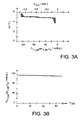
figure 3A représente la variation de tension U (en V) aux bornes d'un générateur électrochimique réalisé selon l'exemple explicité ci-dessous, en fonction de la capacité du générateur électrochimique notée CAcc (en mAh) ou de la capacité spécifique de Li1.04Mn1.96O4 notée CLi1.04 Mn1.96 O4 (en mAh/g) au cours de cycles de charge/décharge à courant constant de ±0,31 mA réalisés à régime C/4, le régime C/4 correspondant à une charge ou une décharge complète en 4 heures. - La
figure 3B représente l'évolution de la capacité spécifique de Li1.04Mn1.96O4, notée CLi1.04 Mn1.96 O4 (en mAh/g) en fonction du nombre de cycles charge/décharge nc/d à régime C/4. - La
figure 4A représente la variation de tension U (en V) aux bornes d'un générateur électrochimique réalisé selon l'exemple explicité ci-dessous, en fonction de la capacité du générateur électrochimique notée CAcc (en mAh) ou de la capacité spécifique de Li1.04Mn1.96O4 notée CLi1.04 Mn1.96 O4 (en mAh/g) au cours de cycles de charge/décharge réalisés à des régimes différents (C/4, C, 2C, 4C, 8C), le courant appliqué pour lesdits régimes étant respectivement de 0,31 mA, 1,24 mA, 2,48 mA, 4,96 mA, 9,92 mA. - La
figure 4B représente l'évolution de la capacité spécifique de Li1.04Mn1.96O4 notée CLi1.04 Mn1.96 O4 (en mAh/g) en fonction du nombre de cycles charge/décharge nc/d, à courant constant à différents régimes (C/4, C, 2C, 4C, 8C). - Une électrode positive de composition en masse suivante :
- 85,5 % Li1.04Mn1.96O4 de chez ERACHEM Europe ;
- 8,5 % de noir de carbone super P de chez ERACHEM Europe ;
- 6,0 % de polyfluorure de vinylidène (PVDF) Solef 6020 de chez SOLVAY ;
- pesée des poudres oxyde de manganèse, noir de carbone séparément ;
- préparation d'une solution de N-méthyl-pyrolidonne (NMP) à 12 % en masse de PVDF ;
- introduction dans un mélangeur du PVDF dissous dans la NMP, puis ajout de NMP pour diluer ;
- ajout progressif des poudres tout en poursuivant le mélange ;
- après obtention d'un mélange homogène, enduction avec ce mélange, d'un feuillard en aluminium de 20 micromètres, à l'aide d'une racle micrométrique ;
- séchage de l'électrode ainsi obtenue dans une étuve à 80 °C, initialement 1 heure sous pression atmosphérique puis 2 heures sous vide.
- Une électrode négative de composition en masse suivante:
- 85,7 % de Li4Ti5O12 obtenu par chauffage à 900 °C pendant 15 heures sous air d'un mélange de poudres en proportions 5TiO2, 2LiCO3 ;
- 8,3 % de noir de carbone super P de chez ERACHEM Europe ;
- 6,0 % de PVDF Solef 6020 de chez SOLVAY ;
- pesée des poudres oxyde de titane, noir de carbone séparément ;
- préparation d'une solution de NMP (N-méthyl-pyrolidonne) à 12 % en masse de PVDF ;
- introduction dans un mélangeur du PVDF dissous dans la NMP, puis ajout de NMP pour diluer ;
- ajout progressif des poudres tout en poursuivant le mélange ;
- après obtention d'un mélange homogène, enduction sur un feuillard aluminium de 20 µm d'épaisseur, à l'aide d'une racle micrométrique ;
- séchage de l'électrode dans une étuve à 80 °C, initialement 1 heure sous pression atmosphérique puis 2 heures sous vide.
- L'électrode bipolaire est réalisée en appliquant le protocole de réalisation de l'électrode négative sur l'autre face d'une électrode positive réalisée selon le paragraphe 1.
- Après découpe au format choisi, les électrodes sont comprimées séparément à 2 t/cm2 à température ambiante.
- L'empilement représenté sur la
figure 2 est réalisé en deux étapes. Une première étape en atmosphère non contrôlée consiste, au moyen de deux joints polyéthylène en «U», à réaliser l'étanchéité du générateur électrochimique parallélépipédique sur trois côtés par compression à chaud. La seconde étape, réalisée en atmosphère anhydre consiste à activer le générateur électrochimique par ajout d'électrolyte sur le quatrième côté puis à refermer l'accumulateur sur ce dernier côté au moyen de deux autres joints polyéthylène. - A l'issue de ce procédé de fabrication, on obtient, conformément à la
figure 2 un générateur électrochimique comportant une électrode positive périphérique comprenant un substrat conducteur en aluminium 13 et une couche active positive 14 à base de Li1,04Mn1,96O4 et une électrode négative périphérique comprenant un substrat conducteur en aluminium 21 et une couche active négative 20 à base de Li4Ti5O12 encadrant une électrode bipolaire comprenant une couche active positive 18 et une couche active négative 16 de part et d'autre d'un substrat commun conducteur en aluminium 17 (correspondant auxdits premier et deuxième substrats dans le cas où ceux-ci ne forment qu'une seule pièce). Selon ce mode de réalisation, le substrat 17 forme une seule pièce et ne résulte pas de deux substrats accolés. - Les électrodes périphériques sont séparées de l'électrode bipolaire par deux séparateurs 15,19. L'étanchéité de l'ensemble est assurée par un joint 22 pouvant être constitué de plusieurs éléments.
- Des tests visant à mettre en évidence, notamment la stabilité de l'accumulateur obtenu, selon l'invention ont été effectués. Les résultats sont regroupés sur les
figures 3A et suivantes. - Ainsi, on peut constater sur la
figure 3A , que les courbes de charge-décharge se superposent, ce qui dénote une stabilité de l'accumulateur au cours des différents cycles. Cette constatation est confirmée par lafigure 3B , qui montre que la capacité spécifique de Li1,04Mn1,96O4 évolue très faiblement lorsque le nombre de cycles augmente. - Sur les
figures 4A et 4B , on constate que l'on récupère plus de 70 % de la capacité nominale du générateur électrochimique en régime 4C et environ 50% en régime 8C.
Claims (19)
- Générateur électrochimique au lithium comprenant :- une électrode périphérique positive comprenant un substrat conducteur électrique (13) auquel adhère une couche active positive (14) incluant un matériau actif positif ;- une électrode périphérique négative comprenant un substrat conducteur électrique (20) auquel adhère une couche active négative (21) incluant un matériau actif négatif ;- au moins une électrode bipolaire comprenant une couche active positive (18) incluant un matériau actif positif adhérant à un premier substrat conducteur électrique, et comprenant une couche active négative (16) incluant un matériau actif négatif adhérant à un deuxième substrat conducteur électrique, lesdits premier et deuxième substrats étant accolés ou formant un seul substrat (17) ;- deux séparateurs (15, 19) conducteurs d'ions lithium et isolant électrique encadrant chaque électrode bipolaire,ledit générateur étant caractérisé en ce que lesdits premier et deuxième substrats conducteurs électriques de la, au moins une, électrode bipolaire sont constitués de matériaux identiques ou différents choisis parmi l'aluminium et ses alliages et en ce que le matériau actif négatif de la couche active négative (16) de la, au moins une, électrode bipolaire est un matériau non susceptible de former un alliage aluminium-lithium avec le matériau dudit deuxième substrat conducteur électrique.
- Générateur électrochimique au lithium selon la revendication 1, caractérisé en ce que le matériau actif négatif de la, au moins une, électrode bipolaire présente un potentiel d'intercalation du lithium dans ledit matériau supérieur au potentiel de formation de l'alliage aluminium-lithium.
- Générateur électrochimique au lithium, selon la revendication 2, caractérisé en ce que le potentiel d'intercalation du lithium dans le matériau actif négatif de la, au moins une, électrode bipolaire est supérieur à 0,25 V.
- Générateur électrochimique au lithium, selon l'une quelconque des revendications 1 à 3, caractérisé en ce que le substrat conducteur électrique de l'une au moins des électrodes périphériques est constitué d'un matériau choisi dans le groupe constitué par l'aluminium et les alliages d'aluminium.
- Générateur électrochimique au lithium selon l'une quelconque des revendications 1 à 4, caractérisé en ce que le matériau actif négatif de la, au moins une, électrode bipolaire est Li4Ti5O12.
- Générateur électrochimique au lithium, selon l'une quelconque des revendications 1 à 5, caractérisé en ce que le matériau actif positif de la, au moins une, électrode bipolaire est choisi dans un groupe constitué par les phosphates et les orthosilicates de métaux de transition, le carbone, les oxydes de métaux de transition substitués ou non et les mélanges de ceux-ci.
- Générateur électrochimique au lithium, selon la revendication 6, caractérisé en ce que le phosphate de métal de transition est choisi dans le groupe constitué par LiFex1Mn1-x1PO4 avec 0≤x1≤1 et de LiCoPO4 et les mélanges de ceux-ci.
- Générateur électrochimique au lithium, selon la revendication 6, caractérisé en ce que l'oxyde de métal de transition est choisi dans le groupe constitué par LiMx2M'x3Mn2-x2-x3O4 avec 0≤x2≤0,33, 0≤x3≤0,5, M désignant Li ou Mg et M' désignant un métal de transition choisi dans le groupe constitué par Ni, Co, Fe, Cr, de LiCox4Ni1-x4O2 avec 0≤x4≤1, de LiAlx5Ni1-x5O2 avec 0≤x5≤0,25 et des mélanges de ceux-ci.
- Générateur électrochimique au lithium, selon la revendication 6, caractérisé en ce que l'oxyde de métal de transition est Li1+εMn2-εO4 avec 0≤ε≤0,33.
- Générateur électrochimique au lithium, selon l'une quelconque des revendications 1 à 5, caractérisé en ce que le matériau actif positif de la, au moins une, électrode bipolaire est un matériau actif par adsorption.
- Générateur électrochimique au lithium selon la revendication 10, caractérisé en ce que le matériau actif positif est un carbone activé.
- Générateur électrochimique au lithium, selon l'une quelconque des revendications 1 à 11, caractérisé en que les séparateurs (15, 19) sont constitués d'un élément poreux contenant un électrolyte liquide conducteur d'ions lithium.
- Générateur électrochimique au lithium, selon l'une quelconque des revendications 1 à 11, caractérisé en ce que les séparateurs (15, 19) sont constitués d'un électrolyte polymérique comprenant un sel de lithium.
- Générateur électrochimique au lithium, selon l'une quelconque des revendications 1 à 11, caractérisé en ce que les séparateurs (15, 19) sont constitués d'un matériau inorganique conducteur d'ions lithium choisi dans le groupe constitué par les phosphates et les borates de lithium.
- Générateur électrochimique selon la revendication 14, caractérisé en ce que le matériau inorganique conducteur d'ions lithium est Li3PO2,5N0,3.
- Générateur électrochimique selon l'une quelconque des revendications 1 à 11, caractérisé en ce que les séparateurs (15, 19) comprennent un sel fondu de lithium.
- Générateur électrochimique selon l'une quelconque des revendications 1 à 11, caractérisé en ce que les séparateurs (15, 19) sont constitués d'un liquide ionique comprenant un sel de lithium dissous.
- Générateur électrochimique au lithium selon la revendication 17, caractérisé en ce que le liquide ionique est choisi dans le groupe constitué par les sels d'imidazolium, les sels de dialkylimidazolium, les sels d'alkylpyridinium, les sels de dialkylpyridinium, les sels de chloroaluminate, les sels d'alkylchloroaluminate.
- Générateur électrochimique selon l'une quelconque des revendications précédentes, caractérisé en ce que tous les substrats conducteurs électriques (13, 17, 21) sont en aluminium et en ce que tous les matériaux actifs négatifs dudit générateur sont constitués du même matériau et tous les matériaux actifs positifs dudit générateur sont constitués du même matériau.
Applications Claiming Priority (3)
| Application Number | Priority Date | Filing Date | Title |
|---|---|---|---|
| FR0115377A FR2832859B1 (fr) | 2001-11-28 | 2001-11-28 | Generateur electrochimique au lithium comprenant au moins une electrode bipolaire avec substrats conducteurs en aluminium ou alliage d'aluminium |
| FR0115377 | 2001-11-28 | ||
| PCT/FR2002/004066 WO2003047021A2 (fr) | 2001-11-28 | 2002-11-27 | Generateur electrochimique au lithium comprenant au moins une electrode bipolaire avec substrats conducteurs en aluminium ou alliage d'aluminium |
Publications (2)
| Publication Number | Publication Date |
|---|---|
| EP1493202A2 EP1493202A2 (fr) | 2005-01-05 |
| EP1493202B1 true EP1493202B1 (fr) | 2010-07-14 |
Family
ID=8869873
Family Applications (1)
| Application Number | Title | Priority Date | Filing Date |
|---|---|---|---|
| EP02803836A Expired - Lifetime EP1493202B1 (fr) | 2001-11-28 | 2002-11-27 | Generateur electrochimique au lithium comprenant au moins une electrode bipolaire avec substrats conducteurs en aluminium ou alliage d'aluminium |
Country Status (10)
| Country | Link |
|---|---|
| US (1) | US7326493B2 (fr) |
| EP (1) | EP1493202B1 (fr) |
| JP (2) | JP4933029B2 (fr) |
| CN (1) | CN100416909C (fr) |
| AT (1) | ATE474341T1 (fr) |
| AU (1) | AU2002365474A1 (fr) |
| DE (1) | DE60237043D1 (fr) |
| ES (1) | ES2349008T3 (fr) |
| FR (1) | FR2832859B1 (fr) |
| WO (1) | WO2003047021A2 (fr) |
Families Citing this family (37)
| Publication number | Priority date | Publication date | Assignee | Title |
|---|---|---|---|---|
| JP4238645B2 (ja) * | 2003-06-12 | 2009-03-18 | 日産自動車株式会社 | バイポーラ電池 |
| WO2005018038A2 (fr) * | 2003-08-15 | 2005-02-24 | Pacific Lithium New Zealand Limited | Dispositif electrochimique haute puissance bipolaire rechargeable necessitant une surveillance reduite |
| JP4617727B2 (ja) * | 2004-06-08 | 2011-01-26 | パナソニック株式会社 | 二次電源 |
| JP4670275B2 (ja) * | 2004-08-12 | 2011-04-13 | 日産自動車株式会社 | バイポーラ電池および組電池 |
| JP5205687B2 (ja) * | 2004-11-01 | 2013-06-05 | 日産自動車株式会社 | 電池電極の製造方法 |
| RU2414023C2 (ru) * | 2005-05-03 | 2011-03-10 | Рэнди ОГГ | Биполярная перезаряжаемая электрохимическая батарея |
| FR2902577B1 (fr) * | 2006-06-20 | 2009-04-24 | Commissariat Energie Atomique | Accumulateur lithium-ion comprenant tio2-b comme materiau actif d'electrode negative |
| US7718319B2 (en) | 2006-09-25 | 2010-05-18 | Board Of Regents, The University Of Texas System | Cation-substituted spinel oxide and oxyfluoride cathodes for lithium ion batteries |
| JP2008140638A (ja) * | 2006-11-30 | 2008-06-19 | Nissan Motor Co Ltd | 双極型電池 |
| DK2518790T3 (en) * | 2007-02-12 | 2015-03-23 | Randy Ogg | Stacked structures for electrochemical batteries |
| US8632901B2 (en) * | 2007-10-26 | 2014-01-21 | G4 Synergetics, Inc. | Dish shaped and pressure equalizing electrodes for electrochemical batteries |
| WO2010087963A1 (fr) * | 2009-01-27 | 2010-08-05 | G4 Synergetics, Inc. | Confinement à volume variable pour dispositifs de stockage d'énergie |
| CA2759388A1 (fr) * | 2009-04-24 | 2010-10-28 | G4 Synergetics, Inc. | Dispositifs de stockage d'energie pourvus de cellules monopolaires et bipolaires couplees electriquement en serie et en parallele |
| EP2486616A1 (fr) * | 2009-10-07 | 2012-08-15 | Chemetall GmbH | Anodes en hydrure à base d'aluminium, et éléments galvaniques contenant des anodes en hydrure à base d'aluminium |
| CN101719562A (zh) * | 2009-12-25 | 2010-06-02 | 中国科学院电工研究所 | 一种高电压电池的电芯 |
| FR2955213B1 (fr) | 2010-01-14 | 2012-02-10 | Commissariat Energie Atomique | Generateur electrochimique au lithium comprenant deux types de cellules electrochimiques distinctes |
| FR2961637B1 (fr) | 2010-06-16 | 2012-07-27 | Commissariat Energie Atomique | Collecteur de courant avec moyens d'etancheite integres, batterie bipolaire comprenant un tel collecteur |
| FR2961635B1 (fr) * | 2010-06-17 | 2012-08-17 | Commissariat Energie Atomique | Accumulateur electrochimique au lithium a architecture bipolaire fonctionnant sur la base d'un couple d'electrodes compose lithie-soufre |
| KR20130129350A (ko) * | 2010-06-24 | 2013-11-28 | 바스프 에스이 | 리튬 이온 재충전가능한 배터리용 캐소드 |
| DE102010031543A1 (de) * | 2010-07-20 | 2012-01-26 | Evonik Litarion Gmbh | Batterie, ein Bimetall enthaltend |
| FR2964256B1 (fr) | 2010-08-24 | 2012-09-28 | Commissariat Energie Atomique | Accumulateur electrochimique bipolaire a emballage ameliore |
| JP2012129095A (ja) * | 2010-12-16 | 2012-07-05 | Kaneka Corp | 非水電解質二次電池用バイポーラ電極、および、それを用いた非水電解質二次電池。 |
| FR2974674B1 (fr) | 2011-04-26 | 2013-06-28 | Commissariat Energie Atomique | Accumulateur electrochimique li-ion de type bipolaire a capacite augmentee |
| FR2980306B1 (fr) | 2011-09-15 | 2013-10-11 | Commissariat Energie Atomique | Procede de test d'etancheite d'une structure bipolaire pour generateur electrochimique |
| FR2993099B1 (fr) | 2012-07-03 | 2014-08-01 | Commissariat Energie Atomique | Collecteur de courant avec moyens d'etancheite integres, batterie bipolaire comprenant un tel collecteur |
| FR2993710B1 (fr) | 2012-07-17 | 2014-08-15 | Commissariat Energie Atomique | Batterie li-ion bipolaire a etancheite amelioree et procede de realisation associe |
| FR2996360B1 (fr) | 2012-10-01 | 2014-10-17 | Commissariat Energie Atomique | Collecteur de courant avec moyens d'etancheite integres, batterie bipolaire comprenant un tel collecteur, procede de realisation d'une telle batterie. |
| FR3003093B1 (fr) | 2013-03-11 | 2015-06-26 | Commissariat Energie Atomique | Batterie li-ion bipolaire a etancheite amelioree et procede de realisation associe |
| FR3006116B1 (fr) | 2013-05-21 | 2015-06-26 | Commissariat Energie Atomique | Batterie li-on bipolaire a etancheite amelioree et procede de realisation associe. |
| JP2015056344A (ja) * | 2013-09-13 | 2015-03-23 | 小島プレス工業株式会社 | リチウムイオン二次電池及びその製造方法 |
| JP2015088266A (ja) | 2013-10-29 | 2015-05-07 | トヨタ自動車株式会社 | リチウム電池 |
| FR3013513B1 (fr) | 2013-11-20 | 2016-01-15 | Commissariat Energie Atomique | Copolymere pour batterie bipolaire |
| FR3034913B1 (fr) | 2015-04-09 | 2017-05-05 | Commissariat Energie Atomique | Procede de decoupe d'un electrode d'un generateur electrochimique |
| US11127999B2 (en) * | 2016-03-15 | 2021-09-21 | Intel Corporation | Package-less battery cell apparatus, and method for forming the same |
| FR3083922B1 (fr) | 2018-07-11 | 2020-10-16 | Commissariat Energie Atomique | Accumulateur electrochimique a architecture bipolaire comportant une structure specifique |
| JP7354971B2 (ja) * | 2020-09-11 | 2023-10-03 | トヨタ自動車株式会社 | 電池モジュール |
| CN116131423A (zh) | 2021-11-12 | 2023-05-16 | 通用汽车环球科技运作有限责任公司 | 双极电容器辅助电池 |
Family Cites Families (21)
| Publication number | Priority date | Publication date | Assignee | Title |
|---|---|---|---|---|
| US3740270A (en) * | 1970-12-21 | 1973-06-19 | Esb Inc | Duplex electrode construction using continuous metal carrier strip coated on both sides with conductive adhesive |
| US5297269A (en) * | 1990-04-26 | 1994-03-22 | Digital Equipment Company | Cache coherency protocol for multi processor computer system |
| IT1297213B1 (it) * | 1991-03-12 | 1999-08-03 | Ginatta Spa | Accumulatore ermetico del tipo lega di litio/solfuro metallico, ad elettrodi bipolari |
| US5254415A (en) * | 1992-04-09 | 1993-10-19 | Saft America Inc. | Stacked cell array bipolar battery with thermal sprayed container and cell seal |
| JPH087926A (ja) * | 1994-06-16 | 1996-01-12 | Sony Corp | 非水電解液二次電池 |
| AU3824695A (en) * | 1994-10-13 | 1996-05-06 | Yardney Technical Products, Inc. | Bipolar lithium-ion rechargeable battery |
| US5673413A (en) * | 1995-12-15 | 1997-09-30 | International Business Machines Corporation | Method and apparatus for coherency reporting in a multiprocessing system |
| US5878268A (en) * | 1996-07-01 | 1999-03-02 | Sun Microsystems, Inc. | Multiprocessing system configured to store coherency state within multiple subnodes of a processing node |
| US5943684A (en) * | 1997-04-14 | 1999-08-24 | International Business Machines Corporation | Method and system of providing a cache-coherency protocol for maintaining cache coherency within a multiprocessor data-processing system |
| US5940864A (en) * | 1997-04-14 | 1999-08-17 | International Business Machines Corporation | Shared memory-access priorization method for multiprocessors using caches and snoop responses |
| US6018791A (en) * | 1997-04-14 | 2000-01-25 | International Business Machines Corporation | Apparatus and method of maintaining cache coherency in a multi-processor computer system with global and local recently read states |
| US5943685A (en) * | 1997-04-14 | 1999-08-24 | International Business Machines Corporation | Method of shared intervention via a single data provider among shared caches for SMP bus |
| US5940856A (en) * | 1997-04-14 | 1999-08-17 | International Business Machines Corporation | Cache intervention from only one of many cache lines sharing an unmodified value |
| JPH11204136A (ja) * | 1998-01-08 | 1999-07-30 | Toyota Motor Corp | バイポーラ型リチウムイオン2次電池及びその製造方法 |
| JP2000100471A (ja) * | 1998-09-22 | 2000-04-07 | Mitsubishi Cable Ind Ltd | シート電池 |
| US6115804A (en) * | 1999-02-10 | 2000-09-05 | International Business Machines Corporation | Non-uniform memory access (NUMA) data processing system that permits multiple caches to concurrently hold data in a recent state from which data can be sourced by shared intervention |
| JP2001102056A (ja) * | 1999-07-29 | 2001-04-13 | Kyocera Corp | リチウム電池 |
| JP2001236946A (ja) * | 2000-02-24 | 2001-08-31 | Gs-Melcotec Co Ltd | 非水電解質二次電池用極板およびこれを用いた非水電解質二次電池 |
| JP2001319688A (ja) * | 2000-05-12 | 2001-11-16 | Yuasa Corp | 非水電解質リチウム二次電池 |
| US6780543B2 (en) * | 2001-02-14 | 2004-08-24 | Sanyo Electric Co., Ltd. | Aluminum or aluminum alloy-based lithium secondary battery |
| JP4135473B2 (ja) * | 2002-11-07 | 2008-08-20 | 日産自動車株式会社 | バイポーラ電池 |
-
2001
- 2001-11-28 FR FR0115377A patent/FR2832859B1/fr not_active Expired - Lifetime
-
2002
- 2002-11-27 DE DE60237043T patent/DE60237043D1/de not_active Expired - Lifetime
- 2002-11-27 CN CNB02823538XA patent/CN100416909C/zh not_active Expired - Lifetime
- 2002-11-27 EP EP02803836A patent/EP1493202B1/fr not_active Expired - Lifetime
- 2002-11-27 AU AU2002365474A patent/AU2002365474A1/en not_active Abandoned
- 2002-11-27 AT AT02803836T patent/ATE474341T1/de not_active IP Right Cessation
- 2002-11-27 US US10/495,733 patent/US7326493B2/en not_active Expired - Lifetime
- 2002-11-27 JP JP2003548334A patent/JP4933029B2/ja not_active Expired - Lifetime
- 2002-11-27 WO PCT/FR2002/004066 patent/WO2003047021A2/fr not_active Ceased
- 2002-11-27 ES ES02803836T patent/ES2349008T3/es not_active Expired - Lifetime
-
2011
- 2011-10-14 JP JP2011227008A patent/JP2012033503A/ja active Pending
Also Published As
| Publication number | Publication date |
|---|---|
| CN1596483A (zh) | 2005-03-16 |
| CN100416909C (zh) | 2008-09-03 |
| FR2832859B1 (fr) | 2004-01-09 |
| WO2003047021A3 (fr) | 2004-09-30 |
| JP2005539347A (ja) | 2005-12-22 |
| WO2003047021A2 (fr) | 2003-06-05 |
| DE60237043D1 (de) | 2010-08-26 |
| ATE474341T1 (de) | 2010-07-15 |
| AU2002365474A1 (en) | 2003-06-10 |
| US20050069768A1 (en) | 2005-03-31 |
| ES2349008T3 (es) | 2010-12-21 |
| JP2012033503A (ja) | 2012-02-16 |
| JP4933029B2 (ja) | 2012-05-16 |
| AU2002365474A8 (en) | 2003-06-10 |
| FR2832859A1 (fr) | 2003-05-30 |
| US7326493B2 (en) | 2008-02-05 |
| EP1493202A2 (fr) | 2005-01-05 |
Similar Documents
| Publication | Publication Date | Title |
|---|---|---|
| FR2832859A1 (fr) | Generateur electrochimique au lithium comprenant au moins une electrode bipolaire avec substrats conducteurs en aluminium ou alliage d'aluminium | |
| CN108713267B (zh) | 包含多重保护层的负极和包括该负极的锂二次电池 | |
| US9627716B2 (en) | Electrolyte and lithium based batteries | |
| CN106898810B (zh) | 锂离子电池部件 | |
| CN111384399B (zh) | 用于锂金属电极的保护性涂层 | |
| US20200119339A1 (en) | Method for making silicon-containing composite electrodes for lithium-based batteries | |
| US20190190012A1 (en) | Hybrid negative electrodes for fast charging and high-energy lithium batteries | |
| CN110556521B (zh) | 硅阳极材料 | |
| JP2000331710A (ja) | 再充電可能な電気化学電池の非水性電解液のホスフェート添加剤 | |
| JP2015064983A (ja) | 非水電解質二次電池及び電池パック | |
| EP2524410B1 (fr) | Generateur electrochimique au lithium comprenant deux types de cellules electrochimiques distinctes | |
| FR2961639A1 (fr) | Accumulateur electrochimique au lithium a architecture bipolaire comprenant un additif d'electrolyte specifique | |
| EP2583333B1 (fr) | Accumulateur electrochimique au lithium a architecture bipolaire specifique | |
| JP4505886B2 (ja) | 固体電解質電池 | |
| EP2583347B1 (fr) | Accumulateur electrochimique au lithium a architecture bipolaire fonctionnant sur la base d'un couple d'electrodes lithium-soufre | |
| WO2014114864A1 (fr) | Batterie au lithium | |
| CN113261141A (zh) | 非水电解质二次电池 | |
| CN111129433B (zh) | 用于从电化学电池中除去可能形成氢的化合物的方法 | |
| KR20190054829A (ko) | 이차 전지용 양극 및 이를 포함하는 이차 전지 | |
| CN115832175A (zh) | 二次电池、电池模组、电池包以及用电装置 | |
| WO2014068216A1 (fr) | Procede pour la preparation d'une batterie au lithium | |
| EP2959530B1 (fr) | Cellule électrochimique pour batterie lithium-ion comprenant une électrode négative à base de silicium et un électrolyte spécifique | |
| EP4736252A1 (fr) | Electrolyte et accumulateur lithium-ion le comprenant |
Legal Events
| Date | Code | Title | Description |
|---|---|---|---|
| PUAI | Public reference made under article 153(3) epc to a published international application that has entered the european phase |
Free format text: ORIGINAL CODE: 0009012 |
|
| 17P | Request for examination filed |
Effective date: 20040506 |
|
| AK | Designated contracting states |
Kind code of ref document: A2 Designated state(s): AT BE BG CH CY CZ DE DK EE ES FI FR GB GR IE IT LI LU MC NL PT SE SK TR |
|
| AX | Request for extension of the european patent |
Extension state: AL LT LV MK RO SI |
|
| RAP1 | Party data changed (applicant data changed or rights of an application transferred) |
Owner name: COMMISSARIAT A L'ENERGIE ATOMIQUE |
|
| 17Q | First examination report despatched |
Effective date: 20071025 |
|
| GRAJ | Information related to disapproval of communication of intention to grant by the applicant or resumption of examination proceedings by the epo deleted |
Free format text: ORIGINAL CODE: EPIDOSDIGR1 |
|
| GRAP | Despatch of communication of intention to grant a patent |
Free format text: ORIGINAL CODE: EPIDOSNIGR1 |
|
| GRAP | Despatch of communication of intention to grant a patent |
Free format text: ORIGINAL CODE: EPIDOSNIGR1 |
|
| RIC1 | Information provided on ipc code assigned before grant |
Ipc: H01M 10/052 20100101AFI20100212BHEP |
|
| RAP1 | Party data changed (applicant data changed or rights of an application transferred) |
Owner name: COMMISSARIAT A L'ENERGIE ATOMIQUE ET AUX ENERGIES |
|
| GRAS | Grant fee paid |
Free format text: ORIGINAL CODE: EPIDOSNIGR3 |
|
| GRAA | (expected) grant |
Free format text: ORIGINAL CODE: 0009210 |
|
| AK | Designated contracting states |
Kind code of ref document: B1 Designated state(s): AT BE BG CH CY CZ DE DK EE ES FI FR GB GR IE IT LI LU MC NL PT SE SK TR |
|
| REG | Reference to a national code |
Ref country code: GB Ref legal event code: FG4D Free format text: NOT ENGLISH |
|
| REG | Reference to a national code |
Ref country code: CH Ref legal event code: EP |
|
| REG | Reference to a national code |
Ref country code: IE Ref legal event code: FG4D |
|
| REF | Corresponds to: |
Ref document number: 60237043 Country of ref document: DE Date of ref document: 20100826 Kind code of ref document: P |
|
| REG | Reference to a national code |
Ref country code: NL Ref legal event code: VDEP Effective date: 20100714 |
|
| REG | Reference to a national code |
Ref country code: ES Ref legal event code: FG2A Effective date: 20101209 |
|
| PG25 | Lapsed in a contracting state [announced via postgrant information from national office to epo] |
Ref country code: NL Free format text: LAPSE BECAUSE OF FAILURE TO SUBMIT A TRANSLATION OF THE DESCRIPTION OR TO PAY THE FEE WITHIN THE PRESCRIBED TIME-LIMIT Effective date: 20100714 Ref country code: FI Free format text: LAPSE BECAUSE OF FAILURE TO SUBMIT A TRANSLATION OF THE DESCRIPTION OR TO PAY THE FEE WITHIN THE PRESCRIBED TIME-LIMIT Effective date: 20100714 Ref country code: AT Free format text: LAPSE BECAUSE OF FAILURE TO SUBMIT A TRANSLATION OF THE DESCRIPTION OR TO PAY THE FEE WITHIN THE PRESCRIBED TIME-LIMIT Effective date: 20100714 |
|
| REG | Reference to a national code |
Ref country code: IE Ref legal event code: FD4D |
|
| PG25 | Lapsed in a contracting state [announced via postgrant information from national office to epo] |
Ref country code: CY Free format text: LAPSE BECAUSE OF FAILURE TO SUBMIT A TRANSLATION OF THE DESCRIPTION OR TO PAY THE FEE WITHIN THE PRESCRIBED TIME-LIMIT Effective date: 20100714 Ref country code: PT Free format text: LAPSE BECAUSE OF FAILURE TO SUBMIT A TRANSLATION OF THE DESCRIPTION OR TO PAY THE FEE WITHIN THE PRESCRIBED TIME-LIMIT Effective date: 20101115 Ref country code: BG Free format text: LAPSE BECAUSE OF FAILURE TO SUBMIT A TRANSLATION OF THE DESCRIPTION OR TO PAY THE FEE WITHIN THE PRESCRIBED TIME-LIMIT Effective date: 20101014 |
|
| PG25 | Lapsed in a contracting state [announced via postgrant information from national office to epo] |
Ref country code: GR Free format text: LAPSE BECAUSE OF FAILURE TO SUBMIT A TRANSLATION OF THE DESCRIPTION OR TO PAY THE FEE WITHIN THE PRESCRIBED TIME-LIMIT Effective date: 20101015 Ref country code: SE Free format text: LAPSE BECAUSE OF FAILURE TO SUBMIT A TRANSLATION OF THE DESCRIPTION OR TO PAY THE FEE WITHIN THE PRESCRIBED TIME-LIMIT Effective date: 20100714 |
|
| PG25 | Lapsed in a contracting state [announced via postgrant information from national office to epo] |
Ref country code: IE Free format text: LAPSE BECAUSE OF FAILURE TO SUBMIT A TRANSLATION OF THE DESCRIPTION OR TO PAY THE FEE WITHIN THE PRESCRIBED TIME-LIMIT Effective date: 20100714 Ref country code: DK Free format text: LAPSE BECAUSE OF FAILURE TO SUBMIT A TRANSLATION OF THE DESCRIPTION OR TO PAY THE FEE WITHIN THE PRESCRIBED TIME-LIMIT Effective date: 20100714 |
|
| PLBE | No opposition filed within time limit |
Free format text: ORIGINAL CODE: 0009261 |
|
| STAA | Information on the status of an ep patent application or granted ep patent |
Free format text: STATUS: NO OPPOSITION FILED WITHIN TIME LIMIT |
|
| BERE | Be: lapsed |
Owner name: COMMISSARIAT A L'ENERGIE ATOMIQUE ET AUX ENERGIES Effective date: 20101130 |
|
| PG25 | Lapsed in a contracting state [announced via postgrant information from national office to epo] |
Ref country code: CZ Free format text: LAPSE BECAUSE OF FAILURE TO SUBMIT A TRANSLATION OF THE DESCRIPTION OR TO PAY THE FEE WITHIN THE PRESCRIBED TIME-LIMIT Effective date: 20100714 Ref country code: SK Free format text: LAPSE BECAUSE OF FAILURE TO SUBMIT A TRANSLATION OF THE DESCRIPTION OR TO PAY THE FEE WITHIN THE PRESCRIBED TIME-LIMIT Effective date: 20100714 Ref country code: EE Free format text: LAPSE BECAUSE OF FAILURE TO SUBMIT A TRANSLATION OF THE DESCRIPTION OR TO PAY THE FEE WITHIN THE PRESCRIBED TIME-LIMIT Effective date: 20100714 |
|
| 26N | No opposition filed |
Effective date: 20110415 |
|
| PG25 | Lapsed in a contracting state [announced via postgrant information from national office to epo] |
Ref country code: MC Free format text: LAPSE BECAUSE OF NON-PAYMENT OF DUE FEES Effective date: 20101130 |
|
| REG | Reference to a national code |
Ref country code: CH Ref legal event code: PL |
|
| REG | Reference to a national code |
Ref country code: DE Ref legal event code: R097 Ref document number: 60237043 Country of ref document: DE Effective date: 20110415 |
|
| PG25 | Lapsed in a contracting state [announced via postgrant information from national office to epo] |
Ref country code: LI Free format text: LAPSE BECAUSE OF NON-PAYMENT OF DUE FEES Effective date: 20101130 Ref country code: CH Free format text: LAPSE BECAUSE OF NON-PAYMENT OF DUE FEES Effective date: 20101130 |
|
| PG25 | Lapsed in a contracting state [announced via postgrant information from national office to epo] |
Ref country code: BE Free format text: LAPSE BECAUSE OF NON-PAYMENT OF DUE FEES Effective date: 20101130 |
|
| PG25 | Lapsed in a contracting state [announced via postgrant information from national office to epo] |
Ref country code: LU Free format text: LAPSE BECAUSE OF NON-PAYMENT OF DUE FEES Effective date: 20101127 |
|
| PGFP | Annual fee paid to national office [announced via postgrant information from national office to epo] |
Ref country code: TR Payment date: 20141119 Year of fee payment: 13 |
|
| REG | Reference to a national code |
Ref country code: FR Ref legal event code: PLFP Year of fee payment: 14 |
|
| REG | Reference to a national code |
Ref country code: FR Ref legal event code: PLFP Year of fee payment: 15 |
|
| REG | Reference to a national code |
Ref country code: FR Ref legal event code: PLFP Year of fee payment: 16 |
|
| PGFP | Annual fee paid to national office [announced via postgrant information from national office to epo] |
Ref country code: GB Payment date: 20211122 Year of fee payment: 20 Ref country code: ES Payment date: 20211203 Year of fee payment: 20 Ref country code: FR Payment date: 20211130 Year of fee payment: 20 Ref country code: DE Payment date: 20211110 Year of fee payment: 20 |
|
| PGFP | Annual fee paid to national office [announced via postgrant information from national office to epo] |
Ref country code: IT Payment date: 20211110 Year of fee payment: 20 |
|
| PG25 | Lapsed in a contracting state [announced via postgrant information from national office to epo] |
Ref country code: TR Free format text: LAPSE BECAUSE OF NON-PAYMENT OF DUE FEES Effective date: 20161127 |
|
| REG | Reference to a national code |
Ref country code: DE Ref legal event code: R071 Ref document number: 60237043 Country of ref document: DE |
|
| REG | Reference to a national code |
Ref country code: GB Ref legal event code: PE20 Expiry date: 20221126 |
|
| PG25 | Lapsed in a contracting state [announced via postgrant information from national office to epo] |
Ref country code: GB Free format text: LAPSE BECAUSE OF EXPIRATION OF PROTECTION Effective date: 20221126 |
|
| REG | Reference to a national code |
Ref country code: ES Ref legal event code: FD2A Effective date: 20230503 |
|
| PG25 | Lapsed in a contracting state [announced via postgrant information from national office to epo] |
Ref country code: ES Free format text: LAPSE BECAUSE OF EXPIRATION OF PROTECTION Effective date: 20221128 |