EP1469667A2 - Netzendgerät welches Einstellungsinformationen eines anderen Netzendgerätes erfasst - Google Patents
Netzendgerät welches Einstellungsinformationen eines anderen Netzendgerätes erfasst Download PDFInfo
- Publication number
- EP1469667A2 EP1469667A2 EP04252244A EP04252244A EP1469667A2 EP 1469667 A2 EP1469667 A2 EP 1469667A2 EP 04252244 A EP04252244 A EP 04252244A EP 04252244 A EP04252244 A EP 04252244A EP 1469667 A2 EP1469667 A2 EP 1469667A2
- Authority
- EP
- European Patent Office
- Prior art keywords
- setting information
- network terminal
- terminal apparatus
- network
- received
- Prior art date
- Legal status (The legal status is an assumption and is not a legal conclusion. Google has not performed a legal analysis and makes no representation as to the accuracy of the status listed.)
- Granted
Links
- 230000004044 response Effects 0.000 claims abstract description 44
- 238000000034 method Methods 0.000 claims description 12
- 238000004590 computer program Methods 0.000 claims description 6
- 230000001131 transforming effect Effects 0.000 claims 4
- 230000000694 effects Effects 0.000 claims 1
- 230000015654 memory Effects 0.000 description 19
- 230000005540 biological transmission Effects 0.000 description 16
- 238000004891 communication Methods 0.000 description 13
- 238000010586 diagram Methods 0.000 description 12
- 230000006870 function Effects 0.000 description 6
- 238000012545 processing Methods 0.000 description 6
- 239000000284 extract Substances 0.000 description 5
- 230000003936 working memory Effects 0.000 description 3
- 230000002093 peripheral effect Effects 0.000 description 2
- 230000008569 process Effects 0.000 description 2
- 238000007796 conventional method Methods 0.000 description 1
- 230000002349 favourable effect Effects 0.000 description 1
- 230000008676 import Effects 0.000 description 1
- 230000007257 malfunction Effects 0.000 description 1
- 238000012986 modification Methods 0.000 description 1
- 230000004048 modification Effects 0.000 description 1
- 230000003442 weekly effect Effects 0.000 description 1
Images





Classifications
-
- H—ELECTRICITY
- H04—ELECTRIC COMMUNICATION TECHNIQUE
- H04N—PICTORIAL COMMUNICATION, e.g. TELEVISION
- H04N1/00—Scanning, transmission or reproduction of documents or the like, e.g. facsimile transmission; Details thereof
- H04N1/00127—Connection or combination of a still picture apparatus with another apparatus, e.g. for storage, processing or transmission of still picture signals or of information associated with a still picture
- H04N1/00281—Connection or combination of a still picture apparatus with another apparatus, e.g. for storage, processing or transmission of still picture signals or of information associated with a still picture with a telecommunication apparatus, e.g. a switched network of teleprinters for the distribution of text-based information, a selective call terminal
- H04N1/00312—Connection or combination of a still picture apparatus with another apparatus, e.g. for storage, processing or transmission of still picture signals or of information associated with a still picture with a telecommunication apparatus, e.g. a switched network of teleprinters for the distribution of text-based information, a selective call terminal with a digital transmission apparatus, e.g. a switched network of teleprinters for the distribution of text-based information, SMS or ISDN device
-
- H—ELECTRICITY
- H04—ELECTRIC COMMUNICATION TECHNIQUE
- H04N—PICTORIAL COMMUNICATION, e.g. TELEVISION
- H04N1/00—Scanning, transmission or reproduction of documents or the like, e.g. facsimile transmission; Details thereof
- H04N1/00127—Connection or combination of a still picture apparatus with another apparatus, e.g. for storage, processing or transmission of still picture signals or of information associated with a still picture
- H04N1/00204—Connection or combination of a still picture apparatus with another apparatus, e.g. for storage, processing or transmission of still picture signals or of information associated with a still picture with a digital computer or a digital computer system, e.g. an internet server
- H04N1/00209—Transmitting or receiving image data, e.g. facsimile data, via a computer, e.g. using e-mail, a computer network, the internet, I-fax
-
- H—ELECTRICITY
- H04—ELECTRIC COMMUNICATION TECHNIQUE
- H04N—PICTORIAL COMMUNICATION, e.g. TELEVISION
- H04N1/00—Scanning, transmission or reproduction of documents or the like, e.g. facsimile transmission; Details thereof
- H04N1/00127—Connection or combination of a still picture apparatus with another apparatus, e.g. for storage, processing or transmission of still picture signals or of information associated with a still picture
- H04N1/00204—Connection or combination of a still picture apparatus with another apparatus, e.g. for storage, processing or transmission of still picture signals or of information associated with a still picture with a digital computer or a digital computer system, e.g. an internet server
- H04N1/00244—Connection or combination of a still picture apparatus with another apparatus, e.g. for storage, processing or transmission of still picture signals or of information associated with a still picture with a digital computer or a digital computer system, e.g. an internet server with a server, e.g. an internet server
-
- H—ELECTRICITY
- H04—ELECTRIC COMMUNICATION TECHNIQUE
- H04N—PICTORIAL COMMUNICATION, e.g. TELEVISION
- H04N1/00—Scanning, transmission or reproduction of documents or the like, e.g. facsimile transmission; Details thereof
- H04N1/00962—Input arrangements for operating instructions or parameters, e.g. updating internal software
- H04N1/0097—Storage of instructions or parameters, e.g. customised instructions or different parameters for different user IDs
-
- H—ELECTRICITY
- H04—ELECTRIC COMMUNICATION TECHNIQUE
- H04N—PICTORIAL COMMUNICATION, e.g. TELEVISION
- H04N1/00—Scanning, transmission or reproduction of documents or the like, e.g. facsimile transmission; Details thereof
- H04N1/00962—Input arrangements for operating instructions or parameters, e.g. updating internal software
- H04N1/00973—Input arrangements for operating instructions or parameters, e.g. updating internal software from a remote device, e.g. receiving via the internet instructions input to a computer terminal
-
- H—ELECTRICITY
- H04—ELECTRIC COMMUNICATION TECHNIQUE
- H04N—PICTORIAL COMMUNICATION, e.g. TELEVISION
- H04N1/00—Scanning, transmission or reproduction of documents or the like, e.g. facsimile transmission; Details thereof
- H04N1/32—Circuits or arrangements for control or supervision between transmitter and receiver or between image input and image output device, e.g. between a still-image camera and its memory or between a still-image camera and a printer device
- H04N1/32101—Display, printing, storage or transmission of additional information, e.g. ID code, date and time or title
-
- H—ELECTRICITY
- H04—ELECTRIC COMMUNICATION TECHNIQUE
- H04N—PICTORIAL COMMUNICATION, e.g. TELEVISION
- H04N1/00—Scanning, transmission or reproduction of documents or the like, e.g. facsimile transmission; Details thereof
- H04N1/32—Circuits or arrangements for control or supervision between transmitter and receiver or between image input and image output device, e.g. between a still-image camera and its memory or between a still-image camera and a printer device
- H04N1/32502—Circuits or arrangements for control or supervision between transmitter and receiver or between image input and image output device, e.g. between a still-image camera and its memory or between a still-image camera and a printer device in systems having a plurality of input or output devices
- H04N1/32507—Circuits or arrangements for control or supervision between transmitter and receiver or between image input and image output device, e.g. between a still-image camera and its memory or between a still-image camera and a printer device in systems having a plurality of input or output devices a plurality of input devices
- H04N1/32512—Circuits or arrangements for control or supervision between transmitter and receiver or between image input and image output device, e.g. between a still-image camera and its memory or between a still-image camera and a printer device in systems having a plurality of input or output devices a plurality of input devices of different type, e.g. internal and external devices
-
- H—ELECTRICITY
- H04—ELECTRIC COMMUNICATION TECHNIQUE
- H04N—PICTORIAL COMMUNICATION, e.g. TELEVISION
- H04N1/00—Scanning, transmission or reproduction of documents or the like, e.g. facsimile transmission; Details thereof
- H04N1/32—Circuits or arrangements for control or supervision between transmitter and receiver or between image input and image output device, e.g. between a still-image camera and its memory or between a still-image camera and a printer device
- H04N1/32502—Circuits or arrangements for control or supervision between transmitter and receiver or between image input and image output device, e.g. between a still-image camera and its memory or between a still-image camera and a printer device in systems having a plurality of input or output devices
- H04N1/32523—Circuits or arrangements for control or supervision between transmitter and receiver or between image input and image output device, e.g. between a still-image camera and its memory or between a still-image camera and a printer device in systems having a plurality of input or output devices a plurality of output devices
- H04N1/32529—Circuits or arrangements for control or supervision between transmitter and receiver or between image input and image output device, e.g. between a still-image camera and its memory or between a still-image camera and a printer device in systems having a plurality of input or output devices a plurality of output devices of different type, e.g. internal and external devices
-
- H—ELECTRICITY
- H04—ELECTRIC COMMUNICATION TECHNIQUE
- H04N—PICTORIAL COMMUNICATION, e.g. TELEVISION
- H04N1/00—Scanning, transmission or reproduction of documents or the like, e.g. facsimile transmission; Details thereof
- H04N1/32—Circuits or arrangements for control or supervision between transmitter and receiver or between image input and image output device, e.g. between a still-image camera and its memory or between a still-image camera and a printer device
- H04N1/327—Initiating, continuing or ending a single-mode communication; Handshaking therefor
- H04N1/32765—Initiating a communication
- H04N1/32771—Initiating a communication in response to a request, e.g. for a particular document
- H04N1/32776—Initiating a communication in response to a request, e.g. for a particular document using an interactive, user-operated device, e.g. a computer terminal, mobile telephone
-
- H—ELECTRICITY
- H04—ELECTRIC COMMUNICATION TECHNIQUE
- H04N—PICTORIAL COMMUNICATION, e.g. TELEVISION
- H04N1/00—Scanning, transmission or reproduction of documents or the like, e.g. facsimile transmission; Details thereof
- H04N1/32—Circuits or arrangements for control or supervision between transmitter and receiver or between image input and image output device, e.g. between a still-image camera and its memory or between a still-image camera and a printer device
- H04N1/333—Mode signalling or mode changing; Handshaking therefor
- H04N1/33369—Storage of mode or retrieval of prestored mode
-
- H—ELECTRICITY
- H04—ELECTRIC COMMUNICATION TECHNIQUE
- H04N—PICTORIAL COMMUNICATION, e.g. TELEVISION
- H04N2201/00—Indexing scheme relating to scanning, transmission or reproduction of documents or the like, and to details thereof
- H04N2201/0008—Connection or combination of a still picture apparatus with another apparatus
- H04N2201/001—Sharing resources, e.g. processing power or memory, with a connected apparatus or enhancing the capability of the still picture apparatus
Definitions
- the present invention generally relates to a network terminal apparatus, and more particularly, to a network terminal apparatus that includes a memory unit for storing setting information of the network terminal apparatus, and communicates via a network.
- a network terminal apparatus is such an apparatus that can be connected to the network and communicate with other apparatuses.
- the network terminal apparatus is different from conventional apparatuses, which do not have network interface, in that the network terminal apparatus can exchange e-mail and browse (or even edit) setting information with Web browser.
- the supplier of the apparatus sends a sales person or a customer service engineer, for example, and sets up the apparatus by operating it via an operations panel provided thereon. Otherwise, the customer sets up the apparatus by herself.
- the initial setting of the apparatus becomes complicated. An ordinary user may feel it difficult to set up the apparatus by herself even referring to a user's manual.
- the supplier may attach optional peripherals and input initial setting to the apparatuses before delivering the apparatuses to the volume user.
- optional peripherals and input initial setting are limited to volume users.
- the initial setting is limited to configuration information of optional peripherals, for example.
- the setting information of a network terminal apparatus can be browsed through Web browser installed in a personal computer. Additionally, the setting information of the network terminal apparatus can be downloaded into the personal computer for backup. When the network terminal apparatus malfunctions, its setting information is cleared, and then, the backed-up setting information is restored in the network terminal apparatus (see Japanese Laid-Open Patent Application No. 2000-196801, for example).
- Another and more specific object of the present invention is to provide a network terminal apparatus that automatically acquires setting information.
- a network terminal apparatus connected to other network terminal apparatuses via a network, the network terminal apparatus includes:
- the acquiring unit transmits an acquisition request to the one of the other network terminal apparatus and receives the setting information from the one of the other network terminal apparatus.
- the transmitting unit can transmit the setting information stored in the storing unit in response to receipt of an acquisition request from the other one of the other network terminal apparatuses.
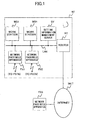
- FIG. 1 shows a network system according to an embodiment.
- Network facsimile apparatuses correspond to network terminal apparatus.
- An intranet NT is configured mainly by a local area network LAN.
- the local area network LAN includes the following: two network facsimile apparatuses FX1 and FX2, multiple workstations WS1 - WSn, and a setting information management server SV.
- the local area network LAN is connected to the Internet INET via a router RT.
- a network facsimile apparatus FX3 is connected to the Internet INET.
- the network facsimile apparatuses FX1 and FX2 can communicate with the network facsimile apparatus FX3 via the Internet INET.
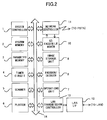
- FIG. 2 shows the configuration of the network facsimile FX1.
- the configuration of the network facsimile FX2 is identical to that of the network facsimile apparatus FX1 shown in FIG. 2.
- the network facsimile apparatus FX1 includes the following: a system controller 1, a system memory 2, a parameter memory 3, a timer circuit 4, a scanner 5, a plotter 6, an operations unit 7, an encoder/decoder 8, an image storage unit 9, a G3 facsimile modem 10, a network controller 11, a LAN interface (I/F) 12, and a LAN transmission controller 13.
- the system controller 1 controls the operation of other components of the network facsimile apparatus FX1 and the communication in compliance with the facsimile transmission procedure, for example.
- the system memory 2 stores computer programs that the system controller 1 executes and various data that the system controller 1 requires for executing the computer programs. Additionally, the system memory 2 provides a working memory region to the system controller 1.
- the parameter memory 3 stores various items of information (parameters) required by the network facsimile apparatus FX1.
- the timer circuit 4 outputs current time information.
- the scanner 5 can read a document thereby to generate image data of a designated resolution.
- the plotter 6 can print image data of a designated resolution.
- the operations unit 7 includes operational keys and displays through which a user can operate the network facsimile apparatus FX1.
- the encoder/decoder unit 8 encodes and compresses image data into code data, and decodes and decompresses the code data into the original image data.
- the image storage unit 9 can store the code data.
- the Group 3 (G3) facsimile modem 10 is a modem that realizes G3 facsimile communication.
- the G3 facsimile modem 10 exchanges a transmission procedure signal as a low speed modem (V.21 modem), and exchanges image data as a high speed modem (V.17, V.34, V.29, V.27ter modem for example).
- the network controller 11 is an interface unit that connects the network facsimile apparatus FX1 to an analog public switched telephone network PSTN.
- the network controller 11 is provided with automatic transmission/reception function.
- the local area network (LAN) interface (I/F) 12 connects the network facsimile apparatus FX1 to a local area network LAN.
- the LAN transmission controller 13 controls communications with other data terminals in compliance with various protocol suites via the local area network LAN.
- the system controller 1, the system memory 2, the parameter memory 3, the timer circuit 4, the scanner 5, the plotter 6, the operations unit 7, the encoder/decoder unit 8, the image storage unit 9, the G3 facsimile modem 10, the network controller 11, and the LAN transmission controller 13 are connected to each other through an internal bus 14, and exchange data mainly through the internal bus 14 except for the data exchange between the network controller 11 and the G3 facsimile modem 10.
- the network controller 11 and the G3 facsimile modem 10 exchange data directly.
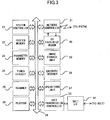
- FIG. 3 is a block diagram showing the structure of the network facsimile apparatus FX3 according to an embodiment.
- the network facsimile apparatus FX3 includes the following: a system controller 21, a system memory 22, a parameter memory 23, a timer circuit 24, a scanner 25, a plotter 26, an operations unit 27, an encoder/decoder unit 28, an image storage unit 29, a G3 facsimile modem 30, a network controller 31, an internet (INET) interface (I/F) 32, and an INET transmission controller 33.
- the system controller 21 controls the operation of other components of the network facsimile apparatus FX3 and the communication in compliance with the facsimile transmission procedure, for example.
- the system memory 22 stores computer programs that the system controller 21 executes and various data that the system controller 21 requires for executing the computer programs. Additionally, the system memory 22 provides a working memory region to the system controller 21.
- the parameter memory 23 stores various items of information (parameters) required by the network facsimile apparatus FX3.
- the timer circuit 24 outputs current time information.
- the scanner 25 can read a document thereby to generate image data of a designated resolution.
- the plotter 26 can print image data of a designated resolution.
- the operations unit 27 includes operational keys and displays through which a user can operate the network facsimile apparatus FX3.
- the encoder/decoder unit 28 encodes and compresses image data into code data, and decodes and decompresses the code data into the original image data.
- the image storage unit 29 can store the code data.
- the Group 3 (G3) facsimile modem 30 is a modem that realizes G3 facsimile communication.
- the G3 facsimile modem 30 exchanges a transmission procedure signal as a low speed modem (V.21 modem), and exchanges image data as a high speed modem (V.17, V.34, V.29, V.27ter modem for example).
- the network controller 31 is an interface unit that connects the network facsimile apparatus FX3 to an analog public switched telephone network PSTN.
- the network controller 31 is provided with automatic transmission/reception function.
- the Internet (INET) interface (I/F) 32 connects the network facsimile apparatus FX3 to the Internet.
- the INET transmission controller 33 controls communications with other data terminals in compliance with various protocol suites via the Internet INET.
- the system controller 21, the system memory 22, the parameter memory 23, the timer circuit 24, the scanner 25, the plotter 26, the operations unit 27, the encoder/decoder unit 28, the image storage unit 29, the G3 facsimile modem 30, the network controller 31, and the INET transmission controller 33 are connected to each other through an internal bus 34, and exchange data mainly through the internal bus 34 except for the data exchange between the network controller 31 and the G3 facsimile modem 30.
- the network controller 31 and the G3 facsimile modem 30 exchange data directly.
- FIG. 4 is a block diagram showing the configuration of the workstation WS (WS1 - WSn) according to an embodiment.
- the workstation WS includes CPU 41, ROM 42, RAM 43, a character generator 44, a timer circuit 45, a local area network (LAN) interface (I/F) 46, a LAN transmission controller 47, a magnetic disk drive 48, a CRT screen display, a display controller 50, a keyboard 51, a pointing device 52, and an input controller 53.
- LAN local area network
- the CPU (Central Processing Unit) 41 controls the entire system of the workstation WS.
- the ROM (Read Only Memory) 42 stores computer programs that the CPU 21 executes and data required by the CPU 21.
- the RAM (Random Access Memory) 43 provides the CPU 41 with a working memory region.
- the character generator 44 generates display data of characters.
- the timer circuit 45 outputs information indicating current time and date.
- the local area network (LAN) interface 46 is an interface that connects the workstation WS to the local area network (LAN).
- the LAN transmission controller 47 controls communications in compliance with various protocol suites for exchanging data with other data terminals via the LAN.
- the magnetic disk drive 48 stores application programs, work data, file data, and image data.
- the CRT screen display 49 displays a screen through which a user can operate the workstation WS.
- the display controller 50 controls the screen displayed on the CRT screen display 49.
- the keyboard 51 is an input device through which a user can key in to the workstation WS
- the pointing device 52 is an input device such as a mouse through which the user can designate a point in the screen displayed on the CRT screen display 49.
- the input controller 53 receives input information from the keyboard 51 and the pointing device 52.
- the CPU 41, the ROM 42, the RAM 43, the character generator 44, the timer circuit 45, the LAN transmission controller 47, the magnetic disk drive 48, the display controller 50, and the input controller 53 are connected to each other via a bus 54, and exchange various data mainly through the bus 54.
- the terminal apparatuses connected to the local area network LAN exchange data with each other using a combination (so-called protocol suite) of a transmission protocol on or under the transport layer such as TCP/IP and a communication protocol of upper layers over the transport layer.
- protocol suite a combination of a transmission protocol on or under the transport layer such as TCP/IP and a communication protocol of upper layers over the transport layer.
- TCP/IP Communication protocols such as the TCP/IP are defined in "RFC” issued by IETF.
- TCP is defined in RFC 793
- IP is defined in RFC 793.
- the network facsimile apparatuses FX1, FX2, and FX3 have various items of information (setting information) related to their own configuration, state, and parameters, for example.
- FIG. 5 is a schematic diagram showing the configuration of setting information.
- the setting information includes a root element, multiple category elements, and multiple information elements included in each category element.
- the setting information is stored in the parameter memory 3.
- the setting information is defined using XML (extensible Markup Language).
- the root element "Setting" is the highest level information element that has multiple category elements. Each category element has one or more information elements.
- the network facsimile apparatus FX1 can acquire the setting information from the network facsimile apparatus FX2.
- the network facsimile apparatuses FX1 and FX2 use communication protocol such as SOAP (Simple Object Access Protocol), for example, for acquiring the setting information.
- SOAP Simple Object Access Protocol
- the XML, the SOAP, and XSLT are international standards defined under initiative of the W3C (http://www.w3.org/).
- FIG. 6 is a sequence diagram for explaining a communication procedure according to an embodiment in which the network facsimile apparatus FX1 (requesting terminal) acquires the setting information from the network facsimile apparatus FX2 (requested terminal).
- the network facsimile apparatus FX1 requesting terminal
- the network facsimile apparatus FX2 remote terminal
- the above communication procedure is activated.
- the communication procedure complies with the SOAP.
- the requesting terminal transmits a command GetSettingRequest to the requested terminal.
- the requested terminal retrieves the setting information stored therein, and transmits a response GetSettingResponse to the requesting terminal.
- the retrieved setting information is arranged in the response GetSettingResponse as parameters.
- the response GetSettingResponse includes a parameter "ResultCode” indicating whether the setting information has been successfully acquired, and parameters "Settings" carrying the setting information.
- the requesting terminal In response to receipt of the response GetSettingResponse, the requesting terminal extracts the parameters "Settings" therefrom.
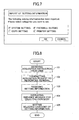
- the requesting terminal displays an operational screen as shown in FIG. 7, and requests the user to select one or more categories that the user desires to set in the requesting terminal.
- the requesting terminal After the user selects the categories and presses the OK button, the requesting terminal sets the information of the selected categories as setting information thereof.
- the user of the network facsimile apparatus FX1 can acquire the setting information from the network facsimile apparatus FX2, and sets the acquired setting information as setting information of the network facsimile apparatus FX1.
- the user does not need to input the setting information by herself to the network facsimile apparatus FX1.
- the user can appropriately use the network facsimile apparatus FX1 by importing the setting information from the network facsimile apparatus FX2.
- the user can select one or more categories of the acquired setting information, and can set only the selected categories to the network facsimile apparatus FX1. Accordingly, the user can prevent irrelevant setting information from being set to the network facsimile apparatus FX1.
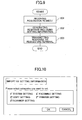
- FIG. 8 is a flowchart for explaining the operation of the network facsimile apparatus FX1 according to an embodiment.
- the network facsimile apparatus FX1 receives an acquisition instruction from the user to acquire setting information (step 101). In response to receipt of the acquisition instruction from the user, the network facsimile apparatus FX1 transmits a command GetSettingRequest to a designated terminal (the requested terminal, or the network facsimile apparatus FX2 in this case) (step 102).
- the network facsimile apparatus FX1 requests the user to designate another network facsimile apparatus from which the network facsimile apparatus FX1 acquires the setting information.
- the user can designate the other network facsimile apparatus by inputting the network address (IP address, for example) of the other network facsimile.
- IP address IP address
- the network addresses of other network facsimile apparatuses may be registered in the network facsimile apparatus FX1, and the user may select one of the registered network addresses.
- the network addresses of other network facsimile apparatuses may be collected using SNMP (Simple Network Management Protocol).
- the network facsimile apparatus FX1 receives a response GetSettingResponse from the requested terminal and acquires the setting information (step 103). In response to receipt of the response GetSettingResponse, the network facsimile apparatus FX1 displays a guidance message (described with reference to FIG. 7) for the user to select one or more categories (step 104). In response to receipt of the user's selection, the network facsimile apparatus FX1 sets the setting information corresponding to the selected categories (step 105) .
- FIG. 9 is a flowchart for explaining the operation of the network facsimile apparatus FX2 according to an embodiment.
- the network facsimile apparatus FX2 retrieves the setting information stored therein and generates the response GetSettingResponse (step 202). The network facsimile apparatus FX2 transmits the response GetSettingResponse to the requesting terminal (step 203).
- the requesting terminal acquires all categories of the setting information and then, has the user to select one or more of the acquired categories.
- the requesting terminal may have the user select one or more categories and then, acquire only selected categories of the setting information.
- the network facsimile apparatus FX1 displays a guidance message through which the user selects one or more categories of the setting information as shown in FIG. 10.
- the requesting terminal transmits a command GetSettingRequest (RequestType) to the requested terminal.
- the parameter "RequestType" included in the command GetSettingRequest is information for designating the categories selected by the user.
- the requested terminal retrieves the setting information stored therein, extracts the categories of the setting information designated by "RequestType", and transmits a response GetSettingResponse including the designated categories of the setting information as parameters to the requesting terminal.
- the response GetSettingResponse includes a parameter "ResultCode” indicating the requested terminal has successfully acquired the setting information, and parameters "Settings" carrying the designated category of the setting information.
- the requesting terminal In response to receipt of the response GetSettingResponse, the requesting terminal extracts the parameters "Settings" and sets the extracted setting information therein.
- the requesting terminal has the user select one or more categories of the setting information, and then, acquires only the selected categories of the setting information from the requested terminal, the amount of data that are transmitted from the requested terminal to the requesting terminal is reduced. Accordingly, the traffic in the network is reduced.
- FIG. 12 is a flowchart for explaining the operation of the network facsimile apparatus FX1 according to another embodiment.
- the network facsimile apparatus FX1 In response to receipt of acquisition instruction from the user (step 301), the network facsimile apparatus FX1 (requesting terminal) displays a guidance massage for selecting one or more categories that the user desires to import (step 302).
- the requesting terminal transmits a command GetSettingRequest (RequestType) to a designated terminal (requested terminal) for requesting the setting information (step 303).
- the requesting terminal has the user select the requested terminal by inputting the network address (IP address, for example) of the requested terminal.
- IP address IP address
- other terminals that are connected to the requesting terminal may be registered in the requesting terminal in advance, and the user may select one of the registered terminals.
- information about other terminals that are connected to the requesting terminal may be collected using the SNMP, and the user may select one of the information-collected terminals.
- the requesting terminal In response to receipt of the response GetSettingResponse including the setting information (step 304), the requesting terminal sets the received setting information therein (step 305).
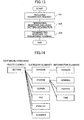
- FIG. 13 is a flowchart for explaining the operation of the network facsimile apparatus FX2 according to an embodiment in response to receipt of a command GetSettingRequest (RequestType) from the requesting terminal.
- RequestType a command GetSettingRequest
- the requested terminal In response to receipt of the command GetSettingRequest (RequestType) (step 401), the requested terminal (network facsimile apparatus FX2) retrieves the setting information stored therein. The requested terminal extracts the designated categories of the setting information, generates a response GetSettingResponse (step 402), and transmits the response GetSettingResponse to the requesting terminal (network facsimile apparatus FX1) (step 403).
- the model of the network facsimile apparatus FX1 is different from that of the network facsimile apparatus FX2, their specifications may be different, and as a result, the setting information to be set therein may be different. Accordingly, the model of requesting terminal and the model of the requested terminal are different, the requesting terminal may be unable to set the setting information acquired from the requested terminal without modifying it.
- a new category "Version” is added to the setting information.
- the information element "Version” is unique to a model. Accordingly, the requesting terminal can determine whether the setting information acquired from the requested terminal is usable without modifying it based on the information element "Version”.
- the setting information is described in the XML.
- the network facsimile apparatus FX1 may retain a stylesheet (a file defining data transform) generated for each version. If the network facsimile apparatus FX1 receives setting information of which the information element of the category "Version" is different from that of the network facsimile apparatus FX1, the network facsimile apparatus FX1 can transform (XSL Transform) the received setting information using the stylesheet corresponding to the category "Version" into setting information that suits to the version thereof.
- FIG. 15 is a flowchart for explaining the operation of the network facsimile apparatus FX1 according to an embodiment.
- the network facsimile apparatus FX1 In response to receipt of an acquisition request from the user (step 501), the network facsimile apparatus FX1 displays a guidance message through which the user selects one or more categories of setting information (step 502). After the user inputs her selection, the network facsimile apparatus FX1 transmits a command GetSettingRequest (RequestType) (step 503).
- RequestType GetSettingRequest
- step 501 another network facsimile apparatus (FX2 in this case) is selected by the user, and the setting information stored in the other network facsimile apparatus is acquired.
- the user may select the other network facsimile apparatus by inputting its network address (IP address, for example).
- IP address IP address
- other network facsimile apparatuses may be registered in the network facsimile apparatus FX1 in advance, and the user may select one of the registered network facsimile apparatuses.
- the SNMP may be used for collecting information of other network facsimile apparatuses connected to the network facsimile apparatus FX1, and the user may be able to select one from the list of connected network facsimile apparatuses.
- the network facsimile apparatus FX1 determines whether the value of the category "Version" of the received setting information matches its own value (step 505). If the determination in step 505 is YES, the requesting terminal sets the received setting information therein (step 506).
- step 505 If the determination in step 505 is NO, the requesting terminal reads a stylesheet corresponding to the category value of the received setting information (step 507). The requesting terminal applies XSLT processing to the received setting information, and then, extracts data from the received setting information (step 508) .
- the requesting terminal reads a stylesheet corresponding to its own version (step 509).
- the requesting terminal applies XSLT processing to the data extracted in step 508 thereby to transform the data (step 510), and sets the transformed data therein (step 511).
- the stylesheets consumes a large memory capacity of the network facsimile apparatus.
- the stylesheets may be stored in a setting information management server SV.
- the network facsimile apparatus FX1 can access the setting information management server SV, and read the stylesheet stored therein. According to the above arrangements, the memory capacity of the network facsimile apparatus FX1 can be reduced.
- FIG. 16 is a flowchart for explaining the operation of the network facsimile apparatus FX1 according to an embodiment.
- the network facsimile apparatus FX1 In response to receipt of an acquisition instruction from the user (step 601), the network facsimile apparatus FX1 displays a guidance message for selecting one or more categories of setting information (step 602).
- the network facsimile apparatus FX1 (requesting terminal) transmits a command GetSettingRequest (RequestType) to the network facsimile apparatus FX2 (requested terminal) thereby to request for setting information.
- step 601 another network facsimile apparatus (FX2 in this case) is selected by the user, and the setting information stored in the other network facsimile apparatus is acquired.
- the user may select the other network facsimile apparatus by inputting its network address (IP address, for example).
- IP address IP address
- other network facsimile apparatuses may be registered in the network facsimile apparatus FX1 in advance, and the user may select one of the registered network facsimile apparatuses.
- the SNMP may be used for collecting information of other network facsimile apparatuses connected to the network facsimile apparatus FX1, and the user may be able to select one from the list of connected network facsimile apparatuses.
- the requesting terminal determines whether the value of the category "Version" of the received setting information matches the value of its own category “Version” (step 605). If the determination in step 605 is YES, the requesting terminal sets the received setting information therein (step 606).
- the requesting terminal determines whether the requesting terminal stores a stylesheet corresponding to the category "Version" of the received setting information (step 607). If the result of the determination in step 607 is NO, the requesting terminal accesses the setting information management server SV for acquiring the stylesheets stored in therein (step 608), and receives the stylesheets from the setting information management server SV (step 609).
- the requesting terminal reads the stylesheet corresponding to the received setting information (step 610), and applies XSLT processing thereby to extract data from the received setting information (step 611). If the result of the determination in step 607 is YES, steps 608 and 609 are skipped, and the process proceeds to step 610.
- the requesting terminal reads a stylesheet corresponding to its own version (step 612), and applies XSLT processing to the extracted data in step 611 using the read stylesheet (step 613).
- the requesting terminal sets the data-transformed setting information therein (step 614).
- the setting information of network facsimile apparatuses may be managed by the setting information management server SV.
- the setting information server SV receives and stores the setting information of each network facsimile apparatus under the management by the setting information server SV.
- the setting information management server SV retrieves the setting information, and transmits the retrieved setting information to the requesting network facsimile apparatus.
- the setting information management server SV can manage the setting information of each network facsimile apparatus in the block. Since the setting information is described in the XML format that can be handled as a text file, the administrator of the setting information management server SV can edit the setting information. The setting information can be managed and edited easily.
- FIG. 17 is a flowchart for explaining the operation of the setting information management server SV according to an embodiment.
- the setting information management server selects one terminal (network facsimile apparatus) (step 701), and transmits an acquisition request thereby to acquire the setting information of the terminal (step 702).
- the selected terminal transmits its setting information.
- the setting information management server SV stores the received setting information correlating with the selected terminal (step 704).
- the setting information management server SV determines whether processing of all terminals has been finished (step 705). If the result of the determination in step 705 is NO, the process returns to step 701, and the setting information of the next terminal is acquired.
- FIG. 18 is a flowchart for explaining the operation according to an embodiment in which the network facsimile apparatus FX1 acquires the setting information from the setting information management server SV.
- the network facsimile apparatus FX1 acquires the setting information from the setting information management server SV with a predetermined interval (daily or weekly, for example).
- the network facsimile apparatus FX1 determines whether a predetermined time has come (step 801). If the result of the determination in step 801 is YES, the network facsimile apparatus FX1 transmits an acquisition request to the setting information management server SV to acquire the setting information (step 802), and receives the setting information from the setting information management server SV (step 803).
- the network facsimile apparatus FX1 sets the received setting information therein (step 804).
- the network facsimile apparatus FX1 acquires setting information from the network facsimile apparatus FX2.
- the network facsimile apparatus FX1 can acquire setting information from the network facsimile apparatus FX3 via the Internet in the same manner.
- the network facsimile apparatuses FX2 and FX3 can acquire setting information from the network facsimile apparatus FX1 in the same manner.
- a network terminal apparatus can acquire setting information from another network terminal apparatus, and can set the acquired setting information therein. As a result, a user can use the network terminal apparatus appropriately without manually setting the setting information.
- a network terminal apparatus can acquire such setting information that the user requires. Accordingly, the network terminal apparatus can prevent unneeded setting information from being set therein.
Landscapes
- Engineering & Computer Science (AREA)
- Multimedia (AREA)
- Signal Processing (AREA)
- General Engineering & Computer Science (AREA)
- Computing Systems (AREA)
- Computer Networks & Wireless Communication (AREA)
- Human Computer Interaction (AREA)
- Facsimiles In General (AREA)
- Computer And Data Communications (AREA)
- Mobile Radio Communication Systems (AREA)
Applications Claiming Priority (2)
| Application Number | Priority Date | Filing Date | Title |
|---|---|---|---|
| JP2003113789 | 2003-04-18 | ||
| JP2003113789A JP2004318644A (ja) | 2003-04-18 | 2003-04-18 | ネットワーク端末装置 |
Publications (3)
| Publication Number | Publication Date |
|---|---|
| EP1469667A2 true EP1469667A2 (de) | 2004-10-20 |
| EP1469667A3 EP1469667A3 (de) | 2005-10-05 |
| EP1469667B1 EP1469667B1 (de) | 2011-11-30 |
Family
ID=32906074
Family Applications (1)
| Application Number | Title | Priority Date | Filing Date |
|---|---|---|---|
| EP04252244A Expired - Lifetime EP1469667B1 (de) | 2003-04-18 | 2004-04-16 | Netzendgerät welches Einstellungsinformationen eines anderen Netzendgerätes erfasst |
Country Status (3)
| Country | Link |
|---|---|
| US (1) | US20040267904A1 (de) |
| EP (1) | EP1469667B1 (de) |
| JP (1) | JP2004318644A (de) |
Families Citing this family (7)
| Publication number | Priority date | Publication date | Assignee | Title |
|---|---|---|---|---|
| JP4533186B2 (ja) * | 2005-02-25 | 2010-09-01 | キヤノン株式会社 | 画像形成装置及び画像形成方法 |
| JP4189602B2 (ja) | 2005-08-17 | 2008-12-03 | コニカミノルタビジネステクノロジーズ株式会社 | 画像形成装置、画像処理システム、画像形成装置の機能拡張方法、および仮想ネットワークの形成方法 |
| JP4124238B2 (ja) | 2006-04-21 | 2008-07-23 | コニカミノルタビジネステクノロジーズ株式会社 | 画像処理装置、機能提示方法、およびコンピュータプログラム |
| JP4506732B2 (ja) * | 2006-07-20 | 2010-07-21 | ブラザー工業株式会社 | 情報処理装置、機器設定システム、及びプログラム |
| US7882205B2 (en) * | 2007-09-07 | 2011-02-01 | Shunji Sugaya | Device setting apparatus, device setting method, information acquiring apparatus, information acquiring method, storage medium, and program |
| JP5727919B2 (ja) * | 2011-11-14 | 2015-06-03 | 株式会社オプティム | 設定方法、設定プログラム及び電化製品 |
| JP5896768B2 (ja) * | 2012-02-08 | 2016-03-30 | キヤノン株式会社 | 画像形成装置、その制御方法、及びプログラム |
Citations (3)
| Publication number | Priority date | Publication date | Assignee | Title |
|---|---|---|---|---|
| JPH11161441A (ja) | 1997-11-27 | 1999-06-18 | Fuji Xerox Co Ltd | プリンタ |
| JP2000196801A (ja) | 1998-12-24 | 2000-07-14 | Ricoh Co Ltd | ファクシミリシステム |
| US20020097262A1 (en) | 2000-12-28 | 2002-07-25 | Toshiba Tec Kabushiki Kaisha | Multi functional peripheral |
Family Cites Families (16)
| Publication number | Priority date | Publication date | Assignee | Title |
|---|---|---|---|---|
| US5655152A (en) * | 1992-12-10 | 1997-08-05 | Matsushita Electric Industrial Co. | System for allocating data output requests to output units having different output formats in accordance with data output format compatibility and priority characteristic |
| JPH1011192A (ja) * | 1996-06-26 | 1998-01-16 | Ricoh Co Ltd | 情報処理システム |
| JP4478222B2 (ja) * | 1997-09-24 | 2010-06-09 | キヤノン株式会社 | 画像形成システム、画像形成装置及びその制御方法 |
| JP3539849B2 (ja) * | 1997-10-20 | 2004-07-07 | 株式会社リコー | ネットワークファクシミリ通信システムの制御方法 |
| JP3782580B2 (ja) * | 1998-05-19 | 2006-06-07 | キヤノン株式会社 | 画像形成装置及び記憶媒体 |
| US6266693B1 (en) * | 1998-08-31 | 2001-07-24 | Toshiba America Information Systems Inc. | Method of controlling printer information in a network environment |
| JP3812170B2 (ja) * | 1998-10-07 | 2006-08-23 | 富士ゼロックス株式会社 | 情報処理装置 |
| JP3704533B2 (ja) * | 1998-11-10 | 2005-10-12 | 株式会社東芝 | 通信方法、携帯端末装置及び計算機装置 |
| JP2000222318A (ja) * | 1999-01-27 | 2000-08-11 | Nec Corp | ネットワーク |
| EP1760637A3 (de) * | 1999-09-06 | 2008-04-02 | Seiko Epson Corporation | Drucker zur Kommunikation von Befehlen mit der Host-Vorrichtung und Verfahren zur Steuerung des besagten Druckers |
| JP3835959B2 (ja) * | 1999-11-10 | 2006-10-18 | 富士通株式会社 | 情報端末装置及び記録媒体 |
| DE60131233D1 (de) * | 2000-03-27 | 2007-12-20 | Seiko Epson Corp | System um Geräte, die mit einem Netzwerk verbunden sind, zu verwalten |
| JP2002051058A (ja) * | 2000-04-20 | 2002-02-15 | Matsushita Electric Ind Co Ltd | 通信システム、車載通信システム、通信機器、及び車載機器 |
| JP2002368743A (ja) * | 2001-06-05 | 2002-12-20 | Iiga Co Ltd | ネットワーク設計支援システム |
| JP2003067271A (ja) * | 2001-08-27 | 2003-03-07 | Hitachi Ltd | 統合管理システム |
| US7698346B2 (en) * | 2003-03-18 | 2010-04-13 | Coral Networks, Inc. | Network operating system and method |
-
2003
- 2003-04-18 JP JP2003113789A patent/JP2004318644A/ja active Pending
-
2004
- 2004-04-13 US US10/824,145 patent/US20040267904A1/en not_active Abandoned
- 2004-04-16 EP EP04252244A patent/EP1469667B1/de not_active Expired - Lifetime
Patent Citations (3)
| Publication number | Priority date | Publication date | Assignee | Title |
|---|---|---|---|---|
| JPH11161441A (ja) | 1997-11-27 | 1999-06-18 | Fuji Xerox Co Ltd | プリンタ |
| JP2000196801A (ja) | 1998-12-24 | 2000-07-14 | Ricoh Co Ltd | ファクシミリシステム |
| US20020097262A1 (en) | 2000-12-28 | 2002-07-25 | Toshiba Tec Kabushiki Kaisha | Multi functional peripheral |
Also Published As
| Publication number | Publication date |
|---|---|
| EP1469667B1 (de) | 2011-11-30 |
| JP2004318644A (ja) | 2004-11-11 |
| EP1469667A3 (de) | 2005-10-05 |
| US20040267904A1 (en) | 2004-12-30 |
Similar Documents
| Publication | Publication Date | Title |
|---|---|---|
| US8958095B2 (en) | Relay server, relay server control method, and storage medium | |
| JP4954368B2 (ja) | 複写センタへジョブを提出する方法及びシステム | |
| US6330611B1 (en) | Client peripheral device-based network resource management method and system | |
| US6762853B1 (en) | Image processing system | |
| US20110128572A1 (en) | Printing apparatus, printing method and storage medium | |
| US7405838B2 (en) | Information processing apparatus, information processing method and print systems | |
| US7124185B2 (en) | Communication device, communication method, computer program, and storing medium for an address book | |
| JP2005316634A (ja) | セッション情報保存システム及び方法 | |
| JPH113192A (ja) | プリントシステムとのネットワーク通信 | |
| US20080263134A1 (en) | Information-processing system, method, computer-readable medium, and computer data signal for controlling provision of information or processing service | |
| EP1469667B1 (de) | Netzendgerät welches Einstellungsinformationen eines anderen Netzendgerätes erfasst | |
| JP2003091388A (ja) | 印刷ジョブ管理方法および装置 | |
| JP2007148854A (ja) | セキュリティ印刷システムとセキュリティ印刷プログラムと記録媒体とセキュリティ印刷方法 | |
| JP2005157552A (ja) | 画像処理システム、画像処理方法、画像処理装置、プログラムおよび記憶媒体 | |
| JP2010003127A (ja) | ドキュメント管理装置、ドキュメント管理システム、ドキュメント管理方法、およびコンピュータプログラム | |
| CN100524193C (zh) | 信息处理系统和信息处理方法 | |
| JP5232846B2 (ja) | 画像形成システムおよび画像形成装置 | |
| WO1998058335A2 (en) | Storing electronically transmitted facsimiles on a web site | |
| US20100208296A1 (en) | Image processing apparatus and control method therefor, server apparatus and control method therefor, and storage medium | |
| JP6728752B2 (ja) | 広告配信システム、サーバ、広告提供方法、およびコンピュータプログラム | |
| JP2014148063A (ja) | 画像形成装置および画像形成装置登録方法 | |
| JP2003006206A (ja) | ユーザーズ・マニュアル自動生成装置およびその自動生成方法 | |
| US20080040778A1 (en) | Information processing apparatus, information processing system, information processing method, and program | |
| JP3913888B2 (ja) | 書面作成システム、WWW(WorldWideWeb)サーバ及び記録媒体 | |
| JP2003094609A (ja) | 印刷機保守に関する情報提供支援方法、情報提供支援装置及び情報提供支援システム、並びに記録媒体 |
Legal Events
| Date | Code | Title | Description |
|---|---|---|---|
| PUAI | Public reference made under article 153(3) epc to a published international application that has entered the european phase |
Free format text: ORIGINAL CODE: 0009012 |
|
| 17P | Request for examination filed |
Effective date: 20040503 |
|
| AK | Designated contracting states |
Kind code of ref document: A2 Designated state(s): AT BE BG CH CY CZ DE DK EE ES FI FR GB GR HU IE IT LI LU MC NL PL PT RO SE SI SK TR |
|
| AX | Request for extension of the european patent |
Extension state: AL HR LT LV MK |
|
| PUAL | Search report despatched |
Free format text: ORIGINAL CODE: 0009013 |
|
| AK | Designated contracting states |
Kind code of ref document: A3 Designated state(s): AT BE BG CH CY CZ DE DK EE ES FI FR GB GR HU IE IT LI LU MC NL PL PT RO SE SI SK TR |
|
| AX | Request for extension of the european patent |
Extension state: AL HR LT LV MK |
|
| AKX | Designation fees paid |
Designated state(s): DE ES FR GB IT NL |
|
| 17Q | First examination report despatched |
Effective date: 20070221 |
|
| GRAP | Despatch of communication of intention to grant a patent |
Free format text: ORIGINAL CODE: EPIDOSNIGR1 |
|
| GRAS | Grant fee paid |
Free format text: ORIGINAL CODE: EPIDOSNIGR3 |
|
| GRAA | (expected) grant |
Free format text: ORIGINAL CODE: 0009210 |
|
| AK | Designated contracting states |
Kind code of ref document: B1 Designated state(s): DE ES FR GB IT NL |
|
| REG | Reference to a national code |
Ref country code: GB Ref legal event code: FG4D |
|
| REG | Reference to a national code |
Ref country code: DE Ref legal event code: R096 Ref document number: 602004035487 Country of ref document: DE Effective date: 20120202 |
|
| REG | Reference to a national code |
Ref country code: NL Ref legal event code: VDEP Effective date: 20111130 |
|
| PG25 | Lapsed in a contracting state [announced via postgrant information from national office to epo] |
Ref country code: NL Free format text: LAPSE BECAUSE OF FAILURE TO SUBMIT A TRANSLATION OF THE DESCRIPTION OR TO PAY THE FEE WITHIN THE PRESCRIBED TIME-LIMIT Effective date: 20111130 |
|
| PG25 | Lapsed in a contracting state [announced via postgrant information from national office to epo] |
Ref country code: IT Free format text: LAPSE BECAUSE OF FAILURE TO SUBMIT A TRANSLATION OF THE DESCRIPTION OR TO PAY THE FEE WITHIN THE PRESCRIBED TIME-LIMIT Effective date: 20111130 |
|
| PLBE | No opposition filed within time limit |
Free format text: ORIGINAL CODE: 0009261 |
|
| STAA | Information on the status of an ep patent application or granted ep patent |
Free format text: STATUS: NO OPPOSITION FILED WITHIN TIME LIMIT |
|
| 26N | No opposition filed |
Effective date: 20120831 |
|
| REG | Reference to a national code |
Ref country code: DE Ref legal event code: R097 Ref document number: 602004035487 Country of ref document: DE Effective date: 20120831 |
|
| PG25 | Lapsed in a contracting state [announced via postgrant information from national office to epo] |
Ref country code: ES Free format text: LAPSE BECAUSE OF FAILURE TO SUBMIT A TRANSLATION OF THE DESCRIPTION OR TO PAY THE FEE WITHIN THE PRESCRIBED TIME-LIMIT Effective date: 20120311 |
|
| PGFP | Annual fee paid to national office [announced via postgrant information from national office to epo] |
Ref country code: GB Payment date: 20140422 Year of fee payment: 11 |
|
| PGFP | Annual fee paid to national office [announced via postgrant information from national office to epo] |
Ref country code: FR Payment date: 20140422 Year of fee payment: 11 Ref country code: DE Payment date: 20140418 Year of fee payment: 11 |
|
| REG | Reference to a national code |
Ref country code: DE Ref legal event code: R119 Ref document number: 602004035487 Country of ref document: DE |
|
| GBPC | Gb: european patent ceased through non-payment of renewal fee |
Effective date: 20150416 |
|
| PG25 | Lapsed in a contracting state [announced via postgrant information from national office to epo] |
Ref country code: DE Free format text: LAPSE BECAUSE OF NON-PAYMENT OF DUE FEES Effective date: 20151103 Ref country code: GB Free format text: LAPSE BECAUSE OF NON-PAYMENT OF DUE FEES Effective date: 20150416 |
|
| REG | Reference to a national code |
Ref country code: FR Ref legal event code: ST Effective date: 20151231 |
|
| PG25 | Lapsed in a contracting state [announced via postgrant information from national office to epo] |
Ref country code: FR Free format text: LAPSE BECAUSE OF NON-PAYMENT OF DUE FEES Effective date: 20150430 |