EP1423532B1 - Nucleic acid amplification method - Google Patents
Nucleic acid amplification method Download PDFInfo
- Publication number
- EP1423532B1 EP1423532B1 EP02741612.2A EP02741612A EP1423532B1 EP 1423532 B1 EP1423532 B1 EP 1423532B1 EP 02741612 A EP02741612 A EP 02741612A EP 1423532 B1 EP1423532 B1 EP 1423532B1
- Authority
- EP
- European Patent Office
- Prior art keywords
- circularized
- probes
- rca
- amplification
- oligonucleotide
- Prior art date
- Legal status (The legal status is an assumption and is not a legal conclusion. Google has not performed a legal analysis and makes no representation as to the accuracy of the status listed.)
- Expired - Lifetime
Links
Images






Classifications
-
- C—CHEMISTRY; METALLURGY
- C12—BIOCHEMISTRY; BEER; SPIRITS; WINE; VINEGAR; MICROBIOLOGY; ENZYMOLOGY; MUTATION OR GENETIC ENGINEERING
- C12Q—MEASURING OR TESTING PROCESSES INVOLVING ENZYMES, NUCLEIC ACIDS OR MICROORGANISMS; COMPOSITIONS OR TEST PAPERS THEREFOR; PROCESSES OF PREPARING SUCH COMPOSITIONS; CONDITION-RESPONSIVE CONTROL IN MICROBIOLOGICAL OR ENZYMOLOGICAL PROCESSES
- C12Q1/00—Measuring or testing processes involving enzymes, nucleic acids or microorganisms; Compositions therefor; Processes of preparing such compositions
- C12Q1/68—Measuring or testing processes involving enzymes, nucleic acids or microorganisms; Compositions therefor; Processes of preparing such compositions involving nucleic acids
- C12Q1/6844—Nucleic acid amplification reactions
- C12Q1/6848—Nucleic acid amplification reactions characterised by the means for preventing contamination or increasing the specificity or sensitivity of an amplification reaction
Definitions
- This invention relates to the generation, amplification, detection and quantification of nucleic acids. More particularly, the present invention relates to the generation, amplification, detection and quantification of circular nucleic acids.
- nucleic acid amplification has become a common technique in the identification of genetic disorders, genetic variants or for the identification of infectious agents.
- PCR polymerase chain reaction
- LCR ligase chain reaction
- TAS transcription based amplification system
- NASBA nucleic acid sequence based amplification
- SDA strand displacement amplification
- HRCA hyper-branched RCA
- the present invention will be described with reference to its preferred use in rolling circle amplification method (Lizardi et al. , 1998), USP5854033 , USP6124120 , USP6143495 , USP6183960 , 6210884 .
- the circular nucleic acids referred to in the invention can be circularised probes, circularised target nucleic acids, circular reporter nucleic acids, plasmids, or circular target nucleic acids.
- the present invention can be used for nucleic acid sequence analyses for e.g. genotyping, finding mutations, sequencing, identification of infectious agents, molecular diagnostics, genetic analyses and forensics, but also for detection of proteins, analysis of protein-protein interactions, and interactions of biomolecules.
- the present invention relates to novel means of generating circularized nucleic acids, and to amplify, detect, or analyze the said circularized nucleic acids.
- Some means of generating circularized nucleic acids for analytical purpose are known in the literature.
- Padlock probes are oligonucleotide probes that become circularized upon recognition of a target nucleic acid sequence (Nilsson et al., 1994).
- Proximity probe ligation can template generation of circularized probes as a consequence of target molecule recognition, as described in ( Landegren, PCT W099/49079 ).
- RCA results in a linear amplification of circularized probes and is therefore of limited sensitivity. Typically an RCA produces about 1000 copies of each circularized probe molecule per hour.
- the invention provides a method of analyzing circularized nucleic acids, said method comprising providing an amplification product by amplifying the said circularized nucleic acids, which product comprises a concatemer of a sequence to be analysed, said method further comprising:
- the invention can be seen to comprise steps of:
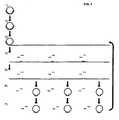
- the monomers are ligated to form circles followed by further amplification of the circles by RCA ( Fig. 1 ).
- the sequence to be amplified may be a probe sequence, or part of probe sequence, or it may comprise cDNA, genomic DNA or RNA sequences.
- monomerization of the first generation amplification product is achieved using a restriction enzyme and an oligonucleotide complementary to the first generation amplification product, wherein the restriction enzyme cleaves any first generation amplification product/oligonucleotide hybrids.
- the oligonucleotide is added in excess of the numbers of monomers contained in the first generation reaction product.
- the first generation amplification product is produced in a first generation amplification step, which step utilizes a polymerase enzyme, wherein the method includes a step of inactivating the polymerase enzyme.
- the polymerization is carried out under isothermal conditions.
- Monomerization of the first generation amplification product is achieved using oligonucleotides and restriction enzymes and oligonucleotide is added in excess of the number of monomers present in the RCA reaction product.
- Most of the oligonucleotides that will hybridise to the monomers after a denaturation (and enzyme inactivation) step will be non-cleaved.
- the monomers will preferentially become circularized upon hybridization to non-cleaved oligonucleotides and ligase treatment.
- This new set of circles is now able to serve as templates for subsequent rounds of RCA, primed e. g. by the same oligonucleotide serving as template for ligation. Therefore, instead of a linear amplification, this procedure will generate a (X 1 x X 2 ?? x X n )-fold amplification, where "X” is the number of monomers synthesized in each RCA, and "n” is the number of rounds of RCAs, digestions and circularizations.
- the procedure should be of particular value for applications where a large set of different circular nucleic acids is amplified by RCA, since the procedure should preserve the complexity of the initial set of circular nucleic acids.
- the monomerization can be effected using a general sequence that is present in each of the different probes present in a reaction.
- the risk that the product will become double-stranded is minimal because all monomers will become circularised, due to the addition of excess cleavage/circularization oligonucleotides. Therefore, there should be no sequences present in the second-generation RCA, and able to prime synthesis on the second-generation RCA product. Also, this polynomial amplification method is completely specific to circularized molecules, reducing the risk for spurious amplification products seen in other amplification methods.
- the method of replicating a first, second, and maybe more generations of circularized sequences is applicable both for probe and target nucleic acid sequences.
- the product can be analyzed by sequencing or by detection via e.g. any of the methods described below.
- the target DNA is first fragmented using e.g. restriction enzymes or FLAP endonucleases, and then circularized using a circularization adapter consisting of single-stranded sequences at each end, complementary to the ends of the target DNA fragment to be amplified. It may be advantageous to amplify similar-sized fragments when many different fragments are amplified in the same reaction.
- a double-stranded non-target complementary segment is located in between the single-stranded segments, and that contains a general restriction oligonucleotide sequence ( Fig. 2 ).
- restriction enzymes that will generate restriction fragments of a similar size of all sequences in e.g. a genomic DNA sample. But it is very likely that all sequences will be represented on restriction fragments of the desired size in at least one of perhaps ten different restriction digest using different restriction enzymes or combinations of restriction enzymes. If 1000 different DNA sequences are to be amplified, then they can be amplified in perhaps ten different reactions using DNA samples digested with ten different combinations of restriction enzymes. The appropriate restriction digests and the corresponding circularization adaptors can be deduced from the available sequence databases. Amplified DNA sequences can be analyzed by suitable methods, including but not limited to, microarray hybridization, mini- sequencing, or mass-spectrometry, that today are limited in their through-put due to the limited multiplexing capacity of PCR.
- the same mechanism of circularizing monomerized amplification products can be used to generate circularized representations of oligonucleotide probes that have been joined in a proximity-dependent nucleic acid interaction event (Landegren, 1995 and Landegren & Fredriksson, 2000).
- binding of two or more probes to a target molecule e.g. a protein
- a target molecule e.g. a protein
- an excess of restriction oligonucleotide is hybridized to two identical sequences, in two of the joined oligonucleotide probes, containing a restriction enzyme recognition sequence.
- restriction oligonucleotides After restriction digestion and heat-inactivation of the restriction enzyme, cleaved oligonucleotides are detached, allowing an intact restriction oligonucleotide to hybridize to both ends of the joined and digested probe oligonucleotides, due to the preferred intramolecular hybridization reaction.
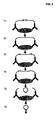
- the restriction oligonucleotide Upon addition of a DNA ligase, the restriction oligonucleotide acts as a ligation template, guiding the circularization of the oligonucleotide ( Fig. 3 ).
- the circle that forms can now be amplified according to the present invention.
- the mechanism of forming circularized DNA as an effect of a proximity-dependent nucleic acid ligation reaction is distinct from the one described in PCT WO99/49079 . In the present invention, parts of the proximity probes become circularized, in contrast to the method described in PCT WO99/49079 where proximity probes template circularization of added
- circularised amplification products are hybridised to different primers attached to a solid support, specific for each of the different products present in the reaction.
- the different primers are preferably designed to be as dissimilar as possible, i.e. they represent so-called zip-code- or tag-sequences, and they may be arranged in an array.
- the primers are used to initiate a localised RCA.
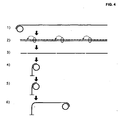
- Specific cleavage within the tag-sequence motif is obtained by rendering the recognition sequence double- stranded with an oligonucleotide having a sequence general for all RCA products and/or a pool of random short oligonucleotides, e.g. hexamers, which will form double-stranded substrates for restriction cleavage ( Fig. 4 ).
- the monomers After restriction digest, the monomers have now in effect been converted to padlock probes containing half-tag end-sequences.
- this strategy allows half-tags connected to pairs of detection reagents to be combined to identify the pairs of binding reagents that have been bound in proximity. This is possible by using proximity ligation probes where ligatable ends constitute unique base-paired half-tag sequences. In this manner ends may be joined by blunt-or sticky end ligation ( Fig. 3 ).
- the method is however not suited for analytical purposes or for amplification of rare circular DNA strands generally, since it typically requires 0.1 ⁇ M to 1 mM isolated circular templates.
- the primers are provided in a molar excess over circular template of less than 100, and the deoxynucleotidetriphosphates in a molar excess over circular templates of less than 10 7 .
- these molar ratios are to low to allow efficient priming and polymerization, respectively, due to the low amount of target molecules.
- genomic DNA sequences by either amplification of circularized genomic DNA or circularized oligonucleotide probes the corresponding molar ratios required in the first amplification step are at least 100 and 10 7 , respectively, or more preferably greater than 100 000 and 10 10 , respectively, or ideally about, 10 7 and 10 2 , respectively, because of the low concentration of initial circularized nucleic acids.
- Japanese patent application JP 4-304900 describes the use of RCA for detecting circularised probes. In this application repeated RCAs are described using the RCA product as a target for subsequent probe ligations and RCAs. By contrast, in the present invention the monomerised RCA product is used as probe in subsequent ligations and RCAs. The advantages of this procedure have already been discussed.
- the first approach is based on selective, hybridisation-dependent, degradation of a probe complementary to the RCA product. It is desirable that the probe is designed in a manner such that its cleavage is detectable.
- a method of nucleic acid amplification that employs probes to indicate the extent of the amplification may comprise the steps of:
- the probe consists of a hairpin-loop probe, a so-called molecular beacon (Tyagi & Kramer, 1996) comprising a detectable marker ligand therein, which selectively emits a detectable signal.
- the marker may be part of the nucleic acid sequence or may be a ligand held within the hairpin formation.
- the ligand is released from the nucleic acid on cleavage of the nucleic acid.
- the part of the probe hybridising to the RCA product at least partially consists of RNA it will, upon hybridisation, be degrade by the enzyme RNase H. (Duck et al, e.g. USP5011769, USP5660988, USP5403711 and USP6121001 )
- a similar effect can be obtained by substituting one or more of the deoxynucleotides, used in the RCA, for thiophosphorodeoxynucleotides, thereby protecting the RCA product from endonuclease hydrolysis.
- the molecular beacon would in this case be made of ordinary deoxynucleotides and would therefore be susceptible to degradation by a double strand specific endonuclease.
- a restriction enzyme recognition site can be designed into the loop sequence of the beacon. There are several known restriction enzymes that specifically cleave the non-thiophosphorylated strand when this is hybridised to a thiophosporylated strand.
- any unspecific double strand specific endonuclease can be used, thereby avoiding the need for a specific sequence in the probe.
- a related way of producing detectable cleavage products is to add a probe complementary to an RCA product and a restriction enzyme that recognise a sequence in the RCA-oligonucleotide duplex. After cleavage of the RCA-oligonucleotide duplex, the cleaved probe will dissociate from the monomerized RCA products. Then an intact oligonucleotide can hybridise to one end of the cleaved monomer, whereafter the other end of the monomer will most likely hybridise to the same oligonucleotide, due to the intra-molecular nature of the interaction. In this manner, a new substrate for the restriction enzyme is formed, and a second signal-generating cleavage occurs. By labelling the probe with a fluorescent moiety at one end and a quencher molecule at the other end a signal will be generated upon cleavage and subsequent dissociation.
- Hybridisation-dependent degradation of probes can also be performed with any double strand-specific exonuclease (( Copley & Boot, 1992), USP6121001 ).
- a probe that hybridise to the RCA product will be a substrate for the exonuclease and thereby degraded while the RCA product are unaffected due to the lack of any double stranded ends.
- the melting temperature of the duplex will decrease and the probe is more likely to dissociate even if not fully degraded. Thereby the sequence is made accessibly for another probe to hybridise and subsequently be degraded.
- R/D-zyme DNA-zymes
- the RCA product will contain the active R/D-zyme.
- This can then be used to cleave a probe that is added to the reaction mixture.
- the cleaved probe will dissociated from the RCA product and leave place for another uncleaved probe to hybridise and be cleaved.
- the R/D-zyme does not need to cleave the probe but it can instead template ligation of two oligonucleotides together and generate a signal as described below (Cuenoud & Szostak, 1995).
- Probes may also be designed so that upon hybridisation to the RCA product they assemble in such a way that they resemble the substrate for a structure specific enzyme.
- the enzyme is preferably selected from the group comprising resolvases, recombinases or nucleases, examples Ruv ABC, Holliday junction resolvases, Flip recombinases, FEN nuclease or certain polymerases.
- One aspect of the invention is to use two oligonucleotides hybridising in tandem in such a way that the downstream oligonucleotide has a protruding 5 prime end. This structure can be cleaved by several different enzymes e.g.
- FEN nucleases Taq polymerase, Tth polymerase or Mja nuclease (Lyamichev et al. , 1999).
- the downstream oligonucleotide is designed so that it has a melting temperature near the temperature of the isothermal RCA reaction.
- the probes may comprise a fluorescent moiety and a quenching moiety which are separated by a hairpin-loop structure, wherein the quenching moiety quenches the signal from the fluorescent moiety when the probe is in an un-bound and intact conformation the quenching moiety quenches the signal from the fluorescent moiety, and wherein bound or degraged probe emits a signal ( Fig. 5 ).
- the probe may include a pair of signalling moieties, which moieties produce a signal by FRET when the probe is intact, but where degradation of the probe inhibits signal production.
- the reaction can continue isothermally, even at low temperature.
- the temperature may be less than 60°C and preferably is less than 50°C.
- this may remove the need to maintain the reactions at an elevated temperature.
- oligonucleotide probes are constructed in such a way that they hybridise adjacent to each other on the RCA product, then they can subsequently be joined by a ligase. If the two oligonucleotides are designed in such a way that upon ligation and dissociation from the target they form a stable stem-loop structure, a donator molecule at the 5 prime position can be placed in close proximity to a acceptor molecule at the 3 prime position in the other oligonucleotide. A signal can then be generated based upon fluorescence resonance energy transfer (FRET).
- FRET fluorescence resonance energy transfer
- the probes By designing the probes so that the ligated probe will have a melting temperature near the temperature of the isothermally proceeding RCA reaction a fast turnover will be possible.
- the unligated probes will be present in large molar excess over the produced ligated probes, thereby increasing the rate at which they will hybridise to the target RCA product and subsequently be ligated, dissociate and so on. The reaction is thus possible to perform isothermally.
- a method of nucleic acid amplification which employs probes to indicate the extent of the amplification, may employ a pair of signaling probes, which probes are designed such that they hybridize to a target sequence on an amplification product adjacent to each other, wherein upon hybridization the probes are ligated to form a ligated product which dissociates from the target sequence, wherein dissociation of the ligated product from the target sequence allows a further pair of probes to hybridize to the target sequence, and wherein upon dissociation from the target sequence the ligated product emits a signal.
- One of the pair of signaling probes may comprise a donor moiety and another may comprise an acceptor moiety, wherein the probes are designed such that the ligated product forms a hairpin loop structure, which upon formation allows energy transfer between the donor and acceptor moieties to produce a signal.
- Homogenous detection of concatemer amplification products may be achieved using a modified molecular beacon design.
- the present inventors have found that conventional molecular beacons generate signal in the absence of an RCA product but in the presence of DNA polymerase, unless at least parts of the DNA residues in the beacon are replaced by nucleic acid residues that are not accepted as substrates for the polymerase, since the 3' end (usually carrying the fluorescence quencher) is degraded by the 3'exonucleolytic (proof reading) activity of the polymerase.
- Generation of non-specific signal can be completely avoided by using molecular beacons comprising 2'-O-methyl-RNA residues instead of DNA residues ( Fig. 6 ).
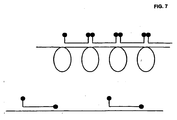
- the inventors further found that conventional molecular beacons that hybridise to an RCA product are quenched, because neighbouring beacons readily form stems with each other (inter-molecular stems), bringing the quencher and reporter fluorophores close together, much like the closed (quenched) conformation of non-hybridising beacons ( Fig. 7 ).
- This can be avoided by including one of the stem sequences of the beacon in the padlock probe sequence so that, upon hybridisation to the RCA product, one part of the stem hybridises to the product so that it cannot form stem-like structures with neighbouring beacons ( Fig. 7 ).
- the RCA can be monitored in real-time ( Fig. 8 ).
- a second probe could be added to the detection reaction that hybridises to the RCA product in between the molecular beacons to avoid that this sequence loops out, thus hindering the inter-molecular stems to form.
- the magnitude of the inter- molecular quenching may vary between different molecular beacon sequences as exemplified by the complete quenching of the DNA molecular beacon version ( Fig. 9 ) compared to the partial quenching of the 2'-O-Me- RNA beacon used in figure 8 .
- the inter-molecular hairpin structure that forms between adjacent molecular beacons, hybridising to a concatenate sequence, can also be used to generate FRET between two molecular beacons that hybridise within one monomer of the concatenate sequence.
- the two molecular beacons should be equipped with the same stem sequence, but the position of the donor and acceptor fluorophores should be switched in one of the two molecular beacons.
- Such molecular beacons will hybridise in an alternating fashion, forming inter-molecular hairpin structures between adjacent, but alternating molecular beacons, such that the fluorophore of one beacon is positioned in close proximity to the fluorophore of the neighbouring molecular beacon, enabling efficient FRET between the two fluorophores. In this way background fluorescence from closed molecular beacons can be diminished, increasing detection sensitivity.
- any linear probes before the initial RCA e. g. , it has been noticed that remaining non-circularised probes produce a non-specific signal in RCAs.
- An attempt to overcome this problem is described in WO 00/36141 where enzymes or so-called capture ligands are used to remove any remaining linear nucleic acid probes.
- the present invention may use a method of removing or rendering inert non-circularized probes during (or after) a nucleic acid amplification process which utilizes circular probes, in which the non-circularized probes comprise first and second segments separated by a linking segment, wherein the first and second segments are complementary to sequences on a target sequence, wherein the probe is designed to form a hairpin loop structure between the 3' end of the probe and a sequence in a linking segment of the probe, wherein a stem of the hairpin loop structure ideally has a thermal stability that neither inhibits formation of a hybrid between the loop and the target sequence nor inhibit replication of the probe by RCA.
- the stem should be sufficiently stable to prime synthesis and thus convert non-ligated probes to full hairpins, unable to prime"second strand"synthesis on the RCA-product.
- the hairpin-forming probe has a further advantage in that such a probe design may be more specific than conventionally designed probes.
- the diagnostic base should be positioned at the ultimate 3' position of the probe sequence to fully take advantage of the mismatch discriminatory capacity of DNA ligases.
- this diagnostic base will thus be a part of the hairpin forming sequence. This sequence may be designed to flip back and forth between the hairpin and the target hybridising conformation at the ligation temperature. The matched sequence version of a probe will then spend more time in the target sequence hybridising conformation than the corresponding mismatched probe version. This will favour ligation of matched probes over misligation of mismatched probes.
- the invention may use a further method of removing or rendering inert non-circularized probes during (or after) a nucleic acid amplification process which utilizes circular probes, in which an excess of oligonucleotides that are complementary to a 3' end of the probes are added before the amplification reaction, which oligonucleotides preferably include a 5' sequence extension, whereby the 3' end of non-circularized probes will lose complementarity to a product of the amplification process.
- the excess of oligonucleotides which are complementary to the 3' end of the probes are added to the system before the RCA is begun although they may be added simultaneously with the other reagents or immediately after the reaction is begun.
- the 3' ends of non-ligated probes will lose their complementarity to the RCA product, and will not be able to prime a second strand synthesis.
- These 3' eliminators may be used to prime the RCA.
- the 3' eliminators may be equipped with an unextendable 3' end that is also unremovable by 3' exonucleolytic activities of DNA polymerases. This may be particularly important if the RCA product is intended to be detected by oligonucleotides recognizing sequences in the RCA product that correspond to the linking segment of the padlock probes. In this case a general primer could be added to the circularised probes to initiate the RCA. Because of the limited length of the 3' eliminators, they will become displaced by the polymerase extending the primer and will thus not inhibit the RCA (Banér et al., 1998).
- the reactions were incubated for 15 minutes at 37°C, and then the ligase was inactivated for 5 minutes at 65°C.
- the first-generation RCA was performed for 45 minutes at 37°C in 0,1 ⁇ g/ ⁇ l BSA, 250 ⁇ M dNTP, 10 mM DTT, 1 pmol primer (CGTCGTAGGTCACTTAACAT), and 1 ng/ ⁇ l ⁇ 29 DNA polymerase.
- the polymerization components were added to 10 ⁇ l1 ligation reactions in 15 ⁇ l of ⁇ 29 DNA polymerase buffer (10 mM Tris-HCl (pH 7.5), 10 mM MgCl 2 , and 20 mM (NH 4 ) 2 SO 4
- the DNA polymerase was inactivated for 10 min at 65°C.
- the first-generation RCA product was monomerized by adding 5 ⁇ l 0,1 ⁇ g/ ⁇ l BSA, 3 pmol RSAI (GCTGCTGTACTACTCTCTT), and 10 U Rsa I in ⁇ 29 DNA polymerase buffer. The reaction was incubated for 60 minutes at 37°C and then the enzyme was inactivated for 10 minutes at 65°C.
- the monomerized RCA product was circularized by adding 5 ⁇ l 0.1 ⁇ g/ ⁇ l BSA, 1 mM ATP, and 1 U T4 DNA ligase in ⁇ 29 polymerase buffer. The ligation was incubated for 15 min at 37°C and then the enzyme was inactivated for 5 minutes at 65°C.
- the second-generation RCA was performed using the same conditions as the first-generation RCA by adding 15 ⁇ l polymerization reagents to 35 ⁇ l of the circularized RCA product. The polymerization reaction continued for 45 minutes at 37°C.
- Half of the second-generation RCA product was monomerized by adding 6 pmol RSAIcomp (AAGAGAGTAGTACAGCAGC) and 10 U Rsa I in 5 ⁇ l ⁇ 29 DNA polymerase buffer including 0.1 ⁇ g/ ⁇ l BSA. The reaction was incubated for 60 minutes at 37°C, and then the enzyme was inactivated for 10 minutes at 65°C. Circularization of the monomerized second-generation RCA product was performed using the same procedure as the circularization of the monomerized first-generation RCA product. The third-generation RCA was performed as the second-generation RCA but in presence of 0.1 ⁇ M molecular beacon (HEX-ccucAAUGCUGCUGCUGUACUACgagg-DABCYL) and for 60 min. The reaction was followed in real-time using an ABI 7700.
- 2 nM padlock probe (WD 1216G) was circularized as above in presence of various amounts of target oligonucleotides (T 1216G; 0, 25, 250, or 2500 zmol).
- the first-generation RCA was performed for 100 minutes at 37°C as above 1 pmol of the primer WDP-F.
- the polymerization components were added to 10 ⁇ l ligation reactions in 15 ⁇ l of ⁇ 29 DNA polymerase buffer
- the DNA polymerase was inactivated for 10 min at 65°C.
- the first-generation RCA product was monomerized by adding 5 ⁇ l 0,1 ⁇ g/ ⁇ l BSA, 3 pmol Comp WDP-F, and 5U Fnu 4H 1 in ⁇ 29 DNA polymerase buffer.
- the reaction was incubated for 60 minutes at 37°C and then the enzyme was inactivated for 10 minutes at 65°C.
- the monomerized RCA product was circularized by adding 5 ⁇ l 0.1 ⁇ g/ ⁇ l BSA, 1 mM ATP, and 1 U T4 DNA ligase in ⁇ 29 polymerase buffer. The ligation was incubated for 15 min at 37°C and then the enzyme was inactivated for 5 minutes at 65°C.
- the second-generation RCA was performed using the same conditions as the first-generation RCA by adding 15 ⁇ l polymerization reagents to 35 ⁇ l of the circularized RCA product. The polymerization reaction continued for 100 minutes at 37°C.
- Half of the second-generation RCA product was monomerized by adding 4.5 pmol D-RCRcut and 5 U Fnu 4HI in 5 ⁇ l ⁇ 29 DNA polymerase buffer including 0.1 ⁇ g/ ⁇ l BSA. The reaction was incubated for 60 minutes at 37°C, and then the enzyme was inactivated for 10 minutes at 65°C. 30 ⁇ l monomerized second-generation RCA product was hybridized to a DNA microarray in 4*SSC, 0,525 ⁇ M Comp WD Cy5, 10 ⁇ M EDTA at 45°C for 2h, washed in 0.1xSSC at 45°C, rinsed in water, and finally dried. The Cy5 fluorescence signal was recorded in a fluorescence laser scanner.
- FIG. 1 A schematic drawing of the general procedure of a several generation RCA, as described in examples 1 and 2 is illustrated in Figure 1 .
- the results of examples 1 and 2 are shown in figures 10 and 11 , respectively.
- the first-generation RCA product is monomerized, e.g. by using a restriction enzyme that will cleave the product at a recognition site, rendered double-stranded by an oligonucleotide complementary to the RCA product.
- Intact restriction oligonucleotides will displace the digested ones, e.g. during or after heat inactivation of the restriction enzyme.
- the other end of the monomer will hybridize to the same restriction oligonucleotide, because of the intra-molecular nature of the second hybridization reaction.
- the monomers can then be circularized by joining the ends, e.g. using a DNA ligase. The procedure can now be repeated for one or more rounds of the same procedure.
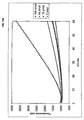
- Figure 10 shows real-time monitoring of the third-generation RCA described in example 1.
- A) Real-time measurement of HEX fluorescence emitted from molecular beacons hybridizing to the RCA product as it is generated.
- B) A graph showing the relationship between the amounts of target oligonucleotide added in the first probe circularization reaction, performed in quadruplicate, and the maximum slope of the third-generation real-time RCA of these ligation reactions.
- the error-bars denote the standard deviation.
- Figure 11 shows the fluorescence recorded at a microarray feature containing an oligonucleotide complementary to the second-generation RCA product obtained according to example 2.
- the ligation template for the padlock probes was t40: GCCTTTAATATGGGAGGATGTTTGCAGAATGCCTTAG.
- the DNA molecular beacon was FAM-cgcctcAATGCTGCTGCTGTACTACgaggcg-DABCYL (the stem part in lower case) and the 2' O-Me-RNA molecular beacon was HEX-ccucAAUGCUGCUGCUGUACUACgagg-DABCYL.
- the stem is two base pairs shorter in the 2'-O-Me-RNA beacon because of the higher hybrid stability of 2'-O-Me-RNA base pairs.
- the oligonucleotide used for restriction digestion was Tsp45I: GGCTTTCTCTATGTTAAGTGACCTACGA.
- Padlock probe circularization 200 nM padlock probes were ligated in 10 mM Tris-acetate pH 7.5, 10 mM MgAcetate, 50 mM NaCl, 1 mM ATP, 1 ⁇ g/ ⁇ l BSA, and 0.2 units/ ⁇ l T4 DNA ligase (Amersham Pharmacia Biotech) at 37°C for 30 minutes in presence of 600 nM ligation template.
- Rolling-circle amplification Polymerization reactions were performed in 50 mM Tris-HCl (pH 7.5), 10 mM MgCl 2 , 20 mM (NH 4 ) 2 SO 4 , 10 mM dithiothreitol and 0.2 ⁇ g/ ⁇ l BSA, 0.25 mM dNTP, and 2 ng/ ⁇ l ⁇ 29 DNA polymerase (kindly provided by Dr. M. Salas) at 37°C.
- the RCA was performed in presence of 100 nM molecular beacon and 300 nM ROX dye. Fluorescence values are given as a ratio between the fluorescence emitted by the molecular beacon (FAM or HEX) and the ROX reference dye.
- the temperature profiles were obtained by sampling fluorescence after temperature increments of 1°C held for 30 seconds.
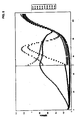
- FIG 8 The inter-molecular beacon quenching shown in figure 7 is demonstrated by restriction cleavage of the RCA product, and the modified design of the molecular beacon allows for real-time monitoring of RCA.
- RCA was performed on ligation reactions subjected to ligase (black) or no ligase (grey) containing either the p90 (squares) or the p93 (circles) padlock probes.
- the left portion of the graph shows a real time monitoring of fluorescence from the 2'O-Me-RNA molecular beacon in the different reactions.
- the right portion shows the temperature profile of the components present at the end of the 90 min RCA (filled symbols). Superimposed are the temperature profiles of the different reaction components after a restriction digest (open symbols).
- Ligation was allowed to proceed for 1 h at room temperature followed by 30 minutes at 37°C before the ligase was heat inactivated at 65°C for 20 minutes.
- Five microliter of the ligase reaction were subjected to a rolling circle amplification reaction in 50 mM Tris-HCl, pH 7.5, 10 mM MgCl 2 , 20 mM (NH 4 ) 2 SO 4 , 0,2 ⁇ g/ ⁇ l BSA, 0,25mM dNTP, and 10 ng ⁇ 29 polymerase at 37°C for 3 hours.
- a real-time PCR reaction was run on 2.5 ⁇ l of the RCA reactions in 1xPCR GOLD buffer (ABI), 1.6mM MgCl 2 , 0.25 mM dNTP, 200 nM Ex15ATP7B-Frw (AGA CCT TGG GAT ACT GCA CGG) and 200 nM Ex15ATP7B-Rew (CAA TTC CAC AGC CTG GCA CT) primers, 0.625 U Taq GOLD polymerase (ABI), 300 nM ROX dye and 0.15x SYBR Green (Molecular Probes) in a volume of 25 ⁇ l.
- the primers were designed to PCR amplify both the genomic fragment and the RCA product.
- the PCR program was 95°C for 10 minutes followed by 45 cycles of 95°C for 15 sec and 60°C for 60 sec.
- the PCR amplicons were subjected to a dissociation-curve analysis after the completion of the PCR.
- the results presented as Ct-values are shown in table 1 with standard deviations in brackets.
- the melting temperature of all amplicons was 82.6°C which correlates well with the estimated Tm of 83°C for the amplicon.
- ⁇ 29 DNA polymerase exhibits a strong exonucleolytic activity on single stranded DNA (denatured); therefore the non-ligated DNA shows 4-fold fewer products compared to the non- ⁇ 29 DNA polymerase treated sample when taking the four-fold dilution into account.
- the DNA to be amplified is 545 nt long and with a processivity of 1500 nt/min, a 500-fold amplification should be expected. This would be expected to result in a 120-fold amplification compared to the unamplified sample, when taking the four-fold dilution into account.
- the delta Ct-value of 6.75 corresponds to a 110-fold amplification. Table1. SAMPLE BEFORE RCA AFTER RCA NO LIGASE 25, 27 (0, 191) 29,06 (0, 255) LIGASE 25, 98 (0, 057) 19,23 (0, 212)
Landscapes
- Chemical & Material Sciences (AREA)
- Organic Chemistry (AREA)
- Life Sciences & Earth Sciences (AREA)
- Chemical Kinetics & Catalysis (AREA)
- Zoology (AREA)
- Wood Science & Technology (AREA)
- Proteomics, Peptides & Aminoacids (AREA)
- Health & Medical Sciences (AREA)
- Engineering & Computer Science (AREA)
- Biophysics (AREA)
- Immunology (AREA)
- Microbiology (AREA)
- Molecular Biology (AREA)
- Biotechnology (AREA)
- Analytical Chemistry (AREA)
- Physics & Mathematics (AREA)
- Biochemistry (AREA)
- Bioinformatics & Cheminformatics (AREA)
- General Engineering & Computer Science (AREA)
- General Health & Medical Sciences (AREA)
- Genetics & Genomics (AREA)
- Measuring Or Testing Involving Enzymes Or Micro-Organisms (AREA)
Priority Applications (3)
| Application Number | Priority Date | Filing Date | Title |
|---|---|---|---|
| EP10003678A EP2224016A1 (en) | 2001-08-03 | 2002-07-12 | Method for generating a circularised nucleic acid |
| EP10003586.4A EP2251439B1 (en) | 2001-08-03 | 2002-07-12 | Nucleic acid amplification method |
| EP10003679.7A EP2236622B1 (en) | 2001-08-03 | 2002-07-12 | Method for generating circularised nucleic acid |
Applications Claiming Priority (3)
| Application Number | Priority Date | Filing Date | Title |
|---|---|---|---|
| GB0118959A GB2378245A (en) | 2001-08-03 | 2001-08-03 | Nucleic acid amplification method |
| GB0118959 | 2001-08-03 | ||
| PCT/SE2002/001378 WO2003012119A2 (en) | 2001-08-03 | 2002-07-12 | Nucleic acid amplification method |
Related Child Applications (4)
| Application Number | Title | Priority Date | Filing Date |
|---|---|---|---|
| EP10003679.7A Division EP2236622B1 (en) | 2001-08-03 | 2002-07-12 | Method for generating circularised nucleic acid |
| EP10003586.4 Division-Into | 2010-03-31 | ||
| EP10003679.7 Division-Into | 2010-03-31 | ||
| EP10003678.9 Division-Into | 2010-03-31 |
Publications (2)
| Publication Number | Publication Date |
|---|---|
| EP1423532A2 EP1423532A2 (en) | 2004-06-02 |
| EP1423532B1 true EP1423532B1 (en) | 2013-05-22 |
Family
ID=9919749
Family Applications (4)
| Application Number | Title | Priority Date | Filing Date |
|---|---|---|---|
| EP02741612.2A Expired - Lifetime EP1423532B1 (en) | 2001-08-03 | 2002-07-12 | Nucleic acid amplification method |
| EP10003679.7A Expired - Lifetime EP2236622B1 (en) | 2001-08-03 | 2002-07-12 | Method for generating circularised nucleic acid |
| EP10003586.4A Expired - Lifetime EP2251439B1 (en) | 2001-08-03 | 2002-07-12 | Nucleic acid amplification method |
| EP10003678A Withdrawn EP2224016A1 (en) | 2001-08-03 | 2002-07-12 | Method for generating a circularised nucleic acid |
Family Applications After (3)
| Application Number | Title | Priority Date | Filing Date |
|---|---|---|---|
| EP10003679.7A Expired - Lifetime EP2236622B1 (en) | 2001-08-03 | 2002-07-12 | Method for generating circularised nucleic acid |
| EP10003586.4A Expired - Lifetime EP2251439B1 (en) | 2001-08-03 | 2002-07-12 | Nucleic acid amplification method |
| EP10003678A Withdrawn EP2224016A1 (en) | 2001-08-03 | 2002-07-12 | Method for generating a circularised nucleic acid |
Country Status (7)
| Country | Link |
|---|---|
| US (3) | US7320860B2 (cg-RX-API-DMAC7.html) |
| EP (4) | EP1423532B1 (cg-RX-API-DMAC7.html) |
| JP (4) | JP2004536617A (cg-RX-API-DMAC7.html) |
| AU (1) | AU2002314693A1 (cg-RX-API-DMAC7.html) |
| CA (1) | CA2455803A1 (cg-RX-API-DMAC7.html) |
| GB (1) | GB2378245A (cg-RX-API-DMAC7.html) |
| WO (1) | WO2003012119A2 (cg-RX-API-DMAC7.html) |
Cited By (1)
| Publication number | Priority date | Publication date | Assignee | Title |
|---|---|---|---|---|
| US12467081B2 (en) | 2020-11-23 | 2025-11-11 | Pleno, Inc. | Encoded endonuclease assays |
Families Citing this family (118)
| Publication number | Priority date | Publication date | Assignee | Title |
|---|---|---|---|---|
| GB2378245A (en) * | 2001-08-03 | 2003-02-05 | Mats Nilsson | Nucleic acid amplification method |
| GB0304371D0 (en) * | 2003-02-26 | 2003-04-02 | Solexa Ltd | DNA Sequence analysis |
| US7385043B1 (en) * | 2003-04-30 | 2008-06-10 | The Public Health Research Institute Of The City Of New York, Inc. | Homogeneous multiplex screening assays and kits |
| SE0401270D0 (sv) | 2004-05-18 | 2004-05-18 | Fredrik Dahl | Method for amplifying specific nucleic acids in parallel |
| WO2005113804A1 (en) * | 2004-05-20 | 2005-12-01 | Trillion Genomics Limited | Use of mass labelled probes to detect target nucleic acids using mass spectrometry |
| EP1784754A4 (en) * | 2004-08-13 | 2009-05-27 | Harvard College | OPTI-NANOPORE DNA READING PLATFORM WITH ULTRAHOLE THROUGHPUT |
| EP1819828A2 (en) * | 2004-12-11 | 2007-08-22 | CytoGenix, Inc. | Cell free biosynthesis of high-quality nucleic acid and uses thereof |
| JP5103398B2 (ja) * | 2005-06-06 | 2012-12-19 | 454 ライフ サイエンシーズ コーポレイション | 両末端配列決定(pairedendsequencing) |
| EP1910537A1 (en) | 2005-06-06 | 2008-04-16 | 454 Life Sciences Corporation | Paired end sequencing |
| US20090264299A1 (en) | 2006-02-24 | 2009-10-22 | Complete Genomics, Inc. | High throughput genome sequencing on DNA arrays |
| EP2620510B2 (en) | 2005-06-15 | 2020-02-19 | Complete Genomics Inc. | Single molecule arrays for genetic and chemical analysis |
| US8137936B2 (en) * | 2005-11-29 | 2012-03-20 | Macevicz Stephen C | Selected amplification of polynucleotides |
| US8460879B2 (en) | 2006-02-21 | 2013-06-11 | The Trustees Of Tufts College | Methods and arrays for target analyte detection and determination of target analyte concentration in solution |
| WO2008070352A2 (en) | 2006-10-27 | 2008-06-12 | Complete Genomics, Inc. | Efficient arrays of amplified polynucleotides |
| US20090075343A1 (en) | 2006-11-09 | 2009-03-19 | Complete Genomics, Inc. | Selection of dna adaptor orientation by nicking |
| US7862999B2 (en) * | 2007-01-17 | 2011-01-04 | Affymetrix, Inc. | Multiplex targeted amplification using flap nuclease |
| US20100047792A1 (en) * | 2007-04-10 | 2010-02-25 | Szendroe Istvan | Label-free optical detection method |
| US20080293589A1 (en) * | 2007-05-24 | 2008-11-27 | Affymetrix, Inc. | Multiplex locus specific amplification |
| KR20100089060A (ko) * | 2007-10-04 | 2010-08-11 | 할싸이언 몰레큘러 | 전자 현미경으로 핵산 중합체를 시퀀싱하는 방법 |
| US8415099B2 (en) | 2007-11-05 | 2013-04-09 | Complete Genomics, Inc. | Efficient base determination in sequencing reactions |
| WO2009073629A2 (en) | 2007-11-29 | 2009-06-11 | Complete Genomics, Inc. | Efficient shotgun sequencing methods |
| FR2924440B1 (fr) | 2007-12-04 | 2015-01-09 | Pf Medicament | Nouveau procede de generation et de criblage d'une banque d'anticorps |
| US8592150B2 (en) | 2007-12-05 | 2013-11-26 | Complete Genomics, Inc. | Methods and compositions for long fragment read sequencing |
| WO2009097368A2 (en) | 2008-01-28 | 2009-08-06 | Complete Genomics, Inc. | Methods and compositions for efficient base calling in sequencing reactions |
| US20090233809A1 (en) * | 2008-03-04 | 2009-09-17 | Affymetrix, Inc. | Resequencing methods for identification of sequence variants |
| WO2010065568A2 (en) | 2008-12-01 | 2010-06-10 | Laboratory Corporation Of America Holdings | METHODS AND ASSAYS FOR MEASURING p95 AND/OR p95 IN A SAMPLE AND ANTIBODIES SPECIFIC FOR p95 |
| BRPI1007321A2 (pt) | 2009-01-15 | 2018-07-10 | Laboratory Corp America Holdings | métodos para medir e/ou quantificar a presença e/ou quantidade de her-3 ou her-3 em um complexo em uma amostra de um paciente, e para determinar se um indivíduo com um câncer é provável de responder ao tratamento com uma terapia alvejada, e, anticorpo. |
| SG172984A1 (en) * | 2009-01-15 | 2011-08-29 | Lab Corp America Holdings | Methods of determining patient response by measurement of her-2 expression |
| WO2010126614A2 (en) | 2009-04-30 | 2010-11-04 | Good Start Genetics, Inc. | Methods and compositions for evaluating genetic markers |
| US12129514B2 (en) | 2009-04-30 | 2024-10-29 | Molecular Loop Biosolutions, Llc | Methods and compositions for evaluating genetic markers |
| US9524369B2 (en) | 2009-06-15 | 2016-12-20 | Complete Genomics, Inc. | Processing and analysis of complex nucleic acid sequence data |
| WO2011027966A2 (en) * | 2009-09-03 | 2011-03-10 | Seegene, Inc. | Td probe and its uses |
| EP2504448B1 (en) * | 2009-11-25 | 2016-10-19 | Bio-Rad Laboratories, Inc. | Methods and compositions for detecting genetic material |
| US8236574B2 (en) | 2010-03-01 | 2012-08-07 | Quanterix Corporation | Ultra-sensitive detection of molecules or particles using beads or other capture objects |
| WO2011109379A1 (en) | 2010-03-01 | 2011-09-09 | Quanterix Corporation | Methods and systems for extending dynamic range in assays for the detection of molecules or particles |
| EP2585593B1 (en) | 2010-06-24 | 2017-03-01 | Population Genetics Technologies Ltd. | Methods for polynucleotide library production, immortalization and region of interest extraction |
| US10669569B2 (en) | 2010-10-15 | 2020-06-02 | Navinci Diagnostics Ab | Dynamic range methods |
| CN101974638B (zh) * | 2010-11-10 | 2012-10-03 | 华东医学生物技术研究所 | 连接反应偶联核酸侵入反应与切刻内切酶反应的核酸信号扩增检测方法 |
| US9163281B2 (en) | 2010-12-23 | 2015-10-20 | Good Start Genetics, Inc. | Methods for maintaining the integrity and identification of a nucleic acid template in a multiplex sequencing reaction |
| US9952237B2 (en) | 2011-01-28 | 2018-04-24 | Quanterix Corporation | Systems, devices, and methods for ultra-sensitive detection of molecules or particles |
| EP2673380B1 (en) | 2011-02-09 | 2018-12-12 | Bio-Rad Laboratories, Inc. | Analysis of nucleic acids |
| US9556473B2 (en) | 2011-02-15 | 2017-01-31 | Leica Biosystems Newcastle Ltd | Methods for identifying nucleic acid sequences |
| EP2675916B1 (en) | 2011-02-15 | 2016-08-24 | Leica Biosystems Newcastle Limited | METHOD FOR LOCALIZED IN SITU DETECTION OF mRNA |
| US8759036B2 (en) | 2011-03-21 | 2014-06-24 | Affymetrix, Inc. | Methods for synthesizing pools of probes |
| US10597701B2 (en) | 2011-05-11 | 2020-03-24 | Navinci Diagnostics Ab | Unfolding proximity probes and methods for the use thereof |
| GB201107863D0 (en) | 2011-05-11 | 2011-06-22 | Olink Ab | Method and product |
| US9228233B2 (en) | 2011-10-17 | 2016-01-05 | Good Start Genetics, Inc. | Analysis methods |
| ES2741099T3 (es) | 2012-02-28 | 2020-02-10 | Agilent Technologies Inc | Método de fijación de una secuencia de recuento para una muestra de ácido nucleico |
| US8209130B1 (en) | 2012-04-04 | 2012-06-26 | Good Start Genetics, Inc. | Sequence assembly |
| US8812422B2 (en) | 2012-04-09 | 2014-08-19 | Good Start Genetics, Inc. | Variant database |
| US10227635B2 (en) | 2012-04-16 | 2019-03-12 | Molecular Loop Biosolutions, Llc | Capture reactions |
| KR101922124B1 (ko) | 2012-08-27 | 2018-11-26 | 삼성전자주식회사 | 시료 중 rna로부터 dna를 증폭하는 방법 |
| WO2014076214A1 (en) | 2012-11-14 | 2014-05-22 | Olink Ab | Rca reporter probes and their use in detecting nucleic acid molecules |
| EP2920324B1 (en) | 2012-11-14 | 2017-12-27 | Olink Bioscience AB | Localised rca-based amplification method |
| JP6112652B2 (ja) * | 2012-11-29 | 2017-04-12 | 国立大学法人広島大学 | 標的dnaの特異的増幅方法 |
| ES2900102T3 (es) * | 2013-02-20 | 2022-03-15 | Univ Emory | Composiciones para la secuenciación de ácidos nucleicos en mezclas |
| JP6408552B2 (ja) | 2013-03-13 | 2018-10-17 | メソ スケール テクノロジーズ エルエルシー | 改善されたアッセイ方法 |
| US10114015B2 (en) | 2013-03-13 | 2018-10-30 | Meso Scale Technologies, Llc. | Assay methods |
| WO2014152421A1 (en) | 2013-03-14 | 2014-09-25 | Good Start Genetics, Inc. | Methods for analyzing nucleic acids |
| WO2014143623A1 (en) | 2013-03-15 | 2014-09-18 | The Lubrizol Corporation | Heavy metal free cpvc compositions |
| US8847799B1 (en) | 2013-06-03 | 2014-09-30 | Good Start Genetics, Inc. | Methods and systems for storing sequence read data |
| WO2015013681A1 (en) | 2013-07-25 | 2015-01-29 | Bio-Rad Laboratories, Inc. | Genetic assays |
| US9217167B2 (en) | 2013-07-26 | 2015-12-22 | General Electric Company | Ligase-assisted nucleic acid circularization and amplification |
| US9644232B2 (en) | 2013-07-26 | 2017-05-09 | General Electric Company | Method and device for collection and amplification of circulating nucleic acids |
| WO2015057565A1 (en) | 2013-10-18 | 2015-04-23 | Good Start Genetics, Inc. | Methods for assessing a genomic region of a subject |
| US10851414B2 (en) | 2013-10-18 | 2020-12-01 | Good Start Genetics, Inc. | Methods for determining carrier status |
| GB201320145D0 (en) | 2013-11-14 | 2014-01-01 | Olink Ab | Localised RCA-based amplification method using a padlock-probe |
| GB201321123D0 (en) | 2013-11-29 | 2014-01-15 | Linea Ab Q | Amplification of circular molecules |
| GB2520765A (en) | 2013-12-02 | 2015-06-03 | Vanadis Diagnostics Ab | Multiplex detection of nucleic acids |
| US10112194B2 (en) | 2014-04-14 | 2018-10-30 | Q-Linea Ab | Detection of microscopic objects |
| WO2015175530A1 (en) | 2014-05-12 | 2015-11-19 | Gore Athurva | Methods for detecting aneuploidy |
| CN112239774B (zh) | 2014-05-15 | 2024-12-03 | 中尺度技术有限责任公司 | 改进的测定方法 |
| EP3074539B1 (en) | 2014-06-13 | 2018-01-10 | Q-Linea AB | Method for detecting and characterising a microorganism |
| GB201413718D0 (en) | 2014-08-01 | 2014-09-17 | Olink Ab | Method for selecting a target nucleic acid sequence |
| GB201413717D0 (en) | 2014-08-01 | 2014-09-17 | Olink Ab | Method for selecting a target nucleic acid sequence |
| US20160048608A1 (en) | 2014-08-15 | 2016-02-18 | Good Start Genetics, Inc. | Systems and methods for genetic analysis |
| WO2016040446A1 (en) | 2014-09-10 | 2016-03-17 | Good Start Genetics, Inc. | Methods for selectively suppressing non-target sequences |
| US10429399B2 (en) | 2014-09-24 | 2019-10-01 | Good Start Genetics, Inc. | Process control for increased robustness of genetic assays |
| CA2965661C (en) | 2014-10-23 | 2023-09-26 | Ricardo Mancebo | Reagents and methods for isothermal chain reaction |
| EP4095261B1 (en) | 2015-01-06 | 2025-05-28 | Molecular Loop Biosciences, Inc. | Screening for structural variants |
| GB201507026D0 (en) | 2015-04-24 | 2015-06-10 | Linea Ab Q | Medical sample transportation container |
| EP4219532A3 (en) | 2015-06-05 | 2023-08-16 | Dana-Farber Cancer Institute, Inc. | Compositions and methods for transient gene therapy with enhanced stability |
| US10344336B2 (en) | 2015-06-09 | 2019-07-09 | Life Technologies Corporation | Methods, systems, compositions, kits, apparatus and computer-readable media for molecular tagging |
| GB201511129D0 (en) | 2015-06-24 | 2015-08-05 | Linea Ab Q | Method of determining antimicrobial susceptibility of a microorganism |
| EP3608420B1 (en) | 2015-07-29 | 2021-05-19 | Progenity, Inc. | Nucleic acids and methods for detecting chromosomal abnormalities |
| GB201518655D0 (en) | 2015-10-21 | 2015-12-02 | Olink Ab | Method for generating proximity probes |
| CN108779487A (zh) | 2015-11-16 | 2018-11-09 | 普罗格尼迪公司 | 用于检测甲基化状态的核酸和方法 |
| US10718017B2 (en) * | 2016-03-31 | 2020-07-21 | Arizona Board Of Regents On Behalf Of Arizona State University | Probes and methods for measuring tandem repeats |
| GB2554767A (en) | 2016-04-21 | 2018-04-11 | Q Linea Ab | Detecting and characterising a microorganism |
| US10655170B2 (en) | 2016-07-06 | 2020-05-19 | Takara Bio Usa, Inc. | Coupling adaptors to a target nucleic acid |
| GB201614023D0 (en) | 2016-08-16 | 2016-09-28 | Olink Bioscience Ab | Double-stranded circle probes |
| GB201621514D0 (en) | 2016-12-16 | 2017-02-01 | Q-Linea Ab | Padlock probe detection method |
| US11661624B2 (en) | 2017-03-30 | 2023-05-30 | Pioneer Hi-Bred International, Inc. | Methods of identifying and characterizing gene editing variations in nucleic acids |
| US11753434B2 (en) | 2017-04-14 | 2023-09-12 | Dana-Farber Cancer Institute, Inc. | Compositions and methods for transient gene therapy with enhanced stability |
| US11459603B2 (en) * | 2017-05-23 | 2022-10-04 | Rutgers, The State University Of New Jersey | Target mediated in situ signal amplification with dual interacting hairpin probes |
| CN111315895A (zh) | 2017-09-14 | 2020-06-19 | 豪夫迈·罗氏有限公司 | 用于产生环状单链dna文库的新型方法 |
| EP3682027B1 (en) | 2017-09-15 | 2025-02-26 | F. Hoffmann-La Roche AG | Hybridization-extension-ligation strategy for generating circular single-stranded dna libraries |
| ES3029737T3 (en) | 2017-10-06 | 2025-06-25 | 10X Genomics Inc | Rna templated ligation |
| WO2019068797A1 (en) | 2017-10-06 | 2019-04-11 | F. Hoffmann-La Roche Ag | CIRCULARIZATION METHODS FOR THE PREPARATION OF SAMPLE SAMPLES OF UNIQUE MOLECULES |
| WO2019086531A1 (en) | 2017-11-03 | 2019-05-09 | F. Hoffmann-La Roche Ag | Linear consensus sequencing |
| JP7096893B2 (ja) | 2018-02-05 | 2022-07-06 | エフ.ホフマン-ラ ロシュ アーゲー | 単一分子のための一本鎖環状dna鋳型の作製 |
| CN111936635B (zh) | 2018-03-02 | 2024-08-23 | 豪夫迈·罗氏有限公司 | 用于单分子测序的单链环状dna模板的产生 |
| WO2019195346A1 (en) | 2018-04-02 | 2019-10-10 | Progenity, Inc. | Methods, systems, and compositions for counting nucleic acid molecules |
| CN109444102B (zh) * | 2018-12-18 | 2021-03-23 | 济南大学 | 一种检测赭曲霉毒素a的荧光生物传感器及其制备方法和应用 |
| KR20220010471A (ko) | 2019-03-01 | 2022-01-25 | 메소 스케일 테크놀러지즈, 엘엘시 | 면역검정 방법에서 사용을 위한 전기화학발광성 표지화된 프로브, 이의 사용 방법 및 이를 포함하는 키트 |
| WO2020206170A1 (en) | 2019-04-02 | 2020-10-08 | Progenity, Inc. | Methods, systems, and compositions for counting nucleic acid molecules |
| JP7727628B2 (ja) | 2019-12-03 | 2025-08-21 | アラマー バイオサイエンシーズ, インク. | 核酸結合免疫サンドイッチアッセイ(nulisa) |
| GB201919032D0 (en) | 2019-12-20 | 2020-02-05 | Cartana Ab | Method of detecting an analyte |
| GB201919029D0 (en) | 2019-12-20 | 2020-02-05 | Cartana Ab | Method of detecting an analyte |
| US11492662B2 (en) | 2020-08-06 | 2022-11-08 | Singular Genomics Systems, Inc. | Methods for in situ transcriptomics and proteomics |
| EP4121557A4 (en) | 2020-08-06 | 2024-05-01 | Singular Genomics Systems, Inc. | Spatial sequencing |
| WO2022056078A1 (en) * | 2020-09-11 | 2022-03-17 | The United States Of America, As Represented By The Secretary, Department Of Health And Human Services | Rnase h-assisted detection assay for rna (radar) |
| AU2021345359A1 (en) | 2020-09-21 | 2023-05-11 | Enumera Molecular, Inc. | Compositions and methods for isolation of cell-free dna |
| WO2022235764A1 (en) | 2021-05-05 | 2022-11-10 | Singular Genomics Systems, Inc. | Multiomic analysis device and methods of use thereof |
| GB202203185D0 (en) | 2022-03-08 | 2022-04-20 | Rarity Bioscience Ab | Method for detecting nucleic acid amplification products |
| WO2024249961A1 (en) | 2023-06-01 | 2024-12-05 | Singular Genomics Systems, Inc. | Methods and probes for detecting polynucleotide sequences in cells and tissues |
| GB202310278D0 (en) | 2023-07-05 | 2023-08-16 | Navinci Diagnostics Ab | Stabilisation of phi29 polymerase |
| CN120249442B (zh) * | 2025-06-04 | 2025-09-26 | 北京航空航天大学杭州创新研究院 | 一种基于邻近核酸扩增信号放大的超灵敏免疫检测方法 |
Family Cites Families (28)
| Publication number | Priority date | Publication date | Assignee | Title |
|---|---|---|---|---|
| US5011769A (en) | 1985-12-05 | 1991-04-30 | Meiogenics U.S. Limited Partnership | Methods for detecting nucleic acid sequences |
| US5403711A (en) | 1987-11-30 | 1995-04-04 | University Of Iowa Research Foundation | Nucleic acid hybridization and amplification method for detection of specific sequences in which a complementary labeled nucleic acid probe is cleaved |
| AU649066B2 (en) * | 1990-07-25 | 1994-05-12 | Syngene, Inc. | Circular extension for generating multiple nucleic acid complements |
| JP3085409B2 (ja) | 1991-03-29 | 2000-09-11 | 東洋紡績株式会社 | 標的核酸配列の検出方法およびそのための試薬キット |
| US6077668A (en) * | 1993-04-15 | 2000-06-20 | University Of Rochester | Highly sensitive multimeric nucleic acid probes |
| US5714320A (en) | 1993-04-15 | 1998-02-03 | University Of Rochester | Rolling circle synthesis of oligonucleotides and amplification of select randomized circular oligonucleotides |
| WO1995014106A2 (en) | 1993-11-17 | 1995-05-26 | Id Biomedical Corporation | Cycling probe cleavage detection of nucleic acid sequences |
| DE69528670T2 (de) | 1994-12-23 | 2004-03-11 | Dade Behring Inc., Deerfield | Nachweis von nukleinsäuren durch nuklease-katalysierte produktbildung |
| SE504798C2 (sv) | 1995-06-16 | 1997-04-28 | Ulf Landegren | Immunanalys och testkit med två reagens som kan tvärbindas om de adsorberats till analyten |
| US6143495A (en) | 1995-11-21 | 2000-11-07 | Yale University | Unimolecular segment amplification and sequencing |
| US5854033A (en) * | 1995-11-21 | 1998-12-29 | Yale University | Rolling circle replication reporter systems |
| WO1997020948A1 (en) | 1995-12-05 | 1997-06-12 | Koch Joern Erland | A cascade nucleic acid amplification reaction |
| US6124120A (en) | 1997-10-08 | 2000-09-26 | Yale University | Multiple displacement amplification |
| EP1066414B1 (en) | 1998-03-25 | 2009-06-10 | Olink AB | Rolling circle replication of padlock probes |
| US6037130A (en) * | 1998-07-28 | 2000-03-14 | The Public Health Institute Of The City Of New York, Inc. | Wavelength-shifting probes and primers and their use in assays and kits |
| US6150112A (en) | 1998-09-18 | 2000-11-21 | Yale University | Methods for identifying DNA sequences for use in comparison of DNA samples by their lack of polymorphism using Y shape adaptors |
| US6235502B1 (en) * | 1998-09-18 | 2001-05-22 | Molecular Staging Inc. | Methods for selectively isolating DNA using rolling circle amplification |
| US6830884B1 (en) * | 1998-12-15 | 2004-12-14 | Molecular Staging Inc. | Method of amplification |
| AU781962B2 (en) | 1998-12-15 | 2005-06-23 | Qiagen Gmbh | A method of amplification of a circularised nucleic acid probe |
| US6274320B1 (en) * | 1999-09-16 | 2001-08-14 | Curagen Corporation | Method of sequencing a nucleic acid |
| WO2001038580A2 (en) | 1999-11-26 | 2001-05-31 | Curagen Corporation | Nucleic acid probe arrays |
| JP2003532380A (ja) | 1999-12-02 | 2003-11-05 | モレキュラー ステージング,インコーポレイテッド | 線状自己アニーリングセグメントからの一本鎖環状dnaの産出 |
| US6221603B1 (en) * | 2000-02-04 | 2001-04-24 | Molecular Dynamics, Inc. | Rolling circle amplification assay for nucleic acid analysis |
| US6291187B1 (en) * | 2000-05-12 | 2001-09-18 | Molecular Staging, Inc. | Poly-primed amplification of nucleic acid sequences |
| US6350580B1 (en) * | 2000-10-11 | 2002-02-26 | Stratagene | Methods for detection of a target nucleic acid using a probe comprising secondary structure |
| US6573051B2 (en) * | 2001-03-09 | 2003-06-03 | Molecular Staging, Inc. | Open circle probes with intramolecular stem structures |
| GB2378245A (en) * | 2001-08-03 | 2003-02-05 | Mats Nilsson | Nucleic acid amplification method |
| SE0401270D0 (sv) | 2004-05-18 | 2004-05-18 | Fredrik Dahl | Method for amplifying specific nucleic acids in parallel |
-
2001
- 2001-08-03 GB GB0118959A patent/GB2378245A/en not_active Withdrawn
-
2002
- 2002-07-12 EP EP02741612.2A patent/EP1423532B1/en not_active Expired - Lifetime
- 2002-07-12 EP EP10003679.7A patent/EP2236622B1/en not_active Expired - Lifetime
- 2002-07-12 WO PCT/SE2002/001378 patent/WO2003012119A2/en not_active Ceased
- 2002-07-12 JP JP2003517293A patent/JP2004536617A/ja active Pending
- 2002-07-12 EP EP10003586.4A patent/EP2251439B1/en not_active Expired - Lifetime
- 2002-07-12 US US10/483,900 patent/US7320860B2/en not_active Expired - Lifetime
- 2002-07-12 AU AU2002314693A patent/AU2002314693A1/en not_active Abandoned
- 2002-07-12 EP EP10003678A patent/EP2224016A1/en not_active Withdrawn
- 2002-07-12 CA CA002455803A patent/CA2455803A1/en not_active Abandoned
-
2007
- 2007-11-28 US US11/946,706 patent/US7790388B2/en not_active Ceased
-
2008
- 2008-12-12 JP JP2008316989A patent/JP4559517B2/ja not_active Expired - Lifetime
-
2009
- 2009-10-02 JP JP2009230088A patent/JP4675424B2/ja not_active Expired - Lifetime
-
2010
- 2010-06-01 JP JP2010125694A patent/JP5313204B2/ja not_active Expired - Lifetime
-
2011
- 2011-12-19 US US13/329,998 patent/USRE44265E1/en not_active Expired - Lifetime
Cited By (2)
| Publication number | Priority date | Publication date | Assignee | Title |
|---|---|---|---|---|
| US12467081B2 (en) | 2020-11-23 | 2025-11-11 | Pleno, Inc. | Encoded endonuclease assays |
| US12497651B2 (en) | 2020-11-23 | 2025-12-16 | Pleno, Inc. | Encoded dual-probe endonuclease assays |
Also Published As
| Publication number | Publication date |
|---|---|
| EP1423532A2 (en) | 2004-06-02 |
| US7790388B2 (en) | 2010-09-07 |
| JP2009077735A (ja) | 2009-04-16 |
| EP2236622B1 (en) | 2017-09-06 |
| US20050287526A1 (en) | 2005-12-29 |
| GB0118959D0 (en) | 2001-09-26 |
| WO2003012119A2 (en) | 2003-02-13 |
| JP5313204B2 (ja) | 2013-10-09 |
| EP2224016A1 (en) | 2010-09-01 |
| CA2455803A1 (en) | 2003-02-13 |
| GB2378245A (en) | 2003-02-05 |
| WO2003012119A3 (en) | 2003-11-13 |
| EP2236622A3 (en) | 2010-11-03 |
| USRE44265E1 (en) | 2013-06-04 |
| JP2004536617A (ja) | 2004-12-09 |
| JP4675424B2 (ja) | 2011-04-20 |
| US7320860B2 (en) | 2008-01-22 |
| JP2009297045A (ja) | 2009-12-24 |
| AU2002314693A1 (en) | 2003-02-17 |
| JP2010183916A (ja) | 2010-08-26 |
| EP2251439B1 (en) | 2013-09-11 |
| EP2236622A2 (en) | 2010-10-06 |
| JP4559517B2 (ja) | 2010-10-06 |
| US20080131899A1 (en) | 2008-06-05 |
| EP2251439A1 (en) | 2010-11-17 |
Similar Documents
| Publication | Publication Date | Title |
|---|---|---|
| EP1423532B1 (en) | Nucleic acid amplification method | |
| US20220213535A1 (en) | Detection of target nucleic acid sequences by pto cleavage and extension assay | |
| KR101832867B1 (ko) | Pto 절단 및 연장-의존적 시그널링 올리고뉴클레오타이드 혼성화를 이용한 타겟 핵산서열의 검출 | |
| EP1255871B1 (en) | Multiplex ligatable probe amplification | |
| JP2010510778A (ja) | Dnaの増幅のための二重機能プライマーおよび使用法 | |
| WO2019066461A9 (en) | Detection of target nucleic acid sequences by pto cleavage and extension-dependent extension assay | |
| KR20120105811A (ko) | Pto 절단 및 연장-의존적 시그널 발생에 의한 타겟 핵산서열의 검출 | |
| JP2003510011A (ja) | カップル性ポリメラーゼ連鎖反応−制限エンドヌクレアーゼ消化−リガーゼ検出反応法 | |
| AU2015203677B2 (en) | Detection of Target Nucleic Acid Sequences by PTO Cleavage and Extension | |
| NZ706144B2 (en) | Detection of target nucleic acid sequences by pto cleavage and extension assay | |
| NZ604338B2 (en) | Detection of target nucleic acid sequences by pto cleavage and extension assay |
Legal Events
| Date | Code | Title | Description |
|---|---|---|---|
| PUAI | Public reference made under article 153(3) epc to a published international application that has entered the european phase |
Free format text: ORIGINAL CODE: 0009012 |
|
| 17P | Request for examination filed |
Effective date: 20040302 |
|
| AK | Designated contracting states |
Kind code of ref document: A2 Designated state(s): AT BE BG CH CY CZ DE DK EE ES FI FR GB GR IE IT LI LU MC NL PT SE SK TR |
|
| AX | Request for extension of the european patent |
Extension state: AL LT LV MK RO SI |
|
| 17Q | First examination report despatched |
Effective date: 20061201 |
|
| RAP1 | Party data changed (applicant data changed or rights of an application transferred) |
Owner name: OLINK AB |
|
| GRAP | Despatch of communication of intention to grant a patent |
Free format text: ORIGINAL CODE: EPIDOSNIGR1 |
|
| GRAS | Grant fee paid |
Free format text: ORIGINAL CODE: EPIDOSNIGR3 |
|
| GRAA | (expected) grant |
Free format text: ORIGINAL CODE: 0009210 |
|
| AK | Designated contracting states |
Kind code of ref document: B1 Designated state(s): AT BE BG CH CY CZ DE DK EE ES FI FR GB GR IE IT LI LU MC NL PT SE SK TR |
|
| REG | Reference to a national code |
Ref country code: GB Ref legal event code: FG4D |
|
| REG | Reference to a national code |
Ref country code: CH Ref legal event code: EP |
|
| REG | Reference to a national code |
Ref country code: AT Ref legal event code: REF Ref document number: 613279 Country of ref document: AT Kind code of ref document: T Effective date: 20130615 |
|
| REG | Reference to a national code |
Ref country code: IE Ref legal event code: FG4D |
|
| REG | Reference to a national code |
Ref country code: DE Ref legal event code: R096 Ref document number: 60244999 Country of ref document: DE Effective date: 20130718 |
|
| REG | Reference to a national code |
Ref country code: AT Ref legal event code: MK05 Ref document number: 613279 Country of ref document: AT Kind code of ref document: T Effective date: 20130522 |
|
| PG25 | Lapsed in a contracting state [announced via postgrant information from national office to epo] |
Ref country code: SE Free format text: LAPSE BECAUSE OF FAILURE TO SUBMIT A TRANSLATION OF THE DESCRIPTION OR TO PAY THE FEE WITHIN THE PRESCRIBED TIME-LIMIT Effective date: 20130522 Ref country code: PT Free format text: LAPSE BECAUSE OF FAILURE TO SUBMIT A TRANSLATION OF THE DESCRIPTION OR TO PAY THE FEE WITHIN THE PRESCRIBED TIME-LIMIT Effective date: 20130923 Ref country code: ES Free format text: LAPSE BECAUSE OF FAILURE TO SUBMIT A TRANSLATION OF THE DESCRIPTION OR TO PAY THE FEE WITHIN THE PRESCRIBED TIME-LIMIT Effective date: 20130902 Ref country code: AT Free format text: LAPSE BECAUSE OF FAILURE TO SUBMIT A TRANSLATION OF THE DESCRIPTION OR TO PAY THE FEE WITHIN THE PRESCRIBED TIME-LIMIT Effective date: 20130522 Ref country code: GR Free format text: LAPSE BECAUSE OF FAILURE TO SUBMIT A TRANSLATION OF THE DESCRIPTION OR TO PAY THE FEE WITHIN THE PRESCRIBED TIME-LIMIT Effective date: 20130823 Ref country code: FI Free format text: LAPSE BECAUSE OF FAILURE TO SUBMIT A TRANSLATION OF THE DESCRIPTION OR TO PAY THE FEE WITHIN THE PRESCRIBED TIME-LIMIT Effective date: 20130522 |
|
| REG | Reference to a national code |
Ref country code: NL Ref legal event code: VDEP Effective date: 20130522 |
|
| PG25 | Lapsed in a contracting state [announced via postgrant information from national office to epo] |
Ref country code: BG Free format text: LAPSE BECAUSE OF FAILURE TO SUBMIT A TRANSLATION OF THE DESCRIPTION OR TO PAY THE FEE WITHIN THE PRESCRIBED TIME-LIMIT Effective date: 20130822 |
|
| PG25 | Lapsed in a contracting state [announced via postgrant information from national office to epo] |
Ref country code: DK Free format text: LAPSE BECAUSE OF FAILURE TO SUBMIT A TRANSLATION OF THE DESCRIPTION OR TO PAY THE FEE WITHIN THE PRESCRIBED TIME-LIMIT Effective date: 20130522 Ref country code: BE Free format text: LAPSE BECAUSE OF FAILURE TO SUBMIT A TRANSLATION OF THE DESCRIPTION OR TO PAY THE FEE WITHIN THE PRESCRIBED TIME-LIMIT Effective date: 20130522 Ref country code: EE Free format text: LAPSE BECAUSE OF FAILURE TO SUBMIT A TRANSLATION OF THE DESCRIPTION OR TO PAY THE FEE WITHIN THE PRESCRIBED TIME-LIMIT Effective date: 20130522 Ref country code: CZ Free format text: LAPSE BECAUSE OF FAILURE TO SUBMIT A TRANSLATION OF THE DESCRIPTION OR TO PAY THE FEE WITHIN THE PRESCRIBED TIME-LIMIT Effective date: 20130522 Ref country code: SK Free format text: LAPSE BECAUSE OF FAILURE TO SUBMIT A TRANSLATION OF THE DESCRIPTION OR TO PAY THE FEE WITHIN THE PRESCRIBED TIME-LIMIT Effective date: 20130522 |
|
| PG25 | Lapsed in a contracting state [announced via postgrant information from national office to epo] |
Ref country code: MC Free format text: LAPSE BECAUSE OF FAILURE TO SUBMIT A TRANSLATION OF THE DESCRIPTION OR TO PAY THE FEE WITHIN THE PRESCRIBED TIME-LIMIT Effective date: 20130522 Ref country code: IT Free format text: LAPSE BECAUSE OF FAILURE TO SUBMIT A TRANSLATION OF THE DESCRIPTION OR TO PAY THE FEE WITHIN THE PRESCRIBED TIME-LIMIT Effective date: 20130522 Ref country code: NL Free format text: LAPSE BECAUSE OF FAILURE TO SUBMIT A TRANSLATION OF THE DESCRIPTION OR TO PAY THE FEE WITHIN THE PRESCRIBED TIME-LIMIT Effective date: 20130522 |
|
| REG | Reference to a national code |
Ref country code: CH Ref legal event code: PL |
|
| PLBE | No opposition filed within time limit |
Free format text: ORIGINAL CODE: 0009261 |
|
| STAA | Information on the status of an ep patent application or granted ep patent |
Free format text: STATUS: NO OPPOSITION FILED WITHIN TIME LIMIT |
|
| REG | Reference to a national code |
Ref country code: IE Ref legal event code: MM4A |
|
| 26N | No opposition filed |
Effective date: 20140225 |
|
| PG25 | Lapsed in a contracting state [announced via postgrant information from national office to epo] |
Ref country code: LI Free format text: LAPSE BECAUSE OF NON-PAYMENT OF DUE FEES Effective date: 20130731 Ref country code: CH Free format text: LAPSE BECAUSE OF NON-PAYMENT OF DUE FEES Effective date: 20130731 |
|
| REG | Reference to a national code |
Ref country code: DE Ref legal event code: R097 Ref document number: 60244999 Country of ref document: DE Effective date: 20140225 |
|
| PG25 | Lapsed in a contracting state [announced via postgrant information from national office to epo] |
Ref country code: IE Free format text: LAPSE BECAUSE OF NON-PAYMENT OF DUE FEES Effective date: 20130712 |
|
| PG25 | Lapsed in a contracting state [announced via postgrant information from national office to epo] |
Ref country code: CY Free format text: LAPSE BECAUSE OF FAILURE TO SUBMIT A TRANSLATION OF THE DESCRIPTION OR TO PAY THE FEE WITHIN THE PRESCRIBED TIME-LIMIT Effective date: 20130522 Ref country code: TR Free format text: LAPSE BECAUSE OF FAILURE TO SUBMIT A TRANSLATION OF THE DESCRIPTION OR TO PAY THE FEE WITHIN THE PRESCRIBED TIME-LIMIT Effective date: 20130522 |
|
| PG25 | Lapsed in a contracting state [announced via postgrant information from national office to epo] |
Ref country code: LU Free format text: LAPSE BECAUSE OF NON-PAYMENT OF DUE FEES Effective date: 20130712 |
|
| REG | Reference to a national code |
Ref country code: FR Ref legal event code: PLFP Year of fee payment: 15 |
|
| REG | Reference to a national code |
Ref country code: FR Ref legal event code: PLFP Year of fee payment: 16 |
|
| REG | Reference to a national code |
Ref country code: FR Ref legal event code: PLFP Year of fee payment: 17 |
|
| REG | Reference to a national code |
Ref country code: DE Ref legal event code: R082 Ref document number: 60244999 Country of ref document: DE |
|
| PGFP | Annual fee paid to national office [announced via postgrant information from national office to epo] |
Ref country code: FR Payment date: 20210721 Year of fee payment: 20 |
|
| PGFP | Annual fee paid to national office [announced via postgrant information from national office to epo] |
Ref country code: GB Payment date: 20210721 Year of fee payment: 20 Ref country code: DE Payment date: 20210723 Year of fee payment: 20 |
|
| REG | Reference to a national code |
Ref country code: DE Ref legal event code: R071 Ref document number: 60244999 Country of ref document: DE |
|
| REG | Reference to a national code |
Ref country code: GB Ref legal event code: PE20 Expiry date: 20220711 |
|
| PG25 | Lapsed in a contracting state [announced via postgrant information from national office to epo] |
Ref country code: GB Free format text: LAPSE BECAUSE OF EXPIRATION OF PROTECTION Effective date: 20220711 |