EP1378956A2 - Sinterkörper auf Basis von Lanthanum-gallate, Herstellungsverfahren, und Verwendung desselben als Festelektrolyt in einer Festoxid-Brennstoffzelle - Google Patents
Sinterkörper auf Basis von Lanthanum-gallate, Herstellungsverfahren, und Verwendung desselben als Festelektrolyt in einer Festoxid-Brennstoffzelle Download PDFInfo
- Publication number
- EP1378956A2 EP1378956A2 EP03012546A EP03012546A EP1378956A2 EP 1378956 A2 EP1378956 A2 EP 1378956A2 EP 03012546 A EP03012546 A EP 03012546A EP 03012546 A EP03012546 A EP 03012546A EP 1378956 A2 EP1378956 A2 EP 1378956A2
- Authority
- EP
- European Patent Office
- Prior art keywords
- grains
- sintered body
- lanthanum gallate
- nif
- area
- Prior art date
- Legal status (The legal status is an assumption and is not a legal conclusion. Google has not performed a legal analysis and makes no representation as to the accuracy of the status listed.)
- Granted
Links
Images

Classifications
-
- C—CHEMISTRY; METALLURGY
- C04—CEMENTS; CONCRETE; ARTIFICIAL STONE; CERAMICS; REFRACTORIES
- C04B—LIME, MAGNESIA; SLAG; CEMENTS; COMPOSITIONS THEREOF, e.g. MORTARS, CONCRETE OR LIKE BUILDING MATERIALS; ARTIFICIAL STONE; CERAMICS; REFRACTORIES; TREATMENT OF NATURAL STONE
- C04B35/00—Shaped ceramic products characterised by their composition; Ceramics compositions; Processing powders of inorganic compounds preparatory to the manufacturing of ceramic products
- C04B35/01—Shaped ceramic products characterised by their composition; Ceramics compositions; Processing powders of inorganic compounds preparatory to the manufacturing of ceramic products based on oxide ceramics
-
- C—CHEMISTRY; METALLURGY
- C04—CEMENTS; CONCRETE; ARTIFICIAL STONE; CERAMICS; REFRACTORIES
- C04B—LIME, MAGNESIA; SLAG; CEMENTS; COMPOSITIONS THEREOF, e.g. MORTARS, CONCRETE OR LIKE BUILDING MATERIALS; ARTIFICIAL STONE; CERAMICS; REFRACTORIES; TREATMENT OF NATURAL STONE
- C04B35/00—Shaped ceramic products characterised by their composition; Ceramics compositions; Processing powders of inorganic compounds preparatory to the manufacturing of ceramic products
- C04B35/622—Forming processes; Processing powders of inorganic compounds preparatory to the manufacturing of ceramic products
- C04B35/626—Preparing or treating the powders individually or as batches ; preparing or treating macroscopic reinforcing agents for ceramic products, e.g. fibres; mechanical aspects section B
- C04B35/62605—Treating the starting powders individually or as mixtures
- C04B35/6261—Milling
- C04B35/6262—Milling of calcined, sintered clinker or ceramics
-
- H—ELECTRICITY
- H01—ELECTRIC ELEMENTS
- H01M—PROCESSES OR MEANS, e.g. BATTERIES, FOR THE DIRECT CONVERSION OF CHEMICAL ENERGY INTO ELECTRICAL ENERGY
- H01M8/00—Fuel cells; Manufacture thereof
- H01M8/10—Fuel cells with solid electrolytes
- H01M8/12—Fuel cells with solid electrolytes operating at high temperature, e.g. with stabilised ZrO2 electrolyte
- H01M8/124—Fuel cells with solid electrolytes operating at high temperature, e.g. with stabilised ZrO2 electrolyte characterised by the process of manufacturing or by the material of the electrolyte
- H01M8/1246—Fuel cells with solid electrolytes operating at high temperature, e.g. with stabilised ZrO2 electrolyte characterised by the process of manufacturing or by the material of the electrolyte the electrolyte consisting of oxides
-
- C—CHEMISTRY; METALLURGY
- C04—CEMENTS; CONCRETE; ARTIFICIAL STONE; CERAMICS; REFRACTORIES
- C04B—LIME, MAGNESIA; SLAG; CEMENTS; COMPOSITIONS THEREOF, e.g. MORTARS, CONCRETE OR LIKE BUILDING MATERIALS; ARTIFICIAL STONE; CERAMICS; REFRACTORIES; TREATMENT OF NATURAL STONE
- C04B2235/00—Aspects relating to ceramic starting mixtures or sintered ceramic products
- C04B2235/02—Composition of constituents of the starting material or of secondary phases of the final product
- C04B2235/30—Constituents and secondary phases not being of a fibrous nature
- C04B2235/32—Metal oxides, mixed metal oxides, or oxide-forming salts thereof, e.g. carbonates, nitrates, (oxy)hydroxides, chlorides
- C04B2235/3205—Alkaline earth oxides or oxide forming salts thereof, e.g. beryllium oxide
- C04B2235/3206—Magnesium oxides or oxide-forming salts thereof
-
- C—CHEMISTRY; METALLURGY
- C04—CEMENTS; CONCRETE; ARTIFICIAL STONE; CERAMICS; REFRACTORIES
- C04B—LIME, MAGNESIA; SLAG; CEMENTS; COMPOSITIONS THEREOF, e.g. MORTARS, CONCRETE OR LIKE BUILDING MATERIALS; ARTIFICIAL STONE; CERAMICS; REFRACTORIES; TREATMENT OF NATURAL STONE
- C04B2235/00—Aspects relating to ceramic starting mixtures or sintered ceramic products
- C04B2235/02—Composition of constituents of the starting material or of secondary phases of the final product
- C04B2235/30—Constituents and secondary phases not being of a fibrous nature
- C04B2235/32—Metal oxides, mixed metal oxides, or oxide-forming salts thereof, e.g. carbonates, nitrates, (oxy)hydroxides, chlorides
- C04B2235/3205—Alkaline earth oxides or oxide forming salts thereof, e.g. beryllium oxide
- C04B2235/3208—Calcium oxide or oxide-forming salts thereof, e.g. lime
-
- C—CHEMISTRY; METALLURGY
- C04—CEMENTS; CONCRETE; ARTIFICIAL STONE; CERAMICS; REFRACTORIES
- C04B—LIME, MAGNESIA; SLAG; CEMENTS; COMPOSITIONS THEREOF, e.g. MORTARS, CONCRETE OR LIKE BUILDING MATERIALS; ARTIFICIAL STONE; CERAMICS; REFRACTORIES; TREATMENT OF NATURAL STONE
- C04B2235/00—Aspects relating to ceramic starting mixtures or sintered ceramic products
- C04B2235/02—Composition of constituents of the starting material or of secondary phases of the final product
- C04B2235/30—Constituents and secondary phases not being of a fibrous nature
- C04B2235/32—Metal oxides, mixed metal oxides, or oxide-forming salts thereof, e.g. carbonates, nitrates, (oxy)hydroxides, chlorides
- C04B2235/3205—Alkaline earth oxides or oxide forming salts thereof, e.g. beryllium oxide
- C04B2235/3213—Strontium oxides or oxide-forming salts thereof
-
- C—CHEMISTRY; METALLURGY
- C04—CEMENTS; CONCRETE; ARTIFICIAL STONE; CERAMICS; REFRACTORIES
- C04B—LIME, MAGNESIA; SLAG; CEMENTS; COMPOSITIONS THEREOF, e.g. MORTARS, CONCRETE OR LIKE BUILDING MATERIALS; ARTIFICIAL STONE; CERAMICS; REFRACTORIES; TREATMENT OF NATURAL STONE
- C04B2235/00—Aspects relating to ceramic starting mixtures or sintered ceramic products
- C04B2235/02—Composition of constituents of the starting material or of secondary phases of the final product
- C04B2235/30—Constituents and secondary phases not being of a fibrous nature
- C04B2235/32—Metal oxides, mixed metal oxides, or oxide-forming salts thereof, e.g. carbonates, nitrates, (oxy)hydroxides, chlorides
- C04B2235/3205—Alkaline earth oxides or oxide forming salts thereof, e.g. beryllium oxide
- C04B2235/3215—Barium oxides or oxide-forming salts thereof
-
- C—CHEMISTRY; METALLURGY
- C04—CEMENTS; CONCRETE; ARTIFICIAL STONE; CERAMICS; REFRACTORIES
- C04B—LIME, MAGNESIA; SLAG; CEMENTS; COMPOSITIONS THEREOF, e.g. MORTARS, CONCRETE OR LIKE BUILDING MATERIALS; ARTIFICIAL STONE; CERAMICS; REFRACTORIES; TREATMENT OF NATURAL STONE
- C04B2235/00—Aspects relating to ceramic starting mixtures or sintered ceramic products
- C04B2235/02—Composition of constituents of the starting material or of secondary phases of the final product
- C04B2235/30—Constituents and secondary phases not being of a fibrous nature
- C04B2235/32—Metal oxides, mixed metal oxides, or oxide-forming salts thereof, e.g. carbonates, nitrates, (oxy)hydroxides, chlorides
- C04B2235/3217—Aluminum oxide or oxide forming salts thereof, e.g. bauxite, alpha-alumina
-
- C—CHEMISTRY; METALLURGY
- C04—CEMENTS; CONCRETE; ARTIFICIAL STONE; CERAMICS; REFRACTORIES
- C04B—LIME, MAGNESIA; SLAG; CEMENTS; COMPOSITIONS THEREOF, e.g. MORTARS, CONCRETE OR LIKE BUILDING MATERIALS; ARTIFICIAL STONE; CERAMICS; REFRACTORIES; TREATMENT OF NATURAL STONE
- C04B2235/00—Aspects relating to ceramic starting mixtures or sintered ceramic products
- C04B2235/02—Composition of constituents of the starting material or of secondary phases of the final product
- C04B2235/30—Constituents and secondary phases not being of a fibrous nature
- C04B2235/32—Metal oxides, mixed metal oxides, or oxide-forming salts thereof, e.g. carbonates, nitrates, (oxy)hydroxides, chlorides
- C04B2235/3224—Rare earth oxide or oxide forming salts thereof, e.g. scandium oxide
- C04B2235/3227—Lanthanum oxide or oxide-forming salts thereof
-
- C—CHEMISTRY; METALLURGY
- C04—CEMENTS; CONCRETE; ARTIFICIAL STONE; CERAMICS; REFRACTORIES
- C04B—LIME, MAGNESIA; SLAG; CEMENTS; COMPOSITIONS THEREOF, e.g. MORTARS, CONCRETE OR LIKE BUILDING MATERIALS; ARTIFICIAL STONE; CERAMICS; REFRACTORIES; TREATMENT OF NATURAL STONE
- C04B2235/00—Aspects relating to ceramic starting mixtures or sintered ceramic products
- C04B2235/02—Composition of constituents of the starting material or of secondary phases of the final product
- C04B2235/30—Constituents and secondary phases not being of a fibrous nature
- C04B2235/32—Metal oxides, mixed metal oxides, or oxide-forming salts thereof, e.g. carbonates, nitrates, (oxy)hydroxides, chlorides
- C04B2235/3284—Zinc oxides, zincates, cadmium oxides, cadmiates, mercury oxides, mercurates or oxide forming salts thereof
-
- C—CHEMISTRY; METALLURGY
- C04—CEMENTS; CONCRETE; ARTIFICIAL STONE; CERAMICS; REFRACTORIES
- C04B—LIME, MAGNESIA; SLAG; CEMENTS; COMPOSITIONS THEREOF, e.g. MORTARS, CONCRETE OR LIKE BUILDING MATERIALS; ARTIFICIAL STONE; CERAMICS; REFRACTORIES; TREATMENT OF NATURAL STONE
- C04B2235/00—Aspects relating to ceramic starting mixtures or sintered ceramic products
- C04B2235/02—Composition of constituents of the starting material or of secondary phases of the final product
- C04B2235/30—Constituents and secondary phases not being of a fibrous nature
- C04B2235/32—Metal oxides, mixed metal oxides, or oxide-forming salts thereof, e.g. carbonates, nitrates, (oxy)hydroxides, chlorides
- C04B2235/3286—Gallium oxides, gallates, indium oxides, indates, thallium oxides, thallates or oxide forming salts thereof, e.g. zinc gallate
-
- C—CHEMISTRY; METALLURGY
- C04—CEMENTS; CONCRETE; ARTIFICIAL STONE; CERAMICS; REFRACTORIES
- C04B—LIME, MAGNESIA; SLAG; CEMENTS; COMPOSITIONS THEREOF, e.g. MORTARS, CONCRETE OR LIKE BUILDING MATERIALS; ARTIFICIAL STONE; CERAMICS; REFRACTORIES; TREATMENT OF NATURAL STONE
- C04B2235/00—Aspects relating to ceramic starting mixtures or sintered ceramic products
- C04B2235/02—Composition of constituents of the starting material or of secondary phases of the final product
- C04B2235/50—Constituents or additives of the starting mixture chosen for their shape or used because of their shape or their physical appearance
- C04B2235/54—Particle size related information
- C04B2235/5418—Particle size related information expressed by the size of the particles or aggregates thereof
- C04B2235/5445—Particle size related information expressed by the size of the particles or aggregates thereof submicron sized, i.e. from 0,1 to 1 micron
-
- C—CHEMISTRY; METALLURGY
- C04—CEMENTS; CONCRETE; ARTIFICIAL STONE; CERAMICS; REFRACTORIES
- C04B—LIME, MAGNESIA; SLAG; CEMENTS; COMPOSITIONS THEREOF, e.g. MORTARS, CONCRETE OR LIKE BUILDING MATERIALS; ARTIFICIAL STONE; CERAMICS; REFRACTORIES; TREATMENT OF NATURAL STONE
- C04B2235/00—Aspects relating to ceramic starting mixtures or sintered ceramic products
- C04B2235/65—Aspects relating to heat treatments of ceramic bodies such as green ceramics or pre-sintered ceramics, e.g. burning, sintering or melting processes
- C04B2235/656—Aspects relating to heat treatments of ceramic bodies such as green ceramics or pre-sintered ceramics, e.g. burning, sintering or melting processes characterised by specific heating conditions during heat treatment
- C04B2235/6567—Treatment time
-
- C—CHEMISTRY; METALLURGY
- C04—CEMENTS; CONCRETE; ARTIFICIAL STONE; CERAMICS; REFRACTORIES
- C04B—LIME, MAGNESIA; SLAG; CEMENTS; COMPOSITIONS THEREOF, e.g. MORTARS, CONCRETE OR LIKE BUILDING MATERIALS; ARTIFICIAL STONE; CERAMICS; REFRACTORIES; TREATMENT OF NATURAL STONE
- C04B2235/00—Aspects relating to ceramic starting mixtures or sintered ceramic products
- C04B2235/70—Aspects relating to sintered or melt-casted ceramic products
- C04B2235/74—Physical characteristics
- C04B2235/76—Crystal structural characteristics, e.g. symmetry
- C04B2235/768—Perovskite structure ABO3
-
- C—CHEMISTRY; METALLURGY
- C04—CEMENTS; CONCRETE; ARTIFICIAL STONE; CERAMICS; REFRACTORIES
- C04B—LIME, MAGNESIA; SLAG; CEMENTS; COMPOSITIONS THEREOF, e.g. MORTARS, CONCRETE OR LIKE BUILDING MATERIALS; ARTIFICIAL STONE; CERAMICS; REFRACTORIES; TREATMENT OF NATURAL STONE
- C04B2235/00—Aspects relating to ceramic starting mixtures or sintered ceramic products
- C04B2235/70—Aspects relating to sintered or melt-casted ceramic products
- C04B2235/74—Physical characteristics
- C04B2235/78—Grain sizes and shapes, product microstructures, e.g. acicular grains, equiaxed grains, platelet-structures
-
- C—CHEMISTRY; METALLURGY
- C04—CEMENTS; CONCRETE; ARTIFICIAL STONE; CERAMICS; REFRACTORIES
- C04B—LIME, MAGNESIA; SLAG; CEMENTS; COMPOSITIONS THEREOF, e.g. MORTARS, CONCRETE OR LIKE BUILDING MATERIALS; ARTIFICIAL STONE; CERAMICS; REFRACTORIES; TREATMENT OF NATURAL STONE
- C04B2235/00—Aspects relating to ceramic starting mixtures or sintered ceramic products
- C04B2235/70—Aspects relating to sintered or melt-casted ceramic products
- C04B2235/74—Physical characteristics
- C04B2235/78—Grain sizes and shapes, product microstructures, e.g. acicular grains, equiaxed grains, platelet-structures
- C04B2235/785—Submicron sized grains, i.e. from 0,1 to 1 micron
-
- C—CHEMISTRY; METALLURGY
- C04—CEMENTS; CONCRETE; ARTIFICIAL STONE; CERAMICS; REFRACTORIES
- C04B—LIME, MAGNESIA; SLAG; CEMENTS; COMPOSITIONS THEREOF, e.g. MORTARS, CONCRETE OR LIKE BUILDING MATERIALS; ARTIFICIAL STONE; CERAMICS; REFRACTORIES; TREATMENT OF NATURAL STONE
- C04B2235/00—Aspects relating to ceramic starting mixtures or sintered ceramic products
- C04B2235/70—Aspects relating to sintered or melt-casted ceramic products
- C04B2235/74—Physical characteristics
- C04B2235/78—Grain sizes and shapes, product microstructures, e.g. acicular grains, equiaxed grains, platelet-structures
- C04B2235/786—Micrometer sized grains, i.e. from 1 to 100 micron
-
- C—CHEMISTRY; METALLURGY
- C04—CEMENTS; CONCRETE; ARTIFICIAL STONE; CERAMICS; REFRACTORIES
- C04B—LIME, MAGNESIA; SLAG; CEMENTS; COMPOSITIONS THEREOF, e.g. MORTARS, CONCRETE OR LIKE BUILDING MATERIALS; ARTIFICIAL STONE; CERAMICS; REFRACTORIES; TREATMENT OF NATURAL STONE
- C04B2235/00—Aspects relating to ceramic starting mixtures or sintered ceramic products
- C04B2235/70—Aspects relating to sintered or melt-casted ceramic products
- C04B2235/80—Phases present in the sintered or melt-cast ceramic products other than the main phase
-
- C—CHEMISTRY; METALLURGY
- C04—CEMENTS; CONCRETE; ARTIFICIAL STONE; CERAMICS; REFRACTORIES
- C04B—LIME, MAGNESIA; SLAG; CEMENTS; COMPOSITIONS THEREOF, e.g. MORTARS, CONCRETE OR LIKE BUILDING MATERIALS; ARTIFICIAL STONE; CERAMICS; REFRACTORIES; TREATMENT OF NATURAL STONE
- C04B2235/00—Aspects relating to ceramic starting mixtures or sintered ceramic products
- C04B2235/70—Aspects relating to sintered or melt-casted ceramic products
- C04B2235/96—Properties of ceramic products, e.g. mechanical properties such as strength, toughness, wear resistance
-
- H—ELECTRICITY
- H01—ELECTRIC ELEMENTS
- H01M—PROCESSES OR MEANS, e.g. BATTERIES, FOR THE DIRECT CONVERSION OF CHEMICAL ENERGY INTO ELECTRICAL ENERGY
- H01M8/00—Fuel cells; Manufacture thereof
- H01M8/10—Fuel cells with solid electrolytes
- H01M8/12—Fuel cells with solid electrolytes operating at high temperature, e.g. with stabilised ZrO2 electrolyte
- H01M2008/1293—Fuel cells with solid oxide electrolytes
-
- Y—GENERAL TAGGING OF NEW TECHNOLOGICAL DEVELOPMENTS; GENERAL TAGGING OF CROSS-SECTIONAL TECHNOLOGIES SPANNING OVER SEVERAL SECTIONS OF THE IPC; TECHNICAL SUBJECTS COVERED BY FORMER USPC CROSS-REFERENCE ART COLLECTIONS [XRACs] AND DIGESTS
- Y02—TECHNOLOGIES OR APPLICATIONS FOR MITIGATION OR ADAPTATION AGAINST CLIMATE CHANGE
- Y02E—REDUCTION OF GREENHOUSE GAS [GHG] EMISSIONS, RELATED TO ENERGY GENERATION, TRANSMISSION OR DISTRIBUTION
- Y02E60/00—Enabling technologies; Technologies with a potential or indirect contribution to GHG emissions mitigation
- Y02E60/30—Hydrogen technology
- Y02E60/50—Fuel cells
-
- Y—GENERAL TAGGING OF NEW TECHNOLOGICAL DEVELOPMENTS; GENERAL TAGGING OF CROSS-SECTIONAL TECHNOLOGIES SPANNING OVER SEVERAL SECTIONS OF THE IPC; TECHNICAL SUBJECTS COVERED BY FORMER USPC CROSS-REFERENCE ART COLLECTIONS [XRACs] AND DIGESTS
- Y02—TECHNOLOGIES OR APPLICATIONS FOR MITIGATION OR ADAPTATION AGAINST CLIMATE CHANGE
- Y02P—CLIMATE CHANGE MITIGATION TECHNOLOGIES IN THE PRODUCTION OR PROCESSING OF GOODS
- Y02P70/00—Climate change mitigation technologies in the production process for final industrial or consumer products
- Y02P70/50—Manufacturing or production processes characterised by the final manufactured product
Definitions
- the present invention relates to a lanthanum gallate-based sintered body and a solid oxide fuel cell using the same as a solid electrolyte. More specifically, the present invention relates to a sintered body containing lanthanum gallate-based oxide that is perovskite-type ceramics as a base material, and to a solid oxide fuel cell using the same as a solid electrolyte.
- SOFC solid oxide fuel cell
- the SOFC is usually operated at a high temperature of 1000°C or more, and such a high operation temperature greatly narrows the range of selectable materials for composing the cell. For example, it becomes difficult to use metallic parts for a cell container. Accordingly, a development of solid electrolyte materials having high oxygen-ion conductivity even at a low temperature is desired.
- solid electrolyte materials stabilized zirconia, stabilized bismuth, a ceria-based material, perovskite-type ceramics and the like, which use stabilizers such as oxides of alkaline-earth elements (CaO, MgO, Sc 2 O 3 and the like) and rare-earth oxides (Y 2 O 3 and the like) are known.
- a sintered body containing, as a base material, lanthanum gallate-based oxide as one of perovskite-type ceramics has attracted attention in recent years because this sintered body can have relatively high oxygen-ion conductivity even at a low temperature range.
- the sintered body containing the lanthanum gallate-based oxide as the base material is low in mechanical strength, and therefore, a sufficient mechanical strength must be ensured by thickening the solid electrolyte.
- the thickening of the solid electrolyte will increase the resistance of the solid electrolyte itself in the SOFC.
- the conventional sintered body containing the lanthanum gallate-based oxide as the base material is satisfactory.
- the mechanical strength may be able to be improved if the alumina powder is added as disclosed in Japanese Patent Application Laid-open No. 2000-44340.
- the lanthanum gallate and aluminum react easily with each other, there is a problem in that the mechanical strength and the oxygen-ion conductivity are gradually lowered when performing the sintering and using the SOFC for a long time.
- La(Ga, Al)O 3 having a perovskite structure is created by which gallium is substituted for thermally diffused aluminum, and the properties of the sintered body are prone to deterioration.
- the sintered body it is difficult for the sintered body to be actually applied to various purposes such as a fuel cell for an automobile.
- the conventional attempt to improve the mechanical strength of the sintered body containing the lanthanum gallate-based oxide as the base material has brought a new problem of lowering thermal resistance.
- the second aspect of the present invention provides a method of manufacturing a lanthanum gallate-based sintered body, comprising: prefiring a raw material of the lanthanum gallate-based sintered body at a temperature ranging from 1050°C to 1200°C inclusive for a time ranging from 2 hours to 10 hours inclusive; milling the prefired raw material to prepare raw material powder; molding the raw material powder; and sintering the molded raw material powder to separate a phase formed of lanthanum gallate-based oxide and a phase having a K 2 NiF 4 structure and/or a layered perovskite structure.
- the third aspect of the present invention provides a solid oxide fuel cell, comprising: a lanthanum gallate-based sintered body including a base material formed of lanthanum gallate-based oxide, wherein grains having a K 2 NiF 4 structure and/or grains having a layered perovskite structure are dispersed into the base material.
- a first aspect of the present invention is a sintered body containing lanthanum gallate-based oxide as a base material, the sintered body being formed by dispersing grains having a K 2 NiF 4 structure or grains having a layered perovskite structure into the base material.
- the grains having the K 2 NiF 4 structure and the grains having the layered perovskite structure (237 phase structure) will also be described as "K 2 NiF 4 grains” and "237 grains,” respectively.
- the K 2 NiF 4 grains and the 237 grains will be described separately in the following description, the sintered body of the present invention may contain both of the grains.
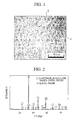
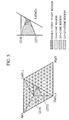
- FIGs. 1 and 3 are optical microscope photographs of cross-sectional surfaces of sintered bodies fabricated by the inventors of the present invention.
- a reference numeral 1 denotes the lanthanum gallate-based oxide.
- a reference numeral 2 denotes needle-shaped grains having the K 2 NiF 4 structure
- a reference numeral 2' denotes needle-shaped grains having the layered perovskite structure.
- the K 2 NiF 4 grains 2 or the 237 grains 2' each having a diameter ranging from 0.2 to 4 ⁇ m and a length of several tens of micrometers, are uniformly dispersed into the lanthanum gallate-based oxide 1 as the base material.
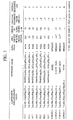
- the sintered body is formed of the lanthanum gallate-based oxide phase identified by the ICDD card 87-1609 and the 237 grain phase having a composition of (La 1-x A x ) 2 (Ga 1-y B y ) 3 O 7- ⁇ identified by the ICDD card 45-0637.
- This result indicates that each needle-shaped crystal in FIG. 3 is a grain having the layered perovskite structure.
- the lanthanum gallate-based oxide as the base material of the sintered body is excellent in oxygen-ion conductivity. Hence, the oxygen-ion conductivity of the sintered body can be ensured by using the lanthanum gallate-based oxide as the base material of the sintered body.
- the inventors of the present invention explored a dispersion material that imparted a high mechanical strength to the sintered body containing the lanthanum gallate-based oxide as the base material and did not lower various properties thereof such as thermal resistance. As a result, the inventors found out that it was effective to disperse the K 2 NiF 4 grains or the 237 grains into the sintered body, thus completing the present invention.
- the sintered body formed by dispersing the K 2 NiF 4 grains or the 237 grains thereinto has an excellent mechanical strength. Moreover, the K 2 NiF 4 grains or the 237 grains are stable with the lanthanum gallate, and under high temperature, the K 2 NiF 4 grains or the 237 grains are not prone to deteriorate the properties of the sintered body.
- the lanthanum gallate-based oxide 1 means Ga-based oxide having a perovskite structure, and has a basic composition of LaGaO 3 .
- the composition of the lanthanum gallate-based oxide 1 as the base material is not particularly limited as long as it can form the perovskite structure.
- a part of La and/or Ga may be substituted for other elements such as strontium and magnesium.
- a and/or B are formed of a plurality of elements, it is satisfactory if the total amount of the elements composing A and/or B may be settled within ranges of predetermined amounts prescribed for x and/or y.
- the lanthanum gallate-based oxide La 0.9 Sr 0.1 Ga 0.8 Mg 0.2 O 3- ⁇ , (La 0.9 Sr 0.1 ) 0.9 Ga 0.8 Mg 0.2 O 3- ⁇ and the like are listed.
- a and B may be formed of two or more elements.
- three elements of strontium, barium and calcium may be used as A.
- a and/or B are formed of a plurality of elements, it is satisfactory if the total amount of the elements composing A and/or B may be settled within ranges of predetermined amounts prescribed for x and/or y.
- the K 2 NiF 4 grains represented by the above formula ( II ) have some oxygen-ion conductivity. Therefore, even if the K 2 NiF 4 grains are dispersed into the lanthanum gallate-based oxide, the ion conductivity of the sintered body is not lowered so much.
- the toughness of the sintered body has not been examined extensively. However, it is necessary to improve the toughness as well as the mechanical strength for actual usage in an automobile and the like.
- the inventors of the present invention found out that the toughness of the sintered body was improved effectively when the K 2 NiF 4 grains or the 237 grains were needle-shaped grains. The reason is assumed that growth of the needle-shaped grains in the base material of the sintered body will bring about a bridging effect, thus preventing cracks from advancing, the cracks occurring in a direction orthogonal to the longitudinal direction of the needle-shaped grains.
- the length of the needle-shaped grains that are the K 2 NiF 4 grains it is preferable that a length thereof be set in a range from 5 ⁇ m to 200 ⁇ m inclusive in order to draw a sufficient bridging effect.
- a length thereof it is preferable that a length thereof be set in a range from 5 ⁇ m to 50 ⁇ m inclusive in order to draw a sufficient bridging effect.
- the length of the needle-shaped grains represents a mean length in the longitudinal direction of the needle-shaped grains. The mean length in the longitudinal direction of the needle-shaped grains can be calculated for the cross-sectional photograph of the sintered body by means of a linear intercept method.
- the SOFC using the solid electrolyte must endure frequent starts and stops (temperature change) when used as a power source of a movable body such as an automobile and as a small-scale distributed generation.
- a solid electrolyte membrane separating an oxidant and a fuel gas is broken by a thermal shock, there is a risk that the SOFC could explode.
- the sintered body as the solid electrolyte, it is an extremely important to improve the thermal shock resistance of the sintered body.
- the thermal shock resistance of the material is evaluated by magnitudes of a thermal shock strength R IC and a thermal shock fracture toughness R IIC , which are represented by the following equations:
- R IC ⁇ C E ⁇ ⁇ (where ⁇ is thermal conductivity, ⁇ c is a tensile strength of the material, E is a Young's modulus, and ⁇ is a thermal expansion coefficient)
- R IIC ⁇ K IC E ⁇ ⁇ (where ⁇ is thermal conductivity, K IC is a fracture toughness value of the material, E is a Young's modulus, and ⁇ is a thermal expansion coefficient)
- the thermal shock strength of the material in order to increase the thermal shock strength of the material, it is effective 1) to increase the thermal conductivity, 2) to increase the strength, 3) to reduce the Young's modulus, 4) to reduce the thermal expansion coefficient, and 5) to increase the toughness.
- the K 2 NiF 4 grains or the 237 grains that are the needle-shaped grains are dispersed into the sintered body, the sintered body has a high toughness as described above. Hence, it is possible to improve the thermal shock strength of the material effectively.
- the area of the K 2 NiF 4 grains or the 237 grains be within a fixed range when observing the cross-section of the sintered body.
- a total area of K 2 NiF 4 grains of which grain diameter is 0.2 ⁇ m or more is set preferably in a range from 2 area% to 30 area% inclusive, and more preferably, in a range from 10 area% to 20 area% inclusive with respect to the area of the cross-section of the sintered body.
- a total area of 237 grains of which grain diameter is 0.2 ⁇ m or more is set preferably in a range from 1 area% to 15 area% inclusive, and more preferably, in a range from 8 area% to 13 area% inclusive with respect to the area of the cross-section of the sintered body. While the measurement of such area percents is performed on the cross-section of the sintered body, an orientation on the cross-section of the sintered body is not particularly limited, and the measurement may be performed for an arbitrary cross-section. Moreover, one surface of the sintered body may be ground by diamond grains and the like, and an area percent may be obtained by the ground surface regarded as the cross-section of the sintered body.
- the area percent of the dispersed grains of which diameter is 0.2 ⁇ m or more can be controlled by firing conditions. Moreover, the control is enabled by adjusting the ratio of materials to be mixed together.
- the total of a constituent unit of the lanthanum gallate-based oxide and a constituent unit of the K 2 NiF 4 grains or the 237 grains means a total of the number of a contained constituent unit serving as a base of the lanthanum gallate-based oxide in the sintered body and the number of a contained constituent unit serving as a base of the K 2 NiF 4 grains or the 237 grains in the sintered body.
- the lanthanum gallate-based oxide of 9 moles is contained in the sintered body when La 0.9 Sr 0.1 Ga 0.8 Mg 0.2 O 3- ⁇ is used as the constituent unit and where the K 2 NiF 4 grains of 1 mol is contained in the sintered body when (La 0.9 Sr 0.1 ) 2 (Ga 0.8 Mg 0.2 )O 4- ⁇ is used as the constituent unit, the content of the K 2 NiF 4 grains is 10 mol%.
- the content of the 237 grains is 10 mol%.
- a second aspect of the present invention is a manufacturing method of a sintered body, including (1) prefiring a raw material of the sintered body at a temperature ranging from 1050°C to 1200°C inclusive for a time ranging from 2 hours to 10 hours inclusive, (2) milling the prefired raw material to prepare raw material powder, (3) molding the raw material powder, and (4) sintering the molded raw material powder to separate a phase formed of lanthanum gallate-based oxide and a phase having a K 2 NiF 4 structure or a layered perovskite structure.
- the sintered body according to the present invention can be obtained by such a manufacturing method as described above.
- the manufacturing method of the sintered body of the present invention is not limited to such a reaction sintering method in a solid phase, the above-described method is suitable for effectively crystallizing and depositing the K 2 NiF 4 grains or the 237 grains into the lanthanum gallate-based oxide.
- One embodiment of the work process of manufacturing the sintered body will be described below for each step.
- raw materials of the lanthanum gallate-based oxide serving as the base material powders of La 2 O 3 , SrCO 3 , Ga 2 O 3 , MgO and the like are prepared. Predetermined amounts of the raw materials are mixed together, and are then mixed and milled in a solvent such as alcohol by means of a ball mill. Thus, slurry formed of the lanthanum gallate based-oxide is obtained. The amounts of each raw material are determined in accordance with a composition of desired lanthanum gallate-based oxide.
- the obtained slurry is dried, and then prefired at a temperature ranging from 1050°C to 1200°C inclusive for a time ranging from 2 hours to 10 hours inclusive.
- the prefiring temperature is less than 1050°C, there is a possibility that the solid phase reaction becomes insufficient.
- the prefiring temperature exceeds 1200°C the grains to be sintered become nonuniform.
- the prefiring time is less than 2 hours, there is the possibility that the solid phase reaction becomes insufficient.
- the prefiring time exceeds 10 hours, there is a possibility that grains grow so as to make it impossible to obtain excellent raw material powder.
- an atmosphere for the prefiring is not particularly limited, it is recommended that the prefiring be performed in an atmosphere in consideration of manufacturing cost.
- the prefired raw material is milled again in alcohol using a ball mill, and thus the raw material powder is obtained.
- the extent of milling is not particularly limited, it is recommended that the milling be performed such that a mean particle diameter is set at 0.8 ⁇ m or less.
- the raw material powder is dried, and thus the powder of lanthanum gallate-based raw material is obtained.
- a compact molded by pressurizing the raw material powder is fired, and thus the phase formed of the lanthanum gallate-based oxide and the phase having the K 2 NiF 4 structure or the layered perovskite structure are separated.
- a firing temperature ranging from 1350°C to 1550°C inclusive is suitable. When the firing temperature is less than 1350°C, there is a possibility that vacancies remain because the sintering is insufficient. On the other hand, when the firing temperature exceeds 1550°C, there is a possibility that the crystallization of the K 2 NiF 4 phase or 237 phase and the sintering of the phase formed of the lanthanum gallate-based oxide advance too much, thus causing a intercrystalline crack.
- the sintering time in a range from 10 hours to 100 hours inclusive.
- the sintering time is less than 10 hours, there is a possibility that the crystallization of the K 2 NiF 4 phase or 237 phase existing on the grain boundary does not advance sufficiently, thus making it impossible to improve the toughness significantly.
- the sintering time exceeds 100 hours, there is a possibility that the sintering advances too much, thus causing an intercrystalline crack.
- the firing process the grain growth of the separated K 2 NiF 4 grains or 237 grains advances in a self-assembling manner. It is possible to control the size of the K 2 NiF 4 grains or 237 grains by adjusting the conditions of the sintering process.
- a setter made of a sheet of the same material as the raw material powder and a sagger made of alumina are recommended.
- a setter made of alumina may also be used.
- the setter means a stage for mounting the compact thereon in order to prevent a warp when firing in a furnace.
- the sagger means a container, which is inserted for protecting a sintered material from ash-fall when sintering.
- FIG. 5 shows the quaternary La-Sr-Ga-Mg-O phase diagram at 800°C, which is described in Journal of Alloys and Compounds, 303-304 (2000), 454-464.
- this phase diagram a region is shown, where the perovskite phase, K 2 NiF 4 phase (214 phase) and layered perovskite phase (237 phase) of the oxygen-ion conductive material coexist.
- the context of this document explains that the K 2 NiF 4 phase exists as a glass phase.
- This K 2 NiF 4 phase or the layered perovskite phase (237 phase) is crystallized effectively, and thus is compositionally organized with the perovskite phase.
- a third aspect of the invention of the application is a solid oxide fuel cell (SOFC) formed by using the above-mentioned sintered body as a solid electrolyte.
- the sintered body of the present invention has excellent oxygen-ion conductivity.
- the sintered body is also excellent in toughness and mechanical strength.
- the sintered body has excellent thermal resistance. Therefore, the deterioration of the cell accompanying the use thereof can be controlled significantly.
- a SOFC having excellent properties can be obtained by using the sintered body of the present invention as the solid electrolyte.
- This sintered body can fully cope with the enlargement of the cell. Note that the shape of the sintered body as the solid electrolyte may satisfactorily be molded in accordance with the shape of the cell.
- the SOFC 3 is formed by which the solid electrolyte 4 formed by using the sintered body of the present invention is sandwiched by the pair of electrodes (cathode 5 and anode 6).
- the solid electrolyte 4 is heated up to a high temperature ranging from about 500 to 800°C, air is supplied to the cathode 5, and fuel is supplied to the anode 6, thus generating electromotive force.
- oxygen ions move from the cathode 5 to the anode 6 through the solid electrolyte 4.
- the sintered body of the present invention has high adaptability to the thermal change of an ambient environment. Therefore, even if the sintered body is used as a solid electrolyte in a fuel cell in which temperatures are varied depending on portions, it is possible for the sintered body to exert stable properties.
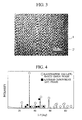
- the formed sintered body was partially milled, and the existence of the K 2 NiF 4 phase and layered perovskite phase (237 phase) was confirmed by an XRD method.
- the sintered body was ground by diamond grains (0.26 ⁇ m), and then the ground surface was observed by an optical microscope. A straight line was drawn randomly on the microscope photograph, and the grain diameters of all the K 2 NiF 4 grains that crossed this straight line were obtained. A mean diameter thereof was defined as the grain diameter of the K 2 NiF 4 grains. In addition, an area percent of K 2 NiF 4 grains of which grain diameter was 0.2 ⁇ m or more was calculated by an image analyzer using this mean grain diameter. The length of the K 2 NiF 4 grains was calculated by extracting the K 2 NiF 4 grains randomly and averaging the same in a similar manner to the above.
- the sintered body was ground by diamond grains (0.26 ⁇ m), and then the ground surface was observed by an optical microscope or a distribution mapping of lanthanum using an electron probe microanalyzer. A straight line was drawn randomly on the microscope photograph, and the grain diameters of all the 237 grains that crossed this straight line were obtained. A mean diameter thereof was defined as the grain diameter of the 237 grains. In addition, an area percent of 237 grains of which grain diameter was 0.2 ⁇ m or more was calculated by an image analyzer using this mean grain diameter. The length of the 237 grains was calculated by extracting the 237 grains randomly and averaging the same in a similar manner to the above.
- the fracture toughness value of the sintered body was measured by means of the Single-Edge-Precracked-Beam method (SEPB method) described in JIS R1607 (ICS 81.060.30).
- Resistivity( ⁇ ⁇ cm) Voltage ( V ) ⁇ Sectional area of test piece ( cm 2 ) Current ( A ) ⁇ Effective length of test piece ( cm )
- Resistivity increase rate(%) Resistivity after endurance test - Resistivity after endurance test Resistivity before endurancetest ⁇ 100
- raw materials La 2 O 3 , SrCO 3 , Ga 2 O 3 and MgO
- the raw materials were milled and mixed for 24 hours in alcohol using a ball mill, and slurry formed of particles of which mean particle diameter was 2.0 ⁇ m or less was obtained. After being dried, the slurry was prefired for 4 hours in an atmosphere of 1150°C.
- the prefired raw material powder was milled again in alcohol using a ball mill, and powder of a lanthanum gallate-based raw material formed of particles of which mean particle diameter was 0.6 ⁇ m or less was prepared.
- the prepared powder of the lanthanum gallate-based raw material was filled in a die and molded with pressure of 2 ton/cm 2 by an isostatic press.
- the molded compact was fired for 10 hours at 1450°C, and thus a sintered body was obtained.
- K 2 NiF 4 grains having a composition of (La 0.9 Sr 0.1 ) 2 (Ga 0.8 Mg 0.2 )O 4- ⁇ were dispersed in a ratio of 7 mol% into a phase formed of La 0.9 Sr 0.1 Ga 0.8 Mg 0.2 O 3- ⁇ that was the base material.
- the area percent of the K 2 NiF 4 grains was 10.0 area%.
- the mean length of the K 2 NiF 4 grains was 72 ⁇ m.
- the fracture toughness value of the sintered body was 1.5 MPa ⁇ m 0.5 .
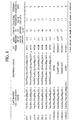
- the thermal resistance test was conducted therefor, and the resistance increase rate was 1% or less. Results are shown in FIG. 7.
- Sintered bodies were obtained similarly to the method of Example 1 except that the raw materials (La 2 O 3 , SrCO 3 , Ga 2 O 3 and MgO) were weighed such that K 2 NiF 4 grains in amounts shown in FIG. 7 could be deposited. Results are shown in FIG. 7.
- a sintered body was obtained similarly to the method of Example 1 except that the raw materials (La 2 O 3 , SrCO 3 , Ga 2 O 3 and MgO) were weighed such that K 2 NiF 4 grains in an amount shown in FIG. 7 could be deposited and except that the firing time was set at 5 hours. Results are shown in FIG. 7.
- a sintered body was obtained similarly to the method of Example 1 except that the raw materials (La 2 O 3 , SrCO 3 , Ga 2 O 3 and MgO) were weighed such that K 2 NiF 4 grains in an amount shown in FIG. 7 could be deposited and except that the firing time was set at 50 hours. Results are shown in FIG. 7.
- the raw materials (La 2 O 3 , SrCO 3 , Ga 2 O 3 and MgO) were weighed such that the K 2 NiF 4 grains and the 237 grains could not be deposited substantially into the base material having the composition of La 0.9 Sr 0.1 Ga 0.8 Mg 0.2 O 3- ⁇ .
- a sintered body was obtained from these raw materials in a similar procedure to that of Example 1.
- the K 2 NiF 4 phase or the 237 phase was not confirmed in the obtained sintered body. Results are shown in FIG. 7.
- powder of lanthanum gallate-based raw material having the composition of La 0.9 Sr 0.1 Ga 0.8 Mg 0.2 O 3- ⁇ was obtained in conformity with the method described in Comparative Example 1.
- Al 2 O 3 was weighed and added to the above raw material powder such that Al 2 O 3 of 0.1 mol% could be dispersed thereinto.
- the powder of lanthanum gallate-based raw material added with Al 2 O 3 was filled in a die and molded with pressure of 2 ton/cm 2 by an isostatic press. The molded compact was fired for 10 hours at 1450°C, and thus a sintered body was obtained.
- powder of lanthanum gallate-based raw material having the composition of La 0.9 Sr 0.1 Ga 0.2 Mg 0.2 O 3- ⁇ was obtained in conformity with the method described in Comparative Example 1.
- Al 2 O 3 was weighed and added to the above raw material powder such that Al 2 O 3 of 2 mass% could be dispersed thereinto.
- the powder of lanthanum gallate-based raw material added with Al 2 O 3 was filled in a die and molded with pressure of 2 ton/cm 2 by an isostatic press. The molded compact was fired for 10 hours at 1450°C, and thus a sintered body was obtained.
- a sintered body was obtained in a similar procedure to that of Example 1 except that powder of lanthanum gallate-based raw material having a composition of La 0.8 Sr 0.2 Ga 0.75 Al 0.05 Mg 0.2 O 3- ⁇ obtained by using La 2 O 3 , SrCO 3 , Ga 2 O 3 , MgO and Al 2 O 3 was used as the raw material.
- the obtained sintered body was formed only of a phase formed of La 0.8 Sr 0.2 Ga 0.75 Al 0.05 Mg 0.2 O 3- ⁇ .
- the K 2 NiF 4 phase or the 237 phase was not confirmed. Results are shown in FIG. 7.
- raw materials La 2 O 3 , SrCO 3 , Ga 2 O 3 and MgO
- the raw materials were milled and mixed for 24 hours in alcohol using a ball mill, and slurry formed of particles of which mean particle diameter was 2.0 ⁇ m or less was obtained. After being dried, the slurry was prefired for 4 hours in an atmosphere of 1150°C.
- the prefired raw material powder was milled again in alcohol using a ball mill, and powder of a lanthanum gallate-based raw material formed of particles of which mean particle diameter was 0.6 ⁇ m or less was prepared.
- the prepared powder of the lanthanum gallate-based raw material was filled in a die and molded with pressure of 2 ton/cm 2 by an isostatic press.
- the molded compact was fired for 10 hours at 1450°C, and thus a sintered body was obtained.
- 237 grains having a composition of. (La 0.9 Sr 0.1 ) 2 (Ga 0.8 Mg 0.2 ) 3 O 7- ⁇ were dispersed in a ratio of 3 mol% into a phase formed of La 0.9 Sr 0.1 Ga 0.8 Mg 0.2 O 3- ⁇ that was the base material.
- the area percent of the 237 grains was 11.6 area%.
- the mean length of the 237 grains was 22 ⁇ m.
- the fracture toughness value of the sintered body was 1.2 MPa ⁇ m 0.5 .
- the thermal resistance test was conducted therefor, and the resistance increase rate was 1% or less. Results are shown in FIG. 8.
- Sintered bodies were obtained similarly to the method of Example 8 except that the raw materials (La 2 O 3 , SrCO 3 , Ga 2 O 3 and MgO) were weighed such that 237 grains in amounts shown in FIG. 8 could be deposited. Results are shown in FIG. 8.
- a sintered body was obtained similarly to the method of Example 8 except that the raw materials (La 2 O 3 , SrCO 3 , Ga 2 O 3 and MgO) were weighed such that 237 grains in an amount shown in FIG. 8 could be deposited and except that the firing time was set at 5 hours. Results are shown in FIG. 8.
- a sintered body was obtained similarly to the method of Example 8 except that the raw materials (La 2 O 3 , SrCO 3 , Ga 2 O 3 and MgO) were weighed such that 237 grains in an amount shown in FIG. 8 could be deposited and except that the firing time was set at 50 hours. Results are shown in FIG. 8.
- the sintered body having K 2 NiF 4 grains and the sintered body having 237 grains are described separately in the above examples, the sintered body of the present invention may contain both of the K 2 NiF 4 grains and the 237 grains. It is possible for the sintered body having these mixed grains to obtain the effect of the present invention.
- a correlation of the area percent and length of the K 2 NiF 4 grains with the properties of the sintered body was investigated.
- the lanthanum gallate-based oxides are La 0.9 Sr 0.1 Ga 0.8 Mg 0.2 O 3- ⁇
- the K 2 NiF 4 grains are (La 0.9 Sr 0.1 ) 2 (Ga 0.8 Mg 0.2 )O 4- ⁇ .
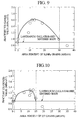
- the toughness can be enhanced effectively when the mean length of the K 2 NiF 4 grains ranges from 5 ⁇ m to 200 ⁇ m inclusive. Moreover, it is indicated that the toughness can be enhanced effectively when the area percent of the K 2 NiF 4 grains ranges from 2 area% to 30% inclusive, and more preferably, from 10 area% to 20 area% inclusive. Note that a relationship between the area percent of the K 2 NiF 4 grains and the fracture toughness value is shown in FIG. 9.
- Example 18 A correlation of the area percent and length of the 237 grains with the properties of the sintered body was investigated.
- the lanthanum gallate-based oxides are La 0.9 Sr 0.1 Ga 0.8 Mg 0.2 O 3- ⁇
- the 237 grains are (La 0.9 Sr 0.1 ) 2 (Ga 0.8 Mg 0.2 ) 3 O 7 - ⁇ .
Landscapes
- Engineering & Computer Science (AREA)
- Chemical & Material Sciences (AREA)
- Manufacturing & Machinery (AREA)
- Ceramic Engineering (AREA)
- Organic Chemistry (AREA)
- Structural Engineering (AREA)
- Materials Engineering (AREA)
- Sustainable Energy (AREA)
- General Chemical & Material Sciences (AREA)
- Inorganic Chemistry (AREA)
- Electrochemistry (AREA)
- Chemical Kinetics & Catalysis (AREA)
- Sustainable Development (AREA)
- Life Sciences & Earth Sciences (AREA)
- Fuel Cell (AREA)
- Compositions Of Oxide Ceramics (AREA)
Applications Claiming Priority (4)
| Application Number | Priority Date | Filing Date | Title |
|---|---|---|---|
| JP2002190338 | 2002-06-28 | ||
| JP2002190338 | 2002-06-28 | ||
| JP2003075777 | 2003-03-19 | ||
| JP2003075777A JP4360110B2 (ja) | 2002-06-28 | 2003-03-19 | ランタンガレート系焼結体およびそれを固体電解質として用いた固体電解質型燃料電池 |
Publications (3)
| Publication Number | Publication Date |
|---|---|
| EP1378956A2 true EP1378956A2 (de) | 2004-01-07 |
| EP1378956A3 EP1378956A3 (de) | 2006-01-25 |
| EP1378956B1 EP1378956B1 (de) | 2012-09-05 |
Family
ID=29720910
Family Applications (1)
| Application Number | Title | Priority Date | Filing Date |
|---|---|---|---|
| EP03012546A Expired - Lifetime EP1378956B1 (de) | 2002-06-28 | 2003-06-02 | Sinterkörper auf Basis von Lanthanum-gallate, Herstellungsverfahren, und Verwendung desselben als Festelektrolyt in einer Festoxid-Brennstoffzelle |
Country Status (3)
| Country | Link |
|---|---|
| US (1) | US7205063B2 (de) |
| EP (1) | EP1378956B1 (de) |
| JP (1) | JP4360110B2 (de) |
Families Citing this family (13)
| Publication number | Priority date | Publication date | Assignee | Title |
|---|---|---|---|---|
| JP2006294517A (ja) * | 2005-04-13 | 2006-10-26 | Kansai Electric Power Co Inc:The | Ga系固体電解質材料の製造方法 |
| JP2009245628A (ja) * | 2008-03-28 | 2009-10-22 | Mitsubishi Materials Corp | 固体電解質及び平板型の固体酸化物形燃料電池 |
| KR101381658B1 (ko) | 2008-12-18 | 2014-04-08 | 생-고뱅 세라믹스 앤드 플라스틱스, 인코포레이티드 | 도핑을 통한 고소결성 란타넘 스트론튬 티타네이트 연결재 |
| JP2011051809A (ja) * | 2009-08-31 | 2011-03-17 | Tohoku Univ | 複合金属酸化物およびその製造方法、並びにそれを用いた電極材料、電極および固体酸化物形燃料電池 |
| US8986894B2 (en) | 2011-02-09 | 2015-03-24 | Toyota Jidosha Kabushiki Kaisha | Solid electrolyte including layered metal oxide, fuel cell including thereof, production method for solid electrolyte, and production method for electrode catalyst |
| JP5276131B2 (ja) * | 2011-02-09 | 2013-08-28 | トヨタ自動車株式会社 | 層状金属酸化物を含む電極及び固体電解質層を備える燃料電池 |
| WO2013048720A1 (en) * | 2011-09-28 | 2013-04-04 | Phillips 66 Company | Scandium-doped bzcy electrolytes |
| EP2795708B1 (de) * | 2011-12-22 | 2017-06-07 | Saint-Gobain Ceramics & Plastics Inc. | Festoxidbrennstoffzellenverbindungen mit keramischem verbindungsmaterial und teilstabilisiertem zirkoniumoxid |
| JP6448020B2 (ja) * | 2013-08-27 | 2019-01-09 | 国立大学法人東京工業大学 | 電気伝導体 |
| JP6288035B2 (ja) * | 2015-10-08 | 2018-03-07 | 株式会社豊田中央研究所 | 固体電解質 |
| JP6717331B2 (ja) * | 2018-03-16 | 2020-07-01 | 株式会社豊田中央研究所 | 固体酸化物形燃料電池 |
| US11342447B2 (en) * | 2018-11-30 | 2022-05-24 | Ricoh Company, Ltd. | Sputtering target for insulating oxide film, method for forming insulating oxide film, and method for producing field-effect transistor |
| CN110994009B (zh) * | 2019-12-20 | 2023-03-21 | 云南大学 | 一种用于制备固体电解质材料的烧结装置及其烧结方法 |
Family Cites Families (7)
| Publication number | Priority date | Publication date | Assignee | Title |
|---|---|---|---|---|
| JPH03183698A (ja) * | 1989-09-26 | 1991-08-09 | Komatsu Ltd | 酸化物単結晶基板およびこれを用いた超伝導体装置およびその製造方法 |
| DE69114803T2 (de) * | 1990-04-17 | 1996-08-01 | Komatsu Mfg Co Ltd | Verfahren zur herstellung eines oxideinkristalls. |
| FR2756270B1 (fr) * | 1996-11-22 | 1999-03-26 | Rhodia Chimie Sa | Compose du type lamo3, m etant l'aluminium, le gallium ou l'indium, sous forme poudre ou sous forme frittee, son procede de preparation et son utilisation en tant que conducteur d'oxygene |
| US6004688A (en) * | 1997-07-16 | 1999-12-21 | The Board Of Regents Of The University Of Texas System | Solid oxide fuel cell and doped perovskite lanthanum gallate electrolyte therefor |
| DE19839202B4 (de) * | 1997-08-29 | 2009-09-10 | Mitsubishi Materials Corp. | Leitfähige Substanz aus Mischoxidionen und deren Verwendung |
| JP4191821B2 (ja) | 1998-07-24 | 2008-12-03 | 東京瓦斯株式会社 | 固体電解質用ランタンガレート系焼結体およびその製造方法、ならびにそれを固体電解質として用いた燃料電池 |
| US6337006B1 (en) * | 1999-02-08 | 2002-01-08 | Ngk Spark Plug Co., Ltd. | Lanthanum gallate sintered body |
-
2003
- 2003-03-19 JP JP2003075777A patent/JP4360110B2/ja not_active Expired - Fee Related
- 2003-06-02 EP EP03012546A patent/EP1378956B1/de not_active Expired - Lifetime
- 2003-06-19 US US10/464,457 patent/US7205063B2/en not_active Expired - Fee Related
Non-Patent Citations (1)
| Title |
|---|
| HIDEO AWAJI: "Ceramics Zairyo Kyodogaku", CORONA PUBLISHING CO., LTD. |
Also Published As
| Publication number | Publication date |
|---|---|
| EP1378956A3 (de) | 2006-01-25 |
| JP4360110B2 (ja) | 2009-11-11 |
| EP1378956B1 (de) | 2012-09-05 |
| US7205063B2 (en) | 2007-04-17 |
| JP2004083392A (ja) | 2004-03-18 |
| US20040001995A1 (en) | 2004-01-01 |
Similar Documents
| Publication | Publication Date | Title |
|---|---|---|
| EP1026134B1 (de) | Poröse keramikschicht, verfahren zum herstellen derselben, und unterlage zur verwendung in dem verfahren | |
| US7205063B2 (en) | Lanthanum gallate-based sintered body, manufacturing method thereof, and solid oxide fuel cell using the same as solid electrolyte | |
| KR20190137153A (ko) | 리튬-가넷 고체 전해질 복합체, 테이프 제품, 및 이의 방법 | |
| KR101297067B1 (ko) | 고체 산화물 연료 전지 스택을 위한 코도핑된 ysz 전해질 | |
| JP2004339035A (ja) | ランタンガレート系焼結体およびその製造方法、ならびにそれを用いた用途 | |
| US20060172169A1 (en) | Method of producing solid electrolyte and solid electrolyte | |
| EP1858098A1 (de) | Elektrolytblatt für eine festoxid-brennstoffbatterie, herstellungsprozess dafür und festoxid-brennstoffbatteriezelle | |
| US7419736B2 (en) | Mixed ion conductor | |
| US7125622B2 (en) | Method of producing oxide ion conductor | |
| JP2003123789A (ja) | 固体電解質材料、その製造方法およびそれを用いた固体電解質型燃料電池 | |
| EP1864955B1 (de) | Ionenleiter | |
| US6248465B1 (en) | Complex oxide ceramic sintered body and solid-electrolyte fuel cell comprising the same | |
| US7625653B2 (en) | Ionic conductor | |
| US6447944B1 (en) | Solid electrolyte, method of producing same and fuel cell using same | |
| JP2000044340A (ja) | ランタンガレート系焼結体およびその製造方法、ならびにそれを固体電解質として用いた燃料電池 | |
| EP1184926B1 (de) | Elektrolytmaterial aus einem Mischoxid auf Basis von Gallaten | |
| JP2004165038A (ja) | 固体電解質材料及びその製造方法、並びにそれを用いた固体酸化物形燃料電池セル | |
| JP3863207B2 (ja) | ランタンクロマイト系セラミックス、それを含有するセパレータ及び該セパレータを用いた固体電解質型燃料電池 | |
| Faaland et al. | Reactions between La1− x CaxMnO3 and CaO-stabilized ZrO2 Part II Diffusion couples | |
| JP2002316872A (ja) | ランタンガレート系固体電解質材料、その製造方法および固体電解質型燃料電池 | |
| EP0661243B1 (de) | Keramik auf Basis von Lanthanchromit, Separatoren dieses enthaltend und Festelektrolyt-Brennstoffzellen mit diesen Separatoren | |
| JP2002358977A (ja) | 固体電解質材料、その製造方法およびそれを用いた固体電解質型燃料電池 | |
| Yamahara et al. | Berkeley, CA 94720, USA | |
| JPH0822836A (ja) | 固体電解質型燃料電池セル | |
| JP2005259589A (ja) | 固体電解質材料およびそれを用いた固体電解質型燃料電池 |
Legal Events
| Date | Code | Title | Description |
|---|---|---|---|
| PUAI | Public reference made under article 153(3) epc to a published international application that has entered the european phase |
Free format text: ORIGINAL CODE: 0009012 |
|
| 17P | Request for examination filed |
Effective date: 20030602 |
|
| AK | Designated contracting states |
Kind code of ref document: A2 Designated state(s): AT BE BG CH CY CZ DE DK EE ES FI FR GB GR HU IE IT LI LU MC NL PT RO SE SI SK TR |
|
| AX | Request for extension of the european patent |
Extension state: AL LT LV MK |
|
| PUAL | Search report despatched |
Free format text: ORIGINAL CODE: 0009013 |
|
| AK | Designated contracting states |
Kind code of ref document: A3 Designated state(s): AT BE BG CH CY CZ DE DK EE ES FI FR GB GR HU IE IT LI LU MC NL PT RO SE SI SK TR |
|
| AX | Request for extension of the european patent |
Extension state: AL LT LV MK |
|
| 17Q | First examination report despatched |
Effective date: 20060621 |
|
| AKX | Designation fees paid |
Designated state(s): DE FR GB |
|
| RIC1 | Information provided on ipc code assigned before grant |
Ipc: C04B 35/626 20060101ALI20120229BHEP Ipc: H01M 8/12 20060101AFI20120229BHEP Ipc: C04B 35/01 20060101ALI20120229BHEP |
|
| GRAP | Despatch of communication of intention to grant a patent |
Free format text: ORIGINAL CODE: EPIDOSNIGR1 |
|
| RIN1 | Information on inventor provided before grant (corrected) |
Inventor name: FUJI, KAZUNORI Inventor name: HATANO, MASAHARU Inventor name: FURUYA, KENJI |
|
| GRAS | Grant fee paid |
Free format text: ORIGINAL CODE: EPIDOSNIGR3 |
|
| GRAA | (expected) grant |
Free format text: ORIGINAL CODE: 0009210 |
|
| AK | Designated contracting states |
Kind code of ref document: B1 Designated state(s): DE FR GB |
|
| REG | Reference to a national code |
Ref country code: GB Ref legal event code: FG4D |
|
| REG | Reference to a national code |
Ref country code: DE Ref legal event code: R096 Ref document number: 60342000 Country of ref document: DE Effective date: 20121025 |
|
| PLBE | No opposition filed within time limit |
Free format text: ORIGINAL CODE: 0009261 |
|
| STAA | Information on the status of an ep patent application or granted ep patent |
Free format text: STATUS: NO OPPOSITION FILED WITHIN TIME LIMIT |
|
| 26N | No opposition filed |
Effective date: 20130606 |
|
| REG | Reference to a national code |
Ref country code: DE Ref legal event code: R097 Ref document number: 60342000 Country of ref document: DE Effective date: 20130606 |
|
| REG | Reference to a national code |
Ref country code: FR Ref legal event code: PLFP Year of fee payment: 13 |
|
| PGFP | Annual fee paid to national office [announced via postgrant information from national office to epo] |
Ref country code: DE Payment date: 20150527 Year of fee payment: 13 Ref country code: GB Payment date: 20150527 Year of fee payment: 13 |
|
| PGFP | Annual fee paid to national office [announced via postgrant information from national office to epo] |
Ref country code: FR Payment date: 20150608 Year of fee payment: 13 |
|
| REG | Reference to a national code |
Ref country code: DE Ref legal event code: R119 Ref document number: 60342000 Country of ref document: DE |
|
| GBPC | Gb: european patent ceased through non-payment of renewal fee |
Effective date: 20160602 |
|
| REG | Reference to a national code |
Ref country code: FR Ref legal event code: ST Effective date: 20170228 |
|
| PG25 | Lapsed in a contracting state [announced via postgrant information from national office to epo] |
Ref country code: DE Free format text: LAPSE BECAUSE OF NON-PAYMENT OF DUE FEES Effective date: 20170103 Ref country code: FR Free format text: LAPSE BECAUSE OF NON-PAYMENT OF DUE FEES Effective date: 20160630 |
|
| PG25 | Lapsed in a contracting state [announced via postgrant information from national office to epo] |
Ref country code: GB Free format text: LAPSE BECAUSE OF NON-PAYMENT OF DUE FEES Effective date: 20160602 |