EP1254180B1 - Canine allergy therapeutic recombinant chimeric anti-ige monoclonal antibody - Google Patents
Canine allergy therapeutic recombinant chimeric anti-ige monoclonal antibody Download PDFInfo
- Publication number
- EP1254180B1 EP1254180B1 EP01905198A EP01905198A EP1254180B1 EP 1254180 B1 EP1254180 B1 EP 1254180B1 EP 01905198 A EP01905198 A EP 01905198A EP 01905198 A EP01905198 A EP 01905198A EP 1254180 B1 EP1254180 B1 EP 1254180B1
- Authority
- EP
- European Patent Office
- Prior art keywords
- ige
- canine
- antibody
- cells
- serum
- Prior art date
- Legal status (The legal status is an assumption and is not a legal conclusion. Google has not performed a legal analysis and makes no representation as to the accuracy of the status listed.)
- Expired - Lifetime
Links
Images



Classifications
-
- C—CHEMISTRY; METALLURGY
- C07—ORGANIC CHEMISTRY
- C07K—PEPTIDES
- C07K16/00—Immunoglobulins [IG], e.g. monoclonal or polyclonal antibodies
- C07K16/42—Immunoglobulins [IG], e.g. monoclonal or polyclonal antibodies against immunoglobulins
- C07K16/4283—Immunoglobulins [IG], e.g. monoclonal or polyclonal antibodies against immunoglobulins against an allotypic or isotypic determinant on Ig
- C07K16/4291—Immunoglobulins [IG], e.g. monoclonal or polyclonal antibodies against immunoglobulins against an allotypic or isotypic determinant on Ig against IgE
-
- A—HUMAN NECESSITIES
- A61—MEDICAL OR VETERINARY SCIENCE; HYGIENE
- A61P—SPECIFIC THERAPEUTIC ACTIVITY OF CHEMICAL COMPOUNDS OR MEDICINAL PREPARATIONS
- A61P37/00—Drugs for immunological or allergic disorders
- A61P37/08—Antiallergic agents
-
- A—HUMAN NECESSITIES
- A61—MEDICAL OR VETERINARY SCIENCE; HYGIENE
- A61P—SPECIFIC THERAPEUTIC ACTIVITY OF CHEMICAL COMPOUNDS OR MEDICINAL PREPARATIONS
- A61P43/00—Drugs for specific purposes, not provided for in groups A61P1/00-A61P41/00
-
- A—HUMAN NECESSITIES
- A61—MEDICAL OR VETERINARY SCIENCE; HYGIENE
- A61K—PREPARATIONS FOR MEDICAL, DENTAL OR TOILETRY PURPOSES
- A61K39/00—Medicinal preparations containing antigens or antibodies
- A61K2039/505—Medicinal preparations containing antigens or antibodies comprising antibodies
-
- C—CHEMISTRY; METALLURGY
- C07—ORGANIC CHEMISTRY
- C07K—PEPTIDES
- C07K2317/00—Immunoglobulins specific features
- C07K2317/20—Immunoglobulins specific features characterized by taxonomic origin
- C07K2317/24—Immunoglobulins specific features characterized by taxonomic origin containing regions, domains or residues from different species, e.g. chimeric, humanized or veneered
-
- C—CHEMISTRY; METALLURGY
- C07—ORGANIC CHEMISTRY
- C07K—PEPTIDES
- C07K2319/00—Fusion polypeptide
Definitions
- the present invention provides compositions and methods for decreasing IgE levels and for alleviating allergic symptoms in canines.
- the compositions comprise chimeric canine anti-IgE mAbs and the methods are useful for treating allergies in canines.
- Atopy is a condition where a dog is allergic to inhalants such as pollens, molds or microscopic mites found in house dust.
- Current treatments of canine allergies often focus on the use of steroids which cause undesirable side effects or allergen-mediated desensitization which requires a different treatment for each type of allergy.
- antibody molecules are classified into various isotypes referred to as IgA, IgD, IgE, IgG, and IgM.
- Antibody molecules consist of heavy and light chain components.
- the heavy chains of molecules of a given isotype have extensive regions of amino acid sequence homology, and conversely have regions of difference from antibodies belonging to other isotypes.
- the shared regions of the heavy chains provide members of each isotype with common abilities to bind to certain cell surfaces receptor or to other macromolecules such as complement, and therefore to activate particular immune effector functions. Accordingly, separation of antibody molecules into isotypes also serves to separate the antibodies according to a set of effector functions that they commonly activate.
- Immunoglobulin E IgE is involved in allergy, and recognizes antigen in immediate hypersensitivity reactions.
- IgE is the antibody type that is understood to be an important mediator of allergic response in mammals, including Type I immediate hypersensitivity.
- IgE molecules bind to receptors on mediator cells such as mast cells. This binding occurs when the Fc region of the IgE molecule is bound to Fc receptors on the mast cells.
- the allergen cross-links multiple IgE antibodies on the mast cell surface. This cross-linking mediates Type I immediate hypersensitivity reactions and causes release of histamines and other molecules that produce symptoms associated with allergy.
- recombinant or chimeric molecules when administered in vivo to an animal, they may be quickly cleared from that animal.
- Recombinant IgG molecules have been used to increase the half-life ofrecombinant molecules when the recombinants are administered to an animal.
- IgG immunoglobulin isotype with the longest serum half-life.
- dogs the isotype with the longest half-life is not known.
- sequences that are believed to correspond to a portion of exon 1 and 3 of at least two and possibly all four heavy chain canine IgG immunoglobulin sequences have been reported in U.S. Patent No. 5,593,861 to Maeda et al., it is not known which of these heavy chain sequences is part of the IgG structure with the longest half-life in dogs.
- EP 0 957 111 discloses specific binding proteins for treating canine allergy, in particular it discloses a mouse antibody 15A.2 which binds canine IgE.
- the chimeric antibody shows no further advantageous effects.
- WO 97/20859 describes methods and compositions concerning allergy in dogs. It discloses monoclonal antibodies, e.g. D9, 14K2, 1B1 or 11B11, specific for binding to canine IgE.
- IgE levels are elevated in human patients experiencing allergic disease, and IgE is believed to mediate allergic symptoms. Although the levels of serum IgE may not correlate with allergic disease in dogs, it may nevertheless be desirable to decrease IgE levels as a mechanism for alleviating allergic symptoms.
- compositions and methods for treatment of canine allergies which avoid the disadvantages of the conventional compositions and methods, yet provide effective treatment for canine allergies.
- One object of the present invention is to provide the use of an antibody for the manufacture of a medicament for treatment of canine allergies, with substantially less side effects than those experienced with steroid treatments.
- Another object of the invention is to provide the use of an antibody for the manufacture of a medicament for alleviating canine allergy symptoms that are effective independent of the type of allergen, and compositions and methods where treatment is based on the presence of an allergic response rather than a specific allergen.
- Another object of the present invention is to provide the use of an antibody for the preparation of a medicament for alleviating canine allergy symptoms by targeting IgE synthesis.
- the present invention concerns compositions and methods for treating allergy in dogs. More particularly, the invention provides methods and compositions for administration to dogs, which compositions actually bind the dog's immunoglobulin E molecules so that the binding of free, serum IgE will inhibit this IgE from binding to the high affinity IgE receptor on mast cells and basophils.
- the compositions and methods provided may eliminate or reduce levels of free serum IgE. Lower free serum IgE levels may down regulate the synthesis and expression of the high affinity IgE receptor on basophils and mast cells. The result may be the reduction or elimination of free and/or total serum IgE and the reduction or elimination of the IgE response to allergen on skin mast cells.
- free serum IgE is meant that IgE which is able to bind to the high affinity IgE receptor, and is unbound IgE in serum.
- the specificity and structure of a chimeric anti-IgE molecule of the present invention may allow for direct targeting of the IgE+ B cell. This binding may result in a reduction or elimination of IgE synthesis either through negative stimulation of the mature B cell or by destruction of the B cell by apoptosis or complement-mediated lysis.
- the present invention may therefore comprise an IgE receptor molecule which comprises a chimera and which specifically binds to canine IgE.
- the receptor molecule may be an antibody molecule, preferably a monoclonal antibody ("mAb"), and the mAb may preferably have an affinity for exon 3 of canine IgE.
- the chimera may comprise canine and mouse immunoglobulin.
- the chimera may further comprise canine constant heavy and light domains fused to mouse heavy and light chain variable regions.
- the receptors and antibody molecules of the present invention may also comprise IgG heavy chain sequences.
- the receptors and antibody molecules of the present invention may prevent binding of IgE to a second IgE receptor and the second IgE receptor may be located on one or more of a mast cell or basophil.
- the receptors and antibody molecules of the present invention may be comprised of protein, peptides, or other organic molecules.
- the present invention also provides the use of an antibody for the manufacture of a medicament for treating canine allergies comprising administering to the canine a receptor or monoclonal antibody which comprises a chimera of the present invention and specifically binds to canine IgE.
- the methods of the present invention may result in a lowering of serum IgE levels in the treated canine, or in the binding of IgE on B cells and the subsequent elimination of clonal populations of B cells.
- the methods may also result in binding of serum IgE in plasma, or in an inhibition of IgE production in the treated canine.
- the lowering of serum IgE levels of the present methods may be caused by a disruption of blocking of interaction between IgE and receptors for IgE which may be located on mast cells or basophils.
- the present invention further provides pharmaceutical formulations containing therapeutic amounts of the receptors of the present invention.
- Affinity an attractive force or binding strength between a ligand and its receptor or between two binding moieties. Affinity also keeps the binding pair bound in equilibrium.
- Amino acids Organic molecules containing an amino group that can be combined in linear arrays to form polypeptides, peptides or proteins.
- the 20 common amino acids are alanine, arginine, asparagine, aspartic acid, cysteine, glutamic acid, glutamine, glycine, histidine, isoleucine, leucine, lysine, methionine, phenylalanine, proline, serine, threonine, tryptophan, tyrosine, and valine. It will be recognized by those skilled in the art that in embodiments of the invention with conservative variants, any of the common amino acids, as well as others not listed, may be used in the present invention.
- Canine IgE Receptor A recombinant or chimeric receptor as defined herein, which exhibits affinity for canine IgE, or otherwise has the result of removing IgE from canine sera, in vivo or in vitro.
- cDNA clone A duplex DNA sequence representing an RNA, carried in a cloning vector.
- Chimeric mAb An immunoglobulin molecule with a hybrid amino acid sequence that has resulted from combining amino acids from at least two different canine Ig sources. Generally, the amino acid sequences are not normally found together in nature. "mAb” indicates monoclonal antibody.
- Cloning vector A plasmid, phage DNA or other DNA sequence, able to replicate in a host cell and capable of carrying exogenously added DNA sequence for purposes of amplification or expression of the added DNA sequence.
- Conservative variants of nucleotide sequences include nucleotide substitutions that do not result in changes in the amino acid sequence, as well as nucleotide substitutions that result in conservative amino acid substitutions, or amino acid substitutions which do not substantially affect the character of the polypeptide translated from said nucleotides. For example, polypeptide character is not substantially affected if the substitutions do not preclude specific binding of the peptide to canine IgE receptor or other canine IgE ligands.
- amino acid sequences include amino acid substitutions or deletions that do not substantially affect the character of the variant polypeptide relative to the starting peptide.
- polypeptide character is not substantially affected if the substitutions or deletions do not preclude specific binding of the variant peptide to a specific binding partner of the starting peptide.
- glycosylated and other variants and derivatives that will be apparent to those skilled in the art and are considered to fall within the scope of this invention.
- amino acid insertions, substitutions, deletions and truncations that do not substantially affect the polypeptide character relative to the starting peptide.
- Expression control sequence A DNA sequence of nucleotides that controls and regulates expression of structural genes when operatively linked to those genes.
- Exon A contiguous region of DNA encoding a portion of a polypeptide. Reference to any exon, e.g., "DNA sequence of exon 6", refers to the complete exon or any portion thereof.
- Free IgE or Serum IgE IgE in circulation in a patient not complexed or bound with a native or administered receptor having affinity for IgE or other IgE molecules.
- Genome The entire DNA of a substance. It includes, among other things, the structural genes encoding for the polypeptides of the substance, as well as operator, promoter and ribosome binding and interaction sequences such as the Shine-Dalgarno sequences.
- Specific binding Binding of one substance to another at greater binding affinity than background binding. Two substances that exhibit specific binding are referred to as specific binding partners, or as a specific binding pair. An antibody and its antigen are one example of a specific binding pair.
- Structural gene A DNA sequence that encodes through its template or messenger RNA ("mRNA”) a sequence of amino acids characteristic of a specific polypeptide.
- mRNA messenger RNA
- Therapeutic amount is an amount of mAb that decreases serum IgE levels or suppresses IgE production or activity in the treated animal and has the effect of ameliorating or preventing symptoms of a disorder or physiological condition.
- Total IgE total serum IgE, whether bound or not by another molecule.
- a novel chimeric canine anti-IgE mAb was produced and administered to ragweed sensitized clogs.
- This chimeric molecule designated c15A.2, consists of canine constant heavy and light domains fused to mouse heavy and light variable regions.
- c15A.2 consists of canine constant heavy and light domains fused to mouse heavy and light variable regions.
- administration led to a sustained decrease in circulating free IgE levels to below the level of detectability.
- total IgE including that complexed with chimeric 15A.2 and still in circulation and detectable immediately after administration of c15A.2, was reduced over time. After 28 days of administration, free c15A.2 was detectable in serum, but both free and total serum IgE were undetectable.
- the canine anti-IgE mAb compositions of the present invention may be recombinant or chimeric structures of canine and mouse immunoglobulins.
- the molecules may encompass chimera made from canine IgG constant heavy and light domains and murine immunoglobulin heavy and light variable region domains that have an affinity for exon 3 of canine IgE.
- anti-canine IgE mAb chimeric mAb, recombinant mAb, and receptor as used herein encompass any and all conservative variants thereof and are considered to be within the scope of the present invention.
- compositions of the present invention lowers serum IgE levels in canines.
- the chimeric canine anti-IgE mAbs and receptors of the present invention are capable of disrupting or blocking the interaction between IgE and its receptors.
- the interference between IgE and its receptors is independent of the type of allergen causing or likely to cause allergic symptoms.
- chimeric canine anti-IgE mAbs and receptors of the present invention may act by blocking the binding of IgE to its receptors on mast cells or basophils by blocking the binding site on IgE molecules or otherwise interfering with the binding of IgE to its receptor.
- the chimeric canine anti-IgE mAbs and receptors of the present invention may also act by binding soluble IgE in plasma which complex is then removed from circulation by the body's normal mechanisms.
- the chimeric canine anti-IgE mAbs or receptors may act by binding IgE on B-cells and eliminating clonal populations of IgE+ B-cells.
- the chimeric canine anti-IgE mAbs or receptors of the present invention may also act by inhibiting IgE production. While not wanting to be bound by any particular theory, it is believed that the mAb or receptor may bind to B cells and induce a cross-lining event which may induce apoptosis of cells or lead to inhibitory signals which down-regulate or eliminate IgE synthesis. Additionally, the binding of serum IgE, free IgE that is, may allow another regulatory molecule which may normally bind serum IgE in the exon 3 region to bind to IgE on the B cell and effect, subsequently, IgE synthesis through negative signals associated with and resulting from such binding.
- the chimeric canine anti-IgE mAbs or receptors of the present invention may comprise or be formulated with IgG heavy chain sequences to enhance the half-life of the molecules in vivo or increase their activity.
- the method of treating dogs suffering allergic symptoms or of preventing allergic symptoms in dogs generally may comprise the administration of a therapeutic amount of a chimeric canine anti-IgE mAb or receptor to the treated animal. Precise dosages of chimeric canine anti-IgE mAb or receptor and administration parameters will be established in a manner consistent with that known to those of ordinary skill in the art.
- the dose of the chimeric canine anti-IgE mAb or receptor administered may be dependent on consideration of the properties of the IgE heavy chain isotopes used and other factors. For example, these considerations may include the binding activity and in vivo plasma half-life, the concentration of the chimeric canine anti-IgE mAb or receptor in the formulation, the administration route, the site and rate of dosage, and the clinical tolerance of the patient involved. This list is not intended to be limiting and the person of ordinary skill in the art will realize that other factors may also be relevant and advantageous to consider.
- the therapeutic amount of the instant chimeric canine anti-IgE mAb or receptor may be administered in dosages and for a period of time sufficient to alleviate or suppress allergic symptoms and/or to decrease serum IgE levels and/or suppress IgE production or activity.
- the formulations of the present invention may contain other components in amounts that do not interfere with the preparation of stable and efficacious forms of the canine anti-IgE mAb or receptor.
- Any additional components administered with the chimeric canine anti-IgE mAb or receptor may be present in amounts suitable for effective, safe pharmaceutical administration.
- Pharmaceutical excipients known to those of ordinary skill in the art may form a part of the subject compositions.
- such excipients may include saline and other parenteral solutions, buffers and stabilizers, as well as any of the various suitable bulking agents, buffering agents, antioxidants, cosolvents and other ingredients known to those of ordinary skill in the art as being advantageous to include.
- the canine anti-IgE mAb or receptor may be formulated as a solution of protein in sterile PBS.
- the chimeric canine anti-IgE mAb or receptor of the present invention may be administered in a way which is effective for disrupting, blocking or otherwise interfering with binding between IgE and its receptor or in a way which may enhance binding between the administered mAb or receptor and IgE.
- the chimeric canine anti-IgE mAb or receptor may be administered subcutaneously, intramuscularly or intravenously.
- the mAb or receptor may be formulated and administered via suspensions, tablets, capsules or suppositories for oral, rectal or vaginal administration.
- Mouse monoclonal 15A.2 variable region was cloned by RT-PCR from 15A.2 hybridoma cells.
- a commercially available kit (Novagen, Madison, WI, Ig-Prime Kit) that consists of a set of degenerate PCR primers for the reverse transcription and amplification of IgVh and IgV1 mRNA's from mouse hybridoma cell lines was used as a source of primers to clone the 15A.2 mRNA's encoding the light and heavy variable domains.
- the 5' and 3' primers for the IgVh domain was MuIgVh5'-B and MuIgMvh3'-1 respectively.
- MuIgVh5'-B is a mixture of two primers in one tube (provided by Novageno), having the sequences GGAATTCATGRAATGSASCTGGGTYWTYCTCTT (SEQ. ID NO: 1) and ACTAGTCGACATGGACTCCAGGCTCAATTTAGTTTTCCT (SEQ. ID NO: 2).
- MuIgMvh3'-1 has the sequence CCCAAGCTTACGAGGGGGAAGACATTTGGGAAA (SEQ ID NO: 3).
- the 5' and 3' primers for the IgV1 domain was MuIg ⁇ V15'-A and MuIg ⁇ V13'-1 respectively.
- MuIg(lambda)V15'-A has the sequence GGGAATTCATGGCCTGGAYTYCWCTYWTMYTCT (SEQ ID NO: 4).
- Mulg(lambda)V13'-1 has the sequence CCCAAGCTTAGCTCYTCWGWGGAIGGYGGRAA (SEQ ID NO:5).
- PCR reactions were performed as follows: Enzyme: Taq polymerase 1) 94°C 20 seconds 35 cycles 60°C 58 seconds 72°C 20 seconds 2) 4°C Storage
- Suitable clones of the 15A.2 IgVh and IgV1 variable domains were identified using restriction endonuclease analysis and DNA sequence analysis. Comparison of these DNA sequences to known mouse IgVh and IgV1 genes verified them as coding for the variable domains of a mouse monoclonal antibody.
- the canine immunoglobulin light and heavy constant regions were cloned by RT-PCR from dog lymphocyte cells.
- PCR primers based on the sequence of the constant domain of canine IgG was used for the reverse transcription and PCR amplification of mRNA encoding the immunoglobulin constant domains (disclosed in U.S. Patent No. 5,593,861 to Maeda et al.).
- the PCR reaction was the same as listed above.
- PCR products were cloned and subjected to DNA sequence analysis. Suitable clones of the immunoglobulin constant domains were identified using restriction endonuclease analysis and DNA sequence analysis. Comparison of these DNA sequences to known immunoglobulin genes verified them as coding for the constant domains of a canine immunoglobulin.
- Example III Cloning of full length mouse/canine chimeric 15A.2
- the conventional process for the preparation of chimeric monoclonal antibodies was used to construct a full length mouse/canine chimeric 15A.2 monoclonal antibody genes.
- the mouse 15A.2 variable region encoding sequence and the appropriate canine constant region coding sequence were linked together via PCR and cloned.
- a suitable mouso/canine chimeric 15.A2 light chain gene and mouse/canine 15A.2 heavy chain gene was selected for expression and protein production of the chimeric protein.
- a baculovirus expression system was used for larger scale production of the chimeric 15A.2 mouse/canine monoclonal antibody. Baculovirus expression is a common technique and the methods are well known to one of ordinary skill in the art.
- the 15A.2 heavy chain DNA was cloned into PharMingen's (San Diego, CA) pAc LIC baculovirus transfer vector for recombination into baculovirus.
- Chimeric 15A.2 light chain DNA was cloned into PharMingen's pAcHis NT-A TM baculovirus transfer vector for recombination into baculovirus.
- 15A.2 was expressed and secreted into the cell culture media.
- the protein has at least 95% purity as indicated by SDS-PAGE protein gel and stored at - 80° C for future use.
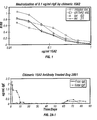
- c15A.2 Purified c15A.2 as obtained from Example IV was tested for its ability to prevent the binding of canine IgE to the canine IgE receptor in vitro ( Figure 1).
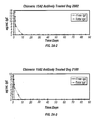
- the time course and events for the 40 day experimental period are summarized in Figures 2a and 2b. Dogs were sensitized to ragweed at birth at Lovelace Respiratory Research Institute (Albuquerque, MNM) and used in studies to test the efficacy assessed by the dogs' ability to develop a subcutaneous skin response following administration of allergen.
- the c15A.2 was administered to dogs 2002. 2003 and 2103 every five days for eight consecutive treatments.
- the amount of administered c15A.2 in the first treatment was equivalent to 10x the concentration of measurable free serum IgE concentration three days prior to the start of administration.
- Doses 1 and 2 received 10x free serum IgE concentration. All subsequent dosages were set at 5x free serum IgE concentration.
- the test article was diluted into sterile PBS at the concentration required to deliver 10x or 5x serum IgE concentration by intravenous infusion over a 30 minute period.
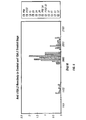
- Figure 2A-1 through Figure 2A-3 follows the level of free and total serum IgE in each dog versus time, based upon dosages of c l SA.2 mAb administered. Additional c15A.2 was then administered every five days for a total of 40 consecutive days. Serum IgE levels are assayed by standard ELISA techniques that are well known to those of ordinary skill in the art. IgE levels arc generally considered to be undetectable in the ELISA technique below about 1 ng/ml.
- Figure 2A-1 through Figure 2A-3 also shows that free IgE in the experimental dogs dropped to undetectable levels within 60 minutes and did not return during the entire 40 day-treatment period.
- the assay used in these experiments consisted of an ELISA solid phase capture with mouse 15A.2 antibody and detection with another HRPO-conjugated mAb, 14K.2 which recognizes exon 4 of canine IgE.
- the assay detects all serum IgE not bound by C 15A.2.
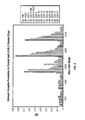
- Immune complexes of cl 5A.2 and canine IgE were measured by ELISA on a 14K.2 solid phase and detected by polyclonal anti-dog IgGfc conjugate. These data summarized in Figure 4, show that complexed IgE is detected at high concentration early in the time course of treatment, but the level of complexes consistently falls over time. By day 28 no immune complexes are detected in dogs receiving c15A.2. This result suggests that the complexes are cleared from the circulating pool of serum immunoglobulin and that synthesis of new IgE in this time frame is reduced or eliminated. No changes were observed in control dogs. No immune response to the chimeric monoclonal antibody c15A.2 was observed in dogs 2003 and 2103.
- Ragweed sensitized dogs were infused with a 0.5% solution in PBS of Evans Blue Dye at 0.2 ml/kg and then challenged with allergen 10 minutes later.
- Five, 10-fold serial dilutions of ragweed allergen in PBS starting at 1000 PMU/ml were prepared at 100 ⁇ l injected subcutaneously in a shaved section of the torso.
- Saline (PBS) served as a negative control and histamine (100 ⁇ l of an 0.275 ⁇ g/ml dilution of histamine in PBS) served as a positive control. Reactivity was measured 10 minutes later as the swelling and blue-dye diffusion in the skin compared with the histamine control.
- a rating of two was given to an allergen dilution in which the reaction was equivalent in size and color to the histamine reaction.
- a rating of 1 was given for a reaction that was half of the histamine control and a rating of zero was given when the reaction was equivalent to the saline negative control.
- Figure 7A-B shows that in control dogs the skin response to ragweed allergen was similar throughout the study. In control dog 1102 the ragweed skin response actually increased over time.
- Example IX Chimeric Canine anti-IgE mAb Engineered for Long Serum Stability, Loss of Immunogenicity and for IgE+ B-cell Targeting
- the person of ordinary skill in the art will realize that one may also provide the canine anti-IgE mAb of the present invention in a form which comprises a greater portion of the molecule as Ig taken from the dog sequence, and therefore should be expected to have greater serum stability, loss of immunogenicity and more effectively target IgE+ B cells.
- a chimeric canine anti-IgE mAb that is engineered for long serum stability and an inability to induce an immune response against it is administered to a dog.
- This mAb binds to IgE in serum and to IgE on the surface of IgE-producing B-cells but not to IgE on mast cells or basophils. IgE synthesis is consequently reduced or eliminated. The resulting reduced IgE levels cause reduction in mast cell IgE receptor expression and reduction in associated allergic reactivity.
- Example X Recombinant Canine IgE Receptor Designated cRcIg - Cloning and Expression in Insect Cells
- the cRcIg receptor is comprised of the alpha domain of the receptor which binds IgE linked to exons 2 and 3 of canine IgE.
- the IgG heavy chain sections of the receptor are the same as exons 2 and 3 of the c15A.2.
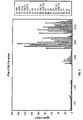
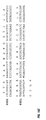
- DNA encoding the chimeric IgE receptor cRcIg (SEQ ID NO: 8) was introduced into a baculovirus genome using standard procedures. High five insect cell cultures were infected with baculovirus producing cRcIg. The cRcIg protein was purified from the cell culture medium by chromatography on protein A, followed by removal of contaminating proteins by ion exchange chromatography. The DNA sequence of the recombinant IgE receptor cRcIg with corresponding translation is shown in Figure 10 (SEQ ID NOS: 8 and 9).
- the IgE receptor used in the study was a recombinant chimeric receptor-body, named cRcIg, composed of the soluble high affinity IgE receptor alpha unit fused with the canine IgG CH2 and CH3 domain.
- the soluble alpha subunit which lacks the trans-membrane domain, was cloned by PCR using the information available in GeneBank.
- the IgG CH2 and CH3 domain was part of the sequence of DE94 as claimed by the Chemo-sero patent.
- the soluble receptor and DE94 CH2/CH3 were connected by PCR to form the full length cRcIg.
- the full length cRcIg was cloned into PharMingen's baculovirus pAcHisTNA vector.
- the virus was amplified using sf-9 cells.
- the cRcIg protein was produced in a secret form and was expressed in High five cells for 48 hours with MOI (multiplicity of infection) at 5.
- the protein was purified based on the CH2/CH3 domain's binding to Protein A column. Detailed purification scheme is the same as that of 15A.2 as illustrated in Example IV.
- the purified cRcIg was concentrated 2.9 mg/ml, and sterilized by filtering through 0.2 ⁇ m filter unit.
- the final buffer component is as follows:
- the protein has at least 95% purity as indicated by SDS-PAGE protein gel and stored at -80°C for future use.
- Serum IgE level was determined by ELISA as described previously.
- Purified cRcIg as obtained from Example X was tested for its ability to prevent the binding of canine IgE to the canine IgE receptor in vitro.
- the amount of cRcIg required to neutralize serum IgE was measured by titration of purified cRcIg against dog sera in vitro. Purified cRcIg was then administered through I.V. injection as a bolus.
- the recombinant canine IgE receptor cRcIg was therefore administered intravenously as a bolus to dogs 1001 and 1002.
- This amount of cRcIg was equivalent to 10x (141 mgs; 7.08 ml with 2 mg/ml in dog 2001) or 20x (220 mgs; 11.04 ml with 2 mgs/ml in dog 1001) the amount needed for 50% neutralization of recombinant receptor binding in vitro.
- Additional cRcIg was then administered at the dosage of 5 ml with 2 mg/ml as a bolus to each dog for five consecutive days, on days 13-17.
- Figure 9 follows the level of free serum IgE in each dog versus time.
- Serum IgE levels are generally assayed by standard ELISA techniques well known to those of ordinary skill in the art. IgE levels are generally considered to be undetectable in the ELISA technique below about 1 ng/ml.
- serum IgE was undetectable by assay for greater than two months following the last dose of recombinant IgE receptor.
- serum IgE levels returned to detectable levels over a period of days following the final administration of the recombinant receptor. It is to be noted however, that although serum IgE levels increased in dog 1002 they did not return to the elevated levels which were present prior to the administration of the recombinant receptor on day 0.
- Figure 9 shows total and free serum IgE levels in each of the dogs during the course of the experiment. These data show that circulating IgE was not immediately removed from serum. Free serum IgE is unavailable but total IgE, presumably that complexed with cRcIg, was still in circulation.
- Example X Peptides Which Bind to Canine IgE and Prevent Binding to the IgE Receptor and/or Bind to IgE on B Cells and Affect Synthesis of IgE
- peptides may be derived from combinatorial peptide libraries and comprise sequences of amino acids which when combined with IgE prevent binding to the IgB receptor. They arc, then, peptides of any sequence of amino acids capable of binding to IgE, preferably exon 3 of IgE, and of preventing this IgE from binding to the IgE receptor. They may also bind to IgE on B cells.
- peptides which bind to canine IgE are administered to a dog.
- the peptides bind IgE in serum and IgE on the surface of the IgE-producing B-cells but not IgE on mast cells or basophils.
- IgE synthesis is reduced or eliminated.
- the resulting reduced IgE levels cause reduction in mast cell IgE receptor expression and reduction in associated allergic reactivity.
- Example XIV Small Molecules Which Bind Canine IgE and Prevent Binding to the IgE Receptor and/or Bind to IgE on B Cells and Affect Synthesis on IgE
- small organic molecules may be derived from combinatorial libraries and are screened in assays whereby the small organic molecules are isolated by their ability to inhibit IgE from binding to the IgE receptor. They, therefore may bind to IgE, preferably at a region within exon 3, and inhibit binding to the IgE receptor.
- a small molecule is administered to a dog.
- the small molecule binds IgE in serum and IgE on the surface of IgE-producing B-cells but not IgE on mast cells or basophils. IgE synthesis is consequently reduced or eliminated. The resulting reduced IgE levels cause reduction in mast cell IgE receptor expression and reduction in associated allergic reactivity.
Landscapes
- Health & Medical Sciences (AREA)
- Chemical & Material Sciences (AREA)
- Immunology (AREA)
- Organic Chemistry (AREA)
- Medicinal Chemistry (AREA)
- Life Sciences & Earth Sciences (AREA)
- General Health & Medical Sciences (AREA)
- Pharmacology & Pharmacy (AREA)
- Public Health (AREA)
- Molecular Biology (AREA)
- Proteomics, Peptides & Aminoacids (AREA)
- Biophysics (AREA)
- Veterinary Medicine (AREA)
- Engineering & Computer Science (AREA)
- Bioinformatics & Cheminformatics (AREA)
- Chemical Kinetics & Catalysis (AREA)
- General Chemical & Material Sciences (AREA)
- Nuclear Medicine, Radiotherapy & Molecular Imaging (AREA)
- Biochemistry (AREA)
- Animal Behavior & Ethology (AREA)
- Genetics & Genomics (AREA)
- Pulmonology (AREA)
- Peptides Or Proteins (AREA)
- Medicines Containing Antibodies Or Antigens For Use As Internal Diagnostic Agents (AREA)
- Preparation Of Compounds By Using Micro-Organisms (AREA)
- Medicinal Preparation (AREA)
Applications Claiming Priority (5)
| Application Number | Priority Date | Filing Date | Title |
|---|---|---|---|
| US17962900P | 2000-02-01 | 2000-02-01 | |
| US179629P | 2000-02-01 | ||
| US592998 | 2000-06-12 | ||
| US09/592,998 US6504013B1 (en) | 2000-02-01 | 2000-06-12 | Canine allergy therapeutic recombinant chimeric anti-IgE monoclonal antibody |
| PCT/US2001/002924 WO2001057090A1 (en) | 2000-02-01 | 2001-01-30 | Canine allergy therapeutic recombinant chimeric anti-ige monoclonal antibody |
Publications (2)
| Publication Number | Publication Date |
|---|---|
| EP1254180A1 EP1254180A1 (en) | 2002-11-06 |
| EP1254180B1 true EP1254180B1 (en) | 2007-03-14 |
Family
ID=26875491
Family Applications (1)
| Application Number | Title | Priority Date | Filing Date |
|---|---|---|---|
| EP01905198A Expired - Lifetime EP1254180B1 (en) | 2000-02-01 | 2001-01-30 | Canine allergy therapeutic recombinant chimeric anti-ige monoclonal antibody |
Country Status (6)
| Country | Link |
|---|---|
| US (1) | US6504013B1 (https=) |
| EP (1) | EP1254180B1 (https=) |
| JP (1) | JP4605973B2 (https=) |
| AU (1) | AU2001233102A1 (https=) |
| DE (1) | DE60127237T2 (https=) |
| WO (1) | WO2001057090A1 (https=) |
Cited By (1)
| Publication number | Priority date | Publication date | Assignee | Title |
|---|---|---|---|---|
| CN109143137A (zh) * | 2018-06-14 | 2019-01-04 | 国电南瑞科技股份有限公司 | 一种发电机pmu装置测量精度提升方法 |
Families Citing this family (22)
| Publication number | Priority date | Publication date | Assignee | Title |
|---|---|---|---|---|
| US7393529B2 (en) * | 1998-04-09 | 2008-07-01 | Idexx Laboratories, Inc. | Methods and compositions for inhibiting binding of IgE to a high affinity receptor |
| WO2002066602A2 (en) * | 2001-01-03 | 2002-08-29 | Heska Corporation | Detection of allergen-specific ige |
| EP1485126A4 (en) * | 2001-12-21 | 2007-03-21 | Idexx Lab Inc | DOG IMMUNOGLOBULIN VARIABLE DOMAINS, DOG ANTIBODIES, AND METHOD FOR THEIR PRODUCTION AND USE |
| US20060034845A1 (en) | 2002-11-08 | 2006-02-16 | Karen Silence | Single domain antibodies directed against tumor necrosis factor alpha and uses therefor |
| ES2655912T3 (es) * | 2002-11-08 | 2018-02-22 | Ablynx N.V. | Anticuerpos de dominio simple dirigidos contra factor de necrosis tumoral-alfa y usos para los mismos |
| CA2505316C (en) * | 2002-11-08 | 2014-08-05 | Ablynx N.V. | Single domain antibodies directed against tumour necrosis factor-alpha and uses therefor |
| US20100003253A1 (en) * | 2002-11-08 | 2010-01-07 | Ablynx N.V. | Single domain antibodies directed against epidermal growth factor receptor and uses therefor |
| US9320792B2 (en) | 2002-11-08 | 2016-04-26 | Ablynx N.V. | Pulmonary administration of immunoglobulin single variable domains and constructs thereof |
| GB0304576D0 (en) | 2003-02-28 | 2003-04-02 | Lonza Biologics Plc | Protein a chromatography |
| EP1733232A1 (en) * | 2004-03-23 | 2006-12-20 | Quidel Corporation | Hybrid phase lateral flow assay |
| US20090111702A1 (en) * | 2004-04-06 | 2009-04-30 | Mount Sinai School Of Medicine Office Of Industrial Liason | Methods of determining allergen response using microarray immunoassay techniques |
| JP2006151880A (ja) * | 2004-11-30 | 2006-06-15 | Asahi Breweries Ltd | 抗イヌIgEモノクローナル抗体、その製造法および用途 |
| AU2006223180B2 (en) | 2005-03-11 | 2011-11-24 | Wyeth Llc | A method of weak partitioning chromatography |
| JP2007172129A (ja) * | 2005-12-20 | 2007-07-05 | Sony Corp | 不揮発性メモリアクセス制御装置および不揮発性メモリ制御システム |
| US9388236B2 (en) | 2007-07-09 | 2016-07-12 | Nestec Sa | Methods for reducing allergies caused by environmental allergens |
| HUE032078T2 (en) * | 2007-07-09 | 2017-08-28 | Nestec Sa | Procedure for reducing allergies caused by environmental allergens |
| US9505829B2 (en) | 2010-08-19 | 2016-11-29 | Zoetis Belgium S.A. | Anti-NGF antibodies and their use |
| WO2013119419A1 (en) | 2012-02-08 | 2013-08-15 | North Carolina State University | Treatment of allergic diseases with recombinant antibodies |
| JP6199054B2 (ja) * | 2013-03-19 | 2017-09-20 | 公益財団法人かずさDna研究所 | 抗イヌIgEモノクローナル抗体並びに抗イヌIgEモノクローナル抗体の重鎖可変領域及び軽鎖可変領域 |
| JP7127859B2 (ja) | 2016-11-09 | 2022-08-30 | ノース カロライナ ステート ユニバーシティ | キメラタンパク質を用いたアレルギー疾患の治療 |
| WO2019183437A1 (en) | 2018-03-23 | 2019-09-26 | North Carolina State University | Methods and compositions for antibody to high affinity receptor for ige |
| WO2021195560A1 (en) * | 2020-03-27 | 2021-09-30 | Aquavit Pharmaceuticals, Inc, | Methods of detecting allergic reactions in subjects using microchannel delivery devices |
Family Cites Families (17)
| Publication number | Priority date | Publication date | Assignee | Title |
|---|---|---|---|---|
| WO1989006138A1 (en) | 1987-12-31 | 1989-07-13 | Tanox Biosystems, Inc. | UNIQUE ANTIGENIC EPITOPES ON IgE-BEARING B LYMPHOCYTES |
| US5449760A (en) | 1987-12-31 | 1995-09-12 | Tanox Biosystems, Inc. | Monoclonal antibodies that bind to soluble IGE but do not bind IGE on IGE expressing B lymphocytes or basophils |
| US5422258A (en) | 1987-12-31 | 1995-06-06 | Tanox Biosystems, Inc. | Methods for producing high affinity anti-human IgE-monoclonal antibodies which binds to IgE on IgEabearing B cells but not basophils |
| JP2811096B2 (ja) * | 1989-09-30 | 1998-10-15 | 財団法人化学及血清療法研究所 | イヌ免疫グロブリンκ鎖の定常領域をコードする遺伝子断片およびマウス×イヌキメラ抗体 |
| JP2837240B2 (ja) * | 1990-06-07 | 1998-12-14 | 財団法人化学及血清療法研究所 | イヌ免疫グロブリンγ鎖の定常領域をコードする遺伝子断片およびマウス×イヌキメラ抗体 |
| JP2811089B2 (ja) * | 1989-08-25 | 1998-10-15 | 財団法人化学及血清療法研究所 | イヌ×マウスヘテロハイブリドーマおよびイヌ免疫グロブリンλ鎖の定常領域をコードする遺伝子断片 |
| CA2113813C (en) * | 1991-08-14 | 2005-04-12 | Paula M. Jardieu | Immunoglobulin variants for specific fc epsilon receptors |
| US5965709A (en) | 1991-08-14 | 1999-10-12 | Genentech, Inc. | IgE antagonists |
| SE9102808L (sv) | 1991-09-26 | 1993-03-27 | Lars T Hellman Inst F Immunolo | Vaccin, foer humant bruk, vars avsedda effekt aer att lindra symptomen eller foerhindra uppkomsten av ige-medierade allergiska reaktioner |
| ATE228536T1 (de) | 1993-03-11 | 2002-12-15 | Tanox Biosystems Inc | Antigene epitope von ige repräsentierenden peptiden auf der b-zell-oberfläche aber nicht auf oberflächen von basophilen |
| US5629415A (en) | 1994-11-09 | 1997-05-13 | Merck & Co., Inc. | DNA encoding canine immunoglobulin E |
| AU1146897A (en) | 1995-12-08 | 1997-06-27 | Idexx Laboratories, Inc. | Methods and compositions concerning allergy in dogs |
| US5945294A (en) | 1996-11-26 | 1999-08-31 | Heska Corporation | Method to detect IgE |
| US6060326A (en) | 1997-04-07 | 2000-05-09 | Heska Corporation | Method to detect canine IgE and kit therefor |
| US5994511A (en) | 1997-07-02 | 1999-11-30 | Genentech, Inc. | Anti-IgE antibodies and methods of improving polypeptides |
| ES2234180T3 (es) | 1998-04-09 | 2005-06-16 | Idexx Laboratories, Inc. | Proteinas de fijacion especifica para el tratamiento de la alergia canina. |
| TWI227241B (en) | 1998-06-20 | 2005-02-01 | United Biomedical Inc | IgE-CH3 domain antigen peptide, peptide conjugate containing the same, and pharmaceutical composition for treating allergies containing the peptide conjugate |
-
2000
- 2000-06-12 US US09/592,998 patent/US6504013B1/en not_active Expired - Fee Related
-
2001
- 2001-01-30 AU AU2001233102A patent/AU2001233102A1/en not_active Abandoned
- 2001-01-30 WO PCT/US2001/002924 patent/WO2001057090A1/en not_active Ceased
- 2001-01-30 JP JP2001557921A patent/JP4605973B2/ja not_active Expired - Fee Related
- 2001-01-30 EP EP01905198A patent/EP1254180B1/en not_active Expired - Lifetime
- 2001-01-30 DE DE60127237T patent/DE60127237T2/de not_active Expired - Lifetime
Cited By (2)
| Publication number | Priority date | Publication date | Assignee | Title |
|---|---|---|---|---|
| CN109143137A (zh) * | 2018-06-14 | 2019-01-04 | 国电南瑞科技股份有限公司 | 一种发电机pmu装置测量精度提升方法 |
| CN109143137B (zh) * | 2018-06-14 | 2020-09-29 | 国电南瑞科技股份有限公司 | 一种发电机pmu装置测量精度提升方法 |
Also Published As
| Publication number | Publication date |
|---|---|
| JP2003521916A (ja) | 2003-07-22 |
| AU2001233102A1 (en) | 2001-08-14 |
| DE60127237D1 (de) | 2007-04-26 |
| JP4605973B2 (ja) | 2011-01-05 |
| US6504013B1 (en) | 2003-01-07 |
| DE60127237T2 (de) | 2007-12-20 |
| EP1254180A1 (en) | 2002-11-06 |
| WO2001057090A1 (en) | 2001-08-09 |
Similar Documents
| Publication | Publication Date | Title |
|---|---|---|
| EP1254180B1 (en) | Canine allergy therapeutic recombinant chimeric anti-ige monoclonal antibody | |
| CA2146647C (en) | Treatment of autoimmune and inflammatory disorders | |
| KR100520339B1 (ko) | 면역조절 방법 및 조성물 | |
| JP4153560B2 (ja) | アレルギー性喘息の治療法 | |
| JP2024122980A (ja) | インターロイキン-2バリアントおよびその使用方法 | |
| RU2607022C2 (ru) | Способы и композиции для лечения волчанки | |
| JP6363623B2 (ja) | 免疫グロブリンaのレベルを増大するための方法 | |
| JP2012219082A (ja) | 融合蛋白質 | |
| BG108020A (bg) | Методи за лечение или профилактика на кожни заболявания с приложение на cd2-свързващи агенти | |
| EP4025250A1 (en) | Anti-cd20 antibody formulation and use of anti-cd20 antibody for treatment of cd20 positive diseases | |
| CN118434759A (zh) | 用抗-pd-l1/il-10融合蛋白治疗疾病的方法 | |
| JP2021527056A (ja) | 移植片対宿主病及び粘膜炎の予防及び治療のためのcd24の使用方法 | |
| CZ98598A3 (cs) | Molekula protilátky proti FAS a způsob výroby | |
| CN116113428A (zh) | 白细胞介素-2突变蛋白及其用途 | |
| WO2022105839A1 (zh) | 抗ox40抗体在治疗肿瘤或癌症中的应用 | |
| EP0957111A2 (en) | Specific binding proteins for treating canine allergy | |
| US6734287B1 (en) | Specific binding proteins for treating canine allergy | |
| TW202302642A (zh) | 用於治療抗體介導移植物排斥用途之抗cd38抗體 | |
| CN117337300A (zh) | 抗pd-1抗体的应用 | |
| CA2329148C (en) | Specific binding proteins for treating canine allergy | |
| HK40116467A (zh) | 抗ox40抗体在治疗炎症或免疫性疾病中的应用 | |
| US20230391880A1 (en) | Bifunctional antagonists of activin/tgf-beta and rankl and uses thereof | |
| KR100301796B1 (ko) | 면역억제능이 있는 항-씨디40 리간드 모노클로날 항체 | |
| CN118662628A (zh) | 抗ox40抗体在治疗炎症或免疫性疾病中的应用 | |
| WO2022184068A1 (zh) | 抗tigit抗体在治疗肿瘤或癌症中的应用 |
Legal Events
| Date | Code | Title | Description |
|---|---|---|---|
| PUAI | Public reference made under article 153(3) epc to a published international application that has entered the european phase |
Free format text: ORIGINAL CODE: 0009012 |
|
| 17P | Request for examination filed |
Effective date: 20020828 |
|
| AK | Designated contracting states |
Kind code of ref document: A1 Designated state(s): AT BE CH CY DE DK ES FI FR GB GR IE IT LI LU MC NL PT SE TR |
|
| AX | Request for extension of the european patent |
Free format text: AL;LT;LV;MK;RO;SI |
|
| 17Q | First examination report despatched |
Effective date: 20040129 |
|
| RBV | Designated contracting states (corrected) |
Designated state(s): DE ES FR GB IT NL |
|
| GRAP | Despatch of communication of intention to grant a patent |
Free format text: ORIGINAL CODE: EPIDOSNIGR1 |
|
| GRAS | Grant fee paid |
Free format text: ORIGINAL CODE: EPIDOSNIGR3 |
|
| GRAA | (expected) grant |
Free format text: ORIGINAL CODE: 0009210 |
|
| AK | Designated contracting states |
Kind code of ref document: B1 Designated state(s): DE ES FR GB IT NL |
|
| PG25 | Lapsed in a contracting state [announced via postgrant information from national office to epo] |
Ref country code: NL Free format text: LAPSE BECAUSE OF FAILURE TO SUBMIT A TRANSLATION OF THE DESCRIPTION OR TO PAY THE FEE WITHIN THE PRESCRIBED TIME-LIMIT Effective date: 20070314 |
|
| REG | Reference to a national code |
Ref country code: GB Ref legal event code: FG4D |
|
| REF | Corresponds to: |
Ref document number: 60127237 Country of ref document: DE Date of ref document: 20070426 Kind code of ref document: P |
|
| PG25 | Lapsed in a contracting state [announced via postgrant information from national office to epo] |
Ref country code: ES Free format text: LAPSE BECAUSE OF FAILURE TO SUBMIT A TRANSLATION OF THE DESCRIPTION OR TO PAY THE FEE WITHIN THE PRESCRIBED TIME-LIMIT Effective date: 20070625 |
|
| NLV1 | Nl: lapsed or annulled due to failure to fulfill the requirements of art. 29p and 29m of the patents act | ||
| EN | Fr: translation not filed | ||
| EN | Fr: translation not filed | ||
| PLBE | No opposition filed within time limit |
Free format text: ORIGINAL CODE: 0009261 |
|
| STAA | Information on the status of an ep patent application or granted ep patent |
Free format text: STATUS: NO OPPOSITION FILED WITHIN TIME LIMIT |
|
| 26N | No opposition filed |
Effective date: 20071217 |
|
| PG25 | Lapsed in a contracting state [announced via postgrant information from national office to epo] |
Ref country code: IT Free format text: LAPSE BECAUSE OF FAILURE TO SUBMIT A TRANSLATION OF THE DESCRIPTION OR TO PAY THE FEE WITHIN THE PRESCRIBED TIME-LIMIT Effective date: 20070314 Ref country code: FR Free format text: LAPSE BECAUSE OF FAILURE TO SUBMIT A TRANSLATION OF THE DESCRIPTION OR TO PAY THE FEE WITHIN THE PRESCRIBED TIME-LIMIT Effective date: 20071102 |
|
| PG25 | Lapsed in a contracting state [announced via postgrant information from national office to epo] |
Ref country code: FR Free format text: LAPSE BECAUSE OF FAILURE TO SUBMIT A TRANSLATION OF THE DESCRIPTION OR TO PAY THE FEE WITHIN THE PRESCRIBED TIME-LIMIT Effective date: 20070314 |
|
| PGFP | Annual fee paid to national office [announced via postgrant information from national office to epo] |
Ref country code: GB Payment date: 20130125 Year of fee payment: 13 Ref country code: DE Payment date: 20130129 Year of fee payment: 13 |
|
| REG | Reference to a national code |
Ref country code: DE Ref legal event code: R119 Ref document number: 60127237 Country of ref document: DE |
|
| GBPC | Gb: european patent ceased through non-payment of renewal fee |
Effective date: 20140130 |
|
| PG25 | Lapsed in a contracting state [announced via postgrant information from national office to epo] |
Ref country code: DE Free format text: LAPSE BECAUSE OF NON-PAYMENT OF DUE FEES Effective date: 20140801 |
|
| REG | Reference to a national code |
Ref country code: DE Ref legal event code: R119 Ref document number: 60127237 Country of ref document: DE Effective date: 20140801 |
|
| PG25 | Lapsed in a contracting state [announced via postgrant information from national office to epo] |
Ref country code: GB Free format text: LAPSE BECAUSE OF NON-PAYMENT OF DUE FEES Effective date: 20140130 |